Competition is now closed and the draw has been made. The winner is… Lisa Graham. Thank you so much to everyone for taking part – there were over 300 entries! And thank you for the many wonderful birthday wishes. Apparently a ‘big’ birthday doesn’t feel as overwhelming when you have so many wonderful friends. THANK YOU!!!!
It’s my birthday!
Today is my birthday, and its one of those big ones with a ‘0’ on the end. I’m not going to say exactly, but here’s a few clues:
I’m not 40 or 60;
My son keeps telling me that I’m now a part of history;
and he keeps making sly remarks about half centuries.
So, you work it out…
Anyway, seeing as its such a big birthday, I thought it would be nice to celebrate with a giveaway, seeing as I haven’t done one in a while.
The competition is open to everyone, wherever you are in the world. To win a signed and dedicated copy of one of my books, simply leave a comment below or on my Facebook page and I will include you in the prize draw.
Today it is a pleasure to welcome historian Toni Mount to History…the Interesting Bits, with an article on the Frost Fairs on the River Thames.
Frost Fairs
Anyone who was in the UK, Ireland or much of Europe in February and March 2018 will probably remember the weather phenomenon of anticyclone Hartmut, better known as ‘The Beast from the East’. The Beast began its onslaught on 22nd February, bringing heavy snowfall and unusually low temperatures which lasted into the first week of March. Across Europe, it caused 95 deaths, seventeen of them in the UK. The deepest snowfall in England was 22 inches [57 cm] in Gloucestershire. The lowest temperature, measured in the Cairngorm Mountains in Scotland was -14℃ [7℉] with winds up to 70 mph [110 km/hr]. Two weeks of such intense cold weather is unusual in the UK today, though who knows what may lie ahead in the future with the effects of climate change. However, climate change is nothing new. The lifetime of Isaac Newton, from 1642 to 1727, saw far worse winter weather during ‘The Little Ice-Age’, as it is known, and the period from December 1683 to March 1684 saw an unprecedented cold spell in England.
Engraving of the Frost Fair on the Thames in London, 1683-84 [British Museum Collection]
Thermometers were a recent invention and a universal scale of temperature readings had yet to be established but descriptions of the thickness of ice formed on ponds in a single night suggest the long spell of exceptional freezing weather was worse than any winter before and has still to be surpassed. December 1683 began with a hard frost, followed by a bitter east wind laden with snow. In London, the snow melted on the 7th but a sharp frost on the 12th was succeeded by a week of heavy snowfall and a north-easterly wind. Places other than London suffered similarly. Bristol suffered badly on the 19th; Durham on Christmas Eve and Oxford had its worst snow on Christmas Day, although London only saw snow showers that day.
The previous October 1683 had seen temperatures more than 4°F below the average, so the ground was already colder than normal when the bad weather began in December. Daily thermometer readings – however inaccurate – were recorded by Dr John Downes in London. According to him, the greatest cold occurred on 15th-16th January when ‘the spirit fell within the ball’ of his thermometer so gave no reading. His thermometer probably hung indoors, close to a window was the usual position for such instruments, suggesting a likely reading of 25°F indoors when he took note of it, mid‐morning. This would probably indicate a temperature of below 10°F outdoors. It was almost as cold in the first days of February.
In Durham, farther north in Teesdale, a fellow scientist, Mr Sanderson, made occasional records of the thickness of ice formed ‘where John Aislaby gets his water, on 12th-13th February, ice formed two inches thick overnight’. He then adds ‘it was in my gazette [newspaper] that at the Downs [part of the English Channel off the coast of Kent] the water was frozen a mile into the Sea, which was never known before’. This occurred during the latter part of January. From other sources we learn that, for fourteen days, in the English Channel, packet‐boats with the mail could not leave the Belgian coast and that ‘the sea was frozen for two leagues off Caen [in Normandy, France]’. Near Manchester, Sanderson noted, ‘it did freeze ice more than half a yard thick, and some ice continued till 25th March’.
Undeterred by the cold, the people of Leeds in Yorkshire held a frost fair on the frozen River Aire. According to Ralph Thoresby, an ox-roast was set up there and various sporting activities organised. January saw no improvement and in the south, by the end of the month, the Thames estuary was frozen a mile out to sea and wagons were hauling goods downriver from London as far as Gravesend in Kent.
In London, John Evelyn’s diary provides a wealth of information, noting that brewers and other tradesmen reliant on a water supply were out of work because all the pipes were frozen. He was greatly concerned that:
The fowls, fish and birds and all our plants and greens universally perishing. Many parks of deer are destroyed and all sorts of fuel so dear that there were great contributions to keep the poor alive. … London, by reason of the excessive coldness of the air hindering the ascent of the smoke, was so filled with the fuliginous steam of sea-coal that one could hardly see across the streetes… and no one could scarcely breathe.
Evelyn also tells us that ‘every moment was full of disastrous accidents’ and trees were being cracked asunder by the frost as if by a lightning strike. Despite these gloomy realities, Londoners made the best of the weather conditions. A broadsheet of the time calls it ‘Great Britain’s Wonder or London’s Admiration: a prodigious frost which began about the beginning of December and continued till the fourth day of February following’. The Thames had frozen over before but never had the freeze lasted so long. The river ice was more than a foot thick [30cms] enabling it to be crossed by coach, carriage, sledge or on foot. Enterprising boatmen, robbed of their livelihood otherwise, put wheels under their boats to ferry passengers across the river. By 1st January, a fair and marketplace had been set up on the ice.
King Charles II and members of the royal court visited the makeshift town, enjoying eating meat from an ox-roast, taking part in a fox-hunt on ice and having souvenir cards printed in a booth where a printer had set up his press. The cards proved popular, the printer reckoning to make at least £5 per day at sixpence a time. In other words, he was printing around 200 cards every day and making an excellent income from his ingenuity. Food stalls sold everything from pancakes to roast beef and there were numerous taverns, goldsmiths’ shops, a toy shop, coffee-houses, a lottery booth, a music booth and even a brothel: all doing a brisk trade on ice. A circus was put on by Mr Chipperfield: the first known performance of a family business that still continues today, if in a very different health-and-safety, animal-welfare conscious, twenty-first-century format. No such niceties concerned the entrepreneurs who arranged the bull- and bear-baiting spectacles either.
John Evelyn wrote that:
Coaches plied from Westminster to the Temple… to and fro, as in the streets; sleds, sliding with skeetes [skates], a bull-baiting, horse and coach races, puppet plays and interludes [short dramatic sketches], cooks, tippling [drinking] and other lewd places, so that it seemed to be a bacchanalian triumph, or a carnival on water.
Others noted sporting activities, including football and skittles being played. The ice began to thaw a little on 4th-5th February and the booths began to be dismantled but it froze again so that Evelyn could still cross in his coach to Lambeth Palace to dine with the Archbishop of Canterbury. On other occasions, he walked upriver on the ice from his home in Deptford.
In Newton’s long lifetime the Thames would freeze over again in 1709 but the ice did not last so long as to allow another frost fair that year. However, the winter of 1715-16 was sufficiently severe and long-lasting that the river was frozen for almost three months and a fair was set up once more. On this occasion, there was far more snow than in 1683-84, ‘vast quantities fallen at different times in the season’, so that London was described at the time as being ‘almost impassable’.
Below, is an excerpt from a poem written in 1684:
BEHOLD the Wonder of this present Age,
A Famous RIVER now becomes a Stage.
Question not what I now declare to you,
The Thames is now both Fair and Market, too.
And many Thousands dayly do resort,
There to behold the Pastime and the Sport
Early and Late, used by young and old,
And valu’d not the fierceness of the Cold….
Back in history, the Thames had been frozen before. For example, in the reign of King Stephen, in 1150, ‘after a very wet summer there was in December so great a frost that horses and carriages crossed it [the Thames] upon the ice as safely as upon the dry ground, and that the frost lasted till the following month of March’. Again, in 1281, the Thames was frozen over and when the ice broke up at last, it carried away five of the stone arches of London Bridge, causing it to partially collapse and making this entrance into the city impassable until it was repaired. In 1434, ‘the Thames was so strongly frozen over, that merchandise and provisions brought into the mouth of the river were obliged to be unladen, and brought by land to the city’. In 1515, too, carriages passed over on the ice from Lambeth to Westminster and once more, when the ice melted a number of arches of London Bridge were ‘borne downe and carried away with the streame’. On the 21st of December 1564, during a lengthy hard frost, football and ‘shooting at marks’ were played on the Thames. Courtiers came from Whitehall Palace to mix with common citizens and watch the fun. Tradition says that Queen Elizabeth I herself walked upon the ice but all was gone by 5th January. However, Londoners had the chance to play all manner of sports and visit trading stalls on the river again in 1620, in the reign of James I.
The River Thames last iced over completely, enough to hold a Frost Fair on its frozen waters, in 1814 but, since then, the building of the Victoria and Albert Embankments has made it faster-flowing and less likely to ice up. However, it partially froze in the harsh winters of 1947 and 1963.
Who can say whether or not even more extreme weather events may happen in the future as a result of climate change? Only time may tell if another Frost Fair, like those experienced by Isaac Newton and his colleagues, will ever be held again on the Thames.
The World of Isaac Newton by Toni Mount
For nine decades Isaac Newton strode the world of science and discovery, religion and thought – from 17th century Lincolnshire farm-boy to one of the most influential scientists of all time – his discoveries have relevance for us today and for our future. This fascinating new biography looks at his world, his times, the people he influenced and the breakthroughs in science and thought that would change the world.
About the Author
Toni Mount’s first career was in science, leading to many years in a second profession in teaching. Her love of history led to a third career as a writer with her first book, released by Amberley Publishing in 2014, Everyday Life in Medieval London. She continues to teach history to adults both in person and online and has now written many successful non-fiction and fiction books. This latest study allows her to return to her first love, science, and the chance to bring a fresh look at one of the world’s most famous characters.
The history of women in medieval Wales before the English conquest of 1282 is one largely shrouded in mystery. For the Age of Princes, an era defined by ever-increased threats of foreign hegemony, internal dynastic strife and constant warfare, the comings and goings of women are little noted in sources. This misfortune touches even the most well-known royal woman of the time, Joan of England (d. 1237), the wife of Llywelyn the Great of Gwynedd, illegitimate daughter of King John and half-sister to Henry III. With evidence of her hand in thwarting a full scale English invasion of Wales to a notorious scandal that ended with the public execution of her supposed lover by her husband and her own imprisonment, Joan’s is a known, but little-told or understood story defined by family turmoil, divided loyalties and political intrigue. From the time her hand was promised in marriage as the result of the first Welsh-English alliance in 1201 to the end of her life, Joan’s place in the political wranglings between England and the Welsh kingdom of Gwynedd was a fundamental one. As the first woman to be designated Lady of Wales, her role as one a political diplomat in early thirteenth-century Anglo-Welsh relations was instrumental. This first-ever account of Siwan, as she was known to the Welsh, interweaves the details of her life and relationships with a gendered re-assessment of Anglo-Welsh politics by highlighting her involvement in affairs, discussing events in which she may well have been involved but have gone unrecorded and her overall deployment of royal female agency.
Finally!
I have got my hands on this much-anticipated book, Joan, Lady of Wales by Danna R. Messer. I have to admit, I devoured every word. Joan has been in need of a biographer for some time, and I am so pleased that Danna took up the challenge and produced this remarkable study of the illegitimate daughter of King John who became Lady of Wales as the wife of Llywelyn ap Iorweth – Llywelyn Fawr.
Ever since I have known this book was being written, I have been itching to get my hands on it!
Anyone who is a fan of Sharon Penman will have heard of Joan, and most likely have a soft spot for this incredible woman. This biography gives you the chance to study the facts, to meet the woman behind the story and read of how deeply involved she was in Anglo-Welsh relations in the first half of the 13th century. Danna R. Messer portrays a politically astute and powerful woman, aware of her duty, importance and capabilities, not only as the daughter and sister of England’s kings, but also as Llywelyns wife and consort – and as the mother of his heir.
Detail of the sarcophagus thought to belong to Joan in St Mary’s and St Nicholas’s Church, Beaumaris
Beautifully written, with clear, concise arguments and a passion for her subject, the author has brought Joan to life. This is a book that is impossible to put down. Danna R. Messer does not shy away from areas of controversy, either, examining every aspect of Joan’s relationship with William de Braose, the man who was hanged after being found with Joan in Llywelyn’s chamber. the deconstruction of the event, the aftermath and the repercussions make for fascinating reading – its worth getting the book just to discover how everything unfolded.
As are all life stories, that of Joan of England’s is complicated; the complexities of which are further irritated by a dearth of contemporaneous material related to her. The identity of her mother remains a mystery and is much debated by today’s genealogists, as is who her children were. how many she really had and where some even ended up in their own lives. How many times she travelled as an envoy, how many charters she issued and just how fully she participated in effecting Welsh polity can never be fully known. No matter the daunting aspect of approaching such an ill-documented existence, which is a painstaking project indeed, it is one that yields both exciting and long-overdue results.
This study of Joan of England seeks to revise the master narrative of native medieval Wales in the early-thirteenth century – to generate a better ad more inclusively nuanced understanding of the history of this fascinating and wild region of Britain and its relationship with England by placing this particularly interesting and fascinating woman at the forefront in the sequence of events…
Although Siwan’s role in Anglo-Welsh history has received recognition by historians, she has been still largely relegated to the sidelines; an indication that her role was not entirely critical to the stability and growth of Welsh polity, or peace with England overall. On the flip side, it is sometimes difficult not to naturally overplay our hand and emphatically conclude that Joan was, indeed, a heroine and that if it were not for her, the very fabric of native Wales would have been fundamentally altered by the time Llywelyn died in 1240. On balance, however, it is vitally important to understand that the aggregate of Joan’s interventions in the early-thirteenth century ensured that she really was a crucial player in the political wranglings between the ruler of Gwynedd and the rulers of England. The famous early-twentieth-century Welsh historian J.E. Lloyd concluded that Llywelyn ap Iorweth ‘had one emissary whose diplomatic services far outran those of the seneschal and who helped him in this capacity for the greater part of his reign. To the assistance of his wife Joan, both as advocate and counsellor, there can be no doubt he was much indebted.’ To the assistance of Joan, Lady of Wales, there can be no doubt that the history of native medieval Wales is also much indebted.
Joan, Lady of Wales by Danna R. Messer not only examines every aspect of Joan’s life, but places that life in the wider context of English and Welsh events, of Anglo-Welsh relations and of the place of women in Welsh society and history in general. This in-depth study provides an overview analysis of the status of women in Welsh history, the laws surrounding marriage and adultery, legitimate and illegitimate children and demonstrates how Joan’s own confirmation of legitimacy in the 1220s added prestige and legitimacy to her husband’s position within Wales and the wider sphere of Anglo-Welsh relations.
Arms of the royal house of Gwynedd
Danna R. Messer also explores the use of title and authority for women in the 13th century, depicting Joan as a queen, both in her actions and relationship with others. Although she was not crowned and anointed in the same manner as an English queen would be, she held the same level of authority and respect, both in the public and the private sphere of the Welsh court.
A collection of a bout 20 black and white photos help to illustrate Joan’s story, Joan, Lady of Wales is a stunning, comprehensive study of the unique character and position that Joan occupies in both English and Welsh history.
Despite a woeful lack of sources mentioning Joan, Danna has managed to tease out every piece of information she could find on Joan and her position and duties, not only in Wales as the wife and consort of Llywelyn, but also in England as the daughter and, later, sister of the king. Joan’s status as the primary diplomat in Anglo-Welsh relations comes through clearly in the way Joan was treated by her husband and the rewards she was given by the English crown.
In brief, in Joan, Lady of Wales, Danna R. Messer recreates the life and times of this incredible woman, giving us a more complete portrait than has ever been achieved since her own lifetime. We are given a full and complete analysis – as far as the sources and distance of time will allow – of Joan’s political and personal life, the good and the bad, including the scandal, the ambition and Joan’s own legacy and what it meant for those who followed her.
Joan, Lady of Wales has long needed her own biography, to bring her out from the shadows of the lives of her father, brother, husband and son – and this book does not disappoint. It is, quite simply, a beautifully-executed, fascinating and addictive read.
Joan, Lady of Wales is available in hardback from Pen &Sword and Amazon.
About the author:
Dr Danna R. Messer has published on various aspects of the wives of the native Welsh rulers before 1282, providing a gendered perspective of medieval Welsh politics. As an editor and historian, she is widely involved in medieval history and queenship studies generally, including her roles as Series Editor for Medieval History for Pen and Sword, editor for the Royal Studies Journal and editor for Normans to Early Plantagenet Consorts, the first volume of the forthcoming four-book series, English Consorts: Power, Influence, Dynasty (Palgrave). She is also Acquisitions Editor for Arc Humanities Press and the Executive Editor for the Encyclopedia of the Global Middle Ages, a partnership project with Bloomsbury Academic and Arc Humanities Press.
Roguish hero Jack Lark – soldier, leader, imposter – crosses borders once more as he pursues a brand-new adventure in Africa.
London, 1868. Jack has traded the battlefield for business, running a thriving club in the backstreets of Whitechapel. But this underworld has rules and when Jack refuses to comply, he finds himself up against the East End’s most formidable criminal – with devastating consequences.
A wanted man, Jack turns to his friend Macgregor, an ex-officer, treasure hunter and his ticket out of England. Together they join the British army on campaign across the tablelands of Abyssinia to the fortress of Magdala, a high-stakes mission to free British prisoners captured by the notorious Emperor Tewodros.
But life on the run can turn dangerous, especially in a land ravaged by war . . .
Stupendous!
That is the first word that came to my mind when I was asked what I thought of Fugitive by Paul Fraser Collard. Fugitive is book no. 9 in the adventures of Victorian rogue, Jack Lark. Over the last few years, the release of the latest of Jack Lark’s adventures has become one of the highlights of my summer. Last year’s holiday reading was The Lost Outlaw, and the year before that it was The Rebel Killer. And after such amazing books in recent years, Fugitive had a lot to live up to.
In many of the previous books, Jack has taken on the persona of others, officers and soldiers all. He has travelled the globe, fighting in hotspots from the Crimea to America, more often than not concealing his own identity. In Fugitive, Jack Lark is finally himself, though whether that it a good thing or not is open to discussion.
Jack Lark is a bit of a rascal, taking opportunities where he finds them and running with it. He has fought on both sides of the American Civil War, had a stint in the French Foreign Legion and is now going in search of a fortune – and adventure – in Africa as the British Empire’s inexorable expansion opens more opportunities for those willing to take the risk. And, of course, as with any Jack Lark adventure, things get complicated and he is followed by the trouble he hoped to leave behind in London…
‘Do you think -‘ Bertie started.
‘Hush now.’ Cooper was quick to interrupt. ‘He’s coming.’
The three men looked down the alley as one. Sure enough, a figure was approaching. The fog wrapped around him like a ghostly shawl, so that he was little more than an apparition, a dark shadow shrouded in mist.
‘Is that him?’ Bertie whispered.
‘That’s the captain all right,’ Cooper answered softly, the words barely audible.
The figure came closer. It did not hurry. It did not swagger or strut. It simply moved with purpose.
‘Have you got the rhino?’ There was no greeting. Just five short words, delivered staccato. Little could be seen of the captain’s face beneath a dark-coloured pork pie hat pulled down low. He was tall, just a shade under six foot, and was wearing a tightly buttoned overcoat.
‘Are you truly the captain?’ Oddly, it was Bertie who spoke for the three. He stared at the man, his eyes as wide as those of a child seeing a bear for the first time.
‘I’m the captain.’ The words were spoken softly, but every man heard them. ‘Now have you got the rhino?’
He lifted his chin as he repeated the question. For the first time, the three gentlemen got a good glimpse of his face. A scar ran down the left-hand side, the lower half disappearing into a heavy beard. But it was not that that drew their attention; it was the hard grey eyes that stared back at them as if the captain could see right down to their very souls.
The confirmation of identity was enough. Charles fished into his overcoat and pulled out a thick wedge of banknotes, which he held out in front of him.
The captain took the bundle swiftly. He did not check it. Instead, he carefully unbuttoned his coat and tucked the notes deep into an inside pocket. It was artfully done, every gesture sharp and controlled, the coat pulled open just long enough to give the three men a glimpse of the stout oak cudgel hooked into the captain’s belt.
‘Follow me.’ The captain turned on his heel and walked back down the alley, setting a rapid pace. He did not bother to see if they followed.
Just as his character is an expert at impersonation, Paul Fraser Collard has become a master at drawing out the drama and raising the tension to the very last pages of the book. His writing draws the reader in from the very first page and forces you to stay up late and get up early, just to get one more chapter in before work!
The research is, as always, impeccable, and the author takes the reader from the seedier areas of nighttime London to the fortress of Magdala, in the heart of Abyssinia, on a journey across seas, through the stifling heat of the desert and into the fortress itself, with danger and action following every step of the way. From fights in the backstreets of London to the pitched battles of the Victorian Imperial army against the poorly armed Abyssinian massed army, the reader is drawn into a world full of excitement, danger … and possibilities.
I love that Jack Lark is not a man who goes looking for trouble – he tends to fall into it. However, once trouble finds him, he doesn’t shirk from the challenge and faces whatever is set before him. The character development of Jack Lark himself, throughout all 9 books, is fascinating, and probably the best I’ve ever read. He grows and learns from each adventure and is more self-aware in Fugitive of his own abilities – and his failings. He finds out exactly who he is, discovering himself just as the reader does; accepting his flaws.
As the books are set half a century after the Peninsular War, Jack Lark’s adventure are often compare to those of Bernard Cornwell’s Richard Sharpe; with the comparison extending to the two authors. I am not sure Lark and Sharpe are too much alike, beyond the fact they each have a scar on their faces and are ferocious fighters. Sharpe fights within the British army system, whereas Lark is very much an outsider. However, they bot come from similar backgrounds and I can’t help but think that, had they met, they would have got on like a house on fire – or killed each other.
With that in mind, any fan of Bernard Cornwell would not be disappointed if they picked up a Jack Lark book to try. The wonderfully vivid and lively characters Paul Fraser Collard has created – and the very unlikely hero – are a treat for any lover of action and adventure in their historical fiction
*
About the author:
Paul Fraser Collard’s love of military history started at an early age. A childhood spent watching films like Waterloo and Zulu whilst reading Sharpe, Flashman and the occasional Commando comic, gave him a desire to know more of the men who fought in the great wars of the Nineteenth and Twentieth Centuries. This fascination led to a desire to write and his series of novels featuring the brutally courageous Victorian rogue and imposter Jack Lark burst into life in 2013. Since then Paul has continued to write, developing the Jack Lark series to great acclaim. To find out more about Paul and his novels visit www.paulfrasercollard.com or find him on twitter @pfcollard.
As with so many nobles of the eleventh century, Gundrada and William de Warenne were known for their piety. Either in 1077 or 1081-3 (the dates vary according to the sources) the couple set off on a pilgrimage to Rome. Unfortunately, they never actually made it as far as Italy, due to the outbreak of war between the pope, Hildebrand, and the Holy Roman Emperor. They did, however, reach the magnificent abbey of St Peter and St Paul at Cluny in Burgundy, where Gundrada’s brother, Gerbod, was now a monk and they themselves were received into the fellowship of the monks.
Shortly after the Norman Conquest, Gerbod had been made Earl of Chester, but had resigned this position and returned to Flanders in 1071. Gerbod’s return home had been essential to guarantee the safety of the family’s lands and interests there. The former earl of Chester’s eventual fate is uncertain, however; one report has him killed while another sees him imprisoned. His most likely fate comes from a third account, which claims that Gerbod accidentally killed his lord, Count Arnulf III, the nephew of Queen Matilda, at the Battle of Cassel in 1071. According to this last account, Gerbod travelled to Rome to perform penance for killing his young lord, but was prevented from his self-imposed mutilation by Pope Gregory VII. Instead, the pope sent him to Abbot Hugh at Cluny, who gave Gerbod absolution and admitted him to the order as a monk.1 This would explain William and Gundrada‘s visit to Cluny and the Warenne attraction to the Cluniac order, which led to the foundation of the priory of St Pancras at Lewes, the first Cluniac priory founded in England.
The memorial to the 1264 Battle of Lewes, in the grounds of Lewes Priory
Although Abbot Hugh was absent at the time of the de Warenne’s visit, the abbey at Cluny inspired the couple, they ‘were so struck with the high standard of religious life maintained there that they determined to put their proposed foundation under Cluny, and accordingly desired the abbot to send three or four of his monks to begin the monastery. He, however, would not at first consent—fearing that at so great a distance from their mother-house they would become undisciplined’.2
It was only after William and Gundrada managed to gain the backing of the king, William the Conqueror, that the abbot gave his consent and eventually sent a monk named Lanzo, to act as prior, with three other monks to found the community. William gave them the church of St Pancras at Lewes, which had recently been rebuilt in stone, and the land surrounding it. Their territory was extended by William de Warenne acquiring ‘all the land and the island near Lewes which is called Southye’ for his monks, in return for, every Nativity of St John the Baptist, the delivery of ‘ten arrows, barbed, shafted, and feathered.’3 William and Gundrada were expecting to build a community to house twelve monks. All the churches on the vast Warenne estates were given to the priory, including endowments from the lands of Gundrada’s brother Frederic in Norfolk, recently inherited by Gundrada. The priory was to pay a fixed sum of 50s a year to the abbey at Cluny, but the independence of the Lewes monks was severely restricted, with the right of appointing its prior and admitting new monks being solely the reserve of the abbot of Cluny.4 A second priory, started by William but finished by his son, also William, was built on the family’s lands at Castle Acre in Norfolk.
The Cluniac order were unique in the church in that they had been granted exemption from excommunication by Pope Alexander II in 1061, who declared that anyone attempting to excommunicate the monks of Cluny would be ‘accursed by our Lord and St Peter, and fit to be burnt in eternal fire with the devil and the traitor Judas, and to be cast down with the impious into the abyss and Tartarean chaos.’5 The order had been founded in the year 910 by monks seeking to pursue a more austere lifestyle and a stricter interpretation of the Rule of St Benedict, laid down in the sixth century and the basis for medieval monastic life. Cluniac monks were renowned for the length and rigour of their church worship, the strict rules that governed them and their freedom from lay control and episcopal control, save for the pope. Their stringent rule contrasted with the order’s love of art and decoration, as demonstrated in the magnificent façade of the Cluniac priory of Castle Acre in Norfolk.6
Castle Acre Priory, Norfolk
The first Cluniac priory in England, St Pancras was also the acknowledged chief among Cluny’s establishments in England, all of which were founded within 150 years of the Norman Conquest; it became one of the wealthiest monasteries in the country. The family chronicle, the Warenne Chronicle may have originated at St Pancras Priory. Although it is also called the Hyde Chronicle, it is so called because it was discovered at Hyde Abbey in Winchester. It’s origin before that is unknown, so it is entirely possible that the chronicle originated was written at Lewes. This would also explain the chronicler’s extensive knowledge of the Warenne family.
Not only did the priory receive gifts and grants from each successive earl of Warenne, but also from other quarters, including those who wished to be buried there and those wanting to become monks. Among the grants issued to the priory over the years were allowances of venison for sick monks, fishing rights, the monopoly of eels from the Warenne’s Yorkshire properties and the right of taking wood three days a week from Pentecost (fifty days after Easter Sunday) to St Peter’s day (29 June).7 Of the Warenne earls of Surrey, all were buried at the priory at Lewes, except the third earl, who died on crusade in the Holy Land, and William of Blois, the first husband of Isabel de Warenne, who was buried in France. In addition to the family members, Lewes Priory was the chosen final resting place for the rich and noble, including earls and countesses of Arundel, and members of the prominent Nevill, Maltravers and Bohun families.
Gundrada died in childbirth at Castle Acre in Norfolk on 27 May 1085. It seems the misunderstanding over Gundrada’s parentage, and the claim that she was the daughter of William the Conqueror and his queen, Matilda of Flanders, arose with the monks at Lewes Priory, when a copy of an earlier charter claimed she was the daughter of Matilda of Flanders. Whether this was accidental or a deliberate misdirection is open to conjecture; the impression of royal links could give houses an advantage over other monasteries when seeking patronage.
Gundrada died before her husband received his earldom, and so never bore the title of countess. She was buried in the chapter house of St Pancras Priory at Lewes; her husband would be buried beside her three years later. Around 1145, when new monastic buildings were consecrated at St Pancras, Gundrada’s bones were placed in a leaden chest and interred under a tombstone of black Tournai marble, ‘richly carved in the Romanesque style, with foliage and lions’ heads’.8 The sculptor was trained at Cluny and would later work for Henry I’s nephew, Henry of Blois, Bishop of Winchester and brother of King Stephen. The inscription on the tombstone, which runs along all four sides and down the middle, reads:
‘Gundrada, offspring of dukes, glory of the age, noble shoot,
brought to the churches of the English the balm of her character.
As a Martha …
That part of Martha [in her] died; the greater part of Mary survives.
she was to the wretched; a Mary she was in her piety.
O, pious Pancras, witness of truth and justice,
she makes you her heir; may you in your clemency accept the mother.
The sixth day of the kalends of June, showing itself,
broke the alabaster containing her flesh …’
Elisabeth M.C. Van Houts and Rosalind C. Love (eds and trans), The Warenne (Hyde) Chronicle
William de Warenne was awarded the earldom of Surrey in the spring of 1088. He did not live long enough to enjoy his new title, however, dying within months, or possibly weeks, of attaining the honour, in June 1088. It is conceivable that William’s epitaph was written by Orderic Vitalis himself, who recreates it in volume iv of his Ecclesiastical History. [45] It reads:
‘Earl William, in this place your fame is kindled.
You built this house and were its generous friend:
This (place) honours your body, because pleasing was the gift
you gave so willingly to the poor of Christ.
The saint himself, Pancras, your heir, who guards your ashes,
Will raise you to the mansions of the blessed in the stars.
Saint Pancras give, we pray, a seat in heaven
To him who for your glory gave this house.’
Elisabeth M.C. Van Houts and Rosalind C. Love (eds and trans), The Warenne (Hyde) Chronicle
St John the Baptist church, Southover
Following the dissolution of St Pancras Priory at Lewes in the sixteenth century, the tombstone was first moved to Isfield Church; it was moved again in 1775 to the parish church of St John the Baptist at Southover in Lewes. The church is situated close to the grounds of the ruined priory and may once have been within the priory’s precincts. The remains of Gundrada and William were discovered in the ruined priory in two leaden chests in 1845 and finally laid to rest in the Gundrada chapel at the Southover church in 1847. 9
The priory founded by William and Gundrada would continue its association with the Warenne family until the death of John, the seventh and final Warenne Earl of Surrey, who was buried there in 1347. The relationship was not always amicable, however; Earl Hamelin, the 4th Earl Warenne and second husband of Countess Isabel, had a long-running disagreement with the founding house at Cluny.
1Elisabeth Van Houts, Hereward and Flanders (article), Anglo-Saxon England vol. 28; 2A History of the County of Sussex: Volume 2 edited by William Page; 3 Lewes Chartulary quoted in W.H. Blaauw, On the Early History of Lewes Priory, and its Seals, with extracts from a MS. Chronicle, Sussex Archaeological Collections; 4W.H. Blaauw, On the Early History of Lewes Priory, and its Seals, with extracts from a MS. Chronicle, Sussex Archaeological Collections; 5Bullarum. Rom. Pontiff. Collectio, t.l. Roma, 1739-62 quoted in ibid; 6Edward Impey, Castle Acre Priory and Castle, English Heritage; 7Blaauw; 8Warenne, Gundrada de (d.1085) (article) by C.P. Lewis, Oxforddnb.com, oxforddnb.com; 9Elisabeth M.C. Van Houts and Rosalind C. Love (eds and trans), The Warenne (Hyde) Chronicle
Sources:
Elisabeth Van Houts, Hereward and Flanders (article), Anglo-Saxon England vol. 28; A History of the County of Sussex: Volume 2 edited by William Page; W.H. Blaauw, On the Early History of Lewes Priory, and its Seals, with extracts from a MS. Chronicle, Sussex Archaeological Collections; Edward Impey, Castle Acre Priory and Castle, English Heritage; Warenne, Gundrada de (d.1085) (article) by C.P. Lewis, Oxforddnb.com, oxforddnb.com; Elisabeth M.C. Van Houts and Rosalind C. Love (eds and trans), The Warenne (Hyde) Chronicle; Jeffrey James, The Bastard’s Sons: Robert, William and Henry of Normandy; Early Yorkshire Charters Volume 8 Edited by William Farrer and Charles Travis Clay; Rev. John Watson, Memoirs of the Ancient Earls of Warren and Surrey, and Their Descendants to the Present Time, Volume I; Alfred S. Ellis, Biographical Notes on the Yorkshire Tenants Named in Domesday Book (article); C.P. Lewis, Warenne, William de, first Earl of Surrey [Earl Warenne] (d. 1088) (article), Oxforddnb.com
*
My Books
Signed, dedicated copies of all my books are available through my online store.
Out now: Scotland’s Medieval Queens
Scotland’s history is dramatic, violent and bloody. Being England’s northern neighbour has never been easy. Scotland’s queens have had to deal with war, murder, imprisonment, political rivalries and open betrayal. They have loved and lost, raised kings and queens, ruled and died for Scotland. From St Margaret, who became one of the patron saints of Scotland, to Elizabeth de Burgh and the dramatic story of the Scottish Wars of Independence, to the love story and tragedy of Joan Beaufort, to Margaret of Denmark and the dawn of the Renaissance, Scotland’s Medieval Queens have seen it all. This is the story of Scotland through their eyes.
‘Scotland’s Medieval Queens gives a thorough grounding in the history of the women who ruled Scotland at the side of its kings, often in the shadows, but just as interesting in their lives beyond the spotlight. It’s not a subject that has been widely covered, and Sharon is a pioneer in bringing that information into accessible history.’ Elizabeth Chadwick (New York Times bestselling author)
Heroines of the Tudor World tells the stories of the most remarkable women from European history in the time of the Tudor dynasty, 1485-1603. These are the women who ruled, the women who founded dynasties, the women who fought for religious freedom, their families and love. Heroines of the Tudor World is now available for pre-order from Amberley Publishing and Amazon UK.Women of the Anarchy demonstrates how Empress Matilda and Matilda of Boulogne, unable to wield a sword themselves, were prime movers in this time of conflict and lawlessness. It shows how their strengths, weaknesses, and personal ambitions swung the fortunes of war one way – and then the other. Available from Bookshop.org, Amberley Publishing and Amazon UK. King John’s Right-Hand Lady: The Story of Nicholaa de la Haye is the story of a truly remarkable lady, the hereditary constable of Lincoln Castle and the first woman in England to be appointed sheriff in her own right. Available from all good bookshops Pen & Sword Books, bookshop.org and Amazon.
Alternate Endings: An anthology of historical fiction short stories including Long Live the King… which is my take what might have happened had King John not died in October 1216. Available in paperback and kindle from Amazon.
Podcast:
Have a listen to theA Slice of Medieval podcast, which I co-host with Historical fiction novelist Derek Birks. Derek and I welcome guests, such as Bernard Cornwell and Michael Jecks, and discuss a wide range of topics in medieval history, from significant events to the personalities involved. Every episode is also now available on YouTube.
*
Don’t forget!Signed and dedicated copies of all my books are available through my online store.
For forthcoming online and in-person talks, please check out my Events Page.
Guest Interview with Tudor Historical Fiction Author Tony Riches
Carrying on with my series of author interviews, today it is a great pleasure, at History … the Interesting Bits, to welcome author Tony Riches, best-selling author of many historical novels, including The Tudor Trilogy and The Brandon Trilogy. Tony’s latest book, Drake – Tudor Corsair has just hit the shops.
I last interviewed Tony in 2016, so we had some catching up to do!
Hi Tony, thanks so much for agreeing to do an interview, and congratulations on the release of Drake – Tudor Corsair.
So, first question, have you always wanted to be a writer?
I used to write regularly for a range of magazines, and was amazed when my first book (on project management) became a best seller in the US. I wrote my first historical fiction novel ten years ago. Since then, I’ve written at least one book a year, and have been able to write full-time.
Who are your writing influences?
Hilary Mantel and C.J. Sansom are my favourite historical fiction authors, and I’ve just finished reading Alison Weir’s Kathryn Howard – The Tainted Queen, which I highly recommend. I read widely across all genres, and have a huge collection of non-fiction books.
What do you love about writing?
Writing historical fiction is like travelling in time, as I enjoy immersing myself in every detail of the period, from the food they eat to the clothes they wear. In my new Elizabethan series, I had to understand what it was like to wear a ruff. (Francis Drake found his fashionable ruffs uncomfortable, and couldn’t wait to take them off.)
Grimsthorpe Castle
I also look forward to visiting the actual locations used in my books, to have a sense of the local area. When I was researching my book about Katherine Willoughby, I was able to visit the actual rooms at Grimsthorpe Castle where she spent her last years, as well as her amazing tomb at Spilsby.
Social media – do you love it or hate it?
I was an early adopter of Twitter (in July 2009) and over the years have built up a great following, so I use it most days. I never really took to Facebook, but I try to post to my author page once a day, and I’ve recently been participating in some useful and interesting groups, so it has its place. I’m still trying to work out how to make effective use of Instagram…
What advice would you give to someone starting on their writing career?
Write something every day, until writing becomes a habit – and remember that a page a day us a book a year! I try to write at least five-hundred words a day, even when I’m away on research visits.
Many of your stories are set in the Tudor era, what attracted you to setting your stories in the Tudor, what attracted you to writing about this time?
I was born in Pembroke, birthplace of Henry Tudor, who became King Henry VII and began the Tudor Dynasty, but I only began to study its history when I returned to the area as a full-time author.
I found several accounts of Henry’s life, but no novels which brought the truth of his story to life. The idea for the Tudor Trilogy occurred to me when I realised Henry Tudor could be born in book one, ‘come of age’ in book two, and rule England as king in book three, so there would be plenty of scope to explore his life and times.
I’m pleased to say all three books of the Tudor trilogy became best-sellers in the US and UK, and I decided to write a ‘sequel’ about the life of Henry VII’s daughter, Mary Tudor, who became Queen of France. This developed into the Brandon trilogy, as I was intrigued by the life of Mary’s second husband, Charles Brandon, the best friend of Henry VIII. The final book of the Brandon trilogy, about his last wife, Katherine Willoughby, has also become an international best-seller.
Katherine saw Elizabeth Ist become queen, and I began planning an Elizabethan series, so that my books tell the continuous stories of the Tudors from Owen Tudor’s first meeting with Queen Catherine of Valois through to the end of Queen Elizabeth’s reign.
What particularly interested you in writing the story of Francis Drake?
I decided to show the fascinating world of the Elizabethan court through the eyes of the queen’s favourite courtiers. Francis Drake’s story is one of the great adventures of Tudor history. He intrigued me because he was a self-made man, who built his fortune by discovering the routes used by the Spanish to transport vast quantities of gold and silver. He had a special relationship with Queen Elizabeth, and they spent long hours in private meetings, yet he was looked down on by the nobility – even after he was knighted.
I’ve enjoyed tracking down primary sources to uncover the truth of Drake’s story – and discovering the complex man behind the myths. I’ve also learnt that most of what I thought I knew about Drake was wrong, so I’m hoping my new book will help to set the record straight.
What comes first, the research or the story?
I spend about a year researching each book, making notes, looking for important details, and thinking about my approach. I decided to write Drake in the first person, and can imagine him as a unreliable narrator, keen to impress his queen with his stories of stolen gold, dangerous islanders and long-necked sheep (llamas).
How do you decide whose story to write next?
Although it’s important for each book to stand alone, there is a thread which connects them all, and some readers have noticed how there is some mention of the next subject, in each book. There are so many fascinating characters in the Elizabethan court I decided not to limit myself to a trilogy and to make it a series.
You have written about several fascinating people, from Eleanor Cobham to Francis Drake, who was your favourite subject and why?
Whoever I’m writing about at any point in time becomes my new favourite subject, but if I have to choose one, Owen Tudor has a special place as the one who started it all. I’d written the first three chapters when I read Hilary Mantel’s Wolf Hall, and decided to rewrite Owen in first person present tense. It was a gamble, but I’ve just checked and at the time of writing he has 676 reviews on Amazon US – and has been #1 in the US, UK and Australia, so he’s served me well.
Tony Riches
Fabulous talking to you Tony!Thank you!
About the author:
Tony Riches is a full-time UK author of best-selling historical fiction. He lives in Pembrokeshire, West Wales and is a specialist in the history of the Tudors. For more information about Tony’s books please visit his website tonyriches.com and his blog, The Writing Desk and find him on Facebook and Twitter @tonyriches.
An epic battle of the Reconquista; a personal struggle to survive; a fight for glory.
War is brewing, and the Pope has summoned a crusade. The nations of Christendom are rallying to fight the Almohad caliphate, but they are a formidable foe.
Meanwhile, behind Moorish lines, a fortress held by Castile is under siege. As the siege falls, a knight is lost. Arnau leaves on a dangerous, near-suicidal quest to save him, a new squire in tow.
In the heat of the sierras though, things are not as they seem. War is coming to Iberia and all will be tested. Arnau’s sword arm will need practice, as will his mind.
A riveting and brutal historical adventure, the latest instalment of S.J.A Turney’s Knights Templar series, perfect for fans of Bernard Cornwell and Conn Iggulden.
The Crescent and the Cross is book number 5 in SJA Turney’s wonderful Knights Templar series and is as good as, if not better than the rest. Unlike the usual Templar novels Turney has chosen to set his stories against the backdrop of the Muslim invasion of Spain, rather than the Holy Land. What may be seen as an intriguing move has proved to be a hit with me. Having studied the Crusades at university, and read up as much as I could find on the foundation of the Templar order, for some reason, I have always associated the Templars with the Holy Land. The reconquest of Spain is unfamiliar territory, and absolutely fascinating.
You could write in just a few words the amount I know about the Reconquista; basically, that Jamie Douglas took Robert the Bruce’s heart to Spain and threw it into the heat of the battle against the Muslim ruler of Grenada. Douglas was killed in the action; his body and King Robert’s heart were both retrieved and returned to Scotland. The story of the Reconquista is also that of El Cid, and of Ferdinand and Isabella, the parents of Henry VIII’s first wife, Katherine of Aragon.
But it is also the story of the Knights Templar, who fought alongside other knightly orders, such as the knights of Calatrava, to recover Spain from the Muslims. SJA Turney therefore has an area of history that has been virtually ignored by novelists before, and it is such a fertile area of untapped and undiscovered stories which keep the reader gripped to the very end.
At a gesture from the preceptrix, Balthesar closed the door behind them, deepening the gloom further. The three knights walked halfway across the room and then fell into line, standing before the preceptrix like a white-clad parody of the three magi. ‘You sent for us, Mother Superior?’
The silence that filled the room as Balthesar’s words died away was tense, uncomfortable.
‘I did. I am faced with a problem, Brothers, and I fear there is little time in current circumstances to convene a full convent or to send for instructions from the mother house. I need the advice of my knights. This man is Amal.’ Her hand reached out, indicating the Moor. ‘Amal has come to us from within the lands of our great enemy bearing a letter, at great personal risk.
‘A letter, mother Superior?’
‘A personal missive. It would appear that out dear sister Joana’s former suitor, the knight Martin Calderon, is not dead as was believed.’
Arnau frowned. ‘I am unfamiliar with his story, Mother. He was presumed dead?’
The preceptrix nodded, her gaze slipping sideways towards the puffy-eyed Joana. ‘The reason for Joana’s predicament has been somewhat difficult and beyond our moral judgement, despite the damage done to our sister. Sir Calderon heard the calling of the Lord and regretfully parted from our sister, taking his vows with the Order of the knights of Calatrava. While Joana has heard nothing from her former betrothed since the day of their departure, however, I have sufficient contacts in that Order and took it upon myself to remain informed as to Brother Calderon’s activities. Last autumn, he was one of the knights who carried out the heroic defence of Salvatierra against the caliph’s army. While the bulk of the defenders were given safe passage to Aragon upon their surrender, Calderon’s name appears on the roster of the fallen.’
That rather explained the state of poor sister Joana, Arnau realised. His gaze flicked once more to the Moor. Calderon was apparently not dead, though.
Balthesar frowned. ‘Respectfully, Mother Superior, why would you concern yourself woth the an? Quite apart from his treatment of Sister Joana and the gulf now between them, of what interest might such a man be when we have the crusade looming?’
Every writer has his or her own strengths, for SJA Turney, it is that he can write and entire series of books – this is the 5th and there is at least one more to come – where every story in the series is not only a standalone, but is a unique intriguing story that takes the reader – and the protagonist – in a different direction every time. The first book in the series, Daughter of War, told the unlikely – but true – story of a woman in charge of the Templar preceptory at Rourell. Book 2, The Last Emir, took two of the Rourell knights on a quest to Majorca in search of a holy relic, while book 3, City of God saw the series’ hero, Arnau de Vallbona, caught up in the epic siege of Constantinople and book 4, The Winter Knight, was an intriguing murder mystery set in a German castle!
Each story has proved to be unique, edge of the seat action and The Crescent and the Cross is no different. Set in the heart of Spain, Arnau is given the task of recovering a knight held captive by the Almohad caliphate, only to find all is not as it seems. SJA Turney expertly recreates the Iberian landscape; the scorching heat, soaring mountains and vast plains. He builds the Christian army just as the leaders must have done at the time, introducing the alliance of kings, church leaders and knightly orders who have to face their enemies on the Spanish plains.
The Crescent and the Cross is a marvellous story, wonderfully told and gripping to the very end. I can’t wait for the next book! SJA Turney is a first class storyteller who draws the reader in from the very first page, the action frenetic from the first page to the last. The Crescent and the Cross is a truly excellent read, with a wonderful author note at the end, giving the reader a comprehensive background to the fight to reconquer Spain that lasted 9 centuries.
The Crescent and the Cross is available from Amazon UK.
About the author:
Simon lives with his wife, children, rabbits and dog in rural North Yorkshire. Having spent much of his childhood visiting historic sites with his grandfather, a local photographer, Simon fell in love with the Roman heritage of the region, beginning with the world famous Hadrian’s Wall. His fascination with the ancient world snowballed from there with great interest in Egypt, Greece and Byzantium, though his focus has always been Rome. A born and bred Yorkshireman with a love of country, history and architecture, Simon spends most of his rare free time travelling the world visiting historic sites, writing, researching the ancient world and reading voraciously.
Simon’s early career meandered along an arcane and eclectic path of everything from the Ministry of Agriculture to computer network management before finally settling back into the ancient world. During those varied years, Simon returned to university study to complete an honours degree in classical history through the Open University. With what spare time he had available and a rekindled love of all things Roman, he set off on an epic journey to turn Caesar’s Gallic War diaries into a novel accessible to all. The first volume of Marius’ Mules was completed in 2003 and has garnered international success, bestseller status and rave reviews, spawning numerous sequels. Marius’ Mules is still one of Simon’s core series and although Roman fiction features highly he now has Byzantine, Fantasy and Medieval series, too, as well as several collaborations and short stories in other genres.
Now with in excess of 30 novels available and, Simon is a prolific writer, spanning genres and eras and releasing novels both independently and through renowned publishers including Canelo and Orion. Simon writes full time and is represented by MMB Creative literary agents.
Look out for Roman military novels featuring Caesar’s Gallic Wars in the form of the bestselling Marius’ Mules series, Roman thrillers in the Praetorian series, set during the troubled reign of Commodus, epics of the Knights Templar, adventures around the 15th century Mediterranean world in the Ottoman Cycle, and a series of Historical Fantasy novels with a Roman flavour called the Tales of the Empire.
1520 explores the characters of two larger-than-life kings, whose rivalry and love-hate relations added a feisty edge to European relations in the early sixteenth century. What propelled them to meet, and how did each vie to outdo the other in feats of strength and yards of gold cloth? Everyone who was anyone in 1520 was there. But why was the flower of England’s nobility transported across the Channel, and how were they catered for? What did this temporary, fairy-tale village erected in a French field look like, feel like and smell like? This book explores not only the political dimension of their meeting and the difficult triangle they established with Emperor Charles V, but also the material culture behind the scenes. While the courtiers attended masques, dances, feasts and jousts, an army of servants toiled in the temporary village created specially for that summer. Who were the men and women behind the scenes? What made Henry rush back into the arms of the Emperor immediately after the most expensive two weeks of his entire reign? And what was the long-term result of the meeting, of that sea of golden tents and fountains spouting wine? This quinquecentenary analysis explores the extraordinary event in unprecedented detail. Based on primary documents, plans, letters and records of provisions and with a new focus on material culture, food, textiles, planning and organisation.
There are some books that are just a pleasure to review and I have been looking forward to reviewing 1520: The Field of the Cloth of Goldby Amy Licence since about the second chapter in. It was a pure pleasure to read and is a pleasure to review.
1520: The Field of the Cloth of Gold by Amy Licence was a wonderful insight into the magnificence of the Field of the Cloth of Gold
There is so much information in its 288 pages!
Told in a beautiful, colourful narrative, Amy Licence brings the Field of the Cloth of Gold to vivid life. Providing an in-depth analysis of the sources material, from letters of the participants to diplomatic dispatches, lists of attendees, lists of entertainments, lists of building materials, lists of supplies from food, to cloth, to wine, 1520: The Field of the Cloth of Gold presents the spectacle to the reader as if they were actually there, amidst these two tented towns, created so that two monarchs could meet without either insulting the other’s dignity.
The first thing to mention has to be the colossal amount of research that must have gone into writing this book. Amy Licence has looked into every aspect of the the Field of the Cloth of Gold, from every angle, and produced a comprehensive, informative study of this remarkable event in Tudor history. Every facet of the meeting of Henry VIII of England and Francis I of France is covered in wonderful detail; from the political implications of the gathering, to the vast amount of supplies, people and organisation needed to pull off this unique event.
The year 2020 marks the 500th anniversary of the meeting between Henry VIII, King of England and Francis I, King of France. They came face to face in a French valley midway between the towns of Guines and Ardres in the modern Pas-de-Calais department of northern France. Today, a minimalist stone plinth marks the spot where thousands of attendees feasted, danced and jousted. Dressed in cloth of gold, crimson satin and yellow velvet, or in the servants’ livery clothes of Tudor white and green, and Valois black, white and tawny, they converged in the ‘golden valley’ between 7 and 24 June 1520. Due to the quantities of glittering material used in their costumes and tents, it would go down in history as The Field of the Cloth of Gold.
Modern retellings of the period have tended to relegate the events to the status of a glorious party. Undoubtedly there was a party atmosphere, with fabulous costumes, temporary palaces and tents, dazzling props, masked dancers and chivalric feats. At a distance, these epitomise the glamour of the Tudor period, condense it into a short summer’s lease, and present it as a glittering historic bauble. In many ways, the Field of the Cloth of Gold represents the perfect simulacrum of the Tudor experience. It was the long-awaited meeting between two European giants, alike in dignity and ambition; it was the height of Tudor spectacle and pageantry, and it was the most expensive display of magnificence of which either king would ever conceive. It shines across five centuries as a stand-alone moment amid the turbulence of international politics, reformation and national redefinition. As such, it makes for a full and rewarding micro study of Anglo-French spectacle. But it was also far more than this.
Amy Licence manages to get over to the reader the great significance of the Field of Cloth of Gold, not just for the participants, but for Europe as a whole. This was a meeting of two kings from countries who had traditionally been enemies for centuries. And they were two of the three great European powers of the time. The Holy Roman Emperor was watching, along with the rest of Europe, to ensure his own interests were not affected by this new amity.
1520: The Field of the Cloth of Gold is also a tale of the people and personalities involved in the ruling of early modern Europe. The organisation of the event was not just logistical but also political; egos had to be stroked, etiquette observed and there was a delicate balancing act to ensure that neither king felt snubbed or received more precedence that the other. Amy Licence clearly demonstrates how the personalities involved shaped and styled the event; from the diplomatic discussions, to the sumptuous meals and feasting, to the jousting and lavish entertainments. The sheer amount of organisation involved in putting together an event like this – when everything had to be arranged via correspondence and couriers, is mind-boggling.
As ever with Amy Licence, the prose flows wonderfully, making this book a thoroughly absorbing, engaging and enjoyable read. I have always marveled at how she can make a non-fiction book as easy to read as a novel. It makes the pages fly by and you are at the end of the book long before you are ready to finish it. Amy Licence leaves you with mental images of the magnificent spectacle of the Field of the Cloth of Gold that will take a while to fade.
1520: The Field of the Cloth of Gold is a truly remarkable study of a unique event in English, French and European history. It is a must-read for anyone interested in the splendour, pageantry and politics of the Tudor era.
1520: The Field of the Cloth of Gold is now available in hardcover from Amazon UK
*
About the author:
Amy Licence is an historian of women’s lives in the medieval and early modern period, from Queens to commoners. Her particular interest lies in the late fifteenth and early sixteenth century, in gender relations, Queenship and identity, rites of passage, pilgrimage, female orthodoxy and rebellion, superstition, magic, fertility and childbirth. She is also interested in Modernism, specifically Woolf and the Bloomsbury Group, Picasso and Post-Impressionism.
Amy has written for The Guardian, The TLS, The New Statesman, BBC History, The English Review, The Huffington Post, The London Magazine and other places. She has been interviewed regularly for BBC radio, including Woman’s Hour, and made her TV debut in “The Real White Queen and her Rivals” documentary, for BBC2, in 2013. She also writes historical and literary fiction and has been shortlisted twice for the Asham Award.
The story of Eleanor of Brittany is one that highlights how women in the Middle Ages could feel truly powerless, if the men around them wanted it so. Her story also highlights the limitations of the Great Charter, or Magna Carta as it is better known, in protecting and supporting the rights of women – even princesses. Eleanor was born around 1184; she was the daughter of Geoffrey Plantagenet, Duke of Brittany by right of his wife, and Constance of Brittany. Described as beautiful, over the years she has been called the Pearl, the Fair Maid and the Beauty of Brittany.
A granddaughter of the medieval power couple, Henry II and Eleanor of Aquitaine, she was the eldest of her parents’ three children; Matilda, born the following year, died young and Arthur, born in spring 1187, six months after his father’s death in a tournament near Paris. Arthur was killed by – or at least on the orders of – King John in 1203.
Initially, Eleanor’s life seemed destined to follow the same path as many royal princesses; marriage. Richard I, her legal guardian after the death of her father in 1186, offered Eleanor as a bride to Saladin’s brother, Al-Adil. Eleanor’s aunt, Joanna, King Richard’s sister had adamantly refused to consider such a marriage and so Eleanor had been offered as an alternative. This was part of an attempt at a political settlement to the 3rd Crusade that never came to fruition.
At the age of 9, Eleanor was betrothed to Friedrich, the son of Duke Leopold VI of Austria. Duke Leopold had made the betrothal a part of the ransom for Richard I’s release from imprisonment. Young Eleanor travelled to Germany with her grandmother, Eleanor of Aquitaine, and the rest of the ransom and hostages. She was allowed to return to England, unmarried, when Duke Leopold died suddenly, and his son had ‘no great inclination’ for the proposed marriage. Further marriage plans were mooted in 1195 and 1198, to Philip II of France’s son, Louis, and Odo Duke of Burgundy, respectively; though neither came to fruition.
Arthur of Brittany
Eleanor’s fortunes changed drastically when Arthur rebelled against Richard’s successor, King John, in the early 1200s. As the son of John’s older brother, Geoffrey, Arthur had a strong claim to the English crown, but had been sidelined in favour of his more mature and experienced uncle. Arthur was captured while besieging his grandmother, Eleanor of Aquitaine, at Mirebeau on 1st August 1202. Eleanor was captured at the same time, or shortly after. And while her brother was imprisoned at Falaise, she was sent to England, to what would be a life-long imprisonment.
If the laws of primogeniture had been strictly followed at the time, Eleanor would have been sovereign of England after her brother’s death. John and his successor, Henry III could never forget this. However, primogeniture was far from being the established rule of succession that it is today. Further, the experiences of Empress Matilda and her fight with King Stephen over her own rights to the crown – and the near-20 years of civil war between 1135 and 1154, had reinforced the attitude that a woman could not rule.
Not only was Eleanor her brother Arthur’s heir, but with King John still having no legitimate children of his own, she was also the heir to England and would be until the birth of John’s eldest son, Henry, in October 1207. If the laws of inheritance had been strictly followed, Eleanor would have been sovereign of England after her brother’s death: John and his successor, Henry III, could never forget this. In 1203 she was moved to England and would be held a prisoner of successive English kings to her dying day. Although her confinement has been described as ‘honourable’ and ‘comfortable’, Eleanor’s greater right to the throne meant she would never be freed or allowed to marry and have children, despite repeated attempts over the years by King Philip and the Bretons to negotiate her release.
King John
It seems Eleanor did spend some time with the king and court, particularly in 1214 when she accompanied John to La Rochelle to pursue his war with the French. John planned to use Eleanor to gain Breton support and maybe set her up as his puppet duchess of Brittany, replacing her younger half-sister Alice. Alice was the daughter of Eleanor’s mother, Constance, by her third marriage to Guy of Thouars. She was married to Peter of Dreux, a cousin of King Philip of France and duke of Brittany by right of Alice. Using the carrot and stick approach, John offered Peter the earldom of Richmond to draw him to his side, while at the same time dangling the threat of restoring Eleanor to the dukedom, just by having her with him. Peter, however, refused to be threatened or persuaded and chose to face John in the field at Nantes. John’s victory and capture of Peter’s brother in the fighting persuaded Peter to agree to a truce, and John was content to leave Brittany alone, thereafter, instead advancing on Angers. His plans to restore Eleanor abandoned and forgotten.
As John’s prisoner, Eleanor’s movements were restricted, and she was closely guarded. Her guards were changed regularly to enhance security, but her captivity was not onerous. She was provided with ‘robes’, two ladies-in-waiting in 1230, and given money for alms and linen for her ‘work’.1 One order provided her with cloth; however, it was to be ‘not of the king’s finest.’2 Eleanor was well-treated and fed an aristocratic diet, as her weekly shopping list attests: ‘Saturday: bread, ale, sole, almonds, butter, eggs. Sunday: mutton, pork, chicken and eggs. Monday: beef, pork, honey, vinegar. Tuesday: pork, eggs, egret. Wednesday: herring, conger, sole, eels, almonds and eggs. Thursday: pork, eggs, pepper, honey. Friday: conger, sole, eels, herring and almonds.’3
Eleanor was granted the manor of Swaffham and a supply of venison from the royal forests. The royal family sent her gifts and she spent some time with the queen and the daughters of the king of Scotland, who were also hostages in the king’s custody after July 1209. King John gave her the title of Countess of Richmond on 27 May 1208, but Henry III’s regents would take it from her in 1219 and bestow the title elsewhere. From 1219 onwards she was styled the ‘king’s kinswoman’ and ‘our cousin’. In her sole surviving letter, written in 1208 with John’s consent, she is styled ‘Duchess of Brittany and Countess of Richmond.’4 Throughout her captivity she is said to have remained ‘defiant’.5
Bowes Castle
It is difficult to pinpoint exactly where Eleanor was imprisoned at any one time. Over the years, she was held in various strongholds, including the castles of Corfe (Dorset), Burgh (Westmorland), and Bowes (Yorkshire). Corfe Castle is mentioned at various times, and it seems she was moved away from the is fortress on the south coast in 1221, after a possible rescue plot was uncovered. She was also held at Marlborough for a time, and was definitely at Gloucester castle in 1236. By 1241 Eleanor was confined in Bristol castle, where she was visited regularly by bailiffs and leading citizens to ensure her continued welfare. Eleanor was also allowed her chaplain and serving ladies to ensure her comfort.
Eleanor of Brittany died at Bristol Castle, on 10 August 1241, at the age of about 57, after thirty-nine years of imprisonment, achieving in death, the freedom that had eluded her in life. She was initially buried at St James’s Priory church in Bristol but her remains were later removed to the abbey at Amesbury, as instructed in her will; a convent with a long association with the crown.
Magna Carta
The freedoms and rights enshrined in Magna Carta in 1215, and reissued in 1216 and 1225 under Henry III, unfortunately held no relevance or respite for Eleanor. Every other subject of the king was afforded the right to judgement of his peers before imprisonment thanks to clause 39:
“No man shall be taken, imprisoned, outlawed, banished or in any way destroyed, nor will we proceed against or prosecute him, except by the lawful judgement of his peers or by the law of the land.”
Magna Carta 1215
And clause 40:
“To no one will we sell, to no one will we deny or delay right or justice.”
Magna Carta 1215
Eleanor’s royal blood and claim to the throne meant that she was awarded no such privilege; justice and freedom were perpetually denied her. Of all the royal family and noblewomen of the time, it is Eleanor who proves that Magna Carta was not always observed and implemented, especially where women were involved, and particularly where the royal family – and the interests of the succession – were concerned.
*
Footnotes:
1David Williamson, ‘Eleanor, Princess (1184–1241)’, Brewer’s British Royalty; 2Rotuli litterarum clausarum quoted in Michael Jones, ‘Eleanor suo jure duchess of Brittany (1182×4–1241)’, Oxforddnb.com; 3Danziger, Danny and John Gillingham, 1215: The Year of Magna Carta; 4 Rotuli litterarum clausarum quoted in Michael Jones, ‘Eleanor suo jure duchess of Brittany (1182×4–1241)’, Oxforddnb.com; 5 Danziger, Danny and John Gillingham, 1215: The Year of Magna Carta
Sources:
Douglas Boyd, Eleanor, April Queen of Aquitaine; Dan Jones, The Plantagenets: the Kings who made England; Robert Bartlett, England Under the Norman and Angevin Kings 1075-1225; Alison Weir, Eleanor of Aquitaine and Britain’s Royal Families; Oxford Companion to British History; The History Today Companion to British History; Robert Lacey, Great Tales from English History; Mike Ashley, A Brief History of British Kings and Queens and The Mammoth Book of British Kings and Queens; findagrave.com; spokeo.com; Danziger, Danny and John Gillingham, 1215: The Year of Magna Carta; Michael Jones, ‘Eleanor suo jure duchess of Brittany (1182×4–1241)’, Oxforddnb.com
Signed, dedicated copies of all my books are available through my online bookshop.
OUT NOW! Heroines of the Tudor World
Heroines of the Tudor World tells the stories of the most remarkable women from European history in the time of the Tudor dynasty, 1485-1603. These are the women who ruled, the women who founded dynasties, the women who fought for religious freedom, their families and love. These are the women who made a difference, who influenced countries, kings and the Reformation. In the era dominated by the Renaissance and Reformation, Heroines of the Tudor World examines the threats and challenges faced by the women of the era, and how they overcame them. From writers to regents, from nuns to queens, Heroines of the Tudor World shines the spotlight on the women helped to shape Early Modern Europe.
Alternate Endings: An anthology of historical fiction short stories including Long Live the King… which is my take what might have happened had King John not died in October 1216. Available in paperback and kindle from Amazon.
Podcast:
Have a listen to theA Slice of Medieval podcast, which I co-host with Historical fiction novelist Derek Birks. Derek and I welcome guests, such as Bernard Cornwell, and discuss a wide range of topics in medieval history, from significant events to the personalities involved.
*
Signed and dedicated copies of all my books are available through my online store.
For forthcoming online and in-person talks, please check out my Events Page.
You can be the first to read new articles by clicking the ‘Follow’ button, liking our Facebook page or joining me on Twitterand Instagram.
I have always been fascinated by the story of The Anarchy, that period of civil war in 12th century England. Empress Matilda fought her cousin, King Stephen, for the crown of England and the Anglo-Saxon Chronicle famously reported:
… they said openly that Christ and His saints slept. Such things, and more than we know how to tell, we suffered nineteen years for our sins.
The Anglo-Saxon Chronicles, edited and translated by Michael Swanton, p.265
King Stephen of England and his wife, Matilda of Boulogne, had three children who survived infancy, and yet – on his death – Stephen disinherited his surviving son, William, to leave his throne to Henry, Count of Anjou and Duke of Normandy. Henry was the son of Stephen’s bitter enemy, Empress Matilda.
Matilda of Boulogne, herself, was a cousin of Empress Matilda through her mother, Mary of Scotland, sister to the empress’s mother, Matilda of Scotland. Matilda of Boulogne and Empress Matilda were both granddaughters of Malcolm III of Scotland and his saintly wife, Margaret of Wessex; they were nieces of King David I of Scotland.
The Empress was was the only surviving legitimate child of Henry I (reigned 1100-1135), and his designated heir – but she was a woman and England’s nobles were reluctant to be ruled by a woman. This reluctance to allow Matilda to take the throne was heightened by their dislike and distrust of Matilda’s husband, Geoffrey, Count of Anjou. Stephen of Blois was Henry I’s nephew and the son of Henry’s favourite sister, Adela of Normandy. He was one of the old king’s closest male relatives and in the confusion following Henry’s death it was Stephen who took the initiative, acting quickly and decisively, and taking the kingdom of England and the duchy of Normandy for himself.
Silver penny of Empress Matilda, from the Oxford mint
What followed was a period known as the Anarchy, almost twenty years of conflict and bloodshed as Stephen and Matilda battled for supremacy. Ultimately, Stephen managed to retain control of England but Matilda’s eldest son, Henry, was eager to win back his birthright.
Following several incursions by Henry – whilst still in his teens – he and Stephen came to an agreement: Stephen would hold the throne until his death, but Henry would succeed him.
So, what happened to Stephen’s children?
Stephen and Matilda had two children, Baldwin and Matilda, who did not survive to adulthood. Matilda was married in 1136, as an infant, to Waleran de Beaumont, eldest twin son of Robert de Beaumont, 1st Earl of Leicester, and Isabel de Vermandois. The poor little girl died the following year, aged only 4.
Eustace IV, Count of Boulogne
The eldest surviving son of Stephen and Matilda was Eustace IV, Count of Boulogne. Eustace was an unpleasant character, by most accounts. The Anglo-Saxon Chronicle called him ‘an evil man’ who ‘robbed the lands and laid heavy taxes upon them’. Henry of Huntingdon’s appraisal of Eustace was almost as damning:
… he was a man proven in military skill, but obdurate against the things of God, very harsh towards the incumbents of churches, very loyal towards those who persecute the Church.
The History of the English People 1000-1154 by Henry of Huntingdon
Eustace was married in Paris, in 1140, to Constance, the only daughter of Louis VI of France and his second wife, Adelaide of Savoy. She was the sister of King Louis VII, the first husband of Eleanor of Aquitaine. Constance ‘was a good woman but enjoyed little happiness with him’. According to the Anglo-Saxon Chronicle:
1140. Then Eustace the king’s son travelled to France and took to wife the sister of the king of France and thought to get Normandy through that, but he had little success, and with just cause, because he was an evil man, because wheresoever he came he did more evil than good; he robbed the lands and laid great taxes on them. He brought his wife to England and put her in the castle at Canterbury. She was a good woman but she had little happiness with him, and Christ did not wish that he should rule long, and he [1153] and his mother [1152] both died.
The Anglo-Saxon Chronicles, edited and translated by Michael Swanton, p.267
Matilda of Boulogne
Stephen made attempts to have Eustace crowned, in his own lifetime, as heir-designate, in order to guarantee his succession. This was blocked by the Papacy; though they supported Stephen as king, over Matilda, they were keen to see the throne return to the senior legitimate line of Henry I through Matilda’s son, Henry.
The young prince had retired from court after a thawing of relations between Stephen and Henry. He was;
‘greatly vexed and angry because the war, in his opinion, had reached no proper conclusion’.
Gesta Stephani
Although Eustace had been recognised, as Stephen’s heir, by the secular baronage, I can’t help thinking that it was a real stroke of luck for England when Eustace died of a seizure or ‘in a fit of madness’ in August 1153. He had recently laid waste to the lands of the abbey of Bury St Edmunds and so some said the revered saint had exacted his revenge. Another theory was that he choked to death and, of course, rumours of poisoning are not surprising. Eustace’s death paved the way for an ‘understanding’, over the succession, between Stephen and Henry of Anjou, in the form of the Treaty of Winchester (or Wallingford, as it is also known). In it, it was agreed that Stephen would remain king for the rest of his life, but would ‘adopt’ seventeen-year-old Henry and recognise him as his heir.
William, Earl of Surrey
Stephen’s youngest son was William, who was born sometime in the mid-1130s. It is thought William was born following Stephen’s accession to the English throne in 1135, as he was named after his great-grandfather, William the Conqueror, King of England and Duke of Normandy, rather than with a name associated with the County of Boulogne, as had his older brothers, Eustace and Baldwin.
Seal of Isabel de Warenne, 4th Countess of Surrey
In 1148 he was married to Isabel de Warenne, sole heiress to William de Warenne, 3rd Earl of Surrey, in order to bring the vast Warenne lands within the influence of the crown. Isabel’s father had departed on the Second Crusade in 1147 and would not return, being killed at the Battle of Mount Cadmus, in Laodicea, in January 1148. Young William was being addressed as an earl even before his father-in-law’s death.1 He would succeed to the County of Boulogne in 1153, on the death of Eustace and the county of Mortain on the death of his father in 1154.
Shortly after his brother’s death, and with the help of the clergy, William made an agreement with Henry of Anjou, whereby he waived his own rights to the crown in return for assurances explicitly recognising his rights to his lands, as Count of Boulogne and Earl of Surrey. Although, it is not known whether he did this willingly, or was persuaded by others, the agreement was an essential tool for the peaceful accession of Henry.
In spite of this agreement, William was implicated in a plot against Henry in early 1154 – or he at least knew about it – in which some Flemish mercenaries planned, but failed, to ambush Henry on the road near Canterbury. There may have been a tit-for-tat retaliation as William’s leg was broken in an ‘accident’ at about the same time.
However, when King Stephen died, William made no attempt to oppose Henry’s accession. In the early years of his reign, Henry acted to curb some of the power and influence William may have wielded by confiscating some of the lands and castles from his patrimony of Mortain, but allowing him to retain the earldom of Surrey, for the most part. William was even knighted by Henry II, after he joined the new king on his campaign against Toulouse.
William died in France, without issue, in 1159, after falling ill at the Siege of Toulouse and was buried in the Hospital of Montmorillon in Poitou, France. He was in his early 20s and left his young wife, Isabel, about the same age, a widow.
Mary of Boulogne
Arms of the county of Boulogne
William was succeeded in the County of Boulogne by his sister, Mary, the third surviving child of Stephen and Matilda. Mary was born around 1136 and placed in a convent at an early age. Although it has long been believed that Mary was placed in a convent in England, it now seems likely that she was placed at St Sulpice in Rouen before moving to England in the early 1150s.2 She moved first to the Priory of Lillechurch, Kent, and then to Romsey Abbey, where she was elected Abbess sometime before 1155.
Five years later – shortly after William’s death – Mary was abducted by Matthew of Alsace, second son of the Count of Flanders, and forced to marry him. There was outrage among the clergy – the incident was even discussed by the Pope – but the marriage was allowed to stand, at least until Mary produced an heir to the county of Boulogne. Mary and Matthew had two children – Ida and Mathilde – and it was after the birth of Mathilde that the couple was divorced, in 1170.
Matthew would continue to rule Boulogne and would eventually be succeeded by Ida, his eldest daughter by Mary, on his death in 1173. Mary was allowed to return to the convent life, becoming a Benedictine nun at St Austrebert, Montreuil. She died there in July 1182, aged about 46.
The abduction and forced marriage of Mary may well have been a political move. Although there does not appear to be any proof that Henry II sanctioned it, he certainly benefited from Mary being safely married to a loyal vassal. She was, after all a great heiress and – through her father – a rival claimant to the throne of England.
It is, perhaps, a sad legacy for King Stephen that, after almost 20 years of warfare in order to hold onto his throne, the king was not able to pass it on to any of his children. His sons dying without issue meant that his bloodline continued only through his daughter, Mary, and the County of Boulogne, which Stephen had inherited through his marriage to Matilda.
*
Footnotes: 1 Farrer, William and Charles Travis Clay, editors, Early Yorkshire Charters, Volume 8: The Honour of Warenne; 2 with thanks to historian Sharan Newman
Further reading:
Donald Matthew, King Stephen; Robert Bartlett, England Under the Norman and Angevin Kings; David Williamson, Brewer’s British Royalty; the History Today Companion to British History; Dan Jones, the Plantagenets; englishmonarchs.co.uk; The Oxford Companion to British History; Mike Ashley, The Mammoth Book of British kings & Queens; Alison Weir, Britain’s Royal Families, the Complete Genealogy; Farrer, William and Charles Travis Clay, editors, Early Yorkshire Charters, Volume 8: The Honour of Warenne; Gesta Stephani; Henry of Huntingdon, The History of the English People 1000-1154; J. Sharpe (trans.), The History of the Kings of England and of his Own Times by William Malmesbury; Catherine Hanley, Matilda: Empress, Queen, Warrior; Orderici Vitalis, Historiae ecclesiasticae libri tredecem, translated by Auguste Le Prévost; Chronicles of the Reigns of Stephen, Henry II and Richard I; Edmund King, King Stephen; Donald Matthew, King Stephen; Teresa Cole, the Anarchy: The Darkest Days of Medieval England; Matthew Lewis, Stephen and Matilda’s Civil War: Cousins of Anarchy.
Pictures courtesy of Wikipedia
*
My Books
Signed, dedicated copies of all my books are available through my online bookshop.
Coming 15 January 2024:Women of the Anarchy
On the one side is Empress Matilda, or Maud. The sole surviving legitimate child of Henry I, she is fighting for her birthright and that of her children. On the other side is her cousin, Queen Matilda, supporting her husband, King Stephen, and fighting to see her own son inherit the English crown. Both women are granddaughters of St Margaret, Queen of Scotland and descendants of Alfred the Great of Wessex. Women of the Anarchy demonstrates how these women, unable to wield a sword, were prime movers in this time of conflict and lawlessness. It show how their strengths, weaknesses, and personal ambitions swung the fortunes of war one way – and then the other.
Coming on 15 June 2024: Heroines of the Tudor World
Heroines of the Tudor World tells the stories of the most remarkable women from European history in the time of the Tudor dynasty, 1485-1603. These are the women who ruled, the women who founded dynasties, the women who fought for religious freedom, their families and love. These are the women who made a difference, who influenced countries, kings and the Reformation. In the era dominated by the Renaissance and Reformation, Heroines of the Tudor World examines the threats and challenges faced by the women of the era, and how they overcame them. Some famous, some infamous, some less well known, including Anne Boleyn, Elizabeth Barton, Catherine de Medici, Bess of Hardwick and Elizabeth I. From writers to regents, from nuns to queens, Heroines of the Tudor World shines the spotlight on the women helped to shape Early Modern Europe.
King John’s Right-Hand Lady: The Story of Nicholaa de la Haye is the story of a truly remarkable lady. Nicholaa de la Haye was the hereditary constable of Lincoln Castle and the first woman in England to be appointed sheriff in her own right. Her strength and tenacity saved England at one of the lowest points in its history. Nicholaa de la Haye is one woman in English history whose story needs to be told… King John’s Right-Hand Lady: The Story of Nicholaa de la Haye is now available from Pen & Sword Books, bookshop.org and Amazon.
Defenders of the Norman Crown: The Rise and Fall of the Warenne Earls of Surrey tells the fascinating story of the Warenne dynasty, of the successes and failures of one of the most powerful families in England, from its origins in Normandy, through the Conquest, Magna Carta, the wars and marriages that led to its ultimate demise in the reign of Edward III. Defenders of the Norman Crown: Rise and Fall of the Warenne Earls of Surrey is now available from Pen & Sword Books, Amazon in the UK and US, and Bookshop.org.
Alternate Endings: An anthology of historical fiction short stories including Long Live the King… which is my take what might have happened had King John not died in October 1216. Available in paperback and kindle from Amazon.
Podcast:
Have a listen to theA Slice of Medieval podcast, which I co-host with Historical fiction novelist Derek Birks. Derek and I welcome guests, such as Bernard Cornwell, and discuss a wide range of topics in medieval history, from significant events to the personalities involved.
*
Don’t forget!Signed and dedicated copies of all my books are available through my online bookshop.
For forthcoming online and in-person talks, please check out my Events Page.
You can be the first to read new articles by clicking the ‘Follow’ button, liking our Facebook page or joining me on Twitterand Instagram.

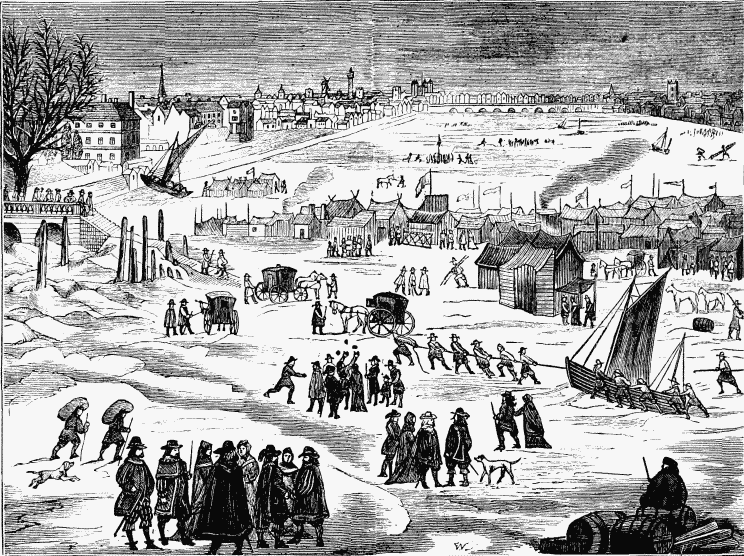
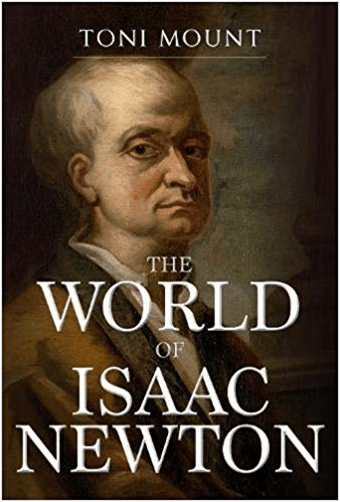



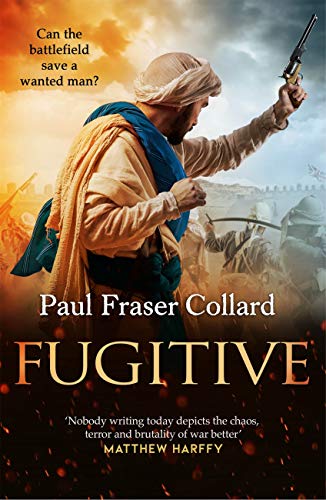

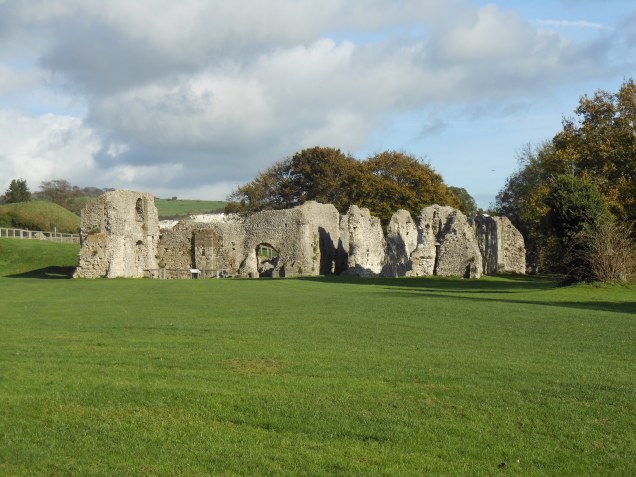
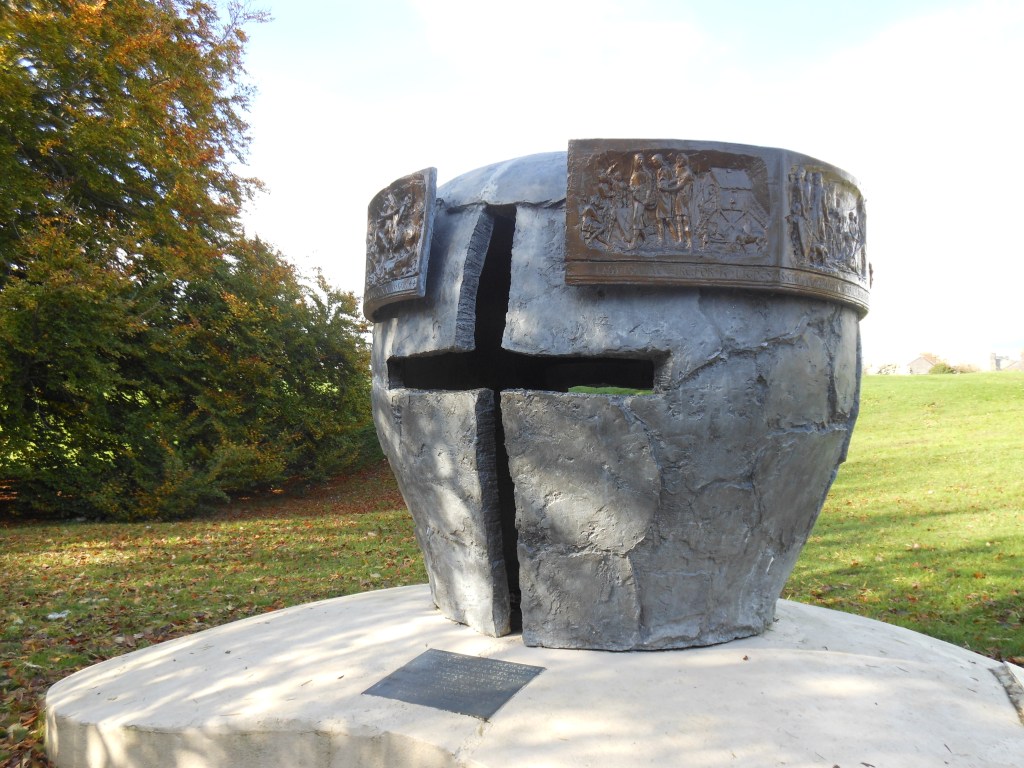

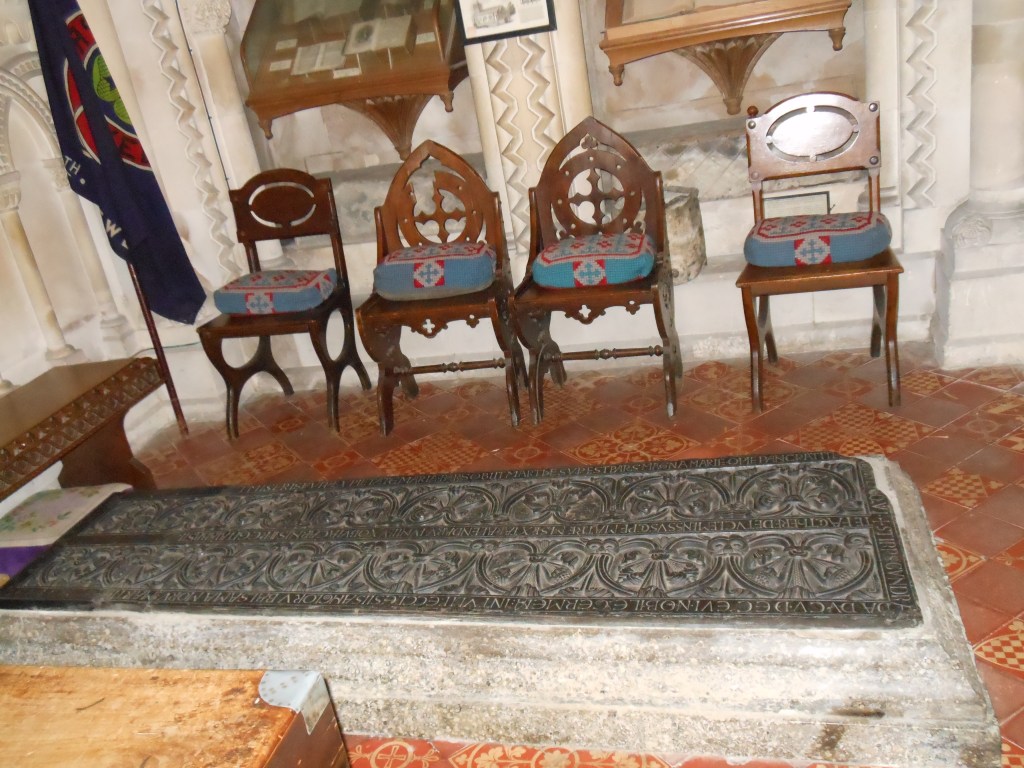
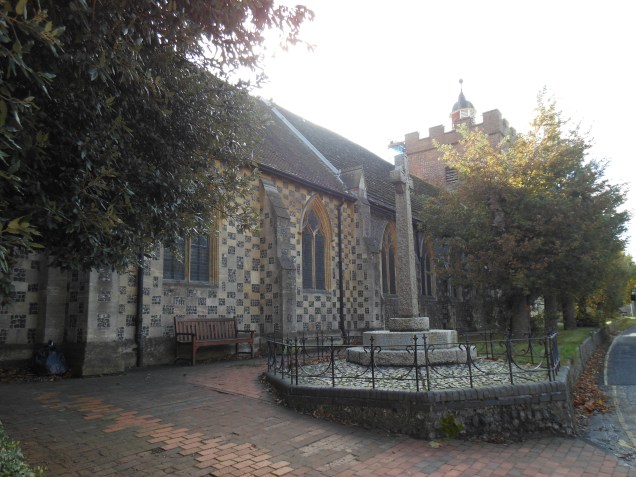

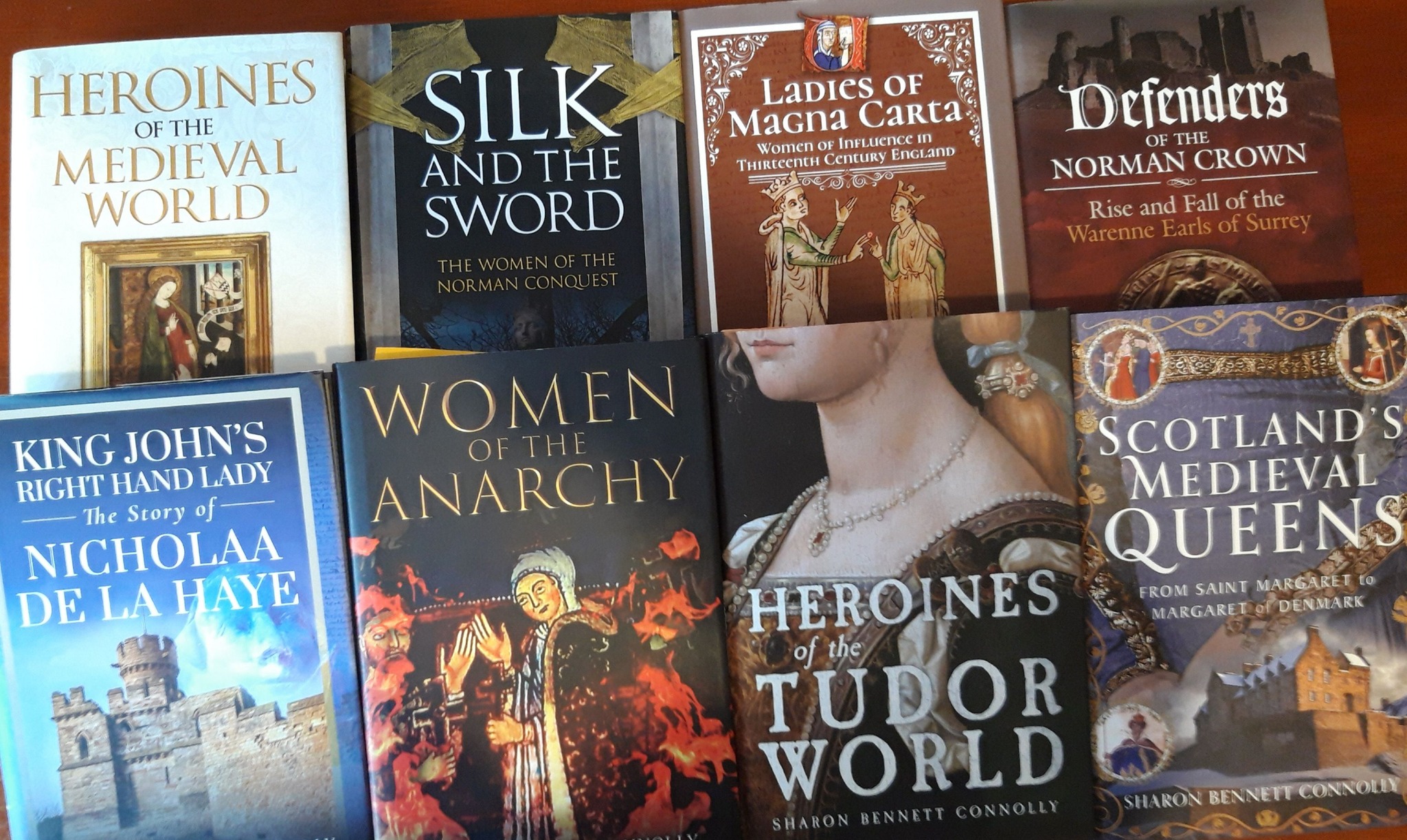

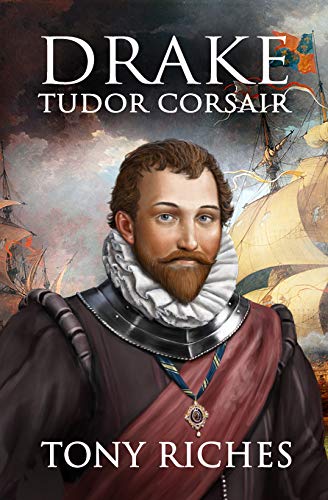
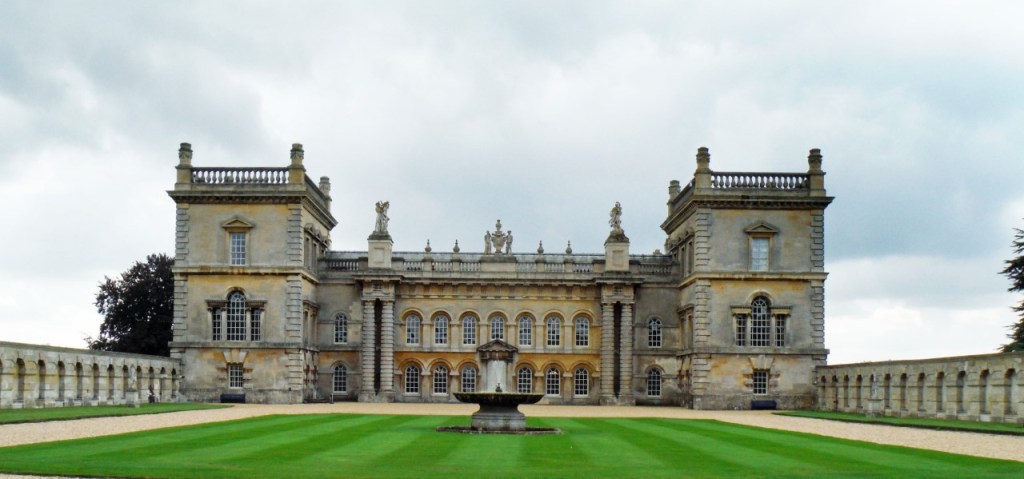

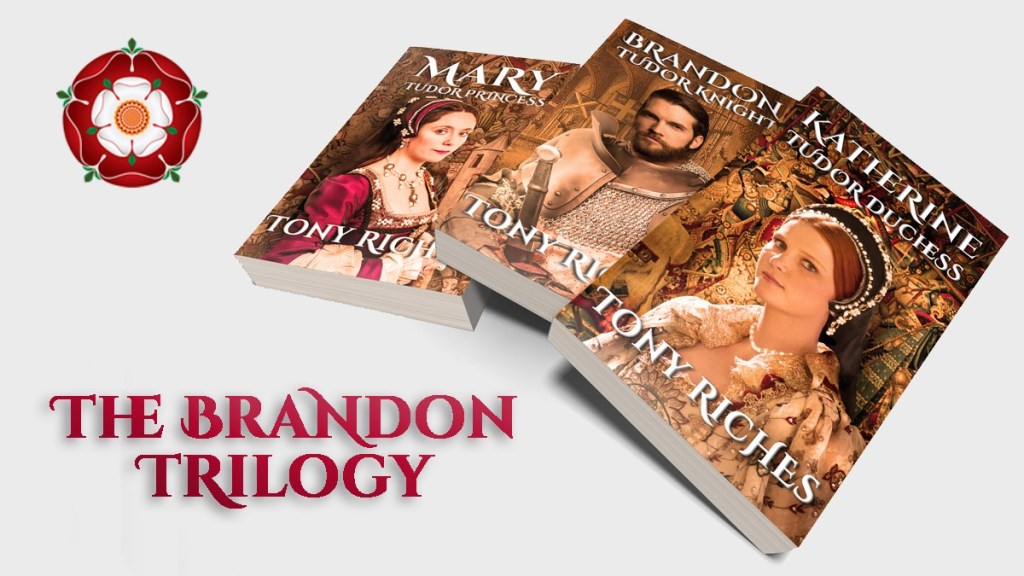
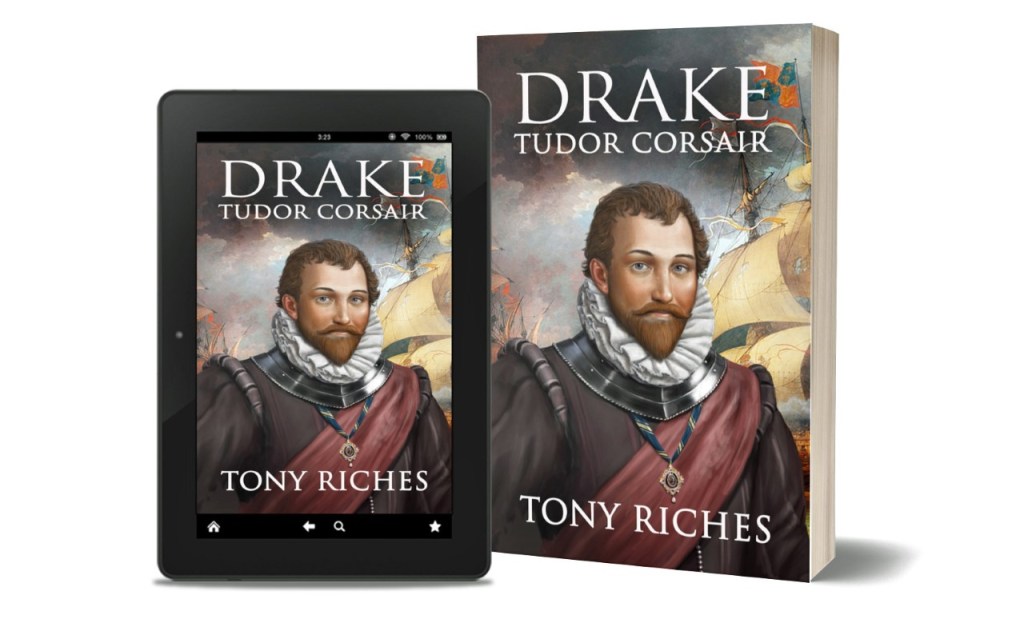

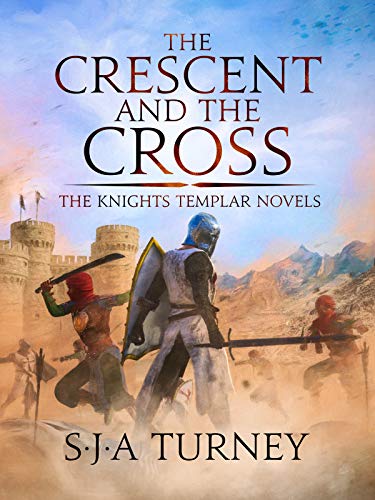



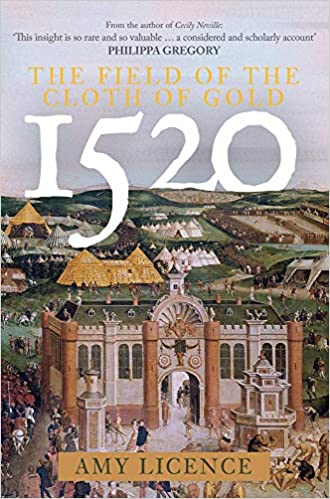

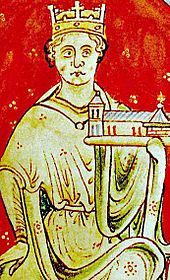


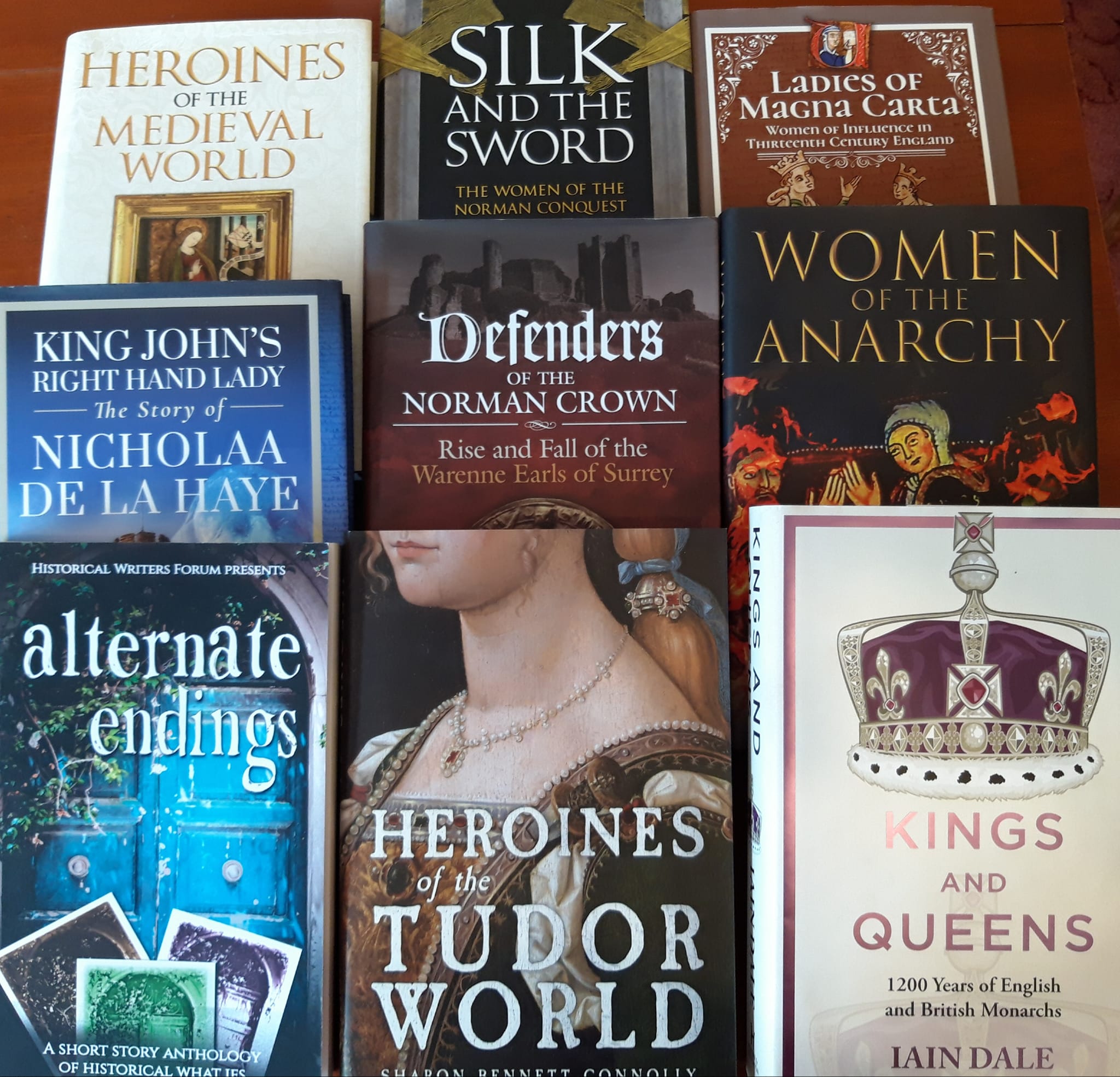
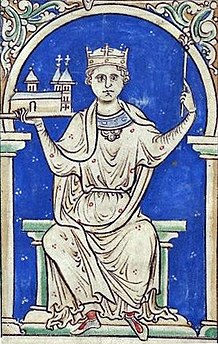
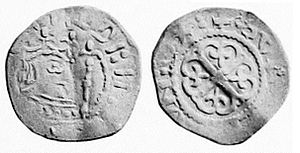
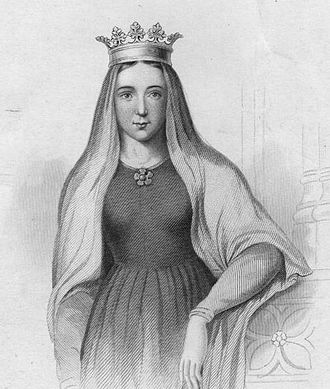

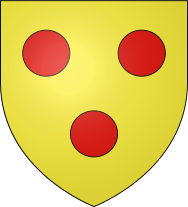


 History... the interesting bits!