The medieval era is often associated with dynastic struggles, gruesome wars and the formidable influence of the Church. But what about the everyday experience of the royal subjects and common people? Here, alongside the coronations, diplomatic dealings and key battles, can be found the fabric of medieval life as it was really lived, in its folk songs, recipes and local gossip. With a diverse range of entries – one for each day of the year – historian Toni Mount provides an almanac for lovers of all things medieval.
Toni Mount’s latest book, A Year in the Life of Medieval England, is a veritable treasury of miscellaneous snippets of medieval history. A true gem in every sense, it is one of those books that you pick up and flick through ‘just for 5 minutes’ – only to find that when you close the book again you’ve lost the last 2 hours!
Chock full of fascinating information, told in diary format, the book takes us through the year from 1st January to 31st December. Some days have just one entry – the shortest being in June;
25th – Midday Eclipse
A midday eclipse was recorded on 25th June 1191.
While other entries run to several pages, there is at least one entry for each day, and often 2 or 3. The book gives us insights into medieval court life and the great players on the national stage; offering us glimpses into their Christmas traditions, family life and political machinations. We are treated to abdications, usurpations, coronations, births and weddings; all told in a wonderfully friendly, entertaining style.
The Peasants’ Revolt
However, where this book shines is in the entries about ordinary people; drawing from wills, letters and chronicles Toni Mount builds up a picture of daily life, of the trials and labours of the man – or woman – next door. We see how the influences of Church and King dictated their lives; how the extremes of weather could lead to feast or famine and how neighbours looked out for each other.
May
10th – A Village dispute
On this day, at Woodbridge in Suffolk, a dispute arose between William the Piper, aged twenty-four years and more, and John Scanlon of the same [place], and they struck each other with their fists … John Bray, chaplain, and others took John Scanlon by the neck … He resisted and William struck John Scanlon while he was being held … forthwith, John Scanlon took a knife out of the sheath of John Bray without [him] knowing it and struck William feloniously with a wound in the chest nine inches deep and one inch in latitude from which wound William died, languishing for nine days following the dispute … Alice, wife of William was with him in his home when he died.
This book is a treasure trove for any fan of medieval England. Each day holds a wonderful snippet of information; either a story or an event, or an explanation of a tradition or saint’s day. The author has managed to cover a wide range of medieval life and events. With stories taken from the towns and fields of rural England, the law courts of London or the royal court itself, it would be impossible to read this book without learning something new – and fascinating.
Medieval York
Toni Mount has succeeded in building a picture of medieval life through all levels of society. On the same page we can read about a mercer’s will, and woman accused of witchcraft – and the death of the Black Prince. The entries are, at times, touching – such as a letter from Joan of Arc to her English captors – and at other times amusing, such as a poem about table manners for children. And amongst it all we can find recipes for herb fritters and remedies for gout!
Supported by colourful images of medieval life and court pageantry, this book is a wonderful read; from the medieval scholar to the armchair historian, it has something for everyone. Whether you read it chronologically, or head straight for your birthday (yes I did);
On this day in 1141, a strange phenomenon was recorded in London: the tide in the Thames went out and failed to flow in again for an entire twenty-four hours.
A Year in the Life of Medieval England is a wonderful, fascinating read. From the story of Aethelflaed to the Battle of Bosworth; the challenge for any reader will be putting it down!
*
Pictures taken from Wikipedia.
*
My book, Heroines of the Medieval World, is now available in hardback in the UK from both Amberley Publishing and Amazon UK and worldwide from Book Depository. It is also available on Kindle in both the UK and USA and will be available in Hardback from Amazon US from 1 May 2018.
Be the first to read new articles by clicking the ‘Follow’ button, liking our Facebook page or joining me on Twitter.
Few English monarchs had to fight harder for the right to rule than King Edward IV – Shakespeare’s glorious son of York. Cast in the true Plantagenet mould, over six feet tall, he was a naturally charismatic leader. Edward had the knack of seizing the initiative and winning battles and is free from the unflattering characterisations that plagued his brother, Richard III, having been portrayed as a good-looking and formidable military tactician. Described sometimes as reckless and profligate, all sources remark on his personal bravery. In the eleven years between 1460 and 1471 he fought five major battles in the Wars of the Roses. Three of them – Towton, Barnet and Tewkesbury – rank among the most decisive of the medieval period.
This is a history of Edward IV’s struggle to gain and retain the kingship of England during a period of sustained dynastic turmoil during the Wars of the Roses.
Jeffrey James’ biography of Edward IV is a wonderful introduction to the Wars of the Roses from the Yorkist point of view. Told in a chronological narrative, it covers the events from the very outset of the Wars, telling the story from Edward’s birth, through the struggles of Richard, Duke of York, and the outbreak of war. It concentrates on Edward’s fight to win – and keep – the throne, covering the various battles, and Edward’s military tactics, in great detail.
The Battle of Towton
With the author’s background in military history, it is no surprise that where this book shines is in the assessment of the military engagements, troop movements and battle plans. It places Edward’s story in the wider context of the Wars of the Roses, while highlighting the individuality and personality of Edward, which made him such a successful warrior and king.
Scattered among the narrative are insights into Edward’s personality:
Normally relaxed and easy-going – a man who disliked unpleasantness for its own sake – Edward nonetheless had a fiery temper, usually vented against those of noble rank who angered or disappointed him. Though more often stressing the king’s good nature contemporaries sometimes touch on this aspect of Edward’s character.
More marked was the king’s man-management skills.
Jeffrey James uses contemporary sources in abundance to back up his arguments and theories. Extensive footnotes and a comprehensive bibliography provide limitless opportunities for further reading. Maps and family trees at the beginning of the book help to provide a basic understanding of the scale of the Wars, and of the personalities involved. The narrative is also supplemented by 40 photographs, portraits and illustrations, providing a further visual aid to the people, locations and battlefields involved in the conflict.
Edward IV, Glorious Son of York is an engaging, accessible narrative which provides thorough analysis of the king’s actions – and the actions of the chief players in the Wars of the Roses. Edward’s relationships with his family, allies and, even, his enemies – foreign and domestic – are discussed and assessed, providing interesting insights into the great personalities of the 15th century.
It provides some fascinating little tidbits of history:
There may have been mercenary pikemen, as well as halberdiers, professional soldiers – forerunners of the famed continental landsknechts – whose habit of slashing their clothing seeded the fashions of Tudor times.
Marriage of Edward IV and Elizabeth Woodville
Unfortunately it does get a little fanciful in places, claiming that “Leaden images, depicting a man and a woman, found discarded in an orchard nearby, suggest enchantment” when talking about the wedding of Elizabeth Woodville and Edward IV. He also suggests Richard of Gloucester (the future Richard III) hero-worshipped his brother, without any contemporary evidence to back this up.
However, such dubious claims are few and far between and, on the whole, the author’s research is impeccable and supported by contemporary sources and evidence from archaeology. Jeffrey James also acknowledges the work and theories of fellow historians, such as Amy Licence and Charles Ross, analysing their assessments in relation to his own.
In keeping with the author’s background in military history, his Jeffrey James’ analysis of military events and tactics is insightful:
If Warwick was stirring up trouble in the North he was – to use a modern phrase – ‘operating well under the radar’, using proxies in a manner designed to circumvent the activation of any immediate royal redress. Today we might use the term ‘hybrid warfare’ when describing acts like theses: acts designed to surprise, confuse and wear down an opponent.
King Edward IV
Although the book concentrates on Edward’s fight to win and retain the throne, it also looks into Edward’s family life and the implications of his marriage to Elizabeth Woodville; on England, his allies and international politics. It provides and in-depth analysis of where Edward’s relationship with the Earl of Warwick broke down, and of Edward’s various successes and failures. He doesn’t shirk from discussing where Edward made mistakes, nor looking at where he could have done better, or been more – or less – ruthless.
Edward IV, Glorious Son of York is a well-written, entertaining biography of one of England’s most fascinating kings and his fight to win – and keep – the throne.
*
Pictures taken from Wikipedia.
*
My book, Heroines of the Medieval World, is now available in hardback in the UK from both Amberley Publishing and Amazon UK and worldwide from Book Depository. It is also available on Kindle in both the UK and USA and will be available in Hardback from Amazon US from 1 May 2018.
Be the first to read new articles by clicking the ‘Follow’ button, liking our Facebook page or joining me on Twitter.
Born on the 28th June, 1328, at Donyatt in Somerset, William Montagu – or Montacute – was the son of William Montagu, 1st Earl of Salisbury and Katherine Grandison (died 1349), 3rd daughter of William Lord Grandison. Young William was the eldest of the couple’s 2 sons and 4 daughters.
William Montagu was a friend and contemporary of Edward, the Black Prince, son and heir of Edward III, who was raised alongside William in the Salisbury household. Also among the young aristocrats in the care of the Earl of Salisbury was Joan of Kent, daughter and heir of Edmund, Earl of Kent.
Before 10th February, 1341, young Montagu and Joan were married; a union arranged by the couple’s parents and the King, Edward III, seeing as they were both only 12 years old at the time. It is unlikely that Montagu and Joan lived together as husband and wife from the moment of their marriage, they were still very young and may well have delayed consummating the marriage for at least another year or two. It is more than likely that they carried on with their education, much the same as before, with Lady Joan learning how to manage a noble household and Montagu continuing his knightly training.
On 30th January 1344, still only 15, Montagu became the 2nd Earl of Salisbury when his father died after receiving heavy bruising in the Windsor jousts. The new earl was knighted at La Hogue, during the 1346 expedition to France, though whether this was by the King or the Prince of Wales seems to be in question. During the hostilities Montagu assisted in the Siege of Caen and may have been at the Battle of Crécy.
Joan of Kent
Following the successes of the French campaign, Montagu became one of the Founders of the Order of the Garter when it was created by Edward III in April 1348. However, in the following month poor Montagu became embroiled in the biggest bigamy scandal to hit medieval England, when Thomas Holland, Montagu’s steward, recently returned from crusading in Eastern Europe, petitioned the pope for the nullification of the marriage between Montagu and Joan, on the grounds of his prior marriage to Joan.
William contested the annulment; after all, Joan was only 12 when he married her and Holland was claiming that his marriage to Joan had been consummated about 2 years earlier, making Joan 9 or 10 at the time. However, when it came time for Joan to testify, she supported Holland’s claims; the annulment was granted on 17th November 1349 and Joan returned to her first husband.
Montagu wasted little time in finding himself another wife and married Elizabeth de Mohun shortly after the annulment had been granted. Elizabeth was the daughter of John, Lord Mohun of Dunster and, given that she was born around 1343, was only 6 or 7 at the time of the marriage. They would have one child, a son, William, who was born in 1361.
No longer a minor, in 1349 William Montagu had made proof of his age and was given the livery of his lands, as Earl of Salisbury. His mother passed away in the same year and he succeeded to her dower lands.
Battle of Poitiers
The 1350s saw Montagu pursuing a highly successful military career. In 1350 he had served at Winchelsea, which saw the defeat of the Castilian fleet. In 1356 he distinguished himself serving as commander of the rearguard, alongside the Earl of Suffolk, in the Black Prince’s march through southern France; however, it was Montagu alone who commanded the rearguard during the English victory at the battle of Poitiers. Some sources credit Montagu with having chosen the English defensive position, along the gap of a hedge, which proved invaluable to the Black Prince’s forces. He defeated the first major French attack, led by the marshals, Clermont and d’Audenham; Clermont was killed and the other leaders captured.
William Montagu saw more fighting with the king, Edward III, in his expedition of 1359, before taking part in the negotiations for the Treaty of Brétigny in 1360.
Coat of Arms of Sir William Montagu, 2nd Earl of Salisbury
During the relative peace of the 1360s Montagu served as a justice of the peace, at various times, in Hampshire, Somerset and Devon; and he served on a number of commissions in Somerset and Devon. He was also embroiled in a legal dispute with the Mortimer earls of March over Denbigh, which had originally been a Mortimer possession, but was given to Montagu’s father for his part in the overthrow of Roger Mortimer in 1330. Montagu had done homage for it in 1353, but by 1355, due to his gaining royal favour, it was back in the hands of the Mortimer heir, Roger.
The dispute rumbled on during the minority of the next Mortimer heir, Edmund, earl of March. Resolution was delayed even after Mortimer came of age, due to technicalities and Mortimer’s subsequent departure for duties in Ireland; where he died, and the Mortimer lands fell subject to yet another minority. By 1396 the earl of Salisbury was prepared to give the Mortimer’s a quitclaim, but this remained undelivered at William’s death and was left to his heir to resolve.
By the late 1360s war had resumed and William Montagu was sent to Calais with the earl of Warwick, in a futile raid commanded by John of Gaunt, Duke of Lancaster. He was part of the king’s 1372 expedition to the relief of Thouars, which was forced to return to England due to unfavourable winds. In 1373 after commanding the English fleet which destroyed 7 Spanish ships in the harbour of St Malo, he relieved Brest; which had promised to yield if not relieved within 40 days. Negotiations ensued, thus avoiding a battle but enabling Montagu to resupply Brest and prevent its capture.
Still fighting the French, in 1377 Montagu served alongside the Earl of Arundel in a raid around la Rochelle, but was beaten off by local forces. By 1379, following the accession of Richard II, he was serving as Captain of Calais when he captured and burned the French fortified monastery of Beaulieu.
Montagu must have wondered at the strange twist of fate that had him serving a king, Richard II, who just happened to be the son of his first wife, Joan of Kent, and his childhood companion, Edward, the Black Prince.
On a personal front, 1378 had seen the marriage of Montagu’s son and heir, another William, to Elizabeth Fitzalan, daughter of the earl’s companion in arms Richard, Earl of Arundel. Their happiness was short-lived, however, when William died after only 4 years of marriage. In a tragedy that must have rocked Montagu to the core, on 6th August 1382 at Windsor, young William was killed in a tilting match by his own father, the earl. It must have been a horrendous scene to behold.
In the same year, 1382, Montagu had become involved in a legal dispute with his younger brother, John, concerning a statute merchant whose conditions were violated by John. The proceedings would rumble on and on; although a court of chivalry was established, with John Montagu being steward of the king’s household, no one was in a hurry to pronounce judgement on him. The case was not settled until after John’s death in 1390 and John’s son surrendered the disputed statute merchant in 1391.
The family disputes appear to have prevented Montagu from playing a major role in the reign of Richard II, as you might expect from the earl of Salisbury. He is thought to have stayed with the king throughout the Peasants Revolt of June 1381, and advised Richard II to show mercy to the rebels. Loyalty to the crown was a family tradition, but he seems to have been well-regarded by the Lords Apellant who opposed Richard’s favourites from the late 1380s onwards. And when Richard II resumed power on a more moderate basis, Montagu cooperated with him. He served in various commissions during the 1390s, but appears only on the periphery of national politics.
Bisham Abbey Berkshire
Unfortunately the court case had served to alienate William Montagu from his brother and nephew – both called John – who were also his heirs. As a result, Montagu started selling off substantial parts of his property, in order to keep them out of his brother’s hands. In 1393 he sold the Isle of Man to William Scrope and in his will, he left half of his goods to his wife and the rest to servants and the church, leaving nothing of his disposable property to his nephew, the new earl. John Montagu was left to inherit the title and landed estates not mentioned in the will.
Montagu had lived through the worst years of plague and the resultant Peasants’ Revolt; he had survived war with France on numerous occasions and suffered the personal tragedy of accidentally killing his only child. The last survivor of Edward III’s great captains of the Hundred Years War, William Montagu died on 3rd June 1397, just shy of his 69th birthday. He was buried at Montacute Priory at Bisham in Berkshire; unfortunately nothing remains of his tomb. His wife, Elizabeth, survived him by 18 years, later becoming a nun; she was received into the sisterhood of the convent of St Albans on 10th October. Having made her will in 1414, leaving her sister, Philippa, Duchess of York, and her nephew Richard, Lord Strange of Knockyn, as her heirs, she died on 14th January 1415.
*
Pictures taken from Wikipedia.
*
Sources: The Perfect King, the Life of Edward III by Ian Mortimer; The Life and Time of Edward III by Paul Johnson; The Reign of Edward III by WM Ormrod; The Mammoth Book of British kings & Queens by Mike Ashley; Britain’s’ Royal Families, the Complete Genealogy by Alison Weir; Brewer’s British Royalty by David Williamson; The Plantagenets, the Kings Who Made Britain by Dan Jones; englishmonarchs.co.uk; The Oxford Companion to British History edited by John Cannon; Chronicles of the Age of Chivalry Edited by Elizabeth Hallam; oxforddnb.com; britannia.com; themcs.org.
*
My Books
Signed, dedicated copies of all my books are available through my online bookshop.
Coming on 15 June 2024: Heroines of the Tudor World
Heroines of the Tudor World tells the stories of the most remarkable women from European history in the time of the Tudor dynasty, 1485-1603. These are the women who ruled, the women who founded dynasties, the women who fought for religious freedom, their families and love. These are the women who made a difference, who influenced countries, kings and the Reformation. In the era dominated by the Renaissance and Reformation, Heroines of the Tudor World examines the threats and challenges faced by the women of the era, and how they overcame them. From writers to regents, from nuns to queens, Heroines of the Tudor World shines the spotlight on the women helped to shape Early Modern Europe.
Two cousins. On the one side is Empress Matilda, or Maud. The sole surviving legitimate child of Henry I, she is fighting for her birthright and that of her children. On the other side is her cousin, Queen Matilda, supporting her husband, King Stephen, and fighting to see her own son inherit the English crown. Women of the Anarchy demonstrates how these women, unable to wield a sword, were prime movers in this time of conflict and lawlessness. It show how their strengths, weaknesses, and personal ambitions swung the fortunes of war one way – and then the other.
King John’s Right-Hand Lady: The Story of Nicholaa de la Haye is the story of a truly remarkable lady, the hereditary constable of Lincoln Castle and the first woman in England to be appointed sheriff in her own right. It is is available from King John’s Right-Hand Lady: The Story of Nicholaa de la Haye is the story of a truly remarkable lady, the hereditary constable of Lincoln Castle and the first woman in England to be appointed sheriff in her own right. Available from all good bookshops or direct from Pen & Sword Books, bookshop.org and Amazon. Defenders of the Norman Crown: The Rise and Fall of the Warenne Earls of Surrey tells the fascinating story of the Warenne dynasty, from its origins in Normandy, through the Conquest, Magna Carta, the wars and marriages that led to its ultimate demise in the reign of Edward III. Available from Pen & Sword Books, Amazon in the UK and US, and Bookshop.org.
Alternate Endings: An anthology of historical fiction short stories including Long Live the King… which is my take what might have happened had King John not died in October 1216. Available in paperback and kindle from Amazon.
Podcast:
Have a listen to theA Slice of Medieval podcast, which I co-host with Historical fiction novelist Derek Birks. Derek and I welcome guests, such as Bernard Cornwell and discuss a wide range of topics in medieval history, from significant events to the personalities involved.
*
Don’t forget!Signed and dedicated copies of all my books are available through my online bookshop.
For forthcoming online and in-person talks, please check out my Events Page.
You can be the first to read new articles by clicking the ‘Follow’ button, liking our Facebook page or joining me on Twitterand Instagram.
Today I welcome an extra special guest to my blog. My son, Lewis, who is in Year 6 of primary school and is studying Kings & Queens for his topic this term. Constantly being dragged to castles by his mother and a good smattering of the Horrible Histories tv show, thankfully, have instilled in him a love of all things historical.
His homework this term was to do something Kings & Queens related – but he could choose what. Lewis’s favourite monarch is Charles II, and so he chose to write Charles’s diary and asked if I would share it on here too – what mother could refuse?
So, over to Lewis….
Diary of Charles II
Battle of Marston Moor, 2nd July 1644
Charles, aged 12
Hello! I have heard that my cousin, Prince Rupert, was attacked by those bad Roundheads and his dog, Boye, you know that poodle which pee’d if you said the name ‘Pym’ and would do a dance for dad, got shot by a Roundhead musketeer. What’s more is that he was attacked at dinner! Not a good battle, we lost.
Execution of Daddy reported to me, 1st February 1649
We lost the Civil War and dad’s dead. that means I am king, but for some reason they chose a puritan, a strict protestant, (sad face) to rule and his name is Oliver Cromwell. (He has a big wart!).
A Terrible Christmas and Things get Worse, 25th December 1651
Still not King and my people are having a terrible Christmas. Pretty much because there is no Christmas because Oliver Cromwell banned it because it was “sinful”. He has also banned music, theatre, art (although he did have his face painted by Mr Larry on his order), pubs, parks, sports, etc.
Restoration!!! (smiley face), 29th May 1660
Cromwell has been dead for 2 years and his son, Richard, was about as much use as a raspberry pickaxe (yum yum yum). So a chap called General Monck came (I wonder if he was – a monk?) to my door to ask me to be king of England, which can only mean one thing … PARTY!!!
So I accepted his offer and I was known as Charles the II. This is when the fun comes in…
Dad’s Anniversary and Cromwell’s Execution (he was dead already and we dug him up), 30th January 1661
It’s dad’s anniversary of when he got executed and to celebrate (?) we dug Cromwell up and killed him again. He was hung and off went his head. What!?!?! He was a bad man. He wanted to ban everything!
Coronation and things finally Rise to Greatness, 23rd April 1661
Charles II in Coronation robes
Ever since the Restoration there are lots of bans lifted, and new furniture. I also received the world’s first coronation mug by a man called Sudders who I made my loyal adviser. And people shouted “Charlie! Charlie” etc. I was followed by Lords from the Tower of London to Westminster Abbey where I was crowned. Then I had the biggest party yet!
Wedding/getting married to Catherine of Braganza at Portsmouth , 21st May 1662
I’m marrying Catherine at noon and I need to prepare my wedding cake. I am planning it to be a 3 layered chocolate cake with chocolate icing and, of course, a party.
Tea! 13th June 1665
Catherine brought tea with her from Braganza in Portugal, near Spain. At first I thought she was crazy because it was dead leaves. Then I drank it (yuck), tried having milk in it and it was better.
Plague!!! 3rd June 1665
No! This is not when it happened! It is when I heard the reports of it. Moving to Oxford with the Royal Court now. Eek! Rats! Run to Oxford everyone! (sad face).
Later … 13th June 1665
Phew! Still alive. Glad the horses weren’t infected. I have escaped the plague and this plague is known as the Great Plague. Or was it the Black Death? No, definitely Great Plague.
Hot, hot, hot! 2nd September 1666
Great Fire of London
Pudding Lane is baking us at the minute because it is the Great Fire of London, thanks to Thomas Farriner who dropped the embers to start the fire. I did try to put out the fire for 3 days and it was hot! We were able to put out the fire in 3 days. Although there is no more London because the city is burned to the ground.
On the good side no more plague because the rats ran away, only 6 people died in the fire and I am able to rebuild the modern city. However the city won’t be rebuilt until 1667.
Happy Birthday to Me! I am 41, 29th May 1671
I am having a fun birthday! Everyone is having fun! Even the servants are having fun! I invited them too! Sudders didn’t have a good time. He didn’t want to be invited. But I invited him too! In the end he was happy. Best birthday ever!
Playing Judge, 30th May 1671
I was sentencing Colonel Thomas Blood this morning and he was funny even though he’d committed treason by stealing the Crown Jewels. I let him off, gave him his own estate in Ireland, a nice big one and a manor house. He was also invited to the palace for tea.
Tea Party! 31st May 1671
Charles II in Garter robes
I had a fun time at the party and so did Blood. He also had a story about the time he tried to kill me – and other funny stories.
This is the end of my diary. Have a wonderful day.
Tricked You! Visiting Samuel Pepys, 30th June 1672
I went to see the Royal Society member Samuel Pepys, at the Society. he told me at the Society that he published a book known as The History of Fishes. I know! Isaac Newton had asked “Who needs to know about fish?”
Pepys had also buried some wine and cheese during the Great Fire of London. Unfortunately he couldn’t remember where he’d buried it.
This time it is the end of the Diary. Thank you for listening (smiley face).
*
A great big ‘thank you’ to Lewisfor allowing me to publish his wonderful diary.
*
Pictures courtesy of Wikipedia
Sources: Tony Robinson’s Kings & Queens by Tony Robinson; Horrible Histories Slimy Stuarts by Terry Deary; Horrible Histories Cruel Kings and Mean Queens by Terry Deary; Horrible Histories Top 50 Kings & Queens by Terry Deary
*
My book, Heroines of the Medieval World, is now available in hardback in the UK from both Amberley Publishing and Amazon UK and worldwide from Book Depository. It is also available on Kindle in both the UK and USA and will be available in Hardback from Amazon US from 1 May 2018.
Be the first to read new articles by clicking the ‘Follow’ button, liking our Facebook page or joining me on Twitter.
While researching the history of Lincoln a few years ago I came across the unhappy story of Little St Hugh, a young boy whose death caused a lethal backlash of blame and recrimination which attracted the attention of the king, Henry III, himself.
The story revolves around a young boy called Hugh. Born around 1246 he was probably 9 years old when he disappeared on 31st July 1255. No one seems to know who Hugh’s father was, or even if he had one – some sources suggest he was illegitimate – but his mother is identified as a Lincoln woman named Beatrice.
According to reports young Hugh had been doing what all boys do at that age – he’d been out playing with friends. But when it got late the lad could not be found. One can imagine how desperate his mother became. She spent days looking for him and apparently was eventually told by some neighbours that he had last been seen ‘playing with some Jewish boys of his own age, and going into the house of a Jew.’¹
According to Matthew Paris it was Beatrice, herself, who had discovered Hugh’s body sometime around 27th August 1255, after marching into the house Hugh had been seen going into. Little Hugh’s body was supposedly found in a well at the property of a Lincoln Jew, named Copin (or Jopin, Joscefin or Koppin).
Poor Copin was immediately seized by those present when the body was found; Beatrice and her neighbours and the city’s bailiffs all appear to have been in attendance. In no time at all a dreadful tale of ritual murder and the ‘blood libel’ (where it was believed Christian children were tortured and killed in Jewish rituals, supposedly mimicking the crucifixion of Christ) was woven around the tragedy of the little boy’s death.
Body of Hugh of Lincoln
According to Paris:
… having shut him up in a room quite out of the way, where they fed him on milk and other childish nourishment, they sent to almost all the cities of England where the Jews lived, and summoned some of their sect from each city to be present at a sacrifice to take place at Lincoln; for they had, as they stated, a boy hidden for the purpose of being crucified. In accordance with the summons, a great many of them came to Lincoln, and on assembling, they at once appointed a Jew of Lincoln as judge to take the place of Pilate, by whose sentence, and with the concurrence of all, the boy was subjected to divers tortures. They beat him till blood flowed and he was quite livid, they crowned him with thorns, derided him and spat upon him. Moreover, he was pierced by each of them with a wood knife, was made to drink gall, was overwhelmed with approaches and blasphemies, and was repeatedly called Jesus the false prophet by his tormentors, who surrounded him, grinding and gnashing their teeth. After tormenting him in divers ways, they crucified him, and pierced him to the heart with a lance.²
It is still unclear whether or not Little Hugh was murdered; some sources suggest that it could have been a terrible accident or the boy lost his footing and fell down the well (although the well in question was apparently only dug in 1910)3. And even if the boy was murdered, it is far from clear that Copin was the culprit. However, one man took the initiative and played on the prejudices of the people, not only, create a scapegoat but use the anti-Semitism prevalent at the time in order to blame the Jewish population of England as a whole.
Gateway to Lincoln Cathedral precincts
John of Lexington was one of the witnesses at the discovery of the body and appears to have been the one to investigate the accusation of ritual murder levelled at Copin, probably by the distraught Beatrice. He may have been familiar with the case, just over a century earlier, of William of Norwich, who died in 1144 and whose death was said to involve a mock execution at the hands of a converted Jew named Theobald.
Lexington, described as ‘a man of learning, prudent and discreet‘² by Matthew Paris, managed to persuade Copin to confess and describe the murder in return for a promise of protection from torture and execution. Copin is said to have confessed to his involvement, and described the scourging, disembowelling, crowning with thorns and crucifixion of the young boy. He went on, it seems, to implicate the rest of his people, saying ‘nearly all the Jews of England agreed to the death of this boy.’4
At the time of the death many prominent Jewish families had congregated in Lincoln; not to commit murder, but to celebrate the marriage of Bellaset, the daughter of Berechiah de Nicole. The wedding guests were suddenly caught up in the tragedy and more than 90 of them were arrested and charged with practicing ritual murder. They were sent to London and imprisoned in the Tower to await trial.
Sign in Lincoln Cathedral explaining Hugh’s story
In the mean time rumours of miracles started circulating and being attributed to Little Hugh. It was said his body had been thrown down the well because when Copin had tried to bury him the earth had thrown the corpse back out. In another miracle attributed to him a blind woman regained her sight by bathing her eyes in water from the well in which Hugh’s remains had been found. Having heard of the miracles associated with Little Hugh, the canons of Lincoln Cathedral requested the body and Little Hugh ‘was honourably buried in the church of Lincoln as if it had been the corpse of a precious martyr,’² with the Cathedral even raising a shrine to the memory of Little Saint Hugh.
As for Copin; the story of a boy’s murder by England’s Jews had attracted the attention of England’s king, Henry III. According to Paris the king himself reproached John of Lexington for having promised life to such a ‘wicked being’ and the poor man was condemned to death. He was tied to the tail of a horse and dragged through the streets to the gallows, and hung.
Just 6 months before Hugh’s death the king had sold his rights to tax the Jews to his younger brother Richard, earl of Cornwall. However, he retained the right to receive the goods and property of any Jew implicated in a crime. This made the 90 Jews arrested alongside Copin extremely valuable to the king if they were guilty – and to his brother if they were innocent. Of these 90 or so Jews caught up in the aftermath of the tragedy, 18 ‘of the richer and higher order of Jews of the city of Lincoln’5 were condemned to death and dragged to gibbets erected especially and hung; their property confiscated by the king.
The remaining prisoners were eventually released, following payment of their ransom by the Earl of Cornwall, the king’s brother; his personal Jew had probably been caught up in the arrests and so it was in Cornwall’s interests to get the Jews released. Among those freed was Berechiah de Nicole, the father of the bride for whose wedding the Jews had been gathered in Lincoln.
The shrine of Little Hugh in Lincoln Cathedral
The tragedy of Little Hugh’s death was only worsened by the judicial murders of so many innocent Jews in revenge. Little St Hugh is the best known of the ‘blood libel’ saints and although a shrine was erected in Lincoln Cathedral, with a feast day of 27th August, Little Hugh was never canonised by the Vatican and has never been included in the official roll of Catholic martyrs. The shrine inside the cathedral, although still there, has lost its canopy and now has a sign at the side, explaining the legend and telling the sad tale of the boy’s death and its dreadful aftermath.
Little Hugh’s story would continue to be told in the succeeding centuries. It has been the subject of ballads in both English, Scottish and French poetry and is referred to by Chaucer in The Prioress’s Tale and by Marlowe in the Jew of Malta.
*
Footnotes:
1.Matthew Paris, quoted by Haidee J Lorrey from oxforddnb.com; 2. Matthew Paris, Of the cruel treatment of the Jews for having crucified a boy from arts.cornell.edu; 3. It’s About Lincolnshire via Twitter; 4. Matthew Paris, quoted by Haidee J Lorrey from oxforddnb.com; 5. Matthew Paris, Of the cruel treatment of the Jews for having crucified a boy from arts.cornell.edu
With thanks to Dr Dean Irwin for clarifying some points for me.
arts.cornell.edu; oxforddnb.com; pillingswritingcorner.blogspot.co.uk; britannica.com; Who’s Buried Where in England by Douglas Greenwood; Chronicles of the Age of Chivalry Edited by Elizabeth Hallam; The Plantagenets, the Kings that made Britain by Derek Wilson; England Under the Norman and Angevin Kings 1075-1225 by Robert Bartlett; jewishencyclopedia.com.
*
My books
Signed, dedicated copies of all my books are available through my online bookshop.
OUT NOW! Heroines of the Tudor World
Heroines of the Tudor World tells the stories of the most remarkable women from European history in the time of the Tudor dynasty, 1485-1603. These are the women who ruled, the women who founded dynasties, the women who fought for religious freedom, their families and love. These are the women who made a difference, who influenced countries, kings and the Reformation. In the era dominated by the Renaissance and Reformation, Heroines of the Tudor World examines the threats and challenges faced by the women of the era, and how they overcame them. From writers to regents, from nuns to queens, Heroines of the Tudor World shines the spotlight on the women helped to shape Early Modern Europe.
Alternate Endings: An anthology of historical fiction short stories including Long Live the King… which is my take what might have happened had King John not died in October 1216. Available in paperback and kindle from Amazon.
Podcast:
Have a listen to theA Slice of Medieval podcast, which I co-host with Historical fiction novelist Derek Birks. Derek and I welcome guests, such as Bernard Cornwell and discuss a wide range of topics in medieval history, from significant events to the personalities involved. There are now over 40 episodes to listen to!
*
Don’t forget!Signed and dedicated copies of all my books are available through my online bookshop.
For forthcoming online and in-person talks, please check out my Events Page.
You can be the first to read new articles by clicking the ‘Follow’ button, liking our Facebook page or joining me on Twitterand Instagram.
There are many women in history of whom we only have snippets of information. However, those snippets prove to be fascinating and demonstrate how closely the lives of noble houses were tied together – and how they were torn apart. Maud Clifford is one such lady.
Born about 1389 at Brough Castle in Westmoreland, Maud (or Matilda) was the daughter of Thomas Clifford, 6th Baron Clifford, and his wife Elizabeth de Ros. Maud’s brother, John, has also been given 1389 as his possible year of birth. It may be that John or Maud were twins, or that they were born within a year of each other.
Their early childhood cannot have been very pleasant. Their paternal grandfather, Roger Clifford, died in July of 1389, probably of a stroke. In October 1391, their father, Thomas, died. Whilst in Königsberg Thomas had had a disagreement with Sir William Douglas, illegitimate son of the earl of Douglas; Douglas was killed in the ensuing brawl and Clifford, overcome with guilt, went on pilgrimage to Jerusalem in penance. He died on an unidentified Mediterranean island whilst on the way to the Holy City.
Nothing else seems to be known of Maud’s childhood. Sometime before 1406 she was married to John Neville, Lord Latimer. For some unknown reason the marriage was never consummated and Maud successfully sued for an annulment. The marriage was dissolved with very favourable terms for Maud; some of the Neville lands had been put in trust for Maud and, even though the marriage had been declared invalid, she was allowed to keep them.
Skipton Castle, family seat of the Cliffords
Maud was, therefore, a very attractive bride for a landless earl. Richard of Conisbrough, earl of Cambridge, was the poorest – and the only landless – earl in England. He lived at Conisbrough Castle in Yorkshire as the tenant of his older brother, Edward, Duke of York. Richard was a widower with 2 small children; his wife, Anne Mortimer, had died sometime after 1411, when she had given birth to their 2nd child, Richard (future Duke of York), probably at Conisbrough Castle. It is not known when Anne died, but it was before 1414, which is the probable date of Maud’s marriage to the earl of Cambridge.
Unfortunately the marriage proved to be short-lived, with Richard of Conisbrough becoming involved in the Southampton Plot, a plan to overthrow King Henry V and replace him with Richard’s brother-in-law, Edmund Mortimer, Earl of March. However, March revealed the plot to the King and Richard and his accomplices were arrested, with Richard beheaded for treason on 5th August 1415.
Conisbrough Castle
Richard of Conisbrough was not attainted, so his lands, such as they were, were not forfeit to the crown. Maud was allowed to remain at Conisbrough Castle, and her step-son, Richard, would be allowed to inherit the Dukedom of York from his uncle, Edward, following his death at Agincourt in October 1415.
It is not clear how much contact Maud had with her step-children. The eldest child, Isabel, had been born around 1409; she had been betrothed in 1412 to Sir Thomas Grey and it is possible that she was raised in the household of the Grey family. As Duke of York, Richard’s wardship and marriage was a great prize, and would eventually go to Ralph Neville, earl of Westmoreland; with York marrying Neville’s daughter, Cecily. The Yorks’ eldest and youngest sons would become the Yorkist kings of England; Edward IV and Richard III, respectively.
Maud would continue to use Conisbrough Castle as her principal residence throughout her life; she received an annuity of £100 from the Earl of March, perhaps to assuage his guilt in the part he played in her husband’s downfall. She seems to have led a full and active life, and remained very close to her Clifford family; they stayed with her often and she was a regular visitor to the Clifford home of Skipton Castle. Her nephew, Thomas and his family, lived with her at Conisbrough for a year in 1437, while his castle at Skipton was undergoing extensive works.
Carvings in the chapel at Conisbrough Castle
On 8th April 1435 Maud’s great-nephew, John Clifford – the future 9th Baron Clifford – was born at Conisbrough Castle. He was the grandson of Maud’s brother, John, and son of her nephew, Thomas, and his wife, Joan Dacre. Baby John would have been born either in the solar of the keep itself, or in the family apartments above the great hall of the inner bailey.
Either way its most likely he was baptised in the small private chapel within the keep; with Maud as his godmother. The chapel is built into one of the keep’s 6 buttresses and, despite the years and water damage, it is a wonder to behold, with exquisite designs carved into the stone columns, and the vaulted ceiling.
‘The Murder of Rutland by Lord Clifford’ by Charles Robert Leslie
Maud’s brother, John, was killed at the siege of Meaux in 1422 and her nephew, Thomas, would be killed at the First Battle of St Albans in 1455, supposedly by Richard, Duke of York, himself. And so it was, that on the 30th december 1460, at the Battle of Wakefield, John Clifford is said to have taken his revenge by killing York’s son Edmund, the 17-year-old earl of Rutland. Whether or not Clifford uttered the words ‘as your father slew mine, so I shall slay thee’ as he killed young Edmund, is entirely debatable, but the event serves to highlight how closely the noble families of the Wars of the Roses were related.
There is some suggestion that Maud remarried in 1429. The supposed groom was John Wentworth of North Elmsall, Yorkshire. However, this seems to be more of a family legend among the Wentworth family and only arose over 100 years after Maud’s death.
Maud’s will demonstrates her closeness to her family, and serves as an insight into her comfortable life and the sumptuous furnishings of the castle.
View from the nave of the church to the high altar, Roche Abbey
To Thomas, Lord Clifford, my relation: a ‘hall’ of arras [a fine woven wall-hanging from Arras] bought from Sir Robert Babthorpe; my bed of Arras with three curtains; four cushions of red silk; two long cushions of cloth.
To John Clifford, my godson: 12 silver dishes, 6 salt-cellars signed with the ‘trayfulles’ [trefoils] and a shell.
To Beatrice Waterton, my relation: a gold cross, which belonged to my mother; my green Primary [a book of readings from the Bible]; a diamond; my best furred robe with ‘martes’ [marten fur].
To Katherine Fitzwilliam: the brooch that I wear everyday; a small black Primary; a jewel called Agnus Dei covered with silver and written around with pearls; my best robe furred with miniver [white stoat fur].
To Maud Clifford, my god-daughter: my best gold belt.¹
Maud died, of an unknown illness, at Conisbrough Castle on 26th August 1446 and was buried at Roche Abbey, of which she was a benefactor. Her tomb is now lost to history, but may have been in the nave of the church, where many secular patrons are known to have been buried.2 Though some tombs still remaining, their markings are faded after centuries of exposure to the elements, and none can be definitively identified.
*
Footnote: ¹English Heritage Guidebook for Conisbrough Castle by Steven Brindle and Agnieszka Sadrei; English Heritage Guidebook for Roche Abbey by Peter Ferguson and Stuart Harrison.
Sources: Sources: TheHistory Today Companion to British History, edited by Juliet Gardiner & Neil Wenborn; Brewer’s British Royalty by David Williamson; Britain’s Royal Families, the Complete Genealogy by Alison Weir; The Wars of the Roses by John Gillingham; The Wordsworth Dictionary of British History by J.P. Kenyon; The Oxford Companion to British History, edited by John Cannon; The Reign of Edward III by WM Ormrod; The Wars of the Roses by Martin J Dougherty; englishmonarchs.co.uk; womenshistory.about.com; findagrave.com; conisbroughcastle.org.uk; hrionline.ac.uk; English Heritage Guidebook for Conisbrough Castle by Steven Brindle and Agnieszka Sadrei; English Heritage Guidebook for Roche Abbey by Peter Ferguson and Stuart Harrison; oxforddnb.com.
*
My Books
Signed, dedicated copies of all my books are available through my online store.
OUT NOW! Heroines of the Tudor World
Heroines of the Tudor World tells the stories of the most remarkable women from European history in the time of the Tudor dynasty, 1485-1603. These are the women who ruled, the women who founded dynasties, the women who fought for religious freedom, their families and love. These are the women who made a difference, who influenced countries, kings and the Reformation. In the era dominated by the Renaissance and Reformation, Heroines of the Tudor World examines the threats and challenges faced by the women of the era, and how they overcame them. From writers to regents, from nuns to queens, Heroines of the Tudor World shines the spotlight on the women helped to shape Early Modern Europe.
Alternate Endings: An anthology of historical fiction short stories including Long Live the King… which is my take what might have happened had King John not died in October 1216. Available in paperback and kindle from Amazon.
Podcast:
Have a listen to theA Slice of Medieval podcast, which I co-host with Historical fiction novelist Derek Birks. Derek and I welcome guests, such as Bernard Cornwell, and discuss a wide range of topics in medieval history, from significant events to the personalities involved.
*
Don’t forget!Signed and dedicated copies of all my books are available through my online store.
For forthcoming online and in-person talks, please check out my Events Page.
You can be the first to read new articles by clicking the ‘Follow’ button, liking our Facebook page or joining me on Twitterand Instagram.
Jack Lark has come a long way since his days as a gin palace pot boy. But can he surrender the thrill of freedom to return home?
London, 1859. After years fighting for Queen and country, Jack walks back into his mother’s East End gin palace a changed man. Haunted by the horrors of battle, and the constant fight for survival, he longs for a life to call his own. But the city – and its people – has altered almost beyond recognition, and Jack cannot see a place for himself there.
A desperate moment leaves him indebted to the Devil – intelligence officer Major John Ballard, who once again leads Jack to the battlefield with a task he can’t refuse. He tried to deny being a soldier once. He won’t make the same mistake again.
Europe is about to go to war. Jack Lark will march with them.
Jack Lark is back!
I have spent a wonderful week on the battlefields of Victorian Europe, reading Jack Lark’s latest adventure. The Last Legionnaire is the 5th book in Paul Fraser Collard‘s fabulous series of novels based on the chameleon soldier, Jack Lark – and what a fabulous, eye-catching book cover! Lark is a serial imposter, one day taking on the guise of a rank-and-file soldier, the next sitting comfortably, in a captain’s uniform, the officers mess. This makes for some interesting and uncomfortable situations; it means you can always find Jack where the action is, but also means he’s vulnerable to the demands of intelligence officer, Major Ballard, who knows his secret.
A French Legionnaire, 1852
The story begins by bringing Jack home the rookeries of Whitechapel, in London, where the poorest a most desperate of Victorian society reside. However, he soon realises it’s no longer home; Jack Lark is one of those men who is most comfortable in the army, among soldiers. It’s what he’s good at. And it doesn’t take long to find his way back to war – with the French army – in search of a man who ran away from home and joined the French Foreign Legion.
There is action in abundance. It is frenetic and vivid. Paul Collard’s battlefield scenes are a masterpiece of descriptive writing. You can almost hear the cacophony of the cannons, see the regiments advancing in column, hear the screams of the wounded and frightened horses. The author manages to impart not only the action, but also the misery, the fear, the danger – and the lust for battle, the addiction to fighting and the power a man can find in sword, bayonet and rifle. Descriptions of the battlefield hospital, the surgeons at work – as well as the battlefield itself – demonstrate the grim reality of war.
The story is at times touching and often brutal. Jack Lark is a unique character. He serves as an example of how men can find a pleasure, or sense of accomplishment, in battle … and in another battle survived. The Last Legionnaire always has a view to the human element. Jack is aware of is soldiering abilities, even scared of what he is; he knows what he is capable of and tries hard to keep himself under control. But he also has a chivalric nature; he wouldn’t be able to resist helping a damsel in distress, rescuing a child or stopping a regiment, on the verge of panic, from running.
“I’ve seen men like you before.” Palmer broke the silence. “They survive a battle or two, so they start to believe that they’re good at fighting, that they have a talent for it.” He watched Jack pull out the small pot of grease that he used to seal each freshly loaded chamber on his revolver. “Truth is they were just lucky. One day that luck runs out, and they’re just as dead as the poor bastard who died in the first five minutes of his first battle.”
Jack stopped what he was doing and met Palmer’s flat stare. “And you’re different, I suppose?”
Palmer shrugged. “I do what has to be done, nothing more, nothing less. I know that one day my luck will run out. I don’t see the point in trying to make that day come along any quicker than it needs to.”
Jack’s anger had disappeared. He could not argue against the truth. He returned his attention to his revolver. Only when he had finished loading it did he look at Palmer again. “What about that lucky man? What if his luck holds? What if he goes on surviving?
“Then I pity the poor bastard.”
Paul Collard’s characters are incredibly diverse and full of life. Jack invokes the reader’s sympathy for a man who tries to do the right thing, but sometimes manages to go the wrong way about it. He marches to war with a small entourage, a mismatch of individuals who all want something from him.
Battle of Solferino, 1859
His sense of chivalry means he has taken under his wing a face from his past; Mary, and her young son Billy, no longer have a home and Jack does his best to protect and support them, despite frequent criticism of his inadequacies. Major Ballard is an intelligence officer; comfortable in using others’ weaknesses in order to achieve his ends. And then there’s Palmer, Ballard’s man, but he has a soft spot for Jack; he sees much of himself in the younger man. The partnership of Jack and Palmer is a strong part of the story. The 2 men grow to like and trust each other; they play to their individual strengths and their banter is enjoyable and entertaining.
Ever since reading Beau Geste as a child, I’ve had a soft spot for French Foreign Legion stories and this one is fabulous. Paul Collard has done his homework and it shines through, his knowledge of the Legion, their history and ethos, is second-to-none.
The author has an incredible sense of adventure, which he manages to get across on every page of his writing; you can tell he grew up reading Cornwell, MacDonald-Fraser and Forrester. Jack Lark is his own unique hero and he is a worthy successor to the great literary soldiers who came before him. I couldn’t help imagining him sat round a table with Sharpe, Flashman and Hornblower; he would certainly be able to hold his own when it came to telling the stories of their adventures!
My book, Heroines of the Medieval World, is now available in hardback in the UK from both Amberley Publishing and Amazon UK and worldwide from Book Depository. It is also available on Kindle in both the UK and USA and will be available in Hardback from Amazon US from 1 May 2018.
Be the first to read new articles by clicking the ‘Follow’ button, liking our Facebook page or joining me on Twitter.
Jack Lark exploded onto Kindles and bookshelves everywhere in Paul’s 1st novel, The Scarlet Thief, and now, 3 years later, The Last Legionnaire is Jack Lark’s 5th adventure. And what an adventure!
This week, after finishing his latest book, The Last Legionnaire, I was lucky enough to catch up with its author, Paul Fraser Collard and ask him a few questions about his writing and the hero of his books, Jack Lark.
What made you become a writer? I have always read a lot. For years, I spent my daily commute to work reading anything I could get my hands on. My favourite books were always historical fiction, especially the Sharpe novels by Bernard Cornwell. When I was in my early thirties, I began to wonder if I had it in me to write my own novel. One day, after a tough day at work, I opened up my laptop and made a start.
Who are your major writing influences? Bernard Cornwell stands out. I have read every book he has ever written. For me, he gets the mix of historical detail and plot exactly right. The books never fail to sweep me away into the past whilst still giving me a wonderful education into the period he is covering.
I would also say I have been influenced by the fantastic George McDonald Fraser. His Flashman series is quite magnificent. I could never hope to write anything close to such brilliance, but it did give me the idea of setting each novel in a new setting with a different cast of supporting characters.
Jack Lark is quite a unique character, a soldier/officer impostor. How did you come up with him as your character? Is he based on an actual historic person? The idea for Jack was developed from the desire to find a way to move a character around without tying him to a single regiment or a particular military campaign. I knew that is what I wanted to make my series stand out, and so I thought long and hard how to create a character that was unique enough to be able to travel the Victorian world.
The idea for an imposter came from the real story of Percy Toplis, a man made famous by the BBC TV series called The Monocled Mutineer. Percy was a rogue from a mining town in the north of England, yet he managed to pass himself off as a British army officer during the First Word War. Poor Percy met a rather nasty end, but he gave me the proof I felt I needed that a lad from a very humble background could manage to impersonate an officer.
If someone said they wanted to make a film of your books, who would you pick to play Jack Lark? Goodness, I hope this happens! However, I am dreadful at answering this question. I just don’t know of any actor that matches the picture of Jack that I carry in my head. Perhaps readers of this interview can send me their suggestions!
How long do you spend researching a novel before you start writing? I always start any novel with a period of research. This generally begins whilst I am still working on another book. I work full time so everything has to be fitted in as and when I can. I would say that on average I spend around three months learning the history of the next novel. Some have been easier than others. The American Civil War or the events of the Indian Mutiny are covered by hundreds of books, whereas the campaign against the Shah of Persia and the battle of Khoosh-Ab barely feature anywhere!
What comes first, your storyline or your research? They both develop together. The history gives me the framework and the plot is the fabric that gets woven around it. I put the two together in a very detailed plan that tends to be around 20-30,000 words. Then all I have to do it flesh it all out.
With The Last Legionnaire, Jack becomes embroiled in a war that Britain took no part in; how did you decide where he was going to fight next? I always have a vague idea where Jack is going for the next couple of novels. From there, I cast around to see what events happened in the years following the last novel I have planned. The tricky bit is thinking of how Jack can go from one to the other. I remember a review of The Maharajah’s General that stated that it would be a dull series indeed, if Jack just moved from one convenient identity to another (a Victorian version of Mr Ben, if you like!). So I always think very carefully about the link between the novels. Hopefully they work!
Do you know how the book is going to end when you start it? Pretty much. As I have to cram my writing into short gaps in my day, I need to be able to write fast. This makes planning pretty important and my novel outline is always very detailed. That said, it can and does change. The ending to The Last Legionnaire change dramatically about one week before I had to submit it to my editor. The ending I had planned just didn’t sit well and so it had to be changed.
How do you organise your writing day? My writing time is squeezed into my commute at the start and the end of the day. I have quite a long journey so that gives me just under two hours a day dedicated to writing. I then fit what I can into other times. This means I have to be very disciplined about using what time I have as effectively as I can. I try hard to write at full speed on the train, making sure I cram as much productivity into those two hours as I can. I am not one of those writers who had the luxury of ruminating over the perfect sentence!
What do you enjoy most about writing? Creating the story is the best bit and I love plotting and creating the detailed outline.
What is the worst thing about writing? Finishing the first draft! This gets harder, if I start planning the next novel before I have finished the current one.
How long does it take to do a project from start to finish? So far I am getting a novel done in around ten months. I tend to work on multiple books at the same time. Right now I am polishing book 6, writing a short story whilst also plotting and researching for book 7.
Who are your favourite personalities from history? Is there anyone you would particularly like to write about, or include in Jack’s adventures? I love the idea of working in a reference to Flashman in one of Jack’s stories, but I must say, I have always been much more interested in the ordinary men and women who found themselves caught up in the cataclysm of war than the great and famous personalities. For me, the tale of an ordinary infantryman is more interesting than that of a famous general. Apart from a few exceptions, Jack’s stories will focus on what the battles were like for the poor bloody individuals on the front line.
What other historical periods would you like to write about? I would really enjoy writing about WW2. If anything this period fascinates me even more than the Victorian Empire. I have written a novel set in WW2, but for now it is on the back burner as its needs a re-write that I just don’t have time to do. For the moment at least!
Do you ever get writer’s block? If so, how do you get around it? I have to say that I don’t often get writer’s block. I think this is because I have so little time to actually write. I tend to do my thinking at other times. When I sit down to write, I slip into blast mode and just go for it. If I do get stuck then I jump to something else. I cannot bear to waste time! It is too precious.
Do you find social media – such as Facebook – a benefit or a hindrance? I love it! The publishers are very keen on social media and I was a little daunted at first. But now I think it is the best outlet I have. I have found so many brilliant people on Facebook and on Twitter and I would now count many of them as friends. I love the fact that I can be available to anyone kind enough to read my books and I always enjoy being able to chat about history or anything else that comes up.
What will be your next project? Where is Jack fighting next – and when do we get to read it? Next up is the start of The American Civil War and specifically the First Battle of Bull Run (Jack fights for the Union in this one). If you have finished The Last Legionnaire then you will have an idea of what takes Jack across the Atlantic.
This one should be out early in 2017.
How many more Jack Lark adventures do we have to look forward to? Do you have a number in mind, or will he keep fighting until there are no wars left? I cannot imagine ever letting Jack settle down and I hope he can keep going for many years, and many novels, to come. You will know when I have written the last one as I will make sure the cover image is of him facing the reader for the first time.
*
I would like to extend my thanks to Paul Fraser Collard for his fantastic answers. Look out for my review of The Last Legionnaire, which should go live on Friday 13th May, 2016.
*
My book, Heroines of the Medieval World, is now available in hardback in the UK from both Amberley Publishing and Amazon UK and worldwide from Book Depository. It is also available on Kindle in both the UK and USA and will be available in Hardback from Amazon US from 1 May 2018.
Be the first to read new articles by clicking the ‘Follow’ button, liking our Facebook page or joining me on Twitter.
Adam de Guirande owes his lord, Sir Roger Mortimer, much more than loyalty. He owes Sir Roger for his life and all his worldly goods, he owes him for his beautiful wife – even if Kit is not quite the woman Sir Roger thinks she is. So when Sir Roger rises in rebellion against the king, Adam has no choice but to ride with him – no matter what the ultimate cost may be. England in 1321 is a confusing place. Edward II has been forced by his barons to exile his favourite, Hugh Despenser. The barons, led by the powerful Thomas of Lancaster, Roger Mortimer and Humphrey de Bohun, have reasons to believe they have finally tamed the king. But Edward is not about to take things lying down, and fate is a fickle mistress, favouring first one, then the other… The Welsh Marches explode into war, and soon Sir Roger and his men are fighting for their very lives. When hope splutters and dies, when death seems inevitable, it falls to Kit to save her man – if she can….
In the Shadow of the Storm is the first book in Anna Belfrage’s new series, The King’s Greatest Enemy, and what a magnificent introduction to Anna’s new heroes and heroines! Set in one the most tumultuous periods of English history, the book expertly blends the personal lives of its heroic couple, Sir Adam and Kit, his new wife, with the national drama of the disintegrating reign of Edward II.
Seal of Edward II
I know it’s a bit of a cliché, but this book is impossible to put down. The action and intrigue are, to put it simply, riveting. In the Shadow of the Storm has a great mix of love story and rebellion, and of heroes and villains and a heavy dose of adventure; it has you in tears one minute and on the edge of your seat with excitement the next.
Kit is my new hero! In a world where women’s rules were very specifically defined, Kit pushes the boundaries in order to achieve what she wants – but she never quite exceeds them. A young woman kidnapped from her sheltered life and thrown into a marriage to a man she has never met, and into the world of her new husband’s lord; where war, intrigue and a secret threatens to destroy the growing love the couple have for each other. However, not only does she manage to avoid sinking, Kit becomes a champion swimmer.
Adam went to the nearby table, sloshed wine into a goblet and drank deeply before passing it to her.
“I hadn’t expected to find you a virgin,” he said, eyes the colour of pewter raking her body up and down.
“What do you mean, my lord?”
“Don’t give me that.” He reclaimed the cup and leaned against one of the bedposts. “Do you think I don’t know about you and Lord Roger?” Not only was he tall, he was big, a thick, fair fuzz covering his chest, the hair darkening closer to his groin.
“Lord who?” Kit’s head ached.
“Mortimer,” he clarified with an edge to his voice. “Our lord and master.”
Adam is a knight sworn to Lord Roger Mortimer, balancing a burgeoning love for his wife and family with his duty to his lord. Kit and Adam are a very real, down-to-earth, young couple; newly married they are still discovering each other. Misunderstandings and insecurities lead to a married life that is anything but smooth. And in the midst of their developing love and trust, they are thrown into the middle of Mortimer’s rebellion against Edward II.
Isabella of France, Edward II’s queen
Ranged against them are enemies aplenty. Adam’s own step-brother, Guy, has eyes on Kit – and on everything Adam possesses – and will go to extraordinarily vicious lengths to achieve his goal. While the most despicable of all is Hugh le Despenser the younger, Edward II’s favourite and a man with a particular hatred for Adam and his lord. Vindictive and cruel, Despenser is determined to destroy Adam; Kit has to use all her courage and skill to thwart him – and to save her husband’s life.
Anna Belfrage manages to weave a wonderful story around the very real history of a desperate time for England and her people. The threats and dangers of living in a divided, unstable realm, with forces polarizing between the king and queen, are vividly depicted, drawing the reader deeper and deeper into the 14th century.
The author’s deep knowledge of the period serves to make the reader believe they are actually there, watching the action, weighing the choices and living the harsh reality of a realm on the brink of civil war. The history is impeccable, with Kit and Adam’s story slipping into the historical timeline so neatly that it is practically impossible to see the line where history ends and fiction begins.
Tower of London
Anna Belfrage’s depiction of the historical characters is exquisite. Despenser is suitably heinous; he makes your skin crawl when he walks into a scene. Lord Roger Mortimer is determined, charming … and noble. The personalities are diverse and fascinating. The landscapes are so vividly describes as to be dramatic; you could almost imagine yourself riding along the rivers of the Welsh Marches, incarcerated in a dark, cold dungeon, or walking along the main thoroughfare of the ancient town of Shrewsbury.
In the Shadow of the Storm is a wonderfully exciting book; a clever blend of intrigue, romance and action. Anna Belfrage is a master story-teller and has done her homework well – she brings the 14th century to vivid, colourful life. It will be difficult to read anything better this year …. but I can’t wait to see if Book 2 in The King’s Greatest Enemy series, Days of Sun and Glory, proves me wrong……
*
nna Belfrage is the author of the extremely popular time travelling series, TheGraham Saga. To find out more about this incredible author and her books, please visit her website.
Pictures of Edward II and Isabella of France are courtesy of Wikipedia.
*
My book, Heroines of the Medieval World, is now available in hardback in the UK from both Amberley Publishing and Amazon UK and worldwide from Book Depository. It is also available on Kindle in both the UK and USA and will be available in Hardback from Amazon US from 1 May 2018.
Be the first to read new articles by clicking the ‘Follow’ button, liking our Facebook page or joining me on Twitter.
Maria de Salinas was a lady-in-waiting and close friend to Katherine of Aragon; indeed, she probably came to England with the Spanish princess in 1501 for the marriage to Henry’s older brother, Arthur, Prince of Wales. Katherine and Maria were very close and the Spanish ambassador complained of Maria’s influence over the queen, especially after she tried to persuade Katherine not to cooperate with the ambassador and encouraged the Queen to favour her English subjects.
In June 1516 Maria married the largest landowner in Lincolnshire, William Willoughby, 11th Baron Willoughby de Eresby. The wedding was a lavish affair – attended and paid for by the King and Queen. It took place at Greenwich Palace and the couple were given Grimsthorpe Castle, in Lincolnshire, as a wedding present. The Queen even provided Maria with a generous dowry of 1100 marks.
Maria remained at court for some years after her wedding, and attended Queen Katherine at the Field of Cloth of Gold in 1520. Henry VIII was godfather to Maria and William’s oldest son, Henry who died in infancy. Another son, Francis, also died young and their daughter Katherine, born on 22nd March 1519 and named after the queen, would be the only surviving child of the marriage. With her father holding over 30 manors in Lincolnshire alone, and an annual income of over £900 a year, Katherine was one of the great heiresses of her generation.
Charles Brandon, Duke of Suffolk
Little Katherine was only 6 or 7 when her father, Lord Willoughby, died in 1526. For several years afterwards Maria was embroiled in a legal dispute with her brother-in-law, Sir Christopher Willoughby, over the inheritance of the Willoughby lands. It seems William had settled some lands on Maria which were entailed to Sir Christopher. The dispute went to the Star Chamber and caused Sir Thomas More, the king’s chancellor and a prominent lawyer, to make an initial redistribution of some of the disputed lands.
This must have been a hard fight for the newly widowed Maria, and the dispute threatened the stability of Lincolnshire itself, given the extensive lands involved. However, Maria attracted a powerful ally in Charles Brandon, Duke of Suffolk and brother-in-law of the King, who called on the assistance of Cardinal Thomas Wolsey, Henry’s first minister at the time, in the hope of resolving the situation.
Suffolk had managed to obtain the wardship of Katherine Willoughby in 1529, intending her to marry his eldest son and heir Henry, who had been made Earl of Lincoln in 1525, and so had a vested interest in a favourable settlement for Maria. Suffolk’s acquisition of the de la Pole estates had given him a prominent position in East Anglia; with these properties added to young Katherine’s lands in Lincolnshire, he would create an impressive power base.
Henry Brandon, 2nd Duke of Suffolk
Whether or not the young earl of Lincoln was a sickly child (as he died in 1534) is uncertain; however the marriage was not to be – it has been a habit to say that anyone who died young was sickly, but this was not necessarily the case as fatal childhood illnesses were common. Suffolk had been married to king Henry VIII’s little sister, Mary Tudor, Dowager Queen of France, but she died in September 1533. The 50-year-old Duke of Suffolk caused a great scandal when, only 3 months later, he married 14-year-old Katherine himself. She was Suffolk’s fourth wife.
Despite the age difference, it does appear to have been a successful marriage. Katherine and Charles were to have 2 sons. The first, Henry, was born in 1535 and the youngest, Charles, was born in 1537.
Although Suffolk pursued the legal case with more vigour after the wedding, a final settlement was not reached until the reign of Elizabeth I. The combined properties of Charles Brandon, Duke of Suffolk, and Katherine made Suffolk the greatest magnate in Lincolnshire. He added to their properties by purchasing monastic land and built a fine house at Grimsthorpe Castle. His prominence in the county meant Suffolk was instrumental in suppressing the Lincolnshire rebellion in 1536 (part of the Pilgrimage of Grace), a consequence of the Dissolution of the Monasteries.
Charles Brandon, 3rd Duke of Suffolk
Along with her mother, Katherine was an official mourner at the funeral of Katherine of Aragon in 1536. Sadly, it was only 3 years later, in 1539, that Queen Katherine’s former lady-in-waiting, Maria de Salinas, Lady Willoughby, passed away.
Katherine served at court, in the household of Henry VIII’s sixth and last queen, Katherine Parr. A stalwart of the Protestant learning, Duchess Katherine used her position to introduce Protestant clergy to Lincolnshire, even inviting Hugh Latimer to preach and Grimsthorpe Castle. It was she and Sir William Cecil who persuaded Katherine Parr to publish her book, The Lamentacion of a Sinner in 1547. Katherine Willoughby was also drawn into the tragedy of Anne Askew, whose brother-in-law, George St Poll, was a lawyer in Katherine’s service. During her torture in the Tower of London, Anne was questioned as to whether or not Katherine and aided her, but she refused to implicate the duchess or Queen Katherine.
In the early 1540s Suffolk played a big part in Henry’s wars with France and Scotland; in 1544 he successfully prosecuted the siege of Boulogne and was rewarded in February 1545 with the lands of Tattershall College, which he was allowed to purchase for less than half price.
Amid preparations for another expedition to France, Suffolk died at Guildford in August 1545; the cause of death is not known. He would have been in his early 60s. Suffolk’s son and heir, Henry, was just 10 years old. Katherine was granted his wardship in May 1546, for the sum of £1500 and he was sent to the household of Prince Edward to continue his studies. It must have been a cause of great pride for Katherine when Henry and Charles were both knighted at Edward VI’s coronation, with Henry, as duke of Suffolk, having the honour of carrying the orb during the ceremony.
In 1549 Henry and Charles were enrolled at St John’s College, Cambridge, in order to finish their education.
Katherine Willoughby
It was in the summer of 1551 that an outbreak of sweating sickness struck Cambridge. Henry and Charles moved to the Bishop of Lincoln’s Palace at Buckden in Huntingdonshire, in a futile attempt to escape the disease. For it was at Buckden, on July 14th 1551, that the boys both passed away within minutes of each other. Charles, surviving his brother by about half an hour, became the 3rd Duke of Suffolk before his death. The boys, who had shown great promise at Cambridge, were buried together at Buckden. To lose both her sons in such a short space of time must have been devastating for Katherine to take.
Following the deaths of her sons by Suffolk, Katherine no longer had a financial interest in the Suffolk estates, which went to the heirs of Mary Tudor, Henry VIII’s sister. However, Katherine still had her own Willoughby estates to look after and in order to safeguard these, Katherine married her gentleman usher, Richard Bertie, in 1552. This marriage appears to have been made for love and with mutual religious beliefs; unfortunately for the couple, Katherine was unsuccessful in her attempts to gain the title of Lord Willoughby for her second husband.
The couple had a difficult time navigating the religious tensions of the age and, during the reign of the Catholic Queen Mary I, in early 1555, even went into exile on the Continent, travelling through Wesel, Strasbourg and Frankfurt. And at the time of Mary’s death, in 1558, they were staying at the court of the king of Poland. They returned to England the following year. During the reign of Elizabeth I, Katherine resumed her position in Tudor society; however, her relations with the court were strained by her tendency towards Puritanism.
Susan Bertie, Countess of Kent
Katherine used her position in Lincolnshire and extensive patronage to help disseminate the Puritan teachings. The records of Katherine’s Lincolnshire household show that she employed Miles Coverdale – a prominent critic of the Elizabethan church – as tutor to her two children by Bertie. The couple’s 1st child, a daughter, Susan, was born in 1554 and was still a baby when she went into exile on the continent, with her parents. A son, Peregrine, was born in Wesel in Cleves in 1555, whilst the family was still exiled from England.
Susan went on to marry Reginald Gray of Wrest in 1570. Reginald would be restored to the family title of Earl of Kent in 1572, but died in March 1573. The couple had no children and the Dowager Countess of Kent would marry again in 1581, to Sir John Wingfield, a nephew of the redoubtable Bess of Hardwick. they had 2 sons.
Peregrine Bertie spent his teenage years in the household of Sir William Cecil, a good friend of his mother and Queen Elizabeth’s principal secretary. It was there that he met and fell in love with Mary de Vere, orphaned daughter of John de Vere, 16th Earl of Oxford. Despite opposition from Katherine and the bride’s brother Edward de Vere, 17th Earl of Oxford, the couple married sometime in late 1577, or early 1578. The marriage appears to have been happy and loving, and produced 5 sons and a daughter.
Peregrine Bertie, 13th Baron Willoughby de Eresby
Peregrine succeeded as the 13th Baron Willoughby of Willoughby, Beck and Eresby on the death of his mother and would serve Queen Elizabeth, both as a soldier and administrator, until his own death in 1601.
Katherine had been a strong supporter of the Protestant faith; numerous books carried her coat of arms, or were dedicated to her, including works by Erasmus and William Tyndale. The family’s adventures on the continent were retold in John Foxe’s Acts and Monuments, and even in popular Elizabethan ballads.
Katherine Willoughby, Dowager Duchess of Suffolk and 12th Baroness Willoughby de Eresby, died after a long illness, on 19th September 1580, at Grimsthorpe Castle. She was interred with a fine, alabaster tomb in Spilsby Church, in her native Lincolnshire. Her husband, Richard, died 2 years later and was buried beside her.
Grimsthorpe Castle
*
Pictures courtesy of Wikipedia
*
Sources: Susan Wabuda, Oxforddnb.com; Sarah Morris and Natalie Grueninger, In the Footsteps of the Six Wives of Henry VIII; Retha M. Warnicke, Oxforddnb.com; England Under the Tudors by Arthur D Innes; In Bed with the Tudors by Amy Licence; Ladies-in-Waiting: Women who Served at the Tudor Court by Victoria Sylvia Evans; The Earlier Tudors 1485-1558 by JD Mackie; The Six Wives and Many Mistresses of Henry VIII: The Women’s Stories by Amy Licence; Sarah Bryson; Elizabeth’s Women by Tracy Borman.
*
My Books
Signed, dedicated copies of all my books are available through my online bookshop.
Out now: Scotland’s Medieval Queens
Scotland’s history is dramatic, violent and bloody. Being England’s northern neighbour has never been easy. Scotland’s queens have had to deal with war, murder, imprisonment, political rivalries and open betrayal. They have loved and lost, raised kings and queens, ruled and died for Scotland. From St Margaret, who became one of the patron saints of Scotland, to Elizabeth de Burgh and the dramatic story of the Scottish Wars of Independence, to the love story and tragedy of Joan Beaufort, to Margaret of Denmark and the dawn of the Renaissance, Scotland’s Medieval Queens have seen it all. This is the story of Scotland through their eyes.
‘Scotland’s Medieval Queens gives a thorough grounding in the history of the women who ruled Scotland at the side of its kings, often in the shadows, but just as interesting in their lives beyond the spotlight. It’s not a subject that has been widely covered, and Sharon is a pioneer in bringing that information into accessible history.’ Elizabeth Chadwick (New York Times bestselling author)
Heroines of the Tudor World tells the stories of the most remarkable women from European history in the time of the Tudor dynasty, 1485-1603. These are the women who ruled, the women who founded dynasties, the women who fought for religious freedom, their families and love. Heroines of the Tudor World is now available from Amberley Publishing and Amazon UK.Women of the Anarchy demonstrates how Empress Matilda and Matilda of Boulogne, unable to wield a sword themselves, were prime movers in this time of conflict and lawlessness. It shows how their strengths, weaknesses, and personal ambitions swung the fortunes of war one way – and then the other. Available from Bookshop.org, Amberley Publishing and Amazon UK. King John’s Right-Hand Lady: The Story of Nicholaa de la Haye is the story of a truly remarkable lady, the hereditary constable of Lincoln Castle and the first woman in England to be appointed sheriff in her own right. Available from all good bookshops Pen & Sword Books, bookshop.org and Amazon.
Alternate Endings: An anthology of historical fiction short stories including Long Live the King… which is my take what might have happened had King John not died in October 1216. Available in paperback and kindle from Amazon.
Podcast:
Have a listen to theA Slice of Medieval podcast, which I co-host with Historical fiction novelist Derek Birks. Derek and I welcome guests, such as Bernard Cornwell and Michael Jecks, and discuss a wide range of topics in medieval history, from significant events to the personalities involved.
The medieval era is often associated with dynastic struggles, gruesome wars and the formidable influence of the Church. But what about the everyday experience of the royal subjects and common people? Here, alongside the coronations, diplomatic dealings and key battles, can be found the fabric of medieval life as it was really lived, in its folk songs, recipes and local gossip. With a diverse range of entries – one for each day of the year – historian Toni Mount provides an almanac for lovers of all things medieval.


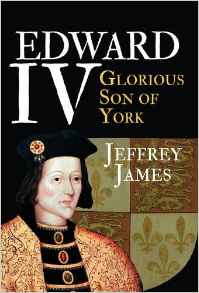
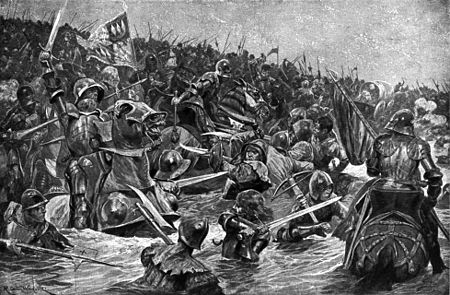

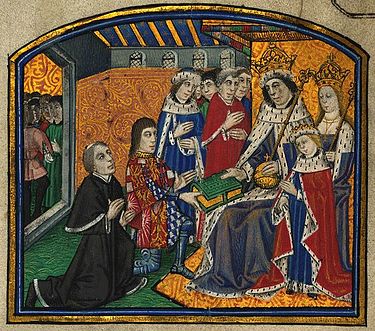
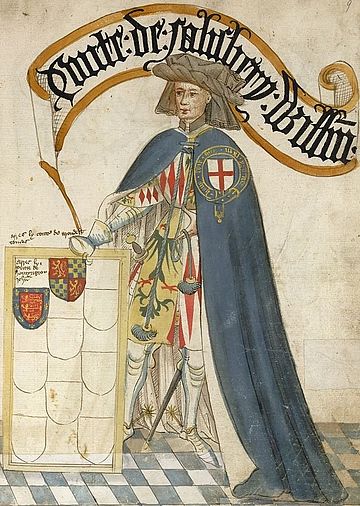
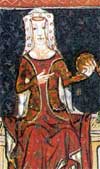
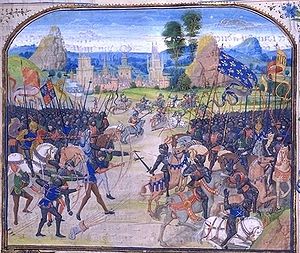
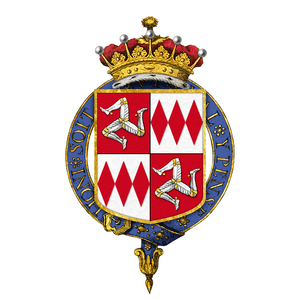
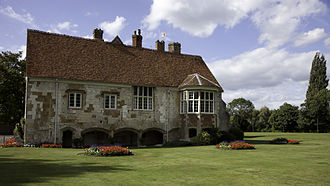
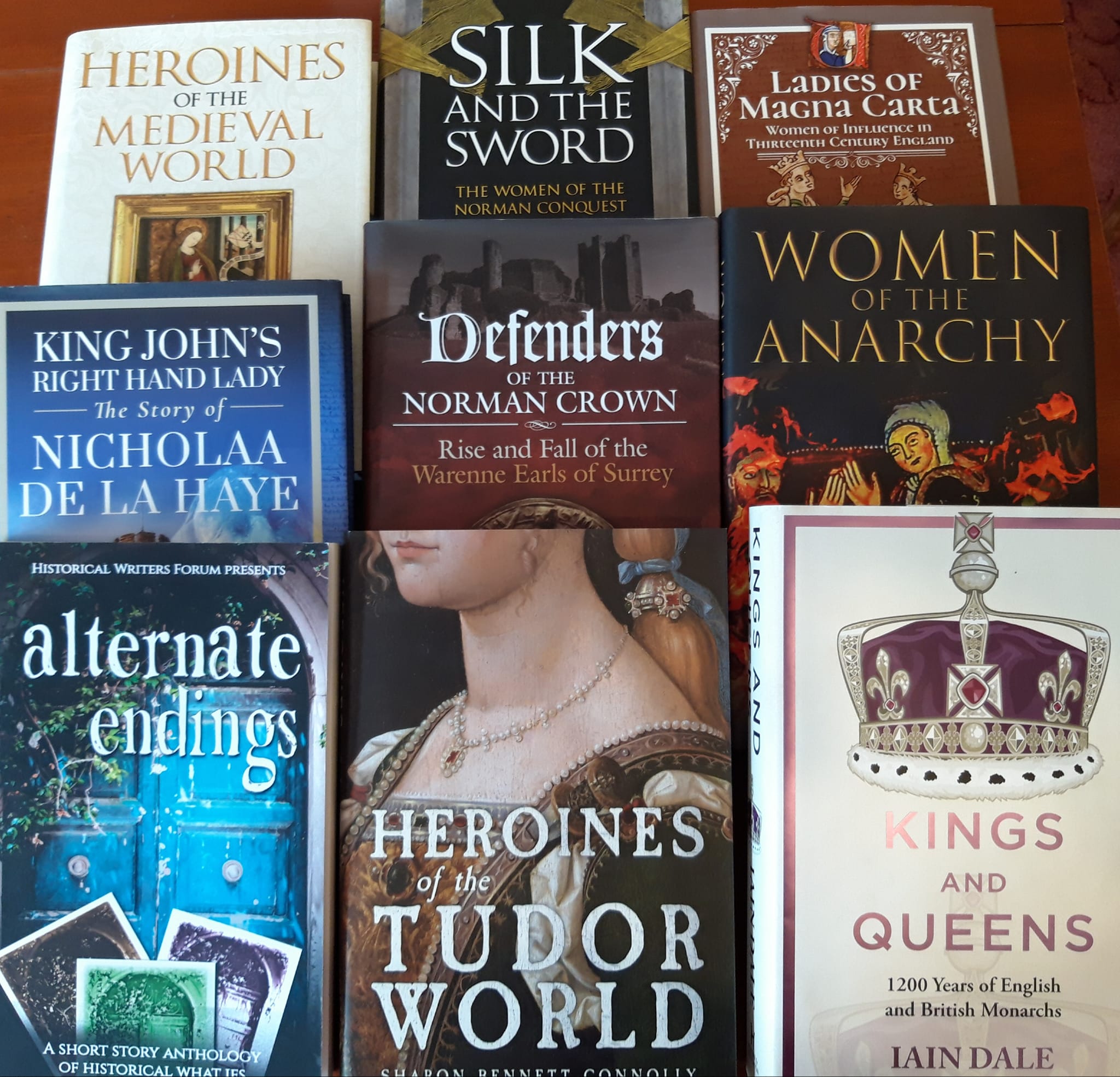



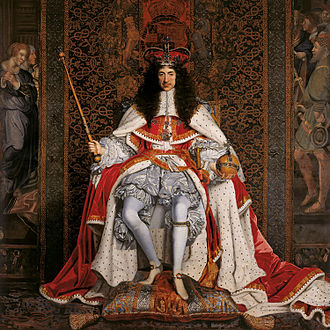
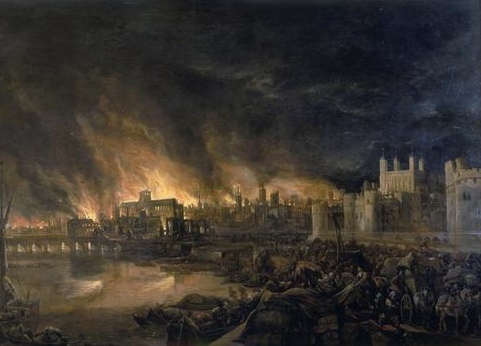
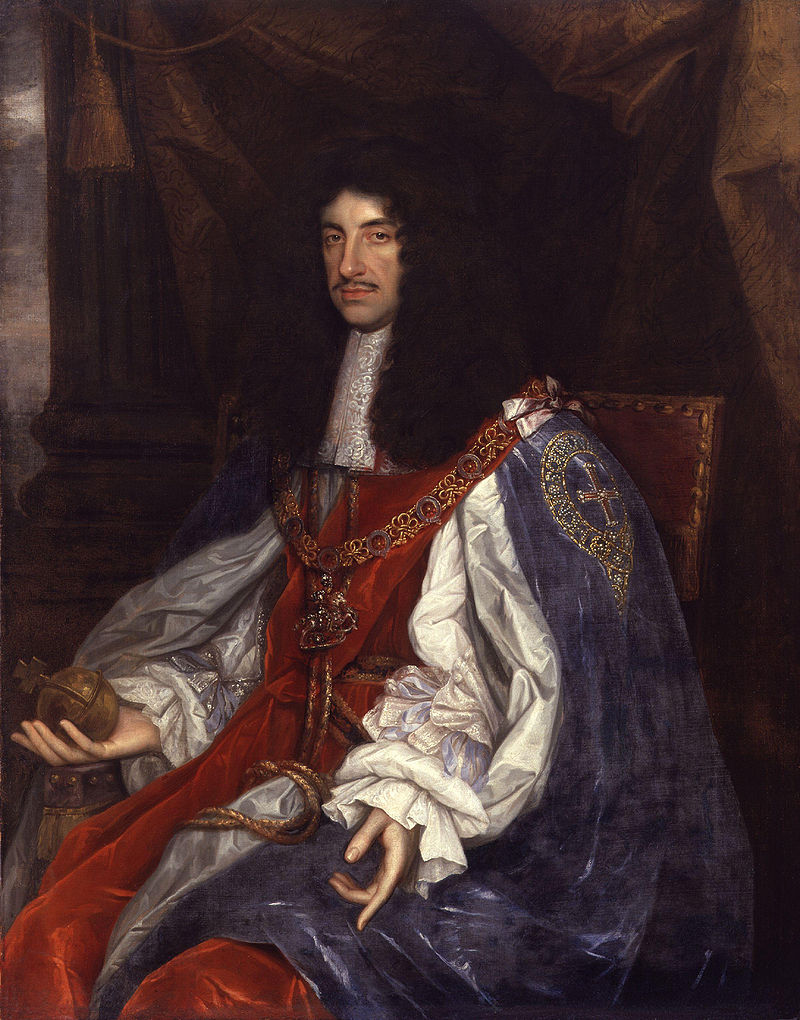
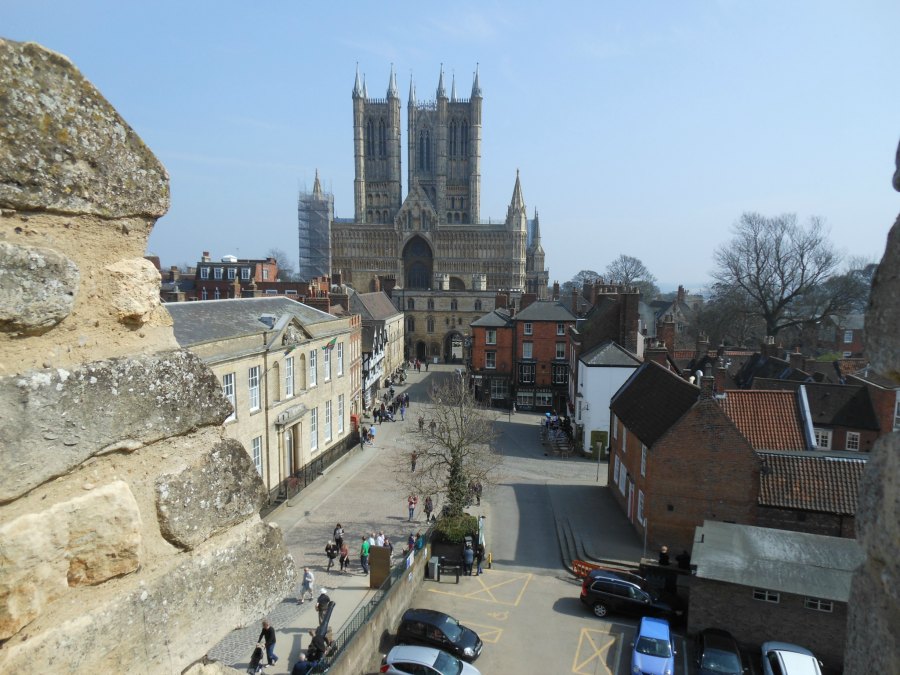
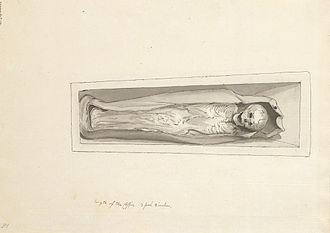
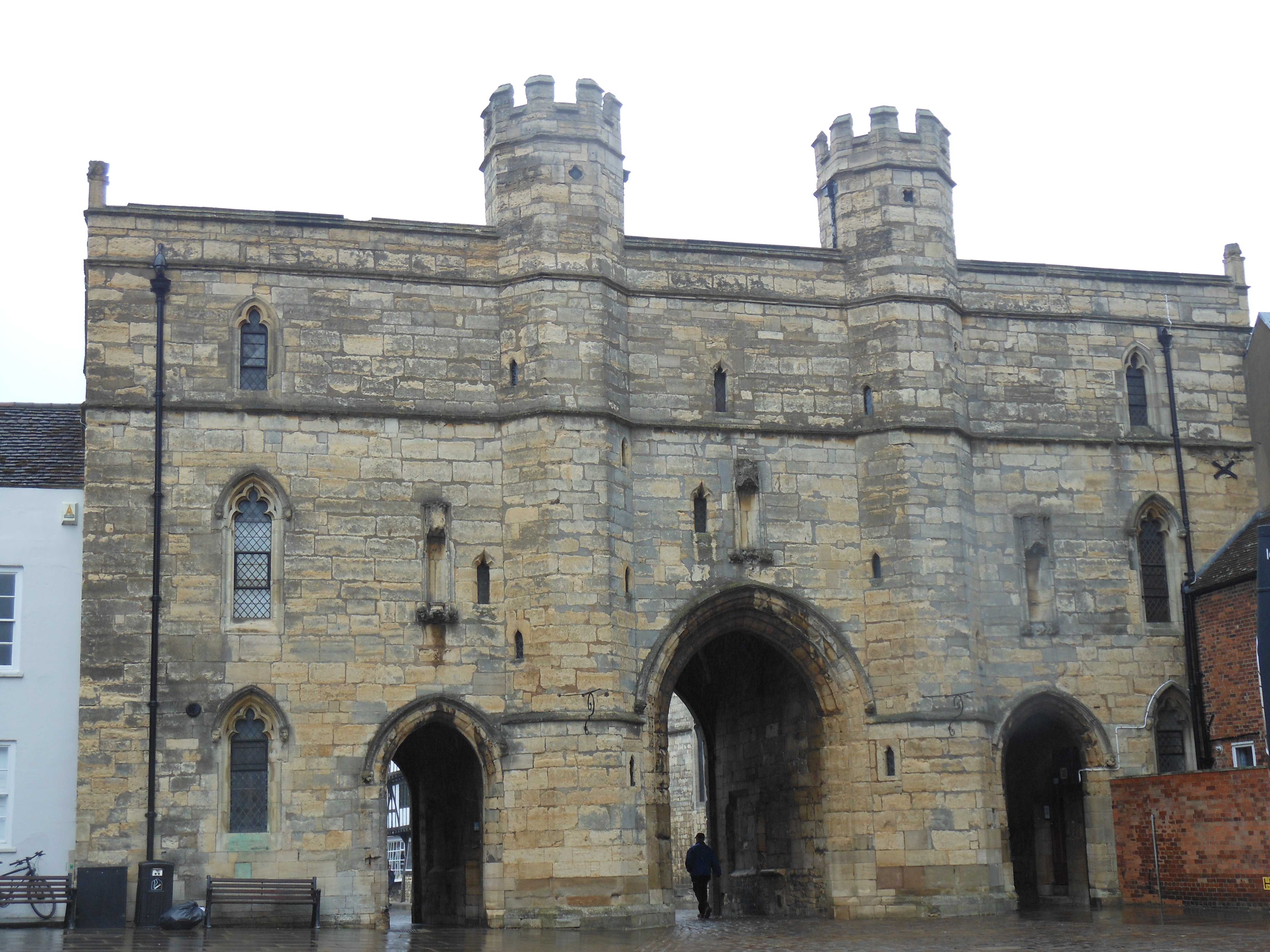
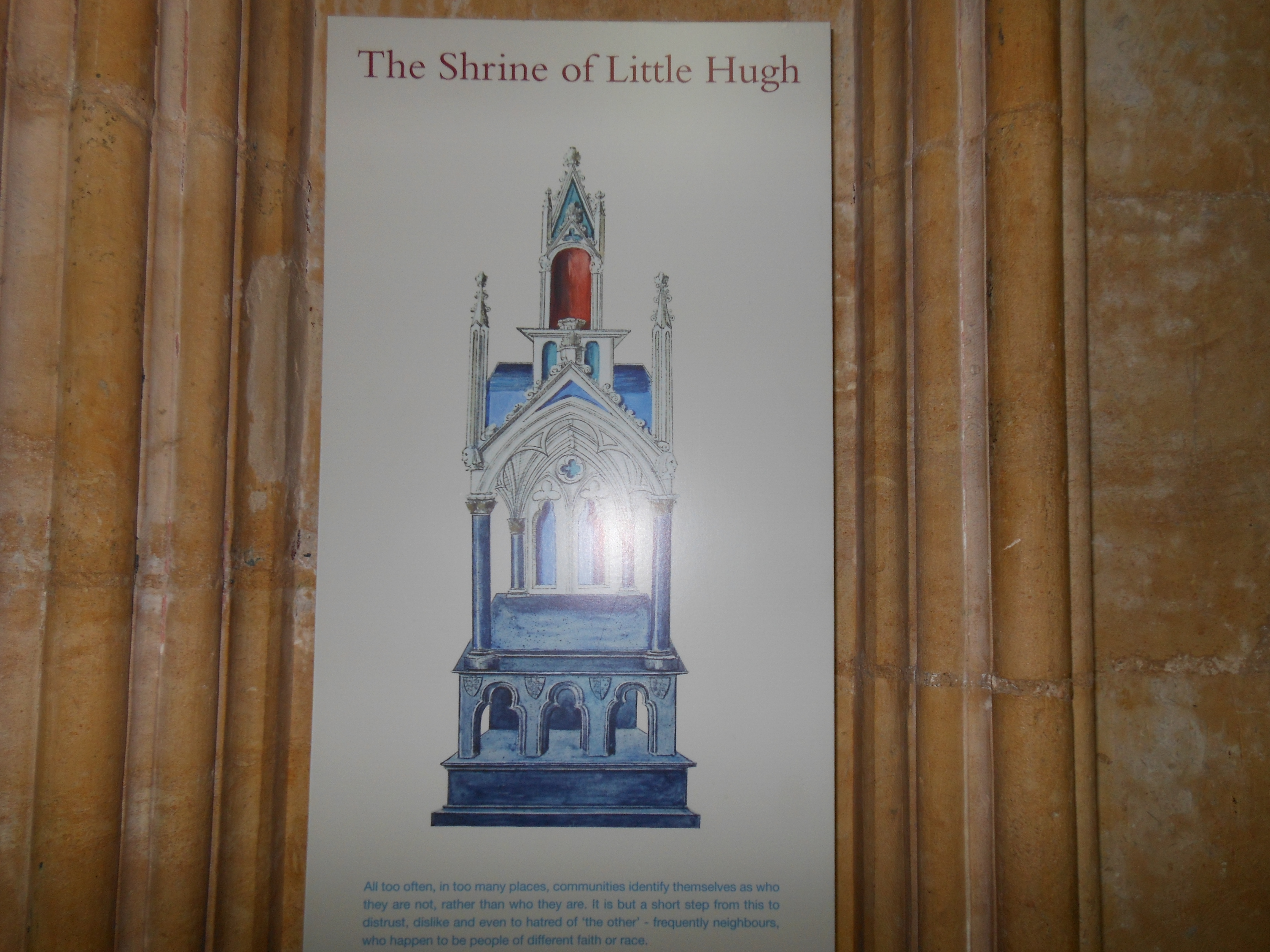
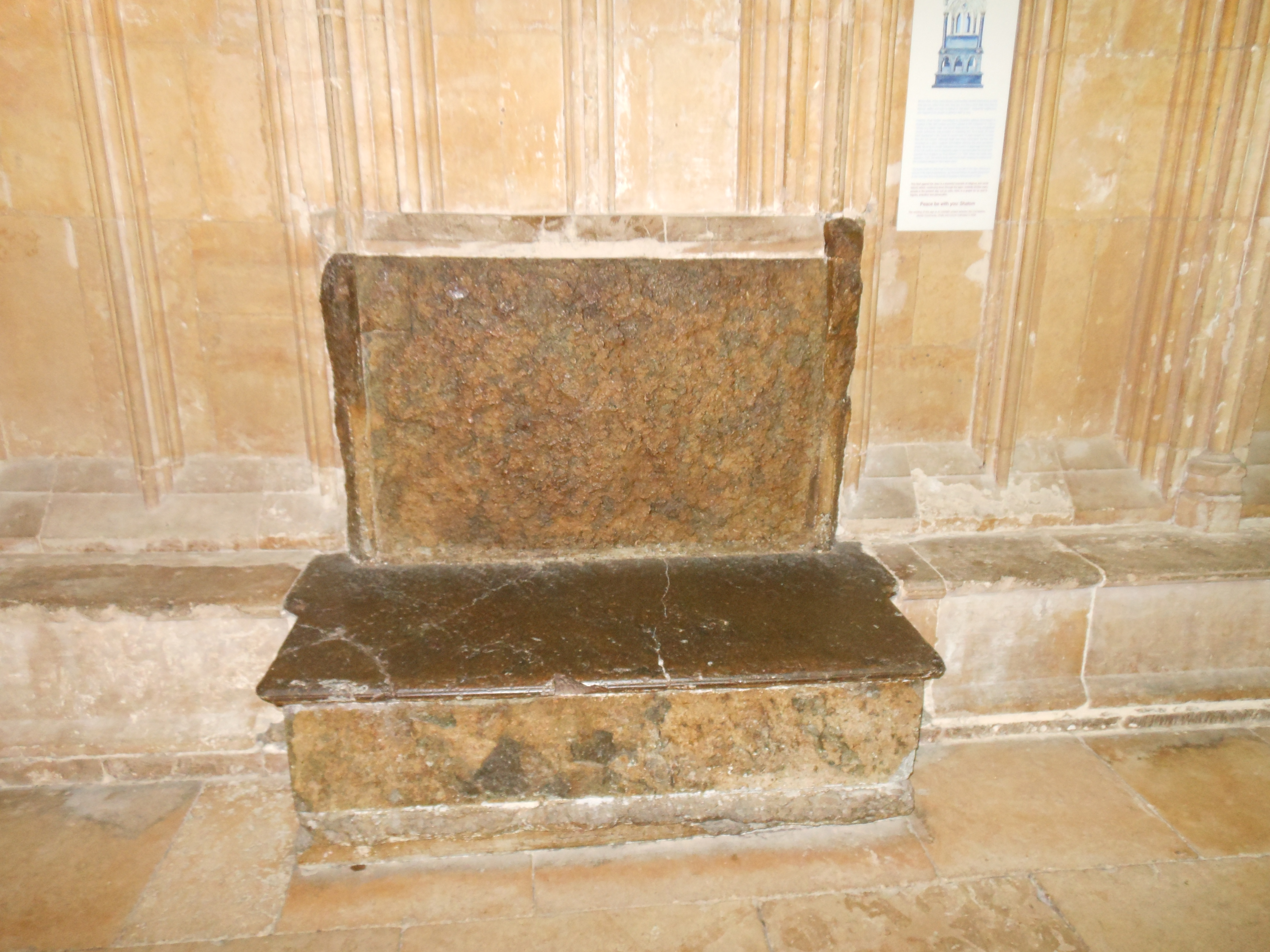

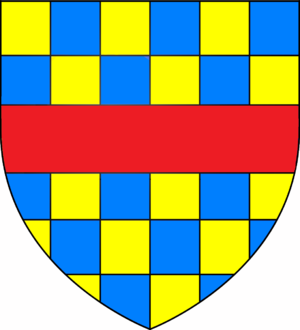


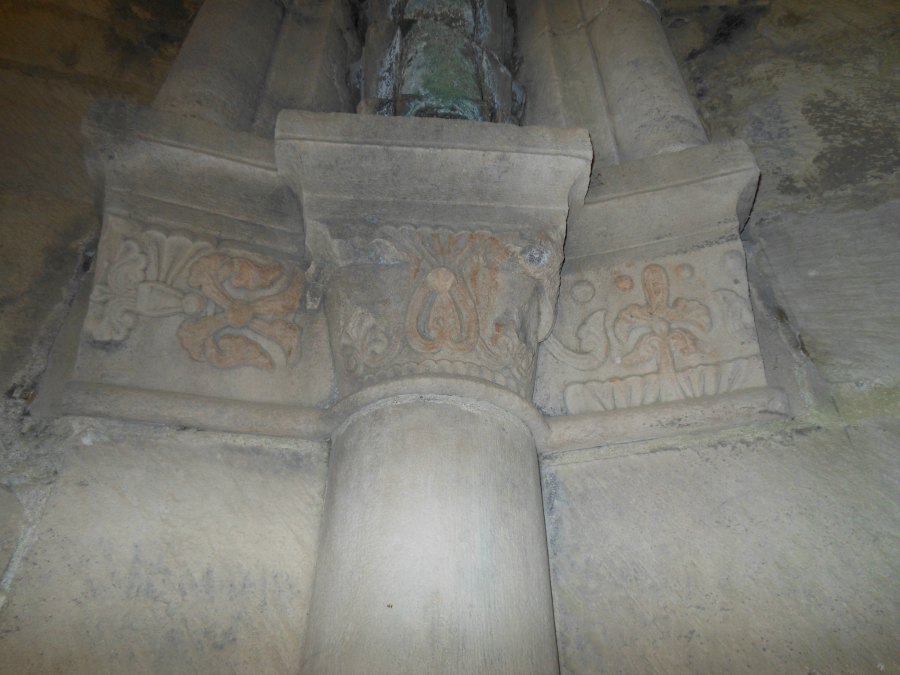



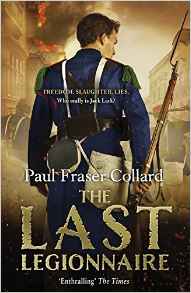
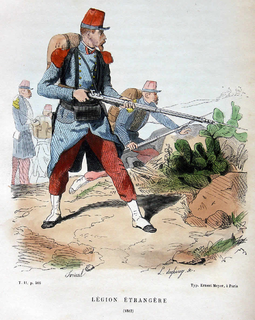
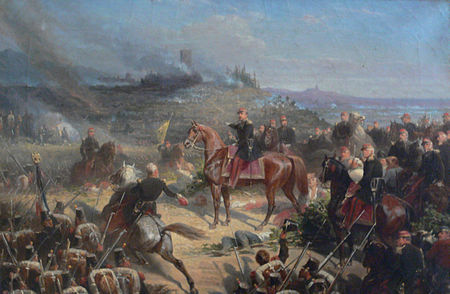


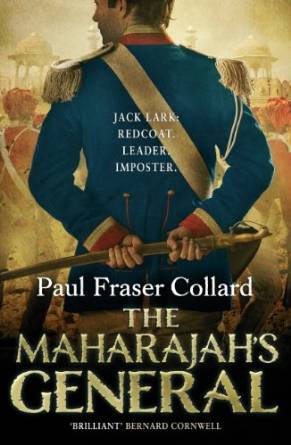


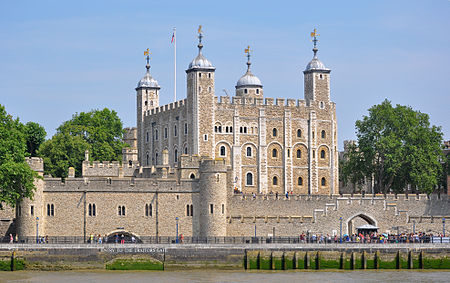
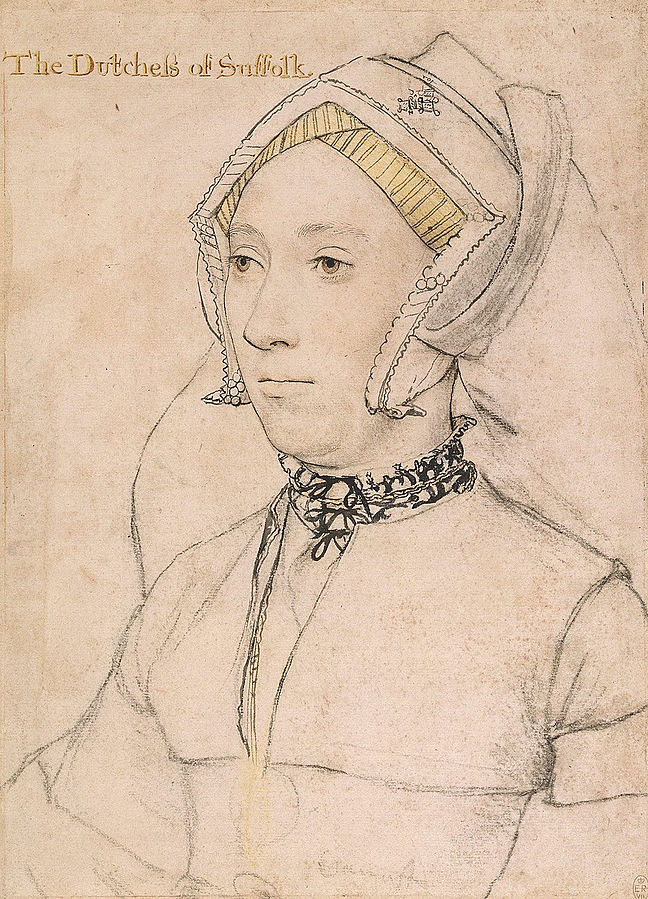
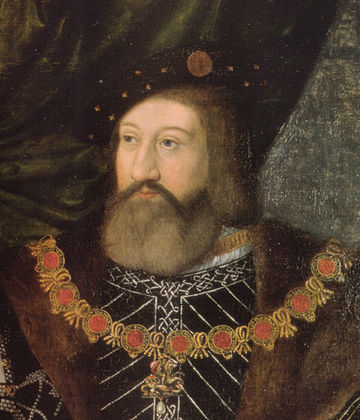
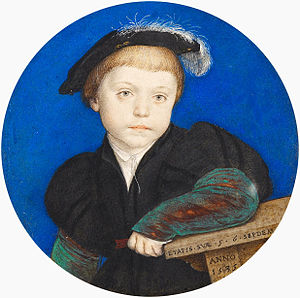
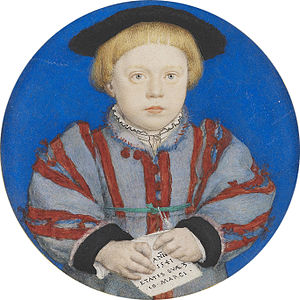

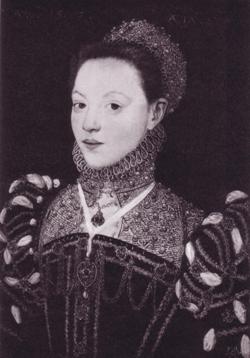
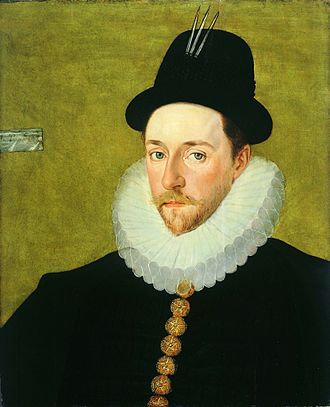
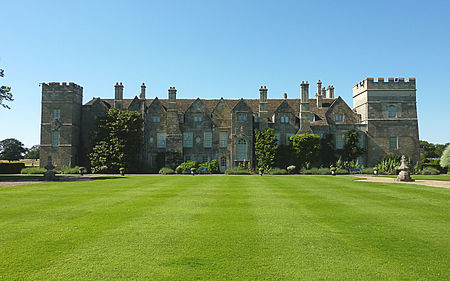


 History... the interesting bits!