Guest Post: The Battle of Tippermuir by Mark Turnbull

Today marks the 375th anniversary of the Battle of Tippermuir and it is a pleasure to welcome author Mark Turnbull to History…the Interesting Bits with an article of the English Civil War battle. Over to Mark….

British Civil War cavalry (The English Civil War Society) 
Montrose only had three horses at the Battle of Tippermuir

Three hundred and seventy-five years ago a son of Scotland secured his first victory in the name of King Charles I. The Battle of Tippermuir produced the famous ‘highland charge’ as well as the legend of the Earl of Montrose, but a matter of days prior, it seemed like none of this could be borne from a few seeds of resistance.

When three Scotsmen crossed the border in August 1644, they did not look back. Carlisle Castle was barely visible; nothing more than a red-stoned pimple on the top of a hill in the distance. William Rollo was a horseman par-excellence, honed through being entirely lame. Colonel William Sibbald rode alongside Rollo, both ignoring the groom trailing behind and leading a spare horse.

The trio left an England riven apart by civil war. King Charles I and his Parliament had been battling it out for two years, but eight months ago, Scotland had stepped from the side-lines and thrown their bonnets into the ring with Parliament. Scotland’s army of covenanters had marched into England and just won a stunning victory outside of York. Sibbald and Rollo intended to assist the King by beginning a guerrilla war in their homeland to draw back the covenanter army.
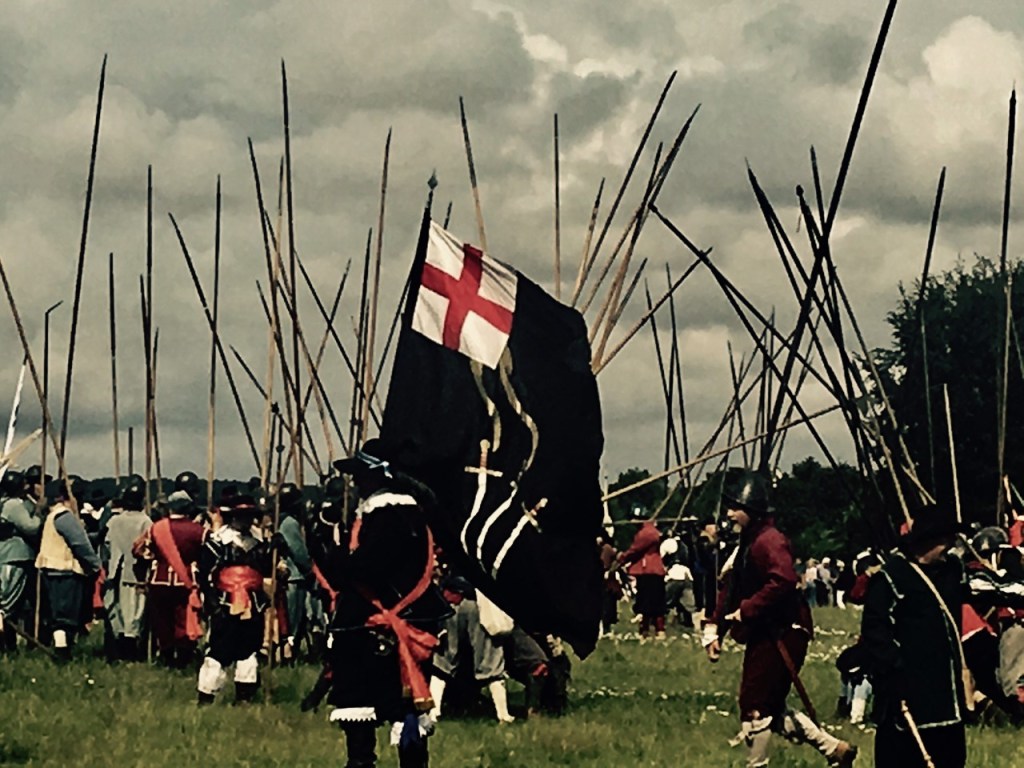
British Civil War Pikemen. Montrose’s men were poorly armed and he suggested they take stones from the earth and bash the enemies’ brains out.

Sewn into the saddle of the riderless horse was King Charles’s commission and his royal standard; two instruments essential to the plan. The man entrusted with securing the nation and restoring their Scottish-born King’s authority, was none other than the pretended groom himself; James Graham, Earl of Montrose. One fact remained in keeping with his disguise – Montrose only had one measly horse to lead and just Sibbald and Rollo to assist him. However, Montrose was banking on the Earl of Antrim’s promise to assemble an army of twelve thousand Irishmen to serve the King. But this readymade army was delivered with missing components – it turned out to number only sixteen-hundred. Led by Alasdair MacColla, they landed on the west coast and headed east to Aberdeen, but finding no royalist support there, turned south, meeting Montrose, Sibbald and Rollo in Blair Athol.
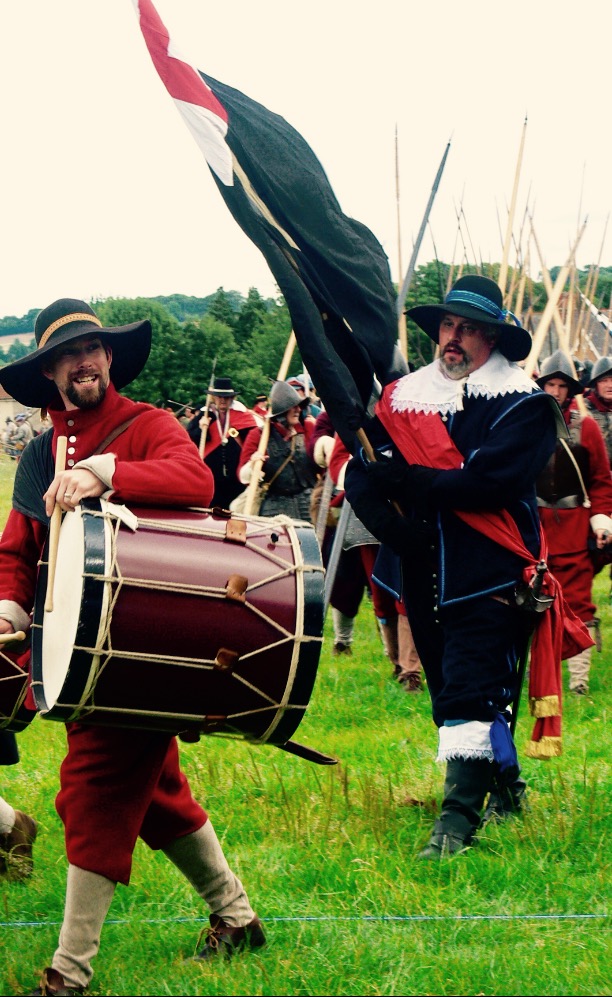
The English Civil War Society. Montrose unfurled the King’s Royal Standard in August 1644 which saw many clans join him.

On 28 August 1644 Montrose unfurled the King’s standard. In answer, the Scottish Parliament conscripted local Stewarts, Robertsons and Grahams to put the insurgents down. Having discarded his groom’s garb, Montrose emerged from his chrysalis, donned highland dress and broadsword, and encouraged his men to insert strands of oats into their bonnets as a means of signifying their allegiance. Much success was harvested when the clans sent against Montrose actually joined him and boosted his numbers to two thousand. Yet his troops remained untrained, armed only with dirks and swords and with just three horses between them.

Montrose was well aware that their impetus could be scattered by even so much as a biting highland wind. He had to strike now, before his men melted away, and as such, he marched them to Perth, gathering a few hundred more recruits on the way. On 1 September 1644 at Tippermuir, Montrose met a covenanter army hastily sent by the Scottish Parliament under the command of Lord Elcho.

The two sides were relatively equal in numbers, but the covenanters possessed cavalry. Montrose placed McColla and his Irishmen in the centre, and promptly took his own position on the right wing, opposite the only experienced officer in the enemy army. Each of his men had ammunition for only a single gunshot, therefore it was imperative that every last one found their marks. Devastating it was then, when the covenanters sent skirmishers forward with the cry ‘Jesus and no quarter,’ to draw and expend royalist firepower. Nevertheless, the covenanter skirmishers were sent packing and pushed back to their own front lines. Montrose had thinned the troops on his army’s left and right to three-deep, and as a result these longer lines prevented any attempts to outflank him.
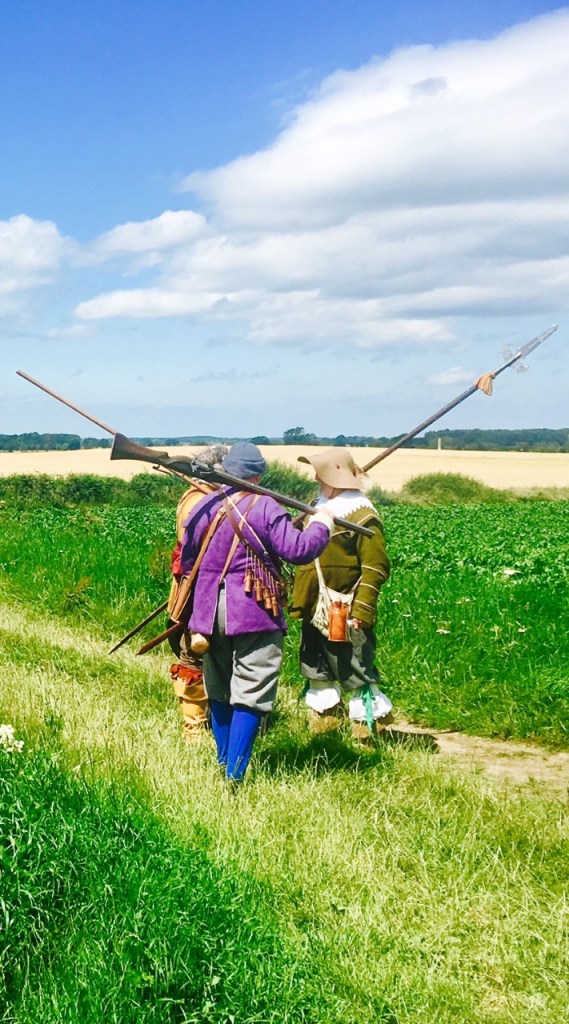
Montrose crossed into Scotland in August 1644 disguised as a groom, with only two other men. At one point it’s said that a man bid the groom, “Good Morning, my lord.”

To his troops, Montrose was characteristically honest, suggesting a novel way to counter their shortage of arms and ammunition; pick stones out of the ground, bash the enemy’s brains out and then seize theirs. Without his charisma, these words would have rung hollow, but his men heeded them like the gospels and he led them against the enemy cavalry throwing missiles, roaring and rampaging down the slope. This tirade of aggression and fervour sent the enemy horsemen fleeing from the field. Not used to such unbridled determination, the covenanters clattered through their own infantry and a rot began which ate through their entire resolve.

The furious highland charge proved its efficiency long before the days of Culloden, still one hundred years off. Tippermuir was Montrose’s first battle of many. The start of an immense cat and mouse chase with superior covenanter forces that would make him, in the words of The Montrose Society, one of Scotland’s most noble and militarily gifted leaders. Against all odds, this lifelong admirer of Alexander the Great would come tantalisingly close to securing the whole of Scotland for the King.

*

More about Mark: I became hooked on the English Civil War at the age of 10. We’d visited Helmsley Castle and my parents bought me a pack of ‘top trump’ cards featuring the monarchs of England. The minute I saw Van Dyck’s portrait of King Charles I at the hunt, I wanted to know more. The painting, costumes and the King’s image were fascinating and then turning over, I read how he was executed. I’d started trying to write stories at a young age (earliest was my own plot for a children’s television show called Thomas the Tank Engine!) so as my interest grew in the English Civil War, my interest in writing automatically seemed to go hand in hand. 

The first civil war book I bought was Christopher Hibbert’s ‘Cavaliers and Roundheads’ and I decided that I also wanted to keep the history and its characters alive in writing, so eventually I began creating my own historical novel. I’ve made sure I have kept true to historical events and characters and ‘Allegiance of Blood’ is due out later this year. 

It opens at Edgehill and follows a fictional character, Sir Francis Berkeley, whose life and family are turned upside down by the twists and turns of this momentous period. The story also features many historical characters along the way, allowing the reader a fly-on-the-wall view of the deadly allegiances that threaten Francis.

I’m also writing articles at the moment about various civil war battles, seeing as there are many 375th anniversaries coming up. 

I have re-enacted before and would love to again, but at the minute writing takes up my spare time.
To buy Mark’s books: www.allegianceofblood.com
Join Mark on his Facebook page: ttps://m.facebook.com/markturnbullauthor

*

My books

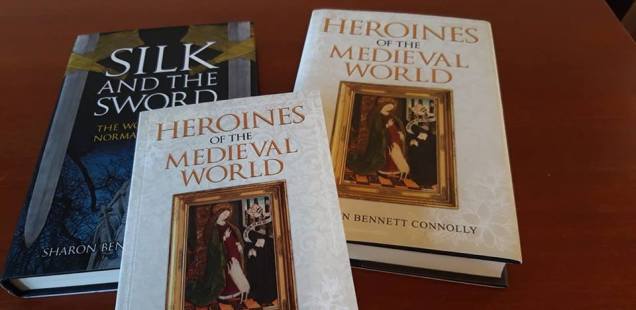
Silk and the Sword: The Women of the Norman Conquest

From Emma of Normandy, wife of both King Cnut and Æthelred II to Saint Margaret, a descendant of Alfred the Great himself, Silk and the Sword: the Women of the Norman Conquest traces the fortunes of the women who had a significant role to play in the momentous events of 1066.  Available now from Amazon UK,  Amberley Publishing, Book Depository and Amazon US.

Heroines of the Medieval World

Telling the stories of some of the most remarkable women from Medieval history, from Eleanor of Aquitaine to Julian of Norwich, Heroines of the Medieval World,  is available now on kindle and in paperback in the UK from from both Amberley Publishing and Amazon, in the US from Amazon and worldwide from Book Depository.

*

You can be the first to read new articles by clicking the ‘Follow’ button, liking our Facebook page or joining me on Twitter and Instagram.

©2019 Sharon Bennett Connolly and Mark Turnbull
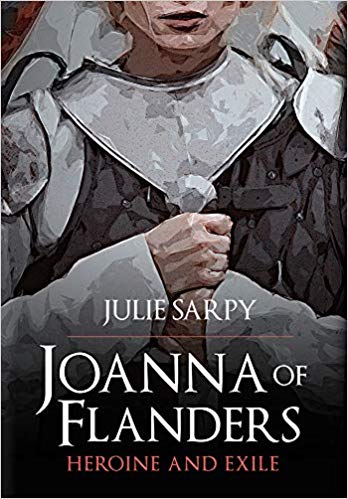
Book Corner: Joanna of Flanders, Heroine and Exile by Julie Sarpy

The new research in this biography solves the riddle of the disappearance of Joanna of Flanders early in the Hundred Years’ War, a leader described by David Hume as ‘the most extraordinary woman of the age’.

Joanna of Flanders, Countess de Montfort and Duchess of Brittany, vanished from public life after 1343 amid the Breton Wars of Succession during the Hundred Years’ War. As wife of the late Duke John de Montfort, Joanna’s rightful place was in Brittany as regent of the duchy for their five-year-old son and heir, John of Brittany. Famed for the defence of Hennebont in 1342 during her husband’s imprisonment, she, along with her children, had accompanied Edward III to England in February 1343 and never departed. She resided in comfortable obscurity at Tickhill Castle, Yorkshire, until her death around 1374.

What happened to her and why? Her extended absence should have provoked more suspicion, but it did not. Edward III certainly orchestrated her relocation from London to Yorkshire and sanctioned her indefinite detention.

Delving deeper into her story the answers to those two questions explore the complexities of medieval social structures, notably in the care of the vulnerable and the custody of women. The 19th-century Breton historian de la Borderie asked if Joanna’s ‘many tests had reversed her intelligence and thrown her into the abyss of madness’, a position accepted by many modern historians – but not by Julie Sarpy.

When my publishers, Amberley, asked if I would like to review Julie Sarpy’s Joanna of Flanders: Heroine and Exile I jumped at the chance. I first came across Joanna of Flanders when writing an article about her son, John V, Duke of Brittany; and I remember thinking, ‘I must look into this woman’. I have not yet had the opportunity (though I will write a blog post if I ever get the time). So, although I was aware of Joanna, I know only the bare bones of her story. Which is why this book intrigued me so much!

Julie Sarpy has done an incredible job of researching the story of Joanna of Flanders. Her investigation has uncovered some remarkable facts about Joanna’s life, the times she lived through and the treatment she received at the hands of her supposed ally, Edward III. This is a balanced, in-depth study of a woman who deserves her time in the limelight. Joanna of Flanders is, in short, an amazing woman, whose story deserves to be known by a much wider audience.

I have to admit to a personal interest in the tale, in grew up not far from Tickhill Castle, South Yorkshire, the site of Joanna’s imprisonment. And though everyone in the area knows about the castle’s connections to King John, to the de Warennes and to the dukes of Lancaster (it is now owned by the duchy of Lancaster), no one seems to know of its role as the prison of poor Joanna.

Joanna of Flanders’ life has not been given its full measure. One wonders how such a remarkable woman has been lost to the ages and ostensibly marginalised. For Joanna of Flanders, Countess of Montfort and Richmond, Duchess of Brittany, was, in her time, the heroine of Hennebont, the pivotal siege during the first half of the Breton Civil War (1341-1365) that prevented the French from taking over Brittany and routing the English early in the Hundred Years’ War (1337-1453). That was no small feat for anyone, especially a fourteenth-century woman. In fact, she seems to have been exceptional in many ways. Medieval French chronicler and contemporary Jean Froissart professed Joanna of Flanders ‘to possess the courage of a man and the heart of a lion.’ Breton historian Dom Lobineau said of the Countess of Montfort, ‘no adversity could crush her. her consistency in the most desperate circumstances always reassured those who attached [themselves] to her.’ She marshalled men and resources, unlike her rival the Breton-French Jeanne de Penthievre’s husband. Joanna of Flanders rallied her husband’s supporters, the pro-English Montfortist faction, in his absence during the Siege of Hennebont and then secured the safety of his heirs in England, with the aid of Edward III.

Julie Sarpy’s investigation into the life and imprisonment of Joann of Flanders is a fascinating study. The author follows the evidence from the records and chronicles of the time and reconstructs Joanna’s story, dispelling the false stories of her madness and clearly presenting Joanna of Flanders as a political prisoner; a remarkable woman whose imprisonment was essential to furthering the ambitions of her ally, Edward III.

Well written, entertaining and informative, this is an engaging and enjoyable book that should attract any history fan who wants to learn more about Joanna’s life and the wider story of the the Breton Civil War. From the first page, the author draws you in with the mystery of Joanna’ imprisonment and the teaser of who may benefit from having her out of the way. Julie Sarpy then takes you through the complexities of the Breton ducal family, the background and prosecution of the war before concentrating on Joanna’s imprisonment, the reasons behind it and the legal implications.

This is a thorough and absorbing study of a woman who has been largely neglected by history. It’s a story that deserves to be heard and that has been told, in Joanna of Flanders: Heroine and Exile, with remarkable skill and judgement – and a little sympathy for the heroine. I cannot recommend it highly enough.

About the author:

Originally from Louisiana, Julia Sarpy is a subject specialist librarian and adjunct faculty at Nova Southeastern University. She received her doctorate in European History from the University of Houston. A UCLA alum, she also hold master’s degrees from University of North Texas and Southern Methodist University.

Joanna of Flanders: Heroine and Exile is now available from Amberley Publishing and Amazon in the UK and will be released on 1 October 2019 in the US; it is available for pre-order on Amazon US.

*

My books

Silk and the Sword: The Women of the Norman Conquest

From Emma of Normandy, wife of both King Cnut and Æthelred II to Saint Margaret, a descendant of Alfred the Great himself, Silk and the Sword: the Women of the Norman Conquest traces the fortunes of the women who had a significant role to play in the momentous events of 1066.  Available now from Amazon UK,  Amberley Publishing, Book Depository and Amazon US.

Heroines of the Medieval World

Telling the stories of some of the most remarkable women from Medieval history, from Eleanor of Aquitaine to Julian of Norwich, Heroines of the Medieval World,  is available now on kindle and in paperback in the UK from from both Amberley Publishing and Amazon, in the US from Amazon and worldwide from Book Depository.

*

You can be the first to read new articles by clicking the ‘Follow’ button, liking our Facebook page or joining me on Twitter and Instagram.

*

©2019 Sharon Bennett Connolly

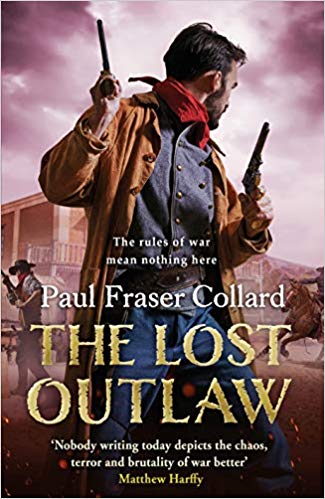
Book Corner: the Lost Outlaw by Paul Fraser Collard

In the midst of civil war, America stands divided. Jack Lark has faced both armies first hand, but will no longer fight for a cause that isn’t his.†

1863, Louisiana. Jack may have left the battlefield behind, but his gun is never far from reach, especially on the long and lonely road to nowhere. Soon, his skill lands him a job, and a new purpose.

Navy Colt in hand, Jack embarks on the dangerous task of escorting a valuable wagon train of cotton down through Texas to Mexico. Working for another man, let alone a man like the volatile Brannigan, isn’t going to be easy. With the cargo under constant attack, and the Deep South’s most infamous outlaws hot on their trail, Jack knows he is living on borrowed time.

And, as they cross the border, Jack soon discovers that the usual rules of war don’t apply. He will have to fight to survive, and this time the battle might prove one he could lose.

The Lost Outlaw by Paul Fraser Collard is book number 8 in Jack Lark’s incredible adventures.

I have been reading the Jack Lark books from the very first, The Scarlet Thief, and it is not wrong to say that each book is better than the last. Paul Fraser Colard’s writing gets stronger and better every time. And given that The Scarlet Thief was a thoroughly enjoyable book, I have to say that The Lost Outlaw is truly special and a spectacular sequel to Paul Fraser Collard’s last novel, The Rebel Killer.

In The Lost Outlaw our hero finds himself working alongside some of the most ruthless characters ever created in historical fiction, they will stop at nothing to get what they want – including betraying the people closest to them. Jack Lark is an outsider, a loner and a man who, borne of experience, does not give his trust lightly – a trait which he will need if he is going to survive. For Jack, looking for a connection – any connection – riding along with these unsavoury characters is little more than having something to do.

However, it helps him to reawaken his own fighting skills, and his knack for uncovering layers of conspiracy and deceit – and discovering more about himself. The Jack Lark books have always been filled with action, adventure and enough suspense to keep any reader gripped; but the new layers that the lead protagonists, the depths of his own abilities and issues, add a deeper perspective and go further to defining the motives behind Jack’s actions and adventures.

He was spared finding a reply by the sound of voices. He braced himself, sure that what was to follow would set down a marker for the weeks and perhaps months to come.

The men he had heard arrived on a wave of noise, one that got louder as they swaggered into the cottage, every man sure of his place and his right to be there. To Jack, it seemed that they were all talking at once, their voices brash and overly loud, as if they were well aware of the display they made and were proud of it.

One went straight to the wooden dresser and grabbed two bottles of whiskey, then swept up as many glasses as he could hold in a single hand. He dumped them carelessly on the simple table and began to fill each glass in turn, without bothering to lift the bottle, so that a river of spilled whiskey ran across the wood. Eager hands grabbed glasses, the contents tossed quickly down throats before the now empty vessels were slammed back on to the plank of wood for an immediate refill.

Jack watched the men carefully. All were older than him, with grey in both their beards and their hair – if they had any, that was. None looked friendly. They all noted his presence, but not one of them acknowledged him or changed their manner. A few greeted Kat with a curt nod or a smile, but there was nothing more, no leers or propositions or ribald comments. Their reaction made it clear that she was part of the gang, yet there was something more in the guarded expressions being sent her way, as if she were somehow a danger, too.

In previous books, Jack Lark has come across as an opportunist, an impostor, pretending to be someone else to get what he wants. In The Lost Outlaw he is finally beginning to peel away the years of deception to find out for himself who he is. That is not to say that such deep reflection leaves the reader with a melodrama or a slower-paced book than Jack Lark’s previous adventures. No. Jack is learning about his own morals, standards and faults amidst an eventful wagon train to the Mexican border and encounters with the most ruthless outlaws anyone is likely to come across.

Jack Lark is thrown into a little known part of history, a subplot of the American Civil War which was all knew to me and which held a fascination all of its own. It was fascinating to learn of the outlaw, profiteering bands of those areas of America that were truly inhospitable – and where most people would avoid like the plague.

The Lost Outlaw is – as with every book I’ve read by Paul Fraser Collard – impossible to put down. It is a story full of action and intrigue that leaves the reader thirsty for more. The author recreates the atmosphere of the desert – the dust, the desolation and the desperate characters that inhabit it – with a skill few authors can match.

This is truly his best book, yet.

Can’t wait for the next instalment of Jack Lark’s adventures.

The Lost Outlaw is available from Amazon in the UK from 25 July 2019.

About the Author:

Paul’s love of military history started at an early age. A childhood spent watching films like Waterloo and Zulu whilst reading Sharpe, Flashman and the occasional Commando comic, gave him a desire to know more of the men who fought in the great wars of the Nineteenth and Twentieth Centuries. This fascination led to a desire to write and his series of novels featuring the brutally courageous Victorian rogue and imposter Jack Lark burst into life in 2013. Since then Paul has continued to write, developing the Jack Lark series to great acclaim. To find out more about Paul and his novels visit http://www.paulfrasercollard.com or find him on twitter @pfcollard.

My books

Silk and the Sword: The Women of the Norman Conquest

From Emma of Normandy, wife of both King Cnut and Æthelred II to Saint Margaret, a descendant of Alfred the Great himself, Silk and the Sword: the Women of the Norman Conquest traces the fortunes of the women who had a significant role to play in the momentous events of 1066.  Available now, on Kindle and in hardback, from Amazon UK,  Amberley Publishing, Book Depository and Amazon US.


Heroines of the Medieval World

Telling the stories of some of the most remarkable women from Medieval history, Heroines of the Medieval World,  is available now on kindle and in paperback in the UK from from both Amberley Publishing and Amazon and worldwide from Book Depository.

*

You can be the first to read new articles by clicking the ‘Follow’ button, liking our Facebook page or joining me on Twitter.

*

©2019 Sharon Bennett Connolly


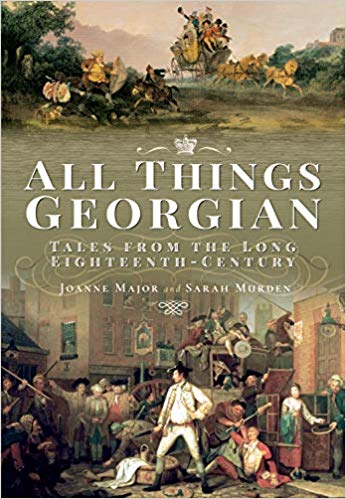
Book Corner: All Things Georgian by Joanne Major and Sarah Murden

Take a romp through the long eighteenth-century in this collection of 25 short tales. Marvel at the Queen s Ass, gaze at the celestial heavens through the eyes of the past and be amazed by the equestrian feats of the Norwich Nymph. Journey to the debauched French court at Versailles, travel to Covent Garden and take your seat in a box at the theatre and, afterwards, join the mile-high club in a new-fangled hot air balloon. Meet actresses, whores and high-born ladies, politicians, inventors, royalty and criminals as we travel through the Georgian era in all its glorious and gruesome glory. In roughly chronological order, covering the reign of the four Georges, 1714-1830 and set within the framework of the main events of the era, these tales are accompanied by over 100 stunning colour illustrations.

I have to say that All Things Georgian: Tales from the long Eighteenth Century is one of the most beautiful books I have ever read. Crammed full of glossy, colourful paintings and photographs, it is impossible for the reader not to appreciate how aesthetically pleasing this book is. It is a pleasure to browse through, just to appreciate the gorgeous images scattered throughout the book.

Having said that, the images are not all this book has to offer. All Things Georgian: Tales from the long Eighteenth Century is co-written by Joanne Major and Sarah Murden and is replete with some of the best stories from the eighteenth century; scandals, love stories and mysteries fill the pages. The most amazing characters of the Georgian era complement the colourful photos; from Marie Antoinette to ‘Crazy Sally’, from coffee shop rivalries, to smuggling, female jockeys and intrepid balloon rides.

This book has stories to entertain everyone.

On the evening of 20 June 1791, Louis XVI and Marie Antoinette of France, together with their children and a handful of trusted attendants, made an ill-fated attempt to escape the revolutionary forces who were keeping them closely watched. The plan had taken many weeks to bring to fruition and the French queen, to whom it was inconceivable that she should survive without the everyday luxuries with which she was surrounded, had been engaged in smuggling various items to the safety of her sister in Brussels. AN infamous Scottish courtesan played a key role in one of these transactions, risking her life in Marie Antoinette’s service.

Grace Dalrymple Elliott, tall, willowy and stunningly beautiful, had gained her notoriety following a very public Criminal Conversation trial and divorce from her portly little husband, Dr (later Sir) John Eliot; Grace had been discovered in a Berkeley Row bagnio with her lover, the worthless Viscount Valentia who soon after discarded his mistress. The handsome Earl of Cholmondeley became her protector; tall and athletic, he was the perfect match for Grace, and the two made an attractive if slightly disreputable couple but, when a countess’s coronet was not forthcoming, Grace left for France and the arms of Louis XVI’s cousin, Louis Philippe Joseph, Duke d’ Orléans (later known as Philippe Egalité). A brief interlude back in London followed where grace bagged the affections of the young Prince of Wales and gained a permanent memento of her royal dalliance in the person of her daughter, Georgiana, who the future monarch privately – if not publicly – acknowledged as his child. The Earl of Cholmondeley became the child’s guardian and Grace, with an annuity from the royal purse, returned to her French duke, only to become trapped in Paris during the French Revolution. …

Sarah Murden and Joanne Major have done a wonderful job of recreating the Georgian world. The language is beautiful, the stories both exciting and entertaining; and scattered with just the right amount of famous and infamous people to make the reader go ‘ooh!’. The two authors are so in sync that it is impossible to discern which story is told by one of the writers and which by the other.

I usually read through books as quickly as possible, devouring them, so-to-speak. However, with All Things Georgian: Tales from the long Eighteenth Century I have taken my time, read only one or two of the fabulous stories at a time. Reading this book is a truly pleasurable experience, and I wanted to take my time and savour every moment.

All Things Georgian: Tales from the long Eighteenth Century by Joanne Major and Sarah Murden is a wonderful little treasure trove of stories and facts, brought to life in beautiful prose and accompanied by glorious images. Well researched and beautifully presented, it would be a stunning addition to any library – it even smells special!

All Things Georgian: Tales from the long Eighteenth Century is available from Amazon UK and US.

About the authors:

Joanne Major and Sarah Murden are supersleuthing historians who enjoy bringing the Georgian era to life. Their lives were changed forever when they (metaphorically) met an eighteenth-century courtesan, and this is now their fourth book together. Along with their respective families, they live in Lincolnshire.

*

My books

Silk and the Sword: The Women of the Norman Conquest

From Emma of Normandy, wife of both King Cnut and Æthelred II to Saint Margaret, a descendant of Alfred the Great himself, Silk and the Sword: the Women of the Norman Conquest traces the fortunes of the women who had a significant role to play in the momentous events of 1066.  Available now from Amazon UK,  Amberley Publishing, Book Depository and Amazon US.

Heroines of the Medieval World

Telling the stories of some of the most remarkable women from Medieval history, Heroines of the Medieval World,  is now available in hardback in the UK from Amazon UK, and in the US from Amazon US. It is available now in paperback in the UK from from both Amberley Publishing and Amazon and worldwide from Book Depository.

*

You can be the first to read new articles by clicking the ‘Follow’ button, liking our Facebook page or joining me on Twitter.

*

©2019 Sharon Bennett Connolly


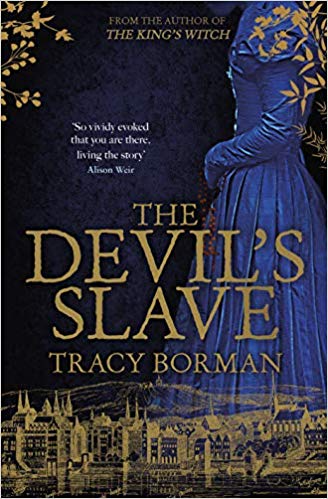
Book Corner: The Devil’s Slave by Tracy Borman

Frances Gorges has already survived the accusation of witchcraft.

But if her torturers at the court of King James knew of her love for Tom Wintour, one of the executed members of the gunpowder plot, it would mean certain death.

Pregnant with Tom’s child, hiding under the reluctant protection of her spiteful and ambitious brother, Frances lives in fear – until she is offered the chance to make a respectable – if loveless – marriage and return to court.

She will not be expected to sleep with her husband. The only price she must pay for safety is to give up the cause for which her lover died.

But old loyalties are hard to deny, and soon Frances is drawn back into the snake-pit scheming of the factions trying to take the throne.

Everywhere she turns, it seems that someone has the power to force her deeper into danger until, all too late, Frances hears the warnings of her own heart.

Compelling, sensual, suspenseful, The Devil’s Slave is a standalone sequel to The King’s Witch and further evidence that one of our finest historians is also a brilliant novelist.

Another stunning instalment of the Frances Gorges story from Tracy Borman. The young woman who barely escaped the fallout of the Gunpowder Plot with her life is once again drawn into the intrigues of the fledgling Stuart court. Skilled with herbs and a secret Catholic make her twice the target for the staunchly protestant witch-hunter King James and his minister, Robert Cecil. Frances’s return to court with her husband and son sees her trying to negotiate her way through the various Catholic plots that surround the crown and court.

Tracy Borman weaves a tale that is fraught with tension, with danger lurking around every corner, or behind every rose bush. At times, it seems that everyone is a chameleon – and no one is as they seem. And, just like the heroine, the reader is drawn into the plots and intrigues of the court. This engaging, entertaining story will keep the reader enthralled until the very last page.

The history and story are effortlessly woven together.

She looked down at her hands as she struggled to maintain her composure. Dorothy reached forward and took them in her own. ‘I understand your fears, Frances,’ she said softly. ‘These are dangerous times for those of us who share the true faith. I know that you wish to protect your son, as I do mine. But you cannot condemn him – and yourself – to life of falsehood, of heresy. To do so would be to damn him in the next life, as well as this one. You cannot think that is what Tom would have wished for his son.’

‘Tom would have wished him to stay alive!’ Frances cried, the tears now streaming down her cheeks. ‘What would you have me do? Parade him as the son of a condemned traitor? Forfeit his safety, his happiness, his life? And all for what? A cause that died with Tom and the rest?’

Dorothy fell silent, but her grip on Frances’s hands tightened. ‘It did not die, Fraces,’ she said. ‘It is stronger now than ever. The death of Tom and his companions has intensified people’s hatred of this heretic king and drawn thousands more to our cause. I don not speak out of blind faith,’ she continued, as if reading Frances’s thoughts. ‘We have learned from the lessons of the past. Cecil’s spies are now outnumbered by those of our cause. How do you suppose I was able to find out about my nephew? The time is almost ripe to act. We have powerful supporters at court, and the King of Spain stands in readiness with a huge army.’

Frances’s mind was reeling…

Tracy Borman’s vast knowledge of the Stuart court and the various royal palaces in which The Devil’s Slave is set, serve to add a level of authenticity into the story that is rarely seen in a novel, whilst the subtlety in delivering the facts avoids giving the reader a lecture in Stuart history. The blend of fact and fiction is indistinguishable, leaving the reader with many avenues of research to pursue later, if they are so inclined.

The locations of lavish palaces, manor houses and the Tower of London are recreated in great detail. Tracy Borman uses her extensive knowledge to rebuild the Stuart world for the modern reader. The prose is a pleasure to read and devour, while the plot delves deep into the dark corners of Stuart history.

However, her greatest creations in the book are the characters, whether real or imagined. The personalities of Sir Walter Raleigh and Arbella Stuart, alongside the various members of the royal family, are wonderfully deep, complex individuals who serve to add spice and colour to an already fabulous story. The heroine, Frances Gorges, is a woman with whom many can feel empathy. Drawn into the various intrigues much against her inclination, but with a desire to protect her family, she is forced to navigate her way through the various dangers, always with the knowledge of what faces her should she fail.

The Devil’s Slave, as with The King’s Witch, is a story that is not to be missed. For the reader, it provides a truly enjoyable sojourn in the realm of early Stuart England and must appeal to all with an interest in history, intrigue and adventure. I cannot recommend it highly enough!

The Devil’s Slave by Tracy Borman is available from Amazon.

About the Author:

Tracy Borman is joint Chief Curator of Historic Royal Palaces and Chief Executive of the Heritage Education Trust. She studied and taught history at the University of Hull and was awarded a PhD in 1997. 

Tracy is the author of a number of highly acclaimed books, including Thomas Cromwell: The Untold Story of Henry VIII’s Most Faithful Servant, Matilda: Wife of the Conqueror, First Queen of England, Elizabeth’s Women: The Hidden Story of the Virgin Queen and Witches: A Tale of Sorcery, Scandal and Seduction. Tracy is also a regular broadcaster and public speaker, giving talks on her books across the UK and abroad. She lives in Surrey with her daughter.

*

My Books

Silk and the Sword: The Women of the Norman Conquest

From Emma of Normandy, wife of both King Cnut and Æthelred II to Saint Margaret, a descendant of Alfred the Great himself, Silk and the Sword: the Women of the Norman Conquest traces the fortunes of the women who had a significant role to play in the momentous events of 1066.  Available now from Amazon UK,  Amberley Publishing, Book Depository and Amazon US.

Heroines of the Medieval World

Telling the stories of some of the most remarkable women from Medieval history, Heroines of the Medieval World,  is now available in hardback in the UK from Amazon UK, and in the US from Amazon US. It is available now in paperback in the UK from from both Amberley Publishing and Amazon and worldwide from Book Depository.

*

You can be the first to read new articles by clicking the ‘Follow’ button, liking our Facebook page or joining me on Twitter.

©2019 Sharon Bennett Connolly

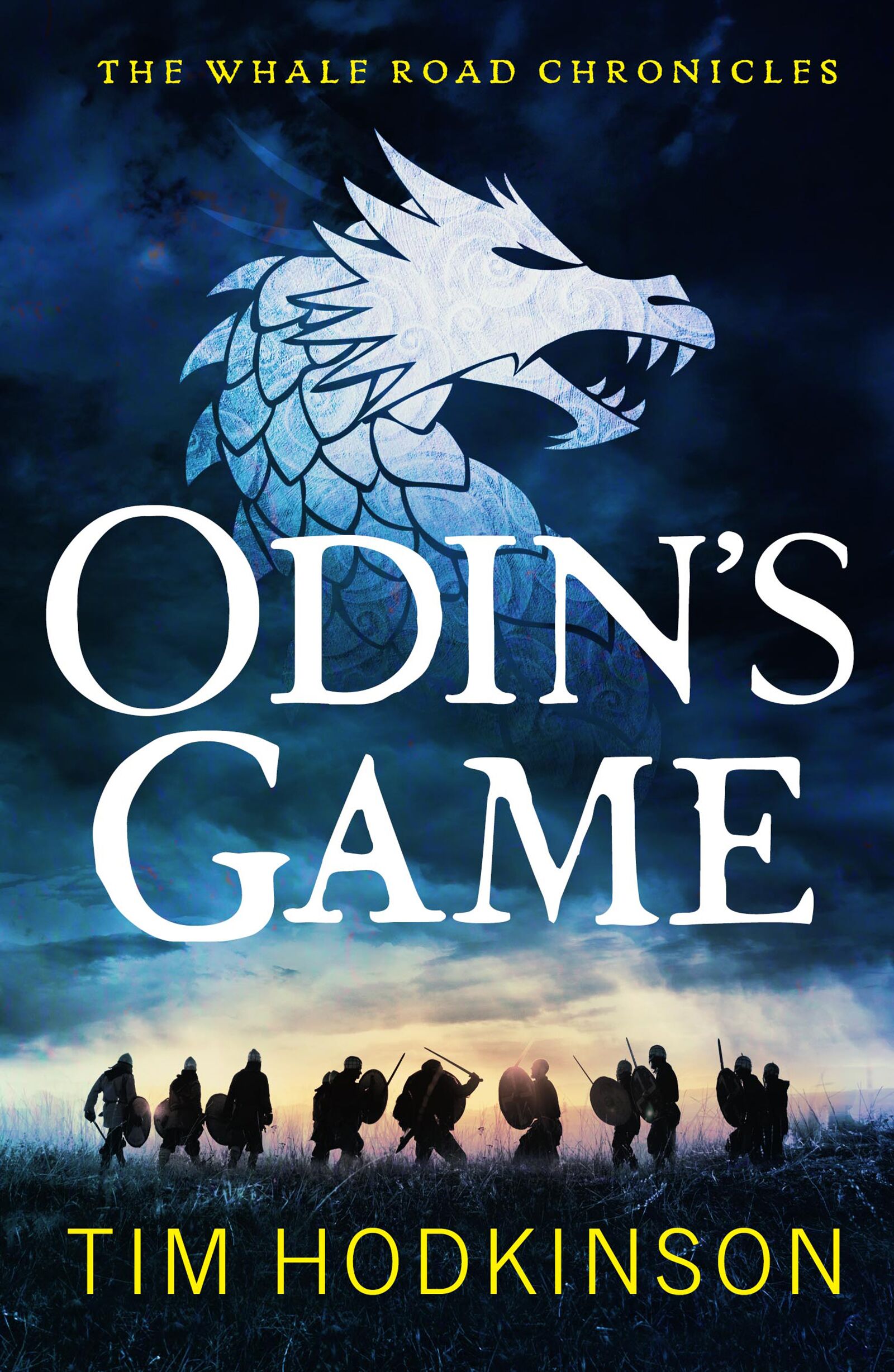
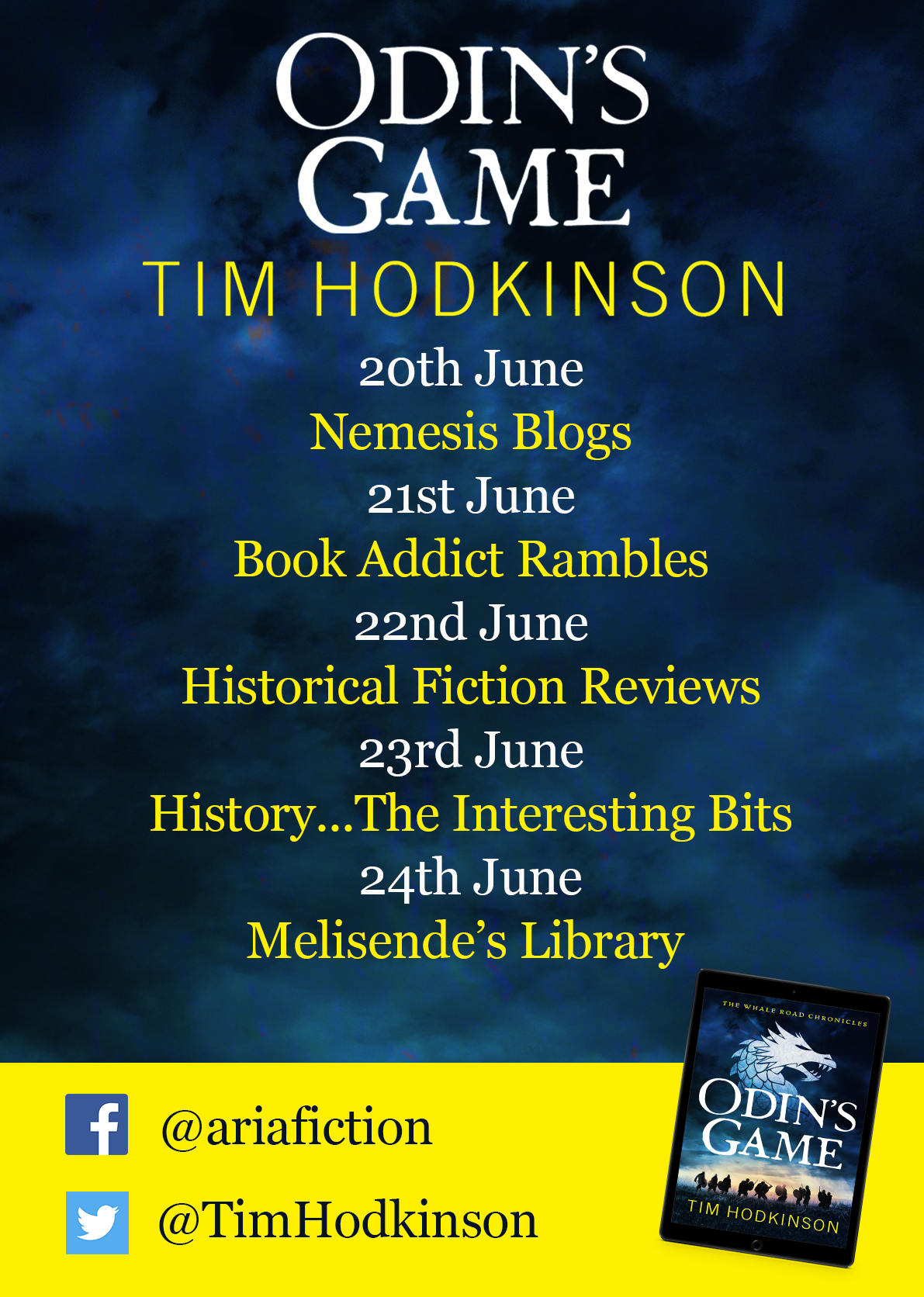
Book Corner: Odin’s Game by Tim Hodkinson

Orkney, 931: A young woman flees her home to secure a life for her unborn child. Eighteen years later, a witch foretells that she must lose him once more.

The subject of a Viking prophecy, it is Einar’s destiny to leave Iceland and fight his father – of whom only only one will survive.

As the clouds of war gather, he will fight unimaginable foes, forge new friendships, and discover what it truly means to be a warrior.

Not everyone will survive, but who will conquer all?

Odin’s Game by Tim Hodkinson is a wonderful, involved story, weaving a tale from the icy chill of Iceland to the dramatic landscape of Ireland, with a sojourn on the Orkneys in between. It tells the story of a young man’s journey to become a warrior, whilst uncovering the secrets of his parentage. It is not a straight forward journey. Fraught with danger, and the clash of two worlds and two religions, the Christian and the Norse gods, young Einar must fight for survival.

The characters are believable and wholly original. The reader is drawn into their troubles and finds themselves cheering on the ragtag crew that the hero, Einar, has found himself attached to. These are violent times, with war and intrigue being practically the norm. Betrayal is only ever just around the corner and it is a testament to the strength of the story in the the novel that the reader never quite knows from where the betrayal will come – nor from where the hero, Einar, will get his strength and support. Einar has to face a steep learning curve if he is to survive and prosper.

‘My mother’s Irish,’ Einar said. ‘When I was young, she used to tell me stories about it. I suppose ever since then I’ve had this notion of going there. She never talks about it now.’

Asmundarsson stopped his horse. Einar reined his own to a halt to avoid riding into the back of him. They had reached a wider part of the path where a long, flat rock stretched out, overhanging the precipice that dropped down to the icy waters of the tumbling river below.

‘Irish?’ The merchant whipped his head round and fixed Einar with a glare, his eyes narrowed. Einar was taken aback by this sudden change in demeanour. ‘I was told there’s a farm here run by an Irishwoman who works it all by herself.’

‘That’s my mother, Unn Kjartinsdottir,’ Einar said, his feelings of pride mixing with confusion and unease at the intensity with which the merchant was looking at him. ‘I help her, of course.’

To his further surprise, Asmundarsson’s expression changed again. His eyes widened and his jaw dropped open, making his mouth gape amid the grey hairs of his plaited beard.

‘It’s you …’ the merchant breathed.

As if from nowhere, mean appeared all round them. They scrambled up from behind rocks above the path. Several more jumped up on the path ahead. They wore iron helmets and their faces were masked behind helmet visors, they crouched behind the cover of round iron-bound shields. They bore spears.

Einar felt as if he was frozen. Fear and shock locked him to the saddle. His chest was so tight he could not breathe in.

‘It’s trouble, lad!’ Asmundarsson shouted, wheeling his horse to ride back the way they had come. There were other men close behind them and Einar realised they must have been waiting, hidden, for them to pass by then jumped out onto the path to block their escape. Asmundarsson could go nowhere.

The little details demonstrate the extent to which the author has obviously researched the history and customs of the Norsemen. Weapons and fighting techniques are as accurate as any I have read; as are the finer details of clothing, customs and the relationships between the Norwegians, Irish and the Icelanders. The result for the reader is a total immersion into the unfolding story. The landscape is just as absorbing as the characters in the novel. You can practically feel the cold seeping into your bones in Iceland; or the damp, harsh conditions of Ireland.

This is a thoroughly enjoyable story that will draw the reader in from the opening pages. One of the most unpredictable stories I have read in recent times, it will keep you on your toes, wondering what will happen next and whether any will get out alive. The tension is palpable!

If you enjoy a good, original story, full of action and intrigue, and a bag full of tension – this is the book for you!

Odin’s Game is a thoroughly enjoyable adventure, twisting and turning in unexpected ways as the story unfolds. And, like all good stories, the ending does not exactly turn out as the reader would guess, leaving you wanting more. I sincerely hope that this is the beginning of a wonderful series of adventures fro Einar and his companions. It was a delight to read every page.

About the Author

Tim Hodkinson grew up in Northern Ireland where the rugged coast and call of the Atlantic ocean led to a lifelong fascination with vikings and a degree in Medieval English and Old Norse Literature. Apart from Old Norse sagas, Tim’s more recent writing heroes include Ben Kane, Giles Kristian, Bernard Cornwell, George RR Martin and Lee Child. After several years New Hampshire, USA, Tim has returned to Northern Ireland, where he lives with his wife and children.

Follow Tim:

Twitter: @TimHodkinson

Pre-order links:

Amazon; iBooks; Kobo; Google Play.

Follow Aria

Website: www.ariafiction.com; Twitter: @aria_fiction; Facebook: @ariafiction; Instagram: @ariafiction

*

My Books

Silk and the Sword: The Women of the Norman Conquest

From Emma of Normandy, wife of both King Cnut and Æthelred II to Saint Margaret, a descendant of Alfred the Great himself, Silk and the Sword: the Women of the Norman Conquest traces the fortunes of the women who had a significant role to play in the momentous events of 1066.  Available now from Amazon UK,  Amberley Publishing, Book Depository and Amazon US.

Heroines of the Medieval World

Telling the stories of some of the most remarkable women from Medieval history, Heroines of the Medieval World,  is now available in hardback in the UK from Amazon UK, and in the US from Amazon US. It is available now in paperback in the UK from from both Amberley Publishing and Amazon and worldwide from Book Depository.

*

You can be the first to read new articles by clicking the ‘Follow’ button, liking our Facebook page or joining me on Twitter.

©2019 Sharon Bennett Connolly

Interview my Character: Eleanor Elder

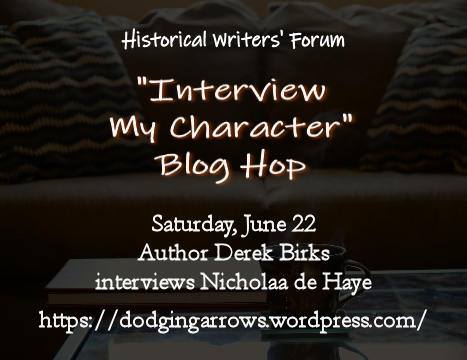
Today it is my stop on the Historical Writers’ Character Blog Hop, where we interview historical characters, both real and fictional. Watch out for Nicholaa de la Haye coming later in the tour!

And there’s a giveaway! the author has kindly offered a paperback copy of Echoes of Treason to a UK winner, or an ebook to a winner elsewhere in the world. To enter, simply leave a comment below or on the Facebook page. The draw will be made on 12 June. Good luck! Sorry, competition is now closesd!

I would like to welcome Lady Eleanor Elder to History…the Interesting Bits. Lady Eleanor is one of the principal characters in Derek Birks’ wonderful series of books, The Craft of Kings, the latest instalment of which, Echoes of Treason was released in May. Ever since I first read Feud, about 5 years ago, Lady Eleanor has become something of a heroine of mine. She has overcome many challenges and trials over Derek Birks’ 7 books and – so far – is still standing, if a little battered. She is a fighter, not out of choice, but out of necessity and an impressive survival instinct. She is a lady I am in awe of and so I was quite nervous to finally meet her!

  • Welcome Lady Eleanor, could you please tell our readers a little about yourself?

About myself? The hard ones first, eh? Well, I was born and not long after, my mother died. So she died before I knew her and later, when I was a lass growing up in the dale, those who did know her, never stopped telling me how like her I was. It didn’t sound like a compliment though… but by then I’d grown wild. I must have been about thirteen or so. I was wild and angry with everyone – except my only true friend, Becky Standlake.

  • What would you like to have been in your life, if you have not been caught up in the wars between Lancaster and York? Would you have made a good nun?

A nun? I see you try to provoke me with your questions!

(Sorry, Lady Eleanor, but my tongue was very firmly in my cheek!)

Well, of course, I was destined for marriage – or so my father kept saying – only no man would have me! By the time I was fifteen, my father had given up on me, I think… but by then I’d discovered what boys were really for and I fell in love with Will Coster, my brother Ned’s closest companion. Will was a commoner, but I didn’t care – still, we kept it to ourselves – even kept it from Ned. Then… we all descended into hell. All the rules changed when I was taken by force to a nunnery, aye, a nunnery! I tried to resist but in the end, I just had to bide my time. So, would I be a nun? Well, I’ve tried it and let’s just say, it did not go well…

  • What is your favourite thing to do?

When I was younger, I loved to roam the dales with Becky. There was a pool, fed by the hillside becks and ice cold even in summer. We’d swim naked in that pool and lie, shameless, on the large rocks to dry off in the sun. When war came, I lost that innocence; and it never, ever came back. At first I wanted nothing more than to fight for those I loved, but one by one, those I loved were stripped away… Now, what do I prize above all? I just want some peace…

  • You have become quite a role model for women, always fighting your corner, what is the advice you would give to any woman, in any era, who finds herself in a situation where she feels powerless?

Aye, a woman in the world of men can often feel weak and powerless. The crown, the law, the church, all their rules are made by men. What can a woman do against such odds? Well, she must learn to fight, but it’s not always about a sharp blade – by the Virgin, it’s taken me all my life to understand that! There are many other weapons a woman has, for what are men but boys full-grown? It’s not those full-grown boys that make you weak; it’s your own fear. You must have spirit for it’s what lies in your heart that matters. Spirit is everything…

  • Would you prefer to live in a castle or on a farm, city or country?

I don’t care where I am – though I can’t say I care much for the stench of the town. All that matters to me is who I’m with.

  • If you could live in any historical period, when would it be?

Eleanor Elder always lives in the present…

  • Echoes of Treason opened with you living in exile in Spain, what did you miss most about England while in exile?

My son, my nephew and the rest of my kin… that’s all I missed – though a little more coin would have helped…

  • Who is your favourite king, Richard III or Edward IV?

Edward IV was a charmer, I’m told, though I don’t think I ever met him; my brother Ned knew him well, liked him and served him well. England needed Edward, I think, but what a world of blood he brought down upon us. I met Gloucester when he was about 18 – he was full of himself and I can’t say I liked him much, and now he is the cause of my nephew, John’s troubles, so he is my enemy and I don’t ever forgive my enemies…

  • What achievement are you most proud of?

Proud? I take no pride from anything I’ve done. In a time of blood, I’ve survived and to do so, I’ve taken lives. I will do it again if I must… and let God judge me as he wishes.

  • You have lived a rather adventurous life, do you have any regrets?

Right now, no; but, if I live to be old, I expect to be haunted by countless regrets and when I die, I’ve no doubt that I’ll dwell in purgatory for a very, very long time… Because my passions have always ruled me – for good or ill – and, being swift to act, I’ve made many mistakes in my life: I’ve misjudged some folk and caused their ruin. But, most of all, I regret that many of those who dared to love me and tried to help me, died because of their love. Yet, anything I’ve done – however terrible – if it helped to save my loved ones, I don’t regret that for an instant. I would do it all again.

  • What is your greatest fear?

I fear not being able to protect those I love and keep them safe. But I discovered, only in the past few years, that there is one thing in all Christendom that truly terrifies me – but I’m not telling you that!

Lady Eleanor, it has been a pleasure to finally meet you. Thank you so much for taking the time to talk with me. I wish you the best of luck for Book 4.

Follow the Blog Hop

Wednesday 5 June Jen Black  interviews courageous, Byrhtnoth, of the Byrhtnoth Chronicles by Christine Hancock.

About the Author

Derek Birks

Derek Birks was born in Hampshire in England but spent his teenage years in Auckland, New Zealand where he still has strong family ties. For many years he taught history in a secondary school in Berkshire but took early retirement several years ago to concentrate on his writing. Apart from writing, he spends his time gardening, travelling, walking and taking part in archaeological digs at a Roman villa.

Derek is interested in a wide range of historical themes but his particular favourite is the later Medieval period. He aims to write action-packed fiction which is rooted in accurate history. His debut historical novel, Feud, is set in the period of the Wars of the Roses and is the first of a four-book series entitled Rebels & Brothers which follows the fortunes of the fictional Elder family.
The other books of the series are (in order): A Traitor’s Fate, Kingdom of Rebels and The Last Shroud.

The first 3 book of a brand new series, Scars From the Past, are now available in both kindle and paperback and are on Amazon in the UK and US.
You can find Derek at;
Amazon
Blog
Facebook
Twitter 

And look out for Nicholaa de la Haye dropping by Derek Birks’ blog, Dodging Arrows, for to chat on 22 June.

My Books

Silk and the Sword: The Women of the Norman Conquest

From Emma of Normandy, wife of both King Cnut and Æthelred II to Saint Margaret, a descendant of Alfred the Great himself, Silk and the Sword: the Women of the Norman Conquest traces the fortunes of the women who had a significant role to play in the momentous events of 1066.  Available now from Amazon UK,  Amberley Publishing, Book Depository and Amazon US.

Heroines of the Medieval World

Telling the stories of some of the most remarkable women from Medieval history, Heroines of the Medieval World,  is now available in hardback in the UK from Amazon UK, and in the US from Amazon US. It is available now in paperback in the UK from from both Amberley Publishing and Amazon and worldwide from Book Depository.

*

You can be the first to read new articles by clicking the ‘Follow’ button, liking our Facebook page or joining me on Twitter.

©2019 Sharon Bennett Connolly

Little Princess Gwenllian

Gwenllian was the only child of Llywelyn ab Gruffuddd, also known as Llywelyn the Last, Prince of Wales. Her mother was Eleanor de Montfort, who was the daughter of Eleanor of England, sister of Henry III, and Simon de Montfort, Earl of Leicester. Llywelyn and Eleanor had married in Worcester Cathedral in October 1278, in a lavish ceremony attended by Edward I, King of England, and Alexander III, King of Scots.

Sharon Bennett Connolly
Memorial to Gwenllian, Sempringham, Lincolnshire

Gwenllian, a descendant of both Welsh and English royalty, was born in June 1282 at the palace of Garth Celyn, Abergwyngregyn, near Bangor; her mother died giving birth to her. Shortly after her birth, Edward I concluded his conquest of Wales. Gwenllian’s father, Llywelyn, was killed in an ambush on 11 December 1282 – and just six months after her birth, Gwenllian was an orphan. Her uncle Dafydd, Llywelyn’s younger brother, became the little princess’s legal guardian. After his brother’s death, Dafydd continued the fight for Welsh independence but was betrayed to the English, in June 1283.

Dafydd, his wife, children and little Gwenllian were captured at Bera Mountain in Snowdonia, where they had been in hiding. At just one year old, Gwenllian was taken, by sea, probably to thwart any attempt at rescue, from Wales, the land of her birth. She would never see her homeland again. The baby girl was placed behind the high walls of the Gilbertine priory of Sempringham, in Lincolnshire, just south of the great city of Lincoln. Her female cousins, the seven daughters of Dafydd, were also placed in various nunneries, so it is possible some of her cousins were with her. Dafydd’s legitimate daughter, Gwladus, who was a similar age to Gwenllian, was placed in Sixhills, another Gilbertine priory, in the Lincolnshire Wolds.

Llywelyn
Statue of Gwenllian’s father, Llywelyn the Last at Cardiff City Hall

Dafydd’s two sons, Llywelyn and Owain, were imprisoned in Bristol Castle; the eldest, Llywelyn, died there in 1287, just four years after his capture. Owain was still living in 1325, every night securely incarcerated in a specially constructed timber cage within Bristol Castle. Dafydd himself suffered the horrendous ‘traitor’s death’; he was hung, drawn and quartered at Shrewsbury.

The Gilbertines were the only wholly-English monastic community. Their founder, St Gilbert, had some form of physical deformity, which prevented him from pursuing a career as a knight. He trained as a clerk in France, studying under Master Anselm at Laon. He eventually entered the household of the Bishop of Lincoln and, in 1129, was appointed Vicar of Sempringham and West Torrington. He established the first priory there in 1131, with seven local women vowing to live a life of chastity, poverty and obedience. Sempringham Priory was a double-house, housing both men and women in segregated quarters.

At its height, the priory housed 200 nuns and forty canons. The order followed strict rules, based on those of the Augustinian and Premonstratensian monasteries. By the time of Gilbert’s death in 1189 there were thirteen priories in England; this number had risen to twenty-five at the time of the Reformation.1

Gwenllian was a prisoner at the Gilbertine Priory of St Mary, at Sempringham, for the rest of her life. A prisoner of three English kings, Edward I, Edward II and Edward III, she was a rallying figure for the subjugated Welsh and too valuable to ever be freed. Edward I wrote to the Prior and Prioress of Sempringham of his decision to place Gwenllian in their custody, on 11 November 1283: ‘… Having the Lord before our eyes, pitying also her sex and her age, that the innocent may not seem to atone for the iniquity and ill-doing of the wicked and contemplating especially the life in your Order’.2

Sharon Bennett Connolly
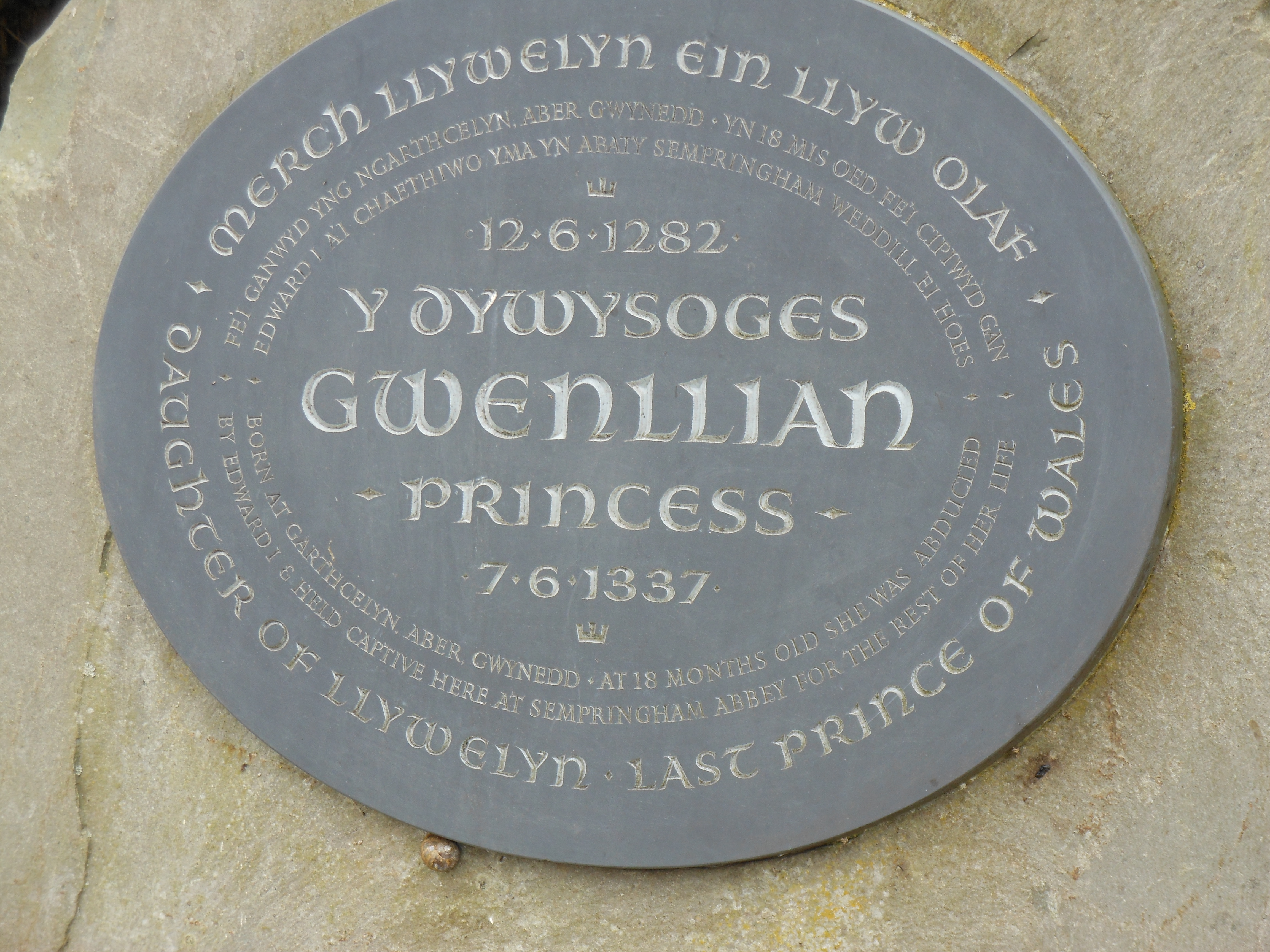
Memorial plaque to Gwenllian on the memorial at Sempringham

Although Edward wanted Gwenllian to be forgotten, he could not afford to forget about her himself, and four years after she was placed in the convent, Edward ordered Thomas Normanvill to ‘go to the places where the daughters of Llewellyn and of David his brother, who have taken the veil in the Order of Sempringham, are dwelling, and to report upon their state and custody by next Parliament’.3 The extent of Gwenllian’s knowledge of her own history and homeland is far from certain. Having been taken from Wales at six months old, she is said not to have spoken a word of Welsh and may not have even known how to spell her name; she is referred to as ‘Wencillian’, in a document sent to Edward III at the time of her death, although spelling was far from uniform in the 14th century.

Gwenllian was probably well-cared for. Edward III endowed her with a pension of £20 a year, which was paid to the priory for her food and clothing. Whether Gwenllian was treated according to her rank at the priory is unknown. However, she was aware of her importance and her family connections; as David Pilling points out and she does in fact call herself Princess of Wales, daughter of Llywelyn ap Gruffudd in a petition of 1327 to Edward II:

Wentliane, daughter of Lewelyn [Llywelyn], formerly Prince of Wales, prays the King of his grace to remember her and aid her, since the King, his father, promised her when she was put in the house of Sempringham, £100 of land and rent; whereof he told Walter de Langeton, then Treasurer, that he had given her £20 from the Exchequer yearly; and with this she has been provided.4

She is said to have received gifts from her cousin the king, and may have spent time in Edward III’s company, when he visited the priory at Easter-time in 1328; the young king issued a charter from Sempringham on 2 April of that year.5

Sharon Bennett Connolly
St Andrew’s Church, Sempringham stands close to the site of the Gilbertine priory of Sempringham

Gwenllian may also have spent time in the company of Joan Mortimer, the daughter of Roger Mortimer, supposed lover of Isabelle of France, Edward III’s mother, and ruler of England after the deposition of her huusband, Edward II. Joan was held at Sempringham following her father’s downfall in 1330. She was only eighteen at the time, however, so may have had little in common, beyond their joint status as prisoners of the crown, with Gwenllian, who was a woman now in her late forties who had spent her entire life in conventual seclusion. The profound difference between Joan and Gwenllian, of course, is that Joan was released after a short time.

Gwenllian only found her freedom in death. She died on 7 June 1337, the same month as her fifty-fifth birthday. She was buried at the priory where she had spent all but eighteen months of her life. Her grave was lost at the time of the dissolution of the monasteries, in the 16th century. However, a memorial plaque was placed near St Andrew’s Church in Sempringham in 1993, stating:

In memory of Gwenllian, daughter of the last Prince of Wales. Born at Abergwyngregyn 12.06.1282. Died at Sempringham 7.6.1337. Having been held prisoner for 54 years.6

Although she left very few marks on the world, a child whose very future was stolen by Edward I, Gwenllian’s remarkable story has not been forgotten. In 2009 a mountain in Snowdonia in Wales, formerly known as Carnedd Uchaf, was renamed Carnedd Gwenllian in the lost princess’s honour.

*

Gwenllian’s story, and that of her mother and grandmother, is told in my latest book, Ladies of Magna Carta: Women of Influence in Thirteenth Century England.

Footnotes: [1] David Ross, editor, Sempringham Priory, Church and Holy Well, britainexpress.com; [2] englishmonarchs.co.uk; [3] ibid; [4] William Rees, Calendar of Ancient Petitions Relating to Wales [5] Calendar of the Charter Rolls. 1-14, Edward III; [6] The Princess Gwenllian Society, Princessgwenllian.co.uk

Sources: castlewales.com; snowdoniaheritage.info; William Rees, Calendar of Ancient Petitions Relating to Wales; Marc Morris A Great and Terrible King;David Williamson Brewer’s British royalty; Mike Ashley The Mammoth Book of British kings & Queens; Alison Weir Britain’s Royal Families; Roy Strong The Story of Britain; Dan Jones The Plantagenets; the Kings who Made England; Chronicles of the Age of Chivalry Edited by Elizabeth Hallam; The Oxford Companion to British History; The History Today Companion to British History; Derek Wilson The Plantagenets; britainexpress.com; englishmonarchs.co.uk; princessgwenllian.co.uk; Calendar of the Charter Rolls; David Pilling.

Images: Photos of Sempringham Church and memorial ©2019 Sharon Bennett Connolly. Llywelyn the Last courtesy of Wikipedia.

*

My Books

Signed, dedicated copies of all my books are available through my online store.

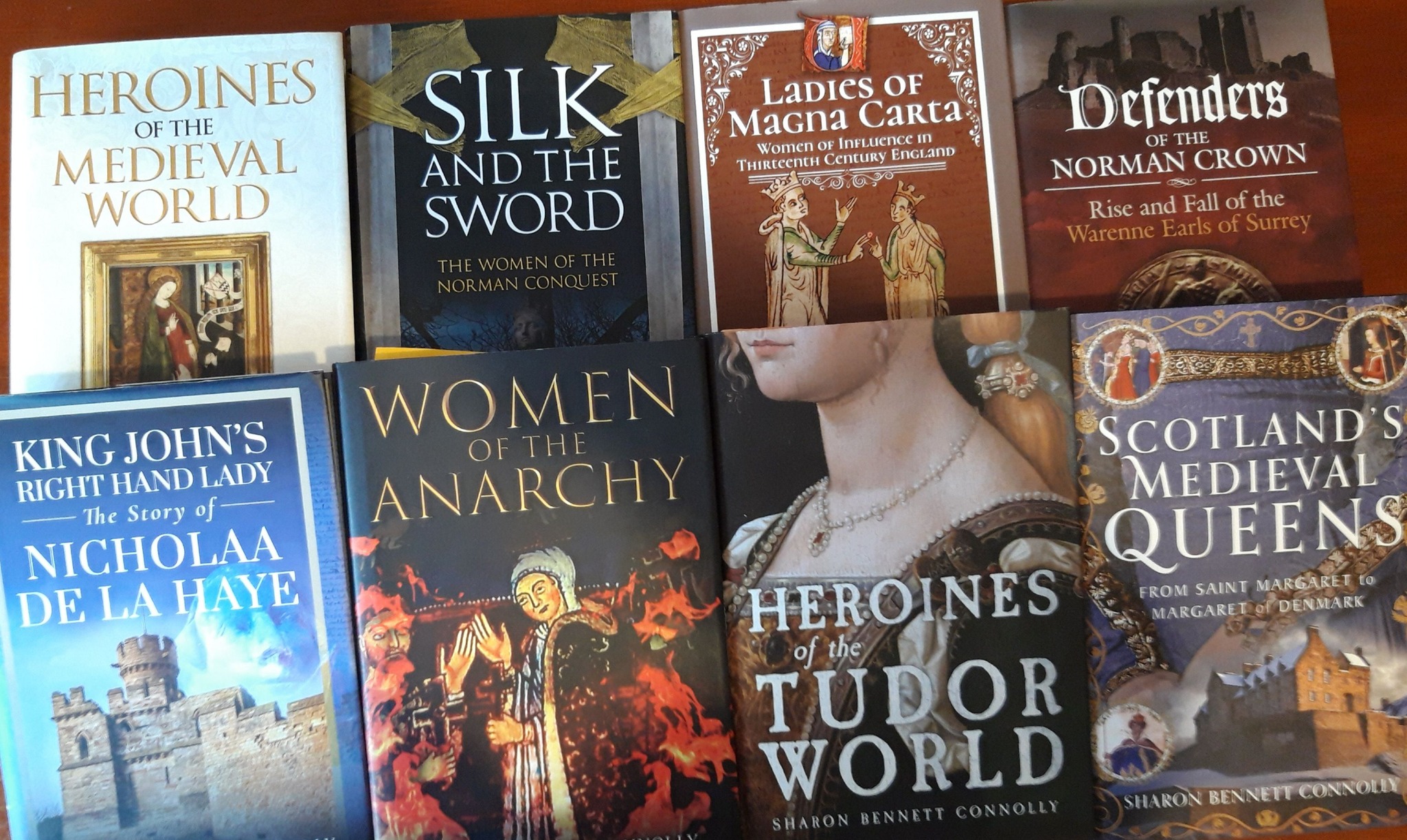
Out now: Scotland’s Medieval Queens

Books by Sharon Bennett Connolly

Scotland’s history is dramatic, violent and bloody. Being England’s northern neighbour has never been easy. Scotland’s queens have had to deal with war, murder, imprisonment, political rivalries and open betrayal. They have loved and lost, raised kings and queens, ruled and died for Scotland. From St Margaret, who became one of the patron saints of Scotland, to Elizabeth de Burgh and the dramatic story of the Scottish Wars of Independence, to the love story and tragedy of Joan Beaufort, to Margaret of Denmark and the dawn of the Renaissance, Scotland’s Medieval Queens have seen it all. This is the story of Scotland through their eyes.

Scotland’s Medieval Queens gives a thorough grounding in the history of the women who ruled Scotland at the side of its kings, often in the shadows, but just as interesting in their lives beyond the spotlight. It’s not a subject that has been widely covered, and Sharon is a pioneer in bringing that information into accessible history.’ Elizabeth Chadwick (New York Times bestselling author)

Available now from Amazon and Pen and Sword Books

Also by Sharon Bennett Connolly:

Books by Sharon Bennett Connolly

Heroines of the Tudor World tells the stories of the most remarkable women from European history in the time of the Tudor dynasty, 1485-1603. These are the women who ruled, the women who founded dynasties, the women who fought for religious freedom, their families and love. Heroines of the Tudor World is now available from Amberley Publishing and Amazon UK. Women of the Anarchy demonstrates how Empress Matilda and Matilda of Boulogne, unable to wield a sword themselves, were prime movers in this time of conflict and lawlessness. It shows how their strengths, weaknesses, and personal ambitions swung the fortunes of war one way – and then the other. Available from Bookshop.orgAmberley Publishing and Amazon UKKing John’s Right-Hand Lady: The Story of Nicholaa de la Haye is the story of a truly remarkable lady, the hereditary constable of Lincoln Castle and the first woman in England to be appointed sheriff in her own right. Available from all good bookshops Pen & Sword Booksbookshop.org and Amazon

Defenders of the Norman Crown: The Rise and Fall of the Warenne Earls of Surrey tells the fascinating story of the Warenne dynasty, from its origins in Normandy, through the Conquest, Magna Carta, the wars and marriages that led to its ultimate demise in the reign of Edward III. Available from Pen & Sword BooksAmazon in the UK and US, and Bookshop.orgLadies of Magna Carta: Women of Influence in Thirteenth Century England looks into the relationships of the various noble families of the 13th century, and how they were affected by the Barons’ Wars, Magna Carta and its aftermath; the bonds that were formed and those that were broken. It is now available in paperback and hardback from Pen & SwordAmazon, and Bookshop.orgHeroines of the Medieval World tells the stories of some of the most remarkable women from Medieval history, from Eleanor of Aquitaine to Julian of Norwich. Available now from Amberley Publishing and Amazon, and Bookshop.orgSilk and the Sword: The Women of the Norman Conquest traces the fortunes of the women who had a significant role to play in the momentous events of 1066. Available now from Amazon,  Amberley Publishing, and Bookshop.org.

Alternate Endings: An anthology of historical fiction short stories including Long Live the King… which is my take what might have happened had King John not died in October 1216. Available in paperback and kindle from Amazon.

Podcast:

Have a listen to the A Slice of Medieval podcast, which I co-host with Historical fiction novelist Derek Birks. Derek and I welcome guests, such as Bernard Cornwell and Michael Jecks, and discuss a wide range of topics in medieval history, from significant events to the personalities involved. Every episode is also now available on YouTube.

*

Don’t forget! Signed and dedicated copies of all my books are available through my online bookshop.

For forthcoming online and in-person talks, please check out my Events Page.

You can be the first to read new articles by clicking the ‘Follow’ button, liking our Facebook page or joining me on TwitterThreadsBluesky and Instagram.


©2019 Sharon Bennett Connolly FRHistS

Book Corner: Echoes of Treason by Derek Birks

It is autumn 1483 and Richard III is king of England, but rumours about the fate of his nephews are rife and dissent is beginning to grow. Waiting in Brittany, is the exiled Lancastrian heir to the throne, Henry Tudor, who senses that his moment has come. Henry’s mother, Lady Margaret Stanley, plots to restore her son’s fortunes with a series of revolts against King Richard.
After the disastrous events of the summer, the embattled Elder family is scattered and in hiding. The outlawed head of the family, John, has escaped to Flanders along with a few loyal comrades, his sister, Meg, and his lover, Isabel. But the Elders will not be left to lick their wounds for long, because William Catesby, influential servant of King Richard, has made it his mission to destroy them.
When Lady Stanley tries to draw the Elders into the Tudor rebellion, John must decide whether he can cast aside his long-held Yorkist loyalties. Should he join Henry Tudor under the banner of St. George and the dragon of Wales?
It is the devil’s choice: poverty and a life in exile, or the slim chance of returning home by the fickle path of treason.

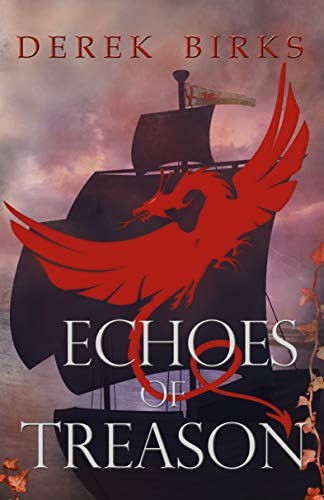
The first thing I have to say about Echoes of Treason by Derek Birks is wow! Not just for the story, but for such a stunning book cover!

I have been a fan of Derek Birks’ work since his first book, Feud, introduced us to the Elder family in 2013. The first 4-book series, Rebel and Brothers was a refreshing new take on the Wars of the Roses era, combining national politics and war with the Elder family’s own challenges and enemies.

Echoes of Treason is the 3rd book in Derek Birks’ wonderful new series, The Craft of Kings, set during the reign of King Richard III, and following the younger generation of the Elder family, once again caught up in England’s drama. As with all Derek’s books, Echoes of Treason takes you on a fast-paced journey through medieval history, every page crammed with action and intrigue. This time we journey from Flanders to Brittany and on to England, coming face to face with enemies both old and new.

With her attention on the stall, Meg barely noticed the young woman who suddenly lurched forward and stumbled heavily into Isabel, knocking her to the ground. Torn between helping Isabel up and berating the clumsy woman who had come to rest at the feet of Thomas, Meg hesitated. Her eyes were drawn to the poor woman’s bloodstained kirtle and shift which had been torn open at the front to reveal more than a glimpse of two full, bare breasts.

Before Meg could move, however, a firm hand was clamped upon her mouth and she was lifted off her feet. Cursing her own folly, Meg was borne away, squirming, into one of the many small alleys leading away from the market. Too much time talking and not enough watching those around her! God’s teeth, she was usually so careful! She should have seen her attacker coming, love-besotted fool that she now was!

Her captor slammed her against a wall which ran alongside the alley, his hand still over her mouth. First things first, thought Meg, biting one of his fingers as hard as she could. While he was yelping in pain, she twisted half out of his grasp and reached down to her boot. But he recovered swiftly and they grappled with each other in a whirling flurry of arms until his greater strength enabled him to pin her to the wall once more with his hand around her neck. With his other hand he held a knife at her breast but she simply glared back at him, two sapphire eyes boring into his.

To her surprise, he sought to reassure her. “Don’t be alarmed, girl; you’ve no need to be frightened; I’ll not hurt you.”

But far from being afraid, Meg was just warming to her work. “Put up your blade,” she warned.

he gave a shake of the head until she pressed the point of the knife she had retrieved from her boot against his neck. Now, for the first time, she had his full attention.

“By Christ, little girl!” he cried. “Have a care with that knife!”

Echoes of Treason follows the Elder family into exile, following on from The Blood of Princes and John Elder’s attempts to rescue the Prince in the Tower. From the first pages, in exile in Bruges, to a dramatic return to England’s shores, the action is fast-paced, on land and sea. The author shows his wide breadth of knowledge of the era by incorporating actual events and characters who played leading roles in the history. There is a fabulous interview with Henry Tudor that leaves you smiling for days!

The tension is palpable on every page and builds to a crescendo as the story drives inexorably to the last, desperate fight. The plot, moreover, is as well thought out as the action and drags the Elder family into the intrigues and machinations of those fighting for the crown itself, and their scheming lackeys!

My favourite character in any Derek Birks book is Lady Eleanor Elder. Eleanor has become a bit of a heroine of mine; she is no weak-willed woman and fights with her wits and whatever weapon is to hand, whenever she is backed into a corner. It is a credit to the author that he has let this amazing woman take on a life of her own in the story, despite not being the lead character. She deserves a story of her own (hint, hint!)

I loved this book from the first page to the last. My only complaint is that I found it harder to write my own whilst I was reading it – I found myself drifting off into the Wars of the Roses and wondering how the Elders would get themselves out of the impossible predicament Derek Birks had sent them into. It is only when the last page has been turned that you can breathe a sigh of relief and one of regret, that the book finished too soon!

About the author:

Derek Birks was born in Hampshire in England but spent his teenage years in Auckland, New Zealand where he still has strong family ties.
For many years he taught history in a secondary school in Berkshire but took early retirement several years ago to concentrate on his writing.
Apart from writing, he spends his time gardening, travelling, walking and taking part in archaeological digs at a Roman villa.

Derek is interested in a wide range of historical themes but his particular favourite is the later Medieval period. He aims to write action-packed fiction which is rooted in accurate history. His debut historical novel, Feud, is set in the period of the Wars of the Roses and is the first of a four-book series entitled Rebels & Brothers which follows the fortunes of the fictional Elder family.
The other books of the series are (in order): A Traitor’s Fate, Kingdom of Rebels and The Last Shroud.

The first book of a brand new series, Scars From the Past, is now out in both kindle and paperback.
His books are available on Amazon in the UK and US.
You can find Derek at;
Amazon
Blog
Facebook
Twitter 

*

My Books

Silk and the Sword: The Women of the Norman Conquest

From Emma of Normandy, wife of both King Cnut and Æthelred II to Saint Margaret, a descendant of Alfred the Great himself, Silk and the Sword: the Women of the Norman Conquest traces the fortunes of the women who had a significant role to play in the momentous events of 1066.  Available now from Amazon UK,  Amberley Publishing, Book Depository and Amazon US.

Heroines of the Medieval World

Telling the stories of some of the most remarkable women from Medieval history, Heroines of the Medieval World,  is now available in hardback in the UK from Amazon UK, and in the US from Amazon US. It is available now in paperback in the UK from from both Amberley Publishing and Amazon and worldwide from Book Depository.

*

You can be the first to read new articles by clicking the ‘Follow’ button, liking our Facebook page or joining me on Twitter.

©2019 Sharon Bennett Connolly

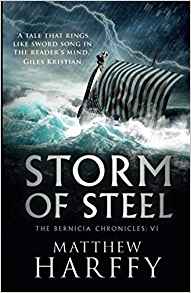
Book Corner: Storm of steel by Matthew Harffy

Today I am delighted to be a part of the book tour for Matthew Harffy‘s latest addition to his Bernicia Chronicles, Storm of Steel, with a review of this fabulous new novel.

AD 643. Anglo-Saxon Britain. A gripping, action-packed historical thriller and the sixth instalment in the Bernicia Chronicles.

Heading south to lands he once considered his home, Beobrand is plunged into a dark world of piracy and slavery when an old friend enlists his help to recover a kidnapped girl. Embarking onto the wind-tossed seas, Beobrand pursues his quarry with single-minded tenacity.

But the Whale Road is never calm and his journey is beset with storms, betrayal and violence.

As the winds of his wyrd blow him ever further from what he knows, will Beobrand find victory on his quest or has his luck finally abandoned him?

I have had the distinct pleasure of following the adventures of Beobrand and his band of warriors from the very first to book to this one, the sixth in the series. In a feat that few authors ever manage to achieve, each book has been better than the last and, indeed, when I read the last one, Warrior of Woden, I sincerely doubted that Matthew Harffy could top it. But top it he has! And in spectacular style.

In Storm of Steel Beobrand has gone off in a new direction, on a  personal mission, rather than one dictated by kings, and by sea rather than land. This has given scope for a fabulous new adventure and gives a new edge to the battles, both on land and sea – and against the elements. It also means new experiences, as Beobrand journeys along the south coast and into Frankia. The locations are stunning, Matthew Harffy’s descriptions of dramatic coastlines, stormy weather and the different brands of people he encounters, from lowly peasants, to pirates and warlords, all serve to transport the reader back to the 7th century, recreating the Anglo-Saxon world in the mind of the reader.

‘Go Cynan,’ Beobrand whispered.

Cynan stepped away from the sailors and scrambled over the side of the ship, back into Háligsteorra. Beobrand followed him and quickly joined Bassus and the others where they stood before a pile of bloody corpses.

The pirates clambered off the ship even more quickly than they had boarded. Their leader was last, and he shuffled towards the wale still clutching Dalston to him, with the sharp seax blade digging into the skin beneath the monk’s chin.

When he reached the side, he stepped over, steadied by the welcoming hands of his men. He lifted Dalston bodily and carried him over with him.

‘Take the treasure the boy carries,’ shouted Beobrand. Send the boy back.’

The dull thuds of axe blows signalled the ropes that had held the ships together being cut. Using their oars, the pirates shoved the two ships apart. the gap between the vessels widened quickly, soon it would be too far even for an unarmoured man to jump.

‘Send the boy back!’ yelled Beobrand again, but as he said the words, he tasted the bitterness of defeat and deceit in his throat.

Storm of Steel is Beobrand’s 6th adventure; the stunning imagery and constant action leads the reader into Beobrand’s world in magnificent style. The action, as ever, is constant and leads the reader on a roller-coaster of a ride from the first page to the last, never quite certain that Beobrand will win through, nor even that he will survive the encounter with one of the greatest warlords of Frankia and rescue the kidnapped girl…. I’m not telling….

Matthew Harffy is an author whose writing goes from strength to strength with each book. I feel I’m repeating myself when I say ‘this is the best one yet’, but it truly is. I defy anyone to be able to put it down without wanting to read through to the end in one sitting. I certainly read late into the night, but the lack of sleep was well worth the experience of another adventure with the now-famous Beobrand and his band of warriors.

Storm of Steel  is a masterpiece of a novel, the visually imagery recreated by the words evoke a world so long in the past that little remains but archaeology, and yet the reader can imagine themselves there, and fighting at the side of Beobrand, Cynan, Bassus and the rest. But there is more to fighting in all of Matthew Harffy’s books. The intricate and engrossing plot weaves its way between the battles – against man and the elements – to tell a story that is at once intriguing and gripping.

Beobrand and the Bernicia Chronicles are a phenomenon!

I cannot recommend the stories of Beobrand, told in the Bernicia Chronicles, highly enough. And Storm of Steel stands out as one of the best books I have read so far, this year.

About the author

Matthew grew up in Northumberland where the rugged terrain, ruined castles and rocky coastline had a huge impact on him. He now lives in Wiltshire, England, with his wife and their two daughters.

 Follow Matthew Harffy:    

Twitter: @MatthewHarffy, Facebook: @MatthewHarffyAuthor, Website: http://www.matthewharffy.com/

Buy links:

Amazon: https://amzn.to/2INuSlg; Kobo: https://bit.ly/2IQsFWo; Google Play: ttps://bit.ly/2GEC8i9; iBooks: https://apple.co/2UQcr6Y

Follow Aria

Website: www.ariafiction.com; Twitter: @aria_fiction; Facebook: @ariafiction; Instagram: @ariafiction

*

My Books

Silk and the Sword: The Women of the Norman Conquest

From Emma of Normandy, wife of both King Cnut and Æthelred II to Saint Margaret, a descendant of Alfred the Great himself, Silk and the Sword: the Women of the Norman Conquest traces the fortunes of the women who had a significant role to play in the momentous events of 1066.  Available now from Amazon UK,  Amberley Publishing, Book Depository and Amazon US.

Heroines of the Medieval World

Telling the stories of some of the most remarkable women from Medieval history, Heroines of the Medieval World,  is now available in hardback in the UK from Amazon UK, and in the US from Amazon US. It is available now in paperback in the UK from from both Amberley Publishing and Amazon and worldwide from Book Depository.

*

You can be the first to read new articles by clicking the ‘Follow’ button, liking our Facebook page or joining me on Twitter.

©2019 Sharon Bennett Connolly