Book Corner: Cesare and Lucrezia Borgia by Samantha Morris

Myths and rumour have shrouded the Borgia family for centuries – tales of incest, intrigue and murder have been told of them since they themselves walked the hallways of the Apostolic Palace. In particular, vicious rumour and slanderous tales have stuck to the names of two members of the infamous Borgia family – Cesare and Lucrezia, brother and sister of history’s most notorious family. But how much of it is true, and how much of it is simply rumour aimed to blacken the name of the Borgia family? In the first ever biography solely on the Borgia siblings, Samantha Morris tells the true story of these two fascinating individuals from their early lives, through their years living amongst the halls of the Vatican in Rome until their ultimate untimely deaths. Cesare and Lucrezia Borgia begins in the bustling metropolis of Rome with the siblings ultimately being used in the dynastic plans of their father, a man who would become Pope, and takes the reader through the separate, yet fascinatingly intertwined, lives of the notorious siblings. One tale, that of Cesare, ends on the battlefield of Navarre, whilst the other ends in the ducal court of Ferrara. Both Cesare and Lucrezia led lives full of intrigue and danger, lives which would attract the worst sort of rumour begun by their enemies. Drawing on both primary and secondary sources Morris brings the true story of the Borgia siblings, so often made out to be evil incarnate in other forms of media, to audiences both new to the history of the Italian Renaissance and old.

Cesare and Lucrezia Borgia: Brother and Sister of History’s Most Vilified Family by Samantha Morris is a fascinating look at two of the most famous villains in history; a brother and sister renowned for murder, intrigue and incest. Or are they? Samantha Morris’s beautifully written dual biography of these siblings aims to peal away the centuries of rumour and accusations and find the real people beneath the legend.

Samantha Morris combines a lively, engaging narrative with keen historical analysis, uncovering the facts embedded in the legends, rumours and scandals. She demonstrates a deep understanding not only of her subjects and their motivations but of the political theatre of Italy, the papacy and Europe in general at that time.

In Cesare and Lucrezia Borgia: Brother and Sister of History’s Most Vilified Family, Samantha Morris expertly separates rumour from fact to provide a balanced appraisal of these famous siblings; their strengths and weakness. Using creditable sources, papal records and even family letters, she clearly establishes the facts behind the lies of the incest accusation, whilst demonstrating how such accusations came about and the various efforts to sully the name of the Borgia family.

The careers of the Borgia children were decided and laid out before them before they could even waalk. Juan was chosen as the son who would be the military leader, the great Duke who would go on to continue the Borgia line; Cesare was destined for a life in the Church; Lucrezia would be forced into diplomatic marriages and Gioffre would do the same. The children were their father’s pawns, important chess pieces but Cesare in particular did not like the career path that was chosen for him.

When Cesare was just six years old, the Pope granted a dispensation that allowed him to hold Church benefices despite his illegitimacy and the following year, 1482, King Ferdinand of Aragon exempted him from a law that would stop him from holding lordships in Spain due to his illegitimacy. Being bastard born would not get in the way of raising Cesare Borgia to the heights that his father so wanted for him.

By the age of just fifteen, Cesare had already been given a vast number of Church benefices including the Bishopric of Pamplona, the ancient capital of Navarre. This caused particular outrage as the young man had not yet taken his holy orders and Cardinal Rodrigo Borgia did his best to calm down the populace, telling them that Cesare’s elevation was simply down to his merits and hard work. Cesare, on a break from the University of Perugia and busy on a hunting trip, found himself having to write a letter to the people of Navarre to try and soothe their anger. But it didn’t work and the Pope had to intervene to halt the rebellion.

From tracing their origins in Spain, to the spectacular heights to which the family rose, to the politics that brought about the demise of Cesare and meant the family were embroiled in constant struggles for land and power, Samantha Morris charts the successes and failures – and underhand dealings of the infamous family. The siblings’ father and family patriarch, Rodrigo Borgia, Pope Alexander VI is depicted as a scheming but capable man and pope who loved his children dearly. He sought to establish his illegitimate children in lives and careers appropriate to their rank as the children of a reigning pope.

Lucrezia Borgia comes across as an intelligent, passionate woman, far removed from , the poisoner of legend conducting a love affair with her own brother. She proved herself capable of ruling and was loving and loyal to her family. She pursued an active political career despite her almost constant pregnancies, and suffered incalculable griefs and family loss. Lucrezia, however, is not depicted as a pure, innocent virgin, but a well educated, politically astute woman who may also have conducted certain indiscretions, or at least platonic love affairs, during her lifetime. She is a woman who made the best of the life that was mapped out for her.

Cesare, on the other hand, is a ruthless man not cut out for the career in the church to which he appeared destined. The untimely murder of his older brother meant he went from cardinal to soldier, a job to which he was much better suited and a thousand times more capable and dedicated. Cesare is a complex character; accused of numerous murders, including those of his own brother and Lucrezia’s second husband, he is remembered to history as a ruthless, scheming murderer and seducer of his own sister. While he may have been ruthless and scheming – and a murderer to some extent, Samantha Morris goes on to prove that not all the murders laid at Cesare’s door were his responsibility.

As an aside, the reader cannot fail to notice the prevalence of syphillis in Italy at the time. A countless number of the protagonists in the story suffered from this disfiguring disease, Cesare Borgia among them. The French, attempting to conquer Italy at the time, called it ‘the Italian disease’, though in England it was known as ‘the French disease’ – those same invading French soldiers took the dreadful disease with them when they returned home.

Cesare and Lucrezia Borgia: Brother and Sister of History’s Most Vilified Family is an engaging narrative of the history of not only these most famous Italian siblings, but also Italy, the papacy and wider European politics at the time when the world was moving from the Medieval era into the Early Modern, when the Renaissance was in full swing and the Reformation was just around the corner. Samantha Morris demonstrates the power of the papacy, of Pope Alexander VI in particular, and how papal factions caused the rise – and fall – of the Borgia family.

Cesare and Lucrezia Borgia: Brother and Sister of History’s Most Vilified Family is an entertaining and enthralling read – one not to be missed!

Cesare and Lucrezia Borgia: Brother and Sister of History’s Most Vilified Family by Samantha Morris is available from Pen & Sword Books and Amazon.

About the author:

Samantha Morris studied archaeology at the University of Winchester and it was there, whilst working on a dissertation about the battlefield archaeology of the English Civil War that her interest in the Italian Renaissance began. Her main area of interest is the history of the Borgia family and the papacy of Pope Alexander VI, however she also has a keen interest in the history of other Renaissance families. Samantha has previously written on the Borgia family and runs a successful blog based mainly on the history of the Italian Renaissance, but with snippets of other eras thrown in too.

*

My Books

Ladies of Magna Carta: Women of Influence in Thirteenth Century England  looks into the relationships of the various noble families of the 13th century, and how they were affected by the Barons’ Wars, Magna Carta and its aftermath; the bonds that were formed and those that were broken. It is now available from Pen & SwordAmazon and from Book Depository worldwide.

Also by Sharon Bennett Connolly:

Silk and the Sword: The Women of the Norman Conquest traces the fortunes of the women who had a significant role to play in the momentous events of 1066.  Available now from Amazon,  Amberley Publishing, Book Depository.

Heroines of the Medieval World tells the stories of some of the most remarkable women from Medieval history, from Eleanor of Aquitaine to Julian of Norwich. Available now from Amberley Publishing and Amazon and Book Depository.

*

You can be the first to read new articles by clicking the ‘Follow’ button, liking our Facebook page or joining me on Twitter and Instagram.

©2020 Sharon Bennett Connolly 

Book Corner: Betrayal

“Loyalty breaks as easily as a silken thread.”

Misplaced trust, power hunger, emotional blackmail, and greed haunt twelve characters from post-Roman Britain to the present day. And betrayal by family, lover, comrade can be even more devastating.

Read twelve tales by twelve accomplished writers who explore these historical yet timeless challenges.

AD455—Roman leader Ambrosius is caught in a whirlpool of shifting allegiances
AD940—Alyeva and cleric Dunstan navigate the dangers of the Anglo Saxon court
1185—Knight Stephan fights for comradeship, duty, and honour. But what about love?
1330—The powerful Edmund of Kent enters a tangled web of intrigue
1403—Thomas Percy must decide whether to betray his sovereign or his family
1457—Estelle is invited to the King of Cyprus’s court, but deception awaits
1483—Has Elysabeth made the right decision to bring Prince Edward to London?
1484—Margaret Beaufort contemplates the path to treason
1577—Francis Drake contends with disloyalty at sea
1650—Can James Hart, Royalist highwayman, stop a nemesis destroying his friend?
1718—Pirate Annie Bonny, her lover Calico Jack, and a pirate hunter. Who will win?
1849/present—Carina must discover her ancestor’s betrayer in Italy or face ruin.

Betrayal: Historical Stories is a wonderful anthology of 12 short stories exploring the concept of betrayal, either of country, family or lovers. Featuring some of the best authors of the moment, Betrayal: Historical Stories features stories from post-Roman Britain to an alternative reality in modern times, where the Roman Empire never fell but continued under powerful, influential women in Roma Nova.

There is something in this book for everyone. There are kings and queens, knights, pirates and cavalier highwaymen. There are stories of love, loyalty and friendship combined with implacable enemies, broken promises, family secrets and – above all – betrayal!

The remarkable diversity of the stories make this anthology a gripping read. You never know what story you are going to come across next, whether its the exploits of Sir Francis Drake, the heartbreaking story of 13-year-old Edward V’s journey to London, from his proclamation as king to his deposition and imprisonment in the Tower of London. Each story is written by a different author; their voices are as distinct as their characters.

In a book of short stories, it is impossible to pick an extract that shows the full range of writing on offer. However, it is possible to choose and extract that highlights the high standard of writing throughout the book. So here’s an excerpt from Honour of Thieves by Cryssa Bazos:

A panicked rider appeared from around the bend, twisted in the saddle, his attention fixed behind him as though the hounds of hell snapped at his feet. When he finally turned to face the road ahead, he saw James barring his way and screamed. the rider yanked hard on teh reins, and his horse skidded to a bone’jarring halt. He fought to keep himself from launching over his horse’s head.

James levelled his pistol at him. ‘Stand and deliver!’

A bead of sweat trickled down the man’s brow. ‘Ah, Master Highwayman. Do you not remember me? I passed this way before. You afforded me a free pas through Moot Hill.’ When he received no acknowledgement, he pressed on, his voice cracking, ‘I’m the pauper you took pity on. Do you not recall?’

James studied the man. Same battered hat and frayed cloak, a nearly broken horse better suited for the pasture than the road. True, he had last taken the man for a beggar, as he was meant to, but since then he had learned the truth. ‘A thrice of days ago; I haven’t forgotten. I allowed you the freedom of the highway.’

‘Blessed be the day.’ The man beamed and wiped his forehead with his sleeve. ‘Naturally, there’s no profit accosting me.’ His smile faded when he realised that the pistol was still trained on him. ‘I’m not even a Parliamentarian – I’m a good Royalist still mourning his fallen king … like yourself.’

James lifted a brow, satisfied to see the man squirm. Lying sod. Many travellers had passed this way over the last year pretending to share the highwayman’s abhorrence for their Parliamentarian usurpers in order to save their purse. James had seen through their ruses, but this one had somehow rooked him. That set his teeth on edge. ‘You pled your case well, claiming to be a half-starved hare.’ He swept his gaze to the man’s new leather boots. Clearly, the man’s subterfuge did not extend to the discomfort of ill-fitting shoes. ‘I took pity on you – instead of taking, I gave you a goodly sum to keep you well and a few coins besides to drink my health.’

‘God save you -‘

‘Did you have that drink?’ James asked.

‘Of course! I sang your praises at a public house that night.’

‘Are you certain?’

Silence.

I have read some of the authors before. Derek Birks, Tony Riches, Annie Whitehead, Cryssa Bazos and Anna Belfrage are among my favourite authors and I have reviewed their books before. These short stories allowed me to revisit some of their best characters, from Ambrosius Aurelianus to Captain James Hart, Sir Stephan de l’Aigle and Kit and Adam de Guirande of Anna Belfrage’s The King’s Greatest Enemy series.

Reading Betrayal: Historical Stories was a combination of spending a few hours with old friends and meeting new ones. Elizabeth St John, Judith Arnopp and Alison Morton were authors I was familiar with, but had not read before. I am now going to rectify that and go through their back catalogue to catch up. Alison’s Roma Nova short story provided an intriguing alternative to the modern day, showing us how the world might be, had a Roman Empire survived and flourished into the modern world, under the auspices of 12 ruling families.

The stories are beautifully written, enjoyable diversions. It is impossible to choose a favourite! Betrayal: Historical Stories showcases some of the best writing in historical fiction today. It is a pure pleasure to read.

What a fabulous way to discover new authors and new adventures!

The Betrayal: Historical Stories anthology is available for free from Amazon UK and Amazon US.

*

My Books

Ladies of Magna Carta: Women of Influence in Thirteenth Century England  looks into the relationships of the various noble families of the 13th century, and how they were affected by the Barons’ Wars, Magna Carta and its aftermath; the bonds that were formed and those that were broken. It is now available from Pen & SwordAmazon and from Book Depository worldwide.

Also by Sharon Bennett Connolly:

Silk and the Sword: The Women of the Norman Conquest traces the fortunes of the women who had a significant role to play in the momentous events of 1066.  Available now from Amazon,  Amberley Publishing, Book Depository.

Heroines of the Medieval World tells the stories of some of the most remarkable women from Medieval history, from Eleanor of Aquitaine to Julian of Norwich. Available now from Amberley Publishing and Amazon and Book Depository.

*

You can be the first to read new articles by clicking the ‘Follow’ button, liking our Facebook page or joining me on Twitter and Instagram.

©2020 Sharon Bennett Connolly 
Book Corner: The Errant Hours by Kate Innes

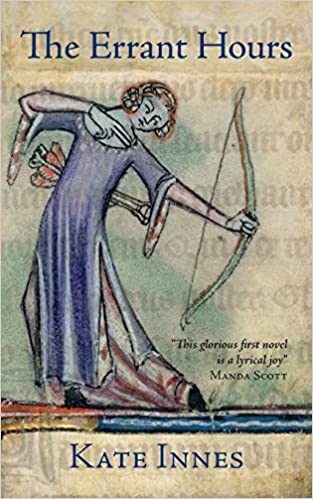
A headlong journey through the physical and spiritual dangers of Plantagenet Britain, in all its savage pageantry. Welsh Marches, July 1284 – the uprising in Wales is over, the leader gruesomely executed, the dead are buried. But for Illesa Arrowsmith, the war’s aftermath is just as brutal. When her brother is thrown into the Forester’s prison on false charges, she is left impoverished and alone. All Illesa has left is the secret manuscript entrusted to her – a book so powerful it can save lives, a book so valuable that its discovery could lead to her death. When the bailiff’s daughter finds it, Illesa decides to run, and break her brother out of jail by whatever means. But the powerful Forester tracks them down, and Illesa must put herself and the book at the mercy of an unscrupulous knight who threatens to reveal all their secrets, one by one. Inspired by the seductive art of illuminated manuscripts, The Errant Hours draws from the deep well of medieval legend to weave a story of survival and courage, trickery and love.

Every now and again you come across a book that draws you in and makes you lose entire days to reading. For me, The Errant Hours by Kate Innes was one of those books: I lost the whole of last weekend to reading the final 200 pages because I HAD to get to the end. Of course, I now wish I’d taken a little longer over it, but this was a book I needed to devour. With just short of 400 pages of beautiful prose, a unique storyline and the perfect combination of intrigue, betrayal and love, The Errant Hours is a perfect book for lockdown or those long, dark, winter nights.

A brother-sister relationship most of us can relate to, family secrets and mysteries and a beautiful, valuable book all come together to create The Errant Hours by Kate Innes. Illesa Arrowsmith losing her home to her creditors and helping her reckless brother escape the Forester’s prison is only the start of her adventures; adventures that will lead her to the heart of the court of Edward I and into the political turmoil of the English conquest of Wales. While the national political climate contrasts perfectly with the turmoil in Illesa’s own life as she attempts to uncover her own origins and her feelings for Sir Richard Burnel, the knight who could be both protector and her accuser.

‘Illesa!’

She ignored the angry whisper and went back towards the torchlight. The guard’s head had changed position. She stood still, watching him. A thin stream of saliva came from the corner of his open mouth. His jerkin was unbuttoned. The iron chain was wound around his belt and the end hung down behind the bench.

Illesa slowly undid the buckle and loosened the chain, pulling it, link by link, off the leather belt. Gathering the chain in her hand, she pulled it up. There was a dull clang. The guard grunted and shifted on the bench, but his eyes remained closed. The ring holding the keys was caught between the wall and the bench. Illesa held the chain in her left hand and knelt down. She reached under the bench, her arms stretched around the guard, straining not to touch him. Her fingers brushed against the keys, and she let them rest on her palm. Illesa let the chain slip slowly out of her left hand until she held it, and the keys, in her right hand. She got shakily to her feet and ran to the cell door.

‘Where is the lock?’ she whispered.

‘Here, follow my hand.’Illesa saw the vague whiteness of Kit’s fingers; she put her own on top of them, feeling for the keyhole with her thumb.

‘Got it,’ she said, fumbling with the larger key.

It slid easily into the hole, but as she turned it there was a terrible screeching sound of metal against metal. Something hit the floor with a loud thump and a gasp of pain.

Kit pushed the door, nearly knocking Illesa over as he ran out of the cell.

‘Follow me!’

Kate Innes must have done a remarkable amount of research to produce such a historically accurate work of historical fiction. Although her leading characters are fictional, the supporting characters are very much historical fact, with Edward I, Eleanor of Castile, young Prince Alphonso and John, 6th Earl Warenne all making an appearance. I didn’t know one of the Warennes would be making an appearance in the story – it was such a lovely surprise!

I particularly liked Kate Innes’ portrayal of Earl Warenne as a brutal, brash lord who spares little thought for the niceties – he certainly comes across as that in my research for my own forthcoming book on the Warennes, Defenders of the Norman Crown: Rise and Fall of the Warenne Earls of Surrey. In fact, I think Kate Innes was a little more generous with Warenne’s personality than some chroniclers were!

The fictional characters, Illesa, her brother Kit and the knight, Richard Burnel, are the central actors in the story. Their personalities, appearance and relationships are wonderfully ‘fleshed’ out. Illesa is a strong female character, but one that is not out of place in 13th century England. A young woman with determination and capability, she is also all-too-aware of the limitations forced on her by her sex.

A beautifully crafted tome, The Errant Hours by Kate Innes is a unique insight into 13th century England. The narrative flows freely and Illesa’s story will keep the reader entranced from the first page to the last. I cannot recommend it highly enough and have already put book 2, All the Winding World, on my Christmas list.

The Errant Hours by Kate Innes is available from Amazon.

About the author:

Kate Innes was born in London and lived and worked in America and Zimbabwe. She is now based in Shropshire, and it is the history and natural beauty of this area that provides inspiration for both her fiction and poetry.

She originally trained as an archaeologist and a teacher, and then worked as a Museum Education Officer around the Midlands, writing poetry in her spare time. After the arrival of her children, Kate began work on her medieval novel ‘The Errant Hours’ which was published in 2015.

The Historical Novel Society selected ‘The Errant Hours’ as an ‘Editor’s Choice’, and it was added to the reading list of the Medieval Studies Department at Bangor University. It is one of Book Riot’s ‘One Hundred Must Read Medieval Novels’.

Her second novel, ‘All the Winding World’ is a sequel to ‘The Errant Hours’, set ten years later. It is due to be published on the 22 June 2018.

Kate has been writing and performing poetry for many years, usually with a particular focus on animals, art and the natural world. Her poem ‘Flocks of Words’ won first prize in the ‘Imagined Worlds’ Competition held by the Friends of Samuel Taylor Coleridge. Her first collection, also called ‘Flocks of Words’, was published in Spring 2017 and many of these poems form part of a performance with the acoustic music group ‘Whalebone’.

Kate runs writing workshops, gives illustrated talks, works collaboratively with communities and undertakes commissions and residencies.

http://www.kateinneswriter.com

*

My Books

Ladies of Magna Carta: Women of Influence in Thirteenth Century England  looks into the relationships of the various noble families of the 13th century, and how they were affected by the Barons’ Wars, Magna Carta and its aftermath; the bonds that were formed and those that were broken. It is now available from Pen & SwordAmazon and from Book Depository worldwide.

Also by Sharon Bennett Connolly:

Silk and the Sword: The Women of the Norman Conquest traces the fortunes of the women who had a significant role to play in the momentous events of 1066.  Available now from Amazon,  Amberley Publishing, Book Depository.

Heroines of the Medieval World tells the stories of some of the most remarkable women from Medieval history, from Eleanor of Aquitaine to Julian of Norwich. Available now from Amberley Publishing and Amazon and Book Depository.

*

You can be the first to read new articles by clicking the ‘Follow’ button, liking our Facebook page or joining me on Twitter and Instagram.

©2020 Sharon Bennett Connolly 
Book Corner: Drake – Tudor Corsair by Tony Riches

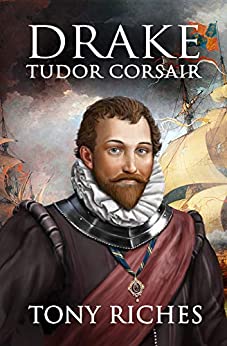
1564: Devon sailor Francis Drake sets out on a journey of adventure.

Drake learns of routes used to transport Spanish silver and gold, and risks his life in an audacious plan to steal a fortune.

Queen Elizabeth is intrigued by Drake and secretly encourages his piracy. Her unlikely champion becomes a national hero, sailing around the world in the Golden Hind and attacking the Spanish fleet.

King Philip of Spain has enough of Drake’s plunder and orders an armada to threaten the future of England.

I have read practically everything Tony Riches has ever written and I have to say, this is one of his best!

Drake – Tudor Corsair, is the first in a new Elizabethan Series. It follows the career of Sir Francis Drake from his first days as a sailor on a slave ship, to becoming captain of his own ship captain, to his raid on Cadiz and the Spanish Armada and to his final voyage as one of the greatest sailors England has ever produced. It is a life full of danger and adventure – and ambition.

As I have come to expect from Tony Riches, the book is meticulously researched and draws on primary sources to recreate Drake’s life as a novel. The result is a stunning, detailed story that draws the reader onto every aspect of Elizabethan naval life.

I confess, I knew nothing of Francis Drake beyond his participation in defeating the Spanish Armada. Tony Riches paints the portrait of a fascinating character, adventurous, ambitious, caring of his family and his crews. Drake pushed the boundaries of navigation, seamanship and – oftentimes – the law. He was a thorn in the side of the Spanish, preying on their colonies and treasure ships – they must have hated him.

I’d grown tired of remaining on the ship and wanted to experience something of Africa. I armed myself with an old sword, and found a leather bag to carry anything of value I discovered. For years I’d dreamed of searching for gold in this wild country, and now I had my chance.

Morgan cursed as the dark mud at the landing place chosen by our guide clung like glue to his boots. We walked in single file down the narrow path and I hacked at the undergrowth with my sword, mindful of stories of poisonous spiders, deadly snakes and dangerous animals.

The village came into view, in a clearing surrounded by thick forest. I was surprised by the silence; it seemed the villages had learned of our approach and fled. We’d been ordered to keep together, but the men began rushing from hut to hut, their discipline lost in the search for gold.

The first arrow flashed through the air and struck the man ahead of me in the throat. He fell with bright blood gushing from a deep wound. More arrows flew from the forest, finding their targets with deadly accuracy.

I froze in panic. We’d walked into a trap and were a long way from the boats. An arrow thudded deep into a tree close to where I stood, and Master Gilbert yelled in pain as another hit him in the shoulder.

A native ran towards me, his spear raised high in the air. Painted with red earth, he wore a necklace of curved white fangs. His muscular arm drew back, ready to put all his strength into the throw.

I turned and ran back the way we’d come, the yells and cries of pain urging me on as my heart pounded and I ran for my life. The low branch of a thorn tree scratched across my face, drawing blood, and I expected an arrow to strike my back at any moment.

Drake – Tudor Corsair is a thoroughly enjoyable read. Rich in detail and characters, it depicts the good and bad of Tudor history, delicately dealing with sensitive issues such as the slave trade, while not ignoring the brutality nor immorality of it. Tony Riches depicts the drama and danger of life at sea in a Tudor warship – fighting against not only the Spanish and the often violent natives, but also the elements themselves; the weather and the dangerous, uncharted coastlines.

Tony Riches’ characters are always rich and full of life. Sir Francis Drake himself is a likable character, he has some flaws, but comes across as someone who knows what he wants, who he wants to be and naturally takes command of every situation.

Drake – Tudor Corsair is a fabulous, entertaining read. It takes the reader on a journey full of adventure and fraught with danger, to the West Indies, Africa, South America and the Spanish coast. The various voyages and natives they encounter leave Drake – and the reader – in suspense as to whether they are friend and foe.

Tony Riches highlights the dangers faced by Drake and the brave adventurers of his era, who pushed their ships further and for longer in the name of discovery and of Elizabeth I. These were men who pushed the boundaries and often paid the ultimate price. As a result, Drake – Tudor Corsair is also a story of friendship, companionship and survival, with a twist of betrayal when ambition outweighs friendship.

And what’s more, Tony Riches is telling an epic, real-life story!

Drake – Tudor Corsair is out now and available from Amazon.

About the author:

Tony Riches is a full-time writer and lives with his wife in Pembrokeshire, West Wales, UK. A specialist in the history of the early Tudors, Tony is best known for his Tudor Trilogy. His other international best-sellers include Mary – Tudor Princess, Brandon – Tudor Knight and Katherine – Tudor Duchess.

For more information visit Tony’s author website http://www.tonyriches.com and his blog at http://www.tonyriches.co.uk. He can also be found at Tony Riches Author on Facebook and Twitter @tonyriches.

*

My Books

Ladies of Magna Carta: Women of Influence in Thirteenth Century England  looks into the relationships of the various noble families of the 13th century, and how they were affected by the Barons’ Wars, Magna Carta and its aftermath; the bonds that were formed and those that were broken. It is now available from Pen & SwordAmazon and from Book Depository worldwide.

Also by Sharon Bennett Connolly:

Silk and the Sword: The Women of the Norman Conquest traces the fortunes of the women who had a significant role to play in the momentous events of 1066.  Available now from Amazon,  Amberley Publishing, Book Depository.

Heroines of the Medieval World tells the stories of some of the most remarkable women from Medieval history, from Eleanor of Aquitaine to Julian of Norwich. Available now from Amberley Publishing and Amazon and Book Depository.

*

You can be the first to read new articles by clicking the ‘Follow’ button, liking our Facebook page or joining me on Twitter and Instagram.

©2020 Sharon Bennett Connolly
Book Corner: Lucia by Steven A. McKay

What makes life worth living for a slave of Rome?

The promise of vengeance no matter how long it takes.

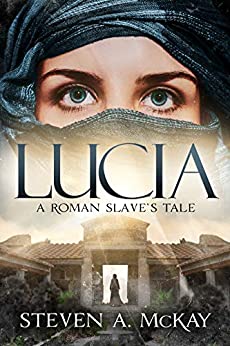
At eight years old, Lucia is torn from the life she knew. Her village burned to the ground and parents murdered by Romans, she is kidnapped, sold and shipped abroad to the Villa Tempestatis in Britannia to serve the young Roman army officer Castus.

Faced with a bleak future of decades of servitude to her master, as well as sadistic brutality at the hands of his manageress, Paltucca, she finds herself fixated by one thought alone: vengeance.

Yet Villa Tempestatis, with its picturesque surroundings in Britannia’s green countryside, offers a life that’s a little easier than elsewhere in the Roman empire. The slaves form strong bonds of love and friendship, enjoy feasts and holiday celebrations together, and are even allowed, sometimes, to start a family. Many of them are happy enough with their lot.

Despite that, every moment of Lucia’s life is blighted by her hatred for Castus and Paltucca, and only seeing them both destroyed will bring her a measure of peace, even if it takes decades of work and planning…

From the moment you read the dedication in the front of Lucia, you will know you are in for an emotional rollercoaster:

Dedicated to all the men, women and children forced into slavery and forgotten by history.

And you would be right!

Lucia is one of those novels that will stay with you long, long … long after you have read the final page and closed the book (probably with a tear on your cheek). To say it is thought-provoking would be an understatement. This is one of those stories that will really get under your skin.

I have read everything Steven A. McKay has written, from his unique take on the Robin Hood stories to his wonderfully atmospheric Warrior Druid of Britain series, but Lucia is on another level. It is probably his best writing yet. It is a story that is at once desperate and uplifting, a story that touches you deep in your soul.

Set in a splendid villa in Roman Britain, Lucia captures perfectly a life of slavery. The brutality, the feeling of helplessness, the inhumanity is contrasted with the compassion, the humanity and the sense of family and comradeship with fellow slaves. Steve A. McKay clearly and cleverly depicts the blurred lines of the master and slave relationship and the slaves serve the Roman family, being detached from it and at the same time an integral part of the family life.

The villa was a wonderful sight on a July day like this, with its white plastered walls and red-tiled roofs seeming to glow in the sunshine, while its position on the hill afforded superb views of the land around: well-tended fields of corn and grain; groves of trees once sacred to the native Britons; and the sparkling waters of the narrow river that flowed past the western wing, providing their water for drinking, cleaning, cooking and, of course, bathing.

Sometimes, on particular beautiful days, Lucia forgot about her previous life, as the daughter of a warlord in Germania. Forgot about her previous existence before she was captured by the Romans who had destroyed her village, slaughtered her people and sold her at the market to her master.

It had been a year already since Publius Licinius Castus, a young Roman officer himself, had bought her from that terrible slave-market and shipped her here, to his lavish country villa in this damp land.

Villa Tempestatis

A lump came to her throat as an image of her parents – happy, smiling down with pride on their beloved daughter – came to her, and she angrily brushed away the tears forming in her eyes before they had a chance to streak her grimy cheeks.

Yes, sometimes she was able to forget her previous, free life in Germania, but it was never long before reality returned and she felt her spirit crushed so hard that it almost stopped her heart from beating.

The beauty of the villa and its surroundings hid the pain of dozens of slaves who had lived here over generations, young and old. Some of them, like Paltucca, were able to adapt and even thrive in such conditions, while others wilted and eventually, under the weight of what they’d lost, rendered themselves useless to the master. Those unfortunates soon disappeared, never to be heard of again.

Lucia wondered if she would end up like that one day, sold to be worked to death in a mine perhaps, when the stolen memory of the joy of her childhood became too much to bear.

Lucia explores the life of a girl forced into slavery by the Romans at the age of 8, and her relationship with her master and her fellow slaves. The book does a wonderful job of depicting not only the life of a slave but also their emotions, the fact that they do live their lives despite a lack of freedom, that they lived, loved, even raised families. It clearly demonstrates the contrast between the acceptance and cooperation that you still have to live, despite not being free, and that deep, constant yearning for freedom.

Lucia is one of those books for which you can write an awesome review – and yet, still know that your review will never do the book justice. It is, beyond doubt, the best thing Steven A. McKay has ever written, simply because it makes the reader re-evaluate the way they think and feel – and takes them to a depth of their soul they probably have never visited before.

Touching a topic that has affected lives throughout history, and yet seems just as relevant today; slavery. Lucia plays on all your emotions: anger, pity, empathy, love and hate. At times, Lucia is a hard book to read, but is essential reading on so many levels. Steven A McKay has written a truly riveting depiction of the life of a slave.

This is how books should be written, with passion and compassion. If you only read one more book this year, it should be Lucia.

Lucia is now available from Amazon

*

About the author:

Steven McKay was born in 1977 near Glasgow in Scotland. He live in Old Kilpatrick with his wife and two young children. After obtaining his Bachelor of Arts degree with the Open University he decided to follow his life-long ambition and write a historical novel.

He plays guitar and sings in a heavy metal band when they can find the time to meet up.

You can check out his website here. Steven also has an Amazon Author page and can be found on Twitter and Facebook.

*

My Books

Ladies of Magna Carta: Women of Influence in Thirteenth Century England  looks into the relationships of the various noble families of the 13th century, and how they were affected by the Barons’ Wars, Magna Carta and its aftermath; the bonds that were formed and those that were broken. It is now available from Pen & SwordAmazon and from Book Depository worldwide.

Also by Sharon Bennett Connolly:

Silk and the Sword: The Women of the Norman Conquest traces the fortunes of the women who had a significant role to play in the momentous events of 1066.  Available now from Amazon,  Amberley Publishing, Book Depository.

Heroines of the Medieval World tells the stories of some of the most remarkable women from Medieval history, from Eleanor of Aquitaine to Julian of Norwich. Available now from Amberley Publishing and Amazon and Book Depository.

*

You can be the first to read new articles by clicking the ‘Follow’ button, liking our Facebook page or joining me on Twitter and Instagram.

©2020 Sharon Bennett Connolly

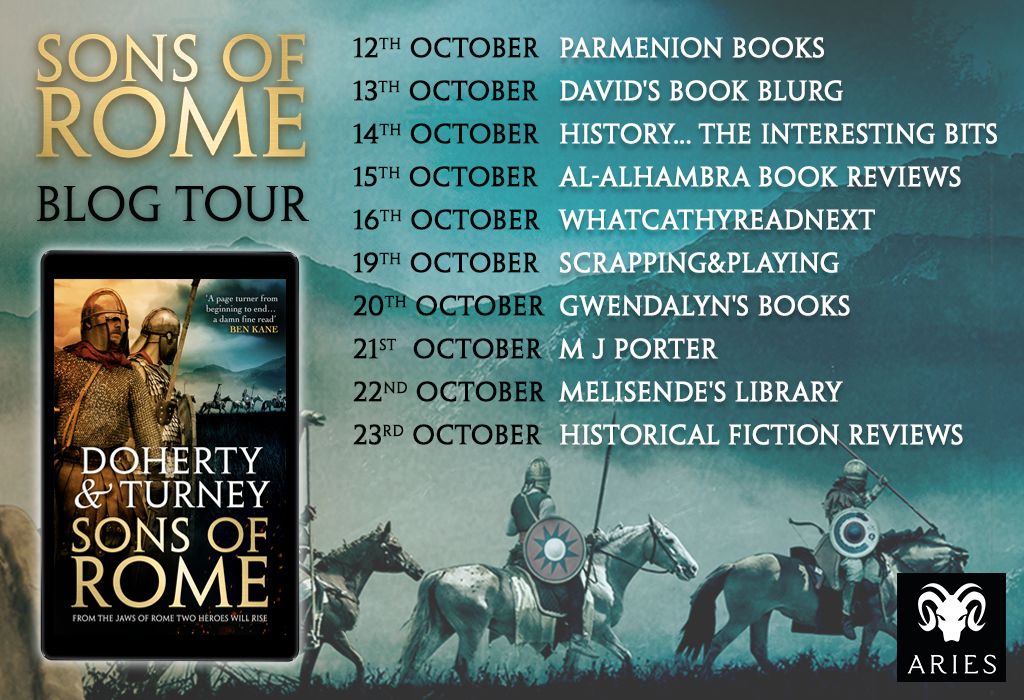
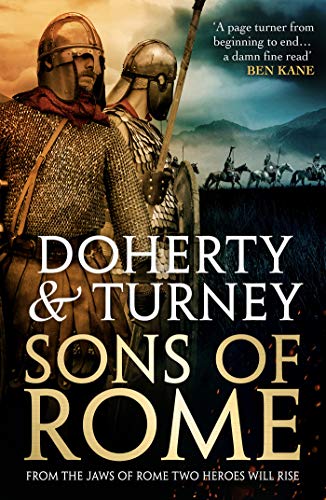
Book Corner: Sons of Rome by Simon Turney and Gordon Doherty

As twilight descends on the 3rd century AD, the Roman Empire is but a shadow of its former self. Decades of usurping emperors, splinter kingdoms and savage wars have left the people beleaguered, the armies weary and the future uncertain. And into this chaos Emperor Diocletian steps, reforming the succession to allow for not one emperor to rule the world, but four.

Meanwhile, two boys share a chance meeting in the great city of Treverorum as Diocletian’s dream is announced to the imperial court. Throughout the years that follow, they share heartbreak and glory as that dream sours and the empire endures an era of tyranny and dread. Their lives are inextricably linked, their destinies ever-converging as they rise through Rome’s savage stations, to the zenith of empire. For Constantine and Maxentius, the purple robes beckon…

Ever wondered what happens when two of your favourite authors get together and write a book?

Well, when its Simon Turney and Gordon Doherty, the result is a real page turner of an adventure that is impossible to put down!

Sons of Rome is the first in a new series by these two stalwarts in the field of Roman fiction. I only finished it yesterday and I am already desperate to read part two. The book fulfills the promise offered by combining two incredible authors. It is beautifully written, fast-paced and completely addictive.

Telling the story in alternating chapters, from the viewpoints of Constantine and Maxentius, it highlights the power struggles of the latter part of the Roman Empire. The Empire has got so big that a tetrarchy of two emperors and two caesars shared control of the eastern and western empires, with one emperor claiming seniority – Augustus – over the three other rulers.

Constantine and Maxentius – friends since childhood – are set to challenge the existing order of the tetrarchy, testing their friendship to its limits and beyond. Distrust and misunderstandings abound when destiny and the quest for ultimate power forces the two into opposition to each other.

Maxentius

By the Milvian Bridge across the Tiber, the next day

off to the left a centurion screamed imprecations at his men, driving them on across the churned turf and into the press of battle, while the clash and clamour of Rome’s armies at war filled the air around us.

I had to pause to adjust my rich wool hat, for it had become so sweat-sodden that it constantly threatened to slip down across my eyes, and it doesn’t do for an emperor to be cursing and blind as he fights for his throne. IN the searing heat of the sun’s glaring fiery orb, my horse stank of sweat and my purple cloak clung damp to my back, sticking to the beast’s rump behind me.

My sword had become heavy in my hand. I’d had only a brief chance to use it that morning, when I had managed to slip my overprotective bodyguard and join the cavalry in a brief push. But I had waved it around enthusiastically from time to time, giving orders to charge here and hold there. I knew my histories. Julius Caesar’s men would have followed him into the jaws of Cerberus himself just because of that great general’s presence on the field.

And I, Maxentius, emperor of Rome, had to be a new Julius Caesar this day, or I would be no one.

Briefly, across the sea of glinting helms and the forest of spear points, I caught sight of him. My enemy. The man who would wrest Rome from me. Constantine. My brother, my oldest friend, and yet my last and most bitter adversary. Like a hero of ancient myth, he rose in his saddle, sword rising and falling in a constant spray of blood.

The two leading characters, Constantine and Maxentius, are skillfully recreated by Turney and Doherty, each with their own personality and quirks; and each with their own pain and ambition. Constantine is the more martial of the two – you get the impression that he could march across the whole empire and subdue any who stand in his way. Whereas Maxentius has a first-rate political mind; what he lacks in military experience, he makes up for in his own battle arena, the corridors of power.

The contrasting qualities and abilities displayed by Constantine and Maxentius serve to create a unique story that has the reader gripped from the very first pages. You can’t help but have a favourite when you read of Constantine’s exploits and how he won the loyalty of the legions once sworn to his father. And then, of course, he was proclaimed emperor in York and I’m a Yorkshire lass…. But you may feel your allegiance changing when reading of Maxentius’ own abilities in winning favour with the people of the city of Rome itself, with the way he wins the loyalty of the African legions.

This is a totally absorbing book which combines action, political intrigue and divided loyalties to recreate a story that is fascinating to read and unputdownable – there’s that word again, it needs to be a real word. Honest!

Oh, and you get to spend the whole book, trying to work out which author is Constantine and which is Maxentius. Or, indeed, wondering if they even wrote it that way. The transition from one author to the other is seamless; the styles of each certainly complement the other. The benefit of two authors is obvious; each of the two leading characters – Maxentius and Constantine – narrating the story have clearly defined, individual voices. It gives Sons of Rome a strength and individuality that you rarely come across in a book.

I can heartily recommend it!

*

About the authors

Simon Turney

Simon Turney is the author of the Marius’ Mules and Praetorian series, as well as The Damned Emperor series for Orion and Tales of the Empire series for Canelo. He is based in Yorkshire.

Gordon Doherty is the author of the Legionary and Strategos series, and wrote the Assassin’s Creed tie-in novel Odyssey. He is based in Scotland.

Pre-order links
Gordon Doherty

Amazon: https://amzn.to/3gfhvIr

Follow Simon

Twitter: @SJATurney

Website: http://simonturney.com/

Follow Gordon

Twitter: @GordonDoherty

Website: https://www.gordondoherty.co.uk/

Follow Aries

Twitter: @AriesFiction

Facebook: Aries Fiction

Website: http://www.headofzeus.com

*

My Books

Ladies of Magna Carta: Women of Influence in Thirteenth Century England  looks into the relationships of the various noble families of the 13th century, and how they were affected by the Barons’ Wars, Magna Carta and its aftermath; the bonds that were formed and those that were broken. It is now available from Pen & SwordAmazon and from Book Depository worldwide.

Also by Sharon Bennett Connolly:

Silk and the Sword: The Women of the Norman Conquest traces the fortunes of the women who had a significant role to play in the momentous events of 1066.  Available now from Amazon,  Amberley Publishing, Book Depository.

Heroines of the Medieval World tells the stories of some of the most remarkable women from Medieval history, from Eleanor of Aquitaine to Julian of Norwich. Available now from Amberley Publishing and Amazon and Book Depository.

*

You can be the first to read new articles by clicking the ‘Follow’ button, liking our Facebook page or joining me on Twitter and Instagram.

©2020 Sharon Bennett Connolly

Book Corner: Joan, Lady of Wales by Danna R. Messer

The history of women in medieval Wales before the English conquest of 1282 is one largely shrouded in mystery. For the Age of Princes, an era defined by ever-increased threats of foreign hegemony, internal dynastic strife and constant warfare, the comings and goings of women are little noted in sources. This misfortune touches even the most well-known royal woman of the time, Joan of England (d. 1237), the wife of Llywelyn the Great of Gwynedd, illegitimate daughter of King John and half-sister to Henry III. With evidence of her hand in thwarting a full scale English invasion of Wales to a notorious scandal that ended with the public execution of her supposed lover by her husband and her own imprisonment, Joan’s is a known, but little-told or understood story defined by family turmoil, divided loyalties and political intrigue. From the time her hand was promised in marriage as the result of the first Welsh-English alliance in 1201 to the end of her life, Joan’s place in the political wranglings between England and the Welsh kingdom of Gwynedd was a fundamental one. As the first woman to be designated Lady of Wales, her role as one a political diplomat in early thirteenth-century Anglo-Welsh relations was instrumental. This first-ever account of Siwan, as she was known to the Welsh, interweaves the details of her life and relationships with a gendered re-assessment of Anglo-Welsh politics by highlighting her involvement in affairs, discussing events in which she may well have been involved but have gone unrecorded and her overall deployment of royal female agency.

Finally!

I have got my hands on this much-anticipated book, Joan, Lady of Wales by Danna R. Messer. I have to admit, I devoured every word. Joan has been in need of a biographer for some time, and I am so pleased that Danna took up the challenge and produced this remarkable study of the illegitimate daughter of King John who became Lady of Wales as the wife of Llywelyn ap Iorweth – Llywelyn Fawr.

Ever since I have known this book was being written, I have been itching to get my hands on it!

Anyone who is a fan of Sharon Penman will have heard of Joan, and most likely have a soft spot for this incredible woman. This biography gives you the chance to study the facts, to meet the woman behind the story and read of how deeply involved she was in Anglo-Welsh relations in the first half of the 13th century. Danna R. Messer portrays a politically astute and powerful woman, aware of her duty, importance and capabilities, not only as the daughter and sister of England’s kings, but also as Llywelyns wife and consort – and as the mother of his heir.

Detail of the sarcophagus thought to belong to Joan in St Mary’s and St Nicholas’s Church, Beaumaris

Beautifully written, with clear, concise arguments and a passion for her subject, the author has brought Joan to life. This is a book that is impossible to put down. Danna R. Messer does not shy away from areas of controversy, either, examining every aspect of Joan’s relationship with William de Braose, the man who was hanged after being found with Joan in Llywelyn’s chamber. the deconstruction of the event, the aftermath and the repercussions make for fascinating reading – its worth getting the book just to discover how everything unfolded.

As are all life stories, that of Joan of England’s is complicated; the complexities of which are further irritated by a dearth of contemporaneous material related to her. The identity of her mother remains a mystery and is much debated by today’s genealogists, as is who her children were. how many she really had and where some even ended up in their own lives. How many times she travelled as an envoy, how many charters she issued and just how fully she participated in effecting Welsh polity can never be fully known. No matter the daunting aspect of approaching such an ill-documented existence, which is a painstaking project indeed, it is one that yields both exciting and long-overdue results.

This study of Joan of England seeks to revise the master narrative of native medieval Wales in the early-thirteenth century – to generate a better ad more inclusively nuanced understanding of the history of this fascinating and wild region of Britain and its relationship with England by placing this particularly interesting and fascinating woman at the forefront in the sequence of events…

Although Siwan’s role in Anglo-Welsh history has received recognition by historians, she has been still largely relegated to the sidelines; an indication that her role was not entirely critical to the stability and growth of Welsh polity, or peace with England overall. On the flip side, it is sometimes difficult not to naturally overplay our hand and emphatically conclude that Joan was, indeed, a heroine and that if it were not for her, the very fabric of native Wales would have been fundamentally altered by the time Llywelyn died in 1240. On balance, however, it is vitally important to understand that the aggregate of Joan’s interventions in the early-thirteenth century ensured that she really was a crucial player in the political wranglings between the ruler of Gwynedd and the rulers of England. The famous early-twentieth-century Welsh historian J.E. Lloyd concluded that Llywelyn ap Iorweth ‘had one emissary whose diplomatic services far outran those of the seneschal and who helped him in this capacity for the greater part of his reign. To the assistance of his wife Joan, both as advocate and counsellor, there can be no doubt he was much indebted.’ To the assistance of Joan, Lady of Wales, there can be no doubt that the history of native medieval Wales is also much indebted.

Joan, Lady of Wales by Danna R. Messer not only examines every aspect of Joan’s life, but places that life in the wider context of English and Welsh events, of Anglo-Welsh relations and of the place of women in Welsh society and history in general. This in-depth study provides an overview analysis of the status of women in Welsh history, the laws surrounding marriage and adultery, legitimate and illegitimate children and demonstrates how Joan’s own confirmation of legitimacy in the 1220s added prestige and legitimacy to her husband’s position within Wales and the wider sphere of Anglo-Welsh relations.

Arms of the royal house of Gwynedd

Danna R. Messer also explores the use of title and authority for women in the 13th century, depicting Joan as a queen, both in her actions and relationship with others. Although she was not crowned and anointed in the same manner as an English queen would be, she held the same level of authority and respect, both in the public and the private sphere of the Welsh court.

A collection of a bout 20 black and white photos help to illustrate Joan’s story, Joan, Lady of Wales is a stunning, comprehensive study of the unique character and position that Joan occupies in both English and Welsh history.

Despite a woeful lack of sources mentioning Joan, Danna has managed to tease out every piece of information she could find on Joan and her position and duties, not only in Wales as the wife and consort of Llywelyn, but also in England as the daughter and, later, sister of the king. Joan’s status as the primary diplomat in Anglo-Welsh relations comes through clearly in the way Joan was treated by her husband and the rewards she was given by the English crown.

In brief, in Joan, Lady of Wales, Danna R. Messer recreates the life and times of this incredible woman, giving us a more complete portrait than has ever been achieved since her own lifetime. We are given a full and complete analysis – as far as the sources and distance of time will allow – of Joan’s political and personal life, the good and the bad, including the scandal, the ambition and Joan’s own legacy and what it meant for those who followed her.

Joan, Lady of Wales has long needed her own biography, to bring her out from the shadows of the lives of her father, brother, husband and son – and this book does not disappoint. It is, quite simply, a beautifully-executed, fascinating and addictive read.

Joan, Lady of Wales is available in hardback from Pen &Sword and Amazon.

About the author:

Dr Danna R. Messer has published on various aspects of the wives of the native Welsh rulers before 1282, providing a gendered perspective of medieval Welsh politics. As an editor and historian, she is widely involved in medieval history and queenship studies generally, including her roles as Series Editor for Medieval History for Pen and Sword, editor for the Royal Studies Journal and editor for Normans to Early Plantagenet Consorts, the first volume of the forthcoming four-book series, English Consorts: Power, Influence, Dynasty (Palgrave). She is also Acquisitions Editor for Arc Humanities Press and the Executive Editor for the Encyclopedia of the Global Middle Ages, a partnership project with Bloomsbury Academic and Arc Humanities Press.

*

My Books

Ladies of Magna Carta: Women of Influence in Thirteenth Century England  looks into the relationships of the various noble families of the 13th century, and how they were affected by the Barons’ Wars, Magna Carta and its aftermath; the bonds that were formed and those that were broken. It is now available from Pen & SwordAmazon and from Book Depository worldwide.

Also by Sharon Bennett Connolly:

Silk and the Sword: The Women of the Norman Conquest traces the fortunes of the women who had a significant role to play in the momentous events of 1066.  Available now from Amazon,  Amberley Publishing, Book Depository.

Heroines of the Medieval World tells the stories of some of the most remarkable women from Medieval history, from Eleanor of Aquitaine to Julian of Norwich. Available now from Amberley Publishing and Amazon and Book Depository.

*

You can be the first to read new articles by clicking the ‘Follow’ button, liking our Facebook page or joining me on Twitter and Instagram.

©2020 Sharon Bennett Connolly
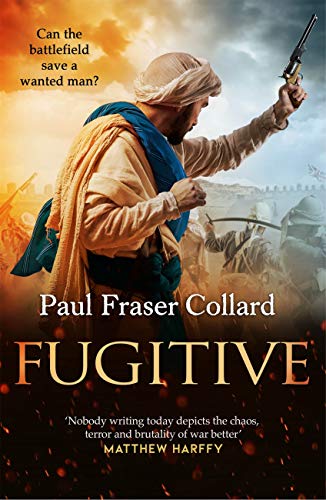
Book Corner: Fugitive by Paul Fraser Collard

Roguish hero Jack Lark – soldier, leader, imposter – crosses borders once more as he pursues a brand-new adventure in Africa.

London, 1868. Jack has traded the battlefield for business, running a thriving club in the backstreets of Whitechapel. But this underworld has rules and when Jack refuses to comply, he finds himself up against the East End’s most formidable criminal – with devastating consequences.

A wanted man, Jack turns to his friend Macgregor, an ex-officer, treasure hunter and his ticket out of England. Together they join the British army on campaign across the tablelands of Abyssinia to the fortress of Magdala, a high-stakes mission to free British prisoners captured by the notorious Emperor Tewodros.

But life on the run can turn dangerous, especially in a land ravaged by war . . .

Stupendous!

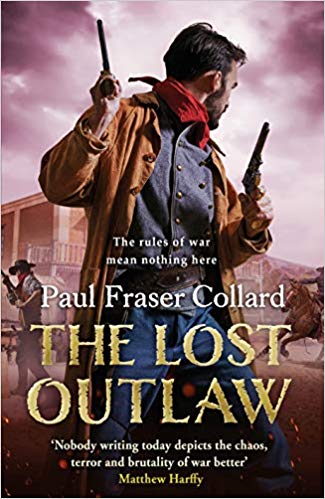
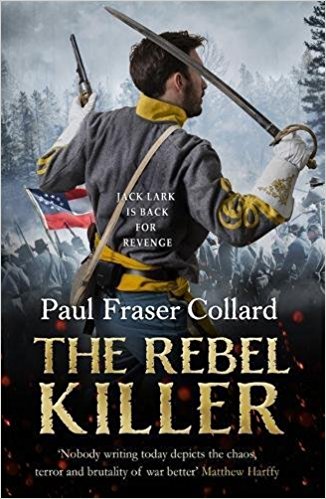
That is the first word that came to my mind when I was asked what I thought of Fugitive by Paul Fraser Collard. Fugitive is book no. 9 in the adventures of Victorian rogue, Jack Lark. Over the last few years, the release of the latest of Jack Lark’s adventures has become one of the highlights of my summer. Last year’s holiday reading was The Lost Outlaw, and the year before that it was The Rebel Killer. And after such amazing books in recent years, Fugitive had a lot to live up to.

In many of the previous books, Jack has taken on the persona of others, officers and soldiers all. He has travelled the globe, fighting in hotspots from the Crimea to America, more often than not concealing his own identity. In Fugitive, Jack Lark is finally himself, though whether that it a good thing or not is open to discussion.

Jack Lark is a bit of a rascal, taking opportunities where he finds them and running with it. He has fought on both sides of the American Civil War, had a stint in the French Foreign Legion and is now going in search of a fortune – and adventure – in Africa as the British Empire’s inexorable expansion opens more opportunities for those willing to take the risk. And, of course, as with any Jack Lark adventure, things get complicated and he is followed by the trouble he hoped to leave behind in London…

‘Do you think -‘ Bertie started.

‘Hush now.’ Cooper was quick to interrupt. ‘He’s coming.’

The three men looked down the alley as one. Sure enough, a figure was approaching. The fog wrapped around him like a ghostly shawl, so that he was little more than an apparition, a dark shadow shrouded in mist.

‘Is that him?’ Bertie whispered.

‘That’s the captain all right,’ Cooper answered softly, the words barely audible.

The figure came closer. It did not hurry. It did not swagger or strut. It simply moved with purpose.

‘Have you got the rhino?’ There was no greeting. Just five short words, delivered staccato. Little could be seen of the captain’s face beneath a dark-coloured pork pie hat pulled down low. He was tall, just a shade under six foot, and was wearing a tightly buttoned overcoat.

‘Are you truly the captain?’ Oddly, it was Bertie who spoke for the three. He stared at the man, his eyes as wide as those of a child seeing a bear for the first time.

‘I’m the captain.’ The words were spoken softly, but every man heard them. ‘Now have you got the rhino?’

He lifted his chin as he repeated the question. For the first time, the three gentlemen got a good glimpse of his face. A scar ran down the left-hand side, the lower half disappearing into a heavy beard. But it was not that that drew their attention; it was the hard grey eyes that stared back at them as if the captain could see right down to their very souls.

The confirmation of identity was enough. Charles fished into his overcoat and pulled out a thick wedge of banknotes, which he held out in front of him.

The captain took the bundle swiftly. He did not check it. Instead, he carefully unbuttoned his coat and tucked the notes deep into an inside pocket. It was artfully done, every gesture sharp and controlled, the coat pulled open just long enough to give the three men a glimpse of the stout oak cudgel hooked into the captain’s belt.

‘Follow me.’ The captain turned on his heel and walked back down the alley, setting a rapid pace. He did not bother to see if they followed.

Just as his character is an expert at impersonation, Paul Fraser Collard has become a master at drawing out the drama and raising the tension to the very last pages of the book. His writing draws the reader in from the very first page and forces you to stay up late and get up early, just to get one more chapter in before work!

The research is, as always, impeccable, and the author takes the reader from the seedier areas of nighttime London to the fortress of Magdala, in the heart of Abyssinia, on a journey across seas, through the stifling heat of the desert and into the fortress itself, with danger and action following every step of the way. From fights in the backstreets of London to the pitched battles of the Victorian Imperial army against the poorly armed Abyssinian massed army, the reader is drawn into a world full of excitement, danger … and possibilities.

I love that Jack Lark is not a man who goes looking for trouble – he tends to fall into it. However, once trouble finds him, he doesn’t shirk from the challenge and faces whatever is set before him. The character development of Jack Lark himself, throughout all 9 books, is fascinating, and probably the best I’ve ever read. He grows and learns from each adventure and is more self-aware in Fugitive of his own abilities – and his failings. He finds out exactly who he is, discovering himself just as the reader does; accepting his flaws.

As the books are set half a century after the Peninsular War, Jack Lark’s adventure are often compare to those of Bernard Cornwell’s Richard Sharpe; with the comparison extending to the two authors. I am not sure Lark and Sharpe are too much alike, beyond the fact they each have a scar on their faces and are ferocious fighters. Sharpe fights within the British army system, whereas Lark is very much an outsider. However, they bot come from similar backgrounds and I can’t help but think that, had they met, they would have got on like a house on fire – or killed each other.

With that in mind, any fan of Bernard Cornwell would not be disappointed if they picked up a Jack Lark book to try. The wonderfully vivid and lively characters Paul Fraser Collard has created – and the very unlikely hero – are a treat for any lover of action and adventure in their historical fiction

*

About the author:

Paul Fraser Collard’s love of military history started at an early age. A childhood spent watching films like Waterloo and Zulu whilst reading Sharpe, Flashman and the occasional Commando comic, gave him a desire to know more of the men who fought in the great wars of the Nineteenth and Twentieth Centuries. This fascination led to a desire to write and his series of novels featuring the brutally courageous Victorian rogue and imposter Jack Lark burst into life in 2013. Since then Paul has continued to write, developing the Jack Lark series to great acclaim. To find out more about Paul and his novels visit www.paulfrasercollard.com or find him on twitter @pfcollard.

To buy the book: Amazon UKAmazon US.

*

My Books

Ladies of Magna Carta: Women of Influence in Thirteenth Century England  looks into the relationships of the various noble families of the 13th century, and how they were affected by the Barons’ Wars, Magna Carta and its aftermath; the bonds that were formed and those that were broken. It is now available from Pen & SwordAmazon and from Book Depository worldwide.

Also by Sharon Bennett Connolly:

Silk and the Sword: The Women of the Norman Conquest traces the fortunes of the women who had a significant role to play in the momentous events of 1066.  Available now from Amazon,  Amberley Publishing, Book Depository.

Heroines of the Medieval World tells the stories of some of the most remarkable women from Medieval history, from Eleanor of Aquitaine to Julian of Norwich. Available now from Amberley Publishing and Amazon and Book Depository.

*

You can be the first to read new articles by clicking the ‘Follow’ button, liking our Facebook page or joining me on Twitter and Instagram.

©2020 Sharon Bennett Connolly

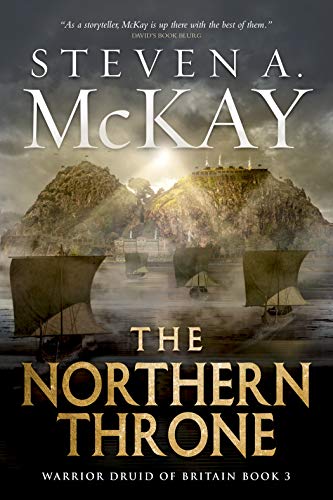
Book Corner: The Northern Throne by Steven A. McKay

Bellicus the Druid and his friend Duro, a former Roman centurion, have already suffered a great deal in recent years but, for them, things are about to get even worse.
Britain is changing. The Romans have gone and warriors from many different places seek to fill the void the legions left behind. In the south, the Saxons’ expansion seems unstoppable despite the efforts of the warlord Arthur, while north of Hadrian’s Wall various kings and chieftains are always looking to extend their borders.

In Dun Breatann, Bellicus believes the disparate northern tribes must put aside their differences, become allies, and face the Saxon threat together, under one High King.

Or High Queen…

Small-minded men don’t always look at the bigger picture though, and, when Bellicus and Duro seek to form a pact with an old enemy, events take a shocking and terrible turn that will leave the companions changed forever.

This third volume in the Warrior Druid of Britain Chronicles is packed with adventure, battles, triumph, and tears, and at the end of it a new course will be set for Bellicus.

But at what cost?

One of the highlights of my reading year is when Steven A. McKay publishes a book, This year I have had the pleasure to read two! Steven has a book, Lucia: A Roman Slave’s Tale, coming out in October, which is incredibly thought-provoking – but more of that one nearer the time…

This summer the 3rd book in the Warrior Druid of Britain series was finally published. It seems like it has been a long wait since book 2, Song of the Centurion came out, but it has been well worth it! Steven A. McKay takes us on another, suspense-filled adventure with Bellicus the Druid and his Roman friend, Duro.

Bellicus’ story started with The Druid and a rescue mission into the heart of Anglo-Saxon England to recover young princess Catia. It continued in Song of the Centurion where Bellicus and his friend Duro, the former Roman centurion, fought to save Alt Clota from the machinations of its enemies and the growing paranoia of its king, Coroticus. Each story has led us to The Northern Throne, an adventure that proves more perilous and personal for Bellicus and Duro.

Set in the time of King Arthur and the Saxon invasion of Britain, the story takes us north of Hadrian’s Wall and into the lands of the Scots and Picts. As with the previous novels, Arthur is a supporting character, making a handful of cameo appearances, though I suspect his time will come, when he and Bellicus team up to fight the Saxon threat.

“Nicely done, lads,” Gerallt said approvingly. “With the Votadini taken care of, and the Dalriadans in disarray, all we have left to deal with are the Picts.”

Bellicus bodded. If they could defeat Drest it would put Narina in a very strong position. Ultimately, the druid would like to see her crowned High Queen of all the northern lands, and it seemed that day might be close. A Damnonii High Queen would nullify the growing threat the Christians’ posed to the old ways, while allowing the united tribes to face the Saxon threat at the side of Arthur and Merlin. The druid just had to find a way to steer events towards such a favourable outcome.

“How long have we got before Drest arrives in Alt Clota?” Gerallt asked the messenger, disturbing Bellicus from his reverie.

“At the speed they were marching when I observed them,” the messenger reported, “I’d say about 3 or 4 days, my lord.”
“That should be more than enough,” Duro said, resting his left hand on the pommel of his spatha. “If we leave here tomorrow at sun-up, we’ll be able to head them off on the road before they get anywhere hear Dun Breatann.”

“And we’re thirty men stronger now, too,” Gerallt said, smiling grimly. “We’ll be able top ambush the Pictish bastards just like we did the Votadini.”

“Hopefully you’re right, and we do surprise them,” Bellicus muttered, gazing hopefully into his half-empty cup. “Because if Cefin’s numbers are accurate, Drest’s army still outnumbers us.”

The triumph of these books is in Steven A. McKay’s portrayal of Bellicus the Druid. An author could easily fall into the realm of fantasy and explain the druidic rituals as magic. That is not the case with the Warrior Druid of Britain books. Bellicus is a clever, educated man who has studied the nature of humanity. Insightful and intelligent, he knows how to read people, their actions and expressions, and how to interpret their intentions.

His years of training have made him a well-respected, authoritative character and he uses his skills to great advantage. There is an air of mystery about him, but he is also portrayed as a man who is all-too-human, and whose flaws and pride can sometimes lead him into trouble of his own making.

And that is what makes these books so special!

The characters in The Northern Throne are wonderful creations, each one vivid and individual, from the heroes such as Duro and Bellicus, to the villains such as Drest and down to little Catia, the princess who is growing up and trying to find her role in the world, who is learning to fight, to command and to judge people for herself.

Steven A. McKay skillfully recreates the landscape, people and legends of 5th century Scotland. His knowledge of the area, and its traditions, shines through on every page, transporting the reader to the stark fortresses, wooded valleys and fast-flowing rivers; taking you on an astonishing adventure without leaving your seat. He brings all this together in a rich tapestry that forms the backdrop of these incredible stories.

The tension is high throughout The Northern Throne. One crisis leads to another, loyalties and friendships pushed are to the limits; and love and betrayal are two very fine lines. This combination makes for a thoroughly absorbing tale which entwines history, legend and myth and takes the reader along on Bellicus’ heroic journey.

In short, The Northern Throne is a wonderful, engaging adventure that, once again, leaves the reader desperate for the next instalment.

The Northern Throne is available now from Amazon UK.

About the Author:

Steven McKay was born in 1977 near Glasgow in Scotland. He live in Old Kilpatrick with his wife and two young children. After obtaining his Bachelor of Arts degree with the Open University he decided to follow his life-long ambition and write a historical novel.

He plays guitar and sings in a heavy metal band when they can find the time to meet up.

You can check out his website here. Steven also has an Amazon Author page and can be found on Twitter and Facebook.

*

My Books

Ladies of Magna Carta: Women of Influence in Thirteenth Century England  looks into the relationships of the various noble families of the 13th century, and how they were affected by the Barons’ Wars, Magna Carta and its aftermath; the bonds that were formed and those that were broken. It is now available from Pen & SwordAmazon and from Book Depository worldwide.

Also by Sharon Bennett Connolly:

Silk and the Sword: The Women of the Norman Conquest traces the fortunes of the women who had a significant role to play in the momentous events of 1066.  Available now from Amazon,  Amberley Publishing, Book Depository.

Heroines of the Medieval World tells the stories of some of the most remarkable women from Medieval history, from Eleanor of Aquitaine to Julian of Norwich. Available now from Amberley Publishing and Amazon and Book Depository.

*

You can be the first to read new articles by clicking the ‘Follow’ button, liking our Facebook page or joining me on Twitter and Instagram.

©2020 Sharon Bennett Connolly

Book Corner: Interview with Paul Fraser Collard

One of the best things about being an author with a blog is that I get to chat with some of the best writers out there, about their books, writing, social media and anything else they are happy to talk about. It is a distinct pleasure, here at History … the Interesting Bits, to welcome Paul Fraser Collard, best-selling author of the Jack Lark books. Paul’s latest book, Fugitive, hits the shops today and it is awesome!

I last chatted to Paul about his writing 4 years ago, after the release of The Last Legionnaire, book no. 5 in the series. And time has moved on, Fugitive is the 9th book! In that time, an awful lot has happened. So, without further ado, it’s over to Paul…

Hi Paul, thanks so much for agreeing to do an interview. And congratulations on the release of Fugitive.

1. So, first question, have you always wanted to be a writer?

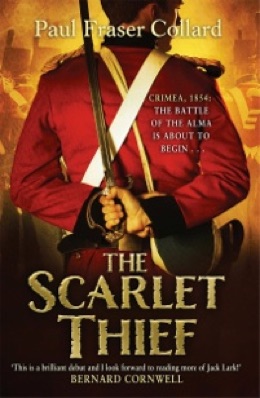
The short and simple answer is no! I never even contemplated writing anything at all until I was in my thirties. I was commuting into London at the time, and I was devouring books at a tremendous rate. I began to think about what it would be like to write something of my own. I made a start, but it took years to get anything finished. That first project died a death, but I had caught the writing bug and I was enjoying using my commuting time to try to write. So, I persevered and a few years later, THE SCARLET THIEF, was done.

2. Who are your writing influences?

It should be no surprise that I was inspired by the great Bernard Cornwell. I first read a Sharpe novel when I was 11 or 12 (Sharpe’s Honour) and I was hooked. My parents got me the rest of the series that year for Christmas and I worked my way through them all. I have read pretty much everything Mr Cornwell has written since. My other great inspiration was George MacDonald Fraser’s peerless Flashman books. I discovered the books quite late, I think in my twenties, and I tore through the whole series utterly mesmerised by the writing. I cannot think of another writer who writes with the same sheer panache. I would never try to mimic such a bold style, but it was the Flashman series that first gave me the idea of setting each book in a new location and against a new campaign or period.

3. What do you love about writing?

For me, it’s the planning and the research. I love learning about the period, and by moving Jack around the globe I’ve been able to learn so much about the different events that he experiences. I also find coming up with the plot and then planning it out a huge amount of fun. Maybe it’s the power, or just the thrill of constructing the story and imagining the trials Jack will have to endure, but I enjoy it immensely.

4. What do you hate about writing?

That first draft! When I have finished researching and plotting, I have a good outline of the whole story that runs to about 20,000 to 30,000 words. All the fun stuff is done and I have to plough through that long first draft that always takes me months. I do enjoy the feeling of getting it done though, and generally I love the next stage of going over and over the story trying to add the magic and make it as good as I can.

5. Social media – do you love it or hate it?

To be honest, its somewhere in between the two. I don’t find it easy to promote my books and I worry a lot about how I come across and what people must think of me. But at the same time, I have met some absolutely wonderful people through social media. I know that’s become something of a cliché, but I don’t care as its absolutely true. I am constantly gobsmacked at the help and the support I receive from a wide range of people all around the world. It is both humbling and delightful at the same time.

6. What advice would you give to someone starting on their writing career?

Just sit down and do it. I get this question a lot and I always say the same thing. Just start writing. It doesn’t matter if its good or if it’s absolutely bloody awful. Just get words down, build the story, get the characters going then write and write and write. You can always go back and make it better, but you can do nothing with a blank page.

7. What attracted you to setting your stories in the 19th century?

I have to blame Sharpe and Zulu. Both captivated me at an impressionable age. The choice of the Crimea for the first book in the series was more pragmatic. At the time, few writers had tackled the Battle of the Alma or the Crimean War and I had a feeling I had to start with something a little different. It was also the perfect jumping off point for the next adventures.

8. Did you ever expect to be still writing about Jack Lark 9 books later?

Honestly, no. It seems pretty incredible to me, especially as there must be over 1 million printed words that I have written now. I always think back to an English exam I took when I was about 14 or 15. I got some awfully low mark, and for a while it quite put me off reading and writing. Yet now here I am, with nine novels and four short stories to my name. It just shows, you really never know what you can do.

9. Jack Lark has become one of my favourite literary characters, how did you create such a complex character development?

That is very kind of you! I think my aim all along was to create a character that was both believable and relatable. When I started writing Jack’s stories, it seemed to me that a lot of other heroes in historical fiction were really rather good chaps, who generally did the right thing and although they had a tough time, their experiences never really seemed to linger with them. I have always read as many first-hand accounts as I can, covering any period of warfare, and I want to convey something of that universal experience of war through Jack. If I have done a half-decent job of that then I am truly happy.

10. Jack Lark is a bit of a globetrotter, how do you research the various societies and lands he has visited?

Thankfully, most of the campaigns and battles in the Jack Lark books are well-covered (sometimes too well covered!) I always start by reaching for the relevant Osprey books first and there is no better way to begin a new project. From there, I search for as many first-hand accounts as I can find, so that I can get the view of the ordinary soldier on the field of battle. That is what I find fascinating. Grand strategy and the calculated movement of troops are certainly interesting, but I want to know what it was like to stand on the front line and trade vollies with the enemy, or how men felt as they were ordered to charge directly into the fire of a well dug in defender.

11. What comes first, the research or the story?

Research for sure. It is only when I have a pretty good idea of the event or battle that I plan to cover, that I can start to work out how to weave Jack’s story into that timeline. More often than not, the research inspires me, and for quite a few of the books, the half-baked notions I had for the story before I started, get completely forgotten when I learn what really happened and how it happened.

12. How do you decide where Jack goes next?

This is the tricky bit. A lot was happening in the world in the mid to late 19th century, and it has often been really difficult to decide where Jack goes, especially as I can look globally. Usually something jumps out at me, and I definitely prefer something less well known to a famous battle or campaign.

13. With Bernard Cornwell’s Last Kingdom series, we’ve known, almost from the beginning, that the books will end at the famous Battle of Brunanburh, does Jack Lark similarly have a final battle that will be his swansong?

To be honest, I have no idea where or how the Jack Lark series will end. I think that’s rather exciting. If I have no idea, then neither will a reader!

14. Will Jack ever find love and settle down, or will he always be a drifter?

Never say never. I think Jack may well find someone he wants to settle down with. I just don’t know if I will let him! There is something of The Littlest Hobo in Jack (if you remember that kid’s TV programme!). It’s his lot to always be moving on to where he is needed next. I certainly don’t see Jack settling down to become a farmer or something equally innocuous.

15. What will come after Jack Lark, do you have other projects on the horizon?

I have so many ideas! I have two outlines for books set in London in WW2, as well as a fully completed manuscript that tells the story of an SOE agent in the middle of the war. I also have some half-formed thoughts for a serial killer book and another for a story set in a dystopian future. The recent events have also given me a terrific idea for a pandemic novel (well, I think it’s terrific). The problem is how to fit everything in, as I still work full-time. I don’t know when I will get to some of these ideas, but perhaps at least I will have an interesting and busy retirement when I eventually get there!

Paul, thank you so much for taking the time to talk to me. Such wonderful answers. And now I can’t get the theme tune to The Littlest Hobo out of my head! I wish you every success with Fugitive. Jack Lark is such a wonderful character and I urge everyone to take a look at his latest adventures. Look out for my review of Fugitive sometime next week!

About the Author:

Paul Fraser Collard’s love of military history started at an early age. A childhood spent watching films like Waterloo and Zulu whilst reading Sharpe, Flashman and the occasional Commando comic, gave him a desire to know more of the men who fought in the great wars of the Nineteenth and Twentieth Centuries. This fascination led to a desire to write and his series of novels featuring the brutally courageous Victorian rogue and imposter Jack Lark burst into life in 2013. Since then Paul has continued to write, developing the Jack Lark series to great acclaim. To find out more about Paul and his novels visit www.paulfrasercollard.com or find him on twitter @pfcollard.

To buy the book: Amazon UK; Amazon US.

*

My Books

Ladies of Magna Carta: Women of Influence in Thirteenth Century England  looks into the relationships of the various noble families of the 13th century, and how they were affected by the Barons’ Wars, Magna Carta and its aftermath; the bonds that were formed and those that were broken. It is now available from Pen & SwordAmazon and from Book Depository worldwide.

Also by Sharon Bennett Connolly:

Silk and the Sword: The Women of the Norman Conquest traces the fortunes of the women who had a significant role to play in the momentous events of 1066.  Available now from Amazon,  Amberley Publishing, Book Depository.

Heroines of the Medieval World tells the stories of some of the most remarkable women from Medieval history, from Eleanor of Aquitaine to Julian of Norwich. Available now from Amberley Publishing and Amazon and Book Depository.

*

You can be the first to read new articles by clicking the ‘Follow’ button, liking our Facebook page or joining me on Twitter and Instagram.

©2020 Sharon Bennett Connolly