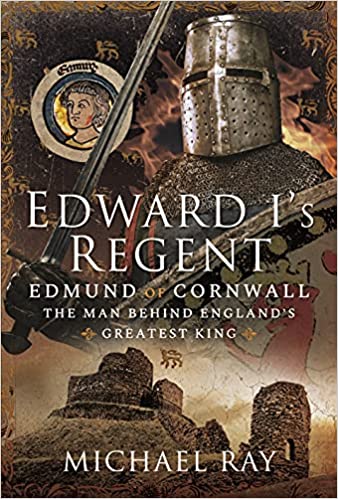
Book Corner: Edward I’s Regent by Michael Ray

Born at Christmas 1249 to Richard, Edmund of Cornwall was nephew to Henry III and cousin to Edward I. His eventful childhood took him to Germany when his father was elected king there. He was captured at the battle of Lewes and imprisoned for more than a year. Returning from crusade, he witnessed the brutal murder of his half-brother, which left him as heir to his father, the richest man in the kingdom. Throughout his life, Edmund played a crucial role in medieval England. As Regent of England, Earl of Cornwall and the richest man in the land, he was a leading force of the late-thirteenth century. This book considers Edmund’s life, his use of his wealth to lend to the king and others and to be a major benefactor of religious houses. His piety saw him found two new religious houses, rebuild another and bring the Holy Blood relic from Germany to Hailes abbey. His record as Regent of England for three years is assessed. The wide spread of his lands, which included 13castles and more than 800 places in 27 counties, and his tenants are set out as is his place in the local community. The basis of his wealth and its sources, including money from his lands but also from tin mining and marine dues in Cornwall, is explored and his knightly affinity and his close associates and officials are considered. On a personal level, the book examines his unsuccessful, childless marriage with the sister of the Earl of Gloucester. Edmund was a key figure throughout Edward I’s rein and the late-thirteenth century. In this insightful account, the man behind England’s ‘greatest king’ is at long last brought to the fore.

Edward I’s Regent: Edmund of Cornwall, The Man Behind England’s Greatest King by Michael Ray is a fascinating study of a little-known but highly significant noble of the reign of Edward I. Edmund of Cornwall was the son of Richard, Earl of Cornwall. Richard was the younger son of King John and Isabelle d’Angoulême, and brother to King Henry III. The second son of Richard of Cornwall, Edmund’s mother was Sanchia of Provence, younger sister of Henry III’s queen, Eleanor of Provence. Edmund may ever have become Earl of Cornwall, had his older brother, Henry of Almain, not been murdered by Guy de Montfort, son of the famous Simon de Montfort, in a church in Viterbo, Italy, in 1271.

With such a dramatic inheritance, it is no surprise that Edmund’s life and deeds were no less dramatic.

I do like this new tendency to look away from England’s monarchs and turn the spotlight on those who served them. It gives a more rounded approach to history and historical biography and greatly illuminates the reigns of the kings who are served. It also demonstrates how much is still left to study in history and how wide and deep historians can go in order to gain a greater understanding of the rule of medieval kings. The relationship between baron and king was, more often than not, one of mutual trust and reliance. Edward I’s Regent: Edmund of Cornwall, The Man Behind England’s Greatest King by Michael Ray serves to demonstrate just how deep and essential this relationship was.

On 29 November and December 1272, Edmund and Bishop Giffard sent letters requiring Llywelyn to come to the Ford of Montgomery, the traditional place for meetings between the English and Welsh rulers, to render his homage to the new monarch and to send the 3,000 marks he owed to the King by Christmas at the latest. The King needed the money for his crusade. Llywelyn neither came nor paid and the impasse continued until well after the new King’s return.

Meanwhile neither Edmund, or his officials, were not always well-behaved in the land of the absentee King. In January 1273, Edmund’s men were accused of occupying lands belonging to Peter de la Mare which led to the Chancellor, Walter de Merton, ordering the escheator to remedy the position. Despite this, in June, Edmund was still being obstructive. A long-running dispute with the Bishop of Exeter led to a threat of excommunication. Even though Edmund was at the heart of government, he was pursued by the Exchequer over his father’s debts. However, this did not prevent Edmund from being amongst those ready to go to France to meet and welcome back Edward I. Edmund was granted protection until August 1273 but he was still in Paris in December when he received 2,000 marks from the King. Whilst Edward I did not finally arrive back in England until 2 August 1274, it seems likely that Edmund had already returned as he asked Robert Burnell to summon a council in March. Edmund was present at the King’s coronation on 19 August 1274.

From the start of the reign, tasks were entrusted to Edmund by the King. At the beginning of 1275 Edmund was ready to resolve a dispute with Flemish merchants but was unable to act as the Count of Flanders had not sent a representative. In March, the King stayed at two of Edmund’s manors, Cippenham and Risborough in Buckinghamshire, and it can be assumed that Edmund was present. The first of many royal charters to be witnessed by Edmund was attested at Westminster on 22 October 1274.

Edward I’s Regent: Edmund of Cornwall, The Man Behind England’s Greatest King by Michael Ray is an in-depth study of a man who was an integral part of Edward I’s government, but whose life and career has often been overlooked. Michael Ray expertly examines every aspect of Edmund’s life and career in great detail. With the use of chronicles and charter evidence, the author demonstrates the extent to which Edmund of Cornwall was an integral part of Edward I’s administration and court,, both as a cousin to the king, an administrator and a soldier.

Thoroughly researched and with extensive footnotes and bibliography, this is an excellent book in every way. t is a pleasure to read.

Edward I’s Regent: Edmund of Cornwall, The Man Behind England’s Greatest King by Michael Ray is an eminently readable book that could only be an asset to the study of medieval history and the reign of Edward I in particular. Whether you are studying medieval history for academia or simply as a hobby, this is a book which is not to be missed. I can highly recommend it.

To buy the book:

Edward I’s Regent: Edmund of Cornwall, The Man Behind England’s Greatest King by Michael Ray is available in hardback and Kindle from Pen & Sword Books and Amazon.

About the author:

After school in Shropshire, Michael Ray read geography and town planning at King’s and University Colleges, London. Retiring early from a planning career, he returned to KCL and obtained a PhD after a study of aliens in thirteenth-century England. He has since been published in books, journals and on websites including Academia.

My Books:

Signed, dedicated copies of all my books are available, please get in touch by completing the contact me form.

Defenders of the Norman Crown: The Rise and Fall of the Warenne Earls of Surrey tells the fascinating story of the Warenne dynasty, of the successes and failures of one of the most powerful families in England, from its origins in Normandy, through the Conquest, Magna Carta, the wars and marriages that led to its ultimate demise in the reign of Edward III. Defenders of the Norman Crown: Rise and Fall of the Warenne Earls of Surrey is now available from Pen & Sword BooksAmazon in the UK and US, Bookshop.org and Book Depository.

1 family. 8 earls. 300 years of English history!

Also by Sharon Bennett Connolly:
Ladies of Magna Carta: Women of Influence in Thirteenth Century England looks into the relationships of the various noble families of the 13th century, and how they were affected by the Barons’ Wars, Magna Carta and its aftermath; the bonds that were formed and those that were broken. It is now available in paperback and hardback from Pen & Sword,  AmazonBookshop.org and from Book Depository worldwide.

Heroines of the Medieval World tells the stories of some of the most remarkable women from Medieval history, from Eleanor of Aquitaine to Julian of Norwich. Available now from Amberley Publishing and Amazon, Bookshop.org and Book Depository.

Silk and the Sword: The Women of the Norman Conquest traces the fortunes of the women who had a significant role to play in the momentous events of 1066.  Available now from Amazon,  Amberley Publishing, Bookshop.org and Book Depository.

Alternate endings: An anthology of historical fiction short stories including Long Live the King… which is my stake what might have happened had King John not died in October 1216. Available in paperback and kindle from Amazon.

*

You can be the first to read new articles by clicking the ‘Follow’ button, liking our Facebook page or joining me on Twitter and Instagram.

*

©2022 Sharon Bennett Connolly FRHistS.
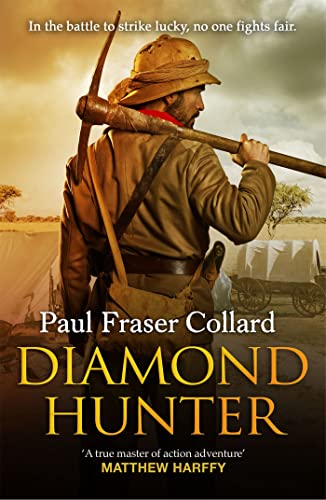
Book Corner: Diamond Hunter by Paul Fraser Collard

South Africa, 1871. Jack Lark no longer walks alone. With the worldly Anna Baker by his side, he travels to the Cape Colony diamond fields determined to seek their fortune – and an adventurous new life together.

The journey north soon turns violent as tensions erupt between other hopeful diggers and a gang of Boer men. Everyone has their eye on the same elusive prize – and some will stop at nothing to get it.

For Jack and Anna, unearthing a diamond is only half the battle. Getting out of the mines alive will prove far more difficult – and dangerous. And when the worst happens, Jack finds himself tested as no enemy, no man and no war has ever before.

Diamond Hunter by Paul Fraser Collard is the 11th book in the fabulous Jack Lark series. Jack Lark has made a career of being an imposter, finding his home and employment in the various wars of the 19th century. But what do you do when the guns fall silent? In the last book, Commander, Jack had followed the many adventurers of his era and joined an expedition to explore the River Nile. In Diamond Hunter he stays in Africa, but turns his hand to entirely different profession, though one that can be just as brutal and cut-throat as war.

In the opening pages of Diamond Hunter, we find Jack Lark content, with a woman who is his equal in every way, and with enough money to help him on to his next adventure. However, his constant search of adventure is still bubbling beneath the surface and he is now in southern Africa, ready to stake everything in the search for fortune, or at least a diamond big enough to see him comfortable, for now.

However, for Jack Lark, nothing is ever easy. The journey is always fraught with danger and trouble does seem to find him out! And I do wonder what Jack ever did for Paul Fraser Collard to give him such a hard time? Poor bloke. He really goes through it this time.

‘Shit.’ Jack gently moved Anna’s arm away, pushing himself to his feet with a groan as the action set off the pain in his spine, the persistent backache so much worse after hours of walking and periods riding in the jarring wagon. but it was not enough to stop him straightening up, then offering a hand to Anna to help her up too. It never occurred to him to leave her behind.

‘They’ve been drinking.’ She brushed down the seat of her trousers.

‘Probably. Ready?’ He gave her a moment to prepare.

She sucked down a deep breath. ‘Ready.’

Jack did not wait for more. The voices were getting louder. Whoever had been angered was making one hell of a fuss.

It took them no more than a dozen paces to round the wagon and see what was going on. The four Boers were squared up, facing three of the Cape colonists. The fourth was lying on his back, blood smothering his face like a mask.

‘What the hell is happening?’ Jack shouted as he came closer. It was not his fight, but it was his future that would be thrown into jeopardy if something happened to force JW to turn around. He would not allow that to happen.

‘Keep out of it.’ One of the colonists turned to snap at him.

It did not deter him, and he came closer, Anna just behind him. He could see Clarke and Goodfellow lurking on the far side of the wagon, watching what was going on while making sure they kept a safe distance from the fracas. JW and Fred were standing by as if readying themselves to pick up the pieces of whatever occurred, while JW’s wife was sitting at a campfire a good dozen yards away, her face set in a cherubic smile as she stared at the flames, seemingly blithely unaware of what was going on.

As Jack approached, the colonist who had been knocked to the ground slowly got to his feet, his hand lifting to smear the blood from his face.

Paul Fraser Collard is a fabulous storyteller. He transports not only his characters, but also his readers, to the most exotic and dangerous parts of the world of the nineteenth century. In Diamond Hunter he recrates the gritty, muddy and miserable landscape of the South African diamond fields. Honestly, you can practically taste the dust in your mouth!

Jack Lark is one of the best character developments in modern literature. In Diamond Hunter, he is finally comfortable in his own skin. Though that doesn’t mean his problems are over. He accepts who and what he is, but for Jack Lark, that will always mean facing trouble head on – it is one of his most endearing qualities! Jack is more affected by people and events than he likes to believe. He can’t help but help, which always leads him into trouble.

Diamond Hunter is gritty, harsh and sometimes hard to read. It also enjoyable, engrossing and absolutely fabulous. Diamond Hunter is a book you will not want to put down. A totally immersive and absorbing adventure, it leaves the reader as physically and emotionally drained as it does Jack Lark. I think it may be the best adventure yet.

To Buy the book:

Diamond Hunter by Paul Fraser Collard is now available from Amazon.

About the author:

Paul’s love of military history started at an early age. A childhood spent watching films like Waterloo and Zulu whilst reading Sharpe, Flashman and the occasional Commando comic, gave him a desire to know more of the men who fought in the great wars of the Nineteenth and Twentieth Centuries. This fascination led to a desire to write and his series of novels featuring the brutally courageous Victorian rogue and imposter Jack Lark burst into life in 2013. Since then Paul has continued to write, developing the Jack Lark series to great acclaim. To find out more about Paul and his novels visit http://www.paulfrasercollard.com or find him on twitter @pfcollard

*

My Books:

Signed, dedicated copies of all my books are available, please get in touch by completing the contact me form.

Defenders of the Norman Crown: The Rise and Fall of the Warenne Earls of Surrey tells the fascinating story of the Warenne dynasty, of the successes and failures of one of the most powerful families in England, from its origins in Normandy, through the Conquest, Magna Carta, the wars and marriages that led to its ultimate demise in the reign of Edward III. Defenders of the Norman Crown: Rise and Fall of the Warenne Earls of Surrey is now available from Pen & Sword BooksAmazon in the UK and US, Bookshop.org and Book Depository.

1 family. 8 earls. 300 years of English history!

Also by Sharon Bennett Connolly:

Ladies of Magna Carta: Women of Influence in Thirteenth Century England looks into the relationships of the various noble families of the 13th century, and how they were affected by the Barons’ Wars, Magna Carta and its aftermath; the bonds that were formed and those that were broken. It is now available in paperback and hardback from Pen & Sword,  AmazonBookshop.org and from Book Depository worldwide.

Heroines of the Medieval World tells the stories of some of the most remarkable women from Medieval history, from Eleanor of Aquitaine to Julian of Norwich. Available now from Amberley Publishing and Amazon, Bookshop.org and Book Depository.

Silk and the Sword: The Women of the Norman Conquest traces the fortunes of the women who had a significant role to play in the momentous events of 1066.  Available now from Amazon,  Amberley Publishing, Bookshop.org and Book Depository.

*

You can be the first to read new articles by clicking the ‘Follow’ button, liking our Facebook page or joining me on Twitter and Instagram.

*

©2022 Sharon Bennett Connolly FRHistS.

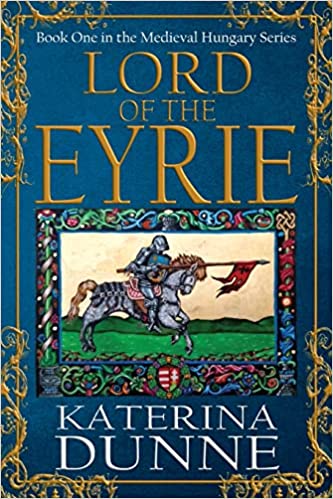
Book Corner: Lord of the Eyrie by Katerina Dunne

Love, War, and the Price of Loyalty

Transylvania, Kingdom of Hungary, 1440:

Finally home after five years away, warrior-nobleman Sándor Szilágyi is met by a dying father, a resentful younger brother, his child-bride all grown up and the family estate raided by the Ottomans. As he struggles to adjust to life as a landlord, Sándor’s authority is challenged by two strong-minded and fearless women: Margit, his faithful and righteous wife, determined to keep him on the straight and narrow; and Anna, his sister-in-law, a scheming temptress bent on ruining him in order to take his land.

After committing a mortal sin and desperate to win back the woman he loves, Sándor seeks absolution by accepting his overlord’s summons to fight the Ottomans. But his obsession with war will lead him down a perilous path.

Loyalties are tested, danger lurks around every corner, and Sándor’s struggle to balance his duty to protect his land and family from his relatives’ greedy hands, as well as his duty to defend his country on the battlefield, will come at a terrible cost.

Lord of the Eyrie by Katerina Dunne is a fabulous adventure set in medieval Hungary. It has all the ingredients for an exciting novel; love, betrayal, war and family disharmony. And it all combines to create a memorable story that will have the reader on the edge of their seat throughout.

I have to admit, I don’t think I’ve ever read a book set in Hungary before, so this was a refreshing change for me. Of course, it is still set in medieval times, so the weaponry, tactics and societal laws were still very familiar. I wasn’t familiar with Hungary’s role in medieval Europe, nor in her battles against the outside forces eager to trespass into the country’s vast landscape. Reading Lord of the Eyrie was as much an adventure for me as the story was for the characters involved. And it was a wonderful adventure.

Katerina Dunne has woven a beautiful story, built on remarkable characters and a lead protagonist for whom honour and duty is second nature. The story is fast-paced and entirely unpredictable, with many twists and turns that leave the reader shouting at the book when a character is being naive, or crying when tragedy strikes.

Margit’s keys and gilded prayer book jingled as she hurried back from church along the colonnaded portico of the great hall. The morning mass always felt too long to her, and she was looking forward to breaking her fast. But that would have to wait. Lajos Kendi stood at the entrance to the keep. His flushed and sweaty face, dishevelled eyebrows and raspy breath indicated that something was amiss.

He took his hat off and bowed to her. “I’ve bad news, my lady. I must speak with your husband, but I can’t find him anywhere. Was he in church with you? Is he still in the chapel?”

“No. I have not seen him.” Margit pondered. “Perhaps he is in the armoury building, practising with the soldiers. Let us go and look for him.”

She sent her maid to the house to supervise the preparation of the breakfast table and followed Kendi to the exercise hall. Their arrival did not alert the soldiers and knights for the thick layer of hay on the floor muffled their footsteps.

In the middle of the hall, Sándor, venturing to teach his brother how to defend himself with a sword and shield against multiple attackers, was engaging in a fight against not one, but three opponents.

He was wearing only his joined hose and a shirt, unlaced at the front and with the sleeves rolled up. Despite his height, he moved with the nimbleness of a lynx, shouting instructions at his training partners and showing off his combat skills and physical strength.

Margit’s jaw dropped. Her pulse quickened, and her breath became short and shallow. How could she forget that women were not allowed in the training hall? As it was a warm day, her husband was not the only one who had stripped down to his undergarments. Although the men did not seem troubled by her presence, she flushed and dropped her gaze to the floor.

“My lord!” Lajos called out.

Sándor stopped, and so did the soldiers. He tossed down the wooden sword and shield and approached Kendi and Margit. “Whats’ the matter?”

Kendi glanced about to make sure that no one was listening. He spoke in a whisper. “We’ve a problem at the mine.”

Lord of the Eyrie is set in medieval Hungary, a land which Katerina Dunne recreates in astonishing detail. The landscape, the settlements, castles and people help to draw the reader into the story. Hungary is a land rich in resources but beset by enemies, both within and without, and the hero, Sándor, must navigate not only national politics, international enemies but also his own family tensions. It is a wonderful, rich and absorbing story.

Lord of the Eyrie is a thoroughly entertaining read, one that will keep you gripped to the very end. You will find yourself invested in the characters, in tears at times and hesitant to read on when disaster strikes. But you cannot let go!

Lord of the Eyrie will take you through the full range of emotions.

The family drama, the battle scenes and the intricately woven plotlines all serve to keep the reader wanting more. It was an absolute pleasure to read.

I do hope there is a book 2!

To buy the book:

Lord of the Eyrie by Katerina Dunne is now available on Amazon.

About the author:

Katerina Dunne is the pen-name of Katerina Vavoulidou. Originally from Athens, Greece, Katerina has been living in Ireland since 1999. She has a degree in English Language and Literature from the University of Athens, an MA in Film Studies from University College Dublin and an MPhil in Medieval History from Trinity College Dublin. While she used to write short stories for family and friends in her teenage years, she only took up writing seriously in 2016-17, when she started work on her first novel.

Katerina’s day job is in financial services, but in her free time she enjoys reading historical fiction and watching historically-themed movies and TV series. She is passionate about history, especially medieval history, and her main area of interest is 13th to 15th century Hungary. Although the main characters of her stories are fictional, Katerina uses real events and personalities as part of her narrative in order to bring to life the fascinating history of the medieval Kingdom of Hungary, a location and time period not so well-known to English-speaking readers.

For any comments or further information, you can contact Katerina by email: katerinadunnewriter@gmail.com

*

My Books:

Signed, dedicated copies of all my books are available, please get in touch by completing the contact me form.

Defenders of the Norman Crown: The Rise and Fall of the Warenne Earls of Surrey tells the fascinating story of the Warenne dynasty, of the successes and failures of one of the most powerful families in England, from its origins in Normandy, through the Conquest, Magna Carta, the wars and marriages that led to its ultimate demise in the reign of Edward III. Defenders of the Norman Crown: Rise and Fall of the Warenne Earls of Surrey is now available from Pen & Sword BooksAmazon in the UK and US, Bookshop.org and Book Depository.

1 family. 8 earls. 300 years of English history!

Also by Sharon Bennett Connolly:

Ladies of Magna Carta: Women of Influence in Thirteenth Century England looks into the relationships of the various noble families of the 13th century, and how they were affected by the Barons’ Wars, Magna Carta and its aftermath; the bonds that were formed and those that were broken. It is now available in paperback and hardback from Pen & Sword,  AmazonBookshop.org and from Book Depository worldwide.

Heroines of the Medieval World tells the stories of some of the most remarkable women from Medieval history, from Eleanor of Aquitaine to Julian of Norwich. Available now from Amberley Publishing and Amazon, Bookshop.org and Book Depository.

Silk and the Sword: The Women of the Norman Conquest traces the fortunes of the women who had a significant role to play in the momentous events of 1066.  Available now from Amazon,  Amberley Publishing, Bookshop.org and Book Depository.

*

You can be the first to read new articles by clicking the ‘Follow’ button, liking our Facebook page or joining me on Twitter and Instagram.

*

©2022 Sharon Bennett Connolly.

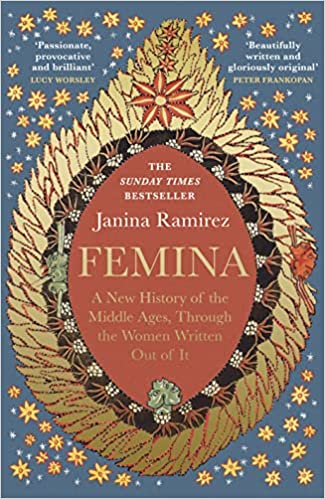
Book Corner: Femina by Janina Ramirez

The middle ages are seen as a bloodthirsty time of Vikings, saints and kings: a patriarchal society which oppressed and excluded women. But when we dig a little deeper into the truth, we can see that the ‘dark’ ages were anything but.

Oxford and BBC historian Janina Ramirez has uncovered countless influential women’s names struck out of historical records, with the word FEMINA annotated beside them. As gatekeepers of the past ordered books to be burnt, artworks to be destroyed, and new versions of myths, legends and historical documents to be produced, our view of history has been manipulated.

Only now, through a careful examination of the artefacts, writings and possessions they left behind, are the influential and multifaceted lives of women emerging. Femina goes beyond the official records to uncover the true impact of women like Jadwiga, the only female King in Europe, Margery Kempe, who exploited her image and story to ensure her notoriety, and the Loftus Princess, whose existence gives us clues about the beginnings of Christianity in England. See the medieval world with fresh eyes and discover why these remarkable women were removed from our collective memories.

When I wrote Heroines of the Medieval World five years ago, I said at the time that it was a book that needed to be written – I just wasn’t sure if I was the person to write it. If I had been asked who should write it, one of the top names on my list would have been Janina Ramirez. So I was not surprised when I discovered that Janina had written a book on medieval women, Femina: A New History of the Middle Ages, Through the Women Written Out of It.

I admit I was a little worried that Femina would make my Heroines obsolete or redundant, but I probably shouldn’t have been. After all, every writer has their own style and approach and every book – even if on the same topic – is written differently. And while the two books do overlap in places, we do not always reach the same conclusion and they really would complement each other on a book shelf (hint, hint!).

Femina: A New History of the Middle Ages, Through the Women Written Out of It looks at some of the most remarkable women of the medieval period, including two women you will be familiar with if you have read Heroines of the Medieval World, Æthelflæd, Lady of the Mercians and Jadwiga, ‘King’ of Poland. And the chapter on Jadwiga is particularly illuminating as Dr Ramirez applies her background in Art History to the symbolism and significance of Jadwiga’s reign, both on a political and spiritual level.

Janina Ramirez also provides great insight in to Emma of Normandy, who I looked at in detail for my own book, Silk and the Sword: the Women of the Norman Conquest. Study is even made of Ӕlfgyva, the mysterious woman in the Bayeux Tapestry, though Janina and I come to very different conclusions – and I would dearly love to have a face-to-face conversation with her to thrash out our theories. That would be fun!

Hild moved from Hartlepool to the site known then as Strenaeshalch and now as Whitby, in AD 657. Here she was granted land to build a double monastery where both men and women could learn the scriptures and dedicate themselves to a monastic life. And engraved stone slab commemorates her successor as abbess, Ælfflæd, and the use of the Latin script and alphabet supports Bede’s suggestion that Whitby was a centre of learning and literacy. But like at Hartlepool, finds from Hild’s abbacy include many luxuries such as decorative hairpins, golden book covers and even a comb with a runic inscription. Runes were the alphabet of the pre-Christian English, but the inscription is clearly Christian: My God. May God Almighty help Cy …’ Again, we find an object which links the Germanic warrior world to the new Christina one. Like Hild herself it straddles ideologies and a time of transition.

Hild was at the top of the tree in terms of influence in seventh-century Northumbria. Bede states that ‘even kings and princes sought and received her counsel’, and she acted as mentor to the daughter of Oswui, King of the Northumbrians from 642-670. What’s more, it was under her rule, in the monastery she founded herself, that the leaders of the English church gathered for the famous Synod of Whitby in AD 664. With Hild in charge of proceedings, the good and the great, representatives of Rome and Ireland, argued which traditions the Northumbrian church should follow. The result went the way of Rome. The variety and uniqueness of Celtic monasteries was lost to the rigour and routine of the Benedictine Rule, and monasticism in the north was transformed forever. For a woman to be involved in such high-level synodal processes is something extraordinary even today. It is also significant that five men who trained under Hild were all made bishops; if there were king-makers in the medieval world, then she was the bishop-maker. Whitby was the training ground for a new, Roman Christian, learned and respected English church. From Hild’s northern headland, educated men and women would stretch out the length and breadth of the country, assuming the very highest positions within churches and monasteries, including the archbishop of York. Hild’s influence would permeate the fabric of Christianity in this part of the world and its effects were felt down the centuries.

Femina: A New History of the Middle Ages, Through the Women Written Out of It is a fabulous study of a number of medieval women – and medieval woman in general. Dr Ramirez manages to combine what it was like to be a woman in medieval times, including their rights and the dangers they faced, such as childbirth, with the histories of particular women – and not always women you would expect to see in history book. The most fascinating chapter is that which is devoted to the Cathars, a religious sect much misunderstood and persecuted to extinction by the church. Janina Ramirez highlights not only their suffering and personal testimonies, but also the strength and respect that women held within the community. It truly is illuminating.

From warrior Viking women, to the successes of Æthelflæd and the excessive crying of Margery Kempe, Janina Ramirez shines a light on the lives and experiences of a huge variety of medieval women. Archaeological discoveries, religious artefacts and medieval artwork are used to describe and illuminate the world in which these women lived and died.

Femina: A New History of the Middle Ages, Through the Women Written Out of It is an engaging, entertaining read, with Janina Ramirez’s unique and wonderful take on medieval history. Introducing her vast knowledge of Art History into the mix adds vibrancy to the individual stories and brings these incredible women to life. Dr Ramirez is fabulous writer and communicator and takes the reader on an incredible journey of discovery through the medieval world. Her enthusiasm and fascination for the topic shines through on every page.

Femina: A New History of the Middle Ages, Through the Women Written Out of It by Janina Ramirez is truly a pleasure to read.

About the author:

Dr Janina Ramirez is a Sunday Times bestselling author, an Oxford lecturer, BBC broadcaster and researcher. She has presented and written over 30 hours of BBC history documentaries and series on TV and radio, and written five books for children and adults.

My books

Signed, dedicated copies of all my books are available, please get in touch by completing the contact me form.

Defenders of the Norman Crown: The Rise and Fall of the Warenne Earls of Surrey tells the fascinating story of the Warenne dynasty, of the successes and failures of one of the most powerful families in England, from its origins in Normandy, through the Conquest, Magna Carta, the wars and marriages that led to its ultimate demise in the reign of Edward III. Defenders of the Norman Crown: Rise and Fall of the Warenne Earls of Surrey is now available from Pen & Sword BooksAmazon in the UK and US, Bookshop.org and Book Depository.

1 family. 8 earls. 300 years of English history!

Also by Sharon Bennett Connolly:

Ladies of Magna Carta: Women of Influence in Thirteenth Century England looks into the relationships of the various noble families of the 13th century, and how they were affected by the Barons’ Wars, Magna Carta and its aftermath; the bonds that were formed and those that were broken. It is now available in paperback and hardback from Pen & Sword,  AmazonBookshop.org and from Book Depository worldwide.

Heroines of the Medieval World tells the stories of some of the most remarkable women from Medieval history, from Eleanor of Aquitaine to Julian of Norwich. Available now from Amberley Publishing and Amazon, Bookshop.org and Book Depository.

Silk and the Sword: The Women of the Norman Conquest traces the fortunes of the women who had a significant role to play in the momentous events of 1066.  Available now from Amazon,  Amberley Publishing, Bookshop.org and Book Depository.

*

You can be the first to read new articles by clicking the ‘Follow’ button, liking our Facebook page or joining me on Twitter and Instagram.

©2022 Sharon Bennett Connolly

Book Corner: Tudor Roses by Amy Licence

A dynasty is defined by its men: by their personalities, their wars and reigns, their laws and decisions. Their mothers, wives, sisters and daughters are often depicted as mere foils, shadowy figures whose value lies in the inheritance they brought, or the children they produced. Yet the Tudor dynasty is full of women who are fascinating in their own right, like Margaret Beaufort, who finally emerged triumphant after years of turmoil; Elizabeth of York and her steadying influence; Catherine of Aragon and Anne Boleyn, whose rivalry was played out against the backdrop of the Reformation; and Mary and Elizabeth, England’s first reigning queens. Then there were all the others: Henry VIII’s fascinating sisters who became queens of France and Scotland, and their offspring, the Brandon and Grey women, Lady Margaret Douglas and her granddaughter Arabella Stuart. Many more women danced the Pavane under Henry’s watchful eye or helped adjust Elizabeth’s ruff. These were strong women, wielding remarkable power, whether that was behind the scenes or on the international stage. Their contribution took England from the medieval era into the modern. It is time for a new narrative of the Tudor women: one that prioritises their experiences and their voices.

Tudor Roses: From Margaret Beaufort to Elizabeth I by Amy Licence continues the history started with Red Roses, which told the history of the women of the royal house of Lancaster, from Blanche of Lancaster to Margaret Beaufort and the start of the Tudor dynasty. Tudor Roses: From Margaret Beaufort to Elizabeth I is the fabulous sequel! Amy Licence has put all her considerable knowledge and research into this book to bring you a book on the Tudor period focussed on its incredible women.

Amy Licence brings the women to the fore, telling the stories of the Tudors through the lives and actions of the women who formed such a considerable part of the dynasty. Not only does she retell the lives of these women, but she puts those lives in context, assessing their influence and legacy on one of the most famous English dynasties – and on the European countries that England interacted with.

Amy Licence also draws not only on events of the time, but on the changing world around the dynasty, on the developments in literature, music, the arts and religion to give a rounded picture of the women of 16th century England. This gives the reader a deeper understanding of the rules and restrictions women had to live by at the time. It also demonstrates the areas in which women had liberties and the ability to express their own desires, wants and needs, and how they could assert control over their own lives.

This is Amy Licence at her best!

Excerpt:

It is not difficult to visualise the Tudor princesses sitting at their lessons, or roaming the gardens at Eltham. Surviving accounts give an indication of the adult-style clothing in which the children appeared, as the nursery was also a location for the entertainment of dignitaries and foreign visitors, and the children were a powerful, visible indicator of the dynasty’s future. In November 1495, Henry spent £7 on ‘diverse yerdes of silk’ for Henry and Margaret, while baby Mary the following years was clothed in kirtles of black silk and velvet, edged in ermine and mink. The following year as she was beginning to walk, her dresses were made of baby buckram, a fine cotton, not like the stiff, modern version, and she required linen smocks, three pairs of hose, eight pairs of single-soled shoes and four pairs of double. The children were frequent visitors to Windsor, Westminster, Greenwich, Sheen and Baynard’s Castle, or wherever their parents might be, attending important events and festivities, expected to show themselves to best advantage in front of guests. No doubt the girls were also influenced by Margaret Beaufort’s model of piety and were visible attendees at church on red letter days in the Catholic calendar, but they were also lively, energetic participants. One of Margaret’s most notable public appearances as a small child was her fifth birthday in November 1494, on which occasion her younger brother Henry was elevated to the Dukedom of York. A tournament lasting three days was held at Westminster, after which Margaret handed out the prizes, dressed in a velvet and buckram gown trimmed in gold lace with a white, winged cap in the Dutch style. Afterwards, Margaret and her young brother danced to the delight of the court.

At Eltham, Margaret and Mary were shielded from he dynastic struggles that their parents were experiencing in the 1490s. A second pretender, far more serious than the young Lambert Simnel, had emerged in Europe, and was being feted by enemies of the Tudor regime. Claiming to be Richard of Shrewsbury, the younger of the Princes in the Tower, a young Flemish merchant by the name of Perkin Warbeck arrived at the Burgundian court, swiftly winning over Elizabeth’s aunt Margaret, who schooled him in the details and manners of the Yorkist court and encouraged him to distribute coins minted in his name. Warbeck was initially welcomed at the court of Charles VIII of France, until Charles ejected him under terms of the Treaty of Etaples he signed with England in 1492. The pretender returned to Burgundy, where he was invited to attend the funeral of the Holy Roman Emperor and recognised as Richard IV. However, after a failed attempt to invade England, and a brief flirtation with Ireland, Warbeck went north, towards the Scottish king with whom Henry had hoped to ally his eldest daughter.

Amy Licence is an accomplished writer whose prose flows so freely that you almost feel like you are reading a novel. The narrative flows easily, absorbing the reading from the very first pages. As you may have come to expect from Ms Licence, her research is thorough and second-to-none. She delves into every aspect of the lives of the women and brings the whole era to life for the reader, showing how they interracted with the world around them, with the men in their lives – and with each other.

Her insight into the lives of the Tudor women is unparalleled.

It is always a pleasure to read a non-fiction book by Amy Licence and Tudor Roses: From Margaret Beaufort to Elizabeth I is no exception. In fact, it is probably one of Ms Licence’s best. For anyone interested in the Tudor period, this book is a must read. An essential addition to any library. I cannot recommend it highly enough.

Tudor Roses: From Margaret Beaufort to Elizabeth I is available from Amazon and Amberley Publishing.

About the author:

Amy Licence is an historian of women’s lives in the medieval and early modern period, from Queens to commoners. Her particular interest lies in the late fifteenth and early sixteenth century, in gender relations, Queenship and identity, rites of passage, pilgrimage, female orthodoxy and rebellion, superstition, magic, fertility and childbirth. She is also interested in Modernism, specifically Woolf and the Bloomsbury Group, Picasso and Post-Impressionism. She has been a teacher for over twenty years and is a Fellow of the Royal Historical Society.

Amy has written for The Guardian, The TLS, The New Statesman, BBC History, The English Review, The Huffington Post, The London Magazine and contributes regularly to BBC History Magazine. She has been interviewed regularly for BBC radio, including Woman’s Hour, and has appeared in several TV documentaries.

*

My Books

Signed, dedicated copies of all my books are available, please get in touch by completing the contact me form.

Defenders of the Norman Crown: The Rise and Fall of the Warenne Earls of Surrey tells the fascinating story of the Warenne dynasty, of the successes and failures of one of the most powerful families in England, from its origins in Normandy, through the Conquest, Magna Carta, the wars and marriages that led to its ultimate demise in the reign of Edward III. Defenders of the Norman Crown: Rise and Fall of the Warenne Earls of Surrey is now available from Pen & Sword BooksAmazon in the UK and US, Bookshop.org and Book Depository.

1 family. 8 earls. 300 years of English history!

Also by Sharon Bennett Connolly:

Ladies of Magna Carta: Women of Influence in Thirteenth Century England looks into the relationships of the various noble families of the 13th century, and how they were affected by the Barons’ Wars, Magna Carta and its aftermath; the bonds that were formed and those that were broken. It is now available in paperback and hardback from Pen & Sword,  AmazonBookshop.org and from Book Depository worldwide.

Heroines of the Medieval World tells the stories of some of the most remarkable women from Medieval history, from Eleanor of Aquitaine to Julian of Norwich. Available now from Amberley Publishing and Amazon, Bookshop.org and Book Depository.

Silk and the Sword: The Women of the Norman Conquest traces the fortunes of the women who had a significant role to play in the momentous events of 1066.  Available now from Amazon,  Amberley Publishing, Bookshop.org and Book Depository.

*

You can be the first to read new articles by clicking the ‘Follow’ button, liking our Facebook page or joining me on Twitter and Instagram.

©2022 Sharon Bennett Connolly 

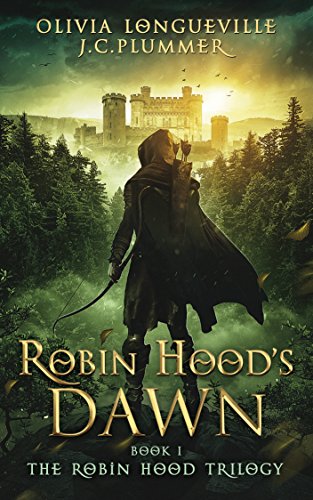
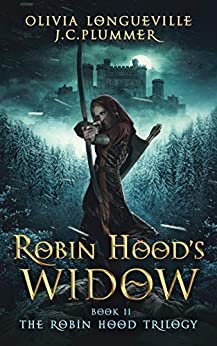
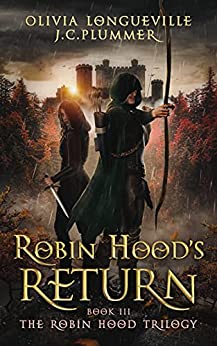
Book Corner: The Robin Hood Trilogy by Olivia Longueville and J.C. Plummer

England, 1154-1194:

A kingdom under assault.

A conspiracy born of anarchy.

A hero standing against tyranny.

Falsely convicted of a shocking crime, Robin Fitzooth, the Earl of Huntingdon, finds refuge in Sherwood Forest and becomes Robin Hood.

Leading a band of men against the injustices of a malevolent sheriff and his henchmen, Robin begins to unravel a web of treachery threatening the English royal family.

As shadowy forces gather to destroy the future of a nation, Robin faces deceit, betrayal, and the ravages of war as he defends his king, his country, his people, and the woman he loves from a conspiracy so diabolical, so unexpected, that the course of history hangs in the balance.

From the mists of an ancient woodland, to lavish royal courts teeming with intrigue, to the exotic shores of the Holy Land – Robin Hood leads the fight in a battle between good and evil, justice and tyranny, the future and the past.

Part one of an exciting three-part retelling of the Robin Hood legend!
Also Available:
Book 2, Robin Hood’s Widow
Book 3, Robin Hood’s Return

I have to admit that I am a sucker for a good Robin Hood story. However, having grown up close to Sherwood Forest and played around the Major Oak as a child, I have to admit that I can be quite picky when it comes to Robin Hood. It has to be a good story, or I will not read it. I have had The Robin Hood Trilogy on my kindle for a while, but only actually picked up the first book 3 weeks ago. I was suffering from a heavy cold and wanted some comfort reading. And what a choice for comfort reading. I read all 3 books, one after the other, in a week. I couldn’t get enough of them!

The story opens in 1154 with the death of King Stephen and a betrayal by certain nobles who had promised to put Stephen’s son, William of Blois, Earl of Warenne and Surrey, on the throne. As a regular reader of this blog will understand, my interest was most certainly piqued. So, now we have a novel series with 2 of my favourite topics; Robin Hood and the Warennes. And I got worried. What if I don’t like the way this book goes with the Warennes? I do have quite a soft spot for them, after all.

I need not have been concerned. This Robin Hood trilogy is a fabulous adventure, with well developed characters, a story thread that will keep you gripped to the very end – and some marvellous twists in the tale.

They had left Sherwood Forest and were now traversing rolling hills and pastures, but Marian could not appreciate the lovely scenery. The closer they were to Conisbrough, the more nervous she felt.

She was riding next to Constance, and they were protected by an escort of twenty of Earl de Warenne’s mounted men-at-arms. At the front, Robin rode with Lionel and the earl’s son, Guillaume. All three were the same age, and Marian observed them as they enjoyed a friendly, animated conversation.

Robbie, as usual, was riding with his father.

Although Marian was apprehensive about staying at Conisbrough, Constance was elated. She was enthusiastically telling Marian what she knew about the de Warenne family.

Once again, Marian was lamenting her lack of interest in politics during her youth. She had never paid much attention to stories about the royal family or the elaborate familial web of royals, near royals, and distant relations to the king’s family.

In contrast, Constance was very knowledgeable. Marian knew her friend had traveled to London with her father and brother every year to attend court and celebrate Midsummer.

Marian’s father had never taken her to court, or even to London. Perhaps it was his own aversion to politics and big cities. And it’s likely that he considered it unnecessary, since it was always understood that Marian would wed Robin, so there had been no need to search for a suitable husband among the nobility of England.

“Constance, I’m confused,” she reluctantly confessed.

“About what?”

“Didn’t you say that Earl Hamelin was illegitimate? How did he inherit his title/”

Constance smiled indulgently. “Every time I’ve tried to explain this, I can see your mind wandering. Please concentrate on what I’m saying.”

“My mind is wandering because so much of this seems like pointless court intrigue. I just want to go back home and stay there.”

“You’re the wife of an earl. I think you can learn a lot by spending time with Countess de Warenne. You can’t hide at Locksley and Lenton. You have duties to perform at Huntingdon.”

Marian released a noisy sigh of defeat. “Tell me again.”

“Hamelin is the illegitimate son of Geoffrey, Count of Anjou. He’s the older half-brother of the late King Henry, God-rest-his-soul, and he’s King Richard’s uncle. Of course, he’s Prince John’s uncle, too.”

“But instead of Count of Anjou, he’s the Earl of Surrey?”

“Now I’m certain that you weren’t listening,” Constance chided. “He married Isabel de Warenne, the Countess of Surrey, who was the only child of her father. So, she inherited the earldom. When Hamelin married her, he took her family name and became earl by right of his wife.”

Robin Hood’s Dawn sets the scene beautifully, charting a youthful Robin’s journey into becoming an outlaw in Sherwood Forest, and his realisation that not everyone is honourable. His arrogance and connections get him into more trouble than he realises, almost losing the woman he loves – Marian. In Robin Hood’s Widow, we discover that Marian herself is more than capable of holding her own under the canopy of Sherwood Forest. Which makes for a fantastic finale in Robin Hood’s Return, where Robin and Marian, united in their common goals, must unite to fight their enemies and find a way to accept each other’s abilities and weaknesses.

My personal favourite of the 3 books is Robin Hood’s Return, but that may be because both Hamelin and Isabel de Warenne both play prominent roles – as does my ‘local’, Conisbrough Castle. Olivia Longueville and J.C. Plummer did their research and have done an amazing job of recreating the castle and the Warenne family dynamic. Their depictions, I believe, are spot on! And it was so nice to see the people I have spent so long researching brought to life on the page.

As to the other characters, Robin Hood, Little John, the sheriff of Nottingham, Guy of Gisborne are all there – though some not as you would ordinarily recognise them. I love the way the authors of the Robin Hood trilogy have taken the legend and made it their own, weaving an incredible story of betrayal and king-making into the existing legend, so that you are at once familiar with the characters, and yet discovering new dimensions along the way.

The Robin Hood Trilogy is a fabulous, engrossing read that you will never want to end – and yet can’t wait for it to finish.

What a fabulous adventure! I cannot recommend the series highly enough.

Robin Hood’s Dawn, Robin Hood’s Widow and Robin Hood’s Return are available from Amazon.

About the authors:

Olivia Longueville is a European author whose first book was Between Two Kings, a story set in Tudor England. J.C. Plummer is an American author and historian living in Texas. They are long distance friends who share a passion for writing and history, and this is their first collaboration. Learn more at their website: http://www.AngevinWorld.com

My Books

Signed, dedicated copies of all my books are available, please get in touch by completing the contact me form.

Defenders of the Norman Crown: The Rise and Fall of the Warenne Earls of Surrey tells the fascinating story of the Warenne dynasty, of the successes and failures of one of the most powerful families in England, from its origins in Normandy, through the Conquest, Magna Carta, the wars and marriages that led to its ultimate demise in the reign of Edward III. Defenders of the Norman Crown: Rise and Fall of the Warenne Earls of Surrey is now available from Pen & Sword BooksAmazon in the UK and US, Bookshop.org and Book Depository.

1 family. 8 earls. 300 years of English history!

Also by Sharon Bennett Connolly:

Ladies of Magna Carta: Women of Influence in Thirteenth Century England looks into the relationships of the various noble families of the 13th century, and how they were affected by the Barons’ Wars, Magna Carta and its aftermath; the bonds that were formed and those that were broken. It is now available in paperback and hardback from Pen & Sword,  AmazonBookshop.org and from Book Depository worldwide.

Heroines of the Medieval World tells the stories of some of the most remarkable women from Medieval history, from Eleanor of Aquitaine to Julian of Norwich. Available now from Amberley Publishing and Amazon, Bookshop.org and Book Depository.

Silk and the Sword: The Women of the Norman Conquest traces the fortunes of the women who had a significant role to play in the momentous events of 1066.  Available now from Amazon,  Amberley Publishing, Bookshop.org and Book Depository.

*

You can be the first to read new articles by clicking the ‘Follow’ button, liking our Facebook page or joining me on Twitter and Instagram.

©2022 Sharon Bennett Connolly

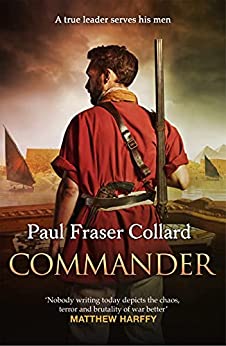
Book Corner: Commander by Paul Fraser Collard

A true leader serves his men.

The Jack Lark series is historical military fiction at its finest, for fans of Bernard Cornwell’s Sharpe series, Matthew Harffy and Patrick O’Brian. This is the tenth adventure featuring Jack Lark: soldier, leader, imposter.

Egypt, 1869. Jack Lark has reinvented himself once more. Working as an unofficial agent for the Consul-General, he moves among the most powerful men in Cairo. But when the opportunity arises to join legendary explorer Sir Samuel White Baker on his expedition into the Sudan, Jack can’t resist a new adventure.

Jack assumes command of an elite cadre to protect the fleet of vessels. But, as they move down the Nile, Jack and his men soon find themselves in a land where the rule of law means nothing, and those who wield power will do anything to keep it. And when a new friend seeks Jack’s help, Jack must decide where his loyalties truly lie . . .

Paul Fraser Collard‘s Commander is the 10th instalment of the exploits of Jack Lark. Jack first made his appearance in the Crimean War and seem to have gone around the world, looking for a fight ever since. I always wondered what would happen to him when the wars finally ended and Commander answers that question; he’d keep fighting, sort of.

Commander is set in 1869 at a time of colonial expansion for the British, which saw a rise in exploration of the more remote regions of Africa. Jack Lark joins one such expedition, that aims to go deep into central Africa, into the Sudan. Jack’s military expertise is called upon to train and lead the company of soldiers that will protect the expedition. Despite still leading a military contingent, he is definitely out of his comfort zone and facing challenges from various quarters, from the environment, the expedition leaders and those out to exploit Africa itself, slavers and big game hunters alike.

As ever, Paul Collard weaves a gripping story as Lark’s adventure into the unknown, both in his career and his personal life, takes a twisting, turning path. Commander confronts the ideas of slavery and the ivory trade within the context of the time, as he does the concept of colonial expansion; this is counterweighted with the sense of adventure and discovery that motivate such vast expeditions. The chance to go where no on has gone before.

Dozens of servants flowed around the room carrying silver platters covered with black velvet cloths embroidered with emeralds and pearls. Every platter bore a large number of drinking vessels no bigger than an egg cup, each one containing a liquid so dark that it was an inky black.

‘Coffee, Lark?’ Stanton reached for a cup from a passing waiter, his free hand held ready to take one for Jack.

‘No, thank you.’ Jack had no taste for the bitter liquid.

‘You are probably wise. I prefer tea myself, but there is no way in hell we can expect the frog to know how to serve it properly, so I suspect we are better off being spared the attempt.’

‘Indeed.’ Jack straightened his back. It always ached by this hour of the day. It was time to make an excuse and head for the buffet. He had delivered the notebook to his master. Nothing else was keeping him there.

‘You look like a hound waiting to be let off the leash.’ Stanton raised his eyebrows over the rim of the tiny coffee cup, which looked incongruous in his large hands. ‘You want to be off, I’ll wager.’

‘Something like that.’

‘Well, you can’t. I hate these bloody things as much as you plainly do, and now you’re here, you can damned well keep me company.’

Jack did his best to keep his expression neutral. The pit of his spine was beginning to hurt with a vengeance, and he wanted nothing more than to return to the cool quiet of his hotel suite and enjoy some peace. It appeared that ambition was to be denied, at least until he could shake off Stanton’s attention and slip away, something he would do at the earliest opportunity. ‘I’d be delighted,’ he lied smoothly.

‘No, you wouldn’t, but I pay your wages so you will just have to endure, as must I.’ Stanton snorted. ‘Sometimes I wish I’d stayed in the army. What about you Lark?’

Paul Fraser Collard’s Jack Lark has one of the best character developments that I have ever read. He is flawed, damaged and does not always make the right decision. But that is what makes him fascinating. He is a fabulous, colourful character, full of life! He is not your typical everyday hero, which makes him unpredictable, which makes the story’s outcome unpredictable. The many twists in the book leave the reader on the edge of their seat throughout, eager to discover the outcome of the converging threads.

In Commander Jack Lark is not only up against an enemy, a former French soldier who he quite likes, who is exploiting the treasures of Africa – it’s animals and people – for his own personal gain. In another life, he may have been Jack’s friend, but in this life, their ideals are diametrically opposed. Jack is also fighting against nature; the unrelenting landscape of Africa, where their boats are hampered by the weeds choking the River Nile and the relentless heat makes work, drill and marching harder.

Commander by Paul Fraser Collard is a triumph in storytelling, taking the reader back to colonial Africa, on an amazing adventure. It recreates the landscape of an Africa untouched by modern development, contrasted with the hustle and bustle of Cairo and the ancient, established, cities of Egypt. It is a pleasure to read – a journey of discovery for reader and character alike. A must read.

I do hope we get to see more of his adventures!

Commander by Paul Fraser Collard is now available from Amazon.

About the author:

Paul’s love of military history started at an early age. A childhood spent watching films like Waterloo and Zulu whilst reading Sharpe, Flashman and the occasional Commando comic, gave him a desire to know more of the men who fought in the great wars of the Nineteenth and Twentieth Centuries. At school, Paul was determined to become an officer in the British army and he succeeded in winning an Army Scholarship. However, Paul chose to give up his boyhood ambition and instead went into the finance industry. Paul stills works in the City, and lives with his wife and three children in Kent. 

*

My Books

Signed, dedicated copies of all my books are available, please get in touch by completing the contact me form.

Defenders of the Norman Crown: The Rise and Fall of the Warenne Earls of Surrey tells the fascinating story of the Warenne dynasty, of the successes and failures of one of the most powerful families in England, from its origins in Normandy, through the Conquest, Magna Carta, the wars and marriages that led to its ultimate demise in the reign of Edward III. Defenders of the Norman Crown: Rise and Fall of the Warenne Earls of Surrey is now available from Pen & Sword BooksAmazon in the UK and US, Bookshop.org and Book Depository.

1 family. 8 earls. 300 years of English history!

Also by Sharon Bennett Connolly:

Ladies of Magna Carta: Women of Influence in Thirteenth Century England looks into the relationships of the various noble families of the 13th century, and how they were affected by the Barons’ Wars, Magna Carta and its aftermath; the bonds that were formed and those that were broken. It is now available in paperback and hardback from Pen & Sword,  AmazonBookshop.org and from Book Depository worldwide.

Heroines of the Medieval World tells the stories of some of the most remarkable women from Medieval history, from Eleanor of Aquitaine to Julian of Norwich. Available now from Amberley Publishing and Amazon, Bookshop.org and Book Depository.

Silk and the Sword: The Women of the Norman Conquest traces the fortunes of the women who had a significant role to play in the momentous events of 1066.  Available now from Amazon,  Amberley Publishing, Bookshop.org and Book Depository.

*

You can be the first to read new articles by clicking the ‘Follow’ button, liking our Facebook page or joining me on Twitter and Instagram.

©2021 Sharon Bennett Connolly

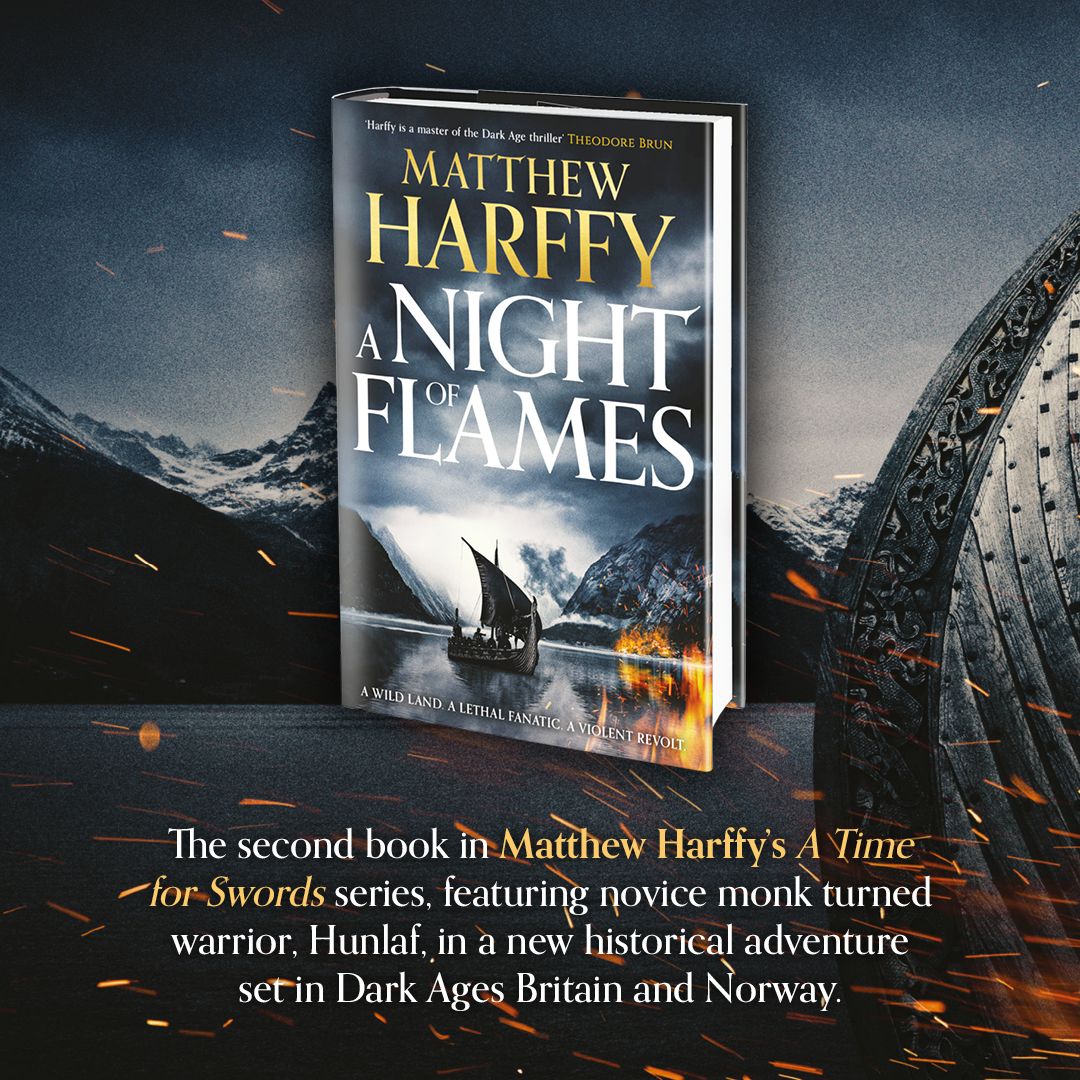
Book Corner: A Night of Flames by Matthew Harffy

In the wild lands of Norway, Hunlaf must quell a vicious slave uprising in Matthew Harffy’s new historical adventure.

A wild land. A lethal fanatic. A violent revolt.

Northumbria, AD 794. Those who rule the seas, rule the land. None know the truth of this more than the Vikings. To compete with the seafaring raiders, the king of Northumbria orders the construction of his own longships under the command of oath-sworn Norseman, Runolf.

When the Vikings attack again, the king sends cleric turned warrior, Hunlaf, on a mission to persuade the king of Rogaland into an alliance. But Hunlaf and Runolf have other plans; kin to seek out, old scores to settle, and a heretical tome to find in the wild lands of the Norse.

Their voyage takes them into the centre of a violent uprising. A slave has broken free of his captors and, with religious fervour, is leading his fanatical followers on a rampage – burning all in his path. Hunlaf must brave the Norse wilderness, and overcome deadly foes, to stop this madman. Can he prevent a night of flames and slaughter?

News of a new Matthew Harffy novel has become one of the highlights of my year. Luckily, Harffy is quite a prolific writer, so I never have to wait too long for such news. A Night of Flames is Matthew Harffy’s 11th book in 6 years – that’s quite an achievement!

Especially as his storytelling keeps getting better and better.

The sequel to A Time for Swords, the story begins where the last book left off, with Hunlaf of Ubbanford having forsaken the monk’s cowl for the sword and determined to go in search of his cousin, Aelfwyn, carried off during the raid on Lindisfarne that heralded the Viking era in England. The erstwhile monk comes up with a plan to rescue his cousin and retrieve the highly influential and heretical book, The Treasure of Life, which will lead himself and his friends into the heart of Norway and a heretical band of marauders, made up of former slaves, fanatical warriors and women and children who are killing and spreading devastation wherever they go.

The story has all the ingredients for an exciting adventure. And I have to say, I loved the references to Matthew Harffy’s other series, The Bernicia Chronicles, and the story of Beobrand, with mention of a ballad to Beobrand and his love, Sunniva, or the fact that young Hunlaf was raised in Beobrand’s settlement of Ubbanford, thus interlinking the two very different series with a shared origin.

“I do not wish to slay you,” I hissed at him. “Drop your weapon. End this.”

“There is only one way to end this now,” he yelled. His face was pallid, his eyes glimmering in the bright early morning sun.

Unless he turned away from this course, he was right. I could not defend against him indefinitely. If I waited too long, his brawn and rage would overcome me at last. He was unarmoured, so I had not donned my byrnie. One strike from Wistan could easily prove fatal.

Springing at me again, he attempted a feint, but he signalled his intention with his eyes and his footwork, so my shield was there to parry the attack. This time, I flicked out my sword and opened up a gash on his side, beneath his shield. I skipped away, seeing the pain reach his eyes.

Behind him, Runolf met my gaze. The huge Norseman was grinning, clearly enjoying the excitement of a duel, or hólmgang, as he called it. He had paced out and marked the fighting area with hazel stakes, smiling wolfishly all the while at the prospect of a fight. Beside Runolf, the shorter Gwawrddur was sombre. At my look, he shook his head. I saw the disappointment on the Welshman’s features. There was no honour in defeating a foe who is not able to defend himself. The night before, Gwawrddur had told me to do all in my power to dissuade Wistan from fighting.

“I cannot flee, if he wants to fight,” I had said.

“No, you cannot,” he’d replied. His eyes were sad as he sipped his ale. “But when you laid with his girl, you surely knew this could happen.”

I nodded. I had been flattered by Cwenswith’s attentions, and of course I had enjoyed our fumbling, panting trysts in the store hut, but I had never thought our actions could lead to someone’s death, and certainly not at my hand.

“What if he refuses to step aside?”

“Then you must answer for your actions, just as Wistan must answer for his.”

Wistan now stood breathless before me. He looked down and seemed shocked to see the blood soaking through his kirtle. I had not cut him deeply, hoping the stinging pain would bring him to his senses.

At the sight of blood, someone in the crowd gasped.

Cwenswith screamed, “Finish him!”

Wistan’s eyes narrowed at the shrill sound of her voice. His shoulders tensed and I knew he was preparing to attack once more.

“Don’t,” I said, but too late.

He ran at me, and I retreated. He beat his sword against my shield over and over until the hide covering was tatters and the linden wood splintered.

With a growl, I pushed him back. There was nothing for it. I could not dissuade him, and if I waited any longer, I would be the one to lose my life that day. I sprang forward, holding his blows away from me on my splintering shield and lunging beneath his guard. I felt my sword blade make contact. Wistan grunted and staggered. The morning air was filled with the sudden screaming of women. The men quickly added their voices to the din. I recognised Runolf’s booming voice over the clamour of the crowd, but I could not make out his words.

A Night of Flames is another fabulous rip-roaring adventure from Matthew Harffy, where not everything goes as planned for the heroes and the fight comes close to disaster. It is edge-of-the-seat drama that will keep the reader engrossed late into the night. The battles are vicious, the losses devastating and the outcome uncertain – this is Matthew Harffy at his best.

As has come to be expected with a Matthew Harffy book, the historical research is impeccable; the author’s knowledge of weapons, battle tactics and even sailing the whaleroad is woven into the story so that it is impossible to know where facts end and the author’s imagination begins. The extent of Matthew Harffy’s knowledge and research helps to draw the reader in and makes for a thoroughly engaging book.

The best bit, however – as always with Matthew Harffy – is the story! A Night of Flames is a fascinating, thrilling adventure.

If you like to lose yourself in a book, A Night of Flames by Matthew Harffy is perfect for you!

About the author

Matthew Harffy grew up in Northumberland where the rugged terrain, ruined castles and rocky coastline had a huge impact on him. He now lives in Wiltshire, England, with his wife and their two daughters.

Pre-order links

Amazon UK: https://amzn.to/3sOTmAe

Follow Matthew

Twitter: @MatthewHarffy

Website: www.matthewharffy.com

Follow Aries

Twitter: @AriesFiction

Facebook: Aries Fiction

Website: http://www.headofzeus.com

*

My Books

Signed, dedicated copies of all my books are available, please get in touch by completing the contact me form.

Defenders of the Norman Crown: The Rise and Fall of the Warenne Earls of Surrey tells the fascinating story of the Warenne dynasty, of the successes and failures of one of the most powerful families in England, from its origins in Normandy, through the Conquest, Magna Carta, the wars and marriages that led to its ultimate demise in the reign of Edward III. Defenders of the Norman Crown: Rise and Fall of the Warenne Earls of Surrey is now available from Pen & Sword BooksAmazon in the UK and US, Bookshop.org and Book Depository.

1 family. 8 earls. 300 years of English history!

Also by Sharon Bennett Connolly:

Ladies of Magna Carta: Women of Influence in Thirteenth Century England looks into the relationships of the various noble families of the 13th century, and how they were affected by the Barons’ Wars, Magna Carta and its aftermath; the bonds that were formed and those that were broken. It is now available in paperback and hardback from Pen & Sword,  AmazonBookshop.org and from Book Depository worldwide.

Heroines of the Medieval World tells the stories of some of the most remarkable women from Medieval history, from Eleanor of Aquitaine to Julian of Norwich. Available now from Amberley Publishing and Amazon, Bookshop.org and Book Depository.

Silk and the Sword: The Women of the Norman Conquest traces the fortunes of the women who had a significant role to play in the momentous events of 1066.  Available now from Amazon,  Amberley Publishing, Bookshop.org and Book Depository.

*

You can be the first to read new articles by clicking the ‘Follow’ button, liking our Facebook page or joining me on Twitter and Instagram.

©2022 Sharon Bennett Connolly

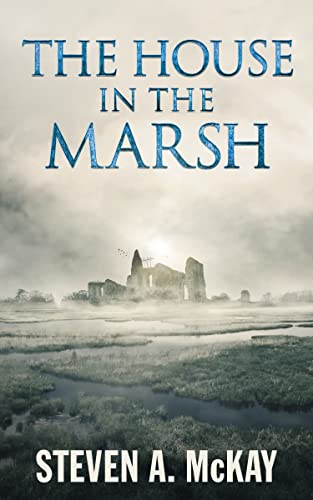
Book Corner: The House in the Marsh by Steven A. McKay

For generations, stories have been told about the ruined old house in the marsh outside Wakefield. Stories of hidden treasure, sinister night-time cries, and ghostly figures doomed to haunt the lonely estate for all eternity as punishment for some terrible crime.
This winter, it seems the old tales might just turn out to be true…

England, AD 1330
John Little, a bailiff living in Yorkshire, has little interest in ghost stories, having seen enough horrors among the living to bother much about the dead. The strange accounts from his fellow villagers have everyone talking though, and it’s not long before he’s asked to accompany a group of curious locals on nocturnal visits to the house in the marsh.
There are more worrying concerns in northern England however, as autumn gives way to winter and rumours of rogue bailiffs attacking, and even murdering people in their own homes, begin to circulate.
Along with his friends – ill-tempered Will Scaflock and the renowned friar, Robert Stafford – John is drawn inexorably into a dangerous adventure that will leave yet more people dead and only add to the eerie legends which will pass into English folklore for centuries to come.
Can John and his companions uncover the truth about the house in the marsh and its terrible secrets? And will they be able to forever exorcise the ghost haunting Wakefield, or will this Christmas be anything but merry?

The House in the Marsh by Steven A. McKay is another novella chronicling the investigative adventures of 3 of Robin Hood’s Merry Men; Little John, Friar Tuck and Will Scarlet. In this outing of the intrepid ex-outlaws-turned-investigators the trio are investigating the spooky goings-on of an abandoned manor house and a pair of murderers who are impersonating bailiffs. That one of the miscreants is taken to be Little John makes identifying the killers all the more urgent.

The House in the Marsh by Steven A. McKay is a wonderful, creepy novella, combining a detective story with the ghostly and mysterious events that always seem to accompany abandoned, half-derelict buildings. Little John, Friar Tuck and Will Scarlet have to look to their own safety whilst calming the fears of villagers – both of the haunted house and the ruthless fake bailiffs. It makes for a story full of suspense, adventure and the threat of sudden, unrestrained violence.

The ex-outlaws, it seems have the skills, courage and intelligence between them to face down both the fear and the violence. The many twists and turns in the book leave the reader on the edge of their seat throughout.

Little John might be a lawman, but he was capable of extreme, deadly violence. There were enough stories and songs about him to back that up.

Desperation could make a man more dangerous, however, and, somehow – perhaps John was distracted by a movement in the crowd beside him – the butcher’s cleaver caught the bailiff’s arm. A bright-red, bloody line appeared on the white skin and John roared in pain.

Before Simon could decide what to do next, press his attack or, more probable, run for his life, John stepped forward and smashed the pommel of his sword into the butcher’s mouth.

Simon staggered back almost comically, spitting out bloody teeth, and then he fell onto his knees and pitched forward onto the ground. He didn’t move after that, and, for what felt like a long time, everyone just stared, from the butcher’s prone form to that of the grimacing bailiff whose arm was bleeding heavily.

“Fetch clean water,” a woman said to her son. “And linen.” He ran off towards their house which wasn’t far off, and she hurried to John’s side. “That’s a nasty wound,” she said, examining it expertly. “But you already know that, I’m sure. Sit down, before you fall down like that idiot.”

Despite his injury, John laughed and the sound seemed to take all the fear and alarm from the atmosphere. Others laughed, and chattered excitedly about what had just happened, while the lady knelt beside the bailiff and pushed aside his sleeve.

Her son returned quickly, and, when she used the water he’d brought to wash John’s cut she nodded in satisfaction. “It’s not as deep as I’d feared,” she said.

“I had a feeling he might want a fight,” John said. “So I wore leather bracers.” He shook his sleeve and the leather armour fell out onto the ground, sliced cleanly in half. There were whistles and gasps from teh crowd as they realised what would have happened had he not been wearing bracers.

“That probably saved your life,” said the woman, still washing away the blood before taking the linen her son handed her and using it to tightly bandage the wound. “Or at least your arm.”

The plot of The House in the Marsh by Steven A. McKay is perfectly crafted, with a number of twists and turns throwing the reader off the trail as the story unfolds. As ever, Steven A. McKays’ storytelling skills are first class as he draws the reader through the story. His impeccable research means that he recreates a highly plausible 14th century Yorkshire – you wouldn’t believe he doesn’t live near Wakefield himself!

Growing up in South Yorkshire myself, I have always had a soft spot for the Robin Hood legend. Of Course, Steven A. McKay sets it in Barnsdale Forest in Wakefield, instead of Sherwood, but he can be forgiven for that as his stories are such wonderful adventures. And his characters are much as I have always imagined them, loyal friends who rib each other but are there for each other when needed.

My only problem with The House in the Marsh by Steven A. McKay is that I wish it was longer. Steven A. McKay has created a wonderful side job for these three Merry Men and I do wish he would give them a full length story to get their teeth into.

For now, though, The House in the Marsh by Steven A. McKay is a perfect read for these cold, dark, winter nights.

To buy the book:

The House in the Marsh by Steven A. McKay is available in ebook and paperback on Amazon.

From the author:

I was born in Scotland in 1977 and always enjoyed studying history – well, the interesting bits, not so much what they taught us in school. I decided to write my Forest Lord series after seeing a house called “Sherwood” when I was out at work one day. I’d been thinking about maybe writing a novel but couldn’t come up with a subject or a hero so, to see that house, well…It felt like a message from the gods and my rebooted Robin Hood was born.

My current Warrior Druid of Britain series was similarly inspired, although this time it was the 80’s TV show “Knightmare”, and their version of Merlin that got my ideas flowing. Of course, the bearded old wizard had been done to death in fiction, so I decided to make my hero a giant young warrior-druid living in post-Roman Britain and he’s been a great character to write.

I was once in a heavy metal band although I tend to just play guitar in my study these days. I’m sure the neighbours absolutely love me.

Check out my website at stevenamckay.com and sign up for the email list – in return I’ll send you a FREE short story, as well as offering chances to win signed books, free audiobooks and other quite good things!

*

My Books

Signed, dedicated copies of all my books are available, please get in touch by completing the contact me form.

Defenders of the Norman Crown: The Rise and Fall of the Warenne Earls of Surrey tells the fascinating story of the Warenne dynasty, of the successes and failures of one of the most powerful families in England, from its origins in Normandy, through the Conquest, Magna Carta, the wars and marriages that led to its ultimate demise in the reign of Edward III. Defenders of the Norman Crown: Rise and Fall of the Warenne Earls of Surrey is now available from Pen & Sword BooksAmazon in the UK and US, Bookshop.org and Book Depository.

1 family. 8 earls. 300 years of English history!

Also by Sharon Bennett Connolly:

Ladies of Magna Carta: Women of Influence in Thirteenth Century England looks into the relationships of the various noble families of the 13th century, and how they were affected by the Barons’ Wars, Magna Carta and its aftermath; the bonds that were formed and those that were broken. It is now available in paperback and hardback from Pen & Sword,  AmazonBookshop.org and from Book Depository worldwide.

Heroines of the Medieval World tells the stories of some of the most remarkable women from Medieval history, from Eleanor of Aquitaine to Julian of Norwich. Available now from Amberley Publishing and Amazon, Bookshop.org and Book Depository.

Silk and the Sword: The Women of the Norman Conquest traces the fortunes of the women who had a significant role to play in the momentous events of 1066.  Available now from Amazon,  Amberley Publishing, Bookshop.org and Book Depository.

*

You can be the first to read new articles by clicking the ‘Follow’ button, liking our Facebook page or joining me on Twitter and Instagram.

©2021 Sharon Bennett Connolly

Book Corner: The Moorland Murderers by Michael Jecks

July, 1556. En route to France and escape from Queen Mary’s men, Jack Blackjack decides to spend the night at a Devon tavern, agrees to a game of dice – and ends up accused of murder. To make matters worse, the dead man turns out to have been the leader of the all-powerful miners who rule the surrounding moors – and they have no intention of waiting for the official court verdict to determine Jack’s guilt.

But who would frame Jack for murder . . . and why? Alone and friendless in a lawless land of cut-throats, outlaws and thieves, Jack realizes that the only way to clear his name – and save his skin – is to unmask the real killer. But knowing nothing of the local ways and customs, how is he to even begin? As Jack’s attempts to find answers stirs up a hornet’s nest of warring factions within the town, events soon start to spiral out of control . . .

What a thoroughly enjoyable adventure! Michael Jecks returns to his old literary haunts of Dartmoor – Lydford and Oakhampton – but without a Simon Puttock or Baldwin de Furnshill in sight. No, we are a few hundred years after the adventures of the bailiff and his friend, Baldwin, the former Knights’ Templar. The Moorland Murderers is set in the time of the Tudor queen, Mary I, shortly after the Wyatt Rebellion. Closely associated with the queen’s sister, Elizabeth, the book’s hero – if you can call him that – Jack Blackjack, has left London for his own safety. Heading for the Continent via Plymouth, he finds himself caught up in a little bother in Oakhampton and stands accused of murder.

Jack Blackjack is not your typical hero. He can’t stand the sight of blood, tends to get bashed on the head – A LOT – and has a rather high opinion of himself. As The Moorland Murderers is told in the first person, the reader gets a healthy – or unhealthy – dose of Jack Blackjack’s opinions about himself and others. Which make for a highly amusing, light-hearted approach to the serious business of murder.

There are few men who can be as uncooperative and suspicious as those who own taverns. I suppose they are used to seeing men trying to drink their houses dry before ‘remembering’ that they had left all their money at home. This fellow,, Mal, was no exception, and as I made my slow and painful way to his bar, I was concerned to see that he had picked up a stout cudgel and was allowing it to slap unpleasantly into his other hand while he gazed at me in a thoughtful manner. It was not an encouraging look. As to my gambling companion, there was no sign.

‘See? My purse has been cut from me!’ I declareed, holding up my laces. ‘The man who gambled with me, he must have chosen to get his money back! He set upon me and robbed me!’

There was some murmuring at that. The large man at the farther end of the room unhitched himself from his post at the wall and began to walk towards me. I did not like the look on his face. The man at the bar, I saw, was no longer there. He too had left. I moved around so that the wench who had wriggled so enticingly on my lap was between us. His expression was not reassuring to this traveller. It was the sort of look a cat might wear while stalking a rat.

The host was not taking my word. ‘Shew ‘un th’ ‘aid.’

I stared at him. His brows darkened. He had looked rather like an ape beforehand, but now he was an angry ape with the suspicion that the figure before him had stolen his favourite fruits. His stick rose menacingly.

‘He said to show him your head,’ the maid translated with a sigh. She rolled her eyes as though thinking me the purest form of fool she had encountered. It made me scowl – but briefly. The movement pulled the skin over the lump on my scalp, and that hurt.

I submitted myself to her inspection. She came forward and glanced at my head. She pulled a face when she parted my hair, making me wince and flinch in pain, and her hands came away with my gore on them. The sight of blood can make me feel queasy at the best of times, but the sight of my own has always had a marked effect. I could feel the colour drain from my face, and the world began to whirl about me once more.

‘Get him a stool!’ the wench burst out, and since her mouth was close to my ear, I started like a child caught stealing a biscuit, and fainted away.

Michael Jecks has long been one of my favourite authors – ever since I read his first book, The Last Templar, a murder mystery series set in the time of Edward II, many years ago. The Bloody Mary Mysteries are set later, in the Tudor era, but are just as engrossing. Jack Blackjack is not your typical hero. He is a paid assassin who cannot stand the sight of blood and has to outsource his work. He thinks very highly of himself – probably too highly – and has a knack for getting into trouble.

Jack Blackjack is a very likeable chap who is trying to negotiate the way through trying times in the reign of Mary I, when political plotting was at a dangerous high and the counter-Reformation was in full swing in England. In The Moorland Murderers, Jack is trying to get away from the intrigues of London – and becoming implicated in the latest rebellion. He finds himself on the edge of Dartmoor, where regional politics were just as dangerous as in London itself!

With the The Moorland Murderers, Michael Jecks is back in his old haunts. He knows the history and landscape of Dartmoor like the back of his hand. And it shows. Historical authenticity, of life on the Moors, of the clashes between the tin miners and those from the towns and of the suspicion of strangers is evident on every page. The story is fast paced and completely absorbing to read. It is such fun! I smiled and giggled through every page!

I haven’t enjoyed a book so much in ages!

I cannot recommend it highly enough.

About the author:

Michael Jecks is the author of more than thirty novels in the Knights Templar medieval mystery series, and four previous Bloody Mary Tudor mysteries. A former Chairman of the Crime Writers’ Association, he lives with his wife, children and dogs in northern Dartmoor. 

Michael is a regular speaker about the Knights Templar, the end of the Kingdom of Jerusalem, about writing and publishing, and about finding work. He is also keen to help those who are now going through the latest recession. He endured enough hardship, and lost all his savings, during the last recession, and understands what it means to risk losing everything.

An enthusiastic photographer and watercolourist, Michael can often be seen walking across Dartmoor where he lives, gaining inspiration into the lives of our ancestors for his stories. When relaxing he can usually be found clad in white in a pub near you before dancing mad stick Morris.

Of course, if you want to contact him or link on social media, you can find him at writerlywitterings.com, he’s on YouTube as writerlywitterer, on LinkedIn, he is at Facebook.com/Michael.Jecks.author, at Flickr.com/photos/Michael_Jecks, on Instagram, Pinterest and everywhere else too! He appreciates hearing from readers, so do please contact him.

*

My Books

Signed, dedicated copies of all my books are available, please get in touch by completing the contact me form.

Defenders of the Norman Crown: The Rise and Fall of the Warenne Earls of Surrey tells the fascinating story of the Warenne dynasty, of the successes and failures of one of the most powerful families in England, from its origins in Normandy, through the Conquest, Magna Carta, the wars and marriages that led to its ultimate demise in the reign of Edward III. Defenders of the Norman Crown: Rise and Fall of the Warenne Earls of Surrey is now available from Pen & Sword BooksAmazon in the UK and US, Bookshop.org and Book Depository.

1 family. 8 earls. 300 years of English history!

Also by Sharon Bennett Connolly:

Ladies of Magna Carta: Women of Influence in Thirteenth Century England looks into the relationships of the various noble families of the 13th century, and how they were affected by the Barons’ Wars, Magna Carta and its aftermath; the bonds that were formed and those that were broken. It is now available in paperback and hardback from Pen & Sword,  AmazonBookshop.org and from Book Depository worldwide.

Heroines of the Medieval World tells the stories of some of the most remarkable women from Medieval history, from Eleanor of Aquitaine to Julian of Norwich. Available now from Amberley Publishing and Amazon, Bookshop.org and Book Depository.

Silk and the Sword: The Women of the Norman Conquest traces the fortunes of the women who had a significant role to play in the momentous events of 1066.  Available now from Amazon,  Amberley Publishing, Bookshop.org and Book Depository.

*

You can be the first to read new articles by clicking the ‘Follow’ button, liking our Facebook page or joining me on Twitter and Instagram.

©2021 Sharon Bennett Connolly