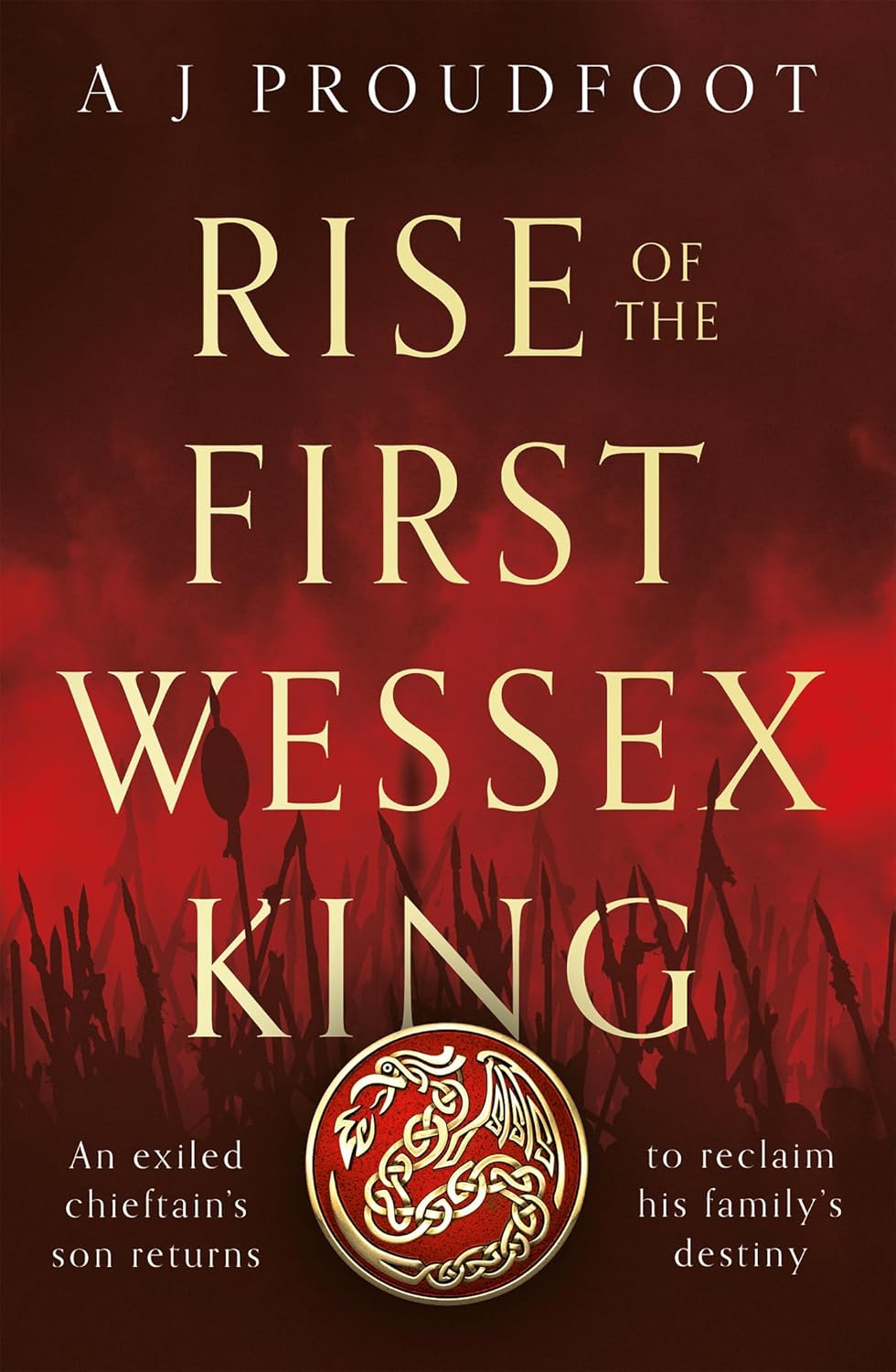
Book Corner: Rise of the First Wessex King by A.J. Proudfoot

A.J. Proudfoot

When the Saxons, invited to settle in Britannia by King Wyrtgeorn, brutally murder the father and brother of Ceredig, the second son of a fifth century Romano-British chieftain, he flees the land of his birth.

While the Saxons expand their control over Britannia, Ceredig grows up in Armorica, learning the ways of the Gewisse, and ultimately taking command of this elite force of warriors, who had remained loyal to his father, Elisedd.

Despite ruling as a chieftain in Armorica, Ceredig remains determined to return to his homeland, avenge his father and brother’s murder, and finally reclaim the lands his father had once ruled in southern Britannia.

After over forty years in exile, Ceredig, his son and a force of Gewisse warriors return to Britannia, joining a large army of Britons who are preparing to take on the Saxons in battle at Badonbyrg.

What happens next will go down in history…

As a debut novel, Rise of the First Wessex King by A.J. Proudfoot is a winner. And as a special treat, alongside my review, I have an interview with the author, who is currently working on book no. 2 in what promises to be a fascinating series. Cerdic, or Ceredig, is the founder of the kingdom of Wessex and a royal house that would reach its zenith under Ceredig’s descendants, King Alfred the Great, Æthelflæd, Lady of the Mercians, her brother Edward the Elder and Edward’s son Athelstan, first king of England.

And it all started with Ceredig.

In Rise of the First Wessex King, A.J. Proudfoot recreates Ceredig’s world, post-Roman Britain, breathing life into this 1,500-year-old story. And what a fascinating story it is. Though our knowledge is limited, Proudfoot fills in the gaps to create a lively and energetic retelling of the foundation of the royal house of Wessex. This is the story of the fight of the native Britons against the invading Saxons, of a war that must have felt never-ending, at times. It is a story of conflict and betrayal, but also of family and comradeship, and of a young man who had to patiently wait for the time to be right to achieve his dream of pushing back the Saxons and going home.

The characters, particularly our hero, are wonderfully vivid. And I love how Proudfoot weaves the legends of Arthur and Hengist and Horsa in to the story, bringing a little-known period of history back to life. Who doesn’t like to see a little bit of King Arthur thrown into the mix? The inclusion of Artorius and Ambrosius made me smile – and want to read more!

This is a debut novel, so Proudfoot sometimes fall into the trap of giving summaries, telling, rather than showing the action and debate, but this does not detract from the pace of the book. Overall, it is a fabulous read, imbued with a sense of adventure. It is a great start to what promises to be an impressive series.

Overall, it is a great story, told well!

If you’re looking for a new author to sink your teeth into, I don’t hesitate to recommend A.J. Proudfoot’s Rise of the First Wessex King.

To Buy the Book:

Books2Read; The Book GuildBookshop.org (UK)

Interview with A.J. Proudfoot

A.J. Proudfoot

Sharon: So, Alex, what got you into writing historical fiction?

Alex: This may come as a surprise, but I didn’t originally set out to become an author and write historical fiction novels. I was simply trying to trace the origins of my unusual Proudfoot surname, and was continuing the research into our Proudfoot family history that my parents and aunt had begun many years before.

After several years’ research, I was amazed to find that I had traced my family ancestry back 1500 years to a mysterious chieftain called Cerdic, at the end of the fifth century, who founded the Anglo-Saxon kingdom of Wessex. There are many interesting ancestors in the Proudfoot family tree, whose lives would make an excellent novel, but when I discovered more about Cerdic’s life, I realised that there was an Arthurian story that was worth writing.

Sharon: What made you want to tell Cerdic’s story?

Alex: I was intrigued why this important figure in early English history has been largely ignored by historical writers, so I undertook my own research into the life of Cerdic, finding crucial inconsistencies in what is written about Cerdic’s Saxon heritage, which I put down to a desire, by early Saxon chroniclers, to establish King Alfred’s Saxon ancestry.

Instead, I found evidence that Cerdic was more likely to be descended from a Romano-British family, who originally hailed from an ancient Welsh kingdom, and was more than likely called Ceredig, given his Brythonic heritage, and to the phonetic similarities. As a result, I felt compelled to use what I had learned to tell the story about my earliest known ancestor and his crucial role in history, based on recorded events in the early Anglo-Saxon era. To paraphrase John Wade, the rest is historical fiction!

Sharon: How do you go about researching a historical character from 1500 years ago?

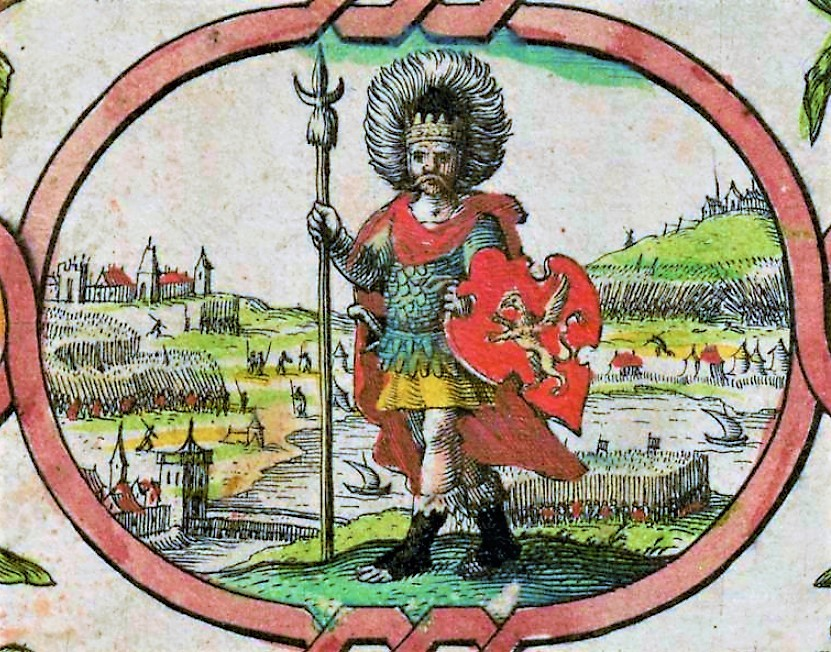
Imaginary depiction from John Speed’s 1611 “Saxon Heptarchy”

Alex: The great difficulty in researching a historical figure from so far back is the lack of contemporary records. My starting point was, naturally, the Anglo-Saxon Chronicle, but it only mentions six events relating to Cerdic’s life, and is written from a Saxon perspective. I read all I could about Cerdic in research papers by modern Anglo-Saxon historians, including JNL Myers and Richard Coates, which is where I found clues to Cerdic’s Romano-British connections. There was also a story about 5th century Bishop Germanus meeting a regional chieftain in southern Britain, called Elasius, whose name is remarkably similar to Elesa, the recorded name of Cerdic’s father in the Anglo-Saxon Chronicle.

Eventually, I had built a picture of the young son of a Romano-British chieftain, ruling and defending the southern coastline of Britain against Saxon invaders, who suddenly disappeared from Britain, returning nearly fifty years later to take control over a region in the Upper Thames Valley, before expanding his lands south before becoming king and ruling a kingdom of the Gewisse that would eventually become known as Wessex, named after the West Saxons.

My research raised more questions than answers, so I used what I had learned about events during that period to write a dramatic reconstruction of Cerdic’s life, and the formation of the Anglo-Saxon kingdom of Wessex. Based on fact, but mostly fiction.

Sharon: What are you working on now?

Alex:I am currently working on a sequel to Rise of the First Wessex King, which will follow the lives of Cunorix and his son, Ceawlin, as they try to build on Ceredig’s legacy in ruling the kingdom of the Gewisse, whilst facing threats from the Saxons in the east, and Britons in the west, as well as challenges they could not anticipate.

Sharon: What is the best – and worse – thing about being a writer?

Alex: Personally, the hardest part about writing my historical fiction novels is that the stories are based in the south of England and I live just outside Edinburgh, in Scotland. This meant that I have had to make several research trips down south, visiting locations featured in my novels. Whilst there is very little evidence to reveal what it would be like when the books are set, I have found this a useful exercise in understanding the topography, as well as encouraging the creative writing juices.

The best part of being a writer is that I love history and solving puzzles. This has been useful in writing about a period in history where facts are limited, so deciphering my characters’ motives behind their decisions has been crucial in building the story of their lives.

About the Author

A J (Alex) Proudfoot lives in Musselburgh, near Edinburgh. He started his career as an accountant, working in the brewing, publishing and financial sectors, before qualifying as a chartered marketer, working at the University of Edinburgh for over twenty years. After retiring early in 2018, he has spent his free time researching his Proudfoot family history, back 1500 years to his earliest known ancestor, which led to the publication of his debut historical fiction novel, Rise of the First Wessex King.

Social media links

Facebook – https://www.facebook.com/ajproudfootwriter

YouTube – https://www.youtube.com/@ajproudfoot

Book trailer – https://www.youtube.com/watch?v=4gpZMOMzwZs&t

*

My books

Signed, dedicated copies of all my books are available through my online store.

Out now: Scotland’s Medieval Queens

Books by Sharon Bennett Connolly

Scotland’s history is dramatic, violent and bloody. Being England’s northern neighbour has never been easy. Scotland’s queens have had to deal with war, murder, imprisonment, political rivalries and open betrayal. They have loved and lost, raised kings and queens, ruled and died for Scotland. From St Margaret, who became one of the patron saints of Scotland, to Elizabeth de Burgh and the dramatic story of the Scottish Wars of Independence, to the love story and tragedy of Joan Beaufort, to Margaret of Denmark and the dawn of the Renaissance, Scotland’s Medieval Queens have seen it all. This is the story of Scotland through their eyes.

Scotland’s Medieval Queens gives a thorough grounding in the history of the women who ruled Scotland at the side of its kings, often in the shadows, but just as interesting in their lives beyond the spotlight. It’s not a subject that has been widely covered, and Sharon is a pioneer in bringing that information into accessible history.’ Elizabeth Chadwick (New York Times bestselling author)

Available now from Amazon and Pen and Sword Books

Also by Sharon Bennett Connolly:

Books by Sharon Bennett Connolly

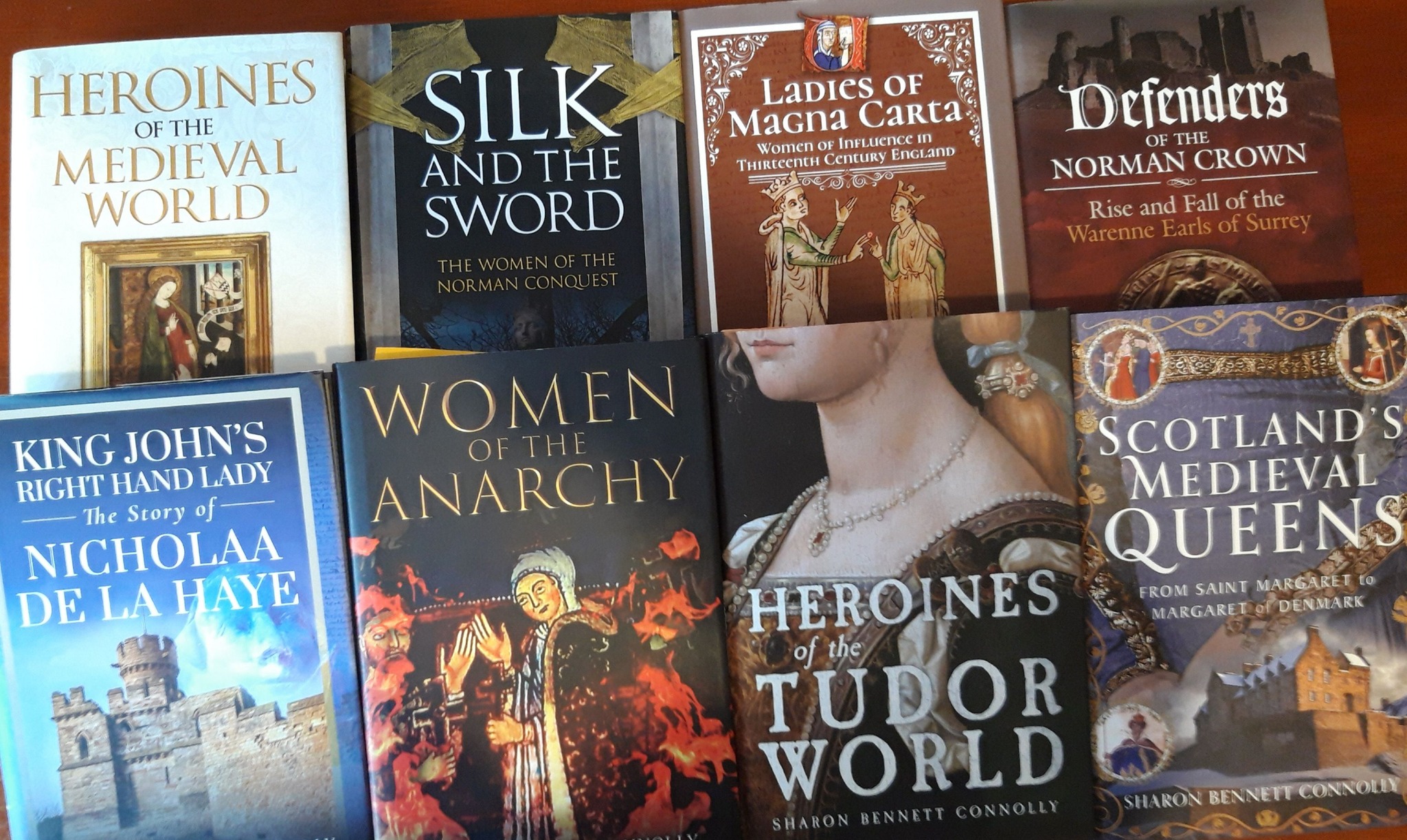
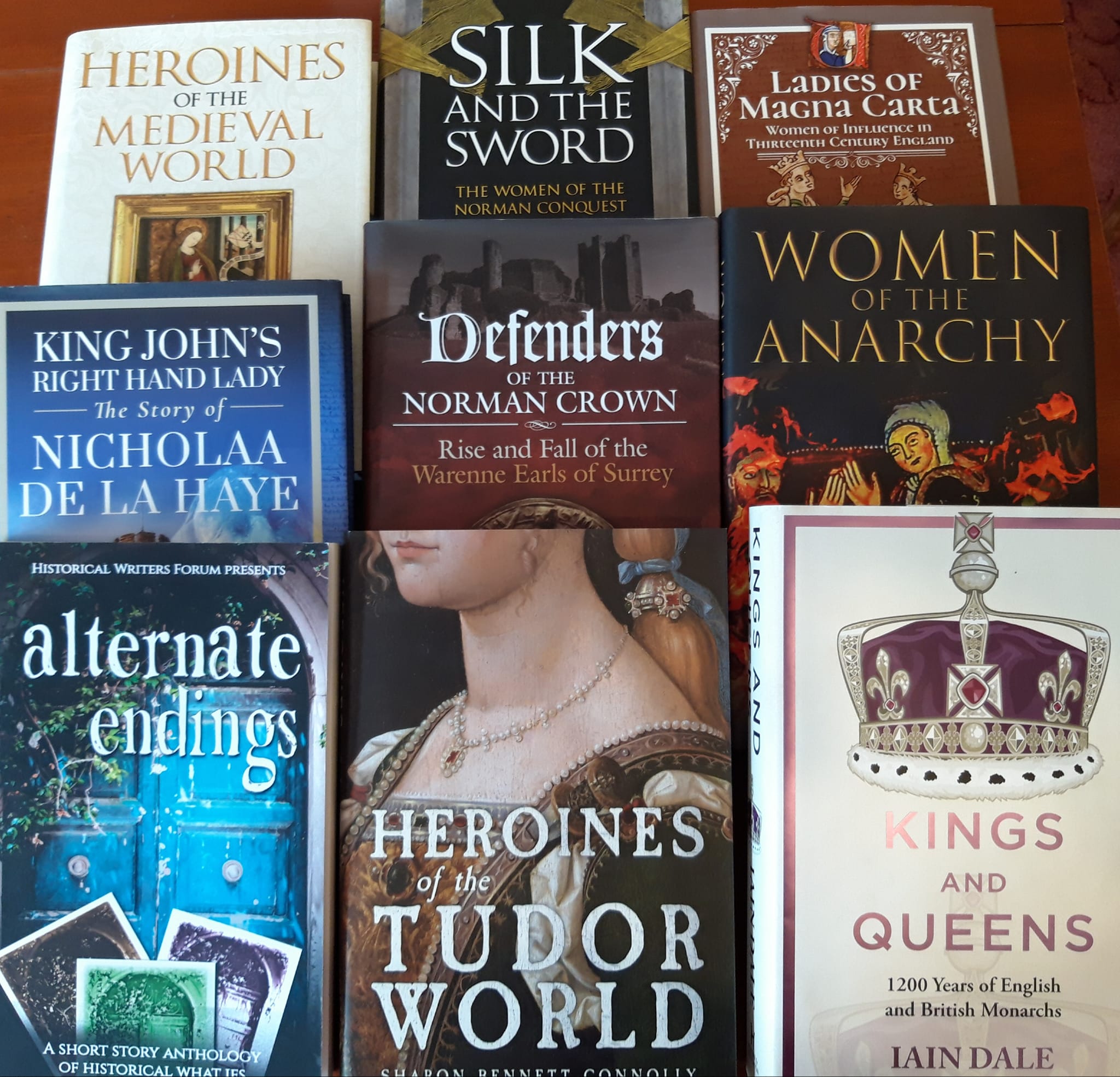
Heroines of the Tudor World tells the stories of the most remarkable women from European history in the time of the Tudor dynasty, 1485-1603. These are the women who ruled, the women who founded dynasties, the women who fought for religious freedom, their families and love. Heroines of the Tudor World is now available from Amberley Publishing and Amazon UK. Women of the Anarchy demonstrates how Empress Matilda and Matilda of Boulogne, unable to wield a sword themselves, were prime movers in this time of conflict and lawlessness. It shows how their strengths, weaknesses, and personal ambitions swung the fortunes of war one way – and then the other. Available from Bookshop.orgAmberley Publishing and Amazon UKKing John’s Right-Hand Lady: The Story of Nicholaa de la Haye is the story of a truly remarkable lady, the hereditary constable of Lincoln Castle and the first woman in England to be appointed sheriff in her own right. Available from all good bookshops Pen & Sword Booksbookshop.org and Amazon

Royal Historical Society

Defenders of the Norman Crown: The Rise and Fall of the Warenne Earls of Surrey tells the fascinating story of the Warenne dynasty, from its origins in Normandy, through the Conquest, Magna Carta, the wars and marriages that led to its ultimate demise in the reign of Edward III. Available from Pen & Sword BooksAmazon in the UK and US, and Bookshop.orgLadies of Magna Carta: Women of Influence in Thirteenth Century England looks into the relationships of the various noble families of the 13th century, and how they were affected by the Barons’ Wars, Magna Carta and its aftermath; the bonds that were formed and those that were broken. It is now available in paperback and hardback from Pen & SwordAmazon, and Bookshop.orgHeroines of the Medieval World tells the stories of some of the most remarkable women from Medieval history, from Eleanor of Aquitaine to Julian of Norwich. Available now from Amberley Publishing and Amazon, and Bookshop.orgSilk and the Sword: The Women of the Norman Conquest traces the fortunes of the women who had a significant role to play in the momentous events of 1066. Available now from Amazon,  Amberley Publishing, and Bookshop.org.

Alternate Endings: An anthology of historical fiction short stories including Long Live the King… which is my take what might have happened had King John not died in October 1216. Available in paperback and kindle from Amazon.

Podcast:

A Slice of Medieval

Have a listen to the A Slice of Medieval podcast, which I co-host with Historical fiction novelist Derek Birks. Derek and I welcome guests, such as Bernard Cornwell and Michael Jecks, and discuss a wide range of topics in medieval history, from significant events to the personalities involved. 

Every episode is also now available on YouTube.

*

Don’t forget! Signed and dedicated copies of all my books are available through my online store.

For forthcoming online and in-person talks, please check out my Events Page.

You can be the first to read new articles by clicking the ‘Follow’ button, liking our Facebook page or joining me on TwitterThreadsBluesky and Instagram.

*

©2025 Sharon Bennett Connolly, FRHistS

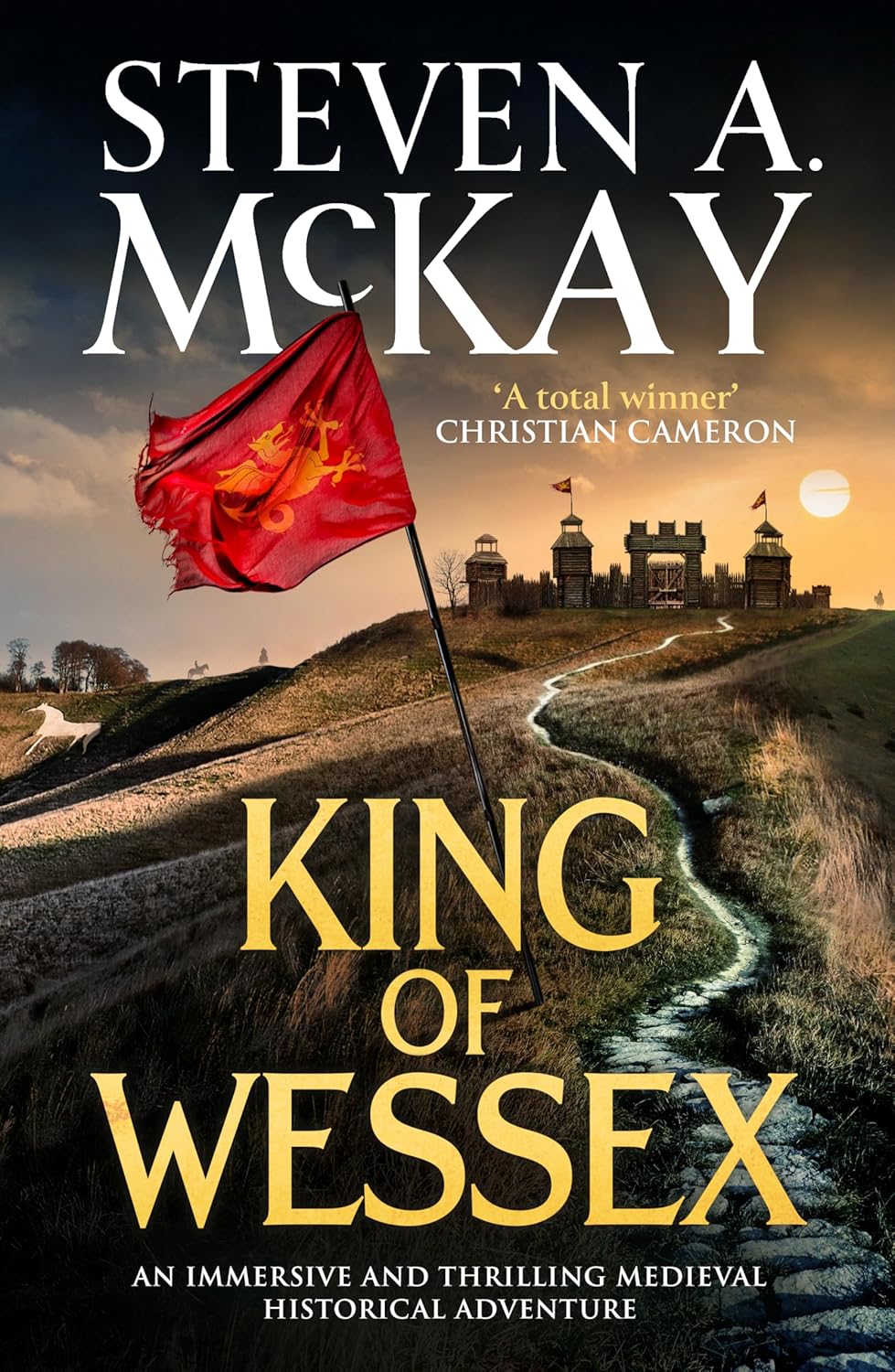
Book Corner: King of Wessex by Steven A. McKay

His reign must come to an end. But his legacy will live on forever.

After thwarting the scourge of the Viking hordes that had decimated Britain for decades, King Alfred assured a period of peace and prosperity for the kingdom of Wessex. The dream of uniting all Anglo-Saxons under one, noble banner seems closer than ever before.

But his enemies are not ones to be taken lightly. For even as Alfred works to ensure the fate of his descendants for centuries to come, a fearsome warlord, Haesten, gathers his warriors for a brutal assault upon the shores of Alfred’s territories.

As the battle lines are drawn, as the true power of this new and terrifying threat comes into its own, the ageing king knows in his heart that things will be different this time round. For as strong as his land, his birthright, his Wessex, has become, the consequences of defeat have never been more terrible.

For one who has gained everything… has everything to lose.

What an incredible adventure it has been!

In his Alfred the Great trilogy, Steven A. McKay has brought the late 9th century to life, retelling the story of Wessex’s stand against the constant incursions of the Norse and the Danes, known collectively as the Vikings. Many fans of Bernard Cornwell will recognise the great enemy of King of Wessex as having been a regular character in his The Last Kingdom series: Haesten. Haesten was the last great enemy that Alfred faced before his death, in a four-year war that ravaged Wessex.

But in King of Wessex, Alfred is no longer fighting alone. He has the help of his daughter, Æthelflæd, now Lady of Mercia, and her husband, Æthelred. His son, Edward, no longer a child, is leading armies of his own. This family affair allows Alfred to defend his kingdom from all sides at once, moving armies to face new threats, knowing his back is covered.

What sets this series apart, however, is the relationships of the characters and King of Wessex shows just how far these relationships have developed. Alfred’s friend and captain Wulfric is a constant by his side. His wife, Ealhswith, gives wise counsel and overlooks his flaws (I am not sure I could overlook the womanising!) And having watched his children mature, Alfred now has to trust them to be his captains and his allies. But Alfred, though getting older and still suffering from the same health issues that would often see him doubled over in pain, is still the man in command. And the man to be beaten.

There were men in Mercia’s Witan who offered, or perhaps demanded would be more accurate, to take control while Aethelred was unwell, but Aethelflaed was not having that.

‘You?’ The thane who asked the question gaped at her incredulously. ‘But you’re a woman!’

Aethelflaed’s lip curled, and she rolled her eyes at him. He was a tall man, very broad of shoulder with a thick, dark beard and hard eyes. She knew she had to deal with him in the right way, or the rest of the gathered Witan would never take her seriously. So much was riding on these next few moments. ‘I am indeed a woman, Morcar. Well spotted. Not much gets past you I see.’

Some of the other council members sniggered and Aethelflaed took note of them. She’d been taught that such information, the dynamics of the Witan such as who liked who and who would like to murder whom, was always useful to know. Similarly, Morcar’s reaction to her gentle but very public insult would also be worth noting.

‘No need to be glib, my lady,’ the big man replied dryly, rather surprising Aethelflaed for she’d half expected him to grow angry at her. That he didn’t was definitely a point in his favour and belied his fierce looks. ‘You know what I mean,’ he went on. ‘Women don’t usually rule in Mercia.’

‘It would only be temporary,’ Aerthelflaed replied, standing up and walking around the hall, eyeing the mostly middle-aged men who formed the Witan. ‘Until my husband is over his illness.’

‘And what if he does not get over it?’ a red-faced, bulbous-nosed man asked bluntly.

‘Then we’d need to look at the matter again, Edgar,’ Aethelflaed barked, annoyed at the question for she’d grown close to Aethelred in the relatively short time they’d been married. ‘But, for now,’ she stopped walking right behind Edgar who was forced to turn in his chair and crane his neck upwards to see her, ‘my husband is alive, and I shall take his place as head of the Witan.’

‘But you’re not even Mercian,’ Edgar argued.

‘I am Mercian now,’ Aethelflaed retorted, her patience growing thin with the dense thane who had actually got to his feet, forcing her to look up at him now. ‘I married your ealdorman, Aethelred, didn’t I? Or does marriage not count for anything these days?’

Edgar shook his head, clearly annoyed. He was only a little taller than her, with thinning white hair, and he ground his teeth as he glared at her, almost as if he wanted to take her over his knee and smack her backside like a naughty child. ‘You might have married Aethelred,’ he growled, ‘but you are your father’s daughter first and foremost. Your loyalty lies with Wessex, not Mercia.’

‘Surely it’s the same thing?’ Aethelflaed asked in a low voice, her steely eyes boring into his.

‘What? Because Alfred has declared himself king of all the Angles and Saxons?’ Edgar asked. His breath was sour and Aethelflaed realised he was drunk.

‘Yes,’ she replied, as if it was obvious. ‘My father is the only king Mercia has, since Aethelred is but an ealdorman. I would remind you, Edgar, that King Alfred, and his fyrd, are the only things standing in the way of the Danes overrunning Mercia completely.’

‘Are you calling us cowards now?’ the inebriated thane demanded, his flushed features contrasting deeply with his white hair. ‘You’re lucky you’re not a man, or I’d show you the men of Mercia are not afraid of anything.’

He was so angry at her that flecks of spittle struck her face as he ranted. And, as he went on, he actually reached out and grasped her sleeve, digging his fingers into her bicep.

Instinctively, Aethelflaed grabbed his hand, twisting his wrist and forcing him to spin around so he was facing the table again. Despite knowing she’d done enough, she could not keep her temper in check and thrust her knee into the back of his, making him stumble and, as he went down, she pushed his face, hard, into the trencher of meat and cheese that he’d been eating from.

I love Aethelflaed!

After three books, Steven A. McKay’s characters are so well developed that you know how they will react to certain situations. Alfred is thoughtful and looks for advice from his captains and churchmen. Edward is still learning, and looks to his father as an example. Aethelflaed is feisty whereas her mother is calm and dependable. Wulfric, the loyal captain, is good in a fight but has his own axe to grind and looks for ways to give Alfred the advantage.

Haesten and his wife, Ulfhild, are bloodthirsty, ruthless and, apparently, unstoppable.

It makes for a fascinating novel, with father, son, daughter and son-in-law each having a role to play in starting the fight back that would lead to a united England. Thanks to the legacy of The Last Kingdom, the story is familiar to many, but Steven A. McKay has made it all his own. King of Wessex, like The Heathen Horde before it and Sword of the Saxons before that, is a fabulously absorbing read. You can practically smell the blood and hear the noise of battle; the clash of swords, the screams of the dying and the shouted orders of Alfred and his captains.

My only regret is that the series is now over. I would have loved to see it continue to the reign of Athelstan and the Battle of Brunanburh – but then, I suppose, it wouldn’t be the story of King Alfred, would it?

As it is, Steven A. McKay has all the ingredients for a riveting good read and he uses them to his best advantage, to create a story that grabs the reader from the very first page. Itis exciting, thought-provoking and will bring a tear to your eye at the end. It is well worth the journey. King of Wessex is a novel that is not to be missed!

Buy the book!

About the author:

Steven A. McKay was born in Scotland in 1977. He is the author of two previous series of historical fiction, following Robin Hood and the warrior-druid Bellicus in post-Roman Britain. He plays the guitar, is the co-host of historical adventure podcast Rock, Paper, Swords! along with author Matthew Harffy, and lives just outside Glasgow with his wife and children.

*

My books

Signed, dedicated copies of all my books are available through my online store.

Out now: Scotland’s Medieval Queens

Scotland’s history is dramatic, violent and bloody. Being England’s northern neighbour has never been easy. Scotland’s queens have had to deal with war, murder, imprisonment, political rivalries and open betrayal. They have loved and lost, raised kings and queens, ruled and died for Scotland. From St Margaret, who became one of the patron saints of Scotland, to Elizabeth de Burgh and the dramatic story of the Scottish Wars of Independence, to the love story and tragedy of Joan Beaufort, to Margaret of Denmark and the dawn of the Renaissance, Scotland’s Medieval Queens have seen it all. This is the story of Scotland through their eyes.

Available now from Amazon and Pen and Sword Books

Also by Sharon Bennett Connolly:

Heroines of the Tudor World tells the stories of the most remarkable women from European history in the time of the Tudor dynasty, 1485-1603. These are the women who ruled, the women who founded dynasties, the women who fought for religious freedom, their families and love. Heroines of the Tudor World is now available for pre-order from Amberley Publishing and Amazon UK. Women of the Anarchy demonstrates how Empress Matilda and Matilda of Boulogne, unable to wield a sword themselves, were prime movers in this time of conflict and lawlessness. It shows how their strengths, weaknesses, and personal ambitions swung the fortunes of war one way – and then the other. Available from Bookshop.orgAmberley Publishing and Amazon UKKing John’s Right-Hand Lady: The Story of Nicholaa de la Haye is the story of a truly remarkable lady, the hereditary constable of Lincoln Castle and the first woman in England to be appointed sheriff in her own right. Available from all good bookshops Pen & Sword Booksbookshop.org and Amazon

Defenders of the Norman Crown: The Rise and Fall of the Warenne Earls of Surrey tells the fascinating story of the Warenne dynasty, from its origins in Normandy, through the Conquest, Magna Carta, the wars and marriages that led to its ultimate demise in the reign of Edward III. Available from Pen & Sword BooksAmazon in the UK and US, and Bookshop.orgLadies of Magna Carta: Women of Influence in Thirteenth Century England looks into the relationships of the various noble families of the 13th century, and how they were affected by the Barons’ Wars, Magna Carta and its aftermath; the bonds that were formed and those that were broken. It is now available in paperback and hardback from Pen & SwordAmazon, and Bookshop.orgHeroines of the Medieval World tells the stories of some of the most remarkable women from Medieval history, from Eleanor of Aquitaine to Julian of Norwich. Available now from Amberley Publishing and Amazon, and Bookshop.orgSilk and the Sword: The Women of the Norman Conquest traces the fortunes of the women who had a significant role to play in the momentous events of 1066. Available now from Amazon,  Amberley Publishing, and Bookshop.org.

Alternate Endings: An anthology of historical fiction short stories including Long Live the King… which is my take what might have happened had King John not died in October 1216. Available in paperback and kindle from Amazon.

Podcast:

Have a listen to the A Slice of Medieval podcast, which I co-host with Historical fiction novelist Derek Birks. Derek and I welcome guests, such as Bernard Cornwell and Michael Jecks, and discuss a wide range of topics in medieval history, from significant events to the personalities involved. Every episode is also now available on YouTube.

*

Don’t forget! Signed and dedicated copies of all my books are available through my online store.

For forthcoming online and in-person talks, please check out my Events Page.

You can be the first to read new articles by clicking the ‘Follow’ button, liking our Facebook page or joining me on TwitterThreadsBluesky and Instagram.

*

©2025 Sharon Bennett Connolly, FRHistS


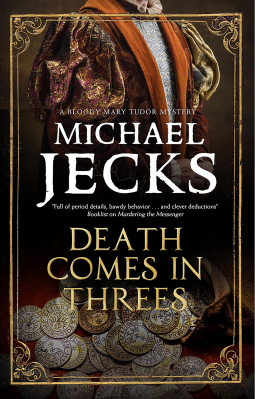
Book Corner: Death Comes in Threes by Michael Jecks

Princess Elizabeth’s unlikely assassin finds himself on the hook for two murders in this light-hearted Tudor mystery series!

August, 1558. As London is bustling with growing trade from foreign lands, and Queen Mary’s health is once again a hot topic, Jack Blackjack has much to keep him busy. And that’s before his new tenant – a Dutch merchant – disappears under a cloud of suspicion, quickly presumed murdered, and Jack’s latest female companion’s body is found mere streets from her dwelling place.

People around Jack keep inconveniently getting murdered, and he seems to be the most likely culprit! With both the authorities and the unsavoury echelons of London on his tail, nowhere is safe for Jack to hide. He must go about proving his innocence – and uncovering the mirky truth – while ensuring he doesn’t find himself dancing the Tyburn jig!

The question is – can he rely on friends in high – and very low – places to get him out of this ever-increasing mess?

You know, I don’t think I’ve had as much fun reading a book in a long time!

Michael Jecks has long been one of my favourite authors, ever since his very first book, The Last Templar. I Iove the way he writes. With his Tudor mystery series, he has really showcased his ability to write a jolly good murder mystery – with an impressive dose of humour.

I hate to use the word unputdownable – is it even a word? – but this book really was! I read it in two days. I took it every where with me, so I could read even if I only had a few minutes, sat in the car or giggling to myself whilst sat in a cafe – the other patrons must have thought me very odd. But I could not wait to get to the end. I think I will have to give it a re-read, slower this time. So that I can savour the story.

Set in 1558, in the final months of the life and reign of Mary I, Death Comes in Threes really captures the atmosphere of a London unsure of its future. The queen is either pregnant or ill, possibly about to deliver a Catholic heir, or on the verge of dying and leaving the throne to her Protestant sister, Lady Elizabeth. Factions are at work preparing for one outcome – or the other – and aiming to guarantee the throne’s security works in their interests.

And then Jack is accused of not one murder – but two!

You can tell I was out of sorts from the way that I lost my temper, and you see, I did have good reason.

My master, John Blount, had been less and less keen to speak with me for the last months, ever since his mission sending a female agent to the continent had failed. Another had caused that project to be closed, but he yet suspected, I think, that I might have had some involvement in the subsequent death. Of course, it was nothing to do with me, but Master Blount was nothing if not committed to his singular interpretation of other men and their motives and actions.

In my case, he had firmly persuaded himself that I was in fact a keen slayer of other men and women. I was hired on that express understanding, all owing to an unfortunate experience I had had during Wyatt’s revolt. I was seen in the presence of a dead man, and Blount formed an entirely mistaken opinion about my responsibility for the death.

Erroneous though his conclusion had been, there were benefits to his impression. First there was the new suit of clothing every year; then there was the property in which I had just harangued the Dutchman, God burn his ballocks; and the regular bonus each time I fulfilled his requirement of removing some poor soul from this vale of tears and misery. He was delighted with my expertise, and I was more than happy with the money. It meant that I could afford to hire a thoroughly competent killer on my own behalf, and then ensure that I was many miles away from any murders when they were committed, causing Blount on several occasions to look at me askance, as though wondering how on earth I had managed both to be in the presence of a corpse, while also being witnessed in a tavern, entertaining a wench, or playing dice in an alehouse. As a consequence, he grew more and more impressed with my abilities.

However, that all changed when his chosen agent was murdered, and no matter how I swore I had nothing to do with it, my protestations only served to convince him that I must have been responsible. It is a hard cross to bear, this matter of supposed infallibility, when on occasion it leaves others to wonder whether I had in truth been the man involved. I was not!

He did send messages to me indicating that the queen’s half-sister, our mistress Lady Elizabeth, was taking up much of his time. That, I was sure, was an excuse, and not a particularly good one. After all, she had been forced to keep her head down after the queen’s husband had tried to force her to marry a man she did not wish to, and since then, so I had heard, she and her sister were barely on speaking terms.

Michael Jecks’ self-absorbed hero, Jack Blackjack, is joined in the narrative by his employer, John Blount, and his neighbour, with whom he shares close relations – very close relations – Susan Appleby. The two new narrators offer an entirely different, and often surprising, view of our Jack. It is fascinating to read the three different interpretations of Jack’s character and abilities.

In Death Comes in Threes, Jack is surrounded by enemies, accused of murder and caught up in conspiracies with people whose loyalties and motives are suspect, to say the least. The poor chap doesn’t know who to trust!

The storyline is fast-paced and credible. With the queen’s health in question, of the birth of an heir imminent, London is suffering nervous anxiety. People are preparing for what comes next; a male child or the queen’s death. Or both!

Death Comes in Threes by Michael Jecks is not just a book – it is 8 hours of pure entertainment. I cannot recommend it highly enough. The entire series is a jolly good read, but this book is one of the best and a great way to start your 2025 reading.

Death Comes in Threes is a corker!

What a fabulous tv series these books would make!

About the author:

Michael Jecks is the author of more than thirty novels in the Knights Templar medieval mystery series, and four previous Bloody Mary Tudor mysteries. A former Chairman of the Crime Writers’ Association, he lives with his wife, children and dogs in northern Dartmoor.

To buy Death Comes in Threes

*

My Books

Signed, dedicated copies of all my books are available through my online bookshop.

Coming 30 January 2025: Scotland’s Medieval Queens

Scotland’s history is dramatic, violent and bloody. Being England’s northern neighbour has never been easy. Scotland’s queens have had to deal with war, murder, imprisonment, political rivalries and open betrayal. They have loved and lost, raised kings and queens, ruled and died for Scotland. From St Margaret, who became one of the patron saints of Scotland, to Elizabeth de Burgh and the dramatic story of the Scottish Wars of Independence, to the love story and tragedy of Joan Beaufort, to Margaret of Denmark and the dawn of the Renaissance, Scotland’s Medieval Queens have seen it all. This is the story of Scotland through their eyes.

Available for pre-order now.

Also by Sharon Bennett Connolly:

Heroines of the Tudor World tells the stories of the most remarkable women from European history in the time of the Tudor dynasty, 1485-1603. These are the women who ruled, the women who founded dynasties, the women who fought for religious freedom, their families and love. Heroines of the Tudor World is now available for pre-order from Amberley Publishing and Amazon UK. Women of the Anarchy demonstrates how Empress Matilda and Matilda of Boulogne, unable to wield a sword themselves, were prime movers in this time of conflict and lawlessness. It shows how their strengths, weaknesses, and personal ambitions swung the fortunes of war one way – and then the other. Available from Bookshop.orgAmberley Publishing and Amazon UKKing John’s Right-Hand Lady: The Story of Nicholaa de la Haye is the story of a truly remarkable lady, the hereditary constable of Lincoln Castle and the first woman in England to be appointed sheriff in her own right. Available from all good bookshops Pen & Sword Booksbookshop.org and Amazon

Defenders of the Norman Crown: The Rise and Fall of the Warenne Earls of Surrey tells the fascinating story of the Warenne dynasty, from its origins in Normandy, through the Conquest, Magna Carta, the wars and marriages that led to its ultimate demise in the reign of Edward III. Available from Pen & Sword BooksAmazon in the UK and US, and Bookshop.orgLadies of Magna Carta: Women of Influence in Thirteenth Century England looks into the relationships of the various noble families of the 13th century, and how they were affected by the Barons’ Wars, Magna Carta and its aftermath; the bonds that were formed and those that were broken. It is now available in paperback and hardback from Pen & SwordAmazon, and Bookshop.orgHeroines of the Medieval World tells the stories of some of the most remarkable women from Medieval history, from Eleanor of Aquitaine to Julian of Norwich. Available now from Amberley Publishing and Amazon, and Bookshop.orgSilk and the Sword: The Women of the Norman Conquest traces the fortunes of the women who had a significant role to play in the momentous events of 1066. Available now from Amazon,  Amberley Publishing, and Bookshop.org.

Alternate Endings: An anthology of historical fiction short stories including Long Live the King… which is my take what might have happened had King John not died in October 1216. Available in paperback and kindle from Amazon.

Podcast:

Have a listen to the A Slice of Medieval podcast, which I co-host with Historical fiction novelist Derek Birks. Derek and I welcome guests, such as Bernard Cornwell and Michael Jecks, and discuss a wide range of topics in medieval history, from significant events to the personalities involved. 

*

Don’t forget! Signed and dedicated copies of all my books are available through my online bookshop.

For forthcoming online and in-person talks, please check out my Events Page.

You can be the first to read new articles by clicking the ‘Follow’ button, liking our Facebook page or joining me on TwitterThreadsBluesky and Instagram.

©2025 Sharon Bennett Connolly FRHistS

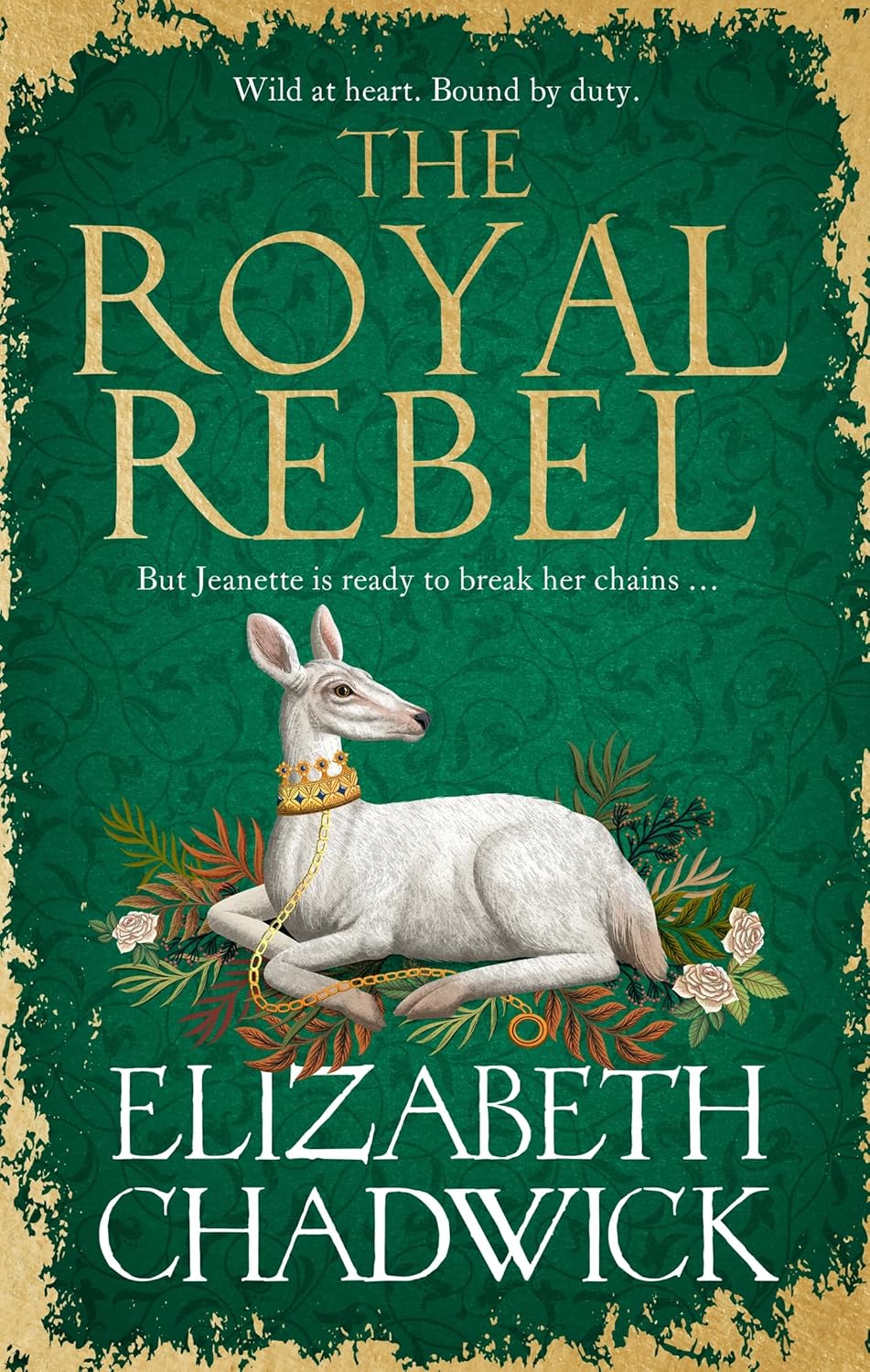
Book Corner: The Royal Rebel by Elizabeth Chadwick

1338: England has declared war on France, and Jeanette of Kent, cousin to King Edward III, says goodbye to her family and travels overseas with the royal court for the first time. Once in Antwerp, she is captivated by talented household knight Thomas Holland, just as he in turn is powerfully drawn to her.

Although both know their romance is forbidden, their love for each other grows stronger than the danger they face, and they marry in secret. But before they can make their tryst known, Thomas has to leave for war, and in his absence, Jeanette is forced into a second marriage and locked away from the world.

Then Thomas returns, and the real fight begins. As hostile family members battle to keep Jeanette and Thomas apart, the defiant lovers vow to be reunited – whatever the cost…

It is always the sign of a good book if the author can leave me in tears and send me through a range of emotions from beginning to end. In The Royal Rebel, Elizabeth Chadwick has achieved this and then some!

The controversy over Joan of Kent‘s first marriage is fascinating. There are so many possibilities and connotations. And so much politics! Girls in medieval times were not supposed to choose their own husbands. Marriage was a political alliance for noble families, not a love affair. Romance had nothing to do with it.

The Royal Rebel is the story of the most famous ‘love triangle’ of the14th century. Joan, the daughter of the Earl of Kent, secretly married Thomas Holland, who then went off on crusade for a year. In the mean time, Joan’s mother arranged her daughter’s marriage to William Montague, the heir to the earldom of Salisbury. It was a mutually beneficial marriage. Joan had royal blood, but tainted by the fact her father had been executed. While Montague was the heir to a large earldom but would benefit from a closer connection to the crown. Thomas Holland, on the other hand, was a household knight with few prospects and whose father had been executed for treason. And when he returned from crusading in Eastern Europe, due to financial constraints, he did not immediately lay claim to his wife.

It was a storyline worthy of a modern-day soap opera.

Thomas Holland took his claims that he and Joan were married all the way to Rome. The investigation into the marriage was long, drawn-out legalese, mired in canon law and I did wonder how Elizabeth Chadwick was going to make it interesting. Of course! I needn’t have feared. She draws out the tension, adds in the human element, family dynamics and political considerations and keeps the reader gripped to the very end – even though I already knew the outcome!

The next day, Jeanette [Joan of Kent], Joan, Hawise and several other ladies from the Queen’s chamber gathered to dole out arms to the poor at the monastery gates. Usually, the almoners and designated servants distributed the donations, but today, in thanksgiving, the Queen’s ladies were involved in the task, and as well as the food, small amounts of money and items of clothing were handed out.

Jeanette played her part with a whole heart and a wide and ready smile. She was in charge of dispensing the bread, while Joan ladled pottage into the bowls people had brought them. Thomas and Otto arrived with their retinues to assist and stand guard, and the loaves of bread and jugs of beer were soon emptied, and all the money and clothing gone.

‘Thank you,’ Jeanette said, smiling at Thomas as she gathered up the empty baskets.

‘It has been my pleasure, demoiselle.’

He had brought one of his old hoods and two thick blankets to give away and had provided a small purse of alms money. His manner towards the folk who had come to receive charity had been courteous and good-humoured. Jeanette had noted his common touch which did not detract from the authority he possessed to lead men and maintain his rank. He had tousled a small boy’s hair, and jested with a toothless old woman who had cackled at him with lecherous appreciation, saying if she had been thirty years younger…

Once more, he escorted her and the ladies back to the royal apartments, and carried the baskets himself.

‘You look like a housewife going to market,’ she said, amused and very aware of his presence at her side. Their pace was a saunter, eking out the moment.

‘Looks can be deceptive,’ he replied. ‘It is what lies beneath that matters.’

He leaned a little towards her, and Jeanette’s breath shortened.

‘Then I suppose that like all truth it is buried, and must be sought by diligent investigation,’ she said pertly, giving as good as she got, and was rewarded by a flash of his grin.

‘I have always found that to be the case, demoiselle,’ he said, as they came to the Queen’s door. ‘And usually well rewarded.’

The Royal Rebel by Elizabeth Chadwick is no mere romance. It is the story of a trying decade in the reign of Edward III. Just as he embarks on the Hundred Years War with France (I wonder if he would have been so keen, if someone had told him the war’s eventual name?), plague ravages Europe and the court is gripped by the scandal of Joan’, Thomas and William’s marital situation. The detail is impressive.

Elizabeth Chadwick is moving into a period new to her, the late medieval; away from the 12th and 13th centuries of which she is so familiar. Not that you would know it. Her research has been meticulous and her attention to detail, to the dress and customs of the period, is second-to-none. Elizabeth Chadwick has really thought about the circumstances involving the clandestine marriage of Joan of Kent and Tomas Holland – and the very public marriage of Joan and Willian Montague. And how all this came about! The plot is intricate but entirely plausible and answers several questions around the actions of the parties involved.

The Royal Rebel also highlights the quandary over inheritance that would always hang over Joan’s marriage to Montague whilst the question mark remained over the validity of their marriage. Would any children have even been legitimate? Joan’s frustrations over her treatment is palpable; not being allowed to be with her true husband, being ignored by her elders, not being believed and even being prevented from freely giving her testimony in the court case. The Salisburys even locked her up!

The Royal Rebel by Elizabeth Chadwick is not just a good read, it is an experience of life in the mid-14th century and not to be missed.

The Royal Rebel by Elizabeth Chadwick is most definitely among my Top 5 books of 2024. I cannot recommend it highly enough!

To Buy the Book:

The Royal Rebel by Elizabeth Chadwick is now available from Amazon and all good bookshops.

About the Author:

New York Times bestselling author Elizabeth Chadwick lives in a cottage in the Vale of Belvoir in Nottinghamshire with her husband and their three dogs. Her first novel, The Wild Hunt, won a Betty Trask Award, To Defy a King won the Romantic Novelist Association’s Historical Novel Prize and The Scarlet Lion was nominated by Richard Lee – founder of the Historical Novel Society – as one of the top ten historical novels of the last decade. She often lectures at conferences and historical venues, has been consulted for television documentaries and is a member of the Royal Historical Society.

Keep in touch with Elizabeth via her website, her blogs or on social media.

http://www.elizabethchadwick.com
twitter: @chadwickauthor
facebook: ElizabethChadwick

*

My Books:

Signed, dedicated copies of all my books are available through my online bookshop.

Coming 30 January 2025: Scotland’s Medieval Queens

Scotland’s history is dramatic, violent and bloody. Being England’s northern neighbour has never been easy. Scotland’s queens have had to deal with war, murder, imprisonment, political rivalries and open betrayal. They have loved and lost, raised kings and queens, ruled and died for Scotland. From St Margaret, who became one of the patron saints of Scotland, to Elizabeth de Burgh and the dramatic story of the Scottish Wars of Independence, to the love story and tragedy of Joan Beaufort, to Margaret of Denmark and the dawn of the Renaissance, Scotland’s Medieval Queens have seen it all. This is the story of Scotland through their eyes.

Available for pre-order now.

Also by Sharon Bennett Connolly:

Heroines of the Tudor World tells the stories of the most remarkable women from European history in the time of the Tudor dynasty, 1485-1603. These are the women who ruled, the women who founded dynasties, the women who fought for religious freedom, their families and love. Heroines of the Tudor World is now available for pre-order from Amberley Publishing and Amazon UK. Women of the Anarchy demonstrates how Empress Matilda and Matilda of Boulogne, unable to wield a sword themselves, were prime movers in this time of conflict and lawlessness. It shows how their strengths, weaknesses, and personal ambitions swung the fortunes of war one way – and then the other. Available from Bookshop.orgAmberley Publishing and Amazon UKKing John’s Right-Hand Lady: The Story of Nicholaa de la Haye is the story of a truly remarkable lady, the hereditary constable of Lincoln Castle and the first woman in England to be appointed sheriff in her own right. Available from all good bookshops Pen & Sword Booksbookshop.org and Amazon

Defenders of the Norman Crown: The Rise and Fall of the Warenne Earls of Surrey tells the fascinating story of the Warenne dynasty, from its origins in Normandy, through the Conquest, Magna Carta, the wars and marriages that led to its ultimate demise in the reign of Edward III. Available from Pen & Sword BooksAmazon in the UK and US, and Bookshop.orgLadies of Magna Carta: Women of Influence in Thirteenth Century England looks into the relationships of the various noble families of the 13th century, and how they were affected by the Barons’ Wars, Magna Carta and its aftermath; the bonds that were formed and those that were broken. It is now available in paperback and hardback from Pen & SwordAmazon, and Bookshop.orgHeroines of the Medieval World tells the stories of some of the most remarkable women from Medieval history, from Eleanor of Aquitaine to Julian of Norwich. Available now from Amberley Publishing and Amazon, and Bookshop.orgSilk and the Sword: The Women of the Norman Conquest traces the fortunes of the women who had a significant role to play in the momentous events of 1066. Available now from Amazon,  Amberley Publishing, and Bookshop.org.

Alternate Endings: An anthology of historical fiction short stories including Long Live the King… which is my take what might have happened had King John not died in October 1216. Available in paperback and kindle from Amazon.

Podcast:

Have a listen to the A Slice of Medieval podcast, which I co-host with Historical fiction novelist Derek Birks. Derek and I welcome guests, such as Bernard Cornwell, and discuss a wide range of topics in medieval history, from significant events to the personalities involved, including Elizabeth Chadwick discussing her writing of The Royal Rebel as a guest for the 2024 HNS Conference’s Writing Medieval panel, alongside Matthew Harffy and David Gilman.

*

Don’t forget! Signed and dedicated copies of all my books are available through my online bookshop.

For forthcoming online and in-person talks, please check out my Events Page.

You can be the first to read new articles by clicking the ‘Follow’ button, liking our Facebook page or joining me on TwitterThreadsBluesky and Instagram.

©2024 Sharon Bennett Connolly FRHistS
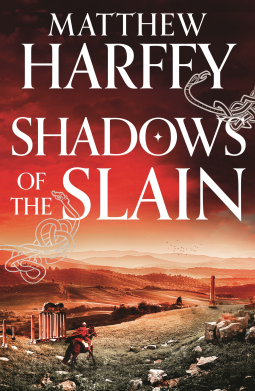
Book Corner: Shadows of the Slain by Matthew Harffy

AD 652. After surviving dark intrigues at the Merovingian court of Frankia, Beobrand is finally able to undertake the mission his queen set him: to escort a party of pilgrims to the holy city of Rome.

But Beobrand’s life is never easy. His party includes a scheming novice churchman whose ambition is boundless, and a mysterious envoy from Frankia.

Entering the lands of the Langobards, Beobrand discovers unexpected similarities to his native Northumbria in their speech and customs… and their willingness to spill blood.

The roads heading south are filled with danger. Meeting other pilgrims who have been attacked and robbed, Beobrand soon finds himself reluctantly responsible for their safety. Confronting brigands and robbers at every turn, they press on towards their goal.

But when Beobrand reaches the snakepit of ruins and relics that is Rome, his difficulties truly begin… and his homeland has never been further away.

In Shadows of the Slain, Matthew Harffy has once again given readers a fabulous adventure to devour in the latest instalment from the Bernicia Chronicles. Beobrand continues his journey to Rome and, as usual, he finds trouble along the way.

It is interesting to see Beobrand out of his comfort zone, in a place where he does not know the language and is relying on others to convey his needs and wishes. What he does discover is that politics and the pursuit of power is the same the world over. Beobrand has to navigate this in Rome – not always successfully. And it is hard to know who to trust when some are pursuing their own agendas and a supposed enemy may be a friend – or may not!

The one thing that you can say about Beobrand is that life is never boring!

“Do you think Wilfrid will cause more trouble?” Beobrand asked after they had ridden on in silence for a short while.

Coenred pondered for a moment.

“I don’t think he will risk Wulfwyn’s ire and public humiliation again.”

“Good,” said Beobrand. “We’ve had more tan enough strife on this trip.”

Coenred shifted in the saddle and looked at Wilfrid who rode apart from the others. After the encounter with the bandits in the mountains he had been persuaded to remove his gold rings and the gaudy chain he liked to wear around his neck, but he still stood out from the others with his bright clothes, a gift from the monarchs of Neustria. Beobrand and the others had also been presented with fine garments of silk and linen, but favoured plain travel garb for the journey.

“I don’t think he will repeat his mistake with Wulfwyn,” said Coenred. “I didn’t say he wouldn’t cause any trouble.”

Beobrand looked askance at him.

“That’s what I’m afraid of. Has this journey not already been punishment enough?”

Coenred knew Beobrand was thinking about his part in the death of Oswine, King of Deira and Queen Eanfled’s cousin. It was clear to any who knew of the events surrounding the king’s death that the queen, who had previously been warmly disposed towards Beobrand, had ordered him to escort Wilfrid to Roma as a form of chastisement. Beobrand had accepted the order without complaint. And Coenred knew that whatever the truth of the matter, Beobrand blamed himself just as much as anyone else for what had happened in Hunwald’s hall.

Coenred looked up at the pale sky. There was not a single cloud to be seen. He groaned as he stretched his back. He ached from so much riding. Perhaps he should walk in the afternoon.

Beobrand and his small band of gesithas, including the loyal Cynan, have been charged with escorting the ambitious monk, Wilfrid, to Rome. Wilfrid seems to be able to smell out power and influence and attach himself to the priests and nobles who can best serve his ambition, regardless of the trouble that causes everyone else. He is little liked among Beobrand’s small warband and even Coenred, the affable monk who is a long-time friend of Beobrand’s, finds Wilfrid hard to work with.

Shadows of the Slain is a wonderful, fast-paced read that keeps the reader engrossed to the very end. The action comes thick and fast. And Matthew very cleverly weaves within the storyline a reference to his other series, involving Hunlaf from his wonderful A Time for Swords series, but I will say no more on that…

In Shadows of the Slain, Matthew Harffy again brings the Dark Ages to life, demonstrating how colourful and diverse the 7th century could be. That Beobrand could even contemplate travelling from Northumberland to Rome is quite a feat; a journey that would have taken months to complete, and for which there would have been few maps.

And once his objective is achieved, he will have to start the return journey, which I am anticipating with great relish!

To Buy the Book:

Shadows of the Slain by Matthew Harffy is now available in Kindle, audio book and hardback.

About the Author:

Matthew Harffy lived in Northumberland as a child and the area had a great impact on him. The rugged terrain, ruined castles and rocky coastline made it easy to imagine the past. Decades later, a documentary about Northumbria’s Golden Age sowed the kernel of an idea for a series of historical fiction novels. The first of them is the action-packed tale of vengeance and coming of age, THE SERPENT SWORD.

Matthew has worked in the IT industry, where he spent all day writing and editing, just not the words that most interested him. Prior to that he worked in Spain as an English teacher and translator. Matthew lives in Wiltshire, England, with his wife and their two daughters.

For all the latest news and exclusive competitions, join Matthew online: http://www.matthewharffy.com; twitter.com/@MatthewHarffy; http://www.facebook.com/MatthewHarffyAuthor

*

My Books:

Signed, dedicated copies of all my books are available through my online bookshop.

Coming 30 January 2025: Scotland’s Medieval Queens

Scotland’s history is dramatic, violent and bloody. Being England’s northern neighbour has never been easy. Scotland’s queens have had to deal with war, murder, imprisonment, political rivalries and open betrayal. They have loved and lost, raised kings and queens, ruled and died for Scotland. From St Margaret, who became one of the patron saints of Scotland, to Elizabeth de Burgh and the dramatic story of the Scottish Wars of Independence, to the love story and tragedy of Joan Beaufort, to Margaret of Denmark and the dawn of the Renaissance, Scotland’s Medieval Queens have seen it all. This is the story of Scotland through their eyes.

Available for pre-order now.

Also by Sharon Bennett Connolly:

Heroines of the Tudor World tells the stories of the most remarkable women from European history in the time of the Tudor dynasty, 1485-1603. These are the women who ruled, the women who founded dynasties, the women who fought for religious freedom, their families and love. Heroines of the Tudor World is now available for pre-order from Amberley Publishing and Amazon UK. Women of the Anarchy demonstrates how Empress Matilda and Matilda of Boulogne, unable to wield a sword themselves, were prime movers in this time of conflict and lawlessness. It shows how their strengths, weaknesses, and personal ambitions swung the fortunes of war one way – and then the other. Available from Bookshop.orgAmberley Publishing and Amazon UKKing John’s Right-Hand Lady: The Story of Nicholaa de la Haye is the story of a truly remarkable lady, the hereditary constable of Lincoln Castle and the first woman in England to be appointed sheriff in her own right. Available from all good bookshops Pen & Sword Booksbookshop.org and Amazon

Defenders of the Norman Crown: The Rise and Fall of the Warenne Earls of Surrey tells the fascinating story of the Warenne dynasty, from its origins in Normandy, through the Conquest, Magna Carta, the wars and marriages that led to its ultimate demise in the reign of Edward III. Available from Pen & Sword BooksAmazon in the UK and US, and Bookshop.orgLadies of Magna Carta: Women of Influence in Thirteenth Century England looks into the relationships of the various noble families of the 13th century, and how they were affected by the Barons’ Wars, Magna Carta and its aftermath; the bonds that were formed and those that were broken. It is now available in paperback and hardback from Pen & SwordAmazon, and Bookshop.orgHeroines of the Medieval World tells the stories of some of the most remarkable women from Medieval history, from Eleanor of Aquitaine to Julian of Norwich. Available now from Amberley Publishing and Amazon, and Bookshop.orgSilk and the Sword: The Women of the Norman Conquest traces the fortunes of the women who had a significant role to play in the momentous events of 1066. Available now from Amazon,  Amberley Publishing, and Bookshop.org.

Alternate Endings: An anthology of historical fiction short stories including Long Live the King… which is my take what might have happened had King John not died in October 1216. Available in paperback and kindle from Amazon.

Podcast:

Have a listen to the A Slice of Medieval podcast, which I co-host with Historical fiction novelist Derek Birks. Derek and I welcome guests, such as Bernard Cornwell, and discuss a wide range of topics in medieval history, from significant events to the personalities involved, including episodes with Matthew Harffy as our guest, discussing the Saxons and as a guest for the 2024 HNS Conference’s Writing Medieval panel, alongside Elizabeth Chadwick and David Gilman

*

Don’t forget! Signed and dedicated copies of all my books are available through my online bookshop.

For forthcoming online and in-person talks, please check out my Events Page.

You can be the first to read new articles by clicking the ‘Follow’ button, liking our Facebook page or joining me on TwitterThreadsBluesky and Instagram.

©2024 Sharon Bennett Connolly FRHistS
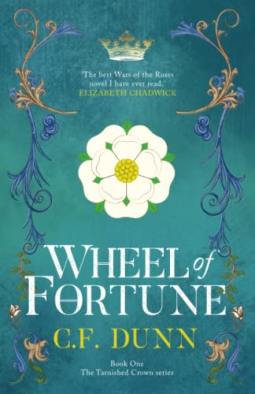
Book Corner: Sun Ascendant by C.F. Dunn

Two men. One woman. And a lie.

Strong-willed and single-minded, young Isobel Fenton is determined that nothing will separate her from her beloved manor of Beaumancote; but as unseen witness to a summary execution, she is propelled into a world of personal feud and national politics as the houses of York and Lancaster threaten to tear the country apart. Now unwilling mistress of the formidable Earl, Isobel despairs of ever being free to follow her own heart. But events take a sinister turn, and as the Earl of Warwick and King Edward IV vie for power, Isobel must face her own battle for survival. What is the bitter Countess prepared to do to be rid of her rival? And divided by love and loyalty, how will Isobel contend with the decaying relationship of the two brothers who seek her love? 

This year I have had the pleasure of reading two books by C.F Dunn, the first two books of a series entitled The Tarnished Crown. And what a treat it was!

In Wheel of Fortune, C.F. Dunn made a fabulous start to what promises to be an interesting series set towards the end of the Wars of the Roses. Wheel of Fortune traced the life of Isobel Fenton during the tumultuous events of 1469, when King Edward IV is embroiled in a power struggle with Richard Neville, Earl of Warwick. Isobel herself has her life turned upside down by the death of her father, when she is forced to leave her manor and live under the protection of the local earl, at Tickhill Castle. As a South Yorkshire lass, it took me a while to get used the book being set around an area I know so well, with a fictional earl in residence at Tickhill Castle. But once the book draws you in, you stop thinking about what you know and start caring about those lives within the walls of the famous landmark. The story is intriguing and has many twists and turns. Most of the characters are fictional, dropped into the existing history, though Richard, Duke of Gloucester puts in an appearance once in a while.

Sun Ascendant continues the story against the backdrop of the political crisis that, literally, split Edward IV’s reign in two. Edward IV’s falling out with the Kingmaker – Richard Neville, Earl of Warwick – led to him losing the throne and the readeption of Henry VI, though only for a short time. It was one of the most dramatic and violent periods of the Wars of the Roses.

Living in Tickhill Castle, in Yorkshire, Isobel Fenton is far from the fighting, but not the political wranglings and machinations. And Isobel had her own wars to fight. Forced to become the earl’s mistress, she has to navigate the family dynamic and atmosphere instigated by her nemesis, the Countess. Sun Ascendant clearly demonstrates how women are not immune to a form of domestic warfare – nor to the shifting political landscape.

Isobel removed the chess pieces and selected the discs of green and white bone. “Will you be away long, my lord?”

“Ah, is that why you are quiet?” Taking the green counters, he began laying them on his side of the board. “I must see to the affairs of my estates, and I will be paying a visit to your own manors to ensure their security. His Grace will also expect me at Court. But I should be back for Margaret’s wedding, and that is nigh on six weeks from now.” He mistook her silence for regret. “I would take you with me, but the days in the saddle are long and I ride hard. Estate business makes for a poor companion, Isobel; you must remember when it took your father from home.”

She nodded, but she had had her servant Buena and Alfred her dog, and her garden and own things around her. And no Countess to avoid. Talking of whom… “My lord, might I be permitted to see Lady Margaret before she weds?”

He finished setting up the counters and sat back with his fingers interlaced over his stomach, watching her place her last piece. “You know that is not possible.”

“I know that I am not permitted, but that is not the same.”

“Nonetheless.” His fingers jerked restlessly. “Why is it so important that you see her?”

“I would like to know whether she has kept up with her Latin studies…” He raised a brow, so obviously wasn’t taken in by that. She tried again. “She is so young. She is not ready for marriage.”

“She is prepared; she knows her duty as a wife and will be obedient. More so than you,” he added, in an attempt to lighten her mood. She responded with a barely constrained huff. Why did men have to be so blind? Or was it that they knew, but chose not to see?

“My lord, I am not speaking of saying ‘yea‘ or ‘nay‘ to her husband, but of those other… duties men expect. She is still a girl in a child’s body, and he is such an old cog… I mean,” she amended hastily, “Lady Margaret is delicate in her manner, and he is… not.”

Sun Ascendant by C.F. Dunn is not always comfortable reading. It brings home the truth of how powerless women could be – and how women could so easily be blamed for the violence committed against them. It also demonstrates how women can come to accept that violence and even empathise with their tormentor. It makes you think of the dynamics and complications involved in a controlling relationship – especially where the women can see no way out. She feels – and is – powerless.

The setting is perfect. And C.F. Dunn has certainly done her research of the area in which the story is set, South Yorkshire and North Lincolnshire. This is my home turf; I grew up in South Yorkshire and now live a stone’s throw from North Lincs. One part of me – the Yorkshire lass – was trying to catch the author out in her portrayal of the landscape, Tickhill Castle and the Isle of Axholme. But I failed. I was impressed with Dunn’s ability to find alternative routes into Doncaster and her use of the abbeys, priories and ferries in the area, to get friend and foe alike to where they needed to go. I was disappointed no one stopped at Conisbrough Castle for refreshments- but maybe in the next book?

In Sun Ascendant, C.F. Dunn has written a masterpiece that puts a fictional earl at the heart of the Wars of the Roses, while being the cause of drama and strife at home.

All in all, Sun Ascendant is a fascinating, captivating novel that will enthrall the reader, taking them through the full range of emotions. You will get angry, worried, nervous for the fate of the characters. And you will cry. And you will spend days – weeks, even – thinking about the book long after you have finished it.

I just hope it is not too long a wait to the next instalment….

To Buy the Books:

Sun Ascendant by C.F. Dunn is available in paperback from Amazon

Wheel of Fortune, Book 1 in The Tarnished Crown series, is also available in paperback and on Kindle from Amazon. In fact, it’s only 99p on Kindle currently – so the perfect time to give these books a go!

About the Author:

C.F. Dunn is an award-winning novelist of history, mystery and suspense. Studying medieval history at university, C.F. Dunn has always been acutely aware of the impact of the past. Vibrant characters and meticulous research seamlessly weave threads of history to bring an authenticity to her richly-hued, suspenseful stories of intense love, loyalty and treachery. She has previously published The Secret of the Journal, an award-winning series of 5 suspense novels. Now living in the South West of England, her love of history is equalled only by her delight in the natural world and the unruly sea by which she lives with her family in suitably rambling historic surroundings.

*

My Books:

Signed, dedicated copies of all my books are available through my online bookshop.

Coming 30 January 2025: Scotland’s Medieval Queens

Scotland’s history is dramatic, violent and bloody. Being England’s northern neighbour has never been easy. Scotland’s queens have had to deal with war, murder, imprisonment, political rivalries and open betrayal. They have loved and lost, raised kings and queens, ruled and died for Scotland. From St Margaret, who became one of the patron saints of Scotland, to Elizabeth de Burgh and the dramatic story of the Scottish Wars of Independence, to the love story and tragedy of Joan Beaufort, to Margaret of Denmark and the dawn of the Renaissance, Scotland’s Medieval Queens have seen it all. This is the story of Scotland through their eyes.

Available for pre-order now.

Also by Sharon Bennett Connolly:

Heroines of the Tudor World tells the stories of the most remarkable women from European history in the time of the Tudor dynasty, 1485-1603. These are the women who ruled, the women who founded dynasties, the women who fought for religious freedom, their families and love. Heroines of the Tudor World is now available for pre-order from Amberley Publishing and Amazon UK. Women of the Anarchy demonstrates how Empress Matilda and Matilda of Boulogne, unable to wield a sword themselves, were prime movers in this time of conflict and lawlessness. It shows how their strengths, weaknesses, and personal ambitions swung the fortunes of war one way – and then the other. Available from Bookshop.orgAmberley Publishing and Amazon UKKing John’s Right-Hand Lady: The Story of Nicholaa de la Haye is the story of a truly remarkable lady, the hereditary constable of Lincoln Castle and the first woman in England to be appointed sheriff in her own right. Available from all good bookshops Pen & Sword Booksbookshop.org and Amazon

Defenders of the Norman Crown: The Rise and Fall of the Warenne Earls of Surrey tells the fascinating story of the Warenne dynasty, from its origins in Normandy, through the Conquest, Magna Carta, the wars and marriages that led to its ultimate demise in the reign of Edward III. Available from Pen & Sword BooksAmazon in the UK and US, and Bookshop.orgLadies of Magna Carta: Women of Influence in Thirteenth Century England looks into the relationships of the various noble families of the 13th century, and how they were affected by the Barons’ Wars, Magna Carta and its aftermath; the bonds that were formed and those that were broken. It is now available in paperback and hardback from Pen & SwordAmazon, and Bookshop.orgHeroines of the Medieval World tells the stories of some of the most remarkable women from Medieval history, from Eleanor of Aquitaine to Julian of Norwich. Available now from Amberley Publishing and Amazon, and Bookshop.orgSilk and the Sword: The Women of the Norman Conquest traces the fortunes of the women who had a significant role to play in the momentous events of 1066. Available now from Amazon,  Amberley Publishing, and Bookshop.org.

Alternate Endings: An anthology of historical fiction short stories including Long Live the King… which is my take what might have happened had King John not died in October 1216. Available in paperback and kindle from Amazon.

Podcast:

Have a listen to the A Slice of Medieval podcast, which I co-host with Historical fiction novelist Derek Birks. Derek and I welcome guests, such as Bernard Cornwell, and discuss a wide range of topics in medieval history, from significant events to the personalities involved.

*

Don’t forget! Signed and dedicated copies of all my books are available through my online bookshop.

For forthcoming online and in-person talks, please check out my Events Page.

You can be the first to read new articles by clicking the ‘Follow’ button, liking our Facebook page or joining me on TwitterThreadsBluesky and Instagram.

©2024 Sharon Bennett Connolly FRHistS
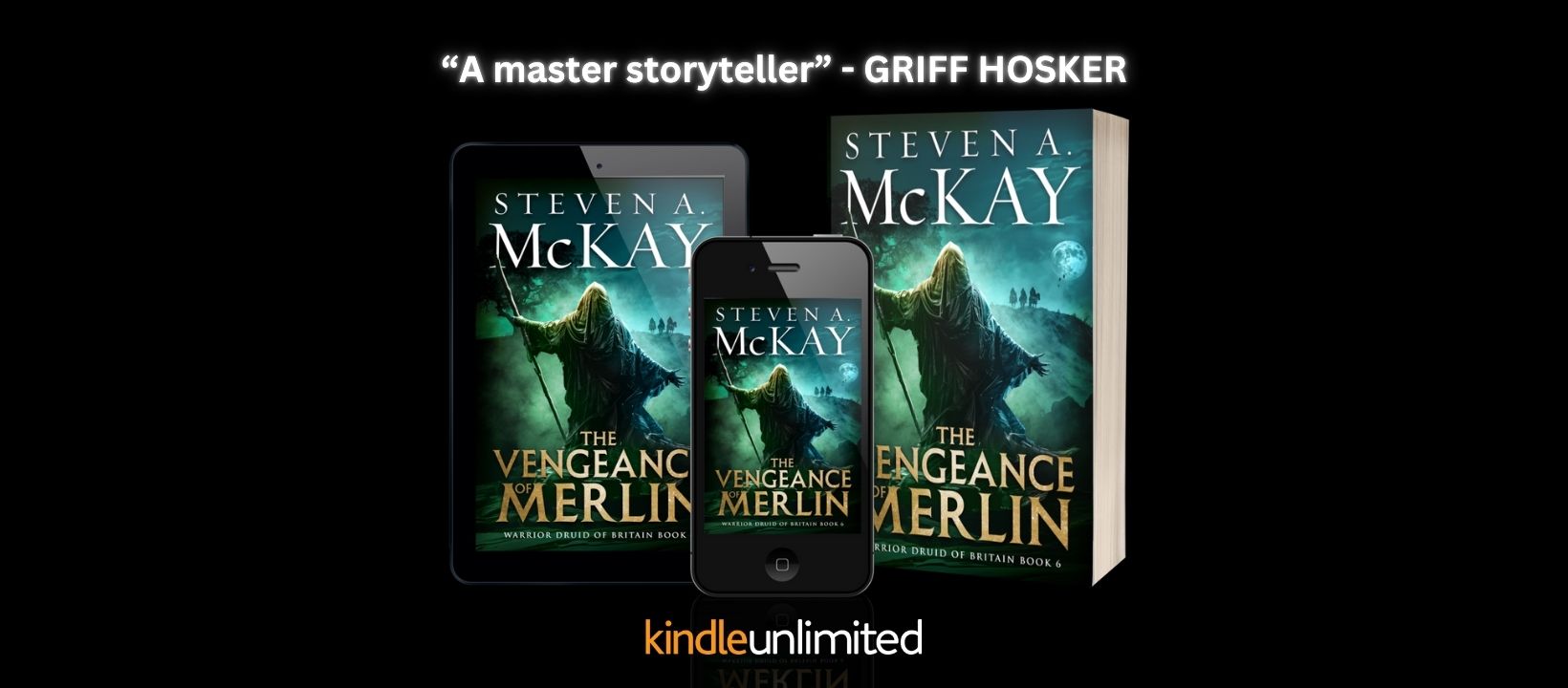
Book Corner: The Vengeance of Merlin by Steven A McKay

A heinous crime is perpetrated against the druids of Britain and a grief-stricken Bellicus suddenly finds his world changing in ways he never expected. Before he can begin to make sense of things the terrible news that the Picts have allied with the Saxons and now march on Dun Breatann together spurs the warrior-druid into action, and soon he and his companions are racing homewards. Horsa, fearsome leader of the sea-wolves, promises to use any tactic – including torture and dark magic – against Bellicus’s terrified Damnonii people who are being slaughtered and dragged from their burnt out villages to please the Saxons’ brutal gods.
Bellicus, his friend Duro, and the great war-dog Cai will need all their bravery, experience, and cunning to stand against the insane cruelty of the raiders which even shocks their own allies in the Pictish army.
Many will fall as the fighting rages, but can bonds of loyalty, friendship, and family be enough to save Queen Narina and the people of Dun Breatann from the grim fate their enemies have planned for them?
This new Warrior Druid of Britain adventure is sure to delight lovers of fast-paced historical fiction, especially readers of Peter Gibbons, Griff Hosker, and Bernard Cornwell.

Saxons and Picts come together to conquer Northern Britain, but when the war is over they must face the vengeance of Merlin!

The best Bellicus adventure yet!

Another thrilling adventure!

Vengeance of Merlin by Steven A. McKay is the 6th book in his excellent Warrior Druid of Britain series. The books follow the adventures of Bellicus the druid and his friend Duro, a former Roman soldier. King Arthur, Merlin and Lancelot are all supporting actors. Together they face the Saxon onslaught, headed by the infamous brothers Hengist and Horsa.

While Bellicus is distracted by the Moot – a meeting of all the druids in Britain which comes with its own drama – Hengist joins forces with Dun Breatann’s enemy, Drest, to launch an attack on the stronghold. The uneasy alliance between Drest and Hengist is stretched thin by the unsavoury methods of the Saxon forces. The tension is further exacerbated by the fact Dun Breatann is virtually impregnable and resisting.

With murder, sacrifice and intrigue aplenty, The Vengeance of Merlin has all the ingredients for a fantastic story.

“What’s wrong with these people?” Duro demanded as silence followed them along the town’s main thoroughfare. “Have they never seen a druid before?”

“Be fair,” Bellicus laughed. “Nemias, Qunavo, Ria, Lugotorix – none of them look anything like I do.”

“You’ve got the eagle-topped staff,” Duro groused, throwing a fierce look at a man who scurried off as they went by. “Isn’t that enough?”

“Maybe, on my own,” Bellicus said, still laughing at his friend’s bemusement. “But with you at my side? No wonder the people here think trouble must be brewing. They probably think you’re the ghost of some legionary that was part of the garrison here.”

The centurion opened his mouth to make an angry retort, then he realised he was being made fun off and broke off, shaking his head and sharing in the druid’s amusement.

“Look,” Bellicus said, pointing at an old tombstone that was just lying on the ground, abandoned. “See what I mean?”

The stone had been carved to show a Roman optio, with the inscription beneath naming him as Caecilius Avitus of the Twentieth Legion Valeria Victrix.

Duro paused, reading, and then grunted. “Fifteen years service. Died when he was thirty-four. Mithras protect him.”

A stocky, middle-aged man with sunbrowned skin appeared on the road before them then, and he did not appear frightened by their presence, although he did peer warily at Cai.

“You a druid?” he asked, pointing at Bellicus’s staff, his eyes moving smoothly across Duro and the mastiff before returning to the shaven-headed giant atop the great black horse.

“I am. Bellicus of Dun Breatann. You must be the headman.”

The fellow nodded, his stance and demeanour telling of a history as a soldier, either in the local militia or perhaps even, like Duro, as a legionary.

“Your friends are at the old shrine of Minerva,” the headman informed them, gesturing along the road. “It’s not far along this way. Just keep following the road and you’ll see it to the south, across the bridge.” He paused and it seemed he wanted to ask them more about their business in Caer Legion, but respect for the druid’s office kept him silent and the riders moved on, saluting him and receiving the same gesture in return.

“He looked like he was expecting trouble,” Duro muttered when they were some distance away from the headman, who still stood watching them ride on.

Bellicus snorted with laughter. “Duro,” he said, “you have the exact same look about you. You always do. It’s just something old soldiers have.”

The characters make The Vengeance of Merlin. Princess Catia is maturing into a brave, adventurous leader, though with still that childish curiosity. Aife is divided by her loyalties between her father, her friends and what is right- and knowing that doing the right thing means going against her father. Even Bellicus has a big career decision to make; one that will affect his love life. Every character has their own challenges and issues, struggles they must overcome and decisions that need to be taken.

Steven A. McKay takes the reader back to the time when the Romans had left Britain and the Saxons were just arriving. The vivid landscape, the attitudes of the people and the meeting of history and legend, together with the mystery that surrounds the druids, all serve to transport the reader back to a time when the veil between magic and reality was not so thick and distinct as it is today.

Steven is setting us up for a great war against the Saxons. Hopefully, that means we will not only get to see more of Bellicus and Duro, but also more of Arthur!

The twists and turns in the story makes The Vengeance of Merlin a tense but addictive read. The gripping storyline keeps the reader enthralled to the very last page – even if it does take you until 1 in the morning to get there!

I loved it!

To Buy the book:

Vengeance of Merlin is available in paperback and ebook from Amazon

About the author:

Steven A McKay was born in Scotland in 1977 and always enjoyed studying history. He decided to write his Forest Lord novels after seeing a house called “Sherwood” when out at work one day. Since then he’s started a new series, the Warrior Druid of Britain Chronicles, and just completed a trilogy about Alfred the Great.

Steven used to be in a heavy metal band although he tend to just play guitar in his study these days. He did use those guitars to write the theme song for the podcast he co-hosts, Rock, Paper, Swords! with Matthew Harffy, though. Give it a listen, they’ve interviewed great guests like Diana Gabaldon, Simon Scarrow, Bernard Cornwell, Dan Jones and more.

My Books:

Signed, dedicated copies of all my books are available through my online store.

OUT NOW! Heroines of the Tudor World

Heroines of the Tudor World tells the stories of the most remarkable women from European history in the time of the Tudor dynasty, 1485-1603. These are the women who ruled, the women who founded dynasties, the women who fought for religious freedom, their families and love. These are the women who made a difference, who influenced countries, kings and the Reformation. In the era dominated by the Renaissance and Reformation, Heroines of the Tudor World examines the threats and challenges faced by the women of the era, and how they overcame them. From writers to regents, from nuns to queens, Heroines of the Tudor World shines the spotlight on the women helped to shape Early Modern Europe.

Heroines of the Tudor World is now available for pre-order from Amberley Publishing and Amazon UK.

Coming 30 January 2025: Scotland’s Medieval Queens

Scotland’s history is dramatic, violent and bloody. Being England’s northern neighbour has never been easy. Scotland’s queens have had to deal with war, murder, imprisonment, political rivalries and open betrayal. They have loved and lost, raised kings and queens, ruled and died for Scotland. From St Margaret, who became one of the patron saints of Scotland, to Elizabeth de Burgh and the dramatic story of the Scottish Wars of Independence, to the love story and tragedy of Joan Beaufort, to Margaret of Denmark and the dawn of the Renaissance, Scotland’s Medieval Queens have seen it all. This is the story of Scotland through their eyes.

Available for pre-order now.

Also by Sharon Bennett Connolly:

Women of the Anarchy demonstrates how Empress Matilda and Matilda of Boulogne, unable to wield a sword themselves, were prime movers in this time of conflict and lawlessness. It shows how their strengths, weaknesses, and personal ambitions swung the fortunes of war one way – and then the other. Available from Bookshop.orgAmberley Publishing and Amazon UKKing John’s Right-Hand Lady: The Story of Nicholaa de la Haye is the story of a truly remarkable lady, the hereditary constable of Lincoln Castle and the first woman in England to be appointed sheriff in her own right. Available from all good bookshops Pen & Sword Booksbookshop.org and AmazonDefenders of the Norman Crown: The Rise and Fall of the Warenne Earls of Surrey tells the fascinating story of the Warenne dynasty, from its origins in Normandy, through the Conquest, Magna Carta, the wars and marriages that led to its ultimate demise in the reign of Edward III. Available from Pen & Sword BooksAmazon in the UK and US, and Bookshop.org

Ladies of Magna Carta: Women of Influence in Thirteenth Century England looks into the relationships of the various noble families of the 13th century, and how they were affected by the Barons’ Wars, Magna Carta and its aftermath; the bonds that were formed and those that were broken. It is now available in paperback and hardback from Pen & Sword,  Amazon, and Bookshop.orgHeroines of the Medieval World tells the stories of some of the most remarkable women from Medieval history, from Eleanor of Aquitaine to Julian of Norwich. Available now from Amberley Publishing and Amazon, and Bookshop.orgSilk and the Sword: The Women of the Norman Conquest traces the fortunes of the women who had a significant role to play in the momentous events of 1066. Available now from Amazon,  Amberley Publishing, and Bookshop.org.

Alternate Endings: An anthology of historical fiction short stories including Long Live the King… which is my take what might have happened had King John not died in October 1216. Available in paperback and kindle from Amazon.

Podcast:

Have a listen to the A Slice of Medieval podcast, which I co-host with Historical fiction novelist Derek Birks. Derek and I welcome guests, such as Bernard Cornwell, and discuss a wide range of topics in medieval history, from significant events to the personalities involved.

*

Don’t forget! Signed and dedicated copies of all my books are available through my online store.

For forthcoming online and in-person talks, please check out my Events Page.

You can be the first to read new articles by clicking the ‘Follow’ button, liking our Facebook page or joining me on TwitterThreads and Instagram.

*

©2024 Sharon Bennett Connolly FRHistS.

Book Corner: 2 Books About Tudor Heirs

It is time for me to get back to some serious book reviewing. So, in order to catch up, I thought I’d do two reviews in one post. Both books are from the Tudor period and look into the heirs to the Tudor throne, and the impact of Henry VIII’s actions on those children. Each books provide a fascinating insight into the lives of prominent Tudors and shows a side of Henry VIII that is often overlooked.

Henry VIII’s Children by Caroline Angus

Of the five Tudor monarchs, only one was ever born to rule. While much of King Henry VIII’s reign is centred on his reckless marriage choices, it was the foundations laid by Henry and Queen Katherine of Aragon that shaped the future of the crown. Among the suffering of five lost heirs, the royal couple placed all their hopes in the surviving Princess Mary. Her early life weaves a tale of promise, diplomacy, and pageantry never again seen in King Henry’s life, but a deep-rooted desire for a son, a legacy of his own scattered childhood, pushed Henry VIII to smother Mary’s chance to rule. An affair soon produced an unlikely heir in Henry Fitzroy, and while one child was pure royalty, the other illegitimate, the comparison of their childhoods would show a race to throne closer than many wished to admit.

King Henry’s cruelty saw his heirs’ fates pivot as wives came and went, and the birth Princess Elizabeth, saw long-term plans upended for short-term desires. With the death of one heir hidden from view, the birth of Prince Edward finally gave the realm an heir born to rule, but King Henry’s personal desires and paranoia left his heirs facing constant uncertainty for another decade until his death. Behind the narrative of Henry VIII’s wives, wars, reformation and ruthlessness, there were children, living lives of education among people who cared for them, surrounded by items in generous locations which symbolised their place in their father’s heart. They faced excitement, struggles, and isolation which would shape their own reigns. From the heights of a surviving princess destined and decreed to influence Europe, to illegitimate children scattered to the winds of fortune, the childhoods of Henry VIII’s heirs is one of ambition, destiny, heartache, and triumph.

Henry VIII left a long shadow, especially for his children. Caroline Angus looks into the lives and experiences of Henry’s 3 legitimate children, Edward VI, Mary I and Elizabeth I, alongside his only recognised illegitimate child, Henry Fitzroy, Duke of Richmond. And the other possible candidates to be Henry’s offspring, including Catherine Carey.

Henry VIII’s Children is a very easy and enjoyable read. You get absorbed into Caroline Angus’s love of her subject. Her research is thorough and all her arguments are supported by evidence. Where there is conjecture, the author presents both sides and lets the reader find their own conclusion, while presenting what she thinks most likely. I did not agree with all her conclusions, particularly when it comes to Catherine Carey – I am not convinced she was Henry VIII’s daughter, not that Henry’s relationship with Mary Boleyn lasted as long as some historians suggest. I just don’t think we have enough information. But it was interesting to read Caroline’s thoughts on the subject and see how she came to her conclusions.
It certainly gave me food for thought!

The Tudors are always a fascinating subject and Caroline Angus does a wonderful job of igniting the reader’s passion in her subject.

The strength of Henry VIII’s Children lies in its fascinating investigation into the lives of Henry’s 3 ‘legitimate’ children and how their fates were manipulated and directed by Henry’s obsession for a male heir, and his multiple marriages. Poor Mary I had 5 stepmothers! just imagine how she must have felt, watching her mother shunned and sidelined by the father she adored, not being allowed to visit her on her deathbed, nor being allowed to receive her mother’s comfort when she was ill and scared. The mind games Henry VIII played with his eldest child, in order to get her acquiescence, are something to behold.

And then there’s poor Elizabeth, her mother executed before her 3rd birthday, and yet she is the one who surpassed all Henry’s dreams for his children. Elizabeth is the one who had a golden age named after her. She is also the one who always lived in the shadow of her mother’s fate. Caroline Angus looks into all aspects of Elizabeth’s life, especially the childhood and adolescence that shaped her future.

And Edward! the golden boy. The heir who was so desired that his father broke with Rome to get. A boy who was the hope of a nation but died so tragically young.

Caroline Angus looks at them all with such enthusiasm and animation that they jump off the page.

An eminently readable nook that I have no hesitation in recommending.

To Buy Henry VIII’s Children

About the Author:

Caroline Angus is a New Zealand-based author raising four sons. Caroline studied history at Universitat de València, Spain, spending ten years dedicated to the Spanish Civil War and the resulting dictatorship. Caroline went on to study with King’s College London, specialising in Shakespeare and British royal history. After a decade of writing fiction, including the Secrets of Spain series, focusing on the lives of Valencian interviewees between 1939 and 1975, and the more recent Queenmaker Trilogy, eleven years of Thomas Cromwell and his fictional attendant Nicòla Frescobaldi, Caroline is now creating non-fiction works on the surviving papers of Thomas Cromwell.

Henry VIII’s True Daughter by Wendy J Dunn

The lives of Tudor women often offer faint but fascinating footnotes on the pages of history. The life of Catherine – or Katryn as her husband would one day pen her name – Carey, the daughter of Mary Boleyn and, as the weight of evidence suggests, Henry VIII, is one of those footnotes.

As the possible daughter of Henry VIII, the niece of Anne Boleyn and the favourite of Elizabeth I, Catherine’s life offers us a unique perspective on the reigns of Henry and his children. In this book, Wendy J. Dunn takes these brief details of Catherine’s life and turns them into a rich account of a woman who deserves her story told. Following the faint trail provided of her life from her earliest years to her death in service to Queen Elizabeth, Dunn examines the evidence of Catherine’s parentage and views her world through the lens of her relationship with the royal family she served.

This book presents an important story of a woman who saw and experienced much tragedy and political turmoil during the reigns of Henry VIII, Edward VI, and Mary I – all of which prepared her to take on the vital role of one of Elizabeth I closest and most trusted women. It also prepared her to become the wife of one of Elizabeth’s privy councillors – a man also trusted and relied on by the queen. Catherine served Elizabeth during the uncertain and challenging first years of her reign, a time when there was a question mark over whether she would succeed as queen regnant after the failures of England’s first crowned regnant, her sister Mary.

Through immense research and placing her in the context of her period, HENRY VIII’S TRUE DAUGHTER: CATHERINE CAREY, A TUDOR LIFE draws Catherine out of the shadows of history to take her true place as the daughter of Henry VIII and shows how vital women like Catherine were to Elizabeth and the ultimate victory of her reign.

Henry VIII’s True Daughter: Catherine Carey, A Tudor Life by Wendy J. Dunn is a perfect accompaniment to Henry VIII’s Children. Focusing on the eldest child of Mary Boleyn and William Carey, Wendy J. Dunn investigates Catherine’s origins and the stories around her conception and birth – in particular, her mother’s relationship with Henry VIII. It has long been thought possible that Catherine was Henry’s daughter and that Mary Boleyn’s marriage to William Carey was arranged to conceal the king’s affair. Henry himself admitted he had slept with Mary Boleyn when he was once accused of sleeping with Anne Boleyn’s mother, replying along the lines of ‘the sister but never the mother.’

So, we know they had a relationship, but how long it lasted and whether Catherine was the result of that relationship is still uncertain. Wendy attempts to lift away that uncertainty and presents all the evidence and conjecture that has been gather over the years to give us her own conclusions.

But this book is so much more! Henry VIII’s True Daughter gives us insights into the life of a prominent Tudor woman. Whether or not she was the daughter of Henry VIII, she was still at the heart of the Tudor court, especially in the reign of her sister/cousin, Elizabeth I. Catherine was one of Elizabeth’s favourites and was loyal to the queen to the very end of her life. Wendy gives stunning insight into Catherine’s life and career, as well as her marriage and family.

Even if I don’t necessarily agree with all its conclusion, Henry VIII’s True Daughter by Wendy J Dunn is a wonderful, engaging book, giving the reader ample food for thought in her theories and explanations of the life and origins of Catherine Carey. It is a must-read for any fan of Tudor history.

To Buy Henry VIII’s True Daughter

About the Author:

Wendy J. Dunn is an award-winning Australian writer fascinated by Tudor history – so much so she was not surprised to discover a family connection to the Tudors, not long after the publication of her first Anne Boleyn novel, which narrated the Anne Boleyn story through the eyes of Sir Thomas Wyatt, the elder. Her family tree reveals the intriguing fact that one of her ancestral families – possibly over three generations – had purchased land from both the Boleyn and Wyatt families to build up their holdings. It seems very likely Wendy’s ancestors knew the Wyatts and Boleyns personally. Wendy is married, the mother of four adult children and the grandmother of two amazing small boys. She gained her PhD in 2014 and loves walking in the footsteps of the historical people she gives voice to in her books. Wendy also tutors writing at Swinburne University of Technology, Australia. HENRY VIII’S TRUE DAUGHTER: CATHERINE CAREY, A TUDOR LIFE is her first full-length nonfiction work.

*

My Books:

Signed, dedicated copies of all my books are available through my online store.

OUT NOW! Heroines of the Tudor World

Heroines of the Tudor World tells the stories of the most remarkable women from European history in the time of the Tudor dynasty, 1485-1603. These are the women who ruled, the women who founded dynasties, the women who fought for religious freedom, their families and love. These are the women who made a difference, who influenced countries, kings and the Reformation. In the era dominated by the Renaissance and Reformation, Heroines of the Tudor World examines the threats and challenges faced by the women of the era, and how they overcame them. From writers to regents, from nuns to queens, Heroines of the Tudor World shines the spotlight on the women helped to shape Early Modern Europe.

Heroines of the Tudor World is now available for pre-order from Amberley Publishing and Amazon UK.

Coming 30 January 2025: Scotland’s Medieval Queens

Scotland’s history is dramatic, violent and bloody. Being England’s northern neighbour has never been easy. Scotland’s queens have had to deal with war, murder, imprisonment, political rivalries and open betrayal. They have loved and lost, raised kings and queens, ruled and died for Scotland. From St Margaret, who became one of the patron saints of Scotland, to Elizabeth de Burgh and the dramatic story of the Scottish Wars of Independence, to the love story and tragedy of Joan Beaufort, to Margaret of Denmark and the dawn of the Renaissance, Scotland’s Medieval Queens have seen it all. This is the story of Scotland through their eyes.

Available for pre-order now.

Also by Sharon Bennett Connolly:

Women of the Anarchy demonstrates how Empress Matilda and Matilda of Boulogne, unable to wield a sword themselves, were prime movers in this time of conflict and lawlessness. It shows how their strengths, weaknesses, and personal ambitions swung the fortunes of war one way – and then the other. Available from Bookshop.orgAmberley Publishing and Amazon UKKing John’s Right-Hand Lady: The Story of Nicholaa de la Haye is the story of a truly remarkable lady, the hereditary constable of Lincoln Castle and the first woman in England to be appointed sheriff in her own right. Available from all good bookshops Pen & Sword Booksbookshop.org and AmazonDefenders of the Norman Crown: The Rise and Fall of the Warenne Earls of Surrey tells the fascinating story of the Warenne dynasty, from its origins in Normandy, through the Conquest, Magna Carta, the wars and marriages that led to its ultimate demise in the reign of Edward III. Available from Pen & Sword BooksAmazon in the UK and US, and Bookshop.org

Ladies of Magna Carta: Women of Influence in Thirteenth Century England looks into the relationships of the various noble families of the 13th century, and how they were affected by the Barons’ Wars, Magna Carta and its aftermath; the bonds that were formed and those that were broken. It is now available in paperback and hardback from Pen & Sword, Amazon, and Bookshop.orgHeroines of the Medieval World tells the stories of some of the most remarkable women from Medieval history, from Eleanor of Aquitaine to Julian of Norwich. Available now from Amberley Publishing and Amazon, and Bookshop.orgSilk and the Sword: The Women of the Norman Conquest traces the fortunes of the women who had a significant role to play in the momentous events of 1066. Available now from Amazon,  Amberley Publishing, and Bookshop.org.

Alternate Endings: An anthology of historical fiction short stories including Long Live the King… which is my take what might have happened had King John not died in October 1216. Available in paperback and kindle from Amazon.

Podcast:

Have a listen to the A Slice of Medieval podcast, which I co-host with Historical fiction novelist Derek Birks. Derek and I welcome guests, such as Bernard Cornwell, and discuss a wide range of topics in medieval history, from significant events to the personalities involved.

*

Don’t forget! Signed and dedicated copies of all my books are available through my online store.

For forthcoming online and in-person talks, please check out my Events Page.

You can be the first to read new articles by clicking the ‘Follow’ button, liking our Facebook page or joining me on TwitterThreads and Instagram.

*

©2024 Sharon Bennett Connolly FRHistS.

Book Corner: In the Shadows of Castles by G.K. Holloway

It’s the 1060s, and William of Normandy is establishing a new and brutal regime in England, but there are those who would defy him. As Norman soldiers spread like a plague across the land, resistance builds, but will it be enough to topple William and restore the rightful king to his throne? The English have the courage to fight, but the Normans, already victorious at Hastings, now build castles seeking to secure their tenuous foothold in these lands.

And what of the people caught up in these catastrophic events? Dispossessed but not defeated, their lives ripped apart, the English struggle for freedom from tyranny; amongst them, caught up in the turmoil, are a soldier, a thane and two sisters. As events unfold, their destinies become intertwined, bringing drastic changes that alter their lives forever.

Firmly embedded in the history of the Conquest, ‘In the Shadows of Castles’ is ultimately a story of love, hope and survival in a time of war.

A few years ago I read and reviewed G.K. Holloway’s fabulous novel 1066: What Fates Impose. It was the story of the most fateful year in English history, of Harold II, William the Conqueror and the Norman Conquest of England. The story revolved around the relationship between William and Harold and their ultimate, fatal confrontation at the Battle of Hastings. In the Shadows of Castles opens where 1066: What Fates Impose ended, with the English defeated and William the Conqueror receiving the submission of England’s earls and the atheling Edgar, who had hoped to take the crown himself.

In the Shadows of Castles feels more personal than did 1066: What Fates Impose. It is less concerned with the great events in history and concentrates more on the life and experience of Bondi, a housecarl who had been in the service of King Harold and was now a part of the English ‘resistance’. Bondi’s experiences in trying to halt the wholesale takeover of England contrast with King William’s systematic replacement of English lords with Norman ones and of handing out the lands, of those English killed at Hastings, to hie faithful followers.

In the Shadows of Castles follows the experiences of the English resistance, which culminates in the Harrying of the North over the winter of 1069-1070. The English fight back wherever and whenever they can against the relentless onslaught of the Norman army. Helped – and hindered – by the Danes, Bondi and his friends are forced to become fugitives after being separated from their forces. But there are lighter moments, where Bondi finds friendship and love in those surrounding him. And support from locals who risk everything to help the cause.

By mid-afternoon, everyone in London knew of the housecarls’ fate. People wondered if the future held the same in store for them. One of those unaware of the slaughter was Bondi Wynstanton. At the Blue Anchor, a small group talked animatedly at the bar.

‘The Normans set fire to Berkamsted barracks,’ one man said.

‘What?’

‘They burned down the barracks, and no one’s left alive,’ the man said.

‘Nobody? Are you sure?’

‘I am. I’d make myself scarce,’ the man said, looking at the dragon tattoos on Bondi’s arms. ‘Go to the great hall. Somebody might help you.’

Bondi was still coming to terms with the news as he slinked across London’s back streets. The town seemed divided. One half contained the English, sullen and resentful behind their walls. The other was a Norman city, composed of two motte-and-bailey fortifications. It was as if each part of the city held the other under siege. In this atmosphere, Merleswein called the thanes together in London’s great hall. Bondi arrived just as the meeting started. It was a heated affair, acrimonious and loud.

Merleswein stood up. ‘Thank you all for coming,’ he said. Gradually, the noise abated.

‘You’re all aware of what happened the other night,’ Merleswein said. ‘We need to decide what we are to do next. I, for one, will leave London at the earliest opportunity. If you want to come with me or join me in Lincoln, you’re welcome. If you meet any housecarls, bring them with you.’

‘What of Edgar and the earls? Why aren’t they here?’ an old thane said.

‘William is keeping them close, but don’t concern yourself. They will have word of what’s happening and know they can join us if they escape.’

‘So, they are prisoners, then?’ the old thane said. ‘What are we going to do?’

‘Those who are able should go to Lincoln. William won’t bother us there. He would have to send his entire army to bring us back, and he won’t do that. When we’ve formed up there, we’ll make plans.’

‘What if we can’t get away? Some of us have families and work here,’ someone yelled.

‘All I can do for now is offer hospitality in Lincoln. Everyone is welcome,’ Merleswein said.

There was a general stir as people discussed what to do.

Merleswein took his seat and turned to Waltheof. ‘Do you think many of them will accept my invitation?’ he said.

‘No. Not unless they’ve lost everything. Those who still have a home or a business will stay here, hoping it won’t happen again. It will be those who have nothing to lose who follow you.’

While they were talking, Bondi made his way over to them.

‘Excuse me, my lord.’

Merleswein looked down at him from the dais. ‘Bondi, isn’t it?’

‘That’s right, my lord.’

‘If I were you, I’d get as far away from London as possible.’

‘I’ve considered that, so I’m going to Ireland.’

‘Why Ireland?’ Merleswein said.

‘I was there with King Harold when I was a boy. I heard his mother, Lady Gytha and Edyth, his wife, were going there to join his sons. My guess is they’ll be coming back with an atmy, so I thought I’d join them.’

‘And avenge your fallen comrades?’

G.K. Holloway brilliantly captures the confusion among the English as the implications of their defeat at Hastings dawns upon them. He expertly captures the hope, despair and confusion that must have been rife among the conquered English. He does not shy away from the hard facts and more unpleasant aspects of war, nor of conquest, especially for the women. His knowledge of the history of the period has been used to recreate the world of 1066 and the years following.

Although the Normans are the bad guys in In the Shadows of Castles it was good to see William de Warenne, one of the subjects of my own research, given a prominent role among William the Conqueror‘s retinue. Indeed, G.K. Holloway has ensured that he used historical personages wherever possible and staying true to their story, which adds a sense of authenticity to the novel.

G.K Holloway takes us on a sweeping trek through England and even into Scotland and Denmark, following the story of the conquered English and triumphant Normans. The post-Conquest years were years of struggle and betrayal on both sides and In the Shadows of Castles draws the reader into this amazing story. The characters are authentic, deep and beautifully written. You can almost imagine yourself in the Yorkshire of a thousand years ago!

And entertaining and engaging novel, In the Shadows of Castles is an excellent read and I cannot wait to read the next instalment in the story, Fire in the Fens.

About the Author:

G. K. Holloway did several jobs after leaving school before taking A Levels at his local college and later a degree in History and Politics at Coventry University. Once he had graduated, he spent the next twenty years working in education in and around Bristol. After reading a biography about Harold Godwinson, he studied the late Anglo-Saxon era in detail and discovered a time of papal plots, court intrigues, family feuds, loyalties, betrayals, assassinations and a few battles. When he had enough material to weave together fact and fiction, he produced his award-winning novel, ‘1066: What Fates Impose’, the first in a series about the Norman Conquest. G. K. Holloway lives in Bristol with his wife and two children.

Visit G K Holloway’s website http://www.gkholloway.co.uk

GK Holloway’s books on Amazon

*

My Books

Signed, dedicated copies of all my books are available through my online bookshop.

OUT NOW! Heroines of the Tudor World

Heroines of the Tudor World tells the stories of the most remarkable women from European history in the time of the Tudor dynasty, 1485-1603. These are the women who ruled, the women who founded dynasties, the women who fought for religious freedom, their families and love. These are the women who made a difference, who influenced countries, kings and the Reformation. In the era dominated by the Renaissance and Reformation, Heroines of the Tudor World examines the threats and challenges faced by the women of the era, and how they overcame them. From writers to regents, from nuns to queens, Heroines of the Tudor World shines the spotlight on the women helped to shape Early Modern Europe.

Heroines of the Tudor World is now available for pre-order from Amberley Publishing and Amazon UK.

Also by Sharon Bennett Connolly:

Women of the Anarchy demonstrates how Empress Matilda and Matilda of Boulogne, unable to wield a sword themselves, were prime movers in this time of conflict and lawlessness. It shows how their strengths, weaknesses, and personal ambitions swung the fortunes of war one way – and then the other. Available from Bookshop.orgAmberley Publishing and Amazon UKKing John’s Right-Hand Lady: The Story of Nicholaa de la Haye is the story of a truly remarkable lady, the hereditary constable of Lincoln Castle and the first woman in England to be appointed sheriff in her own right. Available from all good bookshops Pen & Sword Booksbookshop.org and AmazonDefenders of the Norman Crown: The Rise and Fall of the Warenne Earls of Surrey tells the fascinating story of the Warenne dynasty, from its origins in Normandy, through the Conquest, Magna Carta, the wars and marriages that led to its ultimate demise in the reign of Edward III. Available from Pen & Sword BooksAmazon in the UK and US, and Bookshop.org

Ladies of Magna Carta: Women of Influence in Thirteenth Century England looks into the relationships of the various noble families of the 13th century, and how they were affected by the Barons’ Wars, Magna Carta and its aftermath; the bonds that were formed and those that were broken. It is now available in paperback and hardback from Pen & Sword,  Amazon, and Bookshop.orgHeroines of the Medieval World tells the stories of some of the most remarkable women from Medieval history, from Eleanor of Aquitaine to Julian of Norwich. Available now from Amberley Publishing and Amazon, and Bookshop.orgSilk and the Sword: The Women of the Norman Conquest traces the fortunes of the women who had a significant role to play in the momentous events of 1066. Available now from Amazon,  Amberley Publishing, and Bookshop.org.

Alternate Endings: An anthology of historical fiction short stories including Long Live the King… which is my take what might have happened had King John not died in October 1216. Available in paperback and kindle from Amazon.

Podcast:

Have a listen to the A Slice of Medieval podcast, which I co-host with Historical fiction novelist Derek Birks. Derek and I welcome guests, such as Bernard Cornwell and discuss a wide range of topics in medieval history, from significant events to the personalities involved. There’s even an episode on Robin Hood from Steven A. McKay. There are now over 40 episodes to listen to!

*

Don’t forget! Signed and dedicated copies of all my books are available through my online bookshop.

For forthcoming online and in-person talks, please check out my Events Page.

You can be the first to read new articles by clicking the ‘Follow’ button, liking our Facebook page or joining me on Twitter and Instagram.

©2024 Sharon Bennett Connolly FRHistS
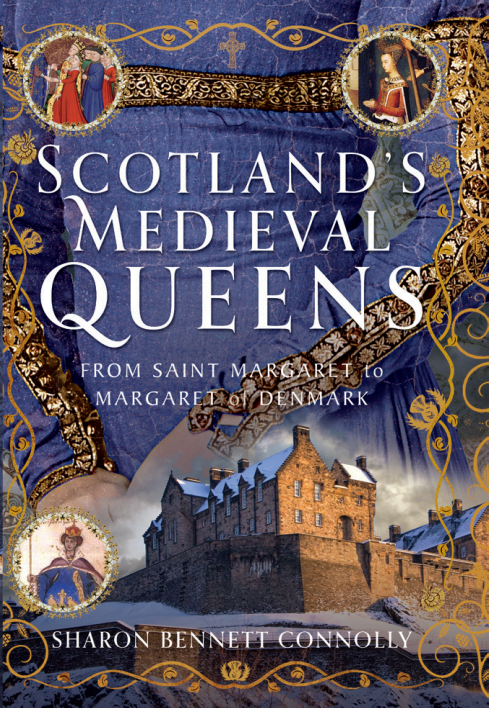
Book Corner: Sword of the Saxons by Steven A. McKay

A war to shape the future of a nation.

Betrayed by his kinsmen, his forces overrun by Danes, King Alfred of Wessex has retreated deep into the marshes of his homeland, lying in wait for his chance at redemption.

The scourge of the heathen horde that has ravaged the kingdom for decades is at its peak. Led by the fearsome Viking warlord Guthrum, the fate of the men, women, and children at their mercy appears all but sealed. But underestimate the great king at your peril…

Gathering allies and bannermen to his cause, and building a strategy that will hopefully ensure victory, Alfred sets out to undermine the strength of the complacent invaders, and establish Wessex as the greatest territory in the British Isles.

A final showdown awaits. Not only with Guthrum and his savage warriors, but with destiny. As the battle lines are drawn, the destiny of not just Wessex, but of every Anglo-Saxon in Britain, rests firmly on Alfred’s shoulders.

An utterly ferocious and gripping adventure, covering the fascinating middle years of Alfred the Great’s reign, one of Britain’s most influential monarchs.

War is coming!

At last! the second book in Steven A McKay’s new Alfred the Great series has arrived. To be fair to Steven, we haven’t had long to wait, even though it felt like an age. The problem was, we left King Alfred at the end of The Heathen Horde, rather down on his luck and looking like things could only get even worse. So it has been agony, waiting for Sword of the Saxons, to see how Steven would get Alfred out of it. We all know the history, Alfred is defeated and seeks shelter in the marshes of Athelney, burns some cakes in order to learn patience and then comes back with a vengeance. So we did know that Alfred’s defeat was not the end of the matter. However, when you get caught up in the story, you need more!

And leaving Alfred, defeated and a fugitive, was a difficult pill to swallow.

King Alfred is the hero who fought to defeat the Danish and Norse invaders – collectively known as the Vikings by many – and unite the disparate kingdoms of England under one king. The kingdom of England would not come to pass in his lifetime, but he started the fight that would be continued by his son and daughter – Edward the Elder and Æthelflæd, Lady of the Mercians – and completed by his grandson, Athelstan, the first King of England.

Sword of the Saxons picks up where The Heathen Horde left off and takes us on Alfred’s journey to not only survive in the marshes, but rebuild his army, renew alliances and begin the fight back. In Sword of the Saxons, King Alfred becomes the leader that England needed, and demonstrates the abilities, both martial and political, that justify his epithet of ‘the Great’.

‘I can almost – almost! – understand Ealdorman Wealdmar giving in to the Danes without a fight,’ Wulfric said to Alfred as they rode towards the little coastal village of Bryn on the outskirts of the Somerset marshes. ‘But his son, Diuma? Refusing to let us into the town when he knew the Danes were hunting us? Gods, I was starting to like the an, and I believed he was a fiercely loyal thane to you, my lord.’

Alfred cleared his throat and spat into the bushes on the side of the road, disgust twisting his features at the memory of the night Wulfric was referring to. ‘So did I,’ he growled. ‘But it seems Diuma was only ever loyal to himself.’ He shook his head and made a cutting motion with his hand. ‘I might possibly be able to forgive some of the men who’ve betrayed me, like Ealdorman Wulfhere. Perhaps they felt like they had no choice. But Diuma? I treated him like a friend. And Brycgstow? That was far enough away from any of Guthrum’s forces to be a target for them! No, Diuma has no excuse for what he’s done. I hope the sea-wolves bleed him and his father dry, and then, eventually, I’ll come face to face with them and hear their excuses before…’ He trailed off, jaw clenched, knuckles white as he gripped his horse’s reins.

There were only two other men with them that morning, for they were merely riding to collect a few supplies but, more importantly, to make sure the good people of Bryn knew that Alfred was still very much alive and hadn’t abandoned his kingdom despite Guthrum’s invasion. The king believed it did the people good to see him in person, rather than his hearth-warriors simply carrying word of his survival to the towns and villages located around Athelney’s marshes. He was a man, after all, not a myth.

‘When are we going to send out word to gather the fyrd, lord?’ The question came from one of the other riders who’d accompanied them, a small but sturdily built warrior called Dunstan. He’d been thane of a village in the north of Wessex which had been utterly destroyed six years earlier, by a party of Northmen led by Jarl Ubba. After that, Dunstan pledged himself to Alfred and now served as one of his fiercest hearth-warriors.

The fourth man in the small group was the sentry from the previous night, Aedan, and he too looked with interest at Alfred, wondering what his reply would be to Dunstan’s question.

The king shook his head slowly. ‘In truth, I don’t know,’ he admitted. ‘I’d like to make sure we have the support of as many people as possible in these nearby settlements. We need to know we can call upon a decent sized fyrd from the lands around Athelney before we look at enlisting people in towns further away.’ He noticed Dunstan and Aedan sharing uncertain glances. ‘I know you two are desperate to take the fight to Guthrum, but we can’t afford to act rashly. First, we build our foundation here in Sumosaete, and then we move on from there.’

With The Heathen Horde, it took me a few chapters to get into the story, to stop comparing Steven A. McKay’s version of King Alfred with the Alfred of Bernard Cornwell – and it took me a while to stop expected Uhtred of Bebbanburg to turn up and save the day, but in Sword of the Saxons Steven has made King Alfred his own. He portrays the great battles his way, has created a hero in Alfred that the reader can get behind wholeheartedly. He is much more likeable than Bernard Cornwell’s King Alfred! Less judgmental…

Alongside Alfred the Great and his family, Steven A. McKay has created a wealth of characters with varying degrees of loyalty to the king. All must be moulded together to fight Guthrum and his men. I have to admit, I love the portrayal of Æthelflæd, Alfred’s oldest daughter and soon to be the Lady of the Mercians. She is a young woman who knows her duty – but also knows her worth and her abilities. She is very much the Æthelflæd I imagine.

Sword of the Saxons is the beginning of the fight back against the invaders. It shows King Alfred coming into his own, becoming the great leader who we know today. He has setbacks, he has doubts, and he has to overcome illness. But this is the Alfred who will lead the reconquest of England that will be completed by his grandson. Steven A. Mckay achieves a wonderful balance, between telling the personal stories of his characters and presenting the great history that they are living through.

It is a gripping read. The fast-paced story leaves the reader breathless – and reading into the early hours! I have no hesitation in recommending Sword of the Saxons to anyone and everyone. Read it! you will not be disappointed.

Buy Sword of the Saxons

About the author:

Steven A. McKay was born in Scotland in 1977 and always enjoyed studying history. He decided to write his Forest Lord novels after seeing a house called “Sherwood” when he was out at work one day. Since then he’s started a new series, the Warrior Druid of Britain Chronicles. In 2021 the Xbox game HOOD: Outlaws and Legends was released, featuring his writing, which Steven says was just a fantastic experience. Steven used to be in a heavy metal band although he tends to just play guitar in his study these days. He did use those guitars to write the theme song for the podcast he co-host, Rock, Paper, Swords! with Matthew Harffy, though.

*

My Books

Signed, dedicated copies of all my books are available through my online bookshop.

OUT NOW! Heroines of the Tudor World

Heroines of the Tudor World tells the stories of the most remarkable women from European history in the time of the Tudor dynasty, 1485-1603. These are the women who ruled, the women who founded dynasties, the women who fought for religious freedom, their families and love. These are the women who made a difference, who influenced countries, kings and the Reformation. In the era dominated by the Renaissance and Reformation, Heroines of the Tudor World examines the threats and challenges faced by the women of the era, and how they overcame them. From writers to regents, from nuns to queens, Heroines of the Tudor World shines the spotlight on the women helped to shape Early Modern Europe.

Heroines of the Tudor World is now available for pre-order from Amberley Publishing and Amazon UK.

Also by Sharon Bennett Connolly:

Women of the Anarchy demonstrates how Empress Matilda and Matilda of Boulogne, unable to wield a sword themselves, were prime movers in this time of conflict and lawlessness. It shows how their strengths, weaknesses, and personal ambitions swung the fortunes of war one way – and then the other. Available from Bookshop.orgAmberley Publishing and Amazon UKKing John’s Right-Hand Lady: The Story of Nicholaa de la Haye is the story of a truly remarkable lady, the hereditary constable of Lincoln Castle and the first woman in England to be appointed sheriff in her own right. Available from all good bookshops Pen & Sword Booksbookshop.org and AmazonDefenders of the Norman Crown: The Rise and Fall of the Warenne Earls of Surrey tells the fascinating story of the Warenne dynasty, from its origins in Normandy, through the Conquest, Magna Carta, the wars and marriages that led to its ultimate demise in the reign of Edward III. Available from Pen & Sword BooksAmazon in the UK and US, and Bookshop.org

Ladies of Magna Carta: Women of Influence in Thirteenth Century England looks into the relationships of the various noble families of the 13th century, and how they were affected by the Barons’ Wars, Magna Carta and its aftermath; the bonds that were formed and those that were broken. It is now available in paperback and hardback from Pen & Sword,  Amazon, and Bookshop.orgHeroines of the Medieval World tells the stories of some of the most remarkable women from Medieval history, from Eleanor of Aquitaine to Julian of Norwich. Available now from Amberley Publishing and Amazon, and Bookshop.orgSilk and the Sword: The Women of the Norman Conquest traces the fortunes of the women who had a significant role to play in the momentous events of 1066. Available now from Amazon,  Amberley Publishing, and Bookshop.org.

Alternate Endings: An anthology of historical fiction short stories including Long Live the King… which is my take what might have happened had King John not died in October 1216. Available in paperback and kindle from Amazon.

Podcast:

Have a listen to the A Slice of Medieval podcast, which I co-host with Historical fiction novelist Derek Birks. Derek and I welcome guests, such as Bernard Cornwell and discuss a wide range of topics in medieval history, from significant events to the personalities involved. There’s even an episode on Robin Hood from Steven A. McKay. There are now over 40 episodes to listen to!

*

Don’t forget! Signed and dedicated copies of all my books are available through my online bookshop.

For forthcoming online and in-person talks, please check out my Events Page.

You can be the first to read new articles by clicking the ‘Follow’ button, liking our Facebook page or joining me on Twitter and Instagram.

©2024 Sharon Bennett Connolly FRHistS