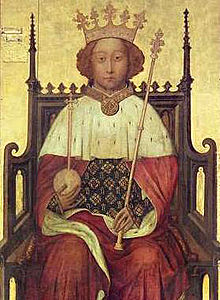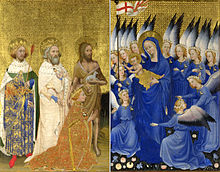
The Mother of the House of York

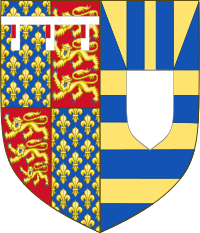
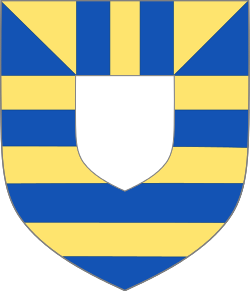
200px-Arms_of_Philippa_of_Clarence,_5th_Countess_of_Ulster.svg
Arms of Philippa of Clarence

Princess Philippa of Clarence was born at Eltham Palace in Kent on the 16th August 1355.  She was named after her grandmother, Philippa of Hainault, queen of Edward III, who was one of her Godparents.

The first grandchild of Edward III she was the only child of Lionel of Antwerp, Duke of Clarence, and his 1st wife, Elizabeth de Burgh. Lionel was the 1st of Edward and Philippa’s children to marry.

Lionel was the 3rd son of Edward and Philippa, but the 2nd to survive childhood. Born in 1338, he was married to Elizabeth de Burgh in the Tower of London on the 9th September 1342. Lionel was almost 4 years old and his bride was 6 years older, born in 1332. Elizabeth was the daughter and heiress of William de Burgh, 3rd Earl of Ulster, who had died the year after her birth. It seems the couple lived together as husband and wife from 1352, when Lionel was 14 and Elizabeth 20. Lionel became Earl of Ulster by right of his wife and took possession of vast estates in Ireland and the Honour of Clare, in Suffolk; from which he was created Duke of Clarence by Parliament on 13th November 1362.

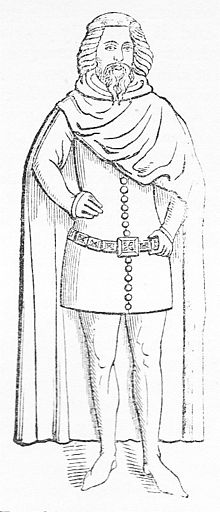
220px-LionelDukeOfClarenceAtWestminster
Lionel Duke of Clarence

Philippa lost her mother when she was just 8 years old. Elizabeth died in Dublin in December 1363, she was buried  at Clare Priory in Suffolk. Lionel was married again in May 1368, in Milan, to Violante Visconti, daughter of the Lord of Milan. He died at Alba just 5 months after the wedding, in October 1368, and was buried at Pavia; his body was later reinterred to lie beside Elizabeth at Clare Priory in Suffolk.

The dukedom of Clarence became extinct on Lionel’s death, but the earldom of Ulster and Honour of Clare passed to Philippa, his only daughter and heiress.

Although an orphan at the tender age of 13, Philippa’s future had been settled even by the time of her mother’s death in 1363. When only in her 4th year she was married, at the Queen’s Chapel in Reading, in February 1359, to 7-year-old Edmund Mortimer. Edmund was the great-grandson of Roger Mortimer, 1st Earl of March and lover of Edward II’s queen, and Edward III’s mother, Isabella of France.

Mortimer had been executed on Edward III’s orders in 1330 and the marriage was viewed as a reconciliation with the Mortimer family, powerful lords on the Welsh Marches. The children’s wedding was also the 1st in a string of royal marriages. Philippa was married before any of her aunts and uncles; but weddings for her uncle John of Gaunt to Blanche of Lancaster  and her aunt Margaret to John Hastings, 2nd Earl of Pembroke followed in May the same year.

250px-Arms_of_the_House_of_Mortimer.svg
Arms of the House of Mortimer

The marriage alliances were all part of Edward III’s policy to provide for his large brood of children and tie the great baronial families of the kingdom to the crown, by bringing them into the Royal family.

Edmund Mortimer succeeded to his father’s earldom as the 3rd Earl of March in the year after the marriage and the couple spent their time between properties in England, Wales and Ireland.

Their 1st child was born when Philippa was 15; she gave birth to a daughter, Elizabeth, at Usk in Monmouthshire, on 12th February 1371. 3 more children followed; Roger born at Usk on 11th April 1374, Philippa, born at Ludlow in Shropshire on 21st November 1375 and finally Edmund, who was born at Ludlow on 9th November 1377.

Marriage to Philippa had brought her husband power and influence. Through his steward, Peter de la Mare, he was instrumental in the Good Parliament of 1376, which argued against the influence of Edward III’s lover, Alice Perrers, and her friends, on the government of the kingdom. He spoke up for royal legitimacy and, using similar language to that used against his grandfather, Roger Mortimer, decried the influence an adulterous affair was having  on the dignity of the crown.

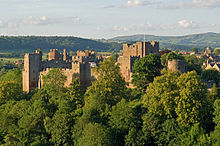
220px-Ludlow_Castle_from_Whitcliffe,_2011
Ludlow Castle, Shropshire

Following Edward III’s death in 1377, until her own death 6 months later, Philippa was, technically, heiress presumptive to the crown of her cousin, Richard II. However, in a supplementary document to his will, Edward III had practically disinherited his eldest granddaughter. He settled the inheritance of the throne on his grandson, Richard, son of his eldest son, the Black Prince and then, in turn, starting with John of Gaunt, on his surviving sons and their sons.

Edward had thus attempted to destroy any claim Philippa might have had to the throne whilst at the same time, revoking the royal status of the Mortimer earls of March.

Although there appear to be several death dates for Philippa, the most likely is that she died as a result of complications following Edmund’s birth, as she had made a will in November 1377, suggesting she was preparing for death. She passed away on, or shortly before, 7th January 1378 and was buried at Wigmore, Herefordshire, the burial-place of the Mortimers.

Edmund’s star, however, continued to rise and he was appointed Lieutenant of Ireland by Richard II on 22nd October 1380.  He died at Cork on 26th or 27th December 1381 and his body was brought back to Wigmore for burial. He was succeeded as 4th Earl of March by his eldest son, Roger; who had succeeded Philippa as Earl of Ulster on her death.

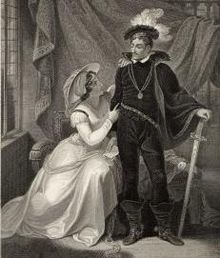
220px-Harry_Hotspur_Percy
Sir Henry “Hotspur” Percy and Elizabeth Mortimer

Roger spent many years in wardship following his father’s death. He was courageous, but had a reputation for religious and moral laxity. He was killed in Ireland in 1398, while acting as the king’s Lieutenant. It is possible that, at some point, he was named heir to the throne by Richard II, although there is considerable doubt in this.

Of Philippa and Edmund’s other children Elizabeth married Sir Henry “Hotspur” Percy sometime before May 1380. They had 2 children, but he was killed at the Battle of Shrewsbury in 1403. Elizabeth then married Thomas, 1st Baron Camoys, with whom she had a son who died young. Elizabeth died on 20th April 1417 and was buried at Trotton in Sussex, with her 2nd husband.

Philippa’s daughter and namesake, Philippa, married John Hastings, 3rd Earl of Pembroke, son of the Earl of Pembroke who had married Edward III’s daughter, Margaret. Following his death in 1389, she married Richard FitzAlan, 11th Earl of Arundel, who was executed in 1397. Her 3rd marriage was to Thomas Poynings, 5th Baron St John of Basing, around November 1399. She died in 1400 or 1401 and was buried at Boxgrove Priory in Sussex.

220px-Richard_Plantagenet,_3rd_Duke_of_York
Richard, Duke of York

Edmund’s namesake, Philippa and Edmund’s youngest son was married in about 1402 to Katherine, the daughter of Owen Glendower. They had several children, but all died young. Edmund himself died sometime between 1409 and 1411.

Philippa’s grandson, Roger’s son, Edmund, succeeded his father as Earl of March and Ulster; he became the king’s ward following his father’s death and, following the usurpation he was kept in Henry IV’s family circle.

Edmund seems to have suffered from a lack of ambition and when some barons tried to place him on the throne in 1415, it was Edmund himself who revealed the Southampton Plot to Henry V.

Edmund died of plague in Ireland in January 1425, but it is his sister, Anne Mortimer, who had been married to Richard of Conisbrough, that Philippa’s claim to the throne was passed to Anne and Richard’s son, Richard, Duke of York; thus laying the foundations for the Wars of the Roses and the accession of Edward IV and, later, his brother, Richard III.

*

Pictures taken from Wikipedia.

*

Sources: The Perfect King, the Life of Edward III by Ian Mortimer; The Life and Time of Edward III by Paul Johnson; The Reign of Edward III  by WM Ormrod; The Mammoth Book of British kings & Queens by Mike Ashley; Britain’s’ Royal Families, the Complete Genealogy by Alison Weir; Brewer’s British Royalty by David Williamson; The Plantagenets, the Kings Who Made Britain by Dan Jones; mortimerhistorysociety.org.uk.

*

My books:

Signed, dedicated copies of all my books are available through my online store.

Out now: Scotland’s Medieval Queens

Books by Sharon Bennett Connolly

Scotland’s history is dramatic, violent and bloody. Being England’s northern neighbour has never been easy. Scotland’s queens have had to deal with war, murder, imprisonment, political rivalries and open betrayal. They have loved and lost, raised kings and queens, ruled and died for Scotland. From St Margaret, who became one of the patron saints of Scotland, to Elizabeth de Burgh and the dramatic story of the Scottish Wars of Independence, to the love story and tragedy of Joan Beaufort, to Margaret of Denmark and the dawn of the Renaissance, Scotland’s Medieval Queens have seen it all. This is the story of Scotland through their eyes.

Scotland’s Medieval Queens gives a thorough grounding in the history of the women who ruled Scotland at the side of its kings, often in the shadows, but just as interesting in their lives beyond the spotlight. It’s not a subject that has been widely covered, and Sharon is a pioneer in bringing that information into accessible history.’ Elizabeth Chadwick (New York Times bestselling author)

Available now from Amazon and Pen and Sword Books

Also by Sharon Bennett Connolly:

Books by Sharon Bennett Connolly

Heroines of the Tudor World tells the stories of the most remarkable women from European history in the time of the Tudor dynasty, 1485-1603. These are the women who ruled, the women who founded dynasties, the women who fought for religious freedom, their families and love. Heroines of the Tudor World is now available from Amberley Publishing and Amazon UK. Women of the Anarchy demonstrates how Empress Matilda and Matilda of Boulogne, unable to wield a sword themselves, were prime movers in this time of conflict and lawlessness. It shows how their strengths, weaknesses, and personal ambitions swung the fortunes of war one way – and then the other. Available from Bookshop.orgAmberley Publishing and Amazon UKKing John’s Right-Hand Lady: The Story of Nicholaa de la Haye is the story of a truly remarkable lady, the hereditary constable of Lincoln Castle and the first woman in England to be appointed sheriff in her own right. Available from all good bookshops Pen & Sword Booksbookshop.org and Amazon

Royal Historical Society

Defenders of the Norman Crown: The Rise and Fall of the Warenne Earls of Surrey tells the fascinating story of the Warenne dynasty, from its origins in Normandy, through the Conquest, Magna Carta, the wars and marriages that led to its ultimate demise in the reign of Edward III. Available from Pen & Sword BooksAmazon in the UK and US, and Bookshop.orgLadies of Magna Carta: Women of Influence in Thirteenth Century England looks into the relationships of the various noble families of the 13th century, and how they were affected by the Barons’ Wars, Magna Carta and its aftermath; the bonds that were formed and those that were broken. It is now available in paperback and hardback from Pen & SwordAmazon, and Bookshop.orgHeroines of the Medieval World tells the stories of some of the most remarkable women from Medieval history, from Eleanor of Aquitaine to Julian of Norwich. Available now from Amberley Publishing and Amazon, and Bookshop.orgSilk and the Sword: The Women of the Norman Conquest traces the fortunes of the women who had a significant role to play in the momentous events of 1066. Available now from Amazon,  Amberley Publishing, and Bookshop.org.

Alternate Endings: An anthology of historical fiction short stories including Long Live the King… which is my take what might have happened had King John not died in October 1216. Available in paperback and kindle from Amazon.

Podcast:

A Slice of Medieval

Have a listen to the A Slice of Medieval podcast, which I co-host with Historical fiction novelist Derek Birks. Derek and I welcome guests, such as Bernard Cornwell and Michael Jecks, and discuss a wide range of topics in medieval history, from significant events to the personalities involved. 

Every episode is also now available on YouTube.

*

Don’t forget! Signed and dedicated copies of all my books are available through my online store.

For forthcoming online and in-person talks, please check out my Events Page.

You can be the first to read new articles by clicking the ‘Follow’ button, liking our Facebook page or joining me on TwitterThreadsBluesky and Instagram.

*

©2015 Sharon Bennett Connolly FRHistS
The Complicated Love Life of John of Gaunt

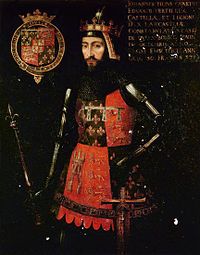
200px-johnofgaunt
John of Gaunt, Duke of Lancaster

The third surviving son of Edward III and Philippa of Hainault John of Gaunt was born in 1340 at the Abbey of St Bavon, in Ghent in modern-day Belgium. At the height of his career he was the most powerful man in the kingdom after the king. He was virtually regent for his father, Edward III, in his old age, thus getting the blame for military failures and government corruption. His reputation was further damaged when he blocked the reforms of the Good Parliament of 1376, which had tried to curb the corruption of Edward III’s and limit the influence of the king’s grasping mistress, Alice Perrers.

John of Gaunt’s wealth meant he could form the largest baronial retinue of knights and esquires in the country. He alone provided a quarter of the army raised for Richard II’s Scottish campaign in 1385. A stalwart supporter of his nephew, Richard II, he was the target for the rebels during the Peasants’ Revolt; his London residence, the Savoy Palace, was burned to the ground in 1381.

He was a soldier and statesman whose career spanned 6 decades and several countries, including England, Belgium, France, Scotland and Castile. However, by far the most fascinating part of his life is his love life. John married three times; his wives being two great heiresses and a long-time mistress.

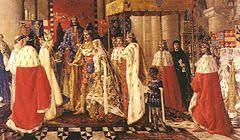
John of Gaunt’s first marriage, at the age of 19, was aimed to give him prestige, property and income and was arranged as part of his father’s plans to provide for the futures of several of his children. John and 14-year-old Blanche of Lancaster, youngest daughter of Henry of Grosmont, Duke of Lancaster, were married on 19th May 1359 in the Queen’s Chapel at Reading.

Gaunt marriage
Wedding of John of Gaunt and Blanche of Lancaster

It is quite likely that John had already fathered one child, a daughter, Blanche, by Marie de St Hilaire before his marriage. Blanche was born sometime before 1360 and would go on to marry Sir Thomas Morieux before her death in 1388 or 1389.

Blanche of Lancaster was described as “jone et jolie” – young and pretty – by the chronicler Froisssart, and also “bothe fair and bright” and Nature’s “cheef patron of beautee” by Geoffrey Chaucer. She brought John of Gaunt the earldom of Lancaster following her father’s death from plague in 1361, and those of Leicester and Lincoln when her older sister, Matilda, died of the same disease in 1362, making him the largest landowner in the country, after the king.

The marriage proved very successful, with 7 children being born in just 8 years, 3 of whom survived infancy; daughters Philippa and Elizabeth and a son, Henry of Bolingbroke.

It has always been believed that Blanche died in 1369, when John of Gaunt was away in France, having moved her young family to Bolingbroke Castle in Lincolnshire, to escape a fresh outbreak of the Black Death, but that she succumbed to the plague while there. However, recent research has discovered that Blanche died at Tutbury on 12th September, 1368, more likely from the complications of childbirth than from the plague, following the birth of her daughter, Isabella, who died young. Her husband was by her side when she died and arranged to have prayers said for the soul of his lost duchess.

She was buried in St Paul’s Cathedral in London. John of Gaunt arranged for a splendid alabaster tomb and annual commemorations for the rest of his life. John also commissioned Geoffrey Chaucer to write The Book of the Duchess, also known as The Deth of Blaunche; a poem that is said to depict Gaunt’s mourning for his wife, in the tale of a Knight grieving for his lost love. In it Chaucer describes Blanche as “whyt, smothe, streght and flat. Naming the heroine “White”, he goes on to say she is “rody, fresh and lyvely hewed”.

Before 1365 Blanche had taken into her household a lady called Katherine Swynford, wife of one of her husband’s Lincolnshire knights. John was godfather to the Swynfords’ daughter, Blanche. Katherine later became governess to Blanche’s two daughters, Philippa and Elizabeth and young Blanche Swynford was lodged in the same chambers as the Duchess’s daughters, and accorded the same luxuries as the princesses.

Surrender
Surrender of Santiago de Compostela to John of Gaunt. Constance is the lady on horseback (Froissart)

Katherine was the daughter of a Hainault knight, Sir Paon de Roet of Guyenne, who came to England in the retinue of Queen Philippa. She had grown up at court with her sister, Philippa, who would later marry Geoffrey Chaucer. Whilst serving in Blanche’s household, she had married one of John of Gaunt’s retainers, a Lincolnshire knight, Sir Hugh Swynford of Coleby and Kettlethorpe, at St Clement Danes Church on the Strand, London.

Following Blanche’s death Katherine stayed on in the Duke’s household, taking charge of the Duke’s daughters. However, it was only shortly after her husband’s death in 1371 that rumours began of a liaison between Katherine and the Duke; although it is possible the affair started before Sir Hugh’s death, this is far from certain.

John and Katherine would have four children. They had 3 sons, John, Thomas and Henry, and a daughter, Joan, in the years between 1371 and 1379. They were supposedly born in John’s castle in Champagne, in France, and were given the name of the castle as their surname; Beaufort. However it seems just as likely that they were named after the lordship of Beaufort, which had formerly belonged to Gaunt and to which he still laid claim.

Meanwhile, John had not yet done with his dynastic ambitions and, despite his relationship with Katherine, married Constance of Castile in September 1371. Constance was the daughter of Peter I “the Cruel” and his ‘hand-fast’ wife, Maria de Padilla. Born in 1354 at Castro Kerez, Castile, she succeeded her father as ‘de jure’ Queen of Castile on 13th March 1369, but John was never able to wrest control of the kingdom from the rival claimant Henry of Tastamara, reigning as Henry III, and would eventually come to an agreement in 1388 where Henry married John and Constance’s daughter, Katherine.

Tombs
Tombs of Katherine Swynford and her daughter, Joan Beaufort, Lincoln Cathedral

Katherine – or Catalina – was born in 1372/3 at Hertford Castle and was the couple’s only surviving child.

John and Constance’s relationship appears to be purely dynastic. There is some suggestion John formally renounced his relationship with Katherine and reconciled with Constance in June 1381, possibly as a way to recover some popularity during the Peasant’s Revolt, following the destruction of his palace on the Thames.

Katherine left court and settled at her late husband’s manor at Kettlethorpe, before moving to a rented townhouse in Lincoln. John of Gaunt visited her regularly throughout the 1380s, and Katherine was frequently at court. With 4 children by John of Gaunt but still only, officially, governess to his daughters, Katherine was made a Lady of the Garter in 1388.

Constance, however, died on 24th March, 1394, at Leicester Castle and was buried at Newark Abbey in Leicester.

John then went to Guienne to look after his interests as Duke of Aquitaine and remained in France from September 1394 until December 1395. When he returned to England, John wasted no time in reuniting with Katherine and they were married in Lincoln Cathedral in January 1396.

John then made an appeal to the Pope and his children by Katherine were legitimated on 1st September 1396, and then by Charter of Richard II on 9th February 1397. However, it is claimed a later clause excluded the Beaufort children from the succession.

John was a man of renown, of culture and refinement. An amateur poet and friend of Chaucer, who had married Katherine’s sister, Philippa, he was also a patron of Wycliffe and encouraged the translation of the Bible into English.

His complicated love life would cause problems for future generations, with his son by Blanche of Lancaster, Henry, forcing the abdication of Richard II and usurping the throne on 30th September 1399. His Beaufort descendants would be prominent players on both sides of the Wars of the Roses. While his son John, Earl of Somerset was the grandfather of Margaret Beaufort, mother of Henry VII, his daughter, Joan, was grandmother of the Yorkist kings Edward IV and Richard III.

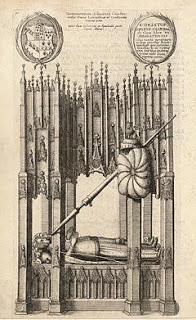
Tomb John of Gaunt
Drawing of the tomb of John of Gaunt and Blanche of Lancaster, etching by Wenceslas Hollar, 1658

Katherine would outlive John and died at Lincoln on 10th May 1403. She was buried, close to the High Altar, in the cathedral in which she had married her prince just 7 years earlier. Her daughter Joan, Countess of Westmoreland, was laid to rest beside her, following her death in 1440. Their tombs, however, are empty and they are buried beneath the floor of the cathedral.

John himself died on 3 February 1399, probably at Leicester Castle. He was buried in Old St Paul’s Cathedral, beside his first wife, Blanche of Lancaster. This has often been seen as his final act of love for his first wife, despite the problems John went through in order to finally be able to marry his mistress, Katherine Swynford.

Personally, I think the two ladies, Blanche and Katherine, were his true love at different parts of John’s life. And I hope he had some feelings for poor Constance, who frequently appears as only a means to his dynastic ambitions.

*

Article originally published on English Historical Fiction Authors in September 2015.

*

Sources: Williamson, David Brewer’s British Royalty; Juliet Gardiner & Neil Wenborn History Today Companion to British History; Mike Ashley The Mammoth Book of British Kings & Queens; Alison Weir Britain’s Royal Families, the Complete Genealogy; Paul Johnson The Life and Times of Edward III; Ian Mortimer The Perfect King, the Life of Edward III; WM Ormrod The Reign of Edward III; Edited by Elizabeth Hallam Chronicles of the Age of Chivalry; Amy Licence Red Roses: From Blanche of Gaunt to Margaret Beaufort; katherineswynfordsociety.org.uk; womenshistory.about.com/od/medrenqueens/a/Katherine-Swynford;.

*

Pictures courtesy of Wikipedia, except the tomb of Katherine Swynford, © Sharon Bennett Connolly, 2015.

*

My Books

Signed, dedicated copies of all my books are available through my online bookshop.

Out Now! Women of the Anarchy

On the one side is Empress Matilda, or Maud. The sole surviving legitimate child of Henry I, she is fighting for her birthright and that of her children. On the other side is her cousin, Queen Matilda, supporting her husband, King Stephen, and fighting to see her own son inherit the English crown. Both women are granddaughters of St Margaret, Queen of Scotland and descendants of Alfred the Great of Wessex. Women of the Anarchy demonstrates how these women, unable to wield a sword, were prime movers in this time of conflict and lawlessness. It show how their strengths, weaknesses, and personal ambitions swung the fortunes of war one way – and then the other.

Available for pre-order from Amberley Publishing and Amazon UK.

Coming on 15 June 2024: Heroines of the Tudor World

Heroines of the Tudor World tells the stories of the most remarkable women from European history in the time of the Tudor dynasty, 1485-1603. These are the women who ruled, the women who founded dynasties, the women who fought for religious freedom, their families and love. These are the women who made a difference, who influenced countries, kings and the Reformation. In the era dominated by the Renaissance and Reformation, Heroines of the Tudor World examines the threats and challenges faced by the women of the era, and how they overcame them. Some famous, some infamous, some less well known, including Anne Boleyn, Elizabeth Barton, Catherine de Medici, Bess of Hardwick and Elizabeth I. From writers to regents, from nuns to queens, Heroines of the Tudor World shines the spotlight on the women helped to shape Early Modern Europe.

Heroines of the Tudor World is now available for pre-order from Amberley Publishing and Amazon UK.

Also by Sharon Bennett Connolly:

King John’s Right-Hand Lady: The Story of Nicholaa de la Haye is the story of a truly remarkable lady, the hereditary constable of Lincoln Castle and the first woman in England to be appointed sheriff in her own right. It is is available from King John’s Right-Hand Lady: The Story of Nicholaa de la Haye is the story of a truly remarkable lady, the hereditary constable of Lincoln Castle and the first woman in England to be appointed sheriff in her own right. Available from all good bookshops or direct from Pen & Sword Booksbookshop.org and AmazonDefenders of the Norman Crown: The Rise and Fall of the Warenne Earls of Surrey tells the fascinating story of the Warenne dynasty, from its origins in Normandy, through the Conquest, Magna Carta, the wars and marriages that led to its ultimate demise in the reign of Edward III. Available from Pen & Sword BooksAmazon in the UK and US, and Bookshop.org

Ladies of Magna Carta: Women of Influence in Thirteenth Century England looks into the relationships of the various noble families of the 13th century, and how they were affected by the Barons’ Wars, Magna Carta and its aftermath; the bonds that were formed and those that were broken. It is now available in paperback and hardback from Pen & Sword,  Amazon, and Bookshop.orgHeroines of the Medieval World tells the stories of some of the most remarkable women from Medieval history, from Eleanor of Aquitaine to Julian of Norwich. Available now from Amberley Publishing and Amazon, and Bookshop.orgSilk and the Sword: The Women of the Norman Conquest traces the fortunes of the women who had a significant role to play in the momentous events of 1066. Available now from Amazon,  Amberley Publishing, and Bookshop.org.

Alternate Endings: An anthology of historical fiction short stories including Long Live the King… which is my take what might have happened had King John not died in October 1216. Available in paperback and kindle from Amazon.

Podcast:

Have a listen to the A Slice of Medieval podcast, which I co-host with Historical fiction novelist Derek Birks. Derek and I welcome guests, such as Bernard Cornwell and Elizabeth Chadwick, and discuss a wide range of topics in medieval history, from significant events to the personalities involved.

*

Don’t forget! Signed and dedicated copies of all my books are available through my online bookshop.

For forthcoming online and in-person talks, please check out my Events Page.

You can be the first to read new articles by clicking the ‘Follow’ button, liking our Facebook page or joining me on Twitter and Instagram.

©2015 Sharon Bennett Connolly FRHistS
Alice Perrers, Mistress of the King

220px-Alice_Perrers_and_Edward_III
Alice Perrers and Edward III, painted by Ford Maddox Brown

Alice Perrers is one royal mistress who did not fare as well as her contemporary, Katherine Swynford. Whereas Katherine eventually married her prince; Alice was not so lucky, despite the fact she had been mistress of the King.

Although it is impossible to find any definite date, it seems likely that Alice Perrers was born in the late 1340s. For many years she was believed to be the daughter of Sir Richard Perrers, a prominent Hertfordshire landowner who had been both sheriff and Member of Parliament for his county. However, recent research has suggested that she is the daughter of either William Salisbury, a goldsmith, or one of his possible kinsmen, John or Gilbert Salisbury. Her mother was likely the Joan Salisbury involved in a joint purchase of a messuage in Canterbury with Alice Perrers and others in 1371. A John Salisbury was identified as her brother in a petition of 1377 or 1378 from John Cobham seeking payment of debts. Her first husband was Janyn Perrers, who may had been apprenticed to William Salisbury (Alice’s possible father or kinsman). He died in 1361 or 1362.1

The majority of what we know of Alice comes from the blatantly hostile St Albans Chronicle. The Chronicler claimed Alice was the daughter of an Essex tiler and a former domestic servant, suggesting she made her way to court by humble channels. She was described as ‘extremely ugly’ and ruling the king through her clever tongue. The king was certainly known to like clever and attractive women.

Sometime in the early 1360s – and certainly before 1366 – Alice joined the household of Queen Philippa of Hainault and started her affair with the king, Edward III. Alice would have been in her mid-to-late teens. It isn’t clear whether Alice joined the Queen’s household before or after the affair started; it may be that Edward placed her there, so she was close by. It does appear that the ailing queen acquiesced to the situation, even if she did not wholeheartedly approve.

Philippa_of_Hainault-mini
Queen Philippa of Hainault

Before his relationship with Alice, there seems to have been few, if any, extramarital affairs on Edward’s part; there are certainly no suggestions of illegitimate children as had happened with previous monarchs. If Edward had affairs they had been of short duration and incredibly discreet. This makes his relationship with Alice Perrers all the more surprising.

By 1366 Alice had been installed as a lady of the queen’s bedchamber. In 1364/5, she had left court to give birth to Edward’s first illegitimate child. The boy, Sir John Southeray,  would later marry Maud Percy, a sister of the future Earl of Northumberland. Two daughters were to follow, Joan and Jane, who were still young at the time of the king’s death in 1377. Jane later married Richard Northland and Joan married Robert Skerne, a lawyer.

Whilst in the queen’s household Edward granted Alice 2 tuns of wine; he also granted her wardships, land and jewels. Although the king gave gifts to all the queen’s ladies, those to Alice were particularly extravagant.

Following the queen’s death in 1369, Alice rose to greater prominence, she dominated the court. A devastated Edward leaned heavily on her considerable abilities; his own decline accelerated by his loss.

220px-Edward_III_of_England_(Order_of_the_Garter)
Edward III

As a result Alice was blamed for the setbacks and financial scandals of the last years of Edward’s reign. She was accused of being scheming and grasping, and making the king’s final years a misery.  The monastic chronicler, Walsingham, believed she had bewitched the king in order to secure his affections.

Whereas Queen Philippa had remained in the domestic environment, Alice Perrers had greater political ambitions. The court was dominated by a ‘narrow, exclusive and unpopular clique’2. Along with  Lord Latimer and Lord Neville, Edward’s chamberlain and steward respectively, Alice enjoyed almost total control of royal patronage; she became the king’s principal advisor and advanced her own friends into positions of influence.

Rumours arose that Edward had given Alice some of Queen Philippa’s jewels. It seems more likely that the jewels were a part of a collection previously given by the queen to Euphemia Hasleworth, rather than a part of the queen’s personal collection, but it further tarnished Alice’s reputation.The fact the gifts were recorded in the patent rolls suggests they were given on Edward’s personal order, rather than through Alice’s machinations.

By the early 1370s Alice had established her domination of the court. In 1371 she was granted the valuable manor of Wendover.

In 1375 a grand tournament was held at Smithfield in her honour. Alice rode from the Tower, through the city, dressed as the Lady of the Sun. Ladies led knights on silver chains.

In the early 1370s Alice had started looking to her future. The king was old and she was very aware that, without his protection she was likely to be thrown to the wolves. With this in mind she contracted a secret marriage to William Windsor and persuaded the king to appoint Windsor his lieutenant in Ireland, despite his record of previous maladministration of that same country.

240px-StAlbansCathedral-PS02
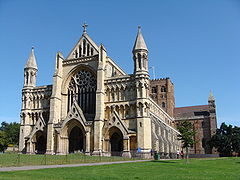
The abbey of St Albans; home to the Chronicler, Walsingham

By 1376, shortly after the death of the Black Prince – Edward’s eldest son and heir – parliament took the lead. Known as the Good Parliament and having been called to advance the king subsidies they demanded their own petitions were answered first.

According to Walsingham: “the Parliamentary knights complained bitterly about one Alice Perrers, a wanton woman who was all too familiar with Edward III. They accused her of numerous misdeeds, performed by her and her friends in the realm. She far overstepped the bounds of feminine conduct: forgetful of her sex and her weakness, now besieging the king’s justices, now stationing herself among the doctors in the ecclesiastical courts, she did not fear to plead in defence of her cause and even to make illegal demands. As a result of the scandal and great shame which this brought on King Edward, not only in this kingdom but also in foreign lands, the knights sought her banishment from his side.3

The main accusations, voiced by Peter de la Mare, against Alice were that she had taken thousands of pounds from the royal purse and that she was notorious for the use of maintenance – protecting those accused in the king’s courts; Parliament stipulated that she and all women were prohibited from doing this. It was also during the parliament that Alice’s secret marriage to William Windsor was revealed. Assuming that, as a married couple, they had slept together this then made the king guilty of adultery.

220px-Wife-of-Bath-ms
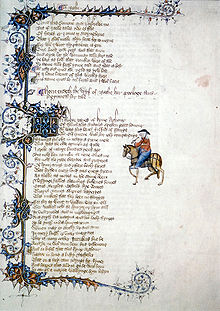
Chaucer’s The Wife of Bath

Edward III swore an oath by the Virgin Mary that he did not know she was married. William Windsor was summoned from Ireland to be prosecuted. Edward is said to have bought a chest and locked in it the accusations against Windsor, who he saw as the guilty party.

Edward begged for Alice to be shown mercy. She avoided prison and further prosecution on condition she no longer saw the king. If she broke the conditions, the punishment would be perpetual exile.

However, once parliament had disbanded John of Gaunt, as virtual ruler of the kingdom, recalled all those banished. Edward “recalled his mistress, Alice Perrers, to his company; she had been legally banished from his presence, on account of the scandal and shame which came from her wantonness. This was against the oath by which Alice had bound herself and which the king himself had ratified…4

Alice stayed with the king until his death.

Edward III died, probably from a stroke, on 21st June 1377. According to the St Albans Chronicler he was alone, save for his confessor. Walsingham went so far as to accuse Alice of stripping the rings from the king’s fingers; although she was never charged with the offence.

Following the king’s death, Alice’s sentence of banishment was reconfirmed, only to be reversed in 1379 at the request of her husband. William Windsor himself died in 1384 and Alice seems to have spent much of her final years in litigation over his will; Windsor left his estate to his 3 sisters.

250px-Upminster_021
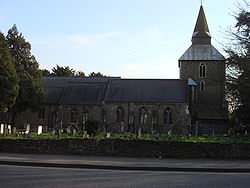
Church of St Lawrence, Upminster

As the king’s mistress Alice had dealt in property, and used her influence to guarantee a future income. She remained wealthy and was still litigating when she died in 1400. She was buried in the Church of St Lawrence, Upminster; her grave now lost to history.

Alice Perrers was the first king’s mistress to influence the courts of justice and the government of the kingdom. She had met the king when relatively young and naive; but was intelligent enough to realise the advantages and implications of her liaison with the king.

However, she was held up as an example of how a woman shouldn’t behave. She is thought to have been the inspiration for Chaucer’s The Wife of Bath.

*

Footnotes: ¹ C. Given-Wilson, Oxforddnb.com; 2WM Ormrod, The Reign of Edward III; 3&4 Thomas Walsingham, St Albans Chronicle

*

Pictures courtesy of Wikipedia.

*

Sources: The Perfect King, the Life of Edward III by Ian Mortimer; The Life and Time of Edward III by Paul Johnson; The Reign of Edward III  by WM Ormrod; The Oxford Companion to British History Edited by John Cannon; The Mammoth Book of British kings & Queens by Mike Ashley; The History Today Companion to British History Edited by Juliet Gardiner & Neil Wenborn; Britain’s’ Royal Families, the Complete Genealogy by Alison Weir; Brewer’s British Royalty by David Williamson; Chronicles of the Age of Chivalry Edited by Elizabeth Hallam; Kings & Queens of Britain by Joyce Marlow; The Plantagenets, the kings Who Made Britain by Dan Jones; britannica.com/biography/Alice-Perrers; historyinanhour.com; anneobrienbooks.com.

*

My books

Signed, dedicated copies of all my books are available through my online bookshop.

Out nowKing John’s Right-Hand Lady: The Story of Nicholaa de la Haye

In a time when men fought and women stayed home, Nicholaa de la Haye held Lincoln Castle against all-comers, gaining prominence in the First Baron’s War, the civil war that followed the sealing of Magna Carta in 1215. A truly remarkable lady, Nicholaa was the first woman to be appointed sheriff in her own right. Her strength and tenacity saved England at one of the lowest points in its history. Nicholaa de la Haye is one woman in English history whose story needs to be told…

King John’s Right-Hand Lady: The Story of Nicholaa de la Haye is now available from Pen & Sword Booksbookshop.org and Amazon.

Coming 15 January 2024: Women of the Anarchy

On the one side is Empress Matilda, or Maud. The sole surviving legitimate child of Henry I, she is fighting for her birthright and that of her children. On the other side is her cousin, Queen Matilda, supporting her husband, King Stephen, and fighting to see her own son inherit the English crown. Both women are granddaughters of St Margaret, Queen of Scotland and descendants of Alfred the Great of Wessex. Women of the Anarchy demonstrates how these women, unable to wield a sword, were prime movers in this time of conflict and lawlessness. It show how their strengths, weaknesses, and personal ambitions swung the fortunes of war one way – and then the other.

Available for pre-order from Amberley Publishing and Amazon UK.

Also by Sharon Bennett Connolly:

Defenders of the Norman Crown: The Rise and Fall of the Warenne Earls of Surrey tells the fascinating story of the Warenne dynasty, of the successes and failures of one of the most powerful families in England, from its origins in Normandy, through the Conquest, Magna Carta, the wars and marriages that led to its ultimate demise in the reign of Edward III. Defenders of the Norman Crown: Rise and Fall of the Warenne Earls of Surrey is now available from Pen & Sword BooksAmazon in the UK and US, and  Bookshop.org.

Ladies of Magna Carta: Women of Influence in Thirteenth Century England looks into the relationships of the various noble families of the 13th century, and how they were affected by the Barons’ Wars, Magna Carta and its aftermath; the bonds that were formed and those that were broken. It is now available in paperback and hardback from Pen & Sword,  Amazon, and Bookshop.org.

Heroines of the Medieval World tells the stories of some of the most remarkable women from Medieval history, from Eleanor of Aquitaine to Julian of Norwich. Available now from Amberley Publishing and Amazon, and Bookshop.org.

Silk and the Sword: The Women of the Norman Conquest traces the fortunes of the women who had a significant role to play in the momentous events of 1066. Available now from Amazon,  Amberley Publishing, and Bookshop.org.

Alternate Endings: An anthology of historical fiction short stories including Long Live the King… which is my take what might have happened had King John not died in October 1216. Available in paperback and kindle from Amazon.

Podcast:

Have a listen to the A Slice of Medieval podcast, which I co-host with Historical fiction novelist Derek Birks. Derek and I welcome guests, such as Bernard Cornwell, and discuss a wide range of topics in medieval history, from significant events to the personalities involved.

*

Don’t forget! Signed and dedicated copies of all my books are available through my online bookshop.

For forthcoming online and in-person talks, please check out my Events Page.

You can be the first to read new articles by clicking the ‘Follow’ button, liking our Facebook page or joining me on Twitter and Instagram.

*

©2015 Sharon Bennett Connolly FRHistS
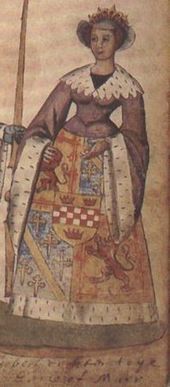
Poor Little Marjorie Bruce

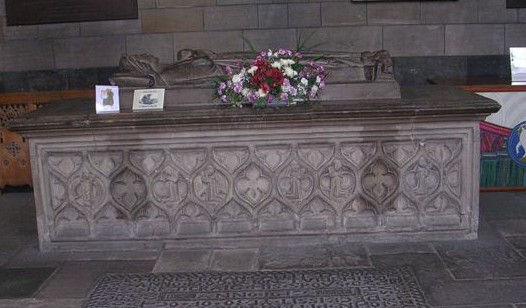
Marjorie_Bruce_Paisley_Abbey
Tomb of Marjorie Bruce, Paisley Abbey

I’ve always had a soft spot for little Marjorie Bruce. Dead before her 20th birthday, her short life was filled with tragedy and adversity from the moment of her birth. I could find no pictures of her, just ones of her tomb; which just about sums it up for poor Marjorie.

Marjorie was born at a time of great upheaval for Scotland; Edward I was claiming overlordship of the country, and the right to choose its next king. John Balliol was picked as king, only for Edward to humiliate and dethrone him a short time later.

Marjorie’s father, Robert the Bruce, was one of the chief claimants of the Scots crown.

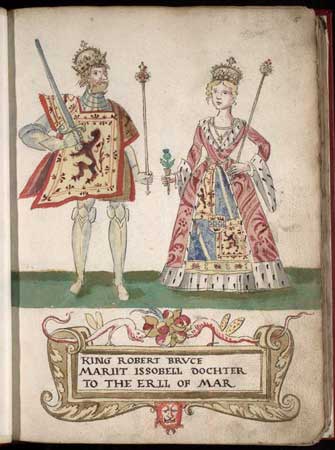
Marjorie was the only daughter of Robert the Bruce, Lord of Annandale and Earl of Carrick, and Isabella of Mar. Isabella was the daughter of Donald, 6th Earl of Mar, and Helen, possible illegitimate daughter of Llewelyn the Great, Prince of Wales.

Robert_I_and_Isabella_of_Mar
Marjorie’s parents; Robert the Bruce and Isabella of Mar

Isabella and Robert had married in 1295 and Marjorie arrived about 2 years later. At the age of only 19, Isabella died shortly after giving birth and poor Marjorie was left motherless, with a father who was fighting, alternately, for and against the English.

Even when still a baby, Marjorie was seen as a political pawn, when on 9 July 1297, Edward I demanded that she be handed over as a hostage to her father’s good behaviour. Three of Robert’s allies, ‘Robert bishop of Glasgow, James the Steward of Scotland, and Alexander de Lindesye, become guarantees for the Earl of Carrick’s loyalty till he delivers his daughter Margerie as a hostage.’ Although, there is no record that Marjorie was ever handed over to the English at this time.

Marjorie was named after her paternal grandmother, Marjorie, Countess of Carrick in her own right. And it seems highly likely that Marjorie’s care was handed to one of her father’s sister, either Mary or Christian.

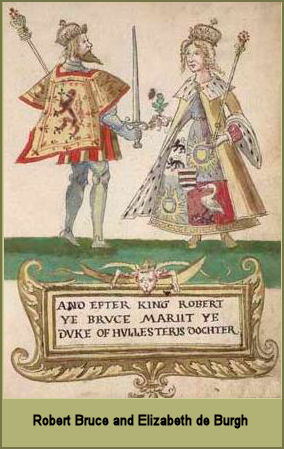
At 6 years old Marjorie acquired a new step-mother when Robert married Elizabeth de Burgh, daughter of Richard de Burgh, Earl of Ulster, and god-daughter of Edward I. Although Edward I appears to have arranged the marriage in order to keep the Bruce’s loyalty, it was only a short while after the marriage that Robert the Bruce finally decided to join William Wallace and fight for Scotland.

In 1306, following his murder of his rival for the throne, John Comyn, Robert the Bruce defied Edward I by having himself crowned King of Scots at Scone Abbey. Little 8-year-old Marjorie was suddenly a Princess of Scotland as the daughter of  King Robert I; although her uncle Edward Bruce was designated Robert’s heir.

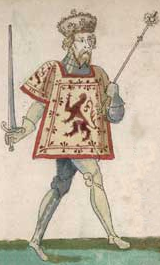
RobertBruceAndElizabethDeBurgh (280X280)_tcm4-562387
Robert the Bruce and his queen, Elizabeth de Burgh

Unfortunately Robert’s coronation infuriated Edward I even more. After King Robert was brought to battle, and defeated, at Methven in June 1306 he and his family became fugitives in their own land. Edward I of England was determined to hunt him down; sending men after Robert and all his adherents.

In August 1306 Robert split his party; while he headed west he sent Marjorie and Elizabeth to the north-east, possibly hoping they could escape to Orkney and onto Norway, where his sister, Isabel, was queen.

Accompanying Elizabeth and Marjorie were Robert’s other 2 sisters, Christian and Mary, and Isabella, Countess of Buchan, who had crowned Robert at Scone. They were escorted by John of Strathbogie, Earl of Atholl, and Robert’s younger brother, Sir Niall Bruce.

By September 1306, the women and their escort had reached Kildrummy Castle in Aberdeenshire; where Edward’s forces caught up with them. While Sir Niall Bruce and the garrison stoically attempted to hold off the English troops, the Earl of Atholl escaped with the women. Having made it to the far north of Scotland, but were apprehended at Tain, near Inverness, by the Earl of Ross, a supporter of the Comyns.

Kildrummy had fallen in the mean time.

170px-Gal_nations_edward_i
Edward I

Sir Niall Bruce and the Kildrummy garrison were handed over to the English and executed; Sir Niall suffered hanging, drawing and quartering at Berwick. The Earl of Atholl and the Bruce women, along with the Countess of Buchan, were sent south to King Edward.

When they reached London, the Earl of Atholl suffered the same fate as Sir Niall, the first earl to ever suffer a traitor’s execution.

Although Edward did not order the executions of the women folk, it cannot be said he treated them kindly. They were used to set an example; a demonstration of the price of rebellion against Edward.

For Mary Bruce and the Countess of Buchan, he ordered the construction of iron cages. Isabella, Countess of Buchan, who had set the crown of Scotland on Robert the Bruce’s head, was imprisoned in one such cage supposedly suspended high from the walls of Berwick castle, open the elements and the mockery of the people of Berwick. The same was ordered for Mary Bruce at Roxburgh. Although the cages were actually in rooms inside the two strongholds, rather than outside and suspended from the walls. Either way, it was still horrendous treatment for two noblewomen.

220px-Watton_Abbey
Watton Abbey, where Marjorie was confined for 8 years

Christian Bruce, whose husband had recently been executed as a traitor at Dumfries, was ordered to be confined at a convent at Sixhills in Lincolnshire; while Elizabeth de Burgh was confined to various manors in England and treated more kindly due to her father’s friendship with the king.

For Marjorie Bruce, these events must have been terrifying. Edward ordered her confined in an iron cage in the Tower of London, where no one was to speak to her. Whether Edward relented of his own free will, or was advised against such treatment of a child of not yet 10 years old, the order was rescinded and she was confined to a convent at Watton in Yorkshire.

On 15 March 1307, Edward sent orders for financial provision for Marjory: ‘The K. commands the sheriff of York, by view of the Prior of Wattone, to allow Margery daughter of Robert de Brus, staying in Wattone by the K.’s order, 3d. a day for her expenses, from the morrow of All Souls last year, when she came there; and a mark yearly for her dress.’

Although loyal to their king, we can only hope that the nuns took pity on the poor child, and treated her kindly. She was held at Watton for 8 years and it was only her father’s victory at Bannockburn, in 1314, that eventually secured her freedom.

175px-Paisley_abbey
Paisley Abbey

Robert the Bruce’s resounding victory over Edward I’s son and successor, Edward II, in the 1314 battle meant Bruce was finally in a position to insist on the return of his queen, daughter, sisters and the Countess of Buchan. With so many English nobles taken prisoner, the women were the price demanded in the exchange of hostages.

On Marjorie’s return to Scotland, King Robert almost immediately set about arranging her marriage. With the queen not yet having produced a child, the now-17-year-old Marjorie was needed to produce an heir for the Bruce dynasty.

Just 5 years older the Marjorie, Walter Stewart, the wealthy and powerful 6th High Steward of Scotland was the ideal candidate as a husband. Walter had distinguished himself as a commander at the Battle of Bannockburn, and was the man entrusted by Bruce to bring his family home for their English captivity.

Robert_II_of_Scotland
Robert II of Scotland

Walter and Marjorie were married shortly after, with Marjorie’s dowry including the Barony of Bathgate in West Lothian. Whatever happiness – if any – Marjorie derived from the marriage, however, was short-lived.

In 1316, whilst heavily pregnant, she fell from her horse when out riding near Paisley Abbey. Going into premature labour, Marjorie was taken to the Abbey, where she was delivered of a son, Robert, on 2nd March 1316. It is possible that Robert was delivered by caesarean as his mother was close to death. Marjorie survived the birth by just a few hours and died the same day.

Poor little Marjorie Bruce was dead at the tender age of 19 – the same as her mother before her – having lived through some of the most turbulent years of Scottish history.

Had she lived she would have seen her son succeed her brother, David II, on the Scots throne as King Robert II, founder of the Stewart dynasty.

*

Pictures courtesy of Wikipedia.

*

Sources: The Story of Scotland by Nigel Tranter; Brewer’s British Royalty by David Williamson; Kings & Queens of Britain by Joyce Marlow; Mammoth Book of British Kings & Queens by Mike Ashley; Oxford Companion to British History Edited by John Cannon; Edward I, A Great and Terrible King by Marc Morris; Britain’s Royal Families by Alison Weir; History Today Companion to British History Edited by Juliet Gardiner & Neil Wenborn; The Plantagenets, The Kings Who Made England by Dan Jones; The Illustrated Encyclopaedia of the Kings & Queens of Britain by Charles Phillips; Kings & Queens of Britain by Joyce Marlow; englishmonarchs.co.uk; educationscotland.gov.uk; Sisters of the Bruce; electricscotland.com.

*

My Books

Signed, dedicated copies of all my books are available through my online store.

Out now: Scotland’s Medieval Queens

Scotland’s history is dramatic, violent and bloody. Being England’s northern neighbour has never been easy. Scotland’s queens have had to deal with war, murder, imprisonment, political rivalries and open betrayal. They have loved and lost, raised kings and queens, ruled and died for Scotland. From St Margaret, who became one of the patron saints of Scotland, to Elizabeth de Burgh and the dramatic story of the Scottish Wars of Independence, to the love story and tragedy of Joan Beaufort, to Margaret of Denmark and the dawn of the Renaissance, Scotland’s Medieval Queens have seen it all. This is the story of Scotland through their eyes.

Available now from Amazon and Pen and Sword Books

Also by Sharon Bennett Connolly:

Heroines of the Tudor World tells the stories of the most remarkable women from European history in the time of the Tudor dynasty, 1485-1603. These are the women who ruled, the women who founded dynasties, the women who fought for religious freedom, their families and love. Heroines of the Tudor World is now available for pre-order from Amberley Publishing and Amazon UK. Women of the Anarchy demonstrates how Empress Matilda and Matilda of Boulogne, unable to wield a sword themselves, were prime movers in this time of conflict and lawlessness. It shows how their strengths, weaknesses, and personal ambitions swung the fortunes of war one way – and then the other. Available from Bookshop.orgAmberley Publishing and Amazon UKKing John’s Right-Hand Lady: The Story of Nicholaa de la Haye is the story of a truly remarkable lady, the hereditary constable of Lincoln Castle and the first woman in England to be appointed sheriff in her own right. Available from all good bookshops Pen & Sword Booksbookshop.org and Amazon

Defenders of the Norman Crown: The Rise and Fall of the Warenne Earls of Surrey tells the fascinating story of the Warenne dynasty, from its origins in Normandy, through the Conquest, Magna Carta, the wars and marriages that led to its ultimate demise in the reign of Edward III. Available from Pen & Sword BooksAmazon in the UK and US, and Bookshop.orgLadies of Magna Carta: Women of Influence in Thirteenth Century England looks into the relationships of the various noble families of the 13th century, and how they were affected by the Barons’ Wars, Magna Carta and its aftermath; the bonds that were formed and those that were broken. It is now available in paperback and hardback from Pen & SwordAmazon, and Bookshop.orgHeroines of the Medieval World tells the stories of some of the most remarkable women from Medieval history, from Eleanor of Aquitaine to Julian of Norwich. Available now from Amberley Publishing and Amazon, and Bookshop.orgSilk and the Sword: The Women of the Norman Conquest traces the fortunes of the women who had a significant role to play in the momentous events of 1066. Available now from Amazon,  Amberley Publishing, and Bookshop.org.

Alternate Endings: An anthology of historical fiction short stories including Long Live the King… which is my take what might have happened had King John not died in October 1216. Available in paperback and kindle from Amazon.

Podcast:

Have a listen to the A Slice of Medieval podcast, which I co-host with Historical fiction novelist Derek Birks. Derek and I welcome guests, such as Bernard Cornwell and Michael Jecks, and discuss a wide range of topics in medieval history, from significant events to the personalities involved. Every episode is also now available on YouTube.

*

Don’t forget! Signed and dedicated copies of all my books are available through my online store.

For forthcoming online and in-person talks, please check out my Events Page.

You can be the first to read new articles by clicking the ‘Follow’ button, liking our Facebook page or joining me on TwitterThreadsBluesky and Instagram.

*

©2015 Sharon Bennett Connolly FRHistS
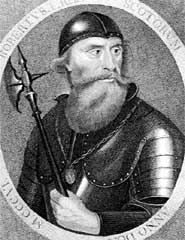
Elizabeth de Burgh, the Captive Queen

edb1
King Robert I and Queen Elizabeth

Certain periods and people in history hold a particular fascination for me. Robert the Bruce is one such. The grandfather of the Stewart dynasty and hero of Scotland, he started his career with some very divided loyalties. Initially a supporter of Edward I, it was only the arrival of William Wallace that started Bruce on his journey to becoming the saviour of Scottish independence.

Through the murder of his greatest rival and the Battle of Bannockburn, Bruce proved himself determined and resourceful, overcoming defeat to emerge victorious and master of his realm.

Bruce suffered greatly for the crown, with his family and friends facing similar hardships.

Robert the Bruce’s wife endured a no less punishing life in support of her husband.

Elizabeth de Burgh was born around 1289. The daughter of Richard de Burgh, Earl of Ulster and Connaught, and his wife, Margaret, she was a god-daughter of England’s king, Edward I. At the age of 13 Elizabeth was married to Robert the Bruce, Earl of Carrick, in 1302; probably at his manor of Writtle, near Chelmsford in Essex. It is possible the marriage was arranged by Edward; he certainly encouraged it, as a way of keeping his young Scottish noble loyal to his cause.

Queen Elizabeth de Burgh

However, events in Scotland would soon push the Bruce away from his English alliances; his murder of his greatest rival for the throne, John Comyn, in the Chapel of the Greyfriars in Dumfries. Aware that he would be excommunicated for his actions, Bruce raced to Scone to be crowned before a papal bull could be issued.

6 weeks later, on March 25th 1306, the Bruce was crowned King Robert I of Scotland, with Elizabeth by his side, by Isabella MacDuff, Countess of Buchan. As daughter of the Earl of Fife, Isabella claimed the hereditary right of the Clan MacDuff, to crown the King of Scots. The couple was crowned in a second ceremony the next day by the Bishop of St Andrews, William Lamberton, who had arrived too late to play his part in the ceremony on the 25th. Elizabeth is said to have referred to herself and Robert as ‘the king and queen of the May’ which is often seen as a criticism of her husband but may also be a foreshadowing of what was to come.

Unfortunately the coronation was not the end of trouble for the Bruces. If anything, things were about to get much worse.

An ailing Edward I sent his loyal lieutenant, Aymer de Valence, north and he met and defeated Robert’s army at Methven in June of the same year. Robert sent his brother Neil and the Earl of Atholl to escort his wife to safety. They took the Queen, Princess Marjorie (Robert the Bruce’s daughter by his first marriage), sisters Mary and Christian and the countess of Buchan, north towards Orkney.

Robertthebruce
Nineteenth Century depiction of Robert the Bruce

However, the English caught up with them at Kildrummy Castle and laid siege to it. The garrison was betrayed from within, the barns set alight and the Bruce women had barely time to escape with the Earl of Atholl before the castle was taken. Sir Neil Bruce and the entire garrison were executed; Neil was hung, drawn and quartered at Berwick in September 1306.

Queen Elizabeth and her companions made for Tain, in Easter Ross, possibly in the hope of finding a boat to take them onwards, to King Robert’s sister Isabella, Queen of Norway. However, they were captured by the Earl of Ross (a former adherent of the deposed King John Balliol), who took them from sanctuary at St Duthac and handed them over to the English. They were sent south, To Edward I at Lanercost Priory.

Elizabeth’s capture would have been a hard blow for Robert the Bruce. The new King of Scotland still lacked a male heir, and had no chance of getting one while his wife was in English hands. This made his hold on the throne even more precarious than it already was.

Edward I’s admirer, Sir Maurice Powicke said Edward treated his captives with a ‘peculiar ferocity’. He ordered that 24-year-old Mary Bruce and Isabella, the Countess of Buchan who performed Robert the Bruce’s coronation, should be imprisoned in specially constructed iron cages and suspended from the outside walls of castles; Mary at Roxburgh and Isabella at Berwick. Although it is more likely that the cages were in rooms within the castles, rather than exposed to the elements, they would be held in that way for 4 years, until Edward I’s successor, Edward II, ordered their removal to convents in 1310.

cropped-15720609675_e6e7a0fbcd_k2.jpg
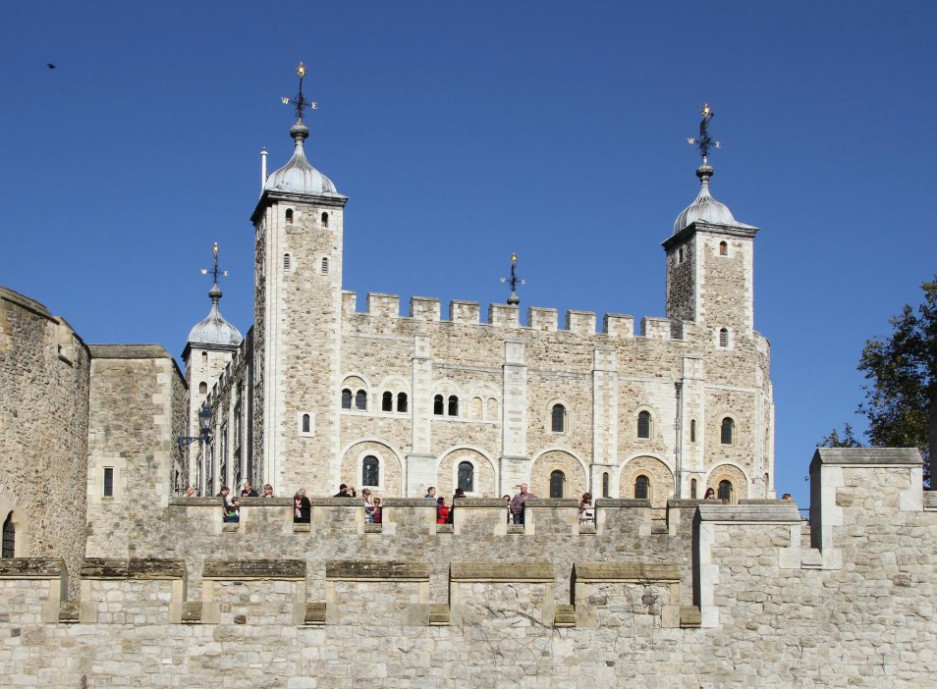
The Tower of London

It seems Edward ordered a cage to be made Marjorie at the Tower of London, where she was first held. But he relented, possibly because of her age, and the child – not yet 12 years old – was sent to a nunnery in Yorkshire. Initial orders were given that she should be held in solitary confinement, with no one allowed to speak to her; but this may also have been rescinded.

Marjorie’s aunt and Mary’s older sister, Christian, was also sent to a Gilbertine nunnery, this time in Lincolnshire; although her husband, Sir Christopher Seton, was hung, drawn and beheaded at Dumfries.

Elizabeth was treated more kindly than her step-daughter, and the other ladies. Her father was a close ally of Edward I and the king did not want to alienate him. He refused to acknowledge her as Queen of Scots and throughout her captivity, Elizabeth was referred to as Countess of Carrick, Robert’s title before he became king. Elizabeth was sent to Burstwick Manor in Holderness, Yorkshire, from where she wrote to Edward I, in an undated letter, complaining that she only had 3 changes of clothes, and no bed linen. She then spent 4 years at Bisham Manor in Berkshire.

RobertBruceAndElizabethDeBurgh (280X280)_tcm4-562387
King Robert I (the Bruce) and Queen Elizabeth

However in 1312, with her husband gaining strength and raiding into Yorkshire, she was moved to a more secure location, and held at various sites in the south, including Windsor Castle. By this time she was permitted 6 attendants and was given a regular allowance. Elizabeth was later moved to Shaftesbury Abbey in Dorset but the political situation was about to change.

In 1314 Robert the Bruce achieved a not inconsiderable victory at the Battle of Bannockburn over Edward II and his English forces. Several notable English lords were taken prisoner, including Humphrey de Bohun, Earl of Hereford. Negotiations for his release led to a prisoner exchange and Elizabeth and the rest of the Bruce ladies, finally returned to Scotland after 8 years of imprisonment.

Reunited at last, Robert set about consolidating his kingdom, with his queen at his side.

His daughter, Marjorie Bruce, was married to Walter Stewart, hereditary High Steward of Scotland, though a succession settlement stipulated that Marjorie would only succeed to the throne on the deaths without male issue of King Robert and his one surviving brother, Edward. Following a fall from a horse while heavily pregnant, she gave birth to King Robert’s first grandson, also named Robert and the future king Robert II. Marjorie died just a few hours later.

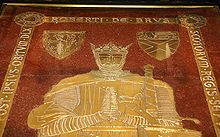
220px-Dunfermline_Abbey_20080504_Robert_the_Bruce
Victorian brass plate covering the final resting place of Robert the Bruce and Elizabeth de Burgh in Dunfermline Abbey

Between 1315 and 1323 Elizabeth and Robert had two daughters: Margaret married William, 5th Earl of Sutherland and died in childbirth in 1346 or 1347; Matilda married Thomas Isaac and had two daughters, she died in 1353.

The  much longed-for son, David, was born in 1324; he was married to Joan of the Tower, daughter of Edward II of England, in 1328 and would succeed his father at the age of 5, as King David II, in 1329.

A second son, John, was born in or before 1327 but died young.

Elizabeth herself died on the 27th of October 1327, aged around 38, at the royal residence at Cullen in Banffshire. Given that her younger son may have been born – and died – in the same year as Elizabeth’s death, complications in childbirth, or in her recovery from childbirth, could well have contributed to Elizabeth’s death. The queen was buried in Dunfermline Abbey; Robert the Bruce was buried beside her when he died 18 months later.

*

Pictures courtesy of Wikipedia.

*

Further Reading:

The Story of Scotland by Nigel Tranter; Brewer’s British Royalty by David Williamson; Kings & Queens of Britain by Joyce Marlow; Mammoth Book of British Kings & Queens by Mike Ashley; Oxford Companion to British History Edited by John Cannon; Edward I A Great and Terrible King by Marc Morris; Britain’s Royal Families by Alison Weir; berkshirehistory.com; englishmonarchs.co.uk; thefreelancehistorywriter.comberkshirehistory.comeducationscotland.gov.uk/scotlandhistory; John of Fordun’s Chronicle of the Scottish Nation; Scotichronicon by Walter Bower; Chronicles of the Age of Chivalry, edited by Elizabeth Hallam; The Chronicle of Lanercost; Robert the Bruce by Stephen Spinks

*

My Books:

Signed, dedicated copies of all my books are available through my online store.

Out now: Scotland’s Medieval Queens

Scotland’s history is dramatic, violent and bloody. Being England’s northern neighbour has never been easy. Scotland’s queens have had to deal with war, murder, imprisonment, political rivalries and open betrayal. They have loved and lost, raised kings and queens, ruled and died for Scotland. From St Margaret, who became one of the patron saints of Scotland, to Elizabeth de Burgh and the dramatic story of the Scottish Wars of Independence, to the love story and tragedy of Joan Beaufort, to Margaret of Denmark and the dawn of the Renaissance, Scotland’s Medieval Queens have seen it all. This is the story of Scotland through their eyes.

Available now from Amazon and Pen and Sword Books

Also by Sharon Bennett Connolly:

Heroines of the Tudor World tells the stories of the most remarkable women from European history in the time of the Tudor dynasty, 1485-1603. These are the women who ruled, the women who founded dynasties, the women who fought for religious freedom, their families and love. Heroines of the Tudor World is now available for pre-order from Amberley Publishing and Amazon UK. Women of the Anarchy demonstrates how Empress Matilda and Matilda of Boulogne, unable to wield a sword themselves, were prime movers in this time of conflict and lawlessness. It shows how their strengths, weaknesses, and personal ambitions swung the fortunes of war one way – and then the other. Available from Bookshop.orgAmberley Publishing and Amazon UKKing John’s Right-Hand Lady: The Story of Nicholaa de la Haye is the story of a truly remarkable lady, the hereditary constable of Lincoln Castle and the first woman in England to be appointed sheriff in her own right. Available from all good bookshops Pen & Sword Booksbookshop.org and Amazon

Defenders of the Norman Crown: The Rise and Fall of the Warenne Earls of Surrey tells the fascinating story of the Warenne dynasty, from its origins in Normandy, through the Conquest, Magna Carta, the wars and marriages that led to its ultimate demise in the reign of Edward III. Available from Pen & Sword BooksAmazon in the UK and US, and Bookshop.orgLadies of Magna Carta: Women of Influence in Thirteenth Century England looks into the relationships of the various noble families of the 13th century, and how they were affected by the Barons’ Wars, Magna Carta and its aftermath; the bonds that were formed and those that were broken. It is now available in paperback and hardback from Pen & SwordAmazon, and Bookshop.orgHeroines of the Medieval World tells the stories of some of the most remarkable women from Medieval history, from Eleanor of Aquitaine to Julian of Norwich. Available now from Amberley Publishing and Amazon, and Bookshop.orgSilk and the Sword: The Women of the Norman Conquest traces the fortunes of the women who had a significant role to play in the momentous events of 1066. Available now from Amazon,  Amberley Publishing, and Bookshop.org.

Alternate Endings: An anthology of historical fiction short stories including Long Live the King… which is my take what might have happened had King John not died in October 1216. Available in paperback and kindle from Amazon.

Podcast:

Have a listen to the A Slice of Medieval podcast, which I co-host with Historical fiction novelist Derek Birks. Derek and I welcome guests, such as Bernard Cornwell and Michael Jecks, and discuss a wide range of topics in medieval history, from significant events to the personalities involved. Every episode is also now available on YouTube.

*

Don’t forget! Signed and dedicated copies of all my books are available through my online bookshop.

For forthcoming online and in-person talks, please check out my Events Page.

You can be the first to read new articles by clicking the ‘Follow’ button, liking our Facebook page or joining me on Twitter and Instagram.

*

©2015 Sharon Bennett Connolly FRHistS
The Tragic Story of the 1st Duke of Rothesay

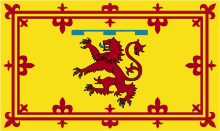
220px-Duke_of_Rothesay_Standard.svg
Standard of the Duke of Rothesay

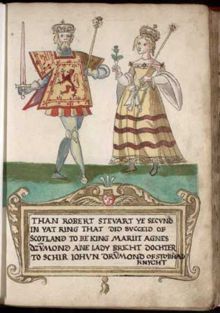
David Stewart was born on 24th October, 1378, the son of John, Earl of Carrick and heir to the throne, and Annabella Drummond. His grandfather was King Robert II, who was himself the grandson of Robert I the Bruce, being the son of Robert’s unfortunate daughter, Marjorie Bruce, who died in childbirth, aged only 19.

His father succeeded to the throne in 1390, taking the name King Robert III (John being considered an unlucky name for kings). AS heir to the throne, David was created Earl of Carrick in the same year. Robert III, however, was an invalid – he had been kicked by a horse 2 years before his accession. Never having fully recovered from his injuries, he was also prone to depression. This severely limited his ability to govern and his younger brother, also called Robert, took over much of the administration of the realm.
As a highly ambitious younger brother, Robert Stewart, was a ruthless politician with designs on the throne for himself. Towards the end of his father’s reign – following his brother’s injury – he had been protector of the realm; and it seems he intended to keep the position for the duration of his brother’s reign.

220px-Robert_III_and_Annabella_Drummond
Robert III and his queen, Annabella Drummond

From 1393 Robert III tried to impose his own authority and rule for himself, but caused more division between the Highlands of the north and the Lowlands of the south; bribery and corruption were rife.

In 1395 young David was married to Elizabeth Dunbar, daughter of the Earl of March. However, they were close blood relations and had married before the required papal dispensation had arrived. The couple were censured by the church and forced to live apart for two years – after which they would be allowed to remarry. They separated in 1397.

In April 1398 Robert III’s wife, Annabella, called a special council at which David, still only 19, was made Duke of Rothesay. It was the first ever creation of a duke in Scotland, and the title would, from that moment on, be borne by all heirs to the Scottish throne. He would also receive the title Earl of Atholl later in the same year.

Annabella also had David named “Lieutenant of the Realm”, as a means of ensuring that David would succeed his increasingly frail father. This appointment essentially gave him the rule of Scotland, in his father’s place; although he was to consult with the full council, with his Uncle Robert as his primary advisor.

In the same council Robert Stewart was made Duke of Albany.

A power struggle developed between Albany and David. As their rivalry grew more intense the country was effectively divided into 2 factions.

David, it seems, was of a ‘dissolute and licentious’ nature (Ashley) and almost as inept as his father. According to Nigel Tranter he was “high-spirited” and “not always noted for good judgement”.

220px-Robert_of_Albany
Robert Stewart, Duke of Albany

In 1400, instead of remarrying Elizabeth Dunbar, David married Marjorie Douglas, daughter of Archibald the 3rd Earl of Douglas and his wife Joan, at Bothwell Church. She and David would have no children.

The marriage itself caused the Earl of March – father of David’s 1st wife – to renounce his allegiance and swear fealty to Henry IV of England, thus prompting an English invasion. Henry managed to reach Edinburgh without much opposition. Once there he summoned the dukes of Rothesay and Albany to pay homage to him, but neither did.

David held Edinburgh Castle against Henry, whilst Albany had mustered an army 15 miles away at Calder Muir; but he failed to march to Rothesay’s aid. Henry IV was eventually forced to retire for lack of supplies, with the Scots powerless to take the advantage.

David was blamed for provoking the English invasion. Following his mother’s death in 1401, his popularity was further damaged when he failed to consult his council, as was required, before taking a number of steps which threatened the positions of his nobles, especially his uncle.

220px-Falkland_Palace
Falkland Palace

With Queen Annabella’s death went David’s chief supporter and last protector. Albany, in alliance with David’s brother-in-law, the 4th Earl of Douglas, took action and had David waylaid on the road to St Andrews, arrested and held captive in St Andrews Castle, before being moved to Falkland Palace, supposedly hooded and mounted backwards on a mule.

According to Tranter, David was flung into a cellar, with no food and water. There were stories of nursing mothers giving him their breast milk for sustenance, through a crack in the cellar’s masonry. He survived for at least 18 days, supposedly dying of starvation between 25th and 27th March 1402, aged 23.

Some historians now think David died of dysentery; but whether he died of starvation or disease the result was the same; from April 1402 Robert, Duke of Albany, was in control of Scotland.

A few weeks after his death a public inquiry, under the control of Albany, exonerated Albany and Douglas of any complicity in the death, ordering that no one should “murmur against” them. The inquiry concluded that David Stewart, Duke of Rothesay, had died “by divine providence and not otherwise”.

300px-Lindores_abbey_04
Lindores Abbey, burial-place of David, Duke of Rothesay

David was buried in Lindores Abbey, Fife. The king founded a chaplaincy at the parish church of Dundee to pray for David’s soul, and ordered daily masses to be said in the prince’s memory at Deer Abbey and Culross.

Following David’s death his widow, Marjorie, went on to marry Sir Walter Haliburton in 1403; she died sometime before 11th May 1421.

The king, Robert III, took some time to realise that his second son, James, may also be in danger. In 1406, the king arranged for him to be sent to France for his own safety. Aged just 12, James was smuggled out of Scotland by ship, but was captured by pirates off Flamborough Head, and handed over to the English to begin 18 years of imprisonment.

King Robert III died of grief shortly after.

Albany was, thereafter, the effective ruler of Scotland until his death in 1420.

*

Pictures courtesy of Wikipedia.

Sources: The Story of Scotland by Nigel Tranter; Brewer’s British Royalty by David Williamson; Kings & Queens of Britain by Joyce Marlow; Mammoth Book of British Kings & Queens and British Kings & Queens by Mike Ashley; Oxford Companion to British History Edited by John Cannon; History Today Companion to British History Edited by juliet Gardiner & Neil Wenborn; Britain’s Royal Families by Alison Weir; undiscoveredscotland.co.uk; englishmonarchs.co.uk

*

My Books

Signed, dedicated copies of all my books are available, please get in touch by completing the contact me form.

Coming 30 May 2023!

King John’s Right-Hand Lady: The Story of Nicholaa de la Haye is now available for pre-order from Pen & Sword Booksbookshop.org and Amazon UK. (I will hopefully have a US release date shortly)

In a time when men fought and women stayed home, Nicholaa de la Haye held Lincoln Castle against all-comers. Not once, but three times, earning herself the ironic praise that she acted ‘manfully’. Nicholaa gained prominence in the First Baron’s War, the civil war that followed the sealing of Magna Carta in 1215.

A truly remarkable lady, Nicholaa was the first woman to be appointed sheriff in her own right. Her strength and tenacity saved England at one of the lowest points in its history. Nicholaa de la Haye is one woman in English history whose story needs to be told…

 Also by Sharon Bennett Connolly:

Defenders of the Norman Crown: The Rise and Fall of the Warenne Earls of Surrey tells the fascinating story of the Warenne dynasty, of the successes and failures of one of the most powerful families in England, from its origins in Normandy, through the Conquest, Magna Carta, the wars and marriages that led to its ultimate demise in the reign of Edward III. Defenders of the Norman Crown: Rise and Fall of the Warenne Earls of Surrey is now available from Pen & Sword BooksAmazon in the UK and US, Bookshop.org and Book Depository.

Ladies of Magna Carta: Women of Influence in Thirteenth Century England looks into the relationships of the various noble families of the 13th century, and how they were affected by the Barons’ Wars, Magna Carta and its aftermath; the bonds that were formed and those that were broken. It is now available in paperback and hardback from Pen & Sword,  AmazonBookshop.org and from Book Depository worldwide.

Heroines of the Medieval World tells the stories of some of the most remarkable women from Medieval history, from Eleanor of Aquitaine to Julian of Norwich. Available now from Amberley Publishing and Amazon, Bookshop.org and from Book Depository worldwide.

Silk and the Sword: The Women of the Norman Conquest traces the fortunes of the women who had a significant role to play in the momentous events of 1066. Available now from Amazon,  Amberley Publishing, Bookshop.org and Book Depository.

Alternate Endings: An anthology of historical fiction short stories including Long Live the King… which is my take what might have happened had King John not died in October 1216. Available in paperback and kindle from Amazon.

*

For forthcoming online and in-person talks, please check out my Events Page.

*

You can be the first to read new articles by clicking the ‘Follow’ button, liking our Facebook page or joining me on Twitter and Instagram.

*

2015 Sharon Bennett Connolly FRHistS