The Jilted Princess

JoanEngland
Joan of England, Queen of Scotland

Joan of England was the oldest of daughter of King John and his 2nd wife, Isabella of Angoulême. Born on 22 July 1210 she was the 3rd of 5 children; she had 2 older brothers and 2 younger sisters would join the family by 1215.

Even before her birth, she was mooted as a possible bride for Alexander of Scotland, son of King William I of Scotland. A verbal agreement between the two kings, after the Treaty of Norham, in 1209 provided for John to arrange the marriages of William’s two daughters, with one marrying a son of John’s, and Alexander marrying one of John’s daughters.

Following the death of William I a further treaty in 1212 agreed to the marriage of 14-year-old Alexander II to 2-year-old Joan. However, the agreement seems to have been made as a way of preventing Alexander from looking to the continent – and especially France – for a potential bride, and by extension allies.

It did not stop John from looking further afield, nevertheless, for a more favourable marriage alliance. Nor did it stop Alexander from siding with the Barons against King John; Alexander was one of the Magna Carta signatories. John refused a proposal from King Philip II of France, for his son John, and settled in 1214 for a marriage with his old enemies the de Lusignan’s.

In 1214 Joan was betrothed to Hugh X de Lusignan. Hugh was the son of John’s rival for the hand of Isabella in 1200; Isabella’s engagement to Hugh IX was broken off  in order for her to marry John. Following the betrothal Hugh, Lord of Lusignan and Count of La Marche, was given custody of Joan and of Saintes, Saintonge and the Isle of Oléron as pledges for her dowry. Joan was just 4 years old when she travelled to the south of France to live with her future husband’s family. She was away from England at the height of the Baron’s War, and at her father’s death in October 1216.

It’s possible she was reunited with her mother in 1217 when Isabella of Angoulême left England, abandoning her four other children, in order to govern her own lands in Angoulême.

In 1220 in a scandalous about-face Hugh repudiated Joan and married her mother, his father’s former betrothed. And poor 9-year-old Joan’s erstwhile future husband was now her step-father!
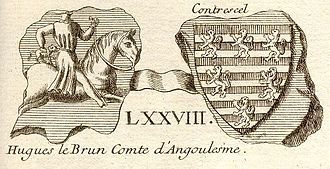
330px-Hugues_le_Brun
Hugh X de Lusignan, Joan’s betrothed and step-father

And worse was to come…

Instead of being sent back to England, as you would expect, Joan went from being Hugh’s betrothed – to being his prisoner. She was held hostage to ensure Hugh’s continued control of her dower lands, and to guarantee the transfer of his new wife’s dower, while England was withholding Queen Isabella’s dower against the return of Joan’s dower lands.

Negotiations to resolve the situation were ongoing. In the mean time, Henry III was already looking to arrange a new marriage for Joan. On 15th June 1220, in York, a conference between Alexander II and Henry III saw the Scots king agree to marry Joan, with a provision that he would marry Joan’s younger sister, Isabella, if Joan was not returned to England in time.

Negotiations for Joan’s return were long and difficult and not helped by the fact Hugh was threatening war in Poitou. Eventually, after Papal intervention, agreement was reached in October 1220 and Joan was surrendered to the English.

Joan and Alexander II were married on the 19th June 1221, at York Minster. Joan was just a month from her 11th birthday, while Alexander was 22. The archbishop of York performed the ceremony, which was witnessed Henry III and the great magnates of both realms. Henry III’s Pipe Rolls suggest the wedding was followed by 3 days of celebrations, costing £100. According to the Chronicle of Melrose ‘having celebrated the nuptials most splendidly, as was befitting, with all the natives of either realm rejoicing, [Alexander] conducted [Joan] to Scotland.’
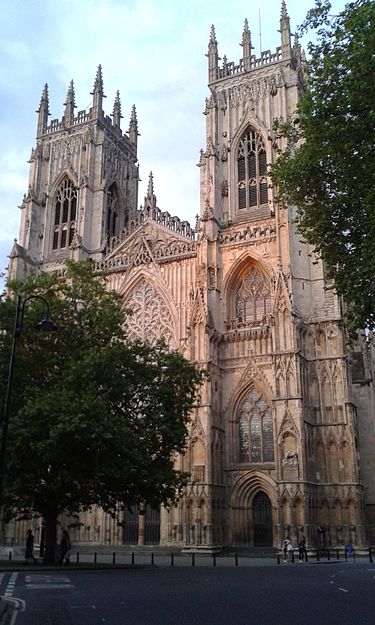
York.mstr.
York Minster

The day before the wedding Alexander had assigned dower estates to Joan, worth an annual income of £1,000, including Jedburgh, Crail and Kinghorn. However, part of the dower was still held by Alexander’s mother, the dowager Queen Ermengarde, and Joan was not entitled to the income until after her mother-in-law’s death. This left Joan financially dependent on Alexander from the beginning.

There is a suggestion that Joan was not enamoured with Scotland and its society. She was hampered by her youth, her domineering mother-in-law and, eventually, by the fact she failed  to produce the desired heir. Her position was further hindered by tensions between her husband and brother from time to time.

In this, though, she seems to have found her purpose. Joan regularly acted as intermediary between the 2 kings. Alexander often used Joan’s personal letters to her brother as a way of communicating with Henry, while bypassing the formality of official correspondence between kings.

One such letter is a warning, possibly on behalf of Alexander’s constable, Alan of Galloway, of intelligence that Haakon IV of Norway was intending to aid Hugh de Lacy in Ireland. In the same letter she assured Henry that no one from Scotland would be going to Ireland to fight against Henry’s interests. Another letter, this time from Henry, was of a more personal nature, written in February 1235 it informed Joan of the marriage of their “beloved sister” Isabella to the holy Roman Emperor Frederick II, news at which he knew Joan “would greatly rejoice”.

In December 1235 Alexander and Joan were summoned to London, possibly for the coronation of Henry’s new queen, Eleanor of Provence. This would have been a long and arduous journey for the Scots monarchs, especially in the deepest part of winter.

Henry’s use of Joan as an intermediary suggests she did have some influence over her husband, this theory is supported by the fact that Joan accompanied Alexander to negotiations with the English king, at Newcastle in September 1236 and again at York in September 1237.

In 1234 Henry had granted Joan the manor of Fenstanton in Huntingdonshire and during the 1236 negotiations she was granted Driffield in Yorkshire, giving Joan an income independent of Scotland. Many have seen this as an indication that Joan was intending to spend more time in England, especially seeing as the chronicler Matthew Paris hints at an estrangement, although we cannot be certain.
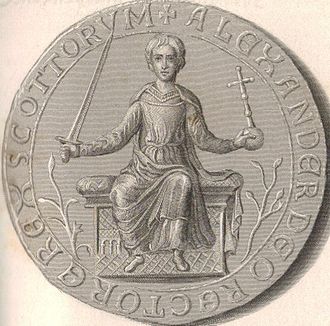
330px-Alexander_II_(Alba)_i
Alexander II

The 1236 and 1237 councils were attempts at resolving the ongoing claims of Alexander that King John had agreed to gift Northumberland to Alexander as part of the marriage contract between Alexander and Joan. Henry, of course, denied this. With the mediation of a papal legate, agreement was eventually reached in York at the 1237 council, with both queens present, when Alexander gave up the claim to Northumberland in return for lands in the northern counties with an annual income of £200.

Following the 1237 council Joan and her sister-in-law Eleanor of Provence departed on pilgrimage to the shrine of Thomas Becket at Canterbury. Given that Joan was now 27 and Eleanor already married for two years, it is possible both women were praying for children, and an heir.

Joan stayed in England for the rest of the year; much of the stay seems to have been informal and pleasurable. She spent Christmas at Henry’s court and was given new robes for herself, her clerks and servants, in addition to gifts of does and wine. Her widowed sister Eleanor, Countess of Pembroke, was present, along with the Countess of Chester and Joan’s cousin, the captive Eleanor of Brittany.

In late January arrangements were being made for Joan’s return to Scotland, but she fell ill before she could travel north. Still only 27 years of age Joan died on 4th March 1238 at Havering-atte-Bower in Essex, her brothers, King Henry III and Richard, Earl of Cornwall, were at her side.
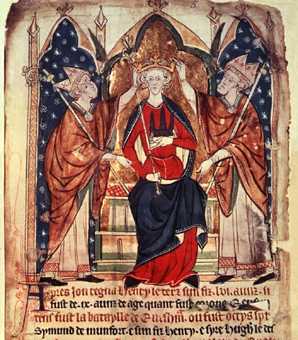
HenryIII
Henry III

According to Matthew Paris ‘her death was grievous, however she merited less mourning, because she refused to return [to Scotland] although often summoned back by her husband’. And even in death Joan elected to stay in England. her will requested that she be buried at the Cistercian nunnery of Tarrant in Dorset.

The convent benefited greatly from Henry III’s almsgiving for the soul of his sister; in 1252, over 13 years after her death, the king ordered a marble effigy to be made for her tomb (which unfortunately has not survived).

Talking of her wedding day, the Chronicle of Lanercost had described Joan as ‘a girl still of a young age, but when she was an adult of comely beauty.’

Alexander II married again just over a year after Joan’s death, to Marie de Coucy and their son, Alexander III, the longed-for heir, was born in 1241. Alexander II died of a fever in 1249.

*

Images courtesy of Wikipedia

*

Sources: The Oxford Companion to British History Edited by John Cannon; The Plantagenets, the Kings who Made England by Dan Jones; History Today Companion to British History Edited by Juliet Gardiner and Neil Wenborn;  Brewer’s British Royalty by David Williamson; Britain’s Royal Families, the Complete Genealogy by Alison Weir; The Plantagenet Chronicles Edited by Elizabeth Hallam; The Mammoth Book of British Kings and Queens by Mike Ashley; The Plantagenets, the Kings that made Britain by Derek Wilson; England Under the Norman and Angevin Kings  by Robert Bartlett; http://www.britannica.com; oxforddnb.com; finerollshenry3.org.uk.

*

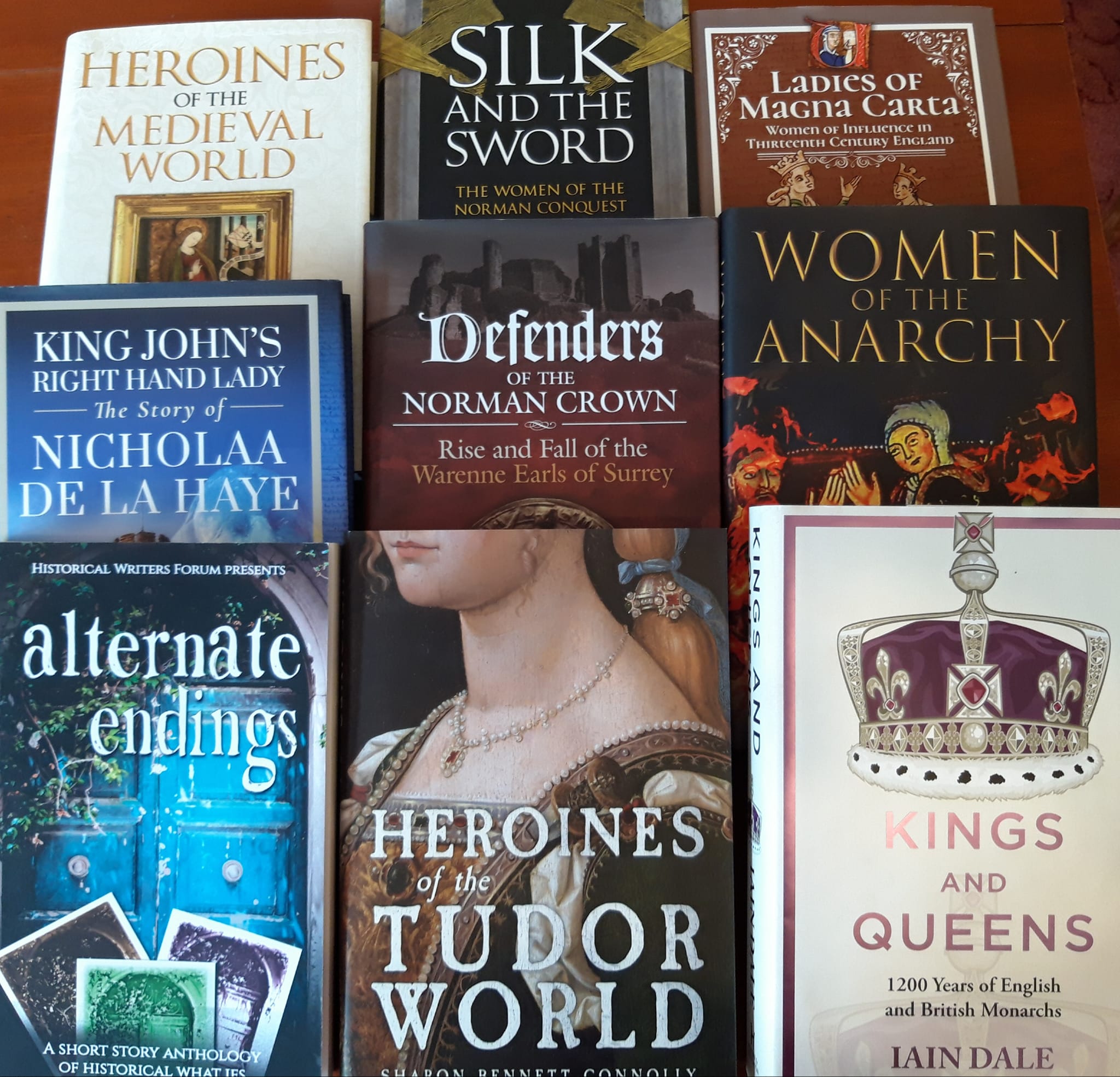
My Books

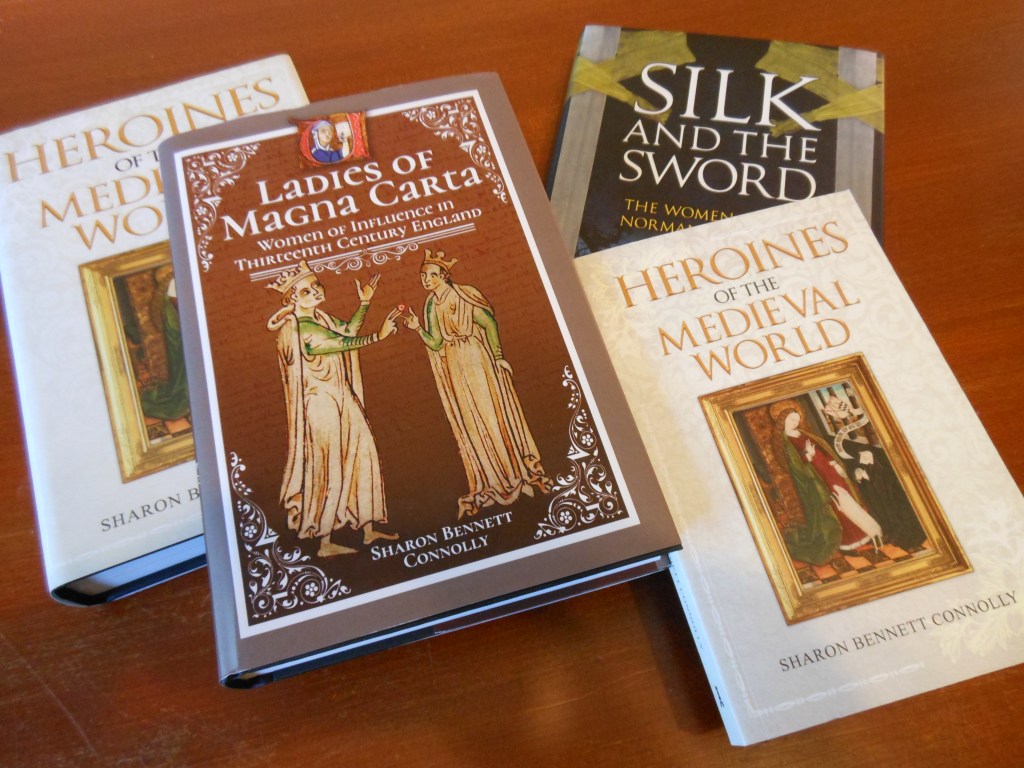
Signed, dedicated copies of all my books are available through my online bookshop.

Coming 30 January 2025: Scotland’s Medieval Queens

Scotland’s history is dramatic, violent and bloody. Being England’s northern neighbour has never been easy. Scotland’s queens have had to deal with war, murder, imprisonment, political rivalries and open betrayal. They have loved and lost, raised kings and queens, ruled and died for Scotland. From St Margaret, who became one of the patron saints of Scotland, to Elizabeth de Burgh and the dramatic story of the Scottish Wars of Independence, to the love story and tragedy of Joan Beaufort, to Margaret of Denmark and the dawn of the Renaissance, Scotland’s Medieval Queens have seen it all. This is the story of Scotland through their eyes.

Available for pre-order now.

Also by Sharon Bennett Connolly:

Heroines of the Tudor World tells the stories of the most remarkable women from European history in the time of the Tudor dynasty, 1485-1603. These are the women who ruled, the women who founded dynasties, the women who fought for religious freedom, their families and love. Heroines of the Tudor World is now available for pre-order from Amberley Publishing and Amazon UK. Women of the Anarchy demonstrates how Empress Matilda and Matilda of Boulogne, unable to wield a sword themselves, were prime movers in this time of conflict and lawlessness. It shows how their strengths, weaknesses, and personal ambitions swung the fortunes of war one way – and then the other. Available from Bookshop.orgAmberley Publishing and Amazon UKKing John’s Right-Hand Lady: The Story of Nicholaa de la Haye is the story of a truly remarkable lady, the hereditary constable of Lincoln Castle and the first woman in England to be appointed sheriff in her own right. Available from all good bookshops Pen & Sword Booksbookshop.org and Amazon

Defenders of the Norman Crown: The Rise and Fall of the Warenne Earls of Surrey tells the fascinating story of the Warenne dynasty, from its origins in Normandy, through the Conquest, Magna Carta, the wars and marriages that led to its ultimate demise in the reign of Edward III. Available from Pen & Sword BooksAmazon in the UK and US, and Bookshop.orgLadies of Magna Carta: Women of Influence in Thirteenth Century England looks into the relationships of the various noble families of the 13th century, and how they were affected by the Barons’ Wars, Magna Carta and its aftermath; the bonds that were formed and those that were broken. It is now available in paperback and hardback from Pen & SwordAmazon, and Bookshop.orgHeroines of the Medieval World tells the stories of some of the most remarkable women from Medieval history, from Eleanor of Aquitaine to Julian of Norwich. Available now from Amberley Publishing and Amazon, and Bookshop.orgSilk and the Sword: The Women of the Norman Conquest traces the fortunes of the women who had a significant role to play in the momentous events of 1066. Available now from Amazon,  Amberley Publishing, and Bookshop.org.

Alternate Endings: An anthology of historical fiction short stories including Long Live the King… which is my take what might have happened had King John not died in October 1216. Available in paperback and kindle from Amazon.

Podcast:

Have a listen to the A Slice of Medieval podcast, which I co-host with Historical fiction novelist Derek Birks. Derek and I welcome guests, such as Bernard Cornwell and Michael Jecks, and discuss a wide range of topics in medieval history, from significant events to the personalities involved. Every episode is also now available on YouTube.

*

Don’t forget! Signed and dedicated copies of all my books are available through my online bookshop.

For forthcoming online and in-person talks, please check out my Events Page.

You can be the first to read new articles by clicking the ‘Follow’ button, liking our Facebook page or joining me on TwitterThreadsBluesky and Instagram.

*

©2015 Sharon Bennett Connolly FRHistS
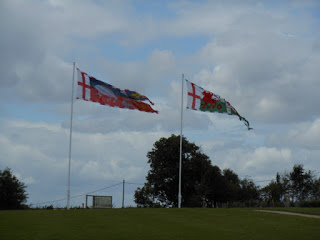
Walking Bosworth’s Battlefield

“Two Kings – One Battle”

062
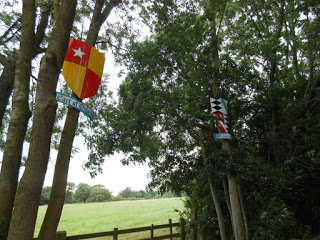
The standards of Richard III and Henry VII

Last year I took my 9-year-old son and 40-something husband to visit their first battlefield. We were holidaying in Derbyshire and decided to drive down to Leicestershire and visit Bosworth. With all the hype around the discovery and re-burial of Richard III, it seemed a great way to show a 9-year-old the story of a battle.

He, of course, knows a little of the Richard III story. He can identify the king’s portrait and knows he was involved in the Wars of the Roses, but we don’t linger on the Princes in the Tower too much. I don’t think he is as familiar with Henry VII, but he can tell you all of Henry VIII’s queens, in order, and tell you their fate. So taking my son to the battlefield was a way of giving him a place and time where he could visualise the events and the people.

It worked.

However, what I found surprising was the effect it had on my husband. Hubby is a bit of a computer geek and into all the mod cons. He never had an interest in history before he met me, and even now I can see his eyes glossing over if I talk too much about the past – 15 minutes a day is usually all he can take!

065
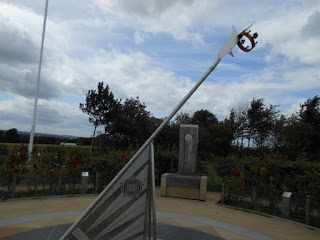
The Sundial on Ambion Hill

I have visited battlefields before; Waterloo, Stamford Bridge, Hastings and a few others. The calm serenity always amazes me. I expect to hear the echoes of battle, the cries of the wounded, clashes of arms and the shouted orders of the battle’s commanders – and the thunder of the horses hooves during the cavalry charge. At Bosworth, if you close your eyes tight, and listen intently, you can almost hear it…..

071
The Battle of Bosworth Trail

The Battlefield trail is a wonderful leisurely walk. It’s not the actual battlefield; they found that a short distance away a few years ago, but it is Ambion Hill. And standing at the memorial you have a panoramic view of the area; you can  imagine the 2 sides facing each other, troops in the thick of it and those waiting to engage. My son listened in awe as I described the death of Norfolk and the final, desperate charge of Richard III; and Percy’s men standing, watching and waiting – possibly very close to where we were stood at that moment.

064
View from Ambion Hill

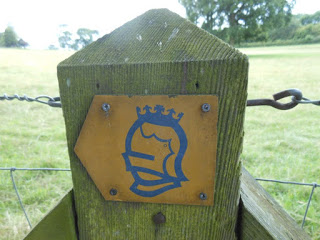
As you walk round the hill and through the woods, there are markers, pointing the way; and viewpoints and information posts telling the story of the battle and explaining the technology and tactics used. One marker explains the use of the longbow, how it dealt death from afar. The marker explained where the archers were positioned during the fighting; you almost expected to look to your right and see them raising their bows to the air.

My son was fascinated by the idea that children as young as he was had already started their knightly training, that there were only about 1,000 knights in the whole of England. And I was amazed to discover that many who could be knights chose not to, in order to avoid the duty and responsibility that came with knighthood; these men were simply called esquires or gentlemen.

081
Information post explaining the use of cannons in the battle

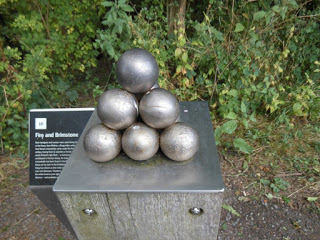
It amazed my husband to discover that cannon and handguns were in use in the battle. 1485 seems to be too long ago for men to have used gunpowder. The handguns were large and cumbersome weapons, too large for one hand to use; guns were still very much in their infancy. However, it was a scattering of cannon balls and other small metal objects (such heraldic badges, spur rowels and coins), found by metal detectors, which finally meant the location of the battlefield could be confidently identified.

091
Battle standards in Ambion Wood

Although the general battlefield has now been identified, we still don’t know where individual parts of the action took place. We can’t say for certain where the action between Norfolk and Oxford took place, nor where Norfolk fell. We can’t tell where Stanley and his men were standing, watching for that turn in the battle that made him decide to join Henry Tudor’s forces.

But the specifics don’t matter as much as I expected they would. The battlefield provides its own story. And the fact you can’t say exactly where each part of the action happened serves to highlight the confusion of a battle. When you’re on the ground, in the thick of it, fighting for your life and your king, you wouldn’t be looking round to see where on the field you were. You would be looking to your own survival, fighting the man in front of you while watching your back.

095
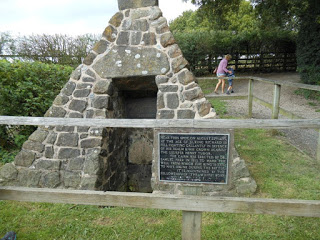
King Richard’s Well, cairn built close to where it is thought the king fell

So the locations of events are vague, but that they are remembered and commemorated is what matters. Whether the marker is where Richard fell matters less than that there is a marker to the fallen king.

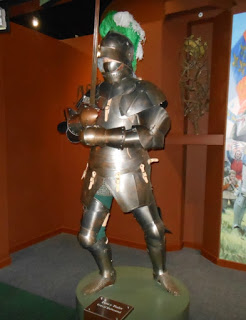
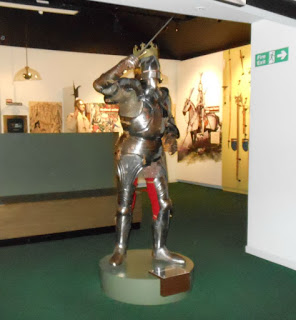
And once you have walked the Battlefield Trail, there is the Heritage Centre to visit. The Centre offers wonderful background to the battle, told through the voices of those involved: a serving girl at a local inn, a mercenary’s wife, an archer. The 2 armoured kings stand watch over you as you view artefacts found on the field of battle and study maps and videos explaining the battle and the troop movements.

057
Henry VII

The Heritage Centre is very hands-on; children can try on the armour and test out the helmets. You can test your ability to draw a longbow; it’s not as easy as you think. By far the most dramatic display is the little corner dedicated to the Barber-Surgeons. The tools of his trade are displayed and a skeleton depicting the wounds of one soldier from the battlefield. Given the recent discovery of Richard III, and the detailed descriptions of his wounds, this seemed a particularly poignant display.

060
Richard III

Walking the battlefield is a humbling experience. So little is known about the men who fought and died in these fields on 22nd August 1485. And, yet, the date marks so much change in English history: the end of one the Plantagenet dynasty and the start of Tudor rule; the end of the Middle Ages and the beginnings of the Renaissance. Just around the corner were the marital problems of Henry VIII and the English Reformation and the subsequent, glorious reign of Elizabeth I. But the men who fought that day would know nothing of the significance of the battle beyond that moment.

*

My Books

Ladies of Magna Carta: Women of Influence in Thirteenth Century England  looks into the relationships of the various noble families of the 13th century, and how they were affected by the Barons’ Wars, Magna Carta and its aftermath; the bonds that were formed and those that were broken. It is now available from Pen & SwordAmazon and from Book Depository worldwide.

Also by Sharon Bennett Connolly:

Silk and the Sword: The Women of the Norman Conquest traces the fortunes of the women who had a significant role to play in the momentous events of 1066.  Available now from Amazon,  Amberley Publishing, Book Depository.

Heroines of the Medieval World tells the stories of some of the most remarkable women from Medieval history, from Eleanor of Aquitaine to Julian of Norwich. Available now from Amberley Publishing and Amazon and Book Depository.

*

You can be the first to read new articles by clicking the ‘Follow’ button, liking our Facebook page or joining me on Twitter and Instagram.

*

Article and all photos © Sharon Bennett Connolly 2015

*

Article originally published on The Review on 19th August 2015.

Blanche, Duchess of Lancaster

240px-Marriage_of_blanche_of_lancster_and_john_of_gaunt_1359
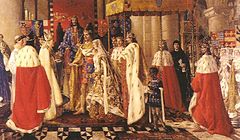
The wedding of Blanche of Lancaster and John of Gaunt, painted by Horace Wright, 1914

Blanche of Lancaster is one of those ladies of history more famous because of her children and the antics of her husband. Blanche’s life was pitifully short, but her legacy would see the unravelling of peace in the 15th century, and the decades of civil war called the Wars of the Roses.

Blanche of Lancaster was born around 25 March 1345, at Bolingbroke Castle in Lincolnshire. She was the second and youngest daughter of illustrious parents; Henry of Grosmont, Duke of Lancaster and Isabella de Beaumont. Henry of Grosmont was the grandson of Edmund Crouchback and a great-grandson of Henry III. Isabella was the daughter of Henry, 1st Baron de Beaumont and Earl of Buchan by right of his wife, Alice Comyn.

225px-Portrait_of_Henry,_Duke_of_Lancaster_-_William_Bruges's_Garter_Book_(c.1440-1450),_f.8_-_BL_Stowe_MS_594_(cropped)
Henry of Grosmont, Duke of Lancaster

Blanche had only one sibling, her older sister, Matilda, who was married, first to Ralph de Stafford and later to William V, Duke of Bavaria, Count of Holland, Hainault and Zeeland. Blanche herself was betrothed to John de Segrave as a child, but this seems to have been set aside soon afterwards.

By the late 1350s Blanche was a part of King Edward III’s plans to provide for his growing number of sons. As one of the country’s richest heiresses, Blanche was chosen as the bride for Edward’s 3rd surviving son, John of Gaunt. Blanche and John were 3rd cousins, being great-great-grandchildren of Henry III.

The couple was married on the 19 May 1359 at Reading Abbey in Berkshire. Blanche had just turned 14 and John was 19 years old.

In 1361 Blanche suffered a double tragedy; her father died of bubonic plague in Leicester in March and her mother succumbed to the same disease before the end of the year. While her sister inherited the earldoms of Leicester and Lincoln, John of Gaunt inherited those of Derby and Lancaster by right of his wife; however, the title of Duke of Lancaster became extinct with Henry of Grosmont’s death.

200px-Johnofgaunt
John of Gaunt, Duke of Lancaster

By April 1362 Blanche’s sister had also succumbed to the Black Death; there were some rumours of poison, but this seems unlikely. Maud had died childless and so Blanche inherited the remainder of her father’s estates. Blanche – and by extension John of Gaunt – now added the earldoms of Leicester and Lincoln to their vast holdings. John was invested with the title of Duke of Lancaster and was now the most powerful magnate in England; holding more than 30 castles, his lands and possessions were second only to those of the king.

Blanche herself was pregnant for most of her married life, giving birth to 7 children between 1360 and 1368. 3 sons, John, Edward and a second John, and a daughter, Isabella, died young. Two daughters and a son did, however, survive into adulthood.

Their eldest daughter, Philippa, was born on 31 March 1360  and would marry King John I of Portugal. Philippa was the mother of 8 children, known as the ‘Illustrious Generation’ in Portugal, including Edward, King of Portugal, Prince Henry the Navigator and Ferdinand the Holy Prince. Philippa herself would die of plague in 1415.

History....the Interesting Bits
Tomb of Henry IV and Joanna of Navarre, Canterbury Cathedral

A second daughter, Elizabeth, was born around 1363 at Burford, Shropshire. Although her first marriage to John Hastings, 3rd Earl of Pembroke, was annulled, her second marriage, to John Holland, 1st Duke of Exeter, would end with his execution for treason in 1400; they had 5 children. Elizabeth would marry for a 3rd time to John Cornwall, 1st Baron Fanhope, with whom she had a daughter before she died in 1426.

Blanche and John’s last surviving child, Henry of Bolingbroke, was born at Bolingbroke Castle in 1367, probably on 15 April. Having been exiled in the later years of the reign of his cousin, Richard II, Henry would return to England following the death of his father and confiscation of his inheritance by the king. Richard was forced to abdicate and Henry succeeded to the throne as King Henry IV.

300px-Old-Bolingbroke-Castle
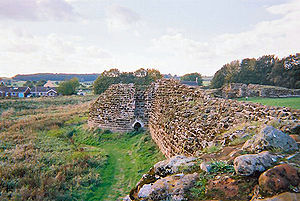
Bolingbroke Castle, Lincolnshire, where Blanche of Lancaster was born

Henry’s first marriage, to Mary de Bohun, produced 7 children, including the future King Henry V; his second marriage was to Joanna of Navarre, Duchess of Brittany. Henry IV died on 20 March 1413 and was buried at Canterbury Cathedral; Joanna would be buried beside him following her own death in 1437.

By 1365 Blanche had taken Katherine Swynford into her household. Katherine was the wife of one of John of Gaunt’s Lincolnshire knights. Moreover, John was godfather to their daughter, Blanche, who was named after the Duchess. Young Blanche Swynford was lodged in the same chambers as the Duchess’s daughters, Philippa and Elizabeth and accorded the same luxuries as the princesses.

Having lost her parents and sister to the Black Death it is not surprising that Blanche was fearful of the disease. In the summer of 1368 she is said to have moved her family away from the city, to Bolingbroke Castle to escape the pestilence.

240px-Wenceslas_Hollar_-_John_of_Gaunt_(monument)
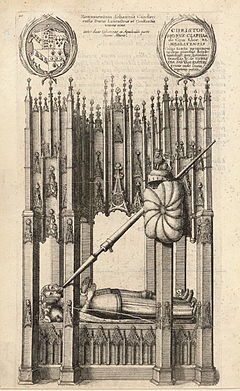
1658 etching by Wenceslas Hollar, of the tomb of John of Gaunt and Blanche of Lancaster

There seems to be some doubt over the year of her death – some sources say 1368, some 1369 – and even the nature of it. One theory is that Blanche succumbed to the bubonic plague, the disease she most feared, in 1369. As a daughter, Isabella, who died young, was born in 1368 some have suggested Blanche died in childbirth. Recent research by Amy Licence has discovered that Blanche died at Tutbury on 12 September, 1368, more likely from the complications of childbirth than from the plague. Her husband was by her side when she died and a letter has come to light in which John arranged to have prayers said for the soul of his lost duchess.¹

Blanche was buried in Old St Paul’s Cathedral, London; where John of Gaunt arranged for a splendid alabaster tomb and annual commemorations for the rest of his life. And despite 2 subsequent marriages, John of Gaunt would be interred next to Blanche following his own death in 1399. The tomb was lost when the cathedral was destroyed during the Great Fire of London in 1666.

Blanche is one of the few ladies of the 14th century of whom we have several descriptions. The Chronicler Froissart noted that she was “jone et jolie” – young and pretty.

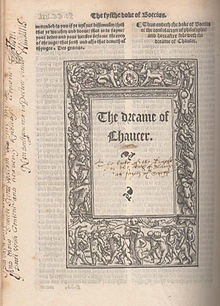
The best description, however, is from Geoffrey Chaucer, Katherine Swynford’s brother-in-law, who was commissioned by John of Gaunt to write The Book of the Duchess, also known as The Deth of Blaunche. The poem is said to depict Gaunt’s mourning for his wife, in the tale of a Knight grieving for his lost love.

220px-The_Dreame_of_Chaucer_Book_of_the_Duchess
Geoffrey Chaucer’s ‘The Book of the Duchess’

Chaucer describes Blanche’s neck (yes, her neck) as “whyt, smothe, streght and flat. Naming the heroine “White”, he goes on to say she is “rody, fresh and lyvely hewed”.  Blanche (White) was “bothe fair and bright” and Nature’s “cheef patron of beautee”.

Despite his marrying Constance of Castile just 2 years later, and his eventual marriage to his mistress, Katherine Swynford, being singled out as one of the great love affairs of the age, it was said that Blanche was the love of his life.

Chaucer’s poem and the lavish tomb and commemorations are said to highlight Gaunt’s love for his first wife; the fact he was eventually buried beside her has been seen, by many, as the final proof of this love.

*

Footnote: ¹Red Roses: From Blanche of Gaunt to Margaret Beaufort by Amy Licence.

*

Photograph of the tomb of Henry IV and Joanna of Navarre are © Sharon Bennett Connolly, 2015. All other pictures are courtesy of Wikipedia.

*

Sources: Brewer’s British Royalty by David Williamson; Red Roses: From Blanche of Gaunt to Margaret Beaufort by Amy Licence; History Today Companion to British History Edited by Juliet Gardiner & Neil Wenborn; The mammoth Book of British kings & Queen by Mike Ashley; Britain’s Royal Families, the Complete Genealogy by Alison Weir; The Life and Times of Edward III by paul Johnson; The Perfect King, the Life of Edward III by Ian Mortimer; Chronicles of the Age of Chivalry Edited by Elizabeth Hallam; unofficialroyalty.com; katherineswynfordsociety.org.uk; The Reign of Edward III by WM Ormrod; The Plantagenets, the kings Who Made Britain by Dan Jones; englishmonarchs.co.uk; oxforddnb.com.

*

My Books

Signed, dedicated copies of all my books are available through my online bookshop.

Out now: Scotland’s Medieval Queens

Books by Sharon Bennett Connolly

Scotland’s history is dramatic, violent and bloody. Being England’s northern neighbour has never been easy. Scotland’s queens have had to deal with war, murder, imprisonment, political rivalries and open betrayal. They have loved and lost, raised kings and queens, ruled and died for Scotland. From St Margaret, who became one of the patron saints of Scotland, to Elizabeth de Burgh and the dramatic story of the Scottish Wars of Independence, to the love story and tragedy of Joan Beaufort, to Margaret of Denmark and the dawn of the Renaissance, Scotland’s Medieval Queens have seen it all. This is the story of Scotland through their eyes.

Scotland’s Medieval Queens gives a thorough grounding in the history of the women who ruled Scotland at the side of its kings, often in the shadows, but just as interesting in their lives beyond the spotlight. It’s not a subject that has been widely covered, and Sharon is a pioneer in bringing that information into accessible history.’ Elizabeth Chadwick (New York Times bestselling author)

Available now from Amazon and Pen and Sword Books

Also by Sharon Bennett Connolly:

Books by Sharon Bennett Connolly

Heroines of the Tudor World tells the stories of the most remarkable women from European history in the time of the Tudor dynasty, 1485-1603. These are the women who ruled, the women who founded dynasties, the women who fought for religious freedom, their families and love. Heroines of the Tudor World is now available for pre-order from Amberley Publishing and Amazon UK. Women of the Anarchy demonstrates how Empress Matilda and Matilda of Boulogne, unable to wield a sword themselves, were prime movers in this time of conflict and lawlessness. It shows how their strengths, weaknesses, and personal ambitions swung the fortunes of war one way – and then the other. Available from Bookshop.orgAmberley Publishing and Amazon UKKing John’s Right-Hand Lady: The Story of Nicholaa de la Haye is the story of a truly remarkable lady, the hereditary constable of Lincoln Castle and the first woman in England to be appointed sheriff in her own right. Available from all good bookshops Pen & Sword Booksbookshop.org and Amazon

History...the Interesting Bits

Defenders of the Norman Crown: The Rise and Fall of the Warenne Earls of Surrey tells the fascinating story of the Warenne dynasty, from its origins in Normandy, through the Conquest, Magna Carta, the wars and marriages that led to its ultimate demise in the reign of Edward III. Available from Pen & Sword BooksAmazon in the UK and US, and Bookshop.orgLadies of Magna Carta: Women of Influence in Thirteenth Century England looks into the relationships of the various noble families of the 13th century, and how they were affected by the Barons’ Wars, Magna Carta and its aftermath; the bonds that were formed and those that were broken. It is now available in paperback and hardback from Pen & SwordAmazon, and Bookshop.orgHeroines of the Medieval World tells the stories of some of the most remarkable women from Medieval history, from Eleanor of Aquitaine to Julian of Norwich. Available now from Amberley Publishing and Amazon, and Bookshop.orgSilk and the Sword: The Women of the Norman Conquest traces the fortunes of the women who had a significant role to play in the momentous events of 1066. Available now from Amazon,  Amberley Publishing, and Bookshop.org.

Alternate Endings: An anthology of historical fiction short stories including Long Live the King… which is my take what might have happened had King John not died in October 1216. Available in paperback and kindle from Amazon.

Podcast:

A Slice of Medieval

Have a listen to the A Slice of Medieval podcast, which I co-host with Historical fiction novelist Derek Birks. Derek and I welcome guests, such as Bernard Cornwell, Helen Castor and Michael Jecks, and discuss a wide range of topics in medieval history, from significant events to the personalities involved. In a recent episode, Kathryn Warner joined us to chat about Blanche’s husband, John of Gaunt

Every episode is also now available on YouTube.

*

Don’t forget! Signed and dedicated copies of all my books are available through my online bookshop.

For forthcoming online and in-person talks, please check out my Events Page.

You can be the first to read new articles by clicking the ‘Follow’ button, liking our Facebook page or joining me on TwitterThreadsBluesky and Instagram.


©2015 Sharon Bennett Connolly FRHistS
Edmund Crouchback, Edward I’s Loyal Brother

arms_of_edmund_crouchback_earl_of_leicester_and_lancaster-svg
Arms of Edmund Crouchback

The fourth child and second son of Henry III and his Queen, Eleanor of Provence,  and named to honour the Old English royal saint, Edmund was born in London on 16th January 1245.

From an early age, Edmund was involved in his father’s schemes to extend Angevin influence across Europe; in 1254 Henry accepted the crown of Sicily from the Pope for the 9-year-old Edmund, but this came to naught and he was to be officially deprived of the kingdom in 1266, when the Pope handed Sicily to Henry’s brother-in-law, Charles of Anjou.

Henry and Eleanor are known to have been devoted parents and had a very close relationship with all their children. However, Edmund grew up in a time of great upheaval in the kingdom. Henry was locked in a power struggle with his barons, led by his brother-in-law, Simon de Montfort, Earl of Leicester. The barons were against expensive entanglements in Europe – such as Edmund’s claim to the Sicilian crown – and what they saw as Henry’s inept and ineffective rule in general.

BodleianDouce231Fol1rEdCrouchbackAndStGeorge
Miniature of Edmund with Saint George

The conflict known as the Barons’ War would lead to what is now seen as the first recognisable English parliament, and to the eventual defeat and destruction of Simon de Montfort at the Battle of Evesham in 1265.

Although Edmund’s youth during the war years meant he took no major part in the conflict, following de Montfort’s death, in October 1265 Edmund was given his lands and titles, including the castle at Kenilworth, which was still holding out against the king. Edmund commanded the Siege of Kenilworth, which held out for 6 months, until starvation forced the garrison’s capitulation. He would also receive the earldom of Lancaster, which was created for him in 1267 by Henry III.

A less-than-chivalric move in 1269 saw Edmund and his older brother, Edward, conspiring against Robert de Ferrers, Earl of Derby, a former Montfort supporter, depriving him of his titles and lands – all of which were passed to Edmund.

In April of the same year, Edmund married Avelina de Forz, daughter of the Earl of Devon and Aumale. The marriage produced no children and Avelina died in 1274.

In 1268 Edward and Edmund had both taken the cross, promising to take part in Crusade to the Holy Land. Although logistics meant they didn’t leave immediately, the brothers travelled separately and Edmund arrived in the Holy Land in September 1271. It is likely that his soubriquet of ‘Crouchback’ comes from him wearing a cross on his back during the Crusades, as there is no evidence of any physical deformity.

After some minor victories, but realising their force wasn’t big enough to retake the Holy Land, and reinforcements from Europe were not forthcoming, Edward signed a 10 year truce with the Muslim leader, Baibars. The following month, May 1272, Edmund sailed for home.

150px-BlancheArtois
Seal of Blanche of Artois

Henry III died in November 1272 and Edmund’s older brother ascended the throne as Edward I. Edmund was loyal to his brother, throughout his reign, playing a supporting role, both militarily and diplomatically. In 1276, Edmund married again; to Blanche of Artois, the widowed Countess of Champagne, whose daughter, Jeanne of Navarre, would marry Philip IV of France in 1284, making Edmund step-father to the French Queen.

Blanche would outlive Edmund, dying in Paris in 1302. They had 4 children together. Thomas was born before 1280 and was executed on the orders of Edward II, following a failed rebellion and his defeat at the Battle of Boroughbridge. Their second son, Henry would eventually succeed to his brother’s titles of Earl of Lancaster, Lincoln, Salisbury, Derby and Leicester. Born around 1281, he married Matilda, daughter of Sir Patrick de Chaworth, and they had 7 children together; their eldest son being Henry of Grosmont, 1st Duke of Lancaster and father of Blanche of Lancaster. A third son, John, Lord of Beaufort and Nogent, was born before May 1286 and died around 1317, leaving no children. Their only daughter, Mary, died young in France.

In Edward’s 1277 Welsh campaign Edmund, the biggest landowner in south Wales, was given the command of the southern army. This second, smaller contingent of the invasion of Wales provided support to Edward’s main army. Having set out shortly after 10th July, Edmund’s force drove deep into Wales, facing little opposition compared to Edward’s army. The main landholders of the south had already capitulated, or had fled to join the Welsh prince, Llewellyn, in the north. Edmund’s army had reached their objective of Aberystwyth by 25th July and, at the start of August, began the construction of the castle there. By September the war was over, Edmund disbanded his army on the 20th – leaving a small contingent to garrison the castle – and returned to England.

As a loyal and loving brother, in 1290 Edmund was involved in organising the funeral arrangements for his sister-in-law, Eleanor of Castile. Historian Dean Irwin has told me of a letter which includes many current events and explains that Edmund had had to cancel a planned trip to Canterbury in order to help with the late queen’s funeral.

Edmond1
Edmund’s seal

In 1294 Edmund used his familial connections with the French crown to broker a peace deal with France; an agreement intended to foster a long-lasting peace and to see his widowed brother Edward married to Margaret, Philip IV’s sister. Edmund agreed to hand over several cities, including Bordeaux, in Gascony, on the understanding they would be returned to Edward on his marriage.

The French had no intention of returning the Gascon lands, and in April 1294, Edmund realised he had been duped; the French ejected the English Seneschal of Gascony and Edward prepared an invasion force, ordered to muster on 1st September.

However, rebellion in Wales meant the postponement of the Gascon expedition and Edmund and his forces were ordered to Worcester. The Welsh having been subdued and Edmund having recovered from unspeicifed illness that struck him at the end of 1295, Edmund and his army finally set sail for Gascony in January 1296.

It was to be Edmund’s last campaign. The French were well entrenched and the English failed to retake Bordeaux, or any of the towns along the Garonne. His money running out, Edmund was forced to retire to Bayonne, where he fell sick, dying there on 5th June 1296.

A devastated Edward I called on his churchmen to pray for ‘our dearest and only brother, who was always devoted and faithful to us…and in whom valour and many gifts of grace shone forth’.

He was buried in Westminster Abbey, recently completed by his father, Henry III.

*

Pictures of Edmund’s coat of arms, seal and Edmund with St George, and of Blanche of Artois, courtesy of Wikipedia.

Further reading: Marc Morris A Great and terrible King; Sara Cockerill Eleanor of Castile: Shadow Queen; Roy Strong The Story of Britain; Mike Ashley The Mammoth Book of British Kings & Queens; Derek Wilson The Plantagenets; Alison Weir Britain’s Royal Families; Dean Irwin.

*

My Books

Signed, dedicated copies of all my books are available through my online store.

Out now: Scotland’s Medieval Queens

Books by Sharon Bennett Connolly

Scotland’s history is dramatic, violent and bloody. Being England’s northern neighbour has never been easy. Scotland’s queens have had to deal with war, murder, imprisonment, political rivalries and open betrayal. They have loved and lost, raised kings and queens, ruled and died for Scotland. From St Margaret, who became one of the patron saints of Scotland, to Elizabeth de Burgh and the dramatic story of the Scottish Wars of Independence, to the love story and tragedy of Joan Beaufort, to Margaret of Denmark and the dawn of the Renaissance, Scotland’s Medieval Queens have seen it all. This is the story of Scotland through their eyes.

Scotland’s Medieval Queens gives a thorough grounding in the history of the women who ruled Scotland at the side of its kings, often in the shadows, but just as interesting in their lives beyond the spotlight. It’s not a subject that has been widely covered, and Sharon is a pioneer in bringing that information into accessible history.’ Elizabeth Chadwick (New York Times bestselling author)

Available now from Amazon and Pen and Sword Books

Also by Sharon Bennett Connolly:

Books by Sharon Bennett Connolly

Heroines of the Tudor World tells the stories of the most remarkable women from European history in the time of the Tudor dynasty, 1485-1603. These are the women who ruled, the women who founded dynasties, the women who fought for religious freedom, their families and love. Heroines of the Tudor World is now available from Amberley Publishing and Amazon UK. Women of the Anarchy demonstrates how Empress Matilda and Matilda of Boulogne, unable to wield a sword themselves, were prime movers in this time of conflict and lawlessness. It shows how their strengths, weaknesses, and personal ambitions swung the fortunes of war one way – and then the other. Available from Bookshop.orgAmberley Publishing and Amazon UKKing John’s Right-Hand Lady: The Story of Nicholaa de la Haye is the story of a truly remarkable lady, the hereditary constable of Lincoln Castle and the first woman in England to be appointed sheriff in her own right. Available from all good bookshops Pen & Sword Booksbookshop.org and Amazon

Defenders of the Norman Crown: The Rise and Fall of the Warenne Earls of Surrey tells the fascinating story of the Warenne dynasty, from its origins in Normandy, through the Conquest, Magna Carta, the wars and marriages that led to its ultimate demise in the reign of Edward III. Available from Pen & Sword BooksAmazon in the UK and US, and Bookshop.orgLadies of Magna Carta: Women of Influence in Thirteenth Century England looks into the relationships of the various noble families of the 13th century, and how they were affected by the Barons’ Wars, Magna Carta and its aftermath; the bonds that were formed and those that were broken. It is now available in paperback and hardback from Pen & SwordAmazon, and Bookshop.orgHeroines of the Medieval World tells the stories of some of the most remarkable women from Medieval history, from Eleanor of Aquitaine to Julian of Norwich. Available now from Amberley Publishing and Amazon, and Bookshop.orgSilk and the Sword: The Women of the Norman Conquest traces the fortunes of the women who had a significant role to play in the momentous events of 1066. Available now from Amazon,  Amberley Publishing, and Bookshop.org.

Alternate Endings: An anthology of historical fiction short stories including Long Live the King… which is my take what might have happened had King John not died in October 1216. Available in paperback and kindle from Amazon.

Podcast:

A Slice of Medieval

Have a listen to the A Slice of Medieval podcast, which I co-host with Historical fiction novelist Derek Birks. Derek and I welcome guests, such as Bernard Cornwell and Michael Jecks, and discuss a wide range of topics in medieval history, from significant events to the personalities involved. Every episode is also now available on YouTube.

*

Don’t forget! Signed and dedicated copies of all my books are available through my online store.

For forthcoming online and in-person talks, please check out my Events Page.

You can be the first to read new articles by clicking the ‘Follow’ button, liking our Facebook page or joining me on TwitterThreadsBluesky and Instagram.

*

©2015  Sharon Bennett Connolly FRHistS