Book Corner: Venus in Winter by Gillian Bagwell

History...the Interesting Bits

The author of The King’s Mistress (U.S. title The September Queen) explores Tudor England with the tale of Bess of Hardwick—the formidable four-time widowed Tudor dynast who became one of the most powerful women in the history of England.

On her twelfth birthday, Bess of Hardwick receives the news that she is to be a waiting gentlewoman in the household of Lady Zouche. Armed with nothing but her razor-sharp wit and fetching looks, Bess is terrified of leaving home. But as her family has neither the money nor the connections to find her a good husband, she must go to facilitate her rise in society.

When Bess arrives at the glamorous court of King Henry VIII, she is thrust into a treacherous world of politics and intrigue, a world she must quickly learn to navigate. The gruesome fates of Henry’s wives convince Bess that marrying is a dangerous business. Even so, she finds the courage to wed not once, but four times. Bess outlives one husband, then another, securing her status as a woman of property. But it is when she is widowed a third time that she is left with a large fortune and even larger decisions—discovering that, for a woman of substance, the power and the possibilities are endless . . .

Venus in Winter by Gillian Bagwell transports you to Tudor England.

In her novel, Venus in Winter, Gillian Bagwell tells the story of the early years of one of my favourite Tudor heroines, Bess of Hardwick. Gillian follows Bess’s life from her teenage years through her first 3 marriages. The first, to Robert Barlow, which was over all-too-soon. Her second husband, William Cavendish, helped her claim her dower rights from Barlow’s estate and, through Cavendish leaving his estate to her, rather than their children, gave Bess the financial independence that few Tudor women knew and enjoyed. The third husband, Sir William St Loe, was trusted by Queen Elizabeth I herself. Each successive marriage gave Bess greater influence, position and financial independence.

Bess of Hardwick is a woman determined never to be poor again. Clever, beautiful and wise beyond her years, she makes the rules of Tudor society work for her.

But it is not all about money. Gillian Bagwell’s Bess is a fine young woman, learning to find her way in the world, to trust her own instincts to help her children and her wider family. She suffers loss, hardship and uncertainty and is the stronger for it. But this is Tudor England! She also finds herself in the Tower of London, facing questions from the queen’s inquisitors. This is the portrayal of a remarkable young woman who became the matriarch of a powerful family.

On New Years’ Day, as the Zouches and their attendants made their way to the presence chamber of Hampton Court, Bess was very excited. For on this day the king would be presented with his gift – the splendid table and chess pieces, which had been completed in time and had traveled from London swaddled in layers of wool.

The mood at court was lighter and happier than at any time Bess could recall. Anne of Cleves was present, companionably chatting with King Henry, and the shadow of Catherine Howard was almost dispelled by the warmth and light from the hundreds of candles, which made the air redolent of honey. A band of musicians played jaunty dance tunes, and the walls were hung with garlands of holly and ivy. Near the king, a table was stacked with gifts of such magnificence that it staggered Bess. Golden goblets, engraved silver coffers, books in richly ornaments bindings, jeweled collars and belts, furs of deep and gleaming pile, which she longed to touch. But nothing like the chess table the Zouches had brought.

Rich pastries and savory morsels were piled on platters, and great bowls of punch perfumed the air with steam. The room rang with laughter and chatter. Bess, Lizzie, and Doll took up a position near the door where they could watch each new arrival while Audrey trailed Lady Zouche as she made her way around the room greeting friends.

“There’s Anne Basset,” Doll said. “I like her. She always makes me laugh.”

“Lady Latimer is looking very pretty, don’t you think?” Bess asked, eyeing the lady’s emerald silk gown with envy. She didn’t recognize the handsome dark-haired man next to her, but knew it was not Lord Latimer. “Her husband must be too ill to be here.”

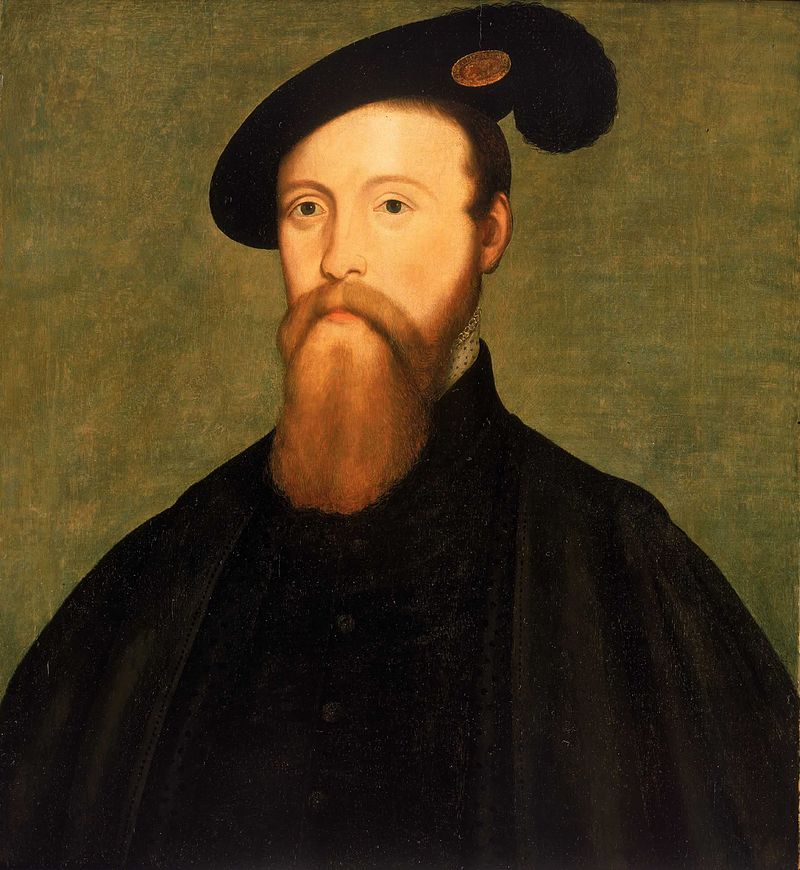
“Small wonder, as old as he is,” Doll whispered. “That’s Sir Thomas Seymour with her.”

In Venus in Winter, Gillian Bagwell has skillfully recreated the Tudor world, from the wilds of Derbyshire, to the splendour of the Tudor court. From the last, fearful years of the reign of Henry VIII to the glory and pageantry of Elizabeth I. Her attention to detail and considerable research means that, while the story is fiction it is woven around the historical facts. From her descriptions of the Derbyshire countryside and the detail of the Tudor palaces, you know that Gillian took her research seriously and visited everything she could, adding a note of authenticity to the story.

The characters in Bess of Hardwick are deep and diverse. Bess of Hardwick is a complex young woman, spurred on by a childhood threatened by poverty. She is ambitious, not so much for success as for security. Some of the great names of the Tudor world also put in an appearance. From Elizabeth I to Robert Dudley to Katherine Grey, Bess’s world is occupied by the great and the good of the 16th century. Bess once served in the household of Frances Grey, daughter of Henry VIII’s sister and mother of Jane Grey and Gillian Bagwell draws their story into Bess’s, showing how deep Bess’s affection for the family went. And telling the story of the Nine Days’ Queen through her eyes.

Venus in Winter is not only a wonderful retelling of Bess of Hardwick’s story but also a fascinating exercise in observing the goings-on of the Tudor court through Bess’s eyes. The attention to detail is exquisite.

I would love to see Gillian write a sequel to this, tackling Bess’s last marriage to George Talbot, Earl of Shrewsbury. It would be great to read her take on Bess and Shrewsbury’s deteriorating relationship as they act as gaolers for Mary Queens of Scots. And to see how Bess became friends with the captive queen, their scheming to marry Bess’s daughter to Mary’s cousin, that could have put Bess’s granddaughter, Arbella, on the throne, had it not all gone so terribly wrong. What a tale that would be! Especially with Gillian’s genius at storytelling.

To Buy the book: Venus in Winter is available from Amazon

About the author:

History...the Interesting Bits

Gillian Bagwell’s historical novels have been praised for their vivid and lifelike characters and richly textured, compelling evocation of time and place. Her first career was in theatre, as an actress and later as a director and producer, and she founded the Pasadena Shakespeare Company and produced thirty-seven shows over ten years. Gillian has found her acting experience helpful to her writing, and many of the workshops and classes she’s taught at the annual Historical Novel Society Conferences in the US and the UK relate to her life in theatre, including writing effective historical dialogue, using acting tools to bring characters to life on the page, and giving effective public readings. She’s also a professional editor and provides writing coaching and manuscript evaluations. Gillian lives in Berkeley, California in the house where she grew up, her life enlivened by her five rescue cats.

*

My Books

Signed, dedicated copies of all my books are available through my online bookshop.

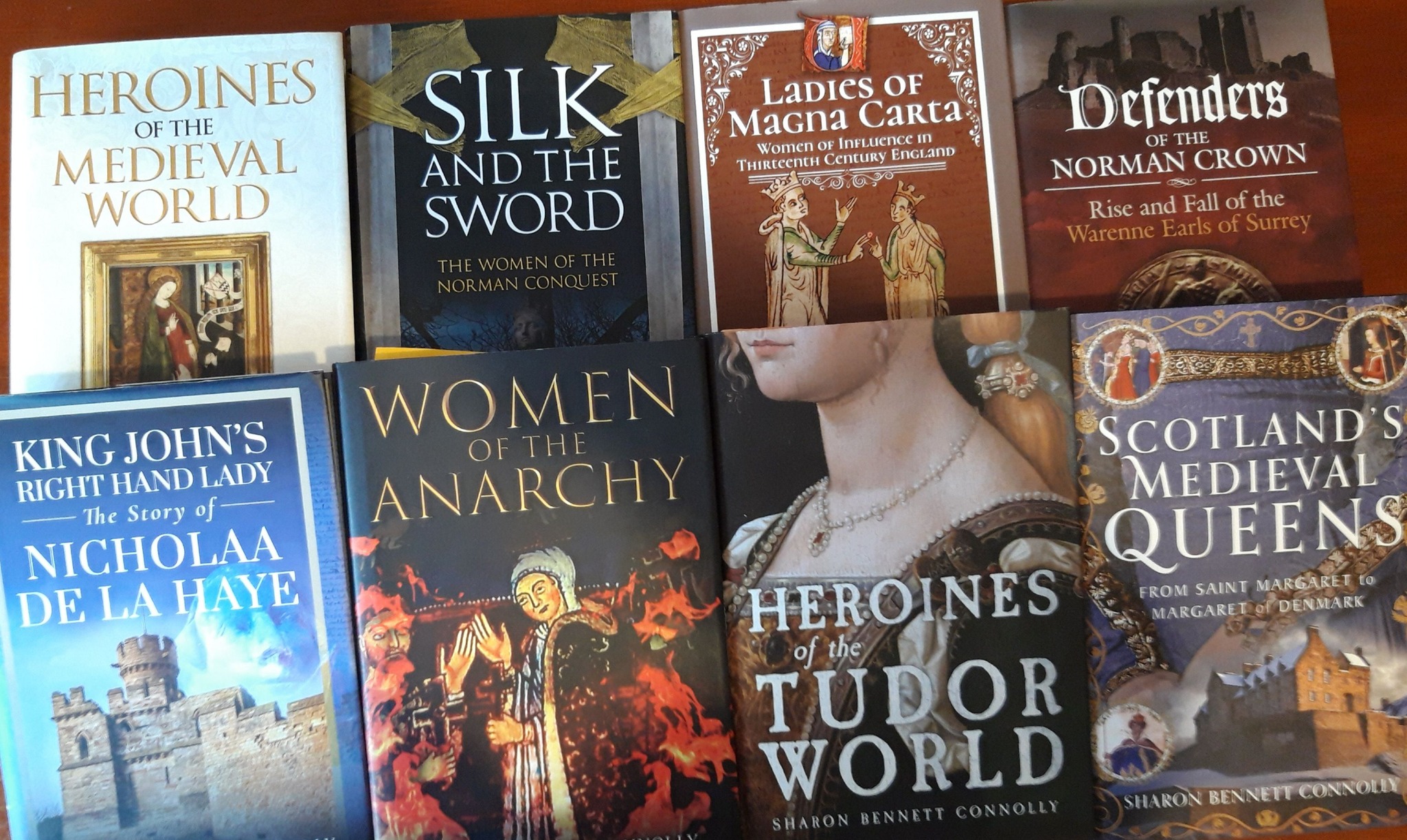
Out now: Scotland’s Medieval Queens

Books by Sharon Bennett Connolly

Scotland’s history is dramatic, violent and bloody. Being England’s northern neighbour has never been easy. Scotland’s queens have had to deal with war, murder, imprisonment, political rivalries and open betrayal. They have loved and lost, raised kings and queens, ruled and died for Scotland. From St Margaret, who became one of the patron saints of Scotland, to Elizabeth de Burgh and the dramatic story of the Scottish Wars of Independence, to the love story and tragedy of Joan Beaufort, to Margaret of Denmark and the dawn of the Renaissance, Scotland’s Medieval Queens have seen it all. This is the story of Scotland through their eyes.

Scotland’s Medieval Queens gives a thorough grounding in the history of the women who ruled Scotland at the side of its kings, often in the shadows, but just as interesting in their lives beyond the spotlight. It’s not a subject that has been widely covered, and Sharon is a pioneer in bringing that information into accessible history.’ Elizabeth Chadwick (New York Times bestselling author)

Available now from Amazon and Pen and Sword Books

Also by Sharon Bennett Connolly:

Books by Sharon Bennett Connolly

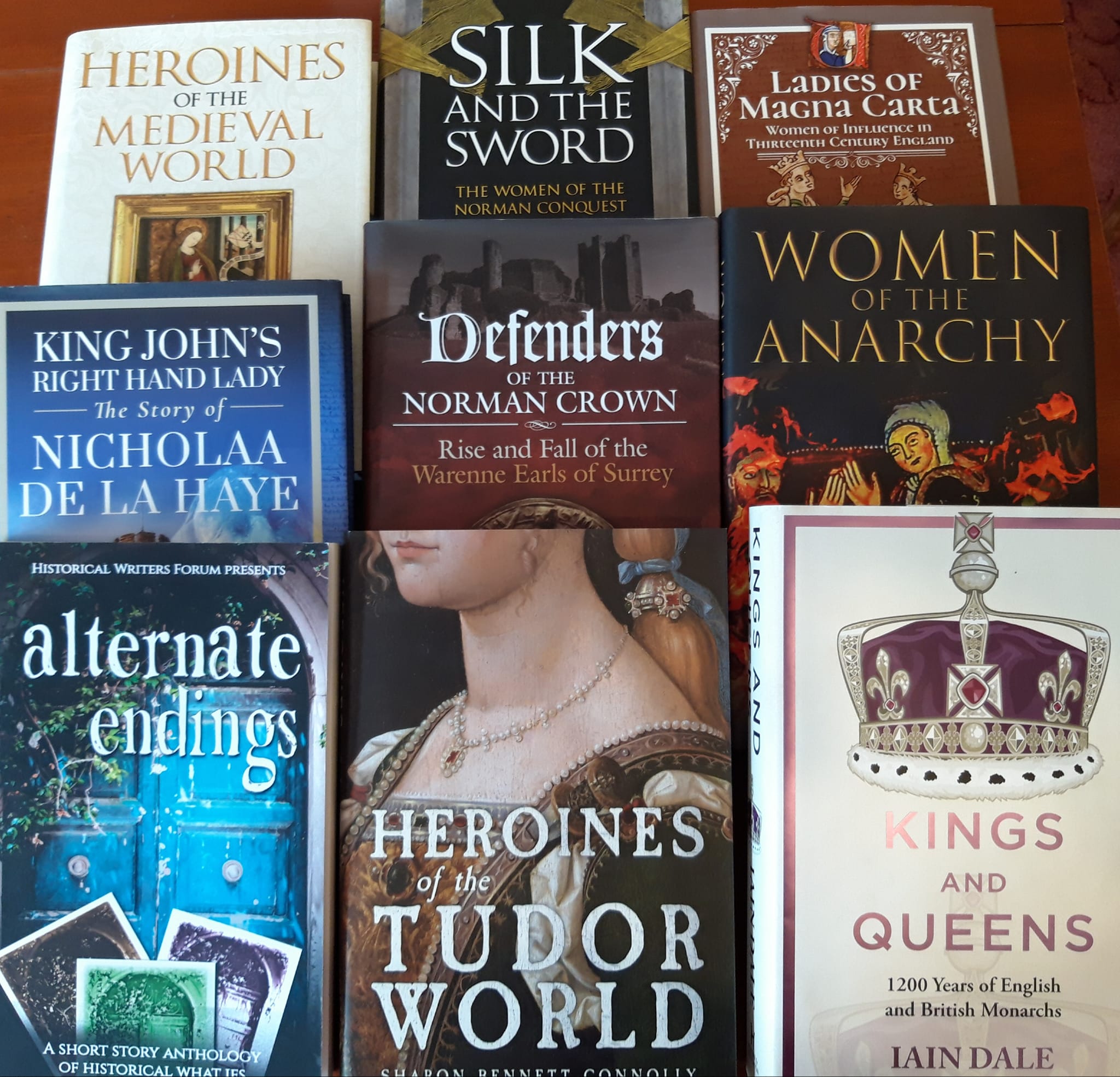
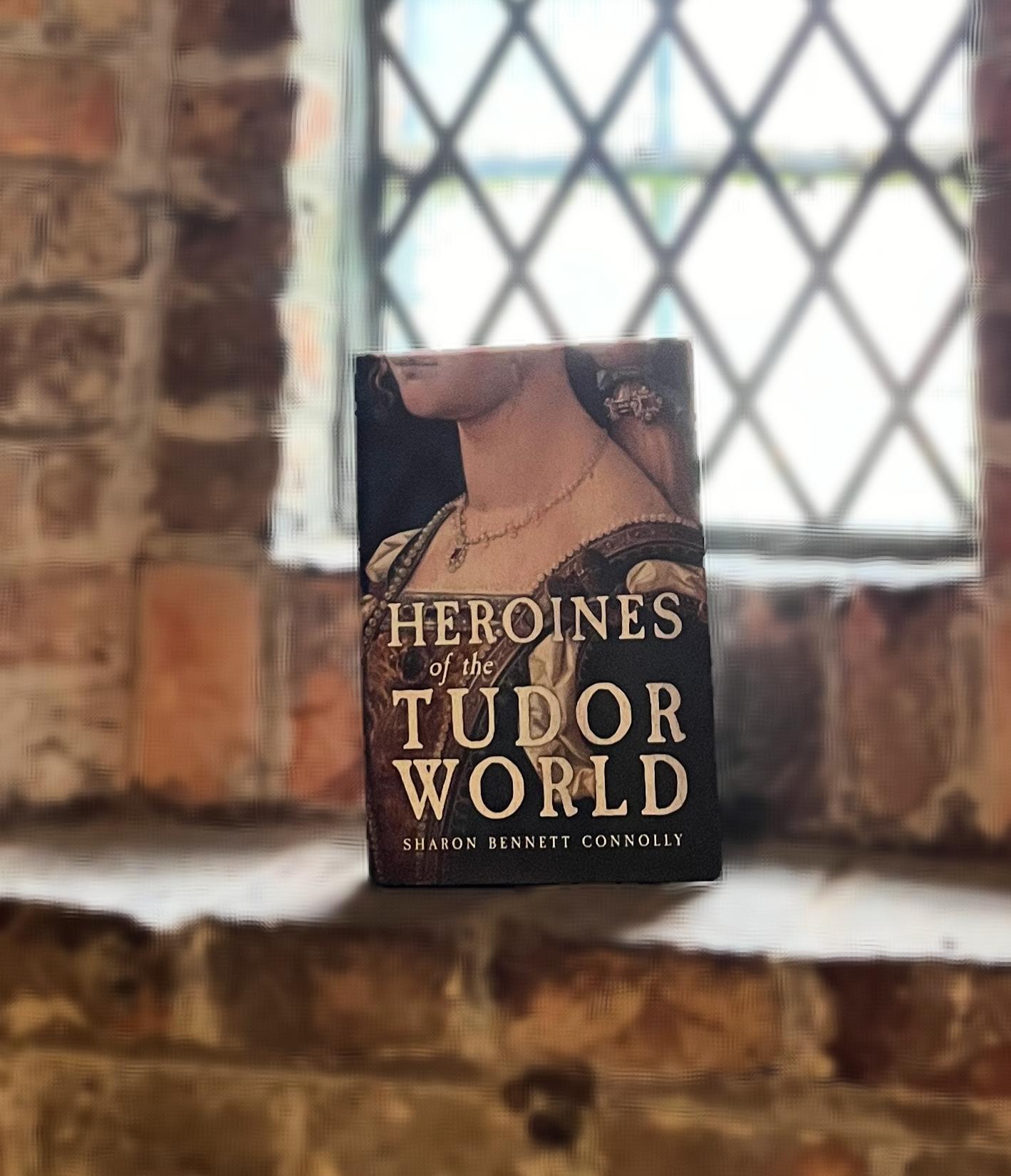
Heroines of the Tudor World tells the stories of the most remarkable women from European history in the time of the Tudor dynasty, 1485-1603. These are the women who ruled, the women who founded dynasties, the women who fought for religious freedom, their families and love. Heroines of the Tudor World is now available for pre-order from Amberley Publishing and Amazon UK. Women of the Anarchy demonstrates how Empress Matilda and Matilda of Boulogne, unable to wield a sword themselves, were prime movers in this time of conflict and lawlessness. It shows how their strengths, weaknesses, and personal ambitions swung the fortunes of war one way – and then the other. Available from Bookshop.orgAmberley Publishing and Amazon UKKing John’s Right-Hand Lady: The Story of Nicholaa de la Haye is the story of a truly remarkable lady, the hereditary constable of Lincoln Castle and the first woman in England to be appointed sheriff in her own right. Available from all good bookshops Pen & Sword Booksbookshop.org and Amazon

Royal Historical Society

Defenders of the Norman Crown: The Rise and Fall of the Warenne Earls of Surrey tells the fascinating story of the Warenne dynasty, from its origins in Normandy, through the Conquest, Magna Carta, the wars and marriages that led to its ultimate demise in the reign of Edward III. Available from Pen & Sword BooksAmazon in the UK and US, and Bookshop.orgLadies of Magna Carta: Women of Influence in Thirteenth Century England looks into the relationships of the various noble families of the 13th century, and how they were affected by the Barons’ Wars, Magna Carta and its aftermath; the bonds that were formed and those that were broken. It is now available in paperback and hardback from Pen & SwordAmazon, and Bookshop.orgHeroines of the Medieval World tells the stories of some of the most remarkable women from Medieval history, from Eleanor of Aquitaine to Julian of Norwich. Available now from Amberley Publishing and Amazon, and Bookshop.orgSilk and the Sword: The Women of the Norman Conquest traces the fortunes of the women who had a significant role to play in the momentous events of 1066. Available now from Amazon,  Amberley Publishing, and Bookshop.org.

Alternate Endings: An anthology of historical fiction short stories including Long Live the King… which is my take what might have happened had King John not died in October 1216. Available in paperback and kindle from Amazon.

Podcast:
A Slice of Medieval

Have a listen to the A Slice of Medieval podcast, which I co-host with Historical fiction novelist Derek Birks. Derek and I welcome guests, such as Elizabeth Chadwick, Helen Castor, Ian Mortimer, Scott Mariani and Bernard Cornwell and discuss a wide range of topics in medieval history, from significant events to the personalities involved.

Every episode is also now available on YouTube.

*

Don’t forget! Signed and dedicated copies of all my books are available through my online bookshop.

For forthcoming online and in-person talks, please check out my Events Page.

You can be the first to read new articles by clicking the ‘Follow’ button, liking our Facebook page or joining me on TwitterThreadsBluesky and Instagram.

*

©2025 Sharon Bennett Connolly FRHistS

Wordly Women: Gillian Bagwell

History ... the Interesting Bits: Wordly Women
Near Dunvegan Castle, Isle of Skye

Time for another edition of Wordly Women! I am blown away by how receptive people have been to this little series and I am thoroughly enjoying having the chance to highlight the careers and writing experiences of the best of women writers in both history and and historical fiction. Today is another ‘fan girl’ edition as I get to chat with one of my favourite writers, Gillian Bagwell, who has written a wonderful novel about one of my Tudor Heroines, Bess of Hardwick.

Sharon: Firstly, welcome Gillian, what got you into writing?

Gillian: Both of my parents were writers, among other talents and accomplishments, interests, and they both read to my sisters and me a lot when we were kids, so I guess it seemed natural to write. I think I took my first writing class in junior high school. I’d had the idea for one of my novels (not yet published) long ago, and I recently discovered a story that I’d written based on that idea for that class when I was about thirteen. I’d forgotten about it.

Sharon: Tell us about your books.

Gillian: The three books that I have published are all based on the lives of real English women, two in the seventeenth century and one in the sixteenth century. My first novel, The Darling Strumpet, is based on the life of Nell Gwynn, one of the first English actresses and a longtime mistress of Charles II. She was a poor urchin who got her big break in life when Charles reopened the theatres soon after he was restored to the throne, and she got a job selling oranges. She caught the eye of Charles Hart, one of the leading actors, and he became her lover and mentor, teaching her to act, and they became an enormously popular duo onstage, with many “gay couple” (not as we use that phrase today!) comedies written specifically for them. Her career took place during one of the most amazing and important periods in the history of English theatre, when over the space of about fifteen years, performance practices went from Elizabethan/Jacobean to what remained essentially unchanged until the end of the nineteenth century.

History ... the Interesting Bits: Wordly Women
Experiencing the battlefield of Worcester

I learned about Jane Lane, the heroine of my second novel, when I was researching Nell Gwynn. Her story isn’t much remembered now, but she played a big part in helping Charles escape after the disastrous Battle of Worcester in 1651, saving not only his life but likely the future of the monarchy. She had a pass to travel with a manservant, so he disguised himself and travelled hundreds of miles with her. There were notices all along their way offering a reward of £1000 pounds for information leading to his capture—an enormous amount of money then—and they so narrowly escaped discovery so many times that his six-week odyssey became known as the Royal Miracle. The US title of the book is The September Queen. The UK published it as The King’s Mistress.

My third novel tells the story of Bess of Hardwick, who rose from genteel poverty to become probably the wealthiest and most powerful woman in England after Queen Elizabeth. She’s probably best known for building Hardwick Hall and the original Chatsworth, and for surviving four husbands. I didn’t think I could do justice to her very long and remarkable life in one novel, so Venus in Winter really only covers the first half of it, which included acting as keeper to Mary Queen of Scots for several years, and her granddaughter Arbella nearly succeeding Queen Elizabeth.

My fourth novel, The Tower on the Sea, not yet published, is a Gothic thriller with a heavy dose of romance set mostly on a tiny and remote Scottish island in 1901-1902. I’ve been working on a novel based on the life of Dame Flora MacLeod, who was chief of the Clan MacLeod from 1935 to her death in 1976, but as biographical fiction seems to be hard to sell these days, I’ve set it aside temporarily and am working on something completely different, which I’ll discuss below.

Sharon: What attracts you to the periods in which you write?

History ... the Interesting Bits: Wordly Women
William Shakespeare

Gillian: I became enamoured of Shakespeare very early on, and so was interested in sixteenth-century England. Around the time I turned fourteen, my father was hired as the director of education for the non-profit educational branch of the company that invented and produced the original Renaissance Pleasure Faires, a re-creation of a country fair in Elizabethan England with food, crafts, music, dancing, shows on stage and peformers improvising in the street with each other and the patrons. I know the concept of a Renaissance fair may be unfamiliar to many British people, but that original event inspired hundreds of copycats, mostly in the US but also in other countries. I wrote an article for Smithsonian Magazine about how the first Faire came about: The Surprisingly Radical Roots of the Renaissance Fair.

My whole family became involved and I performed at the Faires from when I was fourteen to when I was twenty—six weekends each at the Renaissance Faires in Southern and Northern California, and six weekends at the Great Dickens Christmas Fair, an indoor recreation of Victorian London at Christmastime. So I spent a lot of time in the sixteenth century and the nineteenth centuries!

Sharon: Who is your favourite Tudor and why?

Gillian: I think that would have to be Elizabeth. She survived an incredibly difficult childhood and youth, with her mother dead and vilified and her own future uncertain, and also managed to come through perilous times as a young woman, especially under the reign of her sister Mary. When she finally became queen, she ushered in a time of great change, mostly in good ways, and I think in general was a great leader—not an easy thing to be, especially for a woman, in those days.

Sharon: Who is your least favourite Tudor and why?

    Gillian: Henry VIII. It may be that he became the erratic tyrant he was especially later in life as the result of the injury to his leg and other medical problems, but it doesn’t erase the harm he caused to the six women who had the misfortune to marry him, his dissolution of the church and destruction not only of so many beautiful buildings but of the lives of so many people, both those who were of the church and those they helped, and much, much more.

    Sharon: How do you approach researching your books?
    Gillian: I read whatever I can find about my heroines, of course, as well as the period they lived in and the events that my books cover. But sometimes there isn’t much information available. The story of Jane Lane, for instance was very well known when Charles II was restored to the throne, but no one’s written a biography of her. There are several biographies of Bess of Hardwick, but they focus on her later life. One of them dispenses with her life up until her second marriage in the first twenty pages. So I have to piece together information, surmise what seems likely, and fill in the gaps with invention—of course mentioning in my author’s notes what historical facts I’ve taken liberty with. I’ve almost always gone to the UK on research trips, too, to find the places my main characters lived and where the action of their stories took place.

    History ... the Interesting Bits: Wordly Women
    Jane Lane

    There’s nothing like it not only for learning new things but getting inspiration. When I was researching The September Queen/The King’s Mistress, a good friend from London joined me on a trip following in the footsteps of Charles II from Worcester to Staffordshire and Shropshire, and then the route that he and Jane Lane took together. I didn’t know it at the time, but the Monarch’s Way is a marked footpath, which the Monarch’s Way Association maintains and has published maps of. When we went to Boscobel, it was near the end of the day and almost no one else was there. I found myself alone in a closet peering down into the priest hole where Charles hid. And at Trent, the lady at Trent Manor showed us around the house, including her bedroom, with the priest hole where Charles hid there. I also visit libraries and archives to use primary sources. I’ve done research at the British Library, the Theatre Museum in Covent Garden, the National Library and the National Records of Scotland, and the office of the Lord Lyon in Edinburgh. For my current work in progress, I recently I spent eight days at the Bodleian Library doing research and spent the rest of my time exploring Oxford, visiting places where the main characters lived and knew well. I even got a private tour of St. Hugh’s College, where each was principal, from the archivist.

    Sharon: Tell us your ‘favourite’ Stuart story you have come across in your research.

    History ... the Interesting Bits: Wordly Women
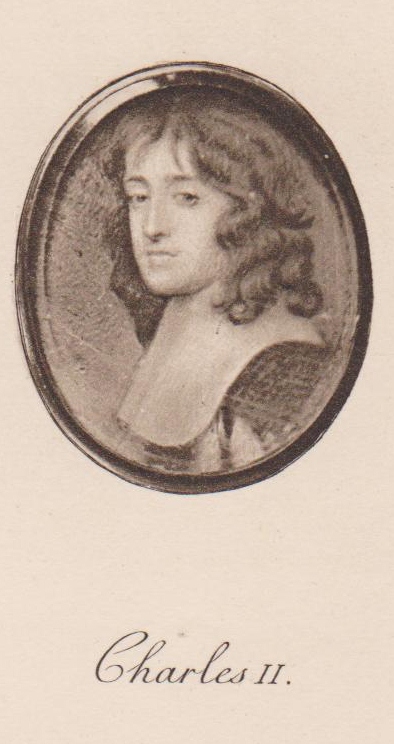
    A young Charles II

    Gillian: I’d say that’s the story of Charles II’s six-week odyssey trying to get out of England after the Battle of Worcester. Many, many common people risked their lives to help him, and it was a formative period in his life. He was only twenty-one at the time. He told the stories of his adventures for the rest of his life. Fortunately, the diarist Samuel Pepys sat him down decades later and over the course of a couple of days, took down the story in his famous shorthand. He then gathered all the accounts people had published of their parts in the story and bound them together. It’s an amazing resource, giving us a day-by-day and sometimes hour-by-hour account of what Charles did, said, wore, and ate. In the run-up to the publication of my book about Jane Lane, I blogged the daily events of those weeks. Here’s a link to the story, beginning with the Battle of Worcester: http://theroyalmiracle.blogspot.com/2011/09/september-3-1651-battle-of-worcester.html.

    Sharon: And do you have a favourite Tudor story?

    Gillian: There are many great stories about the Tudors, of course, but I became fascinated with this nugget mentioned in Robert Hutchinson’s The Last Days of Henry VIII, and have thought of writing a story or play about it. In the bitter cold of early February 1547, the body of Henry VIII lay at Windsor Castle, and amid clouds of incense, requiem masses were being held night and day to waft the soul of the dead tyrant to heaven. Fierce struggles for power raged at court, as the new king, Edward VI, was a child, and who controlled him would effectively rule. Against this backdrop of intrigue, John de Vere, the sixteenth Earl of Oxford, planned a dramatic event of his own: the presentation of a play he had written on the death of the king, to be performed by his own company of players. But as the actors rehearsed for their day in the winter sun, Bishop Gardiner, though recently banned from the Palace of Westminster, intended to claw his way back to power, and he would do whatever he must to prevent Oxford’s play from coming to the stage.

    I find a lot intriguing about this story, not least the fact that John de Vere was the father of Edward DeVere, the seventeenth Earl of Oxford, whom many serious people believe could have been the author of the plays attributed to William Shakespeare. He was almost seven years old at the time of this cancelled performance, and it’s interesting to think that he might have witnessed the drama offstage as well as on. The evidence for the argument for Oxford as the author includes a wealth of similarities in his life and experience and the plays; the fact that he was familiar with theatre from an early age, as his father kept a company of players; and that he was regarded as an accomplished and playwright, though none of his plays survive. Charlton Ogburn’s 600-page tome The Mysterious William Shakespeare is an exhaustive study of the evidence in favor of Oxford.

    Notable authorship skeptics include included Mark Rylance, Derek Jacobi, John Gielgud, Tyrone Guthrie, David McCullough, and Supreme Court Justices Sandra Day O’Connor, John Paul Stevens, Harry A. Blackmun, and Lewis F. Powell (Declaration of Reasonable Doubt, Shakespeare Oxford Fellowship – Famous Authorship Skeptics).

      Sharon: Tell us your least ‘favourite’ Tudor story you have come across in your research.

      Gillian: Many of the Tudors were responsible for a lot of bloodshed and cruelty, of course. I think Henry VIII’s persecution and elimination of the Pole family, who he considered a threat to his keeping the throne, ranks high, especially the murder of Lady Margaret Pole, the Countess of Salisbury, who was sixty-seven and had spent her life serving the Tudors. The executioner botched the job terribly, and it was a gruesome death. Here’s Tracy Borman’s post on the Historic Royal Palaces’ website: The Extraordinary Life and Death of Lady Margaret Pole, Countess of Salisbury.

      History ... the Interesting Bits: Wordly Women

      Sharon: Are there any other eras you would like to write about?

      Gillian: Well, I’ve moved into the early twentieth century with The Tower on the Sea, and both Flora MacLeod’s story and my current work in progress take me further into the 1900s and has a contemporary timeline too. There are other stories I’d love to write about, including from the eighteenth and nineteenth centuries.

      Sharon: What are you working on now?

      Gillian: I’m working on a novel with dual timelines inspired by the true story of Eleanor Jourdain and Charlotte Anne Moberly, two Oxford academics who visited Versailles in 1901, had a very strange experience, encountering people in eighteenth-century dress who behaved oddly, and came to believe they’d walked into the eighteenth century. I learned about this story from Miss Morison’s Ghosts, a British movie made in 1981, and I’ve wanted to write about it ever since. Having gone through the seventeen boxes of their notes, correspondence, drawings, photos, maps, and other documentation of their eight or so years of research about their experience at Versailles, I can say that something extraordinary happened to them, though I don’t know exactly what and neither did they.

      Sharon: And finally, what is the best thing about being a writer?

      Gillian: Exploring the worlds of my characters is endlessly fascinating. I get chills when I experience or discover something that connects me viscerally with the people I’m writing about, for instance holding letters they wrote, or being in the rooms where important things took place. And much as I like adventure and travel, all my life, I’ve been something of a homebody, too, so I love being able to work at home, especially on days when I don’t have to do anything but write.

        About Gillian Bagwell:

        History ... the Interesting Bits: Wordly Women
        Gillian Bagwell

        Gillian Bagwell’s historical novels have been praised for their vivid and lifelike characters and richly textured, compelling evocation of time and place. Her first career was in theatre, as an actress and later as a director and producer, and she founded the Pasadena Shakespeare Company and produced thirty-seven shows over ten years. Gillian has found her acting experience helpful to her writing, and many of the workshops and classes she’s taught at the annual Historical Novel Society Conferences in the US and the UK relate to her life in theatre, including writing effective historical dialogue, using acting tools to bring characters to life on the page, and giving effective public readings. She’s also a professional editor and provides writing coaching and manuscript evaluations. Gillian lives in Berkeley, California in the house where she grew up, her life enlivened by her five rescue cats.

        *

        My Books

        Signed, dedicated copies of all my books are available through my online bookshop.

        Out now: Scotland’s Medieval Queens

        Books by Sharon Bennett Connolly

        Scotland’s history is dramatic, violent and bloody. Being England’s northern neighbour has never been easy. Scotland’s queens have had to deal with war, murder, imprisonment, political rivalries and open betrayal. They have loved and lost, raised kings and queens, ruled and died for Scotland. From St Margaret, who became one of the patron saints of Scotland, to Elizabeth de Burgh and the dramatic story of the Scottish Wars of Independence, to the love story and tragedy of Joan Beaufort, to Margaret of Denmark and the dawn of the Renaissance, Scotland’s Medieval Queens have seen it all. This is the story of Scotland through their eyes.

        Scotland’s Medieval Queens gives a thorough grounding in the history of the women who ruled Scotland at the side of its kings, often in the shadows, but just as interesting in their lives beyond the spotlight. It’s not a subject that has been widely covered, and Sharon is a pioneer in bringing that information into accessible history.’ Elizabeth Chadwick (New York Times bestselling author)

        Available now from Amazon and Pen and Sword Books

        Also by Sharon Bennett Connolly:

        Books by Sharon Bennett Connolly

        Heroines of the Tudor World tells the stories of the most remarkable women from European history in the time of the Tudor dynasty, 1485-1603. These are the women who ruled, the women who founded dynasties, the women who fought for religious freedom, their families and love. Heroines of the Tudor World is now available for pre-order from Amberley Publishing and Amazon UK. Women of the Anarchy demonstrates how Empress Matilda and Matilda of Boulogne, unable to wield a sword themselves, were prime movers in this time of conflict and lawlessness. It shows how their strengths, weaknesses, and personal ambitions swung the fortunes of war one way – and then the other. Available from Bookshop.orgAmberley Publishing and Amazon UKKing John’s Right-Hand Lady: The Story of Nicholaa de la Haye is the story of a truly remarkable lady, the hereditary constable of Lincoln Castle and the first woman in England to be appointed sheriff in her own right. Available from all good bookshops Pen & Sword Booksbookshop.org and Amazon

        Royal Historical Society

        Defenders of the Norman Crown: The Rise and Fall of the Warenne Earls of Surrey tells the fascinating story of the Warenne dynasty, from its origins in Normandy, through the Conquest, Magna Carta, the wars and marriages that led to its ultimate demise in the reign of Edward III. Available from Pen & Sword BooksAmazon in the UK and US, and Bookshop.orgLadies of Magna Carta: Women of Influence in Thirteenth Century England looks into the relationships of the various noble families of the 13th century, and how they were affected by the Barons’ Wars, Magna Carta and its aftermath; the bonds that were formed and those that were broken. It is now available in paperback and hardback from Pen & SwordAmazon, and Bookshop.orgHeroines of the Medieval World tells the stories of some of the most remarkable women from Medieval history, from Eleanor of Aquitaine to Julian of Norwich. Available now from Amberley Publishing and Amazon, and Bookshop.orgSilk and the Sword: The Women of the Norman Conquest traces the fortunes of the women who had a significant role to play in the momentous events of 1066. Available now from Amazon,  Amberley Publishing, and Bookshop.org.

        Alternate Endings: An anthology of historical fiction short stories including Long Live the King… which is my take what might have happened had King John not died in October 1216. Available in paperback and kindle from Amazon.

        Podcast:

        A Slice of Medieval

        Have a listen to the A Slice of Medieval podcast, which I co-host with Historical fiction novelist Derek Birks. Derek and I welcome guests, such as Elizabeth Chadwick, Helen Castor, Ian Mortimer, Scott Mariani and Bernard Cornwell and discuss a wide range of topics in medieval history, from significant events to the personalities involved.

        Every episode is also now available on YouTube.

        *

        Don’t forget! Signed and dedicated copies of all my books are available through my online bookshop.

        For forthcoming online and in-person talks, please check out my Events Page.

        You can be the first to read new articles by clicking the ‘Follow’ button, liking our Facebook page or joining me on TwitterThreadsBluesky and Instagram.

        *

        ©2025 Sharon Bennett Connolly FRHistS

        Wordly Women: Aimee Fleming

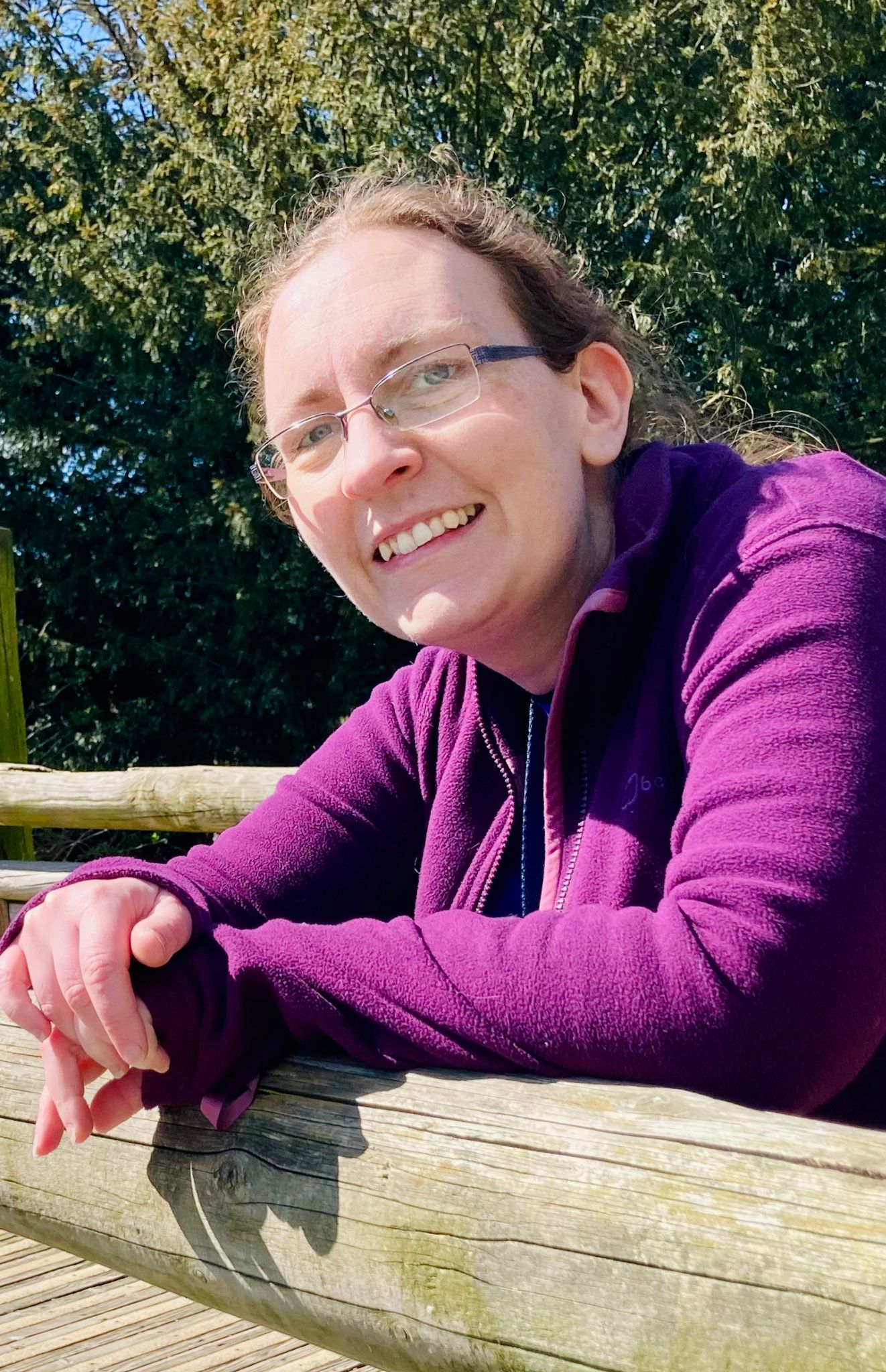
        Aimee Fleming

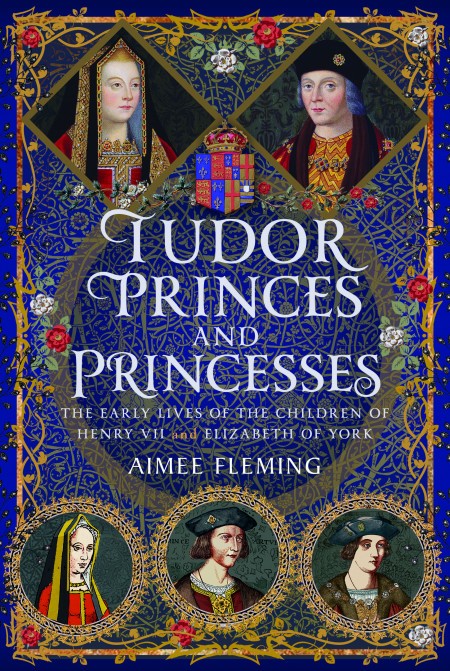
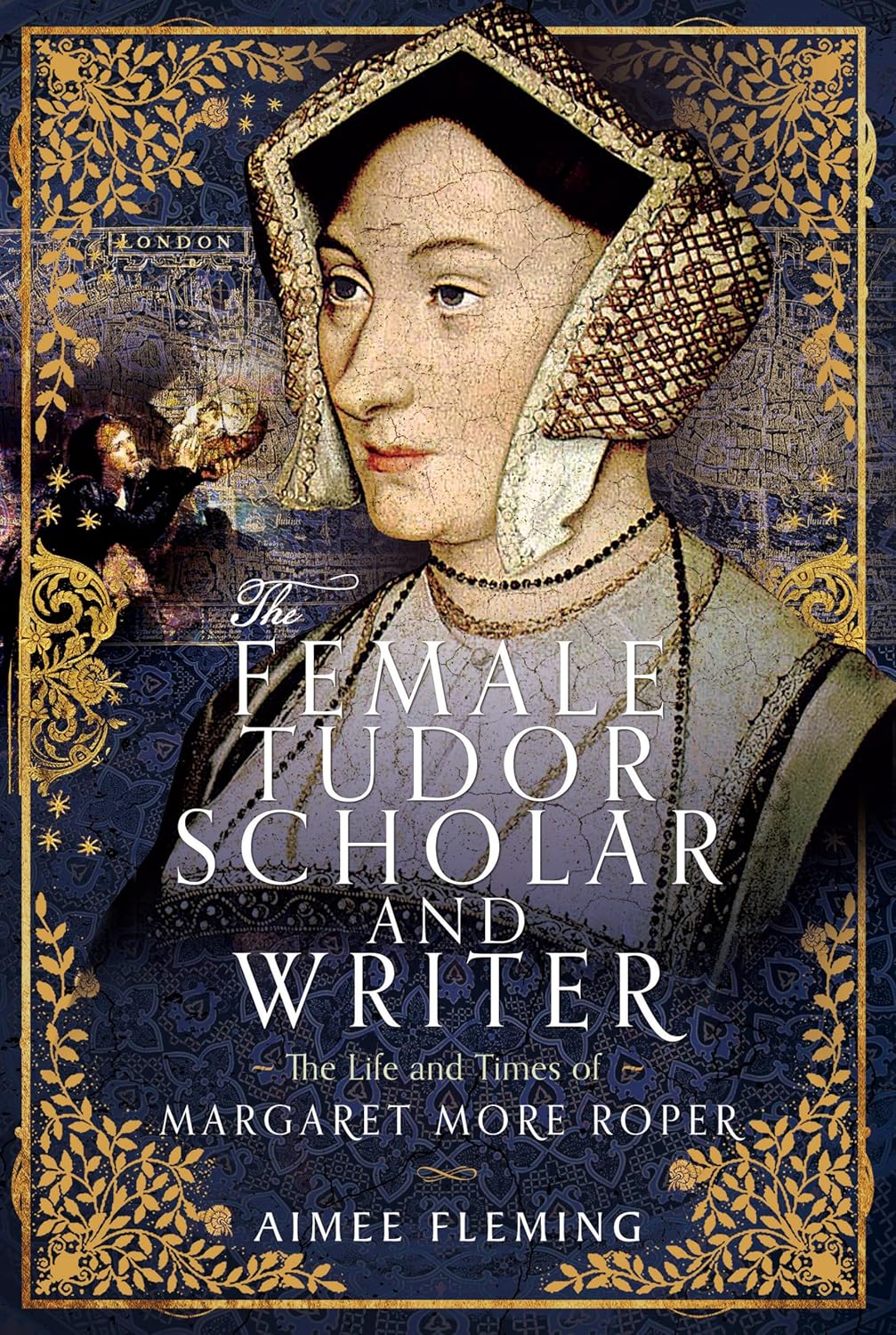
        In today’s episode of my Wordly Women, author spotlight series, I have a chat with Tudor historian Aimee Fleming. I have followed Aimee’s career from the very beginning. Her first book, The Female Tudor Scholar and Writer: The Life and Times of Margaret More Roper came out last year and just last month Aimee published her second book, Tudor Princes and Princesses: The Early Lives of the Children of Henry VII and Elizabeth of York

        So, it was wonderful to get the chance to talk with Aimee about her writing…

        Sharon: Hi Aimee. First question, what got you into writing?

        Aimee: I have always enjoyed writing as a process, but it was really during secondary school I was encouraged to write poetry by my English teacher. I did English Literature A Level and loved studying the classics, but it was History that really sparked my interest. After I finished my BA I remember I wanted to keep going and write more, but I didn’t begin properly until after my MA when I decided to really put pen to paper properly. I loved to read work by Alison Weir and Tracey Borman (amongst lots of others) and think that I could perhaps do something like that!

        Sharon: Tell us about your books.

        Aimee: My books are all non-fiction books about the Tudor period. My first book came out in summer 2024 and was a biography of Margaret More Roper, the eldest daughter of Sir Thomas More, called ‘The Female Tudor Scholar and Writer’. I also have a study of the early lives of the children of Henry VII coming out soon, called ‘Tudor Princes and Princesses.’ It is available for pre-order now and is due to be released at the end of June.

        Sharon: What attracts you to the Tudor period?

        Aimee: I think the Tudor and Early Modern period generally is fascinating. There are such larger-than-life characters, the artwork and portraits bring those characters into such clear detail, dramatic events just keep on coming, and the clothing is so flamboyant and over the top. I do love other periods too, the medieval period and the later periods of the Stuarts and Georgians are also very interesting, but I am always drawn back to the tempestuous Tudors.

        Sharon: Who is your favourite Tudor and why?

        Aimee Fleming

        Aimee: Do I have to pick just one? I obviously have a soft spot for Margaret More Roper. She is such an inspirational woman, and I genuinely believe that we all owe her a debt; if it wasn’t for her taking that first step of getting her work published, we may not even be doing what we do today!

        Sharon: Who is your least favourite Tudor and why?

        Before I wrote my most recent book, I probably would have said Henry VIII. I was always a bit of a critic of his, but my writing and research has actually made me a lot more sympathetic. I think now my hatred properly ends up at Thomas Howard, the Duke of Norfolk’s door – an all-round unpleasant creature if ever there was one.

        Sharon: Howard was horrible, but I will have to read your book to see if I can find any sympathy for Henry VIII!

        Sharon: How do you approach researching your topic?

        Aimee: I start quite broad and work my way in. I think we all have out go-to textbooks on subjects and for me it’s always my old copy of John Guy’s ‘Tudor England’. I start by looking up whatever I’m researching up in that, and then other books that may be on my shelf. I’m lucky enough to live close to York and I do try to make full use of the University library and their archives too for those all-important primary sources. If it’s possible I also like to try to take a trip to see some places and experience the surroundings that my subjects would have known.

        Sharon: Tell us your ‘favourite’ Tudor story you have come across in your research.

        Wolfeton Hall near Dorchester

        Aimee: I have a few favourites, but I think the one that I particularly love is the ‘shipwreck’ of Archduke Phillip, heir to the Holy Roman Emperor, and his wife Queen Joanna of Castile. The Archduke had led his fleet from Flanders intent on taking the throne of Spain for himself, but the weather turned against him, and he, Queen Joanna, and the rest of the fleet had to take refuge in the harbour at Weymouth. They came ashore at Melcombe Regis in Dorset – about as far from London and civilisation as you can get, and in November too! Henry VII of course welcomed them and invited them to London, even sending carriages for them and their luggage, but the Queen was too shaken and took refuge at Wolfeton Hall near Dorchester. A welcoming party was sent to greet them, led by fourteen-year-old Henry, the royals did eventually meet up and they held all sorts of talks, agreeing marriages seemingly for everyone…but none of them came to fruition.

        I have spent many a family holiday in Dorset, especially Weymouth, and it makes me smile that Queen Joanna may have walked up that beach on a cold November afternoon.

        Sharon: Tell us your least ‘favourite’ Tudor story you have come across in your research.

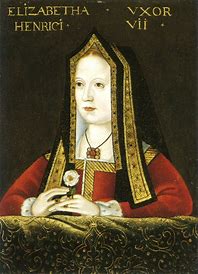
        Elizabeth of York
        Elizabeth of York

        Aimee: The worst bit of writing history is the sad stories that you have to read and write about. In Tudor Princes and Princesses, I had to research about Elizabeth of York’s pregnancies and the deaths of the Tudor children who did not survive until adulthood. The arrangements made for the funerals, particularly of little Elizabeth really brought home just how much these children were loved in their short lives.

        On the other side, writing about the death of Thomas More’s first wife, Joanna, was particularly heart-rending. She died when Margaret was only 5 years old, but Margaret would have been expected to play a full role in her mother’s funeral, reading a prayer in front of the whole congregation. That in itself was bad enough, but reading further it was commonplace for people who weren’t connected to the family to still attend the funeral. I was in bits writing about Margaret standing up and reading the prayers, imagining her fear as she looked out on all those strangers’ faces.

        Sharon: Are there any other eras you would like to write about?

        Aimee: I am doing a lot of research into Stuart Scotland at the moment, and it has made me want to go deeper into Stuart England and the English Civil War. I would love to learn more about the people as well as the politics of the period, but it’s not something I’ve ever really looked at in depth.

        Sharon: What are you working on now?

        Aimee: My current project is a period study of Tudor England and Stuart Scotland, looking at the relationship between the two countries while the Tudors were on the throne in England and what brought us to 1603 and the succession of James VI and I. It’s a lot of work but I am thoroughly enjoying it, and I’m loving looking at Scottish history in more detail. That manuscript is due for submission in the Autumn, and then after that I have another book lined up to write, about Elizabeth Barton, the Holy Maid of Kent.

        Sharon: And finally, what is the best thing about being a writer?

        Aimee: I enjoy the freedom it gives me to explore things I find interesting. No two days are the same, and it’s never boring. Losing myself in documents at the library really is a dream come true.

        About Aimee:

        Aimee Fleming

        Aimee Fleming is a historian and author from North Yorkshire. She is happily married, with three growing boys and a whole host of pets. She studied history at the University of Wales, Bangor and then later completed a masters in Early Modern History at the University of York as a mature student. She has a passion for history, particularly the Tudors, and worked for over a decade in the heritage industry in a wide variety of roles and historic places.

        Books by Aimee Fleming:

        The Female Tudor Scholar and Writer: The Life and Times of Margaret More Roper

        Tudor Princes and Princesses: The Early Lives of the Children of Henry VII and Elizabeth of York

        Where to find Aimee:

        Website; Facebook; Threads and Instagram: @historyaimee; Substack.

        *

        My books

        Signed, dedicated copies of all my books are available through my online store.

        Out now: Scotland’s Medieval Queens

        Books by Sharon Bennett Connolly

        Scotland’s history is dramatic, violent and bloody. Being England’s northern neighbour has never been easy. Scotland’s queens have had to deal with war, murder, imprisonment, political rivalries and open betrayal. They have loved and lost, raised kings and queens, ruled and died for Scotland. From St Margaret, who became one of the patron saints of Scotland, to Elizabeth de Burgh and the dramatic story of the Scottish Wars of Independence, to the love story and tragedy of Joan Beaufort, to Margaret of Denmark and the dawn of the Renaissance, Scotland’s Medieval Queens have seen it all. This is the story of Scotland through their eyes.

        Scotland’s Medieval Queens gives a thorough grounding in the history of the women who ruled Scotland at the side of its kings, often in the shadows, but just as interesting in their lives beyond the spotlight. It’s not a subject that has been widely covered, and Sharon is a pioneer in bringing that information into accessible history.’ Elizabeth Chadwick (New York Times bestselling author)

        Available now from Amazon and Pen and Sword Books

        Also by Sharon Bennett Connolly:

        Books by Sharon Bennett Connolly

        Heroines of the Tudor World tells the stories of the most remarkable women from European history in the time of the Tudor dynasty, 1485-1603. These are the women who ruled, the women who founded dynasties, the women who fought for religious freedom, their families and love. Heroines of the Tudor World is now available from Amberley Publishing and Amazon UK. Women of the Anarchy demonstrates how Empress Matilda and Matilda of Boulogne, unable to wield a sword themselves, were prime movers in this time of conflict and lawlessness. It shows how their strengths, weaknesses, and personal ambitions swung the fortunes of war one way – and then the other. Available from Bookshop.orgAmberley Publishing and Amazon UKKing John’s Right-Hand Lady: The Story of Nicholaa de la Haye is the story of a truly remarkable lady, the hereditary constable of Lincoln Castle and the first woman in England to be appointed sheriff in her own right. Available from all good bookshops Pen & Sword Booksbookshop.org and Amazon

        Royal Historical Society

        Defenders of the Norman Crown: The Rise and Fall of the Warenne Earls of Surrey tells the fascinating story of the Warenne dynasty, from its origins in Normandy, through the Conquest, Magna Carta, the wars and marriages that led to its ultimate demise in the reign of Edward III. Available from Pen & Sword BooksAmazon in the UK and US, and Bookshop.orgLadies of Magna Carta: Women of Influence in Thirteenth Century England looks into the relationships of the various noble families of the 13th century, and how they were affected by the Barons’ Wars, Magna Carta and its aftermath; the bonds that were formed and those that were broken. It is now available in paperback and hardback from Pen & SwordAmazon, and Bookshop.orgHeroines of the Medieval World tells the stories of some of the most remarkable women from Medieval history, from Eleanor of Aquitaine to Julian of Norwich. Available now from Amberley Publishing and Amazon, and Bookshop.orgSilk and the Sword: The Women of the Norman Conquest traces the fortunes of the women who had a significant role to play in the momentous events of 1066. Available now from Amazon,  Amberley Publishing, and Bookshop.org.

        Alternate Endings: An anthology of historical fiction short stories including Long Live the King… which is my take what might have happened had King John not died in October 1216. Available in paperback and kindle from Amazon.

        Podcast:

        A Slice of Medieval

        Have a listen to the A Slice of Medieval podcast, which I co-host with Historical fiction novelist Derek Birks. Derek and I welcome guests, such as Bernard Cornwell and Michael Jecks, and discuss a wide range of topics in medieval history, from significant events to the personalities involved. 

        Every episode is also now available on YouTube.

        *

        Don’t forget! Signed and dedicated copies of all my books are available through my online store.

        For forthcoming online and in-person talks, please check out my Events Page.

        You can be the first to read new articles by clicking the ‘Follow’ button, liking our Facebook page or joining me on TwitterThreadsBluesky and Instagram.

        *

        ©2025 Sharon Bennett Connolly, FRHistS and Aimee Fleming

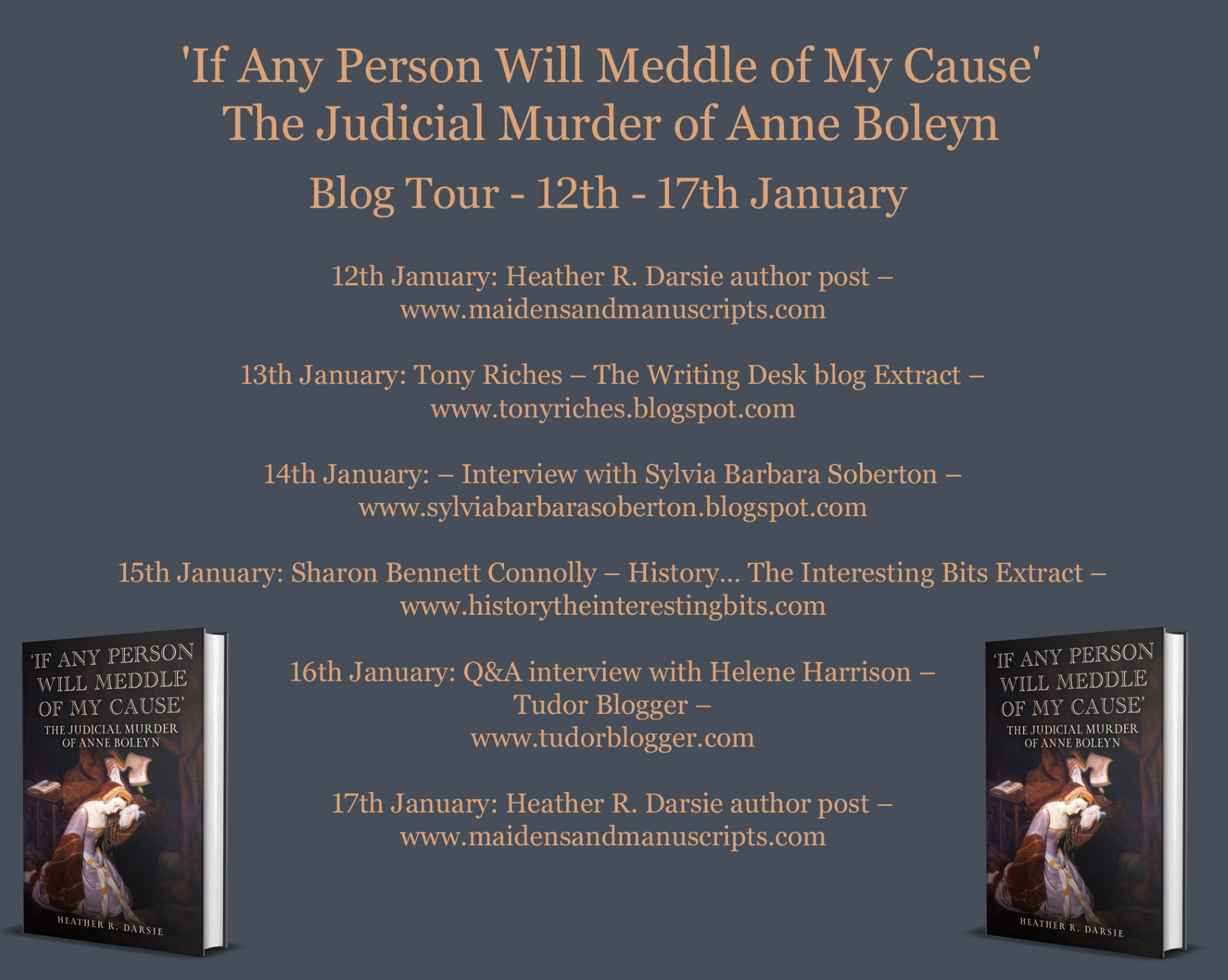
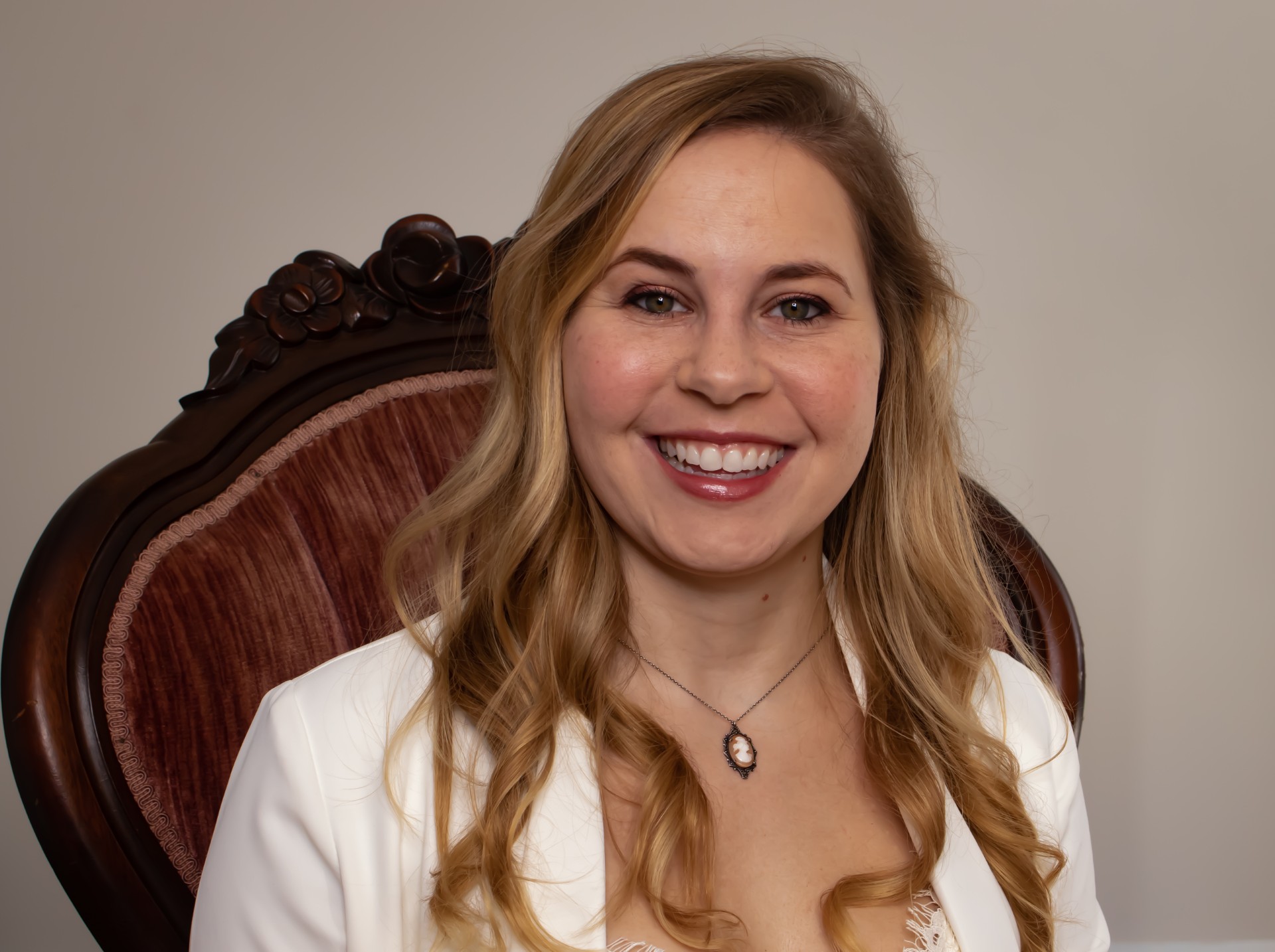
        Wordly Women: Heather R. Darsie

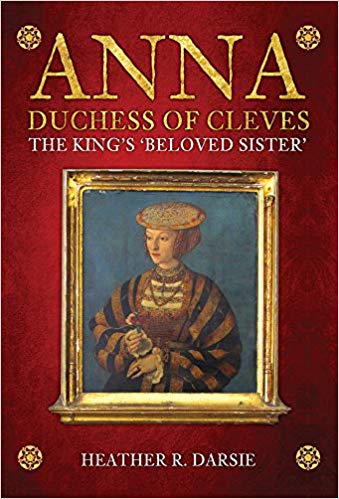
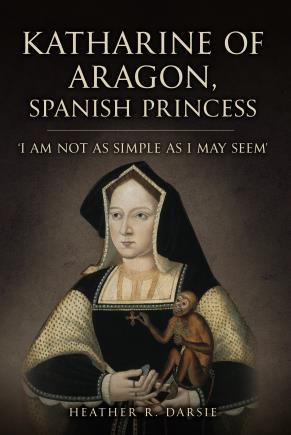
        In a special episode of my Wordly Women interview series, Heather R. Darsie drops by on her blog tour celebrating the publication of her new book, Katharine of Aragon, Spanish Princess: ‘I am Not as Simple as I May Seem’. Do have a look at the other stops on the tour to geta taste of this wonderful new biography.

        So, Heather, What got you into writing?

        Heather: As silly as this sounds, I can’t remember originally. My dad had an electric typewriter that he let me use to write stories beginning when I was probably eight years old. I continued writing stories and poems through high school (14 to 18 years old in the USA), which culminated in a play based off Edgar Allen Poe’s “Annabel Lee” when I was in my final year of high school. My play was called Annalise, wherein the wife was dying of amyotrophic lateral sclerosis of which my paternal grandfather passed away. The husband slowly went mad, to the point where the wife’s had to intervene. The theme of the play was tragedy. My high school put on the play, I was in the local newspaper, and invited to host a workshop at the statewide high school theatre festival.

        After graduating from high school, I went to university and majored in German Languages and Literature, then pursued my Juris Doctorate in American Jurisprudence. Along the way, I studied abroad in Costa Rica and France, learning Spanish and French, too. I have had numerous opportunities to travel to France, Spain, Germany, and various countries in Central America, which have all contributed to keeping my language skills sharp.

        I became heavily interested in Tudor history in around 2010. By early 2015, I grew tired of reading the same-old, same-old about Anna of Cleves, a German woman. I asked Claire Ridgeway of the Anne Boleyn Files if I could contribute a post on Anna to her website, to which Claire kindly agreed. Thereafter encouraged and emboldened, I sent a letter in my very best German to the mayor of the current City of Cleves, and my research took off from there. The combination of a life-long interest in writing, linguistic education, research and analytical skills from my juris doctorate, combined with the history community’s encouragement is how I arrived here, ten years on.

        Sharon: Tell us about your books.

        Heather: I view myself as a Tudor-adjacent historian. The persons and events I choose to focus on should be recognizable am most interested in the Holy Roman Empire of the German Nation, which began recognizing itself that way in the early 16th century. Specifically, anyone or anything connected to the von der Marks, which is Anna of Cleves’ family (she was “of Cleves” much like Princess Mary Tudor would be “Mary of England” in another country) or the Habsburgs. My first two nonfiction books, Anna, Duchess of Cleves: The King’s Beloved Sister and Children of the House of Cleves: Anna and Her Siblings are effectively German history books. My third nonfiction book, Stuart Spouses: A Compendium of Consorts from James I of Scotland to Queen Anne of Great Britain looks at just that, the husbands and wives of the Scottish-to-English Stuart dynasty. The dynastic intermingling with continental European families is fascinating. I wrote a novella during the pandemic, Diary of a Plague Doctor’s Wife, set during the last outbreak of the Black Death in 1720s Marseille. The parallels to our own experiences 300 years later with Covid-19 were eerie to me at the time of writing.

        Sharon: What attracts you to the Catherine of Aragon?

        Heather: Like Anna of Cleves, I felt there was more to her than the end of her marriage with Henry VIII. Specifically, I wanted to know more about Katharine’s family dynasty and Katharine’s early time in England, and share that with readers.

        Sharon: Who is your favourite Tudor and why?

        Heather: For queens, I am drawn to Catherine Parr. She seemed the most savvy when it came to navigating Henry VIII and the dangerous politics of the Tudor court. I am very intrigued by Thomas Cromwell in his position as a lawyer. He was very clever; I hope to write about him someday.

        Sharon: Who is your least favourite Tudor and why?

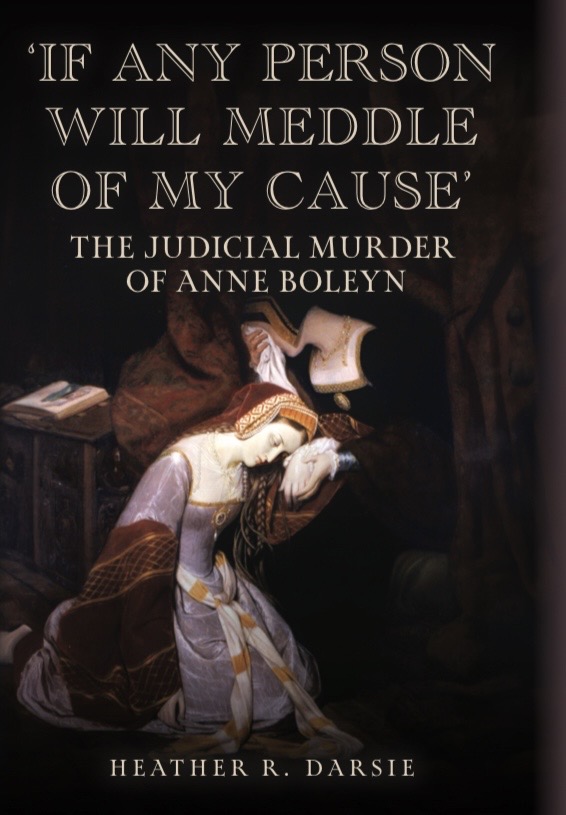
        Heather: I do not have a least favorite, but I do think the most tragic was Anne Boleyn, who was foisted by her own petard. I am finding that more and more as I work on my next book, If any Person will Meddle with My Cause: The Judicial Murder of Anne Boleyn.

        Sharon: How do you approach researching your topic, especially when most of the sources are Spanish?

        Heather: I start with finding articles on JSTOR, then checking the footnotes for sources. From there, I go to Google Play, Archive.org, the Spanish library websites, etc. for old manuscripts. Like many English books, several of the old, out-of-copyright ones are available for free. The Spanish language is not a barrier for me, since I hear or read it most days a week at work.

        Sharon: Tell us your ‘favourite’ Catherine of Aragon story you have come across in your research.

        Heather: I really enjoyed reading about all of the pageants she viewed during her formal entry into London. It must have been quite the time for her.

        Sharon: Tell us your least ‘favourite’ Catherine of Aragon story you have come across in your research.

        Heather: Katharine was having a difficult time with Spanish grammar in her letters toward the very late 1520s and early 1530s. This could be indicative of the extreme stress that she was under during that time, or the isolation she was experiencing and being unable to speak Spanish with anyone, or both. I found it tragic and poignant. I don’t believe I remarked on that in my book.

        Sharon: Are there any other eras you would like to write about?

        Heather: I am interested in doing a little more on the late 16th to early 17th century. Otherwise, I am fairly happy with the time frame that I work in now, but exploring more individuals and courts.

        Sharon: What are you working on now?

        Heather: I am finishing up the aforementioned book, If any Person will Meddle with My Cause: The Judicial Murder of Anne Boleyn. I am completing an epic as well, which I will self publish likely later this year, that has heavy Greek mythology themes. Our heroes go on a quest to bring back the Olympians and restore justice to the human world. The epic is clocking in at about 3, 600 lines right now. I suppose it makes me a poet along with an author.

        Sharon: And finally, what is the best thing about being a writer?

        Heather: Sharing knowledge.

        About the book:

        Katharine of Aragon is more in the public consciousness now due to the TV show ‘Spanish Princess’. Katharine has of course been an interesting historical figure for quite some time because she is the first wife of the infamous Henry VIII. This book provides a new perspective on Katharine because it includes far more background on her Spanish upbringing, Spanish culture, and how that continued to define her in England during her first fifteen years in the country. Additionally, Heather uses rich primary sources, such as ‘The Receyt of Ladie Kateryne’, which have either not been sourced or infrequently referred to in other biographies about Katharine. In this, Heather’s multilingual abilities – especially her fluent Spanish – are put to good use. No one, for example, has considered he rippling impact of terminating Katharine’s marriage on the Trastamara and Habsburg dynasties in Europe. Katherine was as important abroad as she was in England.

        Buy Katharine of Aragon, Spanish Princess: ‘I am Not as Simple as I May Seem’

        About the author:

        Heather R. Darsie, J. D. is an independent researcher specializing in early modern history. She describes herself as a “Tudor-adjacent” historian, focusing on the Holy Roman Empire and England in the early 16th century. She is the author of four nonfiction books: Anna, Duchess of Cleves: The King’s Beloved Sister, Children of the House of Cleves: Anna and Her Siblings, Stuart Spouses: A Compendium of Consorts from James I of Scotland to Queen Anne of Great Britain, and Katharine of Aragon, Spanish Princess: I am not as Simple as I May Seem. She self-published the novella Diary of a Plague Doctor’s Wife. Her primary career is as an attorney. Heather lives in Illinois with her loving husband, wonderful stepchildren, and three raucous parrots.

        Where to find Heather:

        Website: MaidensAndManuscripts.com; Instagram: @hdarsiehistory; X: @hrdarsiehistory; Threads: hdarsiehistory; Facebook: Heather R. Darsie, Historian; BlueSky: @hrdarsiehistory.bsky.social

        *

        My books

        Signed, dedicated copies of all my books are available through my online store.

        Out now: Scotland’s Medieval Queens

        Scotland’s history is dramatic, violent and bloody. Being England’s northern neighbour has never been easy. Scotland’s queens have had to deal with war, murder, imprisonment, political rivalries and open betrayal. They have loved and lost, raised kings and queens, ruled and died for Scotland. From St Margaret, who became one of the patron saints of Scotland, to Elizabeth de Burgh and the dramatic story of the Scottish Wars of Independence, to the love story and tragedy of Joan Beaufort, to Margaret of Denmark and the dawn of the Renaissance, Scotland’s Medieval Queens have seen it all. This is the story of Scotland through their eyes.

        Scotland’s Medieval Queens gives a thorough grounding in the history of the women who ruled Scotland at the side of its kings, often in the shadows, but just as interesting in their lives beyond the spotlight. It’s not a subject that has been widely covered, and Sharon is a pioneer in bringing that information into accessible history.’ Elizabeth Chadwick (New York Times bestselling author)

        Available now from Amazon and Pen and Sword Books

        Also by Sharon Bennett Connolly:

        Heroines of the Tudor World tells the stories of the most remarkable women from European history in the time of the Tudor dynasty, 1485-1603. These are the women who ruled, the women who founded dynasties, the women who fought for religious freedom, their families and love. Heroines of the Tudor World is now available from Amberley Publishing and Amazon UK. Women of the Anarchy demonstrates how Empress Matilda and Matilda of Boulogne, unable to wield a sword themselves, were prime movers in this time of conflict and lawlessness. It shows how their strengths, weaknesses, and personal ambitions swung the fortunes of war one way – and then the other. Available from Bookshop.orgAmberley Publishing and Amazon UKKing John’s Right-Hand Lady: The Story of Nicholaa de la Haye is the story of a truly remarkable lady, the hereditary constable of Lincoln Castle and the first woman in England to be appointed sheriff in her own right. Available from all good bookshops Pen & Sword Booksbookshop.org and Amazon

        Defenders of the Norman Crown: The Rise and Fall of the Warenne Earls of Surrey tells the fascinating story of the Warenne dynasty, from its origins in Normandy, through the Conquest, Magna Carta, the wars and marriages that led to its ultimate demise in the reign of Edward III. Available from Pen & Sword BooksAmazon in the UK and US, and Bookshop.orgLadies of Magna Carta: Women of Influence in Thirteenth Century England looks into the relationships of the various noble families of the 13th century, and how they were affected by the Barons’ Wars, Magna Carta and its aftermath; the bonds that were formed and those that were broken. It is now available in paperback and hardback from Pen & SwordAmazon, and Bookshop.orgHeroines of the Medieval World tells the stories of some of the most remarkable women from Medieval history, from Eleanor of Aquitaine to Julian of Norwich. Available now from Amberley Publishing and Amazon, and Bookshop.orgSilk and the Sword: The Women of the Norman Conquest traces the fortunes of the women who had a significant role to play in the momentous events of 1066. Available now from Amazon,  Amberley Publishing, and Bookshop.org.

        Alternate Endings: An anthology of historical fiction short stories including Long Live the King… which is my take what might have happened had King John not died in October 1216. Available in paperback and kindle from Amazon.

        Podcast:

        Have a listen to the A Slice of Medieval podcast, which I co-host with Historical fiction novelist Derek Birks. Derek and I welcome guests, such as Bernard Cornwell and Michael Jecks, and discuss a wide range of topics in medieval history, from significant events to the personalities involved. Every episode is also now available on YouTube.

        *

        Don’t forget! Signed and dedicated copies of all my books are available through my online store.

        For forthcoming online and in-person talks, please check out my Events Page.

        You can be the first to read new articles by clicking the ‘Follow’ button, liking our Facebook page or joining me on TwitterThreadsBluesky and Instagram.

        *

        ©2025 Sharon Bennett Connolly, FRHistS and Heather R. Darsie

        Wordly Women: Wendy J. Dunn

        In the third edition of my Author Spotlight series, Wordly Women, I chat with Wendy J. Dunn, author of both historical fiction and non-fiction based in the Tudor period

        Sharon: What got you into writing?

        Wendy: I cannot remember a time in my life when I didn’t read – or love books. By eight, I knew I wanted to be an author. I was ten when a friend had given me a child’s book of English history for my tenth birthday. That book, or rather its chapter about Elizabeth I, changed the course of my life.

        But claiming a writer’s mantle meant walking a hard, long and challenging road. I was born into a working-class family. My parents never encouraged me to write—or even to complete High School. They expected me to follow the normal narrative for a working-class girl: work until I found a husband. I found him at seventeen, married him at eighteen. Ten months later (LOL), we welcomed the first of our four children.

        By the time I married, life had done a good job of knocking down my confidence about ever becoming a writer. I also had this silly, working-class imposed idea that I could not write because I was now a wife and mother. I believed my class and world would not allow it. As I say, I had a lot of silly ideas. But I was very young. It took the traumatic birth of my second son to wake me up at twenty-two and make me remember I had other choices, and my dreams of authoring books. A few months after that, I applied to a local university’s Early Leaver Scheme, and they accepted me. Completing my Bachelor of Arts restored my confidence and returned me to writing.

        With raising a family, working as a primary teacher, and a lot of health challenges along the way, the road was still difficult. Also, my family always comes first. LOL – I can hear them protesting that is not how they see it, but I know it is true. I would have written far more books by this stage of my life if writing came first. While family is at the core of my existence, writing keeps me sane. Writing is also where I have found my authentic life.

        Sharon: You write both fiction and non-fiction – is one harder than the other?

        Wendy: Both are hard – but nonfiction is harder because I am far more passionate about writing fiction than writing nonfiction. I love surrendering to my imagination and being there – back then – with my characters. On a good writing day, I emerge feeling so alive, I could float on air.

        But what makes me passionate about writing nonfiction is my love of research – of finding answers that deepen my understanding of people of the past and sharing that knowledge with others.

        Sharon: Tell us about your books….

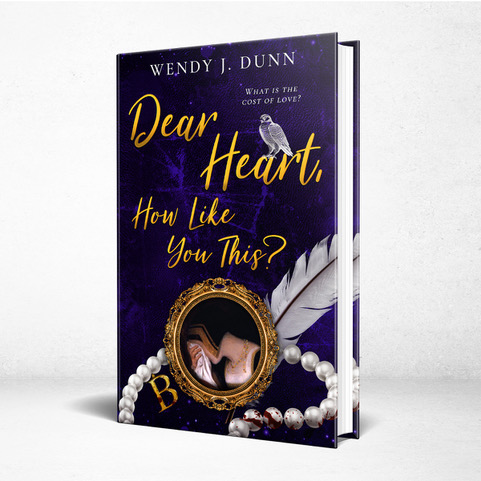
        Dear Heart, How Like You This? was my first published novel, and so will forever hold a special place in my heart because it was the novel that proved I could complete a novel, and one also good enough to be published. It tells the story of Anne Boleyn from the point of view of Sir Thomas Wyatt, the elder. Tom and I developed an extraordinary relationship when I wrote that book. He became so real we often argued about the direction of the story – and the story would just come to a stop until he got his own way.

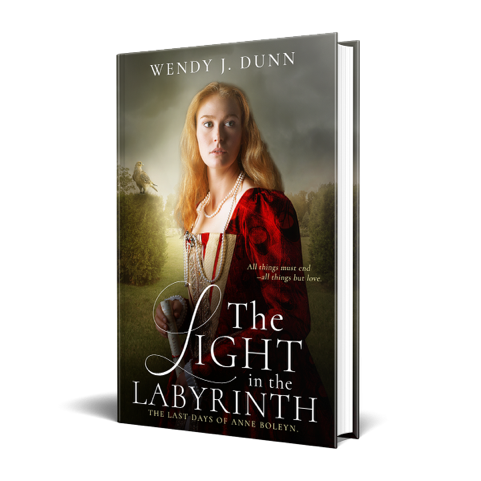
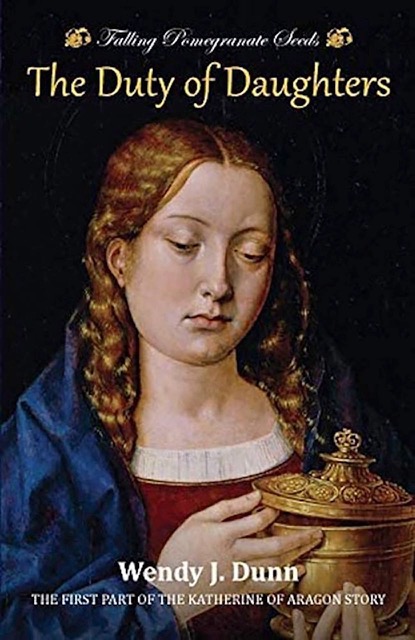
        Dear Heart ignited my desire to write about the life of Katherine of Aragon. I wrote the first version of The Duty of Daughtersthe novel about Katherine of Aragon’s early life in Castille – through the point of view of the child Maria de Salinas and then faced the fact I needed to write it through an adult point of view. I knew it just had to be Beatriz Galindo, the scholar who may have been Katherine of Aragon’s tutor, but I despaired about pulling apart the book and starting again. So much so, it took completing my Masters of Writing and then my PhD – when I wrote The Light in the Labyrinth as my creative artefact – before I returned to this work, for it to be published in 2016.

        Dear Heart also ignited the inspiration for The Light in the Labyrinth because my first novel left me with so many questions about why Henry VIII murdered the woman he had turned his kingdom upside to marriage. I decided to target this novel to young adults, with the hope adults would like it, too. LOL – I suspect far more adults have read and enjoyed it than young adults. As it became a bestseller in its early published life, I have no complaints about that.

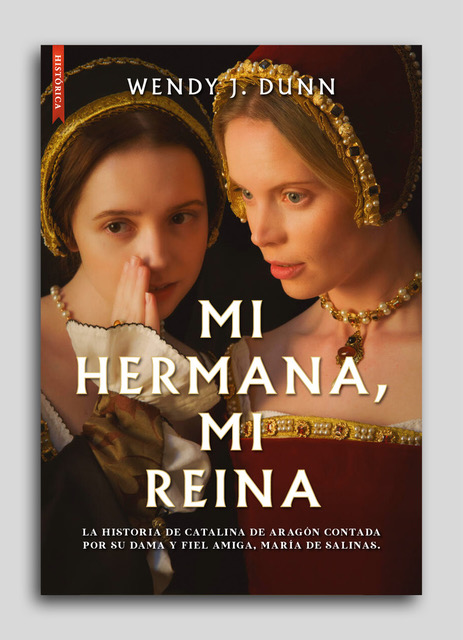
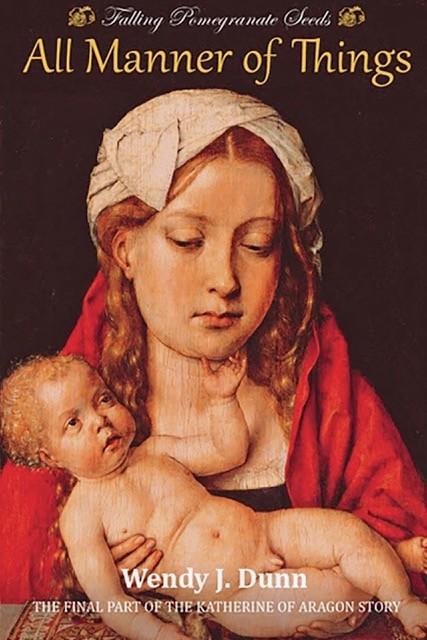
        All Manner of Things is the conclusion to my Falling Pomegranate Seeds duology. All Manner of Things imagines Katherine of Aragon time in England from her arrival in 1501 to 1520, with an epilogue that takes the reader to her deathbed. I used Maria de Salinas, one of Katherine’s closest friends and a fellow Castilian exile, as my narrator, which offered a close view of Katherine’s life.

        All Manner of Things has done me proud since its publication by gaining quite a few awards and being translated into Spanish and published as Mi Hermana, Mi Reina.

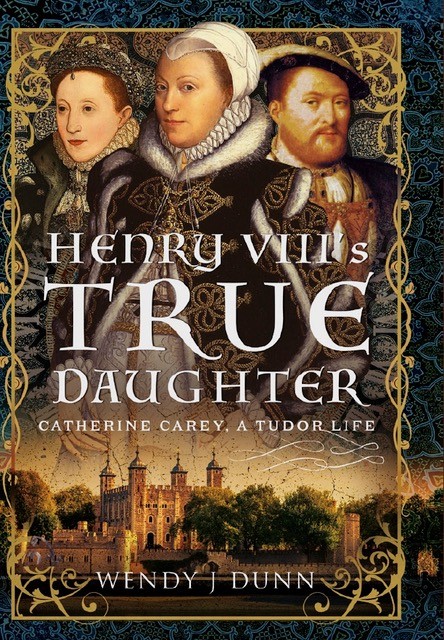
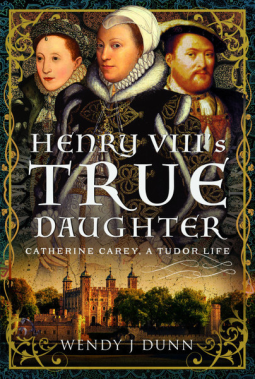
        Henry VIII’s True Daughter: Catherine Carey, A Tudor Life is my first published major work of nonfiction. COVID lockdowns made researching that book difficult. I was stuck in Melbourne, Australia, when I should have been researching in England. But we are fortunate to have a wealth of archival material now available online.

        Sharon: What attracts you to the Tudor period?

        Wendy: I have loved the Tudor period since my childhood. It is a fascinating period with so many fascinating people. For me, this period offers a wealth of stories to draw from for my storytelling, with a cast of archetypes, heroes and villains, with stories of adultery, murder, lust, love, passion, betrayal, tragedy and triumph, family secrets, ambition and vainglory. The Tudors offer a treasure trove of multilayered tales that speak to our shared humanity.

        Sharon: Who is your favourite Tudor and why?

        Wendy: No question about it. Elizabeth I. I know she was not perfect, but she was an exceptionally intelligent human being. The fact she ended up the queen of England, after years of walking a road where any misstep could lead to her death, is such a story of triumph. And the triumph continued all through her life. Elizabeth remained queen for close to forty-four years, despite all the plots to bring her down.  

        Sharon: Who is your least favourite Tudor and why?

        Wendy: Henry VIII. I don’t think I could ever like any man who murders his wives. I confess I wrote The Light in the Labyrinth hoping I’d find him more likeable. Alas, I liked him far less after completing my second Anne Boleyn novel. He was a bully, a tyrant (especially after 1536), possessed little empathy, emotionally abused his eldest daughter and forced her to betray the memory of her mother, all of which broke her spirit, made it harder for women to work in professions – for example, a law early in his reign excluded women from the medical profession, and was, many times, simply cruel.  

        OMG – he annulled his marriage to Anne Boleyn just days before her execution, so how could she be accused of adultery then? But he still executed her!

        Sharon: How do you approach researching your topic?

        Wendy: Books. Many books. And more books. Academic papers. Hours of searching for primary sources to help me with my topic. Living in hope of having funds to get to the places where my people once lived, just so I can walk in their footsteps.

        I build my people – real and imagined – through thorough research. I love researching history and deepening my knowledge about people of the past, which means every book I write increases my own personal reference library.

        Sharon: Tell us your ‘favourite’ Tudor story.

        Wendy: The day they crowned Elizabeth. Whenever I read the primary sources about her coronation, I am always swept away by the joy of the day. By Elizabeth’s joy. And I get an extra shiver up and down my backbone to know Anne Boleyn was remembered on this day. What Elizabeth must have felt to see her mother included in the processional display that celebrated her lineage.

        I have written about this day in Henry VIII’s True Daughter, and also touched on this scene in FIRE FROM THE COMET’S TAIL, one of my short stories:

        One of the honoured women helping carry Elizabeth’s long, heavy mantle up the steps, Kate couldn’t resist doing a dancing step, far too excited and happy to mind the cold.

        Drums rolled and trumpets blared. A thousand voices roared in triumph: Long live the queen. Long live the queen.

        Bess looked over her shoulder at the crowds, and waved. In the sudden hushed silence, before the crowd shouted out as if in one voice, “Elizabeth! God Save Elizabeth!” the wind carried to Kate the well-remembered laugh of another queen. One more shout mounted up, God save the queen.

        Out of the corner of her eye, her aunt seemed standing beside her. Love. Love never dies, or is forgotten, her aunt’s voice said in her mind. Strange. She had no memory of her saying that while she lived.

        Snow-light blinding her again, Kate rubbed her eyes. When she opened them, Bess had entered the ancient doors of Westminster.

        I really look forward to revisiting this day in the novel I am writing now.

        Sharon: Tell us your least ‘favourite’ Tudor story.

        Wendy: The execution of Anne Boleyn. Such an unjust end to her life. I also believe she only gave up hope of a reprieve in her last moments. How awful it must have been for her, knowing Henry wanted her dead so much he set in motion her execution. He may have given her the mercy of the French swordman, but he was merciless in other ways. And to die knowing she was leaving behind her infant daughter who would no longer have her protection. My heart breaks for her!

        Sharon: Are there any other eras you would like to write about?

        Wendy: I hope to live long enough to write about a few women from medieval Spanish history who have caught my attention. Researching Katherine of Aragon’s life has left me with a deep love of Spain and its history.

        Sharon: What are you working on now?

        Wendy: I’m working through the edits of Shades of Yellow, my novel about an Australian woman writing a Tudor novel (not me!), which is scheduled for publication on September 7th. I am also writing a novel inspired by the life of Frances Newton Brooke, a woman who served Elizabeth I even before she became queen until 1592. She is also subject I’m researching for my next nonfiction book for Pen& Sword Books

        Sharon: And finally, what is the best thing about being a writer?

        Wendy: Oh – finding kindred spirits, like you, Sharon! I feel so blessed with the friendships I have made along the way on this writing road of mine – and blessed to have this passion that helps me grow as a human being. Writing turned my life into a true adventure.

        About the Author:

        Wendy J. Dunn is an award-winning Australian writer fascinated by Tudor history – so much so she was not surprised to discover a family connection to the Tudors, not long after the publication of her first Anne Boleyn novel, which narrated the Anne Boleyn story through the eyes of Sir Thomas Wyatt, the elder. Her family tree reveals the intriguing fact that one of her ancestral families – possibly over three generations – had purchased land from both the Boleyn and Wyatt families to build up their own holdings. It seems very likely Wendy’s ancestors knew the Wyatts and Boleyns personally. Wendy is married, the mother of three sons and one daughter—named after a certain Tudor queen, surprisingly, not Anne. She is also the grandmother of two amazing small boys. She gained her PhD in 2014 and loves walking in the footsteps of the historical people she gives voice to in her novels. Wendy also tutors at Swinburne University of Technology, Australia.

        Where to find Wendy’s books:.

        Original version of Dear Heart, How Like You This?, New edition of Dear Heart, How like You This?

        Original version of The Light in the Labyrinth. New version of The Light in the Labyrinth.

        Falling Pomegranate Seeds duology: Part One, 
The Duty of Daughtershttps://mybook.to/FPS, Part two: All Manner of Things.

        Pen and Sword Books: Henry VIIIs True Daughter: Catherine Carey, A Tudor Life

        Mi hermana, mi reina: La historia de Catalina de Aragn contada por su dama y fiel amiga Mara de Salinas (Spanish Edition)

        Where to find Wendy::

        WebsiteNewsletter Facebook – Instagram: wendyjdunnauthor, Bluesky: wendyjdunn.bsky.social, LinkedIn: Dr Wendy Dunn – Academic Tutor and LecturerGoodreadsBookbub

        *

        My books

        Signed, dedicated copies of all my books are available through my online store.

        Out now: Scotland’s Medieval Queens

        Scotland’s history is dramatic, violent and bloody. Being England’s northern neighbour has never been easy. Scotland’s queens have had to deal with war, murder, imprisonment, political rivalries and open betrayal. They have loved and lost, raised kings and queens, ruled and died for Scotland. From St Margaret, who became one of the patron saints of Scotland, to Elizabeth de Burgh and the dramatic story of the Scottish Wars of Independence, to the love story and tragedy of Joan Beaufort, to Margaret of Denmark and the dawn of the Renaissance, Scotland’s Medieval Queens have seen it all. This is the story of Scotland through their eyes.

        Available now from Amazon and Pen and Sword Books

        Also by Sharon Bennett Connolly:

        Heroines of the Tudor World tells the stories of the most remarkable women from European history in the time of the Tudor dynasty, 1485-1603. These are the women who ruled, the women who founded dynasties, the women who fought for religious freedom, their families and love. Heroines of the Tudor World is now available for pre-order from Amberley Publishing and Amazon UK. Women of the Anarchy demonstrates how Empress Matilda and Matilda of Boulogne, unable to wield a sword themselves, were prime movers in this time of conflict and lawlessness. It shows how their strengths, weaknesses, and personal ambitions swung the fortunes of war one way – and then the other. Available from Bookshop.orgAmberley Publishing and Amazon UKKing John’s Right-Hand Lady: The Story of Nicholaa de la Haye is the story of a truly remarkable lady, the hereditary constable of Lincoln Castle and the first woman in England to be appointed sheriff in her own right. Available from all good bookshops Pen & Sword Booksbookshop.org and Amazon

        Defenders of the Norman Crown: The Rise and Fall of the Warenne Earls of Surrey tells the fascinating story of the Warenne dynasty, from its origins in Normandy, through the Conquest, Magna Carta, the wars and marriages that led to its ultimate demise in the reign of Edward III. Available from Pen & Sword BooksAmazon in the UK and US, and Bookshop.orgLadies of Magna Carta: Women of Influence in Thirteenth Century England looks into the relationships of the various noble families of the 13th century, and how they were affected by the Barons’ Wars, Magna Carta and its aftermath; the bonds that were formed and those that were broken. It is now available in paperback and hardback from Pen & SwordAmazon, and Bookshop.orgHeroines of the Medieval World tells the stories of some of the most remarkable women from Medieval history, from Eleanor of Aquitaine to Julian of Norwich. Available now from Amberley Publishing and Amazon, and Bookshop.orgSilk and the Sword: The Women of the Norman Conquest traces the fortunes of the women who had a significant role to play in the momentous events of 1066. Available now from Amazon,  Amberley Publishing, and Bookshop.org.

        Alternate Endings: An anthology of historical fiction short stories including Long Live the King… which is my take what might have happened had King John not died in October 1216. Available in paperback and kindle from Amazon.

        Podcast:

        Have a listen to the A Slice of Medieval podcast, which I co-host with Historical fiction novelist Derek Birks. Derek and I welcome guests, such as Bernard Cornwell and Michael Jecks, and discuss a wide range of topics in medieval history, from significant events to the personalities involved. Every episode is also now available on YouTube.

        *

        Don’t forget! Signed and dedicated copies of all my books are available through my online store.

        For forthcoming online and in-person talks, please check out my Events Page.

        You can be the first to read new articles by clicking the ‘Follow’ button, liking our Facebook page or joining me on TwitterThreadsBluesky and Instagram.

        *

        ©2025 Sharon Bennett Connolly, FRHistS and Wendy J. Dunn

        Anne de Vere: A Woman Unfortunate in her Husband

        Thomas Howard, 2nd Duke of Norfolk

        In Tudor times – well, in every era to be honest – not every woman could boast a husband who was capable of greatness. Or even of managing his own finances. Anne de Vere, Countess of Oxford, was one such, a woman who survived the scandals attached to her family only to be faced with a profligate husband who really should have heeded his wife’s advice. Born Anne Howard, daughter of Thomas Howard, 2nd Duke of Norfolk and his second wife, Agnes Tilney, she first appears in the historical record on 16 November 1511, when she is contracted to marry John de Vere, the 12-year-old nephew and heir of John de Vere, 12th Earl of Oxford. John was the only surviving son of George de Vere, who had been intended for the church until his father and oldest brother were both executed in 1462. He then became the heir of his surviving older brother, John de Vere, but died in 1503, leaving his 4-year-old son John as his brother’s heir.

        The de Veres were an old, noble family and although the marriage was politically and economically advantageous to both sides, it was even more so to the Howards, whose relatively new nobility would be strengthened by links with the old families. Although the marriage took place in September 1512, the youth of Anne and John meant that the couple lived with Anne’s family, the Howards, and the marriage may not have been consummated for some time. A year later, John inherited his uncle’s earldom of Oxford but as he was a minor, he remained a royal ward, and in 1514 his wardship and lands were granted to his father-in-law, the duke of Norfolk.

        Field of the Cloth of Gold, 1520

        Anne and John de Vere attended the famous Field of the Cloth of Gold in June 1520 and two months afterwards, the earl attained his majority and was granted livery of his lands. The young couple set up home at Hedingham Castle. The marriage does not appear to have been a happy one and by April 1523, Anne was writing to Cardinal Wolsey, requesting help in managing her husband’s behaviour. Though masked in diplomatic terms, Anne’s letters complained that John was managing his estates badly and acting dishonestly, and he refused to allow her to take on some of the estate management. Anne wrote that ‘yf I shuld medyl in anny off these concerns further than I do I surteyne that I shuld never leue in rest.’1

        Anne had taken control of the household finances and asked Wolsey to intervene in the matter of her husband’s debt. She was also worried about the negative influence of her husband’s heir, his second cousin, Sir John de Vere – later the 15th earl of Oxford. With the help of her father, the duke of Norfolk, and half-brother, Thomas Howard, then Earl of Surrey, Anne petitioned Henry VIII and in February 1524 an ordinance was enrolled in the court of Chancery to limit John’s control over his household and finances and to improve his behaviour towards Anne. He was to make no grants or annuities without the advice of Cardinal Wolsey. A noble had a duty to manage his lands sensibly, both to preserve them for future generations and as evidence that he was fit for public life.

        John de Vere, Earl of Oxford, was warned against keeping wild and riotous company and drinking to excess. He was to moderate his hunting and be caring and considerate of his wife. He was ordered to return to his father-in-law’s household until further notice, his lands placed in Wolsey’s nominal keeping. However, as early as 16 February, Wolsey wrote:

        My lorde, the young countess of Oxford has lately returned to the King and Council, alleging that his lordship still keeps her out of possession, although it was supposed that she had entered by force of the King’s writ. A new commandment is sent out to the justices for removing the said force, and restoring her to her former possession. Informs him of it, that he may suffer her to have her … ‘ordinary course and way, whereby your title, possession, nor entry can not … to abide the same to be done by an extraordinary way … by reason whereof further trouble might ensue … to the hindrance of your matter and you.2

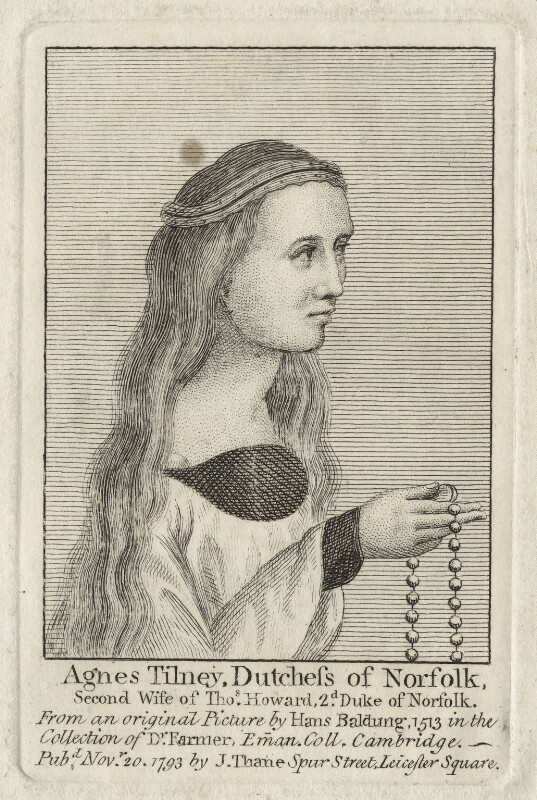
        Agnes Tilney, Duchess of Norfolk, Anne’s mother

        When Anne’s father died in May 1524, she and John probably moved to the household of her half-brother Thomas, now Duke of Norfolk. When the earl of Oxford’s health began to fail in July 1525, he was induced to sign a jointure by the Howards, which passed the bulk of his lands to his wife. He died the following year on 14 July 1526, at just26 years of age. At the time, Anne was living at Castle Camps in Cambridgeshire. She again wrote to Wolsey, advising him of difficulties with her husband’s executors and again asking for his help:

        Since she wrote, the executors of the late earl of Oxford have, with much ado, delivered the stuff and plate bequeathed according to the letter directed to them by [Wolsey], but not the 100 marks. They declare they can do no more, and are displeased with Sir Rob. Drowre for being so ready to grant it to [Wolsey]. ‘They squared with him afore me, and now I find him better than the remnant in divers causes; and I desired them to have their advice in ordering my lord’s house, and in other great causes concerning my lord’s business, and they said they would not meddle,’ although they speak fair before [Wolsey]. Regrets to trouble him on this matter considering his great affairs, but has few powerful friends.3

        The new earl of Oxford was not happy with the increase to Anne’s jointure, considering the lands that had been passed to her in 1525 to be rightfully his. By 11 August, she was again writing to Wolsey, complaining that the earl had twice broken into her deer park at Lavenham in Suffolk:

        Received his letters on Saturday last, when she wrote to inform him of my lord of Oxford’s coming hither. He entered this town about 11 o’clock with 50 horsemen, and Sir John Raynsforthe came the same day with 30 horse. My lord broke open the park, his men entered with their bows ready bent, and killed 17 of her deer. On Tuesday he entered the park with about 500 men, having sent to the neighbouring towns to cause the people to assemble, and they killed 100 deer. The justice of the peace bound him and her to keep the peace, but he has to-day broken open her house at Campys, accompanied with 300 persons, beaten her servants and taken her goods. Asks his and the King’s aid. Lavenham, 11 Aug. Signed: A. Oxynfford.4

        Depiction of a medieval hunting park from a 15th-century manuscript version of The Master of Game, MS. Bodley 546 f. 3v

        It was probably fortunate for Anne that she was absent from her home when the earl broke in, stole her goods and beat her servants. Had she been present, she may have been the subject of a kidnapping, or worse. Anne was not to give up in the face of such violence, however, and she set the wheels of the law in motion and appealed to her powerful relatives and friends for help. Charles Brandon, Duke of Suffolk, and Henry Courtney, Earl of Devon, were amongst those who appealed to Cardinal Wolsey on Anne’s behalf. She informed Brandon:

        The writ she had from Wolsey for Cambridgeshire does not serve her, for the persons at the castle of Campys answered the justices that they would not depart till their master ordered them. The justices did not think they could remove them by their own power, or by raising the country, without greatly disturbing the King’s peace. They have proceeded no further in executing the said writ. Sheannot obtain her possessions without his help and her brother’s (Norfolk). Wyttysforthe, 22 Aug.5

        In 1528, the king settled Lavenham on Anne, but the earl immediately invaded the park, stole deer and beat the keeper. Anne joined forces with other de Vere relatives, who stood to be disadvantaged by the earl’s claims. The case was brought to arbitration before peers in 1529 when Anne’s jointure was reduced and most of the disputed lands were granted to the earl. The final remnants of the dispute were settled by March 1532. Anne lived quietly in Cambridgeshire afterwards, occasionally visiting London and the court. She was at the coronation of her half niece Anne Boleyn in 1533 and was one of the mourners at Catherine of Aragon’s funeral in 1536 and at that of Jane Seymour in 1537. In 1541, on the arrest of her mother and her sister Katherine, Countess of Bridgewater, for misprision of treason following the discovery of the adulteries of her niece Katherine Howard, Anne was given custody of her niece Agnes ap Rhys, daughter of her sister Katherine.

        Described as a woman of great wit, Anne was faced with a number of lawsuits later in life from servants and tenants. One servant complained that she had taken against him after fourteen years of service, not only dismissing him from her service but also ‘expelling him unlawfully from the land and tenement he was leasing from her, stolen livestock from him, put a new lock on his cottage, and taken a number of loads of hay, and all of the rye that was growing.’6 Unfortunately, we do not have the outcomes of any of the cases brought against Anne, but they do perhaps demonstrate that she was having difficulty managing her estates later in life.

        Anne died in early 1559, and although we do not have a will, the diarist Henry Machyn recorded the transport of her hearse to Lambeth and her funeral at the Church of St Mary’s in Lambeth, where she was buried in the Howard family chapel.

        A print of St Mary’s church, Lambeth, nin 1851 following its restoration

        The xvij day of Feybruary was a herse of wax [erected] gorgyously, with armes, a ix dosen penselles and armes, [for the] old lade contes of Oxford, the syster to the old Thomas [duke of] Norffoke, at Lambeth…
        The xxj day of Feybruary my lade was browth in-to Lambethe chyrche for the qwer and dobull reylyd, and hangyd with blake and armes; and she had iiij goodly whyt branchys and ij dosen of grett stayffes torchys, and ij haroldes of armes, master Garter and master Clarenshus, in ther cotte armurs; a-for a grett baner of armes, and iiij baners rolles, and iiij baners of santtes; and then cam the corsse, and after morners; the chyff morner was my lade chamberlen Haward, and dyvers odur of men (and) women; and after durge done to the dukes plasse; and the morow, masse of requiem done, my lade was bered a-for the he awtter.22

        Anne de Vere, Countess of Oxford, had proved herself capable of defending her rights and property by using her wit and connections in order to solicit the support she needed to combat her husband’s profligacy. That she did not win out entirely against her husband’s successor is perhaps more a demonstration of the establishment’s desire to preserve earldoms with all their land, rather than of any failing on Anne’s part. Anne did prove that estate management was not the preserve of men!

        Images:

        Courtesy of Wikipedia

        Notes:

        1. TNA SP1/27, fols. 154v–155 quoted in Nicola Clark, ‘Vere [née Howard] Anne de, countess of Oxford’; 2. ‘Henry VIII: February 1524, 16-28’, in Letters and Papers, Foreign and Domestic, Henry VIII, Volume 4, 1524-1530, ed. J S Brewer (London, 1875), pp. 41-58. British History Online http://www.british-history.ac.uk/letters-papers-hen8/vol4/pp41-58 [accessed 6 April 2023]; 3. ibid; 4. ibid; 5. ibid; 6. Nicola Clark, ‘Vere [née Howard] Anne de, countess of Oxford’; 7. ‘Diary: 1559 (Jan-Jun)’, in The Diary of Henry Machyn, Citizen and Merchant-Taylor of London, 1550-1563, ed. J G Nichols (London, 1848), pp. 184-201.
        British History Online http://www.british-history.ac.uk/camden-record-soc/vol42/pp184-201 [accessed 6 April 2023].

        Select Bibliography:

        Nicola Clark, ‘Vere [née Howard] Anne de, countess of Oxford’; Letters and Papers, Foreign and Domestic, Henry VIII, Volume 4, 1524-1530, ed. J S Brewer; The Diary of Henry Machyn, Citizen and Merchant-Taylor of London, 1550-1563, ed. J G Nichols; Amy, The Sixteenth Century in 100 Women; David Loades, editor, Chronicles of the Tudor Kings: The Tudor Dynasty from 1485 to 1553: Henry VII, Henry VIII and Edward VI in the Words of their Contemporaries; Elizabeth Norton, The Lives of Tudor Women; Victoria Sylvia Evans, Ladies-in-Waiting: Women who Served at the Tudor Court; Claiden-Yardley, Kirsten, The Man Behind the Tudors: Thomas Howard 2nd Duke of Norfolk; Gareth Russell, Young & Damned & Fair: The Life and Tragedy of Catherine Howard at the Court of Henry VIII; Josephine Wilkinson, Katherine Howard: The Tragic Story of Henry VIII’s Fifth Queen

        *

        My Books:

        Signed, dedicated copies of all my books are available through my online bookshop.

        Coming 30 January 2025: Scotland’s Medieval Queens

        Scotland’s history is dramatic, violent and bloody. Being England’s northern neighbour has never been easy. Scotland’s queens have had to deal with war, murder, imprisonment, political rivalries and open betrayal. They have loved and lost, raised kings and queens, ruled and died for Scotland. From St Margaret, who became one of the patron saints of Scotland, to Elizabeth de Burgh and the dramatic story of the Scottish Wars of Independence, to the love story and tragedy of Joan Beaufort, to Margaret of Denmark and the dawn of the Renaissance, Scotland’s Medieval Queens have seen it all. This is the story of Scotland through their eyes.

        Available for pre-order now.

        Also by Sharon Bennett Connolly:

        Heroines of the Tudor World tells the stories of the most remarkable women from European history in the time of the Tudor dynasty, 1485-1603. These are the women who ruled, the women who founded dynasties, the women who fought for religious freedom, their families and love. Heroines of the Tudor World is now available for pre-order from Amberley Publishing and Amazon UK. Women of the Anarchy demonstrates how Empress Matilda and Matilda of Boulogne, unable to wield a sword themselves, were prime movers in this time of conflict and lawlessness. It shows how their strengths, weaknesses, and personal ambitions swung the fortunes of war one way – and then the other. Available from Bookshop.orgAmberley Publishing and Amazon UKKing John’s Right-Hand Lady: The Story of Nicholaa de la Haye is the story of a truly remarkable lady, the hereditary constable of Lincoln Castle and the first woman in England to be appointed sheriff in her own right. Available from all good bookshops Pen & Sword Booksbookshop.org and Amazon

        Defenders of the Norman Crown: The Rise and Fall of the Warenne Earls of Surrey tells the fascinating story of the Warenne dynasty, from its origins in Normandy, through the Conquest, Magna Carta, the wars and marriages that led to its ultimate demise in the reign of Edward III. Available from Pen & Sword BooksAmazon in the UK and US, and Bookshop.orgLadies of Magna Carta: Women of Influence in Thirteenth Century England looks into the relationships of the various noble families of the 13th century, and how they were affected by the Barons’ Wars, Magna Carta and its aftermath; the bonds that were formed and those that were broken. It is now available in paperback and hardback from Pen & SwordAmazon, and Bookshop.orgHeroines of the Medieval World tells the stories of some of the most remarkable women from Medieval history, from Eleanor of Aquitaine to Julian of Norwich. Available now from Amberley Publishing and Amazon, and Bookshop.orgSilk and the Sword: The Women of the Norman Conquest traces the fortunes of the women who had a significant role to play in the momentous events of 1066. Available now from Amazon,  Amberley Publishing, and Bookshop.org.

        Alternate Endings: An anthology of historical fiction short stories including Long Live the King… which is my take what might have happened had King John not died in October 1216. Available in paperback and kindle from Amazon.

        Podcast:

        Have a listen to the A Slice of Medieval podcast, which I co-host with Historical fiction novelist Derek Birks. Derek and I welcome guests, such as Bernard Cornwell, and discuss a wide range of topics in medieval history, from significant events to the personalities involved. Our latest episode is a fascinating discussion with Dr Ian Mortimer about the speed of travel and communications in medieval times. Definitely worth a listen!

        *

        Don’t forget! Signed and dedicated copies of all my books are available through my online bookshop.

        For forthcoming online and in-person talks, please check out my Events Page.

        You can be the first to read new articles by clicking the ‘Follow’ button, liking our Facebook page or joining me on TwitterThreadsBluesky and Instagram.

        ©2024 Sharon Bennett Connolly FRHistS

        Book Corner: 2 Books About Tudor Heirs

        It is time for me to get back to some serious book reviewing. So, in order to catch up, I thought I’d do two reviews in one post. Both books are from the Tudor period and look into the heirs to the Tudor throne, and the impact of Henry VIII’s actions on those children. Each books provide a fascinating insight into the lives of prominent Tudors and shows a side of Henry VIII that is often overlooked.

        Henry VIII’s Children by Caroline Angus

        Of the five Tudor monarchs, only one was ever born to rule. While much of King Henry VIII’s reign is centred on his reckless marriage choices, it was the foundations laid by Henry and Queen Katherine of Aragon that shaped the future of the crown. Among the suffering of five lost heirs, the royal couple placed all their hopes in the surviving Princess Mary. Her early life weaves a tale of promise, diplomacy, and pageantry never again seen in King Henry’s life, but a deep-rooted desire for a son, a legacy of his own scattered childhood, pushed Henry VIII to smother Mary’s chance to rule. An affair soon produced an unlikely heir in Henry Fitzroy, and while one child was pure royalty, the other illegitimate, the comparison of their childhoods would show a race to throne closer than many wished to admit.

        King Henry’s cruelty saw his heirs’ fates pivot as wives came and went, and the birth Princess Elizabeth, saw long-term plans upended for short-term desires. With the death of one heir hidden from view, the birth of Prince Edward finally gave the realm an heir born to rule, but King Henry’s personal desires and paranoia left his heirs facing constant uncertainty for another decade until his death. Behind the narrative of Henry VIII’s wives, wars, reformation and ruthlessness, there were children, living lives of education among people who cared for them, surrounded by items in generous locations which symbolised their place in their father’s heart. They faced excitement, struggles, and isolation which would shape their own reigns. From the heights of a surviving princess destined and decreed to influence Europe, to illegitimate children scattered to the winds of fortune, the childhoods of Henry VIII’s heirs is one of ambition, destiny, heartache, and triumph.

        Henry VIII left a long shadow, especially for his children. Caroline Angus looks into the lives and experiences of Henry’s 3 legitimate children, Edward VI, Mary I and Elizabeth I, alongside his only recognised illegitimate child, Henry Fitzroy, Duke of Richmond. And the other possible candidates to be Henry’s offspring, including Catherine Carey.

        Henry VIII’s Children is a very easy and enjoyable read. You get absorbed into Caroline Angus’s love of her subject. Her research is thorough and all her arguments are supported by evidence. Where there is conjecture, the author presents both sides and lets the reader find their own conclusion, while presenting what she thinks most likely. I did not agree with all her conclusions, particularly when it comes to Catherine Carey – I am not convinced she was Henry VIII’s daughter, not that Henry’s relationship with Mary Boleyn lasted as long as some historians suggest. I just don’t think we have enough information. But it was interesting to read Caroline’s thoughts on the subject and see how she came to her conclusions.
        It certainly gave me food for thought!

        The Tudors are always a fascinating subject and Caroline Angus does a wonderful job of igniting the reader’s passion in her subject.

        The strength of Henry VIII’s Children lies in its fascinating investigation into the lives of Henry’s 3 ‘legitimate’ children and how their fates were manipulated and directed by Henry’s obsession for a male heir, and his multiple marriages. Poor Mary I had 5 stepmothers! just imagine how she must have felt, watching her mother shunned and sidelined by the father she adored, not being allowed to visit her on her deathbed, nor being allowed to receive her mother’s comfort when she was ill and scared. The mind games Henry VIII played with his eldest child, in order to get her acquiescence, are something to behold.

        And then there’s poor Elizabeth, her mother executed before her 3rd birthday, and yet she is the one who surpassed all Henry’s dreams for his children. Elizabeth is the one who had a golden age named after her. She is also the one who always lived in the shadow of her mother’s fate. Caroline Angus looks into all aspects of Elizabeth’s life, especially the childhood and adolescence that shaped her future.

        And Edward! the golden boy. The heir who was so desired that his father broke with Rome to get. A boy who was the hope of a nation but died so tragically young.

        Caroline Angus looks at them all with such enthusiasm and animation that they jump off the page.

        An eminently readable nook that I have no hesitation in recommending.

        To Buy Henry VIII’s Children

        About the Author:

        Caroline Angus is a New Zealand-based author raising four sons. Caroline studied history at Universitat de València, Spain, spending ten years dedicated to the Spanish Civil War and the resulting dictatorship. Caroline went on to study with King’s College London, specialising in Shakespeare and British royal history. After a decade of writing fiction, including the Secrets of Spain series, focusing on the lives of Valencian interviewees between 1939 and 1975, and the more recent Queenmaker Trilogy, eleven years of Thomas Cromwell and his fictional attendant Nicòla Frescobaldi, Caroline is now creating non-fiction works on the surviving papers of Thomas Cromwell.

        Henry VIII’s True Daughter by Wendy J Dunn

        The lives of Tudor women often offer faint but fascinating footnotes on the pages of history. The life of Catherine – or Katryn as her husband would one day pen her name – Carey, the daughter of Mary Boleyn and, as the weight of evidence suggests, Henry VIII, is one of those footnotes.

        As the possible daughter of Henry VIII, the niece of Anne Boleyn and the favourite of Elizabeth I, Catherine’s life offers us a unique perspective on the reigns of Henry and his children. In this book, Wendy J. Dunn takes these brief details of Catherine’s life and turns them into a rich account of a woman who deserves her story told. Following the faint trail provided of her life from her earliest years to her death in service to Queen Elizabeth, Dunn examines the evidence of Catherine’s parentage and views her world through the lens of her relationship with the royal family she served.

        This book presents an important story of a woman who saw and experienced much tragedy and political turmoil during the reigns of Henry VIII, Edward VI, and Mary I – all of which prepared her to take on the vital role of one of Elizabeth I closest and most trusted women. It also prepared her to become the wife of one of Elizabeth’s privy councillors – a man also trusted and relied on by the queen. Catherine served Elizabeth during the uncertain and challenging first years of her reign, a time when there was a question mark over whether she would succeed as queen regnant after the failures of England’s first crowned regnant, her sister Mary.

        Through immense research and placing her in the context of her period, HENRY VIII’S TRUE DAUGHTER: CATHERINE CAREY, A TUDOR LIFE draws Catherine out of the shadows of history to take her true place as the daughter of Henry VIII and shows how vital women like Catherine were to Elizabeth and the ultimate victory of her reign.

        Henry VIII’s True Daughter: Catherine Carey, A Tudor Life by Wendy J. Dunn is a perfect accompaniment to Henry VIII’s Children. Focusing on the eldest child of Mary Boleyn and William Carey, Wendy J. Dunn investigates Catherine’s origins and the stories around her conception and birth – in particular, her mother’s relationship with Henry VIII. It has long been thought possible that Catherine was Henry’s daughter and that Mary Boleyn’s marriage to William Carey was arranged to conceal the king’s affair. Henry himself admitted he had slept with Mary Boleyn when he was once accused of sleeping with Anne Boleyn’s mother, replying along the lines of ‘the sister but never the mother.’

        So, we know they had a relationship, but how long it lasted and whether Catherine was the result of that relationship is still uncertain. Wendy attempts to lift away that uncertainty and presents all the evidence and conjecture that has been gather over the years to give us her own conclusions.

        But this book is so much more! Henry VIII’s True Daughter gives us insights into the life of a prominent Tudor woman. Whether or not she was the daughter of Henry VIII, she was still at the heart of the Tudor court, especially in the reign of her sister/cousin, Elizabeth I. Catherine was one of Elizabeth’s favourites and was loyal to the queen to the very end of her life. Wendy gives stunning insight into Catherine’s life and career, as well as her marriage and family.

        Even if I don’t necessarily agree with all its conclusion, Henry VIII’s True Daughter by Wendy J Dunn is a wonderful, engaging book, giving the reader ample food for thought in her theories and explanations of the life and origins of Catherine Carey. It is a must-read for any fan of Tudor history.

        To Buy Henry VIII’s True Daughter

        About the Author:

        Wendy J. Dunn is an award-winning Australian writer fascinated by Tudor history – so much so she was not surprised to discover a family connection to the Tudors, not long after the publication of her first Anne Boleyn novel, which narrated the Anne Boleyn story through the eyes of Sir Thomas Wyatt, the elder. Her family tree reveals the intriguing fact that one of her ancestral families – possibly over three generations – had purchased land from both the Boleyn and Wyatt families to build up their holdings. It seems very likely Wendy’s ancestors knew the Wyatts and Boleyns personally. Wendy is married, the mother of four adult children and the grandmother of two amazing small boys. She gained her PhD in 2014 and loves walking in the footsteps of the historical people she gives voice to in her books. Wendy also tutors writing at Swinburne University of Technology, Australia. HENRY VIII’S TRUE DAUGHTER: CATHERINE CAREY, A TUDOR LIFE is her first full-length nonfiction work.

        *

        My Books:

        Signed, dedicated copies of all my books are available through my online store.

        OUT NOW! Heroines of the Tudor World

        Heroines of the Tudor World tells the stories of the most remarkable women from European history in the time of the Tudor dynasty, 1485-1603. These are the women who ruled, the women who founded dynasties, the women who fought for religious freedom, their families and love. These are the women who made a difference, who influenced countries, kings and the Reformation. In the era dominated by the Renaissance and Reformation, Heroines of the Tudor World examines the threats and challenges faced by the women of the era, and how they overcame them. From writers to regents, from nuns to queens, Heroines of the Tudor World shines the spotlight on the women helped to shape Early Modern Europe.

        Heroines of the Tudor World is now available for pre-order from Amberley Publishing and Amazon UK.

        Coming 30 January 2025: Scotland’s Medieval Queens

        Scotland’s history is dramatic, violent and bloody. Being England’s northern neighbour has never been easy. Scotland’s queens have had to deal with war, murder, imprisonment, political rivalries and open betrayal. They have loved and lost, raised kings and queens, ruled and died for Scotland. From St Margaret, who became one of the patron saints of Scotland, to Elizabeth de Burgh and the dramatic story of the Scottish Wars of Independence, to the love story and tragedy of Joan Beaufort, to Margaret of Denmark and the dawn of the Renaissance, Scotland’s Medieval Queens have seen it all. This is the story of Scotland through their eyes.

        Available for pre-order now.

        Also by Sharon Bennett Connolly:

        Women of the Anarchy demonstrates how Empress Matilda and Matilda of Boulogne, unable to wield a sword themselves, were prime movers in this time of conflict and lawlessness. It shows how their strengths, weaknesses, and personal ambitions swung the fortunes of war one way – and then the other. Available from Bookshop.orgAmberley Publishing and Amazon UKKing John’s Right-Hand Lady: The Story of Nicholaa de la Haye is the story of a truly remarkable lady, the hereditary constable of Lincoln Castle and the first woman in England to be appointed sheriff in her own right. Available from all good bookshops Pen & Sword Booksbookshop.org and AmazonDefenders of the Norman Crown: The Rise and Fall of the Warenne Earls of Surrey tells the fascinating story of the Warenne dynasty, from its origins in Normandy, through the Conquest, Magna Carta, the wars and marriages that led to its ultimate demise in the reign of Edward III. Available from Pen & Sword BooksAmazon in the UK and US, and Bookshop.org

        Ladies of Magna Carta: Women of Influence in Thirteenth Century England looks into the relationships of the various noble families of the 13th century, and how they were affected by the Barons’ Wars, Magna Carta and its aftermath; the bonds that were formed and those that were broken. It is now available in paperback and hardback from Pen & Sword, Amazon, and Bookshop.orgHeroines of the Medieval World tells the stories of some of the most remarkable women from Medieval history, from Eleanor of Aquitaine to Julian of Norwich. Available now from Amberley Publishing and Amazon, and Bookshop.orgSilk and the Sword: The Women of the Norman Conquest traces the fortunes of the women who had a significant role to play in the momentous events of 1066. Available now from Amazon,  Amberley Publishing, and Bookshop.org.

        Alternate Endings: An anthology of historical fiction short stories including Long Live the King… which is my take what might have happened had King John not died in October 1216. Available in paperback and kindle from Amazon.

        Podcast:

        Have a listen to the A Slice of Medieval podcast, which I co-host with Historical fiction novelist Derek Birks. Derek and I welcome guests, such as Bernard Cornwell, and discuss a wide range of topics in medieval history, from significant events to the personalities involved.

        *

        Don’t forget! Signed and dedicated copies of all my books are available through my online store.

        For forthcoming online and in-person talks, please check out my Events Page.

        You can be the first to read new articles by clicking the ‘Follow’ button, liking our Facebook page or joining me on TwitterThreads and Instagram.

        *

        ©2024 Sharon Bennett Connolly FRHistS.

        Lady Mary Seymour, the Queen’s Orphan Daughter

        Katherine Parr by an unknown artist, NPG

        Little Lady Mary Seymour was the daughter of dowager Queen Kateryn Parr and her fourth, and final, husband, Thomas Seymour, Baron Seymour of Sudeley. Kateryn Parr was widowed for a third time with the death of Henry VIII in January 1547. By May of the same year, Queen Kateryn was married to the new king Edward VI’s uncle, Thomas Seymour, Lord High Admiral of England and Baron Seymour of Sudeley. This was said to be a love match and within months Kateryn found herself pregnant for what may have been the first time in her life. In the months before the birth, the queen had fitted out a nursery for her baby, decorated in Kateryn’s favourite colours of crimson and gold: the nursery had views of the gardens and the castle’s chapel. The queen’s joy was tempered by the scandal that had arisen from her husband’s attentions towards Kateryn’s stepdaughter, Elizabeth.

        She wrote to Thomas Seymour of how active the unborn child was:

        I gave your little knave your blessing, who like an honest man stirred apace after and before. For Mary Odell [one of her ladies] being abed with me had laid her hand upon my belly to feel it stir. It hath stirred these three days every morning and evening so that I trust when you come it will make you some pastime. And thus I end bidding my sweetheart and loving husband better to fare than myself.1

        Kateryn gave birth to her only child, Mary, named after the dowager queen’s stepdaughter, Princess Mary, on 30 August 1548. At the age of 37, Kateryn was old to be having her first child, but both she and the baby had come through the labour safely and there doesn’t appear to have been any disappointment that the child was a girl rather than a boy.

        Thomas Seymour painted by Nicolas Denisot

        Within just a few days of the birth, Kateryn was showing signs of puerperal fever, a bacterial complication of childbirth that was very dangerous in the centuries before antibiotics. As her condition worsened, Kateryn suffered bouts of delirium and moments of calm, when she appeared to rally. In her delirium, Kateryn railed against her husband, saying

        ‘I am not well handled, for those that be about me careth not for me but standith laughing at my grief and the more good I will to them, the less good they will to me.’2

        Strongly denying her accusations, Seymour replied

        ‘Why, sweetheart, I would you no hurt.’3

        Whether Kateryn truly believed Seymour wanted her dead, or was still smarting from how close he had got to the Princess Elizabeth, or the words, reported by Lady Tyrwitt, who was not a friend of Seymour’s, were misinterpreted, we will never know. Her pain, delirium and suspicion of her husband made Kateryn’s last days even more wretched.

        Kateryn Parr died 6 days after little Mary’s birth, on 5 September 1548, at Sudeley Castle. She was laid to rest beneath the floor of St Mary’s Chapel in the castle grounds, with Lady Jane Grey acting as her chief mourner. Despite her fears that her husband had poisoned her, in her will, dictated as she was close to death, she left everything to Seymour, making him a very wealthy man.

        Thomas Seymour was stunned by Kateryn’s death and grieved deeply. He abandoned Sudeley Castle and returned to London, seeking refuge at Syon House, the home of his brother, Edward Seymour, Duke of Somerset and his wife. Little Lady Mary was placed in the care of his mother, Margery Seymour.

        St Mary’s Chapel, Sudeley Castle

        Mary was eventually taken into the care of Edward Seymour and his wife, Duchess Anne. Anne had herself given birth to a little boy shortly before Mary’s birth and had a house full of children, little Mary’s cousins. However, when her father was arrested for treason, having plotted to marry the Princess Elizabeth, and was being held in the Tower awaiting execution, he asked that his daughter should be given into the care of Katherine Willoughby (now Brandon), Duchess of Suffolk. Katherine had been a good friend of Kateryn Parr. She had herself been widowed in 1545 and was the mother of 2 teenage boys, Henry and Charles Brandon.

        Mary could have been given into the care of Kateryn Parr’s brother, William Parr, Marquess of Northampton, but he had recently found himself out of favour with Edward Seymour, the Lord Protector, as he had tried to divorce his wife, Anne Bourchier, in order to marry Elisabeth Brooks, who had served Seymour’s sister Jane when she was queen. This remarriage was considered illegal and outrageous and so, with such a scandal attached to him, Parr was not a suitable guardian to his niece; not that he appears to have paid any attention to Mary, nor expressed any desire to play a part in her life. Neither did Kateryn’s sister, Anne Herbert, Countess of Pembroke, show any interest in taking care of her niece, despite her own children being close in age to Mary.

        With Thomas Seymour’s execution on 20 March 1549, Lady Mary Seymour, at just short of 7 months old, was a dispossessed orphan. Three days before her father’s death, whilst she was still in the custody of her uncle at Syon House, Mary had been granted £500 a year by the Privy Council. The money was for ‘dyettes, wages and lyvereyes of the household of Mistres Mary Seymour for a yere and a half ended at the Feast of the annunciation of Our Lady next cummyng [25 March].’4 However, that income was not transferred to Katherine Willoughby when the baby was moved to her residence at Grimsthorpe Castle in Lincolnshire. This left the duchess short of funds. The daughter of a queen, though not royal, was expected to be maintained to a certain standard. The little orphan arrived at Grimsthorpe Castle with her own household; her full complement of staff included her governess, a nurse and two maids. And it was left to Katherine, Duchess of Suffolk, to pay their wages.

        Katherine Willoughby, Duchess of Suffolk, Mary Seymour’s guardian

        By 24 July 1549, Katherine was writing to William Cecil, a secretary in Edward Seymour’s household at the time, in the hope that he may assist her in recovering payment for her expenses. She wrote:

        ‘It is said that the best means of remedy to the sick is first plainly to confess and disclose the disease, wherefore, both for remedy and again for that my disease is so strong that it will not be hidden. … All the world knoweth … what a very beggar I am.’5

        Katherine said that her finances were worsening for numerous reasons but,

        ‘amongst others … if you will understand, not least the queen’s child hath layen, and still doth lie at my house, with her company about her, wholly at my charges. I have written to my lady of Somerset at large, that there be some pension allotted unto her according to my lord grace’s promise. Now, good Cecil, help at a pinch all that you may help.’6

        The duchess included a list of items that Duchess Anne had promised to send on, including the plate and other items that had been intended for Mary’s nursery at Sudeley Castle. The duchess also complained that the baby’s governess, ‘with the maid’s nurse and others, daily call for their wages, whose voices my ears can hardly bear, but my coffers much worse.’7

        It is saddening to read how little affection is given to this child who was so wanted by her parents. That she went from being the centre of Kateryn Parr’s world to being an unwanted burden on the late queen’s good friend. It seems that Katherine Willoughby’s pleas did eventually have an effect. In January 1550, application was made to the House of Commons for the restitution of Lady Mary Seymour, ‘daughter of Thomas Seymour, knight, late Lord Seymour of Sudeley and late High Admiral of England, begotten of the body of Queen Katherine, late queen of England’.8

        Grimsthorpe Castle, Lincolnshire

        By this act, the little girl, now 16 months old, was permitted to inherit any remaining property that had not been returned to the crown by her father’s attainder. This did not particularly improve Mary’s situation, as most of the property she would be allowed to inherit had already passed into the hands of others. This Act of Parliament is the last mention we have of Lady Mary Seymour in the historical record. The grant was not renewed when it became due in September 1550 and Lady Mary never claimed any of the remaining portion of her father’s estate.

        It seems likely that the little orphan had died at Grimsthorpe Castle before her second birthday, her burial place now unknown. There are traditions that she survived. One such has her raised by her governess, eventually marrying Sir Edward Bushell, while a family in Sussex also claims to be descended from her. While neither of these scenarios are impossible, there is no historical record to substantiate the claims.

        That we cannot say for certain is one more sad note in the life of a little girl whose birth was met with such joy by both her parents, but whose short life was replete with tragedy. She was a little pawn in the machinations of her elders.

        Images:

        Courtesy of Wikipedia except Grimsthorpe Castle which is ©2024 Sharon Bennett Connolly FRHistS

        Notes:

        1. Linda Porter, Katherine the Queen: The Remarkable Life of Katherine Parr, the Last Wife of Henry VIII, p. 318; 2. ibid, p. 322; 3. ibid, p. 323; 4. Rebecca Larson, ‘The Disappearance of Lady Mary Seymour’, tudorsdynasty.com; 5. Linda Porter, Katherine the Queen, p. 341; 6. ibid, pp. 341-342; 7. ibid, p. 342; 8. ibid

        Sources:

        Linda Porter, Katherine the Queen: The Remarkable Life of Katherine Parr, the Last Wife of Henry VIII; Rebecca Larson, ‘The Disappearance of Lady Mary Seymour’, tudorsdynasty.com; Don Matzat, Katherine Parr: Opportunist, Queen, Reformer; Amy Licence, The Sixteenth Century in 100 Women; Anne Crawford, editor, Letters of the Queens of England; Oxforddnb.com; Elizabeth Norton, Catherine Parr; Elizabeth Norton, The Lives of Tudor Women; Sarah Morris and Natalie Grueninger, In the Footsteps of the Six Wives of Henry VIII.

        *

        My Books:

        Signed, dedicated copies of all my books are available through my online store.

        OUT NOW! Heroines of the Tudor World

        Heroines of the Tudor World tells the stories of the most remarkable women from European history in the time of the Tudor dynasty, 1485-1603. These are the women who ruled, the women who founded dynasties, the women who fought for religious freedom, their families and love. These are the women who made a difference, who influenced countries, kings and the Reformation. In the era dominated by the Renaissance and Reformation, Heroines of the Tudor World examines the threats and challenges faced by the women of the era, and how they overcame them. From writers to regents, from nuns to queens, Heroines of the Tudor World shines the spotlight on the women helped to shape Early Modern Europe.

        Heroines of the Tudor World is now available for pre-order from Amberley Publishing and Amazon UK.

        Coming 30 January 2025: Scotland’s Medieval Queens

        Scotland’s history is dramatic, violent and bloody. Being England’s northern neighbour has never been easy. Scotland’s queens have had to deal with war, murder, imprisonment, political rivalries and open betrayal. They have loved and lost, raised kings and queens, ruled and died for Scotland. From St Margaret, who became one of the patron saints of Scotland, to Elizabeth de Burgh and the dramatic story of the Scottish Wars of Independence, to the love story and tragedy of Joan Beaufort, to Margaret of Denmark and the dawn of the Renaissance, Scotland’s Medieval Queens have seen it all. This is the story of Scotland through their eyes.

        Available for pre-order now.

        Also by Sharon Bennett Connolly:

        Women of the Anarchy demonstrates how Empress Matilda and Matilda of Boulogne, unable to wield a sword themselves, were prime movers in this time of conflict and lawlessness. It shows how their strengths, weaknesses, and personal ambitions swung the fortunes of war one way – and then the other. Available from Bookshop.orgAmberley Publishing and Amazon UKKing John’s Right-Hand Lady: The Story of Nicholaa de la Haye is the story of a truly remarkable lady, the hereditary constable of Lincoln Castle and the first woman in England to be appointed sheriff in her own right. Available from all good bookshops Pen & Sword Booksbookshop.org and AmazonDefenders of the Norman Crown: The Rise and Fall of the Warenne Earls of Surrey tells the fascinating story of the Warenne dynasty, from its origins in Normandy, through the Conquest, Magna Carta, the wars and marriages that led to its ultimate demise in the reign of Edward III. Available from Pen & Sword BooksAmazon in the UK and US, and Bookshop.org

        Ladies of Magna Carta: Women of Influence in Thirteenth Century England looks into the relationships of the various noble families of the 13th century, and how they were affected by the Barons’ Wars, Magna Carta and its aftermath; the bonds that were formed and those that were broken. It is now available in paperback and hardback from Pen & Sword,  Amazon, and Bookshop.orgHeroines of the Medieval World tells the stories of some of the most remarkable women from Medieval history, from Eleanor of Aquitaine to Julian of Norwich. Available now from Amberley Publishing and Amazon, and Bookshop.orgSilk and the Sword: The Women of the Norman Conquest traces the fortunes of the women who had a significant role to play in the momentous events of 1066. Available now from Amazon,  Amberley Publishing, and Bookshop.org.

        Alternate Endings: An anthology of historical fiction short stories including Long Live the King… which is my take what might have happened had King John not died in October 1216. Available in paperback and kindle from Amazon.

        Podcast:

        Have a listen to the A Slice of Medieval podcast, which I co-host with Historical fiction novelist Derek Birks. Derek and I welcome guests, such as Bernard Cornwell, and discuss a wide range of topics in medieval history, from significant events to the personalities involved.

        *

        Don’t forget! Signed and dedicated copies of all my books are available through my online store.

        For forthcoming online and in-person talks, please check out my Events Page.

        You can be the first to read new articles by clicking the ‘Follow’ button, liking our Facebook page or joining me on TwitterThreads and Instagram.

        *

        ©2024 Sharon Bennett Connolly FRHistS.

        Guest post: All the Queen’s Men by Carol Ann Lloyd

        Today, it is a pleasure to welcome my dear friend, Carol Ann Lloyd, to History… the Interesting Bits, with an article on the love life of Queen Elizabeth I. Carol Ann’s new book Courting the Virgin Queen: Queen Elizabeth I and Her Suitors is due to be released on 30 July by Pen and Sword. If it is anything like her first book, The Tudors By Numbers: The Stories and Statistics Behind England’s Most Infamous Royal Dynasty, it will be a fabulous read!

        “All the Queen’s Men: The Courtships of the Virgin Queen”

        Carol Ann Lloyd

        Elizabeth I, aged 14

        It’s ironic that the child of the most-married English monarch ever is the only English monarch to rule as an adult and never marry! Elizabeth I, daughter of the famous (infamous?) Henry VIII never married. But it was not for lack of options.

        The big question is “Why?” Did Elizabeth really want to marry anyone? What kept her from marrying? Did she ever intend to marry, or was she just keeping all her options open as she navigated the perilous landscape of European politics on her own?

        I think there are many ways on answering this question. Let’s start at the beginning of her reign. Elizabeth was the least likely of Henry VIII’s children to come to the throne, and when she did everyone had the same question on their mind. As the Spanish Ambassador, the Count of Feria, reflected in the early days of the reign, “The more I think over this business the more certain I am that everything depends upon the husband this woman may take.” Elizabeth was questioned about her choice of husband by her council, ambassadors, and parliament. It was considered a public not a private matter, and the queen was repeatedly encouraged and counseled to get married and produce an heir for the good of the kingdom.

        So, if everything depended on the husband her would take, what realistically were her options?

        Some people might be surprised to learn that one of her first suitors was the husband of her recently deceased sister. Philip of Spain had been married to Mary I until her death, and the couple had no children. Still committed to bringing England back into the Catholic fold, Philip believed he could marry and control Elizabeth. I was surprised as I read his correspondence how convinced Philip was that Elizabeth was desperate for a husband and eager for his offer. Many Catholics never accepted the validity of the marriage between Henry VIII and Anne Boleyn, so Elizabeth’s hold on the throne was possibly tenuous. Philip believed he was the answer to Elizabeth’s problem. He thought she would jump at the chance.

        Robert Dudley, Earl of Leicester

        Philip could not have been more wrong. Elizabeth knew very well that Philip would seek to involve England in Spain’s wars, as he had during Mary I’s reign. Using her skills in language, Elizabeth dallied with Feria and postponed giving a firm answer until it suited her. That answer was a definite “no.”

        The offer from Philip was only the beginning. I discovered in my research that Elizabeth used the many marriage possibilities as a way of strengthening her position with the international community. She managed to keep several foreign leaders eager for an alliance with England and a marriage with her. Over the years, the king of Sweden, European dukes and archdukes, and even all three of Catherine de Medici’s sons in France were offered as possible husband. And that doesn’t take into account the Scottish and English nobles who wanted to marry the queen.

        Speaking of men in England, was it really Robert Dudley who kept Elizabeth from marrying? He most likely was the love of her life, perhaps the only man she might have married if she had not been the queen. He was at the center of her life, from the day she learned Mary I had died, and she was queen. He became Elizabeth’s Master of the Horse, which meant he was always with her when she went riding, one of her favorite activities. And he was the only man in the kingdom with permission to touch the queen as he helped her onto and off horse.

        Queen Elizabeth I

        Even with Dudley’s favored position, there were a few problems in the way. For one thing, he was married. And then his wife died in very suspicious circumstances, making a future marriage potentially devastating for Elizabeth’s reputation. Dudley was unpopular among the council. And ultimately, I believe Elizabeth meant what she is reported to have shouted at him in anger: “I will have but one mistress here and no master.”

        So, did everything depend upon the husband Elizabeth took? Yes, it turns out it did. I realized through the research that the one suitor that Elizabeth courted throughout her reign was the husband she had declared herself wed to when she became queen: her country and her people. Early in her reign, Elizabeth had responded to parliament’s request that she marry by responding that she was “already bound unto a husband which is the kingdom of England.” From the time she became queen, Elizabeth wooed her nation and her people, seeking their approval, favor, and love. That was the husband she took, and it meant everything to her.

        About the book:

        The many courtships of the woman who became Elizabeth I began when she was an infant, displayed before foreign ambassadors who considered her as a possible clause of a contract between England and France. From such an unromantic beginning, Elizabeth grew to see her father marry multiple times and experienced frequent changes in stepmothers and status in the family. Eventually, she became the most eligible woman in Europe. From start to finish, her marriage prospects were as much political as they were personal.

        When she came to the throne in 1558, the primary question facing everyone from foreign monarchs to English nobles and ministers was which of her many suitors would finally win her hand. Through the longest Tudor reign, Elizabeth used courtship as a tool to consider foreign alliances, hold ambitious English courtiers in check, and navigate her role as a woman ruler in a world that considered her unnatural without a man at her side.

        Elizabeth was, in fact, always the ‘Virgin Queen’, from the early days as a twenty-five-year-old presenting herself as a potential royal bride to her final years as an ageing and unmarried woman who was destined to end the Tudor dynasty. Ultimately, she became the only monarch in England to rule as an adult and never marry. Through it all, as friends and potential lovers faded away, she clung to the one true love of her life: England.

        Courting the Virgin Queen: Queen Elizabeth I and Her Suitors is available from Pen and Sword and Amazon.

        About the author:

        Carol Ann Lloyd turned an obsession with the Tudors into a speaking and writing career. She shares her love of history with Smithsonian Associates, Royal Oak Foundation, Agecroft Hall, Folger Shakespeare Library and other organizations. She holds degrees in Literature and Education and hosts a popular podcast, _British History: Royals, Rebels, and Romantics_. She also offers workshops about using Shakespeare strategies to improve communication skills and is a member of National Speakers Association.

        *

        My Books

        Signed, dedicated copies of all my books are available through my online bookshop.

        OUT NOW! Heroines of the Tudor World

        Heroines of the Tudor World tells the stories of the most remarkable women from European history in the time of the Tudor dynasty, 1485-1603. These are the women who ruled, the women who founded dynasties, the women who fought for religious freedom, their families and love. These are the women who made a difference, who influenced countries, kings and the Reformation. In the era dominated by the Renaissance and Reformation, Heroines of the Tudor World examines the threats and challenges faced by the women of the era, and how they overcame them. From writers to regents, from nuns to queens, Heroines of the Tudor World shines the spotlight on the women helped to shape Early Modern Europe.

        Heroines of the Tudor World is now available for pre-order from Amberley Publishing and Amazon UK.

        Also by Sharon Bennett Connolly:

        Women of the Anarchy demonstrates how Empress Matilda and Matilda of Boulogne, unable to wield a sword themselves, were prime movers in this time of conflict and lawlessness. It shows how their strengths, weaknesses, and personal ambitions swung the fortunes of war one way – and then the other. Available from Bookshop.orgAmberley Publishing and Amazon UKKing John’s Right-Hand Lady: The Story of Nicholaa de la Haye is the story of a truly remarkable lady, the hereditary constable of Lincoln Castle and the first woman in England to be appointed sheriff in her own right. Available from all good bookshops Pen & Sword Booksbookshop.org and AmazonDefenders of the Norman Crown: The Rise and Fall of the Warenne Earls of Surrey tells the fascinating story of the Warenne dynasty, from its origins in Normandy, through the Conquest, Magna Carta, the wars and marriages that led to its ultimate demise in the reign of Edward III. Available from Pen & Sword BooksAmazon in the UK and US, and Bookshop.org

        Ladies of Magna Carta: Women of Influence in Thirteenth Century England looks into the relationships of the various noble families of the 13th century, and how they were affected by the Barons’ Wars, Magna Carta and its aftermath; the bonds that were formed and those that were broken. It is now available in paperback and hardback from Pen & Sword,  Amazon, and Bookshop.orgHeroines of the Medieval World tells the stories of some of the most remarkable women from Medieval history, from Eleanor of Aquitaine to Julian of Norwich. Available now from Amberley Publishing and Amazon, and Bookshop.orgSilk and the Sword: The Women of the Norman Conquest traces the fortunes of the women who had a significant role to play in the momentous events of 1066. Available now from Amazon,  Amberley Publishing, and Bookshop.org.

        Alternate Endings: An anthology of historical fiction short stories including Long Live the King… which is my take what might have happened had King John not died in October 1216. Available in paperback and kindle from Amazon.

        Podcast:

        Have a listen to the A Slice of Medieval podcast, which I co-host with Historical fiction novelist Derek Birks. Derek and I welcome guests, such as Bernard Cornwell and discuss a wide range of topics in medieval history, from significant events to the personalities involved. There are now over 40 episodes to listen to!

        *

        Don’t forget! Signed and dedicated copies of all my books are available through my online bookshop.

        For forthcoming online and in-person talks, please check out my Events Page.

        You can be the first to read new articles by clicking the ‘Follow’ button, liking our Facebook page or joining me on Twitter and Instagram.

        ©2024 Sharon Bennett Connolly FRHistS

        Guest Post: Frances – Tudor Countess: The History Behind the Book, by Tony Riches

        Today, it is a pleasure to welcome Tony Riches back to History…the Interesting Bits, with an article about the story behind his new novel, Frances: Tudor Countess. Frances Walsingham was the daughter of Queen Elizabeth’s spymaster, Francis Walsingham who married three times, including the soldier-poet, Sir Philip Sidney and, later, Robert Devereux, Earl of Essex

        So, over to Tony…

        Frances – Tudor Countess: The History Behind the Book

        The origins of my latest book can be traced to my birth in Pembroke, Wales, close to the medieval castle where Henry Tudor was born. I couldn’t find any books which brought his story to life, and was inspired to write the Tudor Trilogy, where Henry is born in the first book, comes of age in the second, and becomes King of England in the third.

        The success of the Tudor Trilogy led to the idea of following the dynasty in a continuous thread to the end, with the death of Queen Elizabeth I. I enjoy studying the real history to understand the social, political and economic context, and like to offer readers an historically authentic ‘immersive’ experience.

        Over the past ten years I’ve built an extensive reference collection of books on everything Tudor and Elizabethan, from medicine to recipes, childbirth to government, as well as numerous biographies of key players in the story of the Tudors. All this research provides the backdrop within which the real lives and relationships of my chosen subjects develop and evolve.

        For my second trilogy I decided to write about the reign of Henry VIII as the ‘Brandon Trilogy’, from the perspective of his youngest sister, Mary, his best friend, Charles Brandon, and the woman who some say could have become his seventh wife, Katherine Willoughby.

        This took me to the Elizabethan era, and the decision to explore the enigmatic queen through three of her favourite men, Drake, Essex and Raleigh. Each saw her very differently, as Drake was in awe of her, Essex was like the son she never had, and Raleigh became captain of her guard.

        I found that most of what I thought I knew about these men was wrong or missing vital details. I discovered Drake strived to understand and help liberate enslaved people. The heroic failure of the Essex rebellion was more about his lack of emotional intelligence than political ambition, and Raleigh’s colonisation of the New World was conducted from the comfort of his home through the courageous sacrifices of others.

        I also realised I would need to make the Elizabethan books a series of six, rather than a trilogy, and explore the complexity of Queen Elizabeth through the eyes of three of her ladies. I had plenty to choose from, but found the most interesting were Penelope, eldest daughter of the queen’s nemesis, Lady Lettice Knollys, Frances, the only surviving child of the queen’s spymaster, Walsingham, and one of her ‘Gentlewomen’, Bess Raleigh.

        One of my favourite historical sources for the Elizabethan series is “The Elizabethan Court Day by Day” by Marion E. Colthorpe. A rich and varied collection of research, this is where I discovered such details as the queen’s chambers being infested with fleas, which accumulated at the windows, the lists of participants in Accession Day jousts, and actual menus for royal banquets. Most importantly, this resource enabled me to cross-check events on any day at the Elizabethan court with other sources to ensure historical accuracy.

        Of the many biographies I’ve studied, an unexpected source I found useful was Daphne du Maurier’s work on Francis and Anthony Bacon, who became important advisors to Frances in her struggle to understand and influence events at court. I also collected the works of the late Professor David Loades, particularly on the lives of William and Robert Cecil, who provide a connection between the books of the Elizabethan series.

        To anyone looking for a deeper understanding of the Elizabethan world, I also recommend Liza Picard’s Elizabeth’s London: Everyday Life in Elizabethan London and The Time Traveller’s Guide to Elizabethan England by Ian Mortimer. There are plenty of well-researched books about the great events of the period, such as the Spanish Armada, but I was keen to develop a sense of how my subjects lived from day to day, what they wore, what they ate, and most importantly, how they thought about their world.

        When I set out on this ‘journey’ to tell the story of the Tudors I had no idea how much I would learn about fascinating women such as Frances Walsingham, who witnessed the key events of the Elizabethan era first-hand, yet is so little known – until now.

        To Buy the book:

        Frances – Tudor Countess is new from Amazon in the United Kingdom and United States in eBook and Paperback, and an audiobook edition will be produced this year:

        About the Author:

        Tony Riches is a full-time UK author of best-selling Tudor historical fiction. He lives in Pembrokeshire, West Wales and is a specialist in the history of the Wars of the Roses and the lives of the Tudors. For more information about Tony’s books please visit his website tonyriches.com and his blog, The Writing Desk and find him on Facebook, Twitter @tonyriches and Bluesky: https://bsky.app/profile/tonyriches.bsky.social. You can find out more about his research on his popular podcast series, ‘Stories of the Tudors’

        Media Links:

        Website: https://www.tonyriches.com/ Twitter: https://twitter.com/tonyriches Bluesky: https://bsky.app/profile/tonyriches.bsky.social Facebook: https://www.facebook.com/tonyriches.author/ LinkedIn: https://www.linkedin.com/in/tonyriches/ Instagram: https://www.instagram.com/tonyriches.author/ Amazon Author Page: https://www.amazon.com/Tony-Riches/e/B006UZWOXA Goodreads: https://www.goodreads.com/author/show/5604088.Tony_Riches

        *

        My Books

        Signed, dedicated copies of all my books are available through my online bookshop.

        Coming on 15 June 2024: Heroines of the Tudor World

        Heroines of the Tudor World tells the stories of the most remarkable women from European history in the time of the Tudor dynasty, 1485-1603. These are the women who ruled, the women who founded dynasties, the women who fought for religious freedom, their families and love. These are the women who made a difference, who influenced countries, kings and the Reformation. In the era dominated by the Renaissance and Reformation, Heroines of the Tudor World examines the threats and challenges faced by the women of the era, and how they overcame them. From writers to regents, from nuns to queens, Heroines of the Tudor World shines the spotlight on the women helped to shape Early Modern Europe.

        Heroines of the Tudor World is now available for pre-order from Amberley Publishing and Amazon UK.

        Out Now! Women of the Anarchy

        Two cousins. On the one side is Empress Matilda, or Maud. The sole surviving legitimate child of Henry I, she is fighting for her birthright and that of her children. On the other side is her cousin, Queen Matilda, supporting her husband, King Stephen, and fighting to see her own son inherit the English crown. Women of the Anarchy demonstrates how these women, unable to wield a sword, were prime movers in this time of conflict and lawlessness. It show how their strengths, weaknesses, and personal ambitions swung the fortunes of war one way – and then the other.

        Available from Bookshop.orgAmberley Publishing and Amazon UK.

        Also by Sharon Bennett Connolly:

        King John’s Right-Hand Lady: The Story of Nicholaa de la Haye is the story of a truly remarkable lady, the hereditary constable of Lincoln Castle and the first woman in England to be appointed sheriff in her own right. Available from all good bookshops or direct from Pen & Sword Booksbookshop.org and AmazonDefenders of the Norman Crown: The Rise and Fall of the Warenne Earls of Surrey tells the fascinating story of the Warenne dynasty, from its origins in Normandy, through the Conquest, Magna Carta, the wars and marriages that led to its ultimate demise in the reign of Edward III. Available from Pen & Sword BooksAmazon in the UK and US, and Bookshop.org

        Ladies of Magna Carta: Women of Influence in Thirteenth Century England looks into the relationships of the various noble families of the 13th century, and how they were affected by the Barons’ Wars, Magna Carta and its aftermath; the bonds that were formed and those that were broken. It is now available in paperback and hardback from Pen & Sword,  Amazon, and Bookshop.orgHeroines of the Medieval World tells the stories of some of the most remarkable women from Medieval history, from Eleanor of Aquitaine to Julian of Norwich. Available now from Amberley Publishing and Amazon, and Bookshop.orgSilk and the Sword: The Women of the Norman Conquest traces the fortunes of the women who had a significant role to play in the momentous events of 1066. Available now from Amazon,  Amberley Publishing, and Bookshop.org.

        Alternate Endings: An anthology of historical fiction short stories including Long Live the King… which is my take what might have happened had King John not died in October 1216. Available in paperback and kindle from Amazon.

        Podcast:

        Have a listen to the A Slice of Medieval podcast, which I co-host with Historical fiction novelist Derek Birks. Derek and I welcome guests, such as Bernard Cornwell – and Tony Riches. We discuss a wide range of topics in medieval history, from significant events to the personalities involved.

        *

        Don’t forget! Signed and dedicated copies of all my books are available through my online bookshop.

        For forthcoming online and in-person talks, please check out my Events Page.

        You can be the first to read new articles by clicking the ‘Follow’ button, liking our Facebook page or joining me on Twitter and Instagram.

        *

        ©2024 Sharon Bennett Connolly FRHistS and Tony Riches