‘Fair Rosamund’

Fair Rosamund by John William Waterhouse

The story of Rosamund de Clifford is shrouded in more legends than most medieval lives. After Eleanor of Aquitaine, she is the woman most associated with Henry II, king of England. In historical fiction, she is the woman who claimed his heart and stole him away from his queen. But who was she? How much of her story is real, how much is fantasy?

Rosamund de Clifford was probably born around 1140. She was the daughter of Walter de Clifford, a lord on the Welsh Marches, and his wife Margaret de Tosny. We know nothing of her childhood, she may have been educated at Godstow Abbey, but it is not certain; nor is when she actually met the king. The rest of her life is made of rumour and gossip.

Rosamund’s father served Henry II on campaign in Wales in the 1160s. It is possible that the king first met the young woman on a visit to de Clifford’s residence of Bredelais during the campaign. Some theories have Henry’s affair with Rosamund starting around 1165, the first Christmas that Henry spent apart from his queen, Eleanor of Aquitaine. Eleanor held her Christmas court at Angers while Henry was at Oxford. Henry had a tendency to be constantly on the move and it was unusual for him to be so immobile, which has led to suspicions that this was when his love affair with Rosamund began. However, there is evidence that Henry may also have been nursing some sort of injury, which would also curtail his movements.

Henry and Eleanor were to have one more child, John, born at Christmas 1166, which suggests the Christmas 1165 separation was more due to the logistics of ruling large domains than it was to Henry finding love elsewhere. However, there is a later story of Eleanor intending to have her lying in at the royal palace of Woodstock, only to find Rosamund in residence on her arrival and quickly relocating to Oxford to give birth.

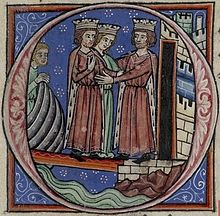
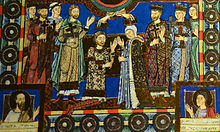
Henry and Eleanor holding court

Henry was never a faithful husband and was known to have several illegitimate children, including William Longspée and Geoffrey, Archbishop of York. He numbered among his conquests Rohese, a daughter of the prominent de Clare family and Ida de Tosny, who later married Hugh Bigod, earl of Norfolk, and was mother of Longspée. If Henry and Rosamund did begin their relationship in the mid-1160s, they did a marvellous job of keeping the affair secret, as it was not made public until 1174.

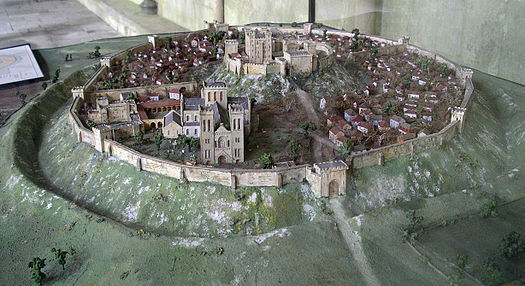
Henry’s relationship with his queen soured considerably in the early 1170s with Eleanor taking the side of their sons and joining them in open rebellion in 1172-73. Henry managed to crush the rebellion and forgave his sons, but he was not so lenient with Eleanor. In 1174 he escorted her to England and installed her in Old Sarum, condemning her to what would be 15 years of imprisonment; she would only be released when her favourite son, Richard I, ascended the throne in 1189.

In the same year as Eleanor’s imprisonment, Henry’s relationship with Rosamund became common knowledge. She resided at the royal palace of Woodstock in Oxfordshire, which was extensively refurbished in the early 1170s. It was said that ‘King Henry had made for her a house of wonderful workmanship, a labyrinth of Daedelian design.’¹ There was said to be a labyrinth, a secret bower where Henry and Rosamund met and a well where Rosamund bathed. Rosamund’s Well can still be seen today in the grounds of Blenheim Palace, which now stands where Woodstock once stood.

Although it has come down through legend as a great love story, nothing is known of Rosamund’s feelings towards Henry, nor whether she any any say in her position as the king’s mistress. The chroniclers of the time, of course, painted her as the fallen woman, a seductress and adulteress. They created puns derived from her name; Rosamund, or rosa mundi meaning the rose of the world became rosa immunda – the unclean rose – and rosa immundi – the unchaste rose.

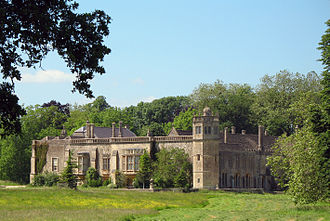
The ruins of Godstow Abbey

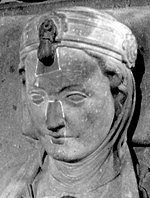
That poor Rosamund was blamed for Henry’s infidelity was a sign of the times; women were the daughters of Eve, temptation for honourable men who had no power to resist them. Rosamund’s early death was seen as a just punishment for her lascivious lifestyle. Rosamund ended her relationship with Henry in 1175/6 and withdrew to Godstow Abbey. It seems likely that she was already ill when she entered the priory and she died in 1176. Henry paid for a lavish tomb within the convent church, at which the nuns left floral tributes on a daily basis. In the years following Rosamund’s death, Henry endowed the convent with 2 churches at Wycombe and Bloxham, new buildings and substantial amounts of building materials. Rosamund’s father, Walter, granted the abbey mills and a meadow, for the souls of his wife and daughter.

Unfortunately, however, Rosamund was not allowed to rest in peace. In 1190 when  the saintly Bishop Hugh of Lincoln visited Godstow he was horrified that Rosamund’s tomb had a place of honour within the church and ordered her remains to be removed. The tomb was resited in the nun’s chapter house, with an accompanying inscription admonishing her lifestyle:

This tomb doth here enclose the world’s most beauteous Rose,

Rose passing sweet erewhile, now nought but odour vile.²

Eleanor prepares to poison Rosamund by Evelyn De Morgan

Rosamund’s early death – she was still only in her 30s – inspired legends of revenge; Eleanor has been variously accused of stabbing her in her bath and poisoning her. In one extravagant version, Rosamund was hidden in her secret bower within a maze but, with the help of a silken thread, a jealous Eleanor still found her and stabbed her while she bathed. In another the discarded queen forced Rosamund to drink from a poison cup. Of course, a closely guarded prisoner in Old Sarum or at Winchester as she was, it was impossible for Eleanor to do any such thing. But it makes for a good story!

Rosamund’s relationship with Henry probably lasted no more than 10 years and possibly as little as 3 years. She may have seen little of Henry in that time, as he was a constantly on the move and only spent a little over 3 of those 10 years in England in total. It is possible that Rosamund sometimes travelled with him, discreetly, although this seems unlikely given that no one knew of her until after Eleanor’s rebellion and imprisonment. There are some theories that suggest Henry had lost interest in Rosamund even before her death, and that was the reason for her retirement to Godstow. Although his lavish endowment of the Abbey may argue otherwise, Henry is said to have turned his attentions to his son Richard’s fiancée, Princess Alys, sister of Philip II of France.

Perhaps the truth of Rosamund’s story matters less than the legend and romance that has grown up around it. Maybe the story of unrequited love, secret trysts and hidden bowers are just as important to history than the sordid truth a woman seduced by a king with little say in the direction of her own life, denied husband, children and a future.

Maybe the romance is what makes the story more palatable.

The Ballad of Fair Rosamund

The Flower of the World

When as king Henry ruled this land,

The second of that name,

Besides the queene, he dearly loved

A faire and comely dame

Most peerless was her beautye founde,

Her favour, and her face;

A sweeter creature in this worlde

Could never prince embrace.

Her crisped lockes like threads of golds

Appeared to each man’s sight;

Her sparkling eyes, like Orient pearles,

Did cast a heavenlye light.

The blood within her crystal cheeks

Did such a colour drive,

As though the lillye and the rose

For mastership did strive.

Yea Rossamonde, fair Rosamonde,

Her name was called so,

To whom our queene, dame Ellinor,

Was known a deadly foe.

The king therefore, for her defence

Against the furious queene,

At Woodstocke builded such a bower,

The like was never seene.

Most curiously that bower was built

Of stone and timber strong,

An hundred and fifty doors

Did to this bower belong.

And they so cunningly contriv’d,

With turnings round about,

That none but with a clue of thread

Could enter in and out.³

*

Footnotes: ¹Polychronicon quoted in Oxforddnb.com; ² Speed quoted in Oxforddnb.com; ³Anonymous quoted in Eleanor, April Queen of Aquitaine by Douglas Boyd

Pictures courtesy of Wikipedia

Sources: Oxforddnb.com by T.A. Archer, rev by Elizabeth Hallam; Wordsworth Dictionary of British History by J.P. Kenyon; kings, Queens, Bones and Bastards by David Hilliam; England Under the Norman and Angevin Kings 1075-1225 by Robert Bartlett; King John by Marc Morris; The Devil’s Brood by Desmond Seward; The Greatest Knight by Thomas Asbridge; Eleanor, April Queen of Aquitaine by Douglas Boyd; Eleanor of Aquitaine by Alison Weir; The Plantagenet Chronicles Edited by Elizabeth Hallam.

*

My books

Signed, dedicated copies of all my books are available through my online bookshop.

Out Now! Women of the Anarchy
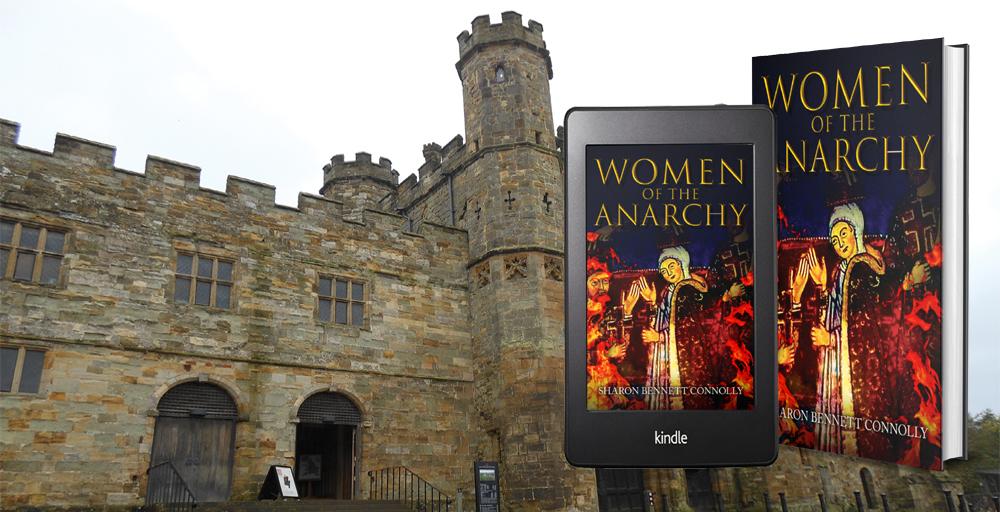
Two cousins. On the one side is Empress Matilda, or Maud. The sole surviving legitimate child of Henry I, she is fighting for her birthright and that of her children. On the other side is her cousin, Queen Matilda, supporting her husband, King Stephen, and fighting to see her own son inherit the English crown. Women of the Anarchy demonstrates how these women, unable to wield a sword, were prime movers in this time of conflict and lawlessness. It show how their strengths, weaknesses, and personal ambitions swung the fortunes of war one way – and then the other.

Available from Bookshop.orgAmberley Publishing and Amazon UK.

Coming on 15 June 2024: Heroines of the Tudor World
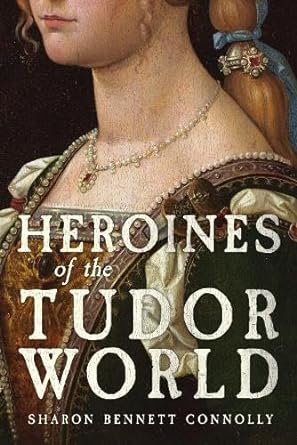
Heroines of the Tudor World tells the stories of the most remarkable women from European history in the time of the Tudor dynasty, 1485-1603. These are the women who ruled, the women who founded dynasties, the women who fought for religious freedom, their families and love. These are the women who made a difference, who influenced countries, kings and the Reformation. In the era dominated by the Renaissance and Reformation, Heroines of the Tudor World examines the threats and challenges faced by the women of the era, and how they overcame them. From writers to regents, from nuns to queens, Heroines of the Tudor World shines the spotlight on the women helped to shape Early Modern Europe.

Heroines of the Tudor World is now available for pre-order from Amberley Publishing and Amazon UK.

Also by Sharon Bennett Connolly:

King John’s Right-Hand Lady: The Story of Nicholaa de la Haye is the story of a truly remarkable lady, the hereditary constable of Lincoln Castle and the first woman in England to be appointed sheriff in her own right. It is is available from King John’s Right-Hand Lady: The Story of Nicholaa de la Haye is the story of a truly remarkable lady, the hereditary constable of Lincoln Castle and the first woman in England to be appointed sheriff in her own right. Available from all good bookshops or direct from Pen & Sword Booksbookshop.org and AmazonDefenders of the Norman Crown: The Rise and Fall of the Warenne Earls of Surrey tells the fascinating story of the Warenne dynasty, from its origins in Normandy, through the Conquest, Magna Carta, the wars and marriages that led to its ultimate demise in the reign of Edward III. Available from Pen & Sword BooksAmazon in the UK and US, and Bookshop.org

Ladies of Magna Carta: Women of Influence in Thirteenth Century England looks into the relationships of the various noble families of the 13th century, and how they were affected by the Barons’ Wars, Magna Carta and its aftermath; the bonds that were formed and those that were broken. It is now available in paperback and hardback from Pen & Sword,  Amazon, and Bookshop.orgHeroines of the Medieval World tells the stories of some of the most remarkable women from Medieval history, from Eleanor of Aquitaine to Julian of Norwich. Available now from Amberley Publishing and Amazon, and Bookshop.orgSilk and the Sword: The Women of the Norman Conquest traces the fortunes of the women who had a significant role to play in the momentous events of 1066. Available now from Amazon,  Amberley Publishing, and Bookshop.org.

Alternate Endings: An anthology of historical fiction short stories including Long Live the King… which is my take what might have happened had King John not died in October 1216. Available in paperback and kindle from Amazon.

Podcast:

Have a listen to the A Slice of Medieval podcast, which I co-host with Historical fiction novelist Derek Birks. Derek and I welcome guests, such as Bernard Cornwell and Elizabeth Chadwick, and discuss a wide range of topics in medieval history, from significant events to the personalities involved.

*

Don’t forget! Signed and dedicated copies of all my books are available through my online bookshop.

For forthcoming online and in-person talks, please check out my Events Page.

You can be the first to read new articles by clicking the ‘Follow’ button, liking our Facebook page or joining me on Twitter and Instagram.

*

©2017 Sharon Bennett Connolly FRHistS
Ela: Heiress, Wife and Abbess

Model of Old Sarum

Ela of Salisbury was one of the most influential women of the thirteenth century. Ela was born at Amesbury in Wiltshire in 1187. She was the only surviving child – and sole heir – of William FitzPatrick, earl of Salisbury, and his wife, Eleanor de Vitré. Her father was a descendant of Walter, an ally of William the Conqueror, who had rewarded his support at Hastings with great estates which eventually passed to Ela. When her father died in 1196, Ela became Countess of Salisbury in her own right, and the most prized heiress in England.

There is a story that little Ela, only 9 years old at the time of her father’s death, was kidnapped by her uncle and hidden away in a castle in Normandy, so that he could gain control of the vast Salisbury inheritance. The tale goes, that an English knight, named William Talbot, toured the Norman castles in search of poor Ela, he would sing ballads beneath castle windows in the hope that the little Countess would hear him and join in with his singing. Whether a romantic legend or a true story, who can tell?

Whether she was rescued, or never kidnapped in the first place, we do not know. However, what we do know is that, on her father’s death, Ela’s wardship passed into the hands of the king himself, Richard I, the Lionheart. The king saw Ela as the opportunity to reward his loyal,  but illegitimate, brother, William Longspée (or Longsword), by offering him her hand in marriage. The Salisbury lands were a suitable reward for a king’s son, especially one born out of wedlock.

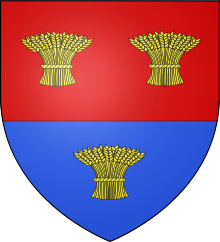
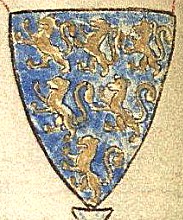
Arms of the Longspée earls of Salisbury

William Longspée was the son of Henry II by Ida de Tosney, wife of Roger Bigod, earl of Norfolk, from a relationship she had with the king before her marriage. For many years, it was thought that Longspée was the son of a common harlot, called Ikenai, and a full brother of another of Henry’s illegitimate sons, Geoffrey, Archbishop of York. There were also theories that his mother was, Rosamund Clifford, famed in ballads as ‘the Fair Rosamund’. However, it is now considered beyond doubt that his mother was, in fact, Ida de Tosney, with two pieces of evidence supporting this.  There is a charter in the cartulary of Bradenstoke Priory, made by William Longspée, in which he identifies his mother as the Countess Ida. There is also a prisoner roll from after the Battle of Bouvines, in which William Longspée is listed as the brother of Ralph Bigod (he was, in fact, Ralph’s half-brother).

Despite the misunderstandings over his mother, the identity of William Longspée’s father was never in doubt. He was Henry II’s son and served two of his half-brothers; Richard I and King John. At the time of his marriage to Ela, Longspée was in his early-to-mid-20’s, while his bride was not yet 10 years old; although she would not have been expected to consummate the marriage until she was 14 or 15.

William I Longspée had an impressive career during the reigns of his half-brothers, he served in Normandy with Richard between 1196 and 1198, and took part in John’s coronation in May, 1199. In 1213 he destroyed the French fleet off the Flemish coast. He commanded an army in northern France for John in 1214; and in July of the same year, he was captured at the Battle of Bouvines, after being clubbed on the head by the Bishop of Beauvais. Longspée was held for ransom and eventually exchanged, in March 1215, for John’s prisoner, Robert of Dreux, who had been captured at Nantes in 1214.

Longspée returned to England shortly afterwards and was one of the signatories of Magna Carta in 1215. He was still supporting John when Louis, the Dauphin, invaded England and took London; however, after Winchester fell to the French, in June 1216, Longspée defected to the Dauphin and remained in opposition to his brother for the rest of John’s life.¹

Following the death of King John in October 1216,  Longspée swore loyalty to his 9-year-old nephew, Henry III in March 1217. He was part of William Marshal’s army at the Battle of Lincoln Fair, when Lincoln Castle and its formidable castellan, Nicholaa de la Haye, were finally relieved from a 3-month siege by the French under the Comte de Perche.

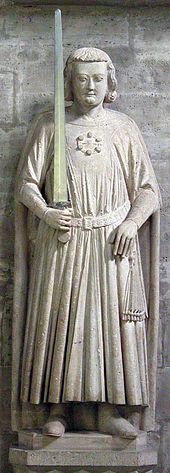
William II Longspée, 4th Earl of Salisbury

Although we know little-to-nothing of their married life, it appears to have been happy. The couple had at least 8 children together, if not more; 4 boys and 4 girls. Of their younger boys, Richard became a canon at the newly built Salisbury Cathedral, while Nicholas eventually rose to be Bishop of Salisbury and Stephen became Senschal of Gascony and Justiciar of Ireland.

The oldest son, William II Longspée, 4th Earl of Salisbury, was married to Idonea, granddaughter and sole heiress of the formidable Nicholaa de la Haye, who held Lincoln Castle against the French. The Salisburys and Nicholaa de la Haye would spend several years in legal disputes over the inheritance of Nicholaa’s Lincolnshire holdings; Idonea could inherit the lands that had belonged to her grandfather, Gerard de Canville (Nicholaa’s husband), but not the lands Nicholaa held in her own right. Nicholaa, however, was forced to relinquish her position as sheriff of Lincolnshire to the earl of Salisbury, but retained her position as castellan of Lincoln Castle until she retired in 1226.

William II Longspée went on Crusade with Richard, Earl of Cornwall, in 1240-1241 and later led the English contingent in the Seventh Crusade, led by Louis IX of France. His company formed part of the doomed vanguard, which was overwhelmed at Mansourah in Egypt, on 8 February 1250, and William was killed. William’s body was buried in Acre, but his effigy lies atop an empty tomb in Salisbury Cathedral. His mother is said to have experienced a vision of her son’s last moments at the time of his death.

Of Ela and William’s 4 daughters, Petronilla died unmarried, possibly having become a nun. Isabella married  William de Vescy, Lord of Alnwick and had children before her death in 1244. Named after her mother, Ela married, firstly Thomas de Beaumont, Earl of Warwick and, secondly, Phillip Basset; sadly, she had no children by either husband. There were possibly two daughters with the same name, Ida. The first Ida was married to Ralph de Somery before marrying, in 1220, William de Beauchamp, Baron Bedford, by whom she had 6 children. The second Ida who was married to Walter FitzRobert. Both Idas are identified in various records as the daughters of William and Ela, though it is possible that one is a granddaughter, the dates we have available do not suggest that.

As a couple, William Longspée and Ela were great patrons of the church, laying the 4th and 5th, respectively, foundation stones for the new Salisbury Cathedral in 1220. In 1225 Longspée was shipwrecked off the coast of Brittany and a rumour spread that he was dead. While he spent months recovering at an island monastery in France Hubert de Burgh, 1st Earl of Kent and husband of Isabel of Gloucester, proposed a marriage between Ela and his nephew, Reimund. Ela, however, would not even consider it, insisting that she knew William was alive and that, even were he dead, she would never consider marrying below her status. It has been suggested that she used clause 8 of Magna Carta to support her rejection of the offer; “No widow is to be distrained to marry while she wishes to live without a husband…”

William_Salisbury
William Longspee, Earl of Salisbury

As it turned out, William Longspée was still alive and eventually returned to his wife. However, he never seems to have recovered fully from his injuries and died at the royal castle at Salisbury shortly after his return home, on 7 March 1226. He was buried in a splendid tomb in Salisbury Cathedral.

Ela did not marry again. On her husband’s death, she was forced to relinquish her custody of Salisbury castle (although she did eventually buy it back), but was allowed to take over her husband’s role as Sheriff of Wiltshire, which he had held three times, holding the office continuously from 1213 until his death in 1226. Ela acted as Sheriff until 1228. She was known as a great patron of religious houses; she and her husband had co-founded Salisbury Cathedral and Ela herself founded two Augustinian religious houses. She managed to lay the foundation stones of both, at Hinton and Lacock, 16 miles apart, on the same day. The abbey at Hinton, Somerset, was endowed for monks, in memory of her husband, after they had found the original house, founded by Longspée at Hathorp unsuitable.

Lacock Priory was established in 1230 as a house for Augustinian canonesses at the village of Lacock in Wiltshire. Ela herself entered the priory in 1237 and became the first Abbess when it was upgraded to an Abbey in 1239. As Abbess, Ela was able to secure many rights and privileges for the abbey and its village. She obtained a copy of the 1225 issue of Magna Carta, which had been given to her husband for him to distribute around Wiltshire. She remained Abbess for 20 years, resigning in 1259. Ela remained at the abbey, however, and died there on 24 August, 1261.

Lacock Abbey, Wiltshire

Ela of Salisbury outlived both her eldest son and grandson. She was succeeded as Countess of Salisbury by her great-granddaughter, Margaret, who was the daughter of William III Longspée. Margaret was married to Henry de Lacey, 3rd Earl of Lincoln, and was the mother of Alice de Lacey, 4th Countess of Lincoln and the unfortunate, unloved wife of Thomas, Earl of Lancaster, who was killed in rebellion against Edward II, at the Battle of Boroughbridge in 1322.

The 3rd Countess of Salisbury was described in the Register of St Osmund as “a woman indeed worthy of praise because she was filled with the fear of the Lord.”² Ela was not buried alongside her husband in Salisbury Cathedral, but within the Abbey that she had founded and ruled – and had called her home for the last 24 years of her life. Her tombstone demonstrates the high esteem in which she was held and records the words; “Below lie buried the bones of the venerable Ela, who gave this sacred house as a home for the nuns. She also had lived her as holy abbess and Countess of Salisbury, full  of good works.”³

*

Ela’s story appears in greater detail in my book, Ladies of Magna Carta: Women of Influence in Thirteenth Century England.

Footnote: ¹With thanks to Rich Price for clarification of events; Rich is currently translating King John’s letters; ²Ela, suo jure Countess of Salisbury, Jennifer C Ward, Oxforddnb.com, October 2009; ³ Ela of Salisbury stanfordmagnacarta.worpress.com

*

Pictures courtesy of Wikipedia

*

Sources: The Plantagenet Chronicles edited by Elizabeth Hallam; Brassey’s Battles by John Laffin; 1215 The Year of Magna Carta by Danny Danziger & John Gillingham; The Life and Times of King John by Maurice Ashley; The Story of Britain by Roy Strong; The Plantagenets, the Kings Who Made England by Dan Jones; England Under the Norman and Angevin Kings  by Robert Bartlett; lincolnshirelife.co.uk; catherinehanley.co.uk; magnacarta800th.com; lothene.org; lincolncastle.com; The Sheriff: The Man and His Office by Irene Gladwin; Oxforddnb.com; stanfordmagnacarta.wordpress.com; A Year in the Life of Medieval England by Toni Mount; The Demon’s Brood by Desmond Seward; The Oxford Companion to British History, Edited by John Cannon; The Greatest Knight by Thomas Asbridge; Britain’s Royal Families by Alison Weir; chitterne.com

*

My Books:

Signed, dedicated copies of all my books are available through my online store.

Out now: Scotland’s Medieval Queens

Scotland’s history is dramatic, violent and bloody. Being England’s northern neighbour has never been easy. Scotland’s queens have had to deal with war, murder, imprisonment, political rivalries and open betrayal. They have loved and lost, raised kings and queens, ruled and died for Scotland. From St Margaret, who became one of the patron saints of Scotland, to Elizabeth de Burgh and the dramatic story of the Scottish Wars of Independence, to the love story and tragedy of Joan Beaufort, to Margaret of Denmark and the dawn of the Renaissance, Scotland’s Medieval Queens have seen it all. This is the story of Scotland through their eyes.

Available now from Amazon and Pen and Sword Books

Also by Sharon Bennett Connolly:

Heroines of the Tudor World tells the stories of the most remarkable women from European history in the time of the Tudor dynasty, 1485-1603. These are the women who ruled, the women who founded dynasties, the women who fought for religious freedom, their families and love. Heroines of the Tudor World is now available for pre-order from Amberley Publishing and Amazon UK. Women of the Anarchy demonstrates how Empress Matilda and Matilda of Boulogne, unable to wield a sword themselves, were prime movers in this time of conflict and lawlessness. It shows how their strengths, weaknesses, and personal ambitions swung the fortunes of war one way – and then the other. Available from Bookshop.orgAmberley Publishing and Amazon UKKing John’s Right-Hand Lady: The Story of Nicholaa de la Haye is the story of a truly remarkable lady, the hereditary constable of Lincoln Castle and the first woman in England to be appointed sheriff in her own right. Available from all good bookshops Pen & Sword Booksbookshop.org and Amazon

Defenders of the Norman Crown: The Rise and Fall of the Warenne Earls of Surrey tells the fascinating story of the Warenne dynasty, from its origins in Normandy, through the Conquest, Magna Carta, the wars and marriages that led to its ultimate demise in the reign of Edward III. Available from Pen & Sword BooksAmazon in the UK and US, and Bookshop.orgLadies of Magna Carta: Women of Influence in Thirteenth Century England looks into the relationships of the various noble families of the 13th century, and how they were affected by the Barons’ Wars, Magna Carta and its aftermath; the bonds that were formed and those that were broken. It is now available in paperback and hardback from Pen & SwordAmazon, and Bookshop.orgHeroines of the Medieval World tells the stories of some of the most remarkable women from Medieval history, from Eleanor of Aquitaine to Julian of Norwich. Available now from Amberley Publishing and Amazon, and Bookshop.orgSilk and the Sword: The Women of the Norman Conquest traces the fortunes of the women who had a significant role to play in the momentous events of 1066. Available now from Amazon,  Amberley Publishing, and Bookshop.org.

Alternate Endings: An anthology of historical fiction short stories including Long Live the King… which is my take what might have happened had King John not died in October 1216. Available in paperback and kindle from Amazon.

Podcast:

Have a listen to the A Slice of Medieval podcast, which I co-host with Historical fiction novelist Derek Birks. Derek and I welcome guests, such as Bernard Cornwell, Elizabeth Chadwick and Michael Jecks, and discuss a wide range of topics in medieval history, from significant events to the personalities involved. Every episode is also now available on YouTube.

*

Don’t forget! Signed and dedicated copies of all my books are available through my online store.

For forthcoming online and in-person talks, please check out my Events Page.

You can be the first to read new articles by clicking the ‘Follow’ button, liking our Facebook page or joining me on TwitterThreadsBluesky and Instagram.

*

©2017 Sharon Bennett Connolly FRHistS
Book Corner: The Holy Lance

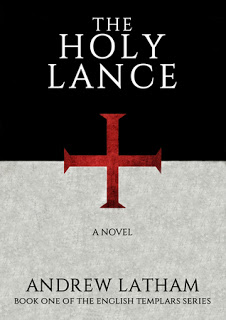
Holy+LanceIt’s 1191 and Richard the Lionheart is leading the Crusaders against Saladin’s Muslim army.

The Holy Lance by Andrew Latham is a fantastic piece of fiction. From the first page, you are drawn into the final battles of the Siege of Acre. English Templar Michael Fitz Alan leads his men to victory in a counter-attack against the Saracen army, saving the Crusaders from defeat. As part of the peace negotiations, Richard has demanded the return of the fragment of the True Cross, in Saracen hands since the Crusaders’ defeat at the Horns of Hattin. However, Richard decides against putting all his faith in the return of the True Cross, and sends Fitz Alan on a quest to retrieve the Holy Lance – the lance that pierced Christ’s side while he was on the Cross.

Fitz Alan and his hand-picked team of Knights Templars journey through hostile territory, battle Saracens and face down Assassins, to complete their quest, all the time guided by a Knights Hospitaller priest they just don’t quite trust….

Andrew Latham’s The Holy Lance is a wonderful story, filled with action, intrigue and adventure. Set during Richard the Lionheart’s Third Crusade, the action is fast and furious; the battle scenes are frantic and vivid. The novel is full of political intrigue and hidden agendas; Fitz Alan never knows quite who to trust, except his faithful Templars. The book works on many levels. The tension is palpable. The success of the mission is in no way guaranteed…..

Fast-paced and full of suspense, the story is absorbing, and draws you in. As if without trying, the author gives you a good grounding in the history of the Holy Land and in the differing objectives of the various combatants. There are some minor spelling errors – such as the use of ‘there’ when it should be ‘their’ – but they don’t detract from the story and after a while you don’t even to notice them. Every paragraph and chapter is filled to the brim with amazing detail, keeping the reader absorbed to the point that time just drifts away….

The book’s hero, Michael Fitz Alan, is a wonderfully complex character, with a past that is frequently alluded to, a man of the world who dedicated himself to the Fellow-soldiers of Christ and the Temple of Solomon, becoming one of their most effective captains. There are hints from the beginning of some sort of disagreement between Fitz Alan and Richard I – just enough teasing to get you curious. Fitz Alan is a model Templar Knight, trying to make amends for something; his desire to leave the material world behind and his past experiences clearly direct his current actions. Andrew Latham has made his character incredibly human, susceptible to doubts, fears and prejudices. He begins to learn that the Holy Land is not as black and white/good and bad as he thought before he arrived. A very likable character: you find yourself egging him on, wanting him to succeed.

All the lead characters of the Third Crusade have their parts to play. The portrayal of Saladin is surprising – and refreshing, looking at the Muslim leader from a whole new perspective. Richard the Lionheart is portrayed as the hard soldier you’d expect, with an intelligence which allows him to deal with the machinations of the incumbent Western leaders, Conrad of Montferrat and Guy de Lusignan. The relationships of all involved are deep and complex, but explored with such energy and passion, you almost feel you know them personally.

The novel provides a great depiction of the Third Crusade and of the motivations of the various combatants. The Templars and their rule are sympathetically and accurately depicted – the hard, trained knights and sergeants who fought for God and each other, while following monastic rules. You can almost feel the heat of the Levant’s sun and hear the sounds of battle. The battle scenes are marvelously choreographed; they are hectic and realistic.

As a debut novel, Holy Lance is incredible. It is one of those amazing books that grips you from the first page and won’t let you go until the last – and yet you never want it to end. Great as a stand-alone novel and yet, as the first in a series, it leaves you eager to read the next installment.

*

Article originally published on The Review in July 2015.


*

My book, Heroines of the Medieval World,  is now available in hardback in the UK from both Amberley Publishing and Amazon UK and worldwide from Book Depository. It is also available on Kindle in both the UK and USA and will be available in Hardback from Amazon US from 1 May 2018.

Be the first to read new articles by clicking the ‘Follow’ button, liking our Facebook page or joining me on Twitter.

©2015 Sharon Bennett Connolly

Book Corner: Men of the Cross

men_largeB.R.A.G. Medallion winner, Men of the Cross by Charlene Newcomb.

“War, political intrigue and passion … heroes … friends and lovers … and the seeds for a new Robin Hood legend await you.”

After that kind of introduction Men of the Cross had a lot to live up to. And it didn’t disappoint. Having read several Crusader novels and a few re-telling the Robin Hood legend, the idea behind the book intrigued me.

But this book has a unique perspective and stands out from the crowd.

With Richard the Lionheart and Robin Hood as supporting characters the story follows idealistic young crusader Sir Henry de Grey and his best friend, the cynical and war-jaded Sir Stephan l’Aigle, on their journey through the Third Crusade.

The two knights accompany Richard’s army from Southampton to the walls of Jerusalem – and on through the countries of Eastern Europe and Richard’s capture in Germany.

I thoroughly enjoyed Men of the Cross and found it hard to put down. The storyline is fast paced and entertaining, with all the emotions thrown into the mix: excitement, fear, love, despair, pain and happiness.

I love the way the story is interwoven with that of Robin Hood, Little John and Alan a Dale; every now and then you get a glimpse of the Merry Men they are to become, their own special camaraderie amidst the wider story.

It is a journey of discovery for Henry and Stephan – of themselves as soldiers, friends and lovers; the realities of war; fighting the Saracens; relationships; their preconceived conventions and their own hearts. Along the way they entertain queens, lose friends and risk death itself, experiencing the highs and lows of the crusading life.

After reading only the first four chapters of Men of the Cross, I found myself hoping that the rest of the book could live up to such a promising start. The main characters are well-thought out and it’s a pleasure to see them grow and mature as the story progresses, and to see how their individual experiences and feelings react to the events enfolding them.

Even the supporting characters are wonderfully vivid: the king’s sister, Joanna, and wife, Berengaria, act as spectators to the Crusade, bringing lively exchanges and the feminine touches into an all-male world.

Man against man. Man against the elements. Man against his own heart.

As I got deeper into the book, I found myself wondering how the author would handle the grisly realities of the Third Crusade. When following the Lionheart through the Holy Land, it is impossible to ignore the mass execution of 3,000 Muslim prisoners. So how would Ms. Newcomb handle it?

This turned out to be one of my favourite scenes in the book. Instead of concentrating on one beheading after another, you saw it through the eyes of Sir Henry, as a pivotal moment in his initiation into the realities and horrors of war:

Henry’s stomach knotted, his thoughts filled with despair. This is war?”

His doubts demonstrated through his own internal dialogue and response to his distaste:

You know nothing of war.” 

Charlene Newcomb has a knack of setting scenes so vividly you can almost hear the swing of sword through air, the yells and screams of victims and combatants alike and the anguish of a knight discovering that chivalry has little place in war. The battles are urgent and hectic – their descriptions give the combined sense of the confusion, fear and exhilaration of the participants.

The background scenes are described in fantastic detail. Whether it is the noises and odours of the busy port, the bustling streets of Messina or Acre, or the calm and splendour of a royal palace, it is easy to imagine yourself transported.

The love scenes are artfully and sensitively portrayed – with the anguish and uncertainty of a blossoming relationship cleverly interweaved into the storyline.

Henry and Stephan’s friendship, love and loyalty are tested to their very limits in this wonderful novel.

The long and winding journey of the Lionheart’s crusade, from its launch to his imprisonment in Germany, is skilfully re-told in such a way that you will feel the highs and lows – the joys and desperations – and the excitement of two young men learning the art of war, love and friendship through their experiences.

I look forward to reading how the characters develop in the next instalment, to hearing how they rescue the king from his German prison, and of the further adventures of Henry and Stephan and – of course – Robin Hood and his men.


*

Article originally published at The Review in June 2015.

*

My book, Heroines of the Medieval World,  is now available in hardback in the UK from both Amberley Publishing and Amazon UK and worldwide from Book Depository. It is also available on Kindle in both the UK and USA and will be available in Hardback from Amazon US from 1 May 2018.

Be the first to read new articles by clicking the ‘Follow’ button, liking our Facebook page or joining me on Twitter.

©2015 Sharon Bennett Connolly

Nicholaa de la Haye, England’s Forgotten Heroine

History...the Interesting Bits
Seal of Nicholaa de la Haye, Lincoln Cathedral

Nicholaa de la Haye is one of those very rare women in English history. She is renowned for her abilities, rather than her family and connections. In a time when men fought and women stayed home, Nicholaa de la Haye held Lincoln Castle against all-comers. Her strength and tenacity saved England at one of its lowest points in history.

The eldest daughter and co-heiress of Richard de la Haye and his wife, Matilda de Vernon, Nicholaa was probably born in the early-to-mid 1150s. Her father was Baron of Brattleby. Richard’s father was a Norman, Robert de la Haye of La Haye du Puits in the Cotentin. His mother, Muriel, was English, a Lincolnshire heiress as the granddaughter of Colswein of Lincoln. In 1166 Richard he was recorded as owing 20 knights’ fees, which had been reduced to 16 by 1172. When he died in 1169, Nicholaa inherited her father’s land in Lincolnshire and his position as hereditary castellan of Lincoln Castle, a position she would hold for over 50 years.

Nicholaa was married twice, her first husband, William Fitz Erneis, died in 1178, leaving Nicholaa a young widow with one daughter, Matilda. Before 1185 she married Gerard de Camville (or Canville), brother of Richard de Camville, admiral of Richard I’s crusading fleet during the Third Crusade. Nicholaa and Gerard had at least 2 children together; Richard and Thomas. Richard was heir to both Nicholaa and Gerard. Nothing is known of Thomas beyond his name. Another daughter may have been Nicholaa d’Eyncourt, who sued Nicholaa’s granddaughter for some de la Haye lands in the 1230s; however, while it seems certain that Nicholaa d’Eyncourt was kin, unfortunately, her exact relation to Nicholaa de la Haye has not been established.

Nicholaa’s husbands each claimed the position of castellan of Lincoln Castle by right of his wife; but Nicholaa seems to have been far from the normal subservient wife. When her husband was not in the castle, she was left in charge rather than an alternative, male deputy.

History...the Interesting Bits
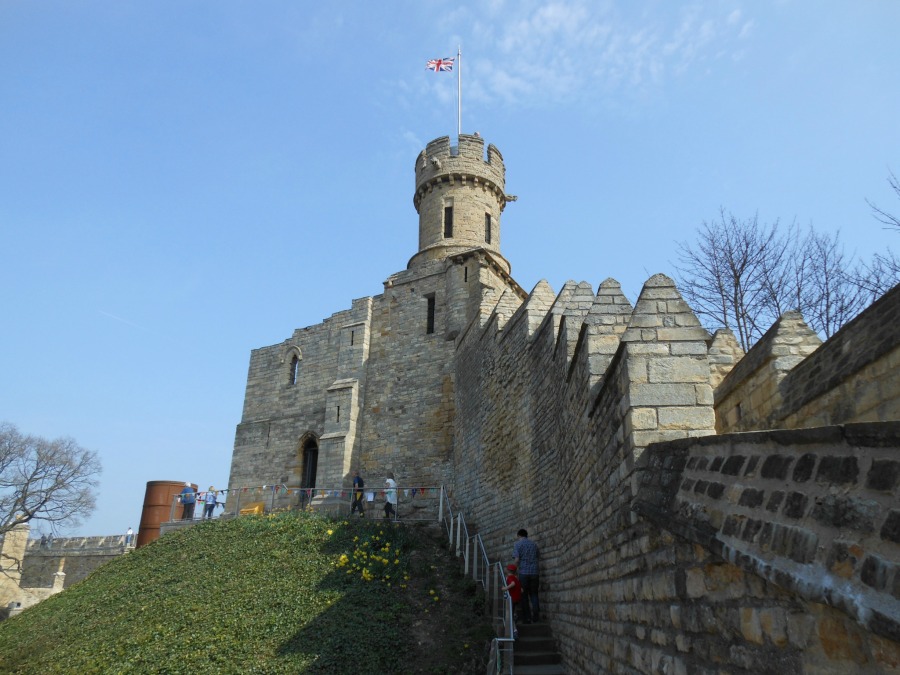
Lincoln castle walls leading to the Observatory Tower

Nicholaa first comes to the attention of the chroniclers in 1191, when Prince John led the opposition to his brother’s chancellor, William Longchamp. Accusing him of harbouring outlaws, Longchamp demanded that Gerard de Camville relinquish Lincoln Castle to one of his own supporters. Gerard refused, and swore fealty to John, joining him at Nottingham Castle. Leaving Nicholaa to hold Lincoln. He probably assumed that Longchamp would not wage war on a woman. However, Richard I’s Chancellor, William Longchamp, had no such qualms. He headed north and laid siege to Lincoln Castle, probably assuming, wrongly, that Nicholaa would submit easily.

The formidable Nicholaa refused to yield, holding out for 40 days before Longchamp raised the siege, following the fall of the castles at Tickhill and Nottingham to John. Amusingly, Richard of Devizes said of this defence of Lincoln Castle, that she did it ‘without thinking of anything womanly’.

In 1194, on the king’s return, Camville was stripped of his positions as Sheriff of Lincolnshire and Castellan of the castle; only having it returned to him on the accession of King John in 1199.

As we all know, King John’s reign wasn’t exactly smooth sailing. He lost his French lands and was held to account by the barons of England for  numerous examples of maladministration, corruption and  outright murder. In 1215 he had been forced to seal the Great Charter, or Magna Carta, in order to avoid war. Although it eventually came to be considered a fundamental statement of English liberties, as a peace treaty Magna Carta failed miserably. Within months John had written to Pope Innocent III and the charter had been declared null and void; the barons were up in arms.

Gerard de Camville died in December 1214 and, although now a widow, it seems the castle remained in Nicholaa’s hands. On one of King John’s visits to inspect the castle’s defences in 1216, either in February or September there was a rather dramatic display of fealty from Nicholaa :

History...the Interesting Bits
Nicholaa de la Haye, Lincoln Castle

And once it happened that after the war King John came to Lincoln and the said Lady Nicholaa went out of the eastern gate of the castle carrying the keys of the castle in her hand and met the king and offered the keys to him as her lord and said she was a woman of great age and was unable to bear such fatigue any longer and he besought her saying, “My beloved Nicholaa, I will that you keep the castle as hitherto until I shall order otherwise”.¹

Whether Nicholaa ever intended to give up Lincoln, or the event was staged so that John could demonstrate his continued trust in Nicholaa, is open to debate. I suspect it was the latter. John was in the midst of civil war and running short of allies. Nicholaa had already demonstrated her abilities at defending Lincoln, and her loyalty to John – he would have been hard put to replace her. However, the event gave John the opportunity to reinforce his trust in Nicholaa in front of his barons.

The rebels invited the king of France to take the throne of England; instead Philip II‘s son, Louis (the future Louis VIII), accepted the offer and was hailed as King of England in London in June 1216. In the same year Nicholaa prevented another siege by paying off a rebel army, led by Gilbert de Gant, who remained in occupation of the city of Lincoln but lifted the siege of the castle. After Nicholaa paid off the 1216 besiegers, John came north and he chased the rebels into the Isle of Axholme ‘with fire and sword’.

As Louis consolidated his position in the south, John then made an inspection of Lincoln castle in September. Moving south, just 2 weeks later, the king’s baggage train was lost as he crossed the Wash estuary and within a few more days John was desperately ill, probably from dysentery. He moved on to the castle at Newark, from where, just hours before his death, John appointed Nicholaa de la Haye as Sheriff of Lincolnshire in her own right:

History...the Interesting Bits
The East Gate of Lincoln Castle

‘The King to the archbishops, bishops, earls, barons, knights, freeholders and others of the county of Lincoln etc.. Know that we have granted to our trusty and well-beloved, the lady Nicholaa de Haye and Philip Marc, the county of Lincoln with all its appurtenances, to be in their custody for so long as it may please us. We therefore command that you do heed and obey the said Nicholaa and Philip in all things as the bailiffs of the said county. And in testimony etc.. Witness myself, at Newark, the eighteenth day of October, in the eighteenth year of our reign.’

From King John’s Letters and Papers, translated by Rich Price

King John died at Newark on the night of 18/19th October 1216, with half his country occupied by a foreign invader and his throne now occupied by his 9-year-old son, Henry III. The elder statesman and notable soldier William Marshal, Earl of Pembroke was appointed Regent and set out to save the kingdom.

Meanwhile, Gilbert de Gant renewed the siege of Lincoln Castle, receiving reinforcements from Louis’ forces, under the Comte de Perche, in early 1217. Now in her 60s Nicholaa de la Haye took charge of the defences.

400px-BitvaLincoln1217ortho
The Battle of Lincoln, 1217

When the small force proved insufficient to force a surrender, the French had to send for reinforcements and siege engines. For almost 7 months, Nicholaa was besieged, with the circle tightening from March to mid-May as siege machinery bombarded the south and east walls of the castle. On the 20th May William Marshal arrived, from the north-west, with a relieving force. Attacking from the north of Lincoln, his army fell upon the besieging forces and, after about 6 hours of combat, routed the enemy; the French commander, the Comte de Perche, was killed in the fighting, and the rebel leaders captured.

The city, which had supported the rebels and welcomed the French, was sacked and looted by the victorious army; the battle becoming known as the Lincoln Fair, as a result. The Battle of Lincoln turned the tide of the war. After a further defeat in the naval Battle of Sandwich in the summer, the French were forced to seek peace and returned home. Magna Carta was reissued and Henry III’s regents could set about healing the country.

In a magnificent demonstration of ingratitude, within 4 days of the relief of the Castle, Nicholaa’s position of Sheriff of Lincolnshire was given to the king’s uncle William Longspée, Earl of Salisbury, who took control of the city and promptly seized the castle.

The king’s council should have known that Nicholaa would not give up her castle so easily. She travelled to court to remind the king’s regents of her services, and request her rights be restored to her. And in October 1217, an order was issued in Henry III’s name to

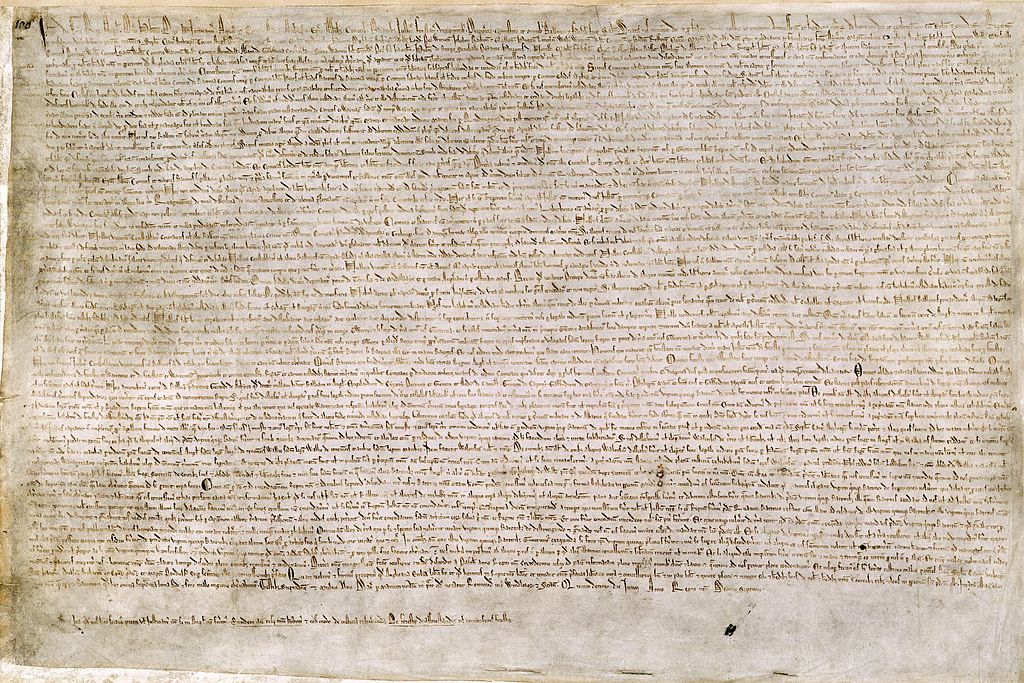
Magna_Carta_(British_Library_Cotton_MS_Augustus_II.106)
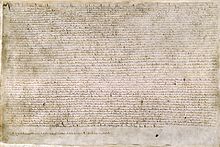
Magna carta

To our beloved and loyal uncle, W. Earl of Salisbury, greetings. Recently, our beloved and loyal lady, Mistress Nicholaa de Haya, came to us in London, begging us to restore her rights, and particularly the custody of Lincoln Castle, which she ought to have and usually possesses. We, considering her faithful service to our lord King J., our father, and our subsequently commended expenses, kindly, as was fitting, heeded her, restoring her rights, namely, the aforementioned custody of Lincoln Castle and others, saving our beloved and loyal R. Earl of Chester, in his matter [rather his right] which he claims to have in the same Castle. Furthermore, we have entrusted the county of Lincoln, along with the city of Lincoln, to the same Nicholaa, to be kept for as long as we please. And therefore we command you that, all delay and occasion postponed, you restore to her the said castle of Lincoln, with its appurtenances, removing from there all those who are on our part. And that you cause her to have without delay full possession of the said county with the city of Lincoln, as is above mentioned. And in testimony of this matter, etc. Witness the count, at Westminster, the 32nd (sic) day of October, in the second year of our reign.2

The settlement was not ideal, however, and some wrangling seems to have continued until Salisbury’s death in 1226.

Nicholaa’s granddaughter and heiress, Idonea – the daughter of Nicholaa’s eldest son Richard – was married to Salisbury’s son, William II Longspée; the couple inherited the de la Haye and Camville lands on Nicholaa’s death. As a result, Salisbury felt it was his right to hold his daughter-in-law’s inheritance, even though Nicholaa was not yet dead. Understandably, Nicholaa felt differently.

On the death of her second husband, Gerard de Camville, Nicholaa had declared herself femme sole, meaning she would be able to control her own lands. A staunchly independent woman, Nicholaa issued some 25 surviving charters in her name. She made grants to various religious houses, including Lincoln Cathedral, and even secured a royal grant for a weekly market for her village of Swaton.

History...the Interesting Bits
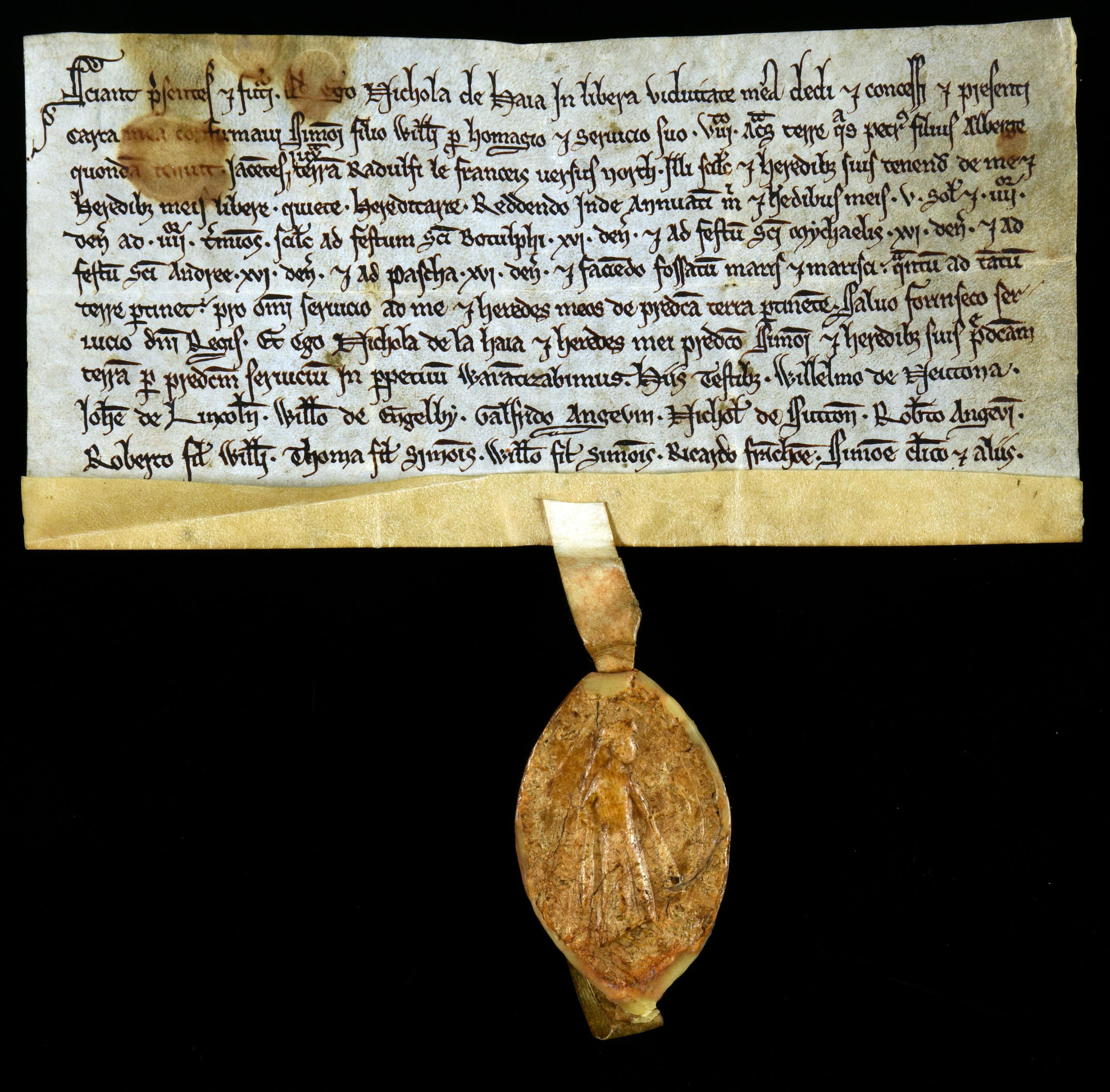
Land grant with Nicholaa de la Haye’s seal attached

A most able adversary for some of the greatest military minds of the time, and a loyal supporter of King John, Nicholaa de la Haye was unique among her peers. Although praised by the chroniclers, they seemed to find difficulty in describing a woman who acted in such a fashion;  the Dunstable annals refer to her as a ‘noble woman’, saying she acted ‘manfully’. One cannot fail to feel admiration for a woman who managed to hold her own in a man’s world, who fought for her castle and her home in a time when women had so little say over their own lives – and at such an advanced age. Her bravery and tenacity saved Henry III’s throne.

Not surprisingly, both King John and Henry III referred to her as ‘our beloved and faithful Nicholaa de la Haye’.

Nicholaa de la Haye, the woman who saved England, lived well into her 70s. By late 1226 she had retired to her manor at Swaton, dying there on 20 November, 1230. She was buried in St Michael’s Church, Swaton in Lincolnshire, where her tomb can be seen to this day.

*

Footnotes: ¹Irene Gladwin: The Sheriff; The Man and His Office; 2 ‘1217, membranes 11, 10, 9, 8’, in Calendar of Patent Rolls, Henry III: Volume 1, 1216-1225, ed. H C Maxwell Lyte (London, 1901), British History Online https://www.british-history.ac.uk/cal-pat-rolls/hen3/vol1/pp117-132 [accessed 16 July 2025].

*

Nicholaa’s story was the inspiration behind my third book, Ladies of Magna Carta: Women of Influence in Thirteenth Century England. And my full-length biography of Nicholaa, King John’s Right-Hand Lady: the Story of Nicholaa de la Haye, was published in May, 2023.

*

Image credits:

Photos of Lincoln Castle and Nicholaa’s seal, © Sharon Bennett Connolly 2015. Picture of the Battle of Lincoln and Magna Carta are courtesy of Wikipedia. Image of the land grant from the National Archives.

*

Sources:

The Plantagenet Chronicles edited by Elizabeth Hallam; Brassey’s Battles by John Laffin; 1215 The Year of Magna Carta by Danny Danziger & John Gillingham; The Life and times of King John by Maurice Ashley; The Story of Britain by Roy Strong; The Plantagenets, the Kings Who Made England by Dan Jones; England Under the Norman and Angevin Kings  by Robert Bartlett; lincolnshirelife.co.uk; catherinehanley.co.uk; magnacarta800th.com; lothene.org; lincolncastle.com; The Sheriff: The Man and His Office by Irene Gladwin; Elizabeth Chadwick; Nick Buckingham; swaton.org.uk; Women in Thirteenth Century Lincolnshire by Louise Wilkinson.

*

My Books:

Signed, dedicated copies of all my books are available through my online bookshop.

Out now: Scotland’s Medieval Queens

Books by Sharon Bennett Connolly

Scotland’s history is dramatic, violent and bloody. Being England’s northern neighbour has never been easy. Scotland’s queens have had to deal with war, murder, imprisonment, political rivalries and open betrayal. They have loved and lost, raised kings and queens, ruled and died for Scotland. From St Margaret, who became one of the patron saints of Scotland, to Elizabeth de Burgh and the dramatic story of the Scottish Wars of Independence, to the love story and tragedy of Joan Beaufort, to Margaret of Denmark and the dawn of the Renaissance, Scotland’s Medieval Queens have seen it all. This is the story of Scotland through their eyes.

Available for pre-order now.

Also by Sharon Bennett Connolly:

Books by Sharon Bennett Connolly

Heroines of the Tudor World tells the stories of the most remarkable women from European history in the time of the Tudor dynasty, 1485-1603. These are the women who ruled, the women who founded dynasties, the women who fought for religious freedom, their families and love. Heroines of the Tudor World is now available for pre-order from Amberley Publishing and Amazon UK. Women of the Anarchy demonstrates how Empress Matilda and Matilda of Boulogne, unable to wield a sword themselves, were prime movers in this time of conflict and lawlessness. It shows how their strengths, weaknesses, and personal ambitions swung the fortunes of war one way – and then the other. Available from Bookshop.orgAmberley Publishing and Amazon UKKing John’s Right-Hand Lady: The Story of Nicholaa de la Haye is the story of a truly remarkable lady, the hereditary constable of Lincoln Castle and the first woman in England to be appointed sheriff in her own right. Available from all good bookshops Pen & Sword Booksbookshop.org and Amazon

Books by Sharon Bennett Connolly

Defenders of the Norman Crown: The Rise and Fall of the Warenne Earls of Surrey tells the fascinating story of the Warenne dynasty, from its origins in Normandy, through the Conquest, Magna Carta, the wars and marriages that led to its ultimate demise in the reign of Edward III. Available from Pen & Sword BooksAmazon in the UK and US, and Bookshop.orgLadies of Magna Carta: Women of Influence in Thirteenth Century England looks into the relationships of the various noble families of the 13th century, and how they were affected by the Barons’ Wars, Magna Carta and its aftermath; the bonds that were formed and those that were broken. It is now available in paperback and hardback from Pen & SwordAmazon, and Bookshop.orgHeroines of the Medieval World tells the stories of some of the most remarkable women from Medieval history, from Eleanor of Aquitaine to Julian of Norwich. Available now from Amberley Publishing and Amazon, and Bookshop.orgSilk and the Sword: The Women of the Norman Conquest traces the fortunes of the women who had a significant role to play in the momentous events of 1066. Available now from Amazon,  Amberley Publishing, and Bookshop.org.

Alternate Endings: An anthology of historical fiction short stories including Long Live the King… which is my take what might have happened had King John not died in October 1216. Available in paperback and kindle from Amazon.

Podcast:

A Slice of Medieval

Have a listen to the episode of A Slice of Medieval podcast, in which my co-host Derek Birks. Derek and I discuss Nicholaa’s story. We also welcome guests, such as Bernard Cornwell, and discuss a wide range of topics in medieval history, from significant events to the personalities involved.

*

Don’t forget! Signed and dedicated copies of all my books are available through my online bookshop.

For forthcoming online and in-person talks, please check out my Events Page.

You can be the first to read new articles by clicking the ‘Follow’ button, liking our Facebook page or joining me on TwitterThreads, Bluesky and Instagram.

©2015 Sharon Bennett Connolly FRHistS
Joanna of England, the Lionheart’s Little Sister

220px-Joanna_Plantagenet
Joanna of England

Joanna of England was born in October 1165, the 7th child and youngest daughter of Henry II of England and Eleanor of Aquitaine. Ten years younger than her eldest brother, Henry the Young King, she was born at a time when their parents’ relationship was breaking down; her mother would eventually go to war against her husband, before being imprisoned by him for the last 16 years of Henry’s reign.

Born at Angers Castle in Anjou, Christmas 1165 was the first ever Christmas her parents spent apart; with Henry still in England dealing with a Welsh revolt, it would be several months before he met his new daughter for the first time. Although Joanna spent much of her childhood at her mother’s court in Poitiers, she and her younger brother, John, spent sometime boarding at the magnificent Abbey of Fontevraud. Whilst there Joanna was educated in the skills needed to run a large, aristocratic household and in several languages; English, Norman French and rudimentary Latin.

160px-Britishmuseumsealofjoanna
Joanna’s seals

When Eleanor and her sons rebelled in 1173, Henry II went to war against his wife. When she was captured – wearing men’s clothes – she was sent to imprisonment in England. Joanna joined her father’s entourage and frequently appeared at Henry’s Easter and Christmas courts.

3 years later, Eleanor was allowed to travel to Winchester to say ‘goodbye’ to her youngest daughter, who had been betrothed to King William II of Sicily. Provided with a trousseau, probably similar to that of her sister Matilda on her marriage to Henry the Lion, Joanna set out from Winchester at the end of August 1176; escorted by Bishop John of Norwich and her uncle, Hamelin de Warenne.

Joanna’s entourage must have been a sight to see. Once on the Continent, she was escorted from Barfleur by her brother Henry, the Young King. Her large escort was intended to dissuade bandit attacks against her impressive dowry, which included fine horses, gems and precious metals. At Poitiers, Joanna was met by another brother, Richard, who escorted his little sister to Toulouse in a leisurely and elegant progress.

Dedication_mosaic_-_Cathedral_of_Monreale_-_Italy_2015_(crop)
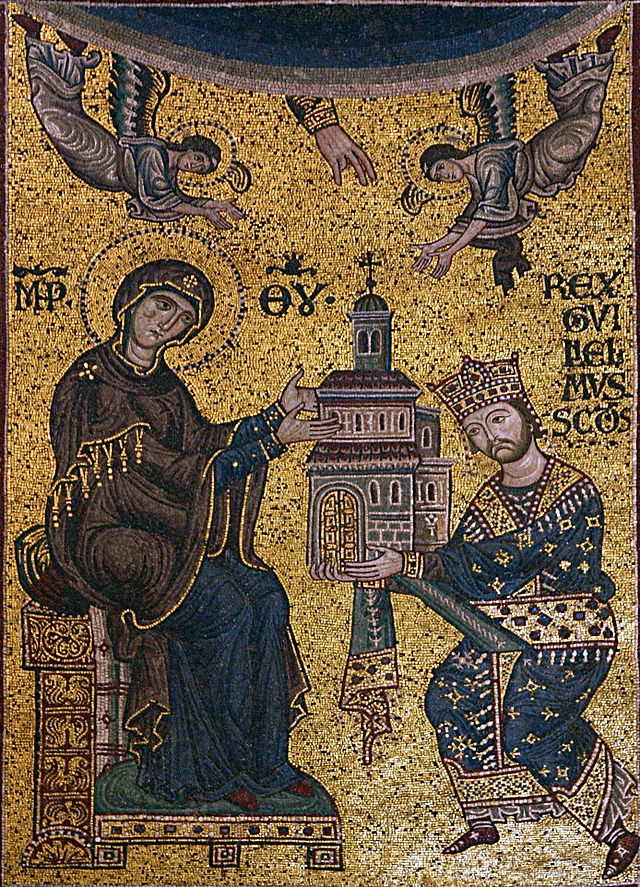
William II dedicating the Cathedral of Monreale to the Virgin Mary

Having finally reached Sicily 12-year-old Joanna was married to 24-year-old William on 13th February 1177, in Palermo Cathedral. The marriage ceremony was followed by her coronation as Queen of Sicily. Joanna must have looked magnificent, her bejewelled dress cost £114 – not a small sum at the time.

Sicily was an ethnically diverse country; William’s court was composed of Christian, Muslim and Greek advisers. William himself spoke, read and wrote Arabic and, in fact, kept a harem of both Christian and Muslim girls within the palace. Although she was kept secluded, it must have been a strange life for a young girl, partly raised in a convent.

Joanna and William only had one child, Bohemond, Duke of Apulia, who was born – and died – in 1181. And when William died without an heir in November 1189, Joanna became a pawn in the race for the succession. William’s aunt, Constance was the rightful heir, but she was married to Henry VI, Holy Roman Emperor and many feared being absorbed into his empire. William II’s illegitimate nephew, Tancred of Lecce, seized the initiative. He claimed the throne and, in need of money, imprisoned Joanna and stole her dowry and the treasures left to her by her husband.

180px-Vilem2Sicilie_smrt
William II of Sicily on his deathbed

Who knows how long Joanna would have remained imprisoned, if it had not been for her brother’s eagerness to go on Crusade? Having gained the English throne in 1189 Richard I – the Lionheart – had wasted no time in organising the Third Crusade and arrived at Messina in Sicily in September 1190.

Richard demanded Joanna’s release; and fearing the Crusader king’s anger Tancred capitulated and freed Joanna, paying 40,000 ounces of gold towards the Crusade in fulfilment of William II’s promise of aid.

Described as beautiful and spirited, Joanna had been Queen of Sicily for 13 years and it seems that, while at her brother’s court, she caught the eye of Richard’s co-Crusdaer, King Philip II of France. Richard was having none of it and moved Joanna to the Priory of Bagnara on the mainland, out of sight and hopefully out of mind.

Richard stayed in Sicily for sometime, negotiating a treaty with Tancred which would recognise him as rightful king of Sicily in return for the remainder of Joanna’s dowry and 19 ships to support the Crusade. He was also waiting for his bride, Berengaria of Navarre, to catch up with him.

Richard_I_and_Joan_greeting_Philip_Augustus
Joanna with her brother, Richard the Lionheart, and King Philip II of France

During Lent of 1191 Joanna had a brief reunion with her mother Eleanor of Aquitaine when she arrived in Sicily, having escorted Richard’s bride. Joanna became Berengaria’s chaperone and they were lodged together at Bagnara, like ‘two doves in a cage’.

Unable to marry in the Lenten season, Richard sent Joanna and Berengaria on ahead of the main army, and departed Sicily for the Holy Land.

The Royal ladies’ ship was driven to Limassol on Cyprus by a storm. After several ships were crippled and then plundered by the islanders, the ruler of Cyprus, Isaac Comnenus, tried to lure Joanna and Berengaria ashore. Richard came to the rescue, reduced Cyprus in 3 weeks and clamped Comnenus in chains (silver ones apparently). Lent being over, Richard and Berengaria were married, with great pomp and celebration, before the whole party continued their journey to the Holy Land, arriving at Acre in June 1191.

Joanna’s time in the Holy Land was spent in Acre and Jaffa, accompanying her sister-in-law and following – at a safe distance – behind the Crusading army. She spent Christmas 1191 with Richard and Berengaria, at Beit-Nuba, just 12 miles from Jerusalem. However, although he re-took Acre and Jaffa, Richard fell out with his allies and was left without a force strong enough to take Jerusalem.

In attempts to reach a political settlement with the Muslim leader, Saladin, Richard even offered Joanna as a bride for Saladin’s brother. His plans were scuppered, however, when Joanna refused outright to even consider marrying a Muslim, despite the fact Richard’s plan would have seen her installed as Queen of Jerusalem.

When a 3-year truce was eventually agreed with Saladin, Joanna and Berengaria were sent ahead of the army, to Sicily and onto Rome where they were to await Richard’s arrival. Richard, however, never made it; falling into the hands of Duke Leopold of Austria, he was handed over to his enemy, the Holy Roman Emperor.

With Richard imprisoned, Berengaria and Joanna arrived back in Poitiers. Berengaria herself set out to help raise the ransom money for Richard’s release, which finally came about in February 1194.

220px-Raimond6Toulouse
Raymond VI Count of Toulouse

Joanna spent the next few years at her mother’s and brother’s courts, her wealth having been squandered by Richard’s Crusade. But at the age of 31 she was proposed as a bride for Raymond VI, Count of Toulouse. Her title as Queen of Sicily would give him greater prestige while bringing the County of Toulouse into the Plantagenet fold, a long-time aim of Eleanor’s.

3-times married Raymond does not seem to have been ideal husband material; he had been excommunicated for marrying his third wife whilst still married to his second. And he now repudiated wife number 3, confining her to a convent, in order to marry Joanna. Despite such a colourful history, the wedding went ahead and Joanna and Raymond were married in Rouen in October 1196, with Queen Berengaria in attendance.

Although not a happy marriage Joanna gave birth to a son, Raymond, in around 1197 and a daughter, possibly called Mary, in 1198. Little is known of Mary, and it is possible she died in infancy. Raymond succeeded his father as Raymond VII Count of Toulouse, and married twice.

220px-RaimondVIIToulouse1242
Raymond VII Count of Toulouse

Raymond VI was not a popular Count of Toulouse and while he was away in the Languedoc, in 1199, dealing with rebel barons, Joanna herself tried to face down her husband’s enemies. She laid siege to a rebel stronghold at Cassee. Mid-siege, however, her troops turned traitor and fired the army’s camp – Joanna managed to escape, but was probably injured.

A pregnant Joanna was then trying to make her way to her brother Richard when she heard of his death. She diverted course and finally reached her mother at Niort. Hurt, distressed and pregnant, Eleanor sent her to Fontevraud to be looked after by the nuns.

With no allowance from her husband, Joanna returned to her mother and brother – King John – in Rouen in June 1199, pleading poverty; Eleanor managed to persuade John to give his sister an annual pension of 100 marks.

Joanna’s last few months must have been a desperate time. Too ill to travel and heavily pregnant, she remained at Rouen. In September, King John gave her a lump sum of 3,000 marks, to dispose of in her will; she specifically mentioned a legacy towards the cost of a new kitchen at Fontevraud and asked Eleanor to dispose of the remainder in charitable works for the religious and the poor.

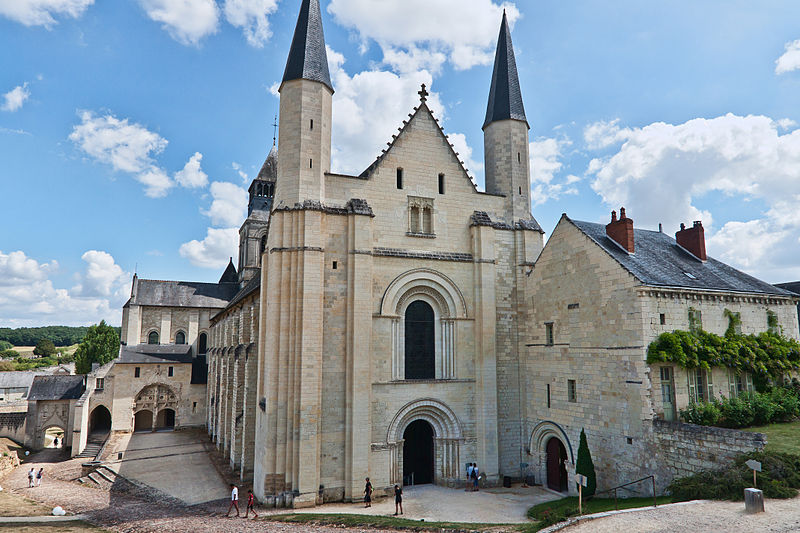
800px-Abbaye_Fontevraud_-_Eglise_Abbatiale,_facade_ouest
The Church at the Abbey of Fontevraud

Knowing she was dying, Joanna became desperate to be veiled as a nun at Fontevraud; a request normally denied to married women – especially when they were in the late stages of pregnancy. However, seeing how desperate her daughter was, Eleanor sent for Matilda, the Abbess of Fontevraud but, fearing the Abbess would arrive too late, she also asked Hubert Walter, the Archbishop of Canterbury, to intervene. The Archbishop tried to dissuade Joanna, but was impressed by her fervour and convened a committee of nuns and clergy; who agreed that Joanna must be ‘inspired by heaven’.

In Eleanor’s presence, the Archbishop admitted Joanna to the Order of Fontevraud. Joanna was too weak to stand and died shortly after the ceremony; her son, Richard, was born a few minutes later and lived only long enough to be baptised. She died on 4 September 1199, a month short of her 34th birthday.

Joanna and her baby son were interred together at Fontevraud, the funeral cortege having been escorted there by Eleanor of Aquitaine and King John.

The Winchester Annalist said of Joanna, that she was;

a woman whose masculine spirit overcame the weakness of her sex

Winchester Annalist quoted in Oxforddnb.com

*

Do have a listen to our recent episode of A Slice of Medieval in which Derek and I chat with Catherine Hanley about her biography of Joanna, Lionessheart.

Pictures taken from Wikipedia

References: Mike Ashley The Mammoth Book of Kings & Queens; Alison Weir Britain’s Royal Families, the Complete Genealogy; Robert Bartlett England Under the Norman and Angevin Kings; Alison Weir Eleanor of Aquitaine, by the Wrath of God, Queen of England; Douglas Boyd Eleanor, April Queen of Aquitaine; bestofsicily.com; Oxforddnb.com; britannica.com; geni.com; royalwomenblogspot.co.uk; medievalqueens.com.

*

My books

Signed, dedicated copies of all my books are available through my online bookshop.

Out now: Scotland’s Medieval Queens

Books by Sharon Bennett Connolly

Scotland’s history is dramatic, violent and bloody. Being England’s northern neighbour has never been easy. Scotland’s queens have had to deal with war, murder, imprisonment, political rivalries and open betrayal. They have loved and lost, raised kings and queens, ruled and died for Scotland. From St Margaret, who became one of the patron saints of Scotland, to Elizabeth de Burgh and the dramatic story of the Scottish Wars of Independence, to the love story and tragedy of Joan Beaufort, to Margaret of Denmark and the dawn of the Renaissance, Scotland’s Medieval Queens have seen it all. This is the story of Scotland through their eyes.

Scotland’s Medieval Queens gives a thorough grounding in the history of the women who ruled Scotland at the side of its kings, often in the shadows, but just as interesting in their lives beyond the spotlight. It’s not a subject that has been widely covered, and Sharon is a pioneer in bringing that information into accessible history.’ Elizabeth Chadwick (New York Times bestselling author)

Available now from Amazon and Pen and Sword Books

Also by Sharon Bennett Connolly:

Books by Sharon Bennett Connolly

Heroines of the Tudor World tells the stories of the most remarkable women from European history in the time of the Tudor dynasty, 1485-1603. These are the women who ruled, the women who founded dynasties, the women who fought for religious freedom, their families and love. Heroines of the Tudor World is now available for pre-order from Amberley Publishing and Amazon UK. Women of the Anarchy demonstrates how Empress Matilda and Matilda of Boulogne, unable to wield a sword themselves, were prime movers in this time of conflict and lawlessness. It shows how their strengths, weaknesses, and personal ambitions swung the fortunes of war one way – and then the other. Available from Bookshop.orgAmberley Publishing and Amazon UKKing John’s Right-Hand Lady: The Story of Nicholaa de la Haye is the story of a truly remarkable lady, the hereditary constable of Lincoln Castle and the first woman in England to be appointed sheriff in her own right. Available from all good bookshops Pen & Sword Booksbookshop.org and Amazon

Royal Historical Society

Defenders of the Norman Crown: The Rise and Fall of the Warenne Earls of Surrey tells the fascinating story of the Warenne dynasty, from its origins in Normandy, through the Conquest, Magna Carta, the wars and marriages that led to its ultimate demise in the reign of Edward III. Available from Pen & Sword BooksAmazon in the UK and US, and Bookshop.orgLadies of Magna Carta: Women of Influence in Thirteenth Century England looks into the relationships of the various noble families of the 13th century, and how they were affected by the Barons’ Wars, Magna Carta and its aftermath; the bonds that were formed and those that were broken. It is now available in paperback and hardback from Pen & SwordAmazon, and Bookshop.orgHeroines of the Medieval World tells the stories of some of the most remarkable women from Medieval history, from Eleanor of Aquitaine to Julian of Norwich. Available now from Amberley Publishing and Amazon, and Bookshop.orgSilk and the Sword: The Women of the Norman Conquest traces the fortunes of the women who had a significant role to play in the momentous events of 1066. Available now from Amazon,  Amberley Publishing, and Bookshop.org.

Alternate Endings: An anthology of historical fiction short stories including Long Live the King… which is my take what might have happened had King John not died in October 1216. Available in paperback and kindle from Amazon.

Podcast:

A Slice of Medieval

Have a listen to the A Slice of Medieval podcast, which I co-host with Historical fiction novelist Derek Birks. Derek and I welcome guests, such as Elizabeth Chadwick, Helen Castor, Ian Mortimer, Scott Mariani and Bernard Cornwell and discuss a wide range of topics in medieval history, from significant events to the personalities involved. 

Every episode is also now available on YouTube.

*

Don’t forget! Signed and dedicated copies of all my books are available through my online store.

For forthcoming online and in-person talks, please check out my Events Page.

You can be the first to read new articles by clicking the ‘Follow’ button, liking our Facebook page or joining me on TwitterThreadsBluesky and Instagram.

©2015 Sharon Bennett Connolly FRHistS
Matilda de Braose, the King’s Enemy

220px-William_de_Braose,_4th_Lord_Bramber.svg
Arms of William de Braose

Matilda de Braose was probably born in the early 1150s in Saint-Valery-en-Caux, France, to Bernard IV, Seigneur de Saint-Valery and his wife, Matilda. Contemporary records describe her as tall and beautiful, wise and vigorous.

Matilda’s story was made famous by the de Braose’s spectacular falling-out with King John – and the manner of her death. Very little is known of Matilda’s early years; though she probably spent time at her family’s manor of Hinton Waldrist in Berkshire. Sometime around 1166 she married William de Braose, 4th Lord of Bramber, a Norman lord with land on the Welsh Marches. William was highly favoured by both Richard I and, later his brother King John.

Whilst William was away campaigning in Normandy, Matilda would be left to manage their estates in Wales. In 1198, Matilda defended Painscastle in Elfael against a massive Welsh attack by Gwenwynyn, Prince of Powys. She held out for 3 weeks until English reinforcements arrived, earning the castle its nickname of Matilda’s Castle.

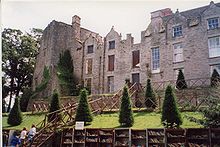
220px-Hay_Castle_-_geograph.org.uk_-_61858
Hay Castle

Matilda’s exploits were legendary. One of her titles was the Lady of Hay and Welsh folklore has her building the Castle of Hay in one night, single-handed, carrying the stones in her skirts.

The couple had around 16 children together, who married into some of the most powerful families of the time. Their eldest son, William, married Maud de Clare, daughter of the Earl of Hertford. Another son, Giles, became Bishop of Hereford. Of their daughters Loretta, married Robert de Breteuil, 4th Earl of Leicester and another, Margaret, married Walter de Lacy, Lord of Meath in Ireland.

A third son, Reginald, married, as his second wife, Gwladus Ddu, daughter of Llewelyn the Great, Prince of Wales. Reginald’s son by his first wife, William, was married Eva Marshal, daughter of the great knight, William Marshal, Earl of Pembroke and regent for King Henry III. It was this William de Braose who was ignominiously hanged by Llewelyn the Great, after being found in the bedchamber of Llewelyn’s wife Joan, the Lady of Wales and natural daughter of King John. William had been at the Welsh court to arrange the marriage of his daughter, Isabel, to Llewelyn and Joan’s son, David. Interestingly, the marriage still went ahead, although it was to be childless.

170px-John_of_England_(John_Lackland)
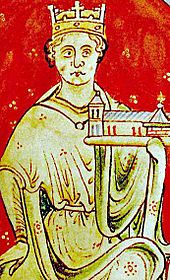
King John

William de Braose was greatly favoured by King John in the early part of his reign. He was given  Limerick in Ireland for 5,000 marks and also received the castle at Glamorgan and the lordship of Gower. William de Braose was the knight who captured the rival to John’s throne, Arthur of Brittany, at the Siege of Mirebeau in 1202 and possibly witnessed Arthur’s murder at Rouen at Easter 1203.

It was following Arthur’s murder that things started to go wrong for the Lord and Lady of Bramber. John became increasingly suspicious of de Braose’s loyalty and turned against him. This could have been for several reasons, not least being de Braose’s knowledge of Arthur’s fate.

Elsewhere, de Braose had fallen behind in his payments to the Exchequer for the honour of Limerick, but he had also sided with his friend William Marshal in his disagreements with the king. In addition, de Braose’s son, Giles had been one of the bishops to approve an Interdict against John; Giles fled into exile in France to escape the king’s reprisals.

250px-TrimCastle
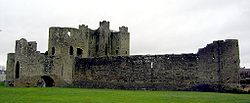
Trim Castle, Meath

Whatever the reason, in 1207 King John moved to make a public example of one of his most powerful barons, and punish him for his debts to the Exchequer. John demanded William and Matilda give up their sons as hostages.

Matilda refused and Roger of Wendover recorded her response to the soldiers sent to collect the boys, as;

“I will not deliver my sons to your lord, King John, for he foully murdered his nephew Arthur, whom he should have cared for honourably.”

Roger of Wendover

William is said to have admonished his wife for speaking so harshly of the king; but what mother wouldn’t react rashly when in fear for her children’s lives? William and Matilda realised she had gone too far, and tried to placate John with gifts. Matilda sent a herd of cows and a prized whit bull to John’s queen, Isabella of Angouleme.

But it was too late.

John took possession of de Braose’s castles and moved to arrest William. Forewarned, the couple fled to Ireland with 2 of their sons, where they took refuge with Walter de Lacy, their son-in-law and Lord of Meath. John followed after them, mounting an invasion of Ireland and bringing other recalcitrant barons to heal along the way. While William de Braose tried to come to terms with the king, Matilda and their eldest son, William, escaped by taking ship for Scotland.

However, Matilda and her son were captured in Galloway by Duncan of Carrick, and, having been returned to England in chains, they were imprisoned in Bristol Castle. King John made an agreement with both William and Matilda; freedom for her and a pardon for William in return for 40,000 marks.

220px-Outer_bailey_wall_west_of_the_outer_gatehouse_corfe_castle
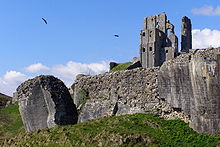
Corfe Castle

However, being either unwilling or unable to pay, Matilda and her son remained in prison – either at Windsor or Corfe Castle – and William was outlawed, eventually escaping into exile in France, disguised as a beggar, where he died in 1211.

Matilda’s fate was more gruesome; she and her son were left to starve to death in John’s dungeons (though whether this was at Corfe or Windsor is unclear). Tradition has it, that when their bodies were found, William’s cheeks bore his mother’s bite marks, where she had tried to stay alive following his death:

‘On the eleventh day the mother was found dead between her son’s legs, still upright but leaning back against her son’s chest as a dead woman. The son, who was also dead, sat upright, leaning against the wall as a dead man. So desperate was the mother that she had eaten her son’s cheeks. When William de Braose, who was in Paris, heard this news, he died soon afterwards, many asserting that it was through grief.’

Anonymous of Bethune
Magna_Carta_(British_Library_Cotton_MS_Augustus_II.106)
Magna Carta

In another version,

‘When the King returned to England he imprisoned Matilda de Braose and her son William in the castle of Corfe; they were given a sheaf of oats and a flitch of raw bacon ; this was all the meat they were allowed. On the eleventh day the mother was found dead between the knees of her son, sitting upright except that she leaned back against her son like a dead woman. The son was dead in like manner, except that he was leaning back against the wall; and his cheeks had been gnawed by his mother in her anguish.’ (Histoire des ducs de Normandie)

John’s treatment of the de Braose family did not lead to the submission of his barons, as John had intended, and the remainder of his reign was marred by civil war.

However when Magna Carta was written in 1215, Clause 39 may well have been included  with Matilda and her family in mind:

“No man shall be taken, imprisoned, outlawed, banished or in any way destroyed, nor will we proceed against or prosecute him, except by the lawful judgement of his peers or by the law of the land.”

Magna Carta 1215

In his final days John may have felt some remorse at his relentless pursuit of the destruction of Matilda and her family, as shortly after the onset of his final, fatal illness, on 10 October 1216, the king gave permission to Matilda’s daughter, Margaret, to found a religious house in Herefordshire in memory of her father, mother and brother William. John died at Newark on the night of 18/19 October 1216.

*

The story of Matilda and her family features in my book, Ladies of Magna Carta; Women of Influence in Thirteenth Century England, which was released in the UK in May 2020.

*

Sources: sussexcastles.com; genie.com; steyningmuseum.org.uk; berkshirehistory.com; England Under the Norman and Angevin Kings 1075-1225 by Robert Bartlett; Oxford Companion to British History Edited by John Cannon; The Story of Britain by Roy Strong; The Plantagenets; the Kings who Made England by Dan Jones; The Life and Times of King John by Maurice Ashley; The Plantagenet Chronicles Edited by Elizabeth Hallam.

Pictures courtesy of Wikipedia

*

My Books:

Signed, dedicated copies of all my books are available through my online store.

Out now: Scotland’s Medieval Queens

Books by Sharon Bennett Connolly

Scotland’s history is dramatic, violent and bloody. Being England’s northern neighbour has never been easy. Scotland’s queens have had to deal with war, murder, imprisonment, political rivalries and open betrayal. They have loved and lost, raised kings and queens, ruled and died for Scotland. From St Margaret, who became one of the patron saints of Scotland, to Elizabeth de Burgh and the dramatic story of the Scottish Wars of Independence, to the love story and tragedy of Joan Beaufort, to Margaret of Denmark and the dawn of the Renaissance, Scotland’s Medieval Queens have seen it all. This is the story of Scotland through their eyes.

Scotland’s Medieval Queens gives a thorough grounding in the history of the women who ruled Scotland at the side of its kings, often in the shadows, but just as interesting in their lives beyond the spotlight. It’s not a subject that has been widely covered, and Sharon is a pioneer in bringing that information into accessible history.’ Elizabeth Chadwick (New York Times bestselling author)

Available now from Amazon and Pen and Sword Books

Also by Sharon Bennett Connolly:

Books by Sharon Bennett Connolly

Heroines of the Tudor World tells the stories of the most remarkable women from European history in the time of the Tudor dynasty, 1485-1603. These are the women who ruled, the women who founded dynasties, the women who fought for religious freedom, their families and love. Heroines of the Tudor World is now available from Amberley Publishing and Amazon UK. Women of the Anarchy demonstrates how Empress Matilda and Matilda of Boulogne, unable to wield a sword themselves, were prime movers in this time of conflict and lawlessness. It shows how their strengths, weaknesses, and personal ambitions swung the fortunes of war one way – and then the other. Available from Bookshop.orgAmberley Publishing and Amazon UKKing John’s Right-Hand Lady: The Story of Nicholaa de la Haye is the story of a truly remarkable lady, the hereditary constable of Lincoln Castle and the first woman in England to be appointed sheriff in her own right. Available from all good bookshops Pen & Sword Booksbookshop.org and Amazon

Defenders of the Norman Crown: The Rise and Fall of the Warenne Earls of Surrey tells the fascinating story of the Warenne dynasty, from its origins in Normandy, through the Conquest, Magna Carta, the wars and marriages that led to its ultimate demise in the reign of Edward III. Available from Pen & Sword BooksAmazon in the UK and US, and Bookshop.orgLadies of Magna Carta: Women of Influence in Thirteenth Century England looks into the relationships of the various noble families of the 13th century, and how they were affected by the Barons’ Wars, Magna Carta and its aftermath; the bonds that were formed and those that were broken. It is now available in paperback and hardback from Pen & SwordAmazon, and Bookshop.orgHeroines of the Medieval World tells the stories of some of the most remarkable women from Medieval history, from Eleanor of Aquitaine to Julian of Norwich. Available now from Amberley Publishing and Amazon, and Bookshop.orgSilk and the Sword: The Women of the Norman Conquest traces the fortunes of the women who had a significant role to play in the momentous events of 1066. Available now from Amazon,  Amberley Publishing, and Bookshop.org.

Alternate Endings: An anthology of historical fiction short stories including Long Live the King… which is my take what might have happened had King John not died in October 1216. Available in paperback and kindle from Amazon.

Podcast

A Slice of Medieval

Have a listen to the A Slice of Medieval podcast, which I co-host with Historical fiction novelist Derek Birks. Derek and I welcome guests, such as Bernard Cornwell and Michael Jecks, and discuss a wide range of topics in medieval history, from significant events to the personalities involved. 

Every episode is also now available on YouTube.

*

Don’t forget! Signed and dedicated copies of all my books are available through my online store.

For forthcoming online and in-person talks, please check out my Events Page.

You can be the first to read new articles by clicking the ‘Follow’ button, liking our Facebook page or joining me on TwitterThreadsBluesky and Instagram.

*

©2015 Sharon Bennett Connolly FRHistS

English Princess, Exiled Duchess

Matylda_Anglicka
Matilda of England

Matilda of England was the eldest daughter and third child of, arguably, Medieval Europe’s most glamorous couple. Born in London in June 1156, the daughter of Eleanor of Aquitaine and Henry II was baptised by Theobald, Archbishop of Canterbury, in the Priory Church of the Holy Trinity, Aldgate.

As her parents ruled an empire, that stretched from the Scottish borders to the Pyrenees, travel was a constant part of Matilda’s childhood. She took her first sea-voyage across the English Channel at just 2 months old with her mother and older brother, Henry, to join her father in Anjou; before travelling to Aquitaine in October.

Throughout her childhood, Matilda is often seen accompanying her mother throughout the vast Angevin domains. She and Henry would be joined in the nursery by 3 younger brothers – Richard, Geoffrey and John – and 2 younger sisters – Eleanor and Joan – who survived into adulthood.

Negotiations began for Matilda’s marriage in February 1165, as part of an alliance with the German Emperor, Frederick Barbarossa, in opposition to Louis VII of France and the Pope, Alexander III. It was one of a series of dynastic marriages, which included her younger sisters, aimed at strengthening their father’s position in Europe.

The first of her parents’ daughters to be married, her dowry and send-off cost around £4,500 (about a quarter of England’s annual revenue). The money was raised by taxes specifically levied for the occasion. The 12-year-old princess was given a trousseau worth £63 , including saddles with gilt fittings, ‘two large silken cloths, and two tapestries and one cloth of samite and twelve sable skins’. 34 packhorses were needed to transport all her belongings.

Heinrich_der_Löwe_und_Mathilde_von_England
Coronation of Henry V and Matilda

In July 1166 the emperor’s envoys arrived in England, to escort Matilda to Germany. Her mother accompanied her to Dover, where she embarked on a German ship; and the wedding to Henry V ‘the Lion’, Duke of Saxony and Bavaria, finally took place in Minden Cathedral, Germany, on 1st february 1168.

Henry the Lion was 27 years Matilda’s senior, his first marriage, to Klementia of Zahringen, had been annulled in 1162. The marriage appears to have been successful and produced 10 children, although the fates of some seem to be in question, and several did not survive childhood. Their eldest daughter, Richenza (her name was later changed to Matilda), born around 1172, was married firstly to Geoffrey III, Count of Perche, and secondly to Enguerrand III, Lord of Coucy.

Of their sons Henry, born in 1173, would succeed to the Duchies of Saxony and Bavaria on his father’s death in 1195. Born around 1175, their second son, Otto, Earl of York and Count of Ponthieu, would become Holy Roman Emperor as Otto IV in 1209; Otto was briefly considered as heir to the English throne, by his uncle Richard I, before King John claimed the crown. A third son, William, Duke of Luneberg and Brunswick, was born in England in 1184 and would be ancestor, in the direct male line, of the House of Hanover, Kings of Great Britain in the 18th Century.

220px-JindraLev
Henry V ‘the Lion’

In 1180 Henry V quarrelled with the Holy Roman Emperor, Frederick Barbarossa, who held him responsible for the failure of a campaign in Italy. Henry, it seems, had grown very powerful in his own domains and Barbarossa, after the quarrel, deprived him of his fiefs and sent the Duke of Saxony and Bavaria into exile for 7 years.

Henry, Matilda and their children left Germany and sought refuge at the Angevin court in Autumn 1181. Henry II welcomed his daughter to his court in Normandy and, whilst energetically lobbying the German emperor on his son-in-law’s behalf, gave his daughter the palace of Argentin as a family residence.

Matilda was heavily pregnant and remained with her father whilst her husband left on pilgrimage to Compostela. The family was together again by Christmas 1182, spending the festive period with Matilda’s siblings at Henry II’s court in Caen.

Matilda and her family spent 1183 in the Angevin lands on the Continent; a pregnant Matilda accompanied her father to England in 1184, where she gave birth to her son, William, at Winchester in mid-June. While at the Angevin court Matilda was instrumental in getting the restrictions eased on her mother’s imprisonment; Eleanor of Aquitaine had been held at Old Sarum, following her complicity in a failed rebellion by her sons in 1173-4.

Although she was still in the custody of guards, Eleanor was allowed to reside with Matilda at various locations in England, including Windsor and Berkhamsted. When Eleanor was allowed to cross the Channel to take possession of the Vexin Castles, Matilda accompanied her.

In early 1185, having asked the Pope to intervene with the Emperor, Henry II finally secured agreement for his son-in-law to return to his German domains; although Henry would not be restored to Imperial favour until 1190, when he made peace with the new Holy Roman Emperor, Henry VI.

170px-Braunschweig_Brunswick_Heinrich_der_Loewe_(Dom_2005)
Henry V ‘the Lion’

Matilda and Henry arrived back in Germany in October 1185, although their children, Otto, William and Matilda had been left at Henry’s court, to be raised by their grandparents.

Henry the Lion would be exiled from Germany again, when Frederick Barbarossa left on Crusade, but this time, Matilda remained to oversee their German domains.

Matilda died at Brunswick on 28th June 1189 and was buried there, in the Cathedral of St Blasius, of which she was co-foundress. Henry II died just 8 days later, probably before the news of his daughter’s death could reach him. Matilda’s husband would be buried alongside her, following his death on 6th August 1195.

There seems to be no surviving description of Matilda; however, Bertran de Born, troubadour to Matilda’s brother Richard (the Lionheart) composed a song about her and compared Matilda’s beauty to that of Helen of Troy.

*

Sources: Robert Bartlett England Under the Norman and Angevin Kings, 1075-1225; Alison Weir, Britain’s Royal Families; Mike Ashley The Mammoth Book of British Kings & Queens; David Williamson Brewer’s British Royalty; Douglas Boyd Eleanor, April Queen of Aquitaine; Alison Weir Eleanor of Aquitaine.

Pictures taken from Wikipedia.

*

My Books

Signed, dedicated copies of all my books are available through my online bookshop.

OUT NOW! Heroines of the Tudor World

Heroines of the Tudor World tells the stories of the most remarkable women from European history in the time of the Tudor dynasty, 1485-1603. These are the women who ruled, the women who founded dynasties, the women who fought for religious freedom, their families and love. These are the women who made a difference, who influenced countries, kings and the Reformation. In the era dominated by the Renaissance and Reformation, Heroines of the Tudor World examines the threats and challenges faced by the women of the era, and how they overcame them. From writers to regents, from nuns to queens, Heroines of the Tudor World shines the spotlight on the women helped to shape Early Modern Europe.

Heroines of the Tudor World is now available for pre-order from Amberley Publishing and Amazon UK.

Women of the Anarchy

Two cousins. On the one side is Empress Matilda, or Maud. The sole surviving legitimate child of Henry I, she is fighting for her birthright and that of her children. On the other side is her cousin, Queen Matilda, supporting her husband, King Stephen, and fighting to see her own son inherit the English crown. Women of the Anarchy demonstrates how these women, unable to wield a sword, were prime movers in this time of conflict and lawlessness. It show how their strengths, weaknesses, and personal ambitions swung the fortunes of war one way – and then the other.

Available from Bookshop.orgAmberley Publishing and Amazon UK.

Also by Sharon Bennett Connolly:

King John’s Right-Hand Lady: The Story of Nicholaa de la Haye is the story of a truly remarkable lady, the hereditary constable of Lincoln Castle and the first woman in England to be appointed sheriff in her own right. Available from all good bookshops Pen & Sword Booksbookshop.org and AmazonDefenders of the Norman Crown: The Rise and Fall of the Warenne Earls of Surrey tells the fascinating story of the Warenne dynasty, from its origins in Normandy, through the Conquest, Magna Carta, the wars and marriages that led to its ultimate demise in the reign of Edward III. Available from Pen & Sword BooksAmazon in the UK and US, and Bookshop.org

Ladies of Magna Carta: Women of Influence in Thirteenth Century England looks into the relationships of the various noble families of the 13th century, and how they were affected by the Barons’ Wars, Magna Carta and its aftermath; the bonds that were formed and those that were broken. It is now available in paperback and hardback from Pen & Sword,  Amazon, and Bookshop.orgHeroines of the Medieval World tells the stories of some of the most remarkable women from Medieval history, from Eleanor of Aquitaine to Julian of Norwich. Available now from Amberley Publishing and Amazon, and Bookshop.orgSilk and the Sword: The Women of the Norman Conquest traces the fortunes of the women who had a significant role to play in the momentous events of 1066. Available now from Amazon,  Amberley Publishing, and Bookshop.org.

Alternate Endings: An anthology of historical fiction short stories including Long Live the King… which is my take what might have happened had King John not died in October 1216. Available in paperback and kindle from Amazon.

Podcast:

Have a listen to the A Slice of Medieval podcast, which I co-host with Historical fiction novelist Derek Birks. Derek and I welcome guests, such as Bernard Cornwell – and Tony Riches. We discuss a wide range of topics in medieval history, from significant events to the personalities involved.

*

Don’t forget! Signed and dedicated copies of all my books are available through my online bookshop.

For forthcoming online and in-person talks, please check out my Events Page.

You can be the first to read new articles by clicking the ‘Follow’ button, liking our Facebook page or joining me on Twitter and Instagram.

*

©2015 Sharon Bennett Connolly FRHistS
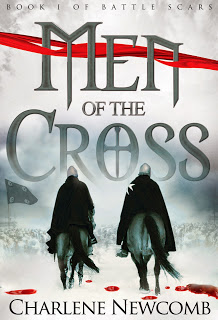
Isabella of Gloucester, the Lost Queen of England

170px-john_of_england_john_lackland
King John

Isabella of Gloucester is a shadow in the pages of history. I could find no pictures of her. Until recently, no one even seemed certain of her name; in the history books she has been called Isabel, Isabella, Hawise, Avice – probably due to different language interpretations, translations and misunderstandings. However, Rich Price, who has done extensive research on primary sources from King John‘s reign has clarified that The Close Rolls definitely name her as ‘comitissa Isabella’ and ‘Isabella filia Willielmi comitis’ (Isabella, daughter of Count William), so we’ll stick with Isabella.

Isabella was the youngest daughter, and co-heiress, of William, 2nd Earl of Gloucester and his wife, Hawise, daughter of Robert de Beaumont, 2nd Earl of Leicester; Isabella was therefore a great-granddaughter of Isabel de Vermandois (and a distant cousin of the Warennes). Through her father, Isabella was a descendant of Robert of Gloucester, the illegitimate half-brother of Empress Matilda who was his sister’s leading general during the civil war known as The Anarchy. We know very little of Isabella’s childhood, although, considering her social status, as the daughter of one of England’s wealthiest earls, it is likely that she was given the education expected of a high-ranking noblewoman and taught to run a large household, as well as the social graces of singing, dancing and needlework. Her parents’ marriage appears to have been a successful one. Isabella’s mother, Countess Hawise, was a regular witness to her husband’s charters and was mentioned in several of them, especially in the pro amina clauses of grants made to religious houses that sought spiritual benefits for those named.

Although her date of birth has been lost to history – most sources say between 1173 and 1176, though she may have been born in the 1160s – she was betrothed in 1176, possibly whilst still in her cradle, to Prince John. The youngest son of Henry II and Eleanor of Aquitaine, John was 9 years old at the time of the betrothal. Under the terms of the marriage agreement, Earl William recognised John as heir to the earldom of Gloucester, effectively disinheriting Isabella’s two elder sisters. The marriage was to be a way for Henry II to provide for his youngest son. After the Earl of Gloucester’s death in 1183, his entire estate was passed to Isabella, who had been made a ward of the king. However the wedding did not take place until 1189, when John was 21.

Baldwin, the Archbishop of Canterbury at the time, opposed the marriage as the couple were related within the prohibited degrees, both being a great-grandchild of Henry I, and ordered that they should not live together as husband and wife. John promised to seek a papal dispensation, in order to overcome Baldwin’s objections – although it appears this was never obtained. Nevertheless, John and Isabella were married on 29 August, 1189, at Marlborough Castle, Wiltshire. Although Isabella and John were married for ten years, their marriage was neither happy nor successful. They spent some time together in the first years of their marriage and issued joint charters during a visit to Normandy around 1190–91. However, they appear to have spent less and less time in each others’ company as the years went on. They never had any children and it is during this time in his life that John’s illegitimate children, including Richard of Chilham and Joan Lady of Wales, were probably born. In 1193, as part of his plotting with Philip Augustus, John promised to marry the French king’s half-sister, Alys, who had previously been betrothed to John’s own brother, Richard. Nothing eventually came of the marriage proposal, but it was an implicit rejection of Isabella as his wife.

John succeeded to the throne on the death of his older brother Richard I – the Lionheart – on 6 April 1199. He was crowned king on 27 May 1199; the fact that Isabella was not crowned alongside him, suggests that John was already looking for a way out of the marriage. Isabella would never be styled Queen of England.

Books by Sharon Bennett Connolly
Coat of arms of Geoffrey de Mandeville, Earl of Essex and Gloucester

Within months of his succession, possibly as early as 30 August 1199 (the day after their 10th wedding anniversary), but certainly by 1200, John had obtained a divorce on the grounds of consanguinity; the bishops of Lisieux, Bayeux and Avranches, sitting in Normandy, provided the required judgement.

However, in order to keep his hold on the substantial Gloucester lands, John imposed a royal wardship on Isabella for the next 14 years. When John remarried, to Isabelle d’Angouleme, his new, young wife (she was no more than 12 on her wedding day and possibly a year or two younger) was lodged with Isabella of Gloucester at Winchester, the countess’s allowance was raised from £50 to £80 to cover the extra expenditure that comes with housing a queen. John’s wife and ex-wife were housed together until a few weeks before the birth of Isabelle’s first child by John, the future King Henry III, who was born in 1207.

The king eventually arranged a new marriage for Isabella, to a man who was over 16 years her junior. In 1214, although possibly past child-bearing age – certainly safe child-bearing age – she was married to Geoffrey de Mandeville, Earl of Essex, who had paid the considerable sum of 20,000 marks to become her second husband and Earl of Gloucester ‘jure uxoris‘ (by right of his wife), a huge sum which he could never hope to repay. Indeed, he soon defaulted on his payments. Just 2 years later, in 1216, de Mandeville died from wounds he had received in a tournament in London.

One of the Magna Carta sureties, de Mandeville was in a state of rebellion against the king when he died; as a result, all his lands and titles – including the earldom of Gloucester – were forfeit to the crown. Isabella’s feelings towards John may well be seen in the fact that, even after de Mandeville’s death, she continued to support the rebels. Isabella was now a widow and although virtually penniless appears to have reveled in her first taste of freedom, styling herself on one charter ‘Countess of Gloucester and Essex in my free widowhood’. It was not until 17th September 1217, almost a year after the death of King John, that Isabella’s lands were returned to her.

220px-Hubert_de_Burgh-Paris
Hubert de burgh

At about the same time – or shortly after – Isabella was married for a third and final time, to Hubert de Burgh. Hubert De Burgh had become Chief Justiciar of England in 1215 and would rise to be Regent during the minority of Henry III. It was only several years after Isabella’s death that he would be created Earl of Kent.

On 13 October 1217 the sheriffs of nine counties were ordered to relinquish custody of Isabella’s lands to de Burgh. This final marriage was, sadly, very short-lived and Isabella was dead within only a few weeks of her wedding day and almost exactly a year after the death of her first husband, King John.

Isabella died on 14 October 1217, probably at Keynsham Abbey near Bristol, and was buried at the cathedral of Christ Church, Canterbury. Shortly before her death, Isabella made a grant to the monks of Canterbury, of £10 of land in her manor of Petersfield, Hampshire, which was witnessed by Hubert de Burgh and other members of his household.

In spite of her three marriages, Isabella never had children and was succeeded to the earldom of Gloucester by her nephew, Gilbert de Clare.

She was laid to rest in Canterbury Cathedral, Kent.

  *

Isabella of Gloucester’s story appears in greater detail in my book, Ladies of Magna Carta: Women of Influence in Thirteenth Century England.

Further Reading: Robert Bartlett England Under the Norman and Angevin Kings 1075-1225; Dan Jones The Plantagenets; the Kings who Made England; The Plantagenet Chronicle Edited by Elizabeth Hallam; Maurice Ashley The Life and Times of King John; Roy Strong The Story of Britain; Oxford Companion to British History; Mike Ashley British Kings & Queens; David Williamson Brewer’s British Royalty; Rich Price King John’s Letters Facebook page; finerollshenry3.org.uk; Oxforddnb.com; magnacarta800th.com; Church, Stephen, King John: England, Magna Carta and the Making of a Tyrant; Danziger, Danny and John Gillingham, 1215: The Year of Magna Carta.

Pictures courtesy of Wikipedia.

*

My Books

Signed, dedicated copies of all my books are available through my online bookshop.

Out now: Scotland’s Medieval Queens

Books by Sharon Bennett Connolly

Scotland’s history is dramatic, violent and bloody. Being England’s northern neighbour has never been easy. Scotland’s queens have had to deal with war, murder, imprisonment, political rivalries and open betrayal. They have loved and lost, raised kings and queens, ruled and died for Scotland. From St Margaret, who became one of the patron saints of Scotland, to Elizabeth de Burgh and the dramatic story of the Scottish Wars of Independence, to the love story and tragedy of Joan Beaufort, to Margaret of Denmark and the dawn of the Renaissance, Scotland’s Medieval Queens have seen it all. This is the story of Scotland through their eyes.

Scotland’s Medieval Queens gives a thorough grounding in the history of the women who ruled Scotland at the side of its kings, often in the shadows, but just as interesting in their lives beyond the spotlight. It’s not a subject that has been widely covered, and Sharon is a pioneer in bringing that information into accessible history.’ Elizabeth Chadwick (New York Times bestselling author)

Available now from Amazon and Pen and Sword Books

Also by Sharon Bennett Connolly:

Books by Sharon Bennett Connolly

Heroines of the Tudor World tells the stories of the most remarkable women from European history in the time of the Tudor dynasty, 1485-1603. These are the women who ruled, the women who founded dynasties, the women who fought for religious freedom, their families and love. Heroines of the Tudor World is now available for pre-order from Amberley Publishing and Amazon UK. Women of the Anarchy demonstrates how Empress Matilda and Matilda of Boulogne, unable to wield a sword themselves, were prime movers in this time of conflict and lawlessness. It shows how their strengths, weaknesses, and personal ambitions swung the fortunes of war one way – and then the other. Available from Bookshop.orgAmberley Publishing and Amazon UKKing John’s Right-Hand Lady: The Story of Nicholaa de la Haye is the story of a truly remarkable lady, the hereditary constable of Lincoln Castle and the first woman in England to be appointed sheriff in her own right. Available from all good bookshops Pen & Sword Booksbookshop.org and Amazon

Defenders of the Norman Crown: The Rise and Fall of the Warenne Earls of Surrey tells the fascinating story of the Warenne dynasty, from its origins in Normandy, through the Conquest, Magna Carta, the wars and marriages that led to its ultimate demise in the reign of Edward III. Available from Pen & Sword BooksAmazon in the UK and US, and Bookshop.orgLadies of Magna Carta: Women of Influence in Thirteenth Century England looks into the relationships of the various noble families of the 13th century, and how they were affected by the Barons’ Wars, Magna Carta and its aftermath; the bonds that were formed and those that were broken. It is now available in paperback and hardback from Pen & SwordAmazon, and Bookshop.orgHeroines of the Medieval World tells the stories of some of the most remarkable women from Medieval history, from Eleanor of Aquitaine to Julian of Norwich. Available now from Amberley Publishing and Amazon, and Bookshop.orgSilk and the Sword: The Women of the Norman Conquest traces the fortunes of the women who had a significant role to play in the momentous events of 1066. Available now from Amazon,  Amberley Publishing, and Bookshop.org.

Alternate Endings: An anthology of historical fiction short stories including Long Live the King… which is my take what might have happened had King John not died in October 1216. Available in paperback and kindle from Amazon.

Podcast:

Have a listen to the A Slice of Medieval podcast, which I co-host with Historical fiction novelist Derek Birks. Derek and I welcome guests, such as Bernard Cornwell and Elizabeth Chadwick, and discuss a wide range of topics in medieval history, from significant events to the personalities involved.

Every episode is also now available on YouTube.

*

Signed and dedicated copies of all my books are available through my online store.

For forthcoming online and in-person talks, please check out my Events Page.

You can be the first to read new articles by clicking the ‘Follow’ button, liking our Facebook page or joining me on TwitterThreadsBluesky and Instagram.

©2015 Sharon Bennett Connolly FRHistS
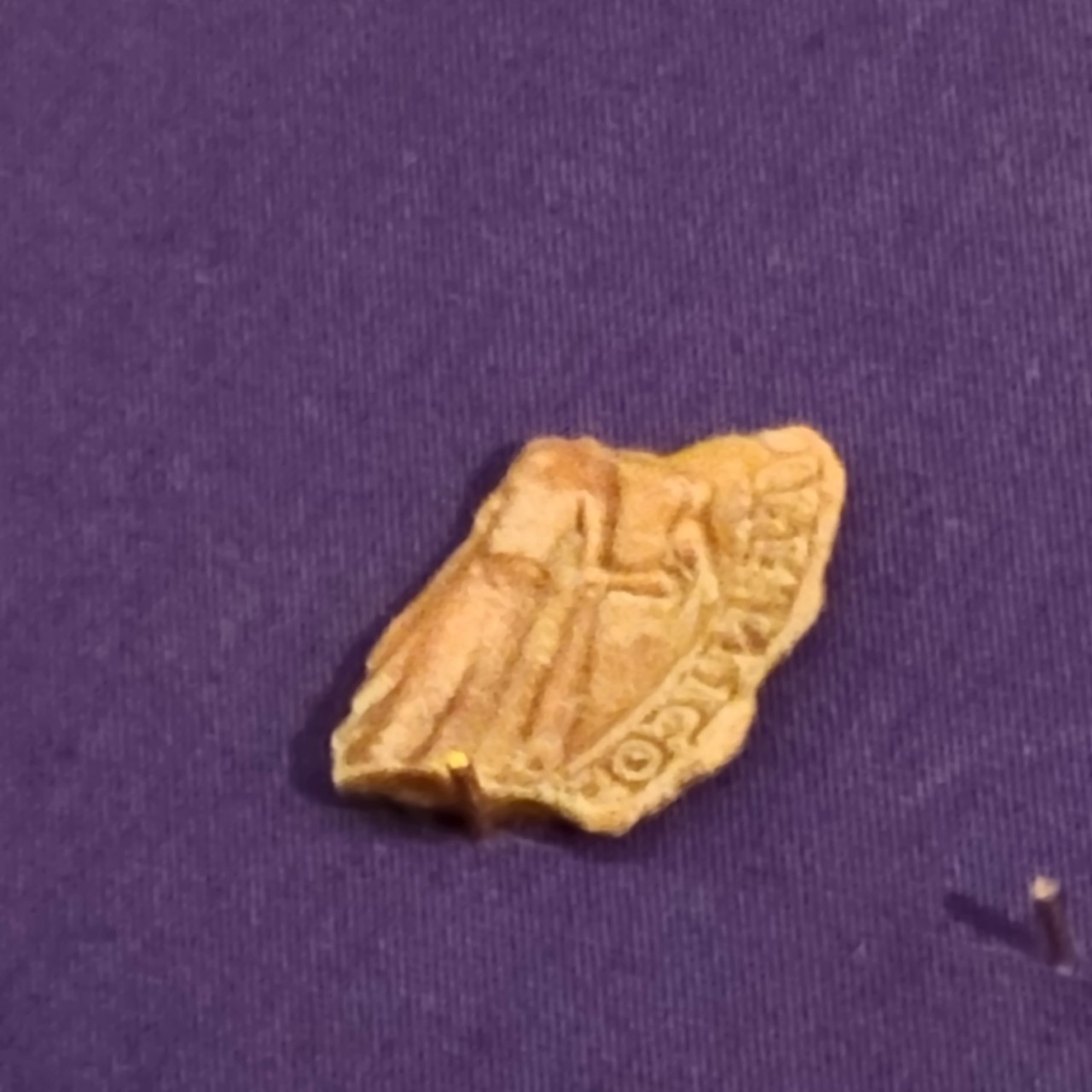
Hamelin de Warenne, the King’s Brother

A short while ago I wrote about Isabel de Warenne, Countess of Surrey and then her first husband, William of Blois (youngest son of King Stephen). So, I think it’s about time I finished the story by looking at Isabel’s second husband, Hamelin Plantagenet, the other 4th Earl of Surrey.

The illegitimate son of Geoffrey, Count of Anjou, Hamelin was born sometime around 1130, when Geoffrey was estranged from his wife, Empress Matilda. His mother was, possibly, Adelaide of Angers, though this is by no means certain. Geoffrey had a second illegitimate child, Emma, who was possibly Hamelin’s full sister. Emma married the Welsh prince, Davydd ap Owain of Gwynedd. Geoffrey of Anjou was the second husband to Empress Matilda, daughter of Henry I of England and would be the mother of the future Henry II, Hamelin’s half-brother.

The de Warenne arms, Trinity Church, Southover

Hamelin was incredibly loyal to Henry and his marriage to an heiress was reward for his support, whilst at the same time giving him position and influence within England. Hamelin and Isabel married in April 1164, Hamelin even taking the de Warenne surname after the marriage; Isabel’s trousseau cost an impressive £41 10s 8d.

Hamelin became Earl of Surrey by right of his wife, though was more habitually called Earl Warenne. In some references, he is named as the 5th Earl of Surrey and in others the 4th: this confusion arises from the fact that the earldom belonged to his wife, Isabel, and her two husbands both held the earldom, sometimes being numbered the 4th and 5th earls to avoid confusion. They were, in fact, both, the 4th Earl of Surrey.

Hamelin supported his brother the king in the contest of wills that Henry was engaged in with his archbishop of Canterbury, Thomas Becket. When Henry called for the archbishop to appear at a great council at Northampton Castle on 12 October 1164, to answer to the charges laid against him, Hamelin was at the trial and spoke in support of his brother. Indeed, the new earl and the archbishop appear to have started a war of words; Hamelin defended Henry’s dignity and called Becket a traitor. The archbishop’s retort was ‘Were I a knight instead of a priest, my fist would prove you a liar!’ Ironically, it is thought that Hamelin’s denunciation of Becket was motivated by the injury caused to the royal family in Becket’s refusal to allow Henry’s brother, William – Hamelin’s half-brother – to marry Isabel de Warenne; who was now Hamelin’s wife.

Hamelin’s animosity to Becket was not to survive the archbishop’s martyrdom and he actively participated in the cult that grew up around Thomas Becket after his violent death. In later life, the earl claimed that the cloth covering Becket’s tomb had cured his blindness, caused by a cataract, in one eye.

Hamelin was an influential and active member of the English barony. He supported Henry against his sons’ rebellion in 1173, and formed part of the entourage which escorted Princess Joanna (daughter of Henry and Eleanor of Aquitaine) to Sicily for her marriage to King William. Joanna’s escort was ordered not to return home until they had seen ‘the King of Sicily and Joanna crowned in wedlock’.

Hamelin remained close to the crown even after Henry’s death, supporting his nephew, Richard I. Hamelin was among the earls present at Richard’s first coronation in September 1189; and carried one of the three swords at his second coronation in April 1194.

Conisbrough Castle

During Richard’s absence on Crusade, Hamelin sided with the Regent, William Longchamp, against the intrigues of Richard’s brother John. Hamelin held great store in the rule of law, attested by the legend on his seal, ‘pro lege, per lege’. This adherence to the law explains Hamelin’s support for Longchamp against that of his own nephew, John, and even as the justiciar’s overzealous actions alienated others. Hamelin was one of only two magnates entrusted with the collection and storage of the king’s ransom, when he was held captive by Duke Leopold of  Austria, appointed by Eleanor of Aquitaine; ; the other was William d’Aubigny, Earl of Arundel.

Hamelin’s involvement with the court continued into the reign of King John; he was present at John’s coronation and at Lincoln when William, King of Scots, gave his oath of homage in November 1200.

Away from court, Hamelin appears to have been an avid builder; he built a cylindrical keep at his manor of Mortemer in Normandy. He then constructed a larger and improved version, using all the latest techniques of castle design, at his manor of Conisbrough, South Yorkshire. He may also have been the one to build Peel Castle at Thorne, a hunting lodge which had a 3-sided donjon that was of smaller, but similar, design to Conisbrough.

He was also involved in a famous dispute with Hugh, abbot of Cluny, over the appointment of a new prior to Lewes priory. Abbot Hugh was known as a man of great piety and honour; he had been prior of Lewes but was elected as abbot of Reading in 1186 and became abbot of Cluny in 1199. In 1200, Abbot Hugh appointed one Alexander to the vacant position of prior of Lewes but Hamelin refused to accept the nomination. In establishing the priory at Lewes, the abbots of Cluny had apparently reserved the right to appoint the prior, and to admit all monks seeking entry into the order; however, Hamelin claimed that the patronage of the priory belonged to him, and it was his right to appoint the prior.

The dispute dragged on. It was only after intervention from King John that agreement was eventually reached whereby, should the position of prior become vacant, the earl and the monks should send representatives to the abbot, who would nominate two candidates, of whom the earl’s proctors should choose one to be appointed prior.

Hamelin and Isabel had four surviving children. Their son and heir, William, would become the 5th Earl of Surrey and married Matilda, daughter of the great William Marshal, Earl of Pembroke and regent of England during the minority of Henry III. There were also three daughters, Ela, Isabel and Matilda.

Lewes priory, Sussex

Ela married twice, firstly to a Robert de Newburn, of whom nothing else is known, and secondly to William Fitzwilliam of Sprotborough, a village just a few miles from Conisbrough. Isabel was married, firstly, to Robert de Lascy, who died in 1193, and secondly, no later than the spring of 1196, to Gilbert de L’Aigle, Lord of Pevensey.

Matilda, or Maud, married Henry, Count of Eu, who died around 1190; by Henry, she was the mother of Alice de Lusignan, who struggled to maintain her inheritance during the reign of King John. Matilda then married Henry d’Estouteville, a Norman lord. However, it was once thought that Matilda was the daughter of Hamelin by an earlier relationship, due to the supposed death date of Matilda’s husband, Henry, Count of Eu. This was due to the mistaken belief that Henry had died in 1172, which would mean that Matilda could not have been a daughter of the marriage of Isabel and Hamelin, who were married in 1164, as she would have been too young to have married and borne children with Henry. The Chronicle of the Counts of Eu records Henry’s death as 1183, which also appears to be an error as Henry was assessed for scutage for Wales at Michaelmas 1190; with this later death date it was entirely possible, and indeed likely, that Matilda was the legitimate daughter of both Hamelin and Countess Isabel.

One of the daughters  – although it is not clear which – bore an illegitimate son, Richard Fitzroy, Baron Chilham, who was born, possibly, around 1190, by her cousin, John (the future King John).

The motte of Peel Castle, Thorne

Hamelin spent a lot of time and money on Conisbrough Castle, which took almost 10 years to complete, and it appears to have been a favourite family residence. King John visited him there in 1201, and two of Hamelin’s daughters married landowners from the nearby manors of Tickhill and Sprotborough. His son, William de Warenne, the 5th earl, would complete the castle, rebuilding the curtain wall in stone.

Hamelin died on 7th May 1202, in his early 70s and was buried in the chapter house at Lewes Priory, in Sussex; Isabel died the following year and was buried alongside him.

*

Further reading: East Yorkshire Charters Volume 8: The Honour of Warenne, edited by William Farrer & Charles Travis Clay; Britain’s Royal Families and Eleanor of Aquitaine by Alison Weir; The Plantagenets: the Kings who Made England by Dan Jones.

Photos: The de Warenne arms, Conisbrough Castle, Peel Castle and Lewes Priory ©Sharon Bennett Connolly.

*

My Books:

Signed, dedicated copies of all my books are available through my online bookshop.

Out now: Scotland’s Medieval Queens

Scotland’s history is dramatic, violent and bloody. Being England’s northern neighbour has never been easy. Scotland’s queens have had to deal with war, murder, imprisonment, political rivalries and open betrayal. They have loved and lost, raised kings and queens, ruled and died for Scotland. From St Margaret, who became one of the patron saints of Scotland, to Elizabeth de Burgh and the dramatic story of the Scottish Wars of Independence, to the love story and tragedy of Joan Beaufort, to Margaret of Denmark and the dawn of the Renaissance, Scotland’s Medieval Queens have seen it all. This is the story of Scotland through their eyes.

Scotland’s Medieval Queens gives a thorough grounding in the history of the women who ruled Scotland at the side of its kings, often in the shadows, but just as interesting in their lives beyond the spotlight. It’s not a subject that has been widely covered, and Sharon is a pioneer in bringing that information into accessible history.’ Elizabeth Chadwick (New York Times bestselling author)

Available now from Amazon and Pen and Sword Books

Also by Sharon Bennett Connolly:

Heroines of the Tudor World tells the stories of the most remarkable women from European history in the time of the Tudor dynasty, 1485-1603. These are the women who ruled, the women who founded dynasties, the women who fought for religious freedom, their families and love. Heroines of the Tudor World is now available for pre-order from Amberley Publishing and Amazon UK. Women of the Anarchy demonstrates how Empress Matilda and Matilda of Boulogne, unable to wield a sword themselves, were prime movers in this time of conflict and lawlessness. It shows how their strengths, weaknesses, and personal ambitions swung the fortunes of war one way – and then the other. Available from Bookshop.orgAmberley Publishing and Amazon UKKing John’s Right-Hand Lady: The Story of Nicholaa de la Haye is the story of a truly remarkable lady, the hereditary constable of Lincoln Castle and the first woman in England to be appointed sheriff in her own right. Available from all good bookshops Pen & Sword Booksbookshop.org and Amazon

Defenders of the Norman Crown: The Rise and Fall of the Warenne Earls of Surrey tells the fascinating story of the Warenne dynasty, from its origins in Normandy, through the Conquest, Magna Carta, the wars and marriages that led to its ultimate demise in the reign of Edward III. Available from Pen & Sword BooksAmazon in the UK and US, and Bookshop.orgLadies of Magna Carta: Women of Influence in Thirteenth Century England looks into the relationships of the various noble families of the 13th century, and how they were affected by the Barons’ Wars, Magna Carta and its aftermath; the bonds that were formed and those that were broken. It is now available in paperback and hardback from Pen & SwordAmazon, and Bookshop.orgHeroines of the Medieval World tells the stories of some of the most remarkable women from Medieval history, from Eleanor of Aquitaine to Julian of Norwich. Available now from Amberley Publishing and Amazon, and Bookshop.orgSilk and the Sword: The Women of the Norman Conquest traces the fortunes of the women who had a significant role to play in the momentous events of 1066. Available now from Amazon,  Amberley Publishing, and Bookshop.org.

Alternate Endings: An anthology of historical fiction short stories including Long Live the King… which is my take what might have happened had King John not died in October 1216. Available in paperback and kindle from Amazon.

Podcast:

Have a listen to the A Slice of Medieval podcast, which I co-host with Historical fiction novelist Derek Birks. Derek and I welcome guests, such as Bernard Cornwell and Michael Jecks, and discuss a wide range of topics in medieval history, from significant events to the personalities involved. Every episode is also now available on YouTube.

*

Don’t forget! Signed and dedicated copies of all my books are available through my online bookshop.

For forthcoming online and in-person talks, please check out my Events Page.

You can be the first to read new articles by clicking the ‘Follow’ button, liking our Facebook page or joining me on TwitterThreadsBluesky and Instagram.

*

©2015 Sharon Bennett Connolly, FRHistS