Gruoch, Lady Macbeth, Queen of Scots

Scotland’s Medieval Queens
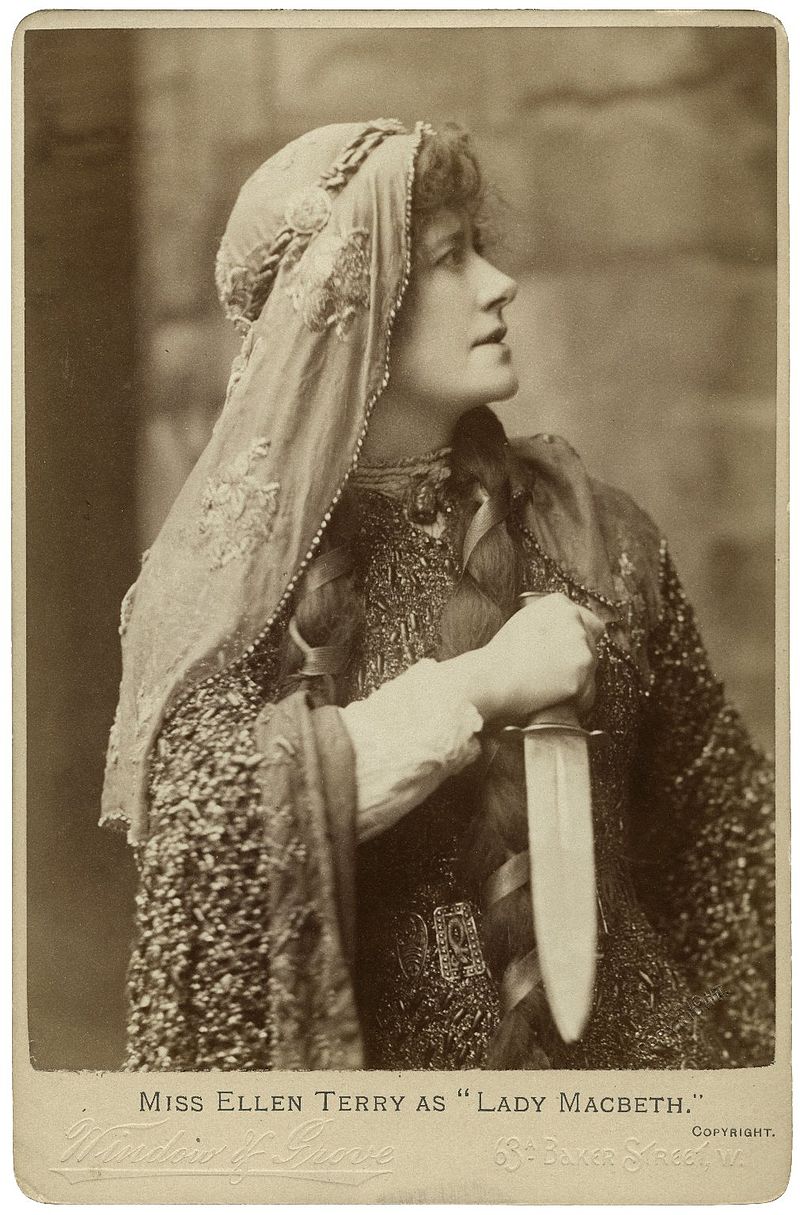
Ellen Terry as Lady Macbeth

Everyone complains about William Shakespeare’s portrayal of Richard III and how that kings posthumous reputation has been damaged – possibly beyond repair – by the bard’s now-infamous play. His greed, ambition and murderous shenanigans enshrined in literature and history. But Richard III was not the only historical figure whose true history was subjected to defamation and misinformation in the name of drama, by that same playwright. For over 400 years, William Shakespeare’s version of Lady Macbeth has been the woman most people are familiar with. The scheming, ambitious wife who will stop at nothing to put her husband on the Scottish throne – and commit murder to keep him there.

In Macbeth, also known as ‘The Scottish Play’, the eponymous character’s wife is not even given her own name. She is ‘Lady Macbeth’, and she is imbued with evil and ambition. She is a character to be vilified and hated, driving her husband to yet greater crimes for the sake of a crown. She never professes love, nor sentimentality throughout the play. She is an intelligent, beautiful woman, but her passions are for power and supremacy.

But is that the real Lady Macbeth?

As many fans of Richard III will say, Shakespeare is fiction. He is telling a story to entertain, imbuing it with the moral judgements of his time, the early modern era. Unlike with Richard III, Lady Macbeth has no following with a desire to seek out the truth and right the wrongs done to her. Historians have tried to address the bard’s inaccuracies.

But Shakespeare’s shadow is long…

So, who was Lady Macbeth?
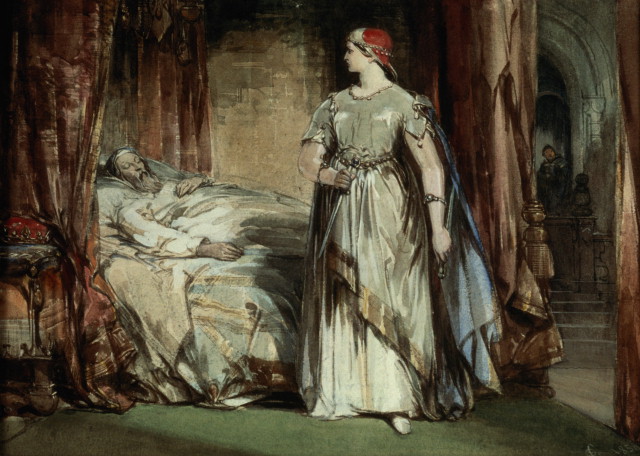
Scotland’s Medieval Queens
Lady Macbeth by George Cattermole

As you can imagine, with the passing of nearly a thousand years, the information on Lady Macbeth is scarce. We know her name was Gruoch, and she was a royal princess, the granddaughter of a king. Gruoch’s date of birth is unknown, but she appears to have been married at some point in the 1020s to a man named Gille Comgáin, which may mean she was born in the first decade of the eleventh century, perhaps somewhere around 1005-1010. We know that she and Gille Comgáin had a son, named Lulach.

Gille Comgáin, was involved in a particularly nasty family feud. He was a first cousin of Macbethad mac Findláech – Macbeth MacFinlay in English – Macbeth. Macbeth’s father, Findlaech mac Ruidrí was mormaer of Moray and may have been some relation to Malcolm II, King of Scots. The other possibility, though the evidence is later and uncertain, is that Findlaech was married to the unnamed youngest daughter of Malcolm II. Although the family relationship is confusing, this may explain why Macbeth is identified as a nephew or grandson of Malcolm II in various sources.

Gille Comgáin he and his brother, Máel Coluim, had murdered Macbeth’s father, and claimed the lands of Moray, with Máel Coluim succeeding his uncle as Mormaer of Moray, a semi-independent region of north-eastern Scotland. Literally translated, mormaer means great steward and the holders of the title enjoyed semi-royal status, which may explain why they are sometimes referred to as kings. Máel Coluim was in turn succeeded by his younger brother Gille Comgáin, on his death in 1029. Macbeth, younger than his murderous cousins, and probably only a teenager at the time, fled, perhaps to Ireland.
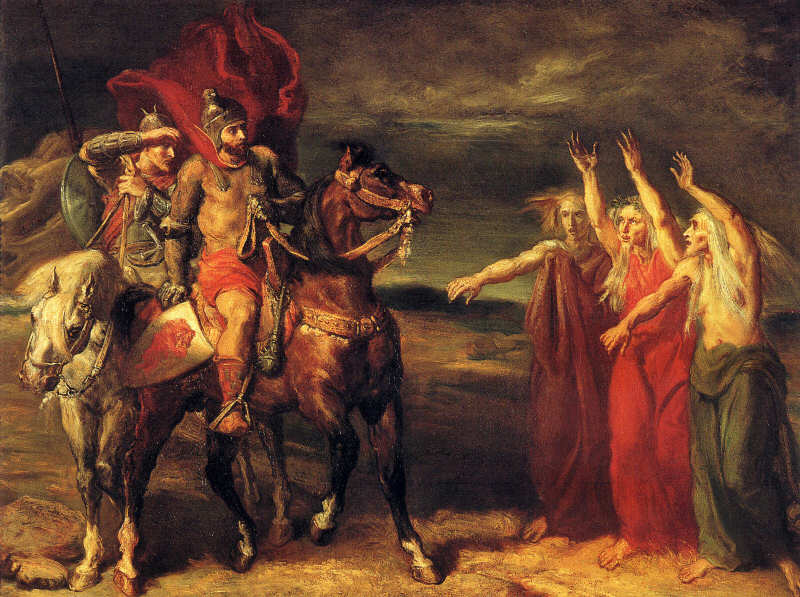
Scotland’s Medieval Queens
Macbeth and Banquo

In 1032, Gille Comgáin was murdered, along with 50 of his men. Although Macbeth is not mentioned as the perpetrator, many, certainly, lay the blame at his door. Given the number of dead involved, it is possible that Gille Comgáin and his followers were trapped in his hall as it was burned down, perhaps during a feast, the doors barred from the outside to prevent escape. If Gruoch was Gille Comgáin’s wife, she did not share her husband’s fate. It is possible that she and her small son were away from home at the time, otherwise they would have perished alongside the others. Another possibility is that Gruoch escaped – or was rescued – from the hall with Lulach before the fire took hold.

Macbeth succeeded his cousin as mormaer of Moray, and it was only a short time after Gille Comgáin’s death that Gruoch and Macbeth were married, putting an end to the murderous family feud. We may feel uneasy about Gruoch marrying her husband’s murderer, if he was, but the union was political common sense. Gruoch, a mother with a young son and royal blood, was low on male protection; her brother had just been murdered, possibly by Malcolm II, and her infant nephew would be killed the following year. As the wife of Macbeth, Gruoch could feel secure in his protection as the new mormaer and may have extracted guarantees that Macbeth would look after Lulach’s interests, given the way he raised the boy and even designated him as his heir. For Macbeth, Gruoch’s royal blood and lands would strengthen his own claim to the Scots throne, if he was thinking that far ahead in 1032.

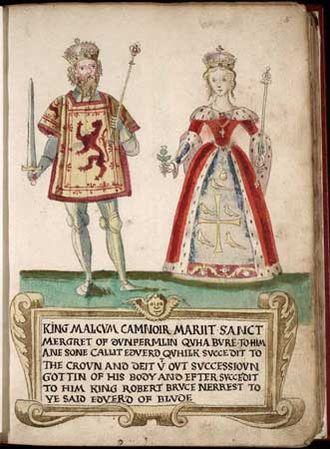
In 1034, on 25 November, King Malcolm II died at Glamis and was peacefully succeeded by his grandson, Duncan, helped no doubt by Malcolm’s campaign of eliminating potential rivals. Duncan was probably in his mid-20s when he was invested as King of Scots at Scone just five days after his grandfather’s death: he was certainly not the old man as depicted by Shakespeare. When Duncan led an army north against Thorfinn of Orkney, Thorfinn allied with Macbeth to form a league to challenge the Scots king. Duncan led an army against Moray, apparently unaware of Macbeth’s alliance with Thorfinn and the two armies met at Pitgaveny, near Elgin, on 15 August 1040. Macbeth won the contest, with Duncan lying dead on the field of battle at the end of the day – not murdered as in ‘the Scottish play’. With Duncan’s sons still only children, taken into exile, beyond Macbeth’s reach, Macbeth assumed the kingship unchallenged, with Gruoch by his side.

Gruoch is the first Scottish queen whose name is known to history.
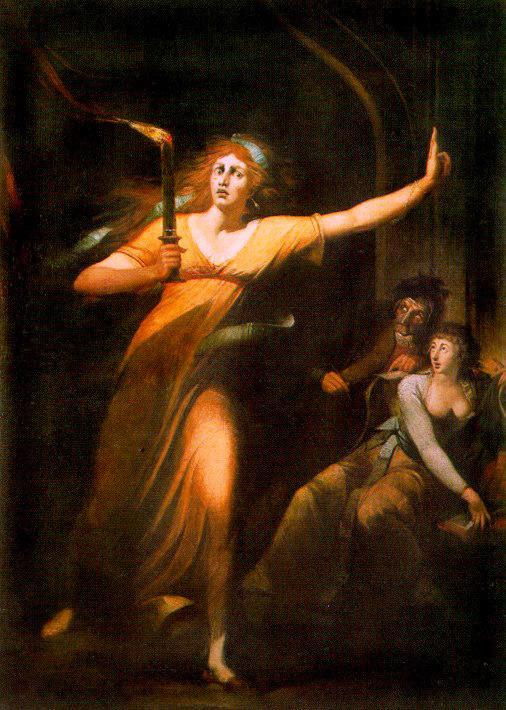
Scotland’s Medieval Queens
Lady Macbeth sleepwalking by Johann Heinrich Füssli

In the early years of his reign, Macbeth faced challenges from the dead King Duncan’s father and from Siward, Earl of Northumbria, who mounted an invasion of Scotland in the name of Malcolm, Duncan I’s oldest son and heir. Although the invasion initially succeeded in defeating Macbeth, the king gathered reinforcements from his heartlands in the north and expelled Siward’s forces.

There followed 8 years of peace in Scotland. By 1050, King Macbeth was in such a strong position that he was able to leave the kingdom and go on pilgrimage to Rome, where he ‘scattered money like seed to the poor’.1 The pilgrimage would have been a combination of religious devotion and diplomatic networking; a chance for the King of Scots to be seen on the wider European stage. The generosity of Macbeth and Gruoch towards the church, during the pilgrimage, had monastic writers recording that ‘in his reign there were productive seasons’.2

In those 8 years, Duncan’s sons were growing to adulthood and in 1054, Earl Siward again invaded Scotland, hoping to place Malcolm on the throne, as a client king of England’s Edward the Confessor. Although the battle at Dunsinane was lost, Macbeth’s men sold their lives dearly; Siward’s oldest son was killed, and the earl was unable to press any advantage. Scotland was divided, with Malcolm establishing himself in Lothian and the southern kingdom of Strathclyde, while Macbeth continued to control Scotland’s heartlands north of the Forth. The subsequent campaign was long and bloody as Malcolm extended his influence northwards. It was not until 1057 that Malcolm crossed the Mounth, ambushing Macbeth, cut off from his main army, at Lumphanan, west of Aberdeen, on 15 August. Macbeth was killed in the battle, along with his personal bodyguard.

The Scots king was buried on the island of Iona, where his rival King Duncan was also interred. Macbeth was succeeded, briefly, by his stepson, Lulach. His reign lasted less than a year and he was defeated and killed, ‘by treachery’, on 17 March 1058, at Essie in Strathbogie.

Macbeth’s reputation as a strong, wise, generous and pious king has been overshadowed by the Macbeth of Shakespeare. He is described as ‘a tall man with a ruddy complexion and fair hair’.3 Of his wife Gruoch, we have no description. We have very little record of Gruoch’s movements, either as Macbeth’s wife or before. We can assume that she spent the early years of her marriage to Macbeth in creating a household and raising her young son, Lulach.

Once Macbeth attained the throne, Gruoch may well have assumed the traditional roles associated with queens, as an intercessor for those seeking the king’s mercy or patronage, as a hostess in welcoming foreign envoys and powerful magnates to the Scottish court, and as a religious benefactor. In one charter, Gruoch is identified with her husband as ‘Macbeth son of Finlach… and Gruoch daughter of Bodhe, King and Queen of Scots’.4 The fact that we have a grant given jointly by Macbeth and Gruoch suggests that the couple worked together during Macbeth’s reign. Gruoch also accompanied her husband on his pilgrimage to Rome, a journey that must have been an exciting adventure for both of them.
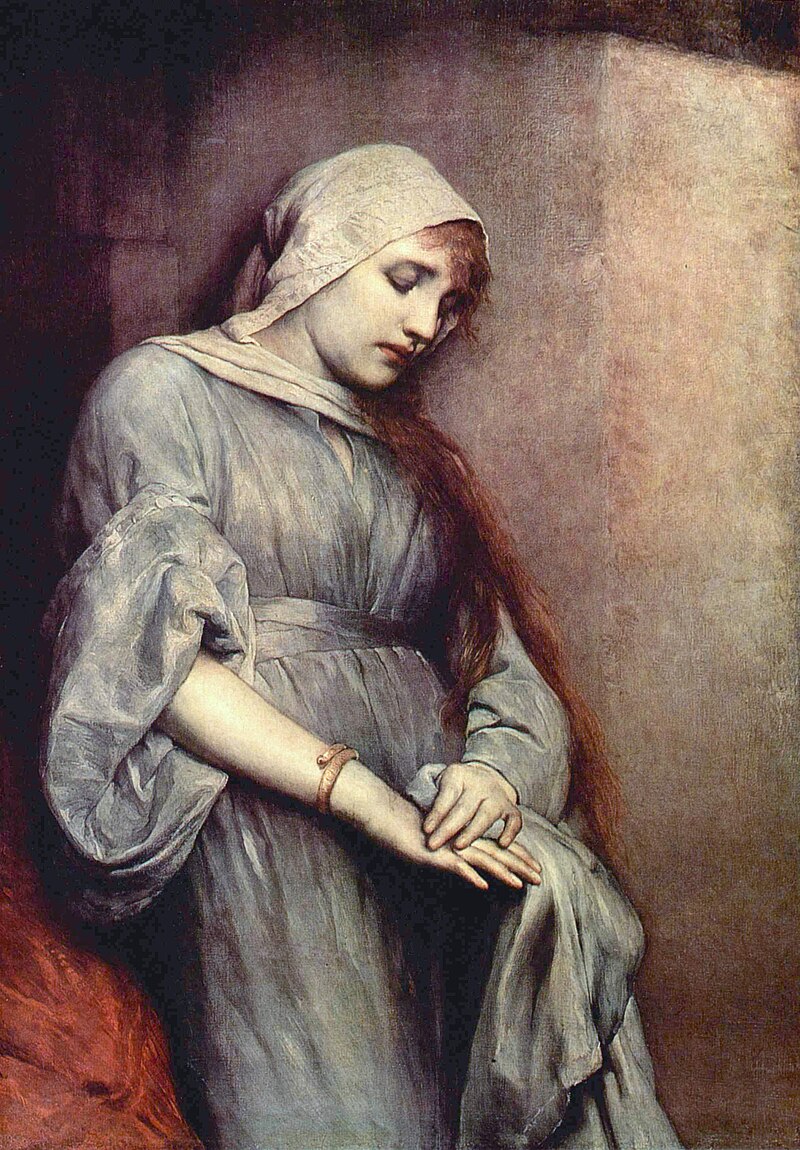
Scotland’s Medieval Queens
Gabriel von Max’s depiction of Lady Macbeth

There is no record in the chronicles of any disharmony in the marriage but we know little else of Queen Gruoch. Despite already bearing a son, Lulach, she and Macbeth had no children that we know of; although it may be that she lost children by miscarriage or in early childhood before they came to the notice of chroniclers. This lack of a surviving heir of his own may have been what prompted Macbeth to adopt Gruoch’s son as his successor.

We know nothing of Gruoch’s death, no date is recorded nor even hinted at. She may have lived through the grief of losing her husband and son in battle and seeing Malcolm III Canmore ascend the throne and assert his authority over the whole of Scotland. Or she may have died some years beforehand. William Shakespeare had her dying by her own hand, driven insane by her evil deeds:

Of his dead butcher and his fiend-like queene,
Who, as ’t is thought, by selfe and violent hands
Tooke off her life.5

But this was almost definitely fiction.

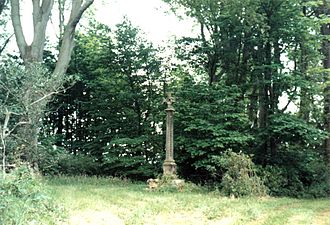
Gruoch’s final resting place, the one site that may give us a clue, is also lost to history.

The story of Queen Gruoch, Lady Macbeth, is one shrouded in mystery, tantalisingly obscure…

*

Notes:

1. Anderson, Early Sources, 1.588, quoted in Dauvit Broun, Macbeth [Macbethad mac Findlaich] (d. 1057), king of Scots, Oxforddnb.com; 2. Richard Oram, editor, The Kings and Queens of Scotland; 3. Mike Ashley, The Mammoth Book of British Kings and Queens; 4. ‘Macbeth filius Finlach … et Gruoch filia Bodhe, Rex et Regina Scottorum’, Early Scottish charters prior to A.D. 1153: with notes and an index, edited by Archibald
Campbell Lawrie; 5. Act V, Scene VIII, Shakespeare, William, The tragedie of Macbeth; a new edition of Shakspere’s works with critical text in Elizabethan English and brief notes, illustrative of Elizabethan life, thought and idiom, edited by Mark Harvey Liddell.

Sources:

Shakespeare, William, The tragedie of Macbeth; a new edition of Shakspere’s works with critical text in Elizabethan English and brief notes, illustrative of Elizabethan life, thought and idiom, edited by Mark Harvey Liddell; The Chronicle of John of Worcester, edited by R. R. Darlington and P. McGurk; Early Scottish charters prior to A.D. 1153: with notes and an index, edited by Archibald Campbell Lawrie; fmg.ac/Projects/MedLands/SCOTLAND; Oxforddnb.com; Richard Oram, editor, The Kings and Queens of Scotland; Mike Ashley, The Mammoth Book of British Kings and Queens; Kate Braithwaite, Gruoch: The Real Lady Macbeth, historyofroyalwomen.com; Henry of Huntingdon: The History of the English People 1000-1154, edited by Diana Greenway; Chronicles of the Picts, chronicles of the Scots, and other early memorials of Scottish history, edited by W. F. Skene; Rosalind K. Marshall, Scottish Queens 1034–1714; Chronicle of the Scots, 1165, Cronica Regum Scottorum; Annals of Ulster; David Ross, Scotland: History of a Nation.

Images:

Courtesy of Wikipedia

*

My books

Signed, dedicated copies of all my books are available through my online store.

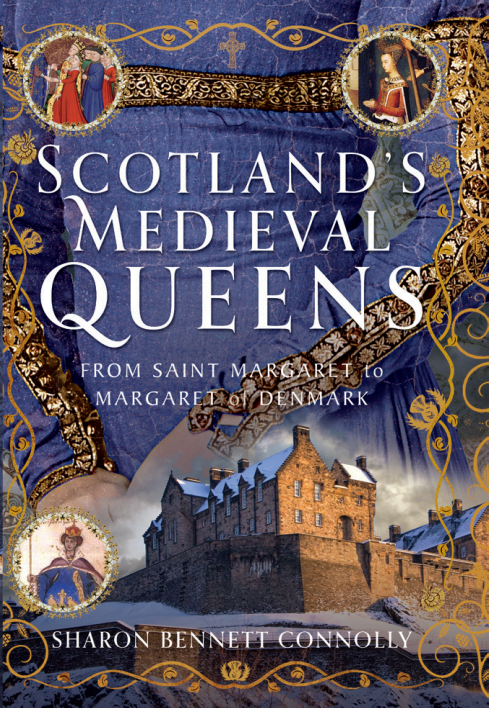
Out now: Scotland’s Medieval Queens

Books by Sharon Bennett Connolly

Scotland’s history is dramatic, violent and bloody. Being England’s northern neighbour has never been easy. Scotland’s queens have had to deal with war, murder, imprisonment, political rivalries and open betrayal. They have loved and lost, raised kings and queens, ruled and died for Scotland. From St Margaret, who became one of the patron saints of Scotland, to Elizabeth de Burgh and the dramatic story of the Scottish Wars of Independence, to the love story and tragedy of Joan Beaufort, to Margaret of Denmark and the dawn of the Renaissance, Scotland’s Medieval Queens have seen it all. This is the story of Scotland through their eyes.

Scotland’s Medieval Queens gives a thorough grounding in the history of the women who ruled Scotland at the side of its kings, often in the shadows, but just as interesting in their lives beyond the spotlight. It’s not a subject that has been widely covered, and Sharon is a pioneer in bringing that information into accessible history.’ Elizabeth Chadwick (New York Times bestselling author)

Available now from Amazon and Pen and Sword Books

Also by Sharon Bennett Connolly:

Books by Sharon Bennett Connolly

Heroines of the Tudor World tells the stories of the most remarkable women from European history in the time of the Tudor dynasty, 1485-1603. These are the women who ruled, the women who founded dynasties, the women who fought for religious freedom, their families and love. Heroines of the Tudor World is now available from Amberley Publishing and Amazon UK. Women of the Anarchy demonstrates how Empress Matilda and Matilda of Boulogne, unable to wield a sword themselves, were prime movers in this time of conflict and lawlessness. It shows how their strengths, weaknesses, and personal ambitions swung the fortunes of war one way – and then the other. Available from Bookshop.orgAmberley Publishing and Amazon UKKing John’s Right-Hand Lady: The Story of Nicholaa de la Haye is the story of a truly remarkable lady, the hereditary constable of Lincoln Castle and the first woman in England to be appointed sheriff in her own right. Available from all good bookshops Pen & Sword Booksbookshop.org and Amazon

Royal Historical Society

Defenders of the Norman Crown: The Rise and Fall of the Warenne Earls of Surrey tells the fascinating story of the Warenne dynasty, from its origins in Normandy, through the Conquest, Magna Carta, the wars and marriages that led to its ultimate demise in the reign of Edward III. Available from Pen & Sword BooksAmazon in the UK and US, and Bookshop.orgLadies of Magna Carta: Women of Influence in Thirteenth Century England looks into the relationships of the various noble families of the 13th century, and how they were affected by the Barons’ Wars, Magna Carta and its aftermath; the bonds that were formed and those that were broken. It is now available in paperback and hardback from Pen & SwordAmazon, and Bookshop.orgHeroines of the Medieval World tells the stories of some of the most remarkable women from Medieval history, from Eleanor of Aquitaine to Julian of Norwich. Available now from Amberley Publishing and Amazon, and Bookshop.orgSilk and the Sword: The Women of the Norman Conquest traces the fortunes of the women who had a significant role to play in the momentous events of 1066. Available now from Amazon,  Amberley Publishing, and Bookshop.org.

Alternate Endings: An anthology of historical fiction short stories including Long Live the King… which is my take what might have happened had King John not died in October 1216. Available in paperback and kindle from Amazon.

Podcast:

A Slice of Medieval

Have a listen to the A Slice of Medieval podcast, which I co-host with Historical fiction novelist Derek Birks. Derek and I welcome guests, such as Bernard Cornwell and Michael Jecks, and discuss a wide range of topics in medieval history, from significant events to the personalities involved. 

Every episode is also now available on YouTube.

*

Don’t forget! Signed and dedicated copies of all my books are available through my online store.

For forthcoming online and in-person talks, please check out my Events Page.

You can be the first to read new articles by clicking the ‘Follow’ button, liking our Facebook page or joining me on TwitterThreadsBluesky and Instagram.

*

©2025 Sharon Bennett Connolly, FRHistS

William the Lion, the Warenne King of Scots

William the Lion, King of Scots

There is only one clause in Magna Carta that mentions particular women. Although they are not identified by name, they are easily identifiable due to their positions. These two women were the daughters of William I, the Lion, King of Scots. They were the sisters of the new King of Scots, Alexander II, and had been hostages in England since the treaty of Norham in 1209. Clause 59 of Magna Carta agrees to negotiate for their release, alongside a number of other Scottish hostages:

We will treat Alexander, king of Scots, concerning the return of his sisters and hostages and his liberties and rights in the same manner in which we will act towards our other barons of England, unless it ought to be otherwise because of the charters which we have from William his father, formerly king of Scots; and this shall be determined by the judgement of his peers in our court.1

The king of Scots’ two sisters referred to in the clause were Margaret and Isabella, the oldest daughters of William I (the Lion), King of Scots, and his wife, Ermengarde de Beaumont. The two girls had been caught up in the power struggle between their father and the Plantagenet kings. William I was the second of the three sons of Henry, Earl of Northumberland, and his wife, Ada de Warenne. He was, therefore, a grandson of David I and great-grandson of Malcolm III Canmor and St Margaret, the Anglo-Saxon princess.

Magna Carta, Lincoln Castle

William had succeeded his father as earl of Northumberland in June 1153, when he was about 11 years old; William used ‘Warenne’ as his family name when earl of Northumberland. He lost the earldom, however, when his brother, Malcolm IV (known as Malcolm the Maiden) surrendered the northern counties of England to Henry II; he was given lands in Tynedale, worth £10 per annum, in compensation. This loss of Northumberland was never forgotten and was to colour William’s future dealings with the English crown throughout his reign.

William was probably knighted in 1159, when he accompanied King Henry and his own brother Malcolm on an expedition to Toulouse and in 1163 he was in attendance in a meeting with King Henry II at Woodstock where the Scots king did homage to the English king. The youngest of the royal brothers, David, was to remain in England as a hostage to Malcolm’s good behaviour. William ascended the Scottish throne on Malcolm’s death on 9 December 1165, aged about 23; his inauguration as king took place at Scone on Christmas Eve, 24 December. In 1166 William travelled to Normandy to meet with King Henry II and, although we do not know what they spoke of, it was reported that they parted on bad terms.

Malcolm IV, king of Scots

Nevertheless, in 1170 William and his brother David were at the English court, attending Henry II’s council at Windsor in April and were in London on 14 June, at the coronation of Henry’s eldest son, also Henry, the Young King; he died in 1183, six years before his father. Both William and his brother David did homage to the Young King after the coronation. And in 1173 when the Young King and his brothers, Richard and Geoffrey, rebelled against their father, Henry II, they sought William’s aid. The younger King Henry promised that he would give the northern counties of England to the Scots king, and the earldoms of Huntingdon with Cambridgeshire to the king’s brother, David, in return for their support in the rebellion.

William considered the offer, but after consulting his barons in the summer of 1173, he decided to ask Henry II to return Northumberland. He would renounce his homage if the English king refused. Henry II did refuse and William joined the Young King’s rebellion. He formed an alliance with Louis VII of France and Count Philippe of Flanders, who both promised mercenaries would be sent to England in support. This was the start of the long Scottish tradition of alliances with France, against England, which would become known as the Auld Alliance. On 20 August 1173 the Scottish forces moved south, to Alnwick, Warkworth and Newcastle.

Although they devastated the countryside, the campaign in Northumberland achieved very little; they were unable to take the strategically important castles. They moved on to Carlisle, but pulled back to Roxburgh after receiving news that a new English force was advancing. This force, under Ranulf de Glanville, the justiciar, burned Berwick before agreeing to a truce until 13 January 1174. The truce was later extended to 24 March 1174, after a payment of 300 marks by the bishop of Durham to King William. At the end of the truce, the Scots, accompanied by Flemish mercenaries, again advanced into England. They ravaged the Northumberland coast and besieged both Wark-on-Tweed and Carlisle castles, but failed to take either.

On 13 July, while much of the Scottish army was spread out in raiding parties, the Scots were the victims of a surprise attack. King William’s horse was killed, the king trapped underneath. William surrendered to Ranulf de Glanville and was taken first to Newcastle and then to Northampton, where he appeared before Henry II on 24 July. The Scots king was sentenced to imprisonment at Falaise in Normandy and the price of his freedom was to submit himself, his kingdom and the castles of Berwick, Roxburgh and Edinburgh to King Henry II. The Convention of Falaise on 1 December 1174 also granted that ‘the church of Scotland shall henceforward owe such subjection to the church of England as it should do.’2 It was a humiliating treaty for the Scots, which also required twenty Scottish noble hostages be handed to the English in return for their king’s freedom.

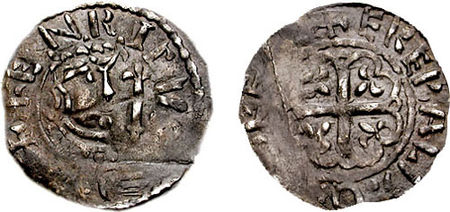
Coin of William’s father Henry of Scotland

King William arrived back in Scotland in February 1175, having spent two months in England until the handover of the Scottish castles had been completed. He returned to a revolt in Galloway, which he managed to quash, he was then faced with a threat from Donald Ban Macwilliam, grandson of Duncan II, who was gaining support for a challenge to the throne and a return to the royal line of Duncan II. Things quietened down for a time, but in April 1181, when the king and David were in Normandy Donald Ban Macwilliam led an uprising in Moray and Ross, apparently gaining full control of the two earldoms. One royal retainer, Gillecolm the Marischal, surrendered the castle of Auldearn and then joined the rebels.

The king was also faced with unrest in Galloway, where Gilbert of Galloway was vying with his nephew Roland for control of the region. Gilbert died on 1 January 1185 and shortly after King William invaded Galloway, alongside Gilbert’s nephew Roland. On 4 July 1185 William and his allies defeated the main force of Gilbert’s followers and by 1190 Roland had been granted the lordship of Galloway by King William while Gilbert’s son, Duncan, was made lord of Carrick. As a result, Galloway remained at peace well into the 13th century, until the death of Roland’s son, Alan, in 1234.

With Galloway subdued, in 1187 King William was finally able to quash the rebellion in the north, leading his considerable army as far as Inverness. On 31 July, at the now-lost site of ‘Mam Garvia’, Roland of Galloway faced the rebels in battle where over 500 of them were killed, including Donald Macwilliam, whose head was sent to King William.

The overlordship of Henry II caused additional problems for King William in the Scottish church; the archbishops of York and Canterbury both claimed the homage of the Scottish clergy. William also had a long running dispute with the papacy, with five successive popes, in fact, over the appointment of a bishop of St Andrews; neither king nor pope approved the other’s choice of candidate. The English king sided with the popes on the matter and in 1181 King William was excommunicated by the archbishop of Canterbury; the Scottish people, as a whole, were subsequently excommunicated by the bishop of Durham. Within two years, however, the papacy and the Scots king were on such good terms that the pope sent William the Golden Rose as a tribute to ‘a king of exceptional religious zeal’.3 On 13 March 1192 Pope Celestine III issued the papal bull, Cum universi, recognising the Scottish church as a ‘special daughter’ of the apostolic see and subject to Rome without an intermediary. Thereby denying the claims to superiority of both York and Canterbury.

Unusually for a king in this period, by 1180 William had been on the throne for fifteen years and was still unmarried. He had several illegitimate children but until he married, William’s heir was his younger brother, David. With this in mind, in 1184, William was at King Henry’s court to discuss a possible marriage with Henry’s granddaughter, Matilda of Saxony. The match was forbidden by the pope on the grounds of consanguinity. In May 1186, during a council at Woodstock, King Henry suggested Ermengarde de Beaumont as a bride for William. Ermengarde was the daughter of Richard, Vicomte de Beaumont-sur-Sarthe, who was himself the son of Constance, one of the many illegitimate daughters of King Henry I of England.

With such diluted royal blood, she was hardly a prestigious match for the king of Scots, but he reluctantly accepted the marriage after consulting his advisers. The wedding took place at Woodstock on 5 September 1186, with King Henry hosting four days of festivities. Edinburgh Castle was returned to the Scots as part of Ermengarde’s dowry. Although we do not know Ermengarde’s birth date, at the time of the marriage, she was referred to as ‘a girl’, suggesting that she may have only just reached the age of 12.

King William agreed to provide Ermengarde with £100 of rents and forty knights’ fees in Scotland, for the financial maintenance of her household; she also had dwellings and lands at Crail and Haddington, lands which had previously been held by William’s mother, Ada de Warenne. Between 1187 and 1195 Queen Ermengarde gave birth to two daughters, Margaret and Isabella. A son, the future Alexander II, was finally born at Haddington on 24 August 1198, the first legitimate son born to a reigning Scottish king in 70 years; a contemporary remarked that ‘many rejoiced at his birth.’4 A third daughter, Marjorie, was born sometime later.

On the death of King Henry II in 1189, King William again went south, and met with the new king, Richard I, at Canterbury, where he did homage for his English lands. Desperate for money for his crusade, on 5 December 1189, Richard abandoned his lordship of Scotland in the quitclaim of Canterbury; King William was released from the homage and submission given to Henry II, the castles of Roxburgh and Berwick were returned and the relationship between the kingdoms reverted to that in the time of Malcolm IV. The cost to the Scots was to be 10,000 marks, but Scotland was independent once again. However, Richard still refused to sell Northumberland back to William. The Scots king remained on good relations with King Richard, paying 2,000 marks towards his ransom in 1193. King William carried one of the three swords of state at Richard’s second coronation at Winchester on 17 April 1194.

In the spring of 1195 King William fell gravely ill at Clackmannan, causing a succession crisis, the king’s only legitimate children being daughters. The Scottish barons appear to have been divided, between recognising William’s oldest legitimate daughter, Margaret, as his heir, or marrying Margaret to Otto, Duke of Saxony, grandson of Henry II, and allowing Otto to succeed to the throne. A third faction claimed that either solution was contrary to the custom of the land, so long as the king had a brother who could succeed him. In the event, the king recovered from his illness and three years later the queen gave birth to Alexander, the much-desired son and heir. For the last years of the century, William was again occupied with unrest in the north. Before going on campaign in October 1201, he had the Scottish barons swear fealty to his son, Alexander, now 3 years old, a sensible precaution, given that he was approaching his sixtieth birthday.

Alexander II, William’s son and successor

Relations with England changed again in 1199, with the accession of King John. During the reign of King Richard, William had agreed with the justiciar, William Longchamp, and backed Arthur of Brittany as the king’s heir. John may well have remembered this and soon after his accession, in 1200, the two kings met at Lincoln, with William doing homage for his English lands. The matter of Northumberland, still in English hands, was raised and deferred on several occasions between 1199 and 1205. The two kings finally met for formal talks at York from 9 to 12 February 1206 and again from 26 to 28 May 1207, although we have little record of what was discussed. However, John appears to have been prevaricating, suggesting another meeting in October 1207, which the Scots rejected.

In the meantime, the death of the bishop of Durham meant John took over the vacant see and set about building a castle at Tweedmouth. The Scots, seeing this as a direct threat to Berwick, destroyed the building works and matters came to a crisis in 1209. After many threats, and with both sides building up their armies, the two kings met at Norham, Northumberland, in the last week of July and first week of August 1209. The Scots were in a desperate position, with an ailing and ageing king, and a 10-year-old boy as heir, whilst the English, with their Welsh allies and foreign mercenaries, had an army big enough to force a Scottish submission.

The subsequent treaty, agreed at Norham on 7 August, was humiliating for William and the Scots. They agreed to pay 15,000 marks for peace and to surrender hostages, including the king’s two oldest legitimate daughters, Margaret and Isabella. As a sweetener, John promised to marry the princesses to his sons; although Henry was only 2 years old at the time and Richard was just 8 months, whilst the girls were probably in their early-to-mid teens. John would have the castle at Tweedmouth dismantled, but the Scots would pay an extra £4,000 compensation for the damage they had caused to it. The king’s daughters and the other Scottish hostages were handed into the custody of England’s justiciar, at Carlisle on 16 August. How the girls, or their parents, thought about this turn of events, we know not. Given John’s proven record of prevarication and perfidy, King William may have hoped that the promised marriages would occur in good time, but may also have expected that John would find a way out of the promises made.

Arbroath Abbey, burial place of William the Lion

There is no mention of Queen Ermengarde being present for the treaty at Norham, although she did act as mediator in 1212, when her husband was absent, in negotiations with John at Durham. A contemporary observer described the Scottish queen as ‘an extraordinary woman, gifted with a charming and witty eloquence’.5 It seems likely that King John was not immune to the queen’s charms, as he did not ask for more hostages and agreed that the Scottish heir, Alexander, would be knighted and one day marry an English princess. Alexander was knighted at Clerkenwell on 4 March 1212.

King William I, later known as William the Lion, died on 4 December 1214, aged about 72, having reigned for a total of forty-nine years, almost to the day. He was buried before the high altar of Arbroath Abbey. William’s daughters were still in English custody, the conditions for their release would form one of the clauses of Magna Carta. He was succeeded by Alexander, his only legitimate son, who was proclaimed king at Scone on 6 December 1214, aged just 16. Queen Ermengarde was said to be distraught at her husband’s death. She lived for 19 more years, devoting her time to the founding of a Cistercian abbey at Balmerino in Fife. She died on 11 February 1233.

*

Footnotes: 1 Marc Morris, King John; 2E.L.G. Stones quoted in Scott, W.W., William I; 3Ross, David, Scotland: History of a Nation; 4W.W. Scott, Ermengarde de Beaumont (1233); 5Bower quoted in W.W. Scott, Ermengarde de Beaumont (1233),

Images: Courtesy of Wikipedia except Magna Carta which is ©2015 Sharon Bennett Connolly

Further reading: W.W. Scott, Ermengarde de Beaumont (d. 1233), Oxforddnb.com; Scott, W.W., William I [known as William the Lion] (c. 1142–1214) Oxforddnb.com; Scott, W.W., Malcolm IV (c. 1141–1165) Oxforddnb.com; Mackay, A.J.G. (ed.), The Historie and Chronicles of Scotland … by Robert Lindesay of Pitscottie; Ross, David, Scotland: History of a Nation; Farrer, William and Charles Travis Clay, editors, Early Yorkshire Charters, Volume 8: The Honour of Warenne; Morris, Marc King John: Treachery, Tyranny and the Road to Magna Carta; Church, Stephen, King John: England, Magna Carta and the Making of a Tyrant; Danziger, Danny and John Gillingham, 1215: The Year of Magna Carta; Crouch, David, William Marshal; fmg.ac; Brewer’s British Royalty by David Williamson; The Mammoth Book of British Kings and Queens by Mike Ashley; The Story of Scotland by Nigel Tranter; Ada, Queen Mother of Scotland (article) by Victoria Chandler.

*

My Books

Signed, dedicated copies of all my books are available through my online bookshop.

Coming 30 January 2025: Scotland’s Medieval Queens

Scotland’s history is dramatic, violent and bloody. Being England’s northern neighbour has never been easy. Scotland’s queens have had to deal with war, murder, imprisonment, political rivalries and open betrayal. They have loved and lost, raised kings and queens, ruled and died for Scotland. From St Margaret, who became one of the patron saints of Scotland, to Elizabeth de Burgh and the dramatic story of the Scottish Wars of Independence, to the love story and tragedy of Joan Beaufort, to Margaret of Denmark and the dawn of the Renaissance, Scotland’s Medieval Queens have seen it all. This is the story of Scotland through their eyes.

Available for pre-order now.

Also by Sharon Bennett Connolly:

Heroines of the Tudor World tells the stories of the most remarkable women from European history in the time of the Tudor dynasty, 1485-1603. These are the women who ruled, the women who founded dynasties, the women who fought for religious freedom, their families and love. Heroines of the Tudor World is now available for pre-order from Amberley Publishing and Amazon UK. Women of the Anarchy demonstrates how Empress Matilda and Matilda of Boulogne, unable to wield a sword themselves, were prime movers in this time of conflict and lawlessness. It shows how their strengths, weaknesses, and personal ambitions swung the fortunes of war one way – and then the other. Available from Bookshop.orgAmberley Publishing and Amazon UKKing John’s Right-Hand Lady: The Story of Nicholaa de la Haye is the story of a truly remarkable lady, the hereditary constable of Lincoln Castle and the first woman in England to be appointed sheriff in her own right. Available from all good bookshops Pen & Sword Booksbookshop.org and Amazon

Defenders of the Norman Crown: The Rise and Fall of the Warenne Earls of Surrey tells the fascinating story of the Warenne dynasty, from its origins in Normandy, through the Conquest, Magna Carta, the wars and marriages that led to its ultimate demise in the reign of Edward III. Available from Pen & Sword BooksAmazon in the UK and US, and Bookshop.orgLadies of Magna Carta: Women of Influence in Thirteenth Century England looks into the relationships of the various noble families of the 13th century, and how they were affected by the Barons’ Wars, Magna Carta and its aftermath; the bonds that were formed and those that were broken. It is now available in paperback and hardback from Pen & SwordAmazon, and Bookshop.orgHeroines of the Medieval World tells the stories of some of the most remarkable women from Medieval history, from Eleanor of Aquitaine to Julian of Norwich. Available now from Amberley Publishing and Amazon, and Bookshop.orgSilk and the Sword: The Women of the Norman Conquest traces the fortunes of the women who had a significant role to play in the momentous events of 1066. Available now from Amazon,  Amberley Publishing, and Bookshop.org.

Alternate Endings: An anthology of historical fiction short stories including Long Live the King… which is my take what might have happened had King John not died in October 1216. Available in paperback and kindle from Amazon.

Podcast:

Have a listen to the A Slice of Medieval podcast, which I co-host with Historical fiction novelist Derek Birks. Derek and I welcome guests, such as Bernard Cornwell, and discuss a wide range of topics in medieval history, from significant events to the personalities involved.

*

Don’t forget! Signed and dedicated copies of all my books are available through my online bookshop.

For forthcoming online and in-person talks, please check out my Events Page.

You can be the first to read new articles by clicking the ‘Follow’ button, liking our Facebook page or joining me on TwitterThreadsBluesky and Instagram.

*

©2020 Sharon Bennett Connolly FRHistS

Malcolm the Maiden

Malcolm IV

Malcolm IV (the Maiden), King of Scots, was the son of Prince Henry of Scotland and Ada de Warenne. He was the grandson of David I, King of Scots and great-grandson of Malcolm III, King of Scots and second his wife St Margaret, herself a descendant of Alfred the great. On his mother’s side, he was the grandson of William de Warenne, second Earl of Warenne and Surrey, and Isabel de Vermandois, granddaughter of King Henry I of France and his queen, Anna of Kiev.

The younger Malcolm was born between born between 23 April and 24 May 1141. He earned the soubriquet ‘the Maiden’ due to his youth, religious devotion and the fact he remained unmarried. Malcolm had become his grandfather’s heir following his father’s death in 1152, at which time he had been placed into the custody of Duncan, Earl of Fife, and taken on a progress around Scotland north of the Forth, following the old Celtic tradition of showing the heir to the kingdom. When King David I died less than twelve months after his son, Henry, on 24 May 1153, he was succeeded by his grandson, Malcolm. The new king succeeded to the crown at the age of twelve – possibly even on his twelfth birthday – as Malcolm IV.

The accession of Malcolm surpassed all the ambitions of his Warenne grandfather. William de Warenne, the second earl, had sought a royal bride for himself. He had not lived to see his daughter marry the heir to the Scottish throne not to see his grandson’s accession and coronation, which surpassed all of his aspirations and ambitions.

The chronicles make no mention of Malcolm’s mother, Ada, playing a part in the politics of Scotland during her eldest son’s kingship. She did appear at court often and was present for many of the important occasions; she was also a witness to no less than sixteen of Malcolm’s charters. Ada did, moreover, take great interest in the futures of her children, arranging the marriages of her two surviving daughters and employing any means possible to persuade her son to marry. The chronicler, William of Newburgh, relates a story of the lengths Ada had to go to in order to get her reluctant son to choose a bride. Ada went so far as to present her son with a young woman of noble birth, in his bed. Not wishing to cause an argument with his mother, Malcolm did not send her away and allowed the lady to spend the night in his royal bed; while he slept on the floor, wrapped in his cloak. Ada, it seems, was relentless in her attempts to persuade Malcolm to marry, until the young king tired of her constant nagging and begged her to hold her peace.

Coin of Malcolm’s father, Prince Henry, minted at Corbridge

While William of Newburgh makes it sound as if Ada was pushing for grandchildren, or tempting her son to lose his innocence, Ada’s constant attempts to discuss marriage with Malcolm had a political motive as much as a personal one. She was well aware of the importance of royal marriage, not just for the continuation of a dynasty and political alliance, but also for the strength and stability of the monarchy itself. Ada, moreover, was not the only one eager to see the young king settle down with a wife.

The Scottish curia regis (royal council) continued to pressure Malcolm to find a bride, even after his mother had given up. Arnold, Bishop of St Andrews encouraged Malcolm to follow the example of his recently married sisters. The king, however, was no more persuaded by the archbishop and his royal council than he was by his mother. He was eager to hold onto to the highest ideals of Christian knighthood and remain chaste. Malcolm’s relative youth may also have led him to believe that he had many years ahead of him and plenty of time before he needed to settle down and raise a family.

Malcolm’s kingship faced several challenges during his all-too-short reign. In November 1154, the young king was faced with a revolt from Somerled, Earl of Argyll. The unrest was to continue for several years, with Somerled only suing for peace in 1159 having been deprived of his chief supporters, the MacHeths, father and sons, who had been reconciled with the king in 1157.

Malcolm’s greatest challenge, however, was with his larger neighbour, England. While David I had taken advantage of the civil war in England during Stephen’s turbulent reign – known to history as the Anarchy – the accession of Henry II in 1154 changed the political landscape entirely. In 1157 the two kings met at Chester, where Malcolm performed homage ‘in the manner in which his grandfather had been the man of old King Henry’. 1 This homage suggests that Malcolm was accepting that he was a vassal of King Henry, as David I had done with King Henry I. He was also forced to resign his lordship of Northumberland, Cumberland and Westmorland, although the honour of Huntingdon was returned to the Scots king and his brother and heir, William, was given the lordship of Tynedale.

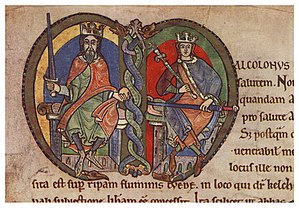
The charter to Kelso Abbey, depicting David I on the left with his grandson Malcolm IV on the right

In 1159 Malcolm, his brother and others joined Henry II and the English army on an expedition to Toulouse; William of Blois, son of King Stephen and husband of Malcolm’s cousin, Isabel de Warenne, Countess of Surrey, was also part of the expedition. The military enterprise gave Malcolm the chance to be knighted honourably in the field. The Scots contingent joined Henry II at Poitiers on 24 June and Henry knighted Malcolm at Périgueux a few days later. The expedition met with initial success and the army overran the county of Toulouse before laying siege to the city itself. However, the siege had to be abandoned when King Louis VII of France, another kinsman of Malcolm’s, intervened.

By the end of the year, Henry and Malcolm were back in Limoges, crossing to England shortly afterwards. Malcolm returned to Scotland in 1160 and to a revolt of six earls led by Feterth, Earl of Strathearn, angry at his expedition with the English army. Mediation by the clergy led to an uneasy peace and their abandoning of their besieging Malcolm at Perth. Unrest then arose in Galloway and Malcolm made several forays into the region before the end of the year, when Fergus, lord of Galloway, submitted to the king. It was the last major unrest by any Scottish earls for not only Malcolm’s reign, but for also for that of his brother, William I.

Malcolm was again summoned to meet Henry II in 1163. Despite falling ill at Doncaster, he was still expected to complete the journey to Henry’s court and arrived at Woodstock at the end of June. It seems Henry wanted to assert his supremacy over Britain, as a group of Welsh rulers had also been called to attend the English king. On 1 July, Malcolm renewed his oath to Henry and handed over hostages, the most senior of whom was his own youngest brother, David, soon to be made earl of Huntingdon. Homage given, Malcolm returned to Scotland, where he faced a revolt led by Somerled, Lord of the Isles, who was later killed in an attempted raid on Glasgow in 1164.

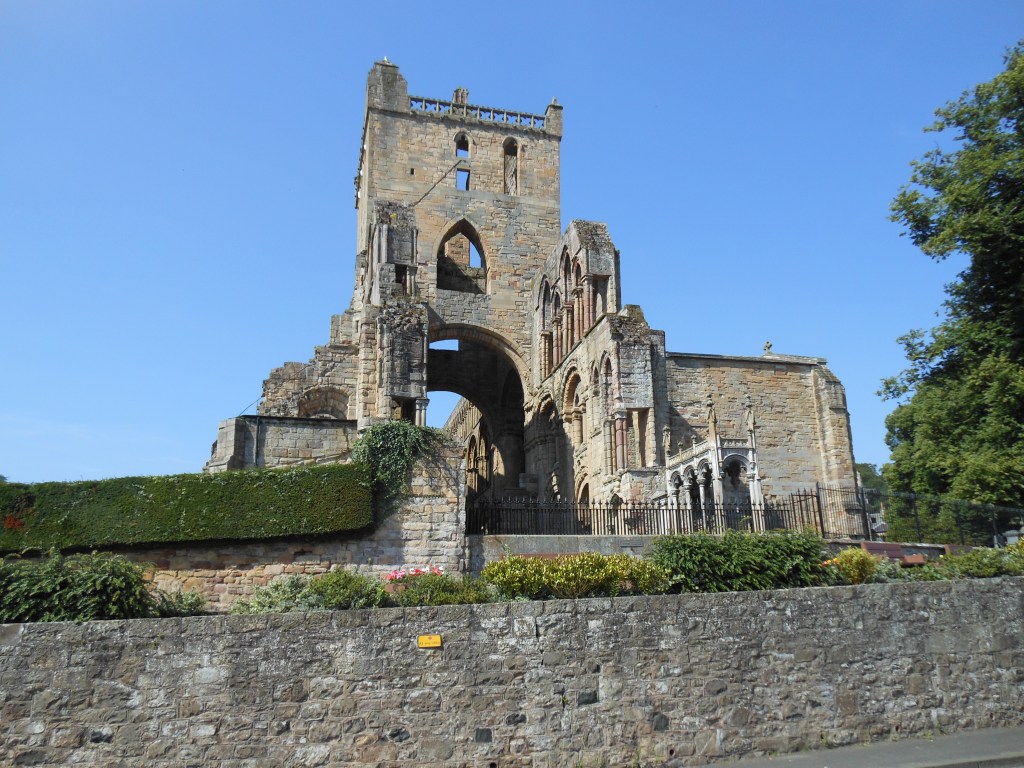
Jedburgh Abbey

Malcolm appears to have never fully recovered from the illness he suffered in Doncaster in 1163 and frequently complained of pains in his head and feet. He planned a pilgrimage to Santiago de Compostela, to pray for healing, but was too ill to undertake it. He died at Jedburgh on Thursday 9 December 1165, aged only 24: he had reigned for 12 years and 6 months and was buried among his ancestors at Dunfermline Abbey. We do not have his mother’s response to the death of her first-born son, but it cannot have been easy for her, only in her forties herself and already a widow of thirteen years. Malcolm was succeeded by his brother William, later known as William the Lion.

*

Footnote: 1 The Melrose Chronicle quoted in W.W. Scott, Malcolm IV (c. 1141–1165)

Images: courtesy of Wikipedia except Jedburgh which is ©2017 Sharon Bennett Connolly

Further reading:

Scott, W.W., Malcolm IV (c. 1141–1165) Oxforddnb.com; Mackay, A.J.G. (ed.), The Historie and Chronicles of Scotland … by Robert Lindesay of Pitscottie; Ross, David, Scotland: History of a Nation; Farrer, William and Charles Travis Clay, editors, Early Yorkshire Charters, Volume 8: The Honour of Warenne; Morris, Marc King John: Treachery, Tyranny and the Road to Magna Carta; Church, Stephen, King John: England, Magna Carta and the Making of a Tyrant; Danziger, Danny and John Gillingham, 1215: The Year of Magna Carta; Crouch, David, William Marshal; fmg.ac; Brewer’s British Royalty by David Williamson; The Mammoth Book of British Kings and Queens by Mike Ashley; The Story of Scotland by Nigel Tranter; Ada, Queen Mother of Scotland (article) by Victoria Chandler.

*

My Books:

Signed, dedicated copies of all my books are available, please get in touch by completing the contact me form.

Out now!

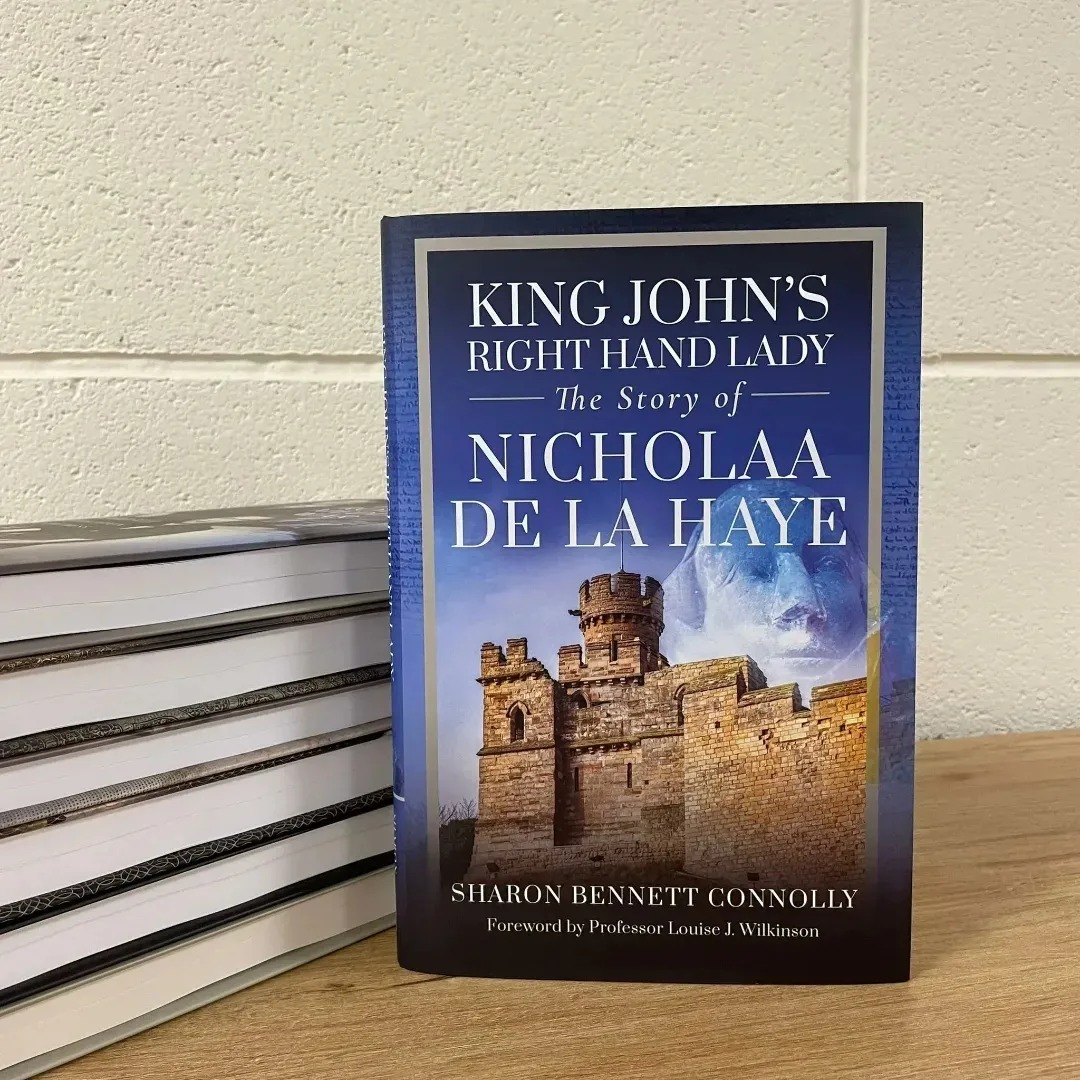
King John’s Right-Hand Lady: The Story of Nicholaa de la Haye is now available for pre-order as a hardback and Kindle from Pen & Sword Booksbookshop.org and Amazon (UK and US).

In a time when men fought and women stayed home, Nicholaa de la Haye held Lincoln Castle against all-comers. Not once, but three times, earning herself the ironic praise that she acted ‘manfully’. Nicholaa gained prominence in the First Baron’s War, the civil war that followed the sealing of Magna Carta in 1215.

A truly remarkable lady, Nicholaa was the first woman to be appointed sheriff in her own right. Her strength and tenacity saved England at one of the lowest points in its history. Nicholaa de la Haye is one woman in English history whose story needs to be told…

Also by Sharon Bennett Connolly:

Defenders of the Norman Crown: The Rise and Fall of the Warenne Earls of Surrey tells the fascinating story of the Warenne dynasty, of the successes and failures of one of the most powerful families in England, from its origins in Normandy, through the Conquest, Magna Carta, the wars and marriages that led to its ultimate demise in the reign of Edward III. Defenders of the Norman Crown: Rise and Fall of the Warenne Earls of Surrey is now available from Pen & Sword BooksAmazon in the UK and US, and  Bookshop.org.

Ladies of Magna Carta: Women of Influence in Thirteenth Century England looks into the relationships of the various noble families of the 13th century, and how they were affected by the Barons’ Wars, Magna Carta and its aftermath; the bonds that were formed and those that were broken. It is now available in paperback and hardback from Pen & Sword,  Amazon, and Bookshop.org.

Heroines of the Medieval World tells the stories of some of the most remarkable women from Medieval history, from Eleanor of Aquitaine to Julian of Norwich. Available now from Amberley Publishing and Amazon, and Bookshop.org.

Silk and the Sword: The Women of the Norman Conquest traces the fortunes of the women who had a significant role to play in the momentous events of 1066. Available now from Amazon,  Amberley Publishing, and Bookshop.org.

Alternate Endings: An anthology of historical fiction short stories including Long Live the King… which is my take what might have happened had King John not died in October 1216. Available in paperback and kindle from Amazon.

*

For forthcoming online and in-person talks, please check out my Events Page.

You can be the first to read new articles by clicking the ‘Follow’ button, liking my Facebook page or joining me on Twitter and Instagram.

©2020 Sharon Bennett Connolly, FRHistS
Margaret of Wessex, Scotland’s Sainted Queen

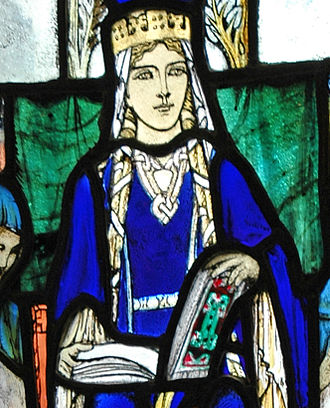
St Margaret, Queen of Scotland

Margaret of Wessex is a remarkable character to study. Her piety and devotion to the church saw her canonised as St Margaret just 150 years after her death; and named as Patroness of Scotland in the seventeenth century. Margaret had an impeccable Saxon pedigree – she was the daughter of Edward the Exile and his wife, Agatha. Edward was the son of Edmund II, usually known as Ironside, King of England in 1016; Edward’s grandfather was, therefore, Æthelred II (the Unready) and his uncle was Edward the Confessor, England’s king from 1042 until 1066. Such valuable royal blood meant she would never be allowed to pursue a life of seclusion in a convent.

When his father, Edmund II, was murdered in 1016, Edward and his younger brother Edmund were sent into exile on the Continent by England’s new king, Cnut. It is thought that Cnut intended that they would be killed once they had left English soil, but the boys were protected by Olof, King of Sweden, and sent on to safety in Kiev, where his daughter Ingegerd was wife of the ruling prince, Jaroslav the Wise. Edmund died sometime between 1046 and 1054, having married the unnamed daughter of a Hungarian king. Edward was also married, in c.1043, to Agatha, whose origins are uncertain: she may have been a daughter of Jaroslav; however, it is possible she was the daughter of Luidolf, Margrave of West Friesland and therefore a relative of Emperor Heinrich III.

Margaret, the eldest of three children, was born in either 1045 or 1046; her sister, Christina, was born around 1050 and her brother Edgar, the Ætheling, was born sometime between 1052 and 1056. The family might have spent their whole lives in European exile, were it not for Edward the Confessor lacking an heir to the English throne; although Edward was married to Edith Godwinson, the couple remained childless. Sometime in 1054 King Edward sent an embassy to Edward the Exile, to bring him back to England as ætheling, the heir to the throne. The embassy sought the aid of Heinrich III, possibly to facilitate communications. The family did not travel immediately, however, possibly because Agatha was pregnant with Edgar, and it was not until 1057 that another embassy, this time led by Harold Godwinson, was sent to bring Edward the Exile home and the family finally arrived in England, having journeyed in a ship  provided by Emperor Heinrich III’s successor, Heinrich IV.

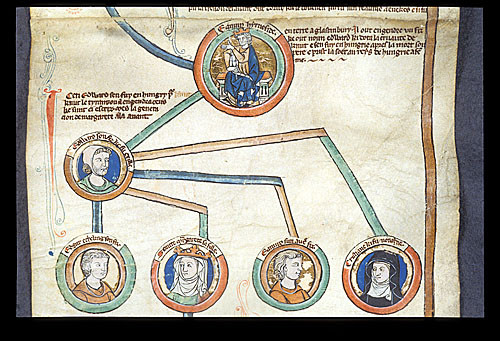
Edmund II Ironside and his descendants

On 19 April, just days after their return, Edward the Exile died, whether by nefarious means or a simple twist of fate is uncertain. The suspicion has been raised that Edward’s rival for the throne, Harold Godwinson – the future King Harold II – may have taken the opportunity to remove his rival; although it was Harold who accompanied Edward back to England, so surely, had he intended murder, he would have done it sooner? Whatever the circumstances, the death of Edward the Exile was a blow for Edward the Confessor’s dynastic hopes. Edward’s little son Edgar, now the ætheling, was much too young to assume a political role. He and his sisters, with their mother, were now under the protection of King Edward. Edgar was given into the custody of Edward’s queen, Edith of Wessex, while the girls were sent to the royal convent at Wilton, to continue their education.

The family continued to live at court and by 5 January 1066, when Edward the Confessor died, Margaret was approaching her twentieth birthday. However, Edgar could have been as young as ten and was probably no older than fourteen; and due to his tender years, the young ætheling was passed over as candidate for the throne in preference for the older and more experienced (both politically and militarily) Harold Godwinson, who was crowned as King Harold II.

Following Harold’s death at the Battle of Hastings in October 1066, Edgar was proclaimed king in London, by some of his supporters, but was incapable of mounting any real challenge to William the Conqueror and his army of Normans; he had no option but to come to terms with the duke. However, Edgar was unsettled under Norman rule and by 1068  he had become involved in the opposition to the new regime, which had been festering in northern England. William’s ruthless response – the Harrying of the North – saw Edgar fleeing for his life; he made his way to Scotland, taking his mother and sisters with him.

Malcolm II Canmore

The family was warmly received at Dunfermline by Scotland’s king, Malcolm III Canmore. In 1057, King Malcolm had defeated King Macbeth in battle, at Lumphanan, to take the throne. By 1069 he was well established as king and married to Ingebiorg; the couple had at least two sons, Duncan and Donald. Ingebiorg seems to have disappeared from the scene before the Saxon royal family’s arrival in Scotland. Whether she died or was put aside seems uncertain, although her death seems most likely, leaving Malcolm free to find another wife. In 1069 Malcolm asked Edgar and his mother for Margaret’s hand in marriage. Margaret was reluctant to agree to the marriage as she was more inclined to a religious life and had hoped to become a nun. Nonetheless, with pressure from Malcolm, her brother and, possibly, her own sense of obligation to the king who was sheltering her family, she eventually accepted his proposal. They were married at Dunfermline sometime in 1069 or 1070 and, by all accounts, it seems to have been a happy and successful marriage and partnership. Margaret’s life as Queen of Scotland did not prevent her pursuing an active religious life; indeed, her position gave her a unique opportunity to influence the practice of Christianity in Scotland.

Margaret strove to bring the Church of Scotland into conformity with the practices of Western Catholicism, and away from the tenets of the Celtic Church, which had a great deal of influence in the country. She encouraged the Scottish clergy, and its people, to receive communion more than once a year at Easter, to refrain from working on a Sunday and to observe the Lenten fast from Ash Wednesday, rather than the following Monday. Queen Margaret also urged the clergy to celebrate Mass with a common ritual and sought to forbid marriage between a man and his stepmother or sister-in-law.

The queen was supported in all her reforms by her husband; indeed, if Malcolm III had not given his support it is doubtful that Margaret’s influence would have achieved much, if anything at all. The king’s role in her attempts at religious reform is vague, although Malcolm did arrange a conference for the clergy to introduce a number of reforms. Margaret was present, and embarrassed some of the clerics by knowing more about the proper procedures of the Church than they did. She even had the papal manuals to quote from.

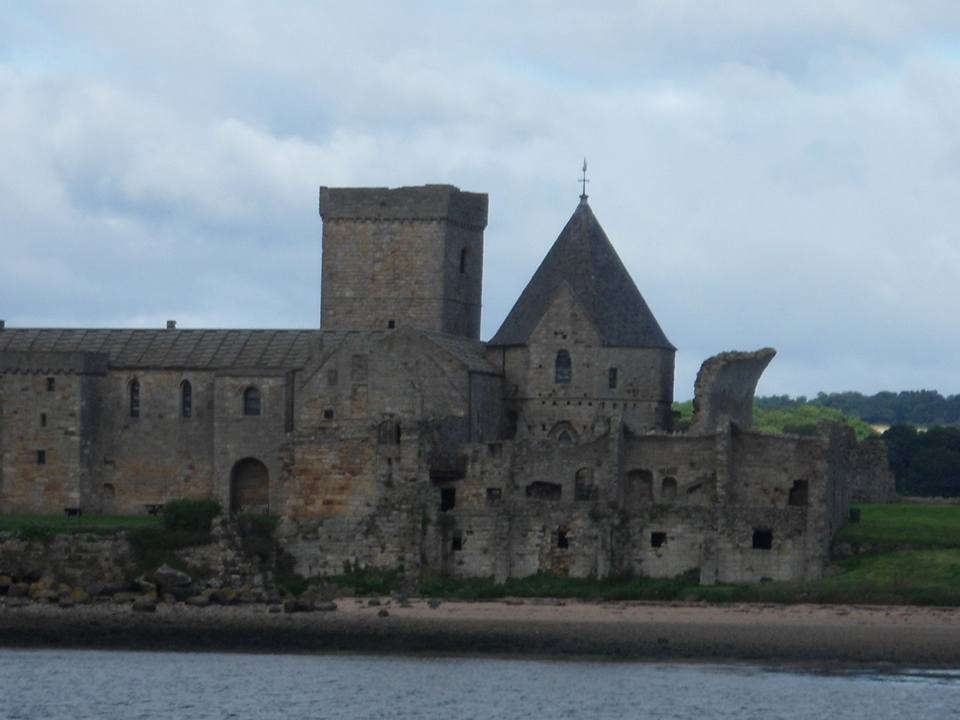
Dunfermline Abbey

The queen founded a monastic community at Dunfermline, building the first major stone church in Scotland; and arranged with Lanfranc, Archbishop of Canterbury, to send monks from the cathedral monastery at Canterbury to become its first community. Although it started as a priory, it was elevated to an independent abbey in 1128, at the instigation of Margaret’s son, David I.

Margaret was a strong figure; she was pious but also worldly-wise. Having grown up on the Continent, she was familiar with many of the courts of Europe and had met some of its leading churchmen. A modernising queen, Margaret brought luxury to the Scottish court and into the lives of the nobles of her new country. A Life of St Margaret was commissioned by her daughter, Matilda, when she became Queen of England. It was written sometime between 1100 and 1107 by Turgot, Margaret’s former chaplain and the prior of Durham.

The biography emphasises the queen’s compassion for children and the poor and stresses her piety, pointing to the severity of her self-denial and her frequent fasting. However, it also tells us that she had a love of etiquette and formality, and had a fondness for fine clothes and jewellery.¹ Margaret enjoyed a high reputation in the Anglo-Norman world, even in her own lifetime; Orderic Vitalis described her as ‘eminent from her high birth, but even more renowned for her virtue and holy life’.²

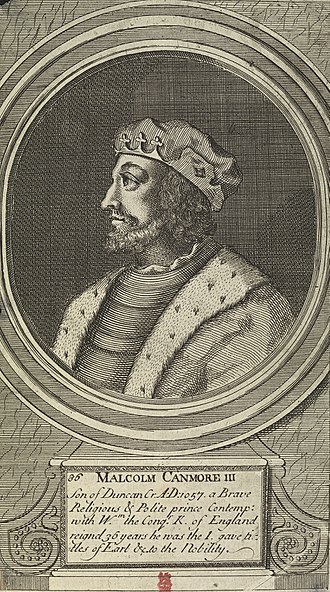
Malcolm III and St Margaret

Margaret and Malcolm would have a large family, with six sons and two daughters growing to adulthood. Margaret took great care in educating them, ensuring they were given the essentials for their future royal careers. Her second son, Edmund, became king in November 1094, ruling jointly with his uncle – Malcolm’s brother  – Donald III, following the death of his half-brother, Duncan II. Edmund ruled south of the Forth/Clyde boundary, while Donald ruled the north, although there is no indication that he was ever crowned. In 1097, the co-kings were deposed in favour of Edmund’s younger brother, Edgar; Edmund became a monk at Montacute Abbey, Somerset, and died there, having never married. Edgar himself died on 8 January 1107. Unmarried and childless, he was succeeded by his brother, Alexander I, who died in April 1124. David I succeeded Alexander; he reigned until 1153 and was succeeded, in turn, by his grandson, Malcolm IV the Maiden. Another son, Æthelred, styled Earl of Fife, became Lay Abbot at Dunkeld and died around 1097. Malcolm and Margaret also had two daughters: Edith, who changed her name to Matilda on marrying King Henry I of England; and Mary, who married Eustace III, Count of Boulogne, and was the mother of Matilda of Boulogne, wife of Stephen, King of England. Edith (Matilda) and Mary were educated at Romsey Abbey, where Margaret’s sister, Christina was abbess.

As King of Scots, Malcolm also had claims to Cumbria and Northumbria and in 1069/70, he made raids into Northumberland. William I responded by sending an army north and the eventual peace treaty saw Malcolm’s oldest son by Ingebiorg, Duncan, being sent south as a hostage and guarantee of his good faith. Duncan would eventually reign, briefly, as Duncan II but was killed at the Battle of Monthechin in 1094. Malcolm made frequent raids into Northumberland, notably in 1079 and 1091, in attempts to gain control over the county.

When a diplomatic mission in 1092 failed, he attacked again in 1093, taking his eldest son by Margaret, Edward, with him. Malcolm was killed at the Siege of Alnwick, on 13 November 1093; Edward died shortly after, near Jedburgh, from wounds received at the Siege. Margaret died on 16 November 1093, just days after the battle, possibly on receiving the news, brought by her son Edgar, of the deaths of her husband and eldest son. Although the fact her body was weakened by her frequent fasting may have hastened her death. She was buried in the abbey she had founded at Dunfermline. Malcolm was initially buried at Tynemouth, but his remains were later moved to join his wife at Dunfermline.

Margaret’s sons honoured their mother’s memory, encouraging the popular cult of St  Margaret that developed soon after the queen’s death, to foster the idea that she should be made a saint; such an honour would serve to enhance the political and religious status of their family. One of the miracles attributed to her was that in 1199 Scotland’s king, William the Lion, was persuaded against launching an invasion of England after experiencing a vision while holding a vigil at Margaret’s tomb at Dunfermline. Her canonisation came in 1250, and in 1673 Pope Clement X named her Patroness of Scotland. Following the Reformation, the remains of both Margaret and Malcolm were removed to Spain by Philip II and reinterred in a chapel at the Escorial in Madrid.

St Margaret, Queen of Scotland

Margaret was a direct descendant of King Alfred the Great of Wessex. Her Saxon royal blood guaranteed she would not be allowed to enter a convent, she was too valuable on the marriage market. However, through her efforts to reform the Scottish Church, it could be said that she found a better way to worship God. Her legacy was cemented through the work of her son, David I, who continued in her policy of Church reform; while her Saxon blood found its way back into the English royal family through her daughter, Matilda, and her marriage to Henry I. Saint Margaret’s royal lineage ensured that she would not be allowed to devote her entire life to God, but her position as Queen of Scotland gave her the opportunity to direct her devotional tendencies into Church reform, making her a heroine to generations of Scots.

*

Footnotes:

¹ Vita B Simonis, col. 1219, quoted by Elizabeth van Houts in oxforddnb.com, May 2008; ² Quoted by epistolae.ccnmtl.columbia.edu.

*

Images:

All pictures courtesy of Wikipedia, except: Dunfermline Abbey courtesy of Angela Bennett; Edmund II Ironside and his descendants courtesy of British Library Catalogue of Illuminated Manuscripts.

*

Sources:

epistolae.ccnmtl.columbia.edu; Brewer’s British Royalty by David Williamson; Britain’s Royal Families, the Complete Genealogy by Alison Weir;The Wordsworth Dictionary of British History by JP Kenyon; The Anglo-Saxons in 100 Facts by Martin Wall; Kings, Queens, Bones and Bastards by David Hilliam; Heroines of the Medieval World by Sharon Bennett Connolly; The Mammoth Book of British kings & Queens by Mike Ashley; The Oxford Companion to British History Edited by John Cannon; The Anglo-Saxon Chronicles translated and edited by Michael Swanton; The Anglo-Saxon Chronicle translated by James Ingram; Queen Emma and the Vikings by Harriett O’Brien; The Bayeux Tapestry by Carola Hicks; oxforddnb.com.

*

My Books:

Signed, dedicated copies of all my books are available through my online store.

Coming 30 January 2025: Scotland’s Medieval Queens

Scotland’s history is dramatic, violent and bloody. Being England’s northern neighbour has never been easy. Scotland’s queens have had to deal with war, murder, imprisonment, political rivalries and open betrayal. They have loved and lost, raised kings and queens, ruled and died for Scotland. From St Margaret, who became one of the patron saints of Scotland, to Elizabeth de Burgh and the dramatic story of the Scottish Wars of Independence, to the love story and tragedy of Joan Beaufort, to Margaret of Denmark and the dawn of the Renaissance, Scotland’s Medieval Queens have seen it all. This is the story of Scotland through their eyes.

Available for pre-order now.

Also by Sharon Bennett Connolly:

Heroines of the Tudor World tells the stories of the most remarkable women from European history in the time of the Tudor dynasty, 1485-1603. These are the women who ruled, the women who founded dynasties, the women who fought for religious freedom, their families and love. Heroines of the Tudor World is now available for pre-order from Amberley Publishing and Amazon UK. Women of the Anarchy demonstrates how Empress Matilda and Matilda of Boulogne, unable to wield a sword themselves, were prime movers in this time of conflict and lawlessness. It shows how their strengths, weaknesses, and personal ambitions swung the fortunes of war one way – and then the other. Available from Bookshop.orgAmberley Publishing and Amazon UKKing John’s Right-Hand Lady: The Story of Nicholaa de la Haye is the story of a truly remarkable lady, the hereditary constable of Lincoln Castle and the first woman in England to be appointed sheriff in her own right. Available from all good bookshops Pen & Sword Booksbookshop.org and Amazon

Defenders of the Norman Crown: The Rise and Fall of the Warenne Earls of Surrey tells the fascinating story of the Warenne dynasty, from its origins in Normandy, through the Conquest, Magna Carta, the wars and marriages that led to its ultimate demise in the reign of Edward III. Available from Pen & Sword BooksAmazon in the UK and US, and Bookshop.orgLadies of Magna Carta: Women of Influence in Thirteenth Century England looks into the relationships of the various noble families of the 13th century, and how they were affected by the Barons’ Wars, Magna Carta and its aftermath; the bonds that were formed and those that were broken. It is now available in paperback and hardback from Pen & SwordAmazon, and Bookshop.orgHeroines of the Medieval World tells the stories of some of the most remarkable women from Medieval history, from Eleanor of Aquitaine to Julian of Norwich. Available now from Amberley Publishing and Amazon, and Bookshop.orgSilk and the Sword: The Women of the Norman Conquest traces the fortunes of the women who had a significant role to play in the momentous events of 1066. Available now from Amazon,  Amberley Publishing, and Bookshop.org.

Alternate Endings: An anthology of historical fiction short stories including Long Live the King… which is my take what might have happened had King John not died in October 1216. Available in paperback and kindle from Amazon.

Podcast:

Have a listen to the A Slice of Medieval podcast, which I co-host with Historical fiction novelist Derek Birks. Derek and I welcome guests, such as Bernard Cornwell, and discuss a wide range of topics in medieval history, from significant events to the personalities involved.

*

Don’t forget! Signed and dedicated copies of all my books are available through my online bookshop.

For forthcoming online and in-person talks, please check out my Events Page.

You can be the first to read new articles by clicking the ‘Follow’ button, liking our Facebook page or joining me on Twitter and Instagram.

*

©2019 Sharon Bennett Connolly FRHistS