Book Corner: 2 Books About Tudor Heirs

It is time for me to get back to some serious book reviewing. So, in order to catch up, I thought I’d do two reviews in one post. Both books are from the Tudor period and look into the heirs to the Tudor throne, and the impact of Henry VIII’s actions on those children. Each books provide a fascinating insight into the lives of prominent Tudors and shows a side of Henry VIII that is often overlooked.

Henry VIII’s Children by Caroline Angus
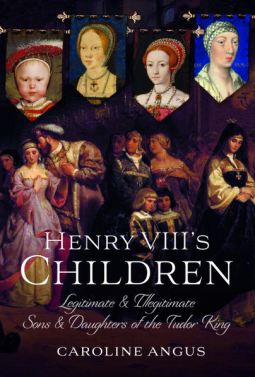
Of the five Tudor monarchs, only one was ever born to rule. While much of King Henry VIII’s reign is centred on his reckless marriage choices, it was the foundations laid by Henry and Queen Katherine of Aragon that shaped the future of the crown. Among the suffering of five lost heirs, the royal couple placed all their hopes in the surviving Princess Mary. Her early life weaves a tale of promise, diplomacy, and pageantry never again seen in King Henry’s life, but a deep-rooted desire for a son, a legacy of his own scattered childhood, pushed Henry VIII to smother Mary’s chance to rule. An affair soon produced an unlikely heir in Henry Fitzroy, and while one child was pure royalty, the other illegitimate, the comparison of their childhoods would show a race to throne closer than many wished to admit.

King Henry’s cruelty saw his heirs’ fates pivot as wives came and went, and the birth Princess Elizabeth, saw long-term plans upended for short-term desires. With the death of one heir hidden from view, the birth of Prince Edward finally gave the realm an heir born to rule, but King Henry’s personal desires and paranoia left his heirs facing constant uncertainty for another decade until his death. Behind the narrative of Henry VIII’s wives, wars, reformation and ruthlessness, there were children, living lives of education among people who cared for them, surrounded by items in generous locations which symbolised their place in their father’s heart. They faced excitement, struggles, and isolation which would shape their own reigns. From the heights of a surviving princess destined and decreed to influence Europe, to illegitimate children scattered to the winds of fortune, the childhoods of Henry VIII’s heirs is one of ambition, destiny, heartache, and triumph.

Henry VIII left a long shadow, especially for his children. Caroline Angus looks into the lives and experiences of Henry’s 3 legitimate children, Edward VI, Mary I and Elizabeth I, alongside his only recognised illegitimate child, Henry Fitzroy, Duke of Richmond. And the other possible candidates to be Henry’s offspring, including Catherine Carey.

Henry VIII’s Children is a very easy and enjoyable read. You get absorbed into Caroline Angus’s love of her subject. Her research is thorough and all her arguments are supported by evidence. Where there is conjecture, the author presents both sides and lets the reader find their own conclusion, while presenting what she thinks most likely. I did not agree with all her conclusions, particularly when it comes to Catherine Carey – I am not convinced she was Henry VIII’s daughter, not that Henry’s relationship with Mary Boleyn lasted as long as some historians suggest. I just don’t think we have enough information. But it was interesting to read Caroline’s thoughts on the subject and see how she came to her conclusions.
It certainly gave me food for thought!

The Tudors are always a fascinating subject and Caroline Angus does a wonderful job of igniting the reader’s passion in her subject.

The strength of Henry VIII’s Children lies in its fascinating investigation into the lives of Henry’s 3 ‘legitimate’ children and how their fates were manipulated and directed by Henry’s obsession for a male heir, and his multiple marriages. Poor Mary I had 5 stepmothers! just imagine how she must have felt, watching her mother shunned and sidelined by the father she adored, not being allowed to visit her on her deathbed, nor being allowed to receive her mother’s comfort when she was ill and scared. The mind games Henry VIII played with his eldest child, in order to get her acquiescence, are something to behold.

And then there’s poor Elizabeth, her mother executed before her 3rd birthday, and yet she is the one who surpassed all Henry’s dreams for his children. Elizabeth is the one who had a golden age named after her. She is also the one who always lived in the shadow of her mother’s fate. Caroline Angus looks into all aspects of Elizabeth’s life, especially the childhood and adolescence that shaped her future.

And Edward! the golden boy. The heir who was so desired that his father broke with Rome to get. A boy who was the hope of a nation but died so tragically young.

Caroline Angus looks at them all with such enthusiasm and animation that they jump off the page.

An eminently readable nook that I have no hesitation in recommending.

To Buy Henry VIII’s Children

About the Author:

Caroline Angus is a New Zealand-based author raising four sons. Caroline studied history at Universitat de València, Spain, spending ten years dedicated to the Spanish Civil War and the resulting dictatorship. Caroline went on to study with King’s College London, specialising in Shakespeare and British royal history. After a decade of writing fiction, including the Secrets of Spain series, focusing on the lives of Valencian interviewees between 1939 and 1975, and the more recent Queenmaker Trilogy, eleven years of Thomas Cromwell and his fictional attendant Nicòla Frescobaldi, Caroline is now creating non-fiction works on the surviving papers of Thomas Cromwell.

Henry VIII’s True Daughter by Wendy J Dunn
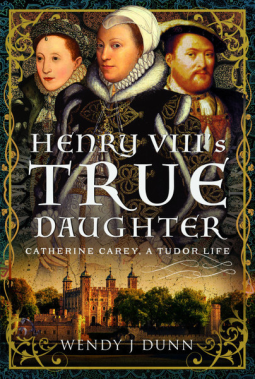
The lives of Tudor women often offer faint but fascinating footnotes on the pages of history. The life of Catherine – or Katryn as her husband would one day pen her name – Carey, the daughter of Mary Boleyn and, as the weight of evidence suggests, Henry VIII, is one of those footnotes.

As the possible daughter of Henry VIII, the niece of Anne Boleyn and the favourite of Elizabeth I, Catherine’s life offers us a unique perspective on the reigns of Henry and his children. In this book, Wendy J. Dunn takes these brief details of Catherine’s life and turns them into a rich account of a woman who deserves her story told. Following the faint trail provided of her life from her earliest years to her death in service to Queen Elizabeth, Dunn examines the evidence of Catherine’s parentage and views her world through the lens of her relationship with the royal family she served.

This book presents an important story of a woman who saw and experienced much tragedy and political turmoil during the reigns of Henry VIII, Edward VI, and Mary I – all of which prepared her to take on the vital role of one of Elizabeth I closest and most trusted women. It also prepared her to become the wife of one of Elizabeth’s privy councillors – a man also trusted and relied on by the queen. Catherine served Elizabeth during the uncertain and challenging first years of her reign, a time when there was a question mark over whether she would succeed as queen regnant after the failures of England’s first crowned regnant, her sister Mary.

Through immense research and placing her in the context of her period, HENRY VIII’S TRUE DAUGHTER: CATHERINE CAREY, A TUDOR LIFE draws Catherine out of the shadows of history to take her true place as the daughter of Henry VIII and shows how vital women like Catherine were to Elizabeth and the ultimate victory of her reign.

Henry VIII’s True Daughter: Catherine Carey, A Tudor Life by Wendy J. Dunn is a perfect accompaniment to Henry VIII’s Children. Focusing on the eldest child of Mary Boleyn and William Carey, Wendy J. Dunn investigates Catherine’s origins and the stories around her conception and birth – in particular, her mother’s relationship with Henry VIII. It has long been thought possible that Catherine was Henry’s daughter and that Mary Boleyn’s marriage to William Carey was arranged to conceal the king’s affair. Henry himself admitted he had slept with Mary Boleyn when he was once accused of sleeping with Anne Boleyn’s mother, replying along the lines of ‘the sister but never the mother.’

So, we know they had a relationship, but how long it lasted and whether Catherine was the result of that relationship is still uncertain. Wendy attempts to lift away that uncertainty and presents all the evidence and conjecture that has been gather over the years to give us her own conclusions.

But this book is so much more! Henry VIII’s True Daughter gives us insights into the life of a prominent Tudor woman. Whether or not she was the daughter of Henry VIII, she was still at the heart of the Tudor court, especially in the reign of her sister/cousin, Elizabeth I. Catherine was one of Elizabeth’s favourites and was loyal to the queen to the very end of her life. Wendy gives stunning insight into Catherine’s life and career, as well as her marriage and family.

Even if I don’t necessarily agree with all its conclusion, Henry VIII’s True Daughter by Wendy J Dunn is a wonderful, engaging book, giving the reader ample food for thought in her theories and explanations of the life and origins of Catherine Carey. It is a must-read for any fan of Tudor history.

To Buy Henry VIII’s True Daughter

About the Author:

Wendy J. Dunn is an award-winning Australian writer fascinated by Tudor history – so much so she was not surprised to discover a family connection to the Tudors, not long after the publication of her first Anne Boleyn novel, which narrated the Anne Boleyn story through the eyes of Sir Thomas Wyatt, the elder. Her family tree reveals the intriguing fact that one of her ancestral families – possibly over three generations – had purchased land from both the Boleyn and Wyatt families to build up their holdings. It seems very likely Wendy’s ancestors knew the Wyatts and Boleyns personally. Wendy is married, the mother of four adult children and the grandmother of two amazing small boys. She gained her PhD in 2014 and loves walking in the footsteps of the historical people she gives voice to in her books. Wendy also tutors writing at Swinburne University of Technology, Australia. HENRY VIII’S TRUE DAUGHTER: CATHERINE CAREY, A TUDOR LIFE is her first full-length nonfiction work.

*

My Books:

Signed, dedicated copies of all my books are available through my online store.

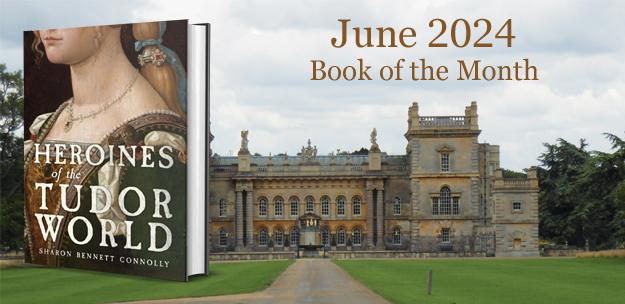
OUT NOW! Heroines of the Tudor World
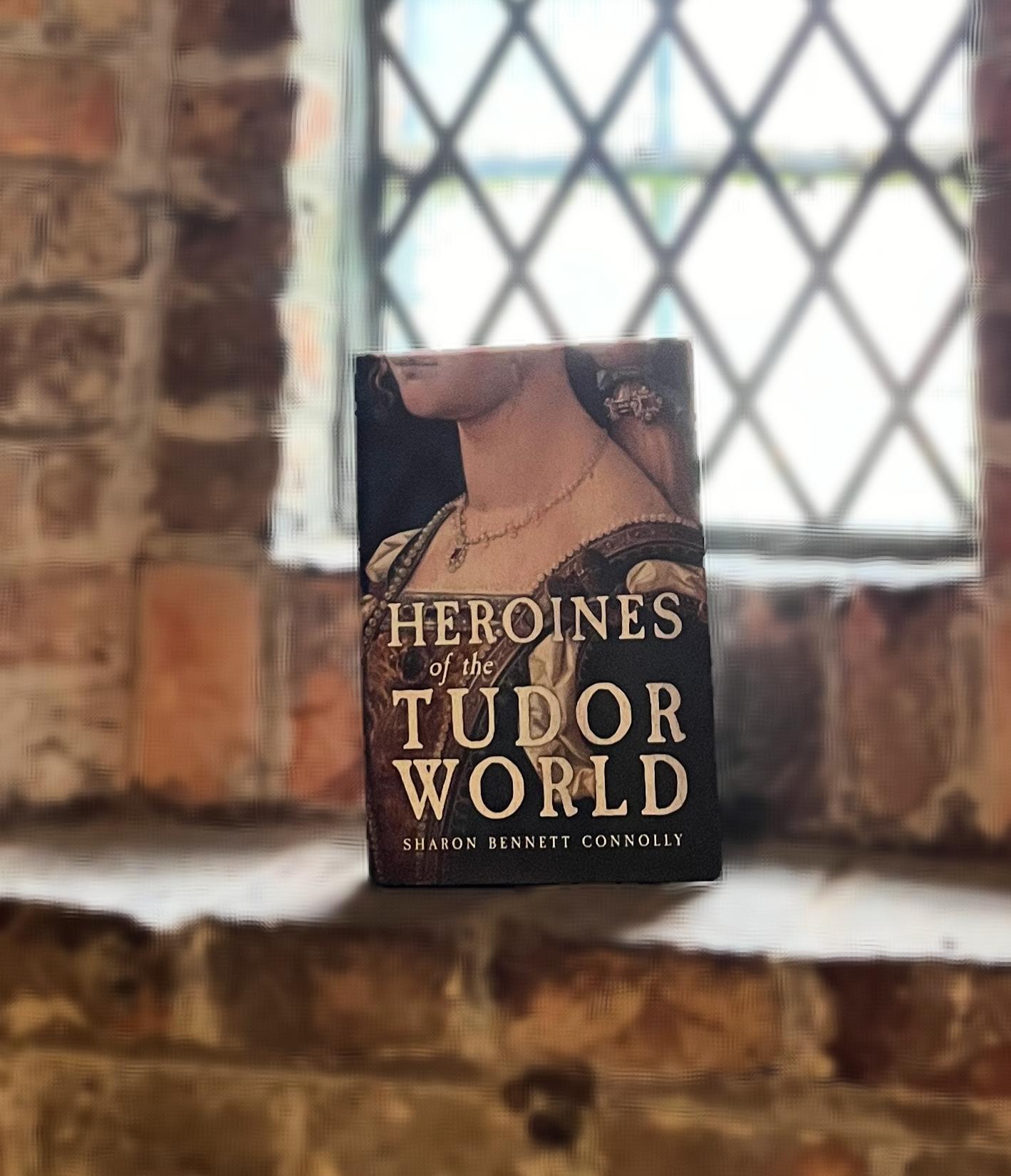
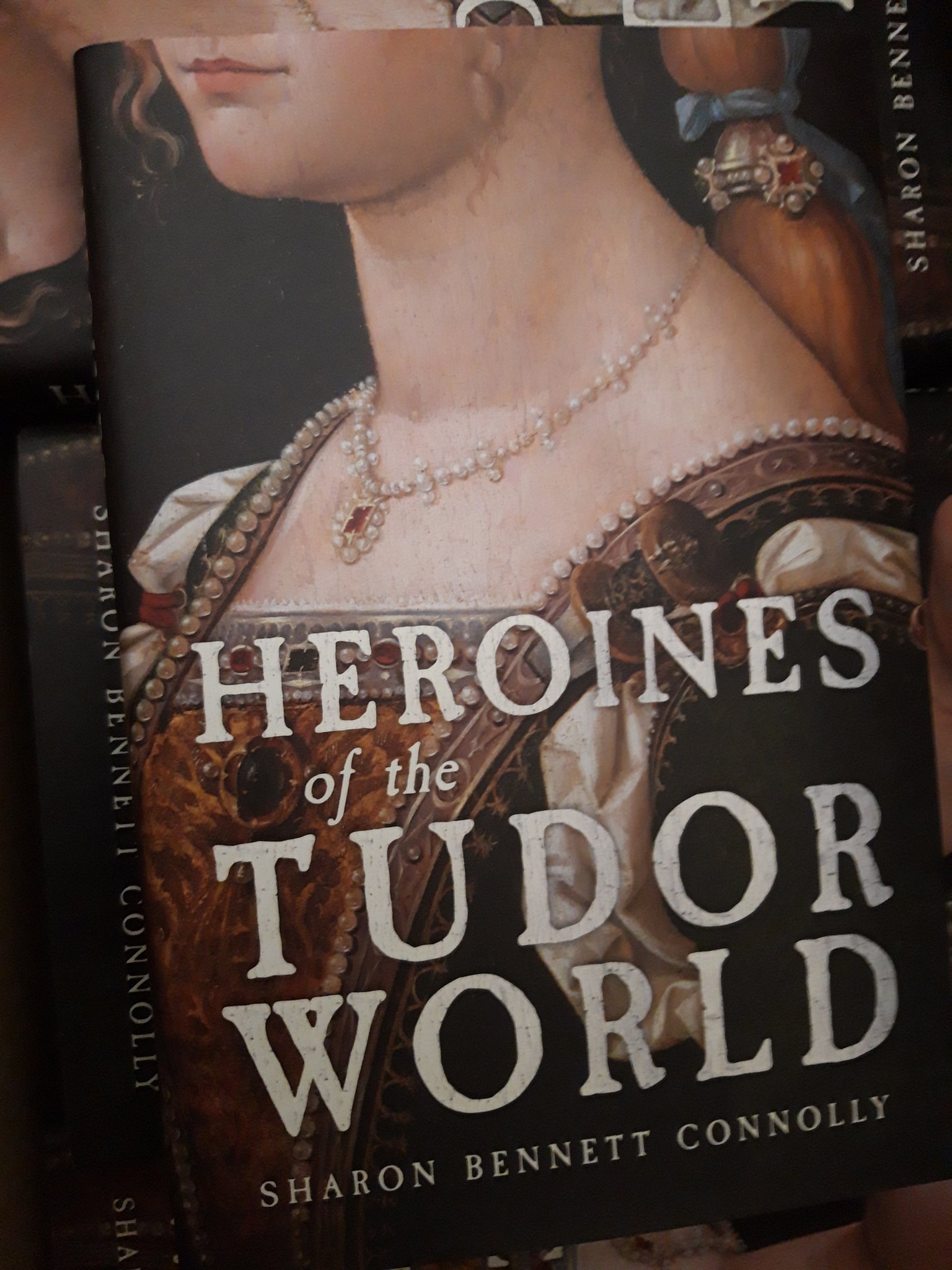
Heroines of the Tudor World tells the stories of the most remarkable women from European history in the time of the Tudor dynasty, 1485-1603. These are the women who ruled, the women who founded dynasties, the women who fought for religious freedom, their families and love. These are the women who made a difference, who influenced countries, kings and the Reformation. In the era dominated by the Renaissance and Reformation, Heroines of the Tudor World examines the threats and challenges faced by the women of the era, and how they overcame them. From writers to regents, from nuns to queens, Heroines of the Tudor World shines the spotlight on the women helped to shape Early Modern Europe.

Heroines of the Tudor World is now available for pre-order from Amberley Publishing and Amazon UK.

Coming 30 January 2025: Scotland’s Medieval Queens
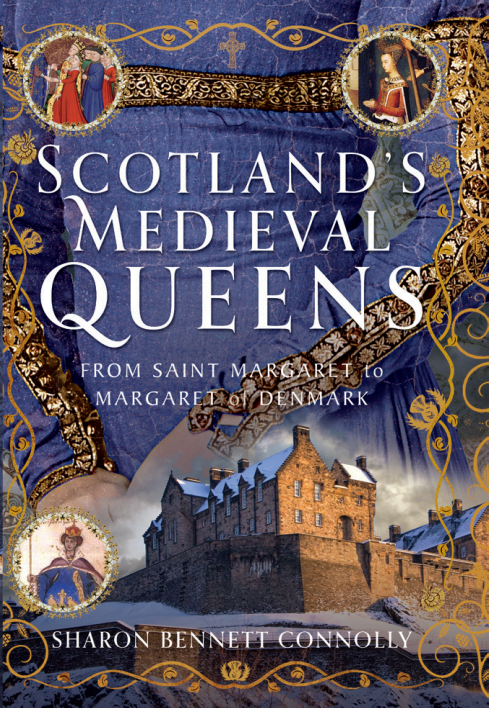
Scotland’s history is dramatic, violent and bloody. Being England’s northern neighbour has never been easy. Scotland’s queens have had to deal with war, murder, imprisonment, political rivalries and open betrayal. They have loved and lost, raised kings and queens, ruled and died for Scotland. From St Margaret, who became one of the patron saints of Scotland, to Elizabeth de Burgh and the dramatic story of the Scottish Wars of Independence, to the love story and tragedy of Joan Beaufort, to Margaret of Denmark and the dawn of the Renaissance, Scotland’s Medieval Queens have seen it all. This is the story of Scotland through their eyes.

Available for pre-order now.

Also by Sharon Bennett Connolly:
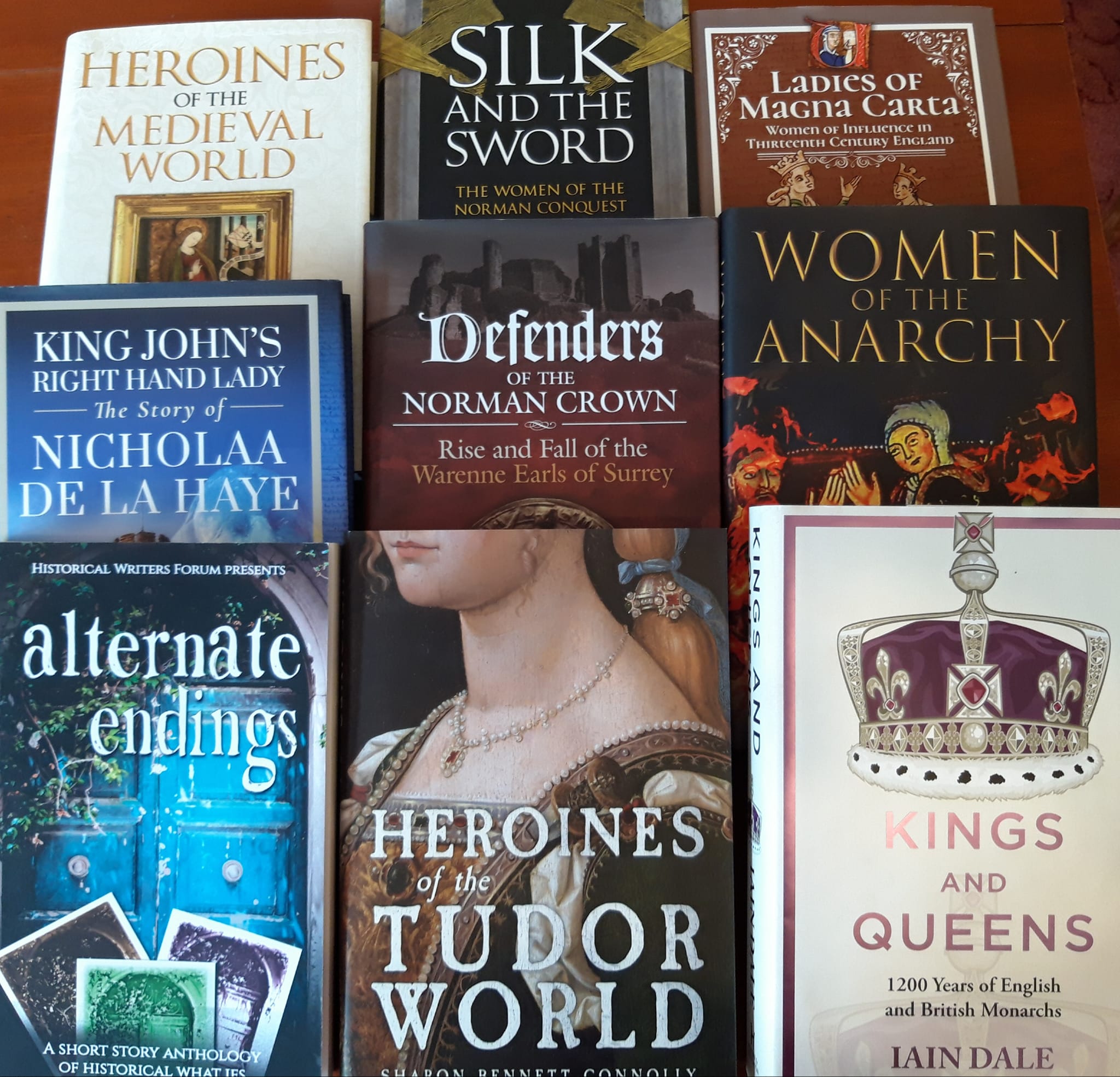
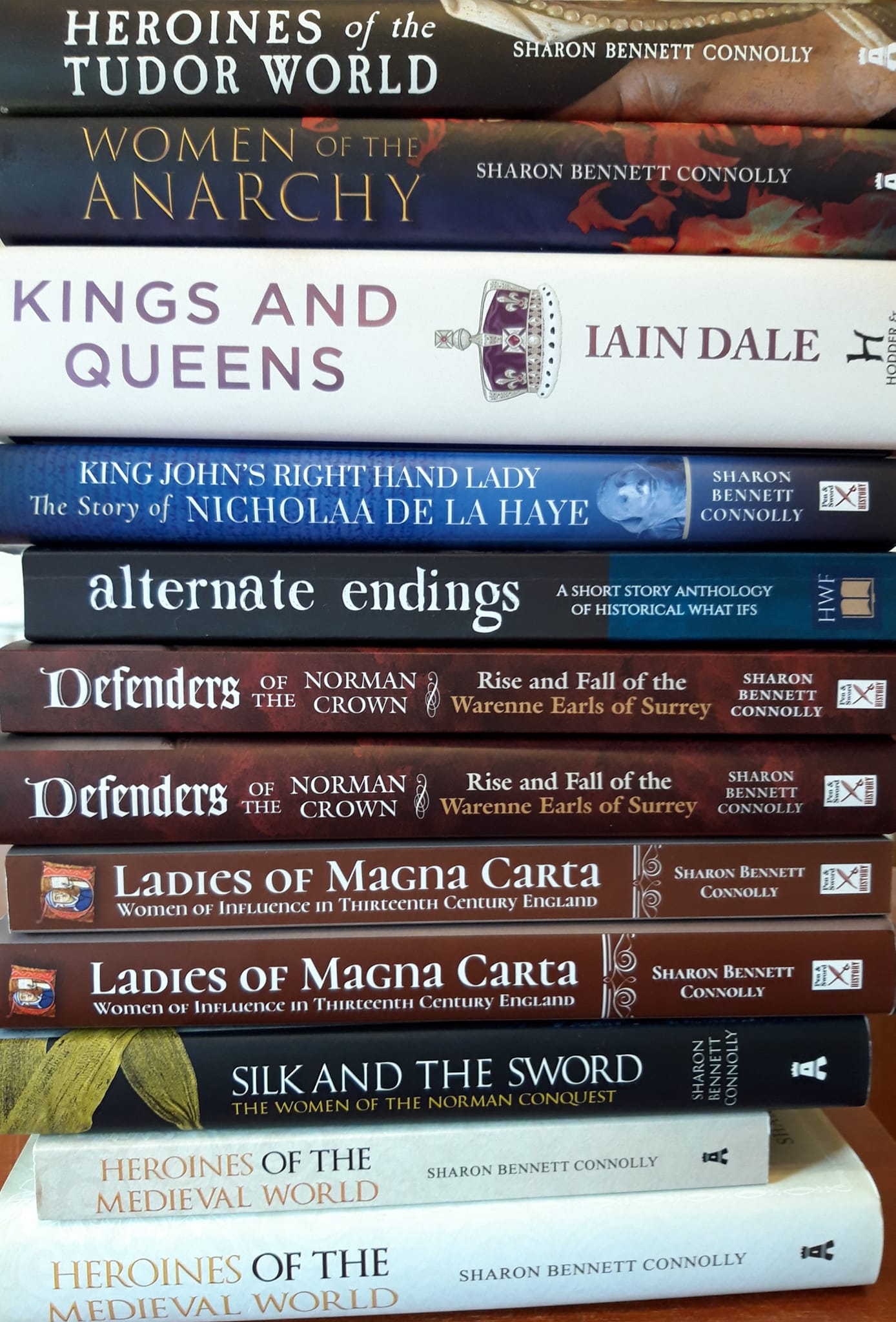
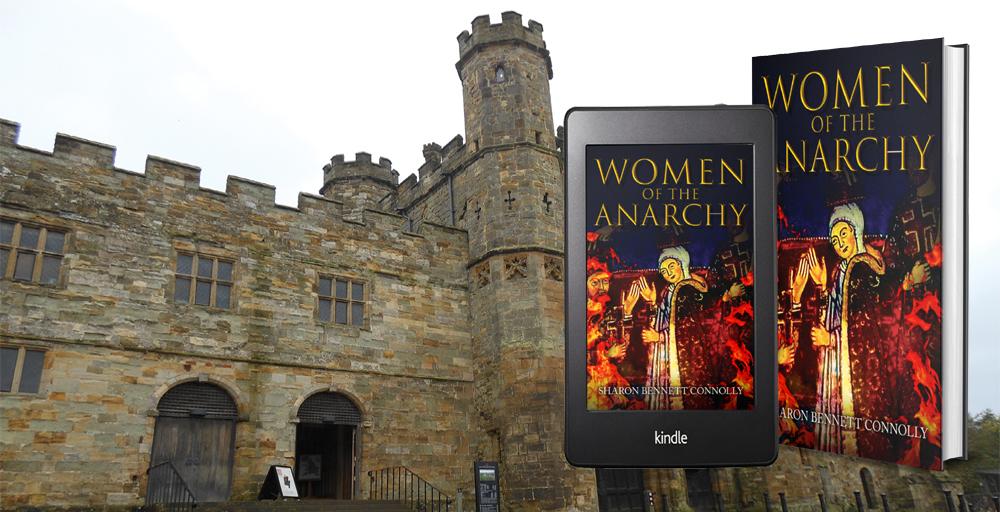
Women of the Anarchy demonstrates how Empress Matilda and Matilda of Boulogne, unable to wield a sword themselves, were prime movers in this time of conflict and lawlessness. It shows how their strengths, weaknesses, and personal ambitions swung the fortunes of war one way – and then the other. Available from Bookshop.orgAmberley Publishing and Amazon UKKing John’s Right-Hand Lady: The Story of Nicholaa de la Haye is the story of a truly remarkable lady, the hereditary constable of Lincoln Castle and the first woman in England to be appointed sheriff in her own right. Available from all good bookshops Pen & Sword Booksbookshop.org and AmazonDefenders of the Norman Crown: The Rise and Fall of the Warenne Earls of Surrey tells the fascinating story of the Warenne dynasty, from its origins in Normandy, through the Conquest, Magna Carta, the wars and marriages that led to its ultimate demise in the reign of Edward III. Available from Pen & Sword BooksAmazon in the UK and US, and Bookshop.org

Ladies of Magna Carta: Women of Influence in Thirteenth Century England looks into the relationships of the various noble families of the 13th century, and how they were affected by the Barons’ Wars, Magna Carta and its aftermath; the bonds that were formed and those that were broken. It is now available in paperback and hardback from Pen & Sword, Amazon, and Bookshop.orgHeroines of the Medieval World tells the stories of some of the most remarkable women from Medieval history, from Eleanor of Aquitaine to Julian of Norwich. Available now from Amberley Publishing and Amazon, and Bookshop.orgSilk and the Sword: The Women of the Norman Conquest traces the fortunes of the women who had a significant role to play in the momentous events of 1066. Available now from Amazon,  Amberley Publishing, and Bookshop.org.

Alternate Endings: An anthology of historical fiction short stories including Long Live the King… which is my take what might have happened had King John not died in October 1216. Available in paperback and kindle from Amazon.

Podcast:

Have a listen to the A Slice of Medieval podcast, which I co-host with Historical fiction novelist Derek Birks. Derek and I welcome guests, such as Bernard Cornwell, and discuss a wide range of topics in medieval history, from significant events to the personalities involved.

*

Don’t forget! Signed and dedicated copies of all my books are available through my online store.

For forthcoming online and in-person talks, please check out my Events Page.

You can be the first to read new articles by clicking the ‘Follow’ button, liking our Facebook page or joining me on TwitterThreads and Instagram.

*

©2024 Sharon Bennett Connolly FRHistS.

My Latest News

Well, it is September and we are already into the last third of the year. Wow! 2024 has gone quickly and I would like to thank all my readers for your continuing support. It has been an amazing and hectic year, so far.

I even made the national papers in the UK! I was interviewed for an article on the new Amazon Prime tv show, My Lady Jane for The Mirror, separating the facts from the fiction. You can still read the article here.

Book News

I don’t think I would ever choose to put 2 books out within 6 months of each other. That was my publisher’s choice and I did manage to roll with it, thankfully. I had a fabulous book launch for Women of the Anarchy at Oxford Castle in February and another amazing launch for Heroines of the Tudor World in Lincoln in June. Both books have been incredibly well received and had some amazing reviews.

And for those of you in the USA, Canada and Australia, the wait is almost over, Heroines of the Tudor World will be released on 10 September.

Praise for Heroines of the Tudor World:

“Bennett Connolly has an easy, conversation style of writing which welcomes you from the opening pages and draws you into her story. This is her seventh book and her craft is polished and professional.”

“Bennett Connolly’s way with words shows us a picture of that world, colourful, vibrant, and violent.”

“This book should be a staple for those who wish to understand the changing roles of women in society.”

“Sharon Bennett Connolly writes engaging history and is obviously passionate about exploring the lives of women from all backgrounds and different periods of history. Her knowledge and expertise in women’s history really shines through, making this book an absolute joy to read.”

To order Heroines of the Tudor World, click here.

And I have new book news too!

Scotland’s Medieval Queens will by my 8th book and will be released in the UK on 30 January 2025. It is now available for pre-order. Here’s what it’s about:

Scotland’s history is dramatic, violent and bloody. Being England’s northern neighbour has never been easy. Scotland’s queens have had to deal with war, murder, imprisonment, political rivalries and open betrayal. They have loved and lost, raised kings and queens, ruled and died for Scotland. From St Margaret, who became one of the patron saints of Scotland, to Elizabeth de Burgh and the dramatic story of the Scottish Wars of Independence, to the love story and tragedy of Joan Beaufort, to Margaret of Denmark and the dawn of the Renaissance, Scotland’s Medieval Queens have seen it all.

This is the story of Scotland through their eyes.

I love Scottish History and am so proud of this book and cannot wait for you all to read it!

To pre-order Scotland’s Medieval Queens, click here!

Event News

September is rather a busy month for me, with 3 events in one week at the end of the month! So, here’s what’s coming up:

Saturday 7 September:

I shall be co-hosting a panel with Derek Birks at the Historical Novel Society Conference 2024. Held at Dartington Hall in Devon, a whole host of authors a book lovers will be gathering to talk about books. Derek and I have the pleasure of hosting 3 giants of Historical Fiction, Elizabeth Chadwick, David Gilman and Matthew Harffy, to discuss the highs and lows of Writing Medieval.

The in-person event is sold out, but there are still online tickets available here.

Saturday 14 September:

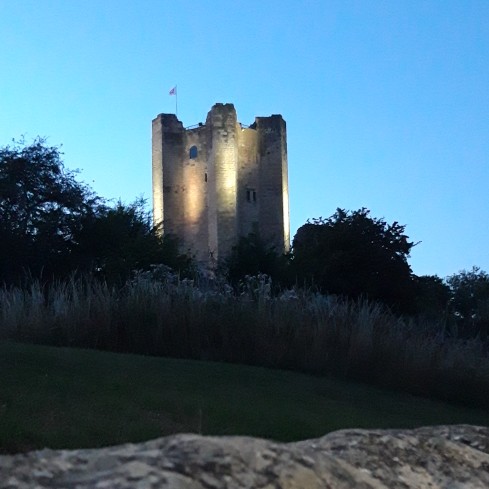
As part of Heritage Open Days in the UK, I shall be putting my tour guide hat back on and giving guided tours around my local – Conisbrough Castlehome of the Warennes and one of the most stunning medieval keeps in England. The ‘Storming Normans’ event will also include children’s’ activities and a medieval re-enactment from the fabulous team at Sudjorvik. And, as its a Heritage Open Day weekend, entry to the castle and access to the events and guided tours is FREE!

Doors open at 10am, with my Castle Tours taking place at 11am and 2pm.

So, do come along if you are in the area.

Saturday 21 September:

I will be in Manchester at a conference for History teachers, presenting a talk entitled ‘Where Were the Women,’ focusing on putting the women back into History.

It is billed as ‘A great day of free History CPD and geekery.’

Hosted by Teachers Talk History, it takes place at the Friends’ Meeting House, 6 Mount Street Manchester M2 5NS

If you are a History teacher in the UK, the event is free – you just need to book your place.

Thursday 26 September:

I will be in Leicester, presenting the annual Scarborough Lecture for the Leicestershire Archaeological and Historical Society.

Women and Magna Carta will look at those women who influenced Magna Carta, or lived through it – and those who used it to assert their rights. They include Matilda de Braose, Nicholaa de la Haye, Ela of Salisbury and Isabel d’Aubigny. 

The LAHS Scarborough Lecture is named after the late John Scarborough, Local Leicester man, who after joining LAHS at the age of 21 became a life-long member and supporter of the Society for over 45 years. He was particularly interested in the High Medieval Period.

No booking necessary. Entry to the talk is free of charge.

Doors open from 7.00pm, with tea and coffee available. The lecture will take place at 7.30pm, at the Rattray Lecture Theatre, University of Leicester, University Road, Leicester (LE1 7RH).

For more information, click here.

Sunday 29 September:

I will be back in Lincoln for the 2024 Lincoln Book Festival!

Presenting a talk, Lincolnshire Women in History, I will be looking at notable women from Lincoln – and Lincolnshire – in the Medieval and Tudor periods. Highlighting women including the formidable Nicholaa de la Haye, castellan of Lincoln Castle and Sheriff of Lincolnshire, Katherine Swynford, grandmother of the Tudor dynasty, Katherine Willoughby a Tudor duchess who encouraged the spread of Puritanism in Lincolnshire and Protestant martyr Anne Askew, one of only two women to be tortured in the Tower of London.

The talk is at 12 noon and will take place at the Lincoln Arts Centre: University of Lincoln, Brayford Pool Lincoln, LN6 7TS.

Tickets are £7 or £5 for those with a Live Pass, and can be booked online through the Lincoln Book Festival.

7 October:

Looking forward to returning the the Towton Battlefield Society for a talk on my hero, Nicholaa de la Haye. The Society meet at 7pm in Saxton Village Hall. They are very welcoming and only charge a small fee if you are not a member. So, if you want to come along, please do. I thoroughly enjoyed my visit there last year!

28 November:

I will be returning to Northampton, for the first time since my graduation there in 1992 and talking about the Women of the Anarchy, focusing on Empress Matilda and her rival, Queen Matilda of Boulogne and highlighting how these two women, unable to wield swords, were still highly influential in the battle for the crown between the Empress and King Stephen.

Tickets will be available from 1 November 2024 and can be booked online here.

Starting at7.30pm, the talk will be held at  Delapre Abbey Preservation Trust, Northampton, NN4 8AW.

And that will be all for my programme of talks in 2024. There will be more to come in 2025, with talks already booked at Wallingford, Dorking and Gainsborough Old Hall, among others. But more of that later!

Podcast News

The A Slice of Medieval podcast that I co-host with my friend and fellow author, Derek Birks, is now 2 years old and has gone from strength to strength. We recently recorded our 50th – yes, 50th – episode, which will be out at the end of the month, and just happens to be on one of my favourite topics. If you haven’t tuned in yet, do give us a listen. Derek and I welcome guests, such as Bernard Cornwell and Elizabeth Chadwick or take a deep dive into a wide range of topics in medieval history, from significant events to the personalities involved.

*

Have a great September! My very best wishes, Sharon xx

*

My Books

Signed, dedicated copies of all my books are available through my online bookshop.

OUT NOW! Heroines of the Tudor World

Heroines of the Tudor World tells the stories of the most remarkable women from European history in the time of the Tudor dynasty, 1485-1603. These are the women who ruled, the women who founded dynasties, the women who fought for religious freedom, their families and love. These are the women who made a difference, who influenced countries, kings and the Reformation. In the era dominated by the Renaissance and Reformation, Heroines of the Tudor World examines the threats and challenges faced by the women of the era, and how they overcame them. From writers to regents, from nuns to queens, Heroines of the Tudor World shines the spotlight on the women helped to shape Early Modern Europe.

Heroines of the Tudor World is now available for pre-order from Amberley Publishing and Amazon UK.

Also by Sharon Bennett Connolly:

Women of the Anarchy demonstrates how Empress Matilda and Matilda of Boulogne, unable to wield a sword themselves, were prime movers in this time of conflict and lawlessness. It shows how their strengths, weaknesses, and personal ambitions swung the fortunes of war one way – and then the other. Available from Bookshop.orgAmberley Publishing and Amazon UKKing John’s Right-Hand Lady: The Story of Nicholaa de la Haye is the story of a truly remarkable lady, the hereditary constable of Lincoln Castle and the first woman in England to be appointed sheriff in her own right. Available from all good bookshops Pen & Sword Booksbookshop.org and AmazonDefenders of the Norman Crown: The Rise and Fall of the Warenne Earls of Surrey tells the fascinating story of the Warenne dynasty, from its origins in Normandy, through the Conquest, Magna Carta, the wars and marriages that led to its ultimate demise in the reign of Edward III. Available from Pen & Sword BooksAmazon in the UK and US, and Bookshop.org

Ladies of Magna Carta: Women of Influence in Thirteenth Century England looks into the relationships of the various noble families of the 13th century, and how they were affected by the Barons’ Wars, Magna Carta and its aftermath; the bonds that were formed and those that were broken. It is now available in paperback and hardback from Pen & Sword,  Amazon, and Bookshop.orgHeroines of the Medieval World tells the stories of some of the most remarkable women from Medieval history, from Eleanor of Aquitaine to Julian of Norwich. Available now from Amberley Publishing and Amazon, and Bookshop.orgSilk and the Sword: The Women of the Norman Conquest traces the fortunes of the women who had a significant role to play in the momentous events of 1066. Available now from Amazon,  Amberley Publishing, and Bookshop.org.

Alternate Endings: An anthology of historical fiction short stories including Long Live the King… which is my take what might have happened had King John not died in October 1216. Available in paperback and kindle from Amazon.

*

Don’t forget! Signed and dedicated copies of all my books are available through my online bookshop.

For forthcoming online and in-person talks, please check out my Events Page.

You can be the first to read new articles by clicking the ‘Follow’ button, liking our Facebook page or joining me on Twitter and Instagram.

©2024 Sharon Bennett Connolly FRHistS

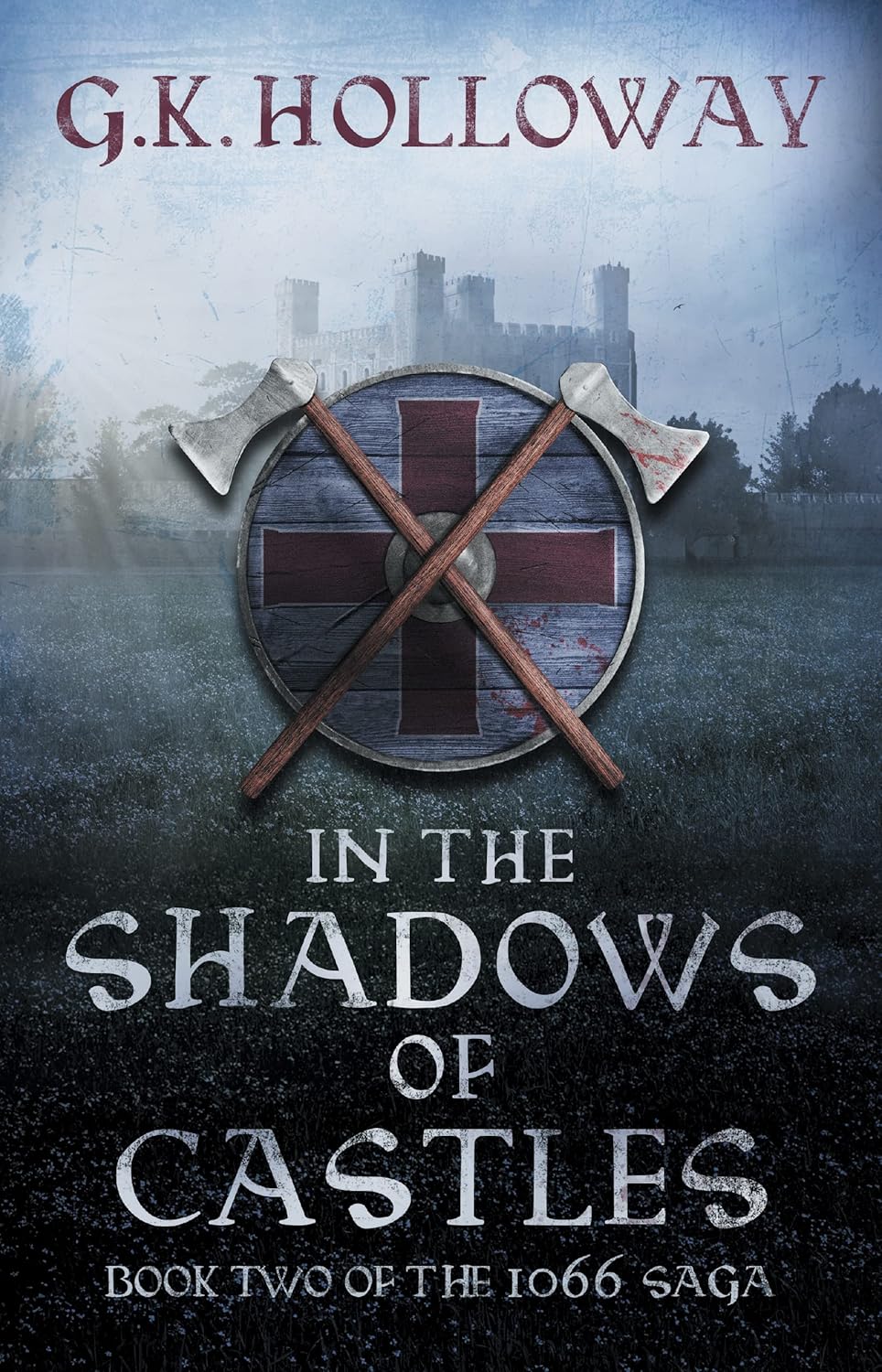
Book Corner: In the Shadows of Castles by G.K. Holloway

It’s the 1060s, and William of Normandy is establishing a new and brutal regime in England, but there are those who would defy him. As Norman soldiers spread like a plague across the land, resistance builds, but will it be enough to topple William and restore the rightful king to his throne? The English have the courage to fight, but the Normans, already victorious at Hastings, now build castles seeking to secure their tenuous foothold in these lands.

And what of the people caught up in these catastrophic events? Dispossessed but not defeated, their lives ripped apart, the English struggle for freedom from tyranny; amongst them, caught up in the turmoil, are a soldier, a thane and two sisters. As events unfold, their destinies become intertwined, bringing drastic changes that alter their lives forever.

Firmly embedded in the history of the Conquest, ‘In the Shadows of Castles’ is ultimately a story of love, hope and survival in a time of war.

A few years ago I read and reviewed G.K. Holloway’s fabulous novel 1066: What Fates Impose. It was the story of the most fateful year in English history, of Harold II, William the Conqueror and the Norman Conquest of England. The story revolved around the relationship between William and Harold and their ultimate, fatal confrontation at the Battle of Hastings. In the Shadows of Castles opens where 1066: What Fates Impose ended, with the English defeated and William the Conqueror receiving the submission of England’s earls and the atheling Edgar, who had hoped to take the crown himself.

In the Shadows of Castles feels more personal than did 1066: What Fates Impose. It is less concerned with the great events in history and concentrates more on the life and experience of Bondi, a housecarl who had been in the service of King Harold and was now a part of the English ‘resistance’. Bondi’s experiences in trying to halt the wholesale takeover of England contrast with King William’s systematic replacement of English lords with Norman ones and of handing out the lands, of those English killed at Hastings, to hie faithful followers.

In the Shadows of Castles follows the experiences of the English resistance, which culminates in the Harrying of the North over the winter of 1069-1070. The English fight back wherever and whenever they can against the relentless onslaught of the Norman army. Helped – and hindered – by the Danes, Bondi and his friends are forced to become fugitives after being separated from their forces. But there are lighter moments, where Bondi finds friendship and love in those surrounding him. And support from locals who risk everything to help the cause.

By mid-afternoon, everyone in London knew of the housecarls’ fate. People wondered if the future held the same in store for them. One of those unaware of the slaughter was Bondi Wynstanton. At the Blue Anchor, a small group talked animatedly at the bar.

‘The Normans set fire to Berkamsted barracks,’ one man said.

‘What?’

‘They burned down the barracks, and no one’s left alive,’ the man said.

‘Nobody? Are you sure?’

‘I am. I’d make myself scarce,’ the man said, looking at the dragon tattoos on Bondi’s arms. ‘Go to the great hall. Somebody might help you.’

Bondi was still coming to terms with the news as he slinked across London’s back streets. The town seemed divided. One half contained the English, sullen and resentful behind their walls. The other was a Norman city, composed of two motte-and-bailey fortifications. It was as if each part of the city held the other under siege. In this atmosphere, Merleswein called the thanes together in London’s great hall. Bondi arrived just as the meeting started. It was a heated affair, acrimonious and loud.

Merleswein stood up. ‘Thank you all for coming,’ he said. Gradually, the noise abated.

‘You’re all aware of what happened the other night,’ Merleswein said. ‘We need to decide what we are to do next. I, for one, will leave London at the earliest opportunity. If you want to come with me or join me in Lincoln, you’re welcome. If you meet any housecarls, bring them with you.’

‘What of Edgar and the earls? Why aren’t they here?’ an old thane said.

‘William is keeping them close, but don’t concern yourself. They will have word of what’s happening and know they can join us if they escape.’

‘So, they are prisoners, then?’ the old thane said. ‘What are we going to do?’

‘Those who are able should go to Lincoln. William won’t bother us there. He would have to send his entire army to bring us back, and he won’t do that. When we’ve formed up there, we’ll make plans.’

‘What if we can’t get away? Some of us have families and work here,’ someone yelled.

‘All I can do for now is offer hospitality in Lincoln. Everyone is welcome,’ Merleswein said.

There was a general stir as people discussed what to do.

Merleswein took his seat and turned to Waltheof. ‘Do you think many of them will accept my invitation?’ he said.

‘No. Not unless they’ve lost everything. Those who still have a home or a business will stay here, hoping it won’t happen again. It will be those who have nothing to lose who follow you.’

While they were talking, Bondi made his way over to them.

‘Excuse me, my lord.’

Merleswein looked down at him from the dais. ‘Bondi, isn’t it?’

‘That’s right, my lord.’

‘If I were you, I’d get as far away from London as possible.’

‘I’ve considered that, so I’m going to Ireland.’

‘Why Ireland?’ Merleswein said.

‘I was there with King Harold when I was a boy. I heard his mother, Lady Gytha and Edyth, his wife, were going there to join his sons. My guess is they’ll be coming back with an atmy, so I thought I’d join them.’

‘And avenge your fallen comrades?’

G.K. Holloway brilliantly captures the confusion among the English as the implications of their defeat at Hastings dawns upon them. He expertly captures the hope, despair and confusion that must have been rife among the conquered English. He does not shy away from the hard facts and more unpleasant aspects of war, nor of conquest, especially for the women. His knowledge of the history of the period has been used to recreate the world of 1066 and the years following.

Although the Normans are the bad guys in In the Shadows of Castles it was good to see William de Warenne, one of the subjects of my own research, given a prominent role among William the Conqueror‘s retinue. Indeed, G.K. Holloway has ensured that he used historical personages wherever possible and staying true to their story, which adds a sense of authenticity to the novel.

G.K Holloway takes us on a sweeping trek through England and even into Scotland and Denmark, following the story of the conquered English and triumphant Normans. The post-Conquest years were years of struggle and betrayal on both sides and In the Shadows of Castles draws the reader into this amazing story. The characters are authentic, deep and beautifully written. You can almost imagine yourself in the Yorkshire of a thousand years ago!

And entertaining and engaging novel, In the Shadows of Castles is an excellent read and I cannot wait to read the next instalment in the story, Fire in the Fens.

About the Author:

G. K. Holloway did several jobs after leaving school before taking A Levels at his local college and later a degree in History and Politics at Coventry University. Once he had graduated, he spent the next twenty years working in education in and around Bristol. After reading a biography about Harold Godwinson, he studied the late Anglo-Saxon era in detail and discovered a time of papal plots, court intrigues, family feuds, loyalties, betrayals, assassinations and a few battles. When he had enough material to weave together fact and fiction, he produced his award-winning novel, ‘1066: What Fates Impose’, the first in a series about the Norman Conquest. G. K. Holloway lives in Bristol with his wife and two children.

Visit G K Holloway’s website http://www.gkholloway.co.uk

GK Holloway’s books on Amazon

*

My Books

Signed, dedicated copies of all my books are available through my online bookshop.

OUT NOW! Heroines of the Tudor World

Heroines of the Tudor World tells the stories of the most remarkable women from European history in the time of the Tudor dynasty, 1485-1603. These are the women who ruled, the women who founded dynasties, the women who fought for religious freedom, their families and love. These are the women who made a difference, who influenced countries, kings and the Reformation. In the era dominated by the Renaissance and Reformation, Heroines of the Tudor World examines the threats and challenges faced by the women of the era, and how they overcame them. From writers to regents, from nuns to queens, Heroines of the Tudor World shines the spotlight on the women helped to shape Early Modern Europe.

Heroines of the Tudor World is now available for pre-order from Amberley Publishing and Amazon UK.

Also by Sharon Bennett Connolly:

Women of the Anarchy demonstrates how Empress Matilda and Matilda of Boulogne, unable to wield a sword themselves, were prime movers in this time of conflict and lawlessness. It shows how their strengths, weaknesses, and personal ambitions swung the fortunes of war one way – and then the other. Available from Bookshop.orgAmberley Publishing and Amazon UKKing John’s Right-Hand Lady: The Story of Nicholaa de la Haye is the story of a truly remarkable lady, the hereditary constable of Lincoln Castle and the first woman in England to be appointed sheriff in her own right. Available from all good bookshops Pen & Sword Booksbookshop.org and AmazonDefenders of the Norman Crown: The Rise and Fall of the Warenne Earls of Surrey tells the fascinating story of the Warenne dynasty, from its origins in Normandy, through the Conquest, Magna Carta, the wars and marriages that led to its ultimate demise in the reign of Edward III. Available from Pen & Sword BooksAmazon in the UK and US, and Bookshop.org

Ladies of Magna Carta: Women of Influence in Thirteenth Century England looks into the relationships of the various noble families of the 13th century, and how they were affected by the Barons’ Wars, Magna Carta and its aftermath; the bonds that were formed and those that were broken. It is now available in paperback and hardback from Pen & Sword,  Amazon, and Bookshop.orgHeroines of the Medieval World tells the stories of some of the most remarkable women from Medieval history, from Eleanor of Aquitaine to Julian of Norwich. Available now from Amberley Publishing and Amazon, and Bookshop.orgSilk and the Sword: The Women of the Norman Conquest traces the fortunes of the women who had a significant role to play in the momentous events of 1066. Available now from Amazon,  Amberley Publishing, and Bookshop.org.

Alternate Endings: An anthology of historical fiction short stories including Long Live the King… which is my take what might have happened had King John not died in October 1216. Available in paperback and kindle from Amazon.

Podcast:

Have a listen to the A Slice of Medieval podcast, which I co-host with Historical fiction novelist Derek Birks. Derek and I welcome guests, such as Bernard Cornwell and discuss a wide range of topics in medieval history, from significant events to the personalities involved. There’s even an episode on Robin Hood from Steven A. McKay. There are now over 40 episodes to listen to!

*

Don’t forget! Signed and dedicated copies of all my books are available through my online bookshop.

For forthcoming online and in-person talks, please check out my Events Page.

You can be the first to read new articles by clicking the ‘Follow’ button, liking our Facebook page or joining me on Twitter and Instagram.

©2024 Sharon Bennett Connolly FRHistS

Guest post: All the Queen’s Men by Carol Ann Lloyd

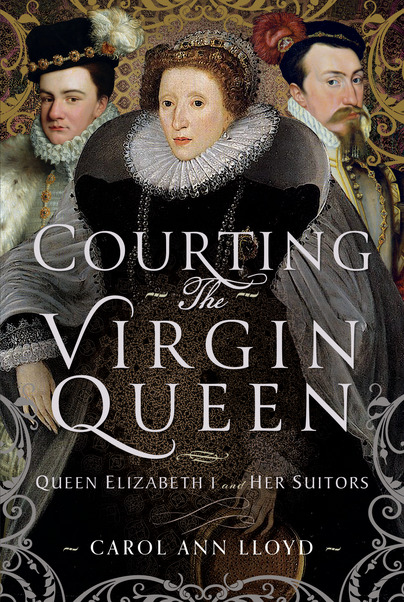
Today, it is a pleasure to welcome my dear friend, Carol Ann Lloyd, to History… the Interesting Bits, with an article on the love life of Queen Elizabeth I. Carol Ann’s new book Courting the Virgin Queen: Queen Elizabeth I and Her Suitors is due to be released on 30 July by Pen and Sword. If it is anything like her first book, The Tudors By Numbers: The Stories and Statistics Behind England’s Most Infamous Royal Dynasty, it will be a fabulous read!

“All the Queen’s Men: The Courtships of the Virgin Queen”

Carol Ann Lloyd

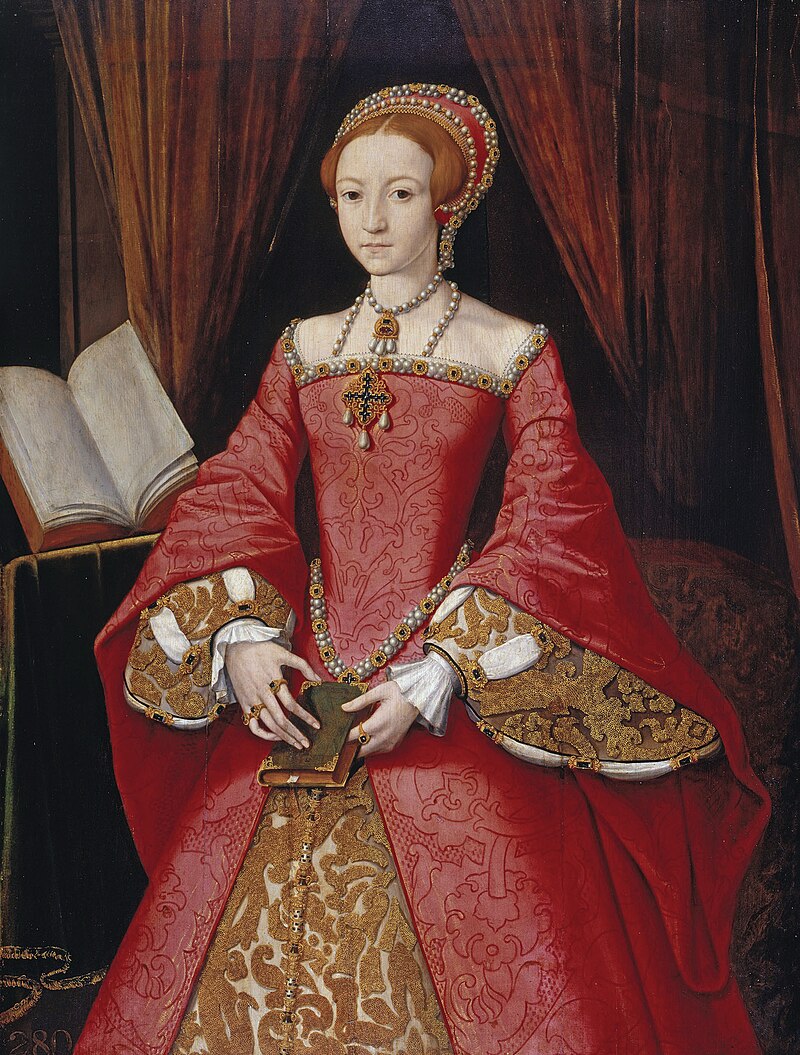
Elizabeth I, aged 14

It’s ironic that the child of the most-married English monarch ever is the only English monarch to rule as an adult and never marry! Elizabeth I, daughter of the famous (infamous?) Henry VIII never married. But it was not for lack of options.

The big question is “Why?” Did Elizabeth really want to marry anyone? What kept her from marrying? Did she ever intend to marry, or was she just keeping all her options open as she navigated the perilous landscape of European politics on her own?

I think there are many ways on answering this question. Let’s start at the beginning of her reign. Elizabeth was the least likely of Henry VIII’s children to come to the throne, and when she did everyone had the same question on their mind. As the Spanish Ambassador, the Count of Feria, reflected in the early days of the reign, “The more I think over this business the more certain I am that everything depends upon the husband this woman may take.” Elizabeth was questioned about her choice of husband by her council, ambassadors, and parliament. It was considered a public not a private matter, and the queen was repeatedly encouraged and counseled to get married and produce an heir for the good of the kingdom.

So, if everything depended on the husband her would take, what realistically were her options?

Some people might be surprised to learn that one of her first suitors was the husband of her recently deceased sister. Philip of Spain had been married to Mary I until her death, and the couple had no children. Still committed to bringing England back into the Catholic fold, Philip believed he could marry and control Elizabeth. I was surprised as I read his correspondence how convinced Philip was that Elizabeth was desperate for a husband and eager for his offer. Many Catholics never accepted the validity of the marriage between Henry VIII and Anne Boleyn, so Elizabeth’s hold on the throne was possibly tenuous. Philip believed he was the answer to Elizabeth’s problem. He thought she would jump at the chance.

Robert Dudley, Earl of Leicester

Philip could not have been more wrong. Elizabeth knew very well that Philip would seek to involve England in Spain’s wars, as he had during Mary I’s reign. Using her skills in language, Elizabeth dallied with Feria and postponed giving a firm answer until it suited her. That answer was a definite “no.”

The offer from Philip was only the beginning. I discovered in my research that Elizabeth used the many marriage possibilities as a way of strengthening her position with the international community. She managed to keep several foreign leaders eager for an alliance with England and a marriage with her. Over the years, the king of Sweden, European dukes and archdukes, and even all three of Catherine de Medici’s sons in France were offered as possible husband. And that doesn’t take into account the Scottish and English nobles who wanted to marry the queen.

Speaking of men in England, was it really Robert Dudley who kept Elizabeth from marrying? He most likely was the love of her life, perhaps the only man she might have married if she had not been the queen. He was at the center of her life, from the day she learned Mary I had died, and she was queen. He became Elizabeth’s Master of the Horse, which meant he was always with her when she went riding, one of her favorite activities. And he was the only man in the kingdom with permission to touch the queen as he helped her onto and off horse.

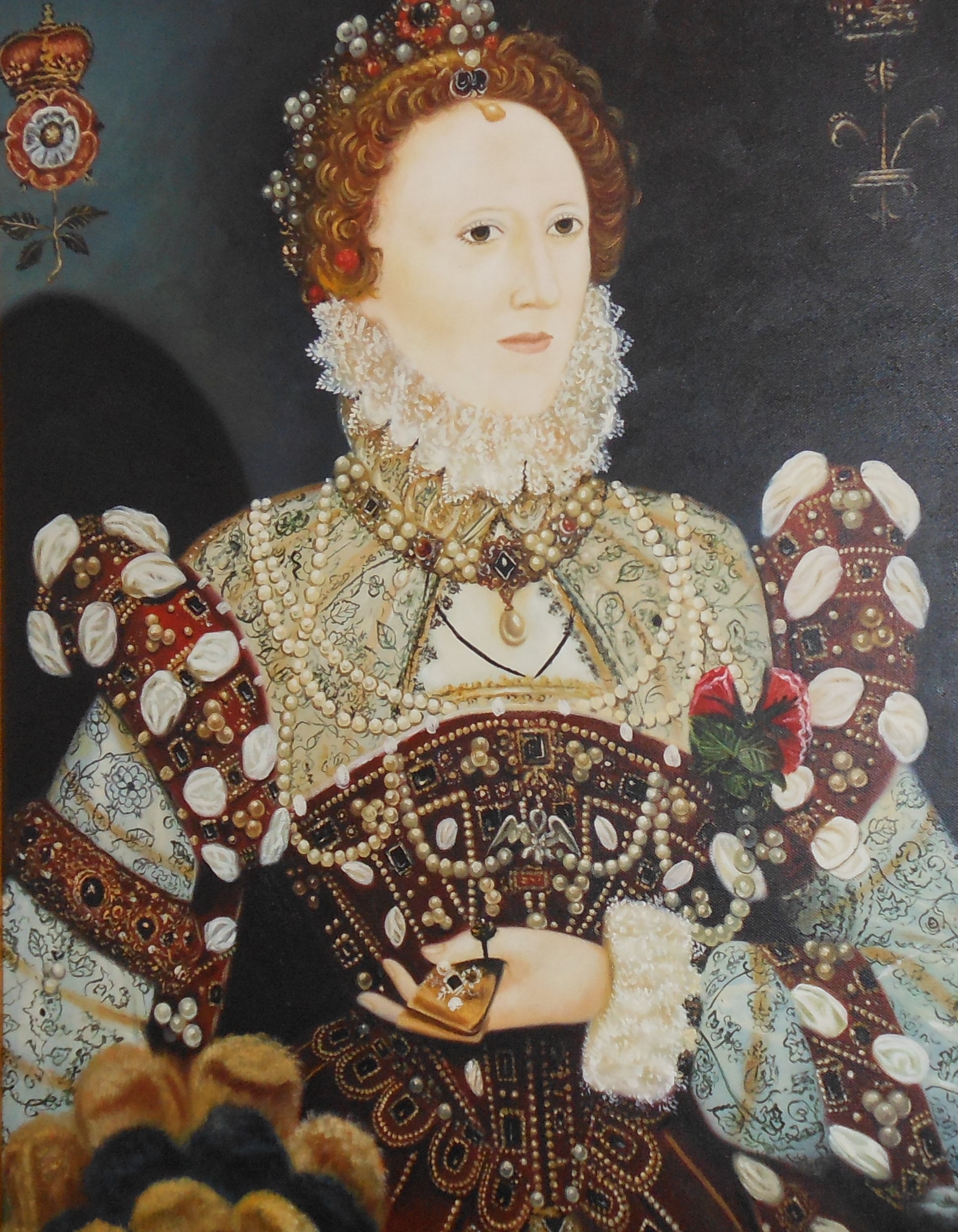
Queen Elizabeth I

Even with Dudley’s favored position, there were a few problems in the way. For one thing, he was married. And then his wife died in very suspicious circumstances, making a future marriage potentially devastating for Elizabeth’s reputation. Dudley was unpopular among the council. And ultimately, I believe Elizabeth meant what she is reported to have shouted at him in anger: “I will have but one mistress here and no master.”

So, did everything depend upon the husband Elizabeth took? Yes, it turns out it did. I realized through the research that the one suitor that Elizabeth courted throughout her reign was the husband she had declared herself wed to when she became queen: her country and her people. Early in her reign, Elizabeth had responded to parliament’s request that she marry by responding that she was “already bound unto a husband which is the kingdom of England.” From the time she became queen, Elizabeth wooed her nation and her people, seeking their approval, favor, and love. That was the husband she took, and it meant everything to her.

About the book:

The many courtships of the woman who became Elizabeth I began when she was an infant, displayed before foreign ambassadors who considered her as a possible clause of a contract between England and France. From such an unromantic beginning, Elizabeth grew to see her father marry multiple times and experienced frequent changes in stepmothers and status in the family. Eventually, she became the most eligible woman in Europe. From start to finish, her marriage prospects were as much political as they were personal.

When she came to the throne in 1558, the primary question facing everyone from foreign monarchs to English nobles and ministers was which of her many suitors would finally win her hand. Through the longest Tudor reign, Elizabeth used courtship as a tool to consider foreign alliances, hold ambitious English courtiers in check, and navigate her role as a woman ruler in a world that considered her unnatural without a man at her side.

Elizabeth was, in fact, always the ‘Virgin Queen’, from the early days as a twenty-five-year-old presenting herself as a potential royal bride to her final years as an ageing and unmarried woman who was destined to end the Tudor dynasty. Ultimately, she became the only monarch in England to rule as an adult and never marry. Through it all, as friends and potential lovers faded away, she clung to the one true love of her life: England.

Courting the Virgin Queen: Queen Elizabeth I and Her Suitors is available from Pen and Sword and Amazon.

About the author:

Carol Ann Lloyd turned an obsession with the Tudors into a speaking and writing career. She shares her love of history with Smithsonian Associates, Royal Oak Foundation, Agecroft Hall, Folger Shakespeare Library and other organizations. She holds degrees in Literature and Education and hosts a popular podcast, _British History: Royals, Rebels, and Romantics_. She also offers workshops about using Shakespeare strategies to improve communication skills and is a member of National Speakers Association.

*

My Books

Signed, dedicated copies of all my books are available through my online bookshop.

OUT NOW! Heroines of the Tudor World

Heroines of the Tudor World tells the stories of the most remarkable women from European history in the time of the Tudor dynasty, 1485-1603. These are the women who ruled, the women who founded dynasties, the women who fought for religious freedom, their families and love. These are the women who made a difference, who influenced countries, kings and the Reformation. In the era dominated by the Renaissance and Reformation, Heroines of the Tudor World examines the threats and challenges faced by the women of the era, and how they overcame them. From writers to regents, from nuns to queens, Heroines of the Tudor World shines the spotlight on the women helped to shape Early Modern Europe.

Heroines of the Tudor World is now available for pre-order from Amberley Publishing and Amazon UK.

Also by Sharon Bennett Connolly:

Women of the Anarchy demonstrates how Empress Matilda and Matilda of Boulogne, unable to wield a sword themselves, were prime movers in this time of conflict and lawlessness. It shows how their strengths, weaknesses, and personal ambitions swung the fortunes of war one way – and then the other. Available from Bookshop.orgAmberley Publishing and Amazon UKKing John’s Right-Hand Lady: The Story of Nicholaa de la Haye is the story of a truly remarkable lady, the hereditary constable of Lincoln Castle and the first woman in England to be appointed sheriff in her own right. Available from all good bookshops Pen & Sword Booksbookshop.org and AmazonDefenders of the Norman Crown: The Rise and Fall of the Warenne Earls of Surrey tells the fascinating story of the Warenne dynasty, from its origins in Normandy, through the Conquest, Magna Carta, the wars and marriages that led to its ultimate demise in the reign of Edward III. Available from Pen & Sword BooksAmazon in the UK and US, and Bookshop.org

Ladies of Magna Carta: Women of Influence in Thirteenth Century England looks into the relationships of the various noble families of the 13th century, and how they were affected by the Barons’ Wars, Magna Carta and its aftermath; the bonds that were formed and those that were broken. It is now available in paperback and hardback from Pen & Sword,  Amazon, and Bookshop.orgHeroines of the Medieval World tells the stories of some of the most remarkable women from Medieval history, from Eleanor of Aquitaine to Julian of Norwich. Available now from Amberley Publishing and Amazon, and Bookshop.orgSilk and the Sword: The Women of the Norman Conquest traces the fortunes of the women who had a significant role to play in the momentous events of 1066. Available now from Amazon,  Amberley Publishing, and Bookshop.org.

Alternate Endings: An anthology of historical fiction short stories including Long Live the King… which is my take what might have happened had King John not died in October 1216. Available in paperback and kindle from Amazon.

Podcast:

Have a listen to the A Slice of Medieval podcast, which I co-host with Historical fiction novelist Derek Birks. Derek and I welcome guests, such as Bernard Cornwell and discuss a wide range of topics in medieval history, from significant events to the personalities involved. There are now over 40 episodes to listen to!

*

Don’t forget! Signed and dedicated copies of all my books are available through my online bookshop.

For forthcoming online and in-person talks, please check out my Events Page.

You can be the first to read new articles by clicking the ‘Follow’ button, liking our Facebook page or joining me on Twitter and Instagram.

©2024 Sharon Bennett Connolly FRHistS

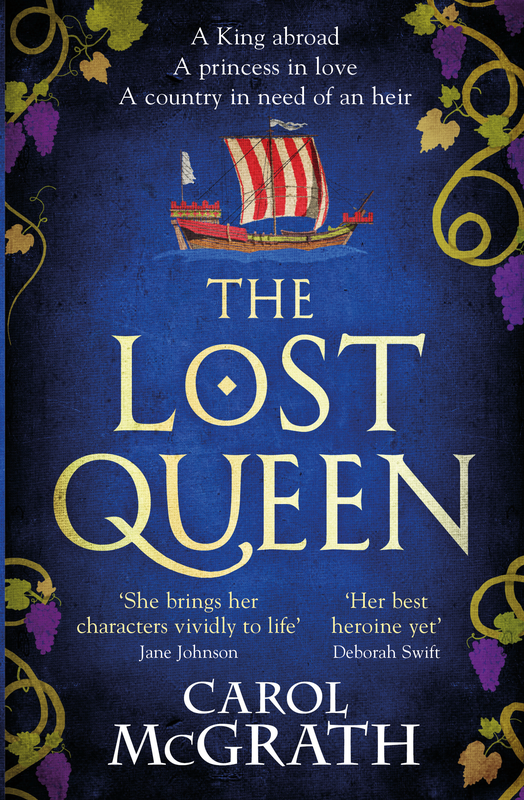
Book Corner: The Lost Queen by Carol McGrath

1191 and the Third Crusade is underway . . .

It is 1191 and King Richard the Lionheart is on crusade to pitch battle against Saladin and liberate the city of Jerusalem and her lands. His mother, the formidable Eleanor of Aquitaine and his promised bride, Princess Berengaria of Navarre, make a perilous journey over the Alps in midwinter. They are to rendezvous with Richard in the Sicilian port of Messina.

There are hazards along the way – vicious assassins, marauding pirates, violent storms and a shipwreck. Berengaria is as feisty as her foes and, surviving it all, she and Richard marry in Cyprus and continue to the Holy Land. England needs an heir. But first, Richard and his Queen must return home . . .

The Lost Queen is a thrilling medieval story of high adventure, survival, friendship and the enduring love of a Queen for her King.

At last! Attention is being paid to Berengaria of Navarre, wife and queen of King Richard I (the Lionheart. There is an excellent new biography out, by my good friend Dr Gabrielle Story, entitled Berengaria of Navarre: Queen of England and Lord of Le Mans. And now there is a wonderful novel, The Lost Queen by Carol McGrath.

Carol expertly weaves fact and fiction together to bring us am engaging, entertaining and informative story on the life of the one queen of England who is said to have never set foot in the country (actually, it seems that she did, but only after Richard’s death).

The Lost Queen follows Berengaria from the moment she is collected by her future mother-in-law, Eleanor of Aquitaine, on her journey through the Alps and Italy, to her first meeting with her husband Richard I. She is then drawn into the grand enterprise that was the Third Crusade, with the conquest of Cyprus along the way.

Food tasters sampled every dish before offering Queen Eleanor the best of everything, placing small morsels on her plate when she inclined her head in assent. Don Sancho never took any chances in case a dish was spoiled – or worse, might contain poison. Only once the Dowager and Don Sancho were served was Berengaria able to make selections for her own plate. As she ate, carefully making sure not to appear greedy, she noticed that Queen Eleanor had a hearty appetite, sampling everything and complimenting Don Sancho on his well-presented feast. Lifting a goblet to her mouth and sipping daintily, she praised the Gascon wine served in her honour.

Over custard tarts, a speciality of the palace pastry cooks, the Dowager broached plans for their journey. She tapped the table with an impatient gesture. ‘Don Sancho, may I assume Berengaria will be ready by this week’s end with her baggage mules packed? She will need suitable clothing for travel to Sicily, along with her confessor and her ladies.’

‘Indeed. We shall provide a well-armed guard under Sancho’s command for the first part of the journey,’ Don Sancho said. ‘Berengaria and her ladies will ride. They are all of them fine horsewomen.’

‘We will need stout covered wagons and apothecaries in case of illness, though I expect none,’ the Dowager responded. Berengaria wondered if Queen Eleanor had ever been in need of apothecaries in her whole life, other than for childbirth. Suddenly she grew nervous at the thought that the arrangements thay had made for her wedding in Sicily might not be good enough.

Don Sancho nodded in assent, then added, ‘All is ready, including priests and two bishops who will travel with your train as far as Rome.’ He gave Eleanor a broad smile.

Berengaria looked at her father with a confidence she did not feel. ‘So my brother and his knights will escort us through French territories?’ she asked.

‘Not France, but the county of Toulouse. And indeed, my daughter, Sancho will ride with you as far as Les Baux. Arrangements have been made. travel passes have been granted.’

Her brother nodded. ‘My dear sister, I have business in Aragon, but I intend guarding you to the very borders of the German Empire.’

Berengaria loved her bear-like brother. ‘I am glad of your escort, dear Sancho.’

She looked over to see Eleanor’s reaction, but the Dowager simply thanked Sancho for his care of them. Her expression remained composed as she added, ‘We hope to have Philip of Flanders as our escort through the Alps and on to Sicily. The Count is intent on joining the Crusade.’

Carol McGrath recreates the world of the late 12th century, from medieval England to the Holy Land – you can almost feel that sand between your toes and the burning sun on your face. Neither does the author shy away from the more unpleasant episodes of the Crusades. Richard I’s execution of 3,000 prisoners is depicted through Berengaria’s eyes, and with the understanding of the constraints and political wranglings of the time. I love the depiction of Richard I’s relationship with his mother, Eleanor of Aquitaine, and Carol McGrath’s exploration of how this may have affected Richard and Berengaria’s marriage.

My favourite part of the book is Berengaria’s relationship with her sister-in-law, Joanna, dowager queen of Sicily and sister of Richard the Lionheart. Joanna is, as any regular reader will know, one of my favourite medieval women. And I love how Carol McGrath portrays the developing friendship between the two women, thrown together by necessity, but appreciating each other’s strengths and character.

Whilst the attention of the book is very firmly on Berengaria of Navarre, a more intimate, fictional story, of a young lady named Avelina, travelling to the Holy Land in search of her husband, offers the reader a more intimate experience of the non-royal crusaders and the lives of them and their families. As well as the dangers inherent in women travelling to far-off places. Carol McGrath uses Avelina’s story, and the stories of those around her, to demonstrate the different people and events – and personal tragedies – associated with the Crusades. It also serves to remind the modern-day reader that news travelled slowly in medieval times and that letters that were lost or waylaid could have a huge impact on people’s lives.

The characters portrayed in The Lost Queen by Carol McGrath are rich and vivid. They come to life on the page.

This is a must-read book for anyone interested in the Plantagenets!

To Buy The Lost Queen

About the Author:

Following a first degree in English and History, Carol McGrath completed an MA in Creative Writing from The Seamus Heaney Centre, Queens University Belfast, followed by an MPhil in English from University of London.The Handfasted Wife, first in a trilogy about the royal women of1066 was shortlisted for the RoNAS in 2014.The Swan-Daughter and The Betrothed Sister complete this highly acclaimed trilogy.Mistress Cromwell, a best-selling historical novel about Elizabeth Cromwell, wife of Henry VIII’s statesman, Thomas Cromwell, was republished by Headline in 2020.The Silken Rose,first in a medieval She-Wolf Queens Trilogy, featuring Ailenor of Provence, saw publication in April 2020. This was followed by The Damask Rose.The Stone Rose was published April2022. Carol is writing Historical non-fiction as well as fiction.Sex and Sexuality in Tudor England waspublished in February 2022.The Stolen Crown2023 and The Lost Queen will be published 18thJuly2024. Carol lives in Oxfordshire, England and in Greece.Find Carol on her website:www.carolcmcgrath.co.uk.

Follow Carol on:

Amazon: @CarolMcGrath, Facebook: https://www.facebook.com/CarolMcGrathAuthor1, Pinterest: http://www.pinterest.co.uk/carol0275/the-handfasted-wife/ Twitter: twitter.com/carolmcgrath, website: scribbling-inthemargins.blogspot.com/ LinkedIn: https://www.linkedin.com/in/carol-mcgrath-906723a

*

My Books

Signed, dedicated copies of all my books are available through my online bookshop.

OUT NOW! Heroines of the Tudor World

Heroines of the Tudor World tells the stories of the most remarkable women from European history in the time of the Tudor dynasty, 1485-1603. These are the women who ruled, the women who founded dynasties, the women who fought for religious freedom, their families and love. These are the women who made a difference, who influenced countries, kings and the Reformation. In the era dominated by the Renaissance and Reformation, Heroines of the Tudor World examines the threats and challenges faced by the women of the era, and how they overcame them. From writers to regents, from nuns to queens, Heroines of the Tudor World shines the spotlight on the women helped to shape Early Modern Europe.

Heroines of the Tudor World is now available for pre-order from Amberley Publishing and Amazon UK.

Also by Sharon Bennett Connolly:

Women of the Anarchy demonstrates how Empress Matilda and Matilda of Boulogne, unable to wield a sword themselves, were prime movers in this time of conflict and lawlessness. It shows how their strengths, weaknesses, and personal ambitions swung the fortunes of war one way – and then the other. Available from Bookshop.orgAmberley Publishing and Amazon UKKing John’s Right-Hand Lady: The Story of Nicholaa de la Haye is the story of a truly remarkable lady, the hereditary constable of Lincoln Castle and the first woman in England to be appointed sheriff in her own right. Available from all good bookshops Pen & Sword Booksbookshop.org and AmazonDefenders of the Norman Crown: The Rise and Fall of the Warenne Earls of Surrey tells the fascinating story of the Warenne dynasty, from its origins in Normandy, through the Conquest, Magna Carta, the wars and marriages that led to its ultimate demise in the reign of Edward III. Available from Pen & Sword BooksAmazon in the UK and US, and Bookshop.org

Ladies of Magna Carta: Women of Influence in Thirteenth Century England looks into the relationships of the various noble families of the 13th century, and how they were affected by the Barons’ Wars, Magna Carta and its aftermath; the bonds that were formed and those that were broken. It is now available in paperback and hardback from Pen & Sword,  Amazon, and Bookshop.orgHeroines of the Medieval World tells the stories of some of the most remarkable women from Medieval history, from Eleanor of Aquitaine to Julian of Norwich. Available now from Amberley Publishing and Amazon, and Bookshop.orgSilk and the Sword: The Women of the Norman Conquest traces the fortunes of the women who had a significant role to play in the momentous events of 1066. Available now from Amazon,  Amberley Publishing, and Bookshop.org.

Alternate Endings: An anthology of historical fiction short stories including Long Live the King… which is my take what might have happened had King John not died in October 1216. Available in paperback and kindle from Amazon.

Podcast:

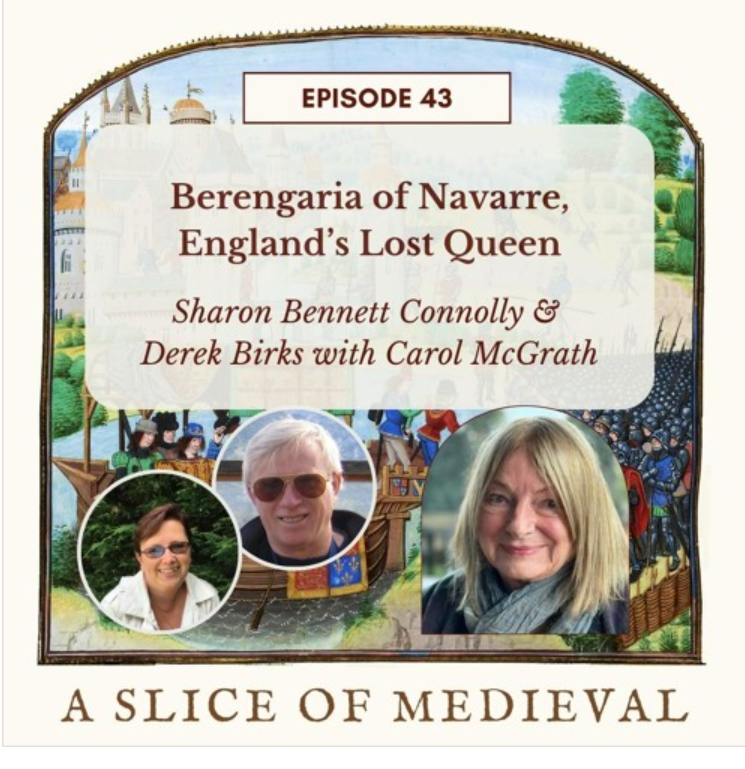
Have a listen the A Slice of Medieval podcast, which I co-host with Historical fiction novelist Derek Birks. Derek and I welcome guests, such as Bernard Cornwell and discuss a wide range of topics in medieval history, from significant events to the personalities involved. In episode #43, Derek and I chat with Carol about Berengaria of Navarre and The Lost Queen.

*

Don’t forget! Signed and dedicated copies of all my books are available through my online bookshop.

For forthcoming online and in-person talks, please check out my Events Page.

You can be the first to read new articles by clicking the ‘Follow’ button, liking our Facebook page or joining me on Twitter and Instagram.

©2024 Sharon Bennett Connolly FRHistS

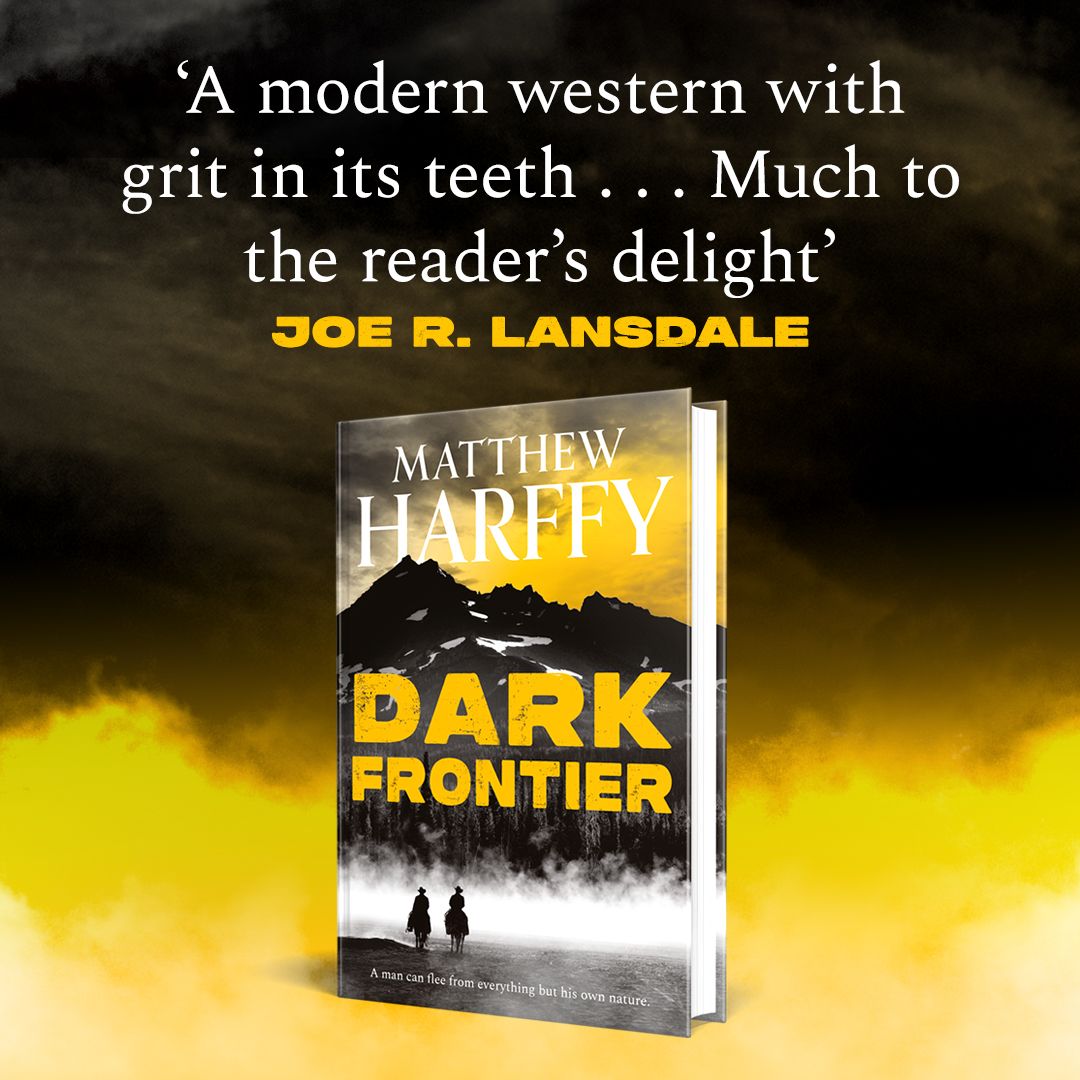
Book Corner: Dark Frontier by Matthew Harffy

A thrilling historical western set in 1890s Oregon, from the author of the critically acclaimed Bernicia Chronicles. An English soldier turned policeman escapes to the American West for anew future, but life on the frontier proves far harder than he ever imagined…

A man can flee from everything but his own nature.

1890. Lieutenant Gabriel Stokes of the British Army left behind the horrors of war in Afghanistan for a role in the Metropolitan Police.Though he rose quickly through the ranks, the squalid violence of London’s East End proved just as dark and oppressive as the battlefield.

With his life falling apart, and longing for peace and meaning, Gabriel leaves the grime of London behind and heads for the wilderness and wide open spaces of the American West.

He soon realises that the wilds of Oregon are far from the idyll he has yearned for. The Blue Mountains may be beautiful, but with the frontier a complex patchwork of feuds and felonies,and ranchers as vicious as any back alley cut-throat in London, Gabriel finds himself unable to escape his past and the demons that drive him. Can he find a place for himself on the far edge of the New World?

I have to confess, I haven’t read a Western in years, but Dark Frontier by Matthew Harffy has certainly got me in the mood for more. And for an author used to writing about warfare with guns and axes in the early medieval period, he certainly knows his way around a six-shooter. Though he does manage to get a sword into the action at one point, which was pretty impressive!

Dark Frontier is the story of a man heading west to escape his past, and his demons, only to find his demons are not that easy to avoid. He also finds that trouble is just as present in the American West as it was on the streets of London. And, a policeman at heart, trouble is not something he seems to be able to walk away from. Dark Frontier is a fascinating adventure based around a ranch war between a sheep farmer and a cattle baron. The cattle baron wants more land – the sheep farmer doesn’t want to oblige.

Things turn nasty.

The man might be old, but Stokes had witnessed how deadly he was. As the boy ranted and screamed, the grey-haired man had watched, hand resting lightly on the butt of his holstered pistol. He didn’t move and had said nothing for a time until he uttered a few words that had sent the boy into such a blind rage that he had jerked his revolver out of its holster and fired wildly. The old man had not flinched, though there had been less than ten feet separating them. An instant later, his revolver, a gleaming Remington, had appeared to leap into his hand. It had barked once, silencing the boy and his frantic shooting forever.

“You son of a bitch!” shouted a long-faced man with pox scars on his cheeks who had followed the boy out of the billiard hall. “You killed Wyc.” His face was growing redder by the second. “You didn’t need to kill him.” His hand dropped to the dark wooden butt of the revolver he wore in a black leather holster on his right hip.

“Done a lot of things I didn’t need to,” said the old man who had shot the boy called Wyc. “Killing your friend ain’t one of ’em.” The barrle of his Remington did not waver as he pulled the hammer back with his thumb. He had fired only one shot, but the bullet had caught Wyc in the chin and exited from the back of his head, leaving a hole the size of a teacup saucer.

Several men came out of the billiard hall with Wyc, voices raised and joining in his brash insults, but Stokes noticed that none of them had been foolish enough to reach for their own guns. Most had already fled, running off as the shots were fired. The few that remained now edged away from the angry man who vented his ire at the calm, grey-haired shooter.

The pock-cheeked man swallowed, perhaps suddenly aware of his predicament. He was staring into the smoking barrel of a revolver in the sure hands of a proven killer. His fingers trembled above the butt of his handgun.

“Halt,” Stokes said, his voice cutting through the hubbub. “Both of you.” Everybody turned to look at him. Everybody except the old man with the Remington. HIs hand did not move and his gun remained trained on the red-faced cowhand. Stokes was used to having his voice listened to, but nobody here seemed inclined to obey him. He took a step closer and snapped his fingers.

With the West becoming more accessible with the expansion of the railroad, cattle barons are greedy for more land so they can fulfill government contracts. JT’s, the ranch belonging to Gabe’s best friend, John Thornford, is in the way of progress, as far one cattle baron is concerned. Throw in a murder mystery, budding friendships, violent attacks and a good fist fight or two – along with the odd pistol whipping and shoot-outs and you have the ingredients for a perfect Western novel.

What makes Dark Frontier such an incredible story is the breadth and range of characters. Gabe Stokes is the quintessential, broken Englishman who finds that the rules are few and far-between when it comes to the wide open plains of frontier America. Mary Ann Thornford is a widow, with 2 young children, left alone to take on the oily, powerful and determined cattle baron, Tom Grant. She has a handful of farmhands to help out, and Her husband’s old friend, Gabe Stokes.

With a fast-paced, engrossing story and characters the reader can get behind, Dark Frontier has all the ingredients for an exciting adventure. And it doesn’t disappoint. Matthew Harffy has certainly made the switch from early medieval historical fiction to the Wild Wild West with great aplomb.

Enjoyed it immensely!

I do hope there are more Westerns to come!

To Buy A Dark Frontier:

Amazon:https://geni.us/DarkFrontierBlogTour

About the Author:

About the author Matthew Harffy grew up in Northumberland where the rugged terrain, ruined castles and rocky coastline had a huge impact on him. He now lives in Wiltshire, England, with his wife and their two daughters.Matthew is the author of the critically acclaimed Bernicia Chronicles and A Time for Swords series, and he also presents the popular podcast,Rock, Paper, Swords!, with fellow author Steven A. McKay.

Matthew Harffy Social Handles: Twitter:@MatthewHarffy Instagram:@beobrand Website:matthewharffy.com

Aries/Head of Zeus Social Handles: Twitter:@AriesFiction Facebook:Aries Fiction Instagram:@headofzeus TikTok:@headofzeus Website:http://www.headofzeus.com

Blog Tour Hashtag: #DarkFrontier

*

My Books

Signed, dedicated copies of all my books are available through my online bookshop.

OUT NOW! Heroines of the Tudor World

Heroines of the Tudor World tells the stories of the most remarkable women from European history in the time of the Tudor dynasty, 1485-1603. These are the women who ruled, the women who founded dynasties, the women who fought for religious freedom, their families and love. These are the women who made a difference, who influenced countries, kings and the Reformation. In the era dominated by the Renaissance and Reformation, Heroines of the Tudor World examines the threats and challenges faced by the women of the era, and how they overcame them. From writers to regents, from nuns to queens, Heroines of the Tudor World shines the spotlight on the women helped to shape Early Modern Europe.

Heroines of the Tudor World is now available for pre-order from Amberley Publishing and Amazon UK.

Also by Sharon Bennett Connolly:

Women of the Anarchy demonstrates how Empress Matilda and Matilda of Boulogne, unable to wield a sword themselves, were prime movers in this time of conflict and lawlessness. It shows how their strengths, weaknesses, and personal ambitions swung the fortunes of war one way – and then the other. Available from Bookshop.orgAmberley Publishing and Amazon UKKing John’s Right-Hand Lady: The Story of Nicholaa de la Haye is the story of a truly remarkable lady, the hereditary constable of Lincoln Castle and the first woman in England to be appointed sheriff in her own right. Available from all good bookshops Pen & Sword Booksbookshop.org and AmazonDefenders of the Norman Crown: The Rise and Fall of the Warenne Earls of Surrey tells the fascinating story of the Warenne dynasty, from its origins in Normandy, through the Conquest, Magna Carta, the wars and marriages that led to its ultimate demise in the reign of Edward III. Available from Pen & Sword BooksAmazon in the UK and US, and Bookshop.org

Ladies of Magna Carta: Women of Influence in Thirteenth Century England looks into the relationships of the various noble families of the 13th century, and how they were affected by the Barons’ Wars, Magna Carta and its aftermath; the bonds that were formed and those that were broken. It is now available in paperback and hardback from Pen & Sword,  Amazon, and Bookshop.orgHeroines of the Medieval World tells the stories of some of the most remarkable women from Medieval history, from Eleanor of Aquitaine to Julian of Norwich. Available now from Amberley Publishing and Amazon, and Bookshop.orgSilk and the Sword: The Women of the Norman Conquest traces the fortunes of the women who had a significant role to play in the momentous events of 1066. Available now from Amazon,  Amberley Publishing, and Bookshop.org.

Alternate Endings: An anthology of historical fiction short stories including Long Live the King… which is my take what might have happened had King John not died in October 1216. Available in paperback and kindle from Amazon.

Podcast:

Have a listen to the A Slice of Medieval podcast, which I co-host with Historical fiction novelist Derek Birks. Derek and I welcome guests, such as Bernard Cornwell and discuss a wide range of topics in medieval history, from significant events to the personalities involved.

*

Don’t forget! Signed and dedicated copies of all my books are available through my online bookshop.

For forthcoming online and in-person talks, please check out my Events Page.

You can be the first to read new articles by clicking the ‘Follow’ button, liking our Facebook page or joining me on Twitter and Instagram.

©2024 Sharon Bennett Connolly FRHistS

Publication Day: Heroines of the Tudor World

In 2017, when I published Heroines of the Medieval World, it was a dream come true – to actually write and publish a book! I never imagined, then, that I would still be writing books 7 years later, nor that I would get the opportunity to write a sequel!

But here it is!

Continue reading for a chance to win a signed copy of Heroines of the Tudor World in my Publication Day GIVEAWAY!

Heroines of the Tudor World tells the stories of the most remarkable women from European history in the time of the Tudor dynasty, 1485-1603.

These are the women who ruled, the women who founded dynasties, the women who fought for religious freedom, their families and love.

These are the women who made a difference, who influenced countries, kings and the Reformation. In the era dominated by the Renaissance and Reformation, Heroines of the Tudor World examines the threats and challenges faced by the women of the era, and how they overcame them. Some famous, some infamous, some less well known, including Anne Boleyn, Elizabeth Barton, Catherine de Medici, Bess of Hardwick and Elizabeth I.

From writers to regents, from nuns to queens, Heroines of the Tudor World shines the spotlight on the women helped to shape Early Modern Europe.

I am so excited to be able to announce that Heroines of the Tudor World is now available from – everywhere! Including Amberley Publishing, Bookshop.org and Amazon UK.

Publication Day GIVEAWAY!

For the chance to win a signed copy of Heroines of the Tudor World simply leave a comment below.

The draw fro the winner will be made at noon Friday 21 June 2024.

Competition Closed: and the winner is Andria van Buskirk!

Book Launch

Do join me for the Heroines of the Tudor World book launch, including a talk and book signing will be held at the gorgeous historic venue, The Lincoln County Assembly Rooms, Monday 24 June, 2024, at 7pm.

Tickets in-store or online from £7 – ticket with book deals available.

To reserve your ticket, call in at Lindum Books on Bailgate, Lincoln, or click here!

Reviews:

And the first reviews are in – and amazing!

Tony Riches was the first to give his views: ⭐️⭐️⭐️⭐️⭐️

Heroines of the Tudor World is “is perfect for ‘dipping in’ at a random page or section – where you can be sure of discovering something interesting. I also liked the way some Tudor women pop up in several categories, highlighting the complexity of their lives.  As with her medieval heroines, some of the categories are thought provoking, such as the idea of heroic mistresses and scandalous heroines, but this makes for a lively and engaging read.” Read the whole 5* review over at The Writing Desk.

And Medieval Madame, on Instagram, also gave Heroines of the Tudor World 5 stars: ⭐️⭐️⭐️⭐️⭐️

“Automatically, when we think of the Tudor woman we tend to think of King Henry VIII’s wives, ladies in waiting or mistresses like Lady Jane Parker and Mary Boleyn. Yet so many women played a vital role, and they are lesser known but those who are more widely known don’t get enough recognition. Women, the weaker, frailer, gentler sex who should have a purpose: ‘stay at home, do embroidery, bear children – hope to survive!’ Not forgetting obey your Husband!

This book centres around women who, either by chance or decision, step out of the mould society cast upon them, even if it meant death. Remember, the Tudor World was one of the most vicious times in English history.

In this 12 chapter book, Sharon Bennett Connolly looks at many women from different backgrounds, and placed into chapters that’s what made their names live on. Take for example chapter 11 we see, “Literary Heroines,” here you can read about Margaret Roper, daughter of Sir Thomas More. Religious reformist, published, Queen Katherine Parr. Then French royalty who could well handle a quill!

Other heroines include: Caterina Sforza, Elizabeth Barton, Katherine Willoughby, Mary Queen of Scots, Anne de Vere and so many more – the list is vast! That is what makes an interesting read. Whether by religion, royalty, nobility or scandal.

Sharon has achieved another piece of thought provoking literature by shining a light on this enjoyable and contemporary read. As a sequel to her “Heroines of the Medieval World,” this certainly does not disappoint, and I enjoyed it equally.

For an in-depth view on many resilient, defiant and warrior women, who could very well be the first step to what we know in modern times as feminism. This is it! This is an excellent read, most certainly in the top three reads of the year. Sharon has crafted her creative writing once more for our educational enjoyment.

[Gifted] To Be Released 15 June 2024″

All About History ⭐️⭐️⭐️⭐️

All About History magazine gave Heroines of the Tudor World 4 stars, highlighting that the book ‘reminds readers that the lot of women in this era was not an easy one, but in these fascinating stories she reminds us too that there have always been women who dared to challenge the status quo. Whether standing up for country, crown, family or love, the women who spring to life in these pages are richly deserving of their place in history.’

The first review on Amazon was ⭐️⭐️⭐️⭐️⭐️ from Helen Musson. It was short but oh so very, very sweet:

Brilliant!

And what an incredible review of Heroines of the Tudor World from Heidi Malagisi at Adventures of a Tudor Nerd:

“Connolly gave her readers a thrilling look into the 16th century….my only complaint is that it was not a longer book…”If you have enjoyed Sharon Bennett Connolly’s previous books and you are a Tudor nerd, I highly suggest you read, ‘Heroines of the Tudor World.'”

Interviews, podcasts and YouTube

You can find me talking about my choice of Heroines of the Tudor World on some of the best Tudor podcasts:

On Tudors Dynasty I may have mentioned to Rebecca Larsen that I don’t think much of Henry VIII. And I had a fabulous time, chatting with Natalie Grueninger over at On the Tudor Trail.

And I am on Books & Brews, over on You Tube, talking about my favourite Heroines of the Past. You can even watch the outtakes!

To Buy Heroines of the Tudor World

You can order signed, dedicated copies of Women of the Anarchy through my online bookshop. Heroines of the Tudor World is now available from – everywhere! Including Amberley Publishing, Bookshop.org and Amazon UK.

*

Also by Sharon Bennett Connolly:

Women of the Anarchy demonstrates how Empress Matilda and Matilda of Boulogne, unable to wield a sword, were prime movers in this time of conflict and lawlessness. It show how their strengths, weaknesses, and personal ambitions swung the fortunes of war one way – and then the other. Available from Bookshop.orgAmberley Publishing and Amazon UK. King John’s Right-Hand Lady: The Story of Nicholaa de la Haye is the story of a truly remarkable lady, the hereditary constable of Lincoln Castle and the first woman in England to be appointed sheriff in her own right. It is is available from Pen & Sword Booksbookshop.org and AmazonDefenders of the Norman Crown: The Rise and Fall of the Warenne Earls of Surrey tells the fascinating story of the Warenne dynasty, from its origins in Normandy, through the Conquest, Magna Carta, the wars and marriages that led to its ultimate demise in the reign of Edward III. Available from Pen & Sword BooksAmazon in the UK and US, and Bookshop.org.
Ladies of Magna Carta: Women of Influence in Thirteenth Century England looks into the relationships of the various noble families of the 13th century, and how they were affected by the Barons’ Wars, Magna Carta and its aftermath; the bonds that were formed and those that were broken. It is now available in paperback and hardback from Pen & Sword,  Amazon, and Bookshop.orgHeroines of the Medieval World tells the stories of some of the most remarkable women from Medieval history, from Eleanor of Aquitaine to Julian of Norwich. Available now from Amberley Publishing and Amazon, and Bookshop.orgSilk and the Sword: The Women of the Norman Conquest traces the fortunes of the women who had a significant role to play in the momentous events of 1066. Available now from Amazon,  Amberley Publishing, and Bookshop.org.

Alternate Endings: An anthology of historical fiction short stories including Long Live the King… which is my take what might have happened had King John not died in October 1216. Available in paperback and kindle from Amazon.

Podcast:
Have a listen to the A Slice of Medieval podcast, which I co-host with Historical fiction novelist Derek Birks. Derek and I welcome guests, such as Bernard Cornwell and discuss a wide range of topics in medieval history, from significant events to the personalities involved.

*

Don’t forget! Signed and dedicated copies of all my books are available through my online bookshop.

For forthcoming online and in-person talks, please check out my Events Page.

*You can be the first to read new articles by clicking the ‘Follow’ button, liking our Facebook page or joining me on Twitter and Instagram.

*

Article: 2024 © Sharon Bennett Connolly FRHistS

Guest Post: Frances – Tudor Countess: The History Behind the Book, by Tony Riches

Today, it is a pleasure to welcome Tony Riches back to History…the Interesting Bits, with an article about the story behind his new novel, Frances: Tudor Countess. Frances Walsingham was the daughter of Queen Elizabeth’s spymaster, Francis Walsingham who married three times, including the soldier-poet, Sir Philip Sidney and, later, Robert Devereux, Earl of Essex

So, over to Tony…

Frances – Tudor Countess: The History Behind the Book

The origins of my latest book can be traced to my birth in Pembroke, Wales, close to the medieval castle where Henry Tudor was born. I couldn’t find any books which brought his story to life, and was inspired to write the Tudor Trilogy, where Henry is born in the first book, comes of age in the second, and becomes King of England in the third.

The success of the Tudor Trilogy led to the idea of following the dynasty in a continuous thread to the end, with the death of Queen Elizabeth I. I enjoy studying the real history to understand the social, political and economic context, and like to offer readers an historically authentic ‘immersive’ experience.

Over the past ten years I’ve built an extensive reference collection of books on everything Tudor and Elizabethan, from medicine to recipes, childbirth to government, as well as numerous biographies of key players in the story of the Tudors. All this research provides the backdrop within which the real lives and relationships of my chosen subjects develop and evolve.

For my second trilogy I decided to write about the reign of Henry VIII as the ‘Brandon Trilogy’, from the perspective of his youngest sister, Mary, his best friend, Charles Brandon, and the woman who some say could have become his seventh wife, Katherine Willoughby.

This took me to the Elizabethan era, and the decision to explore the enigmatic queen through three of her favourite men, Drake, Essex and Raleigh. Each saw her very differently, as Drake was in awe of her, Essex was like the son she never had, and Raleigh became captain of her guard.

I found that most of what I thought I knew about these men was wrong or missing vital details. I discovered Drake strived to understand and help liberate enslaved people. The heroic failure of the Essex rebellion was more about his lack of emotional intelligence than political ambition, and Raleigh’s colonisation of the New World was conducted from the comfort of his home through the courageous sacrifices of others.

I also realised I would need to make the Elizabethan books a series of six, rather than a trilogy, and explore the complexity of Queen Elizabeth through the eyes of three of her ladies. I had plenty to choose from, but found the most interesting were Penelope, eldest daughter of the queen’s nemesis, Lady Lettice Knollys, Frances, the only surviving child of the queen’s spymaster, Walsingham, and one of her ‘Gentlewomen’, Bess Raleigh.

One of my favourite historical sources for the Elizabethan series is “The Elizabethan Court Day by Day” by Marion E. Colthorpe. A rich and varied collection of research, this is where I discovered such details as the queen’s chambers being infested with fleas, which accumulated at the windows, the lists of participants in Accession Day jousts, and actual menus for royal banquets. Most importantly, this resource enabled me to cross-check events on any day at the Elizabethan court with other sources to ensure historical accuracy.

Of the many biographies I’ve studied, an unexpected source I found useful was Daphne du Maurier’s work on Francis and Anthony Bacon, who became important advisors to Frances in her struggle to understand and influence events at court. I also collected the works of the late Professor David Loades, particularly on the lives of William and Robert Cecil, who provide a connection between the books of the Elizabethan series.

To anyone looking for a deeper understanding of the Elizabethan world, I also recommend Liza Picard’s Elizabeth’s London: Everyday Life in Elizabethan London and The Time Traveller’s Guide to Elizabethan England by Ian Mortimer. There are plenty of well-researched books about the great events of the period, such as the Spanish Armada, but I was keen to develop a sense of how my subjects lived from day to day, what they wore, what they ate, and most importantly, how they thought about their world.

When I set out on this ‘journey’ to tell the story of the Tudors I had no idea how much I would learn about fascinating women such as Frances Walsingham, who witnessed the key events of the Elizabethan era first-hand, yet is so little known – until now.

To Buy the book:

Frances – Tudor Countess is new from Amazon in the United Kingdom and United States in eBook and Paperback, and an audiobook edition will be produced this year:

About the Author:

Tony Riches is a full-time UK author of best-selling Tudor historical fiction. He lives in Pembrokeshire, West Wales and is a specialist in the history of the Wars of the Roses and the lives of the Tudors. For more information about Tony’s books please visit his website tonyriches.com and his blog, The Writing Desk and find him on Facebook, Twitter @tonyriches and Bluesky: https://bsky.app/profile/tonyriches.bsky.social. You can find out more about his research on his popular podcast series, ‘Stories of the Tudors’

Media Links:

Website: https://www.tonyriches.com/ Twitter: https://twitter.com/tonyriches Bluesky: https://bsky.app/profile/tonyriches.bsky.social Facebook: https://www.facebook.com/tonyriches.author/ LinkedIn: https://www.linkedin.com/in/tonyriches/ Instagram: https://www.instagram.com/tonyriches.author/ Amazon Author Page: https://www.amazon.com/Tony-Riches/e/B006UZWOXA Goodreads: https://www.goodreads.com/author/show/5604088.Tony_Riches

*

My Books

Signed, dedicated copies of all my books are available through my online bookshop.

Coming on 15 June 2024: Heroines of the Tudor World

Heroines of the Tudor World tells the stories of the most remarkable women from European history in the time of the Tudor dynasty, 1485-1603. These are the women who ruled, the women who founded dynasties, the women who fought for religious freedom, their families and love. These are the women who made a difference, who influenced countries, kings and the Reformation. In the era dominated by the Renaissance and Reformation, Heroines of the Tudor World examines the threats and challenges faced by the women of the era, and how they overcame them. From writers to regents, from nuns to queens, Heroines of the Tudor World shines the spotlight on the women helped to shape Early Modern Europe.

Heroines of the Tudor World is now available for pre-order from Amberley Publishing and Amazon UK.

Out Now! Women of the Anarchy

Two cousins. On the one side is Empress Matilda, or Maud. The sole surviving legitimate child of Henry I, she is fighting for her birthright and that of her children. On the other side is her cousin, Queen Matilda, supporting her husband, King Stephen, and fighting to see her own son inherit the English crown. Women of the Anarchy demonstrates how these women, unable to wield a sword, were prime movers in this time of conflict and lawlessness. It show how their strengths, weaknesses, and personal ambitions swung the fortunes of war one way – and then the other.

Available from Bookshop.orgAmberley Publishing and Amazon UK.

Also by Sharon Bennett Connolly:

King John’s Right-Hand Lady: The Story of Nicholaa de la Haye is the story of a truly remarkable lady, the hereditary constable of Lincoln Castle and the first woman in England to be appointed sheriff in her own right. Available from all good bookshops or direct from Pen & Sword Booksbookshop.org and AmazonDefenders of the Norman Crown: The Rise and Fall of the Warenne Earls of Surrey tells the fascinating story of the Warenne dynasty, from its origins in Normandy, through the Conquest, Magna Carta, the wars and marriages that led to its ultimate demise in the reign of Edward III. Available from Pen & Sword BooksAmazon in the UK and US, and Bookshop.org

Ladies of Magna Carta: Women of Influence in Thirteenth Century England looks into the relationships of the various noble families of the 13th century, and how they were affected by the Barons’ Wars, Magna Carta and its aftermath; the bonds that were formed and those that were broken. It is now available in paperback and hardback from Pen & Sword,  Amazon, and Bookshop.orgHeroines of the Medieval World tells the stories of some of the most remarkable women from Medieval history, from Eleanor of Aquitaine to Julian of Norwich. Available now from Amberley Publishing and Amazon, and Bookshop.orgSilk and the Sword: The Women of the Norman Conquest traces the fortunes of the women who had a significant role to play in the momentous events of 1066. Available now from Amazon,  Amberley Publishing, and Bookshop.org.

Alternate Endings: An anthology of historical fiction short stories including Long Live the King… which is my take what might have happened had King John not died in October 1216. Available in paperback and kindle from Amazon.

Podcast:

Have a listen to the A Slice of Medieval podcast, which I co-host with Historical fiction novelist Derek Birks. Derek and I welcome guests, such as Bernard Cornwell – and Tony Riches. We discuss a wide range of topics in medieval history, from significant events to the personalities involved.

*

Don’t forget! Signed and dedicated copies of all my books are available through my online bookshop.

For forthcoming online and in-person talks, please check out my Events Page.

You can be the first to read new articles by clicking the ‘Follow’ button, liking our Facebook page or joining me on Twitter and Instagram.

*

©2024 Sharon Bennett Connolly FRHistS and Tony Riches

La Reine Margot

Marguerite de Valois by François Clouet

As many of my readers will know, one of my favourite all-time writers is the brilliant Alexandre Dumas, the author of The Three Musketeers. Dumas also wrote of Marguerite de Valois, La Reine Margot, who appears in my latest book, Heroines of the Tudor World.

Marguerite was the youngest surviving daughter of King Henri II of France and his queen, Catherine de Medici. She was born at the Château of St Germaine-en-Laye on 14 May 1553. She was her parents’ seventh child; their third daughter. She was raised alongside her two older sisters, Elisabeth (born in 1545) and Claude (born in 1547). Her brothers closest in age to her were Charles (born in 1550), Henri (born in 1551) and her younger brother Hercules (born in 1555), who would change his name to François when he was confirmed. Her brother, Henri, only two years older than her, was Marguerite’s closest family friendship as a child, though this did not last into adulthood. Henri would eventually rule France as King Henri III, succeeding to the throne on the death of his older brother Charles IX. Marguerite’s oldest brother was Francis – the future Francis II – who was born in 1544 and would go on to marry Mary, Queen of Scots. Another brother, Louis, died in 1550 at the age of just eighteen months.

Marguerite experienced tragedy at an early age, when her father, Henri II, died in July 1559, ten days after a jousting accident in which a lance had pierced his eye. Marguerite was only six years old. The princess was well educated and studied literature, classics, history, and a number of ancient and contemporary languages.  She was also taught the complexities and dangers of sixteenth century politics and saw her mother acting as regent for her brother, Charles IX, becoming the most powerful person in France and a woman of international importance.

As a teenager, Marguerite fell in love with Henry of Guise. He was a duke from a prominent family, but when they were found out, Henry was exiled from court and Marguerite was beaten so badly by her mother and brother, Charles IX, that her clothes were torn and ruined. The Guises might be a powerful family, and the most powerful Catholic faction at court, but their influence and popularity were a threat to the government of Catherine de Medici and the queen was not about to increase their prestige further by allowing the duke to marry her daughter.

Marguerite was a princess of France and not free to follow her heart.

Catherine de Medici with her children in 1561: 
Francis, Charles IX, Margaret and Henry III

The family had other plans for her marriage. Queen Catherine arranged with Jeanne d’Albret, Queen of Navarre, that Marguerite would marry her son, the Huguenot prince, Henri of Navarre. Although he had grown up at the French court, Henri’s mother had insisted that he be raised a Protestant. Henri was from the Bourbon branch of the French royal family and was the closest male relative to the throne after Marguerite’s brothers, he was the ‘First Prince of the Blood.’ Should her brothers die without producing heirs of their own, Henri of Navarre, though a Protestant, would be next in line to the throne. In 1572, when Marguerite and Henri married, Henri’s succession would have been only a distant possibility, with the twenty-two-year-old king, Charles IX, recently married himself and hoping for an heir; and two younger brothers to follow him should he not provide a son of his own.

The marriage of Henri and Marguerite was intended to rebuild family ties and broker peace between the French Catholics and the Huguenots, the French Protestants. Since 1560, France had been riven by factions, with the powerful Guise family championing the prospect of eradicating Protestantism within France, backed by Spain and the papacy. The Bourbons, led by Henri of Navarre’s mother, Jeanne d’Albret, led the Huguenots, French Calvinists. As queen, Catherine de Medici tried for compromise, wanting France to be independent of foreign powers, such as Spain and the papacy. Tens of thousands of French had died in the religious wars, despite the signing of a number a peace treaties, which never held. The 1572 Peace of St Germain-en-Laye was to seal the treaty with a wedding.

Of Marguerite, her future daughter-in-law, Jeanne d’Albret wrote:

‘As for her beauty, I agree she has a good figure but she holds herself in too much. As for her face, she uses so much help, it does irritate me, because she will ruin herself. But in this court make-up is normal just like in Spain.’1

Henry of Navarre and Margaret of Valois

Marguerite was a pawn in the midst of this political dispute. Born in December 1553, Henri was seven months younger than his bride. He and Marguerite were second cousins, both being the great-grandchildren of Charles, Count of Angoulême and his wife, Louise de Savoie. Marguerite descended from their son, Francis I, King of France, while Henri was descended from Francis’s sister, Marguerite d’Angoulême, Queen of Navarre. The young couple was betrothed in April 1572 and appeared to like each other at first, though it soon became evident that there was no chemistry between them, no physical attraction. It would be the first royal marriage between a Catholic and a Protestant. Henri’s mother, Jeanne d’Albret died before the wedding could take place, in June 1572, making Henri the new king of Navarre.

The wedding ceremony took place at the cathedral of Notre-Dame in Paris, atop a platform that had been erected on the western façade of the church and hung with cloth of gold, so that everyone could watch; Protestant Henri refused to be married within the Catholic cathedral and so the wedding would be conducted outside. At three o’clock in the afternoon, the king of Navarre and his entourage made a stately procession to the church. Henri was dressed in a doublet and cape of rich yellow satin, embroidered with diamonds and pearls. He was escorted by two of the bride’s brothers, the dukes of Anjou and Alençon.

The vast crowds were there to see Marguerite, described as ‘the greatest beauty in the world’ by a Neapolitan ambassador. She was led from the archbishop’s palace, close to the cathedral, by her brother, King Charles IX. The princess was wearing an ermine-trimmed gown of royal blue silk. Her fifteen-foot train was carried by three ladies-in-waiting. The ceremony was officiated by the Cardinal de Bourbon and when he asked Marguerite if she would take Henri as her husband, she refused to answer; her brother pushed her head so that she appeared to nod, and the cardinal took this to be her assent. The vows concluded, Marguerite and her party went inside the church to hear Mass, while Henri and his entourage waited outside.

Henri III, King of Navarre, later to become King Henri IV of France

There were three days of feasting to celebrate the marriage of Henri and Marguerite, the King and Queen of Navarre, before the peace was shattered by an assassination attempt on the Huguenot leader Gaspard de Coligny. Coligny was shot in the shoulder by the Sieur de Marevert. Firing from a house belonging to the duke de Guise, he had been aiming to kill. Coligny survived and was taken back to his lodgings, where the bullet was removed, the king sending his own physician to assist in Coligny’s treatment. Tensions were running high and Henri of Navarre and his attendants, staying at the Hôtel de Navarre, were nervous. On the morning of 24 August, Marguerite was woken by banging on her door, at which a blood-stained soldier staggered in, shouting ‘Navarre! Navarre!,’ pursued by two more men, armed with bows and arrows.

The St Bartholomew’s Day Massacre was proceeding through the streets of Paris. Maurevert’s attempted assassination of Coligny, probably at the orders of Henry of Guise, had caused the King and his mother to fear that they would be blamed. In order to prevent reprisals, they chose to strike first, sending their soldiers against the Huguenot leadership. Coligny was among those killed, his body thrown out of the window of his lodgings and burned by the crowd. As other Huguenots were cut down, the Catholic Parisians joined in the bloodbath, slaughtering their Huguenot neighbours. Marguerite and her husband both made it to safety at the Louvre Palace, where they were protected by royal troops. Henri’s friends and attendants were not so lucky and were butchered within earshot of the newlyweds. As the violence spread to more cities in the following days and weeks, over 5,000 were killed.

The leadership of the Huguenot faction had been dealt a serious blow. The older leaders were dead, murdered, and the younger leaders, Henri of Navarre and his cousin, Henri de Condé, were virtual prisoners, confined to the royal court and on 26 September 1572, Henri of Navarre renounced Protestantism. Four years later, he finally managed to flee the court, leaving his wife behind. Returning to the Protestant faith, he was now twenty-two and assumed the leadership of the Huguenots. Marguerite had remained at the French court following her husband’s flight. There’s was a rather liberal marriage, with neither one concerned if the other took lovers. Politically though, Marguerite worked in support of her husband, despite him being a Protestant and she being Catholic.

The St Bartholomew’s Day massacre painted by  François Dubois, a Huguenot painter

In 1578, Marguerite and her mother made a journey south, with Catherine de Medici hoping to build some bridges with the king of Navarre by delivering his wife to him. For the next five years, until 1583, Marguerite and Henri lived as husband and wife at Nérac, 100km south-east of Bordeaux. Initially, the marriage appeared to be experiencing a revival, but then Henri had an affair with on of Marguerite’s ladies, known as La Fosseuse, before moving onto a more serious relationship with Corisande de’Andouins, Countess of Guiche. In 1582 Henri III, King of France, summoned Marguerite back to court, with the hope that her husband would follow. Marguerite came but Henri did not.

While back at the French court, Marguerite had an affair with Jacques de Harlay, Sieur de Champvallon, and there were rumours that she was pregnant by him. Marguerite was ordered to leave court by her brother and left Paris on 8 August. As she travelled south, her party was stopped by a troop of royal archers, who insulted Marguerite and arrested two of her ladies. They were questioned about Marguerite’s baby, if there was one. All trace of the child, whether she was pregnant or not, had disappeared. On 13 April, Marguerite was reunited with her husband at Port St Marie, just north of Nérac. Just two months later, they heard of the death of Marguerite’s youngest brother, Francis, Duke of Anjou, who was a close ally of Henri of Navarre.

Francis’s death was a pivotal moment for the king of Navarre. He had been the heir of his brother Henri III and now, the heir was Henri of Navarre himself, at least until Henri III were to have a son of his own. The Holy Catholic League, however, funded by the king of Spain and the papacy, recognised the ageing and childless Cardinal de Bourbon as the heir to the throne. On 31 March 1585, the cardinal issued a proclamation promising to restore France to Catholicism and declaring that ‘subjects are not required to recognise or sustain the domination of a prince who has parted from the Catholic faith…’ On 9 September 1585 Pope Sixtus V excommunicated both Henri of Navarre and his cousin Condé – even though they were Protestants – and deprived them of their hereditary rights. He even declared that Henri had no right to the kingdom of Navarre. Henry of Guise was manoeuvring to promote his own candidacy for the throne of France by excluding Henri of Navarre.

Marguerite de Valois painted by Nicholas Hilliard

After the death of his brother Francis, Henri III was forced to make war on Navarre by Henry of Guise, thus starting the War of the Three Henries. It was at this point that Marguerite took her life and future into her own hands. Having realised that she could not be content living with Henri, she left his court and moved to Agen, claiming she wanted to devote herself to the celebration of Easter. She joined the Holy Catholic League and with 2,000 soldiers she took Agen and held it in the name of the League. But after a bout of plague was seen as the punishment of God for Marguerite rebelling against her husband and brother, and the destruction of the garrison gunpowder left the city indefensible, she was forced to abandon Agen and moved further inland to another of her fortresses at Carlat.

As she left for Carlat, Marguerite was arrested by her brother’s forces under the command of the Marquis de Canillac, who escorted her to the great fortress at Usson. Marguerite charmed Canillac and within a year she was no longer a prisoner, but the sovereign lady of the territory, in the heart of the Auvergne. Marguerite spent the next 19 years living in Usson, as the Wars of Religion ground to their conclusion with a succession of deaths. The duke of Guise died in 1588, killed on the king’s orders. Catherine de Medici died in January 1589, just a few months before her 70th birthday. And in August 1589, King Henri III was assassinated by a Catholic enthusiast.

This left Henri of Navarre as the victor, though the war continued for 4 more years, as the Catholic League refused to accept a Protestant king. In 1593 Henri’s conversion to Catholicism, supposedly with the words ‘Paris is worth a Mass,’ Henri of Navarre became King Henri IV of France, his coronation taking place in Chartres Cathedral in February 1594. The Edict of Nantes finally ended the Wars of Religion in 1598, establishing Catholicism as the state religion in France, but allowing Huguenots to worship freely in many parts of France (excluding Paris). Though she was no longer living with Henri, Marguerite, the last surviving child of Henri II and Catherine de Medici, was now Queen of France and Navarre, and she and Henri were back on good terms. She established her court at Usson, writing her memoirs and poetry and building a library.

Henri IV, King of France and Navarre

In 1593 Marguerite made an agreement with Henri whereby he would give her 50,000 francs a year and pay her debts of 200,000 écus in return for her applying for the annulment of their marriage; she cited her barrenness, consanguinity and that she was forced to marry against her will as grounds for the annulment. Though the annulment was not granted by the pope until 1599, it did eventually leave Henri free to marry again, to Marie de Medici, and produce the all-important heir – the future King Louis XIII. Although she had been a pawn to the political manoeuvrings of her mother on her marriage to Henri of Navarre, Marguerite had, to all intents and purposes, managed to forge her own path in her later years. Her agreement to the annulment of her marriage meant the continuation of the line of Henri IV and secured the future of France. Marguerite returned to Paris in 1605 and lived there until her death in 1615.

Footnotes:

1. Dominic Pierce, ‘The Unique Career of Marguerite de Valois, Queen of Navarre’, tudortimes.co.uk

Images:

Courtesy of Wikipedia

Sources:

Dominic Pierce, ‘The Unique Career of Marguerite de Valois, Queen of Navarre’, tudortimes.co.uk; Nancy Goldstone, The Rival Queens: Catherine de Medici, Her Daughter Marguerite de Valois and the Betrayal that Ignited a Kingdom; Frieda Leonie, Catherine de Medici: A Biography; Pierre Groubert, The Course of French History; Estelle Paranque, Blood, Fire & Gold: The Story of Elizabeth I and Catherine de Medici; Amanda Prahl, ‘Biography of Margaret of Valois, France’s Slandered Queen’, thoughtco.com; François Bayrou, Henri IV: Le Roi Libre; Alexandre Dumas, La Reine Margot.

*

My Books

Signed, dedicated copies of all my books are available through my online bookshop.

Coming on 15 June 2024: Heroines of the Tudor World

Heroines of the Tudor World tells the stories of the most remarkable women from European history in the time of the Tudor dynasty, 1485-1603. These are the women who ruled, the women who founded dynasties, the women who fought for religious freedom, their families and love. These are the women who made a difference, who influenced countries, kings and the Reformation. In the era dominated by the Renaissance and Reformation, Heroines of the Tudor World examines the threats and challenges faced by the women of the era, and how they overcame them. From writers to regents, from nuns to queens, Heroines of the Tudor World shines the spotlight on the women helped to shape Early Modern Europe.

Heroines of the Tudor World is now available for pre-order from Amberley Publishing and Amazon UK.

Out Now! Women of the Anarchy

Two cousins. On the one side is Empress Matilda, or Maud. The sole surviving legitimate child of Henry I, she is fighting for her birthright and that of her children. On the other side is her cousin, Queen Matilda, supporting her husband, King Stephen, and fighting to see her own son inherit the English crown. Women of the Anarchy demonstrates how these women, unable to wield a sword, were prime movers in this time of conflict and lawlessness. It show how their strengths, weaknesses, and personal ambitions swung the fortunes of war one way – and then the other.

Available from Bookshop.orgAmberley Publishing and Amazon UK.

Also by Sharon Bennett Connolly:

King John’s Right-Hand Lady: The Story of Nicholaa de la Haye is the story of a truly remarkable lady, the hereditary constable of Lincoln Castle and the first woman in England to be appointed sheriff in her own right. Available from all good bookshops or direct from Pen & Sword Booksbookshop.org and AmazonDefenders of the Norman Crown: The Rise and Fall of the Warenne Earls of Surrey tells the fascinating story of the Warenne dynasty, from its origins in Normandy, through the Conquest, Magna Carta, the wars and marriages that led to its ultimate demise in the reign of Edward III. Available from Pen & Sword BooksAmazon in the UK and US, and Bookshop.org

Ladies of Magna Carta: Women of Influence in Thirteenth Century England looks into the relationships of the various noble families of the 13th century, and how they were affected by the Barons’ Wars, Magna Carta and its aftermath; the bonds that were formed and those that were broken. It is now available in paperback and hardback from Pen & Sword,  Amazon, and Bookshop.orgHeroines of the Medieval World tells the stories of some of the most remarkable women from Medieval history, from Eleanor of Aquitaine to Julian of Norwich. Available now from Amberley Publishing and Amazon, and Bookshop.orgSilk and the Sword: The Women of the Norman Conquest traces the fortunes of the women who had a significant role to play in the momentous events of 1066. Available now from Amazon,  Amberley Publishing, and Bookshop.org.

Alternate Endings: An anthology of historical fiction short stories including Long Live the King… which is my take what might have happened had King John not died in October 1216. Available in paperback and kindle from Amazon.

Podcast:

Have a listen to the A Slice of Medieval podcast, which I co-host with Historical fiction novelist Derek Birks. Derek and I welcome guests, such as Bernard Cornwell and discuss a wide range of topics in medieval history, from significant events to the personalities involved.

*

Don’t forget! Signed and dedicated copies of all my books are available through my online bookshop.

For forthcoming online and in-person talks, please check out my Events Page.

You can be the first to read new articles by clicking the ‘Follow’ button, liking our Facebook page or joining me on Twitter and Instagram.

*

©2024 Sharon Bennett Connolly FRHistS.
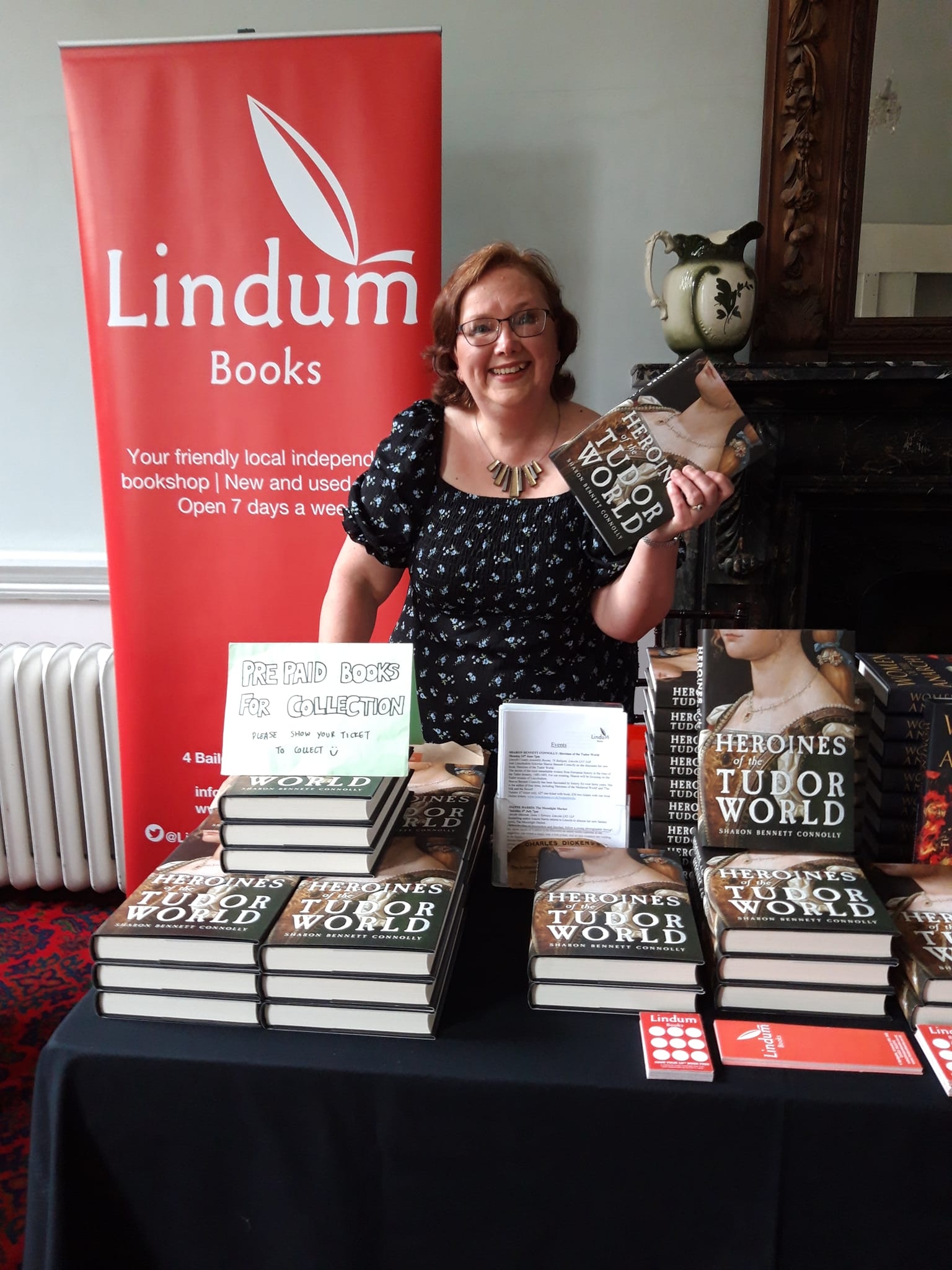
Book Corner: Arthur by Giles Kristian

Years have passed since the clash of shieldwalls echoed across the land. The Saxons are now the lords of Britain. And yet the bards still sing of Arthur – ‘In our darkest time, when we need him most, shall he come again.’

Yet old Beran has no love of bards’ songs. Nor of people, unless they are paying him to steal or kill. He is a mercenary, in the employ of the cutthroat Nabor ap Nabor, and he has been ordered to murder a boy fleeing a burning city. No ordinary boy either. No, this boy is the son of King Constantine and the grandson of High King Ambrosius. And he could be the hope of Britain…if he lives.

Betraying his companions and returning to a world he thought he had left forever, Beran gives his word that he will take the boy to the one place that still holds out against the Saxons: Camelot.

Crossing a hostile land, they will meet the runaway lovers, Tristan and Isolde. They will seek the help of Guivret, called the Little King, and the Saracen, Palamedes, who once rode beneath Arthur’s banner.

Hunted by Saxons, Nabor ap Nabor, and Queen Morgana, this unlikely band must fight for their lives and for each other. For if there’s to be any hope for Britain, Beran must deliver the boy to Camelot. But to do that, he must also face his own past…

Wow!

Every now and then, a book comes along that stands head and shoulders above the rest. It draws you in. You cannot wait to finish it.

And yet…

Finishing it leaves you bereft.

That is Giles Kristian’s Arthur.

It is the third book in a series that was only meant to be a duology. After Lancelot and Camelot came out, I asked Giles if there would be an Arthur and he said, probably not – that he had covered Arthur’s story in the other two. He wasn’t sure there was anything more to add. And how could he do it? He would have to go back a rewrite Lancelot, but with Arthur as the focus. I understood his dilemma but it was disappointing that there would be no book dedicated to Arthur.

But then, he must have found inspiration from somewhere, because we now have Arthur. Lancelot was fabulous. Camelot was gripping. Arthur is on a whole other level. The premise of the novel is inspired. Continuing the story into the next generation, with flashbacks to Arthur’s early life and career. The new story is cleverly woven into the old legends. Morgana is a villain trying to get her hands on the heir to the throne. The tragic love story of Tristan and Isolde is woven into the narrative, as are other parts of the Arthurian legend. And Beran, the old soldier, is the reluctant hero, who reluctantly finds himself in the role of Prince Erbin’s protector.

‘I’m hungry,’ the boy said.

‘I told you, I don’t have any food,’ Beran replied, looking for the stars to make sure they were still walking west. Two bats tumbled and flitted above, across a patch of dark sky.

‘But I’m hungry,’ the boy insisted.

‘What do you expect me to do about it?’ Beran growled.

The boy’s face clenched in thought. ‘You must be good at setting traps,’ he said. ‘You outlaws live here in the forest, don’t you?’

‘I can feed myself. Didn’t ask for another mouth to feed.’

‘I’m a prince.’

‘A mouth’s a mouth.’

Beran could almost feel the boy frowning in the dark from two feet away. ‘We could set a snare like my father’s hunters do. They catch hares and polecats and pine martens that way.’

‘Not any more they don’t,’ Beran said. ‘Look, boy, if we stop to set traps, we’re more likely to catch one of the bastards who’s after us. Or a Saxon. Or one of Queen Morgana’s spearmen. We’ve got to keep moving.’

‘So, we’re going to Camelot?’ the boy asked.

The name struck Beran like a blow to the chest. He stopped and the boy stopped with him. ‘Why in Ban’s name would we go to Camelot?’ he asked.

‘Because that’s where Mother was taking me,’ the boy said, looking up at him, and Beran realized he had not even considered where the fugitives from Caer Colun had been bound with their treasures and this heir to the kingdom. It made sense, of course, for where else was safe in Britain for the son of Constantine the Battle King? The man who had modelled himself on the Roman generals who once ruled in the Dark Isles, and who had waged war against the Saxons for the last sixty years.

‘Lady Iselle wrote to my mother many times since my fatehr died, begging her to go to Camelot where we would be safe.’

Another name, another blow. ‘So why didn’t you?’ Beran asked. Your mother must’ve known Caer Colun could not hold out for ever. Even if the great Constantine had still been alive.’

‘Mother said we would never abandon the people. Lady Iselle could not take all of them to live within Camelot’s walls.’

‘Well, your mother’s people are slaves now, or dead. Or living beneath the sky like us,’ Beran said.

‘How long will it take to get to Camelot?’ the boy asked.

‘We’re not going to Camelot.’

Giles Kristian’s Arthur is a beautifully crafted story from start to finish, with twists and turns that will keep the reader on the edge of their seat and reading late into the night. And so you should. With enemies old and new, Beran has to avoid his former gang, stay clear of marauding Saxons and protect his charge from Queen Morgana’s men, who are hunting them relentlessly,

I do not want to ruin the reading experience with spoilers, I promise, but I will say endings are often not as good as you want them to be. They fail to live up to the promise.

That is not the case with Arthur.

The ending is spectacular.

They are everything you would expect of the legendary Arthur.

You ride with him.

You fight with him.

You are screaming his name as you charge the enemy.

It is perfection.

If there is only one book you read this year, make sure it is Arthur by Giles Kristian.

To buy Arthur on Amazon, click here.

About the author:

Family history (he is half Norwegian) and a passion for the fiction of Bernard Cornwell inspired GILES KRISTIAN to write. Set in the Viking world, his bestselling ‘Raven’ and ‘The Rise of Sigurd’ trilogies have been acclaimed by his peers, reviewers and readers alike. In The Bleeding Land and Brothers’ Fury, he tells the story of a family torn apart by the English Civil War. He also co-wrote Wilbur Smith’s No.1 bestseller, Golden Lion. His contemporary survival thriller, Where Blood Runs Cold, won the Wilbur Smith Adventure Writing Prize. With his SundaTimes bestseller Lancelot, Giles plunged into the rich waters of the Arthurian legend. His epic reimagining of our greatest island ‘history’ continued in Camelot and draws to a breath-taking close with Arthur.
Giles Kristian lives in Leicestershire.
To find out more, visit http://www.glieskristian.com. You can follow him on X @GilesKristian and Facebook/Giles Kristian

*

My Books

Signed, dedicated copies of all my books are available through my online bookshop.

Coming on 15 June 2024: Heroines of the Tudor World

Heroines of the Tudor World tells the stories of the most remarkable women from European history in the time of the Tudor dynasty, 1485-1603. These are the women who ruled, the women who founded dynasties, the women who fought for religious freedom, their families and love. These are the women who made a difference, who influenced countries, kings and the Reformation. In the era dominated by the Renaissance and Reformation, Heroines of the Tudor World examines the threats and challenges faced by the women of the era, and how they overcame them. From writers to regents, from nuns to queens, Heroines of the Tudor World shines the spotlight on the women helped to shape Early Modern Europe.

Heroines of the Tudor World is now available for pre-order from Amberley Publishing and Amazon UK.

Out Now! Women of the Anarchy

Two cousins. On the one side is Empress Matilda, or Maud. The sole surviving legitimate child of Henry I, she is fighting for her birthright and that of her children. On the other side is her cousin, Queen Matilda, supporting her husband, King Stephen, and fighting to see her own son inherit the English crown. Women of the Anarchy demonstrates how these women, unable to wield a sword, were prime movers in this time of conflict and lawlessness. It show how their strengths, weaknesses, and personal ambitions swung the fortunes of war one way – and then the other.

Available from Bookshop.orgAmberley Publishing and Amazon UK.

Also by Sharon Bennett Connolly:

King John’s Right-Hand Lady: The Story of Nicholaa de la Haye is the story of a truly remarkable lady, the hereditary constable of Lincoln Castle and the first woman in England to be appointed sheriff in her own right. Available from all good bookshops or direct from Pen & Sword Booksbookshop.org and AmazonDefenders of the Norman Crown: The Rise and Fall of the Warenne Earls of Surrey tells the fascinating story of the Warenne dynasty, from its origins in Normandy, through the Conquest, Magna Carta, the wars and marriages that led to its ultimate demise in the reign of Edward III. Available from Pen & Sword BooksAmazon in the UK and US, and Bookshop.org

Ladies of Magna Carta: Women of Influence in Thirteenth Century England looks into the relationships of the various noble families of the 13th century, and how they were affected by the Barons’ Wars, Magna Carta and its aftermath; the bonds that were formed and those that were broken. It is now available in paperback and hardback from Pen & Sword,  Amazon, and Bookshop.orgHeroines of the Medieval World tells the stories of some of the most remarkable women from Medieval history, from Eleanor of Aquitaine to Julian of Norwich. Available now from Amberley Publishing and Amazon, and Bookshop.orgSilk and the Sword: The Women of the Norman Conquest traces the fortunes of the women who had a significant role to play in the momentous events of 1066. Available now from Amazon,  Amberley Publishing, and Bookshop.org.

Alternate Endings: An anthology of historical fiction short stories including Long Live the King… which is my take what might have happened had King John not died in October 1216. Available in paperback and kindle from Amazon.

Podcast:

Have a listen to the A Slice of Medieval podcast, which I co-host with Historical fiction novelist Derek Birks. Derek and I welcome guests, such as Bernard Cornwell and discuss a wide range of topics in medieval history, from significant events to the personalities involved.

*

Don’t forget! Signed and dedicated copies of all my books are available through my online bookshop.

For forthcoming online and in-person talks, please check out my Events Page.

You can be the first to read new articles by clicking the ‘Follow’ button, liking our Facebook page or joining me on Twitter and Instagram.

*

©2024 Sharon Bennett Connolly FRHistS.