The First Battle of Lincoln, 1141

History ... the Interesting Bits
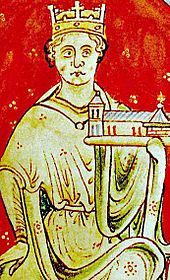
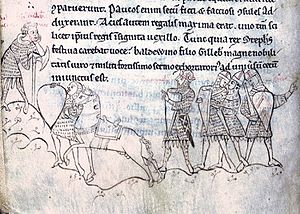
1141 Battle of Lincoln from Historia Anglorum

I have written previously about the 1217 Battle of Lincoln, but did you know that was the Second Battle of Lincoln? The First Battle of Lincoln occurred during the period known as The Anarchy, the conflict for the throne fought between King Stephen and Empress Matilda.

Early in 1141, news reached King Stephen that Ranulf de Gernons, the disgruntled Earl of Chester, had captured Lincoln Castle. Disappointed in his aspirations to Carlisle and Cumberland after they were given to Prince Henry of Scotland, Ranulf had turned his sights on Lincoln Castle, which had once been held by his mother, Lucy of Bolingbroke, Countess of Chester. Countess Lucy had died around 1138, leaving her Lincolnshire lands to her son by her second marriage, William de Roumare, Ranulf’s half-brother. Her lands elsewhere had been left to Ranulf de Gernons, who was the son of her third marriage, to Ranulf le Meschin, Earl of Chester.

It seems that in late 1140 Ranulf and his brother had contrived to gain possession of Lincoln Castle by subterfuge. As the story goes, the two brothers waited until the castle garrison had gone hunting before sending their wives to visit the castellan’s wife.  A short while after, Earl Ranulf appeared at the castle gates, wearing no armour and with only three attendants, supposedly to collect his wife and sister-in-law. Once allowed inside, he and his men overpowered the small number of men-at-arms left to guard the castle and opened the gates to his brother. The half-brothers took control of the castle and, with it, the city of Lincoln.

The citizens of Lincoln appealed to the king, who had promptly arrived outside the castle walls by 6 January 1141 and began his siege. Earl Ranulf somehow escaped from the castle and returned to his lands in Chester in order to raise more troops. He also took the opportunity to appeal to his father-in-law for aid. Ranulf’s father-in-law was, Robert, Earl of Gloucester, the illegitimate son of Henry I and brother of Empress Matilda. A very capable soldier, Earl Robert commanded Matilda’s military forces and his daughter, Maud of Gloucester – Ranulf’s wife – was still trapped inside Lincoln Castle. If the need to rescue his daughter was not enough motivation to persuade Robert to intercede at Lincoln, Ranulf also promised to switch his allegiance, and his considerable resources, to Empress Matilda. Robert marched to Lincoln, meeting up with his son-in-law along the way. The earls’ forces arrived on the outskirts of Lincoln on 1 February, crossed the Fossdyke and the River Witham and arrayed for battle.  Their rapid approach caught Stephen unawares. Outnumbered, Stephen was advised to withdraw his forces, until he could muster enough men to make an even fight of it.
History ... the Interesting Bits
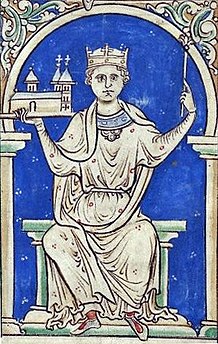
King Stephen

Stephen, perhaps remembering the destruction of his father’s reputation after his flight from Antioch, refused to withdraw. He would stand and fight. The next morning, 2 February 1141, before battle was joined, King Stephen attended a solemn mass in the cathedral; according to Henry of Huntingdon, who claimed Bishop Alexander of Lincoln as his patron and may well have been present, the service was replete with ill omens:

‘But when, following custom, he offered a candle fit for a king and was putting it into Bishop Alexander’s hands, it broke into pieces. This was a warning to the king that he would be crushed. In the bishop’s presence, too, the pyx above the altar, which contained the Lord’s Body, fell, its chain having snapped off. This was a sign of the king’s downfall.’

Henry of Huntingdon, The History of the English People 1000-1154

After mass, the king led his forces through Lincoln’s West Gate, deploying them either on the slope leading down to the Fossdyke or possibly at the bottom of the slope, on Carrholme. King Stephen formed his army into three divisions, with mounted troops on each flank and the infantry in the centre. On the right flank were the forces of Waleran de Meulan, William de Warenne, Simon de Senlis, Gilbert of Hertford, Alan of Richmond and Hugh Bigod, Earl of Norfolk. The left was commanded by William of Aumale and William of Ypres, Stephen’s trusted mercenary captain, who led a force of Flemish and Breton troops. The centre comprised the shire levy, which included citizens of Lincoln, and Stephen’s own men-at-arms, fighting on foot around the royal standard.

The opposing army also deployed in three divisions, with ‘the disinherited’, those deprived of their lands by King Stephen, on the left. The infantry, comprising of Earl Ranulf’s Cheshire tenants and other levies, and dismounted knights were in the centre under Earl Ranulf himself. The cavalry, under the command of Earl Robert of Gloucester formed the right flank. The Welsh mercenaries, ‘ill armed but full of spirits’ were arrayed on the wings of the army. Before the battle, Earl Ranulf addressed his father-in-law and fellow barons, saying,
History ... the Interesting Bits
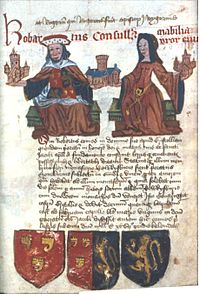
Robert of Gloucester and his wife, Mabel

‘Receive my hearty thanks, most puissant earl, and you, my noble fellow-soldiers, for that you are prepared to risk your lives in testimony of your devotion to me. But since it is through me you are called to encounter this peril, it is fitting that I should myself bear the brunt of it, and be foremost in the attack on this faithless king, who has broken the peace to which he is pledged. While I, therefore, animated by my own valour, and the remembrance of the king’s perfidy, throw myself on the king’s troops … I have a strong presage that we shall put the king’s troops to the rout, trample under foot his nobles, and strike himself with the sword.’

Henry of Huntingdon, The History of the English People 1000-1154

Earl Robert of Gloucester responded to Ranulf and addressed the army:

‘It is fitting that you should have the honour of the first blow, both on account of your high rank and your exceeding valour… The king has inhumanely usurped the crown, faithless to the fealty which he swore to my sister, and by the disorder he has occasioned caused the slaughter of many thousands; and by the example he has set of an illegal distribution of lands, has destroyed the rights of property… There is one thing, however, brave nobles and soldiers all, which I wish to impress on your minds. There is no possibility of retreat over the marches which you which you have just crossed with difficulty. Here, therefore, you must either conquer or die, for there is no hope of safety in flight. The only course that remains is, to open a way to the city with your swords. If my mind conjectures truly, as flee you cannot, by God’s help you will this day triumph… You. Victorious, will see the citizens of Lincoln, who stand in array nearest their walls, give way before the impetuosity of your attack and, with faint hearts, seek the shelter of their houses…

There is Alan of Brittany in arms against us, nay against God himself; a man so execrable, so polluted with every sort of wickedness that his equal in crime cannot be found… Then, we have opposed to us the Earl of Mellent [Meulan], crafty, perfidious; whose heart is naturally imbued with dishonesty, his tongue with fraud, his bearing with cowardice … slow in advance, quick in retreat, the last in fight, the first in flight. Next, we have against Earl Hugh, who not only makes light of his breach of fealty against the empress, but has perjured himself most blatantly a second time; affirming that King Henry conferred the crown on Stephen, and that the king’s daughter abdicated in his favour. Then we have the Earl of Albemarle [Aumale], a man singularly consistent in his wicked courses, prompt to embark in them, incapable of relinquishing them; from whom his wife was compelled to become a fugitive, on account of his intolerable filthiness. The earl also marches against us, who carried off the countess just named; a most flagrant adulterer, and a most eminent bawd, a slave to Bacchus and no friend to Mars; redolent of wine, indolent in war. With him comes Simon, earl of Northampton, who never acts but talks, who never gives but promises, who thinks that when he has said a thing he has done it, when he has promised he has performed… So of the rest of Stephen’s nobles: they are like the king; practised in robbery, rapacious for plunder, steeped in blood and all alike tainted with perjury… If you are of one mind in executing the divine judgement, swear to advance, execrate retreat, and in token of it, unanimously raise your hands to heaven.’

Henry of Huntingdon, The History of the English People 1000-1154
History ... the Interesting Bits
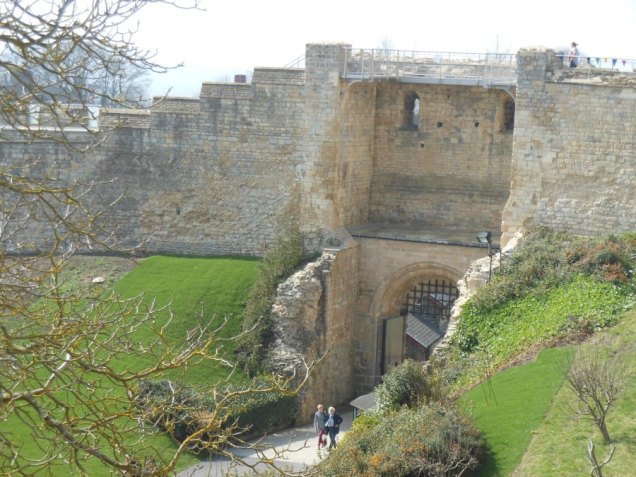
West Gate of Lincoln Castle, leading out to the most likely location of the 1141 battle

Earl Robert’s speech spared no criticism of King Stephen’s noble commanders. By process of elimination, we can surmise the Earl William de Warenne is the unnamed earl who carried off the wife of the earl of Aumale and is dismissed as a drunkard womaniser who was ‘indolent in war’. Though Warenne had had little success in conflict, this harangue is somewhat of an exaggeration; Earl Warenne, at this time, was still relatively young, being no more than 21 years and probably only recently married. He had managed to achieve quite a reputation in a very short time if Robert of Gloucester was referring to him. It is entirely possible, Gloucester was getting his William de Warennes mixed up (we’ve all done it) and was referring to the earl’s father, who had died 3 years before, who was accused of kidnapping another earl’s wife.

Henry of Huntingdon reports speeches from both sides, exhorting the men to battle and insulting the opposing commanders. As his voice ‘was not clear’ Baldwin fitz Gilbert was deputed to speak for King Stephen:

‘All ye who are now about to engage in battle must consider three things: first, the justice of your cause; secondly, the number of your force; and thirdly, its bravery: the justice of your cause that you may not peril your souls; the number of your force that it may not be overwhelmed by the enemy; its valour, lest, trusting to numbers, cowardice should occasion defeat. The justice of your cause consists inn this, that we maintain, at the peril of our lives, our allegiance to the king, before God, against those of his subjects who are perjured to him. In numbers we are not inferior in cavalry, stronger in infantry. As to the valour of so many barons, so many earls, and of our soldiers long trained to war, what words can do it justice? Our most valiant king will alone stand in place of a host. Your sovereign, the anointed of the Lord, will be in the midst of you; to him, then, to whom you have sworn fealty, keep your oaths in the sight of God, persuaded that he will grant you his aid according as you faithfully and steadfastly fight for your king, as true men against the perjured, as loyal men against traitors…’

Henry of Huntingdon, The History of the English People 1000-1154

Baldwin fitz Gilbert’s speech goes on to describe Earl Robert of Gloucester as having ‘the mouth of a lion and the heart of a hare,’ saying he is ‘loud in talk, but dull in action.’ Earl Ranulf of Chester is described as ‘a man of reckless audacity, ready for a plot, not to be depended on in carrying it out, rash in battle, careless of danger; with designs beyond his powers aiming at impossibilities…’ The speech is just as scathing for the rest of the rebel army, announcing, ‘For the other nobles and knights, they are traitors and turncoats, and I would that there were more of them, for the more there are the less are they to be feared.’ The harangue ends with the exhortation, ‘Lift up your hearts, and stretch out your hands, soldiers, exultingly, to take the prey which God himself offers to you.’1

According to Henry of Huntingdon, the armies were mobilising before Baldwin fitz Gilbert’s speech ended. The rebels were the first to advance, ‘the shouts of the advancing enemy were heard, mingled with the blasts of their trumpets, and the trampling of the horses, making the ground to quake.’ The ranks of the ‘disinherited’ moved forward with swords drawn, rather than lowered lances, intent on close quarter combat. This left flank of the rebel army fell upon Stephen’s right flank, ‘in which were Earl Alan, the Earl of Mellent [Meulan], with Hugh, the Earl of East Anglia [Norfolk], and Earl Symon, and the Earl of Warenne, with so much impetuosity that it was routed in the twinkling of an eye, one part being slain, another taken prisoner and the third put to flight.’ Faced with the ferocity of the assault and the very real prospect of death, rather than being taken prisoner and held for ransom, the earls fled the field with the remnants of their men. It was every man for himself as Stephen’s right wing disintegrated in panic.2
History ... the Interesting Bits
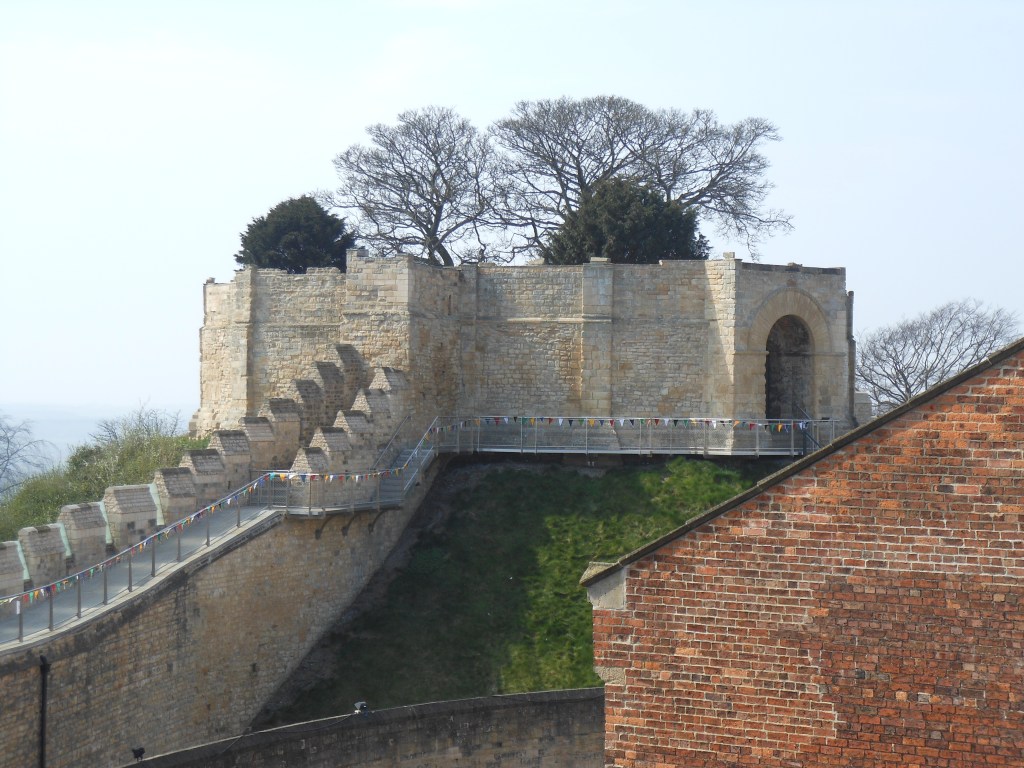
The Lucy Tower, Lincoln Castle

The left wing of the royal army appeared to have greater success, at least initially. The men of William of Aumale, Earl of York and Stephen’s mercenary captain, William of Ypres, rode down the Earl of Chester’s Welsh mercenaries and sent them running, but ‘the followers of the Earl of Chester attacked this body of horse, and it was scattered in a moment like the rest.’3 Other sources suggest that William of Ypres and William of Aumale fled before coming to close quarters with the enemy.4 Either way, William of Ypres’ men were routed and he was in no position to support the king and so fled the field, no doubt aware that he would not be well-treated were he to be captured.

Stephen’s centre, the infantry, including the Lincolnshire levies and the king’s own men-at-arms, were left isolated and surrounded, but continued to fight. Stephen himself was prominent in the vicious hand-to-hand fighting that followed. Henry of Huntingdon vividly describes the desperate scene as ‘the battle raged terribly round this circle; helmets and swords gleamed as they clashed, and the fearful screams and shouts re-echoed from the neighbouring hill and city walls.’5 The rebel cavalry charged into the royal forces killing many, trampling others and capturing some. King Stephen was deep in the midst of the fighting:

‘No respite, no breathing time was allowed, except in the quarter in which the king himself had taken his stand, where the assailants recoiled from the unmatched force of his terrible arm. The Earl of Chester seeing this, and envious of the glory the king was gaining, threw himself upon him with the whole weight of his men-at-arms. Even then the king’s courage did not fail, but his heavy battle-axe gleamed like lightning, striking down some, bearing back others. At length it was shattered by repeated blows, then he drew his well-tried sword, with which he wrought wonders until that, too, was broken.’

Henry of Huntingdon, The History of the English People 1000-1154;

According to Orderic Vitalis and the Gesta Stephani, it was the king’s sword that broke first, before he was passed a battle-axe by one of the fighting citizens of Lincoln, in order to continue the fight. Whatever the order, the king’s weapons were now useless and the king ‘fell to the ground by a blow from a stone.’6 Stephen was stunned and a soldier named William de Cahaignes then rushed at him, seized him by his helmet and shouted, ‘Here! Here! I have taken the king!’7
History ... the Interesting Bits
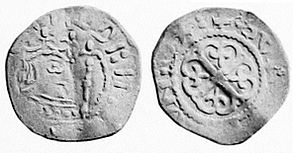
Silver penny of Empress Matilda, from the oxford mint

The king’s forces being completely surrounded, flight was impossible. All were killed or taken prisoner, including Baldwin fitz Gilbert, the man who had given the rousing pre-battle speech to the men. In the immediate aftermath of the fighting, Lincoln was sacked, buildings set alight, valuables pillaged, and its citizens slaughtered by the victorious rebels.

Defeated, Stephen was first taken to Empress Matilda and then to imprisonment at Bristol Castle. Hailed as ‘Lady of the English,’ a victorious Matilda was recognised as sovereign by the English people; the people of London being among the first to accept her.

*

Footnotes:

1 Henry of Huntingdon, The History of the English People 1000-1154; 2 ibid; 3 ibid; 4 Gesta Stephani; 5 Henry of Huntingdon, The History of the English People 1000-1154; 6 J. Sharpe (trans.), The History of the Kings of England and of his Own Times by William Malmesbury; 7 Henry of Huntingdon, The History of the English People 1000-1154

Bibliography:

Gesta Stephani; Henry of Huntingdon, The History of the English People 1000-1154; J. Sharpe (trans.), The History of the Kings of England and of his Own Times by William Malmesbury; Catherine Hanley, Matilda: Empress, Queen, Warrior; Orderici Vitalis, Historiae ecclesiasticae libri tredecem, translated by Auguste Le Prévost; Chronicles of the Reigns of Stephen, Henry II and Richard I; William Farrer and Charles Travis Clay, editors, Early Yorkshire Charters, Volume 8: The Honour of Warenne; Edmund King, King Stephen; Donald Matthew, King Stephen; Teresa Cole, the Anarchy: The Darkest Days of Medieval England; David Smurthwaite, The Complete Guide to the Battlefields of Britain; Matthew Lewis, Stephen and Matilda’s Civil War: Cousins of Anarchy.

Images:

Courtesy of Wikipedia except those of Lincoln Castle which are ©2020 Sharon Bennett Connolly

*

My Books

Signed, dedicated copies of all my books are available through my online bookshop. or by contacting me.

Coming 30 March: Princesses of the Early Middle Ages
Books by Sharon Bennett Connolly

Daughters of kings were often used to seal treaty alliances and forge peace with England’s enemies. Princesses of the Early Middle Ages: Royal Daughters of the Conquest explores the lives of these young women, how they followed the stereotype, and how they sometimes managed to escape it. It will look at the world they lived in, and how their lives and marriages were affected by political necessity and the events of the time. Princesses of the Early Middle Ages will also examine how these girls, who were often political pawns, were able to control their own lives and fates. Whilst they were expected to obey their parents in their marriage choices, several princesses were able to exert their own influence on these choices, with some outright refusing the husbands offered to them.

Their stories are touching, inspiring and, at times, heartbreaking.

Princesses of the Early Middle Ages: Royal Daughters of the Conquest is now available for pre-order from Pen & Sword and Amazon.

Also by Sharon Bennett Connolly:

Books by Sharon Bennett Connolly

Scotland’s history is dramatic, violent and bloody and Scotland’s Medieval Queens have seen it all. This is the story of Scotland through their eyes. Available now from Amazon and Pen and Sword BooksHeroines of the Tudor World tells the stories of the most remarkable women from European history in the time of the Tudor dynasty, 1485-1603. These are the women who ruled, the women who founded dynasties, the women who fought for religious freedom, their families and love. Heroines of the Tudor World is now available from Amberley Publishing and Amazon UK. Women of the Anarchy demonstrates how Empress Matilda and Matilda of Boulogne, unable to wield a sword themselves, were prime movers in this time of conflict and lawlessness. It shows how their strengths, weaknesses, and personal ambitions swung the fortunes of war one way – and then the other. Available from Bookshop.orgAmberley Publishing and Amazon UKKing John’s Right-Hand Lady: The Story of Nicholaa de la Haye is the story of a truly remarkable lady, the hereditary constable of Lincoln Castle and the first woman in England to be appointed sheriff in her own right. Available from all good bookshops Pen & Sword Booksbookshop.org and Amazon

Royal Historical Society

Defenders of the Norman Crown: The Rise and Fall of the Warenne Earls of Surrey tells the fascinating story of the Warenne dynasty, from its origins in Normandy, through the Conquest, Magna Carta, the wars and marriages that led to its ultimate demise in the reign of Edward III. Available from Pen & Sword Books, Amazon in the UK and US, and Bookshop.org. Ladies of Magna Carta: Women of Influence in Thirteenth Century England looks into the relationships of the various noble families of the 13th century, and how they were affected by the Barons’ Wars, Magna Carta and its aftermath; the bonds that were formed and those that were broken. It is now available in paperback and hardback from Pen & Sword, Amazon, and Bookshop.org. Heroines of the Medieval World tells the stories of some of the most remarkable women from Medieval history, from Eleanor of Aquitaine to Julian of Norwich. Available now from Amberley Publishing, Amazon, and Bookshop.org. Silk and the Sword: The Women of the Norman Conquest traces the fortunes of the women who had a significant role to play in the momentous events of 1066. Available now from Amazon, Amberley Publishing, and Bookshop.org.

Alternate Endings: An anthology of historical fiction short stories including Long Live the King… which is my take what might have happened had King John not died in October 1216. Available in paperback and kindle from Amazon.

Podcast:

A Slice of Medieval

Have a listen to the A Slice of Medieval podcast, which I co-host with Historical fiction novelist Derek Birks. Derek and I welcome guests, such as Ian Mortimer, Bernard Cornwell, Elizabeth Chadwick and Scott Mariani, and discuss a wide range of topics in medieval history, from significant events to the personalities involved. 

Every episode is also now available on YouTube.

*

Don’t forget! Signed and dedicated copies of all my books are available through my online bookshop.

For forthcoming online and in-person talks, please check out my Events Page.

You can be the first to read new articles by clicking the ‘Follow’ button, liking our Facebook page or joining me on TwitterThreadsBluesky and Instagram.

Article: © 2020 Sharon Bennett Connolly FRHistS

Joan Beaufort: a Medieval Matriarch

History...the Interesting bits
Joan Beaufort, Countess of Westmorland, from the Neville Book of Hours

Joan Beaufort was the youngest child and only daughter of John of Gaunt and his mistress, Katherine Swynford. Her father, Gaunt, was the third surviving son of Edward III and his queen, Philippa of Hainault. He had married Blanche of Lancaster in 1359 – a marriage which eventually brought him the title of Duke of Lancaster. With Blanche he had 3 surviving legitimate children: Elizabeth, Philippa and Henry – the future king, Henry IV.

Joan’s mother, Katherine Swynford, was a member of Blanche’s household and had been married to a Lincolnshire knight, Sir Hugh Swynford, in 1367. They had 3 children together; Blanche, Thomas and Margaret. Sir Hugh was a tenant of John of Gaunt and served on the continent with him in 1366 and 1370. John of Gaunt was widowed in 1368, when Blanche died in childbirth. Katherine had been governess to the Lancaster children for a number of years when Hugh died in November 1371, leaving her a young widow with 3 children to feed.

John and Katherine may have begun their relationship shortly after Hugh’s death, despite John having married again, to Constance of Castile, in September 1371. John and Katherine’s first child, John, was probably born in 1372, with 3 more children, Henry, Thomas and Joan, born before 1379. They would be given the surname of Beaufort, though no one seems to know quite where the name came from. Although the children were illegitimate, the boys enjoyed successful careers during the reign of their half-brother, Henry IV; with John in politics, Henry rising to the rank of cardinal in the church and Thomas pursuing a military career.

Joan was the youngest of the Beaufort children, born sometime between 1377 and 1379. She was close to her family. She joined the household of her sister-in-law, Mary de Bohun, wife of her half-brother, the future Henry IV, in 1386. It seems that she was accompanied by her mum, Katherine Swynford, possibly because Katherine and John of Gaunt had separated and John was reconciled with his second wife, Constance of Castile. Joan was about 7-years-old and was continuing her education and being prepared for her first marriage – she had just been betrothed to 10-year-old Robert Ferrers of Oversley, Warwickshire. Robert would become one of her father’s retainers and, through his mother, heir to the estates of the Botelers of Wem, Shropshire. They were married in 1392, when Joan was 13 or 14 and 2 daughters were born in quick succession; Elizabeth in 1393 and Mary the following year. The marriage was cut short, however, when Robert died in 1395 or 1396, leaving Joan – still only in her mid-teens – a widow with young children.

History...the Interesting bits
John of Gaunt, Joan’s father

As the granddaughter of a king, Joan was bound not to remain a widow for long. And her marriage prospects improved drastically in February 1396, when her parents were married in Lincoln Cathedral. Shortly after he married Katherine, John of Gaunt applied to the pope to have their children declared legitimate; the papal bull declaring the legitimacy of Joan and her brothers arrived in September of the same year. As the legitimate granddaughter of a king, Joan’s status was improved immensely and she was soon married to the recently widowed 6th baron of Raby and later earl of Westmorland, Ralph Neville.

Unlike many medieval women, we have some idea of what Joan may have looked like, thanks to a miniature by Pol de Limbourg. Taken from the Neville Book of Hours, it shows Joan dressed piously in black and white, though her cloak and cuffs are lined with ermine and she wears the Lancastrian S-collar around her neck. Her features are delicate. Her hands, with rings on the fingers, are clasped in prayer.

Joan was a learned woman, she was educated to the same standard as her legitimate half-sisters, Philippa and Elizabeth of Lancaster. She seems to have possessed a considerable library, the texts being largely devotional. She owned a copy of ‘Les Cronikels de Jerusalem et de Viage de Godfray de Boylion’ (Chronicles of Jerusalem and the Voyages of Godfrey de Bouillon) which she lent to her nephew, Henry V, but had to petition the Council for its return after Henry’s death. Her brother, Thomas, had left her a book, titled ‘Tristram’.

Thomas Hoccleve dedicated a volume of poems, ‘Hoccleve’s Works’ to her sending it to her around 1422, saying:

Go, smal book to the noble excellence

Of my lady of Westmerland and seye,

Her humble seruant with al reuerence

Him recommandith vn-to hir nobleye.

Also, an early copy of Hoccleve’s ‘Regiment of Princes’ was made for Joan’s son-in-law, John Mowbray.

History...the Interesting bits
Raby Castle, Count Durham

Known for her piety, Joan left many bequests to religious institutions in her will, especially monasteries in the north. Admitted to the sisterhood at St Albans, she was also licensed to appropriate for the support of the chantry the advowson of the church of Welton, in the Howden area; and it was Joan who saw the completion of the college at Staindrop, founded by her husband in 1408. According to antiquarian, John Leland, Joan ‘erectid the very house self of the college’ in the form of a medieval hospital. Her piety, however, was not always conventional. Her father had been a defender of the Lollards – he employed John Wycliffe, the first person to translate the Bible into English, as a tutor to his children. And Joan seems to have had a similar religious curiosity – hence her association with Margery Kempe.

Margery Kempe was a mystic from Lyn, Norfolk; she claimed to have visions of Christ and travelled throughout England and on the Continent. She wrote the Book of Margery Kempe which recounted the story of her life and her visions and considered to be the first ever autobiography in English. Joan invited Margery Kempe to visit her at Raby. She also wrote a letter to exonerate Margery from accusations of corruption. Margery’s own testimony says they knew each other for ‘this two years and more’. In 1417 Margery was brought before the Archbishop of York, accused of advising Joan’s daughter, Elizabeth Greystoke, to leave her husband. Margery was found ‘not guilty’ of the offence and under questioning, admitted she had told Countess Joan and her daughter a ‘good tale of a lady who was damned because she would not love her enemies’. Margery even suggested her questioners ask Joan for corroboration of her testimony, demonstrating her trust that the Countess would back her.

Joan enjoyed influence at court – as the sister of one king, Henry IV, and aunt to his successor, Henry V. She was named in royal grants as ‘the king’s sister’ and made a Lady of the Garter in the reign of her cousin, Richard II. She was compassionate and used her influence to petition the king to aid those less fortunate, such as Christopher and Margaret Standith, who had fallen on hard times after Christopher had been dismissed from his father’s service for marrying for love. Joan wrote the king, asking him to give Margaret a position in the household of his queen, Joan of Navarre.

It can be argued that Joan had a strong bond of affection and purpose with her husband. They both wanted to see their family’s prospects improved even further, arranging advantageous marriages for their large brood of children. Although, it is unclear how much influence Joan had when her husband, the Earl of Westmorland, manage to entail the bulk of his estates onto his children by Joan, rather than the children by his first marriage to Margaret Stafford. This seems to have been a sensible strategy, given that his children by Joan were closely related to the royal family – Joan being the half sister of King Henry IV. The strategy, however, caused Joan problems after her husband’s death and led to a family feud – which sometimes turned violent – which wasn’t resolved until after Joan died.

History...the Interesting bits
Tomb of Ralph Neville, St Mary’s Church, Staindrop

Joan was a strong influence on her daughters and daughters-in-law. She concerned herself with matters of family – such as her children’s marriages – rather than business. Ralph’s son, also Ralph, by his first marriage, was married to Mary, Joan’s younger daughter from her first marriage. Ralph and Joan’s children were married into many of the leading noble dynasties of the time and served to strengthen the position of the Beauforts as a whole. Such significant marriages saw their eldest daughter, Katherine, married to John Mowbray, 2nd Duke of Norfolk – it was Katherine who later married John Woodville, brother-in-law of her nephew Edward IV; Katherine was around 65 years old and John just 20. Of other daughters, Eleanor married Henry Percy, 2nd Earl of Northumberland, while Anne married Humphrey Stafford, a descendant of Edward III and 1st Duke of Buckingham. Of their sons, Richard Neville married Alice Montagu, heiress to the earldom of Salisbury, and became Earl of Salisbury by right of his wife; their son, Richard Neville, was the Earl of Warwick known as the Kingmaker. Robert Neville became Bishop of Durham and other sons married rich heiresses to claim titles and positions for themselves.

Ralph died in 1425 and was buried at Staindrop, close to Raby Castle. His tomb includes effigies of both Joan and his first wife, although neither woman is buried beside him. Joan was herself responsible for the negotiations after her husband’s death, which saw their youngest daughter, Cecily, married to Richard, Duke of York. Two of Cecily’s sons would become Kings of England; Edward IV and Richard III.

Having married young herself, and having become a mother before she was 15 years old, Joan was sensible to the dangers of girls marrying too young and ensured that none of her daughters or daughters-in-law, faced the dangers of childbirth before they were 17 or 18 years of age. She even kept married couples apart – such as Cecily and the Duke of York – when necessary, in order to protect the girls.

History...the Interesting bits
Joan’s tomb, beside that of her her mother, in Lincoln Cathedral

On 28 November 1437, Joan was granted licence for the foundation of a chantry with two chaplains at Lincoln Cathedral, to pray daily for the soul of her mother, Katherine Swynford, as well as for herself, her husband, brother (Cardinal Henry Beaufort) and father. On the same day, she secured a grant for daily prayers to be said at Staindrop Church – where her husband Ralph, Earl of Westmorland, was buried – for the souls of her husband, brother and father.

Joan died at Howden, a manor near Beverley in her son Robert’s possession as Bishop of Durham, on 13 November 1440. In her will, she requested to be buried with her mother, with whom she had a strong bond in life, but also for her mother’s burial site to be enlarged and enclosed. It seems likely that the now-lost wrought iron screens which surrounded her mother’s tomb, were added at this time, rather than when Katherine died in 1403. Joan’s epitaph claimed that the whole nation grieved at her death.

There is, however, no clear indication why Joan chose to be buried with her mother, rather than at Staindrop with her husband. It may be that as the granddaughter of a king (Edward III), she thought Lincoln Cathedral a more appropriate resting place, or that she wanted to be as close to her mother in death as she had been in life.

*

Pictures: John of Gaunt and Joan Beaufort courtesy of Wikipedia. All other photos ©SharonBennettConnolly FRHistS

*

Sources: katherineswynfordsociety.org.uk; Red Roses: Blanche of Gaunt to Margaret Beaufort by Amy Licence; The Nevills of Middleham by K.L. Clark; The House of Beaufort: the Bastard Line that Captured the Crown by Nathen Amin; Brewer’s British Royalty by David Williamson; History Today Companion to British History Edited by Juliet Gardiner & Neil Wenborn; The mammoth Book of British kings & Queen by Mike Ashley; Britain’s Royal Families, the Complete Genealogy by Alison Weir; The Life and Times of Edward III by Paul Johnson; The Perfect King, the Life of Edward III by Ian Mortimer; The Reign of Edward III by WM Ormrod; Chronicles of the Age of Chivalry Edited by Elizabeth Hallam; Oxforddnb.com; womenshistory.about.com/od/medrenqueens/a/Katherine-Swynford.

*

My Books

Signed, dedicated copies of all my books are available through my online bookshop.

Out now: Scotland’s Medieval Queens

Books by Sharon Bennett Connolly

Scotland’s history is dramatic, violent and bloody. Being England’s northern neighbour has never been easy. Scotland’s queens have had to deal with war, murder, imprisonment, political rivalries and open betrayal. They have loved and lost, raised kings and queens, ruled and died for Scotland. From St Margaret, who became one of the patron saints of Scotland, to Elizabeth de Burgh and the dramatic story of the Scottish Wars of Independence, to the love story and tragedy of Joan Beaufort, to Margaret of Denmark and the dawn of the Renaissance, Scotland’s Medieval Queens have seen it all. This is the story of Scotland through their eyes.

Scotland’s Medieval Queens gives a thorough grounding in the history of the women who ruled Scotland at the side of its kings, often in the shadows, but just as interesting in their lives beyond the spotlight. It’s not a subject that has been widely covered, and Sharon is a pioneer in bringing that information into accessible history.’ Elizabeth Chadwick (New York Times bestselling author)

Available now from Amazon and Pen and Sword Books

Also by Sharon Bennett Connolly:

Books by Sharon Bennett Connolly

Heroines of the Tudor World tells the stories of the most remarkable women from European history in the time of the Tudor dynasty, 1485-1603. These are the women who ruled, the women who founded dynasties, the women who fought for religious freedom, their families and love. Heroines of the Tudor World is now available for pre-order from Amberley Publishing and Amazon UK. Women of the Anarchy demonstrates how Empress Matilda and Matilda of Boulogne, unable to wield a sword themselves, were prime movers in this time of conflict and lawlessness. It shows how their strengths, weaknesses, and personal ambitions swung the fortunes of war one way – and then the other. Available from Bookshop.orgAmberley Publishing and Amazon UKKing John’s Right-Hand Lady: The Story of Nicholaa de la Haye is the story of a truly remarkable lady, the hereditary constable of Lincoln Castle and the first woman in England to be appointed sheriff in her own right. Available from all good bookshops Pen & Sword Booksbookshop.org and Amazon

Royal Historical Society

Defenders of the Norman Crown: The Rise and Fall of the Warenne Earls of Surrey tells the fascinating story of the Warenne dynasty, from its origins in Normandy, through the Conquest, Magna Carta, the wars and marriages that led to its ultimate demise in the reign of Edward III. Available from Pen & Sword BooksAmazon in the UK and US, and Bookshop.orgLadies of Magna Carta: Women of Influence in Thirteenth Century England looks into the relationships of the various noble families of the 13th century, and how they were affected by the Barons’ Wars, Magna Carta and its aftermath; the bonds that were formed and those that were broken. It is now available in paperback and hardback from Pen & SwordAmazon, and Bookshop.orgHeroines of the Medieval World tells the stories of some of the most remarkable women from Medieval history, from Eleanor of Aquitaine to Julian of Norwich. Available now from Amberley Publishing and Amazon, and Bookshop.orgSilk and the Sword: The Women of the Norman Conquest traces the fortunes of the women who had a significant role to play in the momentous events of 1066. Available now from Amazon,  Amberley Publishing, and Bookshop.org.

Alternate Endings: An anthology of historical fiction short stories including Long Live the King… which is my take what might have happened had King John not died in October 1216. Available in paperback and kindle from Amazon.

Podcast:

A Slice of Medieval

Have a listen to the A Slice of Medieval podcast, which I co-host with Historical fiction novelist Derek Birks. Derek and I welcome guests, such as Bernard Cornwell and Elizabeth Chadwick, and discuss a wide range of topics in medieval history, from significant events to the personalities involved.

There are now 80 episodes to listen to!

Every episode is also available on YouTube.

*

Don’t forget! Signed and dedicated copies of all my books are available through my online bookshop.

For forthcoming online and in-person talks, please check out my Events Page.

You can be the first to read new articles by clicking the ‘Follow’ button, liking our Facebook page or joining me on TwitterThreadsBluesky and Instagram.

©2019 Sharon Bennett Connolly FRHistS
Edward the Exile and the Last Saxon Royal Family

History...the Interesting Bits
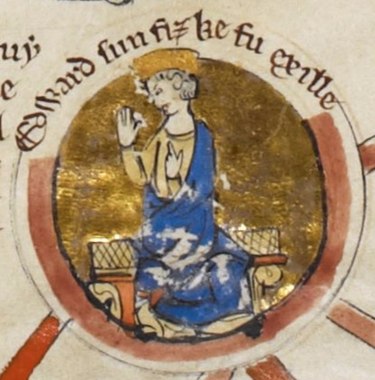
Edward the Exile

The story of Edward the Exile is a sad tale of an opportunity lost. Edward the Exile was one of the two sons of Edmund II Ironside, King of England in 1016; Edmund was the son of Ӕthelred II and his first wife, Ӕlfgifu of York. Edward’s grandfather was, therefore, Ӕthelred II (the Unready) and his uncle was Edward the Confessor, England’s king from 1042 until 1066.

Edward the Exile’s mother was Ealdgyth, the widow of Sigeferth, a thegn from East Anglia, who had been betrayed in 1015, along with another thegn, Morcar, by Eadric Streona. Eadric had lured them into his chamber during a great assembly at Oxford and killed them.  After her first husband’s murder, King Ӕthelred ‘took possession of their effects, and ordered Elgitha [Ealdgyth], Sigeferth’s widow, to be taken to the town of Malmesbury’.¹

Taking a stand against his father and Eadric, however, Edmund rescued Ealdgyth from Malmesbury and ‘married her against his father’s will’, between the middle of August and the middle of September 1015, Edmund then rode into the territories of Sigeferth and Morcar, in the Five Boroughs (The Five Boroughs were Derby, Leicester, Lincoln, Nottingham and Stamford), ‘and seizing the lands of Sigeferth and Morcar, compelled the villeins to acknowledge him as their lord’.¹

Edmund and Ealdgyth were probably married at the beginning of August 1015. They would have two sons, Edward and Edmund, who may well have been twins or were born just one year apart. Edward was born in 1016, with Edmund being born no later than 1017. Their father spent the rest of 1015 and 1016 trying to encourage resistance to the constant Danish onslaught.

History...the Interesting Bits
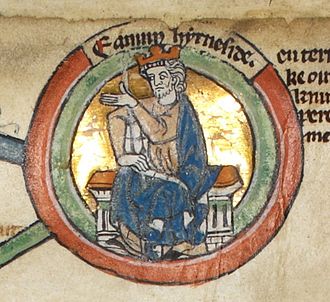
Edmund II Ironside

Following the death of Ӕthelred II on 23 April 1016, Edmund was proclaimed King Edmund II as the old king’s oldest surviving son. He was to spend the remainder of his life fighting the forces of King Cnut, the Danish contender for the English crown. He even allied with the treacherous Eadric Streona in the hope that their combined forces could fend off the Danes. However, when it came to the crunch, in the Battle of Assundun, on 18 October 2016, Streona fled in the face of the enemy, leaving Edmund and his allies to fight on alone. The result was defeat for Edmund, and the deaths of many of England’s leading nobles.

A peace was eventually negotiated, in which England was divided between the two contenders, with Edmund taking Wessex and Cnut taking Northumbria and, probably, Mercia. Under the treaty it was agreed the other would inherit the remainder of the country from whichever died first. Unfortunately, on 30 November 1016, Edmund died, either from wounds received during the summer of battles, or by more nefarious means – it is impossible to tell. A later story that Edmund was killed, by a sword or spear thrust into his bowels, as he visited the latrine, does not appear in any contemporary chronicles.

Cnut was now sole king of England.

As soon as he had control, Cnut sent Edmund’s infant sons to the court of the king of Sweden, Olof Stötkonung, apparently with instructions to have them killed. However, the Swedish king was understandably squeamish about murdering two innocent toddlers. He was an old ally of the boys’ grandfather, Ӕthelred II and spared the children, sending them to safety in Hungary. When Cnut’s assassins almost caught up with them there, they were forced to flee for their lives, settling at the court of Yaroslav the Wise in Kyiv, where Ingegerd, the daughter of King Olof of Sweden, was queen.

History...the Interesting Bits
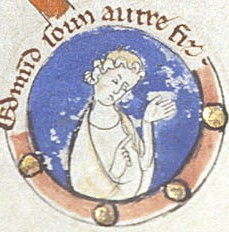
Edmund Aetheling, brother of Edward the Exile

In 1046,  as young adults, Edward and Edmund made their way back to Hungary and helped in the restoration of the exiled Andrew of Hungary. Edmund is said to have married a Hungarian princess but died sometime before 1054. Around 1043 Edward married Agatha, whose origins are extremely obscure. She may have been a daughter of Yaroslav and Ingegerd of Kyiv but was more likely the daughter of Luidolf, Margrave of West Friesland and a relative of Holy Roman Emperor Henry III. The couple had three children together. Margaret, the eldest, was born in either 1045 or 1046; her sister, Christina was born around 1050 and her brother Edgar, the Ӕtheling was born sometime between 1052 and 1056.

The family could have spent their whole lives in European exile, were it not for Edward the Confessor’s failure to produce a legitimate heir by his wife, Edith of Wessex. In 1054 Edward, having realised that he needed to settle the question over the succession, sent an embassy to eastern Europe in search of his brother, Edmund’s children. Ealdred, Archbishop of York, spent several months at the court of Holy Roman Emperor Henry III, but was initially unsuccessful in arranging Edward the Exile’s return to England.

A second embassy in 1056 managed to persuade the prince to return to his homeland and he arrived back in England in 1057, forty years after he was sent into exile.  We do not know whether his family travelled with him or arrived later. However, just days after his return Edward the Exile was dead, before he even saw the king, his uncle. He died on 19 April 1057, and was laid to rest in St Paul’s Cathedral, London, where his grandfather, Ӕthelred II, was also buried. Whether his death was caused by nefarious means or simply a sad twist of fate is uncertain. The suspicion has been raised that Edward’s rival for the throne, Harold Godwinson – the future Harold II – may have taken the opportunity to remove his rival; although it was likely that it was Harold who had escorted Edward back to England, as he was on the continent at that time. So surely, had he intended murder, he would have done it sooner and far from English soil?

History...the Interesting Bits
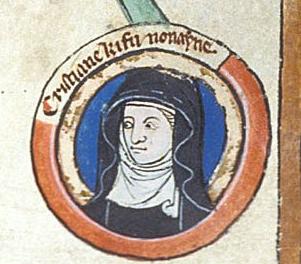
Christina, daughter of Edward the Exile and Agatha

Edward the Exile’s brother, Edmund, is not mentioned as a candidate for the English throne, nor is he spoken of when his brother returned from Hungary in 1057, so it seems likely that he had died in his eastern exile in the late 1040s or early 1050s; otherwise it would have been prudent for the king to send for him following Edward the Exile’s unfortunate demise in 1057.

Whatever the circumstances, the death of Edward the Exile was a blow for Edward the Confessor’s dynastic hopes. The Anglo-Saxon Chronicle bemoans his death, ‘Alas! That was a rueful time, and injurious to all this nation – that he ended his life so soon after he came to England, to the misfortune of this miserable people.’¹ With Edward’s death, his son, Edgar, became the ӕtheling, but Edgar was still very much a child of about five years of age and unlikely to inherit if King Edward died in the near future. He and his sisters, along with their mother, were now in the protection of King Edward. They continued to live at court, Edgar was adopted by Queen Edith, who raised him and saw to his education. Margaret and Christina were probably sent to the nunnery at Wilton, where the queen had been schooled, to continue their education. They would have undergone instruction in religion, spinning and embroidery, household management and possibly music and dancing.

By January 1066, when Edward the Confessor died, Margaret was approaching her twentieth birthday, while Edgar could have been as young as ten and was, probably, no older than fourteen. Due to his tender years Edgar was passed over as a candidate for the throne, in preference for the older and more experienced Harold Godwinson; who was crowned as King Harold II the day after King Edward’s death. Following Harold’s death at the Battle of Hastings in October 1066, Edgar was proclaimed king by some of his supporters, including Archbishop Ealdred of York, but was hardly capable of mounting any real challenge to William the Conqueror and by December had come to terms with him at Berkhamsted.

History...the Interesting Bits
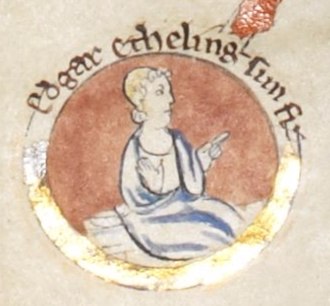
Edgar the Aetheling, son of Edward the Exile and Agatha

By 1068 Edgar the Ӕtheling had become involved in the opposition to Norman rule, which had been festering in northern England. However, when events turned against him he fled to Scotland, taking his mother and sisters along with him. The family was warmly received at Dunfermline by Scotland’s king, Malcolm III Canmore. Malcolm III Canmore was the son of Duncan I and Sybilla of Northumbria. His father had been killed by Macbeth, of Shakespeare fame, in August of 1040. Malcolm himself had defeated King Macbeth in battle, at Lumphanan, in August 1057 and Macbeth’s son Lulach in March 1058, to take the throne. By 1069 he was well established as king and had two sons by his first wife, Ingebiorg. Ingeborg was the daughter of Fin Arnasson, friend of Harald Hardrada and Jarl of Holland. The couple had three sons Duncan, Malcolm and Donald. In 1069 Malcolm asked Edgar and his mother for Margaret’s hand in marriage:

‘Then began Malcolm to yearn after the child’s [Edgar] sister, Margaret, to wife; but he and all his men long refused; and she also herself was averse, and said that she would neither have him nor anyone else, if the Supreme Power would grant, that she in her maidenhood might please the mighty Lord with a carnal heart, in this short life, in pure continence. The king, however, earnestly urged her brother, until he answered Yea. And indeed he durst not otherwise; for they were come into his kingdom … The prescient Creator wist long before what he of her would have done; for that she would increase the glory of God in this land, lead the king aright from the path of error, bend him and his people together by a better way, and suppress the bad customs which the nation formerly followed: all which she afterwards did. The king therefore received her, though it was against her will, and was pleased with her manners, and thanked God, who in his might had given him such a match.’¹

Margaret was reluctant to agree to the marriage, she was more inclined to a religious life and had hoped to become a nun. Nonetheless, with pressure from Malcolm, her brother and, possibly, her own sense of obligation to the king who was sheltering her family, she eventually accepted his proposal. They were married at Dunfermline sometime in 1069 or 1070 and, by all accounts, it seems to have been a happy and successful marriage and partnership.

History...the Interesting Bits
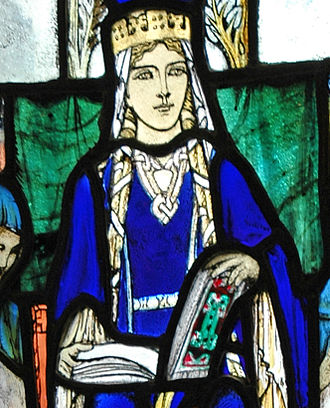
St Margaret, Queen of Scotland

Every English monarch, from Henry II onwards, could also claim descent from Alfred the Great, but through the female line of St Margaret, Queen of Scotland, daughter of King Edward ‘s nephew, Edward the Exile, and mother of Henry I’s wife, Matilda of Scotland.

Margaret’s sister, Christina would later take holy orders, becoming the abbess of Romsey Abbey and overseeing the education of her nieces, Edith and Mary, the daughters of her sister, Margaret, Queen of Scotland.

Edgar seems to have been only a minor player in the politics and upheaval following the Norman Conquest. His political isolation meant that few took his claim to the English crown seriously. While his participation in military actions, and in relations with Scotland are mentioned in various documents, his death passed without notice – or remark. William of Malmesbury wrote of him in 1125, that ‘he now grows old in the country in privacy and quiet’². Nothing is mentioned of him thereafter; neither is it ever remarked that he had a wife of children.

If he had only been a few years older in that crucial year of 1066, or if his father had survived to inherit the throne from Edward the Confessor, the story could have been very different.

*

Footnotes: ¹The Anglo-Saxon Chronicle translated by James ingram; ²William of Malmesbury, De gestis regum; ³Anglo-Saxon Chronicle, 1097, Text E.

Pictures courtesy of Wikipedia

Sources: Brewer’s British Royalty by David Williamson; Britain’s Royal Families, the Complete Genealogy by Alison Weir;The Wordsworth Dictionary of British History by JP Kenyon; The Anglo-Saxons in 100 Facts by Martin Wall; Kings, Queens, Bones and Bastards by David Hilliam; The Mammoth Book of British kings & Queens by Mike Ashley; The Oxford Companion to British History Edited by John Cannon; The Anglo-Saxon Chronicles translated and edited by Michael Swaton; The Anglo-Saxon Chronicle translated by James Ingram; Queen Emma and the Vikings by Harriett O’Brien; The Bayeux Tapestry by Carola Hicks; oxforddnb.com.

*

My Books

Signed, dedicated copies of all my books are available, please get in touch by completing the contact me form or through my online bookshop.

Out now: Scotland’s Medieval Queens

Books by Sharon Bennett Connolly

Scotland’s history is dramatic, violent and bloody. Being England’s northern neighbour has never been easy. Scotland’s queens have had to deal with war, murder, imprisonment, political rivalries and open betrayal. They have loved and lost, raised kings and queens, ruled and died for Scotland. From St Margaret, who became one of the patron saints of Scotland, to Elizabeth de Burgh and the dramatic story of the Scottish Wars of Independence, to the love story and tragedy of Joan Beaufort, to Margaret of Denmark and the dawn of the Renaissance, Scotland’s Medieval Queens have seen it all. This is the story of Scotland through their eyes.

Scotland’s Medieval Queens gives a thorough grounding in the history of the women who ruled Scotland at the side of its kings, often in the shadows, but just as interesting in their lives beyond the spotlight. It’s not a subject that has been widely covered, and Sharon is a pioneer in bringing that information into accessible history.’ Elizabeth Chadwick (New York Times bestselling author)

Available now from Amazon and Pen and Sword Books

Also by Sharon Bennett Connolly:

Books by Sharon Bennett Connolly

Heroines of the Tudor World tells the stories of the most remarkable women from European history in the time of the Tudor dynasty, 1485-1603. These are the women who ruled, the women who founded dynasties, the women who fought for religious freedom, their families and love. Heroines of the Tudor World is now available for pre-order from Amberley Publishing and Amazon UK. Women of the Anarchy demonstrates how Empress Matilda and Matilda of Boulogne, unable to wield a sword themselves, were prime movers in this time of conflict and lawlessness. It shows how their strengths, weaknesses, and personal ambitions swung the fortunes of war one way – and then the other. Available from Bookshop.orgAmberley Publishing and Amazon UKKing John’s Right-Hand Lady: The Story of Nicholaa de la Haye is the story of a truly remarkable lady, the hereditary constable of Lincoln Castle and the first woman in England to be appointed sheriff in her own right. Available from all good bookshops Pen & Sword Booksbookshop.org and Amazon

Royal Historical Society

Defenders of the Norman Crown: The Rise and Fall of the Warenne Earls of Surrey tells the fascinating story of the Warenne dynasty, from its origins in Normandy, through the Conquest, Magna Carta, the wars and marriages that led to its ultimate demise in the reign of Edward III. Available from Pen & Sword BooksAmazon in the UK and US, and Bookshop.orgLadies of Magna Carta: Women of Influence in Thirteenth Century England looks into the relationships of the various noble families of the 13th century, and how they were affected by the Barons’ Wars, Magna Carta and its aftermath; the bonds that were formed and those that were broken. It is now available in paperback and hardback from Pen & SwordAmazon, and Bookshop.orgHeroines of the Medieval World tells the stories of some of the most remarkable women from Medieval history, from Eleanor of Aquitaine to Julian of Norwich. Available now from Amberley Publishing and Amazon, and Bookshop.orgSilk and the Sword: The Women of the Norman Conquest traces the fortunes of the women who had a significant role to play in the momentous events of 1066. Available now from Amazon,  Amberley Publishing, and Bookshop.org.

Alternate Endings: An anthology of historical fiction short stories including Long Live the King… which is my take what might have happened had King John not died in October 1216. Available in paperback and kindle from Amazon.

Podcast:

A Slice of Medieval

Have a listen to the A Slice of Medieval podcast, which I co-host with Historical fiction novelist Derek Birks. Derek and I welcome guests, such as Bernard Cornwell and Elizabeth Chadwick, and discuss a wide range of topics in medieval history, from significant events to the personalities involved. 

There are now 80 episodes to listen to!

Every episode is also available on YouTube.

*

Don’t forget! Signed and dedicated copies of all my books are available through my online bookshop.

For forthcoming online and in-person talks, please check out my Events Page.

You can be the first to read new articles by clicking the ‘Follow’ button, liking our Facebook page or joining me on TwitterThreadsBluesky and Instagram.

©2018 Sharon Bennett Connolly FRHistS
Constance of York, the Rebel Countess

History...the Interesting Bits
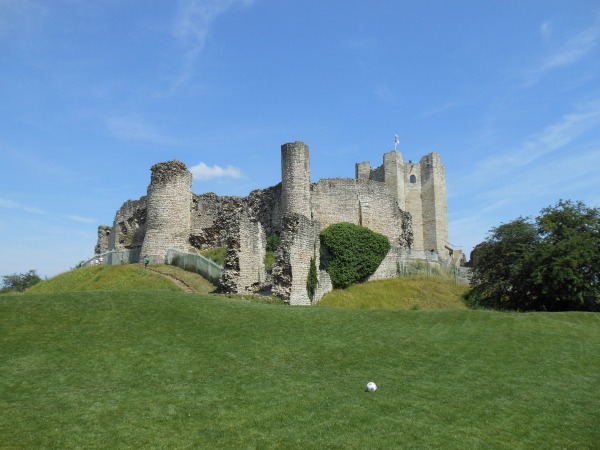
Conisbrough Castle, possible birthplace of Constance of York

Constance of York was born around 1374, possibly at Conisbrough Castle in Yorkshire (although that is far from certain). She was the second of 3 children born to Edmund of Langley, Duke of York and 5th son of Edward III, and his wife, Isabella of Castile. Edmund and Isabella also had 2 boys, Edward of Norwich in around 1373 and Richard of Conisbrough, who is thought to have been born around 1375/6, but could have been born as late as the early 1380s.

Near-contemporary sources suggest that Edmund and Isabella were an ill-matched pair and their relationship was a rocky one, with Isabella accused of having an affair with John Holland, Duke of Exeter and half-brother to Richard II. Holland has also been suggested as the father of Isabella’s youngest son, Richard. However, recent research into contemporary records contradicts this image.

Constance’s childhood was short-lived. At the age of 4, in April 1378, she was betrothed to Edward le Despenser. However, young Edward appears to have died shortly after the betrothal as by November 1379 Constance was married to his only surviving, younger brother, Thomas, who was about 6 at the time.

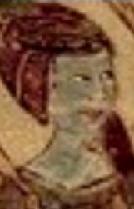
Isabella_of_Castile-Langley
Isabella of Castile, Constance’s mother

It is highly likely that 4-year-old Constance remained in her parents’ household for several years after her marriage, although she may have spent time also in the household of her mother-in-law, who retained wardship of young Thomas despite her husband’s death.

Thomas le Despenser was a great-grandson of the infamous Hugh le Despenser the Younger, despised favourite and alleged lover of Edward II, who was executed on a 50-foot high gallows in 1326. The marriage was seen as a good match on both sides: the Despenser family had a considerable fortune and were among the 12 richest families in the country, while Constance was a granddaughter of Edward III. Her hand in marriage completed the rehabilitation of the Despenser family.

In 1386, at just 12-years-old Constance was made a Lady of the Garter by her cousin, Richard II; she was one of the youngest ever recipients of the award. In 1392 Constance’s mother died and the following year her father re-married. His new bride was about 6 years younger than Constance and was a niece to Richard II; Joan Holland was the daughter of Thomas Holland, 2nd earl of Kent and granddaughter of Joan of Kent, Princess of Wales. In a bizarre twist, she was also the niece of John Holland, 1st Duke of Exeter, the late Duchess of York’s alleged lover.

Thomas, meanwhile, was learning his trade as a soldier. He served with Richard II in Scotland in 1385, probably as a page or squire, given his tender years. In 1388 he was knighted by the Earl of Arundel, following his involvement in a naval expedition against the French. In 1391 Thomas travelled to Prussia to join the “crusade” against the Lithuanians.

It seems likely that, by 1394 with Thomas back in England, Thomas and Constance were finally living together as a couple.  In March of that year, Thomas had been granted full possession of his lands; he had been a ward of his mother, Elizabeth de Burghersh, since his father Edward’s death in 1375.

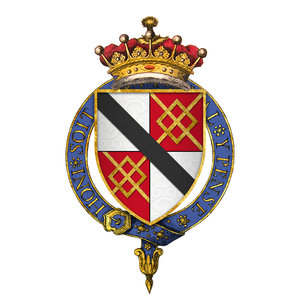
Coat_of_Arms_of_Sir_Thomas_le_Despencer,_1st_Earl_of_Gloucester,_KG
Arms of Thomas le Despenser, 1st Earl of Gloucester

It’s possible the couple had as many as 5 children, but only 2 survived infancy; a son, Edward, died young, Hugh died around 1401 and a daughter, Elizabeth, born around 1398, also died young.

The first definite date of birth of a child is Richard, possibly their 2nd son but the first to survive childhood, who was born 30 November 1396. Richard would inherit his grandmother’s title of Baron Burghersh on her death in about 1402. Richard married his second cousin Eleanor, daughter of Ralph Neville, 1st Earl of Westmoreland, and Joan Beaufort, daughter of John of Gaunt and Katherine Swynford.

Unfortunately, Richard and Eleanor had no children before Richard died, still only in his 20s. His title passed to his younger sister, Isabella, who had been born around 1400 and was married successively to 2 men, cousins, of the same name; she married firstly Richard de Beauchamp, Earl of Worcester and secondly Richard de Beauchamp, Earl of Warwick. Isabella’s daughter by Warwick, Anne, would later marry Richard Neville, known as the Kingmaker, and be the mother of Richard III’s queen, Anne Neville.

Thomas le Despenser was a great supporter of Richard II, he was involved in the arrest and prosecution of the Appellant lords, the Duke of Gloucester and the Earl of Arundel in 1397; in return for which he received a share of their lands. And on the 29th September 1397, le Despenser was created Earl of Gloucester.

In spite of his close links with Richard II, Gloucester initially supported the accession of Henry Bolingbroke as Henry IV, after usurping Richard’s throne. However, after he was attainted for his role in the death of Thomas of Woodstock, Duke of Gloucester, and deprived of his earldom he became disillusioned with the new regime.

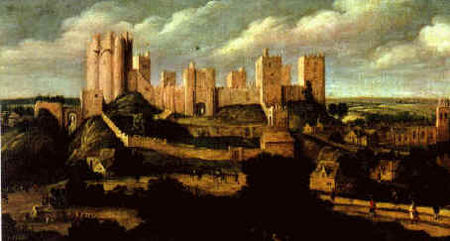
450px-Pontefract_Castle
Painting of Pontefract Castle by Alexander Keirincx

Fearful of losing his estates, and possibly his life, in January 1400 he joined in a conspiracy with the earls of Kent, Salisbury and Huntingdon. Known as the Epiphany Rising, the earls planned to seize the king during a tournament at Windsor, intending to kill Henry IV and replace him with Richard II – still imprisoned at Pontefract Castle. The conspiracy was betrayed to the king by Edward of Norwich, Constance’s older brother and the conspirators were arrested and executed.  Richard II himself became the prime victim of the plot, which led Henry IV to believe it was too dangerous to keep the erstwhile king alive; he died shortly afterwards, still in custody at Pontefract Castle, probably from starvation.

Thomas le Despenser was executed on 13 January 1400. It is tempting to feel sorry for Constance of York, former Countess of Gloucester, mother of several infants and pregnant with her late husband’s child. And, indeed, it must have been difficult for her; a young, pregnant widow of a convicted traitor. With her husband’s lands forfeit, she could well have wondered what was going to happen to them all, especially following the death of her father in 1402. However, Constance herself was not beyond plotting.

Edward_of_Norwich_Duke_of_York
Edward of Norwich, 2nd Duke of York

In February 1405, during Owain Glyn Dwr‘s rebellion, Constance became involved in the plot to abduct Edmund Mortimer, 5th Earl of March from Windsor Castle. March had the greatest claim to the throne of all Henry IV’s rivals, being descended from Edward III’s second surviving son, Lionel of Antwerp. The plan was to deliver March and his younger brother, Roger, to their uncle, Sir Edmund Mortimer, who was married to Glyn Dwr’s daughter.

The boys were successfully released from Windsor, but recaptured before entering Wales. Although Constance does not seem to have suffered retribution for her part in the plot, she did implicate her brother Edward of Norwich, Duke of York, who was imprisoned in Pevensey Castle for seventeen weeks as a consequence.

Constance was also to cause scandal in her love life. As a young widow, she started a romantic liaison with Edmund Holland, 4th Earl of Kent. Edmund was the brother of Constance’s step-mother, Joan. A daughter, Eleanor, was born to the couple at Kenilworth in about 1405. She would later marry James Touchet, Lord Audley.

Whether or not Eleanor’s parents married became a bone of contention for the couple’s daughter, when she attempted to lay claim to her father’s lands and titles in 1430. Although Eleanor produced witnesses to prove the marriage of her parents, in about 1404, it was on the petition of Edmund’s sisters, Joan Duchess of York (Eleanor’s step-grandmother) and Margaret Holland, Duchess of Clarence, that Eleanor was adjudged illegitimate and unable to inherit from her father. With Eleanor declared illegitimate, Joan and Margaret became Edmund’s co-heirs and would divide their brother’s estate between them.

375px-Reading_Abbey_interior
Reading Abbey

Edmund was killed at the Battle of Ile-de-Brehat in September 1408 and buried on the island of Lavrec.

Constance outlived her lover by 8 years, dying on the 28 November 1416, the last survivor of the 3 York children. Her younger brother, Richard, had been executed in August 1415, for his part in the Southampton Plot to assassinate Henry V; and older brother Edward, Duke of York, was killed at Agincourt in October of the same year.

Constance of York, Countess of Gloucester, was buried at Reading Abbey in Berkshire.

*

Images:

Conisbrough Castle is ©2015 Sharon Bennett Connolly. All other pictures are courtesy of Wikipedia.

Sources:

Brewer’s British Royalty by David Williamson; History Today Companion to British History Edited by Juliet Gardiner & Neil Wenborn; The Mammoth Book of British kings & Queen by Mike Ashley; Britain’s Royal Families, the Complete Genealogy by Alison Weir; The Life and Times of Edward III by Paul Johnson; The Perfect King, the Life of Edward III by Ian Mortimer; Chronicles of the Age of Chivalry Edited by Elizabeth Hallam; yorkistage.blogspot.co.uk; richard111.com; The Oxford Companion to British History Edited by John Cannon.

*

My Books

Christmas is coming!

Signed, dedicated copies of all my books are available through my online bookshop.

Out now: Scotland’s Medieval Queens

Books by Sharon Bennett Connolly

Scotland’s history is dramatic, violent and bloody. Being England’s northern neighbour has never been easy. Scotland’s queens have had to deal with war, murder, imprisonment, political rivalries and open betrayal. They have loved and lost, raised kings and queens, ruled and died for Scotland. From St Margaret, who became one of the patron saints of Scotland, to Elizabeth de Burgh and the dramatic story of the Scottish Wars of Independence, to the love story and tragedy of Joan Beaufort, to Margaret of Denmark and the dawn of the Renaissance, Scotland’s Medieval Queens have seen it all. This is the story of Scotland through their eyes.

Scotland’s Medieval Queens gives a thorough grounding in the history of the women who ruled Scotland at the side of its kings, often in the shadows, but just as interesting in their lives beyond the spotlight. It’s not a subject that has been widely covered, and Sharon is a pioneer in bringing that information into accessible history.’ Elizabeth Chadwick (New York Times bestselling author)

Available now from Amazon and Pen and Sword Books

Coming 30 March 2026: Princesses of the Early Middle Ages

Books by Sharon Bennett Connolly

Daughters of kings were often used to seal treaty alliances and forge peace with England’s enemies. Princesses of the Early Middle Ages: Royal Daughters of the Conquest explores the lives of these young women, how they followed the stereotype, and how they sometimes managed to escape it. It will look at the world they lived in, and how their lives and marriages were affected by political necessity and the events of the time. Princesses of the Early Middle Ages will also examine how these girls, who were often political pawns, were able to control their own lives and fates. Whilst they were expected to obey their parents in their marriage choices, several princesses were able to exert their own influence on these choices, with some outright refusing the husbands offered to them.

Their stories are touching, inspiring and, at times, heartbreaking.

Princesses of the Early Middle Ages: Royal Daughters of the Conquest is now available for pre-order.

Also by Sharon Bennett Connolly:

Books by Sharon Bennett Connolly

Heroines of the Tudor World tells the stories of the most remarkable women from European history in the time of the Tudor dynasty, 1485-1603. These are the women who ruled, the women who founded dynasties, the women who fought for religious freedom, their families and love. Heroines of the Tudor World is now available from Amberley Publishing and Amazon UK. Women of the Anarchy demonstrates how Empress Matilda and Matilda of Boulogne, unable to wield a sword themselves, were prime movers in this time of conflict and lawlessness. It shows how their strengths, weaknesses, and personal ambitions swung the fortunes of war one way – and then the other. Available from Bookshop.orgAmberley Publishing and Amazon UKKing John’s Right-Hand Lady: The Story of Nicholaa de la Haye is the story of a truly remarkable lady, the hereditary constable of Lincoln Castle and the first woman in England to be appointed sheriff in her own right. Available from all good bookshops Pen & Sword Booksbookshop.org and Amazon

Books by Sharon Bennett Connolly

Defenders of the Norman Crown: The Rise and Fall of the Warenne Earls of Surrey tells the fascinating story of the Warenne dynasty, from its origins in Normandy, through the Conquest, Magna Carta, the wars and marriages that led to its ultimate demise in the reign of Edward III. Available from Pen & Sword BooksAmazon in the UK and US, and Bookshop.orgLadies of Magna Carta: Women of Influence in Thirteenth Century England looks into the relationships of the various noble families of the 13th century, and how they were affected by the Barons’ Wars, Magna Carta and its aftermath; the bonds that were formed and those that were broken. It is now available in paperback and hardback from Pen & SwordAmazon, and Bookshop.orgHeroines of the Medieval World tells the stories of some of the most remarkable women from Medieval history, from Eleanor of Aquitaine to Julian of Norwich. Available now from Amberley Publishing and Amazon, and Bookshop.orgSilk and the Sword: The Women of the Norman Conquest traces the fortunes of the women who had a significant role to play in the momentous events of 1066. Available now from Amazon,  Amberley Publishing, and Bookshop.org.

Alternate Endings: An anthology of historical fiction short stories including Long Live the King… which is my take what might have happened had King John not died in October 1216. Available in paperback and kindle from Amazon.

Podcast:

A Slice of Medieval

Have a listen to the A Slice of Medieval podcast, which I co-host with Historical fiction novelist Derek Birks. Derek and I welcome guests, such as Bernard Cornwell, Elizabeth Chadwick and Scott Mariani, and discuss a wide range of topics in medieval history, from significant events to the personalities involved. 

There are now over 75 episodes to listen to!

Every episode is also now available on YouTube.

*

Don’t forget! Signed and dedicated copies of all my books are available through my online bookshop.

For forthcoming online and in-person talks, please check out my Events Page.

You can be the first to read new articles by clicking the ‘Follow’ button, liking our Facebook page or joining me on TwitterThreadsBluesky and Instagram.

*

©2015 Sharon Bennett Connolly FRHistS
Eleanor, the ‘Pearl of Brittany’

History...the Interesting Bits
Eleanor of Brittany

Eleanor of Brittany was born around 1184, the daughter of Geoffrey Plantagenet Duke of Brittany by right of his wife, and Constance of Brittany. Whilst estranged from his father, Henry II, Geoffrey had been trampled to death while competing at a tournament in Paris, in August 1186.

Described as beautiful, she has been called the Pearl, the Fair Maid and the Beauty of Brittany. A granddaughter of Henry II and Eleanor of Aquitaine, she was the eldest of her parents’ three children; a second daughter, Matilda was born the following year, but died young and a son, Arthur who was killed by – or at least on the orders of – King John in 1203. The birth of Eleanor’s brother Arthur in 1187 diminished her value on the marriage market; she no longer came with Brittany as her dowry, like her mother had done.

Initially, Eleanor’s life seemed destined to follow the same path as many royal princesses; marriage. Richard I, her legal guardian after the death of her father in 1186, following his sister Joanna’s adamant refusal, offered Eleanor as a bride to Saladin’s brother, Al-Adil, in a failed attempt at a political settlement to the Third Crusade.

Nothing came of the suggestion and, shortly after, at the age of nine, Eleanor was betrothed to Friedrich, the son of Duke Leopold VI of Austria, who had made the betrothal a part of the ransom for Richard I’s release from imprisonment by the Duke. Eleanor was travelling to Germany in the care of Baldwin de Béthune when news arrived that, Duke Leopold had died suddenly. The duke’s s son had ‘no great inclination’ for the proposed marriage and so Eleanor and her party turned around and returned home. Further marriage plans were mooted in 1195 and 1198, to Philip II of France’s son Louis, the dauphin, and Odo, Duke of Burgundy, respectively; although neither came to fruition.

History...the Interesting Bits
Arthur of Brittany

Duchess Constance then pressed for Eleanor to be released from royal custody and by the time of Richard’s death, in 1199, Eleanor was living in France with her mother and brother. Eleanor’s fortunes changed drastically when Arthur rebelled against Richard’s successor, King John, in the early 1200s, encouraged by King Philip II of France.

As the posthumous son of John’s older brother, Geoffrey, Arthur had a strong claim to the English crown, but had been sidelined in favour of his more mature and experienced uncle. He was also heavily influenced by the French king, a fact which did not go in his favour. Arthur was captured while besieging his grandmother, Eleanor of Aquitaine, at Mirebeau on 1st August 1202.

Eleanor was captured at the same time, or shortly after. And while her brother was imprisoned at Falaise, and later Rouen, in 1203 she was sent into perpetual imprisonment in England. Eleanor of Brittany holds the sad record of being the longest imprisoned English royal in British history.

If the laws of primogeniture had been strictly followed at the time, Eleanor would have been sovereign of England after her brother’s death. John and his successor, Henry III could never forget this. However, the experiences of Empress Matilda and her fight with King Stephen over her own rights to the crown – and the near-20 years of civil war between 1135 and 1154, had reinforced the attitude that a woman could not rule.

History...the Interesting Bits
Eleanor of Brittany

This did not, however, mean that Eleanor was no threat to John and Henry; should she be allowed to marry, her husband may be persuaded to fight to assert her rights, of form the focus to a rival faction at court – and an alternative royal line. Imprisoning Eleanor mean that John not only kept control of her, but also eliminated any possible opposition building around her rights to the throne.

Although her confinement has been described as ‘honourable’, Eleanor’s greater right to the throne meant she would never be freed, or allowed to marry and have children. King John gave her the title of Countess of Richmond on 27th May 1208, but Henry III would take it from her in 1219 and bestow the title elsewhere. From 1219 onward she was styled the ‘king’s kinswoman’ and ‘our cousin’.

It seems Eleanor did spend some time with the king and court, particularly in 1214 when she accompanied John to La Rochelle to pursue his war with the French. John planned to use Eleanor to gain Breton support and maybe set her up as his puppet Duchess of Brittany, replacing her younger half-sister Alice.

Alice was the daughter of Eleanor’s mother, Constance, by her third marriage to Guy of Thouars. She was married to Peter of Dreux, a cousin of King Philip of France and Duke of Brittany by right of Alice. Using the carrot and stick approach, John offered Peter the earldom of Richmond to draw him to his side, while at the same time dangling the threat of restoring Eleanor to the dukedom, just by having her with him. Peter, however, refused to be threatened of persuaded and chose to face John in the field at Nantes. John’s victory and capture of Peter’s brother in the fighting persuaded Peter to agree to a truce, and John was content to leave Brittany alone, thereafter, advancing on Angers. His plans to restore Eleanor abandoned and forgotten.

History...the Interesting Bits
Bowes Castle, North Yorkshire

Eleanor’s movements were restricted, and she was closely guarded. Her guards were changed regularly to enhance security, but her captivity was not onerous. She was provided with ‘robes’, two ladies-in-waiting in 1230, and given money for alms and linen for her ‘work’. One order provided her with cloth; however, it was to be ‘not of the king’s finest.’ She was granted the manor of Swaffham and a supply of venison from the royal forests. The royal family sent her gifts and she spent some time with the queen and the daughters of the king of Scotland, who were hostages in the king’s custody.

Throughout her captivity she is said to have remained ‘defiant’.

Eleanor was well-treated and fed an aristocratic diet, as her weekly shopping list attests; ‘Saturday: bread, ale, sole, almonds, butter, eggs. Sunday: mutton, pork, chicken and eggs. Monday: beef, pork, honey, vinegar. Tuesday: pork, eggs, egret. Wednesday: herring, conger, sole, eels, almonds and eggs. Thursday: pork, eggs, pepper, honey. Friday: conger, sole, eels, herring and almonds.’ In her sole surviving letter, written in 1208 with John’s consent, she is styled ‘Duchess of Brittany and Countess of Richmond.’

It is difficult to pinpoint exactly where Eleanor was imprisoned at any one time.  Over the years, she was held in various strongholds, including the castles of Corfe (Dorset), Burgh (Westmorland), and Bowes (Yorkshire).  Corfe Castle is mentioned at times, and it seems she was moved away from the coast in 1221 after a possible rescue plot was uncovered. She was also held at Marlborough for a time, and she was definitely at Gloucester Castle in 1236.

History...the Interesting Bits
King John

By 1241 she was confined in Bristol castle, where Eleanor was visited regularly by bailiffs and leading citizens to ensure her continued welfare. Eleanor was also allowed   her chaplain and serving ladies to ensure her comfort. She died on 10 August 1241, at the age of about fifty-seven. After thirty-nine years of imprisonment, Eleanor achieved in death the freedom that had eluded her in life.

She was initially buried at St James’s Priory Church in Bristol but her remains were later removed to the abbey at Amesbury, a convent with a long association with the crown.

*

Sources: Douglas Boyd, Eleanor, April Queen of Aquitaine; Dan Jones, The Plantagenets: the Kings who made England; Robert Bartlett, England Under the Norman and Angevin Kings 1075-1225; Alison Weir, Eleanor of Aquitaine and Britain’s Royal Families; Oxford Companion to British History; The History Today Companion to British History; Robert Lacey, Great Tales from English History; Mike Ashley, A Brief History of British Kings and Queens and The Mammoth Book of British Kings and Queens; findagrave.com; spokeo.com.

Pictures: Wikipedia, findagrave.com; Bowes Castle is ©Sharon Bennett Connolly

*

My books

Signed, dedicated copies of all my books are available through my online bookshop. or by contacting me.

Coming 30 March: Princesses of the Early Middle Ages

Books by Sharon Bennett Connolly

Daughters of kings were often used to seal treaty alliances and forge peace with England’s enemies. Princesses of the Early Middle Ages: Royal Daughters of the Conquest explores the lives of these young women, how they followed the stereotype, and how they sometimes managed to escape it. It will look at the world they lived in, and how their lives and marriages were affected by political necessity and the events of the time. Princesses of the Early Middle Ages will also examine how these girls, who were often political pawns, were able to control their own lives and fates. Whilst they were expected to obey their parents in their marriage choices, several princesses were able to exert their own influence on these choices, with some outright refusing the husbands offered to them.

Their stories are touching, inspiring and, at times, heartbreaking.

Princesses of the Early Middle Ages: Royal Daughters of the Conquest is now available for pre-order from Pen & Sword and Amazon.

Also by Sharon Bennett Connolly:

Books by Sharon Bennett Connolly

Scotland’s history is dramatic, violent and bloody and Scotland’s Medieval Queens have seen it all. This is the story of Scotland through their eyes. Available now from Amazon and Pen and Sword BooksHeroines of the Tudor World tells the stories of the most remarkable women from European history in the time of the Tudor dynasty, 1485-1603. These are the women who ruled, the women who founded dynasties, the women who fought for religious freedom, their families and love. Heroines of the Tudor World is now available from Amberley Publishing and Amazon UK. Women of the Anarchy demonstrates how Empress Matilda and Matilda of Boulogne, unable to wield a sword themselves, were prime movers in this time of conflict and lawlessness. It shows how their strengths, weaknesses, and personal ambitions swung the fortunes of war one way – and then the other. Available from Bookshop.orgAmberley Publishing and Amazon UKKing John’s Right-Hand Lady: The Story of Nicholaa de la Haye is the story of a truly remarkable lady, the hereditary constable of Lincoln Castle and the first woman in England to be appointed sheriff in her own right. Available from all good bookshops Pen & Sword Booksbookshop.org and Amazon

History...the Interesting Bits

Defenders of the Norman Crown: The Rise and Fall of the Warenne Earls of Surrey tells the fascinating story of the Warenne dynasty, from its origins in Normandy, through the Conquest, Magna Carta, the wars and marriages that led to its ultimate demise in the reign of Edward III. Available from Pen & Sword BooksAmazon in the UK and US, and Bookshop.orgLadies of Magna Carta: Women of Influence in Thirteenth Century England looks into the relationships of the various noble families of the 13th century, and how they were affected by the Barons’ Wars, Magna Carta and its aftermath; the bonds that were formed and those that were broken. It is now available in paperback and hardback from Pen & SwordAmazon, and Bookshop.orgHeroines of the Medieval World tells the stories of some of the most remarkable women from Medieval history, from Eleanor of Aquitaine to Julian of Norwich. Available now from Amberley Publishing and Amazon, and Bookshop.orgSilk and the Sword: The Women of the Norman Conquest traces the fortunes of the women who had a significant role to play in the momentous events of 1066. Available now from Amazon,  Amberley Publishing, and Bookshop.org.

Alternate Endings: An anthology of historical fiction short stories including Long Live the King… which is my take what might have happened had King John not died in October 1216. Available in paperback and kindle from Amazon.

Podcast:

A Slice of Medieval

Have a listen to the A Slice of Medieval podcast, which I co-host with Historical fiction novelist Derek Birks. Derek and I welcome guests, such as Ian Mortimer, Bernard Cornwell, Elizabeth Chadwick and Scott Mariani, and discuss a wide range of topics in medieval history, from significant events to the personalities involved. 

Every episode is also now available on YouTube.

*

Don’t forget! Signed and dedicated copies of all my books are available through my online bookshop.

For forthcoming online and in-person talks, please check out my Events Page.

You can be the first to read new articles by clicking the ‘Follow’ button, liking our Facebook page or joining me on TwitterThreadsBluesky and Instagram.

*

©2015 Sharon Bennett Connolly FRHistS