Crime and Punishment in Tudor England: From Alchemists to Zealots tells the story of the enactment of law and its penalties from Henry VII to Elizabeth I.
The sixteenth century was remarkable in many ways. In England, it was the century of the Tudor Dynasty. It heralded the Reformation, William Shakespeare, the first appearance of bottled beer in London pubs, Sir Francis Drake, and the Renaissance. Oh, and the Spanish Armadas―all five of them! Yes, five armadas and all failures.
It was a watershed century for crime and punishment. Henry VII’s paranoia about the loyalty of the nobility led to military-trained vagrants causing mayhem and murder. Henry VIII’s Reformation meant executions of those refusing to take the Oath of Supremacy. State-controlled religion―summed up through the five reigns as Roman Catholic; Anglo-Catholic; Protestant; Roman Catholic, and Sort of Protestant but I don’t mind so long as you swear the Oath of Supremacy―became an increasingly complex, not to say confusing, issue for ordinary people.
Although primary sources are rare and sometimes incomplete, the life of criminals and the punishments meted out to them still fascinates.
Read about: John Daniell and how he tried to blackmail the Earl of Essex. The Stafford insurrection of 1486, the first serious opposition to the new king. The activities of con-man extraordinaire, Gregory Wisdom, and many more.
Crime and punishment didn’t start with the Tudors and this book summarises judicial practices built on tradition from the Roman occupation. It covers often gory details―what happens to the body when it is beheaded, burned, boiled, or hanged?
Arranged in alphabetical order of crimes, it recounts tales of blackmail, infanticide, kidnapping, heresy, and sumptuary laws. Told with occasional low-key humour, the book also includes Tavern Talk, snippets of quirky information.
Dip into it at your pleasure.
I have to admit, Crime and Punishment in Tudor England: From Alchemists to Zealots by April Taylor is one of the best non-fiction books I have had the pleasure of reading this year. I have always had a fascination for the law – I was even considering it as a career at one stage, until I realised I couldn’t stand the 9 to 5 lifestyle. Give me shift work and odd hours any day! So, I have been looking forward to this book ever since I heard April was writing it.
Opening with a fabulous history of the development of England’s legal system, Crime and Punishment in Tudor England explains not only the crimes committed, but also the various legal processes under different monarchs and at different social levels. Every crime imaginable is covered, from infanticide to treason. And so are the punishments and the reasons behind them; and how often such punishments were intended to fit the crime – or to shame the perpetrator. Every part of the criminal justice system is analysed, from religious offenders to witchcraft, from capital punishment to torture, prison condition and labour camps. Crime and Punishment in Tudor England also looks into the influences on crime, such as the impact of economic and social conditions, in a century of religious and political upheaval throughout Europe.
I do have to warn you: this book is not to be read while eating, unless you have a strong stomach. April Taylor includes descriptions of the various methods of execution, including beheading, hanging, burning and the particularly gruesome method of boiling alive!
Boiling to Death
Boiling to death was not often used in Tudor England to be fair, although it was the designated punishment for coiners on the continent. The method is self-explanatory. The offender would be put into a large container which might be filled with water, oil, molten lead, wax or sometimes wine, heated to boiling point.
The most famous victim was Richard Roose, cook to the Bishop of Rochester, John Fisher. It was established that Roose had decided to poison his master and guests by serving them pottage for dinner. Fisher was known to be abstemious and did not partake of the pottage, and nobody can blame him since it sounds less than appetising.
Pottage was a kind of thick porridge that peasants relied on for centuries as a staple food. For them, it would consist of grains and vegetables, boiled in a pot and often kept simmering for hours or days to make sure it was safe to eat. If rich households ate it, often meat or fish was added, but if you can imagine a kind of hearty soup full of heaven knows what that has been boiled to extinction, you have an idea of what pottage was like.
This case became something of a political ‘hot potato’(even though nobody had yet encountered one in 1531 in England). Sixteen of Fisher’s guests became ill, one of them, a man called Curwen, died. The rest of the poisoned pottage was given to the poor, at which point Alice Trypptt also died from eating it.
Bishop Fisher had been Margaret Beaufort’s confessor and it was he who had taught the young Henry VIII the tenets of theology. However, and here is the political bit, at the time Roose conducted his ‘jest’, thinking the powder he had put in the pottage was a laxative that would make his fellow servants ill, Bishop Fisher was a vocal opponent of Henry VIII’s marriage to Anne Boleyn. Moreover, there were rumours that the Boleyn family had engineered the poisoning. Obviously they all liked pottage.
The Spanish ambassador, Chapuys, and Thomas More, neither of whom were sympathetic to Anne, told Henry of the rumours accusing her, to which Henry is alleged to have answered that she was blamed for everything.
Henry decided he must act with speed to make sure any such rumour was quashed and that neither his beloved’s character nor her family were sullied (a bit of a non-starter since she was already known as the ‘goggleeyed whore’ by the majority of the population who adored Katherine of Aragon).
Back to Henry. He immediately told Parliament he wanted a bill passing that any servant found guilty of poisoning or attempting to poison their master or mistress should be attainted for high treason and executed.
Henry was quite clever in some ways. Because he made the crime one of high treason, it meant there was no need for prior judicial process or a jury to determine the guilt or otherwise of the defendant. This was not to be the first time Henry dispensed justice with the tenets of common law.
While some of the more sensational and high profile cases are discussed – such as Anne Boleyn and Catherine Howard – April also introduces cases far less familiar to the reader. Encompassing murder, fraud, blackmail and all manner of crimes, April Taylor presents a fascinating insight into Tudor crimes, ably supported by actual – and fascinating – case studies. Theses case studies not only demonstrate the nature of crimes and their punishment, but also the changing attitudes to crime, and the shifting emphasis on punishments, from the dawn of the Tudor period to the royal dynasty’s demise in 1603.
Crime and Punishment in Tudor England also highlights various miscarriages of justice, including where officials accused innocent victims with the aim of appropriating their goods and property. There are some truly harrowing tales, such as the youngest felon executed in the Tudor era – a girl of the tender age of 11 – and the general treatment of children who fell foul of the criminal justice system. It makes you happy to be living in the 21st century!
April Taylor has managed to cram so much information into Crime and Punishment in Tudor England: From Alchemists to Zealots it really is an impressive tome. It is thorough and well referenced and is written in a lively, entertaining writing style, with a fair amount of wit thrown in for good measure.
I cannot recommend it highly enough. Crime and Punishment in Tudor England: From Alchemists to Zealots is a pleasure to read!
To buy the book:
Crime and Punishment in Tudor England: From Alchemists to Zealots by April Taylor is now available from Amazon and Pen and Sword Books.
About the author:
April Taylor was born in the historic county of Lincolnshire in the UK. Having caught the history bug from a young age, April has always been fascinated by the physical manifestation of times past in particularly the Tudor period. This interest deepened when she discovered one of the most important events of Henry VIII’s reign, the Lincolnshire Rebellion that led to the Pilgrimage of Grace in 1536, started eight miles from where April was born. April has always ensured her research is as meticulous as possible. During her study of the Tudors for her fictional Luke Ballard books, April was intrigued by frequent references to Henry VIII’s charisma. Choosing a career in librarianship, April honed her research skills but always leant towards the history of the area in which she lived. This led to numerous talks to schools and local groups, especially in Worcester, yet another place of historic importance in the UK. April Taylor now lives near the rugged coast of north-east England in close proximity to one of the priories that fell victim to Henry VIII’s Reformation. She frequently walks her golden retriever in local forests using that time to work through complicated plotlines. She sings in the medieval church and occupies her down-time dressmaking and cross-stitching.
My Books
Signed, dedicated copies of all my books are available through my online bookshop.
Out now: King John’s Right-Hand Lady: The Story of Nicholaa de la Haye
In a time when men fought and women stayed home, Nicholaa de la Haye held Lincoln Castle against all-comers, gaining prominence in the First Baron’s War, the civil war that followed the sealing of Magna Carta in 1215. A truly remarkable lady, Nicholaa was the first woman to be appointed sheriff in her own right. Her strength and tenacity saved England at one of the lowest points in its history. Nicholaa de la Haye is one woman in English history whose story needs to be told…
On the one side is Empress Matilda, or Maud. The sole surviving legitimate child of Henry I, she is fighting for her birthright and that of her children. On the other side is her cousin, Queen Matilda, supporting her husband, King Stephen, and fighting to see her own son inherit the English crown. Both women are granddaughters of St Margaret, Queen of Scotland and descendants of Alfred the Great of Wessex. Women of the Anarchy demonstrates how these women, unable to wield a sword, were prime movers in this time of conflict and lawlessness. It show how their strengths, weaknesses, and personal ambitions swung the fortunes of war one way – and then the other.
Alternate Endings: An anthology of historical fiction short stories including Long Live the King… which is my take what might have happened had King John not died in October 1216. Available in paperback and kindle from Amazon.
Podcast:
Have a listen to theA Slice of Medieval podcast, which I co-host with Historical fiction novelist Derek Birks. Derek and I welcome guests, such as Bernard Cornwell, and discuss a wide range of topics in medieval history, from significant events to the personalities involved.
*
Don’t forget!Signed and dedicated copies of all my books are available through my online bookshop.
For forthcoming online and in-person talks, please check out my Events Page.
You can be the first to read new articles by clicking the ‘Follow’ button, liking our Facebook page or joining me on Twitterand Instagram.
The Tudors by Numbers is a fresh look at a well-known dynasty ― through its numbers. Take a new look at old friends by learning the complicated path to 1 possible king symbolized by 1 rose, viewing the extraordinary 42 percent of the dynasty under the rule of 2 women, and considering the impact of 4 English language translations of the Bible printed in England. The Tudors by Numbers takes you behind the scenes through a different path and reveals new ways of seeing the Tudors.
The Tudors by Numbers: The Stories and Statistics Behind England’s Most Infamous Royal Dynasty by Carol Ann Lloyd is a new way of looking at the Tudors, giving a refreshing insight into the family and the 16th century.
When you think about ‘numbers’ as they relate to the Tudor dynasty, I am sure the first thig that comes to mind is ‘Henry VIII had six wives’ and I have to admit, that’s exactly where I went as soon as I saw the title of the book. I expected Carol Ann to dwell on Henry and his wives and, perhaps, add a few more numbers in the mix to flesh out the book. I actually thought there was not much breadth to looking at numbers with regard to the Tudors.
How wrong I was!
Carol Ann Lloyd presents the Tudors in a whole new light, looking at where numbers played a prominent role in England’s most famous dynasty.
It is illuminating!
The Tudors by Numbers: The Stories and Statistics Behind England’s Most Infamous Royal Dynasty by Carol Ann Lloyd is a fun, engaging volume that will make you look at the Tudors in a different light. Written in short, easy to absorb chapters, the author guides the reader through the the Tudor era, highlighting where numbers had a significant influence on the dynasty, not just in the number of wives of Henry VII or the number of ruling queens, and not just in the years.
Did Henry VII really end the Wars of the Roses by marrying Elizabeth of York, daughter of Edward IV, and creating the Tudor dynasty?
Let’s find out. Let’s roll the numbers!
The Story of a Rose by the Numbers
The numbers tell us that the path to one single rose and the establishment of the Tudor dynasty was a long and treacherous road made up of many complications. The numbers tell us the real story of the beginning of the Tudor Dynasty. The most important number in Henry VII’s narrative is one. He based his claim and the establishment of his dynasty on there being:
•one heir to the Lancastrian claim to the throne: Henry himself
•one heir to the Yorkist claim to the throne: Elizabeth of York
•one marriage that united those two claimants
•one option for king, based on the above.
So, the question of who should be rightful king of England, which had rocked the country since 1399 when Richard II had been deposed, all came down to one man in 1485: Henry Tudor. Henry needed to tell his story. He decided to do so with red and white roses.
The white rose had a long history with Edward IV. It’s found on his manuscripts and features prominently in his genealogical roll, which was probably created to celebrate his coronation as King of England. After all, he had not inherited the throne from a royal father; instead, he had seized it from an anointed king in battle. To demonstrate the superiority of his family claim to the throne, his supporters created an elaborate genealogical roll filled with symbols to validate his divine right to the throne: three suns representing the holy trinity and white roses. Perpetuating the story that Elizabeth’s two brothers had died during the reign of Richard III, Henry recognised Elizabeth as the heir to the Yorkist claim. He seized on the white rose and passed the symbol on to Edward’s eldest daughter.
The red rose proved a trickier A few previous Lancastrians had used a gold rose, but not consistently. Henry Tudor’s Lancastrian predecessor, Henry VI, had used the antelope. Henry Tudor himself had initially used the symbol of the red dragon of Wales, associating himself with the mythical British King Cadwalladr. We don’t see any evidence of Henry using the red rose before Bosworth. But once he was king, he realised the power of symbolism and settled upon something that would allow him to put his stamp on the country forever. It was a masterstroke. The combination of the red and white rose was powerful in its simplicity and effective in its message. The king then went about carving that rose into buildings, emblazoning it on royal documents, and including it in portraits.
The Tudors by Numbers: The Stories and Statistics Behind England’s Most Infamous Royal Dynasty by Carol Ann Lloyd is a must-read for any Tudor enthusiast. All the great characters of the time are put in the spotlight, from the kings and queens to those who served them, from the likes of William Cecil, Queen Elizabeth’s right-hand man, to Thomas Cranmer, Thomas Wolsey and Thomas Cromwell, men whose careers helped to usher in the Reformation and the foundation of the Church of England. As a consequence of which, Edward VI – that much desired male heir – was the first king of England to be crowned as the supreme head of the Church of England.
Every aspect of the Tudor dynasty is examined – and the numbers rolled. If you love the story of Mary Queen of Scots, Anne Boleyn and Catherine of Aragon, you will find them here – presented in a new light.
Carol Ann Lloyd delves deep into the history of the time and uses her incredible knowledge of the dynasty in order to give the reader a fascinating insight into the Tudors. A study of the numbers highlights the great events of the period, from the dawn of the dynasty, through the pretenders who threatened Henry VII’s rule, Henry VIII’s obsession with having a male heir, to the great Elizabeth I and the twilight of the era.
The Tudors by Numbers: The Stories and Statistics Behind England’s Most Infamous Royal Dynasty by Carol Ann Lloyd is an enjoyable read and a valuable edition to the library of any Tudor enthusiast. I cannot recommend it highly enough!
To buy the book:
The Tudors by Numbers: The Stories and Statistics Behind England’s Most Infamous Royal Dynasty by Carol Ann Lloyd is now available on Amazon.
About the author:
Carol Ann Lloyd turned an obsession with the Tudors into a speaking and writing career. She shares her love of history with Smithsonian Associates, Royal Oak Foundation, Agecroft Hall, Folger Shakespeare Library and other organizations. She holds degrees in Literature and Education and hosts a popular podcast, British History: Royals, Rebels, and Romantics. She also offers workshops about using Shakespeare strategies to improve communication skills and is a member of National Speakers Association.
My Books
Signed, dedicated copies of all my books are available through my online bookshop.
Out now: King John’s Right-Hand Lady: The Story of Nicholaa de la Haye
In a time when men fought and women stayed home, Nicholaa de la Haye held Lincoln Castle against all-comers, gaining prominence in the First Baron’s War, the civil war that followed the sealing of Magna Carta in 1215. A truly remarkable lady, Nicholaa was the first woman to be appointed sheriff in her own right. Her strength and tenacity saved England at one of the lowest points in its history. Nicholaa de la Haye is one woman in English history whose story needs to be told…
On the one side is Empress Matilda, or Maud. The sole surviving legitimate child of Henry I, she is fighting for her birthright and that of her children. On the other side is her cousin, Queen Matilda, supporting her husband, King Stephen, and fighting to see her own son inherit the English crown. Both women are granddaughters of St Margaret, Queen of Scotland and descendants of Alfred the Great of Wessex. Women of the Anarchy demonstrates how these women, unable to wield a sword, were prime movers in this time of conflict and lawlessness. It show how their strengths, weaknesses, and personal ambitions swung the fortunes of war one way – and then the other.
Alternate Endings: An anthology of historical fiction short stories including Long Live the King… which is my take what might have happened had King John not died in October 1216. Available in paperback and kindle from Amazon.
Podcast:
Have a listen to theA Slice of Medieval podcast, which I co-host with Historical fiction novelist Derek Birks. Derek and I welcome guests, such as Bernard Cornwell, and discuss a wide range of topics in medieval history, from significant events to the personalities involved.
*
Don’t forget!Signed and dedicated copies of all my books are available through my online bookshop.
For forthcoming online and in-person talks, please check out my Events Page.
You can be the first to read new articles by clicking the ‘Follow’ button, liking our Facebook page or joining me on Twitterand Instagram.
Today it is an honour and pleasure to open the blog tour for Heather R. Darsie’s latest book, Children of the House of Cleves: Anna and Her Siblings. You may remember that Heather wrote a fabulous biography of Anna of Cleves, Henry VIII’s fourth wife, a few years back. She has now followed that up with a look into Anna’s family.
Mental Illness in the House of Cleves
By Heather R. Darsie, J.D.
The von der Mark family, particularly once it came to the mental health of Anna of Cleves’ fraternal nephew Johann Wilhelm, was marred with mental health issues. Unfortunately, it is impossible to diagnose individuals from hundreds of years ago with afflictions that the modern person would recognize. To that end, terms from the time are rather simplistic.
Anna of Cleves’ family did not appear to have any serious mental health concerns on her father Johann III’s side, although Johann was regarded as being simple-minded. Madness featured on the maternal, Jülich-Berg side of Anna’s family. Her mother Maria of Jülich-Berg’s paternal grandfather, Gerhard of Jülich-Berg. He, “fell in and out of madness, beginning when William was still an infant…” That eventually led to William’s regency on the late 15th century, until Gerhard died.
William’s daughter Maria, mother of Anna and her siblings, was said to have died in a fit of rage. She was recognized as an intelligent, capable woman in her lifetime. Beyond her heartbroken rage at the end of her life, there is nothing to hint that Gerhard’s mental instability was passed down to Maria.
Anna’s brother Wilhelm is difficult to discern. After a series of strokes in his forties and fifties, Wilhelm occasionally suffered from a mental stupor. Whether it was from the strokes or a mental disorder is hard to sort. However, whatever his post-stroke limitations, a regency was never necessary during Wilhelm’s long reign as Duke of Jülich-Cleves-Berg.
Anna’s second sister-in-law through Wilhelm, Maria von Habsburg, was prone to fits of melancholy. Sometimes, the fits, or what the modern person might suspect to be depression, could be quite intense. She was one of Juana the Mad’s granddaughters, after all.
With the exception of perhaps Gerhard of Jülich-Berg, no one in the family was quite as mad as Anna’s nephew, Johann Wilhelm of Jülich-Cleves-Berg. Johann Wilhelm’s peculiar disposition began presenting itself in his youth, although it was easy enough to put him away in a religious establishment. Unfortunately, by the time he became a young man, there was no hiding his infirmity.
Again, there are really only glimpses of what ailed Johann Wilhelm. At times, he seemed to have entered an almost catatonic state. At other times, he seemed perfectly lucid, but was highly paranoid.
As the decades rolled on and Anna’s brother Wilhelm sought method after method of treating Johann Wilhelm, nothing worked. Multiple doctors saw him, including a known quack. Even witches were consulted in hopes of curing Johann Wilhelm, but nothing worked. On top of Johann Wilhelm’s mental illness, he failed to conceive any children.
Likely motivated by her own desperation for a child, Johann Wilhelm’s wife arranged an exorcism for him,
“The exorcism, which began around 5 September 1599, was violent, but started off harmlessly enough. Johann Wilhelm and members of his court were at Hambach Castle [near the city of Jülich], then being used by the duke as a hunting lodge. Foreign priests … and their religious retinue awaited Johann Wilhelm and his company as they returned from a hunting excursion. The priests gathered in Hambach Castle’s galleries to greet Johann Wilhelm, who was immediately apprehensive when he saw them. According to the report, Johann Wilhelm behaved strangely toward them because, “he was able to think or suspect without a doubt that the priests or monks are not being called for in vain, but are called to the place for the sake of the cause” of exorcising him.
Aside from dispossessing Johann Wilhelm of whatever demon was harassing him, the monks and priests wished to remove any impediment to Johann Wilhelm’s marriage bed…. The hope was that God would make them fruitful. Johann Wilhelm was keenly aware that the United Duchies needed an heir, especially since his first marriage was childless.”
What follows is a curious description of the efforts to which the priests went in cleansing Johann Wilhelm of the demon or demons whom they believed were vexing him. It was a shameful event.
If this excerpt piqued your interest, consider reading Children of the House of Cleves: Anna and Her Siblings, set for release in the UK on 15 June 2023 and in the US/Internationally on 12 September 2023. Can’t wait until September? The US Kindle version is released on 15 June, too! You might also like to read Heather R. Darsie’s biography on Anna of Cleves, the first researched and written from the German perspective, Anna, Duchess of Cleves: The King’s Beloved Sister.
Children of the House of Cleves: Anna and Her Siblings is available from Amberley Publishing and Amazon in the UK and US
About the Author:
Heather R. Darsie is an independent researcher in the US specializing in early modern history. She focuses on researching the Holy Roman Empire and England in the early 16th century. She is the author of ‘Anna, Duchess of Cleves’ and ‘Catherine of Aragon – Spanish Princess’. Her primary career is as an attorney. She runs the website MaidensAndManuscripts.com.
Sources & Suggested Reading
1. Darsie, Heather R. Children of the House of Cleves: Anna and Her Siblings. Stroud: Amberley (2023).
2. Darsie, Heather R. Anna, Duchess of Cleves: The King’s Beloved Sister. Stroud: Amberley (2019).
*
My Books:
Signed, dedicated copies of all my books are available, please get in touch by completing the contact me form.
Out Now!
King John’s Right-Hand Lady: The Story of Nicholaa de la Haye is now available for pre-order from Pen & Sword Books, bookshop.org and Amazon UK. (I will hopefully have a US release date shortly)
In a time when men fought and women stayed home, Nicholaa de la Haye held Lincoln Castle against all-comers. Not once, but three times, earning herself the ironic praise that she acted ‘manfully.’ Nicholaa gained prominence in the First Baron’s War, the civil war that followed the sealing of Magna Carta in 1215.
A truly remarkable lady, Nicholaa was the first woman to be appointed sheriff in her own right. Her strength and tenacity saved England at one of the lowest points in its history. Nicholaa de la Haye is one woman in English history whose story needs to be told…
Coming 15 January 2024:Women of the Anarchy
On the one side is Empress Matilda, or Maud. The sole surviving legitimate child of Henry I, she is fighting for her birthright and that of her children. On the other side is her cousin, Queen Matilda, supporting her husband, King Stephen, and fighting to see her own son inherit the English crown. Both women are granddaughters of St Margaret, Queen of Scotland and descendants of Alfred the Great of Wessex. Women of the Anarchy demonstrates how these women, unable to wield a sword, were prime movers in this time of conflict and lawlessness. It show how their strengths, weaknesses, and personal ambitions swung the fortunes of war one way – and then the other.
Alternate Endings: An anthology of historical fiction short stories including Long Live the King… which is my take what might have happened had King John not died in October 1216. Available in paperback and kindle from Amazon.
*
Podcast:
Have a listen to my A Slice of Medieval podcast:
For forthcoming online and in-person talks, please check out my Events Page.
You can be the first to read new articles by clicking the ‘Follow’ button, liking our Facebook page or joining me on Twitterand Instagram.
“How we made an award winning short film about Henry VIII”
Part of a blog series about ‘I am Henry,’ the new novel and award-winning short film of Henry VIII and Anne Boleyn, by Jan Hendrik Verstaten & Massimo Barbato.
When I set out to write a screenplay for a short film, it wasn’t my plan for it to be about the infamous Tudor monarch. All I envisioned was a middle-aged man in an empty white room.
While I sat down behind the computer, I felt a man’s presence. He seemed eager to engage with me even though he did not say a word, but just stood there in silence. I wondered if this was Henry VIII who had just died, and who had not fully grasped, yet, what that meant.
“I never set out to write about Henry VIII”
I was not convinced I wanted to write his story, and the approach to use a historic character, and certainly one that is so prominent in the history of England, was quite daunting to be honest. I am Dutch, and I doubted very much if I could do it. One thing that did interest me was his tragic relationship with Anne Boleyn, his second wife. This could possibly be the focus of the story, and I decided I wanted to know more about it.
Interesting coincidences occurred during the writing process
I started with Henry’s love letters to Anne. After that I read the account of Master Kingston about Anne’s tragic final visit to the Tower, and her execution. I also watched several documentaries and searched the internet for anything I could find about them.
Apart from this, my main method of preparation remained how I ‘sensed’ him, Anne Boleyn and later also Catherine of Aragon, his first wife. I tried as much as possible to allow them to be themselves. This led to interesting coincidences. For instance, I was not aware Catherine had written a letter in which she claimed that her ‘dead’ children were with her. A fact that I sensed and used in the film, only to discover afterwards, from a Tudor expert, that she had mentioned this herself in real life.
The script went through several drafts and Massimo was the very first person who gave his feedback. At the time, I also worked with script editor and author Lucy Hay who I respect a lot. Her feedback surprised me. “At its heart, the story of ‘I Am Henry’ is quite brilliant (in the truest sense of the word); it’s easily one of the best stories in a short film I have seen for a very long time.” Obviously, this gave me the confidence that I was on the right track with the subject.
The challenges of ‘production’
Massimo and I then started to work on the production of the film itself. The first person who came on board was the very talented cinematographer Simon Rowling. He suggested that we film a couple of the scenes in the massive crypt underneath St Mary Magdalene’s Church in Paddington, north London. We ended up filming the entire film on location at the church, as it had everything we were looking for. The crypt with its Gothic architecture and beautiful stained glass windows was used in the film ‘Les Misérables.’
Costumes are expensive. Even so, we were committed to be historically accurate, and were very lucky with Kristen Ernst Brown, our costume designer. She won Best Costume for I Am Henry, and succeeded without a lot of money to create a beautiful and authentic look, using black and gold as her main colour palette. This complemented the cinematography by Simon Rowling, which was inspired by Rembrandt, the great Dutch master painter.
The film won many awards which encouraged us to write the novel
In the UK we are fortunate with so many accomplished actors. The cast was absolutely phenomenal. Especially Fleur Keith as Anne Boleyn and Maria de Lima as Catherine of Aragon, but also Sebastian Street as Henry VIII.
‘I am Henry’ went on to win many awards ( in every category) including a Gold Remi, and received great reviews. The longest and one of our most favourite one is from Claire Ridgeway from the Anne Boleyn Files: https://www.theanneboleynfiles.com/i-am-henry-review/
Thousands of viewers have enjoyed the film, which encouraged us to write the novel. The film is still available on Amazon Prime.
‘I am Henry‘ is an innovative retelling of the story of Henry VIII and Anne Boleyn. Due for release in paperback and e-book format by MadeGlobal Publishing, in April 2023. For more information about the novel and the short film go to linktr.ee/iamhenryfilmandnovel
*
My Books:
Signed, dedicated copies of all my books are available, please get in touch by completing the contact me form.
Coming 30 May 2023!
King John’s Right-Hand Lady: The Story of Nicholaa de la Haye is now available for pre-order as a hardback and Kindle from Pen & Sword Books, bookshop.org and Amazon (UK and US).
In a time when men fought and women stayed home, Nicholaa de la Haye held Lincoln Castle against all-comers. Not once, but three times, earning herself the ironic praise that she acted ‘manfully’. Nicholaa gained prominence in the First Baron’s War, the civil war that followed the sealing of Magna Carta in 1215.
A truly remarkable lady, Nicholaa was the first woman to be appointed sheriff in her own right. Her strength and tenacity saved England at one of the lowest points in its history. Nicholaa de la Haye is one woman in English history whose story needs to be told…
Alternate Endings: An anthology of historical fiction short stories including Long Live the King… which is my take what might have happened had King John not died in October 1216. Available in paperback and kindle from Amazon.
*
For forthcoming online and in-person talks, please check out my Events Page.
You can be the first to read new articles by clicking the ‘Follow’ button, liking our Facebook page or joining me on Twitterand Instagram.
A new magazine exploring all the sites and buildings of the Tudor world – then and now.
· Feature articles by expert contributors
· Interviews with historians, archaeologists, curators, authors, houseowners and managers
· Itineraries for weekends away exploring Tudor places, with recommendations on places to eat and stay
· Regular column about living in a Tudor manor house today
· Plus news, book listings and more………….
It is not every day that a new magazine hits the shops. And certainly not one devoted to Tudor history. As you may know, I am deep in the midst of writing Heroines of the Tudor World. So, when Tudor Places came along, I thought I should take a look. For research purposes, of course….
Tudor Places very kindly sent me their first 3 issues, so that I could see what I think. And I have to say I’m impressed!
The magazine is beautifully and professionally presented. With a varying range of articles and peppered throughout with colourful images, the magazine is vibrant and attractive to the reader’s eye.
But what of the content?
Well, if you are a Tudor fan, you won’t be disappointed – to be honest, if you are a history fan, you will not be disappointed. Each magazine has a wealth of content, including recent news about Tudor-related discoveries and events, interviews with historians and others working in the heritage industry and articles on Tudor-related historical sites and the Tudors themselves. Moreover, Tudor Places has turned to the experts we are familiar with in order to get the best content available. With contributions from Tracy Borman, Elizabeth Norton, Julian Humphreys, Nathen Amin and a host of others, the reader can trust that the articles are well researched and expertly presented.
Regular articles include ‘Living at the Old Hall’ where Brigitte Webster regales the reader with her experiences in renovating Old Hall in Norfolk and hosting the Tudor and 17th Century Experience. Brigitte vividly describes the highs and lows of living in a 500-year-old manor house. And though there are lows, you get the impression that she wouldn’t change a thing!
Another regular is from Sarah Morris, of the Tudor Travel Guide, who offers the reader itinerary suggestions for visits throughout the UK, from York to Monmouthshire and beyond. Sarah’s guides help you to guarantee that you won’t miss that ‘must-see’ Tudor manor house or monastery wherever you visit.
Tudor Places uses the knowledge of Tudor experts to bring to the reader a magazine which is accessible, entertaining and totally engrossing. My dinner hour lasted two hours because I could not put issue 3 down until I had read every word. The fact it ended with an image of Gainsborough Old Hall (one of my ‘go to’ Tudor places) didn’t hurt – it was recommended as a ‘hidden gem’ by Linda Porter.
Other articles in the first three issues included the lost Tudor palaces of Oatlands and Richmond from Elizabeth Norton, a fascinating insight into the Markenfield family of Ripon from Emma Wells, and the Building Projects of Cecily Bonville by Melita Thomas. I could go on…. Each article in the magazines has been carefully selected to give the best content and reading experience. The articles are well researched and very informative – and beautifully presented amidst colourful images and illustrations.
The mixture of regular articles, interviews and features, helps to create a lively, engaging magazine in which there is something for everyone. The only thing that is missing is a crossword or word search – but maybe that is just me?
It is certainly a magazine I would want to read regularly – or maybe even write for (hint, hint, winky face).
Whether you are reading about the Tudors for pleasure or research, you will find something of interest and value in every magazine. Tudor Places is crammed full of quality content and beautifully presented.
I cannot recommend it highly enough.
And just for my readers, Tudor Places has a very special offer…
Special Offer
Tudor Places is available in print and digital format. Print copies posted worldwide.
Tudor Places has kindly offered a 10% discount on all purchases for followers of History… the Interesting Bits!
Signed, dedicated copies of all my books are available, please get in touch by completing the contact me form.
Defenders of the Norman Crown: The Rise and Fall of the Warenne Earls of Surrey tells the fascinating story of the Warenne dynasty, of the successes and failures of one of the most powerful families in England, from its origins in Normandy, through the Conquest, Magna Carta, the wars and marriages that led to its ultimate demise in the reign of Edward III. Defenders of the Norman Crown: Rise and Fall of the Warenne Earls of Surrey is now available from Pen & Sword Books, Amazon in the UK and US,Bookshop.org and Book Depository.
Alternate Endings: An anthology of historical fiction short stories including Long Live the King… which is my take what might have happened had King John not died in October 1216. Available in paperback and kindle from Amazon.
*
You can be the first to read new articles by clicking the ‘Follow’ button, liking our Facebook page or joining me on Twitterand Instagram.
A dynasty is defined by its men: by their personalities, their wars and reigns, their laws and decisions. Their mothers, wives, sisters and daughters are often depicted as mere foils, shadowy figures whose value lies in the inheritance they brought, or the children they produced. Yet the Tudor dynasty is full of women who are fascinating in their own right, like Margaret Beaufort, who finally emerged triumphant after years of turmoil; Elizabeth of York and her steadying influence; Catherine of Aragon and Anne Boleyn, whose rivalry was played out against the backdrop of the Reformation; and Mary and Elizabeth, England’s first reigning queens. Then there were all the others: Henry VIII’s fascinating sisters who became queens of France and Scotland, and their offspring, the Brandon and Grey women, Lady Margaret Douglas and her granddaughter Arabella Stuart. Many more women danced the Pavane under Henry’s watchful eye or helped adjust Elizabeth’s ruff. These were strong women, wielding remarkable power, whether that was behind the scenes or on the international stage. Their contribution took England from the medieval era into the modern. It is time for a new narrative of the Tudor women: one that prioritises their experiences and their voices.
Tudor Roses: From Margaret Beaufort to Elizabeth I by Amy Licence continues the history started with Red Roses, which told the history of the women of the royal house of Lancaster, from Blanche of Lancaster to Margaret Beaufort and the start of the Tudor dynasty. Tudor Roses: From Margaret Beaufort to Elizabeth I is the fabulous sequel! Amy Licence has put all her considerable knowledge and research into this book to bring you a book on the Tudor period focussed on its incredible women.
Amy Licence brings the women to the fore, telling the stories of the Tudors through the lives and actions of the women who formed such a considerable part of the dynasty. Not only does she retell the lives of these women, but she puts those lives in context, assessing their influence and legacy on one of the most famous English dynasties – and on the European countries that England interacted with.
Amy Licence also draws not only on events of the time, but on the changing world around the dynasty, on the developments in literature, music, the arts and religion to give a rounded picture of the women of 16th century England. This gives the reader a deeper understanding of the rules and restrictions women had to live by at the time. It also demonstrates the areas in which women had liberties and the ability to express their own desires, wants and needs, and how they could assert control over their own lives.
This is Amy Licence at her best!
Excerpt:
It is not difficult to visualise the Tudor princesses sitting at their lessons, or roaming the gardens at Eltham. Surviving accounts give an indication of the adult-style clothing in which the children appeared, as the nursery was also a location for the entertainment of dignitaries and foreign visitors, and the children were a powerful, visible indicator of the dynasty’s future. In November 1495, Henry spent £7 on ‘diverse yerdes of silk’ for Henry and Margaret, while baby Mary the following years was clothed in kirtles of black silk and velvet, edged in ermine and mink. The following year as she was beginning to walk, her dresses were made of baby buckram, a fine cotton, not like the stiff, modern version, and she required linen smocks, three pairs of hose, eight pairs of single-soled shoes and four pairs of double. The children were frequent visitors to Windsor, Westminster, Greenwich, Sheen and Baynard’s Castle, or wherever their parents might be, attending important events and festivities, expected to show themselves to best advantage in front of guests. No doubt the girls were also influenced by Margaret Beaufort’s model of piety and were visible attendees at church on red letter days in the Catholic calendar, but they were also lively, energetic participants. One of Margaret’s most notable public appearances as a small child was her fifth birthday in November 1494, on which occasion her younger brother Henry was elevated to the Dukedom of York. A tournament lasting three days was held at Westminster, after which Margaret handed out the prizes, dressed in a velvet and buckram gown trimmed in gold lace with a white, winged cap in the Dutch style. Afterwards, Margaret and her young brother danced to the delight of the court.
At Eltham, Margaret and Mary were shielded from he dynastic struggles that their parents were experiencing in the 1490s. A second pretender, far more serious than the young Lambert Simnel, had emerged in Europe, and was being feted by enemies of the Tudor regime. Claiming to be Richard of Shrewsbury, the younger of the Princes in the Tower, a young Flemish merchant by the name of Perkin Warbeck arrived at the Burgundian court, swiftly winning over Elizabeth’s aunt Margaret, who schooled him in the details and manners of the Yorkist court and encouraged him to distribute coins minted in his name. Warbeck was initially welcomed at the court of Charles VIII of France, until Charles ejected him under terms of the Treaty of Etaples he signed with England in 1492. The pretender returned to Burgundy, where he was invited to attend the funeral of the Holy Roman Emperor and recognised as Richard IV. However, after a failed attempt to invade England, and a brief flirtation with Ireland, Warbeck went north, towards the Scottish king with whom Henry had hoped to ally his eldest daughter.
Amy Licence is an accomplished writer whose prose flows so freely that you almost feel like you are reading a novel. The narrative flows easily, absorbing the reading from the very first pages. As you may have come to expect from Ms Licence, her research is thorough and second-to-none. She delves into every aspect of the lives of the women and brings the whole era to life for the reader, showing how they interracted with the world around them, with the men in their lives – and with each other.
Her insight into the lives of the Tudor women is unparalleled.
It is always a pleasure to read a non-fiction book by Amy Licence and Tudor Roses: From Margaret Beaufort to Elizabeth I is no exception. In fact, it is probably one of Ms Licence’s best. For anyone interested in the Tudor period, this book is a must read. An essential addition to any library. I cannot recommend it highly enough.
Tudor Roses: From Margaret Beaufort to Elizabeth I is available from Amazon and Amberley Publishing.
About the author:
Amy Licence is an historian of women’s lives in the medieval and early modern period, from Queens to commoners. Her particular interest lies in the late fifteenth and early sixteenth century, in gender relations, Queenship and identity, rites of passage, pilgrimage, female orthodoxy and rebellion, superstition, magic, fertility and childbirth. She is also interested in Modernism, specifically Woolf and the Bloomsbury Group, Picasso and Post-Impressionism. She has been a teacher for over twenty years and is a Fellow of the Royal Historical Society.
Amy has written for The Guardian, The TLS, The New Statesman, BBC History, The English Review, The Huffington Post, The London Magazine and contributes regularly to BBC History Magazine. She has been interviewed regularly for BBC radio, including Woman’s Hour, and has appeared in several TV documentaries.
*
My Books
Signed, dedicated copies of all my books are available, please get in touch by completing the contact me form.
Defenders of the Norman Crown: The Rise and Fall of the Warenne Earls of Surrey tells the fascinating story of the Warenne dynasty, of the successes and failures of one of the most powerful families in England, from its origins in Normandy, through the Conquest, Magna Carta, the wars and marriages that led to its ultimate demise in the reign of Edward III. Defenders of the Norman Crown: Rise and Fall of the Warenne Earls of Surrey is now available from Pen & Sword Books, Amazon in the UK and US,Bookshop.org and Book Depository.
Four generations of Brandon men lived and served six English kings, the most famous being Charles Brandon, Duke of Suffolk, best friend and brother-in-law to King Henry VIII. Yet his family had a long history tied closely to the kings of the Wars of the Roses back to Henry VI. Charles Brandon’s father, Sir William Brandon, supported Henry Tudor’s claim on the throne and became his standard bearer, dying at the Battle of Bosworth. Charles’s uncle, Sir Thomas Brandon, was Henry VII’s Master of the Horse, one of the three highest positions within the court. Charles’s grandfather had ties with Henry VI, Edward IV and Richard III. These men held important offices, made great sacrifices, walked the fine line between being loyal courtiers and traitors, and even gave their lives, all in the name of loyalty to the king they served. No more shall the Brandon name be an obscure reference in archives. It is time for them to emerge from the shadows of history.
I have been looking forward to reading The Brandon Men: In the Shadow of Kings by Sarah Bryson ever since I heard that Sarah was working on it. I loved her first book, La Reine Blanche: Mary Tudor, A Life in Letters, and was hoping this one would be as good. I was wrong!
The Brandon Men: In the Shadow of Kings is even better. In telling the story of Henry VIII’s best friend, Charles Brandon, and Charles’ forebears, Sarah Bryson writes with a passion that draws the reader in from the very first pages. Sarah Bryson starts the story at the beginning, with the first known head of the Brandon family, Sir William Brandon, born in around 1425. The Brandons rose to prominence during the unsettled times of the Wars of the Roses, their fortunes turning with the tug-of-war between York and Lancaster. Sir William Brandon’s son – also William – was killed at the Battle of Bosworth while protecting the future king, Henry VII. It was this William whose son, Charles Brandon, Duke of Suffolk, took the family to its greatest heights, going so far to marry Mary Tudor, Dowager Queen of France and King Henry VIII’s beloved baby sister.
While the rest of the family had a no-less dramatic story, it is Charles Brandon’s which catches the attention. Brandon pursued a thriving career at court, as one of Henry VIII’s closest friends and jousting partners, while at the same time he chased after wealth and land through several scandalous marriages and betrothals. His marriage to Mary Tudor, however, was the icing on the cake; it brought him a beautiful bride, a love story that would last the ages, and the title of Duke of Suffolk as the brother-in-law to the king. It also brought him more trouble than even he could have imagined; whilst Brandon did not lose his head, he got heavily in debt trying to placate the king for his presumption in marrying the king’s sister.
Charles Brandon’s life was also tinged with family scandal, with one daughter being publicly shamed for her extramarital affair, and tragedy; two of his sons died during the duke’s lifetime, with two mores, his sons by Katherine Willoughby, dying within half an hour of each other before either reached their majority. It was Charles Brandon’s granddaughter by Mary Tudor, the tragic Lady Jane Grey, who became Queen of England for Nine Days. The Brandon story is one of the highs and lows of ambition and family; the veritable wheel of fortune that was so popular in medieval culture.
Lacking experience in military action, Henry Tudor appointed the veteran Earl of Oxford to command his troops and to lead the vanguard. Sir Gilbert Talbot took the right wing and was ordered to defend the archers and keep an eye on the battle line, while John Savage was to lead the left wing. Henry Tudor was positioned to the rear of the troops with several French mercenaries whom he had brought with him from France. Standing close to Henry was Sir William Brandon II.
Brandon had been appointed Henry’s standard-bearer. It is unclear exactly why Brandon was chosen to carry one of Henry Tudor’s standards; perhaps it was due to his unfaltering loyalty to the man he hoped would become king, or perhaps it was down to his physical toughness. We have no description of what Sir William Brandon II looked like, but his son Charles grew up to be tall, handsome, well built and extremely suited to physical pastimes such as hunting and jousting – all qualities that he may have inherited from his father.
Facing them, on King Richard’s side was John Howard, Duke of Norfolk, with Sir Robert Brackenbury leading the Yorkist vanguard. Next came a force commanded by Richard III and comprised of his bodyguard and others. In the rear was the Earl of Northumberland and his men.
When the battle cry went up, arrows flew and the roar of Richard III’s artillery filled the air. Oxford’s men clashed with the Duke of Norfolk’s, the two being old foes. Both sides paused to reorientate themselves. Oxford formed his men into a wedge and charged forward. At this second charge, Henry’s French troops attacked Norfolk’s vanguard. Soon Norfolk’s men were in trouble. Many were killed, including the duke. Others fled while some defected to fight on Henry Tudor’s side.
Northumberland and his men did not move into the fight, and it is believed that at some point the earl decided to leave the battle without throwing any of his men into the fray. Amid this chaos, some of Richard III’s supporters begged him to flee, but he declared that he would live or die as a king. Oxford’s men had pushed forward, leaving a gap, and Richard III now saw an opportunity to get to Henry Tudor directly. He charged with his men, aiming to strike Henry down.
As he advanced, Richard III’s lance pierced through Henry’s standard-bearer, Sir William Brandon II, and broke in half. History records that William Brandon ‘hevyd on high [the Tudor standard] and vamisyd it, tyll with deathe’s dent he was tryken downe.’ What was racing through Sir William’s mind in those last few moments as Richard III and his men came thundering towards him? He had given up his property, his land, his wealth, everything he had to support Henry Tudor. He had bid his wife and infant son farewell to follow Henry to England in the hopes of a better life, not just for himself or his family but for England. It was his sworn duty to protect Henry Tudor with his life, and as Richard III’s lance pierced his armour and threw him from his horse, he gave up his life to save the man he believed to be the rightful king of England. Sir William Brandon II had been loyal to his last breath.
In The Brandon Men: In the Shadow of Kings, Sarah Bryson puts flesh on the bones of history; she brings the family, their actions, hopes and dreams, back to life. Concentrating on the human side of their story, Sarah Bryson expertly recreates the world in which the Brandon men and their families lived, from the violence, suspicion and betrayal that personified the Wars of the Roses, to the glamour, intrigue and fear of the court of Henry VIII. Neither does she shy away from the more questionable actions of the family, such as Charles Brandon’s dislike of Anne Boleyn and complicity in her downfall. Sarah Bryson examines the evidence and arguments with a neutral, if passionate, eye, giving us a wonderful portrait of Charles Brandon as a fallible human being whose ambition sometimes gets in the way of his own success. However, and above all, Charles Brandon knew where his loyalty – and his prospects – lie; with the king. He did everything to ensure that his relationship with Henry VIII, and therefore his family’s security, remained paramount in his career.
I was surprised to see that the Brandon story overlaps a little with my own research on the Warennes. Two hundred years after the demise of John de Warenne, the 7th and last Earl of Warenne and Surrey, it seems that some of the Warenne lands, notably Bromfield and Yale in Wales, found themselves in the hands of Charles Brandon – a little serendipity there.
The Brandon Men: In the Shadow of Kings is a beautifully written non-fiction biography of a family that most people have heard of, but of which few know the particulars. Meticulously researched, with substantial notes and an excellent bibliography, it tells the story of the Brandon family and their rise to heights that none of them could have predicted in their wildest dreams. It is a story of war and conflict, love and feuds, with family ambition tempered by family tragedy. It is, above all, a story of service to the crown.
Sarah Bryson is a wonderful writer of non-fiction, whose love of the Brandons’ story comes through on every page, drawing the reader in; engaging, entertaining and enlightening you on every page. It is, in short, a thoroughly enjoyable investigation into the rise of one of the greatest families of the Tudor court, from the origins in later medieval England and the discord of the Wars of the Roses; from humble Suffolk landowners, to the great Duke of Suffolk who owned most of Lincolnshire. The Brandon Men: In the Shadow of Kings is definitely worth reading!
Sarah Bryson is a researcher, writer and educator who has a Bachelor of Early Childhood Education with Honours. She currently works with children with disabilities. She is passionate about Tudor history and has a deep interest in Mary Tudor, Charles Brandon, Duke of Suffolk and the reign of Henry VIII and the people of his court. She has run a website dedicated to Tudor history for many years and has written for various websites including ‘On the Tudor Trail’ and “QueenAnneBoleyn’. She has been studying primary sources to tell the story of Mary Tudor for a decade. She is the author of books on Mary Boleyn, Charles Brandon and La Reine Blanche. She lives in Australia. –This text refers to the hardcover edition.
My books
Defenders of the Norman Crown: The Rise and Fall of the Warenne Earls of Surrey tells the fascinating story of the Warenne dynasty, of the successes and failures of one of the most powerful families in England, from its origins in Normandy, through the Conquest, Magna Carta, the wars and marriages that led to its ultimate demise in the reign of Edward III. Defenders of the Norman Crown: Rise and Fall of the Warenne Earls of Surrey is now available from Pen & Sword Books, Amazon in the UK and US and Book Depository.
Today it is a pleasure to welcome author/ historian Sarah Bryson to History…the Interesting Bits as the last stop on Sarah’s blog tour for her latest book The Brandon Men: In the Shadow of Kings. Look out for my review coming soon.
Suffolk Place
Suffolk Place was once the magnificent manor home belonging to Charles Brandon, Duke of Suffolk. It is a common misconception that Brandon built Suffolk Place, when in fact it has a long and rich history dating back to the 1460’s.
Suffolk Place, otherwise known as Brandon House was built during the 1460’s by Charles Brandon’s grandfather, Sir William Brandon. William Brandon was closely associated with England’s Kings and was knighted in 1471 after the Battle of Tewkesbury by King Edward IV.
In 1457 William Brandon was Marshall of the Marshalsea Prison in Southwark. The prison was run for profit and prisoners would have to pay the Marshall for certain rights, such as access to better conditions, soap, water, food etc.
The Prison was located along Borough High Street, the main thoroughfare from Southwark to London. To enter London from Southwark people had to cross the famous London Bridge. From as early as 14 November 1462 William Brandon was being referred to as Brandon ‘of Suthwerk.’
William Brandon built Suffolk Place, known then as Brandon House, during this period opposite the prison that he controlled. Suffolk Place would become the Brandon family’s main dwelling, providing the family not only access to the Prison but close access to London. In 1465 Sir Thomas Howard, the future Duke of Norfolk is recorded as having stayed at “Brandennes Place in Sothwerke”.
Dominico Mancini, Parisian Scholar, described Southwark as ‘a suburb remarkable for its streets and buildings, which, if it were surrounded by walls, might be called a second city.’ In fact, Southwark was so large that it had a population of approximately 8000 people, many of those considered to be foreigners, including Flemish.
When Sir William Brandon died in 1491 not only was the Marshall of the Marshalsea Prison granted to his third son, Thomas Brandon, but he also left his property of Suffolk Place. Thomas’ older brother William, father of Charles Brandon, Duke of Suffolk had died at the famous Battle of Bosworth fighting for King Henry VII. In 1502 Thomas Brandon added to Suffolk place by leasing 48 acres of meadow surrounding the property. He turned this meadow into a park which also included a fishpond stocked with fish to eat.
Thomas Brandon held his own illustrious career at court, becoming Henry VII’s Master of the Horse and knighted on the 17th June 1497 at battle of Blackheath. Over his career Thomas Brandon amassed quite a fortune comprising of land, plate and coin totaling almost £1000.
When Thomas Brandon died on January 27th 1510, he left Suffolk Place to Lady Guildford, wife of the late Sir Richard Guilford whom had helped Thomas Brandon during his final illness. To keep Suffolk Place Charles Brandon, Thomas’ nephew, had to rent the property from Lady Guildford for £42 6s 8d a year.
Suffolk Place was built from traditional Tudor red brick, containing four towers with domed turrets at each corner and an additional tower positioned at the center of one side. The palace was decorated with fashionable terracotta. In addition, there were decorations of cupid, an urn flanked by two griffins, a mythological creature and Charles Brandon’s famous crowned lion’s head badge. The chapel within Suffolk Place contained six guilt statues of saints. Brandon stocked Suffolk Place with plate worth £1 475. Suffolk Place would have stood out as one travelled along Borough High Street as they made their way toward London Bridge clearly showing Brandon’s status to all that passed.
After Charles Brandon, Duke of Suffolk’s first son was born, the baby, named Henry after the King, was Christened at Suffolk Place. The christening ceremony took place in the hall at Suffolk Place and was conducted with great splendor and ceremony. The hall was lavishly decorated with wall hangings of red and white Tudor roses, torches were lit and the christening font was warmed for the special occasion. The Christening as performed by John Fisher, Bishop of Rochester and he was assisted by Thomas Ruthall of Durham. The King attended ceremony as did Cardinal Thomas Wolsey, the Duke of Norfolk and other important members of the court. The King and Cardinal Wolsey stood as the godfathers while Catherine, the Dowager Countess of Devon, a daughter of the late King Edward IV stood as the godmother.
In June 1522 when Charles V visited England Charles Brandon, Duke of Suffolk he had the honour of hosting Henry VIII and the Emperor at Suffolk place where the men dined and hunted in the great park that Brandon’s Uncle had purchased. Charles was a great lover of hunting and kept the park stocked with deer.
Suffolk Place would not stay in the hands of Charles Brandon. On 19 July 1535 Brandon was to be given £2333.6.8 by the King in return for handing over ‘the manors and lordships of Ewelme, Donington, Hokenorton, Carsington, Throppe, Newnham, Courtney, Newnham Moreyn, Tournes, Cudlington, Lekenor, Hantesford Auston, Thorold, Langley, West Bradley, West Compton and Bukland in counties of Oxford and Berk., the manor house of Southwark called Suffolk place and two adjoining walled gardens the constableship of Wallingford Castle.’ To lose Suffolk Place was a huge blow for Brandon as it had been his family’s primary residence in London since his grandfather built the place in the early 1460’s. However, Brandon was in debt and needed money to continue his position at court. Henry VIII did grant Brandon the Bishop of Norwich’s house near Charring Cross to Brandon which still provided the Duke with close access to Westminster and the King.
In June the following year Suffolk Place was granted to Henry VIII’s third wife, Jane Seymour. After her death in 1537 the property reverted back to the crown. The property was occasionally used as a royal residence or to host royal visitors. The royal accounts record that
In 1545 part of Suffolk Place was turned into the Royal Mint and Edward VI, Henry VIII’s son, ordered that new sovereigns, royal, angel and half angel coins be made. However, the mint was closed in 1551 due to fraud.
After Edward VI’s death his half-sister Mary and her husband, Philip stayed at Suffolk Place in August 1555. In February 1556 Queen Mary granted Suffolk Place to the Archbishop of York. However, he was only granted 14 acres of the property as during the reign of Edward VI part of Suffolk Place had been leased out to small tenements.
The Archbishop did not keep the property for long and over the next year sought to dismantle and dispose of the once great Suffolk Place. The manor was completely destroyed by June 1562 and the remaining property sold to Anthony Cage. Soon the land was filled with small cottages.
Today nothing remains of Suffolk Place. In its place stands a large office building aptly named Brandon House.
Sources:
Calendar of the patent rolls preserved in the Public Record Office, 1446-1452 Henry VI v.5. Great Britain; ‘Close Rolls, Edward IV: 1471-1472’, in Calendar of Close Rolls, Edward IV: Volume 1, 1468-1476, ed. W H B Bird and K H Ledward (London, 1953), British History Onlinehttp://www.british-history.ac.uk/cal-close-rolls/edw4/vol2/pp222-234 [accessed 19 December 2018]; Gunn, Steven 2015, Charles Brandon, Amberley Publishing, Gloucestershire, UK; Gunn, Steven 2016, Henry VII’s New Men and The Making of Tudor England, Oxford University Press, Oxford; Letters and Papers, Foreign and Domestic, of the Reign of Henry VIII, 1509-47, ed. J.S Brewer, James Gairdner and R.H Brodie, His Majesty’s Stationery Office, 1862-1932; Porter, Stephen 2016, Everyday Life in Tudor London, Amberley Publishing, Gloucestershire; Sadlack, Erin 2001, The French Queen’s Letters, Palgrave Macmillan, New York; ‘Suffolk Place and the Mint’, in Survey of London: Volume 25, St George’s Fields (The Parishes of St. George the Martyr Southwark and St. Mary Newington), ed. Ida Darlington (London, 1955), pp. 22-25, viewed 2 June 2015, <http://www.british-history.ac.uk/survey-london/vol25/pp22-25>.
About the Author:
Sarah Bryson is a researcher, writer and educator who has a Bachelor of Early Childhood Education with Honours. She currently works with children with disabilities. She is passionate about Tudor history and has a deep interest in the Brandon family who lived in England during the 14th and 15th centuries. She has previously written a book on the life of Mary Tudor, sister of Henry VIII and wife of Charles Brandon, Duke of Suffolk. She runs a website and facebook page dedicated to Tudor history. Sarah lives in Australia, enjoys reading, writing and Tudor costume enactment.
Defenders of the Norman Crown: The Rise and Fall of the Warenne Earls of Surrey tells the fascinating story of the Warenne dynasty, of the successes and failures of one of the most powerful families in England, from its origins in Normandy, through the Conquest, Magna Carta, the wars and marriages that led to its ultimate demise in the reign of Edward III.
1 family. 8 earls. 300 years of English history!
Defenders of the Norman Crown: Rise and Fall of the Warenne Earls of Surreywill be released in the UK on 31 May and in the US on 6 August. And it is now available for pre-order from Pen & Sword Books, Amazon in the UK and US and Book Depository.
Today it is a pleasure to welcome Monika Simon to the blog. Monika’s debut book, From Robber Barons to Courtiers: The Changing World of the Lovells of Titchmarsh, is out at the end of the month. And on the anniversary of the execution of Henry VIII’s second and tragic queen, Anne Boleyn, Monika has written about the involvement in events, of Anne’s sister-in-law, Jane, Lady Rochford.
The Infamous Lady Rochford and the fall of Anne Boleyn
by Monika Simon
Anne Boleyn, National Portrait Gallery
Anne Boleyn, the second wife of Henry VIII and mother of Queen Elizabeth I, was executed on 19 May 1536. Reading about the whirlwind prosecution of Anne Boleyn and her fellow accused that lasted not even four weeks, one name comes up inevitably as one of the key witness if not the key witness: Anne’s sister-in-law Jane, Lady Rochford, sometimes cited as the person who may have accused Anne and her brother George of incest.
In short, she has become ‘the infamous Lady Rochford’. But does she deserve her infamy?
Jane was born Jane Parker, the name I continue to use here*, around the year 1500 as the oldest (or possibly second oldest) daughter of Henry Parker, Lord Morley and his wife Alice St John. Her father was the son of Alice Lovell and Sir William Parker, a knight from an obscure northern family. William Parker had made his career in the service of Richard III and it is possible that Alice Lovell’s cousin Francis Lovell had helped to arrange the marriage between Alice and his fellow member of the retinue of Richard, then Duke of Gloucester. Alice Lovell inherited her mother’s Morley estates after the death of her brother Henry Parker, Lord Morley in the battle of Dixmude in 1489. As a boy, Henry Parker entered the service of Margaret Beaufort, the mother of Henry VII, and she arranged his marriage to Alice St John, the granddaughter of her half-brother John St John.
Around 1520, Jane Parker became a lady-in-waiting of Catherine of Aragon. To achieve this position she must have been good looking and quite accomplished. In the following years she often participated in the grand pageants at court, including a particularly spectacular one in 1522 revolving around a mocked-up castle, the Château Vert. It was inhabited by ladies dressed as virtues. A mock fight was then staged between boys representing vices and eight gentleman, including Henry VIII, who also bore mottos. Jane was given the role of Perseverance, the king’s sister Mary Tudor was Beauty and a recent newcomer, Anne Boleyn, portrayed Constancy. In the mid-1520s Jane Parker married Anne Boleyn’s brother George, whom she must have known well from court.
The Parkers were estates were situated near those of the Boleyns and the Howards were another noble family whose property was nearby. As is so often the case with aristocratic families, multiple ties existed between these families. Jane’s grandmother Alice Lovell had married Edward Howard after the death of her first husband. Edward Howard’s sister Elizabeth was the wife of Thomas Boleyn and the mother of Jane’s husband George and Anne Boleyn. Thomas Boleyn’s sister Anne was in turn the mother-in-law of Jane’s sister Margaret.
While George Boleyn was profiting from his sisters affair with and marriage to Henry VIII, Jane was able to enjoy the honours and grants that he received alongside her husband. When her father-in-law was elevated to Earl of Wiltshire, George received the courtesy title of Viscount and Jane became a Viscountess.
But Jane’s situation changed drastically when the relationship between Henry VIII and Anne Boleyn soured. As lady-in-waiting and sister-in-law to Anne, Jane was one of the women and men who were questioned in the search for incriminating evidence against Anne, her brother George, and the other accused. The brief description of Jane’s life in the Oxford Dictionary of National Biography asserts that by this time, she had turned against Anne and that she may have been the source of rumours about George and Anne’s incest and of Henry VIII’s impotence. It is speculated that the reason for Jane’s actions was that her relationship to the Boleyns had been ‘poisoned by sexual jealousy’. As the accusations against Anne and her alleged lovers are almost generally regarded as spurious and just a means to an end, Jane Parker must have deliberately lied and lied in the full knowledge that it would cost her husband, her sister-in-law, and the other accused their lives. Accordingly, she has been described by Diarmaid MacCulloch as a ‘less than grieving widow’ and when she wrote to her husband imprisoned in the Tower that she would plead for his life, Eric Ives states that the letter ‘smells of malice’. Her complaints about her impoverished state after the goods and estates of her husband had been confiscated have been severely criticised as well.
Commemorative Plaque at the Tower of London
But on what evidence is the assertion based that Jane Parker was a main or the key witnesses against Anne Boleyn and the other accused?
The short answer is: not much. Though the proceedings against the accused are fairly well documented, and individual statements are known, what exactly Jane or anybody else said under questioning was not recorded in detail. The one information provided by Jane that we know for certain was used in the trial of her husband George. He was asked to silently read a note he was handed and answer yes or no. George, however, probably knowing that he had already been condemned before the official judgement, decided to read the note out loud. It said that his wife Jane had told him that his sister Anne had told her that the king ‘was no good in bed with women, and that he neither had potency nor force’.
This statement was probably received with embarrassed silence by the assembled Lords, Jane’s father among them, who knew that this was a particularly touchy topic. However tactless it was, the information was neither about adultery nor incest.
Another piece of evidence against Jane is that George Boleyn is recorded to have said, ‘On the evidence of only one woman you are willing to believe this great evil of me, and on the basis of her allegations you are deciding my judgement’. It has often been assumed that the one woman he referred to was his wife. There were however other women who were questioned and according to John Spelmen, one of the judges of the trial, it was Lady Wingfield’s deathbed confession that first revealed Anne’s behaviour.
The third piece of ‘damning’ evidence is the lost journal of Antony Antony, which probably included the statement that ‘the wife of Lord Rochford [George Boleyn] was a particular instrument in the death of Queen Anne’.
The charge that Jane was the source of incest against her husband is based on a book by Bishop Burnet, writing over a hundred years later, who asserted that Jane Rochford ‘carried many stories to the king or some about him [George Boleyn]’, and evidence ‘that there was a familiarity’. Bishop Burnett had access to sources no longer existing, but what these sources said and how reliable they were cannot be determined today.
Signature of Jane, Lady Rochford
To me this evidence seems rather flimsy, but for many it has been enough to condemn Jane, but there are also those, who like me don’t believe Jane was responsible for the death of Anne Boleyn, her husbands and the other accused notably Julia Fox who wrote a biography about her.
How Jane’s previous and subsequent actions have been interpreted depends on whether the historian in question believes in Jane’s guilt or not.
Three examples show this quite clearly. According to a report by the imperial ambassador Eustace Chapuys from 1534, Jane was banished from court as she had conspired with Anne to get rid of a lady who Henry VIII had become too interested in. If Jane is thought to be guilty in the case against Anne, as for example Eric Ives does, this must be an unfounded rumour. If Jane is not seen as guilty, for example by Julia Fox, it is believable that she worked together with Anne to remove a rival.
A year later a crowd of women from London demonstrated their loyalty to Lady Mary, the daughter of Catherine of Aragon, who was saying at Greenwich at this time. Among the mob were two ladies, Lady Jane Parker and Lady ‘William Howard’. Those who think Jane was guilty find this only natural, as she was ‘otherwise known as Anne’s enemy’, in the words of Eric Ives. Others, Richard Starkey for example, point out that the names of the two ladies were later added to the document, and states that Jane Parker would never be foolish enough to participate in such a demonstration.
It is also hard to believe that Anne Boleyn would have allowed Jane to remain her lady-in-waiting if she had been a ‘known enemy’. Ives himself repeatedly stresses how much control Anne had over the personnel at court so she would have been able to have Jane dismissed or at least sent away from court until she learned how to behave herself. Jane’s husband George would have hardly pressed a ‘known enemy’ on his sisters, and Jane’s father definitely had not enough influence to force Anne to accept his daughter as lady-in-waiting if the queen wanted her gone.
Unknown Man, possibly George Boleyn, Hans Holbein
The third example of how Jane’s actions, or in this case possible actions, are interpreted is the report that on Whitsun 1536, two weeks after the executions of Anne Boleyn, Jane, her father and mother paid a visit to Lady Mary. This visit is seen as further proof of Jane’s hostility to Anne. However, the document from which the visit is known is badly damaged and most likely says only that Henry Parker, Lord Morley, his wife and unnamed daughter visited Mary. The daughter in question was, however, most likely not Jane but her sister Margaret. Margaret’s parents-in-law, John Shelton and Anne Boleyn, were in charge of Mary at the time.
What the relationship between Jane and her husband was really like on a personal level is something we can only judge from their actions and as the three examples above show, Jane’s behaviour has been interpreted according to the author’s judgement on whether or not she was responsible for Anne’s death.
In the end, the case against Jane Parker rests on one vague statement by her husband about ‘a woman’, a lost journal that may have included the accusation, and the later report by Bishop Burnett that is impossible to verify. On the other hand, the one definite piece of information we have, that she was told by Anne a very intimate detail about her married life, which Jane in turn shared with her husband, shows that far from being estranged to the queen or her husband, Jane was on good terms with them. Anne surely would not have divulged the problematic state of her relationship to Henry VIII to a woman who was her enemy.
Additionally, if the whole case against Anne Boleyn and her alleged lovers was a farce and falls apart as soon as it is analysed, as Ives states, can Jane even be responsible for Anne Boleyn’s fate? If the trial was only the means to the end of getting rid of Anne and make way for a new queen, what Jane said or whether or not George Boleyn read out the note in court made no difference whatsoever.
Why are so many writers convinced of Jane Parker’s guilt based on this meagre evidence? For most of them this is an open and shut case and has been proved for centuries. The focus of their research was on a different subject and they had to rely on other writers for their information. Diarmaid MacCullough working on his massive and excellent biography of Thomas Cromwell could not let himself be side-tracked by examining in detail every person that happened to come in contact with the subject of his study.
Additionally, Jane Parker, Lady Rochford also became entangled in the downfall of another of Henry VIII’s wives: Katherine Howard. Jane was briefly exiled from court following Anne Boleyn’s execution, but returned to became lady-in waiting to the next three queens. When Katherine Howard’s youthful misdemeanours had come to light, her behaviour as queen was scrutinised and it was discovered that she had become all too friendly with a young courtier, Thomas Culpepper, one of the king’s gentlemen of the Privy Chamber. During the court’s progress through northern England Katherine had secretly met Thomas Culpepper on several occasions, meetings that often lasted for hours. Her lady-in-waiting Jane Parker was incriminated as well as she had helped arranged these clandestine encounters and acted as a chaperon. In their trial, all three, Thomas Culpepper, Katherine Howard, and Jane Parker, naturally tried to present their part in the events in as innocent a light as possible. Culpepper blamed the women for leading him astray, Katherine blamed Jane for encouraging her and enabling the meetings, and Jane said she had only done what Katherine had told her to do. None of them could deny they had been involved and all three were executed.
In the light of her involvement in Katherine Howard’s conviction and death, it was easy to assume that Jane had also been involved in the downfall of Anne Boleyn. By the reign of Elizabeth it was also adamant that the reputation of her mother had to be freed of any doubts about her sexual conduct, but the blame for her execution should also not be put on Elizabeth’s father Henry VIII. Blaming others, like Jane Parker or Thomas Cromwell, had become the prudent explanation of the downfall of Anne Boleyn.
* I generally refer to married women my their maiden names for one to keep their natal family in mind and secondly to avoid confusion. Alice Lovell and Alice St John would otherwise become Alice Parker.
About the book:
Francis Lovell is without a doubt the most famous – if not the only famous – Lovell of Titchmarsh. In 1483 he was he was made a viscount by Edward IV, the first Lovell to be raised into the titled nobility. He is most famous for being the chamberlain and close friend of Richard III, the ‘dog’ of William Collingbourne’s famous doggerel.
Though Francis Lovell is the best known member of his family, the Lovells were an old aristocratic family, tracing their roots back to eleventh-century Normandy. Aside from the Battle of Hastings, a Lovell can be found at virtually all important events in English history, whether it was the crusade of Richard I, the Battle of Lewes, the siege of Calais, the Lambert Simnel rebellion against Henry VII, or the downfall of Anne Boleyn. Over the centuries the Lovells rose in wealth and power through service to the crown, rich marriages, and, to a considerable degree, luck.
The history of the Lovells of Titchmarsh, from their relatively obscure beginnings in the border region between France and Normandy to a powerful position at the royal court, not only illustrates the fate of this one family but also throws an interesting light on the changes and developments in medieval and Tudor England. Several themes emerge as constant in the lives of an aristocratic family over the five centuries covered in this book: the profit and perils of service to the crown, the influences of family tradition and personal choice, loyalty and opportunism, skill and luck, and the roles of women in the family.
About the author:
Monika E. Simon studied Medieval History, Ancient History, and English Linguistics and Middle English Literature at the Ludwig-Maximilians-Universität, Munich, from which she received an MA. She wrote her DPhil thesis about the Lovells of Titchmarsh at the University of York. She lives and works in Munich.
Defenders of the Norman Crown: The Rise and Fall of the Warenne Earls of Surrey tells the fascinating story of the Warenne dynasty, of the successes and failures of one of the most powerful families in England, from its origins in Normandy, through the Conquest, Magna Carta, the wars and marriages that led to its ultimate demise in the reign of Edward III.
1 family. 8 earls. 300 years of English history!
Defenders of the Norman Crown: Rise and Fall of the Warenne Earls of Surreywill be released in the UK on 31 May and in the US on 6 August. And it is now available for pre-order from Pen & Sword Books, Amazon in the UK and US and Book Depository.
In 1485 England was a small kingdom, the whole country consisted of a population of less than 3 million people, with 60,000 living in the capital, London.1 The Wars of the Roses was very much a recent trauma in the national memory. The country was a predominantly rural society, with local loyalties to local landowners – such as the Percies in Northumberland – taking precedence over national considerations. Noticeable regional differences varied in speech, diet, cloth, farming methods, the shape of church towers, and even the veneration of the saints. In Tudor Lincolnshire the Fens were yet to be drained, few roads were well-maintained and even they could be treacherous in heavy rains. Lincoln itself had been effected by the decline in the wool trade, and with a shrinking population, its size and prosperity were also decreasing.
A distinction was also rising among the aristocracy of the county and that of the royal court. In the regions, the minor nobility served the king as sheriffs, escheators and justices of the peace, or representing their county in parliament. The greater aristocracy, however, were looking for positions and influence at court; for themselves and their families. The Tudor court was a micro-world in itself. It set the standards in manners for the whole country. Service to the monarch was the primary concern. Most courtiers were related to each other, marriages were negotiated between the prominent families and service to the queen was the highest position a lady could aspire to.
At first glance you would think there was very little interaction between the nobility of Lincolnshire and the Tudor court. However, as we delve deeper we can see that, not only was there movement between the court and the county, it was not only one-sided, but fluid and travelling in both directions. When looking at this over the Tudor period – of over a hundred years of history – we notice the subtle changes in the interactions between the county and royal court, not only based on the progress of the time, but also the personalities involved and their personal experiences.
For some ladies, marrying into a member of the Lincoln aristocracy was a way of getting away from the glare of the court. For Elizabeth (Bessie) Blount, lady-in-waiting to Katherine of Aragon, a former mistress of Henry VIII and the mother of his illegitimate son Henry Fitzroy, Duke of Richmond, it was the chance at a normal life. Born in 1500, Bessie Blount married Gilbert Tailboys in 1519, following her affair with Henry VIII and just months after the birth of the king’s son. The marriage was probably arranged by Henry as a ‘reward’ for Bessie. The couple settled on Gilbert’s family estates at Kyme in Lincolnshire. And despite being far from court, Bessie was not forgotten by the king. She continued to receive Henry’s favour, with various grants between 1522 and 1539 and New Years’ gifts throughout her life; in 1532 Henry sent her a gilt goblet with a cover weighing over 35 ounces.2
Effigy of Elizabeth Blount
Bessie and Gilbert had three children together, Elizabeth, George and Robert, before his death in 1530. Gilbert Tailboys had settled part of his Lincolnshire estates on Elizabeth, giving her an annual income of £200 a year for life. Following his death, Bessie appears to have been happy to stay in Lincolnshire instead of returning to her Shropshire roots, or an unwelcoming royal court. In 1535 she married again, to the soldier Edward Fiennes de Clinton, 9th Baron Clinton and Saye, who was 12 years her junior. Although de Clinton had his family seat in Kent, they settled on Bessie’s Lincolnshire estates. They had three daughters together, Bridget, Katherine and Margaret, before Bessie died sometime before June 1541 (when Clinton remarried). While Elizabeth appears to have stayed away from court, Clinton’s marriage to the king’s former mistress brought him royal favour; he attended on the king at Calais and Boulogne in 1532 and acted as cup-bearer at the coronation of Anne Boleyn in 1533. Following the Lincolnshire Uprising of 1536, one of several rebellions which formed the Pilgrimage of Grace, Clinton was rewarded for staying loyal to the king – most Lincolnshire gentlemen had joined the rebellion – with the dissolved monastery of Sempringham.
Lincolnshire aristocratic families were often very closely related. Elizabeth and Edward’s daughter, Bridget, married Sir Robert Dymoke II, son of Sir Edward Dymoke and his wife Anne, who was the daughter of George Tailboys and the sister of Elizabeth’s first husband, Gilbert. The Dymoke family held Scrivelsby in Lincolnshire, through which tenure they were king’s champions; Sir Edward was champion at the coronations of Edward VI, Mary I and Elizabeth I. Sir Edward’s sister, Margaret, was born in Scrivelsby around 1500 and served several of Henry’s queens. After first marrying Richard Vernon of Haddon Hall, Derbyshire, she then married Sir William Coffin, Anne Boleyn’s Master of Horse. Margaret had been one of Queen Katherine of Aragon’s gentlewomen at the Field of Cloth of Gold and would also serve Henry VIII’s two subsequent queens.
Margaret, however, was not a favourite of Henry’s second queen, Anne Boleyn. She was one of the women who attended the disgraced queen in the Tower of London. Anne was recorded as complaining to her jailer, Sir William Kingston, “I think much unkindness in the king to put such about me as I never loved.”3 Margaret Dymoke, Lady Coffin slept on a pallet bed in the Queen’s bedchamber during her time in the Tower. In her desperation the queen confided in Margaret, unaware that she was acting as a spy for the state. Master Kingston reported to Thomas Cromwell that “I have everything told me by Mistress Coffin that she thinks meet for me to know.” 4 There is also a possibility that Margaret was not only a spy for Kingston, but also for the Imperial ambassador, Eustace Chapuys, who wrote “The lady who had charge of her [Anne] has sent to tell me in great secrecy that the concubine, before and after receiving the sacrament, affirmed to her, on the damnations of her soul, that she had never been unfaithful to the king.”5
Anne Boleyn in the Tower by Edouard Cibot
Following Anne’s execution, Margaret joined the household of Queen Jane Seymour. Lady Coffin was in high favour in Jane Seymour’s establishment and acted as intermediary for several families who had hopes of placing a daughter in the royal household. Margaret remained with the queen until the end, and was among the mourners who attended the late queen’s body as it lay in state, keeping vigil and attending masses for her soul. Margaret was in the funeral procession that accompanied Jane’s body to her final resting place in St George’s Chapel, Windsor. She rode in the third carriage and bore Princess Mary’s train at the requiem mass; Mary was chief mourner and rode on a horse trapped with black velvet.6
There were several ladies associated with the Tudor court, who married into Lincolnshire society. The most famous must surely be one of Henry VIII’s own queens. Henry’s sixth wife, Kateryn Parr was the daughter of Sir Thomas Parr and his wife, Maud Green Parr, a lady-in-waiting to Katherine of Aragon. When Sir Thomas died while Kateryn was still a child, Maud took it on herself to arrange her daughter’s future. After a failed proposal to marry Katherine to the son of Lord Dacre, In 1529 Maud turned to another of her late husband’s relatives and arranged for Kateryn to marry Edward Burgh the eldest son of Sir Thomas Burgh, Baron Burgh of Gainsborough, Lincolnshire. Sir Thomas’s father, Sir Edward, had been declared a lunatic and Sir Thomas, himself, was renowned for his violent outbursts and wild rages (possibly due to an inherited mental instability in the family) and had a tyrannical control over his family. The first two years of the marriage, spent at Sir Thomas’s new Hall at Gainsborough (now known as the Old Hall), was an unhappy time for Kateryn. She wrote, regularly, to her mother of her unhappiness and it seems the situation was only resolved following a visit by Maud Parr, who persuaded Sir Thomas to allow Edward and Kateryn to move to their own, smaller, house at Kirton-in-Lindsey, a few miles outside of Gainsborough.
We do not know whether Edward was a sickly individual, or whether or not he succumbed to a sudden illness, but their happiness was short-lived, as he died in the spring of 1533, after only 4 years of marriage. Having no children, Kateryn was left with little from the marriage, and, with her mother having died the previous year, she was virtually alone in the world; possibly as a remedy to her isolation, Kateryn married her second husband, Lord Latimer, in the same year as she lost her first. There is no record that Kateryn served any of henry VIII’s queens. Her first appearance at court seems to be in 1542, when she became a lady-in-waiting in Mary Tudor’s household, before she caught the King’s eye. She does not seem to have forgotten her time with the Burgh family, however, and when she became queen Kateryn paid a pension from her own purse to her former sister-in-law, Elizabeth Owen, widow of her husband’s younger brother, Thomas. Poor Elizabeth had been accused of adultery by her domineering father-in-law, Sir Thomas, and her children were declared illegitimate by Act of Parliament in 1542.
Lord Burgh’s third surviving son, William, born in the early 1520s, would eventually succeed his father to the barony. He married Katherine Fiennes de Clinton, daughter of Edward Fiennes de Clinton – the future Earl of Lincoln – and Bessie Blount, demonstrating the interlinking relationships between the various great Lincolnshire families.
Where Kateryn Parr was linked to Lincolnshire before joining the royal court, others saw Lincolnshire as a place of retirement. Maria de Salinas was a lady-in-waiting and close friend to Katherine of Aragon; indeed, it seems that she came to England with the Spanish princess in 1501 for the marriage to Henry’s older brother, Arthur, Prince of Wales. Katherine and Maria were very close and by 1514 Caroz de Villagarut, ambassador of Katherine’s father, Ferdinand of Aragon, was complaining of Maria’s influence over the queen after she tried to persuade Katherine not to cooperate with the ambassador and encouraged the Queen to favour her English subjects.7 In June 1516 Maria married the largest landowner in Lincolnshire, William Willoughby, 11th Baron Willoughby de Eresby. The King and Queen paid for the wedding, which took place at Greenwich, and gave them a wedding gift of Grimsthorpe Castle, in Lincolnshire. The Queen even provided Maria with a dowry of 1100 marks.
Grimsthorpe Castle, Lincolnshire
Maria remained at court for some years after her wedding, and attended Katherine at the Field of Cloth of Gold in 1520. Henry VIII was godfather to Maria and William’s oldest son, Henry, who died in infancy. Another son, Francis, also died young and their daughter Katherine, born in 1519, would be the only surviving child of the marriage. Lord Willoughby died in 1526, and for several years afterwards Maria was embroiled in a legal dispute with her brother-in-law, Sir Christopher Willoughby, over the inheritance of the Willoughby lands. It seems William had settled some lands on Maria which were entailed to Sir Christopher. The dispute went to the Star Chamber and caused Sir Thomas More, the king’s chancellor and a prominent lawyer, to make an initial redistribution of some of the disputed lands.
This must have been a hard fight for a newly-widowed Maria, and the dispute threatened the stability of Lincolnshire itself, given the extensive lands involved. However, Maria attracted a powerful ally in Charles Brandon, Duke of Suffolk and brother-in-law of the King, who called on the assistance of Cardinal Thomas Wolsey, Henry’s first minister at the time, in the hope of resolving the situation. Suffolk had managed to obtain the wardship of Katherine Willoughby in 1529, intending her to marry his eldest son and heir Henry, Earl of Lincoln, and so had a vested interest in a favourable settlement for Maria. This interest became even greater following the death of Mary Tudor, Suffolk’s wife and Henry VIII’s sister, in September 1533, when only three months later the fifty-year-old Duke of Suffolk married fourteen-year-old Katherine, himself. Although Suffolk pursued the legal case with more vigour after the wedding, a final settlement was not reached until the reign of Elizabeth I. Suffolk eventually became the greatest landowner in Lincolnshire and, despite the age difference, the marriage does appear to have been successful. Katherine served at court, in the household of Henry VIII’s 6th and last queen, Katherine Parr. She was widowed in 1545 and lost her two sons – and heirs – by the Duke, Henry and Charles, to the sweating sickness, within hours of each other in 1551.
As duchess of Suffolk, Katherine was a stalwart of the Protestant learning and used her position to introduce Protestant clergy to Lincolnshire, even inviting Hugh Latimer to preach at Grimsthorpe Castle. It was she and Sir William Cecil who persuaded Kateryn Parr to publish her book, The Lamentacion of a Sinner in 1547, demonstrating her continuing links with the court despite her first husband’s death.
Following the death of her sons by Suffolk, Katherine no longer had a financial interest in the Suffolk estates, which went to the heirs of Mary Tudor, Henry VIII’s sister. However, Katherine still had her own Willoughby estates to look after and it was in order to safeguard these that Katherine married her gentleman usher, Richard Bertie. The couple had a difficult time navigating the religious tensions of the age and even went into exile on the Continent during the reign of the Catholic Queen, Mary I. Following their return to England, on Elizabeth’s accession, Katherine resumed her position in Tudor society; her relations with the court, however, were strained by her tendency towards Puritan learning. She used her position in Lincolnshire and extensive patronage to help disseminate the Puritan teachings. The records of Katherine’s Lincolnshire household show that she employed Miles Coverdale – a prominent critic of the Elizabethan church – as tutor to her two children by Bertie; Susan and Peregrine.8 Unfortunately, Katherine died after a long illness, on 19th September 1580 and was buried in her native Lincolnshire, in Spilsby Church.
Katherine Willoughby, Duchess of Suffolk by Hans Holbein the Younger
Katherine’s mother, Maria de Salinas, Lady Willoughby, had died in 1539 and had stayed loyal to her mistress, Katherine of Aragon, throughout her married life and widowhood. Indeed, when Katherine was reported to be dying at Kimbolton Castle, Maria applied for a license to visit her ailing mistress, but was refused by Sir Thomas Cromwell, the King’s chief minister at the time. Despite this setback, Maria set out from London to visit Katherine at the beginning of January 1536 and contrived to get herself admitted by Sir Edmund Bedingfield by claiming a fall from her horse meant she could travel no further. According to Sarah Morris and Nathalie Grueninger, Katherine and Maria spent hours talking in their native Castilian; the former queen died in Maria’s arms on 7th January 1536. Katherine of Aragon was buried in Peterborough Cathedral on 29th January, with Maria and her daughter, Katherine, attending the funeral.9
The composition of the Tudor court changed under Elizabeth I. The new queen valued loyalty and most positions went to members of her extended family; the Howards and Careys among them. Throughout the forty-five years of Elizabeth’s reign, only twenty-eight women were appointed to salaried positions in the privy Chamber. Positions in the Bedchamber, Privy Chamber and Presence Chamber were highly sought after and mainly given to ladies from the same families, who were assigned positions based on their social status. The senior positions were those of the Chief and Second Gentlewoman of the Privy Chamber, these were followed by the Ladies of the Bedchamber, the Ladies of the Privy Chamber and the Ladies of the Presence Chamber, in descending order. Unmarried young ladies were given positions as maids of honour and were supervised by the Mother of the Maids.
Elizabeth Fitzgerald, a great granddaughter of Elizabeth Woodville, had entered Princess Elizabeth’s household in 1539, possibly as a maid of honour but ostensibly to be raised alongside her cousin. She was only nine or ten years old at the time. Elizabeth Fitzgerald had been born in Ireland in about 1528 and was the second daughter of Gerald Fitzgerald, 9th Earl of Kildare. Her mother was Lady Elizabeth Grey, daughter of Sir Thomas Grey, Marquess of Dorset and only surviving son of Elizabeth Woodville, Edward IV’s queen. Elizabeth Fitzgerald must have been quite a beauty as Henry Howard, Earl of Surrey, wrote a sonnet, From Tuscan cam my ladies worthi race in praise of her as his Fair Geraldine; Bewty of kind, her vertues from above; Happy ys he that may obtaine her love.10
In 1542 Elizabeth married her first husband, Sir Anthony Browne, but he died in 1548 and their two sons died in infancy. In 1552 she married again, this time to Edward Fiennes de Clinton, 9th Baron Clinton and Saye; the same Baron Clinton who had married Bessie Blount in 1535. Clinton had remarried in 1541, after Bessie’s death, to Ursula, daughter of William, 7th Baron Stourton; Ursula was a niece of John Dudley, Duke of Northumberland during the reign of Edward VI. She died in 1551 and Edward married Elizabeth the following year. Sir Edward Fiennes de Clinton had led a very successful military career and in May 1550 he had been appointed a privy councillor and lord high admiral of England. He was made a knight of the garter in April 1551 and, later in the same year, was given the former Howard property of Tattershall Castle in Lincolnshire, which he made his principal residence. Clinton was an adept political survivor; after being involved in the plot to put Jane Grey on the throne he was imprisoned for a short while, but managed to win Queen Mary’s trust and was active in her military campaigns. With the accession of Elizabeth I, Clinton was appointed a privy councillor and his wife, Elizabeth Fiennes de Clinton, was appointed Gentlewoman of the Privy Chamber ‘without wages’ (this indicated her high-born status, as salaried members were drawn from the lower ranks of the nobility).
Elizabeth Fitzgerald, painted by Steven van der Meulen
In 1572 Baron Clinton was rewarded for his service with the earldom of Lincoln. Elizabeth had practically been raised with the new queen since she was ten years old and was able to use her influence at court to benefit her family, affecting the restoration of the Fitzgeralds to their blood and lineage, which they had lost when Elizabeth was a child. Suits made to Elizabeth as Countess of Lincoln demonstrate that she was believed to have influence with the queen, who she served until 1585. Edward trusted his wife considerably, and made her executor of his will, bequeathing Semprigham to Elizabeth, and Tattershall to his eldest son, Henry (his son by Ursula). Edward, Earl of Lincoln, died in 1585 and just before his father’s death, his son Henry had written to William Cecil, Lord Burghley, in an attempt to overturn his father’s will, accusing Elizabeth of attempting to deprive him of his inheritance, and of maligning him to the queen. However, Henry’s tactic failed and the will was confirmed in 1587. Elizabeth herself appears to have withdrawn from court following her husband’s death and when she died in March 1589 was laid to rest beside her husband in the Lincoln Chapel of St George’s Chapel Windsor.
The court and society were both in a state of change during Elizabeth’s reign. Local Lincolnshire lords, such as the Burghs of Gainsborough, were increasingly absentee landlords, preferring to stay in their southern properties closer to the royal court and leaving their estates to run themselves. The Burghs increasingly resided mainly at their residence in Surrey, Sterborough Castle. Lord Thomas de Burgh fell heavily into debt in service of the Queen and was in failing health when his wife, Lady Frances begged Queen Elizabeth that he be relieved of his position as Governor of the Brill in the Netherlands. Sir Robert Sydney is quoted as saying in November 1595 “God send lady… better success than my lady Borow [Burgh], whose desire was absolutely denied and the Queen took it very ill that in such time he could desire to be from this government.”11 When Lord Burgh died in 1597 he asked the Queen, in his will, to protect his wife and family, who were now living in poverty due to his having spent his patrimony in Elizabeth’s service. The Queen, however, devised a a way of avoiding the duty imposed upon her, by requesting that whoever was appointed to Lord Burgh’s now vacant post, as Governor of Brill, should give £500 a year to his widow for her maintenance.
Religious divisions were becoming more pronounced as Queen Elizabeth’s reign advanced, not only between Catholicism and Protestantism, but within Protestantism itself. With the encouragement of Katherine Willoughby, Duchess of Suffolk, ministers with Puritan leanings had been appointed to various churches throughout Lincolnshire. Several of the Pilgrim Fathers, who sailed to America on the Mayflower, would come from the region, including William Brewster and William Bradford. Families with strong ties to service at the Tudor court, such as the Burghs of Gainsborough, were moving south, closer to London and the person of the Queen, while other families were moving north. The Old Hall at Gainsborough was sold to William Hickman, a wealthy merchant who was the grandson of Sir William Locke, Henry VIII’s Royal Mercer, and the son of Lady Rose Hickman.
According to Lady Rose her father, Sir William Locke, a merchant with strong links to Antwerp, had smuggled ‘herectic’ Protestant writings from abroad for Queen Anne Boleyn herself. Lady Rose had long been familiar with the new learning and wrote in 1610: “My mother in the dayes of King Henry the 8th came to some light of the gospel by means of some English books sent privately to her by my father’s factor from beyond the sea: where upon she used to call me with my 2 sisters into her chamber to read to us out of these same good books very privately for feare of troble because these good books were then accepted hereticall…”12
Gainsborough Old Hall, home to the Burghs and then the Hickmans
The Hickman family had become known for their Puritan leanings; Puritans were those who wanted the ‘purer’ church as envisaged in the reign of Edward VI, rather than the compromise established by Elizabeth I. In 1593, in order to curb the activities of such religious dissidents, Elizabeth I’s government had approved the ‘Act Against Puritans’, whereby it became illegal to become a Puritan or encourage others to that tendency. As a result, official appointments at court, for those known to have Puritan connections, suddenly dried up. Lady Rose’s son Walter, deeply entrenched in court circles and an old hand at brokering appointments for friends and family (usually with a financial incentive) discovered the implications of the new stance in 1594. The Cecil Papers show that Walter was refused when he applied for the position of Receiver of the Court of Wards for his brother William, despite offering an inducement of £1,000.13 The increasing hostility towards Puritans, and the possibility of escalating religious persecution, may well have persuaded William to move his family north; away from the prying eyes of the authorities and into Lincolnshire, a county with strong Puritan leanings thanks to the efforts of Katherine Willoughby, Duchess of Suffolk.
In the early years of the Tudor dynasty, the counties of Lincolnshire and Yorkshire were still greatly associated with the old Yorkist dynasty. Henry VII made a progress through the counties only a year after his accession, keeping Easter 1486 at Lincoln and making a great show of regal pomp. His son, Henry VIII, also saw the need to show himself to his northern subjects. Following the defeat of the Pilgrimage of Grace and its forebear, the Lincolnshire Rising, Henry made a great progress through Lincolnshire and Yorkshire. He spent several days at Gainsborough Old Hall in August 1541, holding meetings of the Privy Council there on the 14th, 15th and 16th of August. At Lincoln Henry and his young queen, Katherine Howard, made a great show of royal majesty; “The King and Queen came riding into their tent, which was pitched at the furthest end of the liberty of Lincoln, and there shifted their apparel, from green and crimson velvet respectively, to cloth of gold and silver…”14
Henry VIII’s children, however, did not venture north. Although Elizabeth I had intended to visit York at various points in her reign, she stayed within the Home Counties, venturing no further north than East Anglia. This may well have contributed to the changing nature of Tudor Society in Lincolnshire, where the influence from court circles appears to have waned as the years progressed. Lincolnshire towns, such as Gainsborough and Boston, provided such families with the opportunities of, to some extent, religious freedom while also allowing them to continue with their merchant activities, due to navigable rivers that would take goods to the East coast ports and on to the Continent. Whereas those who saw the government as a hindrance to their personal liberties ventured away further from the centre of power; those who saw their futures in the person of the monarch, and whose duties at the Tudor Court were taking up more and more of their time, saw the need to move closer to London and the centre of power,
*
Footnotes:
1 Neville Williams, The Life and Times of Henry VII; 2 Beverley A Murphy, Bastard Prince: Henry VIII’s Lost Son; 3Letters and Papers, Foreign and Domestic, of Henry VIII, Volume 10, note 797; 4 Ibid; 5 Ibid; 6 Letters and Papers Volume 12, Part 2, note 1600; 7 Retha M. Warnicke, Oxforddnb.com; 8 Susan Wabuda, Oxforddnb.com; 9 Sarah Morris and Natalie Grueninger, In the Footsteps of the Six Wives of Henry VIII; 10 H. Howard [earl of Surrey], Poems, ed. E. Jones (1964); 11 Quoted by Sue Allan in A Guide to Gainsborough Old Hall; 12 Religion and politics in mid-Tudor England through the eyes of an English Protestant Woman: the Recollections of Rose Hickman; 13 Quoted by Sue Allan in A Guide to Gainsborough Old Hall; 14Letters and Papers, Foreign and Domestic, of Henry VIII, 1541
John Leland Leland’s Itinerary in England and Wales 1535-43 edited by L Toulmin Smith (1906-10); Letters and Papers, Foreign and Domestic, of the Reign of Henry VIII 1509-47 edited by JS Brewer, James Gairdner and RH Brodie, HMSO London 1862-1932; Privy Purse Expenses of King Henry VIII from November MDXIX to December MDXXXII edited by Sir Nicholas Harris Nicolas 1827; Religion and politics in mid-Tudor England through the eyes of an English Protestant Woman: the Recollections of Rose Hickman edited by Maria Dowling and Joy Shakespeare; Bulletin of the Institute of Historical Research, 1980 & 1982; Oxforddnb.com; A Guide to Gainsborough Old Hall by Sue Allan; The Life and Times of Henry VII by Neville Williams; Bastard Prince: Henry VIII’s Lost Son by Beverley A Murphy; In the Footsteps of the Six Wives of Henry VIII by Sarah Morris and Natalie Grueninger; H. Howard [earl of Surrey], Poems, ed. E. Jones (1964); The Earlier Tudors by J.D. Mackie; Religion and politics in mid-Tudor England through the eyes of an English Protestant Woman: the Recollections of Rose Hickman; Tudorplace.com; Elizabeth’s Women by Tracy Borman; England Under the Tudors by Arthur D Innes; Henry VIII: King and Court by Alison Weir; In Bed with the Tudors by Amy Licence; Ladies-in-Waiting: Women who Served at the Tudor Court by Victoria Sylvia Evans; The Six Wives and Many Mistresses of Henry VIII: The Women’s Stories by Amy Licence.
*
My Books
Signed, dedicated copies of all my books are available through my online bookshop.
OUT NOW! Heroines of the Tudor World
Heroines of the Tudor World tells the stories of the most remarkable women from European history in the time of the Tudor dynasty, 1485-1603. These are the women who ruled, the women who founded dynasties, the women who fought for religious freedom, their families and love. These are the women who made a difference, who influenced countries, kings and the Reformation. In the era dominated by the Renaissance and Reformation, Heroines of the Tudor World examines the threats and challenges faced by the women of the era, and how they overcame them. From writers to regents, from nuns to queens, Heroines of the Tudor World shines the spotlight on the women helped to shape Early Modern Europe.
Women of the Anarchy demonstrates how Empress Matilda and Matilda of Boulogne, unable to wield a sword themselves, were prime movers in this time of conflict and lawlessness. It shows how their strengths, weaknesses, and personal ambitions swung the fortunes of war one way – and then the other. Available from Bookshop.org, Amberley Publishing and Amazon UK. King John’s Right-Hand Lady: The Story of Nicholaa de la Haye is the story of a truly remarkable lady, the hereditary constable of Lincoln Castle and the first woman in England to be appointed sheriff in her own right. Available from all good bookshops Pen & Sword Books, bookshop.org and Amazon. Defenders of the Norman Crown: The Rise and Fall of the Warenne Earls of Surrey tells the fascinating story of the Warenne dynasty, from its origins in Normandy, through the Conquest, Magna Carta, the wars and marriages that led to its ultimate demise in the reign of Edward III. Available from Pen & Sword Books, Amazon in the UK and US, and Bookshop.org.
Alternate Endings: An anthology of historical fiction short stories including Long Live the King… which is my take what might have happened had King John not died in October 1216. Available in paperback and kindle from Amazon.
Podcast:
Have a listen to theA Slice of Medieval podcast, which I co-host with Historical fiction novelist Derek Birks. Derek and I welcome guests, such as Bernard Cornwell and discuss a wide range of topics in medieval history, from significant events to the personalities involved.
*
Don’t forget!Signed and dedicated copies of all my books are available through my online bookshop.
For forthcoming online and in-person talks, please check out my Events Page.
You can be the first to read new articles by clicking the ‘Follow’ button, liking our Facebook page or joining me on Twitterand Instagram.


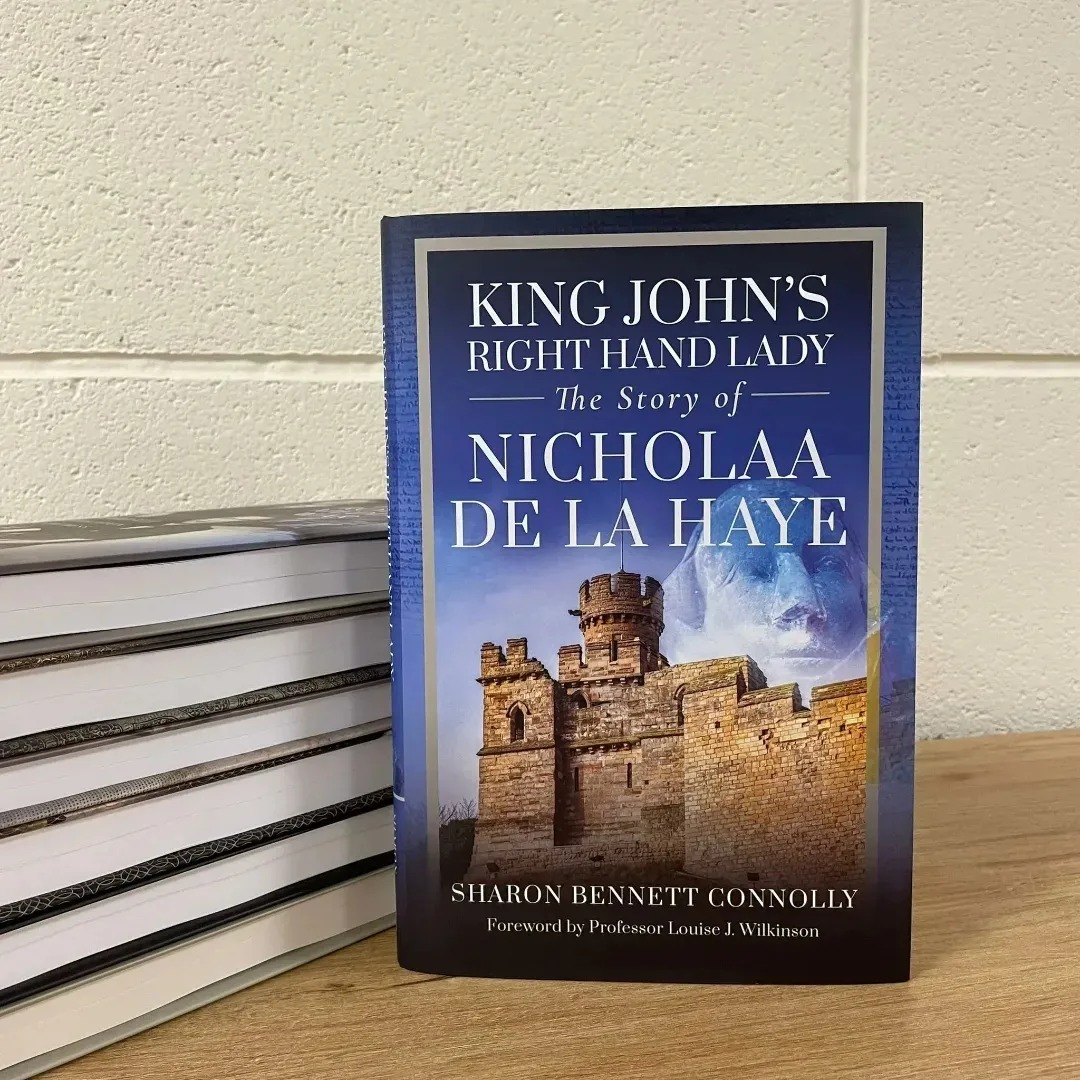




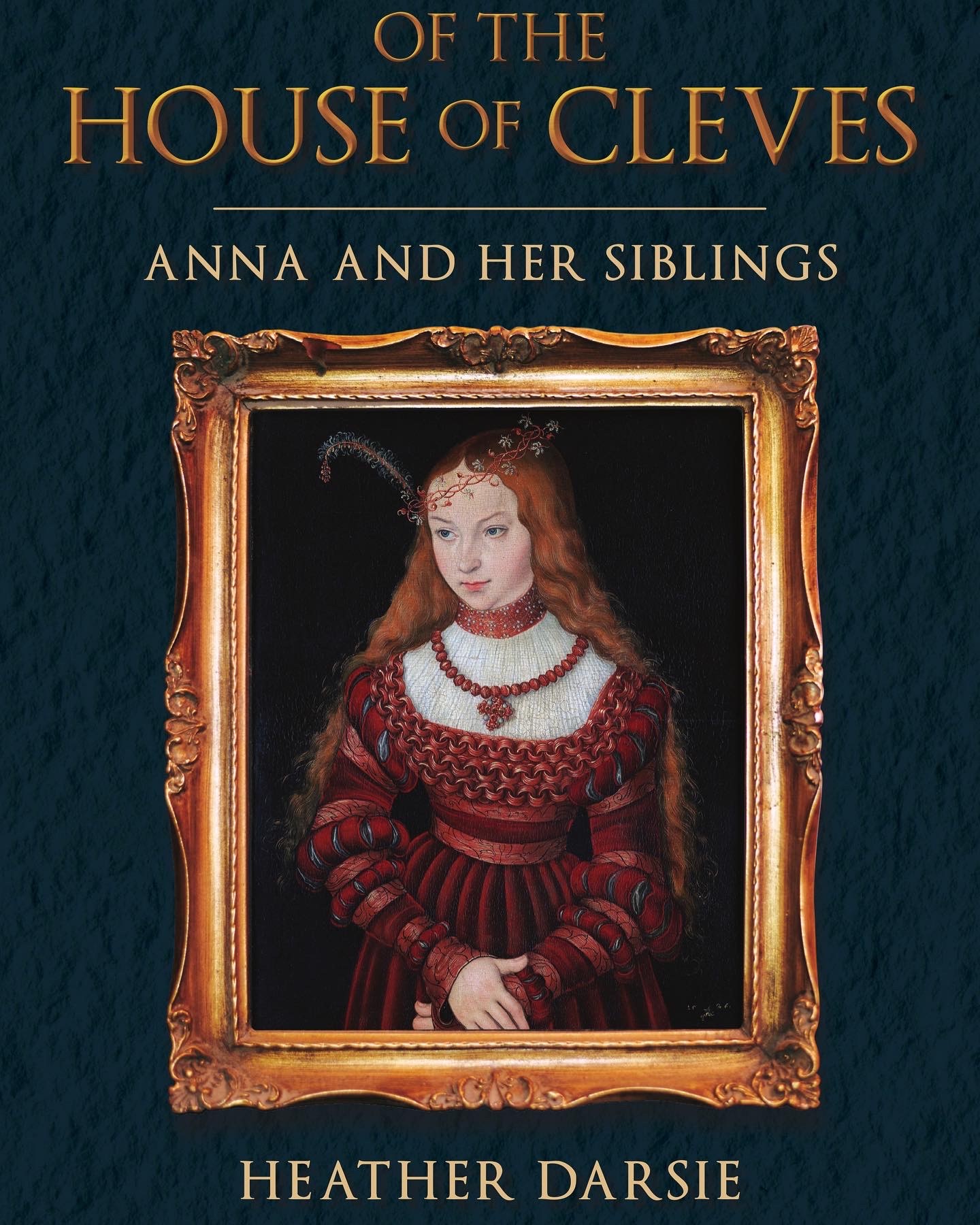
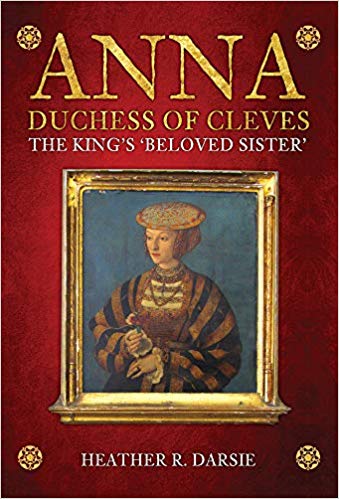



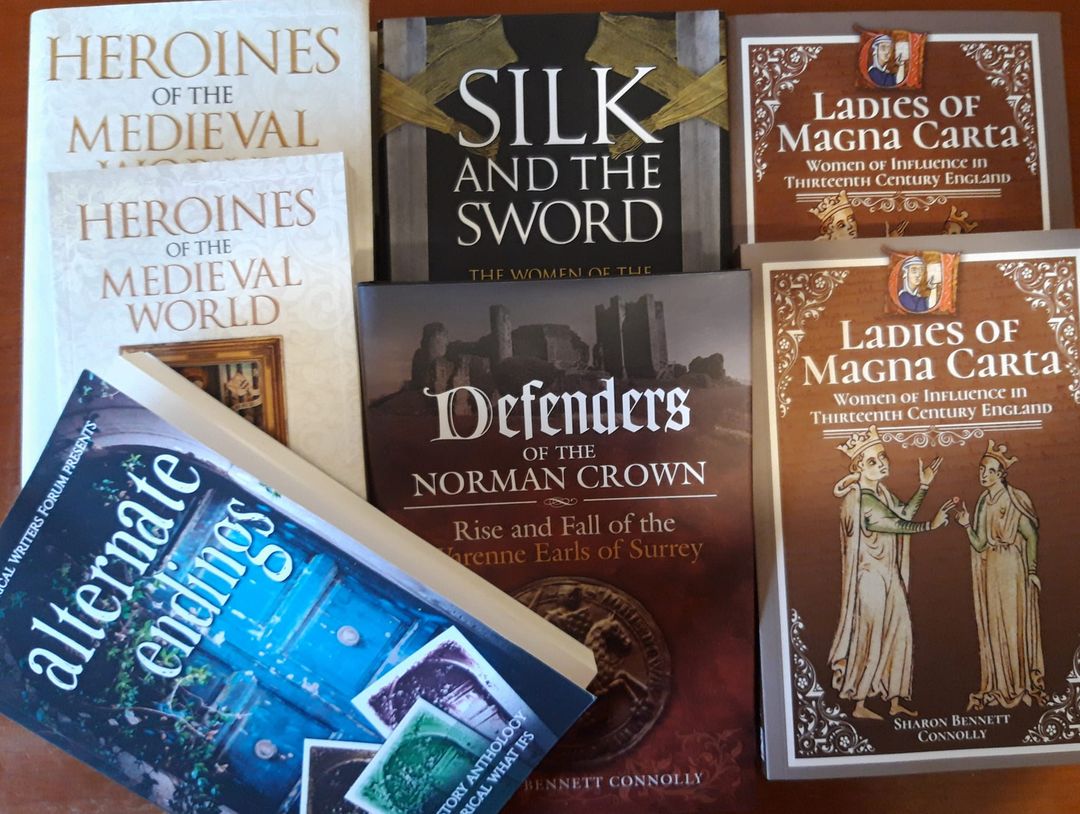


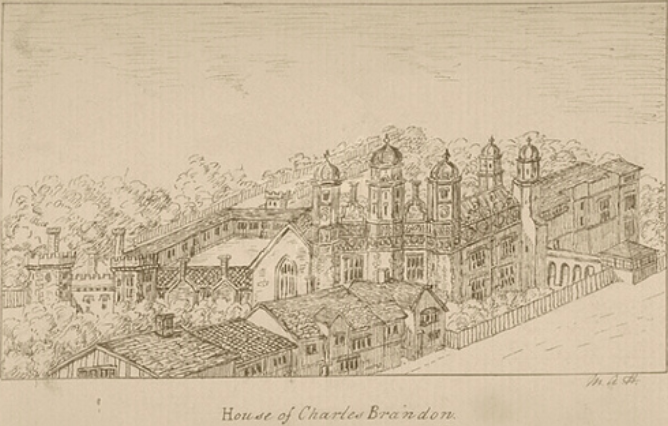


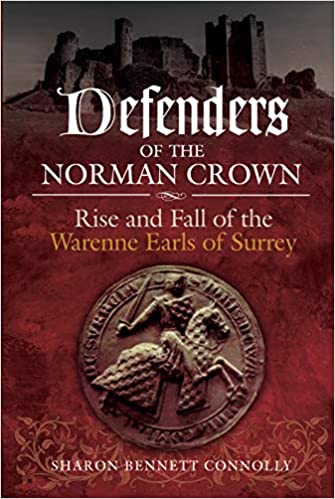





 History... the interesting bits!