Alice Chaucer: the Making of a Duchess

History...the Interesting Bits
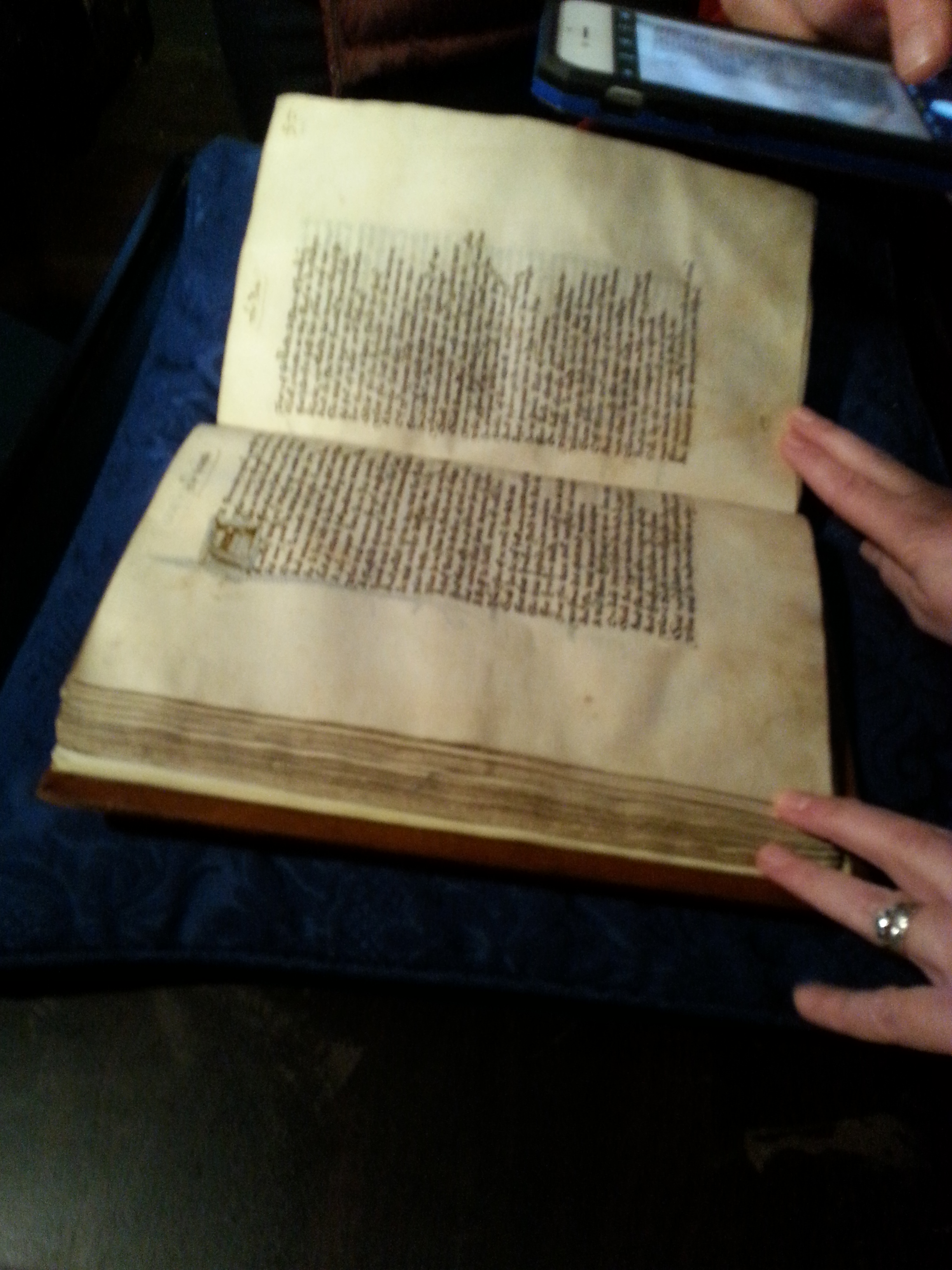
A first edition of The Canterbury Tales, held in Lincoln Cathedral Library

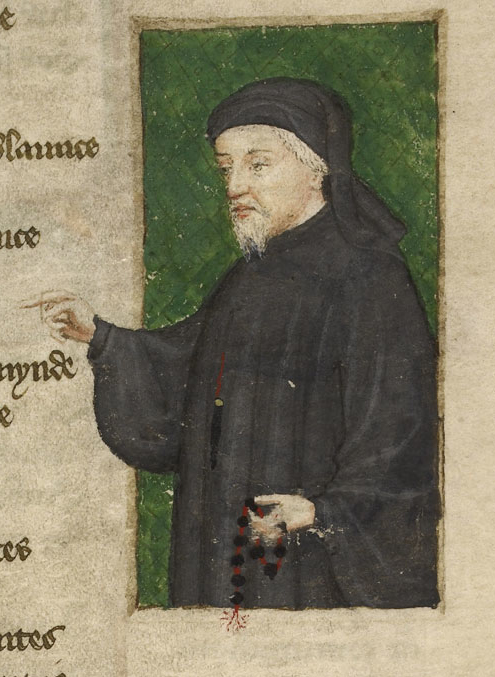
Geoffrey Chaucer is often referred to as the father of English Literature. The author of The Canterbury Tales was patronised by John of Gaunt, Duke of Lancaster. after entering the household of Elizabeth de Burgh, Countess of Ulster and wife of Lionel of Antwerp, Duke of Clarence, as a page, he rose high, to become a clerk, diplomat and courtier. Geoffrey Chaucer had married Philippa de Roelt (or Rouet), sister of Katherine Swynford, the third wife and Duchess of John of Gaunt, and the mother of Gaunt’s legitimised children, the Beauforts, loyal supporters of their Lancastrian half-brother, King Henry IV.

The granddaughter of the famous poet, Alice Chaucer was the only child, and heir, of Geoffrey’s son, Thomas Chaucer. Alice’s mother was Maud (or Matilda) Burghersh, co-heir of the Burghersh estates, which included the manor of Ewelme in Oxfordshire, where Alice was probably born, sometime around 1404. Nothing is known of Alice’s childhood, although, given her later success in estate management and preserving her son’s inheritance, we can assume that she had some level of education.

She is first mentioned in 1414, when she was around ten years old. Alice became the wife of Sir John Phelip, who was some twenty-four years her senior. Poor Alice had little time to get used to married life, and was still not old enough to consummate the marriage when she was widowed. Phelip died of dysentery at the Siege of Harfleur, a prelude to the Battle of Agincourt, on 2 October 1415. In his will, Alice was left a gold cup and all the furniture from one room of Phelip’s house at Grovebury. Still a minor, Alice probably returned home to her family after Phelip’s death, if she had ever left home.

Alice was married again by 1421, this time to Thomas Montagu, Earl of Salisbury. Salisbury’s daughter by his first wife, Eleanor Holland, was also called Alice, and was of a similar age to her new stepmother. Alice Montagu would marry Richard Neville, son of Joan Beaufort and Ralph Neville, Earl of Westmorland. Through his mother, Richard Neville was a grandson of John of Gaunt and first cousin, once removed, of Alice Chaucer.
History...the Interesting Bits
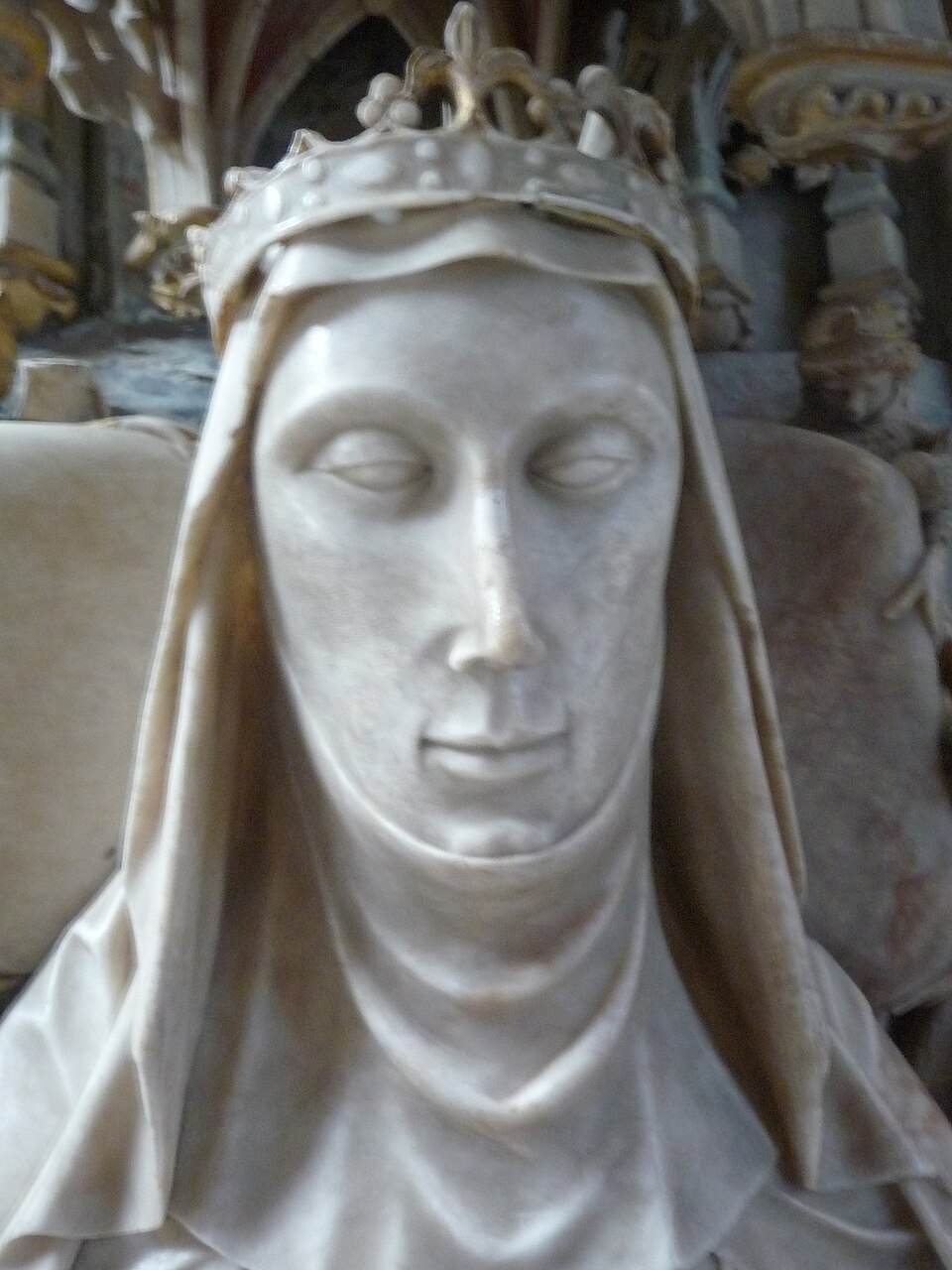
Effigy of Alice Chaucer, Duchess of Suffolk, from her tomb at Ewelme

Alice’s new husband was a soldier, and fought in the Hundred Years War in France. It was during a visit to France in 1424, to her husband, that Alice was at a banquet in Paris, hosted by Philip the good, Duke of Burgundy. Renowned for her beauty, it appears that Duke Philip was far too attentive to the Earl of Salisbury’s wife, infuriating the earl in his attempts to seduce poor Alice. Relations between the duke and the earl soured significantly, with Salisbury going against the interests of Burgundy in besieging Orléans. The siege was a disaster for Salisbury, the French were rallied by Joan of Arc. During the fighting, Salisbury was struck in the face by a splinter from a French cannon on 27 October 1428. He died a week later, on 3 November. In the same engagement, Salisbury’s good friend, William de la Pole, Earl of Suffolk, was captured by the French. Suffolk, it seems, was also fond of Alice and it is thought Alice was the mystery woman to whom he wrote love poetry during his two years of captivity.

Salisbury’s death left Alice a widow for a second time, but this time she was a very wealthy one. According to the terms of Salisbury’s will, Alice was left half of his net goods, 100 marks in gold and 3,000 marks in jewellery and plate, plus the revenues of his Norman lands. As a sign of his trust in Alice and her abilities, Salisbury had also named her as the supervisor of the will. A wealthy and beautiful widow, and still in her twenties, it is not surprising that by 1432, and possibly as early as 1430, Alice had made her third and final marriage. Her husband was the same William de la Pole, Earl of Suffolk, friend of her husband and, apparently, an admirer of Alice. It seems likely that they married shortly after his release from his French imprisonment.

The de la Pole family had risen from being wealthy wool merchants to the nobility, to nobility themselves. William’s grandfather, Michael de la Pole, was a favourite of Richard II, who had been promoted to the peerage as Earl of Suffolk. However, when Richard II’s personal rule was curbed by the Lords Appellant, Suffolk was one of those to take the brunt of the criticism. He fled into exile in 1388 and was sentenced to death in absentia; he died in Paris the following year. His son, another Michael and William’s father, was allied with the Appellant Lords and saw his goods and titles forfeit when Richard II regained control.
History...the Interesting Bits
Alice’s grandfather, Geoffrey Chaucer

They were restored to him in 1398. Michael de la Pole, 2nd Earl of Suffolk, had five sons, of whom William was the second oldest. The de la Pole family gave everything fighting in the French wars, the second earl died of dysentery in 1415, during the same siege of Harfleur during which Alice’s first husband died, and his oldest son, another Michael, died in October of the same year, as one of the few noble casualties of the Battle of Agincourt; he was nineteen and had held the title Earl of Suffolk for just one month. William therefore succeeded to the earldom of Suffolk, but would lose his three remaining brothers to the French over the next twenty years: Alexander was killed in 1429, at the Battle of Jargeau, John died a prisoner in France and Thomas died while acting as hostage for William.

William himself spent decades fighting in France, as one of Henry VI’s senior commanders. This military service may well be the reason why, although William and Alice were married in the early 1430s, their only known child, John de la Pole, was not born until 27 September 1442. When still a child, John would be betrothed to his parents’ ward, Margaret Beaufort, sole heiress of Alice’s cousin, John Beaufort, Duke of Somerset.

William and Alice appear to have had a genuinely close, affectionate and trusting relationship. In his will of 1448, William appoints Alice as his sole executrix, giving her guardianship of their son, John, stating; ‘And last of all, with the blessing of God and of me as heartily as I can give it, my dear and true son, I bequeath between him and his mother love and all good accord and give him to her wholly’.1
History...the Interesting Bits
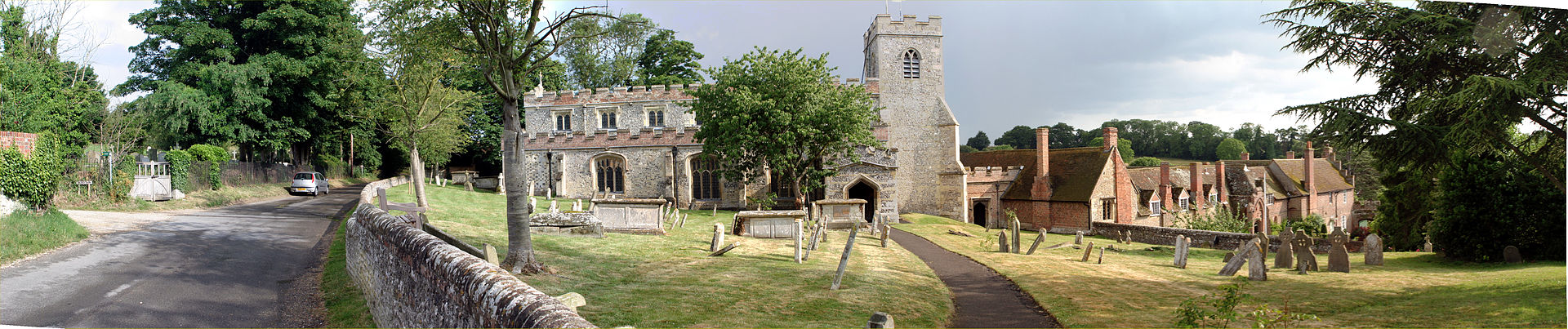
The village of Ewelme, with the parish church and almshouses

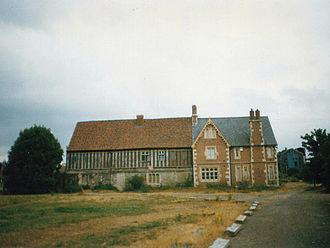
Although William’s family seat was a house at Wingfield, the couple spent most of their time at Alice’s house at Ewelme, where they enlarged the manor house, even receiving a papal dispensation to have a font installed in the chapel. They also rebuilt the parish church of St Mary the Virgin and established a school to educate local boys, the master of which was to be selected from the University of Oxford. William and Alice also built a series of almshouses, known as God’s House, to house thirteen almsmen and two priests, one of whom was to be the schoolmaster.

William de la Pole was deeply involved in the politics of the time. One of Henry VI’s most trusted advisers, it was William who led the embassy to arrange the king’s marriage to Margaret of Anjou, a cousin of the King of France. In November 1444, Alice accompanied her husband to France, along with the Earls of Shrewsbury and Salisbury, to bring back the king’s bride. Alice was to act as Margaret’s senior lady-in-waiting for the journey home and became her close friend; Queen Margaret would visit Alice at her husband’s manor of Wingfield during a progress through the Midlands in 1452. William, however, was to receive the brunt of the criticism for the marriage, which brought no benefit to England, as Margaret came without a dowry, and a secret clause in the marriage contract returned the conquered counties of Maine and Anjou to France.
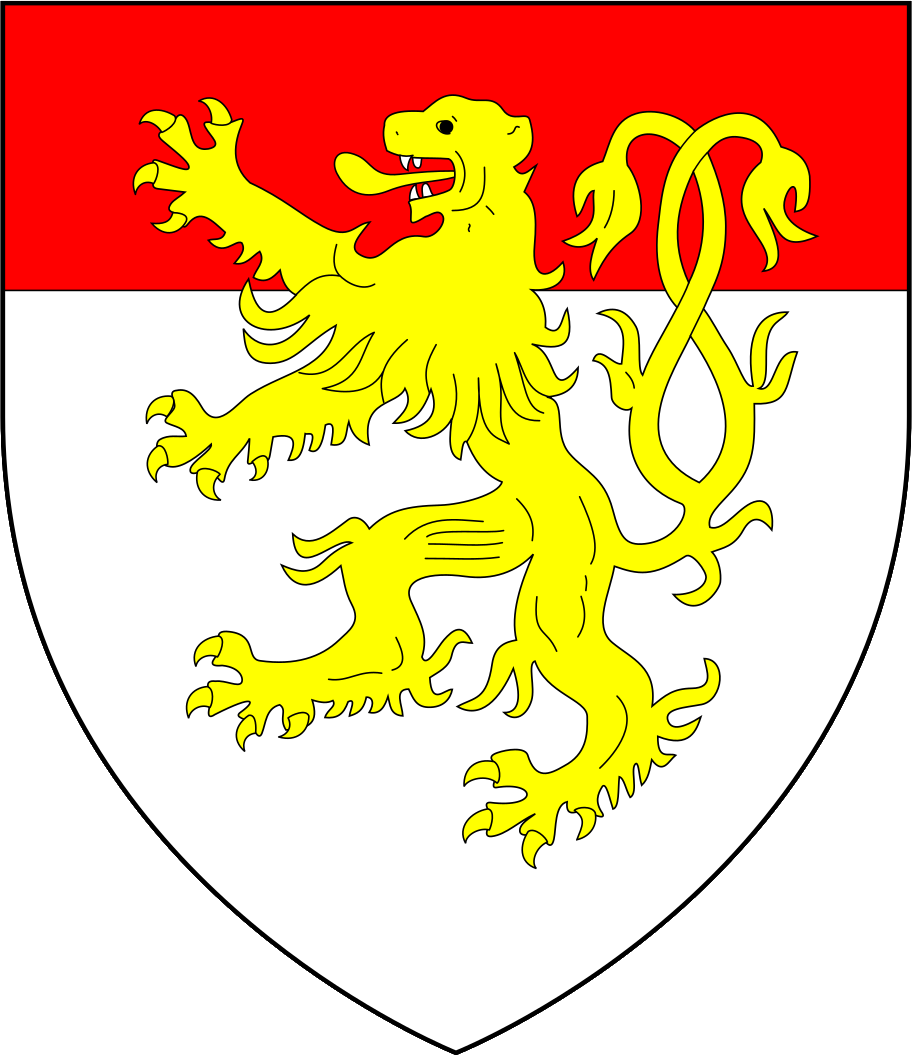
History...the Interesting Bits
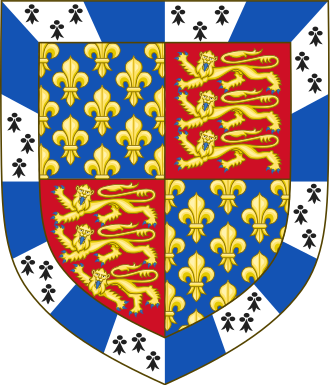
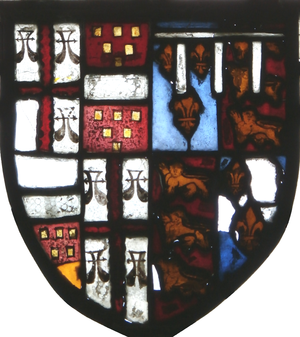
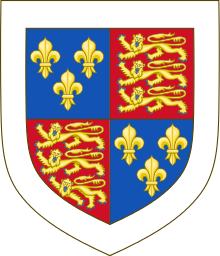
Arms of Alice Chaucer

In 1448 William was created Duke of Suffolk by Henry VI. However, while he still had the confidence of the king, the lords turned against him and his downfall soon followed. He had fallen foul of the powerful Duke of York and became the scapegoat for the ineptitude of Henry VI’s policies. On 7 February 1450, the Paston Letters recorded Suffolk’s impeachment, which charged that:

William de la Pole, Duke of Suffolk, late of Ewelme, in the county of Oxford, falsely and traitorously hath imagined, compassed, purposed forethought, done and committed divers high, great, heinous, and horrible treasons against your most royal person, your commons of your realms of England and France, your duchy of Guienne and Normandy, and your whole inheritance of your county of Anjou and Maine, the estate and dignity of the same, and the universal wele and prosperity of all your true subjects.2

The king tried to stand by Suffolk, and refused to accept the charges of treason; he banished the Duke from the realm for five years. William de la Pole was given six weeks to set his affairs in order before leaving England on 1 May 1450. The Duke wrote a moving letter to his six-year-old son, John, full of fatherly advice and commending him to his mother, saying: ‘Thirdly, in the same wise, I charge you, my dear son, always, as you’re bound by the commandment of God to do, to love, to worship your lady and mother, and also that you obey always her commandments and to believe her councils and advice in all your works, the which dread not, but shall be best and truest to you. And if any other body would stir you to the contrary, to flee the counsel in any wise, for you shall find it nought and evil.’3

History...the Interesting Bits
19th century illustration depicting Suffolk’s murder

The letter is all the more poignant, as it turned out to be William de la Pole’s last communication with his son. He left England on the ship Nicholas of the Tower, but it was intercepted by unknown persons and on 2 May, 1450, the Duke of Suffolk was forced to endure a mock trial before he was gruesomely beheaded with a rusty sword. His body was left on the beach at Dover and his head stuck on a pole beside it. He was later buried at his family’s manor of Wingfield in Suffolk.

Widowed for a third and final time, Alice devoted her time and energies to protecting her son’s inheritance. On 8 May she secured the keeping of all the lands belonging to her husband. However, she was still an object of derision among the malcontents; she was one of those mentioned by name in a Commons petition to have people removed from court. Henry initially acquiesced, but failed to keep his promise to banish the twenty-nine people named in the petition and Alice remained at court as one of Queen Margaret’s ladies. She was with the queen at her churching on 18 November 1453, following the birth of Edward, prince of Wales. The magnificent ceremony was attended by six duchesses, including Alice, eight countesses and seven baronesses.

Alice proved to be a formidable Duchess, pursuing her family’s interests with the utmost vigour. Following her husband’s death, she continued in his claims to some manors in East Anglia, which belonged to John Fastolf. The Pastons, a prominent East Anglian
family who wrote a remarkable number of letters during this period, also laid claim to the lands following Fastolf’s death in 1459. The dispute over Caistor Castle continued long into the next decade. In 1469, John Paston wrote to his younger brother, another John, that ‘the Quene hath sent a letter unto my Lady of Suffolk the elder [Alice] desyryng theym to common [speak] with my lordis that all such matters as the Kyng wrote unto them fore mabe kept so that no defaute be founden in them, as ye may understand by youre lettre sent frome the Quene’.4 Suffolk’s claim on the properties had been dubious, but Alice’s litigation was successful, despite the opposition of the Pastons.
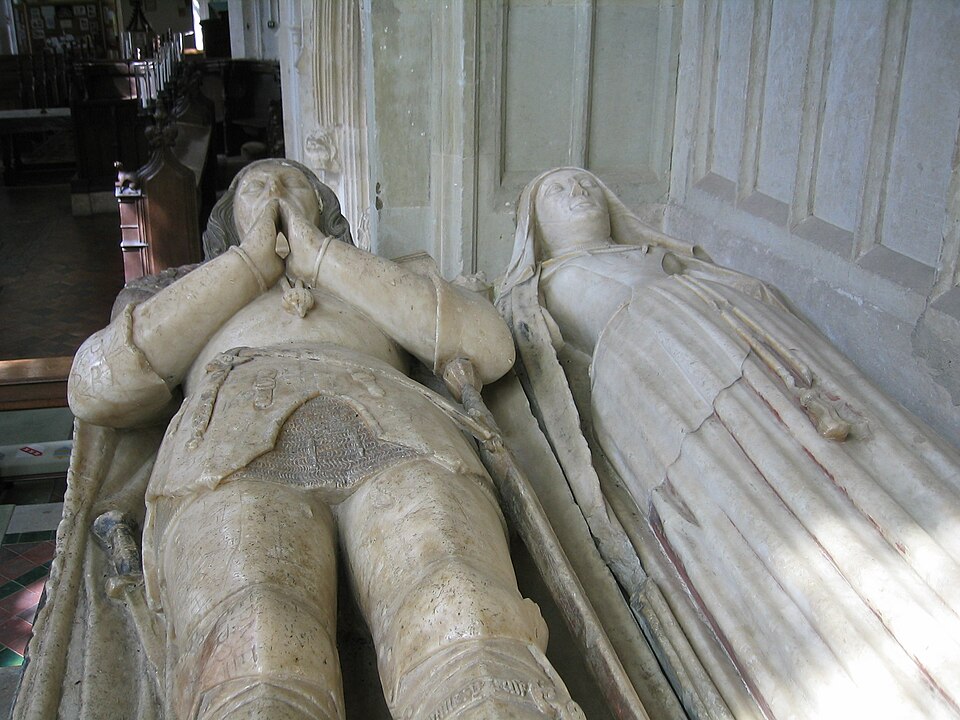
History...the Interesting Bits
Tomb of Alice’s son, John de la Pole and his wife, Elizabeth of York, Wingfield

The mid-15th century was a dangerous time. Powerful lords were squaring up to each other, looking to take advantage of Henry VI’s weak rule. A woman alone, with her son’s inheritance to protect, Alice needed powerful allies. And so, she broke her son’s betrothal to the Lancastrian heiress, Margaret Beaufort, and turned to the House of York. In 1458, Alice negotiated John’s marriage with Elizabeth, daughter of Richard, Duke of York and Cecily Neville. Her son and grandsons would become stalwarts of the Yorkist cause. Of the eleven children of John and Elizabeth, their eldest son, another John, having been named as his heir by Richard III, was killed fighting Henry VII’s Lancastrian army at the Battle of Stoke Field, the final engagement of the Wars of the Roses, in 1487. He was succeeded as Duke of Suffolk by his brother, Edmund, who was executed, because of his Yorkist blood, by Henry VIII in 1513.

Alice was favoured by Edward IV, who won the throne for the Yorkists in 1461, gaining exemptions in his Acts of Resumption. She was among the more honoured guests at the sumptuous feast, hosted by Richard Neville, Earl of Warwick, for the enthronement of his brother, George Neville, as Archbishop of York. The feast was held at the Archbishop’s castle of Cawood in 1465, and Alice was given a place of honour at a high table in a second chamber – a sign of distinction as opposed to a place on a secondary table in the great hall – alongside the Countess of Warwick and the new Archbishop’s sisters, the Countess of Oxford, Lady Hastings and Lady Fitzhugh.
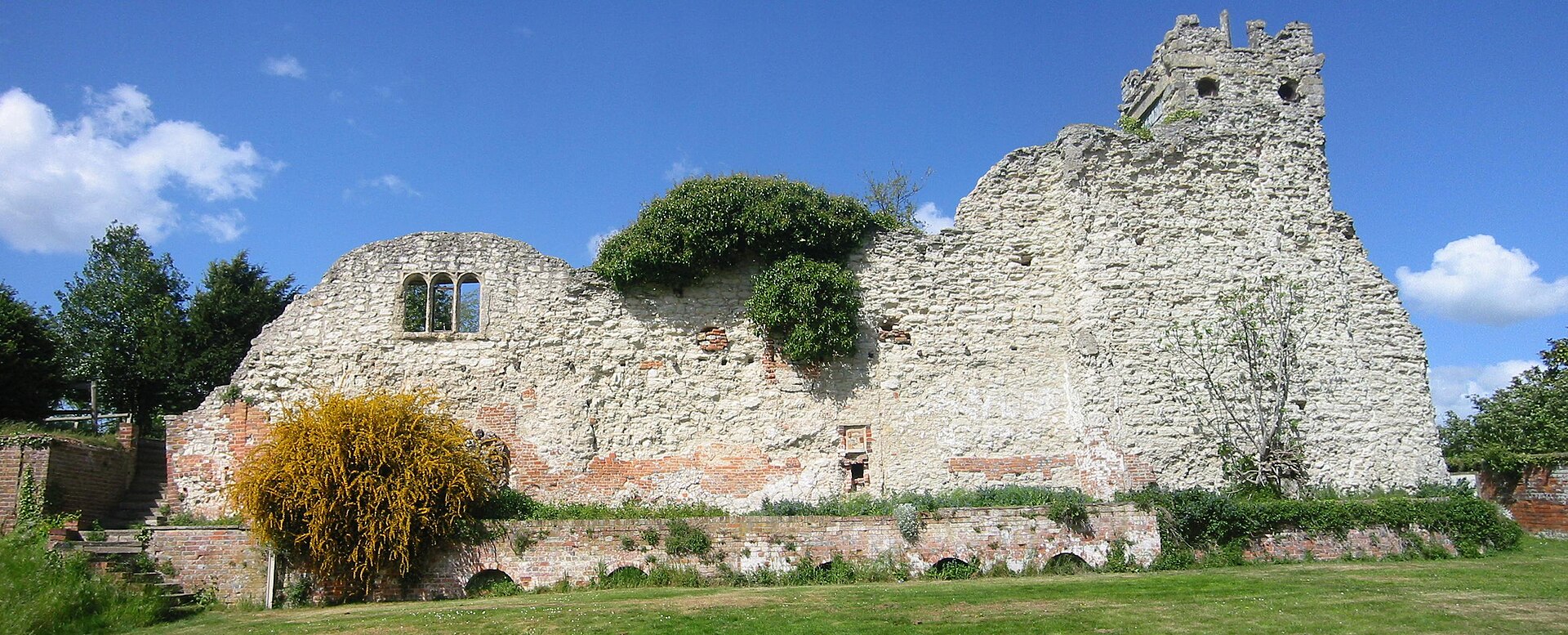
History...the Interesting Bits
The ruins of Wallingford Castle

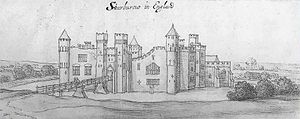
A further sign of trust came in 1471; following the Battle of Tewkesbury and the capture of Margaret of Anjou. Edward entrusted the former queen to Alice’s custody. Margaret was held at Wallingford Castle, which was held by Alice and was close to her estate at Ewelme. The Duchess was the queen’s jailer for the last four years of her life. Following Alice’s death, Margaret of Anjou was ransomed by Louis XI of France, and returned to France in 1476.

Through her family inheritance and three marriages, Alice Chaucer had become an incredibly wealthy woman. She held estates in twenty-two counties; in 1454 she received an income of £1300 from three of them alone. Given that her grandfather was Geoffrey Chaucer, it is no surprise that Alice was a patron of the arts, particularly literature, including John Lydgate. An inventory of her goods, taken in 1466 during a move back to Ewelme, included many books.
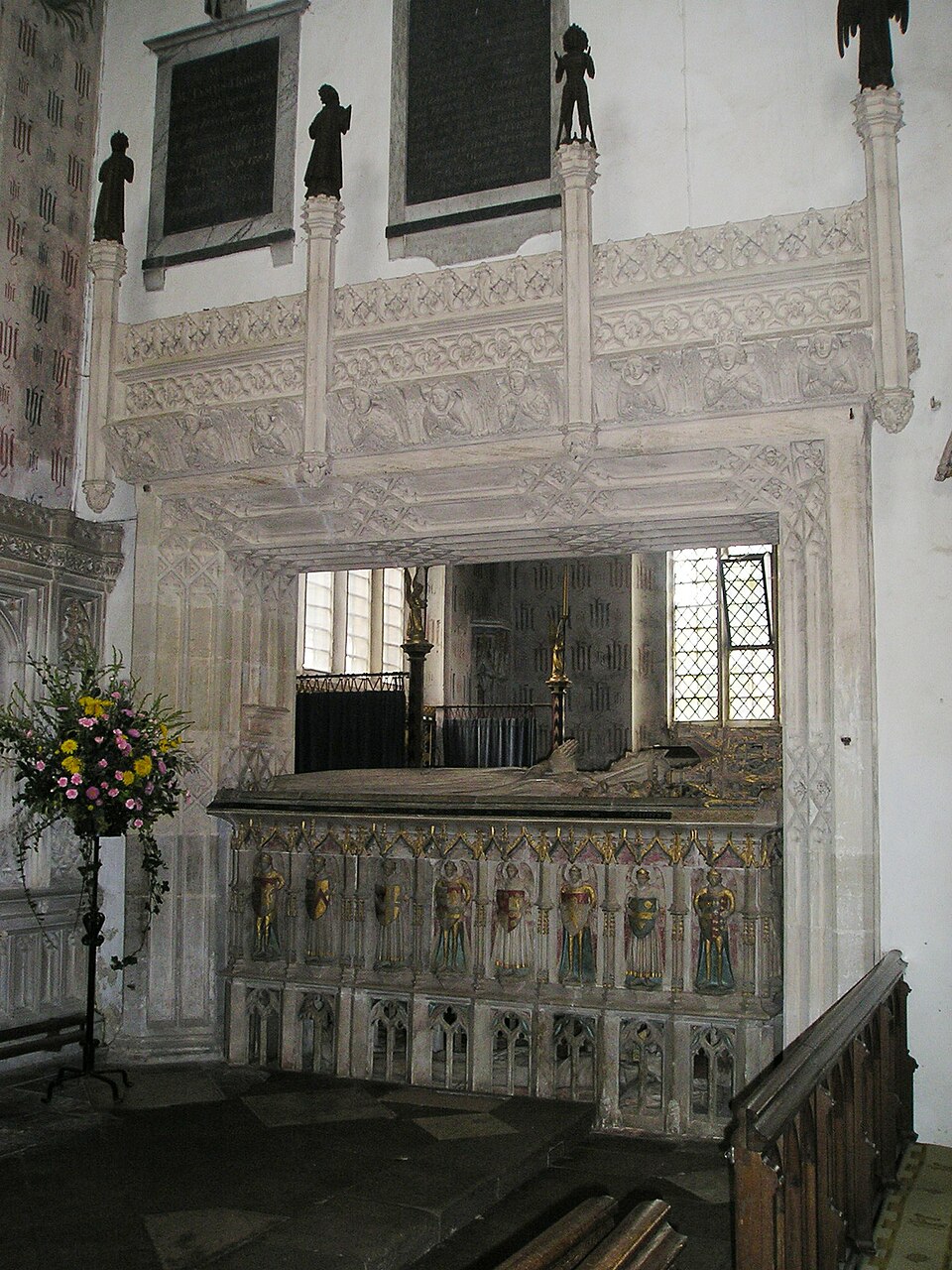
History...the Interesting Bits
Alice’s tomb in the church of St Mary the Virgin at Ewelme

Alice died sometime between 20 May and 9 June, 1475, aged around seventy-one. She was laid to rest in the church of St Mary the Virgin, at Ewelme, where her parents were also buried. Her magnificent tomb lies between the nave and the chapel of St John the Baptist, an effigy of Alice lies atop the tomb, with the Duchess wearing a ducal coronet and the Order of the Garter on her arm.

Alice had led a remarkable life, successfully weathering the political turmoil that claimed the life of her third husband. She was a survivor, successfully negotiating the pitfalls and dangers of the medieval world – and particularly the turmoil of the 15th century – forging her own path to see herself and her son safely through.

Notes:

Notes: 1. K.L. Clark, The Nevills of Middleham: England’s Most Powerful Family in the Wars of the Roses; 2. Matthew Lewis, Richard Duke of York, King by Right; 3. Clark, The Nevills of Middleham; 4. David Baldwin, Elizabeth Woodville, Mother of the Princes in the Tower.

Images:

Courtesy of Wikimedia except The Canterbury Tales which is ©2026 Sharon Bennett Connolly FRHistS

Further Reading:

Rowena E. Archer, Chaucer, Alice, Duchess of Suffolk (c.1404–1475) (ODNB); K.L. Clark, The Nevills of Middleham: England’s Most Powerful Family in the Wars of the Roses; Kristie Dean, On the Trail of the Yorks; Matthew Lewis, Richard Duke of York, King by Right; David Baldwin, Elizabeth Woodville, Mother of the Princes in the Tower; John Gillingham, The Wars of the Roses; Martin J Dougherty, The Wars of the Roses; Susan Higginbotham, The Woodvilles, the Wars of the Roses and England’s Most Infamous Family; Amy Licence, Red Roses, Blanche of Gaunt to Margaret Beaufort; David Santuiste, Edward IV and the Wars of the Roses; Amy Licence, Henry VI and Margaret of Anjou: A Marriage of Unequals

*

My Books

Signed, dedicated copies of all my books are available through my online bookshop. or by contacting me.

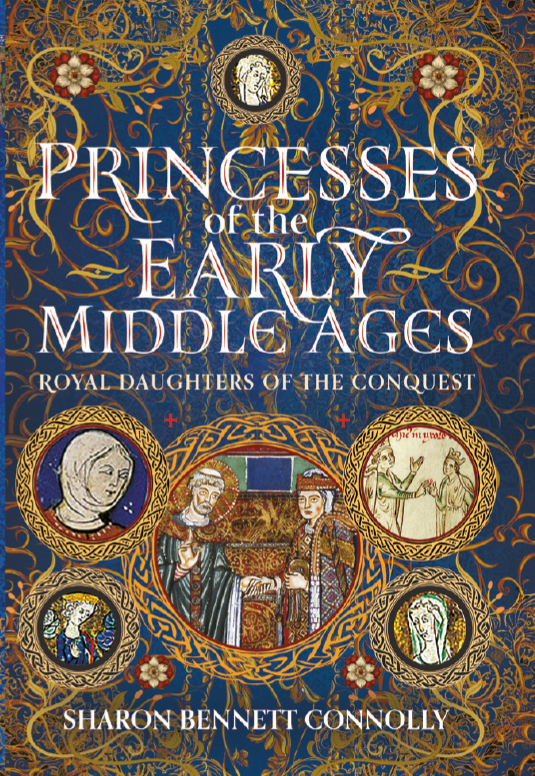
Coming 30 March: Princesses of the Early Middle Ages
Books by Sharon Bennett Connolly

Daughters of kings were often used to seal treaty alliances and forge peace with England’s enemies. Princesses of the Early Middle Ages: Royal Daughters of the Conquest explores the lives of these young women, how they followed the stereotype, and how they sometimes managed to escape it. It will look at the world they lived in, and how their lives and marriages were affected by political necessity and the events of the time. Princesses of the Early Middle Ages will also examine how these girls, who were often political pawns, were able to control their own lives and fates. Whilst they were expected to obey their parents in their marriage choices, several princesses were able to exert their own influence on these choices, with some outright refusing the husbands offered to them.

Their stories are touching, inspiring and, at times, heartbreaking.

Princesses of the Early Middle Ages: Royal Daughters of the Conquest is now available for pre-order from Pen & Sword and Amazon.

Also by Sharon Bennett Connolly:

Books by Sharon Bennett Connolly

Scotland’s history is dramatic, violent and bloody and Scotland’s Medieval Queens have seen it all. This is the story of Scotland through their eyes. Available now from Amazon and Pen and Sword BooksHeroines of the Tudor World tells the stories of the most remarkable women from European history in the time of the Tudor dynasty, 1485-1603. These are the women who ruled, the women who founded dynasties, the women who fought for religious freedom, their families and love. Heroines of the Tudor World is now available from Amberley Publishing and Amazon UK. Women of the Anarchy demonstrates how Empress Matilda and Matilda of Boulogne, unable to wield a sword themselves, were prime movers in this time of conflict and lawlessness. It shows how their strengths, weaknesses, and personal ambitions swung the fortunes of war one way – and then the other. Available from Bookshop.orgAmberley Publishing and Amazon UKKing John’s Right-Hand Lady: The Story of Nicholaa de la Haye is the story of a truly remarkable lady, the hereditary constable of Lincoln Castle and the first woman in England to be appointed sheriff in her own right. Available from all good bookshops Pen & Sword Booksbookshop.org and Amazon

Royal Historical Society

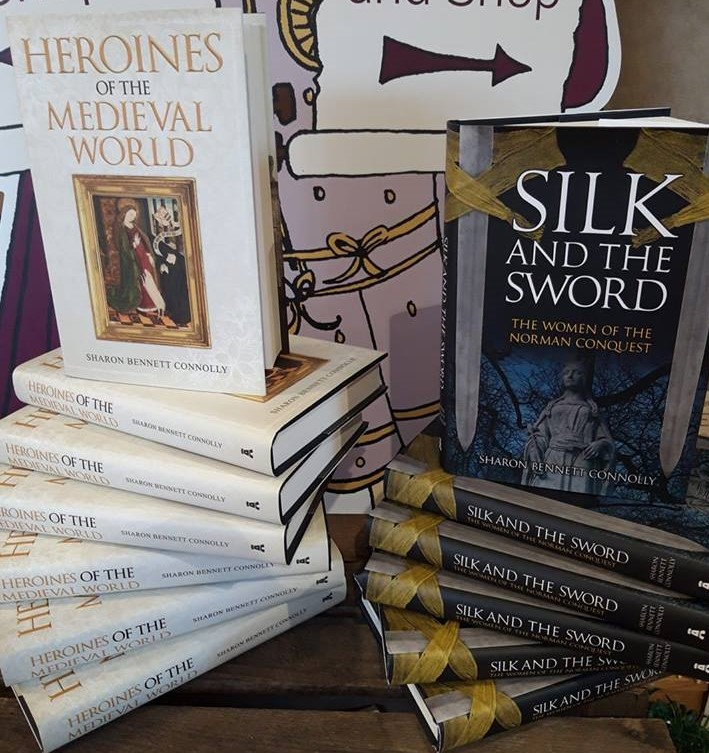
Defenders of the Norman Crown: The Rise and Fall of the Warenne Earls of Surrey tells the fascinating story of the Warenne dynasty, from its origins in Normandy, through the Conquest, Magna Carta, the wars and marriages that led to its ultimate demise in the reign of Edward III. Available from Pen & Sword BooksAmazon in the UK and US, and Bookshop.orgLadies of Magna Carta: Women of Influence in Thirteenth Century England looks into the relationships of the various noble families of the 13th century, and how they were affected by the Barons’ Wars, Magna Carta and its aftermath; the bonds that were formed and those that were broken. It is now available in paperback and hardback from Pen & SwordAmazon, and Bookshop.orgHeroines of the Medieval World tells the stories of some of the most remarkable women from Medieval history, from Eleanor of Aquitaine to Julian of Norwich. Available now from Amberley Publishing and Amazon, and Bookshop.orgSilk and the Sword: The Women of the Norman Conquest traces the fortunes of the women who had a significant role to play in the momentous events of 1066. Available now from Amazon,  Amberley Publishing, and Bookshop.org.

Alternate Endings: An anthology of historical fiction short stories including Long Live the King… which is my take what might have happened had King John not died in October 1216. Available in paperback and kindle from Amazon.

Podcast:
A Slice of Medieval

Have a listen to the A Slice of Medieval podcast, which I co-host with Historical fiction novelist Derek Birks. Derek and I welcome guests, such as Ian Mortimer, Bernard Cornwell, Elizabeth Chadwick and Scott Mariani, and discuss a wide range of topics in medieval history, from significant events to the personalities involved. 

Every episode is also now available on YouTube.

*

Don’t forget! Signed and dedicated copies of all my books are available through my online bookshop.

For forthcoming online and in-person talks, please check out my Events Page.

You can be the first to read new articles by clicking the ‘Follow’ button, liking our Facebook page or joining me on TwitterThreadsBluesky and Instagram.

*

©2026 Sharon Bennett Connolly FRHistS

Book Corner: Two Queenly Biographies from Joanna Arman

I am very fond of Joanna Arman as an author. She has a habit of bringing often-forgotten or ignored – or maligned – women to the fore and reassessing their role in history. Her biography of Æthelflæd, The Warrior Queen: The Life and Legend of Æthelflæd, Daughter of Alfred the Great, was an engaging and illuminating book, despite the challenges of writing about a woman who lived over a thousand years ago. Writing about any woman in history is challenging. Women are rarely mentioned in the chronicles. And when they are, contemporary sources are rarely balanced and often trying to advance a moral judgement of how women fell below the standard expected of them in their society. Which is why we need reappraisals of significant historic women, books which reassess their stories and apply the filter against the casual misogyny that women have suffered from throughout the centuries. Joanna Arman has set out to do that with books about two very different queens consort of England; Matilda of Scotland and Margaret of Anjou.

Matilda II: The Forgotten Queen

The wife of King Henry I and the mother of the Empress Maud is a woman and a Queen forgotten to history. She is frequently conflated with her daughter or her mother-in-law. She was born the daughter of the King of Scotland and an Anglo-Saxon princess. Her name was Edith, but her name was changed to Matilda at the time of her marriage. The Queen who united the line of William the Conqueror with the House of Wessex lived during an age marked by transition and turbulence. She married Henry in the first year of the 12th century and for the eighteen years of her rule aided him in reforming the administrative and legal system due to her knowledge of languages and legal tradition. Together she and her husband founded a series of churches and arranged a marriage for their daughter to the Holy Roman Emperor. Matilda was a woman of letters to corresponded with Kings, Popes, and prelates, and was respected by them all. Matilda’s greatest legacy was continuity: she united two dynasties and gave the Angevin Kings the legitimacy they needed so much. It was through her that the Empress Matilda and Henry II were able to claim the throne. She was the progenitor of the Plantagenet Kings, but the war and conflict which followed the death of her son William led to a negative stereotyping by Medieval Chroniclers. Although they saw her as pious, they said she was a runaway nun and her marriage to Henry was cursed. This book provides a much-needed re-evaluation of Edith/Matilda’s role and place in the history of the Queens of England.

Now, this is a book I have been waiting for!

And it is a book that has needed to be written for a long time. How useful it would have been when I was writing my own book, Women of the Anarchy. A complete biography of Matilda of Scotland – also referred to as Matilda II to distinguish her from her predecessor, Matilda of Flanders. As the wife of Henry I of England Matilda of Scotland is a woman often neglected and overlooked by historians. And yet, Queen Matilda was a truly remarkable queen and one who was well respected during her lifetime. Born as the eldest daughter of Malcolm III Canmore, King of Scots, and his saintly wife, Margaret of Wessex, and given the name Edith at birth, her name was changed to the more Norman name, Matilda, on her marriage to Henry I.

Joanna Arman expertly guides us through Queen Matilda’s life, from her childhood in a convent, supervised by her mother’s sister, Christina, through the various suitors who came calling to the controversy over her marriage to King Henry. Matilda II: The Forgotten Queen delves deep into the investigation into whether or not Matilda had ever been professed as a nun and presents the evidence and arguments for both sides. It is a fascinating study.

Queen Matilda’s role, as a queen, wife and mother, is examined in great detail, demonstrating her influence, both on her family and on England and Normandy. Matilda’s piety is shown as an anchoring force throughout her life, influencing the way she approaches problems and relationships. The queen is shown to be a deeply devout, kind and benevolent woman, with a strong sense of purpose and destiny.

Matilda II: The Forgotten Queen covers every aspect of the queen’s life, drawing on chronicles and charters to present what we know in a clear, engaging narrative that brings this often-overlooked queen to life. The book is accompanied by extensive notation and a through bibliography – I was flattered to discover my own book, Defenders of the Norman Crown: Rise and Fall of the Warenne Earls of Surrey, cited as a refence. It is an excellent biography, thoroughly researched and beautifully presented. I loved reading every word.

To buy Matilda II: The Forgotten Queen: Amazon

Margaret of Anjou: She-Wolf of France, Twice Queen of England

In 1445 a fifteen-year-old French girl left her homeland to marry the son of the great warrior Henry V. Sixteen years later, her husband had lost his throne and she had fled into exile. For a decade, she struggled to reclaim the throne of England before her final and shattering defeat at the Battle of Tewkesbury. It marked the final destruction of the House of Lancaster by Yorkist King Edward IV and his brothers. Margaret lost more than her family: she was also vilified. Shakespeare cast her as a sadistic killer who murdered the noble Richard, Duke of York. History cast her as a manipulative seductress whose destructive ambition was a major cause of the Wars of the Roses. Margaret of Anjou remains one of the most notorious consorts in medieval history, the queen we love to hate. But is her reputation deserved, or was she simply caught between the machinations and rivalries of powerful men? By examining Margaret’s life and actions in detail, this biography reveals a new side to the last foreign-born queen of medieval England. Margaret came from a family of strong women. Faced with hardship in the first years of her marriage, Margaret’s choices arose from a conviction that it was natural for a woman to take control in the absence of male leadership. A wealth of records have been left behind, allowing historians to investigate Margaret’s career as a beloved wife and, later, as the leader of a political faction struggling to secure the crown for her family. If the course of history had run differently, would she instead be considered a heroic warrior queen today – perhaps even England’s Joan of Arc?

At last! A balanced, objective biography of Margaret of Anjou that does not just regurgitate the ‘she-wolf’ trope (despite it being in the title).Peeling away the centuries of misogyny, Joanna Arman takes a new look at the historical record and presents a version of Margaret of Anjou, the long-suffering wife of the mentally-fragile king, Henry VI, that is much closer to the living, breathing woman she was. This does not mean that Margaret’s actions are excused away, that she is suddenly assessed as a saint. Rather, Joanna Arman presents Margaret of Anjou’s actions against the backdrop of the times; the challenges she was facing, and the actions she had to take in order to preserve her husband’s crown and her son’s inheritance.

Margaret is presented as a human being, prone to making mistakes just like the rest of us. She is also a woman, challenged with holding her own in a man’s world – and in a time of war. Joanna Arman presents the complete queen; a woman, a wife, a mother. And a leading protagonist in the Wars of the Roses. The book is a fascinating analysis of this influential queen, of her life, decisions and struggles that eventually led to her losing everything; her son, her husband and her crown.

Told with empathy, balance and passion, I defy anyone to not feel moved and invigorated by this fascinating study of a woman who had fought hard to hold on to everything, but lost it all. Faced with her husband’s mental illness and military ineptitude, Margaret tried to fill the void, to be king and queen. The male dominated society of 15th century England would not permit it. One wonders what Margaret might have achieved had she been allowed to take the reins of government. Her deadly rivalry with Richard, Duke of York, however, meant court factions would always manoeuvre against her, even after York’s death at Wakefield.

Joanna Arman has taken great care to ensure that Margaret of Anjou: She-Wolf of France, Twice Queen of England, is a biography of the queen. It is not a Lancastrian whitewash, nor a Yorkist hate-filled pamphlet. Margaret of Anjou is the centre of attention, the woman held out for appraisal, for assessment, for praise and criticism. That it is at once balanced, critical and empathetic is testament to Joanna Arman’s skill as the queen’s biographer.

To buy Margaret of Anjou: She-Wolf of France, Twice Queen of England: Amazon

*

My Books:

Signed, dedicated copies of all my books are available through my online bookshop.

Out Now! Women of the Anarchy

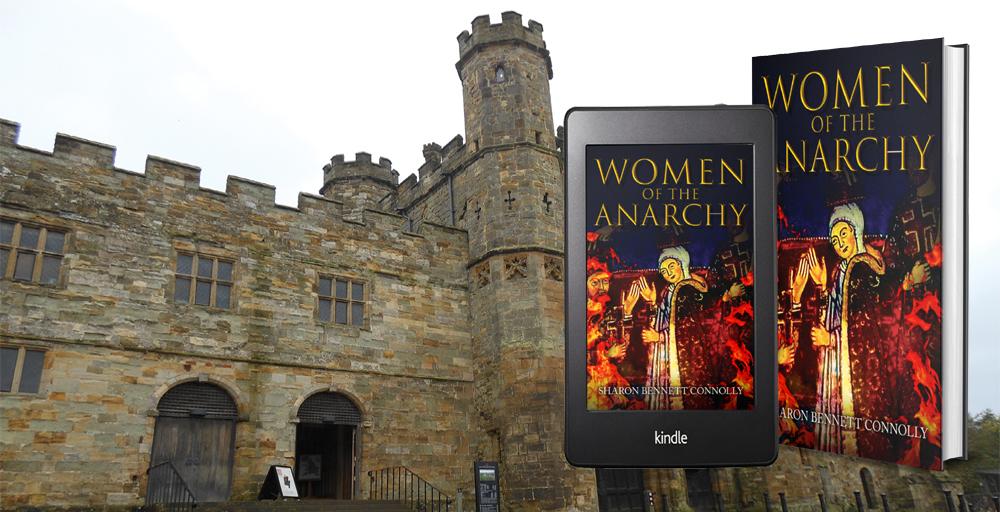
Two cousins. On the one side is Empress Matilda, or Maud. The sole surviving legitimate child of Henry I, she is fighting for her birthright and that of her children. On the other side is her cousin, Queen Matilda, supporting her husband, King Stephen, and fighting to see her own son inherit the English crown. Women of the Anarchy demonstrates how these women, unable to wield a sword, were prime movers in this time of conflict and lawlessness. It show how their strengths, weaknesses, and personal ambitions swung the fortunes of war one way – and then the other.

Available from Bookshop.orgAmberley Publishing and Amazon UK.

Coming on 15 June 2024: Heroines of the Tudor World

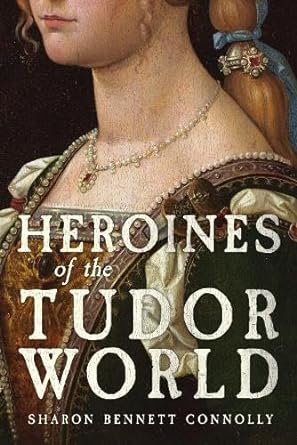
Heroines of the Tudor World tells the stories of the most remarkable women from European history in the time of the Tudor dynasty, 1485-1603. These are the women who ruled, the women who founded dynasties, the women who fought for religious freedom, their families and love. These are the women who made a difference, who influenced countries, kings and the Reformation. In the era dominated by the Renaissance and Reformation, Heroines of the Tudor World examines the threats and challenges faced by the women of the era, and how they overcame them. From writers to regents, from nuns to queens, Heroines of the Tudor World shines the spotlight on the women helped to shape Early Modern Europe.

Heroines of the Tudor World is now available for pre-order from Amberley Publishing and Amazon UK.

Also by Sharon Bennett Connolly:

King John’s Right-Hand Lady: The Story of Nicholaa de la Haye is the story of a truly remarkable lady, the hereditary constable of Lincoln Castle and the first woman in England to be appointed sheriff in her own right. Available from all good bookshops or direct from Pen & Sword Booksbookshop.org and AmazonDefenders of the Norman Crown: The Rise and Fall of the Warenne Earls of Surrey tells the fascinating story of the Warenne dynasty, from its origins in Normandy, through the Conquest, Magna Carta, the wars and marriages that led to its ultimate demise in the reign of Edward III. Available from Pen & Sword BooksAmazon in the UK and US, and Bookshop.org

Ladies of Magna Carta: Women of Influence in Thirteenth Century England looks into the relationships of the various noble families of the 13th century, and how they were affected by the Barons’ Wars, Magna Carta and its aftermath; the bonds that were formed and those that were broken. It is now available in paperback and hardback from Pen & Sword,  Amazon, and Bookshop.orgHeroines of the Medieval World tells the stories of some of the most remarkable women from Medieval history, from Eleanor of Aquitaine to Julian of Norwich. Available now from Amberley Publishing and Amazon, and Bookshop.orgSilk and the Sword: The Women of the Norman Conquest traces the fortunes of the women who had a significant role to play in the momentous events of 1066. Available now from Amazon,  Amberley Publishing, and Bookshop.org.

Alternate Endings: An anthology of historical fiction short stories including Long Live the King… which is my take what might have happened had King John not died in October 1216. Available in paperback and kindle from Amazon.

Podcast:

Have a listen to the A Slice of Medieval podcast, which I co-host with Historical fiction novelist Derek Birks. Derek and I welcome guests, such as Bernard Cornwell and Elizabeth Chadwick, and discuss a wide range of topics in medieval history, from significant events to the personalities involved.

*

Don’t forget! Signed and dedicated copies of all my books are available through my online bookshop.

For forthcoming online and in-person talks, please check out my Events Page.

You can be the first to read new articles by clicking the ‘Follow’ button, liking our Facebook page or joining me on Twitter and Instagram.

*

©2024 Sharon Bennett Connolly FRHistS

Book Corner: The Castle in the Wars of the Roses by Dan Spencer

The Wars of the Roses is one of the most dramatic and fascinating periods in medieval history. Much has been written about the leading personalities, bitter dynastic rivalries, political intrigues, and the rapid change of fortune on the battlefields of England and Wales. However, there is one aspect that has been often overlooked, the role of castles in the conflict.

Dan Spencer’s original study traces their use from the outbreak of civil war in the reign of Henry VI in the 1450s to the triumph of Henry VII some thirty years later. Using a wide range of narrative, architectural, financial and administrative sources, he sheds new light on the place of castles within the conflict, demonstrating their importance as strategic and logistical centres, bases for marshalling troops, and as fortresses

Dan Spencer’s book provides a fascinating contribution to the literature on the Wars of the Roses and to the study of siege warfare in the Middle Ages.

The Castle in the Wars of the Roses by Dan Spencer provides a unique perspective on that most famous of civil wars in England. Dr Spencer combines the story of the Wars of the Roses with the varied uses of the castle during the period, as defensive structures, administrative centres and homes for the nobility. Dan Spencer establishes that the castle as a military structure was still an important asset to any army and served to guard the marches of Wales and Scotland and to act as muster points for gathering armies. Castles were strong defensive structures that could be garrisoned whenever the war came too close, though as Dr Spencer highlights, permanent garrisons were rare by this time, they could provide effective defence and intimidation when needed.

I was aware of a number of sieges during the Wars of the Roses, mainly those at Dunstanburgh and Bamburgh. However, I was not aware that that was just the tip of the iceberg. According to Dan Spencer, there were 36 definite sieges and several more possible sieges – for which there is little contemporary information, so we can’t say for certain. These possible sieges include where there are written orders for a castle to be invested, but no further report of whether the siege was undertaken or the castle surrendered without a fight.

In The Castle in the Wars of the Roses, Dan Spencer argues that while the use of the castle was declining, it still played an important role in the conflict. The book is written in a narrative, chronological style, whereby Dr Spencer tells the whole story of the Wars of the Roses, but with particular focus on the siege warfare and the use and provision of castles. It is an excellent read.

The fall of Bamburgh marked the end of a four-year-long struggle for control of Northumberland. This was part of a wider dynastic conflict between the Yorkist and Lancastrian factions for control of the kingdom of England. For much of the second half of the fifteenth century these two rival houses fought a series of wars to win the English throne, which since the nineteenth century has been commonly called the Wars of the Roses. This era is without a doubt one of the most popular topics in medieval English history. Numerous books, articles, plays and films have been produced over the centuries. Looking at all sorts of aspects ranging from the dynamic personalities of key figures, such as Richard III, the causes of the conflict, its long-term legacy and the military campaigns, particularly the major battles. Given this vast output on the subject, it may be pertinent to ask why it is necessary for yet another book to be written. The answer is that one important area has been almost wholly neglected: the role of the castle in the Wars of the Roses.

Why has this been the case? One explanation is the perception that the campaigns of the Wars of the Roses were dominated by decisive battles, in which castles played a very minor role. This argument does have some substance. The era was unusual for the frequency with which significant battles took place. Nevertheless, this does not tell the whole story. As we will see, there were many campaigns in which castles were used in a significant way. Similarly, the late Middle Ages has been characterised as a period in which castles were in a state of transition and decline, in which their traditional role as fortresses was increasingly no longer necessary due to changes in warfare and society.

While there are many books on the Wars of the Roses, none have looked at the conflict in quite this way before. Dan Spencer covers every aspect of the conflict and the actions of the leading players involved, including Henry VI, Edward IV, Warwick the Kingmaker, Richard III, etc. While the major battles are also covered, the spotlight is on the castles, their role in the conflict ad the tactics used to successfully prosecute a siege. Dan Spencer’s impeccable research means that he can build a deep understanding of the layout of each castle, the provisions it stored and the garrison that manned it.

The Castle in the Wars of the Roses analyses not only the strength of a castle, but the prosecution of these sieges and the reasons for their success or failures. Using primary sources, archaeological evidence and his own extensive experience of castles, Dan Spencer has produced a fascinating book that can only add to our knowledge of the Wars of the Roses. The text is supported by wonderful colour images of the castles mentioned, and detailed floor plans. It is whole knew way of looking at the conflict, providing a freesh perspective.

Well written in an engaging narrative, The Castle in the Wars of the Roses is a fascinating, addictive read. And a perfect Christmas present!

The Castle in the Wars of the Roses is available from Amazon or direct from Pen & Sword Books (with 30% off in December!)

About the author:

Dr Dan Spencer has made a special study of late medieval warfare, focusing in particular on gunpowder artillery and castles. Recent publications include The Castle at War in Medieval England and Wales and Royal and Urban Gunpowder Weapons in Late Medieval England. To find out more visit danspencer.info or follow him on Twitter and Instagram @Gunpowderdan.

*

My Books

Ladies of Magna Carta: Women of Influence in Thirteenth Century England  looks into the relationships of the various noble families of the 13th century, and how they were affected by the Barons’ Wars, Magna Carta and its aftermath; the bonds that were formed and those that were broken. It is now available from Pen & SwordAmazon and from Book Depository worldwide.

Also by Sharon Bennett Connolly:

Silk and the Sword: The Women of the Norman Conquest traces the fortunes of the women who had a significant role to play in the momentous events of 1066.  Available now from Amazon,  Amberley Publishing, Book Depository.

Heroines of the Medieval World tells the stories of some of the most remarkable women from Medieval history, from Eleanor of Aquitaine to Julian of Norwich. Available now from Amberley Publishing and Amazon and Book Depository.

*

You can be the first to read new articles by clicking the ‘Follow’ button, liking our Facebook page or joining me on Twitter and Instagram.

©2020 Sharon Bennett Connolly 

Book Corner: Henry VI and Margaret of Anjou by Amy Licence

He became king before his first birthday, inheriting a vast empire from his military hero father; she was the daughter of a king without power, who made an unexpected marriage at the age of fifteen. Almost completely opposite in character, together they formed an unlikely but complimentary partnership. Henry VI and Margaret of Anjou have become famous as the Lancastrian king and queen who were deposed during the Wars of the Roses but there is so much more to their story. The political narrative of their years together is a tale of twists and turns, encompassing incredible highs, when they came close to fulfilling their desires, and terrible, heart-breaking lows. Personally, their story is an intriguing one that raises may questions. Henry was a complex, misunderstood man, enlightened and unsuited to his times and the pressures of kingship. In the end, overcome by fortune and the sheer determination of their enemies, their alliance collapsed. England simply wasn’t ready for a gentle king like Henry, or woman like Margaret who defied contemporary stereotypes of gender and queenship. History has been a harsh judge to this royal couple. In this discerning dual biography, Amy Licence leads the way in a long-overdue re-evaluation of their characters and contributions during a tumultuous and defining period of British history.

I have to confess that I do tend to read about the Wars of the Roses from the Yorkist side, so it was quite refreshing to read a book that delves into the lives of the leaders of the Lancastrian faction of the era. Henry VI & Margaret of Anjou: A Marriage of Unequals is an illuminating and entertaining read.

And it was quite an education. Amy Licence is one of those authors who manages to look at her subjects with a great degree of equanimity. There appears to be no actual bias for or against the objects of her study. This was proven in her biographies of Catherine of Aragon and Anne Boleyn; each book looked at the protagonist with a distinct lack of pre-conceptions and judgement, presenting a clear and unbiased analysis on each queen as a unique individual. And she has managed to achieve the same balance in this book.

Amy Licence has turned her talent and passion for history to an analytical assessment of the two figures who led the Lancastrian faction during the Wars of the Roses. The author assesses each character – Henry VI and his queen Margaret of Anjou – as individuals and as a couple, analysing the challenges they faced, the decisions they made, and how Henry’s mental health affected their abilities to rule the kingdom effectively.

The fragile peace of March 1458 did not last. The combatants who had walked hand-in-hand from St Paul’s were soon plotting against each other’s lives, lying in wait in dark corners of the city with swords drawn. Responsibility for the outbreak of hostilities in 1459 has often been placed firmly by historians with Queen Margaret and her band of followers, but it was not this simple. The Pro-Yorkist ‘English Chronicle’ related how she now ‘ruled the roost as she like’ and Benet records that she was the instigator of the Coventry parliament that June, during which York and his allies were declared to be traitors, stripped of their assets and attainted. It was the unavoidable fate of the last Lancastrian family that their immediate successors would judge them harshly. Being on the losing side, on the wrong side of history, they are represented in the surviving chronicles as being deeply flawed; Henry weak and ineffectual and Margaret ambitious and warlike, while their son has been reduced to a blood-thirsty stereotype. Thank goodness, breathed the writers of the York-ruled 1460s and 70s, that the Lancastrians had been prevented from dominating England and establishing their line. It was not until the advent of the Tudors and the reign of Henry’s half-nephew, Henry VII, that a reappraisal of Henry VI began, but Margaret would have to wait significantly longer. As a woman taking an active part in a bloody conflict that threatened the throne of her husband and son, Margaret was a convenient scapegoat of contemporary, and subsequent, chroniclers who did not want to place blame for the next phase of war directly on the shoulders of an annointed king.


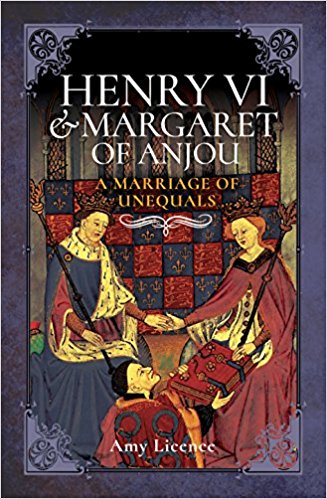
Henry VI & Margaret of Anjou: A Marriage of Unequals looks not only at the king and queen but also at those who shared their life and times, their son, their allies and those who sought to bring them down. The author looks into their actions and personalities, their presence on the international stage, and how the acted and interracted with the factions at court and the people of England itself. Every reader will come away with a greater understanding of the conflict which dominated England for over thirty years, now known as the Wars of the Roses, and of Henry’s and Margaret’s roles in the causes and course of the war.

Amy Licence’s unique and individual writing style is both easy and entertaining. It flows so well that it feels more like you’re reading a novel than a factual historical text. However, the impeccable research and intuitive analysis means that this book is accessible to both the casual reader, amateur historian and expert, alike. Ms Licence does not go easy on her subjects and is not afraid to say when they got things wrong. However, she is also fair and points out when history has been harsh and unforgiven, both on the couple – both together and as individuals – their friends and their enemies.

On the whole, this was a thoroughly enjoyable read, which focused on the less popular Lancastrian side of the argument and, as a a result, fills a void in the study of the era. If you want a greater understanding of the effects on history of the marriage of Henry and Margaret, of Henry’s illness, and of Margaret’s attempts to control her own life and the destinies of her husband and son, this is the perfect book.

Henry VI & Margaret of Anjou: A Marriage of Unequals is an engaging and entertaining book which will add depth to any history library and is a must-read tome for anyone fascinated by the Wars of the Roses. I highly recommend it.

About the Author:

Amy Licence is an historian of women’s lives in the medieval and early modern period, from Queens to commoners. Her particular interest lies in the late fifteenth and early sixteenth century, in gender relations, Queenship and identity, rites of passage, pilgrimage, female orthodoxy and rebellion, superstition, magic, fertility and childbirth. She is also interested in Modernism, specifically Woolf and the Bloomsbury Group, Picasso and Post-Impressionism.

Amy has written for The Guardian, The TLS, The New Statesman, BBC History, The English Review, The Huffington Post, The London Magazine and other places. She has been interviewed regularly for BBC radio, including Woman’s Hour, and made her TV debut in “The Real White Queen and her Rivals” documentary, for BBC2, in 2013. She also writes historical and literary fiction and has been shortlisted twice for the Asham Award.

Her website can be found at amylicence.weebly.com

*

Out Now!

Tracing the fortunes of the women who had a significant role to play in the momentous events of 1066, Silk and the Sword: the Women of the Norman Conquest is available from Amazon UK,  Amberley Publishing and Book Depository. It is scheduled for release in the US on 1 March 2019 and is available for pre-order from Amazon US.


Also by Sharon Bennett Connolly:

Telling the stories of some of the most incredible women from Medieval history, Heroines of the Medieval World,  is now available in hardback in the UK from both Amberley Publishing and Amazon UK, in the US from Amazon US  and worldwide from Book Depository. It will be released in paperback in the UK from 15 March 2019 and is available for pre-order on Amazon.

*

 Be the first to read new articles by clicking the ‘Follow’ button, liking our Facebookpage or joining me on Twitter.

©2018 Sharon Bennett Connolly

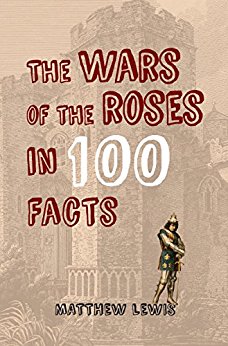
Book Corner – The Wars of the Roses in 100 Facts by Matthew Lewis

The Wars of the Roses in 100 Facts by Matthew Lewis

The Wars of the Roses were a series of brutal conflicts between rival branches of the Plantagenet family – the Lancastrians and the Yorkists. The wars were fought between the descendants of Edward III and are believed to stem from the deposition of the unpopular Richard II by his cousin, Henry Bolingbroke, who became Henry IV. The wars were thought to have been fought between 1455 and 1487, and they saw many kings rise and fall as their supporters fought for their right to rule.

The Wars of the Roses in 100 Facts covers this dangerous and exciting period of political change, guiding us through the key events, such as the individual battles, and the key personalities, such as Richard, Duke of York, and the Earl of Warwick, known as ‘the Kingmaker’. Matthew Lewis takes us on a tour through the Wars of the Roses, fact by fact, in easy-to-read, bite-size chunks. He examines some of the most important aspects of this period, from the outbreak of the conflict at the First Battle of St Albans, to Henry VI’s insanity, and the character of Richard III and his final defeat at the hands of Henry Tudor.

What can I say? I love these little books. This book series – I have already reviewed The Anglo-Saxons in 100 Facts – is a fabulous introduction to some of the most fascinating events in history.

The Wars of the Roses in 100 Facts by Matthew Lewis is a wonderful little book giving details of 100 of the most important and significant events of the Wars of the Roses. From the deposition of Richard II to the death of Cardinal Reginald Pole, arguably the last Yorkist descendant, Matthew Lewis tells the tale of the most divisive conflict in English history in an entertaining and engaging manner.

20. King Henry Could Have Died at the First Battle of St Albans

During the First Battle of St Albans, as Warwick’s archers fired at the men defending the king, Henry VI was struck by an arrow that cut him on the neck. As the fighting grew closer, the king was taken into a tanner’s shop to receive treatment and to keep him out of the way of further harm.

Benet’s Chronicle records that once the battle was won, York, Salisbury and Warwick burst into the tanner’s shop and found Henry, wounded and at their mercy. Instead of finishing off the king, as York might have done had he truly wanted the crown at this stage, Benet’s Chronicle explains that the lords fell to their knees and pledged their allegiance to the king, ‘at which he was greatly cheered’.

Henry was escorted to the comfort of the abbey to continue his treatment and, although he was dismayed to learn of Somerset’s death, he was well treated and on the following morning he was escorted to London by the Yorkist lords. York might well have widened the wound at Henry’s neck and ensured that there were no witnesses. He could then have blamed the stray arrow for killing the king. This is possibly the clearest sign that at this point, Henry’s crown was safe and secure.

What I love about this book is it is a wonderful combination of the best known facts, the battles and the politics, and some little known facts and events that mean even a seasoned Wars of the Roses enthusiast will find something to engage their interest. The brief, 1-2 page chapters mean the reader can drop in and out of the book at their leisure, or whenever they have 5 minutes to spare.

These little snippets are utterly enthralling and informative. They combine to give a wonderful, universal picture of the conflict; the battles and the characters involved. The book is beautifully written and well researched. It is organised in a loosely chronological manner, with fabulous insights into the major players and events of the Wars of the Roses.

Although The Wars of the Roses in 100 Facts is restricted to 100 facts, it is not short on insight and analysis. Matthew Lewis does a great job of achieving a balance of facts with the analytical approach of the historian. It would be a wonderful addition to the library of anyone interested in the Wars of the Roses, or the later fifteenth century as a whole.

*

Matthew Lewis is an author and historian with particular interest in the medieval period. His books include a history of the Wars of the Roses, a biography of Richard, 3rd Duke of York, and two novels of historical fiction telling the life of King Richard III and the aftermath of the Battle of Bosworth. He also writes a history blog, sharing thoughts and snippets. He can be found on Twitter @MattLewisAuthor.

The Wars of the Roses in 100 Facts is available from Amberley and Amazon.

*

Heroines of the Medieval World:

Heroines of the Medieval World,  is now available in hardback in the UK from both Amberley Publishing and Amazon UK and worldwide from Book Depository. It is also available on Kindle in both the UK and USA and will be available in Hardback from Amazon US from 1 May 2018.

You can be the first to read new articles by clicking the ‘Follow’ button, liking our Facebook page or joining me on Twitter.

*

©2017 Sharon Bennett Connolly

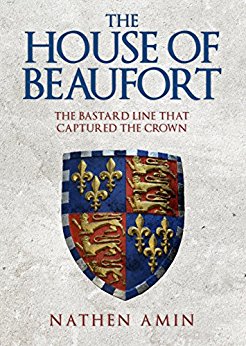
Book Corner: The House of Beaufort by Nathen Amin

The Wars of the Roses were a tumultuous period in English history, with family fighting family over the greatest prize in the kingdom – the throne of England. But what gave the eventual victor of these brutal and complex wars, Henry Tudor, the right to claim the crown? What made his Beaufort mother the great heiress of medieval England, and how exactly did an illegitimate line come to challenge the English monarchy?

While the Houses of York and Lancaster fought brutally for the crown, other noble families of the kingdom also played integral roles in the wars; grand and prestigious names like the Howards, Mowbrays, Nevilles and Percys were intimately involved in the conflict, but none symbolised the volatile nature of the period quite like the House of Beaufort. Their rise, fall, and rise again is the story of England during the fifteenth century, a dramatic century of war, intrigue and scandal both at home and abroad. Many books have been written about individual members of the dynasty, but never has the whole family been explored as one.

This book uncovers the rise of the Beauforts from bastard stock of John of Gaunt, Duke of Lancaster, to esteemed companions of their cousin Henry V, celebrated victor of Agincourt, and tracks their chastening fall with the House of Lancaster during the 1460s and 1470s. The hopes and fortunes of the family gradually came to rest upon the shoulders of a teenage widow named Margaret Beaufort and her young son Henry. From Margaret would rise the House of Tudor, the most famous of all England’s royal houses and a dynasty that owed its crown to the blood of its forebears, the House of Beaufort. From bastards to princes, the Beauforts are medieval England’s most captivating family.

The House of Beaufort: the Bastard Line that Captured the Crown is a masterpiece of historical writing. Nathen Amin has written the story of a family from its very beginning, highlighting the heights of their success, and the depths of their failures. Covering almost exactly 100 years, the book provides a fascinating insight into a family who lived close to the crown, but looked like they would constantly be denied it.

John of Gaunt, father of the Beauforts

From the love story of Katherine Swynford and John of Gaunt, through the successes and failures of the Hundred Years War, and the devastation of the Wars of the Roses, Nathen Amin retells the fascinating story of the Beauforts in an insightful, balanced manner, which highlights their weaknesses as much as it does their strengths.

As the fourteenth century came to its dramatic close, the Beauforts were well placed to take advantage of their connection to the new regime. John Beaufort, earl of Somerset and the king’s chamberlain, was in his late twenties and evidently adept at dealing with a wide range of political and martial issues. Henry Beaufort was around twenty-five years old and learning the ropes as bishop of Lincoln, while Thomas Beaufort had recently reached adulthood and was ready to put his body on the line for his king. Their sole sister Joan, Meanwhile, had settled into married life as the countess of Westmorland, establishing a Beaufort-blooded Neville hegemony in the north.

As siblings to the king of England, a promising future beckoned for the foursome. Provided they retained the good grace of their half-brother, they had reasonable expectations of widespread patronage that included money, manors and titles…

The author clearly demonstrates his enthusiasm for one of the most famous medieval families; however, this is not a fan book. Their weaknesses and failings are highlighted just as much as their successes. Actions are analysed and dissected to provide insights into not only the family, but the history and politics of England itself.

The House of Beaufort: the Bastard Line that Captured the Crown is beautifully written and reads like a novel of a family saga. And of course, as with all of us, each character in the Beaufort story has human traits that means their actions are not always understood or easily explained. The author clearly comprehends and demonstrates the fickleness of human actions and brings to vivid life this complex family who had such an influence on English history.

The entire Beaufort family will find their stories told in this book, from the first and oldest, John Beaufort, through his brothers, nephews and nieces, sons and grandchildren. The story of Joan Beaufort  queen of Scotland, is told with sympathy and compassion, as is the original love story of Katherine Swynford and John of Gaunt. Characters who played a part in the lives and history of the family are also treated with fairness and compassion, such as their legitimate royal siblings and nephews, Joan of Arc and Richard, duke of York.

Arms of Thomas Beaufort, 1st Duke of Exeter

Any reader will have their favourite Beaufort, and one they love to hate. Thomas Beaufort comes across as the perfect and chivalrous soldier, whilst Henry is the devious but diligent churchmen. Thomas is my favourite, he’s the hero. However, I love that Henry is such an ambiguous character, he is probably the greatest recreation in the book. Nathen Amin has clearly thought through Henry Beaufort’s ambitions, motivations and his actions. He tells the story of a bishop who was not always in favour with the establishment, his personal ambitions putting him at odds with successive kings, despite the fact his abilities were impressive.

Nathen Amin’s passion for the Beauforts comes across in every page. His persuasive, perceptive arguments are all supported with ample evidence and explanation. These arguments and insight are balanced and reflective, even in the divided loyalties of the Wars of the Roses, there is no bias as the story is told.

Comprehensive and compelling, this is a book that should grace the shelves of any fan of the fourteenth and fifteenth centuries, of the royal Houses of Lancaster and York, and the Hundred Years War, or even for a simple lover of medieval history. This book will become a powerful research tool for anyone looking into the Beaufort family and their links to the crown of England and the momentous events of the Wars of the Roses

*

About the author: Nathen Amin grew up in the heart of Carmarthenshire, West Wales, and has long had an interest in Welsh history, the Wars of the Roses and the early Tudor period. His first book Tudor Wales was released in 2014 and was well-received, followed by a second book called York Pubs in 2016. His third book, the first full-length biography of the Beaufort family, the House of Beaufort, was released in 2017 and became an Amazon #1 Bestseller for Wars of the Roses. He is currently working on his fourth book, Pretenders to the Tudor Crown, for release in 2019.

Nathen is also the founder of the Henry Tudor Society and has featured discussing the Tudors on BBC radio and television, as well as in print and online media across the UK. He has a degree in Business and Journalism and now lives in York, where he works as a Technical Writer.

The House of Beaufort: the Bastard Line that Captured the Crown is available from Amazon UK and Amberley Publishing and will shortly be released on Amazon US on 1st November.

*

My book, Heroines of the Medieval World,  is now available in hardback in the UK from both Amberley Publishing and Amazon UK and worldwide from Book Depository. It is also available on Kindle in both the UK and USA and will be available in Hardback from Amazon US from 1 May 2018.

You can be the first to read new articles by clicking the ‘Follow’ button, liking our Facebook page or joining me on Twitter.

*

©2017 Sharon Bennett Connolly

Book Corner: Interview with Tony Riches

Tony RichesThis week I’m talking to best-selling historical fiction author Tony Riches who lives in Pembrokeshire, one of the most unspoilt areas of the UK. Hi Tony, thanks for agreeing to be a guest interviewee on my blog, History…the Interesting Bits.

Hi Sharon I’d like to start by congratulating you on a great blog – it’s good to see a balance of well researched history and historical fiction.

Thank you Tony, that’s lovely to hear. So, what made you become a writer?

I wrote articles for magazines and journals before tackling my first book just over four years ago. (I self-published a short ebook about how everyone can use the principles of Agile Project Management and was a surprising success.) I went on to write several non-fiction books on subjects as diverse as the story of Scott’s Antarctic ship, the Terra Nova, to Atlantis, about the last flight of the NASA Space shuttle. Now my focus is very much on historical fiction – and I have become something of an expert on the rise of the Tudor dynasty

Who are your major writing influences?

I read widely, so it is hard to single out influences, although some of my favourites are C.J. Sansom (I’ve just finished reading his impressive book Lamentation, about Queen Katherine Parr), as well as Anne O’Brien and Conn Iggulden.

Most novels tend to look at the Wars of the Roses from the Yorkist side, what made you choose to tell the story from the Tudor point of view?

I was born within sight of Pembroke Castle, so feel a special connection with Henry Tudor, who was born there. Everyone knows about King Henry VIII and his daughter, Queen Elizabeth Ist – but I was surprised to discover there were no books about Owen Tudor, the Welsh servant who married a queen and founded the Tudor dynasty. I discovered several accounts of the life of Henry Tudor (who later became King Henry VII) but there were no novels that brought his own story to life.

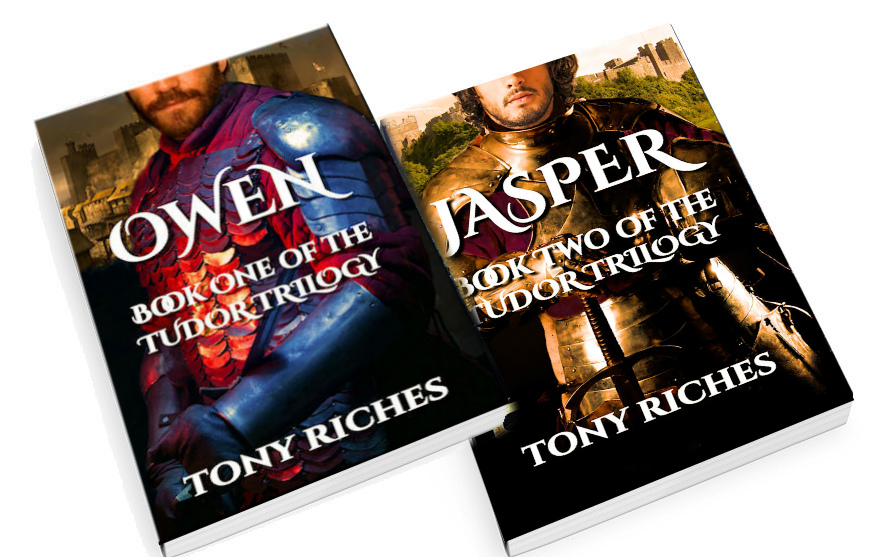
The idea for the Tudor Trilogy occurred to me when I realised Henry Tudor could be born in book one, ‘come of age’ with the help of Owen’s son, Jasper Tudor, in book two, and rule England in book three, so there would be plenty of scope to explore his life and times.

If someone said they wanted to make a film of your books, who would you pick to play Owen, Edmund and Jasper?

I’m currently in the process of having audiobooks produced of OWEN and JASPER and find it fascinating to hear their voices from over five centuries ago, so can imagine what it must be like to see them made as a film. I’ve always thought Welsh Actor Michael Sheen would be great for Owen – and perhaps Ioan Gruffudd (famous for playing Horatio Hornblower) as Jasper Tudor. Edmund is a bit of a shady character (I’ve never forgiven him for what he did to Margaret Beaufort) although I recently visited Carmarthen Castle where he died and his impressive tomb in St David’s Cathedral. How about another great young Welsh actor, Iwan Rheon, (who you might know as Ramsay Bolton in Game of Thrones.)

How long do you spend researching a novel before you start writing?

I’ve developed a great ‘system’ over the years of spending a year researching, followed by about nine months writing the book while it’s all still fresh in my mind. I have a wonderful collection of books on Wars of The Roses and the fifteenth century, and I particularly enjoy visiting the actual locations I’m writing about. (I’m off to Josselin in Brittany soon, to see the châteaux where Jasper and Henry spent their long exile – and will be positing about it on my writing blog.)

What comes first, your storyline or your research?

I have to decide where to start the storyline, then I start the research notes. For example, in OWEN I decided to begin with his first meeting with Queen Catherine of Valois, as little is really known about his life before then and I could easily work it in later.

indexYou’ve also written a novel about Warwick, the Kingmaker, so which are you, Yorkist, Lancastrian – or on the fence?

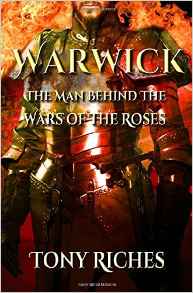
Richard Neville, ‘Warwick the Kingmaker’ was a fascinating character to write about, as I explored his motivation for changing sides. Personally, like Jasper Tudor – and his nephew Henry, I would like nothing more than to reconcile the houses of Lancaster and York. I have great sympathy for Edward of York, and have even tried to give his younger brother Richard the benefit of the doubt.

Owen is told in the first person. It works really well – makes the story more personal for the reader. What made you write it in that way?

I’d already written the first two chapters when I read Wolf Hall, by Hilary Mantel, and was struck by the power of her use of the present-tense. It was a huge risk to re-write it in the first person present-tense but I enjoyed the challenge.

How do you organise your writing day?

I’ve learnt to ‘deal with’ social media early in the morning to prevent it distracting me from writing. My ‘system’ is to aim for twenty-five chapters of about four thousand words, to arrive at a completed first draft for editing of about a hundred thousand. I keep track of my daily word count on a simple Excel spreadsheet, which allows me to see how well I’m doing at a glance.

What do you enjoy most about writing?

There is nothing better than having feedback from a reader who says they’ve really enjoyed one of my books. I’d like to think in some small way I’ve also helped readers understand the rise of the Tudors a little better, and it’s my ambition to present a more balanced view of the often overlooked King Henry VII.

What is the worst thing about writing?

I should know better by now but I must admit that a harsh comment in a review can trouble me for days. One reviewer recently pointed out that I’d failed to explain the reason for the Wars of The Roses!

How long does it take to do a project from start to finish? Do you write one book at a time, or have several on the go at once?

I’m happy to produce one new book a year. I enjoy sailing and kayaking, so I usually begin writing at the end of the season in October and aim to send a first draft to my editor by Easter the following year. The process is so intense I don’t think I could manage to juggle two books at once.

Who are your favourite personalities from history? Is there anyone you would particularly like to write about, but haven’t yet?

It would have to be Jasper Tudor, who put his loyalty to Henry Tudor and Margaret Beaufort before everything else. As for those I haven’t written about yet, there are some fascinating members of the court of Henry VIII I’ve already ‘penciled in’ for potential future novels.

You’ve written about the Wars of the Roses and the Romans, what other historical periods would you like to write about?

I’d like to slowly make my way towards the Elizabethan period, as I was looking at an original portrait of Queen Elizabeth 1st recently and saw the knowing look in her eye. There are plenty of books about Elizabeth but still plenty of scope to explore her life and times.

Do you ever get writer’s block? If so, how do you get around it?

No, I suffer from the opposite, which is waking up with my characters voices telling me so much I can hardly write it all down quickly enough. I keep my laptop by the side of the bed now, and have been known to write a whole chapter before breakfast.

Owen and JasperDo you find social media – such as Facebook and Twitter – a benefit or a hindrance?

Twitter is a great way to build an international readership and has enabled me to have best sellers in the US and Australia – something which earlier writers would only have been able to dream of.  As a consequence, I’ve invested less time in Facebook, although there are some great groups there which I follow and contribute to when I can.

We have had Owen and Jasper, so what will be the last book of the Tudor trilogy?

I’m busy with the research for HENRY – Book Three of the Tudor Trilogy now.  I’ve just read Alison Weir’s excellent new book about Katherine of Aragon and was disappointed to see Henry portrayed as more than a little sinister and insensitive, so it looks like it’s up to me to present an alternative point of view.

What is your next project, once The Tudors is complete?

I’m looking forward to entering the court of Henry Tudor’s tyrannical son – through the eyes of someone who knows him particularly well….

 For more information about Tony’s books please visit his popular blog, The Writing Desk and his WordPress website and find him on Facebook and Twitter @tonyriches.

*

Thank you very much, Tony Riches, for that marvellous insight into the life of a writer. Thoroughly entertaining.

*

My book, Heroines of the Medieval World,  is now available in hardback in the UK from both Amberley Publishing and Amazon UK and worldwide from Book Depository. It is also available on Kindle in both the UK and USA and will be available in Hardback from Amazon US from 1 May 2018.

Be the first to read new articles by clicking the ‘Follow’ button, liking our Facebook page or joining me on Twitter.

Countess Maud

CliffordArms
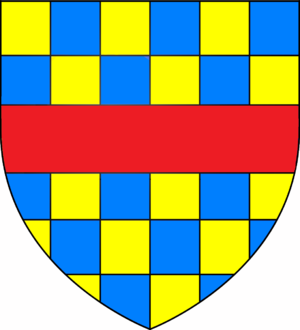
The Clifford coat of arms

There are many women in history of whom we only have snippets of information. However, those snippets prove to be fascinating and demonstrate how closely the lives of noble houses were tied together – and how they were torn apart. Maud Clifford is one such lady.

Born about 1389 at Brough Castle in Westmoreland, Maud (or Matilda) was the daughter of Thomas Clifford, 6th Baron Clifford, and his wife Elizabeth de Ros. Maud’s brother, John, has also been given 1389 as his possible year of birth. It may be that John or Maud were twins, or that they were born within a year of each other.

Their early childhood cannot have been very pleasant. Their paternal grandfather, Roger Clifford, died in July of 1389, probably of a stroke. In October 1391, their father, Thomas, died. Whilst in Königsberg Thomas had had a disagreement with Sir William Douglas, illegitimate son of the earl of Douglas; Douglas was killed in the ensuing brawl and Clifford, overcome with guilt, went on pilgrimage to Jerusalem in penance. He died on an unidentified Mediterranean island whilst on the way to the Holy City.

Nothing else seems to be known of Maud’s childhood. Sometime before 1406 she was married to John Neville, Lord Latimer. For some unknown reason the marriage was never consummated and Maud successfully sued for an annulment. The marriage was dissolved with very favourable terms for Maud; some of the Neville lands had been put in trust for Maud and, even though the marriage had been declared invalid, she was allowed to keep them.

300px-Skipton_Castle_main_gate,_2007
Skipton Castle, family seat of the Cliffords

Maud was, therefore, a very attractive bride for a landless earl. Richard of Conisbrough, earl of Cambridge, was the poorest – and the only landless – earl in England. He lived at Conisbrough Castle in Yorkshire as the tenant of his older brother, Edward, Duke of York. Richard was a widower with 2 small children; his wife, Anne Mortimer, had died sometime after 1411, when she had given birth to their 2nd child, Richard (future Duke of York), probably at Conisbrough Castle. It is not known when Anne died, but it was before 1414, which is the probable date of Maud’s marriage to the earl of Cambridge.

Unfortunately the marriage proved to be short-lived, with Richard of Conisbrough becoming involved in the Southampton Plot, a plan to overthrow King Henry V and replace him with  Richard’s brother-in-law, Edmund Mortimer, Earl of March. However, March revealed the plot to the King and Richard and his accomplices were arrested, with Richard beheaded for treason on  5th August 1415.

008 (2)
Conisbrough Castle

Richard of Conisbrough was not attainted, so his lands, such as they were, were not forfeit to the crown. Maud was allowed to remain at Conisbrough Castle, and her step-son, Richard, would be allowed to inherit the Dukedom of York from his uncle, Edward, following his death at Agincourt in October 1415.

It is not clear how much contact Maud had with her step-children. The eldest child, Isabel, had been born around 1409; she had been betrothed in 1412 to Sir Thomas Grey and it is possible that she was raised in the household of the Grey family. As Duke of York, Richard’s wardship and marriage was a great prize, and would eventually go to Ralph Neville, earl of Westmoreland; with York marrying Neville’s daughter, Cecily. The Yorks’ eldest and youngest sons would become the Yorkist kings of England; Edward IV and Richard III, respectively.

Maud would continue to use Conisbrough Castle as her principal residence throughout her life; she received an annuity of £100 from the Earl of March, perhaps to assuage his guilt in the part he played in her husband’s downfall. She seems to have led a full and active life, and remained very close to her Clifford family; they  stayed with her often and she was a regular visitor to the Clifford home of Skipton Castle. Her nephew, Thomas and his family, lived with her at Conisbrough for a year in 1437, while his castle at Skipton was undergoing extensive works.

036
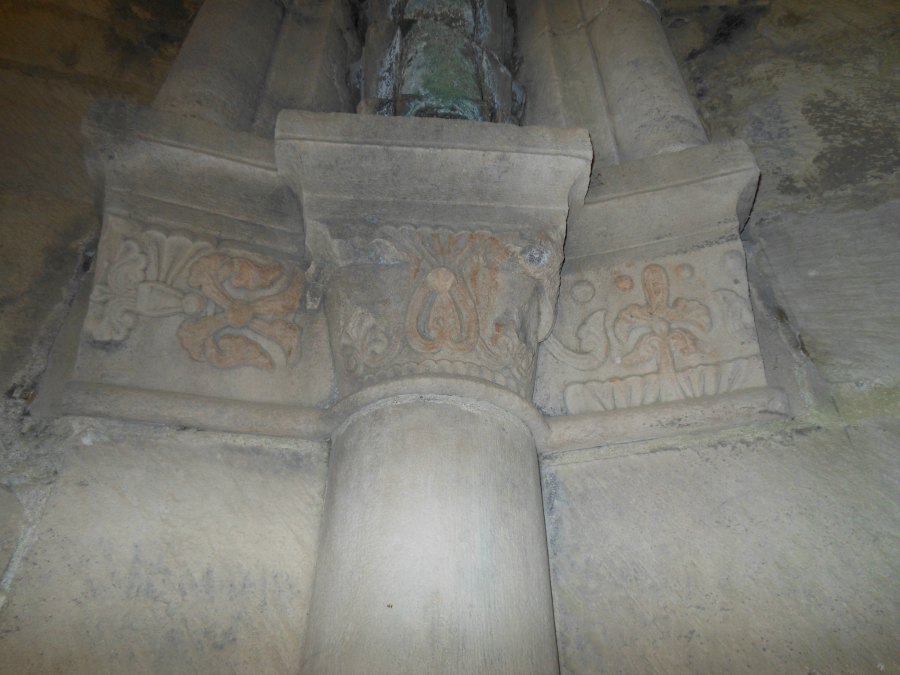
Carvings in the chapel at Conisbrough Castle

On 8th April 1435 Maud’s great-nephew, John Clifford – the future 9th Baron Clifford – was born at Conisbrough Castle. He was the grandson of Maud’s brother, John, and son of her nephew, Thomas, and his wife, Joan Dacre. Baby John would have been born either in the solar of the keep itself, or in the family apartments above the great hall of the inner bailey.

Either way its most likely he was baptised in the small private chapel within the keep; with Maud as his godmother. The chapel is built into one of the keep’s 6 buttresses and, despite the years and water damage, it is a wonder to behold, with exquisite designs carved into the stone columns, and the vaulted ceiling.

300px-'The_Murder_of_Rutland_by_Lord_Clifford'_by_Charles_Robert_Leslie,_1815
‘The Murder of Rutland by Lord Clifford’ by Charles Robert Leslie

Maud’s brother, John, was killed at the siege of Meaux in 1422 and her nephew, Thomas, would be killed at the First Battle of St Albans in 1455, supposedly by Richard, Duke of York, himself. And so it was, that on the 30th december 1460, at the Battle of Wakefield, John Clifford is said to have taken his revenge by killing York’s son Edmund, the 17-year-old earl of Rutland. Whether or not Clifford uttered the words ‘as your father slew mine, so I shall slay thee’ as he killed young Edmund, is entirely debatable, but the event serves to highlight how closely the noble families of the Wars of the Roses were related.

There is some suggestion that Maud remarried in 1429. The supposed groom was John Wentworth of North Elmsall, Yorkshire. However, this seems to be more of a family legend among the Wentworth family and only arose over 100 years after Maud’s death.

Maud’s will demonstrates her closeness to her family, and serves as an insight into her comfortable life and the sumptuous furnishings of the castle.

View from the nave of the church to the high altar, Roche Abbey

To Thomas, Lord Clifford, my relation: a ‘hall’ of arras [a fine woven wall-hanging from Arras] bought from Sir Robert Babthorpe; my bed of Arras with three curtains; four cushions of red silk; two long cushions of cloth.

To John Clifford, my godson: 12 silver dishes, 6 salt-cellars signed with the ‘trayfulles’ [trefoils] and a shell.

To Beatrice Waterton, my relation: a gold cross, which belonged to my mother; my green Primary [a book of readings from the Bible]; a diamond; my best furred robe with ‘martes’ [marten fur].

To Katherine Fitzwilliam: the brooch that I wear everyday; a small black Primary; a jewel called Agnus Dei covered with silver and written around with pearls; my best robe furred with miniver [white stoat fur].

To Maud Clifford, my god-daughter: my best gold belt.¹

Maud died, of an unknown illness, at Conisbrough Castle on 26th August 1446 and was  buried at Roche Abbey, of which she was a benefactor. Her tomb is now lost to history, but may have been in the nave of the church, where many secular patrons are known to have been buried.2 Though some tombs still remaining, their markings are faded after centuries of exposure to the elements, and none can be definitively identified.

*

Footnote: ¹English Heritage Guidebook for Conisbrough Castle by Steven Brindle and Agnieszka Sadrei; English Heritage Guidebook for Roche Abbey by Peter Ferguson and Stuart Harrison.

*

Pictures courtesy of Wikipedia, except Roche Abbey and Conisbrough Castle and chapel ©2016 Sharon Bennett Connolly

*

Sources: Sources: The History Today Companion to British History, edited by Juliet Gardiner & Neil Wenborn; Brewer’s British Royalty by David Williamson; Britain’s Royal Families, the Complete Genealogy by Alison Weir; The Wars of the Roses by John Gillingham; The Wordsworth Dictionary of British History by J.P. Kenyon; The Oxford Companion to British History, edited by John Cannon; The Reign of Edward III by WM Ormrod; The Wars of the Roses by Martin J Dougherty; englishmonarchs.co.uk; womenshistory.about.com; findagrave.com; conisbroughcastle.org.uk; hrionline.ac.uk; English Heritage Guidebook for Conisbrough Castle by Steven Brindle and Agnieszka Sadrei; English Heritage Guidebook for Roche Abbey by Peter Ferguson and Stuart Harrison; oxforddnb.com.

*

My Books

Signed, dedicated copies of all my books are available through my online store.

OUT NOW! Heroines of the Tudor World

Heroines of the Tudor World tells the stories of the most remarkable women from European history in the time of the Tudor dynasty, 1485-1603. These are the women who ruled, the women who founded dynasties, the women who fought for religious freedom, their families and love. These are the women who made a difference, who influenced countries, kings and the Reformation. In the era dominated by the Renaissance and Reformation, Heroines of the Tudor World examines the threats and challenges faced by the women of the era, and how they overcame them. From writers to regents, from nuns to queens, Heroines of the Tudor World shines the spotlight on the women helped to shape Early Modern Europe.

Heroines of the Tudor World is now available for pre-order from Amberley Publishing and Amazon UK.

Also by Sharon Bennett Connolly:

Women of the Anarchy demonstrates how Empress Matilda and Matilda of Boulogne, unable to wield a sword themselves, were prime movers in this time of conflict and lawlessness. It shows how their strengths, weaknesses, and personal ambitions swung the fortunes of war one way – and then the other. Available from Bookshop.orgAmberley Publishing and Amazon UKKing John’s Right-Hand Lady: The Story of Nicholaa de la Haye is the story of a truly remarkable lady, the hereditary constable of Lincoln Castle and the first woman in England to be appointed sheriff in her own right. Available from all good bookshops Pen & Sword Booksbookshop.org and AmazonDefenders of the Norman Crown: The Rise and Fall of the Warenne Earls of Surrey tells the fascinating story of the Warenne dynasty, from its origins in Normandy, through the Conquest, Magna Carta, the wars and marriages that led to its ultimate demise in the reign of Edward III. Available from Pen & Sword BooksAmazon in the UK and US, and Bookshop.org

Ladies of Magna Carta: Women of Influence in Thirteenth Century England looks into the relationships of the various noble families of the 13th century, and how they were affected by the Barons’ Wars, Magna Carta and its aftermath; the bonds that were formed and those that were broken. It is now available in paperback and hardback from Pen & Sword,  Amazon, and Bookshop.orgHeroines of the Medieval World tells the stories of some of the most remarkable women from Medieval history, from Eleanor of Aquitaine to Julian of Norwich. Available now from Amberley Publishing and Amazon, and Bookshop.orgSilk and the Sword: The Women of the Norman Conquest traces the fortunes of the women who had a significant role to play in the momentous events of 1066. Available now from Amazon,  Amberley Publishing, and Bookshop.org.

Alternate Endings: An anthology of historical fiction short stories including Long Live the King… which is my take what might have happened had King John not died in October 1216. Available in paperback and kindle from Amazon.

Podcast:

Have a listen to the A Slice of Medieval podcast, which I co-host with Historical fiction novelist Derek Birks. Derek and I welcome guests, such as Bernard Cornwell, and discuss a wide range of topics in medieval history, from significant events to the personalities involved.

*

Don’t forget! Signed and dedicated copies of all my books are available through my online store.

For forthcoming online and in-person talks, please check out my Events Page.

You can be the first to read new articles by clicking the ‘Follow’ button, liking our Facebook page or joining me on Twitter and Instagram.

*

©2016 Sharon Bennett Connolly FRHistS

Anne of Gloucester, Daughter of a Traitor

Arms of Anne of Gloucester, Countess of Stafford_of_stafford-svg
Arms of Anne of Gloucester, Countess of Stafford

Born sometime around 1382 Anne of Gloucester was the daughter of Thomas of Woodstock, 1st Duke of Gloucester, and Eleanor de Bohun.

Anne’s parentage was impeccable. Her father was the youngest son of the late king Edward III and his queen Philippa of Hainault, making Anne first cousins with the 2 subsequent kings, Richard II and Henry IV. Along with Henry IV’s wife, Mary de Bohun, Anne’s mother was co-heiress of the earls of Hereford.

Anne’s childhood would have been marred by the political conflicts of Richard II’s reign. By the late 1380s her father had set himself up in opposition to the king’s tyrannical rule and his reliance on personal favourites. As a leader of the Lords Appellant he was responsible for the arrest of Richard’s favourites and the curbing of the king’s powers.

Anne was probably born at Pleshey Castle and it was also the scene of her first wedding. In June 1391, aged only 8 or 9, Anne was married to Thomas Stafford, 3rd Earl of Stafford, who was about 15 years her senior. Thomas died in 1392, before the marriage could be consummated. Even before Thomas Stafford’s death, it seems, provision had already been made for Anne to marry one of his younger brothers. The brothers, William and Edmund, were wards of Anne’s father. The year after the elder boy William, died in 1395 (aged about 19), Anne was married to Edmund, now 5th Earl of Stafford.

300px-ThomasWoodstock
Thomas of Woodstock, Duke of Gloucester

In the year following her marriage, Anne was to suffer further tragedy when her father was personally arrested by the king, whilst recovering from illness at the family’s home of Pleshey Castle, Essex. Thomas was transported to imprisonment in Calais to await trial, under the care of the earl of Nottingham, from where his death was reported in September of the same year. A later inquiry established that Thomas Duke of Gloucester had been murdered, most likely on the night of 8th September, smothered under a mattress.

The Duke was declared a traitor and his lands and property were forfeited to the crown. Anne’s only brother, Humphrey, was made a ward of King Richard II and was with the king in Ireland 2 years later, when Henry Bolingbroke invaded England and claimed the crown as Henry IV. The new king ordered Humphrey’s return to England, but he died on the voyage home in August 1399, aged just 18.

Anne’s life was hit by 2 further losses in close succession. Her mother, Eleanor de Bohun died on 3rd October 1399. The Chronicler, Walsingham, said she died of a broken heart following the deaths of her husband and only son. Anne’s unmarried sister, Joan, died in August 1400. With her only remaining sibling, Isabel, taking the veil at the Minoresses in London on her 16th birthday in April 1402, Anne became one of the greatest heiresses in the kingdom. From 1399 she was recognised as Countess of Buckingham, Hereford and Northampton and was made a Lady of the Garter in 1405.

Humphrey_Stafford,_Duke_of_Buckingham_by_William_Bond,_after_Joseph_Allen
Humphrey Stafford, Duke of Buckingham

In these same years Anne gave birth to 2 daughters and a son. Of her daughters Philippa died young and Anne would marry consecutively her cousins Edmund Mortimer, earl of March and John Holland, 2nd Duke of Exeter. Anne’s only son by Edmund Stafford, Humphrey, was born in 1402 and would go on to become the Duke of Buckingham. Loyal to King Henry VI at the outbreak of the Wars of the Roses, he would be killed at the Battle of Northampton in 1460. Humphrey’s son, Henry, would be husband to Henry VII’s mother, Margaret Beaufort.

On 21st July 1403 Anne was made a widow for the second time, when Edmund was killed fighting for the king at the Battle of Shrewsbury. Still only in her early 20s Anne was left with 2 young children and a dower income of £1500 a year. However, with her dower properties stretched across the strategically important Welsh Marches Anne’s remarriage was of great interest to Henry IV.

Of immediate concern was the security of those dower properties, giving Henry IV’s ongoing conflict with Owain Glyn Dwr and the Welsh. Sir William Bourchier, Count of Eu, was dispatched to help protect Anne and her properties from any Welsh incursions. And it was with this same knight that Anne, taking her future into her own hands, contracted a secret marriage some time before 20th November 1405.

The king was displeased with the clandestine marriage and the couple were fined ‘great sums’. However, Bourchier it seems was highly charismatic, a capable soldier and valued administrator, all factors which, when added to his proven loyalty to the Lancastrian king,  helped to ensure that the couple was soon forgiven.

BourchierImpaling_ThomasOfWoodstock_TawstockChurch
The Bourchier arms quartered with those of Thomas of Woodstock, Anne’s father

Sir William Bourchier would continue his impressive career under Henry V; fighting at Agincourt in 1415, after which he was appointed Constable of the Tower of London and took responsibility of the high-profile French prisoners captured in the battle. In letters Anne described with pride ‘the valiant prowess, wisdom and good governance’ her husband .

The couple seems to have been genuinely in love and soon had a nursery full of children, with 4 sons and a daughter all born before 1415. Anne promoted the careers of all her children and arranged marriages for them.

William and Anne’s eldest son, Henry 1st Earl of Essex was married to Isabel of Cambridge, daughter of Richard of Conisbrough. A Yorkist supporter, he fought at the Second battle of St Albans and at Towton, dying in April 1483.

Thomas Bourchier, most likely Anne and William’s second son, went to Oxford and then joined the Church. He rose to become Archbishop of Canterbury in 1454 and was made a cardinal in 1467. Although he was Chancellor for a short time, in the reign of Henry VI, Thomas was a loyal supporter of the Yorkist cause and it was Edward IV himself who wrote to the pope urging for Thomas’s promotion to cardinal. In his position as Archbishop of Canterbury, Thomas crowned both Richard III and Henry VII. He died in 1486 and was buried next to the high altar in Canterbury Cathedral.

Cardinal_Thomas_Bourchier
Cardinal Thomas Bourchier, Archbishop of Canterbury

Of their other sons; William Bourchier became Baron Fitzwarin in right of his wife and Sir John Bourchier was created Baron Berners following his marriage to Margery Berners. He was Constable of Windsor Castle in the 1460s. Anne and William’s only daughter, Eleanor Bourchier, married John de Mowbray, 3rd Duke of Norfolk, and was the mother of another John, the 4th Duke.

Although they seem to have been on opposing sides of the political spectrum, Humphrey Stafford remained close to his mother and his Bourchier half-siblings.

Anne was widowed for a third and final time when William died at Troyes in 1420. His body was sent back to England for burial at Llanthony Priory in Gloucestershire. Anne had an enduring friendship with the Prior, John Wyche, and corresponded with him in both French and English.

Although not yet 40 Anne never remarried. Throughout her marriages – and after – she was personally involved in estate management and her letters demonstrate a sound business acumen. Anne had loyal and talented administrators who helped her fight for her interests.  As earl of Buckingham, Anne’s father had revenues of £1,000 a year from the lordships of Oakham (Rutland) and Holderness (Yorkshire). While Oakham was returned to Anne in 1414 she only recovered Holderness in 1437, the year before she died.

While Anne was cousin to the king, Henry V, both he and his father had resented the unequal division of the Bohun inheritance in her favour. Henry V was to eventually force a new settlement on the recently widowed countess in 1421, this time heavily weighted  for the king’s benefit, leaving Anne just £1200 a year from her mother’s inheritance; and even this often fell into arrears.

330px-Remains_of_Llanthony_Priory_-_geograph.org.uk_-_1118627
Llanthony Secunda Priory, Anne’s burial place

Anne had shared a love of the church with her mother and was known for her piety and love of learning. She died in October 1438, aged around 55. Her will, written “in the Englyshe tonge for my most profit redyng and vnderstandyng”, remembered her “most trewe and diligent” reatiners (Register of Henry Chichele.

Anne of Gloucester, mother to combatants on both sides of the Wars of the Roses and granddaughter of Edward III, was buried beside William at Llanthony Priory where, in 1453, her children set up a perpetual chantry for the welfare of their souls.

*

Pictures courtesy of Wikipedia

*

Sources: The Oxford Companion to British History Edited by John Cannon.;  Brewer’s British Royalty by David Williamson; Britain’s Royal Families, the Complete Genealogy by Alison Weir; Chronicles of the Age of Chivalry Edited by Elizabeth Hallam; The Mammoth Book of British Kings and Queens by Mike Ashley; oxforddnb.com; geni.com;  thepeerage.com.

*

My Books:

Signed, dedicated copies of all my books are available through my online bookshop.

Out Now! Women of the Anarchy

On the one side is Empress Matilda, or Maud. The sole surviving legitimate child of Henry I, she is fighting for her birthright and that of her children. On the other side is her cousin, Queen Matilda, supporting her husband, King Stephen, and fighting to see her own son inherit the English crown. Both women are granddaughters of St Margaret, Queen of Scotland and descendants of Alfred the Great of Wessex. Women of the Anarchy demonstrates how these women, unable to wield a sword, were prime movers in this time of conflict and lawlessness. It show how their strengths, weaknesses, and personal ambitions swung the fortunes of war one way – and then the other.

Available for pre-order from Amberley Publishing and Amazon UK.

Coming on 15 June 2024: Heroines of the Tudor World

Heroines of the Tudor World tells the stories of the most remarkable women from European history in the time of the Tudor dynasty, 1485-1603. These are the women who ruled, the women who founded dynasties, the women who fought for religious freedom, their families and love. These are the women who made a difference, who influenced countries, kings and the Reformation. In the era dominated by the Renaissance and Reformation, Heroines of the Tudor World examines the threats and challenges faced by the women of the era, and how they overcame them. Some famous, some infamous, some less well known, including Anne Boleyn, Elizabeth Barton, Catherine de Medici, Bess of Hardwick and Elizabeth I. From writers to regents, from nuns to queens, Heroines of the Tudor World shines the spotlight on the women helped to shape Early Modern Europe.

Heroines of the Tudor World is now available for pre-order from Amberley Publishing and Amazon UK.

Also by Sharon Bennett Connolly:

King John’s Right-Hand Lady: The Story of Nicholaa de la Haye is the story of a truly remarkable lady, the hereditary constable of Lincoln Castle and the first woman in England to be appointed sheriff in her own right. It is is available from King John’s Right-Hand Lady: The Story of Nicholaa de la Haye is the story of a truly remarkable lady, the hereditary constable of Lincoln Castle and the first woman in England to be appointed sheriff in her own right. Available from all good bookshops or direct from Pen & Sword Booksbookshop.org and AmazonDefenders of the Norman Crown: The Rise and Fall of the Warenne Earls of Surrey tells the fascinating story of the Warenne dynasty, from its origins in Normandy, through the Conquest, Magna Carta, the wars and marriages that led to its ultimate demise in the reign of Edward III. Available from Pen & Sword BooksAmazon in the UK and US, and Bookshop.org

Ladies of Magna Carta: Women of Influence in Thirteenth Century England looks into the relationships of the various noble families of the 13th century, and how they were affected by the Barons’ Wars, Magna Carta and its aftermath; the bonds that were formed and those that were broken. It is now available in paperback and hardback from Pen & Sword,  Amazon, and Bookshop.orgHeroines of the Medieval World tells the stories of some of the most remarkable women from Medieval history, from Eleanor of Aquitaine to Julian of Norwich. Available now from Amberley Publishing and Amazon, and Bookshop.orgSilk and the Sword: The Women of the Norman Conquest traces the fortunes of the women who had a significant role to play in the momentous events of 1066. Available now from Amazon,  Amberley Publishing, and Bookshop.org.

Alternate Endings: An anthology of historical fiction short stories including Long Live the King… which is my take what might have happened had King John not died in October 1216. Available in paperback and kindle from Amazon.

Podcast:

Have a listen to the A Slice of Medieval podcast, which I co-host with Historical fiction novelist Derek Birks. Derek and I welcome guests, such as Bernard Cornwell and Elizabeth Chadwick, and discuss a wide range of topics in medieval history, from significant events to the personalities involved.

*

Don’t forget! Signed and dedicated copies of all my books are available through my online bookshop.

For forthcoming online and in-person talks, please check out my Events Page.

You can be the first to read new articles by clicking the ‘Follow’ button, liking our Facebook page or joining me on Twitter and Instagram.

©2015 Sharon Bennett Connolly, FRHistS

Witchy Woman – the Fall of Eleanor Cobham, Duchess of Gloucester

300px-Starborough_Castle
Sterborough Castle, possible birthplace of Eleanor

Born around 1400 and probably at the castle of Sterborough in Kent, Eleanor Cobham was the daughter of Sir Reginald Cobham of Sterborough and his wife Eleanor, daughter of Sir Thomas Culpeper of Rayal.

As is often the case with Medieval women, nothing is known of Eleanor’s early life. She appeared at court in her early 20s, when she was appointed lady-in-waiting to Jacqueline of Hainault,  Duchess of Gloucester.

Jacqueline had come to England to escape her 2nd husband, the abusive John IV Duke of Brabant. She obtained an annulment of the marriage from the Antipope, Benedict XIII, and married Humphrey, Duke of Gloucester, in 1423. He would spend a large amount of their marriage trying to recover Jacqueline’s lands from the Dukes of Brabant and Burgundy.

120px-HumphreyGloucester
Humphrey Duke of Gloucester

Humphrey was a younger brother of King Henry V and John, Duke of Bedford. He had fought at the Battle of Shrewsbury at the age of 12 years and 9 months and would go on to fight at Agincourt in 1415. On Henry V’s death, Humphrey acted as Protector for  his young nephew, Henry VI, whenever his older brother, the Duke of Bedford, was away fighting in France. However, he seems to have been little liked and was never trusted with full Regency powers.

In 1428 Pope Martin V refused to recognise the annulment of Jacqueline’s previous marriage to John of Brabant and declared the Gloucester marriage null and void. However, John of Brabant had died in 1426 and so Humphrey and Jacqueline were free to remarry – if they wanted to. In the mean time, Humphrey’s attention had turned to Eleanor of Cobham and he made no attempt to keep Jacqueline by his side.

This did not go down too well with the good ladies of London, who petitioned parliament between Christmas 1427 and Easter 1428.

According to the chronicler Stow their letters were delivered to Humphrey, the archbishops and the lords “containing matter of rebuke and sharpe reprehension of the Duke of Gloucester, because he would not deliver his wife Jacqueline out of her grievous imprisonment, being then held prisoner by the Duke of Burgundy, suffering her to remaine so unkindly, contrary to the law of God and the honourable estate of matrimony”.

220px-Arms_of_Humphrey_of_Lancaster,_1st_Duke_of_Gloucester.svg
Coat of arms of Humphrey, Duke of Gloucester

Humphrey paid the petition little attention and married Eleanor sometime between 1428 and 1431. It has been suggested that Eleanor was the mother of Humphrey’s 2 illegitimate children – Arthur and Antigone – although this seems unlikely as Humphrey made no attempt to legitimise them following the marriage (as his grandfather John of Gaunt had done with his Beaufort children by Katherine Swynford).

Described by Aeneas Sylvius as “a woman distinguished in her form” and “beautiful and marvellously pleasant” by Jean de Waurin, Eleanor and Humphrey had a small but lively court at their residence of La Plesaunce at Greenwich. Humphrey had a lifelong love of learning, which Eleanor most likely shared, and the couple attracted scholars, musicians and poets to their court.

On 25th June 1431, as Duchess of Gloucester, Eleanor was admitted to the fraternity of the monastery of St Albans – to which her husband already belonged – and in 1432 she was made a Lady of the Garter.

Eleanor’s status rose even higher in 1435, with the death of John Duke of Bedford. Whilst Henry VI was still childless, John had been heir presumptive. He died having had no children and so the position passed to Humphrey, Duke of Gloucester.

With her heightened status, Eleanor received sumptuous Christmas gifts from the king; and her father was given custody of the French hostage Charles, Duke of Orleans – a prisoner since Agincourt.

But in 1441 came Eleanor’s dramatic downfall.

Master Thomas Southwell, a canon of St Stephen’s Chapel at Westminster, and Master Roger Bolyngbroke, a scholar, astronomer and cleric – and alleged necromancer, were arrested for casting the King’s horoscope and predicting his death.

humphrey__eleanor
Eleanor – alongside Humphrey – joining the confraternity of St Albans, 1431

Southwell and Bolyngbroke, along with Margery Jourdemayne, known as the Witch of Eye and renowned for selling potions and spells, were accused of making a wax image of the king, ‘the which image they dealt so with, that by their devilish incantations and sorcery they intended to bring out of life, little and little, the king’s person, as they little and little consumed that image’.

Bolyngbroke implicated Eleanor during questioning, saying she had asked him to cast her horoscope and predict her future; for the wife of the heir to the throne, this was a dangerous practise. Did she have her eye on the throne itself?

On hearing of the arrest of her associates Eleanor fled to Sanctuary at Westminster. Of 28 charges against her she admitted to 5. Eleanor denied the treason charges, but confessed to obtaining potions from Jourdemayne in order to help her conceive a child. Awaiting further proceedings, as Eleanor remained in Sanctuary, pleading sickness, she tried to escape by river. Thwarted, she was escorted to Leeds Castle on 11th August and held there for 2 months.

Having returned to Westminster Eleanor was examined by an ecclesiastical tribunal on 19th October and on the 23rd she faced Bolyngbroke, Southwell and Jourdemayne who accused her of being the “causer and doer of all these deeds”.

Eleanor was found guilty of sorcery and witchcraft; she was condemned to do public penance and perpetual imprisonment. Of her co-accused; Bolyngbroke was hanged, drawn and quartered, Southwell died in the Tower of London and Margery Jourdemayne was burned at the stake at Smithfield.

The_Penance_of_Eleanor_(Abbey)
The Penance of Eleanor by Edwin Austin Abbey

Eleanor’s own chaplain, Master John Hume, had also been arrested, although he was accused only of knowing of the others’ actions and was later pardoned.

On 3 occasions Eleanor was made to do public penance at various churches in London; on the 1st of such, 13th November 1441, bareheaded and dressed in black carrying a wax taper, she walked from Temple Bar to St Paul’s Cathedral, where she offered the wax taper at the high altar. Following 2 further penances, at Christ Church and St Michael’s in Cornhill, Eleanor was sent first to Chester Castle and then to Kenilworth. Her circumstances much reduced, Eleanor was allowed a household of only 12 persons.

Eleanor’s witchcraft conviction discredited her husband; Humphrey was marginalised and on 6th November 1441 his marriage was annulled. Humphrey’s enemies, Margaret of Anjou (Henry VI’s queen) and the Earl of Suffolk, convinced the king that his uncle was plotting against him. In February 1447, Humphrey was arrested and confined in Bury St Edmunds. He died a week later, on 23rd February; some claimed it was murder, but the most likely cause of death is stroke.

1000px-Beaumaris-01s
Beaumaris Castle, Anglesey

Eleanor was moved to Peel Castle on the Isle of Man, in 1446 and one final time in 1449 when she was transferred to Beaumaris Castle on Anglesey.

Eleanor Cobham, one time Duchess of Gloucester and wife to the heir to England’s throne, having risen so high – and fallen so low – died still a prisoner, at Beaumaris Castle on 7th July 1452; she was buried at Beaumaris, at the expense of Sir William Beauchamp, the castle’s constable.

*

Pictures courtesy of Wikipedia

*

Sources: Brewer’s British Royalty by David Williamson; History Today Companion to British History Edited by Juliet Gardiner and Neil Wenborn; The Mammoth Book of British Kings & Queens by Mike Ashley; Britain’s Royal Families, the Complete Genealogy by Alison Weir; The Oxford Companion to British History Edited by John Cannon; The Plantagenets, the Kings who made England by Dan Jones; The Plantagenets, the Kings that Made Britain by Derek Wilson; madameguillotine.co.uk; susanhigginbotham.com; The Medieval Mind.

*

My Books

Signed, dedicated copies of all my books are available through my online bookshop.

OUT NOW! Heroines of the Tudor World

Heroines of the Tudor World tells the stories of the most remarkable women from European history in the time of the Tudor dynasty, 1485-1603. These are the women who ruled, the women who founded dynasties, the women who fought for religious freedom, their families and love. These are the women who made a difference, who influenced countries, kings and the Reformation. In the era dominated by the Renaissance and Reformation, Heroines of the Tudor World examines the threats and challenges faced by the women of the era, and how they overcame them. From writers to regents, from nuns to queens, Heroines of the Tudor World shines the spotlight on the women helped to shape Early Modern Europe.

Heroines of the Tudor World is now available for pre-order from Amberley Publishing and Amazon UK.

Also by Sharon Bennett Connolly:

Women of the Anarchy demonstrates how Empress Matilda and Matilda of Boulogne, unable to wield a sword themselves, were prime movers in this time of conflict and lawlessness. It shows how their strengths, weaknesses, and personal ambitions swung the fortunes of war one way – and then the other. Available from Bookshop.orgAmberley Publishing and Amazon UKKing John’s Right-Hand Lady: The Story of Nicholaa de la Haye is the story of a truly remarkable lady, the hereditary constable of Lincoln Castle and the first woman in England to be appointed sheriff in her own right. Available from all good bookshops Pen & Sword Booksbookshop.org and AmazonDefenders of the Norman Crown: The Rise and Fall of the Warenne Earls of Surrey tells the fascinating story of the Warenne dynasty, from its origins in Normandy, through the Conquest, Magna Carta, the wars and marriages that led to its ultimate demise in the reign of Edward III. Available from Pen & Sword BooksAmazon in the UK and US, and Bookshop.org

Ladies of Magna Carta: Women of Influence in Thirteenth Century England looks into the relationships of the various noble families of the 13th century, and how they were affected by the Barons’ Wars, Magna Carta and its aftermath; the bonds that were formed and those that were broken. It is now available in paperback and hardback from Pen & Sword,  Amazon, and Bookshop.orgHeroines of the Medieval World tells the stories of some of the most remarkable women from Medieval history, from Eleanor of Aquitaine to Julian of Norwich. Available now from Amberley Publishing and Amazon, and Bookshop.orgSilk and the Sword: The Women of the Norman Conquest traces the fortunes of the women who had a significant role to play in the momentous events of 1066. Available now from Amazon,  Amberley Publishing, and Bookshop.org.

Alternate Endings: An anthology of historical fiction short stories including Long Live the King… which is my take what might have happened had King John not died in October 1216. Available in paperback and kindle from Amazon.

Podcast:

Have a listen to the A Slice of Medieval podcast, which I co-host with Historical fiction novelist Derek Birks. Derek and I welcome guests, such as Bernard Cornwell and discuss a wide range of topics in medieval history, from significant events to the personalities involved.

*

Don’t forget! Signed and dedicated copies of all my books are available through my online bookshop.

For forthcoming online and in-person talks, please check out my Events Page.

You can be the first to read new articles by clicking the ‘Follow’ button, liking our Facebook page or joining me on Twitter and Instagram.

©2015 Sharon Bennett Connolly FRHistS