Guest Post: Joan, Lady of Wales by Danna R. Messer

Today it is a distinct pleasure to welcome Danna R. Messer to History … the Interesting Bits to talk about her favourite medieval heroine, Joan, Lady of Wales. I recently review Danna’s new, excellent, biography of Joan and now Danna is here to shine some light on Joan.

Joan, Lady of Wales by Danna R. Messer

When Sharon invited me as a guest she happily told me I could write on ‘any subject relating to Joan’. In theory, given such free range to write about one aspect of my long-lived preoccupation with this true ‘heroine of history’ was a blessing and should have been a cinch. In practice, it stumped me. I have just spent almost three years cobbling together my research to write a book about Joan, never mind the seven years spent using her activities and status as a centrepiece for my PhD research on the wives of native Welsh rulers, or the numerous years before and after exploring as many avenues as I could to find out more about her. What more is there to cover, especially on a woman whose presence only peaks through the evidence and events on what sometimes seems the rarest of occasions? Well, it turns out the answer to that is, there’s plenty. And that is what has stumped me.

By nature, my inclination was to either 1) lean further into her role as a ‘Welsh queen’ and try to continue unpack any of those layers that might still be pliable or 2) think more about her role and expectations as a wife. Old habits are hard to break – especially when these two factors combined have already helped in painting a portrait of her. But, I had to really ask myself, what is missing? What are the things that should be given further, serious consideration when it comes to understanding such a complicated woman as Joan – and by complicated I mean the complications of not only her general life circumstances, but the complications also related to lack of sources.  

After much pondering and reflection, I have decided that the largest part of the answer to ‘what is missing’ is the most obvious and lies in Joan’s experiences and the human emotions that dictated every moment of her life. The study of emotions and their impact on how we react to our own worlds, the world at large and during ‘historical’ events has grown in importance over the past thirty years. The understanding of human emotions and how they make us tick as sentient beings should not, and does not, simply fall under the sole remit of psychologists or neuroscientists. It is also an understanding that should be embraced, or in the least, accepted by historians when writing about the past. As I have often said students taking my medieval history courses, ‘Nothing happens in a vacuum, right?’

Of course, I am aware of the debates surrounding the study of and emphasis on emotions when it comes to constructing a better understanding of history: the argument that emotions are culturally constructed and carry their own specific meanings in context to period and place and are therefore variable over time versus the more universal argument that people in the past felt the same way we do, about their lives, themselves, their relationships, their situations, simply because they, too, were people, human beings just like us. Whether emotions themselves have a history is a mute discussion here. The point is emotions play a role in every situation – for every one of us, in every waking moment of every day. For Joan and the characters that surrounded her, from Llywelyn to John, to Susanna to Dafydd, to her ladies in waiting and her own priest, this was also the case.

Although I do touch on aspects of Joan’s emotions and those of her loved ones, as a trained historian, that is all I felt I could allow myself to do. The human part of me wanted, and still wants to, throw them into the fray and exclaim, ‘Look! Can’t you see? She was [insert] angry/sad/stressed/annoyed/happy/excited/eager. That’s why she did what she did when she did it’. She was human after all. Perhaps this is why historical fiction is such a popular genre. An astute and attentive author like Sharon Penman can give, and has given, a woman such as Joan real depth, a personality, a visceral humanness that by nature is missing from any biography or history written on any individual whose own voice seldomly speaks from the grave.

Having researched Joan for well over twenty years, I often wonder what she thought, how she reacted, how she felt. I envision her as trepidatious – perhaps scared, excited or both — on her initial journey to Wales. I imaging frustration and annoyance at not being able to understand the language of her new home on arrival. The anxiety of ensuring she fulfilled her roles as Llywelyn’s consort and wife; the pressure she felt to learn and adopt the new customs at an accelerated speed. The desire to be accepted, the shame or anger at being rejected as a foreigner. As a bastard. An incomprehensible fear of looming death in 1211 for husband or her father, or even herself and her children. A sense of determination to do right by both her natal and martial families over her long career. A growth in her self-esteem from her younger years as a ‘political princess’ to a deeper sense of empowerment and prerogative as political diplomat, based on knowledge, experience and wisdom as she aged.

What about a sense of freedom? Did she have any, either carrying out her role as a ‘queen’, perhaps on circuit, or managing her own English lands? Or did she simply feel trapped deep down, but made the most of her situation? Undeniably, Joan understood her status and position with both her families and within Anglo-Welsh politics. I suspect moments of real pride in herself and her own achievements could be found in attaining legitimacy (including a sense of spiritual security and, I assume relief), and above all, her witnessing her son’s homage at Westminster, where she was there as a mother, but embracing and imbuing the real power of her status as a ‘queen’. From bastard to ‘queen’, not a bad climb up the social ladder. Perhaps all the more empowering with the thought that such an event essentially placed her publicly on par with a number of her female relatives scattered across Britain and the Continent, who themselves were queens.     

Above all, I often wonder about love, the joys and sorrows it brought her. How long did it take for her and Llywelyn to build a relationship? Was there real love involved? What about William de Braose? Did Joan really experience the anguish of losing someone she loved because of her love? How difficult was it for her to love her father and face his cruelties? What about the worry and love that define motherhood, or parenthood in general? How did she feel watching her daughters leave, one by one, to pastures generally unknown, facing an uncertain future? What about her son, knowing full well that his position, his life, was forever in a precarious balance being Llywelyn’s chosen successor?

Such musings easily occupy the time, but should not be deemed frivolous. They really are important to take into consideration when thinking about Joan, Lady of Wales and her impact on history, evidence or no. Her emotions impacted her and influenced the decisions, actions and outcomes we write about and talk about when it comes to Britain in the early thirteenth century. In the words of one of my favourite writers, Ralph Waldo Emerson: ‘Life is a tram of moods like a string of beads, and as we pass through them they proved to be many colored lenses which paint the world in their own hue.’

Thank you so much to Danna for a fascinating article. Danna R. Messer’s book Joan, Lady of Wales: Power and Politics of King John’s Daughter is now available in the UK from Pen & Sword and Amazon.


About the Author:

I am a medieval historian by training and trade. My BA history honours thesis, many moons ago, at the University of Denver was, unsurprisingly, about Joan as a ‘political princess’. Researching her at that time, and over the pond, wasn’t terribly easy. I vividly recall asking a librarian for help when searching the (literal) card catalogue, telling her I was researching medieval Wales to which she responded with utter disbelief, ‘The things that live in the sea?!’ That may have unconsciously propelled my move to Britain after graduation. I earned my MA from the University of York, again using Joan as a centre-piece on the role of illegitimate daughters in England’s royal family. Whilst working full time at the Borthwick Institute for Archives at the University of York, I taught classes on medieval and women’s history for the Centre for Life Long Learning and studied for my PhD, via long distance, at Bangor University. My doctoral thesis is on the uxorial agency of the wives of native Welsh rulers, yet again, where Joan features as a case study.

Over of the past few years I have worked in publishing as an editor for medieval history. I am Acquisitions Editor at Arc Humanities Press, the academic publishing arm of the medieval network CARMEN. Part of my role with Arc includes being the Executive Editor for the Encyclopedia of the Global Middle Ages, an online encyclopedia run in partnership with Bloomsbury Academic and their Medieval Studies Digital Resource. I am also the Series Editor for both Medieval History and Women’s Studies, with Pen and Sword Books.  

My other publications relating to Joan, Welsh queenship and medieval consorts to date include:

‘Volume 1: Norman to Early Plantagenet Consorts’, English Consorts: Power, Influence, Dynasty, edited by Aidan Norrie, Carolyn Harris, Joanna Laynesmith, Danna Messer and Elena Woodacre, 4 vols. (Palgrave Macmillan, 2022)

‘A Model of Welsh Queenship: Joan of England and the Medieval Court of Gwynedd’, Special Edition on Medieval and Early Modern Queenship, edited by Louise Wilkinson, Women’s History Review (2020)

‘Welsh Queenship in the Twelfth and Thirteenth Centuries’, Encyclopedia of the Global Middle Ages: Core Case Study (Bloomsbury Academic, 2019), Bloomsbury Medieval Studies, Web

‘Joan (d. 1237), princess and diplomat’, Dictionary of Welsh Biography Online (2018, revised article), http://wbo.llgc.org.uk/en/s-JOAN-TYW-1237.html

‘Impressions of Welsh Queenship in the Twelfth and Thirteenth Centuries’, in A Companion to Global Queenship, edited by Elena Woodacre (ARC Humanities Press/CARMEN, 2018), pp. 147-58

‘Medieval Monarchs, Female Illegitimacy and Modern Genealogical Matters, Pt. 2: Joan of England, c.1190–1236/7’, Foundations: Newsletter of the Foundation for Medieval Genealogy, 1:4 (2004), 294-8

Filia Notha or Filia Regis?: Kinship and the Acquiescence of Royal Illegitimate Daughters, c.1090–1440’, Foundations: Newsletter of the Foundation for Medieval Genealogy, 1:1 (2003), 51-3

*

My Books

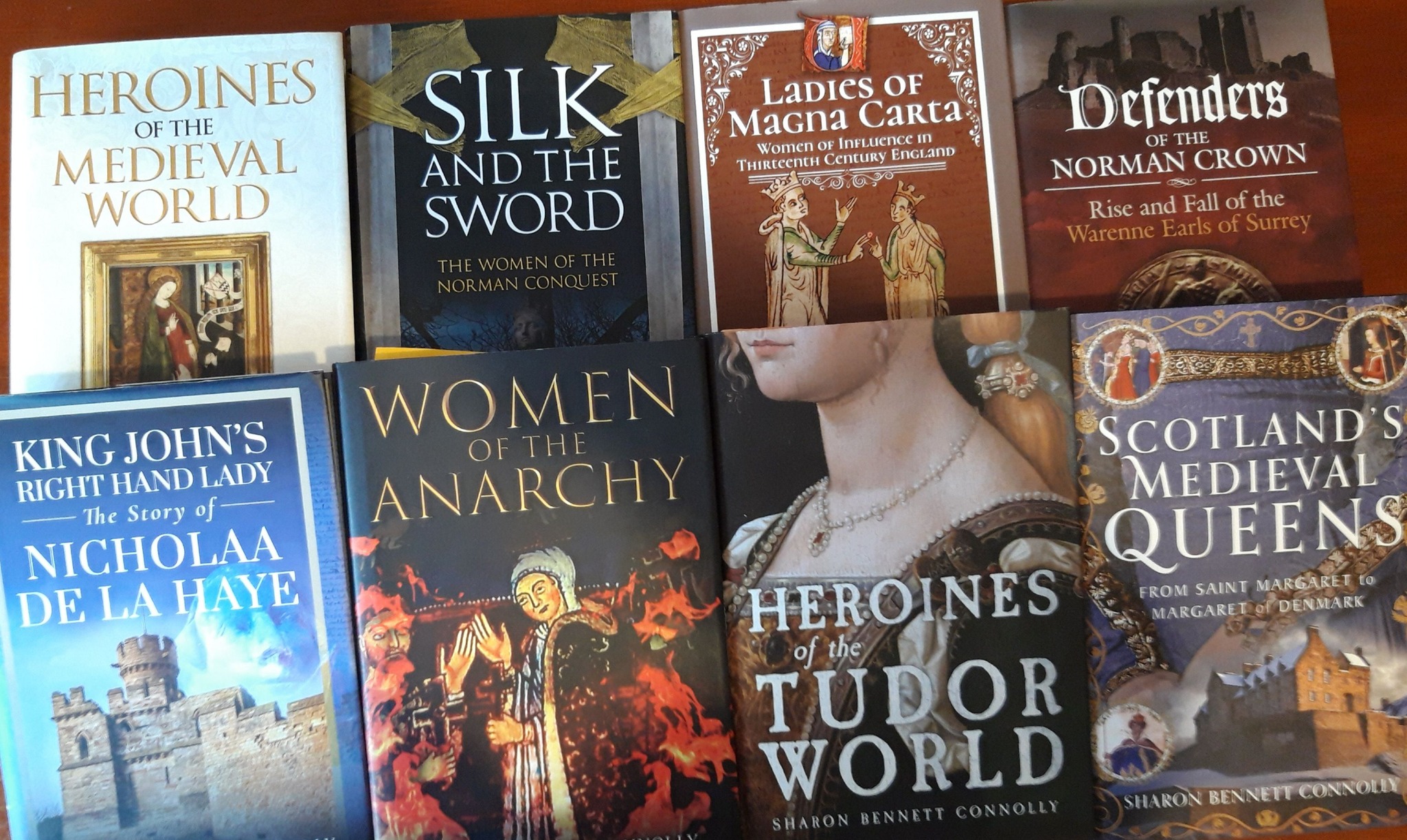
Ladies of Magna Carta: Women of Influence in Thirteenth Century England  looks into the relationships of the various noble families of the 13th century, and how they were affected by the Barons’ Wars, Magna Carta and its aftermath; the bonds that were formed and those that were broken. It is now available from Pen & SwordAmazon and from Book Depository worldwide.

Also by Sharon Bennett Connolly:

Silk and the Sword: The Women of the Norman Conquest traces the fortunes of the women who had a significant role to play in the momentous events of 1066.  Available now from Amazon,  Amberley Publishing, Book Depository.

Heroines of the Medieval World tells the stories of some of the most remarkable women from Medieval history, from Eleanor of Aquitaine to Julian of Norwich. Available now from Amberley Publishing and Amazon and Book Depository.

*

You can be the first to read new articles by clicking the ‘Follow’ button, liking our Facebook page or joining me on Twitter and Instagram.

©2020 Sharon Bennett Connolly and Danna R. Messesr

Matilda Marshal, Countess of Norfolk, Warenne and Surrey

Matilda – also known as Mahelt or Maud – was the eldest daughter of the great William Marshal, Earl of Pembroke, known to many as The Greatest Knight! She lived through on of the most tumultuous periods of English history, the reign of King John, Magna Carta, the First Barons’ War and the minority of King Henry III.
Effigy identified as William Marshal, Temple Church, London

Although we do not have a birth date for Matilda Marshal, given that her parents married in 1189 and she had two elder brothers, Matilda was probably born in 1193 or 1194. She was the third child and eldest daughter of William Marshal and his wife Isabel de Clare. The Histoire de Guillaume le Marechale praises Matilda saying she had the gifts of ‘wisdom, generosity, beauty, nobility of heart, graciousness, and I can tell you in truth, all the good qualities which a noble lady should possess.’1 The Histoire goes on to say; ‘Her worthy father who loved her dearly, married her off, during his lifetime to the best and most handsome party he knew, to Sir Hugh Bigot.’2 Of William and Isabel’s five daughters, it is only Matilda who is mentioned in the Histoire as being ‘loved dearly’ by her father.

In 1207 when the Marshal family moved to Ireland, William looked to settle Matilda’s future. Now aged 13 of 14, Matilda was old enough to be married and William approached Roger Bigod, second Earl of Norfolk, to propose a match between Matilda and Roger’s son and heir, Hugh Bigod. Hugh was Roger’s son by his wife Ida de Tosny, former mistress of King Henry II and the mother of the king’s son, William Longespée, Earl of Salisbury. Roger and Ida had married at Christmas in 1181 and so Hugh was probably in his mid-twenties when the marriage with Matilda was suggested.

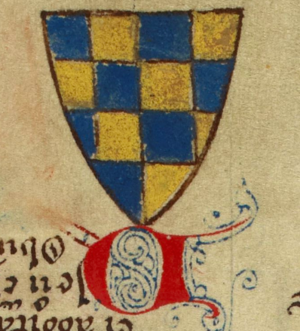
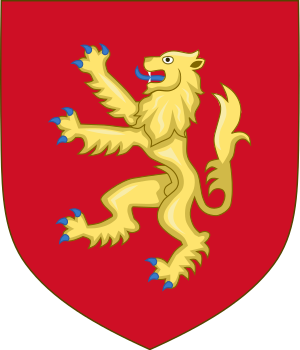
Coat of arms of Matilda’s 1st husband Hugh Bigod, 3rd Earl of Norfolk

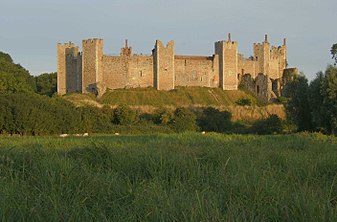
According to the Histoire William asked Roger Bigod ‘graciously, being the wise man he was, to arrange a handsome marriage between his own daughter and his son Hugh. The boy was worthy, mildmannered, and noblehearted and the young lady was a very young thing and both noble and beautiful. The marriage was a most suitable one and pleased both families involved.’3 The match was a good one. After the marriage, Matilda lived with her husband at the earl of Norfolk’s magnificent thirteen-towered castle at Framlingham. In 1209 she gave birth to a son, Roger, who would succeed his father as 4th Earl of Norfolk. Another son, Hugh, was born in 1212, and a daughter, Isabelle in 1215. A third and final son, Ralph, was probably born in 1216 or 1217.

Matilda’s family was deeply divided by the Magna Carta crisis and subsequent civil war. Her husband and father-in-law had joined the ranks of the baronial rebellion in 1215, as had her brother, William Marshal the Younger, whilst her father remained a staunch supporter of the king, holding the Welsh Marches for the Royalist cause during the civil war.

In 1216 the war touched Matilda personally, with Framlingham Castle being besieged by King John, who demanded the castle’s surrender:

The King to his well-beloved men, William le Enveise, constable of Framlingham, and all the knights presently with him in that castle, greetings. We command that you deliver up to our trusty and well beloved William de Harcourt and Elias de Beauchamp the castle of Framlingham. And in testimony hereof we thereto send you these our letters patent. Witness myself, at Framlingham, the thirteenth day of March, in the seventeenth year of our reign.4

We do not know whether Matilda was in residence at the castle at the time of the siege; her father-in-law was in, or on his way to, London and her husband Hugh’s whereabouts are unknown, but he was not at Framlingham. The king allowed the constable, William le Enveise, to send messengers to the earl and seek advice on what they should do. The earl probably advised the constable to surrender as the castle capitulated to the king without a fight two days later. One of Matilda’s sons, most likely the eldest, Roger, was taken as hostage.

It is not hard to imagine what thoughts and feelings – and fears – must have gone through Matilda’s mind, knowing that her young son, only 6 or 7 years of age, was in the custody of King John. The king’s treatment of Matilda de Braose was common knowledge, and rumours of what had happened to Arthur of Brittany were rife. Her own two older brothers, William and Richard, had also been held for several years as hostages to their father’s good behaviour. It must have been a comfort to Matilda, however, to know that King John depended on the loyalty of her father, and so would treat the boy well, if only to avoid alienating the man whose support he sorely needed.

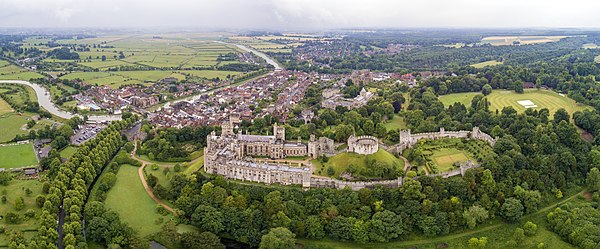
Framlingham Castle, Suffolk

Despite King John’s death in October 1216, Matilda’s husband and father-in-law remained in rebellion, supporting the claims of Louis of France, the dauphin, who had invaded England early in 1216 and controlled much of the south. The earl of Norfolk only came to terms with the Royalist government when the French prince returned home in September 1217; after which he was finally restored to the earldom of Norfolk and Framlingham Castle was returned to him. It was probably also at this time that his grandson, Roger, was returned to his mother; his last year as a hostage would have been when his own grandfather, William Marshal, was in power as regent. Which must have allowed Matilda to rest easier and allayed her fears for her son.

Matilda spent time with her father while he was dying in April and May 1219. The Histoire says of Matilda at her father’s deathbed:

‘My lady Mahelt [Matilda] la Bigote was so full of grief she almost went out of her mind, so great was her love for him. Often she appealed to God, asking Him why He was taking from her what her heart loved most.’5

It goes on to tell the story of the ailing William Marshal calling for his daughters to sing to him. William asked Matilda to be the first to sing:

‘She had no wish to do so for her life at the time was a bitter cup, but she
had no wish to disobey her father’s command. She started to sing since
she wished to please her father, and she sang exceedingly well, giving a
verse of a song in a sweet, clear voice.’6

Matilda’s husband, Hugh, succeeded to the title of earl of Norfolk when his father died sometime between April and August 1221, probably aged well into his seventies. The new earl, however, only enjoyed his title for four years; he died suddenly in 1225, aged only 43. He was succeeded by their eldest son, Roger, then only 16 years old and therefore still a minor. His wardship was given to William Longespée, Earl of Salisbury, the young earl’s half-uncle, but when Longespée died the following year, the wardship was transferred to Alexander II, King of Scots.

With custody of the young earl of Norfolk, and of all his lands, Alexander II married Roger to his sister, Isabella of Scotland. The only lands not granted to the king of Scots were those which Matilda held in dower as Hugh Bigod’s widow. Matilda was still only 32 when Hugh died, with three of her four children still to care for. As a valuable marriage prize she, or her family, acted quickly to secure her future and safety and within three months of her husband’s death, Matilda was married once more.

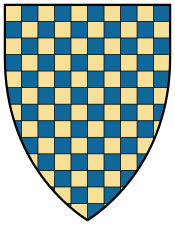
Arms of William de Warenne

Her second husband was William de Warenne, 5th Earl of Surrey, also known as Earl Warenne. William was the only son of Isabel de Warenne, Countess of Surrey in her own right, and her second husband, Hamelin de Warenne, half-brother of King Henry II. Matilda was the earl’s second wife, his first wife, also called Matilda, the daughter of William d’Aubigny, second Earl of Arundel had died childless on 6 February 1215 and was buried at Lewes Priory, Sussex. William de Warenne was a neighbour of the Bigods, having lands centred in Castle Acre in Norfolk, and he had joined the rebellion against King John at about the same time as Roger Bigod, although William was back in the Royalist camp by March 1217 and was a prominent participant in the negotiations which ended the war in August 1217.

Probably born in the late 1260s, William was considerably older than his new wife and the marriage appears to have been one of practicality, rather than affection. The earl had purchased Matilda’s marriage, essentially meaning her dower in Norfolk, before July 1225. Matilda continued to style herself as ‘Matildis la Bigot’ in charters, with ‘Matildis de Warenne’ added only as an afterthought, or not at all. For example, a charter from the early 1240s, following the death of William de Warenne, has the salutation, ‘ego Latilda Bigot comitissa Norf ’ et Warenn.’7 This may be an indication that this second marriage was not of Matilda’s own choosing and she may even have preferred to remain a widow, rather than entering into this second marriage. The continuing use of her name from her first marriage possibly being her own mark of rebellion against her new situation.

After the resolution of the crisis of 1216/1217 William de Warenne served the crown faithfully, save for his brief involvement in the confederation against it led by Henry III’s brother Richard of Cornwall, between July and October 1227. He was forced to surrender Tickhill Castle, but his disgrace was only temporary and in 1228 he received the third penny for the county of Surrey for the first time, an honorary payment previously denied to William and his father. In 1230 William de Warenne was appointed keeper of the east-coast ports of England during the king’s expedition to Brittany. In 1236 he was cup bearer at the coronation of Eleanor of Provence and in 1237 he witnessed the reissue of Magna Carta; the ageing earl was one of the few surviving barons who had been witness to the original charter in 1215.

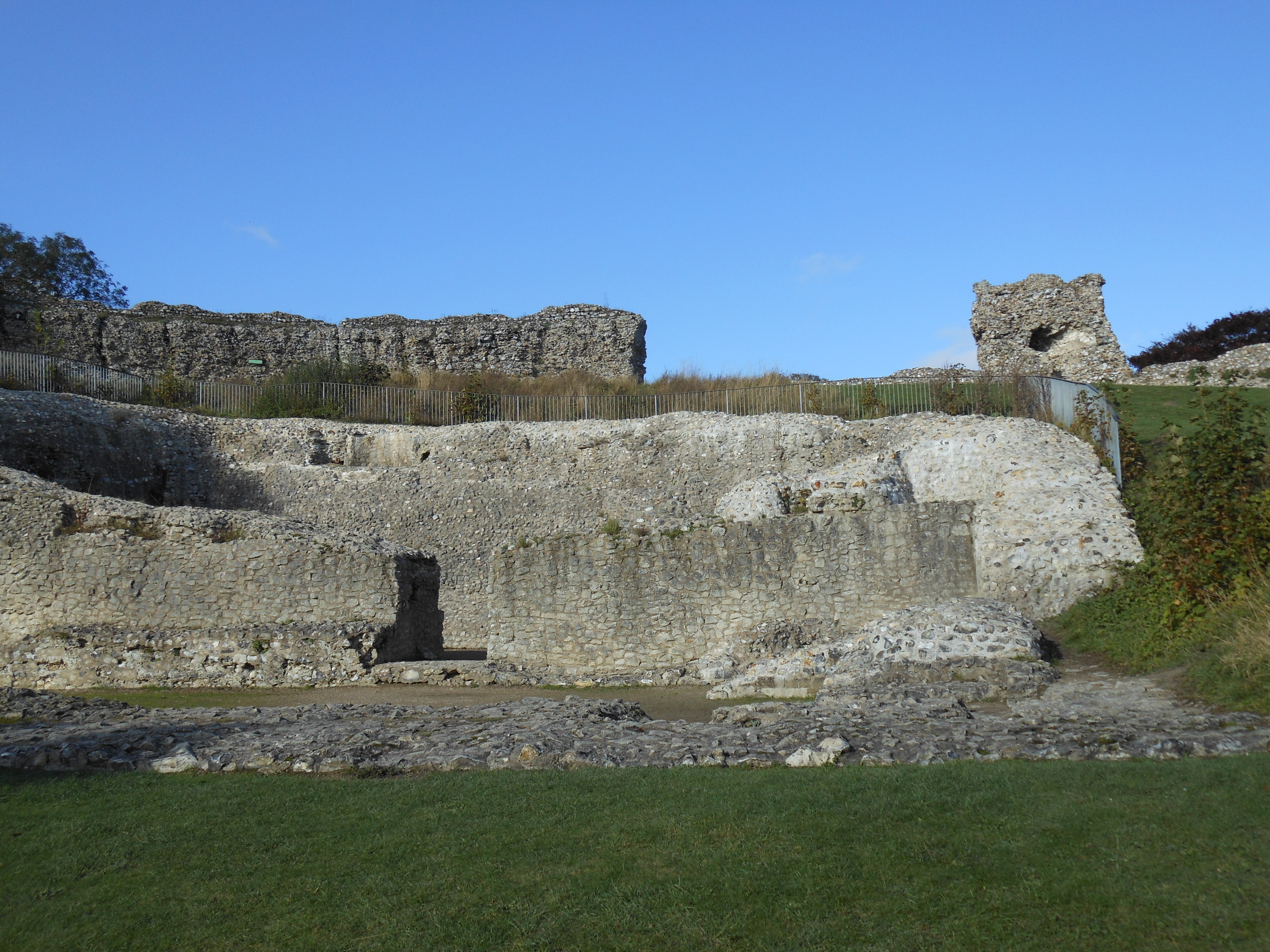
The Warenne stronghold of Castle Acre Castle, Norfolk

In his early 70s, William de Warenne died in London on 27 or 28 May 1240; he was buried before the high altar at his family’s foundation of Lewes Priory in Sussex. In his memory, the king ordered that a wayside cross be erected on the road between Carshalton and Merton, in Surrey.

Matilda bore her second husband two children, a boy and a girl, John and Isabel (later Isabel d’Aubigny). John would succeed his father as earl and attained his majority in 1248, when he succeeded to the vast Warenne estates. He would pursue a martial career and was one of Edward I’s fiercest generals. Matilda did not marry again after William’s death. In 1246, as the last surviving child of William Marshal, and with neither of her five brothers leaving a son, Matilda was granted the Marshal’s rod by King Henry III. She did, at this point, change her name on charters, to ‘Martill marescalla Angliae, comitissa Norfolciae et Warennae.’8

Emphasising her Marshal name as her father’s eldest surviving child, Matilda was, significantly, claiming the title Marshal of England as her right, thus increasing her power and prestige, and taking the authority of the marshal as her own. Matilda appears to have acted independently during her second marriage, purchasing land in the Don Valley in South Yorkshire, close to the Warenne stronghold of Conisbrough Castle and after the queen she was ‘undoubtedly the most powerful and wealthy woman in England from 1242 onwards.’9

Tintern Abbey Monmouthshire

Matilda Marshal died in 1248, either on 27 March or at the beginning of April, in her mid-50s. Choosing to be interred with her Marshal family, rather than either of her husbands, Matilda was buried at Tintern Abbey, Monmouthshire. Her three Bigod sons and their Warenne half-brother carried their mother’s bier into the church, where she was laid to rest close to her mother, Isabel, two of her brothers, Walter and Ancel, and her sister, Sybil. It is through Matilda’s marriage to Hugh Bigod, Earl of Norfolk, that the present duke of Norfolk also bears the title of Earl Marshal.

Images:

Courtesy of Wikipedia except Castle Acre Castle which is ©2019Sharon Bennett Connolly.

Footnotes:

1David Crouch and Anthony Holden, History of William Marshal: Text and Translation; 2 ibid; 3ibid; 4Letter of 13 March 1216, Rich Price, King John’s Letters; 5Crouch and Holden, History of William Marshal: Text and Translation; 6ibid; 7Chadwick, Elizabeth, ‘Clothing the Bones: Finding Mahelt Marshal’, livingthehistoryelizabethchadwick.blogspot.com; 8Vincent, Nicholas, ‘William de Warenne, fifth earl of Surrey [Earl Warenne] (d. 1240)’, Oxforddnb.com; 9David Crouch quoted in Chadwick, ‘Clothing the Bones: Finding Mahelt Marshal’.

Sources:

Rich Price, King John’s Letters Facebook group; Robert Bartlett England Under the Norman and Angevin Kings 1075-1225; Dan Jones The Plantagenets; the Kings who Made EnglandThe Plantagenet Chronicle Edited by Elizabeth Hallam; Maurice Ashley The Life and Times of King John; Roy Strong The Story of BritainOxford Companion to British History; Mike Ashley British Kings & Queens; David Williamson Brewer’s British Royalty; Ralph of Diceto, Images of History; Marc Morris, King John; David Crouch, William Marshal; Crouch and Holden, History of William Marshal; Crouch, David, ‘William Marshal [called the Marshal], fourth earl of Pembroke (c. 1146–1219)’, Oxforddnb.com; Flanagan, M.T., ‘Isabel de Clare, suo jure countess of Pembroke (1171×6–1220)’, Oxforddnb.com; Thomas Asbridge, The Greatest Knight; Chadwick, Elizabeth, ‘Clothing the Bones: Finding Mahelt Marshal’, livingthehistoryelizabethchadwick.blogspot.com; Stacey, Robert C., ‘Roger Bigod, fourth earl of Norfolk (c. 1212-1270)’, Oxforddnb.com; finerollshenry3.org.uk; Vincent, Nicholas, ‘William de Warenne, fifth earl of Surrey [Earl Warenne] (d. 1240)’, Oxforddnb.com.

My Books

Signed, dedicated copies of all my books are available through my online bookshop.

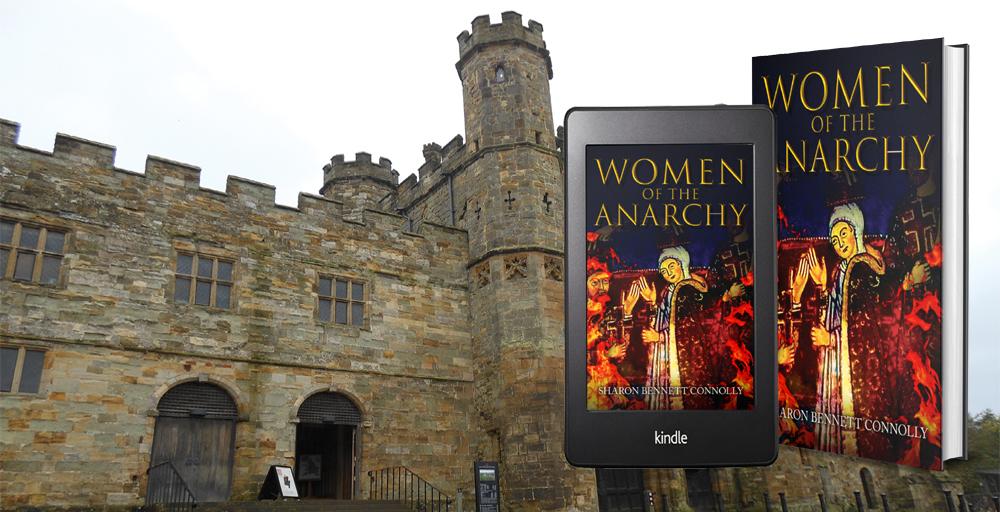
Out Now! Women of the Anarchy

Two cousins. On the one side is Empress Matilda, or Maud. The sole surviving legitimate child of Henry I, she is fighting for her birthright and that of her children. On the other side is her cousin, Queen Matilda, supporting her husband, King Stephen, and fighting to see her own son inherit the English crown. Women of the Anarchy demonstrates how these women, unable to wield a sword, were prime movers in this time of conflict and lawlessness. It show how their strengths, weaknesses, and personal ambitions swung the fortunes of war one way – and then the other.

Available from Bookshop.orgAmberley Publishing and Amazon UK.

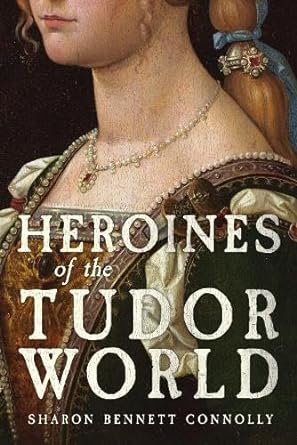
Coming on 15 June 2024: Heroines of the Tudor World

Heroines of the Tudor World tells the stories of the most remarkable women from European history in the time of the Tudor dynasty, 1485-1603. These are the women who ruled, the women who founded dynasties, the women who fought for religious freedom, their families and love. These are the women who made a difference, who influenced countries, kings and the Reformation. In the era dominated by the Renaissance and Reformation, Heroines of the Tudor World examines the threats and challenges faced by the women of the era, and how they overcame them. From writers to regents, from nuns to queens, Heroines of the Tudor World shines the spotlight on the women helped to shape Early Modern Europe.

Heroines of the Tudor World is now available for pre-order from Amberley Publishing and Amazon UK.

Also by Sharon Bennett Connolly:

King John’s Right-Hand Lady: The Story of Nicholaa de la Haye is the story of a truly remarkable lady, the hereditary constable of Lincoln Castle and the first woman in England to be appointed sheriff in her own right. It is is available from King John’s Right-Hand Lady: The Story of Nicholaa de la Haye is the story of a truly remarkable lady, the hereditary constable of Lincoln Castle and the first woman in England to be appointed sheriff in her own right. Available from all good bookshops or direct from Pen & Sword Booksbookshop.org and AmazonDefenders of the Norman Crown: The Rise and Fall of the Warenne Earls of Surrey tells the fascinating story of the Warenne dynasty, from its origins in Normandy, through the Conquest, Magna Carta, the wars and marriages that led to its ultimate demise in the reign of Edward III. Available from Pen & Sword BooksAmazon in the UK and US, and Bookshop.org

Ladies of Magna Carta: Women of Influence in Thirteenth Century England looks into the relationships of the various noble families of the 13th century, and how they were affected by the Barons’ Wars, Magna Carta and its aftermath; the bonds that were formed and those that were broken. It is now available in paperback and hardback from Pen & Sword,  Amazon, and Bookshop.orgHeroines of the Medieval World tells the stories of some of the most remarkable women from Medieval history, from Eleanor of Aquitaine to Julian of Norwich. Available now from Amberley Publishing and Amazon, and Bookshop.orgSilk and the Sword: The Women of the Norman Conquest traces the fortunes of the women who had a significant role to play in the momentous events of 1066. Available now from Amazon,  Amberley Publishing, and Bookshop.org.

Alternate Endings: An anthology of historical fiction short stories including Long Live the King… which is my take what might have happened had King John not died in October 1216. Available in paperback and kindle from Amazon.

Podcast:

Have a listen to the A Slice of Medieval podcast, which I co-host with Historical fiction novelist Derek Birks. Derek and I welcome guests, such as Bernard Cornwell and Elizabeth Chadwick, and discuss a wide range of topics in medieval history, from significant events to the personalities involved.

*

Don’t forget! Signed and dedicated copies of all my books are available through my online bookshop.

For forthcoming online and in-person talks, please check out my Events Page.

You can be the first to read new articles by clicking the ‘Follow’ button, liking our Facebook page or joining me on Twitter and Instagram.

*

©2020 Sharon Bennett Connolly, FRHistS

Book Corner: Joan, Lady of Wales by Danna R. Messer

The history of women in medieval Wales before the English conquest of 1282 is one largely shrouded in mystery. For the Age of Princes, an era defined by ever-increased threats of foreign hegemony, internal dynastic strife and constant warfare, the comings and goings of women are little noted in sources. This misfortune touches even the most well-known royal woman of the time, Joan of England (d. 1237), the wife of Llywelyn the Great of Gwynedd, illegitimate daughter of King John and half-sister to Henry III. With evidence of her hand in thwarting a full scale English invasion of Wales to a notorious scandal that ended with the public execution of her supposed lover by her husband and her own imprisonment, Joan’s is a known, but little-told or understood story defined by family turmoil, divided loyalties and political intrigue. From the time her hand was promised in marriage as the result of the first Welsh-English alliance in 1201 to the end of her life, Joan’s place in the political wranglings between England and the Welsh kingdom of Gwynedd was a fundamental one. As the first woman to be designated Lady of Wales, her role as one a political diplomat in early thirteenth-century Anglo-Welsh relations was instrumental. This first-ever account of Siwan, as she was known to the Welsh, interweaves the details of her life and relationships with a gendered re-assessment of Anglo-Welsh politics by highlighting her involvement in affairs, discussing events in which she may well have been involved but have gone unrecorded and her overall deployment of royal female agency.

Finally!

I have got my hands on this much-anticipated book, Joan, Lady of Wales by Danna R. Messer. I have to admit, I devoured every word. Joan has been in need of a biographer for some time, and I am so pleased that Danna took up the challenge and produced this remarkable study of the illegitimate daughter of King John who became Lady of Wales as the wife of Llywelyn ap Iorweth – Llywelyn Fawr.

Ever since I have known this book was being written, I have been itching to get my hands on it!

Anyone who is a fan of Sharon Penman will have heard of Joan, and most likely have a soft spot for this incredible woman. This biography gives you the chance to study the facts, to meet the woman behind the story and read of how deeply involved she was in Anglo-Welsh relations in the first half of the 13th century. Danna R. Messer portrays a politically astute and powerful woman, aware of her duty, importance and capabilities, not only as the daughter and sister of England’s kings, but also as Llywelyns wife and consort – and as the mother of his heir.

Detail of the sarcophagus thought to belong to Joan in St Mary’s and St Nicholas’s Church, Beaumaris

Beautifully written, with clear, concise arguments and a passion for her subject, the author has brought Joan to life. This is a book that is impossible to put down. Danna R. Messer does not shy away from areas of controversy, either, examining every aspect of Joan’s relationship with William de Braose, the man who was hanged after being found with Joan in Llywelyn’s chamber. the deconstruction of the event, the aftermath and the repercussions make for fascinating reading – its worth getting the book just to discover how everything unfolded.

As are all life stories, that of Joan of England’s is complicated; the complexities of which are further irritated by a dearth of contemporaneous material related to her. The identity of her mother remains a mystery and is much debated by today’s genealogists, as is who her children were. how many she really had and where some even ended up in their own lives. How many times she travelled as an envoy, how many charters she issued and just how fully she participated in effecting Welsh polity can never be fully known. No matter the daunting aspect of approaching such an ill-documented existence, which is a painstaking project indeed, it is one that yields both exciting and long-overdue results.

This study of Joan of England seeks to revise the master narrative of native medieval Wales in the early-thirteenth century – to generate a better ad more inclusively nuanced understanding of the history of this fascinating and wild region of Britain and its relationship with England by placing this particularly interesting and fascinating woman at the forefront in the sequence of events…

Although Siwan’s role in Anglo-Welsh history has received recognition by historians, she has been still largely relegated to the sidelines; an indication that her role was not entirely critical to the stability and growth of Welsh polity, or peace with England overall. On the flip side, it is sometimes difficult not to naturally overplay our hand and emphatically conclude that Joan was, indeed, a heroine and that if it were not for her, the very fabric of native Wales would have been fundamentally altered by the time Llywelyn died in 1240. On balance, however, it is vitally important to understand that the aggregate of Joan’s interventions in the early-thirteenth century ensured that she really was a crucial player in the political wranglings between the ruler of Gwynedd and the rulers of England. The famous early-twentieth-century Welsh historian J.E. Lloyd concluded that Llywelyn ap Iorweth ‘had one emissary whose diplomatic services far outran those of the seneschal and who helped him in this capacity for the greater part of his reign. To the assistance of his wife Joan, both as advocate and counsellor, there can be no doubt he was much indebted.’ To the assistance of Joan, Lady of Wales, there can be no doubt that the history of native medieval Wales is also much indebted.

Joan, Lady of Wales by Danna R. Messer not only examines every aspect of Joan’s life, but places that life in the wider context of English and Welsh events, of Anglo-Welsh relations and of the place of women in Welsh society and history in general. This in-depth study provides an overview analysis of the status of women in Welsh history, the laws surrounding marriage and adultery, legitimate and illegitimate children and demonstrates how Joan’s own confirmation of legitimacy in the 1220s added prestige and legitimacy to her husband’s position within Wales and the wider sphere of Anglo-Welsh relations.

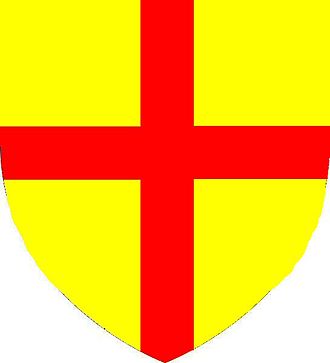
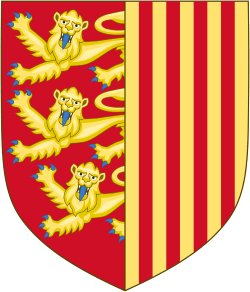
Arms of the royal house of Gwynedd

Danna R. Messer also explores the use of title and authority for women in the 13th century, depicting Joan as a queen, both in her actions and relationship with others. Although she was not crowned and anointed in the same manner as an English queen would be, she held the same level of authority and respect, both in the public and the private sphere of the Welsh court.

A collection of a bout 20 black and white photos help to illustrate Joan’s story, Joan, Lady of Wales is a stunning, comprehensive study of the unique character and position that Joan occupies in both English and Welsh history.

Despite a woeful lack of sources mentioning Joan, Danna has managed to tease out every piece of information she could find on Joan and her position and duties, not only in Wales as the wife and consort of Llywelyn, but also in England as the daughter and, later, sister of the king. Joan’s status as the primary diplomat in Anglo-Welsh relations comes through clearly in the way Joan was treated by her husband and the rewards she was given by the English crown.

In brief, in Joan, Lady of Wales, Danna R. Messer recreates the life and times of this incredible woman, giving us a more complete portrait than has ever been achieved since her own lifetime. We are given a full and complete analysis – as far as the sources and distance of time will allow – of Joan’s political and personal life, the good and the bad, including the scandal, the ambition and Joan’s own legacy and what it meant for those who followed her.

Joan, Lady of Wales has long needed her own biography, to bring her out from the shadows of the lives of her father, brother, husband and son – and this book does not disappoint. It is, quite simply, a beautifully-executed, fascinating and addictive read.

Joan, Lady of Wales is available in hardback from Pen &Sword and Amazon.

About the author:

Dr Danna R. Messer has published on various aspects of the wives of the native Welsh rulers before 1282, providing a gendered perspective of medieval Welsh politics. As an editor and historian, she is widely involved in medieval history and queenship studies generally, including her roles as Series Editor for Medieval History for Pen and Sword, editor for the Royal Studies Journal and editor for Normans to Early Plantagenet Consorts, the first volume of the forthcoming four-book series, English Consorts: Power, Influence, Dynasty (Palgrave). She is also Acquisitions Editor for Arc Humanities Press and the Executive Editor for the Encyclopedia of the Global Middle Ages, a partnership project with Bloomsbury Academic and Arc Humanities Press.

*

My Books

Ladies of Magna Carta: Women of Influence in Thirteenth Century England  looks into the relationships of the various noble families of the 13th century, and how they were affected by the Barons’ Wars, Magna Carta and its aftermath; the bonds that were formed and those that were broken. It is now available from Pen & SwordAmazon and from Book Depository worldwide.

Also by Sharon Bennett Connolly:

Silk and the Sword: The Women of the Norman Conquest traces the fortunes of the women who had a significant role to play in the momentous events of 1066.  Available now from Amazon,  Amberley Publishing, Book Depository.

Heroines of the Medieval World tells the stories of some of the most remarkable women from Medieval history, from Eleanor of Aquitaine to Julian of Norwich. Available now from Amberley Publishing and Amazon and Book Depository.

*

You can be the first to read new articles by clicking the ‘Follow’ button, liking our Facebook page or joining me on Twitter and Instagram.

©2020 Sharon Bennett Connolly

The Two Wives of King John

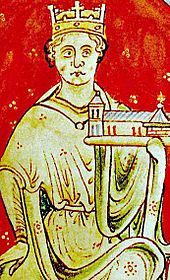
King John

One of the most intriguing relationships of the Magna Carta story is that between Isabella of Gloucester and Isabelle d’Angoulême, the two wives of King John.

Isabella of Gloucester is a unique individual in the story of Magna Carta. She is, in many ways, a shadow in the pages of history, and yet she held one of the greatest earldoms in England. There are no pictures of her, not even a description of her personality or appearance. At one time, no one even seemed certain of her name; she has been called Isabel, Isabella, Hawise, Avice – but Isabella is how she appears in the Close Rolls.1

Isabella was the youngest daughter and co-heiress of William, second Earl of Gloucester, who was himself the son of Robert of Gloucester, an illegitimate son of King Henry I and Empress Matilda’s half-brother and stalwart supporter during her war against King Stephen. Earl William’s wife was Hawise, the daughter of Robert de Beaumont, third Earl of Leicester. Isabella’s only brother Robert had died in 1166, making Isabella and her two sisters co-heiresses to the earldom of Gloucester. Although her date of birth has been lost to history, it seems likely she was born in the early 1160s.

We know very little of Isabella’s childhood, although, considering her social status, as the daughter of one of England’s wealthiest earls, it is likely that she was given the education expected of a high-ranking noblewoman and taught to run a large household, as well as the social graces of singing, dancing and needlework. Her parents’ marriage appears to have been a successful one. Isabella’s mother, Countess Hawise, was a regular witness to her husband’s charters and was mentioned in several of them, especially in the pro amina clauses of grants made to religious houses that sought spiritual benefits for those named.

Arms of Geoffrey de Mandeville, Isabella of Gloucester’s second husband

Isabella’s father, although a first cousin of Henry II, had a complicated relationship with the king, especially after Henry had taken Bristol Castle from the earl; the castle had been held by William’s father before him. Despite remaining loyal to Henry II during the rebellion of the king’s sons in 1173–74 and agreeing to the marriage of his youngest daughter to Prince John, Earl William’s loyalty remained suspect and he was arrested and imprisoned in 1183. The unfortunate earl died whilst still a captive, on 23 November 1183.

Isabella was betrothed, in 1176, to Prince John, the youngest son of Henry II and Eleanor of Aquitaine. John was 9 years old at the time of the betrothal, while Isabella was probably a few years older. Under the terms of the marriage agreement, Earl William recognised John as heir to the earldom of Gloucester, effectively disinheriting Isabella’s two elder sisters. The marriage was to be a way for Henry II to provide for his youngest son. After the Earl of Gloucester’s death in 1183, his entire estate was passed to Isabella, who had been made a ward of the king.

Isabella’s older sisters were both already married; Mabel was the wife of Amaury of Évreux and Amicia was married to the earl of Hertford. On their father’s death they had both been explicitly excluded from the estate to prevent the division of the comital inheritance and they received annuities of £100 each in compensation. Taking Isabella into wardship, Henry II therefore seized all the Gloucester lands and made the income from them available for John’s use, as Isabella’s future husband. The king, however, appears to have kept his options open and had not finalised John’s marriage to Isabella by the time of his death; in case a more suitable alliance came along.

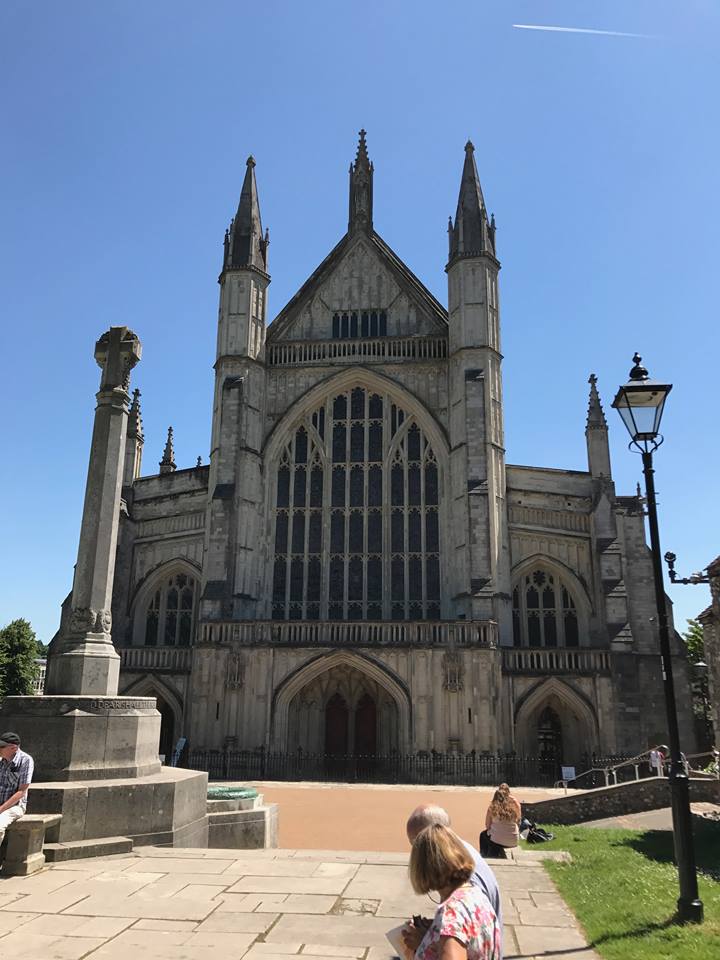
Winchester Cathedral, Isabella and Isabelle shared a household in Winchester

King Richard I, on the other hand, thought it expedient to get his brother safely married, on his own accession to the throne in 1189. The wedding took place at Marlborough Castle in Wiltshire on 29 August 1189; John was 21 and Isabella may have been approaching 30. Baldwin, the archbishop of Canterbury at the time, opposed the marriage as the couple were related within the third degree of consanguinity; they were second cousins, both being great-grandchildren of Henry I. John had to promise to seek a papal dispensation and, even then, the couple were ordered, by the archbishop, not to sleep together.

Although Isabella and John were married for ten years, their marriage was neither happy nor successful. They spent some time together in the first years of their marriage as they issued charters together during a visit to Normandy around 1190–91.2 However, they appear to have spent less and less time together as the years went on. They never had any children and it is during this time in his life that John’s illegitimate children, including Richard of Chilham and Joan Lady of Wales, were born; a further suggestion that the couple were not close. In 1193, as part of his plotting with Philip Augustus, John promised to marry the French king’s half-sister, Alice, who had previously been betrothed to John’s own brother, Richard. Nothing eventually came of the marriage proposal, but it was an implicit rejection of Isabella as his wife.

John succeeded to the throne on the death of his older brother, Richard the Lionheart, on 6 April 1199. He was crowned, alone, on 27 May 1199; the fact that Isabella was not crowned with him suggests that John was already looking for a way out of the marriage. Poor Isabella would never be styled ‘queen’ and it was possibly as early as August 1199, but certainly by early 1200, that John obtained a divorce on the grounds of consanguinity, the very objection for which he was supposed to have obtained a dispensation when he married Isabella in 1189. The bishops of Lisieux, Bayeux and Avranches, sitting in Normandy, provided the required judgement. One chronicler said of John that ‘seized by hope of a more elevated marriage, he acted on wicked counsel and rejected his wife.’3

Keen to keep his hold on the substantial Gloucester lands, John took Isabella into wardship, again, holding her in ‘honourable confinement’ for the next fourteen years. Little is known of her day-to-day life, although she does appear to have remained on civil terms with King John. John met the expenses of Isabella’s household and staff and sent her numerous gifts, including wine and cloth. Things may well have been a little awkward at times, especially after John found himself another wife.

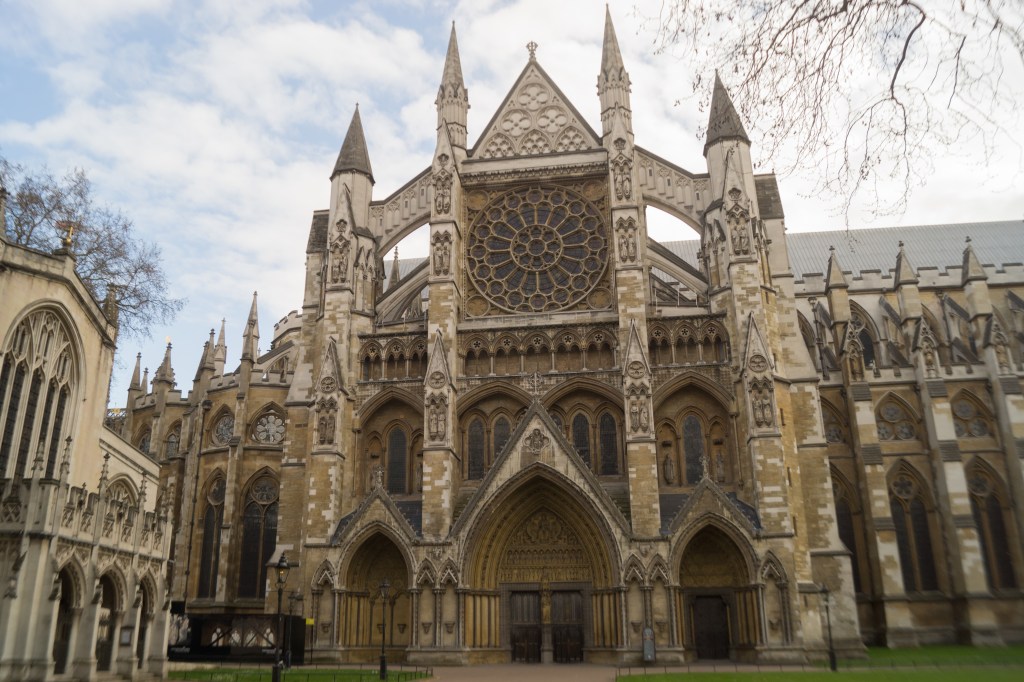
Westminster Abbey, where Isabelle d’Angoulême was crowned Queen of England

Having discarded Isabella, John began to look elsewhere for a new wife; he sent ambassadors to the Iberian peninsula to investigate the possibilities of a match with the daughter of the king of Portugal. However, any such plans were hastily abandoned when John set his sights on Isabelle d’Angoulême.

Isabelle was the only child of Audemar (or Aymer), Count of Angoulême and Alice de Courtenay. Alice was the daughter Peter de Courtenay, lord of Montargis and Chateaurenard, and a cousin of king Philip II Augustus of France. Through her Courtenay family connections, Isabelle was also related to the royal houses of Jerusalem, Hungary, Aragon and Castile. There was one tiny problem, however, Isabelle was already betrothed to Hugh IX de Lusignan. The marriage was intended to end the bitter rivalry of the two families but would also be a threat to Angevin power in the region, effectively splitting Aquitaine in two, with the Lusignans controlling the centre.

John therefore suggested to Count Audemar that he marry Isabelle himself. The count jumped at the chance of seeing his daughter become queen of England. Isabelle and John were married on 24 August 1200; Isabelle was no more than 12 and may have been as young as 10, John was 33 or 34.

Seal of Isabelle d’Angoulême

When John remarried in 1200 to Isabelle d’Angoulême, he housed his new wife with his ex-wife, which could have been rather awkward for both women. Queen Isabelle was still very young, probably no more than 12 years old on her marriage. Despite the chroniclers claiming Isabelle was a temptress and kept John in bed when he should have been ruling the kingdom, in the early years of their marriage, the king appears to have treated her more like a child than a wife; which she, of course, was. Her independence was severely limited by John keeping personal control of her finances.

When she was not at court with the king, Isabelle spent time at Marlborough or in the household of John’s first wife, Isabella of Gloucester, at Winchester. Isabella’s allowance was raised from £50 to £80 a year, to pay for the extra expenses incurred by housing the queen.4 The young queen remained in Isabella of Gloucester’s household until the birth of her first child, Henry, in 1207; in that year Isabella of Gloucester was moved to Sherborne before the queen gave birth. And now that she no longer had the care of the queen, Isabella’s allowance was reduced back down to £50 a year.

One may imagine this was quite awkward for Isabella of Gloucester, the discarded wife being forced to host her former husband’s young bride. On closer reflection, however, it may also have been a comfort to her. The teenage queen would probably have been lively company for the 40-something countess who had never been blessed with children. She may have felt protective and motherly to the girl, especially knowing John as well as she must have done.

Following the birth of her first son, Henry, Isabelle gave John four more children; another son, Richard, born in 1209 and daughters, Joan, born in 1210, Isabella, born in 1214 and Eleanor, who was born in either 1215 or 1216, and married the famed Simon de Montfort, Earl of Leicester, as her second husband. Following John’s death in 1216, Isabelle returned to France, to her county of Angoulême, where, in 1220, she married Hugh X de Lusignan, the son of her former betrothed.

The gatehouse to Canterbury Cathedral, where Isabella of Gloucester is buried

Isabella of Gloucester was finally allowed to remarry in 1214; a letters patent issued by John on 28 January 1214 informed all the knights and tenants of the honour of Gloucester that ‘we have given Isabella, countess of Gloucester, our kinswoman’ in marriage to Geoffrey de Mandeville, Earl of Essex.5 Mandeville had to pay the massive sum of 20,000 marks for the privilege of marrying the king’s first wife; an amount he could never hope to repay. He was one of the barons who rose in rebellion during the Magna Carta crisis of 1215.

*

Footnotes:

1 Rich Price, King John’s Letters Facebook group; 2 Louise Wilkinson, Isabel of Gloucester, wife of King John, magnacarta800th.com; 3 Ralph of Diceto, Images of History; 4 Lisa Hilton, Queen’s Consort: England’s Medieval Queens; 5 Louise Wilkinson, Isabel of Gloucester, wife of King John, magnacarta800th.com

Sources:

Rich Price, King John’s Letters Facebook group; Louise Wilkinson, Isabel of Gloucester, wife of King John, magnacarta800th.com; Robert Bartlett England Under the Norman and Angevin Kings 1075-1225; Dan Jones The Plantagenets; the Kings who Made EnglandThe Plantagenet Chronicle Edited by Elizabeth Hallam; Maurice Ashley The Life and Times of King John; Roy Strong The Story of BritainOxford Companion to British History; Mike Ashley British Kings & Queens; David Williamson Brewer’s British Royalty; Robert B. Patterson, Isabella, suo jure Countess of Gloucester (c. 1160-1217), Oxforddnb.com; Ralph of Diceto, Images of History; Lisa Hilton, Queen’s Consort: England’s Medieval Queens; Marc Morris, King John; Elizabeth Norton, She-Wolves: The Notorious Queens of England; Louise Wilkinson, Isabella of Angoulême, wife of King John, magnacarta800th.com

Images:

Courtesy of Wikipedia, except Winchester Cathedral is ©2020 courtesy of Anne Marie Bouchard, Westminster Abbey, ©2020 courtesy of Daniel Gleave and Canterbury Cathedral which is ©2020 Sharon Bennett Connolly.

*

My Books:

Signed, dedicated copies of all my books are available through my online bookshop. or by contacting me.

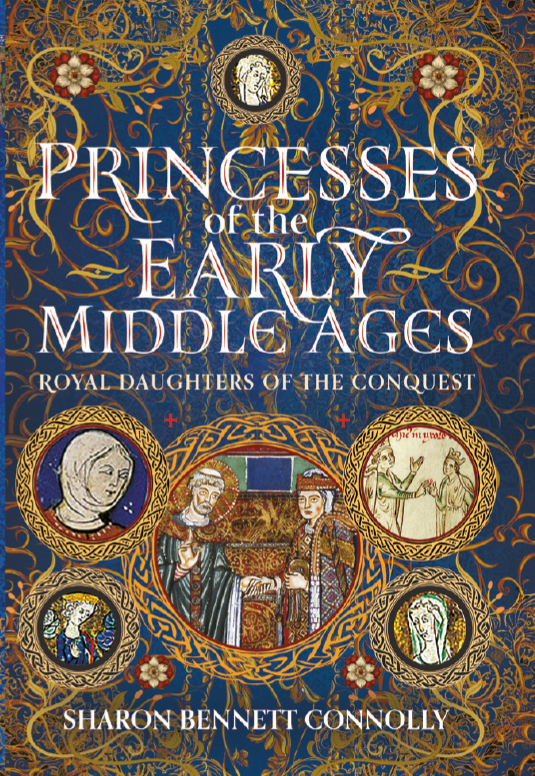
Coming 30 March: Princesses of the Early Middle Ages

Books by Sharon Bennett Connolly

Daughters of kings were often used to seal treaty alliances and forge peace with England’s enemies. Princesses of the Early Middle Ages: Royal Daughters of the Conquest explores the lives of these young women, how they followed the stereotype, and how they sometimes managed to escape it. It will look at the world they lived in, and how their lives and marriages were affected by political necessity and the events of the time. Princesses of the Early Middle Ages will also examine how these girls, who were often political pawns, were able to control their own lives and fates. Whilst they were expected to obey their parents in their marriage choices, several princesses were able to exert their own influence on these choices, with some outright refusing the husbands offered to them.

Their stories are touching, inspiring and, at times, heartbreaking.

Princesses of the Early Middle Ages: Royal Daughters of the Conquest is now available for pre-order from Pen & Sword and Amazon.

Also by Sharon Bennett Connolly:

Books by Sharon Bennett Connolly

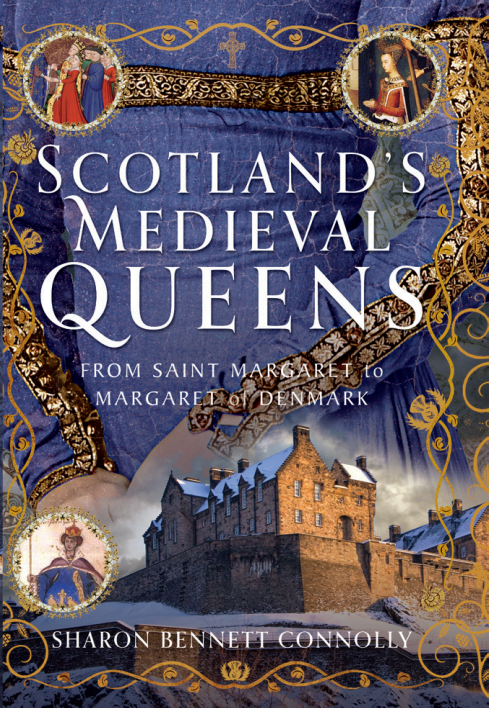
Scotland’s history is dramatic, violent and bloody and Scotland’s Medieval Queens have seen it all. This is the story of Scotland through their eyes. Available now from Amazon and Pen and Sword BooksHeroines of the Tudor World tells the stories of the most remarkable women from European history in the time of the Tudor dynasty, 1485-1603. These are the women who ruled, the women who founded dynasties, the women who fought for religious freedom, their families and love. Heroines of the Tudor World is now available from Amberley Publishing and Amazon UK. Women of the Anarchy demonstrates how Empress Matilda and Matilda of Boulogne, unable to wield a sword themselves, were prime movers in this time of conflict and lawlessness. It shows how their strengths, weaknesses, and personal ambitions swung the fortunes of war one way – and then the other. Available from Bookshop.orgAmberley Publishing and Amazon UKKing John’s Right-Hand Lady: The Story of Nicholaa de la Haye is the story of a truly remarkable lady, the hereditary constable of Lincoln Castle and the first woman in England to be appointed sheriff in her own right. Available from all good bookshops Pen & Sword Booksbookshop.org and Amazon

Defenders of the Norman Crown: The Rise and Fall of the Warenne Earls of Surrey tells the fascinating story of the Warenne dynasty, from its origins in Normandy, through the Conquest, Magna Carta, the wars and marriages that led to its ultimate demise in the reign of Edward III. Available from Pen & Sword BooksAmazon in the UK and US, and Bookshop.orgLadies of Magna Carta: Women of Influence in Thirteenth Century England looks into the relationships of the various noble families of the 13th century, and how they were affected by the Barons’ Wars, Magna Carta and its aftermath; the bonds that were formed and those that were broken. It is now available in paperback and hardback from Pen & SwordAmazon, and Bookshop.orgHeroines of the Medieval World tells the stories of some of the most remarkable women from Medieval history, from Eleanor of Aquitaine to Julian of Norwich. Available now from Amberley Publishing and Amazon, and Bookshop.orgSilk and the Sword: The Women of the Norman Conquest traces the fortunes of the women who had a significant role to play in the momentous events of 1066. Available now from Amazon,  Amberley Publishing, and Bookshop.org.

Alternate Endings: An anthology of historical fiction short stories including Long Live the King… which is my take what might have happened had King John not died in October 1216. Available in paperback and kindle from Amazon.

Podcast:

A Slice of Medieval

Have a listen to the A Slice of Medieval podcast, which I co-host with Historical fiction novelist Derek Birks. Derek and I welcome guests, such as Ian Mortimer, Bernard Cornwell, Elizabeth Chadwick and Scott Mariani, and discuss a wide range of topics in medieval history, from significant events to the personalities involved. 

Every episode is also now available on YouTube.

*

Don’t forget! Signed and dedicated copies of all my books are available through my online bookshop.

For forthcoming online and in-person talks, please check out my Events Page.

You can be the first to read new articles by clicking the ‘Follow’ button, liking our Facebook page or joining me on TwitterThreadsBluesky and Instagram.

*

©2020 Sharon Bennett Connolly FRHistS

The ‘Comfortable Confinement’ of Eleanor of Brittany

Eleanor of Brittany

The story of Eleanor of Brittany is one that highlights how women in the Middle Ages could feel truly powerless, if the men around them wanted it so. Her story also highlights the limitations of the Great Charter, or Magna Carta as it is better known, in protecting and supporting the rights of women – even princesses. Eleanor was born around 1184; she was the daughter of Geoffrey Plantagenet, Duke of Brittany by right of his wife, and Constance of Brittany. Described as beautiful, over the years she has been called the Pearl, the Fair Maid and the Beauty of Brittany.

A granddaughter of the medieval power couple, Henry II and Eleanor of Aquitaine, she was the eldest of her parents’ three children; Matilda, born the following year, died young and Arthur, born in spring 1187, six months after his father’s death in a tournament near Paris. Arthur was killed by – or at least on the orders of – King John in 1203.

Initially, Eleanor’s life seemed destined to follow the same path as many royal princesses; marriage. Richard I, her legal guardian after the death of her father in 1186, offered Eleanor as a bride to Saladin’s brother, Al-Adil. Eleanor’s aunt, Joanna, King Richard’s sister had adamantly refused to consider such a marriage and so Eleanor had been offered as an alternative. This was part of an attempt at a political settlement to the 3rd Crusade that never came to fruition.

At the age of 9, Eleanor was betrothed to Friedrich, the son of Duke Leopold VI of Austria. Duke Leopold had made the betrothal a part of the ransom for Richard I’s release from imprisonment. Young Eleanor travelled to Germany with her grandmother, Eleanor of Aquitaine, and the rest of the ransom and hostages. She was allowed to return to England, unmarried, when Duke Leopold died suddenly, and his son had ‘no great inclination’ for the proposed marriage. Further marriage plans were mooted in 1195 and 1198, to Philip II of France’s son, Louis, and Odo Duke of Burgundy, respectively; though neither came to fruition.

Arthur of Brittany

Eleanor’s fortunes changed drastically when Arthur rebelled against Richard’s successor, King John, in the early 1200s. As the son of John’s older brother, Geoffrey, Arthur had a strong claim to the English crown, but had been sidelined in favour of his more mature and experienced uncle. Arthur was captured while besieging his grandmother, Eleanor of Aquitaine, at Mirebeau on 1st August 1202. Eleanor was captured at the same time, or shortly after. And while her brother was imprisoned at Falaise, she was sent to England, to what would be a life-long imprisonment.

If the laws of primogeniture had been strictly followed at the time, Eleanor would have been sovereign of England after her brother’s death. John and his successor, Henry III could never forget this. However, primogeniture was far from being the established rule of succession that it is today. Further, the experiences of Empress Matilda and her fight with King Stephen over her own rights to the crown – and the near-20 years of civil war between 1135 and 1154, had reinforced the attitude that a woman could not rule.

Not only was Eleanor her brother Arthur’s heir, but with King John still having no legitimate children of his own, she was also the heir to England and would be until the birth of John’s eldest son, Henry, in October 1207. If the laws of inheritance had been strictly followed, Eleanor would have been sovereign of England after her brother’s death: John and his successor, Henry III, could never forget this. In 1203 she was moved to England and would be held a prisoner of successive English kings to her dying day. Although her confinement has been described as ‘honourable’ and ‘comfortable’, Eleanor’s greater right to the throne meant she would never be freed or allowed to marry and have children, despite repeated attempts over the years by King Philip and the Bretons to negotiate her release.

King John

It seems Eleanor did spend some time with the king and court, particularly in 1214 when she accompanied John to La Rochelle to pursue his war with the French. John planned to use Eleanor to gain Breton support and maybe set her up as his puppet duchess of Brittany, replacing her younger half-sister Alice. Alice was the daughter of Eleanor’s mother, Constance, by her third marriage to Guy of Thouars. She was married to Peter of Dreux, a cousin of King Philip of France and duke of Brittany by right of Alice. Using the carrot and stick approach, John offered Peter the earldom of Richmond to draw him to his side, while at the same time dangling the threat of restoring Eleanor to the dukedom, just by having her with him. Peter, however, refused to be threatened or persuaded and chose to face John in the field at Nantes. John’s victory and capture of Peter’s brother in the fighting persuaded Peter to agree to a truce, and John was content to leave Brittany alone, thereafter, instead advancing on Angers. His plans to restore Eleanor abandoned and forgotten.

As John’s prisoner, Eleanor’s movements were restricted, and she was closely guarded. Her guards were changed regularly to enhance security, but her captivity was not onerous. She was provided with ‘robes’, two ladies-in-waiting in 1230, and given money for alms and linen for her ‘work’.1 One order provided her with cloth; however, it was to be ‘not of the king’s finest.’2 Eleanor was well-treated and fed an aristocratic diet, as her weekly shopping list attests: ‘Saturday: bread, ale, sole, almonds, butter, eggs. Sunday: mutton, pork, chicken and eggs. Monday: beef, pork, honey, vinegar. Tuesday: pork, eggs, egret. Wednesday: herring, conger, sole, eels, almonds and eggs. Thursday: pork, eggs, pepper, honey. Friday: conger, sole, eels, herring and almonds.’3

Eleanor was granted the manor of Swaffham and a supply of venison from the royal forests. The royal family sent her gifts and she spent some time with the queen and the daughters of the king of Scotland, who were also hostages in the king’s custody after July 1209. King John gave her the title of Countess of Richmond on 27 May 1208, but Henry III’s regents would take it from her in 1219 and bestow the title elsewhere. From 1219 onwards she was styled the ‘king’s kinswoman’ and ‘our cousin’. In her sole surviving letter, written in 1208 with John’s consent, she is styled ‘Duchess of Brittany and Countess of Richmond.’4 Throughout her captivity she is said to have remained ‘defiant’.5

Bowes Castle

It is difficult to pinpoint exactly where Eleanor was imprisoned at any one time. Over the years, she was held in various strongholds, including the castles of Corfe (Dorset), Burgh (Westmorland), and Bowes (Yorkshire). Corfe Castle is mentioned at various times, and it seems she was moved away from the is fortress on the south coast in 1221, after a possible rescue plot was uncovered. She was also held at Marlborough for a time, and was definitely at Gloucester castle in 1236. By 1241 Eleanor was confined in Bristol castle, where she was visited regularly by bailiffs and leading citizens to ensure her continued welfare. Eleanor was also allowed her chaplain and serving ladies to ensure her comfort.

Eleanor of Brittany died at Bristol Castle, on 10 August 1241, at the age of about 57, after thirty-nine years of imprisonment, achieving in death, the freedom that had eluded her in life. She was initially buried at St James’s Priory church in Bristol but her remains were later removed to the abbey at Amesbury, as instructed in her will; a convent with a long association with the crown.

Magna Carta

The freedoms and rights enshrined in Magna Carta in 1215, and reissued in 1216 and 1225 under Henry III, unfortunately held no relevance or respite for Eleanor. Every other subject of the king was afforded the right to judgement of his peers before imprisonment thanks to clause 39:

“No man shall be taken, imprisoned, outlawed, banished or in any way destroyed, nor will we proceed against or prosecute him, except by the lawful judgement of his peers or by the law of the land.”

Magna Carta 1215

And clause 40:

“To no one will we sell, to no one will we deny or delay right or justice.”

Magna Carta 1215

Eleanor’s royal blood and claim to the throne meant that she was awarded no such privilege; justice and freedom were perpetually denied her. Of all the royal family and noblewomen of the time, it is Eleanor who proves that Magna Carta was not always observed and implemented, especially where women were involved, and particularly where the royal family – and the interests of the succession – were concerned.

*

Footnotes:

1David Williamson, ‘Eleanor, Princess (1184–1241)’, Brewer’s British Royalty; 2Rotuli litterarum clausarum quoted in Michael Jones, ‘Eleanor suo jure duchess of Brittany (1182×4–1241)’, Oxforddnb.com; 3Danziger, Danny and John Gillingham, 1215: The Year of Magna Carta; 4 Rotuli litterarum clausarum quoted in Michael Jones, ‘Eleanor suo jure duchess of Brittany (1182×4–1241)’, Oxforddnb.com; 5 Danziger, Danny and John Gillingham, 1215: The Year of Magna Carta

Sources:

Douglas Boyd, Eleanor, April Queen of Aquitaine; Dan Jones, The Plantagenets: the Kings who made England; Robert Bartlett, England Under the Norman and Angevin Kings 1075-1225; Alison Weir, Eleanor of Aquitaine and Britain’s Royal FamiliesOxford Companion to British History; The History Today Companion to British History; Robert Lacey, Great Tales from English History; Mike Ashley, A Brief History of British Kings and Queens and The Mammoth Book of British Kings and Queensfindagrave.comspokeo.com; Danziger, Danny and John Gillingham, 1215: The Year of Magna Carta; Michael Jones, ‘Eleanor suo jure duchess of Brittany (1182×4–1241)’, Oxforddnb.com

Pictures: Wikipedia, except Bowes Castle which is ©2020 Sharon Bennett Connolly


*

My Books

Signed, dedicated copies of all my books are available through my online bookshop.

OUT NOW! Heroines of the Tudor World

Heroines of the Tudor World tells the stories of the most remarkable women from European history in the time of the Tudor dynasty, 1485-1603. These are the women who ruled, the women who founded dynasties, the women who fought for religious freedom, their families and love. These are the women who made a difference, who influenced countries, kings and the Reformation. In the era dominated by the Renaissance and Reformation, Heroines of the Tudor World examines the threats and challenges faced by the women of the era, and how they overcame them. From writers to regents, from nuns to queens, Heroines of the Tudor World shines the spotlight on the women helped to shape Early Modern Europe.

Heroines of the Tudor World is now available for pre-order from Amberley Publishing and Amazon UK.

Also by Sharon Bennett Connolly:

Women of the Anarchy demonstrates how Empress Matilda and Matilda of Boulogne, unable to wield a sword themselves, were prime movers in this time of conflict and lawlessness. It shows how their strengths, weaknesses, and personal ambitions swung the fortunes of war one way – and then the other. Available from Bookshop.orgAmberley Publishing and Amazon UKKing John’s Right-Hand Lady: The Story of Nicholaa de la Haye is the story of a truly remarkable lady, the hereditary constable of Lincoln Castle and the first woman in England to be appointed sheriff in her own right. Available from all good bookshops Pen & Sword Booksbookshop.org and AmazonDefenders of the Norman Crown: The Rise and Fall of the Warenne Earls of Surrey tells the fascinating story of the Warenne dynasty, from its origins in Normandy, through the Conquest, Magna Carta, the wars and marriages that led to its ultimate demise in the reign of Edward III. Available from Pen & Sword BooksAmazon in the UK and US, and Bookshop.org

Ladies of Magna Carta: Women of Influence in Thirteenth Century England looks into the relationships of the various noble families of the 13th century, and how they were affected by the Barons’ Wars, Magna Carta and its aftermath; the bonds that were formed and those that were broken. It is now available in paperback and hardback from Pen & Sword,  Amazon, and Bookshop.orgHeroines of the Medieval World tells the stories of some of the most remarkable women from Medieval history, from Eleanor of Aquitaine to Julian of Norwich. Available now from Amberley Publishing and Amazon, and Bookshop.orgSilk and the Sword: The Women of the Norman Conquest traces the fortunes of the women who had a significant role to play in the momentous events of 1066. Available now from Amazon,  Amberley Publishing, and Bookshop.org.

Alternate Endings: An anthology of historical fiction short stories including Long Live the King… which is my take what might have happened had King John not died in October 1216. Available in paperback and kindle from Amazon.

Podcast:

Have a listen to the A Slice of Medieval podcast, which I co-host with Historical fiction novelist Derek Birks. Derek and I welcome guests, such as Bernard Cornwell, and discuss a wide range of topics in medieval history, from significant events to the personalities involved.

*

Signed and dedicated copies of all my books are available through my online store.

For forthcoming online and in-person talks, please check out my Events Page.

You can be the first to read new articles by clicking the ‘Follow’ button, liking our Facebook page or joining me on Twitter and Instagram.

©2020 Sharon Bennett Connolly FRHistS

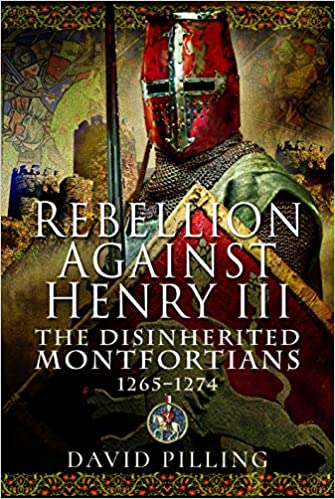
Book Corner: Rebellion Against Henry III by David Pilling

The ‘Montfortian’ civil wars in England lasted from 1259-67, though the death of Simon de Montfort and so many of his followers at the battle of Evesham in 1265 ought to have ended the conflict. In the aftermath of the battle, Henry III’s decision to disinherit all the surviving Montfortians served to prolong the war for another two years. Hundreds of landless men took up arms again to defend their land and property: the redistribution of estates in the wake of Evesham occurred on a massive scale, as lands were either granted away by the king or simply taken by his supporters. The Disinherited, as they were known, defied the might of the Crown longer than anyone could have reasonably expected. They were scattered, outnumbered and out-resourced, with no real unifying figure after the death of Earl Simon, and suffered a number of heavy defeats. Despite all their problems and setbacks, they succeeded in forcing the king into a compromise. The Dictum of Kenilworth, published in 1266, acknowledged that Henry could not hope to defeat the Disinherited via military force alone. The purely military aspects of the revolt, including effective use of guerilla-type warfare and major actions such as the battle of Chesterfield, the siege of Kenilworth and the capture of London, will all be featured. Charismatic rebel leaders such as Robert de Ferrers, the ‘wild and flighty’ Earl of Derby, Sir John de Eyvill, ‘the bold D’Eyvill’ and others such as Sir Adam de Gurdon, David of Uffington and Baldwin Wake all receive a proper appraisal.

Rebellion Against Henry III: The Disinherited Montfortians 1265-1274 by David Pilling covers an often overlooked period of history. It follows the mixed fortunes, of those who had supported Simon de Montfort during the Second Barons’ War, following Simon’s defeat and death at the Battle of Evesham. It is a book I never realised needed to be written, until I read it!

Over the years, reams and reams of paper have been dedicated to the conflict between King Henry III and Simon de Montfort, but this is the first book that looks at the aftermath, at what happened to those who survived the war and the dreadful, final Battle of Evesham, but found themselves on the losing side. Rebellion Against Henry III: The Disinherited Montfortians 1265-1274 is an engaging study of these noblemen, minor barons and knights, known collectively as the Disinherited.

I have touched on many events in Rebellion Against Henry III: The Disinherited Montfortians 1265-1274 for my own books, the recently published Ladies of Magna Carta and my next book about the Warenne Earls of Surrey. As a consequence, I was familiar with much of the main story, but was surprised at the level of continuing resistance that occurred after the defeat at Evesham. Interestingly, the hotspots of resistance had not changed since past rebellions; many of the Disinherited retreated to the wilds of the Isles of Axholme in Lincolnshire and Ely in Cambridgeshire; the former was associated with rebellion against King John, while the latter was the focus of resistance against William the Conqueror. Indeed, many of the names are familiar to students of the First Barons’ War that followed John’s rejection of Magna Carta.

The traumatic news of Evesham ripped the heart out of the baronial resistance in England. Earl Simon’s death or capture of most of the leading Montfortians in one fell swoop, demoralised rebel garrisons up and down the country. In the weeks after the battle one castle after another surrendered to the triumphant royalists. Wallingford and Berkhampstead submitted on 7 August, just three days after the slaughter, while Edward’s first move was to race north to secure his earldom of Chester. In the south, Windsor and the Tower quickly fell to the king, and Odiham and Rochester were in royal hands by the 14th. The castle of the Peak in Derbyshire held out a while longer, but submitted before January 1266.

This mass surrender left just two bastions of resistance in England. One was the mighty fortress of Kenilworth in Warwickshire, where Simon the Younger had retreated to grieve after his father’s death. The other was Dover Castle and the Cinque Ports in southeast England. Countess Eleanor, Simon’s widow, was holed up at Dover, and pirates from the rebel-held Cinque Ports still harassed shipping in the Channel.

At first there were hopes of a peaceful settlement to the war. While at Chester, Edward ordered letters to be drafted inviting the garrison at Kenilworth to surrender, on pain of disinheritance and loss of life. Simon the Younger, for his part, resisted the temptation to avenge himself on Richard of Almaine, Edward’s uncle, who was held prisoner at Kenilworth. Instead he released Almaine on 6 September, who in turn promised he would mediate with King Henry on Simon’s behalf.

Later that month, at Winchester, Edward ordered the chancellor Walter Giffard to make out letters of protection for four rebel knights. The persons and goods of these men – Richard de Havering, John de Havering, Simon de Stoke and William de Turevil – were not to be molested in any way, and they would be allowed to continue to hold their lands freely. They had sought Edward’s ‘goodwill’ on 7 August, the same day as the fall of Wallingford and Berkhampsted. and were responsible for restoring those castle to royal custody. In return Edward promised they would be safe from disinheritance and asked Giffard to provide some surety for his promise. Richard de Havering had served as the late Earl Simon’s estates steward, while John was his son and would later serve Edward as deputy justiciar of Noth Wales and seneschal of Gascony. Edward’s willingness to protect these men may have been driven by his desire to reconcile the Montfort clan after the butchery of Evesham.

Such efforts at rapprochement were shattered at Winchester parliament, which opened on 11 September….

Written in more than 20 short, punchy, chapters, the book looks at the leading figures among the Disinherited, the most notable Robert de Ferrers, Earl of Derby, John D’Eyville and many others. There is a fascinating case study at the back that almost – almost – convinces me that the legendary Robin Hood was among ranks of the Disinherited. David Pilling provides a pretty convincing argument, but I guess we’ll never know.

The author looks at the events from all sides, telling the story of the fight both from the point of view of the rebels and the royalists. Neither are the royalists always seen in a good light. David Pilling does highlight when such as John de Warenne, 6th Earl of Warenne and Surrey, and one of the more brutal men of the time, took advantage of the disorder in order to further their own ends. He also highlights the future Edward I’s impressive carrot-and-stick approach to dealing with the rebels, offering pardons where it was beneficial to the crown. The crown also were keen to ensure sentences of disinheritance were enforced if it meant the confiscated lands fell into the hands of royalists or their supporters.

Rebellion Against Henry III: The Disinherited Montfortians 1265-1274 is engagingly written and well referenced with an impressive bibliography. The only negative I can say about the book is that it lacks an index, which will cause problems for anyone wanting to use this book for research. And it would be a wonderful research tool, if it had an index. I’m hoping this omission will be rectified for the paperback version.

Despite that, Rebellion Against Henry III: The Disinherited Montfortians 1265-1274 by David Pilling was a thoroughly absorbing book. A very interesting read that highlights a 10-year period that is often overlooked after the momentous events of the previous decade. I have no hesitation in recommending it.

Rebellion Against Henry III: The Disinherited Montfortians 1265-1274 is available now in hardback and ebook from Amazon UK and Pen & Sword Books.

From the author:

I’m a writer and researcher, addicted to history for as long as I can remember. The medieval era has always held a fascination for me, perhaps because I spent much of my childhood exploring the misted ruins of castles in Wales. I also have an interest in the Byzantine Empire, the post-Roman period in Britain and the British & Irish Civil Wars.

I am a prolific author and have written and published a number of series and stand-alone tales. These include my first published novel, Folville’s Law, which chronicled the adventures of Sir John Swale in the last days of the reign of Edward II of England. This was followed by The White Hawk series, set during the Wars of the Roses, a six-part Arthurian series, and many more. I have also co-written two high fantasy novels with my good friend, Martin Bolton.

I am currently working on a book about the Montfortian civil wars in England in the late 13th century, and hope to produce more nonfiction works in the future, as well as continuing to work on fiction.

Most of my books are available as ebooks and paperbacks, and many are in the process of being converted to audio.

Enjoy!

https://www.goodreads.com/author/show/4979181.David_Pilling

http://pillingswritingcorner.blogspot.com/

*

My Books

Ladies of Magna Carta: Women of Influence in Thirteenth Century England  looks into the relationships of the various noble families of the 13th century, and how they were affected by the Barons’ Wars, Magna Carta and its aftermath; the bonds that were formed and those that were broken. It is now available from Pen & SwordAmazon and from Book Depository worldwide.

Also by Sharon Bennett Connolly:

Silk and the Sword: The Women of the Norman Conquest traces the fortunes of the women who had a significant role to play in the momentous events of 1066.  Available now from Amazon,  Amberley Publishing, Book Depository.

Heroines of the Medieval World tells the stories of some of the most remarkable women from Medieval history, from Eleanor of Aquitaine to Julian of Norwich. Available now from Amberley Publishing and Amazon and Book Depository.

*

You can be the first to read new articles by clicking the ‘Follow’ button, liking our Facebook page or joining me on Twitter and Instagram.

©2020 Sharon Bennett Connolly

Joan, Lady of Wales

Detail of the sarcophagus thought to belong to Joan in St Mary’s and St Nicholas’s Church, Beaumaris

Many daughters, especially those of kings, had little or no say in who they would marry; they were bargaining pieces in the search for alliances. Even their legitimacy mattered little compared to what they could bring to the table, if their fathers were powerful enough. Joan, or Joanna, the illegitimate daughter of King John, was one such young lady.

Very little is known of Joan until her appearance on the international stage in 1203, aged twelve or thirteen. It was in that year mention is made of a ship, chartered in Normandy, ‘to carry the king’s daughter and the king’s accoutrements to England’.¹ The daughter in question appears to be Joan, born around 1191 to an unknown mother, possibly a lady by the name of Clemencia or Clementina. Nothing is known of Joan’s childhood, which appears to have been spent in Normandy. However, although she grew up in obscurity, Joan must have received an education suitable to her rank as the daughter of a prince and, later, king; after all, her father intended to marry her to a prince and so would need her to be able to act the part of a princess.

By 15 October 1204 Joan was betrothed to the foremost prince in Wales; Llywelyn ab Iorweth, prince of Gwynedd, also known as Llywelyn Fawr, or Llywelyn the Great. In the summer of 1204, he had paid homage to King John for his Welsh lands, having recognised the English king as overlord by treaty in July 1201; allowing him to marry Joan was a sign of John’s favour. By the time of his marriage, Llywelyn was already an accomplished warrior and experienced statesman; and was the father of at least two children, a son and daughter, Gruffuddd ab Llywelyn and Gwenllian. Their mother was possibly Tangwystl, but her union with Llywelyn was not recognised by the Church and the children were considered illegitimate under Church law.

Joan and Llywelyn were probably married in the spring of 1205; part of Joan’s dowry, the castle and manor of Ellesmere, were granted to Llywelyn on 16 April 1205, suggesting the wedding took place around that time. Joan was fourteen or fifteen at the time; at thirty-two, Llywelyn was about eighteen years her senior. Having been uprooted from her home in Normandy, she had probably spent a year at the English court, learning of the politics and duties associated with her new home in Wales. The language and traditions of her new homeland would have been completely alien to the young woman. Even her name was not the same, in Welsh, she was known as Siwan.

Arms of the royal house of Gwynedd

For someone barely into her teenage years, all these changes must have been daunting. Not only was she expected to become a wife and a princess to a nation that was totally alien to her, but her responsibilities also included the role of peacemaker. In a prestigious marriage for an illegitimate daughter, Joan was thrown into the heart of Anglo-Welsh relations. She was to become an important diplomatic tool for her father and, later, her half-brother, Henry III; acting as negotiator and peacemaker between the English crown and her husband, almost from the first day of her marriage.

Despite the marriage of Joan and Llywelyn, relations between England and Wales were rarely cordial. Following a devastating defeat by the English in 1211, in which the invading army had swept into Gwynedd, capturing the Bishop of Bangor in his own cathedral, Joan’s skills were sorely needed and

‘Llywelyn, being unable to suffer the King’s rage, sent his wife, the King’s daughter, to him by the counsel of his leading men to seek to make peace with the King on whatever terms he could.’

Brut y Tywysogyn or The Chronicle of the Princes: Peniarth MS 20 Version, editor T. Jones

Joan managed to negotiate peace, but at a high price, including the loss of the Four Cantrefs (the land between the Conwy and the Dee rivers), a heavy tribute of cattle and horses and the surrender of hostages, including Llywelyn’s son, Gruffudd.

Following a deterioration of Anglo-Welsh relations, and as a precursor to invasion, twenty-eight of the Welsh hostages were hanged in 1212, though Gruffudd was not one of them. However, the English attack was called off when John received word from Joan that his barons were planning treason closer to home. The last years of John’s reign were taken up with conflict with his barons, leading to the issuing of Magna Carta in 1215 and a French invasion by Louis, eldest son of Philip II Augustus. The last thing John needed, if he was to save his kingdom, was to be distracted by discontent in Wales. In 1214 Joan successfully negotiated with her father for the release of the Welsh hostages still in English hands, including Llywelyn’s son, Gruffudd; they were freed the following year.

Following her father’s death in October 1216, Joan continued to work towards peace between Wales and England. She visited Henry in person in September 1224, meeting him in Worcester; Joan seems to have had a good relationship with her half-brother, evidenced by his gifts to her of the manor of Rothley in Leicestershire, in 1225, followed by that of Condover in Shropshire, in 1226. An extant letter to Henry III, addressed to her ‘most excellent lord and dearest brother’ is a plea for him to come to an understanding with Llywelyn.

Statue of Llywelyn the Great, Conwy

In the letter, Joan uses her relationship with Henry to try to ease the mounting tensions between the two men. She describes her grief ‘beyond measure’ that discord between her husband and brother had arisen out of the machinations of their enemies, and reassures her brother of Llywelyn’s affection for him. In the mid-1220s, Henry acted as a sponsor, with Llywelyn, in Joan’s appeal to Pope Honorius III to be declared legitimate; in 1226 her appeal was allowed on the grounds that neither of Joan’s parents had been married to others when she was born.

Joan and Llywelyn’s marriage appears to have been, for the most part, a successful one. Joan’s high-born status, as the daughter of a king, brought great prestige to Gwynedd. As a consequence, her household was doubled from four to eight staff, including a cook who could prepare Joan’s favourite dishes. Llywelyn seems to have valued his wife’s opinion; as we have seen, he often made use of her diplomatic skills and relationship with the English court and he often consulted her on other matters. Her influence extended to Welsh legal texts, which, from this period onwards, included French words. Joan’s position was strengthened even further by the arrival of her children. Sometime between 1212 and 1215, her son, Dafydd, was born; in 1220 he was recognised as Llywelyn’s heir by Henry III, officially supplanting his older, illegitimate, half-brother, Gruffudd, who was entitled to his father’s lands under Welsh law.

The move received papal approval in 1222. As a result, in 1229 Dafydd performed homage to Henry III, as his father’s heir. A daughter, Elen, was probably born around 1210, as she was first married in 1222, to John the Scot, Earl of Chester. Her second marriage, in 1237 or 1238, was to Robert de Quincy. Joan was the mother to at least two more of Llywelyn’s daughters, Gwladus and Margaret. Gwladus was married to Reginald de Braose. Her stepson, William (V) de Braose, was to play a big part in Joan’s scandalous downfall in 1230.

Joan’s life in the first quarter of the 13th century had been exemplary; she was the ideal medieval woman, a dutiful daughter and wife, whose marriage helped to broker peace, if an uneasy one, between two countries. She had fulfilled her wifely duties, both by providing a son and heir and being supportive of her husband to the extent that she should not be included in the roll call of scandalous women – however, in 1230, everything changed.

William de Braose was a wealthy Norman baron with estates along the Welsh Marches, he was the grandson of Maud de Braose, who starved to death in King John’s dungeons. Hated by the Welsh, who had given him the nickname Gwilym Ddu, or Black William, he had been taken prisoner by Llywelyn in 1228, near Montgomery. Although he had been released after paying a ransom, de Braose had returned to Llywelyn’s court to arrange a marriage between his daughter, Isabella, and Llywelyn’s son and heir, Dafydd. During this stay, William de Braose was ‘caught in Llywelyn’s chamber with the King of England’s daughter, Llywelyn’s wife’. ²

The exact details of the relationship between Joan and William are unknown; neither can we say whether Joan was with William de Braose by choice or force. At the time, however, the blame was laid at Joan’s door. Contemporaries were deeply shocked at Joan’s betrayal of her husband; indeed, following this scandal, Welsh law identified the sexual misconduct of the wife of a ruler as ‘the greatest disgrace’. Joan was no young girl struggling to come to terms with her position in life; she was about forty years old, had been Llywelyn’s consort for twenty-five years and had borne him at least two children when the affair was discovered. The most surprising thing about the whole affair, moreover, is Llywelyn’s response. His initial anger saw William de Braose arrested, put on trial and hanged from the nearest tree on 2 May 1230. Joan was imprisoned in a tower. This rage, however vicious, was remarkably brief.

Maybe it was due to the strength of the previous relationship between Llywelyn and Joan, or maybe it was the high value placed on Joan’s diplomatic skills and her links with the English court; but within a year the terms of Joan’s imprisonment had been relaxed and just months after that, she was back on the political stage. Llywelyn appears to have forgiven her; the couple were reconciled and Joan returned to her life and position as Lady of Wales. Indeed, Joan soon reprised her diplomatic duties. She attended a conference between her husband, son and her brother, Henry III at Shrewsbury, in 1232. Despite William de Braose’s betrayal of Llywelyn, and subsequent violent death, the wedding between his daughter, Isabella, and Llywelyn’s son, Dafydd, was not derailed and by 1232 they were married.

Llywelyn with his sons, Dafydd and Gruffudd

Joan’s indiscretion was forgiven by Llywelyn, maybe even forgotten, and when she died on 2 February 1237, the Welsh prince was deeply affected by grief. Joan died at Garth Celyn, Abergwyngregyn, on the north coast of Gwynedd. She was buried close to the shore of Llanfaes, in the Franciscan friary that Llywelyn founded in her memory – a testament to his love for her. The friary was consecrated in 1240, just a few months before Llywelyn’s own death in April of that year. The friary was destroyed in 1537, during Henry VIII’s dissolution of the monasteries.

Joan’s remains were lost, but her coffin was eventually found, being used as a horse trough in the town of Beaumaris, on Anglesey. It is a testament to Joan’s personality, and the strength of her relationship with Llywelyn, that her affair with de Braose had few lasting consequences for her. Had she been younger, when the legitimacy of her children could have been called into question, her punishment could have been much harsher and the consequences more far-reaching.

*

Footnotes: ¹ Magna rotuli, 2–569, quoted in Joan, d. 1237, by Kate Norgate and Rev. A.D. Carr in Oxfroddnb.com; ² ibid.

Images courtesy of Wikipedia

Sources: Oxforddnb.com; England Under the Norman and Angevin Kings 1075-1225 by Robert Bartlett; Oxford Companion to British History Edited by John Cannon; The Story of Britain by Roy Strong; The Plantagenets, the Kings who Made England by Dan Jones; The Life and Times of King John by Maurice Ashley; The Plantagenet Chronicles Edited by Elizabeth Hallam; Oxforddnb.com; magnacartareseearch.org; Magna Carta by David Starkey; King John by Marc Morris; King John, England, Magna Carta and the Making of a Tyrant by Stephen Church; 1215, the Year of Magna Carta by Danny Danziger and John Gillingham; Women in Thirteenth Century Lincolnshire by Louise J. Wilkinson.

*

My Books

Signed, dedicated copies of all my books are available through my online store.

Out now: Scotland’s Medieval Queens

Scotland’s history is dramatic, violent and bloody. Being England’s northern neighbour has never been easy. Scotland’s queens have had to deal with war, murder, imprisonment, political rivalries and open betrayal. They have loved and lost, raised kings and queens, ruled and died for Scotland. From St Margaret, who became one of the patron saints of Scotland, to Elizabeth de Burgh and the dramatic story of the Scottish Wars of Independence, to the love story and tragedy of Joan Beaufort, to Margaret of Denmark and the dawn of the Renaissance, Scotland’s Medieval Queens have seen it all. This is the story of Scotland through their eyes.

Available now from Amazon and Pen and Sword Books

Also by Sharon Bennett Connolly:

Heroines of the Tudor World tells the stories of the most remarkable women from European history in the time of the Tudor dynasty, 1485-1603. These are the women who ruled, the women who founded dynasties, the women who fought for religious freedom, their families and love. Heroines of the Tudor World is now available for pre-order from Amberley Publishing and Amazon UK. Women of the Anarchy demonstrates how Empress Matilda and Matilda of Boulogne, unable to wield a sword themselves, were prime movers in this time of conflict and lawlessness. It shows how their strengths, weaknesses, and personal ambitions swung the fortunes of war one way – and then the other. Available from Bookshop.orgAmberley Publishing and Amazon UKKing John’s Right-Hand Lady: The Story of Nicholaa de la Haye is the story of a truly remarkable lady, the hereditary constable of Lincoln Castle and the first woman in England to be appointed sheriff in her own right. Available from all good bookshops Pen & Sword Booksbookshop.org and Amazon

Defenders of the Norman Crown: The Rise and Fall of the Warenne Earls of Surrey tells the fascinating story of the Warenne dynasty, from its origins in Normandy, through the Conquest, Magna Carta, the wars and marriages that led to its ultimate demise in the reign of Edward III. Available from Pen & Sword BooksAmazon in the UK and US, and Bookshop.orgLadies of Magna Carta: Women of Influence in Thirteenth Century England looks into the relationships of the various noble families of the 13th century, and how they were affected by the Barons’ Wars, Magna Carta and its aftermath; the bonds that were formed and those that were broken. It is now available in paperback and hardback from Pen & SwordAmazon, and Bookshop.orgHeroines of the Medieval World tells the stories of some of the most remarkable women from Medieval history, from Eleanor of Aquitaine to Julian of Norwich. Available now from Amberley Publishing and Amazon, and Bookshop.orgSilk and the Sword: The Women of the Norman Conquest traces the fortunes of the women who had a significant role to play in the momentous events of 1066. Available now from Amazon,  Amberley Publishing, and Bookshop.org.

Alternate Endings: An anthology of historical fiction short stories including Long Live the King… which is my take what might have happened had King John not died in October 1216. Available in paperback and kindle from Amazon.

Podcast:

Have a listen to the A Slice of Medieval podcast, which I co-host with Historical fiction novelist Derek Birks. Derek and I welcome guests, such as Bernard Cornwell and Michael Jecks, and discuss a wide range of topics in medieval history, from significant events to the personalities involved. Every episode is also now available on YouTube.

*

Don’t forget! Signed and dedicated copies of all my books are available through my online store.

For forthcoming online and in-person talks, please check out my Events Page.

You can be the first to read new articles by clicking the ‘Follow’ button, liking our Facebook page or joining me on TwitterThreadsBluesky and Instagram.

©2020 Sharon Bennett Connolly, FRHistS

Guest Post: Why was Ailenor of Provence called a She Wolf Queen? by Carol McGrath

Alienor of Provence

Given my recent articles on She Wolves, it is a distinct pleasure to welcome Carol McGrath to History…the Interesting Bits with an article about Eleanor of Provence, another queen labelled a ‘she-wolf’.

Why was Ailenor of Provence called a She Wolf Queen?

The first novel, in The She Wolf Queens Trilogy, The Silken Rose was published as an ebook on Thursday 2nd April. The Silken Rose features Ailenor of Provence, who married Henry III in 1236 at only twelve or thirteen years of age. He was already old at twenty-nine years old. The term She Wolf Queen was initially used for Margaret of Anjou by William Shakespeare.

Later, the Victorian Historian, Agnes Strickland, used it for Ailenor of Provence, although Ailenor had, without doubt, made enemies during own her life time. Why label Ailenor of Provence a she wolf queen. Did she deserve this sobriquet?

Alms dish (photograph courtesy of Carol McGrath)

In many ways beautiful Ailenor was the perfect queen who generously gave alms to the poor, was devoted to her husband and endowed abbeys. She was a good mother, protective of her children. Exemplary you might think. However, Ailenor was foreign at a time when English Continental territories had been reduced to Gascony and Aquitaine and ‘Englishness’ was becoming a national identity.

Ailenor of Provence never brought Henry a dowry. She was not even from the top-drawer of European nobility. After her marriage, she introduced a collection of penniless Savoyard and Provençal relatives to England.  The English barons who had become inward looking, after the loss of estates in Normandy during the previous reign, were furious. They disliked top positions being parcelled out to the queen’s relatives, particularly to her uncles from Savoy.

Opus Anglicanum

It probably seemed natural to Ailenor to advance her own relatives. Uncle William of Savoy who had accompanied Ailenor to England became one of King Henry’s chief counsellors. Henry even attempted to make him Bishop of Winchester.

Uncle Peter, reportedly charming and clever, became an advisor and received the Honour of Richmond, in Yorkshire. Peter built the Savoy Palace in London. Thomas of Savoy acted as an envoy when Ailenor attempted to buy the Sicilian crown for her second son, Edmund. An unpopular foolish move. It was costly and fell apart when Thomas was captured and imprisoned in Turin and Ailenor had to raise a ransom. The handsome, reforming Uncle Boniface became Archbishop of Canterbury.

Peter of Savoy

In addition, talented clerks came to England from Provence and Savoy. They took over running the treasury as well as other areas of government. This did not please the English barons who felt such jobs were theirs to distribute and control. Henry loved pageants and parties. He spent money on magnificent, expensive building works such as Westminster Abbey. She adored fashion and rich embroidery.  I off set her point of view in the novel with that of a court embroiderer. Extravagant spending and nepotism would lead to conflict between King and Barons. She was blamed as a bad influence on the King.

English marriages were arranged for her relations, including that of Ailenor’s younger sister, Sanchia, to Henry’s brother, Richard of Cornwall. This limited English heirs and heiresses available for English barons’ own sons and daughters. After the disgrace and death of Henry’s mother, his hated Lusignan half-brothers arrived in England seeking patronage. Incensed,

Coat of arms of Alienor of Provence

Ailenor’s opposition to the unpopular Lusignans gave her momentarily a stronger political position at court. However, she recognised she would have to tolerate them if she was to preserve good will within her marriage. Henry made her joint regent when he campaigned in Gascony during the 1250s but she levied new taxes, an unpopular move.

At the outbreak of the Baron’s war in 1263, Ailenor was pelted with offal from London Bridge as she attempted to take a boat from The Tower upriver. After that, she sailed for France to raise mercenaries for the royalist cause.

Ailenor was a force to be reckoned with. No wonder during the Victorian era she earned the title of she wolf queen. Nowadays, I suspect, we admire her loyalty, intelligence, love of culture and personal strength.

I would like to extend huge thanks to Carol for a fabulous post and wish her every success with The Silken Rose.

About the author:

Carol McGrath

Following her first degree in English and History, Carol McGrath completed an MA in Creative Writing at The Seamus Heaney Centre, Belfast, followed by an MPhil from University of London. Her fifth historical novel, The Silken Rose, first in The Rose Trilogy, published by the Headline Group, is set during the High Middle Ages. It features Ailenor of Provence and will be published on April 2nd 2020. Carol was the co-ordinator of the Historical Novels’ Society Conference, Oxford in September 2016. Visit her website: http://www.carolcmcgrath.co.uk.

Carol’s latest novel, The Silken Rose, telling the remarkable story of Alienor of Provence is available now. To purchase The Silken Rose ebook click here

To watch the trailer click here https://youtu.be/EOPKFBhpa0I

To subscribe to my newsletter click here   bit.ly/39eUgKl

*

My Books

Coming soon! 

Ladies of Magna Carta: Women of Influence in Thirteenth Century England will be released in the UK on 30 May 2020 and is now available for pre-order from Pen & SwordAmazon UK and from Book Depository worldwide. It will be released in the US on 2 September and is available for pre-order from Amazon US.

Also by Sharon Bennett Connolly:

Silk and the Sword: The Women of the Norman Conquest traces the fortunes of the women who had a significant role to play in the momentous events of 1066.  Available now from Amazon UK,  Amberley Publishing, Book Depository and Amazon US.

Heroines of the Medieval World tells the stories of some of the most remarkable women from Medieval history, from Eleanor of Aquitaine to Julian of Norwich. Available now from Amberley Publishing and Amazon UK, Amazon US and Book Depository.

*

You can be the first to read new articles by clicking the ‘Follow’ button, liking our Facebook page or joining me on Twitter and Instagram.

©2020 Sharon Bennett Connolly and Carol McGrath

Book Corner: The Two Eleanors of Henry III by Darren Baker

Eleanor of Provence was born in the province of her name in 1223. She has come to England at the age of twelve to marry the king, Henry III. He’s sixteen years older, but was a boy when he ascended the throne. He’s a kind, sensitive sort whose only personal attachments to women so far have been to his three sisters. The youngest of them is called Eleanor too. She was only nine when, for political reasons, her first marriage took place, but she’s already a chaste twenty-year old widow when the new queen arrives in 1236. In a short time, this Eleanor will marry the rising star of her brother’s court, a French parvenu named Simon de Montfort, thus wedding the fates of these four people together in an England about to undergo some of the most profound changes in its history. It’s a tale that covers three decades at its heart, with loyalty to family and principles at stake, in a land where foreigners are subject to intense scrutiny and jealousy. The relationship between these two sisters-in-law, close but ultimately doomed, will reflect not just the turbulence and tragedy of their times, but also the brilliance and splendour.

Having just reviewed one of the best fiction books of 2019 in Angus Donald’s Blood’s Campaign, it is a pleasure to review one of the best non-fiction books I’ve read this year. Darren Baker’s The Two Eleanors of Henry III: The Lives of Eleanor of Provence and Eleanor de Montfort is a truly engaging book, delving into the lives of two very different women, friends who were on opposing sides during the Second Baron’s War and the rebellion of Simon de Montfort.

Told chronologically, with their lives running in parallel, Darren Baker recreates the experiences of Eleanor of Provence, queen of Henry III, and Eleanor de Montfort, sister of Henry III and wife of his bitter enemy, Simon de Montfort. Sympathetic but not overly sentimental, Darren Baker recreates the political and personal lives of his two protagonists, both on the national and international stage.

The Two Eleanors of Henry III: The Lives of Eleanor of Provence and Eleanor de Montfort is a wonderful analysis of the years between the issuing of Magna Carta and the death of Simon de Montfort at the Battle of Evesham, clearly demonstrating the roles played by the wives of the two main protagonists in the ongoing battle between crown and barons. Darren Baker examines the conflict, and motivations behind it, from a new and innovative angle.

It cannot have been easy to write a dual biography about two women who shared a Christian name, but Darren Baker has a remarkable skill in always clearly identifying which Eleanor he is talking about at any particular time, negating any possible confusion for the reader.

As the banquet commences, Eleanor [of Provence] notices a man standing in close proximity to them, holding a basin of water for the king to clean his hands in before, during and after the meal. But e is clearly no servant. Besides wearing stately robes, he walks with Henry with a familiarity that suggests they are friends. More intriguing, his accent is very close to hers. Someone in the party whispers that it is Simon de Montfort, the son of the crusader who set most of their region ablaze three decades earlier. Simon too grew up in the south of France until his father was felled in the conflict. When the crusade was over, he ventured to England to claim the earldom of Leicester through his grandmother’s noble lineage. The earldom came with the office of steward, which is what this tall and handsome knight, then in his late twenties, is doing in attending the king at the feast.

Simon looks at the party from Provence with equal suspicion. He survived a purge of foreign courtiers only a few years before and is worried this new crowd from abroad might re-ignite that peculiar English obsession with aliens. His position seems safe because he is one of Henry’s most trusted confidants. He has recently shown his loyalty to him by proposing marriage to two widowed countesses on the Continent, presumably at the king’s urging. Henry has grand ideas about creating alliances across the Channel as a means of recovering the lands seized by the French from his father. ‘Do that,’ he intimated, ‘and I’ll find you a suitable bride if it doesn’t work out.’ Simon returned empty-handed.

Widows abound in this feudal society and the king gets to decide who marries the rich and powerful ones. None is more desirable than his own sister, who is also named Eleanor. She was younger than her new sister-in-law when she was betrothed to William Marshal II, son of her brother’s first regent. Because of her extreme youth at the time, it was years before she and William began cohabiting. Their marriage waas successfull but childless.

Don’t be fooled by the flowing narrative, The Two Eleanors of Henry III: The Lives of Eleanor of Provence and Eleanor de Montfort is an in-depth analysis, not only of the lives of the two women, but of the events which shaped their world and threatened the very stability of England and the monarchy. Darren Baker delves into the motivations of both women, their loyalty to their husbands and family and examines the lengths that each went to in order to protect their own interests.

The Two Eleanors of Henry III: The Lives of Eleanor of Provence and Eleanor de Montfort is a pleasure to read. It provides great insight into the lives of Eleanor of Provence, Eleanor de Montfort, their husbands and children and the impact that their family feuding had, not only on England, but also on the European stage. The author does not run to judgement and provides a balanced analysis of both sides of the conflict of the Second Barons’ War. He clearly points out the character strengths and flaws of both Eleanors, using chronicles and letters to build clear images of their characters and personalities.

The Two Eleanors of Henry III: The Lives of Eleanor of Provence and Eleanor de Montfort firmly places Eleanor of Provence and Eleanor de Montfort within the thirteenth century world in which they lived. Darren Baker brings their stories to life, with his passion for his subjects clearly visible in the elegant narrative. This book is a must for anyone interested in medieval women or in the conflict between Henry III and Simon de Montfort. Placing the focus on the two women who saw their husbands and sons drawn into the Second Barons’ War shines a whole new light on the period.

It is an enjoyable and fascinating read!

To buy the Book:

The Two Eleanors of Henry III: The Lives of Eleanor of Provence and Eleanor de Montfort is now available from Amazon UK and is available for pre-order from Amazon US and direct from Pen & Sword.

About the author:

Darren Baker is a translator and historian who took his degree at the University of Connecticut. He currently lives in the Czech Republic.

*

My Books

Silk and the Sword: The Women of the Norman Conquest

From Emma of Normandy, wife of both King Cnut and Æthelred II to Saint Margaret, a descendant of Alfred the Great himself, Silk and the Sword: the Women of the Norman Conquest traces the fortunes of the women who had a significant role to play in the momentous events of 1066.  Available now from Amazon UK,  Amberley Publishing, Book Depository and Amazon US.

Heroines of the Medieval World

Telling the stories of some of the most remarkable women from Medieval history, from Eleanor of Aquitaine to Julian of Norwich, Heroines of the Medieval World,  is available now on kindle and in paperback in the UK from from both Amberley Publishing and Amazon, in the US from Amazon and worldwide from Book Depository.

*

You can be the first to read new articles by clicking the ‘Follow’ button, liking our Facebook page or joining me on Twitter and Instagram.

©2019 Sharon Bennett Connolly

The Countess who Chastised a King

300px-royal_arms_of_england_1154-1189-svg
The arms of Hugh d’Aubigny, 5th Earl of Arundel

I recently came across the wonderful story of Isabel d’Aubigny, countess of Arundel, a woman who wouldn’t be cheated – even if it was by the king himself.

Isabel was born sometime in the late 1220s, the daughter of William de Warenne, 5th earl of Surrey and Warenne, and Matilda (or Maud) Marshal, daughter and co-heir of the Greatest Knight, William Marshal, earl of Pembroke. Through her grandfather, Hamelin Plantagenet, illegitimate half-brother of King Henry II, Isabel was a cousin of the king, Henry III.

With such impeccable parentage and family connections, it is no surprise that Isabel made a prestigious marriage. At no older than 8 years of age Isabel was married, in 1234, to 20-year-old Hugh d’Aubigny, 5th earl of Arundel. Hugh’s father, William, 3rd Earl of Arundel, had died in 1221, on his way home from the Fifth Crusade. William had been succeeded as 4th Earl by his oldest son and namesake, who died just 3 years after his father, aged just 21, leaving the earldom to his brother Hugh.

On their marriage, Isabel’s father granted the couple a manor at Marham in Norfolk, worth £40 a year in rent. The charter for this grant offers the only details available for the marriage. In 1242 Hugh accompanied the king on his expedition to Aquitaine. However, after just 9 years, on 7 May 1243, Hugh died; leaving Isabel, at 17 years of age, a childless widow, with a rather large dower.

Within weeks of her husband’s death, on 29th May, Isabel’s marriage was granted to Pierre de Genevre, a Savoyard favourite of the king, Henry III. However, the patent rolls show that provision was made for Isabel to remain unmarried should she so wish; although she would have to pay Pierre for the privilege. Given that she never remarried, she must have been more than happy to pay.

The de Warenne coat of arms

The Arundel inhheritance was divided between Hugh’s 4 sisters; Mabel, Isabel, Nicholaa and Cecily. The earldom itself went to Hugh’s nephew, his sister Isabel’s son, John FitzAlan. Isabel was well provided for, however, with her dower including the hundred and manor of Bourne in Lincolnshire, the manors of Wymondham and Kenninghall in Norfolk, Stansted in Essex and several properties in Norfolk and Buckinghamshire. Suffice to say, she was a very wealthy widow and would continue to be styled Countess of Arundel until her death.

In 1249, the same year as her mother died, Isabel founded the only English convent that was part of the Cistercian order. Established at Marham, two Cistercian abbots had inspected it in its first year. Isabel’s brother, John de Warenne, 6th Earl of Surrey, the Bishop of Norwich and Henry III himself all issued charters confirming the abbeys foundation. Along with other endowments, Isabel herself made 11 grants to the abbey in its early years, giving it a strong economic foundation. In 1252 Isabel was granted papal permission to visit the Cistercian house at Waverley to consult with him about her convent; Waverley’s annals record that she granted 4 marks and a cask of wine to the monks there.

Isabel was very protective of her property rights and went on the offensive when they were threatened, even if that meant going against the king. In 1252 Isabel did just that. One of her tenants, Thomas of Ingoldisthorpe, held a ¼ knight’s fee from Isabel at Fring and Snettisham; he also had property in the honour of Haughley, as an escheat from the crown. On his death in 1252 Henry III took all of Thomas’s lands in wardship until Thomas’s heir was of age, including Isabel’s ¼ knight’s fee. In March of 1252 Henry granted the wardship of the lands and marriage of the heir to his former treasurer and keeper of the king’s wardrobe, Peter Chaceporc. Had Thomas held his lands in chief from the king, Henry would have been within his rights to take prerogative wardship, however his land at Haughley was  held from the honour of Haughley, which only in the king’s hands as an escheat and Isabel had therefore been treated unjustly in being denied the wardship of his heirs.

Isabel took her grievances direct to the king, supposedly berating him for trampling on the rights laid out in Magna Carta. She is said to have asked:

‘Where are the liberties of England, so often recorded, so often granted, and so often ransomed?’¹

According to Matthew Paris, the chronicler and a personal friend of Isabel’s (though no particular fan of Henry), Henry scorned Isabel’s argument, ‘derisively and curling his nostrils’ and asked if the nobles of the realm had given her permission to speak on their behalf. Isabel argued that the king had given her the right to speak thus, in the articles granted in Magna Carta and accused the king of being a ‘shameless transgressor’ of the liberties laid down in the Great Charter, breaking his sworn oath to uphold its principles. At the end of the audience, Henry refused to be moved, ‘After listening to her [civilly] reproachful speech, the king was silent, and the countess, without obtaining or even asking for permission, returned home.’²

Arundel Castle

Isabel was one of the great nobles of England, the daughter of one earl and wife of another, and was obviously undaunted by an audience with the king. And although the king did not react to her reprimand immediately he did, eventually, admit that he may have been in the wrong, issuing a letter to her on 23 May 1253 saying:

‘Since the king has learnt that Thomas of Ingoldisthorpe, whose son and heir is in the custody of Peter Chaceporc by concession of the king, did not hold from the crown of the king in chief but from the honour of Haughley, which is in the hand of the king as his escheat, and that the same Thomas held from Hugh de Aubigny, once earl of Arundel, a quarter part of the fee of one knight with appurtenances in Fring and Snettisham and the service of which was assigned to Isabella, countess of Arundel, the widow of the foresaid earl, in dower, he has returned to the same countess custody of the foresaid quarter part of a fee with appurtenances; and the foresaid Peter is ordered to give the countess full seizin of the foresaid custody.’²

However, Isabel’s victory was incomplete, as in late 1253, while the king was overseas in Aquitaine, she instigated legal proceedings against Peter Chaceporc ‘for custody of Ingoldisthorpe’. Whether Chaceporc had not relinquished the land, or she believed she was entitled to more land than was returned to her, Isabel in fact lost the suit and was amerced £20 (30 marks) for a false claim. The writ was witnessed by Henry III’s queen, Eleanor of Provence, and his brother Richard, Earl of Cornwall.

As persistent as ever, and although he was overseas, Isabel appealed directly to the king, who responded with a pardon, although it seems he still smarted from the upbraiding she had given him earlier in the year:

‘3 April. Meilham. Henry, by the grace of God king of England, lord of Ireland, duke of Normandy and Aquitaine and count of Anjou sends greeting to his beloved consort E, by the same grace queen of England, lady of Ireland, duchess of Normandy and Aquitaine and countess of Anjou and to his beloved and faithful brother, R. earl of Cornwall. Know that we have pardoned our beloved and faithful Isabella countess of Arundel the 30m. at which she was amerced before our justices against our beloved and faithful … Peter Chaceporc, our Treasurer, for custody of Ingoldisthorpe. We, therefore, order you to cause the same countess to be quit of the aforesaid 30m. by our seal of England provided she says nothing opprobrious to us as she did when we were at Westminster and as we have signified to her by letter. Witness myself.’³

Holy Trinity Church, Marham

Isabel obviously had an eye for business, given that she could so concern herself with a ¼ knight’s fee out of the 60 that she held. A wealthy widow with impressive family connections, she was renowned not only for her religious endowment of the Cistercian convent at Marham, but also as a patron of religious texts, having commissioned at least 2 saints’ lives, including the life of St Richard of Wyche by Ralph Bocking. Isabel could count among her friends Richard Wych himself, the bishop of Chichester who was later canonised, and Matthew Paris. Paris translated  a life of Saint Edmund of Abingdon in to Anglo-Norman verse for Isabel’s personal use.

Isabel died shortly before 23 November 1282 and was laid to rest at her own foundation at Marham; her dower properties passed to her husband’s great-great nephew, Richard FitzAlan, 8th Earl of Arundel. Having spent almost 40 years as a childless widow, Isabel never remarried, her remarkable life dedicated to the patronage of her convent at Markham and religious writers, such as Paris and Bocking. This incredible woman stands out as the countess who reprimanded and humbled her king for his injustices.

*

Isabel’s remarkable story appears in my book, Defenders Of the Norman Crown: Rise and Fall of the Warenne Earls of Surrey.

Footnotes: 1. quoted by John A. Nichols in Oxforddnb.com; 2. quoted by Susanna Annesley in finerollshenry3.org.uk; 3. ibid.

*

Sources: John A. Nichols Oxforddnb.com; Susanna Annesley finerollshenry3.org.uk; Robert Bartlett England Under the Norman and Angevin Kings; Dan Jones The Plantagenets;David Williamson Brewer’s British Royalty; british-history.ac.uk; Early Yorkshire Charters Volume 8: The Honour of Warenne, Edited by William Farrer and Charles Travis Clay.

Pictures courtesy of Wikipedia: d’Aubigny arms by Sodocan; Warenne arms by Madboy74; Arundel Castle by Chensiyuan; Holy Trinity Church by John Billinger.

*

My Books

Signed, dedicated copies of all my books are available through my online bookshop.

Coming 30 January 2025: Scotland’s Medieval Queens

Scotland’s history is dramatic, violent and bloody. Being England’s northern neighbour has never been easy. Scotland’s queens have had to deal with war, murder, imprisonment, political rivalries and open betrayal. They have loved and lost, raised kings and queens, ruled and died for Scotland. From St Margaret, who became one of the patron saints of Scotland, to Elizabeth de Burgh and the dramatic story of the Scottish Wars of Independence, to the love story and tragedy of Joan Beaufort, to Margaret of Denmark and the dawn of the Renaissance, Scotland’s Medieval Queens have seen it all. This is the story of Scotland through their eyes.

Available for pre-order now.

Also by Sharon Bennett Connolly:

Heroines of the Tudor World tells the stories of the most remarkable women from European history in the time of the Tudor dynasty, 1485-1603. These are the women who ruled, the women who founded dynasties, the women who fought for religious freedom, their families and love. Heroines of the Tudor World is now available for pre-order from Amberley Publishing and Amazon UK. Women of the Anarchy demonstrates how Empress Matilda and Matilda of Boulogne, unable to wield a sword themselves, were prime movers in this time of conflict and lawlessness. It shows how their strengths, weaknesses, and personal ambitions swung the fortunes of war one way – and then the other. Available from Bookshop.orgAmberley Publishing and Amazon UKKing John’s Right-Hand Lady: The Story of Nicholaa de la Haye is the story of a truly remarkable lady, the hereditary constable of Lincoln Castle and the first woman in England to be appointed sheriff in her own right. Available from all good bookshops Pen & Sword Booksbookshop.org and Amazon

Defenders of the Norman Crown: The Rise and Fall of the Warenne Earls of Surrey tells the fascinating story of the Warenne dynasty, from its origins in Normandy, through the Conquest, Magna Carta, the wars and marriages that led to its ultimate demise in the reign of Edward III. Available from Pen & Sword BooksAmazon in the UK and US, and Bookshop.orgLadies of Magna Carta: Women of Influence in Thirteenth Century England looks into the relationships of the various noble families of the 13th century, and how they were affected by the Barons’ Wars, Magna Carta and its aftermath; the bonds that were formed and those that were broken. It is now available in paperback and hardback from Pen & SwordAmazon, and Bookshop.orgHeroines of the Medieval World tells the stories of some of the most remarkable women from Medieval history, from Eleanor of Aquitaine to Julian of Norwich. Available now from Amberley Publishing and Amazon, and Bookshop.orgSilk and the Sword: The Women of the Norman Conquest traces the fortunes of the women who had a significant role to play in the momentous events of 1066. Available now from Amazon,  Amberley Publishing, and Bookshop.org.

Alternate Endings: An anthology of historical fiction short stories including Long Live the King… which is my take what might have happened had King John not died in October 1216. Available in paperback and kindle from Amazon.

Podcast:

Have a listen to the A Slice of Medieval podcast, which I co-host with Historical fiction novelist Derek Birks. Derek and I welcome guests, such as Bernard Cornwell, and discuss a wide range of topics in medieval history, from significant events to the personalities involved.

*

Don’t forget! Signed and dedicated copies of all my books are available through my online bookshop.

For forthcoming online and in-person talks, please check out my Events Page.

You can be the first to read new articles by clicking the ‘Follow’ button, liking our Facebook page or joining me on TwitterThreadsBluesky and Instagram.

*

©2017 Sharon Bennett Connolly, FRHistS