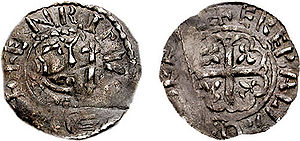
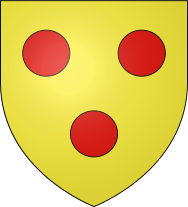
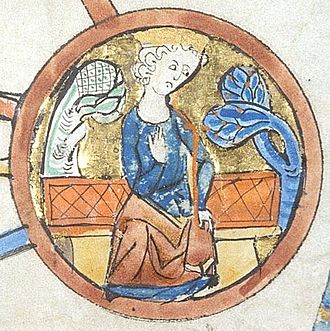
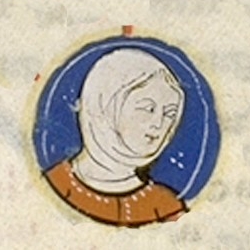
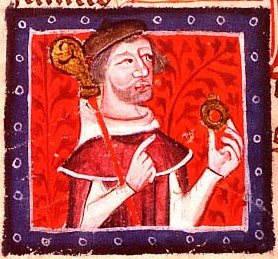
Ada de Warenne was born around 1120, daughter of William de Warenne 2nd Earl of Surrey and Isabel de Vermandois. Through her mother, she was a great-granddaughter of Henry I of France and half-sister to twins Waleran and Robert de Beaumont, Count of Meulan and 2nd Earl of Leicester, respectively, and Hugh de Beaumont, 1st Earl of Bedford. Her niece, Isabel de Warenne, would marry William of Blois, the younger son of King Stephen and, following his death, Hamelin, half-brother of Henry II of England. Ada’s family connections were of the highest quality in the Anglo-Norman world.
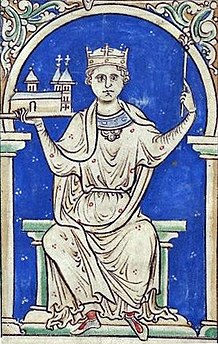
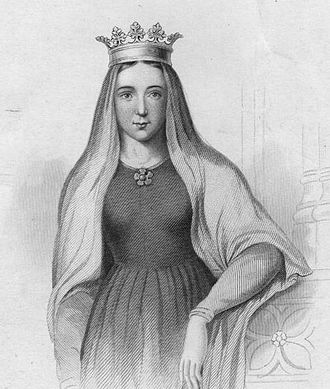
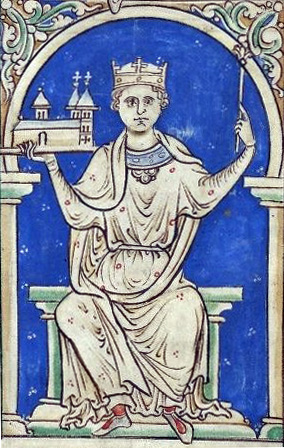
As a consequence, Ada’s future marriage became an international concern. On 9 April 1139, following the defeat of the Scottish army at the Battle of the Standard, the Treaty of Durham was concluded between King Stephen of England and King David I of Scots. Primarily negotiated by Stephen’s wife, Queen Matilda – King David’s own niece – the terms were extremely favourable to the defeated Scots. All the lands that Prince Henry of Scotland, King David’s son and heir, had held in 1138 were returned to him, save for the castles at Bamburgh and Newcastle, for which he was recompensed with two towns of equal value in the south. Furthermore, Henry was confirmed as earl of Huntingdon and created earl of Northumbria, a title which encompassed Northumberland, Durham, Cumberland, Westmoreland and the parts of Lancashire north of the Ribble.

It was agreed that English law would remain in force in these regions, but that the barons within the earldom were permitted to do homage to Prince Henry, saving only their allegiance to King Stephen. In return, King David and his son promised a permanent peace and provided four hostages. Although the text of the treaty is now lost, it seems likely that the prince’s marriage to Ada de Warenne, sister of the third Earl Warenne and half-sister of the Beaumont twins, was included in the terms of the Treaty of Durham.
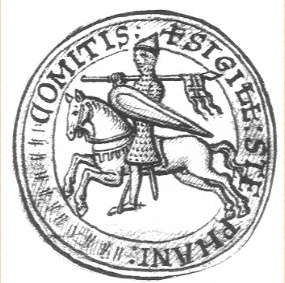
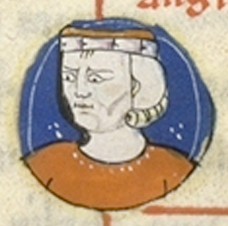
Shortly after the treaty was signed, Prince Henry joined King Stephen’s court for a time, accompanying Stephen on campaign, which came not without a little risk. While Stephen’s forces besieged Ludlow, Henry was dragged from his horse by an iron hook, and nearly taken prisoner, but he was gallantly rescued from the enemy by the King himself.
It was probably during his stay with Stephen’s court that Henry married his bride. Orderic Vitalis claims that the marriage was a love match. However, the timing clearly suggests that the union was a consequence of the 1139 treaty of Durham, perhaps with the intention of drawing Henry into Stephen’s corner by allying him in marriage to his staunchest supporters, the Beaumont twins; although it is not inconceivable that affection grew between the couple during Henry’s stay at Stephen’s court. On her marriage, which took place sometime between the conclusion of the treaty of Durham and Henry’s return to Scotland, Ada became Countess of Huntingdon and Northumbria and Lady of Haddington and Crail.
Henry was the only surviving son of King David I of Scotland and his queen, Matilda (or Maud), widow of Simon (I) de Senlis, who had died in 1113. Henry’s mother, Matilda, was the daughter of Waltheof, Earl of Northumbria, and Judith of Lens, a niece of William the Conqueror. Henry’s older brother, Malcolm, was tragically killed when a toddler; he was reportedly murdered by a Scandinavian monk in his father’s service, who is said to have savagely attacked the child with his artificial iron hand. Needless to say, the murderous monk was executed: David ordered that he be torn apart by wild horses.
The marriage of Ada and Henry produced three sons and three daughters.

Ada never became Queen of Scots as Henry of Scotland died in 1152, a year before the death of David I. On his son’s death, David recognised his grandson and Ada’s eldest son, Malcolm, as his heir. During her son’s reign, Ada became known as the Queen Mother of Scotland. At this time, in her charters, she is most frequently styled ‘Ada comitissa regis Scottorum.’
Born in 1142, Malcolm succeeded to the crown at the age of 11 as Malcolm IV. Also known as Malcolm the Maiden, he died, unmarried, at Jedburgh in December 1165. Ada had been trying to arrange a suitable bride for him when he died.
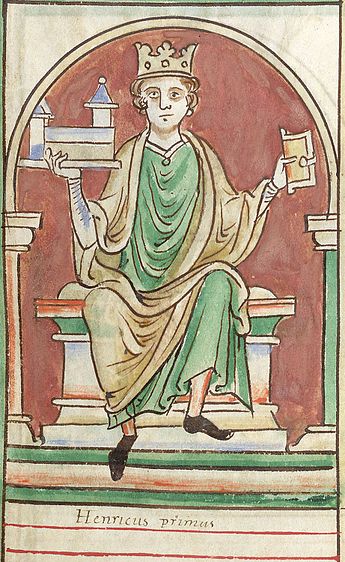
He was succeeded by Ada’s second son, William I the Lion. William was one of the longest reigning kings of Scots in history, ruling for 49 years. He married Ermengarde de Beaumont, a granddaughter of Henry I of England by his illegitimate daughter, Constance. William and Ermengarde had three daughters and a son, who succeeded his father as Alexander II in 1214. Their two eldest daughters, Margaret and Isabella, are mentioned in a clause of Magna Carta. They became hostages of King John following the treaty of Norham in 1209; the English king had promised to marry at least one of them to his son, the future King Henry III, and to find a suitable husband for the other. Both girls married English nobles – eventually. Their brother, Alexander II, married Henry III’s sister, Joan, but the marriage was childless.
Ada and Henry’s third son, David, Earl of Huntingdon, married Matilda of Chester and it is through the daughters of David that Robert the Bruce and John Balliol both based their claims as Competitors to the Scots crown in the 1290s.
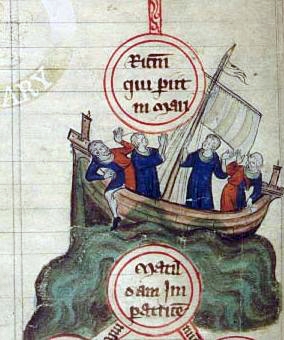
Of the three daughters, Matilda died young, in 1152, the same year as her father, meaning poor Ada faced a double grief, of losing a husband and a daughter in one year. Ada’s namesake, Ada of Huntingdon married Floris III, Count of Holland, in 1161. She had four sons and four daughters before the count died at Antioch while on the Third Crusade, in 1190. The younger Ada’s great-great-grandson, Floris V, Count of Holland, was one of the Thirteen Competitors for the Scots crown in 1291. Lastly, Margaret married Conan IV, Duke of Brittany and Earl of Richmond in 1160. She was the mother of Constance, Duchess of Brittany, wife of Henry II’s son Geoffrey and mother of the tragic Arthur of Brittany who was murdered by King John, and Eleanor, the Pearl of Brittany who spent all her adult life in ‘honourable imprisonment’ in England.

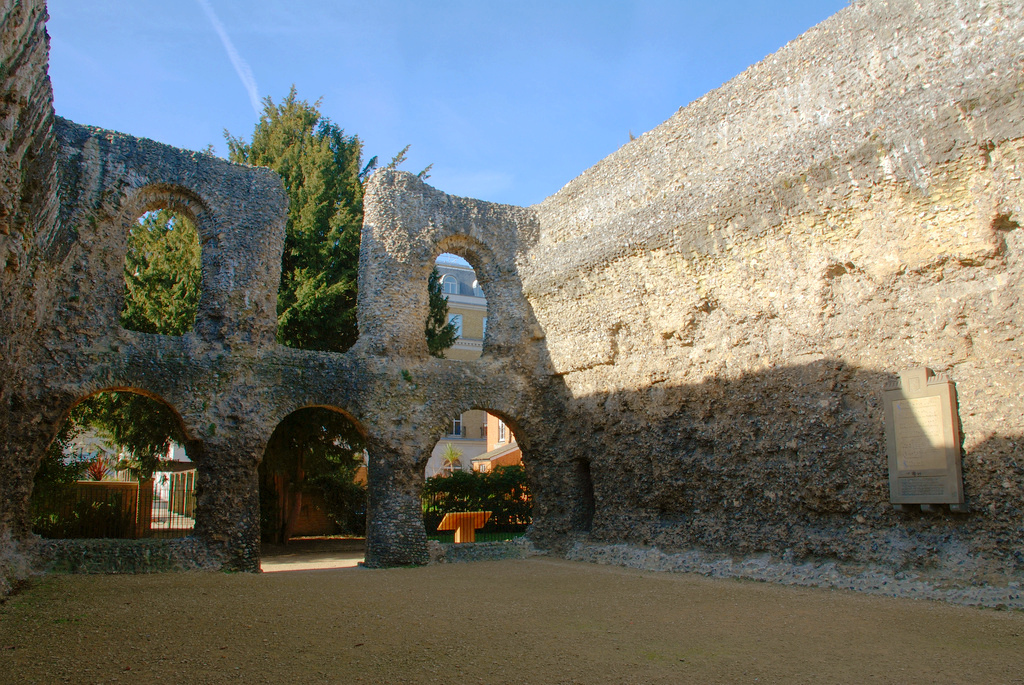
Following her husband’s death Ada played little part in the politics of Scotland. She did, however, take great interest in the futures of her children, arranging the marriages of her daughters and seeking a bride for her son, King Malcolm IV. She later retired to her dower lands at Haddington in East Lothian, given to her by David I. It was possibly the first Royal Burgh in Scotland.
A generous patroness of the Church, Ada de Warenne died in 1178, shortly after founding the nunnery at Haddington. She is believed to be buried in the Haddington area, possibly in St Mary’s Church, although the exact location of her grave is lost to history. In 1198 her grandson, the future Alexander II, would be born in her old palace at Haddington, after her dower-lands were passed on to her daughter-in-law, Queen Ermengarde.
*
Images from Wikipedia.
Further Reading: G.W.S. Barrow, David I (c. 1185-1153) (article), Oxforddnb.com; Keith Stringer, Ada [née Ada de Warenne], countess of Northumberland (c. 1123-1178), Oxforddnb.com; Keith Stringer, Henry, earl of Northumberland (c. 1115-1152) (article), Oxforddnb.com; The Chronicle of Henry of Huntingdon; W.W. Scott, Malcolm IV (c. 1141–1165) (article), (article), Oxforddnb.com; Comprising the history of England, from the invasion of Julius Caesar to the accession of Henry II. Also, the Acts of Stephen, King of England and duke of Normandy Translated and edited by Thomas Forester; Early Yorkshire Charters Volume 8: The Honour of Warenne, Edited by William Farrer and Charles Travis Clay; Brewer’s British Royalty by David Williamson; The Mammoth Book of British Kings and Queens by Mike Ashley; The Story of Scotland by Nigel Tranter; Ada, Queen Mother of Scotland (article) by Victoria Chandler; David Ross, Scotland: History of a Nation; Matthew Lewis, Stephen and Matilda’s Civil War: Cousins of Anarchy; Stephen Spinks, Robert the Bruce: Champion of a Nation.
*
My Books:
Signed, dedicated copies of all my books are available through my online bookshop.
Coming 30 January 2025: Scotland’s Medieval Queens
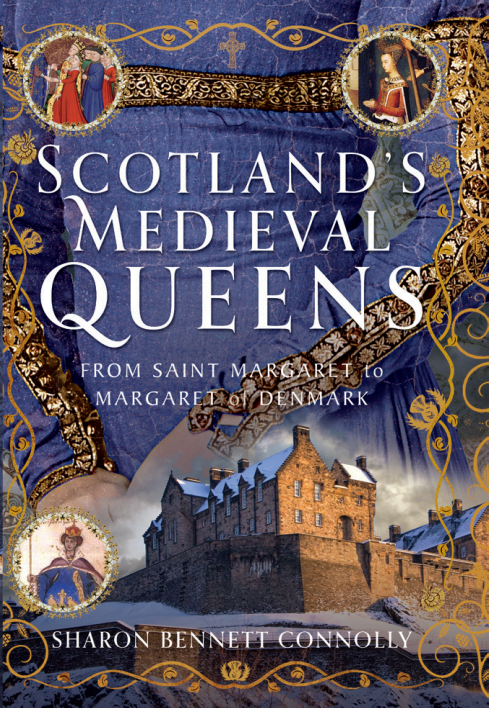
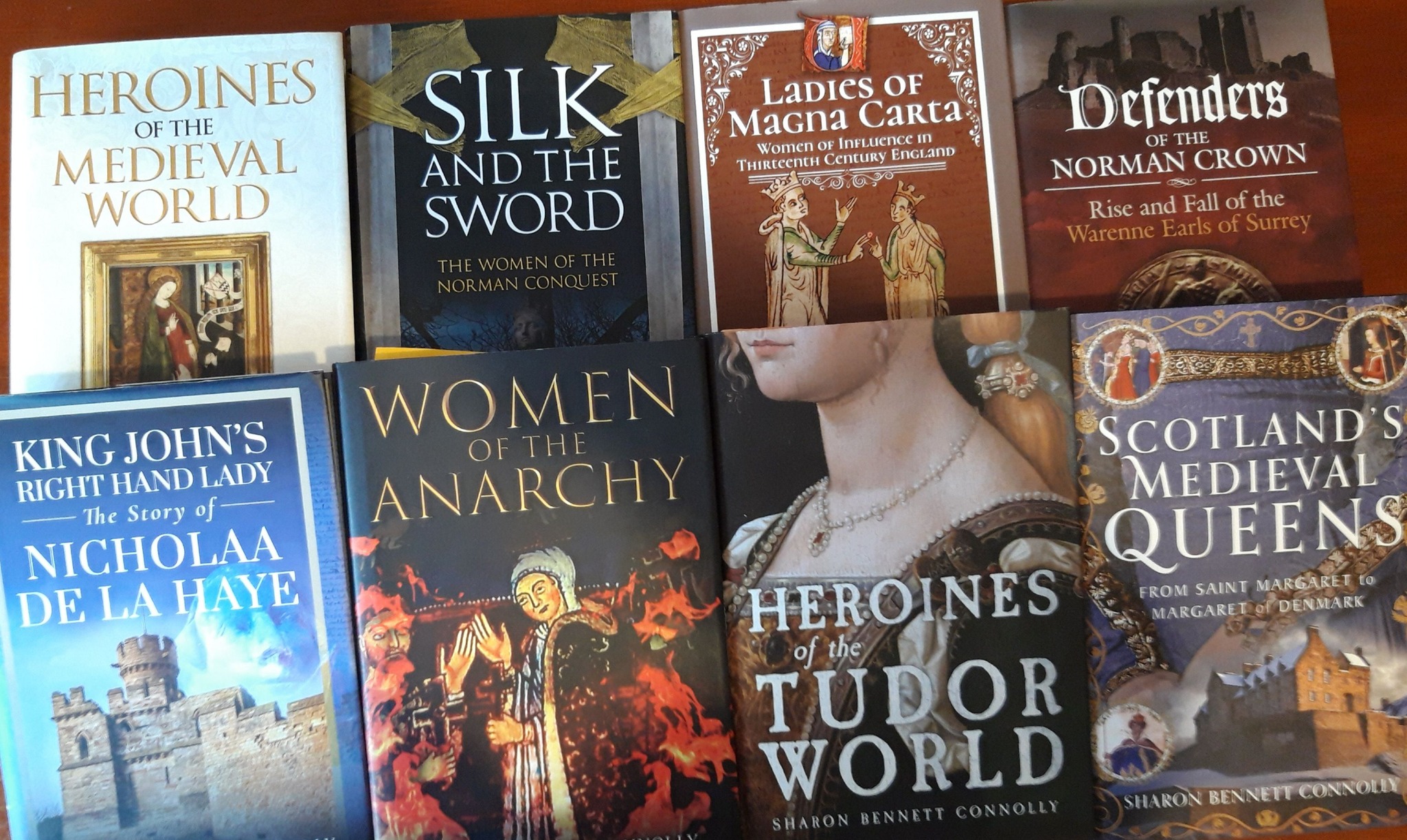
Scotland’s history is dramatic, violent and bloody. Being England’s northern neighbour has never been easy. Scotland’s queens have had to deal with war, murder, imprisonment, political rivalries and open betrayal. They have loved and lost, raised kings and queens, ruled and died for Scotland. From St Margaret, who became one of the patron saints of Scotland, to Elizabeth de Burgh and the dramatic story of the Scottish Wars of Independence, to the love story and tragedy of Joan Beaufort, to Margaret of Denmark and the dawn of the Renaissance, Scotland’s Medieval Queens have seen it all. This is the story of Scotland through their eyes.
Available for pre-order now.
Also by Sharon Bennett Connolly:
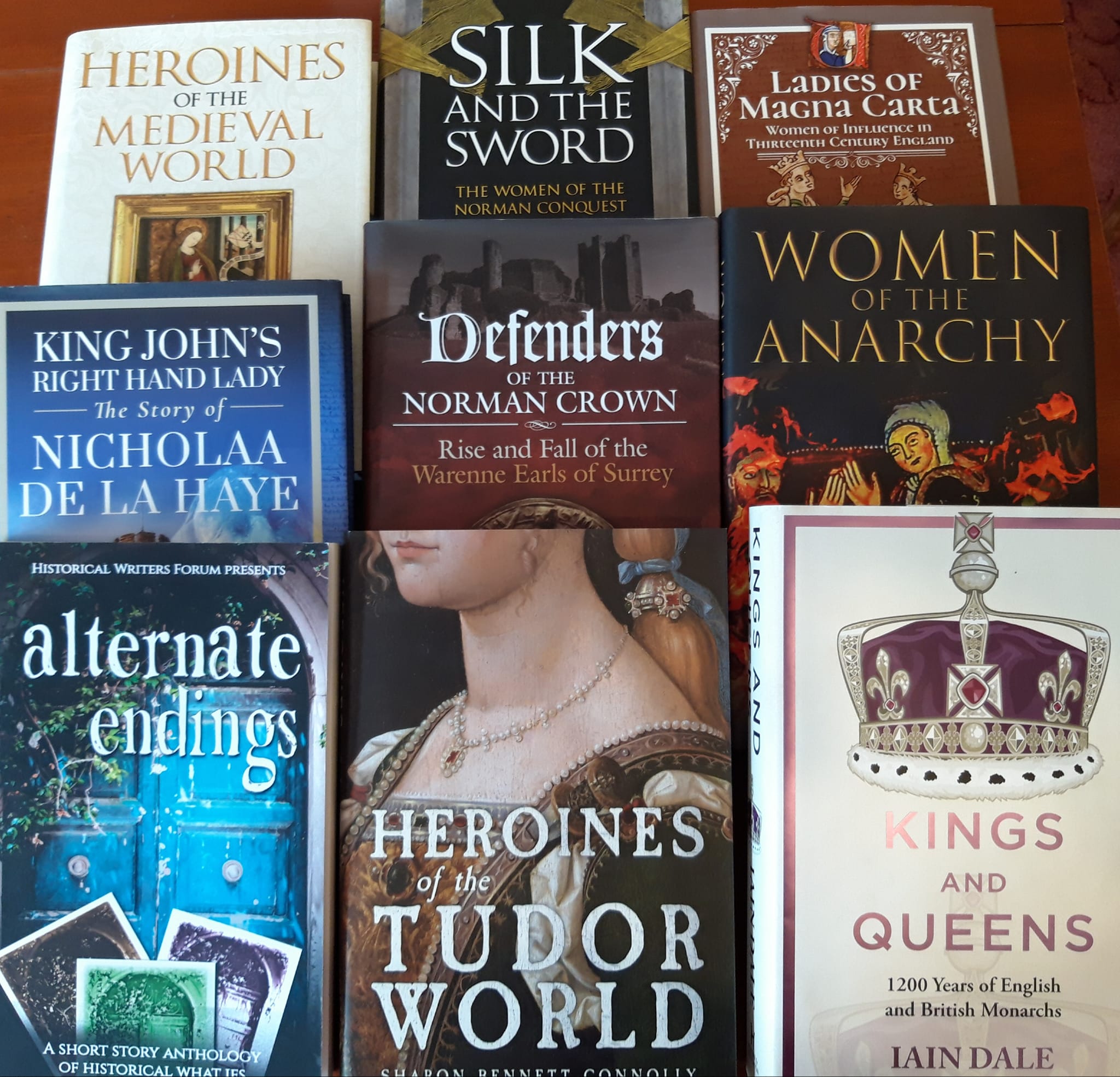
Heroines of the Tudor World tells the stories of the most remarkable women from European history in the time of the Tudor dynasty, 1485-1603. These are the women who ruled, the women who founded dynasties, the women who fought for religious freedom, their families and love. Heroines of the Tudor World is now available for pre-order from Amberley Publishing and Amazon UK. Women of the Anarchy demonstrates how Empress Matilda and Matilda of Boulogne, unable to wield a sword themselves, were prime movers in this time of conflict and lawlessness. It shows how their strengths, weaknesses, and personal ambitions swung the fortunes of war one way – and then the other. Available from Bookshop.org, Amberley Publishing and Amazon UK. King John’s Right-Hand Lady: The Story of Nicholaa de la Haye is the story of a truly remarkable lady, the hereditary constable of Lincoln Castle and the first woman in England to be appointed sheriff in her own right. Available from all good bookshops Pen & Sword Books, bookshop.org and Amazon.
Defenders of the Norman Crown: The Rise and Fall of the Warenne Earls of Surrey tells the fascinating story of the Warenne dynasty, from its origins in Normandy, through the Conquest, Magna Carta, the wars and marriages that led to its ultimate demise in the reign of Edward III. Available from Pen & Sword Books, Amazon in the UK and US, and Bookshop.org. Ladies of Magna Carta: Women of Influence in Thirteenth Century England looks into the relationships of the various noble families of the 13th century, and how they were affected by the Barons’ Wars, Magna Carta and its aftermath; the bonds that were formed and those that were broken. It is now available in paperback and hardback from Pen & Sword, Amazon, and Bookshop.org. Heroines of the Medieval World tells the stories of some of the most remarkable women from Medieval history, from Eleanor of Aquitaine to Julian of Norwich. Available now from Amberley Publishing and Amazon, and Bookshop.org. Silk and the Sword: The Women of the Norman Conquest traces the fortunes of the women who had a significant role to play in the momentous events of 1066. Available now from Amazon, Amberley Publishing, and Bookshop.org.
Alternate Endings: An anthology of historical fiction short stories including Long Live the King… which is my take what might have happened had King John not died in October 1216. Available in paperback and kindle from Amazon.
Podcast:
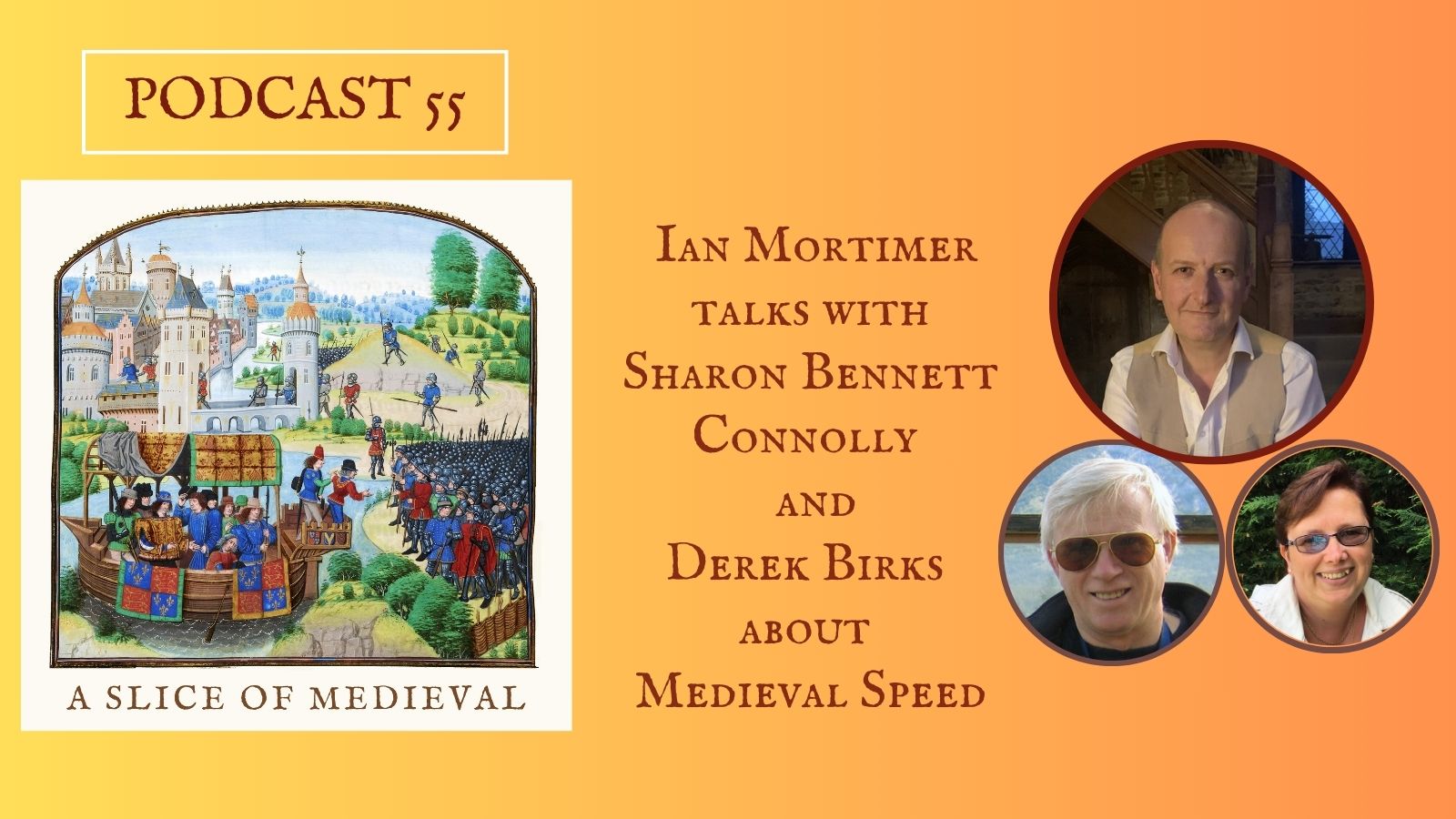
Have a listen to the A Slice of Medieval podcast, which I co-host with Historical fiction novelist Derek Birks. Derek and I welcome guests, such as Bernard Cornwell and Elizabeth Chadwick, and discuss a wide range of topics in medieval history, from significant events to the personalities involved.
*
Don’t forget! Signed and dedicated copies of all my books are available through my online bookshop.
For forthcoming online and in-person talks, please check out my Events Page.
You can be the first to read new articles by clicking the ‘Follow’ button, liking our Facebook page or joining me on Twitter, Threads, Bluesky and Instagram.
©2020 Sharon Bennett Connolly FRHistS













 History... the interesting bits!