Guest Post: Tudor Princes and Princesses by Aimee Fleming

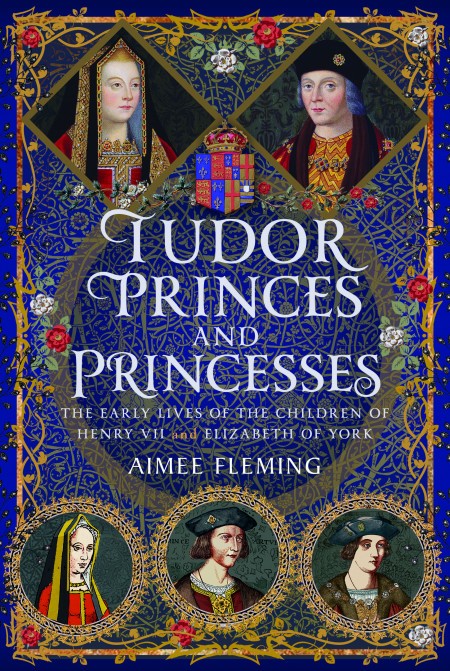
Today, it is a pleasure to welcome Aimee Fleming to History…the Interesting Bits. Aimee’s first book, The Female Tudor Scholar and Writer: The Life and Times of Margaret More Roper was a wonderful biography of Thomas More’s famous scholarly daughter. Aimee is now back with a second book, looking into the lives of the first royal Tudor children, Tudor Princes and Princesses: The Early Lives of the Children of Henry VII and Elizabeth of York. And she has written a little piece as a taster of the treat that is this wonderful book. Over to Aimee…

When Henry VII and Elizabeth of York married in January 1486, it was clear to them that their most important task ahead was to stabilise England, and the best, perhaps easiest way available to them was to produce an heir, and quickly.

However, bearing a child in the fifteenth century was not an easy feat, even for a Queen. Science and medicine were far from helpful, and the practices of the time meant that pregnancy and childbirth were dangerous to everyone involved. Elizabeth had her family around her, her mother who had had twelve children would have been invaluable to her, but the risks to herself, her child, and to her husband’s reign would have been very clear indeed.

In this extract we see how the couple prepared for their new arrival, and what Elizabeth herself was required to do, even before the rigours of birth.

Extract from Chapter 2 of Tudor Princes and Princesses
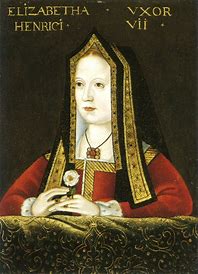
Elizabeth of York

Following the wedding ceremony in January 1486, the royal couple remained in London and held court over celebrations in their honour, with spectacular banquets and dances. The celebrations were held all over London and further afield. As Bernard André describes:

‘…the most wished day of marriage was celebrated by them

with all religious and glorious magnificence at court, and

by their people, to show their gladness with bonfires,

dancing, songs and banquets throughout all London,

both men and women, rich and poor, beseeching God to

bless the King and Queen and grant them a numerous

progeny.’

This outpouring of support for the marriage of the king and queen was welcomed by all, especially by Henry and Elizabeth themselves, who knew just how important it was that their union, and rule, be accepted. It became apparent that their marriage represented the potential for peace in the form of an heir who would have their claims combined within him. Hall’s Chronicle shows what was expected.

‘By reason of whiche manage peace was thought to discende out of heaue into England, consideryng that the lynes of Lancastre & Yorke, being both noble families equiualet in ryches, fame and honour, were now brought into one knot and connexed together, of whose two bodyes one heyre might succede, which after their lyme should peaceably rule and enioye the whole monarchy and realme of England.’

Confident in their position early on, the king and queen worked to secure the future that so many hoped for and very soon after their wedding took place it was announced that the queen was with child. Whether that be out of duty, mutual respect, or genuine affection and love between them, the conception of a child was joyous news for all involved. Calculating from the date of their wedding, and Arthur’s birth, it is reasonable to assume that they conceived quickly, if not on their wedding night itself. When Henry departed for a progress around Yorkshire and Lincolnshire in the early spring of 1486, he did not take Elizabeth with him, most likely because she was suffering from morning sickness, or other symptoms associated with the early stages of pregnancy. As a first-time mother, it would have been new to Elizabeth, but luckily, she had her experienced mother and mother-in-law both around to support her. While Henry was travelling, he sent regular letters to his new wife, and would send gifts to her while she stayed at the Palace of Placentia.

Elizabeth would have been familiar with the palace, having spent a lot of time there as a young girl. It would become one of the most favoured for the king and queen and would be renamed by Henry as Greenwich Palace. Both names emphasise how the palace was surrounded by green parks and fields, isolated from the hustle and bustle and potential diseases of London itself.

As soon as it could be confirmed that Elizabeth was with child, the wheels began turning to arrange yet more elaborate ceremony, intended to cement Elizabeth as queen, the Tudor dynasty as the ruling family, and rightfully on the throne. This started with Elizabeth’s care while pregnant.

While it was not common for pregnant women to receive medical or ante-natal care in this period, Elizabeth’s health would have been monitored and her diet checked, and healthy habits encouraged by her ladies and physicians. Pregnant women were discouraged from heavy activities or stressful situations, and sometimes forbidden to eat certain foods; for example, if a woman complained of morning sickness, she may be told to limit her intake of fish or milk, both of which modern doctors would recommend she eat.

Pregnancy was dangerous, as was childbirth, for both the mother and the child, so royal women were given the best possible conditions in which to give birth, according to the science of the time.
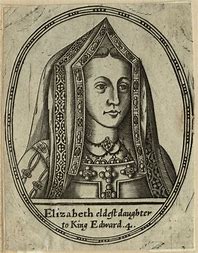
Elizabeth of York

As a woman’s due date got closer, she would be expected to enter confinement. This was a time where the pregnant woman and her household would isolate themselves in the woman’s bedroom. Windows would be barred and draped, and air flow would be completely stifled as it was believed that illnesses were carried on the air. For a queen, preparations for confinement would be made by the king according to traditions laid out during the reign of Edward IV, Elizabeth’s father. She would have been very familiar with the work that needed to be done, and the fact that the arrangements would be made for her by her husband.

Henry took his role in arranging Elizabeth’s confinement very seriously indeed. He purchased clothes and bedding for the chambers, all made of furs and velvet, and the most luxurious cotton sheets. He arranged for new furniture for her rooms and cushions stuffed with feathers, and even, bewilderingly, two velvet-covered saddles.

However, by far the most important decision that Henry made regarding his wife’s confinement and birth experience was to choose the location, and for Henry there was only one place that it could happen and that was the city of Winchester.

About the Author:

Aimee Fleming is a historian and author from North Yorkshire. She is happily married, with three growing boys and a whole host of pets. She studied history at the University of Wales, Bangor and then later completed a masters in Early Modern History at the University of York as a mature student. She has a passion for history, particularly the Tudors, and worked for over a decade in the heritage industry in a wide variety of roles and historic places.

Books by Aimee Fleming:

The Female Tudor Scholar and Writer: The Life and Times of Margaret More Roper

Tudor Princes and Princesses: The Early Lives of the Children of Henry VII and Elizabeth of York

Where to find Aimee:

Website; Facebook; Threads and Instagram: @historyaimee; Substack.

*

My books

Signed, dedicated copies of all my books are available through my online store.

Out now: Scotland’s Medieval Queens

Books by Sharon Bennett Connolly

Scotland’s history is dramatic, violent and bloody. Being England’s northern neighbour has never been easy. Scotland’s queens have had to deal with war, murder, imprisonment, political rivalries and open betrayal. They have loved and lost, raised kings and queens, ruled and died for Scotland. From St Margaret, who became one of the patron saints of Scotland, to Elizabeth de Burgh and the dramatic story of the Scottish Wars of Independence, to the love story and tragedy of Joan Beaufort, to Margaret of Denmark and the dawn of the Renaissance, Scotland’s Medieval Queens have seen it all. This is the story of Scotland through their eyes.

Scotland’s Medieval Queens gives a thorough grounding in the history of the women who ruled Scotland at the side of its kings, often in the shadows, but just as interesting in their lives beyond the spotlight. It’s not a subject that has been widely covered, and Sharon is a pioneer in bringing that information into accessible history.’ Elizabeth Chadwick (New York Times bestselling author)

Available now from Amazon and Pen and Sword Books

Also by Sharon Bennett Connolly:

Books by Sharon Bennett Connolly

Heroines of the Tudor World tells the stories of the most remarkable women from European history in the time of the Tudor dynasty, 1485-1603. These are the women who ruled, the women who founded dynasties, the women who fought for religious freedom, their families and love. Heroines of the Tudor World is now available from Amberley Publishing and Amazon UK. Women of the Anarchy demonstrates how Empress Matilda and Matilda of Boulogne, unable to wield a sword themselves, were prime movers in this time of conflict and lawlessness. It shows how their strengths, weaknesses, and personal ambitions swung the fortunes of war one way – and then the other. Available from Bookshop.orgAmberley Publishing and Amazon UKKing John’s Right-Hand Lady: The Story of Nicholaa de la Haye is the story of a truly remarkable lady, the hereditary constable of Lincoln Castle and the first woman in England to be appointed sheriff in her own right. Available from all good bookshops Pen & Sword Booksbookshop.org and Amazon

Royal Historical Society

Defenders of the Norman Crown: The Rise and Fall of the Warenne Earls of Surrey tells the fascinating story of the Warenne dynasty, from its origins in Normandy, through the Conquest, Magna Carta, the wars and marriages that led to its ultimate demise in the reign of Edward III. Available from Pen & Sword BooksAmazon in the UK and US, and Bookshop.orgLadies of Magna Carta: Women of Influence in Thirteenth Century England looks into the relationships of the various noble families of the 13th century, and how they were affected by the Barons’ Wars, Magna Carta and its aftermath; the bonds that were formed and those that were broken. It is now available in paperback and hardback from Pen & SwordAmazon, and Bookshop.orgHeroines of the Medieval World tells the stories of some of the most remarkable women from Medieval history, from Eleanor of Aquitaine to Julian of Norwich. Available now from Amberley Publishing and Amazon, and Bookshop.orgSilk and the Sword: The Women of the Norman Conquest traces the fortunes of the women who had a significant role to play in the momentous events of 1066. Available now from Amazon,  Amberley Publishing, and Bookshop.org.

Alternate Endings: An anthology of historical fiction short stories including Long Live the King… which is my take what might have happened had King John not died in October 1216. Available in paperback and kindle from Amazon.

Podcast:

A Slice of Medieval

Have a listen to the A Slice of Medieval podcast, which I co-host with Historical fiction novelist Derek Birks. Derek and I welcome guests, such as Bernard Cornwell and Michael Jecks, and discuss a wide range of topics in medieval history, from significant events to the personalities involved. 

Every episode is also now available on YouTube.

*

Don’t forget! Signed and dedicated copies of all my books are available through my online store.

For forthcoming online and in-person talks, please check out my Events Page.

You can be the first to read new articles by clicking the ‘Follow’ button, liking our Facebook page or joining me on TwitterThreadsBluesky and Instagram.

*

©2025 Sharon Bennett Connolly, FRHistS and Aimee Fleming
Lady Katherine Gordon, “Duchess of York”

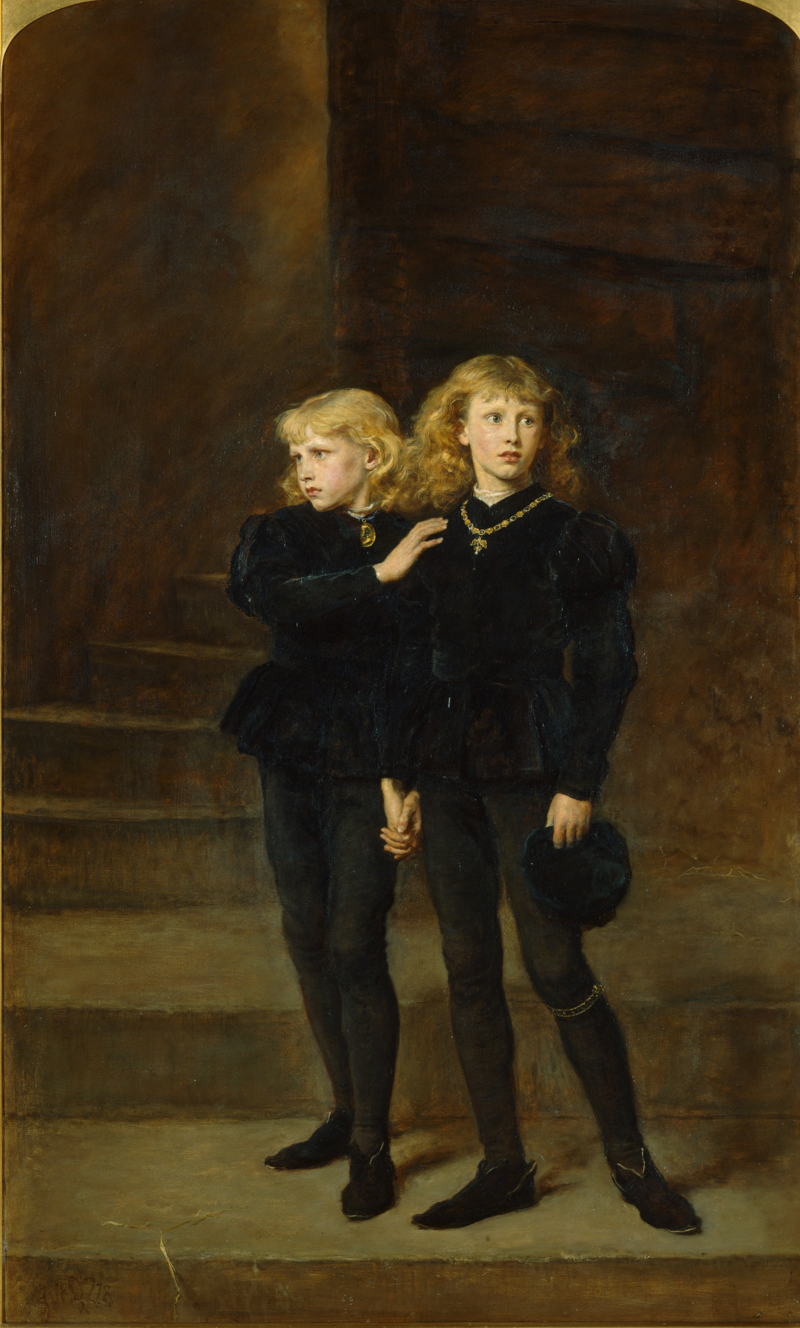
The Two Princes Edward and Richard in the Tower, 1483 by Sir John Everett Millais

I don’t usually start my articles with a disclaimer, but with this one, I think I will. The Princes in the Tower is always a hot topic, after all. So, I will warn you. Here, I am going to look into the life of Lady Katherine Gordon, rather than the veracity of the claim of her husband, Perkin Warbeck/Prince Richard, to being the younger of the two lost Princes. I am giving you the information and evidence that Katherine would have been presented with at the time, and not making any actual judgements. I will leave that to others who have spent much more time on the study of the Princes than I.

Lady Katherine Gordon was, by all accounts, a beautiful woman, with connections, though distant, to the Scottish royal family. She was the daughter of George Gordon, second Earl of Huntly, and his third wife, Elizabeth Hay. George Gordon had previously been married to Annabella Stewart, a great-aunt of James IV, meaning that Katherine was distantly related to the king by marriage.

Katherine first came to prominence in 1496, when she was given as a bride to Richard, Duke of York, the younger son of Edward IV and one of the Princes in the Tower. ‘Richard’ had recently emerged from hiding to claim the English throne, and after having spent some years on the Continent had been welcomed at the Scottish court in the autumn of 1495, probably simply to antagonise the English king, Henry VII, rather than in a genuine belief in his claim to be one of the lost princes. It would later be revealed that Richard was actually an impostor named Perkin Warbeck, from the Flemish city of Tournai. But that was by no means clear when he was residing at the Scottish court and several Continental royals, including the lost prince’s aunt Margaret of York, Duchess of Burgundy, had supported his claim to be Richard, Duke of York.

King James IV was probably hedging his bets as to Richard’s real identity when he offered Katherine Gordon in marriage. Katherine had just enough royal credentials to be a suitable bride for an English prince but was not too royal that King James would be embarrassed should Richard prove to be an impostor. And if Richard was successful in overthrowing Henry VII and claiming the English throne, James would have a friend as his neighbour in England. For James, it was worth the gamble and for Richard, it meant that he could count on Scottish support. The Scots king welcomed Richard to court with all honours due to an English prince. He treated Richard like an honoured royal guest, dressed him like a king, gave him a pension and took him on a progress through the kingdom. There is a letter purportedly written by Prince Richard to Lady Katherine in December 1495, just weeks before their wedding, which suggests he is highly enthusiastic about the match:

King Edward V and the Duke of York in the Tower of London by Paul Delaroche.

Most noble lady, it is not without reason that all turn their eyes to you; that all admire, love, and obey you. For they see your two-fold virtues by which you are so much distinguished above all other morals. Whilst, on the one hand, they admire your riches and immutable prosperity, which secure to you the nobility of your lineage and the loftiness of your rank, they are, on the other hand, struck by your rather divine than human beauty, and believe that you are not born in our days, but descended from Heaven.

All look at your face, so bright and serene that it gives splendour to the cloudy sky; all look at your eyes as brilliant as stars, which makes all pain to be forgotten, and turn despair into delight; all look at your neck, which outshines pearls; all look at your fine forehead, your purple light of youth, your fair hair; in one word, at the splendid perfection of your person; and looking at, they cannot choose but admire you; admiring, they cannot choose but love you; loving, they cannot choose but obey you.

I shall, perhaps, be the happiest of all your admirers, and the happiest man on earth, since I have reason to hope you will think me worthy of your love. If I represent to my mind all your perfections, I am not only compelled to love, to adore, and to worship you, but love makes me your slave. Whether waking or sleeping, I cannot find rest or happiness except in your affection. All my hopes rest in you, and in you alone.

Most noble lady, my soul, look mercifully down upon me your slave, who has ever been devoted to you from the first hour he saw you. Love is not an earthly thing, it is heaven born. Do not think it below yourself to obey love’s dictates. Not only kings, but also gods and goddesses have bent their necks beneath its yoke.

I beseech you, most noble lady, to accept for ever one who in all things will cheerfully do your will as long as his days shall last. Farewell, my soul and my consolation. You, the brightest ornament of Scotland, farewell, farewell.1

James IV, copy by Daniël Mijtens of a lost contemporary portrait

The marriage between the man claiming to be Richard of York and Katherine Gordon was celebrated on 13 January 1496. Richard was given a white damask ‘spousing’ gown for the occasion. Other gifts included a purple damask-covered suit of armour, six servants, two trumpeters and a French armourer. Richard was also awarded an annual pension of £1, 344.2 The ceremony was followed by a series of jousts in which the king of Scots himself participated, though there is no evidence that Prince Richard did; he probably watched the jousts in the company of his bride. Katherine was now referred to as duchess of York. The newlyweds then travelled with the king to the palace at Falkland in Fife to wait out the winter in anticipation of the campaigning season and Richard’s invasion of England to claim the throne.

James, too, was intent on invading England, despite pressure from both the Spanish and French monarchs. James insisted that the English had started the conflict by destroying his ships and cattle. In September 1496, James invaded Northumberland but returned to Scotland after only three days – no one in England had risen in support of Richard, Duke of York. As the year 1496 ended, Richard was no closer to invading England and was spending less time with King James, instead staying with his wife Katherine at Falkland Palace. In the meantime, King Henry VII’s spies had been at work on the Continent, discovering the true identity of Prince Richard.

King James IV’s priorities now changed. He was seeking peace with Henry VII, and a bride. In July 1497, James was negotiating with Henry to marry the English king’s eldest daughter, Margaret, though she was only eight years old at the time. Henry VII made one of the conditions of the peace that James ‘delyvere unto us Perkyn Werbek’.3 Although the Scots king was amenable to the suggestion, Warbeck was not available to be handed over to the English.

On 6 July, he and his wife set sail from Ayr after 19 months in Scotland. He left behind a brown horse, to be used to settle any debts that may still be outstanding. The ship, a French merchant vessel known as the Cukow, carried Warbeck, Katherine and 30 of Warbeck’s followers. Its hold was stocked with provisions including wine, bread, salt beef, mutton, cheese and fish. Although the king had not been present to bid them farewell, he had provided Katherine with some cloth to make a gown suitable for wearing aboard ship. What had spurred Warbeck to leave Scotland at this particular time is unclear. It may have been the burgeoning peace between James IV and Henry VII, or it may have been news of the Cornish uprising, which had erupted after King Henry had implemented a tax to raise funds for war against Scotland. It may be that Warbeck thought to join this rebellion.

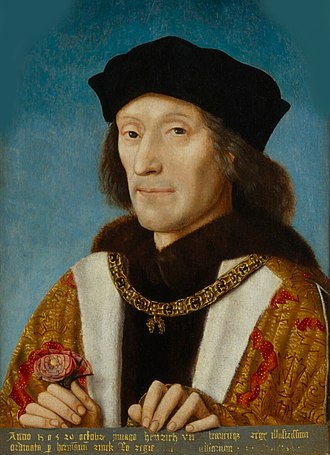
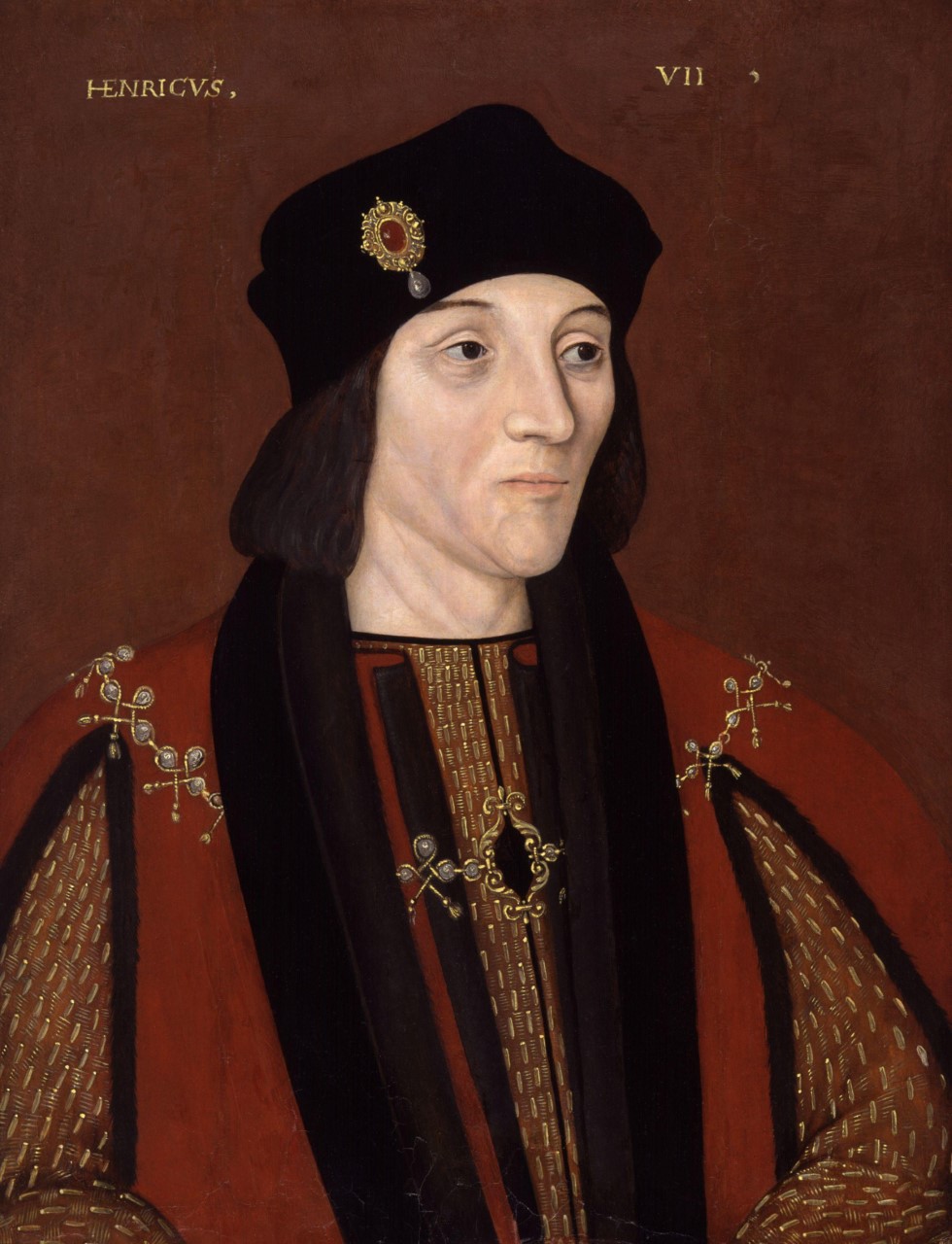
Henry VII painted by an unknown artist

Katherine and her pretender-prince sailed first for Ireland, arriving in Cork on 25 July 1497. After spending a month in Ireland trying to raise troops to their cause, they sailed for Cornwall, making landfall at Whitesand Bay on 7 September with a small flotilla with just a hundred or so people on board. Warbeck’s first action after landing was to make his way to the parish of St Buryan, four miles inland, where he left Katherine to await news of his military campaign. He then headed further into Cornwall, recruiting along the way. It is estimated that by the time he reached Bodmin, Warbeck had an army of between three and five thousand men. After failing to take Exeter from the earl of Devon, Warbeck and his forces marched towards Taunton. The earl of Devon then set off in pursuit and cut off his line of retreat back into Cornwall.

Another royal army moved down from Oxfordshire into Somerset, reaching Glastonbury on 19 September, the same day Warbeck had reached Taunton – just twenty miles away. Warbeck was cornered and, losing his nerve, attempted to flee in the dead of night. With only sixty men, Warbeck sought sanctuary at Beaulieu Abbey in Hampshire on 22 September. Where most religious houses that offered sanctuary could only provide it for a limited period of forty days, Beaulieu was one of those with an exemption, which meant those seeking it could remain in sanctuary there for the remainder of their lives. By early October, Warbeck had been persuaded to surrender and under strong guard was taken to face the king, who was now at Taunton.

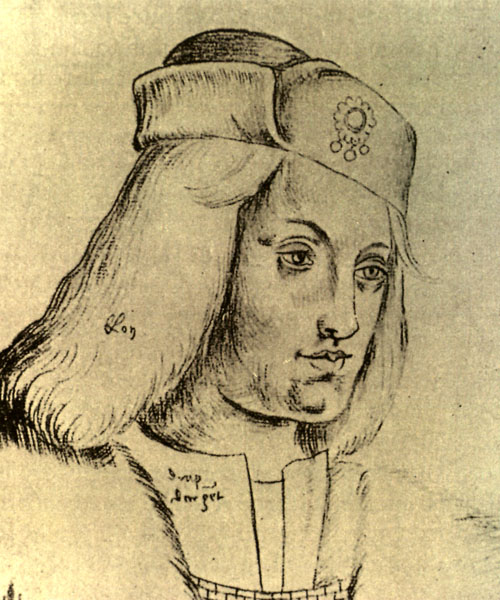
16th-century copy by Jacques Le Boucq of the only known contemporary portrait of Warbeck, Library of Arras

The king and his prisoner then proceeded to Exeter where Perkin Warbeck was reunited with his wife. Katherine had been retrieved from St Buryan’s by a force sent by King Henry. When she was found, she was dressed in robes of mourning, which may suggest that she had already been apprised of her husband’s failure, or that she had recently lost a child. We do not know. As the young woman was presented to Henry VII, she was ‘ashamed and tearful’.4 The chronicler Polydore Vergil described the meeting: ‘When the king saw the woman’s beauty he promptly judged her worthy to be among the captive hostages of a general rather than a common soldier.’5 The king perceived Katherine’s nobility and resolved to afford her a more honourable status than he had previously planned. This meant, inevitably, that she would be separated from Warbeck.

Warbeck had been promised his life, but in the same interview the king insisted that Perkin Warbeck publicly admit, in front of his wife, the extent of his deception; that he was not, in fact, the duke of York, and that he was an impostor from Tournai. It may well be that Katherine was not wholly surprised by the confession. She must have heard the stories and accusations, but to hear the confession from her husband’s lips must have been hard to take. She was not duchess of York, she was Mrs Perkin Warbeck. The revelation put their very marriage in doubt. He had married her under a false identity, as Richard, Duke of York. Katherine put herself into the hands of the king.

Henry VII treated Katherine kindly, though he would not send her back home to Scotland. Instead, she was sent to London to serve in the household of Queen Elizabeth. The king purchased horses and saddles for her journey and presented Katherine with new clothes, including a satin gown and a black velvet bonnet. Katherine arrived at Sheen on 21 October and was presented to the queen, the woman she had believed to be her sister-in-law until Warbeck had made his confession. Katherine was given a position in the queen’s household and a pension, not as the wife of the pretender, but in her own right as a high-ranking Scottish noblewoman. When the king returned to London, bringing Warbeck with him, the two lived separately within the royal household. They were well treated but not permitted to sleep together. Katherine also resumed her maiden name.

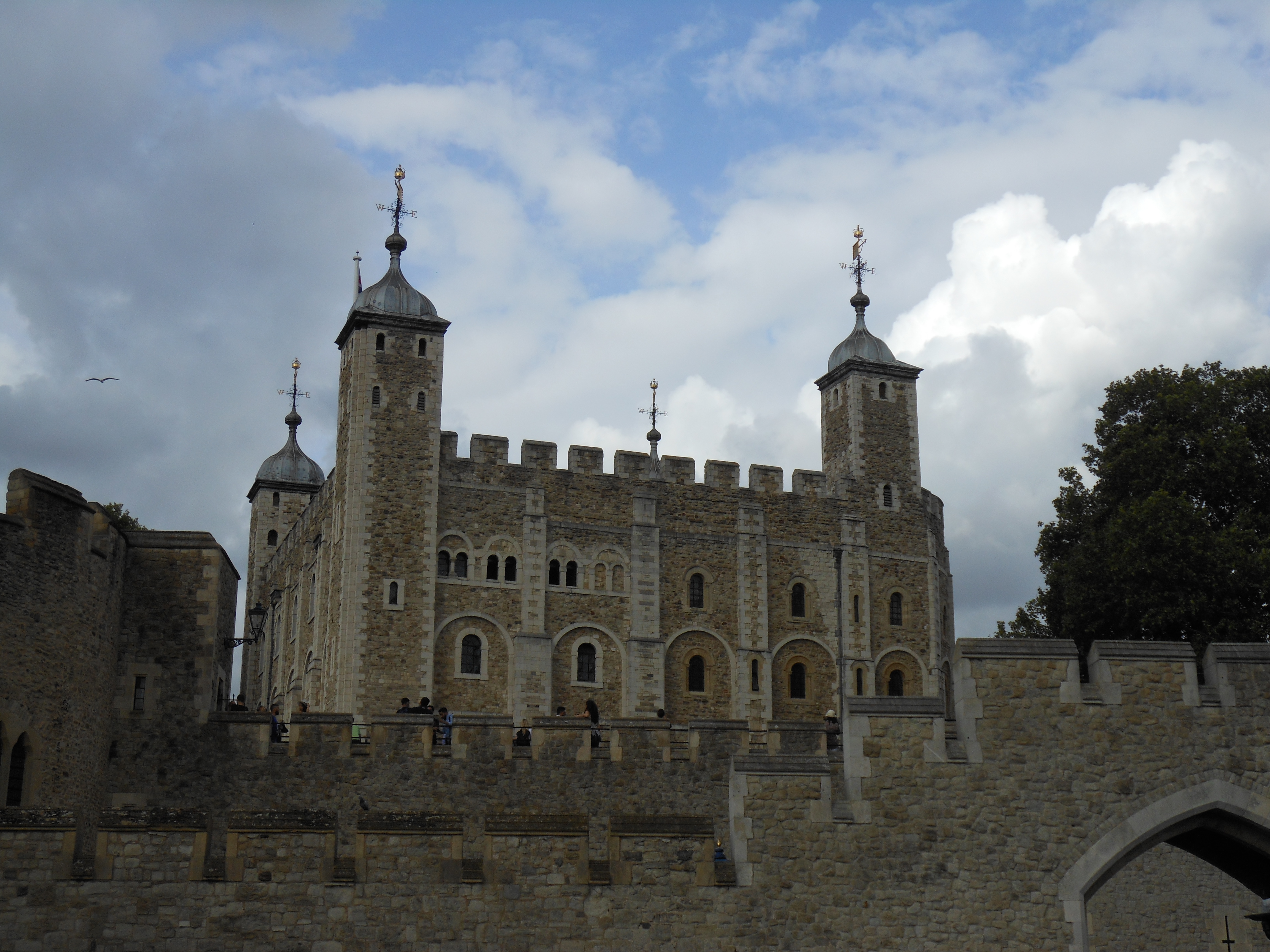
Tower of London

In June 1498, in spite of the lenient treatment he had received from the king, Perkin Warbeck chose to abscond from Westminster Palace. He was recaptured within a couple of days, having only reached the Carthusian priory at Sheen, just seven miles from Westminster. Although he still escaped the executioner’s axe, the king was no longer minded to be so lenient and sent Warbeck, after a spell in the stocks, to close confinement within the Tower of London.

Katherine’s own situation does not appear to have been threatened by Warbeck’s recklessness and in June 1499 she accompanied the king and queen to Calais for a meeting with Archduke Philip and his wife Juana of Castile, the sister of their future daughter-in-law Catherine of Aragon. Later in the same year Perkin Warbeck, having tried to escape with fellow prisoner Edward, Earl of Warwick, was accused of conspiring against the king. And this time he was not going to get away with it. As it had been established that he was not noble, Warbeck was executed by hanging, not beheading, at Tyburn on 23 November 1499. Warwick was beheaded on Tower Hill five days later.

Katherine’s marital status had been ambiguous since the discovery of Warbeck’s deception, but she was now definitively free to remarry. We know not whether she was saddened or relieved at the execution of Warbeck. She may have felt nostalgic for the short time they had been together, or grateful that the man who betrayed her was no longer able to cast a shadow over her life and future; or both. We will never know. Katherine remained at court and as one of the queen’s ladies was present at the betrothal ceremony of James IV and Margaret Tudor, held at Richmond in January 1502. When the queen, Elizabeth of York, died in February 1503 Katherine was one of the chief mourners at her funeral, accompanying the procession from the Tower of London to Westminster Abbey behind the queen’s sisters. And at the Abbey, she laid her pall on the coffin, again, after the queen’s sisters. After the queen’s death, Katherine remained at court, keeping the king company: she played cards with him, acquired medicines for him when he was ill and painted cloths and religious scenes to be held before him as he lay dying.

Fyfield Manor, Berkshire, Katherine’s home with her last husband

After Warbeck’s fall, Katherine Gordon had been taken prisoner, but her noble status had allowed her to be accepted at court as one of the queen’s ladies. Katherine never remarried in the lifetime of either Elizabeth of York or Henry VII. She was no longer a prisoner, but still not entirely free. Shortly before Henry VII’s death, Katherine was granted land in Berkshire, on the condition that she would not leave England. Following Henry VII’s death, sometime between 1510 and 1512 Katherine married James Strangeways, a Gentleman Usher of the King’s Chamber, but he died in 1516, leaving all his property to Katherine. The following year, Katherine married Matthew Craddock, a Welsh knight from Glamorganshire, obtaining permission to live with him in Wales; her promise to never leave England making such a request necessary. From 1525 to 1530, Katherine was employed in the household of Henry VIII’s daughter Mary as Chief Lady of the Privy Chamber. Katherine was widowed once again in 1531, with Craddock making her executor of his will and leaving her income from some of his Welsh properties in addition to 500 marks. Sometime before 1536 Katherine married for a fourth and final time. Her husband, Christopher Ashton, was a Gentleman Usher of the Privy Chamber. Katherine spent the last years of her life on her lands in Berkshire, at Fyfield Manor.

St Nicholas Church, Fyfield, where Katherine was buried

Survived by her last husband, she died on 14 October 1537, forty years almost to the day after Perkin Warbeck had been captured at Beaulieu Abbey. In her will she refers to all of her husbands, save Warbeck. She leaves bequests to Margaret Kyme, the daughter of Elizabeth of York’s sister, Cecily, to her servant, Philippa Hulls and to Alice Smyth, whom Katherine refers to as her sister.6 Perhaps she was a sister of one of Katherine’s husbands. There is no mention of any children and although there has been speculation that Katherine and Warbeck had a child, there is no evidence of this beyond a report by the Venetian ambassador Adrian Trevisano from September 1497,in which he says Warbeck had arrived in Cornwall ‘leaving behind his wife and children’.7 This may well have been a misunderstanding as there is no further mention of children from Trevisano or any other sources. Katherine was buried in the chancel of the church of St Nicholas at Fyfield. A tomb there, missing its brasses, is still referred to as Lady Gordon’s Monument.

Lady Katherine Gordon had survived the fallout from her first husband’s rebellions and conspiracies and made a life for herself at the English court. She appears to have been considered a dupe to Warbeck’s plotting, rather than a co-conspirator. Her position as the daughter of a Scottish earl and a distant relative of the king of Scots afforded her the chance to make a new life for herself as one of the queen of England’s ladies and she grabbed the opportunity in both hands. She went from being a royal captive to a trusted and loved member of the English court. Not all female prisoners would be so fortunate.

Notes:

1. ‘December 1494’ in CSPM pp. 72-79 quoted in Nathen Amin, Henry VII and the Tudor Pretenders, p. 219; Nathen Amin, Henry VII and the Tudor Pretenders, p. 220; 3. ibid; 4. Bernard André quoted in ibid, p. 269; Polydore Vergil quoted in ibid, p. 269; 6. Susan Abernethy, ‘The Life of Lady Katherine Gordon’; 7. Nathen Amin, Henry VII and the Tudor Pretenders, p. 327

Images:

Courtesy of Wikipedia except the Tower of London which is  © 2024 Sharon Bennett Connolly FRHistS

Further Reading:

Nathen Amin, Henry VII and the Tudor Pretenders; Susan Abernethy, ‘The Life of Lady Katherine Gordon’; Amy Licence, The Sixteenth Century in 100 Women; Amy Licence, In Bed with the Tudors; Erin Lawless, Forgotten Royal Women: The King and I; David Loades, editor, Chronicles of the Tudor Kings: The Tudor Dynasty from 1485 to 1553: Henry VII, Henry VIII and Edward VI in the Words of their Contemporaries; David Ross, Scotland: History of a Nation; ODNB.com; Tracy Borman, The Private Lives of the Tudors; Sarah Gristwood, The Tudors in Love: The Courtly Code Behind the Last Medieval Dynasty; John Cannon, editor, The Oxford Companion to British History; Arthur D. Innes, A History of England Under the Tudors; J.D. Mackie, The Earlier Tudors 1485-1558.

*

My Books

Signed, dedicated copies of all my books are available through my online bookshop.

OUT NOW! Heroines of the Tudor World

Heroines of the Tudor World tells the stories of the most remarkable women from European history in the time of the Tudor dynasty, 1485-1603. These are the women who ruled, the women who founded dynasties, the women who fought for religious freedom, their families and love. These are the women who made a difference, who influenced countries, kings and the Reformation. In the era dominated by the Renaissance and Reformation, Heroines of the Tudor World examines the threats and challenges faced by the women of the era, and how they overcame them. From writers to regents, from nuns to queens, Heroines of the Tudor World shines the spotlight on the women helped to shape Early Modern Europe.

Heroines of the Tudor World is now available for pre-order from Amberley Publishing and Amazon UK.

Women of the Anarchy

Two cousins. On the one side is Empress Matilda, or Maud. The sole surviving legitimate child of Henry I, she is fighting for her birthright and that of her children. On the other side is her cousin, Queen Matilda, supporting her husband, King Stephen, and fighting to see her own son inherit the English crown. Women of the Anarchy demonstrates how these women, unable to wield a sword, were prime movers in this time of conflict and lawlessness. It show how their strengths, weaknesses, and personal ambitions swung the fortunes of war one way – and then the other.

Available from Bookshop.orgAmberley Publishing and Amazon UK.

Also by Sharon Bennett Connolly:

King John’s Right-Hand Lady: The Story of Nicholaa de la Haye is the story of a truly remarkable lady, the hereditary constable of Lincoln Castle and the first woman in England to be appointed sheriff in her own right. Available from all good bookshops Pen & Sword Booksbookshop.org and AmazonDefenders of the Norman Crown: The Rise and Fall of the Warenne Earls of Surrey tells the fascinating story of the Warenne dynasty, from its origins in Normandy, through the Conquest, Magna Carta, the wars and marriages that led to its ultimate demise in the reign of Edward III. Available from Pen & Sword BooksAmazon in the UK and US, and Bookshop.org

Ladies of Magna Carta: Women of Influence in Thirteenth Century England looks into the relationships of the various noble families of the 13th century, and how they were affected by the Barons’ Wars, Magna Carta and its aftermath; the bonds that were formed and those that were broken. It is now available in paperback and hardback from Pen & Sword,  Amazon, and Bookshop.orgHeroines of the Medieval World tells the stories of some of the most remarkable women from Medieval history, from Eleanor of Aquitaine to Julian of Norwich. Available now from Amberley Publishing and Amazon, and Bookshop.orgSilk and the Sword: The Women of the Norman Conquest traces the fortunes of the women who had a significant role to play in the momentous events of 1066. Available now from Amazon,  Amberley Publishing, and Bookshop.org.

Alternate Endings: An anthology of historical fiction short stories including Long Live the King… which is my take what might have happened had King John not died in October 1216. Available in paperback and kindle from Amazon.

Podcast:

Have a listen to the A Slice of Medieval podcast, which I co-host with Historical fiction novelist Derek Birks. Derek and I welcome guests, such as Bernard Cornwell – and Tony Riches. We discuss a wide range of topics in medieval history, from significant events to the personalities involved.

*

Don’t forget! Signed and dedicated copies of all my books are available through my online bookshop.

For forthcoming online and in-person talks, please check out my Events Page.

You can be the first to read new articles by clicking the ‘Follow’ button, liking our Facebook page or joining me on Twitter and Instagram.

*

©2024 Sharon Bennett Connolly FRHistS 

Book Corner: Tudor Roses by Amy Licence

A dynasty is defined by its men: by their personalities, their wars and reigns, their laws and decisions. Their mothers, wives, sisters and daughters are often depicted as mere foils, shadowy figures whose value lies in the inheritance they brought, or the children they produced. Yet the Tudor dynasty is full of women who are fascinating in their own right, like Margaret Beaufort, who finally emerged triumphant after years of turmoil; Elizabeth of York and her steadying influence; Catherine of Aragon and Anne Boleyn, whose rivalry was played out against the backdrop of the Reformation; and Mary and Elizabeth, England’s first reigning queens. Then there were all the others: Henry VIII’s fascinating sisters who became queens of France and Scotland, and their offspring, the Brandon and Grey women, Lady Margaret Douglas and her granddaughter Arabella Stuart. Many more women danced the Pavane under Henry’s watchful eye or helped adjust Elizabeth’s ruff. These were strong women, wielding remarkable power, whether that was behind the scenes or on the international stage. Their contribution took England from the medieval era into the modern. It is time for a new narrative of the Tudor women: one that prioritises their experiences and their voices.

Tudor Roses: From Margaret Beaufort to Elizabeth I by Amy Licence continues the history started with Red Roses, which told the history of the women of the royal house of Lancaster, from Blanche of Lancaster to Margaret Beaufort and the start of the Tudor dynasty. Tudor Roses: From Margaret Beaufort to Elizabeth I is the fabulous sequel! Amy Licence has put all her considerable knowledge and research into this book to bring you a book on the Tudor period focussed on its incredible women.

Amy Licence brings the women to the fore, telling the stories of the Tudors through the lives and actions of the women who formed such a considerable part of the dynasty. Not only does she retell the lives of these women, but she puts those lives in context, assessing their influence and legacy on one of the most famous English dynasties – and on the European countries that England interacted with.

Amy Licence also draws not only on events of the time, but on the changing world around the dynasty, on the developments in literature, music, the arts and religion to give a rounded picture of the women of 16th century England. This gives the reader a deeper understanding of the rules and restrictions women had to live by at the time. It also demonstrates the areas in which women had liberties and the ability to express their own desires, wants and needs, and how they could assert control over their own lives.

This is Amy Licence at her best!

Excerpt:

It is not difficult to visualise the Tudor princesses sitting at their lessons, or roaming the gardens at Eltham. Surviving accounts give an indication of the adult-style clothing in which the children appeared, as the nursery was also a location for the entertainment of dignitaries and foreign visitors, and the children were a powerful, visible indicator of the dynasty’s future. In November 1495, Henry spent £7 on ‘diverse yerdes of silk’ for Henry and Margaret, while baby Mary the following years was clothed in kirtles of black silk and velvet, edged in ermine and mink. The following year as she was beginning to walk, her dresses were made of baby buckram, a fine cotton, not like the stiff, modern version, and she required linen smocks, three pairs of hose, eight pairs of single-soled shoes and four pairs of double. The children were frequent visitors to Windsor, Westminster, Greenwich, Sheen and Baynard’s Castle, or wherever their parents might be, attending important events and festivities, expected to show themselves to best advantage in front of guests. No doubt the girls were also influenced by Margaret Beaufort’s model of piety and were visible attendees at church on red letter days in the Catholic calendar, but they were also lively, energetic participants. One of Margaret’s most notable public appearances as a small child was her fifth birthday in November 1494, on which occasion her younger brother Henry was elevated to the Dukedom of York. A tournament lasting three days was held at Westminster, after which Margaret handed out the prizes, dressed in a velvet and buckram gown trimmed in gold lace with a white, winged cap in the Dutch style. Afterwards, Margaret and her young brother danced to the delight of the court.

At Eltham, Margaret and Mary were shielded from he dynastic struggles that their parents were experiencing in the 1490s. A second pretender, far more serious than the young Lambert Simnel, had emerged in Europe, and was being feted by enemies of the Tudor regime. Claiming to be Richard of Shrewsbury, the younger of the Princes in the Tower, a young Flemish merchant by the name of Perkin Warbeck arrived at the Burgundian court, swiftly winning over Elizabeth’s aunt Margaret, who schooled him in the details and manners of the Yorkist court and encouraged him to distribute coins minted in his name. Warbeck was initially welcomed at the court of Charles VIII of France, until Charles ejected him under terms of the Treaty of Etaples he signed with England in 1492. The pretender returned to Burgundy, where he was invited to attend the funeral of the Holy Roman Emperor and recognised as Richard IV. However, after a failed attempt to invade England, and a brief flirtation with Ireland, Warbeck went north, towards the Scottish king with whom Henry had hoped to ally his eldest daughter.

Amy Licence is an accomplished writer whose prose flows so freely that you almost feel like you are reading a novel. The narrative flows easily, absorbing the reading from the very first pages. As you may have come to expect from Ms Licence, her research is thorough and second-to-none. She delves into every aspect of the lives of the women and brings the whole era to life for the reader, showing how they interracted with the world around them, with the men in their lives – and with each other.

Her insight into the lives of the Tudor women is unparalleled.

It is always a pleasure to read a non-fiction book by Amy Licence and Tudor Roses: From Margaret Beaufort to Elizabeth I is no exception. In fact, it is probably one of Ms Licence’s best. For anyone interested in the Tudor period, this book is a must read. An essential addition to any library. I cannot recommend it highly enough.

Tudor Roses: From Margaret Beaufort to Elizabeth I is available from Amazon and Amberley Publishing.

About the author:

Amy Licence is an historian of women’s lives in the medieval and early modern period, from Queens to commoners. Her particular interest lies in the late fifteenth and early sixteenth century, in gender relations, Queenship and identity, rites of passage, pilgrimage, female orthodoxy and rebellion, superstition, magic, fertility and childbirth. She is also interested in Modernism, specifically Woolf and the Bloomsbury Group, Picasso and Post-Impressionism. She has been a teacher for over twenty years and is a Fellow of the Royal Historical Society.

Amy has written for The Guardian, The TLS, The New Statesman, BBC History, The English Review, The Huffington Post, The London Magazine and contributes regularly to BBC History Magazine. She has been interviewed regularly for BBC radio, including Woman’s Hour, and has appeared in several TV documentaries.

*

My Books

Signed, dedicated copies of all my books are available, please get in touch by completing the contact me form.

Defenders of the Norman Crown: The Rise and Fall of the Warenne Earls of Surrey tells the fascinating story of the Warenne dynasty, of the successes and failures of one of the most powerful families in England, from its origins in Normandy, through the Conquest, Magna Carta, the wars and marriages that led to its ultimate demise in the reign of Edward III. Defenders of the Norman Crown: Rise and Fall of the Warenne Earls of Surrey is now available from Pen & Sword BooksAmazon in the UK and US, Bookshop.org and Book Depository.

1 family. 8 earls. 300 years of English history!

Also by Sharon Bennett Connolly:

Ladies of Magna Carta: Women of Influence in Thirteenth Century England looks into the relationships of the various noble families of the 13th century, and how they were affected by the Barons’ Wars, Magna Carta and its aftermath; the bonds that were formed and those that were broken. It is now available in paperback and hardback from Pen & Sword,  AmazonBookshop.org and from Book Depository worldwide.

Heroines of the Medieval World tells the stories of some of the most remarkable women from Medieval history, from Eleanor of Aquitaine to Julian of Norwich. Available now from Amberley Publishing and Amazon, Bookshop.org and Book Depository.

Silk and the Sword: The Women of the Norman Conquest traces the fortunes of the women who had a significant role to play in the momentous events of 1066.  Available now from Amazon,  Amberley Publishing, Bookshop.org and Book Depository.

*

You can be the first to read new articles by clicking the ‘Follow’ button, liking our Facebook page or joining me on Twitter and Instagram.

©2022 Sharon Bennett Connolly 

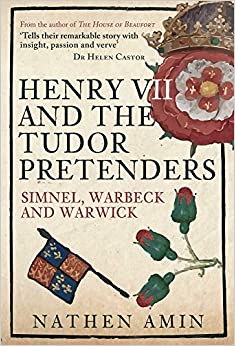
Book Corner: Henry VII and the Tudor Pretenders by Nathen Amin

On 22 August 1485, Henry Tudor emerged from the Battle of Bosworth victorious. His disparate army vanquished the forces of Richard III and, according to Shakespeare over a century later, brought ‘smooth-faced peace, with smiling aplenty and fair prosperous days’ back to England. Yet, all was not well early in the Tudor reign. Despite later attempts to portray Henry VII as single-handedly uniting a war-torn England after three decades of conflict, the kingdom was anything but settled. Nor could it be after a tumultuous two-year period that had witnessed the untimely death of one king, the mysterious disappearance of another, and the brutal slaughter of a third on the battlefield. For the first time in one compelling and comprehensive account, Nathen Amin looks at the myriad of shadowy conspiracies and murky plots which sought to depose the Tudor usurper early in his reign, with particular emphasis on the three pretenders whose causes were fervently advanced by Yorkist dissidents ‒ Lambert Simnel, Perkin Warbeck, and Edward, Earl of Warwick. Just how close did the Tudors come to overthrow long before the myth of their greatness had taken hold on our public consciousness?

Nathen Amin has surpassed himself. The House of Beaufort was a brilliant book, but Henry VII and the Tudor Pretenders: Simnel, Warbeck and Warwick, is even better. looking into the threats and challenges faced by Henry’s fledgling Tudor dynasty, Nathen tells the story of the pretenders who would steal Henry’s crown, either in their own name, or in the name of those they claimed to be.

I have been waiting for this book for a long time! Delayed by Covid, the anticipation only became greater. So, when it finally arrived, I could not wait to dive in. And I was not disappointed. Henry VII and the Tudor Pretenders: Simnel, Warbeck and Warwick is a much-needed investigation into the various pretenders that Henry VII faced during his time on the throne. Focusing on fact, rather than fiction, it takes the reader on a chronological journey through the reign of henry VII, presenting each pretender as they appeared in the timeline.

As you would expect, Lambert Simnel and Perkin Warbeck take up a fair amount of the discussion. But there are others, not least Edward, Earl of Warwick, son of George Duke of Clarence, who I had not even considered as a pretender until this book. Although I understand the reasoning behind identifying young Warwick as a pretender, I do see him more as a pawn to the machinations of others, than a man capable of claiming the throne – and holding on to it. Nathen Amin makes a good argument to him being a pretender, but equally points out that Warwick, beyond his ancestry and title, was little threat to the first Tudor king.

An enormous amount of research has gone into this book – and it shows. Nathen Amin has carefully and meticulously followed the trails of the pretenders, from their humble origins to the moment they made a play for the throne – and beyond. Henry VII and the Tudor Pretenders: Simnel, Warbeck and Warwick also turns the spotlight on those who engineered or assisted these acts of defiance and resistance, analysing the actions and motives of the pretenders’ supporters, both practical and political, from rebellious Yorkist sympathisers to the crowned heads of Europe.

In a frantic attempt to persuade their hesitant peers to join their cause, the Staffords started spreading false rumours in the locality that their attainders had been overturned, even producing forged letters patent and claiming Henry had pardoned them of all offences. They also announced that Lovell had captured the king at York, and such a disingenuous strategy soon paid some dividend, for the Staffords started to amass a small band of adherents who had no qualms about openly plotting Henry’s death. The rebels even started championing the name of Warwick in public, alluding to the young Yorkist prince held in the Tower of London. It was unquestionably treasonous activity, and all were partaking in a deadly game against overwhelming odds.

The employment of the Warwick name was likely connected to another minor plot uncovered a few miles north of London in early May 1486, adding to the king’s growing burden, in which several conspirators armed themselves with ploughs, rakes and woolsacks and attempted to assault some members of the royal household. Although the basic weapons suggest the revolt was poorly planned and trivial in comparison to similar uprisings, the insurgents involved did provocatively wave a ragged staff banner, a well-known heraldic device associated with previous generations of Warwick earls, including the present incumbent’s grandfather Richard Neville, the 16th Earl, better remembered as ‘the Kingmaker’ for his tireless scheming during the earlier phases of the Wars of the Roses. It certainly wasn’t escaping the attention of some disaffected Yorkist diehards that there was still a prince of Yorkist blood known to be alive, albeit confined within the walls of the Tower.

Momentarily boosted by a slight upturn in support, the Staffords were even able to briefly enter Worcester after the town guard proved embarrassingly lax in their defence of their gateways, a dereliction of duty which earned the bailiff and commonalty the severe displeasure of their irritated sovereign. Nonetheless, the rebel efforts proved in vain

The famous Shakespeare phrase ‘uneasy lies the head that wears a crown’ (from Henry IV) certainly rang true for Henry VII and Nathen Amin demonstrates how the first Tudor king’s throne was plagued by threats from pretenders with differing levels of credibility. Certainly, Simnel, Warbeck and Warwick presented the greatest threats, but Amin demonstrates how Henry could not be complacent against any challengers, no matter how unfeasible their claim. While the author mentions the Princes in the Tower, and discusses their likely fate, he does not let himself get distracted by the arguments into that fate. Rather, he concentrates on the opportunities offered by the uncertainty surrounding what happened to them, and how the various pretenders played on this to serve their own ends – or the ends of those pulling the strings.

Henry VII and the Tudor Pretenders: Simnel, Warbeck and Warwick by Nathen Amin is a thoughtful examination of the challenges that Henry VII faced during his reign. It is also thought-provoking. It will make you think about your own views on the subjects it touches on, from the possibility that Warbeck was Richard, Duke of York, to the murder – or not – of the Princes in the Tower, and to the legitimacy of the rule of Henry VII himself. Nathen Amin’s conclusions are thoroughly and comprehensively argued, leaving the reader to re-examine their own previously conclusions and convictions. While it presents Henry VII in a positive light, the book does not shy away from offering criticism where it is merited, nor does it vilify Richard III.

Nathen Amin has produced a balanced, thoughtful examination of the pretenders who threatened Henry VII’s throne. Going back to the primary evidence, he has carefully and meticulously peeled away the rumours, innuendos and propaganda to present his findings in engaging, accessible prose.

Henry VII and the Tudor Pretenders: Simnel, Warbeck and Warwick an essential addition to every War of the Roses library. It also serves as an engaging and entertaining read for anyone with more than a passing interest in the fates of the Princes in the Tower, the establishment of the Tudor dynasty and the numerous threats that Henry VII had to face in order to establish that dynasty.

About the author:

Nathen Amin is an author from Carmarthenshire, West Wales, who focuses on the fifteenth century and the reign of Henry VII. He wrote ‘Tudor Wales’ in 2014 and ‘York Pubs’ in 2016, followed in 2017 by the first full-length biography of the Beaufort family, ‘The House of Beaufort’, an Amazon #1 bestseller.

Henry VII and the Tudor Pretenders: Simnel, Warbeck and Warwick is now available from Amberley Publishing and Amazon.

*

My Books

Defenders of the Norman Crown: The Rise and Fall of the Warenne Earls of Surrey tells the fascinating story of the Warenne dynasty, of the successes and failures of one of the most powerful families in England, from its origins in Normandy, through the Conquest, Magna Carta, the wars and marriages that led to its ultimate demise in the reign of Edward III.

1 family. 8 earls. 300 years of English history!

Defenders of the Norman Crown: Rise and Fall of the Warenne Earls of Surrey is now available from Pen & Sword BooksAmazon in the UK and US and Book Depository.

Also by Sharon Bennett Connolly:

Ladies of Magna Carta: Women of Influence in Thirteenth Century England looks into the relationships of the various noble families of the 13th century, and how they were affected by the Barons’ Wars, Magna Carta and its aftermath; the bonds that were formed and those that were broken. It is now available from Pen & Sword,  Amazon and from Book Depository worldwide.

Heroines of the Medieval World tells the stories of some of the most remarkable women from Medieval history, from Eleanor of Aquitaine to Julian of Norwich. Available now from Amberley Publishing and Amazon and Book Depository.

Silk and the Sword: The Women of the Norman Conquest traces the fortunes of the women who had a significant role to play in the momentous events of 1066.  Available now from Amazon,  Amberley Publishing, Book Depository.

*

You can be the first to read new articles by clicking the ‘Follow’ button, liking our Facebook page or joining me on Twitter and Instagram.

©2021 Sharon Bennett Connolly

Book Corner: Henry by Tony Riches

Bosworth 1485: After victory against King Richard III, Henry Tudor becomes King of England. Rebels and pretenders plot to seize his throne. The barons resent his plans to curb their power and he wonders who he can trust. He hopes to unite Lancaster and York through marriage to the beautiful Elizabeth of York.

With help from his mother, Lady Margaret Beaufort, he learns to keep a fragile peace. He chooses a Spanish Princess, Catherine of Aragon, as a wife for his son Prince Arthur. His daughters will marry the King of Scotland and the son of the Emperor of Rome. It seems his prayers are answered, then disaster strikes and Henry must ensure the future of the Tudors.

“A fine end to a superbly researched and well-written trilogy, one I would recommend to anyone with an interest in this period of history.” Best-selling author Terry Tyler.

Henry is the final installment of Tony Riches‘ excellent Tudor Trilogy which has followed the rise of the Tudors from Owen’s relationship with Catherine of Valois, through his son, Jasper, and now to his grandson, Henry, the first Tudor king.

Opening as Henry  is victorious at Bosworth, it follows Henry VII from the moment he becomes king, through the many trials and tribulations of kingship and establishing a new dynasty. This is an enjoyable story of one of England’s least loved and most misunderstood English kings. Tony Riches does an excellent job of giving us an entertaining novel while offering the reader an insight into the life and problems of a man who was not born to be king and who knew little of his subjects after spending his entire adult life in exile in Brittany.

I love the fact that Henry is not the finished product from the very beginning. The author has thought hard about how a man, who suddenly becomes king, may act when feeling his way through the maze of court politics, factions and family divisions, and the actual day-to-day challenges of ruling a country that has suffered 30 years of intermittent warfare and political instability.

Henry paints a portrait of Henry as a man who grew into his role as king, learning from his mistakes and facing up to his insecurities; insecurities arising not from his right to the throne, but from the challenges facing him and not knowing what happened to the Princes in the Tower. Henry Tudor is portrayed as a all-too-human; a man whose decisions about others way on his soul, but are made to ensure the security of himself and his family. He walks a  fine line in an attempt to appease his opponents whilst establishing his authority – and his dynasty.

‘On what grounds do we imprison young Edward Plantagenet?’

Jasper sat in the spare chair and the stubble on his chin as he considered the question. He’d chosen to shave his beard on the journey from Wales. He looked younger clean-shaven, but a beard suited his uncle, and Henry guessed he was already growing it back.

‘King Richard considered the young earl enough of a threat to declare him illegitimate.’

Henry allowed himself a smile. ‘King Richard declared everyone illegitimate, other than himself. Young Edward is a cousin of Princess Elizabeth.’

Jasper returned his smile. ‘Half of England is related to the Woodvilles one way or another.’ His face became serious. ‘We need time, Henry. Time to win over the doubters. We could say it is for young Edward’s own safety?’

Henry picked up his quill and dipped it in Mayor Olney’s inkpot before signing the warrant. ‘We must ensure the boy is well treated – I wish no harm to him.’

Henry is the story of one man’s life and kingship. Moments of crisis and sincerity are interspersed with little moments of tenderness and humour. Tony Riches has taken time to seriously consider the character of his subject, and this comes across in every page of the book. He seems to have spent no less time on the supporting characters. Jasper Tudor and Margaret Beaufort, who have played prominent parts in all 3  book of the Tudor Trilogy are pivotal characters and are well thought out, complex figures. Henry respects them deeply and is well aware of the sacrifices they have made that got him to the throne. Each character in the book is credible, believable, and has his, or her, own unique qualities. The headstrong future king, Henry VIII is wonderfully contrasted with quiet and studious Prince Arthur, while the delightful Mary Tudor steals every scene in which she appears.

thumbnail_Late 16th-century copy of a portrait of Henry VII - Wikimedia Commons
Henry VII

The novel tells the story of Henry and Elizabeth with sensitivity and compassion; charting their life together from the first moments of getting to know each other, through the births and deaths of their children, and the toll that takes on them, not only as individuals, but also as a couple. Indeed, the author seriously considers the effect that being king must have had on Henry’s family life, the compromises he had to make. You get the impression that the poor chap never had enough time in the day to do everything he wanted and that every personal loss takes away a little part of him.

‘I like it here.’ He reached across and took her white-gloved hand in his. ‘We shall make Sheen into a palace fit for a royal family.’

Elizabeth squeezed his hand in agreement. ‘I would like that.’ She gave him a conspiratorial look. This is my most secret place. A sanctuary.’

Henry stared into her bright amber eyes. ‘You spent many months in sanctuary … yet you’ve never spoken of it?’

‘At first I didn’t understand the danger we were in.’ She stared, wide-eyed, into the far distance as she remembered. ‘My mother made a game of it, said it would be a great adventure. Years later she told me my father abandoned us and she thought our enemies might murder us all.’

There are many novels set during the Wars of the Roses. The huge majority revolve around Richard III and the disappearance of the Princes in the Tower. If a novel sees Richard III as a hero, then you can practically guarantee that Henry Tudor is the villain. With Henry, you would therefore be forgiven for expecting the opposite; Henry the hero and Richard the villain.  Richard, of course, gets mentioned, but the story does not revolve around the fallen king and his guilt or innocence, rather it puts him firmly where he was when Henry was king – in the past!

As a novel, Tony Riches has created a fast-paced, enjoyable tale that is virtually impossible to put down – at least until your eyelids are so heavy they need matchsticks to hold them up. It also gives you a deeper understanding of the founder of the Tudor dynasty. I defy anyone – except, maybe, the most ardent of Yorkists – to read this book and not develop a deeper understanding of Henry VII, of the challenges he faced and compromises he made in order to secure peace for the realm and the continuation of his dynasty. Henry is a must-read book for anyone who has a love  of medieval history, the Wars of the Roses and the Tudors.

Although part of a series, Henry can definitely be read as a standalone. Entertaining and insightful, it tells a story that has rarely been told – the one from Henry’s own viewpoint. This is the story of the foundation of, arguably, England’s most famous royal house – and is not to be missed!

*

Ten Things You Might Not Know About Henry Tudor, by Tony Riches

During the four years of research for my trilogy about the early Tudors, I discovered many little known facts about one of our most overlooked kings, Henry Tudor. Here are a few of my favourites:

  1. Instead of Tudor, Henry could have been called ‘Tidder’ or ‘Tetyr’ or even Tewdwr It seems the name Tudor was a simplification used by scribes in the time of Henry’s grandfather, Owen Tudor.
  2. After his victory at the Battle of Bosworth Henry led a procession through the narrow streets of York, where he was attacked by a man with a dagger. His bodyguards saved him but his reign was nearly over before it began – and he later travelled with some fifty ‘Yeomen of the Guard’ for protection.
  3. Henry didn’t invent the ‘Tudor rose’ – the combined red and white roses had long been known as symbols of the Virgin, representing sacrifice and purity – he simply adopted it as his ‘branding’.
  4. Henry loved gambling with cards and dice and lost huge sums more often than he won. He also kept detailed records of who he’d played against (which included his wife, Elizabeth of York)– and how much he’d lost.
  5. As well as lions and other dangerous animals, which he kept at the Tower of London, Henry kept a pet monkey, thought to be a marmoset, in his private chambers. One day he discovered it had torn up his detailed diary, so there is a gap in his meticulous records.
  6. When the pretender Perkin Warbeck was finally captured, Henry was so enamoured of Warbeck’s wife, Lady Katheryn Gordon, that he kept them both in his household – but wouldn’t let them sleep together. He also bought Lady Katheryn expensive dresses and she became a close companion and confidante, even after Henry had her husband executed.
  7. Henry nearly lost his crown to a mob of Cornish rebels, who marched on London in an armed protest against his tax raising. More men joined them on the way and the rebels reached Blackheath before they could be stopped.
  8. Henry kept various ‘fools’ to entertain his court, including one named ‘Diego the Spaniard’ (possibly as a joke at the expense of Catherine of Aragon’s father, King Ferdinand, who failed to provide the dowry he’d promised.)
  9. At Christmas 1497 Henry and his family were woken in the night by a fire in his private chambers at Sheen Palace. They barely escaped with their lives but the old palace was ruined and Henry had it rebuilt as the Palace of Richmond.
  10. Towards the end of his life Henry suffered from a throat disease referred to as ‘the quinsy’ which his physicians treated (unsuccessfully) with a remedy of celandine, fenugreek and hedgehog fat.

Tony Riches is the author of the best-selling Tudor Trilogy as well as other historical fiction set in the medieval era. He lives by the sea in Pembrokeshire, West Wales with his wife and enjoys sailing and kayaking in his spare time. For more information about Tony’s other books please visit his popular blog, The Writing Desk and website www.tonyriches.com and find him on Facebook and Twitter @tonyriches.  The Tudor Trilogy is available on Amazon UK  Amazon US and Amazon AU

*

My book, Heroines of the Medieval World,  is now available in hardback in the UK from both Amberley Publishing and Amazon UK and worldwide from Book Depository. It is also available on Kindle in both the UK and USA and will be available in Hardback from Amazon US from 1 May 2018.

You can be the first to read new articles by clicking the ‘Follow’ button, liking our Facebook page or joining me on Twitter.

*

©2017 Sharon Bennett Connolly

The Wedding of the Century by Sean Cunningham

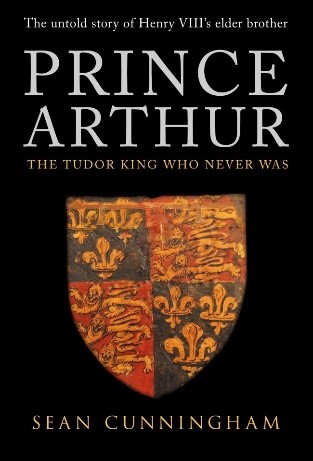
bookToday I would like to welcome author and historian Sean Cunningham as part of his amazing blog tour. Celebrating the release of his new biography, Prince Arthur: The Tudor King Who Never Was, Sean has written a wonderful article on the wedding of Arthur and Catherine of Aragon – just for us!

The Wedding of the Century: Prince Arthur, Catherine of Aragon and the Politics of a Teenage Marriage in 1501

The private and public lives of England’s late medieval royal families were no-doubt as fascinating to their subjects as the Windsors are to many citizens today. In a world without social and other media or mass literacy, however, popular discussion of the visibility of the fifteenth century royals is almost completely hidden from modern view. We do know from the propaganda produced by competing sides in the Wars of the Roses that public opinion mattered to the ruling elites. Since rivals for the crown were basically cousins who shared royal blood in more-or-less equal degrees, appeals to popular support were important in the search for political advantage.

Records of royal progresses, visits, formal entries and days of estate stand out in civic records of towns and cities because it was rare for the ruled to see their rulers in close proximity within public spaces. For that reason, we might expect evidence of more ambitious manipulation of London’s concentrated population in spectacular set-piece events like royal marriages. It is not found in the fifteenth century. Lancastrian and Yorkist leaders seem to have shied away from public view when they took their wedding vows.

Joan of Navarre was a thirty-three-year old widow when she married Henry IV at Winchester in 1403; a comforting arrangement, not necessarily to increase numbers of royal children. Henry V’s marriage to Catherine de Valois at Troyes in 1420 was a quiet soldier’s wedding, which very few English people witnessed, despite its massive political implications (or maybe because of them). Henry VI and Margaret of Anjou had a low-key ceremony at Titchfield Abbey in April 1445. Edward IV became Elizabeth Woodville’s second husband in a secret service in 1464. Richard III had married the widowed Anne Neville within Westminster Palace while he was duke of Gloucester in 1472. Henry VII’s own wedding did not occur until January 1486, despite the certainty that many of his supporters had followed him only because of his promise to marry Edward IV’s daughter, Elizabeth. It was not a state occasion, and received far less interest from heralds and chroniclers than King Henry’s first royal progress the following spring.

Arthur
Prince Arthur in mid-Victorian glass, St Laurence Church, Ludlow

Political circumstances, cost, and the uncertainty of factional politics and civil war account for some of these understated royal weddings. Henry VII had no such reservations about the match of his son and heir, however. The series of events surrounding the marriage of Prince Arthur and Catherine of Aragon in November 1501 were carefully planned and stage-managed for maximum public impact on an international scale. The marriage reveals a great deal of what the king, his mother and their family thought about themselves and what they wanted their subjects to remember as key messages relating to Tudor power, right, ancestry, and fitness to rule.

In terms of its ambition and complexity, the marriage of Arthur and Catherine was planned as one of the greatest spectacles ever seen in England. Catherine would have a ceremonial journey from her place of landfall to London; pageants of welcome to the city and on the river would explore symbolism and allegory as well as being fantastically entertaining displays by human actors and mechanical devices; the interior of St Paul’s had been reconfigured to present the wedding service as a ceremonial royal performance; the public would enjoy a never-ending wine fountain near the west door of the church; tournaments in the rebuilt tiltyard at Westminster Palace would show off the martial skill of Henry VII’s courtiers; the wedding feast would be served on gold and silver worth as much as  the crown’s annual income from taxation; lodgings within the royal palaces and other public spaces had been repaired and refreshed for over two years in preparation for a few days of occupancy; gifts, jewels and paintings were purchased from around Europe to be given away as a demonstration of the king’s magnificence. As the public face of England’s alliance with the Spanish kingdoms of Aragon and Castile the marriage was Henry VII’s single-minded statement of intent about the future of Tudor power.

dragon
A dragon, or Wyvern, from an initial illustration on a plea roll in the Court of Common Pleas

Henry VII could aspire to build Arthur’s future in this way because 1500-01 was the high-point of his reign. Perkin Warbeck, the pretender to the crown, who had disturbed Henry VII’s sleep for most of the 1490s, was dead. His scaffold confession in November 1499 that he was an impostor (whether forced or genuine), was meant to remove all belief that the sons of Edward IV had survived the reign of their uncle, Richard III. The earl of Warwick – son of Edward IV’s other brother, George, duke of Clarence – was beheaded in the same month as Warbeck. He was the last male Plantagenet of lineal descent from Henry II. These executions made Henry VII’s queen, Elizabeth, the sole direct heir of the House of York. Emphasising that fact strengthened Prince Arthur’s position as inheritor of her ancestry and family loyalties. By 1500, it looked like the Tudor king had finally thrown of the shackles of the Wars of the Roses. Only when England was free from these lingering threats, did the Spanish monarchs agree to start preparations to dispatch Princess Catherine in the summer of 1501.

The nature of Henry VII’s reign meant that things were not stable for long. Indications soon emerged that the king’s dynastic struggles might recur. Henry’s failure to expand the ranks of his allies meant that he soon felt the effects of deaths within his circle of old friends. Two long-standing supporters, John Morton, archbishop of Canterbury and Chancellor, and John, Lord Dynham, Treasurer of England, had helped to shape Henry’s power since 1485. They died in September 1500 and January 1501 respectively. This problem would accelerate after 1502 and was magnified by other factors.

arms
Henry VII’s imperial arms form a plea roll of King’s Bench court

More alarmingly, Edmund de la Pole, earl of Suffolk, one of the queen’s nephews, fled overseas in spring 1501. With the help of Sir James Tyrell, he was contemplating launching a claim for the crown. Tyrell was a rehabilitated loyalist of Richard III. His defection and the seeds of another attempt to start a pro-Yorkist conspiracy can only have filled the Tudor royal family with dread. Suffolk’s departure might have been prompted by the certainty that Arthur and Catherine’s marriage would strengthen Henry VII’s power even further. Evidently he felt it was worth taking a risk to secure foreign help before that happened. Although he was persuaded to return, Suffolk soon fled again to the protection of Maximilian Habsburg, Archduke of Austria and ruler of the Low Countries. He became another pretender intent on deposing the Tudor family.  King Henry moved quickly, therefore, to finalise the preparations for the wedding of his son with Princess Catherine while the political situation remained in his favour.

Ferdinand and Isabella were able to exert pressure on Henry to demonstrate that England was a stable place for their daughter’s future because their nation was a rapidly-rising world power. With little prospect of recovering former lands in France, the Tudor regime in England had recognised almost as soon as it came to power that the Spanish should be wooed as a new centre of gravity in European diplomacy. In 1501, it was less than ten years since the Columbus had discovered a new world for the Spanish monarchs. Later voyagers were only just beginning to realise the potential of the Americas, but at that time the Spanish had no rivals (following the Treaty of Tordesillas with Portugal in 1494). The reconquest of Granada at the very start of 1492 also allowed a unified Spain to begin a new focus within Europe. By the end of 1494, King Ferdinand had entered the alliance against France which soon drew many European states into the Italian wars. In the years since 1489, when Henry VII had opened negotiations for a marriage alliance, it was clear that Spanish influence was under transformation. A European superpower was emerging and the English king put himself in exactly the right place at the right time to take full advantage.

Catherine_aragon
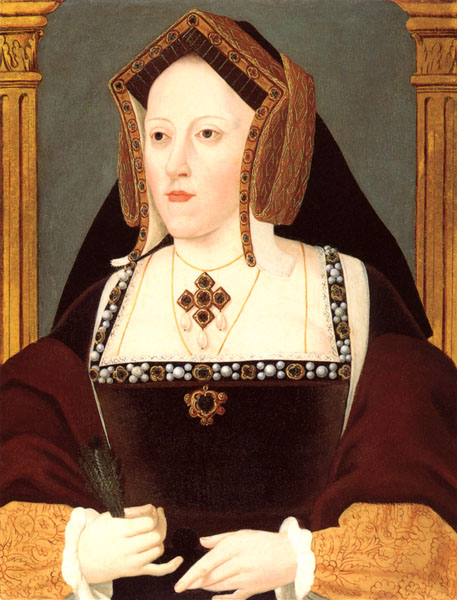
Prince Arthur’s bride, Catherine of Aragon

Catherine left Corunna on 17 August 1501. Storms and delays meant that she landed in Plymouth and not Southampton, as planned, on 2 October – a month later than expected. She therefore had to endure a far longer land journey towards London; but that did give more people the chance to see her on the road. Henry VII was annoyed by the disruption this caused to his arrangements, but could do little until Catherine got nearer to his base at Richmond Palace. Records suggest that genuine excitement travelled ahead of the princess and down the road to London as she, her massive and exotic entourage, and the English nobles and gentry accompanying her crossed southern England.

At the centre of all of this complex activity were two teenagers. When looking at the lavish and elaborate events that were part of the marriage, it is really important to remember that Arthur and his bride had only just met. Sixteen-year-old-Catherine had been in the country for six weeks by the time of her wedding on 14 November. She had barely paused for more than a few days after a direct journey of almost two hundred miles from Plymouth to London.

This was an arranged marriage, too. Although both young people had been bred and trained for a demanding public life, nerves and perhaps shyness must still have been part of their first meetings. Language was certainly an issue – even conversational Latin was tried. Having seen England’s future queen, Henry oversaw a renewal of the couple’s marriage vows in person at Dogmersfield in Hampshire on 6 November. The king and Arthur then headed for London. Catherine stayed in Lambeth until 12 November when she was met by Prince Henry, the duke of Buckingham and many other lords in St George’s field, south of London Bridge, for the start in earnest of her wedding festivities.

585px-St_Paul's_old._From_Francis_Bond,_Early_Christian_Architecture._Last_book_1913.
Old St Paul’s Cathedral, London

The king and his council had worked with the mayor and aldermen of London for almost two years to devise and to build pageants of welcome. The first was at the south side of London Bridge. It depicted the story of St Catherine and St Ursula. Actresses playing those saints flattered Catherine’s virtue and honour as part of an astrological allegory on the constellations of Ursa Minor and Arcturus. At the other end of the bridge, a second setting contained a castle covered in Tudor badges and imagery – the Castle of Policy. Catherine was presented as the evening star whose noble presence spontaneously opened the castle gates. A third construction on Cornhill was a mechanical zodiac that placed Arthur and Catherine in heavenly proximity to God. Arthur was depicted as an ideal knight in splendour on the heraldic fourth pageant on Cheapside; while the fifth, outside the Standard Inn, was even more celestial. God’s throne and a representation of heaven presented a dazzlingly-armoured Arthur as divine Justice. At the sixth pageant, by the entrance to St Paul’s churchyard, the Seven Virtues guarded empty thrones awaiting Arthur and Catherine next to an actor representing Honour. The clear message was that honour could only be reached by virtuous living.

Much of the level of detail would have had little impact upon the mass of onlookers. It was meant to be visually stunning but not necessarily understood in all of its allegorical complexity. The constant use of badges and beasts like the red rose, portcullis, red dragon, and greyhound made for a quick visual association between the spectacle and the king’s authority. Ramming home the message that Arthur and Catherine were deserving inheritors of this extravagant power was vitally important. This need continued on the wedding day itself.

rose
A marguerite rose form a plea roll of King’s Bench court

Arthur and Catherine were meant to be seen together. This marriage was a union of two people and an alliance of two nations. The setting of the church and orchestration of the ceremony reflected that. A raised platform built from thousands of deal planks formed a walkway that stretched along the interior of St Paul’s. Henry and Queen Elizabeth watched from a small closet so that they did not detract from the focus on the married couple. The bride and groom wore white satin. Catherine was escorted towards the altar by Arthur’s brother, Henry. Her Spanish style of verdugeo dress and highly fashionable hood were noticed by the herald’s keen eye. Before the service, a formal exchange of agreements and documents took place. They guaranteed Catherine’s status and income and firmly endorsed Ferdinand and Isabella’s alliance with Tudor England. The most notable moment in the ceremony came when Arthur and Catherine, now married, turned at the door of the choir to look back down the body of the church. It is easy to imagine their dazzling outfits and the faces of hundreds of people, who then spontaneously began to shout in celebration.

Outside another strange pageant was constructed like a mobile mountain, complete with rocks, trees, herbs, fruit and metal ore. A river of wine confirmed this as the allegorical source of all the things that the king’s subjects needed. It was the riche-mont, a pun on Henry’s former title of earl of Richmond. The presence of the Christian Nine Worthies placed Henry VII and Arthur in the same category of ruler as Charlemagne, King Arthur and Godfrey de Bouillon.

The magnificent wedding banquet then followed in the bishop of London’s palace. Spanish and English lords and ladies intermingled as the king’s chefs excelled themselves in inventiveness. It was also remarkable that the feast was served on magnificent silver and gilt plate while another set of dishes and jewelled chalices remained on display within the room. Henry’s proclamation of his wealth was hard to miss. The feasting and drinking lasted for most of the afternoon. In the early evening, chambers were prepared for the wedding night. What happened next (and its implications), is another part of the story and one that requires longer discussion elsewhere.

dragon
Dragon and greyhound from an Exchequer account, 1508

Here we must leave Arthur and Catherine at the end of their exhausting wedding day. In the full glare of attention and with a weight of expectation around their shoulders, it would be no surprise if a good sleep was all that the couple managed that night. They had time on their side and in the middle of November 1501, the future for Tudor England looked to be strong and dynamic. Henry had spent a fortune in coin and energy in ensuring that the political dimension of his son’s wedding was achieved spectacularly and flawlessly. No-one could have expected that within fifteen months the regime would once again be creaking on the point of collapse as both Prince Arthur and Queen Elizabeth were dead in their tombs. The wheel of fortune had turned once again for Henry VII. How he recovered would depend on a radically different strategy to rescue control over the succession of the crown, then reliant on the survival of his only surviving son, Prince Henry.

*

SeanDr Sean Cunningham, has worked at the UK National Archives for over twenty years, where he is currently Head of Medieval Records. He is the author of several works on late medieval and early Tudor history, including Henry VII in the Routledge Historical Biographies series and the newly-released Prince Arthur: The Tudor King Who Never Was, for Amberley. Sean is about to start researching for a major funded project on the private spending accounts of the royal chamber under Henry VII and Henry VIII. He is a Fellow of the Royal Historical Society and co-convenor of the Late Medieval Seminar at London’s Institute of Historical Research.

Prince Arthur: The Tudor King Who Never Was is available from Amberley, Amazon and other online outlets and bookshops.

*

Pictures of Catherine of Aragon and Old St Paul’s are courtesy of Wikipedia, all other pictures courtesy of Sean Cunningham.

*

My book, Heroines of the Medieval World,  is now available in hardback in the UK from both Amberley Publishing and Amazon UK and worldwide from Book Depository. It is also available on Kindle in both the UK and USA and will be available in Hardback from Amazon US from 1 May 2018.

Be the first to read new articles by clicking the ‘Follow’ button, liking our Facebook page or joining me on Twitter.

*

©2016 Sharon Bennett Connolly.