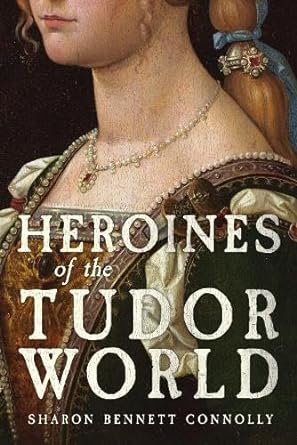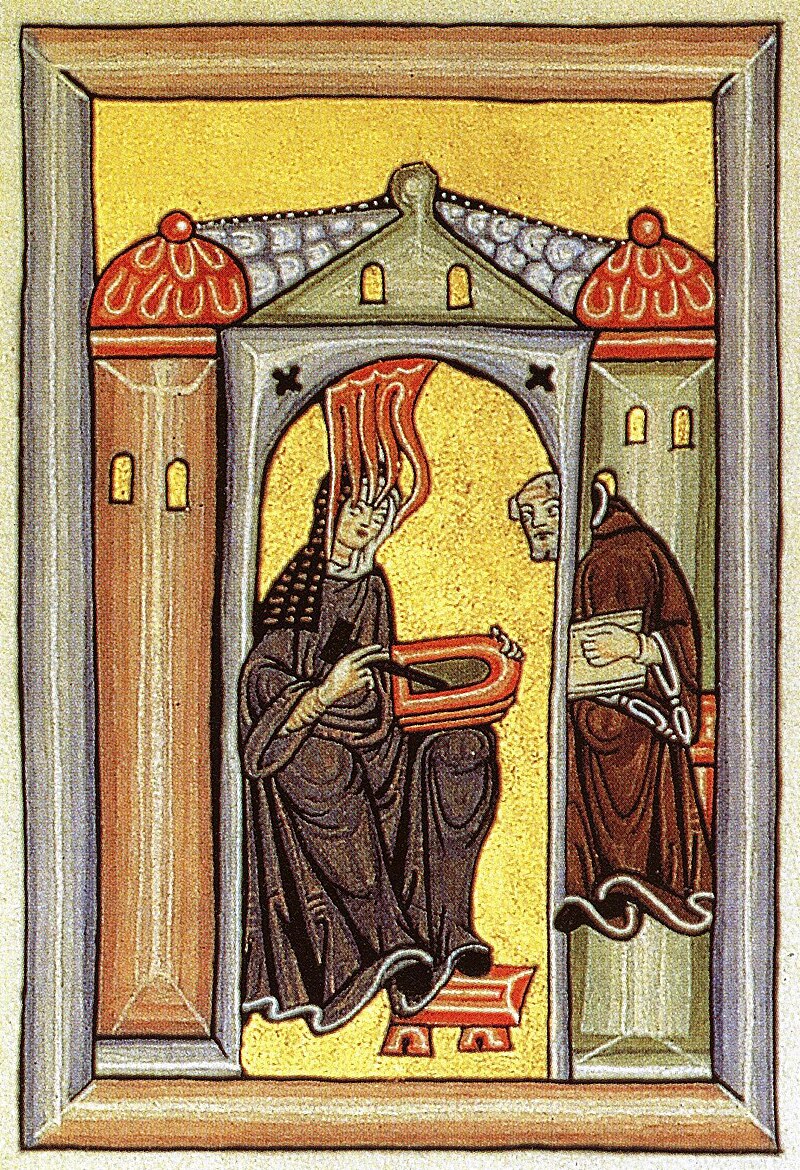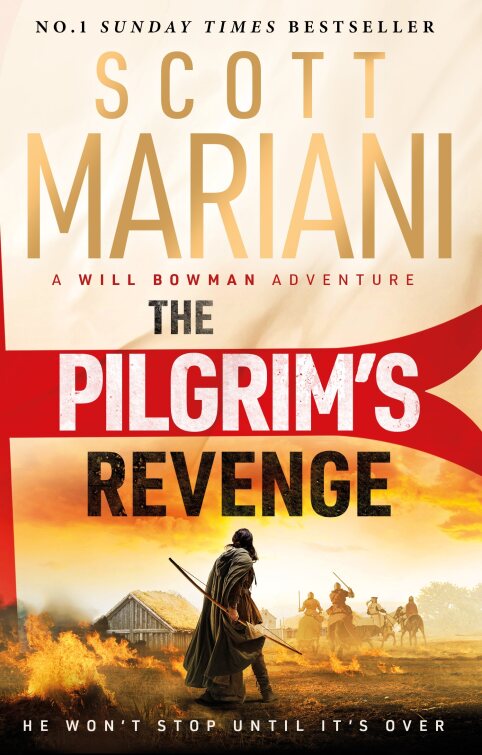
Book Corner: The Pilgrim’s Revenge by Scott Mariani

1190 – Humble layman Will Bowman lives in the countryside with his pregnant wife, when soldiers from Richard Lionheart’s army tear through his home. Will is beaten unconscious, and awakes to find his wife murdered, his farm burnt down, and his life forever changed.

In vengeance, Will infiltrates Richard’s army to find the marauding gang, and finds himself swept along in the march of the Crusades. With the help of new allies and fuelled by his loss, Will crosses Europe with the King’s army.

Can Will avenge his wife? Or will he be swept away by the unstoppable force of Richard’s Crusade?

I have been a Scott Mariani fan for a while now and was disappointed that Ben Hope has finally retired, though relieved for Ben that he survived 30 books of people trying to kill him. When one brilliant series ends, you begin to worry that what comes next will be a disappointment, or not as addictive, that you will not feel so invested in the new characters. Especially when the author moves genre. It is a big risk that author and reader take together.

So, when Scott Mariani moved from thriller with a historical twist to full-blown historical fiction, I was a tad concerned. Fans of historical fiction can be pedants. If there is a grey squirrel out of place, ie, in medieval England, someone will notice. If a character lives longer than he actually did (I am looking at Sweyn Forkbeard in Vikings Valhalla) someone will notice. There is a knack to historical fiction, to weaving the story within the known facts, to introducing fictional characters and creating their interactions with historical figures. The story has to have that essence of authenticity.

I needn’t have worried!

In fact, I probably should have trusted that Scott Mariani knew what he was doing. Though I may not have agreed with some of his theories in The Tudor Deception, the actual history was spot on. Having read the last Ben Hope book, The Templar Secret, after Christmas, I should have known a historical fiction book was around the corner. It is obvious the author loves his history. And, given the topic of that last Hope book, it should come as no surprise that Mariani’s first foray into historical fiction involved the crusades – the Third Crusade, to be precise.

Not that we get more than a glimpse of the Holy Land in this first book – all that is still to come.

By now Will had almost reached the nearest of the horsemen on his side of the yard. Up close, the rider was an intimidating figure looming far above him in the saddle with the blade of his drawn arming sword glinting in the sunlight. Before Will reached him the horseman saw his approach and wheeled his mount around to face him, dust flying from its hooves. With an angry shout the rider spurred the horse towards Will, swinging his sword down at him. Will ducked, and the double-edged blade hissed through the air above him.

It had been a blow meant to separate his head from his shoulders, and it had only narrowly missed its mark. The horse thundered past, shaking the ground. The rider reined it brutally around and charged at Will again.

Nothing like this had ever happened or even been heard of in Will’s experience. He had never been in a real fight, except a minor scuffle once when he was a lad, settled quickly with a couple of punches. This was deadly serious combat, and he was unprepared for it. But the terrible shocking sight of Beatrice in the soldiers’ clutches and the sound of her screams was enough to dispel his confusion and fear, filling him with rage and determination to do anything he could to drive these raiders away and make this stop. And the obvious realisation suddenly occurred to him, for the first time, that he was holding the very means of doing that in his hands. His bow was still unstrung, no more than a long wooden shaft with its hemp cord loosely attached to the bottom end. But practice had made him very adept at readying the weapon in moments; as the horseman bore down on him with the sword raised high, he bent the stave against his foot and looped the string into place.

The rider was almost on him. Will snatched an arrow from his quiver, nocked it to the string and simultaneously raised his bow and pulled it to full draw. He had never before pointed any weapon in anger at another human being, but there was little time to reflect on that fact, or even to take aim, as his enemy closed in. Will stood his ground until the last moment, released his arrow and saw it fly and hit the rider full in the chest.

The soldier flinched violently at the arrow strike. A normal opponent would have been a dead man, his heart split in two by the power of the longbow at such close range. But instead of piercing deep into his flesh the iron point glanced off his heavy chain mail and the broken pieces of the arrow shaft spun away through the air. Then Will had to leap out of the way of the charging horse, and he threw himself to the ground.

The Pilgrims’ Revenge starts in England and follows the journey of a crusader fleet to Outremer, with adventures that are often overlooked by historical fiction authors eager to get to the nitty gritty of the crusade. But what a story they miss out! Scott Mariani includes the little-known excursion of part of the fleet, into Portugal to help with the crusades there. Then, of course, we arrive in Sicily, where Richard the Lionheart frees his sister, Joanna, meets his bride Berengaria and antagonises his ‘ally’ Philip II of France. And then we get a wonderful, vivid depiction of the conquest of Cyprus.

All is seen through the eyes of our hero, Will Bowman, a men seeking revenge for the murder of his wife and unborn child. He only joins the crusade to chase the murderers but finds a purpose, a talent for soldiering, comradeship and a bent to command along the way. Scott Mariani seamlessly blends together the wider story of Richard the Lionheart’s crusading enterprise with Will’s personal story and experiences.

The Pilgrims’ Revenge is the first of what promises to be a fast-paced, exhilarating – and, hopefully, long – series. Punctuated by bloody battles, exquisite swordplay and a thrilling storyline, the action is relentless and Scott Mariani fans will not be disappointed. The research is exemplary, especially with regard to the conflict in Portugal, which is usually ignored. The historical figures are wonderfully written and the locations evocative, dusty, hot and exotic.

Will Bowman is a character I look forward to hearing much more about.

The Pilgrim’s Revenge will be available from 24 April 2025

Order The Pilgrim’s Revenge.

About the author:

Scott Mariani is the No.1 Sunday Times bestselling author of the multi-million-selling Ben Hope thrillers. From 2025 he is launching into a new historical adventure series featuring medieval English hero Will Bowman, who is forced from his home to join King Richard ‘the Lionheart’ on the Third Crusade and rises up to become a knight. Book 1,THE PILGRIM’S REVENGE, is available from April 2025 and is published by Hodder & Stoughton.

Scott lives and writes in west Wales, UK. You can find out more about his work by visiting his official website.

*

My books

Signed, dedicated copies of all my books are available through my online store.

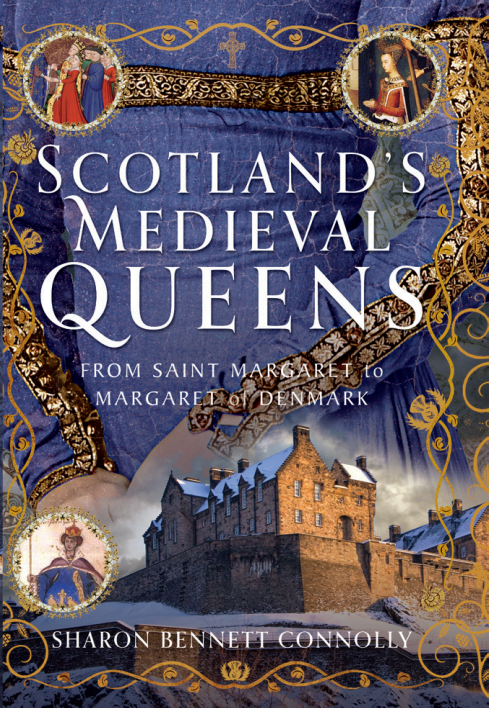
Out now: Scotland’s Medieval Queens

Scotland’s history is dramatic, violent and bloody. Being England’s northern neighbour has never been easy. Scotland’s queens have had to deal with war, murder, imprisonment, political rivalries and open betrayal. They have loved and lost, raised kings and queens, ruled and died for Scotland. From St Margaret, who became one of the patron saints of Scotland, to Elizabeth de Burgh and the dramatic story of the Scottish Wars of Independence, to the love story and tragedy of Joan Beaufort, to Margaret of Denmark and the dawn of the Renaissance, Scotland’s Medieval Queens have seen it all. This is the story of Scotland through their eyes.

Scotland’s Medieval Queens gives a thorough grounding in the history of the women who ruled Scotland at the side of its kings, often in the shadows, but just as interesting in their lives beyond the spotlight. It’s not a subject that has been widely covered, and Sharon is a pioneer in bringing that information into accessible history.’ Elizabeth Chadwick (New York Times bestselling author)

Available now from Amazon and Pen and Sword Books

Also by Sharon Bennett Connolly:
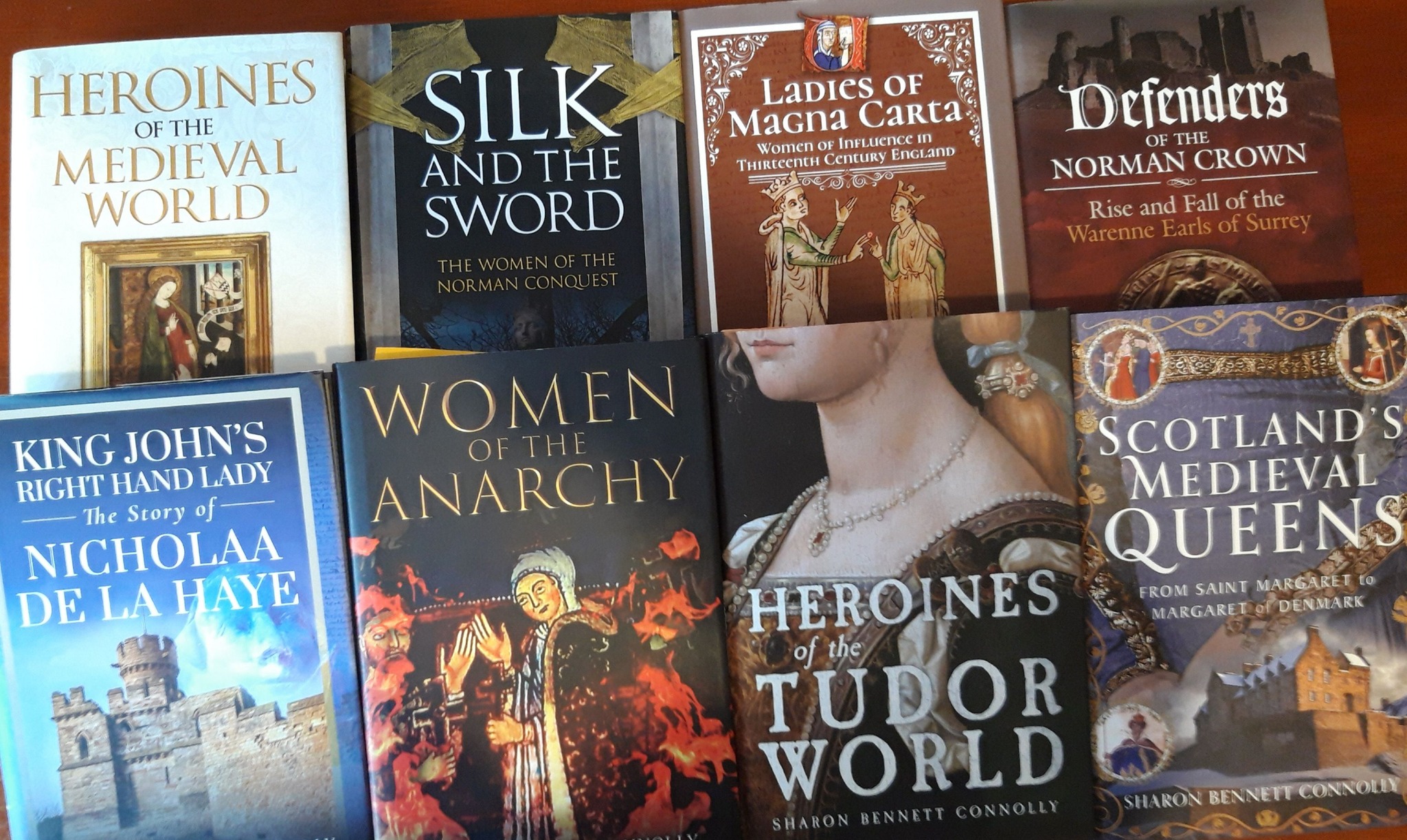
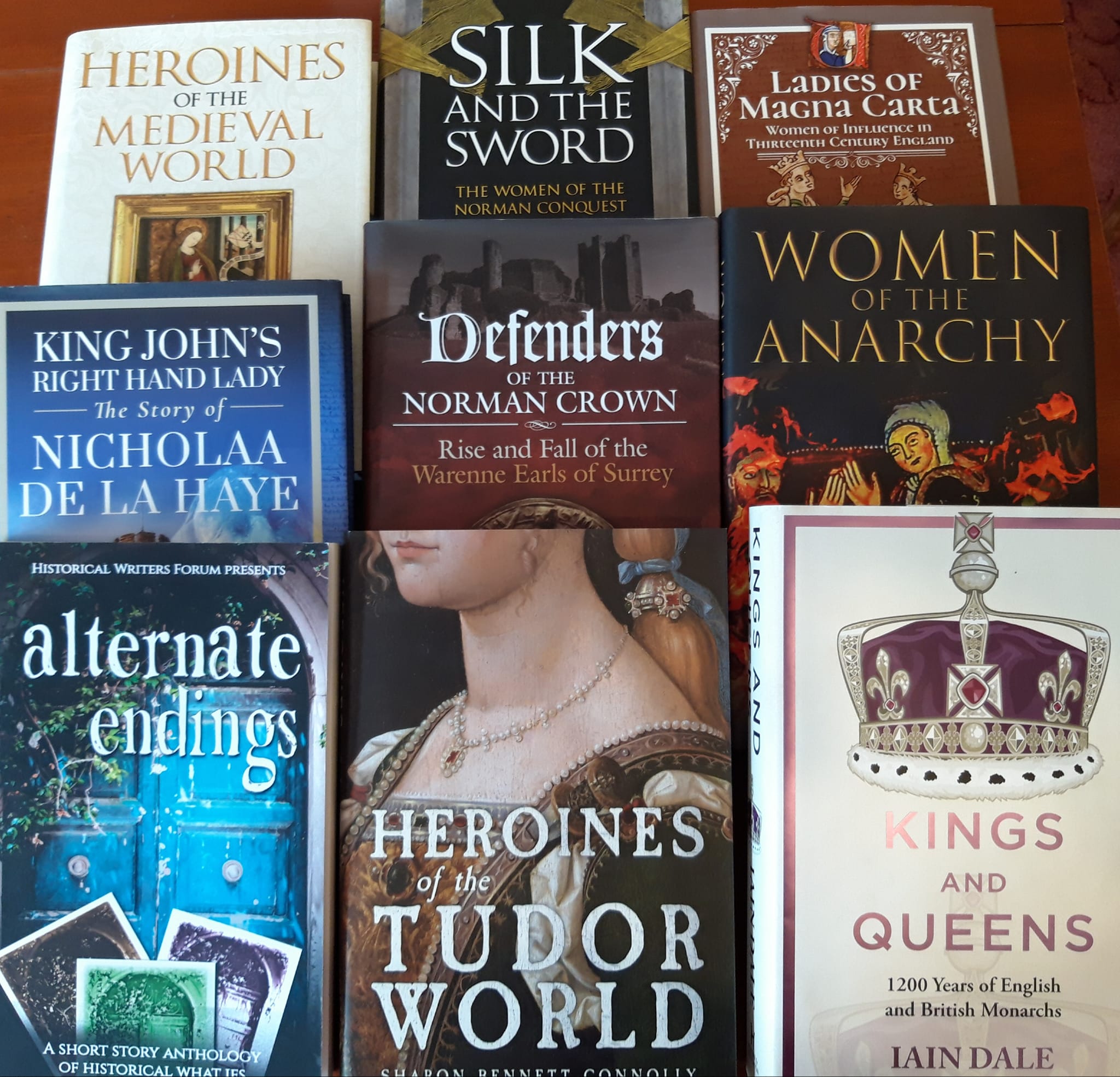
Heroines of the Tudor World tells the stories of the most remarkable women from European history in the time of the Tudor dynasty, 1485-1603. These are the women who ruled, the women who founded dynasties, the women who fought for religious freedom, their families and love. Heroines of the Tudor World is now available for pre-order from Amberley Publishing and Amazon UK. Women of the Anarchy demonstrates how Empress Matilda and Matilda of Boulogne, unable to wield a sword themselves, were prime movers in this time of conflict and lawlessness. It shows how their strengths, weaknesses, and personal ambitions swung the fortunes of war one way – and then the other. Available from Bookshop.orgAmberley Publishing and Amazon UKKing John’s Right-Hand Lady: The Story of Nicholaa de la Haye is the story of a truly remarkable lady, the hereditary constable of Lincoln Castle and the first woman in England to be appointed sheriff in her own right. Available from all good bookshops Pen & Sword Booksbookshop.org and Amazon

Defenders of the Norman Crown: The Rise and Fall of the Warenne Earls of Surrey tells the fascinating story of the Warenne dynasty, from its origins in Normandy, through the Conquest, Magna Carta, the wars and marriages that led to its ultimate demise in the reign of Edward III. Available from Pen & Sword BooksAmazon in the UK and US, and Bookshop.orgLadies of Magna Carta: Women of Influence in Thirteenth Century England looks into the relationships of the various noble families of the 13th century, and how they were affected by the Barons’ Wars, Magna Carta and its aftermath; the bonds that were formed and those that were broken. It is now available in paperback and hardback from Pen & SwordAmazon, and Bookshop.orgHeroines of the Medieval World tells the stories of some of the most remarkable women from Medieval history, from Eleanor of Aquitaine to Julian of Norwich. Available now from Amberley Publishing and Amazon, and Bookshop.orgSilk and the Sword: The Women of the Norman Conquest traces the fortunes of the women who had a significant role to play in the momentous events of 1066. Available now from Amazon,  Amberley Publishing, and Bookshop.org.

Alternate Endings: An anthology of historical fiction short stories including Long Live the King… which is my take what might have happened had King John not died in October 1216. Available in paperback and kindle from Amazon.

Podcast:

Have a listen to the A Slice of Medieval podcast, which I co-host with Historical fiction novelist Derek Birks. Derek and I welcome guests, such as Bernard Cornwell and Michael Jecks, and discuss a wide range of topics in medieval history, from significant events to the personalities involved. Every episode is also now available on YouTube.

*

Don’t forget! Signed and dedicated copies of all my books are available through my online store.

For forthcoming online and in-person talks, please check out my Events Page.

You can be the first to read new articles by clicking the ‘Follow’ button, liking our Facebook page or joining me on TwitterThreadsBluesky and Instagram.

*

©2025 Sharon Bennett Connolly, FRHistS
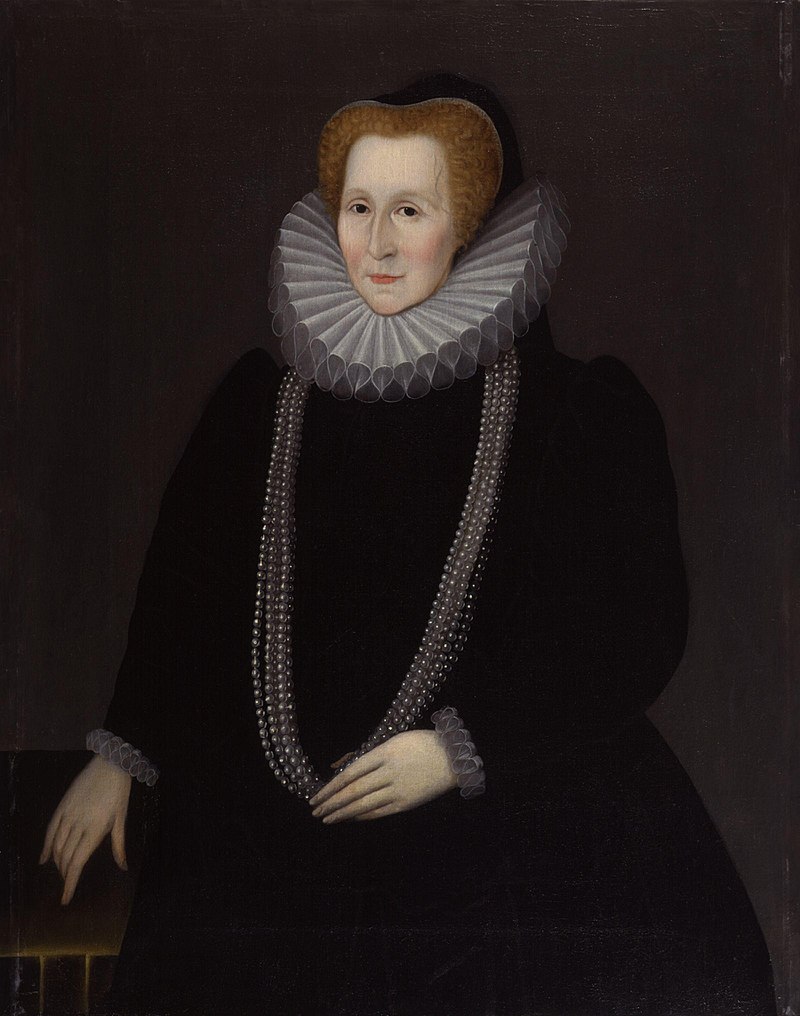
The Many Marriages of Bess of Hardwick

Bess of Hardwick

Bess of Hardwick is perhaps the most famous Tudor woman, outside of the extended Tudor royal family. A friend of Queen Elizabeth I, and confidant of Katherine Grey, she was also gaoler to Mary, Queen of Scots. An accomplished needlewoman, she is probably best known having built Chatsworth House and Hardwick Hall in Derbyshire; indeed, Hardwick Hall even bears her initials ES (Elizabeth Shrewsbury) in its external stonework.

Bess’s marital history is just as remarkable.

Bess was born around 1527, one of four daughters and a son born to John Hardwick of Hardwick, Derbyshire. It was a moderately prosperous gentry family. When her father died in 1528, When her father died in 1528, most of the family lands were taken into royal wardship until her brother James came of age. Bess’s mother, Elizabeth Leeke, remarried around 1529, to Ralph Leche of nearby Chatsworth, and had three more children, stretching the family finances even tighter. Leche’s constant problems with money meant that Leche spent the years from 1538 to 1544 in the Fleet Prison for debt and in 1545 he was committed to the debtors’ prison in Derby

With no dowry to attract a husband, 11-year-old Bess was sent into service in the household of Sir George and Lady Anne Zouche of Codnor Castle, a neighbouring family. Lady Zouche was a distant cousin of both of Bess’s parents and a friend and lady-in-waiting to Queen Anne Boleyn; following the queen’s downfall, she served her successor, Jane Seymour. Sir George was a gentleman pensioner to the king. It was in this household that Bess would have learned the ways of the aristocracy, whilst acting as a lady-in-waiting. Bess would have also made connections with various families through the other young people of the household.

Husband no. 1.

The ‘old’ Hardwick Hall

It was while she was living in the Zouche’s household that Bess met her first husband, Robert Barlow. The Barlows were acquainted with Bess’s stepfather, who was owed money on a land deal by Robert’s father, Arthur Barlow. It may well be that Arthur offered his oldest son and heir in marriage to Bess, with the amount owing from the court case written off in lieu of Bess’s dowry. Bess and Robert were married in the spring of 1543, with Bess being about fifteen and Robert a couple of months short of his fourteenth birthday.

The marriage was short-lived and possibly unconsummated, given their ages. Robert fell ill and died within eighteen months of their wedding day, on Christmas Eve 1544. When Bess applied to the Barlows for her widow’s dower, one-third of the income in rents and revenues from her husband’s estates, she was refused and a lengthy court battle ensued. A settlement was finally in 1546. It did not make her rich, but the annual income of £30 gave Bess a measure of independence when she was only 17 years of age.

Husband no. 2.

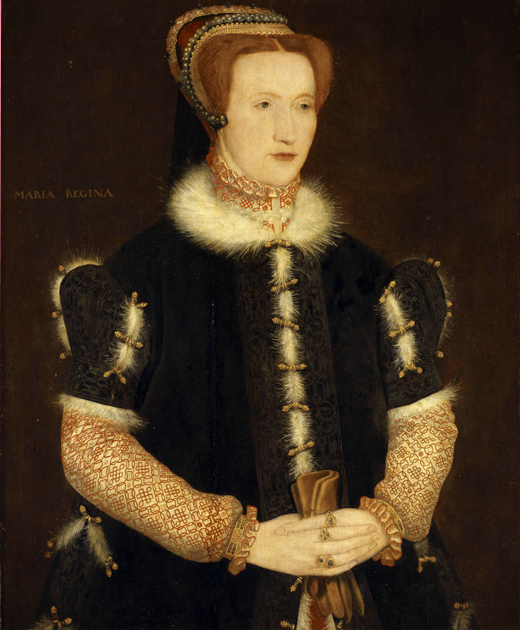
Bess of Hardwick, 1550s

Bess may have met Sir William Cavendish, while staying at Bradgate Park with Lady Frances Brandon, Marchioness of Dorset. Frances was a granddaughter of King Henry VII and the mother of the ill-fated Lady Jane Grey, the Nine Days Queen. Cavendish was twice-widowed, mature and rather rich, with 3 surviving daughters and no male heir. An experienced government official, he had been appointed Treasurer of the King’s Chamber in 1546 and had been knighted by the king on Easter Sunday of the same year. He had a portfolio of properties throughout the Midlands and a fine house in London.

When he met Bess in 1547, she was 19 and he was 40. A strong friendship developed, despite the age gap. They were married in the family chapel at Bradgate Park on 20 August 1547. Bess had a deep interest in astrology and the timing of the wedding, at two in the morning, was calculated as being the most propitious. Cavendish recorded the event in his notebook:

‘Memorandum. That I was married unto Elizabeth Hardwicke my third wife in Leestersheer at Bradgate House, on 20th August in the first year of King Edward’s reign, at two of the clock after midnight.’1

After the wedding, the couple travelled to Sir William’s manor at Northaw in Hertfordshire where Bess probably met her three stepdaughters for the first time, Catherine, Mary and Anne. At twelve, the eldest was only seven years younger than Bess. Though managing a household and acting as stepmother to 3 girls not much younger than herself must have been a daunting prospect, within a year Bess was keeping the books, paying bills and recording rents. The proximity of the manor to London also meant that shortly after the wedding Bess was presented at court to the young king Edward VI.

Bess and Cavendish would have 8 children together, of which 6 would survive childhood, including 3 boys. And it was with Cavendish that Bess acquired the lands of her stepfather at Chatsworth for £600. There was an old manor house on the property that the family lived in until the completion of Chatsworth House. Bess and Sir William continued to buy land in Derbyshire, including 8,000 acres from the earl of Westmorland. All the Derbyshire properties were in both their names, which meant that when Sir William died before his heir came of age, the properties remained in Bess’s hands rather than being taken into wardship. Sir William died in October 1557, leaving Bess in a precarious financial position, owing £5,237 to the crown over funds that had disappeared during his time at the Exchequer, apparently pilfered by an assistant.

The ‘new’ Hardwick Hall, taken from the old hall

Facing bankruptcy, Bess only avoided the confiscation of her lands by writing to many of her husband’s friends asking for their help and support. These friends voted against the bill when it was presented to Parliament. Her lands were safe, but she still owed the money. Bess made the final entry in Sir William’s notebook:

‘Sir William Cavendish Knight, my most dear and well-loved husband, departed this present life on Monday, being the 25th day of October … on whose soul I most humbly beseech the Lord to have mercy, and to rid me and his poor children of our great misery.’2

Husband no. 3.

In 1559, Bess married her late husband’s friend Sir William St Loe, a widower with 2 surviving daughters, Mary and Margaret. From an ancient and noble family and considerably wealthier than Cavendish had been, St Loe was Captain of Elizabeth I’s Yeoman Guard. St Loe’s father, Sir John St Loe, died and Bess took the opportunity to visit her husband’s old friend and offer her condolences. As the months progressed, so did their relationship. In January 1559, Sir William St Loe played a major role in Queen Elizabeth’s coronation, seeing to her security and, as Chief Butler of England, it was St Loe who ceremonially offered the first cup of wine to the new sovereign.

In July 1559, Sir William St Loe announced his betrothal to Bess and a wedding invitation sent by the groom to Bess’s old friend, Sir John Thynne, still exists:

Saving your promise … and not forgetting your friendship, these lines are to satisfy you that the day of my marriage is by my Mistress appointed upon Sunday this sennight [27 August]. At which time both her ladyship and myself [hope] to see you there. She hath with terrible threatenings commanded me not to forget making of her hearty commendations unto you and to my lady your wife, unto whom I pray you let me also commended … from Somerset this Tuesday 15th August. William Seyntlo.3

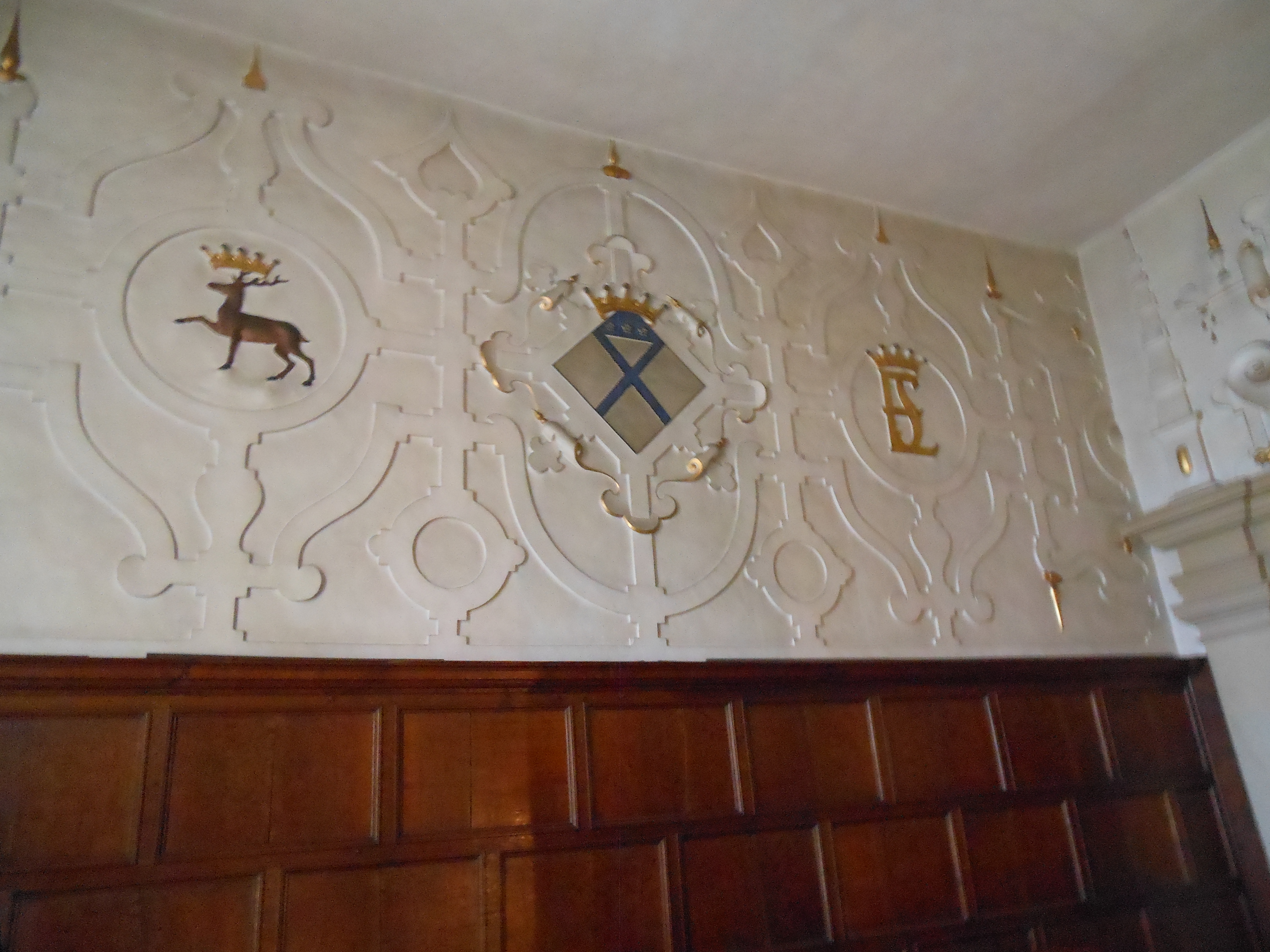
Bess’s initials and the Talbot dog, Hardwick Hall

Once married, St Loe’s duties often separated the couple, until  Bess was appointed a Lady of the Privy Chamber. Due to his relationship with Queen Elizabeth, St Loe was able to reduce the debt Bess owed and paid the £1,000 fine on her behalf. The marriage of Bess and St Loe was a happy one and he treated Bess’s children as his own. However, Sir William and his younger brother, Edward, became involved in a property dispute. Edward visited Sir William and Bess in London to resolve the issue but shortly after the visit, Bess fell ill, poisoned. William St Loe suspected his brother Edward and 3 of Edward’s associates were punished, though Edward was not.

Bess was visiting her family in Derbyshire in 1565 when she received a note from London informing her that St Loe was critically ill. By the time she arrived back in the city, her husband was dead. As his brother Edward had visited recently, poison was suspected but could not be proven. St Loe had left everything to
Bess. His will was unequivocal, though the fact St Loe had left nothing to his daughters meant that it was challenged, and Bess found herself fighting yet another court case for her rights.

Husband no. 4.

Bess of Hardwick’s initials on Hardwick Hall, Derbyshire

On 1 November 1567, Bess married her fourth and final husband, George Talbot, Earl of Shrewsbury. At the same time, four of their children were married, with Bess’s daughter Mary marrying George’s second son, Gilbert, and Henry Cavendish marrying George’s daughter, Grace. A wealthy widow until that point, Bess was well aware that all her lands and property would be controlled by Shrewsbury from the moment of their marriage. However, Bess had a clause written into the marriage contract that in exchange for this, one-third of Shrewsbury’s unsettled income would go to Bess on his death. Arrangements were also made regarding Chatsworth, which would automatically go to Henry Cavendish on Bess’s death.

Bess and Shrewsbury spent the first few months of their married life away from court but sent the queen a gift of venison through Bess’s nephew, Anthony Wingfield. When the young man said he did not know when Bess would be returning to court, the queen said,

‘I am assured that if she have her own will she would not be long before she would see me. I have been glad to see my lady St Loe, but am I now more desirous to see my Lady Shrewsbury. I hope my Lady hath known my good opinion of her… I assure you there is no Lady in this land that I better love and like.’4

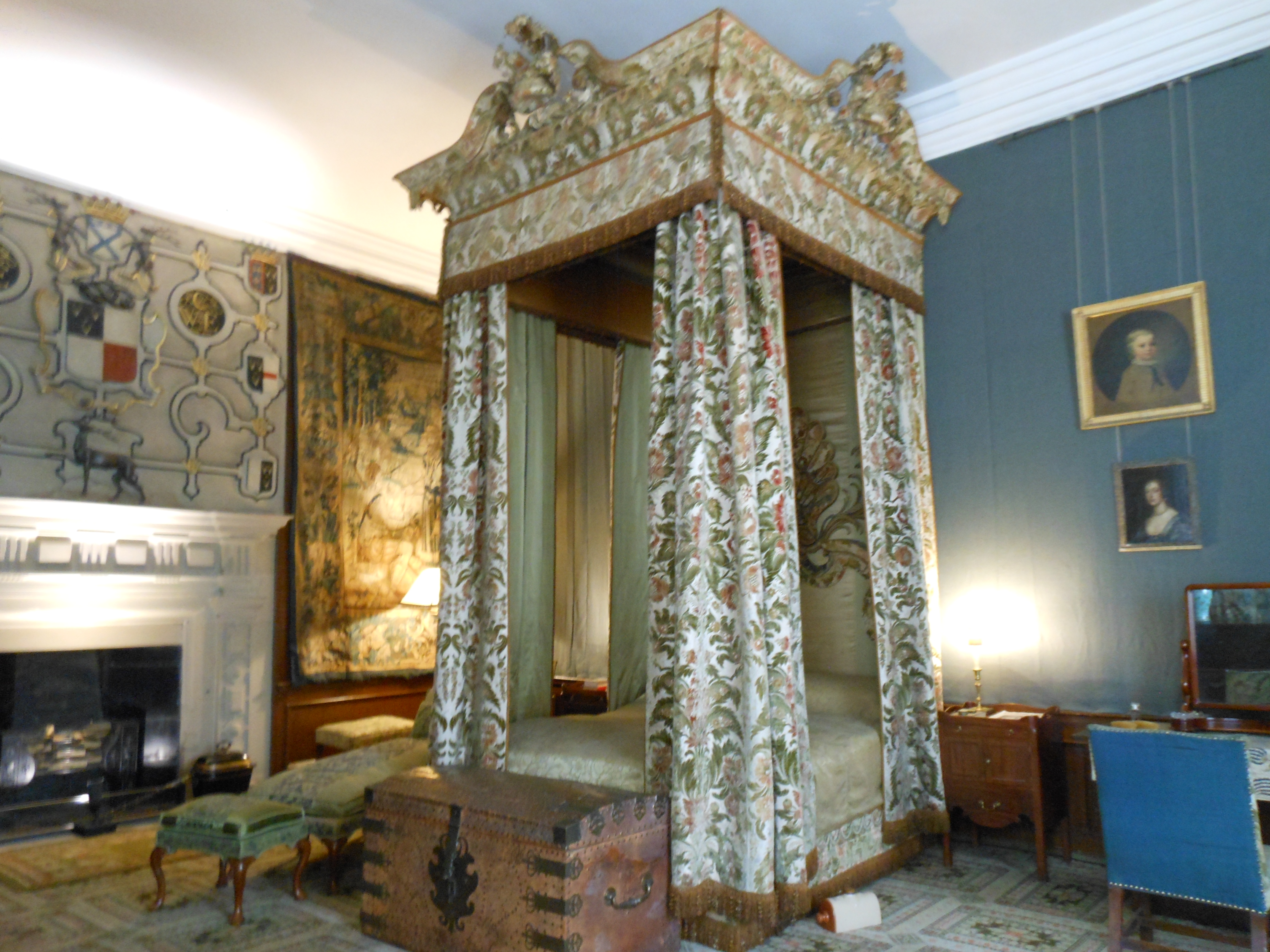
Bess of Hardwick’s bedchamber, Hardwick Hall

In 1568, Shrewsbury and Bess were given the custody of Mary, Queen of Scots, who remained in their charge until 1584. Famed for her needlework, Bess and Queen Mary would work on samples together. It was whilst they had custody of the Scots queen that Bess and Shrewsbury’s relationship began to break down. Bess repeatedly accused the earl of infidelities, including with their queenly prisoner, and Shrewsbury was feeling the strain of acting gaoler, with mounting debts as a result of the expenses incurred. In 1584, Bess separated from Shrewsbury and went to live at Chatsworth. She had to fight yet another legal battle when Shrewsbury claimed Chatsworth was his under the terms of their marriage settlement, but the court found in Bess’s favour, awarding her Chatsworth and a sizeable income from her husband.

By the time of the settlement, however, Bess had already moved on from Chatsworth and started a new building project at Hardwick, rebuilding her family’s old Hall, which was completed by 1591. Her estranged husband, Shrewsbury, died in 1590, leaving Bess with a third of his disposable lands. As a result, as soon as the Old Hall was completed, Bess embarked on a new project, building an entirely new Hardwick Hall right next door. Bess’s final years were occupied with building and furnishing the new hall.

In 1601, she made her will, leaving Hardwick to her second and favourite son, William, while her eldest son Henry was to have Chatsworth. Bess also made provision for her other children and her grandchildren, as well as her servants and the residents of the almshouse that she had founded in Derby. However, she altered the will in March 1603, after quarrelling with both Henry and her granddaughter Arbella, both of whom she now disinherited.

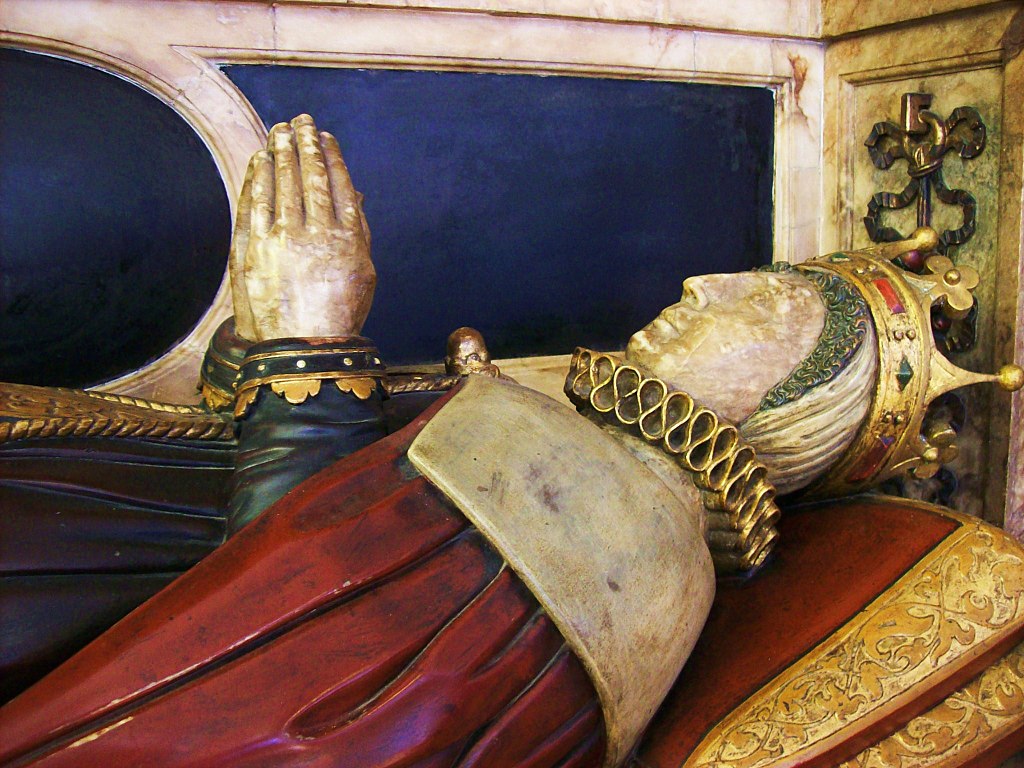
Effigy of Bess of Hardwick wearing a coronet of a countess. Derby Cathedral

At the time of her death, Bess was one of the richest people in England. She had survived childbirth eight times and the rollercoaster that was the English Reformation. She is famed both as the builder of Chatsworth House and Hardwick Hall and as the founder of a great dynasty. Her descendant, Peregrine Cavendish, the twelfth and current duke of Devonshire, still resides at Chatsworth House. Bess is also famed for her needlework, many examples of it still survive in her various properties. She and Mary, Queen of Scots would work on samples together when the Scots queen was in the custody of Bess and her husband.

Having survived all four husbands, various legal challenges, poisoning and scandal, Bess died at Hardwick on 13 February 1610 and was buried at All Hallows, Derby, now Derby Cathedral.

Notes:

1. Collins, Historical Collections of the Noble Families of Cavendish quoted in Mary S. Lovell, Bess of Hardwick, p. 36; 2. Collins, Historical Collections of the Noble Families of Cavendish, quoted in Jill Armitage, Four Queens and a Countess, p. 93; 3. Mary S. Lovell, Bess of Hardwick, p. 147; 4. Jill Armitage, Four Queens and a Countess, p. 125

Sources;

Mary S. Lovell, Bess of Hardwick: First Lady of Chatsworth; Jill Armitage, Four Queens and a Countess: Mary Queen of Scots, Elizabeth I, Mary I, Lady Jane Grey and Bess of Hardwick; Nathaniel Johnson, Lives of the Earls of Shrewsbury; Arthur Barlow’s Inquisition Post Mortem; Calendar of State Papers, Letters and Papers September 1536; Lisa Hilton, Elizabeth I: Renaissance Prince, A Biography; Annie Bullen, Hardwick Hall (guidebook); Tracy Borman, Elizabeth’s Women; Leanda de Lisle, The Sisters Who Would Be Queen: The Tragedy of Mary, Katherine and Jane Grey; Nicola Tallis, Crown of Blood: The Deadly Inheritance of Lady Jane Grey; Alison Weir, Elizabeth the Queen; Elizabeth Norton, The Lives of Tudor Women; Victoria Sylvia Evans, Ladies-in-Waiting: Women who Served at the Tudor Court; Amy Licence, The Sixteenth Century in 100 Women.

Images:

Portraits of Bess and her tomb are courtesy of Wikipedia. All images of Hardwick Hall ©2024 Sharon Bennett Connolly FRHistS
*

My Books

Signed, dedicated copies of all my books are available through my online bookshop. or by contacting me.

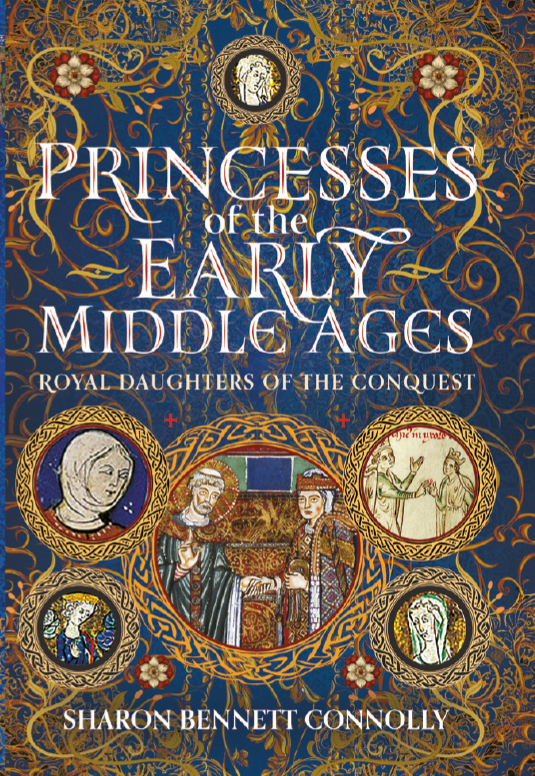
Coming 30 March: Princesses of the Early Middle Ages

Books by Sharon Bennett Connolly

Daughters of kings were often used to seal treaty alliances and forge peace with England’s enemies. Princesses of the Early Middle Ages: Royal Daughters of the Conquest explores the lives of these young women, how they followed the stereotype, and how they sometimes managed to escape it. It will look at the world they lived in, and how their lives and marriages were affected by political necessity and the events of the time. Princesses of the Early Middle Ages will also examine how these girls, who were often political pawns, were able to control their own lives and fates. Whilst they were expected to obey their parents in their marriage choices, several princesses were able to exert their own influence on these choices, with some outright refusing the husbands offered to them.

Their stories are touching, inspiring and, at times, heartbreaking.

Princesses of the Early Middle Ages: Royal Daughters of the Conquest is now available for pre-order from Pen & Sword and Amazon.

Also by Sharon Bennett Connolly:

Books by Sharon Bennett Connolly

Scotland’s history is dramatic, violent and bloody and Scotland’s Medieval Queens have seen it all. This is the story of Scotland through their eyes. Available now from Amazon and Pen and Sword BooksHeroines of the Tudor World tells the stories of the most remarkable women from European history in the time of the Tudor dynasty, 1485-1603. These are the women who ruled, the women who founded dynasties, the women who fought for religious freedom, their families and love. Heroines of the Tudor World is now available from Amberley Publishing and Amazon UK. Women of the Anarchy demonstrates how Empress Matilda and Matilda of Boulogne, unable to wield a sword themselves, were prime movers in this time of conflict and lawlessness. It shows how their strengths, weaknesses, and personal ambitions swung the fortunes of war one way – and then the other. Available from Bookshop.orgAmberley Publishing and Amazon UKKing John’s Right-Hand Lady: The Story of Nicholaa de la Haye is the story of a truly remarkable lady, the hereditary constable of Lincoln Castle and the first woman in England to be appointed sheriff in her own right. Available from all good bookshops Pen & Sword Booksbookshop.org and Amazon

Defenders of the Norman Crown: The Rise and Fall of the Warenne Earls of Surrey tells the fascinating story of the Warenne dynasty, from its origins in Normandy, through the Conquest, Magna Carta, the wars and marriages that led to its ultimate demise in the reign of Edward III. Available from Pen & Sword BooksAmazon in the UK and US, and Bookshop.orgLadies of Magna Carta: Women of Influence in Thirteenth Century England looks into the relationships of the various noble families of the 13th century, and how they were affected by the Barons’ Wars, Magna Carta and its aftermath; the bonds that were formed and those that were broken. It is now available in paperback and hardback from Pen & SwordAmazon, and Bookshop.orgHeroines of the Medieval World tells the stories of some of the most remarkable women from Medieval history, from Eleanor of Aquitaine to Julian of Norwich. Available now from Amberley Publishing and Amazon, and Bookshop.orgSilk and the Sword: The Women of the Norman Conquest traces the fortunes of the women who had a significant role to play in the momentous events of 1066. Available now from Amazon,  Amberley Publishing, and Bookshop.org.

Alternate Endings: An anthology of historical fiction short stories including Long Live the King… which is my take what might have happened had King John not died in October 1216. Available in paperback and kindle from Amazon.

Podcast:

A Slice of Medieval

Have a listen to the A Slice of Medieval podcast, which I co-host with Historical fiction novelist Derek Birks. Derek and I welcome guests, such as Ian Mortimer, Bernard Cornwell, Elizabeth Chadwick and Scott Mariani, and discuss a wide range of topics in medieval history, from significant events to the personalities involved. 

Every episode is also now available on YouTube.

*

Don’t forget! Signed and dedicated copies of all my books are available through my online bookshop.

For forthcoming online and in-person talks, please check out my Events Page.

You can be the first to read new articles by clicking the ‘Follow’ button, liking our Facebook page or joining me on TwitterThreadsBluesky and Instagram.

©2024 Sharon Bennett Connolly FRHistS

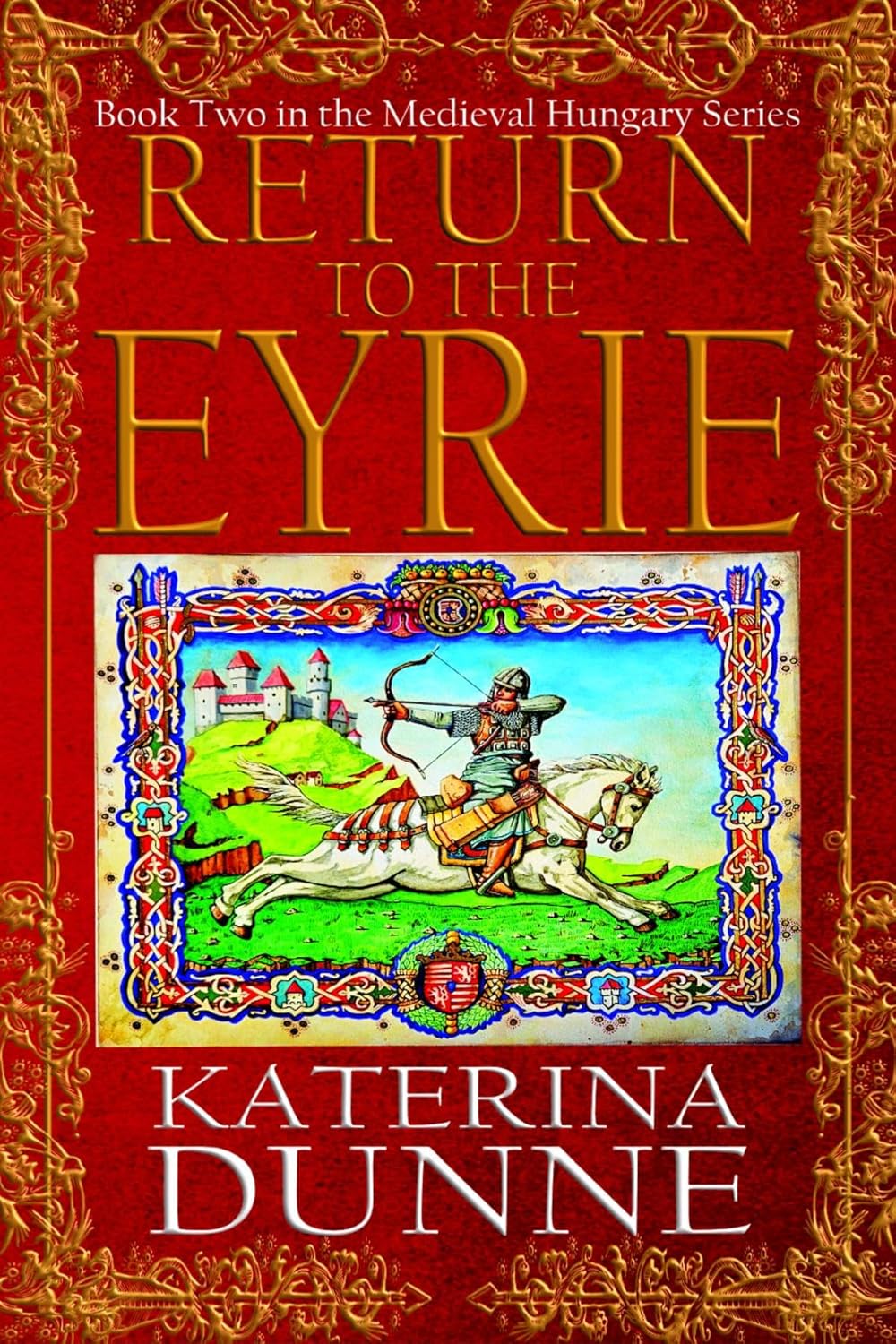
Book Corner: Return to the Eyrie by Katerina Dunne

Honour, revenge, and the quest for justice.

Belgrade, Kingdom of Hungary, 1470

Raised in exile, adolescent noblewoman Margit Szilágyi dreams of returning to her homeland of Transylvania to avenge her father’s murder and reclaim her stolen legacy. To achieve this, she must break the constraints of her gender and social status and secretly train in combat. When the king offers her a chance at justice, she seizes it – even if it means disguising herself as a man to infiltrate the vultures’ nest that now occupies her ancestral ‘eyrie’. Plagued by childhood trauma and torn between two passionate loves, Margit faces brutal battles, her murderous kin’s traps and inner demons on her quest for vengeance. Only by confronting the past can she reclaim her honour – if she can survive long enough to see it through. Return to the Eyrie is an epic coming-of-age tale of a young woman’s unwavering pursuit of justice and destiny in 15th century Hungary.

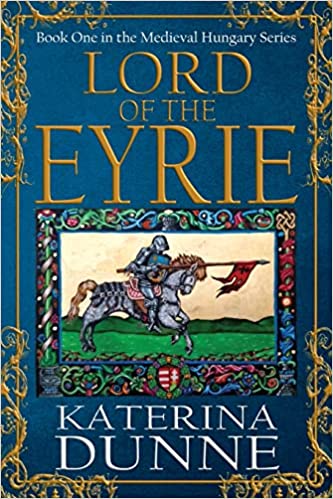
A couple of years ago, I had the pleasure of reading and reviewing Lord of the Eyrie by Katerina Dunne, a novel set in late medieval Hungary. It was a fascinating introduction to a country whose History I know very little about. And the story was incredible, a family drama, with vivid battle scenes and intricately woven plotlines. It certainly left me wanting more. It was an absolute pleasure to read. So, when Katerina told me she had written a sequel, I jumped at the chance to read it. I was intrigued as to how the story would continue.

And it is a stunning sequel to Lord of the Eyrie, following the daughter of Sandor, the hero in the first book, who is trying to find out exactly what happened to her father. She also wants to clear his name. unscrupulous enemies branded Sandor a traitor. Margit aims to prove he wasn’t.

Margit grew up without family, protected by her nurse and her father’s best friend, and knowing that she had been deprived of her inheritance and position in the world. The search for the truth drives her. But she is not the traditional Hungarian girl. A born leader, she learns to fight – against her father’s enemies and against the life that is planned out for her.

In the lambent glow of the oil lamp, Ahmed traced a thumb down the flat of Margit’s blade, carefully like touching a precious gem. “Beautiful,” he murmured.

“Will you show me how to use it?”

Fixed on the etching, Ahmed’s eyes narrowed, and his forehead wrinkled as though his mind was caughter by a distant recollection. “Where did you find this?”

Margit swallowed back her sudden apprehension. “Why do you ask?”

“You didn’t steal it, did you?”

“No!” She snatched the dagger from Ahmed’s hand, placed it back in its box and slammed the lid shut. “It’s mine.” She wrapped her arms about her precious possession.

“Why are you so angry?” Adnan ventured but shrank back at once, cowering under her fierce gaze.

“Forgive me,” Ahmed said. “I don’t know the family, but I remember the coat of arms.”

Margit’s stomach tightened. “You do?”

“An old story. Some other time. You don’t keep Erzsi waiting outside.”

He waved Margit away, but she let the canvas bag with her other gifts drop from her shoulder. “Erzsi will not mind waiting. Please, tell me.”

Ahmed cleared his throat. His eyes wandered away to times long past. “When Sultan Mehmed besieged Belgrade fifteen years ago, I fought beside Janissaries against Hunyadi’s army -“

“General Janos Hunyadi? The king’s late father?” Margit interrupted him, eyes wide open with excitement.

The general was her own father’s overlord. Hungary’s bravest protector as Imre always referred to him, tearing every time he uttered his name.

Ahmed nodded. “Yes. His defenders trapped us in the town. I killed many but then saw this tall and skilled knight. No Shield; just a sword in one hand and axe in the other, slaying Janissaries like untrained peasants.” He pointed at Margit’s box. “He wore this coat of arms. I thought I must stop him. I attacked. But I never fought anyone like him. By Allah, he had no fear; didn’t care if he lives or dies.”

Margit is a wonderful heroine, determined to seek out the truth, and to forge her own path. Not always aware of, or concerned for, the feelings of others, the teenager searches out her own destiny and confronts her enemies, putting herself and those who love her in danger.

Margit is not always a likeable heroine. She is sometimes selfish. But, she is a teenage girl who has lost practically everything – family, home, identity. In trying to recover what is lost, she becomes a more sympathetic character, learning to compromise and reach an understanding with those around her. The reader will become invested in her journey.

Return to the Eyrie by Katerina Dunne is set in medieval Hungary, a land which Katerina Dunne recreates in astonishing detail. The landscape, the settlements, castles and people help to draw the reader into the story. Hungary is a land rich in resources but beset by enemies, both within and without, and the heroine, Margit, must navigate not only national politics, international enemies but also her own identity as a young woman and the daughter of an accused traitor.

It is a wonderful, rich and absorbing story. I highly recommend it!

To Buy the Book:

Return to the Eyrie is available in paperback and on Kindle from Amazon – and is currently only 49p, so snap it up!

About the author:

Katerina Dunne is the pen-name of Katerina Vavoulidou. Originally from Athens, Greece, Katerina has been living in Ireland since 1999. She has a degree in English Language and Literature from the University of Athens, an MA in Film Studies from University College Dublin and an MPhil in Medieval History from Trinity College Dublin. While she used to write short stories for family and friends in her teenage years, she only took up writing seriously in 2016-17, when she started work on her first novel.

Katerina’s day job is in financial services, but in her free time she enjoys reading historical fiction and watching historically-themed movies and TV series. She is passionate about history, especially medieval history, and her main area of interest is 13th to 15th century Hungary. Although the main characters of her stories are fictional, Katerina uses real events and personalities as part of her narrative in order to bring to life the fascinating history of the medieval Kingdom of Hungary, a location and time period not so well-known to English-speaking readers.

*

My Books:

Signed, dedicated copies of all my books are available through my online bookshop.

Coming 30 January 2025: Scotland’s Medieval Queens

Scotland’s history is dramatic, violent and bloody. Being England’s northern neighbour has never been easy. Scotland’s queens have had to deal with war, murder, imprisonment, political rivalries and open betrayal. They have loved and lost, raised kings and queens, ruled and died for Scotland. From St Margaret, who became one of the patron saints of Scotland, to Elizabeth de Burgh and the dramatic story of the Scottish Wars of Independence, to the love story and tragedy of Joan Beaufort, to Margaret of Denmark and the dawn of the Renaissance, Scotland’s Medieval Queens have seen it all. This is the story of Scotland through their eyes.

Available for pre-order now.

Also by Sharon Bennett Connolly:

Heroines of the Tudor World tells the stories of the most remarkable women from European history in the time of the Tudor dynasty, 1485-1603. These are the women who ruled, the women who founded dynasties, the women who fought for religious freedom, their families and love. Heroines of the Tudor World is now available for pre-order from Amberley Publishing and Amazon UK. Women of the Anarchy demonstrates how Empress Matilda and Matilda of Boulogne, unable to wield a sword themselves, were prime movers in this time of conflict and lawlessness. It shows how their strengths, weaknesses, and personal ambitions swung the fortunes of war one way – and then the other. Available from Bookshop.orgAmberley Publishing and Amazon UKKing John’s Right-Hand Lady: The Story of Nicholaa de la Haye is the story of a truly remarkable lady, the hereditary constable of Lincoln Castle and the first woman in England to be appointed sheriff in her own right. Available from all good bookshops Pen & Sword Booksbookshop.org and Amazon

Defenders of the Norman Crown: The Rise and Fall of the Warenne Earls of Surrey tells the fascinating story of the Warenne dynasty, from its origins in Normandy, through the Conquest, Magna Carta, the wars and marriages that led to its ultimate demise in the reign of Edward III. Available from Pen & Sword BooksAmazon in the UK and US, and Bookshop.orgLadies of Magna Carta: Women of Influence in Thirteenth Century England looks into the relationships of the various noble families of the 13th century, and how they were affected by the Barons’ Wars, Magna Carta and its aftermath; the bonds that were formed and those that were broken. It is now available in paperback and hardback from Pen & SwordAmazon, and Bookshop.orgHeroines of the Medieval World tells the stories of some of the most remarkable women from Medieval history, from Eleanor of Aquitaine to Julian of Norwich. Available now from Amberley Publishing and Amazon, and Bookshop.orgSilk and the Sword: The Women of the Norman Conquest traces the fortunes of the women who had a significant role to play in the momentous events of 1066. Available now from Amazon,  Amberley Publishing, and Bookshop.org.

Alternate Endings: An anthology of historical fiction short stories including Long Live the King… which is my take what might have happened had King John not died in October 1216. Available in paperback and kindle from Amazon.

Podcast:

Have a listen to the A Slice of Medieval podcast, which I co-host with Historical fiction novelist Derek Birks. Derek and I welcome guests, such as Bernard Cornwell, and discuss a wide range of topics in medieval history, from significant events to the personalities involved.

*

Don’t forget! Signed and dedicated copies of all my books are available through my online bookshop.

For forthcoming online and in-person talks, please check out my Events Page.

You can be the first to read new articles by clicking the ‘Follow’ button, liking our Facebook page or joining me on TwitterThreadsBluesky and Instagram.

©2024 Sharon Bennett Connolly FRHistS
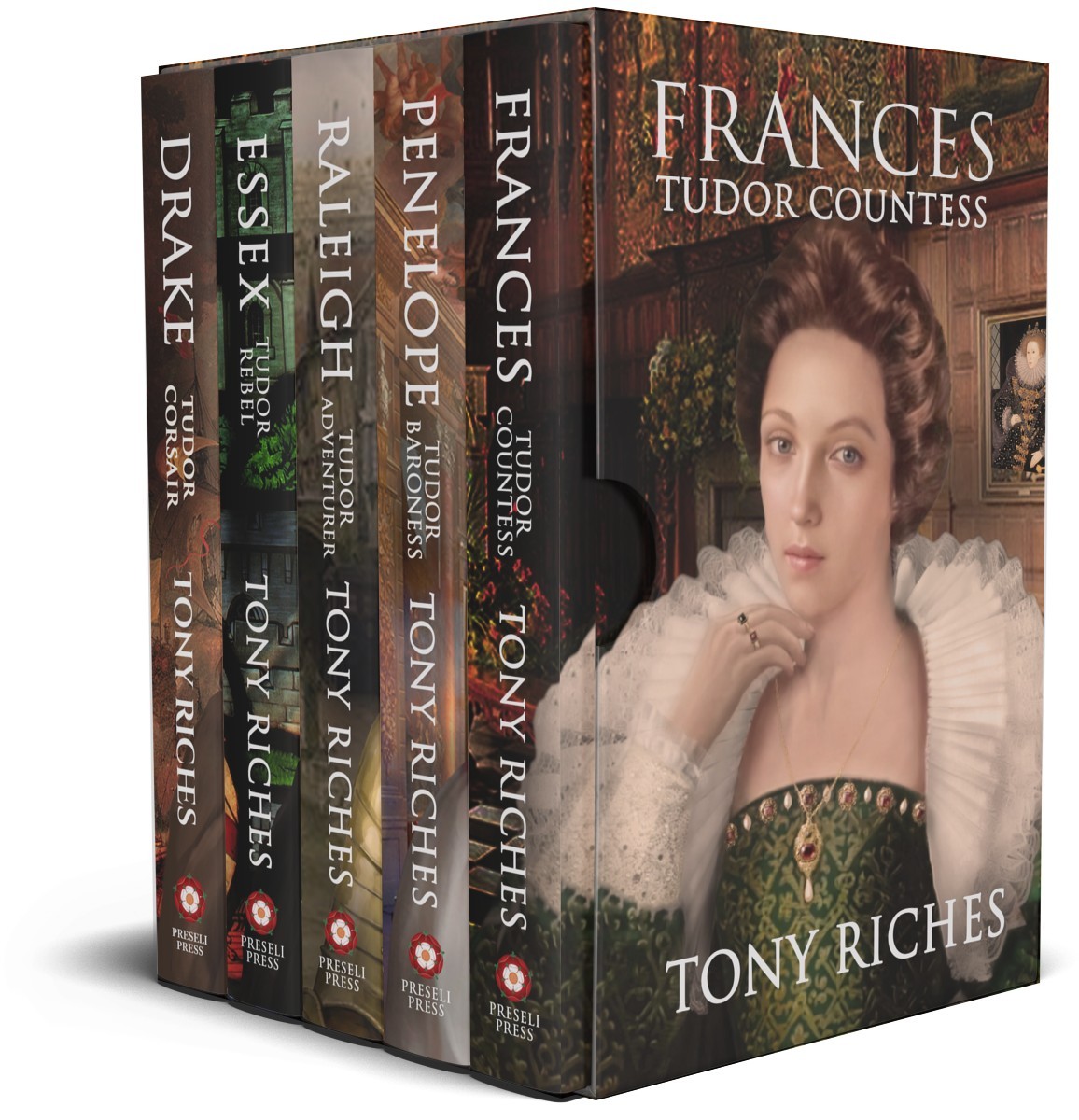
Guest Post: Frances – Tudor Countess: The History Behind the Book, by Tony Riches

Today, it is a pleasure to welcome Tony Riches back to History…the Interesting Bits, with an article about the story behind his new novel, Frances: Tudor Countess. Frances Walsingham was the daughter of Queen Elizabeth’s spymaster, Francis Walsingham who married three times, including the soldier-poet, Sir Philip Sidney and, later, Robert Devereux, Earl of Essex

So, over to Tony…

Frances – Tudor Countess: The History Behind the Book

The origins of my latest book can be traced to my birth in Pembroke, Wales, close to the medieval castle where Henry Tudor was born. I couldn’t find any books which brought his story to life, and was inspired to write the Tudor Trilogy, where Henry is born in the first book, comes of age in the second, and becomes King of England in the third.

The success of the Tudor Trilogy led to the idea of following the dynasty in a continuous thread to the end, with the death of Queen Elizabeth I. I enjoy studying the real history to understand the social, political and economic context, and like to offer readers an historically authentic ‘immersive’ experience.

Over the past ten years I’ve built an extensive reference collection of books on everything Tudor and Elizabethan, from medicine to recipes, childbirth to government, as well as numerous biographies of key players in the story of the Tudors. All this research provides the backdrop within which the real lives and relationships of my chosen subjects develop and evolve.

For my second trilogy I decided to write about the reign of Henry VIII as the ‘Brandon Trilogy’, from the perspective of his youngest sister, Mary, his best friend, Charles Brandon, and the woman who some say could have become his seventh wife, Katherine Willoughby.

This took me to the Elizabethan era, and the decision to explore the enigmatic queen through three of her favourite men, Drake, Essex and Raleigh. Each saw her very differently, as Drake was in awe of her, Essex was like the son she never had, and Raleigh became captain of her guard.

I found that most of what I thought I knew about these men was wrong or missing vital details. I discovered Drake strived to understand and help liberate enslaved people. The heroic failure of the Essex rebellion was more about his lack of emotional intelligence than political ambition, and Raleigh’s colonisation of the New World was conducted from the comfort of his home through the courageous sacrifices of others.

I also realised I would need to make the Elizabethan books a series of six, rather than a trilogy, and explore the complexity of Queen Elizabeth through the eyes of three of her ladies. I had plenty to choose from, but found the most interesting were Penelope, eldest daughter of the queen’s nemesis, Lady Lettice Knollys, Frances, the only surviving child of the queen’s spymaster, Walsingham, and one of her ‘Gentlewomen’, Bess Raleigh.

One of my favourite historical sources for the Elizabethan series is “The Elizabethan Court Day by Day” by Marion E. Colthorpe. A rich and varied collection of research, this is where I discovered such details as the queen’s chambers being infested with fleas, which accumulated at the windows, the lists of participants in Accession Day jousts, and actual menus for royal banquets. Most importantly, this resource enabled me to cross-check events on any day at the Elizabethan court with other sources to ensure historical accuracy.

Of the many biographies I’ve studied, an unexpected source I found useful was Daphne du Maurier’s work on Francis and Anthony Bacon, who became important advisors to Frances in her struggle to understand and influence events at court. I also collected the works of the late Professor David Loades, particularly on the lives of William and Robert Cecil, who provide a connection between the books of the Elizabethan series.

To anyone looking for a deeper understanding of the Elizabethan world, I also recommend Liza Picard’s Elizabeth’s London: Everyday Life in Elizabethan London and The Time Traveller’s Guide to Elizabethan England by Ian Mortimer. There are plenty of well-researched books about the great events of the period, such as the Spanish Armada, but I was keen to develop a sense of how my subjects lived from day to day, what they wore, what they ate, and most importantly, how they thought about their world.

When I set out on this ‘journey’ to tell the story of the Tudors I had no idea how much I would learn about fascinating women such as Frances Walsingham, who witnessed the key events of the Elizabethan era first-hand, yet is so little known – until now.

To Buy the book:

Frances – Tudor Countess is new from Amazon in the United Kingdom and United States in eBook and Paperback, and an audiobook edition will be produced this year:

About the Author:

Tony Riches is a full-time UK author of best-selling Tudor historical fiction. He lives in Pembrokeshire, West Wales and is a specialist in the history of the Wars of the Roses and the lives of the Tudors. For more information about Tony’s books please visit his website tonyriches.com and his blog, The Writing Desk and find him on Facebook, Twitter @tonyriches and Bluesky: https://bsky.app/profile/tonyriches.bsky.social. You can find out more about his research on his popular podcast series, ‘Stories of the Tudors’

Media Links:

Website: https://www.tonyriches.com/ Twitter: https://twitter.com/tonyriches Bluesky: https://bsky.app/profile/tonyriches.bsky.social Facebook: https://www.facebook.com/tonyriches.author/ LinkedIn: https://www.linkedin.com/in/tonyriches/ Instagram: https://www.instagram.com/tonyriches.author/ Amazon Author Page: https://www.amazon.com/Tony-Riches/e/B006UZWOXA Goodreads: https://www.goodreads.com/author/show/5604088.Tony_Riches

*

My Books

Signed, dedicated copies of all my books are available through my online bookshop.

Coming on 15 June 2024: Heroines of the Tudor World

Heroines of the Tudor World tells the stories of the most remarkable women from European history in the time of the Tudor dynasty, 1485-1603. These are the women who ruled, the women who founded dynasties, the women who fought for religious freedom, their families and love. These are the women who made a difference, who influenced countries, kings and the Reformation. In the era dominated by the Renaissance and Reformation, Heroines of the Tudor World examines the threats and challenges faced by the women of the era, and how they overcame them. From writers to regents, from nuns to queens, Heroines of the Tudor World shines the spotlight on the women helped to shape Early Modern Europe.

Heroines of the Tudor World is now available for pre-order from Amberley Publishing and Amazon UK.

Out Now! Women of the Anarchy

Two cousins. On the one side is Empress Matilda, or Maud. The sole surviving legitimate child of Henry I, she is fighting for her birthright and that of her children. On the other side is her cousin, Queen Matilda, supporting her husband, King Stephen, and fighting to see her own son inherit the English crown. Women of the Anarchy demonstrates how these women, unable to wield a sword, were prime movers in this time of conflict and lawlessness. It show how their strengths, weaknesses, and personal ambitions swung the fortunes of war one way – and then the other.

Available from Bookshop.orgAmberley Publishing and Amazon UK.

Also by Sharon Bennett Connolly:

King John’s Right-Hand Lady: The Story of Nicholaa de la Haye is the story of a truly remarkable lady, the hereditary constable of Lincoln Castle and the first woman in England to be appointed sheriff in her own right. Available from all good bookshops or direct from Pen & Sword Booksbookshop.org and AmazonDefenders of the Norman Crown: The Rise and Fall of the Warenne Earls of Surrey tells the fascinating story of the Warenne dynasty, from its origins in Normandy, through the Conquest, Magna Carta, the wars and marriages that led to its ultimate demise in the reign of Edward III. Available from Pen & Sword BooksAmazon in the UK and US, and Bookshop.org

Ladies of Magna Carta: Women of Influence in Thirteenth Century England looks into the relationships of the various noble families of the 13th century, and how they were affected by the Barons’ Wars, Magna Carta and its aftermath; the bonds that were formed and those that were broken. It is now available in paperback and hardback from Pen & Sword,  Amazon, and Bookshop.orgHeroines of the Medieval World tells the stories of some of the most remarkable women from Medieval history, from Eleanor of Aquitaine to Julian of Norwich. Available now from Amberley Publishing and Amazon, and Bookshop.orgSilk and the Sword: The Women of the Norman Conquest traces the fortunes of the women who had a significant role to play in the momentous events of 1066. Available now from Amazon,  Amberley Publishing, and Bookshop.org.

Alternate Endings: An anthology of historical fiction short stories including Long Live the King… which is my take what might have happened had King John not died in October 1216. Available in paperback and kindle from Amazon.

Podcast:

Have a listen to the A Slice of Medieval podcast, which I co-host with Historical fiction novelist Derek Birks. Derek and I welcome guests, such as Bernard Cornwell – and Tony Riches. We discuss a wide range of topics in medieval history, from significant events to the personalities involved.

*

Don’t forget! Signed and dedicated copies of all my books are available through my online bookshop.

For forthcoming online and in-person talks, please check out my Events Page.

You can be the first to read new articles by clicking the ‘Follow’ button, liking our Facebook page or joining me on Twitter and Instagram.

*

©2024 Sharon Bennett Connolly FRHistS and Tony Riches

Book Corner: Agricola: Invader by Simon Turney

The first volume in a thrilling new historical adventure series by Simon Turney, critically acclaimed author of Legion XXII and Sons of Rome.

58 AD, Rome. Agricola, teenage son of an impoverished yet distinguished noble family, has staked all his resources and reputation on a military career. His reward? A posting as tribune in the far-off northern province of Britannia.

Serving under renowned general Suetonius Paulinus, Agricola soon learns the brutality of life on the very edges of the empire, for the Celtic tribes of Britannia are far from vanquished.

To take control of the province, the Romans must defeat the ancient might of the druids – and the fury of the Iceni, warriors in their thousands led by a redoubtable queen named Boudicca…

I do like a good Simon Turney novel, and this is one of his best! I was a little dubious about Agricola: Invader, wondering if I would appreciate a book set in Roman Britain where the native Britons are the enemy. But the author drew me in with his first scenes, of sword practice and then an imaginary dinner party with some of the great and the good, including Vespasian, Paulinus and Agricola himself. It must have been a fun scene to write and you can tell that Simon Turney is enjoying himself. The scene serves another purpose, it sets up the greater story, whereby Agricola’s mother calls in old favours, using her dead husband’s connections to secure her 18-year-old son his first position in the Roman legions.

From those first scenes, Agricola leaves Rome to take up his appointment in Britannia. He faces jealousy and prejudice within the military hierarchy, while battling the druids and the native tribes, who are chafing under the Roman yoke. We do not meet Boudicca, although Agricola faces her revolt, which is a shame, to e honest. I was looking forward to Agricola and Boudicca staring each other down in a fictitious face-to-face. But no matter. This is Agricola’s story. We see Britannia’s history through his eyes, from the point of view of the great Roman war machine and the Pax Romana. Of the victors.

One cannot help but sympathise with our ancient ancestors but that does not diminish the story.

So, once they were settled onto a new ship, a trireme of the classis Britannica, he began to ask about their destination.

‘Tell me about Britannia,’ he began.

‘Firstly, stop calling it that.’

‘Why?’

‘Because Britannia is a Roman invention. If you want to understand my people you have to stop thinking like their conqueror. To my people it is just “the land” and we are “people of the land”. We have mostly come to think of ourselves in the tribal groups you acknowledge: the Silures, the Ordovices, the Demetae and so on. But here and there you will find small tribes that Rome considers Silurian while they themselves think otherwise. Indeed, you will find tribes who are part if the Silures and are content to recognise the fact, and yet still call themselves by their own ancient names.’

‘Now onder you could not mount an organised defence of your island when we came.’

Luci narrowed his eyes. ‘From what you tell me of your people’s history, you were no different.’

‘I’ll give you that. Perhaps Rome would not have taken Liguria and Gaul if we had managed to overcome our own hatreds and differences long enough to turn them on our enemy. Speaking as a product of their conquest, though, I’m not sure we would have survived without the order that Rome brings.’

A grunt was the only answer to that.

Agricola comes across – at first – as a typical teenager. He’s read the books and knows everything. He’s brash, confident, but is aware of a lack of knowledge of his destination. He even buys a slave, a Briton, to educate him on the people of the land he is to be stationed.

I like Agricola. I like his slave, Luci, even more. A pure invention of Simon Turney, Luci is a Silurian slave, purchased by Agricola in Rome. He has his own story to tell, which comes out in stages and is, at times, surprising. He gives Agricola an insight into the enemy’s minds and tactics, helping the young tribune out in potentially dangerous situations. The relationship between master and slave develops throughout the book. Luci is hardly the submissive, beaten slave. He knows his value, and his own abilities. As does Agricola. It is a fascinating relationship and a highlight of the book.

Simon Turney stays true to the history, depicting the strength and might of the Roman legions as the pacify Britannia. He expertly recreates the Roman campaign that swept across England and Wales.

Agricola: Invader is a riveting read and I am happy to hear that it is only the start of Agricola’s adventures. There’s more to follow! Simon Turney has a passion for the era that shines through on every page. His own enthusiasm for the subject will draw the reader in and leave them wanting more.

To buy Agricola: Invader

About the author:

Simon lives with his wife, children, rabbits and dog in rural North Yorkshire. Having spent much of his childhood visiting historic sites with his grandfather, a local photographer, Simon fell in love with the Roman heritage of the region, beginning with the world famous Hadrian’s Wall. His fascination with the ancient world snowballed from there with great interest in Egypt, Greece and Byzantium, though his focus has always been Rome. A born and bred Yorkshireman with a love of country, history and architecture, Simon spends most of his rare free time travelling the world visiting historic sites, writing, researching the ancient world and reading voraciously.

Simon’s early career meandered along an arcane and eclectic path of everything from the Ministry of Agriculture to computer network management before finally settling back into the ancient world. During those varied years, Simon returned to university study to complete an honours degree in classical history through the Open University. With what spare time he had available and a rekindled love of all things Roman, he set off on an epic journey to turn Caesar’s Gallic War diaries into a novel accessible to all. The first volume of Marius’ Mules was completed in 2003 and has garnered international success, bestseller status and rave reviews, spawning numerous sequels. Marius’ Mules is still one of Simon’s core series and although Roman fiction features highly he now has Byzantine, Fantasy and Medieval series, too, as well as several collaborations and short stories in other genres.

Now with in excess of 40 novels available and, Simon is a prolific writer, spanning genres and eras and releasing novels both independently and through renowned publishers including Canelo and Orion. Simon writes full time and is represented by MMB Creative literary agents.

Look out for Roman military novels featuring Caesar’s Gallic Wars in the form of the bestselling Marius’ Mules series, Roman thrillers in the Praetorian series, set during the troubled reign of Commodus, imperial intrigue in the Damned Emperors series and the Rise of Emperors series, epics of the Knights Templar, adventures around the 15th century Mediterranean world in the Ottoman Cycle, and a series of Historical Fantasy novels with a Roman flavour called the Tales of the Empire.

*

My Books:

Signed, dedicated copies of all my books are available through my online bookshop.

Out Now! Women of the Anarchy

Two cousins. On the one side is Empress Matilda, or Maud. The sole surviving legitimate child of Henry I, she is fighting for her birthright and that of her children. On the other side is her cousin, Queen Matilda, supporting her husband, King Stephen, and fighting to see her own son inherit the English crown. Women of the Anarchy demonstrates how these women, unable to wield a sword, were prime movers in this time of conflict and lawlessness. It show how their strengths, weaknesses, and personal ambitions swung the fortunes of war one way – and then the other.

Available from Bookshop.orgAmberley Publishing and Amazon UK.

Coming on 15 June 2024: Heroines of the Tudor World

Heroines of the Tudor World tells the stories of the most remarkable women from European history in the time of the Tudor dynasty, 1485-1603. These are the women who ruled, the women who founded dynasties, the women who fought for religious freedom, their families and love. These are the women who made a difference, who influenced countries, kings and the Reformation. In the era dominated by the Renaissance and Reformation, Heroines of the Tudor World examines the threats and challenges faced by the women of the era, and how they overcame them. From writers to regents, from nuns to queens, Heroines of the Tudor World shines the spotlight on the women helped to shape Early Modern Europe.

Heroines of the Tudor World is now available for pre-order from Amberley Publishing and Amazon UK.

Also by Sharon Bennett Connolly:

King John’s Right-Hand Lady: The Story of Nicholaa de la Haye is the story of a truly remarkable lady, the hereditary constable of Lincoln Castle and the first woman in England to be appointed sheriff in her own right. Available from all good bookshops or direct from Pen & Sword Booksbookshop.org and AmazonDefenders of the Norman Crown: The Rise and Fall of the Warenne Earls of Surrey tells the fascinating story of the Warenne dynasty, from its origins in Normandy, through the Conquest, Magna Carta, the wars and marriages that led to its ultimate demise in the reign of Edward III. Available from Pen & Sword BooksAmazon in the UK and US, and Bookshop.org

Ladies of Magna Carta: Women of Influence in Thirteenth Century England looks into the relationships of the various noble families of the 13th century, and how they were affected by the Barons’ Wars, Magna Carta and its aftermath; the bonds that were formed and those that were broken. It is now available in paperback and hardback from Pen & Sword,  Amazon, and Bookshop.orgHeroines of the Medieval World tells the stories of some of the most remarkable women from Medieval history, from Eleanor of Aquitaine to Julian of Norwich. Available now from Amberley Publishing and Amazon, and Bookshop.orgSilk and the Sword: The Women of the Norman Conquest traces the fortunes of the women who had a significant role to play in the momentous events of 1066. Available now from Amazon,  Amberley Publishing, and Bookshop.org.

Alternate Endings: An anthology of historical fiction short stories including Long Live the King… which is my take what might have happened had King John not died in October 1216. Available in paperback and kindle from Amazon.

Podcast:

Have a listen to the A Slice of Medieval podcast, which I co-host with Historical fiction novelist Derek Birks. Derek and I welcome guests, such as Bernard Cornwell and Elizabeth Chadwick, and discuss a wide range of topics in medieval history, from significant events to the personalities involved.

*

Don’t forget! Signed and dedicated copies of all my books are available through my online bookshop.

For forthcoming online and in-person talks, please check out my Events Page.

You can be the first to read new articles by clicking the ‘Follow’ button, liking our Facebook page or joining me on Twitter and Instagram.

*

©2024 Sharon Bennett Connolly FRHistS

Hildegard of Bingen

History ... the Interesting Bits
Illumination from Hildegard’s Scivias (1151) showing her receiving a vision and dictating to teacher Volmar

Hildegard of Bingen was rather brilliant. Born in around 1098 in Bremersheim in the Rhineland, into a noble family, Hildegard was the tenth child of Hildebert and Mechtild and was destined for life in a convent from an early age. She was around eight years old when she was placed with Jutta of Sponheim, a reclusive (possibly an anchorite), religious noblewoman who supervised the education of young girls from noble families. In 1112, at the age of fourteen, Hildegard, along with other girls in Jutta’s charge, took her vows at the monastery at Disibodenberg. Under Jutta, who became prioress at Disibodenberg, Hildegard was taught to read, and Latin, although she was not proficient in the latter, and in later life she relied on her secretaries to correct her Latin grammar.

Hildegard was a woman of many talents, she was a visionary, a musician, philosopher, theologian and an expert in medicine. She lived at the monastery of Disibodenberg for more than thirty years. It was in her early years there that she first experienced visions, which would make her famous even in her own lifetime. Initially, she only revealed her prophetic visions to her mentor, Jutta, and it was only when God commanded to her record them, that she revealed them to her friend and secretary, Volmar. With the permission of the Abbot of Disibodenberg, Kuno, and with the encouragement of Volmar and a fellow nun, Richardis of Stade, Hildegard started writing down her visions when she was in her forties. It was only after much encouragement from her Archbishop, Henry of Mainz, that her first work, Scivias, was published. The beautifully illustrated work was given approval from a commission set up by Pope Eugene III and was also supported by the saintly Bernard of Clairvaux.

Abbot Bernard of Clairvaux was one of a number of theologians with whom Hildegard maintained a correspondence. She regularly asked the venerable abbot for advice and guidance, and help in interpreting her visions. In one letter, she would tell him,

‘I have from earliest childhood seen great marvels which my tongue has no power to express but which the Spirit of God has taught me that I may believe … Indeed, I have no formal training at all, for I know how to read only on the most elementary level, certainly with no deep analysis. But please give me your opinion in this matter, because I am untaught and untrained in exterior material, but am only taught inwardly, in my spirit.’


Hildegard corresponded with the great personalities of her time, with emperors, popes and even queens. Sometime between 1154 and 1171, she responded to a letter from Eleanor of Aquitaine, asking for advice, with the words ‘Your mind is like a wall which is covered with clouds, and you look everywhere but have no rest. Flee this and attain stability with God and men, and God will help you in all your tribulations. May God give you his blessing and help in all your works’.

History ... the Interesting Bits
Hildegard of Bingen

In 1148 Hildegard had a vision in which God commanded her to take her nuns and establish her own nunnery. Although Abbot Kuno was reluctant to see Hildegard leave Disibodenberg – her reputation had brought the monastery pilgrims and prestige – she eventually prevailed and established a new convent at Rupertsberg. Hildegard’s convent admitted only noblewomen, she did not believe in mixing the classes within a convent, writing that different ‘classes of people should not be mixed, or they will fall out through deceit or arrogance, and the shame occasioned by their differences. The greatest danger of all is a breakdown in peaceful manners through mutual backbiting and hatred when the upper-class pounce on the lower or when the lower is promoted above the higher.’

It was at Rupertsberg that Hildegard wrote two medical works, Causes and Cures and Physica, after studying the illnesses of the sick who she cared for. Her writings suggested remedies for different ailments, using a wide variety of plants; for example, Hildegard explains how cloves could be used to remedy against gout, swollen intestines and hiccups. She also extolled the virtues of the rose as a cure for many ills, saying:

‘Rose is cold, and this coldness contains moderation which is useful. In the morning, or at daybreak, pluck a rose petal and place it on your eyes. It draws out the humour and makes them clear. One with small ulcers on his body should place rose petals over them. This pulls the mucus from them. One who is inclined to wrath should take rose and less sage and pulverise them. The sage lessens the wrath, and the rose makes him happy. Rose, and half as much sage, may be cooked with fresh, melted lard, in water, and an ointment made from this. The place where a person is troubled by a cramp or paralysis should be rubbed with it, and he will be better. Rose is also good to add to potions, unguents, and all medications. If even a little rose is added, they are so much better, because of the good virtues of the rose.’

Hildegard’s prolific writing career continued in her new surroundings. She produced religious poems, music and even a play, Ordo Virtutum. She also wrote two further books of her visions, Liber vitae meritorum (Book of Life’s Merits) and Liber divinonim operum (Book of Divine Works), and a life of the abbey’s patron saint, St Rupert. Ricardis of Stade and her friend and secretary, Volmar, had accompanied Hildegard from Disibodenberg to Rupertsberg and continued to help her as secretaries and assistants. A succession of secretaries came after Volmar and Richardis, including Hildegard’s nephew, Wesclein, her brother, Hugo of Tholey, and her last secretary, Guibert of Gembloux. Guibert and an earlier secretary, Godfrey of Disibodenbrg, both wrote biographies of Hildegard. The main purpose of the secretaries was to edit Hildegard’s works as her Latin grammar was far from proficient; however, they were under strict instructions not to change any of her words as they came from God, exhorting

‘Let no man be so audacious as to add anything to this writing lest he be blotted out from the book of life’.

History ... the Interesting Bits
Coin commemorating the 900th anniversary of the birth of Hildegard of Bingen

Hildegard was a prolific letter writer and, more than 800 years after her death, there are around 400 of her letters still extant today. Many wrote to her asking for advice and prophecies. Indeed, John of Salisbury said Pope Eugene III had consulted Hildegard for predictions about his reign, which had been accurate. In her letters, Hildegard acts as a mediator within the monastic world, soothing arguments within convents, between abbesses and their nuns, and abbots and their monks. She was respected by men and women alike, noble and poor. Hildegard gave advice and support and remonstrated against injustice and corruption. She travelled widely and undertook four preaching tours, between 1158 and 1170, a practice ordinarily forbidden to women, who were expected not to teach or speak in church.

Hildegard of Bingen died in her eighty-second year, at Rupertsberg, on 17 September 1179, and was canonised as Saint Hildegard on 10 May 2012 by Pope Benedict XVI, who declared her a doctor of the Church, in the same year. She was a woman of extraordinary talents, an exceptional writer, a poet and composer, a visionary, a mystic and a scientist. She was trusted and respected by the great men of her age and is considered to be the most influential woman in medieval Church history, a well-deserved accolade.

Sources:

The Letters of Hildegard of Bingen, translated by Joseph L. Baird and Radd K. Ehrman; Hildegardis Bingensis, Epistolarium, edited by Lieven Van Acker and Monika Klaes-Hachmoller; Medieval Europe 400–1500 by H.G. Koenigsberger; Medievalists.net, The Herbal Cures of Hildegard von Bingen – was she right?; Hildegard von Bingen’s Physica: The Complete English Translation of Her Classic Work on Health and Healing by Priscilla Throop; Six Trailblazing Medieval Women article by Susan Signe Morrison; The Letters of John of Salisbury, edited by W.J. Miller, S.J. Butler, H.E. Butler and revised by C.N.L. Brooke

*

My Books:

Signed, dedicated copies of all my books are available through my online bookshop.

Out now: Scotland’s Medieval Queens

Books by Sharon Bennett Connolly

Scotland’s history is dramatic, violent and bloody. Being England’s northern neighbour has never been easy. Scotland’s queens have had to deal with war, murder, imprisonment, political rivalries and open betrayal. They have loved and lost, raised kings and queens, ruled and died for Scotland. From St Margaret, who became one of the patron saints of Scotland, to Elizabeth de Burgh and the dramatic story of the Scottish Wars of Independence, to the love story and tragedy of Joan Beaufort, to Margaret of Denmark and the dawn of the Renaissance, Scotland’s Medieval Queens have seen it all. This is the story of Scotland through their eyes.

Scotland’s Medieval Queens gives a thorough grounding in the history of the women who ruled Scotland at the side of its kings, often in the shadows, but just as interesting in their lives beyond the spotlight. It’s not a subject that has been widely covered, and Sharon is a pioneer in bringing that information into accessible history.’ Elizabeth Chadwick (New York Times bestselling author)

Available now from Amazon and Pen and Sword Books

Also by Sharon Bennett Connolly:

Books by Sharon Bennett Connolly

Heroines of the Tudor World tells the stories of the most remarkable women from European history in the time of the Tudor dynasty, 1485-1603. These are the women who ruled, the women who founded dynasties, the women who fought for religious freedom, their families and love. Heroines of the Tudor World is now available for pre-order from Amberley Publishing and Amazon UK. Women of the Anarchy demonstrates how Empress Matilda and Matilda of Boulogne, unable to wield a sword themselves, were prime movers in this time of conflict and lawlessness. It shows how their strengths, weaknesses, and personal ambitions swung the fortunes of war one way – and then the other. Available from Bookshop.orgAmberley Publishing and Amazon UKKing John’s Right-Hand Lady: The Story of Nicholaa de la Haye is the story of a truly remarkable lady, the hereditary constable of Lincoln Castle and the first woman in England to be appointed sheriff in her own right. Available from all good bookshops Pen & Sword Booksbookshop.org and Amazon

Defenders of the Norman Crown: The Rise and Fall of the Warenne Earls of Surrey tells the fascinating story of the Warenne dynasty, from its origins in Normandy, through the Conquest, Magna Carta, the wars and marriages that led to its ultimate demise in the reign of Edward III. Available from Pen & Sword BooksAmazon in the UK and US, and Bookshop.orgLadies of Magna Carta: Women of Influence in Thirteenth Century England looks into the relationships of the various noble families of the 13th century, and how they were affected by the Barons’ Wars, Magna Carta and its aftermath; the bonds that were formed and those that were broken. It is now available in paperback and hardback from Pen & SwordAmazon, and Bookshop.orgHeroines of the Medieval World tells the stories of some of the most remarkable women from Medieval history, from Eleanor of Aquitaine to Julian of Norwich. Available now from Amberley Publishing and Amazon, and Bookshop.orgSilk and the Sword: The Women of the Norman Conquest traces the fortunes of the women who had a significant role to play in the momentous events of 1066. Available now from Amazon,  Amberley Publishing, and Bookshop.org.

Alternate Endings: An anthology of historical fiction short stories including Long Live the King… which is my take what might have happened had King John not died in October 1216. Available in paperback and kindle from Amazon.

Podcast:

Have a listen to the A Slice of Medieval podcast, which I co-host with Historical fiction novelist Derek Birks. Derek and I welcome guests, such as Bernard Cornwell and Elizabeth Chadwick, and discuss a wide range of topics in medieval history, from significant events to the personalities involved.

Every episode is also now available on YouTube.

*

Don’t forget! Signed and dedicated copies of all my books are available through my online bookshop.

For forthcoming online and in-person talks, please check out my Events Page.

You can be the first to read new articles by clicking the ‘Follow’ button, liking our Facebook page or joining me on TwitterThreadsBluesky and Instagram.

*

©2024 Sharon Bennett Connolly FRHistS.