Guest Post: Anne Boleyn Forces Legal Reform by Heather R. Darsie

History ... the Interesting Bits

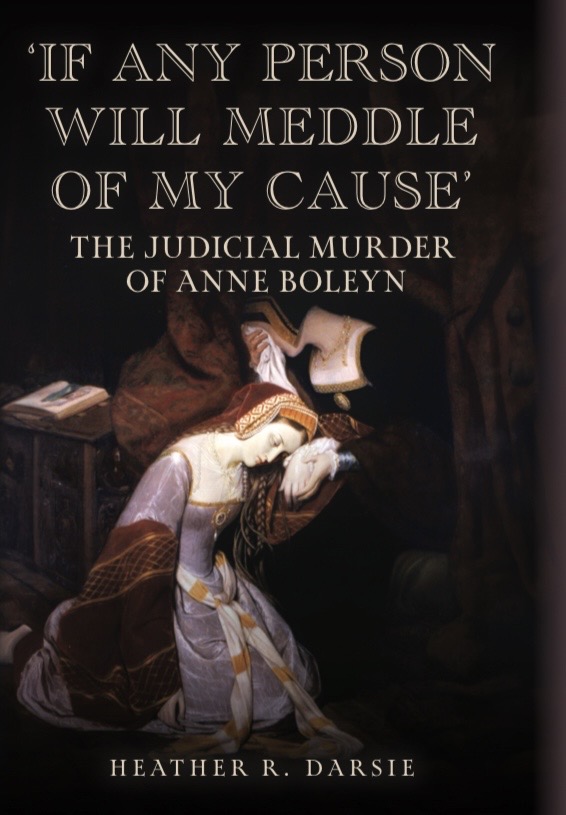
Anne Boleyn is one of the great enigmas of English history. Credited – or blamed – for Henry VIII’s break with Rome and the English Reformation, she is also the mother of one of England’s greatest monarchs, Queen Elizabeth I. Moreover, Anne Boleyn holds the tragic distinction of being the first queen of England to ever be executed. Historian Heather R. Darsie‘s new book, If Any Person Will Meddle of My Cause: The Judicial Murder of Anne Boleyn, looks into Anne’s queenship and execution – and how the law made her death possible.

And today we have a treat! An extract from the book, to give you a taste of what’s in store….

Welcome Heather!

Anne Boleyn Forces Legal Reform

By Heather R. Darsie, J. D.
History ... the Interesting Bits

Anne Boleyn is famously seen as the reason for Henry VIII breaking from the Catholic church. Her interest in at least reforming religion in England, if not going more toward the way of Martin Luther, made her a figurehead in some ways for underground efforts. In reality, Henry was finishing the work of his forbears from centuries before. He also quickly learned that he needed to pull away from Rome so that he could have full control of legal matters within his kingdom, without outside meddling or dawdling,

“Although Henry had grown frustrated over the confounding dithering of Clement VII and ineptitude of Cardinal Thomas Wolsey in the handling of his Great Matter, the issue of Henry VIII’s annulment from Katharine of Aragon was not the biggest problem. The biggest problem was, Henry rapidly learned, that he had no control over his legal system in very important arenas when he needed it most. Aside from not having legal control, the lag time in communications being sent from London to Rome and back again contributed to the delay in Henry’s annulment proceedings, too.

Once Henry was set on his path inspired by Anne Boleyn, he learned just how much money was being kept out his coffers. Cardinal Wolsey started the process before his death, but Thomas Cromwell and Anne spurred Henry to continue shutting down religious institutions in an effort to redistribute the nation’s wealth in favour of crown and kingdom. None of these ideas were novel….

Loosening the church’s powers with England began at the very tail end of the High Middle Ages with Edward I of England. At the beginning of the thirteenth century with the enaction of Magna Carta, the passing of land to a corporation, like a church, without royal consent was forbidden. …Edward I enacted the Statutum de Viris Religiosis, or Statute of Religious Men, in 1279…It forbade the passage of any lands in mortmain [meaning “deadhand”] to any religious man. If anyone did pass their lands to a religious man, then those lands were forfeited…The goals of the Mortmain statutes were not achieved until Henry VIII’s Parliament passed several statutes in 1529 and one directly addressing mortmain in 1531. Henry then began dissolving the monasteries in the 1530s, something he arguably would not have done without being encouraged by his fixation on and love for Anne Boleyn…

Henry VIII was not the first king of England to challenge the pope’s authority. He was the fourth, although the laws of the first two kings were more or less forgotten by the time Henry started taking action. Edward III passed the first, overtly aggressive statutes against papal power, with his successor Richard II taking even stronger action…The laws fell by the wayside during the fifteenth century, not to be fully revived until Henry VIII needed to assert stronger control….
History ... the Interesting Bits

[Edward III] enacted the Statute of Praemunire Facias, or simply the Statute of Praemunire, in 1353. This statute severely curtailed the influence and outright meddling of papal authority and other foreign powers within England… The punishments for the Statute of Praemunire were…severe. Anyone who effectively requested foreign interference with any legal matter, temporal or ecclesiastical, that rightly was under the purview of the king of England’s courts, was at risk of imprisonment, being outlawed and forfeiting all their property, goods, lands, and chattel. These were extremely serious penalties.

Being outlawed meant that the person had no rights or legal protection. Effectively, they were stripped of personhood and did not exist. If the person were robbed and killed after being outlawed, no crime was committed because the person existed outside of the law. Being outlawed was a desperate state of living and reserved for only the worst criminals, as in some ways it was a fate worse than death. The only positive element of being outlawed was that a person, if they survived their term of outlawry, they could be allowed back into society. Once recognised as a legal person again, they were usually at a diminished station, but at least they were alive and had rights… [Updates] were made to the Statute of Praemunire in 1365, curtailing the ability of the papal court to act as a court of first impression or a court of appeal for matters arising in England…

Roughly twenty-five years later, Richard II continued his grandfather Edward III’s work… The 1393 Statute of Praemunire Facias, enhancing the law passed in 1353, did not allow the papal curia to hear any non-spiritual matters that were prejudicial to the king, or went against the customs and laws of England. Spiritual matters could still be heard in Rome, such as divorces and annulments. Anyone who violated the 1393 statute risked punishment by forfeiting all that they owned and being outlawed. The same punishment applied to anyone who aided and abetted them. This was where Henry VIII suffered from the decisions of his great-great-great-granduncle Richard II in Henry’s Great Matter with Katharine of Aragon. This is why Henry’s annulment proceeding simply had to be heard by the pope in Rome, unless Cardinal Wolsey could figure out a solution.…”

History ... the Interesting Bits

Henry VIII’s need for Anne Boleyn opened his eyes to the restrictions of his legal control within England. Their passion inspired Henry to complete the work that was begun hundreds of years before anyone conjured the name of ‘Anne Boleyn’.

For more, pick up a copy of If Any Person Will Meddle of My Cause: The Judicial Murder of Anne Boleyn, available via hardback and Kindle in the UK, or via Kindle internationally. Hardbacks are available for international pre-order, with release on 21 April 2026.

About the book:

Many people know about the dramatic rise and fall of Anne Boleyn, Henry VIII’s controversial second wife, but this is the first book to look at her life from a Continental perspective. Her role models for queenship came from the Low Countries and France, and this contributed to her tragic end. Heather R. Darsie reviews the political missteps and implications of Anne Boleyn’s queenship, delving into the threat she posed to Henry, and why legal changes made during the early years of the English Reformation allowed the English king to judicially murder his inconvenient queen.

Historically, certain things have been overlooked about Anne’s execution: she wore colours usually associated with martyrdom, announced that she did not come to preach, was killed by beheading instead of burning, and had a very crude burial in an unmarked grave. Anne tried to portray herself as a martyr, and Henry did everything he could to prevent her from reaching that status. If Any Person Will Meddle of My Cause is about Anne Boleyn, but not the Anne Boleyn you know.

About the Author:

History ... the Interesting Bits

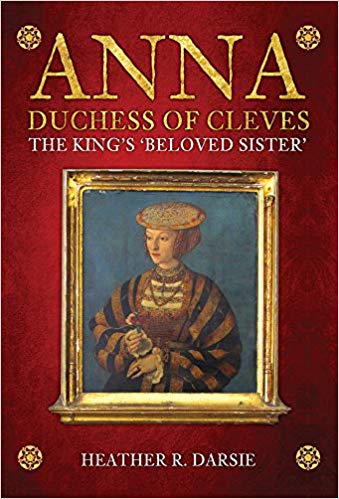
Heather R. Darsie is an independent researcher in the US specializing in early modern history. She focuses on researching the Holy Roman Empire and England in the early 16th century. She is the author of ‘Anna, Duchess of Cleves‘, ‘Children of the House of Cleves‘ and ‘Katharine of Aragon, Spanish Princess‘. Her primary career is as an attorney. She runs the website MaidensAndManuscripts.com.

*

My Books

Signed, dedicated copies of all my books are available through my online bookshop. or by contacting me.

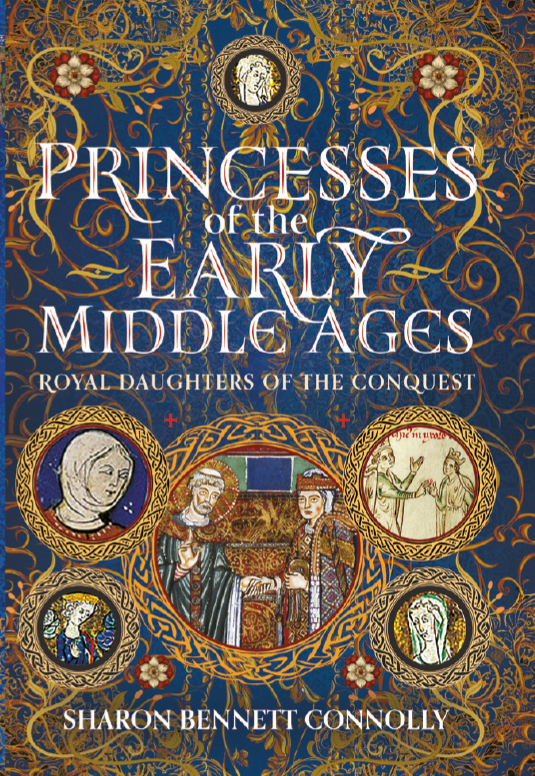
Coming 30 March: Princesses of the Early Middle Ages
Books by Sharon Bennett Connolly

Daughters of kings were often used to seal treaty alliances and forge peace with England’s enemies. Princesses of the Early Middle Ages: Royal Daughters of the Conquest explores the lives of these young women, how they followed the stereotype, and how they sometimes managed to escape it. It will look at the world they lived in, and how their lives and marriages were affected by political necessity and the events of the time. Princesses of the Early Middle Ages will also examine how these girls, who were often political pawns, were able to control their own lives and fates. Whilst they were expected to obey their parents in their marriage choices, several princesses were able to exert their own influence on these choices, with some outright refusing the husbands offered to them.

Their stories are touching, inspiring and, at times, heartbreaking.

Princesses of the Early Middle Ages: Royal Daughters of the Conquest is now available for pre-order from Pen & Sword and Amazon.

Also by Sharon Bennett Connolly:

Books by Sharon Bennett Connolly

Scotland’s history is dramatic, violent and bloody and Scotland’s Medieval Queens have seen it all. This is the story of Scotland through their eyes. Available now from Amazon and Pen and Sword BooksHeroines of the Tudor World tells the stories of the most remarkable women from European history in the time of the Tudor dynasty, 1485-1603. These are the women who ruled, the women who founded dynasties, the women who fought for religious freedom, their families and love. Heroines of the Tudor World is now available from Amberley Publishing and Amazon UK. Women of the Anarchy demonstrates how Empress Matilda and Matilda of Boulogne, unable to wield a sword themselves, were prime movers in this time of conflict and lawlessness. It shows how their strengths, weaknesses, and personal ambitions swung the fortunes of war one way – and then the other. Available from Bookshop.orgAmberley Publishing and Amazon UKKing John’s Right-Hand Lady: The Story of Nicholaa de la Haye is the story of a truly remarkable lady, the hereditary constable of Lincoln Castle and the first woman in England to be appointed sheriff in her own right. Available from all good bookshops Pen & Sword Booksbookshop.org and Amazon

Royal Historical Society

Defenders of the Norman Crown: The Rise and Fall of the Warenne Earls of Surrey tells the fascinating story of the Warenne dynasty, from its origins in Normandy, through the Conquest, Magna Carta, the wars and marriages that led to its ultimate demise in the reign of Edward III. Available from Pen & Sword BooksAmazon in the UK and US, and Bookshop.orgLadies of Magna Carta: Women of Influence in Thirteenth Century England looks into the relationships of the various noble families of the 13th century, and how they were affected by the Barons’ Wars, Magna Carta and its aftermath; the bonds that were formed and those that were broken. It is now available in paperback and hardback from Pen & SwordAmazon, and Bookshop.orgHeroines of the Medieval World tells the stories of some of the most remarkable women from Medieval history, from Eleanor of Aquitaine to Julian of Norwich. Available now from Amberley Publishing and Amazon, and Bookshop.orgSilk and the Sword: The Women of the Norman Conquest traces the fortunes of the women who had a significant role to play in the momentous events of 1066. Available now from Amazon,  Amberley Publishing, and Bookshop.org.

Alternate Endings: An anthology of historical fiction short stories including Long Live the King… which is my take what might have happened had King John not died in October 1216. Available in paperback and kindle from Amazon.

Podcast:
Have a listen to the A Slice of Medieval podcast, which I co-host with Historical fiction novelist Derek Birks. Derek and I welcome guests, such as Ian Mortimer, Bernard Cornwell, Elizabeth Chadwick and Scott Mariani, and discuss a wide range of topics in medieval history, from significant events to the personalities involved. 

Every episode is also now available on YouTube.

*

Don’t forget! Signed and dedicated copies of all my books are available through my online bookshop.

For forthcoming online and in-person talks, please check out my Events Page.

You can be the first to read new articles by clicking the ‘Follow’ button, liking our Facebook page or joining me on TwitterThreadsBluesky and Instagram.

*

©2026 Sharon Bennett Connolly FRHistS and Heather R. Darsie
Wordly Women: Heather R. Darsie

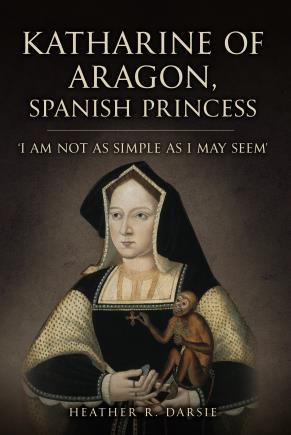
In a special episode of my Wordly Women interview series, Heather R. Darsie drops by on her blog tour celebrating the publication of her new book, Katharine of Aragon, Spanish Princess: ‘I am Not as Simple as I May Seem’. Do have a look at the other stops on the tour to geta taste of this wonderful new biography.

So, Heather, What got you into writing?

Heather: As silly as this sounds, I can’t remember originally. My dad had an electric typewriter that he let me use to write stories beginning when I was probably eight years old. I continued writing stories and poems through high school (14 to 18 years old in the USA), which culminated in a play based off Edgar Allen Poe’s “Annabel Lee” when I was in my final year of high school. My play was called Annalise, wherein the wife was dying of amyotrophic lateral sclerosis of which my paternal grandfather passed away. The husband slowly went mad, to the point where the wife’s had to intervene. The theme of the play was tragedy. My high school put on the play, I was in the local newspaper, and invited to host a workshop at the statewide high school theatre festival.

After graduating from high school, I went to university and majored in German Languages and Literature, then pursued my Juris Doctorate in American Jurisprudence. Along the way, I studied abroad in Costa Rica and France, learning Spanish and French, too. I have had numerous opportunities to travel to France, Spain, Germany, and various countries in Central America, which have all contributed to keeping my language skills sharp.

I became heavily interested in Tudor history in around 2010. By early 2015, I grew tired of reading the same-old, same-old about Anna of Cleves, a German woman. I asked Claire Ridgeway of the Anne Boleyn Files if I could contribute a post on Anna to her website, to which Claire kindly agreed. Thereafter encouraged and emboldened, I sent a letter in my very best German to the mayor of the current City of Cleves, and my research took off from there. The combination of a life-long interest in writing, linguistic education, research and analytical skills from my juris doctorate, combined with the history community’s encouragement is how I arrived here, ten years on.

Sharon: Tell us about your books.

Heather: I view myself as a Tudor-adjacent historian. The persons and events I choose to focus on should be recognizable am most interested in the Holy Roman Empire of the German Nation, which began recognizing itself that way in the early 16th century. Specifically, anyone or anything connected to the von der Marks, which is Anna of Cleves’ family (she was “of Cleves” much like Princess Mary Tudor would be “Mary of England” in another country) or the Habsburgs. My first two nonfiction books, Anna, Duchess of Cleves: The King’s Beloved Sister and Children of the House of Cleves: Anna and Her Siblings are effectively German history books. My third nonfiction book, Stuart Spouses: A Compendium of Consorts from James I of Scotland to Queen Anne of Great Britain looks at just that, the husbands and wives of the Scottish-to-English Stuart dynasty. The dynastic intermingling with continental European families is fascinating. I wrote a novella during the pandemic, Diary of a Plague Doctor’s Wife, set during the last outbreak of the Black Death in 1720s Marseille. The parallels to our own experiences 300 years later with Covid-19 were eerie to me at the time of writing.

Sharon: What attracts you to the Catherine of Aragon?

Heather: Like Anna of Cleves, I felt there was more to her than the end of her marriage with Henry VIII. Specifically, I wanted to know more about Katharine’s family dynasty and Katharine’s early time in England, and share that with readers.

Sharon: Who is your favourite Tudor and why?

Heather: For queens, I am drawn to Catherine Parr. She seemed the most savvy when it came to navigating Henry VIII and the dangerous politics of the Tudor court. I am very intrigued by Thomas Cromwell in his position as a lawyer. He was very clever; I hope to write about him someday.

Sharon: Who is your least favourite Tudor and why?

Heather: I do not have a least favorite, but I do think the most tragic was Anne Boleyn, who was foisted by her own petard. I am finding that more and more as I work on my next book, If any Person will Meddle with My Cause: The Judicial Murder of Anne Boleyn.

Sharon: How do you approach researching your topic, especially when most of the sources are Spanish?

Heather: I start with finding articles on JSTOR, then checking the footnotes for sources. From there, I go to Google Play, Archive.org, the Spanish library websites, etc. for old manuscripts. Like many English books, several of the old, out-of-copyright ones are available for free. The Spanish language is not a barrier for me, since I hear or read it most days a week at work.

Sharon: Tell us your ‘favourite’ Catherine of Aragon story you have come across in your research.

Heather: I really enjoyed reading about all of the pageants she viewed during her formal entry into London. It must have been quite the time for her.

Sharon: Tell us your least ‘favourite’ Catherine of Aragon story you have come across in your research.

Heather: Katharine was having a difficult time with Spanish grammar in her letters toward the very late 1520s and early 1530s. This could be indicative of the extreme stress that she was under during that time, or the isolation she was experiencing and being unable to speak Spanish with anyone, or both. I found it tragic and poignant. I don’t believe I remarked on that in my book.

Sharon: Are there any other eras you would like to write about?

Heather: I am interested in doing a little more on the late 16th to early 17th century. Otherwise, I am fairly happy with the time frame that I work in now, but exploring more individuals and courts.

Sharon: What are you working on now?

Heather: I am finishing up the aforementioned book, If any Person will Meddle with My Cause: The Judicial Murder of Anne Boleyn. I am completing an epic as well, which I will self publish likely later this year, that has heavy Greek mythology themes. Our heroes go on a quest to bring back the Olympians and restore justice to the human world. The epic is clocking in at about 3, 600 lines right now. I suppose it makes me a poet along with an author.

Sharon: And finally, what is the best thing about being a writer?

Heather: Sharing knowledge.

About the book:

Katharine of Aragon is more in the public consciousness now due to the TV show ‘Spanish Princess’. Katharine has of course been an interesting historical figure for quite some time because she is the first wife of the infamous Henry VIII. This book provides a new perspective on Katharine because it includes far more background on her Spanish upbringing, Spanish culture, and how that continued to define her in England during her first fifteen years in the country. Additionally, Heather uses rich primary sources, such as ‘The Receyt of Ladie Kateryne’, which have either not been sourced or infrequently referred to in other biographies about Katharine. In this, Heather’s multilingual abilities – especially her fluent Spanish – are put to good use. No one, for example, has considered he rippling impact of terminating Katharine’s marriage on the Trastamara and Habsburg dynasties in Europe. Katherine was as important abroad as she was in England.

Buy Katharine of Aragon, Spanish Princess: ‘I am Not as Simple as I May Seem’

About the author:

Heather R. Darsie, J. D. is an independent researcher specializing in early modern history. She describes herself as a “Tudor-adjacent” historian, focusing on the Holy Roman Empire and England in the early 16th century. She is the author of four nonfiction books: Anna, Duchess of Cleves: The King’s Beloved Sister, Children of the House of Cleves: Anna and Her Siblings, Stuart Spouses: A Compendium of Consorts from James I of Scotland to Queen Anne of Great Britain, and Katharine of Aragon, Spanish Princess: I am not as Simple as I May Seem. She self-published the novella Diary of a Plague Doctor’s Wife. Her primary career is as an attorney. Heather lives in Illinois with her loving husband, wonderful stepchildren, and three raucous parrots.

Where to find Heather:

Website: MaidensAndManuscripts.com; Instagram: @hdarsiehistory; X: @hrdarsiehistory; Threads: hdarsiehistory; Facebook: Heather R. Darsie, Historian; BlueSky: @hrdarsiehistory.bsky.social

*

My books

Signed, dedicated copies of all my books are available through my online store.

Out now: Scotland’s Medieval Queens

Scotland’s history is dramatic, violent and bloody. Being England’s northern neighbour has never been easy. Scotland’s queens have had to deal with war, murder, imprisonment, political rivalries and open betrayal. They have loved and lost, raised kings and queens, ruled and died for Scotland. From St Margaret, who became one of the patron saints of Scotland, to Elizabeth de Burgh and the dramatic story of the Scottish Wars of Independence, to the love story and tragedy of Joan Beaufort, to Margaret of Denmark and the dawn of the Renaissance, Scotland’s Medieval Queens have seen it all. This is the story of Scotland through their eyes.

Scotland’s Medieval Queens gives a thorough grounding in the history of the women who ruled Scotland at the side of its kings, often in the shadows, but just as interesting in their lives beyond the spotlight. It’s not a subject that has been widely covered, and Sharon is a pioneer in bringing that information into accessible history.’ Elizabeth Chadwick (New York Times bestselling author)

Available now from Amazon and Pen and Sword Books

Also by Sharon Bennett Connolly:

Heroines of the Tudor World tells the stories of the most remarkable women from European history in the time of the Tudor dynasty, 1485-1603. These are the women who ruled, the women who founded dynasties, the women who fought for religious freedom, their families and love. Heroines of the Tudor World is now available from Amberley Publishing and Amazon UK. Women of the Anarchy demonstrates how Empress Matilda and Matilda of Boulogne, unable to wield a sword themselves, were prime movers in this time of conflict and lawlessness. It shows how their strengths, weaknesses, and personal ambitions swung the fortunes of war one way – and then the other. Available from Bookshop.orgAmberley Publishing and Amazon UKKing John’s Right-Hand Lady: The Story of Nicholaa de la Haye is the story of a truly remarkable lady, the hereditary constable of Lincoln Castle and the first woman in England to be appointed sheriff in her own right. Available from all good bookshops Pen & Sword Booksbookshop.org and Amazon

Defenders of the Norman Crown: The Rise and Fall of the Warenne Earls of Surrey tells the fascinating story of the Warenne dynasty, from its origins in Normandy, through the Conquest, Magna Carta, the wars and marriages that led to its ultimate demise in the reign of Edward III. Available from Pen & Sword BooksAmazon in the UK and US, and Bookshop.orgLadies of Magna Carta: Women of Influence in Thirteenth Century England looks into the relationships of the various noble families of the 13th century, and how they were affected by the Barons’ Wars, Magna Carta and its aftermath; the bonds that were formed and those that were broken. It is now available in paperback and hardback from Pen & SwordAmazon, and Bookshop.orgHeroines of the Medieval World tells the stories of some of the most remarkable women from Medieval history, from Eleanor of Aquitaine to Julian of Norwich. Available now from Amberley Publishing and Amazon, and Bookshop.orgSilk and the Sword: The Women of the Norman Conquest traces the fortunes of the women who had a significant role to play in the momentous events of 1066. Available now from Amazon,  Amberley Publishing, and Bookshop.org.

Alternate Endings: An anthology of historical fiction short stories including Long Live the King… which is my take what might have happened had King John not died in October 1216. Available in paperback and kindle from Amazon.

Podcast:

Have a listen to the A Slice of Medieval podcast, which I co-host with Historical fiction novelist Derek Birks. Derek and I welcome guests, such as Bernard Cornwell and Michael Jecks, and discuss a wide range of topics in medieval history, from significant events to the personalities involved. Every episode is also now available on YouTube.

*

Don’t forget! Signed and dedicated copies of all my books are available through my online store.

For forthcoming online and in-person talks, please check out my Events Page.

You can be the first to read new articles by clicking the ‘Follow’ button, liking our Facebook page or joining me on TwitterThreadsBluesky and Instagram.

*

©2025 Sharon Bennett Connolly, FRHistS and Heather R. Darsie

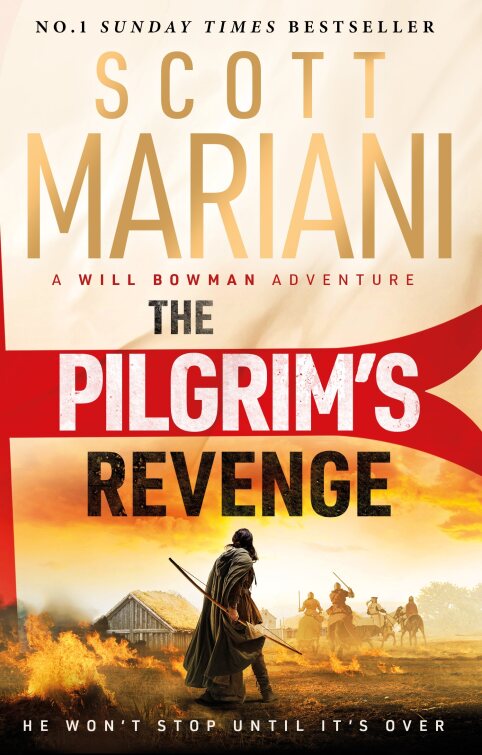
Book Corner: The Pilgrim’s Revenge by Scott Mariani

1190 – Humble layman Will Bowman lives in the countryside with his pregnant wife, when soldiers from Richard Lionheart’s army tear through his home. Will is beaten unconscious, and awakes to find his wife murdered, his farm burnt down, and his life forever changed.

In vengeance, Will infiltrates Richard’s army to find the marauding gang, and finds himself swept along in the march of the Crusades. With the help of new allies and fuelled by his loss, Will crosses Europe with the King’s army.

Can Will avenge his wife? Or will he be swept away by the unstoppable force of Richard’s Crusade?

I have been a Scott Mariani fan for a while now and was disappointed that Ben Hope has finally retired, though relieved for Ben that he survived 30 books of people trying to kill him. When one brilliant series ends, you begin to worry that what comes next will be a disappointment, or not as addictive, that you will not feel so invested in the new characters. Especially when the author moves genre. It is a big risk that author and reader take together.

So, when Scott Mariani moved from thriller with a historical twist to full-blown historical fiction, I was a tad concerned. Fans of historical fiction can be pedants. If there is a grey squirrel out of place, ie, in medieval England, someone will notice. If a character lives longer than he actually did (I am looking at Sweyn Forkbeard in Vikings Valhalla) someone will notice. There is a knack to historical fiction, to weaving the story within the known facts, to introducing fictional characters and creating their interactions with historical figures. The story has to have that essence of authenticity.

I needn’t have worried!

In fact, I probably should have trusted that Scott Mariani knew what he was doing. Though I may not have agreed with some of his theories in The Tudor Deception, the actual history was spot on. Having read the last Ben Hope book, The Templar Secret, after Christmas, I should have known a historical fiction book was around the corner. It is obvious the author loves his history. And, given the topic of that last Hope book, it should come as no surprise that Mariani’s first foray into historical fiction involved the crusades – the Third Crusade, to be precise.

Not that we get more than a glimpse of the Holy Land in this first book – all that is still to come.

By now Will had almost reached the nearest of the horsemen on his side of the yard. Up close, the rider was an intimidating figure looming far above him in the saddle with the blade of his drawn arming sword glinting in the sunlight. Before Will reached him the horseman saw his approach and wheeled his mount around to face him, dust flying from its hooves. With an angry shout the rider spurred the horse towards Will, swinging his sword down at him. Will ducked, and the double-edged blade hissed through the air above him.

It had been a blow meant to separate his head from his shoulders, and it had only narrowly missed its mark. The horse thundered past, shaking the ground. The rider reined it brutally around and charged at Will again.

Nothing like this had ever happened or even been heard of in Will’s experience. He had never been in a real fight, except a minor scuffle once when he was a lad, settled quickly with a couple of punches. This was deadly serious combat, and he was unprepared for it. But the terrible shocking sight of Beatrice in the soldiers’ clutches and the sound of her screams was enough to dispel his confusion and fear, filling him with rage and determination to do anything he could to drive these raiders away and make this stop. And the obvious realisation suddenly occurred to him, for the first time, that he was holding the very means of doing that in his hands. His bow was still unstrung, no more than a long wooden shaft with its hemp cord loosely attached to the bottom end. But practice had made him very adept at readying the weapon in moments; as the horseman bore down on him with the sword raised high, he bent the stave against his foot and looped the string into place.

The rider was almost on him. Will snatched an arrow from his quiver, nocked it to the string and simultaneously raised his bow and pulled it to full draw. He had never before pointed any weapon in anger at another human being, but there was little time to reflect on that fact, or even to take aim, as his enemy closed in. Will stood his ground until the last moment, released his arrow and saw it fly and hit the rider full in the chest.

The soldier flinched violently at the arrow strike. A normal opponent would have been a dead man, his heart split in two by the power of the longbow at such close range. But instead of piercing deep into his flesh the iron point glanced off his heavy chain mail and the broken pieces of the arrow shaft spun away through the air. Then Will had to leap out of the way of the charging horse, and he threw himself to the ground.

The Pilgrims’ Revenge starts in England and follows the journey of a crusader fleet to Outremer, with adventures that are often overlooked by historical fiction authors eager to get to the nitty gritty of the crusade. But what a story they miss out! Scott Mariani includes the little-known excursion of part of the fleet, into Portugal to help with the crusades there. Then, of course, we arrive in Sicily, where Richard the Lionheart frees his sister, Joanna, meets his bride Berengaria and antagonises his ‘ally’ Philip II of France. And then we get a wonderful, vivid depiction of the conquest of Cyprus.

All is seen through the eyes of our hero, Will Bowman, a men seeking revenge for the murder of his wife and unborn child. He only joins the crusade to chase the murderers but finds a purpose, a talent for soldiering, comradeship and a bent to command along the way. Scott Mariani seamlessly blends together the wider story of Richard the Lionheart’s crusading enterprise with Will’s personal story and experiences.

The Pilgrims’ Revenge is the first of what promises to be a fast-paced, exhilarating – and, hopefully, long – series. Punctuated by bloody battles, exquisite swordplay and a thrilling storyline, the action is relentless and Scott Mariani fans will not be disappointed. The research is exemplary, especially with regard to the conflict in Portugal, which is usually ignored. The historical figures are wonderfully written and the locations evocative, dusty, hot and exotic.

Will Bowman is a character I look forward to hearing much more about.

The Pilgrim’s Revenge will be available from 24 April 2025

Order The Pilgrim’s Revenge.

About the author:

Scott Mariani is the No.1 Sunday Times bestselling author of the multi-million-selling Ben Hope thrillers. From 2025 he is launching into a new historical adventure series featuring medieval English hero Will Bowman, who is forced from his home to join King Richard ‘the Lionheart’ on the Third Crusade and rises up to become a knight. Book 1,THE PILGRIM’S REVENGE, is available from April 2025 and is published by Hodder & Stoughton.

Scott lives and writes in west Wales, UK. You can find out more about his work by visiting his official website.

*

My books

Signed, dedicated copies of all my books are available through my online store.

Out now: Scotland’s Medieval Queens

Scotland’s history is dramatic, violent and bloody. Being England’s northern neighbour has never been easy. Scotland’s queens have had to deal with war, murder, imprisonment, political rivalries and open betrayal. They have loved and lost, raised kings and queens, ruled and died for Scotland. From St Margaret, who became one of the patron saints of Scotland, to Elizabeth de Burgh and the dramatic story of the Scottish Wars of Independence, to the love story and tragedy of Joan Beaufort, to Margaret of Denmark and the dawn of the Renaissance, Scotland’s Medieval Queens have seen it all. This is the story of Scotland through their eyes.

Scotland’s Medieval Queens gives a thorough grounding in the history of the women who ruled Scotland at the side of its kings, often in the shadows, but just as interesting in their lives beyond the spotlight. It’s not a subject that has been widely covered, and Sharon is a pioneer in bringing that information into accessible history.’ Elizabeth Chadwick (New York Times bestselling author)

Available now from Amazon and Pen and Sword Books

Also by Sharon Bennett Connolly:

Heroines of the Tudor World tells the stories of the most remarkable women from European history in the time of the Tudor dynasty, 1485-1603. These are the women who ruled, the women who founded dynasties, the women who fought for religious freedom, their families and love. Heroines of the Tudor World is now available for pre-order from Amberley Publishing and Amazon UK. Women of the Anarchy demonstrates how Empress Matilda and Matilda of Boulogne, unable to wield a sword themselves, were prime movers in this time of conflict and lawlessness. It shows how their strengths, weaknesses, and personal ambitions swung the fortunes of war one way – and then the other. Available from Bookshop.orgAmberley Publishing and Amazon UKKing John’s Right-Hand Lady: The Story of Nicholaa de la Haye is the story of a truly remarkable lady, the hereditary constable of Lincoln Castle and the first woman in England to be appointed sheriff in her own right. Available from all good bookshops Pen & Sword Booksbookshop.org and Amazon

Defenders of the Norman Crown: The Rise and Fall of the Warenne Earls of Surrey tells the fascinating story of the Warenne dynasty, from its origins in Normandy, through the Conquest, Magna Carta, the wars and marriages that led to its ultimate demise in the reign of Edward III. Available from Pen & Sword BooksAmazon in the UK and US, and Bookshop.orgLadies of Magna Carta: Women of Influence in Thirteenth Century England looks into the relationships of the various noble families of the 13th century, and how they were affected by the Barons’ Wars, Magna Carta and its aftermath; the bonds that were formed and those that were broken. It is now available in paperback and hardback from Pen & SwordAmazon, and Bookshop.orgHeroines of the Medieval World tells the stories of some of the most remarkable women from Medieval history, from Eleanor of Aquitaine to Julian of Norwich. Available now from Amberley Publishing and Amazon, and Bookshop.orgSilk and the Sword: The Women of the Norman Conquest traces the fortunes of the women who had a significant role to play in the momentous events of 1066. Available now from Amazon,  Amberley Publishing, and Bookshop.org.

Alternate Endings: An anthology of historical fiction short stories including Long Live the King… which is my take what might have happened had King John not died in October 1216. Available in paperback and kindle from Amazon.

Podcast:

Have a listen to the A Slice of Medieval podcast, which I co-host with Historical fiction novelist Derek Birks. Derek and I welcome guests, such as Bernard Cornwell and Michael Jecks, and discuss a wide range of topics in medieval history, from significant events to the personalities involved. Every episode is also now available on YouTube.

*

Don’t forget! Signed and dedicated copies of all my books are available through my online store.

For forthcoming online and in-person talks, please check out my Events Page.

You can be the first to read new articles by clicking the ‘Follow’ button, liking our Facebook page or joining me on TwitterThreadsBluesky and Instagram.

*

©2025 Sharon Bennett Connolly, FRHistS

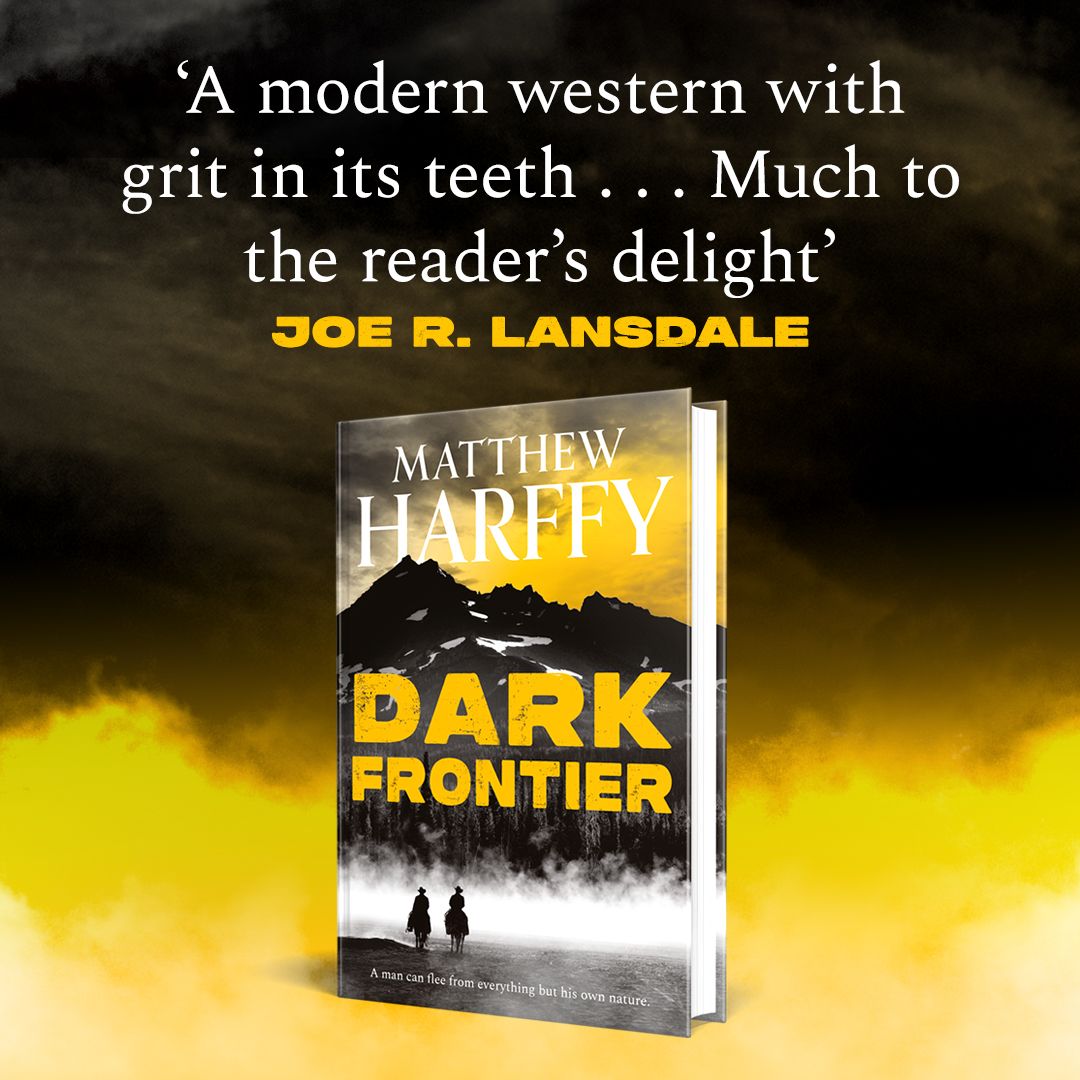
Book Corner: Dark Frontier by Matthew Harffy

A thrilling historical western set in 1890s Oregon, from the author of the critically acclaimed Bernicia Chronicles. An English soldier turned policeman escapes to the American West for anew future, but life on the frontier proves far harder than he ever imagined…

A man can flee from everything but his own nature.

1890. Lieutenant Gabriel Stokes of the British Army left behind the horrors of war in Afghanistan for a role in the Metropolitan Police.Though he rose quickly through the ranks, the squalid violence of London’s East End proved just as dark and oppressive as the battlefield.

With his life falling apart, and longing for peace and meaning, Gabriel leaves the grime of London behind and heads for the wilderness and wide open spaces of the American West.

He soon realises that the wilds of Oregon are far from the idyll he has yearned for. The Blue Mountains may be beautiful, but with the frontier a complex patchwork of feuds and felonies,and ranchers as vicious as any back alley cut-throat in London, Gabriel finds himself unable to escape his past and the demons that drive him. Can he find a place for himself on the far edge of the New World?

I have to confess, I haven’t read a Western in years, but Dark Frontier by Matthew Harffy has certainly got me in the mood for more. And for an author used to writing about warfare with guns and axes in the early medieval period, he certainly knows his way around a six-shooter. Though he does manage to get a sword into the action at one point, which was pretty impressive!

Dark Frontier is the story of a man heading west to escape his past, and his demons, only to find his demons are not that easy to avoid. He also finds that trouble is just as present in the American West as it was on the streets of London. And, a policeman at heart, trouble is not something he seems to be able to walk away from. Dark Frontier is a fascinating adventure based around a ranch war between a sheep farmer and a cattle baron. The cattle baron wants more land – the sheep farmer doesn’t want to oblige.

Things turn nasty.

The man might be old, but Stokes had witnessed how deadly he was. As the boy ranted and screamed, the grey-haired man had watched, hand resting lightly on the butt of his holstered pistol. He didn’t move and had said nothing for a time until he uttered a few words that had sent the boy into such a blind rage that he had jerked his revolver out of its holster and fired wildly. The old man had not flinched, though there had been less than ten feet separating them. An instant later, his revolver, a gleaming Remington, had appeared to leap into his hand. It had barked once, silencing the boy and his frantic shooting forever.

“You son of a bitch!” shouted a long-faced man with pox scars on his cheeks who had followed the boy out of the billiard hall. “You killed Wyc.” His face was growing redder by the second. “You didn’t need to kill him.” His hand dropped to the dark wooden butt of the revolver he wore in a black leather holster on his right hip.

“Done a lot of things I didn’t need to,” said the old man who had shot the boy called Wyc. “Killing your friend ain’t one of ’em.” The barrle of his Remington did not waver as he pulled the hammer back with his thumb. He had fired only one shot, but the bullet had caught Wyc in the chin and exited from the back of his head, leaving a hole the size of a teacup saucer.

Several men came out of the billiard hall with Wyc, voices raised and joining in his brash insults, but Stokes noticed that none of them had been foolish enough to reach for their own guns. Most had already fled, running off as the shots were fired. The few that remained now edged away from the angry man who vented his ire at the calm, grey-haired shooter.

The pock-cheeked man swallowed, perhaps suddenly aware of his predicament. He was staring into the smoking barrel of a revolver in the sure hands of a proven killer. His fingers trembled above the butt of his handgun.

“Halt,” Stokes said, his voice cutting through the hubbub. “Both of you.” Everybody turned to look at him. Everybody except the old man with the Remington. HIs hand did not move and his gun remained trained on the red-faced cowhand. Stokes was used to having his voice listened to, but nobody here seemed inclined to obey him. He took a step closer and snapped his fingers.

With the West becoming more accessible with the expansion of the railroad, cattle barons are greedy for more land so they can fulfill government contracts. JT’s, the ranch belonging to Gabe’s best friend, John Thornford, is in the way of progress, as far one cattle baron is concerned. Throw in a murder mystery, budding friendships, violent attacks and a good fist fight or two – along with the odd pistol whipping and shoot-outs and you have the ingredients for a perfect Western novel.

What makes Dark Frontier such an incredible story is the breadth and range of characters. Gabe Stokes is the quintessential, broken Englishman who finds that the rules are few and far-between when it comes to the wide open plains of frontier America. Mary Ann Thornford is a widow, with 2 young children, left alone to take on the oily, powerful and determined cattle baron, Tom Grant. She has a handful of farmhands to help out, and Her husband’s old friend, Gabe Stokes.

With a fast-paced, engrossing story and characters the reader can get behind, Dark Frontier has all the ingredients for an exciting adventure. And it doesn’t disappoint. Matthew Harffy has certainly made the switch from early medieval historical fiction to the Wild Wild West with great aplomb.

Enjoyed it immensely!

I do hope there are more Westerns to come!

To Buy A Dark Frontier:

Amazon:https://geni.us/DarkFrontierBlogTour

About the Author:

About the author Matthew Harffy grew up in Northumberland where the rugged terrain, ruined castles and rocky coastline had a huge impact on him. He now lives in Wiltshire, England, with his wife and their two daughters.Matthew is the author of the critically acclaimed Bernicia Chronicles and A Time for Swords series, and he also presents the popular podcast,Rock, Paper, Swords!, with fellow author Steven A. McKay.

Matthew Harffy Social Handles: Twitter:@MatthewHarffy Instagram:@beobrand Website:matthewharffy.com

Aries/Head of Zeus Social Handles: Twitter:@AriesFiction Facebook:Aries Fiction Instagram:@headofzeus TikTok:@headofzeus Website:http://www.headofzeus.com

Blog Tour Hashtag: #DarkFrontier

*

My Books

Signed, dedicated copies of all my books are available through my online bookshop.

OUT NOW! Heroines of the Tudor World

Heroines of the Tudor World tells the stories of the most remarkable women from European history in the time of the Tudor dynasty, 1485-1603. These are the women who ruled, the women who founded dynasties, the women who fought for religious freedom, their families and love. These are the women who made a difference, who influenced countries, kings and the Reformation. In the era dominated by the Renaissance and Reformation, Heroines of the Tudor World examines the threats and challenges faced by the women of the era, and how they overcame them. From writers to regents, from nuns to queens, Heroines of the Tudor World shines the spotlight on the women helped to shape Early Modern Europe.

Heroines of the Tudor World is now available for pre-order from Amberley Publishing and Amazon UK.

Also by Sharon Bennett Connolly:

Women of the Anarchy demonstrates how Empress Matilda and Matilda of Boulogne, unable to wield a sword themselves, were prime movers in this time of conflict and lawlessness. It shows how their strengths, weaknesses, and personal ambitions swung the fortunes of war one way – and then the other. Available from Bookshop.orgAmberley Publishing and Amazon UKKing John’s Right-Hand Lady: The Story of Nicholaa de la Haye is the story of a truly remarkable lady, the hereditary constable of Lincoln Castle and the first woman in England to be appointed sheriff in her own right. Available from all good bookshops Pen & Sword Booksbookshop.org and AmazonDefenders of the Norman Crown: The Rise and Fall of the Warenne Earls of Surrey tells the fascinating story of the Warenne dynasty, from its origins in Normandy, through the Conquest, Magna Carta, the wars and marriages that led to its ultimate demise in the reign of Edward III. Available from Pen & Sword BooksAmazon in the UK and US, and Bookshop.org

Ladies of Magna Carta: Women of Influence in Thirteenth Century England looks into the relationships of the various noble families of the 13th century, and how they were affected by the Barons’ Wars, Magna Carta and its aftermath; the bonds that were formed and those that were broken. It is now available in paperback and hardback from Pen & Sword,  Amazon, and Bookshop.orgHeroines of the Medieval World tells the stories of some of the most remarkable women from Medieval history, from Eleanor of Aquitaine to Julian of Norwich. Available now from Amberley Publishing and Amazon, and Bookshop.orgSilk and the Sword: The Women of the Norman Conquest traces the fortunes of the women who had a significant role to play in the momentous events of 1066. Available now from Amazon,  Amberley Publishing, and Bookshop.org.

Alternate Endings: An anthology of historical fiction short stories including Long Live the King… which is my take what might have happened had King John not died in October 1216. Available in paperback and kindle from Amazon.

Podcast:

Have a listen to the A Slice of Medieval podcast, which I co-host with Historical fiction novelist Derek Birks. Derek and I welcome guests, such as Bernard Cornwell and discuss a wide range of topics in medieval history, from significant events to the personalities involved.

*

Don’t forget! Signed and dedicated copies of all my books are available through my online bookshop.

For forthcoming online and in-person talks, please check out my Events Page.

You can be the first to read new articles by clicking the ‘Follow’ button, liking our Facebook page or joining me on Twitter and Instagram.

©2024 Sharon Bennett Connolly FRHistS

Book Corner: Inspiration for Hauntings by Samantha Wilcoxson

Inspiration for Among the Lost

By Samantha Wilcoxson

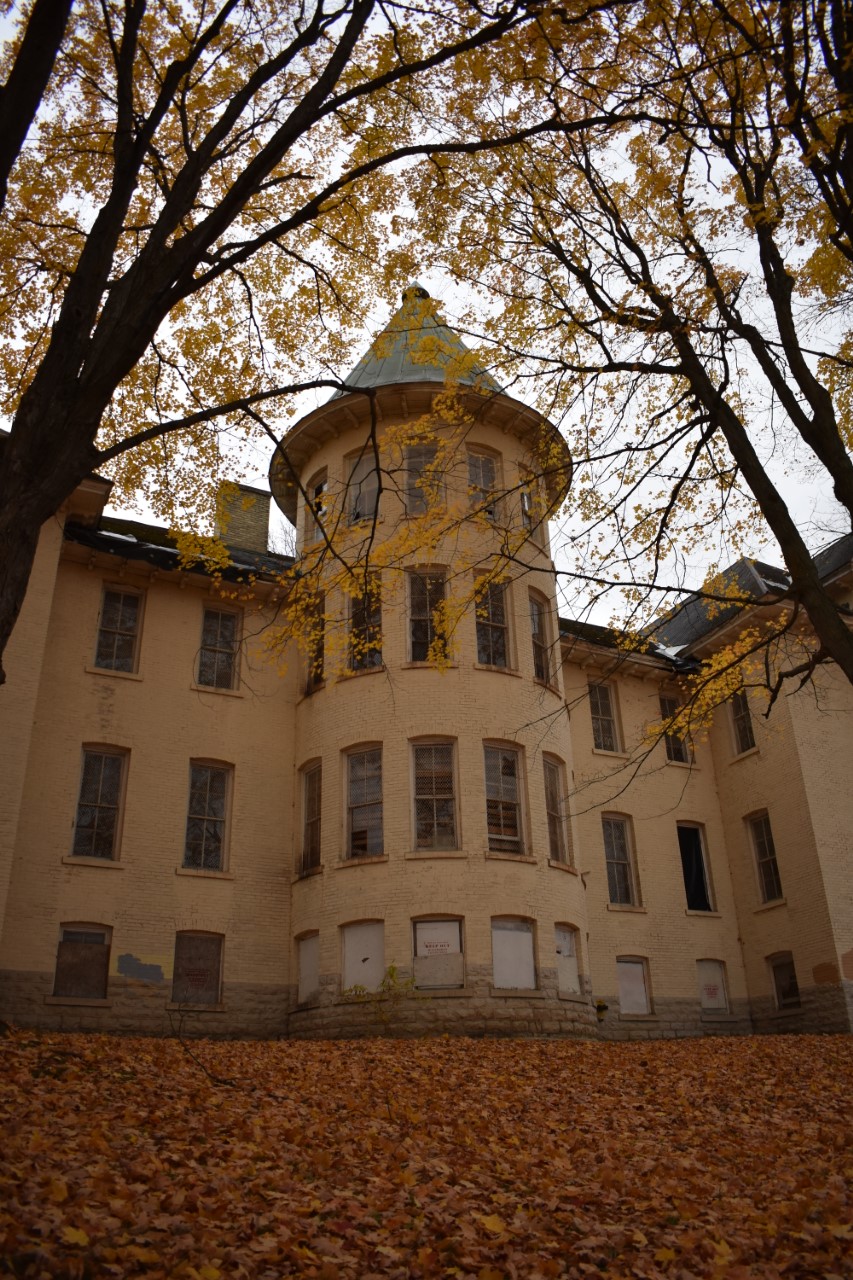
My family and I took a trip to Traverse City, Michigan last autumn. While this trip had nothing to do with anything I was writing, my youngest son would be quick to tell you that I always find some sort of historic site to visit anywhere we go. In Traverse City, that place ended up being the former Northern Michigan Asylum, now reinvented as The Village at Grand Traverse Commons.

The Northern Michigan Asylum was built in 1883-1885, including Building 50, the main structure which is almost a quarter of a mile long. More buildings were added over the years to serve patients that were sent from around the state of Michigan. Men, women, and children were segregated in addition to patients being separated according to condition. ‘Beauty is therapy’ was a famous slogan, referring to founding Medical Superintendent Dr James Munson’s belief that the gorgeous natural surroundings of the area would help the patients heal.

Traverse City is gorgeous with the beautiful blue waters of the bay in the summer and an extraordinary kaleidoscope of trees in the autumn. Certainly, some did find healing in the natural surroundings. The buildings of the asylum were carefully crafted with high ceilings, transom windows, and rounded corners to create a bright, safe atmosphere. The grounds include a grove of trees where no two are alike. The variety was collected by Dr James Munson during his travels. One can envision what the place was like when it was new and filled with hopeful nurses and their charges.

However, as we toured the abandoned, dilapidated structures, it was just as easy to imagine that darker things had taken place as well. Old lead paint is peeling from the walls, and the lack of electricity forced us to light our way with flashlights. Shattered windows and graffiti brought to mind broken souls and nefarious deeds that might have taken place within those walls.

I had not planned on writing anything about the asylum, but when the suggestion of an anthology of historical ghost stories was put forward, I knew just where mine would take place. The mysterious steam tunnels and creamy stone structures topped by red spires suddenly seemed the perfect setting for a young nurse to encounter strange happenings. A ghost may not be the worst being she discovers.

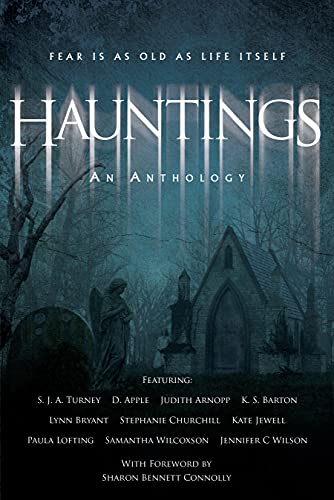
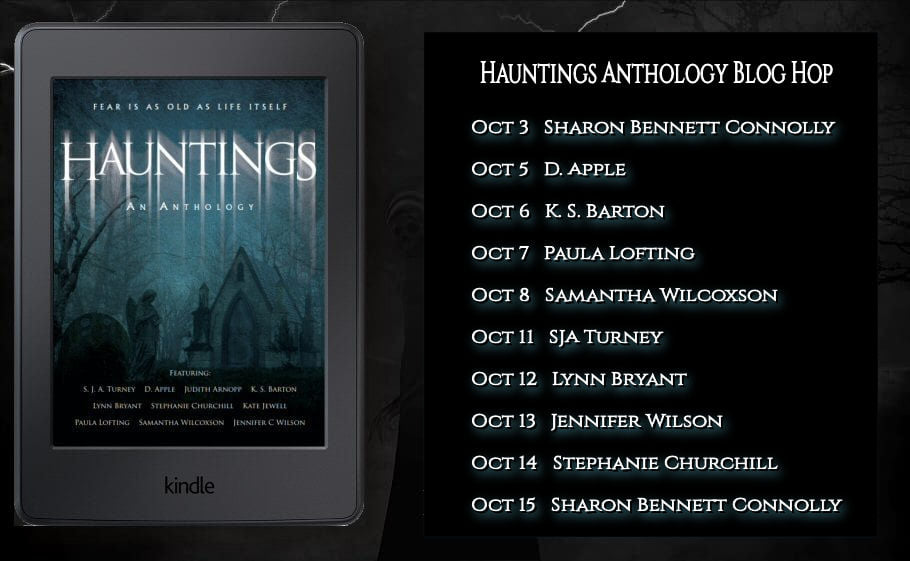
Hauntings

FEAR IS AS OLD AS TIME ITSELF
Chilling Tales that will take you through a labyrinth of historical horror.
You will encounter a tormented Roman general.
A Norse woman who must confront her terrifying destiny.
Meet a troubled Saxon brother, searching for his twin’s murderer.
A young nurse tries to solve the mysteries of an asylum for the insane.Down the passages of time, Henry VIII and Anne Boleyn wander through a haunted garden and elsewhere,
a lost slave girl is the soul survivor of a mass slaughter.

These are just a few of the eerie tales which ensure that Hauntings is not for the faint-hearted.

Hauntings is an anthology of stories that span 2,000 years of history. Featuring short stories by S.J.A. Turney, D. Apple, Judith Arnopp, K.S. Barton, Lynn Bryant, Paula Lofting, Stephanie Churchill, Samantha Wilcoxson, Jennifer C. Wilson and Kate Jewell, and with a foreword by yours truly!

now available as an ebook from Amazon in the UK and the US and will be available in paperback shortly.

Hauntings Launch Party!

And we’re having a launch party over Zoom.

Meet the authors and hear the stories behind the stories. It’s free. Come and join us!

It’s on Saturday 23 October at 7pm (UK time) – 2 pm if you’re in New York! Book here!

My Books

Signed, dedicated copies of all my books are available, please get in touch by completing the contact me form.

Defenders of the Norman Crown: The Rise and Fall of the Warenne Earls of Surrey tells the fascinating story of the Warenne dynasty, of the successes and failures of one of the most powerful families in England, from its origins in Normandy, through the Conquest, Magna Carta, the wars and marriages that led to its ultimate demise in the reign of Edward III. Defenders of the Norman Crown: Rise and Fall of the Warenne Earls of Surrey is now available from Pen & Sword BooksAmazon in the UK and US and Book Depository.

1 family. 8 earls. 300 years of English history!

Also by Sharon Bennett Connolly:

Ladies of Magna Carta: Women of Influence in Thirteenth Century England looks into the relationships of the various noble families of the 13th century, and how they were affected by the Barons’ Wars, Magna Carta and its aftermath; the bonds that were formed and those that were broken. It is now available in paperback and hardback from Pen & Sword,  Amazon and from Book Depository worldwide.

Heroines of the Medieval World tells the stories of some of the most remarkable women from Medieval history, from Eleanor of Aquitaine to Julian of Norwich. Available now from Amberley Publishing and Amazon and Book Depository.

Silk and the Sword: The Women of the Norman Conquest traces the fortunes of the women who had a significant role to play in the momentous events of 1066.  Available now from Amazon,  Amberley Publishing, Book Depository.

*

You can be the first to read new articles by clicking the ‘Follow’ button, liking our Facebook page or joining me on Twitter and Instagram.

©2021 Sharon Bennett Connolly

Book Launch: Hauntings, An Anthology

FEAR IS AS OLD AS TIME ITSELF
Chilling Tales that will take you through a labyrinth of historical horror.
You will encounter a tormented Roman general.
A Norse woman who must confront her terrifying destiny.
Meet a troubled Saxon brother, searching for his twin’s murderer.
A young nurse tries to solve the mysteries of an asylum for the insane.

Down the passages of time, Henry VIII and Anne Boleyn wander through a haunted garden and elsewhere,
a lost slave girl is the soul survivor of a mass slaughter.

These are just a few of the eerie tales which ensure that Hauntings is not for the faint-hearted.

Hauntings, an Anthology

Since time immemorial, people have sat around the hearth, in the dark of night with storms raging outside, telling each other ghost stories. Even the fairy tales told to children over the centuries have bordered on horror stories, with a wicked stepmother here, an evil witch there and the candy-selling man who turned out to be a child-catcher; all just waiting to scare and horrify the unsuspecting. Many were moralising tales, told to scare children into being good. But the effects linger. As children become teenagers, they tell scarier stories, staying up late into the night on sleepovers and camping expeditions. The aim has always been to frighten and entertain with ever greater levels of horror, often shining torches into their faces at odd angles to create special effects.

The enduring need to push our fear to the limits has been with us since childhood.

Such camp-fire tales belie the fact that horror and ghost stories have a place deep in the culture of society. They have always been a way to explain the unexplainable.

We have all had that moment, that sense of being watched. But when we turn around, there is no one there…

Or seen that movement out of the corner of our eye…

The room suddenly turning cold for no reason…

The most famous incident of this kind gave birth to not only the vampire but also what is probably the most famous horror story of all time. And it started, as it always does, with a gathering of friends, in their late teens and early 20s, trying to shock and scare each other as a storm raged outside.

Europe had just emerged from its own horror story. Over twenty-five years of warfare had ignited with the French Revolution in 1789 and ended on the battlefield of Waterloo in June 1815, raging across Europe, from the Iberian Peninsula to frozen Russia and even venturing into Africa. A generation had grown up with the shadow of war looming over them. This man-made tragedy had been exacerbated by volcanic eruptions, famine and epidemics; the volcanic ash would cause 3 years of darkness, crop failure and cholera outbreaks. It was a time ripe for dark and desperate literary endeavours.

In the aftermath of Waterloo, a young couple, Mary Wollstonecraft Godwin, her lover Percy Bysshe Shelley, travelled to Lake Geneva in May 1816, ostensibly looking for rest and relaxation. Their party included their four-month-old baby and Mary’s stepsister, Claire Clairmont. At the time, Claire was pregnant with a child by Lord Byron, the ground-breaking poet whose personal affairs and love life had proved too scandalous for England. Most recently he had divorced his wife, abandoning his young daughter, Ada Lovelace, and, so rumour had it, pursued an affair with his own half-sister. Plagued by gossip and debt, he had left England for Europe. Claire, it seems, had decided to surprise her lover by following him.

Mary had fallen in love with Percy in 1814; the couple had run away together, despite Percy already being married, and travelled around Europe for the next 2 years. After Byron left England, a distraught Claire convinced Mary and Percy to travel to Geneva with her. A few days later, Byron—clearly unaware that Claire would be there—arrived in town. Mary, whose own love life not without controversy, sympathized with the scandalous poet.

With Percy and Lord Byron soon forming an intense friendship, the small party abandoned their various travel plans and rented properties close to each other along Lake Geneva. They would gather together in the long, dark, cold evening at the Villa Diodati, the stately mansion Byron had rented for his stay along with John Polidori, his doctor. They read poetry, argued, and talked late into the night. After three nights of the party being trapped inside by the raging storm, tensions were running high. Byron was annoyed by Claire’s obsessive attentions, Mary likewise had to fend off the unwanted attentions of the equally obsessive Doctor Polidori.

They spent their evenings reading horror stories and ghostly poems to each other until one night, they were given a challenge. Byron proposed they each write a ghost story that was better than the ones they had just read. Inspired by a tale of Byron’s, Polidori produced his novella “The Vampyre,” which would be published in 1819. It is the first work of fiction to include a blood-sucking hero—which may have been modelled on Byron himself. Mary took a little longer to settle on the subject of her story but after a long, sleepless night she produced her offering, Frankenstein, or the Modern Prometheus. Considering what happens when men play gods, and perhaps with the upheaval of the last three decades in her mind, she would later call the story her “hideous progeny”.

Frankenstein would be Mary Shelley’s enduring legacy and the inspiration for so many hopeful writers.

Fast forward a little over 200 hundred years. The year was 2020, the world was in the midst of a pandemic of horrifying proportions. Travel to the neighbouring town was frowned upon, you were allowed out for exercise once a day, families were forced apart, the schools closed and writers the world over were sat in their studies, or at their kitchen tables, tapping away on keyboards, alone, solitary…

Well, not quite…

We now have the internet, so when you are alone, you are still not totally alone. Once again, with the storm raging outside, a group of writers have come together, not in a luxury Swiss mansion, but via the miracle that is the internet. Despite the miles and oceans apart, and across the continents, these ten historical fiction authors were given a challenge: to write a ghost story, to regale each other with terrifying stories of ghosts and ghoulies. Through history and legend, from the legions of Rome to a spooky hotel, from Tudor England to an asylum for the insane, those who have suffered injustice may finally be laid to rest, those who have sought loved ones across the centuries may finally be reunited and those who have borne nightmares for past deeds may finally find peace.

A year after the idea first formed, those stories are set to be unleashed on the world.

Dare you read them?

Hauntings, an Anthology is dedicated to the memory of Sharon Penman, an amazing historical fiction writer, author of The Sunne in Splendour, who inspired so many of us to become writers ourselves.

Hauntings, an Anthology is an anthology of stories that span 2,000 years of history. Featuring short stories by S.J.A. Turney, D. Apple, Judith Arnopp, K.S. Barton, Lynn Bryant, Paula Lofting, Stephanie Churchill, Samantha Wilcoxson, Jennifer C. Wilson and Kate Jewell, and with a foreword by yours truly!

Hauntings, an Anthology is now available as an ebook from Amazon in the UK and the US and will be available in paperback shortly.

Hauntings Launch Party

And we’re having a launch party over Zoom.

Meet the authors and hear the stories behind the stories. It’s free. Come and join us!

It’s on Saturday 23 October at 7pm (UK time) – 2 pm if you’re in New York! Book here!

*

My Books

Signed, dedicated copies of all my books are available, please get in touch by completing the contact me form.

Defenders of the Norman Crown: The Rise and Fall of the Warenne Earls of Surrey tells the fascinating story of the Warenne dynasty, of the successes and failures of one of the most powerful families in England, from its origins in Normandy, through the Conquest, Magna Carta, the wars and marriages that led to its ultimate demise in the reign of Edward III. Defenders of the Norman Crown: Rise and Fall of the Warenne Earls of Surrey is now available from Pen & Sword BooksAmazon in the UK and US and Book Depository.

1 family. 8 earls. 300 years of English history!

Also by Sharon Bennett Connolly:

Ladies of Magna Carta: Women of Influence in Thirteenth Century England looks into the relationships of the various noble families of the 13th century, and how they were affected by the Barons’ Wars, Magna Carta and its aftermath; the bonds that were formed and those that were broken. It is now available in paperback and hardback from Pen & Sword,  Amazon and from Book Depository worldwide.

Heroines of the Medieval World tells the stories of some of the most remarkable women from Medieval history, from Eleanor of Aquitaine to Julian of Norwich. Available now from Amberley Publishing and Amazon and Book Depository.

Silk and the Sword: The Women of the Norman Conquest traces the fortunes of the women who had a significant role to play in the momentous events of 1066.  Available now from Amazon,  Amberley Publishing, Book Depository.

*

You can be the first to read new articles by clicking the ‘Follow’ button, liking our Facebook page or joining me on Twitter and Instagram.

©2021 Sharon Bennett Connolly

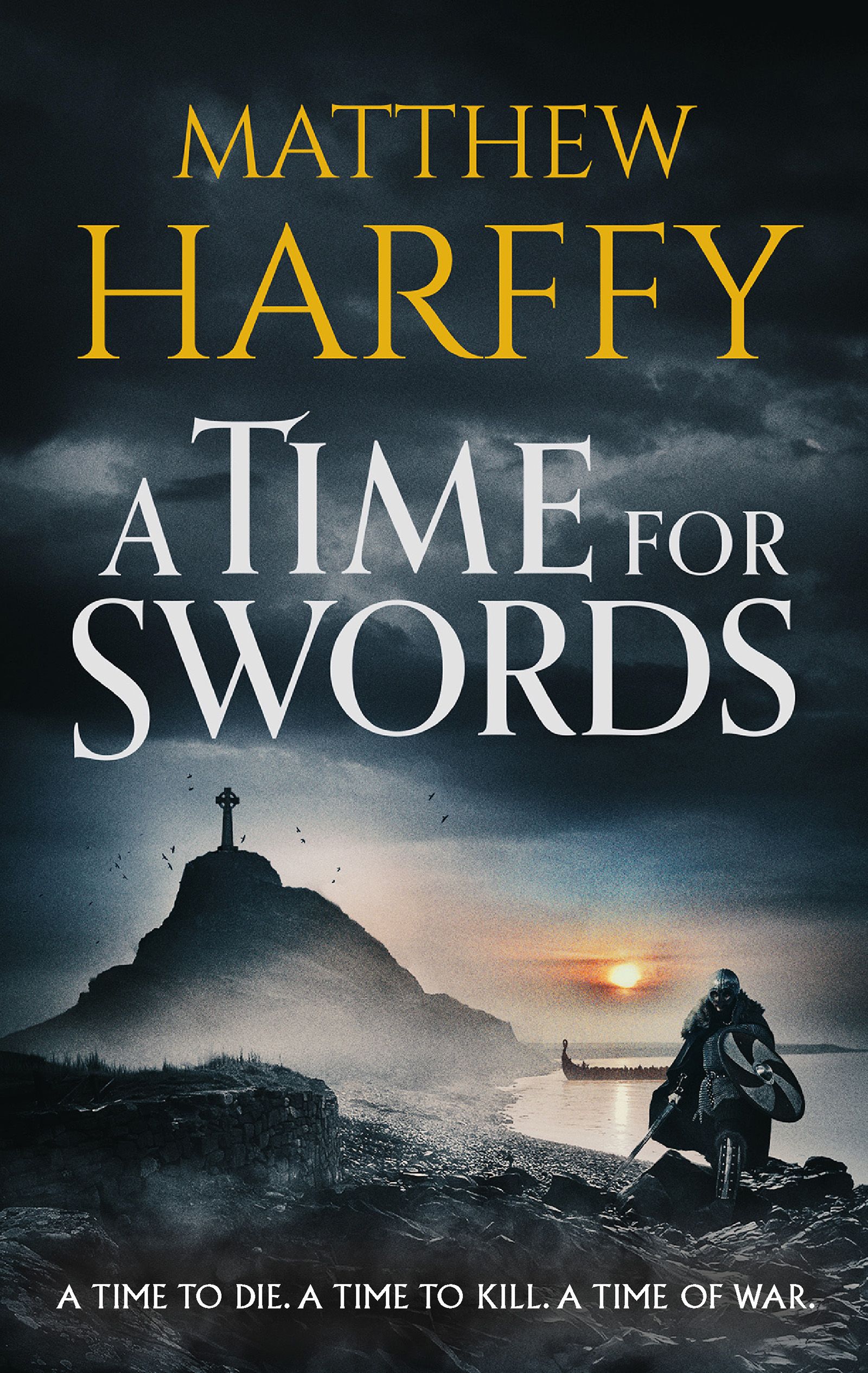
Book Corner: A Time for Swords by Matthew Harffy

When the Vikings attack, a novice monk’s life is changed forever in Matthew Harffy’s new historical adventure.

Lindisfarne, AD793.

There had been portents – famine, whirlwinds, lightning from clear skies, serpents seen flying through the air. But when the raiders came, no one was prepared.

They came from the North, their dragon-prowed longships gliding out of the dawn mist as they descended on the kingdom’s most sacred site.

It is 8th June AD793, and with the pillage of the monastery on Lindisfarne, the Viking Age has begun.

While his fellow monks flee before the Norse onslaught, one young novice stands his ground. He has been taught to turn the other cheek, but faced with the slaughter of his brothers and the pagan desecration of his church, forgiveness is impossible.

Hunlaf soon learns that there is a time for faith and prayer . . . and there is a time for swords.

It is my pleasure to be a part of Matthew Harffy’s blog tour for the release of the first book in what will be a new series, A Time for Swords.

It is always a worry when one of your favourite authors starts a new series – for author and reader, alike – that you may not like it, that the new hero doesn’t live up to the promise of the last hero – or even that the new hero is too similar to the last and the book appears formulaic.

Well, with Matthew Harffy, you needn’t worry about that. He seems to be able to create distinct characters and storylines at the drop of a hat. To be fair to Matthew, I am sure that it is not that easy – though he does make it look so! With Wolf of Wessex, his first foray away from the heroic Beobrand, Matthew Harffy proved his ability at storytelling did not just lay in one direction, and that he did have so much more in his repertoire.

With A Time for Swords, he has done it again!

Recreating the world of 8th century Northumbria, Matthew Harffy has left the 7th century behind to document the arrival of the Vikings on Britain’s shores, with the raid on Lindisfarne – Holy Island. A Time for Swords takes this raid as its starting point and pursues the likely reactions on the people of Northumbria following this unexpected explosion of violence on the peaceful island monastery. As we have come to expect from Matthew Harffy, the action starts on the very first page and doesn’t let the reader stop for breath until the very last.

My feet pounded the soft earth as I sped back towards the dwellings of the ceorls. A green plover, startled by my passing, burst from the long grass that brushed against my bare legs as I ran. I stumbled in shock and surprise at the bird’s screeching call, so like that of the screams of the people dying in the minster and the huts of the villagers. I rushed on, my lungs burning and the thickening smoke stinging my eyes.

I came up over the low rise from the beach to a scene of chaos. When I had left the minster at dawn, its buildings had rested peacefully, close to the natural harbour and overlooked by the mound of rock at the island’s tip. A few small fishing boats had been canted in the shallows of low tide, and teh morning had been still and quiet. Now the brightening day was filled with noise, fire and smoke.

And death.

In the harbour were three huge ships, sleek and menacing with terrifying carven serpent head prows. Around the ships were congregated several men. The land all around was full of movement. Dozens of armed warriors had poured from the ships and had made their way into the grounds of the minster. Three of the monastery buildings were burning, great pillars of flame and smoke smudging the sky. My heart lurched as I realised one of the fires was the scriptorium. I imagined the gold cover of The Treasure of Life melting, the parchment leaves curling, smouldering and then bursting into flames. Leofstan and I would never unpick the secrets within its pages now. I felt tears prickle my eyes as I thought of so many books being consumed, just like in my nightmare of Alexandria. Countless days of painstaking work and skill gone in an instant. So much knowledge snuffed out and lost. I was a long way off, but as I crested the rise I could feel the heat from the fires on my face.

The lead character, Hunlaf, is a monk who has discovered a skill with the sword, and who wants nothing more than to protect his brethren at the monastery at Werceworthe (Warkworth) from the attack that he knows is coming. The intrepid warrior monk manages to attract a small but fierce group of fighters to his cause, including Runolf, a Viking left behind in the raid on Lindisfarne, who has his own motives for confronting the Norse raiders.

Hunlaf is a likeable character, torn between his love of the church and the draw of the sword and the comradeship of warriors. He is a young, gifted fighter with an eagerness to learn and a desire to protect that means he will find it hard to back down from a fight. Each of the characters surrounding Hunlaf have their own stories and reasons for joining the fight, from the monk, Leofstan, with a warrior past of his own, to Runolf the Norseman fighting his own kind, to a Welshman always in need of proving himself and a young, fiery Irishman, Cormac, seeking vengeance for the fate of his family.

The storyline of A Time for Swords draws the reader in from the outset, taking you on a journey from the ruined Lindisfarne to York and on to the monastery at Warkworth. Matthew Harffy demonstrates his knowledge of the area, the people and the landscape, in Hunlaf’s travels. Harffy skillfully combines impeccable historical research with his wonderful storytelling, to create a novel that has a sense of authenticity about it. While the raid on Lindisfarne is historical fact, the subsequent events that young Hunlaf gets involved in are a creation of the author. However, Matthew Harffy supplements the fictional fighting by using the original landscape, the weapons used, fighting tactics and the very real threat of the Viking raiders, to add a sense of realism,

As you may have come to expect with Matthew Harffy, the fight scenes are where he is in his element. Beautifully choreographed, they are frenetic and vividly described with a passion unique to the author. and there is no guarantee that your favourite character will survive…

In short, A Time for Swords is one of those books which is not to be missed. Entertaining, exciting and totally gripping, the novel reaffirms, once more – if more affirmation is needed – Matthew Harffy’s status as one of the best authors of historical fiction around.

Read it – I promise, you will not be disappointed!

About the Author:

Matthew Harffy grew up in Northumberland where the rugged terrain, ruined castles and rocky coastline had a huge impact on him. He now lives in Wiltshire, England, with his wife and their two daughters.

Pre-order links:

Amazon UK: https://amzn.to/39T3MqJ

Follow Matthew:

Twitter: @MatthewHarffy

Website: www.matthewharffy.com

Follow Aries:

Twitter: @AriesFiction

Facebook: Aries Fiction

Website: http://www.headofzeus.com

*

My Books

Ladies of Magna Carta: Women of Influence in Thirteenth Century England looks into the relationships of the various noble families of the 13th century, and how they were affected by the Barons’ Wars, Magna Carta and its aftermath; the bonds that were formed and those that were broken. It is now available from Pen & Sword,  Amazon and from Book Depository worldwide.

Also by Sharon Bennett Connolly:

Silk and the Sword: The Women of the Norman Conquest traces the fortunes of the women who had a significant role to play in the momentous events of 1066.  Available now from Amazon,  Amberley Publishing, Book Depository.

Heroines of the Medieval World tells the stories of some of the most remarkable women from Medieval history, from Eleanor of Aquitaine to Julian of Norwich. Available now from Amberley Publishing and Amazon and Book Depository.

*

You can be the first to read new articles by clicking the ‘Follow’ button, liking our Facebook page or joining me on Twitter and Instagram.

©2020 Sharon Bennett Connolly

Guest Post: Empress Hermine and the Tragic Wedding

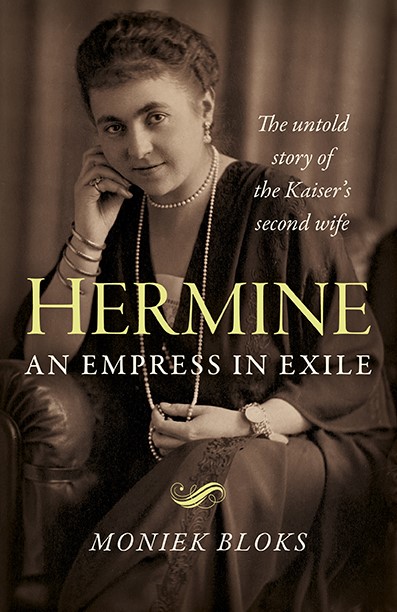
Today it is a pleasure to welcome author Moniek Bloks to History … The Interesting Bits on the first stop of her book tour. Moniek is the author of a new biography of Kaiser Wilhelm II’s second wife, Hermine Reuss of Greiz. The book, Hermine; An Empress in Exile will be released in the UK on Friday 11th December.

So, it’s over to Moniek:

Hermine

Empress Hermine and the tragic wedding

Caroline and her husband

Hermine Reuss of Greiz was one of the five daughters of Heinrich XXII, Prince Reuss of Greiz and his wife Princess Ida of Schaumburg-Lippe. Her childhood was overshadowed by the death of her mother in childbirth and the incurable disability of her only brother.  A 13-year marriage to Prince Johann Georg of Schönaich-Carolath produced five children before her husband’s death of tuberculosis. However determined never to be married again, Hermine ended up meeting the exiled German Emperor Wilhelm II, and soon fate had other plans.

But before Hermine had even married her first husband, she met the Emperor as a 15-year-old girl. In 1903, her elder sister Caroline was destined to marry Wilhelm Ernst, Grand Duke of Saxe-Weimar-Eisenach. Hermine and Caroline were especially close, and Caroline was only three years older than her. On 30 April 1903, Caroline married the Grand Duke at Bückeburg Palace, but Caroline was deeply unhappy; she hardly knew the man she was going to marry and abhorred the life that was waiting for her in Weimar.

Though faced with the separation of her much-beloved sister, Hermine’s memories of that day also focused on a man who towered above everyone else, the Emperor. Her uncle and guardian, who was hosting the wedding, promised to introduce her to him and young Hermine dutifully curtseyed to him. It was an unforgettable experience for her, but the Emperor paid little attention. She later said, “How could he have foreseen that this blushing little girl was his future wife? I stood there, frozen on the spot where the Emperor had received my greeting. The Emperor went on and chatted with my uncle.”

Caroline

It wasn’t just Caroline who had doubts about the wedding. Wilhelm Ernst received a stern talking to from the Emperor, and he said, “Only love can turn a palace into a home. Caroline is like a little bird, fallen out of its nest. She will miss the sisters who loved her. It will take her some time before she learns to be at home on the cold parquet floor of your castle.” He then raised his voice and said, “You have given me an Oath of Allegiance, and I order you to marry tomorrow.” The wedding went ahead as planned.

Caroline remained deeply unhappy, took up smoking and barely ate. The unhappiness of her marriage consumed her body, and she was soon emaciated. On 17 January 1905, Hermine sat by her dying sister’s bedside. On top of everything, Caroline had fallen ill with influenza, and her weakened body simply could not fight the disease. Hermine wrote, “The attack was so violent that there was no hope of her recovery from the first. She received the tenderest care, but all effort was in vain. In her heart of hearts, she did not wish to live.”

Hermine would always remember that she first met her future husband at her sister’s wedding but mostly, she would remember the dear sister she lost.

Many thanks to Moniek for a wonderful post and my very best wishes on her latest release. Please do follow the rest of the blog tour.

The book Hermine: An Empress in Exile will be released on 11 December 2020 (UK) and 1 January 2021 (US).

About the book:

Hermine Reuss of Greiz is perhaps better known as the second wife of the Kaiser (Emperor Wilhelm II of Germany) whom she married shortly after the death of his first wife Auguste Viktoria and while he was in exile in the Netherlands. She was by then a widow herself with young children. She was known to be ambitious about wanting to return to power, and her husband insisted on her being called ‘Empress’. To achieve her goal, she turned to the most powerful man in Germany at the time, Adolf Hitler. Unfortunately, her dream was not realised as Hitler refused to restore the monarchy and with the death of Wilhelm in 1941, Hermine was forced to return to her first husband’s lands. She was arrested shortly after the end of the Second World War and would die under mysterious circumstances while under house arrest by the Red Army.

*

About the author:

Moniek Bloks

Moniek Bloks is the editor of the successful blog History of Royal Women. She lives in the Netherlands and has a background in law.

Her interest in historical royal women and writing began at an early age, and she has been glad to share the stories of often little-known royal women.

When she isn’t writing, she is visiting castles and palaces around Europe with her trusty camera.

*

My Books

Ladies of Magna Carta: Women of Influence in Thirteenth Century England looks into the relationships of the various noble families of the 13th century, and how they were affected by the Barons’ Wars, Magna Carta and its aftermath; the bonds that were formed and those that were broken. It is now available from Pen & Sword, Amazon and from Book Depository worldwide.

Also by Sharon Bennett Connolly:

Silk and the Sword: The Women of the Norman Conquest traces the fortunes of the women who had a significant role to play in the momentous events of 1066.  Available now from Amazon,  Amberley Publishing, Book Depository.

Heroines of the Medieval World tells the stories of some of the most remarkable women from Medieval history, from Eleanor of Aquitaine to Julian of Norwich. Available now from Amberley Publishing and Amazon and Book Depository.

*

You can be the first to read new articles by clicking the ‘Follow’ button, liking our Facebook page or joining me on Twitter and Instagram.

©2020 Sharon Bennett Connolly and Moniek Bloks

Book Corner: Cesare and Lucrezia Borgia by Samantha Morris

Myths and rumour have shrouded the Borgia family for centuries – tales of incest, intrigue and murder have been told of them since they themselves walked the hallways of the Apostolic Palace. In particular, vicious rumour and slanderous tales have stuck to the names of two members of the infamous Borgia family – Cesare and Lucrezia, brother and sister of history’s most notorious family. But how much of it is true, and how much of it is simply rumour aimed to blacken the name of the Borgia family? In the first ever biography solely on the Borgia siblings, Samantha Morris tells the true story of these two fascinating individuals from their early lives, through their years living amongst the halls of the Vatican in Rome until their ultimate untimely deaths. Cesare and Lucrezia Borgia begins in the bustling metropolis of Rome with the siblings ultimately being used in the dynastic plans of their father, a man who would become Pope, and takes the reader through the separate, yet fascinatingly intertwined, lives of the notorious siblings. One tale, that of Cesare, ends on the battlefield of Navarre, whilst the other ends in the ducal court of Ferrara. Both Cesare and Lucrezia led lives full of intrigue and danger, lives which would attract the worst sort of rumour begun by their enemies. Drawing on both primary and secondary sources Morris brings the true story of the Borgia siblings, so often made out to be evil incarnate in other forms of media, to audiences both new to the history of the Italian Renaissance and old.

Cesare and Lucrezia Borgia: Brother and Sister of History’s Most Vilified Family by Samantha Morris is a fascinating look at two of the most famous villains in history; a brother and sister renowned for murder, intrigue and incest. Or are they? Samantha Morris’s beautifully written dual biography of these siblings aims to peal away the centuries of rumour and accusations and find the real people beneath the legend.

Samantha Morris combines a lively, engaging narrative with keen historical analysis, uncovering the facts embedded in the legends, rumours and scandals. She demonstrates a deep understanding not only of her subjects and their motivations but of the political theatre of Italy, the papacy and Europe in general at that time.

In Cesare and Lucrezia Borgia: Brother and Sister of History’s Most Vilified Family, Samantha Morris expertly separates rumour from fact to provide a balanced appraisal of these famous siblings; their strengths and weakness. Using creditable sources, papal records and even family letters, she clearly establishes the facts behind the lies of the incest accusation, whilst demonstrating how such accusations came about and the various efforts to sully the name of the Borgia family.

The careers of the Borgia children were decided and laid out before them before they could even waalk. Juan was chosen as the son who would be the military leader, the great Duke who would go on to continue the Borgia line; Cesare was destined for a life in the Church; Lucrezia would be forced into diplomatic marriages and Gioffre would do the same. The children were their father’s pawns, important chess pieces but Cesare in particular did not like the career path that was chosen for him.

When Cesare was just six years old, the Pope granted a dispensation that allowed him to hold Church benefices despite his illegitimacy and the following year, 1482, King Ferdinand of Aragon exempted him from a law that would stop him from holding lordships in Spain due to his illegitimacy. Being bastard born would not get in the way of raising Cesare Borgia to the heights that his father so wanted for him.

By the age of just fifteen, Cesare had already been given a vast number of Church benefices including the Bishopric of Pamplona, the ancient capital of Navarre. This caused particular outrage as the young man had not yet taken his holy orders and Cardinal Rodrigo Borgia did his best to calm down the populace, telling them that Cesare’s elevation was simply down to his merits and hard work. Cesare, on a break from the University of Perugia and busy on a hunting trip, found himself having to write a letter to the people of Navarre to try and soothe their anger. But it didn’t work and the Pope had to intervene to halt the rebellion.

From tracing their origins in Spain, to the spectacular heights to which the family rose, to the politics that brought about the demise of Cesare and meant the family were embroiled in constant struggles for land and power, Samantha Morris charts the successes and failures – and underhand dealings of the infamous family. The siblings’ father and family patriarch, Rodrigo Borgia, Pope Alexander VI is depicted as a scheming but capable man and pope who loved his children dearly. He sought to establish his illegitimate children in lives and careers appropriate to their rank as the children of a reigning pope.

Lucrezia Borgia comes across as an intelligent, passionate woman, far removed from , the poisoner of legend conducting a love affair with her own brother. She proved herself capable of ruling and was loving and loyal to her family. She pursued an active political career despite her almost constant pregnancies, and suffered incalculable griefs and family loss. Lucrezia, however, is not depicted as a pure, innocent virgin, but a well educated, politically astute woman who may also have conducted certain indiscretions, or at least platonic love affairs, during her lifetime. She is a woman who made the best of the life that was mapped out for her.

Cesare, on the other hand, is a ruthless man not cut out for the career in the church to which he appeared destined. The untimely murder of his older brother meant he went from cardinal to soldier, a job to which he was much better suited and a thousand times more capable and dedicated. Cesare is a complex character; accused of numerous murders, including those of his own brother and Lucrezia’s second husband, he is remembered to history as a ruthless, scheming murderer and seducer of his own sister. While he may have been ruthless and scheming – and a murderer to some extent, Samantha Morris goes on to prove that not all the murders laid at Cesare’s door were his responsibility.

As an aside, the reader cannot fail to notice the prevalence of syphillis in Italy at the time. A countless number of the protagonists in the story suffered from this disfiguring disease, Cesare Borgia among them. The French, attempting to conquer Italy at the time, called it ‘the Italian disease’, though in England it was known as ‘the French disease’ – those same invading French soldiers took the dreadful disease with them when they returned home.

Cesare and Lucrezia Borgia: Brother and Sister of History’s Most Vilified Family is an engaging narrative of the history of not only these most famous Italian siblings, but also Italy, the papacy and wider European politics at the time when the world was moving from the Medieval era into the Early Modern, when the Renaissance was in full swing and the Reformation was just around the corner. Samantha Morris demonstrates the power of the papacy, of Pope Alexander VI in particular, and how papal factions caused the rise – and fall – of the Borgia family.

Cesare and Lucrezia Borgia: Brother and Sister of History’s Most Vilified Family is an entertaining and enthralling read – one not to be missed!

Cesare and Lucrezia Borgia: Brother and Sister of History’s Most Vilified Family by Samantha Morris is available from Pen & Sword Books and Amazon.

About the author:

Samantha Morris studied archaeology at the University of Winchester and it was there, whilst working on a dissertation about the battlefield archaeology of the English Civil War that her interest in the Italian Renaissance began. Her main area of interest is the history of the Borgia family and the papacy of Pope Alexander VI, however she also has a keen interest in the history of other Renaissance families. Samantha has previously written on the Borgia family and runs a successful blog based mainly on the history of the Italian Renaissance, but with snippets of other eras thrown in too.

*

My Books

Ladies of Magna Carta: Women of Influence in Thirteenth Century England  looks into the relationships of the various noble families of the 13th century, and how they were affected by the Barons’ Wars, Magna Carta and its aftermath; the bonds that were formed and those that were broken. It is now available from Pen & SwordAmazon and from Book Depository worldwide.

Also by Sharon Bennett Connolly:

Silk and the Sword: The Women of the Norman Conquest traces the fortunes of the women who had a significant role to play in the momentous events of 1066.  Available now from Amazon,  Amberley Publishing, Book Depository.

Heroines of the Medieval World tells the stories of some of the most remarkable women from Medieval history, from Eleanor of Aquitaine to Julian of Norwich. Available now from Amberley Publishing and Amazon and Book Depository.

*

You can be the first to read new articles by clicking the ‘Follow’ button, liking our Facebook page or joining me on Twitter and Instagram.

©2020 Sharon Bennett Connolly 

Guest Post: All the Ælfgifus by Annie Whitehead

Today it is a pleasure to welcome Annie Whitehead to History … the Interesting Bits as a stop on her Women of Power in Anglo-Saxon England Blog Tour.

Women of Power in Anglo-Saxon England examines the lives of individual women in a way that has often been done for the Anglo-Saxon men but not for their wives, sisters, mothers and daughters. It tells their stories: those who ruled and schemed, the peace-weavers and the warrior women, the saints and the sinners. It explores, and restores, their reputations.

Over to you Annie….

All the Ælfgifus

I was recently interviewed on BBC Radio Northampton where we chatted about a lady known as Ælfgifu of Northampton. During the pre-recording chat, it became clear that there was some confusion over the name. I told the presenter that I wasn’t the least surprised, as there are no fewer than eight ladies with that name featured in my new book. I thought I’d take this opportunity to introduce them. (The name, incidentally, translates as Elf-gift, which I think is rather beautiful.)

Ælfgifu, daughter of Edward the Elder

Edward the Elder

We don’t know a great deal about her but I do feel rather sorry for her. She and her sister, Eadgyth, were, apparently, both sent to Germany so that the future emperor, Otto, could choose one of them as his bride. He married Eadgyth – it was, apparently, ‘love at first sight’ – and Ælfgifu married another prince. What Ælfgifu felt about being rejected by Otto, we can only surmise. Of course, Otto might not have been every young girl’s dream, in which case Ælfgifu might have considered that she’d had a lucky escape. It must have rankled though, being declared less attractive than her sister.

Ælfgifu of Shaftesbury

King Edmund was the son of Edward the Elder and a half-brother of the Ælfgifu mentioned above. He became king at around the age of eighteen and his first wife, Ælfgifu, bore him two sons, both future kings. Her identity is debateable and her background unknown. She wasn’t married for long. Her son Eadwig (I’ll come back to him) was probably born around 940, and his younger brother Edgar around 943. King Edmund himself died in 946 – the victim of a brawl, or perhaps a political assassination – having married again, so his first marriage must have ended not long after Edgar’s birth. Ælfgifu is known as Ælfgifu of Shaftesbury, and it would be easy to assume that she retired to Shaftesbury Abbey in the manner of a number of previous queens, but the short-lived nature of her marriage and the young age of her children suggest another scenario. It is plausible that she died in childbirth, either in labour with Edgar or with a subsequent pregnancy in which both mother and child died. If she did indeed die in childbirth then she cannot have been a nun at Shaftesbury, but merely a benefactor.

Ælfgifu the Harlot

Mortimer portrait of Dunstan scolding 
Ælfgifu the Harlot

In 955 Edmund’s brother, who’d succeeded him, died and was in turn succeeded by Edmund’s son, Eadwig (see, I told you I’d come back to him). Life at court got rather interesting when Eadwig, still only a teenager, married a young woman named Ælfgifu. Many of you will know the story of how he was found in bed on his coronation day with his wife, and her mother. Depending on which version one reads, the mother was banished and/or hamstrung in punishment, or she threatened the abbot who found them, and who was himself subsequently banished, that she would have his eyes put out if he ever returned. The young couple’s marriage was annulled two years later, on the grounds that they were too closely related. However, Ælfgifu is presumed to be the same woman who left a will, in which she’s identified as being descended from the brother of Alfred the Great. This being so, she was descended from the branch of the royal family that had risen up in rebellion. Ælfgifu’s marrying the king might have been seen as an attempt to strengthen those claims. It’s not a theory which I whole-heartedly embrace but it does seem that there was a lot of political manoeuvring at court and I suspect Ælfgifu was an innocent caught up in the turmoil. She was certainly welcomed back to court by Eadwig’s brother when he became king.

Ælfgifu of York – Possibly

Aethelred the Unready

That brother of Eadwig’s had a son, known to history as Æthelred the Unready. His first wife’s identity is a bit of a mystery. The chronicler John of Worcester said that she was called Ælfgifu, and that she was the daughter of an ealdorman called Æthelberht. But there is no evidence of this woman’s father; no ealdorman named Æthelberht is recorded elsewhere. Roger of Wendover said that she was a ‘woman of low birth’, while Ailred of Rievaulx, writing in the mid-twelfth century, said that she was the daughter of a man named Thored, but he didn’t name her. It is possible that Æthelred was married first to a woman named Ælfgifu and then to the daughter of Thored, but it is generally accepted that this was one woman and, combining the two versions, that she was Ælfgifu, daughter of Thored.

We don’t hear much from her as she didn’t witness any charters and is otherwise unnamed in the sources. What she did do, though, is have at least nine children, (one of whom was also called Ælfgifu, whose husband was murdered by her sister’s husband, which must have made for awkward family Christmases)! She must have lived until the eleventh century, for her youngest son, Edgar, did not appear on charter witness lists until 1001. We do not know exactly how old the royal children would typically have been when they first appeared on the witness lists, but we do know that they were sometimes still babes in arms. It is not known what happened to Ælfgifu and it is possible that she died at around the same time, for King Æthelred got married again in 1002…

…To a woman named Emma, but who was given the English name of Ælfgifu. As if this wasn’t confusing enough! And after Æthelred the Unready died, Emma married again. Her husband was King Cnut, who already had a wife/concubine:

Ælfgifu of Northampton

Emma – Ælfgifu of Northampton’s rival

This Ælfgifu came from a powerful Mercian family. Her father was ealdorman of Northumbria, her uncle founded Burton Abbey and her grandmother founded Wolverhampton. Ælfgifu’s father was murdered and her brothers were blinded and generally Æthelred the Unready mistrusted the family, as well he might. For at some point, possibly around 1013, Ælfgifu married Cnut, the son of the invader, Swein Forkbeard. She had two sons by Cnut, and they were given Danish names – Swein and Harold – as if recognised as potential heirs, but when Cnut became king, he married Emma and also had a son with her, who was named Harthacnut.

Emma, with her credentials as an English queen, was no doubt important to Cnut, but so too was Ælfgifu of Northampton, and Cnut had a task for her to perform. Cnut had an empire to rule, and Harthacnut was sent to Denmark while in 1030, Ælfgifu and her son Swein were sent to Norway, there to rule for Cnut. The regency in Norway may have been hugely symbolic, and it is telling that the period was remembered in Scandinavian history as ‘Ælfgifu’s time’, but for various reasons it wasn’t hugely successful. Swein died in 1035, but so too did Cnut.

Now a (rather unseemly at times) battle began as Emma and Ælfgifu fought for their sons to succeed. You can read all about these fraught years in my new book but the upshot was that Ælfgifu was successful in the short term and Harold ‘Harefoot’ became king. Sadly though he died in 1040. We don’t know what happened to Ælfgifu after this, but there is a French twelfth-century story which speaks of a woman named Alveva and it’s possible that she lived out her years as an exile in southern France.

By 1066, another Harold was on the throne. He had a wife/concubine who’s known to history as Edith Swanneck, and one of her children was a daughter named Ælfgifu.

Ælfgifu the Unlucky

But the last Ælfgifu I want to talk about is one I’ve nicknamed ‘unlucky’. You’ll recall that Ælfgifu of Northampton’s brothers were blinded. They weren’t the only ones and in 993 a man named Ælfgar suffered the same fate. His wife was another woman named Ælfgifu. When Ælfgifu of Northampton’s father was killed and her brothers blinded, another man was named as being deprived of all his property. With a little bit of detective work I was able to say with some degree of certainty that this man was the second husband of our last Ælfgifu, which means that her first husband was blinded and the second was deprived of all his property. Given that it’s clear the name Ælfgifu seems to have been given only to noblewomen, I think this one must have expected a slightly more comfortable and uneventful life!

Follow the Blog Tour!

Annie’s book, Women of Power in Anglo-Saxon England, was published by Pen & Sword Books in June 2020. It can be purchased from Pen & Sword and online.

About the Author:

Annie is an author and historian and an elected member of the Royal Historical Society and has won awards and prizes for her fiction and nonfiction.

Published works include Mercia: The Rise and Fall of a Kingdom (Amberley Books) and novels and stories set in Anglo-Saxon England, including To Be A Queen, the story of Æthelflæd, Lady of the Mercians, longlisted for HNS Book of the Year 2016. She was the inaugural winner of the Dorothy Dunnett/HWA Short Story Competition in 2017. You can connect with Annie through her Website, on Facebook, Twitter and on her Blog and Amazon Author Page.

All images are in the public domain.

*

My Books

Ladies of Magna Carta: Women of Influence in Thirteenth Century England  looks into the relationships of the various noble families of the 13th century, and how they were affected by the Barons’ Wars, Magna Carta and its aftermath; the bonds that were formed and those that were broken. It is now available from Pen & SwordAmazon and from Book Depository worldwide.

Also by Sharon Bennett Connolly:

Silk and the Sword: The Women of the Norman Conquest traces the fortunes of the women who had a significant role to play in the momentous events of 1066.  Available now from Amazon,  Amberley Publishing, Book Depository.

Heroines of the Medieval World tells the stories of some of the most remarkable women from Medieval history, from Eleanor of Aquitaine to Julian of Norwich. Available now from Amberley Publishing and Amazon and Book Depository.

*

You can be the first to read new articles by clicking the ‘Follow’ button, liking our Facebook page or joining me on Twitter and Instagram.

©2020 Sharon Bennett Connolly