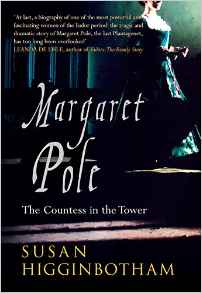
Of the many executions ordered by Henry VIII, surely the most horrifying was that of sixty-seven-year-old Margaret Pole, Countess of Salisbury, hacked to pieces on the scaffold by a blundering headsman.
From the start, Margaret’s life had been marred by tragedy and violence: her father, George, Duke of Clarence, had been executed at the order of his own brother, Edward IV, and her naive young brother, Edward, Earl of Warwick, had spent most of his life in the Tower before being executed on the orders of Henry VII.
Yet Margaret, friend to Katherine of Aragon and the beloved governess of her daughter Mary, had seemed destined for a happier fate until religious upheaval and rebellion caused Margaret and her family to fall from grace. From Margaret’s birth as the daughter of a royal duke to her beatification centuries after her death, Margaret Pole: The Countess in the Tower tells the story of one of the fortress’s most unlikely prisoners.
Margaret Pole: the Countess in the Tower tells the story of an amazing woman who navigated two eras of history. Born into the Medieval world, during the reign of her uncle, Edward IV, she survived the change of dynasty and prospered during the reign of Henry VII; marrying and starting a dynasty of her own. During the reign of Henry VIII, she was accorded the title of Countess of Salisbury in her own right, and given the charge of her cousin’s most prized possession; his only daughter and heir, Mary Tudor.
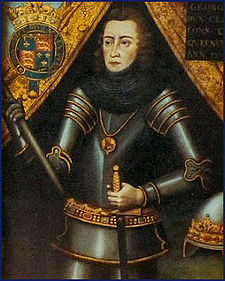
George, Duke of Clarence – Margaret’s father
Susan Higginbotham tells Margaret’s story in great detail. Starting with a childhood marred by her father’s attainder and execution by his own brother – Edward IV – the reader is drawn into Margaret’s life and family. From the highs of being governess to the princess, through the lows of her years of imprisonment in the Tower, and eventual execution at an age – 67 – when she should have been allowed to spend her days in quiet retirement, surrounded by her grandchildren; Susan Higginbotham tells a fascinating story of family tragedy, national politics and religious upheaval.
What Margaret thought of the death of her uncle Richard III we cannot know, but as she rode south on the orders of the new King Henry, she must have done so with some trepidation. Orphaned, with her closest relative a boy younger than herself, she had no powerful male relations to speak up for her, nor could her female ones be of much help. Her paternal grandmother, Cecily Neville, Duchess of York, was the mother of a defeated king; her maternal grandmother, Anne Beauchamp, Countess of Warwick, had been stripped of her lands during Edward IV’s reign….Thus, young Margaret’s future rested largely in the hands of a man neither she nor most other people in England had even met.
Engaging and sympathetically told, Susan Higginbotham’s narrative is a joy to read. It draws you in to Margaret’s life, relating her fears and hopes – and a deep and enduring love for her family.
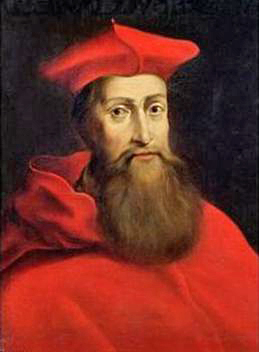
Cardinal Reginald Pole – Margaret’s most famous son
Susan Higginbotham has undertaken an incredible amount of research for this book, an endeavour which shines through on every page. The author has reconstructed Margaret Pole’s life and death, using every primary source available. Highlighting contradictions and explaining omissions, she takes the countess’s story from her earliest days to her final, dreadful moments… and beyond. Included at the end of the book is an appendix of over 30 pages of written evidence taken in the Exeter Conspiracy; a conspiracy involving at least 2 of her sons, which would see her imprisoned in the Tower for years before she was sent to the executioner’s block. It made for some absorbing reading late into the night.
All the key players in Margaret’s story are discussed, their actions and influence on Margaret’s life analysed and assessed. From Henry VIII to Princess Mary and Margaret’s own children. Susan Higginbotham’s analysis is unrivalled, her words painting vivid portraits of all the main characters who had a part to play Margaret’s life and explaining her relationships in detail.
Moreover, Margaret’s story is firmly placed in the wider context of English and European politics of the time; and in the great upheaval of the Reformation. Where there is contention, the author presents all possible arguments, before giving her own opinion and explaining her reasoning. She makes clear where information is lacking and highlights where she is providing her own theory and opinions.
In my recent interview with her, I asked Susan Higginbotham if she saw Margaret as a victim or a heroine, and she replied:
I would say a heroine, because she had strong beliefs which she maintained in the face of pressure, and she conducted herself with courage and dignity throughout adversity. I don’t think she would like to be remembered as a victim.
Margaret Pole, Countess of Salisbury
This biography of Margaret reinforces Susan Higginbotham’s statement. Margaret is portrayed as a strong, independent woman, who had raised a large family single-handed, following the death of her husband. Margaret had a strong faith and demonstrated great loyalty to the Tudor dynasty. Her courage and strength of purpose shines through on every page – as does her intelligence. Margaret Pole was no meek and feeble woman, she stood up for her beliefs, herself and her family, while always maintaining her loyalty to the crown.
Susan Higginbotham treats Margaret Pole with great compassion and dignity, telling her story – and that of her family – in such an engaging manner that the book is impossible to put down. Knowing how events will eventually play out makes it no less compelling.
It is a fascinating story and – ultimately – a sad one; however, it’s also a story of faith, courage and perseverance. Margaret Pole: the Countess in the Tower is a wonderful read – shining a light on the life of a woman whose story deserves to be told.
*
Pictures courtesy of Wikipedia
*
My book, Heroines of the Medieval World, is now available in hardback in the UK from both Amberley Publishing and Amazon UK and worldwide from Book Depository. It is also available on Kindle in both the UK and USA and will be available in Hardback from Amazon US from 1 May 2018.
Be the first to read new articles by clicking the ‘Follow’ button, liking our Facebook page or joining me on Twitter.
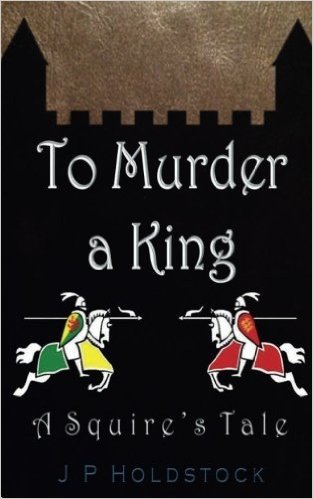
My latest book review, of James Holdstock’s amazing To Murder a King has gone live over at The Review today!
To Murder A Kingis the first book in James Holdstock’s A Squire’s Tale series. While it is aimed at teenage readers it is a fabulous tale for all ages. A story of murder and intrigue with a little bit of the dark arts thrown in it leaves you gripped from the first pages. Of course, it doesn’t hurt that the greatest knight in history, William Marshal, has a leading role!
This novel is a fabulous adventure set in the early days of the reign of King John. Suitable for children from, about 9 and above, it is an enjoyable, entertaining read – even for an adult. It tells the story in such a way that children also learn about medieval life, politics and warfare; and even the prejudices of Normans towards Saxons….
To read the full review of this fantastic novel – and to enter the prize draw and be in with a chance of winning a paperback copy in the giveaway, simply visit The Review and leave a comment. Good luck!
*
My book, Heroines of the Medieval World, is now available in hardback in the UK from both Amberley Publishing and Amazon UK and worldwide from Book Depository. It is also available on Kindle in both the UK and USA and will be available in Hardback from Amazon US from 1 May 2018.
Be the first to read new articles by clicking the ‘Follow’ button, liking our Facebook page or joining me on Twitter.
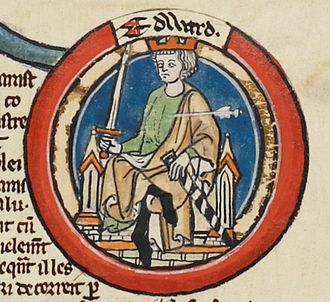
Poor Edward the Martyr is one of the great ‘what ifs’ of Medieval history. It’s not that he was anything special in the kingly department, it’s simply that he didn’t get the chance to be – or to not be – any kind of king.
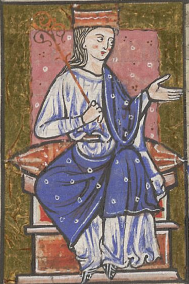
Born around 962 he was the eldest son of Edgar the Peaceable, king of England. His mother was Æthelfled “the Fair”, daughter of Ealdorman Ordmaer. There seems to be some confusion as to Æthelfled’s actual status (not surprising given the distance of over 1,000 years, I suppose). Some sources say she and Edgar were married, but later divorced. However, others suggest that young Edward’s legitimacy was in doubt and that his parents never married. This last is compounded by suggestions of ‘youthful indiscretion’ on Edgar’s part.
Nothing is heard of Edward’s mother after his birth, possibly suggesting that she died shortly after. Edgar, however, married again – or at least formed another relationship. His 2nd wife was Wulfthryth, with whom he had a daughter, Edith (Eadgyth). Wulfryth became the abbess of Wilton and young Edith followed her mother into the convent.
And then Edgar formed a 3rd and final relationship that would have far-reaching consequences for his first-born son, Edward. Edgar married the daughter of Ordgar, a powerful Devon thegn who died in 971. Unlike Edgar’s previous ‘wives’, Ælfryth was crowned and anointed as queen, following her marriage with Edgar, which was officially blessed by the church. Ælfryth gave Edgar 2 sons; Edmund, who died in 971 and Æthelred, born in 968.
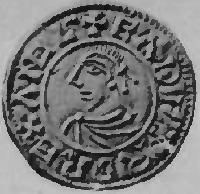
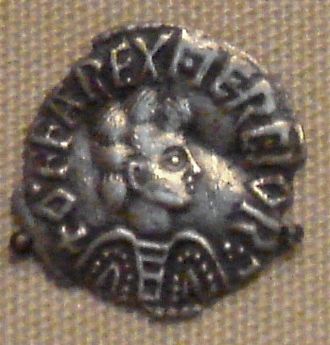
Coin of Edward the Martyr
Both Edward and Edmund appear in a charter of 966, as witnesses to the foundation of the New Minster at Winchester. Curiously, Edward’s name appears below that of his half-brother, suggesting Edmund was regarded as his father’s heir, rather than his older sibling.
Little is known of Edward’s childhood; according to Byrthferth of Ramsey he was fostered for some years by Sideman, bishop of Crediton and protégé of Ælfhere, ealdorman of western Mercia and the most powerful ealdorman in England at the time.
When his father died in 975, Edward, at 13 years of age but with doubtful legitimacy, was one of 2 rival candidates for the crown. Edward was up against his baby brother, Æthelred; undoubtedly legitimate but only 6 or 7 years old. With both too young to make an independent bid for power, each boy was backed by court factions.
Æthelred’s mother, Ælfryth, garnered support for her son from Æthelwold, bishop of Winchester, Byrhtnoth, ealdorman of Essex, and Æthelwine, ealdorman of east Anglia and brother of Ælfrythf’s 1st husband. However, Edward had the backing of ealdorman Ælfhere and, possibly, Oswald, archbishop of York. However, the crucial support came from Dunstan, the highly influential and saintly archbishop of Canterbury, who crowned Edward personally.
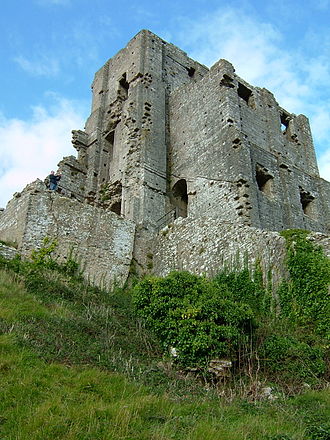
Corfe Castle
We know very little of Edward the Martyr, and what we have is contradictory to the extreme. According to Byrthferth, Edward himself was known for having a hot temper; a temper which instilled fear within the people of his own household. However, Osbern maintained that men had a good opinion of Edward.
With Edward too young to rule alone, Ealdorman Ælfhere held the reins of government. Only 3 charters have survived, 2 of which were issued in Crediton, Edward’s childhood home. The regime’s influence seem to be very limited the further north you look, especially in the Danelaw. In the Five Boroughs region (including Stamford and Lincoln), coinage was below the standard of that of his father, Edgar. The short reign was overshadowed by a backlash to Edgar’s previous ecclesiastical policies, seeing a violent reaction against the expansion of the reformed monasteries; however, Edward retained the support of Dunstan, who did much to influence church policy and direction.
Dunstan’s influence saw him call a meeting of councillors in Calne in 978. Held in an upper room, the meeting turned into disaster when the floor gave way. Many councillors were killed or injured; however, Dunstan, possibly in his early 70s by then, miraculously survived when the rafter on which he was standing was the only one that didn’t give way.
Aelfryth presenting Edward with a drink
Edward seems to have been benevolent towards his stepmother, bearing her no ill will following her attempts to claim the throne for her own son. He allowed Ælfryth to claim her part of his father’s dower and thus confirmed her jurisdiction over the whole of Dorset. She and Æthelred settled at Corfe, a castle and large estate in the Purbeck Hills.
Ælfryth, however, may have been less forgiving and unwilling to settle for her son being Edward’s heir. When the opportunity presented itself, she is said to have jumped at it, with few qualms.
In March 978 Edward had decided to visit his half-brother at Corfe; arriving on the evening of 18th March, with only a small band of men accompanying him. According to the chronicles, he was met at the gates of Corfe Castle by Ælfryth’s retainers; he had probably sent ahead to warn of his arrival and would have expected a welcome, someone to take his horse and lead him into the castle. Sources vary, some suggesting that he was presented with a cup; so he could quench his thirst after a long ride.
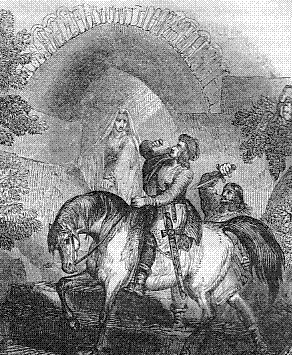
What is certain, is that Edward was pulled from his horse and stabbed – murdered. Following the stabbing, Edward’s horse bolted; with the dying king’s foot caught in the styrrup, he was dragged along the ground for some considerable distance.
He was 16.
The murder of Edward
He was buried quickly and without ceremony somewhere close by – possibly Wareham. With Æthelred considered too young to be guilty, the finger of accusation pointed straight at his mother, Ælfryth.
An anointed king was seen as God’s representative on earth, with regicide being viewed as a heinous crime. In spite of this, Edward’s killers escaped punishment. Ælfryth was the prime suspect. As late as 40 years after the killing, Archbishop Wulfstan of York laid the blame firmly at her door, in the D text of the Anglo-Saxon Chronicle, which opined:
No worse deed than this was ever done by the English nation since they first sought the land of Britain. Men murdered him, but God hath magnified him. He was in life an earthly king. He is now after death a heavenly saint.¹
However, given the political reality of her position as mother of the king, it was expedient for her to remain beyond suspicion. Although Ælfryth appears guilty, and many fingers pointed at her, it is just as likely that one of her household, as supporters of Æthelred, formed the conspiracy to advance their own aims; having a king on the throne who owes you his crown can be useful to your career.
We will never know.
Although the crown was not conferred on Æthelred straight away, whatever the dowager queen’s actions, at between 9 and 11 years old, at most, her son was now the only candidate for the succession. However, it was only after an interregnum and a period of negotiations that the crown was settled on Æthelred.
Almost a year after Edward’s death, the young king was exhumed by Ealdorman Ælfhere. Edward’s erstwhile supporter stayed a couple of days at Wareham before escorting the body to the nunnery at Shaftesbury. It was only after Edward was safely re-buried with the honour to which he was entitled as king, that Æthelred was crowned by Archbishop Dunstan; on 4th May 979.
Edward was soon venerated as a saint and martyr with Æthelred himself championing his brother’s cult, translating Edward’s bones to a new shrine at Shaftesbury Abbey in 1001. A grant of that year, in favour of Shaftesbury, stated that the gift was being made to God and to
“his saint, my brother Edward, whom drenched with his own blood, the Lord has seen fit to magnify in our time through many miracles.”²
Shaftesbury Abbey
During the Dissolution of the Monasteries in the 16th century, Shaftesbury Abbey was destroyed and Edward’s shrine lost. However, in 1931 his grave was discovered and his bones were removed to a bank vault in Croydon, as neither the Churches of England or Rome would take the relics for reburial. Tests on the remains, in 1970, seemed to confirm they were Edward’s, the injuries on the bones being consistent with the wounds Edward is known to have received. The young king’s remains were finally removed from the bank, in September 1984, to be interred in a shrine in the Russian Orthodox Cemetery at Brookwood, Surrey.
And despite the fact Shaftesbury would like to have Edward back, so far as I can discover he remains the only Saxon king to be resting in a Russian Orthodox cemetery.
*
Footnotes: ¹ Anglo-Saxon Chronicle quoted by Martin Wall in The Anglo-Saxons in 100 Facts; ² AS chart., S899 quoted by Cyril Hart in Oxforddnb.com.
*
Pictures courtesy of Wikipedia
Sources: Brewer’s British Royalty by David Williamson; Britain’s Royal Families, the Complete Genealogy by Alison Weir;The Wordsworth Dictionary of British History by JP Kenyon; The Anglo-Saxons in 100 Facts by Martin Wall; Kings, Queens, Bones and Bastards by David Hilliam; The Mammoth Book of British kings & Queens by Mike Ashley; The Oxford Companion to British History Edited by John Cannon; oxforddnb.com.
*
My Books
Signed, dedicated copies of all my books are available through my online bookshop.
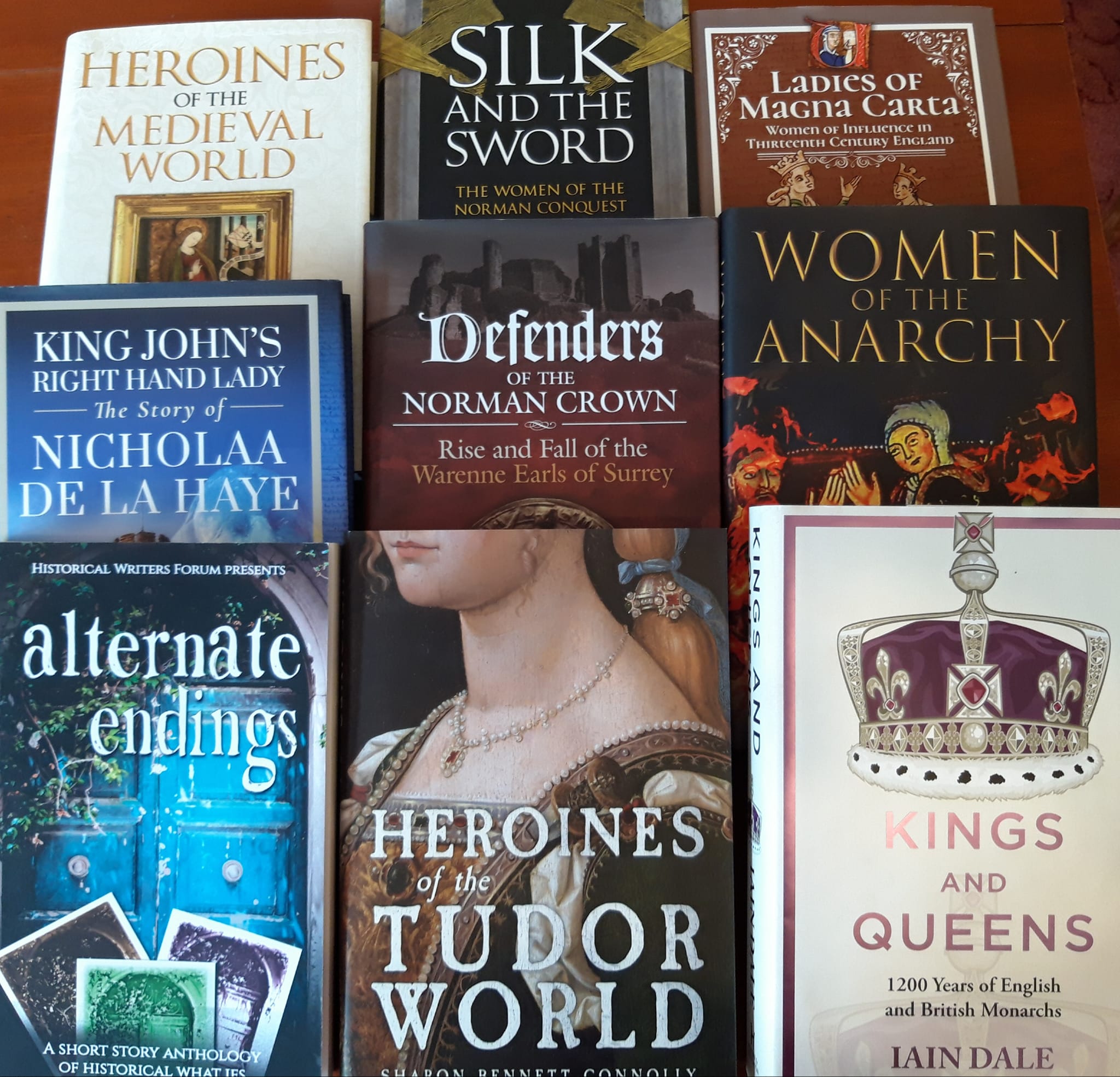
Out Now!Women of the Anarchy
Two cousins. On the one side is Empress Matilda, or Maud. The sole surviving legitimate child of Henry I, she is fighting for her birthright and that of her children. On the other side is her cousin, Queen Matilda, supporting her husband, King Stephen, and fighting to see her own son inherit the English crown. Women of the Anarchy demonstrates how these women, unable to wield a sword, were prime movers in this time of conflict and lawlessness. It show how their strengths, weaknesses, and personal ambitions swung the fortunes of war one way – and then the other.
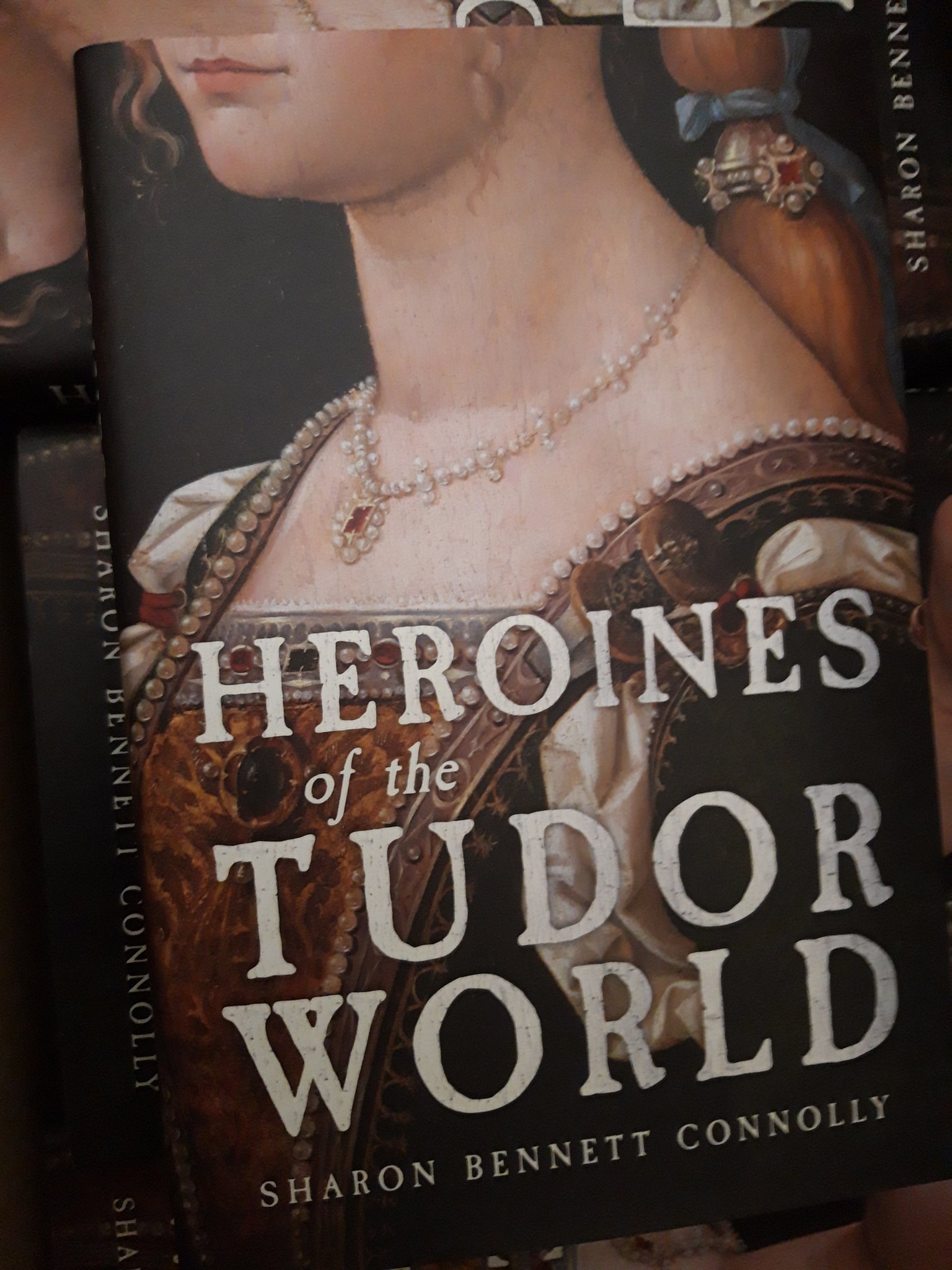
Coming on 15 June 2024: Heroines of the Tudor World
Heroines of the Tudor World tells the stories of the most remarkable women from European history in the time of the Tudor dynasty, 1485-1603. These are the women who ruled, the women who founded dynasties, the women who fought for religious freedom, their families and love. These are the women who made a difference, who influenced countries, kings and the Reformation. In the era dominated by the Renaissance and Reformation, Heroines of the Tudor World examines the threats and challenges faced by the women of the era, and how they overcame them. From writers to regents, from nuns to queens, Heroines of the Tudor World shines the spotlight on the women helped to shape Early Modern Europe.
King John’s Right-Hand Lady: The Story of Nicholaa de la Haye is the story of a truly remarkable lady, the hereditary constable of Lincoln Castle and the first woman in England to be appointed sheriff in her own right. It is is available from King John’s Right-Hand Lady: The Story of Nicholaa de la Haye is the story of a truly remarkable lady, the hereditary constable of Lincoln Castle and the first woman in England to be appointed sheriff in her own right. Available from all good bookshops or direct from Pen & Sword Books, bookshop.org and Amazon. Defenders of the Norman Crown: The Rise and Fall of the Warenne Earls of Surrey tells the fascinating story of the Warenne dynasty, from its origins in Normandy, through the Conquest, Magna Carta, the wars and marriages that led to its ultimate demise in the reign of Edward III. Available from Pen & Sword Books, Amazon in the UK and US, and Bookshop.org.
Alternate Endings: An anthology of historical fiction short stories including Long Live the King… which is my take what might have happened had King John not died in October 1216. Available in paperback and kindle from Amazon.
Podcast:
Have a listen to theA Slice of Medieval podcast, which I co-host with Historical fiction novelist Derek Birks. Derek and I welcome guests, such as Bernard Cornwell and Elizabeth Chadwick, and discuss a wide range of topics in medieval history, from significant events to the personalities involved.
*
Don’t forget!Signed and dedicated copies of all my books are available through my online bookshop.
For forthcoming online and in-person talks, please check out my Events Page.
You can be the first to read new articles by clicking the ‘Follow’ button, liking our Facebook page or joining me on Twitterand Instagram.
Today, History…the Interesting Bits is delighted to be the final stop on Susan Higginbotham‘s amazing Blog Tour. Susan’s latest book, Margaret Pole; The Countess in the Tower was released earlier this month. It tells the fascinating story of Margaret, countess of Salisbury, niece of Edward IV and Richard III and cousin of Henry VIII.
The book has just arrived on my doormat, so look out for a review shortly. For now, Susan was kind enough to sit through an interview and answer my grueling (not really, I hope) questions…..
Hi Susan, thank you for joining us today – and welcome to History…the Interesting Bits.
Congratulations on the release of your new book, Margaret Pole: The Countess in the Tower. I can’t wait to read and review it. In the meantime…
I believe you are a qualified lawyer, what made you become a writer?
I actually became a lawyer late in life–I was in my thirties when I went to law school–but I’ve been writing since I was a child. I piled up a modest stack of rejected contemporary-set novels until around 2005, when I became intrigued with the history of Edward II’s reign and began to read up on the subject. This led me to his niece, Eleanor de Clare, and I decided her life would be a wonderful subject for a historical novel. I ended up self-publishing it as The Traitor’s Wife. Sourcebooks here in the United States picked it up, and I’ve been writing historical fiction for that publisher ever since.
After writing historical fiction for a few years, and researching the Wars of the Roses, I became frustrated that there was no nonfiction book focusing on the Woodville family, except for a self-published book by an author who hated the whole lot of them, so I decided to write one myself. That led me into writing nonfiction for publishers in the U.K.
What made you write about Margaret Pole? What is it about her that fascinates you?
Margaret Pole, Countess of Salisbury
It was actually my publisher that suggested her as a subject, but as I researched her story I found a number of things that intrigued me about her, one of which is the way her story straddles the transition between what we think of as “medieval” and what we think of as “Renaissance.” And her life intersects with that of larger-than-life figures such as Henry VIII, his first and second queens, and Thomas More.
She survived some of the greatest events to shape English history, but eventually lost her life, how do you see her, as a victim or a heroine?
I would say a heroine, because she had strong beliefs which she maintained in the face of pressure, and she conducted herself with courage and dignity throughout adversity. I don’t think she would like to be remembered as a victim.
Margaret Pole’s story happens across two eras – the Wars of the Roses and the Tudors – which is your favourite period of history?
I love them both!
You write both history and historical fiction – which is the easiest and which the most fun?
Hanging Mary by Susan Higginbotham
Historical fiction, definitely. I research them both similarly, but the sheer mechanics in writing history–the references, the citations–is daunting. And whereas with history, we often have to say simply “we don’t know” (which readers hate to hear!), with historical fiction we can supply an answer.
Do you feel that, as a historian, you have a duty to get the history right – even in your fiction?
Yes, definitely. Like it or not, many people get their history exclusively from historical fiction, and bad history has enormous staying power.
What do you enjoy most about writing as a career?
I love it when I’ve touched a reader’s emotions, or given a reader information that has intrigued or excited him or her.
What is the worst thing about writing for a career?
It’s not particularly lucrative except for a few people. Most writers have to either keep a full-time job (as I do) or rely on another source of income to pay the bills.
How do you organise your writing day?
Not very well. I work full-time during the day, so most of my writing is done at night, but it’s hard to keep myself from goofing off after a hard day’s work! Fortunately, I work at home and have flexible hours, so if I’m feeling inspired, I can drop what I’m doing on my work computer and move to my writing computer.
How many projects do you have going at once, or do you concentrate on one at a time?
I’m working on two at the moment–one fiction, one nonfiction.
How long do you spend researching your subject before you start writing? How long does it take to do a project from start to finish?
I tend to do the ground research for a couple of months, then supplement my research as I go along, since questions always arise during the writing process. It usually takes me about a year to do a project.
Who are your favourite personalities from history?
Abraham Lincoln
My historical hero is Abraham Lincoln, and my literary hero is Charles Dickens. Pretty much anyone I’ve written about in the medieval and Tudor eras are among my favorites.
What era that you haven’t yet written about, would you like to get your teeth into?
Maybe revolutionary-era France and revolutionary-era America. The latter especially has interested me more as of late, and I’m getting ready to move to a part of the country that will give me a lot more opportunities to improve my knowledge of the era.
A lot of your work has been about women in history? What attracted you to writing their stories?
I’ve never really made a conscious decision to focus on women instead of men, but I’m attracted to people whose stories are less well-known, and I can’t write battle scenes for squat, so I’ve gravitated more toward women’s stories over the years.
Do you ever get writer’s block? If so, how do you get around it?
I don’t get writer’s block so much as I get just plain lazy or distracted by other things. Having a deadline hanging over my head helps me to get around it.
Do you find social media – such as Facebook – a benefit or a hindrance?
Both, really. I love connecting with people on social media, especially since it’s a chance to discuss topics I don’t get to discuss very often with people face-to-face. But it can be a tremendous distraction from the writing process.
How do you pick your subjects? What is be your next project?
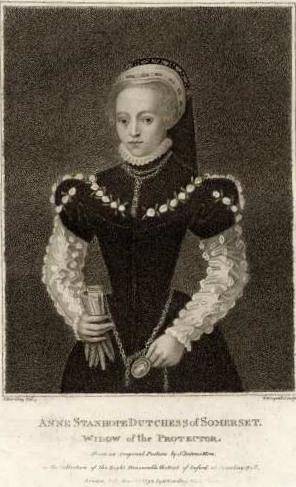
Anne Seymour, Duchess of Somerset
I look for someone who intrigues me and who hasn’t been done to death–I’ve always been fascinated by Anne Boleyn, for instance, but I really can’t imagine that I would have anything to say about her that hasn’t been said already. My next fictional project will be about Mary Lincoln, wife to the President of the United States, and her half-sister Emilie Helm, married to a Confederate general. My next book for Amberley will be about Anne Seymour, Duchess of Somerset, a much-maligned lady who lived through the reigns of all of the Tudor monarchs.
Thank you so much for agreeing to an interview, and for taking the time to answer my questions – I hope they weren’t too onerous.
Margaret Pole; The Countess in the Tower is available from Amazon in the UK and US.
*
My book, Heroines of the Medieval World, is now available in hardback in the UK from both Amberley Publishing and Amazon UK and worldwide from Book Depository. It is also available on Kindle in both the UK and USA and will be available in Hardback from Amazon US from 1 May 2018.
Be the first to read new articles by clicking the ‘Follow’ button, liking our Facebook page or joining me on Twitter.
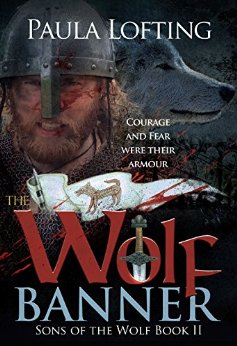
My latest book review, of Paula Lofting’s amazing pre-Conquest novel, The Wolf Banner has gone live over at The Review today!
WAR AND BLOODFEUD
1056…England lurches towards war as the rebellious Lord Alfgar plots against the indolent King Edward. Sussex thegn, Wulfhere, must defy both his lord, Harold Godwinson, and his bitter enemy, Helghi, to protect his beloved daughter.
As the shadow of war stretches across the land, a more personal battle rages at home, and when it follows him into battle, he knows he must keep his wits about him more than ever, and COURAGE AND FEAR MUST BECOME HIS ARMOUR…
The Wolf Banner is the second book in Paula Lofting’s marvellous Sons of the Wolf series which tells the story of Saxon England in the years preceding the Norman Conquest. It follows the trials and tribulations of one family; Wulfhere, his wife and children. A thegn sworn to Harold Godwinson, Wulfhere has responsibilities to his king, his lord and his family, while trying to overcome his own fears, temptations and one big problem; his neighbour and sworn enemy, Helghi. The Wolf Banner builds on the first book, to draw the reader further into Wulfhere’s life, the highs and lows, into battles with swords and words. It is a fabulous adventure, full of family heartache, compromise and love, while never losing sight of the bigger picture; of England and the struggles of Harold Godwinson, Earl of Wessex, both against his enemies and his king….
To read the full review of this fantastic novel – and to enter the prize draw and be in with a chance of winning one of two e-books in the giveaway, plus a copy of the first book in the series, Sons of the Wolf, simply visit The Review and leave a comment. Good luck!
*
My book, Heroines of the Medieval World, is now available in hardback in the UK from both Amberley Publishing and Amazon UK and worldwide from Book Depository. It is also available on Kindle in both the UK and USA and will be available in Hardback from Amazon US from 1 May 2018.
Be the first to read new articles by clicking the ‘Follow’ button, liking our Facebook page or joining me on Twitter.
The Anglo-Saxon age was one of great change and unrest. Lasting from the departure of the Romans in approximately AD 400 until the Norman invasion in AD 1066, this era was defined by the continued spread of Christianity, the constant threat of Viking raids and the first stirrings of a nation that would become known as England.
With its strange customs and unfamiliar names, the Anglo-Saxon era became mysterious and misunderstood, ironically by the descendants of the Anglo-Saxons, the English people themselves. Archaeological discoveries have forced us to re-evaluate these ingenious and skilled people, and to acknowledge the debt we owe to them. Martin Wall seeks to ‘de-mystify’ the period, breaking it down into easy-to-read, bitesize chunks, and to show that the so-called ‘Dark Ages’ were by no means backward or inferior. It was a truly heroic age, whose exemplars, such as King Offa, Alfred the Great, Lady Aethelflaed or Athelstan, stand beside the giants of world history. In 100 excerpts from these turbulent, bloody and exciting centuries, a proud, complex, but ultimately doomed civilisation is revealed.
The Anglo-Saxons in 100 Facts by Martin Wall is one of those fascinating little books which are such fun to read. It’s 192 pages are packed full of stories from the Anglo-Saxon period which help to trace its history and define the era. Starting from the 5th century AD, the book traces the Anglo-Saxon story all the way to the Norman Conquest… and beyond.
Aethelflaed, Lady of the Mercians
In short, bite-sized chapters, The Anglo-Saxons in 100 Facts, is full of those little bits of history you may have missed, or overlooked. Weaving the stories together to build a beautiful picture of the now-lost Anglo-Saxon world. Not only presenting the great personalities of the era, the book also investigates the influence of the church, literature, politics and the Vikings. It helps to explain the drive behind King Alfred and his desire to unite England as one nation.
The book is written in such an easy-going, conversational manner, you don’t even realise you’re reading – it is as if the author is right there, talking to you.
Welsh malcontents murdered a Mercian abbot, Egbert, who was travelling with his companions in Brycheiniog, a small mountain kingdom in South Wales. Egbert was under the protection of Aethelflaed who was justifiably furious. Within three days she concentrated her army on the Welsh border and invaded the little kingdom, burning and ravaging as she went. Tewdr, the King of Brycheiniog, had no choice but to retreat to his fortified Crannog, a fort on a man-made island in Lake Llasngorse. The indefatigable Mercian queen was not to be denied, however, and the place was stormed and burned and Tewdr’s relatives taken as hostages, including his wife.
Offa, King of Mercia
The Anglo-Saxons in 100 Facts is a very enjoyable read, full of facts and information, and a little bit of humour. All the main characters of the period are covered – from Offa to Harold II and beyond – and given their place in the larger history of the nation as a whole. Outside threats and influences – such as the church, the Normans and, of course, the dreaded Vikings – are discussed, analysed and assessed.
It’s amazing how much information one writer can pack into less than 200 pages!
The author knows and loves his Anglo-Saxon history and it shines through on every page. Thoroughly and comprehensively researched, it is a fun read for anyone wanting to know ‘a little bit more’ about the time before the Normans, and the build-up to the Conquest from the Saxon point of view.
I just wanted to read the excerpts about Aethelflaed – for my research – and found myself devouring the entire book.
*
Pictures courtesy of Wikipedia
*
My book, Heroines of the Medieval World, is now available in hardback in the UK from both Amberley Publishing and Amazon UK and worldwide from Book Depository. It is also available on Kindle in both the UK and USA and will be available in Hardback from Amazon US from 1 May 2018.
Be the first to read new articles by clicking the ‘Follow’ button, liking our Facebook page or joining me on Twitter.
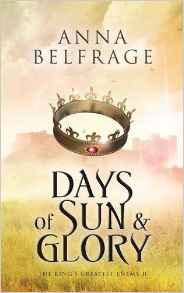
Adam de Guirande has barely survived the aftermath of Roger Mortimer’s rebellion in 1321. When Mortimer manages to escape the Tower and flee to France, anyone who has ever served Mortimer becomes a potential traitor – at least in the eyes of King Edward II and his royal chancellor, Hugh Despenser. Adam must conduct a careful balancing act to keep himself and his family alive. Fortunately, he has two formidable allies: Queen Isabella and his wife, Kit. England late in 1323 is a place afflicted by fear…. Tired of being relegated to the background by the king’s grasping favourite, Isabella has decided it is time to act – to safeguard her own position, but also that of her son, Edward of Windsor. As Adam de Guirande has pledged himself to Prince Edward he is automatically drawn into the queen’s plans … Once again, England is plunged into war – and this time it will not end until either Despenser or Mortimer is dead….
Days of Sun and Glory by Anna Belfrage is the 2nd book Anna’s latest series, The King’s Greatest Enemy. In the Shadow of the Storm saw Adam de Guirande, a trusted officer of Roger Mortimer, marry Kit de Monmouth and navigate the political climate of rising opposition to Edward II’s increasing infatuation with Hugh Despenser, while at the same time being 2 strangers negotiating the early tribulations and insecurities of married life. In Days of Sun and Glory the crisis in England is worsening; Mortimer is free and on the continent, leaving his supporters to face the suspicions and antagonisms of the king and Despenser.
Isabella with her father, Philip IV, and brothers.
Days of Sun and Glory is a stunning read; full of action, love and suspense, it has the reader on the edge of their seat from the 1st page – and leaves you there right to the last. This story will have you laughing, crying and biting your finger nails with anticipation throughout. It is a fascinating read that pulls you into the lives of, not only, the central characters, Kit and Adam, but also of the historical characters; Mortimer, Isabella, King Edward and his heir, the future Edward III.
Although we see new enemies the chief antagonist remains the same: Despenser. Anna Belfrage paints a picture of Despenser that makes you cringe every time he appears on the page. He is charmingly polite and clever; while being, at the same time despicable and slimy. He will stoop to anything to keep his position and influence with the king; using any weapon available – including children . This is one man everyone loves to hate – except the king and his wife.
As luck would have it, they ran into Lord Despenser on their way back to their allotted chamber. Kit didn’t see him at first, she simply felt the muscles in Adam’s arm tense.
“If it isn’t my favourite traitor,” Despenser said with a smirk, stepping out to block their path. Adam bowed, as did Kit – protocol required that they do so, even if Kit would have preferred to spit Despenser in the face. This was the man who had threatened her and abused her, who had tortured her Adam, leaving him permanently crippled.
“No traitor, my lord,” Adam replied in a calm voice. “Despite your repeated attempts to smear me as such, I remain a loyal servant of my master, Edward of Windsor.”
Despenser’s mouth curled into a sneer….
And fighting against his schemes are Adam and Kit. The central characters have a love story to rival the greats. However, Anna Belfrage has cleverly placed them in their time and history. In stark contrast to the rebellious Queen Isabella, Kit is the obedient, dutiful 14th century wife – most of the time; while Adam is torn between duty to lord and obligation to family, constantly forced to balance his priorities and overcome his personal feelings. Their relationship makes the book – their love has overcome petty jealousies, personal tragedy, family feuds and the threats of the dastardly Despenser.
And behind it all lies Adam’s fears of what would happen if he or his family were to fall into Despenser’s clutches.
“It won’t happen,” she said.
“No,” he [Adam] agreed in a shaky voice. “I’ll leap off a cliff rather than end up in his hands.”
Kit got down on her knees before him and prised his fingers off his face, cupping it and lifting it so that she could see his eyes. “It won’t,” she repeated. “I won’t let it happen.”
That made him smile. “My protective wife.” Adam stroked her cheek.
Kit had risked her life to save him from Despenser once, and she’d do it again if she had to…
Edward III, as Duke of Aquitaine, paying homage to Charles IV, supported by his mother Queen Isabella
While Kit and Adam are becoming old-hands at the political balancing-act, thrown into the midst of it all is Adam’s new lord, Edward; son and heir of Edward II the 13-year-old prince is torn between his parents. While Adam and Kit see a desperate child forced to choose between love of his mother and duty to his father, each parent sees that controlling the son as a means to controlling the future. Young Edward becomes a star of the book; likeable, mischievous and old beyond his years, Anna Belfrage hints at the hero-king to come, while ably depicting the fear and confusion of the child he is. Edward steals practically every scene he is written into.
Anna Belfrage has done her research well. From the historical characters to the marvellous castles and palaces in France and England, Anna brings the 14th century to life in vivid, entertaining and exciting language. The best and worst of human strengths and frailties are characterised within the magnificent castles of Vincennes and Windsor, in the sprawling cities of London and Paris; taking the reader on a wild ride through the French and English countrysides, with spies, poisoners and the possibility of ambush just around the corner.
While the reader may know the history, Anna Belfrage tells the story in a manner that will always leave you wondering what happens next. She gets under the skin of her characters, both historical and fictional. Her sympathetic portrayal of the characters and events takes the reader through a whole range of emotions; fear, anger, humour, awe … and love. Tears and laughter are never far from each other as the lives of Kit and Adam are revealed before us.
Engaging and entertaining, Anna Belfrage has created a masterpiece in Days of Sun and Glory, a book which is impossible to put down, but which you do not – ever – want to end.
*
Anna Belfrage is the author of the extremely popular time-travelling series, TheGraham Saga. To find out more about this incredible author and her books, please visit her website.
*
Pictures courtesy of Wikipedia
*
My book, Heroines of the Medieval World, is now available in hardback in the UK from both Amberley Publishing and Amazon UK and worldwide from Book Depository. It is also available on Kindle in both the UK and USA and will be available in Hardback from Amazon US from 1 May 2018.
Be the first to read new articles by clicking the ‘Follow’ button, liking our Facebook page or joining me on Twitter.
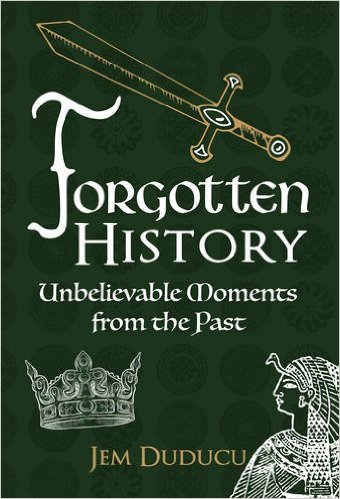
Not all history is recorded in school textbooks or cast into towering monuments that shape city skylines. Quite often the most intriguing (and most bizarre) bits are forgotten and fall away into obscurity. In this fascinating book, Jem Duducu shines light on the almost forgotten, wonderfully strange, and often hilarious moments of history that would otherwise be lost forever.
Covering a wide variety of topics, from the time a Pope put his dead predecessor on trial all the way up to the awkward moment when the US Air Force accidentally dropped nuclear bombs on Spain, take a journey through time and discover the weird and wonderful history that you didn’t learn about in school.
Forgotten History: Unbelievable Moments From thePast by Jem Duducu is one of those wonderful books that you simply can’t put down. When it arrived through my door I decided ‘I’ll just have a peek’. Two hours later and I was still ‘peeking’. The book takes you on a fascinating journey from Ancient History through all the eras right up to the 20th century. It brings you those little pieces of history that you may have overlooked, or forgotten – or simply didn’t know. From the history of the Rottweiler, to the green children of Woolpit to Sergeant Stubby, the most decorated dog in the First World War….
This book has something for everyone, it tells you the story, giving you the facts and the history of the history, so to speak. It is a fun and entertaining, and one you can read from cover to cover, or pop in and out of.
Well written and incredibly well researched, Jem Duducu has found those stories from history that have fallen through the cracks of most history books. He gives us the facts, events and personalities that you may have thought were just stories, but are, in fact, a part of our history.
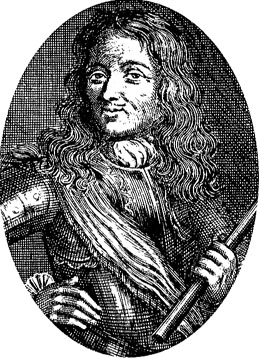
For instance, I have loved Alexandre Dumas’ Three Musketeers since I was a child, but did you know the heroic, dashing D’Artagnan was real?
The real D’Artagnan
Someone Regarded as Legendary but Isn’t
D’Artagnan, or to give him his full name, Charlers Ogier de Batz de Castelmore, Comte d’Artagnan, was pretty much the man you’d hope for. He was the captain of Louis XIV’s elite Musketeer guard, and in this instance the legend isn’t far from the reality of the man’s true character. He lived during the time of Cardinal Richelieu, he was a brave and accomplished warrior, and he fought in many battles. However, the plots of the Musketeer books bear little resemblance to events in his life…
As well as covering the important, but often overlooked, characters from history – such as D’Artagnan and the Lady Aethelflaed of the Mercians – Jem Duducu has found some rather obscure, but fascinating, facts such as the origin of the croissant, the Nazi plot to kidnap the Pope and a statue put on trial for murder….
I could go on all day – which is probably why I spent hours reading the book after only intending to have a quick look!
Forgotten History: Unbelievable Moments From thePast by Jem Duducu has something for everyone, whatever period or genre of history you like, you will find something interesting and new. Packed full of facts and information, it can be used as a learning resource, or simply as a book to read, devour and enjoy. With some wonderful photographs and illustrations to support the text, the book tells the stories in a wonderful, engaging and unique way, which will leave you with a smile on your face – and looking for just one more story before closing the book.
My book, Heroines of the Medieval World, is now available in hardback in the UK from both Amberley Publishing and Amazon UK and worldwide from Book Depository. It is also available on Kindle in both the UK and USA and will be available in Hardback from Amazon US from 1 May 2018.
Be the first to read new articles by clicking the ‘Follow’ button, liking our Facebook page or joining me on Twitter.
Gundrada de Warenne, Church of St John the Baptist, Southover
In 1066 William de Warenne joined his namesake the Duke of Normandy on his expedition to conquer England. De Warenne is one of the few named knights involved in the Battle of Hastings, and one of William of Normandy’s most trusted captains.
Gundrada’s parentage has long been a subject of debate among historians. For many years she was believed to be the daughter of William the Conqueror and his wife, Matilda of Flanders. It seems the misunderstanding arose with the monks at Lewes Priory, when a copy of an earlier charter claimed she was the daughter of Matilda of Flanders. Lewes was founded as a Cluniac monastery by William and Gundrada and it may be that the monks got carried away with the idea of their foundress having royal blood, or that there was an error when copying the charter from the original.
For whatever reason, the claims by Lewes Priory have caused controversy throughout the ensuing centuries. In the sixteenth century Leland believed that she was the Conqueror’s daughter, while Orderic Vitalis had stated that she was ‘Sister of Gherbode, a Fleming, to whom King William the First had given the City and Earldom of Chester’¹ By the 1800s it was thought that Gundrada was not a daughter of the King, but of the queen, Matilda, by an earlier, forgotten marriage to a Flemish nobleman called Gerbod.
Other suggestions have included that she was an adopted daughter, raised alongside William and Matilda’s own children who were of a similar age. Alternatively, due to her Flemish origins, it has been argued that the confusion arose as she had joined Matilda’s household at an early age; an assertion supported by Matilda’s gift to Gundrada of the manor of Carlton in Cambridge – a manor Gundrada later gave to Lewes Priory.
William de Warenne, 1st earl of Warenne and Surrey, Church of St John the Baptist, Southover
In 1888 in the English Historical Review, E.A. Freeman used the priory’s original charter to conclude that there was no familial relationship between Gundrada and William the Conqueror. In it, while the king and William de Warenne, both, mention Gundrada, neither refer to her as being related to the king or queen. Freeman stated ‘there is nothing to show that Gundrada was the daughter either of King William or of Queen Matilda; there is a great deal to show that she was not.’²
It now seems more likely that Gundrada was a Flemish noblewoman, the sister of Gerbod who would be, for a brief time, Earl of Chester. Her father may also have been called Gerbod, and was the hereditary advocate of the monastery of St Bertin; a title which later will pass down through the de Warenne family. Another brother, Frederic, had land in Sussex and Kent, even before the Conquest. The brothers, it seems, were deeply involved in the politics of Flanders and Normandy; indeed, it is thought that Gerbod resigned his responsibilities in Chester in order to return to the continent to oversee the family’s land and duties there. Frederic, along with the count of Flanders, was witness to Count Guy of Ponthieu’s charter to the abbey of St Riquier in 1067.
William de Warenne was well rewarded for his part in the Norman Conquest, receiving lands in 13 counties, including the Honour of Consibrough in South Yorkshire, previously owned by the last Saxon king, Harold II Godwinson. De Warenne’s brothers-in-law had also joined the expedition, and Frederic was rewarded with the lands of a man named Toki; in Norfolk, Suffolk and Cambridgeshire, worth over £100.
However, Frederic was unable to enjoy his good fortune for long, as he was killed in the rebellion of Hereward the Wake in 1070. His lands at Castle Acre and elsewhere, still known as ‘Frederic’s Fief’ in 1086, were inherited by his sister, who retained control of them throughout her lifetime. One manor was given to the abbey of St Riquier, possibly by Gundrada in memory of her brother.
Lewes Priory, Sussex
Gundrada’s other brother, Gerbod resigned his position in Chester in 1070 and returned to Flanders which was in the midst of civil war, following the death of its count. Gerbod’s return was essential to guarantee the safety of the family’s lands and interests. The former earl’s fate is uncertain; one report has him killed while another sees him imprisoned, and a third claims Gerbod accidentally killed his lord, Count Arnulf, at the Battle of Kassel in 1071. According to this last account, Gerbod travelled to Rome to perform penance. He intended to have the hand that struck the fatal blow amputated but was persuaded against it and eventually became a monk at Cluny.
It seems that neither brother raised a family, as Gerbod’s lands in Flanders were also inherited by Gundrada; the family interest in the abbey of St Bertin would eventually be passed on to Gundrada and William’s 2nd son, Reynold.
As with so many nobles of the 11th century, Gundrada and William were known for their piety. In 1077 the couple made a pilgrimage to Rome; en route, they visited the magnificent abbey of Cluny in Burgundy. They must have been impressed with the abbey, as it inspired them to found their own Cluniac priory at Lewes in Sussex. In 1078 the abbot of Cluny sent over the first monks as William and Gundrada were supervising the new monastery’s construction; it would be the first Cluniac house in England. All the churches on the de Warenne’s vast estates were given to the priory, including endowments from her brother Frederic’s lands in Norfolk.
Castle Acre, Norfolk
Gundrada and William had 3 children together. Their eldest son, William, would succeed his father as Earl of Surrey and de Warenne. He married Isabel de Vermandois, widow of Robert de Beaumont, earl of Leicester; with whom he had, apparently, been having an affair even before the earl’s death. Young William had a chequered career, he supported the claims of Robert Curthose, duke of Normandy, to the English throne against the duke’s younger brother, Henry I. However, duke Robert lost and was captured and imprisoned by Henry. Henry eventually forgave William, who fought for the king at the Battle of Bremule and was with Henry he died in 1135.
Gundrada’s tombstone, St John’s Church, Southover
A second son, Reynold de Warenne, led the assault on Rouen in 1090, for William II Rufus, in the conflict between the English king and his older brother, Duke Robert. However, by 1105 Reynold was now fighting for the duke against the youngest of the Conqueror’s sons, Henry I, defending the castle of Saint-Pierre-sur-Dives for the duke. He was captured by Henry the following year, but had been freed by September 1106. It is possible he died shortly after, but was certainly dead by 1118 when his brother issued a charter, in which he gave 6 churches to Lewes Priory, for the soul of deceased family members, including Reynold.
Gundrada and William also had a daughter, Edith, who married Gerard de Gournay, son of the lord of Gournay-en-Bray. Gerard also supported William II Rufus against Duke Robert and took part in the Crusade of 1096. Edith later accompanied him on pilgrimage back to Jerusalem, sometime after 1104, where he died. Gerard was succeeded by their son, Hugh de Gournay, whose daughter Gundreda would be the mother of Roger de Mowbray. Edith then married Drew de Monchy, with whom she had a son, Drew the Younger.
William de Warenne was created earl of Surrey shortly before his death in 1088; after he had helped William II to suppress a revolt led by Bishop Odo of Bayeux. De Warenne was wounded in the leg during the fighting and was taken to Lewes Priory where he died a short time later.
Tombs of Gundrada and William de Warenne
Gundrada had died in childbirth at Castle Acre in Norfolk on 27th May 1085, therefore never receiving the title of countess. She was buried in the chapter house of Lewes Priory; her husband would be buried beside her 3 years later. Around 1145 new monastic buildings were consecrated at Lewes Priory, Gundrada’s bones were placed in a leaden chest and interred under a tombstone of black Tournai marble, ‘richly carved in the Romanesque style, with foliage and lions’ heads’³. The sculptor was trained at Cluny and would later work for Henry I’s nephew, Henry of Blois, bishop of Winchester and brother of King Stephen.
The tombstone read:
Gundrada, offspring of dukes, glory of the age, noble shoot, brought to the churches of the English the balm of her character. As a Martha … she was to the wretched; a Mary she was in her piety. That part of Martha [in her] died; the greater part of Mary survives. O, pious Pancras, witness of truth and justice, she makes you her heir; may you in your clemency accept the mother. The sixth day of the kalends of June, showing itself, broke the alabaster containing her flesh …4
Following the dissolution of Lewes Priory in the 16th century, the tombstone was first moved to Isfield Church; it was moved again in 1775 to the parish church of St John at Southover in Lewes. The remains of Gundrada and William were discovered in 2 leaden chests in 1845 and finally laid to rest at the Southover church in 1847.
Footnotes: ¹Early Yorkshire Charters Volume 8 Edited by William Farrer and Charles Travis Clay; ²ibid; ³C.P.Lewis, Oxforddnb.com; 4 Elisabeth M.C. Van Houts and Rosalind C. Love (eds and trans), The Warenne (Hyde) Chronicle
Sources: Early Yorkshire Charters Volume 8: The Honour of Warenne, Edited by William Farrer and Charles Travis Clay; England Under the Norman and Angevin Kings by Robert Batlett; Brewer’s British Royalty by David Williamson; Britain’s Royal Families, the Complete Genealogy by Alison Weir; british-history.ac.uk; kristiedean.com; English Heritage Guidebook for Conisbrough Castle by Steven Brindle and Agnieszka Sadrei; oxforddnb.com.
*
My Books
Signed, dedicated copies of all my books are available through my online bookshop.
Coming on 15 June224: Heroines of the Tudor World
Heroines of the Tudor World tells the stories of the most remarkable women from European history in the time of the Tudor dynasty, 1485-1603. These are the women who ruled, the women who founded dynasties, the women who fought for religious freedom, their families and love. These are the women who made a difference, who influenced countries, kings and the Reformation. In the era dominated by the Renaissance and Reformation, Heroines of the Tudor World examines the threats and challenges faced by the women of the era, and how they overcame them. From writers to regents, from nuns to queens, Heroines of the Tudor World shines the spotlight on the women helped to shape Early Modern Europe.
Two cousins. On the one side is Empress Matilda, or Maud. The sole surviving legitimate child of Henry I, she is fighting for her birthright and that of her children. On the other side is her cousin, Queen Matilda, supporting her husband, King Stephen, and fighting to see her own son inherit the English crown. Women of the Anarchydemonstrates how these women, unable to wield a sword, were prime movers in this time of conflict and lawlessness. It show how their strengths, weaknesses, and personal ambitions swung the fortunes of war one way – and then the other.
Alternate Endings: An anthology of historical fiction short stories including Long Live the King… which is my take what might have happened had King John not died in October 1216. Available in paperback and kindle from Amazon.
Podcast:
Have a listen to theA Slice of Medieval podcast, which I co-host with Historical fiction novelist Derek Birks. Derek and I welcome guests, such as Bernard Cornwell and discuss a wide range of topics in medieval history, from significant events to the personalities involved. Our first ever episode was a discussion on The Anarchy
*
Don’t forget!Signed and dedicated copies of all my books are available through my online bookshop.
For forthcoming online and in-person talks, please check out my Events Page.
You can be the first to read new articles by clicking the ‘Follow’ button, liking our Facebook page or joining me on Twitterand Instagram.
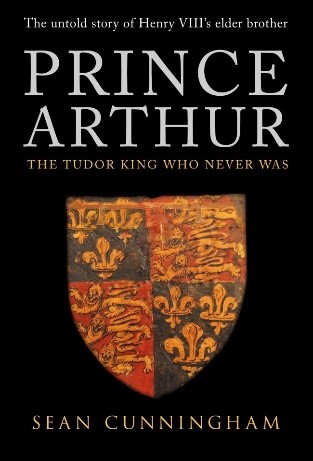
Today I would like to welcome author and historian Sean Cunningham as part of his amazing blog tour. Celebrating the release of his new biography, Prince Arthur: The Tudor King Who Never Was, Sean has written a wonderful article on the wedding of Arthur and Catherine of Aragon – just for us!
The Wedding of the Century: Prince Arthur, Catherine of Aragon and the Politics of a Teenage Marriage in 1501
The private and public lives of England’s late medieval royal families were no-doubt as fascinating to their subjects as the Windsors are to many citizens today. In a world without social and other media or mass literacy, however, popular discussion of the visibility of the fifteenth century royals is almost completely hidden from modern view. We do know from the propaganda produced by competing sides in the Wars of the Roses that public opinion mattered to the ruling elites. Since rivals for the crown were basically cousins who shared royal blood in more-or-less equal degrees, appeals to popular support were important in the search for political advantage.
Records of royal progresses, visits, formal entries and days of estate stand out in civic records of towns and cities because it was rare for the ruled to see their rulers in close proximity within public spaces. For that reason, we might expect evidence of more ambitious manipulation of London’s concentrated population in spectacular set-piece events like royal marriages. It is not found in the fifteenth century. Lancastrian and Yorkist leaders seem to have shied away from public view when they took their wedding vows.
Joan of Navarre was a thirty-three-year old widow when she married Henry IV at Winchester in 1403; a comforting arrangement, not necessarily to increase numbers of royal children. Henry V’s marriage to Catherine de Valois at Troyes in 1420 was a quiet soldier’s wedding, which very few English people witnessed, despite its massive political implications (or maybe because of them). Henry VI and Margaret of Anjou had a low-key ceremony at Titchfield Abbey in April 1445. Edward IV became Elizabeth Woodville’s second husband in a secret service in 1464. Richard III had married the widowed Anne Neville within Westminster Palace while he was duke of Gloucester in 1472. Henry VII’s own wedding did not occur until January 1486, despite the certainty that many of his supporters had followed him only because of his promise to marry Edward IV’s daughter, Elizabeth. It was not a state occasion, and received far less interest from heralds and chroniclers than King Henry’s first royal progress the following spring.
Prince Arthur in mid-Victorian glass, St Laurence Church, Ludlow
Political circumstances, cost, and the uncertainty of factional politics and civil war account for some of these understated royal weddings. Henry VII had no such reservations about the match of his son and heir, however. The series of events surrounding the marriage of Prince Arthur and Catherine of Aragon in November 1501 were carefully planned and stage-managed for maximum public impact on an international scale. The marriage reveals a great deal of what the king, his mother and their family thought about themselves and what they wanted their subjects to remember as key messages relating to Tudor power, right, ancestry, and fitness to rule.
In terms of its ambition and complexity, the marriage of Arthur and Catherine was planned as one of the greatest spectacles ever seen in England. Catherine would have a ceremonial journey from her place of landfall to London; pageants of welcome to the city and on the river would explore symbolism and allegory as well as being fantastically entertaining displays by human actors and mechanical devices; the interior of St Paul’s had been reconfigured to present the wedding service as a ceremonial royal performance; the public would enjoy a never-ending wine fountain near the west door of the church; tournaments in the rebuilt tiltyard at Westminster Palace would show off the martial skill of Henry VII’s courtiers; the wedding feast would be served on gold and silver worth as much as the crown’s annual income from taxation; lodgings within the royal palaces and other public spaces had been repaired and refreshed for over two years in preparation for a few days of occupancy; gifts, jewels and paintings were purchased from around Europe to be given away as a demonstration of the king’s magnificence. As the public face of England’s alliance with the Spanish kingdoms of Aragon and Castile the marriage was Henry VII’s single-minded statement of intent about the future of Tudor power.
A dragon, or Wyvern, from an initial illustration on a plea roll in the Court of Common Pleas
Henry VII could aspire to build Arthur’s future in this way because 1500-01 was the high-point of his reign. Perkin Warbeck, the pretender to the crown, who had disturbed Henry VII’s sleep for most of the 1490s, was dead. His scaffold confession in November 1499 that he was an impostor (whether forced or genuine), was meant to remove all belief that the sons of Edward IV had survived the reign of their uncle, Richard III. The earl of Warwick – son of Edward IV’s other brother, George, duke of Clarence – was beheaded in the same month as Warbeck. He was the last male Plantagenet of lineal descent from Henry II. These executions made Henry VII’s queen, Elizabeth, the sole direct heir of the House of York. Emphasising that fact strengthened Prince Arthur’s position as inheritor of her ancestry and family loyalties. By 1500, it looked like the Tudor king had finally thrown of the shackles of the Wars of the Roses. Only when England was free from these lingering threats, did the Spanish monarchs agree to start preparations to dispatch Princess Catherine in the summer of 1501.
The nature of Henry VII’s reign meant that things were not stable for long. Indications soon emerged that the king’s dynastic struggles might recur. Henry’s failure to expand the ranks of his allies meant that he soon felt the effects of deaths within his circle of old friends. Two long-standing supporters, John Morton, archbishop of Canterbury and Chancellor, and John, Lord Dynham, Treasurer of England, had helped to shape Henry’s power since 1485. They died in September 1500 and January 1501 respectively. This problem would accelerate after 1502 and was magnified by other factors.
Henry VII’s imperial arms form a plea roll of King’s Bench court
More alarmingly, Edmund de la Pole, earl of Suffolk, one of the queen’s nephews, fled overseas in spring 1501. With the help of Sir James Tyrell, he was contemplating launching a claim for the crown. Tyrell was a rehabilitated loyalist of Richard III. His defection and the seeds of another attempt to start a pro-Yorkist conspiracy can only have filled the Tudor royal family with dread. Suffolk’s departure might have been prompted by the certainty that Arthur and Catherine’s marriage would strengthen Henry VII’s power even further. Evidently he felt it was worth taking a risk to secure foreign help before that happened. Although he was persuaded to return, Suffolk soon fled again to the protection of Maximilian Habsburg, Archduke of Austria and ruler of the Low Countries. He became another pretender intent on deposing the Tudor family. King Henry moved quickly, therefore, to finalise the preparations for the wedding of his son with Princess Catherine while the political situation remained in his favour.
Ferdinand and Isabella were able to exert pressure on Henry to demonstrate that England was a stable place for their daughter’s future because their nation was a rapidly-rising world power. With little prospect of recovering former lands in France, the Tudor regime in England had recognised almost as soon as it came to power that the Spanish should be wooed as a new centre of gravity in European diplomacy. In 1501, it was less than ten years since the Columbus had discovered a new world for the Spanish monarchs. Later voyagers were only just beginning to realise the potential of the Americas, but at that time the Spanish had no rivals (following the Treaty of Tordesillas with Portugal in 1494). The reconquest of Granada at the very start of 1492 also allowed a unified Spain to begin a new focus within Europe. By the end of 1494, King Ferdinand had entered the alliance against France which soon drew many European states into the Italian wars. In the years since 1489, when Henry VII had opened negotiations for a marriage alliance, it was clear that Spanish influence was under transformation. A European superpower was emerging and the English king put himself in exactly the right place at the right time to take full advantage.
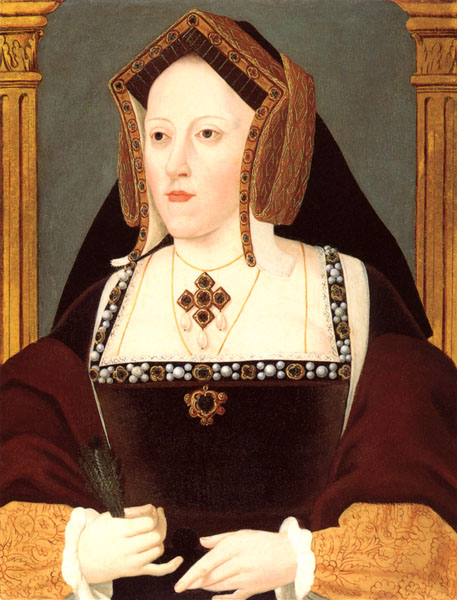
Prince Arthur’s bride, Catherine of Aragon
Catherine left Corunna on 17 August 1501. Storms and delays meant that she landed in Plymouth and not Southampton, as planned, on 2 October – a month later than expected. She therefore had to endure a far longer land journey towards London; but that did give more people the chance to see her on the road. Henry VII was annoyed by the disruption this caused to his arrangements, but could do little until Catherine got nearer to his base at Richmond Palace. Records suggest that genuine excitement travelled ahead of the princess and down the road to London as she, her massive and exotic entourage, and the English nobles and gentry accompanying her crossed southern England.
At the centre of all of this complex activity were two teenagers. When looking at the lavish and elaborate events that were part of the marriage, it is really important to remember that Arthur and his bride had only just met. Sixteen-year-old-Catherine had been in the country for six weeks by the time of her wedding on 14 November. She had barely paused for more than a few days after a direct journey of almost two hundred miles from Plymouth to London.
This was an arranged marriage, too. Although both young people had been bred and trained for a demanding public life, nerves and perhaps shyness must still have been part of their first meetings. Language was certainly an issue – even conversational Latin was tried. Having seen England’s future queen, Henry oversaw a renewal of the couple’s marriage vows in person at Dogmersfield in Hampshire on 6 November. The king and Arthur then headed for London. Catherine stayed in Lambeth until 12 November when she was met by Prince Henry, the duke of Buckingham and many other lords in St George’s field, south of London Bridge, for the start in earnest of her wedding festivities.
Old St Paul’s Cathedral, London
The king and his council had worked with the mayor and aldermen of London for almost two years to devise and to build pageants of welcome. The first was at the south side of London Bridge. It depicted the story of St Catherine and St Ursula. Actresses playing those saints flattered Catherine’s virtue and honour as part of an astrological allegory on the constellations of Ursa Minor and Arcturus. At the other end of the bridge, a second setting contained a castle covered in Tudor badges and imagery – the Castle of Policy. Catherine was presented as the evening star whose noble presence spontaneously opened the castle gates. A third construction on Cornhill was a mechanical zodiac that placed Arthur and Catherine in heavenly proximity to God. Arthur was depicted as an ideal knight in splendour on the heraldic fourth pageant on Cheapside; while the fifth, outside the Standard Inn, was even more celestial. God’s throne and a representation of heaven presented a dazzlingly-armoured Arthur as divine Justice. At the sixth pageant, by the entrance to St Paul’s churchyard, the Seven Virtues guarded empty thrones awaiting Arthur and Catherine next to an actor representing Honour. The clear message was that honour could only be reached by virtuous living.
Much of the level of detail would have had little impact upon the mass of onlookers. It was meant to be visually stunning but not necessarily understood in all of its allegorical complexity. The constant use of badges and beasts like the red rose, portcullis, red dragon, and greyhound made for a quick visual association between the spectacle and the king’s authority. Ramming home the message that Arthur and Catherine were deserving inheritors of this extravagant power was vitally important. This need continued on the wedding day itself.
A marguerite rose form a plea roll of King’s Bench court
Arthur and Catherine were meant to be seen together. This marriage was a union of two people and an alliance of two nations. The setting of the church and orchestration of the ceremony reflected that. A raised platform built from thousands of deal planks formed a walkway that stretched along the interior of St Paul’s. Henry and Queen Elizabeth watched from a small closet so that they did not detract from the focus on the married couple. The bride and groom wore white satin. Catherine was escorted towards the altar by Arthur’s brother, Henry. Her Spanish style of verdugeo dress and highly fashionable hood were noticed by the herald’s keen eye. Before the service, a formal exchange of agreements and documents took place. They guaranteed Catherine’s status and income and firmly endorsed Ferdinand and Isabella’s alliance with Tudor England. The most notable moment in the ceremony came when Arthur and Catherine, now married, turned at the door of the choir to look back down the body of the church. It is easy to imagine their dazzling outfits and the faces of hundreds of people, who then spontaneously began to shout in celebration.
Outside another strange pageant was constructed like a mobile mountain, complete with rocks, trees, herbs, fruit and metal ore. A river of wine confirmed this as the allegorical source of all the things that the king’s subjects needed. It was the riche-mont, a pun on Henry’s former title of earl of Richmond. The presence of the Christian Nine Worthies placed Henry VII and Arthur in the same category of ruler as Charlemagne, King Arthur and Godfrey de Bouillon.
The magnificent wedding banquet then followed in the bishop of London’s palace. Spanish and English lords and ladies intermingled as the king’s chefs excelled themselves in inventiveness. It was also remarkable that the feast was served on magnificent silver and gilt plate while another set of dishes and jewelled chalices remained on display within the room. Henry’s proclamation of his wealth was hard to miss. The feasting and drinking lasted for most of the afternoon. In the early evening, chambers were prepared for the wedding night. What happened next (and its implications), is another part of the story and one that requires longer discussion elsewhere.
Dragon and greyhound from an Exchequer account, 1508
Here we must leave Arthur and Catherine at the end of their exhausting wedding day. In the full glare of attention and with a weight of expectation around their shoulders, it would be no surprise if a good sleep was all that the couple managed that night. They had time on their side and in the middle of November 1501, the future for Tudor England looked to be strong and dynamic. Henry had spent a fortune in coin and energy in ensuring that the political dimension of his son’s wedding was achieved spectacularly and flawlessly. No-one could have expected that within fifteen months the regime would once again be creaking on the point of collapse as both Prince Arthur and Queen Elizabeth were dead in their tombs. The wheel of fortune had turned once again for Henry VII. How he recovered would depend on a radically different strategy to rescue control over the succession of the crown, then reliant on the survival of his only surviving son, Prince Henry.
*
Dr Sean Cunningham, has worked at the UK National Archives for over twenty years, where he is currently Head of Medieval Records. He is the author of several works on late medieval and early Tudor history, including Henry VII in the Routledge Historical Biographies series and the newly-released Prince Arthur: The Tudor King Who Never Was, for Amberley. Sean is about to start researching for a major funded project on the private spending accounts of the royal chamber under Henry VII and Henry VIII. He is a Fellow of the Royal Historical Society and co-convenor of the Late Medieval Seminar at London’s Institute of Historical Research.
Prince Arthur: The Tudor King Who Never Was is available from Amberley, Amazon and other online outlets and bookshops.
*
Pictures of Catherine of Aragon and Old St Paul’s are courtesy of Wikipedia, all other pictures courtesy of Sean Cunningham.
*
My book, Heroines of the Medieval World, is now available in hardback in the UK from both Amberley Publishing and Amazon UK and worldwide from Book Depository. It is also available on Kindle in both the UK and USA and will be available in Hardback from Amazon US from 1 May 2018.
Be the first to read new articles by clicking the ‘Follow’ button, liking our Facebook page or joining me on Twitter.
Of the many executions ordered by Henry VIII, surely the most horrifying was that of sixty-seven-year-old Margaret Pole, Countess of Salisbury, hacked to pieces on the scaffold by a blundering headsman.



















 History... the interesting bits!