Greed and ambition threaten to tear the north apart.
War rages between the two kingdoms of Northumbria. Kin is pitted against kin and friend becomes foe as ambitious kings vie for supremacy.
When Beobrand travels south into East Angeln to rescue a friend, he unwittingly tilts the balance of power in the north, setting in motion events that will lead to a climactic confrontation between Oswiu of Bernicia and Oswine of Deira.
While the lord of Ubbanford is entangled in the clash of kings, his most trusted warrior, Cynan, finds himself on his own quest, called to the aid of someone he thought never to see again. Riding into the mountainous region of Rheged, Cynan faces implacable enemies who would do anything to further their own ends.
Forced to confront their pasts, and with death and betrayal at every turn, both Beobrand and Cynan have their loyalties tested to breaking point.
Who will survive the battle for a united Northumbria, and who will pay the ultimate price for lord and land?
Beobrand is back!
For Lord and Land is book no. 8 of Matthew Harffy’s excellent Bernicia Chronicles. I have read each of these books as soon as they have come out, and I have never been disappointed. And For Lord and Land is no exception! This was another one of those books that makes you read late into the night, saying ‘just one more chapter’.
A slight change in style from the last book, with two stories running side by side for most of the book, For Lord and Land is a fabulous, engaging, entertaining, engrossing (and all the other ‘en’s) read. Matthew Harffy has surpassed himself yet again, combining a fast paced narrative with an intricately-woven storyline that, inevitably, leaves the reader wanting more as the last page is turned.
Matthew Harffy skilfully recreates the world of 7th century Northumbria, bringing the landscape, the politics and the people to life in the reader’s mind. he really is a master storyteller. He fits his stories into the known history, which is, as ever, thoroughly researched. The mixing of historical and fictional characters melds together to bring the 7th century to life.
With practised ease, Beobrand wriggled into his byrnie and quickly tightened his sword belt about his waist to take some of the armour’s familiar weight from his shoulders. Placing the helm on his head, he looked back at his men. They were grim-faced and sombre now, ready for what they must do. Only Cuthbert was smiling, though Beobrand noticed that the colour had drained from his face as his excitement changed to the uncertainty of growing anticipation.
“Get your shield,” murmured Beobrand. Cuthbert started, then rushed to retrieve his newly painted linden board and the bright-bladed spear that, like its owner, was untested in combat.
“You think there will be a fight, lord?” Cuthbert asked breathlessly.
Beobrand sighed and scanned the mass of black-shielded warriors in the belly of the ship. They had all bee ready for battle for some time. Were they merely cautious or had they travelled with him for so long that they had foreseen how this day would end? He knew not, but there were no finer warriors in all of Albion. As ever, the sight of them filled him with pride.
The ship cut through the waves, flinging spray into the faces of the men as they all turned towards the approaching sand.
“Come, my gesithas!” bellowed Beobrand, pulling Naegling from its scabbard so that the fine patterend blade caught the lowering sun. “It seems there is killing to be done today after all!”
As you may have come to expect from Matthew Harffy, the battle scenes are beautifully choreographed, highlighting the actions of the individuals, especially of Beobrand and his men, whilst never losing sight of the big picture. The instances of combat are ferocious and deadly, with the reader waiting with bated breath to see who would survive, and who would die. It is heart in the mouth time every time, with Harffy drawing out the tension until the reader finds it almost unbearable.
Besides the gripping action and engaging storylines, the character development has always set Matthew Harffy apart from many authors. Beobrand, the eponymous hero, has been through an awful lot in 8 books. The reader doesn’t forget that – and neither does the author – and Beobrand’s scars, both mentally and physically, serve to create a deeper personality, and a more in-depth story with every book. And it is not just Beobrand. Harffy gives depth and vitality to every character in the book, no matter whether they are in there for a chapter, for the whole book, or for the last 6 books.
For Lord and Land goes a step further than the usual book in the Bernicia Chronicles with a dual storyline in which Beobrand shares the stage with Cynan. Cynan has grown immensely in the last couple of books, becoming a character demanding attention in his own right, and probably developing a fan-base of his own. And no wonder! He has become one of Beobrand’s most trusted warriors, despite being a former slave. He is devoted to Beobrand but has a mind and responsibilities of his own and in For Lord and Land he comes into his own. His storyline draws from the past to remind the reader of how far both he and Beobrand have come, and of how far trust can be stretched – and how easily it can be broken. But I’ve already said too much….
You will have to read the book to know more. All I can say is that For Lord and Land is well worth the read – and the late nights!
About the Author:
Matthew Harffy lived in Northumberland as a child and the area had a great impact on him. The rugged terrain, ruined castles and rocky coastline made it easy to imagine the past. Decades later, a documentary about Northumbria’s Golden Age sowed the kernel of an idea for a series of historical fiction novels. The first of them is the action-packed tale of vengeance and coming of age, THE SERPENT SWORD.
Matthew has worked in the IT industry, where he spent all day writing and editing, just not the words that most interested him. Prior to that he worked in Spain as an English teacher and translator. Matthew lives in Wiltshire, England, with his wife and their two daughters.
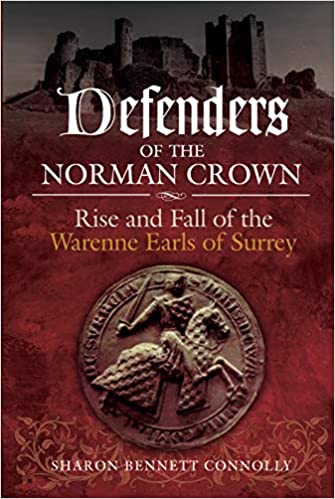
Defenders of the Norman Crown: The Rise and Fall of the Warenne Earls of Surrey tells the fascinating story of the Warenne dynasty, of the successes and failures of one of the most powerful families in England, from its origins in Normandy, through the Conquest, Magna Carta, the wars and marriages that led to its ultimate demise in the reign of Edward III.
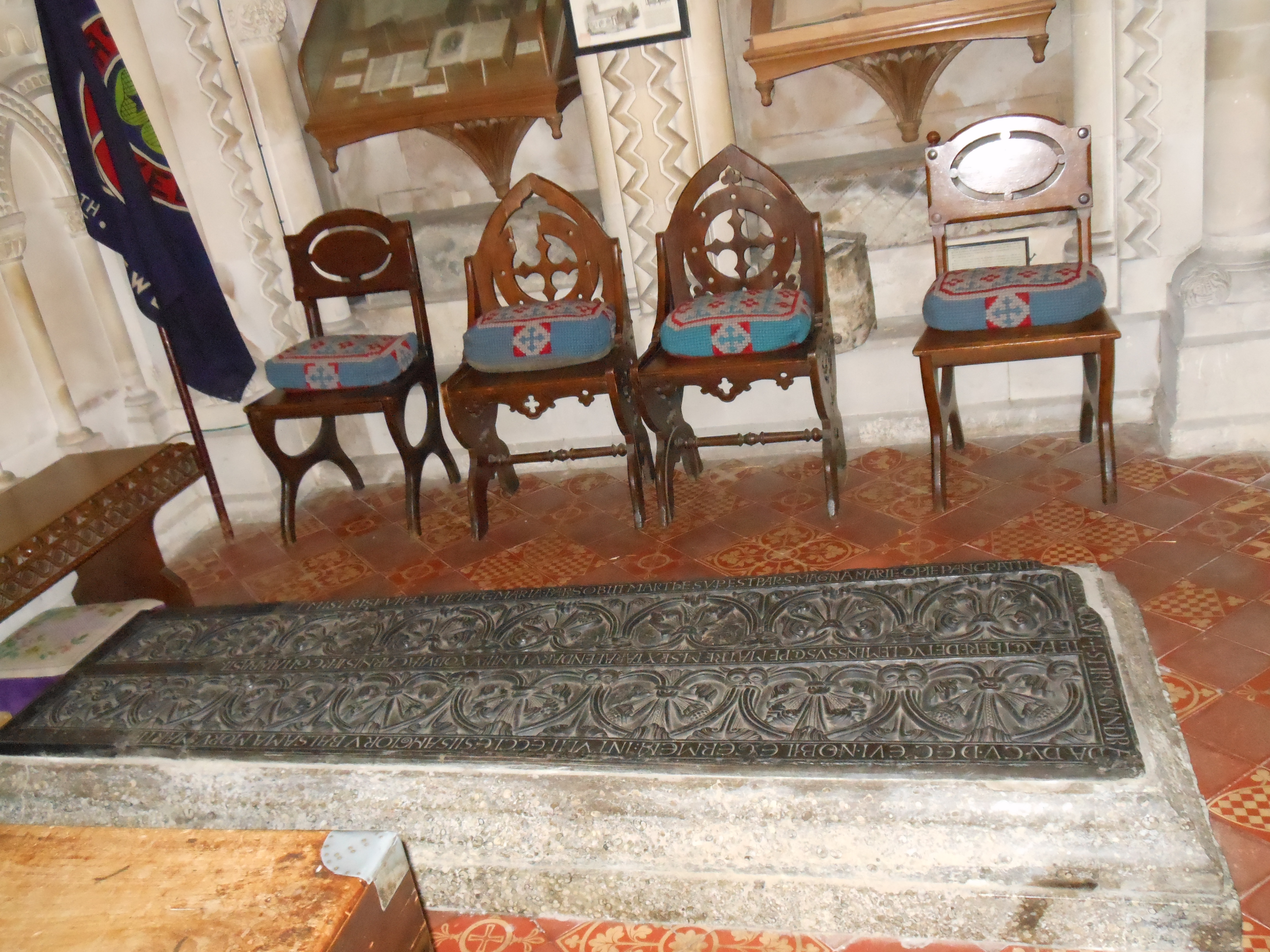
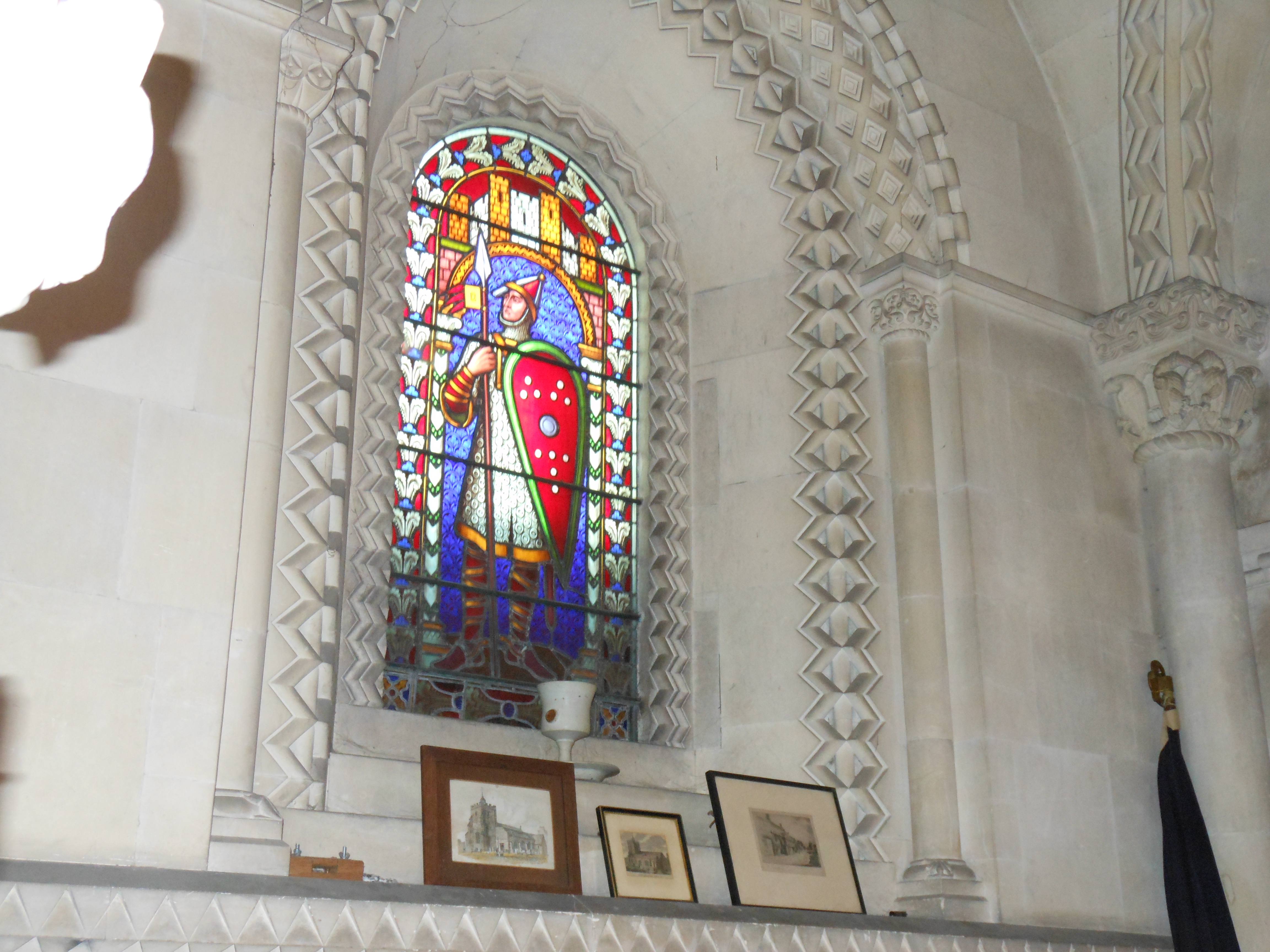
William de Warenne, 1st Earl of Warenne and Surrey, Trinity Church, Southover
The Warenne earls of Surrey were a fascinating family, right at the heart of English history and politics for almost 300 years, from the time of the Norman Conquest to the reign of Edward III. They held lands throughout England, acted as justiciars, sheriffs and generals – and yet, few people know their story.
But who were they?
William I de Warenne was rewarded for his support of King William II in the 1088 rebellion with the earldom of Surrey. However, the earls thereafter were as often referred to as the earls of Warenne – or the familial Earl Warenne, rather than earls of Surrey. The earldoms of Sussex and Strathearn (Scotland) were later added to these titles. As they appear to have preferred the simple familial title of Earl Warenne, that is how I have chosen to refer to them, except when establishing their titles. The Warenne’s extensive lands were spread over 13 counties and spanned the country from Lewes on the south coast to their castles of Conisbrough and Sandal in Yorkshire, with their family powerbase in East Anglia, where they built a magnificent priory, castle and medieval village at Castle Acre.
Wakefield, including Sandal Castle, appears to have come into the hands of the Warenne family at some point before 1121, during the tenure of the 2nd Earl Warenne. It is possible that they were acquired possibly in an exchange of lands with William Meschin, who had taken control of the Warenne holdings of Kimbolton in Huntingdonshire and Dean in Bedfordshire some time before 1130.
The family mausoleum was at St Pancras Priory in Lewes, founded by the first earl and his wife, Gundrada. It is the burial place of all but two subsequent earls and numerous other family members, as well as several earls of Arundel and their countesses.
For almost 300 years the Warenne earls of Surrey were some of the most influential men in the country, but the family died out rather ingloriously, with the seventh – and last – earl’s marital difficulties. Despite a prestigious marriage to a granddaughter of the king of England, John de Warenne, 7th Earl Warenne, died with no legitimate son to succeed him, though he had numerous acknowledged illegitimate children to whom he had given the family name.
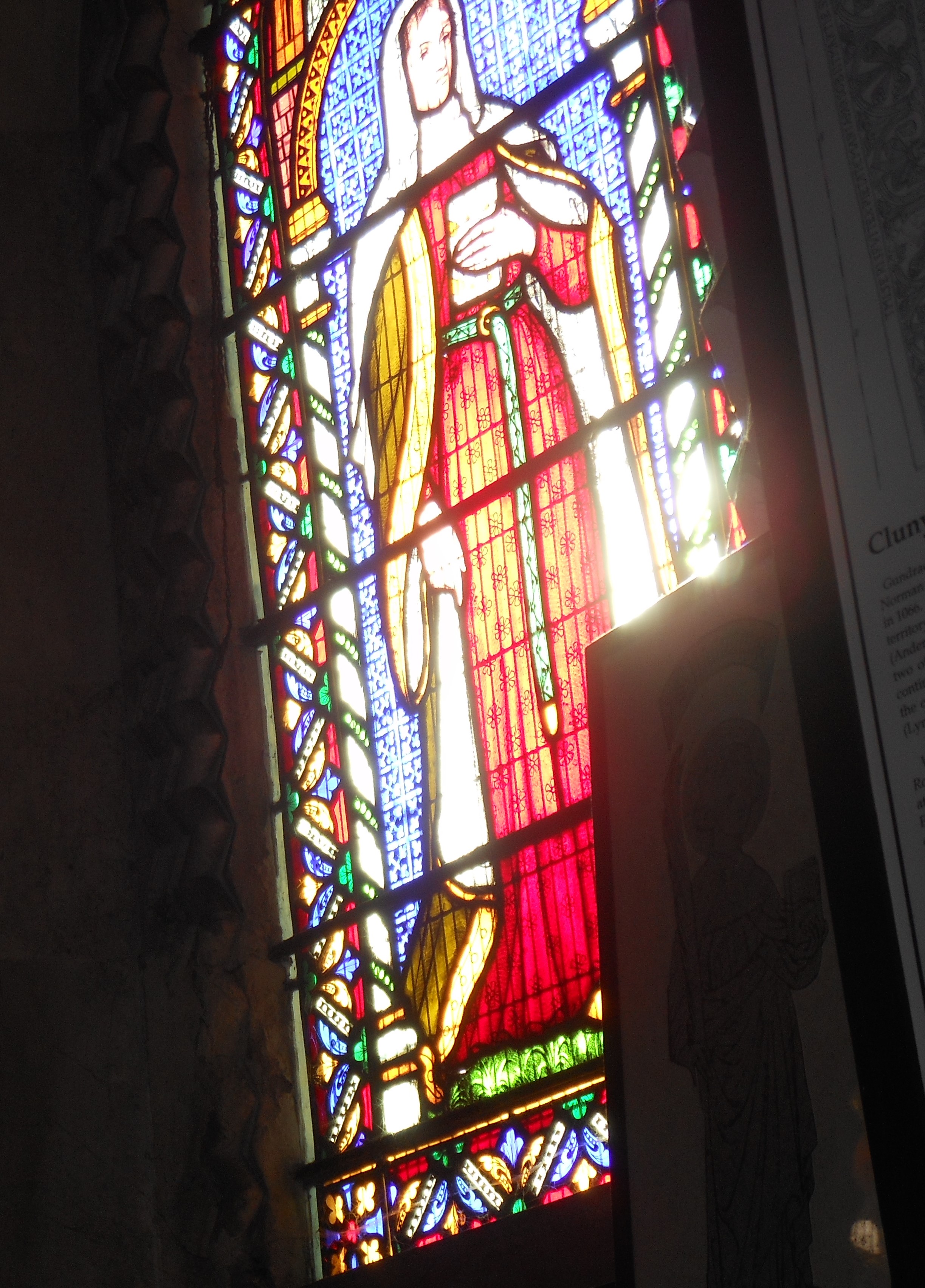
Gundrada de Warenne, wife of the 1st earl
The first Warenne earl, William de Warenne, Earl of Warenne and Surrey, came to England with William the Conqueror’s invasion force and fought at the Battle of Hastings in 1066. As a younger son, he had little hope of an inheritance and had acquired his fortune and reputation fighting for the duke of Normandy, making his name as a young man at the 1054 Battle of Mortemer.
The Warennes were at the heart of English history and politics from the time of the Conquest to the death of John de Warenne, the 7th and last earl in 1347
So who were the Warenne earls?
Briefly,
William de Warenne was a distant cousin of William the Conqueror and fought at the Battle of Hastings. William was a trusted advisor and companion of King William I and was appointed justiciar in England during the king’s absences in Normandy. He pursued a personal feud against English freedom fighter, Hereward the Wake, after Hereward murdered his brother-in-law, Frederic. William was created Earl of Surrey by King William II, just weeks before his death in 1088, having been fatally wounded at the siege of Pevensey. William and his wife, Gundrada, founded the first Cluniac priory in England, St Pancras, at Lewes in Sussex. It would become the family mausoleum. William and Gundrada’s coffins were found in the 19th century, when the railway line was being laid, and are now interred in the Gundrada Chapel of Trinity Church, Southover.
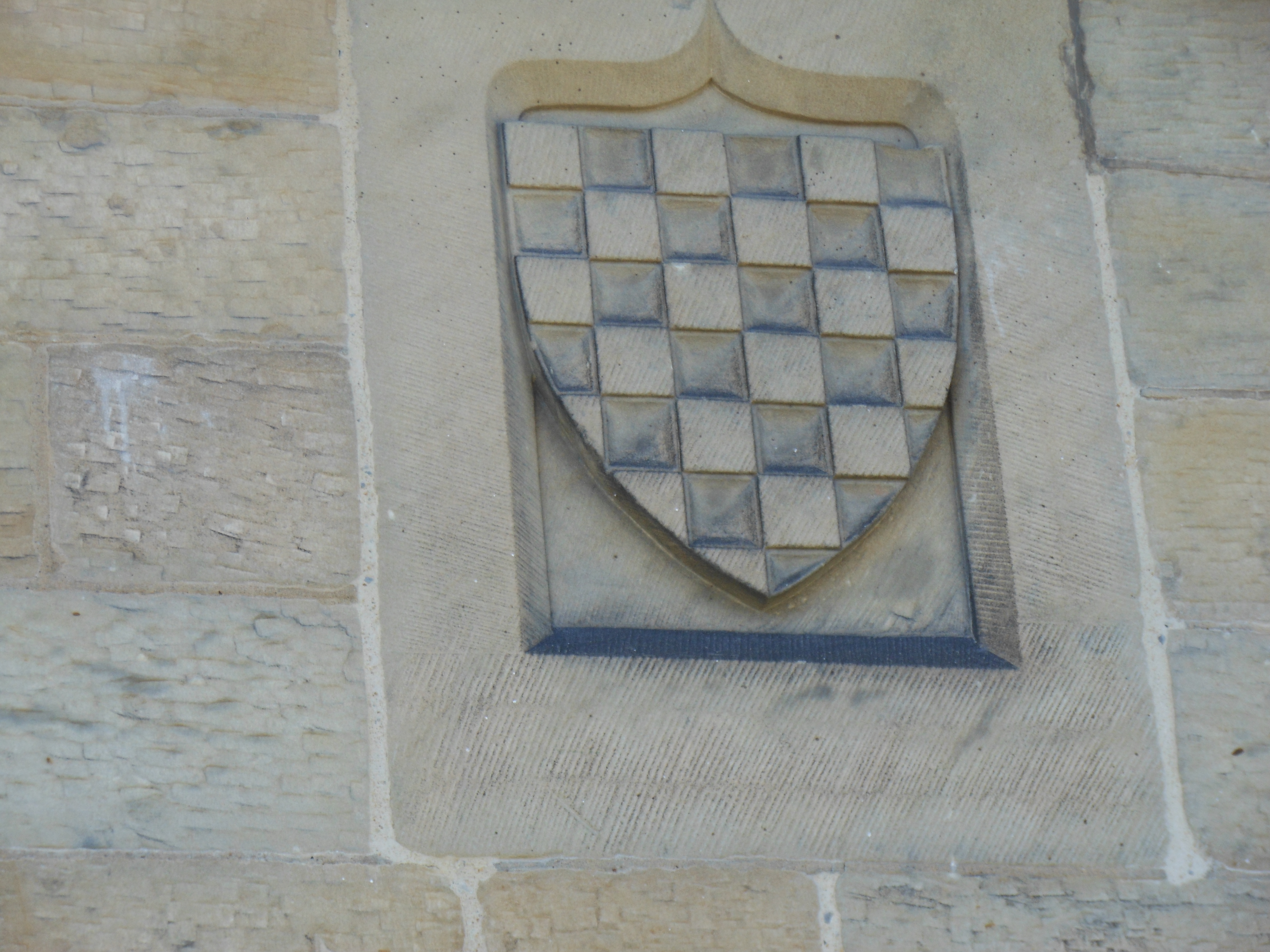
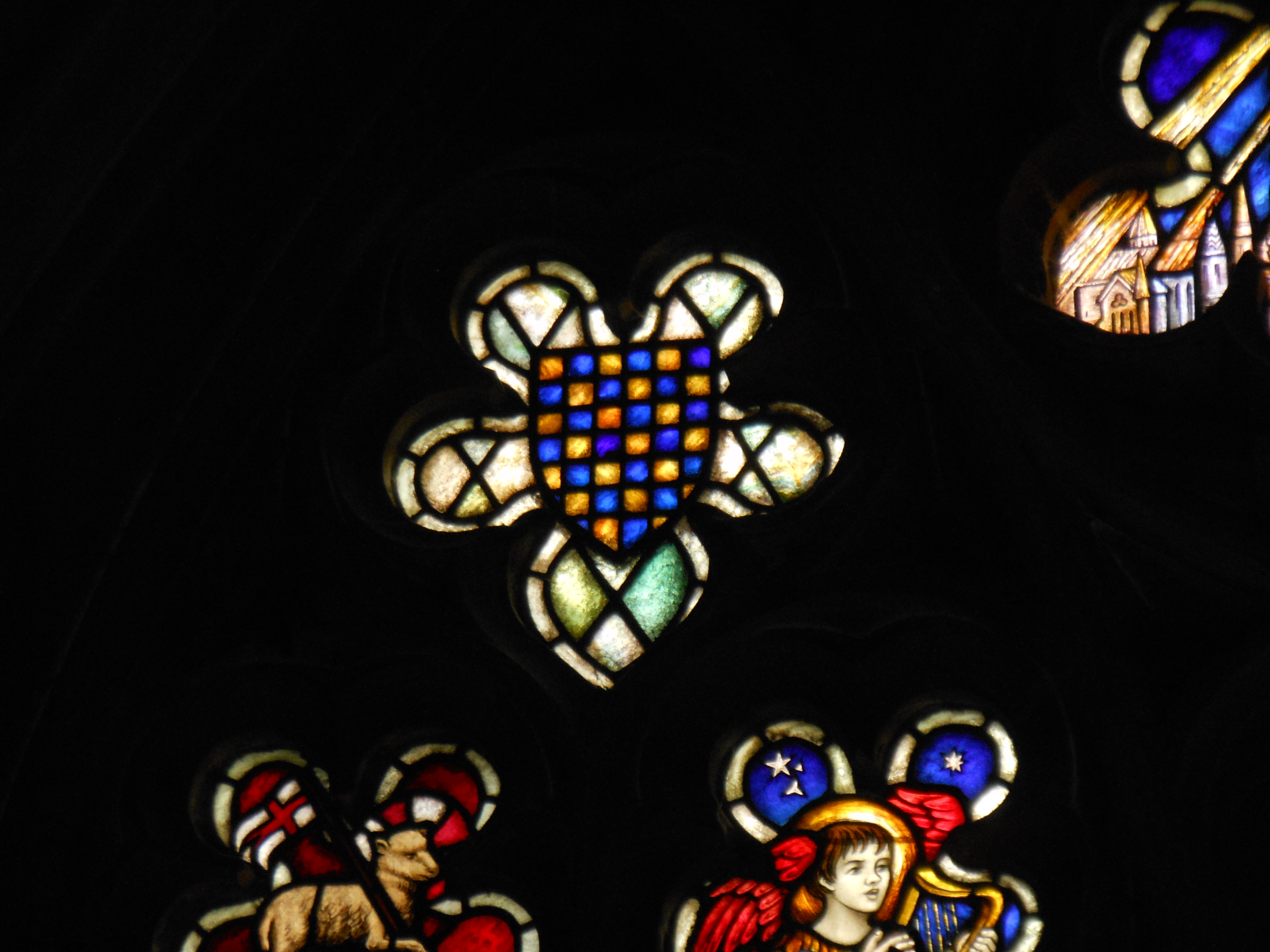
The Warenne coat of arms, adopted by William de Warenne, 2nd Earl of Warenne and Surrey
He was succeeded by his oldest son, William II de Warenne (it was a popular name) who was earl for 50 years. This William had an awkward relationship with Henry I – William was thwarted in love by Henry when they both set their sights on the same woman, Matilda of Scotland. William supported Robert Curthose’s claim for the throne against Henry, but was persuaded to abandon the duke of Normandy in favour of the king of England after the former’s failed attempt to invade England led to Earl Warenne’s lands being confiscated by King Henry. From that moment on Earl Warenne was loyal to Henry and gave a rousing speech in favour of King Henry before the 1119 Battle of Bremule. He married Isabel de Vermandois, granddaughter of King Henry I of France and widow of Robert, Earl of Leicester. The relationship caused some scandal as one chronicler suggests Isabel and William ran away together, before Isabel’s first husband was dead. William’s royal ambitions would be realised when his daughter, Ada de Warenne, married Prince Henry of Scotland in 1139; William’s grandsons, Malcolm IV and William the Lion, both succeeded to the Scottish throne.
The 3rd earl fought on the wrong side (in my opinion) during the Anarchy; he supported King Stephen, rather than Empress Matilda. Also named William, he and his forces were ignominiously routed at the 1141 Battle of Lincoln, leaving King Stephen to be captured by Earl Robert of Gloucester. Earl Warenne redeemed himself by capturing the same Earl Robert during the Rout of Winchester in the summer of 1141, thus facilitating and exchange of commanders that saw King Stephen’s release from imprisonment at Bristol Castle. Perhaps growing tired of the constant civil war, in 1147 the earl left on the Second Crusade with his half-brother, Waleran de Beaumont, Count of Meulan, led by the brothers’ second cousin, Louis VII, and his wife, Eleanor of Aquitaine. Earl William was killed at the age of 28 at the Battle of Mount Cadmus in January 1148, leaving the earldom to his young daughter, Isabel.
Seal of Isabel de Warenne, 4th Countess of Warenne and Surrey in her own right
The 4th earl. Now this is where the subsequent numbering of earls gets confusing. There were two 4th earls, though some history books count them as the 4th and 5th earls. The earldom actually belonged to Isabel. Isabel de Warenne was 4th Countess of Warenne and Surrey in her own right. Her first husband, William of Blois (the first 4th earl), was the youngest son of King Stephen and her second husband, Hamelin Plantagenet (the second 4th earl), was the illegitimate half-brother of King Henry II; a thoroughly modern Hamelin changed his name from Plantagenet to de Warenne on marrying Isabel. The first marriage produced no children, which was a stroke of luck for Henry II, as William of Blois could have founded a royal dynasty to rival the mighty Plantagenets. The second marriage proved more fruitful, with three daughters and a son. Hamelin was a loyal supporter of his brother, Henry II, and nephews, Richard I and King John – despite the fact John seduced one of Hamelin’s daughters, fathering an illegitimate child with her. Hamelin also built the magnificent keep at Conisbrough Castle, South Yorkshire.
Their son, William de Warenne, the 5th Earl, was first cousin to both King Richard I and King John. He probably grew up in Normandy, and served with King Richard in France in the 1190s. William played an active role in English politics, negotiating with the rebels on John’s behalf in Spring 1215, attempting to avert civil war. He was a signatory of the Magna Carta in 1215 and again on its reissue in 1225; he was one of the few surviving earls to have witnessed both issues of the charter. He did side with the rebel barons and their French allies, for a time, but returned to the fold following King John’s death in October 1216. He then helped to negotiate the peace, in September 1217, which saw the French Prince Louis give up his claim to England and return home. He married Matilda Marshal, daughter of the great William Marshal, Earl of Pembroke and regent of England for the first few years of Henry III’s reign. The couple had two children; their daughter, Isabel d’Aubigny, Countess of Arundel, became famous for berating King Henry III over the appropriation of a wardship that was rightfully hers.
Seal of John de Warenne, 6th Earl of Warenne and Surrey
John de Warenne, the 6th earl, was the longest serving earl of them all, holding the title for 64 years. His father died when he was 8 years old. Henry III became his brother-in-law when he married the king’s half-sister, Alice de Lusignan, daughter of Queen Isabella of Angouleme and her second husband, Hugh X de Lusignan. The marriage was a happy one and, as far as we can tell, the couple truly loved each other; following Alice’s death in childbirth, John did not take another wife. John de Warenne fought in the Second Barons’ War and was a close associate of the future king, Edward I. He was at the Battle of Lewes in 1264, fighting for King Henry III against Simon de Montfort, but escaped to the continent when the battle was lost. John was probably at Evesham for the defeat and death of Simon de Montfort, though his presence is not recorded; he was certainly with Henry III’s son, Edward, in the days before the battle. His daughter, Isabella, was married to John Balliol, King of Scots, and the mother of Edward Balliol, who pursued his own claim to the Scottish throne in the 1330s. John was guardian of Scotland for a time and lost the Battle of Stirling to William Wallace in 1298. John de Warenne was a brutal man with a sense of humour; he once claimed the rights to all the rabbit warrens in Surrey – because it was his name! His son, William de Warenne, had died during a tournament in 1286, so when John died in 1304, aged 72, he was succeeded by his 18-year-old grandson, John II de Warenne.
Lewes Castle, Sussex, seat of the earls of Warenne and Surrey
John II de Warenne, the 7th and last earl of Warenne and Surrey, spent most of his adult life trying to divorce his wife, Jeanne de Bar (Joan of Bar), a granddaughter of King Edward I, in order to marry his mistress. He made various claims to try and effect a divorce, including that he had had an affair with his wife’s aunt, Mary of Woodstock, who had been a nun from the age of 7. John was embroiled in a private – but very public – feud with Thomas of Lancaster, Edward II’s most powerful vassal, and even went so far as kidnapping Lancaster’s wife, Alice de Lacey. In retaliation, Lancaster seized the Warenne castles of Conisbrough and Sandal, both being close to his own castle of Pontefract. The castles were only restored to John after Lancaster’s execution following his defeat at the Battle of Boroughbridge, in 1322. John was involved in many of the events that shaped the reign of Edward II, though he did not fight in the 1314 English defeat by the Scots at the Battle of Bannockburn. He supported Edward II to the end – almost, only adding his to support to Isabella of France and the future Edward III, when he saw that the king’s cause was hopeless. He died in 1347 at Conisbrough, still married to Jeanne de Bar and with no legitimate heir to succeed him. The earldom passed to his nephew, Richard FitzAlan, Earl of Arundel, but the Yorkshire lands, including Conisbrough and Sandal castles, passed to the crown and were given to Edward III’s fourth surviving son, Edmund of Langley, 1st Duke of York.
Castle Acre Priory, Norfolk, one of the Cluniac monasteries founded by the Warenne earls
And that is just a – very – brief summary of the earls.
The Warenne family has a fascinating history, standing at the heart of English politics for the better part of 3 centuries. They had a family bond that is not always found amongst the aristocracy, with brothers and sisters helping and supporting each other and working for the benefit of their family. Strategic marriages forged links with the greatest families in England, Scotland and France; their family connections spanned the greatest noble houses, from the Marshals, the FitzAlans, the Lusignans, the d’Aubignys and Percys to the Scottish, French and English royal families.
One family, over 8 generations, the Warennes were at the centre of 300 years of English history.
*
Selected Sources:
Elisabeth Van Houts, Hereward and Flanders (article), Anglo-Saxon England vol. 28; A History of the County of Sussex: Volume 2 edited by William Page; W.H. Blaauw, On the Early History of Lewes Priory, and its Seals, with extracts from a MS. Chronicle, Sussex Archaeological Collections; Edward Impey, Castle Acre Priory and Castle, English Heritage; Warenne, Gundrada de (d.1085) (article) by C.P. Lewis, Oxforddnb.com; Elisabeth M.C. Van Houts and Rosalind C. Love (eds and trans), The Warenne (Hyde) Chronicle; Jeffrey James, The Bastard’s Sons: Robert, William and Henry of Normandy; Early Yorkshire Charters Volume 8 Edited by William Farrer and Charles Travis Clay; Rev. John Watson, Memoirs of the Ancient Earls of Warren and Surrey, and Their Descendants to the Present Time, Volume I; Alfred S. Ellis, Biographical Notes on the Yorkshire Tenants Named in Domesday Book (article); C.P. Lewis, Warenne, William de, first Earl of Surrey [Earl Warenne] (d. 1088) (article), Oxforddnb.com; The Oxford Companion to British History Edited by John Cannon; The Plantagenets, the Kings who Made England by Dan Jones; History Today Companion to British History Edited by Juliet Gardiner and Neil Wenborn; Brewer’s British Royalty by David Williamson; Britain’s Royal Families, the Complete Genealogy by Alison Weir; Conisbrough Castle Giudebook by Steven Brindle and Agnieszka Sadraei; The Mammoth Book of British Kings and Queens by Mike Ashley; The Plantagenets, the Kings that made Britain by Derek Wilson; royaldescent.net; F. Royston Fairbank, ‘The Last Earl of Warenne and Surrey, and the Distribution of his Possessions’, The Yorkshire Archaeological Journal, vol. XIX; Scott L. Waugh, ‘Warenne, John de, seventh earl of Surrey earl of Surrey and Sussex, Earl Warenne’, ODNB; ‘Annals written by a certain monk of Lewes, from the birth of Christ to the year 1312’ quoted in Blaauw, On the Early History of Lewes Priory; Kelcey Wilson-Lee, Daughters of Chivalry: The Forgotten Children of Edward I; Katheryn Warner, Philippa of Hainault: Mother of the English Nation
*
My Books:
Signed, dedicated copies of all my books are available through my online store.
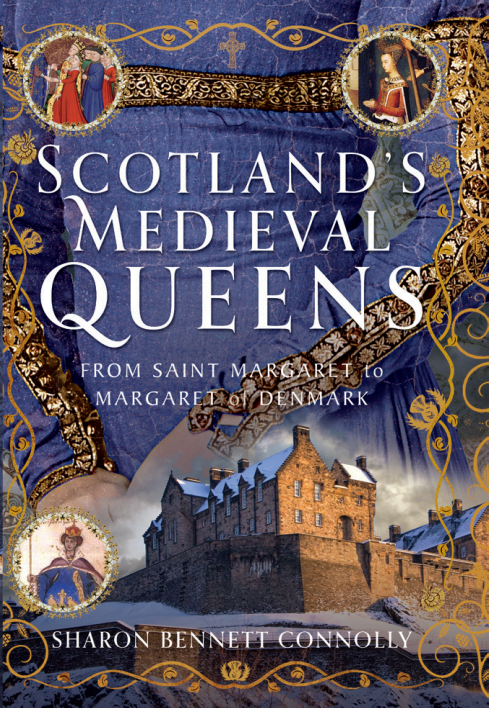
Out now: Scotland’s Medieval Queens
Scotland’s history is dramatic, violent and bloody. Being England’s northern neighbour has never been easy. Scotland’s queens have had to deal with war, murder, imprisonment, political rivalries and open betrayal. They have loved and lost, raised kings and queens, ruled and died for Scotland. From St Margaret, who became one of the patron saints of Scotland, to Elizabeth de Burgh and the dramatic story of the Scottish Wars of Independence, to the love story and tragedy of Joan Beaufort, to Margaret of Denmark and the dawn of the Renaissance, Scotland’s Medieval Queens have seen it all. This is the story of Scotland through their eyes.
‘Scotland’s Medieval Queens gives a thorough grounding in the history of the women who ruled Scotland at the side of its kings, often in the shadows, but just as interesting in their lives beyond the spotlight. It’s not a subject that has been widely covered, and Sharon is a pioneer in bringing that information into accessible history.’ Elizabeth Chadwick (New York Times bestselling author)
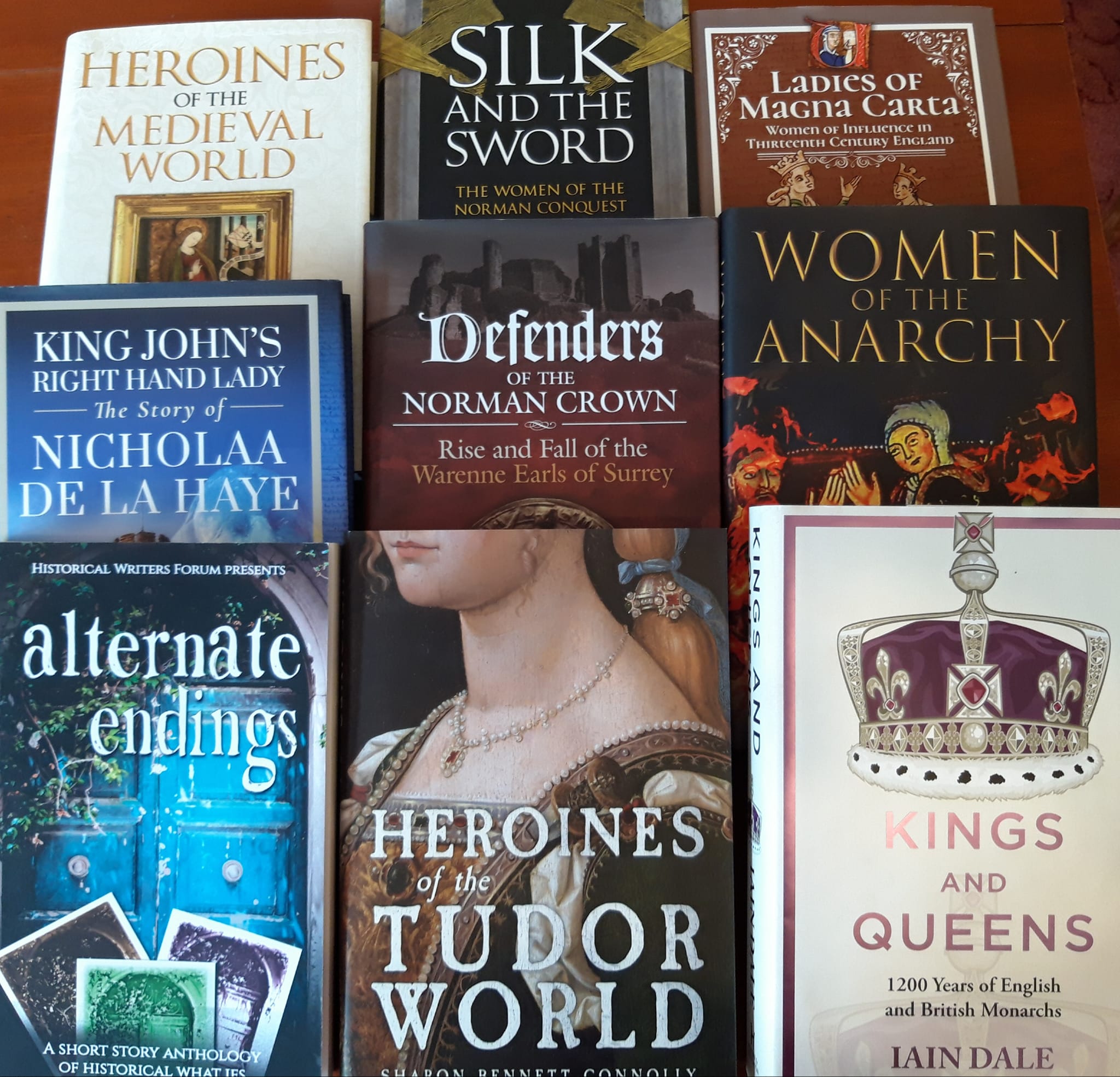
Heroines of the Tudor World tells the stories of the most remarkable women from European history in the time of the Tudor dynasty, 1485-1603. These are the women who ruled, the women who founded dynasties, the women who fought for religious freedom, their families and love. Heroines of the Tudor World is now available from Amberley Publishing and Amazon UK.Women of the Anarchy demonstrates how Empress Matilda and Matilda of Boulogne, unable to wield a sword themselves, were prime movers in this time of conflict and lawlessness. It shows how their strengths, weaknesses, and personal ambitions swung the fortunes of war one way – and then the other. Available from Bookshop.org, Amberley Publishing and Amazon UK. King John’s Right-Hand Lady: The Story of Nicholaa de la Haye is the story of a truly remarkable lady, the hereditary constable of Lincoln Castle and the first woman in England to be appointed sheriff in her own right. Available from all good bookshops Pen & Sword Books, bookshop.org and Amazon.
Alternate Endings: An anthology of historical fiction short stories including Long Live the King… which is my take what might have happened had King John not died in October 1216. Available in paperback and kindle from Amazon.
Podcast:
Have a listen to theA Slice of Medieval podcast, which I co-host with Historical fiction novelist Derek Birks. Derek and I welcome guests, such as Bernard Cornwell and Michael Jecks, and discuss a wide range of topics in medieval history, from significant events to the personalities involved.
We have something different on the blog today, an interview with Tovi Wulhereson, and 11th century teenager who is a beloved character in Paula Lofting’sSons of the Wolfseries of novels. A typical teenager in may ways, Tovi steals the scene every time. So I got the chance to talk to him and find out a little about his personality, hopes and dreams.
Hi Tovi, thank you so much for taking the time to speak to me. I have read all your adventures so far and I am really looking forward to the next one.
So, to the questions.
Tell my readers a little about yourself; how old are you, where do you come from? That sort of thing…
I was born somewhere in the warmth of the summer months, in the place that we called Horstede because my family had always owned horses. My father is a thegn, which means he owns 5 hides of land, a church with a belfry, and a gate tower. The estate we live on is in the heart of Sussex surrounded by forest on one side and open farmland on the other.
What is your favourite thing to do in your free time?
The forge
When I was much younger, my brothers and sisters used to play in the woods. We had a rope swing that was tied to an old oak tree by the side of a mill pond that we used to swing on and jump into the water. One day the Earl of Wessex and his family came to stay, and my sister and I were charged with looking after them so we took them down to the swing and the earl’s daughter, Gytha, nearly drowned. I had to jump in the water and keep her afloat until help came.
The Earl rewarded me with my very own beautiful seax in a wonderful leather case. I was rather embarrassed by all the attention!
But that was when I was only ten summers old. Now I am almost fifteen, a man now. When I was at school at Waltham for almost three years rarely had time to enjoy ourselves, but now I like to practice weapons, wrestle, and go swimming.
What do you want to be when you grow up?
Strictly speaking, I am grown up, according to the law. At fifteen I can take charge of my own land, if I had any, and allowed to fight in the shieldwall, but I have yet to even start my training, because I was studying for the priesthood, but it seems I am not suitable for that life and now I have been offered a place in my Lord Harold’s household. It was what I always wanted, to be a warrior. I must soon begin my training.
Tell me about your heroes.
Children outside the hall
My Father has always been my hero. I used to love sitting around the hearth listening to stories of his prowess in battle. I remember when he came back from a war in the north, The Battle of the Seven Sleepers, they called it, in a place called Alba – which I believe is now known as Scotland. He took a blow to his head and was knocked unconscious. His fyrdsman, Esegar, pulled him out of the battle and saved his life. He was also very skilled at one-on-one fighting and was known to be hard to beat. Last year he fought a champion fight before a battle and won then went on to fight against the Wícinga. He was badly injured, but I am told he fought like an enraged bear. But he is not the same anymore. They say that war has scarred him not only on his body, but in his mind, too.
I have also always been in awe of Lord Harold since the day he gave me his seax as a reward for saving his daughter’s life. He has a presence that makes you want to be like him. Generous and kind, he is also disciplined and knows how to command men. These are the qualities I like in him.
Who is your best friend?
Tovi and Winflaed
My youngest sister Winflaed and I used to be very close. Then I went to school in Waltham and my only friend there was a boy called Patric. His father was the childemaester. Now I am home in Horstede again and Winflaed is gone, I miss Patric. I have my brother, Wulfric, but we do not always get on very well.
What sort of lessons do you have?
I was taught to read and write by Father Paul, our village priest. Then I went to Waltham and learned Latin, Greek, and French. I also learned Arithmetic, Astronomy, and religious studies. The hardest lessons I’ve ever had are the ones that involve a beating, which I was frequently given at Waltham for various misdeanours!
What is your greatest ability/skill?
I would like to be a great warrior, like my father, but I have a lot to learn.
What are you not very good at?
Sometimes I feel a little awkward around people. My childhood experiences have affected me in such a way I that I find it hard to trust anyone. I think they are always going to let me down or betray me.
What is your favourite legend or story?
Wychurst
Ah, I love Beowulf. I often imagine those I don’t like as Grendel the monster and that I am Beowulf, killing them.
Do you have a girlfriend?
There is a girl I like in Waltham. But I can’t tell you just now, because if her father finds out he will most likely cut off my balls.
Thank you so much for answering my questions Tovi. And good luck with your future.
Thank you for allowing me to tell you about my life!
*
About the author:
Paula Lofting has always wanted to write since she was a little girl, coming home from school to sit at the table with her notebook and write stories that buzzed around in her head. A prolific reader, she loved nothing better than to spend weekends with a book in her hand. Earliest influences such as Rosemary Sutcliffe, Leon Garfield, Charles Dickens, C.S.Lewis, inspired an interest in history. It became her lifelong wish to one day write and publish a book, but not being able to type, and having no funds for a typewriter to learn on, this ambition was reluctantly put on hold.
With the advent of PC’s and a need to retrain and use a computer, this old ambition was stirred and she decided to rekindle her love of books and writing at the grand old age of 42. at this point, she had reached a turning point in her life and studied nursing, and also decided to write the book she had promised herself one day she would write.
Her début novel, ‘Sons of the Wolf’ was first published with the assistance of SilverWood Books in 2012. More recently she has republished it with her new publishing company Longship Books. It is a story set in the years leading up to the Norman Conquest of England and the first in the Sons of the Wolf series, about this amazing time in English history. Her second novel, the wolf Banner, has also been published in paperback and kindle and the third is a WIP and will be published later this year in 2021.
She has always admired the works of Sharon Penman and Bernard Cornwell, Edith Pargetter and Mary Stewart, amongst many others. History is a great love of hers and her interest in the subject goes beyond that of the keyboard. She also enjoys Anglo-Saxon re-enactment with Regia Anglorum, also a great source of research for my writing.Paula says: “Write for enjoyment, write for yourself, regardless of what others say you should; for if you don’t write what you love, then how can you expect others to love what you write.”
Defenders of the Norman Crown: The Rise and Fall of the Warenne Earls of Surrey tells the fascinating story of the Warenne dynasty, of the successes and failures of one of the most powerful families in England, from its origins in Normandy, through the Conquest, Magna Carta, the wars and marriages that led to its ultimate demise in the reign of Edward III.
John de Warenne, 7th and last Earl of Warenne and Surrey (Earl Warenne), was the only son of William de Warenne, who in turn was the only son of the colourful and rather legendary John de Warenne, 6th Earl Warenne. The 6th earl had been married in 1247 to Alice de Lusignan, half-sister of King Henry III as the second eldest daughter of Isabelle d’Angoulême, Queen of England as the wife of King John, and her second husband, Hugh X de Lusignan, Count of La Marche and Lord of Lusignan and Valence.
Born in around 1224, Alice was seven years older than her 16-year-old husband. The marriage had formed part of King Henry’s much-despised policy of patronising his Lusignan siblings and thus was condemned by Matthew Paris. Rather harshly, Paris claimed that the marriage was ‘beyond the bride’s station.’1 Given that Alice was half-sister of the king of England, this assessment seems a tad unfair. For John’s son and grandson, it would provide them with powerful royal relations in the future; William de Warenne was a first cousin of Edward I and the younger John de Warenne was a second cousin to Edward II.
Alice de Lusignan, Countess of Warenne and Surrey, died on 9 February 1256, just hours or days after William’s birth. She was ‘placed in the earth before the great altar [Lewes priory] in the presence of her brother Adelmar [Aymer], [bishop] elect of Winchester.’2 Despite being one of the wealthiest and most powerful earls in the country, and with only one legitimate son to succeed him, John de Warenne would never remarry, perhaps an indication of the deep affection that he held for his semi-royal wife.
In his late twenties, William de Warenne was married to Joan, daughter of Richard de Vere, Earl of Oxford, sometime in 1284: ‘Also William de Warenne married the daughter of the Earl of Oxford.’3 Through his mother, William was the nephew of Henry III and first cousin to Edward I. Through his father, William was descended from, among others, William Marshal, Geoffrey of Anjou and six Warenne earls of Surrey. However, William was destined never to succeed to the expansive earldom of Surrey. He was killed in a tournament at Croydon in December 1286, just six months after the birth of his only son and heir, John. The Annals of Lewes Priory recorded the events of 1286:
This year, on June 30, was born the first-begotten son of Sir William de Warenn, by his wife, daughter of the Earl of Oxford, whom he had married, as appears above. He was baptised and called by the name of John, on the 7th of November, with immense rejoicing; but alas! As the prophet testifies, ‘our joys are extinguished, but lamentation possesses us;’ for in the same year, on the first Sunday before the feast of Thomas the Apostle, which was on December 15, the father of the aforesaid youth [Sir William, killed in a tournament at Croydon], concerning whom our gladness had been, expired, and, oh sadness! He in whom flourished entire nobility, generosity and honesty, and the beginning of the glory of all knighthood, now lies buried and covered with stones. But there was present at the entombment of this so noble a man, the lord of Canterbury, who buried him before the high altar, on the left side, near his mother, with the greatest devotion of respect, as was fitting, many nobles of the land being present. The earl marshal [Roger Bigod, Earl of Norfolk], the Earl of Oxford and several barons … were anxiously afflicted.4
St Pancras priory, Lewes, the Warenne family mausoleum
Some sources suggest that John was the posthumous son of William, stating that William was killed in January 1286; however, this entry in the Annals of Lewes Priory makes it clear that John was born almost six months before his father was killed. John’s sister, Alice, on the other hand, may well have been born the year after her father’s death, in June 1287; hence John being referred to as the ‘first-begotten son’ despite being the only son. Joan was pregnant with Alice and no one yet knew if the child would be a boy or a girl.
Given the chronicle was written by a monk at Lewes, a priory patronised by the Warenne family, the laments and praise of William may be slightly exaggerated. However, that the archbishop of Canterbury conducted the funeral rites, and the presence of many senior nobles, suggests that William was, indeed, well thought of. This fact may give the lie to the rumours of murder that inevitably accompany a medieval death from unnatural causes. Rumours that William’s enemies had taken the opportunity of the tournament to despatch the young lord appear to be without foundation.
Young John suffered a further bereavement on 1293, when his mother, Joan died. Aged only 7, it seems arrangements had already been made should John still be a minor when his parents died. It had been agreed that the custody of John and his lands should go to Joan’s parents, Robert de Vere and his wife, Alice de Sanford. However, Earl Robert died in 1296 and it is not known where 10-year-old John spent the remainder of his childhood. It seems likely that John was raised by his Warenne grandfather, until the 6th Earl’s death in 1304.
At the age of 18, John succeeded to the earldom of his grandfather as the 7th earl of Warenne, Surrey and Sussex. His vast holdings comprised of lands and manors in numerous counties, including Sussex, Surrey, Lincolnshire, Yorkshire, Wiltshire and Norfolk. John, Earl Warenne, was still a minor and would be for another three years; as a consequence, he was made a royal ward, his lands taken into the custody of the Crown. Although he and his lands were in royal custody, and managed by custodians, John lived on his own estates and in 1305 the king commanded John to provide him with forty dried and salted barrels of deer.5 In the same year, he was sent to attend a tournament at Guildford, part of John’s estates, by Edward I, who provided the young lord with considerable funds for his maintenance.6
On 7 April 1306, in spite of the fact he had not yet performed homage to the king, still only 19 years old, Edward granted John his grandfather’s lands. It may well have been at this time that Edward Balliol was placed in John’s custody. The son of John’s aunt, Isabella, and King John Balliol of Scotland, the younger Balliol had been in the custody of his grandfather, the sixth Earl Warenne, from 1299 until the old earl’s death in 1304.
Seal of Edward Balliol as King of Scots
Given that it is likely his mother was no longer living when John Balliol became king in 1292, and that the couple had been married sometime before 7th February 1281, it seems probable that Edward was born sometime in the 1280s, making him of a similar age to his cousin, John de Warenne. Indeed, the two young men may well have spent their teenage years together in their grandfather’s household, training for knighthood. John was Balliol’s guardian for about 4 years, until it was ordered that he be delivered into royal custody in 1310, by Edward II. Edward Balliol had a strong claim to the Scottish throne, one that he would later be encouraged to pursue by Edward III in the 1330s. In May 1306, John de Warenne attended his first parliament at Westminster, an event which marked his coming of age, although he was not yet 21; in fact, he was still a month shy of his twentieth birthday.
John’s early coming of age appears to have been a part of larger scheme by King Edward, as during the parliamentary session, John was brought before the king and offered Edward’s granddaughter in marriage; the young earl readily agreed to the marriage, even though his bride was only 10 years old. The proposed bride was Joan, or Jeanne of Bar, Edward’s granddaughter by his eldest daughter, Eleanor and her husband Henry, Count of Bar. In the week following the betrothal of John and Joan, and in anticipation of a new expedition against Scotland, on 22 May 1306, Edward I held a magnificent ceremony for the knighting of his eldest son, Edward; the king knighted the prince, who then went on to knight the other candidates, in the glorious setting of Westminster Abbey.
In anticipation of the prince’s knighting, and in order to gather a body of knights who would be loyal to his son, the king proclaimed that all young men of sufficient age and income should travel to Westminster, to be knighted at royal expense alongside their future king, Prince Edward. The ceremony was also to bestow knighthoods on almost 300 men, John de Warenne included: ‘The yong Erle of Warenne with grete nobley was thare / A wif thei him bikenne, the erles douhter of Bare.’7
There were so many young men to be knighted, that it was impossible to find accommodation for all, and apple trees had to be chopped down in the gardens of the New Temple to make room. The prince and his closest companions kept their vigil, the night before the ceremony, watching their arms, in the abbey church at Westminster. Matthew of Westminster records that:
there was such a noise of trumpets and pipes, and such a clamour of voices, that one side of the choir could not hear the other. The others kept their vigil at the New Temple. The King provided them the necessary scarlet cloths, fine linen and belts for their use from his own wardrobe. 8
Arms of the House of Bar
The following morning, the king knighted his son in the palace of Westminster, investing him with his knight’s belt and spurs. The prince then crossed to Westminster Abbey, to invest the others; ‘The crowd was enormous, so great indeed, that two knights were killed. Each candidate was attended by three knights, who saw and assisted him through the ceremony.’9 The prince knighted sixty of the candidates himself, with other knights assisting with the rest. A lavish banquet – which later became known as the Feast of the Swans – followed the proceedings:
when two swans were brought in ornamented with gold network, emblematical of constancy and truth. When they were placed upon the table the King rose and made a vow to God and to the swans, that he would set out for Scotland and avenge the death of Comyn, and punish the treachery of the Scots … It was under these exceptionally interesting circumstances that Warenne received his knighthood.10
The murder of John Comyn, at the hands of Robert the Bruce in the church of the Greyfriars in Dumfries, on 10 February 1306, following an argument, had sent shockwaves through Christendom. Bruce had then raced to Scone where he was crowned King Robert I of Scots. As the celebrations continued a number of weddings also took place, involving several barons and nobles. John’s sister, Alice, married Edmund FitzAlan, 9th Earl of Arundel. Edmund had been a ward of John’s grandfather. The two young men were very close in age and were political allies and friends.
John de Warenne and Joan of Bar were married on 25 May, ‘before an altar spread with glittering cloths-of-gold.’11 Barely 10 years old, Joan was escorted to the palace at Westminster with great pomp and she and John were married in the presence of the ageing king. The Wardrobe Accounts bear witness to the extravagance of the ceremony and celebrations:
‘1306. May 25. In money lent and dispersed in the presence of the King, at the nuptials celebrated in the King’s chapel at Westminster, between John, Earl de Warenne, and the Lady Joanna, daughter of the Count de Barr, xls [40s].’ Other money was paid out ‘for diverse minstrels’, and ‘for letting fly the king’s gyrfalcon.’ More extravagance was expended to Thomas the coachbuilder, ‘advanced on making a chariot for the Earl de Warenne, June 28, lxs [60s],’ and to Walter de Bardeney, ‘advanced on harness being made for the said Earl, on the same day, cs [100s].’ While Walter de Bedewynde was commissioned ‘for a new carriage for the use of the Countess de Warenne, by order of the Treasurer.’12
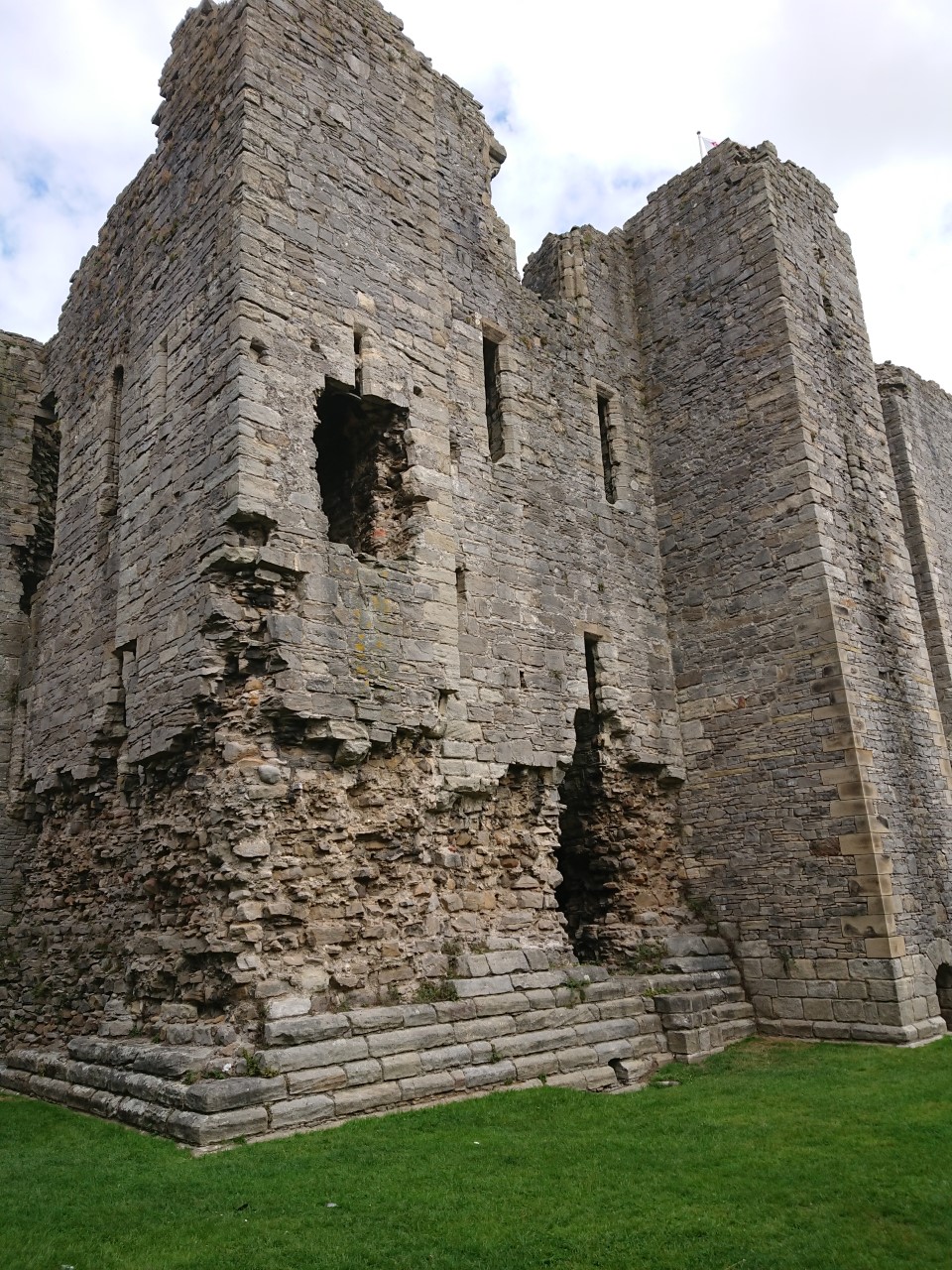
Conisbrough Castle, South Yorkshire, where John de Warenne, the last Earl of Warenne and Surrey, died in 1347
The marriage would prove to be a disaster, with John spending most of his adult life trying to obtain a divorce from Joan in order to marry his mistress, Maud de Nerford, and thus legitimise his children by her. Although the relationship with Maud eventually broke down, possibly due to the considerable pressure they couple must have been under with the almost-constant court cases, John was still trying to obtain a divorce from Joan to his dying day. In his latter years, in a last desperate attempt to produce a legitimate heir, he hoped to marry his mistress at that time, Isabella Holland, who his described as ‘ma compaigne’ in his will.13
John de Warenne, seventh and last Earl of Warenne, Surrey, Sussex and Strathearn died at Conisbrough Castle between 28 and 30 June 1347, possibly even on his sixty-first birthday (30 June). He asked to be buried at St Pancras Priory, Lewes, in an arch near the high altar. His will, dated 24 June 1347, left various gifts to his illegitimate children and to Isabella, to whom he left plate, jewels, cows, horses and other beasts, ‘and after that my debts and devises be made, I give to my said “compaigne” all the residue of all my goods and chattels, and whatsoever things they find.’14 To Joan, his wife of forty years, he left nothing.
*
Footnotes:
1. Scott L. Waugh, ‘Warenne, John de, seventh earl of Surrey earl of Surrey and Sussex, Earl Warenne’, ODNB; 2. ‘Annals written by a certain monk of Lewes, from the birth of Christ to the year 1312’ quoted in Blaauw, On the Early History of Lewes Priory; 3. ibid; 4. ibid; 5. Scott L. Waugh, ‘Warenne, John de, seventh earl of Surrey earl of Surrey and Sussex, Earl Warenne’, ODNB; 6. ibid; 7. F. Royston Fairbank, ‘The Last Earl of Warenne and Surrey, and the Distribution of his Possessions’, The Yorkshire Archaeological Journal, vol. XIX; 8. ibid; 9. ibid; 10. ibid; 11. Kelcey Wilson-Lee, Daughters of Chivalry: The Forgotten Children of Edward I; 12. Wardrobe Accounts quoted in F. Royston Fairbank, ‘The Last Earl of Warenne and Surrey, and the Distribution of his Possessions’, The Yorkshire Archaeological Journal, vol. XIX; 13. Katheryn Warner, Philippa of Hainault: Mother of the English Nation; 14. Calendar of Papal Registers, Papal Letters quoted in F. Royston Fairbank, ‘The Last Earl of Warenne and Surrey, and the Distribution of his Possessions’, The Yorkshire Archaeological Journal, vol. XIX
The Oxford Companion to British History Edited by John Cannon; The Plantagenets, the Kings who Made England by Dan Jones; History Today Companion to British History Edited by Juliet Gardiner and Neil Wenborn; Brewer’s British Royalty by David Williamson; Britain’s Royal Families, the Complete Genealogy by Alison Weir; Early Yorkshire Charters Volume 8, Edited by William Farrer and Charles Travis Clay; Conisbrough Castle by Steven Brindle and Agnieszka Sadraei; The Mammoth Book of British Kings and Queens by Mike Ashley; The Plantagenets, the Kings that made Britain by Derek Wilson; oxforddnb.com; royaldescent.net; F. Royston Fairbank, ‘The Last Earl of Warenne and Surrey, and the Distribution of his Possessions’, The Yorkshire Archaeological Journal, vol. XIX; Scott L. Waugh, ‘Warenne, John de, seventh earl of Surrey earl of Surrey and Sussex, Earl Warenne’, ODNB; ‘Annals written by a certain monk of Lewes, from the birth of Christ to the year 1312’ quoted in Blaauw, On the Early History of Lewes Priory; Kelcey Wilson-Lee, Daughters of Chivalry: The Forgotten Children of Edward I; Katheryn Warner, Philippa of Hainault: Mother of the English Nation
My Books
Signed, dedicated copies of all my books are available through my online store.
Out now: Scotland’s Medieval Queens
Scotland’s history is dramatic, violent and bloody. Being England’s northern neighbour has never been easy. Scotland’s queens have had to deal with war, murder, imprisonment, political rivalries and open betrayal. They have loved and lost, raised kings and queens, ruled and died for Scotland. From St Margaret, who became one of the patron saints of Scotland, to Elizabeth de Burgh and the dramatic story of the Scottish Wars of Independence, to the love story and tragedy of Joan Beaufort, to Margaret of Denmark and the dawn of the Renaissance, Scotland’s Medieval Queens have seen it all. This is the story of Scotland through their eyes.
‘Scotland’s Medieval Queens gives a thorough grounding in the history of the women who ruled Scotland at the side of its kings, often in the shadows, but just as interesting in their lives beyond the spotlight. It’s not a subject that has been widely covered, and Sharon is a pioneer in bringing that information into accessible history.’ Elizabeth Chadwick (New York Times bestselling author)
Heroines of the Tudor World tells the stories of the most remarkable women from European history in the time of the Tudor dynasty, 1485-1603. These are the women who ruled, the women who founded dynasties, the women who fought for religious freedom, their families and love. Heroines of the Tudor World is now available from Amberley Publishing and Amazon UK.Women of the Anarchy demonstrates how Empress Matilda and Matilda of Boulogne, unable to wield a sword themselves, were prime movers in this time of conflict and lawlessness. It shows how their strengths, weaknesses, and personal ambitions swung the fortunes of war one way – and then the other. Available from Bookshop.org, Amberley Publishing and Amazon UK. King John’s Right-Hand Lady: The Story of Nicholaa de la Haye is the story of a truly remarkable lady, the hereditary constable of Lincoln Castle and the first woman in England to be appointed sheriff in her own right. Available from all good bookshops Pen & Sword Books, bookshop.org and Amazon.
Alternate Endings: An anthology of historical fiction short stories including Long Live the King… which is my take what might have happened had King John not died in October 1216. Available in paperback and kindle from Amazon.
Podcast:
Have a listen to theA Slice of Medieval podcast, which I co-host with Historical fiction novelist Derek Birks. Derek and I welcome guests, such as Bernard Cornwell and discuss a wide range of topics in medieval history, from significant events to the personalities involved.
It is an absolute pleasure to welcome author and historian Toni Mount back to the blog, with an article based on her research for her latest non-fiction book, How to Survive in Medieval England. Toni has a wonderful way with words to the extent that her books – fiction and non-fiction alike – are a pure pleasure to read.
So, without further ado, it is over to Toni:
Trial by Combat – Rough Justice
My new book, How to Survive in Medieval England, published by Pen & Sword, is a guide to travelling in history: what to expect, how to dress, how to stay safe and what to look for on the menu.
If you were able to go back in time to medieval England, so much would be very different and so many things missing – all technology, from engines to the Internet. All work would be done by hand. In medieval England, the law sometimes works quite differently from the way we expect today. Trial by Ordeal was a means of deciding who was innocent and who was guilty. A suspect or the accused would be taken to a church and with a priest presiding, subjected to one of a number of horrific acts.
Trial by Fire – a priest (centre) blesses the ordeal as the accused (left) takes the red-hot iron in hand. [Readers may note the accused wears ‘motley’ – parti-coloured cloth – a sure sign of untrustworthiness.’
A favourite was Trial by Fire. In this case, a piece of iron was heated to red-hot in a brazier and the accused had to remove the metal from the fire – by hand! His burns would be bandaged and left for a week. When inspected by the priest at the end of seven days, if they were healing well this was God’s decision and the accused was innocent. But if the burns were septic and weeping, that was also God’s doing and proved the accused was guilty because God was not on his side.
Trial by Water could be similar with the accused having to plunge his hand into a cauldron of boiling water. Or, an alternative Ordeal by Water involved throwing the accused into a pond or river, though this one always seems most unfair to me. If the accused sank and, therefore, probably drowned, he was innocent because the water, having been blessed by a priest, ‘accepted’ him. If he floated, he was guilty because the blessed water refused him. In which case, he would be hanged, so he died either way.
Another method was Trial by Combat in which the accuser and the accused fought it out with weapons. God would cause whoever was telling the truth to win the battle.
In 1249, a gang of thieves was terrorising Winchester, Salisbury and Guildford, specialising in stealing expensive clothing and shoes. The gang was often violent and, although folk in the area knew who they were, they were too scared to accuse them.
In my new book, I include some imagined interviews with real people of the time as a means of telling about true aspects or incidents in their lives. Let’s speak to Walter Blowberme, a member of this notorious gang of thieves:
‘Now Walter, you were caught in the act, I believe, and admitted your crimes. Tell us what you did.’
‘Well, see, we stoled all this valuable stuff, didn’t we? Good cloth, shoes, some jewellery and silver cups. Made a fine profit ’til I got caught, filching a gold brooch. I knewed this meant a date wi’ the hangman for me so I told the sheriff I’d be an approver.’
‘What is an approver?’
‘You don’t know? What a dim-wit. It means my life’ll be spared if I telled the court the names of ten others involved in the crimes. I didn’t want t’ do it, ’cos they was my mates but a man has t’ lookout for hisself.’
‘So you snitched on your fellows. What happened then?’
‘I named six fellows from Guildford who was all members of the gang. They was all arrested, tried and condemned. I didn’t feel too bad about them ’cos I never liked most of ’em, except Tom. It was a shame about him. But I still needed another four fellows convicted to save my own neck, so I accused three from Hampshire. They wasn’t in the gang; just fellows I knowed and didn’t like much. They was found not guilty and released so I had t’ name four others as gang members. It’s a good thing I know so many folk and don’t like none of ’em. These four was nasty bits o’ work, I can tell you, but when the sheriff tried to take ’em, three managed to escape. But because they never turned up in court, they was found guilty anyway. The fourth fellow, Hamo Stare – my sister’s husband what I never liked – was brung to trial but things was so complicated, the judge offered Hamo a trial by ordeal.’
‘I thought trial by ordeal was made illegal by the Church?’
‘Don’t ask me; I’m not the judge. Anyhow, Hamo chosed trial by combat and I, as his accuser, had to be his opponent. We had wooden clubs and shields and fighted ’til we was both bloody but Hamo gave in first. The judge declared God had gived me most strength, so I must have spoke truly against Hamo. Hamo was hanged – good riddance – and I’d managed to get ten fellows convicted, so my life was spared but I got banished from the district forever ’cos I admitted being guilty of so many crimes.’
‘But you didn’t mend your ways, Walter?’
‘Nay. Couldn’t resist some silver bits, could I? I comed t’ London and just six months later I got caught, thieving a chalice and candlesticks from St Mary-le-Bow church.’
‘And this time there is no second chance for you, is there, Walter?’
‘Nay. This time it’s the gallows for me. T’morrow. Pray for me soul, won’t you?’
Judicial tests and ordeals had been abolished at an important Lateran Council meeting, held by the pope in 1215, stating that churchmen may ‘neither pronounce nor execute a sentence of death. Nor may they act as judges in extreme criminal cases, or take part in matters connected with.’ This meant trial by ordeal no longer had God’s sanction – a priest had to be present as His representative – since it was God who determined the outcome. However, obviously, such trials must have continued for at least another thirty years.
A naughty priest in the stocks along with his mistress – churchmen’s punishments were not so bad. [https://www.historyextra.com/period/medieval/monks-sex-drink-gamble-history-pope/]
Churchmen could no longer sit in judgement but neither could they be tried in a state court. They had to be tried in church courts by their fellow clerics and a death sentence could never be past, even for murder. So, in medieval England, if anyone could prove they were a man of the cloth, or a nun, then they could, literally, get away with murder. Here’s how: only trained clerics can read Latin; so if the accused can read the Bible – always in Latin – he must be a churchman. To prove a person can read, the same passage is always required to be read aloud from the Bible: ‘Oh loving and kind God, have mercy. Have pity upon my transgressions.’ (Psalm 51, Verse 1.) This meant that any forward-thinking criminal learned this verse by heart, in Latin, even if he couldn’t read a word. It saved the necks of so many miscreants, it was known as the ‘Neck-Verse’ and got a great number of very guilty people out of trouble.
Readers can find out far more about medieval lives, meet some of the characters involved and get a ‘taste’ of the food of the time in How to Survive in Medieval England, my new book from Pen & Sword, published on 30th June 2021 and available for pre-order now on Amazon.
About the book:
How to Survive in Medieval England by Toni Mount Pen & Sword History (30 Jun. 2021)
Imagine you were transported back to Medieval England and had to start a new life – without mobile phones, ipads, or social media. When transport meant walking or, if you’re lucky, horse-back; how will you know where you are or what to do? Where will you live? What is there to eat? What shall you wear and how can you communicate? Who can you turn to if you fall ill or are mugged in the street,? All these questions and many more are answered in this new guide book. How to Survive in Medieval England is a handy self-help guide with tips and suggestions to make your visit to the Middle Ages much more fun. Learn the rules so you don’t get into trouble or show your ignorance in embarrassing situations and read interviews with the stars of the day, from a celebrity chef to King Richard III himself. Have an exciting visit but be sure to keep this book to hand.
About the Author
Toni Mount is a history teacher and a best-selling author of historical non-fiction and fiction. She’s a member of the Richard III Society’s Research Committee, a regular speaker to groups and societies and belongs to the Crime Writers’ Association. She writes regularly for Tudor Life magazine, has written several online courses for http://www.MedievalCourses.com and created the Sebastian Foxley series of medieval murder mysteries. Toni has a First class honours degree in history, a Masters Degree in Medieval History, a Diploma in English Literature with Creative Writing, a Diploma in European Humanities and a PGCE. She lives in Kent, England with her husband and has two grown-up sons.
Defenders of the Norman Crown: The Rise and Fall of the Warenne Earls of Surrey tells the fascinating story of the Warenne dynasty, of the successes and failures of one of the most powerful families in England, from its origins in Normandy, through the Conquest, Magna Carta, the wars and marriages that led to its ultimate demise in the reign of Edward III.
Today it is a pleasure to welcome author Monika E Simon back to the blog, with an article looking at the origins of the Lovell family. Monika’s book, From Robber Barons to Courtiers: The Changing World of the Lovells of Titchmarsh, will be released on 30 June. Over to Monika:
How to make your fortune and get your name into the history books?
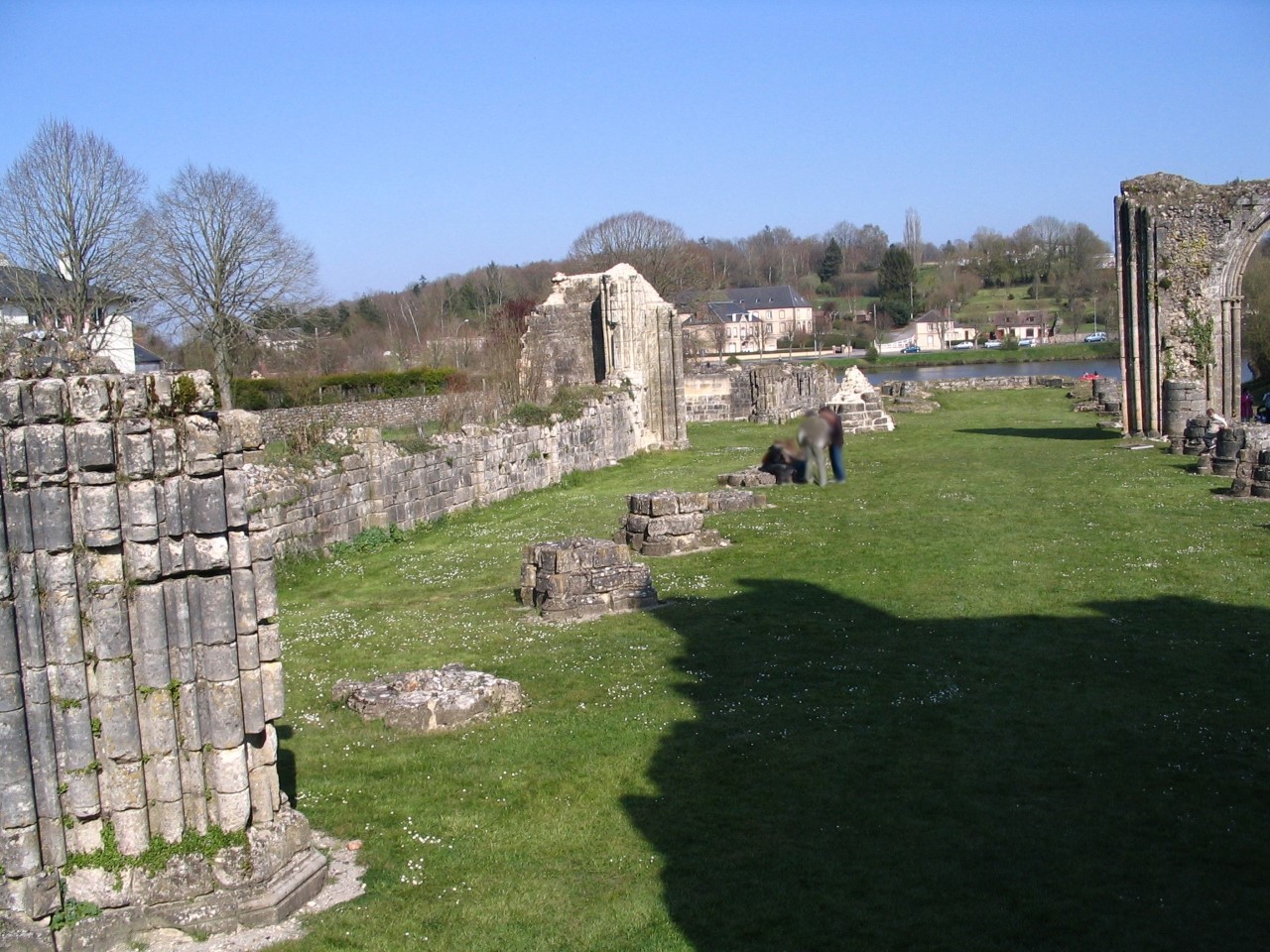
The ruins of the Abbay of Saint-Evroult-Notre-Dame-du-Bois, Orne
In my last blogs I have talked about events from the last century of the history of the Lovell of Titchmarsh. Today I am going back to their very beginnings of this English noble family. So far back in fact that they had not arrived in England and were not called Lovell. At the time, the second half of the eleventh century, the ancestors of the family were obscure minor lords at the Norman French border about whom we know nothing beyond their names and a few details about lands they possessed or office they held. This all changed with Ascelin Goël, who was, as the Complete Peerage puts it, ‘undoubtedly the true founder of the family fortunes.’ He turned his family from an minor nobles into powerful border lords.
How did Ascelin Goël achieved this? Not as the reward for faithful service to his lord, but through rebellion and violence. His behaviour was outrageous enough, even in a time not short on violent men, for the chronicler Orderic Vitalis to write about Ascelin Goël’s deeds in his Ecclesiastical History.
For many events, this chronicle is the only source. Fortunately, Orderic Vitalis was exceptionally well placed to know what he was writing about. He was a monk at the monastery of St Evroult (Dept. Orne, Normandy) and in the latter part of his chronicle he describes events that happened in his own lifetime and often not very far from where he lived. His Ecclesiastical History is, as J.O. Prestwich writes ‘of exceptional value for the history of the Anglo-Norman world’. The way he orders the events in his chronicle is, however, not without severe drawbacks, as he was ‘remarkably careless of chronology’ (Prestwich again). The confusing structure means that the events in which Ascelin Goël was involved in are described in different parts of the chronicle and it is often difficult or impossible to be certain what happened when. Since Orderic Vitalis is mostly the only source existing it is also not possible to check his report or fill in any information his chronicle omits to mention. Nonetheless it is possible to reconstruct the story and draw some probably conclusions.
Ascelin Goël was the eldest son of Robert d’Ivry and Hildeburge de Gallardon. Both of his parents entered religious houses towards the end of their lives and Hildeburge de Gallardon acquired a reputation for heir piety. A brief description of her life, the Vita Domine Hildeburgis, was written, perhaps as a first step to have her canonized. There is however no evidence that this was pursued any further.
Ascelin Goël’s father Robert d’Ivry held land around Bréval and Ivry on both sides of the French Norman border. He was castellan of the border Castle of Ivry (in modern-day Ivry-la-Bataille, Dept. Eure) in 1059. Robert’s mother was probably Aubrée, daughter of Hugh, Bishop of Bayeux and therefore granddaughter of Ralph, Count of Bayeux and his wife Aubrée. According to Orderic Vitalis it was Aubrée who had the architect Lanfred build the Castle of Ivry. If Ascelin Goël’s grandmother was indeed Aubrée, daughter of Hugh, Bishop of Bayeux, he was for one indirectly related to the ducal family, as Aubrée’s grandfather Ralph Count of Bayeux was a half-brother of Richard I of Normandy. It would also mean that Ascelin Goël was related to William de Breteuil, his lord and great opponent, as William’s grandmother Emma was a sister of bishop Hugh. Moreover, Ascelin’s descend from the woman who built the Castle of Ivry would give him a hereditary claim on the castle.
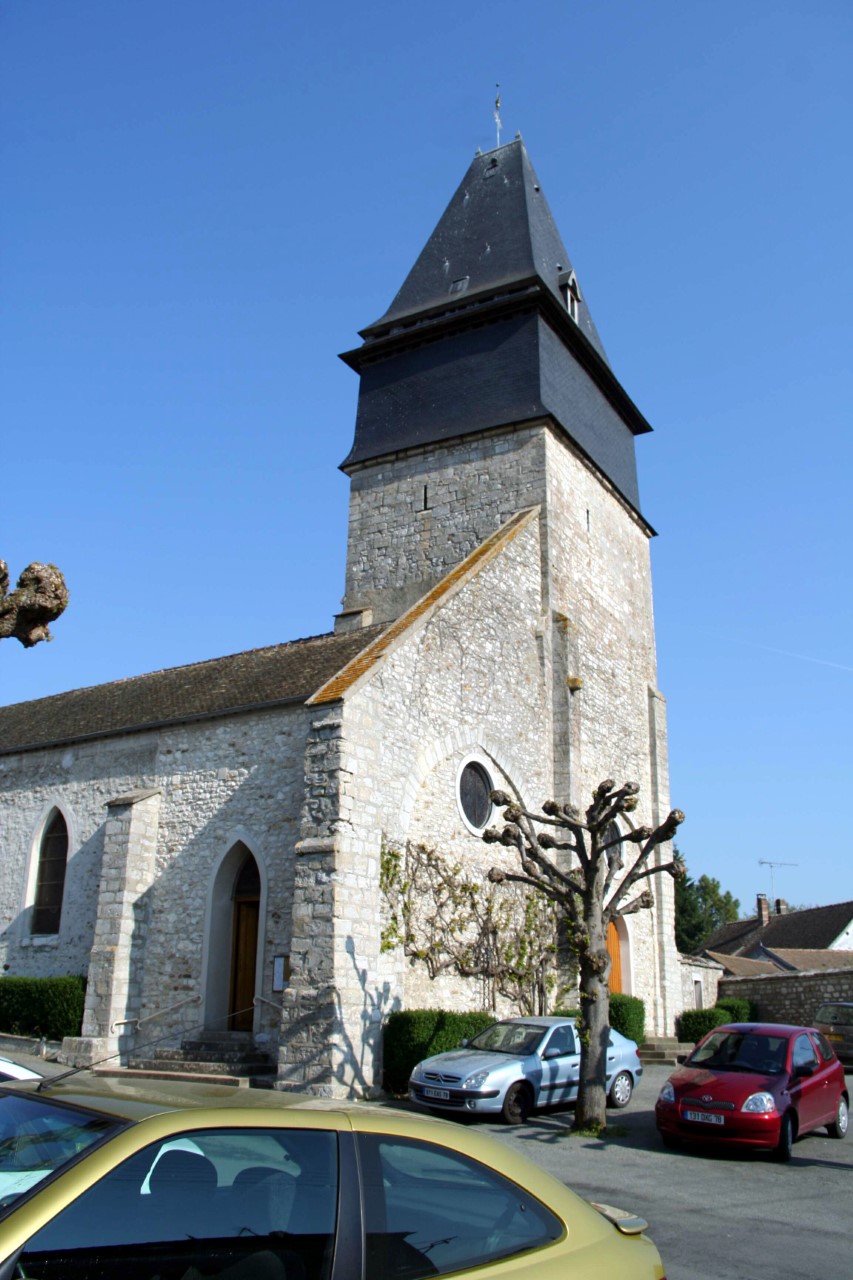
Église Notre-Dame-de-la-Trinité in Bréval
Ascelin Goël had in fact set his sight on the Castle of Ivry, a mighty border fortress and possibly the model for the White Tower in London. At the time, castles were centres of power and much coveted by the nobility. Particularly desirable were the castles that guarded the borders of England against Wales and Normandy against France. Possessing one of these border castles gave the owner both power and an unusual amount of freedom, especially if they were held them in their own right and not as castellans appointed by their king or duke. Many noblemen used any means, fair or foul to gain full control of one or more of these castles. They used any opportunity to achieve this goal, and in 1087, after the death of William the Conqueror, the nobles en masse expelled the royal garrisons from their castles.
Until then the Castle of Ivry had been in the hand of the dukes of Normandy. William the Conqueror had appointed Roger Beaumont as the castellan, probably after Robert d’Ivry had joined a religious community. When Robert Curthose became Duke he granted the castle to William de Breteuil, who was one of his long-standing supporters. To appease Roger Beaumont, Robert Curthose gave him the Castle of Brionne as compensation.
William de Breteuil was a grandson of Osbern, the steward of duke Robert the Magnificent. He had not inherited all the lands of his father William fitz Osbern, but enough to become one of the most powerful nobleman in Normandy. After gaining possession of Ivry he made Ascelin Goël castellan of the castle. As it turned out, Ascelin Goël was not satisfied with merely holding the castle for another lord. Two years after becoming castellan of Ivry, he took control of the castle, presumably by expelling William de Breteuil’s men and replacing them with his own.
An interesting aspect of this conflict is that Ascelin Goël took on not only his lord but also a nobleman who was so much more powerful than he himself was. Ascelin Goël was only a minor border lord whose man residence was in Bréval (Dept. Yvelines). Here he had built a strong castle that he had filled ‘with cruel bandits to the ruin of many’, according to Orderic Vitalis.
After gaining control of Ivry, Ascelin Goël handed it over to Duke Robert. It is possible that he hoped his hereditary claim to the castle would move Robert Curthose to grant it to him. If that was the case, he was mistaken, as Robert Curthose sold it back to William de Breteuil.
Unsurprisingly, William de Breteuil was far from pleased with his castellan and deprived Ascelin Goël not only of his castellanship but of all the lands Ascelin had held off him.
For Ascelin Goël this was a setback but he did not give up. In 1091, he was able to capture William de Breteuil, with the help of Richard of Montfort and household troops of King Philip I of France. William de Breteuil now found himself incarcerated for three months at Bréval and subjected to various forms of torture. Once, Orderic Vitalis writes, Ascelin Goël had his prisoners exposed to the freezing wind clad only with wet shirts until these were frozen solid. After three months of imprisonment, William’s release was secured by a truce arranged by several noblemen. He had to pay a heavy price for his freedom. He had to give the Castle of Ivry to Ascelin Goël and pay a hefty ransom in money, horses, arms and ‘other things’. Additionally, William de Breteuil had to give Ascelin his illegitimate daughter Isabel as his wife. – Needless to say, what Isabel thought of this was not recorded.
However, Ascelin Goël was not able to enjoy possessing Ivry for long. The year after his release William de Breteuil first tried to retake Ivry. He failed and barely escaped being recaptured by Ascelin Goël, who again tortured the prisoners he had taken. The next year William de Breteuil was better prepared. With the support of Robert Curthose and King Philip of France, both of whom he had to pay for their help, he tried again to take Ivry back. He had also gained the support of the experienced warrior Robert de Bellême who led the siege of Ascelin Goël’s Castle of Bréval. Ascelin was able to withstand the siege for two months but eventually had to surrender and hand the Castle of Ivry back to William de Breteuil.
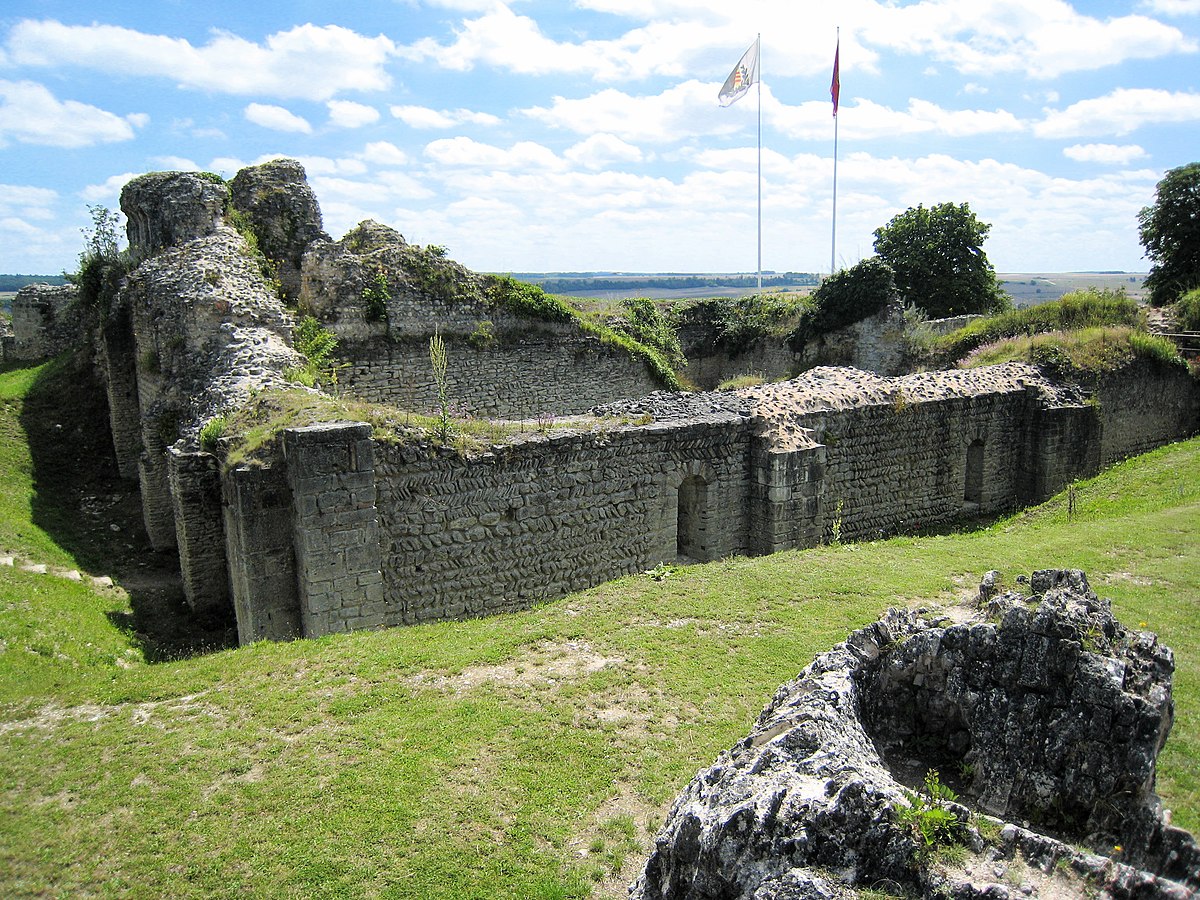
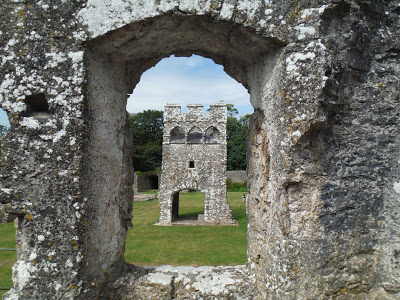
The ruins of the Castle of Ivry
Having lost Ivry again, Ascelin Goël seems to have realised that for now he had no chance to hold the castle permanently against William de Breteuil. With Isabel de Breteuil as his wife, Ascelin Goël also had a better claim to inherit the castle after William de Breteuil’s death. William had no legitimate children, only an illegitimate daughter Isabel and an illegitimate son Eustace. As inheritance law was not yet strictly settled in this time, Isabel, Eustace, and several more distant relations could claim William de Breteuil’s lands or part of them after his death.
When William de Breteuil died on 12 January 1203, Ascelin Goël was in fact one of them men fought Eustace de Breteuil for possession of William de Breteuil’s lands. The two most prominent claimants were William Gael, a nephew of William de Breteuil, and a more distant relative the Burgundian Reginald de Grancey. Eustace had previously gained the goodwill of Henry I of England by supporting him in driving Robert de Bêlleme out of England and had married Henry I’s illegitimate daughter Juliana. Moreover, the Norman nobility largely supported Eustace, ‘because’, as Orderic Vitalis explains, ‘they chose to be ruled by a fellow countryman who was a bastard rather than by a legitimate Breton or Burgundian’.
Ascelin Goël is usually mentioned in this conflict, but he is not regarded as a rival claimant to the Breteuil in inheritance. However, Orderic Vitalis singles him out particularly. He writes that Henry I promised to support Eustace ‘against Goel and all his other enemies’. To me it seems significant that it is Ascelin Goël rather than Reginald de Grancey whom Orderic names as Eustace principal enemy.
To solve this crisis, Henry I sent his chief advisor Robert Beaumont, Count of Meulan to Normandy. Robert Beaumont soon had a personal reason to find a solution, as Ascelin Goël kidnapped John, a citizen from Meulan, when he was on his way back from a meeting with Robert Beaumont. John de Meulan was imprisoned in Bréval and for four months Robert Beaumont was unable to rescue him. Eventually Robert Beaumont was able to arrange a peace between all parties. Orderic Vitalis reports that he betrothed his baby daughter Emma to Amaury de Montfort, which appeased not only Amaury himself but also his uncle William, Count of Évreux, Ralph of Conches, Eustace de Breteuil, and Ascelin Goël. Orderic Vitalis does not mention any specific concessions made to Ascelin Goël. Later evidence suggests that Ascelin Goël gained what he had strived to gain for more than ten years: the Castle of Ivry. A charter of 1115 calls Ascelin Goël ‘Goelli de Ibriaco’, Goël of Ivry, and at no other time Ascelin Goël was in the position to achieve this concession from Eustace de Breteuil.
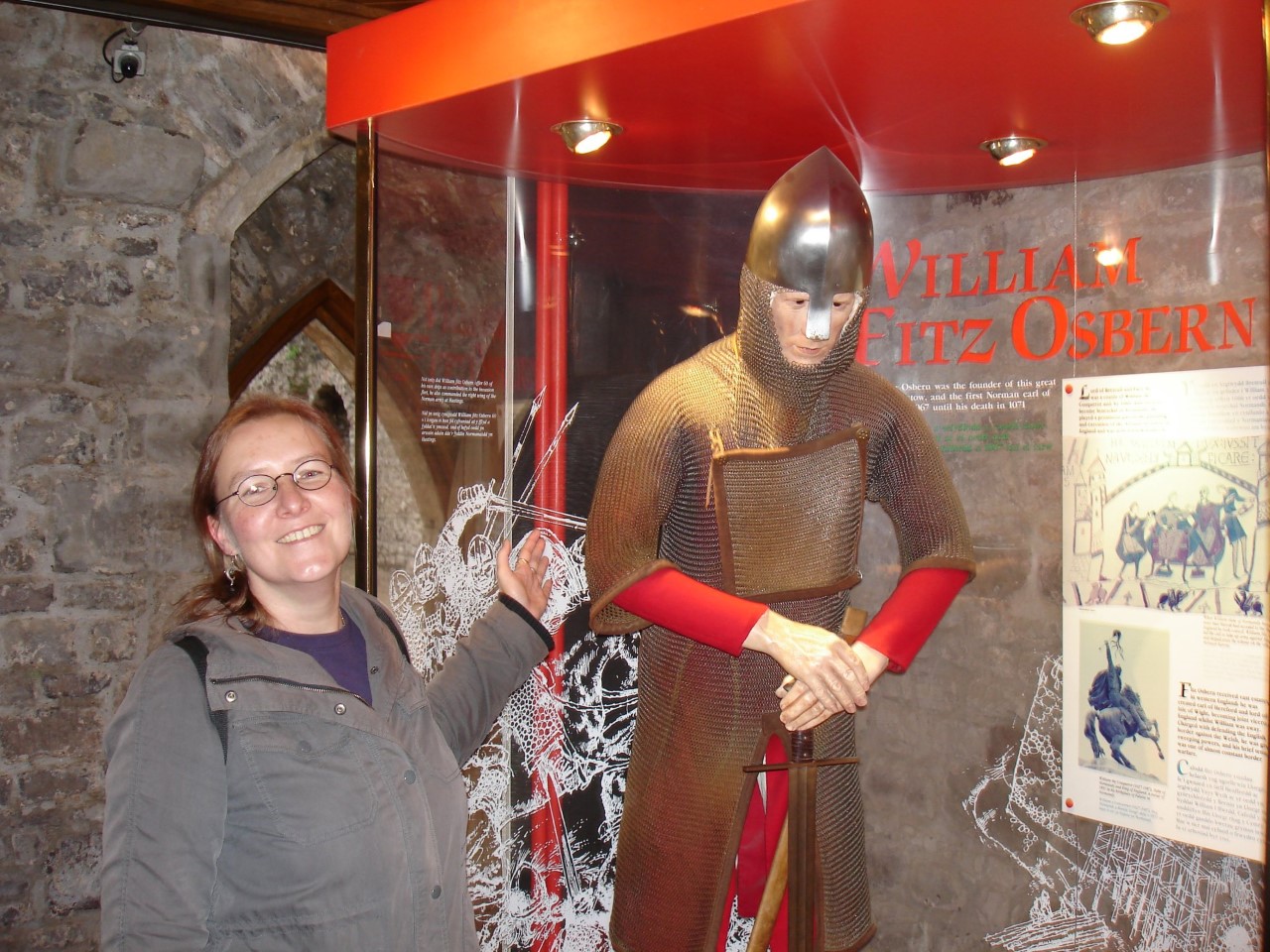
William fitz Osbern and the author at Chepstow Castle, 2007 (Kirsty Hartsiotis)
From this time on, Ascelin Goël kept his peace until his death between 1116 and 1119. At least he refrained from engaging in feuds with his powerful neighbours. Orderic Vitalis writes that he and his sons continued to plague the region with their violence and cruelty.
To answer the question I have asked at the beginning of this blog: How did one make one’s fortune and got one’s name into the history books? Ascelin Goël’s answer was by rebellion and violence. His disregard from the bonds of feudal lordship, his cruelty and ruthlessness ensured him a place in Orderic Vitalis’s Ecclesiastical History and from there in history books to the present day. He also probably gained the Castle of Ivry and became a much more powerful lord than his father and grandfather had been.
Though Robert Goël, Ascelin Goël’s eldest son, did not inherit the Castle of Ivry, he did inherit his ruthless streak and tactical skill. He joined the rebellion against Henry I in 1118 but was the first rebel to make his peace with the king in 1119. In return and ‘to guarantee his loyalty’, to quote Orderic Vitalis one last time, Henry I granted Robert Goël the Castle of Ivry. Robert Goël’s younger brother, William Lovell I, inherited the castle after his brother’s death in or shortly before 1123.
Images:
Courtesy of Wikimedia Commons except William fitz Osbern and the author at Chepstow Castle, 2007 which is courtesy of Kirsty Hartsiotis
About the author:
Monika E. Simon studied Medieval History, Ancient History, and English Linguistics and Middle English Literature at the Ludwig-Maximilians-Universität, Munich, from which she received an MA. She wrote her DPhil thesis about the Lovells of Titchmarsh at the University of York. She lives and works in Munich.
Defenders of the Norman Crown: The Rise and Fall of the Warenne Earls of Surrey tells the fascinating story of the Warenne dynasty, of the successes and failures of one of the most powerful families in England, from its origins in Normandy, through the Conquest, Magna Carta, the wars and marriages that led to its ultimate demise in the reign of Edward III.
1 family. 8 earls. 300 years of English history!
Defenders of the Norman Crown: Rise and Fall of the Warenne Earls of Surreywill be released in the UK on 31 May and in the US on 6 August. And it is now available for pre-order from Pen & Sword Books, Amazon in the UK and US and Book Depository.
Today it is a pleasure to welcome author/ historian Sarah Bryson to History…the Interesting Bits as the last stop on Sarah’s blog tour for her latest book The Brandon Men: In the Shadow of Kings. Look out for my review coming soon.
Suffolk Place
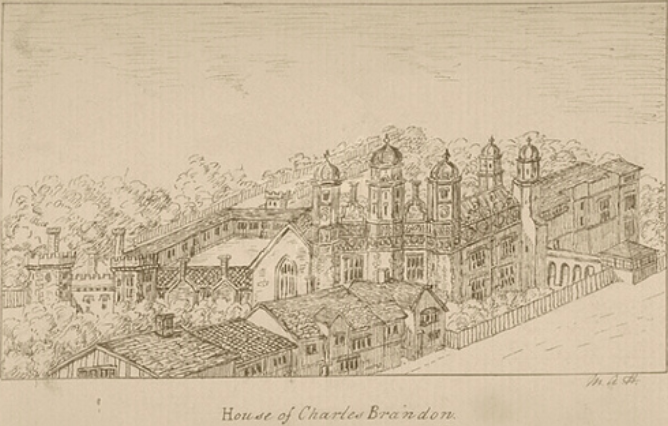
Suffolk Place was once the magnificent manor home belonging to Charles Brandon, Duke of Suffolk. It is a common misconception that Brandon built Suffolk Place, when in fact it has a long and rich history dating back to the 1460’s.
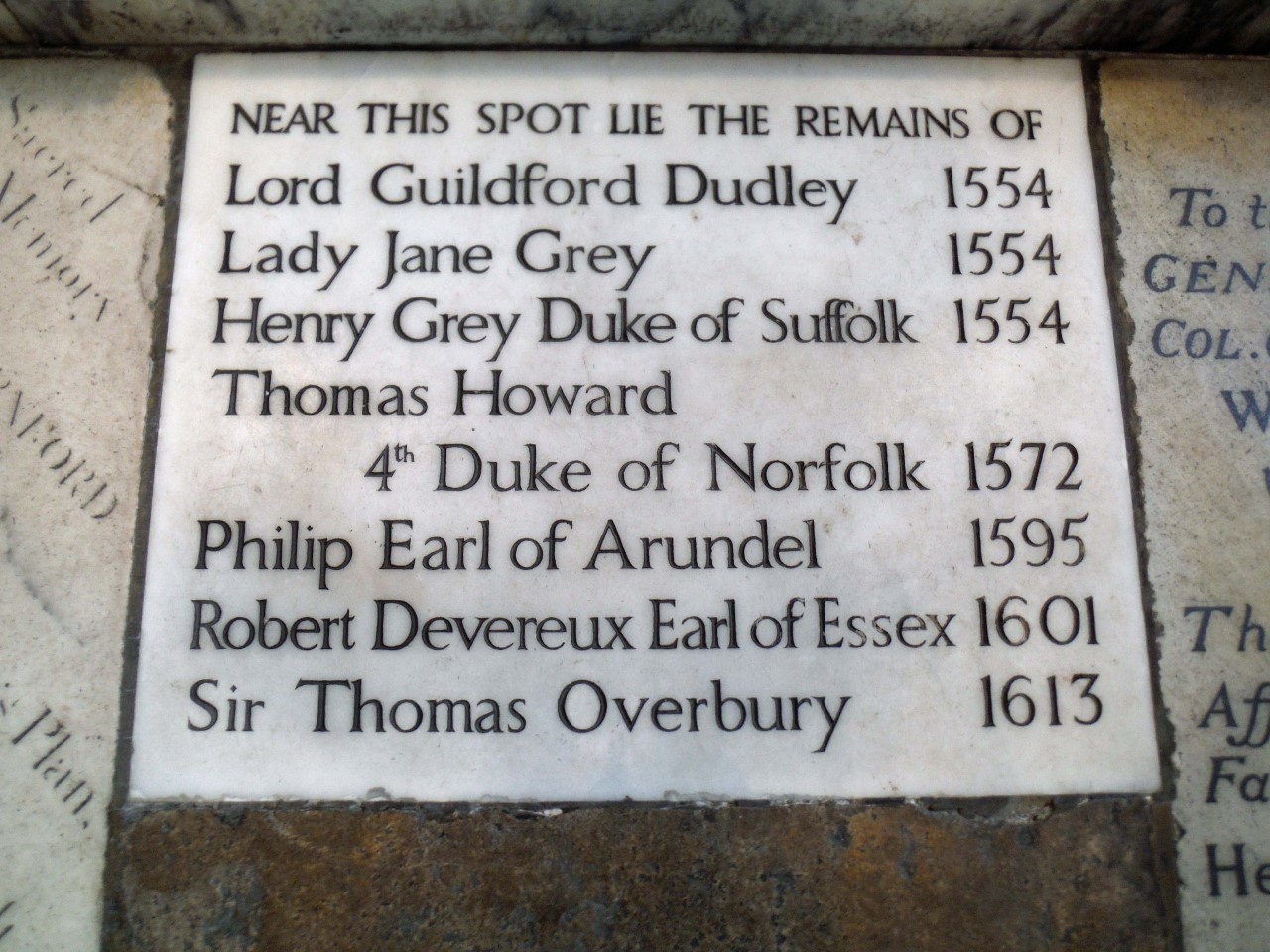
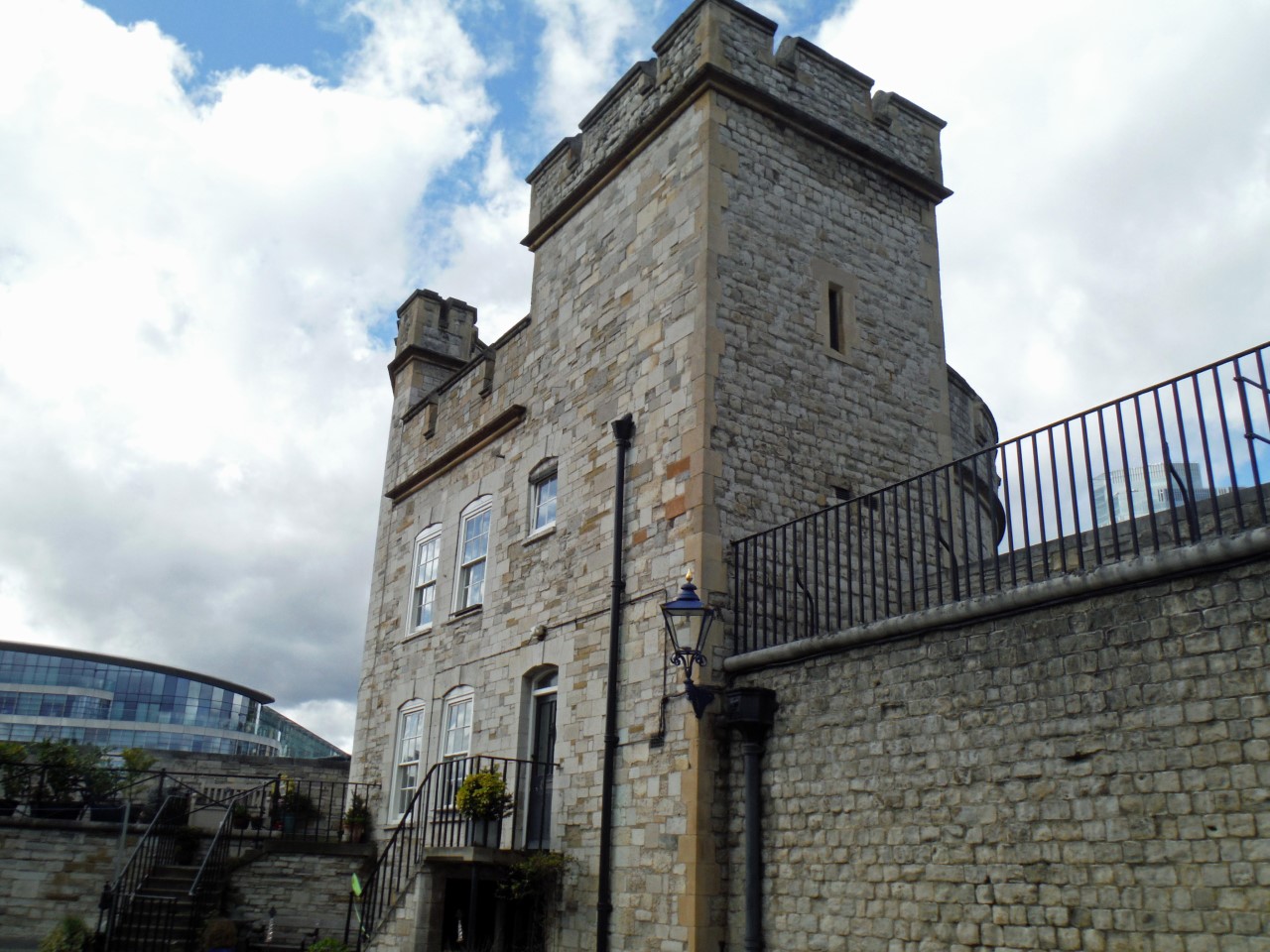
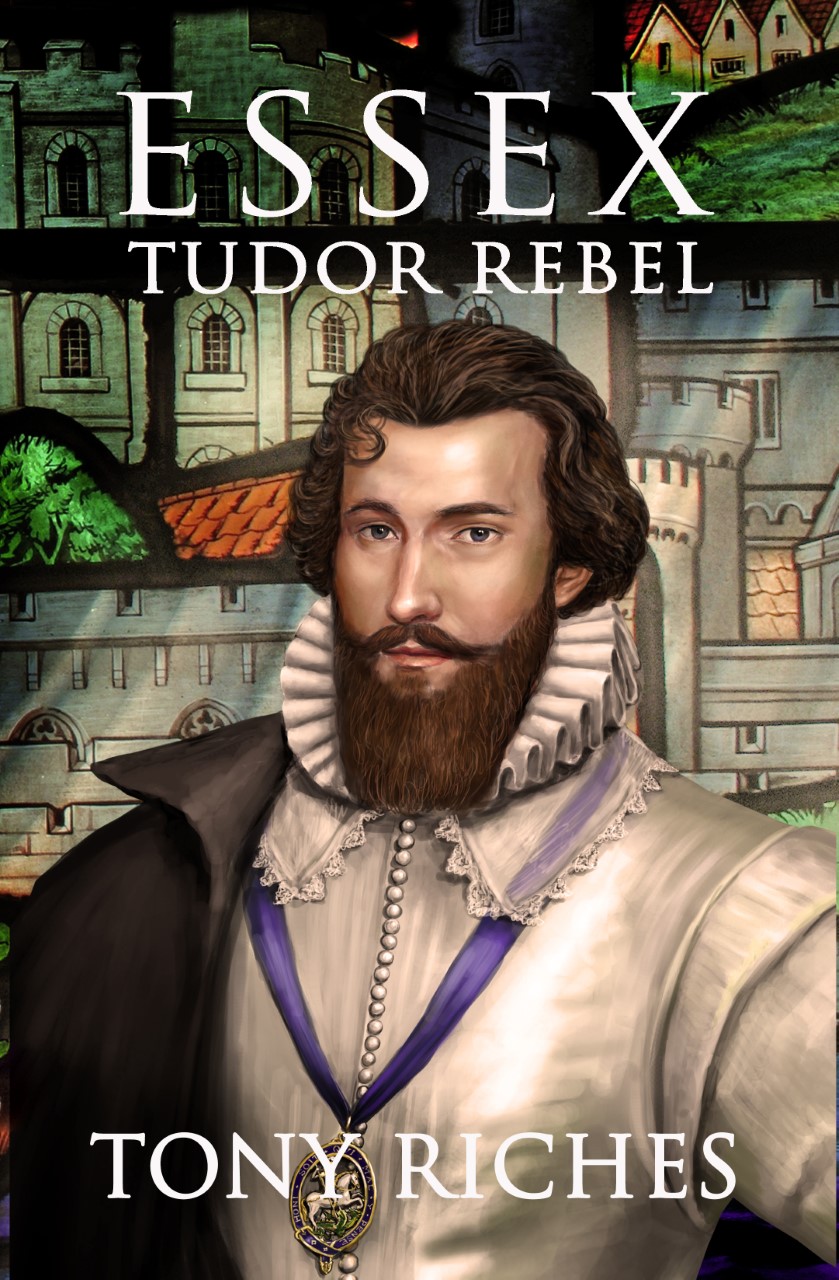
Suffolk Place, otherwise known as Brandon House was built during the 1460’s by Charles Brandon’s grandfather, Sir William Brandon. William Brandon was closely associated with England’s Kings and was knighted in 1471 after the Battle of Tewkesbury by King Edward IV.
In 1457 William Brandon was Marshall of the Marshalsea Prison in Southwark. The prison was run for profit and prisoners would have to pay the Marshall for certain rights, such as access to better conditions, soap, water, food etc.
The Prison was located along Borough High Street, the main thoroughfare from Southwark to London. To enter London from Southwark people had to cross the famous London Bridge. From as early as 14 November 1462 William Brandon was being referred to as Brandon ‘of Suthwerk.’
William Brandon built Suffolk Place, known then as Brandon House, during this period opposite the prison that he controlled. Suffolk Place would become the Brandon family’s main dwelling, providing the family not only access to the Prison but close access to London. In 1465 Sir Thomas Howard, the future Duke of Norfolk is recorded as having stayed at “Brandennes Place in Sothwerke”.
Dominico Mancini, Parisian Scholar, described Southwark as ‘a suburb remarkable for its streets and buildings, which, if it were surrounded by walls, might be called a second city.’ In fact, Southwark was so large that it had a population of approximately 8000 people, many of those considered to be foreigners, including Flemish.
When Sir William Brandon died in 1491 not only was the Marshall of the Marshalsea Prison granted to his third son, Thomas Brandon, but he also left his property of Suffolk Place. Thomas’ older brother William, father of Charles Brandon, Duke of Suffolk had died at the famous Battle of Bosworth fighting for King Henry VII. In 1502 Thomas Brandon added to Suffolk place by leasing 48 acres of meadow surrounding the property. He turned this meadow into a park which also included a fishpond stocked with fish to eat.
Thomas Brandon held his own illustrious career at court, becoming Henry VII’s Master of the Horse and knighted on the 17th June 1497 at battle of Blackheath. Over his career Thomas Brandon amassed quite a fortune comprising of land, plate and coin totaling almost £1000.
When Thomas Brandon died on January 27th 1510, he left Suffolk Place to Lady Guildford, wife of the late Sir Richard Guilford whom had helped Thomas Brandon during his final illness. To keep Suffolk Place Charles Brandon, Thomas’ nephew, had to rent the property from Lady Guildford for £42 6s 8d a year.
Suffolk Place was built from traditional Tudor red brick, containing four towers with domed turrets at each corner and an additional tower positioned at the center of one side. The palace was decorated with fashionable terracotta. In addition, there were decorations of cupid, an urn flanked by two griffins, a mythological creature and Charles Brandon’s famous crowned lion’s head badge. The chapel within Suffolk Place contained six guilt statues of saints. Brandon stocked Suffolk Place with plate worth £1 475. Suffolk Place would have stood out as one travelled along Borough High Street as they made their way toward London Bridge clearly showing Brandon’s status to all that passed.
After Charles Brandon, Duke of Suffolk’s first son was born, the baby, named Henry after the King, was Christened at Suffolk Place. The christening ceremony took place in the hall at Suffolk Place and was conducted with great splendor and ceremony. The hall was lavishly decorated with wall hangings of red and white Tudor roses, torches were lit and the christening font was warmed for the special occasion. The Christening as performed by John Fisher, Bishop of Rochester and he was assisted by Thomas Ruthall of Durham. The King attended ceremony as did Cardinal Thomas Wolsey, the Duke of Norfolk and other important members of the court. The King and Cardinal Wolsey stood as the godfathers while Catherine, the Dowager Countess of Devon, a daughter of the late King Edward IV stood as the godmother.
In June 1522 when Charles V visited England Charles Brandon, Duke of Suffolk he had the honour of hosting Henry VIII and the Emperor at Suffolk place where the men dined and hunted in the great park that Brandon’s Uncle had purchased. Charles was a great lover of hunting and kept the park stocked with deer.
Suffolk Place would not stay in the hands of Charles Brandon. On 19 July 1535 Brandon was to be given £2333.6.8 by the King in return for handing over ‘the manors and lordships of Ewelme, Donington, Hokenorton, Carsington, Throppe, Newnham, Courtney, Newnham Moreyn, Tournes, Cudlington, Lekenor, Hantesford Auston, Thorold, Langley, West Bradley, West Compton and Bukland in counties of Oxford and Berk., the manor house of Southwark called Suffolk place and two adjoining walled gardens the constableship of Wallingford Castle.’ To lose Suffolk Place was a huge blow for Brandon as it had been his family’s primary residence in London since his grandfather built the place in the early 1460’s. However, Brandon was in debt and needed money to continue his position at court. Henry VIII did grant Brandon the Bishop of Norwich’s house near Charring Cross to Brandon which still provided the Duke with close access to Westminster and the King.
In June the following year Suffolk Place was granted to Henry VIII’s third wife, Jane Seymour. After her death in 1537 the property reverted back to the crown. The property was occasionally used as a royal residence or to host royal visitors. The royal accounts record that
In 1545 part of Suffolk Place was turned into the Royal Mint and Edward VI, Henry VIII’s son, ordered that new sovereigns, royal, angel and half angel coins be made. However, the mint was closed in 1551 due to fraud.
After Edward VI’s death his half-sister Mary and her husband, Philip stayed at Suffolk Place in August 1555. In February 1556 Queen Mary granted Suffolk Place to the Archbishop of York. However, he was only granted 14 acres of the property as during the reign of Edward VI part of Suffolk Place had been leased out to small tenements.
The Archbishop did not keep the property for long and over the next year sought to dismantle and dispose of the once great Suffolk Place. The manor was completely destroyed by June 1562 and the remaining property sold to Anthony Cage. Soon the land was filled with small cottages.
Today nothing remains of Suffolk Place. In its place stands a large office building aptly named Brandon House.
Sources:
Calendar of the patent rolls preserved in the Public Record Office, 1446-1452 Henry VI v.5. Great Britain; ‘Close Rolls, Edward IV: 1471-1472’, in Calendar of Close Rolls, Edward IV: Volume 1, 1468-1476, ed. W H B Bird and K H Ledward (London, 1953), British History Onlinehttp://www.british-history.ac.uk/cal-close-rolls/edw4/vol2/pp222-234 [accessed 19 December 2018]; Gunn, Steven 2015, Charles Brandon, Amberley Publishing, Gloucestershire, UK; Gunn, Steven 2016, Henry VII’s New Men and The Making of Tudor England, Oxford University Press, Oxford; Letters and Papers, Foreign and Domestic, of the Reign of Henry VIII, 1509-47, ed. J.S Brewer, James Gairdner and R.H Brodie, His Majesty’s Stationery Office, 1862-1932; Porter, Stephen 2016, Everyday Life in Tudor London, Amberley Publishing, Gloucestershire; Sadlack, Erin 2001, The French Queen’s Letters, Palgrave Macmillan, New York; ‘Suffolk Place and the Mint’, in Survey of London: Volume 25, St George’s Fields (The Parishes of St. George the Martyr Southwark and St. Mary Newington), ed. Ida Darlington (London, 1955), pp. 22-25, viewed 2 June 2015, <http://www.british-history.ac.uk/survey-london/vol25/pp22-25>.
About the Author:
Sarah Bryson is a researcher, writer and educator who has a Bachelor of Early Childhood Education with Honours. She currently works with children with disabilities. She is passionate about Tudor history and has a deep interest in the Brandon family who lived in England during the 14th and 15th centuries. She has previously written a book on the life of Mary Tudor, sister of Henry VIII and wife of Charles Brandon, Duke of Suffolk. She runs a website and facebook page dedicated to Tudor history. Sarah lives in Australia, enjoys reading, writing and Tudor costume enactment.
Defenders of the Norman Crown: The Rise and Fall of the Warenne Earls of Surrey tells the fascinating story of the Warenne dynasty, of the successes and failures of one of the most powerful families in England, from its origins in Normandy, through the Conquest, Magna Carta, the wars and marriages that led to its ultimate demise in the reign of Edward III.
1 family. 8 earls. 300 years of English history!
Defenders of the Norman Crown: Rise and Fall of the Warenne Earls of Surreywill be released in the UK on 31 May and in the US on 6 August. And it is now available for pre-order from Pen & Sword Books, Amazon in the UK and US and Book Depository.
Gundrada de Warenne, the Gundrada chapel, Trinity Church Southover
When I first volunteered at Conisbrough Castle, in the early 1990s, it was believed that Gundrada de Warenne the wife of William de Warenne, first Earl of Warenne, was the daughter of William the Conqueror and Matilda of Flanders. Royal connections were very important in the 11th century and still provide a fascination to us today, so it was a fabulous piece of history to be able to impart to visitors. Unfortunately, the truth is never quite what it seems.
Sometime in the years either side of the Conquest, William de Warenne married Gundrada. Gundrada’s parentage has long been a subject of debate among historians. Her story throughout history has been coloured by the belief, now thought to be a mistaken one, that she was the daughter of Queen Matilda. Many historians from the eighteenth to the twentieth centuries accepted this as fact and obviously started their research from this false assumption, without looking deeper into the origins of the story. For many years Gundrada was believed to be the fifth and youngest daughter of William the Conqueror and his wife, Matilda of Flanders. In 1878 Sir George Duckett wrote an article for the Cumberland and Westmorland Archaeological Society arguing that the foundation charter for St Pancras Priory, Lewes ‘expressly states Gundrada to have been the Queen’s Daughter’, the wording within the charter being; ‘pro salute dominæ meæ Matildis Reginæ matrix uxoris mea’ [ ‘for the health of my mistress Queen Matilda, mother of my wife’].1
This statement in the priory’s second founding charter, issued in the reign of King William II Rufus, appeared to contradict the claims by Orderic Vitalis, a near contemporary, that ‘Guillelmo de Guarenna qui Gundredam sororem Gherbodi conjugemhabitat, dedit Surregiam.’ [‘William de Warenne, whose wife Gundrada was sister of Gerbod, was given Surrey’.]2 Gundrada’s own tombstone contains enough ambiguity to add to the confusion, rather than clarify the issue:
Gundrada, offspring of dukes, glory of the age, noble shoot, brought to the churches of the English the balm of her character. As a Martha … she was to the wretched; a Mary she was in her piety. That part of Martha [in her] died; the greater part of Mary survives. O, pious Pancras, witness of truth and justice, she makes you her heir; may you in your clemency accept the mother. The sixth day of the kalends of June, showing itself, broke the alabaster containing her flesh …3
In 1846 Thomas Stapleton wrote a paper for the Archaeological Journal proposing that Gundrada was Matilda’s daughter from an earlier, undocumented marriage, to Gerbod, advocate of Saint-Bertin, thus explaining her also being a sister to Gerbod, Earl of Chester. In this theory, it was proposed that Gundrada was not a daughter of the king, but his stepdaughter. This notion neatly ties in with Orderic Vitalis identifying Gundrada as ‘Sister of Gherbode, a Fleming, to whom King William the First had given the City and Earldom of Chester.’4 E.A. Freeman, in his six-volume The History of the Norman Conquest of England, published between 1867 and 1879 stated, ‘For a long while, Gundrada was looked on as a daughter of William himself, but there is no doubt that she and her brother Gerbod were the children of Matilda by her first husband.’5
The certainty of Gundrada being the daughter of Matilda of Flanders means that historians tried to fit the facts to that theory, rather than re-examining the case entirely.
Tomb of Gundrada, Gundrada Chapel, Trinity Church, Southover
Disputing the suggestion of Matilda’s marriage to Gerbod, historian W.H. Blaauw observed that not one of the Norman chroniclers ‘dropped the smallest hint of any husband or child, or consequently any such divorce on the part of Matilda previous to her marriage with the King.’6 Duckett goes on to say that the Norman chroniclers, indeed, said quite the opposite; each of them attesting that Matilda was a young, unmarried girl at the time of her betrothal to William of Normandy. However, Duckett then draws the conclusion that this can only mean that Gundrada was the daughter of both Matilda and William of Normandy, and that Gerbod of Chester was her foster-brother, rather than actual brother. The claim was also made in a charter in which the king gave to the monks of St Pancras (Lewes) the manor of Walton in Norfolk, on the foundation of the priory. In the charter the king distinctly names ‘Guilelmi de Warenna, et uxoris suæ Gundredæ filiæ meæ’ (‘William de Warenne and his wife Gundrada, my daughter’).7
St Pancras Priory at Lewes was founded as a Cluniac monastery by William and Gundrada and it may be that the monks got carried away with the idea of their foundress having royal blood; royal links could prove financially lucrative when a monastery was looking for benefactors, and would help a monastery stand out among the many vying for patronage. However, it may also be that there was a simple error when copying the charter from the original. For whatever reason, the claims by St Pancras Priory at Lewes have caused controversy throughout the ensuing centuries.
Other suggestions have included that Gundrada was an adopted daughter, raised alongside William and Matilda’s own children who were of a similar age. Alternatively, due to her Flemish origins, it has been argued that the confusion arose as she had joined Matilda’s household at an early age; an assertion supported by Matilda’s gift to Gundrada of the manor of Carlton in Cambridge – a manor Gundrada later gave to Lewes Priory. In 1888, writing in the English Historical Review, E.A. Freeman returned to the subject and used the priory’s original charter to conclude that there was no familial relationship between Gundrada and William the Conqueror. In it, while the king and William de Warenne, both, mention Gundrada, neither refer to her as being related to the king or queen. Freeman stated, ‘there is nothing to show that Gundrada was the daughter either of King William or of Queen Matilda; there is a great deal to show that she was not.’8
It now seems more likely that Gundrada was a Flemish noblewoman, the sister of Gerbod who would be, for a brief time, earl of Chester. Historian Elisabeth van Houts argues that Gundrada was most likely a distant relative of Queen Matilda and the counts of Flanders, as asserted in her epitaph as ‘offspring of dukes’ and a ‘noble shoot’. Indeed, had her father been William the Conqueror, her epitaph would surely have referred to her as the offspring of kings. Even if she had been the daughter of Matilda by an earlier marriage, off-spring of kings would have still been appropriate, given that Queen Matilda was the granddaughter of King Robert II of France.
William de Warenne, the Gundrada chapel, Trinity Church Southover
Gundrada’s father may also have been called Gerbod, or Gherbode. It is highly likely that this was the same Gerbod who was the hereditary advocate of the monastery of St Bertin; a title which in later generations will pass down through the Warenne family. Another brother, Frederic, appears to have jointly, with Gundrada, held lands in England even before the Conquest, when two people named Frederic and Gundrada are mentioned as holding four manors in Kent and Sussex. It would indeed be a coincidence if there were two other related people, named Frederic and Gundrada, very distinctive foreign names, in England at that time. Gundrada’s brothers, it seems, were deeply involved in the border politics between Flanders and Normandy; indeed, it is thought that Gerbod resigned his responsibilities in Chester in order to return to the Continent to oversee the family’s lands and duties there, following the death of an older brother, Arnulf II of Oosterzele-Scheldewindeke.
Gundrada’s brother, Frederic, along with the count of Flanders, was a witness to Count Guy of Ponthieu’s charter to the Abbey of St Riquier in 1067.9 The ‘dukes’ referred to in Gundrada’s epitaph, although naturally assumed to be of Normandy, could well refer to a kinship with the house of Luxembourg, to which Queen Matilda’s paternal grandmother, Orgive, belonged. Moreover, Frederic was a familial name within the house of Luxembourg. This kinship via the House of Luxembourg with Queen Matilda would also explain the queen’s gift to Gundrada, of the manor of Carlton, which is usually given as evidence that Gundrada belonged to the queen’s household; an association which would be entirely consistent with kinship.
The Warenne coat of arms, adopted by the second earl, the Gundrada chapel, Trinity Church Southover
Marriage between William de Warenne and Gundrada was a good match on both sides. Although William was a second son, he had acquired lands and reputation through his military skills. Warenne’s lands in Normandy lay close to the border with Flanders, while Gundrada, with her politically astute brothers and links to England even before the Conquest, would have been an attractive proposition as a bride. Both Frederic and Gerbod appear to have joined the Norman expedition to England, with Frederic receiving, as reward, lands in Norfolk, Suffolk and Cambridgeshire, valued at over £100 a year; lands which had previously belonged to a rich Englishman named Toki. Gerbod, in turn, was given the earldom of Chester, which he held until relinquishing it to return to Flanders in 1071.
Gundrada’s parentage may not be as illustrious as was once thought and her origins are now obscured by time, but the dynasty that she and William founded would be at the heart of the Anglo-Norman political elite for the next three centuries. In the twelfth century, her great grandsons, Malcolm IV and William the Lion, would sit on the Scottish throne and her descendants would, eventually, become the rulers of the United Kingdom, even down to the present incumbent, King Charles III.
Footnotes:
1 My translation from quote in George Floyd Duckett, Observations on the Parentage of Gundreda, the Daughter of William Duke of Normandy, and Wife of William de Warenne; 2 ibid; 3 Elisabeth M.C. Van Houts and Rosalind C. Love (eds and trans), The Warenne (Hyde) Chronicle; 4Early Yorkshire Charters Volume 8: The Honour of Warenne, Edited by William Farrer and Charles Travis Clay; 5 ibid; 6 W.H. Blaauw quoted in Duckett, Observations on the Parentage of Gundreda; 7 Duckett, Observations on the Parentage of Gundreda; 8 Farrer and Clay, Early Yorkshire Charters; 9 C.P. Lewis, ‘Warenne, Gundrada de (d.1085)’, ODNB.
Sources:
Early Yorkshire Charters Volume 8: The Honour of Warenne, Edited by William Farrer and Charles Travis Clay; England Under the Norman and Angevin Kings by Robert Batlett; Brewer’s British Royalty by David Williamson; Britain’s Royal Families, the Complete Genealogy by Alison Weir; british-history.ac.uk; kristiedean.com; English Heritage Guidebook for Conisbrough Castle by Steven Brindle and Agnieszka Sadrei; oxforddnb.com; George Floyd Duckett, Observations on the Parentage of Gundreda, the Daughter of William Duke of Normandy, and Wife of William de Warenne; Elisabeth M.C. Van Houts and Rosalind C. Love (eds and trans), The Warenne (Hyde) Chronicle; C.P. Lewis, ‘Warenne, Gundrada de (d.1085)’, ODNB; Elisabeth Van Houts, ‘The Warenne View of the Past’, in Proceedings of the Battle Conference 2003, edited by John Gillingham
Signed, dedicated copies of all my books are available through my online bookshop.
Coming 30 January 2025: Scotland’s Medieval Queens
Scotland’s history is dramatic, violent and bloody. Being England’s northern neighbour has never been easy. Scotland’s queens have had to deal with war, murder, imprisonment, political rivalries and open betrayal. They have loved and lost, raised kings and queens, ruled and died for Scotland. From St Margaret, who became one of the patron saints of Scotland, to Elizabeth de Burgh and the dramatic story of the Scottish Wars of Independence, to the love story and tragedy of Joan Beaufort, to Margaret of Denmark and the dawn of the Renaissance, Scotland’s Medieval Queens have seen it all. This is the story of Scotland through their eyes.
Heroines of the Tudor World tells the stories of the most remarkable women from European history in the time of the Tudor dynasty, 1485-1603. These are the women who ruled, the women who founded dynasties, the women who fought for religious freedom, their families and love. Heroines of the Tudor World is now available for pre-order from Amberley Publishing and Amazon UK.Women of the Anarchy demonstrates how Empress Matilda and Matilda of Boulogne, unable to wield a sword themselves, were prime movers in this time of conflict and lawlessness. It shows how their strengths, weaknesses, and personal ambitions swung the fortunes of war one way – and then the other. Available from Bookshop.org, Amberley Publishing and Amazon UK. King John’s Right-Hand Lady: The Story of Nicholaa de la Haye is the story of a truly remarkable lady, the hereditary constable of Lincoln Castle and the first woman in England to be appointed sheriff in her own right. Available from all good bookshops Pen & Sword Books, bookshop.org and Amazon.
Alternate Endings: An anthology of historical fiction short stories including Long Live the King… which is my take what might have happened had King John not died in October 1216. Available in paperback and kindle from Amazon.
Podcast:
Have a listen to theA Slice of Medieval podcast, which I co-host with Historical fiction novelist Derek Birks. Derek and I welcome guests, such as Bernard Cornwell, and discuss a wide range of topics in medieval history, from significant events to the personalities involved. Our latest episode is 2024 Christmas Special with Toni Mount, A Medieval Christmas.
*
Don’t forget!Signed and dedicated copies of all my books are available through my online bookshop.
For forthcoming online and in-person talks, please check out my Events Page.
The great warrior, Einar Unnsson, wants revenge. His mother’s assassin has stolen her severed head and Einar is hungry for his blood. Only one thing holds him back. He is a newly sworn in Wolf Coat, and must accompany them on their latest quest.
The Wolf Coats are a band of fearsome bloodthirsty warriors, who roam the seas, killing any enemies who get in their way. Now they’re determined to destroy their biggest enemy, King Eirik, as he attempts to take the throne of Norway.
Yet, for Einar, the urge to return to Iceland is growing every day. Only there, in his homeland, can he avenge his mother and salve his grief. But what Einar doesn’t know is that this is where an old enemy lurks, and his thirst for vengeance equals Einar’s…
I have followed Einar’s adventures since the very first book, Odin’s Game, two years ago; and each book gets better and better. The Serpent King is the fourth and latest book in the Whale Road Chronicles and, most definitely, the best story in the series so far. We follow the adventures of Einar and his friends, the Wolf Coats, from Norway to Orkney, with a few stops in between, on a dual mission of rescue and revenge.
The Serpent King is set in the mid-10th century, when Aethelstan, grandson of Alfred the Great, is attempting to unite England and extend his borders north into Scotland. He has made allies with the Norwegian Christian, Hakon, formerly king of York and now questing to dethrone his brother, King Eirik Bloody Axe of Norway. Einar and the band of Wolf Coats are drawn into the political in-fighting and rivalries, despite their attempts to stay aloof from the machinations of the ambitious rulers around them. Einar has his own quest, for revenge against his father for the murder of his mother. The hatred between father and son is visceral and the backbone behind this series of books. Einar and his father, Thorfinn, Jarl of Orkney, are on a collision course to a day of reckoning.
The Serpent King is a fast-paced, wonderfully visual adventure, set in a time when a man could make or break his fortune simply by the decision of who to back in the constant power struggle between England, Norway and Ireland. Tim Hodkinson weaves a tale that will have you hooked from the beginning, its many twists and turns leaving you mesmerised and reading ‘just one more chapter’ until the early hours.
As Einar watched, another man came out the door. He too was swathed in a heavy cloak. The metal of a helmet visor was visible under the cloak’s hood and he bore a spear in his right hand.
‘Thor blast Halfdan with Mjolnir,’ the second warrior said. ‘I don’t see him taking his turn to stand guard on the palisade on a filthy night like this.’
‘Well I don’t want to be the one missing if he shows up to check the guard tonight,’ the first man said. ‘Which he’s bound to do. Get a move on.’
A crash of thunder rocked the sky. As if in response the already lashing rain got even heavier. It hissed down all around into the already sodden muddy ground.
‘Look at this storm.’ Thorleif said, ducking his head as the rain pounded down on him. ‘No one will attack us on a night like this!’
Einar, watching from the shadows, could not help but smile.
The two warriors began splashing their way through the mud towards him. Einar tried to make himself as flat as possible against the wall. Wrapped up in their cloaks and hurrying through the rain, there was every chance they would not see him and go right past him without realising he was there.
What then, though? When they arrived at the gate they would find Surt and Wulfhelm have the time and luck to silence them first?
Then Einar heard the sound of another pair of sloshing footsteps approaching, this time from the direction he had come.
Tim Hodkinson is fabulous at building the tension in a story and keeping it going to the very end of the book. There are so many twists and turns that the reader is kept on their toes. Just when you think Einar and his companions are going to come out on top, another spanner is thrown in the works! So to speak. The tension is palpable – to the very end.
The characters, both the heroes and their enemies, are wonderfully colourful and have developed over the past two years. Einar and his companions have become a fighting team that relies on each other, not just in battle, but in the friendships and trust that has developed through their adventures. Where they were once a disparate group of individuals, they are now a coherent fighting team, able to rely on each others’ skills and judgements to get them through the various battle and plots they are faced with.
The Serpent King is full of clashes – of swords, personalities and even the gods. The battle scenes are wonderfully frenetic, with the reader feeling every sword thrust or the impact of axe on shield. If you have a love of Viking adventures, the clash of cultures and political machinations that accompanied the changing alliances as England, Norway, Ireland and Scotland were developing their identities during the 10th century, this is definitely a series for you to sink your teeth into.
This is a fabulous adventure, from the first page to the last, and not to be missed!
You can follow Einar’s adventures through The Serpent King blog tour, over the next 9 days:
About the author
Tim Hodkinson was born in 1971 in Northern Ireland. He studied Medieval English and Old Norse Literature at University with a subsidiary in Medieval European History. He has been writing all his life and has a strong interest in the historical, the mystical and the mysterious. After spending several happy years living in New Hampshire, USA, he has now returned to life in Northern Ireland with his wife Trudy and three lovely daughters in a village called Moira.
Tim is currently working on a series of viking novels for Ares Fiction, an imprint of Head of Zeus.
Defenders of the Norman Crown: The Rise and Fall of the Warenne Earls of Surrey tells the fascinating story of the Warenne dynasty, of the successes and failures of one of the most powerful families in England, from its origins in Normandy, through the Conquest, Magna Carta, the wars and marriages that led to its ultimate demise in the reign of Edward III.
1 family. 8 earls. 300 years of English history!
Defenders of the Norman Crown: Rise and Fall of the Warenne Earls of Surreywill be released in the UK on 31 May and in the US on 6 August. And it is now available for pre-order from Pen & Sword Books, Amazon in the UK and US and Book Depository.
In the reign of Edward I, when asked Quo Warranto ‘by what warrant he held his lands’ John de Warenne, the 6th earl of Surrey, is said to have drawn a rusty sword, claiming “My ancestors came with William the Bastard, and conquered their lands with the sword, and I will defend them with the sword against anyone wishing to seize them”
John’s ancestor, William de Warenne, 1st Earl of Surrey, fought for William the Conqueror at the Battle of Hastings in 1066. He was rewarded with enough land to make him one of the richest men of all time.
In his search for a royal bride, the 2nd earl kidnapped the wife of a fellow baron.
The 3rd earl died on crusade, fighting for his royal cousin, Louis VII of France…
For three centuries, the Warennes were at the heart of English politics at the highest level, until one unhappy marriage brought an end to the dynasty. The family moved in the highest circles, married into royalty and were not immune to scandal. Defenders of the Norman Crown tells the fascinating story of the Warenne dynasty, of the successes and failures of one of the most powerful families in England, from its origins in Normandy, through the Conquest, Magna Carta, the wars and marriages that led to its ultimate demise in the reign of Edward III.
It’s finally here!
My fourth non-fiction book, Defenders of the Norman Crown: Rise and Fall of the Warenne Earls of Surrey, comes out today in hardback in the UK – it will be released in the US and elsewhere on 6 August. Telling the remarkable story of the Earls of Warenne and Surrey, and their family, from the time of the Norman Conquest to the reign of Edward III, Defenders of the Norman Crown follows a family right at the heart of Anglo-Norman England.
1 family. 8 earls. 300 years of English history!
And here’s what early reviewers are saying:
“Sharon Bennett Connolly has written an evocative narrative, highlighting the role the Warenne earls of Surrey played in the nation’s history. Her meticulous research is evident in every page, making the book both a reference guide and an immensely enjoyable read.“
Kristie Dean, author of On the Trail of the Yorks and The World of Richard III
Another great read from Pen & Sword. I’m vaguely familiar with this family, so reading a book specifically about their history from inception to the end of it, was very interesting. It’s definitely one I’d like to have on my shelf to reference again in the future.
NetGalley, Caidyn Young
Warenne coat of arms
5 out of 5 stars
An impressive and long overdue publication about the earls of Surrey, the Warenne (Varenne in Normandy) and their steadfast contributions and deep loyalties to the English Crown from the heyday of the Norman Conquest and the battlefield of Hastings to the glorious reign of Edward III. Ms. Bennett Connolly has given us a solidly researched portrait of a medieval family and its successful longevity during the three long and troublesome centuries that followed the Norman establishment on the throne and the roles played by its successive and prominent members in the shadows of the crown. A colorful tapestry through all the ups and downs of medieval England, its monarchical shenanigans and its military and political restlessness. Highly recommended to anyone interested in English and European medieval history.
NetGalley, jean luc estrella
Oh my goodness, Sharon Bennett Connolly has done it again! This was the perfect romp through a medieval family! Honor, scandal, marriages, and intrigue all play into the Warrene family lines. Beginning with William of Normandy, and going down through the Wars of the Roses, this book will read as an action-packed, give me all the information book!
I loved this one! The Warrene family was very prominent throughout the medieval history of England, and this book will dive into their past, and share everything that you could ever want to know about this ambitious family.
And if you would like to hear a little more about the Warenne earls, I presented the David Hey Memorial Lecture in 2020 as part of the Doncaster Local Heritage Festival. The lecture, Warenne: The Earls of Surrey and Conisbrough Castle, is still available to watch on YouTube.
Rebecca Hill, NetGalley
And …
To survive during the reigns of the Norman and Plantagenet Kings of England, one must understand where their loyalty and trust lied. Did they follow the crown or did they take a risk and follow those who opposed the person who wore the crown? For one family, there was no question who they were loyal to, which was the crown. The Warenne Earls of Surrey served the Kings of England from William the Conqueror to Edward III, gaining titles, prestige, and marriages that would cement their names in history books. They survived some of the most turbulent times in English history even if they did have a few scandals in their illustrious history. In Sharon Bennett Connolly’s latest non-fiction adventure, “Defenders of the Norman Crown: The Rose and Fall of the Warenne Earls of Surrey ”, she explores this family’s history that spanned over three centuries.
I would like to thank Pen and Sword Books and NetGalley for sending me a copy of this book. I have been a fan of Sharon Bennett Connolly’s books for a while now, so when I heard about this title, I knew I wanted to read it. I was going in a bit blind since I have never heard of the Warenne Earls of Surrey, but that is part of the fun of studying a new aspect of history.
The first Earl of Surrey, William de Warenne began this family’s tradition of royal loyalty as he joined William the Conqueror on his journey to England and fought alongside him to establish Norman rule at the Battle of Hastings. William’s descendants would be involved in some of the most important events of the time, from the crusades to the 1st and 2nd Baron’s Wars and the sealing of the Magna Carta. At some points, the earls would briefly switch sides if they thought the king was not in the best interest of the country, but they remained at the heart of English politics and worked hard to help guide the king and the country to become stronger.
What made the Warennes a tour de force when it came to noble families was their ability to marry well, except for the final earl and his scandalous relationships. The second earl desired to marry into the royal family, which did not happen, but his daughter, Ada de Warenne would marry William the Lion, King of Scotland. One of the daughters of Hamlin and Isabel de Warenne would be the mistress of King John and would give birth to his illegitimate son Richard of Chilham. The only woman of the family who inherited the earldom of Surrey, Isabel de Warenne, was married twice and so both of her husbands, William of Blois and Hamelin of Anjou, are considered the 4th earl of Surrey.
Connolly does a wonderful job explaining each story in de Warenne’s long history, including the minor branches of the family. I was able to understand the difference between family members who shared the same first name, (like William, John, and Isabel) but I know that others might have struggled with this aspect. I think it would have been helpful if Connolly had included either a family tree or a list of family members of the de Warennes at the beginning of this book to help readers who did struggle.
I found this particular title fascinating. The de Warenne’s were a family that proved loyalty to the crown and good marriages went a long way to cement one’s legacy in medieval England. Connolly proved that she has a passion for bringing obscure noble families to the spotlight through her impeccable research. If you want a nonfiction book of a noble family full of loyalty, love, and action, you should check out “Defenders of the Norman Crown: The Rise and Fall of the Warenne Earls of Surrey” by Sharon Bennett Connolly.
Last year, I presented the David Hey Memorial Lecture for Doncaster Heritage Festival, entitled Warenne: The Earls of Surrey and Conisbrough Castle. Just press play on the link below if you would like to watch and hear a little more about the Warennes.
If you would like a signed, dedicated copy of Defenders of the Norman Crown: Rise and Fall of the Warenne Earls of Surrey, or any of my books, please get in touch by completing the contact me form.
Online Book Launch Event
Defenders of the Norman Crown online Book Launch!I am going to do a Zoom online talk to celebrate the launch of Defenders of the Norman Crown: Rise and Fall of the Warenne Earls of Surrey.It will be on Saturday 5th June from 7pm UK time, with a talk followed by a Q&A. Bring your own wine and cake!
If you would like to join me (please do!) then just pm me with your email address and I will send you an invite. If you would like to come along, please get in touch via theCONTACT MEform and I will send you an invite. Can’t wait to tell you all about Defenders of the Norman Crown and the Warenne earls of Surrey.