Ladies of Magna Carta: Women of Influence in Thirteenth Century England
In my first year of writing History … the Interesting Bits I told the stories of 2 remarkable women, contemporaries of each other, but with markedly different fates. Matilda de Braose fell foul of King John and suffered a horrible death in his dungeons, while Nicholaa de la Haye was John’s steadfast supporter, successfully defending Lincoln Castle in no fewer than 3 sieges; the last against a combined French and rebel army.
These 2 stories became the catalyst for my latest book, which looks into how the 1215 Magna Carta was relevant to the women of the great families of 13th century England, including the royal families of England and Scotland, the Marshals, the Bigods, the Salisburys,Braoses and Warennes.
Magna Carta clause 39: No man shall be taken, imprisoned, outlawed, banished or in any way destroyed, nor will we proceed against or prosecute him, except by the lawful judgement of his peers or by the law of the land.
This clause in Magna Carta was in response to the appalling imprisonment and starvation of Matilda de Braose, the wife of one of King John’s barons. Matilda was not the only woman who influenced, or was influenced by, the 1215 Charter of Liberties, now known as Magna Carta. Women from many of the great families of England were affected by the far-reaching legacy of Magna Carta, from their experiences in the civil war and as hostages, to calling on its use to protect their property and rights as widows.
Ladies of Magna Carta: Women of Influence in Thirteenth Century England looks into the relationships – through marriage and blood – of the various noble families and how they were affected by the Barons’ Wars, Magna Carta and its aftermath; the bonds that were formed and those that were broken. Including the royal families of England and Scotland, the Marshals, the Warennes, the Braoses and more, _Ladies of Magna Carta_ focuses on the roles played by the women of the great families whose influences and experiences have reached far beyond the thirteenth century.
And it is almost here! Ladies of Magna Carta: Women of Influence in Thirteenth Century England will be released in the UK on 30 May 2020 and is now available for pre-order from Amazon UK and from Book Depository worldwide.
Book Launch:
Please join me at The Collection, Lincoln, for the launch of Ladies of Magna Carta: Women of Influence in Thirteenth Century England, hosted by Lindum Books.
I will be doing a talk and book signing, at The Collection in Lincoln. Tickets: £7 Single; including book:£29. Couple including book: £32. Tickets are available from The collection and Lindum Books, Lincoln.
For the nobility and gentry in later medieval England, land was a source of wealth and status. Their marriages were arranged with this in mind, and it is not surprising that so many of them had mistresses and illegitimate children. John de Warenne, earl of Surrey, married at the age of twenty to a ten-year-old granddaughter of Edward I, had at least eight bastards and a complicated love life. In theory, bastards were at a considerable disadvantage. Regarded as filius nullius’ or the son of no one, they were unable to inherit real property and barred from the priesthood. In practice, illegitimacy could be less of a stigma in late medieval England than it became between the sixteenth and late twentieth centuries. There were ways of making provision for illegitimate offspring and some bastards did extremely well: in the church; through marriage; as soldiers; a few even succeeding to the family estates. _The Legitimacy of Bastards_ is the first book to consider the individuals who had illegitimate children, the ways in which they provided for them and attitudes towards both the parents and the bastard children. It also highlights important differences between the views of illegitimacy taken by the Church and by the English law.
I often come across non-fiction books about which I think ‘ooh, this could be handy for research’, but every once in a while I come across a book and I just think ‘wow! This is so useful! Every one needs a copy!’ The Legitimacy of Bastards; The Place of Illegitimate Children in Later Medieval England by Helen Matthews definitely falls in this latter category.
The Legitimacy of Bastards; The Place of Illegitimate Children in Later Medieval England examines the church and lay laws governing illegitimacy in later medieval England, and portrays the reality of bastard children. Based on the author’s own thesis, the book should be the ‘go to’ tool for anyone who needs to study the stigma, status and reality of illegitimacy in medieval England.
Divided into 6 chapters, The Legitimacy of Bastards; The Place of Illegitimate Children in Later Medieval England explores the legal status of illegitimate children and the various types – or categories – of illegitimacy within medieval society; whether they be children of unmarried parents, married parents or of members of the clergy dictated their prospects in life and career opportunities. The book also examines the methods used by parents in order to get around the various limitations placed on illegitimate children, such as legal devices, church careers and, of course, marriage.
One of the challenges of researching illegitimacy in later medieval England is that there is no single source of reliable records of the kind that is available, for example, for some of the Italian city states. It is no accident that the comprehensive study of bastardy in England begins with the sixteenth century and the introduction of parochial registration of births, marriages and deaths in 1538. Even then, the level of detail prior to 1850 is limited. Any attempt to establish the prevalence of illegitimacy in the period before parish registers are available is clearly even more problematic. Illegitimate children cannot be identified by their name alone. Bastards who were recognised by their fathers would very often take their father’s name, though some were known by their mother’s surname. It should be noted that a surname beginning with ‘Fitz-‘ simply means ‘son of’ and does not itself denote illegitimacy, although it became common for royal bastards to have names of this type, for example Henry Fitzroy, the son of Henry VIII (1509-47) and Elizabeth Blount, a lady-in-waiting to Katherine of Aragon.
However, some attempt has been made to do so at the level of peasant society by exploiting manorial records, mainly in the context of wider studies of a particular peasant community. As in the Italian city states, it is the existence of financial records that makes this possible. In this case the records concerned are payments of fines. These were either leyrwite, a fine for single women and widows of unfree status who committed fornication, or childwyte, a fine for giving birth to an illegitimate child.
The Legitimacy of Bastards; The Place of Illegitimate Children in Later Medieval England looks into illegitimacy throughout all levels of society, from the royal family to the lowly peasant. Incredibly useful to my own research, Helen Matthews presents the experiences of John de Warenne, 7th Earl of Surrey, as a case study of the practicalities of illegitimacy. This chapter helps the reader to understand the life and limitations of a child born outside of marriage, as well as the extraordinary lengths that parents were willing to go in order to advance the prospects of their children.
I had no idea how complex the laws surrounding illegitimacy in England, not just on inheritance, but also on marriage prospects, on the difference between church and state and on the difference between clerical and lay requirements for the legitimisation of a child.
An easy book to read, Helen Matthews has made good use of the materials and evidence available to build a picture of the realities of illegitimacy in later medieval England, not just for the child themselves, but for their families and the legitimate heirs. Impeccably researched and rich in detail The Legitimacy of Bastards; The Place of Illegitimate Children in Later Medieval England is a wonderful research tool and an engaging read, with none of the dryness that you often find in books developed from academic theses.
The only downside of The Legitimacy of Bastards; The Place of Illegitimate Children in Later Medieval England is that there are no footnotes, which makes it hard for the researcher to follow up some of the details; however, there is an exhaustive and impressive bibliography and an impressive list of the subjects used in the book for ease of cross-referencing.
The further I read into The Legitimacy of Bastards; The Place of Illegitimate Children in Later Medieval England the more I realised how useful this book will be to any researcher, student of history or casual reader around the subject. The impeccable research and engaging writing style make this a valuable addition to anyone’s medieval library.
I cannot recommend it highly enough!
To buy the book:
The Legitimacy of Bastards; The Place of Illegitimate Children in Later Medieval England is available from Pen & Sword and Amazon in the UK and US.
About the Author:
Helen Matthews studied medieval history at UCL and Royal Holloway. A chance remark in a footnote inspired her to embark on the thesis on medieval bastards, on which this book is based.
From Emma of Normandy, wife of both King Cnut and Æthelred II to Saint Margaret, a descendant of Alfred the Great himself, Silk and the Sword: the Women of the Norman Conquest traces the fortunes of the women who had a significant role to play in the momentous events of 1066. Available now from Amazon UK, Amberley Publishing,Book Depository and Amazon US.
Telling the stories of some of the most remarkable women from Medieval history, from Eleanor of Aquitaine to Julian of Norwich, Heroines of the Medieval World, is available now on kindle and in paperback in the UK from from both Amberley Publishing and Amazon, in the US from Amazon and worldwide from Book Depository.
*
You can be the first to read new articles by clicking the ‘Follow’ button, liking our Facebook page or joining me on Twitterand Instagram.
I recently came across the wonderful story of Isabel d’Aubigny, countess of Arundel, a woman who wouldn’t be cheated – even if it was by the king himself.
Isabel was born sometime in the late 1220s, the daughter of William de Warenne, 5th earl of Surrey and Warenne, and Matilda (or Maud) Marshal, daughter and co-heir of the Greatest Knight, William Marshal, earl of Pembroke. Through her grandfather, Hamelin Plantagenet, illegitimate half-brother of King Henry II, Isabel was a cousin of the king, Henry III.
With such impeccable parentage and family connections, it is no surprise that Isabel made a prestigious marriage. At no older than 8 years of age Isabel was married, in 1234, to 20-year-old Hugh d’Aubigny, 5th earl of Arundel. Hugh’s father, William, 3rd Earl of Arundel, had died in 1221, on his way home from the Fifth Crusade. William had been succeeded as 4th Earl by his oldest son and namesake, who died just 3 years after his father, aged just 21, leaving the earldom to his brother Hugh.
On their marriage, Isabel’s father granted the couple a manor at Marham in Norfolk, worth £40 a year in rent. The charter for this grant offers the only details available for the marriage. In 1242 Hugh accompanied the king on his expedition to Aquitaine. However, after just 9 years, on 7 May 1243, Hugh died; leaving Isabel, at 17 years of age, a childless widow, with a rather large dower.
Within weeks of her husband’s death, on 29th May, Isabel’s marriage was granted to Pierre de Genevre, a Savoyard favourite of the king, Henry III. However, the patent rolls show that provision was made for Isabel to remain unmarried should she so wish; although she would have to pay Pierre for the privilege. Given that she never remarried, she must have been more than happy to pay.
The de Warenne coat of arms
The Arundel inhheritance was divided between Hugh’s 4 sisters; Mabel, Isabel, Nicholaa and Cecily. The earldom itself went to Hugh’s nephew, his sister Isabel’s son, John FitzAlan. Isabel was well provided for, however, with her dower including the hundred and manor of Bourne in Lincolnshire, the manors of Wymondham and Kenninghall in Norfolk, Stansted in Essex and several properties in Norfolk and Buckinghamshire. Suffice to say, she was a very wealthy widow and would continue to be styled Countess of Arundel until her death.
In 1249, the same year as her mother died, Isabel founded the only English convent that was part of the Cistercian order. Established at Marham, two Cistercian abbots had inspected it in its first year. Isabel’s brother, John de Warenne, 6th Earl of Surrey, the Bishop of Norwich and Henry III himself all issued charters confirming the abbeys foundation. Along with other endowments, Isabel herself made 11 grants to the abbey in its early years, giving it a strong economic foundation. In 1252 Isabel was granted papal permission to visit the Cistercian house at Waverley to consult with him about her convent; Waverley’s annals record that she granted 4 marks and a cask of wine to the monks there.
Isabel was very protective of her property rights and went on the offensive when they were threatened, even if that meant going against the king. In 1252 Isabel did just that. One of her tenants, Thomas of Ingoldisthorpe, held a ¼ knight’s fee from Isabel at Fring and Snettisham; he also had property in the honour of Haughley, as an escheat from the crown. On his death in 1252 Henry III took all of Thomas’s lands in wardship until Thomas’s heir was of age, including Isabel’s ¼ knight’s fee. In March of 1252 Henry granted the wardship of the lands and marriage of the heir to his former treasurer and keeper of the king’s wardrobe, Peter Chaceporc. Had Thomas held his lands in chief from the king, Henry would have been within his rights to take prerogative wardship, however his land at Haughley was held from the honour of Haughley, which only in the king’s hands as an escheat and Isabel had therefore been treated unjustly in being denied the wardship of his heirs.
Isabel took her grievances direct to the king, supposedly berating him for trampling on the rights laid out in Magna Carta. She is said to have asked:
‘Where are the liberties of England, so often recorded, so often granted, and so often ransomed?’¹
According to Matthew Paris, the chronicler and a personal friend of Isabel’s (though no particular fan of Henry), Henry scorned Isabel’s argument, ‘derisively and curling his nostrils’ and asked if the nobles of the realm had given her permission to speak on their behalf. Isabel argued that the king had given her the right to speak thus, in the articles granted in Magna Carta and accused the king of being a ‘shameless transgressor’ of the liberties laid down in the Great Charter, breaking his sworn oath to uphold its principles. At the end of the audience, Henry refused to be moved, ‘After listening to her [civilly] reproachful speech, the king was silent, and the countess, without obtaining or even asking for permission, returned home.’²
Arundel Castle
Isabel was one of the great nobles of England, the daughter of one earl and wife of another, and was obviously undaunted by an audience with the king. And although the king did not react to her reprimand immediately he did, eventually, admit that he may have been in the wrong, issuing a letter to her on 23 May 1253 saying:
‘Since the king has learnt that Thomas of Ingoldisthorpe, whose son and heir is in the custody of Peter Chaceporc by concession of the king, did not hold from the crown of the king in chief but from the honour of Haughley, which is in the hand of the king as his escheat, and that the same Thomas held from Hugh de Aubigny, once earl of Arundel, a quarter part of the fee of one knight with appurtenances in Fring and Snettisham and the service of which was assigned to Isabella, countess of Arundel, the widow of the foresaid earl, in dower, he has returned to the same countess custody of the foresaid quarter part of a fee with appurtenances; and the foresaid Peter is ordered to give the countess full seizin of the foresaid custody.’²
However, Isabel’s victory was incomplete, as in late 1253, while the king was overseas in Aquitaine, she instigated legal proceedings against Peter Chaceporc ‘for custody of Ingoldisthorpe’. Whether Chaceporc had not relinquished the land, or she believed she was entitled to more land than was returned to her, Isabel in fact lost the suit and was amerced £20 (30 marks) for a false claim. The writ was witnessed by Henry III’s queen, Eleanor of Provence, and his brother Richard, Earl of Cornwall.
As persistent as ever, and although he was overseas, Isabel appealed directly to the king, who responded with a pardon, although it seems he still smarted from the upbraiding she had given him earlier in the year:
‘3 April. Meilham. Henry, by the grace of God king of England, lord of Ireland, duke of Normandy and Aquitaine and count of Anjou sends greeting to his beloved consort E, by the same grace queen of England, lady of Ireland, duchess of Normandy and Aquitaine and countess of Anjou and to his beloved and faithful brother, R. earl of Cornwall. Know that we have pardoned our beloved and faithful Isabella countess of Arundel the 30m. at which she was amerced before our justices against our beloved and faithful … Peter Chaceporc, our Treasurer, for custody of Ingoldisthorpe. We, therefore, order you to cause the same countess to be quit of the aforesaid 30m. by our seal of England provided she says nothing opprobrious to us as she did when we were at Westminster and as we have signified to her by letter. Witness myself.’³
Holy Trinity Church, Marham
Isabel obviously had an eye for business, given that she could so concern herself with a ¼ knight’s fee out of the 60 that she held. A wealthy widow with impressive family connections, she was renowned not only for her religious endowment of the Cistercian convent at Marham, but also as a patron of religious texts, having commissioned at least 2 saints’ lives, including the life of St Richard of Wyche by Ralph Bocking. Isabel could count among her friends Richard Wych himself, the bishop of Chichester who was later canonised, and Matthew Paris. Paris translated a life of Saint Edmund of Abingdon in to Anglo-Norman verse for Isabel’s personal use.
Isabel died shortly before 23 November 1282 and was laid to rest at her own foundation at Marham; her dower properties passed to her husband’s great-great nephew, Richard FitzAlan, 8th Earl of Arundel. Having spent almost 40 years as a childless widow, Isabel never remarried, her remarkable life dedicated to the patronage of her convent at Markham and religious writers, such as Paris and Bocking. This incredible woman stands out as the countess who reprimanded and humbled her king for his injustices.
Footnotes: 1. quoted by John A. Nichols in Oxforddnb.com; 2. quoted by Susanna Annesley in finerollshenry3.org.uk; 3. ibid.
*
Sources: John A. Nichols Oxforddnb.com; Susanna Annesley finerollshenry3.org.uk; Robert Bartlett England Under the Norman and Angevin Kings; Dan Jones The Plantagenets;David Williamson Brewer’s British Royalty; british-history.ac.uk; Early Yorkshire Charters Volume 8: The Honour of Warenne, Edited by William Farrer and Charles Travis Clay.
Pictures courtesy of Wikipedia: d’Aubigny arms by Sodocan; Warenne arms by Madboy74; Arundel Castle by Chensiyuan; Holy Trinity Church by John Billinger.
*
My Books
Signed, dedicated copies of all my books are available through my online bookshop.
Coming 30 January 2025: Scotland’s Medieval Queens
Scotland’s history is dramatic, violent and bloody. Being England’s northern neighbour has never been easy. Scotland’s queens have had to deal with war, murder, imprisonment, political rivalries and open betrayal. They have loved and lost, raised kings and queens, ruled and died for Scotland. From St Margaret, who became one of the patron saints of Scotland, to Elizabeth de Burgh and the dramatic story of the Scottish Wars of Independence, to the love story and tragedy of Joan Beaufort, to Margaret of Denmark and the dawn of the Renaissance, Scotland’s Medieval Queens have seen it all. This is the story of Scotland through their eyes.
Heroines of the Tudor World tells the stories of the most remarkable women from European history in the time of the Tudor dynasty, 1485-1603. These are the women who ruled, the women who founded dynasties, the women who fought for religious freedom, their families and love. Heroines of the Tudor World is now available for pre-order from Amberley Publishing and Amazon UK.Women of the Anarchy demonstrates how Empress Matilda and Matilda of Boulogne, unable to wield a sword themselves, were prime movers in this time of conflict and lawlessness. It shows how their strengths, weaknesses, and personal ambitions swung the fortunes of war one way – and then the other. Available from Bookshop.org, Amberley Publishing and Amazon UK. King John’s Right-Hand Lady: The Story of Nicholaa de la Haye is the story of a truly remarkable lady, the hereditary constable of Lincoln Castle and the first woman in England to be appointed sheriff in her own right. Available from all good bookshops Pen & Sword Books, bookshop.org and Amazon.
Alternate Endings: An anthology of historical fiction short stories including Long Live the King… which is my take what might have happened had King John not died in October 1216. Available in paperback and kindle from Amazon.
Podcast:
Have a listen to theA Slice of Medieval podcast, which I co-host with Historical fiction novelist Derek Birks. Derek and I welcome guests, such as Bernard Cornwell, and discuss a wide range of topics in medieval history, from significant events to the personalities involved.
*
Don’t forget!Signed and dedicated copies of all my books are available through my online bookshop.
For forthcoming online and in-person talks, please check out my Events Page.
In my research I frequently discover instances of happy medieval marriages – and even if a marriage was not based on love, it did not mean that it would not be successful. Indeed, in many such instances the young woman concerned found her own way of succeeding, whether it was through her children or the management of estates – or the fact that a lasting peace was achieved between her 2 countries.
Unfortunately for Joan of the Tower, later to be known as Joan Makepeace, her marriage achieved none of these things.
Joan was born in the Tower of London on 5 July, 1321; hence her rather dramatic name. She was the youngest of the 4 children of Edward II and his queen, Isabella of France, and had 2 older brothers and 1 sister. Her eldest brother, Edward, who was 9 years older than Joan, succeed his father as King Edward III in 1327, following Edward II’s deposition. While her 2nd brother, John of Eltham, was born in 1316 and died shortly after his 20th birthday, while campaigning against the Scots. Joan’s only sister, Eleanor of Woodstock, born in 1318, was only 3 years older than her baby sister and would go on to marry Reginald II, Count of Guelders.
Joan also had an illegitimate brother, Adam FitzRoy, a son of Edward II by an unknown woman. He was born in the early 1300s, but died whilst campaigning in Scotland with his father, in 1322.
Little Joan was named after her maternal grandmother, Queen Joan I of Navarre, wife of Philip IV of France. The king, also in London at the time of Joan’s birth, but not at the Tower, granted an £80 respite on a £180 loan to Robert Staunton, the man who brought him news of the birth.¹ By 8th July Edward was visiting his wife and baby daughter at the Tower of London and stayed with them for several days.
Joan’s father, Edward II
As the last of the children of Edward II and Isabella, it seems likely that the royal couple’s relationship changed shortly after her birth, their marriage heading for an irretrievable breakdown that would see the king deposed in favour of his son. Edward II was well known for having favourites; the first, Sir Piers Gaveston, met a sticky end in 1312, when he was murdered by barons angry at the influence he held over the king. Isabella’s estrangement with her husband followed the rise of a new favourite, Sir Hugh le Despenser, and, by the time of Joan’s birth, his influence on the king was gaining strength and alienating powerful barons at court. In March 1322 those barons were defeated at the Battle of Boroughbridge, Yorkshire, with many prominent barons killed, including the king’s erstwhile brother-in-law Humphrey de Bohun, earl of Hereford. The leader of the insurrection, the king’s cousin Thomas, earl of Lancaster, was executed 6 days later at Pontefract Castle.
Joan was, therefore, growing up amid a period of great turmoil, not only within England, but within her own family. It is doubtful that, as she grew, she was unaware of the atmosphere, but Isabella and Edward were both loving parents and probably tried to shield their children as much as they could, ensuring stability in their everyday lives. Joan was soon placed in the household of her older siblings, and put into the care of Matilda Pyrie, who had once been nurse to her older brother, John of Eltham.
Sometime before February 1325, Joan and her sister were established in their own household, under the supervision of Isabel, Lady Hastings and her husband, Ralph Monthermer. Isabel was the younger sister of Edward II’s close companion, Hugh Despenser the Younger, and this act has often been seen by historians as the king removing the children from the queen’s custody. Although it could have been a malicious act it must be remembered, however, that Ralph Monthermer was the girls’ uncle-by-marriage through his first wife, Joan of Acre, Edward II’s sister, and it was a custom of the time that aristocratic children were fostered among the wider family.
Joan’s brother Edward III
Joan and her elder sister, Eleanor, remained with Isabel even after Ralph’s death in the summer of 1325; however, the following year, they were given into the custody of Joan Jermy, sister-in-law of the king’s younger half-brother Thomas, Earl of Norfolk. Joan was the sister of Thomas’s wife, Alice Hales, and took charge of the girls’ household in January 1326, living alternately at Pleshey in Essex and Marlborough in Wiltshire.
As with all her siblings, Joan played a part in her father’s diplomatic plans; an attempt to form an alliance against France, Edward sought marriages in Spain for 3 of his 4 children. While Eleanor was to marry Alfonso XI of Castile, little Joan was proposed as the bride for the grandson of Jaime II of Aragon – the future Pedro IV – but this would come to nought.
By this time their mother, Isabella, was living at the French court, along with her eldest son, Edward, refusing to return to her husband whilst he still welcomed Hugh Despenser at his court. Within months Isabella and her companion (possibly her lover), Roger Mortimer, were to invade England and drive Edward II from his throne, putting an end to the proposed Spanish marriages. He was captured and imprisoned in Berkley Castle, forced to abdicate in favour of his eldest son, who was proclaimed King Edward III in 1327.
With her father exiled or murdered (his fate remains a bone of contention to this day), Joan became the central part of another plan – that of peace with Scotland. Isabella and her chief ally, Roger Mortimer, were now effectively ruling the kingdom for the young Edward III – still only in his mid-teens. With the kingdom in disarray Isabella sought to end the interminable wars with Scotland, much to the young king’s disgust. Joan was offered as a bride for David, Robert the Bruce’s only son and heir, by his second wife, Elizabeth de Burgh.
David II
The 1328 Treaty of Northampton was seen as a major humiliation by Edward III – and the 16-year-old king made sure his displeasure was known. However, he was forced to sign it, agreeing to Scotland’s recognition as an independent kingdom, the return of both the Ragman Roll (a document showing the individual acts of homage by the Scottish nobility) and the Stone of Scone (the traditional stone on which Scotland’s kings were crowned and which had sat in Westminster Abbey since being brought south by Edward I) and the marriage of Bruce’s 4-year-old son, David, to his 7-year-old sister, Joan.
Although the Stone of Scone and Ragman Roll were never returned to Scotland, the marriage between Joan and David did go ahead, although with a proviso that, should the marriage not be completed within 2 months of David reaching his 14th birthday, the treaty would be declared invalid. With neither king present – with Edward III refusing to attend, Robert the Bruce did likewise, claiming illness – the children were married at Berwick-on-Tweed on 17 July 1328, in the presence of Queen Isabella. The wedding was a lavish occasion, costing the Scots king over £2500.²
Following the wedding, and nicknamed Joan Makepeace by the Scots, Joan remained in Scotland with her child-groom. With Robert the Bruce’s death the following year, and David’s accession to the throne as David II, Joan and David attained the dubious record of being the youngest married monarchs in British history. They were crowned, jointly, at Scone Abbey in Perthshire, on 24th November 1331. It was the 1st time a Scottish Queen Consort was crowned.
Virtually nothing is known of Joan’s early years in Scotland. We can, I’m sure, assume she continued her education and maybe spent some time getting to know her husband. Scotland, however, was in turmoil and Edward III was not about to let his sister’s marriage get in the way of his own ambitions for the country. Unfortunately for Joan, Edward Balliol, son of the erstwhile king, John Balliol, and Isabella de Warenne, had a strong claim to the crown and was, as opposed to her young husband, a grown man with the backing of Edward III. What followed was a tug-of-war for Scotland’s crown, lasting many years.
David II and Joan being greeted by Philip VI of France
David’s supporters suffered a heavy defeat at Halidon Hill in July 1333 and shortly after Joan, who was residing at Dumbarton at the time, and David were sent to France for their safety, where they spent the next 7 years. An ally of Scotland and first cousin of Joan’s mother, Philip VI of France gave the king and queen, and their Scottish attendants, accommodation in the famous Château Gaillard in Normandy.
Their return to Scotland, on 2nd June 1341, was greeted with widespread rejoicing that proved to be short-lived. When the French asked for help in their conflict with the English, David led his forces south. He fought valiantly in the disastrous battle at Neville’s Cross on 17th October 1346, but was captured by the English; he was escorted to a captivity in England that would last for the next 11 years, save for a short return to Scotland in 1351-52.
Joan and David’s marriage had proved to be an unhappy, loveless and childless union and, while a safe conduct was issued for Joan to visit her husband at Windsor for the St George’s Day celebrations of 1348, there is no evidence she took advantage of it. Although we know little of Joan’s movements, it seems she remained in Scotland at least some of the time, possibly held as a hostage to David’s safety by his Scottish allies. She may also have visited David in his captivity, taking it as an opportunity to visit with her own family, including her mother; Queen Isabella is said to have supported Joan financially while her husband was imprisoned, feeding and clothing her. Joan does not appear to have taken an active role in negotiations for David’s release, despite her close familial ties to the English court.
When David returned to Scotland he brought his lover, Katherine Mortimer, with him. They had met in England and it was said “The king loved her more than all other women, and on her account his queen was entirely neglected while he embraced his mistress.”³ Katherine met a grisly fate and was stabbed to death by the Earl of Atholl.
At Christmas 1357 Joan was issued with a safe conduct from Edward III “on business touching us and David” and again in May 1358 “by our licence for certain causes”.² Although the licences are understandably vague on the matter, Joan had, in fact, left David and Scotland.
All that remains of Joan’s burial place
Joan spent the rest of her life in England, living on a pension of £200 a year provided by her brother, Edward III. She renewed family connections and was able to visit her mother before Isabella’s death in August 1358. As Queen of Scotland, she occasionally acted on her husband’s behalf. In February 1359 David acknowledge her assistance in the respite of ransom payments granted by Edward III saying it was “at the great and diligent request and instance of our dear companion the Lady Joan his sister.”²
Little is known of Joan’s appearance or personality. Several years after her death she was described as “sweet, debonair, courteous, homely, pleasant and fair” by the chronicler Andrew of Wyntoun.² Having led an adventurous life, through no choice of her own, if unhappy in love, Joan of the Tower, Queen of Scotland, died at the age of 41 on 7th September 1362, and was buried in the Church of the Greyfriars, Newgate, in London, where her mother had been laid to rest just 4 years earlier.
Following his wife’s death David II married his lover, Margaret Drummond, the widow of Sir John Logie, but divorced her on 20th March 1370. He died, childless, at Edinburgh Castle in February 1371, aged 47, and was succeeded by the first of the Stewart kings, his nephew, Robert II, son of Robert the Bruce’s eldest daughter, Marjorie.
*
Footnotes: ¹Isabella of France: The Rebel Queen by Kathryn Warner; ² Oxforddnb.com; ³Walter Bower quoted in Oxforddnb.com
Sources: The Story of Scotland by Nigel Tranter; Brewer’s British Royalty by David Williamson; Kings & Queens of Britain by Joyce Marlow; Mammoth Book of British Kings & Queens by Mike Ashley; Oxford Companion to British History Edited by John Cannon; Britain’s Royal Families by Alison Weir; educationscotland.gov.uk/scotlandhistory; englishmonarchs.co.uk; berkshirehistory.com; thefreelancehistorywriter.com; The Perfect King by Ian Mortimer; Scotland, History of a Nation by David Ross; The Life & Times of Edward III by Paul Johnson; The Reign of Edward III by W.M. Ormrod;Isabella of France: The Rebel Queen by Kathryn Warner; Isabella and the Strange Death of Edward II by Paul Doherty; Edward II: The Unconventional King by Kathryn Warner; Oxforddnb.com.
*
My Books
Signed, dedicated copies of all my books are available through my online bookshop.
Out now: Scotland’s Medieval Queens
Scotland’s history is dramatic, violent and bloody. Being England’s northern neighbour has never been easy. Scotland’s queens have had to deal with war, murder, imprisonment, political rivalries and open betrayal. They have loved and lost, raised kings and queens, ruled and died for Scotland. From St Margaret, who became one of the patron saints of Scotland, to Elizabeth de Burgh and the dramatic story of the Scottish Wars of Independence, to the love story and tragedy of Joan Beaufort, to Margaret of Denmark and the dawn of the Renaissance, Scotland’s Medieval Queens have seen it all. This is the story of Scotland through their eyes.
Heroines of the Tudor World tells the stories of the most remarkable women from European history in the time of the Tudor dynasty, 1485-1603. These are the women who ruled, the women who founded dynasties, the women who fought for religious freedom, their families and love. Heroines of the Tudor World is now available for pre-order from Amberley Publishing and Amazon UK.Women of the Anarchy demonstrates how Empress Matilda and Matilda of Boulogne, unable to wield a sword themselves, were prime movers in this time of conflict and lawlessness. It shows how their strengths, weaknesses, and personal ambitions swung the fortunes of war one way – and then the other. Available from Bookshop.org, Amberley Publishing and Amazon UK. King John’s Right-Hand Lady: The Story of Nicholaa de la Haye is the story of a truly remarkable lady, the hereditary constable of Lincoln Castle and the first woman in England to be appointed sheriff in her own right. Available from all good bookshops Pen & Sword Books, bookshop.org and Amazon.
Alternate Endings: An anthology of historical fiction short stories including Long Live the King… which is my take what might have happened had King John not died in October 1216. Available in paperback and kindle from Amazon.
Podcast:
Have a listen to theA Slice of Medieval podcast, which I co-host with Historical fiction novelist Derek Birks. Derek and I welcome guests, such as Bernard Cornwell and discuss a wide range of topics in medieval history, from significant events to the personalities involved. Every episode is also now available on YouTube.
*
Don’t forget!Signed and dedicated copies of all my books are available through my online bookshop.
For forthcoming online and in-person talks, please check out my Events Page.
You can be the first to read new articles by clicking the ‘Follow’ button, liking our Facebook page or joining me on Twitterand Instagram.
Saturday 20th May, 2017, marked the 800th anniversary of one of Medieval England’s most decisive battles. The Second Battle of Lincoln, also known as “The Lincoln Fair”, rescued England from the clutches of Louis, Dauphin of France and future King Louis VIII.
England had been in turmoil during the last years of the reign of King John, with the barons trying to curtail the worst of his excesses. It had been hoped that the 1215 issuing of Magna Carta would prevent war, but when John reneged on the Great Charter, war was inevitable. England’s disgruntled barons even went so far as to write to Philip II, King of France, and invite his son, Louis, to come and claim the throne. Louis jumped at the chance and landed on England’s shores in 1216.
Strategically placed in the centre of the country, Lincoln was a target for the rebel barons and their French allies. An important Royalist stronghold, it was held by the redoubtable hereditary castellan, Lady Nicholaa de la Haye, who had been widowed in the early months of 1215. Lincoln Castle had already been under siege in 1216, when the northern rebels had been paid to go away. The rebels – including the King of Scotland – then fled north as John’s army advanced on the city. It was probably after the 1216 siege that Nicholaa made a show of relinquishing her post as castellan; however, John had other ideas:
And once it happened that after the war King John came to Lincoln and the said Lady Nicholaa went out of the eastern gate of the castle carrying the keys of the castle in her hand and met the king and offered the keys to him as her lord and said she was a woman of great age and was unable to bear such fatigue any longer and he besought her saying, “My beloved Nicholaa, I will that you keep the castle as hitherto until I shall order otherwise”.¹
John went even further to show his trust in Nicholaa, who was a long-time supporter of the unpopular king. As Louis consolidated his position in the south, John made an inspection of Lincoln castle in September 1216. He then moved south, losing his baggage as he crossed the Wash and falling ill as he travelled. After a brief stay at Swineshead Abbey, he made his way to Newark, where he died on the night of 18/19 October. Mere hours earlier, John had made history by appointing Nicholaa to the post of Sheriff of Lincolnshire. She was the first woman to ever be appointed sheriff in her own right. .
The Observatory Tower, Lincoln Castle
When John died, half of his country was occupied by a foreign invader and his throne now occupied by his 9-year-old son, Henry III. The only royal castles still in royalist hands were Windsor, Dover – and Lincoln. The elder statesman and notable soldier William Marshal, Earl of Pembroke was appointed Regent and set out to save the kingdom.
Following the coronation of young Henry, Magna Carta was reissued and some of the rebel barons returned to the fold, not wanting to make war on a 9-year-old king. However, Louis still had powerful supporters and did not seem keen to give up on his dream to rule England.
Louis’ forces, under the Comte de Perche, along with leading rebels Saher de Quincy, Earl of Wonchester, and Robert FitzWalter, marched north intending to relieve Mountsorel Castle, which was being besieged by the Earl of Chester. Fearing he was facing the entire French invading force, Chester had withdrawn as the French arrived and Perche’s forces diverted to Lincoln. Gilbert de Gant, on hearing news of John’s death, had occupied the city in late 1216 with a small force. He was now reinforced by Perche’s army and in early 1217, they laid siege to the castle. Now in her 60s, Nicholaa de la Haye took charge of the defences, with the help of her lieutenant, Sir Geoffrey de Serland.
For almost 3 months – from March to mid-May – siege machinery continuously bombarded the south and east walls of the castle. When the allied force proved insufficient to force a surrender, the French had to send for reinforcements. This meant that half of Louis’ entire army was now outside the gates of Lincoln Castle and provided William Marshal with an opportunity; one decisive battle against Louis’ forces at Lincoln could destroy the hopes of Louis and the rebel barons, once and for all.
Nicholaa de la Haye, Lincoln Castle
Risking all on one battle was a gamble, but one that Marshal was determined to take. Spurred on by the chivalrous need to rescue a lady in distress – the formidable Lady Nicholaa – Marshal ordered his forces to muster at Newark by 17th May. While the young king, Henry III, waited at Nottingham, Marshal’s army prepared for war. The papal legate, Guala Bicchieri, absolved the Royalist army of all their sins – of all the sins they had committed since their birth – and excommunicated the French and rebel forces, before riding to join the king at Nottingham.
While at Newark, Marshal set out the order of battle, although not without some argument. The Norman contingent and Ranulf, earl of Chester, both claimed the right to lead the vanguard. However, when Ranulf threatened to withdraw his men, it was decided to acquiesce to his demands.
Lincoln is an unusual city; its castle and cathedral sit at the top of a hill, with the rest of the city to the south, at the hill’s base. In the 12th century it was enclosed in a rectangular wall, which had stood since Roman times, with 5 gates, and the castle abutting the wall at the north-west corner. William Marshal decided not to attack Lincoln from the south, which would have meant heading up the Fosse Way (the old Roman road) and forcing a crossing of the River Witham, before climbing the steep slope to the castle and cathedral (so steep, the road going up is called Steep Hill to this day). Instead he chose to take a circuitous route, so he could come at the city from the north-west and attack close to the castle and cathedral, directly where the enemy troops were concentrated.
On the 19th May Marshal’s forces rode from Newark alongside the the River Trent and set up camp at Torksey, about 8 miles to the north of Lincoln, or Stow, depending on the source you read. Or, perhaps, both.
Coronation of Louis VIII and Blanche of Castile. Louis’ claim to England was through his wife, a granddaughter of Henry II
The English commanders included William Marshal, earl of Pembroke, his son, Young William Marshal, and nephew, John Marshal, in addition to Ranulf, Earl of Chester, William Longspée, Earl of Salisbury, Peter des Roches, Bishop of Winchester, and Faulkes de Breauté, King John’s mercenary captain. They led 406 knights, 317 crossbowmen and a large number of sergeants-at-arms, foot soldiers and camp followers.
Although Louis was in charge of the French forces in England, those in Lincoln were led by Thomas, Comte de Perche, himself a grandson of Henry II’s daughter Matilda, and therefore a cousin of King Henry III. Perche was also related to William Marshal; both were descended from sisters of Patrick, 1st earl of Salisbury. The commanders of the English rebels in the city included Robert FitzWalter and Saer de Quincey, Earl of Winchester. They led over 600 knights and several thousand infantry.
At various points in the lead up to the battle, William Marshal is known to have made some stirring speeches. When battle was imminent, he made one more;
Now listen, my lords! There is honour and glory to be won here, and I know that here we have the chance to free our land. It is true that you can win this battle. Our lands and our possessions those men have taken and seized by force. Shame be upon the man who does not strive, this very day, to put up a challenge, and may the Lord our God decide the matter. You see them here in your power. So much do I fully guarantee, that they are ours for the taking, whatever happens. If courage and bravery are not found wanting.
Coat of arms of William Marshal
And, if we die …, God, who knows who are his loyal servants, will place us today in paradise, of that I am completely certain. And, if we beat them, it is no lie to say that we will have won eternal glory for the rest of our lives and for our kin. And I shall tell you another fact which works very badly against them: they are excommunicated and for that reason all the more trapped. I can tell you that they will come to a sticky end as they descend into hell. There you see men who have started a war on God and the Holy Church. I can fully guarantee you this, that God has surrendered them into our hands.
Let us make haste and attack them, for it is truly time to do so!²
As with all battles, the information gets confusing as the fighting commences, timings get distorted and facts mixed. No two sources give exactly the same information. So the story of a battle is a matter of putting the pieces together and making sense of various snippets of information – much as it would have been for the commanders on the day.
In the dawn of 20th May the English Royalist army marched south towards Lincoln, probably climbing to the ridge at Stow so as not to have that climb nearer to Lincoln, with the enemy in sight. Marshal had hoped that, on reaching the plain in front of the city walls, the French and rebels would come out and meet him and a pitched battle would be fought outside of the city. Marshal was resting everything – the very future of England – on the outcome of that one battle. However, it seems that, although the allied leaders did come out and take a look at the forces arrayed before them, they then chose to stay inside the city walls and wait for the Royalists to come to them.
The West Gate of Lincoln Castle
William Marshal’s nephew, John Marshal was sent to the castle, to ascertain the situation within the city, but as he approached, Nicholaa’s deputy, Geoffrey de Serland, was making his way out to report to the English commanders that the castle was still in Nicholaa’s hands. It is not hard to imagine Nicholaa or her deputy climbing the tallest towers of the castle – perhaps the one now known as the Observatory Tower, used in Matthew Paris’s illustration – to watch out for an approaching relief force. Seeing the Marshal’s banners appearing in the north must have been an amazing feeling.
The castle itself had two main gates, one in the eastern wall and one in the west, with postern gates in the Lucy Tower to the south-east of the castle, the tower known as Cobb Hall to the north-east corner and another in the northern wall. On ascertaining that the castle still held, Peter des Roches then made his way inside, most likely by either the postern gate in Cobb Hall, or the one in the northern wall. Having met with Nicholaa de la Haye in the Lucy Tower, it seems he then made his way into the town via its postern gate, to check the defences and try to find a way into the city.
According to the Histoire, des Roches’ reconnaissance proved successful and he reported to Marshal that there was a gate within the north-west wall of the city, which, although blockaded, could be cleared. As Marshal set men to clearing the blockaded gate, the earl of Chester was sent to attack the North Gate as a diversion and Faulkes de Breauté took his crossbowmen into the castle via a postern gate and set them on the ramparts above the East Gate, so their bolts could fire down on the besiegers.
De Breauté fell into disgrace in 1224 and so the major source for the Battle of Lincoln – the Histoire de Guillaume le Maréschale – plays down his role in the battle. However, his crossbowmen managed to keep the French forces focussed on the castle, rather than Marshal’s forces outside the city. De Breauté did make a sortie out of the East Gate, to attack the besiegers, but was taken prisoner and had to be rescued by his own men; although at what stage of the battle this happened is uncertain.
The Histoire tells how it took several hours, it seems, for Marshal’s men to break through the gate. The 70-year-old William Marshal was so eager to lead the charge that he had to be reminded to don his helmet. Once safely helmeted, he led his men through the city gates and down Bailgate to approach the castle from the north, his men spilling into the space between castle and cathedral, where the main force of the besiegers were still firing missiles at the castle.
Lincoln Cathedral viewed from the Castle. The fiercest fighting was between the 2 great buildings
The English forces took the enemy so totally by surprise that one man – according to the Histoire he was the enemy’s ‘most expert stonethrower’² – thought they were allies and continued loading the siege machinery, only to have his head struck from his shoulders.
Almost simultaneously, it seems, the earl of Chester had broken through a gate to the northeast and arrived from behind the cathedral. Battle was joined on all sides. Vicious, close-quarter combat had erupted in the narrow streets, but the fiercest fighting was in front of the cathedral. In the midst of the melee, William Longspée took a blow from Robert of Roppesley, whose lance broke against the earl. The aged Marshal dealt a blow to Roppesley that the knight who, having crawled to a nearby house ‘out of fear, [he] went to hide in an upper room as quickly as he could’.³
The Comte de Perche made his stand in front of the cathedral, rallying his troops; and it was there he took a blow from Reginald Croc which breached the eye slit of his helmet. Croc himself was badly wounded and died the same day. The Comte continued to fight, striking several blows to the Marshal’s helmet (the one he had almost forgotten to don), before falling from his horse. It was thought the Comte was merely stunned until someone tried to remove his helmet and it was discovered that the point of Croc’s sword had pierced the count’s eye and continued into his brain, killing him.
With the death of their leader, the French and rebel barons lost heart and started pulling back. They fled downhill, to the south of the city. Although they briefly rallied, making an uphill assault, the battle was lost. There was a bottleneck as the defeated soldiers tried to escape through the city gates, made worse by a cow stuck in the South Gate and the bridge across the Witham as the enemy forces fled. The cow could not be moved and so the rebels butchered it – only to discover a dead cow was even harder to move. The rebel leaders, Saher de Quincey and Robert FitzWalter were both taken prisoner, as were many others. In total, about half of the enemy knights surrendered.
The battle had lasted no more than 6 hours.
The East Gate of Lincoln Castle
Sadly, in the aftermath of the battle, women took to the river with their children, in small boats, to escape the unwanted attentions of the victorious army. However, not knowing how to control the overloaded craft, many capsized and the women and children drowned.
The city, which had supported the rebels, was sacked, churches included; the excommunication seen as permission that everything was fair game. Although, one does wonder how much choice the citizens had in siding with the rebels and their French allies – survive or die would have been the reality. The battle earned the name ‘The Lincoln Fair,’ possibly because of the amount of plunder gained by the victorious English army.
Immediately the battle was won, William Marshal, earl of Pembroke, rode to Nottingham to inform the king of the victory. The Battle of Lincoln turned the tide of the war. On hearing of the battle, Louis immediately lifted his siege of Dover Castle and withdrew to London. His situation became desperate, his English allies were bristling against the idea of Louis giving English land as reward to his French commanders and were beginning to see the young Henry III as rightful king – after all, the son couldn’t be blamed for the actions of the father. In August of the same year Louis was soundly defeated at sea in the Battle of Sandwich, off the Kent coast. By September he had sued for peace and returned to France.
Lincoln Cathedral
In an incredible demonstration of ingratitude, within 4 days of the relief of the Castle, Nicholaa de la Haye’s position of Sheriff of Lincolnshire was given to the king’s uncle William Longspée, Earl of Salisbury, who took control of the city and seized the castle. Salisbury was the father-in-law of Nicholaa’s granddaughter – and heir – Idonea de Camville. However, not one to give up easily, Nicholaa travelled to court to remind the king’s regents of her services, and request her rights be restored to her. A compromise was eventually reached whereby Salisbury remained as Sheriff of the County, while Nicholaa held the city and the castle. Although Salisbury never gave hope of acquiring the castle, it was still in Nicholaa’s hands when he died in 1226.
The battle had been a magnificent victory for the 70-year-old regent, William Marshal, Earl of Pembroke, and is a testament to his claim to the title ‘The Greatest Knight’. He staked the fate of the country on this one battle and pulled off a decisive victory, saving his king and country. Although, he could not have achieved it, had Nicholaa not so stubbornly held onto Lincoln Castle.
*
Footnotes: ¹Irene Gladwin: The Sheriff; The Man and His Office; ²Histoire de Guillaume le Maréschal translated by Stewart Gregory; ³ Quoted in Thomas Asbridge’s The greatest Knight
Sources: King John by Marc Morris; Henry III The Son of Magna Carta by Matthew Lewis; The Demon’s Brood by Desmond Seward; The Greatest Knight by Thomas Asbridge; The Knight Who Saved England by Richard Brooks; The Plantagenet Chronicles edited by Elizabeth Hallam; Brassey’s Battles by John Laffin; 1215 The Year of Magna Carta by Danny Danziger & John Gillingham; The Life and times of King John by Maurice Ashley; The Story of Britain by Roy Strong; The Plantagenets, the Kings Who Made England by Dan Jones; England Under the Norman and Angevin Kings by Robert Bartlett; lincolnshirelife.co.uk; catherinehanley.co.uk; magnacarta800th.com; lothene.org; lincolncastle.com; Nick Buckingham; The Sheriff: The Man and His Office by Irene Gladwin; Elizabeth Chadwick; swaton.org.uk; Histoire de Guillaume le Mareschal translated by Stewart Gregory, usna.edu.
*
My Books
Signed, dedicated copies of all my books are available through my online bookshop.
Out now: Scotland’s Medieval Queens
Scotland’s history is dramatic, violent and bloody. Being England’s northern neighbour has never been easy. Scotland’s queens have had to deal with war, murder, imprisonment, political rivalries and open betrayal. They have loved and lost, raised kings and queens, ruled and died for Scotland. From St Margaret, who became one of the patron saints of Scotland, to Elizabeth de Burgh and the dramatic story of the Scottish Wars of Independence, to the love story and tragedy of Joan Beaufort, to Margaret of Denmark and the dawn of the Renaissance, Scotland’s Medieval Queens have seen it all. This is the story of Scotland through their eyes.
‘Scotland’s Medieval Queens gives a thorough grounding in the history of the women who ruled Scotland at the side of its kings, often in the shadows, but just as interesting in their lives beyond the spotlight. It’s not a subject that has been widely covered, and Sharon is a pioneer in bringing that information into accessible history.’ Elizabeth Chadwick (New York Times bestselling author)
Heroines of the Tudor World tells the stories of the most remarkable women from European history in the time of the Tudor dynasty, 1485-1603. These are the women who ruled, the women who founded dynasties, the women who fought for religious freedom, their families and love. Heroines of the Tudor World is now available from Amberley Publishing and Amazon UK.Women of the Anarchy demonstrates how Empress Matilda and Matilda of Boulogne, unable to wield a sword themselves, were prime movers in this time of conflict and lawlessness. It shows how their strengths, weaknesses, and personal ambitions swung the fortunes of war one way – and then the other. Available from Bookshop.org, Amberley Publishing and Amazon UK. King John’s Right-Hand Lady: The Story of Nicholaa de la Haye is the story of a truly remarkable lady, the hereditary constable of Lincoln Castle and the first woman in England to be appointed sheriff in her own right. Available from all good bookshops Pen & Sword Books, bookshop.org and Amazon.
Alternate Endings: An anthology of historical fiction short stories including Long Live the King… which is my take what might have happened had King John not died in October 1216. Available in paperback and kindle from Amazon.
Podcast:
Have a listen to theA Slice of Medieval podcast, which I co-host with Historical fiction novelist Derek Birks. Derek and I welcome guests, such as Bernard Cornwell and Michael Jecks, and discuss a wide range of topics in medieval history, from significant events to the personalities involved. Every episode is also now available on YouTube.
*
Don’t forget!Signed and dedicated copies of all my books are available through my online bookshop.
For forthcoming online and in-person talks, please check out my Events Page.
Alice, Countess of Eu, was born into 2 of the noblest families of England and France, and married into a third. The daughter of Henry, Count of Eu and Lord Hastings, her mother was Matilda, daughter of Hamelin and Isabel de Warenne, Earl and Countess of Surrey.
Through her maternal grandparents, Alice was closely related to the kings of England. Her grandfather, Hamelin, was the illegitimate half-brother of King Henry II of England. Richard I and King John, therefore, were her cousins. Alice’s grandmother, Isabel de Warenne, had been one of the richest, most prized heiresses in England and had first been married to the younger son of King Stephen, before she married Hamelin.
Alice’s father, Henry, held lands in England and Normandy. The Honour of Tickhill, in Yorkshire, had been granted to Henry’s father John, Count of Eu, by King Stephen, in 1139, after proving his rights as heir to the original owners, the de Busil family, through Beatrice, the sister of Roger de Busil, who died in 1102. However, in 1141, Empress Matilda captured the castle after Count John was taken prisoner at the Battle of Lincoln. The castle seems to have stayed in royal hands for many years afterwards, with Richard I taking possession on his accession; he then gave it to his brother John, as part of his holdings. As a consequence, the castle was besieged by the Bishop of Durham when John rebelled against Richard in 1194 and was surrendered only when the king returned to England following his capture and imprisonment in Germany, 3 years after Henry’s death.
Matilda and Henry had 4 children, 2 sons and 2 daughters. Alice was the eldest of the daughters, her sister Jeanne being younger. Sadly, both sons, Raoul and Guy, died young and in consecutive years, with Guy dying in 1185 and Raoul in 1186, leaving Alice as heir to her father’s lands.
Alice’s father died in 1191, and Alice became suo jure Countess of Eu and Lady Hastings. Alice’s mother, Matilda, later married again; her second husband was Henry d’Estouteville of Eckington, Lord of Valmont and Rames in Normandy. Matilda had a son, John, by d’Estouteville, and it was Alice’s half-brother, therefore, who became the heir to all the lands Matilda held in her own right, leaving Alice solely with the inheritance from her father.
Very little is known of Alice’s early years; we do not even have a year for her birth. Given that her grandparents did not marry until 1164, her parents would not have married until the early 1180s, which would mean is likely that Alice was born sometime around the mid-1180s. On her father’s death in 1191, she came into possession of lands in both England and Normandy, France. In August, 1209, Alice officially received the Comté of Eu from Philip II Augustus, King of France, when she also made a quitclaim of all rights to Neufchatel, Mortemer and Arques. Mortemer was a part of the de Warenne ancestral lands in Normandy, given to William I de Warenne by Willliam the Conqueror; suggesting that Alice was renouncing her own rights to the French de Warenne lands, as a granddaughter of Isabel de Warenne, Countess of Surrey.
Alice made a prestigious marriage to Raoul de Lusignan, the brother of Hugh IX de Lusignan and a powerful Poitevin lord. It was Raoul’s nephew, Hugh X, who would repudiate Joanna, the daughter of King John, in order to marry the dead king’s widow and queen, Isabelle d’Angoulême.
Raoul had been previously married to Marguerite de Courtney, but the marriage had been annulled by 1213, suggesting Alice and Raoul married around that time. On marrying Alice, Raoul became Raoul I, Count of Eu by right of his wife.
Arms of Humphrey de Bohun, 2nd Earl of Hereford and Earl of Essex, Constable of England
Raoul and Alice had four children together. Raoul II de Lusignan, Count of Eu and Guînes, was married 3 times and had one daughter, Marie de Lusignan, by his second wife, Yolande de Dreux. Raoul died sometime between 1245 and 1250 and was buried at the Abbey of Foucarmont. Mathilde married Humphgrey de Bohun, 2nd Earl of Hereford and Earl of Essex, and had 7 children together, including 4 boys. Mathilde died in August 1241 and was buried in Llanthony Secunda Priory, Gloucester. Her husband was buried beside her when he died in September 1275. Another son, Guerin (or Warin) de Lusignan died sometime after 29 September 1217, when he is granted the castle at Tickhill by Henry III. A second daughter, Jeanne, is mentioned in the necrology of the church of Eu, which records the anniversary of her death as 3 October, though no year is given.
In 1214 Alice, as Countess of Eu, was restored to the Honour of Tickhill by King John as part of the conditions of an agreement with her husband’s family, the de Lusignans. However, Robert de Vipont, who was in physical possession of the castle, refused to relinquish it, and claimed the castle in his own right. It took many years and much litigation before Alice finally took possession of the castle in 1222. Her husband, Raoul, died on 1st May, 1219, and was succeeded as Count of Eu by their son, Raoul II, still only a child.
It was left to Alice, now Dowager Countess, to administer the Eu inheritance. She paid 15,000 silver marks to the French King to receive the county of Eu in her own name and regained control of her English lands, entrusted to her uncle, the Earl of Surrey, as her representative, following her husband’s death.
Alice was a shrewd political survivor. However, with lands in France and England, two countries often at war, she found herself caught between a rock and a hard place. In 1225 she handed Tickhill Castle to Henry III, until the end of hostilities with France, as a means of safeguarding her lands. Nevertheless, this did not save her when she was ordered to levy troops for the French king, Louis IX, as Countess of Eu, and send her forces to fight for him. Henry III seized Tickhill Castle, although it was only permanently attached to the English crown after Alice’s death.
Alice was renowned for her wide patronage, both secular and religious, and has left numerous charters as testament. She was a benefactor of both French and English religious houses, including Battle Abbey and Christ Church, Canterbury in England and Eu and Foucarmont – where her son would be laid to rest – in France. Alice issued a charter in 1219, to Roche Abbey, which was witnessed by her uncle William, Earl de Warenne. She also granted an annual allowance to Loretta, Countess of Leicester, who was living as a recluse at Hackington.
Alice also granted several lands to others, such as Greetwell in the county of Lincoln, which had previously been held by Walter de Tylly in Alice’s name and was given to Earl de Warenne in August 1225; the earl was to annually render a sparrowhawk to Philippa de Tylly in payment. In 1232 Alice issued a charter to Malvesin de Hersy, of Osberton in the county of Nottingham, providing him with all customs due to Tickhill in return for 2 knights’ fees. Malvesin had been constable of Tickhill in 1220-1 and his brother Sir Baldwin de Hersy was Constable of Consibrough Castle, seat of Earl de Warenne.
The gatehouse of Tickhill Castle
Having spent most of her life fighting for her rights to her lands in England and France, caught between 2 great nations, whose relations were acrimonious to say the least, Alice appears to have conducted herself admirably. Her connections to the powerful de Lusignan and de Warenne families could not have harmed her situation.
Now in her early 60s, and having been a widow for almost 30 years, Alice died sometime in May 1246, probably between the 13th and 15th, at La Mothe St Héray in Poitou, France, leaving a will. It seems likely that she was buried at her husband’s foundation of Fontblanche Priory in Exoudon.
Sources: Early Yorkshire Charters Volume 8: The Honour of Warenne, Edited by William Farrer and Charles Travis Clay; England Under the Norman and Angevin Kings by Robert Bartlett; Brewer’s British Royalty by David Williamson; Britain’s Royal Families, the Complete Genealogy by Alison Weir; british-history.ac.uk; kristiedean.com; English Heritage Guidebook for Conisbrough Castle by Steven Brindle and Agnieszka Sadrei; oxforddnb.com; Tickhill Castle Guide Leaflet, Lords of the Honour of Tickhill; fmg.ac.
*
My Books
Signed, dedicated copies of all my books are available through my online store.
OUT NOW! Heroines of the Tudor World
Heroines of the Tudor World tells the stories of the most remarkable women from European history in the time of the Tudor dynasty, 1485-1603. These are the women who ruled, the women who founded dynasties, the women who fought for religious freedom, their families and love. These are the women who made a difference, who influenced countries, kings and the Reformation. In the era dominated by the Renaissance and Reformation, Heroines of the Tudor World examines the threats and challenges faced by the women of the era, and how they overcame them. From writers to regents, from nuns to queens, Heroines of the Tudor World shines the spotlight on the women helped to shape Early Modern Europe.
Coming 30 January 2025: Scotland’s Medieval Queens
Scotland’s history is dramatic, violent and bloody. Being England’s northern neighbour has never been easy. Scotland’s queens have had to deal with war, murder, imprisonment, political rivalries and open betrayal. They have loved and lost, raised kings and queens, ruled and died for Scotland. From St Margaret, who became one of the patron saints of Scotland, to Elizabeth de Burgh and the dramatic story of the Scottish Wars of Independence, to the love story and tragedy of Joan Beaufort, to Margaret of Denmark and the dawn of the Renaissance, Scotland’s Medieval Queens have seen it all. This is the story of Scotland through their eyes.
Alternate Endings: An anthology of historical fiction short stories including Long Live the King… which is my take what might have happened had King John not died in October 1216. Available in paperback and kindle from Amazon.
Podcast:
Have a listen to theA Slice of Medieval podcast, which I co-host with Historical fiction novelist Derek Birks. Derek and I welcome guests, such as Bernard Cornwell, and discuss a wide range of topics in medieval history, from significant events to the personalities involved.
*
Don’t forget!Signed and dedicated copies of all my books are available through my online store.
For forthcoming online and in-person talks, please check out my Events Page.
You can be the first to read new articles by clicking the ‘Follow’ button, liking our Facebook page or joining me on Twitter, Threadsand Instagram.
Yolande de Dreux was Scotland’s Queen Consort for only 4 months and 14 days. In that short time, she carried the hope of a nation – and its king – to secure the Scottish succession.
Yolande was born into a cadet branch of the French royal family, probably sometime in the mid-1260s. Her father was Robert IV, Count of Dreux, who died in 1282 and her mother was Beatrice de Montfort, who died in 1311. Beatrice was the daughter of Count Jean I de Montfort l’Amoury and his wife Jeanne de Chateaudun, Beatrice was therefore a great-granddaughter of Simon de Montfort, earl of Leicester, and heiress to the impressive de Montfort estates. One of 6 children, Yolande had 2 brothers and 3 sisters. Little is known of Yolande’s childhood but we can imagine that as a junior member of the Capetian dynasty, she grew up amidst some privilege and splendour.
Whilst Yolande was growing into adulthood Scotland was experiencing a “golden age”, a period of relative peace and prosperity. Her king, Alexander III was married to Margaret, daughter of Henry III of England and the couple had 3 children survive childhood. Their daughter, Margaret, born at Windsor on 28th February, 1261, was married to Erik II, king of Norway, in August 1281. Their eldest son, Alexander, was born on 21st January 1264, at Jedburgh. On 15th November 1282 Alexander married Margaret, the daughter of Guy de Dampierre, Count of Flanders. A younger son, David was born on 20th March 1273.
Queen Margaret died in 1275 and within 8 years all 3 of her children were dead; 8-year-old David died at Stirling Castle at the end of June 1281, Margaret died in childbirth on 9th April 1283 and Alexander died at Lindores Abbey in January 1284, sometime around his 20th birthday. Alexander’s heir was now his infant granddaughter by Margaret and Erik, little Margaret, the Maid of Norway, born shortly before her mother’s death.
Jedburgh Abbey
With his entire dynasty resting on the life of his toddler granddaughter, Alexander started the search for a new wife. In February 1285 he sent a Scottish embassy to France for this sole purpose. Their successful search saw Yolande arrive in Scotland that same summer, accompanied by her brother John. Alexander and Yolande were married at Jedburgh Abbey, Roxburghshire, on 14th October 1285, the feast of St Calixtus, in front of a large congregation made up of Scottish and French nobles. Yolande was probably no more than 22 years of age, while Alexander was in his 44th year.
The marriage was one of the shortest in British royal history – and the shortest of any English or Scottish king, lasting less than 5 months. Tragedy struck on 19 March 1286.
Alexander had spent the day attending a council meeting in Edinburgh. When the meeting broke up he set off on horseback to join his wife at Kinghorn Castle in Fife. It was said he wanted to be there to celebrate her birthday and he may also have recently discovered that she was pregnant with the much-desired heir. For whatever the reason, he was eager to get to her and took only a small escort of 3 men and 2 local guides. It seems that, with bad weather closing in and daylight fading, several people counselled against continuing the journey, including the ferryman at the River Forth and the bailie at Inverkeithing, who argued that Alexander should stay the night and continue his journey in the morning as a heavy storm was brewing.
Alexander III
Only 8 miles from his destination, Alexander would hear none of it and insisted on continuing his journey. He somehow lost his escort in the dark and worsening weather, but continued alone. It was the next morning when his body was found on the foreshore of Pettycur, just a mile from his destination. The most likely explanation was that his horse had stumbled, throwing the king whose neck was broken in the fall, although at least one historical fiction writer has suggested foul play while others have suggested the king was drunk.
There followed months of uncertainty in Scotland. She had lost one of her most successful kings and the succession was in turmoil. Little Margaret, the Maid of Norway, had been recognised by the council as Alexander’s heir, but his queen was pregnant; and if she gave birth to a boy he would be king from his first breath. A regency council was established to rule until the queen gave birth.
In the event, Yolande either suffered a miscarriage, or the child was stillborn. Some sources, the Lanercost Chronicle in particular, have questioned whether Yolande was pregnant at all, suggesting that she was intending to pass off another woman’s baby as her own. The plan thwarted, the chronicle recorded that ‘women’s cunning always turns toward a wretched outcome‘.¹ However, there are major discrepancies in the chronicle’s apparently malicious account and tradition has the baby buried at Cambuskenneth.
Arthur of Brittany
The throne passed to little Margaret and arrangements began to have her brought to England, with marriage negotiations being opened with Edward I for the little queen to marry his son and heir; the future Edward II. Yolande continued to reside in Scotland for some time, possibly at Stirling Castle, and was confirmed in her dower properties, which included an annual income of £200 from Berwick; she also had estates in the sheriffdom of Stirling and a horse stud at Jedworth.
Margaret’s death at sea in 1290, while on her journey to her new kingdom, threw Scotland into years of turmoil, with 13 nobles advancing their competing claims to the crown and Edward I of England claiming the right to choose Alexander III’s successor, and recognition as Scotland’s overlord. The English king’s imperialist ambitions had thrown Scotland into crisis by 1296.
Luckily for Yolande, she was already far away from Scotland and the brewing wars. In May 1294 Yolande had married for a second time; Arthur of Brittany was a similar age to Yolande and was the son and heir of Jean II, duke of Brittany and earl of Richmond. Yolande was the second wife of Arthur, who already had 3 sons, Jean, Guy and Peter, by his first wife, Marie, Vicomtesse de Limoges.
It is possible that Arthur chose Yolande as a bride due to the impressive de Montfort territories that she stood to inherit from her mother, although there were legal wranglings between Yolande and her younger sister, Jeanne, who also claimed the lands.
Arms of the counts of Dreux
Yolande and Arthur had 6 children together. Their eldest daughter, Joan was born a year after their marriage and married Robert, Lord of Cassel; she died in 1363. Beatrice was born c.1295 and married Guy, Lord of Laval; she lived until 1384. Their only son, John, was probably born 1295/6 and married Joan of Flanders. Of the 3 youngest daughters: Alice was born in the late 1290s married Bouchard VI, Count of Vendôme and died in 1377; Blanche was born in 1300 and died young; Mary was born in 1302 and became a nun, she died in 1377.
Arthur succeeded his father as Duke of Brittany in 1305 and ruled until his death in 1312. He was succeeded by John III, his eldest son by his first marriage. However, John’s death in 1341 sparked the War of the Breton Succession when Yolande’s son, John de Montfort, claimed the duchy in place of Joan of Penthièvre, daughter of Guy (Arthur’s 2nd son by his 1st wife), who was married to Charles of Blois, nephew of King Philip VI of France. Joan and Charles were therefore backed by the French crown, and Edward III of England supported the claims of John de Montfort; the war eventually became part of the greater conflict, the Hundred Years War. When John fell ill and died in 1345, the war continued in the name of his 6-year-old son and Yolande’s grandson, another John (John IV, duke of Brittany) and finally ended in John’s favour with the treaty of Guérande in April 1365.
John IV Duke of Brittany
After being widowed for a second time Yolande did not remarry.
During her time in Brittany Yolande continued to administer to her Scottish estates; in October 1323 safe-conduct to Scotland was granted to a French knight ‘for the dower of the Duchess of Brittany while she was Queen of Scotland‘.² It seems uncertain when Yolande died. Sources vary between 1324 and 1330, although she was still alive on 1st February 1324 when she made provision for the support of her daughter, Marie, who had become a nun.
These arrangements for her daughter are the last mention of Yolande in the historical record, the date of her death as uncertain as that of her birth.
*
Footnotes: ¹ Chronique de Lanercost, 118, quoted by Jessica Nelson in Oxforddnb.com. ²CSP Scot.. 3. no. 829 quoted by Jessica Nelson in Oxforddnb.com.
Sources: Marc Morris Edward I: A Great and Terrible King by Marc Morris; Brewer’s BritishRoyalty by David Williamson; The Mammoth Book of British kings & Queens by Mike Ashley; Britain’s Royal Families by Alison Weir; The Oxford Companion to British History edited by John Cannon; The History Today Companion to British History Edited by Juliet Gardiner and Neil Wenborn; The Story of Scotland by Nigel Tranter; Scotland, History of a Nation by David Ross; oxforddnb.com; undiscoveredscotland.co.uk; freelancehistorywriter.com.
*
My books
Signed, dedicated copies of all my books are available through my online store.
Out now: Scotland’s Medieval Queens
Scotland’s history is dramatic, violent and bloody. Being England’s northern neighbour has never been easy. Scotland’s queens have had to deal with war, murder, imprisonment, political rivalries and open betrayal. They have loved and lost, raised kings and queens, ruled and died for Scotland. From St Margaret, who became one of the patron saints of Scotland, to Elizabeth de Burgh and the dramatic story of the Scottish Wars of Independence, to the love story and tragedy of Joan Beaufort, to Margaret of Denmark and the dawn of the Renaissance, Scotland’s Medieval Queens have seen it all. This is the story of Scotland through their eyes.
Heroines of the Tudor World tells the stories of the most remarkable women from European history in the time of the Tudor dynasty, 1485-1603. These are the women who ruled, the women who founded dynasties, the women who fought for religious freedom, their families and love. Heroines of the Tudor World is now available for pre-order from Amberley Publishing and Amazon UK.Women of the Anarchy demonstrates how Empress Matilda and Matilda of Boulogne, unable to wield a sword themselves, were prime movers in this time of conflict and lawlessness. It shows how their strengths, weaknesses, and personal ambitions swung the fortunes of war one way – and then the other. Available from Bookshop.org, Amberley Publishing and Amazon UK. King John’s Right-Hand Lady: The Story of Nicholaa de la Haye is the story of a truly remarkable lady, the hereditary constable of Lincoln Castle and the first woman in England to be appointed sheriff in her own right. Available from all good bookshops Pen & Sword Books, bookshop.org and Amazon.
Alternate Endings: An anthology of historical fiction short stories including Long Live the King… which is my take what might have happened had King John not died in October 1216. Available in paperback and kindle from Amazon.
Podcast:
Have a listen to theA Slice of Medieval podcast, which I co-host with Historical fiction novelist Derek Birks. Derek and I welcome guests, such as Bernard Cornwell and Michael Jecks, and discuss a wide range of topics in medieval history, from significant events to the personalities involved. Every episode is also now available on YouTube.
*
Don’t forget!Signed and dedicated copies of all my books are available through my online store.
For forthcoming online and in-person talks, please check out my Events Page.
William de Warenne, first earl of Surrey, was a younger son of Rodulf de Warenne and his wife Beatrix. It is possible that Beatrix was a niece of Duchess Gunnor of Normandy, making young William a cousin of William the Bastard, duke of Normandy. The family name is probably derived from the hamlet of Varenne, part of the Warenne lands in the department of Seine-Inférieure, Normandy. William’s older brother, Rodulf or Ralph, would inherit the greater part of the Warenne family estates in Normandy.
His birth, as you might expect, is shrouded in the fog of time; a younger son of the minor nobility does not tend to get a mention until he does something remarkable or becomes someone notable. Although still young William was considered a capable and experienced enough soldier to be given joint command of a Norman army, by the mid-1050s. His first recorded military action is in the campaign against his own kinsman, Roger (I) de Mortemer of 1054, as one of the commanders of an army which defeated the French.
De Warenne was rewarded with some of the Mortemer lands; some of which he managed to retain even after Mortemer’s restoration to favour, including the castles of Mortemer and Bellencombre. Bellencrombe would become the capital of the de Warenne estates in Normandy. De Warenne received more rewards from the confiscated lands of William, count of Arques in 1053. Duke William’s confidence in de Warenne is demonstrated in the fact he was one of the barons consulted during the planning of the invasion of England in 1066.
In fact, William de Warenne is one of only a handful of Norman barons known to have fought at the Battle of Hastings on 14th October, 1066 as King William recalled his presence at the battle on his deathbed. De Warenne was rewarded with vast swathes of land throughout the country. According to the Domesday survey his lands extended over 13 counties; stretching from Conisbrough in Yorkshire to Lewes in Sussex. His territories were acquired over the course of the reign of William I and elevated him the highest rank of magnates. By 1086 his riches were only surpassed by the king’s half-brothers and his own kinsman, Roger de Montgomery. He is still in the Top 20 list of the richest people in History.
Battle of Hastings, 1066
Throughout his career, William de Warenne acquired lands in numerous counties, sometimes by nefarious means. Much of the property, such as Conisbrough, had formerly belonged to the late king, Harold. In Norfolk he is said to have asserted lordship over freemen not necessarily assigned to him. He had disputes with neighbouring landowners in Conisbrough, over which properties were sokelands and he is said to have stolen lands from the bishop of Durham and the abbot of Ely. Some acquisitions were obtained peacefully, such as the manor of Whitchurch in Shropshire, which was left to him by his kinsman Roger de Montgomery. William was an energetic and attentive landowner, and improved the economy of most of his estates; more than tripling his sheep flock at Castle Acre and doubling the value of his Yorkshire estates in just 20 years (at a time when the county was devastated by the Harrying of the North.
In 1067 William de Warenne was one of 4 prominent Normans appointed to govern England during William the Conqueror’s absence in Normandy. Following the Conquest, he continued to support the king and – subsequently – his son, William II Rufus – as a military commander for over 20 years. In 1074 he was with is father at the abbey of Holy Trinity in Rouen and in 1083-85 he fought with the king on campaign in Maine, being wounded at the siege of the castle of Sainte-Suzanne.
In 1075, along with Richard de Clare, his fellow justiciar, he was sent to deal with the rebellion of Earl Ralph de Gael of East Anglia. De Gael had failed to respond to their summons to answer for an act of defiance and so the 2 lords faced and defeated the rebels at Fawdon in Cambridgeshire, mutilating their prisoners afterwards. Ralph withdrew to Norwich Castle; besieged for 3 months he managed to escape his attackers by boat, while the castle surrendered and was occupied by de Warenne.
Gundrada de Warenne
William de Warenne was married to a Flemish noblewoman, Gundrada; her brother Gerbod was sometime earl of Chester and another brother, Frederic, held lands in Norfolk which eventually passed to Gundrada. He was murdered by Enlgish freedom fighter, Hereward the Wake; his murder giving rise to a personal feud between Hereward and William de Warenne:
Among his other crimes, by trickery [Hereward] killed Frederick, brother of Earl William of Warenne, a man distinguished by lineage and possessions, who one night was surrounded in his own house. On account of his murder, such discord arose between Hereward and the aforesaid William that it could not be settled by any reparation nor in any court.1
There has been considerable debate among historians over the theory that Gundrada may have been the daughter of William the Conqueror, but the confusion appears to have come from an unreliable charter belonging to Lewes Priory and Gundrada being part of the household of King William’s wife, Matilda; though it does seem likely that Matilda and Gundrada were related in some way, perhaps distant cousins. Gundrada and William were married sometime around the time of the Conquest, either before or after the expedition to conquer England.
They had 3 children together. Their eldest son, William, would succeed his father as Earl of Surrey and de Warenne. He married Isabel de Vermandois, widow of Robert de Beaumont, earl of Leicester; with whom he had, apparently, been having an affair even before the earl’s death. Young William had a chequered career, he supported the claims of Robert Curthose, duke of Normandy, to the English throne against the duke’s younger brother, Henry I. However, duke Robert lost and was captured and imprisoned by Henry. Henry eventually forgave William, who fought for the king at the Battle of Bremule and was with Henry he died in 1135.
A second son, Rainald de Warenne, led the assault on Rouen in 1090, for William II Rufus, in the conflict between the English king and his older brother, Duke Robert. However, by 1105 Rainald was now fighting for the duke against the youngest of the Conqueror’s sons, Henry I, defending the castle of Saint-Pierre-sur-Dives for the duke. He was captured by Henry the following year, but had been freed by September 1106. It is possible he died shortly after, but was certainly dead by 1118 when his brother issued a charter, in which he gave 6 churches to Lewes Priory, for the soul of deceased family members, including Rainald.
Gundrada and William also had a daughter, Edith, who married Gerard de Gournay, son of the lord of Gournay-en-Bray. Gerard also supported William II Rufus against Duke Robert and took part in the Crusade of 1096. Edith later accompanied him on pilgrimage back to Jerusalem, sometime after 1104, where he died. Gerard was succeeded by their son, Hugh de Gournay, whose daughter Gundreda would be the mother of Roger de Mowbray. Edith then married Drew de Monchy, with whom she had a son, Drew the Younger.
Castle Acre Castle, Norfolk
Gundrada died in childbirth at Castle Acre in Norfolk on 27th May 1085. She was buried in the chapter-house of the couple’s own of foundation Lewes Priory.
William’s second wife was a sister of Richard Guet, who was described as ‘frater comitissae Warennae’ when he gave the manor of Cowyck to Bermondsey Abbey in 1098.2 Guet was a landowner in Perche, Normandy, but his sister’s name has not survived the passage of time. All we know of her is that, a few days after her husband’s death, she attempted to gift 100 shillings to Ely Abbey in restitution for damage caused by William de Warenne. The monks refused the donation, hoping that Warenne’s departing soul had been claimed by demons.3
Despite this reputation at Ely, William de Warenne and his wife, Gundrada, had a reputation for piety. At some point in their marriage, either in 1077 or between 1081 and 1083, they went on pilgrimage to Rome. Due of war in Italy they only got as far as the great abbey of Cluny in Burgundy, where they were received into the fellowship of monks. On their return to England they founded a priory at Lewes, following the Cluniac rule and a prior and 3 monks were sent from Cluny to establish the foundation. It was the first Cluniac foundation in England.
Pevensey Castle
Following the Conqueror’s death, William fought in support of the late king’s second son, William II Rufus against his older brother, Robert Curthose, who had inherited the dukedom of Normandy. He was rewarded in early 1088 with the earldom of Surrey. The new earl fought for William II Rufus during an invasion by Robert’s supporters and was badly wounded in the leg at the siege of Pevensey Castle, East Sussex, in the spring of 1088. He was taken to Lewes, where he died of his wounds on 24th June of the same year. Earl Warenne was buried beside his first wife, Gundrada, in the chapter-house of Lewes Priory.
Following the dissolution of Lewes Priory in the 16th century, Gundrada’s tombstone was 1st moved to Isfield Church; it was moved again in 1775 to the parish church of St John the Baptist at Southover in Lewes. The remains of Gundrada and William, themselves, were discovered in 2 leaden chests in 1845, when the railway line was excavated through the priory grounds. They were laid to rest, for a final time, at the Southover church, in 1847.
Footnotes: ¹The Warenne (Hyde) Chronicle edited and translated by Elisabeth M.C. van Houts and Rosalind C. Love; 2Early Yorkshire Charters Volume 8: The Honour of Warenne, Edited by William Farrer and Charles Travis Clay; 3ibid
Sources: Early Yorkshire Charters Volume 8: The Honour of Warenne, Edited by William Farrer and Charles Travis Clay; England Under the Norman and Angevin Kings by Robert Batlett; Brewer’s British Royalty by David Williamson; Britain’s Royal Families, the Complete Genealogy by Alison Weir; british-history.ac.uk; kristiedean.com; English Heritage Guidebook for Conisbrough Castle by Steven Brindle and Agnieszka Sadrei; The Warenne (Hyde) Chronicle edited and translated by Elisabeth M.C. van Houts and Rosalind C. Love; oxforddnb.com.
*
My Books
Signed, dedicated copies of all my books are available through my online bookshop.
OUT NOW!Scotland’s Medieval Queens
Scotland’s history is dramatic, violent and bloody. Being England’s northern neighbour has never been easy. Scotland’s queens have had to deal with war, murder, imprisonment, political rivalries and open betrayal. They have loved and lost, raised kings and queens, ruled and died for Scotland. From St Margaret, who became one of the patron saints of Scotland, to Elizabeth de Burgh and the dramatic story of the Scottish Wars of Independence, to the love story and tragedy of Joan Beaufort, to Margaret of Denmark and the dawn of the Renaissance, Scotland’s Medieval Queens have seen it all. This is the story of Scotland through their eyes.
‘Scotland’s Medieval Queens gives a thorough grounding in the history of the women who ruled Scotland at the side of its kings, often in the shadows, but just as interesting in their lives beyond the spotlight. It’s not a subject that has been widely covered, and Sharon is a pioneer in bringing that information into accessible history.’ Elizabeth Chadwick (New York Times bestselling author)
Heroines of the Tudor World tells the stories of the most remarkable women from European history in the time of the Tudor dynasty, 1485-1603. These are the women who ruled, the women who founded dynasties, the women who fought for religious freedom, their families and love. Heroines of the Tudor World is now available for pre-order from Amberley Publishing and Amazon UK.Women of the Anarchy demonstrates how Empress Matilda and Matilda of Boulogne, unable to wield a sword themselves, were prime movers in this time of conflict and lawlessness. It shows how their strengths, weaknesses, and personal ambitions swung the fortunes of war one way – and then the other. Available from Bookshop.org, Amberley Publishing and Amazon UK. King John’s Right-Hand Lady: The Story of Nicholaa de la Haye is the story of a truly remarkable lady, the hereditary constable of Lincoln Castle and the first woman in England to be appointed sheriff in her own right. Available from all good bookshops Pen & Sword Books, bookshop.org and Amazon.
Alternate Endings: An anthology of historical fiction short stories including Long Live the King… which is my take what might have happened had King John not died in October 1216. Available in paperback and kindle from Amazon.
Podcast:
Have a listen to theA Slice of Medieval podcast, which I co-host with Historical fiction novelist Derek Birks. Derek and I welcome guests, such as Bernard Cornwell and Elizabeth Chadwick, and discuss a wide range of topics in medieval history, from significant events to the personalities involved.
Gundrada de Warenne, Church of St John the Baptist, Southover
In 1066 William de Warenne joined his namesake the Duke of Normandy on his expedition to conquer England. De Warenne is one of the few named knights involved in the Battle of Hastings, and one of William of Normandy’s most trusted captains.
Gundrada’s parentage has long been a subject of debate among historians. For many years she was believed to be the daughter of William the Conqueror and his wife, Matilda of Flanders. It seems the misunderstanding arose with the monks at Lewes Priory, when a copy of an earlier charter claimed she was the daughter of Matilda of Flanders. Lewes was founded as a Cluniac monastery by William and Gundrada and it may be that the monks got carried away with the idea of their foundress having royal blood, or that there was an error when copying the charter from the original.
For whatever reason, the claims by Lewes Priory have caused controversy throughout the ensuing centuries. In the sixteenth century Leland believed that she was the Conqueror’s daughter, while Orderic Vitalis had stated that she was ‘Sister of Gherbode, a Fleming, to whom King William the First had given the City and Earldom of Chester’¹ By the 1800s it was thought that Gundrada was not a daughter of the King, but of the queen, Matilda, by an earlier, forgotten marriage to a Flemish nobleman called Gerbod.
Other suggestions have included that she was an adopted daughter, raised alongside William and Matilda’s own children who were of a similar age. Alternatively, due to her Flemish origins, it has been argued that the confusion arose as she had joined Matilda’s household at an early age; an assertion supported by Matilda’s gift to Gundrada of the manor of Carlton in Cambridge – a manor Gundrada later gave to Lewes Priory.
William de Warenne, 1st earl of Warenne and Surrey, Church of St John the Baptist, Southover
In 1888 in the English Historical Review, E.A. Freeman used the priory’s original charter to conclude that there was no familial relationship between Gundrada and William the Conqueror. In it, while the king and William de Warenne, both, mention Gundrada, neither refer to her as being related to the king or queen. Freeman stated ‘there is nothing to show that Gundrada was the daughter either of King William or of Queen Matilda; there is a great deal to show that she was not.’²
It now seems more likely that Gundrada was a Flemish noblewoman, the sister of Gerbod who would be, for a brief time, Earl of Chester. Her father may also have been called Gerbod, and was the hereditary advocate of the monastery of St Bertin; a title which later will pass down through the de Warenne family. Another brother, Frederic, had land in Sussex and Kent, even before the Conquest. The brothers, it seems, were deeply involved in the politics of Flanders and Normandy; indeed, it is thought that Gerbod resigned his responsibilities in Chester in order to return to the continent to oversee the family’s land and duties there. Frederic, along with the count of Flanders, was witness to Count Guy of Ponthieu’s charter to the abbey of St Riquier in 1067.
William de Warenne was well rewarded for his part in the Norman Conquest, receiving lands in 13 counties, including the Honour of Consibrough in South Yorkshire, previously owned by the last Saxon king, Harold II Godwinson. De Warenne’s brothers-in-law had also joined the expedition, and Frederic was rewarded with the lands of a man named Toki; in Norfolk, Suffolk and Cambridgeshire, worth over £100.
However, Frederic was unable to enjoy his good fortune for long, as he was killed in the rebellion of Hereward the Wake in 1070. His lands at Castle Acre and elsewhere, still known as ‘Frederic’s Fief’ in 1086, were inherited by his sister, who retained control of them throughout her lifetime. One manor was given to the abbey of St Riquier, possibly by Gundrada in memory of her brother.
Lewes Priory, Sussex
Gundrada’s other brother, Gerbod resigned his position in Chester in 1070 and returned to Flanders which was in the midst of civil war, following the death of its count. Gerbod’s return was essential to guarantee the safety of the family’s lands and interests. The former earl’s fate is uncertain; one report has him killed while another sees him imprisoned, and a third claims Gerbod accidentally killed his lord, Count Arnulf, at the Battle of Kassel in 1071. According to this last account, Gerbod travelled to Rome to perform penance. He intended to have the hand that struck the fatal blow amputated but was persuaded against it and eventually became a monk at Cluny.
It seems that neither brother raised a family, as Gerbod’s lands in Flanders were also inherited by Gundrada; the family interest in the abbey of St Bertin would eventually be passed on to Gundrada and William’s 2nd son, Reynold.
As with so many nobles of the 11th century, Gundrada and William were known for their piety. In 1077 the couple made a pilgrimage to Rome; en route, they visited the magnificent abbey of Cluny in Burgundy. They must have been impressed with the abbey, as it inspired them to found their own Cluniac priory at Lewes in Sussex. In 1078 the abbot of Cluny sent over the first monks as William and Gundrada were supervising the new monastery’s construction; it would be the first Cluniac house in England. All the churches on the de Warenne’s vast estates were given to the priory, including endowments from her brother Frederic’s lands in Norfolk.
Castle Acre, Norfolk
Gundrada and William had 3 children together. Their eldest son, William, would succeed his father as Earl of Surrey and de Warenne. He married Isabel de Vermandois, widow of Robert de Beaumont, earl of Leicester; with whom he had, apparently, been having an affair even before the earl’s death. Young William had a chequered career, he supported the claims of Robert Curthose, duke of Normandy, to the English throne against the duke’s younger brother, Henry I. However, duke Robert lost and was captured and imprisoned by Henry. Henry eventually forgave William, who fought for the king at the Battle of Bremule and was with Henry he died in 1135.
Gundrada’s tombstone, St John’s Church, Southover
A second son, Reynold de Warenne, led the assault on Rouen in 1090, for William II Rufus, in the conflict between the English king and his older brother, Duke Robert. However, by 1105 Reynold was now fighting for the duke against the youngest of the Conqueror’s sons, Henry I, defending the castle of Saint-Pierre-sur-Dives for the duke. He was captured by Henry the following year, but had been freed by September 1106. It is possible he died shortly after, but was certainly dead by 1118 when his brother issued a charter, in which he gave 6 churches to Lewes Priory, for the soul of deceased family members, including Reynold.
Gundrada and William also had a daughter, Edith, who married Gerard de Gournay, son of the lord of Gournay-en-Bray. Gerard also supported William II Rufus against Duke Robert and took part in the Crusade of 1096. Edith later accompanied him on pilgrimage back to Jerusalem, sometime after 1104, where he died. Gerard was succeeded by their son, Hugh de Gournay, whose daughter Gundreda would be the mother of Roger de Mowbray. Edith then married Drew de Monchy, with whom she had a son, Drew the Younger.
William de Warenne was created earl of Surrey shortly before his death in 1088; after he had helped William II to suppress a revolt led by Bishop Odo of Bayeux. De Warenne was wounded in the leg during the fighting and was taken to Lewes Priory where he died a short time later.
Tombs of Gundrada and William de Warenne
Gundrada had died in childbirth at Castle Acre in Norfolk on 27th May 1085, therefore never receiving the title of countess. She was buried in the chapter house of Lewes Priory; her husband would be buried beside her 3 years later. Around 1145 new monastic buildings were consecrated at Lewes Priory, Gundrada’s bones were placed in a leaden chest and interred under a tombstone of black Tournai marble, ‘richly carved in the Romanesque style, with foliage and lions’ heads’³. The sculptor was trained at Cluny and would later work for Henry I’s nephew, Henry of Blois, bishop of Winchester and brother of King Stephen.
The tombstone read:
Gundrada, offspring of dukes, glory of the age, noble shoot, brought to the churches of the English the balm of her character. As a Martha … she was to the wretched; a Mary she was in her piety. That part of Martha [in her] died; the greater part of Mary survives. O, pious Pancras, witness of truth and justice, she makes you her heir; may you in your clemency accept the mother. The sixth day of the kalends of June, showing itself, broke the alabaster containing her flesh …4
Following the dissolution of Lewes Priory in the 16th century, the tombstone was first moved to Isfield Church; it was moved again in 1775 to the parish church of St John at Southover in Lewes. The remains of Gundrada and William were discovered in 2 leaden chests in 1845 and finally laid to rest at the Southover church in 1847.
Footnotes: ¹Early Yorkshire Charters Volume 8 Edited by William Farrer and Charles Travis Clay; ²ibid; ³C.P.Lewis, Oxforddnb.com; 4 Elisabeth M.C. Van Houts and Rosalind C. Love (eds and trans), The Warenne (Hyde) Chronicle
Sources: Early Yorkshire Charters Volume 8: The Honour of Warenne, Edited by William Farrer and Charles Travis Clay; England Under the Norman and Angevin Kings by Robert Batlett; Brewer’s British Royalty by David Williamson; Britain’s Royal Families, the Complete Genealogy by Alison Weir; british-history.ac.uk; kristiedean.com; English Heritage Guidebook for Conisbrough Castle by Steven Brindle and Agnieszka Sadrei; oxforddnb.com.
*
My Books
Signed, dedicated copies of all my books are available through my online bookshop.
Coming on 15 June224: Heroines of the Tudor World
Heroines of the Tudor World tells the stories of the most remarkable women from European history in the time of the Tudor dynasty, 1485-1603. These are the women who ruled, the women who founded dynasties, the women who fought for religious freedom, their families and love. These are the women who made a difference, who influenced countries, kings and the Reformation. In the era dominated by the Renaissance and Reformation, Heroines of the Tudor World examines the threats and challenges faced by the women of the era, and how they overcame them. From writers to regents, from nuns to queens, Heroines of the Tudor World shines the spotlight on the women helped to shape Early Modern Europe.
Two cousins. On the one side is Empress Matilda, or Maud. The sole surviving legitimate child of Henry I, she is fighting for her birthright and that of her children. On the other side is her cousin, Queen Matilda, supporting her husband, King Stephen, and fighting to see her own son inherit the English crown. Women of the Anarchydemonstrates how these women, unable to wield a sword, were prime movers in this time of conflict and lawlessness. It show how their strengths, weaknesses, and personal ambitions swung the fortunes of war one way – and then the other.
Alternate Endings: An anthology of historical fiction short stories including Long Live the King… which is my take what might have happened had King John not died in October 1216. Available in paperback and kindle from Amazon.
Podcast:
Have a listen to theA Slice of Medieval podcast, which I co-host with Historical fiction novelist Derek Birks. Derek and I welcome guests, such as Bernard Cornwell and discuss a wide range of topics in medieval history, from significant events to the personalities involved. Our first ever episode was a discussion on The Anarchy
*
Don’t forget!Signed and dedicated copies of all my books are available through my online bookshop.
For forthcoming online and in-person talks, please check out my Events Page.
You can be the first to read new articles by clicking the ‘Follow’ button, liking our Facebook page or joining me on Twitterand Instagram.
Having recently written about William Montagu, 2nd Earl of Salisbury and husband of Joan of Kent, I thought it only fair to write an article on William’s love rival, Thomas Holland.
The second son of Robert Holland, Lord Holland of Upholland, Lancashire, Thomas was born around 1315 and grew up to be quite a renowned soldier. His mother was Maud, daughter and co-heiress of Alan Zouche, Lord Zouche of Ashby. Thomas grew up with 3 brothers and 3 sisters. His older brother, Robert, succeeded to the Holland estates and resided at Thorpe Waterville in Northamptonshire. Thomas’s 2 younger brothers, Alan and Otto, followed their brother into military service, and are often noted as having accompanied him on campaign.
The number of sisters seems to be confused; some sources put it at 5, while others mention only 3. Of the 3 known sisters the eldest, Isabella, became the mistress of John de Warenne, 7th Earl of Surrey who had married to Edward II’s cousin, Joan of Bar. Another sister, Margaret, died in 1349 and had been married to John de la Warr, while the last, Matilda or Maud, had been the wife of John (II) Mowbray, Lord Mowbray.
Thomas Holland’s father had been a chief supporter of Thomas, Earl of Lancaster, who had attempted to curb the malevolent influence of Hugh le Despenser the Younger on King Edward II and, by extension, the country. Holland, however, turned his coat at the last-minute and joined the king’s faction just months before Lancaster was defeated at the Battle of Boroughbridge in 1322.
Coat of arms of Sir Thomas Holland, Knight of the Garter
Lancaster was executed but Robert Holland did not get the reward he was probably expecting; he was imprisoned, with his lands confiscated. It was only in 1327, after Edward II’s deposition and the accession of Edward III, that Holland’s lands were restored. However, in October 1328 Robert Holland was murdered in Borehamwood, Hertfordshire, probably by supporters of the new Earl of Lancaster, Thomas’s brother Henry.
A landless young knight, and the son of a disgraced lord, Thomas Holland had very little going for him when he started his soldiering career, probably in Scotland in the early 1330s. However, as the 1330s progressed he was making a reputation as an able soldier. In 1337 he was fighting in Bordeaux with Robert d’Artois, but by 1338 he was a knight of the royal household; serving in Flanders the following year and at Sluys in 1340.
In 1339 Thomas managed to pull off the marriage coup of the century – but no one was to know about it for 10 years. At the age of 24 Thomas married Joan Plantagenet, daughter of Edmund, earl of Kent, granddaughter of Edward I and cousin of King Edward III, who is reported as being as young as 11 years of age at the time. Despite her family links, at the time of the marriage Joan was no great heiress; her brother was earl of Kent and it was only his death in 1352 and the earlier death-without-heirs of her maternal uncle, Thomas Lord Wake, in 1349, that made her a wealthy woman in her own right.
Joan of Kent
Modern sensibilities will make us cringe at Joan’s tender age, but, although it was young even for the period an 11-year-old bride was not unheard of. We know, from Joan’s later testimony, that the marriage was consummated almost immediately; however, the couple did not settle down to marital bliss and Holland was soon on his travels.
In 1341, while Holland was away crusading in Prussia, Joan’s mother, Margaret Wake, arranged an advantageous marriage for her daughter to William Montagu, 2nd earl of Salisbury. Whether Margaret knew about the extent of Joan’s relationship with Holland is uncertain – maybe she believed Joan was infatuated with the landless knight and hoped that marrying her to Montagu would cure the pre-teen of this puppy love?
By February 1341 Joan and Montagu were married.
Thomas Holland, however, didn’t appear to be in a rush to return to claim his wife, though this was probably due to the fact he was in no financial position to fight a costly court case. He spent the next few years campaigning in Europe. In 1342-3 he fought in Brittany with the king and was probably in Granada with the earl of Derby by 1343. In 1345 he was back in Brittany and was at the Siege of Caen in 1346; a battle in which Joan’s other husband, Montagu, may also have taken part – awkward!
Holland played a prominent part in the Siege of Caen, capturing the Count of Eu, constable of France, who surrendered himself to Holland based on the knight’s chivalrous reputation. The count was then sold to Edward III for 80,000 florins, possibly making Holland very wealthy indeed (if he ever received the full balance owed). Thomas Holland’s eminence rose further during the 1346 Crecy campaign, seeing action at Amiens and Rouen; he was wounded at a castle on the Seine and commanded the rearguard on the march from Caen.
Otto Holland – Thomas’s brother and lieutenant
Recognition of his exploits came from the King in 1348, when Holland was made one of the Founder Knights of the Order of the Garter. His brother and lieutenant, Otto, was also awarded with the same honour – as was William Montagu, earl of Salisbury and the ‘other’ husband of the fair Joan. Montagu was also, at this time, employing Thomas Holland as his steward – I wonder if Joan had had a hand in the appointment?
Holland now found himself in a position to petition the papal court to confirm the validity of his marriage and have Joan returned to him. The inaugural Garter tournament on St George’s Day, 1349 must have caused great interest, seeing Joan’s current husband, the Earl of Salisbury, fighting on the king’s team, while Sir Thomas Holland was on the side of Prince Edward, the Black Prince (Joan’s future husband, just to make things more confusing). It is not hard to imagine the highly charged atmosphere, with Joan’s two husbands facing each other across the tournament field, with the object of their affection watching from the stands.
If you’re wondering who Joan cheered for, my guess is Thomas Holland as, when called to testify to her marriage with Holland, Joan confirmed that, not only had she married Holland but the marriage had also been consummated. After lengthy court proceedings, in which Holland had travelled to the papal court at Avignon on more than one occasion, and with Joan being under house arrest and denied access to lawyers by the Montagu family, in November 1349 the papal court finally publicised the verdict; Joan’s marriage to Montagu was declared null and void and she was ordered to return to Holland.
Despite the testimony of both Joan and Thomas Holland, there will always be a question mark over their claims to have married in 1339. The more cynical of observers may think that their relationship started much later, when Joan was already married to William Montagu, and that they employed the concept of an earlier marriage in order to free Joan from her unwanted husband and allow her to marry her lover. However, it must be remembered that Joan swore in front of a church court that she had married Thomas when she was 11, and lying to the church would bring the hefty penalty of eternal damnation. I doubt we will ever truly know the truth, but I personally lean towards the argument for the earlier marriage rather than a subsequent adulterous affair.
Holland’s fortunes were certainly on the rise, his wife restored to him, and with her brother’s death in 1352, Joan inherited estates in 16 counties, making Holland (by right of his wife) a lord of vast estates. His military career blossomed, he was given independent commands and in August 1352 was made Captain of Calais Castle; from 1354 he was summoned to parliament as Lord Holland.
Joan and Sir Thomas Holland had 5 children together; 3 sons and 2 daughters. Their first son, Thomas, Earl of Kent, was born in 1350 and married Alice, the daughter of Richard FitzAlan, 10th Earl of Arundel; he died in 1397. Edmund was born in 1352 and died young. Their third son, John, was created Duke of Exeter in 1397 by his younger half-brother, King Richard II. He married Elizabeth of Lancaster, daughter of John of Gaunt and Blanche of Lancaster, but was executed in 1400 for his involvement in a plot to assassinate Henry IV and return his brother to the throne.
Arms of Thomas Holland, 2nd Earl of Kent
Of their daughters, Joan married John V, Duke of Brittany (who would marry Joanna of Navarre as his second wife, the future queen-consort of Henry IV), but died in 1384. Their youngest child, Matilda, was born in 1359 and married twice; Sir Hugh de Courtenay, who died in 1377, and then Waleran of Luxembourg, Count of St Pol and Ligny. Matilda died in 1391.
Thomas Holland’s military prestige continued to rise throughout the 1350s, with his appointment as the King’s lieutenant in Brittany in 1353-4, receiving funding from the local revenues. Thomas also had custody of the young heir to the duchy, John V, who was later married to the Holland’s daughter, Joan.
In June 1356 Holland was appointed Keeper of the Channel Islands and tasked with the recovery of the Islands’ Castle Cornet, then in French hands; Holland’s brother, Otto, soon recaptured it for the English. In the subsequent years, Holland was placed in charge of various castles in Normandy; until October 1359 when he was appointed joint lieutenant of Normandy with Philip of Navarre.
The apotheosis of Holland’s military career came in September 1360 when he was appointed the king’s captain and lieutenant in France and Normandy. It was at this time, also, that he was finally given the title earl of Kent – to bolster his authority and prestige among friends and enemies alike, in order to aid in his task of carrying out the provisions of the Treaty of Bretigny of October 1360.
Gatehouse of the Greyfriars at Stamford, Lincolnshire
However, before this duty could be fulfilled, and at the height of his fame and prestige, Thomas Holland, earl of Kent, contracted an illness and died at Rouen on the 26th or 28th December 13601, depending on the source. He was buried in the church of the Friars Minor at Rouen, but was later moved to the Church of the Greyfriars at Stamford in Lincolnshire.
His widow, Joan, would marry Prince Edward, the Black Prince and heir of Edward III, in the following year and their son, Richard, would be crowned in 1377 as King Richard II. Holland’s children by Joan would be half-siblings to the King of England.
When Joan herself died in 1385 she chose to be buried beside her first husband in Lincolnshire, rather than with her prince in Canterbury Cathedral.
*
Footnote: 1 Stansfield, Oxforddnb.com
Pictures taken from Wikipedia.
*
Sources: The Perfect King, the Life of Edward III by Ian Mortimer; The Life and Time of Edward III by Paul Johnson; The Reign of Edward III by WM Ormrod; The Mammoth Book of British kings & Queens by Mike Ashley; Britain’s’ Royal Families, the Complete Genealogy by Alison Weir; Brewer’s British Royalty by David Williamson; The Plantagenets, the Kings Who Made Britain by Dan Jones; englishmonarchs.co.uk; The Oxford Companion to British History edited by John Cannon; Chronicles of the Age of Chivalry Edited by Elizabeth Hallam; oxforddnb.com; britannia.com; themcs.org; Oxforddnb.com.
*
My books:
Signed, dedicated copies of all my books are available through my online bookshop.
Coming 30 January 2025: Scotland’s Medieval Queens
Scotland’s history is dramatic, violent and bloody. Being England’s northern neighbour has never been easy. Scotland’s queens have had to deal with war, murder, imprisonment, political rivalries and open betrayal. They have loved and lost, raised kings and queens, ruled and died for Scotland. From St Margaret, who became one of the patron saints of Scotland, to Elizabeth de Burgh and the dramatic story of the Scottish Wars of Independence, to the love story and tragedy of Joan Beaufort, to Margaret of Denmark and the dawn of the Renaissance, Scotland’s Medieval Queens have seen it all. This is the story of Scotland through their eyes.
Heroines of the Tudor World tells the stories of the most remarkable women from European history in the time of the Tudor dynasty, 1485-1603. These are the women who ruled, the women who founded dynasties, the women who fought for religious freedom, their families and love. Heroines of the Tudor World is now available for pre-order from Amberley Publishing and Amazon UK.Women of the Anarchy demonstrates how Empress Matilda and Matilda of Boulogne, unable to wield a sword themselves, were prime movers in this time of conflict and lawlessness. It shows how their strengths, weaknesses, and personal ambitions swung the fortunes of war one way – and then the other. Available from Bookshop.org, Amberley Publishing and Amazon UK. King John’s Right-Hand Lady: The Story of Nicholaa de la Haye is the story of a truly remarkable lady, the hereditary constable of Lincoln Castle and the first woman in England to be appointed sheriff in her own right. Available from all good bookshops Pen & Sword Books, bookshop.org and Amazon.
Alternate Endings: An anthology of historical fiction short stories including Long Live the King… which is my take what might have happened had King John not died in October 1216. Available in paperback and kindle from Amazon.
Podcast:
Have a listen to theA Slice of Medieval podcast, which I co-host with Historical fiction novelist Derek Birks. Derek and I welcome guests, such as Bernard Cornwell and Ian Mortimer, and discuss a wide range of topics in medieval history, from significant events to the personalities involved.
*
Don’t forget!Signed and dedicated copies of all my books are available through my online bookshop.
For forthcoming online and in-person talks, please check out my Events Page.


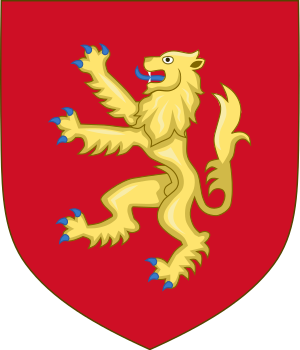
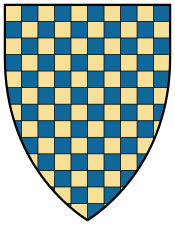
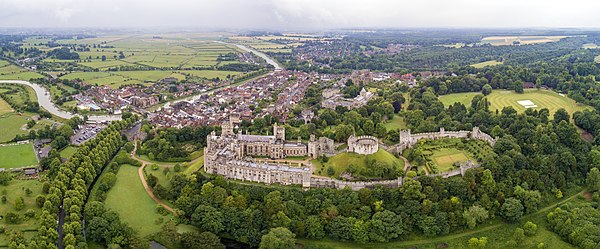
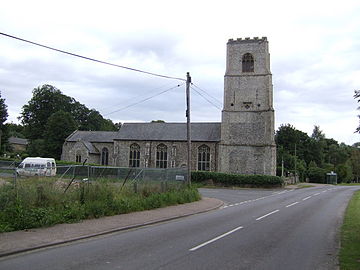
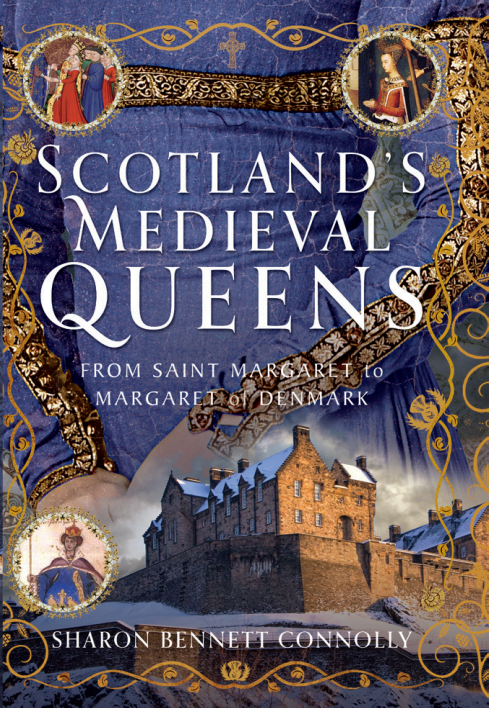
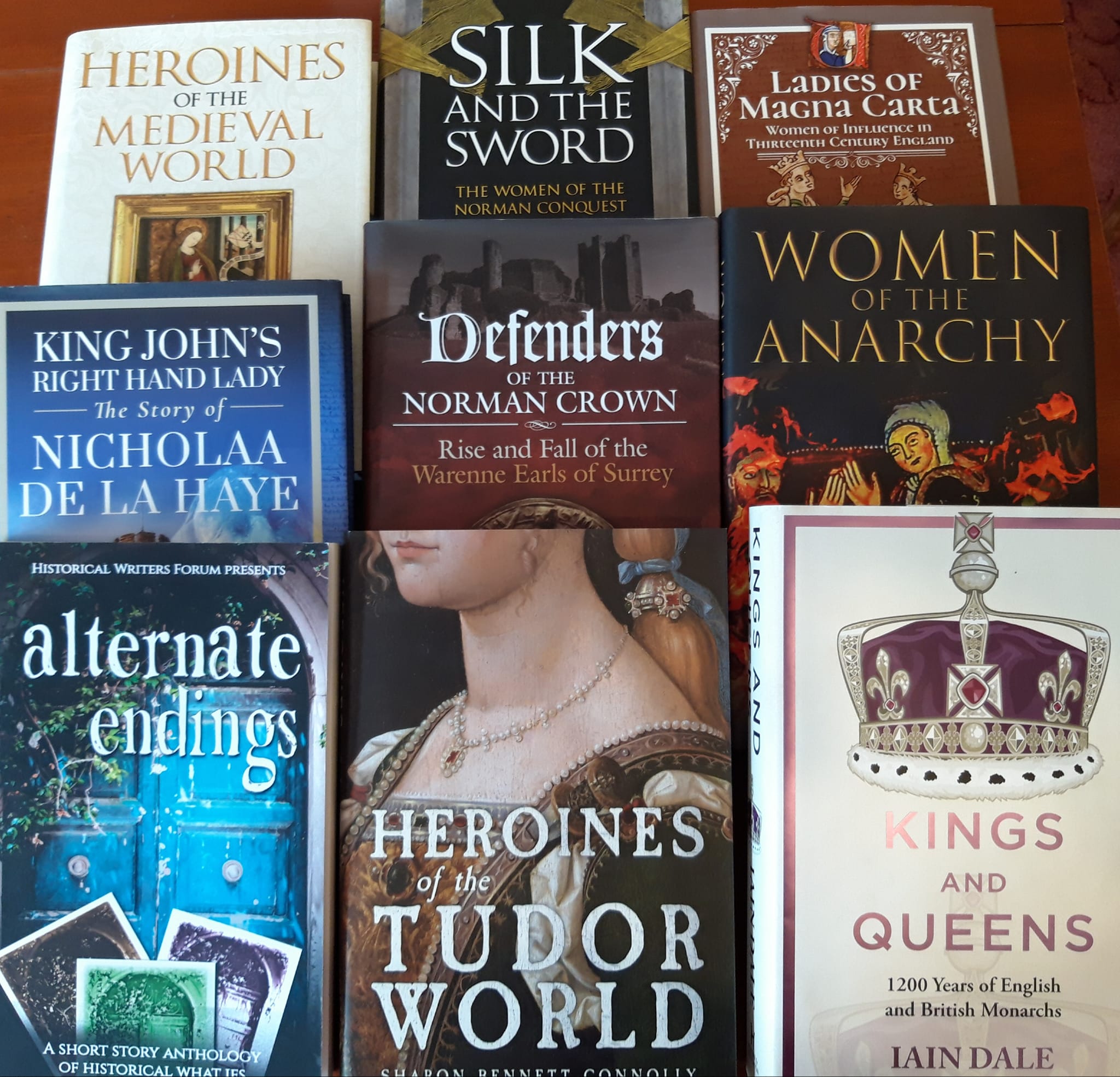

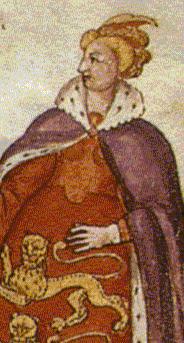
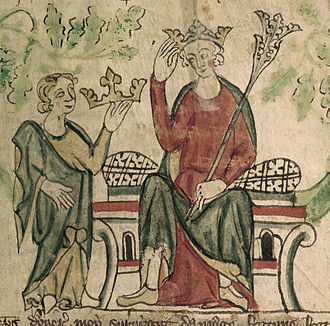
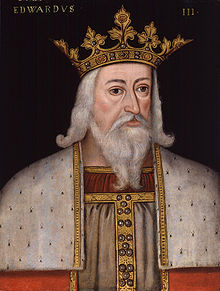
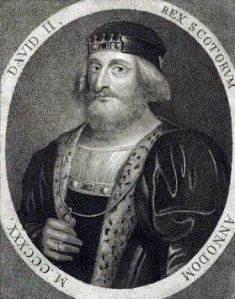
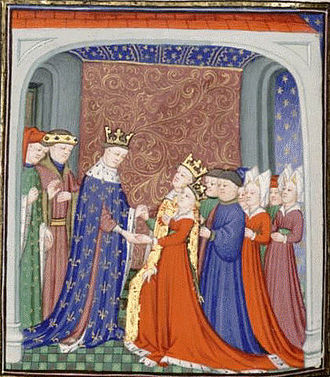
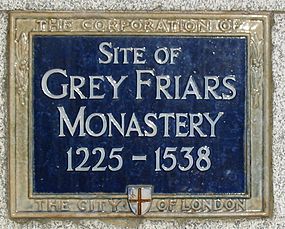


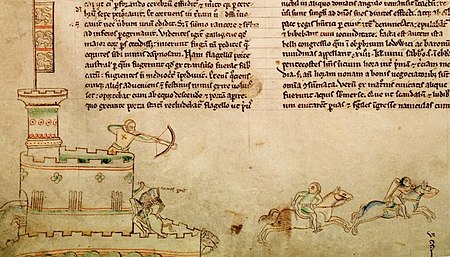
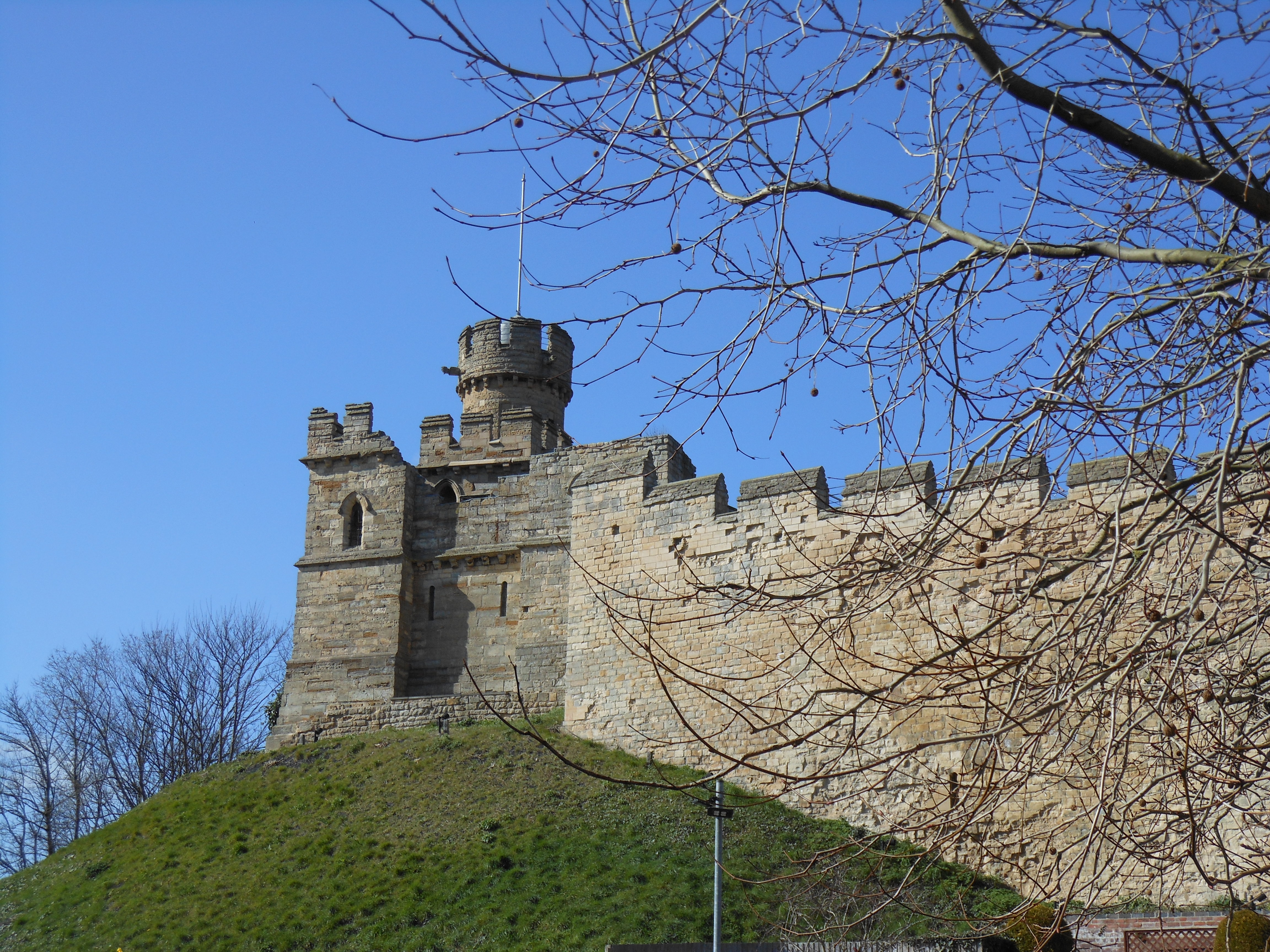
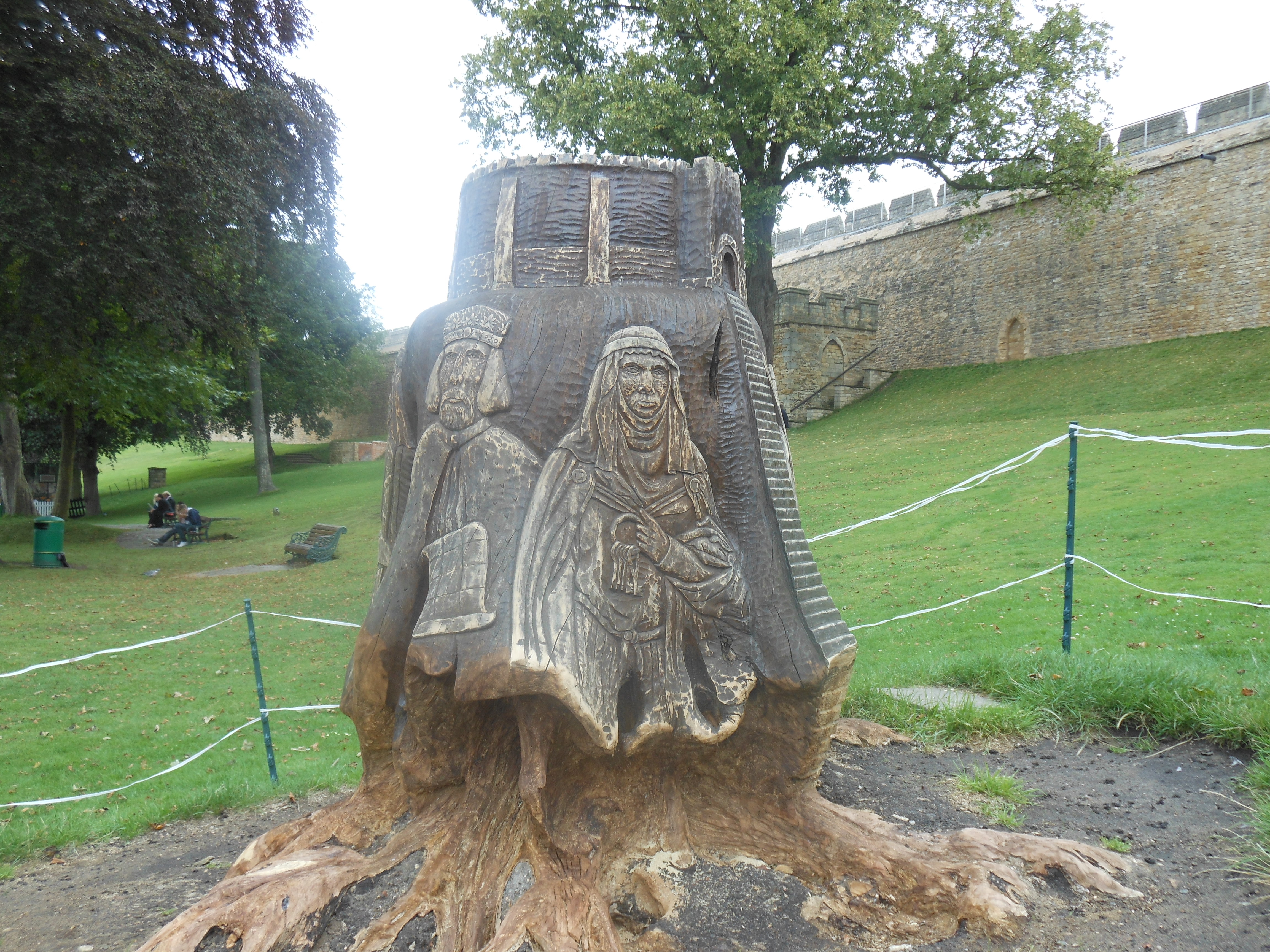


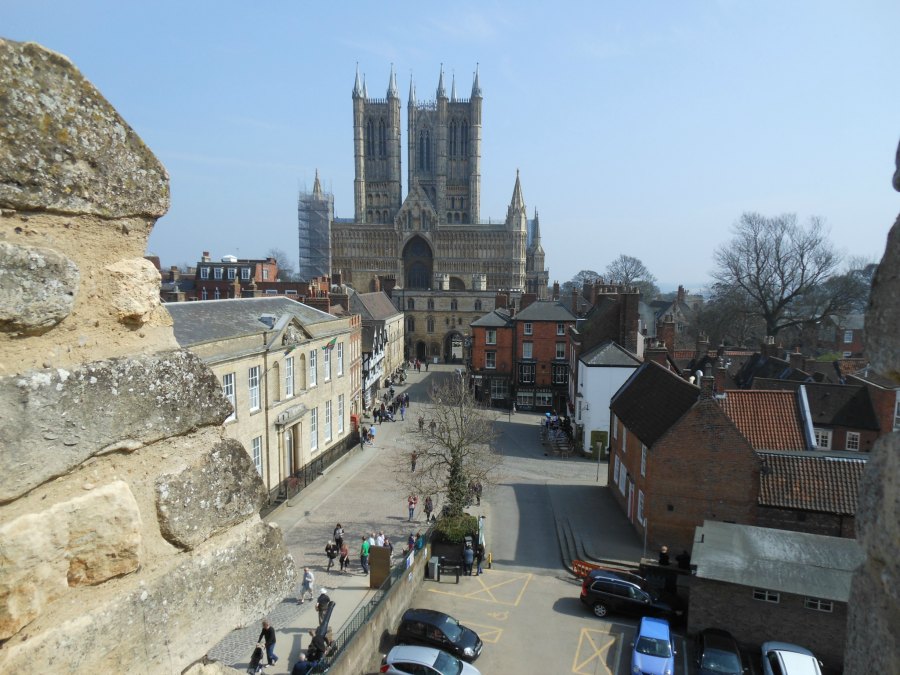
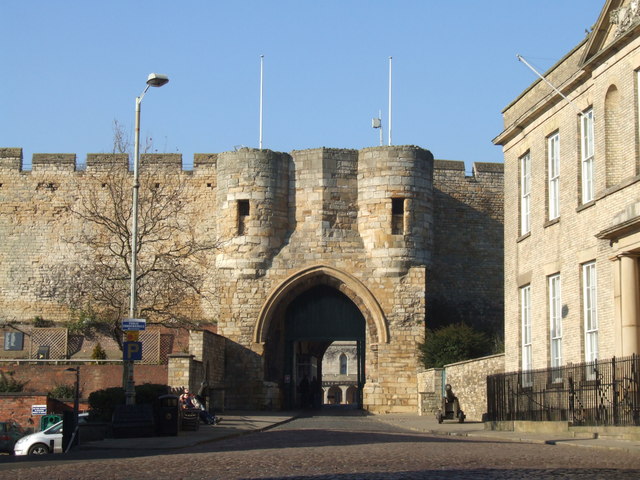
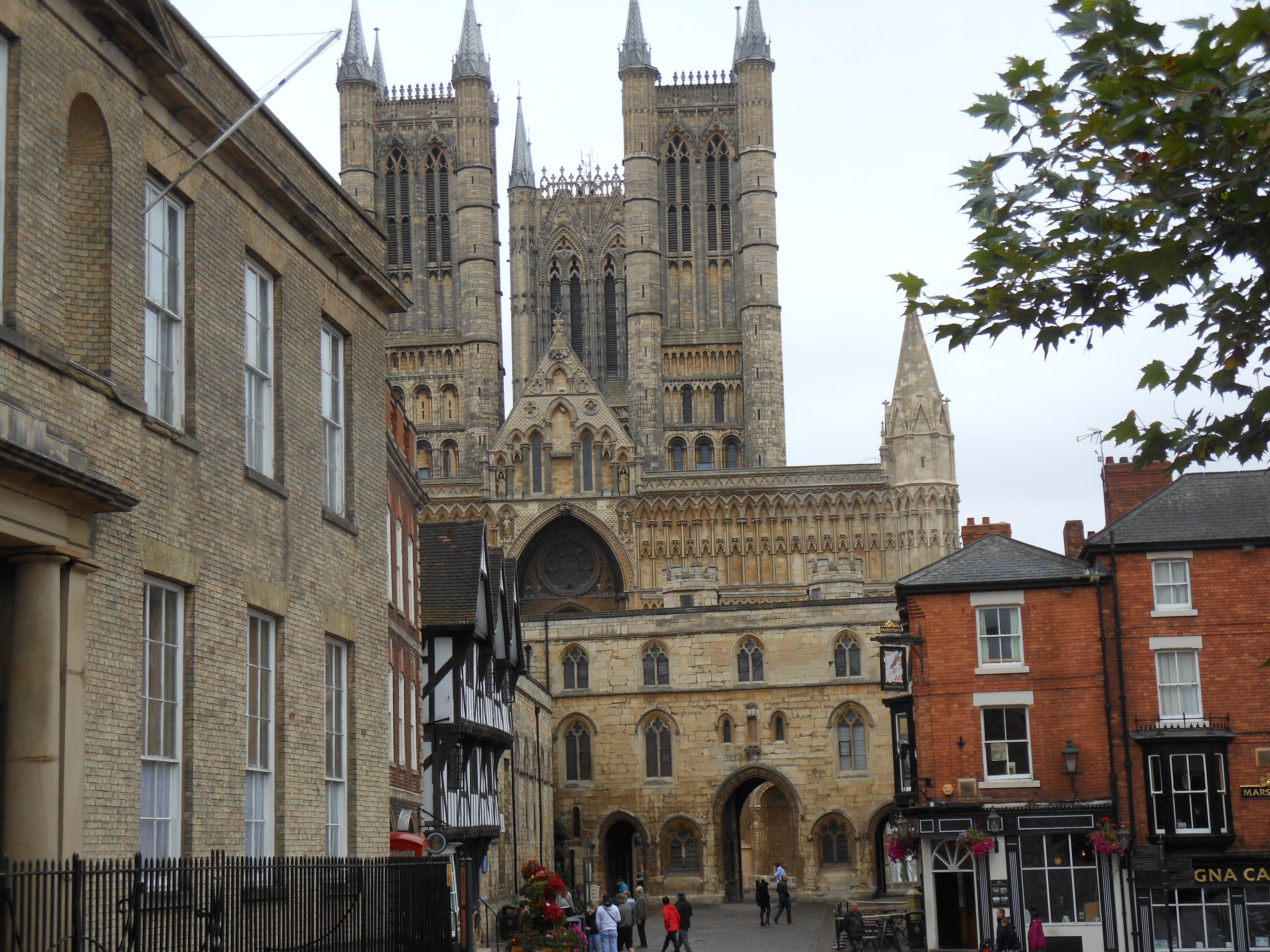
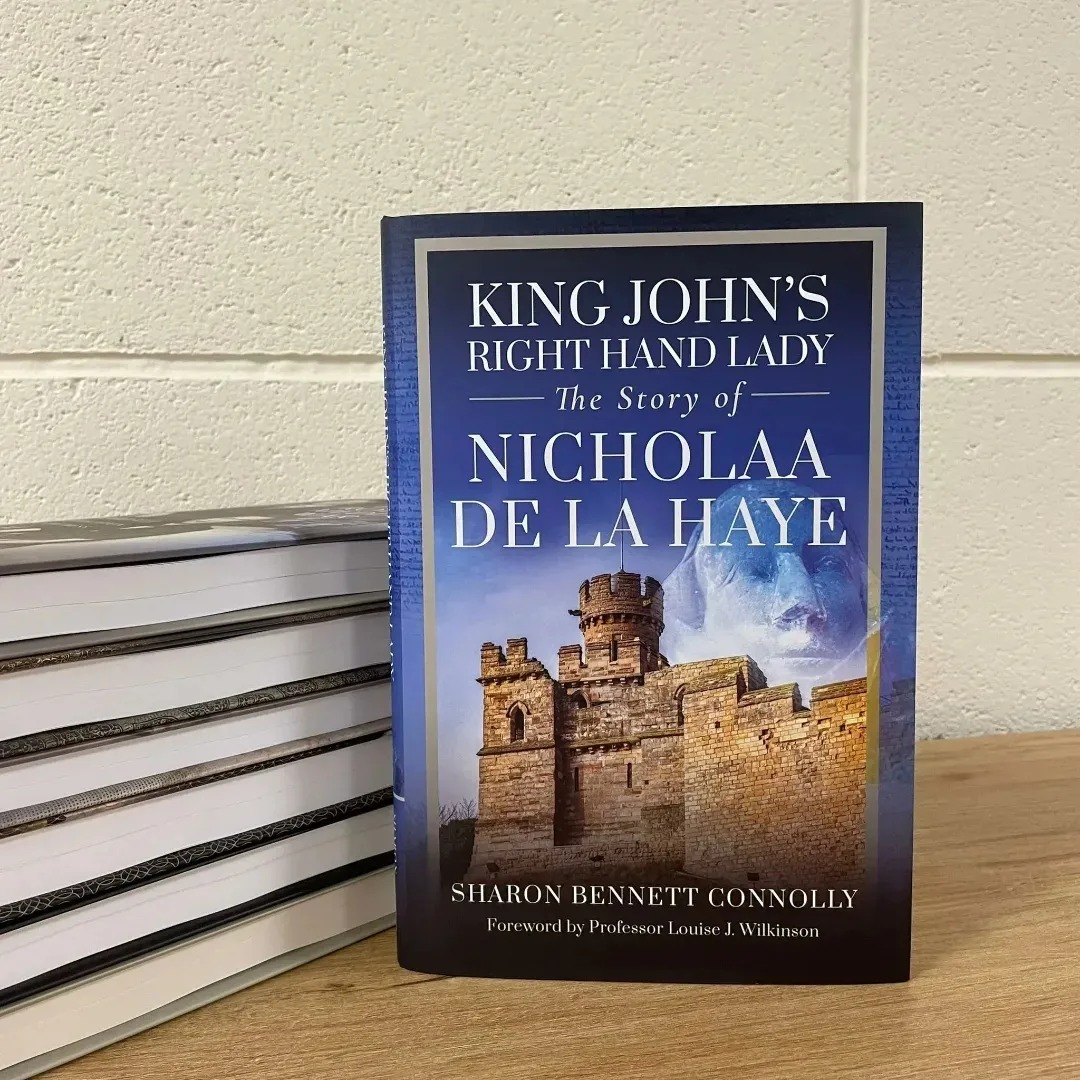
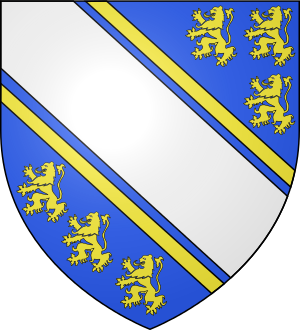
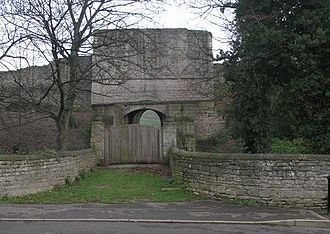

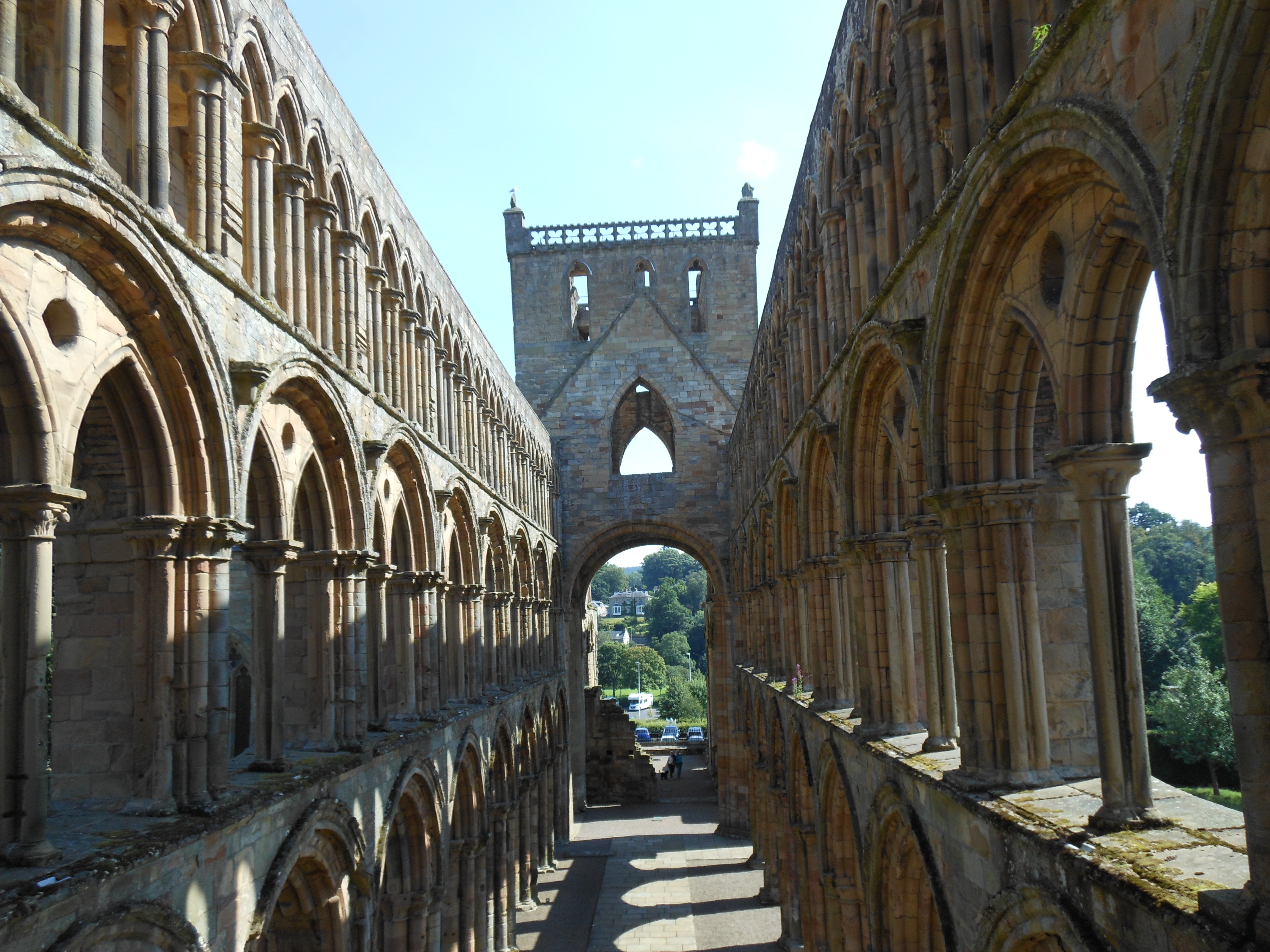

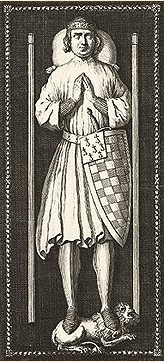
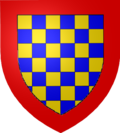
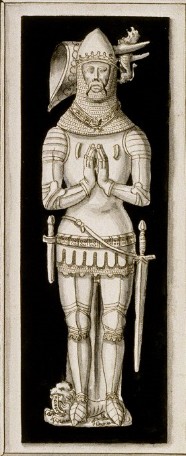

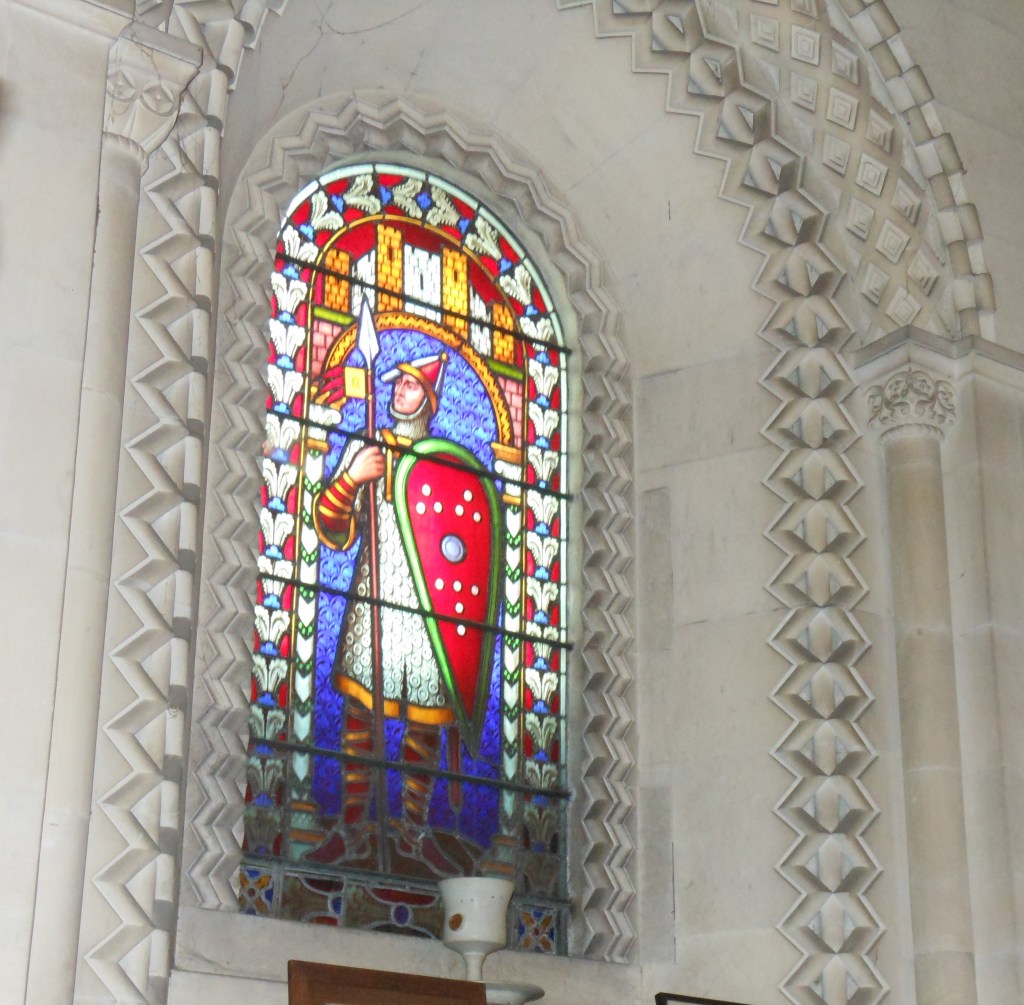


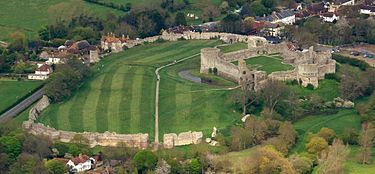




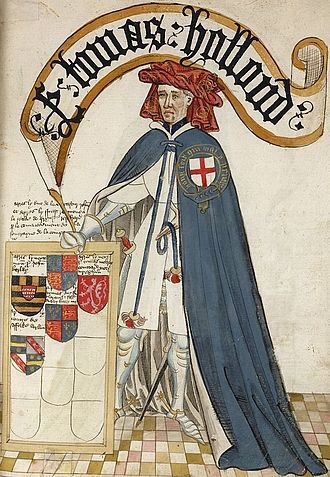
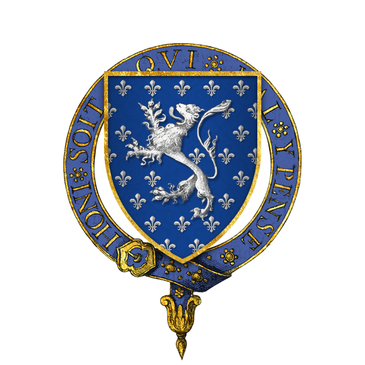


 History... the interesting bits!