In 2017, when I published Heroines of the Medieval World, it was a dream come true – to actually write and publish a book! I never imagined, then, that I would still be writing books 7 years later, nor that I would get the opportunity to write a sequel!
But here it is!
Continue reading for a chance to win a signed copy of Heroines of the Tudor World in my Publication Day GIVEAWAY!
Heroines of the Tudor World tells the stories of the most remarkable women from European history in the time of the Tudor dynasty, 1485-1603.
These are the women who ruled, the women who founded dynasties, the women who fought for religious freedom, their families and love.
These are the women who made a difference, who influenced countries, kings and the Reformation. In the era dominated by the Renaissance and Reformation, Heroines of the Tudor World examines the threats and challenges faced by the women of the era, and how they overcame them. Some famous, some infamous, some less well known, including Anne Boleyn, Elizabeth Barton, Catherine de Medici, Bess of Hardwick and Elizabeth I.
From writers to regents, from nuns to queens, Heroines of the Tudor World shines the spotlight on the women helped to shape Early Modern Europe.
I am so excited to be able to announce that Heroines of the Tudor World is now available from – everywhere! Including Amberley Publishing, Bookshop.org and Amazon UK.
Publication Day GIVEAWAY!
For the chance to win a signed copy of Heroines of the Tudor World simply leave a comment below.
The draw fro the winner will be made at noon Friday 21 June 2024.
Competition Closed: and the winner is Andria van Buskirk!
Book Launch
Do join me for the Heroines of the Tudor World book launch, including a talk and book signing will be held at the gorgeous historic venue, The Lincoln County Assembly Rooms, Monday 24 June, 2024, at 7pm.
Tickets in-store or online from £7 – ticket with book deals available.
To reserve your ticket, call in at Lindum Books on Bailgate, Lincoln, or click here!
Reviews:
And the first reviews are in – and amazing!
Tony Riches was the first to give his views:
Heroines of the Tudor World is “is perfect for ‘dipping in’ at a random page or section – where you can be sure of discovering something interesting. I also liked the way some Tudor women pop up in several categories, highlighting the complexity of their lives. As with her medieval heroines, some of the categories are thought provoking, such as the idea of heroic mistresses and scandalous heroines, but this makes for a lively and engaging read.” Read the whole 5* review over at The Writing Desk.
And Medieval Madame, on Instagram, also gave Heroines of the Tudor World 5 stars:
“Automatically, when we think of the Tudor woman we tend to think of King Henry VIII’s wives, ladies in waiting or mistresses like Lady Jane Parker and Mary Boleyn. Yet so many women played a vital role, and they are lesser known but those who are more widely known don’t get enough recognition. Women, the weaker, frailer, gentler sex who should have a purpose: ‘stay at home, do embroidery, bear children – hope to survive!’ Not forgetting obey your Husband!
This book centres around women who, either by chance or decision, step out of the mould society cast upon them, even if it meant death. Remember, the Tudor World was one of the most vicious times in English history.
In this 12 chapter book, Sharon Bennett Connolly looks at many women from different backgrounds, and placed into chapters that’s what made their names live on. Take for example chapter 11 we see, “Literary Heroines,” here you can read about Margaret Roper, daughter of Sir Thomas More. Religious reformist, published, Queen Katherine Parr. Then French royalty who could well handle a quill!
Other heroines include: Caterina Sforza, Elizabeth Barton, Katherine Willoughby, Mary Queen of Scots, Anne de Vere and so many more – the list is vast! That is what makes an interesting read. Whether by religion, royalty, nobility or scandal.
Sharon has achieved another piece of thought provoking literature by shining a light on this enjoyable and contemporary read. As a sequel to her “Heroines of the Medieval World,” this certainly does not disappoint, and I enjoyed it equally.
For an in-depth view on many resilient, defiant and warrior women, who could very well be the first step to what we know in modern times as feminism. This is it! This is an excellent read, most certainly in the top three reads of the year. Sharon has crafted her creative writing once more for our educational enjoyment.
[Gifted] To Be Released 15 June 2024″
All About History
All About History magazine gave Heroines of the Tudor World 4 stars, highlighting that the book ‘reminds readers that the lot of women in this era was not an easy one, but in these fascinating stories she reminds us too that there have always been women who dared to challenge the status quo. Whether standing up for country, crown, family or love, the women who spring to life in these pages are richly deserving of their place in history.’
The first review on Amazon was from Helen Musson. It was short but oh so very, very sweet:
Brilliant!
And what an incredible review of Heroines of the Tudor World from Heidi Malagisi at Adventures of a Tudor Nerd:
“Connolly gave her readers a thrilling look into the 16th century….my only complaint is that it was not a longer book…”If you have enjoyed Sharon Bennett Connolly’s previous books and you are a Tudor nerd, I highly suggest you read, ‘Heroines of the Tudor World.'”
Interviews, podcasts and YouTube
You can find me talking about my choice of Heroines of the Tudor World on some of the best Tudor podcasts:
On Tudors Dynasty I may have mentioned to Rebecca Larsen that I don’t think much of Henry VIII. And I had a fabulous time, chatting with Natalie Grueninger over at On the Tudor Trail.
And I am on Books & Brews, over on You Tube, talking about my favourite Heroines of the Past. You can even watch the outtakes!
To Buy Heroines of the Tudor World
You can order signed, dedicated copies of Women of the Anarchy through my online bookshop. Heroines of the Tudor World is now available from – everywhere! Including Amberley Publishing, Bookshop.org and Amazon UK.
*
Also by Sharon Bennett Connolly:
Women of the Anarchy demonstrates how Empress Matilda and Matilda of Boulogne, unable to wield a sword, were prime movers in this time of conflict and lawlessness. It show how their strengths, weaknesses, and personal ambitions swung the fortunes of war one way – and then the other. Available from Bookshop.org, Amberley Publishing and Amazon UK. King John’s Right-Hand Lady: The Story of Nicholaa de la Haye is the story of a truly remarkable lady, the hereditary constable of Lincoln Castle and the first woman in England to be appointed sheriff in her own right. It is is available from Pen & Sword Books, bookshop.org and Amazon. Defenders of the Norman Crown: The Rise and Fall of the Warenne Earls of Surrey tells the fascinating story of the Warenne dynasty, from its origins in Normandy, through the Conquest, Magna Carta, the wars and marriages that led to its ultimate demise in the reign of Edward III. Available from Pen & Sword Books, Amazon in the UK and US, and Bookshop.org.
Alternate Endings: An anthology of historical fiction short stories including Long Live the King… which is my take what might have happened had King John not died in October 1216. Available in paperback and kindle from Amazon.
Podcast:
Have a listen to theA Slice of Medieval podcast, which I co-host with Historical fiction novelist Derek Birks. Derek and I welcome guests, such as Bernard Cornwell and discuss a wide range of topics in medieval history, from significant events to the personalities involved.
*
Don’t forget!Signed and dedicated copies of all my books are available through my online bookshop.
For forthcoming online and in-person talks, please check out my Events Page.
*You can be the first to read new articles by clicking the ‘Follow’ button, liking our Facebook page or joining me on Twitterand Instagram.
Today, it is a pleasure to welcome Tony Riches back to History…the Interesting Bits, with an article about the story behind his new novel, Frances: Tudor Countess. Frances Walsingham was the daughter of Queen Elizabeth’s spymaster, Francis Walsingham who married three times, including the soldier-poet, Sir Philip Sidney and, later, Robert Devereux, Earl of Essex
So, over to Tony…
Frances – Tudor Countess: The History Behind the Book
The origins of my latest book can be traced to my birth in Pembroke, Wales, close to the medieval castle where Henry Tudor was born. I couldn’t find any books which brought his story to life, and was inspired to write the Tudor Trilogy, where Henry is born in the first book, comes of age in the second, and becomes King of England in the third.
The success of the Tudor Trilogy led to the idea of following the dynasty in a continuous thread to the end, with the death of Queen Elizabeth I. I enjoy studying the real history to understand the social, political and economic context, and like to offer readers an historically authentic ‘immersive’ experience.
Over the past ten years I’ve built an extensive reference collection of books on everything Tudor and Elizabethan, from medicine to recipes, childbirth to government, as well as numerous biographies of key players in the story of the Tudors. All this research provides the backdrop within which the real lives and relationships of my chosen subjects develop and evolve.
For my second trilogy I decided to write about the reign of Henry VIII as the ‘Brandon Trilogy’, from the perspective of his youngest sister, Mary, his best friend, Charles Brandon, and the woman who some say could have become his seventh wife, Katherine Willoughby.
This took me to the Elizabethan era, and the decision to explore the enigmatic queen through three of her favourite men, Drake, Essex and Raleigh. Each saw her very differently, as Drake was in awe of her, Essex was like the son she never had, and Raleigh became captain of her guard.
I found that most of what I thought I knew about these men was wrong or missing vital details. I discovered Drake strived to understand and help liberate enslaved people. The heroic failure of the Essex rebellion was more about his lack of emotional intelligence than political ambition, and Raleigh’s colonisation of the New World was conducted from the comfort of his home through the courageous sacrifices of others.
I also realised I would need to make the Elizabethan books a series of six, rather than a trilogy, and explore the complexity of Queen Elizabeth through the eyes of three of her ladies. I had plenty to choose from, but found the most interesting were Penelope, eldest daughter of the queen’s nemesis, Lady Lettice Knollys, Frances, the only surviving child of the queen’s spymaster, Walsingham, and one of her ‘Gentlewomen’, Bess Raleigh.
One of my favourite historical sources for the Elizabethan series is “The Elizabethan Court Day by Day” by Marion E. Colthorpe. A rich and varied collection of research, this is where I discovered such details as the queen’s chambers being infested with fleas, which accumulated at the windows, the lists of participants in Accession Day jousts, and actual menus for royal banquets. Most importantly, this resource enabled me to cross-check events on any day at the Elizabethan court with other sources to ensure historical accuracy.
Of the many biographies I’ve studied, an unexpected source I found useful was Daphne du Maurier’s work on Francis and Anthony Bacon, who became important advisors to Frances in her struggle to understand and influence events at court. I also collected the works of the late Professor David Loades, particularly on the lives of William and Robert Cecil, who provide a connection between the books of the Elizabethan series.
To anyone looking for a deeper understanding of the Elizabethan world, I also recommend Liza Picard’s Elizabeth’s London: Everyday Life in Elizabethan London and The Time Traveller’s Guide to Elizabethan England by Ian Mortimer. There are plenty of well-researched books about the great events of the period, such as the Spanish Armada, but I was keen to develop a sense of how my subjects lived from day to day, what they wore, what they ate, and most importantly, how they thought about their world.
When I set out on this ‘journey’ to tell the story of the Tudors I had no idea how much I would learn about fascinating women such as Frances Walsingham, who witnessed the key events of the Elizabethan era first-hand, yet is so little known – until now.
To Buy the book:
Frances – Tudor Countess is new from Amazon in the United Kingdom and United States in eBook and Paperback, and an audiobook edition will be produced this year:
About the Author:
Tony Riches is a full-time UK author of best-selling Tudor historical fiction. He lives in Pembrokeshire, West Wales and is a specialist in the history of the Wars of the Roses and the lives of the Tudors. For more information about Tony’s books please visit his website tonyriches.com and his blog, The Writing Desk and find him on Facebook, Twitter @tonyriches and Bluesky: https://bsky.app/profile/tonyriches.bsky.social. You can find out more about his research on his popular podcast series, ‘Stories of the Tudors’
Signed, dedicated copies of all my books are available through my online bookshop.
Coming on 15 June 2024: Heroines of the Tudor World
Heroines of the Tudor World tells the stories of the most remarkable women from European history in the time of the Tudor dynasty, 1485-1603. These are the women who ruled, the women who founded dynasties, the women who fought for religious freedom, their families and love. These are the women who made a difference, who influenced countries, kings and the Reformation. In the era dominated by the Renaissance and Reformation, Heroines of the Tudor World examines the threats and challenges faced by the women of the era, and how they overcame them. From writers to regents, from nuns to queens, Heroines of the Tudor World shines the spotlight on the women helped to shape Early Modern Europe.
Two cousins. On the one side is Empress Matilda, or Maud. The sole surviving legitimate child of Henry I, she is fighting for her birthright and that of her children. On the other side is her cousin, Queen Matilda, supporting her husband, King Stephen, and fighting to see her own son inherit the English crown. Women of the Anarchy demonstrates how these women, unable to wield a sword, were prime movers in this time of conflict and lawlessness. It show how their strengths, weaknesses, and personal ambitions swung the fortunes of war one way – and then the other.
King John’s Right-Hand Lady: The Story of Nicholaa de la Haye is the story of a truly remarkable lady, the hereditary constable of Lincoln Castle and the first woman in England to be appointed sheriff in her own right. Available from all good bookshops or direct from Pen & Sword Books, bookshop.org and Amazon. Defenders of the Norman Crown: The Rise and Fall of the Warenne Earls of Surrey tells the fascinating story of the Warenne dynasty, from its origins in Normandy, through the Conquest, Magna Carta, the wars and marriages that led to its ultimate demise in the reign of Edward III. Available from Pen & Sword Books, Amazon in the UK and US, and Bookshop.org.
Alternate Endings: An anthology of historical fiction short stories including Long Live the King… which is my take what might have happened had King John not died in October 1216. Available in paperback and kindle from Amazon.
Podcast:
Have a listen to theA Slice of Medieval podcast, which I co-host with Historical fiction novelist Derek Birks. Derek and I welcome guests, such as Bernard Cornwell – and Tony Riches. We discuss a wide range of topics in medieval history, from significant events to the personalities involved.
*
Don’t forget!Signed and dedicated copies of all my books are available through my online bookshop.
For forthcoming online and in-person talks, please check out my Events Page.
You can be the first to read new articles by clicking the ‘Follow’ button, liking our Facebook page or joining me on Twitterand Instagram.
As many of my readers will know, one of my favourite all-time writers is the brilliant Alexandre Dumas, the author of The Three Musketeers. Dumas also wrote of Marguerite de Valois, La Reine Margot, who appears in my latest book, Heroines of the Tudor World.
Marguerite was the youngest surviving daughter of King Henri II of France and his queen, Catherine de Medici. She was born at the Château of St Germaine-en-Laye on 14 May 1553. She was her parents’ seventh child; their third daughter. She was raised alongside her two older sisters, Elisabeth (born in 1545) and Claude (born in 1547). Her brothers closest in age to her were Charles (born in 1550), Henri (born in 1551) and her younger brother Hercules (born in 1555), who would change his name to François when he was confirmed. Her brother, Henri, only two years older than her, was Marguerite’s closest family friendship as a child, though this did not last into adulthood. Henri would eventually rule France as King Henri III, succeeding to the throne on the death of his older brother Charles IX. Marguerite’s oldest brother was Francis – the future Francis II – who was born in 1544 and would go on to marry Mary, Queen of Scots. Another brother, Louis, died in 1550 at the age of just eighteen months.
Marguerite experienced tragedy at an early age, when her father, Henri II, died in July 1559, ten days after a jousting accident in which a lance had pierced his eye. Marguerite was only six years old. The princess was well educated and studied literature, classics, history, and a number of ancient and contemporary languages. She was also taught the complexities and dangers of sixteenth century politics and saw her mother acting as regent for her brother, Charles IX, becoming the most powerful person in France and a woman of international importance.
As a teenager, Marguerite fell in love with Henry of Guise. He was a duke from a prominent family, but when they were found out, Henry was exiled from court and Marguerite was beaten so badly by her mother and brother, Charles IX, that her clothes were torn and ruined. The Guises might be a powerful family, and the most powerful Catholic faction at court, but their influence and popularity were a threat to the government of Catherine de Medici and the queen was not about to increase their prestige further by allowing the duke to marry her daughter.
Marguerite was a princess of France and not free to follow her heart.
Catherine de Medici with her children in 1561: Francis, Charles IX, Margaret and Henry III
The family had other plans for her marriage. Queen Catherine arranged with Jeanne d’Albret, Queen of Navarre, that Marguerite would marry her son, the Huguenot prince, Henri of Navarre. Although he had grown up at the French court, Henri’s mother had insisted that he be raised a Protestant. Henri was from the Bourbon branch of the French royal family and was the closest male relative to the throne after Marguerite’s brothers, he was the ‘First Prince of the Blood.’ Should her brothers die without producing heirs of their own, Henri of Navarre, though a Protestant, would be next in line to the throne. In 1572, when Marguerite and Henri married, Henri’s succession would have been only a distant possibility, with the twenty-two-year-old king, Charles IX, recently married himself and hoping for an heir; and two younger brothers to follow him should he not provide a son of his own.
The marriage of Henri and Marguerite was intended to rebuild family ties and broker peace between the French Catholics and the Huguenots, the French Protestants. Since 1560, France had been riven by factions, with the powerful Guise family championing the prospect of eradicating Protestantism within France, backed by Spain and the papacy. The Bourbons, led by Henri of Navarre’s mother, Jeanne d’Albret, led the Huguenots, French Calvinists. As queen, Catherine de Medici tried for compromise, wanting France to be independent of foreign powers, such as Spain and the papacy. Tens of thousands of French had died in the religious wars, despite the signing of a number a peace treaties, which never held. The 1572 Peace of St Germain-en-Laye was to seal the treaty with a wedding.
Of Marguerite, her future daughter-in-law, Jeanne d’Albret wrote:
‘As for her beauty, I agree she has a good figure but she holds herself in too much. As for her face, she uses so much help, it does irritate me, because she will ruin herself. But in this court make-up is normal just like in Spain.’1
Henry of Navarre and Margaret of Valois
Marguerite was a pawn in the midst of this political dispute. Born in December 1553, Henri was seven months younger than his bride. He and Marguerite were second cousins, both being the great-grandchildren of Charles, Count of Angoulême and his wife, Louise de Savoie. Marguerite descended from their son, Francis I, King of France, while Henri was descended from Francis’s sister, Marguerite d’Angoulême, Queen of Navarre. The young couple was betrothed in April 1572 and appeared to like each other at first, though it soon became evident that there was no chemistry between them, no physical attraction. It would be the first royal marriage between a Catholic and a Protestant. Henri’s mother, Jeanne d’Albret died before the wedding could take place, in June 1572, making Henri the new king of Navarre.
The wedding ceremony took place at the cathedral of Notre-Dame in Paris, atop a platform that had been erected on the western façade of the church and hung with cloth of gold, so that everyone could watch; Protestant Henri refused to be married within the Catholic cathedral and so the wedding would be conducted outside. At three o’clock in the afternoon, the king of Navarre and his entourage made a stately procession to the church. Henri was dressed in a doublet and cape of rich yellow satin, embroidered with diamonds and pearls. He was escorted by two of the bride’s brothers, the dukes of Anjou and Alençon.
The vast crowds were there to see Marguerite, described as ‘the greatest beauty in the world’ by a Neapolitan ambassador.She was led from the archbishop’s palace, close to the cathedral, by her brother, King Charles IX. The princess was wearing an ermine-trimmed gown of royal blue silk. Her fifteen-foot train was carried by three ladies-in-waiting. The ceremony was officiated by the Cardinal de Bourbon and when he asked Marguerite if she would take Henri as her husband, she refused to answer; her brother pushed her head so that she appeared to nod, and the cardinal took this to be her assent. The vows concluded, Marguerite and her party went inside the church to hear Mass, while Henri and his entourage waited outside.
Henri III, King of Navarre, later to become King Henri IV of France
There were three days of feasting to celebrate the marriage of Henri and Marguerite, the King and Queen of Navarre, before the peace was shattered by an assassination attempt on the Huguenot leader Gaspard de Coligny. Coligny was shot in the shoulder by the Sieur de Marevert. Firing from a house belonging to the duke de Guise, he had been aiming to kill. Coligny survived and was taken back to his lodgings, where the bullet was removed, the king sending his own physician to assist in Coligny’s treatment. Tensions were running high and Henri of Navarre and his attendants, staying at the Hôtel de Navarre, were nervous. On the morning of 24 August, Marguerite was woken by banging on her door, at which a blood-stained soldier staggered in, shouting ‘Navarre! Navarre!,’ pursued by two more men, armed with bows and arrows.
The St Bartholomew’s Day Massacre was proceeding through the streets of Paris. Maurevert’s attempted assassination of Coligny, probably at the orders of Henry of Guise, had caused the King and his mother to fear that they would be blamed. In order to prevent reprisals, they chose to strike first, sending their soldiers against the Huguenot leadership. Coligny was among those killed, his body thrown out of the window of his lodgings and burned by the crowd. As other Huguenots were cut down, the Catholic Parisians joined in the bloodbath, slaughtering their Huguenot neighbours. Marguerite and her husband both made it to safety at the Louvre Palace, where they were protected by royal troops. Henri’s friends and attendants were not so lucky and were butchered within earshot of the newlyweds.As the violence spread to more cities in the following days and weeks, over 5,000 were killed.
The leadership of the Huguenot faction had been dealt a serious blow. The older leaders were dead, murdered, and the younger leaders, Henri of Navarre and his cousin, Henri de Condé, were virtual prisoners, confined to the royal court and on 26 September 1572, Henri of Navarre renounced Protestantism. Four years later, he finally managed to flee the court, leaving his wife behind. Returning to the Protestant faith, he was now twenty-two and assumed the leadership of the Huguenots. Marguerite had remained at the French court following her husband’s flight. There’s was a rather liberal marriage, with neither one concerned if the other took lovers. Politically though, Marguerite worked in support of her husband, despite him being a Protestant and she being Catholic.
The St Bartholomew’s Day massacre painted by François Dubois, a Huguenot painter
In 1578, Marguerite and her mother made a journey south, with Catherine de Medici hoping to build some bridges with the king of Navarre by delivering his wife to him. For the next five years, until 1583, Marguerite and Henri lived as husband and wife at Nérac, 100km south-east of Bordeaux. Initially, the marriage appeared to be experiencing a revival, but then Henri had an affair with on of Marguerite’s ladies, known as La Fosseuse, before moving onto a more serious relationship with Corisande de’Andouins, Countess of Guiche. In 1582 Henri III, King of France, summoned Marguerite back to court, with the hope that her husband would follow. Marguerite came but Henri did not.
While back at the French court, Marguerite had an affair with Jacques de Harlay, Sieur de Champvallon, and there were rumours that she was pregnant by him. Marguerite was ordered to leave court by her brother and left Paris on 8 August. As she travelled south, her party was stopped by a troop of royal archers, who insulted Marguerite and arrested two of her ladies. They were questioned about Marguerite’s baby, if there was one. All trace of the child, whether she was pregnant or not, had disappeared. On 13 April, Marguerite was reunited with her husband at Port St Marie, just north of Nérac. Just two months later, they heard of the death of Marguerite’s youngest brother, Francis, Duke of Anjou, who was a close ally of Henri of Navarre.
Francis’s death was a pivotal moment for the king of Navarre. He had been the heir of his brother Henri III and now, the heir was Henri of Navarre himself, at least until Henri III were to have a son of his own. The Holy Catholic League, however, funded by the king of Spain and the papacy, recognised the ageing and childless Cardinal de Bourbon as the heir to the throne. On 31 March 1585, the cardinal issued a proclamation promising to restore France to Catholicism and declaring that ‘subjects are not required to recognise or sustain the domination of a prince who has parted from the Catholic faith…’ On 9 September 1585 Pope Sixtus V excommunicated both Henri of Navarre and his cousin Condé – even though they were Protestants – and deprived them of their hereditary rights. He even declared that Henri had no right to the kingdom of Navarre. Henry of Guise was manoeuvring to promote his own candidacy for the throne of France by excluding Henri of Navarre.
Marguerite de Valois painted by Nicholas Hilliard
After the death of his brother Francis, Henri III was forced to make war on Navarre by Henry of Guise, thus starting the War of the Three Henries. It was at this point that Marguerite took her life and future into her own hands. Having realised that she could not be content living with Henri, she left his court and moved to Agen, claiming she wanted to devote herself to the celebration of Easter. She joined the Holy Catholic League and with 2,000 soldiers she took Agen and held it in the name of the League. But after a bout of plague was seen as the punishment of God for Marguerite rebelling against her husband and brother, and the destruction of the garrison gunpowder left the city indefensible, she was forced to abandon Agen and moved further inland to another of her fortresses at Carlat.
As she left for Carlat, Marguerite was arrested by her brother’s forces under the command of the Marquis de Canillac, who escorted her to the great fortress at Usson. Marguerite charmed Canillac and within a year she was no longer a prisoner, but the sovereign lady of the territory, in the heart of the Auvergne. Marguerite spent the next 19 years living in Usson, as the Wars of Religion ground to their conclusion with a succession of deaths. The duke of Guise died in 1588, killed on the king’s orders. Catherine de Medici died in January 1589, just a few months before her 70th birthday. And in August 1589, King Henri III was assassinated by a Catholic enthusiast.
This left Henri of Navarre as the victor, though the war continued for 4 more years, as the Catholic League refused to accept a Protestant king. In 1593 Henri’s conversion to Catholicism, supposedly with the words ‘Paris is worth a Mass,’ Henri of Navarre became King Henri IV of France, his coronation taking place in Chartres Cathedral in February 1594. The Edict of Nantes finally ended the Wars of Religion in 1598, establishing Catholicism as the state religion in France, but allowing Huguenots to worship freely in many parts of France (excluding Paris). Though she was no longer living with Henri, Marguerite, the last surviving child of Henri II and Catherine de Medici, was now Queen of France and Navarre, and she and Henri were back on good terms. She established her court at Usson, writing her memoirs and poetry and building a library.
Henri IV, King of France and Navarre
In 1593 Marguerite made an agreement with Henri whereby he would give her 50,000 francs a year and pay her debts of 200,000 écus in return for her applying for the annulment of their marriage; she cited her barrenness, consanguinity and that she was forced to marry against her will as grounds for the annulment. Though the annulment was not granted by the pope until 1599, it did eventually leave Henri free to marry again, to Marie de Medici, and produce the all-important heir – the future King Louis XIII. Although she had been a pawn to the political manoeuvrings of her mother on her marriage to Henri of Navarre, Marguerite had, to all intents and purposes, managed to forge her own path in her later years. Her agreement to the annulment of her marriage meant the continuation of the line of Henri IV and secured the future of France. Marguerite returned to Paris in 1605 and lived there until her death in 1615.
Footnotes:
1. Dominic Pierce, ‘The Unique Career of Marguerite de Valois, Queen of Navarre’, tudortimes.co.uk
Images:
Courtesy of Wikipedia
Sources:
Dominic Pierce, ‘The Unique Career of Marguerite de Valois, Queen of Navarre’, tudortimes.co.uk; Nancy Goldstone, The Rival Queens: Catherine de Medici, Her Daughter Marguerite de Valois and the Betrayal that Ignited a Kingdom; Frieda Leonie, Catherine de Medici: A Biography; Pierre Groubert, The Course of French History; Estelle Paranque, Blood, Fire & Gold: The Story of Elizabeth I and Catherine de Medici; Amanda Prahl, ‘Biography of Margaret of Valois, France’s Slandered Queen’, thoughtco.com; François Bayrou, Henri IV: Le Roi Libre; Alexandre Dumas, La Reine Margot.
*
My Books
Signed, dedicated copies of all my books are available through my online bookshop.
Coming on 15 June 2024: Heroines of the Tudor World
Heroines of the Tudor World tells the stories of the most remarkable women from European history in the time of the Tudor dynasty, 1485-1603. These are the women who ruled, the women who founded dynasties, the women who fought for religious freedom, their families and love. These are the women who made a difference, who influenced countries, kings and the Reformation. In the era dominated by the Renaissance and Reformation, Heroines of the Tudor World examines the threats and challenges faced by the women of the era, and how they overcame them. From writers to regents, from nuns to queens, Heroines of the Tudor World shines the spotlight on the women helped to shape Early Modern Europe.
Two cousins. On the one side is Empress Matilda, or Maud. The sole surviving legitimate child of Henry I, she is fighting for her birthright and that of her children. On the other side is her cousin, Queen Matilda, supporting her husband, King Stephen, and fighting to see her own son inherit the English crown. Women of the Anarchy demonstrates how these women, unable to wield a sword, were prime movers in this time of conflict and lawlessness. It show how their strengths, weaknesses, and personal ambitions swung the fortunes of war one way – and then the other.
King John’s Right-Hand Lady: The Story of Nicholaa de la Haye is the story of a truly remarkable lady, the hereditary constable of Lincoln Castle and the first woman in England to be appointed sheriff in her own right. Available from all good bookshops or direct from Pen & Sword Books, bookshop.org and Amazon. Defenders of the Norman Crown: The Rise and Fall of the Warenne Earls of Surrey tells the fascinating story of the Warenne dynasty, from its origins in Normandy, through the Conquest, Magna Carta, the wars and marriages that led to its ultimate demise in the reign of Edward III. Available from Pen & Sword Books, Amazon in the UK and US, and Bookshop.org.
Alternate Endings: An anthology of historical fiction short stories including Long Live the King… which is my take what might have happened had King John not died in October 1216. Available in paperback and kindle from Amazon.
Podcast:
Have a listen to theA Slice of Medieval podcast, which I co-host with Historical fiction novelist Derek Birks. Derek and I welcome guests, such as Bernard Cornwell and discuss a wide range of topics in medieval history, from significant events to the personalities involved.
*
Don’t forget!Signed and dedicated copies of all my books are available through my online bookshop.
For forthcoming online and in-person talks, please check out my Events Page.
You can be the first to read new articles by clicking the ‘Follow’ button, liking our Facebook page or joining me on Twitterand Instagram.
Empress Matilda depicted in an image from the Gospels of Henry the Lion.
It has always been said that Empress Matilda failed in her claims for the English crown. That she came close but did not quite make it. I wonder if that is strictly true? I wonder if she should not be on the regnal lists of kings and queens for 1141, if there was not, in fact, a break in Stephen’s reign in that year? And that Empress Matilda was, in fact, technically and in reality, England’s monarch for most of 1141?
And, in that case, England’s first female monarch?
Although she did not have a coronation, she was effective ruler of England, and had been proclaimed as such. So, if Edward V, who was proclaimed king but never crowned, and is in the regnal list, then, surely, Matilda should be also?
I know this might, at first, sound like a rather outrageous suggestion but, please, hear me out.
The argument against this is the fact that Matilda was never proclaimed ‘queen’ but given the title ‘Lady of the English.’ This has always been seen as a ‘holding’ title, a way to appease the empress who could not be monarch because England already had a king. But what if it wasn’t? What if Lady of the English was the title the people of the time thought appropriate for a female monarch?
Nowadays, we would expect Matilda to have been proclaimed ‘Queen of England’ as Elizabeth II was when she acceded to the throne. In the 12th century, however, a queen was the wife of a king. It had never been used as the title of a female ruler in England. In Poland, in the fourteenth century when a woman, Jadwiga, came to the throne, she was given the title of ‘king’ because they had no title for a woman ruling in her own right. Do we get too caught up in the language used, rather than looking at the actions of those involved?
Genealogical roll featuring Henry I, Matilda of Scotland and their children, William Ætheling and Empress Matilda, Lady of the English
Do we think that because Empress Matilda was not given the title ‘queen’ that she wasn’t, therefore, a monarch?
No woman had ruled England in her own right, either, so the question of what title a woman would hold had never come up.
Or had it?
England did have a precedent from 240 years before.
In 911, following the death of her husband Æthelred, the daughter of King Alfred the Great, Æthelflæd, was recognised as the sole ruler of Mercia and she was accorded the title Lady of the Mercians. Her brother, Edward the Elder, King of Wessex, was happy to support his sister as sole ruler of Mercia. She was the first woman to rule an Anglo-Saxon kingdom – albeit as a client of her brother’s more powerful kingdom of Wessex. It can be argued that she was not declared queen because Mercia was no longer a kingdom, but she exercised regal powers in the region. And in those days, the wives of kings were not accorded the title of queen, but ‘Lady.’ Alfred the Great’s own wife, Ælswith, was referred to as Lady Ælswith.
He was imprisoned in Bristol Castle, defeated. England belonged to the empress. The fact he still lived should not have prevented Matilda from becoming ruler. Edward IV would not see the still-living Henry VI as an impediment to him claiming the throne in 1461. And he was no less a king, even though his predecessor was alive and imprisoned in the Tower of London.
Meeting on open ground outside Winchester on Sunday 2 March, the empress and Henry of Blois, Bishop of Winchester and papal legate – and the king’s brother – came to an agreement whereby the empress promised to consult with Bishop Henry on all important matters of government and to allow him control of the appointment of all bishops and senior churchmen. In return, Bishop Henry agreed to swear allegiance to the empress and to hand over the royal treasury, which was based in Winchester. After a ceremonial procession the next day to Winchester Cathedral, Bishop Henry ‘bade the people, at a public meeting in the market-place of the town, salute her as their lady and their queen’. Empress Matilda then moved on to Oxford, while Bishop Henry called a council of prelates to mark a more official acceptance of Empress Matilda’s new position.
It was at this council that Bishop Henry first proclaimed Matilda domina Anglorum, ‘lady of the English’.
Æthelflæd, Lady of the Mercians
In naming Empress Matilda ‘Lady of the English’ the bishop of Winchester was harking back to the only other time a woman had been acknowledge as a ruler in her own right in England. And if such a title was good enough for the daughter of Alfred the Great, why would it not be considered good enough for Empress Matilda?
With Stephen imprisoned and the church backing her, Empress Matilda was now in command of England. She was, however, still waiting for Stephen’s supporters to come over to her side in greater numbers. On first meeting with the empress at Winchester, the Archbishop of Canterbury was one of those who had refused to offer his fealty. It was only after he had visited the deposed king in Bristol that he pledged his allegiance to the empress as Lady of the English; if Stephen did, indeed, grant his archbishop permission to change his fealty, it is perhaps a mark of the fallen king accepting his current predicament. And the Archbishop was recognising Empress Matilda as England’s new monarch.
Bishop Henry then held a Legatine council at Winchester, lasting from 7 to 10 April, to deliberate on the state of the country and at which he distanced himself from his brother’s administration, and gave the church’s approval to the accession of Empress Matilda: ‘Therefore, first, as is fitting, calling God to our aid, we choose as lady of England and Normandy the daughter of a king who was a peacemaker, a glorious king, a wealthy king, a good king, without peer in our time and we promise her faith and support.’
This would suggest that the title, Lady of the English, or Lady of England, is the female equivalent to the male title of King of England. And Empress Matilda was recognised as such in 1141.
And if this is true, then Empress Matilda was, technically and in reality, the first female monarch in England, 412 years before either Jane Grey or Mary I, who each claim to hold that distinction.
*
Images:
Courtesy of Wikipedia except genealogical roll which is courtesy of the British Library Catalogue of Illuminated Manuscripts
Selected Sources:
Gesta Stephani, translated by K. R. Potter; Henry of Huntingdon, The History of the English People 1000-1154; Marjorie Chibnall, The Empress Matilda: Queen Consort, Queen Mother and Lady of the English; Teresa Cole, The Anarchy: The Darkest Days of Medieval England; Catherine Hanley, Matilda: Empress, Queen, Warrior; Helen Castor, She-Wolves: The Women who Ruled England before Elizabeth; Robert Bartlett, England Under the Norman and Angevin Kings; J. Sharpe (trans.), The History of the Kings of England and of his Own Times by William Malmesbury; Orderici Vitalis, Historiae ecclesiasticae libri tredecem, translated by Auguste Le Prévost; Chronicles of the Reigns of Stephen, Henry II and Richard I; Edmund King, King Stephen; Donald Matthew, King Stephen; Matthew Lewis, Stephen and Matilda’s Civil War: Cousins of Anarchy.
*
My Books
Signed, dedicated copies of all my books are available through my online bookshop.
Out now: Scotland’s Medieval Queens
Scotland’s history is dramatic, violent and bloody. Being England’s northern neighbour has never been easy. Scotland’s queens have had to deal with war, murder, imprisonment, political rivalries and open betrayal. They have loved and lost, raised kings and queens, ruled and died for Scotland. From St Margaret, who became one of the patron saints of Scotland, to Elizabeth de Burgh and the dramatic story of the Scottish Wars of Independence, to the love story and tragedy of Joan Beaufort, to Margaret of Denmark and the dawn of the Renaissance, Scotland’s Medieval Queens have seen it all. This is the story of Scotland through their eyes.
Heroines of the Tudor World tells the stories of the most remarkable women from European history in the time of the Tudor dynasty, 1485-1603. These are the women who ruled, the women who founded dynasties, the women who fought for religious freedom, their families and love. Heroines of the Tudor World is now available for pre-order from Amberley Publishing and Amazon UK.Women of the Anarchy demonstrates how Empress Matilda and Matilda of Boulogne, unable to wield a sword themselves, were prime movers in this time of conflict and lawlessness. It shows how their strengths, weaknesses, and personal ambitions swung the fortunes of war one way – and then the other. Available from Bookshop.org, Amberley Publishing and Amazon UK. King John’s Right-Hand Lady: The Story of Nicholaa de la Haye is the story of a truly remarkable lady, the hereditary constable of Lincoln Castle and the first woman in England to be appointed sheriff in her own right. Available from all good bookshops Pen & Sword Books, bookshop.org and Amazon.
Alternate Endings: An anthology of historical fiction short stories including Long Live the King… which is my take what might have happened had King John not died in October 1216. Available in paperback and kindle from Amazon.
Podcast:
Have a listen to theA Slice of Medieval podcast, which I co-host with Historical fiction novelist Derek Birks. Derek and I welcome guests, such as Bernard Cornwell and discuss a wide range of topics in medieval history, from significant events to the personalities involved. Our first ever episode was a discussion on The Anarchy Every episode is also now available on YouTube.
*
Don’t forget!Signed and dedicated copies of all my books are available through my online bookshop.
For forthcoming online and in-person talks, please check out my Events Page.
The Woodville family are synonymous with the Wars of the Roses. While much has been published on the family as a whole, especially Elizabeth, wife of Edward IV, Anthony Woodville – the favourite sibling of Elizabeth – has been largely overlooked by history. He is famed for his arrest and execution in June 1483, but there is much more to learn from his life. Woodville was a man with an important cultural role. He was a knight, had a successful jousting career, and worked with the printing pioneer William Caxton. He was the printer’s only long-lasting patron in England and acted as translator for him, using the books printed by Caxton to educate Edward, Prince of Wales, the future Edward V.
This book seeks to bring Anthony Woodville out of the shadows of history, giving him the recognition he deserves and challenging the negative perceptions around him by investigating his personality and personal achievements in military, diplomatic and literary capacities.
I have always had the impression that Anthony Woodville would have stood out in any period of history. A Renaissance man, he championed the arts, patronised the printing press, was a renowned jouster and so well respected by his king that he was entrusted with the education and upbringing of the Prince of Wales – the future King Edward V.
I do think Woodville would have stood out in any generation, but it didn’t hurt that his sister was Elizabeth Woodville, Queen of England.
Anthony Woodville, as the queen’s brother, was at the centre of events during the reign of Edward IV. He accompanied his brother-in-law into exile when Henry VI briefly reclaimed the throne in 1470-71. He appeared in tournaments to celebrate the marriage of the king’s sister, Margaret, to the future duke of Burgundy. He was a poet and writer and was a patron of William Caxton, the man who brought the printing press to England. Caxton printed and published Woodville’s English translation of The Dictes and Sayings of the Philosophers. So why is there not a larger body of work on him?
Danielle Burton has rectified this omission with her fascinating, in-depth study, Anthony Woodville, Sophisticate or Schemer? She delves deep into Woodville’s life, family, loves and career.
The Woodville family are often viewed as grasping and power hungry. This is true of some of the family members, particularly Thomas Grey, Marquess of Dorset, who was the eldest son of Anthony’s sister Elizabeth by her first marriage to John Grey. However, Anthony, while of course benefitting from the advancement of his sister to the status of queen, notably avoided meddling wherever possible. His interests in piety, tutoring Edward, the Prince of Wales, jousting, and translating books let him play a background role in the Wars of the Roses.
While Anthony Woodville may have been a secondary figure in political terms, it is clear that he had a significant part in transforming English culture, especially through his patronage of William Caxton, as well as his tutelage of Edward. Prince of Wales, who resided at Ludlow Castle for around ten years. According to Dominic Mancini, and Italian visitor who stayed in England between late summer 1482 and July 1483, Anthony Woodville was ‘always considered a kind, serious and just man’ who was ‘tested by every vicissitude of life.’ It was for this reason that he had been entrusted with the ‘care and direction’ of the prince. Further to Mancini’s description of Anthony, he purposefully contrasts his character with that of other Woodvilles, who were ‘detested by the nobles.’ There is a certain amount of truth in this, for unlike some other family members Anthony preferred to stay away from court life, favouring more academic and religious pursuits.
As a debut work, Anthony Woodville, Sophisticate or Schemer? is very impressive. It is clear that Danielle Burton has done her research, thoroughly, using primary sources where possible. She uses her extensive knowledge of Anthony Woodville to suggest reasons for his actions and to fill in the gaps of our knowledge, clearly indicating her theories and supporting arguments. There are some minor errors, which other reviewers have highlighted, but nothing that changes the thrust of the arguments nor detracts from the enjoyment of reading. They certainly do not devalue the biography as a whole and are more a sign of the writer’s inexperience of the editing process. I certainly would not expect it to put a reader off.
I suspect Anthony Woodville is Danielle’s historical crush, but this adds to the passion in her retelling of his story. We all fall in love with our subjects, just a little bit. You cannot spend years studying a person without doing so.
Danielle Burton’s arguments are balanced and do not present Anthony Woodville and some flawless super hero. Rather, he is an accomplished knight who had his flaws and would often look to his own advantage. Who wouldn’t? He was, however, loyal to Edward IV and his nephew, Edward V. And, having been the younger Edward’s guardian since his early years, was probably a great influence on the teenage king. This would Explain why Richard, Duke of Gloucester – the future Richard III – saw him as a threat. In Anthony Woodville, Sophisticate or Schemer? Danielle looks into the events of 1483 in great detail, examining the relationship between Richard and Anthony and analysing what went wrong and why. Anthony Woodville’s execution at Pontefract Castle is a tragic consequence of the power struggle that followed the death of Edward IV and accession of Anthony’s charge, Edward V.
All in all, Anthony Woodville, Sophisticate or Schemer? by Danielle Burton is a much-needed addition to the study of the Wars of the Roses, highlighting a man of great influence who is often overlooked in favour of his royal contemporaries. It is an impressive piece of work.
To Buy the Book:Anthony Woodville, Sophisticate or Schemer? is available from Amazon or direct from Amberly Publishing.
About the Author: Danielle Burton has had a keen interest in the Wars of the Roses from a young age, including being a member of the Richard III Society since the age of 9. She has presented aspects of her research into the life of Anthony Woodville at various academic conferences, and works in the heritage sector.
*
My Books:
Signed, dedicated copies of all my books are available through my online bookshop.
Out Now!Women of the Anarchy
Two cousins. On the one side is Empress Matilda, or Maud. The sole surviving legitimate child of Henry I, she is fighting for her birthright and that of her children. On the other side is her cousin, Queen Matilda, supporting her husband, King Stephen, and fighting to see her own son inherit the English crown. Women of the Anarchy demonstrates how these women, unable to wield a sword, were prime movers in this time of conflict and lawlessness. It show how their strengths, weaknesses, and personal ambitions swung the fortunes of war one way – and then the other.
Coming on 15 June 2024: Heroines of the Tudor World
Heroines of the Tudor World tells the stories of the most remarkable women from European history in the time of the Tudor dynasty, 1485-1603. These are the women who ruled, the women who founded dynasties, the women who fought for religious freedom, their families and love. These are the women who made a difference, who influenced countries, kings and the Reformation. In the era dominated by the Renaissance and Reformation, Heroines of the Tudor World examines the threats and challenges faced by the women of the era, and how they overcame them. From writers to regents, from nuns to queens, Heroines of the Tudor World shines the spotlight on the women helped to shape Early Modern Europe.
King John’s Right-Hand Lady: The Story of Nicholaa de la Haye is the story of a truly remarkable lady, the hereditary constable of Lincoln Castle and the first woman in England to be appointed sheriff in her own right. Available from all good bookshops or direct from Pen & Sword Books, bookshop.org and Amazon. Defenders of the Norman Crown: The Rise and Fall of the Warenne Earls of Surrey tells the fascinating story of the Warenne dynasty, from its origins in Normandy, through the Conquest, Magna Carta, the wars and marriages that led to its ultimate demise in the reign of Edward III. Available from Pen & Sword Books, Amazon in the UK and US, and Bookshop.org.
Alternate Endings: An anthology of historical fiction short stories including Long Live the King… which is my take what might have happened had King John not died in October 1216. Available in paperback and kindle from Amazon.
Podcast:
Have a listen to theA Slice of Medieval podcast, which I co-host with Historical fiction novelist Derek Birks. Derek and I welcome guests, such as Bernard Cornwell and Elizabeth Chadwick, and discuss a wide range of topics in medieval history, from significant events to the personalities involved.
*
Don’t forget!Signed and dedicated copies of all my books are available through my online bookshop.
For forthcoming online and in-person talks, please check out my Events Page.
You can be the first to read new articles by clicking the ‘Follow’ button, liking our Facebook page or joining me on Twitterand Instagram.
I am very fond of Joanna Arman as an author. She has a habit of bringing often-forgotten or ignored – or maligned – women to the fore and reassessing their role in history. Her biography of Æthelflæd,The Warrior Queen: The Life and Legend of Æthelflæd, Daughter of Alfred the Great, was an engaging and illuminating book, despite the challenges of writing about a woman who lived over a thousand years ago. Writing about any woman in history is challenging. Women are rarely mentioned in the chronicles. And when they are, contemporary sources are rarely balanced and often trying to advance a moral judgement of how women fell below the standard expected of them in their society. Which is why we need reappraisals of significant historic women, books which reassess their stories and apply the filter against the casual misogyny that women have suffered from throughout the centuries. Joanna Arman has set out to do that with books about two very different queens consort of England; Matilda of Scotland and Margaret of Anjou.
Matilda II: The Forgotten Queen
The wife of King Henry I and the mother of the Empress Maud is a woman and a Queen forgotten to history. She is frequently conflated with her daughter or her mother-in-law. She was born the daughter of the King of Scotland and an Anglo-Saxon princess. Her name was Edith, but her name was changed to Matilda at the time of her marriage. The Queen who united the line of William the Conqueror with the House of Wessex lived during an age marked by transition and turbulence. She married Henry in the first year of the 12th century and for the eighteen years of her rule aided him in reforming the administrative and legal system due to her knowledge of languages and legal tradition. Together she and her husband founded a series of churches and arranged a marriage for their daughter to the Holy Roman Emperor. Matilda was a woman of letters to corresponded with Kings, Popes, and prelates, and was respected by them all. Matilda’s greatest legacy was continuity: she united two dynasties and gave the Angevin Kings the legitimacy they needed so much. It was through her that the Empress Matilda and Henry II were able to claim the throne. She was the progenitor of the Plantagenet Kings, but the war and conflict which followed the death of her son William led to a negative stereotyping by Medieval Chroniclers. Although they saw her as pious, they said she was a runaway nun and her marriage to Henry was cursed. This book provides a much-needed re-evaluation of Edith/Matilda’s role and place in the history of the Queens of England.
Now, this is a book I have been waiting for!
And it is a book that has needed to be written for a long time. How useful it would have been when I was writing my own book, Women of the Anarchy. A complete biography of Matilda of Scotland – also referred to as Matilda II to distinguish her from her predecessor, Matilda of Flanders. As the wife of Henry I of England Matilda of Scotland is a woman often neglected and overlooked by historians. And yet, Queen Matilda was a truly remarkable queen and one who was well respected during her lifetime. Born as the eldest daughter of Malcolm III Canmore, King of Scots, and his saintly wife, Margaret of Wessex, and given the name Edith at birth, her name was changed to the more Norman name, Matilda, on her marriage to Henry I.
Joanna Arman expertly guides us through Queen Matilda’s life, from her childhood in a convent, supervised by her mother’s sister, Christina, through the various suitors who came calling to the controversy over her marriage to King Henry. Matilda II: The Forgotten Queen delves deep into the investigation into whether or not Matilda had ever been professed as a nun and presents the evidence and arguments for both sides. It is a fascinating study.
Queen Matilda’s role, as a queen, wife and mother, is examined in great detail, demonstrating her influence, both on her family and on England and Normandy. Matilda’s piety is shown as an anchoring force throughout her life, influencing the way she approaches problems and relationships. The queen is shown to be a deeply devout, kind and benevolent woman, with a strong sense of purpose and destiny.
Matilda II: The Forgotten Queen covers every aspect of the queen’s life, drawing on chronicles and charters to present what we know in a clear, engaging narrative that brings this often-overlooked queen to life. The book is accompanied by extensive notation and a through bibliography – I was flattered to discover my own book, Defenders of the Norman Crown: Rise and Fall of the Warenne Earls of Surrey, cited as a refence. It is an excellent biography, thoroughly researched and beautifully presented. I loved reading every word.
Margaret of Anjou: She-Wolf of France, Twice Queen of England
In 1445 a fifteen-year-old French girl left her homeland to marry the son of the great warrior Henry V. Sixteen years later, her husband had lost his throne and she had fled into exile. For a decade, she struggled to reclaim the throne of England before her final and shattering defeat at the Battle of Tewkesbury. It marked the final destruction of the House of Lancaster by Yorkist King Edward IV and his brothers. Margaret lost more than her family: she was also vilified. Shakespeare cast her as a sadistic killer who murdered the noble Richard, Duke of York. History cast her as a manipulative seductress whose destructive ambition was a major cause of the Wars of the Roses. Margaret of Anjou remains one of the most notorious consorts in medieval history, the queen we love to hate. But is her reputation deserved, or was she simply caught between the machinations and rivalries of powerful men? By examining Margaret’s life and actions in detail, this biography reveals a new side to the last foreign-born queen of medieval England. Margaret came from a family of strong women. Faced with hardship in the first years of her marriage, Margaret’s choices arose from a conviction that it was natural for a woman to take control in the absence of male leadership. A wealth of records have been left behind, allowing historians to investigate Margaret’s career as a beloved wife and, later, as the leader of a political faction struggling to secure the crown for her family. If the course of history had run differently, would she instead be considered a heroic warrior queen today – perhaps even England’s Joan of Arc?
At last! A balanced, objective biography of Margaret of Anjou that does not just regurgitate the ‘she-wolf’ trope (despite it being in the title).Peeling away the centuries of misogyny, Joanna Arman takes a new look at the historical record and presents a version of Margaret of Anjou, the long-suffering wife of the mentally-fragile king, Henry VI, that is much closer to the living, breathing woman she was. This does not mean that Margaret’s actions are excused away, that she is suddenly assessed as a saint. Rather, Joanna Arman presents Margaret of Anjou’s actions against the backdrop of the times; the challenges she was facing, and the actions she had to take in order to preserve her husband’s crown and her son’s inheritance.
Margaret is presented as a human being, prone to making mistakes just like the rest of us. She is also a woman, challenged with holding her own in a man’s world – and in a time of war. Joanna Arman presents the complete queen; a woman, a wife, a mother. And a leading protagonist in the Wars of the Roses. The book is a fascinating analysis of this influential queen, of her life, decisions and struggles that eventually led to her losing everything; her son, her husband and her crown.
Told with empathy, balance and passion, I defy anyone to not feel moved and invigorated by this fascinating study of a woman who had fought hard to hold on to everything, but lost it all. Faced with her husband’s mental illness and military ineptitude, Margaret tried to fill the void, to be king and queen. The male dominated society of 15th century England would not permit it. One wonders what Margaret might have achieved had she been allowed to take the reins of government. Her deadly rivalry with Richard, Duke of York, however, meant court factions would always manoeuvre against her, even after York’s death at Wakefield.
Joanna Arman has taken great care to ensure that Margaret of Anjou: She-Wolf of France, Twice Queen of England, is a biography of the queen. It is not a Lancastrian whitewash, nor a Yorkist hate-filled pamphlet. Margaret of Anjou is the centre of attention, the woman held out for appraisal, for assessment, for praise and criticism. That it is at once balanced, critical and empathetic is testament to Joanna Arman’s skill as the queen’s biographer.
To buy Margaret of Anjou: She-Wolf of France, Twice Queen of England: Amazon
*
My Books:
Signed, dedicated copies of all my books are available through my online bookshop.
Out Now!Women of the Anarchy
Two cousins. On the one side is Empress Matilda, or Maud. The sole surviving legitimate child of Henry I, she is fighting for her birthright and that of her children. On the other side is her cousin, Queen Matilda, supporting her husband, King Stephen, and fighting to see her own son inherit the English crown. Women of the Anarchy demonstrates how these women, unable to wield a sword, were prime movers in this time of conflict and lawlessness. It show how their strengths, weaknesses, and personal ambitions swung the fortunes of war one way – and then the other.
Coming on 15 June 2024: Heroines of the Tudor World
Heroines of the Tudor World tells the stories of the most remarkable women from European history in the time of the Tudor dynasty, 1485-1603. These are the women who ruled, the women who founded dynasties, the women who fought for religious freedom, their families and love. These are the women who made a difference, who influenced countries, kings and the Reformation. In the era dominated by the Renaissance and Reformation, Heroines of the Tudor World examines the threats and challenges faced by the women of the era, and how they overcame them. From writers to regents, from nuns to queens, Heroines of the Tudor World shines the spotlight on the women helped to shape Early Modern Europe.
King John’s Right-Hand Lady: The Story of Nicholaa de la Haye is the story of a truly remarkable lady, the hereditary constable of Lincoln Castle and the first woman in England to be appointed sheriff in her own right. Available from all good bookshops or direct from Pen & Sword Books, bookshop.org and Amazon. Defenders of the Norman Crown: The Rise and Fall of the Warenne Earls of Surrey tells the fascinating story of the Warenne dynasty, from its origins in Normandy, through the Conquest, Magna Carta, the wars and marriages that led to its ultimate demise in the reign of Edward III. Available from Pen & Sword Books, Amazon in the UK and US, and Bookshop.org.
Alternate Endings: An anthology of historical fiction short stories including Long Live the King… which is my take what might have happened had King John not died in October 1216. Available in paperback and kindle from Amazon.
Podcast:
Have a listen to theA Slice of Medieval podcast, which I co-host with Historical fiction novelist Derek Birks. Derek and I welcome guests, such as Bernard Cornwell and Elizabeth Chadwick, and discuss a wide range of topics in medieval history, from significant events to the personalities involved.
*
Don’t forget!Signed and dedicated copies of all my books are available through my online bookshop.
For forthcoming online and in-person talks, please check out my Events Page.
You can be the first to read new articles by clicking the ‘Follow’ button, liking our Facebook page or joining me on Twitterand Instagram.
Few periods in history have brought women to the fore, to the centre of events, as the Anarchy did in England. From 1135 to 1154, conflict raged when Stephen of Blois usurped the throne that rightfully belonged to his cousin Empress Matilda. During the lifetime of Henry I – Matilda’s father and Stephen’s uncle – Stephen had twice sworn oaths to guarantee the succession for Matilda. But when the time came, when Henry died on 1 December 1135, Stephen broke those oaths, and had himself crowned king in Westminster Abbey just 3 weeks after his uncle’s death.
If he thought Matilda would just accept losing her crown and stay at home with the children, Stephen was sorely mistaken. Pregnant with her third child at the time of her father’s death, Matilda had to bide her time, for a little while. And, as her husband Geoffrey of Anjou campaigned on her behalf in Normandy, Matilda landed in England on 30 September 1139 and her own campaign to claim the crown began.
And she nearly won.
The First Battle of Lincoln
Lincoln Castle
Early in 1141, news reached King Stephen that Ranulf de Gernons, the disgruntled Earl of Chester, had captured Lincoln Castle. Disappointed in his aspirations to Carlisle and Cumberland after they were given to Prince Henry of Scotland, Ranulf had turned his sights on Lincoln Castle, which had once been held by his mother, Lucy of Bolingbroke, Countess of Chester. Countess Lucy had died around 1138, leaving her Lincolnshire lands to her son by her second marriage, William de Roumare, Ranulf’s half-brother. Her lands elsewhere had been left to Ranulf de Gernons, who was the son of her third marriage, to Ranulf le Meschin, Earl of Chester.
It seems that in late 1140 Ranulf and his brother had contrived to gain possession of Lincoln Castle by subterfuge. As the story goes, the two brothers waited until the castle garrison had gone hunting before sending their wives to visit the castellan’s wife. A short while after, Earl Ranulf appeared at the castle gates, wearing no armour and with only three attendants, supposedly to collect his wife and sister-in-law. Once allowed inside, he and his men overpowered the small number of men-at-arms left to guard the castle and opened the gates to his brother. The half-brothers took control of the castle and, with it, the city of Lincoln.
The citizens of Lincoln appealed to the king, who had promptly arrived outside the castle walls by 6 January 1141 and began his siege. Earl Ranulf somehow escaped from the castle and returned to his lands in Chester in order to raise more troops. He also took the opportunity to appeal to his father-in-law for aid. Ranulf’s father-in-law was, Robert, Earl of Gloucester, the illegitimate son of Henry I and brother of Empress Matilda. A very capable soldier, Earl Robert commanded Matilda’s military forces and his daughter, Maud of Gloucester – Ranulf’s wife – was still trapped inside Lincoln Castle. If the need to rescue his daughter was not enough motivation to persuade Robert to intercede at Lincoln, Ranulf also promised to switch his allegiance, and his considerable resources, to Empress Matilda. Robert marched to Lincoln, meeting up with his son-in-law along the way. The earls’ forces arrived on the outskirts of Lincoln on 1 February, crossed the Fossdyke and the River Witham and arrayed for battle. Their rapid approach caught Stephen unawares. Outnumbered, Stephen was advised to withdraw his forces, until he could muster enough men to make an even fight of it.
Stephen, perhaps remembering the destruction of his father’s reputation after his flight from Antioch, refused to withdraw. He would stand and fight. The next morning, 2 February 1141, before battle was joined, King Stephen attended a solemn mass in the cathedral; according to Henry of Huntingdon, who claimed Bishop Alexander of Lincoln as his patron and may well have been present, the service was replete with ill omens:
‘But when, following custom, he offered a candle fit for a king and was putting it into Bishop Alexander’s hands, it broke into pieces. This was a warning to the king that he would be crushed. In the bishop’s presence, too, the pyx above the altar, which contained the Lord’s Body, fell, its chain having snapped off. This was a sign of the king’s downfall.’
Henry of Huntingdon, The History of the English People 1000-1154
After mass, the king led his forces through Lincoln’s West Gate, deploying them either on the slope leading down to the Fossdyke or possibly at the bottom of the slope, on Carrholme. King Stephen formed his army into three divisions, with mounted troops on each flank and the infantry in the centre. On the right flank were the forces of Waleran de Meulan, William de Warenne, Simon de Senlis, Gilbert of Hertford, Alan of Richmond and Hugh Bigod, Earl of Norfolk. The left was commanded by William of Aumale and William of Ypres, Stephen’s trusted mercenary captain, who led a force of Flemish and Breton troops. The centre comprised the shire levy, which included citizens of Lincoln, and Stephen’s own men-at-arms, fighting on foot around the royal standard.
1141 Battle of Lincoln from Historia Anglorum
The opposing army also deployed in three divisions, with ‘the disinherited’, those deprived of their lands by King Stephen, on the left. The infantry, comprising of Earl Ranulf’s Cheshire tenants and other levies, and dismounted knights were in the centre under Earl Ranulf himself. The cavalry, under the command of Earl Robert of Gloucester formed the right flank. The Welsh mercenaries, ‘ill armed but full of spirits’ were arrayed on the wings of the army. Before the battle, Henry of Huntingdon reports, speeches were heard from both sides, exhorting the men to battle and insulting the opposing commanders.
Baldwin fitz Gilbert spoke for King Stephen, whose voice did not carry well. According to Henry of Huntingdon, the armies were mobilising before his speech ended. The rebels were the first to advance, ‘the shouts of the advancing enemy were heard, mingled with the blasts of their trumpets, and the trampling of the horses, making the ground to quake.’ The ranks of the ‘disinherited’ moved forward with swords drawn, rather than lowered lances, intent on close quarter combat. This left flank of the rebel army fell upon Stephen’s right flank, ‘in which were Earl Alan, the Earl of Mellent [Meulan], with Hugh, the Earl of East Anglia [Norfolk], and Earl Symon, and the Earl of Warenne, with so much impetuosity that it was routed in the twinkling of an eye, one part being slain, another taken prisoner and the third put to flight.’ Faced with the ferocity of the assault and the very real prospect of death, rather than being taken prisoner and held for ransom, the earls fled the field with the remnants of their men. It was every man for himself as Stephen’s right wing disintegrated in panic.2
The left wing of the royal army appeared to have greater success, at least initially. The men of William of Aumale, Earl of York and Stephen’s mercenary captain, William of Ypres, rode down the Earl of Chester’s Welsh mercenaries and sent them running, but ‘the followers of the Earl of Chester attacked this body of horse, and it was scattered in a moment like the rest.’3 Other sources suggest that William of Ypres and William of Aumale fled before coming to close quarters with the enemy.4 Either way, William of Ypres’ men were routed and he was in no position to support the king and so fled the field, no doubt aware that he would not be well-treated were he to be captured.
Stephen’s centre, the infantry, including the Lincolnshire levies and the king’s own men-at-arms, were left isolated and surrounded, but continued to fight. Stephen himself was prominent in the vicious hand-to-hand fighting that followed. Henry of Huntingdon vividly describes the desperate scene as ‘the battle raged terribly round this circle; helmets and swords gleamed as they clashed, and the fearful screams and shouts re-echoed from the neighbouring hill and city walls.’5 The rebel cavalry charged into the royal forces killing many, trampling others and capturing some. King Stephen was deep in the midst of the fighting:
‘No respite, no breathing time was allowed, except in the quarter in which the king himself had taken his stand, where the assailants recoiled from the unmatched force of his terrible arm. The Earl of Chester seeing this, and envious of the glory the king was gaining, threw himself upon him with the whole weight of his men-at-arms. Even then the king’s courage did not fail, but his heavy battle-axe gleamed like lightning, striking down some, bearing back others. At length it was shattered by repeated blows, then he drew his well-tried sword, with which he wrought wonders until that, too, was broken.’
Henry of Huntingdon, The History of the English People 1000-1154;
According to Orderic Vitalis and the Gesta Stephani, it was the king’s sword that broke first, before he was passed a battle-axe by one of the fighting citizens of Lincoln, in order to continue the fight. Whatever the order, the king’s weapons were now useless and the king ‘fell to the ground by a blow from a stone.’6 Stephen was stunned and a soldier named William de Cahaignes then rushed at him, seized him by his helmet and shouted, ‘Here! Here! I have taken the king!’
The king’s forces being completely surrounded, flight was impossible. All were killed or taken prisoner, including Baldwin fitz Gilbert, the man who had given the rousing pre-battle speech to the men. In the immediate aftermath of the fighting, Lincoln was sacked, buildings set alight, valuables pillaged, and its citizens slaughtered by the victorious rebels.
Lady of the English
Empress Matilda depicted in an image from the Gospels of Henry the Lion.
Defeated, Stephen was first taken to Empress Matilda and then to imprisonment at Bristol Castle. A victorious Matilda was recognised as sovereign by the English people.
As for Matilda, ‘the lady empress-queen, Henry’s daughter, who was staying at Gloucester, was overjoyed at this event, having now, as it appeared to her, got possession of the kingdom for which fealty had been sworn to her’. As the Gesta Stephani, always insistent on naming Matilda countess rather than empress,relates, ‘the greater part of the kingdom at once submitted to the countess and her adherents and some of the king’s men, involved in sudden disasters, were being either captured or forcibly expelled from their possessions; others, very quickly foreswearing the faith they owed to the king, were voluntarily surrendering themselves and what was theirs to the countess’.
A victorious Matilda was recognised as sovereign by the English people, being named Lady of the English as Winchester in March.
Queen Matilda
Matilda of Boulogne, Queen of England
And Stephen’s greatest asset now showed her mettle.
In April, Stephen’s wife, Queen Matilda, sent a letter that was read out at the Legatine Council in Winchester, presided over by Henry of Blois, papal legate and Bishop of Winchester – and brother of King Stephen. The queen pleaded with the clergy to release the king from his imprisonment and restore him to the throne. As may have been expected, Bishop Henry refused to give in to the queen’s request, but her pleas may have affected a delegation of Londoners, also present, who were still openly loyal to Stephen and would see Queen Matilda’s letter as encouragement for them to maintain their position in the face of the bishop’s persuasion. Clearly the empress had a long way to go before the Londoners would admit her into the capital for her coronation at Westminster Abbey.
However, by mid-June, the empress was at Westminster, outside the city walls of London.
Empress Matilda was now at the height of her success. Her rival was in her custody, the church was on her side, she had the keys to the royal treasury and was about to make a ceremonial entry into London, her capital: ‘The empress, as we have already said, having treated with the Londoners, lost no time in entering the city with a great attendance of bishops and nobles: and being received at Westminster with a magnificent procession, took up her abode there for some days to set in order the affairs of the kingdom.’ Her uncle David, King of Scots and her half-brothers Robert of Gloucester and Reginald de Dunstanville, now Earl of Cornwall, were by her side.
Empress versus Queen
Oxford Castle
With her husband held in chains in Bristol castle, Matilda of Boulogne, Queen of England, wife of King Stephen and cousin of Empress Matilda, stepped into the fight. She first tried to negotiate, offering to take Stephen into exile if Matilda would at least guarantee their son’s inheritance of their ancestral lands. The empress refused, perhaps remembering that no such guarantee was ever made to her son, Henry, dispossessed of his inheritance by Stephen’s usurpation of the crown. Undeterred, Queen Matilda established a secure base in Kent, from where she raised an army to march on London, burning and ravaging the countryside surrounding the capital. It was becoming apparent that the struggle was far from over. A final masterstroke was when she moved up William of Ypres and his Flemish mercenaries, to threaten London, thus inducing the Londoners to turn against the empress.
Henry, Bishop of Winchester, deserted the empress and joined the queen, promising to expend his efforts on obtaining the release of the king, his brother.
The empress’s success was turning sour.
On the eve of the empress’s ceremonial entrance into the capital, the city’s church bells rang out, a prearranged signal for the citizens to rise against the empress and open the gates to the queen’s approaching army. Empress Matilda was still at Westminster, ‘reclining at a well-cooked feast’. Westminster was an unfortified palace that was not easily defensible and ‘being, however, forewarned by some of them, she fled shamefully with her retinue, leaving all her own and their apparel behind’.
The empress had no choice. She and her supporters rode for Oxford. Although things appeared precarious, all was not lost. Queen Matilda now held London, but the empress still had Stephen in her custody and room for manoeuvre. By the end of July, the empress and her army were riding south. As she approached Winchester, the empress sent a request to Bishop Henry to meet her outside the city, at which point he promptly fled to join Queen Matilda at Guildford.
The Rout of Winchester
Robert of Gloucester and his wife, Mabel
Winchester had two castles: the royal castle, which held for the empress, and Wolvesey, a palatial castle in the south-eastern corner of the city that was the residence of Bishop Henry of Winchester, though he was not at home at the time. Empress Matilda arrived at the royal castle of Winchester on 31 July and began the siege of Wolvesey on 1 August 1141.
In defiance, the garrison of the bishop’s castle threw burning material from the ramparts which, in the summer heat, quickly set the whole city ablaze. The stone cathedral survived, but much of the town, built in wood with thatched roofs, was lost. The devastation meant the city’s population had lost their homes and livelihoods, and the empress’s army were deprived of shelter and provisions. Worse, Queen Matilda was now approaching with an army of her own and, in turn, besieged the empress.
The empress’s army was trapped.
Surrounded, with the city in flames and supplies running short, the empress was forced to flee for her life. In the retreat, her half-brother and leading general, Robert, Earl of Gloucester, was captured.
Queen Matilda now had her own bargaining chip. As much as she needed her husband returned to her, the empress needed her brother.
Prisoner Exchange
Henry II
The practical arrangements for the exchange were rather complicated, with neither side trusting the other to hold to the bargain. On 1 November 1141, Queen Matilda surrendered at Bristol Castle, with one of her sons and two unidentified magnates, so that Stephen could be set at liberty. The king then rode to Winchester, where Earl Robert had been taken under guard, and on his arrival on 3 November the earl was freed, leaving his eldest son and heir, William of Gloucester, as surety. When the earl reached Bristol, the queen, her son and the two unnamed magnates were set at liberty and returned to Winchester. At that point, William of Gloucester was freed as well. After nine months of harsh imprisonment, Stephen was free at last.
By Christmas 1141, having endured nine months of incarceration, Stephen was back on his throne and celebrating the festive season at Canterbury, where he was symbolically re-crowned by the archbishop of Canterbury, with his queen by his side.
The empress was faced with the realisation of how close she had come to winning it all.
But lost.
At least she had her brother back and the fight was far from over.
The war would drag on until Stephen’s death in 1154, but the empress never came as close again to winning the crown. She eventually passed the baton to her son, Henry FitzEmpress, who would reign as Henry II. It was a kind of victory: it was her son who succeeded King Stephen rather than his own. Empress Matilda could ultimately claim victory as the crown returned to her line and that of her father, Henry I.
Gesta Stephani, translated by K. R. Potter; Henry of Huntingdon, The History of the English People 1000-1154; Marjorie Chibnall, The Empress Matilda: Queen Consort, Queen Mother and Lady of the English; Teresa Cole, The Anarchy: The Darkest Days of Medieval England; Catherine Hanley, Matilda: Empress, Queen, Warrior; Helen Castor, She-Wolves: The Women who Ruled England before Elizabeth; Robert Bartlett, England Under the Norman and Angevin Kings; J. Sharpe (trans.), The History of the Kings of England and of his Own Times by William Malmesbury; Orderici Vitalis, Historiae ecclesiasticae libri tredecem, translated by Auguste Le Prévost; Chronicles of the Reigns of Stephen, Henry II and Richard I; Edmund King, King Stephen; Donald Matthew, King Stephen; Matthew Lewis, Stephen and Matilda’s Civil War: Cousins of Anarchy.
*
My Books:
Signed, dedicated copies of all my books are available through my online bookshop.
Out Now!Women of the Anarchy
Two cousins. On the one side is Empress Matilda, or Maud. The sole surviving legitimate child of Henry I, she is fighting for her birthright and that of her children. On the other side is her cousin, Queen Matilda, supporting her husband, King Stephen, and fighting to see her own son inherit the English crown. Women of the Anarchy demonstrates how these women, unable to wield a sword, were prime movers in this time of conflict and lawlessness. It show how their strengths, weaknesses, and personal ambitions swung the fortunes of war one way – and then the other.
Coming on 15 June 2024: Heroines of the Tudor World
Heroines of the Tudor World tells the stories of the most remarkable women from European history in the time of the Tudor dynasty, 1485-1603. These are the women who ruled, the women who founded dynasties, the women who fought for religious freedom, their families and love. These are the women who made a difference, who influenced countries, kings and the Reformation. In the era dominated by the Renaissance and Reformation, Heroines of the Tudor World examines the threats and challenges faced by the women of the era, and how they overcame them. From writers to regents, from nuns to queens, Heroines of the Tudor World shines the spotlight on the women helped to shape Early Modern Europe.
King John’s Right-Hand Lady: The Story of Nicholaa de la Haye is the story of a truly remarkable lady, the hereditary constable of Lincoln Castle and the first woman in England to be appointed sheriff in her own right. Available from all good bookshops or direct from Pen & Sword Books, bookshop.org and Amazon. Defenders of the Norman Crown: The Rise and Fall of the Warenne Earls of Surrey tells the fascinating story of the Warenne dynasty, from its origins in Normandy, through the Conquest, Magna Carta, the wars and marriages that led to its ultimate demise in the reign of Edward III. Available from Pen & Sword Books, Amazon in the UK and US, and Bookshop.org.
Alternate Endings: An anthology of historical fiction short stories including Long Live the King… which is my take what might have happened had King John not died in October 1216. Available in paperback and kindle from Amazon.
Podcast:
Have a listen to theA Slice of Medieval podcast, which I co-host with Historical fiction novelist Derek Birks. Derek and I welcome guests, such as Bernard Cornwell and Elizabeth Chadwick, and discuss a wide range of topics in medieval history, from significant events to the personalities involved.
*
Don’t forget!Signed and dedicated copies of all my books are available through my online bookshop.
For forthcoming online and in-person talks, please check out my Events Page.
You can be the first to read new articles by clicking the ‘Follow’ button, liking our Facebook page or joining me on Twitterand Instagram.
It is always a pleasure to welcome historian and author, Toni Mount, to History… the Interesting Bits. Toni enjoys really getting a deep understanding of her characters, the lives they lived and the places they visited. For “The Colour of Sin”, her main characters were off on pilgrimage and that meant a lot of interesting places to research. Here, Toni talks about Canterbury Cathedral and how pilgrimage actually worked. Over to Toni Mount…
A Pilgrim’s Visit to Canterbury Cathedral
Christ Church Gate, Canterbury Cathedral
In order to research my new novel, The Colour of Sin, we visited Canterbury Cathedral. The story would involve our hero, Sebastian Foxley, taking his family on a pilgrimage to visit the shrine of St Thomas Becket in the cathedral, leaving behind his usual haunts in the City of London so a change of venue for him – and for me. I particularly wanted to get a feeling of what it would be like for a fifteenth-century pilgrim, to attempt to see things and experience them as he would have done. Fortunately, we had a wonderfully knowledgeable and helpful guide in Geoff Webb who was a mine of intriguing information.
Firstly, we had to remember that the cathedral was attached to a Benedictine monastery in those days so it was a far bigger larger complex of buildings, including the monks’ dormitory, rere-dorter or latrines, refectory, chapter house, infirmary, kitchen and other areas all of which would have been out-of-bounds to the pilgrims. Today, visitors can wander through the cloisters and view the garden with its water tower but for a pilgrim in 1480 this wouldn’t have been allowed. The magnificent chancel and choir were where the monks continued to hold their services throughout the day even as other areas of the cathedral were thronged with pilgrims. The same is the case today – most ordinary daily services are held in the choir but tourists may pass through whenever a service isn’t in progress, seeing some architectural wonders the medieval pilgrim would not have seen.
Secondly, how were the pilgrims ‘managed’ by the monks? Did they get a guided tour? Were they kept to a set route through the cathedral or could they wander off to admire the art works or the stained glass, or even the tomb or chantry chapel of someone important to them, personally? Geoff pointed out little windows high up, overlooking the place where Becket’s jewel-encrusted shrine would have stood. From here, the monks kept watch on the pilgrims gathered at the tomb, to make sure they behaved reverently and didn’t attempt to prise any gemstones from their settings as souvenirs. Elsewhere, stone seats were placed strategically for the similar purposes, where the monks could keep the crowds in order, if necessary.
The Nave, Canterbury Cathedral
Rather than a guided tour, there was a continuous line of pilgrims circling the cathedral, each following the one in front. On entering, the vast nave with its soaring fluted columns would have dragged every eye heavenwards. There would’ve been no seating but more than likely market stalls selling refreshments, pilgrim badges, phials of holy water and other saleable merchandise, the locals wouldn’t want to miss such a lucrative opportunity. The tour seems to have progressed along the side aisles, the north aisle having a specially constructed covered passage to take the pilgrims to the actual site of Becket’s martyrdom without disturbing the monks. Today, there is a plain stone table with a single candle burning upon it and a sculpture above representing the swords which slew Becket, forming an alarming jagged cross. This dates only to the 1990s but there would have been an altar here until the Reformation of 1538 destroyed it. Also, imprints on the floor show where memorial brasses were laid here, indicating important burials beneath. To the left is the chapel of Our Lady of the Martyrdom and St Blaise, newly constructed by the gifted mason and architect Richard Beke just thirty years before our hero, Seb Foxley’s pilgrimage.
In the area of the Martyrdom a flight of steps leads down to the crypt. For fifty years after he was slain, Becket’s tomb was down here among the Norman semi-circular arches of the 11th-century cathedral with its short, substantial round pillars, each with unique pattern and decoration, awaiting the completion of the ‘modern’ Trinity Chapel overhead. In 1220, the archbishop’s remains were ‘translated’ upstairs to the purpose-built and fabulous shrine. A later Chapel of Our Lady Undercroft was constructed down here in the mid-14th century by the royal architect, Henry Yevele, for Edward, the Black Prince. The prince wished to be buried here but, when he predeceased his father, Edward III, the king insisted that his eldest son, hero of Crecy and Poitiers, wouldn’t be hidden away in the undercroft but should share the prestigious Trinity Chapel with Becket, where every pilgrim would pass by the prince’s tomb and, hopefully, pray for his soul.
View in the Trinity Chapel, of the candle identifying the site of the shrine to St Thomas a Becket.
Beyond the Chapel of Our Lady Undercroft, towards the east, is the original site of Becket’s tomb between 1170 and 1220, still revered today with a candle burning on the floor and, beyond that, the circular Jesus Chapel, dedicated to Christ and his mother, the Virgin Mary. Pilgrims would have visited the undercroft as part of their ‘tour’. Graffiti adorn some of the walls beside the site of the tomb, among them a most artistic rendering of St John with his emblem of a majestic eagle. It’s thought that the graffiti were scratched in the stone by bored monks, spending hours here, watching the earlier pilgrims and making sure they didn’t do anything untoward in God’s house.
Also in the undercroft we saw a real jewel: St Gabriel’s Chapel. Its medieval wall paintings were encased in stone back in the 12th century because the wall was thought to be about to collapse – so Seb would have missed seeing them. Incidentally, this action kept them safe from the destruction of the Reformation and preserved them from the Puritan zealots of the Civil War, too. Now these once-forgotten paintings are revealed. To us, they are a marvel but to our medieval pilgrims they wouldn’t be unusual because the cathedral – and most parish churches – would have been painted with vivid murals, telling stories from the Bible for those who couldn’t read. St Gabriel’s other highlight is the glorious carvings on its central column, sharp, pristine and amusing, animals playing musical instruments, weird beasts and monsters conjured from the mason’s imagination.
Next door is the Black Prince’s Chantry Chapel where he planned prayers would be said forever for him and his beloved wife, Joan of Kent. Sadly for him, nine years after the prince’s death, in her will Joan requested burial beside her first husband and first love, Thomas Holland, Earl of Kent, at the Greyfriars, Stamford, Lincolnshire, and this was granted. The prince’s chantry is now used for services held in French. The Black Prince would have spoken courtly French so perhaps this is appropriate.
The magnificent stained glass of Canterbury Cathedral
Back up to the north aisle, we passed tombs of this archbishop and that, including that of Archbishop Chichele with its cadaver or memento mori beneath it, reminding all that no one escapes death. Next along is the tomb of Archbishop Thomas Bourchier, incumbent at the time of Seb’s visit. Bourchier was getting on in years so it’s quite possible that his tomb could have been under construction in 1480. Along the way, Geoff pointed out the glorious medieval stained glass windows. The Yorkist Royal window is famous, showing Edward IV kneeling with his two legitimate sons (the Princes in the Tower) behind him and facing his wife, Elizabeth Woodville, and their five daughters opposite. It was commissioned by Edward and glazed c.1480 so I don’t know whether Seb could have stood and admired this brand new window.
We climbed the steep stone stairs, dished and worn by the feet of countless pilgrims – I believe the pilgrim circuit ran anticlockwise, so they would have walked down these steps on the north side – up to the Trinity Chapel, now lacking the sumptuous shrine with its colonnaded openings through which pilgrims could reach in and touch the martyr’s coffin within for that moment of extra closeness to sainthood, to beseech Becket to put in a good word to God on their behalf. All around us were the vivid gemstone colours of the Miracle Windows, recording Becket’s known miraculous healings required as testimony to qualify for canonisation by the pope. Geoff told us to look for the green box shown at the end of each miracle story – the cash box in which the healed individual would put his donation to the cathedral in thanks for his recovery and a reminder to the pilgrims to do the same. I imagine these green boxes were all along the pilgrims’ route, maybe chained and the lids locked so nobody could help themselves to the offerings.
Ceiling of the Chapter House
Beyond the Trinity Chapel is the small, circular Corona Chapel, perhaps an even holier point of contact with St Thomas than the shrine. Corona means crown and it was here that the martyr’s severed crown of his head was kept in a jewelled reliquary, the remnant of his mortal remains most closely associated with the moment of his death since this injury killed him. Gory but holy. We were now on the south side of the cathedral.
Here we passed the Black Prince’s tomb, directly opposite that of his nephew, Henry IV and his queen, Joan of Navarre. Henry IV was the first Lancastrian king and had ousted the Black Prince’s son, Richard II, from the throne in 1399 and done away with him. So Henry was greatly in need of prayers for his soul and turned the Chapel of St Edward the Confessor, the saintly king, into a chantry for himself. The Black Prince’s likeness lies in full armour, hands together in prayer, gazing up forever at the tester above him, just as in a medieval bed. The tester is painted with the image of the Trinity for which the prince had special reverence, even clinging to life in his last illness long enough to die on Trinity Sunday. Above the tester are modern but authentic replicas of his helmet, surcoat-of-arms (embroidered by the Royal School of Needlework), gauntlets and shield.
Walking back towards the Choir, Cardinal Archbishop John Morton, nemesis of King Richard III, has a finely painted tomb. Seb would have been spared the sight of his patron’s future enemy. Instead, knowing Seb, he would probably have spent ages gazing at the stained glass and the mural paintings, causing a bottle-neck in the orderly progress of pilgrims around the cathedral, being told to move along by an impatient Benedictine, back down another long flight of worn stone steps – the pilgrims would have climbed these on their knees up towards the shrine – to return to the south aisle of the nave.
Tomb of Edward, the Black Prince
Another intriguing piece of masonry is on the wall of the south aisle. It consists of three little blind arched arcades: two Norman round arches and a pointed one of the earliest style. Geoff suggested this was the mason’s demonstration piece to the dubious monks showing them how a pointed arch would work and look, being a thing never seen before in England. Maybe it’s true, maybe not, but it’s a good story.
A detour up more steps gave us a great view down the nave on one hand and the fantastic 14th-century Choir Screen on the other with its carved Lancastrian kings, constructed to give the monks more privacy as they worshipped while the pilgrims streamed by on either side. Here there’s a massive stone armchair – doesn’t look very comfortable – the seat of the Ostiarius or gate-keeper monk who guarded the entrance to the monks-only choir, making sure no pilgrim wandered in where they didn’t belong.
Outside in the Precinct, we saw the colonnade of huge Norman arches that were once the Infirmary and I have to mention a modern installation – an enormous but charming warhorse, made of off-cuts of fencing.
My thanks go to our marvellous guide, Geoff Webb, and to Melodie Robson for organising this brilliant tour around Canterbury Cathedral and inspiring me with ideas for the novel, The Colour of Sin.
Come with Seb Foxley, Rose and their enigmatic friend Kit, a priest with a shadowy past, as they join a diverse group of pilgrims on what should be an uplifting spiritual journey to Canterbury Cathedral.
Beset by natural disasters and unexplained deaths, the dangers become apparent. Encountering outlaws and a fearsome black cat, every step is fraught with peril.
Amidst the chaos, Seb finds himself grappling with the mysteries surrounding him, as well as his own demons, while Rose’s reunion with her family sets off a chain of events with unforeseen consequences.
But the greatest threat lies in the shadows, where sinister forces unleash evil upon the unsuspecting pilgrims. In a world where trust is a scarce commodity and even allies may harbour dark intentions, Seb must uncover the truth and protect his fellow travellers.
Prepare to be enthralled by a tale of betrayal, intrigue and redemption as Seb Foxley races against time to unravel the malevolent secrets hidden within the heart of the pilgrimage. Who can you trust when even friends prove false?
Praise for Toni Mount’s Sebastian Foxley Medieval Murder Mystery Series
“An evocative masterclass in storytelling.” – Tony Riches, author of The Tudor Trilogy
“It’s superb. What a plot. What characters” – Carol McGrath, author of the She-wolves trilogy
“Toni mount gives you a real sense of actually being there”
“an excellent mystery, with multi-layers of plot”
“Much better than the average period detective story.”
“Toni Mount brings characters leaping off the page… plots that twist and turn, I am in heaven when reading her books”
Competition: Poster Giveaway
Want the chance to win a unique poster of The Colour of Sin by Toni Mount, the twelfth book in her Sebastian Foxley Medieval Murder Mystery series? You’ll be the only person in the world to have this full colour poster! Enter here!
About the Author:
Toni Mount earned her Master’s Degree as a mature student at the University of Kent by completing original research into a unique 15th-century medical manuscript.
She is the author of several successful non-fiction books including the number one bestsellers, Everyday Life in Medieval London and How to Survive in Medieval England, which reflects her detailed knowledge of the lives of ordinary people in the Middle Ages.
Toni’s enthusiastic understanding of the period allows her to create accurate, atmospheric settings and realistic characters for her Sebastian Foxley medieval murder mysteries.
Toni’s first career was as a scientist and this brings an extra dimension to her novels. She writes regularly for The Richard III Society’s Ricardian Bulletin and a variety of history blogs and is a major contributor to MedievalCourses.com.
As well as writing, Toni teaches history to adults, is an enthusiastic member of two creative writing groups and is a popular speaker to groups and societies.
The twelfth novel in Toni’s popular “Sebastian Foxley” murder mystery series, The Colour of Sin, is set in the ancient cathedral city of Canterbury, Kent.
*
My Books:
Signed, dedicated copies of all my books are available through my online bookshop.
Out Now!Women of the Anarchy
Two cousins. On the one side is Empress Matilda, or Maud. The sole surviving legitimate child of Henry I, she is fighting for her birthright and that of her children. On the other side is her cousin, Queen Matilda, supporting her husband, King Stephen, and fighting to see her own son inherit the English crown. Women of the Anarchy demonstrates how these women, unable to wield a sword, were prime movers in this time of conflict and lawlessness. It show how their strengths, weaknesses, and personal ambitions swung the fortunes of war one way – and then the other.
Coming on 15 June 2024: Heroines of the Tudor World
Heroines of the Tudor World tells the stories of the most remarkable women from European history in the time of the Tudor dynasty, 1485-1603. These are the women who ruled, the women who founded dynasties, the women who fought for religious freedom, their families and love. These are the women who made a difference, who influenced countries, kings and the Reformation. In the era dominated by the Renaissance and Reformation, Heroines of the Tudor World examines the threats and challenges faced by the women of the era, and how they overcame them. From writers to regents, from nuns to queens, Heroines of the Tudor World shines the spotlight on the women helped to shape Early Modern Europe.
King John’s Right-Hand Lady: The Story of Nicholaa de la Haye is the story of a truly remarkable lady, the hereditary constable of Lincoln Castle and the first woman in England to be appointed sheriff in her own right. Available from all good bookshops or direct from Pen & Sword Books, bookshop.org and Amazon. Defenders of the Norman Crown: The Rise and Fall of the Warenne Earls of Surrey tells the fascinating story of the Warenne dynasty, from its origins in Normandy, through the Conquest, Magna Carta, the wars and marriages that led to its ultimate demise in the reign of Edward III. Available from Pen & Sword Books, Amazon in the UK and US, and Bookshop.org.
Alternate Endings: An anthology of historical fiction short stories including Long Live the King… which is my take what might have happened had King John not died in October 1216. Available in paperback and kindle from Amazon.
Podcast:
Have a listen to theA Slice of Medieval podcast, which I co-host with Historical fiction novelist Derek Birks. Derek and I welcome guests, such as Bernard Cornwell and Elizabeth Chadwick, and discuss a wide range of topics in medieval history, from significant events to the personalities involved.
*
Don’t forget!Signed and dedicated copies of all my books are available through my online bookshop.
For forthcoming online and in-person talks, please check out my Events Page.
You can be the first to read new articles by clicking the ‘Follow’ button, liking our Facebook page or joining me on Twitterand Instagram.
For Women’s History Month it is my pleasure to welcome Rozsa Gaston to History…the Interesting Bits, with an article on Margaret of Austria. Rozsa is here to share with you why Margaret is important to history as a founding figure of European coalition politics.
Over to Rozsa….
Margaret knew, or was related to, most of early 16th century Europe’s rulers.
Her action-packed childhood prepared her for a lifetime of leadership as ruler of the Burgundian-Habsburg Netherlands, and as one of the most important treaty negotiators of her era.
Let’s look at the players in Margaret of Austria’s life:
Maximilian I, archduke of Austria and the future Holy Roman Emperor – was Margaret’s father.
Charles V –future King of Spain and Holy Roman Emperor, is her nephew and ward. Margaret was Charles V’s legal guardian until he was 15 years old.
Henry VIII of England –Margaret’s trade partner.English sheep provided the wool for Flanders’ cloth industry. Flanders, in the Low Countries, was world renown from the 12th century on for its fine cloth textiles and its tapestries, which were sought after the world over as a display of wealth and power.
Catherine of Aragon, Henry VIII’s queen– was Margaret’s former sister-in-law.
Anne Boleyn, Henry VIII’s 2nd queen -maid-of-honor at Margaret’s Court of Savoy in Mechelen (Malines) in the Burgundian-Habsburg Low Countries (now Belgium).
Philip the Handsome, Duke of Burgundy –was Margaret’s brother.
Juana the Mad – the daughter of Isabella and Ferdinand of Spain was Philip’s wife and Margaret’s sister-in-law.
Isabella and Ferdinand of Spain – Margaret’s former in-laws.
Louise of Savoy – former sister-in-law & the mother of Francis the First, King of France, Louise was the power behind the throne during her son’s reign.
Margaret of Austria was born in 1480 in Brussels, the only daughter of the heads of two of Europe’s top dynastic houses: the House of Burgundy and the House of Habsburg. Her mother, Mary of Burgundy, was ruler of Burgundy, the only child of Burgundy’s last duke. She was known throughout Europe as Mary the Rich.
Margaret’s father was Maximilian the First of Austria, head of the House of Habsburg and later to become Holy Roman Emperor. Mary and Maximilian’s dramatic love story is told in the 2017 Starz Mini Series Maximilian. Well worth viewing.
Margaret lost her mother in a riding accident at age two. One year later her father contracted with the French king, Louis the Eleventh, known as the Spider King, to marry Margaret to Louis’ son and heir, the future Charles VIII of France. Margaret was sent to France at age 3 to be raised at the French court to prepare her to become Queen of France one day.
Margaret’s statue towers over the main market square of Mechelen (pronounced “Meh ku luhn”) Belgium, 18 miles, or 29 kilometers, north of Brussels. Erected in 1849, it was made by sculptor Joseph Tuerlinckx.
Her palace in Mechelen is called the Court of Savoy. It was the first Renaissance palace built in the Low Countries and is a main tourist destination. The Low Countries are now known as the Benelux countries: Belgium, the Netherlands and Luxembourg.
Margaret held one of Europe’s most important Renaissance courts at her Court of Savoy for the duration of her career from 1507-1530 as ruler of the Burgundian-Habsburg Netherlands.
Here is Margaret’s palace, the Court of Savoy, in Mechelen, Belgium. Despite her title, Margaret of Austria hailed from what is now called Belgium, a country that was created in 1830, 300 years after she died.
In the 16th century the northern part of Belgium was known as Flanders, a Low Countries province within the realm of Burgundy. Everything in orange on this map is Burgundy. Burgundy now no longer exists, but it was the wealthiest realm in Europe in the 14th to late 15th centuries.
Margaret’s native tongue was French. She ruled the Burgundian-Habsburg Netherlands for 23 years, with the exception of two years, from 1515-1517. During those two years, her nephew and ward, Charles the Fifth, came of age, and typical of a teenage boy, he wanted to take control of his realm for himself.
But after two years of seeing how difficult it was to manage the Netherlands’ 17 different provinces all with conflicting economic interests, he handed back control to his aunt Margaret, who was a master at negotiating trade agreements and at putting together coalitions for the greater good of the Netherlands’ economic prosperity.
Margaret was confident, self-possessed, well-organized, and enjoyed being in charge. She did not show her hand. An excellent bluffer at both diplomatic negotiations and the gaming table, she played cards and gambled with heads of state and diplomats to the Low Countries who were sent to her Court of Savoy in Mechelen.
Margaret’s travels by the age of twenty-seven made her one of Europe’s most cosmopolitan princesses.
Jan. 10, 1480 – Margaret of Austria is born in Brussels.
Age 3 – She’s sent to France to be raised under Anne of France or Anne de Beaujeu to become its queen one day.
Age 11 –Margaret is jilted by Charles VIII of France, who marries Anne of Brittany instead.
Age 13- Margaret returns to Flanders in the Low Countries and waits for her father to make another match for her.
Age 17 – Margaret goes to Spain to marry Isabella and Ferdinand’s son Juan, heir to the Spanish throne. But – he dies six months after they marry.
Ages 19-21 – Back in Flanders in the Low Countries, Margaret awaits her father’s next marriage choice for her.
Age 21 – Margaret moves to Savoy when luck arrives with her marriage to Philibert, Duke of Savoy, a childhood friend who becomes the love of her life.
Age 24 – Luck departs when Philibert dies.
Age 26 – Margaret’s life changes completely when her brother, Philip the Handsome, Duke of Burgundy, dies in Spain, possibly of poisoning, and Margaret takes over rulership of the Burgundian-Habsburg Netherlands. She also takes over guardianship of Philip’s children, the future Charles the Fifth and his three sisters, all Habsburg royals who live in Brussels, and are now functionally orphaned, as their father has died and their mother, Juana of Castile, has gone insane and remains in Spain.
Ages 27-50 – Margaret lives in Mechelen where she rules the Netherlands and conducts her government from her palace, the Court of Savoy.
Age 50 – Margaret dies. Two years later her body is transported to Brou, France, where she is buried next to her beloved 2nd husband Philibert of Savoy. Savoy was a region between France, Switzerland and the duchy of Milan, which was very strategic in the 16th century because it controlled the pass through the Alps for French soldiers to march to Milan. At that time in history all the great European powers were interested in gaining a piece of Italy.
Margaret lived just at the moment that the feudal age gave way to the Renaissance.
Stuck at the French court for two years after being jilted by the French king, an unexpected friendship formed between Margaret and Anne of Brittany, who was three years older and who took her place as Queen of France.
Instead of hating each other, Margaret and Anne were both politically astute enough to recognize that they were pawns in the hands of the French. They became lifelong friends and wrote to each other until Anne of Brittany’s death. They sent scholars to serve at each other’s courts and were both instrumental in bringing Renaissance art and humanist learning to their respective courts of Burgundy and France.
After returning to the Low Countries from France at age 13, Margaret’s father Maximilian arranges a match for her with Isabella and Ferdinand of Spain’s son and heir, Juan. Maximilian also arranges for Margaret’s older brother Philip, Duke of Burgundy, to marry Juan’s sister, Juana, known to history as Juana the Mad. At age 17 Margaret is on track to become Queen of Spain. But after only 6 months of marriage her 19-year-old husband dies. 6 months later Margaret gives birth to their child, a stillborn daughter. She never has another child.
Margaret spends the year after Juan’s death at Isabella and Ferdinand’s Alhambra Palace in Granada, teaching French to their youngest daughter Catherine of Aragon, future Queen of England.
Queen Isabella of Spain is a huge influence on Margaret, who spends two years observing her ruling her kingdom as well as managing her husband Ferdinand, whose kingdom of Aragon is much smaller than Isabella’s kingdom of Castile.
Margaret and Catherine of Aragon remained lifelong friends.
At age 19 Margaret leaves Spain and returns to the Low Countries to await her father’s next marriage choice for her. Margaret’s 2nd husband, Philibert, Duke of Savoy, was a childhood friend from Amboise, where he also grew up at the French court with his sister Louise of Savoy. The same age as Margaret, he and she fell madly in love.
But Philibert was not interested in ruling Savoy and had left it to his illegitimate half brother to manage. Soon after Margaret arrived, she ousted his half brother and took over ruling Savoy herself. Philibert was not a natural-born leader, but an excellent athlete and hunter, very good-looking with a faithful heart. He was happy for Margaret to take the reins and he supported her leadership.
But at age 24, Philibert went out hunting on a hot day and developed a lung inflammation after drinking ice cold water from a mountain stream. He died 9 days later. Margaret remained in Savoy as Duchess and ruler for two more years, devoting herself to building a church to honor Philibert, and where she intended to be buried with him.
Margaret’s church at Brou is a masterpiece of flamboyant Gothic architecture. It’s a must-see for visitors to the Geneva-Lyon area. Commissioned by her in 1506 it took 26 years to build. Margaret is buried there with her husband Philibert and his mother, Margaret of Bourbon, who was from the same Bourbon or Bourbon dynasty that rules Spain today with King Felipe of Spain at its head.
The Church and Royal Monastery at Brou is 69 miles west of Geneva and 50 miles north of Lyon. Author of the foreword to my book on Margaret of Austria, Austrian archduke Géza von Habsburg has visited and says that the restaurant in its town square serves the best coq au vin (or chicken in wine sauce) in all of France.
These are the tomb effigies of Philibert and Margaret. Someone has placed a rose on Philibert’s chest, undoubtedly because he was so handsome.
Margaret designed the placement of Philibert’s effigy so that he appears to be looking at her.
The standard Renaissance style of the day was to place the lying-in-state effigy on top and the deathbed effigy on the bottom. Their actual tombs are in the crypt below the church nave. Unusually, they were not desecrated during the French Revolution because Brou was so obscurely located that the revolutionaries couldn’t find it. When Margaret’s tomb was opened in the 19th century, her long dark blonde hair was still intact.
Margaret of Austria and her father Maximilian I both hated the French. Why?
They had both been jilted by the French, due to the land grab of Charles the Eighth’s powerful older sister, Anne of France, who ruled France as regent while Charles was still a child.
In 1490 when Anne of Brittany was 13 and ruling Brittany, she was married by proxyto Margaret’s father Maximilian I. But he failed to come to her rescue when France invaded Brittany the next year. Anne never actually met Maximilian.
Charles, the 21-year-old king of France, was betrothed to Margaret, who was only 11 at that time. But in Dec. of 1491 Charles wed Anne of Brittany in order to acquire Brittany for France.
Margaret spent the next two years from ages 11-13 in limboin France, while Charles VIII of France and Maximilian I argued over the return of her dowry.
Anne of France was one of Europe’s most politically powerful women of the late 15th century. She escorted Margaret of Austria at age 3 from the Low Countries border to the French court in Amboise where Margaret lived for the next 10 years under her guardianship.
Plans to marry Margaret to the French king changed when Anne of France decided Brittany was a bigger plum for France to acquire than Margaret’s dowry lands on the French/Low Countries border. After eight years of overseeing Margaret’s education Anne of France cast Margaret aside overnight and replaced her with Anne of Brittany as Charles’ wife.
Margaret never forgave Anne of France or her younger brother Charles for their betrayal. But — the lessons Margaret learned from Anne of France in self-control and political maneuvering honed Margaret’s political skills as governor of the Netherlands and as an important treaty negotiator years later.
Game of Queens by well-known British historian and author Sarah Gristwood opens with a chapter on Margaret of Austria. I highly recommend Game of Queens to those interested in women who held political power in 16th century Europe.
Margaret not only ruled the Netherlands but negotiated pan-European treaties on behalf of her father Maximilian, the Holy Roman Emperor, her father-in-law Ferdinand of Aragon, and her nephew, Charles V, King of Spain and Holy Roman Emperor.
Treaty of Cambrai by Francisco Jover y Casanova, 1871
Margaret’s most important treaty was the 1529 Treaty of Cambrai that she negotiated with her sister-in-law Louise of Savoy. Louise of Savoy was the power behind the throne of her son Francis, King of France. The 1529 Treaty ofCambrai took 2 and a half weeks to negotiate and ended the war between the Holy Roman Empire and France. It is known to history as The Ladies’ Peace.
Margaret on the left signs on behalf of her nephew, Charles the Fifth, King of Spain and Holy Roman Emperor.
Louise of Savoy on the right signs on behalf of her son, Francis I, King of France.
In 1529 Charles V and Francis I were Europe’s two most powerful rulers. A close third was Henry VIII of England, but he was still up-and-coming in those days, and England was still a bit of a backwater compared to continental Europe.
All three of these men were young and ambitious, all ruled by powers behind the throne: Francis by his mother Louise, Henry by his chancellor Cardinal Wolsey, and Charles V by his aunt Margaret.
Charles V’s title of Holy Roman Emperor was an elected position. He ran against Francis I and Henry VIII for that office and won in 1519, due to Margaret’s gifts, visits, trade incentives, and bribes to the seven German Prince-Electors who voted him into office.
What was the secret of Margaret’s success? She had strong female mentors.She was mentored by Europe’s most powerful female political leaders of her times, Anne of France, and Isabella of Spain.
Secondly, Margaret had a devoted support team. She was supported in her political leadership by both her father, Maximilian of Austria, and her 2nd husband, Philibert of Savoy.She brought a team of six counselors with her to the Low Countries in 1507 from Savoy, including her legal counsel and two private secretaries. These men were devoted to her and served at her court for their entire lives.
The Card Players by Lucas van Leyden, c. 1525, Thyssen-Bornemisza Museum, Madrid
Another secret to Margaret’s success was that Margaret was a master bluffer both at cards and at the diplomatic negotiating table. She never showed her hand.
Henry VIII’s chancellor Cardinal Thomas Wolsey is thought to be on the right. You can see how worried he looks, up against master card shark Margaret. Margaret got a lot of deals done over the gaming table at her evening parties at the Court of Savoy. She was sociable, vivacious, charming, and careful not to let anyone know what she was really thinking. Her evening entertainments functioned in the same way as present-day CEO’s golf outings do where important decisions are made on the golf course.
This is a painting of Margaret of Austria’s nephew Charles V’s palace in Brussels, to give you an idea of the scope of Burgundian splendor. Coudenberg Palace burned down in 1731. You can tour its ruins today on Coudenberg Hill in the Royal Quarter neighborhood of Brussels in Belgium.
Without a doubt, I would say that Margaret of Austria was one of the most powerful and influential historical figures of the northern European Renaissance.
She set the precedent for successful female rule in the Netherlands, a tradition that continues to this day with unbroken female rulership from 1890 to 2013 thru Queens Wilhelmina, Juliana, and Beatrix.
Discover more of Margaret’s story in my 2023 book on her life, Margaret of Austria, with a foreword by noted historian Susan Abernethy of The Freelance Writer’s blog and European Women in History.
*
About the author:
Rozsa Gaston is a historical fiction author who writes books on women who reach for what they want out of life.
She is the author of Margaret of Austria, 2023 Chaucer Book Awards finalist for Pre-1750s Historical Fiction, the Anne of Brittany Series: Anne and Charles; Anne and Louis, General Fiction Winner of the 2018 Publishers Weekly Booklife Prize; Anne and Louis: Rulers and Lovers; and Anne and Louis Forever Bound, First Place Winner of the 2022 Chaucer Book Award for Pre-1750s Historical Fiction.
Other works include Sense of Touch, Marguerite and Gaston, and The Least Foolish Woman in France.
Gaston studied European history at Yale and received her master’s degree in international affairs from Columbia. She worked at Institutional Investor magazine, then as a columnist for The Westchester Guardian.
She is currently working on a book on Anne Boleyn at Margaret of Austria’s court. She lives in Bronxville, New York with her family.
Signed, dedicated copies of all my books are available through my online bookshop.
Out Now!Women of the Anarchy
Two cousins. On the one side is Empress Matilda, or Maud. The sole surviving legitimate child of Henry I, she is fighting for her birthright and that of her children. On the other side is her cousin, Queen Matilda, supporting her husband, King Stephen, and fighting to see her own son inherit the English crown. Women of the Anarchy demonstrates how these women, unable to wield a sword, were prime movers in this time of conflict and lawlessness. It show how their strengths, weaknesses, and personal ambitions swung the fortunes of war one way – and then the other.
Coming on 15 June 2024: Heroines of the Tudor World
Heroines of the Tudor World tells the stories of the most remarkable women from European history in the time of the Tudor dynasty, 1485-1603. These are the women who ruled, the women who founded dynasties, the women who fought for religious freedom, their families and love. These are the women who made a difference, who influenced countries, kings and the Reformation. In the era dominated by the Renaissance and Reformation, Heroines of the Tudor World examines the threats and challenges faced by the women of the era, and how they overcame them. From writers to regents, from nuns to queens, Heroines of the Tudor World shines the spotlight on the women helped to shape Early Modern Europe.
King John’s Right-Hand Lady: The Story of Nicholaa de la Haye is the story of a truly remarkable lady, the hereditary constable of Lincoln Castle and the first woman in England to be appointed sheriff in her own right. Available from all good bookshops or direct from Pen & Sword Books, bookshop.org and Amazon. Defenders of the Norman Crown: The Rise and Fall of the Warenne Earls of Surrey tells the fascinating story of the Warenne dynasty, from its origins in Normandy, through the Conquest, Magna Carta, the wars and marriages that led to its ultimate demise in the reign of Edward III. Available from Pen & Sword Books, Amazon in the UK and US, and Bookshop.org.
Alternate Endings: An anthology of historical fiction short stories including Long Live the King… which is my take what might have happened had King John not died in October 1216. Available in paperback and kindle from Amazon.
Podcast:
Have a listen to theA Slice of Medieval podcast, which I co-host with Historical fiction novelist Derek Birks. Derek and I welcome guests, such as Bernard Cornwell and Elizabeth Chadwick, and discuss a wide range of topics in medieval history, from significant events to the personalities involved.
*
Don’t forget!Signed and dedicated copies of all my books are available through my online bookshop.
For forthcoming online and in-person talks, please check out my Events Page.
You can be the first to read new articles by clicking the ‘Follow’ button, liking our Facebook page or joining me on Twitterand Instagram.
Illumination from Hildegard’s Scivias (1151) showing her receiving a vision and dictating to teacher Volmar
Hildegard of Bingen was rather brilliant. Born in around 1098 in Bremersheim in the Rhineland, into a noble family, Hildegard was the tenth child of Hildebert and Mechtild and was destined for life in a convent from an early age. She was around eight years old when she was placed with Jutta of Sponheim, a reclusive (possibly an anchorite), religious noblewoman who supervised the education of young girls from noble families. In 1112, at the age of fourteen, Hildegard, along with other girls in Jutta’s charge, took her vows at the monastery at Disibodenberg. Under Jutta, who became prioress at Disibodenberg, Hildegard was taught to read, and Latin, although she was not proficient in the latter, and in later life she relied on her secretaries to correct her Latin grammar.
Hildegard was a woman of many talents, she was a visionary, a musician, philosopher, theologian and an expert in medicine. She lived at the monastery of Disibodenberg for more than thirty years. It was in her early years there that she first experienced visions, which would make her famous even in her own lifetime. Initially, she only revealed her prophetic visions to her mentor, Jutta, and it was only when God commanded to her record them, that she revealed them to her friend and secretary, Volmar. With the permission of the Abbot of Disibodenberg, Kuno, and with the encouragement of Volmar and a fellow nun, Richardis of Stade, Hildegard started writing down her visions when she was in her forties. It was only after much encouragement from her Archbishop, Henry of Mainz, that her first work, Scivias, was published. The beautifully illustrated work was given approval from a commission set up by Pope Eugene III and was also supported by the saintly Bernard of Clairvaux.
Abbot Bernard of Clairvaux was one of a number of theologians with whom Hildegard maintained a correspondence. She regularly asked the venerable abbot for advice and guidance, and help in interpreting her visions. In one letter, she would tell him,
‘I have from earliest childhood seen great marvels which my tongue has no power to express but which the Spirit of God has taught me that I may believe … Indeed, I have no formal training at all, for I know how to read only on the most elementary level, certainly with no deep analysis. But please give me your opinion in this matter, because I am untaught and untrained in exterior material, but am only taught inwardly, in my spirit.’
Hildegard corresponded with the great personalities of her time, with emperors, popes and even queens. Sometime between 1154 and 1171, she responded to a letter from Eleanor of Aquitaine, asking for advice, with the words ‘Your mind is like a wall which is covered with clouds, and you look everywhere but have no rest. Flee this and attain stability with God and men, and God will help you in all your tribulations. May God give you his blessing and help in all your works’.
Hildegard of Bingen
In 1148 Hildegard had a vision in which God commanded her to take her nuns and establish her own nunnery. Although Abbot Kuno was reluctant to see Hildegard leave Disibodenberg – her reputation had brought the monastery pilgrims and prestige – she eventually prevailed and established a new convent at Rupertsberg. Hildegard’s convent admitted only noblewomen, she did not believe in mixing the classes within a convent, writing that different ‘classes of people should not be mixed, or they will fall out through deceit or arrogance, and the shame occasioned by their differences. The greatest danger of all is a breakdown in peaceful manners through mutual backbiting and hatred when the upper-class pounce on the lower or when the lower is promoted above the higher.’
It was at Rupertsberg that Hildegard wrote two medical works, Causes and Cures and Physica, after studying the illnesses of the sick who she cared for. Her writings suggested remedies for different ailments, using a wide variety of plants; for example, Hildegard explains how cloves could be used to remedy against gout, swollen intestines and hiccups. She also extolled the virtues of the rose as a cure for many ills, saying:
‘Rose is cold, and this coldness contains moderation which is useful. In the morning, or at daybreak, pluck a rose petal and place it on your eyes. It draws out the humour and makes them clear. One with small ulcers on his body should place rose petals over them. This pulls the mucus from them. One who is inclined to wrath should take rose and less sage and pulverise them. The sage lessens the wrath, and the rose makes him happy. Rose, and half as much sage, may be cooked with fresh, melted lard, in water, and an ointment made from this. The place where a person is troubled by a cramp or paralysis should be rubbed with it, and he will be better. Rose is also good to add to potions, unguents, and all medications. If even a little rose is added, they are so much better, because of the good virtues of the rose.’
Hildegard’s prolific writing career continued in her new surroundings. She produced religious poems, music and even a play, Ordo Virtutum. She also wrote two further books of her visions, Liber vitae meritorum (Book of Life’s Merits) and Liber divinonim operum (Book of Divine Works), and a life of the abbey’s patron saint, St Rupert. Ricardis of Stade and her friend and secretary, Volmar, had accompanied Hildegard from Disibodenberg to Rupertsberg and continued to help her as secretaries and assistants. A succession of secretaries came after Volmar and Richardis, including Hildegard’s nephew, Wesclein, her brother, Hugo of Tholey, and her last secretary, Guibert of Gembloux. Guibert and an earlier secretary, Godfrey of Disibodenbrg, both wrote biographies of Hildegard. The main purpose of the secretaries was to edit Hildegard’s works as her Latin grammar was far from proficient; however, they were under strict instructions not to change any of her words as they came from God, exhorting
‘Let no man be so audacious as to add anything to this writing lest he be blotted out from the book of life’.
Coin commemorating the 900th anniversary of the birth of Hildegard of Bingen
Hildegard was a prolific letter writer and, more than 800 years after her death, there are around 400 of her letters still extant today. Many wrote to her asking for advice and prophecies. Indeed, John of Salisbury said Pope Eugene III had consulted Hildegard for predictions about his reign, which had been accurate. In her letters, Hildegard acts as a mediator within the monastic world, soothing arguments within convents, between abbesses and their nuns, and abbots and their monks. She was respected by men and women alike, noble and poor. Hildegard gave advice and support and remonstrated against injustice and corruption. She travelled widely and undertook four preaching tours, between 1158 and 1170, a practice ordinarily forbidden to women, who were expected not to teach or speak in church.
Hildegard of Bingen died in her eighty-second year, at Rupertsberg, on 17 September 1179, and was canonised as Saint Hildegard on 10 May 2012 by Pope Benedict XVI, who declared her a doctor of the Church, in the same year. She was a woman of extraordinary talents, an exceptional writer, a poet and composer, a visionary, a mystic and a scientist. She was trusted and respected by the great men of her age and is considered to be the most influential woman in medieval Church history, a well-deserved accolade.
Sources:
The Letters of Hildegard of Bingen, translated by Joseph L. Baird and Radd K. Ehrman; Hildegardis Bingensis, Epistolarium, edited by Lieven Van Acker and Monika Klaes-Hachmoller; Medieval Europe 400–1500 by H.G. Koenigsberger; Medievalists.net, The Herbal Cures of Hildegard von Bingen – was she right?; Hildegard von Bingen’s Physica: The Complete English Translation of Her Classic Work on Health and Healing by Priscilla Throop; Six Trailblazing Medieval Women article by Susan Signe Morrison; The Letters of John of Salisbury, edited by W.J. Miller, S.J. Butler, H.E. Butler and revised by C.N.L. Brooke
*
My Books:
Signed, dedicated copies of all my books are available through my online bookshop.
Out now: Scotland’s Medieval Queens
Scotland’s history is dramatic, violent and bloody. Being England’s northern neighbour has never been easy. Scotland’s queens have had to deal with war, murder, imprisonment, political rivalries and open betrayal. They have loved and lost, raised kings and queens, ruled and died for Scotland. From St Margaret, who became one of the patron saints of Scotland, to Elizabeth de Burgh and the dramatic story of the Scottish Wars of Independence, to the love story and tragedy of Joan Beaufort, to Margaret of Denmark and the dawn of the Renaissance, Scotland’s Medieval Queens have seen it all. This is the story of Scotland through their eyes.
‘Scotland’s Medieval Queens gives a thorough grounding in the history of the women who ruled Scotland at the side of its kings, often in the shadows, but just as interesting in their lives beyond the spotlight. It’s not a subject that has been widely covered, and Sharon is a pioneer in bringing that information into accessible history.’ Elizabeth Chadwick (New York Times bestselling author)
Heroines of the Tudor World tells the stories of the most remarkable women from European history in the time of the Tudor dynasty, 1485-1603. These are the women who ruled, the women who founded dynasties, the women who fought for religious freedom, their families and love. Heroines of the Tudor World is now available for pre-order from Amberley Publishing and Amazon UK.Women of the Anarchy demonstrates how Empress Matilda and Matilda of Boulogne, unable to wield a sword themselves, were prime movers in this time of conflict and lawlessness. It shows how their strengths, weaknesses, and personal ambitions swung the fortunes of war one way – and then the other. Available from Bookshop.org, Amberley Publishing and Amazon UK. King John’s Right-Hand Lady: The Story of Nicholaa de la Haye is the story of a truly remarkable lady, the hereditary constable of Lincoln Castle and the first woman in England to be appointed sheriff in her own right. Available from all good bookshops Pen & Sword Books, bookshop.org and Amazon.
Alternate Endings: An anthology of historical fiction short stories including Long Live the King… which is my take what might have happened had King John not died in October 1216. Available in paperback and kindle from Amazon.
Podcast:
Have a listen to theA Slice of Medieval podcast, which I co-host with Historical fiction novelist Derek Birks. Derek and I welcome guests, such as Bernard Cornwell and Elizabeth Chadwick, and discuss a wide range of topics in medieval history, from significant events to the personalities involved.
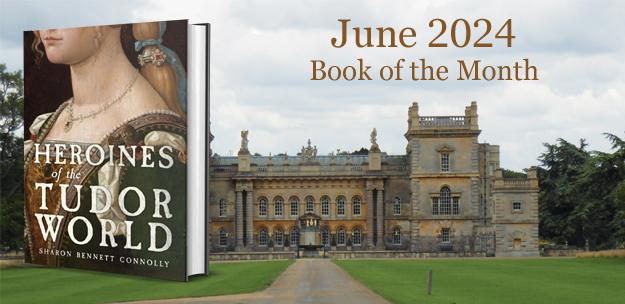
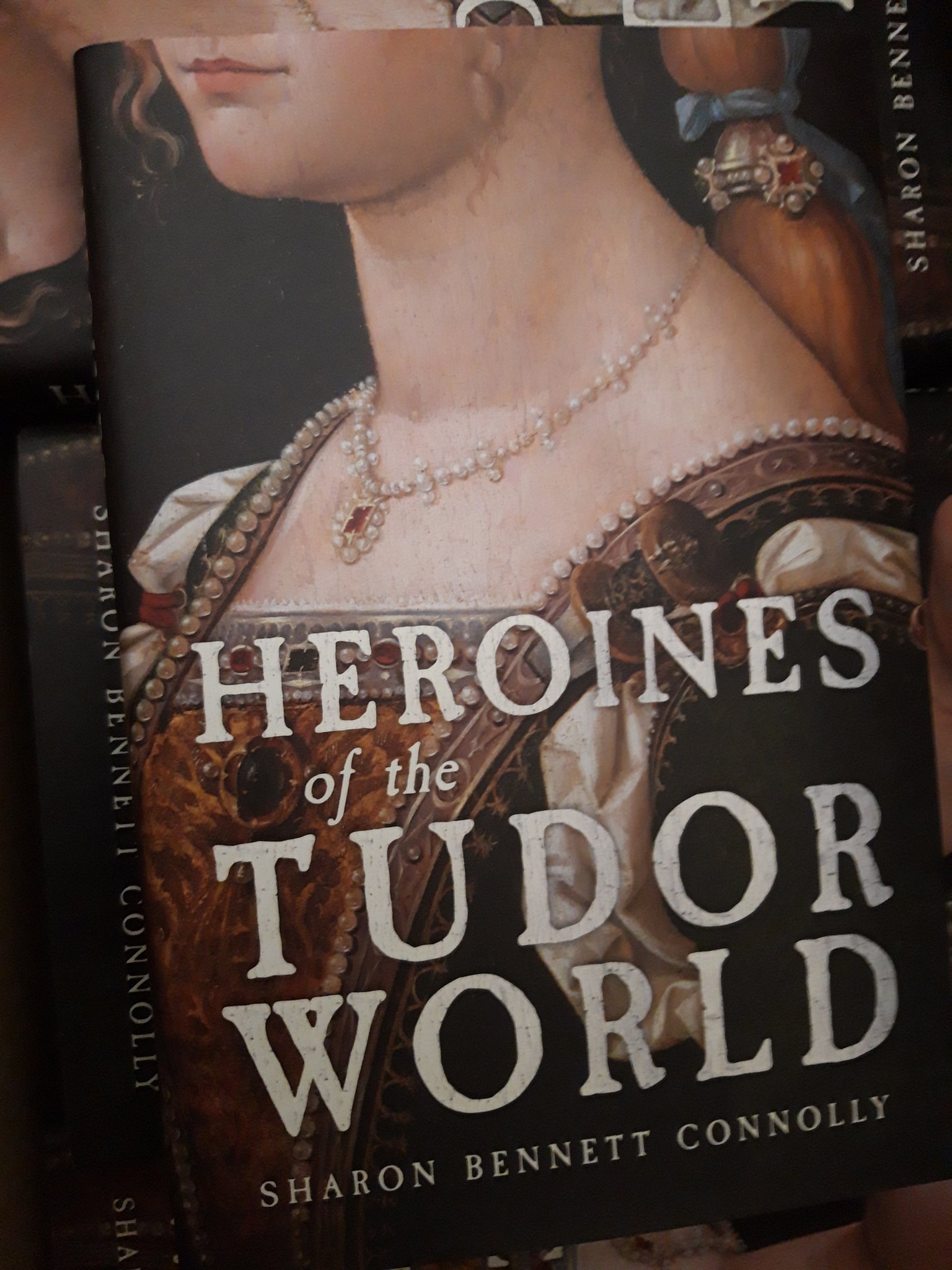


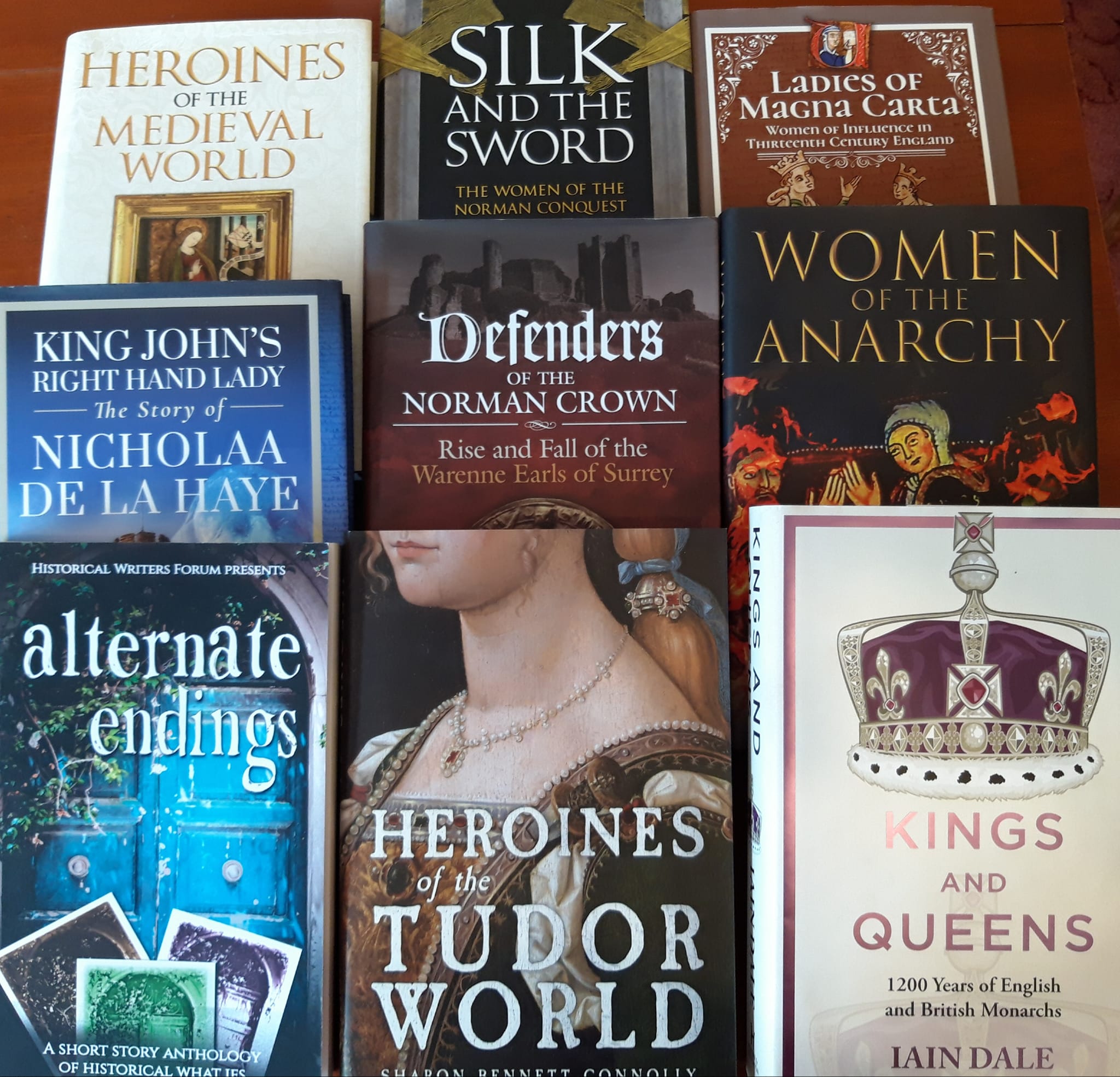



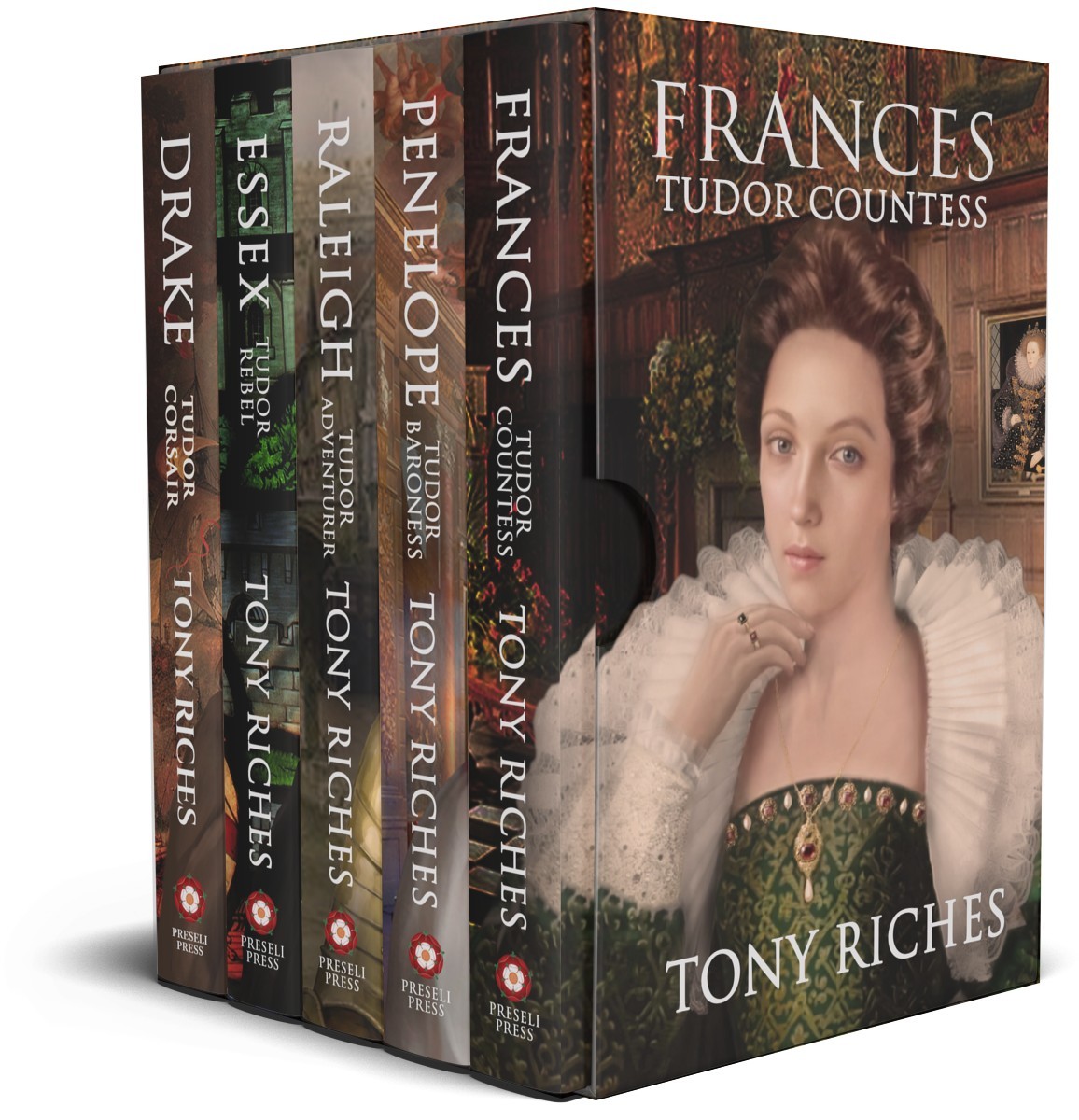
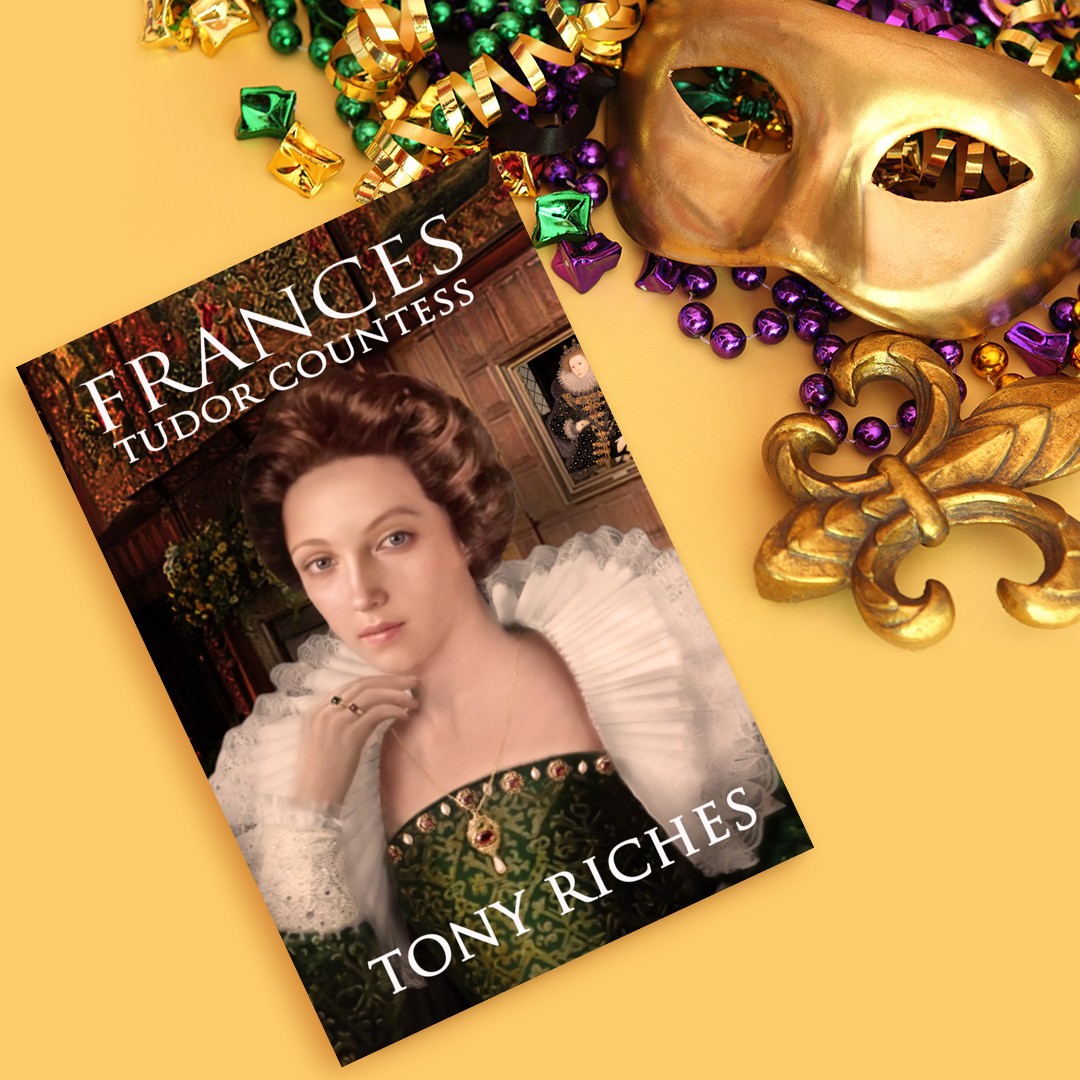

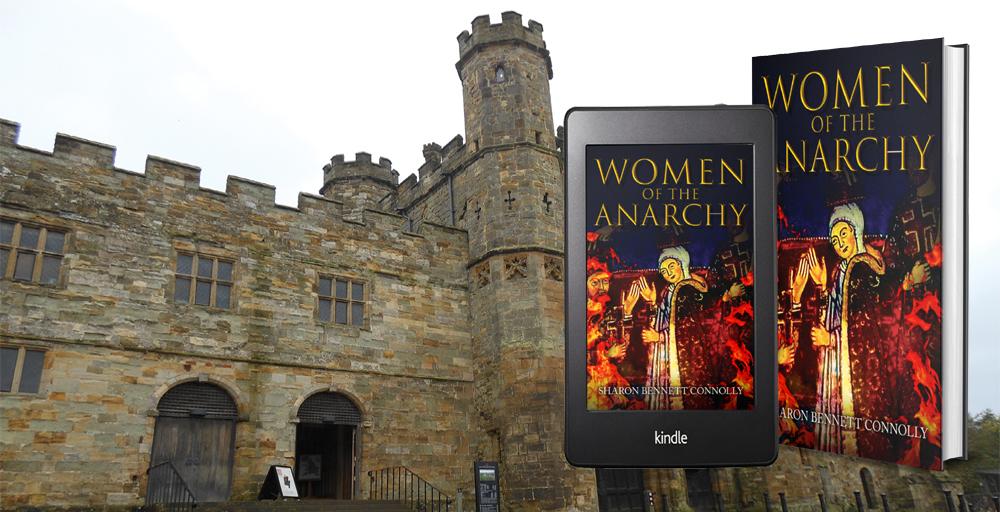


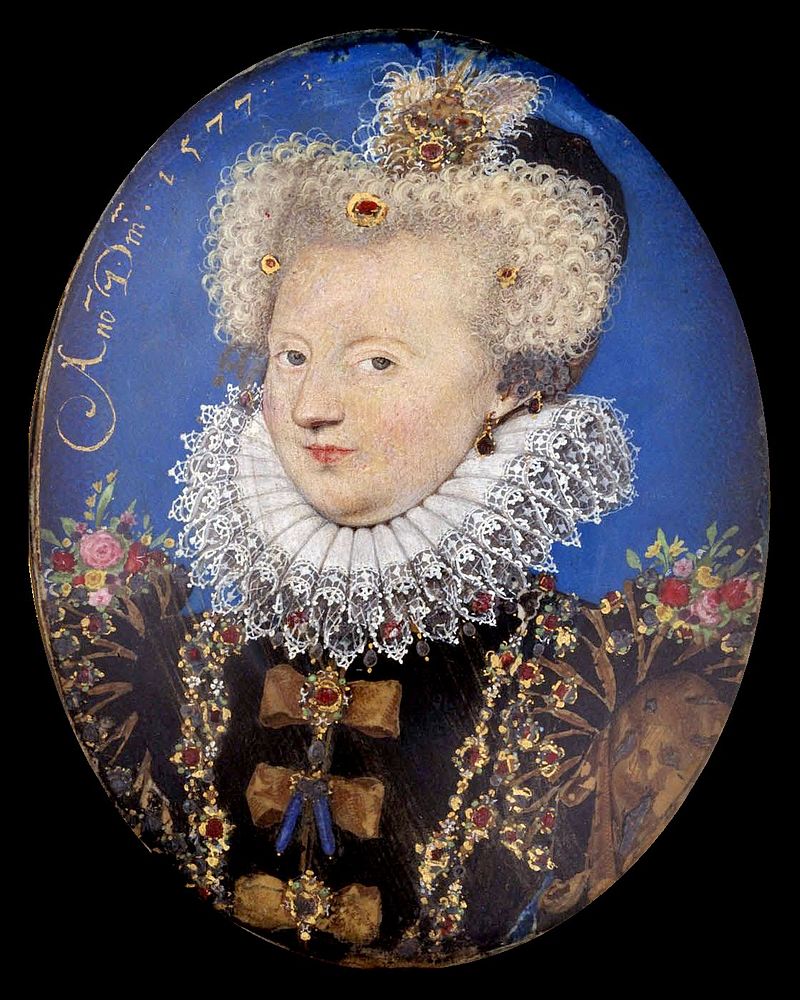

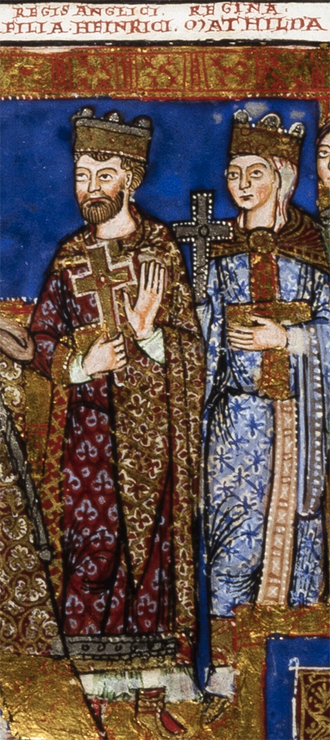
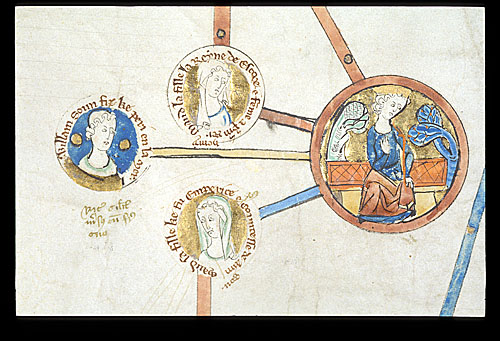
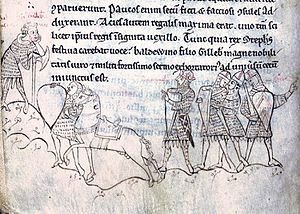
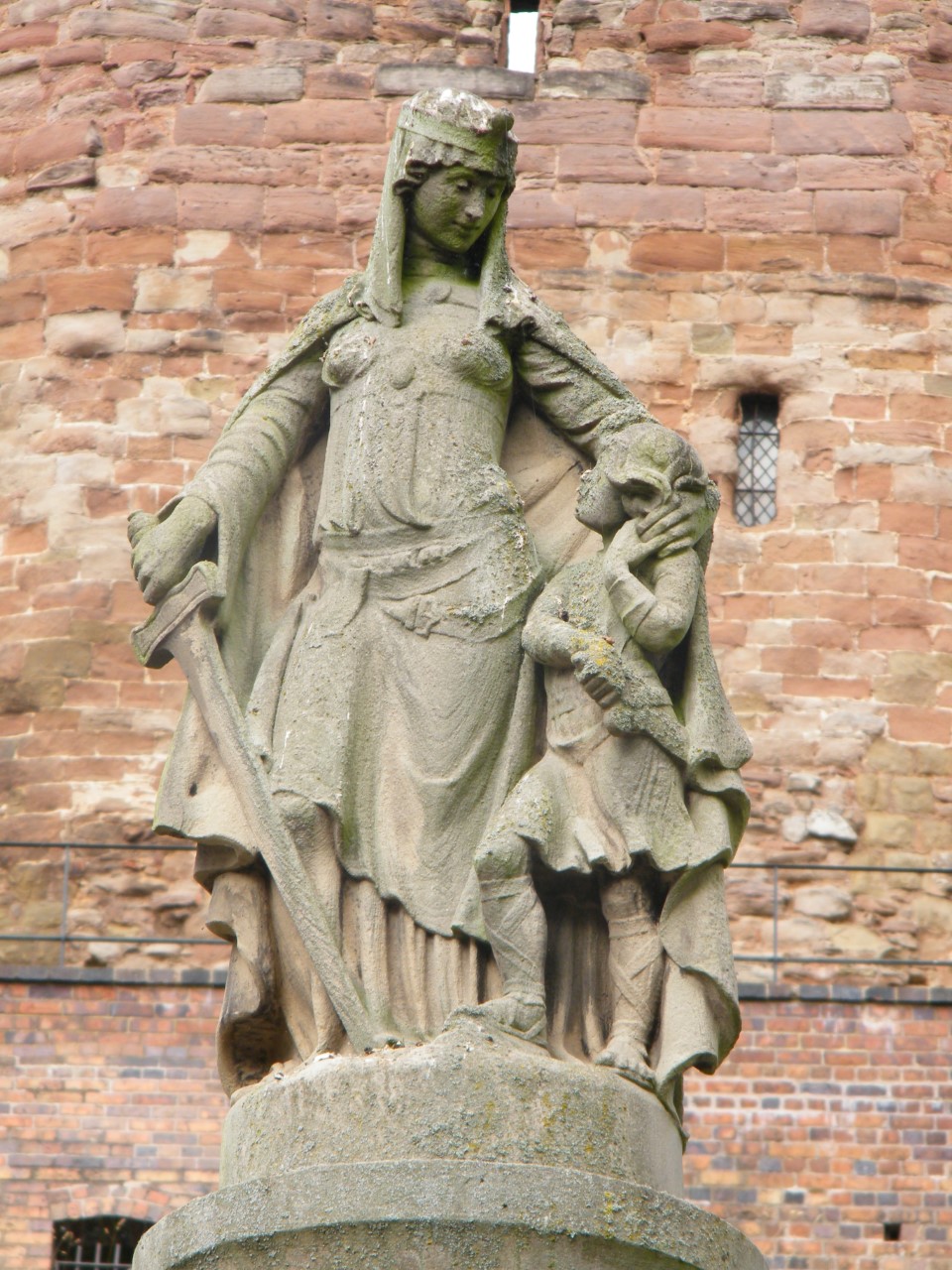

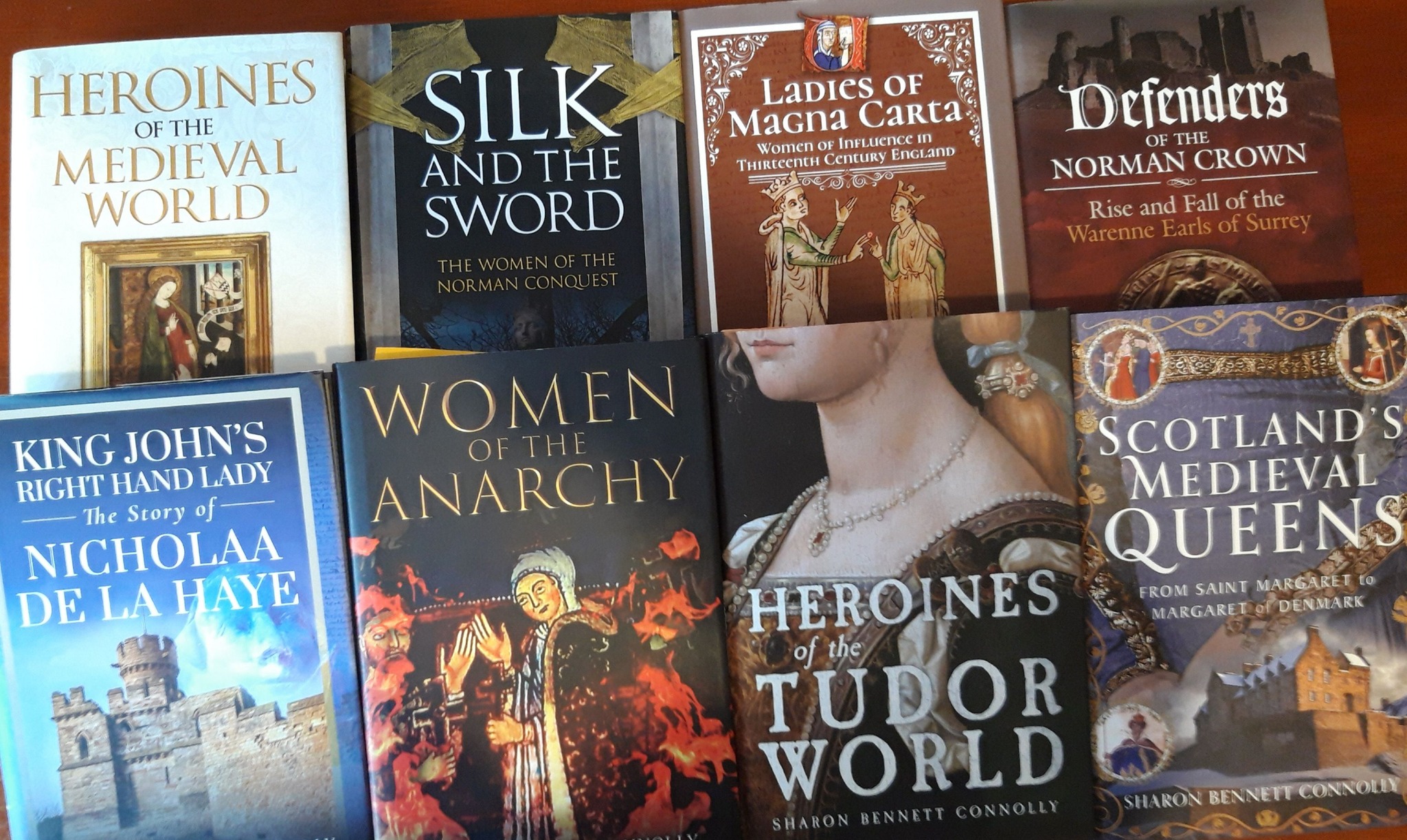


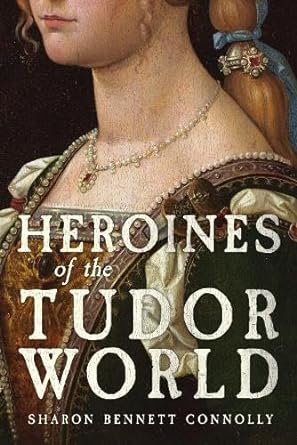


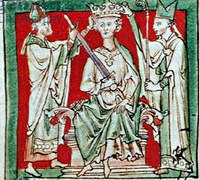





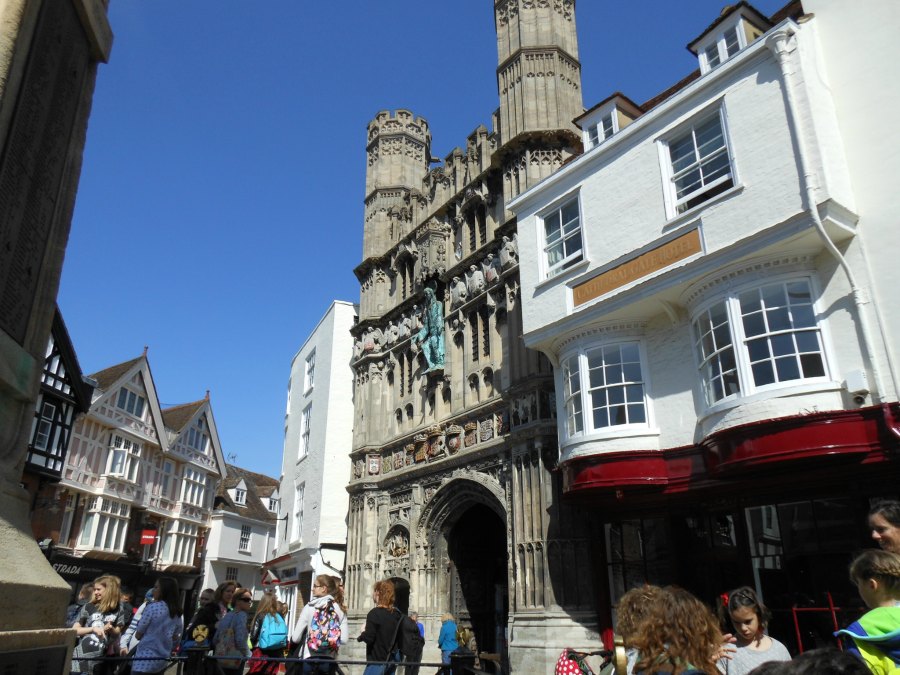







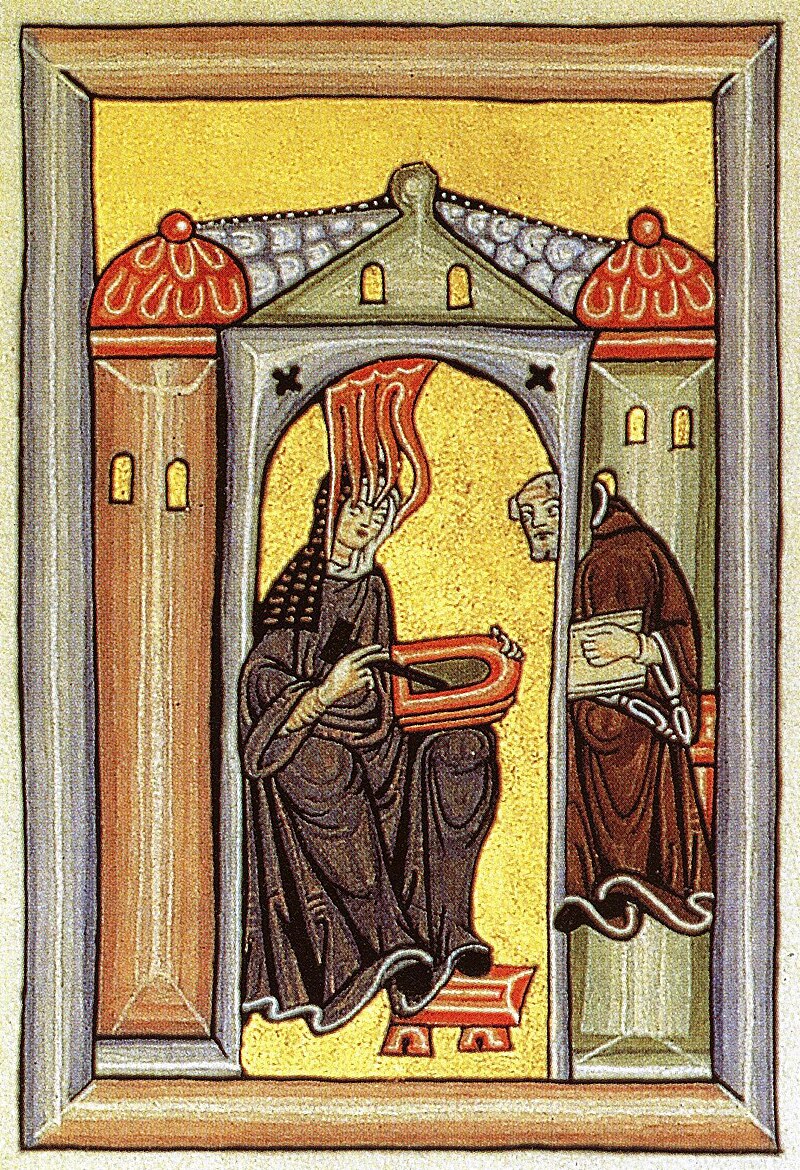

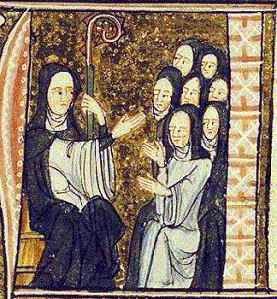



 History... the interesting bits!