Guest Post: The Festive History of Gingerbread and “The Twelve Days of Christmas” by Grace Tierney

It’s December!

And to get us in the Christmas spirit, I have a wonderful guest post from Grace Tierney, looking into the history of two of our greatest Christmas traditions.

The Festive History of Gingerbread and “The Twelve Days of Christmas”

History...the Interesting Bits

I’ve spent the last three years researching the words and traditions Christmas gave to the English language for my book “Words Christmas Gave Us”. The old roots of festive traditions are truly fascinating and a doorway to history. You can use Crusader spices in your mince pies and honour the Vikings by kissing under mistletoe. Two such doorways are the histories of gingerbread and the stories behind the lyrics of “The Twelve Days of Christmas”.

I always make gingerbread at Christmas and if your family makes (or eats) a gingerbread house at Christmas you have a fairytale to thank for it, and you’re continuing a history which goes back 5,000 years.

Gingerbread entered the English language in the late 1200s, spelled as gingerbrar but at that time the word was for preserved ginger. It arrived from Old French ginginbrat (ginger preserve) and Medieval Latin gingimbratus (gingered). By the mid 1300s the end of the word had changed to brede (bread) as the idea of sweet cakes spiced with ginger gained popularity, probably thanks to Crusaders returning to Europe with spices.

Ginger root had been used in medicine and food long before the 1300s, however. The plant was grown in China around 5,000 years ago and used in their traditional medicines. Some food historians claim early recipes for gingerbread date to 2400 B.C. in Greece. Certainly by the 1400s there are references to a gingerbread bakers’ guild in Germany.

History...the Interesting Bits

Gingerbread figures are popular too, just as they are today. These date back to Tudor times. Shakespeare mentions them in “Love’s Labour’s Lost” in 1598. They were made to resemble important guests at the court of Queen Elizabeth I so they were much more elaborate and unique than the gingerbread man we cut out in our festive kitchens today. The giving of such figures on religious feast days at that time may explain gingerbread’s modern association with Christmas, although children’s stories about gingerbread men in the 1800s probably helped too.

The fairytale connection gives us the Christmas classic, the gingerbread house, thanks to the two folk-tale collectors, the famous Brothers Grimm. When they published the tale of Hansel and Gretel in 1812 the idea of a witch’s house made from bread sparked the readers’ imaginations. German bakers were quick to create the houses to sell to their customers and in the process started another tasty Christmas tradition. In fact in later editions of the tale, the word bread was changed to gingerbread in response to these new, and quickly beloved, gingerbread houses.

Thus the gingerbread house has a 5,000 year old history spanning Greece, Crusaders, German folk-tales, and the Tudor court before it reaches our homes at Christmas.

The chances of you hearing a choir or radio warbling “The Twelve Days of Christmas” in December this year are pretty high, but the rather strange lyrics provide another doorway into history and are well worth exploring as you listen to the tune.

First published in the late 1700s, “The Twelve Days of Christmas” is a popular English carol which lists the gifts given to the singer by their true love. The gift-giver is a very generous friend or romantic suitor who wants to celebrate on each day of the Christmas season with their loved one.

History...the Interesting Bits

The origin of the song is obscure. Some sources believe it was originally chanted by children as a memory game. Each child would add a line and you paid a forfeit if you forgot one.

The twelve days refer to the traditional English Christmas season from Christmas Day until Twelfth Night which falls on the 5th of January, although there was a version called “The Ten Days of Christmas” in the north of England.

One theory, dating to the 1990s and well debunked by now, arose that the lyrics were reminders to Catholic children of the articles of their faith when it was outlawed in England. The “two turtle doves” were the old and new testaments, the “ten lords “were the ten commandments, and the “true love: was from God at baptism.

Apparently it would cost your true love £28,000 to send these gifts in the 2020s which is  very generous by most people’s standards. It rises closer to £119,000 if the gifts are bought repeatedly each time they’re mentioned in the song’s cumulative verses.

Now let’s take a look at each of the gifts and what meanings they may contain.

A Partridge in a Pear Tree – It should be noted that partridges are ground birds and don’t perch in trees, although this particular line may come from an earlier song which had a line about a pie sitting in a pear tree. This doesn’t refer to the classic Tudor love of a festive pie, it’s a magpie which is perching in the tree this time which is feasible.

Two Turtle Doves – It’s mentioned in the Bible that two turtle doves were sacrificed at the circumcision of Jesus, so this one may be a reference to that ceremony or even to love with the birds representing a pair of lovers.

Three French Hens – French in this case simply means foreign, and is probably included to make them seem special or expensive relative to local hens.

Four Calling Birds – Earlier versions of the lyrics presented the receiver with four canary birds, four mockingbirds, or four colly (or collie) birds which is an archaic term for blackbirds. Blackbirds were called colly birds because of coal, which is black. Coal is associated with Christmas in two other ways – the coal you bring if you are First Footing in Scotland and the coal in your stocking if you’ve been naughty and have found yourself on the wrong list.
History...the Interesting Bits

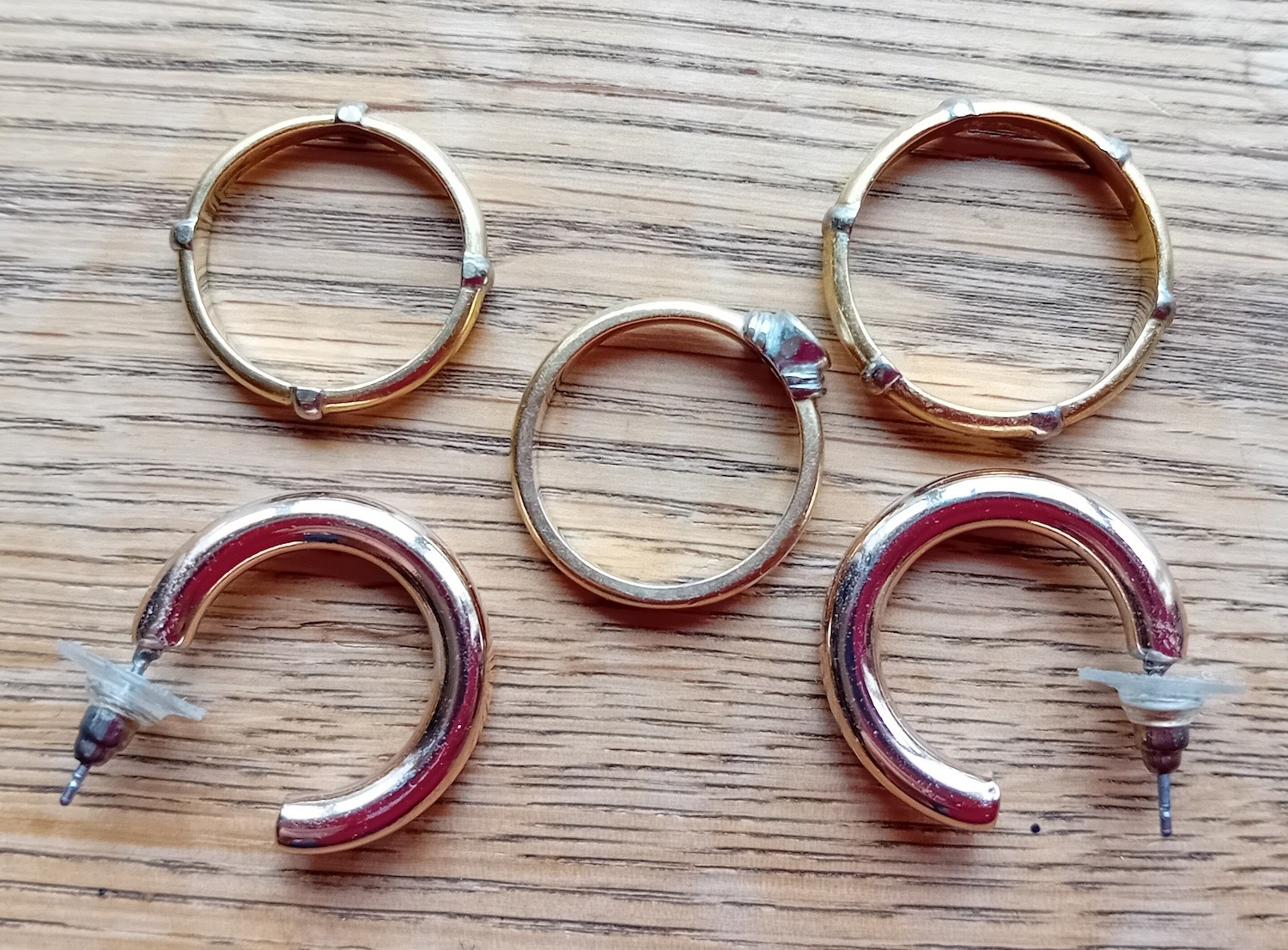
Five Golden Rings – The rings are perhaps the most obvious choice of gift from a lover (although five seems excessive) but this may be a mishearing of goldspinks, an alternative word for goldfinches, yet another bird. Certainly by 1780 song illustrations show the rings as being jewellery.

Six Geese a-Laying – the goose was the bird of choice for Christmas feasting until relatively recent times in the British Isles.

Seven Swans a-Swimming – Since the 1100s the British monarch owns the mute swans on the River Thames. The British Royal Family still maintains a Royal Swan Keeper and this is historically because swans were eaten at special feasts. This makes the seven swans here a very valuable gift indeed, although thankfully swans are now a protected species and nobody eats them.

Eight Maids a-Milking – These particular maidens appear to be dairy maids at work, perhaps creating cheese and butter for the feasting.

Nine Ladies Dancing – Having gathered all the items for decoration and feasting the giver now moves on to inviting guests and creating some music. The ladies get the party started.

Ten Lords a-Leaping – If you have pretty ladies dancing it won’t be long before gentlemen arrive to join them. Tudor era dances involved leaping, and lifting of the ladies, so the gents are in perfect form here.

Eleven Pipers Piping – Small pipes and flutes would provide the melody for the dance.
History...the Interesting Bits

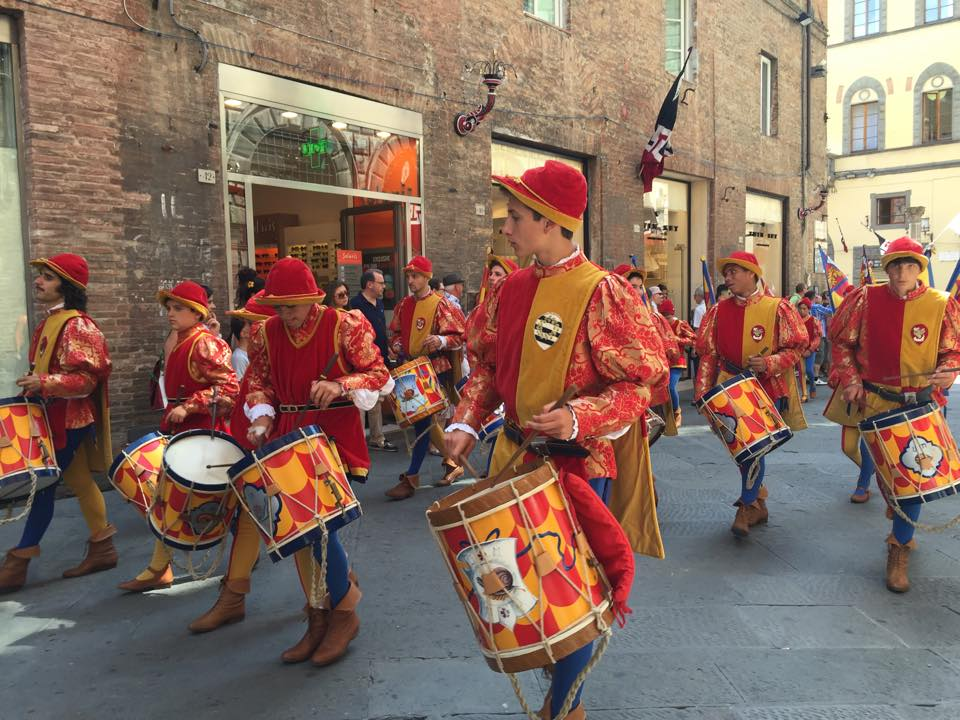
Twelve Drummers Drumming – Add some percussion and the scene is set for a perfect Twelfth Night revel. The true love had a passion for party planning as well as gift giving.

While we no longer party for the entire twelve days between the 25th of December and the 5th of January, if you need to plan a Tudor style revel this year, the song might well be your guide (although please leave the swans alone or sculpt them in chocolate or marzipan). The song gives us a glimpse back in time to some serious next level gift giving and yuletide feasting.

Finally, if you enjoy parodies, look up Frank Kelly’s “Christmas Countdown”, a classic comedy sketch which recounts how the generous gifts recounted in the song ruined Christmas for one Irish recipient. You might know Frank better as the alcoholic Father Jack in the sitcom “Father Ted”.

Wishing you all a very Merry Christmas and hoping it lasts for twelve days and includes plenty of gingerbread.

About Grace Tierney

Grace Tierney is an author, and blogger writing on Ireland’s coast. She blogs about the history of unusual words at http://wordfoolery.wordpress.com every Monday and broadcasts a monthly slot about etymology on LMFM radio since 2020.

Her books about words are “Words Christmas Gave Us”, “How To Get Your Name in the Dictionary” (the extraordinary lives of those who gave their names as eponyms to English), “Words The Sea Gave Us” (nautical nouns from fishermen, pirates, and explorers), “Words the Vikings Gave Us” (how Vikings gave us everyday English words), and “Modern Words with Old Roots” (the ancient histories of 50 modern words).

Her favourite Christmas word is twixtmas because it’s the quiet part of the season, spent with family, friends, and a heap of new books.

Grace’s Social Media Links

http://www.twitter.com/Wordfoolery
http://www.facebook.com/gracetierneywriter
http://www.bsky.app/profile/wordfoolery.bsky.social
http://www.instagram.com/wordfoolery/

Where to Buy “Words Christmas Gave Us”

“Words Christmas Gave Us” by Grace Tierney is out now in hardback, paperback, and ebook format.
Physical copies are available from Amazon worldwide, waterstones.com , and foyles.co.uk as well as select independent bookstores and libraries.
All the links are at https://wordfoolery.wordpress.com/my-books/
Signed copies are available directly from the author via https://wordfoolery.wordpress.com/would-you-like-a-signed-copy/

Words Christmas Gave Us” unwraps the stories behind the season, via festive words from advent to yule and grinch to scurryfunge. This book, the third in the series, explores the influence of Greeks, Romans, Vikings, Tudors, Dickens, and of course Santa Claus, on worldwide traditions, merry music, decorations, feasts, and more. Discover why Jean-Paul Sartre wrote a nativity play, when Jingle Bells was sung in space, what Christmas decoration used to contain false teeth, how a newspaper typo started Santa tracking, and plenty of festive folklore traditions.

Ideal for word geeks, Christmas enthusiasts, and anybody who’s ever said Bah Humbug or Ho Ho Ho.

*

My Books

Signed, dedicated copies of all my books are available through my online bookshop.

Out now: Scotland’s Medieval Queens

Books by Sharon Bennett Connolly

Scotland’s history is dramatic, violent and bloody. Being England’s northern neighbour has never been easy. Scotland’s queens have had to deal with war, murder, imprisonment, political rivalries and open betrayal. They have loved and lost, raised kings and queens, ruled and died for Scotland. From St Margaret, who became one of the patron saints of Scotland, to Elizabeth de Burgh and the dramatic story of the Scottish Wars of Independence, to the love story and tragedy of Joan Beaufort, to Margaret of Denmark and the dawn of the Renaissance, Scotland’s Medieval Queens have seen it all. This is the story of Scotland through their eyes.

Scotland’s Medieval Queens gives a thorough grounding in the history of the women who ruled Scotland at the side of its kings, often in the shadows, but just as interesting in their lives beyond the spotlight. It’s not a subject that has been widely covered, and Sharon is a pioneer in bringing that information into accessible history.’ Elizabeth Chadwick (New York Times bestselling author)

Available now from Amazon and Pen and Sword Books

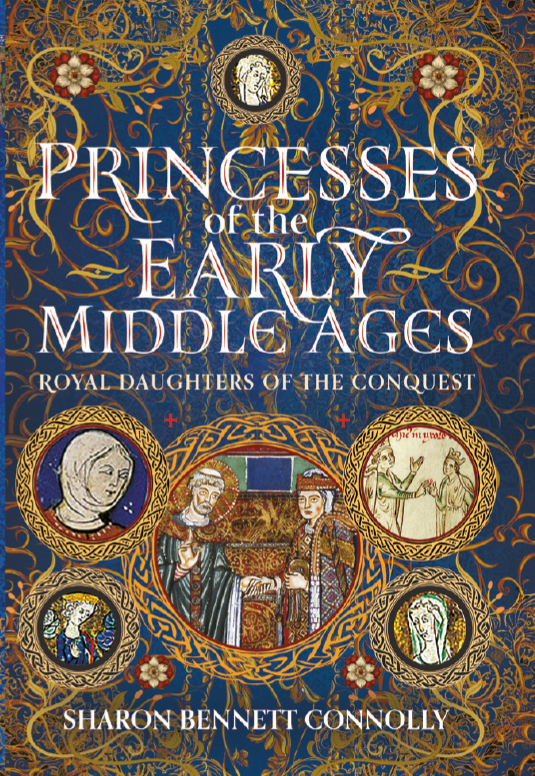
Coming 30 March 2026: Princesses of the Early Middle Ages
Books by Sharon Bennett Connolly

Daughters of kings were often used to seal treaty alliances and forge peace with England’s enemies. Princesses of the Early Middle Ages: Royal Daughters of the Conquest explores the lives of these young women, how they followed the stereotype, and how they sometimes managed to escape it. It will look at the world they lived in, and how their lives and marriages were affected by political necessity and the events of the time. Princesses of the Early Middle Ages will also examine how these girls, who were often political pawns, were able to control their own lives and fates. Whilst they were expected to obey their parents in their marriage choices, several princesses were able to exert their own influence on these choices, with some outright refusing the husbands offered to them.

Their stories are touching, inspiring and, at times, heartbreaking.

Princesses of the Early Middle Ages: Royal Daughters of the Conquest is now available for pre-order.

Also by Sharon Bennett Connolly:

Books by Sharon Bennett Connolly

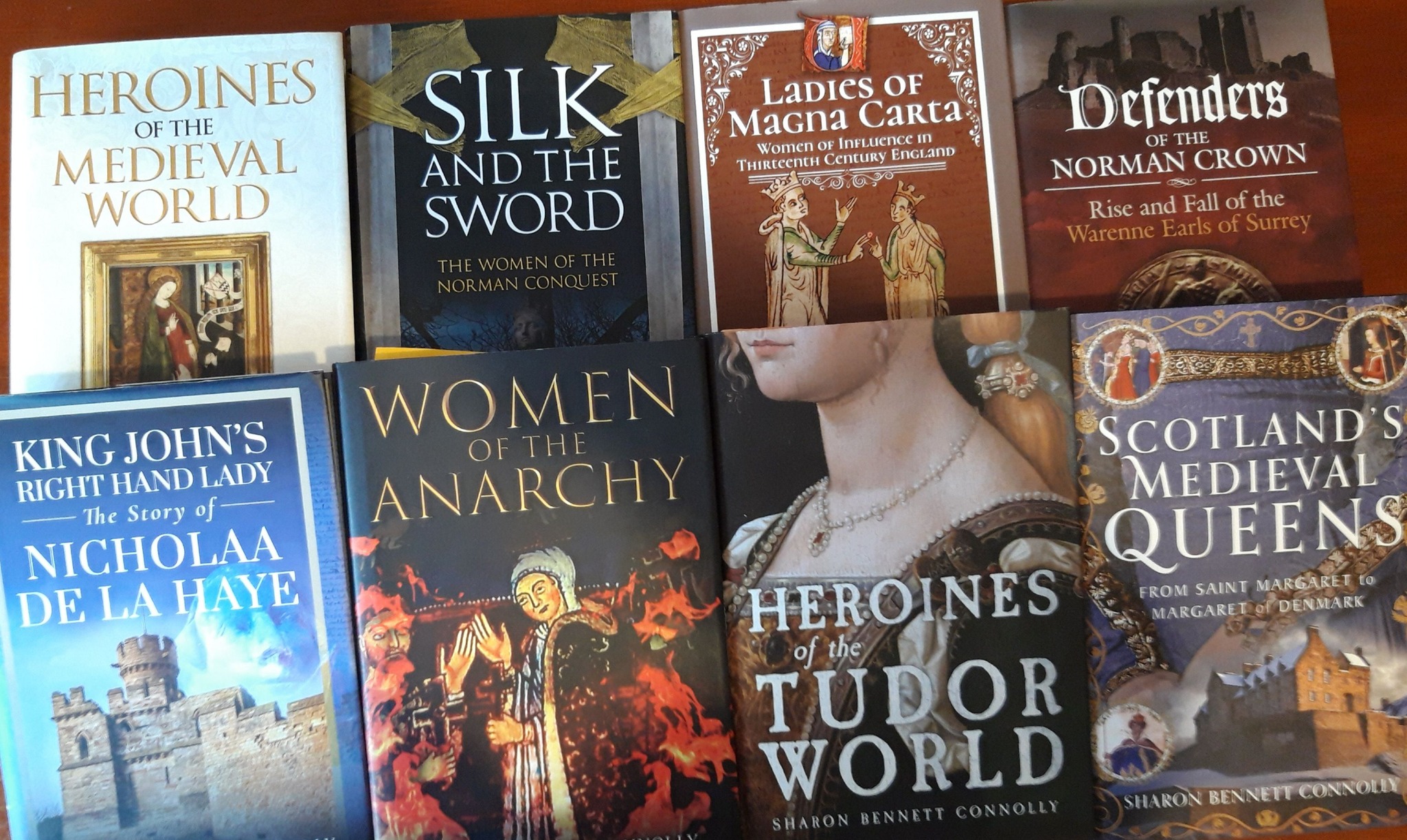
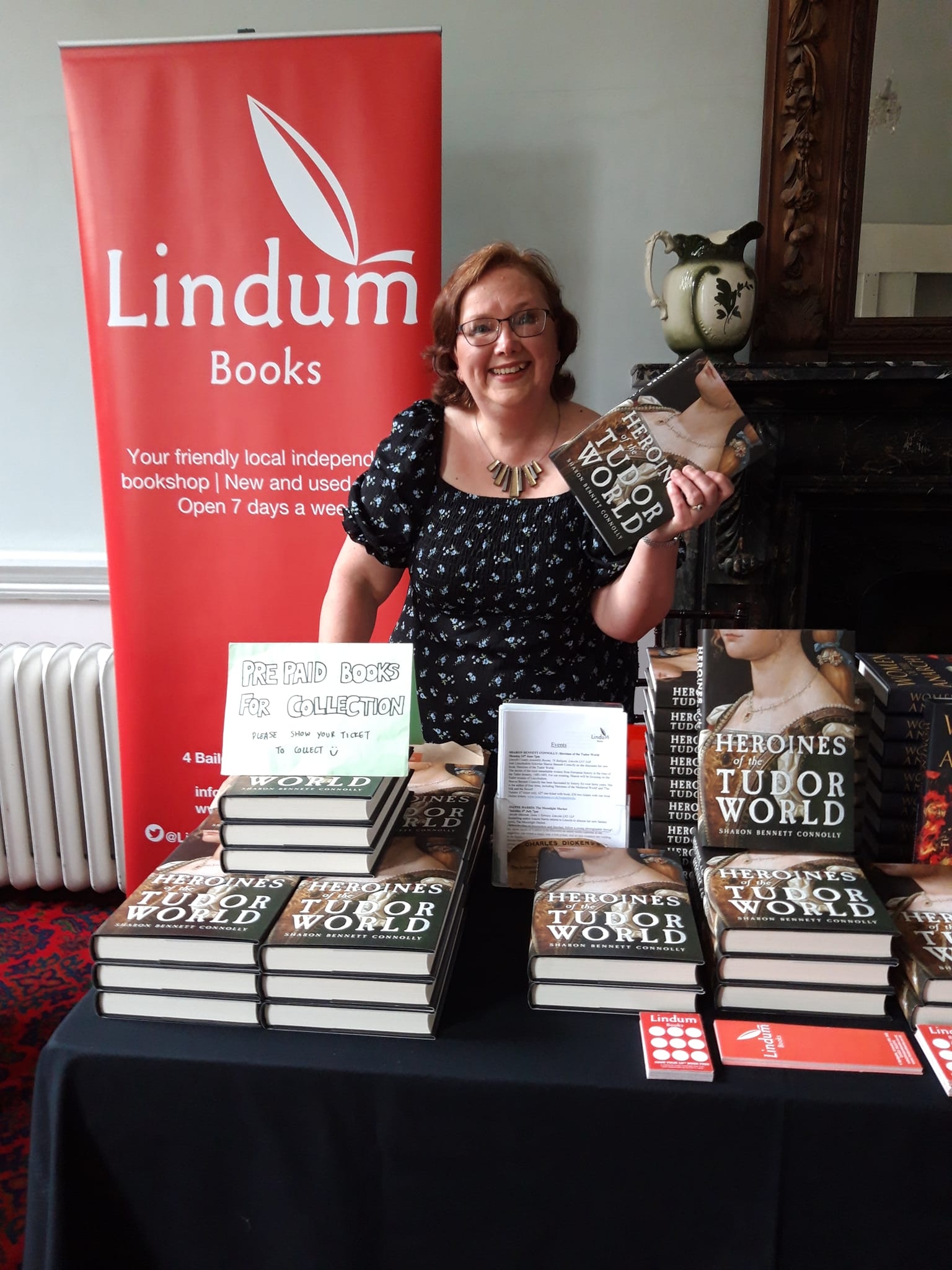
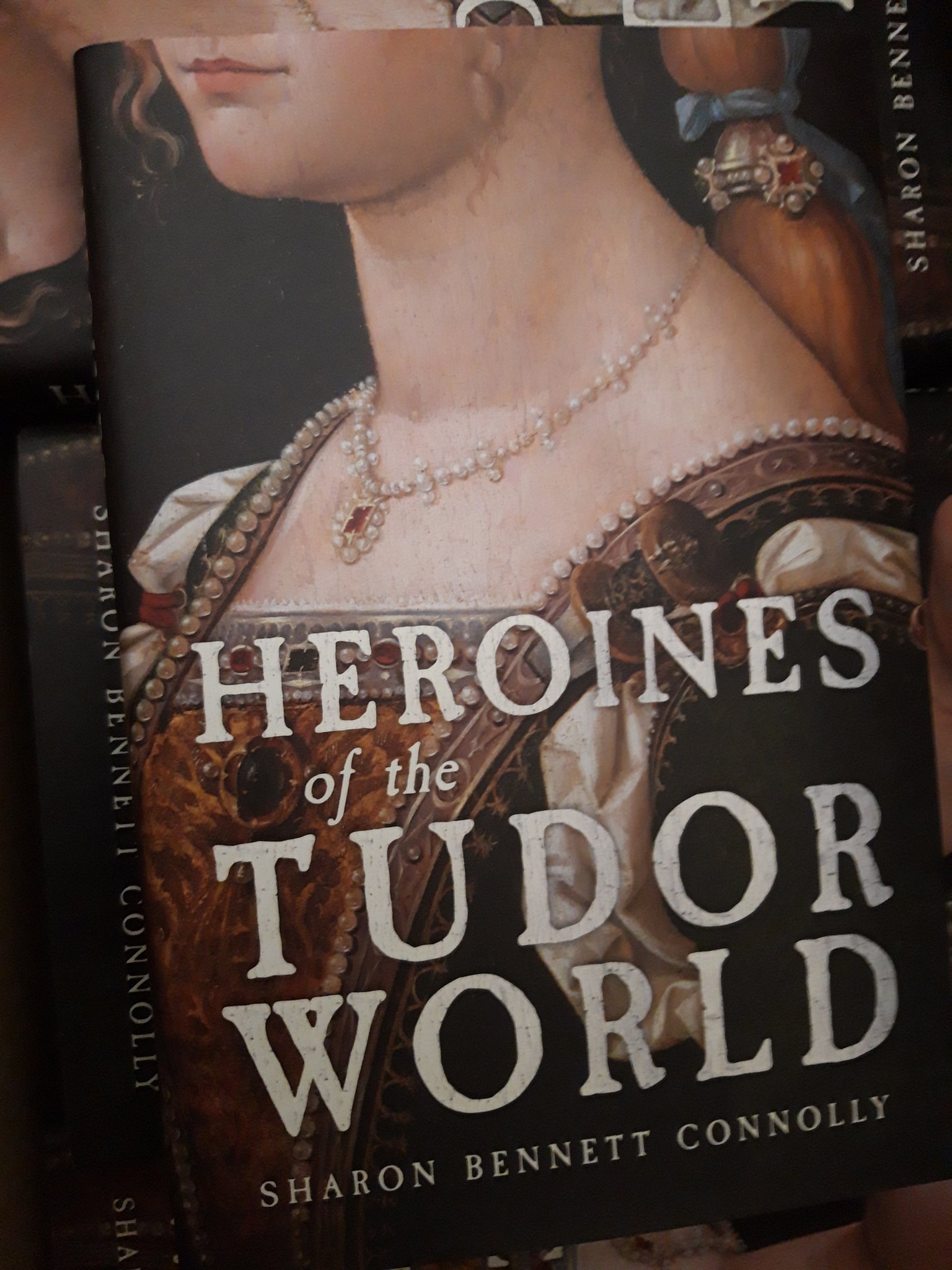
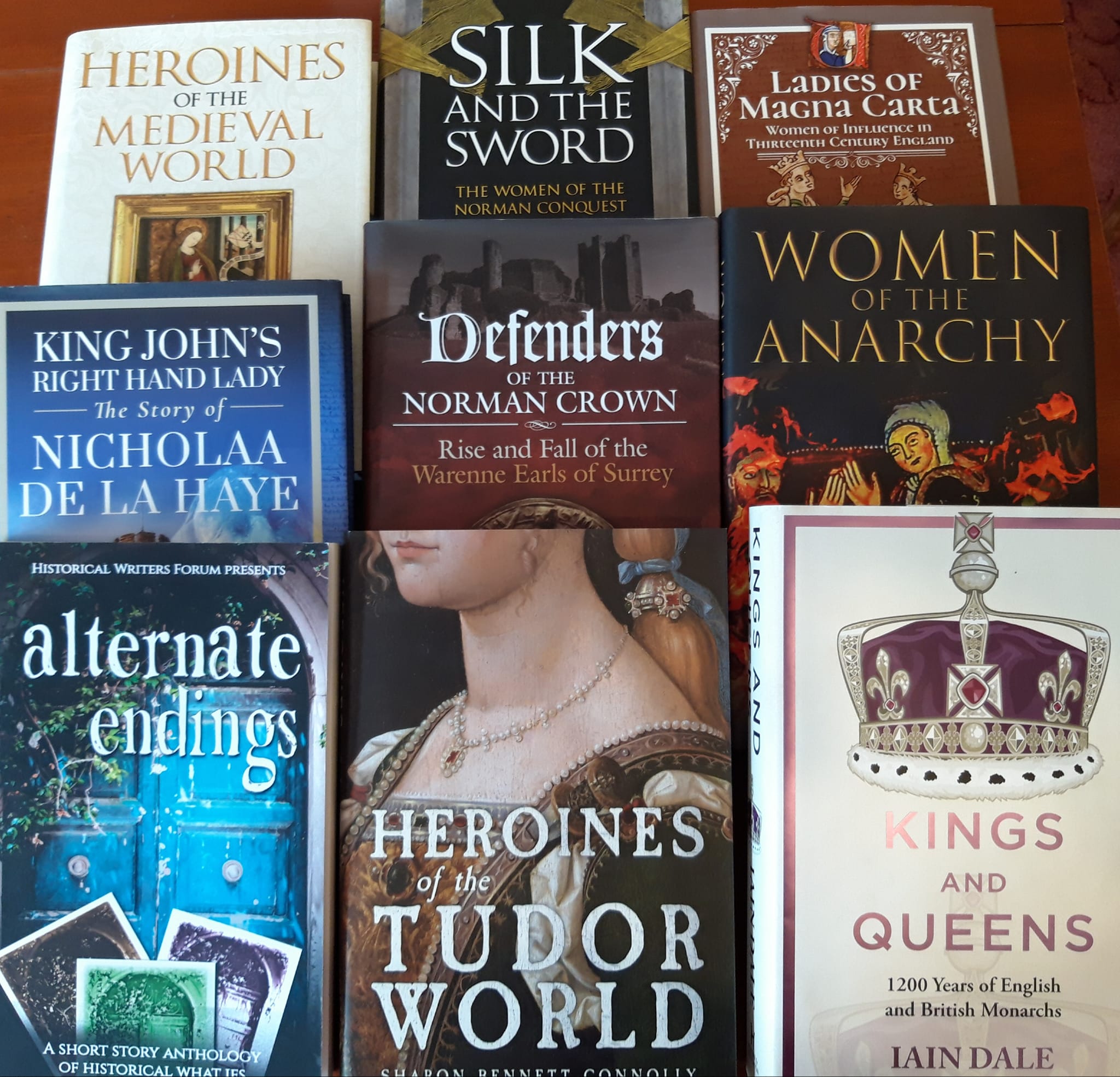
Heroines of the Tudor World tells the stories of the most remarkable women from European history in the time of the Tudor dynasty, 1485-1603. These are the women who ruled, the women who founded dynasties, the women who fought for religious freedom, their families and love. Heroines of the Tudor World is now available from Amberley Publishing and Amazon UK. Women of the Anarchy demonstrates how Empress Matilda and Matilda of Boulogne, unable to wield a sword themselves, were prime movers in this time of conflict and lawlessness. It shows how their strengths, weaknesses, and personal ambitions swung the fortunes of war one way – and then the other. Available from Bookshop.orgAmberley Publishing and Amazon UKKing John’s Right-Hand Lady: The Story of Nicholaa de la Haye is the story of a truly remarkable lady, the hereditary constable of Lincoln Castle and the first woman in England to be appointed sheriff in her own right. Available from all good bookshops Pen & Sword Booksbookshop.org and Amazon

Royal Historical Society

Defenders of the Norman Crown: The Rise and Fall of the Warenne Earls of Surrey tells the fascinating story of the Warenne dynasty, from its origins in Normandy, through the Conquest, Magna Carta, the wars and marriages that led to its ultimate demise in the reign of Edward III. Available from Pen & Sword BooksAmazon in the UK and US, and Bookshop.orgLadies of Magna Carta: Women of Influence in Thirteenth Century England looks into the relationships of the various noble families of the 13th century, and how they were affected by the Barons’ Wars, Magna Carta and its aftermath; the bonds that were formed and those that were broken. It is now available in paperback and hardback from Pen & SwordAmazon, and Bookshop.orgHeroines of the Medieval World tells the stories of some of the most remarkable women from Medieval history, from Eleanor of Aquitaine to Julian of Norwich. Available now from Amberley Publishing and Amazon, and Bookshop.orgSilk and the Sword: The Women of the Norman Conquest traces the fortunes of the women who had a significant role to play in the momentous events of 1066. Available now from Amazon,  Amberley Publishing, and Bookshop.org.

Alternate Endings: An anthology of historical fiction short stories including Long Live the King… which is my take what might have happened had King John not died in October 1216. Available in paperback and kindle from Amazon.

Podcast:
A Slice of Medieval

Have a listen to the A Slice of Medieval podcast, which I co-host with Historical fiction novelist Derek Birks. Derek and I welcome guests, such as Bernard Cornwell, Elizabeth Chadwick and Scott Mariani, and discuss a wide range of topics in medieval history, from significant events to the personalities involved. 

There are now over 80 episodes to listen to!

Every episode is also now available on YouTube.

*

Don’t forget! Signed and dedicated copies of all my books are available through my online bookshop.

For forthcoming online and in-person talks, please check out my Events Page.

You can be the first to read new articles by clicking the ‘Follow’ button, liking our Facebook page or joining me on TwitterThreadsBluesky and Instagram.

*

©2025 Sharon Bennett Connolly FRHistS and Grace Tierney

Wordly Women: Rosemary Griggs

History... the Interesting BIts

Just over a year ago I spent a fabulous weekend at the Historical Novel Society Conference at Dartington Hall in Devon. Derek and I hosted a panel under our A Slice of Medieval podcast banner, featuring Elizabeth Chadwick, David Gilman and Matthew Harffy. Bernard Cornwell was on before us and Ian Mortimer followed us onto the stage. I got to meet some of my heroes. Ian Mortimer was lovely to chat to. Michael Jecks told some great stories, one featuring a late-night hotel fire alarm. Steven A. McKay and I talked like old friends, even though it was the first time we had actually met. I got to discuss Emma of Normandy with Patricia Bracewell and medieval Yorkshire with Claire Dunn (C.F. Dunn).

It was a fabulous weekend! And amidst it all I had a chat with Rosemary Griggs. It was cut short because Rosemary knows the area well and was on her way to give a tour of the gardens. So, I was over the moon when Rosemary agreed to participate in my Wordly Women series, so we could have a proper natter!

And Rosemary is another champion of highlighting those women who should be better known to history!

Sharon: Hi Rosemary, welcome to the blog. First and foremost, what got you into writing?

Rosemary: I’ve always wanted to write; ever since a truly inspirational teacher at primary school encouraged me and also sparked my lifelong interest in history. Over the years, I’ve done a lot of writing of one sort or another. I even once won a prize in a travel writing competition. However, during my Civil Service career, I had to write speeches for government ministers and create carefully crafted policy advice; all rather dry! It’s wonderfully freeing that I can now tell the stories of some truly amazing women who lived in sixteenth century Devon.

Sharon: Tell us about your books

Rosemary: Having spent years delving into Devon’s past, I’ve become particularly fascinated by the Champernowne family. They rose to prominence in the sixteenth century as part of a closely connected network of powerful figures whose influence extended far beyond the county. Within their circle were the likes of Raleigh, Drake, Hawkins, and Grenville—names that still resonate today. Yet, the women are so often forgotten. In my “Daughters of Devon” novels, I bring into the spotlight women often overshadowed by their famous menfolk.

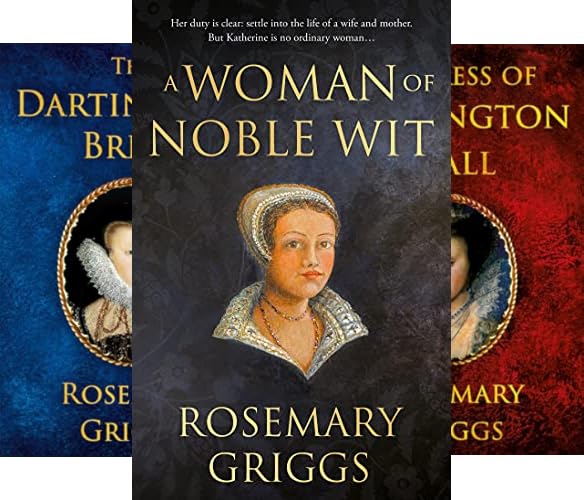
My first novel, A Woman of Noble Wit, is the story of Katherine Champernowne, Sir Walter Raleigh’s mother.

History... the Interesting Bits

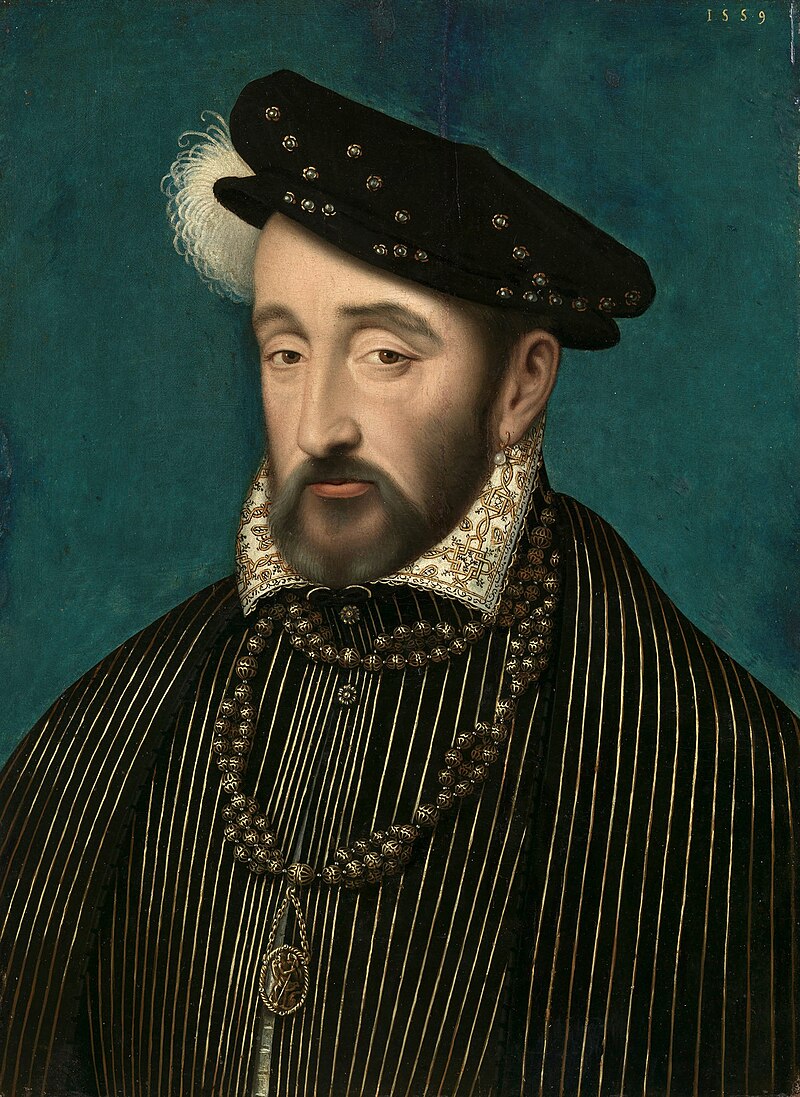
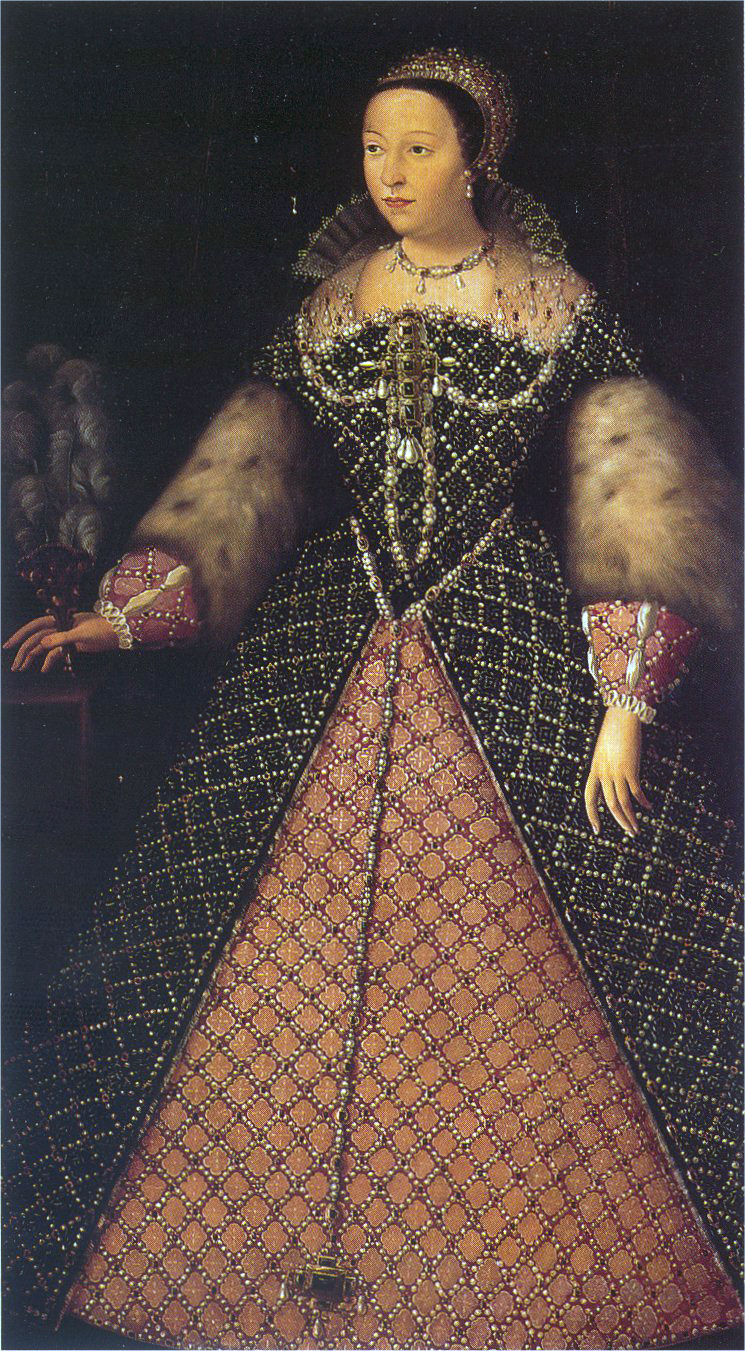
Next to catch my eye was a young French Huguenot woman, daughter of the man who killed King Henri II of France in a jousting accident. Although born in France, Lady Gabrielle Roberda Montgomery married into the Champernowne family and spent most of her adult life at Dartington Hall in Devon. I became so fascinated by the challenges she faced as an incomer to Elizabethan England that her story has spilled into two volumes, The Dartington Bride and recently published Mistress of Dartington Hall.

A lot of other Daughters of Devon are waiting to have their stories told.

Sharon: What attracts you to the Tudor period?

Rosemary: My fascination with the Tudor era began with the larger-than-life characters of the royal court. I’m as enthralled by the tales of Henry VIII and his queens as anyone. However, during that tumultuous period, immense social, political, and religious changes affected everyone, regardless of their wealth. The late fifteenth century saw the printing press’s arrival, which opened up learning and information to a wider audience, including many women. It was an ‘information revolution’, not unlike the transformative changes I’ve witnessed in my own life, especially since the internet was born. It’s working out how ordinary people, especially women, managed in such a rapidly changing world that keeps me rooted in those turbulent Tudor years.

Sharon: Who is your favourite Tudor and why?

Rosemary: Elizabeth I is the one who most fascinates me. Her 45-year reign brought stability after years of turmoil. People remember her as an intelligent, politically astute and powerful ruler. She had a formidable education, becoming fluent in multiple languages. Like many people, I admire Elizabeth for her wit and for her determination. I had always seen the defeat of the Spanish Armada as her greatest victory. However, as I was researching for my latest book, I discovered another side to her character. The queen’s reluctance to pay the soldiers and sailors needed to repel the Spanish invasion, or to provide enough arms and munitions was extremely frustrating for her commanders. Without that change in the wind, the outcome could have been very different.

My current research has also brought home to me how perilous Elizabeth’s life was in the years before she came to the throne. Having survived against the odds; she defied expectations by never marrying. Elizabeth was incredibly clever as she played off her various suitors to maintain or forge political alliances. She gave up a lot to rule alone. I would dearly love to be able to ask her what really happened with Thomas Seymour and whether she ever regretted not marrying Dudley.

Sharon: Who is your least favourite Tudor and why?

Rosemary: It would be easy to plump for Henry VIII as the ruthless tyrant he became in his later years. But I have a soft spot for the charismatic, intelligent young man who became king in1509. Instead, I’d go for his father, Henry VII, who has always seemed to me to be a rather cold, calculating type. Perhaps he had to be to return from exile to wrest the throne from Richard III on the battlefield. Yet I can’t forgive him for executing poor Edward of Warwick, or for his treatment of Catherine of Aragon after Prince Arthur died. Somehow, I cannot warm to Henry VII.

Sharon: How do you approach researching your topic?

Rosemary: I always start with original source documents relating to my character. Then I widen the net to consider what surviving documents reveal about those around them. I’m never happier than when I’m poring over a difficult text in the archives.

I’ve chosen a hard path, as I’m researching women whose imprint on the record is light. I can usually discover much more about the men in their lives, but eventually I’m armed with some key events taken from the record. These form the milestones on my subjects ’journeys through life, and I respect them absolutely. However, the beauty of writing fiction is that I can fill the gaps with creative imagination to weave a plausible narrative around those key events. To do that, I study every detail of Tudor life. I read widely about national events; I sift through accounts of local happenings. I question everything. I also visit the places they knew; I dress as they did. I all brings me closer to their world.

Sharon: Tell us your ‘favourite ’Devon story you have come across in your research.

History... the Interesting Bits

Rosemary: My favourite Devon story doesn’t concern one of the ‘elite ’women I write about. Rather, it is an incident that brings one of the ordinary women of history briefly to our attention. In the mid-1530s, when Thomas Cromwell’s commissioners instructed a man to tear down St Nicholas Priory’s Church in Exeter, Elizabeth Glanfield gathered her friends and neighbours. They would allow no one to desecrate their beloved priory church without a fight. Grabbing brooms, shovels and staves, the pack of women descended on the worker who was dismantling the rood screen. The terrified man climbed high, but the women pursued him until he fell, breaking his arm. Eventually, the mayor of Exeter restored order. When the great and good sat in judgement on Elizabeth and her friends, they expressed the view that men disguised as women perpetrated the attack. Mere women, they suggested, could not be capable of such an act. Fortunately, Elizabeth and her friends escaped serious punishment. However, they did not save their church. Eventually, workers returned to demolish the church. They used some of the stone to repair the Exe bridge into the city. Parts of the priory buildings survived to be converted into an Elizabethan townhouse. Elizabeth Glanfield and the rioting women of Exeter are a rare example of local people resisting the dissolution of the monasteries. There is a longer version of this story on my website.

Sharon: Tell us your least ‘favourite’ Devon story you have come across in your research.

Rosemary: My least favourite is also about another ordinary woman and her appalling fate, although it has also been a tremendous source of inspiration for me. During the reign of Edward VI, Agnes Prest, a poor, uneducated Cornish woman, had heard the scriptures in a language she could understand. Queen Mary insisted she return to the old ways of worship under the Church of Rome. Agnes could not accept what she was being told to believe. The worst part of her story is that her own family, including her husband, ‘shopped ’Agnes to the church authorities. The Bishop of Exeter and all the high-ups of the church summoned Agnes and questioned her. She refused to yield. Eventually, they took Agnes to the prison cells beneath Exeter’s Rougemont Caste. In the second edition of his ‘Book of Martyrs’, Foxe mentions that a gentlewoman, Katherine Raleigh, visited Agnes. In August 1557, that poor Cornish woman walked the short distance from her prison cell to the area of Exeter we now call Southernhay, where she was burned at the stake. She was Exeter’s only Protestant martyr during the reign of Queen Mary.

Sharon: Are there any other eras you would like to write about?

Rosemary: I’ve often thought I could find some strong Devon women who played their part during the English Civil War. However, while recovering from Covid recently, I watched a lot of TV adaptations of Jane Austen novels. I’m now quite drawn to that time too.

Sharon: What are you working on now?

History... the Interesting Bits

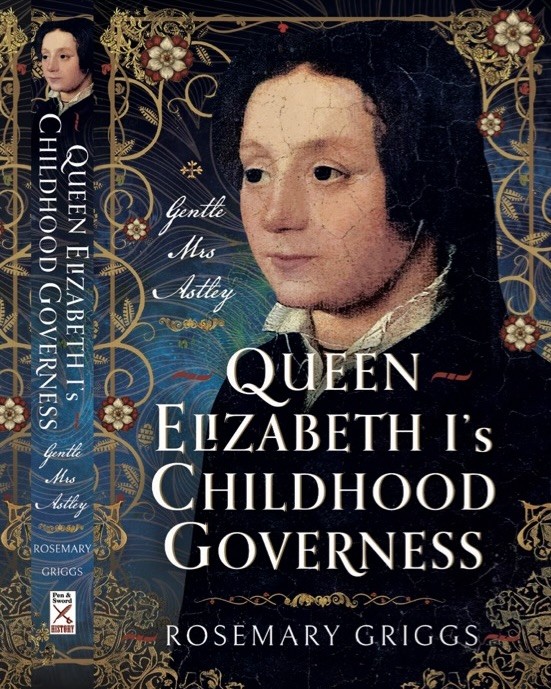
Rosemary: I’m very excited about my current project, my first work of nonfiction. A woman connected to the Champernownes has elbowed her way to the front of the queue of women whose stories I want to tell. Fans of Tudor history know her as Kat Ashley, Queen Elizabeth’s childhood governess. When I began mapping out a fictional account of her life, I found the character emerging from my detailed research was a little different from the woman familiar to us. Going back to the original sources made me question the accepted narrative. I had also discovered some interesting details historians seem to have overlooked. So, I am thrilled that Pen and Sword Books are giving me the opportunity to set out all of my research into this fascinating woman who had so much influence on Elizabeth I. Here is the fantastic jacket design. We are targeting publication summer of 2026.

Sharon: I’m looking forward to getting my hands on a copy – and don’t Pen & Sword do the most gorgeous covers?

Sharon: And finally, what is the best thing about being a writer?

Rosemary: Opening that box, holding your book for the first time is very special. But above all, it is when people tell me my story transported them back in time and they’ve enjoyed reading it, or even that it’s made them think. That’s what makes it all worthwhile.

About the Author:

History... the Interesting Bits

Rosemary Griggs is an author, researcher, seamstress and popular West Country speaker. She has a particular interest in Devon’s sixteenth-century history and the Champernowne family.

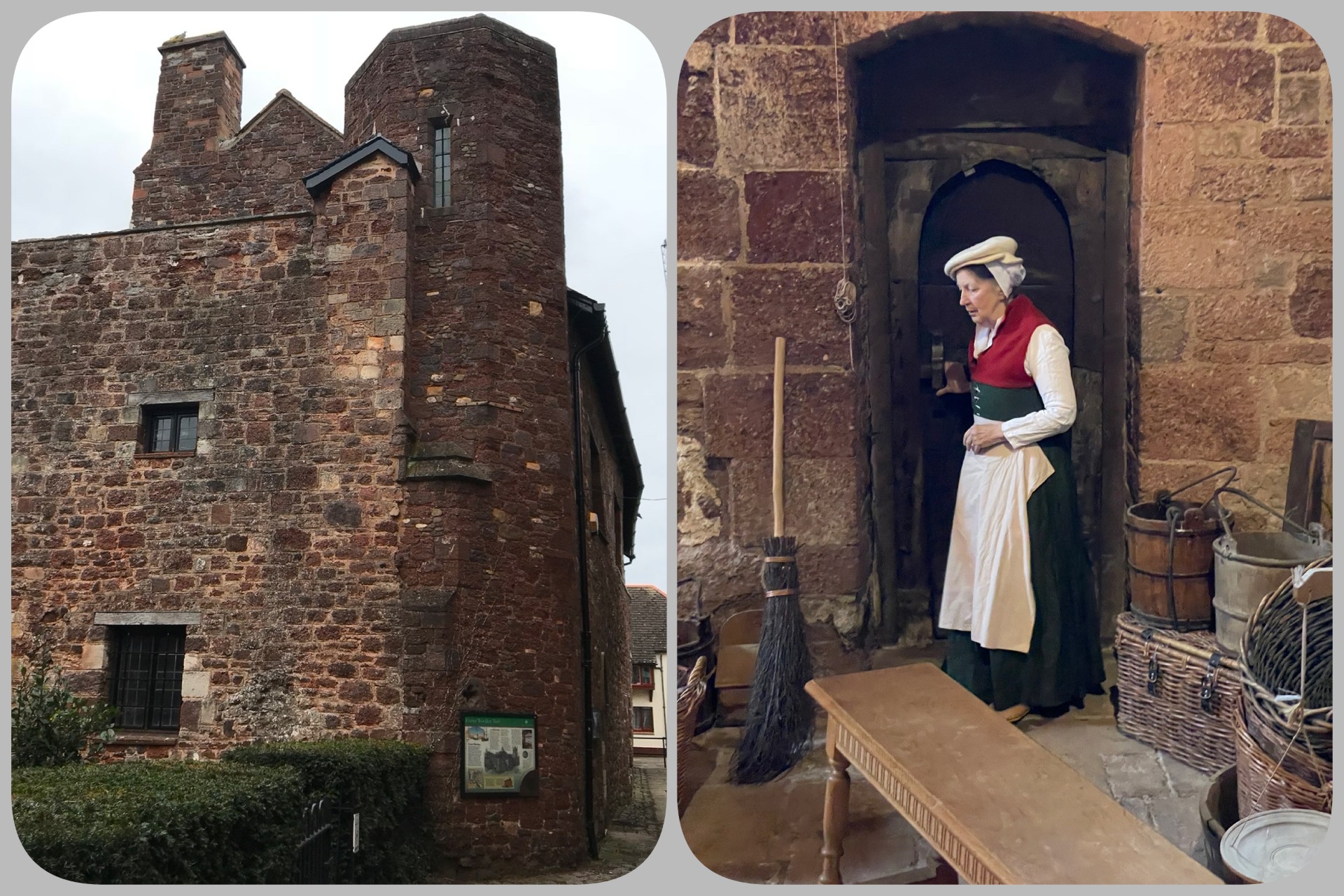
She loves telling the stories of the forgotten women of history; wives, sisters, daughters and mothers who played their part during the tumultuous Tudor years: the Daughters of Devon. Rosemary also researches, creates and wears sixteenth-century clothing. She brings the past to life through a unique blend of theatre, history and re-enactment at appearances and talks for museums and community groups all over the West Country. Out of costume, Rosemary leads heritage tours of the gardens at Dartington Hall, a fourteenth-century manor house in rolling south Devon parkland near Totnes.

You can find out more on Rosemary’s website.

Where to find Rosemary:

Facebook: Instagram: Threads: BlueSky.

To Buy Rosemary’s books

All three books are available as paperbacks from UK bookshops, and as Ebook worldwide. The first two are also available as audible: Rosemary’s bookshop; Amazon UK; Amazon US.

*

My Books

Signed, dedicated copies of all my books are available through my online bookshop.

Out now: Scotland’s Medieval Queens

Books by Sharon Bennett Connolly

Scotland’s history is dramatic, violent and bloody. Being England’s northern neighbour has never been easy. Scotland’s queens have had to deal with war, murder, imprisonment, political rivalries and open betrayal. They have loved and lost, raised kings and queens, ruled and died for Scotland. From St Margaret, who became one of the patron saints of Scotland, to Elizabeth de Burgh and the dramatic story of the Scottish Wars of Independence, to the love story and tragedy of Joan Beaufort, to Margaret of Denmark and the dawn of the Renaissance, Scotland’s Medieval Queens have seen it all. This is the story of Scotland through their eyes.

Scotland’s Medieval Queens gives a thorough grounding in the history of the women who ruled Scotland at the side of its kings, often in the shadows, but just as interesting in their lives beyond the spotlight. It’s not a subject that has been widely covered, and Sharon is a pioneer in bringing that information into accessible history.’ Elizabeth Chadwick (New York Times bestselling author)

Available now from Amazon and Pen and Sword Books

Also by Sharon Bennett Connolly:

Books by Sharon Bennett Connolly

Heroines of the Tudor World tells the stories of the most remarkable women from European history in the time of the Tudor dynasty, 1485-1603. These are the women who ruled, the women who founded dynasties, the women who fought for religious freedom, their families and love. Heroines of the Tudor World is now available for pre-order from Amberley Publishing and Amazon UK. Women of the Anarchy demonstrates how Empress Matilda and Matilda of Boulogne, unable to wield a sword themselves, were prime movers in this time of conflict and lawlessness. It shows how their strengths, weaknesses, and personal ambitions swung the fortunes of war one way – and then the other. Available from Bookshop.orgAmberley Publishing and Amazon UKKing John’s Right-Hand Lady: The Story of Nicholaa de la Haye is the story of a truly remarkable lady, the hereditary constable of Lincoln Castle and the first woman in England to be appointed sheriff in her own right. Available from all good bookshops Pen & Sword Booksbookshop.org and Amazon

Royal Historical Society

Defenders of the Norman Crown: The Rise and Fall of the Warenne Earls of Surrey tells the fascinating story of the Warenne dynasty, from its origins in Normandy, through the Conquest, Magna Carta, the wars and marriages that led to its ultimate demise in the reign of Edward III. Available from Pen & Sword BooksAmazon in the UK and US, and Bookshop.orgLadies of Magna Carta: Women of Influence in Thirteenth Century England looks into the relationships of the various noble families of the 13th century, and how they were affected by the Barons’ Wars, Magna Carta and its aftermath; the bonds that were formed and those that were broken. It is now available in paperback and hardback from Pen & SwordAmazon, and Bookshop.orgHeroines of the Medieval World tells the stories of some of the most remarkable women from Medieval history, from Eleanor of Aquitaine to Julian of Norwich. Available now from Amberley Publishing and Amazon, and Bookshop.orgSilk and the Sword: The Women of the Norman Conquest traces the fortunes of the women who had a significant role to play in the momentous events of 1066. Available now from Amazon,  Amberley Publishing, and Bookshop.org.

Alternate Endings: An anthology of historical fiction short stories including Long Live the King… which is my take what might have happened had King John not died in October 1216. Available in paperback and kindle from Amazon.

Podcast:

Have a listen to the A Slice of Medieval podcast, which I co-host with Historical fiction novelist Derek Birks. Derek and I welcome guests, such as Bernard Cornwell and Elizabeth Chadwick, and discuss a wide range of topics in medieval history, from significant events to the personalities involved.

There are now 80 episodes to listen to!

Every episode is also available on YouTube.

*

Don’t forget! Signed and dedicated copies of all my books are available through my online bookshop.

For forthcoming online and in-person talks, please check out my Events Page.

You can be the first to read new articles by clicking the ‘Follow’ button, liking our Facebook page or joining me on TwitterThreadsBluesky and Instagram.

©2024 Sharon Bennett Connolly FRHistS and Rosemary Griggs

Anne de Beaujeu, ‘the least foolish woman in France’

History ... the Interesting Bits
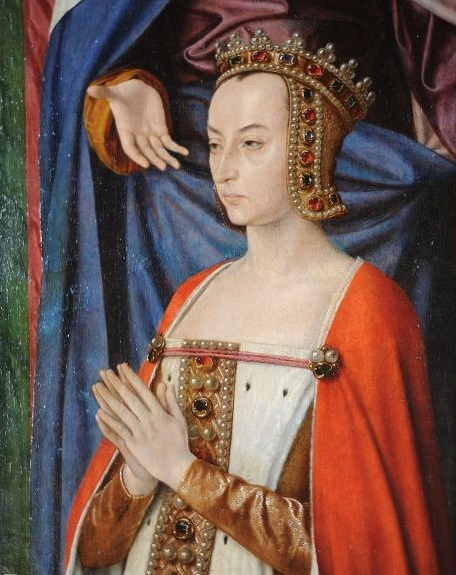
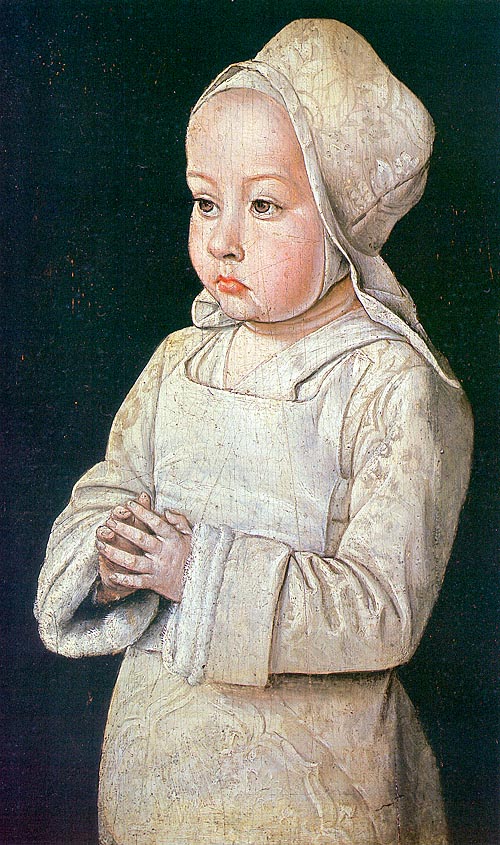
Anne de Beaujeu

Anne de France, also known as Anne de Beaujeu, crosses the invisible divide between the medieval and Tudor eras. As with many rulers from medieval times, Anne was called upon to act as regent for an underage king. She was regent of France during the minority of her younger brother, Charles VIII. Anne was the third child born to Louis XI of France and his second wife, Charlotte of Savoy, but she was the first to survive infancy. Louis’ first wife, Margaret of Scotland, was a daughter of James I and Joan Beaufort and had died in August1445, aged 20.

Anne was born at Genappe, near Brussels, in April 1461. At the time of her birth her father was still dauphin of France. However, just a few months later, Anne’s grandfather, Charles VII, the man who had attained the crown thanks to the efforts of Joan of Arc, died.

The unfortunate king had had a fractious relationship with his son and heir, Louis; they did not see each other for the last fifteen years of Charles VII’s life. Louis plotted intrigue with his neighbours and had even raised an army against his father in 1455, following arguments over Louis’ marriage to Charlotte. He eventually fled to Burgundy with his wife after his father threatened to invade his lands in the Dauphiné. He refused to return to France, despite being told that his father was dying; Louis waited at the French border for news that he was king. Charles VII died of starvation on 22 July 1461, after a tumour in his jaw prevented him from eating, and Louis immediately returned to France for his coronation.

History ... the Interesting Bits
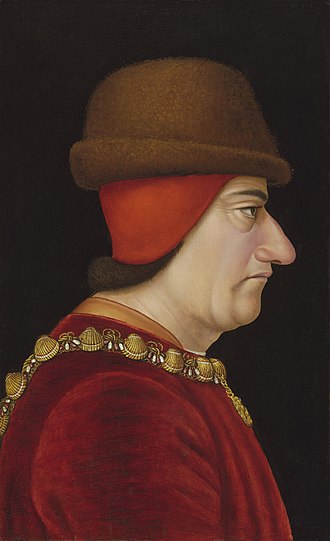
Louis XI, known as the Universal Spider

Louis XI was thirty-eight years old when he became king. He was not a likable man. He possessed a keen intelligence and few scruples. His main political aim was to expand his kingdom, using whatever methods would achieve this. He was pious and cultivated, in contrast to the ostentation and debauchery of his predecessors. His web of political intrigues often got him into international hot water, such as the adventure of Péronnne in 1468, when Louis incited the people of Liège to revolt against the Duke of Burgundy. Under the pretext of negotiation, Louis was arrested by the Duke and forced to offer him financial aid. However, these initial setbacks did not last. Louis was a wily diplomat, at home and abroad, earning him the nickname ‘the universal spider’. He managed to extend French territory by acquiring the French duchy of Burgundy, Picardy, Anjou, Maine and Provence. Louis relied on men of modest means to run his administration, rightfully anticipating that they would be more dependent on him and his goodwill than wealthy nobles. He encouraged the bourgeoisie and initiated the Grand Conseil. He also increased the number of military companies who came directly under the command of the king rather than his nobles.

On his accession, Louis’ daughter, Anne, was installed in the Chateau at Amboise, away from the court, with her mother Charlotte of Savoy and paternal grandmother, Marie of Anjou. Anne was given her own attendants, including chambermaids, nurses and a cradle-rocker. Her mother was in charge of Anne’s education. The queen had an extensive library, including classical works by authors such as Cicero, romances, psalters, histories and books on government. Anne inherited the books on her mother’s death; they were still in her library at Moulins when she herself died.

History ... the Interesting Bits
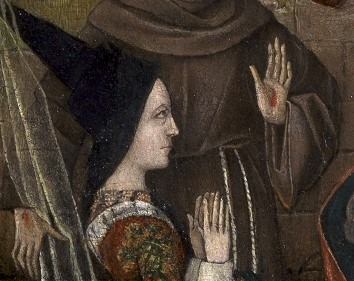
Charlotte of Savoy

While still in the cradle, in fact as soon as her father was on the throne, Anne was the most eligible princess in Europe. Combined with great energy; many thought her the mirror image of her father in her keen political mind, although not in other ways. She was considered as a bride for Edward IV in England, Duke Francis II of Brittany and even her uncle Charles, Duke of Berry. Any age difference did not matter to her father, who offered the four-year-old princess to the thirty-two-year-old Count of Charolais– Charles the Bold, the future Duke of Burgundy. A betrothal to Nicholas, Duke of Lorraine, came to nothing when the duke broke it off to pursue Mary, Duchess of Burgundy. When she was twelve, almost thirteen, Anne’s future was decided when she married Pierre de Bourbon on 3 November 1473. At thirty-four, Pierre was twenty-one years her senior.

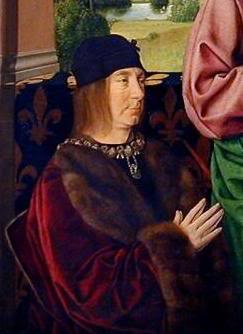
Pierre’s brother, the Duke of Bourbon, allowed him to use the courtesy title of Lord of Beaujeu and gave him rule of the Beaujolais. However, the newly married couple resided in the king’s court at Plessis-lès-Tours. For Anne, the next ten years were spent at the court and, particularly, with her father– during which time Louis XI said Anne was ‘the least foolish woman in France, but a wise one there was not’ (‘Elle était la moins folle femme de France, car de sage il n’en était point’). Anne, who would be called ‘Madame La Grande’ had a sharp political intelligence. She had a handsome face but was not considered beautiful. She fell pregnant in 1476, but little is known of the outcome of the pregnancy, it is possible that she had a short-lived son, Charles, Count of Clermont, but the details are sketchy. In 1481, Anne was given the County of Gien by her father to allow her to finance her own household. In April 1483 she was despatched to Hesdin to bring her little brother’s bride, three-year-old Margaret of Austria, to France. The little princess was to be brought up at the French court until she was old enough to marry the thirteen-year-old dauphin, Charles.

History ... the Interesting Bits
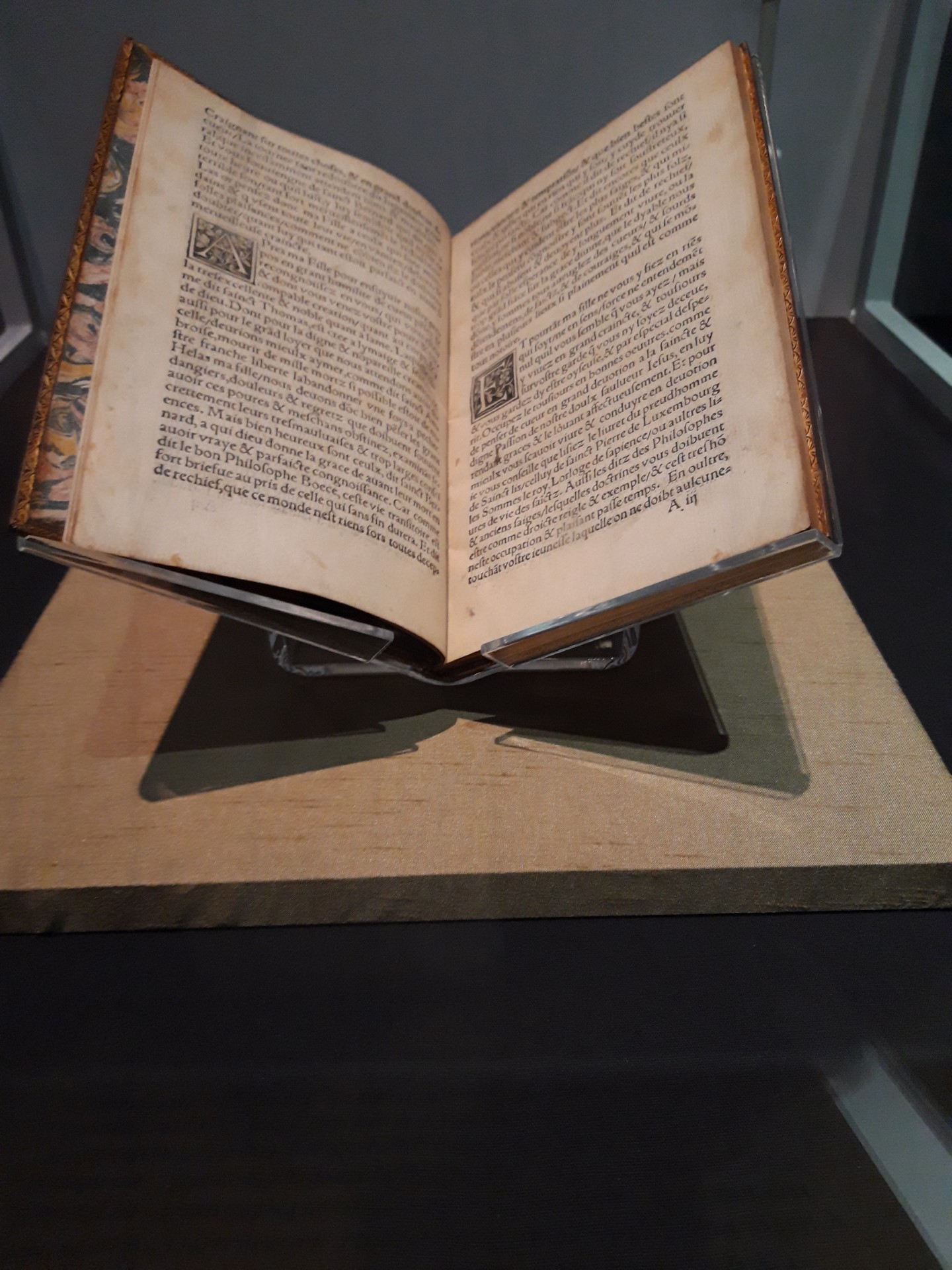
Les Enseignements d’Anne de France, Duchesse de Bourbonnais et d’Auvergne, à sa fille Suzanne de Bourbon

Anne was twenty-two years old when Louis XI died aged sixty on 30 August 1483, at Plessis-lès-Tours in the Loire Valley. He was succeeded by his son, Charles VIII, who was thirteen years old. Louis had not provided for a regency – young Charles was ten months short of his majority – although he had intended to set up a regency council, which would include the young king’s mother, Charlotte of Savoy, and Louis, Duke of Orléans. Louis was a great-grandson of Charles V and brother-in-law to the king and his sister, Anne de Beaujeu, being married to Jeanne de France; he was also Charles VIII’s heir until he produced a son of his own.

Anne’s husband Pierre, Lord of Beaujeu, was to be appointed the council’s president. However, Anne and her husband had also been appointed Charles’s guardians and it seemed a natural progression for them to take over the government of the realm. Charles was crowned on 30 May 1484 and, in the same year, to appease the populace, an Estates General was called. The body which brought together representatives from the Three Estates (nobility, clergy and commons) had last met in 1439. Their grievances, such as requests for reductions in the tailles and no taxation without the consent of the Estates, were heard and promises made; and the representatives went home content they had been listened to, even though their demands were not entirely met.

History ... the Interesting Bits
Suzanne de Bourbon

The nobility, who had control of the army, and Louis d’Orléans in particular, were not happy with the arrangements. Encouraged by Archduke Maximilian of Austria and Duke Francis of Brittany, Louis and his supporters took up arms in what became known as ‘the mad war’ or ‘the silly war’. They were soundly defeated, their army crushed at Saint-Aubin-du-Cormier in July 1488, and the Duke of Orléans taken prisoner.

Anne’s greatest success was in Brittany, a semi-autonomous duchy within France. The Duke of Brittany, Francis, died in 1488 leaving his thirteen-year-old daughter Anne as his sole heir. Before his death, in an attempt to keep Brittany from being swallowed up by the French crown, the Duke offered his daughter’s hand in marriage to Maximilian of Austria. However, Maximilian was too far away to protect the duchy when the French army invaded. Anne of Brittany was forced to agree to marry Charles VIII, although Brittany would remain in Anne’s hands. This move eventually led to the annexation of Brittany by the crown. No longer needed as a bride, little Margaret of Austria was sent home and Charles VIII married Anne of Brittany on 6 December 1491. The marriage treaty had one unusual clause in that should Charles die before they had children, Anne was to marry Charles’s heir, the next king of France.

History ... the Interesting Bits
Pierre de Bourbon

This diplomatic coup was one of the last of the Beaujeu regency as Charles VIII was now twenty and of an age and desire to rule. In 1488, Anne de Beaujeu had become Duchess of Bourbon following the death of Pierre’s older brother, John; the title had initially passed to another older brother, Charles, an Archbishop, who was persuaded to relinquish it after holding it for just two weeks, following Pierre’s invasion of the duchy. Anne and Pierre, now the Duke and Duchess of Bourbon, had become the richest, most powerful nobles in the realm. Although she still acted as an advisor to her young brother, Anne de Beaujeu now turned her attention to her new duchy, familiarising herself with her lands and its administration. She started a building programme, which included the rebuilding of the ducal castle at Gien, and the palace at Moulins. She also reorganised the duchy’s administration, codified its laws and raised taxes. Theirs was the epitome of a Renaissance court, the couple being patrons of the arts and literature. Anne particularly loved paintings, tapestries and books.

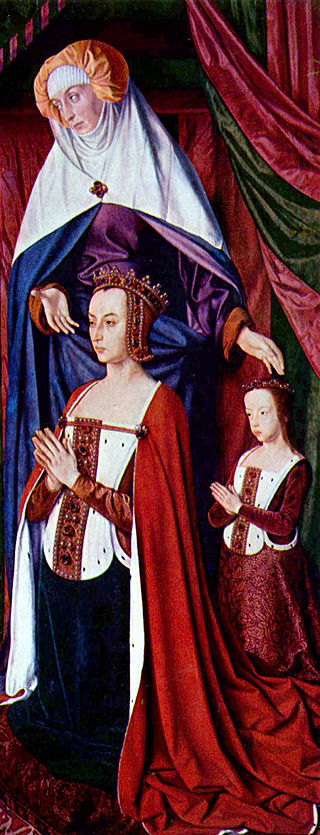
Anne finally gave birth to a surviving child, a daughter, on 10 May 1491, who was named Suzanne. Suzanne was carefully educated by her mother, who wrote a book, Les Enseignements d’Anne de France, Duchesse de Bourbonnais et d’Auvergne, à sa fille Suzanne de Bourbon, giving advice to her daughter on the proper behaviour expected of a noblewoman. Anne de Beaujeu was made regent again in 1494, when her brother Charles VIII led his army into Italy. She financially supported the king’s campaign by loaning him 10,000 livres; she made him pay it back in instalments and had recovered the full amount within a year. Charles died in 1498 after striking his head on a door lintel, leaving no direct heir. His distant cousin Louis, Duke of Orléans, succeeded him as King Louis XII. He immediately applied to the papacy for an annulment of his marriage to Anne de Beaujeu’s sister, Jeanne, in order to marry the dowager queen, Anne of Brittany, as the terms of her original marriage contract dictated. In return for Anne de Beaujeu’s support of his accession and repudiation of her sister, Louis agreed to waive royal rights to the duchy of Bourbon and the Auvergne and to allow these rights to pass to Suzanne, should Anne produce no male heir.

History ... the Interesting Bits
Anne with her daughter Suzanne

In 1503, Pierre de Beaujeu, Duke of Bourbon, fell ill while returning home to Moulins from the French court. He succumbed to a fever, which attacked his body for two months before he died on 10 October. Pierre arranged for Suzanne to marry a prince of royal blood, Charles d’Alençon, and called him to Moulins so the wedding could take place before his death. However, Charles arrived too late and could only act as chief mourner at Pierre’s funeral, rather than as bridegroom to Suzanne. Suzanne’s mother then broke the marriage contract and Suzanne would marry her cousin, Charles III of Bourbon Montpensier, Constable of France, but she died in 1521, childless.

Anne de Beaujeu, Duchess of Bourbon, died on 14 November 1522 at the Château of Chandelle, Coulandon. She was buried alongside her husband and daughter in the abbey at Sauvigny. Her lands and personal title, at her own request, passed to her son-in-law, Charles of Bourbon-Montpensier.

Anne de Beaujeu was regent of France at a time when the country was transitioning from the medieval to the early modern era. She successfully steered the country through civil unrest and initiated the merging of Brittany into the French crown, which would be definitively sealed in 1532.

*

Images:

Courtesy of Wikipedia except the ‘Les Enseignements‘ which is ©2025 Sharon Bennett Connolly

Sources:

Pierre Goubert, The Course of French History; Les Enseignements d’Anne de France, Duchesse de Bourbonnais et d’Auvergene, à sa fille Suzanne de Bourbon (‘The lessons of Anne of France, Duchess of Bourbon and Auvergne, to her daughter Suzanne of Bourbon’); Abernethy, Susan, ‘Anne de Beaujeu, Duchess of Bourbon and Regent of France’ (article);

*

My Books:

Signed, dedicated copies of all my books are available through my online store.

Out now: Scotland’s Medieval Queens

Books by Sharon Bennett Connolly

Scotland’s history is dramatic, violent and bloody. Being England’s northern neighbour has never been easy. Scotland’s queens have had to deal with war, murder, imprisonment, political rivalries and open betrayal. They have loved and lost, raised kings and queens, ruled and died for Scotland. From St Margaret, who became one of the patron saints of Scotland, to Elizabeth de Burgh and the dramatic story of the Scottish Wars of Independence, to the love story and tragedy of Joan Beaufort, to Margaret of Denmark and the dawn of the Renaissance, Scotland’s Medieval Queens have seen it all. This is the story of Scotland through their eyes.

Scotland’s Medieval Queens gives a thorough grounding in the history of the women who ruled Scotland at the side of its kings, often in the shadows, but just as interesting in their lives beyond the spotlight. It’s not a subject that has been widely covered, and Sharon is a pioneer in bringing that information into accessible history.’ Elizabeth Chadwick (New York Times bestselling author)

Available now from Amazon and Pen and Sword Books

Also by Sharon Bennett Connolly:

Books by Sharon Bennett Connolly

Heroines of the Tudor World tells the stories of the most remarkable women from European history in the time of the Tudor dynasty, 1485-1603. These are the women who ruled, the women who founded dynasties, the women who fought for religious freedom, their families and love. Heroines of the Tudor World is now available from Amberley Publishing and Amazon UK. Women of the Anarchy demonstrates how Empress Matilda and Matilda of Boulogne, unable to wield a sword themselves, were prime movers in this time of conflict and lawlessness. It shows how their strengths, weaknesses, and personal ambitions swung the fortunes of war one way – and then the other. Available from Bookshop.orgAmberley Publishing and Amazon UKKing John’s Right-Hand Lady: The Story of Nicholaa de la Haye is the story of a truly remarkable lady, the hereditary constable of Lincoln Castle and the first woman in England to be appointed sheriff in her own right. Available from all good bookshops Pen & Sword Booksbookshop.org and Amazon

Royal Historical Society

Defenders of the Norman Crown: The Rise and Fall of the Warenne Earls of Surrey tells the fascinating story of the Warenne dynasty, from its origins in Normandy, through the Conquest, Magna Carta, the wars and marriages that led to its ultimate demise in the reign of Edward III. Available from Pen & Sword BooksAmazon in the UK and US, and Bookshop.orgLadies of Magna Carta: Women of Influence in Thirteenth Century England looks into the relationships of the various noble families of the 13th century, and how they were affected by the Barons’ Wars, Magna Carta and its aftermath; the bonds that were formed and those that were broken. It is now available in paperback and hardback from Pen & SwordAmazon, and Bookshop.orgHeroines of the Medieval World tells the stories of some of the most remarkable women from Medieval history, from Eleanor of Aquitaine to Julian of Norwich. Available now from Amberley Publishing and Amazon, and Bookshop.orgSilk and the Sword: The Women of the Norman Conquest traces the fortunes of the women who had a significant role to play in the momentous events of 1066. Available now from Amazon,  Amberley Publishing, and Bookshop.org.

Alternate Endings: An anthology of historical fiction short stories including Long Live the King… which is my take what might have happened had King John not died in October 1216. Available in paperback and kindle from Amazon.

Podcast:

A Slice of Medieval

Have a listen to the A Slice of Medieval podcast, which I co-host with Historical fiction novelist Derek Birks. Derek and I welcome guests, such as Bernard Cornwell and Michael Jecks, and discuss a wide range of topics in medieval history, from significant events to the personalities involved. 

Every episode is also now available on YouTube.

*

Don’t forget! Signed and dedicated copies of all my books are available through my online store.

For forthcoming online and in-person talks, please check out my Events Page.

You can be the first to read new articles by clicking the ‘Follow’ button, liking our Facebook page or joining me on TwitterThreadsBluesky and Instagram.

*

©2025 Sharon Bennett Connolly FRHistS

Wordly Women: Samantha Wilcoxson

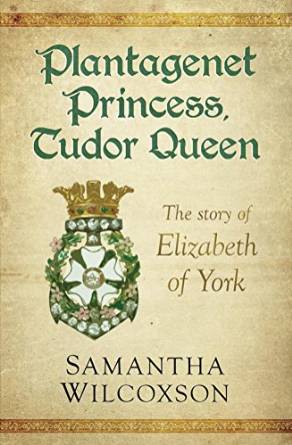
Today we are hopping across the pond for the next chat in my Wordly Women series. Joining me is Samantha Wilcoxson. Author of fiction novels mainly based in the late medieval and Tudor eras and and non-fiction books on the American Revolution, Samantha’s books – literally – span the Atlantic divide. Samantha has a knack for getting into the heads of the people she is writing about. Her book, Plantagenet Princess, Tudor Queen, about Elizabeth of York, is still one of the most insightful novels I have ever read.

Sharon: What got you into writing?

Samantha: What got you into writing? I have always loved reading and used to write dozens of book reviews every year. Many of those books were historical fiction and nonfiction. When I was considering ways to earn money while a stay-at-home mom, my husband suggested I write a book. I had never considered taking this step, so the first obstacle was deciding what I would want to write about. It didn’t take me long to settle on Elizabeth of York, and I quickly became passionate about the project. That novel turned into a series, and I’ve ventured into other historical eras since then.
Sharon: Tell us about your books.

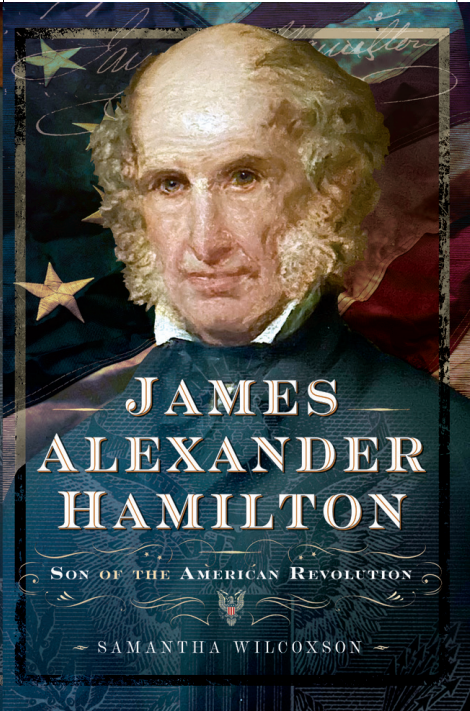
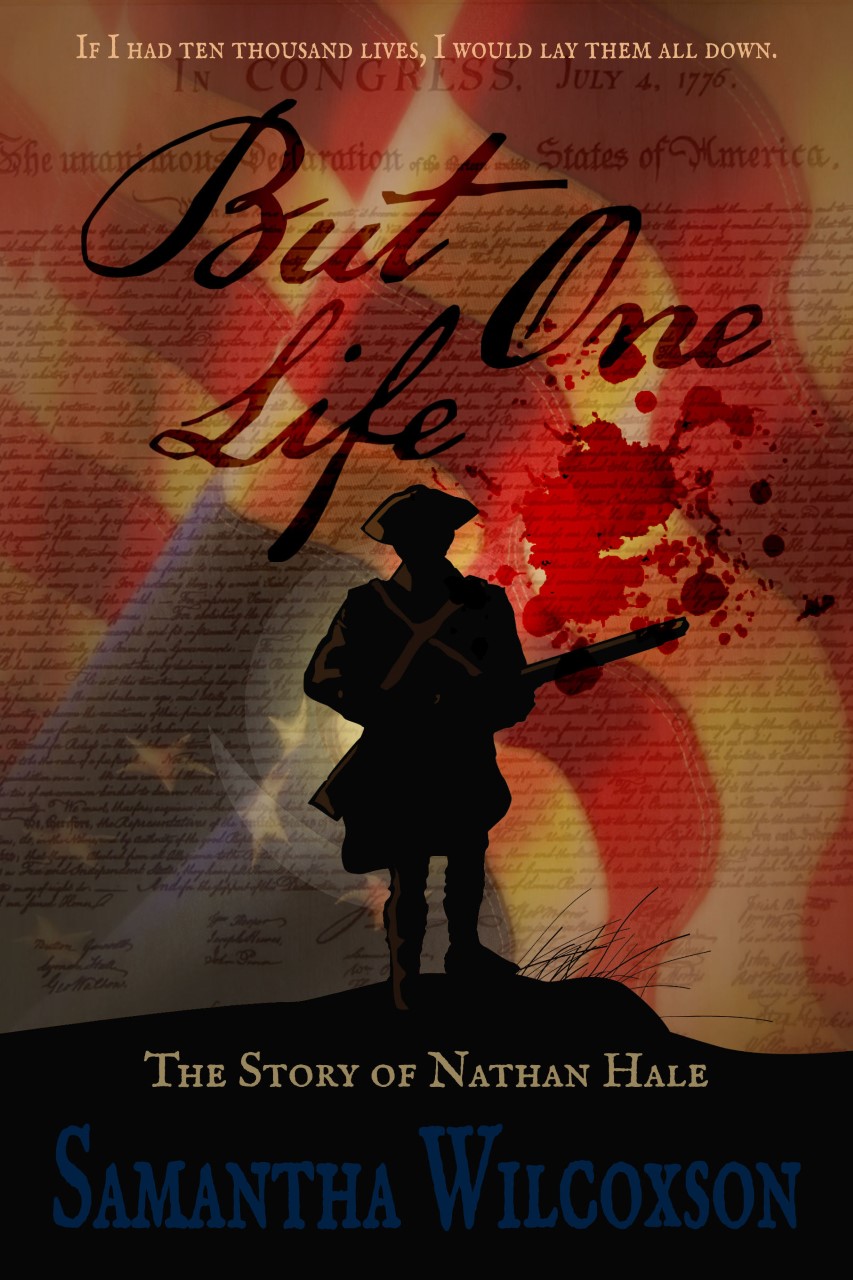
Samantha: Each of my novels explores the life of a real historical figure in a way that helps readers connect with them on a personal level. My Plantagenet Embers series includes three novels featuring Elizabeth of York, Margaret Pole, and Mary I. It also has three novellas that offer new points of view of the same events by focusing on Margaret Beaufort, Elizabeth Woodville, and Reginald Pole. Then I moved into US history with my next two novels. Luminous is biographical fiction of real life radium girl Catherine Wolfe Donohue, and But One Life explores the life of American Revolution soldier Nathan Hale. My nonfiction books are Women of the American Revolution and a newly released biography of James Alexander Hamilton.

Sharon: What attracted you to the Tudors?

Samantha: When I started writing the series that ended up covering the early Tudor era, I was actually obsessed with the Wars of the Roses. I thought Elizabeth of York was an unsung heroine, so I started with her with no real intention of writing about the Tudors! This is actually a great insight into my writing. I never know what is coming next.

Sharon: So, what is coming next?

Samantha: I am currently writing a trilogy set during the Wars of the Roses for Sapere Books. It includes multiple women’s points of view. For example, book one has chapters featuring Marguerite of Anjou, Cecily Neville, and Anne Beauchamp. That one is in editing, and I’m working on book two, which will add the perspective of Elizabeth Woodville and others.

Sharon: How do you approach researching your topic?

Samantha: This depends a lot on whether I’m writing fiction or nonfiction. For novels, I largely depend on biographies already written, but for nonfiction I look for more primary resources like personal letters and diaries. For either, I like to visit locations important to the people I’m writing about so that I can include details about the places they experienced.
Sharon: You also write US history non-fiction.

Samantha: Tell us your ‘favourite’ story you have come across in your research? My research into James Alexander Hamilton uncovered loads of interesting discoveries, partly because nobody else has really written about him. I held letters written between James and Andrew Jackson, Martin Van Buren, John Quincy Adams, and so many others. (Gotta admit, it was tempting to try sneak that JQA letter into my bag!) I think the most fun story I came across, besides John Quincy writing about being too old to stay up all night at a lively Hamilton party, was learning that James was part of the crew of the schooner America for which the America’s Cup is named.

Sharon: Tell us your least ‘favourite’ US history story you have come across in your research?

Samantha: I don’t know if I would call it a least favorite, but I decided to write a novel about Nathan Hale because I often came across quotes attributed to him such as, “I only regret that I have but one life to give for my country” but very little else about who Hale was. What happened in this young man’s life to create such bravery and patriotism? Few references to him offered much, so I decided to dig in and reveal the story of Nathan Hale before his famous execution during the American Revolution.

Sharon: Are there any other eras you would like to write about?

Samantha: I always have a few ideas brewing but am committed to the next couple of books on the Wars of the Roses right now. I have started a bit of research into a historical event that occurred near my home in Michigan in 1847 that I would like to consider for a future project. I’m not one of those writers who has the next five years planned out and I tend to impetuously strike out in new directions, so we’ll see what happens.

Sharon: And finally, what is the best thing about being a writer?

Samantha: Besides spending my day reading, writing, and learning about history, I love the flexibility of being a writer. I began as a stay-at-home mom, and I still appreciate the ability to easily set my work aside for a few days if one of my adult children needs anything. I’ve also made many friends in the writing community who make me feel less alone as a history nerd and have provided amazing support and encouragement for each of my book projects.

About the Author:

Samantha Wilcoxson is an author of emotive biographical fiction and nonfiction featuring history’s unsung heroes. Her novel Luminous has been named Book of the Year by Ruins & Reading and Yarde Book Reviews. Samantha’s most recent work is the first biography of James Alexander Hamilton, published by Pen & Sword History. She is currently writing a Wars of the Roses trilogy for Sapere Books. When not reading or writing, Samantha loves sharing trips to historic places with her family and spending time by the lake with a glass of wine.

Where to find Samantha Wilcoxson:

Website; Instagram; Amazon Author Page; Newsletter Signup; Goodreads; Pinterest; Twitter; Shop Direct; Audible

*

My books

Signed, dedicated copies of all my books are available through my online store.

Out now: Scotland’s Medieval Queens

Scotland’s history is dramatic, violent and bloody. Being England’s northern neighbour has never been easy. Scotland’s queens have had to deal with war, murder, imprisonment, political rivalries and open betrayal. They have loved and lost, raised kings and queens, ruled and died for Scotland. From St Margaret, who became one of the patron saints of Scotland, to Elizabeth de Burgh and the dramatic story of the Scottish Wars of Independence, to the love story and tragedy of Joan Beaufort, to Margaret of Denmark and the dawn of the Renaissance, Scotland’s Medieval Queens have seen it all. This is the story of Scotland through their eyes.

Scotland’s Medieval Queens gives a thorough grounding in the history of the women who ruled Scotland at the side of its kings, often in the shadows, but just as interesting in their lives beyond the spotlight. It’s not a subject that has been widely covered, and Sharon is a pioneer in bringing that information into accessible history.’ Elizabeth Chadwick (New York Times bestselling author)

Available now from Amazon and Pen and Sword Books

Also by Sharon Bennett Connolly:

Heroines of the Tudor World tells the stories of the most remarkable women from European history in the time of the Tudor dynasty, 1485-1603. These are the women who ruled, the women who founded dynasties, the women who fought for religious freedom, their families and love. Heroines of the Tudor World is now available from Amberley Publishing and Amazon UK. Women of the Anarchy demonstrates how Empress Matilda and Matilda of Boulogne, unable to wield a sword themselves, were prime movers in this time of conflict and lawlessness. It shows how their strengths, weaknesses, and personal ambitions swung the fortunes of war one way – and then the other. Available from Bookshop.orgAmberley Publishing and Amazon UKKing John’s Right-Hand Lady: The Story of Nicholaa de la Haye is the story of a truly remarkable lady, the hereditary constable of Lincoln Castle and the first woman in England to be appointed sheriff in her own right. Available from all good bookshops Pen & Sword Booksbookshop.org and Amazon

Defenders of the Norman Crown: The Rise and Fall of the Warenne Earls of Surrey tells the fascinating story of the Warenne dynasty, from its origins in Normandy, through the Conquest, Magna Carta, the wars and marriages that led to its ultimate demise in the reign of Edward III. Available from Pen & Sword BooksAmazon in the UK and US, and Bookshop.orgLadies of Magna Carta: Women of Influence in Thirteenth Century England looks into the relationships of the various noble families of the 13th century, and how they were affected by the Barons’ Wars, Magna Carta and its aftermath; the bonds that were formed and those that were broken. It is now available in paperback and hardback from Pen & SwordAmazon, and Bookshop.orgHeroines of the Medieval World tells the stories of some of the most remarkable women from Medieval history, from Eleanor of Aquitaine to Julian of Norwich. Available now from Amberley Publishing and Amazon, and Bookshop.orgSilk and the Sword: The Women of the Norman Conquest traces the fortunes of the women who had a significant role to play in the momentous events of 1066. Available now from Amazon,  Amberley Publishing, and Bookshop.org.

Alternate Endings: An anthology of historical fiction short stories including Long Live the King… which is my take what might have happened had King John not died in October 1216. Available in paperback and kindle from Amazon.

Podcast:

Have a listen to the A Slice of Medieval podcast, which I co-host with Historical fiction novelist Derek Birks. Derek and I welcome guests, such as Bernard Cornwell and Michael Jecks, and discuss a wide range of topics in medieval history, from significant events to the personalities involved. Every episode is also now available on YouTube.

*

Don’t forget! Signed and dedicated copies of all my books are available through my online store.

For forthcoming online and in-person talks, please check out my Events Page.

You can be the first to read new articles by clicking the ‘Follow’ button, liking our Facebook page or joining me on TwitterThreadsBluesky and Instagram.

*

©2025 Sharon Bennett Connolly, FRHistS and Samantha Wilcoxson

Wordly Women: Catherine Hanley

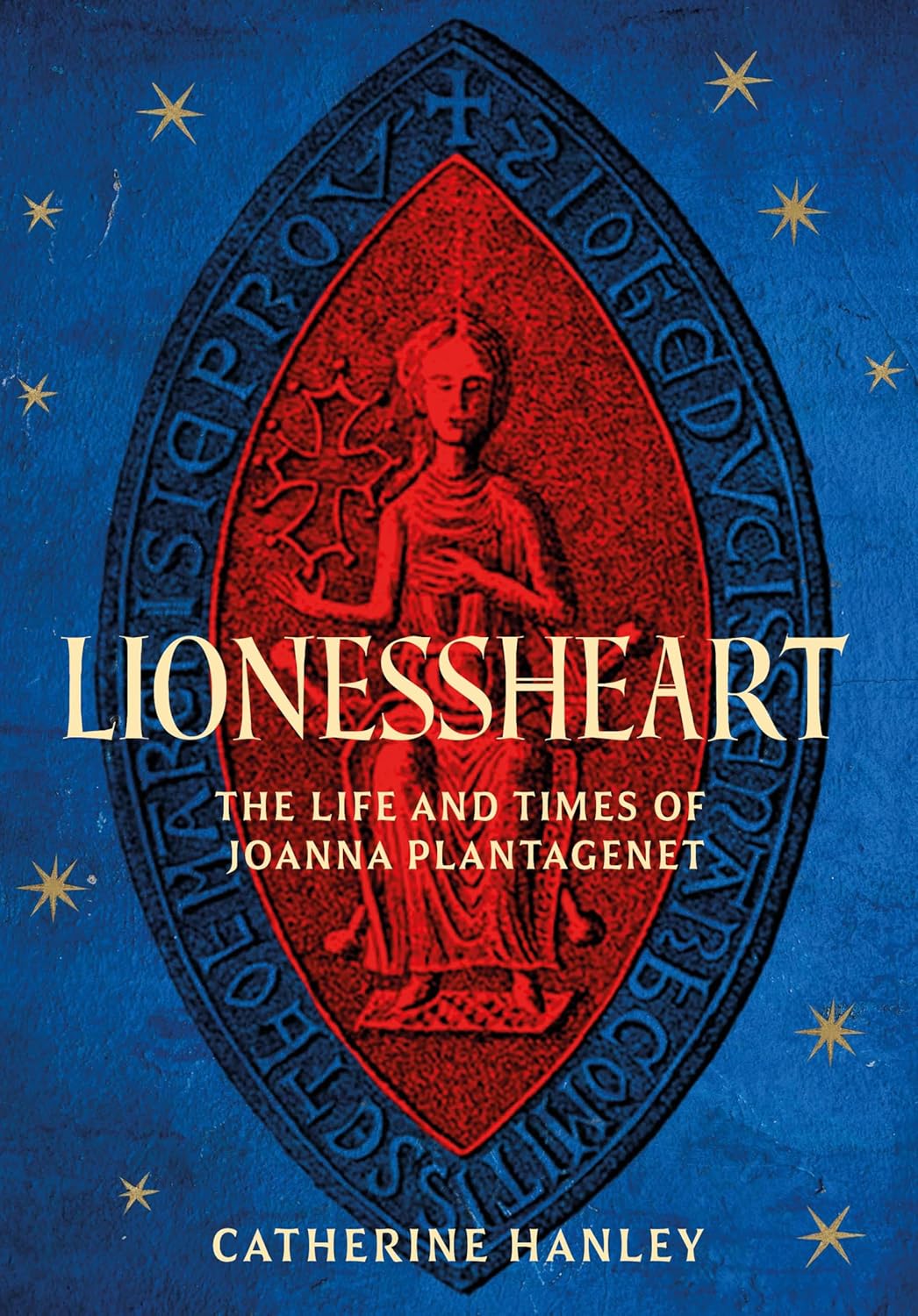
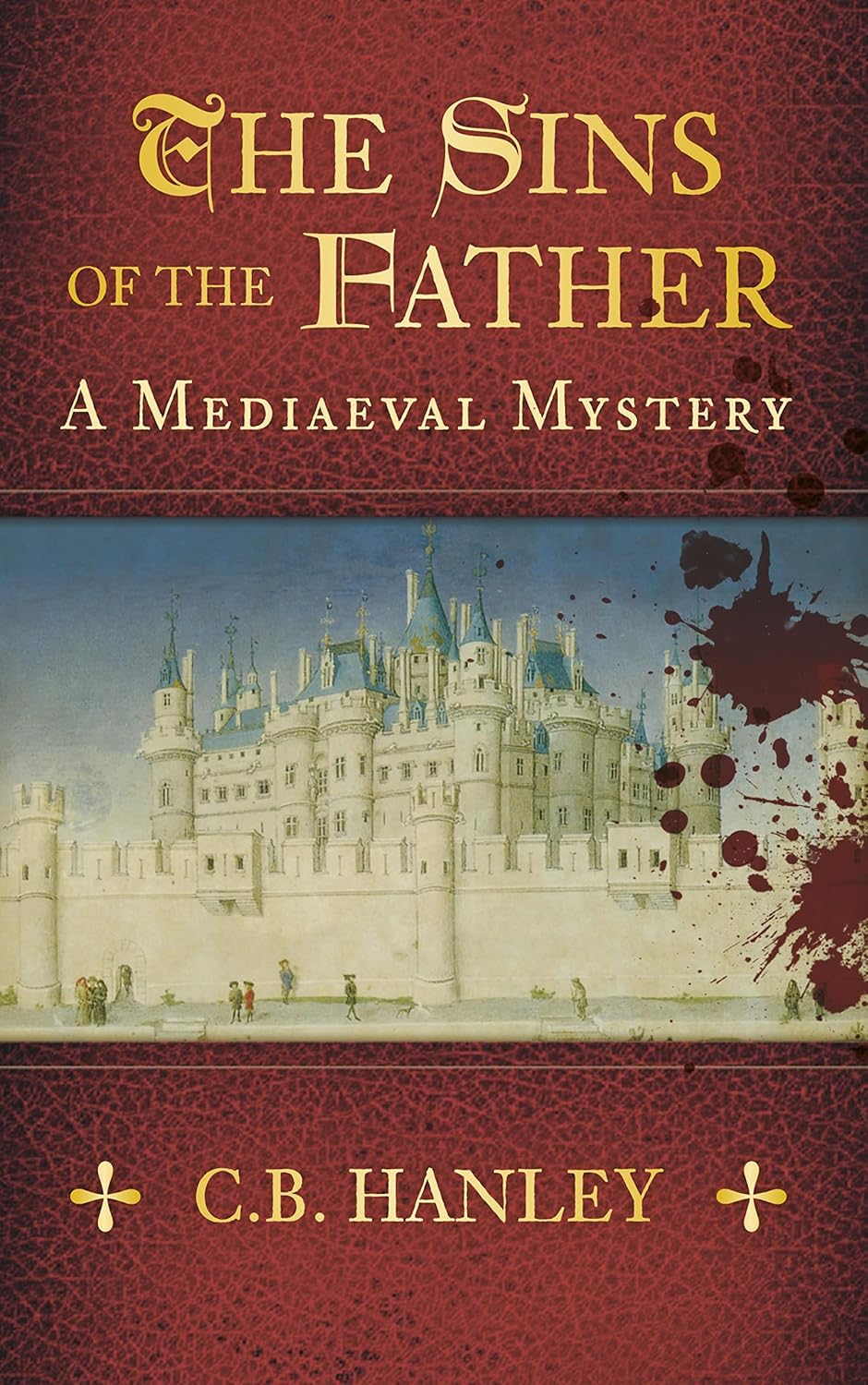
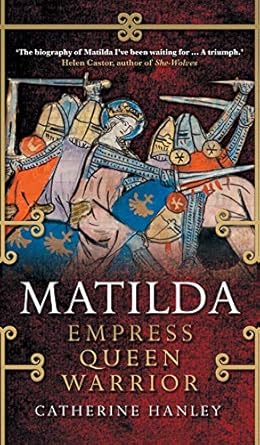
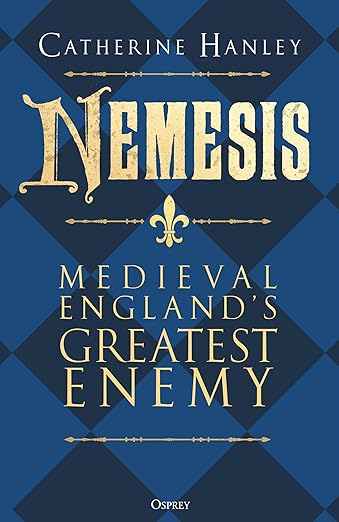
I am very happy today to welcome historian Catherine Hanley to History…the Interesting Bits in a new instalment of my Author Spotlight series, Wordly Women. Catherine is the author of Matilda, 1217 and her latest book, Lionessheart, about Joanna, the sister of Richard the Lionheart. Catherine also writes a historical fiction A Medieval Mystery series under the name C.B. Hanley, following the adventures of Edwin Weaver, bailiff of Conisbrough Castle and its lord, William de Warenne, 5th Earl of Warenne and Surrey. It is a fabulous series that I can highly recommend!

Sharon: So, Catherine, what got you into writing?

Catherine: Oddly, that question is kind of the wrong way round for me. When I did my PhD I was reading and writing all day every day for years; after it was finished and I got a full-time job that didn’t involve writing, I missed it so much that I just had to take it up on top of work. As the cliché goes, I write because I simply can’t *not* write. Eventually, over the years, it came to replace the day job rather than being an add-on.

Sharon: You write both fiction and non-fiction – is one harder than the other?

Catherine: On a day when I’m writing fiction, I’d say non-fiction was easier, and vice versa …

Sharon: Tell us about your books.

Catherine: My non-fiction mainly explores different facets of war and politics in the twelfth and thirteenth centuries – sometimes via biographies of individuals, and sometimes in the form of more wide-ranging surveys.

My fiction is a series of murder mysteries set during the early thirteenth century, during and just after the French invasion that followed the Magna Carta wars. My main characters are fictional, but the stories are set against a factual backdrop, with some real people in the background. It all started because, during some academic research, I discovered that a certain high-profile individual had changed sides twice during that war, but nobody knew why. So I decided to make up a (plausible!) story about why this had happened, and then once I’d started I just kept going.

Sharon: What attracts you to the 13th century?

Catherine: It is the best century, and I will be taking no further questions and entering into no arguments on this subject. (Sharon: no argument from me! I totally agree with this analysis!)

Sharon: Who is your favourite 13th century personality and why?

Catherine: OK, so this is very niche, but it’s Philip of Dreux, a member of a cadet branch of the Capetian royal house, who was the bishop of Beauvais in France. He was a younger son, so he’d been ‘donated’ to the Church by his family early in life. Unfortunately for him this had been done purely on the basis of birth order rather than aptitude or inclination, and he was one of the most bellicose men you could imagine. He fought in the Third Crusade, during which he travelled to Cyprus to tell Richard the Lionheart to his face that he should stop ‘arrogantly persecuting innocent Christians when close by there were still so many thousands of Saracens whom he should be attacking’, which went down about as well as you might expect. He was still going decades later, and fought in battle of Bouvines when aged in his sixties; there he battered the much younger earl of Salisbury to the ground with a mace ‘that he happened to have in his hand’, which is one of the best primary-source lines you’ll ever read.

If I ever decide to write a new series of novels when my current one is finished, the bishop of Beauvais and his mace are going to have starring roles …

Sharon: Who is your least favourite 13th century personality and why?

Catherine: It’s unfortunate for the purposes of this question that Richard the Lionheart died in 1199, thus making him a personality of the twelfth century, so I can’t nominate him! I also think that William Marshal has been vastly overrated.

Sharon: How do you approach researching your topic?

Catherine: I read A LOT, making sure that I’m consulting a wide range of primary sources rather than merely relying on what other people have said in secondary sources.

Sharon: Tell us your ‘favourite’ medieval story you have come across in your research.

Catherine: Basically the entire career of Philip Augustus of France, but I can’t give you too many spoilers on that just now …

Sharon: Tell us your least ‘favourite’ medieval story you have come across in your research.

Catherine: It’s always difficult reading about the many atrocities that took place in the past. One that got to me quite recently was the sad tale of Owain ap Dafydd, the son of Welsh prince Dafydd ap Gruffudd. Dafydd was captured by Edward I and then hanged, drawn and quartered, and his two sons were sentenced to harsh imprisonment. The elder of them died not long afterwards, but Owain, who was 7 when he was incarcerated, lived on for more than 40 years. He was kept in solitary confinement (and, as an adult, actually in a cage), and this stunted his mental as well as his physical development. A sad letter was later sent on his behalf asking if he could please have more adequate food and clothing, and whether he might be allowed out of his cell occasionally ‘to play’. He was at that point 37.

Sharon: Are there any other eras you would like to write about?

Catherine: Not really. There’s still so much to be discovered and said about the twelfth and thirteenth centuries that I can happily spend the rest of my career there, although I do venture occasionally into the fourteenth. The thought of writing about anything post-medieval gives me a nosebleed.

Sharon: What are you working on now?

Catherine: *Takes a deep breath* As ever, I have several projects on the go, all at different stages. In non-fiction, I’m at page-proof stage for Nemesis: Medieval England’s Greatest Enemy (about the French king Philip Augustus), for publication in September 2025; almost at manuscript delivery stage for Women in Medieval Families (for 2026 publication) and in the early stages of a whopping volume called The English at War in the Middle Ages for 2027.

In fiction, A Pale Horse, number 9 in my series of medieval mysteries, is due out in June 2025, and I’m having some initial thoughts about book 10.

That’s probably enough to be getting on with!

Sharon: And finally, what is the best thing about being a writer?

Catherine: Being able to sit in a roomful of books by myself all day and lose myself in the Middle Ages. It’s such a privilege that I can still hardly believe it’s happening.

About the Author:

Dr Catherine Hanley holds a PhD in Medieval Studies and is a Fellow of the Royal Historical Society. After producing several scholarly publications she decided to write something more interesting, and she now splits her time between writing popular history and historical fiction.

Catherine: I have no social media (anyone who wants to contact me may do so by writing in ink on parchment and then sending it via a messenger on a fast horse).

Bookshop link: https://uk.bookshop.org/shop/catherinehanley

*

My books

Signed, dedicated copies of all my books are available through my online store.

Out now: Scotland’s Medieval Queens

Scotland’s history is dramatic, violent and bloody. Being England’s northern neighbour has never been easy. Scotland’s queens have had to deal with war, murder, imprisonment, political rivalries and open betrayal. They have loved and lost, raised kings and queens, ruled and died for Scotland. From St Margaret, who became one of the patron saints of Scotland, to Elizabeth de Burgh and the dramatic story of the Scottish Wars of Independence, to the love story and tragedy of Joan Beaufort, to Margaret of Denmark and the dawn of the Renaissance, Scotland’s Medieval Queens have seen it all. This is the story of Scotland through their eyes.

Scotland’s Medieval Queens gives a thorough grounding in the history of the women who ruled Scotland at the side of its kings, often in the shadows, but just as interesting in their lives beyond the spotlight. It’s not a subject that has been widely covered, and Sharon is a pioneer in bringing that information into accessible history.’ Elizabeth Chadwick (New York Times bestselling author)

Available now from Amazon and Pen and Sword Books

Also by Sharon Bennett Connolly:

Heroines of the Tudor World tells the stories of the most remarkable women from European history in the time of the Tudor dynasty, 1485-1603. These are the women who ruled, the women who founded dynasties, the women who fought for religious freedom, their families and love. Heroines of the Tudor World is now available for pre-order from Amberley Publishing and Amazon UK. Women of the Anarchy demonstrates how Empress Matilda and Matilda of Boulogne, unable to wield a sword themselves, were prime movers in this time of conflict and lawlessness. It shows how their strengths, weaknesses, and personal ambitions swung the fortunes of war one way – and then the other. Available from Bookshop.orgAmberley Publishing and Amazon UKKing John’s Right-Hand Lady: The Story of Nicholaa de la Haye is the story of a truly remarkable lady, the hereditary constable of Lincoln Castle and the first woman in England to be appointed sheriff in her own right. Available from all good bookshops Pen & Sword Booksbookshop.org and Amazon

Defenders of the Norman Crown: The Rise and Fall of the Warenne Earls of Surrey tells the fascinating story of the Warenne dynasty, from its origins in Normandy, through the Conquest, Magna Carta, the wars and marriages that led to its ultimate demise in the reign of Edward III. Available from Pen & Sword BooksAmazon in the UK and US, and Bookshop.orgLadies of Magna Carta: Women of Influence in Thirteenth Century England looks into the relationships of the various noble families of the 13th century, and how they were affected by the Barons’ Wars, Magna Carta and its aftermath; the bonds that were formed and those that were broken. It is now available in paperback and hardback from Pen & SwordAmazon, and Bookshop.orgHeroines of the Medieval World tells the stories of some of the most remarkable women from Medieval history, from Eleanor of Aquitaine to Julian of Norwich. Available now from Amberley Publishing and Amazon, and Bookshop.orgSilk and the Sword: The Women of the Norman Conquest traces the fortunes of the women who had a significant role to play in the momentous events of 1066. Available now from Amazon,  Amberley Publishing, and Bookshop.org.

Alternate Endings: An anthology of historical fiction short stories including Long Live the King… which is my take what might have happened had King John not died in October 1216. Available in paperback and kindle from Amazon.

Podcast:

Have a listen to the A Slice of Medieval podcast, which I co-host with Historical fiction novelist Derek Birks. Derek and I welcome guests, such as Bernard Cornwell and Michael Jecks, and discuss a wide range of topics in medieval history, from significant events to the personalities involved. Every episode is also now available on YouTube.

And we will be chatting with Catherine Hanley about Joanna Plantagenet, Lionessheart, in a couple of months!

*

Don’t forget! Signed and dedicated copies of all my books are available through my online store.

For forthcoming online and in-person talks, please check out my Events Page.

You can be the first to read new articles by clicking the ‘Follow’ button, liking our Facebook page or joining me on TwitterThreadsBluesky and Instagram.

*

©2025 Sharon Bennett Connolly, FRHistS and Dr Catherine Hanley, FRHistS

Wordly Women: Wendy J. Dunn

In the third edition of my Author Spotlight series, Wordly Women, I chat with Wendy J. Dunn, author of both historical fiction and non-fiction based in the Tudor period

Sharon: What got you into writing?

Wendy: I cannot remember a time in my life when I didn’t read – or love books. By eight, I knew I wanted to be an author. I was ten when a friend had given me a child’s book of English history for my tenth birthday. That book, or rather its chapter about Elizabeth I, changed the course of my life.

But claiming a writer’s mantle meant walking a hard, long and challenging road. I was born into a working-class family. My parents never encouraged me to write—or even to complete High School. They expected me to follow the normal narrative for a working-class girl: work until I found a husband. I found him at seventeen, married him at eighteen. Ten months later (LOL), we welcomed the first of our four children.

By the time I married, life had done a good job of knocking down my confidence about ever becoming a writer. I also had this silly, working-class imposed idea that I could not write because I was now a wife and mother. I believed my class and world would not allow it. As I say, I had a lot of silly ideas. But I was very young. It took the traumatic birth of my second son to wake me up at twenty-two and make me remember I had other choices, and my dreams of authoring books. A few months after that, I applied to a local university’s Early Leaver Scheme, and they accepted me. Completing my Bachelor of Arts restored my confidence and returned me to writing.

With raising a family, working as a primary teacher, and a lot of health challenges along the way, the road was still difficult. Also, my family always comes first. LOL – I can hear them protesting that is not how they see it, but I know it is true. I would have written far more books by this stage of my life if writing came first. While family is at the core of my existence, writing keeps me sane. Writing is also where I have found my authentic life.

Sharon: You write both fiction and non-fiction – is one harder than the other?

Wendy: Both are hard – but nonfiction is harder because I am far more passionate about writing fiction than writing nonfiction. I love surrendering to my imagination and being there – back then – with my characters. On a good writing day, I emerge feeling so alive, I could float on air.

But what makes me passionate about writing nonfiction is my love of research – of finding answers that deepen my understanding of people of the past and sharing that knowledge with others.

Sharon: Tell us about your books….

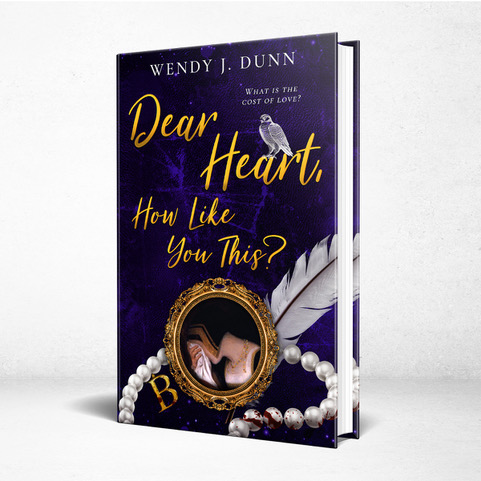
Dear Heart, How Like You This? was my first published novel, and so will forever hold a special place in my heart because it was the novel that proved I could complete a novel, and one also good enough to be published. It tells the story of Anne Boleyn from the point of view of Sir Thomas Wyatt, the elder. Tom and I developed an extraordinary relationship when I wrote that book. He became so real we often argued about the direction of the story – and the story would just come to a stop until he got his own way.

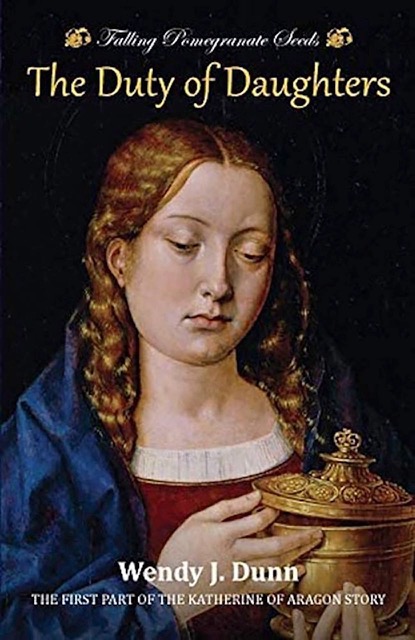
Dear Heart ignited my desire to write about the life of Katherine of Aragon. I wrote the first version of The Duty of Daughtersthe novel about Katherine of Aragon’s early life in Castille – through the point of view of the child Maria de Salinas and then faced the fact I needed to write it through an adult point of view. I knew it just had to be Beatriz Galindo, the scholar who may have been Katherine of Aragon’s tutor, but I despaired about pulling apart the book and starting again. So much so, it took completing my Masters of Writing and then my PhD – when I wrote The Light in the Labyrinth as my creative artefact – before I returned to this work, for it to be published in 2016.

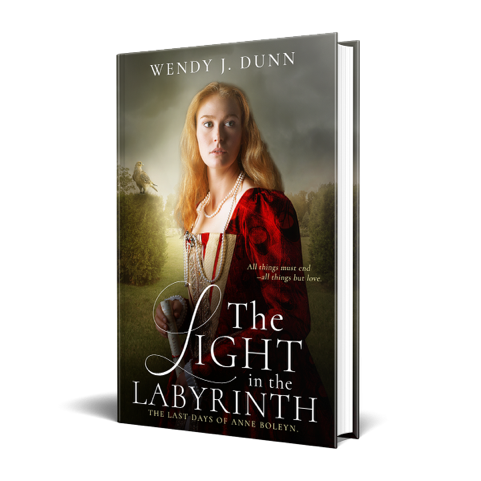
Dear Heart also ignited the inspiration for The Light in the Labyrinth because my first novel left me with so many questions about why Henry VIII murdered the woman he had turned his kingdom upside to marriage. I decided to target this novel to young adults, with the hope adults would like it, too. LOL – I suspect far more adults have read and enjoyed it than young adults. As it became a bestseller in its early published life, I have no complaints about that.

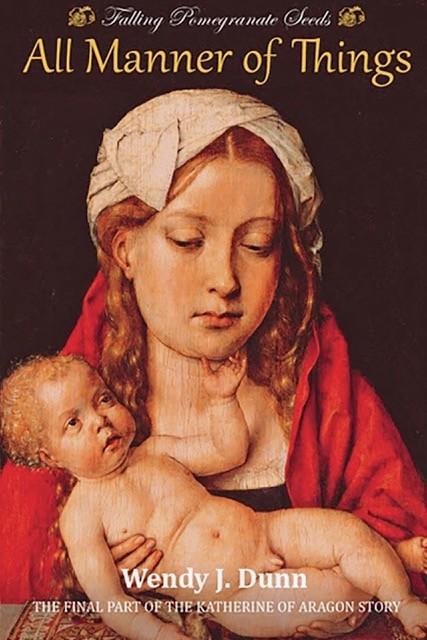
All Manner of Things is the conclusion to my Falling Pomegranate Seeds duology. All Manner of Things imagines Katherine of Aragon time in England from her arrival in 1501 to 1520, with an epilogue that takes the reader to her deathbed. I used Maria de Salinas, one of Katherine’s closest friends and a fellow Castilian exile, as my narrator, which offered a close view of Katherine’s life.

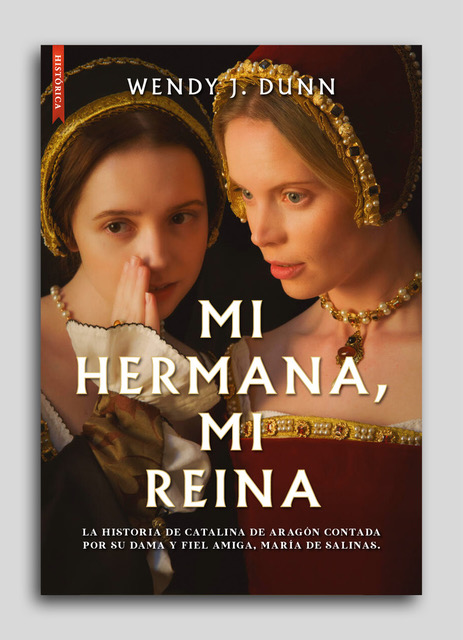
All Manner of Things has done me proud since its publication by gaining quite a few awards and being translated into Spanish and published as Mi Hermana, Mi Reina.

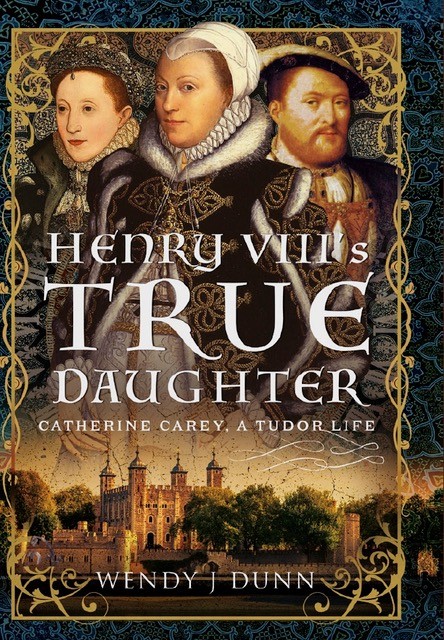
Henry VIII’s True Daughter: Catherine Carey, A Tudor Life is my first published major work of nonfiction. COVID lockdowns made researching that book difficult. I was stuck in Melbourne, Australia, when I should have been researching in England. But we are fortunate to have a wealth of archival material now available online.

Sharon: What attracts you to the Tudor period?

Wendy: I have loved the Tudor period since my childhood. It is a fascinating period with so many fascinating people. For me, this period offers a wealth of stories to draw from for my storytelling, with a cast of archetypes, heroes and villains, with stories of adultery, murder, lust, love, passion, betrayal, tragedy and triumph, family secrets, ambition and vainglory. The Tudors offer a treasure trove of multilayered tales that speak to our shared humanity.

Sharon: Who is your favourite Tudor and why?

Wendy: No question about it. Elizabeth I. I know she was not perfect, but she was an exceptionally intelligent human being. The fact she ended up the queen of England, after years of walking a road where any misstep could lead to her death, is such a story of triumph. And the triumph continued all through her life. Elizabeth remained queen for close to forty-four years, despite all the plots to bring her down.  

Sharon: Who is your least favourite Tudor and why?

Wendy: Henry VIII. I don’t think I could ever like any man who murders his wives. I confess I wrote The Light in the Labyrinth hoping I’d find him more likeable. Alas, I liked him far less after completing my second Anne Boleyn novel. He was a bully, a tyrant (especially after 1536), possessed little empathy, emotionally abused his eldest daughter and forced her to betray the memory of her mother, all of which broke her spirit, made it harder for women to work in professions – for example, a law early in his reign excluded women from the medical profession, and was, many times, simply cruel.  

OMG – he annulled his marriage to Anne Boleyn just days before her execution, so how could she be accused of adultery then? But he still executed her!

Sharon: How do you approach researching your topic?

Wendy: Books. Many books. And more books. Academic papers. Hours of searching for primary sources to help me with my topic. Living in hope of having funds to get to the places where my people once lived, just so I can walk in their footsteps.

I build my people – real and imagined – through thorough research. I love researching history and deepening my knowledge about people of the past, which means every book I write increases my own personal reference library.

Sharon: Tell us your ‘favourite’ Tudor story.

Wendy: The day they crowned Elizabeth. Whenever I read the primary sources about her coronation, I am always swept away by the joy of the day. By Elizabeth’s joy. And I get an extra shiver up and down my backbone to know Anne Boleyn was remembered on this day. What Elizabeth must have felt to see her mother included in the processional display that celebrated her lineage.

I have written about this day in Henry VIII’s True Daughter, and also touched on this scene in FIRE FROM THE COMET’S TAIL, one of my short stories:

One of the honoured women helping carry Elizabeth’s long, heavy mantle up the steps, Kate couldn’t resist doing a dancing step, far too excited and happy to mind the cold.

Drums rolled and trumpets blared. A thousand voices roared in triumph: Long live the queen. Long live the queen.

Bess looked over her shoulder at the crowds, and waved. In the sudden hushed silence, before the crowd shouted out as if in one voice, “Elizabeth! God Save Elizabeth!” the wind carried to Kate the well-remembered laugh of another queen. One more shout mounted up, God save the queen.

Out of the corner of her eye, her aunt seemed standing beside her. Love. Love never dies, or is forgotten, her aunt’s voice said in her mind. Strange. She had no memory of her saying that while she lived.

Snow-light blinding her again, Kate rubbed her eyes. When she opened them, Bess had entered the ancient doors of Westminster.

I really look forward to revisiting this day in the novel I am writing now.

Sharon: Tell us your least ‘favourite’ Tudor story.

Wendy: The execution of Anne Boleyn. Such an unjust end to her life. I also believe she only gave up hope of a reprieve in her last moments. How awful it must have been for her, knowing Henry wanted her dead so much he set in motion her execution. He may have given her the mercy of the French swordman, but he was merciless in other ways. And to die knowing she was leaving behind her infant daughter who would no longer have her protection. My heart breaks for her!

Sharon: Are there any other eras you would like to write about?

Wendy: I hope to live long enough to write about a few women from medieval Spanish history who have caught my attention. Researching Katherine of Aragon’s life has left me with a deep love of Spain and its history.

Sharon: What are you working on now?

Wendy: I’m working through the edits of Shades of Yellow, my novel about an Australian woman writing a Tudor novel (not me!), which is scheduled for publication on September 7th. I am also writing a novel inspired by the life of Frances Newton Brooke, a woman who served Elizabeth I even before she became queen until 1592. She is also subject I’m researching for my next nonfiction book for Pen& Sword Books

Sharon: And finally, what is the best thing about being a writer?

Wendy: Oh – finding kindred spirits, like you, Sharon! I feel so blessed with the friendships I have made along the way on this writing road of mine – and blessed to have this passion that helps me grow as a human being. Writing turned my life into a true adventure.

About the Author:

Wendy J. Dunn is an award-winning Australian writer fascinated by Tudor history – so much so she was not surprised to discover a family connection to the Tudors, not long after the publication of her first Anne Boleyn novel, which narrated the Anne Boleyn story through the eyes of Sir Thomas Wyatt, the elder. Her family tree reveals the intriguing fact that one of her ancestral families – possibly over three generations – had purchased land from both the Boleyn and Wyatt families to build up their own holdings. It seems very likely Wendy’s ancestors knew the Wyatts and Boleyns personally. Wendy is married, the mother of three sons and one daughter—named after a certain Tudor queen, surprisingly, not Anne. She is also the grandmother of two amazing small boys. She gained her PhD in 2014 and loves walking in the footsteps of the historical people she gives voice to in her novels. Wendy also tutors at Swinburne University of Technology, Australia.

Where to find Wendy’s books:.

Original version of Dear Heart, How Like You This?, New edition of Dear Heart, How like You This?

Original version of The Light in the Labyrinth. New version of The Light in the Labyrinth.

Falling Pomegranate Seeds duology: Part One, 
The Duty of Daughtershttps://mybook.to/FPS, Part two: All Manner of Things.

Pen and Sword Books: Henry VIIIs True Daughter: Catherine Carey, A Tudor Life

Mi hermana, mi reina: La historia de Catalina de Aragn contada por su dama y fiel amiga Mara de Salinas (Spanish Edition)

Where to find Wendy::

WebsiteNewsletter Facebook – Instagram: wendyjdunnauthor, Bluesky: wendyjdunn.bsky.social, LinkedIn: Dr Wendy Dunn – Academic Tutor and LecturerGoodreadsBookbub

*

My books

Signed, dedicated copies of all my books are available through my online store.

Out now: Scotland’s Medieval Queens

Scotland’s history is dramatic, violent and bloody. Being England’s northern neighbour has never been easy. Scotland’s queens have had to deal with war, murder, imprisonment, political rivalries and open betrayal. They have loved and lost, raised kings and queens, ruled and died for Scotland. From St Margaret, who became one of the patron saints of Scotland, to Elizabeth de Burgh and the dramatic story of the Scottish Wars of Independence, to the love story and tragedy of Joan Beaufort, to Margaret of Denmark and the dawn of the Renaissance, Scotland’s Medieval Queens have seen it all. This is the story of Scotland through their eyes.

Available now from Amazon and Pen and Sword Books

Also by Sharon Bennett Connolly:

Heroines of the Tudor World tells the stories of the most remarkable women from European history in the time of the Tudor dynasty, 1485-1603. These are the women who ruled, the women who founded dynasties, the women who fought for religious freedom, their families and love. Heroines of the Tudor World is now available for pre-order from Amberley Publishing and Amazon UK. Women of the Anarchy demonstrates how Empress Matilda and Matilda of Boulogne, unable to wield a sword themselves, were prime movers in this time of conflict and lawlessness. It shows how their strengths, weaknesses, and personal ambitions swung the fortunes of war one way – and then the other. Available from Bookshop.orgAmberley Publishing and Amazon UKKing John’s Right-Hand Lady: The Story of Nicholaa de la Haye is the story of a truly remarkable lady, the hereditary constable of Lincoln Castle and the first woman in England to be appointed sheriff in her own right. Available from all good bookshops Pen & Sword Booksbookshop.org and Amazon

Defenders of the Norman Crown: The Rise and Fall of the Warenne Earls of Surrey tells the fascinating story of the Warenne dynasty, from its origins in Normandy, through the Conquest, Magna Carta, the wars and marriages that led to its ultimate demise in the reign of Edward III. Available from Pen & Sword BooksAmazon in the UK and US, and Bookshop.orgLadies of Magna Carta: Women of Influence in Thirteenth Century England looks into the relationships of the various noble families of the 13th century, and how they were affected by the Barons’ Wars, Magna Carta and its aftermath; the bonds that were formed and those that were broken. It is now available in paperback and hardback from Pen & SwordAmazon, and Bookshop.orgHeroines of the Medieval World tells the stories of some of the most remarkable women from Medieval history, from Eleanor of Aquitaine to Julian of Norwich. Available now from Amberley Publishing and Amazon, and Bookshop.orgSilk and the Sword: The Women of the Norman Conquest traces the fortunes of the women who had a significant role to play in the momentous events of 1066. Available now from Amazon,  Amberley Publishing, and Bookshop.org.

Alternate Endings: An anthology of historical fiction short stories including Long Live the King… which is my take what might have happened had King John not died in October 1216. Available in paperback and kindle from Amazon.

Podcast:

Have a listen to the A Slice of Medieval podcast, which I co-host with Historical fiction novelist Derek Birks. Derek and I welcome guests, such as Bernard Cornwell and Michael Jecks, and discuss a wide range of topics in medieval history, from significant events to the personalities involved. Every episode is also now available on YouTube.

*

Don’t forget! Signed and dedicated copies of all my books are available through my online store.

For forthcoming online and in-person talks, please check out my Events Page.

You can be the first to read new articles by clicking the ‘Follow’ button, liking our Facebook page or joining me on TwitterThreadsBluesky and Instagram.

*

©2025 Sharon Bennett Connolly, FRHistS and Wendy J. Dunn

Wordly Women: Amy McElroy

After sharing the interview with Helene Harrison a couple of weeks ago and introducing my Author Spotlight series, Wordly Women, I was surprised and grateful for the amazing response from readers and writers alike. So, I am going to carry it on, hopefully for a whole year – or at least until I run out of astounding female authors – which could take a while! In the second of my Wordly Women interviews, I welcome Amy McElroy to History…the Interesting Bits to talk about her writing journey.

Hello Amy!

Sharon: What got you into writing non-fiction?

Amy: I had started a blog as a place to jot down my thoughts on books I had read, I did not really expect people to read it, I just wanted to be able to keep track of my reading and the books I had enjoyed. I often read other peoples blogs to find recommendations so thought it would be a good way to record my own thoughts. I ended up joining NetGalley where 99% of the books I requested were non-fiction, and many were published by Pen and Sword and continued to publish my reviews on my blog. Eventually I was approached by Pen and Sword and asked if I had ever considered writing my own book. I had absolutely not thought about it at that point despite my love of history and writing so it came as a complete surprise! After working my way through many thoughts of doubt and imposter syndrome I decided to go for it, why not? I was given an incredible opportunity that I will always be grateful for.

Sharon: Tell us about your books…

Amy: My first book Educating the Tudors was published in January 2023 and looks at the education of those well-known Tudor individuals we all know and love (or dislike), including Henry and his siblings, as well as his children. It also covers the education of the general public and the different opportunities available such as apprenticeships. Finally there is a little on who the tutors of the royal household were, and what people did for fun when they weren’t learning!

My second, Women’s Lives in the Tudor Era, was published in February 2024, the title pretty much gives everything away but it essentially discusses the milestones in the lives of Tudor women; childhood, courtship and marriage, motherhood, employment, widowhood, and death. I loved researching this book, although not all women left behind a Will, those that remain are fascinating!

My most recent publication is Mary Tudor, Queen of France, which was due to be published 28 February 2025 but came out a little early on 30 January, so you and I now have a shared book birthday! Mary was the younger sister of Henry VIII, and aunt of Mary I. She began to interest me when I was researching my first book and I could not help but keep digging and rushing down rabbit-holes. I do hope I have done Mary justice as she was much more than just a sister to a king.

Sharon: What attracts you to the Tudor period?

Amy: There are so many events it is hard not to be interested! Not only are there many fascinating individuals but we have lots of marriages, executions, the Reformation, and events such as the Field of the Cloth of Gold, there is lots for people to read and research. I am also attracted to the Tudor period as it was at the centre of huge changes to education, the Renaissance was in full swing and how it impacted education in England continues to intrigue me.

Sharon: Who is your favourite Tudor and why?

Amy: Oh this is a difficult one! If we are referring to monarchs I would have to say Henry VIII. I know, I know, he was a tyrant, but he wasn’t always and he accomplished a lot as king. I am also a little biased in that I enjoy researching his education and continued learning as an adult. If we are referring to any individual in the Tudor era, then that would be Mary, I really enjoyed writing about her and found she is often overshadowed by her brother and whenever someone reads ‘Mary Tudor’ many will assume it to be Mary I. Hopefully my book and those of others will help in bringing Mary out of the shadows.

Sharon: Who is your least favourite Tudor and why?

Amy: Haha, Henry Grey, Duke of Suffolk, husband to Frances Brandon and father of Lady Jane, Lady Katherine, and Lady Mary Grey. I will just never understand his actions, especially once Jane was held in the Tower, you would think he would do everything he could to stay out of trouble but no!

Sharon: How do you approach researching your topic?

Amy: I generally write a rough chapter plan detailing what I want to cover. When I say rough, I really do mean that but it gives me a start on my research. I then look at what resources do I already have and what do I need. I live in the Midlands so I try to plan my research so that if I need to travel somewhere for a source e.g. National Archives or British Library then I have a clear plan of everything I need from there so I can try and make the most of my time there but giving myself enough time that I can go for another visit if I miss something or find something else I need. I am old school so I write most of my notes by hand which can then take me forever to type up, therefore I try to ensure I have everything I need before I start typing.

Sharon: Tell us your ‘favourite’ Tudor story.

Amy: I love the story of Thomas More and Erasmus visiting the royal children at Eltham. Erasmus did not know that was the plan so he was very surprised when they arrived at Eltham Palace and found Margaret, Henry, Mary and Edmund all there. Thomas More had prepared some writing for Henry but Erasmus had come unprepared so was not happy with More! They stayed for dinner and Henry actually challenged Erasmus to write something for him. Erasmus spent 3 days writing a poem which became Prosopopӕia Britanniӕ and praises Henry VII, the princes, and England. He dedicated the poem to  Prince Henry and it was printed in the first edition of Adages in 1500. I think this was both a surprising yet memorable event for Erasmus and was the beginning of his friendship with Henry.

Sharon: Tell us your ‘least favourite’ Tudor story.

Amy: I think I would have to say that I really dislike the stories that Henry VII was a miser. The records and accounts show he more than willing to spend a great deal of money when he wished to. He made gifts to his children, spent money on building and was certainly not afraid to show his wealth when it came to impressing ambassadors and visitors to the royal court. Yes, he was very intelligent when it came to money but I think it is unfair for him to have the reputation of a miser.

Sharon: Are there any other eras you would like to write about?

Amy: I think if I were to ever write about another era it would likely be the Plantagenets but I’m not sure if I ever will!

Sharon: What are you working on now?

Amy: I am finishing up writing a book on Desiderius Erasmus which is due to be published early 2026 then I will be moving on to my 5th book, Teaching the Tudors. This will expand on my first book and focus on some of the tutors we know so well and others that were extremely influential on education during the Tudor era but are maybe not so well known.

Sharon: And finally, what is the best thing about being a writer?

Amy: Another hard one! Firstly, getting to know so many incredible historians, I have been made to feel so welcome in the history community by historians I greatly admire such as yourself, Nathen Amin, and Estelle Paranque and others but I can’t name everyone or this may be a very long answer. I have made some wonderful friends including Rebecca Batley, Rebecca Larson, and Helene Harrison and had fantastic opportunities to appear on podcasts like Talking Tudors and Royals, Rebels, and Romantics. But overall, I love history, so I am doing something I love, does it get better than that?

About the Author:

Amy McElroy is the author of Educating the Tudors (2023), Women’s Lives in the Tudor Era (2024), and Mary Tudor, Queen of France (2025). Amy has long had an interest in history, beginning with a blog where she shared her love of books before culminating in her own book, Educating the Tudors. Amy is currently writing her fourth book, Desiderius Erasmus and has a fifth in the pipeline with many more ideas for the future. Amy co-hosts the blog, The Tudor Notebook on Substack. She has appeared on numerous podcasts including Talking Tudors, Royals, Rebels, and Romantics, and Tudors Dynasty. Amy has also spoken at events including the Wolves Literature Festival and After Hours at Shakespeare Birthplace Trust.

Where to find Amy:

Facebook – Amy McElroy; Instagram – @amymcelroy_author; Blue Sky – AmyMcElroy; Threads – amymcelroy_books; Twitter/X – @AmyMc_Books; Substack – The Tudor Notebook; Blog – website.

To Buy Amy’s Books:

Educating the Tudors: Pen and Sword Books: Educating the Tudors – Hardback. Women’s Lives in the Tudor Era: Pen and Sword Books: Women’s Lives in the Tudor Era – Hardback, and is also available to order with a signed bookplate at Fox Lane Books. Mary Tudor, Queen of France: Pen and Sword Books: Mary Tudor – Hardback and is also available to order with a signed and dedicated bookplate at Fox Lane Books

*

My books

Signed, dedicated copies of all my books are available through my online store.

Out now: Scotland’s Medieval Queens

Scotland’s history is dramatic, violent and bloody. Being England’s northern neighbour has never been easy. Scotland’s queens have had to deal with war, murder, imprisonment, political rivalries and open betrayal. They have loved and lost, raised kings and queens, ruled and died for Scotland. From St Margaret, who became one of the patron saints of Scotland, to Elizabeth de Burgh and the dramatic story of the Scottish Wars of Independence, to the love story and tragedy of Joan Beaufort, to Margaret of Denmark and the dawn of the Renaissance, Scotland’s Medieval Queens have seen it all. This is the story of Scotland through their eyes.

Available now from Amazon and Pen and Sword Books

Also by Sharon Bennett Connolly:

Heroines of the Tudor World tells the stories of the most remarkable women from European history in the time of the Tudor dynasty, 1485-1603. These are the women who ruled, the women who founded dynasties, the women who fought for religious freedom, their families and love. Heroines of the Tudor World is now available for pre-order from Amberley Publishing and Amazon UK. Women of the Anarchy demonstrates how Empress Matilda and Matilda of Boulogne, unable to wield a sword themselves, were prime movers in this time of conflict and lawlessness. It shows how their strengths, weaknesses, and personal ambitions swung the fortunes of war one way – and then the other. Available from Bookshop.orgAmberley Publishing and Amazon UKKing John’s Right-Hand Lady: The Story of Nicholaa de la Haye is the story of a truly remarkable lady, the hereditary constable of Lincoln Castle and the first woman in England to be appointed sheriff in her own right. Available from all good bookshops Pen & Sword Booksbookshop.org and Amazon

Defenders of the Norman Crown: The Rise and Fall of the Warenne Earls of Surrey tells the fascinating story of the Warenne dynasty, from its origins in Normandy, through the Conquest, Magna Carta, the wars and marriages that led to its ultimate demise in the reign of Edward III. Available from Pen & Sword BooksAmazon in the UK and US, and Bookshop.orgLadies of Magna Carta: Women of Influence in Thirteenth Century England looks into the relationships of the various noble families of the 13th century, and how they were affected by the Barons’ Wars, Magna Carta and its aftermath; the bonds that were formed and those that were broken. It is now available in paperback and hardback from Pen & SwordAmazon, and Bookshop.orgHeroines of the Medieval World tells the stories of some of the most remarkable women from Medieval history, from Eleanor of Aquitaine to Julian of Norwich. Available now from Amberley Publishing and Amazon, and Bookshop.orgSilk and the Sword: The Women of the Norman Conquest traces the fortunes of the women who had a significant role to play in the momentous events of 1066. Available now from Amazon,  Amberley Publishing, and Bookshop.org.

Alternate Endings: An anthology of historical fiction short stories including Long Live the King… which is my take what might have happened had King John not died in October 1216. Available in paperback and kindle from Amazon.

Podcast:

Have a listen to the A Slice of Medieval podcast, which I co-host with Historical fiction novelist Derek Birks. Derek and I welcome guests, such as Bernard Cornwell and Michael Jecks, and discuss a wide range of topics in medieval history, from significant events to the personalities involved. Every episode is also now available on YouTube.

*

Don’t forget! Signed and dedicated copies of all my books are available through my online store.

For forthcoming online and in-person talks, please check out my Events Page.

You can be the first to read new articles by clicking the ‘Follow’ button, liking our Facebook page or joining me on TwitterThreadsBluesky and Instagram.

*

©2025 Sharon Bennett Connolly, FRHistS and Amy McElroy

My Latest News

Well, it is September and we are already into the last third of the year. Wow! 2024 has gone quickly and I would like to thank all my readers for your continuing support. It has been an amazing and hectic year, so far.

I even made the national papers in the UK! I was interviewed for an article on the new Amazon Prime tv show, My Lady Jane for The Mirror, separating the facts from the fiction. You can still read the article here.

Book News

I don’t think I would ever choose to put 2 books out within 6 months of each other. That was my publisher’s choice and I did manage to roll with it, thankfully. I had a fabulous book launch for Women of the Anarchy at Oxford Castle in February and another amazing launch for Heroines of the Tudor World in Lincoln in June. Both books have been incredibly well received and had some amazing reviews.

And for those of you in the USA, Canada and Australia, the wait is almost over, Heroines of the Tudor World will be released on 10 September.

Praise for Heroines of the Tudor World:

“Bennett Connolly has an easy, conversation style of writing which welcomes you from the opening pages and draws you into her story. This is her seventh book and her craft is polished and professional.”

“Bennett Connolly’s way with words shows us a picture of that world, colourful, vibrant, and violent.”

“This book should be a staple for those who wish to understand the changing roles of women in society.”

“Sharon Bennett Connolly writes engaging history and is obviously passionate about exploring the lives of women from all backgrounds and different periods of history. Her knowledge and expertise in women’s history really shines through, making this book an absolute joy to read.”

To order Heroines of the Tudor World, click here.

And I have new book news too!

Scotland’s Medieval Queens will by my 8th book and will be released in the UK on 30 January 2025. It is now available for pre-order. Here’s what it’s about:

Scotland’s history is dramatic, violent and bloody. Being England’s northern neighbour has never been easy. Scotland’s queens have had to deal with war, murder, imprisonment, political rivalries and open betrayal. They have loved and lost, raised kings and queens, ruled and died for Scotland. From St Margaret, who became one of the patron saints of Scotland, to Elizabeth de Burgh and the dramatic story of the Scottish Wars of Independence, to the love story and tragedy of Joan Beaufort, to Margaret of Denmark and the dawn of the Renaissance, Scotland’s Medieval Queens have seen it all.

This is the story of Scotland through their eyes.

I love Scottish History and am so proud of this book and cannot wait for you all to read it!

To pre-order Scotland’s Medieval Queens, click here!

Event News

September is rather a busy month for me, with 3 events in one week at the end of the month! So, here’s what’s coming up:

Saturday 7 September:

I shall be co-hosting a panel with Derek Birks at the Historical Novel Society Conference 2024. Held at Dartington Hall in Devon, a whole host of authors a book lovers will be gathering to talk about books. Derek and I have the pleasure of hosting 3 giants of Historical Fiction, Elizabeth Chadwick, David Gilman and Matthew Harffy, to discuss the highs and lows of Writing Medieval.

The in-person event is sold out, but there are still online tickets available here.

Saturday 14 September:

As part of Heritage Open Days in the UK, I shall be putting my tour guide hat back on and giving guided tours around my local – Conisbrough Castlehome of the Warennes and one of the most stunning medieval keeps in England. The ‘Storming Normans’ event will also include children’s’ activities and a medieval re-enactment from the fabulous team at Sudjorvik. And, as its a Heritage Open Day weekend, entry to the castle and access to the events and guided tours is FREE!

Doors open at 10am, with my Castle Tours taking place at 11am and 2pm.

So, do come along if you are in the area.

Saturday 21 September:

I will be in Manchester at a conference for History teachers, presenting a talk entitled ‘Where Were the Women,’ focusing on putting the women back into History.

It is billed as ‘A great day of free History CPD and geekery.’

Hosted by Teachers Talk History, it takes place at the Friends’ Meeting House, 6 Mount Street Manchester M2 5NS

If you are a History teacher in the UK, the event is free – you just need to book your place.

Thursday 26 September:

I will be in Leicester, presenting the annual Scarborough Lecture for the Leicestershire Archaeological and Historical Society.

Women and Magna Carta will look at those women who influenced Magna Carta, or lived through it – and those who used it to assert their rights. They include Matilda de Braose, Nicholaa de la Haye, Ela of Salisbury and Isabel d’Aubigny. 

The LAHS Scarborough Lecture is named after the late John Scarborough, Local Leicester man, who after joining LAHS at the age of 21 became a life-long member and supporter of the Society for over 45 years. He was particularly interested in the High Medieval Period.

No booking necessary. Entry to the talk is free of charge.

Doors open from 7.00pm, with tea and coffee available. The lecture will take place at 7.30pm, at the Rattray Lecture Theatre, University of Leicester, University Road, Leicester (LE1 7RH).

For more information, click here.

Sunday 29 September:

I will be back in Lincoln for the 2024 Lincoln Book Festival!

Presenting a talk, Lincolnshire Women in History, I will be looking at notable women from Lincoln – and Lincolnshire – in the Medieval and Tudor periods. Highlighting women including the formidable Nicholaa de la Haye, castellan of Lincoln Castle and Sheriff of Lincolnshire, Katherine Swynford, grandmother of the Tudor dynasty, Katherine Willoughby a Tudor duchess who encouraged the spread of Puritanism in Lincolnshire and Protestant martyr Anne Askew, one of only two women to be tortured in the Tower of London.

The talk is at 12 noon and will take place at the Lincoln Arts Centre: University of Lincoln, Brayford Pool Lincoln, LN6 7TS.

Tickets are £7 or £5 for those with a Live Pass, and can be booked online through the Lincoln Book Festival.

7 October:

Looking forward to returning the the Towton Battlefield Society for a talk on my hero, Nicholaa de la Haye. The Society meet at 7pm in Saxton Village Hall. They are very welcoming and only charge a small fee if you are not a member. So, if you want to come along, please do. I thoroughly enjoyed my visit there last year!

28 November:

I will be returning to Northampton, for the first time since my graduation there in 1992 and talking about the Women of the Anarchy, focusing on Empress Matilda and her rival, Queen Matilda of Boulogne and highlighting how these two women, unable to wield swords, were still highly influential in the battle for the crown between the Empress and King Stephen.

Tickets will be available from 1 November 2024 and can be booked online here.

Starting at7.30pm, the talk will be held at  Delapre Abbey Preservation Trust, Northampton, NN4 8AW.

And that will be all for my programme of talks in 2024. There will be more to come in 2025, with talks already booked at Wallingford, Dorking and Gainsborough Old Hall, among others. But more of that later!

Podcast News

The A Slice of Medieval podcast that I co-host with my friend and fellow author, Derek Birks, is now 2 years old and has gone from strength to strength. We recently recorded our 50th – yes, 50th – episode, which will be out at the end of the month, and just happens to be on one of my favourite topics. If you haven’t tuned in yet, do give us a listen. Derek and I welcome guests, such as Bernard Cornwell and Elizabeth Chadwick or take a deep dive into a wide range of topics in medieval history, from significant events to the personalities involved.

*

Have a great September! My very best wishes, Sharon xx

*

My Books

Signed, dedicated copies of all my books are available through my online bookshop.

OUT NOW! Heroines of the Tudor World

Heroines of the Tudor World tells the stories of the most remarkable women from European history in the time of the Tudor dynasty, 1485-1603. These are the women who ruled, the women who founded dynasties, the women who fought for religious freedom, their families and love. These are the women who made a difference, who influenced countries, kings and the Reformation. In the era dominated by the Renaissance and Reformation, Heroines of the Tudor World examines the threats and challenges faced by the women of the era, and how they overcame them. From writers to regents, from nuns to queens, Heroines of the Tudor World shines the spotlight on the women helped to shape Early Modern Europe.

Heroines of the Tudor World is now available for pre-order from Amberley Publishing and Amazon UK.

Also by Sharon Bennett Connolly:

Women of the Anarchy demonstrates how Empress Matilda and Matilda of Boulogne, unable to wield a sword themselves, were prime movers in this time of conflict and lawlessness. It shows how their strengths, weaknesses, and personal ambitions swung the fortunes of war one way – and then the other. Available from Bookshop.orgAmberley Publishing and Amazon UKKing John’s Right-Hand Lady: The Story of Nicholaa de la Haye is the story of a truly remarkable lady, the hereditary constable of Lincoln Castle and the first woman in England to be appointed sheriff in her own right. Available from all good bookshops Pen & Sword Booksbookshop.org and AmazonDefenders of the Norman Crown: The Rise and Fall of the Warenne Earls of Surrey tells the fascinating story of the Warenne dynasty, from its origins in Normandy, through the Conquest, Magna Carta, the wars and marriages that led to its ultimate demise in the reign of Edward III. Available from Pen & Sword BooksAmazon in the UK and US, and Bookshop.org

Ladies of Magna Carta: Women of Influence in Thirteenth Century England looks into the relationships of the various noble families of the 13th century, and how they were affected by the Barons’ Wars, Magna Carta and its aftermath; the bonds that were formed and those that were broken. It is now available in paperback and hardback from Pen & Sword,  Amazon, and Bookshop.orgHeroines of the Medieval World tells the stories of some of the most remarkable women from Medieval history, from Eleanor of Aquitaine to Julian of Norwich. Available now from Amberley Publishing and Amazon, and Bookshop.orgSilk and the Sword: The Women of the Norman Conquest traces the fortunes of the women who had a significant role to play in the momentous events of 1066. Available now from Amazon,  Amberley Publishing, and Bookshop.org.

Alternate Endings: An anthology of historical fiction short stories including Long Live the King… which is my take what might have happened had King John not died in October 1216. Available in paperback and kindle from Amazon.

*

Don’t forget! Signed and dedicated copies of all my books are available through my online bookshop.

For forthcoming online and in-person talks, please check out my Events Page.

You can be the first to read new articles by clicking the ‘Follow’ button, liking our Facebook page or joining me on Twitter and Instagram.

©2024 Sharon Bennett Connolly FRHistS

Diane de Poitiers: Maitresse en Titre

Diane de Poitiers by Jean Clouet

Born in 1499, Diane de Poitiers was the widow of Louis de Brézé, Grand-Sénéschal of Normandy, 39 years her senior and a grandson of King Charles VII by his mistress, Agnes Sorèl; he was also reputedly the ugliest man in France. Diane de Poitiers had joined the court at the age of 14 and had married to Louis de Brézé, a rich and powerful widower, the following year. An attractive young woman, Diane had a natural elegance and was careful of her looks. She never used make-up to enhance her appearance, using only cold water on her face and body; she went to bed early and took regular outdoor exercise, avoiding excesses of any sort. When she came to court, Diane was a lady-in-waiting to Queen Claude of France. When Claude died, she served Francis I’s mother, Louise de Savoie and the Queen Eleanor of Austria, King Francis’ second wife. Widowed in 1531, Diane wore black and white – the colour of mourning – for the rest of her life, and she retained control of her husband’s finances, the king allowing her to manage all her inherited estates without the supervision of a male guardian or relative, thus allowing Diane to be financially independent.

The younger son of Francis I and Queen Claude, Henri had spent 4 years in captivity in Spain from the age of 7. Following Francis I’s defeat at the Battle of Pavia in 1525, in order to obtain his own freedom, the French king had agreed to give up his 2 sons, Henri and his older brother, Francis, as hostages and had them despatched to captivity in Madrid. It was, perhaps, not surprising that Henri had returned from his four years in Spain at the age of eleven ‘an unpolished and silent boy.’1 The king asked Diane de Poitiers to become his son’s tutor. She and the prince developed a strong bond which would eventually develop into a romantic relationship, despite the fact she was 19 years older than Henri.

In 1533, Henri was married to Catherine de Medici and a year later, Diane became one of his mistresses. And in 1536, at the age of 18, Henri’s older brother, Francis, died suddenly, making the young prince dauphin of France. Two years later, Henri fathered a daughter on another mistress, Filipa Duci, who was the sister of one of his Piedmontese grooms. The baby girl was named Diane de France, in tribute to Henri’s favourite mistress. With his marriage to Catherine de Medici still childless, the birth of an illegitimate daughter was proof, as far as Henri was concerned, that the fault did not lay with him. It was, however, a humiliation for Catherine.

Henri II, King of France

Once Henri became dauphin, the apparent barrenness of the prince and his wife became a serious concern. Talk at court began to centre around the possible repudiation of Catherine. Diane and Catherine, mistress and wife, formed a truce in order to ward off any attempts to force Henri and Catherine to divorce; concerned that Catherine was failing in her duty to produce an heir and that, although Henri liked Catherine well enough, he was not passionate with her. Aware that her own position would be threatened by the arrival of a new bride for Henri, Diane determined to help Catherine. To resolve the situation, Diane offered the dauphine advice on Henri’s preferred sexual positions and how to arouse the prince’s passion. Awkward! When this did not work, Catherine had spy holes made in her chamber floor so that she could watch Henri, in the chamber below, with Diane. Historian Estelle Paranque explains that; ‘the sight of their intimate encounter only succeeded in deeply hurting the dauphine, however, who realised that Henri did not perform the sexual act the same way with her as he did with his mistress.’2

Diane continued to offer advice to Catherine, before eventually offering to stimulate the prince before sending him to his wife’s bedchamber. However awkward this must have been for both women, it apparently worked, with Catherine herself admitting to Henri showing more passion in their lovemaking. And by June 1543, Catherine was pregnant. A baby boy arrived on 19 January 1544, named Francis after his grandfather. And a year later, a baby girl named Elisabeth joined the little prince in the nursery. Catherine was finally able to feel safe from being discarded and abandoned. Ten children eventually filled the royal nursery, seven of whom reached adulthood.

In the autumn of 1544, probably somewhat to Catherine’s satisfaction, King Francis’ mistress, the duchesse d’Étampes, with whom Diane had a bitter rivalry, succeeded in arranging her banishment from court, after Henri had replaced one of the duchess’s protégés while campaigning against the English in Picardy. Diane retreated to her château at Anet, closely followed by a sulking Henri. She received permission to return to court the following year.

Catherine de Medicis, Queen of France

In spite of this, Catherine would remain in the shadow of Henri and Diane’s love throughout their marriage, with Henri continuing to shower his favourite mistress with patronage. He even had a monogram designed, interlacing the H and D of their names, and placed them everywhere he could. King Francis I died in 1547, and Henri was now King Henri II of France. But, while Catherine was now queen of France, she wielded little political influence and it was Diane’s star that rose still higher. She was made maitresse en titre and a permanent member of Henri’s privy council. She was showered with jewels and offices, as well as estates and other honours. The Venetian ambassador, Marino Cavalli noted Diane’s influence over the new king, stating that ‘this lady has made sure to indoctrinate, to correct, and counsel’ Henri.3 Wherever the king and queen were found, so too was Diane de Poitiers, walking right behind Catherine. In Paris, Diane was named in the same rank as the princesses of France, while in Rouen the aldermen brought her jewels and gifts made of gold and laid them at her feet. King Henri gave her the royal Château of Chenonceau, despite the protestations of Catherine, who thought it should be hers. Henri ignored Catherine’s pleas. Yet another slight the young queen had to endure due to her husband’s infatuation with Diane de Poitiers.

And it was to Diane that the responsibility of impressing foreign ambassadors fell. In 1550 the English ambassador, William Pickering, was staying at the French court, at that time at Diane’s Château of Anet. After his audience with the king, Diane entertained the ambassador, showing him the magnificence of her château. And in 1552, Venetian ambassador Lorenzo Contarini remarked on Diane’s influence at court; ‘she knows about everything and every single day, after dinner, the king looks for her and spends an hour and a half with her to discuss everything that has happened.’4 At tournaments, it was Diane’s colours that the king displayed, not those of his queen. Created Duchess of Valentinois by Henri II, she was, quite literally, the love of his life. Although the king never had children with his maitresse en titre, he did have children with other mistresses and, of course, his wife.

As Henri’s reign progressed, he began to show greater confidence in his queen, but Diane still managed to thwart the Catherine achieving significant power. In 1548 and in 1552, when Henri was out of the country on campaign, he entrusted Catherine with the regency of France. However, in 1548 Diane managed to persuade Henri to appoint Anne de Montmorency (a man) as co-regent and in 1552, she had Chancellor Bertrandi named as co-regent, effectively forcing Catherine to answer to him.

Château of Chenonceau, France

Catherine would, eventually get the upper hand.

The rivalry between Catherine de Medici and Diane de Poitiers would come to an abrupt end in the summer of 1559. In the March of that year, Henri had turned 40. He had spent the last 26 years of his life married to Catherine de Medici; for 25 of those years, he had been in love with Diane de Poitiers. On 22 June, Catherine and Henri’s daughter, Elisabeth, was married to Philip II, King of Spain, by proxy in Notre Dame Cathedral in Paris. The wedding was followed by a series of celebratory tournaments. In 1552, Catherine had been warned by Simeoni, the famous astrologer, that Henri would die in a duel in his 40th year, and that the wound would first blind him. This knowledge made a superstitious Catherine quite anxious as the jousts started. However, the king was always eager to impress his mistress with his prowess in the lists, wearing her colours of black and white. The king performed admirably against his first opponent, winning when he hit his brother-in-law, the duke of Savoy, in the chest and unhorsed him. The second bout was a draw, and it was after this that Catherine asked him to retire, but Diane de Poitiers encouraged the king to continue and in the next joust, though unhurt, Henri fell off his horse. The king insisted on going again, against the same opponent, Gabriel de Montgomery, and it was at this moment that King Henri II’s luck ran out.

Montgomery’s lance struck the king’s helmet, a fragment of the splintered lance having pierced Henri’s eye. Henri had fallen from his horse, and as his squires removed his helmet they revealed a face covered in blood. The mortally wounded king was carried to his chambers and placed in his bed, joined by Diane and Catherine, one at either side, both sobbing. Catherine called the renowned surgeon Ambroise Paré to attend the king, but after practicing the required surgery on executed prisoners, Paré had to tell the queen that the king could not be saved. Henri II lingered for 10 days, in agonising pain, before dying on 10 July 1559. He had been attended throughout by his queen. Henri is said to have called out for Diane, but she was not allowed to see him, nor attend the funeral. Diane was banished from court. Her influence ended with the king’s death and power now rested firmly in the hands of Queen Catherine, mother and regent to the new king, Francis II.

Diane’s tomb in the chapel at the Château d’Anet

On hearing of Henri’s death, Diane wrote to Catherine asking for ‘pardon for my past offences against your person’ and signing the letter ‘your most obedient and loyal subject.’5 Diane sent back some crown jewels, items that had been gifted to her by Henri, in the hope that the queen would be compassionate. Diane de Poitiers knew that without the king’s protection, she was vulnerable to Catherine’s malice. The queen was not spiteful, however, and allowed Diane to keep all that she had acquired in her years at court. Except for the Château of Chenonceau. Diane retreated to her château at Anet, where she had once entertained ambassadors and lived there, a virtual exile. She would die there in 1566, following a fall from her horse the year before. For a quarter of a century, Diane de Poitiers had enjoyed more influence as the king’s mistress than any other woman in France, including the queen. Henri II had showered affection, riches and power on the woman  who had held his heart, choosing to ignore the humiliations that he was heaping upon his wife.

The scandalous ménage-a-trois only ended with the king’s death.

*

Images:

Courtesy of Wikipedia

Notes:

1. Leonie Frieda, Catherine de Medici; 2. Estelle Paranque, Blood, Fire & Gold; 3. ibid; 4. ibid; 5. ibid

Select Bibliography:

Leonie Frieda, Catherine de Medici: A Biography; Estelle Paranque, Blood, Fire & Gold: The Story of Elizabeth I and Catherine de Medici; Jill Armitage, Four Queens and a Countess: Mary Queen of Scots, Elizabeth I, Mary I, Lady Jane Grey and Bess of Hardwick; Amy Licence, In Bed with the Tudors; Amy Licence, The Sixteenth Century in 100 Women; Erin Lawless, Forgotten Royal Women: The King and I; Estelle Paranque, ‘The French Royal Mistresses who made it about more than sex’, historyextra.com; Susan Abernethy, ‘Claude de Valois, Queen of France,’ thefreelancehistorywriter.com; ‘Queen Claude of France’ Royal Armouries.org; Sylvia Barbara Soberton, ‘Claude de France: Anne Boleyn’s Mistress,’ onthetudortrail.com; Goldstone, Nancy, The Rival Queens: Catherine de Medici, Her Daughter Marguerite de Valois and the Betrayal that Ignited a Kingdom

*

My Books

Signed, dedicated copies of all my books are available through my online bookshop.

OUT NOW! Heroines of the Tudor World

Heroines of the Tudor World tells the stories of the most remarkable women from European history in the time of the Tudor dynasty, 1485-1603. These are the women who ruled, the women who founded dynasties, the women who fought for religious freedom, their families and love. These are the women who made a difference, who influenced countries, kings and the Reformation. In the era dominated by the Renaissance and Reformation, Heroines of the Tudor World examines the threats and challenges faced by the women of the era, and how they overcame them. From writers to regents, from nuns to queens, Heroines of the Tudor World shines the spotlight on the women helped to shape Early Modern Europe.

Heroines of the Tudor World is now available for pre-order from Amberley Publishing and Amazon UK.

Also by Sharon Bennett Connolly:

Women of the Anarchy demonstrates how Empress Matilda and Matilda of Boulogne, unable to wield a sword themselves, were prime movers in this time of conflict and lawlessness. It shows how their strengths, weaknesses, and personal ambitions swung the fortunes of war one way – and then the other. Available from Bookshop.orgAmberley Publishing and Amazon UKKing John’s Right-Hand Lady: The Story of Nicholaa de la Haye is the story of a truly remarkable lady, the hereditary constable of Lincoln Castle and the first woman in England to be appointed sheriff in her own right. Available from all good bookshops Pen & Sword Booksbookshop.org and AmazonDefenders of the Norman Crown: The Rise and Fall of the Warenne Earls of Surrey tells the fascinating story of the Warenne dynasty, from its origins in Normandy, through the Conquest, Magna Carta, the wars and marriages that led to its ultimate demise in the reign of Edward III. Available from Pen & Sword BooksAmazon in the UK and US, and Bookshop.org

Ladies of Magna Carta: Women of Influence in Thirteenth Century England looks into the relationships of the various noble families of the 13th century, and how they were affected by the Barons’ Wars, Magna Carta and its aftermath; the bonds that were formed and those that were broken. It is now available in paperback and hardback from Pen & Sword,  Amazon, and Bookshop.orgHeroines of the Medieval World tells the stories of some of the most remarkable women from Medieval history, from Eleanor of Aquitaine to Julian of Norwich. Available now from Amberley Publishing and Amazon, and Bookshop.orgSilk and the Sword: The Women of the Norman Conquest traces the fortunes of the women who had a significant role to play in the momentous events of 1066. Available now from Amazon,  Amberley Publishing, and Bookshop.org.

Alternate Endings: An anthology of historical fiction short stories including Long Live the King… which is my take what might have happened had King John not died in October 1216. Available in paperback and kindle from Amazon.

Podcast:

Have a listen to the A Slice of Medieval podcast, which I co-host with Historical fiction novelist Derek Birks. Derek and I welcome guests, such as Bernard Cornwell and discuss a wide range of topics in medieval history, from significant events to the personalities involved. There are now over 40 episodes to listen to!

*

Don’t forget! Signed and dedicated copies of all my books are available through my online bookshop.

For forthcoming online and in-person talks, please check out my Events Page.

You can be the first to read new articles by clicking the ‘Follow’ button, liking our Facebook page or joining me on Twitter and Instagram.

©2024 Sharon Bennett Connolly FRHistS

    Book Corner: Anthony Woodville, Sophisticate or Schemer? by Danielle Burton

    The Woodville family are synonymous with the Wars of the Roses. While much has been published on the family as a whole, especially Elizabeth, wife of Edward IV, Anthony Woodville – the favourite sibling of Elizabeth – has been largely overlooked by history. He is famed for his arrest and execution in June 1483, but there is much more to learn from his life. Woodville was a man with an important cultural role. He was a knight, had a successful jousting career, and worked with the printing pioneer William Caxton. He was the printer’s only long-lasting patron in England and acted as translator for him, using the books printed by Caxton to educate Edward, Prince of Wales, the future Edward V.

    This book seeks to bring Anthony Woodville out of the shadows of history, giving him the recognition he deserves and challenging the negative perceptions around him by investigating his personality and personal achievements in military, diplomatic and literary capacities.

    I have always had the impression that Anthony Woodville would have stood out in any period of history. A Renaissance man, he championed the arts, patronised the printing press, was a renowned jouster and so well respected by his king that he was entrusted with the education and upbringing of the Prince of Wales – the future King Edward V.

    I do think Woodville would have stood out in any generation, but it didn’t hurt that his sister was Elizabeth Woodville, Queen of England.

    Anthony Woodville, as the queen’s brother, was at the centre of events during the reign of Edward IV. He accompanied his brother-in-law into exile when Henry VI briefly reclaimed the throne in 1470-71. He appeared in tournaments to celebrate the marriage of the king’s sister, Margaret, to the future duke of Burgundy. He was a poet and writer and was a patron of William Caxton, the man who brought the printing press to England. Caxton printed and published Woodville’s English translation of The Dictes and Sayings of the Philosophers. So why is there not a larger body of work on him?

    Danielle Burton has rectified this omission with her fascinating, in-depth study, Anthony Woodville, Sophisticate or Schemer? She delves deep into Woodville’s life, family, loves and career.

    The Woodville family are often viewed as grasping and power hungry. This is true of some of the family members, particularly Thomas Grey, Marquess of Dorset, who was the eldest son of Anthony’s sister Elizabeth by her first marriage to John Grey. However, Anthony, while of course benefitting from the advancement of his sister to the status of queen, notably avoided meddling wherever possible. His interests in piety, tutoring Edward, the Prince of Wales, jousting, and translating books let him play a background role in the Wars of the Roses.

    While Anthony Woodville may have been a secondary figure in political terms, it is clear that he had a significant part in transforming English culture, especially through his patronage of William Caxton, as well as his tutelage of Edward. Prince of Wales, who resided at Ludlow Castle for around ten years. According to Dominic Mancini, and Italian visitor who stayed in England between late summer 1482 and July 1483, Anthony Woodville was ‘always considered a kind, serious and just man’ who was ‘tested by every vicissitude of life.’ It was for this reason that he had been entrusted with the ‘care and direction’ of the prince. Further to Mancini’s description of Anthony, he purposefully contrasts his character with that of other Woodvilles, who were ‘detested by the nobles.’ There is a certain amount of truth in this, for unlike some other family members Anthony preferred to stay away from court life, favouring more academic and religious pursuits.

    As a debut work, Anthony Woodville, Sophisticate or Schemer? is very impressive. It is clear that Danielle Burton has done her research, thoroughly, using primary sources where possible. She uses her extensive knowledge of Anthony Woodville to suggest reasons for his actions and to fill in the gaps of our knowledge, clearly indicating her theories and supporting arguments. There are some minor errors, which other reviewers have highlighted, but nothing that changes the thrust of the arguments nor detracts from the enjoyment of reading. They certainly do not devalue the biography as a whole and are more a sign of the writer’s inexperience of the editing process. I certainly would not expect it to put a reader off.

    I suspect Anthony Woodville is Danielle’s historical crush, but this adds to the passion in her retelling of his story. We all fall in love with our subjects, just a little bit. You cannot spend years studying a person without doing so.

    Danielle Burton’s arguments are balanced and do not present Anthony Woodville and some flawless super hero. Rather, he is an accomplished knight who had his flaws and would often look to his own advantage. Who wouldn’t? He was, however, loyal to Edward IV and his nephew, Edward V. And, having been the younger Edward’s guardian since his early years, was probably a great influence on the teenage king. This would Explain why Richard, Duke of Gloucester – the future Richard III – saw him as a threat. In Anthony Woodville, Sophisticate or Schemer? Danielle looks into the events of 1483 in great detail, examining the relationship between Richard and Anthony and analysing what went wrong and why. Anthony Woodville’s execution at Pontefract Castle is a tragic consequence of the power struggle that followed the death of Edward IV and accession of Anthony’s charge, Edward V.

    All in all, Anthony Woodville, Sophisticate or Schemer? by Danielle Burton is a much-needed addition to the study of the Wars of the Roses, highlighting a man of great influence who is often overlooked in favour of his royal contemporaries. It is an impressive piece of work.

    Listen to: Danielle Burton talking about Anthony Woodville, Sophisticate or Schemer? with myself and Derek Birks on our podcast, on A Slice of Medieval.

    To Buy the Book: Anthony Woodville, Sophisticate or Schemer? is available from Amazon or direct from Amberly Publishing.

    About the Author: Danielle Burton has had a keen interest in the Wars of the Roses from a young age, including being a member of the Richard III Society since the age of 9. She has presented aspects of her research into the life of Anthony Woodville at various academic conferences, and works in the heritage sector.

    *

    My Books:

    Signed, dedicated copies of all my books are available through my online bookshop.

    Out Now! Women of the Anarchy

    Two cousins. On the one side is Empress Matilda, or Maud. The sole surviving legitimate child of Henry I, she is fighting for her birthright and that of her children. On the other side is her cousin, Queen Matilda, supporting her husband, King Stephen, and fighting to see her own son inherit the English crown. Women of the Anarchy demonstrates how these women, unable to wield a sword, were prime movers in this time of conflict and lawlessness. It show how their strengths, weaknesses, and personal ambitions swung the fortunes of war one way – and then the other.

    Available from Bookshop.orgAmberley Publishing and Amazon UK.

    Coming on 15 June 2024: Heroines of the Tudor World

    Heroines of the Tudor World tells the stories of the most remarkable women from European history in the time of the Tudor dynasty, 1485-1603. These are the women who ruled, the women who founded dynasties, the women who fought for religious freedom, their families and love. These are the women who made a difference, who influenced countries, kings and the Reformation. In the era dominated by the Renaissance and Reformation, Heroines of the Tudor World examines the threats and challenges faced by the women of the era, and how they overcame them. From writers to regents, from nuns to queens, Heroines of the Tudor World shines the spotlight on the women helped to shape Early Modern Europe.

    Heroines of the Tudor World is now available for pre-order from Amberley Publishing and Amazon UK.

    Also by Sharon Bennett Connolly:

    King John’s Right-Hand Lady: The Story of Nicholaa de la Haye is the story of a truly remarkable lady, the hereditary constable of Lincoln Castle and the first woman in England to be appointed sheriff in her own right. Available from all good bookshops or direct from Pen & Sword Booksbookshop.org and AmazonDefenders of the Norman Crown: The Rise and Fall of the Warenne Earls of Surrey tells the fascinating story of the Warenne dynasty, from its origins in Normandy, through the Conquest, Magna Carta, the wars and marriages that led to its ultimate demise in the reign of Edward III. Available from Pen & Sword BooksAmazon in the UK and US, and Bookshop.org

    Ladies of Magna Carta: Women of Influence in Thirteenth Century England looks into the relationships of the various noble families of the 13th century, and how they were affected by the Barons’ Wars, Magna Carta and its aftermath; the bonds that were formed and those that were broken. It is now available in paperback and hardback from Pen & Sword,  Amazon, and Bookshop.orgHeroines of the Medieval World tells the stories of some of the most remarkable women from Medieval history, from Eleanor of Aquitaine to Julian of Norwich. Available now from Amberley Publishing and Amazon, and Bookshop.orgSilk and the Sword: The Women of the Norman Conquest traces the fortunes of the women who had a significant role to play in the momentous events of 1066. Available now from Amazon,  Amberley Publishing, and Bookshop.org.

    Alternate Endings: An anthology of historical fiction short stories including Long Live the King… which is my take what might have happened had King John not died in October 1216. Available in paperback and kindle from Amazon.

    Podcast:

    Have a listen to the A Slice of Medieval podcast, which I co-host with Historical fiction novelist Derek Birks. Derek and I welcome guests, such as Bernard Cornwell and Elizabeth Chadwick, and discuss a wide range of topics in medieval history, from significant events to the personalities involved.

    *

    Don’t forget! Signed and dedicated copies of all my books are available through my online bookshop.

    For forthcoming online and in-person talks, please check out my Events Page.

    You can be the first to read new articles by clicking the ‘Follow’ button, liking our Facebook page or joining me on Twitter and Instagram.

    *

    ©2024 Sharon Bennett Connolly FRHistS