Anna of Kyiv, Queen of France

History ... the Interesting Bits
Anna of Kyiv

Few women in the medieval era were able to take the reins of government. Their role was primarily confined to the domestic sphere, with men taking on the job of governance – whether of lands, as a count or duke, or of a country, as king – because that was seen as their domain. Some women, however, did manage to rule, and to rule efficiently, although not without opposition. Most examples of women who took the reins of power follow the early deaths of their husbands, when they were called upon to rule as regents until their sons were old enough to rule alone.

One such woman was Anna of Kyiv, sometimes called Agnes. Born some time between 1024 and 1036, Anna was the daughter of Yaroslav the Wise, Grand-Duke of Kyiv, and Ingegerd of Sweden. Yaroslav and Ingegerd had nine children, several of whom had made royal marriages. Of their daughters, Anastasia had married Andrew I of Hungary, and Elizabeth (Elisiv) was the wife of Harold (Hardrada) of Norway. One son, Isiaslav, was married to the sister of the king of Poland, while another son, Vsevolod, married a daughter of the Byzantine emperor.

In 1051, Anna was to make the most prestigious marriage of all, when she became the second wife of Henry I, King of France. Following the death of his first wife, Matilda of Frisia, during childbirth, and in an attempt to find a wife who was not related to him within the Church’s prohibited degrees of kinship, Henry had sent an ambassador to Kyiv, laden with gifts, in search of a bride. Anna is said to have been renowned throughout Europe for her ‘exquisite beauty, literacy and wisdom’.1 Anna and Henry were married at the Cathedral of Reims on 19 May 1051; Anna was probably around twenty years old, while Henry was around forty-three.

History ... the Interesting Bits
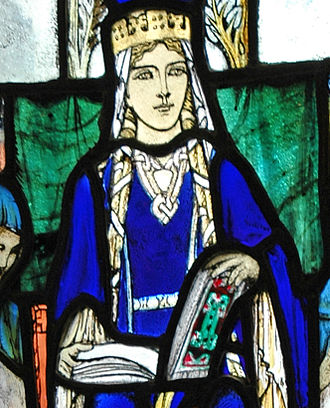
 Fresco at Saint Sophia’s Cathedral, Kyiv, Anna may be the one on the far left

As a demonstration of her superior level of education, Anna signed the marriage contract in her own hand, using her full name, whereas Henry could only manage a cross. At her coronation at Reims, Anna used a Slavic gospel to say her vows, which she had brought with her from Kyiv, rather than the traditional Latin Bible. Anne brought no land with her marriage dowry, but she did bring connections and wealth. The jewels she brought with her probably included a jacinth, which Abbot Suger later mounted in a reliquary of St Denis.2

Although it lasted only nine years, Anna and Henry’s marriage appears to have been a great success. The couple had three sons, of whom the oldest, Philip, born in 1052, succeeded his father as Philip I. He was known as Philip ‘the Amorous’ and reigned for forty-eight years, marrying twice; firstly to Bertha of Holland and secondly to Bertrade de Montfort, having three children – two sons and a daughter – with each wife. Anne and Henry’s second son, Robert, born in 1054/5, died young and the youngest, Hugh, born in 1057, became Count of Vermandois on his marriage to Adelaide, Countess of Vermandois. Hugh was vilified for failing to fulfil his Crusader vows by returning home early from the First Crusade, he died, in 1101, of wounds received in battle with the Turks after returning to the Holy Land. One of Hugh’s nine children, his daughter, Isabel de Vermandois, was married to Robert de Beaumont, Earl of Leicester, before her father departed on crusade, even though she was only aged 10 or 11 at the time. Isabel would marry, as her second husband, William de Warenne, 2nd Earl of Warenne and Surrey.

History ... the Interesting Bits
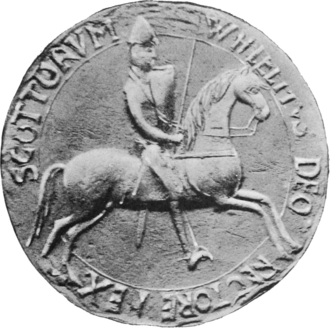
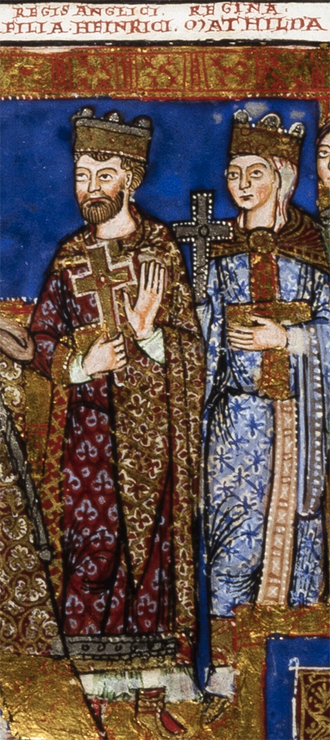
Seal of Henry I

Anna appears to have thought of France as provincial compared to her homeland of Kyiv; she is said to have written to her father in 1050 saying, ‘What a barbarous country you sent me to – the dwellings are sombre, the churches horrendous and the morals – terrible’.3 Anna, however, appears to have made an effort to settle into her adopted country, she learned the language and participated, to some extent, in government; she and Henry worked in partnership as king and queen. Several decrees include the phrase ‘With the consent of my wife Anna’ or ‘In the presence of Queen Anna’.4

Towards the end of Henry’s reign, Anna was counter-signatory to at least four charters, including a 1058 charter of concession to the monastery of St Maur-les-Fosses, signed ‘including my wife Anna and sons Philip, Robert and Hugh’ and a donation to the monastery at Hasnon, which was signed by King Henry, Prince Philip and Queen Anna.5

History ... the Interesting Bits
Charter issued jointly by Anna and her son, Philip I of France

The situation changed in 1060 when King Henry died. With Anna’s son Philip then only seven years old, a regency was set up with Baldwin V of Flanders as regent. He was the husband of King Henry’s sister Adele, and father of Matilda of Flanders, Queen of England. However, at the time, the Bishop of Chartres described Philip and his mother Anna as his sovereigns; moreover, Philip himself declared that, as a child, he ruled the kingdom jointly with his mother. The young king valued his mother’s advice and Anna signed numerous royal acts during her son’s reign; her signature was always either the first signature on the document or the second after that of King Philip. The acts included donations to monasteries, the renunciation of customs grants of exemptions and a charter to the Abbot of Marmoutier to build a church. In all, there are at least twenty-three acts that mentioned Anna, or carried her signature, between 1060 and 1075.6

Anna was held in high regard by many. Among her admirers was Pope Nicholas II himself, who wrote to her with high praise;

Nicholas, Bishop, servant of the servants of God, to the glorious queen, greeting and apostolic benediction. We give proper thanks to almighty God, the author of good will, because we have heard that the virile strength of virtues lives in a womanly breast. Indeed it has come to our ears, most distinguished daughter, that your serenity overflows with the munificence of pious generosity for the poor, sweats forth with the zeal of most devoted prayer, administers the force of punishment on behalf of those who are violently oppressed, and fulfills with other good works, insofar as it belongs to you, the office of royal dignity…7

History ... the Interesting Bits
Tomb of Ralph IV in the church of Saint-Pierre in Montdidier.

In 1061 Anna was involved in a scandal in France when she married Raoul, Count of Crepy and Valois, in what appears to have been a love-match. Raoul was an ally of the young king, but was already married to Eleanor. Eleanor’s family name is identified as “Haquenez” in two primary sources, but her origins are obscure. The count had repudiated Eleanor, on the grounds of adultery, in order to marry Queen Anna. However, Eleanor appealed to the pope, Alexander II, who ordered the Archbishop of Reims to investigate the matter.

Raoul was ordered to take Eleanor back, and was excommunicated when he refused; he and Anna left court as a result of the furore. However, Raoul and Anna were both important allies of the king, and continued advising Philip and acting as signatories to his royal acts, despite being exiled from the court. The king eventually forgave his mother and she was welcomed back to court following Raoul’s death in 1074. Her return to her family was probably short-lived, however, as it seems likely that Anna died in 1075, although the exact date of her death, and her final resting place, are lost to the thousand years that have passed since then.

History ... the Interesting Bits
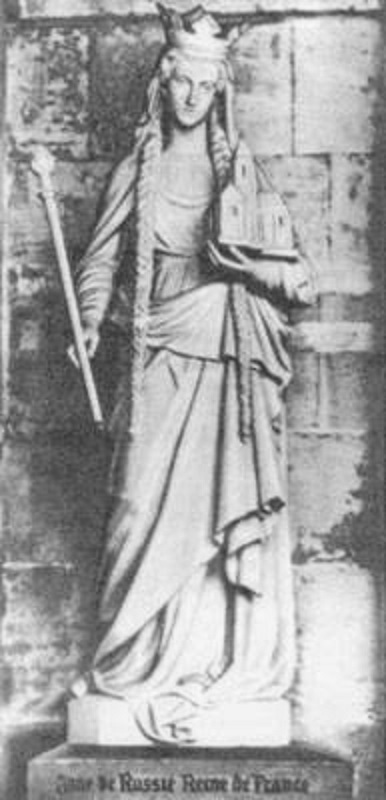
Statue of Anne at the Abbey of Saint-Vincent

Anna of Kyiv left a mark on history in the remarkably high regard in which both her husband, Henry I, and her son Philip held her. She was a well-educated, pious woman whose advice and opinions were respected, not only within her family, but by such exalted persons as the pope and French bishops.

She proved that a woman could act wisely, at least in politics, if not in her second marriage, at a time when women were not expected, or allowed, to rule. The nature of her rule appears to have been a gentle hand on the shoulder of her son, whereas other women were more forceful as rulers – such as Adela of Normandy, Countess of Blois, the daughter of William the Conqueror, King of England, and Matilda of Flanders.

*

Images:

Courtesy of Wikipedia

Notes:

1. Prominent Russians: Anna Yaroslavna (article), russiapedia.rt.com/prominent-russians/the-ryurikovich-dynasty/anna-yaroslavna; 2. epistolae.ccnmtl.columbia.edu, Anne of Kiev (Anna Yaroslavna) (article). Quoted from Bauthier, 550; Hallu, 168, citing Comptes de Suger; 3. Prominent Russians: Anna Yaroslavna; 4. Moniek Bloks, Anne of Kiev, the First Female Regent of France; 5. epistolae.ccnmtl.columbia.edu, Anne of Kiev (Anna Yaroslavna) (article). The St Maur-les-Fosses charter reads ‘annuente mea conjuge Anna et prole Philippo, Roberto ac Hugone’; 6. epistolae.ccnmtl.columbia.edu, Anne of Kiev (Anna Yaroslavna) (article); 7. Letter from Pope Nicholas II to Anne of Kiev, October 1059, epistolae.ccnmtl.columbia.edu/letter/1190, translated by Ashleigh Imus.

Sources:

Prominent Russians: Anna Yaroslavna (article), russiapedia.rt.com/prominent-russians/the-ryurikovich-dynasty/anna-yaroslavna; epistolae.ccnmtl.columbia.edu, Anne of Kiev (Anna Yaroslavna) (article); Moniek Bloks, Anne of Kiev, the First Female Regent of France; Heroines of the Medieval World by Sharon Bennett Connolly; Silk and the Sword: The Women of the Norman Conquest by Sharon Bennett Connolly; Matilda by Tracy Borman; The Norman Conquest by Marc Morris; Elisabeth M.C. Van Houts and Rosalind C. Love (eds and trans), The Warenne (Hyde) Chronicle; W.S. Davis, A History of France from the Earliest Times to the Treaty of Versailles; Emily Joan Ward, Anne of Kiev (c.1024–c.1075) and a reassessment of maternal power in the minority kingship of Philip I of France (article); Charlotte M. Yonge, History of France; Pierre Goubert, The Course of French History

*

My Books

Signed, dedicated copies of all my books are available through my online store.

Out now: Scotland’s Medieval Queens

Books by Sharon Bennett Connolly

Scotland’s history is dramatic, violent and bloody. Being England’s northern neighbour has never been easy. Scotland’s queens have had to deal with war, murder, imprisonment, political rivalries and open betrayal. They have loved and lost, raised kings and queens, ruled and died for Scotland. From St Margaret, who became one of the patron saints of Scotland, to Elizabeth de Burgh and the dramatic story of the Scottish Wars of Independence, to the love story and tragedy of Joan Beaufort, to Margaret of Denmark and the dawn of the Renaissance, Scotland’s Medieval Queens have seen it all. This is the story of Scotland through their eyes.

Scotland’s Medieval Queens gives a thorough grounding in the history of the women who ruled Scotland at the side of its kings, often in the shadows, but just as interesting in their lives beyond the spotlight. It’s not a subject that has been widely covered, and Sharon is a pioneer in bringing that information into accessible history.’ Elizabeth Chadwick (New York Times bestselling author)

Available now from Amazon and Pen and Sword Books

Also by Sharon Bennett Connolly:

Books by Sharon Bennett Connolly

Heroines of the Tudor World tells the stories of the most remarkable women from European history in the time of the Tudor dynasty, 1485-1603. These are the women who ruled, the women who founded dynasties, the women who fought for religious freedom, their families and love. Heroines of the Tudor World is now available for pre-order from Amberley Publishing and Amazon UK. Women of the Anarchy demonstrates how Empress Matilda and Matilda of Boulogne, unable to wield a sword themselves, were prime movers in this time of conflict and lawlessness. It shows how their strengths, weaknesses, and personal ambitions swung the fortunes of war one way – and then the other. Available from Bookshop.orgAmberley Publishing and Amazon UKKing John’s Right-Hand Lady: The Story of Nicholaa de la Haye is the story of a truly remarkable lady, the hereditary constable of Lincoln Castle and the first woman in England to be appointed sheriff in her own right. Available from all good bookshops Pen & Sword Booksbookshop.org and Amazon

Royal Historical Society

Defenders of the Norman Crown: The Rise and Fall of the Warenne Earls of Surrey tells the fascinating story of the Warenne dynasty, from its origins in Normandy, through the Conquest, Magna Carta, the wars and marriages that led to its ultimate demise in the reign of Edward III. Available from Pen & Sword BooksAmazon in the UK and US, and Bookshop.orgLadies of Magna Carta: Women of Influence in Thirteenth Century England looks into the relationships of the various noble families of the 13th century, and how they were affected by the Barons’ Wars, Magna Carta and its aftermath; the bonds that were formed and those that were broken. It is now available in paperback and hardback from Pen & SwordAmazon, and Bookshop.orgHeroines of the Medieval World tells the stories of some of the most remarkable women from Medieval history, from Eleanor of Aquitaine to Julian of Norwich. Available now from Amberley Publishing and Amazon, and Bookshop.orgSilk and the Sword: The Women of the Norman Conquest traces the fortunes of the women who had a significant role to play in the momentous events of 1066. Available now from Amazon,  Amberley Publishing, and Bookshop.org.

Alternate Endings: An anthology of historical fiction short stories including Long Live the King… which is my take what might have happened had King John not died in October 1216. Available in paperback and kindle from Amazon.

Podcast:

A Slice of Medieval

Have a listen to the A Slice of Medieval podcast, which I co-host with Historical fiction novelist Derek Birks. Derek and I welcome guests, such as Bernard Cornwell, Helen Castor and Michael Jecks, and discuss a wide range of topics in medieval history, from significant events to the personalities involved. 

Every episode is also now available on YouTube.

*

Don’t forget! Signed and dedicated copies of all my books are available through my online store.

For forthcoming online and in-person talks, please check out my Events Page.

You can be the first to read new articles by clicking the ‘Follow’ button, liking our Facebook page or joining me on TwitterThreadsBluesky and Instagram.

*

©2025 Sharon Bennett Connolly FRHistS

Wordly Women: Elizabeth Chadwick

History ... the Interesting Bits
Elizabeth Chadwick and I at Newark Book Festival, 2018

Throughout my writing career, I have been very lucky to have enjoyed the friendship of Elizabeth Chadwick. A truly generous person, Elizabeth and I shared a stage at the Newark Book Festival in July 2018. I had only published my first book, Heroines of the Medieval World the previous September, and I was a nervous wreck. Elizabeth was the star of the show, I was the newcomer, and she could have easily dominated the conversation – no one would have blamed her. Everyone was there to see her, not me. But Elizabeth was calm, encouraging and made sure I had my say. I will never forget that.

So, it is an honour and a pleasure to welcome Elizabeth to History … the Interesting Bits as part of my Wordly Women series, to discuss her writing career and her love of history – and William Marshal, of course!

Sharon: Hi, Elizabeth. So, what got you into writing?

History ... the Interesting Bits

Elizabeth: I came into the world as a storyteller. I can remember very clearly telling myself stories with beginnings, middles and ends at the age of three. Throughout my childhood I made up stories, inspired from illustrations I liked in books. I’d invent whole tales around pieces of artwork, say from the wonderful pages of Ladybird books. Even at a young age I was asking myself ‘What if this happened?’ Who, where, what why? I learned the art of story telling just by having fun – and reading a lot obviously. I didn’t write anything down until my mid-teens by which time I decided that I wanted to bring some posterity to my verbal stories and so began writing them down. I was fifteen when I wrote my first historical novel, purely for fun, and enjoyed the experience so much that I decided that I wanted to do this for my career. Eight unpublished novels later I finally got there.

Sharon: Tell us about your books.

Elizabeth: I write historical fiction set in the Middle Ages, mostly covering England and France with a bit of the Middle East thrown in. I began writing my stories with imaginary protagonists but then moved on to biographical fiction. They are character-driven stories of the life and times of the people, focussing on their family lives interwoven with political and emotional drama. I research the period meticulously and blend fact and fiction with an emphasis on telling an engrossing story without depriving the facts of their integrity. I have award winning novels and New York Times bestsellers among my published novels to date.

Sharon: What attracts you to the medieval period?

History ... the Interesting Bits

Elizabeth: It was actually chance that brought me to the Middle Ages. As I’ve mentioned above, I told myself stories throughout my childhood. I enjoyed historical TV dramas and became quite hooked on The Six Wives of Henry VIII starring Keith Michell. That led me to write down my first ever story over the summer holidays when I was fourteen. I enjoyed the exercise, but ran out of steam, however, I’d laid the groundwork. I became very enamoured of a knight in a children’s TV program put out by the BBC and dubbed from the French. It was called Desert Crusader, In French it was Thibaud ou les Croisades. My weekly doses of Desert Crusader led me to take up my pen again, and this time I didn’t run out of steam. This time I wrote a whole novel. It started out as a piece of fan fiction I guess, but within two chapters had taken on a life of its own – rather like me making up brand new stories to the Ladybird books of my childhood. Once I had the basic visual inspiration I was off. Since I knew nothing about the Holy Land and very little about the Middle Ages I had to begin researching because I wanted my story to have veracity and feel real. However if I hadn’t fallen for actor Andre Lawrence as Thibaud, ‘Le Chevalier Blanc’ I might never have taken to the Medieval period the way I did. Such are moments of chance in our lives.

Sharon: Who is your favourite medieval character and why?

History ... the Interesting Bits
William Marshal

Elizabeth: It would have to be the great William Marshal. You don’t get many of his kind to the pound. He had an amazing life and great integrity. He rose from the ranks of the ordinary jobbing nobility and a life in the military, and by using his charisma, intelligence, physical abilities and sheer personality, came to the attention of the Angevin royal family. Having saved the life of Eleanor of Aquitaine, he was taken into royal service. He was a champion of the tourneys, a far-travelled pilgrim, a counsellor of kings. He had his ups and downs and he wasn’t perfect by any manner of means, but the Angevins trusted him enough to give him a fantastic marriage to a great heiress (and they appear to have been very compatible despite a more than 20 year age gap). He became earl of Pembroke under King John and involved in the development of Magna Carta. When King John died, William took over the rule of England on behalf of John’s 9 year old son Henry III. He dealt with the volatile political situation in a way that showed he had a firm grasp of the politics and a practical knowledge of what to do. And at the battle of Lincoln in 1217, aged approx. 71, he saw off the French and got the country back on an even keel.

Sharon: Who is your least favourite medieval character and why?

Elizabeth: I don’t have a least favourite. Even the villains are interesting. I have some very least favourite modern politicians, but that’s because they’re in my face and I am having to deal with emotions engendered as consequences of their actions rather than being more objective. I do find it fascinating how people almost come to blows over Richard III and Henry VII and hold such passionate loyalties over a pair of men who are now bones. The War of the Roses is fought over and over and over again all day online! Having said that, I do admit I have a huge fondness for William Marshal which is certainly not dispassionate. I don’t however, get in a lather about King John!

Sharon: How do you approach researching your topic?
History ... the Interesting Bits
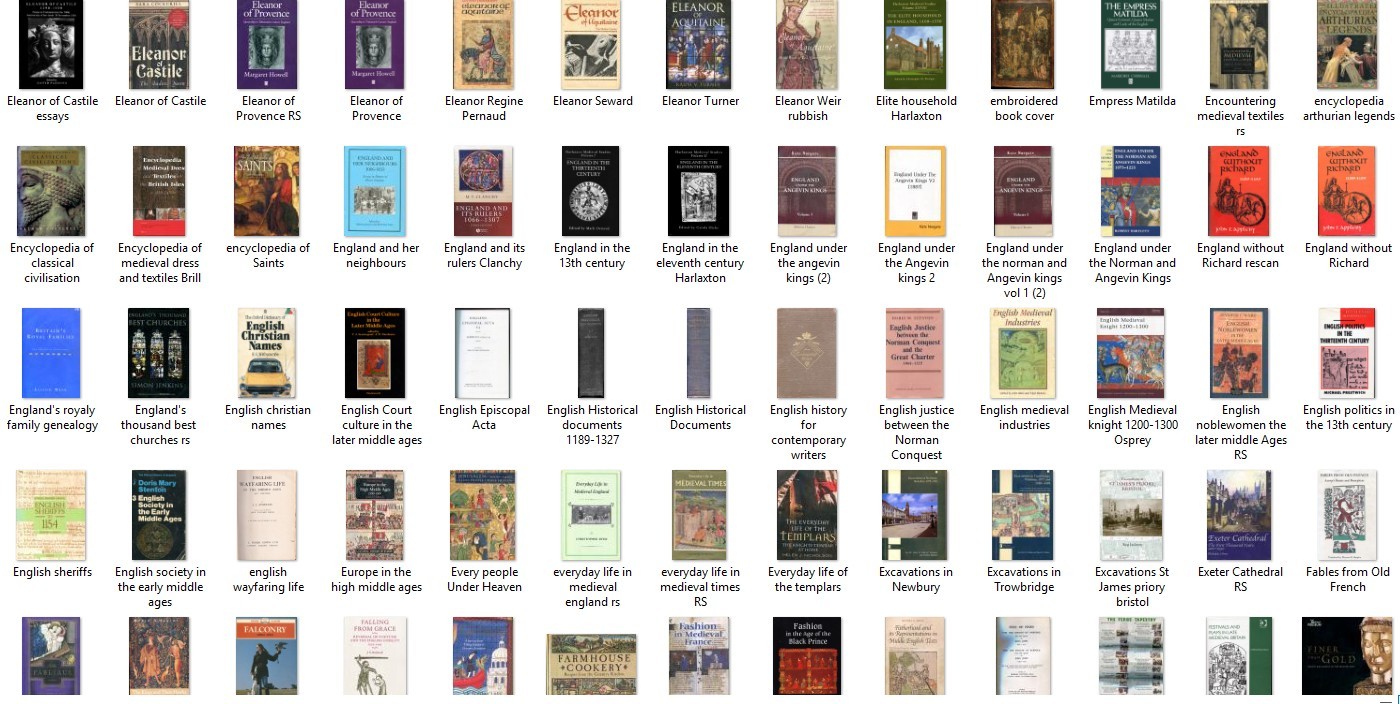
Just some of Elizabeth’s research books

Elizabeth: I’ve been studying the Middle Ages since I was fifteen years old and I am a few decades older now, so I have a good grounding in the general research of the period. I don’t have to start from scratch. I research using academic and specialist books of which I have a wide-ranging library – in several rooms of my house! I research online these days – when I began my career that wasn’t an option, but now it is, and it’s more a case of limiting the information and knowing which are the bona fide sites. While there’s a great deal of marvellous research resources out there, it has to be said that sadly copious amounts of rubbish exist too and one has to become an expert at sifting. I might do bits of experimental living history. I used to re-enact before I ran out of time and I still have all the kit and friends in the business toward whom I can direct questions. I also have friends in the academic community who are very helpful.

Sharon: Tell us your ‘favourite’ medieval story you have come across in your research.
Elizabeth: I think that would have to be the great William Marshal who attended a tournament with his lord the Young King, eldest son of Henry II. During the tournament they captured another knight for ransom and brought him back to their own camp sitting on his horse with a lead rein. However, on the way there they had to pass some buildings and the captured knight lifted himself off his horse and shimmied up a gutter pipe and clambered onto a house gallery (upstairs veranda sort of thing). Meanwhile, William Marshal was riding along, holding the reins of a riderless horse and not realising his captive had absconded until the Young King, doubled up with laughter, let him know – he’d been in on the joke for a while!

Sharon: Tell us your least ‘favourite’ medieval story you have come across in your research.

History ... the Interesting Bits
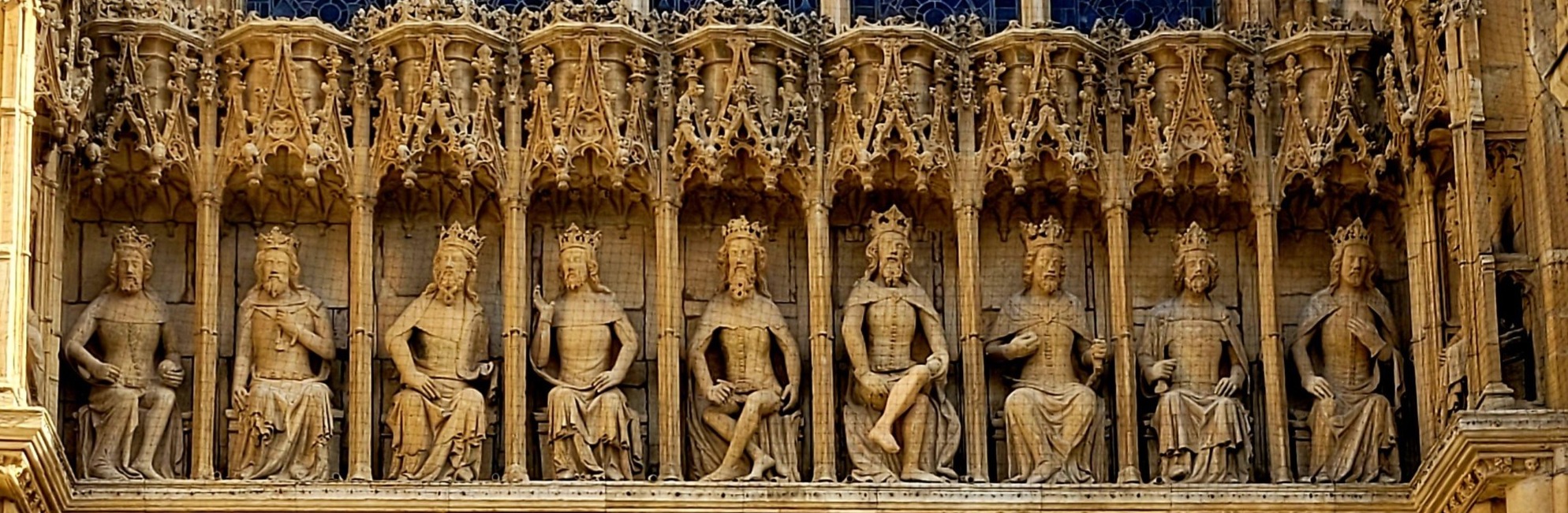
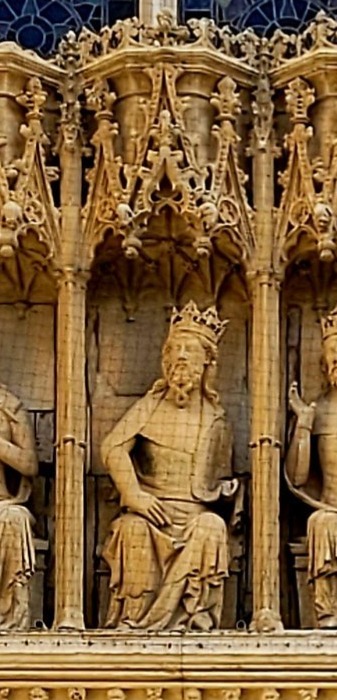
The Gallery of Kings, Lincoln Cathedral

Elizabeth: There are quite a few, but here’s a typical one. It would be in a work I was reading on criminal cases in Medieval Coventry. Someone stole a horse and was put in the stocks for it by the bailiff. But it was a very, very cold night and the criminal got frost bite which resulted in his lower legs perishing and then dropping off! He died, and the bailiff was arrested for murder – pretty gruesome!

Sharon: Are there any other eras you would like to write about?

Elizabeth: Arthurian might be interesting, although I’d need to do a lot of reading up because history has changed a lot since I became a fan of that era via various novels. When I first began writing as a teen, I almost wrote a Regency novel, but Medieval pipped Regency at the post. It might still be interesting to do, but again, I’d need to get stuck into the research so probably not.

Sharon: What are you working on now?

History ... the Interesting Bits
Joan of Kent

Elizabeth: I’ve just completed The Uncrowned Queen, the second part of Joan of Kent’s amazing story and I am now working on an untitled novel about Katherine Swynford and her two husbands – Hugh Swynford and John of Gaunt. I am finding it fascinating, especially the way research has moved on and changed datelines, nuances and our understanding of the period and the protagonists. It goes to show that so much of the time what we think we know is actually what we don’t know. Actually, if we are prepared to swallow long-cherished beliefs and re-learn, it’s immensely exciting and rewarding!

Sharon: And finally, what is the best thing about being a writer?

Elizabeth: Being your own boss to an extent. As long as I put in the word count, I can get up as I please and go to bed as I please. Equal with that are the many good friends I have made over my career, both the readers and the historians – and I’ve learned a lot of cool things too!

About the Author:

History ... the Interesting Bits

Elizabeth Chadwick is a UK million selling historical novelist whose works are based in the medieval period. She won a Betty Trask award for her first published novel The Wild Hunt and the RNA prize for Historical fiction in 2011 with To Defy A King. Her novel The Greatest Knight is a New York Times bestseller and has been optioned for film and TV together with several others in the same series. Specialising in the Middle Ages, with a particular interest in the life and times of William Marshal and the Angevin court, she occasionally lectures on the academic circuit and gives talks on historical tours. Elizabeth is also a member of The Royal Historical Society. When not writing, Elizabeth enjoys chatting to readers on all sorts of subjects but with a strong emphasis on reading and medieval history.

*

My books

Signed, dedicated copies of all my books are available through my online store.

Out now: Scotland’s Medieval Queens

Books by Sharon Bennett Connolly

Scotland’s history is dramatic, violent and bloody. Being England’s northern neighbour has never been easy. Scotland’s queens have had to deal with war, murder, imprisonment, political rivalries and open betrayal. They have loved and lost, raised kings and queens, ruled and died for Scotland. From St Margaret, who became one of the patron saints of Scotland, to Elizabeth de Burgh and the dramatic story of the Scottish Wars of Independence, to the love story and tragedy of Joan Beaufort, to Margaret of Denmark and the dawn of the Renaissance, Scotland’s Medieval Queens have seen it all. This is the story of Scotland through their eyes.

Scotland’s Medieval Queens gives a thorough grounding in the history of the women who ruled Scotland at the side of its kings, often in the shadows, but just as interesting in their lives beyond the spotlight. It’s not a subject that has been widely covered, and Sharon is a pioneer in bringing that information into accessible history.’ Elizabeth Chadwick (New York Times bestselling author)

Available now from Amazon and Pen and Sword Books

Also by Sharon Bennett Connolly:

Books by Sharon Bennett Connolly

Heroines of the Tudor World tells the stories of the most remarkable women from European history in the time of the Tudor dynasty, 1485-1603. These are the women who ruled, the women who founded dynasties, the women who fought for religious freedom, their families and love. Heroines of the Tudor World is now available for pre-order from Amberley Publishing and Amazon UK. Women of the Anarchy demonstrates how Empress Matilda and Matilda of Boulogne, unable to wield a sword themselves, were prime movers in this time of conflict and lawlessness. It shows how their strengths, weaknesses, and personal ambitions swung the fortunes of war one way – and then the other. Available from Bookshop.orgAmberley Publishing and Amazon UKKing John’s Right-Hand Lady: The Story of Nicholaa de la Haye is the story of a truly remarkable lady, the hereditary constable of Lincoln Castle and the first woman in England to be appointed sheriff in her own right. Available from all good bookshops Pen & Sword Booksbookshop.org and Amazon

Royal Historical Society

Defenders of the Norman Crown: The Rise and Fall of the Warenne Earls of Surrey tells the fascinating story of the Warenne dynasty, from its origins in Normandy, through the Conquest, Magna Carta, the wars and marriages that led to its ultimate demise in the reign of Edward III. Available from Pen & Sword BooksAmazon in the UK and US, and Bookshop.orgLadies of Magna Carta: Women of Influence in Thirteenth Century England looks into the relationships of the various noble families of the 13th century, and how they were affected by the Barons’ Wars, Magna Carta and its aftermath; the bonds that were formed and those that were broken. It is now available in paperback and hardback from Pen & SwordAmazon, and Bookshop.orgHeroines of the Medieval World tells the stories of some of the most remarkable women from Medieval history, from Eleanor of Aquitaine to Julian of Norwich. Available now from Amberley Publishing and Amazon, and Bookshop.orgSilk and the Sword: The Women of the Norman Conquest traces the fortunes of the women who had a significant role to play in the momentous events of 1066. Available now from Amazon,  Amberley Publishing, and Bookshop.org.

Alternate Endings: An anthology of historical fiction short stories including Long Live the King… which is my take what might have happened had King John not died in October 1216. Available in paperback and kindle from Amazon.

Podcast:

Have a listen to the A Slice of Medieval podcast, which I co-host with Historical fiction novelist Derek Birks. Derek and I welcome guests, such as Elizabeth Chadwick and Bernard Cornwell and discuss a wide range of topics in medieval history, from significant events to the personalities involved.

Every episode is also now available on YouTube.

*

Don’t forget! Signed and dedicated copies of all my books are available through my online bookshop.

For forthcoming online and in-person talks, please check out my Events Page.

You can be the first to read new articles by clicking the ‘Follow’ button, liking our Facebook page or joining me on TwitterThreadsBluesky and Instagram.

*

©2025 Sharon Bennett Connolly, FRHistS and Elizabeth Chadwick

Sybilla of Normandy, Queen of Scots

History ... the Interesting Bits
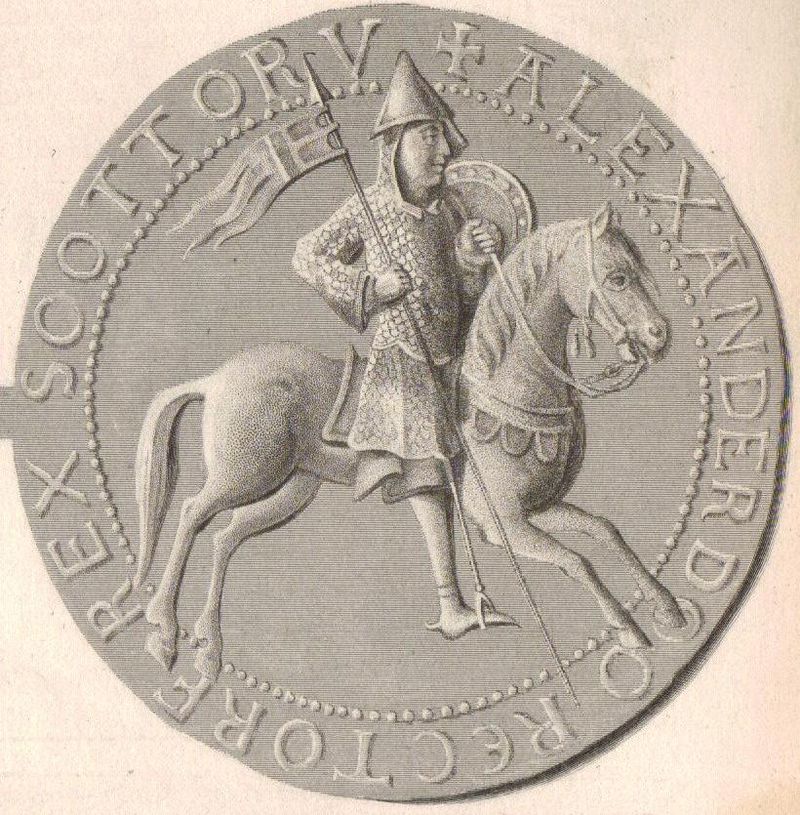
Alexander I, King of Scots

Alexander I was the second-to-youngest son of Malcolm III Canmore and his sainted wife Margaret of Wessex. Born around 1077 or 1078, he was thirty-or-so when he ascended the throne in 1107, ‘as the King Henry granted him.’1 Like his brother Edgar before him, Alexander succeeded to the throne as a vassal of the English crown. He had probably spent the years between his father’s death and Edgar’s accession in exile in England, with Edgar and their younger brother, David. John of Fordun provides a largely flattering assessment of Alexander I as king:

‘Now the king was a lettered and godly man ; very humble and amiable towards the clerics and regulars, but terrible beyond measure to the rest of his subjects; a man of large heart, exerting himself in all things beyond his strength. He was most zealous in building churches, in searching for relics of saints, in providing and arranging priestly vestments and sacred books; most open-handed, even beyond his means, to all newcomers; and so devoted to the poor, that he seemed to delight in nothing so much as in supporting them, washing, nourishing, and clothing them.’2

One of the primary duties of a king is to marry and produce heirs; at least one son, preferably two – the heir and the spare. This guarantees the succession and offers stability to a country. Even daughters were useful to a king, their marriages cementing alliances with friends and enemies alike. Alexander I was married shortly after his accession to the throne. His bride was offered to him by his brother-in-law, King Henry I of England. She was Sybilla, also known as Sybilla of Normandy, one of the King of England’s many illegitimate offspring.

History ... the Interesting Bits
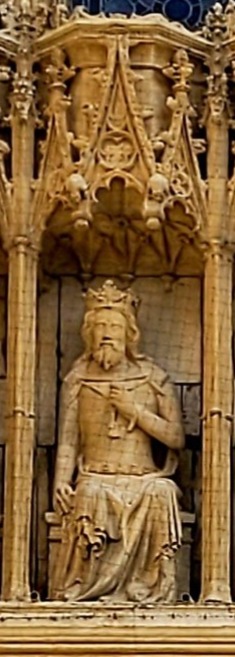
Henry I, Lincoln Cathedral

King Henry had more than twenty illegitimate children and as many as five were by the same mother, his mistress, or concubine, Sybilla Corbet. Orderic Vitalis refers to Sybilla of Normandy as ‘the daughter of King Henry by a concubine’.3 It is highly likely that Sybilla Corbet was Sybilla’s mother, one indication being their shared Christian name. She was the daughter of a Shropshire landowner named Robert Corbet. Her children with the king included Reginald, Earl of Cornwall, and a young man named William, who was described as the queen’s brother when he accompanied the younger Sybilla to Scotland. Sybilla Corbet is also reputed to have been the mother of Robert, Earl of Gloucester, Henry I’s oldest son and the stalwart supporter of his legitimate sister, Empress Matilda, during the Anarchy. After the end of her relationship with the king, Sybilla Corbet would go on to marry Herbert FitzHerbert, who held lands in Yorkshire and Gloucestershire, and have a further five children.

The date of Alexander’s marriage to Sybilla is unknown, though it is thought to have been shortly after his accession to the throne, possibly in 1107 or 1108, and before his involvement in the English campaign in Wales in 1114. It was in a charter dated to 1114 or 1115 that Alexander and Sybilla jointly refounded Scone Abbey, whereby they are referred to as ‘Alexander … King of Scots, son of King Malcolm and Queen Margaret and … Sybilla, Queen of Scots, daughter of King Henry of England.’4

Another unknown is Sybilla’s age at the time of her marriage as her birth was unrecorded. Alexander was in his 30s, while most historians agree that it is likely that Sybilla was born in the mid-to-late 1090s and probably in her mid-teens. Although born out of wedlock, as the acknowledged daughter of King Henry I of England, Sybilla was considered a suitable wife for King Alexander. Henry I’s illegitimate daughters played an important role in his foreign and domestic policies; no fewer than ten of them were married into the upper classes of the Norman-French nobility to cement political alliances. Sybilla’s illegitimate status was of less significance than the fact her father was the King of England.

History ... the Interesting Bits
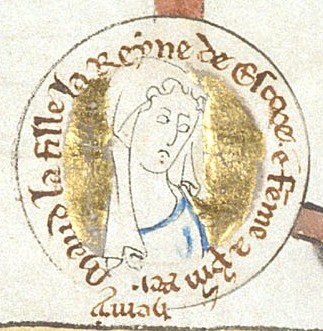
Matilda of Scotland, Queen of England

The marriage was intended to bind Alexander even closer to England and to King Henry personally, who was already his brother-in-law, having married Alexander’s sister, Matilda of Scotland, shortly after becoming king. The union was also aimed at securing peace along the Anglo-Scottish border. In his chronicle, William of Malmesbury recorded the marriage, though did not name Sybilla and added ‘there was … some defect about the lady either in correctness of manners or elegance of person.’5 Malmesbury stated that Alexander ‘did not sigh much when she died before him, for the woman lacked, as is said, what was desired, either in modest manners, or in elegant body’.6 Unfortunately, William of Malmesbury does not elaborate further on this defect, nor on the reasons behind such an unflattering description of the Scottish queen. No other chronicler mentions any flaws in the queen. It is possible that Malmesbury was playing down the queen’s attributes, and the impact of her death on the king, in order to find favour with her brother-in-law David, Alexander I’s younger brother and heir.

Some historians have interpreted the childless marriage as also being loveless, perhaps drawing on Malmesbury’s depiction of Sybilla, most actually agree that, although there were no children, it was a happy and loving marriage. With this distance of time, it would be difficult to be certain either way. However, despite the lack of an heir, Alexander did not repudiate his wife, though that could always be as a result of who her father was. Rosalind Marshal suggests that Alexander loved Sybilla, and mourned her deeply when she died, founding a church in her memory.

History ... the Interesting Bits
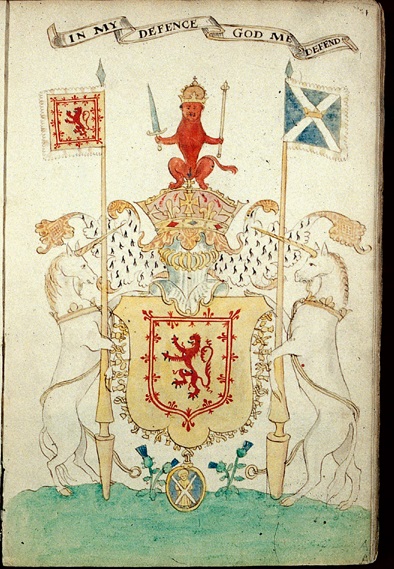
Arms of Scotland

Alexander and Sybilla’s court is said to have been one of splendour, with reference to Arab stallions and Turkish men-at-arms. They issued a number of charters together, including the one founding Scone Abbey, mentioned above. Scone was the ancient site for the installation and crowning of Scotland’s kings, it was the centre of royal power in Scotland. Sybilla’s inclusion in the foundation of the Augustinian priory there demonstrates how she had become an integral part of the Scottish ruling dynasty. She and Alexander also made a joint offering to the cathedral church of St Andrews.

Sybilla also made grants, as an ecclesiastical patron, in her own right. She granted the manor of Beath in Fife to Dunfermline Abbey, the monastery founded by her husband’s parents, Malcolm III and Queen Margaret, their final resting place. Sybilla attested one of the four surviving charters from Alexander I’s reign, demonstrating her presence at court and involvement in the affairs of state. Significantly, it may have been Sybilla who acted as peacemaker between the king and Eadmer, when he became Bishop of St Andrews. Due to the investiture controversy that was causing issues throughout Europe, with kings and bishops in disagreement over the validity of lay investiture, Eadmer accepted the ring of office from King Alexander, but not the staff. The staff had been placed on the altar at the cathedral of St Andrews and it seems likely that Sybilla was the one who broached the compromise whereby Eadmer would take the episcopal ring from the king, but the pastoral staff from the altar. When Eadmer arrived at the cathedral church of St Andrews to take up the pastoral staff, Queen Sybilla was there to greet him.

History ... the Interesting Bits
Saint Margaret, Queen of Scots

Queen Sybilla died suddenly on the Island of the Women at ‘Loch Tay, the cell of the canons of Scone’ on 12 or 13 July 1122 and was buried at Dunfermline Abbey. Afterwards, the king granted the island on Loch Tay, and its surrounding lands, to the canons at Scone, to pray for the soul of Queen Sybilla, and himself. Alexander did not remarry after Sybilla’s death, leaving the crown to his brother, David, on his own death in 1124.

Queen Sybilla has left little imprint on history, beyond her name as a witness on a surviving charter and the founding of Scone Abbey. That she did not bear children, and therefore an heir for Alexander I, means that she did not have living descendants to keep her memory alive and memorialise her life and deeds, as Queen Margaret had. Her significance is, perhaps, not in her impact on Scotland but rather the physical link that she represented between the kingdoms and dynasties of England and Scotland, and thus demonstrating Scottish acceptance of Norman rule in England.

***

Notes:

1. Manuscript E, The Anglo-Saxon Chronicles, edited and translated by Michael Swanton, p. 241; 2. John of Fordun’s Chronicle of the Scottish nation, pp. 217-218; 3. ‘filiam Henrici regis Anglorun ex concubine’ Orderic Vitalis cited in Danna Messer, Medieval Monarchs, Female Illegitimacy and Modern Genealogical Matters: Part 1: Sybilla, Queen of Scotland, c. 1090-1122, fmg.ac; 4. ‘Alexander…rex Scottorum filius regis Malcolmi et regine Margerete et…Sibilla regina Scottorum filia Henrici regis Anglie’ Scone, 1, p. 1.  Quoted in fmg.ac/Projects/MedLands/SCOTLAND; 5. William of Malmesbury, 400, p. 349, quoted in fmg.ac/Projects/MedLands/SCOTLAND; 6. William of Malmesbury, quoted in Messer, Medieval Monarchs, Female Illegitimacy and Modern Genealogical Matters: Part 1: Sybilla, Queen of Scotland, c. 1090-1122

Images:

Courtesy of Wikipedia except Henry I which is ©2025 Sharon Bennett Connolly

Sources:

The Anglo-Saxon Chronicles, edited and translated by Michael Swanton; John of Fordun’s Chronicle of the Scottish nation; Danna Messer, Medieval Monarchs, Female Illegitimacy and Modern Genealogical Matters: Part 1: Sybilla, Queen of Scotland, c. 1090-1122; fmg.ac/Projects/MedLands/SCOTLAND; Jessica Nelson, Sybilla (d. 1122), queen of Scots and consort of Alexander I, Oxforddnb.com; Walter Bower, Scotichronicon; A.A.M. Duncan, Alexander I, Oxforddnb.com; Forester, The Chronicle of John Florence of Worcester with the two continuations; David Ross, Scotland, History of a Nation; Rosalind K. Marshall, Scottish Queens 1034-1714; Mike Ashley, A Brief History of British Kings & Queens; Richard Oram, editor, The Kings & Queens of Scotland

*

My books

Signed, dedicated copies of all my books are available through my online store.

Out now: Scotland’s Medieval Queens

Books by Sharon Bennett Connolly

Scotland’s history is dramatic, violent and bloody. Being England’s northern neighbour has never been easy. Scotland’s queens have had to deal with war, murder, imprisonment, political rivalries and open betrayal. They have loved and lost, raised kings and queens, ruled and died for Scotland. From St Margaret, who became one of the patron saints of Scotland, to Elizabeth de Burgh and the dramatic story of the Scottish Wars of Independence, to the love story and tragedy of Joan Beaufort, to Margaret of Denmark and the dawn of the Renaissance, Scotland’s Medieval Queens have seen it all. This is the story of Scotland through their eyes.

Scotland’s Medieval Queens gives a thorough grounding in the history of the women who ruled Scotland at the side of its kings, often in the shadows, but just as interesting in their lives beyond the spotlight. It’s not a subject that has been widely covered, and Sharon is a pioneer in bringing that information into accessible history.’ Elizabeth Chadwick (New York Times bestselling author)

Available now from Amazon and Pen and Sword Books

Also by Sharon Bennett Connolly:

Books by Sharon Bennett Connolly

Heroines of the Tudor World tells the stories of the most remarkable women from European history in the time of the Tudor dynasty, 1485-1603. These are the women who ruled, the women who founded dynasties, the women who fought for religious freedom, their families and love. Heroines of the Tudor World is now available from Amberley Publishing and Amazon UK. Women of the Anarchy demonstrates how Empress Matilda and Matilda of Boulogne, unable to wield a sword themselves, were prime movers in this time of conflict and lawlessness. It shows how their strengths, weaknesses, and personal ambitions swung the fortunes of war one way – and then the other. Available from Bookshop.orgAmberley Publishing and Amazon UKKing John’s Right-Hand Lady: The Story of Nicholaa de la Haye is the story of a truly remarkable lady, the hereditary constable of Lincoln Castle and the first woman in England to be appointed sheriff in her own right. Available from all good bookshops Pen & Sword Booksbookshop.org and Amazon

Royal Historical Society

Defenders of the Norman Crown: The Rise and Fall of the Warenne Earls of Surrey tells the fascinating story of the Warenne dynasty, from its origins in Normandy, through the Conquest, Magna Carta, the wars and marriages that led to its ultimate demise in the reign of Edward III. Available from Pen & Sword BooksAmazon in the UK and US, and Bookshop.orgLadies of Magna Carta: Women of Influence in Thirteenth Century England looks into the relationships of the various noble families of the 13th century, and how they were affected by the Barons’ Wars, Magna Carta and its aftermath; the bonds that were formed and those that were broken. It is now available in paperback and hardback from Pen & SwordAmazon, and Bookshop.orgHeroines of the Medieval World tells the stories of some of the most remarkable women from Medieval history, from Eleanor of Aquitaine to Julian of Norwich. Available now from Amberley Publishing and Amazon, and Bookshop.orgSilk and the Sword: The Women of the Norman Conquest traces the fortunes of the women who had a significant role to play in the momentous events of 1066. Available now from Amazon,  Amberley Publishing, and Bookshop.org.

Alternate Endings: An anthology of historical fiction short stories including Long Live the King… which is my take what might have happened had King John not died in October 1216. Available in paperback and kindle from Amazon.

Podcast:

A Slice of Medieval

Have a listen to the A Slice of Medieval podcast, which I co-host with Historical fiction novelist Derek Birks. Derek and I welcome guests, such as Bernard Cornwell and Michael Jecks, and discuss a wide range of topics in medieval history, from significant events to the personalities involved. 

Every episode is also now available on YouTube.

*

Don’t forget! Signed and dedicated copies of all my books are available through my online store.

For forthcoming online and in-person talks, please check out my Events Page.

You can be the first to read new articles by clicking the ‘Follow’ button, liking our Facebook page or joining me on TwitterThreadsBluesky and Instagram.

*

©2025 Sharon Bennett Connolly

Wordly Women: Kathryn Warner

A Slice of Medieval

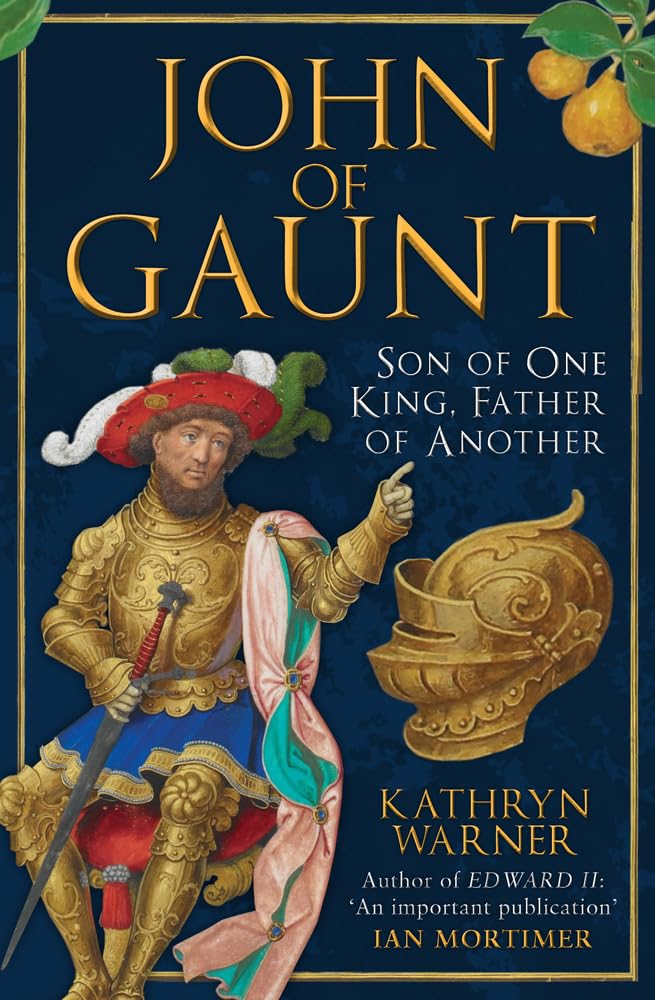
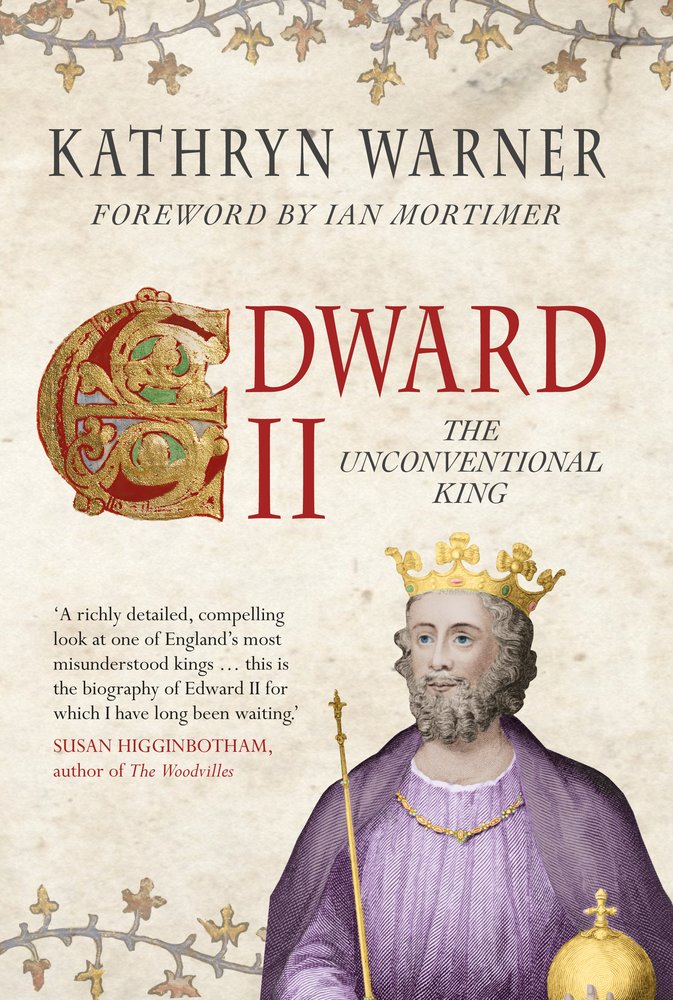
I am very happy today to welcome historian Kathryn Warner to History…the Interesting Bits in a new instalment of my Author Spotlight series, Wordly Women. Kathryn is the ‘go to’ person for all-things Edward II. She has also written about John of Gaunt, the Beaumont kings of Jerusalem, the Clare sisters and her latest book is The Black Death in England: Journal of the Plague Years in the Fourteenth Century. Her books are always well research and enjoyable reads. And when we get together to chat on A Slice of Medieval, it is always a fabulous discussion and a pleasure.

So, over to Kathryn…

Sharon: Hi Kathryn, I would love to know what got you into writing?

Kathryn: In a nutshell, my passion for Edward II and his era! It was strange, because during my time at university studying medieval history, I’d never been that interested in him, but my fascination developed some years after I graduated. I started writing stories about him, then started a blog about him and his reign as well, because my passion was so overwhelming that I just had to get it down on paper or on a screen and share it with people. Some years later, I wrote some academic articles about him, then went on to write a full-length biography of Edward and his life and reign, which became my first published book.

Sharon: Tell us about your books.

Kathryn Warner

Kathryn: I’ve written at least twenty non-fiction books now. My earlier ones are biographies and joint biographies, including Edward II’s queen Isabella of France, their daughter-in-law Philippa of Hainault, their grandson John of Gaunt, Edward II’s last and most powerful favourite Hugh Despenser the Younger, Edward’s nieces the de Clare sisters, and Edward III’s granddaughters. These days, I’m massively getting into social history too, and have written a book about aspects of life in London between 1300 and 1350, one about the victims and survivors of the fourteenth-century pandemics of the Black Death, and one called Life in a Medieval Town.

Sharon: What attracts you to the 14th century?

Kathryn: It was such an astonishingly dramatic and turbulent era. As well as the chaos of Edward II’s reign early in the century – battles, rebellions, executions, betrayals, changes of fortune, hatreds and passions, Edward’s forced abdication, and much else – there were natural disasters too. The pandemics of the Black Death are well known, especially the first one in 1348/49, but there was also a massive famine in England in the 1310s. Edward III began what we know as the Hundred Years War against France in the 1330s, his grandson Richard II witnessed the Peasants’ Revolt in 1381, and so on. I really don’t think I’d have liked to live in the fourteenth century, haha, but it’s an endlessly fascinating era to research and write about.

Sharon: Who is your favourite 14th century person and why?

Kathryn Warner

Kathryn: To the surprise of absolutely no one who knows me, Edward II! Without question, he’s one of England’s most unsuccessful kings in history, and was the first one who suffered the fate of deposition or forced abdication in 1327. His reign of just under 20 years is dramatic almost beyond the telling of it, as Edward lurched constantly from one crisis to the next, crises almost entirely of his own making. He was completely unsuited to the position he’d been born into, and was a deeply unconventional man by the standards of his era. I feel that he makes much more sense to us than he did to his contemporaries: he openly loved men, he enjoyed the company of his common subjects and even went on holiday with them, he enjoyed being outdoors and doing hard physical labour. Edward II, born in 1284, is exactly 700 years older than Prince Harry the Duke of Sussex, born in 1984, and I often think that Edward would have been much happier and more successful if he’d been born into the royal family of the late twentieth century than he was in his own lifetime.

Sharon: Who is your least favourite 14th century person and why?

Kathryn: That’s a tricky question to answer, really, as even the people I instinctively don’t tend to like all that much intrigue me and led fascinating lives that I want to delve into. Someone like Roger Mortimer, the first earl of March, for example. He played a massive role in Edward II’s downfall in 1326/27, and as such is someone I feel I should dislike, but I really don’t, because he’s such a complex fascinating person. It’s not Roger that I dislike, it’s the way he’s often been written in modern times, in this absurdly over-romanticised way as the adored lover and saviour of Edward II’s queen, Isabella of France. It flattens his character and turns him into a caricature that has very little to do with the person he actually was. So I can’t say that I have a least favourite fourteenth-century person, but I do often profoundly dislike the simplistic, one-dimensional ways in which many fourteenth-century people are depicted nowadays.

Sharon: How do you approach researching your topic?

Kathryn Warner
Edward II

Kathryn: I think a lot of people might be surprised at just at how many sources we have from the fourteenth century, and how much information there actually is once you start delving into them. In the period I write about, pretty well all the sources are written in Latin or French, and though many have been transcribed and translated, many have not. Looking at original documents in the National Archives is such a joy! I’ve found lots of wonderful details about Edward II and his life and household from his extant accounts, for example. I often fall down a rabbit-hole of research and emerge blinking hours later, and oddly enough, some of my best finds are things I stumbled upon by accident while researching something else.

Sharon: Tell us your ‘favourite’ 14th century story you have come across in your research.

Kathryn: While I was researching a book about London between 1300 and 1350, I came across this fab story. The rector of the church of St Margaret Lothbury in London around the year 1300, whose name was William (his last name was not recorded), had an insatiable curiosity about a disease he called Le Lou. This means ‘The Wolf’ in medieval French, and probably referred to the condition we now call lupus, which means ‘wolf’ in Latin. Believing that wolf flesh could cure the disease, William ordered a cask of four dead wolves from abroad (where exactly was not specified) to be sent to his church. By the time the dead animals arrived in London, however, their corpses had become ‘putrid’, and William was hauled before the court of the mayor of London, Elias Russel, on 5 January 1300, and ordered to explain himself. To me, this situation reveals several things that are worth knowing about the early fourteenth century. Firstly, that a man in England somehow managed to contact a person on the Continent who was willing and able to send him dead wolves; secondly, that officials around the year 1300 were aware that the welfare of the general public in a crowded city might be worsened by the presence of decaying animal corpses; and thirdly, that a person was deeply interested in a particular disease and cared about its victims, and attempted, albeit in a comically misguided way, to find a cure for it.

Sharon: Tell us your least ‘favourite’ 14th century story you have come across in your research.

Kathryn Warner

Kathryn: It’s one that breaks my heart. At the start of the year 1349, Agnes Stokwell was living on Whitecross Street in London with her family, who consisted of her father Walter, a painter; her mother Joan; her older brother Laurence; and her three older sisters, Christine, Imania, and Alice. She also had an aunt named Isabel and an uncle named William, her father’s siblings, and her father’s apprentice Thomas Bournham lived in the household as well. The Stokwell family were pretty well-off and thriving, but by the end of 1349, all of them were dead in the first massive pandemic of the Black Death, except only Agnes. She was just seven years old, and within a few months had lost her entire family, every living relative; her parents, her four older siblings, and her aunt and uncle. Thankfully, her late father’s apprentice Thomas Bournham also lived through the plague, the only other survivor of the household, and was given custody of Agnes at the end of 1349. They both disappear from written record after that, or at least I’ve never been able to find them again, but I hope they lived long and thrived.

Sharon: Are there any other eras you would like to write about?

Kathryn: My second favourite era after the fourteenth century is the eleventh century. I did a few courses on Old English language, literature, history and culture at university, and loved it. I’m particularly interested in the first few decades of the 1000s – the end of Aethelred’s reign, the brief reign of his son Edmund Ironside, King Cnut and his son, and Emma of Normandy, who married both Aethelred and Cnut.

Sharon: What are you working on now?

Kathryn: My current project is provisionally titled Murder and Mayhem, and is about some of the violence, homicide, gangs and feuds in fourteenth-century England. There’s a wealth of material, almost too much, in fact! The book after that is about the royal English household in the late Middle Ages, which is a subject I’ve been wanting to write about for ages.

Sharon: Now that, I want to read!

Sharon: And finally, what is the best thing about being a writer?

Kathryn: For me, it’s the chance to immerse myself in the fourteenth century, to discover fascinating stories and to share them with readers. I also love that my time is unstructured, and I can write whenever I like and take breaks whenever I like, which suits me very well. And finally, it’s simply amazing that I’ve been able to turn my passion for fourteenth-century history into a job!

About the Author:

Kathryn Warner

Kathryn Warner holds two degrees in medieval history from the University of Manchester. She is considered a foremost expert on Edward II and an article from her on the subject was published in the English Historical Review. She has run a website about him since 2005 and a Facebook page about him since 2010 and has carved out a strong online presence as an expert on Edward II and the fourteenth century in general. Kathryn teaches Business English as a foreign language and lives between Dusseldorf and Cumbria.

To buy: Kathryn’s books

*

My books

Signed, dedicated copies of all my books are available through my online store.

Out now: Scotland’s Medieval Queens

Books by Sharon Bennett Connolly

Scotland’s history is dramatic, violent and bloody. Being England’s northern neighbour has never been easy. Scotland’s queens have had to deal with war, murder, imprisonment, political rivalries and open betrayal. They have loved and lost, raised kings and queens, ruled and died for Scotland. From St Margaret, who became one of the patron saints of Scotland, to Elizabeth de Burgh and the dramatic story of the Scottish Wars of Independence, to the love story and tragedy of Joan Beaufort, to Margaret of Denmark and the dawn of the Renaissance, Scotland’s Medieval Queens have seen it all. This is the story of Scotland through their eyes.

Scotland’s Medieval Queens gives a thorough grounding in the history of the women who ruled Scotland at the side of its kings, often in the shadows, but just as interesting in their lives beyond the spotlight. It’s not a subject that has been widely covered, and Sharon is a pioneer in bringing that information into accessible history.’ Elizabeth Chadwick (New York Times bestselling author)

Available now from Amazon and Pen and Sword Books

Also by Sharon Bennett Connolly:

Books by Sharon Bennett Connolly

Heroines of the Tudor World tells the stories of the most remarkable women from European history in the time of the Tudor dynasty, 1485-1603. These are the women who ruled, the women who founded dynasties, the women who fought for religious freedom, their families and love. Heroines of the Tudor World is now available from Amberley Publishing and Amazon UK. Women of the Anarchy demonstrates how Empress Matilda and Matilda of Boulogne, unable to wield a sword themselves, were prime movers in this time of conflict and lawlessness. It shows how their strengths, weaknesses, and personal ambitions swung the fortunes of war one way – and then the other. Available from Bookshop.orgAmberley Publishing and Amazon UKKing John’s Right-Hand Lady: The Story of Nicholaa de la Haye is the story of a truly remarkable lady, the hereditary constable of Lincoln Castle and the first woman in England to be appointed sheriff in her own right. Available from all good bookshops Pen & Sword Booksbookshop.org and Amazon

Royal Historical Society

Defenders of the Norman Crown: The Rise and Fall of the Warenne Earls of Surrey tells the fascinating story of the Warenne dynasty, from its origins in Normandy, through the Conquest, Magna Carta, the wars and marriages that led to its ultimate demise in the reign of Edward III. Available from Pen & Sword BooksAmazon in the UK and US, and Bookshop.orgLadies of Magna Carta: Women of Influence in Thirteenth Century England looks into the relationships of the various noble families of the 13th century, and how they were affected by the Barons’ Wars, Magna Carta and its aftermath; the bonds that were formed and those that were broken. It is now available in paperback and hardback from Pen & SwordAmazon, and Bookshop.orgHeroines of the Medieval World tells the stories of some of the most remarkable women from Medieval history, from Eleanor of Aquitaine to Julian of Norwich. Available now from Amberley Publishing and Amazon, and Bookshop.orgSilk and the Sword: The Women of the Norman Conquest traces the fortunes of the women who had a significant role to play in the momentous events of 1066. Available now from Amazon,  Amberley Publishing, and Bookshop.org.

Alternate Endings: An anthology of historical fiction short stories including Long Live the King… which is my take what might have happened had King John not died in October 1216. Available in paperback and kindle from Amazon.

Podcast:

A Slice of Medieval

Have a listen to the A Slice of Medieval podcast, which I co-host with Historical fiction novelist Derek Birks. Derek and I welcome guests, such as Bernard Cornwell and Michael Jecks, and discuss a wide range of topics in medieval history, from significant events to the personalities involved. 

Every episode is also now available on YouTube.

*

Don’t forget! Signed and dedicated copies of all my books are available through my online store.

For forthcoming online and in-person talks, please check out my Events Page.

You can be the first to read new articles by clicking the ‘Follow’ button, liking our Facebook page or joining me on TwitterThreadsBluesky and Instagram.

*

©2025 Sharon Bennett Connolly, FRHistS and Kathryn Warner


Anne de Beaujeu, ‘the least foolish woman in France’

History ... the Interesting Bits
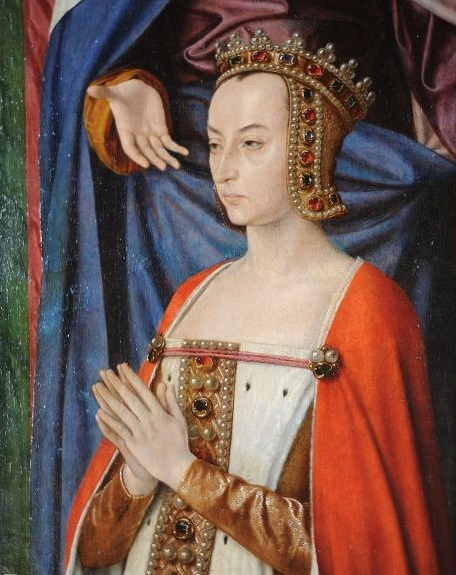
Anne de Beaujeu

Anne de France, also known as Anne de Beaujeu, crosses the invisible divide between the medieval and Tudor eras. As with many rulers from medieval times, Anne was called upon to act as regent for an underage king. She was regent of France during the minority of her younger brother, Charles VIII. Anne was the third child born to Louis XI of France and his second wife, Charlotte of Savoy, but she was the first to survive infancy. Louis’ first wife, Margaret of Scotland, was a daughter of James I and Joan Beaufort and had died in August1445, aged 20.

Anne was born at Genappe, near Brussels, in April 1461. At the time of her birth her father was still dauphin of France. However, just a few months later, Anne’s grandfather, Charles VII, the man who had attained the crown thanks to the efforts of Joan of Arc, died.

The unfortunate king had had a fractious relationship with his son and heir, Louis; they did not see each other for the last fifteen years of Charles VII’s life. Louis plotted intrigue with his neighbours and had even raised an army against his father in 1455, following arguments over Louis’ marriage to Charlotte. He eventually fled to Burgundy with his wife after his father threatened to invade his lands in the Dauphiné. He refused to return to France, despite being told that his father was dying; Louis waited at the French border for news that he was king. Charles VII died of starvation on 22 July 1461, after a tumour in his jaw prevented him from eating, and Louis immediately returned to France for his coronation.

History ... the Interesting Bits
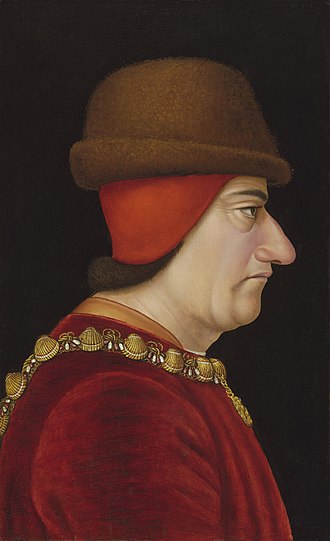
Louis XI, known as the Universal Spider

Louis XI was thirty-eight years old when he became king. He was not a likable man. He possessed a keen intelligence and few scruples. His main political aim was to expand his kingdom, using whatever methods would achieve this. He was pious and cultivated, in contrast to the ostentation and debauchery of his predecessors. His web of political intrigues often got him into international hot water, such as the adventure of Péronnne in 1468, when Louis incited the people of Liège to revolt against the Duke of Burgundy. Under the pretext of negotiation, Louis was arrested by the Duke and forced to offer him financial aid. However, these initial setbacks did not last. Louis was a wily diplomat, at home and abroad, earning him the nickname ‘the universal spider’. He managed to extend French territory by acquiring the French duchy of Burgundy, Picardy, Anjou, Maine and Provence. Louis relied on men of modest means to run his administration, rightfully anticipating that they would be more dependent on him and his goodwill than wealthy nobles. He encouraged the bourgeoisie and initiated the Grand Conseil. He also increased the number of military companies who came directly under the command of the king rather than his nobles.

On his accession, Louis’ daughter, Anne, was installed in the Chateau at Amboise, away from the court, with her mother Charlotte of Savoy and paternal grandmother, Marie of Anjou. Anne was given her own attendants, including chambermaids, nurses and a cradle-rocker. Her mother was in charge of Anne’s education. The queen had an extensive library, including classical works by authors such as Cicero, romances, psalters, histories and books on government. Anne inherited the books on her mother’s death; they were still in her library at Moulins when she herself died.

History ... the Interesting Bits
Charlotte of Savoy

While still in the cradle, in fact as soon as her father was on the throne, Anne was the most eligible princess in Europe. Combined with great energy; many thought her the mirror image of her father in her keen political mind, although not in other ways. She was considered as a bride for Edward IV in England, Duke Francis II of Brittany and even her uncle Charles, Duke of Berry. Any age difference did not matter to her father, who offered the four-year-old princess to the thirty-two-year-old Count of Charolais– Charles the Bold, the future Duke of Burgundy. A betrothal to Nicholas, Duke of Lorraine, came to nothing when the duke broke it off to pursue Mary, Duchess of Burgundy. When she was twelve, almost thirteen, Anne’s future was decided when she married Pierre de Bourbon on 3 November 1473. At thirty-four, Pierre was twenty-one years her senior.

Pierre’s brother, the Duke of Bourbon, allowed him to use the courtesy title of Lord of Beaujeu and gave him rule of the Beaujolais. However, the newly married couple resided in the king’s court at Plessis-lès-Tours. For Anne, the next ten years were spent at the court and, particularly, with her father– during which time Louis XI said Anne was ‘the least foolish woman in France, but a wise one there was not’ (‘Elle était la moins folle femme de France, car de sage il n’en était point’). Anne, who would be called ‘Madame La Grande’ had a sharp political intelligence. She had a handsome face but was not considered beautiful. She fell pregnant in 1476, but little is known of the outcome of the pregnancy, it is possible that she had a short-lived son, Charles, Count of Clermont, but the details are sketchy. In 1481, Anne was given the County of Gien by her father to allow her to finance her own household. In April 1483 she was despatched to Hesdin to bring her little brother’s bride, three-year-old Margaret of Austria, to France. The little princess was to be brought up at the French court until she was old enough to marry the thirteen-year-old dauphin, Charles.

History ... the Interesting Bits
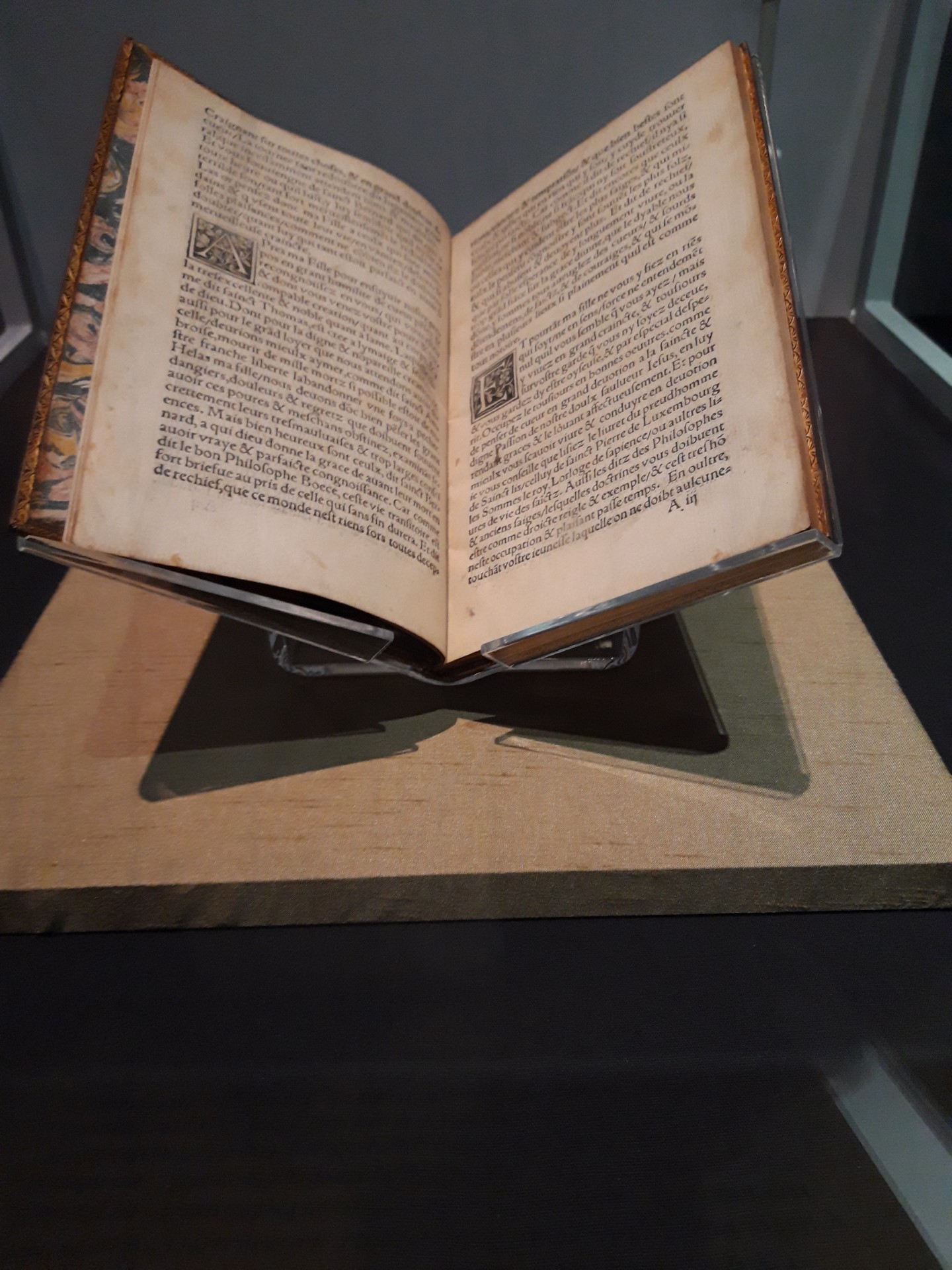
Les Enseignements d’Anne de France, Duchesse de Bourbonnais et d’Auvergne, à sa fille Suzanne de Bourbon

Anne was twenty-two years old when Louis XI died aged sixty on 30 August 1483, at Plessis-lès-Tours in the Loire Valley. He was succeeded by his son, Charles VIII, who was thirteen years old. Louis had not provided for a regency – young Charles was ten months short of his majority – although he had intended to set up a regency council, which would include the young king’s mother, Charlotte of Savoy, and Louis, Duke of Orléans. Louis was a great-grandson of Charles V and brother-in-law to the king and his sister, Anne de Beaujeu, being married to Jeanne de France; he was also Charles VIII’s heir until he produced a son of his own.

Anne’s husband Pierre, Lord of Beaujeu, was to be appointed the council’s president. However, Anne and her husband had also been appointed Charles’s guardians and it seemed a natural progression for them to take over the government of the realm. Charles was crowned on 30 May 1484 and, in the same year, to appease the populace, an Estates General was called. The body which brought together representatives from the Three Estates (nobility, clergy and commons) had last met in 1439. Their grievances, such as requests for reductions in the tailles and no taxation without the consent of the Estates, were heard and promises made; and the representatives went home content they had been listened to, even though their demands were not entirely met.

History ... the Interesting Bits
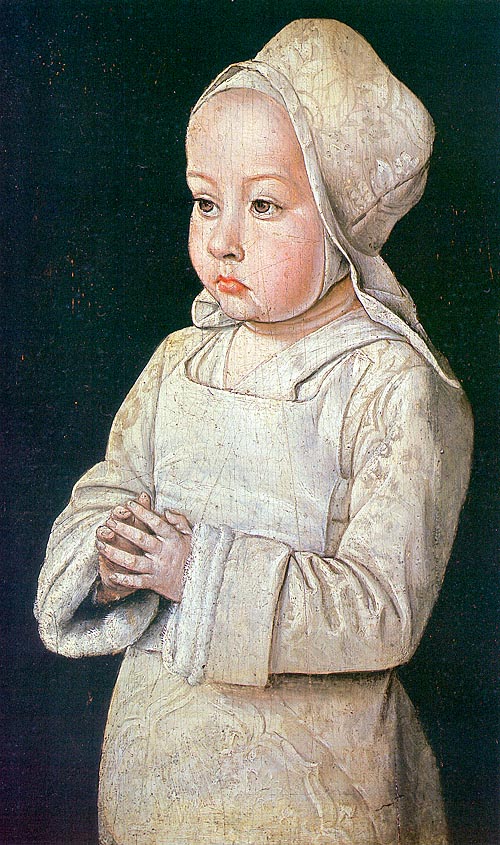
Suzanne de Bourbon

The nobility, who had control of the army, and Louis d’Orléans in particular, were not happy with the arrangements. Encouraged by Archduke Maximilian of Austria and Duke Francis of Brittany, Louis and his supporters took up arms in what became known as ‘the mad war’ or ‘the silly war’. They were soundly defeated, their army crushed at Saint-Aubin-du-Cormier in July 1488, and the Duke of Orléans taken prisoner.

Anne’s greatest success was in Brittany, a semi-autonomous duchy within France. The Duke of Brittany, Francis, died in 1488 leaving his thirteen-year-old daughter Anne as his sole heir. Before his death, in an attempt to keep Brittany from being swallowed up by the French crown, the Duke offered his daughter’s hand in marriage to Maximilian of Austria. However, Maximilian was too far away to protect the duchy when the French army invaded. Anne of Brittany was forced to agree to marry Charles VIII, although Brittany would remain in Anne’s hands. This move eventually led to the annexation of Brittany by the crown. No longer needed as a bride, little Margaret of Austria was sent home and Charles VIII married Anne of Brittany on 6 December 1491. The marriage treaty had one unusual clause in that should Charles die before they had children, Anne was to marry Charles’s heir, the next king of France.

History ... the Interesting Bits
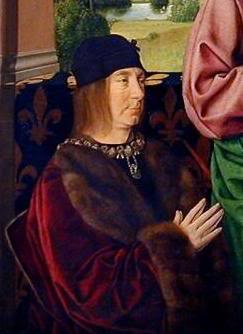
Pierre de Bourbon

This diplomatic coup was one of the last of the Beaujeu regency as Charles VIII was now twenty and of an age and desire to rule. In 1488, Anne de Beaujeu had become Duchess of Bourbon following the death of Pierre’s older brother, John; the title had initially passed to another older brother, Charles, an Archbishop, who was persuaded to relinquish it after holding it for just two weeks, following Pierre’s invasion of the duchy. Anne and Pierre, now the Duke and Duchess of Bourbon, had become the richest, most powerful nobles in the realm. Although she still acted as an advisor to her young brother, Anne de Beaujeu now turned her attention to her new duchy, familiarising herself with her lands and its administration. She started a building programme, which included the rebuilding of the ducal castle at Gien, and the palace at Moulins. She also reorganised the duchy’s administration, codified its laws and raised taxes. Theirs was the epitome of a Renaissance court, the couple being patrons of the arts and literature. Anne particularly loved paintings, tapestries and books.

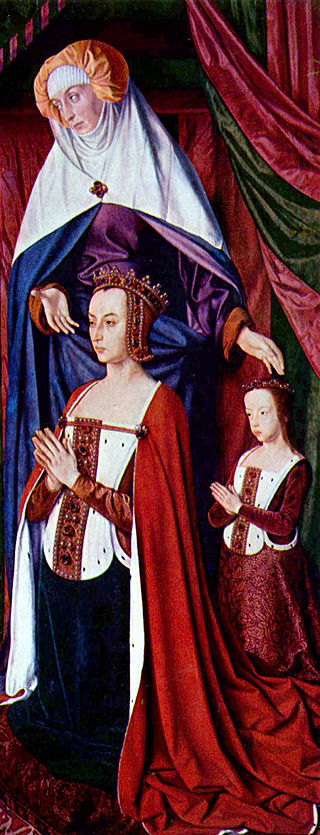
Anne finally gave birth to a surviving child, a daughter, on 10 May 1491, who was named Suzanne. Suzanne was carefully educated by her mother, who wrote a book, Les Enseignements d’Anne de France, Duchesse de Bourbonnais et d’Auvergne, à sa fille Suzanne de Bourbon, giving advice to her daughter on the proper behaviour expected of a noblewoman. Anne de Beaujeu was made regent again in 1494, when her brother Charles VIII led his army into Italy. She financially supported the king’s campaign by loaning him 10,000 livres; she made him pay it back in instalments and had recovered the full amount within a year. Charles died in 1498 after striking his head on a door lintel, leaving no direct heir. His distant cousin Louis, Duke of Orléans, succeeded him as King Louis XII. He immediately applied to the papacy for an annulment of his marriage to Anne de Beaujeu’s sister, Jeanne, in order to marry the dowager queen, Anne of Brittany, as the terms of her original marriage contract dictated. In return for Anne de Beaujeu’s support of his accession and repudiation of her sister, Louis agreed to waive royal rights to the duchy of Bourbon and the Auvergne and to allow these rights to pass to Suzanne, should Anne produce no male heir.

History ... the Interesting Bits
Anne with her daughter Suzanne

In 1503, Pierre de Beaujeu, Duke of Bourbon, fell ill while returning home to Moulins from the French court. He succumbed to a fever, which attacked his body for two months before he died on 10 October. Pierre arranged for Suzanne to marry a prince of royal blood, Charles d’Alençon, and called him to Moulins so the wedding could take place before his death. However, Charles arrived too late and could only act as chief mourner at Pierre’s funeral, rather than as bridegroom to Suzanne. Suzanne’s mother then broke the marriage contract and Suzanne would marry her cousin, Charles III of Bourbon Montpensier, Constable of France, but she died in 1521, childless.

Anne de Beaujeu, Duchess of Bourbon, died on 14 November 1522 at the Château of Chandelle, Coulandon. She was buried alongside her husband and daughter in the abbey at Sauvigny. Her lands and personal title, at her own request, passed to her son-in-law, Charles of Bourbon-Montpensier.

Anne de Beaujeu was regent of France at a time when the country was transitioning from the medieval to the early modern era. She successfully steered the country through civil unrest and initiated the merging of Brittany into the French crown, which would be definitively sealed in 1532.

*

Images:

Courtesy of Wikipedia except the ‘Les Enseignements‘ which is ©2025 Sharon Bennett Connolly

Sources:

Pierre Goubert, The Course of French History; Les Enseignements d’Anne de France, Duchesse de Bourbonnais et d’Auvergene, à sa fille Suzanne de Bourbon (‘The lessons of Anne of France, Duchess of Bourbon and Auvergne, to her daughter Suzanne of Bourbon’); Abernethy, Susan, ‘Anne de Beaujeu, Duchess of Bourbon and Regent of France’ (article);

*

My Books:

Signed, dedicated copies of all my books are available through my online store.

Out now: Scotland’s Medieval Queens

Books by Sharon Bennett Connolly

Scotland’s history is dramatic, violent and bloody. Being England’s northern neighbour has never been easy. Scotland’s queens have had to deal with war, murder, imprisonment, political rivalries and open betrayal. They have loved and lost, raised kings and queens, ruled and died for Scotland. From St Margaret, who became one of the patron saints of Scotland, to Elizabeth de Burgh and the dramatic story of the Scottish Wars of Independence, to the love story and tragedy of Joan Beaufort, to Margaret of Denmark and the dawn of the Renaissance, Scotland’s Medieval Queens have seen it all. This is the story of Scotland through their eyes.

Scotland’s Medieval Queens gives a thorough grounding in the history of the women who ruled Scotland at the side of its kings, often in the shadows, but just as interesting in their lives beyond the spotlight. It’s not a subject that has been widely covered, and Sharon is a pioneer in bringing that information into accessible history.’ Elizabeth Chadwick (New York Times bestselling author)

Available now from Amazon and Pen and Sword Books

Also by Sharon Bennett Connolly:

Books by Sharon Bennett Connolly

Heroines of the Tudor World tells the stories of the most remarkable women from European history in the time of the Tudor dynasty, 1485-1603. These are the women who ruled, the women who founded dynasties, the women who fought for religious freedom, their families and love. Heroines of the Tudor World is now available from Amberley Publishing and Amazon UK. Women of the Anarchy demonstrates how Empress Matilda and Matilda of Boulogne, unable to wield a sword themselves, were prime movers in this time of conflict and lawlessness. It shows how their strengths, weaknesses, and personal ambitions swung the fortunes of war one way – and then the other. Available from Bookshop.orgAmberley Publishing and Amazon UKKing John’s Right-Hand Lady: The Story of Nicholaa de la Haye is the story of a truly remarkable lady, the hereditary constable of Lincoln Castle and the first woman in England to be appointed sheriff in her own right. Available from all good bookshops Pen & Sword Booksbookshop.org and Amazon

Royal Historical Society

Defenders of the Norman Crown: The Rise and Fall of the Warenne Earls of Surrey tells the fascinating story of the Warenne dynasty, from its origins in Normandy, through the Conquest, Magna Carta, the wars and marriages that led to its ultimate demise in the reign of Edward III. Available from Pen & Sword BooksAmazon in the UK and US, and Bookshop.orgLadies of Magna Carta: Women of Influence in Thirteenth Century England looks into the relationships of the various noble families of the 13th century, and how they were affected by the Barons’ Wars, Magna Carta and its aftermath; the bonds that were formed and those that were broken. It is now available in paperback and hardback from Pen & SwordAmazon, and Bookshop.orgHeroines of the Medieval World tells the stories of some of the most remarkable women from Medieval history, from Eleanor of Aquitaine to Julian of Norwich. Available now from Amberley Publishing and Amazon, and Bookshop.orgSilk and the Sword: The Women of the Norman Conquest traces the fortunes of the women who had a significant role to play in the momentous events of 1066. Available now from Amazon,  Amberley Publishing, and Bookshop.org.

Alternate Endings: An anthology of historical fiction short stories including Long Live the King… which is my take what might have happened had King John not died in October 1216. Available in paperback and kindle from Amazon.

Podcast:

A Slice of Medieval

Have a listen to the A Slice of Medieval podcast, which I co-host with Historical fiction novelist Derek Birks. Derek and I welcome guests, such as Bernard Cornwell and Michael Jecks, and discuss a wide range of topics in medieval history, from significant events to the personalities involved. 

Every episode is also now available on YouTube.

*

Don’t forget! Signed and dedicated copies of all my books are available through my online store.

For forthcoming online and in-person talks, please check out my Events Page.

You can be the first to read new articles by clicking the ‘Follow’ button, liking our Facebook page or joining me on TwitterThreadsBluesky and Instagram.

*

©2025 Sharon Bennett Connolly FRHistS

Wordly Women: Patricia Bracewell

Patricia Bracewell

Today in my Wordly Women, author spotlight series, I have a chat with Patricia Bracewell. Patricia is one of those people I can spend a day with, just discussing history from dawn to dusk. Indeed, we have done on a couple of occasions, both in person and online.

So, it was wonderful to get the chance to talk with Patricia about her writing, and her love of the 11th century.

Over to Patricia…

Sharon: What got you into writing?

    Patricia: Blame Louisa May Alcott because at the age of 10 my hero was Jo March. I decided that when I grew up I would write a novel like Little Women or The Secret Garden, books that I loved. At university I majored in Literature, but there was no course titled How to Write a Best Selling Novel. It was only after college, while I was teaching high school and then raising a family, that I took writing classes that helped me focus on what I really wanted to do. My first efforts at publication were personal essays and short stories, but what they really taught me was that the novel was the genre that really spoke to me, and I threw myself into that.

    Sharon: Tell us about your books.

    Emma of Normandy
    Emma of Normandy

      Patricia: I have written three historical novels about Emma of Normandy, who was a queen of England in the 11th century, before the Norman Conquest. Emma was the consort of two kings of England, and that is only one of the things that make her so fascinating. Each of my books, Shadow on the Crown, The Price of Blood, and The Steel Beneath the Silk is a stand-alone, but together they form a trilogy that covers the years of Emma’s first marriage and lead up to the very dramatic events that resulted in her second marriage. It was a time when England was under constant assault by Viking armies, and while the history of the time tells us about the battles and the men who fought them, the women who lived through that time are ignored. In my books I wanted to explore what Emma’s life, and the lives of the women around her, might have been like. As it turned out, my novels are nothing like Little Women.

      Sharon: What attracts you to the 11th century?

        Patricia: That was Queen Emma. Before I discovered her I knew very little about the history of that period, other than the names of a few kings and a vague understanding of what happened in 1066. In college I had read Beowulf and some Old English poetry, and I took an English History course, but that just skimmed over the Anglo-Saxon period. Once I began researching the 11th century, though, that Anglo-Saxon world felt familiar because I had read Tolkien’s trilogy numerous times throughout my life, and I could see that he had drawn on Anglo-Saxon history to create his Middle Earth. He certainly based the Riders of Rohan and their hall at Meduseld on the Anglo-Saxons, and I suspect, too, that there’s a lot of Emma’s first husband, King Æthelred, in Tolkien’s character of King Théodan. And too, that elegiac tone that permeates The Lord of the Rings, also permeates the poetry of the Anglo-Saxons as well as the Anglo-Saxon Chronicle entries that I was using as the basis for my novels. So, in a way, although Emma brought me into the 11th century, it was Tolkien who introduced me to Anglo-Saxon England at a very young age, and it’s that world of heroism, loyalty, and yearning for the past that I continue to find so appealing.

        Sharon: Who is your favourite medieval person and why?

        Alfred the Great
        Coin of Alfred the Great

          Patricia: My favorite medieval person, aside from Queen Emma, is Alfred the Great. From what I know of him at a millennium’s distance I believe that he was a good man and an intelligent ruler. He must have been courageous, a king who protected his kingdom and his people to the best of his ability in the face of overwhelming foes and physical pain. He strikes me as a brilliant, forward-thinking ruler, very much ahead of his time in many ways.

          Sharon: Who is your least favourite medieval person and why?

            Patricia: I have to give that distinction to King Æthelred who sat on the English throne for 38 long years. I made him a villain in my novels, a character haunted by guilt and paranoia, and I suppose that has influenced my opinion of him. But he was obviously ruthless and vengeful and, I suspect, a coward. He ordered the murder of several of his powerful nobles—not their executions, but their murders. In a world where it was so important to be cleansed of your sins before death, he gave those men no chance to repent. He also ordered the St. Brice’s Day Massacre of Danes, setting fire to a church where men, women and children had sought refuge. In 1014 he led his army against his own people in Mercia who had aided the Danes the year before, and when his son Edmund Ironside begged for his help in 1016 to lead an army against the Danish invasion Æthelred refused for fear that someone would kill him. Yes, it was a brutal time, and men were cruel, but I’ve found few redeeming qualities in old Æthelred.

            Sharon: How do you approach researching your topic?

              Patricia: I live in the U.S. so I’ve done ‘boots on the ground’ research in England, Normandy and Denmark, including a 2-week summer course on the Anglo-Saxon period at Cambridge University. I spent a very long day in the Viking Ship Museum in Roskilde, as well as attending a re-enactment of the Battle of Hastings. But the really in-depth research began, for me, with digging into history books that covered the 11th century in England, Normandy and Denmark to give me a broad understanding of the period. After that I focused mostly on the Anglo-Saxons, the events taking place in the years I was covering in each novel, and on the historical figures who would be the characters in my novels. I spent hours in the library stacks at the Univ. of California at Berkeley, reading everything about the period that I could get my hands on, as well as building my own research library at home. Every time I started writing a new book I had to go back into research mode to really grasp the events, the people, and the places that I was going to be writing about. 

              Sharon: Tell us your ‘favourite’ 11th century story you have come across in your research.

              Genealogical table of Cnut, Harold I and Harthacnut
              Genealogical table of Cnut, Harold I and Harthacnut

                Patricia: It’s the story of Thorkell’s beard. Thorkell the Tall was a powerful Viking warlord during the Danish conquest of England. When Cnut became king in 1017, he made Thorkell the Earl of East Anglia, but 4 years later Cnut outlawed him, and Thorkell had to flee to Denmark. The Anglo-Saxon Chronicle doesn’t say why Thorkell was banished. But the Ramsey Chronicle relates that Thorkell’s wife was implicated in the murder of his son. Thorkell and his wife were each called to swear to their innocence on holy relics, and Thorkell did this. Then he swore by his beard that his wife, too, was innocent, but at that point his beard fell off! He was convicted of perjury and his wife of murder, and they were banished. Assuming that there is some truth to this story, did Thorkell really lose his beard? And if not, then how was perjury proved? It’s quite a juicy tale.

                Sharon: Tell us your least ‘favourite’ 11th century story you have come across in your research.

                  Patricia: Queen Emma and the Ploughshares appears in the Annals of Winchester, written by Richard of Devizes in the late 12th century, a century after Emma’s death. In the story, the Norman Archbishop of Canterbury tells Emma’s son, King Edward that she is utterly evil. He claims that she agreed to the murder of her other son, Alfred, that she plotted to poison Edward, and that she was sleeping with the Bishop of Winchester. Emma protests her innocence and to prove it she agrees to walk barefoot across 9 burning hot plough shares without being injured. The night before the ordeal St. Swithin appears to her in a dream to tell her she’ll be fine, and sure enough, she survives it untouched. The entire story is bogus, of course, and the worst of it is that what is remembered are the crimes that Emma was falsely accused of, and not the point of the story, which is that her innocence was proven through saintly intervention. The only thing I like about this story is the ending, where a bunch of bishops beat a remorseful King Edward with rods and Emma gets to slap him 3 times. 

                  Sharon: Are there any other eras you would like to write about?

                    Patricia: Not just eras, but genre, too. I’d love to write a high medieval fantasy, although it’s not something I’ll be tackling any time soon!

                    Sharon: What are you working on now?

                      Patricia: I am still deeply ensconced in the 11th century and the life of Queen Emma. My original intent was to write a trilogy about the queen, and I accomplished that. But there is more to Emma’s story and I really want to tell it, so I’m in the thick of that right now.

                      Sharon: And finally, what is the best thing about being a writer?

                      Patricia: It’s the people who have, in one way or another, entered my life. Readers who reach out to me, other writers who I have come to know as colleagues and friends, scholars like you, Sharon, who have given me advice and have been so helpful and encouraging. Because of my books, my world has expanded exponentially. It’s a gift that I treasure. 

                      About the Author:

                      Patricia Bracewell

                      Patricia Bracewell taught high school English before embarking on her writing career. Her historical novel, Shadow on the Crown, was published in 2013 in the U.S. and Britain, and has been translated into Italian, German, Portuguese and Russian. Its sequel, The Price of Blood, continues the gripping tale of the 11th century queen of England, Emma of Normandy. Her third novel, The Steel Beneath the Silk, continuing the story of England’s only twice-crowned queen was published in 2021. Patricia’s research has taken her to France, Denmark and Britain, including a summer course on Anglo-Saxon history at Downing College, Cambridge, as well as academic conferences on medieval studies in the U.S. and the U.K. She has served as Writer-in-Residence at Gladstone’s Library in Wales, has been a panelist at Historical Novel Society conferences in the U.S. and Britain, was a guest on BBC Radio 4s Great Lives, and has spoken to numerous book groups and school groups about her novels and the history that infuses them. She lives in California and is currently working on her fourth historical novel about Emma of Normandy.

                      Where to find Patricia:

                      Social Media: Bluesky; Instagram.

                      Website: www.PatriciaBracewell.com

                      Buy Links: All books are available as ebooks, audiobooks and paperbacks; KOBOAPPLEAMAZON U.S.AMAZON U.K.

                      *

                      My books

                      Signed, dedicated copies of all my books are available through my online store.

                      Out now: Scotland’s Medieval Queens

                      Books by Sharon Bennett Connolly

                      Scotland’s history is dramatic, violent and bloody. Being England’s northern neighbour has never been easy. Scotland’s queens have had to deal with war, murder, imprisonment, political rivalries and open betrayal. They have loved and lost, raised kings and queens, ruled and died for Scotland. From St Margaret, who became one of the patron saints of Scotland, to Elizabeth de Burgh and the dramatic story of the Scottish Wars of Independence, to the love story and tragedy of Joan Beaufort, to Margaret of Denmark and the dawn of the Renaissance, Scotland’s Medieval Queens have seen it all. This is the story of Scotland through their eyes.

                      Scotland’s Medieval Queens gives a thorough grounding in the history of the women who ruled Scotland at the side of its kings, often in the shadows, but just as interesting in their lives beyond the spotlight. It’s not a subject that has been widely covered, and Sharon is a pioneer in bringing that information into accessible history.’ Elizabeth Chadwick (New York Times bestselling author)

                      Available now from Amazon and Pen and Sword Books

                      Also by Sharon Bennett Connolly:

                      Books by Sharon Bennett Connolly

                      Heroines of the Tudor World tells the stories of the most remarkable women from European history in the time of the Tudor dynasty, 1485-1603. These are the women who ruled, the women who founded dynasties, the women who fought for religious freedom, their families and love. Heroines of the Tudor World is now available from Amberley Publishing and Amazon UK. Women of the Anarchy demonstrates how Empress Matilda and Matilda of Boulogne, unable to wield a sword themselves, were prime movers in this time of conflict and lawlessness. It shows how their strengths, weaknesses, and personal ambitions swung the fortunes of war one way – and then the other. Available from Bookshop.orgAmberley Publishing and Amazon UKKing John’s Right-Hand Lady: The Story of Nicholaa de la Haye is the story of a truly remarkable lady, the hereditary constable of Lincoln Castle and the first woman in England to be appointed sheriff in her own right. Available from all good bookshops Pen & Sword Booksbookshop.org and Amazon

                      Royal Historical Society

                      Defenders of the Norman Crown: The Rise and Fall of the Warenne Earls of Surrey tells the fascinating story of the Warenne dynasty, from its origins in Normandy, through the Conquest, Magna Carta, the wars and marriages that led to its ultimate demise in the reign of Edward III. Available from Pen & Sword BooksAmazon in the UK and US, and Bookshop.orgLadies of Magna Carta: Women of Influence in Thirteenth Century England looks into the relationships of the various noble families of the 13th century, and how they were affected by the Barons’ Wars, Magna Carta and its aftermath; the bonds that were formed and those that were broken. It is now available in paperback and hardback from Pen & SwordAmazon, and Bookshop.orgHeroines of the Medieval World tells the stories of some of the most remarkable women from Medieval history, from Eleanor of Aquitaine to Julian of Norwich. Available now from Amberley Publishing and Amazon, and Bookshop.orgSilk and the Sword: The Women of the Norman Conquest traces the fortunes of the women who had a significant role to play in the momentous events of 1066. Available now from Amazon,  Amberley Publishing, and Bookshop.org.

                      Alternate Endings: An anthology of historical fiction short stories including Long Live the King… which is my take what might have happened had King John not died in October 1216. Available in paperback and kindle from Amazon.

                      Podcast:

                      A Slice of Medieval

                      Have a listen to the A Slice of Medieval podcast, which I co-host with Historical fiction novelist Derek Birks. Derek and I welcome guests, such as Bernard Cornwell and Michael Jecks, and discuss a wide range of topics in medieval history, from significant events to the personalities involved. 

                      Every episode is also now available on YouTube.

                      *

                      Don’t forget! Signed and dedicated copies of all my books are available through my online store.

                      For forthcoming online and in-person talks, please check out my Events Page.

                      You can be the first to read new articles by clicking the ‘Follow’ button, liking our Facebook page or joining me on TwitterThreadsBluesky and Instagram.

                      *

                      ©2025 Sharon Bennett Connolly, FRHistS and Patricia Bracewell

                        Bitter Enemies: The Empress and the Queen

                        Books by Sharon Bennett Connolly
                        Margaret of Wessex, Queen of Scots

                        The time commonly referred to as the Anarchy is one of the most violent and unstable periods of English history. Lasting almost the entirety of the reign of King Stephen, it truly was a Cousin’s War. The two main protagonists, King Stephen and Empress Matilda, were first cousins, both being grandchildren of William the Conqueror and his queen, Matilda of Flanders. What is perhaps less well known is that Empress Matilda was also first cousin to Stephen’s wife and queen, Matilda of Boulogne. The two Matilda’s were both granddaughters of Margaret of Wessex, Queen of Scots as the wife of Malcolm III Canmore. And later St Margaret. It is through Margaret that the namesake cousins could claim descent from Alfred the Great.

                        The origins to the Anarchy can be traced back to one dramatic and tragic event: the sinking of the White Ship in 1120. This saw the drowning of the only legitimate son and heir of King Henry I, William Ætheling (or Adelin). The young man was 17 years old at the time, recently married, and his father’s pride and joy. His death gave rise to a constitutional crisis which the widowed Henry I sought to resolve by his speedy marriage to the teenage Adeliza of Louvain, in the hope of begetting yet more sons. Although he was getting on in years at roughly fifty-two, and had only two legitimate children, his brood of more than twenty illegitimate, but acknowledged, offspring gave him cause for optimism.

                        However, as the years progressed and no children were born, Henry had to look to other ways of resolving the succession crisis. In the years since the death of his son, the king had taken his nephew Stephen of Blois under his wing, showering him with gifts and land, and arranging the young man’s marriage. Stephen was the son of Henry’s highly capable sister Adela of Normandy, Countess of Blois and Stephen, Count of Blois, who had been killed on Crusade. The younger Stephen was created Count of Mortain and married to Matilda of Boulogne, the only child and heiress of Eustace of Boulogne and Mary of Scotland. It is possible that Henry was showing Stephen such favouritism in anticipation of not producing an heir by his new wife and was grooming Stephen to succeed him.

                        Books by Sharon Bennett Connolly
                        Empress Matilda depicted in an image from the Gospels of Henry the Lion.

                        However, the death of his daughter’s husband, Emperor Henry V, in faraway Germany offered Henry an alternative to his nephew. Better still, here was an opportunity to put his own blood on the throne. Shortly after the German emperor’s death in 1125, Henry recalled Empress Matilda to England. She had been sent to Germany at the age of seven, to be raised at the court of the emperor in anticipation of their marriage when she came of age. Matilda had married Henry in 1114, a month before her twelfth birthday. Although she and Henry were married for eleven years, they remained childless. When Henry died in 1125, Henry I of England therefore saw an opportunity to resolve his succession problem by recalling Matilda and making her his heir.

                        There was one problem with this plan: Matilda was a woman. Henry knew his barons would not be happy with the idea of being ruled by a woman, but by a process of coercion and persuasion he managed to get all his barons to swear to accept her as their next monarch. Following Matilda’s arrival in England in 1126, Henry proceeded to extract oaths of allegiance to her from all the bishops and magnates present at his Christmas court. Notably, this included Stephen of Blois, Count of Mortain, King Henry’s nephew and the empress’s cousin. One of the concessions made to the barons was that they would have a say in Matilda’s choice of husband. After all, as a woman, Matilda would need a husband to rule in her name. The Anglo-Saxon Chronicle reported:

                        David the king of Scots was there, and all the head [men], clerical and lay, that were in England; and there he [Henry] had archbishops, and bishops, and abbots, and earls, and all those thegns who were there, swear England and Normandy after his day into the hand of his daughter Æthelic [Matilda], who was earlier wife of the emperor of Saxony; and afterwards sent her to Normandy (and with her travelled her brother Robert, Earl of Gloucester, and Brian, son of the earl Alan Fergant), and had her wedded to the son of the Earl of Anjou, [who] was called Geoffrey Martel [Plantagenet]. Despite the fact that it offended all the French and English, the king did it in order to have peace from the Earl of Anjou and in order to have help against William his nephew.1

                        Books by Sharon Bennett Connolly
                        Matilda of Boulogne

                        In trying to resolve the issue of who would rule after him, Henry had inadvertently created a problem that ensured the succession would be anything but smooth. He had created two rivals for the throne. His daughter had the claim that she was Henry’s successor by blood, but she was a woman. Though his blood claim was weaker, Stephen was Henry’s closest living male relative, and in the days when a king not only had to rule but had to lead his men into battle, the prospect of a female ruler struck fear into the hearts of the barons.

                        Empress Matilda’s actual abilities mattered less than the fact of her gender. Raised at the German imperial court, Matilda was an experienced politician who had acted as regent for her first husband on several occasions. She was confident. She knew, beyond doubt, that she was capable of ruling in her own right. This confidence was her strength but also her weakness; the barons would surely baulk at the idea of a woman who was unwilling to take instruction from them. In contrast, King Stephen was a magnate who was experienced in war and had enjoyed the favour of King Henry I.

                        Stephen’s wife, Matilda of Boulogne, was a stalwart supporter of her husband. She was arguably more capable than Stephen and often took the initiative in diplomatic negotiations. Acting as Stephen’s queen, she offered a stark contrast to the independence and authority of Empress Matilda that so infuriated the barons. Matilda of Boulogne was a little more subtle than her imperious counterpart, only ever acting in her husband’s name, not her own. Even later, when she held the command of Stephen’s forces during his captivity in 1141, she claimed to act only on behalf of her husband and sons.

                        Books by Sharon Bennett Connolly
                        King Stephen, Lincoln Cathedral

                        Matilda of Boulogne was an example of how a woman was expected to act and comport herself: strong and confident, but subject to her husband’s will. On this last, Empress Matilda failed in the eyes of the barons; she was acting for herself. In the event, the barons of England and Normandy despised her second husband, Geoffrey of Anjou, so they would have been even less receptive to Matilda had her husband tried to assert his authority. It was a conundrum that Matilda was never able to resolve, though she would not give up trying.

                        And the empress was, ultimately, the winner. With Stephen’s death in 1154, the last flickers of conflict also died. The empress’s oldest son succeeded as Henry II, peacefully and largely unopposed, despite the continued presence of Stephen’s son, William of Blois. Support for William was non-existent, and the war-weary barons were more than happy with the settlement. For Empress Matilda, it must have been a bittersweet moment. She had spent most of the past nineteen years fighting for her birthright and that of her son. While she had never worn the crown, Henry now did. The line of succession had finally passed into the hands of the descendants of Henry I.

                        Her bloodline had prevailed, but King Stephen had denied Empress Matilda her inheritance, her titles and her due. The irony of this struggle is that, in order to claim the throne, Stephen overruled the same laws of inheritance that saw him become Count of Boulogne. While it was difficult for a woman to manage her own lands and titles, they descended through her to her husband or son. So, as the county of Boulogne was inherited by Queen Matilda, so Stephen held those titles by right of his wife. And this was the dilemma for the Anglo-Norman nobility, and the reason they largely chose to support Stephen: they were suspicious and distrusting of the husband chosen for Empress Matilda. Just like Stephen, Geoffrey of Anjou had every right to claim Matilda’s lands as his own. Not the Geoffrey showed any interest in England; his sights were firmly set on Normandy, which he had conquered by 1144 and handed to his son, Henry in 1150.

                        The similarities between Empress and Queen are more noticeable than their differences. Both women demonstrated a level of piety which can only have come from their family connection, namely their mutual descent from Margaret of Wessex, Queen of Scots and later saint. Each Matilda was willing to do whatever it took to protect the interests of her children. Queen Matilda appealed to the empress to protect her son Eustace’s inheritance, while the empress invaded England. It is easy to see the empress’s struggle as an expression of her personal ambition to recover the inheritance stolen from her.

                        Books by Sharon Bennett Connolly
                        Henry II, Lincoln Cathedral

                        Yet it is necessary to look deeper and acknowledge that she was also motivated to see her son achieve his birthright. When Stephen usurped her throne, he stole it not just from Matilda but also from Henry. Calling himself Henry Fitz Empress when he joined his mother’s struggle, Henry was the grandson and eventual heir of Henry I. He had been raised to believe that England and Normandy were his destiny, and with the knowledge that his mother was absent for much of his formative years because she was fighting for his inheritance as much as hers.

                        Both empress and queen were adept at negotiating to achieve their aims, demonstrating impressive diplomatic skills in the most difficult of circumstances. Neither was prepared to sit on the sidelines and let others fight their battles for them. Although they could not wield a sword, nor participate in warfare, neither did they sit and wait in the safety of their ivory towers. They travelled with the armies and participated in councils of war, advising, directing and commanding their forces.

                        Empress Matilda and Queen Matilda had so much more in common than a name. Indeed, there was more to uniting them than pitting them against one another, be it family ties, abilities or aspirations for their children. What really differentiated them was the way they went about achieving their aims.

                        Dynastic ambition was a fine line for a woman to walk…

                        *

                        The story of Empress Matilda and Queen Matilda of Boulogne is examined in greater detail in my book, Women of the Anarchy.

                        Notes:

                        1. Anglo-Saxon Chronicle, edited by Michael Swanton

                        Sources:

                        Gesta Stephani, translated by K. R. Potter; Henry of Huntingdon, The History of the English People 1000-1154; Marjorie Chibnall, The Empress Matilda: Queen Consort, Queen Mother and Lady of the English; Teresa Cole, The Anarchy: The Darkest Days of Medieval England; Catherine Hanley, Matilda: Empress, Queen, Warrior; Helen Castor, She-Wolves: The Women who Ruled England before Elizabeth; Robert Bartlett, England Under the Norman and Angevin Kings; J. Sharpe (trans.), The History of the Kings of England and of his Own Times by William Malmesbury; Orderici Vitalis, Historiae ecclesiasticae libri tredecem, translated by Auguste Le Prévost; Chronicles of the Reigns of Stephen, Henry II and Richard I; Edmund King, King Stephen; Donald Matthew, King Stephen; Matthew Lewis, Stephen and Matilda’s Civil War: Cousins of Anarchy.

                        Images:

                        Courtesy of Wikipedia except King Stephen and Henry II which are ©2025 Sharon Bennett Connolly, FRHistS.

                        *

                        My Books

                        Signed, dedicated copies of all my books are available through my online bookshop.

                        Out now: Scotland’s Medieval Queens

                        Books by Sharon Bennett Connolly

                        Scotland’s history is dramatic, violent and bloody. Being England’s northern neighbour has never been easy. Scotland’s queens have had to deal with war, murder, imprisonment, political rivalries and open betrayal. They have loved and lost, raised kings and queens, ruled and died for Scotland. From St Margaret, who became one of the patron saints of Scotland, to Elizabeth de Burgh and the dramatic story of the Scottish Wars of Independence, to the love story and tragedy of Joan Beaufort, to Margaret of Denmark and the dawn of the Renaissance, Scotland’s Medieval Queens have seen it all. This is the story of Scotland through their eyes.

                        Scotland’s Medieval Queens gives a thorough grounding in the history of the women who ruled Scotland at the side of its kings, often in the shadows, but just as interesting in their lives beyond the spotlight. It’s not a subject that has been widely covered, and Sharon is a pioneer in bringing that information into accessible history.’ Elizabeth Chadwick (New York Times bestselling author)

                        Available now from Amazon and Pen and Sword Books

                        Also by Sharon Bennett Connolly:

                        Books by Sharon Bennett Connolly

                        Heroines of the Tudor World tells the stories of the most remarkable women from European history in the time of the Tudor dynasty, 1485-1603. These are the women who ruled, the women who founded dynasties, the women who fought for religious freedom, their families and love. Heroines of the Tudor World is now available for pre-order from Amberley Publishing and Amazon UK. Women of the Anarchy demonstrates how Empress Matilda and Matilda of Boulogne, unable to wield a sword themselves, were prime movers in this time of conflict and lawlessness. It shows how their strengths, weaknesses, and personal ambitions swung the fortunes of war one way – and then the other. Available from Bookshop.orgAmberley Publishing and Amazon UKKing John’s Right-Hand Lady: The Story of Nicholaa de la Haye is the story of a truly remarkable lady, the hereditary constable of Lincoln Castle and the first woman in England to be appointed sheriff in her own right. Available from all good bookshops Pen & Sword Booksbookshop.org and Amazon

                        Royal Historical Society

                        Defenders of the Norman Crown: The Rise and Fall of the Warenne Earls of Surrey tells the fascinating story of the Warenne dynasty, from its origins in Normandy, through the Conquest, Magna Carta, the wars and marriages that led to its ultimate demise in the reign of Edward III. Available from Pen & Sword BooksAmazon in the UK and US, and Bookshop.orgLadies of Magna Carta: Women of Influence in Thirteenth Century England looks into the relationships of the various noble families of the 13th century, and how they were affected by the Barons’ Wars, Magna Carta and its aftermath; the bonds that were formed and those that were broken. It is now available in paperback and hardback from Pen & SwordAmazon, and Bookshop.orgHeroines of the Medieval World tells the stories of some of the most remarkable women from Medieval history, from Eleanor of Aquitaine to Julian of Norwich. Available now from Amberley Publishing and Amazon, and Bookshop.orgSilk and the Sword: The Women of the Norman Conquest traces the fortunes of the women who had a significant role to play in the momentous events of 1066. Available now from Amazon,  Amberley Publishing, and Bookshop.org.

                        Alternate Endings: An anthology of historical fiction short stories including Long Live the King… which is my take what might have happened had King John not died in October 1216. Available in paperback and kindle from Amazon.

                        Podcast:

                        A Slice of Medieval

                        Have a listen to the A Slice of Medieval podcast, which I co-host with Historical fiction novelist Derek Birks. Derek and I welcome guests, such as Bernard Cornwell and discuss a wide range of topics in medieval history, from significant events to the personalities involved. Our first ever episode was a discussion on The Anarchy Every episode is also now available on YouTube.

                        *

                        Don’t forget! Signed and dedicated copies of all my books are available through my online bookshop.

                        For forthcoming online and in-person talks, please check out my Events Page.

                        You can be the first to read new articles by clicking the ‘Follow’ button, liking our Facebook page or joining me on TwitterThreadsBluesky and Instagram.

                        *

                        ©2025 Sharon Bennett Connolly, FRHistS.

                        Wordly Women: Gemma Hollman

                        Today I am continuing my Wordly Women series with a historian who, just like me, concentrates on bringing the women to the fore. Gemma Hollman has written about Royal Witches, queens and mistresses. Her last book, Women in the Middle Ages: Illuminating the World of Peasants, Nuns, and Queens came out at the end of 2024, and is gorgeous! It was lovely to get the chance to have a chat with Gemma about her writing journey.

                        Sharon: So, Gemma, what got you into writing?

                        Gemma: It’s kind of a mix of completely by accident, and something I’ve always enjoyed doing. Whilst at school and university I would write bits of fiction for fun, never for anyone to look at, so I’ve always had a bit of a writing bug. But when I finished university, it felt so weird to go from four years of researching and writing history to quitting cold turkey. At this time, it seemed like everyone was making blogs, including loads of my friends, so I decided to join the trend and establish my blog, Just History Posts.

                        I loved writing there, and by the second year I was gathering a load of steam. One of my most popular posts was about Joan of Navarre, a fifteenth-century Queen of England who was accused of using witchcraft against the king – and one of the focuses of my Masters dissertation. That, combined with lots of people I knew in real life saying my dissertation would make an amazing book, made me think maybe people would like to learn about these women and their stories which are not that well-known. I pitched the book to The History Press and it eventually turned into my debut non-fiction book, Royal Witches. The rest, as they say, is history.

                        Sharon: Tell us about your books.

                        Gemma: Well, I already gave you a little bit of a taster about Royal Witches (the other three women, beyond Joan, are Eleanor Cobham, Jacquetta of Luxembourg and Elizabeth Woodville), about fifteenth-century women in the English Royal Family who were all accused of witchcraft. My second book goes back to the previous century and the court of Edward III of England, and is a dual biography of the two women who dominated his court and his heart – his queen, Philippa of Hainault, and his mistress, Alice Perrers. Both women are absolutely fascinating in their own right, but by looking at them together I think you can understand them, Edward, and the fourteenth century a lot better.

                        My final book came out at the end of last year, and is called Women in the Middle Ages. A slight departure from my first two books, which were both focused biographies, this is a much broader look at women across much of Europe from roughly 1000-1500. The best thing about it, though, is that it is an illustrated history, featuring just shy of 200 images of artwork and artefacts from the medieval period. I explore how these objects can illuminate the real lives of these women in far more detail than written records alone. It is a beautiful, full-colour experience which was so special to pull together.

                        Sharon: What attracts you to the medieval period?

                        Gemma: I’ve always loved all periods of history, and studied a huge range of history at university, but I found that I enjoyed writing medieval history much more than I did modern history. I enjoyed acting almost like a detective and trying to extract bits about people’s lives and personalities with such limited sources. And the more I researched and wrote it, the more I fell in love with it. The medieval world was so incredibly different from today in every aspect, that it can sometimes feel like another world. But, at the same time, people themselves are so similar to today. I always love reading stories that connects us through the centuries, feeling that human connection to someone so far removed from myself today. Although it was a time of huge strife, poverty, and difficulty, there is something intrinsically magical about it – it’s no coincidence so much of our fantasy media today has medieval vibes!

                        Sharon: Who is your favourite 14th century person and why?

                        Gemma: Oh gosh, that is such a difficult question! Of course there is no one favourite, as that would be impossible, but someone who has grabbed my attention ever since I first learnt about her is Isabella of France, the queen of Edward II of England. She was so self-assured of her lineage, her rights, the respect due to her by virtue of her position, and she was not going to let anyone tell her otherwise. She was loved and sympathised with whilst the neglected spouse, then inspired the entire country to stand with her and overthrow her husband, and went on to pretty much rule England with her lover for several years. Even after her son, Edward III, forcibly took control of the kingdom again, she continued to wield significant influence at court. I think she is just so utterly fascinating – and she of course perfectly sets the scene for the start of my second book, The Queen and the Mistress!

                        Sharon: Who is your least favourite 14th century and why?

                        Gemma: Ooh. I don’t know that there’s really anyone I actively dislike, but for playfulness I will put forward Thomas Walsingham, chronicler and monk at St Albans Abbey in Hertfordshire. His chronicles are invaluable for our knowledge of the late fourteenth century, but he is a bit of a villain in my second book for his treatment of Alice Perrers. As a religious man, Alice’s position as a mistress at the heart of the court was unconscionable (and it didn’t help that she was embroiled in legal conflicts with his abbey for many years). He is responsible for a lot of the negative propaganda against Alice which lasted for centuries, including the baseless accusation that she stole the rings from Edward’s fingers after he died. Even today, the way he spoke about her is the main way people approach her and assume how she really was. Talk about negative PR.

                        Sharon: How do you approach researching your topic?

                        Gemma: Mostly I already have a theme or a person in mind for what I want to research, and generally I already have an amount of knowledge about the topic. But I always find it most helpful to start with secondary sources, ie by reading a load of books and journal articles on the subject. I write copious notes, start creating timelines where necessary, and jot down the names of other books and sources from the footnotes. I then go to the original sources and make a load of notes on those, too, and I then dive in to writing. I always find once I start writing I then become aware of areas where my notes might be lacking, like missing any information about what someone was doing in a particular year of their life, and so I then go back to the sources and secondary material to fill in these gaps. I also find that it’s only by starting to write do I truly know which direction my piece is going in, and thus am able to tailor my research much more specifically, rather than reading about anything in the hope it might be useful, but finding that I don’t use it at all (as happens with much of my early research).

                        Sharon: Tell us your ‘favourite’ medieval story you have come across in your research.

                        Gemma: One of my favourites definitely comes from a story I read in a chronicle at university, and which I recounted in one of my very first blog posts. This is a story from the court of Henry II of England, and is one that very much exemplifies what I said earlier about people never changing. The king’s steward, a man named Thurston, came to him and complained that another man, Adam of Yarmouth, refused to seal a writ for him free of charge (something which was to be expected amongst people working in the government). After some investigation, it was revealed that Adam was upset at Thurstan because at a party Thurstan had been hosting, he refused to allow Adam to eat two cakes! Such a petty squabble had disrupted the king’s business, and he settled the squabble by having Adam seal the writ in return for Thurstan serving him two cakes on bended knee. It sounds like something out of fiction rather than reality!

                        Sharon: Are there any other eras you would like to write about?

                        Gemma: I definitely have found my comfort zone in the medieval era, but I do think from time to time about writing about other periods, as I think is only natural. I know of some amazing women from the Georgian and Victorian periods that I’ve been drawn to writing about several times, so maybe that’s something I can set my sights on one day.

                        Sharon: What are you working on now?

                        Gemma: At the moment, I am in the midst of my fourth book which is set in the court of Richard II. The book is largely a biography about Richard, but it also aims to take a look at his wider court, too, particularly some of the other large and important figures – and, particularly, women. It’s due next year, so wish me luck with getting it done in time!

                        Sharon: And finally, what is the best thing about being a writer?

                        Gemma: This question is definitely easy for me – spreading the knowledge I have and seeing people enjoy it and learn something new. Every time I get a review, or speak to a person at a talk I am giving, where the person said they’ve loved what I’ve written/how I’ve spoken, and that they’ve learnt something is just as special as the last. I love writing, and I love that I get to learn so many interesting things myself in the process, but the whole point of me writing is to share all the things I’ve learnt with other people. Each time I hear that I’ve done that, and done it well, makes all of the late nights researching after a full day’s work, or the times I can’t see my friends and family because I have a deadline worth it.

                        About the author:

                        Author bio: Gemma Hollman is a historian and author who specialises in late medieval English history. A Fellow of the Royal Historical Society, she has a particular interest in the plethora of strong, intriguing and complicated women from the medieval period, a time she had always been taught was dominated by men. Gemma also works full-time in the heritage industry whilst running her historical blog, Just History Posts, which explores all periods of history in more depth. Gemma’s first book, Royal Witches, was a bestseller, and two more books have since followed: The Queen and the Mistress, and Women in the Middle Ages.

                        Where to find Gemma:

                        Website: https://justhistoryposts.com/; Link for books: https://lnk.bio/GemmaHAuthor; Social media: Bluesky https://bsky.app/profile/gemmahauthor.bsky.social.

                        *

                        My books

                        Signed, dedicated copies of all my books are available through my online store.

                        Out now: Scotland’s Medieval Queens

                        Books by Sharon Bennett Connolly

                        Scotland’s history is dramatic, violent and bloody. Being England’s northern neighbour has never been easy. Scotland’s queens have had to deal with war, murder, imprisonment, political rivalries and open betrayal. They have loved and lost, raised kings and queens, ruled and died for Scotland. From St Margaret, who became one of the patron saints of Scotland, to Elizabeth de Burgh and the dramatic story of the Scottish Wars of Independence, to the love story and tragedy of Joan Beaufort, to Margaret of Denmark and the dawn of the Renaissance, Scotland’s Medieval Queens have seen it all. This is the story of Scotland through their eyes.

                        Scotland’s Medieval Queens gives a thorough grounding in the history of the women who ruled Scotland at the side of its kings, often in the shadows, but just as interesting in their lives beyond the spotlight. It’s not a subject that has been widely covered, and Sharon is a pioneer in bringing that information into accessible history.’ Elizabeth Chadwick (New York Times bestselling author)

                        Available now from Amazon and Pen and Sword Books

                        Also by Sharon Bennett Connolly:

                        Books by Sharon Bennett Connolly

                        Heroines of the Tudor World tells the stories of the most remarkable women from European history in the time of the Tudor dynasty, 1485-1603. These are the women who ruled, the women who founded dynasties, the women who fought for religious freedom, their families and love. Heroines of the Tudor World is now available from Amberley Publishing and Amazon UK. Women of the Anarchy demonstrates how Empress Matilda and Matilda of Boulogne, unable to wield a sword themselves, were prime movers in this time of conflict and lawlessness. It shows how their strengths, weaknesses, and personal ambitions swung the fortunes of war one way – and then the other. Available from Bookshop.orgAmberley Publishing and Amazon UKKing John’s Right-Hand Lady: The Story of Nicholaa de la Haye is the story of a truly remarkable lady, the hereditary constable of Lincoln Castle and the first woman in England to be appointed sheriff in her own right. Available from all good bookshops Pen & Sword Booksbookshop.org and Amazon

                        Books by Sharon Bennett Connolly

                        Defenders of the Norman Crown: The Rise and Fall of the Warenne Earls of Surrey tells the fascinating story of the Warenne dynasty, from its origins in Normandy, through the Conquest, Magna Carta, the wars and marriages that led to its ultimate demise in the reign of Edward III. Available from Pen & Sword BooksAmazon in the UK and US, and Bookshop.orgLadies of Magna Carta: Women of Influence in Thirteenth Century England looks into the relationships of the various noble families of the 13th century, and how they were affected by the Barons’ Wars, Magna Carta and its aftermath; the bonds that were formed and those that were broken. It is now available in paperback and hardback from Pen & SwordAmazon, and Bookshop.orgHeroines of the Medieval World tells the stories of some of the most remarkable women from Medieval history, from Eleanor of Aquitaine to Julian of Norwich. Available now from Amberley Publishing and Amazon, and Bookshop.orgSilk and the Sword: The Women of the Norman Conquest traces the fortunes of the women who had a significant role to play in the momentous events of 1066. Available now from Amazon,  Amberley Publishing, and Bookshop.org.

                        Alternate Endings: An anthology of historical fiction short stories including Long Live the King… which is my take what might have happened had King John not died in October 1216. Available in paperback and kindle from Amazon.

                        Podcast:

                        A Slice of Medieval

                        Have a listen to the A Slice of Medieval podcast, which I co-host with Historical fiction novelist Derek Birks. Derek and I welcome guests, such as Bernard Cornwell and Michael Jecks, and discuss a wide range of topics in medieval history, from significant events to the personalities involved. Every episode is also now available on YouTube.

                        *

                        Don’t forget! Signed and dedicated copies of all my books are available through my online store.

                        For forthcoming online and in-person talks, please check out my Events Page.

                        You can be the first to read new articles by clicking the ‘Follow’ button, liking our Facebook page or joining me on TwitterThreadsBluesky and Instagram.

                        *

                        ©2025 Sharon Bennett Connolly, FRHistS and Gemma Hollman, FRHistS

                        Guest Post: Tudor Princes and Princesses by Aimee Fleming

                        Today, it is a pleasure to welcome Aimee Fleming to History…the Interesting Bits. Aimee’s first book, The Female Tudor Scholar and Writer: The Life and Times of Margaret More Roper was a wonderful biography of Thomas More’s famous scholarly daughter. Aimee is now back with a second book, looking into the lives of the first royal Tudor children, Tudor Princes and Princesses: The Early Lives of the Children of Henry VII and Elizabeth of York. And she has written a little piece as a taster of the treat that is this wonderful book. Over to Aimee…

                        When Henry VII and Elizabeth of York married in January 1486, it was clear to them that their most important task ahead was to stabilise England, and the best, perhaps easiest way available to them was to produce an heir, and quickly.

                        However, bearing a child in the fifteenth century was not an easy feat, even for a Queen. Science and medicine were far from helpful, and the practices of the time meant that pregnancy and childbirth were dangerous to everyone involved. Elizabeth had her family around her, her mother who had had twelve children would have been invaluable to her, but the risks to herself, her child, and to her husband’s reign would have been very clear indeed.

                        In this extract we see how the couple prepared for their new arrival, and what Elizabeth herself was required to do, even before the rigours of birth.

                        Extract from Chapter 2 of Tudor Princes and Princesses

                        Elizabeth of York

                        Following the wedding ceremony in January 1486, the royal couple remained in London and held court over celebrations in their honour, with spectacular banquets and dances. The celebrations were held all over London and further afield. As Bernard André describes:

                        ‘…the most wished day of marriage was celebrated by them

                        with all religious and glorious magnificence at court, and

                        by their people, to show their gladness with bonfires,

                        dancing, songs and banquets throughout all London,

                        both men and women, rich and poor, beseeching God to

                        bless the King and Queen and grant them a numerous

                        progeny.’

                        This outpouring of support for the marriage of the king and queen was welcomed by all, especially by Henry and Elizabeth themselves, who knew just how important it was that their union, and rule, be accepted. It became apparent that their marriage represented the potential for peace in the form of an heir who would have their claims combined within him. Hall’s Chronicle shows what was expected.

                        ‘By reason of whiche manage peace was thought to discende out of heaue into England, consideryng that the lynes of Lancastre & Yorke, being both noble families equiualet in ryches, fame and honour, were now brought into one knot and connexed together, of whose two bodyes one heyre might succede, which after their lyme should peaceably rule and enioye the whole monarchy and realme of England.’

                        Confident in their position early on, the king and queen worked to secure the future that so many hoped for and very soon after their wedding took place it was announced that the queen was with child. Whether that be out of duty, mutual respect, or genuine affection and love between them, the conception of a child was joyous news for all involved. Calculating from the date of their wedding, and Arthur’s birth, it is reasonable to assume that they conceived quickly, if not on their wedding night itself. When Henry departed for a progress around Yorkshire and Lincolnshire in the early spring of 1486, he did not take Elizabeth with him, most likely because she was suffering from morning sickness, or other symptoms associated with the early stages of pregnancy. As a first-time mother, it would have been new to Elizabeth, but luckily, she had her experienced mother and mother-in-law both around to support her. While Henry was travelling, he sent regular letters to his new wife, and would send gifts to her while she stayed at the Palace of Placentia.

                        Elizabeth would have been familiar with the palace, having spent a lot of time there as a young girl. It would become one of the most favoured for the king and queen and would be renamed by Henry as Greenwich Palace. Both names emphasise how the palace was surrounded by green parks and fields, isolated from the hustle and bustle and potential diseases of London itself.

                        As soon as it could be confirmed that Elizabeth was with child, the wheels began turning to arrange yet more elaborate ceremony, intended to cement Elizabeth as queen, the Tudor dynasty as the ruling family, and rightfully on the throne. This started with Elizabeth’s care while pregnant.

                        While it was not common for pregnant women to receive medical or ante-natal care in this period, Elizabeth’s health would have been monitored and her diet checked, and healthy habits encouraged by her ladies and physicians. Pregnant women were discouraged from heavy activities or stressful situations, and sometimes forbidden to eat certain foods; for example, if a woman complained of morning sickness, she may be told to limit her intake of fish or milk, both of which modern doctors would recommend she eat.

                        Pregnancy was dangerous, as was childbirth, for both the mother and the child, so royal women were given the best possible conditions in which to give birth, according to the science of the time.

                        Elizabeth of York

                        As a woman’s due date got closer, she would be expected to enter confinement. This was a time where the pregnant woman and her household would isolate themselves in the woman’s bedroom. Windows would be barred and draped, and air flow would be completely stifled as it was believed that illnesses were carried on the air. For a queen, preparations for confinement would be made by the king according to traditions laid out during the reign of Edward IV, Elizabeth’s father. She would have been very familiar with the work that needed to be done, and the fact that the arrangements would be made for her by her husband.

                        Henry took his role in arranging Elizabeth’s confinement very seriously indeed. He purchased clothes and bedding for the chambers, all made of furs and velvet, and the most luxurious cotton sheets. He arranged for new furniture for her rooms and cushions stuffed with feathers, and even, bewilderingly, two velvet-covered saddles.

                        However, by far the most important decision that Henry made regarding his wife’s confinement and birth experience was to choose the location, and for Henry there was only one place that it could happen and that was the city of Winchester.

                        About the Author:

                        Aimee Fleming is a historian and author from North Yorkshire. She is happily married, with three growing boys and a whole host of pets. She studied history at the University of Wales, Bangor and then later completed a masters in Early Modern History at the University of York as a mature student. She has a passion for history, particularly the Tudors, and worked for over a decade in the heritage industry in a wide variety of roles and historic places.

                        Books by Aimee Fleming:

                        The Female Tudor Scholar and Writer: The Life and Times of Margaret More Roper

                        Tudor Princes and Princesses: The Early Lives of the Children of Henry VII and Elizabeth of York

                        Where to find Aimee:

                        Website; Facebook; Threads and Instagram: @historyaimee; Substack.

                        *

                        My books

                        Signed, dedicated copies of all my books are available through my online store.

                        Out now: Scotland’s Medieval Queens

                        Books by Sharon Bennett Connolly

                        Scotland’s history is dramatic, violent and bloody. Being England’s northern neighbour has never been easy. Scotland’s queens have had to deal with war, murder, imprisonment, political rivalries and open betrayal. They have loved and lost, raised kings and queens, ruled and died for Scotland. From St Margaret, who became one of the patron saints of Scotland, to Elizabeth de Burgh and the dramatic story of the Scottish Wars of Independence, to the love story and tragedy of Joan Beaufort, to Margaret of Denmark and the dawn of the Renaissance, Scotland’s Medieval Queens have seen it all. This is the story of Scotland through their eyes.

                        Scotland’s Medieval Queens gives a thorough grounding in the history of the women who ruled Scotland at the side of its kings, often in the shadows, but just as interesting in their lives beyond the spotlight. It’s not a subject that has been widely covered, and Sharon is a pioneer in bringing that information into accessible history.’ Elizabeth Chadwick (New York Times bestselling author)

                        Available now from Amazon and Pen and Sword Books

                        Also by Sharon Bennett Connolly:

                        Books by Sharon Bennett Connolly

                        Heroines of the Tudor World tells the stories of the most remarkable women from European history in the time of the Tudor dynasty, 1485-1603. These are the women who ruled, the women who founded dynasties, the women who fought for religious freedom, their families and love. Heroines of the Tudor World is now available from Amberley Publishing and Amazon UK. Women of the Anarchy demonstrates how Empress Matilda and Matilda of Boulogne, unable to wield a sword themselves, were prime movers in this time of conflict and lawlessness. It shows how their strengths, weaknesses, and personal ambitions swung the fortunes of war one way – and then the other. Available from Bookshop.orgAmberley Publishing and Amazon UKKing John’s Right-Hand Lady: The Story of Nicholaa de la Haye is the story of a truly remarkable lady, the hereditary constable of Lincoln Castle and the first woman in England to be appointed sheriff in her own right. Available from all good bookshops Pen & Sword Booksbookshop.org and Amazon

                        Royal Historical Society

                        Defenders of the Norman Crown: The Rise and Fall of the Warenne Earls of Surrey tells the fascinating story of the Warenne dynasty, from its origins in Normandy, through the Conquest, Magna Carta, the wars and marriages that led to its ultimate demise in the reign of Edward III. Available from Pen & Sword BooksAmazon in the UK and US, and Bookshop.orgLadies of Magna Carta: Women of Influence in Thirteenth Century England looks into the relationships of the various noble families of the 13th century, and how they were affected by the Barons’ Wars, Magna Carta and its aftermath; the bonds that were formed and those that were broken. It is now available in paperback and hardback from Pen & SwordAmazon, and Bookshop.orgHeroines of the Medieval World tells the stories of some of the most remarkable women from Medieval history, from Eleanor of Aquitaine to Julian of Norwich. Available now from Amberley Publishing and Amazon, and Bookshop.orgSilk and the Sword: The Women of the Norman Conquest traces the fortunes of the women who had a significant role to play in the momentous events of 1066. Available now from Amazon,  Amberley Publishing, and Bookshop.org.

                        Alternate Endings: An anthology of historical fiction short stories including Long Live the King… which is my take what might have happened had King John not died in October 1216. Available in paperback and kindle from Amazon.

                        Podcast:

                        A Slice of Medieval

                        Have a listen to the A Slice of Medieval podcast, which I co-host with Historical fiction novelist Derek Birks. Derek and I welcome guests, such as Bernard Cornwell and Michael Jecks, and discuss a wide range of topics in medieval history, from significant events to the personalities involved. 

                        Every episode is also now available on YouTube.

                        *

                        Don’t forget! Signed and dedicated copies of all my books are available through my online store.

                        For forthcoming online and in-person talks, please check out my Events Page.

                        You can be the first to read new articles by clicking the ‘Follow’ button, liking our Facebook page or joining me on TwitterThreadsBluesky and Instagram.

                        *

                        ©2025 Sharon Bennett Connolly, FRHistS and Aimee Fleming

                        Gruoch, Lady Macbeth, Queen of Scots

                        Scotland’s Medieval Queens
                        Ellen Terry as Lady Macbeth

                        Everyone complains about William Shakespeare’s portrayal of Richard III and how that kings posthumous reputation has been damaged – possibly beyond repair – by the bard’s now-infamous play. His greed, ambition and murderous shenanigans enshrined in literature and history. But Richard III was not the only historical figure whose true history was subjected to defamation and misinformation in the name of drama, by that same playwright. For over 400 years, William Shakespeare’s version of Lady Macbeth has been the woman most people are familiar with. The scheming, ambitious wife who will stop at nothing to put her husband on the Scottish throne – and commit murder to keep him there.

                        In Macbeth, also known as ‘The Scottish Play’, the eponymous character’s wife is not even given her own name. She is ‘Lady Macbeth’, and she is imbued with evil and ambition. She is a character to be vilified and hated, driving her husband to yet greater crimes for the sake of a crown. She never professes love, nor sentimentality throughout the play. She is an intelligent, beautiful woman, but her passions are for power and supremacy.

                        But is that the real Lady Macbeth?

                        As many fans of Richard III will say, Shakespeare is fiction. He is telling a story to entertain, imbuing it with the moral judgements of his time, the early modern era. Unlike with Richard III, Lady Macbeth has no following with a desire to seek out the truth and right the wrongs done to her. Historians have tried to address the bard’s inaccuracies.

                        But Shakespeare’s shadow is long…

                        So, who was Lady Macbeth?

                        Scotland’s Medieval Queens
                        Lady Macbeth by George Cattermole

                        As you can imagine, with the passing of nearly a thousand years, the information on Lady Macbeth is scarce. We know her name was Gruoch, and she was a royal princess, the granddaughter of a king. Gruoch’s date of birth is unknown, but she appears to have been married at some point in the 1020s to a man named Gille Comgáin, which may mean she was born in the first decade of the eleventh century, perhaps somewhere around 1005-1010. We know that she and Gille Comgáin had a son, named Lulach.

                        Gille Comgáin, was involved in a particularly nasty family feud. He was a first cousin of Macbethad mac Findláech – Macbeth MacFinlay in English – Macbeth. Macbeth’s father, Findlaech mac Ruidrí was mormaer of Moray and may have been some relation to Malcolm II, King of Scots. The other possibility, though the evidence is later and uncertain, is that Findlaech was married to the unnamed youngest daughter of Malcolm II. Although the family relationship is confusing, this may explain why Macbeth is identified as a nephew or grandson of Malcolm II in various sources.

                        Gille Comgáin he and his brother, Máel Coluim, had murdered Macbeth’s father, and claimed the lands of Moray, with Máel Coluim succeeding his uncle as Mormaer of Moray, a semi-independent region of north-eastern Scotland. Literally translated, mormaer means great steward and the holders of the title enjoyed semi-royal status, which may explain why they are sometimes referred to as kings. Máel Coluim was in turn succeeded by his younger brother Gille Comgáin, on his death in 1029. Macbeth, younger than his murderous cousins, and probably only a teenager at the time, fled, perhaps to Ireland.

                        Scotland’s Medieval Queens
                        Macbeth and Banquo

                        In 1032, Gille Comgáin was murdered, along with 50 of his men. Although Macbeth is not mentioned as the perpetrator, many, certainly, lay the blame at his door. Given the number of dead involved, it is possible that Gille Comgáin and his followers were trapped in his hall as it was burned down, perhaps during a feast, the doors barred from the outside to prevent escape. If Gruoch was Gille Comgáin’s wife, she did not share her husband’s fate. It is possible that she and her small son were away from home at the time, otherwise they would have perished alongside the others. Another possibility is that Gruoch escaped – or was rescued – from the hall with Lulach before the fire took hold.

                        Macbeth succeeded his cousin as mormaer of Moray, and it was only a short time after Gille Comgáin’s death that Gruoch and Macbeth were married, putting an end to the murderous family feud. We may feel uneasy about Gruoch marrying her husband’s murderer, if he was, but the union was political common sense. Gruoch, a mother with a young son and royal blood, was low on male protection; her brother had just been murdered, possibly by Malcolm II, and her infant nephew would be killed the following year. As the wife of Macbeth, Gruoch could feel secure in his protection as the new mormaer and may have extracted guarantees that Macbeth would look after Lulach’s interests, given the way he raised the boy and even designated him as his heir. For Macbeth, Gruoch’s royal blood and lands would strengthen his own claim to the Scots throne, if he was thinking that far ahead in 1032.

                        In 1034, on 25 November, King Malcolm II died at Glamis and was peacefully succeeded by his grandson, Duncan, helped no doubt by Malcolm’s campaign of eliminating potential rivals. Duncan was probably in his mid-20s when he was invested as King of Scots at Scone just five days after his grandfather’s death: he was certainly not the old man as depicted by Shakespeare. When Duncan led an army north against Thorfinn of Orkney, Thorfinn allied with Macbeth to form a league to challenge the Scots king. Duncan led an army against Moray, apparently unaware of Macbeth’s alliance with Thorfinn and the two armies met at Pitgaveny, near Elgin, on 15 August 1040. Macbeth won the contest, with Duncan lying dead on the field of battle at the end of the day – not murdered as in ‘the Scottish play’. With Duncan’s sons still only children, taken into exile, beyond Macbeth’s reach, Macbeth assumed the kingship unchallenged, with Gruoch by his side.
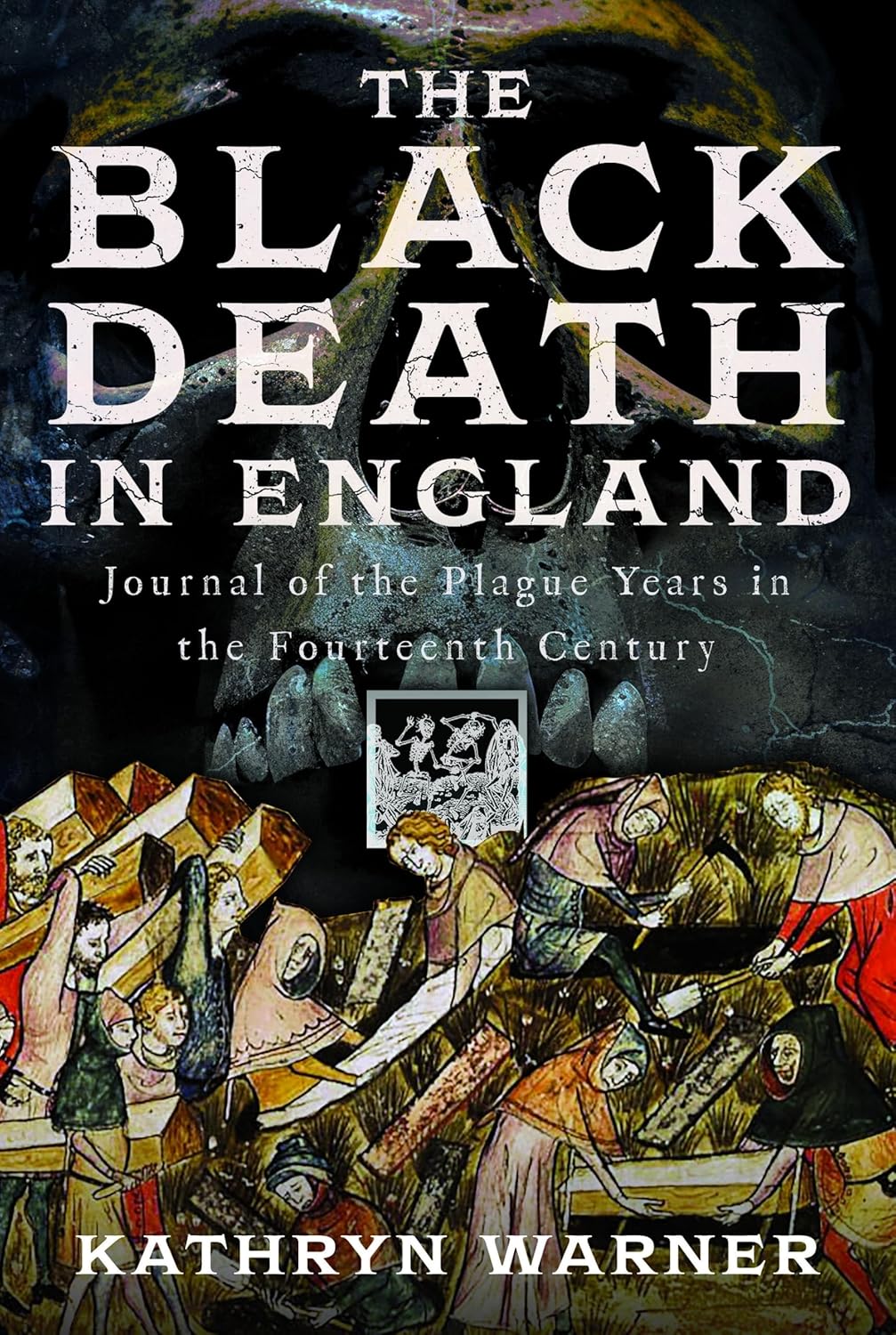

                        Gruoch is the first Scottish queen whose name is known to history.

                        Scotland’s Medieval Queens
                        Lady Macbeth sleepwalking by Johann Heinrich Füssli

                        In the early years of his reign, Macbeth faced challenges from the dead King Duncan’s father and from Siward, Earl of Northumbria, who mounted an invasion of Scotland in the name of Malcolm, Duncan I’s oldest son and heir. Although the invasion initially succeeded in defeating Macbeth, the king gathered reinforcements from his heartlands in the north and expelled Siward’s forces.

                        There followed 8 years of peace in Scotland. By 1050, King Macbeth was in such a strong position that he was able to leave the kingdom and go on pilgrimage to Rome, where he ‘scattered money like seed to the poor’.1 The pilgrimage would have been a combination of religious devotion and diplomatic networking; a chance for the King of Scots to be seen on the wider European stage. The generosity of Macbeth and Gruoch towards the church, during the pilgrimage, had monastic writers recording that ‘in his reign there were productive seasons’.2

                        In those 8 years, Duncan’s sons were growing to adulthood and in 1054, Earl Siward again invaded Scotland, hoping to place Malcolm on the throne, as a client king of England’s Edward the Confessor. Although the battle at Dunsinane was lost, Macbeth’s men sold their lives dearly; Siward’s oldest son was killed, and the earl was unable to press any advantage. Scotland was divided, with Malcolm establishing himself in Lothian and the southern kingdom of Strathclyde, while Macbeth continued to control Scotland’s heartlands north of the Forth. The subsequent campaign was long and bloody as Malcolm extended his influence northwards. It was not until 1057 that Malcolm crossed the Mounth, ambushing Macbeth, cut off from his main army, at Lumphanan, west of Aberdeen, on 15 August. Macbeth was killed in the battle, along with his personal bodyguard.

                        The Scots king was buried on the island of Iona, where his rival King Duncan was also interred. Macbeth was succeeded, briefly, by his stepson, Lulach. His reign lasted less than a year and he was defeated and killed, ‘by treachery’, on 17 March 1058, at Essie in Strathbogie.

                        Macbeth’s reputation as a strong, wise, generous and pious king has been overshadowed by the Macbeth of Shakespeare. He is described as ‘a tall man with a ruddy complexion and fair hair’.3 Of his wife Gruoch, we have no description. We have very little record of Gruoch’s movements, either as Macbeth’s wife or before. We can assume that she spent the early years of her marriage to Macbeth in creating a household and raising her young son, Lulach.

                        Once Macbeth attained the throne, Gruoch may well have assumed the traditional roles associated with queens, as an intercessor for those seeking the king’s mercy or patronage, as a hostess in welcoming foreign envoys and powerful magnates to the Scottish court, and as a religious benefactor. In one charter, Gruoch is identified with her husband as ‘Macbeth son of Finlach… and Gruoch daughter of Bodhe, King and Queen of Scots’.4 The fact that we have a grant given jointly by Macbeth and Gruoch suggests that the couple worked together during Macbeth’s reign. Gruoch also accompanied her husband on his pilgrimage to Rome, a journey that must have been an exciting adventure for both of them.

                        Scotland’s Medieval Queens
                        Gabriel von Max’s depiction of Lady Macbeth

                        There is no record in the chronicles of any disharmony in the marriage but we know little else of Queen Gruoch. Despite already bearing a son, Lulach, she and Macbeth had no children that we know of; although it may be that she lost children by miscarriage or in early childhood before they came to the notice of chroniclers. This lack of a surviving heir of his own may have been what prompted Macbeth to adopt Gruoch’s son as his successor.

                        We know nothing of Gruoch’s death, no date is recorded nor even hinted at. She may have lived through the grief of losing her husband and son in battle and seeing Malcolm III Canmore ascend the throne and assert his authority over the whole of Scotland. Or she may have died some years beforehand. William Shakespeare had her dying by her own hand, driven insane by her evil deeds:

                        Of his dead butcher and his fiend-like queene,
                        Who, as ’t is thought, by selfe and violent hands
                        Tooke off her life.5

                        But this was almost definitely fiction.

                        Gruoch’s final resting place, the one site that may give us a clue, is also lost to history.

                        The story of Queen Gruoch, Lady Macbeth, is one shrouded in mystery, tantalisingly obscure…

                        *

                        Notes:

                        1. Anderson, Early Sources, 1.588, quoted in Dauvit Broun, Macbeth [Macbethad mac Findlaich] (d. 1057), king of Scots, Oxforddnb.com; 2. Richard Oram, editor, The Kings and Queens of Scotland; 3. Mike Ashley, The Mammoth Book of British Kings and Queens; 4. ‘Macbeth filius Finlach … et Gruoch filia Bodhe, Rex et Regina Scottorum’, Early Scottish charters prior to A.D. 1153: with notes and an index, edited by Archibald
                        Campbell Lawrie; 5. Act V, Scene VIII, Shakespeare, William, The tragedie of Macbeth; a new edition of Shakspere’s works with critical text in Elizabethan English and brief notes, illustrative of Elizabethan life, thought and idiom, edited by Mark Harvey Liddell.

                        Sources:

                        Shakespeare, William, The tragedie of Macbeth; a new edition of Shakspere’s works with critical text in Elizabethan English and brief notes, illustrative of Elizabethan life, thought and idiom, edited by Mark Harvey Liddell; The Chronicle of John of Worcester, edited by R. R. Darlington and P. McGurk; Early Scottish charters prior to A.D. 1153: with notes and an index, edited by Archibald Campbell Lawrie; fmg.ac/Projects/MedLands/SCOTLAND; Oxforddnb.com; Richard Oram, editor, The Kings and Queens of Scotland; Mike Ashley, The Mammoth Book of British Kings and Queens; Kate Braithwaite, Gruoch: The Real Lady Macbeth, historyofroyalwomen.com; Henry of Huntingdon: The History of the English People 1000-1154, edited by Diana Greenway; Chronicles of the Picts, chronicles of the Scots, and other early memorials of Scottish history, edited by W. F. Skene; Rosalind K. Marshall, Scottish Queens 1034–1714; Chronicle of the Scots, 1165, Cronica Regum Scottorum; Annals of Ulster; David Ross, Scotland: History of a Nation.

                        Images:

                        Courtesy of Wikipedia

                        *

                        My books

                        Signed, dedicated copies of all my books are available through my online store.

                        Out now: Scotland’s Medieval Queens

                        Books by Sharon Bennett Connolly

                        Scotland’s history is dramatic, violent and bloody. Being England’s northern neighbour has never been easy. Scotland’s queens have had to deal with war, murder, imprisonment, political rivalries and open betrayal. They have loved and lost, raised kings and queens, ruled and died for Scotland. From St Margaret, who became one of the patron saints of Scotland, to Elizabeth de Burgh and the dramatic story of the Scottish Wars of Independence, to the love story and tragedy of Joan Beaufort, to Margaret of Denmark and the dawn of the Renaissance, Scotland’s Medieval Queens have seen it all. This is the story of Scotland through their eyes.

                        Scotland’s Medieval Queens gives a thorough grounding in the history of the women who ruled Scotland at the side of its kings, often in the shadows, but just as interesting in their lives beyond the spotlight. It’s not a subject that has been widely covered, and Sharon is a pioneer in bringing that information into accessible history.’ Elizabeth Chadwick (New York Times bestselling author)

                        Available now from Amazon and Pen and Sword Books

                        Also by Sharon Bennett Connolly:

                        Books by Sharon Bennett Connolly

                        Heroines of the Tudor World tells the stories of the most remarkable women from European history in the time of the Tudor dynasty, 1485-1603. These are the women who ruled, the women who founded dynasties, the women who fought for religious freedom, their families and love. Heroines of the Tudor World is now available from Amberley Publishing and Amazon UK. Women of the Anarchy demonstrates how Empress Matilda and Matilda of Boulogne, unable to wield a sword themselves, were prime movers in this time of conflict and lawlessness. It shows how their strengths, weaknesses, and personal ambitions swung the fortunes of war one way – and then the other. Available from Bookshop.orgAmberley Publishing and Amazon UKKing John’s Right-Hand Lady: The Story of Nicholaa de la Haye is the story of a truly remarkable lady, the hereditary constable of Lincoln Castle and the first woman in England to be appointed sheriff in her own right. Available from all good bookshops Pen & Sword Booksbookshop.org and Amazon

                        Royal Historical Society

                        Defenders of the Norman Crown: The Rise and Fall of the Warenne Earls of Surrey tells the fascinating story of the Warenne dynasty, from its origins in Normandy, through the Conquest, Magna Carta, the wars and marriages that led to its ultimate demise in the reign of Edward III. Available from Pen & Sword BooksAmazon in the UK and US, and Bookshop.orgLadies of Magna Carta: Women of Influence in Thirteenth Century England looks into the relationships of the various noble families of the 13th century, and how they were affected by the Barons’ Wars, Magna Carta and its aftermath; the bonds that were formed and those that were broken. It is now available in paperback and hardback from Pen & SwordAmazon, and Bookshop.orgHeroines of the Medieval World tells the stories of some of the most remarkable women from Medieval history, from Eleanor of Aquitaine to Julian of Norwich. Available now from Amberley Publishing and Amazon, and Bookshop.orgSilk and the Sword: The Women of the Norman Conquest traces the fortunes of the women who had a significant role to play in the momentous events of 1066. Available now from Amazon,  Amberley Publishing, and Bookshop.org.

                        Alternate Endings: An anthology of historical fiction short stories including Long Live the King… which is my take what might have happened had King John not died in October 1216. Available in paperback and kindle from Amazon.

                        Podcast:

                        A Slice of Medieval

                        Have a listen to the A Slice of Medieval podcast, which I co-host with Historical fiction novelist Derek Birks. Derek and I welcome guests, such as Bernard Cornwell and Michael Jecks, and discuss a wide range of topics in medieval history, from significant events to the personalities involved. 

                        Every episode is also now available on YouTube.

                        *

                        Don’t forget! Signed and dedicated copies of all my books are available through my online store.

                        For forthcoming online and in-person talks, please check out my Events Page.

                        You can be the first to read new articles by clicking the ‘Follow’ button, liking our Facebook page or joining me on TwitterThreadsBluesky and Instagram.

                        *

                        ©2025 Sharon Bennett Connolly, FRHistS