Malcolm the Maiden

Malcolm IV

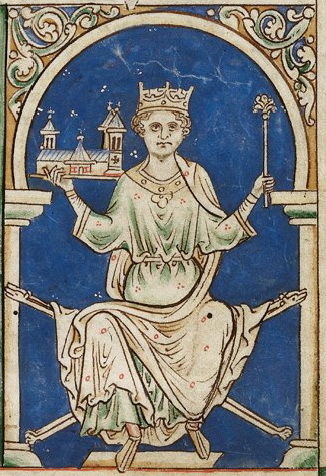
Malcolm IV (the Maiden), King of Scots, was the son of Prince Henry of Scotland and Ada de Warenne. He was the grandson of David I, King of Scots and great-grandson of Malcolm III, King of Scots and second his wife St Margaret, herself a descendant of Alfred the great. On his mother’s side, he was the grandson of William de Warenne, second Earl of Warenne and Surrey, and Isabel de Vermandois, granddaughter of King Henry I of France and his queen, Anna of Kiev.

The younger Malcolm was born between born between 23 April and 24 May 1141. He earned the soubriquet ‘the Maiden’ due to his youth, religious devotion and the fact he remained unmarried. Malcolm had become his grandfather’s heir following his father’s death in 1152, at which time he had been placed into the custody of Duncan, Earl of Fife, and taken on a progress around Scotland north of the Forth, following the old Celtic tradition of showing the heir to the kingdom. When King David I died less than twelve months after his son, Henry, on 24 May 1153, he was succeeded by his grandson, Malcolm. The new king succeeded to the crown at the age of twelve – possibly even on his twelfth birthday – as Malcolm IV.

The accession of Malcolm surpassed all the ambitions of his Warenne grandfather. William de Warenne, the second earl, had sought a royal bride for himself. He had not lived to see his daughter marry the heir to the Scottish throne not to see his grandson’s accession and coronation, which surpassed all of his aspirations and ambitions.

The chronicles make no mention of Malcolm’s mother, Ada, playing a part in the politics of Scotland during her eldest son’s kingship. She did appear at court often and was present for many of the important occasions; she was also a witness to no less than sixteen of Malcolm’s charters. Ada did, moreover, take great interest in the futures of her children, arranging the marriages of her two surviving daughters and employing any means possible to persuade her son to marry. The chronicler, William of Newburgh, relates a story of the lengths Ada had to go to in order to get her reluctant son to choose a bride. Ada went so far as to present her son with a young woman of noble birth, in his bed. Not wishing to cause an argument with his mother, Malcolm did not send her away and allowed the lady to spend the night in his royal bed; while he slept on the floor, wrapped in his cloak. Ada, it seems, was relentless in her attempts to persuade Malcolm to marry, until the young king tired of her constant nagging and begged her to hold her peace.
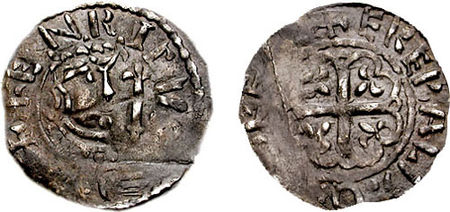
Coin of Malcolm’s father, Prince Henry, minted at Corbridge

While William of Newburgh makes it sound as if Ada was pushing for grandchildren, or tempting her son to lose his innocence, Ada’s constant attempts to discuss marriage with Malcolm had a political motive as much as a personal one. She was well aware of the importance of royal marriage, not just for the continuation of a dynasty and political alliance, but also for the strength and stability of the monarchy itself. Ada, moreover, was not the only one eager to see the young king settle down with a wife.

The Scottish curia regis (royal council) continued to pressure Malcolm to find a bride, even after his mother had given up. Arnold, Bishop of St Andrews encouraged Malcolm to follow the example of his recently married sisters. The king, however, was no more persuaded by the archbishop and his royal council than he was by his mother. He was eager to hold onto to the highest ideals of Christian knighthood and remain chaste. Malcolm’s relative youth may also have led him to believe that he had many years ahead of him and plenty of time before he needed to settle down and raise a family.

Malcolm’s kingship faced several challenges during his all-too-short reign. In November 1154, the young king was faced with a revolt from Somerled, Earl of Argyll. The unrest was to continue for several years, with Somerled only suing for peace in 1159 having been deprived of his chief supporters, the MacHeths, father and sons, who had been reconciled with the king in 1157.

Malcolm’s greatest challenge, however, was with his larger neighbour, England. While David I had taken advantage of the civil war in England during Stephen’s turbulent reign – known to history as the Anarchy – the accession of Henry II in 1154 changed the political landscape entirely. In 1157 the two kings met at Chester, where Malcolm performed homage ‘in the manner in which his grandfather had been the man of old King Henry’. 1 This homage suggests that Malcolm was accepting that he was a vassal of King Henry, as David I had done with King Henry I. He was also forced to resign his lordship of Northumberland, Cumberland and Westmorland, although the honour of Huntingdon was returned to the Scots king and his brother and heir, William, was given the lordship of Tynedale.
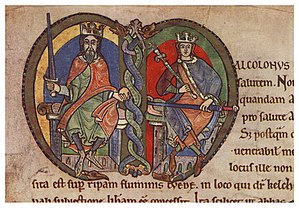
The charter to Kelso Abbey, depicting David I on the left with his grandson Malcolm IV on the right

In 1159 Malcolm, his brother and others joined Henry II and the English army on an expedition to Toulouse; William of Blois, son of King Stephen and husband of Malcolm’s cousin, Isabel de Warenne, Countess of Surrey, was also part of the expedition. The military enterprise gave Malcolm the chance to be knighted honourably in the field. The Scots contingent joined Henry II at Poitiers on 24 June and Henry knighted Malcolm at Périgueux a few days later. The expedition met with initial success and the army overran the county of Toulouse before laying siege to the city itself. However, the siege had to be abandoned when King Louis VII of France, another kinsman of Malcolm’s, intervened.

By the end of the year, Henry and Malcolm were back in Limoges, crossing to England shortly afterwards. Malcolm returned to Scotland in 1160 and to a revolt of six earls led by Feterth, Earl of Strathearn, angry at his expedition with the English army. Mediation by the clergy led to an uneasy peace and their abandoning of their besieging Malcolm at Perth. Unrest then arose in Galloway and Malcolm made several forays into the region before the end of the year, when Fergus, lord of Galloway, submitted to the king. It was the last major unrest by any Scottish earls for not only Malcolm’s reign, but for also for that of his brother, William I.

Malcolm was again summoned to meet Henry II in 1163. Despite falling ill at Doncaster, he was still expected to complete the journey to Henry’s court and arrived at Woodstock at the end of June. It seems Henry wanted to assert his supremacy over Britain, as a group of Welsh rulers had also been called to attend the English king. On 1 July, Malcolm renewed his oath to Henry and handed over hostages, the most senior of whom was his own youngest brother, David, soon to be made earl of Huntingdon. Homage given, Malcolm returned to Scotland, where he faced a revolt led by Somerled, Lord of the Isles, who was later killed in an attempted raid on Glasgow in 1164.

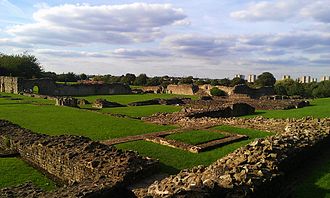
Jedburgh Abbey

Malcolm appears to have never fully recovered from the illness he suffered in Doncaster in 1163 and frequently complained of pains in his head and feet. He planned a pilgrimage to Santiago de Compostela, to pray for healing, but was too ill to undertake it. He died at Jedburgh on Thursday 9 December 1165, aged only 24: he had reigned for 12 years and 6 months and was buried among his ancestors at Dunfermline Abbey. We do not have his mother’s response to the death of her first-born son, but it cannot have been easy for her, only in her forties herself and already a widow of thirteen years. Malcolm was succeeded by his brother William, later known as William the Lion.

*

Footnote: 1 The Melrose Chronicle quoted in W.W. Scott, Malcolm IV (c. 1141–1165)

Images: courtesy of Wikipedia except Jedburgh which is ©2017 Sharon Bennett Connolly

Further reading:

Scott, W.W., Malcolm IV (c. 1141–1165) Oxforddnb.com; Mackay, A.J.G. (ed.), The Historie and Chronicles of Scotland … by Robert Lindesay of Pitscottie; Ross, David, Scotland: History of a Nation; Farrer, William and Charles Travis Clay, editors, Early Yorkshire Charters, Volume 8: The Honour of Warenne; Morris, Marc King John: Treachery, Tyranny and the Road to Magna Carta; Church, Stephen, King John: England, Magna Carta and the Making of a Tyrant; Danziger, Danny and John Gillingham, 1215: The Year of Magna Carta; Crouch, David, William Marshal; fmg.ac; Brewer’s British Royalty by David Williamson; The Mammoth Book of British Kings and Queens by Mike Ashley; The Story of Scotland by Nigel Tranter; Ada, Queen Mother of Scotland (article) by Victoria Chandler.

*

My Books:

Signed, dedicated copies of all my books are available, please get in touch by completing the contact me form.
Out now!

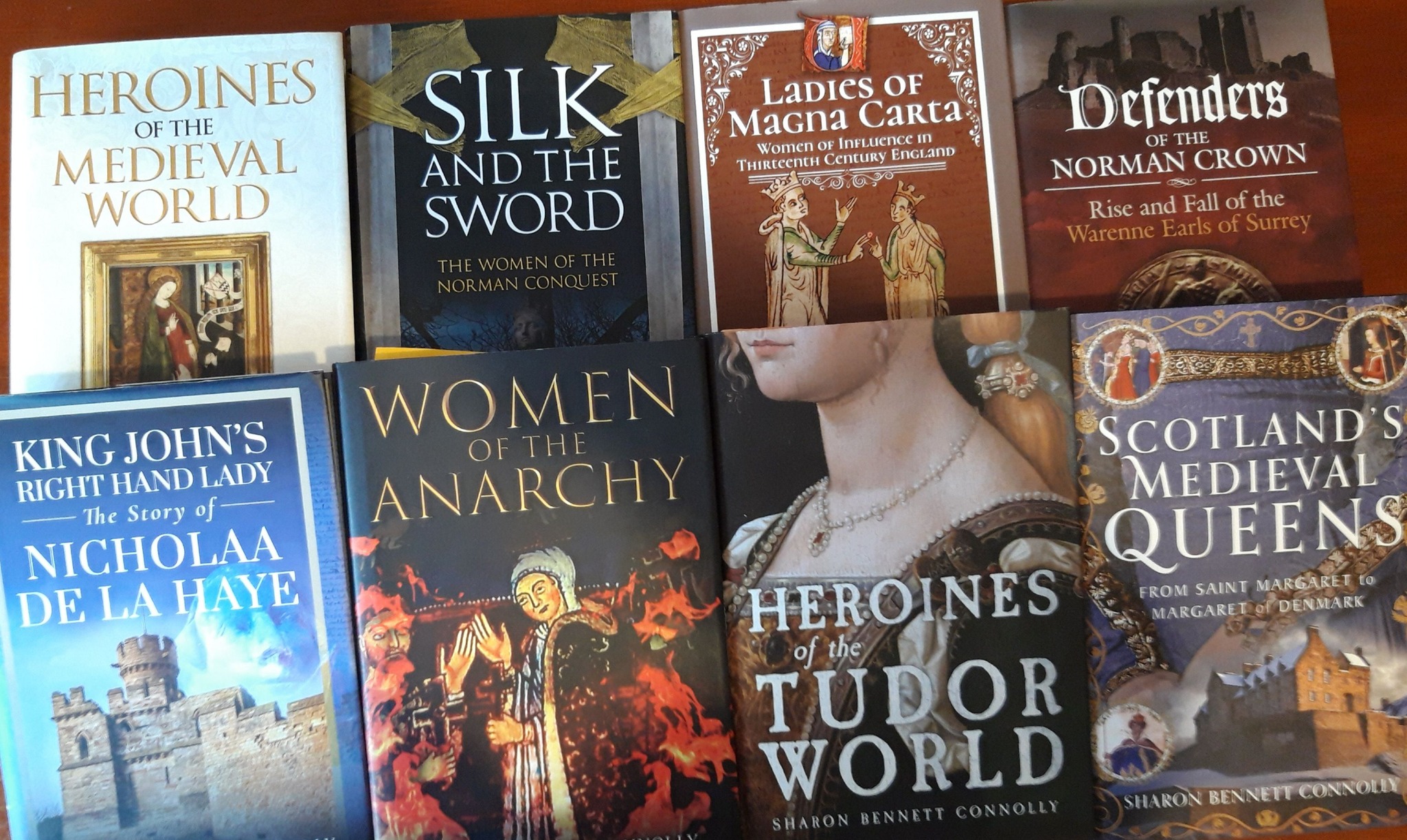
King John’s Right-Hand Lady: The Story of Nicholaa de la Haye is now available for pre-order as a hardback and Kindle from Pen & Sword Booksbookshop.org and Amazon (UK and US).

In a time when men fought and women stayed home, Nicholaa de la Haye held Lincoln Castle against all-comers. Not once, but three times, earning herself the ironic praise that she acted ‘manfully’. Nicholaa gained prominence in the First Baron’s War, the civil war that followed the sealing of Magna Carta in 1215.

A truly remarkable lady, Nicholaa was the first woman to be appointed sheriff in her own right. Her strength and tenacity saved England at one of the lowest points in its history. Nicholaa de la Haye is one woman in English history whose story needs to be told…

Also by Sharon Bennett Connolly:

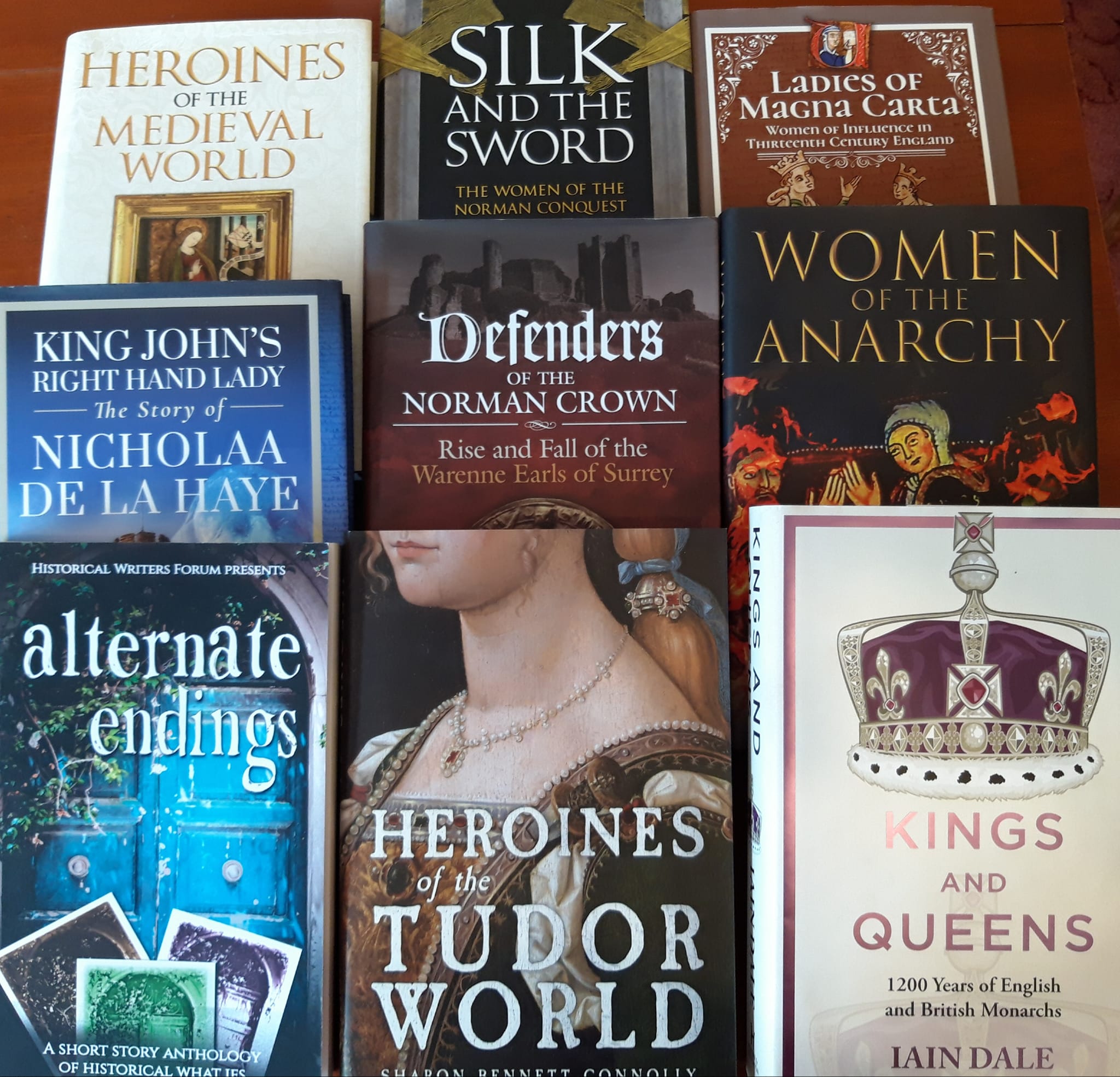
Defenders of the Norman Crown: The Rise and Fall of the Warenne Earls of Surrey tells the fascinating story of the Warenne dynasty, of the successes and failures of one of the most powerful families in England, from its origins in Normandy, through the Conquest, Magna Carta, the wars and marriages that led to its ultimate demise in the reign of Edward III. Defenders of the Norman Crown: Rise and Fall of the Warenne Earls of Surrey is now available from Pen & Sword BooksAmazon in the UK and US, and  Bookshop.org.

Ladies of Magna Carta: Women of Influence in Thirteenth Century England looks into the relationships of the various noble families of the 13th century, and how they were affected by the Barons’ Wars, Magna Carta and its aftermath; the bonds that were formed and those that were broken. It is now available in paperback and hardback from Pen & Sword,  Amazon, and Bookshop.org.
Heroines of the Medieval World tells the stories of some of the most remarkable women from Medieval history, from Eleanor of Aquitaine to Julian of Norwich. Available now from Amberley Publishing and Amazon, and Bookshop.org.

Silk and the Sword: The Women of the Norman Conquest traces the fortunes of the women who had a significant role to play in the momentous events of 1066. Available now from Amazon,  Amberley Publishing, and Bookshop.org.

Alternate Endings: An anthology of historical fiction short stories including Long Live the King… which is my take what might have happened had King John not died in October 1216. Available in paperback and kindle from Amazon.

*

For forthcoming online and in-person talks, please check out my Events Page.

You can be the first to read new articles by clicking the ‘Follow’ button, liking my Facebook page or joining me on Twitter and Instagram.

©2020 Sharon Bennett Connolly, FRHistS
1215: The Year of Magna Carta

King John. 1215: The Year of Magna Carta by Sharon Bennett Connolly
King John

The year of 1214 ended badly for King John. Attempts to appease his continental enemies had not had the desired results and he was at war in France. As a consequence, John sought a reconciliation with the Lusignans, agreeing to grant them Saintes and Oléron and to marry his daughter Joan to Hugh X de Lusignan, the son of Hugh IX de Lusignan, who had been betrothed to John’s wife, Isabelle d’Angoulême, in return for their support. A similar peace offering, of the earldom of Richmond, to Pierre, Duke of Brittany, was less well received and the duke remained aloof.

John’s campaign was successful at first, with him entering Angers unopposed before he laid siege to Roche-au-Moine. However, he was forced to retreat on 2 July, with the approach of the army of Prince Louis of France and the refusal of the Poitevins to fight by his side.

Although he was able to keep his own army intact, John’s fate was sealed on 27 July when his half-brother William Longespée, Earl of Salisbury, and John’s German and Flemish allies faced King Philip II of France at the battle of Bouvines. They were decisively defeated. Otto IV managed to escape, but William Longespée was captured and taken to Paris, along with the counts of Flanders and Boulogne. With the threat in the north neutralised, Philip was now able to join his army to that of his son, Prince Louis, and challenge John in the south. John had no choice but to seek peace and a 5-year truce was agreed on 13 October, with Ralph of Coggeshall reporting rumours that it had cost John 60,000 marks.1

At home, John’s policy of reform of the sheriffs and forest officials in 1212–1213 had resulted in a significant reduction in royal revenue, and the military campaign had drained John’s treasury further. He was no longer a wealthy king. In October 1214 John returned to England; the defeat by the French at the Battle of Bouvines had ended the king’s hopes of regaining the lost Angevin empire. Baronial opposition to John now gathered pace. The refusal to pay scutage of 3 marks on the knights’ fee demonstrating a coordinated effort by the magnates, rather than the individual disobedience that had been seen earlier in the reign.

Magna Carta by Sharon Bennett Connolly
Lincoln Cathedral’s copy of Magna Carta

The barons’ objections to John were almost beyond number. He had failed to face the French and had lost not only his family’s Continental possessions, but also those of his barons. Few had forgotten his treachery against his brother in trying to take the throne whilst Richard was on crusade. Added to these catastrophes was the character and personality of John himself. By nature, John was paranoid, secretive and distrustful. His cruelty was widely known. He stood accused of killing his nephew, Arthur, a rival claimant to the English throne; he had hanged twenty-eight Welsh hostages (sons of rebel chieftains); and he had hounded William de Braose and his family all the way to Ireland and back. De Braose’s wife and son died in one of John’s prisons, probably from starvation.

The History of William Marshal, a biography of the great knight and statesman, claimed that John treated his prisoners harshly and with such indignity that it was a disgrace to all involved.2 His barons even complained that he forced himself on their wives and daughters. With such military losses, accusations of murder and seemingly acute character flaws stacked against him, it is no wonder England’s king faced opposition by many of the most powerful in his realm.

In January 1215 John arranged to meet with his challengers in London to hear their demands, and it was agreed that they would reconvene at Northampton on 26 April to hear the king’s response. The disaffected barons demanded reform and the confirmation of the coronation charter of King Henry I, in which the king promised;

1215: The Year of Magna Carta by Sharon Bennett Connolly
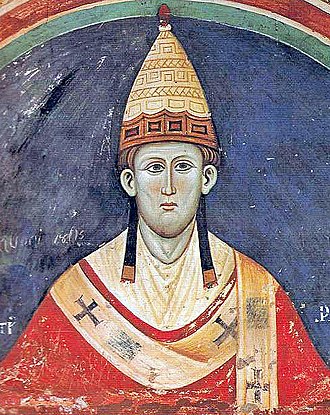
Pope Innocent III

‘Know that by the mercy of God and by the common counsel of the barons of England I have been crowned king of this realm. And because the kingdom has been oppressed by unjust exactions, being moved by reverence towards God and by the love I bear you all, I make free the Church of God … I abolish all the evil customs by which the kingdom of England has been unjustly oppressed.’ 3

Although many of the clauses of this charter, also referred to as the Charter of Liberties, were now outdated, several still resonated with the barons, including that a baron’s widow could not be married without her consent, that an heiress could not be married without the consent of her relatives and that, on the death of a baron, his heir would only pay a relief that was ‘just and lawful.’4

Whilst John was ruminating on these demands, both sides were preparing for war. John borrowed from the Templars to pay his mercenaries and on 4 March he took the cross. This latter move was seen as highly cynical and no one seems to have believed that John would actually go on crusade. His purpose for doing so was political: a crusader’s lands and properties were protected by the church and this action firmly identified the king’s opponents as the ‘bad guys’.

John failed to appear at Northampton in April. He did, however, send messages to the rebels. According to the Barnwell annalist the king ‘tried to win them back through many emissaries, and there was much discussion amongst them, the archbishop, bishops and other barons acting as intermediaries, the king himself staying at Oxford.’5 On 5 May the rebels formally renounced their fealty. John retained the support of some magnates, such as William Marshal and William de Warenne, but the majority were now standing against him. As was London, which opened its gates to the rebels on 17 May, despite John’s granting the city the right to elect its mayor only eight days before. In the Welsh Marches the Braose family had allied with Llywelyn ap Iorwerth and had taken Shrewsbury.

The rebels were ready to fight. After occupying London, they made one final attempt to prevent war, presenting the king with a list of their demands. John had no choice but to make concessions and on 10 June agreed to further discussions of the rebels’ terms. Following these negotiations, a long, detailed document was produced, dealing with the particular grievances of the time and with injustices in general. It touched on the whole system of royal government. And it was granted to ‘all free men of the realm and their heirs forever.’6

1215: The Year of Magna Carta by Sharon Bennett Connolly
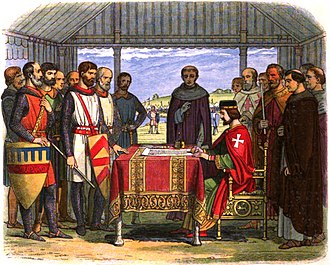
19th century recreation of the moment Magna Carta is sealed

Of its sixty-three clauses some terms were asking for immediate remedies, such as the removal of corrupt administrators and the sending home of foreign mercenaries. A clause stating that fighting outside of the kingdom could not be imposed by the king was a reaction to John’s recent attempts to force his English barons to help him recover his Continental domains. Others had long-term aims. The document sought to guarantee the privileges of the church and the City of London. Restrictions were placed on the powers of regional officials, such as sheriffs, to prevent abuses. The royal court was fixed at Westminster, for justice to be obtainable by all, and royal judges were to visit each county regularly. Taxes could no longer be levied without the consent of the church and the barons.

Clauses included the fixing of inheritance charges and the protection from exploitation for under-age heirs; the king was to take only what was reasonable from an estate (although ‘reasonable’ remained undefined). From henceforth a widow was to be free to choose whether or not to remarry and her marriage portion (dowry) would be made available to her immediately on her husband’s death. Another clause sought to prevent the seizure of land from Jews and the king’s debtors. Magna Carta even went so far as to regulate weights and measures. It also reduced the size of the king’s forests and limited the powers of forest justices.

Although most of the sixty-three clauses of Magna Carta are now defunct, three still remain as major tenets of British law, including ‘to no one will we sell, to no one will we deny or delay right or justice.’ That no person would be imprisoned, outlawed or deprived of his lands except by judgement of his peers and the law of the land has remained the cornerstone of the English legal system ever since.

1215: The Year of Magna Carta by Sharon Bennett Connolly
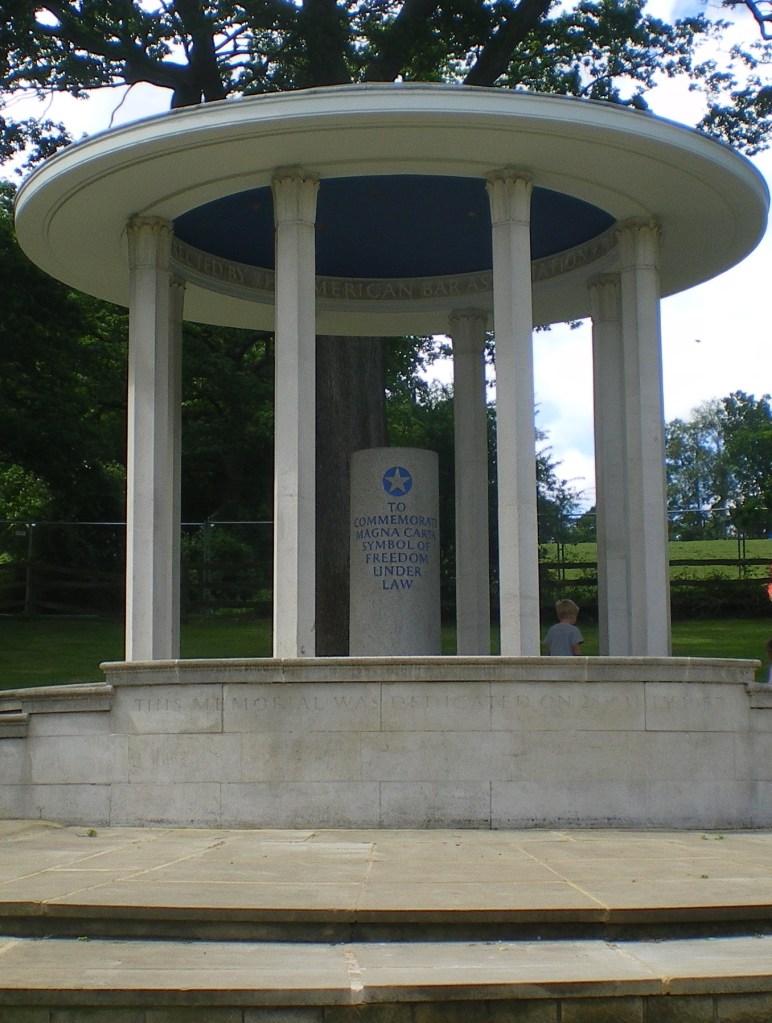
Runnymede

Magna Carta was sealed at Runnymede, Berkshire, on 15 June 1215. John ordered that the charter be circulated around the towns and villages, throughout the realm; only 4 original copies survive today, 2 at the British Library and 1 each at Lincoln and Salisbury. As a peace agreement between the king and his rebellious barons, however, it failed miserably. By July, John was appealing to the pope for help. Pope Innocent III’s response arrived in England in September. The treaty was declared null and void; according to Innocent, Magna Carta was:

‘not only shameful and base but also illegal and unjust. We refuse to overlook such shameless presumption which dishonours the Apostolic See, injures the king’s right, shames the English nation, and endangers the crusade. Since the whole crusade would be undermined if concessions of this sort were extorted from a great prince who had taken the cross, we, on behalf of Almighty God, Father, Son and Holy Ghost, and by the authority of Saints Peter and Paul His apostles, utterly reject and condemn this settlement. Under threat of excommunication we order that the king should not dare to observe and the barons and their associates should not insist on it being observed. The charter with all its undertakings and guarantees we declare to be null and void of all validity for ever.’7


The letter was accompanied by more papal letters, excommunicating rebels, including nine barons and the Londoners. However, by the time the letters arrived in England, the dispute had already erupted into the Barons’ War. John laid siege to Rochester Castle with his mercenaries and the castle surrendered on 30 November, after a seven-week siege. Deciding they could no longer deal with John’s perfidy, the rebel barons had invited the King of France, Philip II Augustus, to claim the throne.

Philip’s son and heir, the future Louis VIII, accepted the offer. He sent an advanced guard, which arrived in December of 1215. Louis himself would arrive in the spring of 1216. He landed on the south coast and marched for London, where he was proclaimed King of England on 2 June 1216, just 13 days before the 1st anniversary of Magna Carta…

*

For a study into the influence of women on the clauses and creation of Magna Carta, and its impact on the lives of women, my book, Ladies of Magna Carta: Women of Influence in Thirteenth Century England  is out now!

Footnotes:

1 John Gillingham, John (1167–1216), Oxforddnb.com; 2 L’Histoire de Guillaume le Maréchale quoted in John Gillingham, John (1167–1216), Oxforddnb.com; 3 Coronation Charter of Henry I in bl.uk; 4 Select Charters quoted in Marc Morris, King John: Treachery, Tyranny and the Road to Magna Carta; 5 The Barnwell annalist quoted in Elizabeth Hallam (editor), The Plantagenet Chronicles; 6 Danny Danziger and John Gillingham, 1215: The Year of Magna Carta; 7 Letter from Pope Innocent III, quoted in Danny Danziger and John Gillingham, 1215: The Year of Magna Carta

Images:

Courtesy of Wikipedia. Except: Magna Carta ©2015 Sharon Bennett Connolly and Runnymede ©2020 Jayne Smith

Further reading:

Robert Bartlett England Under the Norman and Angevin Kings 1075-1225; Dan Jones The Plantagenets; the Kings who Made EnglandThe Plantagenet Chronicle Edited by Elizabeth Hallam; Maurice Ashley The Life and Times of King John; Roy Strong The Story of BritainOxford Companion to British History; Mike Ashley British Kings & Queens; David Williamson Brewer’s British Royalty; Danny Danziger and John Gillingham, 1215: The Year of Magna Carta; John Gillingham, John (1167–1216), Oxforddnb.com; Marc Morris, King John: Treachery, Tyranny and the Road to Magna Carta

*

My books

Signed, dedicated copies of all my books are available through my online bookshop.

Coming 30 January 2025: Scotland’s Medieval Queens

Books by Sharon Bennett Connolly

Scotland’s history is dramatic, violent and bloody. Being England’s northern neighbour has never been easy. Scotland’s queens have had to deal with war, murder, imprisonment, political rivalries and open betrayal. They have loved and lost, raised kings and queens, ruled and died for Scotland. From St Margaret, who became one of the patron saints of Scotland, to Elizabeth de Burgh and the dramatic story of the Scottish Wars of Independence, to the love story and tragedy of Joan Beaufort, to Margaret of Denmark and the dawn of the Renaissance, Scotland’s Medieval Queens have seen it all. This is the story of Scotland through their eyes.

Scotland’s Medieval Queens gives a thorough grounding in the history of the women who ruled Scotland at the side of its kings, often in the shadows, but just as interesting in their lives beyond the spotlight. It’s not a subject that has been widely covered, and Sharon is a pioneer in bringing that information into accessible history.’ Elizabeth Chadwick (New York Times bestselling author)

Available now from Amazon and Pen and Sword Books

Also by Sharon Bennett Connolly:

Books by Sharon Bennett Connolly

Heroines of the Tudor World tells the stories of the most remarkable women from European history in the time of the Tudor dynasty, 1485-1603. These are the women who ruled, the women who founded dynasties, the women who fought for religious freedom, their families and love. Heroines of the Tudor World is now available for pre-order from Amberley Publishing and Amazon UK. Women of the Anarchy demonstrates how Empress Matilda and Matilda of Boulogne, unable to wield a sword themselves, were prime movers in this time of conflict and lawlessness. It shows how their strengths, weaknesses, and personal ambitions swung the fortunes of war one way – and then the other. Available from Bookshop.orgAmberley Publishing and Amazon UKKing John’s Right-Hand Lady: The Story of Nicholaa de la Haye is the story of a truly remarkable lady, the hereditary constable of Lincoln Castle and the first woman in England to be appointed sheriff in her own right. Available from all good bookshops Pen & Sword Booksbookshop.org and Amazon

Defenders of the Norman Crown: The Rise and Fall of the Warenne Earls of Surrey tells the fascinating story of the Warenne dynasty, from its origins in Normandy, through the Conquest, Magna Carta, the wars and marriages that led to its ultimate demise in the reign of Edward III. Available from Pen & Sword BooksAmazon in the UK and US, and Bookshop.orgLadies of Magna Carta: Women of Influence in Thirteenth Century England looks into the relationships of the various noble families of the 13th century, and how they were affected by the Barons’ Wars, Magna Carta and its aftermath; the bonds that were formed and those that were broken. It is now available in paperback and hardback from Pen & SwordAmazon, and Bookshop.orgHeroines of the Medieval World tells the stories of some of the most remarkable women from Medieval history, from Eleanor of Aquitaine to Julian of Norwich. Available now from Amberley Publishing and Amazon, and Bookshop.orgSilk and the Sword: The Women of the Norman Conquest traces the fortunes of the women who had a significant role to play in the momentous events of 1066. Available now from Amazon,  Amberley Publishing, and Bookshop.org.

Alternate Endings: An anthology of historical fiction short stories including Long Live the King… which is my take what might have happened had King John not died in October 1216. Available in paperback and kindle from Amazon.

Podcast:

Have a listen to the A Slice of Medieval podcast, which I co-host with Historical fiction novelist Derek Birks. Derek and I welcome guests, such as Bernard Cornwell and Michael Jecks, and discuss a wide range of topics in medieval history, from significant events to the personalities involved. 

Every episode is also now available on YouTube.

*

Don’t forget! Signed and dedicated copies of all my books are available through my online store.

For forthcoming online and in-person talks, please check out my Events Page.

You can be the first to read new articles by clicking the ‘Follow’ button, liking our Facebook page or joining me on TwitterThreadsBluesky and Instagram.

**

©2020 Sharon Bennett Connolly FRHistS

Guest Post: Prince John’s Gambit: The Throne at any Cost

Prince John’s Gambit: The Throne at any Cost

John, Count of Mortain, Lord of Ireland, and youngest son of Henry II and Eleanor of Aquitaine knew that the stars were finally aligning in his favor, and the impossible dreams of his youth were now within his grasp. Bold action was required, and he was confident in his ability to seize this auspicious opportunity.

It was early January 1193 when John received a letter from King Philip II of France informing him that his brother, King Richard the Lionheart, was being held captive by the Duke of Austria and his liege lord, Holy Roman Emperor Henry VI.

John immediately traveled to the nearest port and secretly crossed the Channel into Normandy. He might have already been imagining his future as King of England, Duke of Normandy and Aquitaine, and ruler over the Angevin lands lying between those valuable duchies. No one would ever call him “Lackland” again.

It’s likely that John’s ambitions were buoyed by his knowledge of family history. His great-grandfather, Henry I, was the youngest son of William the Conqueror. Upon William’s death, his lands were divided between his two oldest surviving sons: William Rufus, who became King of England and Robert Curthose, who became Duke of Normandy. Henry Beauclerc, as Henry I was known before his ascension, was the original “Lackland” as the only inheritance he received was money.

Yet, only 13 years after William the Conqueror’s death, this youngest son had seized the throne of England after the sudden death of William Rufus in 1100. Six years later, Henry defeated

Robert Curthose at the Battle of Tinchebray and became Duke of Normandy. Robert Curthose would spend the rest of his life in captivity.

Did visions of Richard, his formidable older brother, imprisoned for the rest of his natural life inspire John as he rode across Normandy that cold January?

John’s story during Richard’s captivity stretches from January 1193 to the brothers’ reconciliation in May 1194. It’s a tale of persistence, audacious risk-taking, and a single-minded resolve to achieve power at any cost.

If John had succeeded, perhaps we would admire him just as Henry I is admired for his unexpected rise to power. But John’s failures and reckless schemes during these 17 months would not only determine the course of Richard’s remaining years as king, they would also play an important role in establishing John’s reputation as a deceitful, untrustworthy, and avaricious man.

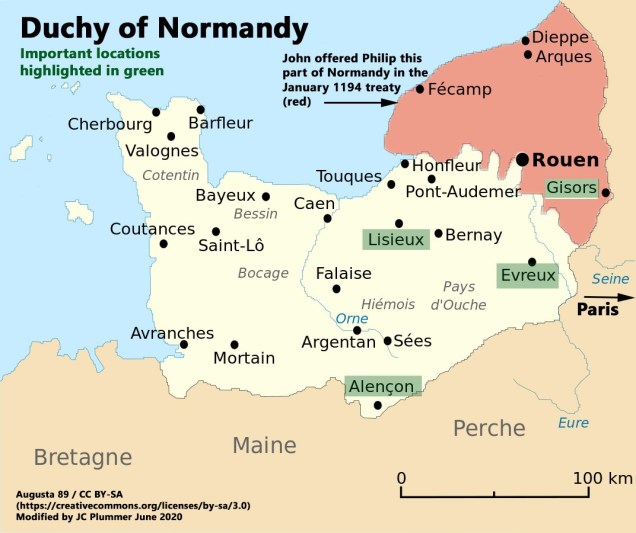
When John met with the Norman barons at Alençon in January 1193, he announced that Richard would not return, and that he was likely dead. John proclaimed that he was ready to assume control of Normandy and help the barons defend against potential attacks from King Philip. These loyal liegemen of Richard flatly refused to accept John as their new lord. As long as Richard lived, they would honor their oaths of fealty to him. Undeterred, John left them and went to Paris.

King Philip had spent his reign cleverly pitting one Plantagenet against another, and he was delighted to receive John at his court. In return for Philip’s support, John vowed to annul his marriage and marry Philip’s sister. He then paid homage to Philip for Normandy and the Angevin lands, and he promised to give Philip the strategic fortress of Gisors and the Norman Vexin.

This was a stunning betrayal of his brother, and as news of John’s actions in Paris made its way back to England, many of those who might have otherwise supported John as heir were outraged.

In February, John returned to England where he captured and garrisoned the castles of Windsor and Wallingford. He then entered London and declared that Richard would never return; he even insisted that Richard was dead. John demanded the Great Council recognize him as king.

His mother, the indomitable Eleanor of Aquitaine, and the Great Council were now ruling England. They had not yet received word of Richard’s location or condition, and it was a precarious time. Since Richard had no legitimate children, only John and a nephew, Arthur of Brittany, were potential successors. Arthur’s father, Geoffrey, had been born before John, but Arthur’s youth and Breton upbringing worked against him. Eleanor preferred that John ascend to the throne should Richard die.

By early March, John’s castles at Windsor and Tickhill were under siege. It was an awkward moment for the men leading these sieges. If they pursued victory too vigorously, they might make an enemy of the future king.

On April 20, Eleanor and the Great Council began receiving dispatches from Richard, who outlined the terms of his release and offered recommendations for raising the staggering king’s ransom required for his freedom. The government could not simultaneously conduct sieges against John’s castles and raise the ransom.

Even though Windsor and Tickhill were on the verge of surrender, a six-month truce was negotiated. Eleanor took control of Windsor and Wallingford, while John kept Tickhill and Nottingham. Along with other stipulations, John was expected to help raise the ransom, and he was required to stay in England.

After this setback, John spent May and June in Dorset, pouting and plotting his next move. Historians differ on how much effort he put into raising the ransom.

In early July, news reached both England and France that the terms of Richard’s release had been renegotiated and finalized. Although Richard knew that his release was still months away, Philip believed the Lionheart could be freed at any time.

In response, a frantic King Philip sent his famous message to John: “Look to yourself, the Devil is loosed!”

Despite his pledge to remain in England, a terrified John fled across the Channel to Paris. Because he had broken the truce, John’s estates were confiscated.

John was at Philip’s side when emissaries from the Lionheart arrived, proposing a treaty with the French king. The Treaty of Mantes was signed on July 9, 1193, and it was a generous settlement intended to stop Philip from further incursions into Normandy and to avoid a possible French invasion of England.

Richard’s secondary goal was to separate Philip and John. If John renewed his oath of loyalty to his brother, his titles and lands on both sides of the Channel would be restored, and a series of castles in Normandy would be awarded to him. John promptly pledged his allegiance to Richard and set off to claim his castles. However, he was so distrusted that the castellans refused to relinquish control to John. A furious John returned to Paris, and Richard’s scheme to remove John from Philip’s influence failed.

The emperor’s December announcement that Richard would be released in January resulted in another panicked response from Philip and John. They sent a letter to Henry offering either monthly payments to keep Richard imprisoned until autumn or a lump sum matching the ransom raised by Eleanor, as long as Henry transferred custody of his prisoner to Philip.

By January 1194, John was desperate, but he was not ready to admit defeat. He made one last treaty with Philip, and its extraordinary terms must have astounded the French king. John surrendered the whole of Normandy east of the Seine except for the city of Rouen. He gave key castles in Maine, Anjou, Touraine, and Aquitaine to Philip. And perhaps the most shocking concession was his agreement to hold the remaining continental lands as a baron of the French court. This would end the long-standing tradition of the Duke of Normandy meeting the King of France as an equal.

The January treaty was so astonishing that it only raised Philip’s suspicions. Although Philip signed the treaty, the shrewd French king probably doubted that John would abide by it.

Philip and John’s offer tempted Henry VI, and he showed their letter to Richard. Although he could not renege on his promises, Henry delayed Richard’s release until February 4, 1194.

Eleanor and Richard immediately left the German court, and they landed in England on March 13. Richard soon subdued John’s remaining supporters, and John’s titles and lands were again confiscated.

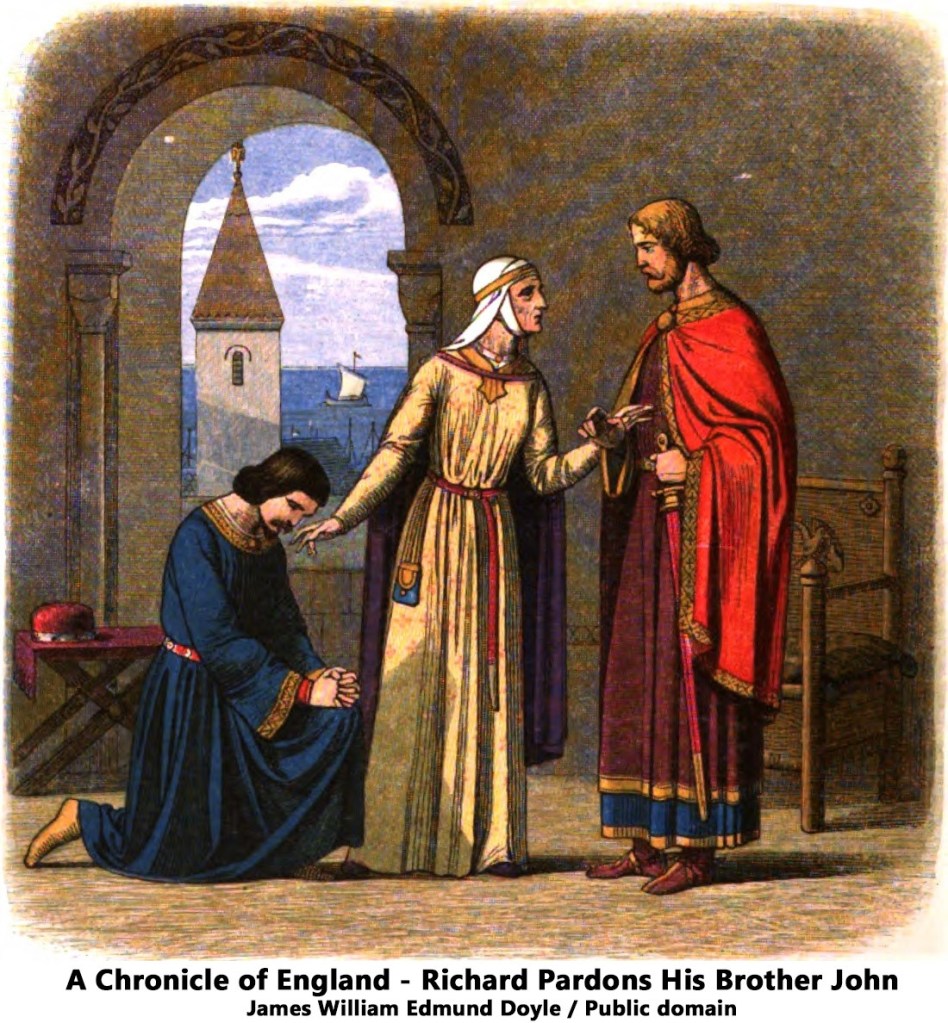
On May 13, Richard and Eleanor disembarked in Normandy. By May 19, they were in Lisieux at the home of John of Alençon. It is here that a shaken and contrite John arrived, falling at his brother’s feet, shedding the required tears, and begging for mercy. Richard forgave him, but his words were casual and full of contempt. He called the 27-year-old John a “child” who had been led astray by evil advisors.

Eleanor and Richard had already determined that it was more important to separate John from Philip and bring him back into the family fold than to impose the punishment he deserved for his treason.

The following day, John returned to Evreux, a strategic castle he had been holding for Philip since January. He then demonstrated why he could not be trusted. He invited the town’s French officials to meet with him, perhaps for dinner, and he announced to them that he now held the town for Richard before ordering their slaughter.

Twelve months later, in May 1195, Richard restored the counties of Mortain and Gloucester to John, although not the castles. In September 1197, Richard formally named John as his heir. John did not return to England until after Richard’s death in 1199.

The story of John’s 17 month quest for power during Richard’s captivity shows a man willing to promise anything and risk everything, regardless of whether he could deliver. Yet, he never suffered the consequences he deserved for his actions, mostly because he was the favored choice to succeed Richard, as long as the Lionheart remained childless.

Consider these examples:

· During his initial bid to take the crown, when his castles were on the verge of surrender, he was offered a generous truce.

· He lost his titles and lands when he fled to Paris in July 1193, but the Treaty of Mantes restored them to him.

· He ceded valuable strategic castles to Philip, and Richard would spend the remainder of his life fighting to recover them. John’s penalty was to lose his lands and titles for a time, but they were eventually returned to him.

This raises the question of whether John learned any lessons from his disastrous attempt to take the throne from Richard, and how that lack of meaningful consequences for his reckless and risky gambles might have impacted his reign, particularly when dealing with a cunning foe like King Philip and aggrieved barons looking for a measure of justice.

About the authors:

J. C. Plummer graduated Summa Cum Laude from Washburn University with a Bachelor of Arts degree in History and Anthropology. She later earned a Master of Science degree in Computer Information Science from Dartmouth College.

As an author and historian, J.C.’s goal is to provide thoughtful and entertaining storytelling that honors the past, is mindful of the present, and is optimistic for the future.

She has joined with author Olivia Longueville to co-author The Robin Hood Trilogy.

About Olivia Longueville: Olivia has always loved literature and fiction, and she is passionate about historical research, genealogy, and the arts. She has several degrees in finance & general management from London Business School (LBS) and other universities. At present, she helps her father run the family business.

Olivia’s first book was Between Two Kings, a novel set in Tudor England, which will be re-published by Penmore Press later this year.

J.C.’s social media profiles:

Website: http://www.angevinworld.com/

Twitter: @JC_Plummer Facebook: http://www.facebook.com/jennie.newbrand/

Olivia’s social media profiles:

Website: http://www.olivialongueville.com/

Twitter: @O_Longueville

Facebook: http://www.facebook.com/OliviaLongueville/

The Robin Hood Trilogy:

Set in late 12th century England, France, and Outremer, this re-imagining of the Robin Hood story closely follows history while incorporating popular aspects of the Robin Hood legends.

From the mists of an ancient woodland, to lavish royal courts teeming with intrigue, to the exotic shores of the Holy Land—Robin Hood leads the fight in a battle between good and evil, justice and tyranny, the future and the past.

Historical figures such as King Philip II of France, Richard the Lionheart, Prince John, and Eleanor of Aquitaine are featured in the trilogy.

Book 1: Robin Hood’s Dawn Amazon buy links. https://bit.ly/1-RHDawn https://bit.ly/RHDawn-UK

Book 2: Robin Hood’s Widow NOW AVAILABLE! Amazon buy links. https://bit.ly/RHWidow https://bit.ly/RHWidow-UK

Book 3: Robin Hood’s Return Coming soon!

*

My Books

Out Now!

Ladies of Magna Carta: Women of Influence in Thirteenth Century England  looks into the relationships of the various noble families of the 13th century, and how they were affected by the Barons’ Wars, Magna Carta and its aftermath; the bonds that were formed and those that were broken. It is now available from Pen & SwordAmazon and from Book Depository worldwide.

Also by Sharon Bennett Connolly:

Silk and the Sword: The Women of the Norman Conquest traces the fortunes of the women who had a significant role to play in the momentous events of 1066.  Available now from Amazon,  Amberley Publishing, Book Depository.

Heroines of the Medieval World tells the stories of some of the most remarkable women from Medieval history, from Eleanor of Aquitaine to Julian of Norwich. Available now from Amberley Publishing and Amazon and Book Depository.

*

You can be the first to read new articles by clicking the ‘Follow’ button, liking our Facebook page or joining me on Twitter and Instagram.

©2020 Sharon Bennett Connolly, Olivia Longueville and J.C. Plummer

Book Corner: Interview with Annie Whitehead

Today it is a pleasure to welcome Annie Whitehead to the blog. Annie’s latest book, Women of Power in Anglo-Saxon England, was also released yesterday.

Our books are twins!

Both books were commissioned, written and submitted at within days of each other. It has been a bit of a roller coaster experience, with the advent of the Corona virus. In order to get the books published on time, it was decided that they would be released in paperback first. But at the last minute, Pen & Sword changed their minds and went for the hardback release. As a result, the books look fabulous!

For me, it has been that bit more special, having Annie and her book taking the journey with us – having someone to talk to, who was going through the same experience – has made all the difference.

Annie and I have done an interview swap where we each answer the same questions, just to give you an idea of who we are and what we write.

You can find my interview over on Annie’s blog.

What motivated you to write the book?

I’d already written about a few of these women both in fiction and nonfiction. My first novel, To Be A Queen, tells the life story of Æthelflæd, Lady of the Mercians and my second, Alvar the Kingmaker, features Queen Ælfthryth, said to be the first crowned consort of an English king, and Queen Ælfgifu, who was accused of getting into bed, quite literally, with her husband and her mother. My third novel, Cometh the Hour, also has some strong, influential women in it, from King Penda’s wife, who was left in charge of a kingdom, to various queens and abbesses who made important policy decisions and had direct influence on the men in charge; women like St Hild, for example, founder of Whitby Abbey. My first nonfiction book, Mercia: The Rise and Fall of a Kingdom, featured some equally powerful and notorious women, so I suppose this new book was inevitable.

The idea was to tell the stories of these women, with minimal reference to the men, and discover all I could about them. There are over 130 named women in the book, most of them royal wives, sisters and daughters, and some of them women who are familiar to us – Lady Godiva, for example – who weren’t royal but still left their mark on history.

What were the research challenges?

Tracking them down! The Anglo-Saxon Chronicle sometimes mentions them but, up to the arrival on the shores of Emma of Normandy in the 11th Century, there are fewer than 20 instances in that chronicle where the women are named. However, a lot can sometimes be deduced: Wulfrun is named as a hostage taken by the ‘Vikings’ and from this it’s clear that she was high status. Luckily we don’t have to rely on the Anglo-Saxon Chronicle, and through other sources we discover that she was the lady after whom Wolverhampton was named and that her son was known as Wulfrun’s son, rather than his father’s. So there’s a whole other story; was his father somehow disgraced? Of lesser status than Wulfrun? When doing this kind of research it’s as well to be prepared to drop down plenty of ‘rabbit holes’!

The other challenge is keeping pace with the archaeological discoveries, of which there were more than a few while I was writing the book. Often I had to add details to footnotes, because the editing process was too far advanced to allow me to alter the main text. All were truly exciting discoveries, including the siting of the original Anglo-Saxon abbeys at Coldingham, and at Lyminge in Kent, the possible identification of Queen Emma’s bones in Winchester and the fascinating tale of the blue-toothed nun, who, it’s believed, stained her teeth by licking her paintbrush whilst working on illuminated manuscripts. Here was yet more evidence that women worked as scribes.

Do you have a particular favourite amongst the women you’ve written about?

Too many to choose, really. Because I’ve written so much about her already, I suppose most people might expect me to say Æthelflæd, Lady of the Mercians, but there are some others whom I grew to like and/or admire. Among them would be Eanflæd, Queen of Northumbria, for sheer determination and overcoming personal loss. She travelled north from Kent, no small undertaking, to marry a man who murdered one of her kinsman. She demanded, and received, recompense for that. She outlived most of her children, which must have been heart-breaking (although mercifully she had died by the time her adult daughter was murdered) and most likely had to tolerate her husband’s infidelity and fathering of at least one illegitimate child. She sponsored the career of St Wilfrid and it’s clear that she ran her own, separate, and highly influential household.

Other women brought a wry smile to my face, such as Queen Æthelburh who arranged for her servants deliberately to trash the royal residence while she and the king were out one day, so that she could demonstrate to him the transience of earthly pleasures. She gets the briefest of mentions in the Anglo-Saxon Chronicle, but what a mention – she razed a town to the ground. We’re not told the circumstances, but I think it’s fair to assume she was a woman with a lot of personality and fortitude!

Another lady who intrigued me was Siflæd. We know about some noblewomen because their wills are extant. Siflæd is unusual because she left not one, but two wills. It seems as if one was made before she went off on her travels ‘across the sea’. I’d love to know where she went, and what sort of adventures she had. I think of her as the original ‘merry widow’, setting her affairs in order at home before going off gallivanting.

Can you tell us briefly about your other books?

As well as the novels and the nonfiction book I mentioned earlier, I contributed to 1066 Turned Upside Down, in which nine authors re-imagined the events of 1066. Lady Godiva featured in my story, as the elderly matriarch of a powerful Mercian family. She’s often thought of as a young woman – erroneously in my view – riding naked through Coventry but she lived to a ripe old age and was a witness to many extraordinary events.

What’s next?

I’ve just finished a collection of short stories about women in history, and am part of the Historical Fictioneers Co-operative who will be producing an anthology of stories centred on the theme of betrayal, for which I’m contributing a tale of scandal from the tenth century. I’ll also be writing the follow-up to Cometh the Hour, which will feature the sons and daughters of King Penda of Mercia and his nemesis, King Oswiu of Northumbria.

Finally, where can people find you on Social Media and where can they buy your books?

Book http://mybook.to/WomeninPower

Amazon http://viewauthor.at/Annie-Whitehead

Blog https://anniewhitehead2.blogspot.com/ 

Twitter https://twitter.com/AnnieWHistory

Website https://anniewhiteheadauthor.co.uk/

Facebook https://www.facebook.com/anniewhiteheadauthor/

I would like to say a huge ‘thank you’ to Annie for taking the time to give such wonderful answers and wish her every success with Women of Power in Anglo-Saxon England. Look for my review of this wonderful book, coming in the next few days.

*

My Books

Out Now!

Ladies of Magna Carta: Women of Influence in Thirteenth Century England will be released in the UK on 30 May 2020 and is now available for pre-order from Pen & SwordAmazon UK and from Book Depository worldwide. It will be released in the US on 2 September and is available for pre-order from Amazon US.

Also by Sharon Bennett Connolly:

Silk and the Sword: The Women of the Norman Conquest traces the fortunes of the women who had a significant role to play in the momentous events of 1066.  Available now from Amazon UK,  Amberley Publishing, Book Depository and Amazon US.

Heroines of the Medieval World tells the stories of some of the most remarkable women from Medieval history, from Eleanor of Aquitaine to Julian of Norwich. Available now from Amberley Publishing and Amazon UK, Amazon US and Book Depository.

*

You can be the first to read new articles by clicking the ‘Follow’ button, liking our Facebook page or joining me on Twitter and Instagram.

©2020 Sharon Bennett Connolly and Annie Whitehead

Ladies of Magna Carta: Women of Influence in Thirteenth Century Europe

Ladies of Magna Carta: Women of Influence in Thirteenth Century Europe hits the bookshops today. Inspired by the lives of Matilda de Braose and Nichoaa de la Haye, My third book looks at the events surrounding the issuing of Magna Carta with a view to how it affected the women.

Magna Carta clause 39: No man shall be taken, imprisoned, outlawed, banished or in any way destroyed, nor will we proceed against or prosecute him, except by the lawful judgement of his peers or by the law of the land.

This clause in Magna Carta was in response to the appalling imprisonment and starvation of Matilda de Braose, the wife of one of King John’s barons. Matilda was not the only woman who influenced, or was influenced by, the 1215 Charter of Liberties, now known as Magna Carta. Women from many of the great families of England were affected by the far-reaching legacy of Magna Carta, from their experiences in the civil war and as hostages, to calling on its use to protect their property and rights as widows.

Ladies of Magna Carta looks into the relationships – through marriage and blood – of the various noble families and how they were affected by the Barons’ Wars, Magna Carta and its aftermath; the bonds that were formed and those that were broken. Including the royal families of England and Scotland, the Marshals, the Warennes, the Braoses and more, Ladies of Magna Carta_focuses on the roles played by the women of the great families whose influences and experiences have reached far beyond the thirteenth century.

Ladies of Magna Carta: Women of Influence in Thirteenth Century England was such an amazing story to write. There were so many women who influenced the clauses of Magna Carta and the civil war which surrounded its creation. And there were even more women who were able to use Magna Carta to protect their own rights. And there were some for whom Magna Carta did nothing too assuage their suffering…..

It was an honour and a privilege to tell their stories.

Here’s what the reviewers are saying:

“Sharon Bennett Connolly throws much needed light on the lives of the high-born women of thirteenth-century England…Connolly’s version of the first Plantagenets is superbly concise. No distractions or detours, hitting all the right nails on the head…Connolly’s book is an informative and delightful read about women aspiring to control their destiny against this backdrop, but their success or failure had less to do with Magna Carta than with the timeless principles of resourcefulness, determination and knowing how to skilfully handle the big guy. It’s these qualities that make their stories inspiring.”

Darren Baker, author of The Two Eleanors

“A well-researched and comprehensive study of the women who lived through, and were affected by, the Barons’ Revolt and the sealing of the Magna Carta. Ms Bennett Connolly has skilfully brought to the fore the lives of the women who have hitherto been hidden in the background. A must-read for anyone interested in this pivotal moment in English and Scottish history.”

Annie Whitehead, author of Women of Power in Anglo-Saxon England

The history of women isn’t written about enough. I requested this one because it sounded like it would be a very interesting read about contemporary women. It focuses, of course, more on women who were royal or connected with the nobility, but it was still fascinating. Each chapter goes over different families or women. It was very easy to read and get into. When this gets published, I’m going to see if I can snag a copy because I’d want to own and reread this one!

Caidyn, goodreads reviewer

“Fascinating book! It was interesting to read about women living at the time of the issuing of the Magna Carta and to learn about what chapters were addressed to them and in what respects…Much on the book is about the families of women, that is to say the male part. I found nevertheless interesting to read about differences in those various families in their relationship with their daughters and wives. A few of these medieval women did have a louder voice than was usually expected: 2 became Sheriffs, for instance.”

Christine, goodreads reviewer

Absolutely loved this book. It brought out the roles of women in the formation and assertion of the Magna Carta, something we don’t hear very much about in general. There were some formidable women mentioned and I learned so much about their struggles and stories – some of them very tragic – and whether or not John was able to implement the Magna Carta to help them. In some cases, it was argued, women helped form the structure of some of the Magna Carta. A great read!

Jo Romero, NetGalley reviewer

Absolutely amazing book! Could not stop reading it. Very informative and interesting. The author has an amazing ability to ferret out information on people we have always thought of as “lost”. This is the third book I have read from this author and again I am blown away with her ability to make a very confusing time in English history interesting and, even more importantly, tell it from the perspective of a set of people often forgot about…women.

Janette Recore, NetGalley reviewer

Reviews:

You can find a wonderful full review of Ladies of Magna Carta: Women of Influence in Thirteenth Century Europe over on the Love British History blog.

Here’s the full review from historian Darren Baker.

Guest blog posts:

I visited Annie Whitehead to talk about writing Ladies of Magna Carta and some of my past and future projects.

You can find me over on Tony Riches’ blog, The Writing Desk, talking about Matilda de Braose, her family and their influence on the Magna Carta story.

And you can find me over at Just History Posts, talking about Ladies of Magna Carta and writing in general.

Over on The Coffee Pot Book Club, you can find an extract on Margaret of Scotland, from the chapter on Scottish Princesses.

Out Now!

Ladies of Magna Carta: Women of Influence in Thirteenth Century England will be released in the UK on 30 May 2020 and is now available for pre-order from Pen & SwordAmazon UK and from Book Depository worldwide. It will be released in the US on 2 September and is available for pre-order from Amazon US.

Also by Sharon Bennett Connolly:

Silk and the Sword: The Women of the Norman Conquest traces the fortunes of the women who had a significant role to play in the momentous events of 1066.  Available now from Amazon UK,  Amberley Publishing, Book Depository and Amazon US.

Heroines of the Medieval World tells the stories of some of the most remarkable women from Medieval history, from Eleanor of Aquitaine to Julian of Norwich. Available now from Amberley Publishing and Amazon UK, Amazon US and Book Depository.

*

You can be the first to read new articles by clicking the ‘Follow’ button, liking our Facebook page or joining me on Twitter and Instagram.

©2020 Sharon Bennett Connolly 

David Hey Memorial Lecture

It was an honour and a privilege to be asked to present the David Hey Memorial Lecture for the Doncaster Local Heritage Festival 2020. Due to the current Coronavirus outbreak, the lecture was moved online and broadcast via You Tube.

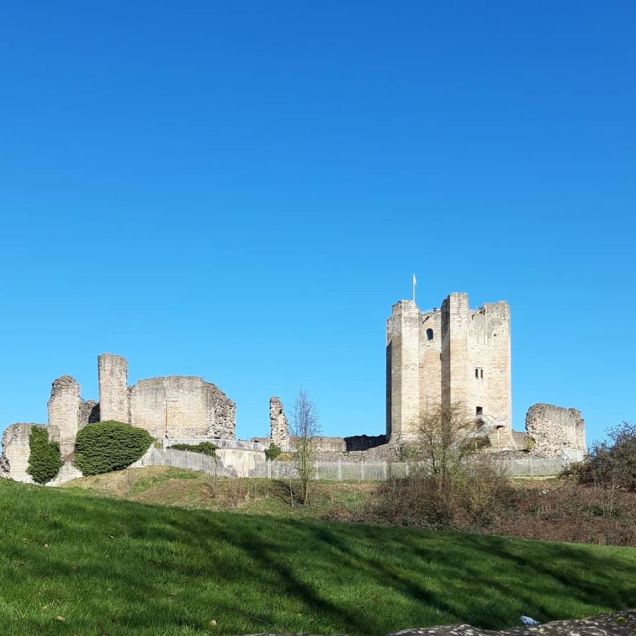
Conisbrough Castle

To keep it relevant with Doncaster and South Yorkshire, I decided to talk about one of my favourite subjects, and my current research project; the Warennes, the earls of Surrey who held Conisbrough from the Norman Conquest until the death of the last earl in 1347.

A family at the centre of English history for almost 300 years. It is a story of strong family loyalties, national and international rivalries, rebellion and civil wars, lost loves and royal connections. It’s also the story of Conisbrough’s iconic castle!

This talk is dedicated to David Hey. In the 1970s he was one of few professional historians to respond in a positive way to the growing interest in family and local history. David was a highly regarded and pioneering figure in this field.He held posts of importance such as being Professor of Local and Family History at the University of Sheffield and President of the British Association of Local History. But he was first and foremost a Yorkshireman at heart and never forgot his roots. He was the Patron of the Doncaster and District Heritage Association and gave a talk at the 2013 Heritage Festival.

So, here it is:

I hope you enjoyed it!

I would like to express my immense gratitude to the Doncaster Local Heritage Festival for inviting me to present such a prestigious lecture. I truly hope I did justice to the memory of David Hey.

*

My Books

Coming soon! 

Ladies of Magna Carta: Women of Influence in Thirteenth Century England will be released in the UK on 30 May 2020 and is now available for pre-order from Pen & SwordAmazon UK and from Book Depository worldwide. It will be released in the US on 2 September and is available for pre-order from Amazon US.

Also by Sharon Bennett Connolly:

Silk and the Sword: The Women of the Norman Conquest traces the fortunes of the women who had a significant role to play in the momentous events of 1066.  Available now from Amazon UK,  Amberley Publishing, Book Depository and Amazon US.

Heroines of the Medieval World tells the stories of some of the most remarkable women from Medieval history, from Eleanor of Aquitaine to Julian of Norwich. Available now from Amberley Publishing and Amazon UK, Amazon US and Book Depository.

*

You can be the first to read new articles by clicking the ‘Follow’ button, liking our Facebook page or joining me on Twitter and Instagram.

©2020 Sharon Bennett Connolly 

Richard of Chilham, King John’s Illegitimate Son

I recently shared an article about Joan, Lady of Wales, illegitimate daughter of King John. Now, John had several illegitimate children, and while Joan is probably the most famous, and certainly had the highest profile, as a Welsh princess, she was not the only one who made it into the history books. Whilst researching the Warenne earls of Surrey recently, I had the chance to look deeper into the story of another of John’s illegitimate brood, Richard of Chilham.

King John

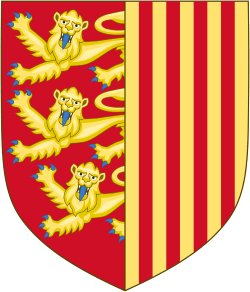
From the late 1180s or early 1190s onwards, Earl Hamelin de Warenne’s relationship with King John was complicated by the fact that John had a brief affair with one of Hamelin’s daughters. It has been impossible to determine which of the daughters was the mother, it seems likely it was either Isabel or Ela, as Matilda was already married at the time of Richard’s birth. The result of the affair was an illegitimate son, named Richard, after John’s older brother. He was known in various guises as Richard of Chilham, Richard of Dover, Richard fitzRoy or even Richard fitz John. He was also known as Richard de Warenne, referring to his maternal line, which is the name that is inscribed on his seal; this seal bears his arms, a derivative of the royal arms, albeit with 2 lions rather than 3, emphasising his Plantagenet descent.

Richard was probably born in the 1190s and was the only one of John’s illegitimate children to gain honorific title, following his marriage to Rose of Dover in 1214, by which he became lord of the castle and honour of Chilham, in Kent. Richard’s lordship held in the region of fifteen knights’ fees, in Kent and Essex. Richard served his father and, subsequently, his royal half-brother, Henry III, as a royalist captain and administrator during the First Barons’ War of 1215-17.

From 1216, just days before his death, John appointed Richard as constable of Wallingford Castle and custodian of the honour of Wallingford; it was a strategically important castle and the honour held some 120 knights’ fees. In May 1218, he was granted the honour at royal pleasure and held it until 1227. Between 1217 and 1221 he was also sheriff of Berkshire, though it appears he had little involvement in the day-to-day duties of the position; Henry Saccario did the accounting for him at the exchequer, with Richard always finding reason to be elsewhere.

Richard distinguished himself at the Battle of Sandwich on 24 August 1217, the sea battle in which the English naval forces intercepted the French bringing equipment and supplies to Prince Louis, the Dauphin of France, who had invaded England in 1216 in an attempt to seize the throne. The dauphin’s French forces and baronial allies had been defeated at the Battle of Lincoln in May but were still causing trouble in other parts of England.

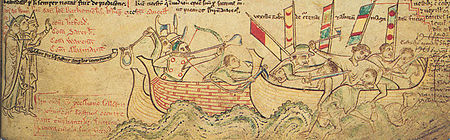
The Battle of Sandwich, showing the capture and killing of Eustace the Monk

Richard commanded one of the ships in the battle, which he brought alongside the French flagship, the most formidable of the enemy’s vessels, commanded by Eustace the Monk. Richard and his men boarded the ship. Roger of Wendover suggests that it was Richard himself who beheaded Eustace the Monk after his capture; and though other sources disagree with this, none deny that Richard’s actions in the battle were significant. The Battle of Sandwich was an important action in that it forced Prince Louis to come to terms with the regency government of King Henry III. As a consequence, Louis agreed to a settlement of £10,000 as an inducement to go home.

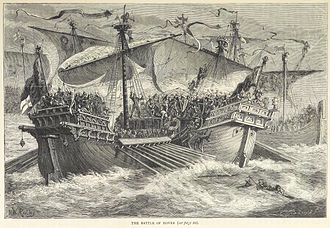
1873 illustration of the Battle of Sandwich

In 1218 Richard left to join the fifth crusade in Egypt. He returned home in 1220 or, more likely, 1221. He is known to have reached the crusader camp at Damietta as he borrowed money whilst there, 20 marks from an Italian cardinal, and was pressured for its repayment in 1128. Henry III eventually repaid the loan on Richard’s behalf. Richard was perhaps as much as seventeen years older than his half-brother, King Henry III, and doesn’t appear to have had a close relationship with him and he never appeared on the king’s witness lists. He did receive some gifts from the king, though nothing extravagant or extraordinary, such as venison or estates. Despite the trust his father had held in him, he played a limited role in England’s affairs after his return from crusade.

He fought against the Welsh in 1223 and in the same year accompanied Alexander II, King of Scots, his second cousin once removed through his Warenne family, on pilgrimage to Canterbury. Though it has to be said that the records are unclear, and the Richard involved in either, or both, of these events could have been Richard of Cornwall, the full brother of Henry III and half-brother of Richard of Chilham. It was certainly Richard of Chilham who was one of the tax collectors for Kent in 1225, when the fifteenth was granted for Henry III’s campaign to Poitou.

Most of the evidence of Richard of Chilham comes from the debts and lawsuits held against him. Indeed, one of the advantages of his joining the fifth crusade was that it resulted in the deferment of a court case he was defending. His debts to the crown started with the scutage of 1217, a tax of 2 marks per fee on the fourteen knights’ fees of his Chilham barony. The debts piled up through the 1220s, with Richard failing to appear when summoned. He was threatened with having his land taken into the king’s custody. The debts he owed to one  William Scissor (or the tailor) were to be recovered by distraint of land and chattels, with his land to be returned when he paid his debts.

Henry III

The king stepped in at this point, though for the sake of his sister-in-law, Rose, rather than his brother. Henry III ordered the sheriff of Kent to prevent Richard from wasting, selling or damaging the manor of Northwood, which was assigned to Rose for her maintenance. Richard and Rose were also locked in a long-running dispute with Robert fitz Walter and Richard de Montfichet over Rose’s rights to the manor of Lesnes, which arose out of Rose’s rights to the inheritance of Richard de Lucy, Henry II’s justiciar. The eyre in Kent in 1227 decided that the dispute should be settled by a duel, with each side nominating champions. In all honesty, it was little more than a brawl, which Richard and Rose won. After the duel, Robert fitz Walter recognised Rose’s right to Lesnes and quitclaimed to Richard, Rose and their heirs, for which Richard and Rose paid him 40 marks, which they had to borrow for the purpose.

Their debts thus increased further, in 1229, sheriffs were ordered to take possession of all the manors of Richard and Rose, save Lesnes, which Rose was to keep for her maintenance. Richard joined Henry III’s forces sailing for Brittany, which put two pending court cases against him into abeyance and he was granted respite from his debts. Later in the 1230s, sheriffs were ordered to prevent the sale of lands and woods by Richard, lands which were a part of Rose’s inheritance. By 1242 Richard was back in the king’s favour and was advanced 20 marks to buy equipment and supplies for an expedition to Lundy, although it is possible that this was Richard’s son, also Richard, who would join the king’s expedition to Gascony that same year, receiving an annual fee of 50 marks.

Richard of Chilham and William Bardrolf led the seaborne operations against the notorious outlaw and pirate, William de Marisco. In 1238 the would-be assassin of Henry III, whose attack was foiled by the king spending the night with the queen instead of his own bed, claimed that Marisco was behind the plot. Marisco had based himself on the island of Lundy in the Bristol Channel, from where he attacked shipping, taking ransoms and plunder. Richard successfully captured Marisco and his accomplices, after scaling the island’s cliff to reach them, most of the gang were later executed in London.

In 1243 Richard was granted a pardon for £100 for a debt to the moneylender Benedict Crispin. This seems to have come about, not by Richard’s actions, but by the affection the king held for Richard’s son, King Henry’s nephew, Richard, who is referred to in the fine roll, alongside the paynment of his fee for the Easter term, as ‘our beloved and faithful Richard of Dover.’

Lesnes Abbey, Kent

Richard of Chilham died in 1246, leaving his wife, Rose of Dover, still burdened by her husband’s debts, his son Richard and a daughter, Isabel, who eventually inherited the honour of Chilham. One argument for the identity of Richard’s mother is in the naming of his daughter. It has been suggested that Richard named his daughter after his mother, Isabel, but this is hardly incontrovertible proof; he could have just as easily named her after his grandmother, Countess Isabel. And the younger Isabel had no children from either of her two marriages, which may suggest she was not the mother. The other main candidate is Ela, whose marriages were that bit less prestigious than her sisters’, being to men we known little-to-nothing of besides their names, which may hint at a scandalous past. On the other hand, her second husband was a knight form a gentry family not far from Conisbrough, Sir William FitzWilliam of Sprotborough – which could suggest that she married for love rather than advancement.

Unfortunately, a strange entry in the Annales Cestriensis only adds to the confusion. In 1200, it records that ‘W. de Waren meunch fil Regis‘ was killed, suggesting that Richard’s mother was killed in 1200. Earl Hamelin and Countess Isabel did not have a daughter with the initial ‘W’, however, and neither did any of their children died in 1200. In the Chronicle of Robert of Gloucester, Richard’s mother is merely identified as ‘the erles daughter of Wareine’. With such little information to go on, we can only speculate.

*

Images courtesy of Wikipedia

Further reading: Cassidy, Richard, Rose of Dover (d.1261), Richard of Chilham and an Inheritance in Kent; Turner, Ralph V., Two Illegitimate Sons of King John: A Comparison of Their Careers; Farrer, William and Charles Travis Clay, editors, Early Yorkshire Charters, Volume 8: The Honour of Warenne; Lloyd, Simon, Chilham, Sir Richard of (d. 1246) (article); Morris, Marc King John: Treachery, Tyranny and the Road to Magna Carta; Church, Stephen, King John: England, Magna Carta and the Making of a Tyrant; Danziger, Danny and John Gillingham, 1215: The Year of Magna Carta; Crouch, David, William Marshal; fmg.ac

My Books

Signed, dedicated copies of all my books are available through my online bookshop.

Coming on 15 June 2024: Heroines of the Tudor World

Heroines of the Tudor World tells the stories of the most remarkable women from European history in the time of the Tudor dynasty, 1485-1603. These are the women who ruled, the women who founded dynasties, the women who fought for religious freedom, their families and love. These are the women who made a difference, who influenced countries, kings and the Reformation. In the era dominated by the Renaissance and Reformation, Heroines of the Tudor World examines the threats and challenges faced by the women of the era, and how they overcame them. From writers to regents, from nuns to queens, Heroines of the Tudor World shines the spotlight on the women helped to shape Early Modern Europe.

Heroines of the Tudor World is now available for pre-order from Amberley Publishing and Amazon UK.

Out Now! Women of the Anarchy

Two cousins. On the one side is Empress Matilda, or Maud. The sole surviving legitimate child of Henry I, she is fighting for her birthright and that of her children. On the other side is her cousin, Queen Matilda, supporting her husband, King Stephen, and fighting to see her own son inherit the English crown. Women of the Anarchy demonstrates how these women, unable to wield a sword, were prime movers in this time of conflict and lawlessness. It show how their strengths, weaknesses, and personal ambitions swung the fortunes of war one way – and then the other.

Available from Bookshop.orgAmberley Publishing and Amazon UK.

Also by Sharon Bennett Connolly:

King John’s Right-Hand Lady: The Story of Nicholaa de la Haye is the story of a truly remarkable lady, the hereditary constable of Lincoln Castle and the first woman in England to be appointed sheriff in her own right. It is is available from King John’s Right-Hand Lady: The Story of Nicholaa de la Haye is the story of a truly remarkable lady, the hereditary constable of Lincoln Castle and the first woman in England to be appointed sheriff in her own right. Available from all good bookshops or direct from Pen & Sword Booksbookshop.org and AmazonDefenders of the Norman Crown: The Rise and Fall of the Warenne Earls of Surrey tells the fascinating story of the Warenne dynasty, from its origins in Normandy, through the Conquest, Magna Carta, the wars and marriages that led to its ultimate demise in the reign of Edward III. Available from Pen & Sword BooksAmazon in the UK and US, and Bookshop.org

Ladies of Magna Carta: Women of Influence in Thirteenth Century England looks into the relationships of the various noble families of the 13th century, and how they were affected by the Barons’ Wars, Magna Carta and its aftermath; the bonds that were formed and those that were broken. It is now available in paperback and hardback from Pen & Sword,  Amazon, and Bookshop.orgHeroines of the Medieval World tells the stories of some of the most remarkable women from Medieval history, from Eleanor of Aquitaine to Julian of Norwich. Available now from Amberley Publishing and Amazon, and Bookshop.orgSilk and the Sword: The Women of the Norman Conquest traces the fortunes of the women who had a significant role to play in the momentous events of 1066. Available now from Amazon,  Amberley Publishing, and Bookshop.org.

Alternate Endings: An anthology of historical fiction short stories including Long Live the King… which is my take what might have happened had King John not died in October 1216. Available in paperback and kindle from Amazon.

Podcast:

Have a listen to the A Slice of Medieval podcast, which I co-host with Historical fiction novelist Derek Birks. Derek and I welcome guests, such as Bernard Cornwell and discuss a wide range of topics in medieval history, from significant events to the personalities involved.

*

Don’t forget! Signed and dedicated copies of all my books are available through my online bookshop.

For forthcoming online and in-person talks, please check out my Events Page.

You can be the first to read new articles by clicking the ‘Follow’ button, liking our Facebook page or joining me on Twitter and Instagram.

*

©2020 Sharon Bennett Connolly FRHistS

Joan, Lady of Wales

Detail of the sarcophagus thought to belong to Joan in St Mary’s and St Nicholas’s Church, Beaumaris

Many daughters, especially those of kings, had little or no say in who they would marry; they were bargaining pieces in the search for alliances. Even their legitimacy mattered little compared to what they could bring to the table, if their fathers were powerful enough. Joan, or Joanna, the illegitimate daughter of King John, was one such young lady.

Very little is known of Joan until her appearance on the international stage in 1203, aged twelve or thirteen. It was in that year mention is made of a ship, chartered in Normandy, ‘to carry the king’s daughter and the king’s accoutrements to England’.¹ The daughter in question appears to be Joan, born around 1191 to an unknown mother, possibly a lady by the name of Clemencia or Clementina. Nothing is known of Joan’s childhood, which appears to have been spent in Normandy. However, although she grew up in obscurity, Joan must have received an education suitable to her rank as the daughter of a prince and, later, king; after all, her father intended to marry her to a prince and so would need her to be able to act the part of a princess.

By 15 October 1204 Joan was betrothed to the foremost prince in Wales; Llywelyn ab Iorweth, prince of Gwynedd, also known as Llywelyn Fawr, or Llywelyn the Great. In the summer of 1204, he had paid homage to King John for his Welsh lands, having recognised the English king as overlord by treaty in July 1201; allowing him to marry Joan was a sign of John’s favour. By the time of his marriage, Llywelyn was already an accomplished warrior and experienced statesman; and was the father of at least two children, a son and daughter, Gruffuddd ab Llywelyn and Gwenllian. Their mother was possibly Tangwystl, but her union with Llywelyn was not recognised by the Church and the children were considered illegitimate under Church law.

Joan and Llywelyn were probably married in the spring of 1205; part of Joan’s dowry, the castle and manor of Ellesmere, were granted to Llywelyn on 16 April 1205, suggesting the wedding took place around that time. Joan was fourteen or fifteen at the time; at thirty-two, Llywelyn was about eighteen years her senior. Having been uprooted from her home in Normandy, she had probably spent a year at the English court, learning of the politics and duties associated with her new home in Wales. The language and traditions of her new homeland would have been completely alien to the young woman. Even her name was not the same, in Welsh, she was known as Siwan.

Arms of the royal house of Gwynedd

For someone barely into her teenage years, all these changes must have been daunting. Not only was she expected to become a wife and a princess to a nation that was totally alien to her, but her responsibilities also included the role of peacemaker. In a prestigious marriage for an illegitimate daughter, Joan was thrown into the heart of Anglo-Welsh relations. She was to become an important diplomatic tool for her father and, later, her half-brother, Henry III; acting as negotiator and peacemaker between the English crown and her husband, almost from the first day of her marriage.

Despite the marriage of Joan and Llywelyn, relations between England and Wales were rarely cordial. Following a devastating defeat by the English in 1211, in which the invading army had swept into Gwynedd, capturing the Bishop of Bangor in his own cathedral, Joan’s skills were sorely needed and

‘Llywelyn, being unable to suffer the King’s rage, sent his wife, the King’s daughter, to him by the counsel of his leading men to seek to make peace with the King on whatever terms he could.’

Brut y Tywysogyn or The Chronicle of the Princes: Peniarth MS 20 Version, editor T. Jones

Joan managed to negotiate peace, but at a high price, including the loss of the Four Cantrefs (the land between the Conwy and the Dee rivers), a heavy tribute of cattle and horses and the surrender of hostages, including Llywelyn’s son, Gruffudd.

Following a deterioration of Anglo-Welsh relations, and as a precursor to invasion, twenty-eight of the Welsh hostages were hanged in 1212, though Gruffudd was not one of them. However, the English attack was called off when John received word from Joan that his barons were planning treason closer to home. The last years of John’s reign were taken up with conflict with his barons, leading to the issuing of Magna Carta in 1215 and a French invasion by Louis, eldest son of Philip II Augustus. The last thing John needed, if he was to save his kingdom, was to be distracted by discontent in Wales. In 1214 Joan successfully negotiated with her father for the release of the Welsh hostages still in English hands, including Llywelyn’s son, Gruffudd; they were freed the following year.

Following her father’s death in October 1216, Joan continued to work towards peace between Wales and England. She visited Henry in person in September 1224, meeting him in Worcester; Joan seems to have had a good relationship with her half-brother, evidenced by his gifts to her of the manor of Rothley in Leicestershire, in 1225, followed by that of Condover in Shropshire, in 1226. An extant letter to Henry III, addressed to her ‘most excellent lord and dearest brother’ is a plea for him to come to an understanding with Llywelyn.

Statue of Llywelyn the Great, Conwy

In the letter, Joan uses her relationship with Henry to try to ease the mounting tensions between the two men. She describes her grief ‘beyond measure’ that discord between her husband and brother had arisen out of the machinations of their enemies, and reassures her brother of Llywelyn’s affection for him. In the mid-1220s, Henry acted as a sponsor, with Llywelyn, in Joan’s appeal to Pope Honorius III to be declared legitimate; in 1226 her appeal was allowed on the grounds that neither of Joan’s parents had been married to others when she was born.

Joan and Llywelyn’s marriage appears to have been, for the most part, a successful one. Joan’s high-born status, as the daughter of a king, brought great prestige to Gwynedd. As a consequence, her household was doubled from four to eight staff, including a cook who could prepare Joan’s favourite dishes. Llywelyn seems to have valued his wife’s opinion; as we have seen, he often made use of her diplomatic skills and relationship with the English court and he often consulted her on other matters. Her influence extended to Welsh legal texts, which, from this period onwards, included French words. Joan’s position was strengthened even further by the arrival of her children. Sometime between 1212 and 1215, her son, Dafydd, was born; in 1220 he was recognised as Llywelyn’s heir by Henry III, officially supplanting his older, illegitimate, half-brother, Gruffudd, who was entitled to his father’s lands under Welsh law.

The move received papal approval in 1222. As a result, in 1229 Dafydd performed homage to Henry III, as his father’s heir. A daughter, Elen, was probably born around 1210, as she was first married in 1222, to John the Scot, Earl of Chester. Her second marriage, in 1237 or 1238, was to Robert de Quincy. Joan was the mother to at least two more of Llywelyn’s daughters, Gwladus and Margaret. Gwladus was married to Reginald de Braose. Her stepson, William (V) de Braose, was to play a big part in Joan’s scandalous downfall in 1230.

Joan’s life in the first quarter of the 13th century had been exemplary; she was the ideal medieval woman, a dutiful daughter and wife, whose marriage helped to broker peace, if an uneasy one, between two countries. She had fulfilled her wifely duties, both by providing a son and heir and being supportive of her husband to the extent that she should not be included in the roll call of scandalous women – however, in 1230, everything changed.

William de Braose was a wealthy Norman baron with estates along the Welsh Marches, he was the grandson of Maud de Braose, who starved to death in King John’s dungeons. Hated by the Welsh, who had given him the nickname Gwilym Ddu, or Black William, he had been taken prisoner by Llywelyn in 1228, near Montgomery. Although he had been released after paying a ransom, de Braose had returned to Llywelyn’s court to arrange a marriage between his daughter, Isabella, and Llywelyn’s son and heir, Dafydd. During this stay, William de Braose was ‘caught in Llywelyn’s chamber with the King of England’s daughter, Llywelyn’s wife’. ²

The exact details of the relationship between Joan and William are unknown; neither can we say whether Joan was with William de Braose by choice or force. At the time, however, the blame was laid at Joan’s door. Contemporaries were deeply shocked at Joan’s betrayal of her husband; indeed, following this scandal, Welsh law identified the sexual misconduct of the wife of a ruler as ‘the greatest disgrace’. Joan was no young girl struggling to come to terms with her position in life; she was about forty years old, had been Llywelyn’s consort for twenty-five years and had borne him at least two children when the affair was discovered. The most surprising thing about the whole affair, moreover, is Llywelyn’s response. His initial anger saw William de Braose arrested, put on trial and hanged from the nearest tree on 2 May 1230. Joan was imprisoned in a tower. This rage, however vicious, was remarkably brief.

Maybe it was due to the strength of the previous relationship between Llywelyn and Joan, or maybe it was the high value placed on Joan’s diplomatic skills and her links with the English court; but within a year the terms of Joan’s imprisonment had been relaxed and just months after that, she was back on the political stage. Llywelyn appears to have forgiven her; the couple were reconciled and Joan returned to her life and position as Lady of Wales. Indeed, Joan soon reprised her diplomatic duties. She attended a conference between her husband, son and her brother, Henry III at Shrewsbury, in 1232. Despite William de Braose’s betrayal of Llywelyn, and subsequent violent death, the wedding between his daughter, Isabella, and Llywelyn’s son, Dafydd, was not derailed and by 1232 they were married.

Llywelyn with his sons, Dafydd and Gruffudd

Joan’s indiscretion was forgiven by Llywelyn, maybe even forgotten, and when she died on 2 February 1237, the Welsh prince was deeply affected by grief. Joan died at Garth Celyn, Abergwyngregyn, on the north coast of Gwynedd. She was buried close to the shore of Llanfaes, in the Franciscan friary that Llywelyn founded in her memory – a testament to his love for her. The friary was consecrated in 1240, just a few months before Llywelyn’s own death in April of that year. The friary was destroyed in 1537, during Henry VIII’s dissolution of the monasteries.

Joan’s remains were lost, but her coffin was eventually found, being used as a horse trough in the town of Beaumaris, on Anglesey. It is a testament to Joan’s personality, and the strength of her relationship with Llywelyn, that her affair with de Braose had few lasting consequences for her. Had she been younger, when the legitimacy of her children could have been called into question, her punishment could have been much harsher and the consequences more far-reaching.

*

Footnotes: ¹ Magna rotuli, 2–569, quoted in Joan, d. 1237, by Kate Norgate and Rev. A.D. Carr in Oxfroddnb.com; ² ibid.

Images courtesy of Wikipedia

Sources: Oxforddnb.com; England Under the Norman and Angevin Kings 1075-1225 by Robert Bartlett; Oxford Companion to British History Edited by John Cannon; The Story of Britain by Roy Strong; The Plantagenets, the Kings who Made England by Dan Jones; The Life and Times of King John by Maurice Ashley; The Plantagenet Chronicles Edited by Elizabeth Hallam; Oxforddnb.com; magnacartareseearch.org; Magna Carta by David Starkey; King John by Marc Morris; King John, England, Magna Carta and the Making of a Tyrant by Stephen Church; 1215, the Year of Magna Carta by Danny Danziger and John Gillingham; Women in Thirteenth Century Lincolnshire by Louise J. Wilkinson.

*

My Books

Signed, dedicated copies of all my books are available through my online store.

Out now: Scotland’s Medieval Queens

Scotland’s history is dramatic, violent and bloody. Being England’s northern neighbour has never been easy. Scotland’s queens have had to deal with war, murder, imprisonment, political rivalries and open betrayal. They have loved and lost, raised kings and queens, ruled and died for Scotland. From St Margaret, who became one of the patron saints of Scotland, to Elizabeth de Burgh and the dramatic story of the Scottish Wars of Independence, to the love story and tragedy of Joan Beaufort, to Margaret of Denmark and the dawn of the Renaissance, Scotland’s Medieval Queens have seen it all. This is the story of Scotland through their eyes.

Available now from Amazon and Pen and Sword Books

Also by Sharon Bennett Connolly:

Heroines of the Tudor World tells the stories of the most remarkable women from European history in the time of the Tudor dynasty, 1485-1603. These are the women who ruled, the women who founded dynasties, the women who fought for religious freedom, their families and love. Heroines of the Tudor World is now available for pre-order from Amberley Publishing and Amazon UK. Women of the Anarchy demonstrates how Empress Matilda and Matilda of Boulogne, unable to wield a sword themselves, were prime movers in this time of conflict and lawlessness. It shows how their strengths, weaknesses, and personal ambitions swung the fortunes of war one way – and then the other. Available from Bookshop.orgAmberley Publishing and Amazon UKKing John’s Right-Hand Lady: The Story of Nicholaa de la Haye is the story of a truly remarkable lady, the hereditary constable of Lincoln Castle and the first woman in England to be appointed sheriff in her own right. Available from all good bookshops Pen & Sword Booksbookshop.org and Amazon

Defenders of the Norman Crown: The Rise and Fall of the Warenne Earls of Surrey tells the fascinating story of the Warenne dynasty, from its origins in Normandy, through the Conquest, Magna Carta, the wars and marriages that led to its ultimate demise in the reign of Edward III. Available from Pen & Sword BooksAmazon in the UK and US, and Bookshop.orgLadies of Magna Carta: Women of Influence in Thirteenth Century England looks into the relationships of the various noble families of the 13th century, and how they were affected by the Barons’ Wars, Magna Carta and its aftermath; the bonds that were formed and those that were broken. It is now available in paperback and hardback from Pen & SwordAmazon, and Bookshop.orgHeroines of the Medieval World tells the stories of some of the most remarkable women from Medieval history, from Eleanor of Aquitaine to Julian of Norwich. Available now from Amberley Publishing and Amazon, and Bookshop.orgSilk and the Sword: The Women of the Norman Conquest traces the fortunes of the women who had a significant role to play in the momentous events of 1066. Available now from Amazon,  Amberley Publishing, and Bookshop.org.

Alternate Endings: An anthology of historical fiction short stories including Long Live the King… which is my take what might have happened had King John not died in October 1216. Available in paperback and kindle from Amazon.

Podcast:

Have a listen to the A Slice of Medieval podcast, which I co-host with Historical fiction novelist Derek Birks. Derek and I welcome guests, such as Bernard Cornwell and Michael Jecks, and discuss a wide range of topics in medieval history, from significant events to the personalities involved. Every episode is also now available on YouTube.

*

Don’t forget! Signed and dedicated copies of all my books are available through my online store.

For forthcoming online and in-person talks, please check out my Events Page.

You can be the first to read new articles by clicking the ‘Follow’ button, liking our Facebook page or joining me on TwitterThreadsBluesky and Instagram.

©2020 Sharon Bennett Connolly, FRHistS

Guest Post: Why was Ailenor of Provence called a She Wolf Queen? by Carol McGrath

Alienor of Provence

Given my recent articles on She Wolves, it is a distinct pleasure to welcome Carol McGrath to History…the Interesting Bits with an article about Eleanor of Provence, another queen labelled a ‘she-wolf’.

Why was Ailenor of Provence called a She Wolf Queen?

The first novel, in The She Wolf Queens Trilogy, The Silken Rose was published as an ebook on Thursday 2nd April. The Silken Rose features Ailenor of Provence, who married Henry III in 1236 at only twelve or thirteen years of age. He was already old at twenty-nine years old. The term She Wolf Queen was initially used for Margaret of Anjou by William Shakespeare.

Later, the Victorian Historian, Agnes Strickland, used it for Ailenor of Provence, although Ailenor had, without doubt, made enemies during own her life time. Why label Ailenor of Provence a she wolf queen. Did she deserve this sobriquet?

Alms dish (photograph courtesy of Carol McGrath)

In many ways beautiful Ailenor was the perfect queen who generously gave alms to the poor, was devoted to her husband and endowed abbeys. She was a good mother, protective of her children. Exemplary you might think. However, Ailenor was foreign at a time when English Continental territories had been reduced to Gascony and Aquitaine and ‘Englishness’ was becoming a national identity.

Ailenor of Provence never brought Henry a dowry. She was not even from the top-drawer of European nobility. After her marriage, she introduced a collection of penniless Savoyard and Provençal relatives to England.  The English barons who had become inward looking, after the loss of estates in Normandy during the previous reign, were furious. They disliked top positions being parcelled out to the queen’s relatives, particularly to her uncles from Savoy.

Opus Anglicanum

It probably seemed natural to Ailenor to advance her own relatives. Uncle William of Savoy who had accompanied Ailenor to England became one of King Henry’s chief counsellors. Henry even attempted to make him Bishop of Winchester.

Uncle Peter, reportedly charming and clever, became an advisor and received the Honour of Richmond, in Yorkshire. Peter built the Savoy Palace in London. Thomas of Savoy acted as an envoy when Ailenor attempted to buy the Sicilian crown for her second son, Edmund. An unpopular foolish move. It was costly and fell apart when Thomas was captured and imprisoned in Turin and Ailenor had to raise a ransom. The handsome, reforming Uncle Boniface became Archbishop of Canterbury.

Peter of Savoy

In addition, talented clerks came to England from Provence and Savoy. They took over running the treasury as well as other areas of government. This did not please the English barons who felt such jobs were theirs to distribute and control. Henry loved pageants and parties. He spent money on magnificent, expensive building works such as Westminster Abbey. She adored fashion and rich embroidery.  I off set her point of view in the novel with that of a court embroiderer. Extravagant spending and nepotism would lead to conflict between King and Barons. She was blamed as a bad influence on the King.

English marriages were arranged for her relations, including that of Ailenor’s younger sister, Sanchia, to Henry’s brother, Richard of Cornwall. This limited English heirs and heiresses available for English barons’ own sons and daughters. After the disgrace and death of Henry’s mother, his hated Lusignan half-brothers arrived in England seeking patronage. Incensed,

Coat of arms of Alienor of Provence

Ailenor’s opposition to the unpopular Lusignans gave her momentarily a stronger political position at court. However, she recognised she would have to tolerate them if she was to preserve good will within her marriage. Henry made her joint regent when he campaigned in Gascony during the 1250s but she levied new taxes, an unpopular move.

At the outbreak of the Baron’s war in 1263, Ailenor was pelted with offal from London Bridge as she attempted to take a boat from The Tower upriver. After that, she sailed for France to raise mercenaries for the royalist cause.

Ailenor was a force to be reckoned with. No wonder during the Victorian era she earned the title of she wolf queen. Nowadays, I suspect, we admire her loyalty, intelligence, love of culture and personal strength.

I would like to extend huge thanks to Carol for a fabulous post and wish her every success with The Silken Rose.

About the author:

Carol McGrath

Following her first degree in English and History, Carol McGrath completed an MA in Creative Writing at The Seamus Heaney Centre, Belfast, followed by an MPhil from University of London. Her fifth historical novel, The Silken Rose, first in The Rose Trilogy, published by the Headline Group, is set during the High Middle Ages. It features Ailenor of Provence and will be published on April 2nd 2020. Carol was the co-ordinator of the Historical Novels’ Society Conference, Oxford in September 2016. Visit her website: http://www.carolcmcgrath.co.uk.

Carol’s latest novel, The Silken Rose, telling the remarkable story of Alienor of Provence is available now. To purchase The Silken Rose ebook click here

To watch the trailer click here https://youtu.be/EOPKFBhpa0I

To subscribe to my newsletter click here   bit.ly/39eUgKl

*

My Books

Coming soon! 

Ladies of Magna Carta: Women of Influence in Thirteenth Century England will be released in the UK on 30 May 2020 and is now available for pre-order from Pen & SwordAmazon UK and from Book Depository worldwide. It will be released in the US on 2 September and is available for pre-order from Amazon US.
Also by Sharon Bennett Connolly:

Silk and the Sword: The Women of the Norman Conquest traces the fortunes of the women who had a significant role to play in the momentous events of 1066.  Available now from Amazon UK,  Amberley Publishing, Book Depository and Amazon US.

Heroines of the Medieval World tells the stories of some of the most remarkable women from Medieval history, from Eleanor of Aquitaine to Julian of Norwich. Available now from Amberley Publishing and Amazon UK, Amazon US and Book Depository.

*

You can be the first to read new articles by clicking the ‘Follow’ button, liking our Facebook page or joining me on Twitter and Instagram.

©2020 Sharon Bennett Connolly and Carol McGrath

Book Corner: The Peasants' Revolting Crimes by Terry Deary

By Lewis Connolly

Popular history writer Terry Deary takes us on a light-hearted and often humorous romp through the centuries with Mr & Mrs Peasant, recounting foul and dastardly deeds committed by the underclasses, as well as the punishments meted out by those on the right side’ of the law.

Discover tales of arsonists and axe-wielders, grave robbers and garroters, poisoners and prostitutes. Delve into the dark histories of beggars, swindlers, forgers, sheep rustlers and a whole host of other felons from the lower ranks of society who have veered off the straight and narrow. There are stories of highwaymen and hooligans, violent gangs, clashing clans and the witch trials that shocked a nation. Learn too about the impoverished workers who raised a riot opposing crippling taxes and draconian laws, as well as the strikers and machine-smashers who thumped out their grievances against new technologies that threatened their livelihoods.

Britain has never been short of those who have been prepared to flout the law of the land for the common good, or for their own despicable purposes. The upper classes have lorded and hoarded their wealth for centuries of British history, often to the disadvantage of the impoverished. Frustration in the face of this has resulted in revolt. Read all about it here!

This entertaining book is packed full of revolting acts and acts of revolt, revealing how ordinary folk – from nasty Normans to present-day lawbreakers – have left an extraordinary trail of criminality behind them. The often gruesome penalties exacted in retribution reveal a great deal about some of the most fascinating eras of British history.

It has been a strange week for us all, I’m sure. And on Tuesday evening we got a message from my son’s school saying it was closed until further notice, so Wednesday morning was my first day of home schooling. School have been amazing and set tons of work to keep the child occupied. However, on Wednesday, there was no English so I had to set some myself; which was basically for said child to write a review of Terry Deary’s The Peasants’ Revolting CRIMES. I received this book as a review copy from the publishers, Pen & Sword, but the child got to read it first, and loved it. He’s a die-hard fan of Horrible Histories, so this book was right up his street.

So, it’s over to Lewis:

I liked, no I LOVED Terry Deary’s The Peasants’ Revolting CRIMES. I would recommend it for people who are age 13+ (due to minor swearing content) and you will not need to know your history because this book educates you in the revolting and hard life of the peasant.

Opening with ‘Norman Nastiness’, the book gives you a vivid taste of peasant crimes right up until the ‘Georgian Jokers and Victorian Villains’ and beyond.

The last witch

After seeing a smiling ‘medium’ at a psychic fair, a friend of mine punched her. When I asked him why he would do such a thing, he replied, ‘My father always taught me to strike a happy medium’,

In 1944, Helen Duncan was a Scottish spiritual medium, working in Portsmouth. She began broadcasting information from the port’s gullible sailors wjhho came ot consult her. D-Day was approaching and she was a security risk. She had to be stopped.

Duncan was originally charged under the Vagrancy Act 1824, relating to fortune telling, astrology and spiritualism. Then there was a change of plan. The paranoid government’s legal experts sent her to be tried by jury at the Old Bailey for contravening section 4 of the Witchcraft Act 1735, which carried the heavier penalty of a prison sentence.

Winston Churchill even described the whole episode as ‘obsolete tomfoolery’ but Helen went to prison for nine months.

The 1753 Act was later repealed and replaced with the Fraudulent Mediums Act of 1951.

So, no more witch trials.

You could call it hex-it

In this book, you will explore various ages of history, from the Middle Ages to the Stuarts, to the vicious, unforgiving Victorian era and the modern era. You will hear various quotes from all sorts of people, from William Shakespeare, to Martin Luther King and many, many others as you explore the book.

I particularly like the funny jokes like “Bring a man a fire and he will be warm for a day. Give a man a fire and he will be warm for the rest of his life” and “Will Shakespeare. Great writer, dodgy historian”. There are various other jokes, which are scattered throughout the book.

There was nothing to dislike about this book, despite its gory and bloody moments. It will tickle your funny bone for hours on end, so much so you will never put it down!

In conclusion, this is a great book for children and adults alike. It is not only comedy but it also used 100% historically accurate. You should order it now. What are you waiting for?

Huge thanks to Lewis for a fabulous, entertaining review!

The Peasants’ Revolting CRIMES by Terry Deary is available from Pen & Sword and Amazon.

About the author:

Terry Deary is the esteemed author of the immensely popular Horrible Histories series. This is his first title for Pen and Sword Books, to be followed next year by The Peasants’ Revolting Lives.

My Books

Coming soon! 

Ladies of Magna Carta: Women of Influence in Thirteenth Century England will be released in the UK on 30 May 2020 and is now available for pre-order from Pen & SwordAmazon UK and from Book Depository worldwide. It will be released in the US on 2 September and is available for pre-order from Amazon US.

Also by Sharon Bennett Connolly:

Silk and the Sword: The Women of the Norman Conquest traces the fortunes of the women who had a significant role to play in the momentous events of 1066.  Available now from Amazon UK,  Amberley Publishing, Book Depository and Amazon US.

Heroines of the Medieval World tells the stories of some of the most remarkable women from Medieval history, from Eleanor of Aquitaine to Julian of Norwich. Available now from Amberley Publishing and Amazon UK, Amazon US and Book Depository.

*

You can be the first to read new articles by clicking the ‘Follow’ button, liking our Facebook page or joining me on Twitter and Instagram.

©2020 Sharon Bennett Connolly