What would have happened if King John had not died in October 1216…?
Would England have been lost?
Find out in ‘Long Live the King…‘
I have finally done it!
I’ve written a fictional short story, and it’s out this week.
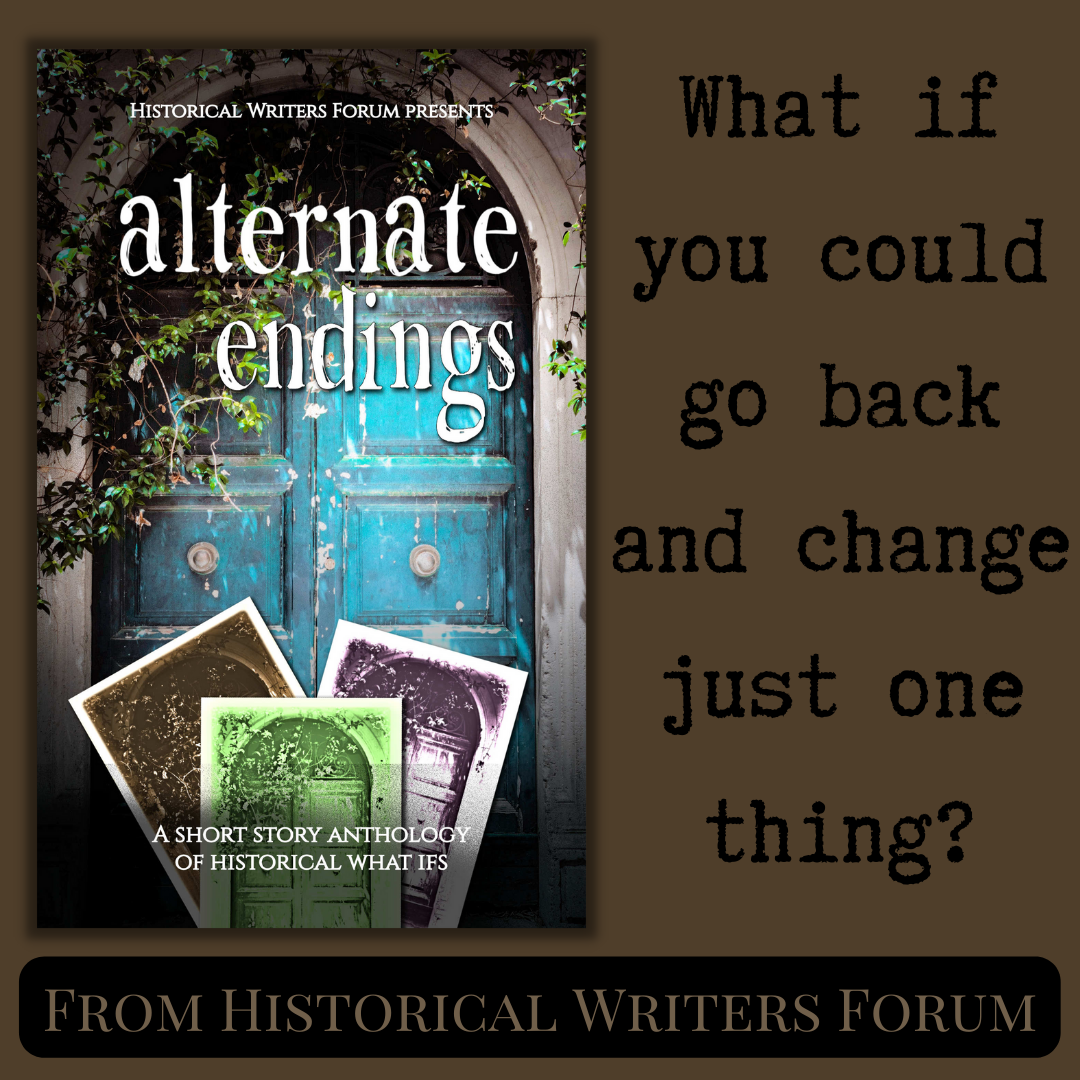
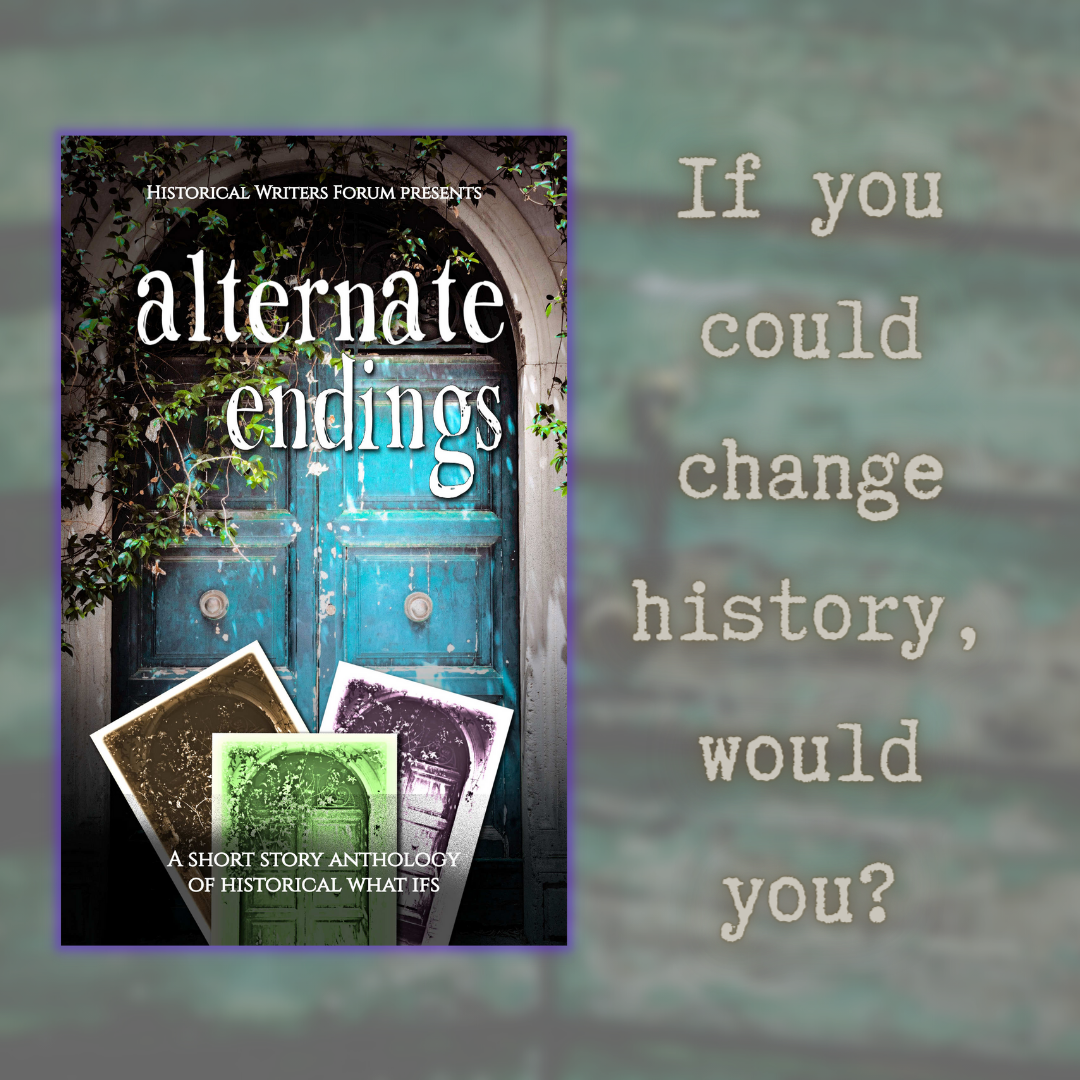
Alternate Endings is a compilation of short stories published by the Historical Writers Forum. I wasn’t sure about trying my hand at fiction, but there are so many What ifs in history that it was hard to resist. Having spent the last two years writing Nicholaa de la Haye’s biography – which will be published in May 2023, I thought it would be quite fun to take one event in Nicholaa’s life and see what might change if that event didn’t happen.
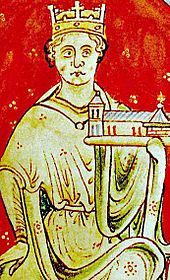
Nicholaa’s greatest benefactor and – dare I say? – friend was King John. He had been an ally since at least the early 1190s, but his death on the night of 18/19 October 1216 was a godsend for England. John’s reign had been plagued by unrest, civil war and the paranoia of the king himself. He had murdered his nephew, Arthur, starved Matilda de Braose to death in a dungeon and stolen the lands of those he was meant to protect. His reputation for underhand dealing, seducing the daughters of nobles and reneging on Magna Carta has seen him go down in history as Bad King John. He is a strong candidate for England’s worst ever king.
It has often been said that John’s death saved England.
I have to admit, I have a soft spot for King John. Not because he was such a warm, cuddly human being – he really wasn’t! But because his reign was full of so much drama. It was a time of transition, when England was losing its continental positions, when the barons were flexing their muscles and when the relationship between king and baron was in flux.
It is a fascinating period of history. So, when I was asked if I wanted to write a short story, I immediately thought of King John, of Nicholaa de la Haye and the upheaval that was Magna Carta and the First Barons’ War. Nicholaa’s involvement culminated in her defending Lincoln Castle through a prolonged siege that ended with the Second Battle of Lincoln. And I wondered… Would events have played out as they did if John had lived?
So… what would have happened if he had survived his illness in October 1216.
Well, you will have to wait and see…
But here’s a teaser….
Newark Castle
28 October 1216
John opened his eyes to a black, empty void.
Is this it? Is this Hell?
Has death finally claimed me?
He had been hovering on the brink for so long now. For exactly how long, he did not know. He could barely remember anything beyond the excruciating pain in his gut and head. Lying there in the dark, John took a mental inventory of his body. His head felt clearer than it had in days. The feeling that it was held in a vice had gone, replaced by a dull ache. The stabbing pains in his abdomen had also receded and now there was just a gentle throbbing.
This could be death…
A groan slipped from between his lips. There was movement, the striking of flint and suddenly a flash of light. The candle’s flame illuminated the features of William Marshal. The Marshal leaned in to examine him, then turned to a lad curled up on bedding in the far corner, just lifting his head, looking groggy from sleep.
‘Godfrey, fetch the doctor. The king is awake.’ Marshal ordered.
‘He’s awake? He’s alive?’ asked a voice from the dark. It was heavily accented. Italian. Cardinal Guala, the papal legate.
‘Aye, your grace, he’s awake. At last!’ Marshal replied.
‘Praise be!’ exclaimed Guala, approaching the bed.
John tried to speak, but barely a croak came out. His mouth was so dry. Marshal signalled Guala to aid the king from the far side of the bed and between them, they lifted John and adjusted his pillows so that he was sitting up. He felt as useless as a new-born baby, he had not the strength to resist, even if he wanted to. Marshal turned to the table beside the bed and poured out a cup of water from the pewter jug. He held the cup to John’s lips, so that he could take a long, thirst-quenching draught. Nothing had ever tasted so wonderful!
John sank back into the pillows, exhausted, as the door opened and his physician entered, striding over to the bed.
…
I don’t want to give anything away, but the biggest challenge was to consider whether John’s survival would be a blessing or curse for England. And at least William Marshal and Nicholaa de la Haye are there to steady the boat – what could possibly go wrong?
About the book:
We all know the past is the past, but what if you could change history?
We asked eight historical authors to set aside the facts and rewrite the history they love. The results couldn’t be more tantalizing.
What if Julius Caesar never conquered Gaul?
What if Arthur Tudor lived and his little brother never became King Henry VIII?
What if Abigail Adams persuaded the Continental Congress in 1776 to give women the right to vote and to own property?
Dive in to our collection of eight short stories as we explore the alternate endings of events set in ancient Rome, Britain, the United States, and France.
An anthology of the Historical Writers Forum.
Alternate Endings is now available worldwide from Amazon.
*
My Books:
Signed, dedicated copies of all my books are available, please get in touch by completing the contact me form.
Defenders of the Norman Crown: The Rise and Fall of the Warenne Earls of Surrey tells the fascinating story of the Warenne dynasty, of the successes and failures of one of the most powerful families in England, from its origins in Normandy, through the Conquest, Magna Carta, the wars and marriages that led to its ultimate demise in the reign of Edward III. Defenders of the Norman Crown: Rise and Fall of the Warenne Earls of Surrey is now available from Pen & Sword Books, Amazon in the UK and US,Bookshop.org and Book Depository.
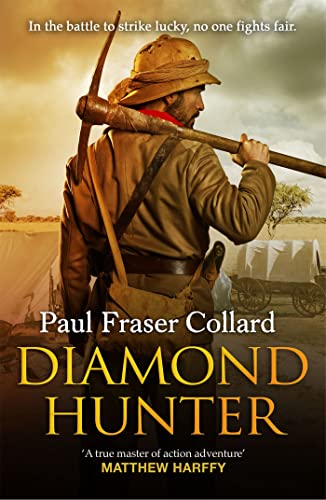
South Africa, 1871. Jack Lark no longer walks alone. With the worldly Anna Baker by his side, he travels to the Cape Colony diamond fields determined to seek their fortune – and an adventurous new life together.
The journey north soon turns violent as tensions erupt between other hopeful diggers and a gang of Boer men. Everyone has their eye on the same elusive prize – and some will stop at nothing to get it.
For Jack and Anna, unearthing a diamond is only half the battle. Getting out of the mines alive will prove far more difficult – and dangerous. And when the worst happens, Jack finds himself tested as no enemy, no man and no war has ever before.
Diamond Hunter by Paul Fraser Collard is the 11th book in the fabulous Jack Lark series. Jack Lark has made a career of being an imposter, finding his home and employment in the various wars of the 19th century. But what do you do when the guns fall silent? In the last book, Commander, Jack had followed the many adventurers of his era and joined an expedition to explore the River Nile. In Diamond Hunter he stays in Africa, but turns his hand to entirely different profession, though one that can be just as brutal and cut-throat as war.
In the opening pages of Diamond Hunter, we find Jack Lark content, with a woman who is his equal in every way, and with enough money to help him on to his next adventure. However, his constant search of adventure is still bubbling beneath the surface and he is now in southern Africa, ready to stake everything in the search for fortune, or at least a diamond big enough to see him comfortable, for now.
However, for Jack Lark, nothing is ever easy. The journey is always fraught with danger and trouble does seem to find him out! And I do wonder what Jack ever did for Paul Fraser Collard to give him such a hard time? Poor bloke. He really goes through it this time.
‘Shit.’ Jack gently moved Anna’s arm away, pushing himself to his feet with a groan as the action set off the pain in his spine, the persistent backache so much worse after hours of walking and periods riding in the jarring wagon. but it was not enough to stop him straightening up, then offering a hand to Anna to help her up too. It never occurred to him to leave her behind.
‘They’ve been drinking.’ She brushed down the seat of her trousers.
‘Probably. Ready?’ He gave her a moment to prepare.
She sucked down a deep breath. ‘Ready.’
Jack did not wait for more. The voices were getting louder. Whoever had been angered was making one hell of a fuss.
It took them no more than a dozen paces to round the wagon and see what was going on. The four Boers were squared up, facing three of the Cape colonists. The fourth was lying on his back, blood smothering his face like a mask.
‘What the hell is happening?’ Jack shouted as he came closer. It was not his fight, but it was his future that would be thrown into jeopardy if something happened to force JW to turn around. He would not allow that to happen.
‘Keep out of it.’ One of the colonists turned to snap at him.
It did not deter him, and he came closer, Anna just behind him. He could see Clarke and Goodfellow lurking on the far side of the wagon, watching what was going on while making sure they kept a safe distance from the fracas. JW and Fred were standing by as if readying themselves to pick up the pieces of whatever occurred, while JW’s wife was sitting at a campfire a good dozen yards away, her face set in a cherubic smile as she stared at the flames, seemingly blithely unaware of what was going on.
As Jack approached, the colonist who had been knocked to the ground slowly got to his feet, his hand lifting to smear the blood from his face.
Paul Fraser Collard is a fabulous storyteller. He transports not only his characters, but also his readers, to the most exotic and dangerous parts of the world of the nineteenth century. In Diamond Hunter he recrates the gritty, muddy and miserable landscape of the South African diamond fields. Honestly, you can practically taste the dust in your mouth!
Jack Lark is one of the best character developments in modern literature. In Diamond Hunter, he is finally comfortable in his own skin. Though that doesn’t mean his problems are over. He accepts who and what he is, but for Jack Lark, that will always mean facing trouble head on – it is one of his most endearing qualities! Jack is more affected by people and events than he likes to believe. He can’t help but help, which always leads him into trouble.
Diamond Hunter is gritty, harsh and sometimes hard to read. It also enjoyable, engrossing and absolutely fabulous. Diamond Hunter is a book you will not want to put down. A totally immersive and absorbing adventure, it leaves the reader as physically and emotionally drained as it does Jack Lark. I think it may be the best adventure yet.
To Buy the book:
Diamond Hunter by Paul Fraser Collard is now available from Amazon.
About the author:
Paul’s love of military history started at an early age. A childhood spent watching films like Waterloo and Zulu whilst reading Sharpe, Flashman and the occasional Commando comic, gave him a desire to know more of the men who fought in the great wars of the Nineteenth and Twentieth Centuries. This fascination led to a desire to write and his series of novels featuring the brutally courageous Victorian rogue and imposter Jack Lark burst into life in 2013. Since then Paul has continued to write, developing the Jack Lark series to great acclaim. To find out more about Paul and his novels visit http://www.paulfrasercollard.com or find him on twitter @pfcollard
*
My Books:
Signed, dedicated copies of all my books are available, please get in touch by completing the contact me form.
Defenders of the Norman Crown: The Rise and Fall of the Warenne Earls of Surrey tells the fascinating story of the Warenne dynasty, of the successes and failures of one of the most powerful families in England, from its origins in Normandy, through the Conquest, Magna Carta, the wars and marriages that led to its ultimate demise in the reign of Edward III. Defenders of the Norman Crown: Rise and Fall of the Warenne Earls of Surrey is now available from Pen & Sword Books, Amazon in the UK and US,Bookshop.org and Book Depository.
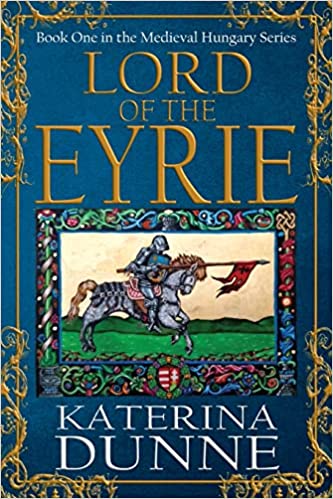
Finally home after five years away, warrior-nobleman Sándor Szilágyi is met by a dying father, a resentful younger brother, his child-bride all grown up and the family estate raided by the Ottomans. As he struggles to adjust to life as a landlord, Sándor’s authority is challenged by two strong-minded and fearless women: Margit, his faithful and righteous wife, determined to keep him on the straight and narrow; and Anna, his sister-in-law, a scheming temptress bent on ruining him in order to take his land.
After committing a mortal sin and desperate to win back the woman he loves, Sándor seeks absolution by accepting his overlord’s summons to fight the Ottomans. But his obsession with war will lead him down a perilous path.
Loyalties are tested, danger lurks around every corner, and Sándor’s struggle to balance his duty to protect his land and family from his relatives’ greedy hands, as well as his duty to defend his country on the battlefield, will come at a terrible cost.
Lord of the Eyrie by Katerina Dunne is a fabulous adventure set in medieval Hungary. It has all the ingredients for an exciting novel; love, betrayal, war and family disharmony. And it all combines to create a memorable story that will have the reader on the edge of their seat throughout.
I have to admit, I don’t think I’ve ever read a book set in Hungary before, so this was a refreshing change for me. Of course, it is still set in medieval times, so the weaponry, tactics and societal laws were still very familiar. I wasn’t familiar with Hungary’s role in medieval Europe, nor in her battles against the outside forces eager to trespass into the country’s vast landscape. Reading Lord of the Eyrie was as much an adventure for me as the story was for the characters involved. And it was a wonderful adventure.
Katerina Dunne has woven a beautiful story, built on remarkable characters and a lead protagonist for whom honour and duty is second nature. The story is fast-paced and entirely unpredictable, with many twists and turns that leave the reader shouting at the book when a character is being naive, or crying when tragedy strikes.
Margit’s keys and gilded prayer book jingled as she hurried back from church along the colonnaded portico of the great hall. The morning mass always felt too long to her, and she was looking forward to breaking her fast. But that would have to wait. Lajos Kendi stood at the entrance to the keep. His flushed and sweaty face, dishevelled eyebrows and raspy breath indicated that something was amiss.
He took his hat off and bowed to her. “I’ve bad news, my lady. I must speak with your husband, but I can’t find him anywhere. Was he in church with you? Is he still in the chapel?”
“No. I have not seen him.” Margit pondered. “Perhaps he is in the armoury building, practising with the soldiers. Let us go and look for him.”
She sent her maid to the house to supervise the preparation of the breakfast table and followed Kendi to the exercise hall. Their arrival did not alert the soldiers and knights for the thick layer of hay on the floor muffled their footsteps.
In the middle of the hall, Sándor, venturing to teach his brother how to defend himself with a sword and shield against multiple attackers, was engaging in a fight against not one, but three opponents.
He was wearing only his joined hose and a shirt, unlaced at the front and with the sleeves rolled up. Despite his height, he moved with the nimbleness of a lynx, shouting instructions at his training partners and showing off his combat skills and physical strength.
Margit’s jaw dropped. Her pulse quickened, and her breath became short and shallow. How could she forget that women were not allowed in the training hall? As it was a warm day, her husband was not the only one who had stripped down to his undergarments. Although the men did not seem troubled by her presence, she flushed and dropped her gaze to the floor.
“My lord!” Lajos called out.
Sándor stopped, and so did the soldiers. He tossed down the wooden sword and shield and approached Kendi and Margit. “Whats’ the matter?”
Kendi glanced about to make sure that no one was listening. He spoke in a whisper. “We’ve a problem at the mine.”
Lord of the Eyrie is set in medieval Hungary, a land which Katerina Dunne recreates in astonishing detail. The landscape, the settlements, castles and people help to draw the reader into the story. Hungary is a land rich in resources but beset by enemies, both within and without, and the hero, Sándor, must navigate not only national politics, international enemies but also his own family tensions. It is a wonderful, rich and absorbing story.
Lord of the Eyrie is a thoroughly entertaining read, one that will keep you gripped to the very end. You will find yourself invested in the characters, in tears at times and hesitant to read on when disaster strikes. But you cannot let go!
Lord of the Eyrie will take you through the full range of emotions.
The family drama, the battle scenes and the intricately woven plotlines all serve to keep the reader wanting more. It was an absolute pleasure to read.
I do hope there is a book 2!
To buy the book:
Lord of the Eyrie by Katerina Dunne is now available on Amazon.
About the author:
Katerina Dunne is the pen-name of Katerina Vavoulidou. Originally from Athens, Greece, Katerina has been living in Ireland since 1999. She has a degree in English Language and Literature from the University of Athens, an MA in Film Studies from University College Dublin and an MPhil in Medieval History from Trinity College Dublin. While she used to write short stories for family and friends in her teenage years, she only took up writing seriously in 2016-17, when she started work on her first novel.
Katerina’s day job is in financial services, but in her free time she enjoys reading historical fiction and watching historically-themed movies and TV series. She is passionate about history, especially medieval history, and her main area of interest is 13th to 15th century Hungary. Although the main characters of her stories are fictional, Katerina uses real events and personalities as part of her narrative in order to bring to life the fascinating history of the medieval Kingdom of Hungary, a location and time period not so well-known to English-speaking readers.
For any comments or further information, you can contact Katerina by email: katerinadunnewriter@gmail.com
*
My Books:
Signed, dedicated copies of all my books are available, please get in touch by completing the contact me form.
Defenders of the Norman Crown: The Rise and Fall of the Warenne Earls of Surrey tells the fascinating story of the Warenne dynasty, of the successes and failures of one of the most powerful families in England, from its origins in Normandy, through the Conquest, Magna Carta, the wars and marriages that led to its ultimate demise in the reign of Edward III. Defenders of the Norman Crown: Rise and Fall of the Warenne Earls of Surrey is now available from Pen & Sword Books, Amazon in the UK and US,Bookshop.org and Book Depository.
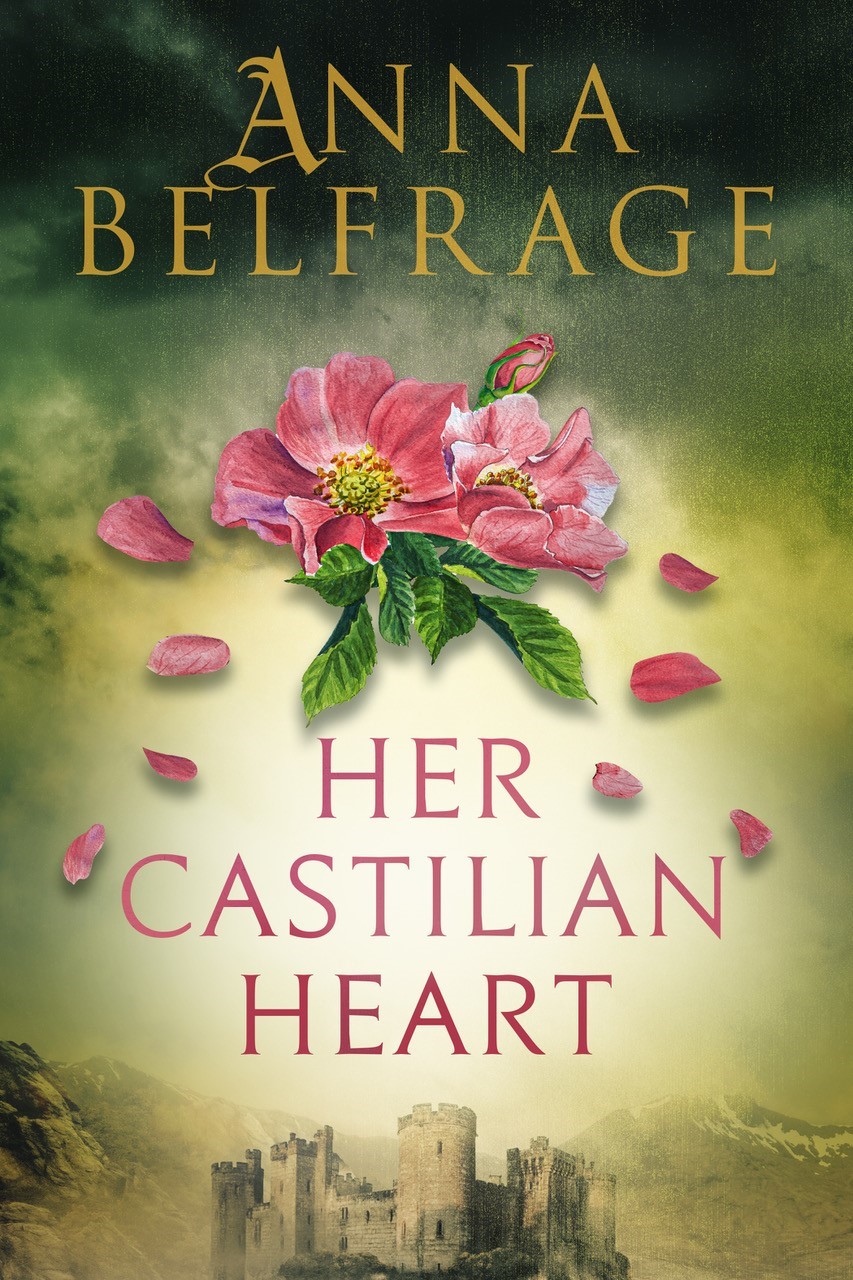
It is always a pleasure to welcome my good friend and fellow author, Anna Belfrage, to History…the Interesting Bits. Anna’s fabulous new Castilian Saga is a pleasure to read – and I will be posting a review of the latest instalment, Her Castilian Heart, shortly. But, for now, Anna is here to tell us about how she met the hero and the story that developed…
First impressions and their consequences.
The first time I met Robert FitzStephan, he had his arms full of apple blossom.
“Sorry,” he said, squeezing by me on the narrow stairs, “I have a wife to make amends to.” And off he went, leaving me in the damp gloom with a flaring torch the only source of light. I suppose this is when I should clarify that this was not an IRL (in real life) meeting: no, all of this happened in my roomy brain, an ever-expanding universe in which my characters pop up out of nowhere, demanding I tell their stories.
Robert FitzStepahn left an impression of light eyes and a HUGE nose and. . .
“Not that huge,” he protests, setting a finger to the rather impressive protuberance.
“No, it isn’t,” his wife, Noor says (apparently, the apple blossom did the trick) She gives me a severe look. “And one should not make fun of people because of their looks.”
“I wasn’t,” I try. After all, Robert is tall and broad and strong and. . .
Noor gives me another glare. “He’s mine!”
Of course. I don’t want a medieval man—I don’t live in that era, no matter that I write about it.
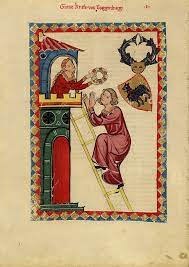
A Courting Man, Codex Manesse
Now, aside from being tall and all that, Robert is a self-made man, a man whose years of loyal service to his king, Edward I, were rewarded when the king gave him Noor—Eleanor d’Outremer—in marriage. With Noor came a fortified manor and some lands—and an indirect blood-tie to Queen Eleanor. Not that being related to the queen is necessarily a boon.
Initially, the Robert and Noor marriage had its bumps—as described inHis Castilian Hawk. Like when Robert realised Noor was related to the princes of Gwynedd and that the orphan she’d taken in was the unknown son of the rebellious Dafydd ap Gruffyd, former prince whose head now adorned London Bridge. Should the king find out about the child, he’d lock the toddler up with the child’s unfortunate brothers in Bristol Castle and potentially sever Robert’s head for harbouring him. Our hero was somewhat torn between his loyalties to his liege and those to his wife. . .
“Never,” Robert says. “I am the king’s man, but my wife comes first.”
Aww. . . Such a nice quality in a man!
Noor’s decision to take in the orphan was to have consequences, especially once Queen Eleanor began suspecting who the child was. Which was how Robert and Noor found themselves unofficially exiled to Aragon and Castile—arriving just in time for Robert to participate in the battle of Col de Panissars, where the king of Aragon defeated the French who’d attempted to invade his country under the of a crusade. Their sojourn on the Iberian Peninsula was fraught with adventure and danger, as described in The Castilian Pomegranate.
In Her Castilian Heart, Robert and Noor are safely back in England. Well, safely may not be the right word, what with Robert’s half-brother wanting to murder him, but still. Plus, the queen remains suspicious of their foundling, and God alone knows what an irate queen may do. This time, the events are woven round King Edward’s attempts to broker peace between the pope, the king of France and the king of Aragon—that failed French effort to invade Aragon, a.k.a. the Aragonese Crusade, has caused quite a political mess.
King Edward’s reasons for involving himself are to some extent personal: one of his daughters is contracted to marry King Alfonso of Aragon, but the pope has threatened him with brimstone and sulphur if he allows his daughter to do so without the pope’s explicit permission. Which isn’t forthcoming, as the pope is seriously ticked off about the fact that Aragon has taken Sicily back from Charles d’Anjou. The pope has a much better relationship with the Angevin than with the king of Aragon—maybe because he excommunicated Alfonso’s father for having supported the Sicilians when they rebelled against years of Angevin oppression (and then consolidated Sicily as part of his kingdom)
Philippe of France wants restitution for the loss of the crown of Aragon—which is rather odd, seeing as Aragon wasn’t his to begin with, but the young French king has not lived down the humiliation of losing to Aragon. Young Alfonso wants peace—but not at the expense of relinquishing Sicily, and no way is he going to compensate the French for invading his kingdom! In fact, they should compensate him!
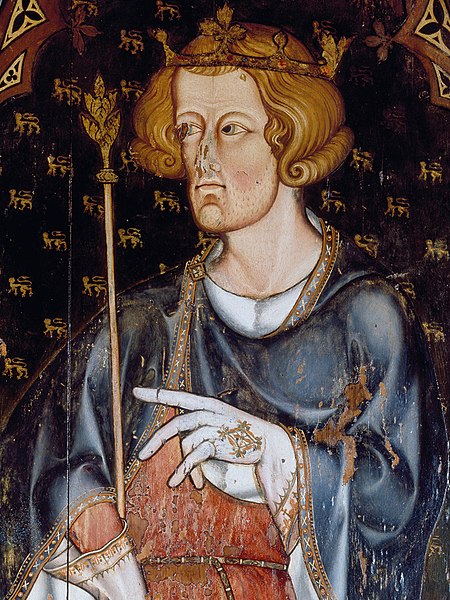
King Edward I
King Edward is faced with quite the balancing act: how is he to placate the pope, somehow knock some sense into the young hot-headed kings and deliver a treaty that will hold? And on top of all this, King Edward has an ailing wife and the rebellious Welsh to handle! Not that he involves himself in the actual fighting win Wales—he leaves the rekindled Welsh uprising to Robert to handle together with Roger Mortimer.
Her Castilian Heart was originally supposed to be the final book in this series, but as Robert has as yet not shared the reason for having to placate his wife with apple blossom, I still have more stories to tell about Robert, Noor, their foundling Lionel—and the brave and rebellious Welsh. King Edward may think he has the Welsh dragon tamed, but he is wrong—oh, so wrong!
About Her Castilian Heart:
Blood is not always thicker than water…
At times a common bloodline is something of a curse—or so Robert FitzStephan discovers when he realises his half-brother, Eustace de Lamont, wants to kill him.
A murderous and greedy brother isn’t Robert’s only challenge. He and his wife, Noor, also have to handle their infected relationship with a mightily displeased Queen Eleanor—all because of their mysterious little foundling whom they refuse to abandon or allow the queen to lock away.
Eustace is persistent. When Robert’s life hangs in the balance, it falls to Noor to do whatever it takes to rip them free from the toothy jaws of fate. Noor may be a woman, but weak she is not, and in her chest beats a heart as brave and ferocious as that of a lioness. But will her courage be enough to see them safe?
Had Anna been allowed to choose, she’d have become a professional time-traveller. No luck there, so instead she became a financial professional with two absorbing interests; history and writing. These days, Anna combines an exciting day-job with a large family and her writing endeavours. Plus she always finds the time to try out new recipes, chase down obscure rose bushes and initiate a home renovation scheme or two.
Anna has authored the acclaimed time travelling series The Graham Saga , set in 17th century Scotland and Maryland, as well as the equally acclaimed medieval series The King’s Greatest Enemy.
Anna has also published The Wanderer, a fast-paced contemporary romantic suspense trilogy with paranormal and time-slip ingredients. Her September 2020 release, His Castilian Hawk is a story of loyalty and love set against the complications of Edward I’s invasion of Wales in the late 13th century.
Her most recent release, The Whirlpools of Time , is a time travel romance set against the backdrop of brewing rebellion in the Scottish highlands.
All of Anna’s books have been awarded the IndieBRAG Medallion, she has several Historical Novel Society Editor’s Choices, and one of her books won the HNS Indie Award in 2015. She is also the proud recipient of several Reader’s Favorite medals as well as having won various Gold, Silver and Bronze Coffee Pot Book Club awards.
Find out more about Anna, her books and enjoy her eclectic historical blog on her website, www.annabelfrage.com
Signed, dedicated copies of all my books are available, please get in touch by completing the contact me form.
Defenders of the Norman Crown: The Rise and Fall of the Warenne Earls of Surrey tells the fascinating story of the Warenne dynasty, of the successes and failures of one of the most powerful families in England, from its origins in Normandy, through the Conquest, Magna Carta, the wars and marriages that led to its ultimate demise in the reign of Edward III. Defenders of the Norman Crown: Rise and Fall of the Warenne Earls of Surrey is now available from Pen & Sword Books, Amazon in the UK and US,Bookshop.org and Book Depository.
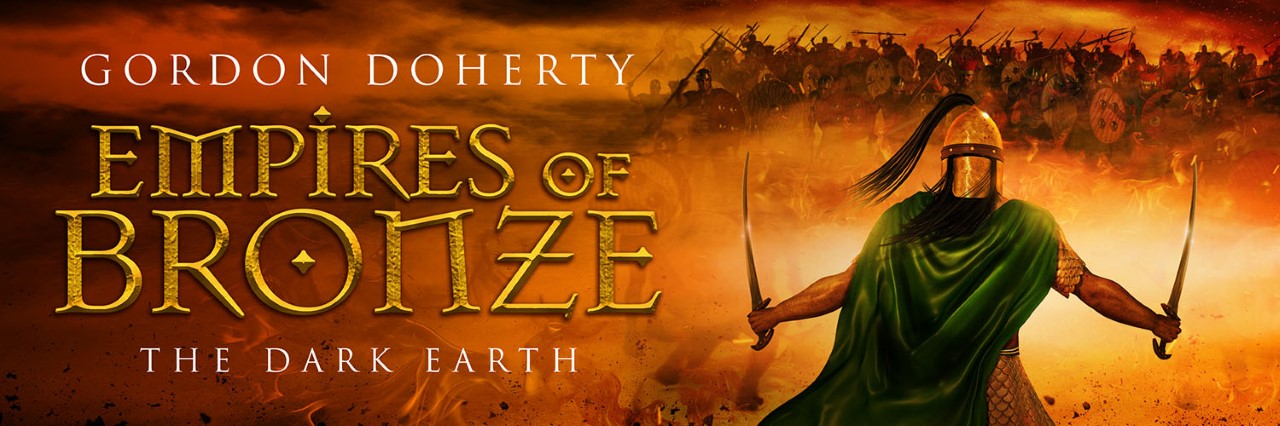
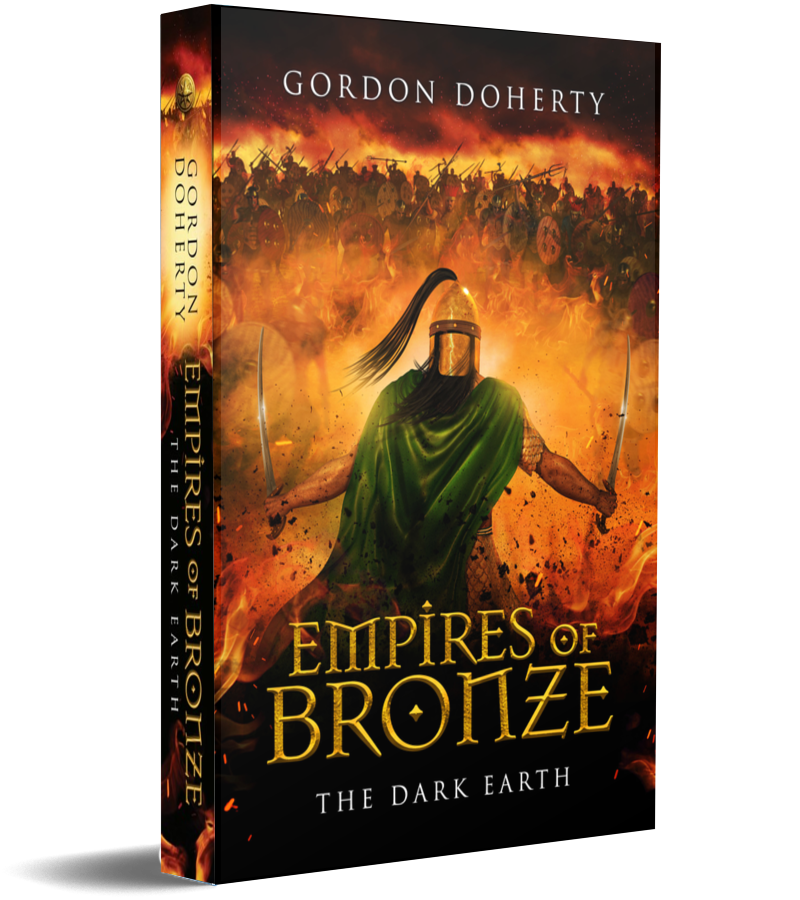
Today it is a pleasure to welcome author Gordon Doherty to History … the Interesting Bits. Gordon’s latest novel The Dark Earth is the 6th book in his Empires of Bronze series. And it is a scorcher! literally! Look out for my review in the coming weeks. But in the meantime, here’s Gordon to tell us about the meaning behind the title.
The Dark Earth
Hattusa
‘The Dark Earth’? Cool book title… but what does it actually mean?
As a book title, ‘The Dark Earth‘ sounds probably quite ominous and mysterious. But there’s more to it than that.
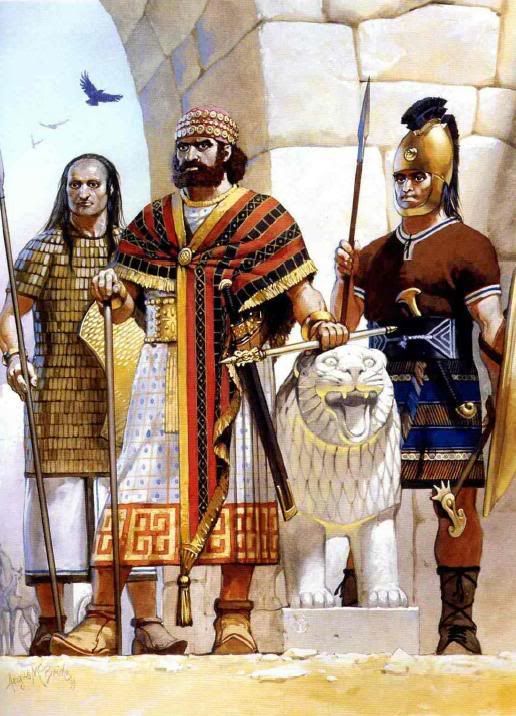
The book tells the story of the catastrophic change that occurred in the era known as the Bronze Age Collapse – a period of a few decades beginning around 1230 BC, when the mighty empires of the near east world were blasted into oblivion or battered into a pale shadow of their former selves.
The tale is told from the point of view of the Hittite Empire, arguably *the* superpower of the age, having only recently seen off the mighty Pharaoh Ramesses II of Egypt at the epic Battle of Kadesh.
Yet come 1170 BC, the Hittites were gone, their Anatolian heartlands a deserted, windswept, drought-ravaged wasteland, their great cities lying in tumbled heaps, their power but a memory. This was a time of earthquakes, invaders, famine, death and destruction… a veritable end of days.
And that is where the relevance of the title arises: Hittite tradition (interpreted from the tablets excavated from their ruined cities) speaks of an afterlife realm known as – you guessed it – ‘The Dark Earth‘.
This is no paradise-like Elysium or Valhalla. No, this is a sinister and unsettling place, somewhere deep underground where “Bloodless shades wander, not recognising one another. They eat mud and drink muddy water”. It is described as having “Seven ringed walls round the palace of the Goddess of death, and seven gatekeepers at each barrier.”
The Hittites were pantheistic, worshipping mountains, trees, rivers, everything around them. They used to believe that pits, holes and shafts, graves, springs, caves or wells were potential routes into this land of the dead.
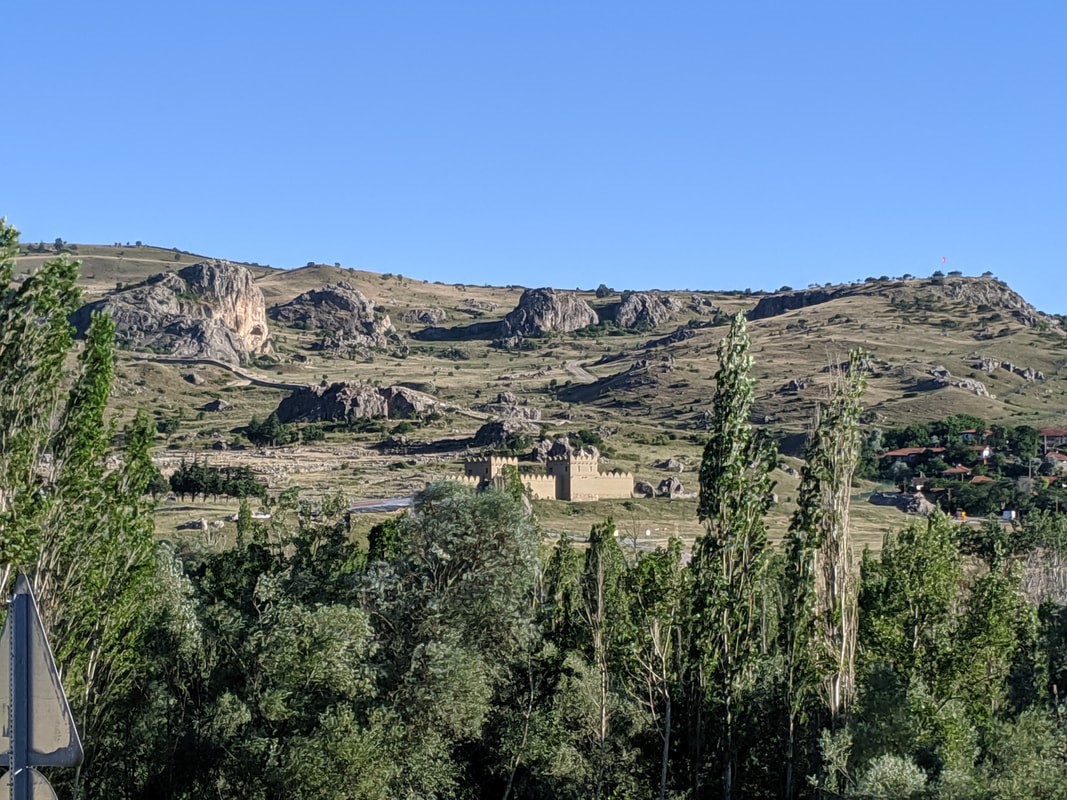
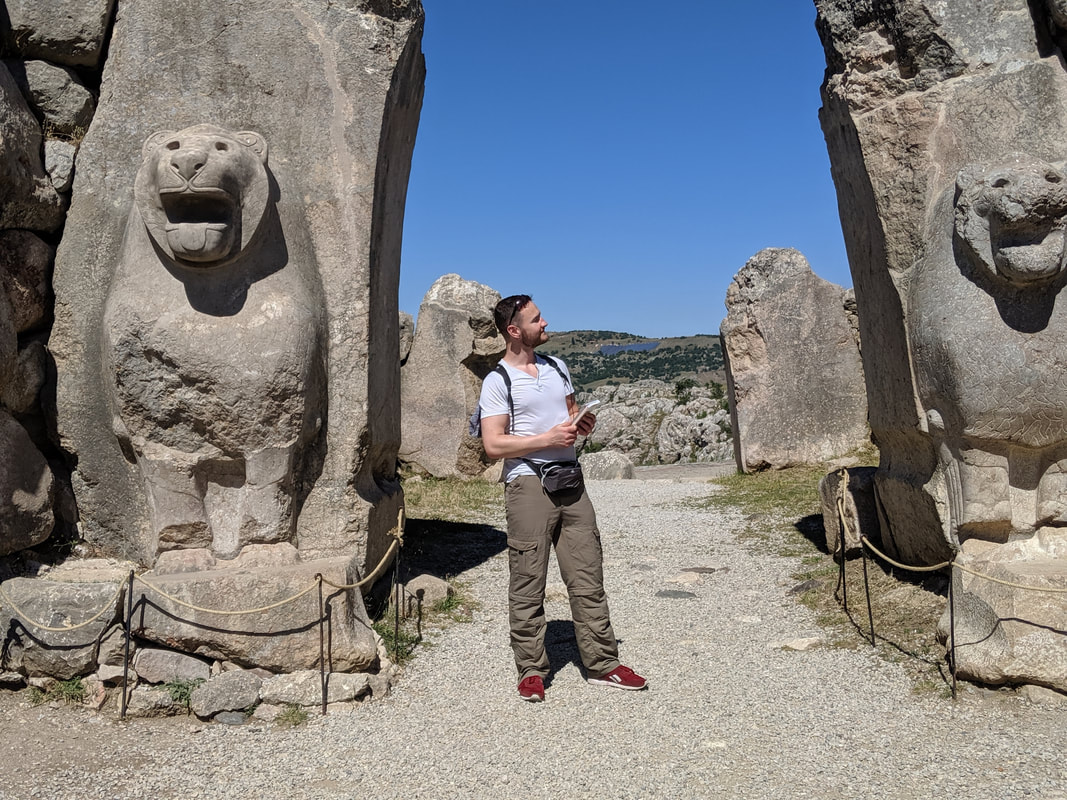
Hattusa today
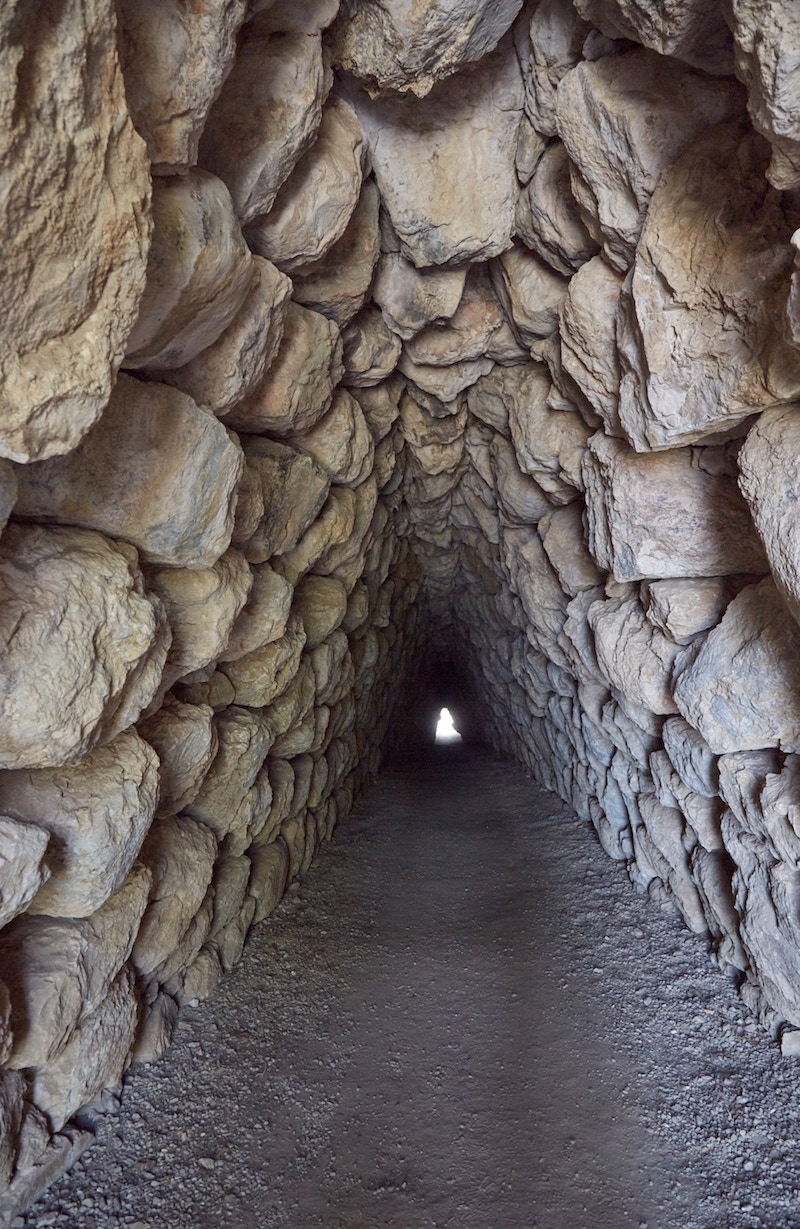
This was perhaps by reinforced by the lore of the Goddess Ishtar’s descent into the underworld. Within the ruins of Hattusa, the massive Hittite capital, there is even a stone-lined stairwell that descends into the hillside upon which the city is built, and this is thought to have been known as ‘The Gateway to the Dark Earth.’
So there you go. The novel tells the story of the death of a mighty empire. But there is so much more to it than that. Every ending is a new beginning, after all…
The time will come, as all times must, when the world will shake, and fall to dust…
1237 BC: It is an age of panic. The great empires are in disarray – ravaged by endless drought, shaken by ferocious earthquakes and starved of precious tin. Some say the Gods have abandoned mankind.
When Tudha ascends the Hittite throne, the burden of stabilising the realm falls upon his shoulders. Despite his valiant endeavours, things continue to disintegrate; allies become foes, lethal plots arise, and enemy battle horns echo across Hittite lands.
Hattusa
Yet this is nothing compared to the colossal, insidious shadow emerging from the west. Crawling unseen towards Tudha’s collapsing Hittite world comes a force unlike any ever witnessed; an immeasurable swarm of outlanders, driven by the cruel whip of nature, spreading fire and destruction: the Sea Peoples.
Every age must end. The measure of a man is how he chooses to face it.
*
About the author:
Gordon is a Scottish writer, addicted to reading and writing historical fiction. His novels have been Amazon smash-hits, and have gone on to be translated and published in Russia, Italy and Greece.
Gordon Doherty
Gordon’s love of history was first kindled by visits to the misty Roman ruins of Britain and the sun-baked antiquities of Turkey and Greece. His expeditions since have taken him all over the world and back and forth through time (metaphorically, at least), allowing him to write tales of the later Roman Empire, Byzantium, Classical Greece and even the distant Bronze Age.
For exciting news, extracts and exclusive content from Gordon:
Signed, dedicated copies of all my books are available, please get in touch by completing the contact me form.
Defenders of the Norman Crown: The Rise and Fall of the Warenne Earls of Surrey tells the fascinating story of the Warenne dynasty, of the successes and failures of one of the most powerful families in England, from its origins in Normandy, through the Conquest, Magna Carta, the wars and marriages that led to its ultimate demise in the reign of Edward III. Defenders of the Norman Crown: Rise and Fall of the Warenne Earls of Surrey is now available from Pen & Sword Books, Amazon in the UK and US,Bookshop.org and Book Depository.
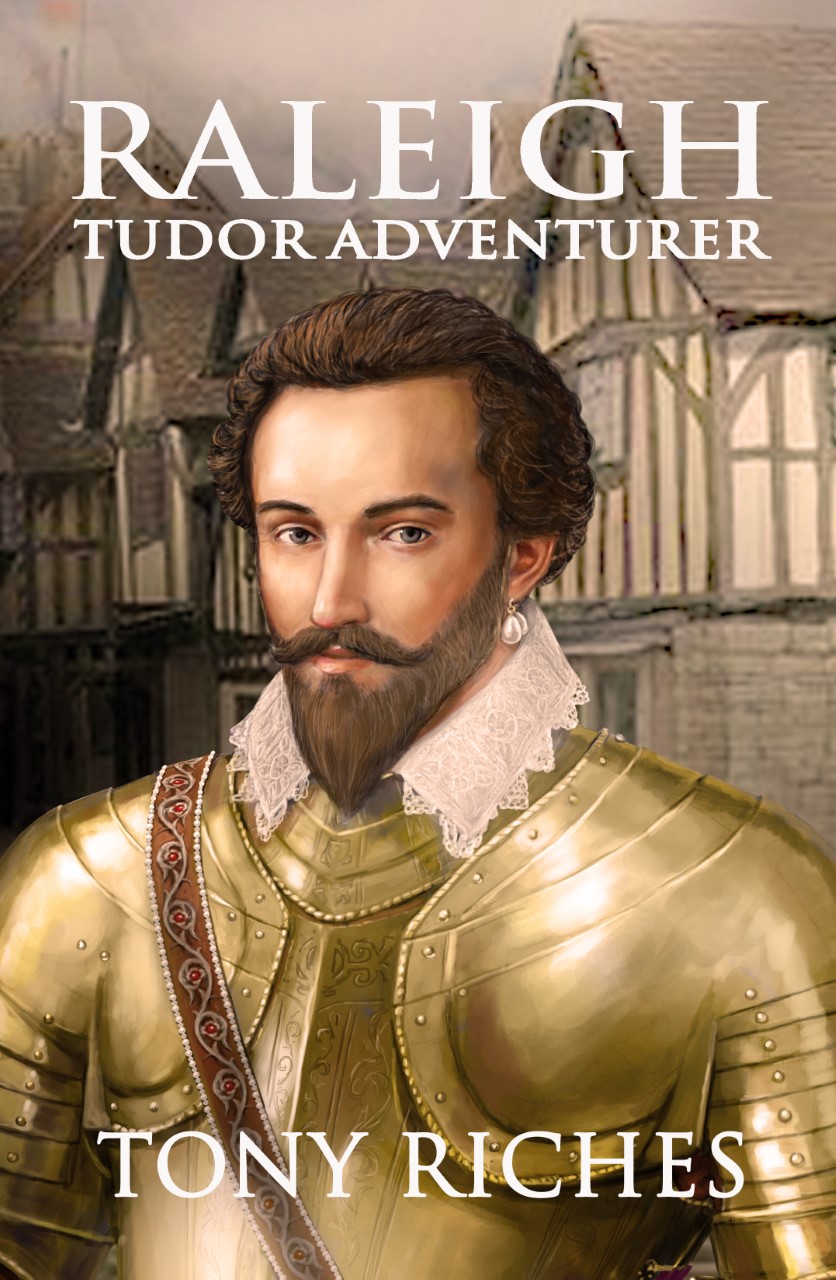
It is a pleasure to welcome author Tony Riches to History…the Interesting Bits today. Tony is a fabulous storyteller who has just released the final book in his Tudor Adventurers series.
We have had Sir Francis Drake, the Earl of Essex and now we have the remarkable story of Sir Walter Raleigh. Tony is here to tell us a little bit about his research in Raleigh: Tudor Adventurer.
Researching the life of Sir Walter Raleigh
Tudor adventurer, courtier, explorer and poet, Sir Walter Raleigh has been called the last true Elizabethan.
My books aim to be as factually accurate as possible, with the creative use of fiction reserved for breathing life into my characters, and adding a sense of the places where they lived. I like to spend the summer months visiting actual locations and tracking down primary sources. In the research for my new book, Raleigh – Tudor Adventurer, I also studied Raleigh’s surviving letters and papers.
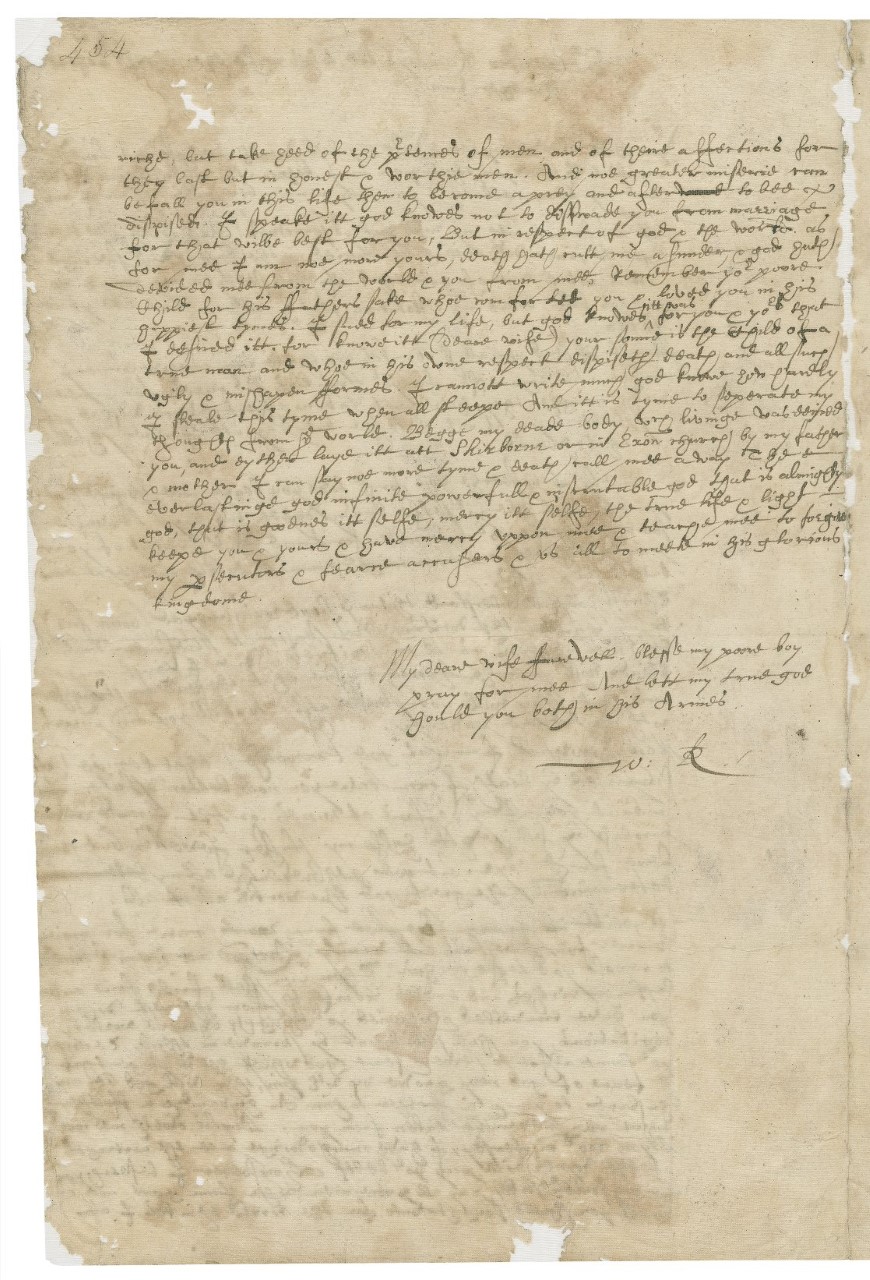
Public Domain letter from Sir Walter Raleigh to Lady Elizabeth (Bess) Raleigh, endorsed: “Sir W. Rawley to his wiefe.”
Raleigh was a prodigious letter writer, but his personal archive was scattered widely, with many of his papers thought to be lost. Fortunately, the late Tudor historians, Joyce Youings and Agnes Latham discovered over two hundred of Raleigh’s letters, and Agnes Latham also collected Raleigh’s poetry, adding her invaluable commentary.
As well as offering me an authentic sense of Raleigh’s ‘voice’, these letters were a great help in sorting out the often confusing timeline of events. I was of aware of Raleigh’s tendency to exaggerate, flatter and posture in his writing, but there is no better way to develop an understanding of his motives. Here is an example of a surviving letter from Raleigh to his wife, Bess, which shows how difficult they can be to transcribe.
The next main source of information on Raleigh’s life was the fascinating Folgerpedia resource, ‘The Elizabethan Court Day by Day,’ created by Marion E. Colthorpe. This searchable archive provided me with access to a wealth of invaluable details, and clues for deeper research. The archive began as an investigation into the people and places visited by Queen Elizabeth I on her ‘progresses’, and the entertainments presented before her. It gradually expanded to trace the whereabouts of the queen on every day throughout her long reign, what she was doing, often what she was saying, and who her companions were.
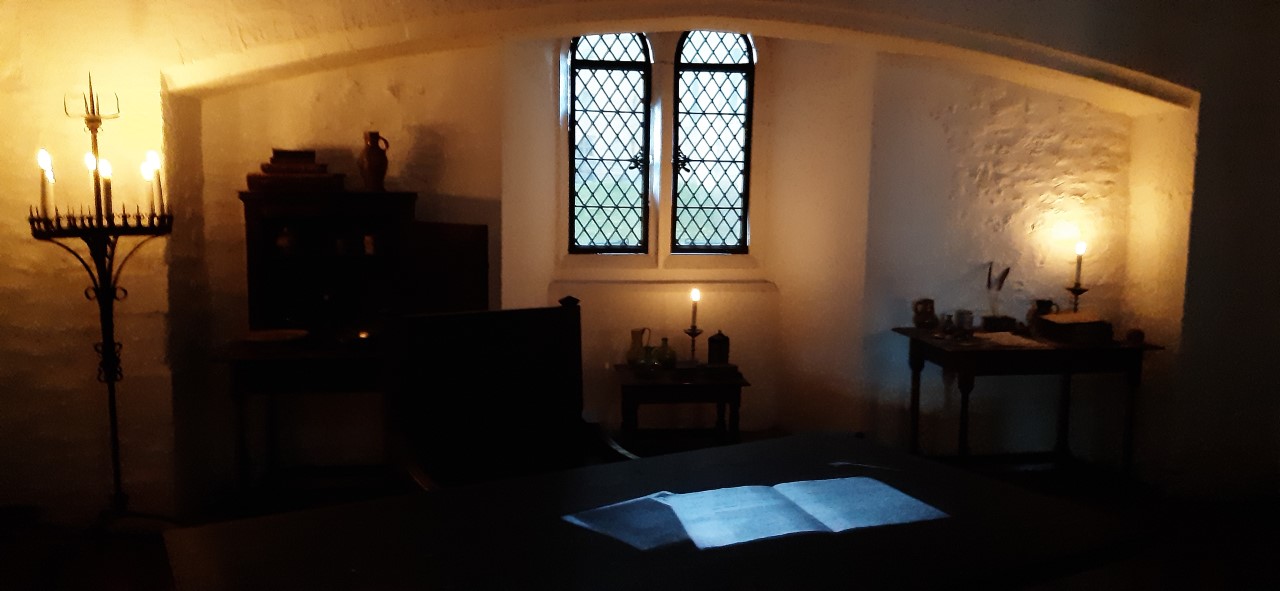
Raleigh’s cell in the Tower of London (author’s photo)
Finally, my travels have taken me to rural Devon and Dorset, and in Raleigh’s footsteps across the sea to Ireland, where I visited the city of Cork and the harbour of Youghal, where he was briefly Mayor and had a house named ‘Myrtle Grove. I also visited the Tower of London and the cell where Raleigh was imprisoned.
My research has revealed Sir Walter Raleigh’s strengths and weaknesses, as a courtier and failed politician, soldier and poet, a man ready to speak up for the poor and to honour his debts. My hope is that my new book, Raleigh – Tudor Adventurer, will help readers see beyond the myths and half-truths, and have a better understanding of the man who has been called the last true Elizabethan.
Tony Riches is a full-time UK author of Tudor historical fiction. He lives with his wife in Pembrokeshire, West Wales and is a specialist in the lives of the early Tudors. As well as his new Elizabethan series, Tony’s historical fiction novels include the best-selling Tudor trilogy and his Brandon trilogy, (about Charles Brandon and his wives). For more information about Tony’s books please visit his website tonyriches.com and his blog, The Writing Desk and find him on Facebook and Twitter @tonyriches
*
My Books
Signed, dedicated copies of all my books are available, please get in touch by completing the contact me form.
Defenders of the Norman Crown: The Rise and Fall of the Warenne Earls of Surrey tells the fascinating story of the Warenne dynasty, of the successes and failures of one of the most powerful families in England, from its origins in Normandy, through the Conquest, Magna Carta, the wars and marriages that led to its ultimate demise in the reign of Edward III. Defenders of the Norman Crown: Rise and Fall of the Warenne Earls of Surrey is now available from Pen & Sword Books, Amazon in the UK and US,Bookshop.org and Book Depository.
Today it is a pleasure to welcome historian and novelist Toni Mount to my blog, to talk about the latest instalment in her fabulous Seb Foxley mysteries, The Colour of Rubies. Which is released today.Toni is here to tell us all about her research into the lute. Over to Toni….
In my tenth and latest Seb Foxley medieval murder mystery, The Colour of Rubies, the hero needs to get to know his fellow clerks in the King’s Scriptorium at Westminster Palace for one of them may be a murderer!
Queen Elizabeth I playing a lute, c.1580 A miniature by Nicholas Hilliard (c.1547 – 1619) Trustee of the Will of the 8th Earl of Berkeley Digital picture kindly supplied by Martin Shepherd
In the case of the Chief Clerk, Hal Sowbury, who plays the lute, Seb has his colleague give him a few basic beginner’s lessons on the instrument. Since I have no knowledge whatsoever of lutes, except that they’re stringed instruments something like a guitar, this aspect of the novel required some research. I discovered the most useful website was https://www.wikihow.com/Play-the-Lute because it comes with diagrams and written instructions. The YouTube videos were good but I couldn’t keep up, making notes, but they did show how the lute should be held correctly.
I learned the correct terminology: they’re not called ‘strings’, they’re ‘courses’ and come in pairs except for the single course at the bottom, known as the ‘chanterelle’, yes, just like the mushroom. Basic lutes have 6 or sometimes 8 courses but some can have quite a few more, may be up to 12. For Seb, I thought 6 was enough. The main body of the lute, the sound-box, is known as the ‘bowl’ and it should rest on your right thigh. The bowl has a central cut-out design, the ‘rose’, to let the sound out and this can be ornate and beautiful. The thin part is the ‘neck’ with frets for fingering, ending in the ‘peg-box’ with pegs to tune the courses.
This miniature of Queen Elizabeth I playing the lute is dated to exactly a century later than Seb’s lessons and, apparently, the sloping shoulders of the bowl and the long neck make this an English lute, not a Genoese instrument like Hal Sowbury’s which would have a more rounded bowl and shorter neck. There is much expert discussion about the lute in this image, whether there is French influence in the design and how accurate is the artist’s depiction of it. Apparently, Queen Elizabeth really could play the lute – and the virginals though, to her disgust, Mary, Queen of Scots, was said to be far more accomplished on this keyboard instrument – but it’s thought the processes and circumstances of the portrait make it unlikely that it was painted on an actual occasion of royal music-making. It’s more likely to be symbolic, suggesting the harmony of the English body politic [definitely a fiction in the 1580s] and a reference to the musical interests of the Carey family who commissioned it.
But for Seb’s lessons, like a modern guitarist, he has to learn the fingering of the basic chords with his left hand and how to play the courses with his right. Interestingly, one YouTube video stressed that the thumb must stroke downwards quite gently, brushing the courses, while the index finger plucks upwards. I hope that’s correct because that’s what Hal instructs Seb to do in his first attempt at making music on the lute.
The anatomy of a lute [https://sunnylazic.com/shawm/]
Unfortunately – or perhaps fortunately for me with my meagre knowledge – Seb has the opportunity for only a couple of lessons with Hal before his employment in Westminster’s scriptorium comes to an end but, who knows, maybe one day he will have another chance to learn to play the lute. We are already familiar with Seb’s love of singing and choral talent, so he must have a musician’s ear and probably the gift of perfect pitch. With an artist’s dexterity, I’m sure his nimble fingers will soon master their positions on the frets and the brushing and plucking of the courses to make beautiful music.
So music gives a lighter side to the action in my new novel but if you want to join Seb, his family and friends on their exploits in medieval London and Westminster, stealing down dark alleyways, waiting nervously in opulent chambers and freezing their fingers off in the icy scriptorium where a murderer lurks, the spying and other dirty deeds aplenty, I’m afraid you’ll have to read the book: The Colour of Rubies, by Toni Mount, published 5th May 2022.
Follow the blog tour:
About the book:
Murder lurks at the heart of the royal court in the rabbit warren of the Palace of Westminster. The year is 1480. Treason is afoot amongst the squalid grandeur and opulent filth of this medieval world of contrasts. Even the Office of the King’s Secretary hides a dangerous secret.
Meeting with lords and lackeys, clerks, courtiers and the mighty King Edward himself, can Seb Foxley decipher the encoded messages and name the spy?
Will Seb be able to prevent the murder of the most important heir in England?
All will be revealed as we join Seb Foxley and his abrasive brother Jude in the latest intriguing adventure amid the sordid shadows of fifteenth-century London.
Praise for Toni Mount’s The Colour of Rubies
Tony Riches, author of The Tudor Trilogy “An evocative masterclass in storytelling.” Carol McGrath, author of the She-wolves trilogy “I was utterly transported – It’s superb”. “What a plot. What characters. Perfect pitch”.
“I loved the relationship between Seb and Jude”.
“The Colour of Rubies is a totally immersive experience as richly stitched as one of King Edward IV’s gorgeous tapestries. This cleverly plotted novel with its twists and turns will keep a reader page turning late into the night until the book’s final scenes. Sebastian and Jude are wonderfully realised personalities with similar emotions, concerns, fears and hopes we have have today. Their medieval London felt real and intriguing to me with unexpected dangers lurking in alleyways. I felt as if I was walking in Sebastian’s footsteps. With this thrilling novel Toni Mount has shown herself a master of medieval suspense. More please”.
Praise for Toni Mount’s Sebastian Foxley Medieval Murder Series
Tracy Borman, historian and broadcaster “An atmospheric and compelling thriller that takes the reader to the dark heart of medieval London.”
Matthew Lewis author of Richard III Loyalty Binds Me “Toni Mount continues to delight with the superbly crafted Seb Foxley mysteries. Impeccable research and sculpted characters combine with an engaging narrative to create another irresistible story. This series goes from strength to strength, and I’m already looking forward to the next instalment”
J.P. Reedman, author of the I, RICHARD PLANTAGENET series: “Sebastian Foxley is the Cadfael of the 15th century”.
“The Sebastian Foxley Medieval Mystery Series by Toni Mount is not only filled by dastardly murders and gripping intrigue but contains many well-researched historical facts from the Wars of the Roses era”
Samantha Willcoxson, author & historian “Toni Mount is simply brilliant”.
“If you love CJ Sansom’s Matthew Shardlake (and I do) you will love Toni’s Sebastian Foxley”.
“From learning how a 15th century scrivener created illuminated manuscripts to venturing within the dank tunnels beneath the Tower of London, Toni is an artist who completely immerses the reader in another time and place and always leaves one eager for the next book.”
Stephanie Churchill, author of historical fiction and epic fantasy “Leave it to Seb to unravel another international spiderweb of intrigue, betrayal, murder, and deceit. Our flawed, loveable hero has done it again. And at the end of it all, his future is looking brighter than ever. I cannot wait to find out what happens to him next!”
Sharon Bennet Connolly, author and medieval historian “A beautifully crafted mystery that brings the dark, dangerous streets of medieval London to life. Toni Mount is a magician with words, weaving a captivating story in wonderful prose. The Colour of Evil is, to put it simply, a pleasure to read.”
Rosalie Gilbert, medieval historian and author “The author’s knowledge of medieval history shines through the narrative in the small details which enhance the story woven into it. The details about the inside workings of medieval trade practices lent themselves perfectly for a background to murder and deceit”.
“Recommended for lovers of historic fiction.”
Joanne R Larner author of Richard Liveth Yet trilogy: “I always look forward to a new ‘Colour of…’ book. I can’t wait to see what escapades Seb Foxley and his brother, Jude, get up to next. They, and all the characters, are endearing and colourful. The books are always well written, conjuring 15th century London into the reader’s mind and the plots are excellent!’
Mel Starr bestselling author of the Hugh de Singleton chronicles: “If I believed in reincarnation I would be willing to think that Toni Mount lived a previous life in 15th century London. The scents, the sights, the tastes of the late Middle Ages are superbly rendered.”
*
About the Author:
Toni Mount is the author of several successful non-fiction books including How to Survive in Medieval England and the number one best-seller, Everyday Life in Medieval England. Her speciality is the lives of ordinary people in the Middle Ages and her enthusiastic understanding of the period allows her to create accurate, atmospheric settings and realistic characters for her medieval mysteries. Her main character, Sebastian Foxley is a humble but talented medieval artist and was created as a project as part of her university diploma in creative writing. Toni earned her history BA from The Open University and her Master’s Degree from the University of Kent by completing original research into a unique 15th century medical manuscript.
Toni writes regularly for both The Richard III Society and The Tudor Society and is a major contributor to MedievalCourses.com. As well as writing, Toni teaches history to adults, and is a popular speaker to groups and societies.
*
My Books
Signed, dedicated copies of all my books are available, please get in touch by completing the contact me form.
Defenders of the Norman Crown: The Rise and Fall of the Warenne Earls of Surrey tells the fascinating story of the Warenne dynasty, of the successes and failures of one of the most powerful families in England, from its origins in Normandy, through the Conquest, Magna Carta, the wars and marriages that led to its ultimate demise in the reign of Edward III. Defenders of the Norman Crown: Rise and Fall of the Warenne Earls of Surrey is now available from Pen & Sword Books, Amazon in the UK and US,Bookshop.org and Book Depository.
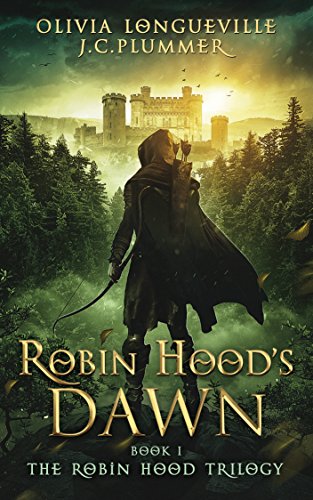
Falsely convicted of a shocking crime, Robin Fitzooth, the Earl of Huntingdon, finds refuge in Sherwood Forest and becomes Robin Hood.
Leading a band of men against the injustices of a malevolent sheriff and his henchmen, Robin begins to unravel a web of treachery threatening the English royal family.
As shadowy forces gather to destroy the future of a nation, Robin faces deceit, betrayal, and the ravages of war as he defends his king, his country, his people, and the woman he loves from a conspiracy so diabolical, so unexpected, that the course of history hangs in the balance.
From the mists of an ancient woodland, to lavish royal courts teeming with intrigue, to the exotic shores of the Holy Land – Robin Hood leads the fight in a battle between good and evil, justice and tyranny, the future and the past.
Part one of an exciting three-part retelling of the Robin Hood legend! Also Available: Book 2, Robin Hood’s Widow Book 3, Robin Hood’s Return
I have to admit that I am a sucker for a good Robin Hood story. However, having grown up close to Sherwood Forest and played around the Major Oak as a child, I have to admit that I can be quite picky when it comes to Robin Hood. It has to be a good story, or I will not read it. I have had The Robin Hood Trilogy on my kindle for a while, but only actually picked up the first book 3 weeks ago. I was suffering from a heavy cold and wanted some comfort reading. And what a choice for comfort reading. I read all 3 books, one after the other, in a week. I couldn’t get enough of them!
The story opens in 1154 with the death of King Stephen and a betrayal by certain nobles who had promised to put Stephen’s son, William of Blois, Earl of Warenne and Surrey, on the throne. As a regular reader of this blog will understand, my interest was most certainly piqued. So, now we have a novel series with 2 of my favourite topics; Robin Hood and the Warennes. And I got worried. What if I don’t like the way this book goes with the Warennes? I do have quite a soft spot for them, after all.
I need not have been concerned. This Robin Hood trilogy is a fabulous adventure, with well developed characters, a story thread that will keep you gripped to the very end – and some marvellous twists in the tale.
They had left Sherwood Forest and were now traversing rolling hills and pastures, but Marian could not appreciate the lovely scenery. The closer they were to Conisbrough, the more nervous she felt.
She was riding next to Constance, and they were protected by an escort of twenty of Earl de Warenne’s mounted men-at-arms. At the front, Robin rode with Lionel and the earl’s son, Guillaume. All three were the same age, and Marian observed them as they enjoyed a friendly, animated conversation.
Robbie, as usual, was riding with his father.
Although Marian was apprehensive about staying at Conisbrough, Constance was elated. She was enthusiastically telling Marian what she knew about the de Warenne family.
Once again, Marian was lamenting her lack of interest in politics during her youth. She had never paid much attention to stories about the royal family or the elaborate familial web of royals, near royals, and distant relations to the king’s family.
In contrast, Constance was very knowledgeable. Marian knew her friend had traveled to London with her father and brother every year to attend court and celebrate Midsummer.
Marian’s father had never taken her to court, or even to London. Perhaps it was his own aversion to politics and big cities. And it’s likely that he considered it unnecessary, since it was always understood that Marian would wed Robin, so there had been no need to search for a suitable husband among the nobility of England.
“Constance, I’m confused,” she reluctantly confessed.
“About what?”
“Didn’t you say that Earl Hamelin was illegitimate? How did he inherit his title/”
Constance smiled indulgently. “Every time I’ve tried to explain this, I can see your mind wandering. Please concentrate on what I’m saying.”
“My mind is wandering because so much of this seems like pointless court intrigue. I just want to go back home and stay there.”
“You’re the wife of an earl. I think you can learn a lot by spending time with Countess de Warenne. You can’t hide at Locksley and Lenton. You have duties to perform at Huntingdon.”
Marian released a noisy sigh of defeat. “Tell me again.”
“Hamelin is the illegitimate son of Geoffrey, Count of Anjou. He’s the older half-brother of the late King Henry, God-rest-his-soul, and he’s King Richard’s uncle. Of course, he’s Prince John’s uncle, too.”
“But instead of Count of Anjou, he’s the Earl of Surrey?”
“Now I’m certain that you weren’t listening,” Constance chided. “He married Isabel de Warenne, the Countess of Surrey, who was the only child of her father. So, she inherited the earldom. When Hamelin married her, he took her family name and became earl by right of his wife.”
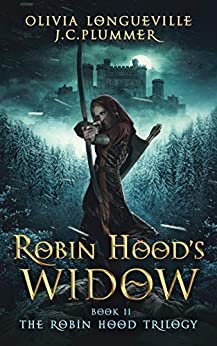
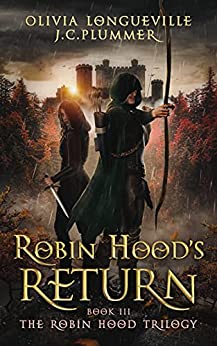
Robin Hood’s Dawn sets the scene beautifully, charting a youthful Robin’s journey into becoming an outlaw in Sherwood Forest, and his realisation that not everyone is honourable. His arrogance and connections get him into more trouble than he realises, almost losing the woman he loves – Marian. In Robin Hood’s Widow, we discover that Marian herself is more than capable of holding her own under the canopy of Sherwood Forest. Which makes for a fantastic finale in Robin Hood’s Return, where Robin and Marian, united in their common goals, must unite to fight their enemies and find a way to accept each other’s abilities and weaknesses.
My personal favourite of the 3 books is Robin Hood’s Return, but that may be because both Hamelin and Isabel de Warenne both play prominent roles – as does my ‘local’, Conisbrough Castle. Olivia Longueville and J.C. Plummer did their research and have done an amazing job of recreating the castle and the Warenne family dynamic. Their depictions, I believe, are spot on! And it was so nice to see the people I have spent so long researching brought to life on the page.
As to the other characters, Robin Hood, Little John, the sheriff of Nottingham, Guy of Gisborne are all there – though some not as you would ordinarily recognise them. I love the way the authors of the Robin Hood trilogy have taken the legend and made it their own, weaving an incredible story of betrayal and king-making into the existing legend, so that you are at once familiar with the characters, and yet discovering new dimensions along the way.
The Robin Hood Trilogy is a fabulous, engrossing read that you will never want to end – and yet can’t wait for it to finish.
What a fabulous adventure! I cannot recommend the series highly enough.
Robin Hood’s Dawn, Robin Hood’s Widow and Robin Hood’s Return are available from Amazon.
About the authors:
Olivia Longueville is a European author whose first book was Between Two Kings, a story set in Tudor England. J.C. Plummer is an American author and historian living in Texas. They are long distance friends who share a passion for writing and history, and this is their first collaboration. Learn more at their website: http://www.AngevinWorld.com
My Books
Signed, dedicated copies of all my books are available, please get in touch by completing the contact me form.
Defenders of the Norman Crown: The Rise and Fall of the Warenne Earls of Surrey tells the fascinating story of the Warenne dynasty, of the successes and failures of one of the most powerful families in England, from its origins in Normandy, through the Conquest, Magna Carta, the wars and marriages that led to its ultimate demise in the reign of Edward III. Defenders of the Norman Crown: Rise and Fall of the Warenne Earls of Surrey is now available from Pen & Sword Books, Amazon in the UK and US,Bookshop.org and Book Depository.
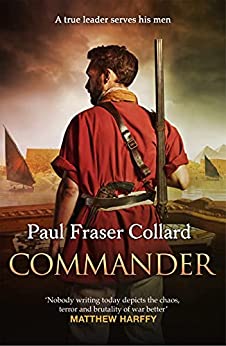
The Jack Lark series is historical military fiction at its finest, for fans of Bernard Cornwell’s Sharpe series, Matthew Harffy and Patrick O’Brian. This is the tenth adventure featuring Jack Lark: soldier, leader, imposter.
Egypt, 1869. Jack Lark has reinvented himself once more. Working as an unofficial agent for the Consul-General, he moves among the most powerful men in Cairo. But when the opportunity arises to join legendary explorer Sir Samuel White Baker on his expedition into the Sudan, Jack can’t resist a new adventure.
Jack assumes command of an elite cadre to protect the fleet of vessels. But, as they move down the Nile, Jack and his men soon find themselves in a land where the rule of law means nothing, and those who wield power will do anything to keep it. And when a new friend seeks Jack’s help, Jack must decide where his loyalties truly lie . . .
Paul Fraser Collard‘s Commander is the 10th instalment of the exploits of Jack Lark. Jack first made his appearance in the Crimean War and seem to have gone around the world, looking for a fight ever since. I always wondered what would happen to him when the wars finally ended and Commander answers that question; he’d keep fighting, sort of.
Commander is set in 1869 at a time of colonial expansion for the British, which saw a rise in exploration of the more remote regions of Africa. Jack Lark joins one such expedition, that aims to go deep into central Africa, into the Sudan. Jack’s military expertise is called upon to train and lead the company of soldiers that will protect the expedition. Despite still leading a military contingent, he is definitely out of his comfort zone and facing challenges from various quarters, from the environment, the expedition leaders and those out to exploit Africa itself, slavers and big game hunters alike.
As ever, Paul Collard weaves a gripping story as Lark’s adventure into the unknown, both in his career and his personal life, takes a twisting, turning path. Commander confronts the ideas of slavery and the ivory trade within the context of the time, as he does the concept of colonial expansion; this is counterweighted with the sense of adventure and discovery that motivate such vast expeditions. The chance to go where no on has gone before.
Dozens of servants flowed around the room carrying silver platters covered with black velvet cloths embroidered with emeralds and pearls. Every platter bore a large number of drinking vessels no bigger than an egg cup, each one containing a liquid so dark that it was an inky black.
‘Coffee, Lark?’ Stanton reached for a cup from a passing waiter, his free hand held ready to take one for Jack.
‘No, thank you.’ Jack had no taste for the bitter liquid.
‘You are probably wise. I prefer tea myself, but there is no way in hell we can expect the frog to know how to serve it properly, so I suspect we are better off being spared the attempt.’
‘Indeed.’ Jack straightened his back. It always ached by this hour of the day. It was time to make an excuse and head for the buffet. He had delivered the notebook to his master. Nothing else was keeping him there.
‘You look like a hound waiting to be let off the leash.’ Stanton raised his eyebrows over the rim of the tiny coffee cup, which looked incongruous in his large hands. ‘You want to be off, I’ll wager.’
‘Something like that.’
‘Well, you can’t. I hate these bloody things as much as you plainly do, and now you’re here, you can damned well keep me company.’
Jack did his best to keep his expression neutral. The pit of his spine was beginning to hurt with a vengeance, and he wanted nothing more than to return to the cool quiet of his hotel suite and enjoy some peace. It appeared that ambition was to be denied, at least until he could shake off Stanton’s attention and slip away, something he would do at the earliest opportunity. ‘I’d be delighted,’ he lied smoothly.
‘No, you wouldn’t, but I pay your wages so you will just have to endure, as must I.’ Stanton snorted. ‘Sometimes I wish I’d stayed in the army. What about you Lark?’
Paul Fraser Collard’s Jack Lark has one of the best character developments that I have ever read. He is flawed, damaged and does not always make the right decision. But that is what makes him fascinating. He is a fabulous, colourful character, full of life! He is not your typical everyday hero, which makes him unpredictable, which makes the story’s outcome unpredictable. The many twists in the book leave the reader on the edge of their seat throughout, eager to discover the outcome of the converging threads.
In Commander Jack Lark is not only up against an enemy, a former French soldier who he quite likes, who is exploiting the treasures of Africa – it’s animals and people – for his own personal gain. In another life, he may have been Jack’s friend, but in this life, their ideals are diametrically opposed. Jack is also fighting against nature; the unrelenting landscape of Africa, where their boats are hampered by the weeds choking the River Nile and the relentless heat makes work, drill and marching harder.
Commander by Paul Fraser Collard is a triumph in storytelling, taking the reader back to colonial Africa, on an amazing adventure. It recreates the landscape of an Africa untouched by modern development, contrasted with the hustle and bustle of Cairo and the ancient, established, cities of Egypt. It is a pleasure to read – a journey of discovery for reader and character alike. A must read.
I do hope we get to see more of his adventures!
Commander by Paul Fraser Collard is now available from Amazon.
About the author:
Paul’s love of military history started at an early age. A childhood spent watching films like Waterloo and Zulu whilst reading Sharpe, Flashman and the occasional Commando comic, gave him a desire to know more of the men who fought in the great wars of the Nineteenth and Twentieth Centuries. At school, Paul was determined to become an officer in the British army and he succeeded in winning an Army Scholarship. However, Paul chose to give up his boyhood ambition and instead went into the finance industry. Paul stills works in the City, and lives with his wife and three children in Kent.
*
My Books
Signed, dedicated copies of all my books are available, please get in touch by completing the contact me form.
Defenders of the Norman Crown: The Rise and Fall of the Warenne Earls of Surrey tells the fascinating story of the Warenne dynasty, of the successes and failures of one of the most powerful families in England, from its origins in Normandy, through the Conquest, Magna Carta, the wars and marriages that led to its ultimate demise in the reign of Edward III. Defenders of the Norman Crown: Rise and Fall of the Warenne Earls of Surrey is now available from Pen & Sword Books, Amazon in the UK and US,Bookshop.org and Book Depository.
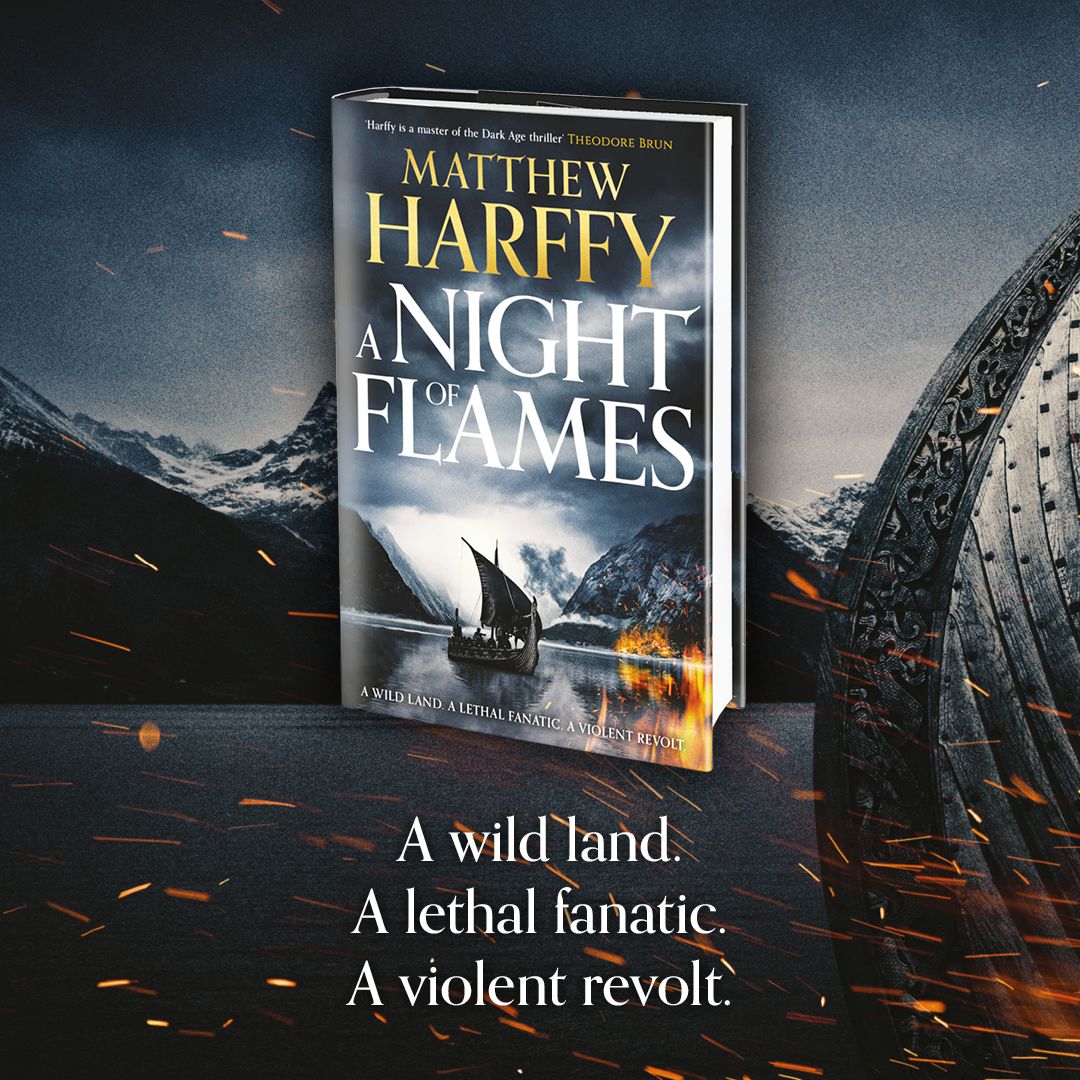
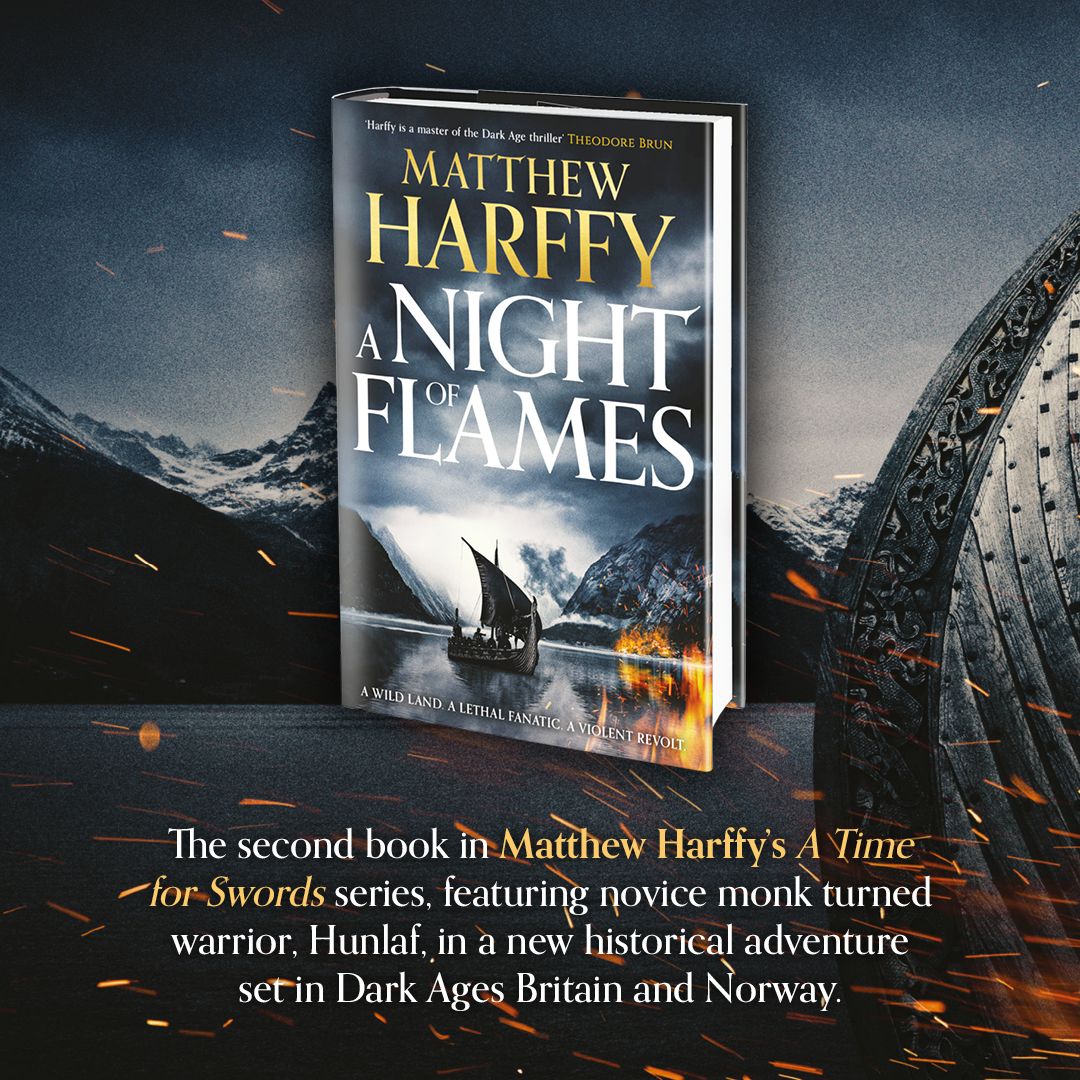
In the wild lands of Norway, Hunlaf must quell a vicious slave uprising in Matthew Harffy’s new historical adventure.
A wild land. A lethal fanatic. A violent revolt.
Northumbria, AD 794. Those who rule the seas, rule the land. None know the truth of this more than the Vikings. To compete with the seafaring raiders, the king of Northumbria orders the construction of his own longships under the command of oath-sworn Norseman, Runolf.
When the Vikings attack again, the king sends cleric turned warrior, Hunlaf, on a mission to persuade the king of Rogaland into an alliance. But Hunlaf and Runolf have other plans; kin to seek out, old scores to settle, and a heretical tome to find in the wild lands of the Norse.
Their voyage takes them into the centre of a violent uprising. A slave has broken free of his captors and, with religious fervour, is leading his fanatical followers on a rampage – burning all in his path. Hunlaf must brave the Norse wilderness, and overcome deadly foes, to stop this madman. Can he prevent a night of flames and slaughter?
News of a new Matthew Harffy novel has become one of the highlights of my year. Luckily, Harffy is quite a prolific writer, so I never have to wait too long for such news. A Night of Flames is Matthew Harffy’s 11th book in 6 years – that’s quite an achievement!
Especially as his storytelling keeps getting better and better.
The sequel to A Time for Swords, the story begins where the last book left off, with Hunlaf of Ubbanford having forsaken the monk’s cowl for the sword and determined to go in search of his cousin, Aelfwyn, carried off during the raid on Lindisfarne that heralded the Viking era in England. The erstwhile monk comes up with a plan to rescue his cousin and retrieve the highly influential and heretical book, The Treasure of Life, which will lead himself and his friends into the heart of Norway and a heretical band of marauders, made up of former slaves, fanatical warriors and women and children who are killing and spreading devastation wherever they go.
The story has all the ingredients for an exciting adventure. And I have to say, I loved the references to Matthew Harffy’s other series, The Bernicia Chronicles, and the story of Beobrand, with mention of a ballad to Beobrand and his love, Sunniva, or the fact that young Hunlaf was raised in Beobrand’s settlement of Ubbanford, thus interlinking the two very different series with a shared origin.
“I do not wish to slay you,” I hissed at him. “Drop your weapon. End this.”
“There is only one way to end this now,” he yelled. His face was pallid, his eyes glimmering in the bright early morning sun.
Unless he turned away from this course, he was right. I could not defend against him indefinitely. If I waited too long, his brawn and rage would overcome me at last. He was unarmoured, so I had not donned my byrnie. One strike from Wistan could easily prove fatal.
Springing at me again, he attempted a feint, but he signalled his intention with his eyes and his footwork, so my shield was there to parry the attack. This time, I flicked out my sword and opened up a gash on his side, beneath his shield. I skipped away, seeing the pain reach his eyes.
Behind him, Runolf met my gaze. The huge Norseman was grinning, clearly enjoying the excitement of a duel, or hólmgang, as he called it. He had paced out and marked the fighting area with hazel stakes, smiling wolfishly all the while at the prospect of a fight. Beside Runolf, the shorter Gwawrddur was sombre. At my look, he shook his head. I saw the disappointment on the Welshman’s features. There was no honour in defeating a foe who is not able to defend himself. The night before, Gwawrddur had told me to do all in my power to dissuade Wistan from fighting.
“I cannot flee, if he wants to fight,” I had said.
“No, you cannot,” he’d replied. His eyes were sad as he sipped his ale. “But when you laid with his girl, you surely knew this could happen.”
I nodded. I had been flattered by Cwenswith’s attentions, and of course I had enjoyed our fumbling, panting trysts in the store hut, but I had never thought our actions could lead to someone’s death, and certainly not at my hand.
“What if he refuses to step aside?”
“Then you must answer for your actions, just as Wistan must answer for his.”
Wistan now stood breathless before me. He looked down and seemed shocked to see the blood soaking through his kirtle. I had not cut him deeply, hoping the stinging pain would bring him to his senses.
At the sight of blood, someone in the crowd gasped.
Cwenswith screamed, “Finish him!”
Wistan’s eyes narrowed at the shrill sound of her voice. His shoulders tensed and I knew he was preparing to attack once more.
“Don’t,” I said, but too late.
He ran at me, and I retreated. He beat his sword against my shield over and over until the hide covering was tatters and the linden wood splintered.
With a growl, I pushed him back. There was nothing for it. I could not dissuade him, and if I waited any longer, I would be the one to lose my life that day. I sprang forward, holding his blows away from me on my splintering shield and lunging beneath his guard. I felt my sword blade make contact. Wistan grunted and staggered. The morning air was filled with the sudden screaming of women. The men quickly added their voices to the din. I recognised Runolf’s booming voice over the clamour of the crowd, but I could not make out his words.
A Night of Flames is another fabulous rip-roaring adventure from Matthew Harffy, where not everything goes as planned for the heroes and the fight comes close to disaster. It is edge-of-the-seat drama that will keep the reader engrossed late into the night. The battles are vicious, the losses devastating and the outcome uncertain – this is Matthew Harffy at his best.
As has come to be expected with a Matthew Harffy book, the historical research is impeccable; the author’s knowledge of weapons, battle tactics and even sailing the whaleroad is woven into the story so that it is impossible to know where facts end and the author’s imagination begins. The extent of Matthew Harffy’s knowledge and research helps to draw the reader in and makes for a thoroughly engaging book.
The best bit, however – as always with Matthew Harffy – is the story! A Night of Flames is a fascinating, thrilling adventure.
If you like to lose yourself in a book, A Night of Flames by Matthew Harffy is perfect for you!
About the author
Matthew Harffy grew up in Northumberland where the rugged terrain, ruined castles and rocky coastline had a huge impact on him. He now lives in Wiltshire, England, with his wife and their two daughters.
Signed, dedicated copies of all my books are available, please get in touch by completing the contact me form.
Defenders of the Norman Crown: The Rise and Fall of the Warenne Earls of Surrey tells the fascinating story of the Warenne dynasty, of the successes and failures of one of the most powerful families in England, from its origins in Normandy, through the Conquest, Magna Carta, the wars and marriages that led to its ultimate demise in the reign of Edward III. Defenders of the Norman Crown: Rise and Fall of the Warenne Earls of Surrey is now available from Pen & Sword Books, Amazon in the UK and US,Bookshop.org and Book Depository.














 History... the interesting bits!