Today it is my pleasure to welcome author Tony Riches to History … the Interesting Bits to talk about his latest book, Mary – Tudor Princess.
Guest Post: Mary – Tudor Princess, by Tony Riches
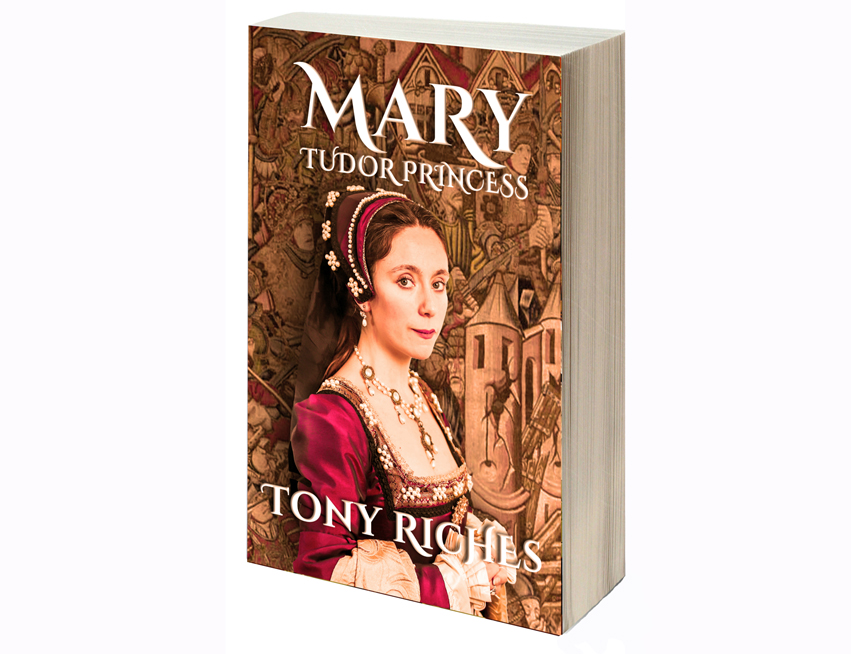
Book Cover of Mary ~ Tudor Princess
I chose to write about Mary because I’d researched her birth and early life for my last book, Henry – Book Three of the Tudor Trilogy. In the trilogy I’d moved forward one generation with each book, so it appealed to me to write a ‘sequel’ which did the same. I’d become intrigued with Mary’s story of how she risked everything to defy her brother when he became King Henry VIII.
When I began the Tudor trilogy, I had little factual information about Owen Tudor, Mary’s great-grandfather. The amount of information increased exponentially by the time I reached the story of Mary’s father, Henry Tudor, as he kept detailed ledgers of his finances. Some of Henry’s letters also survive, including some to his mother, but they were all rather formal.
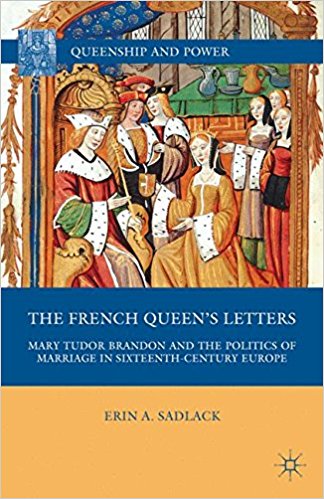
This is of course no substitute for primary research, and the great thing about living in the UK is how easily I can visit actual locations and study contemporary accounts. I found these surviving letters offer an evocative ‘voice’ for Mary, as well as revealing how she felt about people and events.
I also wanted to explore Mary’s vulnerability as well as her strengths, and I was assisted in this by her brother, who broke off her engagement to young Prince Charles, future Emperor of Rome, to marry her off to the fifty-two-year-old King Louis XII of France. Although Mary was barely eighteen at the time, Henry saw his younger sister as a small price to pay for a treaty with France.
I enjoyed untangling the many myths about what happened next, from causing the death of King Louis with her ‘passionate exertions’ to her dying of ‘grief at her brother’s divorce from her friend Catherine of Aragon.’ I also had the benefit of knowing a great deal about the people and places of Mary’s world. I’m now writing about the amazing life of Mary’s second husband, Charles Brandon, and beginning to think about how different the same events might have seemed from his perspective.
Mary – Tudor Princess is now available on Amazon UK, Amazon US and Amazon AU in eBook and paperback. An audiobook edition will be available later in the year.
Tony Riches
About the Author
Tony Riches is a full-time author of best-selling historical fiction. He lives in Pembrokeshire, West Wales and is a specialist in the fifteenth century, with a particular interest in the Wars of the Roses and the lives of the early Tudors. For more information about Tony’s other books please visit his website tonyriches.com and his popular blog, The Writing Desk and find him on Facebook and Twitter @tonyriches.
*
My Book:
Heroines of the Medieval World, is now available in hardback in the UK from both Amberley Publishing and Amazon UK. It is also available on Kindle in both the UK and USA and will be available in Hardback from Amazon US from 1 May 2018. It can also be ordered worldwide from Book Depository.
You can be the first to read new articles by clicking the ‘Follow’ button, liking our Facebook page or joining me on Twitter.
It is with great pleasure that I welcome historian David Santiuste to History … The Interesting Bits, with an article about Owain Glyn Dwr’s daughter, Catrin. Over to David.
Catrin ferch Owain Glyn Dŵr
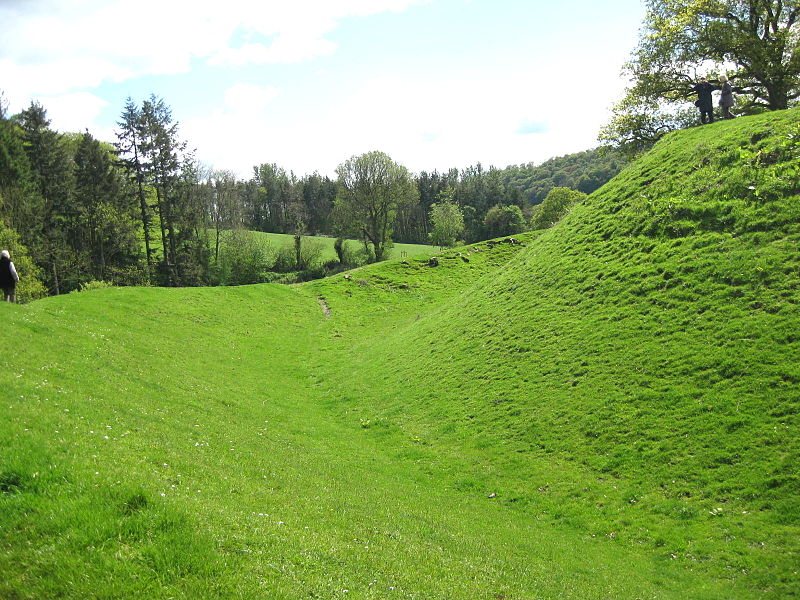
The remains of Owain Glyn Dŵr’s house at Sycharth
I was very pleased to be invited to write something for History… The Interesting Bits – a blog I have followed for some time. Above all, I have appreciated Sharon’s efforts to raise awareness of some fascinating medieval women, whose stories are too often neglected. Another such woman is Catrin, a daughter of the Welsh hero Owain Glyn Dŵr, who ultimately paid a heavy price for her father’s ambitions.
Catrin was born after 1383, when Owain, then in his late twenties, married her mother, Margaret Hamner. Catrin was almost certainly one of his oldest legitimate children, although in time she would become part of a large family. Owain and Margaret had eleven children who survived infancy, in addition to Owain’s sons and daughters who were born outside marriage (probably when he was still a bachelor).
Catrin’s early years were presumably spent at her father’s house at Sycharth (near Oswestry). It was described by the bard Iolo Goch as a beautiful and lively place – ‘the fairest timber hall’ – where Owain offered lavish hospitality. Nevertheless, while he had evidently established himself as a man of some status, much of his early career was typical of the minor aristocracy. Through Owain, Catrin could claim descent from Welsh royalty, but her upbringing was surely intended to prepare her for an adult life within the same kind of setting – probably as the wife of a local gentleman who had connections with her family.
Naturally Catrin’s life changed in 1400, when her father launched a ferocious rebellion against King Henry IV of England. Sycharth was no longer safe – it was later destroyed by the English – although Catrin would soon find herself in much grander surroundings, as the rebels took control of many of Wales’s castles. Owain was acclaimed by his supporters as Prince of Wales, and for a time it must have seemed that Welsh independence had finally arrived.
In June 1402 Owain won a significant victory at the Battle of Bryn Glas, and the English commander, Edmund Mortimer, was taken prisoner. Edmund was treated with respect, and he became incensed when King Henry refused to pay his ransom – possibly because he was afraid of the Mortimers, whose strong claim to the throne had been passed over in his own favour. Edmund therefore decided to join Owain, who agreed to help him assert his nephew’s ‘right’ in England. The alliance was sealed in the time-honoured fashion, and Catrin became Edmund’s wife.
Catrin and Edmund had four children – a boy, Lionel, and three girls – although little else is known about their life together. However, their circumstances must have changed from 1405 onwards, as the English began to gain the upper hand in Wales. Owain avoided capture (his last recorded appearance was in 1412), but ultimately some of his family, including Catrin and Edmund, were pinned down at Harlech Castle. From this imposing fortress the Welsh continued to defy the English – and Edmund’s own exploits were celebrated by the bards – but the defenders were eventually starved into submission. The castle was surrendered in February 1409, by which point Edmund had already died.
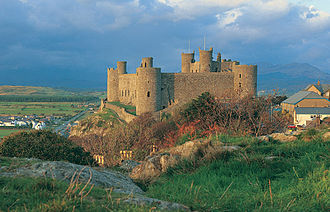
Harlech Castle
After the fall of Harlech, Catrin and her surviving children were taken into custody, as was her mother, and they were later held in the Tower of London. They were all still there in June 1413, shortly after Henry V assumed the English throne, but Catrin passed away before the end of the year. The accounts of the Exchequer include a payment in December for her burial in St Swithin’s Church (which, intriguingly, is some distance from the Tower), together with her daughters.
Several historians, such as Terry Breverton, have suggested that Catrin and the others were put to death on the new king’s orders. This is partly based on the assumption that young Lionel was imprisoned with Catrin and subsequently disappeared; it is fair to say that Lionel, with his mixture of English and Welsh royal blood, might have posed a considerable threat to Henry if he had lived. Nevertheless, the evidence is ambiguous, as it is by no means clear that Lionel was taken at Harlech. It seems equally possible that he had already died, like his father – and that he was never in the Tower at all.
The fate of Catrin’s mother is also very uncertain, and one of Catrin’s daughters appears, in fact, to have outlived her; this is explicitly mentioned by the chronicler Adam of Usk, who was often well-informed. Besides, while Henry V could sometimes be a ruthless man, the notion that he ordered the murder of Catrin, and at least some of her children, does not sit well with the leniency he offered to other members of the Mortimer family (and even to Owain’s eldest son). Perhaps the conditions of Catrin’s imprisonment might have played a part, but it seems most likely that her death was due to natural causes.
Catrin was not entirely forgotten. She makes an interesting appearance, for example, in the first part of Shakespeare’s Henry IV. Edmund tells her fondly that ‘I understand thy kisses and thou mine’, but Catrin and her husband remain hampered by the language barrier between them. There is also tension between Catrin and her father, as they exchange words in Welsh, and one begins to suspect that Owain is not always a faithful translator. At last she tells her father that she will sing. Somewhat mollified, Owain instructs Edmund to rest his head in Catrin’s lap: so that she can ‘sing the song that pleaseth you, and on your eyelids crown the god of sleep.’
It is no longer clear what Shakespeare intended: the direction simply states that ‘here the lady sings a Welsh song’. Owain hopes, it would seem, that his daughter will provide a moment of calm before the storms ahead, and in many productions this is the effect achieved. She has been presented rather differently, however, in one recent American production. While her exhausted husband does rest his head in her lap, in this case Catrin’s song is no lullaby. Instead she offers a powerful lament, regretting man’s propensity for self-defeating war.
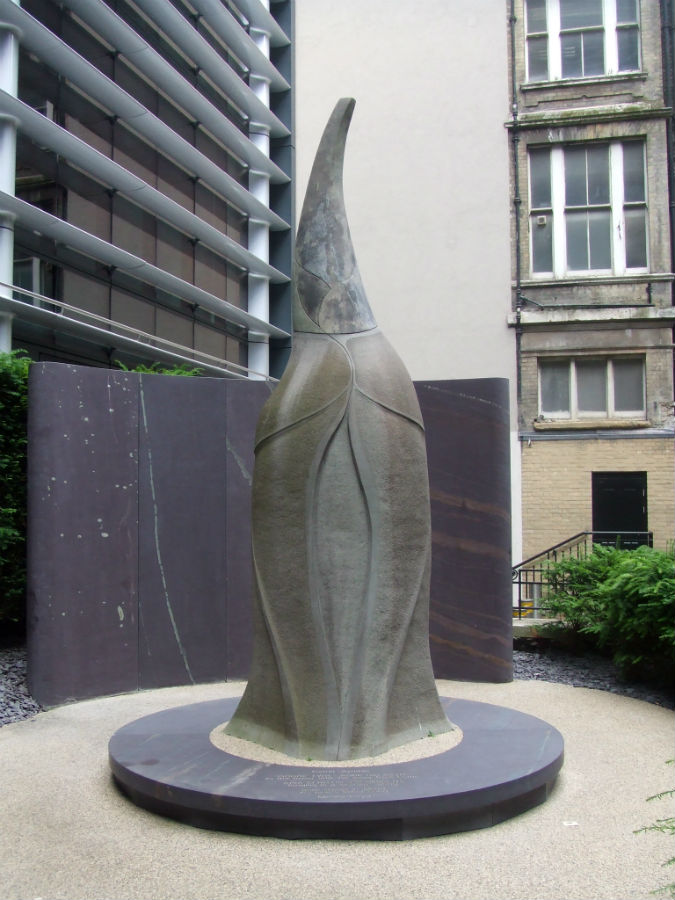
The memorial statue near the site of Catrin’s grave
In keeping with her father’s reputed gifts as a soothsayer, there is also an element of prophecy in the song, as Catrin rightly fears for the future of her ‘home’ (which is surely meant in a broader sense here). The text is adapted from a poem by Hedd Wyn a Welshman who was killed during the First World War, yet even those who cannot understand the words can still appreciate the sense of urgency and pathos. Previously denied the chance to speak directly to the audience, Catrin eventually finds a way to make her message plain.
Another writer to give Catrin a voice is Menna Elfyn, who has imagined her experience of captivity in a moving series of poems. At first Catrin is imprisoned with her children, but then her ‘chicks’ are taken from her: ‘without a farewell kiss, without wrapping them warmly’. ‘They were born to a traitor’, spits out one man, brusquely, although their fate remains uncertain (both for the reader and for Catrin). She pleads with the guards – ‘Take me too. There’s a knife in my heart’ – but she is left in her cell to meet a lonely end.
The medieval church of St Swithin’s was destroyed in the seventeenth century, during the Great Fire of London, and with it Catrin’s tomb. However, she is now represented by a modern statue, which can be found in a garden on the site of the church. The sculpture is intended not only as a commemoration of Catrin’s life, but also as a memorial to all the women and children who have suffered in war.
Sources
Terry Breverton, Owain Glyndŵr: The Story of the Last Prince of Wales (Stroud, 2009).
Chris Given-Wilson (ed.), The Chronicle of Adam of Usk, 1377-1421 (Oxford, 1997).
I would also like to thank Sara Hanna-Black for her help and encouragement.
All images from Wikipedia
About the Author
David Santiuste teaches history at the Centre for Open Learning, University of Edinburgh. His most recent book is The Hammer of the Scots. His other publications include Edward IV and the Wars of the Roses, as well as various articles.
David’s website can be found at davidsantiuste.com [insert link: https://davidsantiuste.com/], where he writes an occasional blog. You can follow him on Facebook at David Santiuste Historian or on Twitter @dbsantiuste.
The University of Edinburgh is a charitable body, registered in
Scotland, with registration number SC005336.
*
My Book:
Heroines of the Medieval World, is now available in hardback in the UK from both Amberley Publishing and Amazon UK. It is also available on Kindle in both the UK and USA and will be available in Hardback from Amazon US from 1 May 2018. It can also be ordered worldwide from Book Depository.
You can be the first to read new articles by clicking the ‘Follow’ button, liking our Facebook page or joining me on Twitter.
Mary Tudor has always been known as ‘Bloody Mary’, the name given to her by later Protestant chroniclers who vilified her for attempting to re-impose Roman Catholicism in England. Although a more nuanced picture of the first queen regnant has since emerged, she is still stereotyped, depicted as a tragic and lonely figure, personally and politically isolated after the annulment of her parents’ marriage and rescued from obscurity only through the good offices of Katherine Parr.
Although Henry doted on Mary as a child and called her his ‘pearl of the world’, her determination to side with her mother over the annulment both hurt him as a father and damaged perceptions of him as a monarch commanding unhesitating obedience. However, once Mary had finally been pressured into compliance, Henry reverted to being a loving father and Mary played an important role in court life.
As Melita Thomas points out, Mary was a gambler – and not just with cards. Later, she would risk all, including her life, to gain the throne. As a young girl of just seventeen she made the first throw of the dice, defiantly maintaining her claim to be Henry’s legitimate daughter against the determined attempts of Anne Boleyn and the king to break her spirit.
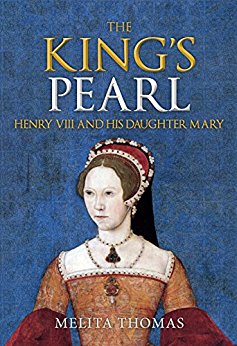
Following the 500th anniversary of Mary’s birth, The King’s Pearl re-examines Mary’s life during the reign of Henry VIII and her complex, dramatic relationship with her father.
The King’s Pearl: Henry VIII and his Daughter Mary by Melita Thomas is an in-depth look into the life of Mary I, in her formative years. It tells the story of England’s first queen regnant, during the life and reign of her father, Henry VIII.
This is a wonderful book, giving an insight into the years of Mary’s life which are rarely considered, when she went from being a pampered princess of two adoring parents to an adolescent declared a bastard by her own father. The author paints the picture of a young woman who had gone through more trials and emotions imposed by her father than any daughter should have to bear. The King’s Pearl: Henry VIII and his Daughter Mary evokes sympathy and understanding for the extremes of life experiences that Mary I had to endure, once her parents’ marriage had broken down. From being denied the company of her mother, the attention of her father to being bullied and belittled, in fear of imprisonment, and worse.
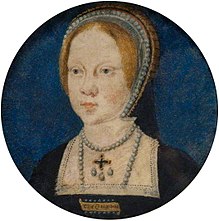
Mary at the time of her engagement to Charles V. She is wearing a rectangular brooch inscribed with “The Emperour”
On St George’s Day 1527, the French ambassadors went to see Mary at Greenwich. After dinner, Henry led them into a hall in which Mary, Katharine and the French queen were present, with a large comapny of ladies and gentlemen. The proud father told the ambassadors to speak to his daughter in Latin, French and Italian, and she was able to respond in all three languages. She also wrote in French for them, before performing on the spinet. The ambassadors agreed the young lady was very accomplished for her age, which was eleven years and two months. Contrary to the previous description of her as tall, Turenne thought although she was very pretty, she was so ‘thin, spare, and small’, that she could not possibly be married for another three years. From the opposing descriptions of her, we can perhaps infer that none of them is terribly accurate – those who wanted her to be considered ready for marriage described her as tall and robust, while those who wished to delay matters spoke of her as small.
Every aspect of Mary’s early life is examined in detail, from her pampered childhood, surrounded by courtiers and loving parents, to the loneliness of an out-of-favour, illegitimate daughter. Her various marriage prospects are a constant theme throughout the book, demonstrating how Mary was used as a bargaining chip in Henry VIII’s constant diplomatic wranglings between Francis I of France and Charles V, Holy Roman Emperor.
Melita Thomas’ research is impeccable, her arguments and theories are backed up by primary sources, including memoirs, letters and treaties. The focus is entirely on Mary, her relationships with her family and courtiers and the way her father’s policies and marriages affected her life. It examines every aspect of Mary’s life in impeccable detail; her education, court life, her relationships, health and daily routine. It is a sad tale, of a father who demanded absolute obedience, and never considered the consequences of his actions on the mental well-being of his children.
Well-written and beautifully presented, The King’s Pearl: Henry VIII and his Daughter Mary, is a perfect and essential addition to any Tudor library.
*
About the author
Melita Thomas is a co-founder and editor of Tudor Times, a website devoted to Tudor and Stewart history. Her articles have appeared in BBC History Extra an Britain magazine. The King’s Pearl is available from Amberley Publishing and Amazon UK. and will be available from Amazon US from 1st June 2018.
My Book:
Heroines of the Medieval World, is now available in hardback in the UK from both Amberley Publishing and Amazon UK. It is also available on Kindle in both the UK and USA and will be available in Hardback from Amazon US from 1 May 2018. It can also be ordered worldwide from Book Depository.
You can be the first to read new articles by clicking the ‘Follow’ button, liking our Facebook page or joining me on Twitter.
Maria de Salinas was lady-in-waiting to Katherine of Aragon, and one of her closest confidantes. Although we know little of her origins, she was the daughter of Juan de Salinas, secretary to Katherine’s eldest sister, Isabella, and Josepha Gonzales de Salas. Maria was not on the original list of ladies, drawn up in 1500, chosen to accompany Katherine of Aragon to England for her marriage to Prince Arthur. However, it seems likely that she, and her sister Inez, did come to England with the Spanish princess. She may have been added to the princess’s staff when her mother, Isabella of Castile, increased the size of Katherine’s entourage in March 1501.
Maria was one of the ladies who stayed with Katherine after her household was reduced and many returned to Spain, following the death of Katherine’s young husband, Arthur, Prince of Wales, in 1502. She remained with the Spanish princess throughout the years of penury and uncertainty, when Katherine was used as a pawn by both her father, Ferdinand, and father-in-law, Henry VII, in negotiations for her marriage to Prince Henry, the future Henry VIII. To solemnise the marriage was one of Henry’s first acts on his accession to the throne, so that Henry and Katherine would be crowned together as the new King and Queen of England. Maria is included in the list of Katherine’s attendants who were given an allowance of black cloth for mantles and kerchiefs, following the death of Henry VII in 1509; she was then given a new gown for Katherine’s coronation, which was held jointly with King Henry in June of the same year.
In 1511 Maria stood as godmother to Mary Brandon, daughter of Charles Brandon – one of the new king, Henry VIII’s closest companions and her future son-in-law – and his first wife, Ann Browne. Katherine of Aragon and Maria were very close; in fact, by 1514 Ambassador Caroz de Villagarut, appointed by Katherine’s father, Ferdinand of Aragon, was complaining of Maria’s influence over the queen. He accused Maria of conspiring with her kinsman, Juan Adursa – a merchant in Flanders with hopes of becoming treasurer to Philip, prince of Castile – to persuade Katherine not to cooperate with the ambassador. The ambassador complained: ‘The few Spaniards who are still in her household prefer to be friends of the English, and neglect their duties as subjects of the King of Spain. The worst influence on the queen is exercised by Dona Maria de Salinas, whom she loves more than any other mortal.’¹
Maria was naturalised on 29th May, 1516, and just a week later, on 5th June she married the largest landowner in Lincolnshire, William Willoughby, 11th Baron Willoughby de Eresby. William Willoughby was the son of Sir Christopher Willoughby, who had died c.1498, and Margaret, or Marjery, Jenney of Knodishall in Suffolk. He had been married previously, to Mary Hussey, daughter of Sir William Hussey, Chief Justice of the King’s Bench. The King and Queen paid for the wedding, which took place at Greenwich, the Queen even provided Maria with a dowry of 1100 marks. They were given Grimsthorpe Castle, and other Lincolnshire manors which had formerly belonged to Francis Lovel (friend of Richard III), as a wedding gift. Henry VIII even named one of his new ships the Mary Willoughby in Maria’s honour.
Maria remained at court for some years after her wedding, and attended Katherine at the Field of Cloth of Gold in 1520. Henry VIII was godfather to Maria and William’s oldest son, Henry, who died in infancy. Another son, Francis, also died young and their daughter Katherine, born in 1519, would be the only surviving child of the marriage. Lord Willoughby died in 1526, and for several years afterwards Maria was embroiled in a legal dispute with her brother-in-law, Sir Christopher Willoughby, over the inheritance of the Willoughby lands. Sir Christopher claimed that William had settled some lands on Maria which were entailed to Sir Christopher. The dispute went to the Star Chamber and caused Sir Thomas More, the king’s chancellor and a prominent lawyer, to make an initial redistribution of some of the disputed lands.
Miniature Katherine Willoughby, Duchess of Suffolk, by Hans Holbein the Younger
This must have been a hard fight for the newly widowed Maria, and the dispute threatened the stability of Lincolnshire itself, given the extensive lands involved. However, Maria attracted a powerful ally in Charles Brandon, Duke of Suffolk and brother-in-law of the King, who called on the assistance of Cardinal Thomas Wolsey, Henry’s first minister at the time, in the hope of resolving the situation. Suffolk had managed to obtain the wardship of Katherine Willoughby in 1528, intending her to marry his eldest son and heir Henry, Earl of Lincoln, and so had a vested interest in a favourable settlement for Maria. This interest became even greater following the death of Mary Tudor, Suffolk’s wife, in September 1533, when only three months later the fifty-year-old Duke of Suffolk married fourteen-year-old Katherine, himself.
Although Suffolk pursued the legal case with more vigour after the wedding, a final settlement was not reached until the reign of Elizabeth I. Suffolk eventually became the greatest landowner in Lincolnshire and, despite the age difference, the marriage does appear to have been successful. Katherine served at court, in the household of Henry VIII’s sixth and last queen, Katherine Parr. She was widowed in 1545 and lost her two sons – and heirs – by the Duke, Henry and Charles, to the sweating sickness, within hours of each other in 1551. Katherine was a stalwart of the Protestant learning and even invited Hugh Latimer to preach at Grimsthorpe Castle. It was she and Sir William Cecil who persuaded Katherine Parr to publish her book, The Lamentacion of a Sinner in 1547, demonstrating her continuing links with the court despite her first husband’s death. Following the death of her sons by Suffolk, Katherine no longer had a financial interest in the Suffolk estates, and in order to safeguard her Willoughby estates, Katherine married her gentleman usher, Richard Bertie.
The couple had a difficult time navigating the religious tensions of the age and even went into exile on the Continent during the reign of the Catholic Queen, Mary I, only returning on Elizabeth’s accession. Katherine resumed her position in Tudor society; her relations with the court, however, were strained by her tendency towards Puritan learning. The records of Katherine’s Lincolnshire household show that she employed Miles Coverdale – a prominent critic of the Elizabethan church – as tutor to her two children by Bertie, Susan and Peregrine. Unfortunately, Katherine died after a long illness, on 19th September 1580 and was buried in her native Lincolnshire, in Spilsby Church.
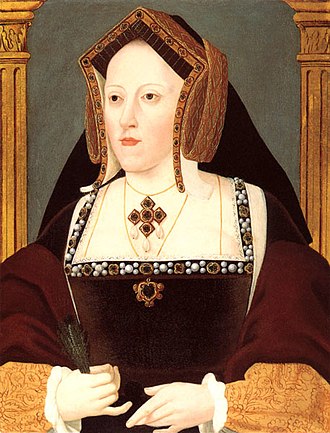
Catherine of Aragon by Lucas Hornebolte
A widow since 1526, Maria de Salinas, Lady Willoughby, kept a tight rein on the Willoughby lands, proving to be an efficient landlady. She took advantage of the dissolution of the monasteries in order to lease monastic land. Although this was a business arrangement, rather than political or religious, it still made her a target of discontent during the Lincolnshire Rising of 1536.
Maria had remained as a Lady-in-Waiting to Katherine. She was known to dislike Anne Boleyn and, as Henry’s attitude towards Katherine hardened during his attempts to divorce her, in 1532 Maria was ordered to leave Katehrine’s household and not contact her again. By 1534, as Emperor Charles V’s ambassador, Chapuys, described it; Katherine was ‘more a prisoner than before, for not only is she deprived of her goods, but even a Spanish lady who has remained with her all her life, and has served her at her own expense, is forbidden to see her.’²
When Katherine was reported to be dying at Kimbolton Castle, in December 1535, Maria applied for a license to visit her ailing mistress. She wrote to Sir Thomas Cromwell, the King’s chief minister at the time, saying ‘for I heard that my mistress is very sore sick again. I pray you remember me, for you promised to labour with the king to get me licence to go to her before God send for her, as there is no other likelihood.’² Permission was refused, but despite this setback, Maria set out from London to visit Katherine at Kimbolton Castle, arriving on the evening of New Years’ Day, 1536 and contrived to get herself admitted by Sir Edmund Bedingfield by claiming a fall from her horse meant she could travel no further. According to Sarah Morris and Nathalie Grueninger, Katherine and Maria spent hours talking in their native Castilian; the former queen died in Maria’s arms on 7th January 1536.³ Katherine of Aragon was buried in Peterborough Cathedral on 29th January, with Maria and her daughter, Katherine, in attendance.
Maria herself died in May 1539, keeping control of her estates to the very last. She signed a copy of the court roll around 7th May, but was dead by the 20th, by which time the duke of Suffolk was negotiating for livery of her lands. Her extensive Lincolnshire estates, including Grimsthorpe and Eresby, passed to her only surviving child, Katherine and her husband, Charles Brandon, Duke of Suffolk. Maria’s burial-place is unknown, though there is a legend that she was buried in Peterborough Cathedral, close to her beloved Queen Katherine.
*
Footnotes: ¹Henry VIII’s Last Love by David Baldwin; ²Catherine of Aragon by Amy Licence; ³In the Footsteps of the Six Wives of Henry VIII by Sarah Morris and Natalie Grueninger
Bibliography: Bibliography: Catherine of Aragon by Amy Licence; Henry VIII’s Last Love by David Baldwin; Charles Brandon: Henry VIII’s Closest Friend by Steven Gunn; Accounts of the Chamber and Great Wardrobe Public Record Office; Howard [earl of Surrey], Poems, edited by E. Jones (1964); John Leland Leland’s itinerary in England and Wales 1535-43 edited by L Toulmin Smith (1906-10); Letters and Papers, Foreign and Domestic, of the Reign of Henry VIII 1509-47 edited by JS Brewer, James Gairdner and RH Brodie, HMSO London 1862-1932; Privy Purse Expenses of King Henry VIII from November MDXIX to December MDXXXII edited by Sir Nicholas Harris Nicolas 1827; Religion and politics in mid-Tudor England through the eyes of an English Protestant Woman: Bulletin of the Institute of Historical Research, 1980 & 1982; Elizabeth’s Women by Tracy Borman; England Under the Tudors by Arthur D Innes; Henry VIII: King and Court by Alison Weir; In Bed with the Tudors by Amy Licence; In the Footsteps of the Six Wives of Henry VIII by Sarah Morris and Natalie Grueninger; Ladies-in-Waiting: Women who Served at the Tudor Court by Victoria Sylvia Evans; The Earlier Tudors 1485-1558 by JD Mackie; The Six Wives and Many Mistresses of Henry VIII: The Women’s Stories by Amy Licence; Oxforddnb.com; Tudorplace.com
*
My Books
Signed, dedicated copies of all my books are available, please get in touch by completing the contact me form.
Defenders of the Norman Crown: The Rise and Fall of the Warenne Earls of Surrey tells the fascinating story of the Warenne dynasty, of the successes and failures of one of the most powerful families in England, from its origins in Normandy, through the Conquest, Magna Carta, the wars and marriages that led to its ultimate demise in the reign of Edward III. Defenders of the Norman Crown: Rise and Fall of the Warenne Earls of Surrey is now available from Pen & Sword Books, Amazon in the UK and US,Bookshop.org and Book Depository.
Elizabeth Fitzgerald, painted by Steven van der Meulen
Elizabeth Fitzgerald, a great-granddaughter of Elizabeth Woodville, had been born in Ireland in about 1528 and was the second daughter of Gerald Fitzgerald, 9th Earl of Kildare. Her mother was Lady Elizabeth Grey, daughter of Sir Thomas Grey, Marquess of Dorset and only surviving son of Elizabeth Woodville, Edward IV’s queen, and therefore first cousin to Henry VIII. Elizabeth Fitzgerald was therefore a second cousin to King Edward VI and queens Mary I and Elizabeth I.
A wealthy, cultivated family, her early childhood was spent at the Kildare’s stately home of Maynooth, in Ireland, with her father acting as the king’s Lord Deputy in Ireland. However, in 1533 the earl was summoned to court to answer complaints against him. Claiming illness, he initially sent his wife, in hope that she could appease the king, but his presence was demanded and in 1534, the ailing earl left for England, leaving his son, Lord Offaly, as his deputy in Ireland. The Earl of Kildare was charged with treason and imprisoned in the Tower of London, where he died of illness in August 1534. His son had come out in open rebellion against the king and would himself be executed at Tyburn in 1537.
The rebellion caused the downfall of the House of Kildare; the title forfeit and their estates confiscated. Lady Kildare and her children sought assistance from her brother, Lord Leonard Grey, settling on his estate at Beaumanor in Leicestershire. Her eldest son and the Kildare heir, Gerald Fitzgerald, fled to exile on the continent, protected from Henry VIII by both Francis I of France and Charles V, the Holy Roman Emperor.
Lady Kildare’s family connections to the king meant that young Elizabeth Fitzgerald was able to enter Princess Elizabeth’s household in 1539, possibly as a maid of honour but ostensibly to be raised alongside her cousin. She was only 9 or 10 years old at the time while the princess was about 6-years-old. While in the princess’s household, Elizabeth made an impression, it seems, particularly on Henry Howard, Earl of Surrey, who wrote a sonnet, From Tuscan cam my ladies worthi race in praise of her as his Fair Geraldine;
Bewty of kind, her vertues from above; Happy ys he that may obtaine her love¹.
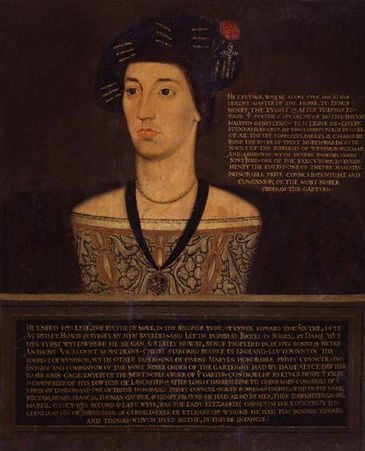
Elizabeth’s first husband, Sir Anthony Browne
In 1542 Elizabeth married her first husband, the wealthy courtier Sir Anthony Browne, who was Henry VIII’s Master of the Horse. The marriage meant that Elizabeth now had the means to restore the family fortunes, applying for military command for her brother, Edward. Her older brother, Gerald returned to England in the reign of Edward VI; he was knighted and his lands restored. In 1554, during the reign of Mary I, Gerald married his sister’s stepdaughter, Mabel (Sir Anthony Browne’s daughter by his first wife, Alice Gage).
Elizabeth was widowed in 1548. Her two sons by Sir Anthony, Edward and Thomas, had both died in infancy.
In 1552 Elizabeth married again, this time to Edward Fiennes de Clinton, ninth Baron Clinton and Saye; the same Baron Clinton who had married Elizabeth (Bessie) Blount in 1535. Clinton had remarried in 1541, after Bessie’s death, to Ursula, daughter of William, seventh Baron Stourton; Ursula was a niece of John Dudley, Duke of Northumberland in the reign of Edward VI. She died in 1551 and Edward married Elizabeth the following year.
Sir Edward Fiennes de Clinton had led a very successful military career and in May 1550 he had been appointed a privy councillor and lord high admiral of England. He was made a knight of the garter in April 1551 and, later in the same year, was given the former Howard property of Tattershall Castle in Lincolnshire, which he made his principal residence. Clinton was an adept political survivor; after being involved in the plot to put the nine-day-queen, Jane Grey, on the throne he was imprisoned for a short time, but managed to win Queen Mary’s trust and was active in her military campaigns.
Tattershall Castle, Lincolnshire
With the accession of Elizabeth I, Clinton was appointed a privy councillor and his wife, Elizabeth Fiennes de Clinton, the queen’s childhood friend, was appointed Gentlewoman of the Privy Chamber ‘without wages’ (this indicated her high-born status, as salaried members were drawn from the lower ranks of the nobility).
In 1572 Baron Clinton was rewarded for his service with the earldom of Lincoln. Elizabeth had practically been raised with the new queen since she was ten years old and was thought to have considerable influence; she regularly received petitions and suits from others requesting she intervene with Elizabeth I on their behalf. She was also able to use her influence at court to benefit her own family; in 1569 Elizabeth and her brothers, Gerald and Edward, and sisters, Margaret and Cecily, successfully petitioned Queen Elizabeth for the restoration of the Fitzgeralds to their blood and lineage.
Edward trusted his wife considerably, and made her executor of his will, bequeathing Sempringham to Elizabeth, and Tattershall to his eldest son, Henry (his son by Ursula). Edward, Earl of Lincoln, died in 1585 and just before his father’s death, his son Henry had written to William Cecil, Lord Burghley, accusing Elizabeth of attempting to deprive him of his inheritance, and of maligning him to the queen. However, Henry’s tactic failed and the will was confirmed in 1587.
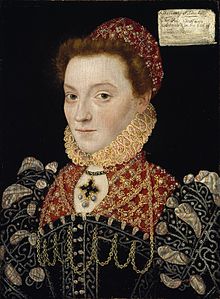
Elizabeth Fitzgerald, by an unknown artist
Elizabeth herself appears to have withdrawn from court following her husband’s death. When she died in March 1589, the ‘Fair Geraldine’ was laid to rest beside her husband in the Lincoln Chapel of St George’s Chapel Windsor.
Although one of the greatest noble ladies of her time, with her only 2 children having died in infancy, Elizabeth’s legacy is in the poetry left by Henry Howard, Earl of Surrey;
Do not deface them than wyth fansies newe, Nor chaunge of mindes let not thy minde infect.¹
*
Footnote: ¹H. Howard [earl of Surrey], Poems, ed. E. Jones (1964)
Bibliography: Accounts of the Chamber and Great Wardrobe Public Record Office; Howard [earl of Surrey], Poems, edited by E. Jones (1964); John Leland Leland’s itinerary in England and Wales 1535-43 edited by L Toulmin Smith (1906-10); Letters and Papers, Foreign and Domestic, of the Reign of Henry VIII 1509-47 edited by JS Brewer, James Gairdner and RH Brodie, HMSO London 1862-1932; Privy Purse Expenses of King Henry VIII from November MDXIX to December MDXXXII edited by Sir Nicholas Harris Nicolas 1827; Religion and politics in mid-Tudor England through the eyes of an English Protestant Woman: the Recollections of Rose Hickman edited by Maria Dowling and Joy Shakespeare; Bulletin of the Institute of Historical Research, 1980 & 1982; A Guide to Gainsborough Old Hall by Sue Allan; Bastard Prince: Henry VIII’s Lost Son by Beverley A Murphy; Elizabeth’s Women by Tracy Borman; England Under the Tudors by Arthur D Innes; Henry VIII: King and Court by Alison Weir; In Bed with the Tudors by Amy Licence; In the Footsteps of the Six Wives of Henry VIII by Sarah Morris and Natalie Grueninger; Ladies-in-Waiting: Women who Served at the Tudor Court by Victoria Sylvia Evans; The Earlier Tudors 1485-1558 by JD Mackie; The Life and Times of Henry VII by Neville Williams; The Six Wives and Many Mistresses of Henry VIII: The Women’s Stories by Amy Licence; Oxforddnb.com; Tudorplace.com
*
My Books
Signed, dedicated copies of all my books are available through my online bookshop.
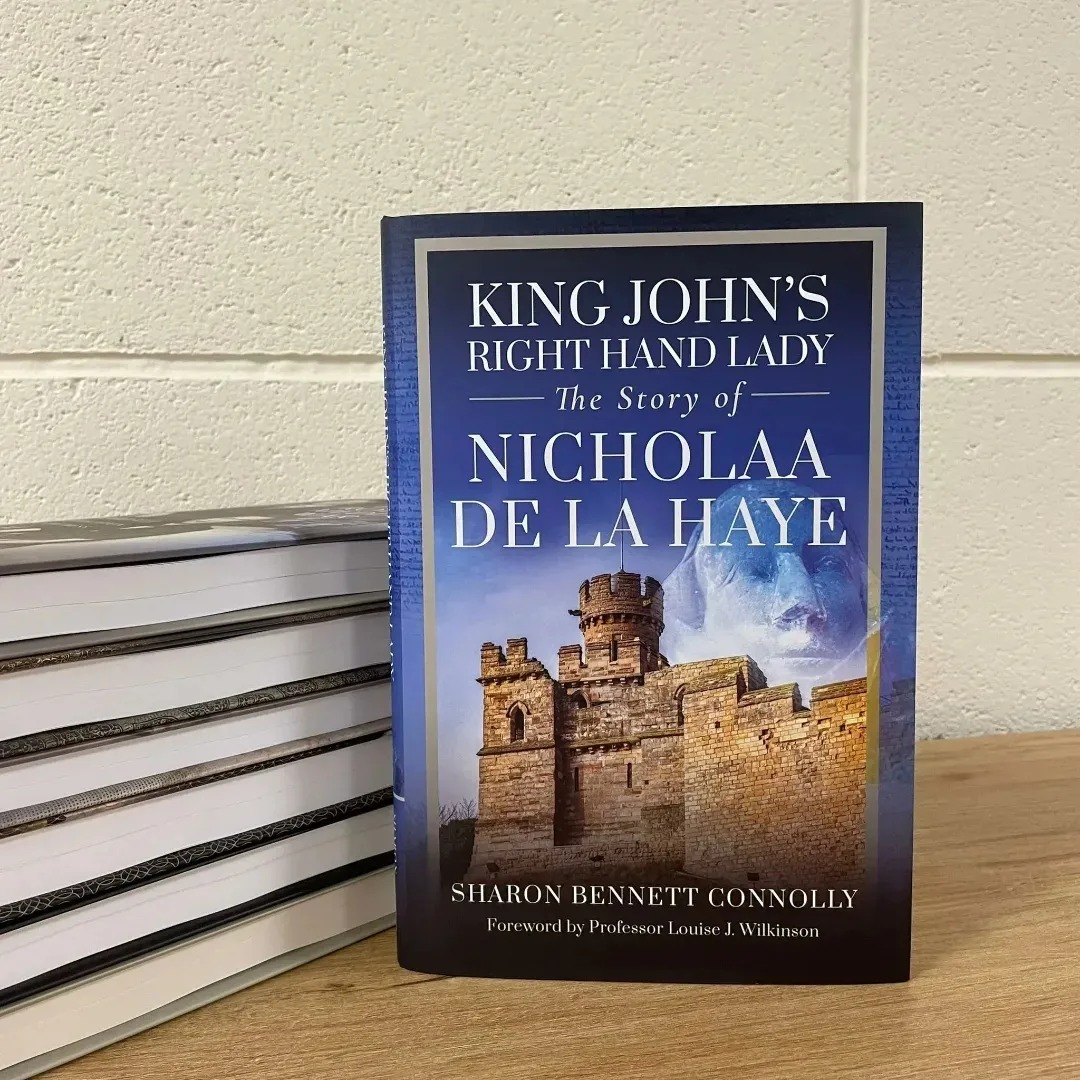
Out now: King John’s Right-Hand Lady: The Story of Nicholaa de la Haye
In a time when men fought and women stayed home, Nicholaa de la Haye held Lincoln Castle against all-comers, gaining prominence in the First Baron’s War, the civil war that followed the sealing of Magna Carta in 1215. A truly remarkable lady, Nicholaa was the first woman to be appointed sheriff in her own right. Her strength and tenacity saved England at one of the lowest points in its history. Nicholaa de la Haye is one woman in English history whose story needs to be told…
On the one side is Empress Matilda, or Maud. The sole surviving legitimate child of Henry I, she is fighting for her birthright and that of her children. On the other side is her cousin, Queen Matilda, supporting her husband, King Stephen, and fighting to see her own son inherit the English crown. Both women are granddaughters of St Margaret, Queen of Scotland and descendants of Alfred the Great of Wessex. Women of the Anarchy demonstrates how these women, unable to wield a sword, were prime movers in this time of conflict and lawlessness. It show how their strengths, weaknesses, and personal ambitions swung the fortunes of war one way – and then the other.
Alternate Endings: An anthology of historical fiction short stories including Long Live the King… which is my take what might have happened had King John not died in October 1216. Available in paperback and kindle from Amazon.
Podcast:
Have a listen to theA Slice of Medieval podcast, which I co-host with Historical fiction novelist Derek Birks. Derek and I welcome guests, such as Bernard Cornwell, and discuss a wide range of topics in medieval history, from significant events to the personalities involved.
*
Don’t forget!Signed and dedicated copies of all my books are available through my online bookshop.
For forthcoming online and in-person talks, please check out my Events Page.
You can be the first to read new articles by clicking the ‘Follow’ button, liking our Facebook page or joining me on Twitterand Instagram.
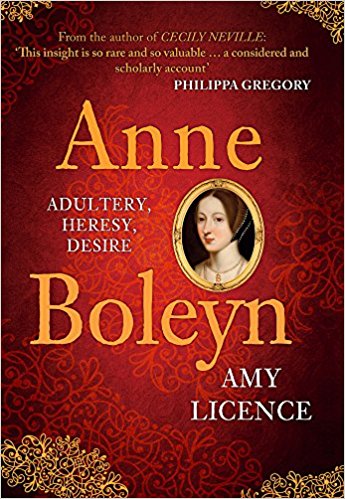
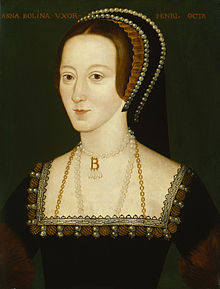
Anne Boleyn’s unconventional beauty inspired poets ‒ and she so entranced Henry VIII with her wit, allure and style that he was prepared to set aside his wife of over twenty years and risk his immortal soul. Her sister had already been the king’s mistress, but the other Boleyn girl followed a different path. For years the lovers waited; did they really remain chaste? Did Anne love Henry, or was she a calculating femme fatale?
Eventually replacing the long-suffering Catherine of Aragon, Anne enjoyed a magnificent coronation and gave birth to the future Queen Elizabeth, but her triumph was short-lived. Why did she go from beloved consort to adulteress and traitor within a matter of weeks? What role did Thomas Cromwell and Jane Seymour of Wolf Hall play in Anne’s demise? Was her fall one of the biggest sex scandals of her era, or the result of a political coup?
With her usual eye for the telling detail, Amy Licence explores the nuances of this explosive and ultimately deadly relationship to answer an often neglected question: what choice did Anne really have? When she writes to Henry during their protracted courtship, is she addressing a suitor, or her divinely ordained king? This book follows Anne from cradle to grave and beyond. Anne is vividly brought to life amid the colour, drama and unforgiving politics of the Tudor court.
Reviewing such a book as Anne Boleyn: Adultery, Heresy, Desire by Amy Licence is a daunting prospect. How can one do justice to a book which may well be the definitive biography of Anne Boleyn? Well, I suppose Amy had the same issue when writing it – how to do justice to Anne Boleyn’s story while avoiding falling into the bias of having a favourite between Anne and her rival, Catherine of Aragon? Having already produced a stunning account of the life of Catherine of Aragon, this is the second in a series which will hopefully include all 6 of Henry VIII’s wives, and presents Anne Boleyn as she was; a woman like any other, with loves, hopes and fears, rather than as the foil and ruin of the married bliss of Catherine and Henry.
However she did it, Amy Licence has managed to produce a balanced, fair assessment of this much hated/loved (depending on which side of the fence you are on) queen. Telling the story from the very beginning, from the rise of Anne’s predecessors through the guilds of London, through her childhood and early years in the courts of Burgundy and France to her dominance of Henry VIII’s court. The book strips away the veil of malice and rumour surrounding her, providing a new and in-depth analysis of Anne the woman and Anne the queen. It shows her as a growing and developing individual, reacting and responding to the forces around her, rather than the historical fiction view of a scheming harridan out to displace Catherine and take the throne for herself. It demonstrates that the Tudor world and Anne’s life, was constantly fluid, developing and responding to situations as they present themselves.
Amy Licence is a wonderful writer and historian – her books are always accessible and enjoyable reads, bringing back to life some of the most fascinating characters of history. And Anne Boleyn: Adultery, Heresy, Desire is no exception. Beautifully written, it presents Anne’s story as never before seen, with a balance rarely achieved when it comes to telling Anne Boleyn’s story. Anne is presented neither as a tragic victim, nor a scheming temptress. Her story unfolds as it does for all of us, with events and actions influencing her decisions and demonstrating that her life was a long winding road; the direction neither predetermined nor inevitable. It shows how Anne’s experiences, both in England and the continent, helped to shape Anne the woman, her outlook and her destiny.
Amy Licence achieves a balance between presenting the everyday domesticity of Henry VIII’s life and court and the national and international politics of the day. I love the little snippets of domestic life interspersed in the deeper issues, such as Henry’s dog, Ball, getting lost in Waltham Forest. She demonstrates the influences of the Reformation on Anne and Henry, and on the country at large, but also highlights the reactionary nature of the Reformation against church abuses. Rather than presenting it as ‘Henry wanted a divorce so he broke with Rome’, but as one cog in a very complex wheel of reactionism and Reformation; showing it in its wider context, not only in England but across Europe, and how both Henry’s and Anne’s attitudes were changed and shaped by the wider European movement of reform.
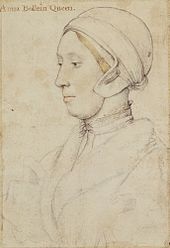
Anne Boleyn by Hans Holbein the Younger
At twelve years old, Anne Boleyn left her home at Hever, travelled to Dover and embarked for Calais. It was to be the start of the education that gave her the air of sophistication and poise that would attract Henry, a unique edge, and the cultural polish and confidence to hold her own in the courts of Burgundy,, France and, eventually, England. in fairy-tale castles that outstripped any buildings she knew from home, hung with the most exquisite Flemish tapestries, in libraries housing the best illuminated manuscripts, where leading artists worked and musicians played, Anne absorbed the latest and best of the northern European Renaissance. Her exposure to its religious and cultural thinking made her something of a ‘new’ woman, part of a generation who would question the old ways and faiths, emboldened to reject centuries of Catholic ritual, the efficacy of saints and the pope, a different world to the England in which she spent her early years.
Amy Licence has managed to write a book about Anne Boleyn, giving us the character of the woman and showing how she grew into her role as queen, but showing her as human, a woman who made not only loyal friends and achieved a position she was never born to, but also a woman who made enemies and mistakes and whose downfall was one of the most tragic, staged events in English history. With the use of primary sources, including letters, court documents and accounts, Amy not only recreates the world of Anne and Henry VIII, but also the personalities and politics of the people and countries surrounding them. Where there is disagreement or controversy , she presents all sides of the argument, using her excellent analytical skills to dissect the story, present the facts and explain her own theories, reasoning and conclusions.
Not only does Amy Licence expertly dissect the character of Anne, but also the personalities associated with her story, from her own family to Henry, Catherine and Cardinal Wolsey. She provides a deep analysis of Anne Boleyn, her character, strengths and weaknesses, successes and failures. She does not shy away from the negatives in Anne’s character, such as her pettiness towards Catherine of Aragon, but manages to convey how Henry’s pursuit of her, the lengthy divorce proceedings and long years of waiting must have affected her.
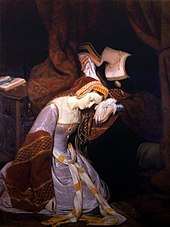
Anne Boleyn in the Tower by Edouard Cibot
Amy Licence’s unique, intimate writing style draws the reader in and provides an engaging, perceptive analysis of one of the most enigmatic women of the Renaissance period. Whether you love or hate Anne Boleyn, Anne Boleyn: Adultery, Heresy, Desire will give you new perspectives of this polarising, iconic woman and help to demonstrate the complexities of Anne’s life and career. While being sympathetic to Anne Boleyn the woman, but not afraid to criticise, Amy Licence provides a balanced analysis of Anne Boleyn’s life, influence and legacy.
*
Amy Licence is an historian of women’s lives in the medieval and early modern period, from Queens to commoners. Her particular interest lies in the late fifteenth and early sixteenth century, in gender relations, Queenship and identity, rites of passage, pilgrimage, female orthodoxy and rebellion, superstition, magic, fertility and childbirth. She is also interested in Modernism, specifically Woolf and the Bloomsbury Group, Picasso and Post-Impressionism.
Amy has written for The Guardian, The TLS, The New Statesman, BBC History, The English Review, The Huffington Post, The London Magazine and other places. She has been interviewed regularly for BBC radio, including Woman’s Hour, and made her TV debut in “The Real White Queen and her Rivals” documentary, for BBC2, in 2013. She also writes historical and literary fiction and has been shortlisted twice for the Asham Award.
Her website can be found at amylicence.weebly.com.
Anne Boleyn: Adultery, Heresy, Desire is available from Amberley Publishing and Amazon. It will be available in the US from Amazon on 1st April 2018.
*
Heroines of the Medieval World:
Heroines of the Medieval World, is now available in hardback in the UK from both Amberley Publishing and Amazon UK and worldwide from Book Depository. It is also available on Kindle in both the UK and USA and will be available in Hardback from Amazon US from 1 May 2018.
You can be the first to read new articles by clicking the ‘Follow’ button, liking our Facebook page or joining me on Twitter.
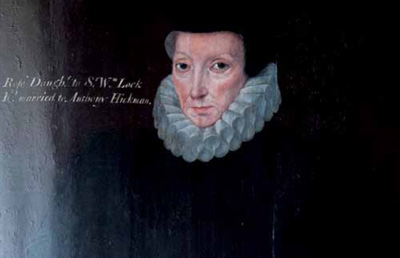
Rose Locke was born in London on 26 December 1526. She was the daughter of Sir William Locke and his 2nd wife, Katherine. The 3rd of 11 children, her family were some of the earliest Protestants in England, and staunch supporters of Henry VIII’s divorce from Catherine of Aragon. The family lived in Cheapside in the 1530s, with Rose’s father and several brothers serving as agents of the king in France and Flanders during the 1540s. A mercer and alderman of London, Rose’s father was a gentleman usher of the chamber to Henry VIII and was appointed sheriff of London in 1548; he was knighted by Edward VI in 1549.
According to Rose her father, Sir William Locke, a merchant with strong links to Antwerp, had smuggled ‘herectic’ Protestant writings from abroad for Queen Anne Boleyne herself. Rose had long been familiar with the new learning and wrote in 1610: “My mother in the dayes of King Henry the 8th came to some light of the gospel by means of some English books sent privately to her by my father’s factor from beyond the sea: where upon she used to call me with my 2 sisters into her chamber to read to us out of these same good books very privately for feare of troble because these good books were then accepted hereticall…”¹
On 28 November 1543, just a month short of her 17th birthday, Rose married London merchant Anthony Hickman. They had as many as 7 children together and their eldest daughter, Mary, was born in 1547 and a son, William, was born in 1549. Sons Walter and Anthony were born in 1553 and 1560 respectively. Another son, Eleazar, born in 1562, was named after John Knox’s son, and the last, Matthew, was born in 1563. There were two other daughters, Frances and Rose, though their birth dates are unclear.
Anthony Hickman owned several ships, including the Great Christopher, given to Queen Elizabeth I’s navy in 1560 and renamed Victory; and had property in London, Essex and Antwerp. He had a business partnership with Rose’s brother, Thomas Locke, and both were favourites of Henry VIII and Edward VI, growing rich through their mercantile endeavours. The Hickmans entertained such eminent clergymen as John Foxe and John Knox; Rose’s sister-in-law Anne Locke was a correspondent of John Knox and he mentioned the family a number of times in his letters to her between 1556 and 1560.
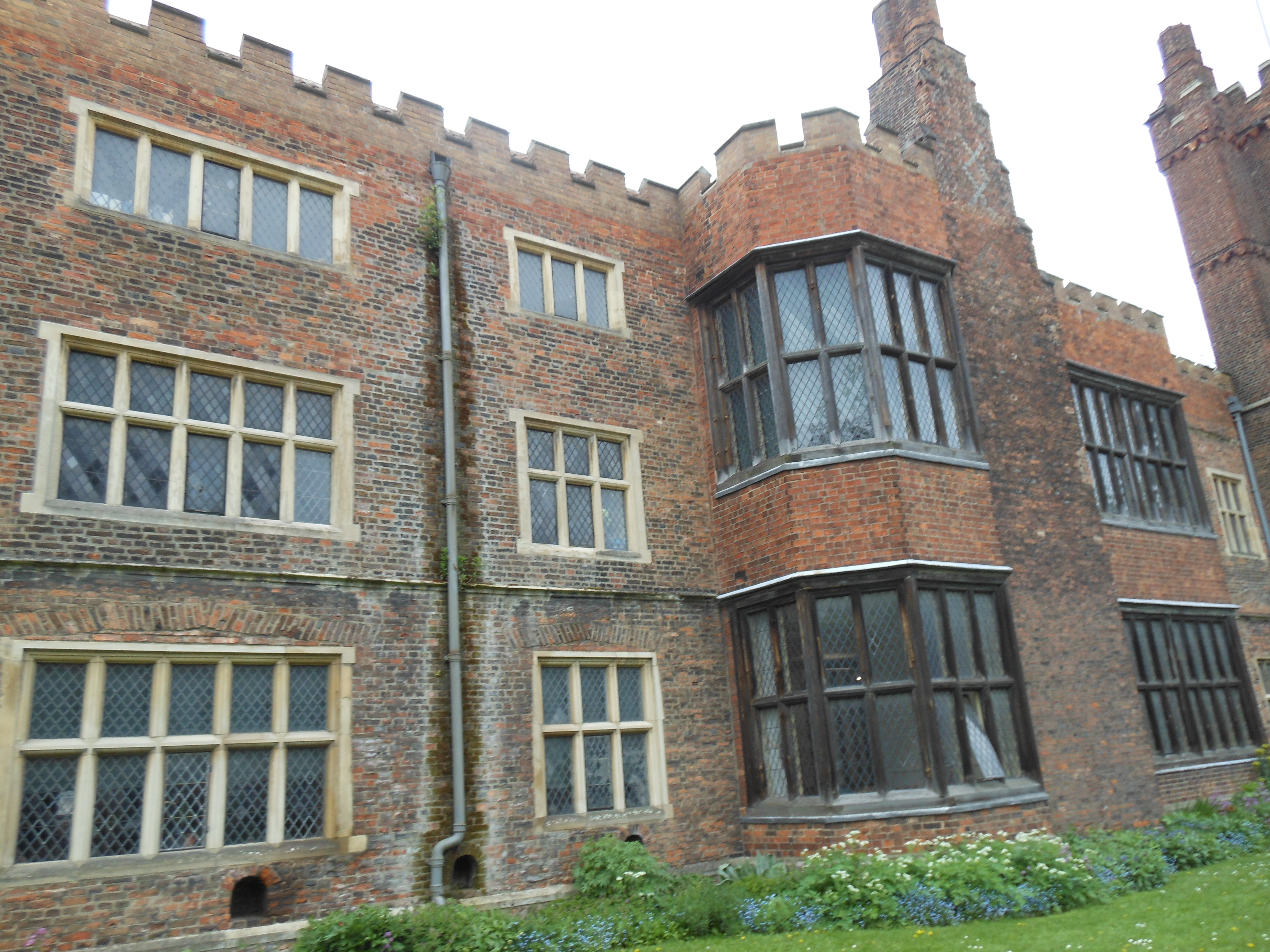
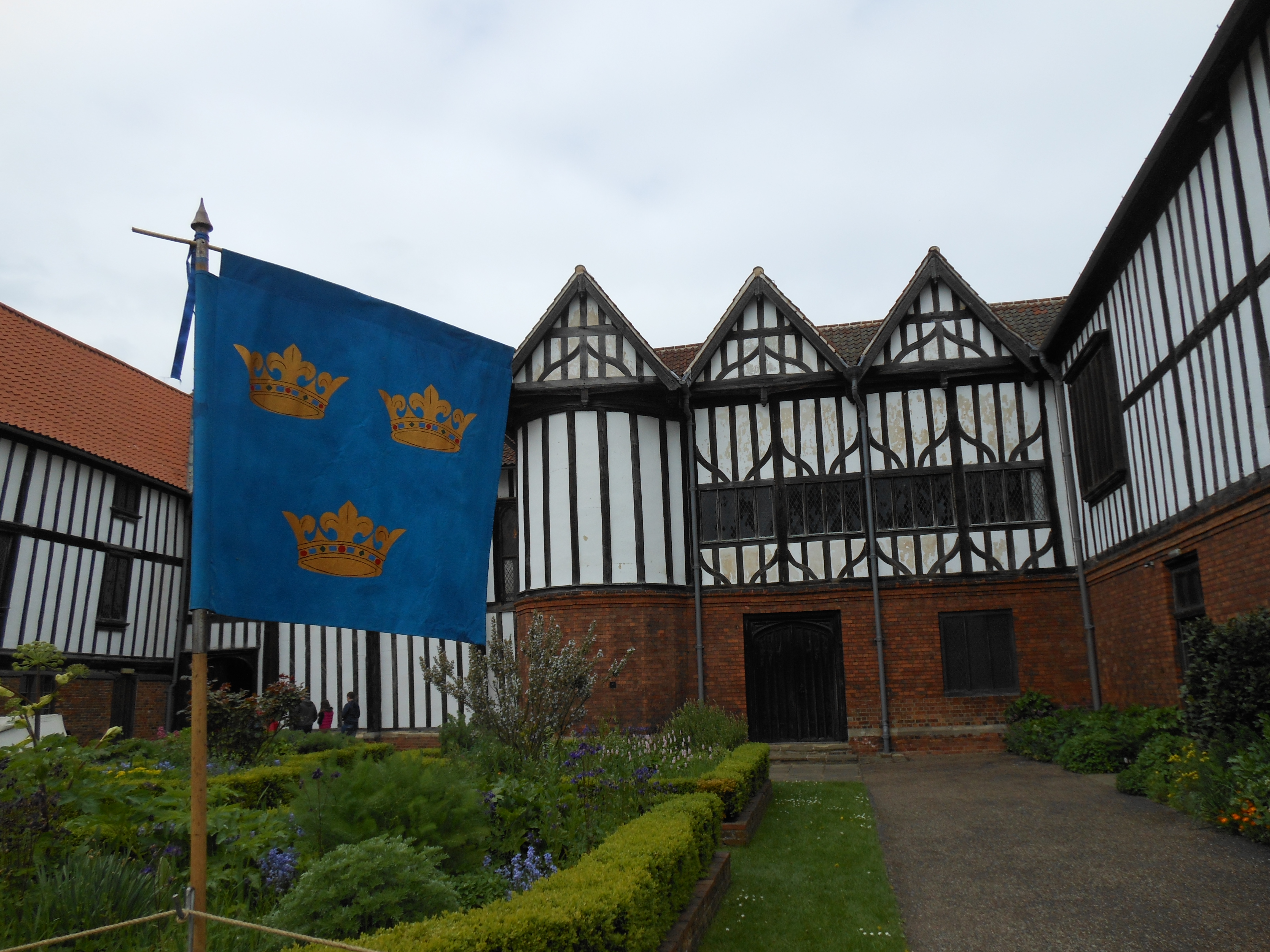
Gainsborough Old Hall
However, the advent of the reign of Mary I, and the resurgence of the Catholic faith in England, meant that the staunchly Protestant family fell out of favour with the catholic queen. They defied Mary by holding private religious services in their homes. Anthony and Thomas were both arrested and held in the Fleet prison for a time, before being released to house arrest. Anthony eventually escaped to Antwerp, with Rose and the children following him shortly after; the family would remain on the continent until after Queen Mary’s death.
They returned to England shortly after the accession of Elizabeth I. However, religious divisions were becoming more pronounced as Queen Elizabeth’s reign advanced, not only between Catholicism and Protestantism, but within Protestantism itself.
After Anthony’s death in 1573, Rose married again. Her 2nd husband was a widower, Simon Throckmorton of Brampton, who died in 1585. Rose rarely used the Throckmorton surname, possibly because of its association with plots to rescue Mary Queen of Scots by disaffected Catholics; the Throckmorton Plot being led by Sir Francis Throckmorton, a cousin of Queen Elizabeth’s lady in waiting, Bess Throckmorton.
The Hickman family had become known for their Puritan leanings; Puritans were those who wanted the ‘purer’ church as envisaged in the reign of Edward VI, rather than the compromise established by Elizabeth I. In 1593, in order to curb the activities of such religious dissidents, Elizabeth I’s government had approved the ‘Act Against Puritans’, whereby it became illegal to become a Puritan or encourage others to that tendency.
Gainsborough Old Hall
As a result, official appointments at court, for those known to have Puritan connections, suddenly dried up. Rose’s son Walter, deeply entrenched in court circles and an old hand at brokering appointments for friends and family (usually with a financial incentive) discovered the implications of the new stance in 1594. The Cecil Papers show that Walter was refused when he applied for the position of Receiver of the Court of Wards for his brother William, despite offering an inducement of £1,000.² The increasing hostility towards Puritans, and the possibility of escalating religious persecution, may well have persuaded William to move his family north; away from the prying eyes of the authorities and into Lincolnshire.
With the encouragement of Katherine Willoughby, Duchess of Suffolk, ministers with Puritan leanings had been appointed to various churches throughout Lincolnshire. Several of the Pilgrim Fathers, who sailed to America on the Mayflower, would come from the region, including William Brewster and William Bradford. Families with strong ties to service at the Tudor court, such as the Burghs of Gainsborough, were moving south, closer to London and the person of the Queen, while other families were moving north.
In 1596 William Hickman bought the Old Hall at Gainsborough, which provided the merchant with his very own port on the River Trent. The move to Gainsborough was not without its challenges. With the Burgh family having essentially left the town to its own devices for the last 30 years, Hickman’s attempts to collect market revenues and port tolls met with opposition, including the apparent murder of one of his servants, who was stabbed to death. It may well have been that William’s puritan leanings exacerbated the situation, but the main unrest seems to have stemmed from relatives and retainers of the outgoing Burgh family. A Mr Topliff, who tried to stop William obtaining justice for his servant, was the son-in-law of Thomas Burgh III (himself the father-in-law of Henry VIII’s last queen, Katherine Parr).
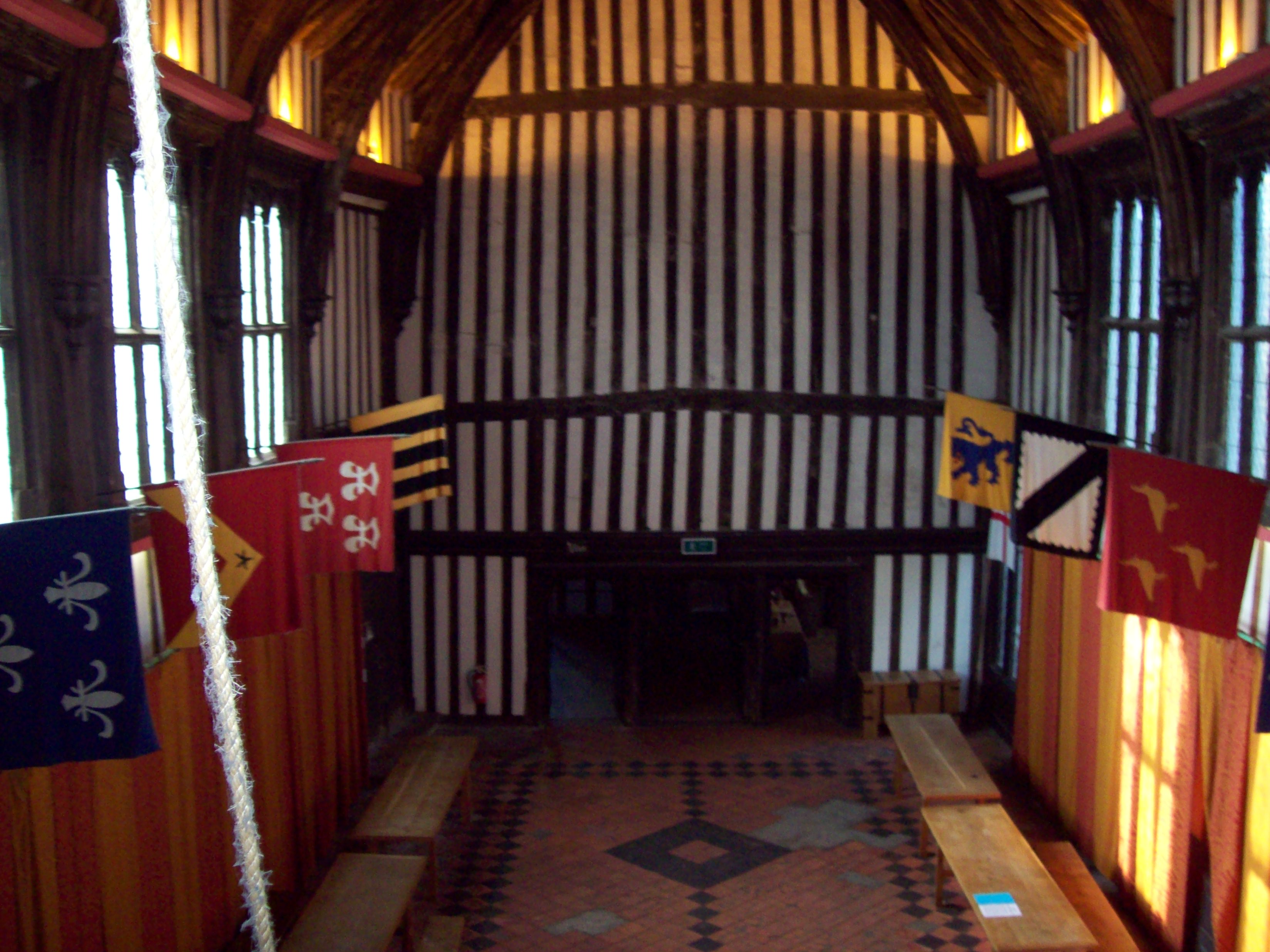
The great hall of Gainsborough Old Hall viewed from the solar
Now approaching her 80s, Rose moved to Gainsborough with her eldest son. In 1610, at the age of 84, she wrote an account of her early life, from 1534, when her father removed the papal bull, which had been posted in Dunkirk, against Henry VIII. Her recollections ended in 1558, with the death of Mary I and her family’s return to England on the accession of Elizabeth.
Lady Rose Hickman died on 21 November 1613, a month short of her 87th birthday. She was buried in the Hickman Quire of the former Burgh chantry chapel in the parish church of All Saints in Gainsborough, just across the road from her home, Gainsborough Old Hall. Her epitaph was written in 1637 and reads:
God gave unto this matron in her days
Such pledges firm of his affliction dear
Such happy blessings as the psalmist says
They shall receive as serve the Lord in fear
Herself in wedlock as the fruitful vine
Her children like the olive plants to be
And of her issues in descendant line
She did her childrens childrens children see
And freed from the Babylonish awe
Peace permanent on Isreal saw
Now having fought a good and Christian fight
Against the spiritual common enemy
And exercis’d herself both day and night
In oracles divine continually.
And kept the sacred faith with constancy
Even in the midst of persecutions rage
Express’d by worthy works of peity
From time to time as well in youth as age
She finished her course and doth possess in heavenly bliss the crown of righteousness”³
*
Footnotes:
¹A Guide to Gainsborough Old Hall by Sue Allan; ²ibid; ³MS C Folio 7, deposited in the British Museum in 1935, quoted by gainsborougholdhall.co.uk/throckmorton
John Leland Leland’s Itinerary in England and Wales 1535-43 edited by L Toulmin Smith (1906-10); Letters and Papers, Foreign and Domestic, of the Reign of Henry VIII 1509-47 edited by JS Brewer, James Gairdner and RH Brodie, HMSO London 1862-1932; Privy Purse Expenses of King Henry VIII from November MDXIX to December MDXXXII edited by Sir Nicholas Harris Nicolas 1827; Religion and politics in mid-Tudor England through the eyes of an English Protestant Woman: the Recollections of Rose Hickman edited by Maria Dowling and Joy Shakespeare; Bulletin of the Institute of Historical Research, 1980 & 1982; A Guide to Gainsborough Old Hall by Sue Allan; Elizabeth’s Women by Tracy Borman; England Under the Tudors by Arthur D Innes; Henry VIII: King and Court by Alison Weir; In Bed with the Tudors by Amy Licence; In the Footsteps of the Six Wives of Henry VIII by Sarah Morris and Natalie Grueninger; Ladies-in-Waiting: Women who Served at the Tudor Court by Victoria Sylvia Evans; The Six Wives and Many Mistresses of Henry VIII: The Women’s Stories by Amy Licence; Oxforddnb.com; Tudorplace.com; gainsborougholdhall.com.
Lady Rose also features in Marie McPherson’s novel on the life of John Knox, The Second Blast of the Trumpet.
*
My books
Signed, dedicated copies of all my books are available, please get in touch by completing the contact me form.
Defenders of the Norman Crown: The Rise and Fall of the Warenne Earls of Surrey tells the fascinating story of the Warenne dynasty, of the successes and failures of one of the most powerful families in England, from its origins in Normandy, through the Conquest, Magna Carta, the wars and marriages that led to its ultimate demise in the reign of Edward III. Defenders of the Norman Crown: Rise and Fall of the Warenne Earls of Surrey is now available from Pen & Sword Books, Amazon in the UK and US,Bookshop.org and Book Depository.
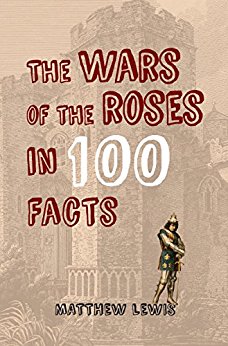
The Wars of the Roses in 100 Facts by Matthew Lewis
The Wars of the Roses were a series of brutal conflicts between rival branches of the Plantagenet family – the Lancastrians and the Yorkists. The wars were fought between the descendants of Edward III and are believed to stem from the deposition of the unpopular Richard II by his cousin, Henry Bolingbroke, who became Henry IV. The wars were thought to have been fought between 1455 and 1487, and they saw many kings rise and fall as their supporters fought for their right to rule.
The Wars of the Roses in 100 Facts covers this dangerous and exciting period of political change, guiding us through the key events, such as the individual battles, and the key personalities, such as Richard, Duke of York, and the Earl of Warwick, known as ‘the Kingmaker’. Matthew Lewis takes us on a tour through the Wars of the Roses, fact by fact, in easy-to-read, bite-size chunks. He examines some of the most important aspects of this period, from the outbreak of the conflict at the First Battle of St Albans, to Henry VI’s insanity, and the character of Richard III and his final defeat at the hands of Henry Tudor.
What can I say? I love these little books. This book series – I have already reviewed The Anglo-Saxons in 100 Facts – is a fabulous introduction to some of the most fascinating events in history.
The Wars of the Roses in 100 Facts by Matthew Lewis is a wonderful little book giving details of 100 of the most important and significant events of the Wars of the Roses. From the deposition of Richard II to the death of Cardinal Reginald Pole, arguably the last Yorkist descendant, Matthew Lewis tells the tale of the most divisive conflict in English history in an entertaining and engaging manner.
20. King Henry Could Have Died at the First Battle of St Albans
During the First Battle of St Albans, as Warwick’s archers fired at the men defending the king, Henry VI was struck by an arrow that cut him on the neck. As the fighting grew closer, the king was taken into a tanner’s shop to receive treatment and to keep him out of the way of further harm.
Benet’s Chronicle records that once the battle was won, York, Salisbury and Warwick burst into the tanner’s shop and found Henry, wounded and at their mercy. Instead of finishing off the king, as York might have done had he truly wanted the crown at this stage, Benet’s Chronicleexplains that the lords fell to their knees and pledged their allegiance to the king, ‘at which he was greatly cheered’.
Henry was escorted to the comfort of the abbey to continue his treatment and, although he was dismayed to learn of Somerset’s death, he was well treated and on the following morning he was escorted to London by the Yorkist lords. York might well have widened the wound at Henry’s neck and ensured that there were no witnesses. He could then have blamed the stray arrow for killing the king. This is possibly the clearest sign that at this point, Henry’s crown was safe and secure.
What I love about this book is it is a wonderful combination of the best known facts, the battles and the politics, and some little known facts and events that mean even a seasoned Wars of the Roses enthusiast will find something to engage their interest. The brief, 1-2 page chapters mean the reader can drop in and out of the book at their leisure, or whenever they have 5 minutes to spare.
These little snippets are utterly enthralling and informative. They combine to give a wonderful, universal picture of the conflict; the battles and the characters involved. The book is beautifully written and well researched. It is organised in a loosely chronological manner, with fabulous insights into the major players and events of the Wars of the Roses.
Although The Wars of the Roses in 100 Facts is restricted to 100 facts, it is not short on insight and analysis. Matthew Lewis does a great job of achieving a balance of facts with the analytical approach of the historian. It would be a wonderful addition to the library of anyone interested in the Wars of the Roses, or the later fifteenth century as a whole.
*
Matthew Lewis is an author and historian with particular interest in the medieval period. His books include a history of the Wars of the Roses, a biography of Richard, 3rd Duke of York, and two novels of historical fiction telling the life of King Richard III and the aftermath of the Battle of Bosworth. He also writes a history blog, sharing thoughts and snippets. He can be found on Twitter @MattLewisAuthor.
The Wars of the Roses in 100 Facts is available from Amberley and Amazon.
*
Heroines of the Medieval World:
Heroines of the Medieval World, is now available in hardback in the UK from both Amberley Publishing and Amazon UK and worldwide from Book Depository. It is also available on Kindle in both the UK and USA and will be available in Hardback from Amazon US from 1 May 2018.
You can be the first to read new articles by clicking the ‘Follow’ button, liking our Facebook page or joining me on Twitter.
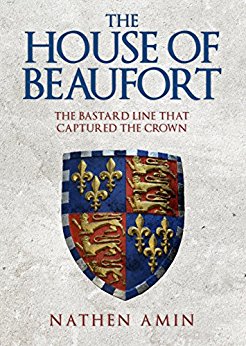
The Wars of the Roses were a tumultuous period in English history, with family fighting family over the greatest prize in the kingdom – the throne of England. But what gave the eventual victor of these brutal and complex wars, Henry Tudor, the right to claim the crown? What made his Beaufort mother the great heiress of medieval England, and how exactly did an illegitimate line come to challenge the English monarchy?
While the Houses of York and Lancaster fought brutally for the crown, other noble families of the kingdom also played integral roles in the wars; grand and prestigious names like the Howards, Mowbrays, Nevilles and Percys were intimately involved in the conflict, but none symbolised the volatile nature of the period quite like the House of Beaufort. Their rise, fall, and rise again is the story of England during the fifteenth century, a dramatic century of war, intrigue and scandal both at home and abroad. Many books have been written about individual members of the dynasty, but never has the whole family been explored as one.
This book uncovers the rise of the Beauforts from bastard stock of John of Gaunt, Duke of Lancaster, to esteemed companions of their cousin Henry V, celebrated victor of Agincourt, and tracks their chastening fall with the House of Lancaster during the 1460s and 1470s. The hopes and fortunes of the family gradually came to rest upon the shoulders of a teenage widow named Margaret Beaufort and her young son Henry. From Margaret would rise the House of Tudor, the most famous of all England’s royal houses and a dynasty that owed its crown to the blood of its forebears, the House of Beaufort. From bastards to princes, the Beauforts are medieval England’s most captivating family.
The House of Beaufort: the Bastard Line that Captured the Crown is a masterpiece of historical writing. Nathen Amin has written the story of a family from its very beginning, highlighting the heights of their success, and the depths of their failures. Covering almost exactly 100 years, the book provides a fascinating insight into a family who lived close to the crown, but looked like they would constantly be denied it.
John of Gaunt, father of the Beauforts
From the love story of Katherine Swynford and John of Gaunt, through the successes and failures of the Hundred Years War, and the devastation of the Wars of the Roses, Nathen Amin retells the fascinating story of the Beauforts in an insightful, balanced manner, which highlights their weaknesses as much as it does their strengths.
As the fourteenth century came to its dramatic close, the Beauforts were well placed to take advantage of their connection to the new regime. John Beaufort, earl of Somerset and the king’s chamberlain, was in his late twenties and evidently adept at dealing with a wide range of political and martial issues. Henry Beaufort was around twenty-five years old and learning the ropes as bishop of Lincoln, while Thomas Beaufort had recently reached adulthood and was ready to put his body on the line for his king. Their sole sister Joan, Meanwhile, had settled into married life as the countess of Westmorland, establishing a Beaufort-blooded Neville hegemony in the north.
As siblings to the king of England, a promising future beckoned for the foursome. Provided they retained the good grace of their half-brother, they had reasonable expectations of widespread patronage that included money, manors and titles…
The author clearly demonstrates his enthusiasm for one of the most famous medieval families; however, this is not a fan book. Their weaknesses and failings are highlighted just as much as their successes. Actions are analysed and dissected to provide insights into not only the family, but the history and politics of England itself.
The House of Beaufort: the Bastard Line that Captured the Crown is beautifully written and reads like a novel of a family saga. And of course, as with all of us, each character in the Beaufort story has human traits that means their actions are not always understood or easily explained. The author clearly comprehends and demonstrates the fickleness of human actions and brings to vivid life this complex family who had such an influence on English history.
The entire Beaufort family will find their stories told in this book, from the first and oldest, John Beaufort, through his brothers, nephews and nieces, sons and grandchildren. The story of Joan Beaufort queen of Scotland, is told with sympathy and compassion, as is the original love story of Katherine Swynford and John of Gaunt. Characters who played a part in the lives and history of the family are also treated with fairness and compassion, such as their legitimate royal siblings and nephews, Joan of Arc and Richard, duke of York.
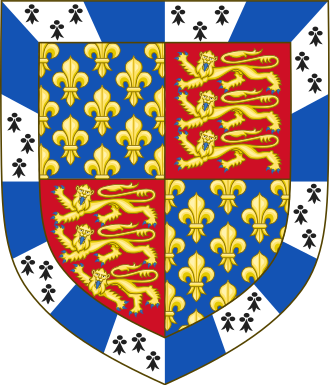
Arms of Thomas Beaufort, 1st Duke of Exeter
Any reader will have their favourite Beaufort, and one they love to hate. Thomas Beaufort comes across as the perfect and chivalrous soldier, whilst Henry is the devious but diligent churchmen. Thomas is my favourite, he’s the hero. However, I love that Henry is such an ambiguous character, he is probably the greatest recreation in the book. Nathen Amin has clearly thought through Henry Beaufort’s ambitions, motivations and his actions. He tells the story of a bishop who was not always in favour with the establishment, his personal ambitions putting him at odds with successive kings, despite the fact his abilities were impressive.
Nathen Amin’s passion for the Beauforts comes across in every page. His persuasive, perceptive arguments are all supported with ample evidence and explanation. These arguments and insight are balanced and reflective, even in the divided loyalties of the Wars of the Roses, there is no bias as the story is told.
Comprehensive and compelling, this is a book that should grace the shelves of any fan of the fourteenth and fifteenth centuries, of the royal Houses of Lancaster and York, and the Hundred Years War, or even for a simple lover of medieval history. This book will become a powerful research tool for anyone looking into the Beaufort family and their links to the crown of England and the momentous events of the Wars of the Roses
*
About the author: Nathen Amin grew up in the heart of Carmarthenshire, West Wales, and has long had an interest in Welsh history, the Wars of the Roses and the early Tudor period. His first book Tudor Wales was released in 2014 and was well-received, followed by a second book called York Pubs in 2016. His third book, the first full-length biography of the Beaufort family, the House of Beaufort, was released in 2017 and became an Amazon #1 Bestseller for Wars of the Roses. He is currently working on his fourth book, Pretenders to the Tudor Crown, for release in 2019.
Nathen is also the founder of the Henry Tudor Society and has featured discussing the Tudors on BBC radio and television, as well as in print and online media across the UK. He has a degree in Business and Journalism and now lives in York, where he works as a Technical Writer.
The House of Beaufort: the Bastard Line that Captured the Crown is available from Amazon UK and Amberley Publishing and will shortly be released on Amazon US on 1st November.
*
My book, Heroines of the Medieval World, is now available in hardback in the UK from both Amberley Publishing and Amazon UK and worldwide from Book Depository. It is also available on Kindle in both the UK and USA and will be available in Hardback from Amazon US from 1 May 2018.
You can be the first to read new articles by clicking the ‘Follow’ button, liking our Facebook page or joining me on Twitter.
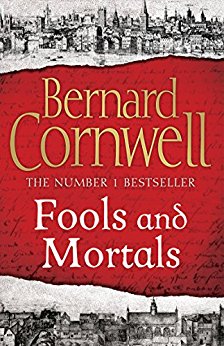
Fools and Mortals follows the young Richard Shakespeare, an actor struggling to make his way in a company dominated by his estranged older brother, William. As the growth of theatre blooms, their rivalry – and that of the playhouses, playwrights and actors vying for acclaim and glory – propels a high-stakes story of conflict and betrayal.
Showcasing his renowned storyteller’s skill, Bernard Cornwell has created an Elizabethan world incredibly rich in its portrayal: you walk the London streets, stand in the palaces and are on stage in the playhouses, as he weaves a remarkable story in which performances, rivalries and ambition combine to form a tangled web of intrigue.
I have been a fan of Bernard Cornwell since reading my first Sharpe book as a teenager. I have read everything, eagerly awaiting each new book and devouring it within days of its release. So when I was offered the chance of an advance copy of Fools and Mortals – well – I jumped at it.
Fools and Mortals is a major departure for Bernard Cornwell. There are no world-changing battles as in the Sharpe andLast Kingdom books, no ancient legends such as in the King Arthur and Thomas of Hookton series; in fact, this book is all about pretend, following the antics of William Shakespeare’s younger brother as he tries to make his way as a player in Elizabethan England. And it is fascinating.
‘Show me the nightgown!’ the twin whose sword was still scabbarded demanded, and the Percy tossed down the rochet. ‘Oh pretty,’ the twin said. ‘Is this what papists wear to vomit their filth?’
‘Give it back,’ Alan Rust demanded, slightly raising his borrowed sword.
‘Are you threatening me?’ the twin with the drawn blade asked.
‘Yes,’ Rust said.
‘Maybe we should arrest him,’ the twin said, and lunged his blade at Alan.
And that was a mistake.
It was a mistake because one of the first skills any actor learns is how to use a sword. The audience love combats. They see enough fights, God knows, but those fights are almost always between enraged oafs who hack and slash until, usually within seconds, one of them has a broken pate or a pierced belly and is flat on his back. What the groundlings admire is a man who can fight skillfully, and some of our loudest applause happens when Richard Burbage and Henry Condell are clashing blades. The audience gasp at their grace, at the speed of their blades, and even though they know the fight is not real, they know the skill is very real. My brother had insisted I take fencing lessons, which I did, because if I had any hope of assuming a man’s part in a play I needed to be able to fight. Alan Rust had learned long before, he had been an attraction with Lord Pembroke’s men, and though what he had learned was how to pretend a fight, he could only do that because he really could fight, and the twins were about to receive a lesson.
I know that not every Bernard Cornwell fan will be impressed by this new story; if they are only reading Cornwell for the blood-curdling action, they will be disappointed in this book. But if they read Cornwell because he is THE greatest storyteller, because he can transport you through time and space to a world that is recreated from history and his imagination, they will love this book.
William Shakespeare
I admit I was a little dubious at first, but once you start reading, it is – as usual with a Bernard Cornwell book – impossible to put down. It may be because this is not a war story, is not a crime thriller, and is a totally new departure for the author, that this story works so well. It proves just what an excellent wordsmith he is.
As has come to be expected with one of our greatest authors, the research is impeccable and interwoven in the story are many of the political concerns of the time, the opposition to theatres, the hunt for Catholics and their sympathisers, and even the constant need to impress the aging queen, Elizabeth I. However, Fools and Mortals is not a simple melodrama. There are many threads to the story, the development of professional theatre, love, intrigue, betrayal and sibling rivalry being just a few.
Everything about this book proves why Bernard Cornwell is one of the greatest storytellers of our generation. The writing is of his usual high standard, and keeps you engaged to the very end. The hero, if a complete contrast to Sharpe and Uhtred, is an engaging and entertaining protagonist, with whom the reader can readily invest their hopes and expectations of a great story. Richard Shakespeare is a young man, trying to find his role in life, whilst trying to survive medieval London and negotiate that age-old problem – a superstar older brother!
Any fan of Bernard Cornwell knows that he loves the theatre and the bestselling writer has put all his knowledge and passion into creating this amazing novel. It more than lives up to the high standards we have come to expect in all his work.
My book, Heroines of the Medieval World, is now available in hardback in the UK from both Amberley Publishing and Amazon UK and worldwide from Book Depository. It is also available on Kindle in both the UK and USA and will be available in Hardback from Amazon US from 1 May 2018.
You can be the first to read new articles by clicking the ‘Follow’ button, liking our Facebook page or joining me on Twitter.

 This is of course no substitute for primary research, and the great thing about living in the UK is how easily I can visit actual locations and study contemporary accounts. I found these surviving letters offer an evocative ‘voice’ for Mary, as well as revealing how she felt about people and events.
 nts might have seemed from his perspective.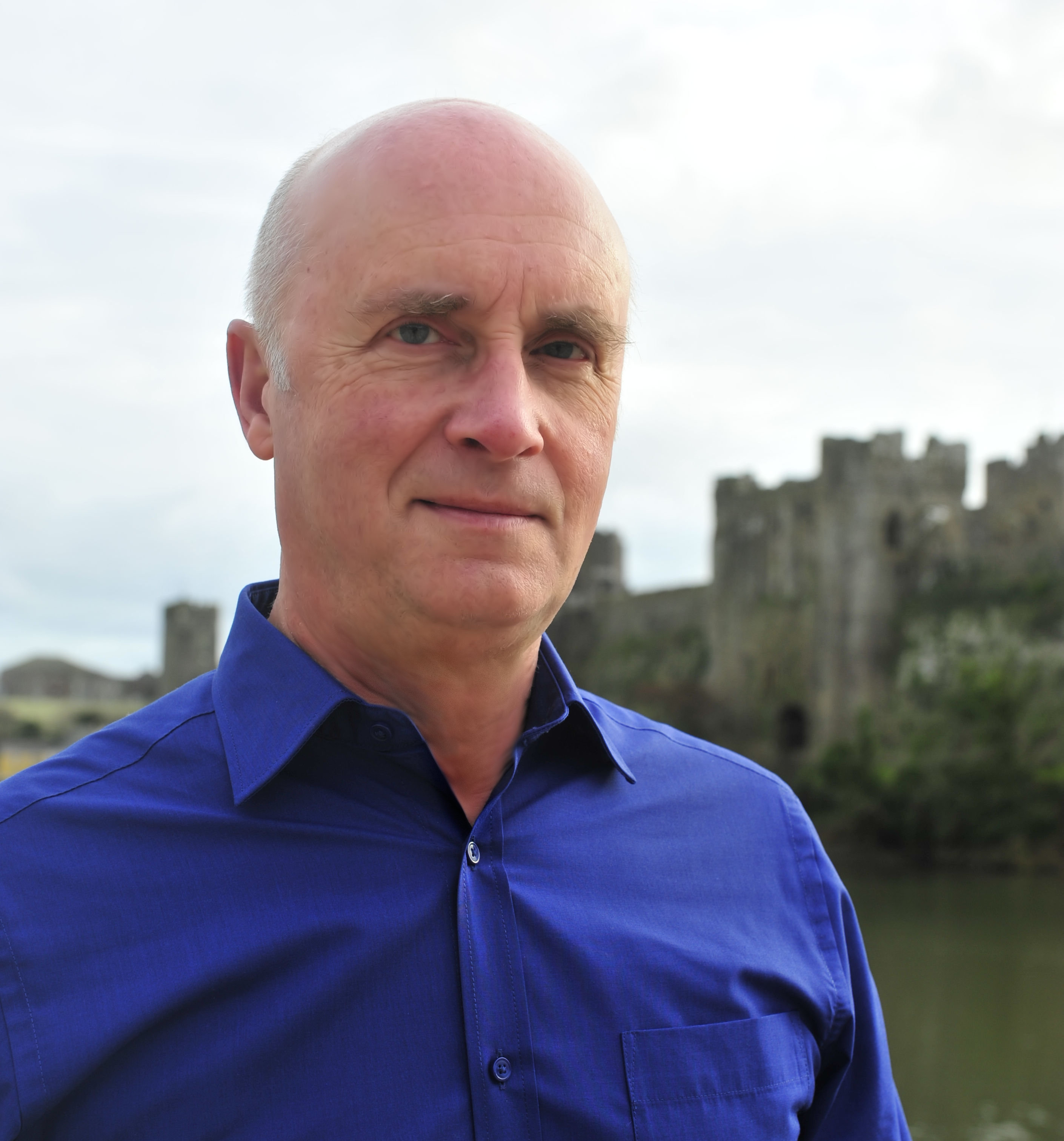












 History... the interesting bits!