Book Corner: The Pawns of Sion

715UoPpSVSLOver on The Review blog!

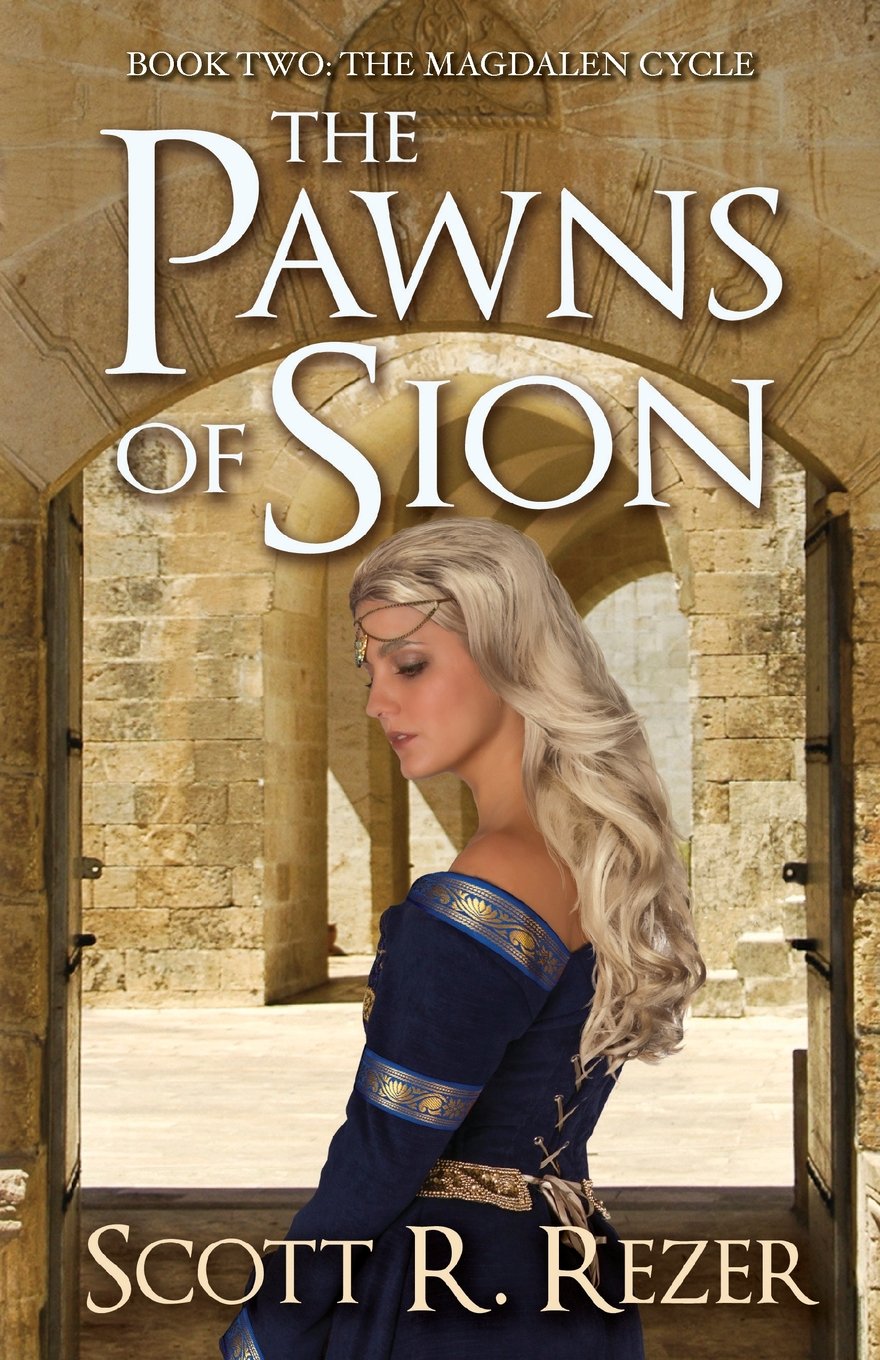
Read my review of Scott R. Rezer‘s The Pawns of Sion.

“At first glance The Pawns of Sion looks like a straightforward story about the politics and rivalries of the Kingdom of Jerusalem. But once you start reading, you discover the novel delves deeper than you’d ever thought possible. Scott R. Rezer has created a story which merges two realms, that of man and that of the angels. The war between Salehdin and the Christians runs parallel with the greater, age-old battle of good versus evil. The author has cleverly interwoven the two realms in a deep, intense book. The plot is detailed and unveiled in layers the deeper into the book you get.

Set in the years immediately before the Third Crusade, the action moves fast and furious from the death of King Baldwin V, through the behind-the-scenes manipulations of the Order of Sion and the Magdalen’s attempts to stop them, while Salehdin takes advantage of the deep divisions revealed among the Christian lords. And underlying it all is the centuries-long search for the Holy Grail….”

I found The Pawns of Sion both fascinating and intriguing. It looks deeper into the origins of Christianity than other Crusader novels and the age-old battle of good against evil mirrors the irreconcilable differences of the Christian and Muslim combatants. There is the occasional missing word in the text, but this does not detract from the overall enjoyment of the book. The author knows how to evoke the reader’s sympathy – or distaste – for particular characters. You find yourself rooting for the good guys.

The full depth of the story is slowly  revealed – each revelation releasing a new feature of the plot. And as each new secret is disclosed, it adds a little explanation to the motives and desires of the protagonists.

The language is, at times, haunting, drawing aside the veils between the realm of the natural world and that of the spiritual, giving the reader a sense of the surreal:

….Her magic shrank from the shadow of his evil rather than endure its touch.
“Did you think you could defeat me with so little a thing as the death of your beloved daughter?”
“You have no place here, Simon,” she hissed, ignoring his taunt. She drew a thin silver blade from the belt beneath her cloak. The rasping sound of metal upon metal overwhelmed the silence of the wood. “You never have.”
“Your words wound me, Mariamne,” said Amalric de Lusignan. “Why must we continually bicker when we might become friends?”
She walked towards him, sword on shoulder, shedding her immortal glamour and taking on a semblance men knew….
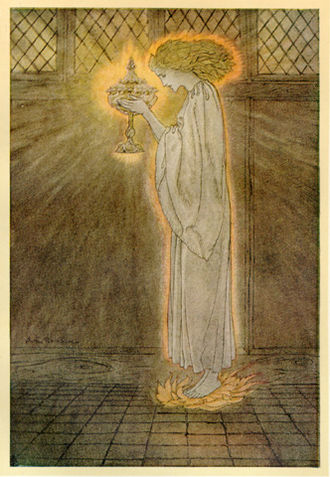
330px-SangrealAs with many people, the Knights Templar have always held me in awe and although they are not the heroes of the story, their Grand Master Gerard de Ridefort is one of the leading characters. The author makes good use of the known protagonists of the time, weaving his story around their lives and the events that shaped the Holy Land and its politics at the time. Each character is imbued with the qualities passed down by history.

Balian d’Ibelin is the good, noble knight, whose integrity is beyond question. Guion (Guy) de Lusignan is the weak, easily manipulated, indecisive king, while his wife, Sybilla, is the pawn he uses to gain power. Then there’s the young Ernoul, a fictional character who struggles to come to terms with his destiny. The historical characters are intermingled with the fictional ones, allowing the writer to create his own story within the historical record.

The characters are brought to life in the hot, arid backdrop of the Holy Land in the second half of 12th century. The author has recreated the Medieval Near East vividly, cleverly evincing the heat, the dust and the thirst, in the reader’s mind.

Although I found the duality of the story confusing at first, it didn’t take me long to find myself totally immersed in the concept, and in the general story itself. I like the depth of the story; the first few chapters reveal a complexity to the politics and religion of the Holy Land of the time. Individual stories are expertly woven together to make one great tapestry; a tapestry depicting the disasters befalling Outremer which would eventually lead to the launch of the Third Crusade. And behind it all are the origins of Christianity itself, the fight for good against evil and the search for the greatest relic, the Holy Grail.

It’s going to be very interesting, to see how this story continues in Book 3.

*

My book, Heroines of the Medieval World,  is now available in hardback in the UK from both Amberley Publishing and Amazon UK and worldwide from Book Depository. It is also available on Kindle in both the UK and USA and will be available in Hardback from Amazon US from 1 May 2018.

Be the first to read new articles by clicking the ‘Follow’ button, liking our Facebook page or joining me on Twitter.

©2016 Sharon Bennett Connolly
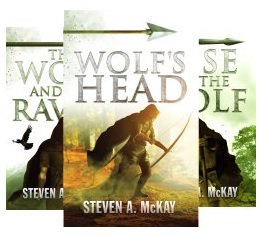
Book Corner: Steven A. McKay’s ‘The Forest Lord’ Series

CX0jE-zWcAEQNWnSteven A. McKay‘s The Forest Lord series of books is a wonderful, refreshing new take in the Robin Hood Legend. All the usual heroes are there, including Little John, Friar Tuck, Will Scarlet and Maid Marian, battling against their old enemies, the Sheriff of Nottingham and the despicable Sir Guy of Gisbourne.

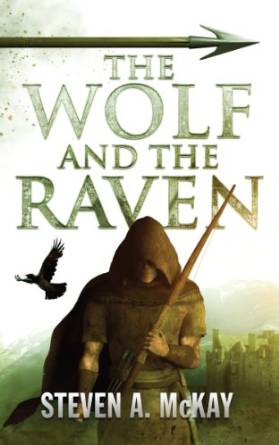
However, what has changed is the time and location. Instead of the wilds of Sherwood Forest, The Forest Lord books are set in Barnsdale Forest in what is now West Yorkshire, while young Robin’s family lives in the nearby village of Wakefield. Gone also is the vile Prince John – and you won’t see King Richard the Lionheart either. The story is set in the time of Edward II, the rebellion of his cousin, Thomas of Lancaster providing the back-story to the first book; while the aftermath of Thomas’s defeat at the Battle of Boroughbridge is still being felt in the second book, The Wolf and the Raven, as the surviving rebels are hunted down.

1stWolf’s Head introduces you Robin as a newly outlawed teenager, finding refuge in a gang of outlaws in Barnsdale Forest. We follow Robin as the youth learns how to fight, how to deal with loss and how to lead men, while making mistakes and enemies along the way. As Robin and his companions, including a grieving Templar and his sergeant, become embroiled in the rebellion; they must find a way through the politics and the fighting to survive.

In The Wolf and the Raven, in the aftermath of a violent rebellion Robin Hood and his men must fight for survival with an enemy deadlier than any they’ve faced before. Sir Guy of Gisbourne, the king’s own bounty hunter, stalks the greenwood, bringing bloody justice to the outlaws and rebels who hide there.

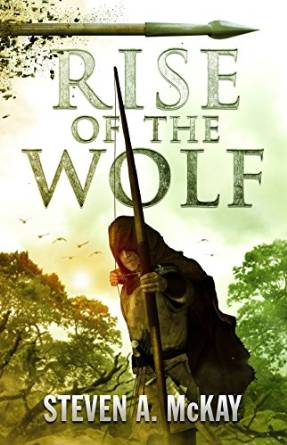
While new friends, shattered loyalties, and a hate-fuelled hunter that threatens to wipe out not only Robin’s companions but his entire family all play a part in the Rise of the Wolf.

2Steven A. McKay has woven together a wonderful story of love, war, loyalty, hatred and a fight for survival set in one of the greatest periods of greed and unrest in English history. As a Yorkshire lass I can testify to the veracity of the author’s vivid depiction of the county and its people; although the landscape may have changed in 700 years, the Yorkshire spirit hasn’t.

The stories combine the fight for survival with the camaraderie of men who trust their lives to each other. There are tender moments, when Robin’s men put Marian’s freedom above their own desire for release from outlawry. There are moments of humour; such as when, in a bizarre twist, Edward II asks Robin and Little John to join his rowing team. And there are ‘yucky’ moments involving a castle toilet …. but I will not give away any more spoilers and ruin your enjoyment of a great story.

The characters are wonderfully vivid. While Robin is young and vulnerable, but develops into a strong, considerate leader, his nemesis Sir Guy of Gisbourne is suitably despicable and only gets worse. I have to say I like the Sheriff of Nottingham a little more than I have done in past depictions; the poor chap seems to have as many troubles on the right side of the law, as Robin has on the wrong side of it.

1Steven A. McKay has taken the Robin Hood legend expanded and enhanced it and made it his own. In case you were wondering, the traditional Robin Hood is still alive throughout the books, rescuing children and damsels and stealing from the rich; teaching them a lesson on the way.

The action is thrilling and you find yourself on the edge of your seat – or reading until the early hours – just hoping for it all to turn out right for our brave hero.

With the final instalment of the story still to come, the stage is set for one exciting, final fight for survival and victory in the green woods.

Will the boys finally get their one, over-riding desire – the chance to go home to their families and live as normal men? Will they all come through it alive? And does Gisbourne finally get  his comeuppance?

I can’t wait to find out.

*

My book, Heroines of the Medieval World,  is now available in hardback in the UK from both Amberley Publishing and Amazon UK and worldwide from Book Depository. It is also available on Kindle in both the UK and USA and will be available in Hardback from Amazon US from 1 May 2018.

Be the first to read new articles by clicking the ‘Follow’ button, liking our Facebook page or joining me on Twitter.

©2016 Sharon Bennett Connolly
Book Corner: South of Burnt Rocks

Over on The Review blog!

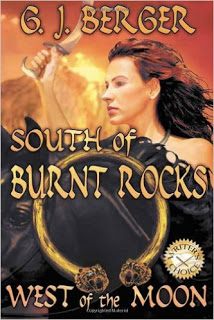
Read my review of G.J. Berger‘s wonderful South of Burnt Rocks West of the Moon.

 “After three great wars, Rome has crushed Carthage. Now the undefended riches of Iberia beckon–gold, tin, olives, wine, and healthy young bodies to enslave. Burnt Rocks tells the story of Lavena, last child of the strongest remaining Iberian tribal leader at a time when Rome plunders and loots her land. At times helped only by her father’s favorite dog, a special horse, or guided by spirits of the earth and sky, she strives to unite her people and oust the Roman menace. Based on real characters, places, and events, Burnt Rocks recreates that shadowy history–and eternal human nature rubbed raw.”

51FzxidZXAL._SX331_BO1,204,203,200_

South of Burnt Rocks West of the Moon was a wonderful surprise.  It is one of those thought-provoking books that you don’t come across very often; transporting you back in time to the Roman occupation of the Iberian Peninsular. The heroine is a young girl, Lavena, not yet out of her teens, who is trying to fulfill her promise to her parents and save her people, whilst at the same time coming to terms with her father’s past.

Having peacefully co-existed with the Iberian natives, the Roman army has a new leader, and new agenda. They are searching for their lost scouts, for native gold, and eager for slaves. The Romans are relentless but Lavena must find a way to fight them with her small band of devoted warriors.
Among the Roman legions is one man, Martius, who searches for the truth about his missing brother but is also drawn to the ‘barbari’ girl, who appears to him in only glimpses through the trees.
The wonderful prose of the book draws you in,  the language paints its own picture of Roman occupied Spain, respecting the spirits and ancestors of the native tribes and weaving a spell that keeps you enthralled in the book to the very end.
When Lavena has to face a council of elders to give them the news of Rome’s aggression and  to plea for help, the picture is vividly described, the words magically entrancing:
“We humbly come to you, to this village, without any men, because the Roman overseer, Piso, left this land, and Rome sent a monster army in his place.”
The nobles quieted and leaned in further.
“That new army has more fighters and weapons and its killing madness is greater than I know how to tell you – and it comes this way.”…
“They come for all the gold in this land, for the young ones to take back as slaves – and the young women and girls to ruin in a manner none should ever know.”
… She told them what she could of the battle for her village, but not about how her mother and those with her died, not about the real end of the she-warriors. She told them how she fled.


G.J. Berger recreates the land of the Iberian Peninsular wonderfully; describing the landscape and its people in such amazing language that you can’t help but feel transported there. The contrast with the vast fighting force of the Roman army, the inexorable, unbeatable military machine that moves over the land relentlessly.
The characters are vivid and have a realism to be marvelled at. They are human, suffering through their fears and doubts, making mistakes and sometimes surviving in spite of themselves. You find yourself urging Lavena on, while feeling suitably disgusted at the mean, lascivious, grasping Roman leaders.
Throughout the book, you can feel the author has a strong sense of direction; he knows where he wants to take you, but knows that the journey is what matters. We follow Lavena from her training as a warrior, through the loss of everything she holds dear, to her final confrontation with the Roman army, knowing everything she has been through, everything that has led her to that moment…
I can’t tell you how much I enjoyed reading this novel. It was a surprise from the first words, drawing you in, leading you on Lavena’s journey and seeing the country of Spain in its early days; the landscape itself becoming part of the story. The sights, sounds and smells of Roman Spain invade your mind as you read.
It is hard to believe this is a debut novel. The storyline is impressive, the language polished; everything about it comes from a storyteller of immense skill and vision.
It is a book not to be missed.
*
My book, Heroines of the Medieval World,  is now available in hardback in the UK from both Amberley Publishing and Amazon UK and worldwide from Book Depository. It is also available on Kindle in both the UK and USA and will be available in Hardback from Amazon US from 1 May 2018.

Be the first to read new articles by clicking the ‘Follow’ button, liking our Facebook page or joining me on Twitter.


Book Corner: An Interview with Toby Clements

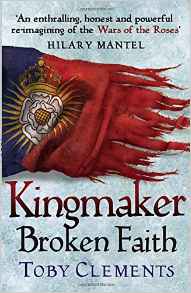
kingmaker for HWAMyself and Jayne Smith interviewed Toby Clements for The Review.
Toby Clements has kindly offered a signed copy of his book for a lucky winner.  Just leave a comment at the bottom of the blog or on our Facebook page. The winner will be drawn on 12th November.

While at the Harrogate History Festival Jayne and I tried to grab a couple of writers to do exclusive interviews for the Review Blog. Unfortunately, Toby Clements was always busy with panels, preparing to interview Stephen Church about King John – or on a really long bike ride. So we jotted the questions down and Toby was kind enough to reply by email.

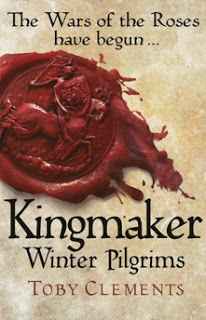
Writing about the Wars of the Roses, Toby Clements’ first book in the Kingmaker series, Winter Pilgrims, earned him a place among the 5 finalists for the 2015 Historical Writers’ Association Crown for Debut Historical Fiction. The second book in the trilogy, Broken Faith, is out now and Mr Clements is working on book 3 as I write.

  1. What made you start writing? It is a terrible cliché and I am only telling you because it is quite funny, but I was always telling stories as a child, only I had a weird stammer, so that I se-e-ed things like tha-at, and I used to tell my older brother these terrible bedtime stories based on us having watched the HG Wells Time Machine film together with my father who described the Morlocks as ‘hairy buggers’ – it was the 1970s, so that was OK then – and so my early stories were all about the Hairy Buggers, told to my brother, punctuated by his six-year-old’s snores on the bunk bed above. After a while my mother suggested I write them down because I was getting pretty tired trying to stay awake to finish them.
  2.  Who are your major writing influences? I am a HUGE fan of Hilary Mantel’s writing, but also of Bernard Cornwell’s plots, so my literary influence would be an imaginary son/daughter of theirs.
  3. What first got you interested in writing history? Another terrible cliché: two enthusiastic teachers at my primary school: Colin Stoupe and Hugh Fairey, to whom I owe great thanks.
  4. Why choose the Wars of the Roses as you setting? I was always a warlike child, I suppose, and I was at school near Tewkesbury – one of the key battles of the Wars of the Roses – and I’d loved the Ladybird edition of Warwick the Kingmaker since before I could read. But what really got me into it was the idea of the Battle of Towton being fought in the driving snow, lasting all day, and during which more Englishmen were killed even on the first of the Somme. I thought: HOW did that come to pass, when their fathers and grandfathers had fought shoulder to shoulder with one another at Agincourt and so on…
  5. What made you choose a monk and a nun as your central characters? I wanted someone who would perhaps know nothing of the politics of the 15th Century world, and so could ask the right questions at the right time without me shoe-horning in a load of random exposition, and who could see things afresh and react to them, rather than that world being so ordinary they would not bother to describe it. That I have two heroes is a chance quirk of researching fate.

    B&W__6005086-1
    Toby Clements
  6. Who do you think is your best character? Who is your personal favourite? And why? Katherine is the greatest, because she always knows exactly what to do, even if her choices are often very hard. Thomas is more like me: a bit bumbling, just sort of going along for as quiet a life as possible. He is pretty affable, and doesn’t bother to say much, but when he knows what he is supposed to be doing, he is pretty good at it.
  7. What comes first, the storyline or the research? I change my mind about this every month. At the beginning it is all accuracy – a la Hilary Mantel – but as the month wears on and the money gets tight, I start to think this is a luxury I can’t really afford. One look at the bestseller charts will tell you which the readers prefer.
  8. Which do you find easiest to develop, the plot or the characters? I struggle with plot, I suppose. My characters are all quite modest and ordinary, so they come quite easily.
  9. Do you know how the book is going to end when you start it? Kind of. I know I have to get them somewhere at such and such a time, and the known history acts as a series of pegs on which to hang the skein of their adventures, so that is pretty easy to map out. As to who dies and who falls in love, and so on… yes, I think I do, but am open to changing my mind.
  10. How do you approach your writing day? I am at my desk by 8.30 and just try to bash away while I can. Sometimes I have to go off and do other jobs – I review books and am a sort of jobbing carpenter – but if I am at home, I try to chug through until about 6. Sometimes I get a load done, sometimes not much. It varies because I don’t really plan my writing very well in advance.
  11. If Ridley Scott was to approach you to make a film of your books, who would you want to play Thomas and Katherine? I honestly don’t know. I don’t watch enough films or telly, really. Sorry.index
  12. Have you ever changed your mind about killing off a character? I have, but no one major, and each time I am damn glad I did. A dead character is no use whatsoever. In Winter Pilgrims I had Sir John die at the battle of Towton, ‘unobserved during that afternoon’ but my editor insisted that was too sad, so Katherine saved his life with some revolutionary brain surgery.
  13. What is next in the pipeline, after the Kingmaker Trilogy? I have one more novel to write set in the Wars of the Roses, but this will be a more complex piece, from multiple points of view, and more of a political novel than a fighting novel. After that I have a slight idea for another series, but I am not sure how commercial it will prove, so it may never see the light of day. We shall see.
  14. Which other periods of history would you like to write about? I don’t have another period about which I am so interested, so I think it will be close to the 15th Century or maybe it will be a little later. I don’t want to choose another just because I have to. In a way I’d rather stop writing than it become something I must do.


A huge ‘thank you’ to Toby Clements for answering our questions! You can find Toby Clements on his pinterest page and his books are available on Amazon.

*

My book, Heroines of the Medieval World,  is now available in hardback in the UK from both Amberley Publishing and Amazon UK and worldwide from Book Depository. It is also available on Kindle in both the UK and USA and will be available in Hardback from Amazon US from 1 May 2018.

Be the first to read new articles by clicking the ‘Follow’ button, liking our Facebook page or joining me on Twitter.

Book Corner: An Interview with Novelist Derek Birks

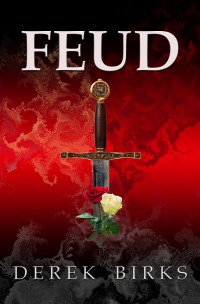
Whilst at the Harrogate History Festival last week I had the opportunity to do some interviews for The Review, with my Review colleague, Jayne Smith. The 1st interview was with the charming Derek Birks, author of the Rebels & Brothers series of books, which I have recently reviewed.junefeudcover

What made you start writing? I always wanted to write. I started at about 17, writing adventure stories, but they were rubbish. Then I got caught up with other things. 40 years later I wanted to find out if I could do it. looking back, I couldn’t have written the books I have when I was that age.

Why are your stories set in the Wars of the Roses? It’s always been one of my favourite periods. The characters are so fascinating – you couldn’t make up the characters and situations if you tried.

Who were your major writing influences? Bernard Cornwell and Alexandre Dumas. I love the Musketeers stuff. And Bernard Cornwell was a breath of fresh air – his writing was less polite than anything else around at the time.

How do you approach your writing day? I write almost entirely in the mornings, staring around 7.30. I can write for as long as I want, but usually finish about 1 o’clock and then have lunch.

If you lose track, do you give up or carry on? If I hit a snag, to clear my mind I go for a walk, or a swim and don’t think about it – then the ideas pop in my head. It helps to make for a better plot, usually. The same happens if my editor – my son- says something is not working; I’ll think about it and come up with something better.

How do you kill off your characters? I started my first book writing something direct and full of action, but that meant some characters would die. By the 3rd book my characters’ attitude to death changed. In the first 2 there was no fear of the consequences. By the 3rd I looked at battle weariness and regret and the characters look at it differently. I changed my mind about killing a character I had always intended to kill off – and killed off someone else instead. In book 4, someone had to die, it was just a matter of deciding who.

DSCN3985
Derek Birks,, Jayne Smith and myself.

Most books written about wars have women as peripheral characters, weak and helpless. Why did you write Eleanor as a fighter? There is an audience for a strong woman. I tried to have several different women’s roles, and Eleanor was the antidote to the traditional women’s roles. She’s a catalyst for control. She has an edge in that men don’t expect her reactions.

Do your characters talk to you? I don’t think they do. I sometimes go to bed thinking of the story line. But they do have specific theme music; Eleanor’s is Try by Pink and Ned’s is Brothers in Arms by Dire Straits.

Who do you think is your best character and who is your favourite? I would like to think Ned is my best character – and Eleanor is definitely my favourite. I can’t imagine Eleanor getting older. She was the hardest to develop through the book sand I hope she grew up.

If someone said they wanted to make a film, do you have an actor or actress in mind to play Ned and Eleanor? Ned would need to be someone with an amount of vulnerability – Sean Bean wouldn’t be right for it. Eleanor would be someone like the woman in Kill Bill – Uma Thurman?

Do you know how the book is going to end when you start it? Usually, yes. I wrote the end of Feud before writing the middle. With the 2nd and 3rd books yes. With the 4th I knew there was going to be an almighty clash, but didn’t know who would go – I was going to do a Butch & Sundance thing where everyone but 1 died, but decided that was less plausible. I hope the ending came across plausible.

shroud
Did you change any of  your characters halfway through? With my 3 main characters – the 3 siblings – I had a clear idea of what they would be like at the beginning and where they were going. But I did change Robert. At one point he could be viewed as an out-and-out villain, but he was more complex in book 4. Normally I don’t change whether or not they are essentially good or bad.


What’s Next? I wanted to do something like Dumas did with the Musketeers sequel, you know, Twenty Years After. So the next series is set 12 years after, in 1482/3. Some characters from the 1st series will be in it. I’ve only written 10,000 words so far, so its in the very early stages. It will be a series, but it may go on for a while. I have learnt from writing the first series, the first of the new series will be written as a stand alone, with few or no loose ends. 

A big thank you to Derek Birks for answering our questions.

*

My book, Heroines of the Medieval World,  is now available in hardback in the UK from both Amberley Publishing and Amazon UK and worldwide from Book Depository. It is also available on Kindle in both the UK and USA and will be available in Hardback from Amazon US from 1 May 2018.

Be the first to read new articles by clicking the ‘Follow’ button, liking our Facebook page or joining me on Twitter.

©2015 Sharon Bennett Connolly
Book Corner: Rebels and Brothers by Derek Birks

junefeudcoverDerek Birks‘ ‘Rebels & Brothers’ series of 4 novels is a tour de force in Wars of the Roses fiction.

Many books claim to be ‘in the best tradition of Bernard Cornwell’ or ‘a worthy successor to Cornwell’. But very few live up to such promise. however, when I read Derek Birks’ debut novel I thought that, just maybe, I had found one that lived up to such high praise. By the 2nd book I knew the praise was well-deserved.

The Rebels & Brothers series grabs you on the 1st page and keeps you hooked until the very end. And yet they leave you bereft once you have finished, as you know you are not going to read another book as good anytime soon.

The books interweave the personal stories of the Elder family with the wider political and martial drama of the Wars of the Roses. We follow the 3 Elder siblings, Ned, Eleanor and Emma, as they try to negotiate a safe passage through the war, whilst battling a family feud and making enemies at the highest levels of society.

Feud: In 1459, as England stands on the brink of the Wars of the Roses, Ned Elder, a Yorkshire knight, finds himself caught up in the wars when his family is brutally attacked by a local rival, Lord Radcliffe. Ned’s sisters, Emma and Eleanor, are abducted and he must find a way to rescue them. With only a few loyal companions, Ned is hounded across the land by the Radcliffes. Ned and his sisters fight back, but they are young and they make mistakes – and new enemies – along the way. All will be decided on the snowy battlefield of Towton – for Ned and for England.

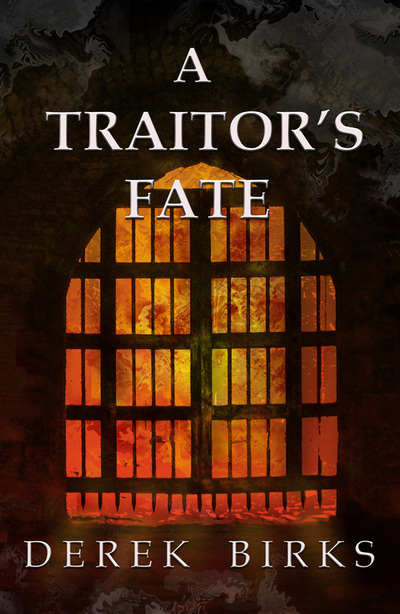
A Traitor’s Fate opens in 1464. The feud with the Radcliffes is over and the Elder siblings have won a hard-fought peace. But one man can’t accept the outcome and finds a new ally to help him achieve his revenge.

Ned is sent to confront a Lancastrian revolt by the new king, Edward of York, he finds his enemies are on his own side, as well as that of the rebels. Branded a traitor by his own commander, the Earl of Warwick, Ned is soon a wanted man in hostile territory and the price on his head only rises when he stumbles upon a royal secret.

Meanwhile, Eleanor and Emma watch over Ned’s pregnant wife, Amelie, wtraitorith only a small garrison of old men and boys to protect them.

A condemned man, Ned fights to escape his pursuers before his whole family suffers destruction.

Having read Feud I was expecting great things from the 2nd book – and it did not disappoint. The story is told in great detail, the action is fast-paced and the characters elicit a great deal of sympathy and empathy. A Traitor’s Fate is one of those increasingly rare stories which are impossible to put down – and yet, at the same time as you can’t wait to get to the end, you don’t want it to finish.

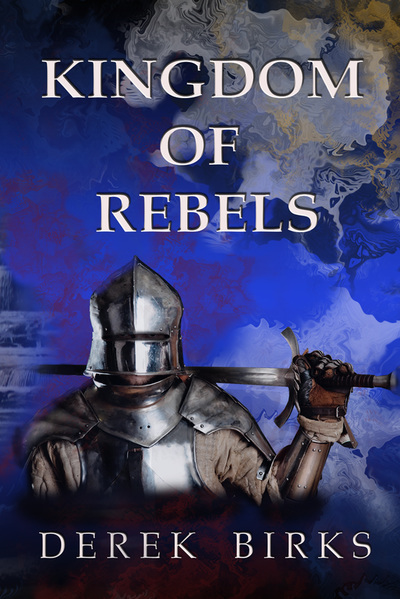
Book 3 of the series, Kingdom of Rebels, takes you on a journey through one of the most turbulent periods of the reign of Edward IV, through the eyes of this one Yorkshire family trying to survive the feuds and battles of the Wars of the Roses, whilst simultaneously trying not to destroy each other. It is impossible not to feel invested in the characters – they are flawed and damaged, but trying their best to survive and you find yourself willing them on.

The story sees Ned Elder exiled to Burgundy by the Earl of Warwick, but for his enemies this is still not enough. At the same time, but far away on the Scottish border, Ned’s sister Eleanor defends the small, beleaguered fortress of Crag Tower; with only a handful of men, she desperately awaits Ned’s return.

Set against the backdrop of a nervous kingdom, where its 2 most powerful men – Edward IV and the Earl of Warwick – are at loggerheads, Ned must fight – yet again – to save his family.

One by one Ned’s family and friends are caught up in Warwick’s web of treason. The fate of the Elders and those who serve them lies once more in the balance as all are drawn back to Yorkshire where they face old enemies once more.

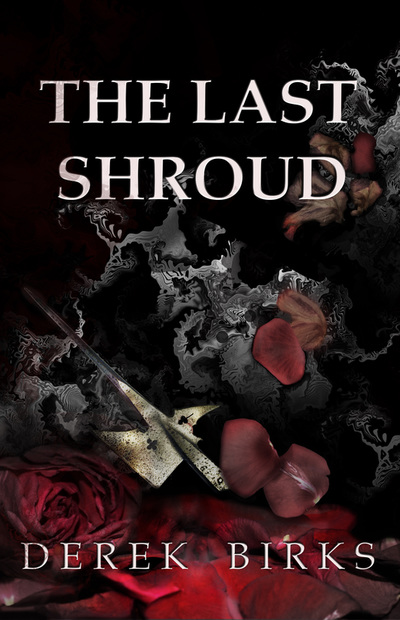
The Last Shroud sees Ned Elder caught in the middle of Warwick’s rebellion against Edward IV. The king has enemies on all sides and flees to the Low Countries, leaving his few loyal retainers to keep their heads down until his return; when they must take up their swords for one last campaign…

But is Ned the warrior he once was? As the kingdom spirals into civil war, divisions between Ned and his sisters, Emma and Eleanor, threaten the family’s very survival. Out of the turmoil of rebellion steps an old enemy who offers to help, but can he be trusted?

Will the Elder family stand together when it matters most? They must, if they are tkingdomo survive.

With The Last Shroud, the Elder family story comes to an end – and what an ending!

It has been a rollercoaster ride through the Kingdoms & Brothers series and this book is no exception. Following Ned and the rest of the Elders through the Warwick Rebellion against Edward IV and culminating with the Battle of Tewkesbury, the family fights to survive, mending some – but not all – bridges along the way, and still making new enemies.

As ever, the story telling is fast-paced and masterful, and the finale frenetic. A worthy final chapter to what has been a magnificent series.

There are several themes running through all 4 books.

The Elders face many enemies, and some change from book to book. But one enemy stays the same: the powerful Earl of Warwick. Offended by a young Ned at the Battle of St Albans, Warwick takes every opportunity to try to bring Ned down – and ruin his family. Using the feud with the Radcliffes he encourages and aids Ned’s numerous enemies in their endeavours.

Set in one of the most turbulent periods of Medieval history, the battle scenes are vivid, hectic and alive with action. The family doesn’t survive unscathed and it is the losses and hardships they suffer, and how they react to them, that makes them such sympathetic and likeable characters.

A great feature of the stories are the strong, independent women. They don’t just sit at home, sewing in the solar and waiting for their men to come home. They are not victimsshroud, nor powerless. They are fighters, women who take what life throws at them and battle on. But they find romance too, and face the trials and tribulations of love just as stoically as they do their enemies.

Derek Birks follows the historical story of the Wars of the Roses with great accuracy, dropping Ned and his family into the well-known events wherever they can cause the most drama, or see the most action. The Elders are present at all the key events, from the opening shots at the 1st Battle of St Albans, to the Yorkist victory at Tewkesbury.

To put it succinctly, this series is edge-of-your-seat action from start to end, leaving you breathless in your armchair. Believe me, you don’t want to miss a moment.

*

My book, Heroines of the Medieval World,  is now available in hardback in the UK from both Amberley Publishing and Amazon UK and worldwide from Book Depository. It is also available on Kindle in both the UK and USA and will be available in Hardback from Amazon US from 1 May 2018.

You can be the first to read new articles by clicking the ‘Follow’ button, liking our Facebook page or joining me on Twitter.

*

©2015 Sharon Bennett Connolly


Book Corner: Fields of Glory by Michael Jecks

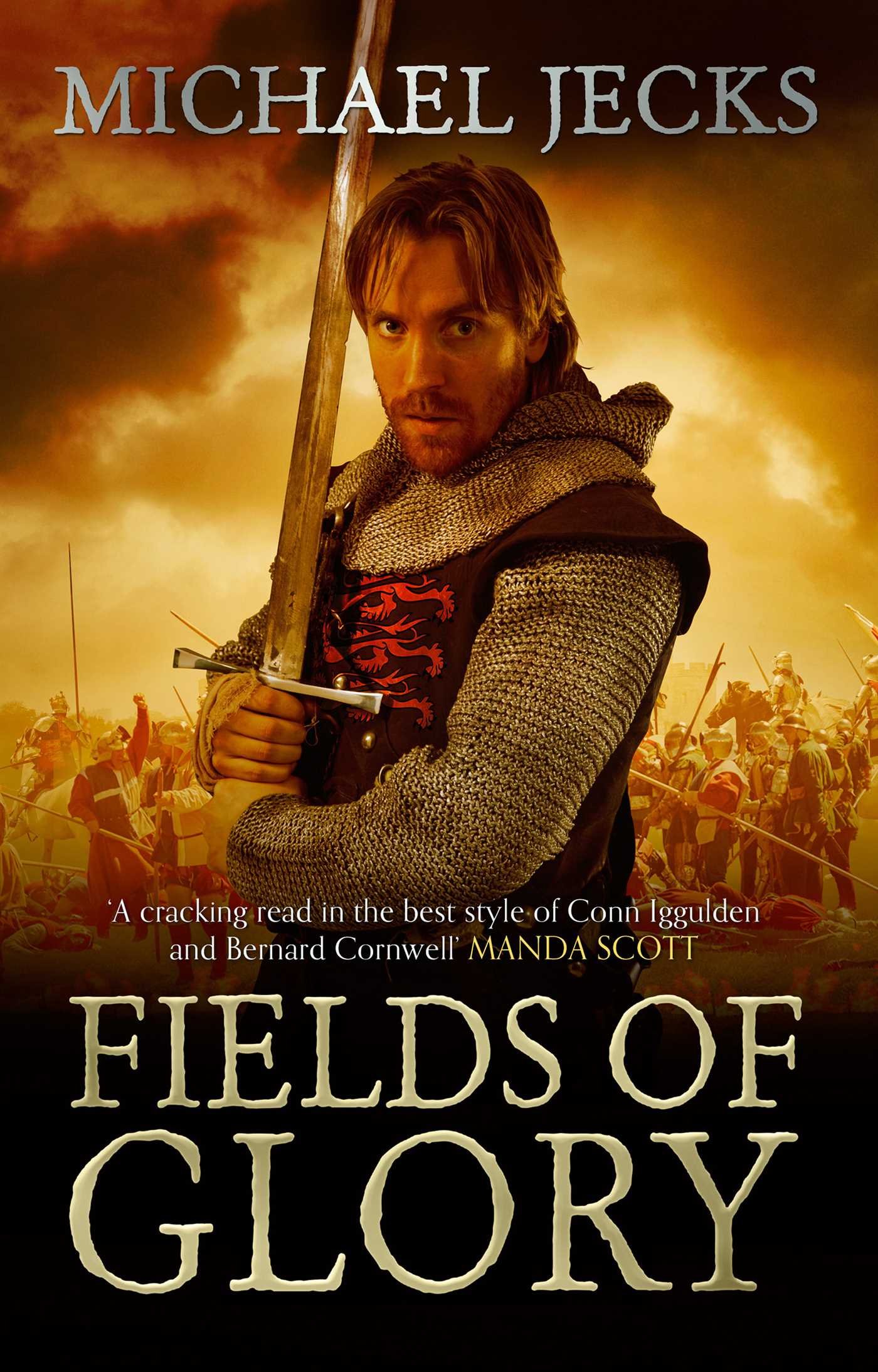
81Lj4afwfALThe year is 1346 and King Edward III is restless. Despite earlier victories his army has still not achieved a major breakthrough and the French crown remains intact. Determined to bring France under English rule and the French army to its knees he has regrouped and planned a new route of attack.

And on the beaches of Normandy his men now mass, ready to march through France to victory. But the French are nowhere to be seen. Edward knows that the worst thing he could do would be to take the battle to the French, where they will have the advantage and so he sets up camp near a small hill at Crécy and waits.

The Battle of Crécy will be a decisive turning point in the Hundred Years’ Wars. This is the story of that battle and the men who won it.”

A masterpiece!

Fields of Glory follows the English army from their landing on the beaches of Normandy, through the devastating destruction of the chevauchée through Northern France and to the gates of Paris itself, before the retreat ever north in search of a crossing of the River Somme, and the final confrontation with  the French army.

We experience the sieges, the skirmishes, the looting and death through the eyes of one of Edward I’s captains and his vintaine (company) of 20 men; hardened soldiers who all have their own secrets,  fears and superstitions.

We are also given snippets behind the decision-making of the great King Edward III and his 16-year-old son Edward, the future Black Prince. The army’s leaders are vivid, but distant, characters as the story concentrates on the experiences of the fighting men

The Vintaine’s captain, Berenger, leads his men through the armies skirmishes and their own personal battles and conflicts. Rescuing a French girl from the Welsh contingent brings its own problems, dividing the opinions and conflicts of the men while showing  the humanity that still existed among the devastation.

Berenger is a seasoned soldier and experienced captain, who needs his men as much as – if not more than – they need him. His men are real characters; Clip, with his prophecies of doom becomes a sort mascot of the company – only if he predicts their deaths are they confident of survival; and Geoff, who projects his own demons onto others in order to avoid their reality. And then there’s young Ed, just a boy wanting revenge on the french for all the ills of the world, and learning the realities of war through this small band of soldiers.

And then there is Archibald, the King’s gynour, a strange loner of a man who incites fear and loathing even from his own side. He is in charge of the king’s gonnes, the cannon which are slowly becoming part of the modern battlefield, but which are still distrusted by the common soldier.

One scene in particular leaves the reader cold and thoughtful. I don’t want to give too much away, but the king’s justice, meted out to his own men following the plundering of a monastery, left me with a sleepless night, so vivid was the imagery invoked by the scene:

Ed listened to the king’s words with breathless disbelief.

When the men had all been marched back to the army he had thought that there would be a court, an opportunity to explain – and yet here he was, with the sentence of death on him!”

How the scene plays out – well, I’ll leave that for you to discover, but it is thought-provoking, indeed.

Micheal Jecks’ treatment of the book’s climax – the Battle of Crécy itself – is gripping and masterful in its telling. While getting glimpses of the battle’s bigger picture, you are treated to the personal battles of Berenger’s men, the vicious hand-to-hand combat, the losses and victories. The devastation and risks wrought by the new battlefield science – gunpowder – are wonderfully described in great detail.

This is story-telling at its best.

The research is, as always, impeccable and the story of the Crécy campaign is told in all its devastation and glory. The interaction of the characters leaves the reader eager to know them better, to read on. The fight scenes are well though out and  realistic, the narrative of the Battle of Crecy itself being the highlight of the book.

Michael Jecks‘s Knights Templar Mysteries have been entertaining readers for many years. I have been reading and enjoying his books since The Last Templar started it all. The knowledge and detail of the early 14th century judicial system has fascinated many.

Fields of Glory takes Michael Jecks in a whole new direction and I can’t say I’m disappointed. The story-telling is masterful – and has taken on a frenetic energy of its own. It is hard to believe he could write anything better, but Book 2 of this Hundred Years’ War series, Blood on the Sand, is already in the bookshops and promises to be just as exciting and action-filled as the first.

*

My book, Heroines of the Medieval World,  is now available in hardback in the UK from both Amberley Publishing and Amazon UK and worldwide from Book Depository. It is also available on Kindle in both the UK and USA and will be available in Hardback from Amazon US from 1 May 2018.

 Be the first to read new articles by clicking the ‘Follow’ button, liking our Facebook page or joining me on Twitter.

©Sharon Bennett Connolly 2015

Book Corner: Duval and the Empress’s Crown

Over on The Review blog!

Read my review of Duval and the Empress’s Crown by Michele McGrath.

632747“Police Agent Alain Duval is tasked with finding the crown but time is very short and his suspects many. Present when the crown disappeared are Napoleon’s sisters, Princess Elisa, Princess Pauline and Princess Caroline. Are they involved or merely witnesses? Aided by his wife Eugenie and his friends Lefebvre and Fournier, Duval sets out to unravel the mystery.” 

Ever since I was a teenager I’ve had a soft spot for the Napoleonic Period.  Napoleon’s story has always fascinated me; the rise of an obscure Corsican to become the most powerful man  in France (a novelist just couldn’t make it up!). So when the chance came to review a novel of the period I jumped at it.Duval and the Empress’s Crown is not the longest book you’ll ever read. At just shy of 100 pages, it’s short and sweet. But it is a little gem.

From the first words you are drawn into the world of Imperial Paris, still recovering from the petrifying post-Revolutionary Terror, but looking forward to the pomp and pageantry that accompanies an Empire.
And into this world are thrown 3 friends: Duval the former soldier, Fournier the career policeman and Lefebvre the reformed thief. They work for Napoleon’s feared Chief of Police, Fouquet. With just days until the coronation of Napoleon and Josephine, the Empress’s crown is stolen from the jeweler tasked with creating it. Duval and his friends are given the unenviable task of finding it – in time for the coronation.
It’s a race against time…
To make matters worse, it soon becomes evident that the prime suspects are the Emperor’s own sisters; the Princesses Elisa, Pauline and Caroline. Duval has to be both determined and diplomatic in order to recover the crown in time for the coronation, just days away. With the Terror still only a recent memory, Duval has to tread very carefully, or he could end up not only with a ruined career, but facing the guillotine!
Duval and the Empress’s Crown is a great detective novel, full of adventure, intrigue and royal scandal. The story takes you through the investigative process in great detail, while giving you the human side of the lead characters. The three policemen enjoy a wonderful relationship, and the book is at its best during the scenes when they are together. Their banter seems natural and easy and makes the reader smile:

 [Duval] “What about my lame leg?”
[Lefebvre] “What about it? You ran at such a high speed when Monsieur Duclos was firing his pistols at you, I couldn’t catch you up, lame leg and all”
[Duval] “Just as well he was such a bad shot….”

You are also treated to glimpses of the glamour and power of the French Empire by visiting the salons of the Emperor’s sisters, as Duval tries to unravel the mystery of the crown’s disappearance. He has to tread carefully with the wily Elisa and pregnant Caroline. And then there is the Emperor’s over-familiar sister, Pauline:

“Let us be comfortable while you tell me what my brother wants of me”

Although this is the fifth book in a series, it really doesn’t matter. It is eminently readable as a standalone, with only vague references to the previous novels in the series – ensuring you don’t feel like you are missing anything. The author has done a wonderful job of taking the reader on a journey through post-Revolutionary Paris. You can still feel the long shadow of the guillotine, while being treated to a glimpse of the splendour and elitism of the emerging Imperial court, where careers are made and ruined by the whim of one man…
Duval and the Empress’s Crown is a wonderful, easy, light read. The plot is not over-complicated but flows smoothly and swiftly to its conclusion. Whilst it could benefit from deeper descriptions of locations and events the characters are well-developed, amusing and capable of eliciting a range of emotions from the reader.
It’s a wonderful novel for a lazy day in the sun. A highly enjoyable read.

*

My book, Heroines of the Medieval World,  is now available in hardback in the UK from both Amberley Publishing and Amazon UK and worldwide from Book Depository. It is also available on Kindle in both the UK and USA and will be available in Hardback from Amazon US from 1 May 2018.

Be the first to read new articles by clicking the ‘Follow’ button, liking our Facebook page or joining me on Twitter.

Book Corner: The Holy Lance

Holy+LanceIt’s 1191 and Richard the Lionheart is leading the Crusaders against Saladin’s Muslim army.

The Holy Lance by Andrew Latham is a fantastic piece of fiction. From the first page, you are drawn into the final battles of the Siege of Acre. English Templar Michael Fitz Alan leads his men to victory in a counter-attack against the Saracen army, saving the Crusaders from defeat. As part of the peace negotiations, Richard has demanded the return of the fragment of the True Cross, in Saracen hands since the Crusaders’ defeat at the Horns of Hattin. However, Richard decides against putting all his faith in the return of the True Cross, and sends Fitz Alan on a quest to retrieve the Holy Lance – the lance that pierced Christ’s side while he was on the Cross.

Fitz Alan and his hand-picked team of Knights Templars journey through hostile territory, battle Saracens and face down Assassins, to complete their quest, all the time guided by a Knights Hospitaller priest they just don’t quite trust….

Andrew Latham’s The Holy Lance is a wonderful story, filled with action, intrigue and adventure. Set during Richard the Lionheart’s Third Crusade, the action is fast and furious; the battle scenes are frantic and vivid. The novel is full of political intrigue and hidden agendas; Fitz Alan never knows quite who to trust, except his faithful Templars. The book works on many levels. The tension is palpable. The success of the mission is in no way guaranteed…..

Fast-paced and full of suspense, the story is absorbing, and draws you in. As if without trying, the author gives you a good grounding in the history of the Holy Land and in the differing objectives of the various combatants. There are some minor spelling errors – such as the use of ‘there’ when it should be ‘their’ – but they don’t detract from the story and after a while you don’t even to notice them. Every paragraph and chapter is filled to the brim with amazing detail, keeping the reader absorbed to the point that time just drifts away….

The book’s hero, Michael Fitz Alan, is a wonderfully complex character, with a past that is frequently alluded to, a man of the world who dedicated himself to the Fellow-soldiers of Christ and the Temple of Solomon, becoming one of their most effective captains. There are hints from the beginning of some sort of disagreement between Fitz Alan and Richard I – just enough teasing to get you curious. Fitz Alan is a model Templar Knight, trying to make amends for something; his desire to leave the material world behind and his past experiences clearly direct his current actions. Andrew Latham has made his character incredibly human, susceptible to doubts, fears and prejudices. He begins to learn that the Holy Land is not as black and white/good and bad as he thought before he arrived. A very likable character: you find yourself egging him on, wanting him to succeed.

All the lead characters of the Third Crusade have their parts to play. The portrayal of Saladin is surprising – and refreshing, looking at the Muslim leader from a whole new perspective. Richard the Lionheart is portrayed as the hard soldier you’d expect, with an intelligence which allows him to deal with the machinations of the incumbent Western leaders, Conrad of Montferrat and Guy de Lusignan. The relationships of all involved are deep and complex, but explored with such energy and passion, you almost feel you know them personally.

The novel provides a great depiction of the Third Crusade and of the motivations of the various combatants. The Templars and their rule are sympathetically and accurately depicted – the hard, trained knights and sergeants who fought for God and each other, while following monastic rules. You can almost feel the heat of the Levant’s sun and hear the sounds of battle. The battle scenes are marvelously choreographed; they are hectic and realistic.

As a debut novel, Holy Lance is incredible. It is one of those amazing books that grips you from the first page and won’t let you go until the last – and yet you never want it to end. Great as a stand-alone novel and yet, as the first in a series, it leaves you eager to read the next installment.

*

Article originally published on The Review in July 2015.


*

My book, Heroines of the Medieval World,  is now available in hardback in the UK from both Amberley Publishing and Amazon UK and worldwide from Book Depository. It is also available on Kindle in both the UK and USA and will be available in Hardback from Amazon US from 1 May 2018.

Be the first to read new articles by clicking the ‘Follow’ button, liking our Facebook page or joining me on Twitter.

©2015 Sharon Bennett Connolly

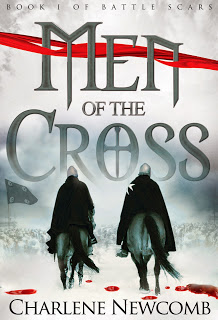
Book Corner: Men of the Cross

men_largeB.R.A.G. Medallion winner, Men of the Cross by Charlene Newcomb.

“War, political intrigue and passion … heroes … friends and lovers … and the seeds for a new Robin Hood legend await you.”

After that kind of introduction Men of the Cross had a lot to live up to. And it didn’t disappoint. Having read several Crusader novels and a few re-telling the Robin Hood legend, the idea behind the book intrigued me.

But this book has a unique perspective and stands out from the crowd.

With Richard the Lionheart and Robin Hood as supporting characters the story follows idealistic young crusader Sir Henry de Grey and his best friend, the cynical and war-jaded Sir Stephan l’Aigle, on their journey through the Third Crusade.

The two knights accompany Richard’s army from Southampton to the walls of Jerusalem – and on through the countries of Eastern Europe and Richard’s capture in Germany.

I thoroughly enjoyed Men of the Cross and found it hard to put down. The storyline is fast paced and entertaining, with all the emotions thrown into the mix: excitement, fear, love, despair, pain and happiness.

I love the way the story is interwoven with that of Robin Hood, Little John and Alan a Dale; every now and then you get a glimpse of the Merry Men they are to become, their own special camaraderie amidst the wider story.

It is a journey of discovery for Henry and Stephan – of themselves as soldiers, friends and lovers; the realities of war; fighting the Saracens; relationships; their preconceived conventions and their own hearts. Along the way they entertain queens, lose friends and risk death itself, experiencing the highs and lows of the crusading life.

After reading only the first four chapters of Men of the Cross, I found myself hoping that the rest of the book could live up to such a promising start. The main characters are well-thought out and it’s a pleasure to see them grow and mature as the story progresses, and to see how their individual experiences and feelings react to the events enfolding them.

Even the supporting characters are wonderfully vivid: the king’s sister, Joanna, and wife, Berengaria, act as spectators to the Crusade, bringing lively exchanges and the feminine touches into an all-male world.

Man against man. Man against the elements. Man against his own heart.

As I got deeper into the book, I found myself wondering how the author would handle the grisly realities of the Third Crusade. When following the Lionheart through the Holy Land, it is impossible to ignore the mass execution of 3,000 Muslim prisoners. So how would Ms. Newcomb handle it?

This turned out to be one of my favourite scenes in the book. Instead of concentrating on one beheading after another, you saw it through the eyes of Sir Henry, as a pivotal moment in his initiation into the realities and horrors of war:

Henry’s stomach knotted, his thoughts filled with despair. This is war?”

His doubts demonstrated through his own internal dialogue and response to his distaste:

You know nothing of war.” 

Charlene Newcomb has a knack of setting scenes so vividly you can almost hear the swing of sword through air, the yells and screams of victims and combatants alike and the anguish of a knight discovering that chivalry has little place in war. The battles are urgent and hectic – their descriptions give the combined sense of the confusion, fear and exhilaration of the participants.

The background scenes are described in fantastic detail. Whether it is the noises and odours of the busy port, the bustling streets of Messina or Acre, or the calm and splendour of a royal palace, it is easy to imagine yourself transported.

The love scenes are artfully and sensitively portrayed – with the anguish and uncertainty of a blossoming relationship cleverly interweaved into the storyline.

Henry and Stephan’s friendship, love and loyalty are tested to their very limits in this wonderful novel.

The long and winding journey of the Lionheart’s crusade, from its launch to his imprisonment in Germany, is skilfully re-told in such a way that you will feel the highs and lows – the joys and desperations – and the excitement of two young men learning the art of war, love and friendship through their experiences.

I look forward to reading how the characters develop in the next instalment, to hearing how they rescue the king from his German prison, and of the further adventures of Henry and Stephan and – of course – Robin Hood and his men.


*

Article originally published at The Review in June 2015.

*

My book, Heroines of the Medieval World,  is now available in hardback in the UK from both Amberley Publishing and Amazon UK and worldwide from Book Depository. It is also available on Kindle in both the UK and USA and will be available in Hardback from Amazon US from 1 May 2018.

Be the first to read new articles by clicking the ‘Follow’ button, liking our Facebook page or joining me on Twitter.

©2015 Sharon Bennett Connolly