Book Corner: The Crescent and the Cross by SJA Turney

An epic battle of the Reconquista; a personal struggle to survive; a fight for glory.
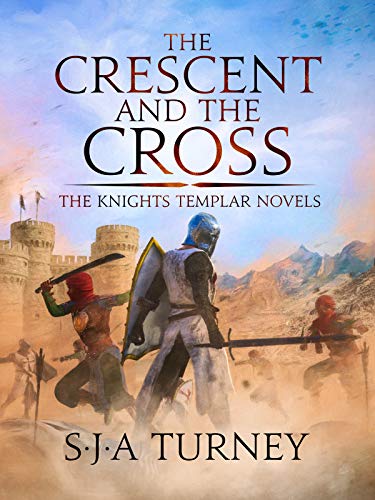
War is brewing, and the Pope has summoned a crusade. The nations of Christendom are rallying to fight the Almohad caliphate, but they are a formidable foe.

Meanwhile, behind Moorish lines, a fortress held by Castile is under siege. As the siege falls, a knight is lost. Arnau leaves on a dangerous, near-suicidal quest to save him, a new squire in tow.

In the heat of the sierras though, things are not as they seem. War is coming to Iberia and all will be tested. Arnau’s sword arm will need practice, as will his mind.

A riveting and brutal historical adventure, the latest instalment of S.J.A Turney’s Knights Templar series, perfect for fans of Bernard Cornwell and Conn Iggulden.

The Crescent and the Cross is book number 5 in SJA Turney’s wonderful Knights Templar series and is as good as, if not better than the rest. Unlike the usual Templar novels Turney has chosen to set his stories against the backdrop of the Muslim invasion of Spain, rather than the Holy Land. What may be seen as an intriguing move has proved to be a hit with me. Having studied the Crusades at university, and read up as much as I could find on the foundation of the Templar order, for some reason, I have always associated the Templars with the Holy Land. The reconquest of Spain is unfamiliar territory, and absolutely fascinating.

You could write in just a few words the amount I know about the Reconquista; basically, that Jamie Douglas took Robert the Bruce’s heart to Spain and threw it into the heat of the battle against the Muslim ruler of Grenada. Douglas was killed in the action; his body and King Robert’s heart were both retrieved and returned to Scotland. The story of the Reconquista is also that of El Cid, and of Ferdinand and Isabella, the parents of Henry VIII’s first wife, Katherine of Aragon.

But it is also the story of the Knights Templar, who fought alongside other knightly orders, such as the knights of Calatrava, to recover Spain from the Muslims. SJA Turney therefore has an area of history that has been virtually ignored by novelists before, and it is such a fertile area of untapped and undiscovered stories which keep the reader gripped to the very end.

At a gesture from the preceptrix, Balthesar closed the door behind them, deepening the gloom further. The three knights walked halfway across the room and then fell into line, standing before the preceptrix like a white-clad parody of the three magi. ‘You sent for us, Mother Superior?’

The silence that filled the room as Balthesar’s words died away was tense, uncomfortable.

‘I did. I am faced with a problem, Brothers, and I fear there is little time in current circumstances to convene a full convent or to send for instructions from the mother house. I need the advice of my knights. This man is Amal.’ Her hand reached out, indicating the Moor. ‘Amal has come to us from within the lands of our great enemy bearing a letter, at great personal risk.

‘A letter, mother Superior?’

‘A personal missive. It would appear that out dear sister Joana’s former suitor, the knight Martin Calderon, is not dead as was believed.’

Arnau frowned. ‘I am unfamiliar with his story, Mother. He was presumed dead?’

The preceptrix nodded, her gaze slipping sideways towards the puffy-eyed Joana. ‘The reason for Joana’s predicament has been somewhat difficult and beyond our moral judgement, despite the damage done to our sister. Sir Calderon heard the calling of the Lord and regretfully parted from our sister, taking his vows with the Order of the knights of Calatrava. While Joana has heard nothing from her former betrothed since the day of their departure, however, I have sufficient contacts in that Order and took it upon myself to remain informed as to Brother Calderon’s activities. Last autumn, he was one of the knights who carried out the heroic defence of Salvatierra against the caliph’s army. While the bulk of the defenders were given safe passage to Aragon upon their surrender, Calderon’s name appears on the roster of the fallen.’

That rather explained the state of poor sister Joana, Arnau realised. His gaze flicked once more to the Moor. Calderon was apparently not dead, though.

Balthesar frowned. ‘Respectfully, Mother Superior, why would you concern yourself woth the an? Quite apart from his treatment of Sister Joana and the gulf now between them, of what interest might such a man be when we have the crusade looming?’

Every writer has his or her own strengths, for SJA Turney, it is that he can write and entire series of books – this is the 5th and there is at least one more to come – where every story in the series is not only a standalone, but is a unique intriguing story that takes the reader – and the protagonist – in a different direction every time. The first book in the series, Daughter of War, told the unlikely – but true – story of a woman in charge of the Templar preceptory at Rourell. Book 2, The Last Emir, took two of the Rourell knights on a quest to Majorca in search of a holy relic, while book 3, City of God saw the series’ hero, Arnau de Vallbona, caught up in the epic siege of Constantinople and book 4, The Winter Knight, was an intriguing murder mystery set in a German castle!

Each story has proved to be unique, edge of the seat action and The Crescent and the Cross is no different. Set in the heart of Spain, Arnau is given the task of recovering a knight held captive by the Almohad caliphate, only to find all is not as it seems. SJA Turney expertly recreates the Iberian landscape; the scorching heat, soaring mountains and vast plains. He builds the Christian army just as the leaders must have done at the time, introducing the alliance of kings, church leaders and knightly orders who have to face their enemies on the Spanish plains.

The Crescent and the Cross is a marvellous story, wonderfully told and gripping to the very end. I can’t wait for the next book! SJA Turney is a first class storyteller who draws the reader in from the very first page, the action frenetic from the first page to the last. The Crescent and the Cross is a truly excellent read, with a wonderful author note at the end, giving the reader a comprehensive background to the fight to reconquer Spain that lasted 9 centuries.

The Crescent and the Cross is available from Amazon UK.

About the author:

Simon lives with his wife, children, rabbits and dog in rural North Yorkshire. Having spent much of his childhood visiting historic sites with his grandfather, a local photographer, Simon fell in love with the Roman heritage of the region, beginning with the world famous Hadrian’s Wall. His fascination with the ancient world snowballed from there with great interest in Egypt, Greece and Byzantium, though his focus has always been Rome. A born and bred Yorkshireman with a love of country, history and architecture, Simon spends most of his rare free time travelling the world visiting historic sites, writing, researching the ancient world and reading voraciously.

Simon’s early career meandered along an arcane and eclectic path of everything from the Ministry of Agriculture to computer network management before finally settling back into the ancient world. During those varied years, Simon returned to university study to complete an honours degree in classical history through the Open University. With what spare time he had available and a rekindled love of all things Roman, he set off on an epic journey to turn Caesar’s Gallic War diaries into a novel accessible to all. The first volume of Marius’ Mules was completed in 2003 and has garnered international success, bestseller status and rave reviews, spawning numerous sequels. Marius’ Mules is still one of Simon’s core series and although Roman fiction features highly he now has Byzantine, Fantasy and Medieval series, too, as well as several collaborations and short stories in other genres.

Now with in excess of 30 novels available and, Simon is a prolific writer, spanning genres and eras and releasing novels both independently and through renowned publishers including Canelo and Orion. Simon writes full time and is represented by MMB Creative literary agents.

Look out for Roman military novels featuring Caesar’s Gallic Wars in the form of the bestselling Marius’ Mules series, Roman thrillers in the Praetorian series, set during the troubled reign of Commodus, epics of the Knights Templar, adventures around the 15th century Mediterranean world in the Ottoman Cycle, and a series of Historical Fantasy novels with a Roman flavour called the Tales of the Empire.

*

My Books

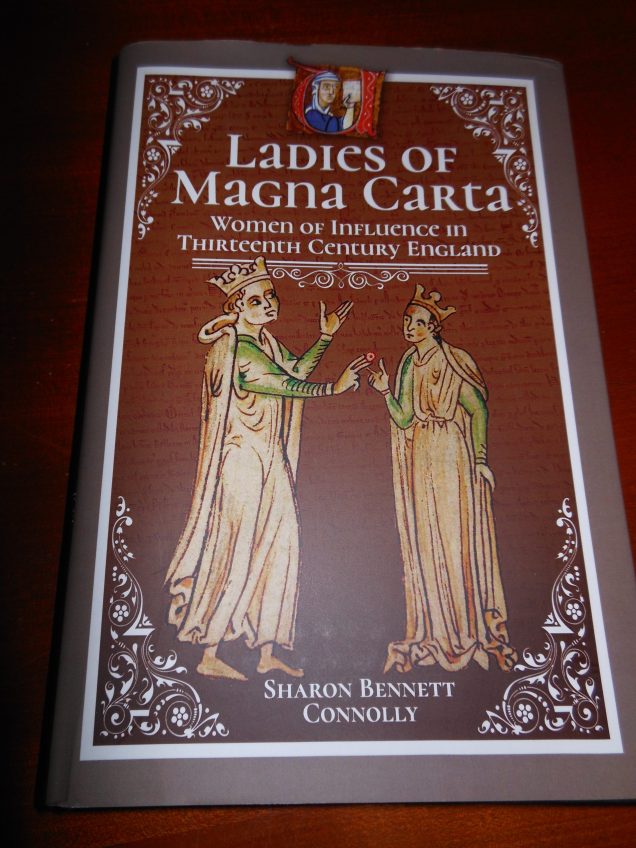
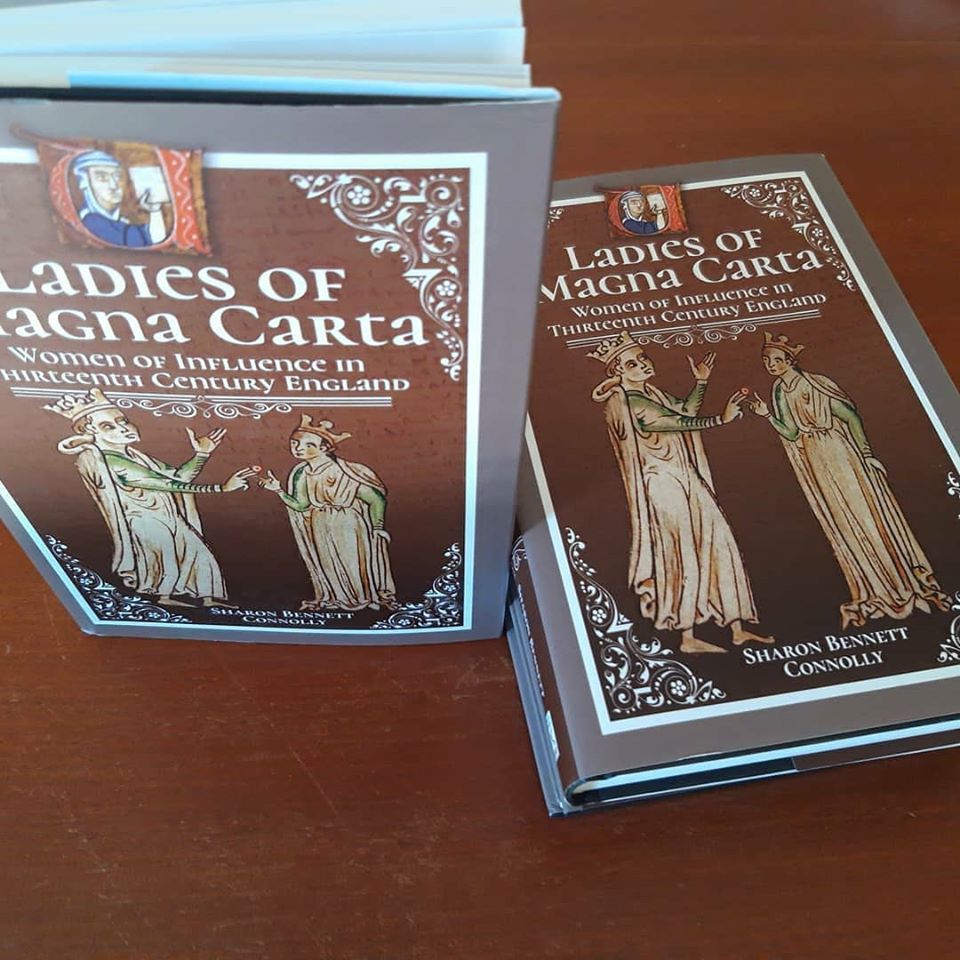
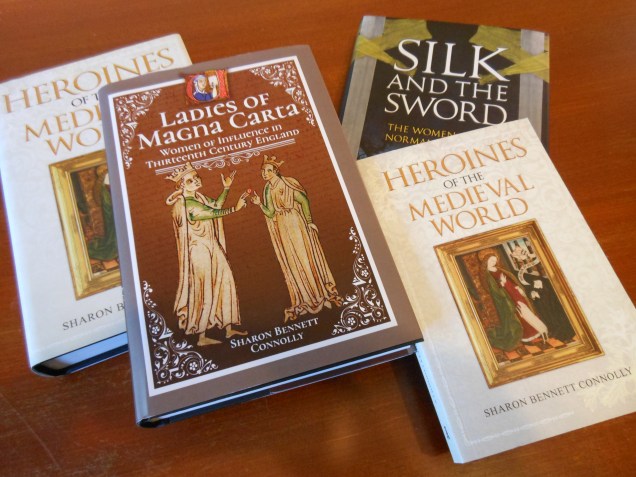
Ladies of Magna Carta: Women of Influence in Thirteenth Century England  looks into the relationships of the various noble families of the 13th century, and how they were affected by the Barons’ Wars, Magna Carta and its aftermath; the bonds that were formed and those that were broken. It is now available from Pen & SwordAmazon and from Book Depository worldwide.
Also by Sharon Bennett Connolly:

Silk and the Sword: The Women of the Norman Conquest traces the fortunes of the women who had a significant role to play in the momentous events of 1066.  Available now from Amazon,  Amberley Publishing, Book Depository.

Heroines of the Medieval World tells the stories of some of the most remarkable women from Medieval history, from Eleanor of Aquitaine to Julian of Norwich. Available now from Amberley Publishing and Amazon and Book Depository.

*

You can be the first to read new articles by clicking the ‘Follow’ button, liking our Facebook page or joining me on Twitter and Instagram.

©2020 Sharon Bennett Connolly
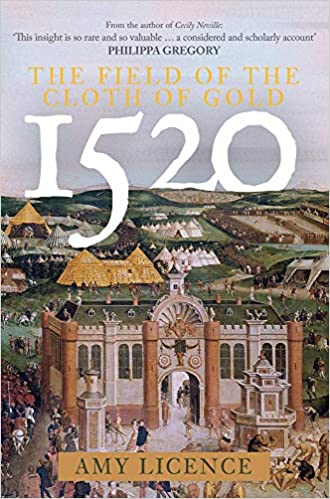
Book Corner: 1520 by Amy Licence

1520 explores the characters of two larger-than-life kings, whose rivalry and love-hate relations added a feisty edge to European relations in the early sixteenth century. What propelled them to meet, and how did each vie to outdo the other in feats of strength and yards of gold cloth? Everyone who was anyone in 1520 was there. But why was the flower of England’s nobility transported across the Channel, and how were they catered for? What did this temporary, fairy-tale village erected in a French field look like, feel like and smell like? This book explores not only the political dimension of their meeting and the difficult triangle they established with Emperor Charles V, but also the material culture behind the scenes. While the courtiers attended masques, dances, feasts and jousts, an army of servants toiled in the temporary village created specially for that summer. Who were the men and women behind the scenes? What made Henry rush back into the arms of the Emperor immediately after the most expensive two weeks of his entire reign? And what was the long-term result of the meeting, of that sea of golden tents and fountains spouting wine? This quinquecentenary analysis explores the extraordinary event in unprecedented detail. Based on primary documents, plans, letters and records of provisions and with a new focus on material culture, food, textiles, planning and organisation.

There are some books that are just a pleasure to review and I have been looking forward to reviewing 1520: The Field of the Cloth of Gold by Amy Licence since about the second chapter in. It was a pure pleasure to read and is a pleasure to review.

1520: The Field of the Cloth of Gold by Amy Licence was a wonderful insight into the magnificence of the Field of the Cloth of Gold

There is so much information in its 288 pages!

Told in a beautiful, colourful narrative, Amy Licence brings the Field of the Cloth of Gold to vivid life. Providing an in-depth analysis of the sources material, from letters of the participants to diplomatic dispatches, lists of attendees, lists of entertainments, lists of building materials, lists of supplies from food, to cloth, to wine, 1520: The Field of the Cloth of Gold presents the spectacle to the reader as if they were actually there, amidst these two tented towns, created so that two monarchs could meet without either insulting the other’s dignity.

The first thing to mention has to be the colossal amount of research that must have gone into writing this book. Amy Licence has looked into every aspect of the the Field of the Cloth of Gold, from every angle, and produced a comprehensive, informative study of this remarkable event in Tudor history. Every facet of the meeting of Henry VIII of England and Francis I of France is covered in wonderful detail; from the political implications of the gathering, to the vast amount of supplies, people and organisation needed to pull off this unique event.

The year 2020 marks the 500th anniversary of the meeting between Henry VIII, King of England and Francis I, King of France. They came face to face in a French valley midway between the towns of Guines and Ardres in the modern Pas-de-Calais department of northern France. Today, a minimalist stone plinth marks the spot where thousands of attendees feasted, danced and jousted. Dressed in cloth of gold, crimson satin and yellow velvet, or in the servants’ livery clothes of Tudor white and green, and Valois black, white and tawny, they converged in the ‘golden valley’ between 7 and 24 June 1520. Due to the quantities of glittering material used in their costumes and tents, it would go down in history as The Field of the Cloth of Gold.

Modern retellings of the period have tended to relegate the events to the status of a glorious party. Undoubtedly there was a party atmosphere, with fabulous costumes, temporary palaces and tents, dazzling props, masked dancers and chivalric feats. At a distance, these epitomise the glamour of the Tudor period, condense it into a short summer’s lease, and present it as a glittering historic bauble. In many ways, the Field of the Cloth of Gold represents the perfect simulacrum of the Tudor experience. It was the long-awaited meeting between two European giants, alike in dignity and ambition; it was the height of Tudor spectacle and pageantry, and it was the most expensive display of magnificence of which either king would ever conceive. It shines across five centuries as a stand-alone moment amid the turbulence of international politics, reformation and national redefinition. As such, it makes for a full and rewarding micro study of Anglo-French spectacle. But it was also far more than this.

Amy Licence manages to get over to the reader the great significance of the Field of Cloth of Gold, not just for the participants, but for Europe as a whole. This was a meeting of two kings from countries who had traditionally been enemies for centuries. And they were two of the three great European powers of the time. The Holy Roman Emperor was watching, along with the rest of Europe, to ensure his own interests were not affected by this new amity.

1520: The Field of the Cloth of Gold is also a tale of the people and personalities involved in the ruling of early modern Europe. The organisation of the event was not just logistical but also political; egos had to be stroked, etiquette observed and there was a delicate balancing act to ensure that neither king felt snubbed or received more precedence that the other. Amy Licence clearly demonstrates how the personalities involved shaped and styled the event; from the diplomatic discussions, to the sumptuous meals and feasting, to the jousting and lavish entertainments. The sheer amount of organisation involved in putting together an event like this – when everything had to be arranged via correspondence and couriers, is mind-boggling.

As ever with Amy Licence, the prose flows wonderfully, making this book a thoroughly absorbing, engaging and enjoyable read. I have always marveled at how she can make a non-fiction book as easy to read as a novel. It makes the pages fly by and you are at the end of the book long before you are ready to finish it. Amy Licence leaves you with mental images of the magnificent spectacle of the Field of the Cloth of Gold that will take a while to fade.

1520: The Field of the Cloth of Gold is a truly remarkable study of a unique event in English, French and European history. It is a must-read for anyone interested in the splendour, pageantry and politics of the Tudor era.

1520: The Field of the Cloth of Gold is now available in hardcover from Amazon UK

*

About the author:

Amy Licence is an historian of women’s lives in the medieval and early modern period, from Queens to commoners. Her particular interest lies in the late fifteenth and early sixteenth century, in gender relations, Queenship and identity, rites of passage, pilgrimage, female orthodoxy and rebellion, superstition, magic, fertility and childbirth. She is also interested in Modernism, specifically Woolf and the Bloomsbury Group, Picasso and Post-Impressionism.

Amy has written for The Guardian, The TLS, The New Statesman, BBC History, The English Review, The Huffington Post, The London Magazine and other places. She has been interviewed regularly for BBC radio, including Woman’s Hour, and made her TV debut in “The Real White Queen and her Rivals” documentary, for BBC2, in 2013. She also writes historical and literary fiction and has been shortlisted twice for the Asham Award.

Her website can be found at amylicence.weebly.com

*

My Books

Ladies of Magna Carta: Women of Influence in Thirteenth Century England  looks into the relationships of the various noble families of the 13th century, and how they were affected by the Barons’ Wars, Magna Carta and its aftermath; the bonds that were formed and those that were broken. It is now available from Pen & SwordAmazon and from Book Depository worldwide.

Also by Sharon Bennett Connolly:

Silk and the Sword: The Women of the Norman Conquest traces the fortunes of the women who had a significant role to play in the momentous events of 1066.  Available now from Amazon,  Amberley Publishing, Book Depository.

Heroines of the Medieval World tells the stories of some of the most remarkable women from Medieval history, from Eleanor of Aquitaine to Julian of Norwich. Available now from Amberley Publishing and Amazon and Book Depository.

*

You can be the first to read new articles by clicking the ‘Follow’ button, liking our Facebook page or joining me on Twitter and Instagram.

©2020 Sharon Bennett Connolly
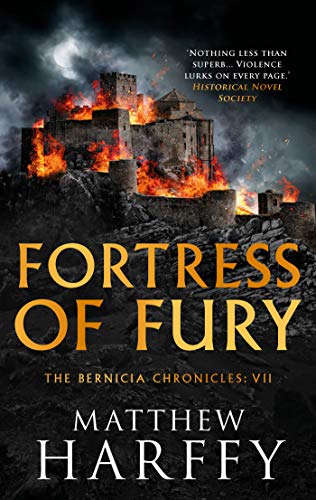
Book Corner: Interview with Matthew Harffy

Today it is a distinct pleasure, at History … the Interesting Bits, welcome Matthew Harffy, best-selling author of the Bernicia Chronicles. Matthew’s latest book, Fortress of Fury has just hit the shops. Book no. 7 in the series, Fortress of Fury is that rare book that is – literally – impossible to put down. It is spellbinding!

I last chatted to Matthew about his writing 3 years ago, after the release of Killer of Kings, book no. 4 in the series. In that time, an awful lot has happened. So, without further ado…

Hi Matthew, thanks for agreeing to do an interview. And congratulations on the release of Fortress of Fury, book no. 7 in the Bernicia Chronicles. And you’re currently writing book no.8, I believe (thankfully, because I really need the next book, now!)

1. So, first question, have you always wanted to be a writer?

Not at all. I have always wanted to do something creative. When I left school I auditioned for drama school and wanted to be an actor. My acting never really amounted to anything, so, after getting a real job I pursued my second creative passion, which is music. I sang in bands on and off until my mid-forties when the writing had started to take off and I was running out of hours in the day to have a full-time job, sing with the band, write and promote my novels, and find any time to spend with my family!

2. Who are your writing influences?

When I was a teenager I read a huge amount of fantasy and my writing is heavily influenced by writers such as J.R.R. Tolkien, David Gemmell, Robert Holdstock and Stephen Donaldson.

Later I became slightly obsessed with Westerns and read every Louis l’Amour book I could find. I later discovered that Gemmell was also huge l’Amour fan, so that makes sense! Another Western writer I love and one that veers into the literary genre is Larry McMurtry. His Pulitzer prize-winning novel Lonesome Dove is one of my all-time favourite books.

And then, of course, you have the influence of historical fiction giants such as Bernard Cornwell and Conn Iggulden (another fan of Gemmell).

3. What do you love about writing?

I love the freedom of being able to tell a story that I would like to read. I love the moments when a story takes a turn I hadn’t expected and a character makes a decision that sends the plot in a different direction than my original plan. These are often the moments that bring something truly special to a story.

4. What do you hate about writing?

Hate is a very strong word, but I dislike the feeling of pressure that I have to always be working on the next story. Someone once said (Lawrence Kasdan, I think) that being a writer is like having homework every night for the rest of your life! That is so true.

5. What advice would you give to someone starting out on their writing career?

The most important difference between an amateur writer and a professional writer is that the professional finishes what they start. So my advice to anyone wanting a career in writing would be to finish every project and then move onto the next.

6. Social media – do you love it or hate it?

Both! I love the fact that I can connect with other writers and readers from all over the world. It is a real leveller and helps to alleviate the loneliness inherent in the job of being a writer.

However, I also hate the shallowness of social media. With the ability to reach out to the world there should also be a responsibility. It is all too easy for people to spread rumours and lies, which by virtue of a huge platform can take on a life of their own and manipulate public discourse in a way that has never been possible before. This has been clearly evidenced in recent elections and referendum results with devastating effects.

7. What attracted you to setting your stories in the 7th century?

I saw a documentary about Bamburgh Castle and the Anglo-Saxon graves that were being excavated there. I knew the castle and the area, as I had lived near there as a child for a few years. But I knew nothing of Northumberland’s rich past and the fact that in the seventh century it had been probably the most powerful kingdom in Britain. When I started to research the period I quickly saw that the amount of conflict between the small kingdoms of the island, the different people and tribes, and the rise of Christianity, all provided the conflict that is necessary for good storytelling.

8. Did you ever expect to be still writing about Beobrand 8 books later?

Not really! When I first started the Serpent Sword nearly 20 years ago I naïvely thought I would tell Beobrand’s story in one novel! I believed that I would be able to cover his life from the age of seventeen until he was an old man in a single book. When The Serpent Sword reached novel length, I had only covered

about six months! At that point I knew I had a series on my hands, but I never really anticipated I would write anything longer than a trilogy. Now I can imagine there might be 12 books in the finished series, perhaps more!

9. I’ve just this weekend seen The Serpent Sword proof of concept trailer; what was it like, seeing your imagination brought to life on camera?

It is a truly amazing experience. I was on set for most of the filming and there were several moments when I had to pinch myself. These were characters I had dreamt up!

I am extremely proud of what the team has put together. We have worked for about a year behind the scenes to get to this point, so it is difficult to see the final product with “fresh eyes”. You get so into the details, and see each part of the creative process from so many angles, that in the end you can’t really see the wood for the trees. In many ways that’s the same as writing a book. By the end of the writing process you have been over and over it so many times that you cannot tell whether it’s actually any good or not and it’s only through other people’s response to it that you receive validation.

Luckily, the vast majority of the people (over 70,000 at the time of writing) who have seen the trailer have loved it, which makes it all worthwhile and makes us realise that we have produced something quite special. I hope we get funding for a full series. I think the results would be incredible and I think there is a real appetite for this type of series. To watch THE SERPENT SWORD TRAILER: and With Audio Description.

10. What comes first, the research or the story?

The research comes first for the main historical thread of the story. I choose one or two historical events to act as the tent poles of the plot and then create the individual characters’ stories around those main points.

11. How do you decide where Beobrand goes next?

To some extent the history guides me. As Beobrand tends to follow historical events, where they happen, you can usually find him nearby.

12. There seems to be a lot more at stake for Beobrand in Fortress of Fury, than in previous books. Without giving too much away, there’s forbidden love, tests of his loyalty and that of his men, and a momentous decision – or maybe a realisation – at the end of the book. It really does seem like it’s a pivotal point in Beobrand’s story, was that deliberate with this book, or am I reading too much into it?

I don’t think it was a deliberate decision on my part, more a logical progression of Beobrand getting older and his relationships becoming more complex. As he grows closer to the power of the throne, so the intrigues around him become deadlier and more momentous. Beobrand also has a lot more enemies by this point in his life and so danger lurks wherever he turns. And as any loyal reader of the series will know, he’s often his own worst enemy and in Fortress of Fury that is no different, so it will come as no surprise that Beobrand himself has created some of the difficulties he faces by the end of the novel.

13. With Bernard Cornwell’s Last Kingdom series we’ve known, almost from the beginning, that the books will end at the famous Battle of Brunanburh, does Beobrand similarly have a final battle that will be his swansong?

From the very beginning, I thought I knew how Beobrand would end his days (as I said, I thought the first book would include his whole life story). However, I am not so sure now that I do know how the series will end. And if I did, I certainly wouldn’t tell you!

14. You have also written a standalone novel, Wolf of Wessex, with an aged warrior named Dunston as the lead character. He became quite a hit. Are we going to see more of Dunston, or was it really a one-off?

I loved writing about Dunston and I can certainly imagine returning to his character in the future for a sequel or even a prequel to Wolf of Wessex. But at this moment I am focusing on book 8 of the Bernicia Chronicles and the first in a new series, A Time For Swords.

15. Was it hard to create a whole new range of characters for Wolf of Wessex? Were you conscious of differentiating the story from that of Beobrand?

It was no more difficult than writing a new Beobrand story really. In each new story I tend to create new characters, and in some ways having a completely blank canvas to start with made it easier, rather than more difficult. When writing a Bernicia Chronicles novel I have to maintain the storylines of many characters who have appeared in past stories. Their motivations need to make sense and I need to remember all of their previous interactions. In Wolf of Wessex I was able to create whatever back story I needed for the characters to help the plot.

Fabulous talking to you, Matthew. Thank you so much for being so candid.

Thank you for having me on your blog, Sharon. It has been a pleasure as always!

Author bio:

Matthew Harffy lived in Northumberland as a child and the area had a great impact on him. The rugged terrain, ruined castles and rocky coastline made it easy to imagine the past. Decades later, a documentary about Northumbria’s Golden Age sowed the kernel of an idea for a series of historical fiction novels. The first of them is the action-packed tale of vengeance and coming of age, THE SERPENT SWORD.

Matthew has worked in the IT industry, where he spent all day writing and editing, just not the words that most interested him. Prior to that he worked in Spain as an English teacher and translator. Matthew lives in Wiltshire, England, with his wife and their two daughters.

Links:

To buy:

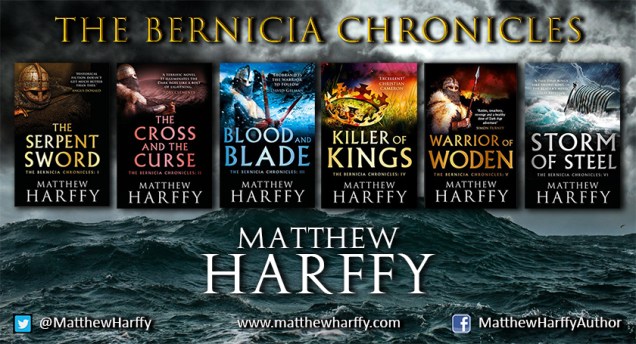
The Bernicia Chronicles: The Serpent Sword; The Cross and the Curse; Blood and Blade; Killer of Kings; Warrior of Woden; Storm of Steel; Fortress of Fury.

Novella – Kin of Cain

A Time For Swords

Wolf of Wessex

Website and social media:

Website; TV Series website; Twitter: @MatthewHarffy; Facebook.

*

My Books

Ladies of Magna Carta: Women of Influence in Thirteenth Century England  looks into the relationships of the various noble families of the 13th century, and how they were affected by the Barons’ Wars, Magna Carta and its aftermath; the bonds that were formed and those that were broken. It is now available from Pen & SwordAmazon and from Book Depository worldwide.

Also by Sharon Bennett Connolly:

Silk and the Sword: The Women of the Norman Conquest traces the fortunes of the women who had a significant role to play in the momentous events of 1066.  Available now from Amazon,  Amberley Publishing, Book Depository.

Heroines of the Medieval World tells the stories of some of the most remarkable women from Medieval history, from Eleanor of Aquitaine to Julian of Norwich. Available now from Amberley Publishing and Amazon and Book Depository.

*

You can be the first to read new articles by clicking the ‘Follow’ button, liking our Facebook page or joining me on Twitter and Instagram.

©2020 Sharon Bennett Connolly
Book Corner: Fortress of Fury by Matthew Harffy

Beobrand is besieged in the action-packed instalment in the Bernicia Chronicles set in AD 647 Anglo-Saxon Britain.

War hangs heavy in the hot summer air as Penda of Mercia and his allies march into the north. Caught unawares, the Bernician forces are besieged within the great fortress of Bebbanburg.

It falls to Beobrand to mount the defence of the stronghold, but even while the battle rages, old and powerful enemies have mobilised against him, seeking vengeance for past events.

As the Mercian forces tighten their grip and unknown killers close in, Beobrand finds himself in a struggle with conflicting oaths and the dreadful pull of a forbidden love that threatens to destroy everything he holds dear.

With the future of Northumbria in jeopardy, will Beobrand be able to withstand the powers that beset him and find a path to victory against all the odds?

In recent years, the Matthew Harffy new book release has become one of the highlights of my year, and 2020 is no exception. Fortress of Fury is the 7th book in his wonderful series, The Bernicia Chronicles. And it is probably the best so far! Beobrand has returned home after his recent journey to France in Storm of Steel, and now must defend the kingdom of Bernicia (now known as Northumbria) – and Bebbanburgh itself – from Welsh and Mercian invaders.

Fast paced, full of suspense and action, it is a non-stop rollercoaster ride of action and emotion for the reader. Matthew Harffy expertly combines the story with the known history and recreates 7th century Northumbria perfectly, giving the reader vivid descriptions of the landscape, the harsh reality of life in a kingdom suffering from invasion and fight scenes to die for – literally!

The fears of the characters are palpable.

Matthew Harffy’s storytelling abilities are second-to-none, he pulls you into the story from the very first, action-packed pages, and keeps you constantly gripped to the very last. And he always leaves you wanting more. Fortress of Fury is no exception! Waiting for book no. 8 is going to really test my patience!

They chased the raiders westward as the sun slid down through a crimson sky towards the desolate hills and moors of western Bernicia. Far beyond the horizon, before the land dipped into the sea that separated Albion from Hibernnia, Beobrand knew there rose great snowcapped mountains. But that land was days’s ride away and they would run their quarry to ground long before they saw the craggy bluffs and peaks of Rheged. He glanced over his shoulder at the score of warriors that rode hard behind him. Given their pace and the freshness of their steeds, they might well catch the men they pursued before sunset. He hoped so. He did not wish to lose them in the night. They had burnt a steading, killing folk whom Beobrand had sword to defend. And they had injured one of Beobrand’s gesithas. These Mercians must pay.

Beobrand squinted into the lowering sun. He could make out no details in the glare. A prickle of unease scratched the nape of his neck. Could they be riding into an ambush? With a twitch of the reins, he slowed his black stallion, Sceadugenga, almost imperceptibly. Beside him, Cynan shot him a glance and guided his mount closer.

“What is it?” asked the Waelisc warrior. He rode his bay mare effortlessly, and as always, when Beobrand watched the man ride, he marvelled at how one who had been so unsuited to horseback at first had gone on to become the nest horseman of his warband, and arguably in the kingdom.

Beobrand was no great rider, but he had the finest of horses. Sceadugenga was no longer young, but the horse was still hale and strong and there was a deep understanding between horse and rider. Beobrand knew it was foolish to care for a beast, but the bond he shared with Sceadugenga was unlike anything he had felt with other animals. The stallion and he had been through much together and it often seemed to him that the animal knew what he was going to command before he even knew himself.

“Something is not right,” Beobrand said, raising his voice over the thunder of the horses’ hooves on the summer-dry ground.

“You think it a trap?” said Cynan

There is not just one aspect of this book you can look at and point to and say ‘that’s what makes this a good book’; it is the combination of history, atmosphere, action, characters and storytelling that makes Fortress of Fury the perfect novel. Matthew Harffy uses the background of real events behind the invasion of Bernicia, and weaves it seamlessly into the lives of his characters. Beobrand, now the most feared and renowned warrior in Bernicia, is tasked with defending the great fortress of Bebbanburgh.

Fortress of Fury feels like it is a seminal book in the series, a turning point for Beobrand, as he matures into a great leader of men, whose own men are now becoming leaders. The decision he takes in this book will decide his future. I have yet to see if I’m right – I will have to wait for book no. 8 – but this feels like a momentous book for its hero. The events of Fortress of Fury will have a major influence on where Beobrand goes next – I can feel it!

I still haven’t worked out if ‘unputdownable’ is a word, but it is the best way to describe Fortress of Fury. I lost two afternoons of work because I couldn’t leave the book at crucial moments in the story, then stayed up til midnight, just so I could finish the last 50 pages.

I have long thought that the books of the Bernicia Chronicles are addictive and Fortress of Fury is no exception.

Simply put, Fortress of Fury by Matthew Harffy is a fabulous feat of storytelling.

It is available from 6 August. Buy link: Amazon UK

About the author:

Matthew grew up in Northumberland where the rugged terrain, ruined castles and rocky coastline had a huge impact on him. He now lives in Wiltshire, England, with his wife and their two daughters.

 Follow Matthew Harffy:    

Twitter: @MatthewHarffy, Facebook: @MatthewHarffyAuthor, Website: http://www.matthewharffy.com/

Buy link: Amazon UK

My Books

Ladies of Magna Carta: Women of Influence in Thirteenth Century England  looks into the relationships of the various noble families of the 13th century, and how they were affected by the Barons’ Wars, Magna Carta and its aftermath; the bonds that were formed and those that were broken. It is now available from Pen & SwordAmazon and from Book Depository worldwide.

Also by Sharon Bennett Connolly:

Silk and the Sword: The Women of the Norman Conquest traces the fortunes of the women who had a significant role to play in the momentous events of 1066.  Available now from Amazon,  Amberley Publishing, Book Depository.

Heroines of the Medieval World tells the stories of some of the most remarkable women from Medieval history, from Eleanor of Aquitaine to Julian of Norwich. Available now from Amberley Publishing and Amazon and Book Depository.

*

You can be the first to read new articles by clicking the ‘Follow’ button, liking our Facebook page or joining me on Twitter and Instagram.

©2020 Sharon Bennett Connolly
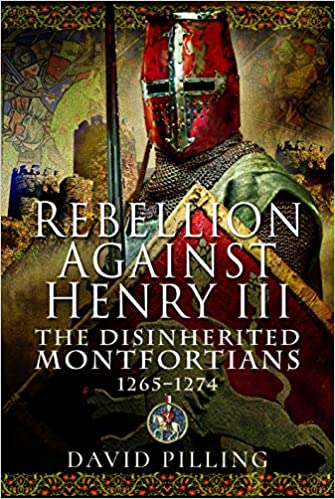
Book Corner: Rebellion Against Henry III by David Pilling

The ‘Montfortian’ civil wars in England lasted from 1259-67, though the death of Simon de Montfort and so many of his followers at the battle of Evesham in 1265 ought to have ended the conflict. In the aftermath of the battle, Henry III’s decision to disinherit all the surviving Montfortians served to prolong the war for another two years. Hundreds of landless men took up arms again to defend their land and property: the redistribution of estates in the wake of Evesham occurred on a massive scale, as lands were either granted away by the king or simply taken by his supporters. The Disinherited, as they were known, defied the might of the Crown longer than anyone could have reasonably expected. They were scattered, outnumbered and out-resourced, with no real unifying figure after the death of Earl Simon, and suffered a number of heavy defeats. Despite all their problems and setbacks, they succeeded in forcing the king into a compromise. The Dictum of Kenilworth, published in 1266, acknowledged that Henry could not hope to defeat the Disinherited via military force alone. The purely military aspects of the revolt, including effective use of guerilla-type warfare and major actions such as the battle of Chesterfield, the siege of Kenilworth and the capture of London, will all be featured. Charismatic rebel leaders such as Robert de Ferrers, the ‘wild and flighty’ Earl of Derby, Sir John de Eyvill, ‘the bold D’Eyvill’ and others such as Sir Adam de Gurdon, David of Uffington and Baldwin Wake all receive a proper appraisal.

Rebellion Against Henry III: The Disinherited Montfortians 1265-1274 by David Pilling covers an often overlooked period of history. It follows the mixed fortunes, of those who had supported Simon de Montfort during the Second Barons’ War, following Simon’s defeat and death at the Battle of Evesham. It is a book I never realised needed to be written, until I read it!

Over the years, reams and reams of paper have been dedicated to the conflict between King Henry III and Simon de Montfort, but this is the first book that looks at the aftermath, at what happened to those who survived the war and the dreadful, final Battle of Evesham, but found themselves on the losing side. Rebellion Against Henry III: The Disinherited Montfortians 1265-1274 is an engaging study of these noblemen, minor barons and knights, known collectively as the Disinherited.

I have touched on many events in Rebellion Against Henry III: The Disinherited Montfortians 1265-1274 for my own books, the recently published Ladies of Magna Carta and my next book about the Warenne Earls of Surrey. As a consequence, I was familiar with much of the main story, but was surprised at the level of continuing resistance that occurred after the defeat at Evesham. Interestingly, the hotspots of resistance had not changed since past rebellions; many of the Disinherited retreated to the wilds of the Isles of Axholme in Lincolnshire and Ely in Cambridgeshire; the former was associated with rebellion against King John, while the latter was the focus of resistance against William the Conqueror. Indeed, many of the names are familiar to students of the First Barons’ War that followed John’s rejection of Magna Carta.

The traumatic news of Evesham ripped the heart out of the baronial resistance in England. Earl Simon’s death or capture of most of the leading Montfortians in one fell swoop, demoralised rebel garrisons up and down the country. In the weeks after the battle one castle after another surrendered to the triumphant royalists. Wallingford and Berkhampstead submitted on 7 August, just three days after the slaughter, while Edward’s first move was to race north to secure his earldom of Chester. In the south, Windsor and the Tower quickly fell to the king, and Odiham and Rochester were in royal hands by the 14th. The castle of the Peak in Derbyshire held out a while longer, but submitted before January 1266.

This mass surrender left just two bastions of resistance in England. One was the mighty fortress of Kenilworth in Warwickshire, where Simon the Younger had retreated to grieve after his father’s death. The other was Dover Castle and the Cinque Ports in southeast England. Countess Eleanor, Simon’s widow, was holed up at Dover, and pirates from the rebel-held Cinque Ports still harassed shipping in the Channel.

At first there were hopes of a peaceful settlement to the war. While at Chester, Edward ordered letters to be drafted inviting the garrison at Kenilworth to surrender, on pain of disinheritance and loss of life. Simon the Younger, for his part, resisted the temptation to avenge himself on Richard of Almaine, Edward’s uncle, who was held prisoner at Kenilworth. Instead he released Almaine on 6 September, who in turn promised he would mediate with King Henry on Simon’s behalf.

Later that month, at Winchester, Edward ordered the chancellor Walter Giffard to make out letters of protection for four rebel knights. The persons and goods of these men – Richard de Havering, John de Havering, Simon de Stoke and William de Turevil – were not to be molested in any way, and they would be allowed to continue to hold their lands freely. They had sought Edward’s ‘goodwill’ on 7 August, the same day as the fall of Wallingford and Berkhampsted. and were responsible for restoring those castle to royal custody. In return Edward promised they would be safe from disinheritance and asked Giffard to provide some surety for his promise. Richard de Havering had served as the late Earl Simon’s estates steward, while John was his son and would later serve Edward as deputy justiciar of Noth Wales and seneschal of Gascony. Edward’s willingness to protect these men may have been driven by his desire to reconcile the Montfort clan after the butchery of Evesham.

Such efforts at rapprochement were shattered at Winchester parliament, which opened on 11 September….

Written in more than 20 short, punchy, chapters, the book looks at the leading figures among the Disinherited, the most notable Robert de Ferrers, Earl of Derby, John D’Eyville and many others. There is a fascinating case study at the back that almost – almost – convinces me that the legendary Robin Hood was among ranks of the Disinherited. David Pilling provides a pretty convincing argument, but I guess we’ll never know.

The author looks at the events from all sides, telling the story of the fight both from the point of view of the rebels and the royalists. Neither are the royalists always seen in a good light. David Pilling does highlight when such as John de Warenne, 6th Earl of Warenne and Surrey, and one of the more brutal men of the time, took advantage of the disorder in order to further their own ends. He also highlights the future Edward I’s impressive carrot-and-stick approach to dealing with the rebels, offering pardons where it was beneficial to the crown. The crown also were keen to ensure sentences of disinheritance were enforced if it meant the confiscated lands fell into the hands of royalists or their supporters.

Rebellion Against Henry III: The Disinherited Montfortians 1265-1274 is engagingly written and well referenced with an impressive bibliography. The only negative I can say about the book is that it lacks an index, which will cause problems for anyone wanting to use this book for research. And it would be a wonderful research tool, if it had an index. I’m hoping this omission will be rectified for the paperback version.

Despite that, Rebellion Against Henry III: The Disinherited Montfortians 1265-1274 by David Pilling was a thoroughly absorbing book. A very interesting read that highlights a 10-year period that is often overlooked after the momentous events of the previous decade. I have no hesitation in recommending it.

Rebellion Against Henry III: The Disinherited Montfortians 1265-1274 is available now in hardback and ebook from Amazon UK and Pen & Sword Books.

From the author:

I’m a writer and researcher, addicted to history for as long as I can remember. The medieval era has always held a fascination for me, perhaps because I spent much of my childhood exploring the misted ruins of castles in Wales. I also have an interest in the Byzantine Empire, the post-Roman period in Britain and the British & Irish Civil Wars.

I am a prolific author and have written and published a number of series and stand-alone tales. These include my first published novel, Folville’s Law, which chronicled the adventures of Sir John Swale in the last days of the reign of Edward II of England. This was followed by The White Hawk series, set during the Wars of the Roses, a six-part Arthurian series, and many more. I have also co-written two high fantasy novels with my good friend, Martin Bolton.

I am currently working on a book about the Montfortian civil wars in England in the late 13th century, and hope to produce more nonfiction works in the future, as well as continuing to work on fiction.

Most of my books are available as ebooks and paperbacks, and many are in the process of being converted to audio.

Enjoy!

https://www.goodreads.com/author/show/4979181.David_Pilling

http://pillingswritingcorner.blogspot.com/

*

My Books

Ladies of Magna Carta: Women of Influence in Thirteenth Century England  looks into the relationships of the various noble families of the 13th century, and how they were affected by the Barons’ Wars, Magna Carta and its aftermath; the bonds that were formed and those that were broken. It is now available from Pen & SwordAmazon and from Book Depository worldwide.

Also by Sharon Bennett Connolly:

Silk and the Sword: The Women of the Norman Conquest traces the fortunes of the women who had a significant role to play in the momentous events of 1066.  Available now from Amazon,  Amberley Publishing, Book Depository.

Heroines of the Medieval World tells the stories of some of the most remarkable women from Medieval history, from Eleanor of Aquitaine to Julian of Norwich. Available now from Amberley Publishing and Amazon and Book Depository.

*

You can be the first to read new articles by clicking the ‘Follow’ button, liking our Facebook page or joining me on Twitter and Instagram.

©2020 Sharon Bennett Connolly
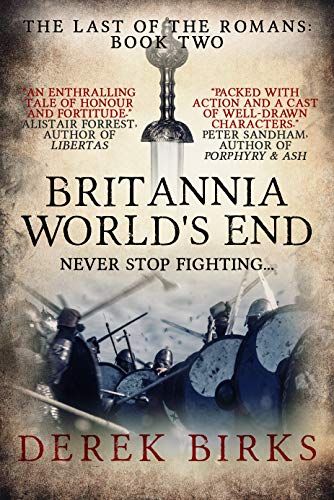
Book Corner: Britannia: World’s End by Derek Birks

454 AD.
Even after years of Roman rule, Britannia is a conflicted and largely untamed land.
Disgraced Imperial Officer, Dux Ambrosius Aurelianus, flees to its shores seeking sanctuary in the land of his deceased mother. His years of loyal service to the emperor count for nothing now. He must carve out a new life beyond the empire.
Accompanying Ambrosius is a disparate group of fellow refugees: Inga, a freed Saxon slave, his bucellarii – warriors sworn to him – and the surviving members of his estranged family.
The burden of command weighs heavy on his shoulders, for when he lands in the country, winter is fast approaching.
But the weather is not the only thing inhospitable towards the newcomers.
Plagued by troubles, Ambrosius faces opponents among both the native Britons and Saxon settlers. He discovers that no-one in Britannia – least of all, the High King, Vortigern – still fears the soldiers of the decaying empire.
When those he loves are savagely abducted and betrayal divides his company, Ambrosius is left with only a handful of his bucellarii. Though heavily outnumbered and unfamiliar with the land, Ambrosius remains undaunted.
Pitted against powerful opponents, the Roman will need new allies if he is to free the hostages and make Britannia his home.
There will be blood.

Derek Birks has fast become one of my favourite authors. His first novel, Feud, is still one of my personal favourites. He has a knack for fast-paced action woven into a wonderful story that keeps the reader hooked from the first page to the last. This latest offering is no different. Trouble arrives almost at the very first page and leaves the reader on the edge of their seat to the very end. Survival is far from certain and each character has their own battle to fight – and their own demons to face – within the larger story.

Britannia: World’s End is the second book in Derek Birks’ new series based in the twilight of the Roman era, which follows the exploits of Ambrosius Aurelianus and his small band of loyal warriors, and a disparate group of waifs and strays that he has picked up since being chased out of the Roman Empire. Ambrosius leads his people to the island of Britain, in the hope of finding a new home, but only finds more problems and more enemies to fight.

Set in the age of King Arthur, there are suggestions of the famous Arthurian legends, and the links to Ambrosius Aurelianus, though the story is firmly set in the history and reality of Britain at the waning of the Roman Empire, where land and people were open to exploitation and manipulation.

With a final scowl at Remigius, Ambrosius leapt from the boat onto the stony shore where dog-tired men were cheering and clapping each other on the back. They deserved to celebrate, he thought, for though they were some yards east of the camp now, at least they had salvaged the boat. By the time he heard the hooves, it was too late and he could only stare, helpless, as a dozen horsemen cantered through his camp.

By the time he roared: “To arms!”, women were already scattering in fear. Obliged to retrieve their scattered weapons from all along the beach, Ambrosius and his bucellarii were slow to return to the camp. Ambrosius was still trying to disentangle his spatha from his belt when he heard Inga’s voice, heaping Saxon abuse at her assailants.

“I’m here, Inga!” he cried, as he watched her trying to fend off one of the riders with her knife. “Run – this way! Run to us!”

Defiant as ever, she retorted: “I have Ferox with me!”

Thank God for Ferox, thought Ambrosius, as he stumbled towards her. Of course, the damned dog had not been warning him about the boat at all, for how would a dog know the boat was drifting out to sea? No, Ferox had caught the scent of strangers and their horses, but Ambrosius, like some green recruit, had ignored the animal’s alert and allowed himself to be drawn away from camp.

Though he had told Inga to run, of course, she had not. Armed only with her long blade, she stood her ground, flailing at her mounted assailants. Ambrosius cursed under his breath as he ran, for had he not told her how brave she was – as brave as any one of his bucellarii? And because he encouraged her, she fought, when she should have run. One moment Ambrosius glimpsed her, slashing out in vain, the next she was grappling with her captor. Racing to her side, spatha in hand and ready to dispense death to the villains who had dared to assault his camp, he was relieved to see that she had broken free.

“Stay behind me!” he ordered, but Inga’s blood was up and she took a snarling pace towards one of the horsemen. Thrusting out an arm to pull her back, Ambrosius’ fingertips scarcely brushed hers, as she was lifted clean off her feet and borne away.

Derek Birks has several great strengths as a writer. He is a natural storyteller and has a knack for knowing how to draw a reader in and holding their attention, so that you’re always promising yourself ‘just one more page’ or ‘just one more chapter’. His actions scenes are second-to-none and help to keep the tension high throughout the book.

His greatest skill, however, is in his characters. Despite a large number of supporting characters, Derek Birks has the ability to make each and everyone of them an individual. Not just in their appearance, but in their actions and in their individual stories. Each character has a legend that is his or her own; this means that each character has their own motivations and their own set of rules.

The author is also known for creating strong, independent female characters, such as the great Eleanor Elder in his two series set in the Wars of the Roses. In The Last of the Romans, it is Inga, a former sex slave, who steals the show with her strength and quiet determination. And then there is the dog, Ferox, a ferocious war dog with a soft spot for Inga, and a scene stealer in every chapter in which he appears. He is such a unique character!

There is one other thing Derek Birks has become renowned for in his books;; no character is so precious that he cannot be killed off, if the story asks for it. Not even the hero of the book is safe. And this brings an added tension to the book; the reader does not know who will make it out alive!

These 3 great strengths in the author are a fantastic combination that leads to another amazing novel. I have never had any qualms about recommending Derek Birks’ books to any fan of action-packed historical fiction, and Britannia: World’s End is no exception.

It is an awesome book!

*

About the author:

Derek was born in Hampshire in England but spent his teenage years in Auckland, New Zealand, where he still has strong family ties. 

On his return to England, he read history at Reading University and for many years he taught history in a secondary school. Whilst he enjoyed his teaching career and it paid the bills, he found a creative outlet in theatrical activities, stage-managing many plays and outdoor Shakespeare performances.

Derek always wanted to write and began, aged 17, writing stories, songs and poetry – in fact virtually anything. Inevitably, work and family life took precedence for a long period of time but in 2010 Derek took early retirement to indulge his passion for history and concentrate on his writing. He is interested in a wide range of historical themes but his particular favourite is the late medieval period. 

Derek writes action-packed fiction which is rooted in accurate history. He also produces podcasts on the Wars of the Roses for those interested in the real historical background to his books. Check them out on his website at: https://www.derekbirks.com/history-podcasts/

His historical fiction works include: 
Rebels & Brothers – a 4-book series set during the fifteenth century, which follows a fictional family, the Elders, through their struggle to survive the Wars of the Roses up to 1471.  The Craft of Kings – a sequel series which finds the Elder family ten years later in 1481. The latest book in this series is book 3, Echoes of Treason, which is set during the short and turbulent reign of Richard III.

He has recently embarked upon a new Post-Roman series and the first book is out now: The Last of the Romans

Apart from his writing, he enjoys travelling – sometimes, but not always, to carry out research for his books. He also spends his time walking, swimming and taking part in archaeological digs.

He was a regular presence at the Harrogate History Festival, is an active member of the Historical Novel Society and you will also find him each summer signing books – and selling them – at the Chalke Valley History Festival outside Salisbury in Wiltshire.

His books are available on Amazon in the UK and US.
You can find Derek at: Amazon; Blog; Facebook; Twitter 

*

My Books

Out Now!

Ladies of Magna Carta: Women of Influence in Thirteenth Century England  looks into the relationships of the various noble families of the 13th century, and how they were affected by the Barons’ Wars, Magna Carta and its aftermath; the bonds that were formed and those that were broken. It is now available from Pen & SwordAmazon and from Book Depository worldwide.

Also by Sharon Bennett Connolly:

Silk and the Sword: The Women of the Norman Conquest traces the fortunes of the women who had a significant role to play in the momentous events of 1066.  Available now from Amazon,  Amberley Publishing, Book Depository.

Heroines of the Medieval World tells the stories of some of the most remarkable women from Medieval history, from Eleanor of Aquitaine to Julian of Norwich. Available now from Amberley Publishing and Amazon and Book Depository.

*

You can be the first to read new articles by clicking the ‘Follow’ button, liking our Facebook page or joining me on Twitter and Instagram.

©2020 Sharon Bennett Connolly
Ladies of Magna Carta Blog Tour

Ladies of Magna Carta: Women of Influence in Thirteenth Century Europe is going on tour – virtually at least. With articles, book reviews and interviews coming over the next 2 weeks, we will be visiting such exotic places as Barnsley, Tennessee, the Yorkshire Dales, Sussex and Michigan – all from the desktop!

Here’s the itinerary!

First stop is 1st July at my amazing publishers, Pen and Sword, who have done a wonderful job of organising the tour. Here’s an article on the inspiration behind the book.

5th July, Joanna Arman, The History Lady, will publishing her thoughts on Ladies of Magna Carta. I’m not nervous – much!

6th July, I will be stopping by for a cuppa with Samantha Wilcoxson to talk about The Marshal Sisters.

7th July, I will be chatting with Susan Higginbotham on History Refreshed about why it is so hard to love Isabelle d’Angoulême.

I will be making 2 stops on 8th July, visiting Simon Turney’s S.J.A. Turney’s Books and More, with an article on the many Family Ties of the women of the Magna Carta a story, plus Simon has written a wonderful review of Ladies of Magna Carta. And then it’s a quick hop over to visit Carol McGrath for her review of Ladies of Magna Carta and a chat about history, research and writing in general.

9th July I’ll be visiting the inimitable author, Tony Riches, with an article on Matilda de Braose.

10th July its down to Surrey for a review from the wonderful Paula Lofting over at The Road to Hastings and Other Stories.

13th July its back over to the US to Adventures of a Tudor Nerd for ace reviewer Heidi Malagasi’s thoughts on Ladies of Magna carta.

14th July, its over to nursing historian Louise Wyatt for coffee and a Q &A – and a little taster from the book.

15th July its back over the pond to Tennessee, to visit Kristie Dean and give you 16 Facts About Woman and Magna Carta – it was supposed to be 10 but I got carried away!

16th July Last – but by no means least – stop on the tour is the amazing Derek Birks and one final – hopefully glowing – review.

Ladies of Magna Carta: Women of Influence in Thirteenth Century England  is now available from Pen & SwordAmazon and from Book Depository worldwide.

I would like to thank Rosie and Rebecca at Pen & Sword and all the authors and bloggers involved for taking part in this amazing tour. I am truly humbled and grateful that you have all taken the time to read Ladies of Magna Carta and shared your thoughts and blog space with me.

THANK YOU!

*

Signed book plates

If you have a copy of Ladies of Magna Carta and would like a signed book plate to pop in the front, for you or someone else, just drop me a line via the ‘Contact Me‘ page with your address and who you would like the dedication made out to, and I will get one out to you.

*

About me:

Sharon Bennett Connolly has been fascinated by history her whole life. She has studied history academically and just for fun – and even worked as a tour guide at historical sites. For Christmas 2014, her husband gave her a blog as a gift – http://www.historytheinterestingbits.com – and Sharon started researching and writing about the stories that have always fascinated, concentrating on medieval women. Her latest book, Ladies of Magna Carta: Women of Influence in Thirteenth Century England, released in May 2020, is her third non-fiction book. She is also the author of Heroines of the Medieval World and Silk and the Sword: The Women of the Norman Conquest. Sharon regularly gives talks on women’s history; she is a feature writer for All About History magazine and her TV work includes Australian Television’s ‘Who Do You Think You Are?

My Books

Out Now!

Ladies of Magna Carta: Women of Influence in Thirteenth Century England  looks into the relationships of the various noble families of the 13th century, and how they were affected by the Barons’ Wars, Magna Carta and its aftermath; the bonds that were formed and those that were broken. It is now available from Pen & SwordAmazon and from Book Depository worldwide.

Also by Sharon Bennett Connolly:

Silk and the Sword: The Women of the Norman Conquest traces the fortunes of the women who had a significant role to play in the momentous events of 1066.  Available now from Amazon,  Amberley Publishing, Book Depository.

Heroines of the Medieval World tells the stories of some of the most remarkable women from Medieval history, from Eleanor of Aquitaine to Julian of Norwich. Available now from Amberley Publishing and Amazon and Book Depository.

*

You can be the first to read new articles by clicking the ‘Follow’ button, liking our Facebook page or joining me on Twitter and Instagram.

©2020 Sharon Bennett Connolly

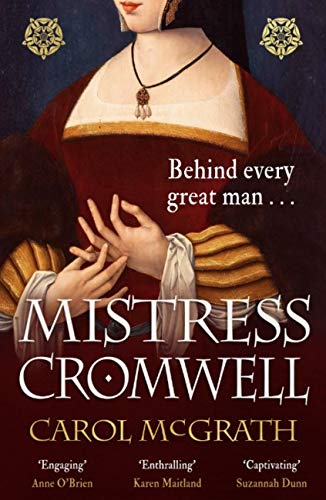
Book Corner: Mistress Cromwell by Carol McGrath

MISTRESS CROMWELL presents the rise of Tudor England’s most powerful courtier, Thomas Cromwell, through the eyes of the most important – and little known – woman in his life . . .

When beautiful cloth merchant’s daughter Elizabeth Williams is widowed at the age of twenty-two, she is determined to make a success of the business she inherited from her father. But there are those who oppose a woman making her own way in the world, and soon Elizabeth realises she may have some powerful enemies – enemies who know the dark truth about her dead husband.

Happiness arrives when Elizabeth meets ambitious young lawyer, Thomas Cromwell. Their marriage begins in mutual love and respect – but it isn’t always easy being the wife of an independent, headstrong man in Henry VIII’s London. The city is both merciless and filled with temptation, and Elizabeth soon realises she must take care in the life she has chosen . . . or risk losing everything.

Mistress Cromwell was first published as The Woman in the Shadows. What a treat of a book it is! Mistress Cromwell is a fabulous fictional account of the life and times of Elizabeth Cromwell, wife of Henry VIII’s famous – some would say notorious – adviser.  It is an enjoyable, thoughtful story which gives the reader an insight into life in Tudor London, in general, and in a Tudor household in particular. Following Elizabeth from the funeral of her first husband, through her widowhood and new love and marriage with Thomas Cromwell, this is not the story of Henry VIII and the Tudor court, but of the ‘ordinary’ people without whom the Tudors would not have been able to sustain their glamorous court.

Written in colourful, vivid language that draws you in from the first page, Mistress Cromwell is a wonderful novel, full of life and imagery. And, of course, the fact I could find no picture of Elizabeth Cromwell – only ones of Thomas – serves to highlight how little information we have about the ordinary Tudor woman. Carol McGrath’s novel gives us a rarely seen insight into everyday life of the non-aristocratic family in Tudor London. However, if you were expecting melodrama, this book is not it; adventure and mystery are given equal billing, with murder, arson and secrets, ambushes in dark corners and some strange, scary personalities making this an exciting story which is not to be missed.

Cromwell’s rise to power at the Tudor court runs parallel with his family concerns, with the arrival of children and Elizabeth’s own business adventures. His mysterious past – as a soldier and adventurer in Italy – is alluded to and even comes in useful. Carol McGrath does an excellent job of portraying the enigma that is Thomas Cromwell; the courtier, soldier and statesman who is also merchant, husband and father. The characters are brought to life in vivid, vibrant detail, creating a tableau that is hard to forget even once the last page has been read.

For several hours, I spoke little and ate sparingly. Father went about the hall speaking with merchants. I wondered how I would manage but knew I must and would. A chair scraped beside me, jolting me out of my thoughts. I felt a light touch on my elbow and glanced up. The feast was ending. My merchant had left his place. Gone to the privy, no doubt. Instead, Father stood by my chair, with Master Cromwell by his side.

‘Lizzy, Master Cromwell is my new cloth middle-man. He would like you to show him your bombazine cloth. He has admired your mourning gown.’

I started. This was nothing new. Father always employed different cloth middlemen to sell his fabrics to Flanders, thinking each one better than the last but today, at my husband’s funeral it was not seemly. Master Cromwell was watching me through eyes of an unusual shade, not quite blue or grey.

He bowed and said, ‘Forgive me for staring, Mistress Williams, but you see I knew you as a child. Your father used our fulling mill in Putney.’ He smiled at Father.

That was why he was familiar. I stared back, and in a moment or two I had recollected a tough, wicked little boy, some years older than I, who taught me to fish in the river with a string and a hook with a wriggling worm at the end of it.

‘I do recollect you, Master Cromwell. We played together as children,’ I said, feeling my mouth widen into a smile. ‘Father sent your father our cloth to be washed, beaten, prepared and softened for sale. I remember climbing trees and stealing apples. You led me astray.’

Elizabeth Cromwell herself is a wonderful, strong character, facing the prejudices of the merchant class and her own family in order to take some control over her life. And Mistress Cromwell will make you want to know more Although a history buff would know what is to become of Cromwell and Elizabeth, the author cleverly manages to avoid inserting any hindsight into the story. If you don’t know what becomes of the characters, you will soon be scouring the history books for the true story.

Carol McGrath’s wonderful novel transports you through time and space to the streets of London and Northampton at the height of Henry VIII’s magnificent reign. With colourful, vivid imagery she recreates a world and its people which has been otherwise lost through the centuries. The city, the characters and the lifestyle have been brought back to life, recreating the vibrant world in which Thomas Cromwell would eventually rise to be the king’s chief statesman. The story follows Elizabeth’s life; her family, her business and her husband, cleverly demonstrating how these are affected and changed by her husband’s inexorable rise to power.

The attention to detail is phenomenal, showing many of the social conventions of the time, while not detracting from the story, nor making the reader feel like they’re in a lecture on social history. It paints a fascinating tableau of merchant life in Tudor London, portraying the struggles and successes facing a widow trying to keep her business going in a man’s world. Rich in detail in every aspect, Carol McGrath’s meticulous research has produced a novel which plunges the reader into the middle of Elizabeth’s household in Tudor London. From funeral and marriage arrangements, births and christenings, to the contents of a Tudor garden and the conduct of the cloth trade, Mistress Cromwell acts as a window into Tudor merchant society.

If you liked Hilary Mantel’s Wolf Hall you will love Mistress Cromwell by Carol McGrath. It shows the human side of the Cromwell family and is a treat for any lover of historical fiction, and especially for a fan of Tudor history. It is a novel not to be missed, and which must be devoured for both the meticulous detail and the wonderful story – especially the story.

This review first appeared on The Review.

About the author:

Based in England, Carol McGrath writes Historical Fiction and Non-Fiction. She studied History at Queens University Belfast, has an MA in Creative Writing from the Seamus Heaney Centre, Queens University Belfast and an English MPhil from Royal Holloway, University of London. The Handfasted Wife, first in a trilogy about the royal women of 1066 was shortlisted for the RoNAS in 2014. The Swan-Daughter and The Betrothed Sister complete this highly acclaimed trilogy. Mistress Cromwell, a best-selling historical novel about Elizabeth Cromwell, wife of Henry VIII’s statesman, Thomas Cromwell, is republished by Headline. The Silken Rose, first in a Medieval She-Wolf Queens Trilogy, featuring Ailenor of Provence, was published 2nd April 2020 and comes out 23rd July 2020 as a PB. also published by the Headline Group. Tudor Sex & Sexuality will be published in 2022. Carol speaks at events and conferences. She was the co-ordinator of the Historical Novels’ Society Conference, Oxford in September 2016 and is an avid reader and reviewer, in particular, for the Historical Novel Society. She is a member of the Romantic Novelists’ Association and Historical Writers Association. Carol lives in Oxfordshire with her husband. Website: http://www.carolcmcgrath.co.uk. Newsletter: bit.ly/39eUgKl for the signup page. Amazon.

*

My Books

Out Now!

Ladies of Magna Carta: Women of Influence in Thirteenth Century England  looks into the relationships of the various noble families of the 13th century, and how they were affected by the Barons’ Wars, Magna Carta and its aftermath; the bonds that were formed and those that were broken. It is now available from Pen & SwordAmazon and from Book Depository worldwide.

Also by Sharon Bennett Connolly:

Silk and the Sword: The Women of the Norman Conquest traces the fortunes of the women who had a significant role to play in the momentous events of 1066.  Available now from Amazon,  Amberley Publishing, Book Depository.

Heroines of the Medieval World tells the stories of some of the most remarkable women from Medieval history, from Eleanor of Aquitaine to Julian of Norwich. Available now from Amberley Publishing and Amazon and Book Depository.

*

You can be the first to read new articles by clicking the ‘Follow’ button, liking our Facebook page or joining me on Twitter and Instagram.

©2020 Sharon Bennett Connolly
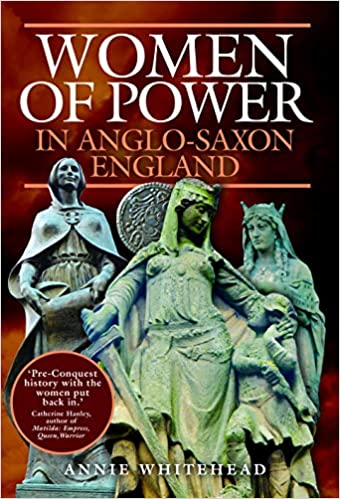
Book Corner: Women of Power in Anglo-Saxon England by Annie Whitehead

Many Anglo-Saxon kings are familiar. Æthelred the Unready is one, yet less is written of his wife, who was consort of two kings and championed one of her sons over the others, or his mother who was an anointed queen and powerful regent, but was also accused of witchcraft and regicide. A royal abbess educated five bishops and was instrumental in deciding the date of Easter; another took on the might of Canterbury and Rome and was accused by the monks of fratricide.

Anglo-Saxon women were prized for their bloodlines – one had such rich blood that it sparked a war – and one was appointed regent of a foreign country. Royal mothers wielded power; Eadgifu, wife of Edward the Elder, maintained a position of authority during the reigns of both her sons.

Æthelflaed, Lady of the Mercians, was a queen in all but name, while few have heard of Queen Seaxburh, who ruled Wessex, or Queen Cynethryth, who issued her own coinage. She, too, was accused of murder, but was also, like many of the royal women, literate and highly-educated.

From seventh-century Northumbria to eleventh-century Wessex and making extensive use of primary sources, Women of Power in Anglo-Saxon England examines the lives of individual women in a way that has often been done for the Anglo-Saxon men but not for their wives, sisters, mothers and daughters. It tells their stories: those who ruled and schemed, the peace-weavers and the warrior women, the saints and the sinners. It explores, and restores, their reputations.

I was very lucky to receive an advance copy of Annie Whitehead’s wonderful new book, Women of Power in Anglo-Saxon England. Beautifully written and thoroughly researched, this book brings to life the women on England from before the Norman Conquest.

Women of Power in Anglo-Saxon England is a wonderful study of the influential royal and noble women of pre-Conquest England, whether they were queens, princesses, abbesses or countesses. Annie Whitehead tells their stories in wonderful, vivid detail, beautifully weaving the historical implications off their lives with their larger-than-life stories.

Though they have been dead a thousand years and more, and while written evidence on these women may be scarce, the author has managed to squeeze every bit of information from the available chronicles, charters and saints’ lives. She has given the reader every possible snippet of information on their lives, presenting and analysing the sources in an accessible, engaging and thoroughly enjoyable reading experience.

The stories of these women is told with a passion and eloquence which makes every chapter a pleasure to read. The more familiar stories of Æthelflæd, Lady Godiva and St Hilda of Whitby are given excellent new interpretations, while the reader may be meeting the less familiar women, such as Æthelfrith of Bernicia, Eadburh and Alfred the Great’s sister, Æthelswith, for the first time.

Ælfgifu appears not to have been married for long. Her son Eadwig was probably born around 940, and his younger brother Edgar around 943. King Edmund himself died in 946 – the victim of a brawl, or perhaps a political assassination – having married again, so his first marriage must have ended not long after Edgar’s birth. The younger of the royal orphans, Edgar, was fostered by a noblewoman, the wife of the ealdorman of East Anglia, whom we shall meet in Part VI.

Ælfgifu is known as Ælfgifu of Shaftesbury, and William of Malmesbury in particular had a lot to say about her. He said that it was she who built the nunnery there and that her bodily remains were placed there. She was ‘so pious and loving that she would even secretly release criminals who had been openly condemned by the gloomy verdict of a jury.’ She would also give away her expensive clothes to the needy and she was a beautiful woman who was remembered for the miracles associated with her; the blind, the deaf and the lame were cured after visiting Shaftesbury.

It would be easy to assume that she retired to Shaftesbury in the manner of a number of previous queens, but the short-lived nature of her marriage and the young age of her children suggest another scenario. It is plausible that she died in childbirth, either in labour with Edgar or with a subsequent pregnancy in which both mother and child died. If she did indeed die in childbirth then she cannot have been a nun at Shaftesbury, but merely its benefactress.

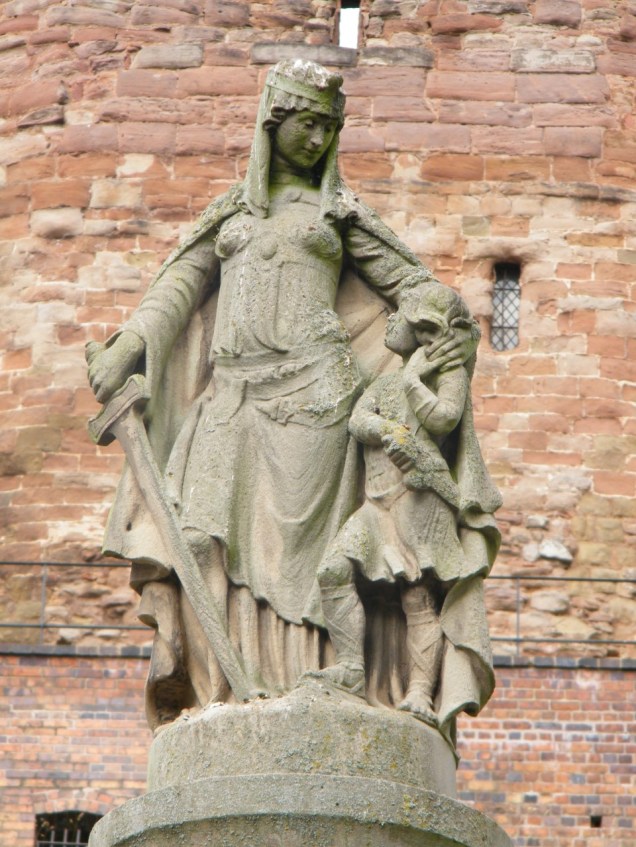
Æthelflæd with her nephew Æthelstan

of these women were not easy to find, and the detective work involved in researching Women of Power in Anglo-Saxon England is both entertaining and fascinating. In recreating and retelling the lives of these remarkable women, Annie Whitehead has given us a window into a distant past. We have the chance to observe the lives, loves, hopes and dreams of these remarkable women; women who helped shape their present and futures, and thus the world in which we now live.

The author also helps to dispel some of the myths that have arisen about these women, whether by historical fiction writers or the over-active imaginations of the chroniclers of the past. The true stories of Æthelflæd and Godiva, and others, are revealed, the myths surrounding them examined and explained. This is a wonderful book, filled with stories of love, intrigue and murder, of the power struggles and betrayals of Anglo-Saxon England, of strong and influential women who made an impression, not only on their own times, but on the generations who came after.

Women of Power in Anglo-Saxon England brings to life the women of the Anglo-Saxon period with vivid clarity. It is a remarkable study of the lives of women of the period – known and unknown – and their impact on history. Saints, princesses and queens; wives, daughters and mothers, Annie Whitehead demonstrates the strengths, weaknesses and challenges these incredible women faced in order to exert their influence on their corner of the world. The author’s meticulous research, beautiful writing and natural storytelling ability make this book a pleasure to read from beginning to end.

To Buy the Book:

Bookhttp://mybook.to/WomeninPower Amazonhttp://viewauthor.at/Annie-Whitehead

About the author:

Annie Whitehead graduated in history having specialised in the ‘Dark Ages’ and is a member of the Royal Historical Society. She’s written three books about early medieval Mercia, the ancient Anglo-Saxon kingdom of the Midlands. The first, To Be a Queen, tells the story of Alfred the Great’s daughter, and was long-listed for the Historical Novelist Society’s Indie Book of the Year 2016, and was an IAN (Independent Author Network) Finalist in 2017, while the second, Alvar the Kingmaker, is the story of Aelfhere, Earl of Mercia in the 10th century. The third, Cometh the Hour, is the first of two volumes set in seventh-century Mercia. She was a contributor to the anthology 1066 Turned Upside Down, a collection of alternative short stories. She writes magazine articles and has had pieces printed in diverse publications, including Cumbria Magazine and This England. She has twice been a prize winner in the Mail on Sunday Novel Writing Competition, and won First Prize in the 2012 New Writer Magazine’s Prose and Poetry Competition. She was a finalist in the 2015 Tom Howard Prize for nonfiction, and is also a contributor and editor for the English Historical Fiction Authors blog, as well as blogging for her own site – Casting Light upon the Shadow. In 2017 she won the inaugural HWA/Dorothy Dunnett Society Short Story Prize. Her first full-length nonfiction book, Mercia: The Rise and Fall of a Kingdom, is published by Amberley. Her latest nonfiction, Women of Power in Anglo-Saxon England, is published by Pen & Sword Books.

Social Media links: Blog; Twitter; Website; Facebook

*

My Books

Out Now!

Ladies of Magna Carta: Women of Influence in Thirteenth Century England  looks into the relationships of the various noble families of the 13th century, and how they were affected by the Barons’ Wars, Magna Carta and its aftermath; the bonds that were formed and those that were broken. It is now available from Pen & SwordAmazon and from Book Depository worldwide.

Also by Sharon Bennett Connolly:

Silk and the Sword: The Women of the Norman Conquest traces the fortunes of the women who had a significant role to play in the momentous events of 1066.  Available now from Amazon,  Amberley Publishing, Book Depository.

Heroines of the Medieval World tells the stories of some of the most remarkable women from Medieval history, from Eleanor of Aquitaine to Julian of Norwich. Available now from Amberley Publishing and Amazon and Book Depository.

*

You can be the first to read new articles by clicking the ‘Follow’ button, liking our Facebook page or joining me on Twitter and Instagram.

©2020 Sharon Bennett Connolly

Ladies of Magna Carta: Women of Influence in Thirteenth Century Europe

Ladies of Magna Carta: Women of Influence in Thirteenth Century Europe hits the bookshops today. Inspired by the lives of Matilda de Braose and Nichoaa de la Haye, My third book looks at the events surrounding the issuing of Magna Carta with a view to how it affected the women.

Magna Carta clause 39: No man shall be taken, imprisoned, outlawed, banished or in any way destroyed, nor will we proceed against or prosecute him, except by the lawful judgement of his peers or by the law of the land.

This clause in Magna Carta was in response to the appalling imprisonment and starvation of Matilda de Braose, the wife of one of King John’s barons. Matilda was not the only woman who influenced, or was influenced by, the 1215 Charter of Liberties, now known as Magna Carta. Women from many of the great families of England were affected by the far-reaching legacy of Magna Carta, from their experiences in the civil war and as hostages, to calling on its use to protect their property and rights as widows.

Ladies of Magna Carta looks into the relationships – through marriage and blood – of the various noble families and how they were affected by the Barons’ Wars, Magna Carta and its aftermath; the bonds that were formed and those that were broken. Including the royal families of England and Scotland, the Marshals, the Warennes, the Braoses and more, Ladies of Magna Carta_focuses on the roles played by the women of the great families whose influences and experiences have reached far beyond the thirteenth century.

Ladies of Magna Carta: Women of Influence in Thirteenth Century England was such an amazing story to write. There were so many women who influenced the clauses of Magna Carta and the civil war which surrounded its creation. And there were even more women who were able to use Magna Carta to protect their own rights. And there were some for whom Magna Carta did nothing too assuage their suffering…..

It was an honour and a privilege to tell their stories.

Here’s what the reviewers are saying:

“Sharon Bennett Connolly throws much needed light on the lives of the high-born women of thirteenth-century England…Connolly’s version of the first Plantagenets is superbly concise. No distractions or detours, hitting all the right nails on the head…Connolly’s book is an informative and delightful read about women aspiring to control their destiny against this backdrop, but their success or failure had less to do with Magna Carta than with the timeless principles of resourcefulness, determination and knowing how to skilfully handle the big guy. It’s these qualities that make their stories inspiring.”
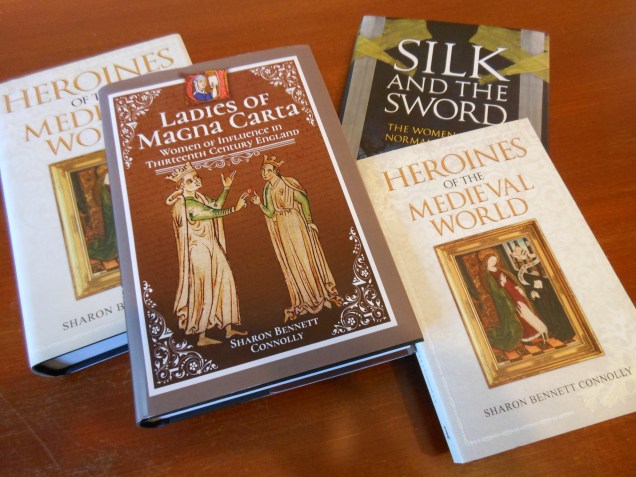
Darren Baker, author of The Two Eleanors

“A well-researched and comprehensive study of the women who lived through, and were affected by, the Barons’ Revolt and the sealing of the Magna Carta. Ms Bennett Connolly has skilfully brought to the fore the lives of the women who have hitherto been hidden in the background. A must-read for anyone interested in this pivotal moment in English and Scottish history.”
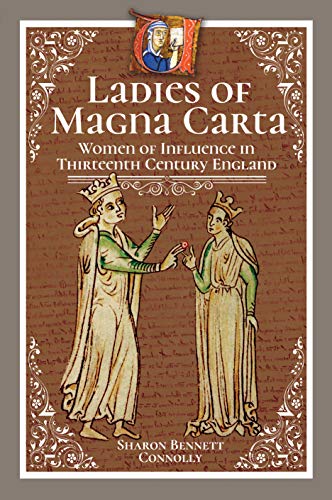
Annie Whitehead, author of Women of Power in Anglo-Saxon England

The history of women isn’t written about enough. I requested this one because it sounded like it would be a very interesting read about contemporary women. It focuses, of course, more on women who were royal or connected with the nobility, but it was still fascinating. Each chapter goes over different families or women. It was very easy to read and get into. When this gets published, I’m going to see if I can snag a copy because I’d want to own and reread this one!

Caidyn, goodreads reviewer

“Fascinating book! It was interesting to read about women living at the time of the issuing of the Magna Carta and to learn about what chapters were addressed to them and in what respects…Much on the book is about the families of women, that is to say the male part. I found nevertheless interesting to read about differences in those various families in their relationship with their daughters and wives. A few of these medieval women did have a louder voice than was usually expected: 2 became Sheriffs, for instance.”

Christine, goodreads reviewer

Absolutely loved this book. It brought out the roles of women in the formation and assertion of the Magna Carta, something we don’t hear very much about in general. There were some formidable women mentioned and I learned so much about their struggles and stories – some of them very tragic – and whether or not John was able to implement the Magna Carta to help them. In some cases, it was argued, women helped form the structure of some of the Magna Carta. A great read!

Jo Romero, NetGalley reviewer

Absolutely amazing book! Could not stop reading it. Very informative and interesting. The author has an amazing ability to ferret out information on people we have always thought of as “lost”. This is the third book I have read from this author and again I am blown away with her ability to make a very confusing time in English history interesting and, even more importantly, tell it from the perspective of a set of people often forgot about…women.

Janette Recore, NetGalley reviewer

Reviews:

You can find a wonderful full review of Ladies of Magna Carta: Women of Influence in Thirteenth Century Europe over on the Love British History blog.

Here’s the full review from historian Darren Baker.

Guest blog posts:

I visited Annie Whitehead to talk about writing Ladies of Magna Carta and some of my past and future projects.

You can find me over on Tony Riches’ blog, The Writing Desk, talking about Matilda de Braose, her family and their influence on the Magna Carta story.

And you can find me over at Just History Posts, talking about Ladies of Magna Carta and writing in general.

Over on The Coffee Pot Book Club, you can find an extract on Margaret of Scotland, from the chapter on Scottish Princesses.

Out Now!

Ladies of Magna Carta: Women of Influence in Thirteenth Century England will be released in the UK on 30 May 2020 and is now available for pre-order from Pen & SwordAmazon UK and from Book Depository worldwide. It will be released in the US on 2 September and is available for pre-order from Amazon US.

Also by Sharon Bennett Connolly:

Silk and the Sword: The Women of the Norman Conquest traces the fortunes of the women who had a significant role to play in the momentous events of 1066.  Available now from Amazon UK,  Amberley Publishing, Book Depository and Amazon US.

Heroines of the Medieval World tells the stories of some of the most remarkable women from Medieval history, from Eleanor of Aquitaine to Julian of Norwich. Available now from Amberley Publishing and Amazon UK, Amazon US and Book Depository.

*

You can be the first to read new articles by clicking the ‘Follow’ button, liking our Facebook page or joining me on Twitter and Instagram.

©2020 Sharon Bennett Connolly