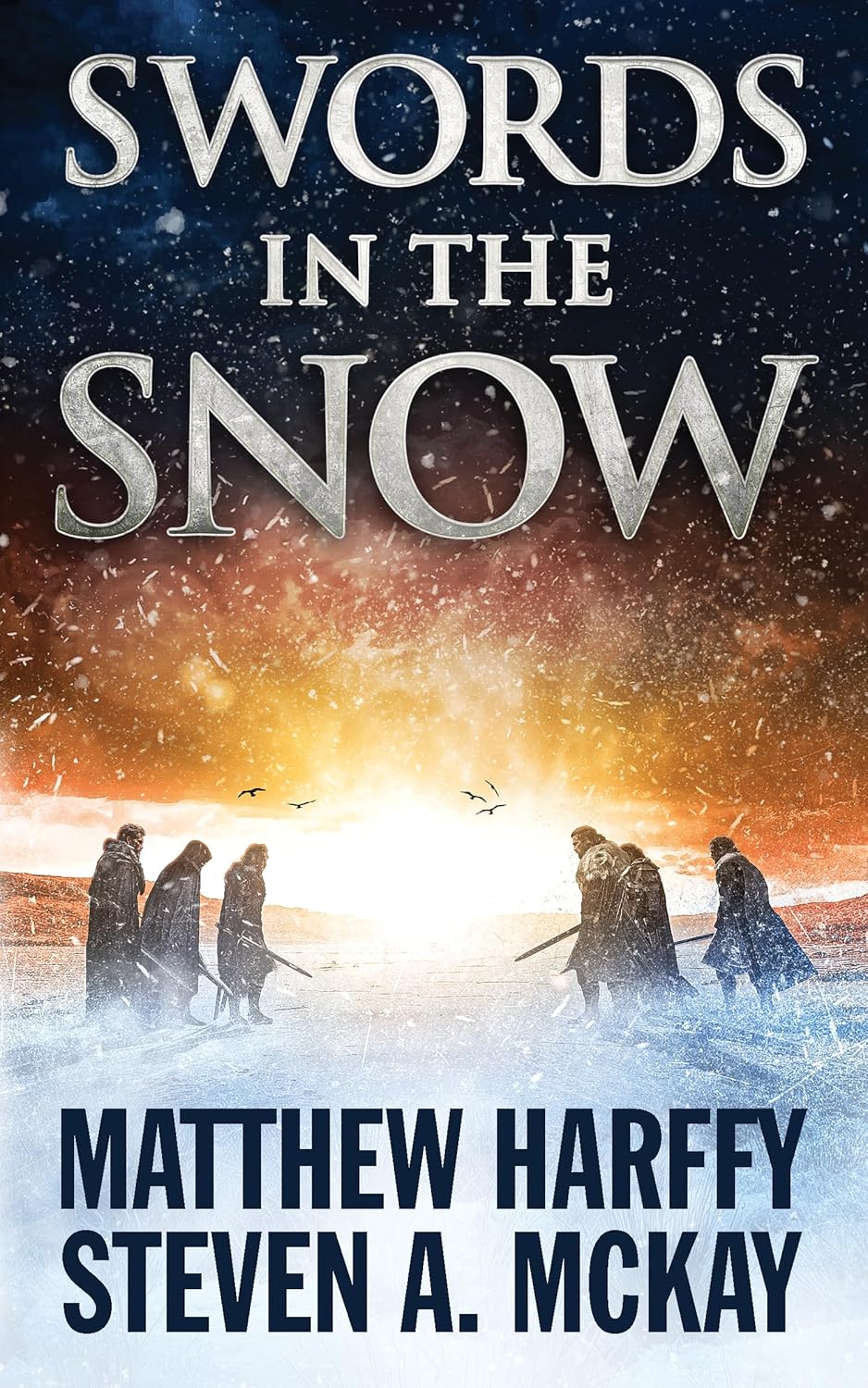
Book Corner: Swords in the Snow by Matthew Harffy and Steven A. McKay

A stolen relic. A dying child. A desperate chase.

December, c. AD 1330.

When thieves snatch a priceless holy relic from a Pontefract church, Friar Tuck and the bailiff, John Little, set out through snowbound Yorkshire to recover it. The relic is the only hope for a gravely ill girl—but the hunt soon turns bloody.

From frozen dales to the mud-slick streets of York, John and Tuck pursue ruthless crime lord William Wake and his brutal enforcers: the battle-hardened Henry Tanner and the murderous giant Grimbald de Pendok.

When they finally face each other with swords in the snow, will Little John and Friar Tuck find they have met their match at last, or will there be a Christmas miracle?

It has fast become a tradition for me, as the night’s are drawing in and it is frosty outside, to read a novella written by Steven A. McKay. The author of the Forest Lord series, Steven has now written a whole host of Christmas mysteries which draw Robin Hood’s companions, Little John, Will Scarlet and Friar Tuck, into a life-or-death adventure, when all they want to do is sit around a warm fire, eating and drinking and telling stories of adventures past.

But no.

Steven A. McKay insists on sending them out into the freezing winds and deep snow drifts to entertain us. I feel sorry for the Merry Men (or not so ‘merry’ when they’re cold, wet and fighting for their lives), I do. But I do love these medieval mysteries.

This year is no exception, but with a twist and a treat. And this time, with Swords in the Snow, Steven A. McKay has enlisted the help of his fellow novelist and friend, Matthew Harffy, the creator of the Bernicia Chronicles, to act -or, rather, write – as the ‘bad guys’. And so, Little John and Friar Tuck are once again trudging through snow and mud, in search of thieves and murderers, and a Christmas miracle. At least there are no ghosts this time.

“Tuck!” The shout rang out, loud in the still winter air, and John, recognising a distinct note of alarm in it, spun around, staff held defensively before him. At his side, Tuck was in a similar posture, ready for whatever an enemy might throw at them, but the cry came again and the bailiff realised it had come from someone standing at the entrance to All Saints’ Church.

“Is that Bishop Wulstan?”

John squinted as the clergyman stepped out from the doorway and the pale December day lit his features. “Aye, it is,” the bailiff nodded. “Something’s upset him too.”

“Come over, Tuck,” the bishop called almost frantically. “And you too, John.”

With a last, longing look at the baker’s, both men sighed and walked across to the church. It was not a particularly large building, but it was impressive nonetheless, having been built quite recently.

Bishop Wulstan Barnsford had met John and Tuck before, when they’d investigated a strange, and ultimately murderous, religious sect. The bishop had led the trial against the leader of the cult, Lady Alice de Staynton, whose punishment was excommunication and banishment. He was a competent, clever man who did not seem the type to be easily upset, so John was surprised to note how pale the bishop’s complexion was. He was wringing his hands as the former outlaws strode across the road and, as they reached him, he let out a long sigh that conveyed great relief, as if he was glad to meet someone who could take the weight from his shoulders.

“What’s happened, your grace?” Tuck asked, reading the signs as John had done.

In reply, Bishop Wulstan turned, beckoning for them to follow as he went into All Saints’.

The pair did as they were bidden and walked inside, both tugging their collars up for it was even colder in the church than it was outside, their breath steaming in the frigid, incense-tinged air as they walked.

“In the name of God!” Tuck cried, hurrying ahead as they saw a priest lying on his side on the floor, eyes open but clearly in great pain and distress. “Stand back,” the friar commanded and the two men who were kneeling beside the priest hastily moved aside to let him through. They might have no idea who the burly newcomer was, but his tone brooked no argument.

John looked on, bemused, as Tuck, a man of learning who’d often acted as healer or surgeon for Robin Hood’s outlaw gang, tended to the injured priest who had, at least, been covered with a blanket.

“What happened here?” the friar asked.

“Thieves,” said the fallen clergyman, grunting in pain as Tuck checked him for broken bones. “They came in the night. I tried to stop them, but there was a giant with them and he—” His eyes fell on Little John and he visibly shrank into himself, terror written across his bruised face.

In Swords in the Snow Steven A. McKay and Matthew Harffy complement each other’s writing wonderfully, making for an engaging, entertaining and, quite frankly, thrilling story. And while Steven A. McKay takes Little John and Friar Tuck on a chilly ride through Yorkshire, hunting for the fiends who stole a holy relic from Pontefract, Matthew Harffy directs those said villains through their escapades.

It makes for some surprising twists and turns.

The two writing styles truly complement each other and create an exciting, gripping story.

Swords in the Snow is about half the length of a full novel, which means the authors have kept the story tight and focused, and you can tell they enjoyed working on the project. Here’s hoping it leads to even more collaborative work; perhaps Steven A. McKay will visit Bernicia and Beobrand next Christmas (hint, hint, fellas!)

In short, Swords in the Snow is a jolly good read, especially on a cold winter night when you are tucked up warm in front of a blazing fire!

To Buy the book:

Swords in the Snow is available now from Amazon.

About the authors:

Steven A. McKay was born in Scotland in 1977 and always enjoyed studying history. He decided to write his Forest Lord novels after seeing a house called “Sherwood” when he was out at work one day. Since then he’s started a new series, the Warrior Druid of Britain Chronicles, and just completed a trilogy about Alfred the Great.

In 2021 the Xbox game HOOD: Outlaws and Legends was released, featuring Steven’s writing.

Steven wrote the theme song for the podcast he co-hosted, Rock, Paper, Swords! with Matthew Harffy.

Matthew Harffy lived in Northumberland as a child and the area had a great impact on him. The rugged terrain, ruined castles and rocky coastline made it easy to imagine the past. Decades later, a documentary about Northumbria’s Golden Age sowed the kernel of an idea for a series of historical fiction novels. The first of them is the action-packed tale of vengeance and coming of age, The Serpent Sword.

Matthew has worked in the IT industry, where he spent all day writing and editing, just not the words that most interested him. Prior to that he worked in Spain as an English teacher and translator. Matthew lives in Wiltshire, England, with his wife and their two daughters.

For all the latest news and exclusive competitions, join Matthew online: http://www.matthewharffy.com; twitter.com/@MatthewHarffy; http://www.facebook.com/MatthewHarffyAuthor

*

My Books

Signed, dedicated copies of all my books are available through my online bookshop.

Out now: Scotland’s Medieval Queens

Books by Sharon Bennett Connolly

Scotland’s history is dramatic, violent and bloody. Being England’s northern neighbour has never been easy. Scotland’s queens have had to deal with war, murder, imprisonment, political rivalries and open betrayal. They have loved and lost, raised kings and queens, ruled and died for Scotland. From St Margaret, who became one of the patron saints of Scotland, to Elizabeth de Burgh and the dramatic story of the Scottish Wars of Independence, to the love story and tragedy of Joan Beaufort, to Margaret of Denmark and the dawn of the Renaissance, Scotland’s Medieval Queens have seen it all. This is the story of Scotland through their eyes.

Scotland’s Medieval Queens gives a thorough grounding in the history of the women who ruled Scotland at the side of its kings, often in the shadows, but just as interesting in their lives beyond the spotlight. It’s not a subject that has been widely covered, and Sharon is a pioneer in bringing that information into accessible history.’ Elizabeth Chadwick (New York Times bestselling author)

Available now from Amazon and Pen and Sword Books

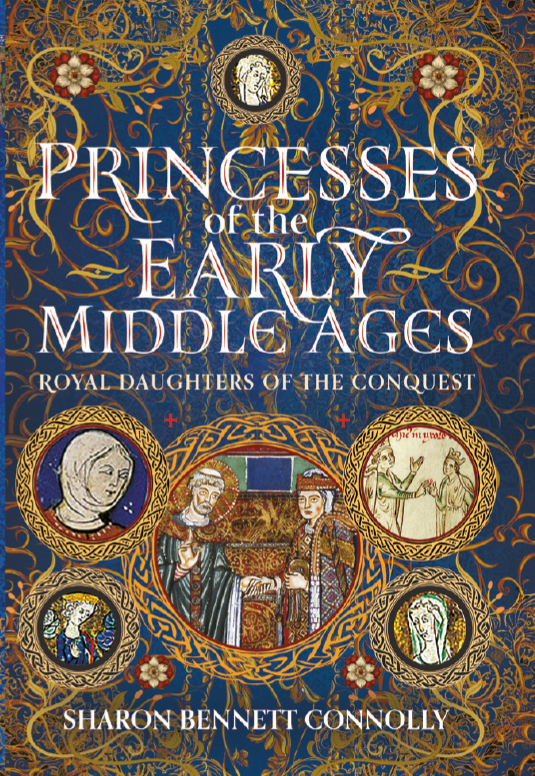
Coming 30 March 2026: Princesses of the Early Middle Ages

Books by Sharon Bennett Connolly

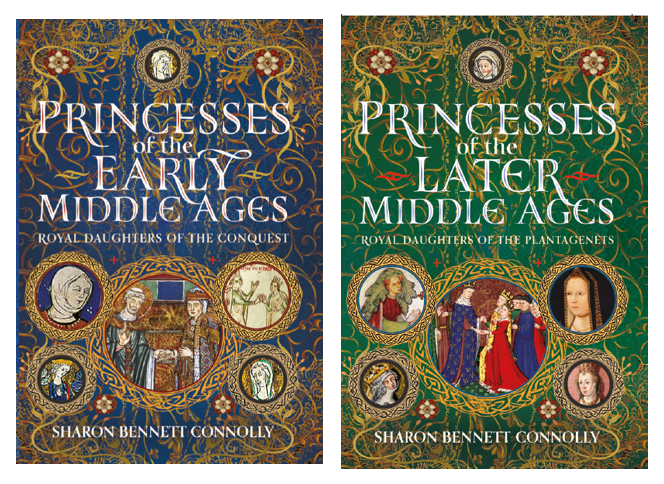
Daughters of kings were often used to seal treaty alliances and forge peace with England’s enemies. Princesses of the Early Middle Ages: Royal Daughters of the Conquest explores the lives of these young women, how they followed the stereotype, and how they sometimes managed to escape it. It will look at the world they lived in, and how their lives and marriages were affected by political necessity and the events of the time. Princesses of the Early Middle Ages will also examine how these girls, who were often political pawns, were able to control their own lives and fates. Whilst they were expected to obey their parents in their marriage choices, several princesses were able to exert their own influence on these choices, with some outright refusing the husbands offered to them.

Their stories are touching, inspiring and, at times, heartbreaking.

Princesses of the Early Middle Ages: Royal Daughters of the Conquest is now available for pre-order.

Also by Sharon Bennett Connolly:

Books by Sharon Bennett Connolly

Heroines of the Tudor World tells the stories of the most remarkable women from European history in the time of the Tudor dynasty, 1485-1603. These are the women who ruled, the women who founded dynasties, the women who fought for religious freedom, their families and love. Heroines of the Tudor World is now available from Amberley Publishing and Amazon UK. Women of the Anarchy demonstrates how Empress Matilda and Matilda of Boulogne, unable to wield a sword themselves, were prime movers in this time of conflict and lawlessness. It shows how their strengths, weaknesses, and personal ambitions swung the fortunes of war one way – and then the other. Available from Bookshop.orgAmberley Publishing and Amazon UKKing John’s Right-Hand Lady: The Story of Nicholaa de la Haye is the story of a truly remarkable lady, the hereditary constable of Lincoln Castle and the first woman in England to be appointed sheriff in her own right. Available from all good bookshops Pen & Sword Booksbookshop.org and Amazon

Royal Historical Society

Defenders of the Norman Crown: The Rise and Fall of the Warenne Earls of Surrey tells the fascinating story of the Warenne dynasty, from its origins in Normandy, through the Conquest, Magna Carta, the wars and marriages that led to its ultimate demise in the reign of Edward III. Available from Pen & Sword BooksAmazon in the UK and US, and Bookshop.orgLadies of Magna Carta: Women of Influence in Thirteenth Century England looks into the relationships of the various noble families of the 13th century, and how they were affected by the Barons’ Wars, Magna Carta and its aftermath; the bonds that were formed and those that were broken. It is now available in paperback and hardback from Pen & SwordAmazon, and Bookshop.orgHeroines of the Medieval World tells the stories of some of the most remarkable women from Medieval history, from Eleanor of Aquitaine to Julian of Norwich. Available now from Amberley Publishing and Amazon, and Bookshop.orgSilk and the Sword: The Women of the Norman Conquest traces the fortunes of the women who had a significant role to play in the momentous events of 1066. Available now from Amazon,  Amberley Publishing, and Bookshop.org.

Alternate Endings: An anthology of historical fiction short stories including Long Live the King… which is my take what might have happened had King John not died in October 1216. Available in paperback and kindle from Amazon.

Podcast:
A Slice of Medieval

Have a listen to the A Slice of Medieval podcast, which I co-host with Historical fiction novelist Derek Birks. Derek and I welcome guests, such as Ian Mortimer, Bernard Cornwell, Elizabeth Chadwick and Scott Mariani, and discuss a wide range of topics in medieval history, from significant events to the personalities involved. 

There are now over 80 episodes to listen to!

Every episode is also now available on YouTube.

*

Don’t forget! Signed and dedicated copies of all my books are available through my online bookshop.

For forthcoming online and in-person talks, please check out my Events Page.

You can be the first to read new articles by clicking the ‘Follow’ button, liking our Facebook page or joining me on TwitterThreadsBluesky and Instagram.

*

©2025 Sharon Bennett Connolly FRHistS
Book Corner: The Knight’s Pledge by Scott Mariani

History... the Interesting Bits

1191.

Will Bowman, now fully entangled in Richard Lionheart’s crusade, has reached the Holy Land. However, just as he and his crew are about to touch down in Acre, they are drawn into an intense battle at sea, where they are faced with the dreaded Byzantine weapon: Greek Fire.

Barely escaping with his life, Will gains the trust of Richard Lionheart, moving into his service. But as the siege of Acre continues, and Richard’s campaign grows ever more brutal and barbaric, Will begins to wonder just how safe his new position is.

And when the King sends him on a seemingly doomed mission, Will must ask himself: who exactly is he fighting for?

Well, Scott Mariani has taken to historical fiction like a duck to water. He has a flare for it. But then, he did draw me in with his Ben Hope novels, all of which had a historical mystery at the heart of the the story. With his second full, historical fiction, The Knight’s Pledge, he draws the reader into the action from the very first pages as his hero, Will Bowman, arrives at Acre to take part in the Third Crusade.

And an added bonus is that a quote from my review of the first book, The Pilgrim’s Revenge, is among the endorsements on the first pages!

And what an adventure we are treated to. Scott Mariani expertly blends fact with fiction and tells a story that will keep you hooked.

The story is gripping and full of suspense – you are never quite sure whether the heroes are going to succeed – or even make it out alive!

History... the Interesting Bits

Will had personally come face to face with King Richard only once, and then for only a few brief moments. But he had seen his monarch flying fearlessly into the thick of battle enough times to know how he would respond.

Sure enough, almost within a heartbeat the flagship had diverted course and was steering straight at the enemy vessel, all oars manned and powering as hard as they could go. The captain of Will’s ship instantly followed suit, with a clamour of shouted orders and the frenzied activity of the sailors all around them. Every crewman aboard knew his duty as well as he knew his own name, and they needed little encouragement as they rushed to their stations and flung themselves behind the oars. Amid the rapid pounding of the drum and hoarse cries of ‘Heave ho, boys,’ and ‘We’ll have at those bastards,’ the ship picked up pace and curved sharply around. As they leaned hard into the turn, the deck sloped like a pitched roof and the bows threw up a white wave that smothered the nearside rail with foam.

One by one, every other ship of the fleet was veering off their course to engage this new enemy. Will sprinted back across the sloping deck to where he and his companions had been sitting earlier and snatched up the weapons that he kept stowed next to his habitual sleeping place. With hands trembling in anticipation of the fight that would very soon be on them he buckled up his sword belt, then quickly tensioned and strung his bow stave, an action that was second nature to him. He had been an expert with the bow for such a large part of his life that it had become the name he was known by. His leather quiver contained a sheaf of arrows carefully fashioned by his own hand, made to fly straight and true and each fitted with an iron-pointed bodkin head capable of piercing a coat of chain mail like the one he was wearing under his leather jerkin.

Gabriel came running hot on his heels, and disregarding his precious chessmen that were strewn and rolling all about the deck he grabbed the curved falchion sword he favoured over the more conventional straight-bladed variety. Samson’s preference was for his short-handled war axe, a gift to him from Will, which had hammered and split the heads of many a foe in the battles they had fought en route.

But this new enemy was like no other they had faced before. As the deck levelled itself after their steep turn, Will glanced forward and saw the Saracen ship suddenly much closer, partly wreathed behind the curtain of roiling black smoke that was pouring from the burning galley. ‘Godspeed,’ he yelled at Gabriel and Samson, then ran for the laddered companionway that led up to the elevated section of the forecastle. It was already teeming with his fellow archers, mostly equipped with crossbows and only a minority who used the more old-fashioned but further-shooting and more accurate – when properly handled – longbow.

History... the Interesting Bits

Scott Mariani’s meticulous research and attention to detail helps to recreate the Holy Land of 1191. The sights, the smells, the spiders! Oh, and the insults! I have a new favourite insult; ‘scobberlotcher’.

Will Bowman proves how fearless and brave he can be. Though he is still young and has a naivety about him which I think will be increasingly challenged as his war goes on. It is fascinating to watch the evolution of this young man, from grieving farmer to warrior. And expert archer, he’s strong, courageous and loyal. He is quick-witted, intelligent, even, a natural leader of men, but still in possession of a sense of chivalry that will get him into trouble.

In the first half of the story, we follow the experiences of the army during the Siege of Acre, and its aftermath. Ever a writer with a sense of adventure, Scott Mariani then sends our hero on a near-suicidal mission in search of lost treasure. While it may not be in the historical record, the quest is certainly plausible – as is the outcome! (but no spoilers!)

All in all, The Knight’s Pledge is an absolute joy to read – or, rather, devour. Scott Mariani has lost none of his legendary storytelling skills in his transition from the thriller genre to historical fiction. And I like to think I can see a little of Ben Hope in this new hero, Will Bowman. I think Ben would certainly have approved of Will.

At least I know what I’m getting my dad for Christmas – he’s gonna love The Knight’s Pledge!

Buy the Book: The Knight’s Pledge

About the author:

History... the Interesting Bits

Scott Mariani is the No.1 Sunday Times bestselling author of the multi-million-selling Ben Hope thrillers. From 2025 he is launching into a new historical adventure series featuring medieval English hero Will Bowman, who is forced from his home to join King Richard ‘the Lionheart’ on the Third Crusade and rises up to become a knight. Book 1,THE PILGRIM’S REVENGE, is available from April 2025 and is published by Hodder & Stoughton.

Scott lives and writes in west Wales, UK. You can find out more about his work by visiting his official website.

*

My Books:

Signed, dedicated copies of all my books are available, please get in touch by completing the contact me form or through my online bookshop.

Out now: Scotland’s Medieval Queens

Books by Sharon Bennett Connolly

Scotland’s history is dramatic, violent and bloody. Being England’s northern neighbour has never been easy. Scotland’s queens have had to deal with war, murder, imprisonment, political rivalries and open betrayal. They have loved and lost, raised kings and queens, ruled and died for Scotland. From St Margaret, who became one of the patron saints of Scotland, to Elizabeth de Burgh and the dramatic story of the Scottish Wars of Independence, to the love story and tragedy of Joan Beaufort, to Margaret of Denmark and the dawn of the Renaissance, Scotland’s Medieval Queens have seen it all. This is the story of Scotland through their eyes.

Scotland’s Medieval Queens gives a thorough grounding in the history of the women who ruled Scotland at the side of its kings, often in the shadows, but just as interesting in their lives beyond the spotlight. It’s not a subject that has been widely covered, and Sharon is a pioneer in bringing that information into accessible history.’ Elizabeth Chadwick (New York Times bestselling author)

Available now from Amazon and Pen and Sword Books

Coming in 2026!

Daughters of kings were often used to seal treaty alliances and forge peace with England’s enemies. Princesses of the Early Middle Ages: Royal Daughters from the Conquest and Princesses of the Later Middle Ages: Royal Daughters of the Plantagenets will explore the lives of these young women, demonstrating how they followed the stereotype, and how they sometimes managed to escape it. It will look at the world they lived in, and how their lives and marriages were affected by political necessity and the events of the time.

Were they political pawns? Or, were they able to control their own lives and fates? What impact did they have on the world in which they lived?

Their stories are touching, inspiring and, at times, heartbreaking.

Princesses of the Early Middle Ages: Royal Daughters from the Conquest is now available for pre-order from Amazon and bookshop.org.

Also by me:

Books by Sharon Bennett Connolly

Heroines of the Tudor World tells the stories of the most remarkable women from European history in the time of the Tudor dynasty, 1485-1603. These are the women who ruled, the women who founded dynasties, the women who fought for religious freedom, their families and love. Heroines of the Tudor World is now available for pre-order from Amberley Publishing and Amazon UK. Women of the Anarchy demonstrates how Empress Matilda and Matilda of Boulogne, unable to wield a sword themselves, were prime movers in this time of conflict and lawlessness. It shows how their strengths, weaknesses, and personal ambitions swung the fortunes of war one way – and then the other. Available from Bookshop.orgAmberley Publishing and Amazon UKKing John’s Right-Hand Lady: The Story of Nicholaa de la Haye is the story of a truly remarkable lady, the hereditary constable of Lincoln Castle and the first woman in England to be appointed sheriff in her own right. Available from all good bookshops Pen & Sword Booksbookshop.org and Amazon

Royal Historical Society

Defenders of the Norman Crown: The Rise and Fall of the Warenne Earls of Surrey tells the fascinating story of the Warenne dynasty, from its origins in Normandy, through the Conquest, Magna Carta, the wars and marriages that led to its ultimate demise in the reign of Edward III. Available from Pen & Sword BooksAmazon in the UK and US, and Bookshop.orgLadies of Magna Carta: Women of Influence in Thirteenth Century England looks into the relationships of the various noble families of the 13th century, and how they were affected by the Barons’ Wars, Magna Carta and its aftermath; the bonds that were formed and those that were broken. It is now available in paperback and hardback from Pen & SwordAmazon, and Bookshop.orgHeroines of the Medieval World tells the stories of some of the most remarkable women from Medieval history, from Eleanor of Aquitaine to Julian of Norwich. Available now from Amberley Publishing and Amazon, and Bookshop.orgSilk and the Sword: The Women of the Norman Conquest traces the fortunes of the women who had a significant role to play in the momentous events of 1066. Available now from Amazon,  Amberley Publishing, and Bookshop.org.

Alternate Endings: An anthology of historical fiction short stories including Long Live the King… which is my take what might have happened had King John not died in October 1216. Available in paperback and kindle from Amazon.

*

Podcast:

History... the Interesting Bits

Have a listen to the A Slice of Medieval podcast, which I co-host with Historical fiction novelist Derek Birks. Derek and I welcome guests, such as Bernard Cornwell and Elizabeth Chadwick, and discuss a wide range of topics in medieval history, from significant events to the personalities involved. 

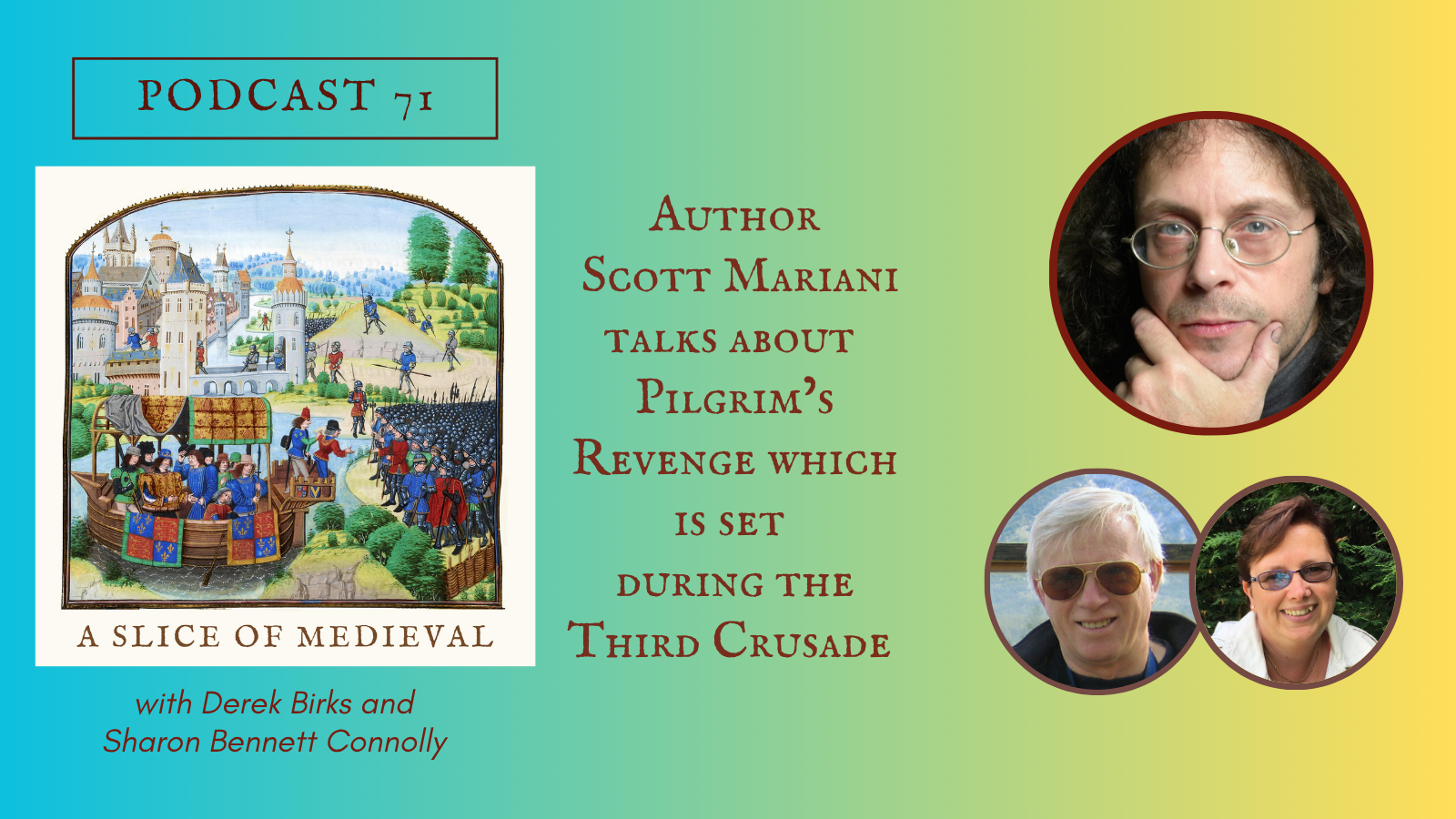
In episode 71, Derek Birks and I chat with Scott Mariani about his new hero, Will Bowman and the journey to the Third Crusade.

There are now over 80 episodes to listen to!

Every episode is also available on YouTube.

*

Don’t forget! Signed and dedicated copies of all my books are available through my online bookshop.

For forthcoming online and in-person talks, please check out my Events Page.

You can be the first to read new articles by clicking the ‘Follow’ button, liking our Facebook page or joining me on TwitterThreadsBluesky and Instagram.

*

©2025 Sharon Bennett Connolly FRHistS

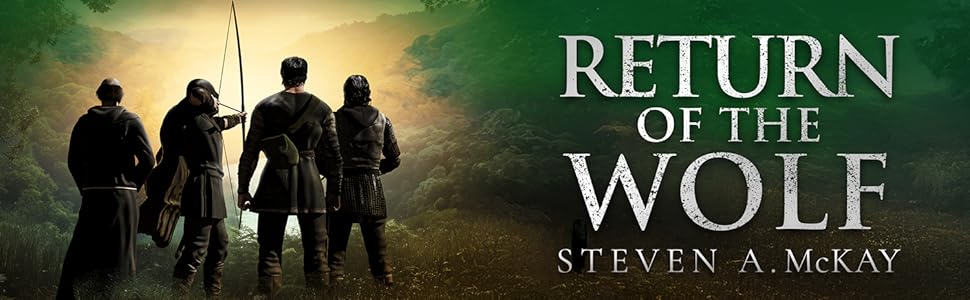
Book Corner: Return of the Wolf by Steven A. McKay

History... the Interesting Bits

England’s greatest ever hero is back, but for how long?

AD 1331 – Wakefield, England
It’s been five long years since Robin Hood’s heart-breaking funeral. Since then, his friends have moved on with their lives, having adventures of their own, and becoming respected figures in the local community. But, as Christmas bells rang out last December, to everyone’s shock, Robin returned home to Wakefield, alive and well.

He believes all his old enemies are dead and gone, and is looking forward to living a peaceful life with his wife and young children. Things rarely work out as we plan them though, and it’s not long before a deadly new threat raises its head.

The Coterel gang are notorious throughout England, committing all kinds of heinous crimes including extortion, prostitution, kidnapping, and even murder. They appear untouchable, with noblemen and even Members of Parliament amongst their members. When Robin and his friends attack a cruel extortionist in nearby Notton they find themselves on the wrong side of the Coterels, and it seems Robin will be forced to live either as an outlaw again, or be viciously hunted down like an animal.

Although his choices are limited, one – seemingly mad – option presents itself and, before long Robin takes sail for the first time ever, on the trail of the legendary lost treasure of King John.
With John Little, Will Scaflock, Friar Tuck, and two loyal Hospitallers in tow, Robin travels across Europe to Flanders, Aachen, and finally the mythical, legend-haunted mountain known as the Untersberg. Will he find England’s lost crown jewels there, or will he find only danger and death?

I do love a good legend!

Anyone who knows me knows that I have a soft spot for the legendary hero, Robin Hood. Living just a half hour drive from Sherwood Forest, how could I not? When my son was about 6, I once almost told one of his school friends that Santa didn’t exist – because she had had the audacity to tell Lewis that Robin Hood wasn’t real!

I am having a very Robin Hood-y day!

Only this morning, I was at the Sherwood Forest Moot – the first one in over 100 years, to start planning the new, annual Sherwood Forest day. The first one will be 20 February 2026. Exciting!

Anyway, back to Robin Hood!

So, when Steven A. McKay said he was writing another Robin Hood story, I was sooooo excited! Last year, after five years of ‘playing dead’, Robin Hood reappeared at the end of the short story, The Heretic of Haltemprice Priory.

But Robin has a big problem; he is still, technically, an outlaw – a Wolf’s Head.

And I started Return of the Wolf on the 809th anniversary of the events in the prologue, on 12 October 1216. This was the day King John’s baggage train got caught by a high tide in the Wash, as they were crossing from Norfolk to Lincolnshire, and the royal treasure was lost, never to be seen again.

One hundred years later, in Return of the Wolf, Robin Hood and his loyal friends, Friar Tuck, Little John and Will Scarlet, embark on a treasure hunt, in search of some remnants of John’s baggage train that may have survived. It leads to a fascinating adventure that takes Robin and his friends on a journey beyond England’s shores, through Belgium and into Germany.

In search of a great treasure.

And maybe, just maybe, a pardon for Robin.

“Christs’ bones, it stinks in here!” John had led the way into the tannery but he pulled up, almost gagging as the fumes accosted them.

“Pull up your tunic,” Robin advised. “Come on.” He drew his sword for it was clear the tanner had no intentions of co-operating without a fight, and moved past the bailiff, eyes scanning the gloomy interior of the room.

The shouting had intensified when they first stormed into the building, but it had died away and now a sinister, forbidding silence fell across the place. Robin had instinctively taken charge, and John did not complain. As the pair moved forward, past more wooden frames and towards the back of the chamber, the years seemed to fall away and the near-telepathy they had once shared as outlaws returned.

A scream of rage suddenly split the air and a dark figure appeared from behind one of the wooden frames. Robin saw a knife, designed for scraping animal hides but just as useful as a weapon, scything through the gloom towards Little John’s back. In one fluid motion Robin’s sword flashed out, parrying the tanning knife, and then he brutally kicked the attacker in the side. There was a grunt of pain as the man slammed into a barrel with vile smelling liquid, and then Robin’s right fist hammered into his jaw and he slumped to the ground.

Little John had a second enemy to deal with, a rat-faced, slim man with a wispy beard and barely a tooth in the mouth that opened to issue a war cry as he swung at the bailiff with his tanning knife. The tool had two handles, one at either end, so – lacking a point – it was no use as a thrusting weapon, but the blade itself was sharp and heavy enough that it could likely sever a limb and John dodged away from it desperately.

The attacker stumbled forward and John brought up his staff, catching the man beneath the chin. It was a lucky strike but it smashed the enemy’s mouth shut and he reeled back, grasping his jaw, eye screwed shut in pain. They did not open again, as John’s staff came around once more, this time cracking against the thin man’s head.

“That the lot?” Robin wondered.

“Can’t be,” John said, eyeing the unconscious tanners. “Neither of these two are the one we met outside. He’s still around somewhere.”

I have to say, Steven A. McKay’s Return of the Wolf is definitely up to his usual standard. This may be his best Robin Hood book yet. He weaves a wonderful story incorporating the legend of Robin Hood, with the mysteries of lost treasure, and a road trip with friends. Of course, there are dangers along the way, pirates, duplicitous noblemen, a vicious gang of thugs, and the elements themselves.

Travelling amidst a heatwave, the thunder storms are legendary – so much louder on the continent than we are used to in England (when I was working at Disneyland, Paris, there was a thunderstorm so loud that I thought someone had blown up the park!)

Return of the Wolf takes you back to the 14th century. You are immersed in the sights, sounds and smells of the era: from the loud and rowdy taverns, to the peace of a Hospitaller commandery, from the swell of the open sea, to the dark of the forests. I can even forgive Steven A. McKay for setting Robin Hood in Barnsdale Forest and Wakefield, rather than Sherwood and Nottingham (but don’t tell Steven!)

Success or failure – and Robin’s very freedom – depends on the survival skills of Robin and his friends. It is a tense, sometimes frightening, adventure. The fight scenes are frantic, failure is only one misstep away and enemies are stalking them in the dark.

What a fabulous story!

And, hopefully, the first of many more!

Buy Return of the Wolf

About the author:

History... the Interesting Bits

Steven A. McKay was born in Scotland in 1977 and always enjoyed studying history. He decided to write his Forest Lord novels after seeing a house called “Sherwood” when he was out at work one day. Since then he’s started a new series, the Warrior Druid of Britain Chronicles, and just completed a trilogy about Alfred the Great.

In 2021 the Xbox game HOOD: Outlaws and Legends was released, featuring Steven’s writing.

He used to be in a heavy metal band although he tends to just play guitar in his study these days. He did use those guitars to write the theme song for the podcast he co-hosted, Rock, Paper, Swords! with Matthew Harffy, though. Give it a listen, they’ve interviewed great guests like Diana Gabaldon, Simon Scarrow, Bernard Cornwell, Dan Jones and more!

*

My books

Signed, dedicated copies of all my books are available through my online store.

Out now: Scotland’s Medieval Queens

Books by Sharon Bennett Connolly

Scotland’s history is dramatic, violent and bloody. Being England’s northern neighbour has never been easy. Scotland’s queens have had to deal with war, murder, imprisonment, political rivalries and open betrayal. They have loved and lost, raised kings and queens, ruled and died for Scotland. From St Margaret, who became one of the patron saints of Scotland, to Elizabeth de Burgh and the dramatic story of the Scottish Wars of Independence, to the love story and tragedy of Joan Beaufort, to Margaret of Denmark and the dawn of the Renaissance, Scotland’s Medieval Queens have seen it all. This is the story of Scotland through their eyes.

Scotland’s Medieval Queens gives a thorough grounding in the history of the women who ruled Scotland at the side of its kings, often in the shadows, but just as interesting in their lives beyond the spotlight. It’s not a subject that has been widely covered, and Sharon is a pioneer in bringing that information into accessible history.’ Elizabeth Chadwick (New York Times bestselling author)

Available now from Amazon and Pen and Sword Books

Also by Sharon Bennett Connolly:

Books by Sharon Bennett Connolly

Heroines of the Tudor World tells the stories of the most remarkable women from European history in the time of the Tudor dynasty, 1485-1603. These are the women who ruled, the women who founded dynasties, the women who fought for religious freedom, their families and love. Heroines of the Tudor World is now available from Amberley Publishing and Amazon UK. Women of the Anarchy demonstrates how Empress Matilda and Matilda of Boulogne, unable to wield a sword themselves, were prime movers in this time of conflict and lawlessness. It shows how their strengths, weaknesses, and personal ambitions swung the fortunes of war one way – and then the other. Available from Bookshop.orgAmberley Publishing and Amazon UKKing John’s Right-Hand Lady: The Story of Nicholaa de la Haye is the story of a truly remarkable lady, the hereditary constable of Lincoln Castle and the first woman in England to be appointed sheriff in her own right. Available from all good bookshops Pen & Sword Booksbookshop.org and Amazon

Royal Historical Society

Defenders of the Norman Crown: The Rise and Fall of the Warenne Earls of Surrey tells the fascinating story of the Warenne dynasty, from its origins in Normandy, through the Conquest, Magna Carta, the wars and marriages that led to its ultimate demise in the reign of Edward III. Available from Pen & Sword BooksAmazon in the UK and US, and Bookshop.orgLadies of Magna Carta: Women of Influence in Thirteenth Century England looks into the relationships of the various noble families of the 13th century, and how they were affected by the Barons’ Wars, Magna Carta and its aftermath; the bonds that were formed and those that were broken. It is now available in paperback and hardback from Pen & SwordAmazon, and Bookshop.orgHeroines of the Medieval World tells the stories of some of the most remarkable women from Medieval history, from Eleanor of Aquitaine to Julian of Norwich. Available now from Amberley Publishing and Amazon, and Bookshop.orgSilk and the Sword: The Women of the Norman Conquest traces the fortunes of the women who had a significant role to play in the momentous events of 1066. Available now from Amazon,  Amberley Publishing, and Bookshop.org.

Alternate Endings: An anthology of historical fiction short stories including Long Live the King… which is my take what might have happened had King John not died in October 1216. Available in paperback and kindle from Amazon.

Podcast:

A Slice of Medieval

Have a listen to the A Slice of Medieval podcast, which I co-host with Historical fiction novelist Derek Birks. Derek and I welcome guests, such as Bernard Cornwell and Michael Jecks, and discuss a wide range of topics in medieval history, from significant events to the personalities involved. There’s even an episode where we chat with Steven A. McKay about Robin Hood!

There are now over 75 episodes to listen to!

Every episode is also now available on YouTube.

*

Don’t forget! Signed and dedicated copies of all my books are available through my online store.

For forthcoming online and in-person talks, please check out my Events Page.

You can be the first to read new articles by clicking the ‘Follow’ button, liking our Facebook page or joining me on TwitterThreadsBluesky and Instagram.

*

©2025 Sharon Bennett Connolly

Book Corner: Dominion of Dust by Matthew Harffy

History...the Interesting Bits

Hunlaf risks the wrath of the mighty Byzantine Empire on a dangerous voyage to the Holy Land. A rip-roaring Viking-era adventure from the author of the Bernicia Chronicles.

‘Extremely satisfying and rewarding, Dominion of Dust rampages across the page with slicing action’ LoveReading

AD 797, Cyprus. Warrior-monk Hunlaf and his crew are on a voyage to acquire an important Christian relic before it falls into the hands of Byzantium’s scheming Empress Eirene.

Hunlaf’s crew receive unexpected help as they seek their treasure, but soon find themselves betrayed. About to leave for home empty-handed, the adventurers instead sail further east: to Jerusalem, the Holy Land, abundant in relics.

And dangerous intrigues.

Hunlaf and his friends will face a deadly race against time as they attempt to secure a holy treasure, outwit Byzantium’s zealous agents, and avoid grisly deaths at the hands of the local rulers.

What I like about Matthew Harffy’s books is that you never know what is going to happen. Knowing the hero doesn’t always win means you are kept on the edge of your seat throughout.

Dominion of Dust is a spectacular adventure that pits West against East.

The 4th instalment in Harffy’s A Time of Swords series takes us from the court of Charlemagne, through Cyprus to Jerusalem itself, in the search for Holy relics. And because it is Hunlaf, danger is never far away. From agents of Byzantium, to enemies made along the way, people want Hunlaf and his friends to fail and – preferably – die.

But don’t get too attached to any of the characters – Matthew Harffy is not averse to killing off your favourite. But the, that’s what he does. He makes you, the reader, care about his characters. They jump off the page and play with your emotions. You feel their pain (and they’re warriors, so there’s a lot of pain).

Matthew Harffy’s writing style is engaging from the very beginning, immersing you in the story, the period and the landscape! You can practically feel the sand between your toes.

I pulled my fingers back quickly, frightened at what might be hidden inside the coffer. But there was no movement in the box’s interior, just the dusty, crumbling remains of what looked like a silk-covered pillow. Atop that pillow, dull with the grime of centuries, rested the blade of a spear. The metal was dark and I wondered whether it might be stained with the very blood of Christ. Or perhaps it was simply iron-rot, the red dust of age that smeared and pitted the surface of the relic. Whatever caused the dark hue of the metal, there could be no doubt that this was the item Ahlwin had sent us after.

The others crowded forward, trying to peer into the coffer. But I knew from their positions they would not be able to make out what I was looking at. Mine were the first eyes in generations to contemplate the relic. That sudden realisation made me giddy. I held out my hand above the metal, imagining for a moment that I could feel something akin to heat shimmering from it, a murmuring tremor in the air, testament to its immense power.

Unbreathing, I took hold of the relic, and lifted it up, turning towards the others so that they all might see this thing of wonder.

“Behold,” I said, my voice catching, ” the Spear of Longinus.”

Of course, it was not the spear, merely its metal head, and it measured no more than two hand’s lengths. I had expected it to be hot, or somehow pulsing with its holy power, but it was cool to the touch and I felt no jolt of energy. It was just a piece of old metal.

In Dominion of Dust Matthew Harffy is an equal opportunities author. Two of the villains are particularly despicable – and they’re women! And, of course, Hunlaf has a habit of making enemies, so there’s more than one set of bad guys to contend with. And this is Hunlaf’s story. Headed to the Holy Land in search of the greatest of relics for Charlemagne, Hunlaf hopes to visit the sites associated with Christ himself, and to tread the same streets He did. Though, knowing his luck, you may not be surprised that he has to race through some of those streets to escape pursuers!

Matthew Harffy is the master of adventure storytelling. And with the hunt for relics, Dominion of Dust has the feel of an Indiana Jones movie – only set 1,000 years earlier. Only Hunlaf isn’t crossing swords with Nazis, he’s fighting the agents of Byzantium. The story is woven around the greatest relics of Christendom and the competition between Charlemagne and Empress Irene to take possession of them. Though, fiction, Dominion of Dust has its origins in historical fact; the desire to possess religious relics and the belief in their divine power was a part of medieval life.

And there are some surprises in this one. Matthew Harffy has taken care to include the wildlife. The story of Abul-Abbas, the elephant gifted to Charlemagne, may be fantastical, but it is true. And he has a surprising part in the story. As does a rather vicious, relentless and determined lion, reminding us that not all predators are human!

Dominion of Dust is a wonderful, exciting adventure that any fan of Indiana Jones will want to read. There is action in abundance; treasure maps, despicable enemies and secret passages are all part of one incredible story.

To buy the book: Amazon

About the Author:

History...the Interesting Bits

Matthew Harffy lived in Northumberland as a child and the area had a great impact on him. The rugged terrain, ruined castles and rocky coastline made it easy to imagine the past. Decades later, a documentary about Northumbria’s Golden Age sowed the kernel of an idea for a series of historical fiction novels. The first of them is the action-packed tale of vengeance and coming of age, The Serpent Sword.

Matthew has worked in the IT industry, where he spent all day writing and editing, just not the words that most interested him. Prior to that he worked in Spain as an English teacher and translator. Matthew lives in Wiltshire, England, with his wife and their two daughters.

For all the latest news and exclusive competitions, join Matthew online: http://www.matthewharffy.com; twitter.com/@MatthewHarffy; http://www.facebook.com/MatthewHarffyAuthor

*

My Books

Signed, dedicated copies of all my books are available through my online bookshop.

Out now: Scotland’s Medieval Queens

Books by Sharon Bennett Connolly

Scotland’s history is dramatic, violent and bloody. Being England’s northern neighbour has never been easy. Scotland’s queens have had to deal with war, murder, imprisonment, political rivalries and open betrayal. They have loved and lost, raised kings and queens, ruled and died for Scotland. From St Margaret, who became one of the patron saints of Scotland, to Elizabeth de Burgh and the dramatic story of the Scottish Wars of Independence, to the love story and tragedy of Joan Beaufort, to Margaret of Denmark and the dawn of the Renaissance, Scotland’s Medieval Queens have seen it all. This is the story of Scotland through their eyes.

Scotland’s Medieval Queens gives a thorough grounding in the history of the women who ruled Scotland at the side of its kings, often in the shadows, but just as interesting in their lives beyond the spotlight. It’s not a subject that has been widely covered, and Sharon is a pioneer in bringing that information into accessible history.’ Elizabeth Chadwick (New York Times bestselling author)

Available now from Amazon and Pen and Sword Books

Also by Sharon Bennett Connolly:

Books by Sharon Bennett Connolly

Heroines of the Tudor World tells the stories of the most remarkable women from European history in the time of the Tudor dynasty, 1485-1603. These are the women who ruled, the women who founded dynasties, the women who fought for religious freedom, their families and love. Heroines of the Tudor World is now available for pre-order from Amberley Publishing and Amazon UK. Women of the Anarchy demonstrates how Empress Matilda and Matilda of Boulogne, unable to wield a sword themselves, were prime movers in this time of conflict and lawlessness. It shows how their strengths, weaknesses, and personal ambitions swung the fortunes of war one way – and then the other. Available from Bookshop.orgAmberley Publishing and Amazon UKKing John’s Right-Hand Lady: The Story of Nicholaa de la Haye is the story of a truly remarkable lady, the hereditary constable of Lincoln Castle and the first woman in England to be appointed sheriff in her own right. Available from all good bookshops Pen & Sword Booksbookshop.org and Amazon

Royal Historical Society

Defenders of the Norman Crown: The Rise and Fall of the Warenne Earls of Surrey tells the fascinating story of the Warenne dynasty, from its origins in Normandy, through the Conquest, Magna Carta, the wars and marriages that led to its ultimate demise in the reign of Edward III. Available from Pen & Sword BooksAmazon in the UK and US, and Bookshop.orgLadies of Magna Carta: Women of Influence in Thirteenth Century England looks into the relationships of the various noble families of the 13th century, and how they were affected by the Barons’ Wars, Magna Carta and its aftermath; the bonds that were formed and those that were broken. It is now available in paperback and hardback from Pen & SwordAmazon, and Bookshop.orgHeroines of the Medieval World tells the stories of some of the most remarkable women from Medieval history, from Eleanor of Aquitaine to Julian of Norwich. Available now from Amberley Publishing and Amazon, and Bookshop.orgSilk and the Sword: The Women of the Norman Conquest traces the fortunes of the women who had a significant role to play in the momentous events of 1066. Available now from Amazon,  Amberley Publishing, and Bookshop.org.

Alternate Endings: An anthology of historical fiction short stories including Long Live the King… which is my take what might have happened had King John not died in October 1216. Available in paperback and kindle from Amazon.

Podcast:

A Slice of Medieval

Have a listen to the A Slice of Medieval podcast, which I co-host with Historical fiction novelist Derek Birks. Derek and I welcome guests, such as Elizabeth Chadwick, Helen Castor, Ian Mortimer, Scott Mariani and Bernard Cornwell and discuss a wide range of topics in medieval history, from significant events to the personalities involved. And Matthew Harffy himself will be on a forthcoming episode. An old friend of the podcast, Matthew joined us on one of our very first episodes to talk about the Saxons.

Every episode is also now available on YouTube.

*

Don’t forget! Signed and dedicated copies of all my books are available through my online bookshop.

For forthcoming online and in-person talks, please check out my Events Page.

You can be the first to read new articles by clicking the ‘Follow’ button, liking our Facebook page or joining me on TwitterThreadsBluesky and Instagram.

*

©2025 Sharon Bennett Connolly FRHistS

Book Corner: Venus in Winter by Gillian Bagwell

History...the Interesting Bits

The author of The King’s Mistress (U.S. title The September Queen) explores Tudor England with the tale of Bess of Hardwick—the formidable four-time widowed Tudor dynast who became one of the most powerful women in the history of England.

On her twelfth birthday, Bess of Hardwick receives the news that she is to be a waiting gentlewoman in the household of Lady Zouche. Armed with nothing but her razor-sharp wit and fetching looks, Bess is terrified of leaving home. But as her family has neither the money nor the connections to find her a good husband, she must go to facilitate her rise in society.

When Bess arrives at the glamorous court of King Henry VIII, she is thrust into a treacherous world of politics and intrigue, a world she must quickly learn to navigate. The gruesome fates of Henry’s wives convince Bess that marrying is a dangerous business. Even so, she finds the courage to wed not once, but four times. Bess outlives one husband, then another, securing her status as a woman of property. But it is when she is widowed a third time that she is left with a large fortune and even larger decisions—discovering that, for a woman of substance, the power and the possibilities are endless . . .

Venus in Winter by Gillian Bagwell transports you to Tudor England.

In her novel, Venus in Winter, Gillian Bagwell tells the story of the early years of one of my favourite Tudor heroines, Bess of Hardwick. Gillian follows Bess’s life from her teenage years through her first 3 marriages. The first, to Robert Barlow, which was over all-too-soon. Her second husband, William Cavendish, helped her claim her dower rights from Barlow’s estate and, through Cavendish leaving his estate to her, rather than their children, gave Bess the financial independence that few Tudor women knew and enjoyed. The third husband, Sir William St Loe, was trusted by Queen Elizabeth I herself. Each successive marriage gave Bess greater influence, position and financial independence.

Bess of Hardwick is a woman determined never to be poor again. Clever, beautiful and wise beyond her years, she makes the rules of Tudor society work for her.

But it is not all about money. Gillian Bagwell’s Bess is a fine young woman, learning to find her way in the world, to trust her own instincts to help her children and her wider family. She suffers loss, hardship and uncertainty and is the stronger for it. But this is Tudor England! She also finds herself in the Tower of London, facing questions from the queen’s inquisitors. This is the portrayal of a remarkable young woman who became the matriarch of a powerful family.

On New Years’ Day, as the Zouches and their attendants made their way to the presence chamber of Hampton Court, Bess was very excited. For on this day the king would be presented with his gift – the splendid table and chess pieces, which had been completed in time and had traveled from London swaddled in layers of wool.

The mood at court was lighter and happier than at any time Bess could recall. Anne of Cleves was present, companionably chatting with King Henry, and the shadow of Catherine Howard was almost dispelled by the warmth and light from the hundreds of candles, which made the air redolent of honey. A band of musicians played jaunty dance tunes, and the walls were hung with garlands of holly and ivy. Near the king, a table was stacked with gifts of such magnificence that it staggered Bess. Golden goblets, engraved silver coffers, books in richly ornaments bindings, jeweled collars and belts, furs of deep and gleaming pile, which she longed to touch. But nothing like the chess table the Zouches had brought.

Rich pastries and savory morsels were piled on platters, and great bowls of punch perfumed the air with steam. The room rang with laughter and chatter. Bess, Lizzie, and Doll took up a position near the door where they could watch each new arrival while Audrey trailed Lady Zouche as she made her way around the room greeting friends.

“There’s Anne Basset,” Doll said. “I like her. She always makes me laugh.”

“Lady Latimer is looking very pretty, don’t you think?” Bess asked, eyeing the lady’s emerald silk gown with envy. She didn’t recognize the handsome dark-haired man next to her, but knew it was not Lord Latimer. “Her husband must be too ill to be here.”

“Small wonder, as old as he is,” Doll whispered. “That’s Sir Thomas Seymour with her.”

In Venus in Winter, Gillian Bagwell has skillfully recreated the Tudor world, from the wilds of Derbyshire, to the splendour of the Tudor court. From the last, fearful years of the reign of Henry VIII to the glory and pageantry of Elizabeth I. Her attention to detail and considerable research means that, while the story is fiction it is woven around the historical facts. From her descriptions of the Derbyshire countryside and the detail of the Tudor palaces, you know that Gillian took her research seriously and visited everything she could, adding a note of authenticity to the story.

The characters in Bess of Hardwick are deep and diverse. Bess of Hardwick is a complex young woman, spurred on by a childhood threatened by poverty. She is ambitious, not so much for success as for security. Some of the great names of the Tudor world also put in an appearance. From Elizabeth I to Robert Dudley to Katherine Grey, Bess’s world is occupied by the great and the good of the 16th century. Bess once served in the household of Frances Grey, daughter of Henry VIII’s sister and mother of Jane Grey and Gillian Bagwell draws their story into Bess’s, showing how deep Bess’s affection for the family went. And telling the story of the Nine Days’ Queen through her eyes.

Venus in Winter is not only a wonderful retelling of Bess of Hardwick’s story but also a fascinating exercise in observing the goings-on of the Tudor court through Bess’s eyes. The attention to detail is exquisite.

I would love to see Gillian write a sequel to this, tackling Bess’s last marriage to George Talbot, Earl of Shrewsbury. It would be great to read her take on Bess and Shrewsbury’s deteriorating relationship as they act as gaolers for Mary Queens of Scots. And to see how Bess became friends with the captive queen, their scheming to marry Bess’s daughter to Mary’s cousin, that could have put Bess’s granddaughter, Arbella, on the throne, had it not all gone so terribly wrong. What a tale that would be! Especially with Gillian’s genius at storytelling.

To Buy the book: Venus in Winter is available from Amazon

About the author:

History...the Interesting Bits

Gillian Bagwell’s historical novels have been praised for their vivid and lifelike characters and richly textured, compelling evocation of time and place. Her first career was in theatre, as an actress and later as a director and producer, and she founded the Pasadena Shakespeare Company and produced thirty-seven shows over ten years. Gillian has found her acting experience helpful to her writing, and many of the workshops and classes she’s taught at the annual Historical Novel Society Conferences in the US and the UK relate to her life in theatre, including writing effective historical dialogue, using acting tools to bring characters to life on the page, and giving effective public readings. She’s also a professional editor and provides writing coaching and manuscript evaluations. Gillian lives in Berkeley, California in the house where she grew up, her life enlivened by her five rescue cats.

*

My Books

Signed, dedicated copies of all my books are available through my online bookshop.

Out now: Scotland’s Medieval Queens

Books by Sharon Bennett Connolly

Scotland’s history is dramatic, violent and bloody. Being England’s northern neighbour has never been easy. Scotland’s queens have had to deal with war, murder, imprisonment, political rivalries and open betrayal. They have loved and lost, raised kings and queens, ruled and died for Scotland. From St Margaret, who became one of the patron saints of Scotland, to Elizabeth de Burgh and the dramatic story of the Scottish Wars of Independence, to the love story and tragedy of Joan Beaufort, to Margaret of Denmark and the dawn of the Renaissance, Scotland’s Medieval Queens have seen it all. This is the story of Scotland through their eyes.

Scotland’s Medieval Queens gives a thorough grounding in the history of the women who ruled Scotland at the side of its kings, often in the shadows, but just as interesting in their lives beyond the spotlight. It’s not a subject that has been widely covered, and Sharon is a pioneer in bringing that information into accessible history.’ Elizabeth Chadwick (New York Times bestselling author)

Available now from Amazon and Pen and Sword Books

Also by Sharon Bennett Connolly:

Books by Sharon Bennett Connolly

Heroines of the Tudor World tells the stories of the most remarkable women from European history in the time of the Tudor dynasty, 1485-1603. These are the women who ruled, the women who founded dynasties, the women who fought for religious freedom, their families and love. Heroines of the Tudor World is now available for pre-order from Amberley Publishing and Amazon UK. Women of the Anarchy demonstrates how Empress Matilda and Matilda of Boulogne, unable to wield a sword themselves, were prime movers in this time of conflict and lawlessness. It shows how their strengths, weaknesses, and personal ambitions swung the fortunes of war one way – and then the other. Available from Bookshop.orgAmberley Publishing and Amazon UKKing John’s Right-Hand Lady: The Story of Nicholaa de la Haye is the story of a truly remarkable lady, the hereditary constable of Lincoln Castle and the first woman in England to be appointed sheriff in her own right. Available from all good bookshops Pen & Sword Booksbookshop.org and Amazon

Royal Historical Society

Defenders of the Norman Crown: The Rise and Fall of the Warenne Earls of Surrey tells the fascinating story of the Warenne dynasty, from its origins in Normandy, through the Conquest, Magna Carta, the wars and marriages that led to its ultimate demise in the reign of Edward III. Available from Pen & Sword BooksAmazon in the UK and US, and Bookshop.orgLadies of Magna Carta: Women of Influence in Thirteenth Century England looks into the relationships of the various noble families of the 13th century, and how they were affected by the Barons’ Wars, Magna Carta and its aftermath; the bonds that were formed and those that were broken. It is now available in paperback and hardback from Pen & SwordAmazon, and Bookshop.orgHeroines of the Medieval World tells the stories of some of the most remarkable women from Medieval history, from Eleanor of Aquitaine to Julian of Norwich. Available now from Amberley Publishing and Amazon, and Bookshop.orgSilk and the Sword: The Women of the Norman Conquest traces the fortunes of the women who had a significant role to play in the momentous events of 1066. Available now from Amazon,  Amberley Publishing, and Bookshop.org.

Alternate Endings: An anthology of historical fiction short stories including Long Live the King… which is my take what might have happened had King John not died in October 1216. Available in paperback and kindle from Amazon.

Podcast:

A Slice of Medieval

Have a listen to the A Slice of Medieval podcast, which I co-host with Historical fiction novelist Derek Birks. Derek and I welcome guests, such as Elizabeth Chadwick, Helen Castor, Ian Mortimer, Scott Mariani and Bernard Cornwell and discuss a wide range of topics in medieval history, from significant events to the personalities involved.

Every episode is also now available on YouTube.

*

Don’t forget! Signed and dedicated copies of all my books are available through my online bookshop.

For forthcoming online and in-person talks, please check out my Events Page.

You can be the first to read new articles by clicking the ‘Follow’ button, liking our Facebook page or joining me on TwitterThreadsBluesky and Instagram.

*

©2025 Sharon Bennett Connolly FRHistS

Book Corner: The Queen’s Musician by Martha Jean Johnson

History ... the Interesting Bits

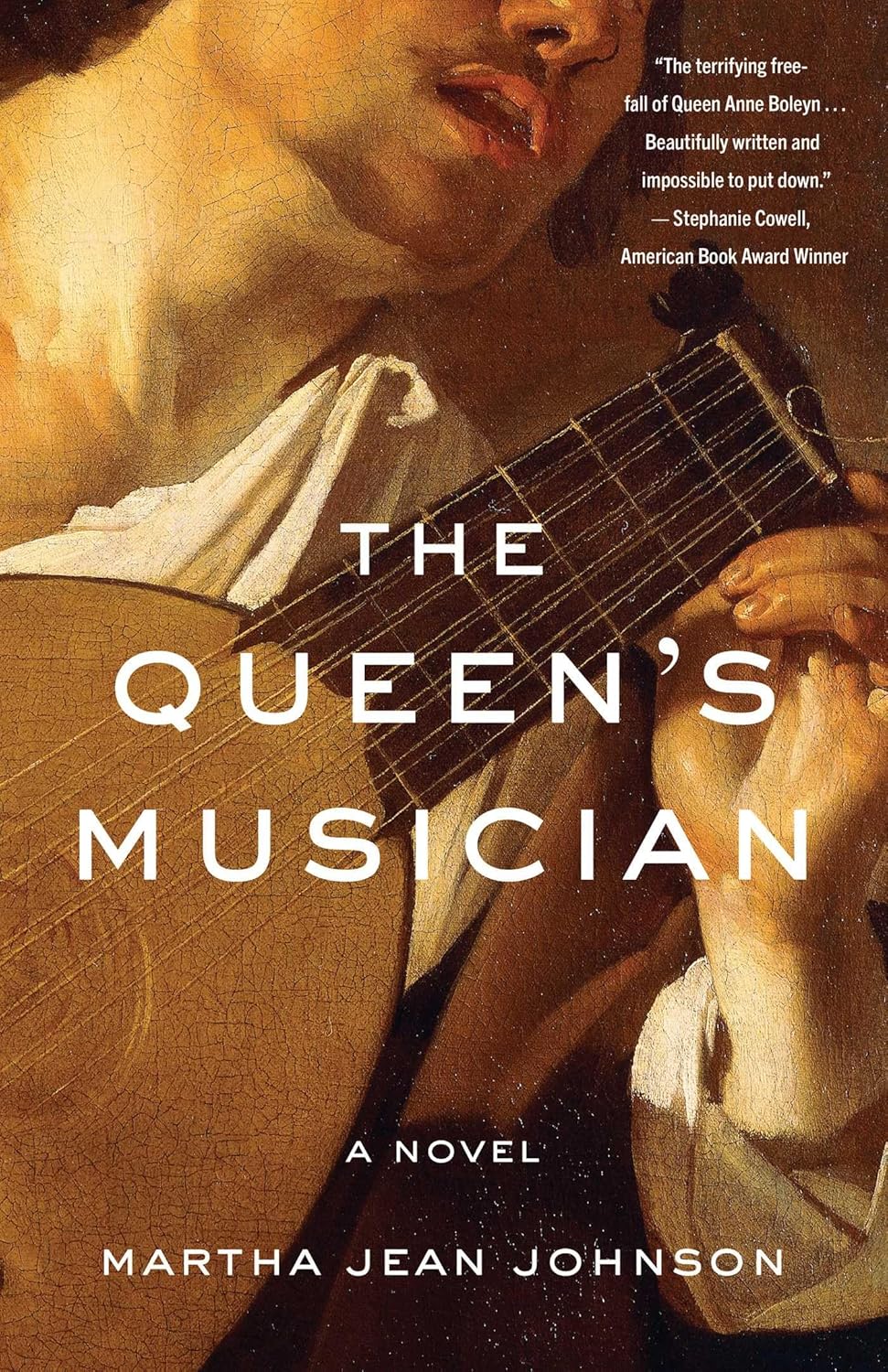
For fans of Philippa Gregor, Alison Weir and Elizabeth Fremantle, an untold story about how the plot against Anne Boleyn entrapped a gifted young musician. A glamorous queen, a volatile king, a gifted musician concealing a forbidden romance.

Everyone knows Anne Boleyn’s story. No one knows Mark Smeaton’s. On May 17, 1536, a young court musician was executed, accused of adultery and treason with the queen. Most historians believe both he and Anne Boleyn were innocent – victims of Henry VIII’s rage.

Mark Smeaton was a talented performer who rose from poverty to become a royal favourite. He played for the king in private and entertained at sumptuous feasts. He witnessed Anne Boleyn’s astonishing rise and fall – her reign of a thousand days. History tells us little about him, other than noting his confession and execution. The Queen’s Musician imagines his story, as seen from his perspective and that of the young woman who loves him. It all takes place amid the spectacle and danger of the Tudor court.

What an interesting take on a well known story!

The Queen’s Musician by Martha Jean Johnson looks at the story of Anne Boleyn’s downfall through the eyes of her musician, Mark Smeaton. Smeaton was the lowliest, in terms of social standing, of the men accused of sleeping with Henry VIII’s second queen. You cannot fail to feel sympathy for the poor musician, drawn into a scandal created by his social superiors.

Young Mark Smeaton establishes himself in the reader’s affections from the very beginning. You find yourself invested in his life, enjoying his journey, his music and his success. But then, once in a while, you remember where the book is going, inexorably, to its tragic, dramatic end. The tension is palpable the closer you get to the dramatic events of 1536.

All to bring down a queen.

Poor Mark!

Even if he hadn’t been king, His Majesty would have been a commanding figure. He was vigorous, with masculine features, draped in white and gold. The rotund, graying cardinal hovered near him like a honeybee buzzing a flower. Recalling the scene later, I could see the rupture between them. More than once, the cardinal leaned close to His Majesty to begin a conversation, but the king turned his head away.

The room was still noisy, the diners talking among themselves. I waited for someone to call for quiet so the concert could begin. Several minutes passed, and I stood beside the stool uncertain what to do. I bowed to His Majesty and the others, but they took no notice. I began to worry that my great opportunity would turn out to be a humiliating disappointment. Then the king brought his goblet to his lips, drank slowly, paused, and raised his hand for silence. He said nothing, but his command was clear: I am ready now. You may begin.

Dressed like a prince and given this chance to entertain the king, I was pleased with my performance that night. I played six pieces, mostly English, before ending with the French love song. The king stood at his place and applauded. “Excellent, my boy, wonderful. Your songs bring me back to my younger days.”

I stood and bowed deeply. “Thank you, Your Majesty.” I glanced at the cardinal who looked only at the king.

“What is your name?”

“I am Mark Smeaton, Your Majesty.” I bowed again, elated by even this brief attention.

“The French song – it was perfection. I might want to sing it. Send me the music and the words.”

“With great pleasure, Your Majesty. I would be most honored to prepare a copy.”

“Be sure to get it from him.” The king motioned to one of his grooms who, like me, kept bowing his head.

The cardinal edged closer to the king and said, “It will be done before you leave, Your Majesty.” The king acted like he didn’t hear.

After my performance, I joined several other musicians playing light music to enhance what seemed like a festive mood. The cardinal approached and said, “Thank you, Mark – your songs have lifted His Majesty’s spirits. Please prepare the manuscript tomorrow morning.”

“You will have it before ten o’clock, Your Eminence.” In this moment, my excitement at playing for the king blended with my concern for the cardinal’s enterprise. “I hope I have helped you, sir,” I added. The old man’s nod of the head signaled his gratitude.

The next day after breakfast, I ran to the chapel to make the copy and tell Master Peter that the king had complimented my playing.

“The king has already left,” he said…

Although you know Anne Boleyn’s story, The Queen’s Musician by Martha Jean Johnson will catch you out and draw you in. The author does a wonderful job of depicting the Tudor court; its decadence, the political intrigues, the social strata and the dangerous undercurrents. The latent fear. In Tudor times, ability and intelligence could rise to the top – but it could also lead to one’s downfall.

The Queen’s Musician has all of this … with a little bit of forbidden love thrown into the mix!

Historically accurate, it gets you thinking, too. That you may have heard Smeaton’s music without even knowing it. That his music was attributed to others, or marked as anonymous in order to guarantee its survival following Smeaton’s downfall and execution. It makes you wonder…

Martha Jean Johnson has found a unique angle for telling a familiar story. But this is not Anne Boleyn’s tale. It’s the story of a man who fell victim to those determined to bring down a queen, at all costs. No matter the collateral damage it would take to do it. The tragedy is the poor boy was a pawn, drawn into the intrigues of the great and good, who stepped on him, destroyed him to gain for themselves more power, more influence…

I admit it, I cried.

I always think it is the sign of a good book if it can bring me to tears. The Queen’s Musician is a good book!

The Queen’s Musician by Martha Jean Johnson is beautifully written, thoughtful and deep.

To Buy the Book: The Queen’s Musician

About the author:

History ... the Interesting Bits

Martha Jean Johnson is a writer of fiction and non-fiction and the author of a series of books and articles on public opinion and public policy. The Queen’s Musician is her debut novel. She also reviews trends in historical fiction and discusses her own love of reading and writing in her biweekly blog, Historical Magic. She currently divides her time between writing and her work with the National Issues Forums Institute, an organization that encourages civil discourse and nonpartisan deliberation on national and local issues. During a long public policy career, she analyzed and reported on American public thinking, working with noted social analyst and public opinion pioneer, Daniel Yankelovich. She has published articles in USA Today and The Huffington Post and appeared on CNN, MSNBC, and PBS. She is the author of a series of nonfiction paperbacks on major political issues, co-authored with Scott Bittle and published by HarperCollins. She holds degrees from Mount Holyoke College, Brown University, and Simmons College. She lives in Jersey City, New Jersey.

*

My books

Signed, dedicated copies of all my books are available through my online store.

Out now: Scotland’s Medieval Queens

Books by Sharon Bennett Connolly

Scotland’s history is dramatic, violent and bloody. Being England’s northern neighbour has never been easy. Scotland’s queens have had to deal with war, murder, imprisonment, political rivalries and open betrayal. They have loved and lost, raised kings and queens, ruled and died for Scotland. From St Margaret, who became one of the patron saints of Scotland, to Elizabeth de Burgh and the dramatic story of the Scottish Wars of Independence, to the love story and tragedy of Joan Beaufort, to Margaret of Denmark and the dawn of the Renaissance, Scotland’s Medieval Queens have seen it all. This is the story of Scotland through their eyes.

Scotland’s Medieval Queens gives a thorough grounding in the history of the women who ruled Scotland at the side of its kings, often in the shadows, but just as interesting in their lives beyond the spotlight. It’s not a subject that has been widely covered, and Sharon is a pioneer in bringing that information into accessible history.’ Elizabeth Chadwick (New York Times bestselling author)

Available now from Amazon and Pen and Sword Books

Also by Sharon Bennett Connolly:

Books by Sharon Bennett Connolly

Heroines of the Tudor World tells the stories of the most remarkable women from European history in the time of the Tudor dynasty, 1485-1603. These are the women who ruled, the women who founded dynasties, the women who fought for religious freedom, their families and love. Heroines of the Tudor World is now available from Amberley Publishing and Amazon UK. Women of the Anarchy demonstrates how Empress Matilda and Matilda of Boulogne, unable to wield a sword themselves, were prime movers in this time of conflict and lawlessness. It shows how their strengths, weaknesses, and personal ambitions swung the fortunes of war one way – and then the other. Available from Bookshop.orgAmberley Publishing and Amazon UKKing John’s Right-Hand Lady: The Story of Nicholaa de la Haye is the story of a truly remarkable lady, the hereditary constable of Lincoln Castle and the first woman in England to be appointed sheriff in her own right. Available from all good bookshops Pen & Sword Booksbookshop.org and Amazon

Royal Historical Society

Defenders of the Norman Crown: The Rise and Fall of the Warenne Earls of Surrey tells the fascinating story of the Warenne dynasty, from its origins in Normandy, through the Conquest, Magna Carta, the wars and marriages that led to its ultimate demise in the reign of Edward III. Available from Pen & Sword BooksAmazon in the UK and US, and Bookshop.orgLadies of Magna Carta: Women of Influence in Thirteenth Century England looks into the relationships of the various noble families of the 13th century, and how they were affected by the Barons’ Wars, Magna Carta and its aftermath; the bonds that were formed and those that were broken. It is now available in paperback and hardback from Pen & SwordAmazon, and Bookshop.orgHeroines of the Medieval World tells the stories of some of the most remarkable women from Medieval history, from Eleanor of Aquitaine to Julian of Norwich. Available now from Amberley Publishing and Amazon, and Bookshop.orgSilk and the Sword: The Women of the Norman Conquest traces the fortunes of the women who had a significant role to play in the momentous events of 1066. Available now from Amazon,  Amberley Publishing, and Bookshop.org.

Alternate Endings: An anthology of historical fiction short stories including Long Live the King… which is my take what might have happened had King John not died in October 1216. Available in paperback and kindle from Amazon.

Podcast:

A Slice of Medieval

Have a listen to the A Slice of Medieval podcast, which I co-host with Historical fiction novelist Derek Birks. Derek and I welcome guests, such as Bernard Cornwell and Michael Jecks, and discuss a wide range of topics in medieval history, from significant events to the personalities involved. 

Every episode is also now available on YouTube.

*

Don’t forget! Signed and dedicated copies of all my books are available through my online store.

For forthcoming online and in-person talks, please check out my Events Page.

You can be the first to read new articles by clicking the ‘Follow’ button, liking our Facebook page or joining me on TwitterThreadsBluesky and Instagram.

*

©2025 Sharon Bennett Connolly


Book Corner: The Druid’s Prey by Steven A. McKay

History...the Interesting Bits

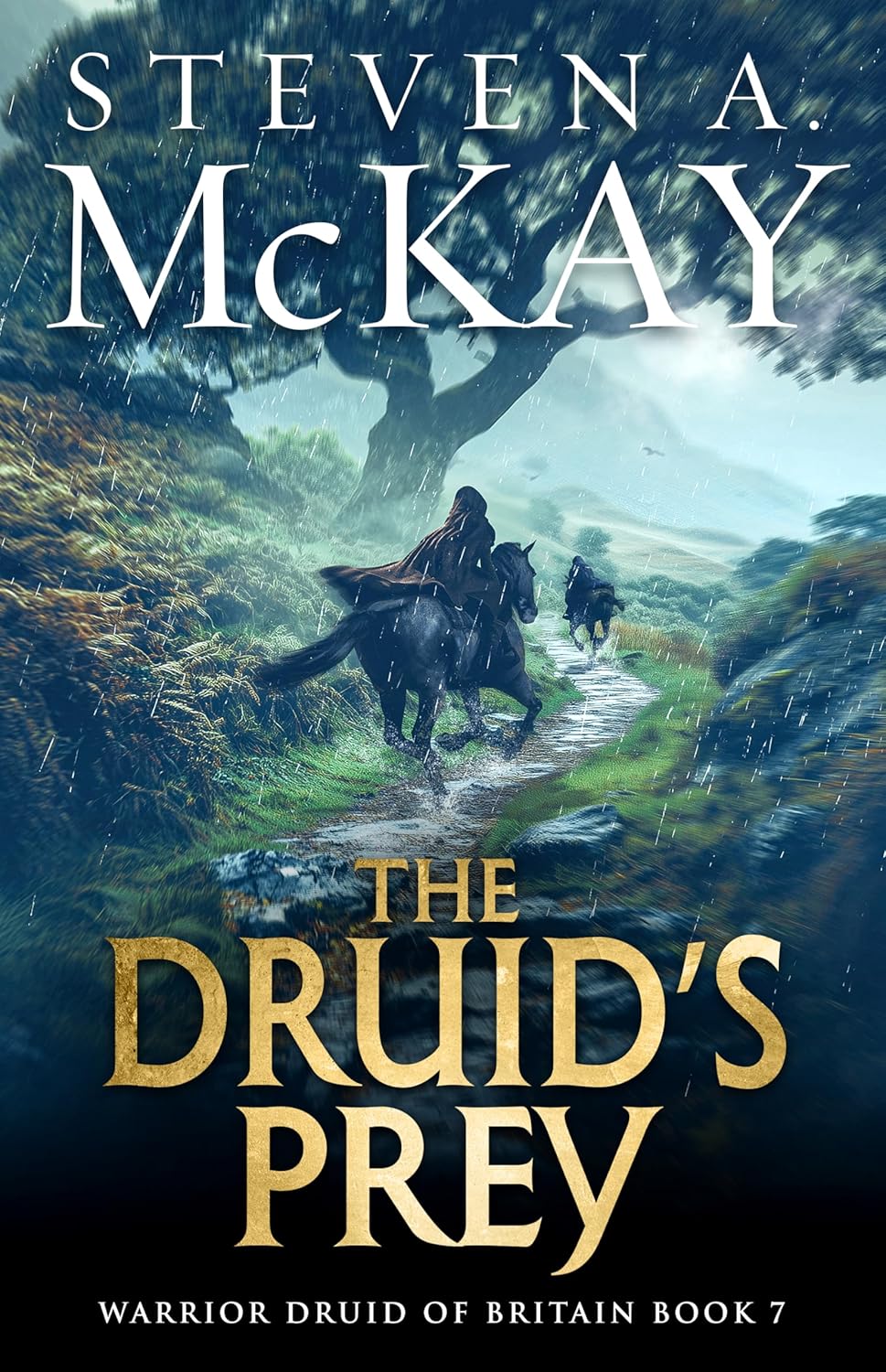
A vicious attack. An enraged warrior-druid. A relentless hunt for vengeance!

Following a cowardly raid on Dun Breatann the Saxon attacker, Saksnot, rides back to rejoin his bretwalda, Hengist, in far-off Garrianum. Bellicus, outraged by the savage attack on his people and his closest friend, follows the perpetrator with just one thing on his mind: bloody justice!
As the towering druid hunts his prey across the summer fields and streams, Arthur, Bear of Britain, seeks to make a lasting peace with the new immigrants from across the sea. Hengist has no such plans however, instead working alongside his terrifying volva, Thorbjorg, to bring only blood, fire, and death to the embattled Britons.

As the brutal struggle for supremacy rages between the two warlords and their armies, Bellicus will find himself drawn into an adventure he could never have foreseen. An adventure that may seal the fate of Britain for generations to come.

Yes! Bellicus is back!

And better than ever! The Druid’s Prey by Steven A. McKay is the seventh book in Steven’s excellent Warrior Druid of Britain Chronicles. As regular readers will know, I have been reading this series since the first book, The Druid. The books follow the adventures of Bellicus the druid, his family and his Roman friend, Duro, as the defend their home, Dun Breatann, and the rest of Britain from the invading Saxons, led by Hengist and Horsa. Well, its just Hengist now, thanks to The Vengeance of Merlin. A sucker for anything Arthurian, Steven A. McKay also draws in the legendary Arthur, Lancelot and his loyal knights. And I love how Arthur is drawn into Bellicus’ story, but never fully takes over.

It’s a perfect combination and partnership.

In The Druid’s Prey, Bellicus is set on revenge, traveling the length of Britain to find the man who had tried to kill him and hurt his friend. Further south, Arthur is trying to take the war to Hengist, to strike a blow that will hurt the Saxon leader’s forces, and to find a friend of his own who has been captured by the enemy. Oh, and while Bellicus is away, his wife and daughter, Narina and Catia, work to strengthen Dun Breatann’s position and stave off the influence of the hated Hengist. Three missions that the reader can’t help but hope they collide…

The bear stopped moving, taking in the sight of the boar which was peering at it in return. And then the bear looked up at Bellicus and their eyes met. The druid swallowed, knowing for certain that he had come across this very animal before – it had attacked them some years prior, not far from where they were now, badly injuring King Coroticus and Gavo and killing one warrior and three dogs. It had eventually decided to give up the fight but only once it had a spear stuck in its back and a number of arrows from the Damnonii hunters’ bows. Bellicus examined its hairy pelt for evidence of those earlier wounds but it seemed to have healed well in the intervening years.

As if it recalled the battle the bear suddenly stood up on its hind legs and let out an enormous roar. Bellicus gazed at it in awe – the animal was not just enormous, it was majestic, and the thought of trying to kill it again was truly terrifying.

It seemed the boar had similar thoughts, for instead of charging at the bear, it turned and hurried off into the trees, the spear that Duro had planted in its side clattering noisily against tree trunks until, at last, it must have snapped off for there was a last, distant squeal and then only the low growling of the bear was left to fill the clearing.

“Mithras protect us, we’re in for it now,” Duro said, doing his best to draw his spatha while still gripping the trunk of his tree for dear life. “At least the boar couldn’t get up here.”

“Don’t do anything,”Bellicus ordered in a low voice. “Do you not recognise it?”

“Aye,” the centurion nodded. “It’s the same bear that almost killed us all before. You told us to let it go back then for some mad reason.”

“The Bear of Britain,” Bellicus said, so softly Duro could not hear him. “That’s what the Merlin had called Arthur.” Memories of the previous encounter with the bear were filling his mind and he remembered being in a shocked stupor as he’d stared at the bear bristling with missiles like a hedgehog. The animal had lost the will to fight that day and Bellicus had commanded those with him to let it go, a decision he’d never really understood himself. For some reason he’d seen the beast as connected to Arthur, or perhaps he just didn’t want any more people – or Cai, for the mastiff had been involved in the fighting too – getting injured or killed.

Whatever his motives had been, the bear stared up at him now, its round, dark eyes fixing on his own. There seemed an intelligence behind that gaze that Bellicus had not expected. Did it recognise him? Did it understand that he’d been the one that called off the attack on it and most likely saved its life after their previous encounter? Maybe. The druid knew that bears had an even more developed sense of smell than dogs, so it was possible the beast, which had dropped back to all fours now, recognised his scent if not his face.

The bear made a strange, ululating, guttural grunting sound and then simply wandered off into the trees, quickly disappearing from sight.

“Is… Is it over?” Duro gasped, sword still glinting in the last of the sunshine as he lowered himself down, hanging from a branch by one arm as he tried to see through the foliage and make sure the bear had really gone.

Hengist is on the road to revenge, taking any opportunity he can to punish his brother’s killers, whilst at the same time increasing his hold on Britain, extending his influence and grabbing more land. He sends an assassin north to Dun Breatann, captures one of Arthur’s leading men and seeks allies among the enemies of Bellicus and Queen Narina. The Druid’s Prey by Steven A. McKay has more than one story within its pages – and more than one hero!

It is a rollercoaster journey through post-Roman Britain as the lead characters fight to hold onto their lands, their friends and their family. Their are more than a few heart-in-the-mouth moments along the way. And, if you are reading at night, beware! “Just one more chapter…” will lead to 3 or 4 more!

As we are at book no. 7 in the Warrior Druid of Britain series, Steven A. McKay’s characters are well developed and very familiar to us. We know how Bellicus will react to his family and friends being attacked. We know that his daughter, Catia, now 12 years old, is not a little girl to whom things happen-she is a pre-teen, trained in warfare, experienced beyond her years but still needing the guidance of parents to keep her out of the worst trouble. And Arthur, everyone’s hero and Bellicus’ friend. Well, his adventures never fail to inspire and entertain. And each of these characters have to make choices and decisions that affect, not only themselves but also their people. Agonising decisions will lead to more danger, adventure and not a little swordplay.

I won’t tell you any more – I do not want to ruin it for anyone.

All I will say is, The Druid’s Prey by Steven A. McKay is the 7th book in a series and yet is as fresh and original as the first. If you have not yet read this excellent series, you are missing a treat – but I envy the fact you have 7 books to read, one after the other. What a treat you have instore.

To Buy the Book: The Druid’s Prey

About the author:

History...the Interesting Bits

Steven A. McKay was born in Scotland in 1977 and always enjoyed studying history. He decided to write his Forest Lord novels after seeing a house called “Sherwood” when he was out at work one day. Since then he’s started a new series, the Warrior Druid of Britain Chronicles, and just completed a trilogy about Alfred the Great.

In 2021 the Xbox game HOOD: Outlaws and Legends was released, featuring Steven’s writing.

He used to be in a heavy metal band although he tends to just play guitar in his study these days. He did use those guitars to write the theme song for the podcast he co-hosted, Rock, Paper, Swords! with Matthew Harffy, though. Give it a listen, they’ve interviewed great guests like Diana Gabaldon, Simon Scarrow, Bernard Cornwell, Dan Jones and more!

*

My books

Signed, dedicated copies of all my books are available through my online store.

Out now: Scotland’s Medieval Queens

Books by Sharon Bennett Connolly

Scotland’s history is dramatic, violent and bloody. Being England’s northern neighbour has never been easy. Scotland’s queens have had to deal with war, murder, imprisonment, political rivalries and open betrayal. They have loved and lost, raised kings and queens, ruled and died for Scotland. From St Margaret, who became one of the patron saints of Scotland, to Elizabeth de Burgh and the dramatic story of the Scottish Wars of Independence, to the love story and tragedy of Joan Beaufort, to Margaret of Denmark and the dawn of the Renaissance, Scotland’s Medieval Queens have seen it all. This is the story of Scotland through their eyes.

Scotland’s Medieval Queens gives a thorough grounding in the history of the women who ruled Scotland at the side of its kings, often in the shadows, but just as interesting in their lives beyond the spotlight. It’s not a subject that has been widely covered, and Sharon is a pioneer in bringing that information into accessible history.’ Elizabeth Chadwick (New York Times bestselling author)

Available now from Amazon and Pen and Sword Books

Also by Sharon Bennett Connolly:

Books by Sharon Bennett Connolly

Heroines of the Tudor World tells the stories of the most remarkable women from European history in the time of the Tudor dynasty, 1485-1603. These are the women who ruled, the women who founded dynasties, the women who fought for religious freedom, their families and love. Heroines of the Tudor World is now available from Amberley Publishing and Amazon UK. Women of the Anarchy demonstrates how Empress Matilda and Matilda of Boulogne, unable to wield a sword themselves, were prime movers in this time of conflict and lawlessness. It shows how their strengths, weaknesses, and personal ambitions swung the fortunes of war one way – and then the other. Available from Bookshop.orgAmberley Publishing and Amazon UKKing John’s Right-Hand Lady: The Story of Nicholaa de la Haye is the story of a truly remarkable lady, the hereditary constable of Lincoln Castle and the first woman in England to be appointed sheriff in her own right. Available from all good bookshops Pen & Sword Booksbookshop.org and Amazon

Royal Historical Society

Defenders of the Norman Crown: The Rise and Fall of the Warenne Earls of Surrey tells the fascinating story of the Warenne dynasty, from its origins in Normandy, through the Conquest, Magna Carta, the wars and marriages that led to its ultimate demise in the reign of Edward III. Available from Pen & Sword BooksAmazon in the UK and US, and Bookshop.orgLadies of Magna Carta: Women of Influence in Thirteenth Century England looks into the relationships of the various noble families of the 13th century, and how they were affected by the Barons’ Wars, Magna Carta and its aftermath; the bonds that were formed and those that were broken. It is now available in paperback and hardback from Pen & SwordAmazon, and Bookshop.orgHeroines of the Medieval World tells the stories of some of the most remarkable women from Medieval history, from Eleanor of Aquitaine to Julian of Norwich. Available now from Amberley Publishing and Amazon, and Bookshop.orgSilk and the Sword: The Women of the Norman Conquest traces the fortunes of the women who had a significant role to play in the momentous events of 1066. Available now from Amazon,  Amberley Publishing, and Bookshop.org.

Alternate Endings: An anthology of historical fiction short stories including Long Live the King… which is my take what might have happened had King John not died in October 1216. Available in paperback and kindle from Amazon.

Podcast:

A Slice of Medieval

Have a listen to the A Slice of Medieval podcast, which I co-host with Historical fiction novelist Derek Birks. Derek and I welcome guests, such as Bernard Cornwell and Michael Jecks, and discuss a wide range of topics in medieval history, from significant events to the personalities involved. 

Every episode is also now available on YouTube.

*

Don’t forget! Signed and dedicated copies of all my books are available through my online store.

For forthcoming online and in-person talks, please check out my Events Page.

You can be the first to read new articles by clicking the ‘Follow’ button, liking our Facebook page or joining me on TwitterThreadsBluesky and Instagram.

*

©2025 Sharon Bennett Connolly

Book Corner: Rise of the First Wessex King by A.J. Proudfoot

A.J. Proudfoot

When the Saxons, invited to settle in Britannia by King Wyrtgeorn, brutally murder the father and brother of Ceredig, the second son of a fifth century Romano-British chieftain, he flees the land of his birth.

While the Saxons expand their control over Britannia, Ceredig grows up in Armorica, learning the ways of the Gewisse, and ultimately taking command of this elite force of warriors, who had remained loyal to his father, Elisedd.

Despite ruling as a chieftain in Armorica, Ceredig remains determined to return to his homeland, avenge his father and brother’s murder, and finally reclaim the lands his father had once ruled in southern Britannia.

After over forty years in exile, Ceredig, his son and a force of Gewisse warriors return to Britannia, joining a large army of Britons who are preparing to take on the Saxons in battle at Badonbyrg.

What happens next will go down in history…

As a debut novel, Rise of the First Wessex King by A.J. Proudfoot is a winner. And as a special treat, alongside my review, I have an interview with the author, who is currently working on book no. 2 in what promises to be a fascinating series. Cerdic, or Ceredig, is the founder of the kingdom of Wessex and a royal house that would reach its zenith under Ceredig’s descendants, King Alfred the Great, Æthelflæd, Lady of the Mercians, her brother Edward the Elder and Edward’s son Athelstan, first king of England.

And it all started with Ceredig.

In Rise of the First Wessex King, A.J. Proudfoot recreates Ceredig’s world, post-Roman Britain, breathing life into this 1,500-year-old story. And what a fascinating story it is. Though our knowledge is limited, Proudfoot fills in the gaps to create a lively and energetic retelling of the foundation of the royal house of Wessex. This is the story of the fight of the native Britons against the invading Saxons, of a war that must have felt never-ending, at times. It is a story of conflict and betrayal, but also of family and comradeship, and of a young man who had to patiently wait for the time to be right to achieve his dream of pushing back the Saxons and going home.

The characters, particularly our hero, are wonderfully vivid. And I love how Proudfoot weaves the legends of Arthur and Hengist and Horsa in to the story, bringing a little-known period of history back to life. Who doesn’t like to see a little bit of King Arthur thrown into the mix? The inclusion of Artorius and Ambrosius made me smile – and want to read more!

This is a debut novel, so Proudfoot sometimes fall into the trap of giving summaries, telling, rather than showing the action and debate, but this does not detract from the pace of the book. Overall, it is a fabulous read, imbued with a sense of adventure. It is a great start to what promises to be an impressive series.

Overall, it is a great story, told well!

If you’re looking for a new author to sink your teeth into, I don’t hesitate to recommend A.J. Proudfoot’s Rise of the First Wessex King.

To Buy the Book:

Books2Read; The Book GuildBookshop.org (UK)

Interview with A.J. Proudfoot

A.J. Proudfoot

Sharon: So, Alex, what got you into writing historical fiction?

Alex: This may come as a surprise, but I didn’t originally set out to become an author and write historical fiction novels. I was simply trying to trace the origins of my unusual Proudfoot surname, and was continuing the research into our Proudfoot family history that my parents and aunt had begun many years before.

After several years’ research, I was amazed to find that I had traced my family ancestry back 1500 years to a mysterious chieftain called Cerdic, at the end of the fifth century, who founded the Anglo-Saxon kingdom of Wessex. There are many interesting ancestors in the Proudfoot family tree, whose lives would make an excellent novel, but when I discovered more about Cerdic’s life, I realised that there was an Arthurian story that was worth writing.

Sharon: What made you want to tell Cerdic’s story?

Alex: I was intrigued why this important figure in early English history has been largely ignored by historical writers, so I undertook my own research into the life of Cerdic, finding crucial inconsistencies in what is written about Cerdic’s Saxon heritage, which I put down to a desire, by early Saxon chroniclers, to establish King Alfred’s Saxon ancestry.

Instead, I found evidence that Cerdic was more likely to be descended from a Romano-British family, who originally hailed from an ancient Welsh kingdom, and was more than likely called Ceredig, given his Brythonic heritage, and to the phonetic similarities. As a result, I felt compelled to use what I had learned to tell the story about my earliest known ancestor and his crucial role in history, based on recorded events in the early Anglo-Saxon era. To paraphrase John Wade, the rest is historical fiction!

Sharon: How do you go about researching a historical character from 1500 years ago?

Imaginary depiction from John Speed’s 1611 “Saxon Heptarchy”

Alex: The great difficulty in researching a historical figure from so far back is the lack of contemporary records. My starting point was, naturally, the Anglo-Saxon Chronicle, but it only mentions six events relating to Cerdic’s life, and is written from a Saxon perspective. I read all I could about Cerdic in research papers by modern Anglo-Saxon historians, including JNL Myers and Richard Coates, which is where I found clues to Cerdic’s Romano-British connections. There was also a story about 5th century Bishop Germanus meeting a regional chieftain in southern Britain, called Elasius, whose name is remarkably similar to Elesa, the recorded name of Cerdic’s father in the Anglo-Saxon Chronicle.

Eventually, I had built a picture of the young son of a Romano-British chieftain, ruling and defending the southern coastline of Britain against Saxon invaders, who suddenly disappeared from Britain, returning nearly fifty years later to take control over a region in the Upper Thames Valley, before expanding his lands south before becoming king and ruling a kingdom of the Gewisse that would eventually become known as Wessex, named after the West Saxons.

My research raised more questions than answers, so I used what I had learned about events during that period to write a dramatic reconstruction of Cerdic’s life, and the formation of the Anglo-Saxon kingdom of Wessex. Based on fact, but mostly fiction.

Sharon: What are you working on now?

Alex:I am currently working on a sequel to Rise of the First Wessex King, which will follow the lives of Cunorix and his son, Ceawlin, as they try to build on Ceredig’s legacy in ruling the kingdom of the Gewisse, whilst facing threats from the Saxons in the east, and Britons in the west, as well as challenges they could not anticipate.

Sharon: What is the best – and worse – thing about being a writer?

Alex: Personally, the hardest part about writing my historical fiction novels is that the stories are based in the south of England and I live just outside Edinburgh, in Scotland. This meant that I have had to make several research trips down south, visiting locations featured in my novels. Whilst there is very little evidence to reveal what it would be like when the books are set, I have found this a useful exercise in understanding the topography, as well as encouraging the creative writing juices.

The best part of being a writer is that I love history and solving puzzles. This has been useful in writing about a period in history where facts are limited, so deciphering my characters’ motives behind their decisions has been crucial in building the story of their lives.

About the Author

A J (Alex) Proudfoot lives in Musselburgh, near Edinburgh. He started his career as an accountant, working in the brewing, publishing and financial sectors, before qualifying as a chartered marketer, working at the University of Edinburgh for over twenty years. After retiring early in 2018, he has spent his free time researching his Proudfoot family history, back 1500 years to his earliest known ancestor, which led to the publication of his debut historical fiction novel, Rise of the First Wessex King.

Social media links

Facebook – https://www.facebook.com/ajproudfootwriter

YouTube – https://www.youtube.com/@ajproudfoot

Book trailer – https://www.youtube.com/watch?v=4gpZMOMzwZs&t

*

My books

Signed, dedicated copies of all my books are available through my online store.

Out now: Scotland’s Medieval Queens

Books by Sharon Bennett Connolly

Scotland’s history is dramatic, violent and bloody. Being England’s northern neighbour has never been easy. Scotland’s queens have had to deal with war, murder, imprisonment, political rivalries and open betrayal. They have loved and lost, raised kings and queens, ruled and died for Scotland. From St Margaret, who became one of the patron saints of Scotland, to Elizabeth de Burgh and the dramatic story of the Scottish Wars of Independence, to the love story and tragedy of Joan Beaufort, to Margaret of Denmark and the dawn of the Renaissance, Scotland’s Medieval Queens have seen it all. This is the story of Scotland through their eyes.

Scotland’s Medieval Queens gives a thorough grounding in the history of the women who ruled Scotland at the side of its kings, often in the shadows, but just as interesting in their lives beyond the spotlight. It’s not a subject that has been widely covered, and Sharon is a pioneer in bringing that information into accessible history.’ Elizabeth Chadwick (New York Times bestselling author)

Available now from Amazon and Pen and Sword Books

Also by Sharon Bennett Connolly:

Books by Sharon Bennett Connolly

Heroines of the Tudor World tells the stories of the most remarkable women from European history in the time of the Tudor dynasty, 1485-1603. These are the women who ruled, the women who founded dynasties, the women who fought for religious freedom, their families and love. Heroines of the Tudor World is now available from Amberley Publishing and Amazon UK. Women of the Anarchy demonstrates how Empress Matilda and Matilda of Boulogne, unable to wield a sword themselves, were prime movers in this time of conflict and lawlessness. It shows how their strengths, weaknesses, and personal ambitions swung the fortunes of war one way – and then the other. Available from Bookshop.orgAmberley Publishing and Amazon UKKing John’s Right-Hand Lady: The Story of Nicholaa de la Haye is the story of a truly remarkable lady, the hereditary constable of Lincoln Castle and the first woman in England to be appointed sheriff in her own right. Available from all good bookshops Pen & Sword Booksbookshop.org and Amazon

Royal Historical Society

Defenders of the Norman Crown: The Rise and Fall of the Warenne Earls of Surrey tells the fascinating story of the Warenne dynasty, from its origins in Normandy, through the Conquest, Magna Carta, the wars and marriages that led to its ultimate demise in the reign of Edward III. Available from Pen & Sword BooksAmazon in the UK and US, and Bookshop.orgLadies of Magna Carta: Women of Influence in Thirteenth Century England looks into the relationships of the various noble families of the 13th century, and how they were affected by the Barons’ Wars, Magna Carta and its aftermath; the bonds that were formed and those that were broken. It is now available in paperback and hardback from Pen & SwordAmazon, and Bookshop.orgHeroines of the Medieval World tells the stories of some of the most remarkable women from Medieval history, from Eleanor of Aquitaine to Julian of Norwich. Available now from Amberley Publishing and Amazon, and Bookshop.orgSilk and the Sword: The Women of the Norman Conquest traces the fortunes of the women who had a significant role to play in the momentous events of 1066. Available now from Amazon,  Amberley Publishing, and Bookshop.org.

Alternate Endings: An anthology of historical fiction short stories including Long Live the King… which is my take what might have happened had King John not died in October 1216. Available in paperback and kindle from Amazon.

Podcast:

A Slice of Medieval

Have a listen to the A Slice of Medieval podcast, which I co-host with Historical fiction novelist Derek Birks. Derek and I welcome guests, such as Bernard Cornwell and Michael Jecks, and discuss a wide range of topics in medieval history, from significant events to the personalities involved. 

Every episode is also now available on YouTube.

*

Don’t forget! Signed and dedicated copies of all my books are available through my online store.

For forthcoming online and in-person talks, please check out my Events Page.

You can be the first to read new articles by clicking the ‘Follow’ button, liking our Facebook page or joining me on TwitterThreadsBluesky and Instagram.

*

©2025 Sharon Bennett Connolly, FRHistS

Book Corner: King of Wessex by Steven A. McKay

His reign must come to an end. But his legacy will live on forever.

After thwarting the scourge of the Viking hordes that had decimated Britain for decades, King Alfred assured a period of peace and prosperity for the kingdom of Wessex. The dream of uniting all Anglo-Saxons under one, noble banner seems closer than ever before.

But his enemies are not ones to be taken lightly. For even as Alfred works to ensure the fate of his descendants for centuries to come, a fearsome warlord, Haesten, gathers his warriors for a brutal assault upon the shores of Alfred’s territories.

As the battle lines are drawn, as the true power of this new and terrifying threat comes into its own, the ageing king knows in his heart that things will be different this time round. For as strong as his land, his birthright, his Wessex, has become, the consequences of defeat have never been more terrible.

For one who has gained everything… has everything to lose.

What an incredible adventure it has been!

In his Alfred the Great trilogy, Steven A. McKay has brought the late 9th century to life, retelling the story of Wessex’s stand against the constant incursions of the Norse and the Danes, known collectively as the Vikings. Many fans of Bernard Cornwell will recognise the great enemy of King of Wessex as having been a regular character in his The Last Kingdom series: Haesten. Haesten was the last great enemy that Alfred faced before his death, in a four-year war that ravaged Wessex.

But in King of Wessex, Alfred is no longer fighting alone. He has the help of his daughter, Æthelflæd, now Lady of Mercia, and her husband, Æthelred. His son, Edward, no longer a child, is leading armies of his own. This family affair allows Alfred to defend his kingdom from all sides at once, moving armies to face new threats, knowing his back is covered.

What sets this series apart, however, is the relationships of the characters and King of Wessex shows just how far these relationships have developed. Alfred’s friend and captain Wulfric is a constant by his side. His wife, Ealhswith, gives wise counsel and overlooks his flaws (I am not sure I could overlook the womanising!) And having watched his children mature, Alfred now has to trust them to be his captains and his allies. But Alfred, though getting older and still suffering from the same health issues that would often see him doubled over in pain, is still the man in command. And the man to be beaten.

There were men in Mercia’s Witan who offered, or perhaps demanded would be more accurate, to take control while Aethelred was unwell, but Aethelflaed was not having that.

‘You?’ The thane who asked the question gaped at her incredulously. ‘But you’re a woman!’

Aethelflaed’s lip curled, and she rolled her eyes at him. He was a tall man, very broad of shoulder with a thick, dark beard and hard eyes. She knew she had to deal with him in the right way, or the rest of the gathered Witan would never take her seriously. So much was riding on these next few moments. ‘I am indeed a woman, Morcar. Well spotted. Not much gets past you I see.’

Some of the other council members sniggered and Aethelflaed took note of them. She’d been taught that such information, the dynamics of the Witan such as who liked who and who would like to murder whom, was always useful to know. Similarly, Morcar’s reaction to her gentle but very public insult would also be worth noting.

‘No need to be glib, my lady,’ the big man replied dryly, rather surprising Aethelflaed for she’d half expected him to grow angry at her. That he didn’t was definitely a point in his favour and belied his fierce looks. ‘You know what I mean,’ he went on. ‘Women don’t usually rule in Mercia.’

‘It would only be temporary,’ Aerthelflaed replied, standing up and walking around the hall, eyeing the mostly middle-aged men who formed the Witan. ‘Until my husband is over his illness.’

‘And what if he does not get over it?’ a red-faced, bulbous-nosed man asked bluntly.

‘Then we’d need to look at the matter again, Edgar,’ Aethelflaed barked, annoyed at the question for she’d grown close to Aethelred in the relatively short time they’d been married. ‘But, for now,’ she stopped walking right behind Edgar who was forced to turn in his chair and crane his neck upwards to see her, ‘my husband is alive, and I shall take his place as head of the Witan.’

‘But you’re not even Mercian,’ Edgar argued.

‘I am Mercian now,’ Aethelflaed retorted, her patience growing thin with the dense thane who had actually got to his feet, forcing her to look up at him now. ‘I married your ealdorman, Aethelred, didn’t I? Or does marriage not count for anything these days?’

Edgar shook his head, clearly annoyed. He was only a little taller than her, with thinning white hair, and he ground his teeth as he glared at her, almost as if he wanted to take her over his knee and smack her backside like a naughty child. ‘You might have married Aethelred,’ he growled, ‘but you are your father’s daughter first and foremost. Your loyalty lies with Wessex, not Mercia.’

‘Surely it’s the same thing?’ Aethelflaed asked in a low voice, her steely eyes boring into his.

‘What? Because Alfred has declared himself king of all the Angles and Saxons?’ Edgar asked. His breath was sour and Aethelflaed realised he was drunk.

‘Yes,’ she replied, as if it was obvious. ‘My father is the only king Mercia has, since Aethelred is but an ealdorman. I would remind you, Edgar, that King Alfred, and his fyrd, are the only things standing in the way of the Danes overrunning Mercia completely.’

‘Are you calling us cowards now?’ the inebriated thane demanded, his flushed features contrasting deeply with his white hair. ‘You’re lucky you’re not a man, or I’d show you the men of Mercia are not afraid of anything.’

He was so angry at her that flecks of spittle struck her face as he ranted. And, as he went on, he actually reached out and grasped her sleeve, digging his fingers into her bicep.

Instinctively, Aethelflaed grabbed his hand, twisting his wrist and forcing him to spin around so he was facing the table again. Despite knowing she’d done enough, she could not keep her temper in check and thrust her knee into the back of his, making him stumble and, as he went down, she pushed his face, hard, into the trencher of meat and cheese that he’d been eating from.

I love Aethelflaed!

After three books, Steven A. McKay’s characters are so well developed that you know how they will react to certain situations. Alfred is thoughtful and looks for advice from his captains and churchmen. Edward is still learning, and looks to his father as an example. Aethelflaed is feisty whereas her mother is calm and dependable. Wulfric, the loyal captain, is good in a fight but has his own axe to grind and looks for ways to give Alfred the advantage.

Haesten and his wife, Ulfhild, are bloodthirsty, ruthless and, apparently, unstoppable.

It makes for a fascinating novel, with father, son, daughter and son-in-law each having a role to play in starting the fight back that would lead to a united England. Thanks to the legacy of The Last Kingdom, the story is familiar to many, but Steven A. McKay has made it all his own. King of Wessex, like The Heathen Horde before it and Sword of the Saxons before that, is a fabulously absorbing read. You can practically smell the blood and hear the noise of battle; the clash of swords, the screams of the dying and the shouted orders of Alfred and his captains.

My only regret is that the series is now over. I would have loved to see it continue to the reign of Athelstan and the Battle of Brunanburh – but then, I suppose, it wouldn’t be the story of King Alfred, would it?

As it is, Steven A. McKay has all the ingredients for a riveting good read and he uses them to his best advantage, to create a story that grabs the reader from the very first page. Itis exciting, thought-provoking and will bring a tear to your eye at the end. It is well worth the journey. King of Wessex is a novel that is not to be missed!

Buy the book!

About the author:

Steven A. McKay was born in Scotland in 1977. He is the author of two previous series of historical fiction, following Robin Hood and the warrior-druid Bellicus in post-Roman Britain. He plays the guitar, is the co-host of historical adventure podcast Rock, Paper, Swords! along with author Matthew Harffy, and lives just outside Glasgow with his wife and children.

*

My books

Signed, dedicated copies of all my books are available through my online store.

Out now: Scotland’s Medieval Queens

Scotland’s history is dramatic, violent and bloody. Being England’s northern neighbour has never been easy. Scotland’s queens have had to deal with war, murder, imprisonment, political rivalries and open betrayal. They have loved and lost, raised kings and queens, ruled and died for Scotland. From St Margaret, who became one of the patron saints of Scotland, to Elizabeth de Burgh and the dramatic story of the Scottish Wars of Independence, to the love story and tragedy of Joan Beaufort, to Margaret of Denmark and the dawn of the Renaissance, Scotland’s Medieval Queens have seen it all. This is the story of Scotland through their eyes.

Available now from Amazon and Pen and Sword Books

Also by Sharon Bennett Connolly:

Heroines of the Tudor World tells the stories of the most remarkable women from European history in the time of the Tudor dynasty, 1485-1603. These are the women who ruled, the women who founded dynasties, the women who fought for religious freedom, their families and love. Heroines of the Tudor World is now available for pre-order from Amberley Publishing and Amazon UK. Women of the Anarchy demonstrates how Empress Matilda and Matilda of Boulogne, unable to wield a sword themselves, were prime movers in this time of conflict and lawlessness. It shows how their strengths, weaknesses, and personal ambitions swung the fortunes of war one way – and then the other. Available from Bookshop.orgAmberley Publishing and Amazon UKKing John’s Right-Hand Lady: The Story of Nicholaa de la Haye is the story of a truly remarkable lady, the hereditary constable of Lincoln Castle and the first woman in England to be appointed sheriff in her own right. Available from all good bookshops Pen & Sword Booksbookshop.org and Amazon

Defenders of the Norman Crown: The Rise and Fall of the Warenne Earls of Surrey tells the fascinating story of the Warenne dynasty, from its origins in Normandy, through the Conquest, Magna Carta, the wars and marriages that led to its ultimate demise in the reign of Edward III. Available from Pen & Sword BooksAmazon in the UK and US, and Bookshop.orgLadies of Magna Carta: Women of Influence in Thirteenth Century England looks into the relationships of the various noble families of the 13th century, and how they were affected by the Barons’ Wars, Magna Carta and its aftermath; the bonds that were formed and those that were broken. It is now available in paperback and hardback from Pen & SwordAmazon, and Bookshop.orgHeroines of the Medieval World tells the stories of some of the most remarkable women from Medieval history, from Eleanor of Aquitaine to Julian of Norwich. Available now from Amberley Publishing and Amazon, and Bookshop.orgSilk and the Sword: The Women of the Norman Conquest traces the fortunes of the women who had a significant role to play in the momentous events of 1066. Available now from Amazon,  Amberley Publishing, and Bookshop.org.

Alternate Endings: An anthology of historical fiction short stories including Long Live the King… which is my take what might have happened had King John not died in October 1216. Available in paperback and kindle from Amazon.

Podcast:

Have a listen to the A Slice of Medieval podcast, which I co-host with Historical fiction novelist Derek Birks. Derek and I welcome guests, such as Bernard Cornwell and Michael Jecks, and discuss a wide range of topics in medieval history, from significant events to the personalities involved. Every episode is also now available on YouTube.

*

Don’t forget! Signed and dedicated copies of all my books are available through my online store.

For forthcoming online and in-person talks, please check out my Events Page.

You can be the first to read new articles by clicking the ‘Follow’ button, liking our Facebook page or joining me on TwitterThreadsBluesky and Instagram.

*

©2025 Sharon Bennett Connolly, FRHistS


Book Corner: Death Comes in Threes by Michael Jecks

Princess Elizabeth’s unlikely assassin finds himself on the hook for two murders in this light-hearted Tudor mystery series!

August, 1558. As London is bustling with growing trade from foreign lands, and Queen Mary’s health is once again a hot topic, Jack Blackjack has much to keep him busy. And that’s before his new tenant – a Dutch merchant – disappears under a cloud of suspicion, quickly presumed murdered, and Jack’s latest female companion’s body is found mere streets from her dwelling place.

People around Jack keep inconveniently getting murdered, and he seems to be the most likely culprit! With both the authorities and the unsavoury echelons of London on his tail, nowhere is safe for Jack to hide. He must go about proving his innocence – and uncovering the mirky truth – while ensuring he doesn’t find himself dancing the Tyburn jig!

The question is – can he rely on friends in high – and very low – places to get him out of this ever-increasing mess?

You know, I don’t think I’ve had as much fun reading a book in a long time!

Michael Jecks has long been one of my favourite authors, ever since his very first book, The Last Templar. I Iove the way he writes. With his Tudor mystery series, he has really showcased his ability to write a jolly good murder mystery – with an impressive dose of humour.

I hate to use the word unputdownable – is it even a word? – but this book really was! I read it in two days. I took it every where with me, so I could read even if I only had a few minutes, sat in the car or giggling to myself whilst sat in a cafe – the other patrons must have thought me very odd. But I could not wait to get to the end. I think I will have to give it a re-read, slower this time. So that I can savour the story.

Set in 1558, in the final months of the life and reign of Mary I, Death Comes in Threes really captures the atmosphere of a London unsure of its future. The queen is either pregnant or ill, possibly about to deliver a Catholic heir, or on the verge of dying and leaving the throne to her Protestant sister, Lady Elizabeth. Factions are at work preparing for one outcome – or the other – and aiming to guarantee the throne’s security works in their interests.

And then Jack is accused of not one murder – but two!

You can tell I was out of sorts from the way that I lost my temper, and you see, I did have good reason.

My master, John Blount, had been less and less keen to speak with me for the last months, ever since his mission sending a female agent to the continent had failed. Another had caused that project to be closed, but he yet suspected, I think, that I might have had some involvement in the subsequent death. Of course, it was nothing to do with me, but Master Blount was nothing if not committed to his singular interpretation of other men and their motives and actions.

In my case, he had firmly persuaded himself that I was in fact a keen slayer of other men and women. I was hired on that express understanding, all owing to an unfortunate experience I had had during Wyatt’s revolt. I was seen in the presence of a dead man, and Blount formed an entirely mistaken opinion about my responsibility for the death.

Erroneous though his conclusion had been, there were benefits to his impression. First there was the new suit of clothing every year; then there was the property in which I had just harangued the Dutchman, God burn his ballocks; and the regular bonus each time I fulfilled his requirement of removing some poor soul from this vale of tears and misery. He was delighted with my expertise, and I was more than happy with the money. It meant that I could afford to hire a thoroughly competent killer on my own behalf, and then ensure that I was many miles away from any murders when they were committed, causing Blount on several occasions to look at me askance, as though wondering how on earth I had managed both to be in the presence of a corpse, while also being witnessed in a tavern, entertaining a wench, or playing dice in an alehouse. As a consequence, he grew more and more impressed with my abilities.

However, that all changed when his chosen agent was murdered, and no matter how I swore I had nothing to do with it, my protestations only served to convince him that I must have been responsible. It is a hard cross to bear, this matter of supposed infallibility, when on occasion it leaves others to wonder whether I had in truth been the man involved. I was not!

He did send messages to me indicating that the queen’s half-sister, our mistress Lady Elizabeth, was taking up much of his time. That, I was sure, was an excuse, and not a particularly good one. After all, she had been forced to keep her head down after the queen’s husband had tried to force her to marry a man she did not wish to, and since then, so I had heard, she and her sister were barely on speaking terms.

Michael Jecks’ self-absorbed hero, Jack Blackjack, is joined in the narrative by his employer, John Blount, and his neighbour, with whom he shares close relations – very close relations – Susan Appleby. The two new narrators offer an entirely different, and often surprising, view of our Jack. It is fascinating to read the three different interpretations of Jack’s character and abilities.

In Death Comes in Threes, Jack is surrounded by enemies, accused of murder and caught up in conspiracies with people whose loyalties and motives are suspect, to say the least. The poor chap doesn’t know who to trust!

The storyline is fast-paced and credible. With the queen’s health in question, of the birth of an heir imminent, London is suffering nervous anxiety. People are preparing for what comes next; a male child or the queen’s death. Or both!

Death Comes in Threes by Michael Jecks is not just a book – it is 8 hours of pure entertainment. I cannot recommend it highly enough. The entire series is a jolly good read, but this book is one of the best and a great way to start your 2025 reading.

Death Comes in Threes is a corker!

What a fabulous tv series these books would make!

About the author:

Michael Jecks is the author of more than thirty novels in the Knights Templar medieval mystery series, and four previous Bloody Mary Tudor mysteries. A former Chairman of the Crime Writers’ Association, he lives with his wife, children and dogs in northern Dartmoor.

To buy Death Comes in Threes

*

My Books

Signed, dedicated copies of all my books are available through my online bookshop.

Coming 30 January 2025: Scotland’s Medieval Queens

Scotland’s history is dramatic, violent and bloody. Being England’s northern neighbour has never been easy. Scotland’s queens have had to deal with war, murder, imprisonment, political rivalries and open betrayal. They have loved and lost, raised kings and queens, ruled and died for Scotland. From St Margaret, who became one of the patron saints of Scotland, to Elizabeth de Burgh and the dramatic story of the Scottish Wars of Independence, to the love story and tragedy of Joan Beaufort, to Margaret of Denmark and the dawn of the Renaissance, Scotland’s Medieval Queens have seen it all. This is the story of Scotland through their eyes.

Available for pre-order now.

Also by Sharon Bennett Connolly:

Heroines of the Tudor World tells the stories of the most remarkable women from European history in the time of the Tudor dynasty, 1485-1603. These are the women who ruled, the women who founded dynasties, the women who fought for religious freedom, their families and love. Heroines of the Tudor World is now available for pre-order from Amberley Publishing and Amazon UK. Women of the Anarchy demonstrates how Empress Matilda and Matilda of Boulogne, unable to wield a sword themselves, were prime movers in this time of conflict and lawlessness. It shows how their strengths, weaknesses, and personal ambitions swung the fortunes of war one way – and then the other. Available from Bookshop.orgAmberley Publishing and Amazon UKKing John’s Right-Hand Lady: The Story of Nicholaa de la Haye is the story of a truly remarkable lady, the hereditary constable of Lincoln Castle and the first woman in England to be appointed sheriff in her own right. Available from all good bookshops Pen & Sword Booksbookshop.org and Amazon

Defenders of the Norman Crown: The Rise and Fall of the Warenne Earls of Surrey tells the fascinating story of the Warenne dynasty, from its origins in Normandy, through the Conquest, Magna Carta, the wars and marriages that led to its ultimate demise in the reign of Edward III. Available from Pen & Sword BooksAmazon in the UK and US, and Bookshop.orgLadies of Magna Carta: Women of Influence in Thirteenth Century England looks into the relationships of the various noble families of the 13th century, and how they were affected by the Barons’ Wars, Magna Carta and its aftermath; the bonds that were formed and those that were broken. It is now available in paperback and hardback from Pen & SwordAmazon, and Bookshop.orgHeroines of the Medieval World tells the stories of some of the most remarkable women from Medieval history, from Eleanor of Aquitaine to Julian of Norwich. Available now from Amberley Publishing and Amazon, and Bookshop.orgSilk and the Sword: The Women of the Norman Conquest traces the fortunes of the women who had a significant role to play in the momentous events of 1066. Available now from Amazon,  Amberley Publishing, and Bookshop.org.

Alternate Endings: An anthology of historical fiction short stories including Long Live the King… which is my take what might have happened had King John not died in October 1216. Available in paperback and kindle from Amazon.

Podcast:

Have a listen to the A Slice of Medieval podcast, which I co-host with Historical fiction novelist Derek Birks. Derek and I welcome guests, such as Bernard Cornwell and Michael Jecks, and discuss a wide range of topics in medieval history, from significant events to the personalities involved. 

*

Don’t forget! Signed and dedicated copies of all my books are available through my online bookshop.

For forthcoming online and in-person talks, please check out my Events Page.

You can be the first to read new articles by clicking the ‘Follow’ button, liking our Facebook page or joining me on TwitterThreadsBluesky and Instagram.

©2025 Sharon Bennett Connolly FRHistS