Yorkshire, AD 1329 A new religious group moves into an abandoned church just north of the village of Altofts, but when men start dying under strange and suspicious circumstances the local bailiff decides to investigate.
The Disciples of God and their charismatic leader, Lady Alice de Staynton, appear truly holy, but something sinister seems to be going on within the walls of the newly refurbished St Joseph’s. Certainly the bailiff, John Little, has his suspicions about some of the warrior-like male acolytes, but are his fears justified? Infiltrating the group seems to be the best course of action, although the volatile Will Scaflock is none too happy about being nominated for the job by Friar Tuck… Following on from 2019’s Faces of Darkness, this standalone new story sees three legendary heroes battling invisible ‘Black Lords’ and far more dangerous earthly foes, but can they figure out what’s really going on in St Joseph’s before anyone else dies? With twists and turns aplenty, and based on real events, historical fiction fans are sure to enjoy this action packed thriller as much as they did the author’s previous bestsellers The Druid, Lucia and Wolf’s Head.
Oooh goody, Steven A. McKay has a new novella out!
Actually, Sworn to God is more a short novel, than a novella. Not that that would ever be a problem. I seem to remember saying, after reviewing Faces of Darkness, that McKay really should think about doing a full-length detective series based on the exploits of Little John and Friar Tuck. These novellas are a delight to read, but they are not enough! They always leave you wanting more. And Sworn to God, despite its extra length, is no exception.
Sworn to God is a riveting detective story, looking into a mysterious cult in 14th century Yorkshire. Three former members of Robin Hood’s gang – Little John, Friar Tuck and Will Scarlet – are drawn to the mysterious Disciples of God after the suicide of one of the group’s members raises eyebrows. Tuck, Scarlet and Little John know that something is not quite right, but can’t put their finger on what – exactly – is wrong with the strange cult and its charismatic leader, Alice de Staynton, who is revered as Holy Mother by her disciples.
With his Robin Hood and Warrior Druid of Britain books, Steven A. McKay has gained a reputation as a writer of action and adventure in historical fiction. His novel of a slave in Roman Britain, Lucia, is my book of 2020 and demonstrated McKay’s depth as an author, and an incredible ability to get into the heads of his characters and human behaviour in the most trying times. With these novellas, he is also gaining a reputation as a writer of exceptional medieval mysteries. Sworn to God goes through a number of twists and turns that keep the reader entranced to the very end.
John let go of the acolyte, whose face was scarlet from lack of air and embarrassment. Before he could say anything though, Tuck was past him and John hurriedly followed.
A man lay slumped over the candlelit desk in the corner. He had a ring of straggly greying hair beneath a bald pate, looked about forty-five, and was very clearly deceased.
“Damn it!” John shouted. “If there was any hope of helping him, that idiot at the door -“
“Forget it,” Tuck said, patting the bailiff’s arm as if he was soothing a dog with its hackles up. “This fellow’s been dead for a while. Look at the colour of his skin.”
They could hear the Holy Mother ordering Colwin and David to marshal the villagers out of the church and on their way home. She was telling the people to take some food with them, to offset any irritation they might have felt at not being allowed to see the dead man – and exciting event at any time after all, never mind during a Christmas feast within the home of a strange new religious sect.
“Any evidence of violence?” Tuck muttered as he and John examined the corpse and the room about them in the wan, flickering light from the single candle on the desk.
“Doesn’t seem to be. No signs of a struggle, no apparent wounds or injuries on him, no discarded weapons …”
“What’s killed him then?” The friar eyed the dead man curiously. “He looks far too young to have died from old age as he sat here.”
The Holy Mother came into the room and exclaimed in shock at the sight before her. “Brother Morris,” she whispered from behind the hand that sought to mask her grief. “How?”
Little John, Friar Tuck and Will Scarlet are the unassuming heroes of Sworn to God. Drawn to the mystery surrounding the Disciples of God, they have a penchant for solving problems that few others can see. Steven A McKay has developed these wonderful characters through his original Forest Lord series, but now has developed them even further, giving them an inquisitiveness that has given them a new sense of purpose after their years as famous outlaws have come to an end.
For a Scot, Steven A. McKay demonstrates a deep understanding of the Yorkshire landscape and the mindset of Yorkshire people, which he uses to full effect in these wonderful novellas. His passion for the legend of Robin Hood, for medieval history and for storytelling, in particular, shines through on every page. He draws the reader into the story and takes them on a wonderful journey of mystery and discovery. Moreover, Sworn to God is developed from stories of real life religious cults, showing how a charismatic leader can evince the loyalty of their followers, and get people to do things they would never normally do. In this way, Sworn to God is not just a medieval mystery, but also a study of human nature and how these cults can develop, even today. The human need to belong drawing the lost and lonely into the fold.
As an author, Steven A. Mckay seems to be able to go from strength to strength. Sworn to God is a marvellous, entertaining and engaging read. It provides a wonderful diversion in these trying times – escapism at its best. If you have never read a Steven A. McKay novel, you are missing out on an incredible author and storytelling at its best. I cannot recommend Sworn to God highly enough. I loved it!
From Steven A. McKay: I was born in Scotland in 1977 and always enjoyed studying history – well, the interesting bits, not so much what they taught us in school. I decided to write my Forest Lord series after seeing a house called “Sherwood” when I was out at work one day. I’d been thinking about maybe writing a novel but couldn’t come up with a subject or a hero so, to see that house, well…It felt like a message from the gods and my rebooted Robin Hood was born. My current Warrior Druid of Britain series was similarly inspired, although this time it was the 80’s TV show “Knightmare”, and their version of Merlin that got my ideas flowing. Of course, the bearded old wizard had been done to death in fiction, so I decided to make my hero a giant young warrior-druid living in post-Roman Britain and he’s been a great character to write. I was once in a heavy metal band although I tend to just play guitar in my study these days. I’m sure the neighbours absolutely love me. Check out my website at stevenamckay.com and sign up for the email list – in return I’ll send you a FREE short story, as well as offering chances to win signed books, free audiobooks and other quite good things!
Thank you to everyone who entered. If you do get a copy of any of my books, either for yourself or others, please get in touch via the ‘contact me’ page and I will send you out a signed book plate to pop in the front.
My very best wishes for a wonderful Christmas and amazing New Year!
It is my pleasure to be the one to kick of the Historical Writers’ Forum Christmas Advent Blog Hop. And what better way to celebrate the end of 2020 with a book giveaway or special offer for practically every day of advent – so be sure to follow the blog hop through our Facebook page.
You could be a winner!
This year we are celebrating with Jolabokaflod as our Christmas blog hop theme! If you are not familiar with Jolabokaflod, it is the wonderful Icelandic tradition of giving books as gifts on Christmas Eve – except we are doing it for Advent.
And my contribution to Jolabokaflod is a signed paperback copy of my first book, Heroines of the Medieval World – either for yourself or as a gift for a friend or loved one – the dedication is entirely up to you!
Heroines of the Medieval World Giveaway!
Heroines of the Medieval World looks at the lives of the women who broke the mould: those who defied social norms and made their own future, consequently changing lives, society and even the course of history. Some of the women are famous, such as Eleanor of Aquitaine, who was not only a duchess in her own right but also Queen Consort of France through her first marriage and Queen Consort of England through her second, in addition to being a crusader and a rebel. Then there are the more obscure but no less remarkable figures such as Nicholaa de la Haye, who defended Lincoln Castle in the name of King John, and Maud de Braose, who spoke out against the same king’s excesses and whose death (or murder) was the inspiration for a clause in Magna Carta. Women had to walk a fine line in the Middle Ages, but many learned to survive – even flourish – in this male-dominated world. Some led armies, while others made their influence felt in more subtle ways, but all made a contribution to their era and should be remembered for daring to defy and lead in a world that demanded they obey and follow.
The Jolabokaflod Giveaway!
The giveaway is a signed and dedicated – for you or someone you love – paperback copy of my first book, Heroines of the Medieval World. The giveaway is open worldwide – and I will do my best to get the book to you in time for the big day, wherever you are.
Here is a taster:
From Chapter 3: Medieval Mistresses
The most successful of mistresses must be Katherine Swynford, the one mistress who defied the odds and eventually married her man, thus spawning a multitude of novels and love stories. Katherine was born around 1350; she was the younger daughter of Sir Payn Roelt, a Hainault knight in the service of Edward III’s queen, Philippa of Hainault, who eventually rose to be Guyenne King of Arms. Unfortunately, the identity of her mother has never been established, not an unusual situation when you think Katherine was born to an obscure knight and her significance only became evident later in life. Katherine and her older sister, Philippa, appear to have been spent their early years in Queen Philippa’s household. Philippa de Roelt (or Rouet) joined the household of Elizabeth de Burgh, wife of Lionel of Antwerp, where she met her future husband, the literary giant of his age, Geoffrey Chaucer.
By 1365 Katherine was serving Blanche, Duchess of Lancaster, the first wife of John of Gaunt. John was the third surviving son of Edward III and Queen Philippa, and had married Blanche, co-heiress of Henry of Grosmont, Duke of Lancaster, in 1359. Soon after joining Blanche’s household, Katherine was married to Sir Hugh Swynford of Coleby and Kettlethorpe, Lincolnshire. Sir Hugh was a knight and tenant of John of Gaunt, who would serve with his lord on campaigns in 1366 and 1370. The couple had two children, Thomas and Blanche, who was named after the duchess. John of Gaunt stood as little Blanche’s godfather and she was raised alongside his own daughters by Duchess Blanche. Following the duchess’s death in September 1368, Katherine became governess to the duke’s three children: Elizabeth, Philippaand Henry. Three years after the death of Blanche, in September 1371, John married again, this time to a Spanish princess, Constance of Castile, the daughter of Pedro the Cruel, King of Castile, and Maria de Padilla, the king’s concubine-turned-wife. The marriage was a dynastic move, with Constance being heiress to the kingdom of Castile there was a distinct chance of John becoming King of Castile, if only John could wrest it from her father’s killer and illegitimate brother, Henry of Trastámara. From January 1372, he assumed the title of King of Castile and Leon, though in name only as he was never able to consolidate his position.
Shortly after the marriage of John and Constance, in November 1371, Sir Hugh Swynford died while serving overseas, leaving Katherine a widow with two very young children; the youngest was probably less than two years old. It was not long after Sir Hugh’s death that Katherine became John of Gaunt’s mistress; although some sources suggest the couple were lovers even before Sir Hugh’s death, which has brought into question the paternity of Katherine’s eldest son by John of Gaunt. However, the majority of historians agree the relationship between John and Katherine started in late 1371 or early 1372 and was developing well in the spring of that year, when Katherine received rewards and a significant increase in her status within Gaunt’s household….
It’s easy to enter!
The competition is open to everyone, wherever you are in the world. To win a signed and dedicated copy of Heroines of the Medieval World, simply leave a comment below, on the Historical Writers Forum Blog Hop Facebook Page or on my own Facebook page and I will include you in the prize draw.
The draw will be made on Sunday 6 December 2020.
Good Luck!
And don’t forget to follow the rest of the blog hop!
To many noble women, the religious life was a career that had been decided for them by their parents when they were still children, as with Mary of Blois. However, for some, this did not necessarily mean they spent their entire lives in the seclusion of the convent. This was the certainly case with Princess Mary, daughter of Edward I and Eleanor of Castile.
Mary of Woodstock was born on 11 or 12 March 1279, the 6th daughter of King Edward and Queen Eleanor. Edward and Eleanor were quite a nomadic couple, travelling among their domains, so their children were raised in the royal nursery, based largely at the royal palaces of Woodstock and Windsor; visits from their parents were quite infrequent and from Edward, their father, even less so.
Eleanor of Castile endured a remarkable number of pregnancies, the first was when she was about 13 or 14, resulting in a child who was stillborn or died shortly after birth. The fact that several children died before they reached adulthood has been suggested as a reason for her keeping her distance from her children when they were young; however, it is just as likely that the simple fact Edward and Eleanor ruled a vast kingdom, including their lands in France, meant their responsibilities necessitated long absences.
Eleanor’s almost-constant pregnancies, resulting in a total of sixteen children, meant there were regular additions to the nursery, which also housed a number of children from noble families, sent to be raised alongside the king’s children. Mary would have had many companions, including her brother Alphonso, who was heir to the throne and 5 years her senior, and her sister Margaret, who was 4 years older than Mary. She would be joined by another sister, Elizabeth of Rhuddlan, 3 years later.
Edward I and Eleanor of Castile, Lincoln Cathedral
In 1285, a year after the death of Prince Alphonso, the king took his family on a progress into Kent. Edward went on pilgrimage to the shrine of St Thomas Becket, at Canterbury, before spending a week at Leeds Castle with his family, followed by some hunting in Hampshire. It was at the end of this family holiday that they arrived at Amesbury priory in Wiltshire, where little Mary, still only 6 years old, was veiled as a nun; much to the delight of her grandmother, Eleanor of Provence, but to the consternation of her mother, the queen. Indeed, the Chronicle of Nicholas Trivet emphasises that Mary’s veiling was done by her father, at the request of her grandmother, but only with the ‘assent’ of her mother.1
It may well be that Eleanor had reservations about her daughter’s vocation being decided at such a young age, or that she feared it was only being done so Mary’s grandmother, Eleanor of Provence, would have a companion in the abbey. After a long and eventful life, and with her health failing, the dowager queen took her own vows at around the same time and retired to Amesbury Priory for her final years, dying there in June 1291. Mary’s veiling had been in the planning for some years; Edward I had been in correspondence with the abbey at Fontevrault, the mother house of Amesbury, since 1282, when the little princess was barely 3 years old.
Eleanor’s reluctance, therefore, was probably more to do with when Mary was to become a nun, rather than the vocation itself; after all, the conventual life was considered a good career for a noble lady. The timing of her veiling may have been advanced not only by the failing health of Eleanor of Provence, but also by the imminent departure of Mary’s parents. Edward and Eleanor were about to embark for the Continent and were expecting to be in France for a considerable time, years rather than months.
The Priory Church, now the parish church, Amesbury
The actual veiling ceremony must have been very moving. It took place at Amesbury Abbey on 15 August 1285, where Mary was one of 14 high-born girls who took their vows together. It may well be that her cousin, Eleanor of Brittany – another granddaughter of Eleanor of Provence – took her vows at the same time; Eleanor would later demonstrate a great dedication to the religious life and, eventually, become Abbess of Fontevrault.
Mary’s life at the abbey was probably a very comfortable existence; in the year she was veiled, Mary was awarded an annual income of £100, rising to £200 a year in 1292, following the death of Eleanor of Provence. As she was still only a child, the nuns at Amesbury would have been responsible not only for Mary’s spiritual life, but also for her education. However, the cloistered life by no means meant that Mary was confined and separated from her family for any length of time. She made frequent visits to court throughout her life, and was present for most family occasions.
Having taken the veil in August 1285, Mary returned to be with her family in the autumn, to see the unveiling of the newly created Winchester Round Table and the creation of 44 new knights by her father, the king. She visited her family again in March and May of 1286, each visit lasting about a month. These visits also meant Mary had the chance to bid farewell to her parents, who departed for an extended stay in France in 1286. On 13 August 1289, Mary, her 4 sisters and little brother Edward were at Dover to welcome their parents home, after a 3-year absence.
King Edward I
Mary visited court again in 1290 and stayed for the wedding of her older sister, Joan of Acre, to Gilbert de Clare, Earl of Gloucester and Hertford; Joan and Gilbert were married in a private ceremony at Westminster on 30 April. It is likely that she was back at court later in the year for another wedding, this one at Westminster Abbey in July when her sister, Margaret, married John, the future Duke of Brabant.
Mary would have seen quite a lot of her parents in the spring of 1290 as her father chose Amesbury as the location for a special meeting, convened to settle the arrangements for the English succession. Edward may have chosen the abbey so that his ailing mother could be present for the discussions. The Archbishop of Canterbury and 5 other bishops, in addition to Edward, Eleanor of Castile and Eleanor of Provence, were all present to formalise the settling of the succession on Edward’s only surviving son, 6-year-old Edward of Caernarvon. Should Edward of Caernarvon die without heirs, it was decided that the succession would then pass to Edward I’s eldest daughter, the newly married Countess of Gloucester and Hereford, Joan of Acre.
Eleanor of Castile was a distant mother when her children were young, but she seems to have developed closer relationships as they grew older, so it is not hard to imagine her taking the opportunity to spend time with 12-year-old Mary while they were staying at the abbey. It was probably one of the last times that Mary spent any real time with her mother, who died at Harby, near Lincoln, on 28 November 1290.
The viscera tomb of Eleanor of Castile, Lincoln cathedral
Indeed, it may well have been one of the last times they saw each other; Eleanor was at the king’s palace of Clipstone in Nottinghamshire when it was realised that her illness was probably fatal. Some of her children, Joan, Edward and Elizabeth, were summoned to the queen’s bedside; although Mary is not mentioned, it does not mean that she did not visit her mother one last time.2 Mary’s deep affection for her mother was demonstrated in 1297 when she and her younger sister, Elizabeth, jointly paid for a special Mass in their mother’s honour.
Mary’s career in the Church was far from spectacular; although her high birth gave her some influence, she never made high office and was never given a priory or abbey of her own. However, she was given custody of several aristocratic nuns at Amesbury, trusted to oversee their education and spiritual training. Convent life seems to have held few restrictions for her. Mary was regularly away from the cloister. She was frequently at court, or with various members of her family. In 1293 Mary spent time with her brother, Edward, and in 1297 she spent 5 weeks at court, taking the opportunity to spend some time with her sister, Elizabeth, who had been recently married to John, Count of Holland, and was preparing to join him there. In the event, news of John’s death arrived before her departure and Elizabeth never left England.
Nicholas Trivet
Mary had many cultural interests and was a patron of Nicholas Trivet, who dedicated his chronicle, Annales Sex Regum Angliae, to her. Mary was probably Trivet’s source for many of the details of Edward I’s family and the inclusion of several anecdotes that demonstrated Edward’s luck, such as the story of the king’s miraculous escape from a falling stone while sitting and playing chess. He had stood up to stretch his legs when the stone from the vaulted ceiling landed on the chair he had just vacated.3 The stories that Mary passed on to Trivet also serve to demonstrate that she was at court on a regular basis. The financial provisions settled on her by Edward I meant that Mary did not have to suffer from her vows of poverty.
In addition to the £200 a year she received from 1292, Mary was also granted 40 cocks a year from the royal forests and 20 tuns of wine from Southampton. In 1302, the provision was changed and she was given a number of manors and the borough of Wilton in lieu of the £200, but only for as long as she remained in England. Given that a proposed move to Fontevrault had been dropped shortly after the death of Eleanor of Provence, the likelihood of Mary leaving England seems to have been only a remote possibility.
Mary had a penchant for high living; she travelled to court with an entourage big enough to require 24 horses. By 1305, despite her income, she was substantially in debt, with the escheator south of the Trent being ordered to provide her with £200 in order to satisfy her creditors. Mary also had a taste for gambling, mainly at dice, and her father is known to have paid off at least one gambling debt.4 Following her father’s death in 1307, her younger brother, now King Edward II, continued to support Mary financially and she continued to make regular visits to court.
Mary died sometime around 1322 and was buried where she had lived, at Amesbury Priory. She was a princess whose future was decided for her at a very young age. She doesn’t seem to have excelled at the religious life, in that she never achieved significant office, but she did make the most of the life chosen for her, making frequent pilgrimages and taking charge of the young, aristocratic ladies who joined the convent. Despite her dedication to the Church, she found her own path within it and seems to have achieved a healthy (for her) balance between the cloister and the court.
The Warenne coat of arms
There was, however, one moment of scandal; although it did not arise until more than 20 years after Mary’s death. In 1345, in a final, desperate attempt to escape an unhappy marriage John de Warenne, Earl of Surrey, claimed that he had had an affair with Mary and that, therefore, his marriage to her niece, Joan of Bar, was invalid due to the close blood relationship of the 2 women. Although it is highly unlikely that the claim was anything more than Surrey’s desperate attempt to find a way out of his marriage, it cannot be ignored that Mary was frequently at court and such an opportunity may have arisen; Mary was only a few years older than John de Warenne. The ecclesiastical court, however, refused to believe the earl’s claims and Mary’s reputation remains – largely – intact.
*
Footnotes:
1 Eleanor of Castile: The Shadow Queen by Sara Cockerill; 2A Palace for Our Kings by James Wright; 3Annales Sex Regum Angliae by Nicholas Trivet; 4Eleanor of Castile: The Shadow Queen by Sara Cockerill
Edward I A Great and Terrible King by Marc Morris; Brewer’s British Royalty by David Williamson; Britain’s Royal Families by Alison Weir; The Mammoth Book of British Kings & Queens by Mike Ashley; The Plantagenets, The Kings Who Made England by Dan Jones; OxfordDNB.com; findagrave.com; susanhigginbotham.com; womenshistory.about.com; Daughters of Chivalry by Kelcey Wilson-Lee; Nobility and Kingship in Medieval England by Andrew M. Spencer; Memoirs of the Ancient Earls of Warren and Surrey, and Their Descendants to the Present Time, Volumes I and II by Rev. John Watson; Eleanor of Castile: The Shadow Queen by Sara Cockerill; A Palace for Our Kings: The History and Archaeology of a Medieval Royal Palace in the Heart of Sherwood Forest by James Wright
My Books
Signed, dedicated copies of all my books are available through my online store.
Out now: Scotland’s Medieval Queens
Scotland’s history is dramatic, violent and bloody. Being England’s northern neighbour has never been easy. Scotland’s queens have had to deal with war, murder, imprisonment, political rivalries and open betrayal. They have loved and lost, raised kings and queens, ruled and died for Scotland. From St Margaret, who became one of the patron saints of Scotland, to Elizabeth de Burgh and the dramatic story of the Scottish Wars of Independence, to the love story and tragedy of Joan Beaufort, to Margaret of Denmark and the dawn of the Renaissance, Scotland’s Medieval Queens have seen it all. This is the story of Scotland through their eyes.
Heroines of the Tudor World tells the stories of the most remarkable women from European history in the time of the Tudor dynasty, 1485-1603. These are the women who ruled, the women who founded dynasties, the women who fought for religious freedom, their families and love. Heroines of the Tudor World is now available for pre-order from Amberley Publishing and Amazon UK.Women of the Anarchy demonstrates how Empress Matilda and Matilda of Boulogne, unable to wield a sword themselves, were prime movers in this time of conflict and lawlessness. It shows how their strengths, weaknesses, and personal ambitions swung the fortunes of war one way – and then the other. Available from Bookshop.org, Amberley Publishing and Amazon UK. King John’s Right-Hand Lady: The Story of Nicholaa de la Haye is the story of a truly remarkable lady, the hereditary constable of Lincoln Castle and the first woman in England to be appointed sheriff in her own right. Available from all good bookshops Pen & Sword Books, bookshop.org and Amazon.
Alternate Endings: An anthology of historical fiction short stories including Long Live the King… which is my take what might have happened had King John not died in October 1216. Available in paperback and kindle from Amazon.
Podcast:
Have a listen to theA Slice of Medieval podcast, which I co-host with Historical fiction novelist Derek Birks. Derek and I welcome guests, such as Bernard Cornwell and Michael Jecks, and discuss a wide range of topics in medieval history, from significant events to the personalities involved. Every episode is also now available on YouTube.
*
Don’t forget!Signed and dedicated copies of all my books are available through my online store.
For forthcoming online and in-person talks, please check out my Events Page.
Statue of Julian of Norwich, Norwich Cathedral by sculptor David Holgate.
The medieval religious life provided a refuge for widows and elderly women in search of calm and peace at the end of their lives. It was an alternative to marriage, and childbearing, for women and girls from diverse backgrounds. Moreover, the cloistered life was not the only path for a woman who wanted to devote her life to God. One such devotee was Saint Julian of Norwich, an anchorite and mystic who lived in a cell at the parish church of St Julian at Conisford in Norwich.
Julian’s life was remarkable in its simplicity, devotion and spirituality, and because of her writing. Having survived 600 years, her book, Revelations of Divine Love, is the earliest surviving of its kind – a book written in English, by a woman. She is renowned for her words
‘all shall be well, all shall be well, and all manner of things shall be well,’
Julian of Norwich, Revelations of Divine Love
These simple words still offer hope and encourage positivity today, especially in the atmosphere in which we are all currently living.
Julian’s true identity and origins remain obscured. It is possible that Julian took her name from the church in which she lived, St Julian’s, however, it may have been hers from birth. Although Julian was not a common name for a woman at the time, it was not unknown. It may even be a derivative of Juliana, a more familiar woman’s name. However, there was a contemporary of the same name, Julian of Erpingham, who was from one of the foremost noble families of Norwich in the 14th century.
Julian of Erpingham has been suggested by Father John Julian as a possible candidate for the identity of Julian of Norwich. She was the sister of Sir Thomas of Erpingham, who had been a friend of Edward III and later fought at Agincourt in 1415. Julian of Erpingham was married twice; her first husband died in 1373, and her second was dead by 1393. She had at least three children, with a daughter already married and the youngest possibly fostered out by the time Julian entered the Church. If Julian of Erpingham and Julian of Norwich are one and the same person – and this is far from certain – the legacies from her two husbands would have helped to pay for Julian’s upkeep once she had dedicated herself to God.
‘Revelations of Divine Love’ title page
It is also possible that Julian had been a nun at the Benedictine priory of Carrow, which was close by and had an affinity with St Julian’s Church. She was probably from a well-to-do, if not noble, family as she seems to have had some level of education; given that she could, at least, read before she became an anchorite. However, we simply do not know enough about Julian’s early life to positively identify her origins. Although Revelations of Divine Love is considered autobiographical, it concentrates on her spiritual journey, as opposed to her physical life. We can glean some insight, if not a great deal, from the information she gives at various points in her text. For example, we know that Julian was born in the second half of the year 1342, as she mentions in her writing that she received her visions in May 1373, when she was aged thirty-and-a-half.
In that month Julian suffered an illness so serious that her life was despaired of. Whether it was the Black Death, prevalent in England since its first major outbreak in 1348–9, or some other disease, as her illness progressed she was paralysed to the extent that she could barely even move her eyelids. She was given the last rites and she wrote of how the priest
‘…set the cross before my face and said, “I have brought you the image of your maker and saviour. Look at it and take comfort from it.”’
Julian of Norwich, Revelations of Divine Love
Julian wrote in Revelations of Divine Love that she had wanted to have a life-threatening illness, which would bring her close to death, but from which she would be saved. Maybe she believed it would bring her closer to God? Whatever the reason, her illness brought on a series of visions in which she encountered Jesus Christ and his mother the Virgin Mary. The sixteen visions were to form the basis for the direction of her spiritual life and for her book, charting her struggle to understand the divine. Julian wrote two versions of Revelations of Divine Love; the Short Text is believed to have been written soon after experiencing her visions, though it took several years to complete. The Long Text – which is six times as long – is more contemplative and appears to have been a constant work-in progress in her later years.
The beginning of the 15th century Short Text of Revelations of Divine Love
Although her near-death experience directed her later life, it was only many years after her illness that Julian entered her cell as an anchorite. The exact date is uncertain, but it is believed to have been in the 1390s that her enclosure may have come, possibly after the death of her husband or family members. The life of an anchorite was a strange, solitary existence in which the person was physically cut off from the world, while still being a part of it. It was a life that could be followed by a man or woman, but was one which could not be lightly taken on by the anchorite themselves, or by the Church at large.
Not all were suited to the life and a person wanting to profess themselves as an anchorite had to go through a rigorous process to assess that suitability. This even included an interview with the bishop. In Julian’s case, it was probably Henry Despenser, Bishop of Norwich, in the late 14th century. Of particular concern was the anchorite’s mental capacity to deal with the solitude and limitation on human contact. Once the Church had endorsed a person’s suitability to become an anchorite, there was a specific ceremony to signify the end of the life they had previously known.
An anchorite was, effectively, dead to the world. They would live in a small cell, attached to the church. As they were led to this cell, a requiem Mass would be sung for them and they would receive extreme unction, normally reserved for the dying. They would be sprinkled with dust, to signify their burial, and then the door to the cell bolted from the outside. In some cases, the cell was walled up. The only access to the outside world was a small, curtained window.
St Julians’s Church, by James Sillett, 1828
Once they had taken their vows, anchorites were forbidden to leave their cell, on pain of excommunication from the Church. As an anchoress, Julian had to adhere to vows of poverty and chastity and to remain in her cell for the rest of her life. She was not allowed to teach young girls, or possess valuables. Conversations with men in private were strictly forbidden and communication with the outside world was done from behind a black curtain, through which she could also hear the daily church offices, even if she couldn’t interact with them.
Julian would been permitted a servant to see to her daily needs, such as food, laundry, and clearing away waste. However, her daily interactions with her servant would have been restricted to dealing with her physical needs, rather than friendship and companionship. She was also allowed to keep a cat, to control the mice and rats; many images of Julian show her dressed in the habit of a nun, with a cat sat at her feet as she studies her books.
Anchorites were expected to devote their lives to prayers and contemplation, to be a benefit to their community and to work for it by praying for their souls. They were an integral part of the Church, and the parish in which they lived;
True anchoresses are indeed birds of heaven which fly up high and sit singing merrily on the green boughs – that is, direct their thoughts upwards at the bliss of heaven.’
Hugh White, translator, Ancrene Wisse
Once Julian entered her cell, her time was her own. She could manage her own daily routine, although she probably followed the canonical hours and prayed seven times daily. Julian probably read a great deal, she would have had access to books brought by well-wishers and the large selection available at the library of the cathedral priory in Norwich; a collection that was added to in 1407 by a substantial bequest of more than 200 books from Cardinal Adam Easton, a supporter of Bridget of Sweden, who was later canonised.
Margery Kempe’s manuscript, where she mentions ‘dame jelyan’ (British Library)
Julian spent many hours in contemplation, reading and writing. Revelations of Divine Love was written in the English vernacular, in beautiful, poetic prose; remarkably, it was written by Julian herself, rather than dictated to a scribe. The text’s near-miraculous survival, through 600 years and the Reformation, is due to three Long Text manuscripts, which were copied in the 17th century by English nuns at Cambrai and Paris. The book describes the sixteen visions of Christ that she had received during her illness, and her subsequent reflections on their meaning.
Not only does Julian describe her visions in the book, but she also describes the physical experience of the visions, saying,
‘All this was shown in three ways: that is to say, by bodily sight, and by words formed in my understanding, and by spiritual visions. But I neither can nor know how to disclose the spiritual vision as openly or as fully as I would wish’.
Julian of Norwich, Revelations of Divine Love
Revelations of Divine Love is a spiritual autobiography, contemplating the relationship between love, sin, suffering and God. It is heavily imbued with mysticism, where the author attempts to move beyond normal human thought, exploring sensations and feelings and the relationship with God. Its message of love and peace still gives it relevance today, and her thoughts are possibly more widely respected now than at any time in the past.
Stained glass of Julian of Norwich, Norwich Cathedral
Though Julian was appreciated in her own time. People visited to talk with her. A few years before Julian’s death, she was visited by fellow mystic Margery Kempe. Margery’s approach to her religion was a direct contrast to the path followed by Julian, but the meeting between the two women strikes me as extraordinary. Margery Kempe was about thirty years younger than Julian of Norwich, born around 1373, possibly even in the same year that Julian experienced her visions.
Julian was the recipient of several legacies, which helped to pay for her keep. In his will, Richard Reed left 2s to ‘Julian anchorite’, while Thomas Edmund, in 1404, bequeathed a legacy of 12d to Julian and 8d to Sara, her maid.
Julian died in, or shortly after, 1416; she was around seventy-three years old. She is commemorated in the Anglican calendar on 8 May. Julian had pursued her calling with quiet dignity and spirituality, ensuring her place in history as a heroine to women on many levels, not only for her piety but also as a writer, a mystic and a visionary, whose approach to God is arguably more relevant today than it was in her own day.
*
Sources:
Julian of Norwich, Revelations of Divine Love; Janina Ramirez, Julian of Norwich, a Very Brief History; Father John Julian, The Complete Julian of Norwich; Hugh White, translator, Ancrene Wisse: Guide for Anchoresses; Henrietta Leyser, Medieval Women, A Social History of Women in England 450-1500; Toni Mount, A Year in the Life of Medieval England; Felicity Riddy, Oxforddnb.com, Kempe, Margery (9b.c. 1373, d. in or after 1438); Margery Kempe, The Book of Margery Kempe; Santha Bhattacharji, Oxfroddnb, Julian of Norwich (1342-c.1416)
Signed, dedicated copies of all my books are available through my online bookshop.
OUT NOW! Heroines of the Tudor World
Heroines of the Tudor World tells the stories of the most remarkable women from European history in the time of the Tudor dynasty, 1485-1603. These are the women who ruled, the women who founded dynasties, the women who fought for religious freedom, their families and love. These are the women who made a difference, who influenced countries, kings and the Reformation. In the era dominated by the Renaissance and Reformation, Heroines of the Tudor World examines the threats and challenges faced by the women of the era, and how they overcame them. From writers to regents, from nuns to queens, Heroines of the Tudor World shines the spotlight on the women helped to shape Early Modern Europe.
Alternate Endings: An anthology of historical fiction short stories including Long Live the King… which is my take what might have happened had King John not died in October 1216. Available in paperback and kindle from Amazon.
Podcast:
Have a listen to theA Slice of Medieval podcast, which I co-host with Historical fiction novelist Derek Birks. Derek and I welcome guests, such as Bernard Cornwell and discuss a wide range of topics in medieval history, from significant events to the personalities involved. There’s even an episode on Robin Hood from Steven A. McKay. There are now over 40 episodes to listen to!
*
Don’t forget!Signed and dedicated copies of all my books are available through my online bookshop.
For forthcoming online and in-person talks, please check out my Events Page.
You can be the first to read new articles by clicking the ‘Follow’ button, liking our Facebook page or joining me on Twitterand Instagram.
Isabella Buchan crowning Robert the Bruce at Scone
When watching Outlaw King a couple of weeks ago, I was disappointed to see that they had omitted the stories of Robert the Bruce’s sister, Mary, and the woman who crowned him, Isabella MacDuff, Countess of Buchan. And yet, they managed to keep the punishment Edward I meted out to them, but inflicted it on Robert the Bruce’s wife, Elizabeth de Burgh, instead. In a great example of dramatic licence, they also insisted on retelling the age-old fallacy that the cage was hung from the castle walls, exposing the poor woman to ridicule and the elements.
While it is necessary to change stories, and limit the number of protagonists in a movie, in order to avoid confusion, produce a fabulous story and, probably, keep down costs, I thought it a shame that the remarkable stories of Mary and Isabella were ignored, or rather circumvented for the dramatic benefit of the movie.
We know very little of Mary Bruce. She was a younger sister of King Robert, probably born around 1282. A younger daughter of Robert de Brus, 6th Earl of Annandale, and Marjorie, Countess of Carrick in her own right. It may be that she took care of her brother’s daughter, Marjorie, after Robert’s first wife, Isabella of Mar, died giving birth to the baby girl.
Her story has long been intertwined with that of her brother.
From that fateful moment in Greyfriars Church in Dumfries when Robert the Bruce – or one of his men – is said to have stabbed to death John Comyn, his rival to the Scottish throne, it was a race against time for Robert to establish himself as king. Whether Comyn’s death was accidental or murder, we’ll probably never know. Almost immediately, Robert made the dash for Scone, hoping to achieve his coronation before the Christian world erupted in uproar over his sacrilege. An excommunicate could not be crowned. His sisters Christian and Mary accompanied him to Scone Abbey, as did his wife Elizabeth and daughter Marjorie. The Stone of Scone was the traditional coronation seat of the kings of Scotland and, although the stone had been stolen by the English and spirited away to London, holding the coronation at the Abbey sent a message of defiance to the English king, Edward I.
The killing of Comyn, by Felix Philippoteaux
On 25 March 1306 Mary, Christian, Elizabeth and little Marjorie were all present when Robert the Bruce was crowned King Robert I by Isabella MacDuff, Countess of Buchan, who claimed her family’s hereditary right to crown Scotland’s kings (despite her being married to a Comyn). The ceremony was repeated on 27 March, following the late arrival of William Lamberton, Bishop of St Andrews. Robert’s coronation was the start of the most desperate period of his life – and that of his supporters. Edward I of England was never one to acquiesce when his will was flouted; he sent his army into Scotland to hunt down the new king and his adherents. After Robert’s defeat by the English at Methven in 1306, he went into hiding in the Highlands.
Robert sent his wife and daughter north to what he hoped would be safety. Mary, her sister Christan and Isabella, Countess of Buchan accompanied them, escorted by the Earl of Atholl and Mary and Christian’s brother, Sir Neil Bruce. It is thought that the Bruce women were heading north to Orkney to take a boat to Norway, where Robert’s sister, Isabel, widow of King Erik II, was still living. Unfortunately, they would never make it. The English caught up with them at Kildrummy Castle and laid siege to it. The defenders were betrayed by someone in their garrison, a blacksmith who set fire to the barns, making the castle indefensible.
The women managed to escape with the Earl of Atholl, but Neil Bruce remained with the garrison to mount a desperate defence, to give the queen, his niece and sisters enough time to escape. Following their capitulation, the entire garrison was executed. Sir Neil Bruce was subjected to a traitor’s death; he was hung, drawn and quartered at Berwick in September 1306 (not in front of the women he had protected, as portrayed in the film). Mary and her companions did not escape for long; they made for Tain, in Easter Ross, probably in the hope of finding a boat to take them onwards. They were hiding in the sanctuary of St Duthac when they were captured by the Earl of Ross (a former adherent of the deposed king John Balliol), who handed them over to the English. They were sent south, to Edward I at Lanercost Priory in Cumbria.
Edward I’s admirer, Sir Maurice Powicke, said Edward treated his captives with a ‘peculiar ferocity’.¹ Mary was treated particularly harshly by Edward I. The English king had a special cage built for her, although within the castle and not, as previously believed, hung from the walls of the keep at Roxburgh Castle, exposed to the elements and the derision of the English garrison and populace. In contrast, her sister Christian was sent into captivity to a Gilbertine convent at Sixhills, an isolated location, deep in the Lincolnshire Wolds. Christian languished at Sixhills for eight years, until shortly after her brother’s remarkable victory over the English at Bannockburn, in 1314. Despite Edward II escaping the carnage, King Robert the Bruce had managed to capture several notable English prisoners, including Humphrey de Bohun, 4th Earl of Hereford and Essex. Suddenly in a strong bargaining position, the Scots king was able to exchange his English captives for his family, held prisoners in England for the last 8 years.
The remains of Berwick Castle
Isabella MacDuff, Countess of Buchan, also suffered the harshly under Edward I’s not inconsiderable wrath. Isabella was probably born around 1270; she was the daughter of Colban, Earl of Fife, and his wife, Anna. Isabella was married to John Comyn, Earl of Buchan, and was first mentioned in 1297, when she was in England, managing her husband’s estates while he was in Scotland. Captured after the Scottish defeat at Dunbar in 1296, the Earl of Buchan had been sent north by Edward I, ordered to take action against Andrew Murray; however, he only took cursory action against the loyal Scot and soon changed sides, possibly fighting for the Scots at Falkirk in 1298. The Comyn family were cousins of Scotland’s former king, John Balliol, and constantly fought for his return to the throne, putting them in direct opposition to Robert the Bruce.
Isabella’s story remained unremarkable throughout Scotland’s struggles in the early years of the 1300s; until Robert the Bruce made his move for the throne in 1306. By birth, Isabella was a MacDuff, her father had been Earl of Fife and, in 1306, the current earl was her nephew, Duncan, a teenager who was a loyal devotee of Edward I. The Earls of Fife had, for centuries, claimed the hereditary right to crown Scotland’s kings. Although Duncan had no interest in being involved in the coronation of Robert the Bruce, Isabella was determined to fulfil her family’s role. It cannot have been an easy decision for her. Isabella’s participation was an act of bravery and defiance. She went against not only Edward I but her own husband, the Earl of Buchan. Isabella’s husband and the murdered John Comyn, Lord of Badenoch, were not only cousins but had a close relationship. It seems likely that Isabella’s husband was in England at the time of Bruce’s coronation, and she did not have to face him personally; but she would have known that her actions would mean there was no going back. Supporting Robert the Bruce, the man who stood accused of John Comyn’s murder, meant she turned against her husband and his entire family, people she had lived among for her entire married life.
Isabella reached Scone by 25 March 1306, in time to claim her family’s hereditary right to crown the new king, with Isabella placing the crown on the new Robert’s head. There are some rumours of a more intimate relationship between Isabella and Bruce, but these seem to be without foundation and are only to be expected, given that Isabel acted so decisively – and publicly – against her husband.
There was no going back for Isabella – crowning Robert the Bruce meant she was on her own; she couldn’t go back to her family, so she stayed with the royal party, travelling with Elizabeth de Burgh, the new queen, when Bruce sent her, his daughter and sisters, north for their safety. Isabella was with them when they escaped Kildrummy Castle by the skin of their teeth, and when they reached the shrine of St Duthac at Tain and were captured by William, Earl of Ross, in September 1306. As the party were sent south, Isabella must have faced the future with trepidation. Her placing the crown on Robert the Bruce’s head was the clearest challenge to Edward I and guaranteed that she would receive no sympathy from England’s king.
Statue of Robert the Bruce at Bannockburn
Even knowing that she would receive harsh treatment, it is doubtful that she, or indeed anyone, could have foreseen the punishment that Edward I would mete out. He ordered the construction of wooden cages, for Isabella and Bruce’s sister Mary; the two women were to be imprisoned in these cages close to the Scottish border, Isabella at Berwick Castle and Mary at Roxburgh Castle. Tradition has these cages were suspended from the walls of the castles’ keeps, open to the elements and the harsh Borders weather, the only shelter and privacy being afforded by a small privy. According to the Flores Historiarum, written at the Abbey of St Albans, Edward I said of Isabel’s punishment:
“[o]ne who doesn’t strike with the sword shall not perish by the sword. But because of that illicit coronation which she made, in a little enclosure made of iron and stone in the form of a crown, solidly constructed, let her be suspended at Berwick under the open heavens, so as to provide, in life and after death, a spectacle for passers-by and eternal shame.”²
It is doubtful, however, that the St Albans annalist was present when the order was given. The original royal writ still survives, written in French and reads a little differently;
“It is decreed and ordered by letters under the privy seal sent to the Chamberlain of Scotland, or his Lieutenant at Berwick-upon-Tweed, that, in one of the turrets within the castle at the same place, in the position which he sees to be most suitable for the purpose, he cause to be made a cage of stout lattice work of timber, barred and strengthened with iron, in which he is to put the Countess of Buchan.”³
This type of cage, within a room in the keep, was also used by Edward I to hold Owain, the son of Dafydd ap Gruffudd; he had been held at Bristol Castle since 1283 and had been secured in a cage, overnight, since 1305. The construction of the cages was intended to humiliate their occupants and, at the same time, Scotland’s new king. They were also a taunt; placing Isabella and Mary in these cages, in castles on the border with Scotland, it is possible they were intended as a challenge to Robert the Bruce, showing him that he was not powerful enough to protect his women, but also teasing him, hoping he would be drawn into a rescue attempt that would, almost certainly, lead to the destruction of his limited forces.
Despite Edward I’s death in 1307, Isabella, Countess of Buchan was held in her little cage in Berwick Castle for four years in total. Attempts to secure her release were made by Sir Robert Keith and Sir John Mowbray, by appealing to Duncan, Earl of Fife, but the appeals came to nought. It was only in 1310 that Mary and Isabella were released from their cages; Isabella was moved to the more comfortable surroundings of the Carmelite friary at Berwick. In 1313 she was put into the custody of Sir Henry de Beaumont, who was married to Alice, niece and co-heir of Isabella’s husband, John Comyn, Earl of Buchan. This is the last we hear of Isabella, Countess of Buchan, as she slips from the pages of history. It seems likely that Isabella died within the next year, probably due to her health being destroyed by the years of deprivation; she was not among the hostages who were returned to Scotland following the Scots’ victory at Bannockburn.
The ruins of Roxburgh Castle
Mary, on the other hand, survived her ordeal and was returned to Scotland with the prisoner exchange that followed her brother’s victory at Bannockburn. She would be married twice after her release. Mary’s first husband was Sir Neil Campbell, a staunch supporter of her brother; the marriage being Neil’s reward for a lifetime of service to his king. The couple was to have one son, Iain (also John), and received the confiscated lands of David Strathbogie from the king; lands which passed to Iain on Neil’s death in 1316. In 1320 Iain was created Earl of Atholl as a consequence of his possession of the Strathbogie lands, and despite the rival claims of Strathbogie’s son. After Neil’s death Mary married a second time, to Alexander Fraser of Touchfraser and Cowie, by whom she had 2 sons, John of Touchfraser and William of Cowie and Durris.
Mary died in 1323, she had survived four years imprisoned in a cage at Roxburgh Castle before being transferred to a more comfortable imprisonment in 1310. It wouldn’t be surprising if this inhumane incarceration had contributed to Mary’s death in her early forties, as it had shortened the life of poor Countess Isabella.
The strength and bravery of these two women should never be underestimated, nor ignored. To survive 4 years imprisoned in a cage within a castle is remarkable. Even though they were not exposed to the elements, their movements, ability to exercise and exposure to fresh air were severely limited. Their courage and tenacity deserves to be remembered and celebrated. Their story deserves to be told.
*
Footnotes: ¹Marc Morris, A Great and Terrible King: Edward I and the Forging of Britain; ²Interim annalist, Flores Historiarum, Volume III; ³Pilling, David, Ladies in Cages (article)
Pictures courtesy of Wikipedia
*
Sources: The Story of Scotland by Nigel Tranter; Brewer’s British Royalty by David Williamson; Ladies in Cages (article) by David Pilling; Kings & Queens of Britain by Joyce Marlow; educationscotland.gov.uk/scotlandhistoryMammoth Book of British Kings & Queens by Mike Ashley; Oxford Companion to British History Edited by John Cannon; Edward I A Great and Terrible King by Marc Morris; Britain’s Royal Families by Alison Weir; A Great and Terrible King: Edward I and the Forging of Britain by Marc Morris; Buchan, Isabel, Countess of Buchan (b. c.1270, d. after 1313) by Fiona Watson, oxforddnb.com; thefreelancehistorywriter.com; englishmonarchs.co.uk.
*
My Books
Signed, dedicated copies of all my books are available through my online store.
Coming 30 January 2025: Scotland’s Medieval Queens
Scotland’s history is dramatic, violent and bloody. Being England’s northern neighbour has never been easy. Scotland’s queens have had to deal with war, murder, imprisonment, political rivalries and open betrayal. They have loved and lost, raised kings and queens, ruled and died for Scotland. From St Margaret, who became one of the patron saints of Scotland, to Elizabeth de Burgh and the dramatic story of the Scottish Wars of Independence, to the love story and tragedy of Joan Beaufort, to Margaret of Denmark and the dawn of the Renaissance, Scotland’s Medieval Queens have seen it all. This is the story of Scotland through their eyes.
Heroines of the Tudor World tells the stories of the most remarkable women from European history in the time of the Tudor dynasty, 1485-1603. These are the women who ruled, the women who founded dynasties, the women who fought for religious freedom, their families and love. Heroines of the Tudor World is now available for pre-order from Amberley Publishing and Amazon UK.Women of the Anarchy demonstrates how Empress Matilda and Matilda of Boulogne, unable to wield a sword themselves, were prime movers in this time of conflict and lawlessness. It shows how their strengths, weaknesses, and personal ambitions swung the fortunes of war one way – and then the other. Available from Bookshop.org, Amberley Publishing and Amazon UK. King John’s Right-Hand Lady: The Story of Nicholaa de la Haye is the story of a truly remarkable lady, the hereditary constable of Lincoln Castle and the first woman in England to be appointed sheriff in her own right. Available from all good bookshops Pen & Sword Books, bookshop.org and Amazon.
Alternate Endings: An anthology of historical fiction short stories including Long Live the King… which is my take what might have happened had King John not died in October 1216. Available in paperback and kindle from Amazon.
Podcast:
Have a listen to theA Slice of Medieval podcast, which I co-host with Historical fiction novelist Derek Birks. Derek and I welcome guests, such as Bernard Cornwell, and discuss a wide range of topics in medieval history, from significant events to the personalities involved.
*
Don’t forget!Signed and dedicated copies of all my books are available through my online store.
For forthcoming online and in-person talks, please check out my Events Page.
After writing about Yolande de Dreux a few weeks back, I became intrigued with the story of her grandson, John de Montfort.
John was the only son of John, count of Montfort, and Joan of Flanders. He was probably born in November or December of 1339. His great-grandmother was Beatrice of England, a daughter of Henry III, who was the mother of his grandfather, Arthur, duke of Brittany. John is first mention in 1341 when his childless uncle, John III, duke of Brittany, provided him with 20,000 livres from his patrimony. However, when the duke died on 30 April 1341, the duchy was thrown into turmoil. Civil war erupted when John’s father and uncle-by-marriage, Charles de Blois, both laid claim to the duchy.
John de Montfort the elder was the son of Arthur, duke of Brittany, by his 2nd wife, Yolande. Charles de Blois was married to Jeanne de Penthièvre, daughter of Arthur’s second son by his first wife; Guy of Brittany. The bitter conflict was to be absorbed into the much greater struggle, between France and England, that became known as the Hundred Years’ War. Edward III of England supported young John’s father, while Philip VI of France backed Charles de Blois.
In November 1341 John’s father was captured and it was up to his mother to assume the de Montfort cause. Edward III sent troops to secure various strongholds, but by late 1342, after an unproductive campaign, he had minimised his military involvement, leaving a lieutenant in charge as he headed back to England, accompanied by John, who was about 3 years old at the time, his mother and his sister, Joan.
John’s mother was imprisoned in Tickhill Castle, Yorkshire, supposedly after succumbing to a mental illness, though more likely for political reasons. As a result, John was raised in the household of the queen, Philippa of Hainault. Their fortunes revived briefly when John’s father arrived in England 1345, paying homage to Edward III at Easter, having broken his parole and escaped the duchy. He led a small force back to Brittany, but died suddenly in September of the same year, leaving 6-year-old John in the guardianship of Edward III.
Mary of England, John’s first wife
Sir Thomas Dagworth captured Charles de Blois at Le Roche Derrien in June 1347, giving the English the opportunity to discuss the succession issue. It looked for a time, that Edward would sacrifice; in 1353 a treaty was actually drafted that was heavily in de Blois’ favour, depriving John of most of his rights. Luckily, for John, it was never implemented and de Blois was eventually released, in return for a huge ransom, in 1356.
Edward resolved now to back young John’s claims. Around 17-years-old, John experienced his first military campaign when he fought alongside Henry, duke of Lancaster, in the siege of Rennes, from October 1356 to July 1357, and later taking part in the Rheims campaign of 1359-60. In March, 1361, John married Edward III’s daughter, Mary, at Woodstock. The marriage would end in tragedy as Mary, still only 17, died of plague in September of the same year. Discussions throughout the early 1360s offered no lasting political solution and, now having attained his majority, John returned to Brittany in the summer of 1362.
Further discussions hosted by the Black Prince, including plans to partition the duchy, failed. However, when Charles de Blois was eventually defeated killed in battle at Auray on 29th September 1364 Jeanne de Penthièvre was forced to come to terms with John de Montfort and the Treaty of Guérande was signed on 12th April 1365. John was recognised as John IV duke of Brittany by Charles V of France, to whom he performed homage for his duchy in December 1366.
Initially, as duke of Brittany, John’s ties to England continued to be strong, his financial debts and other obligations ensuring this. In 1366 he married Joan Holland, step-daughter of Edward, the Black Prince. However, when a lull in the fighting ended in 1369 and France and England were at loggerheads once again, John was caught in a dilemma. As his overlord Charles V was expecting John to fight for France, while Edward III was his old ally and mentor and obviously felt deserving of his loyalty. His prevarications meant his Breton subjects grew restive and when John sided with Edward III, after receiving the earldom of Richmond in 1372 as a sweetener, they openly rebelled.
Joan of Navarre, John’s 3rd wife
By April 1373 John had lost everything; he fled to England as his duchy was overrun by French troops. And yet, worse was to follow. After participating in John of Gaunt’s chevauchée from Calais to Bordeaux, John was tried for treason in the Paris parlement in December 1378. In total, John spent 6 years in exile, living on his English estates and attending court and parliament; he was the 1st foreign prince to be made a Knight of the Garter, in 1374.
John was invited to Brittany in 1379 by his Breton subjects, who were beginning to become suspicious of Charles V’s intentions; realising that his attempts to bring Brittany into the French royal demesne would threaten her traditional privileges and independence. The Breton constable of France, Bertrand de Guesclin, deliberately failed to oppose the duke’s landing. After Charles V died in September 1380 a peace was negotiated with the aid of the count of Flanders and Louis, duke of Anjou, which was ratified in the 2nd Treaty of Guérande in April 1381.
A consequence of the treaty was that John de Montfort now opposed his former allies in England and Navarre. With Edward III dying in 1377, his young grandson was now King Richard II. The English still occupied Brest, and John was having difficulties in collecting revenues from his English estates. John’s wife, Duchess Joan, had been staying in England during the troubles but, after much wrangling, was finally returned to her husband in 1382, only to die in November 1384. Her death removed an important connection to the English court and Richard II, her half-brother.
The 1380s saw John consolidating his position in Brittany, making alliances with other French princes, such as the dukes of Berry and Burgundy and the king of Navarre. He developed the duchy’s institutions, encouraged trade, devised new taxes and exploited minting rights. On a cultural level, John expanded his court and encouraged the arts by extensive patronage. He also encouraged loyalty to his family and dynasty, which was helped greatly by his marriage to Joan of Navarre in 1386 and the birth of his long-awaited heir in 1389.
John V, duke of Brittany
As Anglo-French diplomatic relations thawed in the 1390s, John was able to make a marriage alliance with John of Gaunt, whereby one of his daughters would marry a son of Gaunt’s heir, the earl of Derby. John de Montfort attended the wedding of Richard II and Isabella of France in 1396 and Brest was returned to him in 1397.
Joan and John had an affectionate relationship, producing 8 children, 7 of whom survived to adulthood. John and a second son, Arthur, each became duke of Brittany; Arthur was also constable of France and succeeded his nephew, John’s son Peter, as duke. He died in 1458 and was succeeded by his nephew, Francis, son of his younger brother, Richard, count of Étampes, who had died in 1439. A fourth son, Gilles, died in 1412. Joan and John also had 3 daughters: Marie, countess of Alençon; Blanche, countess of Armagnac and Marguerite, vicomtess de Rohan.
John de Montfort paid one last visit to England in 1398, when he took formal possession of Richmond, attended a Garter ceremony at Windsor and spent some time on progress with Richard II before returning home. He died at Nantes on 1st November 1399, where he was buried. In 1402 his widow, now the wife of Henry IV of England, erected an English-made alabaster tomb over his grave; it was destroyed during the French Revolution. Joan acted as regent for her 10-year-old son, John, until her marriage to Henry; when she entrusted the regency and custody of her Breton children, to the Duke of Burgundy.
Brittany remained an independent duchy within France for another 100 years.
*
Pictures courtesy of Wikipedia.
*
Sources: Ian Mortimer The Perfect King; Marc Morris Edward I: A Great and Terrible King by Marc Morris; Brewer’s BritishRoyalty by David Williamson; The Mammoth Book of British kings & Queens by Mike Ashley; Britain’s Royal Families by Alison Weir; The Oxford Companion to British History edited by John Cannon; The History Today Companion to British History Edited by Juliet Gardiner and Neil Wenborn; The Story of Scotland by Nigel Tranter; Scotland, History of a Nation by David Ross; oxforddnb.com; britannica.com; W.M. Ormrod The Reign of Edward III.
*
My books
Signed, dedicated copies of all my books are available through my online bookshop.
Out now: Scotland’s Medieval Queens
Scotland’s history is dramatic, violent and bloody. Being England’s northern neighbour has never been easy. Scotland’s queens have had to deal with war, murder, imprisonment, political rivalries and open betrayal. They have loved and lost, raised kings and queens, ruled and died for Scotland. From St Margaret, who became one of the patron saints of Scotland, to Elizabeth de Burgh and the dramatic story of the Scottish Wars of Independence, to the love story and tragedy of Joan Beaufort, to Margaret of Denmark and the dawn of the Renaissance, Scotland’s Medieval Queens have seen it all. This is the story of Scotland through their eyes.
Heroines of the Tudor World tells the stories of the most remarkable women from European history in the time of the Tudor dynasty, 1485-1603. These are the women who ruled, the women who founded dynasties, the women who fought for religious freedom, their families and love. Heroines of the Tudor World is now available for pre-order from Amberley Publishing and Amazon UK.Women of the Anarchy demonstrates how Empress Matilda and Matilda of Boulogne, unable to wield a sword themselves, were prime movers in this time of conflict and lawlessness. It shows how their strengths, weaknesses, and personal ambitions swung the fortunes of war one way – and then the other. Available from Bookshop.org, Amberley Publishing and Amazon UK. King John’s Right-Hand Lady: The Story of Nicholaa de la Haye is the story of a truly remarkable lady, the hereditary constable of Lincoln Castle and the first woman in England to be appointed sheriff in her own right. Available from all good bookshops Pen & Sword Books, bookshop.org and Amazon.
Alternate Endings: An anthology of historical fiction short stories including Long Live the King… which is my take what might have happened had King John not died in October 1216. Available in paperback and kindle from Amazon.
Podcast:
Have a listen to theA Slice of Medieval podcast, which I co-host with Historical fiction novelist Derek Birks. Derek and I welcome guests, such as Bernard Cornwell and Michael Jecks, and discuss a wide range of topics in medieval history, from significant events to the personalities involved. Every episode is also now available on YouTube.
*
Don’t forget!Signed and dedicated copies of all my books are available through my online bookshop.
For forthcoming online and in-person talks, please check out my Events Page.
Having recently written about William Montagu, 2nd Earl of Salisbury and husband of Joan of Kent, I thought it only fair to write an article on William’s love rival, Thomas Holland.
The second son of Robert Holland, Lord Holland of Upholland, Lancashire, Thomas was born around 1315 and grew up to be quite a renowned soldier. His mother was Maud, daughter and co-heiress of Alan Zouche, Lord Zouche of Ashby. Thomas grew up with 3 brothers and 3 sisters. His older brother, Robert, succeeded to the Holland estates and resided at Thorpe Waterville in Northamptonshire. Thomas’s 2 younger brothers, Alan and Otto, followed their brother into military service, and are often noted as having accompanied him on campaign.
The number of sisters seems to be confused; some sources put it at 5, while others mention only 3. Of the 3 known sisters the eldest, Isabella, became the mistress of John de Warenne, 7th Earl of Surrey who had married to Edward II’s cousin, Joan of Bar. Another sister, Margaret, died in 1349 and had been married to John de la Warr, while the last, Matilda or Maud, had been the wife of John (II) Mowbray, Lord Mowbray.
Thomas Holland’s father had been a chief supporter of Thomas, Earl of Lancaster, who had attempted to curb the malevolent influence of Hugh le Despenser the Younger on King Edward II and, by extension, the country. Holland, however, turned his coat at the last-minute and joined the king’s faction just months before Lancaster was defeated at the Battle of Boroughbridge in 1322.
Coat of arms of Sir Thomas Holland, Knight of the Garter
Lancaster was executed but Robert Holland did not get the reward he was probably expecting; he was imprisoned, with his lands confiscated. It was only in 1327, after Edward II’s deposition and the accession of Edward III, that Holland’s lands were restored. However, in October 1328 Robert Holland was murdered in Borehamwood, Hertfordshire, probably by supporters of the new Earl of Lancaster, Thomas’s brother Henry.
A landless young knight, and the son of a disgraced lord, Thomas Holland had very little going for him when he started his soldiering career, probably in Scotland in the early 1330s. However, as the 1330s progressed he was making a reputation as an able soldier. In 1337 he was fighting in Bordeaux with Robert d’Artois, but by 1338 he was a knight of the royal household; serving in Flanders the following year and at Sluys in 1340.
In 1339 Thomas managed to pull off the marriage coup of the century – but no one was to know about it for 10 years. At the age of 24 Thomas married Joan Plantagenet, daughter of Edmund, earl of Kent, granddaughter of Edward I and cousin of King Edward III, who is reported as being as young as 11 years of age at the time. Despite her family links, at the time of the marriage Joan was no great heiress; her brother was earl of Kent and it was only his death in 1352 and the earlier death-without-heirs of her maternal uncle, Thomas Lord Wake, in 1349, that made her a wealthy woman in her own right.
Joan of Kent
Modern sensibilities will make us cringe at Joan’s tender age, but, although it was young even for the period an 11-year-old bride was not unheard of. We know, from Joan’s later testimony, that the marriage was consummated almost immediately; however, the couple did not settle down to marital bliss and Holland was soon on his travels.
In 1341, while Holland was away crusading in Prussia, Joan’s mother, Margaret Wake, arranged an advantageous marriage for her daughter to William Montagu, 2nd earl of Salisbury. Whether Margaret knew about the extent of Joan’s relationship with Holland is uncertain – maybe she believed Joan was infatuated with the landless knight and hoped that marrying her to Montagu would cure the pre-teen of this puppy love?
By February 1341 Joan and Montagu were married.
Thomas Holland, however, didn’t appear to be in a rush to return to claim his wife, though this was probably due to the fact he was in no financial position to fight a costly court case. He spent the next few years campaigning in Europe. In 1342-3 he fought in Brittany with the king and was probably in Granada with the earl of Derby by 1343. In 1345 he was back in Brittany and was at the Siege of Caen in 1346; a battle in which Joan’s other husband, Montagu, may also have taken part – awkward!
Holland played a prominent part in the Siege of Caen, capturing the Count of Eu, constable of France, who surrendered himself to Holland based on the knight’s chivalrous reputation. The count was then sold to Edward III for 80,000 florins, possibly making Holland very wealthy indeed (if he ever received the full balance owed). Thomas Holland’s eminence rose further during the 1346 Crecy campaign, seeing action at Amiens and Rouen; he was wounded at a castle on the Seine and commanded the rearguard on the march from Caen.
Otto Holland – Thomas’s brother and lieutenant
Recognition of his exploits came from the King in 1348, when Holland was made one of the Founder Knights of the Order of the Garter. His brother and lieutenant, Otto, was also awarded with the same honour – as was William Montagu, earl of Salisbury and the ‘other’ husband of the fair Joan. Montagu was also, at this time, employing Thomas Holland as his steward – I wonder if Joan had had a hand in the appointment?
Holland now found himself in a position to petition the papal court to confirm the validity of his marriage and have Joan returned to him. The inaugural Garter tournament on St George’s Day, 1349 must have caused great interest, seeing Joan’s current husband, the Earl of Salisbury, fighting on the king’s team, while Sir Thomas Holland was on the side of Prince Edward, the Black Prince (Joan’s future husband, just to make things more confusing). It is not hard to imagine the highly charged atmosphere, with Joan’s two husbands facing each other across the tournament field, with the object of their affection watching from the stands.
If you’re wondering who Joan cheered for, my guess is Thomas Holland as, when called to testify to her marriage with Holland, Joan confirmed that, not only had she married Holland but the marriage had also been consummated. After lengthy court proceedings, in which Holland had travelled to the papal court at Avignon on more than one occasion, and with Joan being under house arrest and denied access to lawyers by the Montagu family, in November 1349 the papal court finally publicised the verdict; Joan’s marriage to Montagu was declared null and void and she was ordered to return to Holland.
Despite the testimony of both Joan and Thomas Holland, there will always be a question mark over their claims to have married in 1339. The more cynical of observers may think that their relationship started much later, when Joan was already married to William Montagu, and that they employed the concept of an earlier marriage in order to free Joan from her unwanted husband and allow her to marry her lover. However, it must be remembered that Joan swore in front of a church court that she had married Thomas when she was 11, and lying to the church would bring the hefty penalty of eternal damnation. I doubt we will ever truly know the truth, but I personally lean towards the argument for the earlier marriage rather than a subsequent adulterous affair.
Holland’s fortunes were certainly on the rise, his wife restored to him, and with her brother’s death in 1352, Joan inherited estates in 16 counties, making Holland (by right of his wife) a lord of vast estates. His military career blossomed, he was given independent commands and in August 1352 was made Captain of Calais Castle; from 1354 he was summoned to parliament as Lord Holland.
Joan and Sir Thomas Holland had 5 children together; 3 sons and 2 daughters. Their first son, Thomas, Earl of Kent, was born in 1350 and married Alice, the daughter of Richard FitzAlan, 10th Earl of Arundel; he died in 1397. Edmund was born in 1352 and died young. Their third son, John, was created Duke of Exeter in 1397 by his younger half-brother, King Richard II. He married Elizabeth of Lancaster, daughter of John of Gaunt and Blanche of Lancaster, but was executed in 1400 for his involvement in a plot to assassinate Henry IV and return his brother to the throne.
Arms of Thomas Holland, 2nd Earl of Kent
Of their daughters, Joan married John V, Duke of Brittany (who would marry Joanna of Navarre as his second wife, the future queen-consort of Henry IV), but died in 1384. Their youngest child, Matilda, was born in 1359 and married twice; Sir Hugh de Courtenay, who died in 1377, and then Waleran of Luxembourg, Count of St Pol and Ligny. Matilda died in 1391.
Thomas Holland’s military prestige continued to rise throughout the 1350s, with his appointment as the King’s lieutenant in Brittany in 1353-4, receiving funding from the local revenues. Thomas also had custody of the young heir to the duchy, John V, who was later married to the Holland’s daughter, Joan.
In June 1356 Holland was appointed Keeper of the Channel Islands and tasked with the recovery of the Islands’ Castle Cornet, then in French hands; Holland’s brother, Otto, soon recaptured it for the English. In the subsequent years, Holland was placed in charge of various castles in Normandy; until October 1359 when he was appointed joint lieutenant of Normandy with Philip of Navarre.
The apotheosis of Holland’s military career came in September 1360 when he was appointed the king’s captain and lieutenant in France and Normandy. It was at this time, also, that he was finally given the title earl of Kent – to bolster his authority and prestige among friends and enemies alike, in order to aid in his task of carrying out the provisions of the Treaty of Bretigny of October 1360.
Gatehouse of the Greyfriars at Stamford, Lincolnshire
However, before this duty could be fulfilled, and at the height of his fame and prestige, Thomas Holland, earl of Kent, contracted an illness and died at Rouen on the 26th or 28th December 13601, depending on the source. He was buried in the church of the Friars Minor at Rouen, but was later moved to the Church of the Greyfriars at Stamford in Lincolnshire.
His widow, Joan, would marry Prince Edward, the Black Prince and heir of Edward III, in the following year and their son, Richard, would be crowned in 1377 as King Richard II. Holland’s children by Joan would be half-siblings to the King of England.
When Joan herself died in 1385 she chose to be buried beside her first husband in Lincolnshire, rather than with her prince in Canterbury Cathedral.
*
Footnote: 1 Stansfield, Oxforddnb.com
Pictures taken from Wikipedia.
*
Sources: The Perfect King, the Life of Edward III by Ian Mortimer; The Life and Time of Edward III by Paul Johnson; The Reign of Edward III by WM Ormrod; The Mammoth Book of British kings & Queens by Mike Ashley; Britain’s’ Royal Families, the Complete Genealogy by Alison Weir; Brewer’s British Royalty by David Williamson; The Plantagenets, the Kings Who Made Britain by Dan Jones; englishmonarchs.co.uk; The Oxford Companion to British History edited by John Cannon; Chronicles of the Age of Chivalry Edited by Elizabeth Hallam; oxforddnb.com; britannia.com; themcs.org; Oxforddnb.com.
*
My books:
Signed, dedicated copies of all my books are available through my online bookshop.
Coming 30 January 2025: Scotland’s Medieval Queens
Scotland’s history is dramatic, violent and bloody. Being England’s northern neighbour has never been easy. Scotland’s queens have had to deal with war, murder, imprisonment, political rivalries and open betrayal. They have loved and lost, raised kings and queens, ruled and died for Scotland. From St Margaret, who became one of the patron saints of Scotland, to Elizabeth de Burgh and the dramatic story of the Scottish Wars of Independence, to the love story and tragedy of Joan Beaufort, to Margaret of Denmark and the dawn of the Renaissance, Scotland’s Medieval Queens have seen it all. This is the story of Scotland through their eyes.
Heroines of the Tudor World tells the stories of the most remarkable women from European history in the time of the Tudor dynasty, 1485-1603. These are the women who ruled, the women who founded dynasties, the women who fought for religious freedom, their families and love. Heroines of the Tudor World is now available for pre-order from Amberley Publishing and Amazon UK.Women of the Anarchy demonstrates how Empress Matilda and Matilda of Boulogne, unable to wield a sword themselves, were prime movers in this time of conflict and lawlessness. It shows how their strengths, weaknesses, and personal ambitions swung the fortunes of war one way – and then the other. Available from Bookshop.org, Amberley Publishing and Amazon UK. King John’s Right-Hand Lady: The Story of Nicholaa de la Haye is the story of a truly remarkable lady, the hereditary constable of Lincoln Castle and the first woman in England to be appointed sheriff in her own right. Available from all good bookshops Pen & Sword Books, bookshop.org and Amazon.
Alternate Endings: An anthology of historical fiction short stories including Long Live the King… which is my take what might have happened had King John not died in October 1216. Available in paperback and kindle from Amazon.
Podcast:
Have a listen to theA Slice of Medieval podcast, which I co-host with Historical fiction novelist Derek Birks. Derek and I welcome guests, such as Bernard Cornwell and Ian Mortimer, and discuss a wide range of topics in medieval history, from significant events to the personalities involved.
*
Don’t forget!Signed and dedicated copies of all my books are available through my online bookshop.
For forthcoming online and in-person talks, please check out my Events Page.
Christian Bruce was one of the many children of Sir Robert le Brus, Lord of Annandale, and his wife Marjorie, Countess of Carrick in her own right. Christian was one of 11 children, with 5 boys and 5 girls surviving infancy. Unfortunately we don’t know when she was born, nor whether or not she was an older or younger sibling.
Christian was probably born at her father’s castle of Turnberry sometime in the 1270s or early 1280s.
Christian’s grandfather was another Robert le Brus, one of the 13 Competitors for the throne of Scotland following the death of Margaret, the Maid of Norway; when the vacancy of the Scottish throne was resolved by Edward I of England in favour of John Balliol. And when Balliol’s kingship failed it was Christian’s brother, Robert the Bruce, who became one of the leading candidates for the Scottish throne.
There are some question marks over Christian’s marital history. Some sources claim she married Gartnait, Earl of Mar in the 1290s, and was the mother of Donald of Mar. However, this has recently been disputed. Christian never seems to have been addressed, or described, as the Countess of Mar, and there seems to have been little communication between Christian and her supposed son, Donald, even though they were both held prisoner in England simultaneously.
Robert the Bruce and Elizabeth de Burgh
The main argument against the marriage appears to be that Abbot Walter Bower had stated that Gartnait had been married to the ‘eldest Bruce daughter’, a description never applied to Christian. However, if the elder daughters were already married, Christian may well have been the eldest ‘unmarried’ Bruce daughter.
By 1305, however, Gartanit was dead and Christian had married Sir Christopher Seton (c. 1278-1306). Sir Christopher was a knight with lands in Annandale and northern England. He was a stalwart supporter of Robert the Bruce, his family having had a long tradition of serving the Bruce family. We know little to nothing about Christian’s short marriage to Sir Christopher; their relationship had to take a back seat to the national events of the time.
Sir Christopher was with Christian’s brother on the fateful day in the Greyfriars Church in Dumfries, when one of Robert the Bruce’s men fatally stabbed John Comyn, his rival to the Scottish throne. Robert then made the dash for Scone, hoping to achieve his coronation before the Christian world erupted in uproar over his sacrilege. An excommunicate could not be crowned. Christian accompanied her brother, his wife Elizabeth and daughter Marjorie and her sister Mary to Scone Abbey. The Stone of Scone was the traditional coronation seat of the Kings of Scotland and, although the stone had been stolen by the English and spirited away to London, holding the coronation at the Abbey sent a message of defiance to the English.
Scone Abbey with a replica of the Stone of Scone in the forefront.
On 25th March 1306 Christian, alongside her husband, saw her brother crowned King Robert I by Isabella MacDuff, Countess of Buchan, who claimed her family’s hereditary right to crown Scotland’s kings (despite her being married to a Comyn), just 6 weeks after John Comyn’s death. The next day saw the ceremony repeated following the late arrival of William Lamberton, Bishop of St Andrews,
Robert’s coronation was the start of the most desperate period of his life – and that of his supporters. Edward I of England was never a one to casually acquiesce when he saw his will flouted. He sent his army into Scotland to hunt down the new king and his adherents. After his defeat by the English at Methven in 1306, Robert went into hiding in the Highlands. He sent his wife and daughter north to what he hoped would be safety. Christian, her sister Mary and the Countess of Buchan accompanied them, escorted by the Earl of Atholl and Christian’s brother, Sir Neil Bruce.
It is thought that the Bruce women were heading north to Orkney in order to take a boat to Norway, where Robert’s sister, Isabel, was queen consort to King Erik II. Unfortunately they would never make it. The English caught up with them at Kildrummy Castle and laid siege to it. The defenders were betrayed by someone in their own garrison, a blacksmith who set fire to the barns, making the castle indefensible. The women managed to escape with the Earl of Atholl, but Neil Bruce remained with the garrison to mount a desperate defence in order give the queen, his niece and sisters enough time to escape.
Following their capitulation the entire garrison was executed. Sir Neil Bruce was given a traitor’s death; he was hung, drawn and quartered at Berwick in September 1306.
Doon Castle
Christian and her companions did not escape for long; they made for Tain, in Easter Ross, possibly in the hope of finding a boat to take them onwards. They were hiding in the sanctuary of St Duthac when they were captured by the Earl of Ross (a former adherent of the deposed King John Balliol), who handed them over to the English. They were sent south, to Edward I at Lanercost Priory in Cumbria.
Following the coronation Christian’s husband, Sir Christopher Seton, had been sent to hold Loch Doon Castle against the English. Following a siege the castle was surrendered by its Governor, Sir Gilbert de Carrick. Seton was executed on the orders of Edward I; the poor man was hanged.
Christian’s sister Mary and Isabella, Countess of Buchan, were treated particularly harshly by Edward I. The English king had special cages built for them and for centuries it has been thought they were suspended from the walls of the keeps at Roxburgh and Berwick Castles, exposed to the elements and the derision of the English garrisons and populace, and a taunt to the Scots just over the border. However, the cages were in fact indoors, within rooms in the castles’ keeps. In contrast, Christian was sent into captivity to a Gilbertine convent at Sixhills in Lincolnshire; she was probably told of her husband’s death – and the manner of it – some time during the journey south. On 15 March 1307, financial provision was made fro Christian’s keep by an order sent to the sheriff of Lincoln to provide ‘3d. a day for her expenses, from the morrow of All Souls last year, when she came there; and a mark yearly for her dress.’ (Calendar of documents relating to Scotland, no. 1910, p. 508)
The convent at Sixhills was also custodian to the daughter of Dafydd ap Gruffydd, the last Welsh prince of Wales. Gwladys had been sent there following their father’s capture in 1283. She died at Sixhills in 1336. Gwladys’s cousin, Gwenllian, was sent to Sixhills’ sister priory at Sempringham. Dafydd himself was hanged, drawn and quartered; his two sons were imprisoned in Bristol Castle, Llywelyn died there a few years later, whilst the younger son, Owain lived until at least 1325, imprisoned nightly in a cage to prevent escape.
Christian languished at Sixhills for 8 years, until shortly after her brother’s remarkable victory over the English at Bannockburn, in 1314. During the battle, King Robert the Bruce had managed to captured several notable English prisoners, including Humphrey de Bohun, 4th Earl of Hereford and Essex, which put the King of Scots in a strong bargaining position. King Robert was able to arrange the exchange of his English captives for the members of his family still incarcerated in England, and Isabella Buchan.
Once home in Scotland Christian joined her brother’s court. In no hurry to remarry, she accompanied the king and his family on a short progress around Tyndale, an area of Northumberland which was officially in Scottish hands. Some time after her return to Scotland, Christian had also been granted the Bruce lands of Garioch in Aberdeenshire.
David II, Robert the Bruce’s son and successor
The Scottish Wars of Independence took a heavy toll on Christian’s family. Having lost her brother and husband in 1306, she lost her 2 younger brothers on the same day in 1307. Thomas and Alexander Bruce had been leading a force into Galloway when they were overwhelmed by the forces of Dungal MacDouall, a supporter of the Comyn faction. The brothers, both in their early 20s, were handed over to the English and were beheaded at Carlisle on 9th February 1307. Robert and Christian’s surviving brother, Edward, was killed in battle in Ireland in 1318.
The sad losses must have seemed endless to Christian. In 1316 King Robert had lost his daughter, Marjorie, in childbirth. She was just 19. Her son, Robert Stewart, survived and would be the king’s heir until the birth of his only son, David, in 1324. Marjorie’s son would eventually succeed as King Robert II following his uncle David II’s death in 1371. And in 1323 Christian’s sister Mary died; Mary had survived 4 years imprisoned in an iron cage at Roxburgh Castle before being transferred to a more comfortable imprisonment in 1310. It wouldn’t be surprising if her inhumane incarceration had contributed to Mary’s death in her early 40s.
Christian remained unmarried for many years. Although their marriage had been a short one, Christian kept her husband’s memory alive for many years to come; in 1324 she founded a chapel in Dumfries in his honour. There is a possibility she was the Bruce sister mooted as a bride for Sir Andrew Harclay, earl of Carlisle, as part of a peace treaty with Scotland in 1323. However, negotiations broke down and the marriage never took place.
Bothwell Castle
Christian eventually married in 1326, to a man who was probably about 20 years her junior. Her 2nd husband was Sir Andrew Murray of Bothwell, posthumous son of the Sir Andrew Murray who had fought beside Sir William Wallace in the victory at Stirling Bridge.
Christian and Andrew were to have 2 children, sons. Their eldest, John, married Margaret Graham, Countess of Mentieth, sometime after 21st November 1348. John died in 1352 and Margaret would go on to marry Robert Duke of Albany, brother of Robert III and a great-grandson of King Robert the Bruce. A 2nd son, Thomas, would marry Joan, a daughter of Maurice Moray, Earl of Strathearn, and died in 1361.
On the death of Christian’s surviving brother, Robert the Bruce, in 1329, Scotland was once again thrown into turmoil. His 5-year-old son, David, was proclaimed king, with regents set to rule for him. As a member of the royal family Christian took part in David’s coronation in 1331. She shared a room in Scone Palace with her nieces, the new king’s sisters.
The English, however, saw the Bruce’s death as an opportunity and backed Edward Balliol‘s invasion of Scotland. Edward was crowned king in 1332, but could not consolidate his position. In the same year Murray was chosen as Guardian of Scotland and spent the next 5 years fighting the English and repulsing their attempts to return Balliol to the throne. Again, Christian found herself in the thick of the fighting when Sir Andrew installed her as keeper of Kildrummy Castle. In 1335 she was besieged by one of Balliol’s commanders, David Strathbogie, earl of Atholl. Her husband marched to her aid with a force of over a thousand men; he was able to surprise Atholl and defeated him at Culblean.
Kildrummy Castle
Christian remained in possession of Kildrummy Castle even after Sir Andrew’s death; her husband had died at Avoch Castle in Ross in 1338, having retired from national politics the year before. Christian is known to have entertained her nephew’s wife, Queen Joan, at Kildrummy Castle in 1342. David II was generous to his aunt, providing her with an income from a number of sources, including the customs of Aberdeen.
It is believed that Christian died sometime in 1356, the last time she was mention in the exchequer rolls. She must have been well into her 70s, a great age for the time. I couldn’t find any source to confirm where she was buried; however, her husband was initially buried in the chapel at Rossmarkie, but later reinterred in Dunfermline Abbey, suggesting that this is also Christian’s resting place. It would be appropriate if it was, as so many of her ancestors and family are buried there; including her husband, brother, Robert, and niece, Marjorie.
*
Pictures courtesy of Wikipedia
*
Sources: The Story of Scotland by Nigel Tranter; Brewer’s British Royalty by David Williamson; Kings & Queens of Britain by Joyce Marlow; educationscotland.gov.uk/scotlandhistoryMammoth Book of British Kings & Queens by Mike Ashley; Oxford Companion to British History Edited by John Cannon; Edward I A Great and Terrible King by Marc Morris; Britain’s Royal Families by Alison Weir; oxforddnb.com;thefreelancehistorywriter.com; englishmonarchs.co.uk; The Kings & Queens of Scotland edited by Richard Oram; Scotland: History of a Nation by David Ross.
*
My Books
Signed, dedicated copies of all my books are available through my online bookshop.
Coming 15 January 2024:Women of the Anarchy
On the one side is Empress Matilda, or Maud. The sole surviving legitimate child of Henry I, she is fighting for her birthright and that of her children. On the other side is her cousin, Queen Matilda, supporting her husband, King Stephen, and fighting to see her own son inherit the English crown. Both women are granddaughters of St Margaret, Queen of Scotland and descendants of Alfred the Great of Wessex. Women of the Anarchy demonstrates how these women, unable to wield a sword, were prime movers in this time of conflict and lawlessness. It show how their strengths, weaknesses, and personal ambitions swung the fortunes of war one way – and then the other.
Coming on 15 June 2024: Heroines of the Tudor World
Heroines of the Tudor World tells the stories of the most remarkable women from European history in the time of the Tudor dynasty, 1485-1603. These are the women who ruled, the women who founded dynasties, the women who fought for religious freedom, their families and love. These are the women who made a difference, who influenced countries, kings and the Reformation. In the era dominated by the Renaissance and Reformation, Heroines of the Tudor World examines the threats and challenges faced by the women of the era, and how they overcame them. Some famous, some infamous, some less well known, including Anne Boleyn, Elizabeth Barton, Catherine de Medici, Bess of Hardwick and Elizabeth I. From writers to regents, from nuns to queens, Heroines of the Tudor World shines the spotlight on the women helped to shape Early Modern Europe.
King John’s Right-Hand Lady: The Story of Nicholaa de la Haye is the story of a truly remarkable lady, who was the hereditary constable of Lincoln Castle and the first woman in England to be appointed sheriff in her own right. Her strength and tenacity saved England at one of the lowest points in its history. King John’s Right-Hand Lady: The Story of Nicholaa de la Haye is now available from Pen & Sword Books, bookshop.org and Amazon.
Defenders of the Norman Crown: The Rise and Fall of the Warenne Earls of Surrey tells the fascinating story of the Warenne dynasty, of the successes and failures of one of the most powerful families in England, from its origins in Normandy, to its ultimate demise in the reign of Edward III. Defenders of the Norman Crown: Rise and Fall of the Warenne Earls of Surrey is now available from Pen & Sword Books, Amazon in the UK and US, and Bookshop.org.
Alternate Endings: An anthology of historical fiction short stories including Long Live the King… which is my take what might have happened had King John not died in October 1216. Available in paperback and kindle from Amazon.
Podcast:
Have a listen to theA Slice of Medieval podcast, which I co-host with Historical fiction novelist Derek Birks. Derek and I welcome guests, such as Bernard Cornwell and Elizabeth Chadwick, and discuss a wide range of topics in medieval history, from significant events to the personalities involved.
*
Don’t forget!Signed and dedicated copies of all my books are available through my online bookshop.
For forthcoming online and in-person talks, please check out my Events Page.
You can be the first to read new articles by clicking the ‘Follow’ button, liking our Facebook page or joining me on Twitterand Instagram.
In 1312 a baby girl was born into the French royal family. Although some sources say she was born as early as 1309 or 1311, most seem to settle on January 1312. According to Isabella of France’s biographer, Kathryn Warner, the news was delivered to Edward II and Queen Isabella by Jeannot de Samoys, usher to Margaret of Burgundy, in March 1312, with the baby having been born on 28th January of that year.
Jeanne de France was to be the only surviving child of her parents, Louis of France and Margaret of Burgundy. Louis had become King of Navarre on the death of his mother in 1305 and was married to Margaret later in the same year, when Louis was 16 years old and Margaret was about 15.
Louis was Dauphin of France, the eldest of 3 surviving sons of Philip IV le Bel, king of France and Navarre, and of Jeanne I, queen of France and de jure queen of Navarre. Louis’ sister, Isabella, married Edward II of England. His brothers, Philip and Charles, were married to 2 sisters, Blanche and Joan of Burgundy, the daughters of Otto IV, Count of Burgundy.
In 1314 a scandal rocked the French monarchy to its very core, leaving a question mark over Jeanne’s legitimacy that is still there today. The Tour de Neslé Affair saw 2-year-old Jeanne’s mother, Margaret, convicted of adultery, and imprisoned in the Chateau-Gaillard for the rest of her life. Margaret’s cousin and sister-in-law, Blanche, was convicted alongside her. Although Blanche’s sister, Joan, with the support of her husband Philip, was cleared of the charges, she was held under house arrest for a short time as it was believed she knew of the adulterous liaisons of her sisters-in-law.
The 2 knights in question, the D’Aunay brothers, were tortured and castrated before being brutally executed by being ‘broken on the wheel’ and decapitated.
Margaret of Burgundy, Jeanne’s mother
How much Jeanne would have known of these events is uncertain. Hopefully she was shielded from events in the royal nursery, but it is not inconceivable that she was treated differently after the discovery of her mother’s adultery. Margaret’s betrayal meant Jeanne’s legitimacy was now in question.
However, events were to change again within in months. In November, 1314, Jeanne’s grandfather Philip IV died and her father succeeded to the French throne as King Louis X. Louis was now desperate to produce a male heir and with the papacy dragging its heels on his divorce from Jeanne’s mother, it’s possible he took matters into his own hands. Whether it was from natural causes after her rough treatment – or, more likely, strangulation on Louis’ orders – Margaret died shortly after Louis’ accession.
Louis then married Clementia of Hungary and the couple were crowned jointly at Reims in August 1315. Nothing is recorded of the relationship between Jeanne and her stepmother, or of how Jeanne’s status changed as the daughter of the King. However, doubts over Jeanne’s legitimacy must still have been at the forefront of people’s minds as Louis X, on his deathbed in June 1316, made a point of stating that Jeanne was his legitimate daughter. Clementia was pregnant at the time of Louis’ death, after a particularly strenuous game of tennis; their son John the Posthumous was born 5 months later and died just 5 days after that, causing a succession crisis.
Louis X, Jeanne’s father
In most countries, Jeanne would automatically have become queen regnant on the death of her baby brother. However, her uncle Philip argued that French Salic Law, which determined the inheritance of French property and which stated that females could not inherit, also extended to the crown of France. Fearing the accession of a weak and feeble woman, the French nobles readily agreed.
Salic Law, however, did not extend to Navarre and Jeanne’s maternal grandmother Agnes of France, Duchess of Burgundy, and maternal uncle Odo IV, Count – later Duke – of Burgundy, tried to press Jeanne’s claims to the crown of Navarre, but were unsuccessful. In 1318 Odo came to an agreement with Philip that, should he have no male heirs, the counties of Champagne and Brie would go to Jeanne, while Jeanne would relinquish her claims to the thrones of France and Navarre – and would swear to this once she reached her majority, probably at the age of 12.
In the same agreement Odo was to marry Philip V’s daughter, Joan, and Jeanne would marry her cousin, Philip d’Evreux. Philip was the grandson of Philip III of France and his 2nd wife, Marie of Brabant; he was the son of Louis d’Evreux, half-brother of Jeanne’s grandfather, Philip IV.
Philip III of Navarre, Jeanne’s husband
At just 6 years old Jeanne was married to 12-year-old Philip on 18th June 1318. She was then given into the care of Philip’s grandmother, the dowager queen Marie of Brabant, to continue her education.
There’s no evidence that Jeanne did relinquish her claims to the thrones of France and Navarre on her 12th birthday and the situation changed, again, when Philip V died in 1322 and was succeeded by his brother, Charles IV. A succession crisis arose yet again when Charles himself died on 1st February 1328, leaving France with a regency once more, until his pregnant wife, Jeanne d’Evreux, was delivered of a daughter, Blanche, on 1st April 1328.
This left Jeanne as the senior claimant to the French and Navarrese thrones. However, with Salic Law still in place, the French crown was offered to Philip of Valois, a descendant of Philip III, who acceded to the throne as Philip VI. Philip, however, had no claim to the crown of Navarre as it had come to the French crown through the marriage of Philip IV with Queen Jeanne I of Navarre.
Not subject to Salic Law, therefore, and after the extinction of the male line, the crown of Navarre finally came to Jeanne, her inheritance was publicly acknowledged by the new king of France. The general assembly of Navarre proclaimed Jeanne as queen in May 1328, with a stipulation that Philip would reign jointly with her, but only until their eldest son attained his majority.
Jeanne II, Queen of Navarre
After years in the shadows and aged just 17, Jeanne and her husband were crowned jointly, as King Philip III and Queen Jeanne II of Navarre, at Pamplona on 5th March 1329. Several property agreements with the French crown left Jeanne and Philip with extensive lands in Normandy, Champagne and Philip’s county of Evreux, as well as their kingdom of Navarre.
Their marriage also appears to have been successful, with at least 7 children being born between 1326 and 1341, 3 of which were boys. Their eldest child, Maria, became the 1st wife of Peter IV of Aragon; while the next eldest, Blanche, born in 1330, was betrothed to John of France before marrying his father, Philip VI – who was 40 years her senior – in 1349, just months after her mother’s death.
Of their other daughters Agnes, born in the mid-1330s, married Gaston, Count of Foix. According to Froissart Gaston accidentally killed their only son, another Gaston, during a quarrel. Jeanne’s youngest daughter, Joan, was born in 1339 and would marry John II Viscount Rohan.
Some sources mention another daughter, Joan, born around 1324, who would become a nun at Longchamp. However, it seems highly likely that Joan was an illegitimate daughter of Philip d’Evreux, rather than the eldest daughter of the Philip and Jeanne.
Jeanne and Philip’s eldest son and heir, Charles II the Bad, was born in 1330 and married Joan, daughter of John II of France. Charles was implicated in the assassination of the Constable of France, Charles de la Cerda, and intrigued with the English, against the French, during the Hundred Years’ War. He even escaped from imprisonment in Chateau-Gaillard, but was ultimately defeated by the French, who allowed him to remain as King of Navarre.
A son, Philip, Count of Longueville was born in 1336 and married Yolande of Flanders. While their youngest son, Louis, was born in 1341 and would become Duke of Durazzo in Albania by right of his wife, Joanna.
Joan II, Queen of Navarre
Jeanne and Philip shared their time between all their lands, with French governors installed to rule Navarre during their absences. As rulers of Navarre, Jeanne and Philip had active legislation and building programmes and tried to maintain peaceful relations with neighbouring states. As a couple they appear to have worked closely together, more than 41 decrees were issued jointly in their names.
Philip died in 1343, aged 37, whilst on Crusade against the Muslim Kingdom of Granada in Spain. He was mortally wounded by an arrow during the Siege of Algeciras and died shortly after. His body was returned to Pamplona for burial, while his heart was taken to Paris and interred at the Couvent des Jacobins.
From then on Jeanne ruled alone, dying of the plague on 6th October 1349 at the Chateau de Conflans. She was just months short of her 38th birthday, having ruled Navarre for 21 of her 38 years. Jeanne was buried in the royal Basilica of St Denis but her heart was laid to rest beside her husband’s in the Couvent des Jacobins, the taint of bastardy no longer an issue.
*
Sources: The Course of French History by Pierre Goubert; Isabella and the Strange Death of Edward II by Paul Doherty; Isabella of France: The Rebel Queen by Kathryn Warner; The Waning of the Middle Ages by J Huizinga; Medieval Europe 400-1500 by H.G. Koenigsberger; passion-histoire.net; maison-hantee.com; herodote.net; histoire-france.net; A history of France from the Earliest Times to the Treaty of Versailles by William Stearns Davis; History of France by Charlotte Mary Yonge; Histoireeurope.fr.
Pictures taken from Wikipedia.
Thanks to Kathryn Warner for her extra information regarding Jeanne’s date of birth.
*
My Books
Signed, dedicated copies of all my books are available through my online store.
OUT NOW! Heroines of the Tudor World
Heroines of the Tudor World tells the stories of the most remarkable women from European history in the time of the Tudor dynasty, 1485-1603. These are the women who ruled, the women who founded dynasties, the women who fought for religious freedom, their families and love. These are the women who made a difference, who influenced countries, kings and the Reformation. In the era dominated by the Renaissance and Reformation, Heroines of the Tudor World examines the threats and challenges faced by the women of the era, and how they overcame them. From writers to regents, from nuns to queens, Heroines of the Tudor World shines the spotlight on the women helped to shape Early Modern Europe.
Coming 30 January 2025: Scotland’s Medieval Queens
Scotland’s history is dramatic, violent and bloody. Being England’s northern neighbour has never been easy. Scotland’s queens have had to deal with war, murder, imprisonment, political rivalries and open betrayal. They have loved and lost, raised kings and queens, ruled and died for Scotland. From St Margaret, who became one of the patron saints of Scotland, to Elizabeth de Burgh and the dramatic story of the Scottish Wars of Independence, to the love story and tragedy of Joan Beaufort, to Margaret of Denmark and the dawn of the Renaissance, Scotland’s Medieval Queens have seen it all. This is the story of Scotland through their eyes.
Alternate Endings: An anthology of historical fiction short stories including Long Live the King… which is my take what might have happened had King John not died in October 1216. Available in paperback and kindle from Amazon.
Podcast:
Have a listen to theA Slice of Medieval podcast, which I co-host with Historical fiction novelist Derek Birks. Derek and I welcome guests, such as Bernard Cornwell, and discuss a wide range of topics in medieval history, from significant events to the personalities involved.
*
Don’t forget!Signed and dedicated copies of all my books are available through my online store.
For forthcoming online and in-person talks, please check out my Events Page.
You can be the first to read new articles by clicking the ‘Follow’ button, liking our Facebook page or joining me on Twitter, Threadsand Instagram.
Constance of Castile was born in 1354 at Castro Kerez, Castile. Her father was Peter, or Pedro, king of Castile. Although he had earned himself the nickname of Peter the Cruel, he was also known as Peter the Just, depending on whether you were talking to his enemies, or his friends. In 1353 18-year-old Peter had married, in a secret ceremony, Maria de Padilla, who would bear him 4 children; of which Constance was the second oldest.
In the summer of the same year, a couple of months shy of his 19th birthday, on 3rd June, Peter had been practically coerced into marriage with 14-year-old Blanche de Bourbon, by his mother, Maria of Portugal, and his counsellors. Blanche was the daughter of Peter I, Duke of Bourbon, and Isabella de Valois; through her mother, Blanche was a cousin of the king of France. As a consequence of the marriage, Peter was forced to deny that a marriage ceremony with Maria ever took place. However, almost immediately after the wedding, Peter deserted his new bride and returned to Maria.
Blanche was imprisoned in the castle of Arevalo. Her cousin, Jean II, King of France, called for her release and asked the pope to excommunicate Peter for imprisoning her. The pope, Innocent VI, refused. Blanche was eventually moved to the town of Medina Sidonia, far remote from any possible rescue by Peter’s enemies from Aragon or France. It was at Medina Sidonia that Blanche died in 1361, though whether by murder or from natural causes is disputed (but that is a story for another time…).
Peter was married again, in 1354, to Juana de Castro, with whom he had a son, John. Despite the marriage, his relationship with Maria de Padilla endured. Peter and Maria were together until Maria’s death in 1361, probably from plague, and they had 3 daughters and a son. Although their son died young, their 3 daughters grew to adulthood. The eldest, Beatrice, entered the Abbey of Santa Clara at Tordesillas and so it would be Constance who eventually became her father’s heir.
Little is known of Constance’s childhood. She was around 7 when her mother died, her sister Isabella was a year younger and their baby brother, Alfonso was about 2. Alfonso would die in 1362.
King Peter of Castile
Peter of Castile was engaged in constant wars with Aragon from 1356 to 1366, followed by the 1366 Castilian Civil War which saw him dethroned by his illegitimate half-brother, Henry of Trastamara.
Peter turned to his neighbours for help. He fled over the Pyrenees, to Aquitaine and England’s Prince of Wales, Edward the Black Prince. Peter brought his 2 daughters with him. The Black Prince agreed to mount an expedition to restore Peter to his throne, and would take his brother, John of Gaunt, along with him.
Constance and Isabella were handed over to the English as collateral against thee repayment of the costs of the expedition; a staggering £176,000 that Peter could never hope to repay.
In 1367 the Black Prince and John of Gaunt led an army across the Pyrenees, defeating Henry of Trastamara at the Battle of Najera, despite his being backed by the French. Trastamara fled Castile and Peter was restored to his throne, but could not repay the costs of the expedition. Unable to pay his army, and with his health in decline, the Black Prince left Spain for Aquitaine.
Peter was eventually murdered by Henry of Trastamara in March 1369; Henry usurped the throne as King Henry II, ignoring the rights of his niece Constance, who became ‘de jure’ Queen of Castile on 13th March 1369. However, Constance and her sister remained in English hands.
The surrender of Santiago de Compostela to John of Gaunt, Constance of Castile is the lady on horseback
John of Gaunt’s wife of almost 10 years, Blanche Duchess of Lancaster, had died at Tutbury on 12th September, 1368, more likely from the complications of childbirth than from the plague. Shortly after John started a liaison with a woman who would be his mistress for the next 25 years, Katherine Swynford.
However, John of Gaunt was not done with his dynastic ambitions and saw in Constance of Castile the chance to gain his own crown. John and Constance were married, probably at Rocquefort, in Guyenne on 21st September 1371.
From 1372 John assumed the title King of Castile and Leon, by right of his wife. Crowds lined the streets when, as Queen of Castile, Constance was given a ceremonial entry into London in February 1372. Her brother-in-law, the Black Prince, escorted her through the city to be formally welcomed by her husband at his residence of the Savoy Palace.
Constance’s sister, Isabella, came with her, and would marry Constance’s brother-in-law Edmund of Langley, 5th son of Edward III, in July 1372.
Little is known of Constance’s relationship with her husband’s mistress, Katherine Swynford; except for an incident in June 1381. Amid the turmoil of the Peasant’s Revolt, John is said to have given up his mistress and reconciled with his wife, suggesting their relationship wasn’t all smooth. Katherine returned to her manor in Lincolnshire where, it seems, John visited her from time to time.
John of Gaunt
Constance was made a Lady of the Garter in 1378. Constance and John, King and Queen of Castile and Duke and Duchess of Lancaster, had 2 children. A son, John, was born in 1374 at Ghent in Flanders, but died the following year. Their daughter Catherine, or Catalina, of Lancaster was born at Hertford Castle, sometime between June 1372 and March 1373. She would be made a Lady of the Garter in 1384.
John had several plans to recover his wife’s Castilian crown, but suffered from a lack of finances. Until 1386 when John I of Castile, son of Henry of Trastamara, attempted to claim the crown of Portugal. John of Avis, King of Portugal, turned to John of Gaunt for help. John saw this as his opportunity to overthrow John of Castile and claim the crown.
Having landed in Galicia, however, John was unable to bring the Castilians to battle and his army succumbed to sickness. The opposing forces eventually agreed the Treaty of Bayonne, where in return for a substantial sum, John of Gaunt abandoned his claim to Castile. The treaty also saw a marriage alliance, between John of Castile’s son, Henry and Constance and John’s daughter, Catherine.
Catherine of Lancaster
Catherine married Henry III of Castile in September 1388 at the Church if St Antolin, Fuentarrabia, Castile. Catherine therefore sat on the throne denied her mother. Catherine would have 3 children; 2 daughters, Katherine and Mary, and a son. Catherine and Henry’s son, John II, would succeed his father just a few months after his birth, with Catherine having some limited say in the Regency, and custody of her son until he was around 10. She died on the 2nd June 1418 and is buried in Toledo, Spain. Her great-granddaughter, Catherine of Aragon, would marry Henry VIII of England.
Constance and John returned to England in 1389. Constance of Castile died on the 24th March 1394 at Leicester Castle and was buried at Newark Abbey in Leicester, far away from her Castilian homeland. Just two years later her widower would marry his long-time mistress, Katherine Swynford. When he died in 1399, however, John of Gaunt chose to be buried beside his first wife, Blanche of Lancaster.
It is hard to imagine that Constance was happy with her husband’s living arrangements, a belief highlighted by the 1381 reconciliation. It cannot have been easy, being at the centre of a love story that was not her own. John of Gaunt had offered Constance the chance to be a part of the English royal family, and to recover her crown. Although he failed in his personal ambition, John of Gaunt did manage to secure the crown for Constance’s descendants, through their daughter Catherine and grandson, John II of Castile.
*
Pictures taken from Wikipedia.
*
Sources: The Perfect King, the Life of Edward III by Ian Mortimer; The Life and Time of Edward III by Paul Johnson; The Reign of Edward III by WM Ormrod; The Mammoth Book of British kings & Queens by Mike Ashley; Britain’s’ Royal Families, the Complete Genealogy by Alison Weir; Brewer’s British Royalty by David Williamson; The Plantagenets, the Kings Who Made Britain by Dan Jones; englishmonarchs.co.uk; The Oxford Companion to British History edited by John Cannon; Chronicles of the Age of Chivalry Edited by Elizabeth Hallam.
*
My Books
Signed, dedicated copies of all my books are available through my online store.
Out now: Scotland’s Medieval Queens
Scotland’s history is dramatic, violent and bloody. Being England’s northern neighbour has never been easy. Scotland’s queens have had to deal with war, murder, imprisonment, political rivalries and open betrayal. They have loved and lost, raised kings and queens, ruled and died for Scotland. From St Margaret, who became one of the patron saints of Scotland, to Elizabeth de Burgh and the dramatic story of the Scottish Wars of Independence, to the love story and tragedy of Joan Beaufort, to Margaret of Denmark and the dawn of the Renaissance, Scotland’s Medieval Queens have seen it all. This is the story of Scotland through their eyes.
Heroines of the Tudor World tells the stories of the most remarkable women from European history in the time of the Tudor dynasty, 1485-1603. These are the women who ruled, the women who founded dynasties, the women who fought for religious freedom, their families and love. Heroines of the Tudor World is now available for pre-order from Amberley Publishing and Amazon UK.Women of the Anarchy demonstrates how Empress Matilda and Matilda of Boulogne, unable to wield a sword themselves, were prime movers in this time of conflict and lawlessness. It shows how their strengths, weaknesses, and personal ambitions swung the fortunes of war one way – and then the other. Available from Bookshop.org, Amberley Publishing and Amazon UK. King John’s Right-Hand Lady: The Story of Nicholaa de la Haye is the story of a truly remarkable lady, the hereditary constable of Lincoln Castle and the first woman in England to be appointed sheriff in her own right. Available from all good bookshops Pen & Sword Books, bookshop.org and Amazon.
Alternate Endings: An anthology of historical fiction short stories including Long Live the King… which is my take what might have happened had King John not died in October 1216. Available in paperback and kindle from Amazon.
Podcast:
Have a listen to theA Slice of Medieval podcast, which I co-host with Historical fiction novelist Derek Birks. Derek and I welcome guests, such as Bernard Cornwell and Michael Jecks, and discuss a wide range of topics in medieval history, from significant events to the personalities involved. Every episode is also now available on YouTube.
*
Don’t forget!Signed and dedicated copies of all my books are available through my online store.
For forthcoming online and in-person talks, please check out my Events Page.
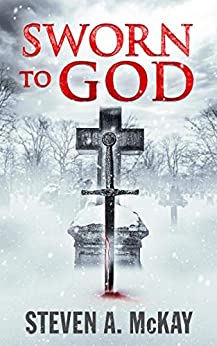




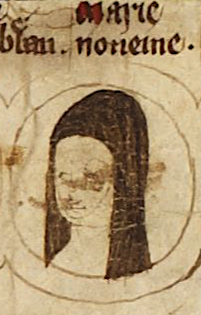
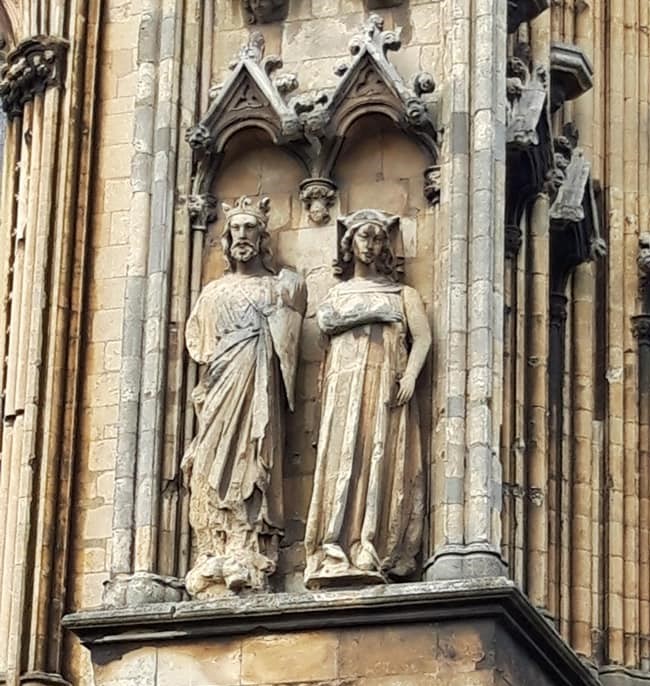
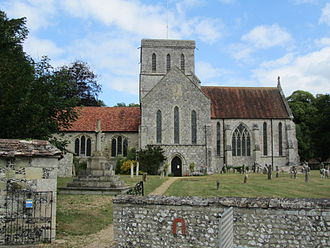
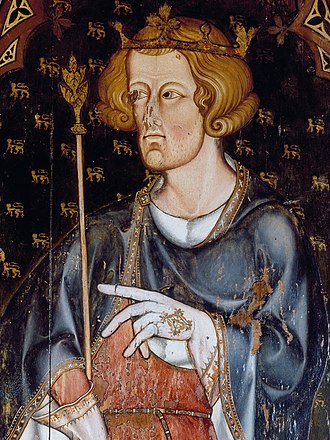
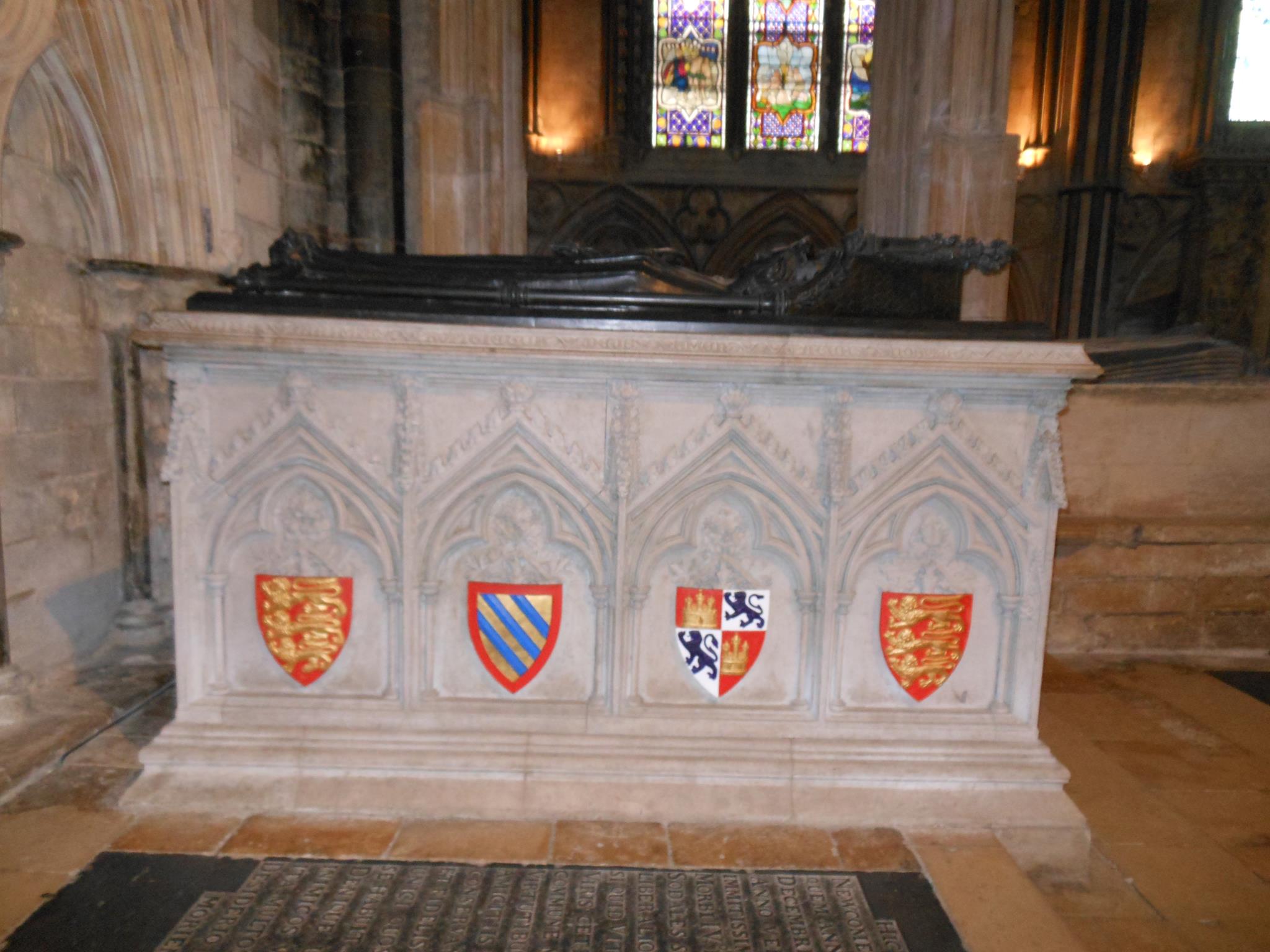
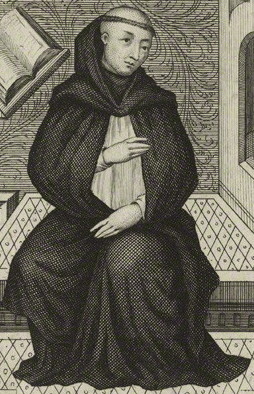
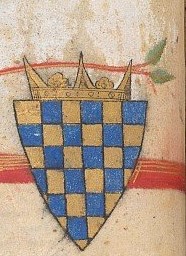

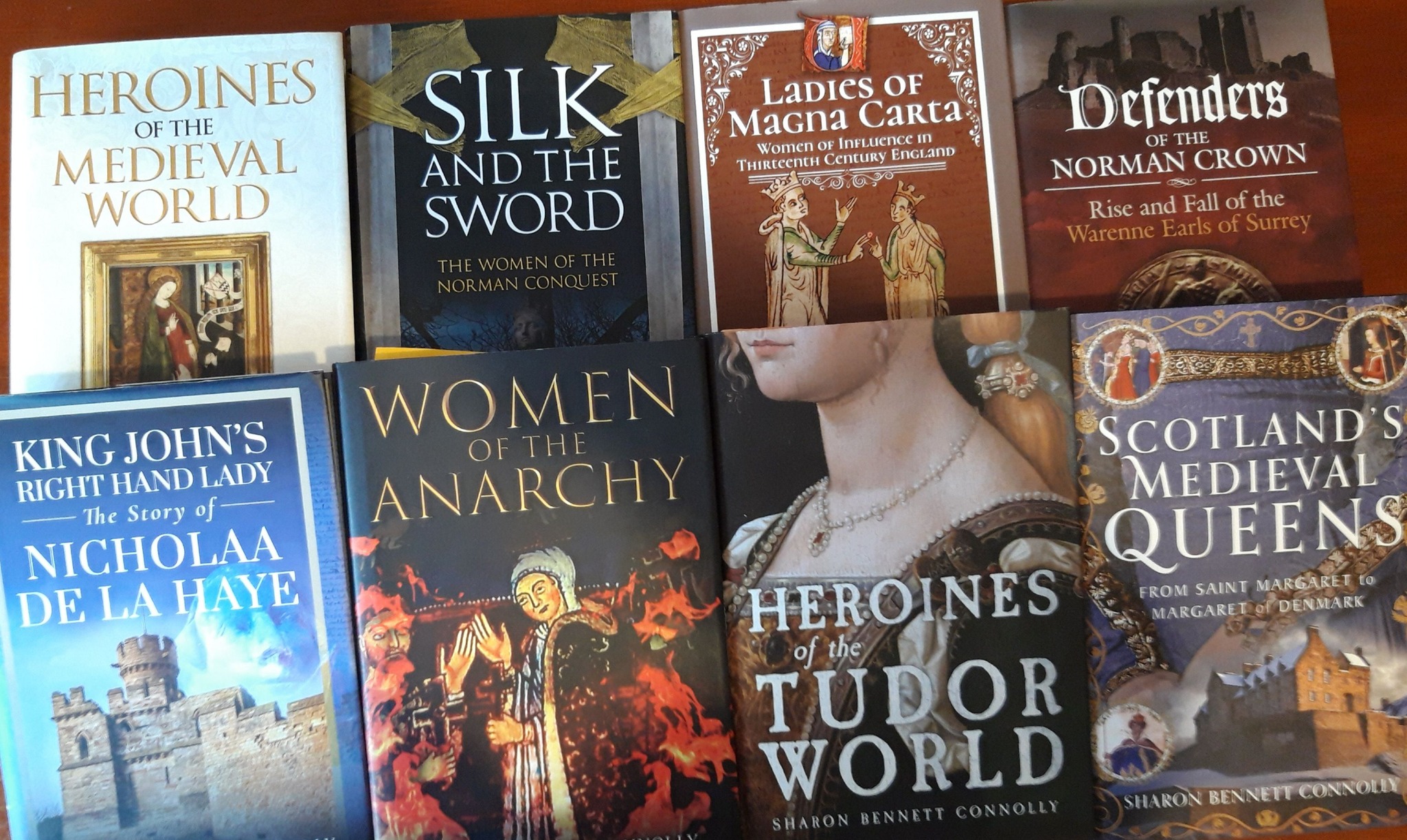

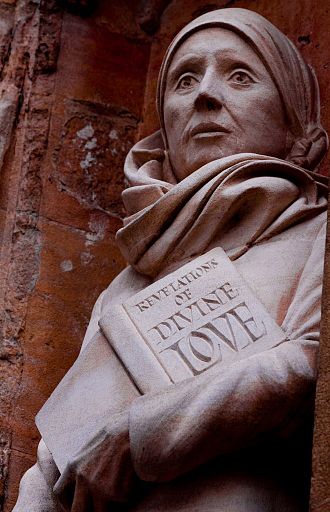
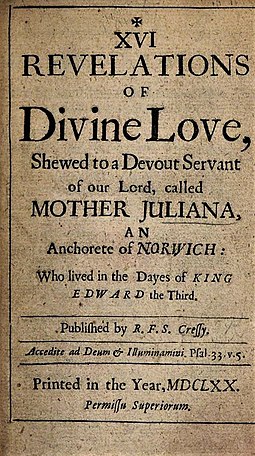
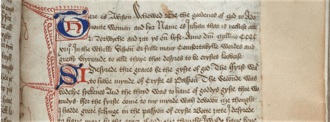
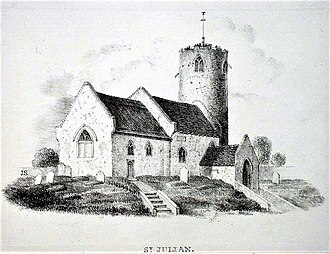
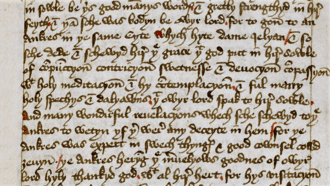
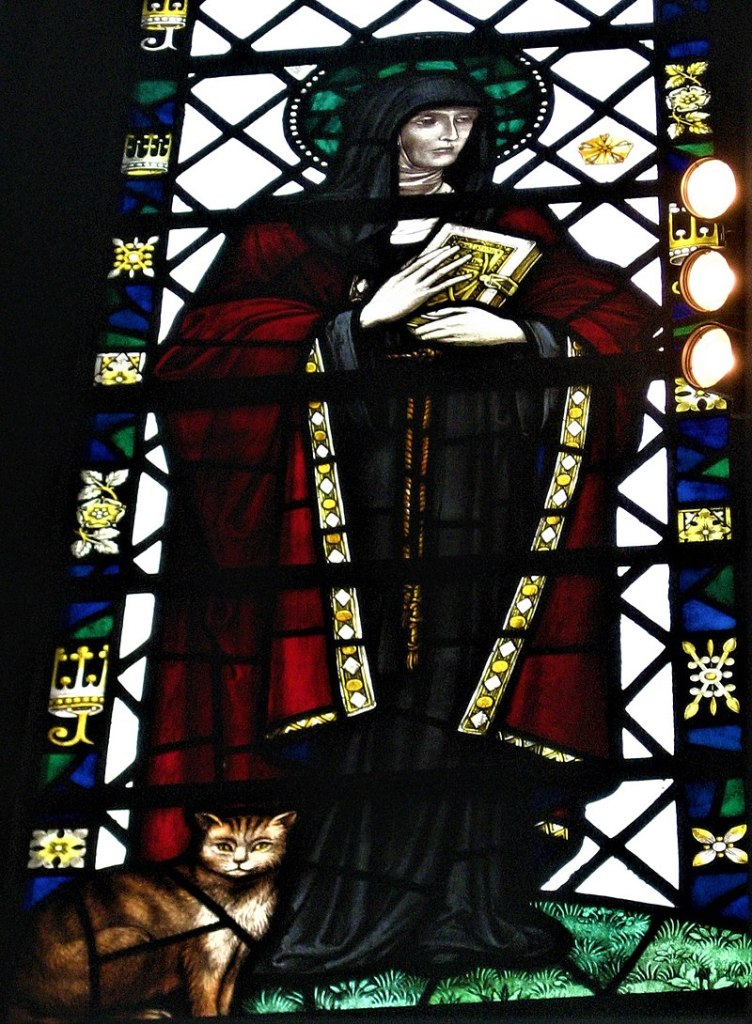
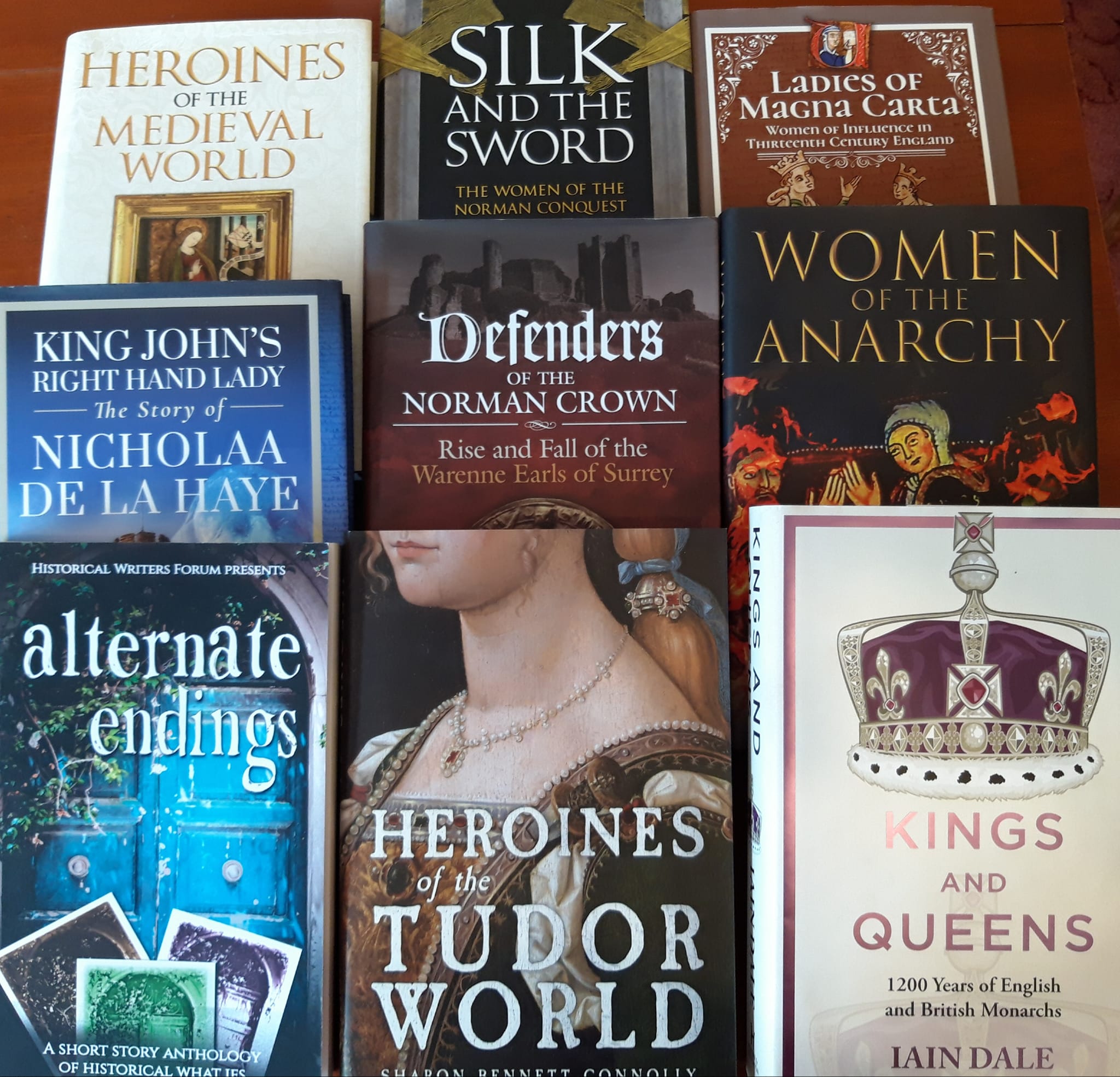

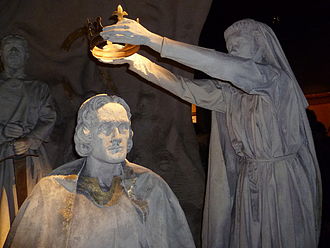
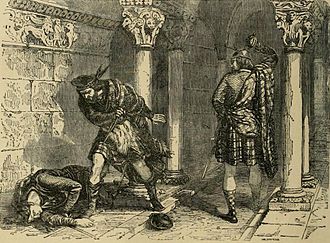
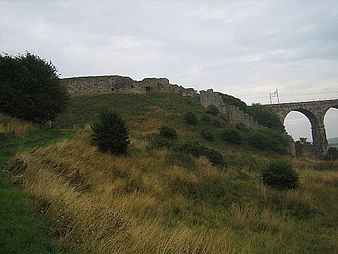
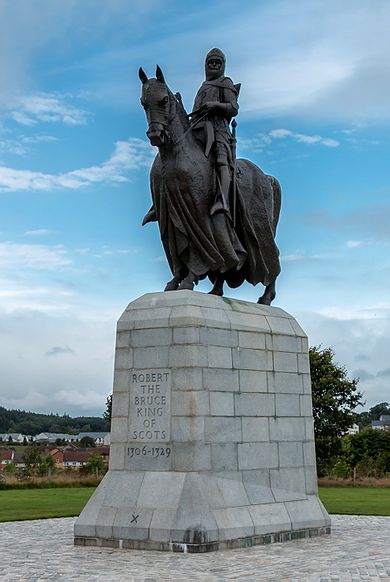
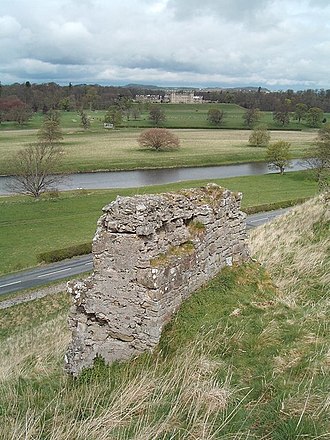
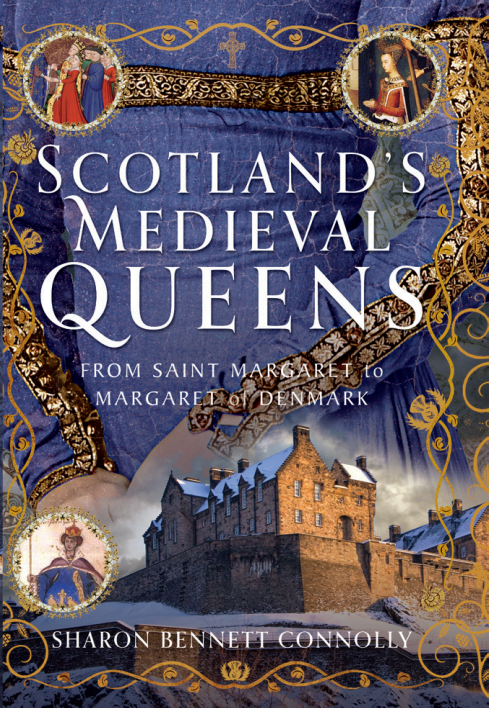

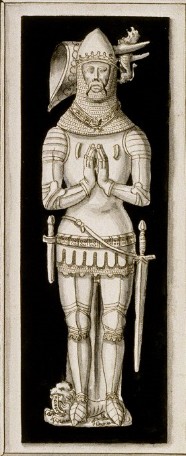
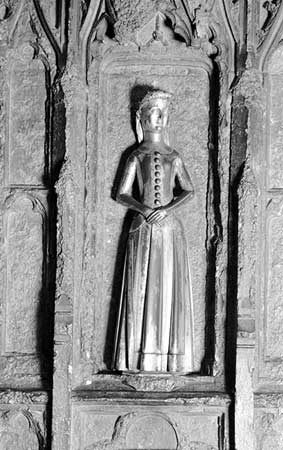


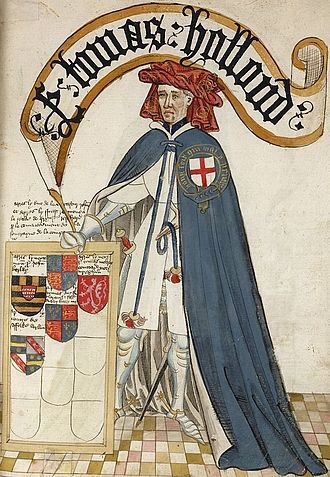
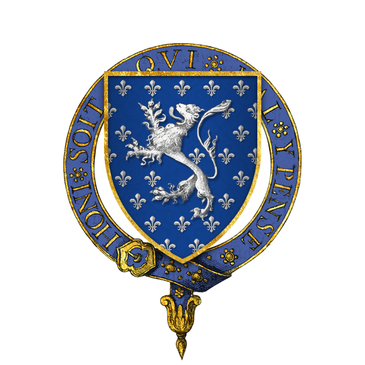


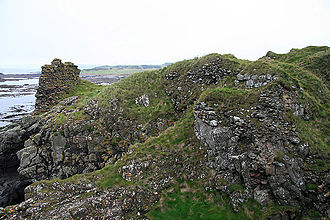





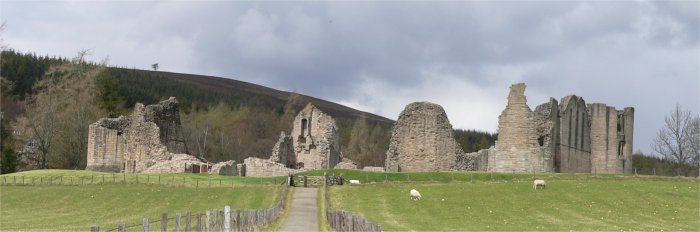

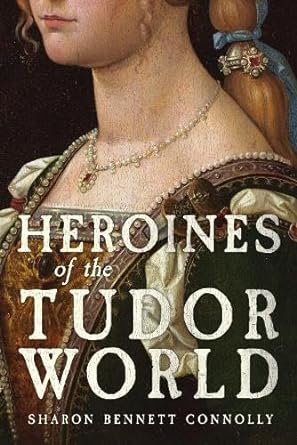

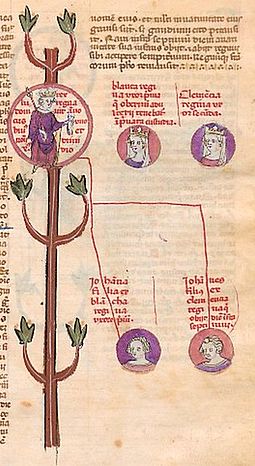
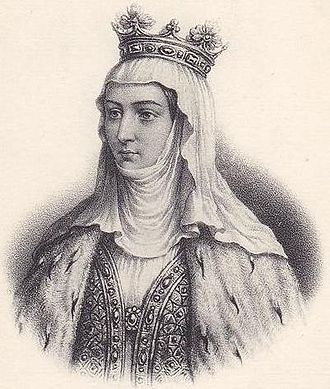


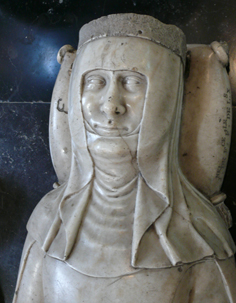

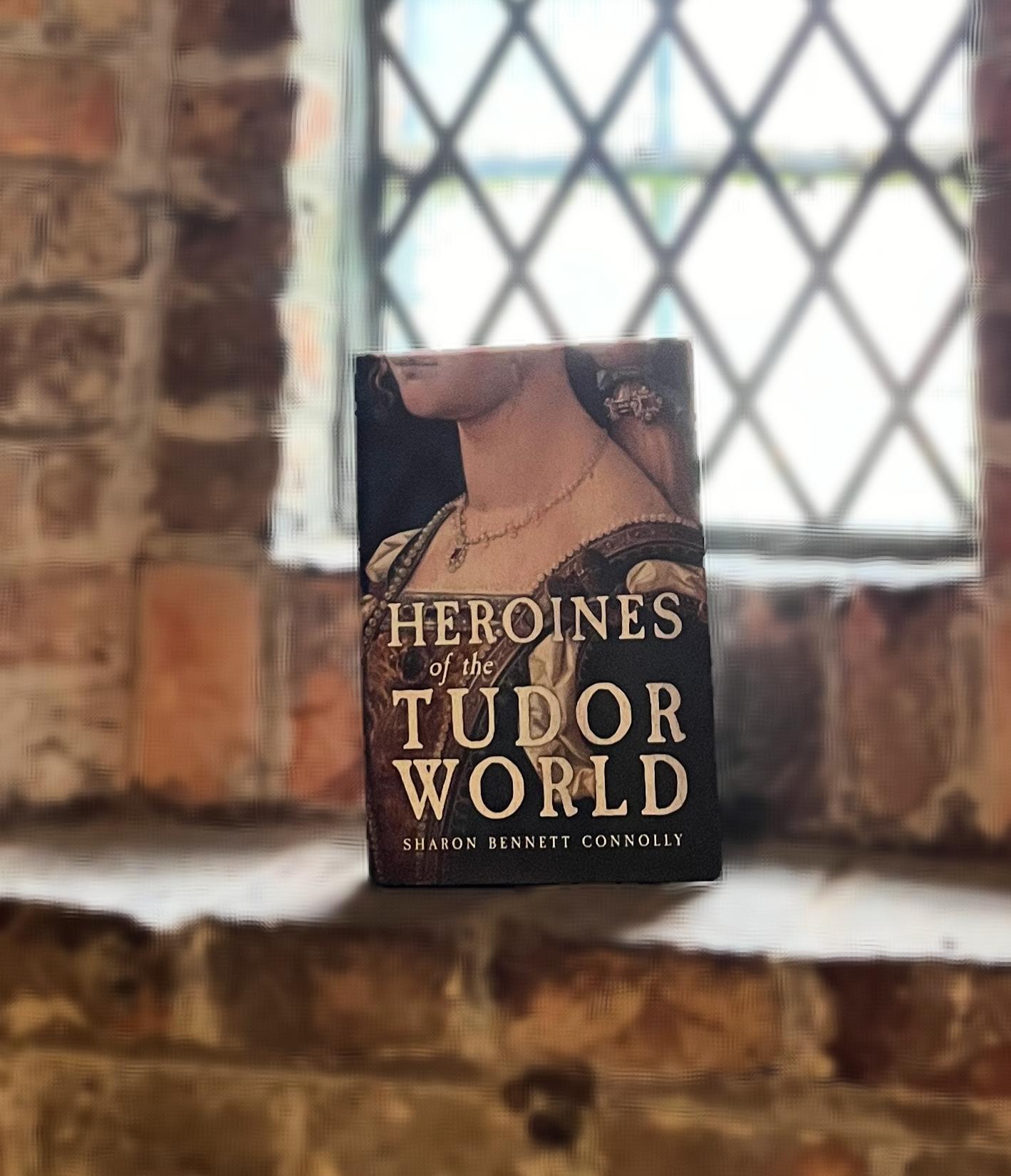

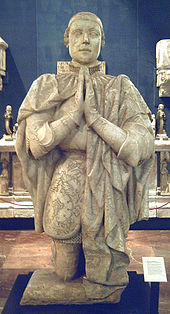
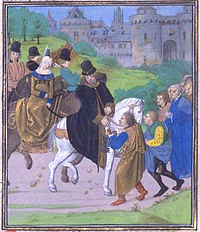

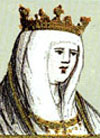
 History... the interesting bits!