Guest Post: Empresses, Saints and Female-Kings: The Four Great-Granddaughters of King Ladislaus the Elbow-High by Katarzyna Ogrodnik-Fujcik

Today it is a pleasure to welcome my good friend, Kasia Ogrodnik to History…the Interesting Bits with a little bit of Polish history for us. I have been wanting to tell the story of King Jadwiga since writing about her in Heroines of the Medieval World. But Kasia is far better qualified to write about her compatriot, Poland’s famous female king and saint, and Jadwiga’s influential female relatives.

So, over to Kasia…

Empresses, Saints and Female-Kings: The Four Great-Granddaughters of King Ladislaus the Elbow-High

Charles IV, King of Bohemia and Holy Roman Emperor and Anna of Schweidnitz [Anna Świdnicka], c. 1357, Chapel of St. Katherine, Karlstejn

The night of 19 May 1365 saw a young girl leaving Pisa on horseback. With her hair loose, clad only in her nightgown she was galloping to safety after fire broke out in Palazzo degli Anziani. Judging by her looks no one would have guessed this girl was in fact Holy Roman Empress and Queen of Bohemia. 

Anna of Schweidnitz, Silesia (today Poland), was the only child of Duke Henry II, the grandson of King Ladislaus the Elbow-High of Cracow (Poland). Upon her father’s death she was placed under the care of his elder brother, her uncle, Bolko II the Small. The ruler of the small, but politically important duchy, Bolko was the last independent Silesian Piast. Since Charles IV of Luxembourg intended to annex the entirety of Silesia to the Kingdom of Bohemia, Bolko’s duchy, being the only missing part, was crucial to his plans. To secure the Schweidnitz inheritance Charles married Anna and this is how her journey began. Of course, she was not the only great-granddaughter of King Ladislaus to make an illustrious career. His three other great-granddaughters were to leave their marks on the world, too, and indelible ones. Two of them were to be crowned ”kings” and one proclaimed  saint. 

Anna of Schweidnitz [Anna Świdnicka], bust in St Vitus Cathedral, Prague, c. 1370

Anna of Schweidnitz (b.1339), Queen of Bohemia and Holy Roman Empress, was Charles IV of Luxembourg’s third wife. Initially she was betrothed to his son, Wenceslaus, but the boy died while still very young. His mother, Charles’s second wife died too shortly afterwards. To secure the Schweidnitz succession Charles decided to marry his late son’s fiancee himself. Anna was raised and educated at the splendid court of Queen Elizabeth of Poland (her late father’s aunt) at Buda, where she was sent by her uncle and official guardian, Duke Bolko II the Small. It was there where she and Charles were married in the closing days of  May 1353. Shortly afterwards the newlyweds returned to Prague and paid a visit to Schweidnitz, where the succession treaty was signed according to which the duchy was to be inherited by Anna and her children by Charles upon the death of her uncle Bolko and his wife Agnes of Habsburg. On 28 July 1353, Anna was crowned Queen of Bohemia and the following year, on 9 February 1354, Queen of Germany. The year 1355 saw the royal couple in Italy, where on Easter Sunday (5 April 1355) they were crowned Holy Roman Emperor and Holy Roman Empress in a splendid ceremony in the Basilica of Saint Peter, Rome.

Anna and Charles’s first child, a daughter, Elizabeth, was born in 1358. Charles was overjoyed, but Anna felt she failed her husband (which we know thanks to her surviving correspondence with Petrarch). A much awaited son and heir arrived three years later, named Wenceslaus, traditional name of the rulers of Bohemia. He was to become Charles’ beloved and favoured child. Anna died on 11 July 1362, in childbirth, aged 23. The child did not survive, either, and they were buried together in St Vitus Cathedral, Prague. Anna was remembered for her personal charm and sweet nature. Not only did she receive a bluestocking education, but she was also considered one of the style icons of her time, her reputation as a great beauty resting on the surviving images created during her lifetime and shortly after her untimely death. Tradition has it that of Charles’ four wives it was Anna he loved most. Stricken with grief upon her passing, he did not remarry until a political situation forced him to. His fourth wife was Anna’s kin, Elizabeth of Pomerania, also great-granddaughter of King Ladislaus the Elbow-High. 

Elizabeth of Pomerania (Eliška Pomořanská, Elżbieta Pomorska)

 
Reliquary Shrine of Elizabeth of Poland, Queen of Hungary, Maria and Jadwiga’s paternal grandmother, attributed to Jean de Touyl, ca. 1350 . Metropolitan Museum of Art, New York

Elizabeth was a daughter of Duke Bogusław the Great of Pomerania and Princess Elżbieta of Poland. In 1362 her maternal grandfather, King Casimir the Great of Poland together with his nephew, Louis the Great of Hungary, dukes of Austria and Bavaria formed a coalition against Charles IV of Luxembourg. The opposing parties found themselves on the verge of war, which did not break out, however, perhaps due to Anne of Schweidnitz’s untimely death. The rulers came to terms instead and a marriage was forged to consolidate their agreement. Charles was to marry Elizabeth. He was thrice her age, shorter than her and not very attractive. She was described as beautiful, full of life, and as fit as a fiddle. Stories had it that she could break horseshoes with her own hands. She was an avid horse rider and hunter. 

The wedding ceremony was celebrated in Kraków on 21 May 1363. Afterwards the couple travelled together to Prague where Elizabeth was crowned Queen of Bohemia. Five years later her imperial coronation at Rome followed. Despite the age difference she and Charles got along well, being married for fifteen years. Their union produced six children, four of whom were to reach adulthood. Charles and Elizabeth’s eldest child, a daughter Anne, was to marry Richard II and become Queen Consort of England. Their son, Sigismund was to be crowned King of Bohemia, Hungary and Holy Roman Emperor. Charles IV died in 1378. Elizabeth herself was to outlive her husband for fifteen years. She died in 1393 and like his three wives before her, she was buried in St Vitus Cathedral, Prague.

Mária [Mary] of Anjou, King of Hungary

The coats of arms of Hungary and Poland, c. 1340. Treasury of Aachen Cathedral, Germany

Mary was one of the three daughters of Louis the Great of Hungary and his second wife, Elizabeth of Bosnia. In 1379, Mary’s elder sister Catherine died, leaving her and her sister Jadwiga Louis’s sole surviving children. The matter of Polish succession had been on the agenda long before Mary was born. Upon King Casimir the Great’s death in 1370 his nephew, Mary’s father, Louis was crowned king of Poland. Initially it was Mary, who was to succeed him as the king of Poland, but the events took a different turn, and in the end she was replaced by her younger sister, Jadwiga [Hedwig]. 

Mary was crowned “king” of Hungary on 17 September 1382, seven days after her father’s death. However, the idea of a female monarch was not popular among the Hungarian nobility. Many nobles considered Charles III of Naples, Mary’s distant cousin, the lawful heir. 

Charles landed in Dalmatia in September 1385. In October Mary was married to Sigismund of Luxembourg, however, this  could not prevent Charles from entering the capital.  Mary was forced to renounce the throne and Charles’s coronation took place on 31 December 1385. He did not rule for long. Two months later, in February 1386, he was murdered, most probably at the instigation of Mary’s mother. Mary was restored, but in July she and her mother were captured by the dead king’s supporters. Famed for her beauty, but not for her political decisions, Mary’s mother met a violent end. After imprisonment by her opponents in Novigrad castle, she was found guilty of the murder of Charles III of Naples and strangled to death before her daughter’s own eyes, her body put on display, hanging on a rope from the castle walls. Mary survived and was rescued by her husband, Sigismund, who was crowned king of Hungary afterwards. Mary officially remained his co-ruler, but had no real influence on the government. She died on 17 May 1395 after falling from a horse during a hunting accident. She was pregnant at the time. Her prematurely born son did not survive either. 

Jadwiga [Hedwig] of Anjou, king and patron saint of Poland

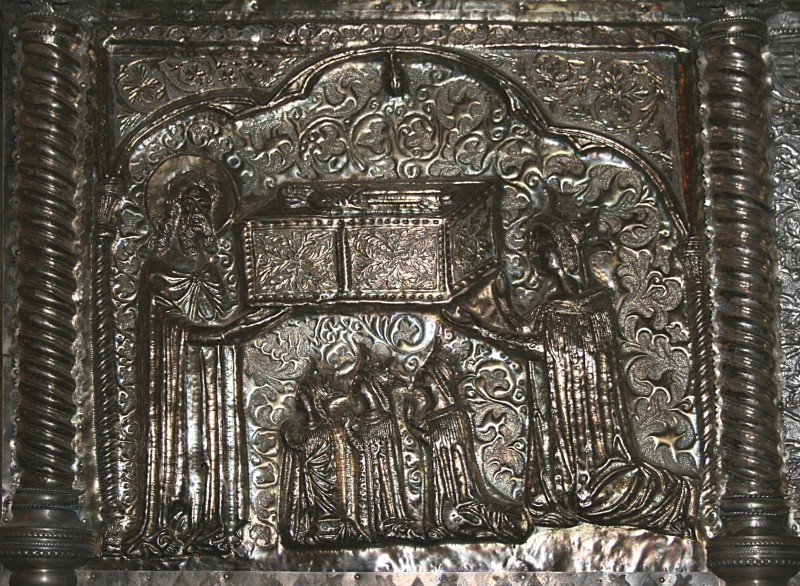
Jadwiga and Maria, their mother and their sister Catherine as depicted on the St Simeon’s casket, Zadar, Croatia

Mary’s younger sister, Hedwig was born on 18 February 1374, being the youngest of the three daughters of Louis the Great of Hungary and Elizabeth of Bosnia. 

Both Mary and Jadwiga received a bluestocking education, Jadwiga both at the cultivated court of Hungary and in Vienna, at the court of her future father-in-law. Not only could Jadwiga read and write, but she also spoke fluent Latin and German. As the king of Poland she owned a big library and always  showed an active and generous support of scholars and learning institutions.

Since Polish nobles did not like the idea of Mary’s consort, Sigismund of Bohemia, becoming de facto their king, they appealed to Elizabeth of Bosnia, the dowager queen, who had assumed regency, asking to send the younger of her two surviving daughters to Kraków. Elizabeth agreed and absolved the Polish nobles from the oath of loyalty they had pledged to Mary. 

Jadwiga’s coronation took place on 16 October 1384 in Wawel Cathedral, Kraków, where she was crowned ”king” of Poland. On 18 January 1385 the Lithuanian delegation came to the capital and a meeting was held with the representatives of the Polish nobility. Jadwiga was to marry the ruler of pagan Lithuania, Jogaila. In the opening days of 1386, Jadwiga publicly called off her engagement to Wilhelm Habsburg and married newly baptised Jogaila, who was to come down in history under his new name, Władysław Jagiełło [Ladislaus Jagiellon]. At the time of their wedding she was twelve, he was thirty-five. Władyslaw was crowned king on 4 March 1386. 

Despite her young age Jadwiga continued to play an active role in the administration and politics of her realm. She conducted the negotiations with the knights of the Teutonic Order, but also on the Hungarian front. Jadwiga conferred with her sister Mary on numerous occasions. Their meetings were held both in Hungary and in Lesser Poland. She also intervened in Lithuania, where she peacefully resolved dynastic disputes between the ruling fractions.

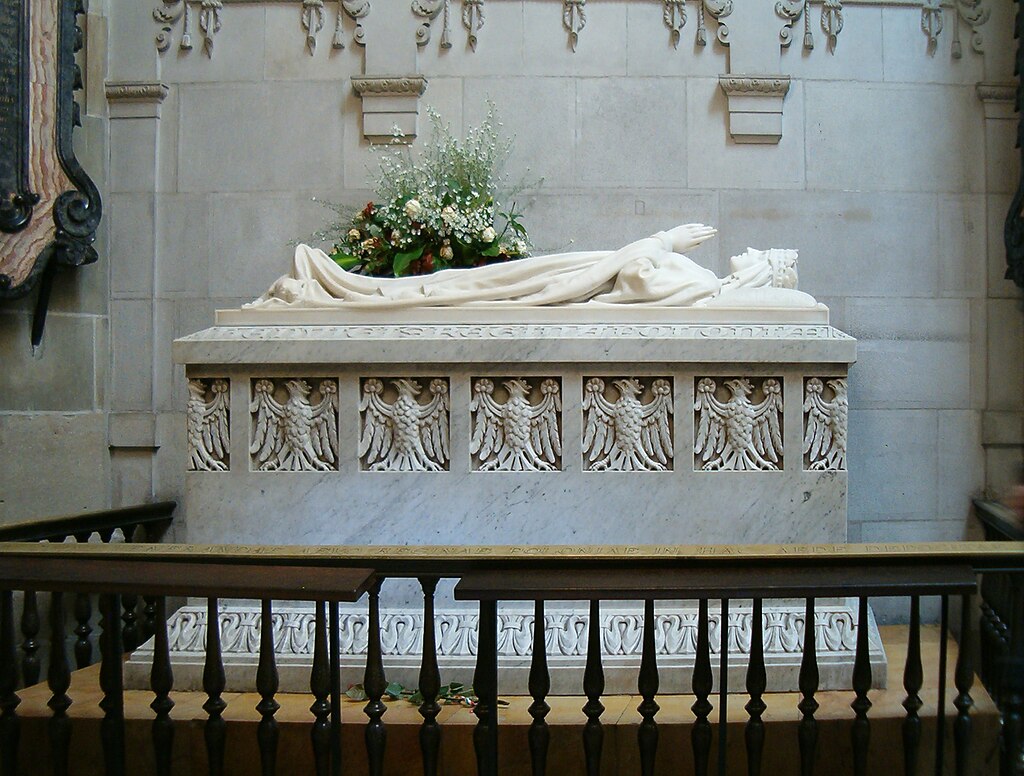
Jadwiga’s tomb effigy from 1902 by Antoni Madeyski, Wawel Cathedral, Kraków, Poland. The queen’s earthly remains were transferred here from her original resting place at the high altar in 1949 and stayed here till 1987. Then they were transferred to the altar with the Black Crucifix

She was famed for her charity and showing great care to the poor and the ill. Her active and generous support of scholars and learning institutions did not waver over the years. In her last will she donated all her jewelry, her rich dresses and other valuable objects to the Kraków Academy (the first Polish university founded by Kazimierz Wielki), now the Jagiellonian University. Additionally, she founded a dormitory for Polish students at the University of Prague. 

Jadwiga died from complications in childbirth on 17 July 1399. She was twenty-five at the time. Her daughter did not survive, either. Almost immediately after her death, Jadwiga’s tomb became the focus of miracles and the destination of pilgrimages. Her cult flourished, with her canonization first mentioned during the funeral ceremony. However, it was to take seven centuries before she was actually canonised by Pope John Paul II. Ever since she has been recognised as patron saint of Poland and considered Polish national hero. 

About the author:

Katarzyna Ogrodnik-Fujcik specializes in British literature and history, her area of expertise being the first Plantagenets (the Angevins). She lives in Poland. She writes for different magazines and websites on Polish and European Middle Ages. She runs a blog dedicated to Henry the Young King. She consulted a BBC documentary on William Marshal.

*

My Books:

Signed, dedicated copies of all my books are available through my online store.

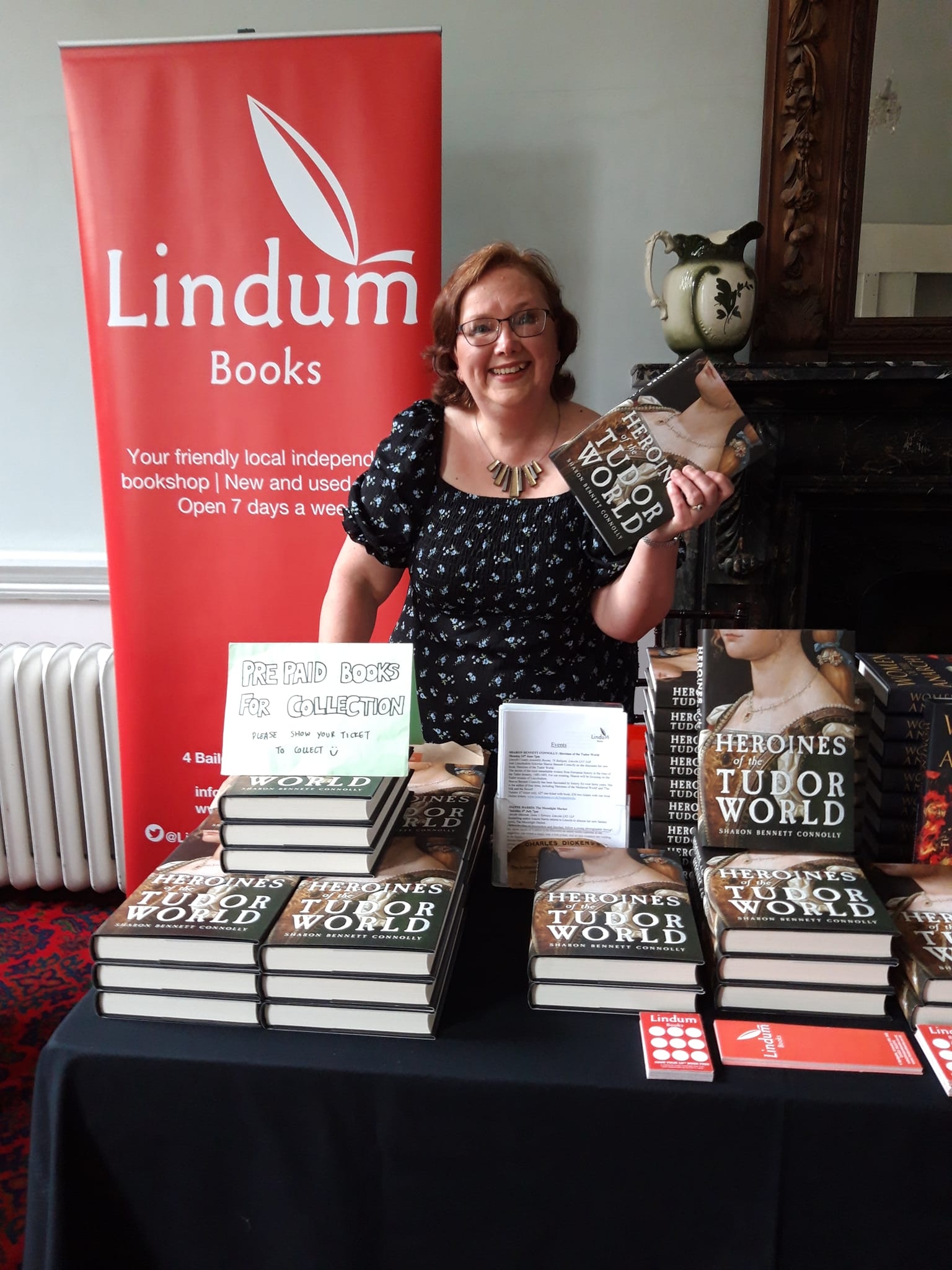
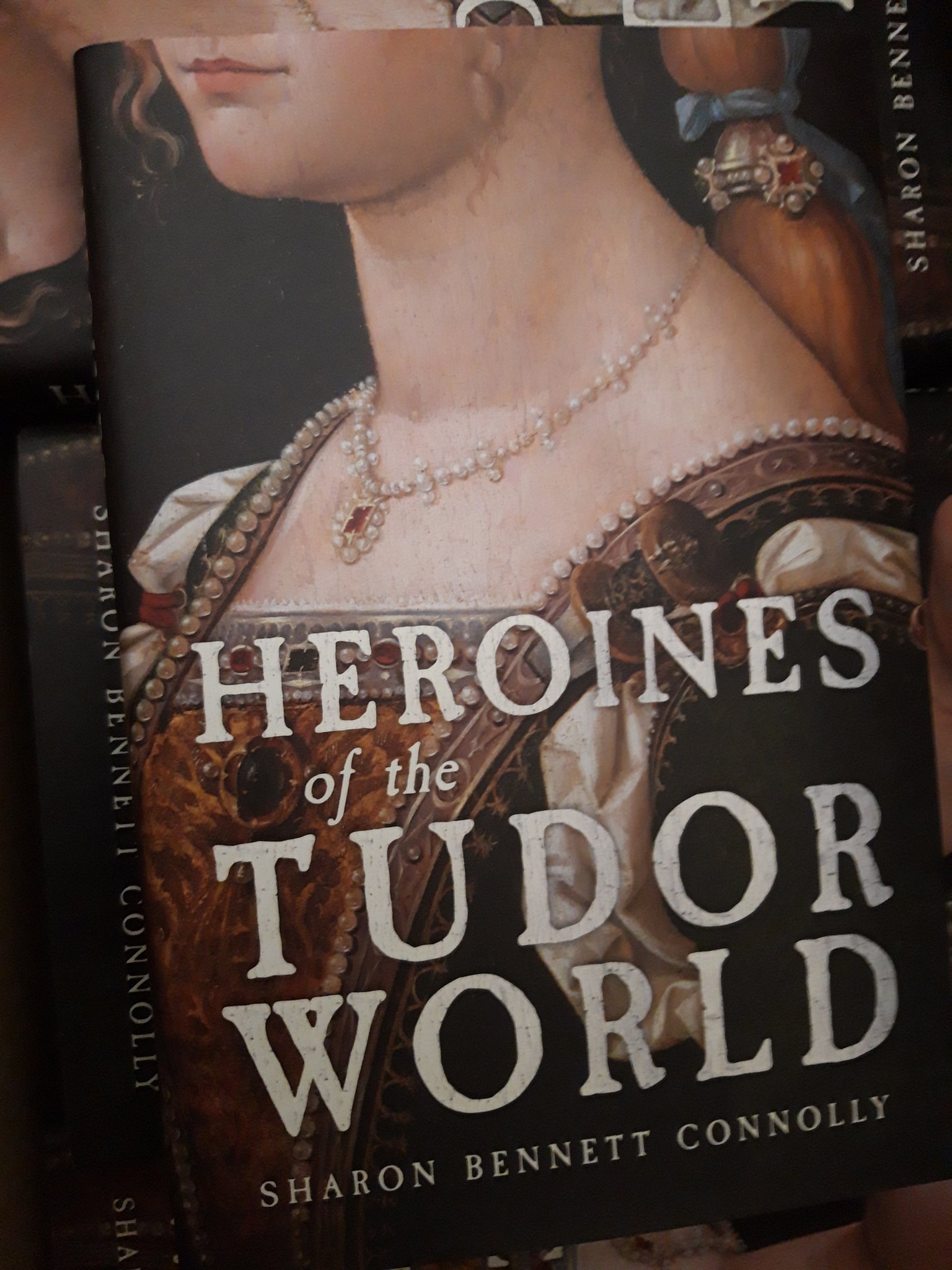
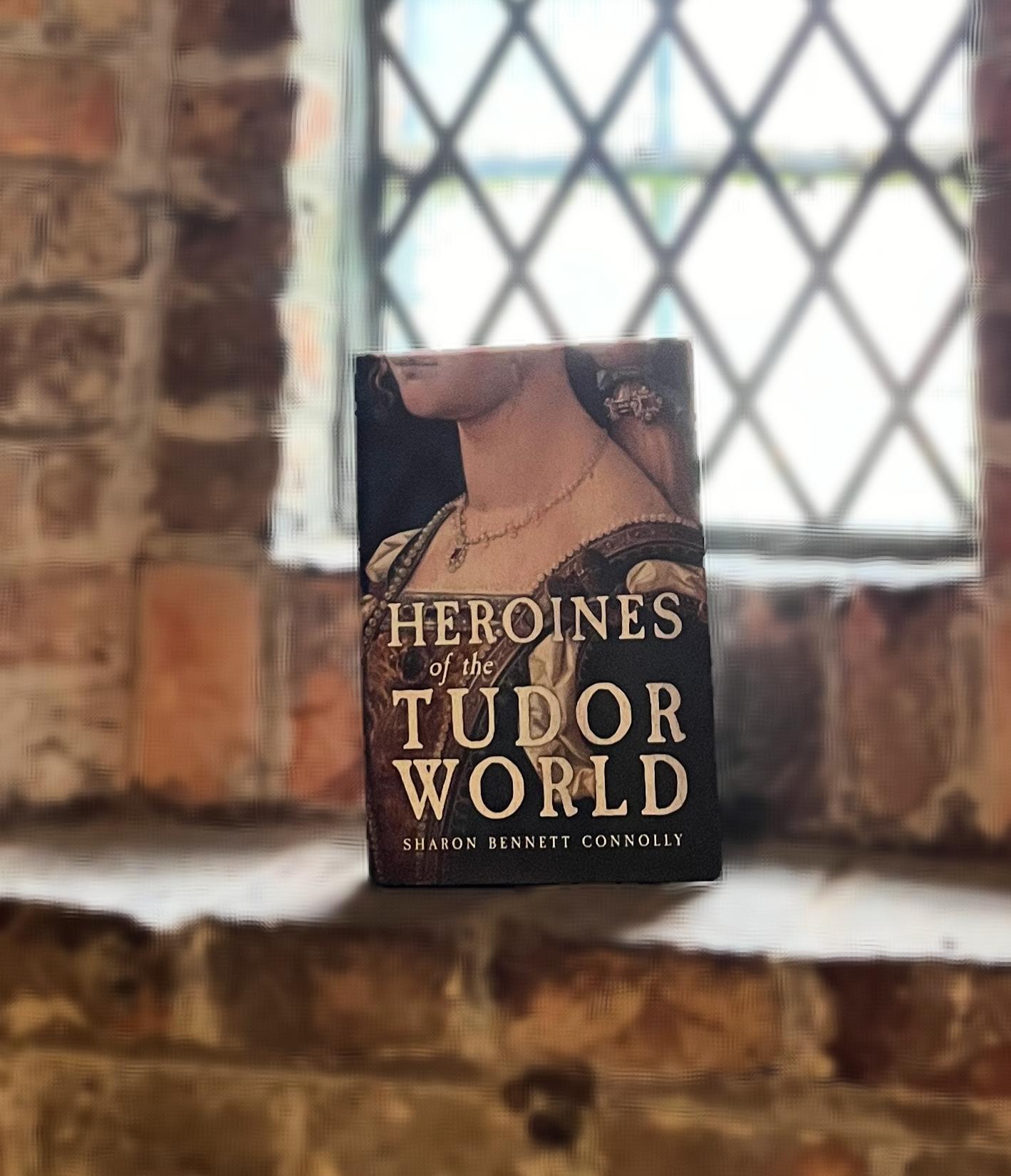
OUT NOW! Heroines of the Tudor World

Heroines of the Tudor World tells the stories of the most remarkable women from European history in the time of the Tudor dynasty, 1485-1603. These are the women who ruled, the women who founded dynasties, the women who fought for religious freedom, their families and love. These are the women who made a difference, who influenced countries, kings and the Reformation. In the era dominated by the Renaissance and Reformation, Heroines of the Tudor World examines the threats and challenges faced by the women of the era, and how they overcame them. From writers to regents, from nuns to queens, Heroines of the Tudor World shines the spotlight on the women helped to shape Early Modern Europe.

Heroines of the Tudor World is now available for pre-order from Amberley Publishing and Amazon UK.

Coming 30 January 2025: Scotland’s Medieval Queens
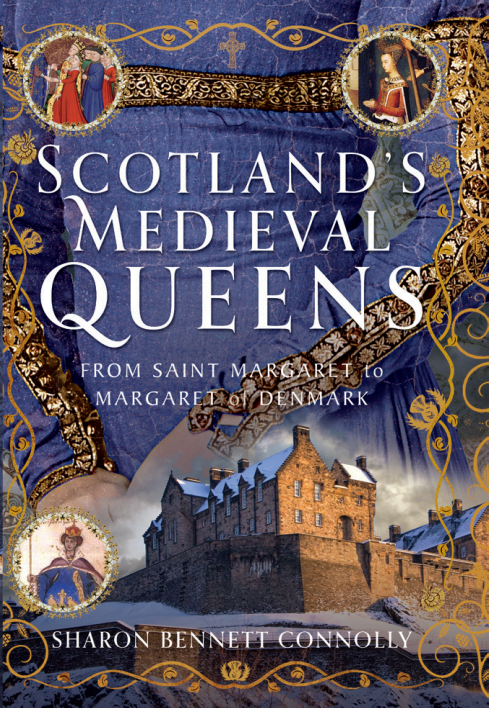
Scotland’s history is dramatic, violent and bloody. Being England’s northern neighbour has never been easy. Scotland’s queens have had to deal with war, murder, imprisonment, political rivalries and open betrayal. They have loved and lost, raised kings and queens, ruled and died for Scotland. From St Margaret, who became one of the patron saints of Scotland, to Elizabeth de Burgh and the dramatic story of the Scottish Wars of Independence, to the love story and tragedy of Joan Beaufort, to Margaret of Denmark and the dawn of the Renaissance, Scotland’s Medieval Queens have seen it all. This is the story of Scotland through their eyes.

Available for pre-order now.

Also by Sharon Bennett Connolly:
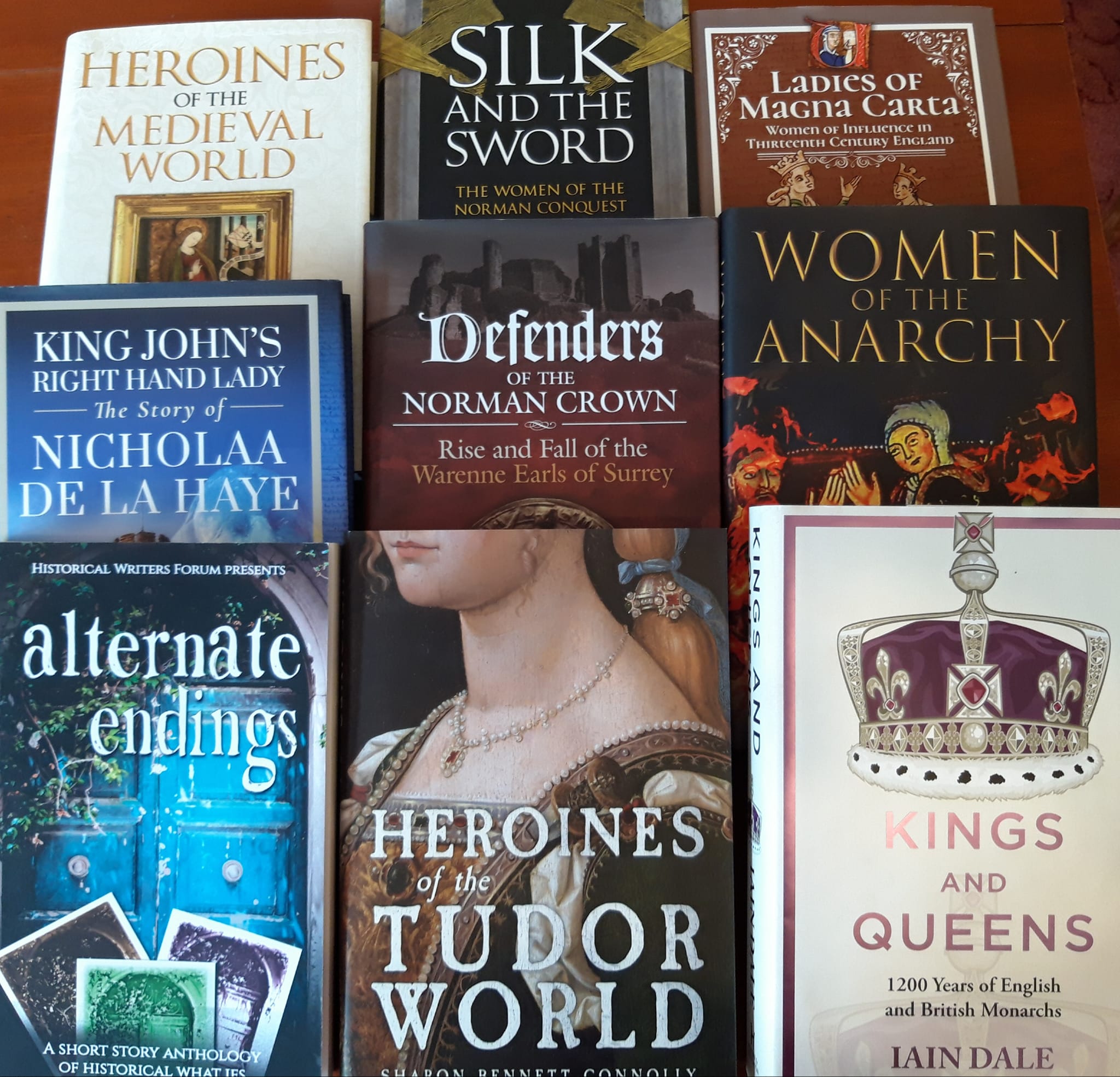
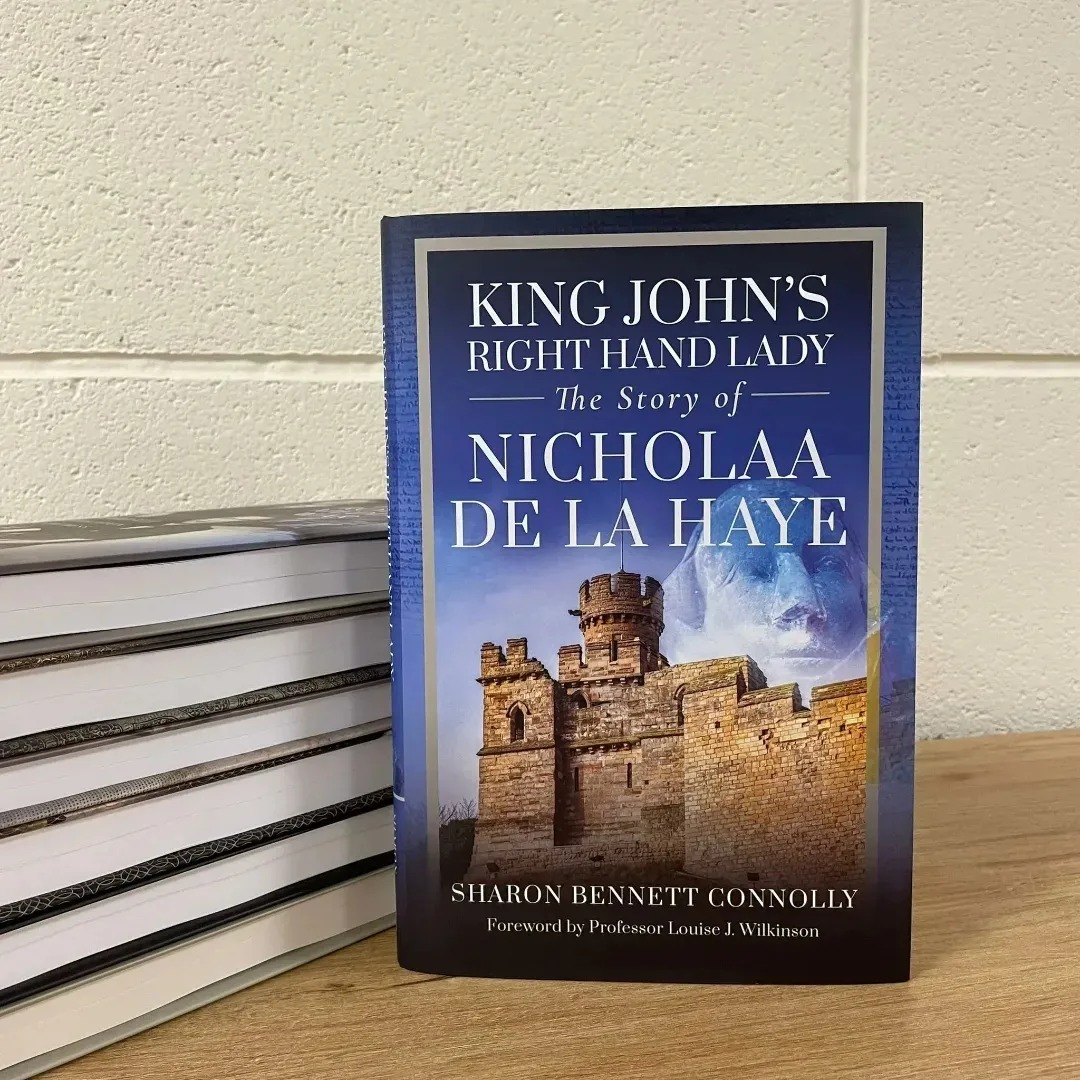
Women of the Anarchy demonstrates how Empress Matilda and Matilda of Boulogne, unable to wield a sword themselves, were prime movers in this time of conflict and lawlessness. It shows how their strengths, weaknesses, and personal ambitions swung the fortunes of war one way – and then the other. Available from Bookshop.orgAmberley Publishing and Amazon UKKing John’s Right-Hand Lady: The Story of Nicholaa de la Haye is the story of a truly remarkable lady, the hereditary constable of Lincoln Castle and the first woman in England to be appointed sheriff in her own right. Available from all good bookshops Pen & Sword Booksbookshop.org and AmazonDefenders of the Norman Crown: The Rise and Fall of the Warenne Earls of Surrey tells the fascinating story of the Warenne dynasty, from its origins in Normandy, through the Conquest, Magna Carta, the wars and marriages that led to its ultimate demise in the reign of Edward III. Available from Pen & Sword BooksAmazon in the UK and US, and Bookshop.org

Ladies of Magna Carta: Women of Influence in Thirteenth Century England looks into the relationships of the various noble families of the 13th century, and how they were affected by the Barons’ Wars, Magna Carta and its aftermath; the bonds that were formed and those that were broken. It is now available in paperback and hardback from Pen & SwordAmazon, and Bookshop.orgHeroines of the Medieval World tells the stories of some of the most remarkable women from Medieval history, from Eleanor of Aquitaine to Julian of Norwich. Available now from Amberley Publishing and Amazon, and Bookshop.orgSilk and the Sword: The Women of the Norman Conquest traces the fortunes of the women who had a significant role to play in the momentous events of 1066. Available now from Amazon,  Amberley Publishing, and Bookshop.org.

Alternate Endings: An anthology of historical fiction short stories including Long Live the King… which is my take what might have happened had King John not died in October 1216. Available in paperback and kindle from Amazon.

Podcast:
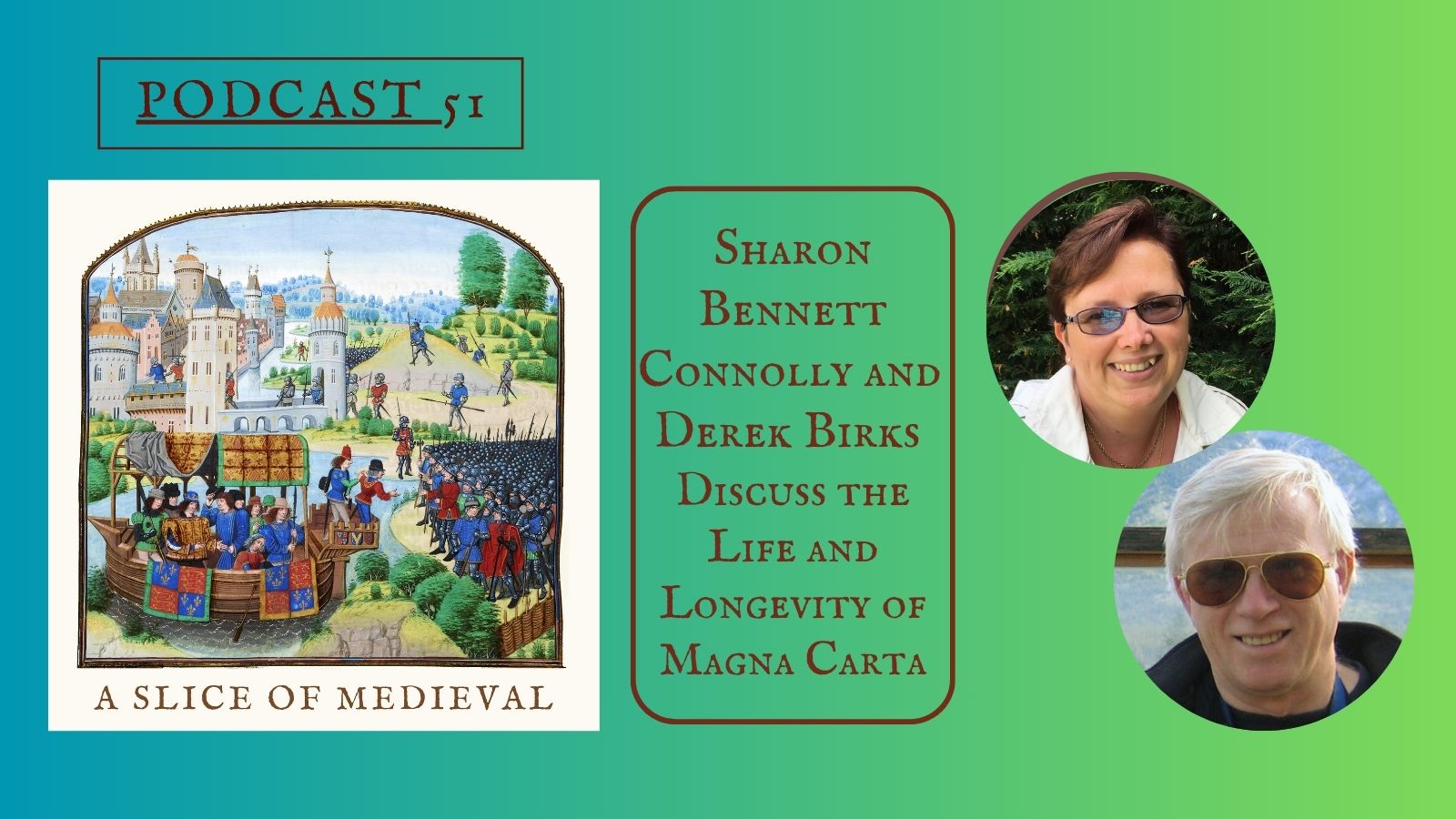
Have a listen to the A Slice of Medieval podcast, which I co-host with Historical fiction novelist Derek Birks. Derek and I welcome guests, such as Bernard Cornwell, and discuss a wide range of topics in medieval history, from significant events to the personalities involved.

*

Don’t forget! Signed and dedicated copies of all my books are available through my online store.

For forthcoming online and in-person talks, please check out my Events Page.

You can be the first to read new articles by clicking the ‘Follow’ button, liking our Facebook page or joining me on TwitterThreads and Instagram.

*

©2024 Sharon Bennett Connolly FRHistS and Katarzyna Ogrodnik-Fujcik

My Latest News

Well, it is September and we are already into the last third of the year. Wow! 2024 has gone quickly and I would like to thank all my readers for your continuing support. It has been an amazing and hectic year, so far.

I even made the national papers in the UK! I was interviewed for an article on the new Amazon Prime tv show, My Lady Jane for The Mirror, separating the facts from the fiction. You can still read the article here.

Book News

I don’t think I would ever choose to put 2 books out within 6 months of each other. That was my publisher’s choice and I did manage to roll with it, thankfully. I had a fabulous book launch for Women of the Anarchy at Oxford Castle in February and another amazing launch for Heroines of the Tudor World in Lincoln in June. Both books have been incredibly well received and had some amazing reviews.

And for those of you in the USA, Canada and Australia, the wait is almost over, Heroines of the Tudor World will be released on 10 September.

Praise for Heroines of the Tudor World:

“Bennett Connolly has an easy, conversation style of writing which welcomes you from the opening pages and draws you into her story. This is her seventh book and her craft is polished and professional.”

“Bennett Connolly’s way with words shows us a picture of that world, colourful, vibrant, and violent.”

“This book should be a staple for those who wish to understand the changing roles of women in society.”

“Sharon Bennett Connolly writes engaging history and is obviously passionate about exploring the lives of women from all backgrounds and different periods of history. Her knowledge and expertise in women’s history really shines through, making this book an absolute joy to read.”

To order Heroines of the Tudor World, click here.

And I have new book news too!

Scotland’s Medieval Queens will by my 8th book and will be released in the UK on 30 January 2025. It is now available for pre-order. Here’s what it’s about:

Scotland’s history is dramatic, violent and bloody. Being England’s northern neighbour has never been easy. Scotland’s queens have had to deal with war, murder, imprisonment, political rivalries and open betrayal. They have loved and lost, raised kings and queens, ruled and died for Scotland. From St Margaret, who became one of the patron saints of Scotland, to Elizabeth de Burgh and the dramatic story of the Scottish Wars of Independence, to the love story and tragedy of Joan Beaufort, to Margaret of Denmark and the dawn of the Renaissance, Scotland’s Medieval Queens have seen it all.

This is the story of Scotland through their eyes.

I love Scottish History and am so proud of this book and cannot wait for you all to read it!

To pre-order Scotland’s Medieval Queens, click here!

Event News

September is rather a busy month for me, with 3 events in one week at the end of the month! So, here’s what’s coming up:

Saturday 7 September:

I shall be co-hosting a panel with Derek Birks at the Historical Novel Society Conference 2024. Held at Dartington Hall in Devon, a whole host of authors a book lovers will be gathering to talk about books. Derek and I have the pleasure of hosting 3 giants of Historical Fiction, Elizabeth Chadwick, David Gilman and Matthew Harffy, to discuss the highs and lows of Writing Medieval.

The in-person event is sold out, but there are still online tickets available here.

Saturday 14 September:

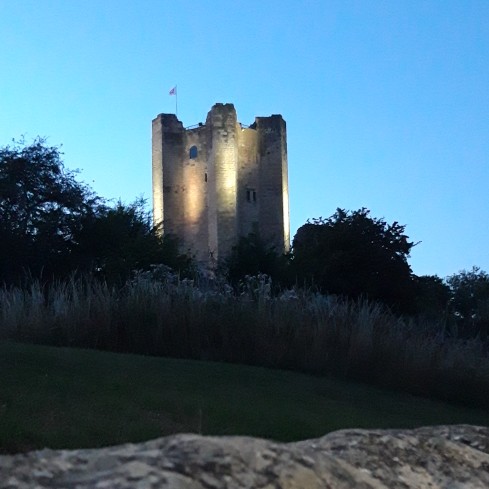
As part of Heritage Open Days in the UK, I shall be putting my tour guide hat back on and giving guided tours around my local – Conisbrough Castlehome of the Warennes and one of the most stunning medieval keeps in England. The ‘Storming Normans’ event will also include children’s’ activities and a medieval re-enactment from the fabulous team at Sudjorvik. And, as its a Heritage Open Day weekend, entry to the castle and access to the events and guided tours is FREE!

Doors open at 10am, with my Castle Tours taking place at 11am and 2pm.

So, do come along if you are in the area.

Saturday 21 September:

I will be in Manchester at a conference for History teachers, presenting a talk entitled ‘Where Were the Women,’ focusing on putting the women back into History.

It is billed as ‘A great day of free History CPD and geekery.’

Hosted by Teachers Talk History, it takes place at the Friends’ Meeting House, 6 Mount Street Manchester M2 5NS

If you are a History teacher in the UK, the event is free – you just need to book your place.

Thursday 26 September:

I will be in Leicester, presenting the annual Scarborough Lecture for the Leicestershire Archaeological and Historical Society.

Women and Magna Carta will look at those women who influenced Magna Carta, or lived through it – and those who used it to assert their rights. They include Matilda de Braose, Nicholaa de la Haye, Ela of Salisbury and Isabel d’Aubigny. 

The LAHS Scarborough Lecture is named after the late John Scarborough, Local Leicester man, who after joining LAHS at the age of 21 became a life-long member and supporter of the Society for over 45 years. He was particularly interested in the High Medieval Period.

No booking necessary. Entry to the talk is free of charge.

Doors open from 7.00pm, with tea and coffee available. The lecture will take place at 7.30pm, at the Rattray Lecture Theatre, University of Leicester, University Road, Leicester (LE1 7RH).

For more information, click here.

Sunday 29 September:

I will be back in Lincoln for the 2024 Lincoln Book Festival!

Presenting a talk, Lincolnshire Women in History, I will be looking at notable women from Lincoln – and Lincolnshire – in the Medieval and Tudor periods. Highlighting women including the formidable Nicholaa de la Haye, castellan of Lincoln Castle and Sheriff of Lincolnshire, Katherine Swynford, grandmother of the Tudor dynasty, Katherine Willoughby a Tudor duchess who encouraged the spread of Puritanism in Lincolnshire and Protestant martyr Anne Askew, one of only two women to be tortured in the Tower of London.

The talk is at 12 noon and will take place at the Lincoln Arts Centre: University of Lincoln, Brayford Pool Lincoln, LN6 7TS.

Tickets are £7 or £5 for those with a Live Pass, and can be booked online through the Lincoln Book Festival.

7 October:

Looking forward to returning the the Towton Battlefield Society for a talk on my hero, Nicholaa de la Haye. The Society meet at 7pm in Saxton Village Hall. They are very welcoming and only charge a small fee if you are not a member. So, if you want to come along, please do. I thoroughly enjoyed my visit there last year!

28 November:

I will be returning to Northampton, for the first time since my graduation there in 1992 and talking about the Women of the Anarchy, focusing on Empress Matilda and her rival, Queen Matilda of Boulogne and highlighting how these two women, unable to wield swords, were still highly influential in the battle for the crown between the Empress and King Stephen.

Tickets will be available from 1 November 2024 and can be booked online here.

Starting at7.30pm, the talk will be held at  Delapre Abbey Preservation Trust, Northampton, NN4 8AW.

And that will be all for my programme of talks in 2024. There will be more to come in 2025, with talks already booked at Wallingford, Dorking and Gainsborough Old Hall, among others. But more of that later!

Podcast News

The A Slice of Medieval podcast that I co-host with my friend and fellow author, Derek Birks, is now 2 years old and has gone from strength to strength. We recently recorded our 50th – yes, 50th – episode, which will be out at the end of the month, and just happens to be on one of my favourite topics. If you haven’t tuned in yet, do give us a listen. Derek and I welcome guests, such as Bernard Cornwell and Elizabeth Chadwick or take a deep dive into a wide range of topics in medieval history, from significant events to the personalities involved.

*

Have a great September! My very best wishes, Sharon xx

*

My Books

Signed, dedicated copies of all my books are available through my online bookshop.

OUT NOW! Heroines of the Tudor World

Heroines of the Tudor World tells the stories of the most remarkable women from European history in the time of the Tudor dynasty, 1485-1603. These are the women who ruled, the women who founded dynasties, the women who fought for religious freedom, their families and love. These are the women who made a difference, who influenced countries, kings and the Reformation. In the era dominated by the Renaissance and Reformation, Heroines of the Tudor World examines the threats and challenges faced by the women of the era, and how they overcame them. From writers to regents, from nuns to queens, Heroines of the Tudor World shines the spotlight on the women helped to shape Early Modern Europe.

Heroines of the Tudor World is now available for pre-order from Amberley Publishing and Amazon UK.

Also by Sharon Bennett Connolly:

Women of the Anarchy demonstrates how Empress Matilda and Matilda of Boulogne, unable to wield a sword themselves, were prime movers in this time of conflict and lawlessness. It shows how their strengths, weaknesses, and personal ambitions swung the fortunes of war one way – and then the other. Available from Bookshop.orgAmberley Publishing and Amazon UKKing John’s Right-Hand Lady: The Story of Nicholaa de la Haye is the story of a truly remarkable lady, the hereditary constable of Lincoln Castle and the first woman in England to be appointed sheriff in her own right. Available from all good bookshops Pen & Sword Booksbookshop.org and AmazonDefenders of the Norman Crown: The Rise and Fall of the Warenne Earls of Surrey tells the fascinating story of the Warenne dynasty, from its origins in Normandy, through the Conquest, Magna Carta, the wars and marriages that led to its ultimate demise in the reign of Edward III. Available from Pen & Sword BooksAmazon in the UK and US, and Bookshop.org

Ladies of Magna Carta: Women of Influence in Thirteenth Century England looks into the relationships of the various noble families of the 13th century, and how they were affected by the Barons’ Wars, Magna Carta and its aftermath; the bonds that were formed and those that were broken. It is now available in paperback and hardback from Pen & Sword,  Amazon, and Bookshop.orgHeroines of the Medieval World tells the stories of some of the most remarkable women from Medieval history, from Eleanor of Aquitaine to Julian of Norwich. Available now from Amberley Publishing and Amazon, and Bookshop.orgSilk and the Sword: The Women of the Norman Conquest traces the fortunes of the women who had a significant role to play in the momentous events of 1066. Available now from Amazon,  Amberley Publishing, and Bookshop.org.

Alternate Endings: An anthology of historical fiction short stories including Long Live the King… which is my take what might have happened had King John not died in October 1216. Available in paperback and kindle from Amazon.

*

Don’t forget! Signed and dedicated copies of all my books are available through my online bookshop.

For forthcoming online and in-person talks, please check out my Events Page.

You can be the first to read new articles by clicking the ‘Follow’ button, liking our Facebook page or joining me on Twitter and Instagram.

©2024 Sharon Bennett Connolly FRHistS
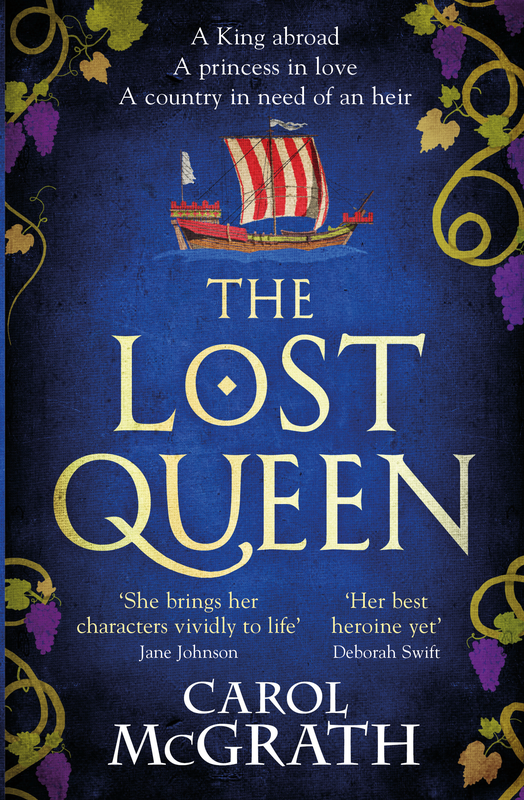
Book Corner: The Lost Queen by Carol McGrath

1191 and the Third Crusade is underway . . .

It is 1191 and King Richard the Lionheart is on crusade to pitch battle against Saladin and liberate the city of Jerusalem and her lands. His mother, the formidable Eleanor of Aquitaine and his promised bride, Princess Berengaria of Navarre, make a perilous journey over the Alps in midwinter. They are to rendezvous with Richard in the Sicilian port of Messina.

There are hazards along the way – vicious assassins, marauding pirates, violent storms and a shipwreck. Berengaria is as feisty as her foes and, surviving it all, she and Richard marry in Cyprus and continue to the Holy Land. England needs an heir. But first, Richard and his Queen must return home . . .

The Lost Queen is a thrilling medieval story of high adventure, survival, friendship and the enduring love of a Queen for her King.

At last! Attention is being paid to Berengaria of Navarre, wife and queen of King Richard I (the Lionheart. There is an excellent new biography out, by my good friend Dr Gabrielle Story, entitled Berengaria of Navarre: Queen of England and Lord of Le Mans. And now there is a wonderful novel, The Lost Queen by Carol McGrath.

Carol expertly weaves fact and fiction together to bring us am engaging, entertaining and informative story on the life of the one queen of England who is said to have never set foot in the country (actually, it seems that she did, but only after Richard’s death).

The Lost Queen follows Berengaria from the moment she is collected by her future mother-in-law, Eleanor of Aquitaine, on her journey through the Alps and Italy, to her first meeting with her husband Richard I. She is then drawn into the grand enterprise that was the Third Crusade, with the conquest of Cyprus along the way.

Food tasters sampled every dish before offering Queen Eleanor the best of everything, placing small morsels on her plate when she inclined her head in assent. Don Sancho never took any chances in case a dish was spoiled – or worse, might contain poison. Only once the Dowager and Don Sancho were served was Berengaria able to make selections for her own plate. As she ate, carefully making sure not to appear greedy, she noticed that Queen Eleanor had a hearty appetite, sampling everything and complimenting Don Sancho on his well-presented feast. Lifting a goblet to her mouth and sipping daintily, she praised the Gascon wine served in her honour.

Over custard tarts, a speciality of the palace pastry cooks, the Dowager broached plans for their journey. She tapped the table with an impatient gesture. ‘Don Sancho, may I assume Berengaria will be ready by this week’s end with her baggage mules packed? She will need suitable clothing for travel to Sicily, along with her confessor and her ladies.’

‘Indeed. We shall provide a well-armed guard under Sancho’s command for the first part of the journey,’ Don Sancho said. ‘Berengaria and her ladies will ride. They are all of them fine horsewomen.’

‘We will need stout covered wagons and apothecaries in case of illness, though I expect none,’ the Dowager responded. Berengaria wondered if Queen Eleanor had ever been in need of apothecaries in her whole life, other than for childbirth. Suddenly she grew nervous at the thought that the arrangements thay had made for her wedding in Sicily might not be good enough.

Don Sancho nodded in assent, then added, ‘All is ready, including priests and two bishops who will travel with your train as far as Rome.’ He gave Eleanor a broad smile.

Berengaria looked at her father with a confidence she did not feel. ‘So my brother and his knights will escort us through French territories?’ she asked.

‘Not France, but the county of Toulouse. And indeed, my daughter, Sancho will ride with you as far as Les Baux. Arrangements have been made. travel passes have been granted.’

Her brother nodded. ‘My dear sister, I have business in Aragon, but I intend guarding you to the very borders of the German Empire.’

Berengaria loved her bear-like brother. ‘I am glad of your escort, dear Sancho.’

She looked over to see Eleanor’s reaction, but the Dowager simply thanked Sancho for his care of them. Her expression remained composed as she added, ‘We hope to have Philip of Flanders as our escort through the Alps and on to Sicily. The Count is intent on joining the Crusade.’

Carol McGrath recreates the world of the late 12th century, from medieval England to the Holy Land – you can almost feel that sand between your toes and the burning sun on your face. Neither does the author shy away from the more unpleasant episodes of the Crusades. Richard I’s execution of 3,000 prisoners is depicted through Berengaria’s eyes, and with the understanding of the constraints and political wranglings of the time. I love the depiction of Richard I’s relationship with his mother, Eleanor of Aquitaine, and Carol McGrath’s exploration of how this may have affected Richard and Berengaria’s marriage.

My favourite part of the book is Berengaria’s relationship with her sister-in-law, Joanna, dowager queen of Sicily and sister of Richard the Lionheart. Joanna is, as any regular reader will know, one of my favourite medieval women. And I love how Carol McGrath portrays the developing friendship between the two women, thrown together by necessity, but appreciating each other’s strengths and character.

Whilst the attention of the book is very firmly on Berengaria of Navarre, a more intimate, fictional story, of a young lady named Avelina, travelling to the Holy Land in search of her husband, offers the reader a more intimate experience of the non-royal crusaders and the lives of them and their families. As well as the dangers inherent in women travelling to far-off places. Carol McGrath uses Avelina’s story, and the stories of those around her, to demonstrate the different people and events – and personal tragedies – associated with the Crusades. It also serves to remind the modern-day reader that news travelled slowly in medieval times and that letters that were lost or waylaid could have a huge impact on people’s lives.

The characters portrayed in The Lost Queen by Carol McGrath are rich and vivid. They come to life on the page.

This is a must-read book for anyone interested in the Plantagenets!

To Buy The Lost Queen

About the Author:

Following a first degree in English and History, Carol McGrath completed an MA in Creative Writing from The Seamus Heaney Centre, Queens University Belfast, followed by an MPhil in English from University of London.The Handfasted Wife, first in a trilogy about the royal women of1066 was shortlisted for the RoNAS in 2014.The Swan-Daughter and The Betrothed Sister complete this highly acclaimed trilogy.Mistress Cromwell, a best-selling historical novel about Elizabeth Cromwell, wife of Henry VIII’s statesman, Thomas Cromwell, was republished by Headline in 2020.The Silken Rose,first in a medieval She-Wolf Queens Trilogy, featuring Ailenor of Provence, saw publication in April 2020. This was followed by The Damask Rose.The Stone Rose was published April2022. Carol is writing Historical non-fiction as well as fiction.Sex and Sexuality in Tudor England waspublished in February 2022.The Stolen Crown2023 and The Lost Queen will be published 18thJuly2024. Carol lives in Oxfordshire, England and in Greece.Find Carol on her website:www.carolcmcgrath.co.uk.

Follow Carol on:

Amazon: @CarolMcGrath, Facebook: https://www.facebook.com/CarolMcGrathAuthor1, Pinterest: http://www.pinterest.co.uk/carol0275/the-handfasted-wife/ Twitter: twitter.com/carolmcgrath, website: scribbling-inthemargins.blogspot.com/ LinkedIn: https://www.linkedin.com/in/carol-mcgrath-906723a

*

My Books

Signed, dedicated copies of all my books are available through my online bookshop.

OUT NOW! Heroines of the Tudor World

Heroines of the Tudor World tells the stories of the most remarkable women from European history in the time of the Tudor dynasty, 1485-1603. These are the women who ruled, the women who founded dynasties, the women who fought for religious freedom, their families and love. These are the women who made a difference, who influenced countries, kings and the Reformation. In the era dominated by the Renaissance and Reformation, Heroines of the Tudor World examines the threats and challenges faced by the women of the era, and how they overcame them. From writers to regents, from nuns to queens, Heroines of the Tudor World shines the spotlight on the women helped to shape Early Modern Europe.

Heroines of the Tudor World is now available for pre-order from Amberley Publishing and Amazon UK.

Also by Sharon Bennett Connolly:

Women of the Anarchy demonstrates how Empress Matilda and Matilda of Boulogne, unable to wield a sword themselves, were prime movers in this time of conflict and lawlessness. It shows how their strengths, weaknesses, and personal ambitions swung the fortunes of war one way – and then the other. Available from Bookshop.orgAmberley Publishing and Amazon UKKing John’s Right-Hand Lady: The Story of Nicholaa de la Haye is the story of a truly remarkable lady, the hereditary constable of Lincoln Castle and the first woman in England to be appointed sheriff in her own right. Available from all good bookshops Pen & Sword Booksbookshop.org and AmazonDefenders of the Norman Crown: The Rise and Fall of the Warenne Earls of Surrey tells the fascinating story of the Warenne dynasty, from its origins in Normandy, through the Conquest, Magna Carta, the wars and marriages that led to its ultimate demise in the reign of Edward III. Available from Pen & Sword BooksAmazon in the UK and US, and Bookshop.org

Ladies of Magna Carta: Women of Influence in Thirteenth Century England looks into the relationships of the various noble families of the 13th century, and how they were affected by the Barons’ Wars, Magna Carta and its aftermath; the bonds that were formed and those that were broken. It is now available in paperback and hardback from Pen & Sword,  Amazon, and Bookshop.orgHeroines of the Medieval World tells the stories of some of the most remarkable women from Medieval history, from Eleanor of Aquitaine to Julian of Norwich. Available now from Amberley Publishing and Amazon, and Bookshop.orgSilk and the Sword: The Women of the Norman Conquest traces the fortunes of the women who had a significant role to play in the momentous events of 1066. Available now from Amazon,  Amberley Publishing, and Bookshop.org.

Alternate Endings: An anthology of historical fiction short stories including Long Live the King… which is my take what might have happened had King John not died in October 1216. Available in paperback and kindle from Amazon.

Podcast:

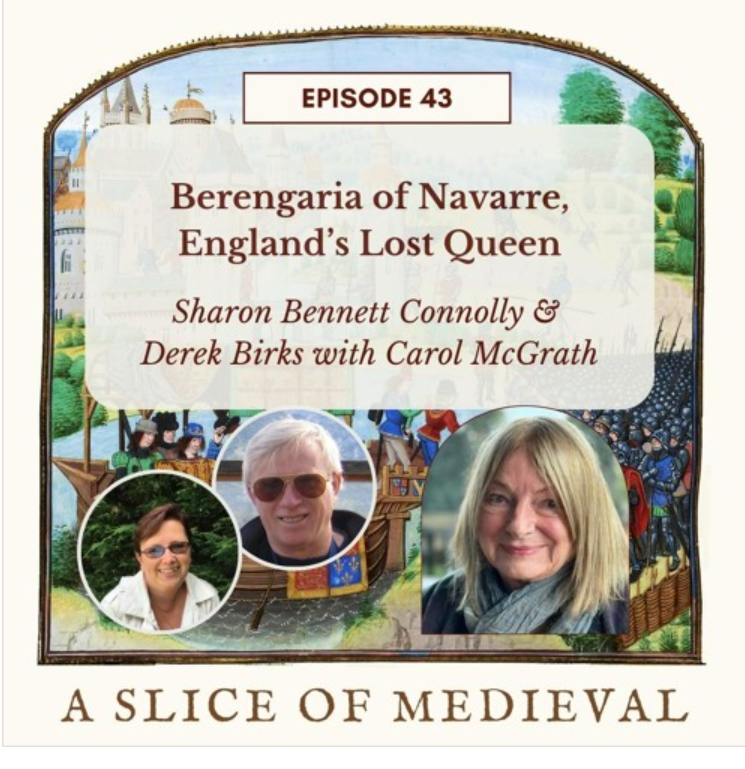
Have a listen the A Slice of Medieval podcast, which I co-host with Historical fiction novelist Derek Birks. Derek and I welcome guests, such as Bernard Cornwell and discuss a wide range of topics in medieval history, from significant events to the personalities involved. In episode #43, Derek and I chat with Carol about Berengaria of Navarre and The Lost Queen.

*

Don’t forget! Signed and dedicated copies of all my books are available through my online bookshop.

For forthcoming online and in-person talks, please check out my Events Page.

You can be the first to read new articles by clicking the ‘Follow’ button, liking our Facebook page or joining me on Twitter and Instagram.

©2024 Sharon Bennett Connolly FRHistS

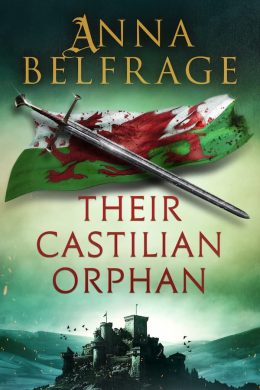
Book Corner: Their Castilian Orphan by Anna Belfrage

It is 1294 and Eustace de Lamont is back in England after five years in exile. He will stop at nothing to ruin Robert FitzStephan and his wife, Noor d’Outremer.

Robert’s half brother, Eustace de Lamont, has not mellowed during his absence. He is more ruthless than ever, and this time he targets Robert’s and Noor’s foster son, Lionel.

Lionel is serving King Edward as a page when Eustace appears at court. Not only does Lionel become the horrified witness to Eustace’s violent streak, Eustace also starts voicing his suspicions about Lionel’s parentage. The truth about Lionel’s heritage is explosive—should King Edward find out, all would be lost for Robert and Noor.

In October of 1294, Wales rises in rebellion. Robert must leave his family unprotected to fight the Welsh rebels on the king’s behalf, comforted only by the fact that Eustace too is called to fight.

Except that Eustace has no intention of allowing his duty to his king—or a mere rebellion—come between him and his desire to destroy Robert FitzStephan . . .

Bring tissues!

Whenever I hear there is a new Anna Belfrage novel coming, I know I am in for an emotional ride.

Anna Belfrage is back with the fourth and final instalment of her The Castilian Saga series, Their Castilian Orphan, and it is another tearjerker. Action-packed, Their Castilian Orphan has a riveting storyline set in England in the 1290s and Edward I’s campaign into Wales.

The two heroes, Robert FitzStephan and his wife, Noor d’Outremer, great-niece of Queen Eleanor of Castile, are faced with the dangers inherent in serving the king on campaign whilst having to fend off the nefarious machinations of Robert’s hate-filled half-brother Eustace de Lamont. And the spite of Eustace’s impressionable young wife. But Robert is not Eustace’s only target and he misses no opportunity to make life uncomfortable for their foster son, Lionel, who is beginning to suspect that his past is not the one he has been told…

Robert and Noor have certainly had their ups and downs. It has not been easy, serving Edward I and his formidable queen, Eleanor of Castile. They have their scars, both mental and physical. Robert has also had to deal with the stigma of illegitimacy and the malice of his jealous brother. Eustace might be legitimate, and a baron, but Robert is the better soldier who has earned the respect of his peers because of his abilities. That irks Eustace – especially when everyone is keen to compare the brothers and find Eustace wanting.

Intrigue, sibling rivalry and war, combined with Anna Belfrage’s engaging writing style means that Their Castilian Orphan has all the ingredients for an absolutely fabulous reading adventure.

He was halfway down the long flight of stairs leading to the hall when he heard someone call his name.

“Lionel!”

Mama came flying towards him, and moments later he was enveloped in her arms, his face squished against her bosom. She released him and clasped him by the shoulders. “Look at you – you’ve grown! You’re so tall!”

Nay, he wasn’t, but Mama was short. If he stood on his toes, the top of his head reached her brow.

“Lionel, lad.” Papa greeted him as effusively as Mama had done.

“How is your back?” Mama asked.

Lionel groaned. “It was nothing.” Of course, Roger Mortimer had to tell them!

“You did not send us word,” Mama said, her mouth wobbling for an instant. “We didn’t know, were not offered the opportunity to care for you.”

Lionel shuffled on his feet. “I…” A movement on the far side of the bailey offered an opportunity to change the subject. “Eustace de Lamont id back!” he blurted, pointing at the man in question.

“Aye, we know,” Papa said, sounding grim.

“I saw him -“

“Hush,” Papa said firmly. “We talk of such matters when we are alone.”

“He has wed,” Lionel said, pulling a face. “Soaking Sally says she may be comely but has the personality of an aggravated viper.”

“Well, they should suit, then,” Mama said. “Hopefully they bite each other to death.”

Lionel blinked. Never had he heard Mama sound so vicious. And then he saw how Papa settled his arm round her, whispering something in her ear, and her stance softened.

Lionel moved closer to her. Of course. Mama was afraid. With Eustace de Lamont back, she feared for her husband. Last time had left Papa with a nasty scar to his thigh and a slight limp. Next time… No, there could not be a next time because Mama was right: Eustace de Lamont was a serpent in human disguise.

Five years of exile and dire warnings from the king to stay away from Robert and his family fall on deaf ears when Eustace returns from his exile. With Robert drawn into Edward I’s wars, this time in Wales, and their foster son, Lionel, in service to the king as a page, the family are once again at the heart of events. And a focus for Eustace’s murderous intentions. He is determined to destroy Robert and take all that he has. And he knows how to strike at their heart, by targeting Lionel and the young man’s Welsh lineage, making Lionel question his place in is family.

Their Castilian Orphan interweaves the fictional story with the historical fact, transporting the reader to the last decade of the 13th century, to an aging king, duped by the French, with peace at home threatened by the Welsh, who are chafing against the harsh English yoke.

I love the way Anna Belfrage melds the domestic lives and worries of Robert and Noor with the concerns of England as a nation. Life and duty are inseparable. Anna makes you love her characters, draws you into their lives, makes you a part or their family.

Engaging, absorbing, fascinating, exciting. And emotional. Anna Belfrage will take the reader through the full range of emotions before they get to the end of the book.

To buy the book:

Their Castilian Orphan is now available from Amazon

About the author:

Had Anna been allowed to choose, she’d have become a professional time-traveller. No luck there, so instead she became a financial professional with two absorbing interests; history and writing. These days, Anna combines an exciting day-job with a large family and her writing endeavours. Plus she always finds the time to try out new recipes, chase down obscure rose bushes and initiate a home renovation scheme or two.

Anna has authored the acclaimed time travelling series The Graham Saga , set in 17th century Scotland and Maryland, as well as the equally acclaimed medieval series The King’s Greatest Enemy.

Anna has also published The Wanderer, a fast-paced contemporary romantic suspense trilogy with paranormal and time-slip ingredients. Her September 2020 release, His Castilian Hawk is a story of loyalty and love set against the complications of Edward I’s invasion of Wales in the late 13th century.

Her most recent release, The Whirlpools of Time , is a time travel romance set against the backdrop of brewing rebellion in the Scottish highlands.

All of Anna’s books have been awarded the IndieBRAG Medallion, she has several Historical Novel Society Editor’s Choices, and one of her books won the HNS Indie Award in 2015. She is also the proud recipient of several Reader’s Favorite medals as well as having won various Gold, Silver and Bronze Coffee Pot Book Club awards.

If you want to know more about Anna, why not visit her website, https://www.annabelfrage.com

*

My Books:

Signed, dedicated copies of all my books are available through my online bookshop.

Out Now! Women of the Anarchy

Two cousins. On the one side is Empress Matilda, or Maud. The sole surviving legitimate child of Henry I, she is fighting for her birthright and that of her children. On the other side is her cousin, Queen Matilda, supporting her husband, King Stephen, and fighting to see her own son inherit the English crown. Women of the Anarchy demonstrates how these women, unable to wield a sword, were prime movers in this time of conflict and lawlessness. It show how their strengths, weaknesses, and personal ambitions swung the fortunes of war one way – and then the other.

Available from Bookshop.orgAmberley Publishing and Amazon UK.

Coming on 15 June 2024: Heroines of the Tudor World

Heroines of the Tudor World tells the stories of the most remarkable women from European history in the time of the Tudor dynasty, 1485-1603. These are the women who ruled, the women who founded dynasties, the women who fought for religious freedom, their families and love. These are the women who made a difference, who influenced countries, kings and the Reformation. In the era dominated by the Renaissance and Reformation, Heroines of the Tudor World examines the threats and challenges faced by the women of the era, and how they overcame them. From writers to regents, from nuns to queens, Heroines of the Tudor World shines the spotlight on the women helped to shape Early Modern Europe.

Heroines of the Tudor World is now available for pre-order from Amberley Publishing and Amazon UK.

Also by Sharon Bennett Connolly:

King John’s Right-Hand Lady: The Story of Nicholaa de la Haye is the story of a truly remarkable lady, the hereditary constable of Lincoln Castle and the first woman in England to be appointed sheriff in her own right. Available from all good bookshops or direct from Pen & Sword Booksbookshop.org and AmazonDefenders of the Norman Crown: The Rise and Fall of the Warenne Earls of Surrey tells the fascinating story of the Warenne dynasty, from its origins in Normandy, through the Conquest, Magna Carta, the wars and marriages that led to its ultimate demise in the reign of Edward III. Available from Pen & Sword BooksAmazon in the UK and US, and Bookshop.org

King John’s Right-Hand Lady: The Story of Nicholaa de la Haye is the story of a truly remarkable lady, the hereditary constable of Lincoln Castle and the first woman in England to be appointed sheriff in her own right. It is is available from King John’s Right-Hand Lady: The Story of Nicholaa de la Haye is the story of a truly remarkable lady, the hereditary constable of Lincoln Castle and the first woman in England to be appointed sheriff in her own right. Available from all good bookshops or direct from Pen & Sword Booksbookshop.org and AmazonDefenders of the Norman Crown: The Rise and Fall of the Warenne Earls of Surrey tells the fascinating story of the Warenne dynasty, from its origins in Normandy, through the Conquest, Magna Carta, the wars and marriages that led to its ultimate demise in the reign of Edward III. Available from Pen & Sword BooksAmazon in the UK and US, and Bookshop.org

Alternate Endings: An anthology of historical fiction short stories including Long Live the King… which is my take what might have happened had King John not died in October 1216. Available in paperback and kindle from Amazon.

Podcast:

Have a listen to the A Slice of Medieval podcast, which I co-host with Historical fiction novelist Derek Birks. Derek and I welcome guests, such as Bernard Cornwell and Elizabeth Chadwick, and discuss a wide range of topics in medieval history, from significant events to the personalities involved.

*

Don’t forget! Signed and dedicated copies of all my books are available through my online bookshop.

For forthcoming online and in-person talks, please check out my Events Page.

You can be the first to read new articles by clicking the ‘Follow’ button, liking our Facebook page or joining me on Twitter and Instagram.

*

©2024 Sharon Bennett Connolly FRHistS

Le Charte aux Lacs d’Amour

When writing medieval non-fiction, you don’t get to tell many love stories. Most marriages were arranged between families for mutual gain or assistance. As a consequence, you don’t really expect to come across many tales of love – and actual love tokens are rare indeed. But in researching the story of Nicholaa de la Haye, I came across just that: a rather unique love token. 

Unfortunately, the love token did not belong to Nicholaa, the defender of Lincoln Castle and first ever female sheriff in England, it belonged to one of her sisters. Nicholaa was the eldest of three sisters and while she inherited Lincoln Castle and her family’s English lands, her sisters, Julia (or Gila) and Isabel, married and settled in Normandy. The story of the love token is Julia’s.

Julia, whose name appears as Gille in French but appears on charters in the Latin, Gila, was married to Richard du Hommet, who died around 1199/1200. Richard was the eldest son and heir of William du Hommet (or Hummez), constable of Normandy, who died around 1204 and his wife, Lucy. According to a charter dated 1232, recording donations to the monks of Saint-Sauveur-le-Vicomte, Lucy was the granddaughter and heir of Adam de Bruys. As constable, William du Hommet appeared as a witness to a charter of 1 March 1190 in which King Richard I ‘confirms to the archbishop and church of Rouen and all the bishops and mother churches of Normandy, concerning those who break the trêve de Dieu (a truce organised by the church).’ 

As with most medieval women, we know very little of Julia’s actual dates, so we have to generalise or make educated guesses. Julia was probably born sometime in the late 1150s, and would have grown up on her family’s lands in Lincolnshire. She will have probably married Richard du Hommet some time in the 1170s, when she was in her mid-to-late teens. She died in the 1190s and her husband remarried before his own death at the turn of the century. Julia and Richard had at least three sons and two or more daughters; two of these sons were the last two constables of Normandy from the Hommet family, succeeding their grandfather in the role. Richard du Hommet had certainly married Julia by the mid-1170s at the latest, when his grandfather, another Richard du Hommet, was still constable of Normandy, and while the younger Richard was still underage. The couple’s first child was born around 1180. 

Richard du Hommet predeceased his father by four or five years, so never became constable of Normandy in his own right, though he does appear to have assisted his father in his duties. In June 1190, Richard appears as a witness, alongside his father, to a charter of Richard I in which he ‘confirms to St Martin’s, Troarn and the monks there serving God the vill and island of Reimberhome etc., with the right of presentation to the church of St Mary there, as given, with his assent, by John son of William count of Ponthieu, etc.’ Father and son are recorded as ‘Willelmo de Humeto constabulario; Richardo de Humeto’ in the witness list. 

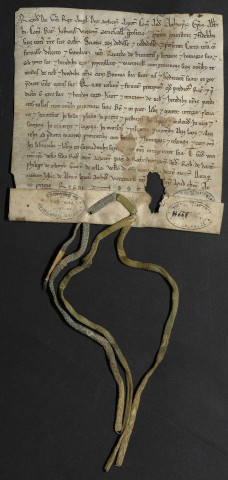
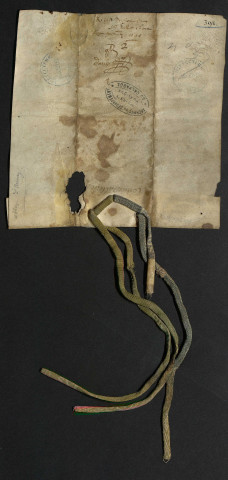
Richard and Julia are also the subjects of a unique charter, issued by King Richard I in June 1190. The charter was preserved by the Abbey of Aunai, which had been founded by the du Hommet family. It conferred the manors of Varreville and Pouppeville upon the couple, naming both ‘Ricardo de Humetis’ and ‘Gila, uxor sue’ (his wife) in the grant.  

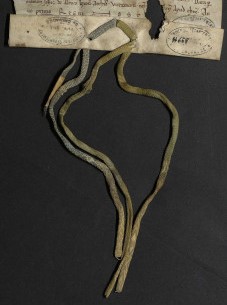
And it has very famous laces by which the seal was attached. 

These laces are made of silk and each one is 50cm in length; one of the laces is green, now turning yellow, and the other is blue, speckled with brown. An Old French poem was embroidered on the laces: 

 “Jo sui druerie. Ne me dunez mie ; ki nostre amur deseivre la mort pu”,

(In French, ‘Je suis gage d’amour. Ne me donnez pas. Que celui qui sépare notre amour puisse recevoir la mort’  and in English, ‘I am a pledge of love. Do not give me away. May death come to whoever separates our love’).  

For this reason, the charter is known as the charte aux lacs d’amour (the charter with the laces of love). And while the idea of a love poem being attached to a charter issued in relation to a royal land grant is charming, the reasons behind it remain elusive. At first glance, the grant appears to have no special significance that would justify such a declaration of love, nor such careful detail and precision work being undertaken on its creation.  

I can’t help thinking that Richard I – the Lionheart – who was a fan of the troubadour tradition and courtly love, would have heartily approved of turning the charter into a token of enduring love.

Unfortunately, while the laces are still attached to the document, the words, which were still visible in the nineteenth century, have now faded away. At least someone thought to record them before they faded from existence. 

Under Henry I, the lands of Varreville and Pouppeville had been in the hands of Roger, Bishop of Salisbury, and had returned to the crown on his death. King Henry II had granted the same lands to Richard de la Haye, but they had reverted to the crown on his death in 1169, and were accounted for in the Exchequer accounts of 1180. So, it seems that in granting Varreville and Pouppeville to Julia and Richard du Hommet, Richard I was returning them to their former, rightful owners. This may explain why Julia is specifically mentioned in the charter and the grant stipulates that the lands pass to Richard’s children by Julia, rather than Richard’s children by any wife.  

According to Léopold De Lisle, in his study of the charter, the two manors formed Julia’s dowry, though she and her husband were unable to take possession of the lands immediately after the marriage. In the charter King Richard ‘gives, renderes and confirms to Richard du Hommet, and to Gila [Julia] his wife, and to their heirs, Pouppeville and Varreville with all their dependencies, for them to hold from the king with their barony, by right of the said Gila [Julia].’ De Lisle goes on to suggest that the laces used, with the accompanying love poem, were once a love token, perhaps given by Julia to Richard on their wedding day, and that Richard du Hommet persuaded the king to attach them to the charter that gave him possession of Julia’s lands, as a symbol of their union.  

If so, the fact that they have survived the centuries is particularly poignant. 

When Julia died in the 1190s, she was buried in Blanchelande Abbey, a religious community of the Premonstratensian order, known as the White Canons, in Neufmesnil. The abbey had been founded by Julia’s parents, and it was where her father, Richard de la Haye, had been interred after his death in 1169. On her death, Julia’s mother, Matilda de Vernon, with the approval of her son-in-law, Richard du Hommet, made a donation to the abbey in her daughter’s name. After a short period as a widower, Richard du Hommet married for a second time, to Alienor, widow of Robert de la Haie, who may well have been a distant cousin of Julia (I did not have time to delve into  the familial relationship, unfortunately). 

The enduring love of Richard and Julia is forever entwined in the laces attached to the land charter. Even if we can no longer see the words, we know they were there and survived seven centuries before they faded away… 

*

This article first appeared on ElizabethChadwick.com

Images:

Les archives du Calvados

Sources:

Les archives du Calvados; Leopold Deslisle, “Notice sur les attaches d’un sceau de Richard Coeur-de-Lion”; Richard of Devizes, The Chronicle of Richard of Devizes; Roger of Howden (Hoveden), The Annals of Roger of HowdenThe Plantagenet Chronicles edited by Elizabeth Hallam; Brassey’s Battles by John Laffin; 1215 The Year of Magna Carta by Danny Danziger & John Gillingham; The Life and times of King John by Maurice Ashley; The Plantagenets, the Kings Who Made England by Dan Jones; England Under the Norman and Angevin Kings  by Robert Bartlett; lincolnshirelife.co.uk; catherinehanley.co.uk; magnacarta800th.com; lothene.org; lincolncastle.com; The Sheriff: The Man and His Office by Irene Gladwin; Louise Wilkinson, Women in Thirteenth Century Lincolnshire; Richard Huscraft, Tales from the Long Twelfth Century; J.W.F. Hill, Medieval Lincoln; swaton.org.uk; oxforddnb.com; Ingulph, Ingulph’ Chronicle of the Abbey of Croyland; Stephen Church, King John: England, Magna Carta and the Making of a Tyrant; Marc Morris, King John; Pipe Rolls; Red Book of the Exchequer

*

My Books

Christmas is coming!

Signed, dedicated copies of all my books are available through my online bookshop.

Out now! Scotland’s Medieval Queens

Scotland’s history is dramatic, violent and bloody. Being England’s northern neighbour has never been easy. Scotland’s queens have had to deal with war, murder, imprisonment, political rivalries and open betrayal. They have loved and lost, raised kings and queens, ruled and died for Scotland. From St Margaret, who became one of the patron saints of Scotland, to Elizabeth de Burgh and the dramatic story of the Scottish Wars of Independence, to the love story and tragedy of Joan Beaufort, to Margaret of Denmark and the dawn of the Renaissance, Scotland’s Medieval Queens have seen it all. This is the story of Scotland through their eyes.

Available now from Amazon and Pen and Sword Books

Also by Sharon Bennett Connolly:

Heroines of the Tudor World tells the stories of the most remarkable women from European history in the time of the Tudor dynasty, 1485-1603. These are the women who ruled, the women who founded dynasties, the women who fought for religious freedom, their families and love. Heroines of the Tudor World is now available for pre-order from Amberley Publishing and Amazon UK. Women of the Anarchy demonstrates how Empress Matilda and Matilda of Boulogne, unable to wield a sword themselves, were prime movers in this time of conflict and lawlessness. It shows how their strengths, weaknesses, and personal ambitions swung the fortunes of war one way – and then the other. Available from Bookshop.orgAmberley Publishing and Amazon UKKing John’s Right-Hand Lady: The Story of Nicholaa de la Haye is the story of a truly remarkable lady, the hereditary constable of Lincoln Castle and the first woman in England to be appointed sheriff in her own right. Available from all good bookshops Pen & Sword Booksbookshop.org and Amazon

Defenders of the Norman Crown: The Rise and Fall of the Warenne Earls of Surrey tells the fascinating story of the Warenne dynasty, from its origins in Normandy, through the Conquest, Magna Carta, the wars and marriages that led to its ultimate demise in the reign of Edward III. Available from Pen & Sword BooksAmazon in the UK and US, and Bookshop.orgLadies of Magna Carta: Women of Influence in Thirteenth Century England looks into the relationships of the various noble families of the 13th century, and how they were affected by the Barons’ Wars, Magna Carta and its aftermath; the bonds that were formed and those that were broken. It is now available in paperback and hardback from Pen & SwordAmazon, and Bookshop.orgHeroines of the Medieval World tells the stories of some of the most remarkable women from Medieval history, from Eleanor of Aquitaine to Julian of Norwich. Available now from Amberley Publishing and Amazon, and Bookshop.orgSilk and the Sword: The Women of the Norman Conquest traces the fortunes of the women who had a significant role to play in the momentous events of 1066. Available now from Amazon,  Amberley Publishing, and Bookshop.org.

Alternate Endings: An anthology of historical fiction short stories including Long Live the King… which is my take what might have happened had King John not died in October 1216. Available in paperback and kindle from Amazon.

Podcast:

Have a listen to the A Slice of Medieval podcast, which I co-host with Historical fiction novelist Derek Birks. Derek and I welcome guests, such as Bernard Cornwell and discuss a wide range of topics in medieval history, from significant events to the personalities involved. Every episode is also now available on YouTube.

*

Don’t forget! Signed and dedicated copies of all my books are available through my online bookshop.

For forthcoming online and in-person talks, please check out my Events Page.

You can be the first to read new articles by clicking the ‘Follow’ button, liking our Facebook page or joining me on Twitter and Instagram.

©2023 Sharon Bennett Connolly FRHistS
Warenne Family Ties

Seal of John de Warenne, 6th earl of Warenne and Surrey

In the reign of Edward I, when asked Quo Warranto – by what warrant he held his lands – John de Warenne, the 6th earl of Surrey, is said to have drawn a rusty sword, claiming “My ancestors came with William the Bastard, and conquered their lands with the sword, and I will defend them with the sword against anyone wishing to seize them”

When I started writing Defenders of the Norman Crown: Rise and Fall of the Warenne Earls of Surrey, I expected to find a healthy – or, rather, unhealthy – level of sibling rivalry. After all, this family was related to both the Norman and Plantagenet royal families, neither of whom are renowned for any sort of brotherly love.

You only have to look at the warring antics of Robert Curthose, William II and Henry I, to imagine the level of sibling rivalry involved in Norman times. The three brothers fought over who should have Normandy and England after their father’s death, to the extent that Robert Curthose ended up the prisoner of his little brother, Henry I, for the last 30 years of his life. The Plantagenets were little better, with Prince – later King – John trying to steal his brother’s throne while Richard I was imprisoned in Germany.

William de Warenne, 1st Earl Warenne, Trinity Church, Southover.

With these examples in mind, I was surprised to discover that the Warennes were a rather functional bunch as far as family goes. They went out of their way to help and support each other, even to the extent of half-siblings and in-laws. William de Warenne, the first earl of Warenne and Surrey (often referred to, simply, as Earl Warenne), pursued a private feud with English freedom fighter, Hereward the Wake, after he murdered William’s brother-in-law, Frederic. 

The Warenne (Hyde) Chronicle claims that Hereward, ‘Among his other crimes, by trickery he killed Frederick, brother[-in-law] of Earl William of Warenne, a man distinguished by lineage and possessions, who one night was surrounded in his own house.’ Following Frederic’s murder, according to the Chronicle, ‘such discord arose between Hereward and William that it could not be settled by any reparation nor in any court.’ According to the Gesta Herewardi, Frederic was planning to capture or kill Hereward, who struck first by killing Frederic.

William de Warenne was determined to get his revenge; he attempted to ambush Hereward at a place called Earith. One of William’s men tried unsuccessfully to bribe Hereward’s men to betray him. William was unhorsed when Hereward fired an arrow at him; it rebounded from William’s mailcoat, but the force of the shot saw William fall from his horse and rendered unconscious as he hit the ground. The ambush having failed, William de Warenne then appears in the Gesta Herewardi with an angry outburst against the Norman knight Deda, who had given a eulogistic account of the rebels on the Isle of Ely. According to the Liber Eliensis, William ‘flared up with weighty indignation, and alleged that he [Deda] had been inveigled by a bribe and was lying.’

St Pancras Priory, Lewes, the Warenne family mausoleum

William de Warenne, the second Earl Warenne, continued the tradition of looking out for family, when his younger brother, Rainald, was captured by King Henry I. In 1105 Rainald de Warenne was among the supporters of Robert Curthose, Duke of Normandy and Henry I’s oldest brother, who captured and imprisoned Robert fitz Hamon, a friend of King Henry, intending to ransom him. Henry saw fitz Hamon’s capture as an opportunity to deal decisively with Normandy, though he claimed he was invading not out of ambition, but to protect the church and the poor people of Normandy. 

Henry invaded in the spring of 1106. Rainald de Warenne was captured by Henry’s forces during a skirmish at the fortified Abbey of Saint-Pierre-sur-Dive. The abbot there had been plotting with Duke Robert to trap Henry, offering to hand over the castle to the English king, while sequestering Rainald de Warenne, Robert de Stuteville and their men within, ready to seize Henry as soon as he entered. Suspecting treachery, Henry arrived at daybreak with a force of 700 men-at-arms and took the garrison completely by surprise, capturing the duke’s men and burning the castle to the ground.

The sources vary, but Rainald was released either shortly before or shortly after the battle of Tinchebrai – the final, decisive battle between the royal Norman brother. Orderic Vitalis claims that William de Warenne served as one of King Henry’s chief commanders at Tinchebrai and that Rainald was released shortly before the battle. Grateful for his brother’s release, Earl William urged his men to fight the king’s cause with the utmost determination. 

According to the Warenne (Hyde) Chronicle, however, Rainald was not released until after the battle, when he was ‘reluctantly handed back to his brother, who pleaded for him to Henry.’ Whichever is correct, the result was the same, Rainald was now free, thanks to the insistence and loyalty of his older brother.

Warenne shield of blue and gold check, Trinity Church, Southover.

In the next generation, the children and stepchildren of William de Warenne, the 2nd Earl Warenne, got on remarkably well together. William had married Isabel de Vermandois, the widow of the recently deceased Robert de Beaumont, Earl of Leicester. Isabel was already the mother of 9 children, including the famous twins Robert and Waleran de Beaumont, when she married William, with whom the chronicler Henry of Huntingdon claims she was having an affair, even before her husband died. 

With William, Isabel had a further 5 children, 3 boys and 2 girls. Earl Warenne was at King Henry I’s deathbed, alongside his son, also named William de Warenne (the future 3rd Earl Warenne), and stepsons, Waleran and Robert de Beaumont. When the 2nd Earl Warenne died, it was Waleran de Beaumont who became the head of the combined, and rather large, Beaumont/Warenne family. Indeed, Waleran and William de Warenne, 3rd Earl Warenne, having grown tired of the Anarchy – the war between King Stephen and Empress Matilda which lasted from 1135 to 1154 – departed on Crusade together in 1147. Unfortunately, William de Warenne was killed at the Battle of Mount Cadmus in January 1148, and Waleran returned home alone.

A touching story from just before his departure on crusade relates to the 3rd Earl Warenne and his two younger brothers, Reginald and Ralph de Warenne. The earl held a dedication ceremony for the new church at St Pancras Priory, Lewes, the mausoleum of the Warenne family, founded by the 1st earl and his wife, Gundrada. In the accompanying charter, the earl endowed the priory, in which his father and grandparents were buried, and where his mother would soon be laid to rest, with the tenth penny of his rents and ‘giving it seisin thereof by hair from his own head and that of Ralph de Warenne his brother, cut with a knife by Henry, bishop of Winchester, before the altar.’ 

It is not hard to imagine how moving a ceremony this must have been, two brothers kneeling before the altar to have their hair cut by the bishop of Winchester, Henry of Blois, the brother of King Stephen. The scene is made all the more poignant in hindsight, knowing that the third earl never returned from the crusade on which he was about to embark.

Conisbrough Castle

And when the 3rd Earl Warenne failed to return from the Holy Land, it was down to his younger brother, Reginald, to look after the family interests and those of his brother’s sole surviving heir, William’s daughter, Isabel de Warenne, the 4th Countess of Warenne and Surrey. Isabel, though still only a child, had been married to King Stephen’s youngest son, William of Blois, probably before her father’s departure to the Holy Land. Isabel’s second husband, Hamelin, the illegitimate half-brother of Henry II, built the great keep at Conisbrough Castle.

Hamelin and Isabel’s son, William de Warenne, the 5th earl, looked out for the interests of his niece, Alice de Lusignan, in her struggles with the crown, both under King John and Henry III, to secure her inheritance of Tickhill Castle in Yorkshire.

Such examples of the earls taking care of their family, and working in alliance with their in-laws, was to be a feature of every generation down to the 7th and last earl, John II de Warenne, who was given the custody and care of his cousin, Edward Balliol, the son of John Balliol, the deposed King of Scots, around 1307. The Warenne earls, to a man, looked after their relations, both near and far. In the story of a family, it is quite fitting – and highly unusual – that the Warenne earls appear to have always put family first.

*

Images:

Are ©2023 Sharon Bennett Connolly FRHistS except the seal of John de Warenne, which is courtesy of Wikimedia Commons
Sources:

Robert Bartlett, England Under the Norman and Angevin Kings; Dan Jones, The Plantagenets; Donald Matthew, King Stephen; Medieval Lands Project on the Earls of Surrey, Conisbrough Castle; Farrer, William and Charles Travis Clay, editors, Early Yorkshire Charters, Volume 8: The Honour of Warenne; Morris, Marc King John: Treachery, Tyranny and the Road to Magna Carta; Church, Stephen, King John: England, Magna Carta and the Making of a Tyrant; doncasterhistory.co.uk; A History of the County of Sussex: Volume 2 edited by William Page; W.H. Blaauw, On the Early History of Lewes Priory, and its Seals, with extracts from a MS. Chronicle, Sussex Archaeological Collections; Rev. John Watson, Memoirs of the Ancient Earls of Warren and Surrey, and Their Descendants to the Present Time, Volume I;  Odo of Deuil, De Profectione Ludovici VII in Orientem; magnacharta.com; Cokayne, G.E., The Complete Peerage, Vol. XII; Henry of Huntingdon, The Chronicle of Henry of Huntingdon; Elisabeth van Houts and Rosalind C. Love, The Warenne (Hyde) Chronicle.

*

My Books

Christmas is coming!

Signed, dedicated copies of all my books are available through my online bookshop.

Coming 15 January 2024: Women of the Anarchy

On the one side is Empress Matilda, or Maud. The sole surviving legitimate child of Henry I, she is fighting for her birthright and that of her children. On the other side is her cousin, Queen Matilda, supporting her husband, King Stephen, and fighting to see her own son inherit the English crown. Both women are granddaughters of St Margaret, Queen of Scotland and descendants of Alfred the Great of Wessex. Women of the Anarchy demonstrates how these women, unable to wield a sword, were prime movers in this time of conflict and lawlessness. It show how their strengths, weaknesses, and personal ambitions swung the fortunes of war one way – and then the other.

Available for pre-order from Amberley Publishing and Amazon UK.

Coming on 15 June 2024: Heroines of the Tudor World

Heroines of the Tudor World tells the stories of the most remarkable women from European history in the time of the Tudor dynasty, 1485-1603. These are the women who ruled, the women who founded dynasties, the women who fought for religious freedom, their families and love. These are the women who made a difference, who influenced countries, kings and the Reformation. In the era dominated by the Renaissance and Reformation, Heroines of the Tudor World examines the threats and challenges faced by the women of the era, and how they overcame them. Some famous, some infamous, some less well known, including Anne Boleyn, Elizabeth Barton, Catherine de Medici, Bess of Hardwick and Elizabeth I. From writers to regents, from nuns to queens, Heroines of the Tudor World shines the spotlight on the women helped to shape Early Modern Europe.

Heroines of the Tudor World is now available for pre-order from Amberley Publishing and Amazon UK.

Also by Sharon Bennett Connolly:

King John’s Right-Hand Lady: The Story of Nicholaa de la Haye is the story of a truly remarkable lady. Nicholaa de la Haye was the hereditary constable of Lincoln Castle and the first woman in England to be appointed sheriff in her own right. Her strength and tenacity saved England at one of the lowest points in its history. Nicholaa de la Haye is one woman in English history whose story needs to be told… King John’s Right-Hand Lady: The Story of Nicholaa de la Haye is now available from Pen & Sword Booksbookshop.org and Amazon.

Defenders of the Norman Crown: The Rise and Fall of the Warenne Earls of Surrey tells the fascinating story of the Warenne dynasty, of the successes and failures of one of the most powerful families in England, from its origins in Normandy, through the Conquest, Magna Carta, the wars and marriages that led to its ultimate demise in the reign of Edward III. Defenders of the Norman Crown: Rise and Fall of the Warenne Earls of Surrey is now available from Pen & Sword BooksAmazon in the UK and US, and Bookshop.org.

Ladies of Magna Carta: Women of Influence in Thirteenth Century England looks into the relationships of the various noble families of the 13th century, and how they were affected by the Barons’ Wars, Magna Carta and its aftermath; the bonds that were formed and those that were broken. It is now available in paperback and hardback from Pen & Sword,  Amazon, and Bookshop.org.

Heroines of the Medieval World tells the stories of some of the most remarkable women from Medieval history, from Eleanor of Aquitaine to Julian of Norwich. Available now from Amberley Publishing and Amazon, and Bookshop.org.

Silk and the Sword: The Women of the Norman Conquest traces the fortunes of the women who had a significant role to play in the momentous events of 1066. Available now from Amazon,  Amberley Publishing, and Bookshop.org.

Alternate Endings: An anthology of historical fiction short stories including Long Live the King… which is my take what might have happened had King John not died in October 1216. Available in paperback and kindle from Amazon.

Podcast:

Have a listen to the A Slice of Medieval podcast, which I co-host with Historical fiction novelist Derek Birks. Derek and I welcome guests, such as Bernard Cornwell, and discuss a wide range of topics in medieval history, from significant events to the personalities involved.

*

Don’t forget! Signed and dedicated copies of all my books are available through my online bookshop.

For forthcoming online and in-person talks, please check out my Events Page.

You can be the first to read new articles by clicking the ‘Follow’ button, liking our Facebook page or joining me on Twitter and Instagram.

*

©2023 Sharon Bennett Connolly FRHistS
Guest Post: the Historical Rabbit Hole by Maxine Sommer

Today I have the pleasure of welcoming Maxine Sommer to History…the Interesting Bits, a lover of Medieval History, if ever there was one. Next year, Maxine will run her first History tours through England and France, following the trail of the Plantagenets.

I fell down a rabbit hole…

And emerged into a historical realm alive with chivalry, intrigue and power struggles.

You may ask what on earth would impel an unassuming middle-aged woman who only braved her first flight outside Australia at the age of 41, to decide to create a tour company specializing in historical-themed tours of France and the UK. The answer my friends resides within the above-mentioned rabbit hole.

I simply picked up a book.

That’s right, imagine if you will, a moment some two decades past when destiny beckoned me towards an unexpected treasure. I have always been an avid reader, but in recent years my enthusiasm for this pastime had been stifled by adulthood’s demands, not least the nurturing of five children. Now it was time… full of excitement at the thought of once again becoming engrossed in a magnificent tale, I explored my sister’s book-laden shelves. I finally opted for one from her collection – as it turns out, a choice guided by the inexplicable precision of fate’s hand. And so dear readers, I found myself totally absorbed within the pages of “The Sunne in Splendour”, penned by the astounding Sharon Kay Penman. The chronicle of Richard III, a monarch enshrouded in a tapestry of infamy, though totally unfamiliar to me at the time, seized my imagination with a tenacious grip. Unbelievably, history, a subject I had spurned in my school days, suddenly beckoned irresistibly. It is a huge book, definitely not for the faint-hearted, and I read it in record time… staying up until the wee hours of the morning because I simply could not put it down. After finishing this, and guided by an unyielding curiosity, I became a well-known visitor to my local library, searching for more of Sharon’s books. The next one I read was “When Christ and his Saints Slept” and with it came the realization that each page was opening another facet of history’s dramatic picture.

Alfred the Great coin

I quickly became totally hooked on this genre, my fascination knew no borders, enjoying tales that ranged from the illustrious King Alfred the Great and the Vikings, to the turmoil of the 18th century. Like a mosaic artist, I pieced together a chronology that unfolded across centuries, each novel augmenting my list of captivating historical figures. Yet in the labyrinth of historical sagas, one dynasty held me spellbound – the indomitable Plantagenets, sovereigns who reigned for more than three centuries, and totally transformed England’s destiny.

The following decade saw me immerse myself in an array of historical fiction, discovering all I could about this powerful dynasty. I even ventured into the uncharted territory of non-fiction, a realm I had never before explored for mere enjoyment. During this time, an unexpected, and slightly off-track obsession took root: the enthralling “Outlander” series by Diana Gabaldon, a time-travelling tale of the final 1745 Jacobite rebellion in Scotland. I was ecstatic when this saga leapt from page to screen in 2014. With recent images of the series in my mind and fueled with a life-long desire to see Scotland, a travel adventure beckoned. Plans were made, the saving began and with much excitement, my sister and I finally embarked on the gruelling 24hr flight to Glasgow in June 2017, to begin an Outlander adventure. We had a ball, and I found that I thoroughly enjoyed the small group atmosphere, which was both friendly and welcoming. Having the services of a Tour Manager as well as a local Tour Guide made our adventure not only personal but truly unique. Little did I realise then that this tour would kindle the spark for my future endeavours.

While the Scottish adventure might not have directly concerned the Plantagenets, my love for this era showed no sign of dimming. My interest was captivated by so many of the historical figures of the time, names like Eleanor of Aquitaine, Edward the Black Prince, and William Marshal, the greatest knight of the Middle Ages, and the power behind five of the Plantagenet kings. Reminiscing on the amazing time I had in Scotland, I began to search for a themed tour in France based on the Plantagenets, surely there had to be one. Unfortunately, and to my absolute disappointment, my search yielded no results whatsoever. The seeds planted in my mind by my tour in Scotland began to take root, a vision took form, and I dared to dream. It would be the words of one of my dearest friends that eventually gave me that final push… she simply said “Max, what is stopping you”? And thus, the idea of Plantagenet Discoveries was born, and I began to read and research the people, history and places I planned to visit.

The Gallery of Kings, Lincoln Cathedral

I worked on convincing my best friend of 30 years to come with me on this epic journey as she too was fascinated with medieval history, and after much deliberation, she decided to join me on this life-changing adventure. Together we embarked on a rollercoaster of meticulous planning, fervent study of tourism and business, and ceaseless research, we even began French lessons. For almost two years we navigated the crazy path between ordinary life, family obligations, our full-time jobs, and all that was necessary to get a new tour business off the ground. Remarkably, the onset of Covid-19 was a blessing in disguise as it allowed us ample planning time. Financial contributions were huge, our optimism continued to grow, and we remained positive this dream would become a reality. That dream was a tour company where we could share our passion for this incredible part of history. It would be a unique small group experience for our guests that would be fun, friendly, and informative, while providing them with the utmost in personal service. With the help of my wonderful son Chris (who happens to be a Digital Marketing Head for an advertising agency), we finally unveiled our website and social media presence in August 2022, it is very handy having our own personal social media guru.

Our flight bookings were confirmed, and the countdown began to September 2nd when we would fly to France and England for our reconnaissance mission. Chris and his partner Martin, who live in Sweden, met us and we enjoyed a short stay in the beautiful city of Paris before we headed off to explore. Serving as chauffeurs for a month, the boys skillfully navigated us across the landscapes of both France and England. While laughter and fun were in abundance, our schedule proved relentless, every moment earmarked for visits to hotels and historic sites, as well as the perpetual task of tending to our social media presence, which is almost a part-time job in itself. The return journey home on September 30th found us both weary to the bone, but looking at the task ahead of us with a mixture of excitement and enthusiasm.

I feel the need to divert off track here for a bit and talk about an extraordinary event that happened during our travels. It was the 8th of September 2022 – a date etched in history as Queen Elizabeth II passed away. For an Australian like me, the surrealism of being present during such a pivotal moment defies description. I will always remember the news reaching us as we ate dinner at a lovely little outdoor café in the historic city of Le Mans, France. For me, the sadness I felt was only surpassed by the profound local response to her death. The French people echoed the lament, and as we travelled around France our shared grief forged connections with all those we encountered. Our foresight in procuring Eurostar tickets months prior to our travels provided us with easy passage across the channel, despite the masses attempting to reach London for the funeral which was scheduled for the 19th of September. As it happened, this was the very day we planned to depart the city, casting us into the logistics of travel amidst large crowds and road closures. Bad timing you would say – well at first that is exactly what I thought. Gradually however, the irony of this situation dawned on me like an epiphany, fate actually has magnificent timing. On a reconnaissance adventure, where we were tracing the footsteps of bygone royalty, we found ourselves in London during the most momentous historic event that most of us will ever see in our lifetime. Up until now we could only read about or imagine the impact that the death of a monarch would have on its people, and yet here we were, given the opportunity of witnessing it firsthand. An entire nation, and a significant part of the world, ground to a halt, queue’s stretched for days as the people sought a final glimpse of their queen. There was an extraordinary sense of ‘something’ that is impossible to verbalise. The myriad of emotions were tangible, sadness, fear, apprehension, but above all an overwhelming sense of loss. We stood there, participants in a sombre yet pivotal chapter of history, another thread woven into the tapestry of the past.

Effigy of Eleanor of Aquitaine, Fontevrault Abbey

But let us return to our narrative, in the spirit of determination, Deb and I set to work. One of the main challenges we faced was the time difference, Australia’s vast isolation meant that all correspondence depended on email. This works fine if you receive responses, but all too often, this does not happen. If it came to having to make phone calls, which it often did, navigating time zones together with full-time working hours certainly is not an easy task. It involves a well-managed calendar I can tell you.

Then there was the language barrier, a real hurdle in communication. It is simple to translate a digital document or email, but when it comes to phone calls, it can be more challenging. I found in France, that many people speak English, occasionally however, challenges arise due to a lack of fluency. I remember the night we stayed at Chateau Castel Novel (a stunning 12th-century castle in central France), we were served the most beautiful and enticing appetizer. The room abounded with laughter as we tried to find out exactly what this dish was made from. The path to success lay in the beacon of humour, for those willing to chuckle at their own linguistic escapades. The mood lightened, communication flowed, and we discovered that the dish was in fact made from potato. With the spirit of laughter as our guide, we began to sow the seeds of rapport, nurturing relationships that we hope will stand the test of time.

Earlier this year, life, often the master of unforeseen twists, dealt us our biggest blow. Due to personal reasons, Deb found herself at a crossroads, her only choice to step away from the venture entirely. The fallout was profound – for us both, it felt like the world had momentarily lost its rhythm. Amid our devastation, a realization emerged that life weaves its own threads of trial and triumph, and God’s plan does not always align with ours, compelling us to soldier on, adapting and accepting.

I am now navigating these waters unaccompanied, and while the quiet absence of another’s counsel is sorely missed, I’ve discovered a reservoir of resilience and unwavering optimism. I have come to terms with my solo voyage, and each wave of uncertainty is met with an anchor of positivity. Numbers were slow initially, but now a silver lining peeks through the clouds in the form of bookings and deposits, heralding the success of my long-anticipated adventure in September 2024.

For me, this has been more than just a business endeavour, it has been a story of remarkable personal growth and transformation. My life has echoed with the mantra “Every day is a school day”, a truth etched into the fabric of my experience. A habit of burying my head in the sand has given way to a newfound tenacity, a willingness to face challenges head-on.

Edward I and Eleanor of Castile, Lincoln Cathedral

As I reach the closing chapter of this article, I can’t help but radiate my enthusiasm. My passion and my vision are no longer confined within the chambers of my imagination, this dream has now become a reality. And you know what is even more fantastic – along the journey, I have found my tribe, and I couldn’t be happier about that!!

So, if this story has resonated with you, I invite you to delve deeper by visiting http://www.plantagenetdiscoveries.com. There, amidst the pages, you will unearth not only the itineraries of our tours, but the musings of heart, encapsulated in my blog posts. You can also follow me on both Facebook and Instagram @plantagenetdiscoveries and I have a friendly Facebook group community where we share photos and stories of medieval history and travel. http://www.facebook.com/groups/loversofmedievalhistorytravel

And for all those among Sharon’s incredible community, a special treat awaits – a 10% discount on each tour, with an additional 5% for the adventurous souls embracing the Back-to-Back option.

Join me on this extraordinary time-travel adventure as we let the echoes of history guide our steps, but more importantly, as we make incredible friendships and memories that will be sure to last a lifetime.

Max

*

My Books

Christmas is coming!

Signed, dedicated copies of all my books are available through my online bookshop.

Coming 15 January 2024: Women of the Anarchy

On the one side is Empress Matilda, or Maud. The sole surviving legitimate child of Henry I, she is fighting for her birthright and that of her children. On the other side is her cousin, Queen Matilda, supporting her husband, King Stephen, and fighting to see her own son inherit the English crown. Both women are granddaughters of St Margaret, Queen of Scotland and descendants of Alfred the Great of Wessex. Women of the Anarchy demonstrates how these women, unable to wield a sword, were prime movers in this time of conflict and lawlessness. It show how their strengths, weaknesses, and personal ambitions swung the fortunes of war one way – and then the other.

Available for pre-order from Amberley Publishing and Amazon UK.

Also by Sharon Bennett Connolly:

Out nowKing John’s Right-Hand Lady: The Story of Nicholaa de la Haye is the story of a truly remarkable lady. Nicholaa de la Haye was the hereditary constable of Lincoln Castle and the first woman in England to be appointed sheriff in her own right. Her strength and tenacity saved England at one of the lowest points in its history. Nicholaa de la Haye is one woman in English history whose story needs to be told…

King John’s Right-Hand Lady: The Story of Nicholaa de la Haye is now available from Pen & Sword Booksbookshop.org and Amazon.

Defenders of the Norman Crown: The Rise and Fall of the Warenne Earls of Surrey tells the fascinating story of the Warenne dynasty, of the successes and failures of one of the most powerful families in England, from its origins in Normandy, through the Conquest, Magna Carta, the wars and marriages that led to its ultimate demise in the reign of Edward III. Defenders of the Norman Crown: Rise and Fall of the Warenne Earls of Surrey is now available from Pen & Sword BooksAmazon in the UK and US, and Bookshop.org.

Ladies of Magna Carta: Women of Influence in Thirteenth Century England looks into the relationships of the various noble families of the 13th century, and how they were affected by the Barons’ Wars, Magna Carta and its aftermath; the bonds that were formed and those that were broken. It is now available in paperback and hardback from Pen & Sword,  Amazon, and Bookshop.org.

Heroines of the Medieval World tells the stories of some of the most remarkable women from Medieval history, from Eleanor of Aquitaine to Julian of Norwich. Available now from Amberley Publishing and Amazon, and Bookshop.org.

Silk and the Sword: The Women of the Norman Conquest traces the fortunes of the women who had a significant role to play in the momentous events of 1066. Available now from Amazon,  Amberley Publishing, and Bookshop.org.

Alternate Endings: An anthology of historical fiction short stories including Long Live the King… which is my take what might have happened had King John not died in October 1216. Available in paperback and kindle from Amazon.

Podcast:

Have a listen to the A Slice of Medieval podcast, which I co-host with Historical fiction novelist Derek Birks. Derek and I welcome guests, such as Bernard Cornwell, and discuss a wide range of topics in medieval history, from significant events to the personalities involved.

*

Don’t forget! Signed and dedicated copies of all my books are available through my online bookshop.

For forthcoming online and in-person talks, please check out my Events Page.

You can be the first to read new articles by clicking the ‘Follow’ button, liking our Facebook page or joining me on Twitter and Instagram.

*

©2023 Maxine Sommer and Sharon Bennett Connolly FRHistS
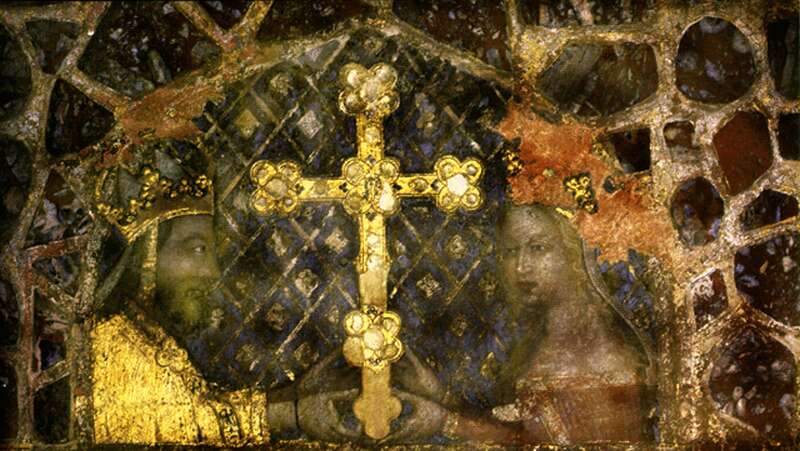
The Women Behind Magna Carta

Magna Carta

Throughout my research into medieval women, two ladies in particular have popped up a number of times: Nicholaa de la Haye and Matilda de Braose. Their unique stories drew me into their world, and the turbulent times of King John. They were the spark that led me to look into the story of Magna Carta; how its clauses were influenced by women and how women used it to protect their own rights. Magna Carta was, perhaps, the first step on the long road to democracy in England, and many women played key roles in its creation and development.

The Magna Carta of 1215 reflects the needs and events of the time in which it was issued; an England on the brink of civil war, disaffected barons demanding redress, the Church and cities such as London looking for protection. It was drawn up by barons looking for redress and legal protection from a king whose word could no longer be trusted, who meted out arbitrary punishments and heavy taxes. It was not a charter that was intended to form the protection and legal rights of every man, woman and child in the land; though it has come to be seen as just that in subsequent centuries. Indeed, the common man does not get a mention, and of the sixty-three clauses, only eight of them mention women as a gender.

The significance of women in the Magna Carta story is not just their limited inclusion in the charter itself, but also in their experiences of the unsettled times in which they lived, in their influence on the charter itself and in their use of its clauses to exact redress for injustices they had experienced. The political crisis which saw the issuing of Magna Carta, and the civil war which followed, was not just significant to the barons involved, but to their wives and families, tenants and retainers. The conflict tore families apart as they took sides in the struggle and saw more than one baron change sides mid-crisis. Wives and daughters were caught in the middle, often torn by divided loyalties; between their birth family and the family into which they had married; between their fathers and their husbands. For instance, Matilda Marshal was the eldest daughter of William Marshal, a man known for his staunch loyalty to the crown, but she was married to Hugh Bigod, son of Roger, second Earl of Norfolk, one of the leaders of baronial opposition.

Tomb of Nicholaa de la Haye, St Michael’s Church, Swaton

Although they had very different experiences, they shared a number of similarities. Probably born within a few years of each other, they were contemporaries and both were key figures in the reign of King John, though for very different reasons. While Nicholaa de la Haye was a staunch supporter of the man who is, arguably, England’s most despised king in history, Matilda de Braose was one of his most female victims. Matilda’s family were harassed to Ireland and back by John, before she and her eldest son were left in a prison cell to starve to death; they were found after 11 days, Matilda’s head resting on her son’s chest, her son’s cheeks bearing the bite marks as evidence of lengths Matilda went to in her desperation to stay alive. It was Matilda’s experiences at the hands of King John that inspired clause 39 of Magna Carta, that clause that is still the cornerstone of British justice to this day:

‘No man shall be taken, imprisoned, outlawed, banished or in any way destroyed, nor will we proceed against or prosecute him, except by the lawful judgement of his peers or by the law of the land’

Nicholaa de la Haye, on the other hand, had been a long-time supporter of King John. She first successfully defended Lincoln Castle, in support of John, in the siege of 1191; the siege lasted 40 days before William Longchamp, the hated justiciar, gave up and went home. In 1216, Nicholaa successfully defended it again, this time paying off the rebel barons so that they would lift the siege. In the aftermath, John came north and ravaged the Isle of Axholme, where the barons had retreated to, with ‘fire and sword’. It was after this even that Nicholaa, now in her 60s and recently widowed, offered to relinquish custody of the castle. John refused to accept her resignation and in October, hours before his death, appointed Nicholaa Sheriff of Lincolnshire: she was the first ever female sheriff in England.

King John

Although Nicholaa de la Haye and Matilda de Braose were the major influences behind my book, Ladies of Magna Carta, they were not the only women to make an impression on the Magna Carta story. The deeper I dug, the more stories I uncovered that deserved to be told. Matilda’s own daughter, Loretta de Braose, was one such. Recently widowed following the death of her husband, Robert de Breteuil, Earl of Leicester, Loretta had been forced by John to relinquish her dower rights; Magna Carta clauses 7 and 8 of Magna Carta, protecting widows’ rights:

Clause 7:

After her husband’s death, a widow shall have her marriage portion and her inheritance at once and without any hindrance; nor shall she pay anything for her dower, her marriage portion, or her inheritance which she and her husband held on the day of her husband’s death; and she may stay in her husband’s house for 40 days after his death, within which period her dower shall be assigned to her.

Clause 8:

No widow shall be compelled to marry so long as she wishes to live without a husband, provided that she gives security that she will not marry without our consent if she holds of us, or without the consent of the lord of whom she holds, if she holds of another.

Furthermore, there are two women who can be clearly identified in Magna Carta itself, though they are not named, they are two Scottish princesses. The sisters of King Alexander II had been held hostage in England since 1209, when John forced the humiliating Treaty of Norham on their ailing father, King William the Lion. Clause 59 promised:

‘We will treat Alexander, king of Scots, concerning the return of his sisters and hostages and his liberties and rights in the same manner in which we will act towards our other barons of England, unless it ought to be otherwise because of the charters which we have from William his father, formerly king of Scots; and this shall be determined by the judgement of his peers in our court.

Women not only influenced the clauses of Magna Carta, however, they also used Magna Carta to assert and protect their own rights. Women such as Ela of Salisbury, who used the promises of Magna Carta to avoid an unwelcome marriage proposal when her husband, William Longspée was missing and feared dead. Or Isabel d’Aubigny, Countess of Arundel, who proclaimed ‘Where are the liberties of England, so often recorded, so often granted and so often ransomed’, when King Henry III foolishly attempted to steal land that was rightfully hers. She must have been a fearsome opponent, as Henry responded to one of her petitions, saying that he would grant her leniency ‘so long as she says nothing opprobrious to us as she did when we were at Westminster!’

Eleanor de Montfort

And then there were the women for whom Magna Carta offered no protection or respite. Women such as Eleanor of Brittany, for whom even clause 39 could be of no help. Their royal blood and ability to be a focus for opposition to the crown meant that successive kings would keep them imprisoned, either in castles, as with Eleanor, or in a rural convent, as with Gwenllian of Wales, orphan daughter of Llywelyn, Prince of Wales and his wife, Eleanor de Montfort, who was herself a granddaughter of King John.

It was Eleanor’s mother, also Eleanor, the youngest daughter of King John and not a year old at her father’s death, who, as the wife of Simon de Montfort, Earl of Leicester, would continue the struggle to curb the powers of the crown in the Second Barons’ War. She herself was defending Dover Castle when her husband was killed at the Battle of Evesham. She spent her final years in French exile. Her struggles to obtain her dower lands from the powerful Marshal family, guaranteed in Magna Carta, were a major component of Eleanor’s own dissatisfaction with her brother, Henry III.

It is through the stories of these remarkable women and the relationships of the various noble families of the 13th century, that I wanted to examine how they were affected by the First Barons’ Wars, Magna Carta and its aftermath. It is a study of the bonds that were formed and those that were broken among the women of the great families of 13th century England, including the royal families of England and Scotland, the Marshals, the Bigods, the Salisburys, Braoses and Warennes.

Their stories are inspirational, if heartbreaking at times.

Images:

Courtesy of Wikipedia except Nicholaa de la Haye which is ©2023 Sharon Bennett Connolly FRHistS
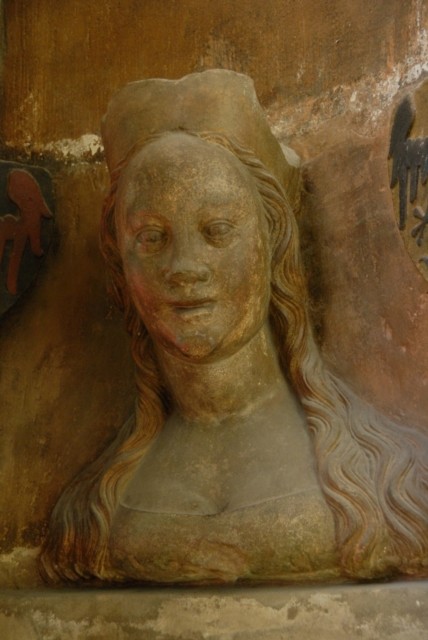
Sources:

Richard of Devizes, The Chronicle of Richard of Devizes; Roger of Howden (Hoveden), The Annals of Roger of HowdenThe Plantagenet Chronicles edited by Elizabeth Hallam; Brassey’s Battles by John Laffin; 1215 The Year of Magna Carta by Danny Danziger & John Gillingham; The Life and times of King John by Maurice Ashley; The Plantagenets, the Kings Who Made England by Dan Jones; England Under the Norman and Angevin Kings  by Robert Bartlett; lincolnshirelife.co.uk; catherinehanley.co.uk; magnacarta800th.com; lothene.org; lincolncastle.com; The Sheriff: The Man and His Office by Irene Gladwin; Louise Wilkinson, Women in Thirteenth Century Lincolnshire; Richard Huscraft, Tales from the Long Twelfth Century; J.W.F. Hill, Medieval Lincoln; swaton.org.uk; oxforddnb.com; Stephen Church, King John: England, Magna Carta and the Making of a Tyrant; Marc Morris, King John; Pipe Rolls; Red Book of the Exchequer

My Books

Signed, dedicated copies of all my books are available through my online store.

Out nowKing John’s Right-Hand Lady: The Story of Nicholaa de la Haye

In a time when men fought and women stayed home, Nicholaa de la Haye held Lincoln Castle against all-comers, gaining prominence in the First Baron’s War, the civil war that followed the sealing of Magna Carta in 1215. A truly remarkable lady, Nicholaa was the first woman to be appointed sheriff in her own right. Her strength and tenacity saved England at one of the lowest points in its history. Nicholaa de la Haye is one woman in English history whose story needs to be told…

King John’s Right-Hand Lady: The Story of Nicholaa de la Haye is now available from Pen & Sword Booksbookshop.org and Amazon.

Coming 15 January 2024: Women of the Anarchy

On the one side is Empress Matilda, or Maud. The sole surviving legitimate child of Henry I, she is fighting for her birthright and that of her children. On the other side is her cousin, Queen Matilda, supporting her husband, King Stephen, and fighting to see her own son inherit the English crown. Both women are granddaughters of St Margaret, Queen of Scotland and descendants of Alfred the Great of Wessex. Women of the Anarchy demonstrates how these women, unable to wield a sword, were prime movers in this time of conflict and lawlessness. It show how their strengths, weaknesses, and personal ambitions swung the fortunes of war one way – and then the other.

Available for pre-order from Amberley Publishing and Amazon UK.

Also by Sharon Bennett Connolly:

Defenders of the Norman Crown: The Rise and Fall of the Warenne Earls of Surrey tells the fascinating story of the Warenne dynasty, of the successes and failures of one of the most powerful families in England, from its origins in Normandy, through the Conquest, Magna Carta, the wars and marriages that led to its ultimate demise in the reign of Edward III. Defenders of the Norman Crown: Rise and Fall of the Warenne Earls of Surrey is now available from Pen & Sword BooksAmazon in the UK and US, and  Bookshop.org.

Ladies of Magna Carta: Women of Influence in Thirteenth Century England looks into the relationships of the various noble families of the 13th century, and how they were affected by the Barons’ Wars, Magna Carta and its aftermath; the bonds that were formed and those that were broken. It is now available in paperback and hardback from Pen & Sword,  Amazon, and Bookshop.org.

Heroines of the Medieval World tells the stories of some of the most remarkable women from Medieval history, from Eleanor of Aquitaine to Julian of Norwich. Available now from Amberley Publishing and Amazon, and Bookshop.org.

Silk and the Sword: The Women of the Norman Conquest traces the fortunes of the women who had a significant role to play in the momentous events of 1066. Available now from Amazon,  Amberley Publishing, and Bookshop.org.

Alternate Endings: An anthology of historical fiction short stories including Long Live the King… which is my take what might have happened had King John not died in October 1216. Available in paperback and kindle from Amazon.

Podcast:

Have a listen to the A Slice of Medieval podcast, which I co-host with Historical fiction novelist Derek Birks. Derek and I welcome guests, such as Bernard Cornwell, and discuss a wide range of topics in medieval history, from significant events to the personalities involved.

*

Signed and dedicated copies of all my books are available through my online store.

For forthcoming online and in-person talks, please check out my Events Page.

You can be the first to read new articles by clicking the ‘Follow’ button, liking our Facebook page or joining me on Twitter and Instagram.

©2023 Sharon Bennett Connolly FRHistS
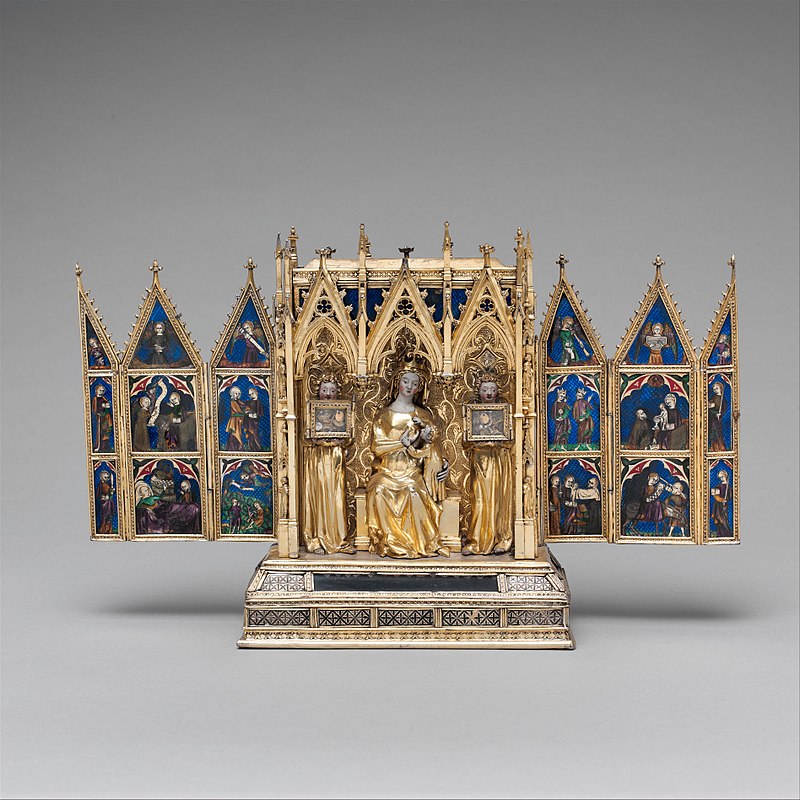
Book Corner: Rogue by Charlene Newcomb

A knight sworn to keep a family secret.
A king who seeks revenge.
A daring plan to save one life…or condemn many.


England 1216AD. Sir Robert Fitzwilliam faithfully serves the English crown, but when the outlaw Allan a Dale, a childhood friend, is captured and thrown in the sheriff’s dungeons beneath Nottingham Castle, trouble is certain to follow.

Allan’s days are numbered. Nothing would please King John more than to see an old nemesis hanged. Nothing except watching Robert’s estranged father, Robin, dangling dead from a rope beside him.

When his father joins forces with the Hood gang to rescue Allan, enlisting the aid of friends and even the girl he loves, Robert must decide where his loyalties lie.

TALES OF ROBIN HOOD

Before there was Robin Hood, there was Allan of the Hood. You know their story – in Sherwood Forest, they rob from the rich and give to the poor. Rogue is a retelling of the origins of the Robin Hood legend set during a time of rebellion and invasion near the end of King John’s reign. It’s a thrilling adventure of loyalty, love, sacrifice, spies, and intrigue.

Anyone who follows me on Twitter or Facebook will know that I have a soft spot for Sherwood Forest and for the legend of Robin Hood. I live just down the road from the Forest and grew up visiting regularly. This year, I have even given two talks there, about Nicholaa de la Haye, who was a friend – or associate – of Philip Marc – the dastardly sheriff of Nottingham of Robin Hood legend. So when I hear of a new Robin Hood novel, I have to have it.

I was not going to pass up the chance of reading Rogue by Charlene Newcomb.

And I was not disappointed. Rogue offers a new take on the Robin Hood legend, with the main protagonist being Robin’s son, Robert, rather than Robin himself. Although it is a standalone novel, many of the characters from Charlene Newcomb’s previous Battle Scars series put in an appearance – it’s a, sort of, spin-off. Set in 1216, in the midst of the First Barons’ War, Rogue follows the adventures and dilemmas of Robert Fitz William, son of Sir Robin of Louviers – Robin Hood – who finds himself as a knight in the household of the Sheriff of Nottingham, and working to support the rule of King John, while his friends are the king’s sworn enemies.

Allan struck the thick mail on Marc’s arm. “Get off that arse and fight fair,”he shouted.

Robert was almost on him. “Hood, stop!”

If Allan heard Robert, he ignored him.

A heartbeat later, Robert reined in hard, severing Allan’s path to the sheriff. Robert didn’t remember grabbing his mace, but the wooden shaft was in his hand, his arm outstretched, the weapon’s spiked head sweeping toward Allan.

Robert aimed for his shoulder.

The sheriff—and King John—wanted Allan alive. Thank God for that. Outlaw or not, Robert could never kill him.

Allan blocked the blow, but the chain locked with Robert’s sword and sent their weapons into the air. Twisting round, Allan stepped on a downed tree and took a flying leap. He slammed into Robert, knocking them both to the ground.

Robert groaned, winded and shaken. Allan sprang to his feet, unfazed by the fall. He circled, but his sword was out of reach. As Robert stood, Allan lunged at Marc again, grabbing his saddle bow. Marc cursed, striking Allan’s head with his gauntlet. He drew his horse’s reins down hard. The animal jinked backwards, dragging Allan with him. Holding tight to the pommel, Allan kept his footing, but a branch cracked beneath his boot. He pitched wildly like a man swinging on a rope.

Clenching his teeth, Robert bulled toward Allan. He seized Allan’s arm and flung him across the road.

Allan collided with the ground, face first. Leaves and dirt flew into the air. Lurching sideways, Allan rolled and caught himself with his hands. He tried to scramble away, but Robert loomed large behind him. Allan’s knees collapsed beneath him, and Robert grabbed him. He whipped Allan to his back.

Robert slammed his fist into Allan’s jaw. Once. “Sorry.”Twice. “You shoulda’run.”

Withdrawing his sword, Robert drove the tip toward Allan’s face.

Allan blinked. “Robin?”

I have to admit, I found Rogue rather refreshing. It is a new take on the Robin Hood legend with the son of Robin taking centre stage and faced with a dilemma – how to serve the wicked King John as a man in the house hold of the sheriff of Nottingham, whilst still aiding his friends in the rescue of Allan a Dale, who has been captured by the sheriffs men and now languished in the dungeons of Nottingham Castle. There is as much action, intrigue and danger as any reader would expect from a Robin Hood story, and not everything goes as planned.

Charlene Newcomb has slipped Robin Hood into the story at a time of national crisis. Magna Carta was issued in 1215 – and revoked. England is in the midst of civil war – the Barons’ War – and the south is occupied by an invading French force under Prince Louis – invited by the revels to take the crown. King John’s situation is dire and the castle at Nottingham is trying to hold firm for the king.

Of course, nothing is ever straight forward! Robert is a complex character with father issues and deep feelings of abandonment from a childhood where Robin was off fighting for King Richard, unaware that he had a son at all. These feelings cause conflict within Robert as he tries to assimilate the absent father that Robin was to him with the noble hero Robin is to people Robert trusts and admires. Though he is not a child – far from it – Robert has to confronted the conflicting images he has of his father, if he is to survive. The contrasting scenes of father and son trying to get to know each other, to understand the other’s motives and find away to work together gives a depth to the story beyond the traditional adventure.

Rogue by Charlene Newcomb is a fabulous read. It is entertaining from start to finish. Replete with action, it will have the reader on the edge of their seat. And Nicholaa de la Haye gets a mention! As Rogue is set in 1216, we know Nicholaa is just a few miles away, defending Lincoln Castle. I can only hope she appears in her full glory in the sequel. (Hint, hint, Char!).

If you are looking for a good, adventurous read with action on every page, Rogue by Charlene Newcomb is perfect!

To Buy the Book:

Rogue is now available on Amazon in the UK and US

About the Author:

Charlene Newcomb, aka Char, writes historical fiction and science fiction. Her award-winning Battle Scars trilogy is set in the 12th century during the reign of Richard the Lionheart. Her writing roots are in the Star Wars Expanded Universe (aka Legends) where she published 10 short stories in the Star Wars Adventure Journal. She published the scifi/space opera Echoes of the Storm in 2020, and returns to medieval times with her latest novel Rogue in 2023.

Librarian (retired).

U.S. Navy veteran.

Mom to 3, grandma to 3.

*

My Books

Signed, dedicated copies of all my books are available through my online store.

Out nowKing John’s Right-Hand Lady: The Story of Nicholaa de la Haye

In a time when men fought and women stayed home, Nicholaa de la Haye held Lincoln Castle against all-comers, gaining prominence in the First Baron’s War, the civil war that followed the sealing of Magna Carta in 1215. A truly remarkable lady, Nicholaa was the first woman to be appointed sheriff in her own right. Her strength and tenacity saved England at one of the lowest points in its history. Nicholaa de la Haye is one woman in English history whose story needs to be told…

King John’s Right-Hand Lady: The Story of Nicholaa de la Haye is now available from Pen & Sword Booksbookshop.org and Amazon.

Coming 15 January 2024: Women of the Anarchy

On the one side is Empress Matilda, or Maud. The sole surviving legitimate child of Henry I, she is fighting for her birthright and that of her children. On the other side is her cousin, Queen Matilda, supporting her husband, King Stephen, and fighting to see her own son inherit the English crown. Both women are granddaughters of St Margaret, Queen of Scotland and descendants of Alfred the Great of Wessex. Women of the Anarchy demonstrates how these women, unable to wield a sword, were prime movers in this time of conflict and lawlessness. It show how their strengths, weaknesses, and personal ambitions swung the fortunes of war one way – and then the other.

Available for pre-order from Amberley Publishing and Amazon UK.

Also by Sharon Bennett Connolly:

Defenders of the Norman Crown: The Rise and Fall of the Warenne Earls of Surrey tells the fascinating story of the Warenne dynasty, of the successes and failures of one of the most powerful families in England, from its origins in Normandy, through the Conquest, Magna Carta, the wars and marriages that led to its ultimate demise in the reign of Edward III. Defenders of the Norman Crown: Rise and Fall of the Warenne Earls of Surrey is now available from Pen & Sword BooksAmazon in the UK and US, and  Bookshop.org.

Ladies of Magna Carta: Women of Influence in Thirteenth Century England looks into the relationships of the various noble families of the 13th century, and how they were affected by the Barons’ Wars, Magna Carta and its aftermath; the bonds that were formed and those that were broken. It is now available in paperback and hardback from Pen & Sword,  Amazon, and Bookshop.org.

Heroines of the Medieval World tells the stories of some of the most remarkable women from Medieval history, from Eleanor of Aquitaine to Julian of Norwich. Available now from Amberley Publishing and Amazon, and Bookshop.org.

Silk and the Sword: The Women of the Norman Conquest traces the fortunes of the women who had a significant role to play in the momentous events of 1066. Available now from Amazon,  Amberley Publishing, and Bookshop.org.

Alternate Endings: An anthology of historical fiction short stories including Long Live the King… which is my take what might have happened had King John not died in October 1216. Available in paperback and kindle from Amazon.

Podcast:

Have a listen to the A Slice of Medieval podcast, which I co-host with Historical fiction novelist Derek Birks. Derek and I welcome guests, such as Bernard Cornwell, and discuss a wide range of topics in medieval history, from significant events to the personalities involved.

*

Don’t forget! Signed and dedicated copies of all my books are available through my online store.

For forthcoming online and in-person talks, please check out my Events Page.

You can be the first to read new articles by clicking the ‘Follow’ button, liking our Facebook page or joining me on Twitter and Instagram.

©2023 Sharon Bennett Connolly FRHistS
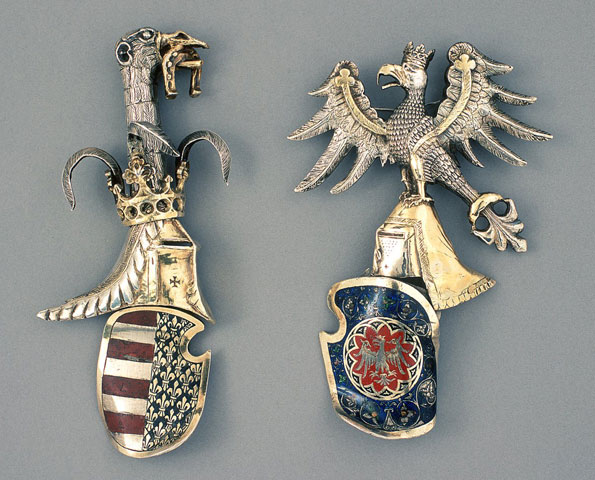
10 Facts about Nicholaa de la Haye that you may not know…

King John’s Right Hand Lady: The Story of Nicholaa de la Haye
Tomb effigy of Nicholaa de la Haye, St Michael’s Church, Swaton

As you may have noticed, Nicholaa de la Haye is a favourite of mine. She is the subject of my 5th book, King John’s Right Hand Lady: The Story of Nicholaa de la Haye. She was one of King John’s most stalwart supporters. She held Lincoln Castle against all-comers during the First Barons’ War which followed the sealing of Magna Carta in 1215. Her career is the more remarkable because Nicholaa was a woman in command of a castle in her own right. And she masterminded its defence against the might of the rebel barons and their French allies, even though the city of Lincoln was also against her.

So, who was she?

10 Things about Nicholaa de la Haye that you may not know…

1. Nicholaa had both English and Norman ancestry. Unlike many Normans, Nicholaa could trace her Lincolnshire roots, through her paternal grandmother, Muriel, to before the Norman Conquest; her grandmother’s grandfather was Colswein of Lincoln, an Englishman who had found favour with William the Conqueror in the years after the Conquest. Nicholaa’s father was Richard de la Haye, whose family originated from La Haye-du-Puits in Normandy, and was distantly related, through marriage, to William the Conqueror. Nicholaa’s mother was Matilda de Vernon, a niece of Baldwin de Redvers, Earl of Devon, the first magnate to rebel against King Stephen when he stole the throne from Empress Matilda.

2. Nicholaa was hereditary constable of Lincoln Castle. Just like her father and grandfather before her, Nicholaa held Lincoln Castle for the king. A charter dated between 1155 and 1158, issued by Henry II, confirmed the succession of Richard de la Haye to his father in all of his father’s lands in Lincolnshire, including the constableship of Lincoln Castle.

King John’s Right Hand Lady: The Story of Nicholaa de la Haye
The Charte aux lacs d’Amour

3. Nicholaa was the oldest of three sisters. Her sister Gila (or Julia) married Richard du Hommet, the grandson and son of successive constables of Normandy. In 1191 a charter was issued to Gila and Richard, known as the charte aux lacs d’amour (the charter of the laces of love), which had laces attached to the seal on which was written a love poem: ‘I am a pledge of love. Do not give me away. May whoever separates our love receive death’. Nicholaa’s other sister, Isabel de la Haye married William de Rollos, who was probably from Bourne, in Lincolnshire. The Rollos family returned to Normandy during the reign of King John.

4. Nicholaa’s first husband was William Fitz Erneis, who may have been a younger son of Robert Fitz Erneis, a minor Lincolnshire lord. Nicholaa and William had one surviving child, a daughter named Matilda, before William died in 1178. Nicholaa would later pay a fine of 300 marks to King Richard I so that she could marry her daughter to whomever she wished except, of course, to an enemy of the king. Nicholaa was still accounting for this debt until 1212. In 1201, she still owed 40 marks and a palfrey (a horse).

5. Before 1185, Nicholaa had remarried, this time to Gerard de Camville, son of Richard de Camville, lord of Middleton Stoney in Oxfordshire. A family with an impressive record of royal service, Richard had died in Italy in 1176 while escorting the king’s daughter, Joanna, to her wedding with King William of Sicily. Gerard’s half-brother, also called Richard, accompanied Richard the Lionheart on Crusade; this Richard de Camville was made governor of Cyprus before dying at Acre in 1191. Gerard himself served the kings Henry II, Richard the Lionheart and John. He was Constable of Lincoln Castle by right of his wife and sheriff of Lincolnshire on two occasions.

6. Nicholaa first comes to the attention of the chroniclers in 1191, when Prince John led the opposition to, William Longchamp, the man left in charge of England during Richard the Lionheart’s absence on crusade. Longchamp wanted Lincoln Castle for one of his friends and determined to take it. Gerard sought the help of Prince John swearing fealty to him at Nottingham, leaving to Nicholaa to hold the castle. William Longchamp hired a force of mercenaries and laid siege to the castle in Gerard’s absence. The formidable Nicholaa refused to yield, holding out for 40 days before Longchamp gave up and went home. Amusingly, Richard of Devizes said of this defence of Lincoln Castle, that she did it ‘without thinking of anything womanly’.

King John’s Right Hand Lady: The Story of Nicholaa de la Haye
The kings Nicholaa served: Henry II, Richard I King John and Henry III, Lincoln Cathedral

7. By the time the king arrived home in 1194, John had fled to France, leaving his supporters to face the music. On 31 March 1194, on the first day of his council at Nottingham, King Richard dispossessed Gerard de Camville of the castle and shrievalty of Lincoln. And on 2 April, Gerard was charged with harbouring outlaws (wonder if they mean Robin Hood?), treason for failing to answer the king’s justices’ summons over the harbouring of the said outlaws, and for taking up arms and aiding John in taking the castles of Tickhill and Nottingham. The outcome of the proceedings is not recorded, but given that Gerard was fined 2,000 marks to recover the king’s good will and his lands, we can assume that the judges did not find in his favour.

8. When Richard the Lionheart died on 6 April 1199 and was succeeded by his brother, John, Nicholaa and Gerard de Camville were restored to favour and to Lincoln Castle. Gerard was also appointed sheriff of Lincolnshire and served in that office for the next six years, becoming ‘a greater man than ever.’ In November 1200, Nicholaa and Gerard welcomed the kings of England and Scotland to Lincoln, where King William the Lion paid homage to King John outside the city walls.

King John’s Right Hand Lady: The Story of Nicholaa de la Haye
The Observatory Tower, Lincoln Castle

9. Gerard died in December 1214, leaving Nicholaa in command of Lincoln Castle. In 1216, she was besieged by a force of rebel barons who had taken up arms against King John in the aftermath of the issuing of Magna Carta. Nicholaa paid them off – they stopped attacking the castle but remained in the city. In the same year, Nicholaa met King John at the East Gate of Lincoln Castle, with the castle’s keys in her hand, offering to resign her position as constable, citing her weariness and great age (she was in her 60s). John refused, telling her to remain in post until he ordered otherwise.

10. On 18 October 1216, at Newark Castle, in one of his final acts and just hours before his death, King John appointed Nicholaa de la Haye as sheriff of Lincolnshire. She was the first woman in English history to be appointed to the office of sheriff in her own right – but she would not be the last.

King John’s Right Hand Lady: The Story of Nicholaa de la Haye
Depiction of the 1217 Battle of Lincoln from Matthew Paris

11. (Oops!) For 7 months, from October 1216 to May 1217, Lincoln Castle was once again under siege by a force of English rebel barons and their French allies under the command of the Comte de Perche. Nicholaa directed the castle’s defence until royalist forces could come to her aid. On 20 May 1217, William Marshal and the royalist army came to her relief, fighting the Battle of Lincoln through the city’s streets.

12. (double oops!) There was a rise in the number of baby girls named Nicholaa, in Lincolnshire, in the 13th century.

13. Have a listen to the A Slice of Medieval episode dedicated to Nicholaa de la Haye, where Derek Birks and I discuss the ins and outs – and highs and lows – of Nicholaa’s career.

Sources:

Richard of Devizes, The Chronicle of Richard of Devizes; Roger of Howden (Hoveden), The Annals of Roger of HowdenThe Plantagenet Chronicles edited by Elizabeth Hallam; Brassey’s Battles by John Laffin; 1215 The Year of Magna Carta by Danny Danziger & John Gillingham; The Life and times of King John by Maurice Ashley; The Plantagenets, the Kings Who Made England by Dan Jones; England Under the Norman and Angevin Kings  by Robert Bartlett; lincolnshirelife.co.uk; catherinehanley.co.uk; magnacarta800th.com; lothene.org; lincolncastle.com; The Sheriff: The Man and His Office by Irene Gladwin; Louise Wilkinson, Women in Thirteenth Century Lincolnshire; Richard Huscraft, Tales from the Long Twelfth Century; J.W.F. Hill, Medieval Lincoln; swaton.org.uk; oxforddnb.com; Ingulph, Ingulph’ Chronicle of the Abbey of Croyland; Stephen Church, King John: England, Magna Carta and the Making of a Tyrant; Marc Morris, King John; Pipe Rolls; Red Book of the Exchequer

*

My Books

Signed, dedicated copies of all my books are available through my online store.

Out now: Scotland’s Medieval Queens

Books by Sharon Bennett Connolly

Scotland’s history is dramatic, violent and bloody. Being England’s northern neighbour has never been easy. Scotland’s queens have had to deal with war, murder, imprisonment, political rivalries and open betrayal. They have loved and lost, raised kings and queens, ruled and died for Scotland. From St Margaret, who became one of the patron saints of Scotland, to Elizabeth de Burgh and the dramatic story of the Scottish Wars of Independence, to the love story and tragedy of Joan Beaufort, to Margaret of Denmark and the dawn of the Renaissance, Scotland’s Medieval Queens have seen it all. This is the story of Scotland through their eyes.

Scotland’s Medieval Queens gives a thorough grounding in the history of the women who ruled Scotland at the side of its kings, often in the shadows, but just as interesting in their lives beyond the spotlight. It’s not a subject that has been widely covered, and Sharon is a pioneer in bringing that information into accessible history.’ Elizabeth Chadwick (New York Times bestselling author)

Available now from Amazon and Pen and Sword Books

Also by Sharon Bennett Connolly:

Books by Sharon Bennett Connolly

Heroines of the Tudor World tells the stories of the most remarkable women from European history in the time of the Tudor dynasty, 1485-1603. These are the women who ruled, the women who founded dynasties, the women who fought for religious freedom, their families and love. Heroines of the Tudor World is now available for pre-order from Amberley Publishing and Amazon UK. Women of the Anarchy demonstrates how Empress Matilda and Matilda of Boulogne, unable to wield a sword themselves, were prime movers in this time of conflict and lawlessness. It shows how their strengths, weaknesses, and personal ambitions swung the fortunes of war one way – and then the other. Available from Bookshop.orgAmberley Publishing and Amazon UKKing John’s Right-Hand Lady: The Story of Nicholaa de la Haye is the story of a truly remarkable lady, the hereditary constable of Lincoln Castle and the first woman in England to be appointed sheriff in her own right. Available from all good bookshops Pen & Sword Booksbookshop.org and Amazon

Royal Historical Society

Defenders of the Norman Crown: The Rise and Fall of the Warenne Earls of Surrey tells the fascinating story of the Warenne dynasty, from its origins in Normandy, through the Conquest, Magna Carta, the wars and marriages that led to its ultimate demise in the reign of Edward III. Available from Pen & Sword BooksAmazon in the UK and US, and Bookshop.orgLadies of Magna Carta: Women of Influence in Thirteenth Century England looks into the relationships of the various noble families of the 13th century, and how they were affected by the Barons’ Wars, Magna Carta and its aftermath; the bonds that were formed and those that were broken. It is now available in paperback and hardback from Pen & SwordAmazon, and Bookshop.orgHeroines of the Medieval World tells the stories of some of the most remarkable women from Medieval history, from Eleanor of Aquitaine to Julian of Norwich. Available now from Amberley Publishing and Amazon, and Bookshop.orgSilk and the Sword: The Women of the Norman Conquest traces the fortunes of the women who had a significant role to play in the momentous events of 1066. Available now from Amazon,  Amberley Publishing, and Bookshop.org.

Alternate Endings: An anthology of historical fiction short stories including Long Live the King… which is my take what might have happened had King John not died in October 1216. Available in paperback and kindle from Amazon.

Podcast:

Have a listen to the A Slice of Medieval podcast, which I co-host with Historical fiction novelist Derek Birks. Derek and I welcome guests, such as Bernard Cornwell and Elizabeth Chadwick, and discuss a wide range of topics in medieval history, from significant events to the personalities involved.

Every episode is also now available on YouTube.

*

Signed and dedicated copies of all my books are available through my online store.

For forthcoming online and in-person talks, please check out my Events Page.

You can be the first to read new articles by clicking the ‘Follow’ button, liking our Facebook page or joining me on TwitterThreadsBluesky and Instagram.

©2023 Sharon Bennett Connolly FRHistS