Judith of Flanders, Countess of Northumberland

History...the Interesting Bits
Judith of Flanders

Judith of Flanders was born sometime in the early 1030s. Her father was Baldwin IV, Count of Flanders; he died in 1035, when Judith was, at most, five years old and possibly still only a baby.

Baldwin had been count since the age of seven, from 987. His first wife was Orgive of Luxembourg, the mother of Baldwin’s son and heir, Baldwin V, who was born in 1012. Orgive died in 1030. Their son, Baldwin V, married Adele of France, the second daughter of Robert II (the Pious), King of France, and they had at least three children together, including Baldwin VI, Count of Flanders, and Matilda of Flanders, Duchess of Normandy and Queen of England as the wife of William the Conqueror. After Orgive’s death, Baldwin IV married again. In about 1031 he wed Eleanor of Normandy, the daughter of Baldwin’s neighbour, Richard II, Duke of Normandy, and his wife, Judith of Brittany. Eleanor’s brother was Robert I, Duke of Normandy, the father of William the Conqueror, who became Duke of Normandy and King of England. Eleanor’s daughter and only child Judith, therefore, was a first cousin of William the Conqueror, the future King of England, as well as aunt of his wife, Matilda.

When her father died in 1035, Judith’s older brother, who was about twenty years her senior, succeeded as Count Baldwin V; it would be he who decided on Judith’s future when the time came for her to marry. We know nothing of Judith’s childhood or level of education. As the daughter of a count, expected to make a good marriage into another ruling or noble family, she would have been taught how to run a large household, dancing, embroidery and possibly some languages, such as Latin. It is unlikely, however, that she was taught to read and write, skills usually reserved for members of the Church. It is possible she was raised alongside her niece, Matilda, who was of a similar age to Judith.
History...the Interesting Bits
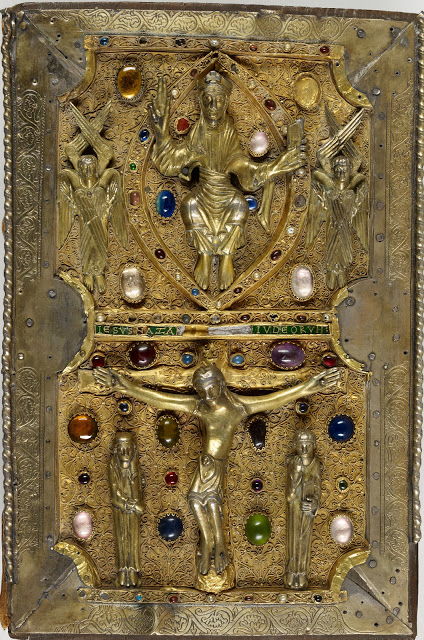
Cover of one of the four gospels commissioned by Judith of Flanders

In the late summer or autumn of 1051, Judith was married to Tostig, a son of the powerful Earl Godwin of Wessex and his wife, Gytha. And when the family fell foul of King Edward the Confessor, Judith accompanied them into exile; back to her homeland of Flanders. Tostig was probably the third eldest son of Godwin and Gytha of Wessex, one of his older brothers being the future King Harold II of England. He would have been in his early twenties at the time of his marriage and the family’s subsequent exile; Judith was no more than six years younger than him, which would suggest she was at least fifteen years old at the time of her marriage.

Judith would have returned to her new homeland of England when Tostig and his family forced their return from exile in 1052. After some vigorous negotiations in London, an uneasy peace was restored between Earl Godwin and the king. Judith and Tostig would have finally been able to settle down to married life, following months of uncertainty and upheaval. Although it is impossible to say for certain, they were probably given one of Godwin’s many comital estates, somewhere in Wessex, in which to set up their household. Their marriage appears to have been a successful one, with no rumours of infidelity recorded by the various chroniclers of the time. They are thought to have had two sons together, Skuli Tostisson Kongsfostre and Ketil Tostisson, born in 1052 and 1054, respectively.

Tostig was created earl of Northumbria in 1055 and spent the next few years sparring with Malcolm III, King of Scots. However, with peace restored Tostig left on pilgrimage to Rome in 1061, taking Judith with him. They were accompanied by several English bishops, including Ealdred, bishop of Worcester, who had just been made archbishop of York by King Edward, and was travelling to Rome to receive his pallium.

Their party reached Rome in the spring of 1061, where they were received honourably by Pope Nicholas; Tostig given the honour of attending a synod, possibly that held on 15 April at Easter 1061, at which Tostig is said to have sat next to the pope. Shortly after departing Rome for their homeward journey, Tostig’s party were caught up in a local dispute between the papacy and the Tuscan nobility; they were ambushed while travelling along the Via Cassia, by the Count of Galeria. Tostig was able to escape by the ruse of one of his own thegns pretending to be the earl. Judith and a large portion of the party had gone on ahead and were unaware for some time of what had befallen Tostig. She must have been relieved to hear of the failure of the attack when Tostig eventually caught up with her.
History...the Interesting Bits
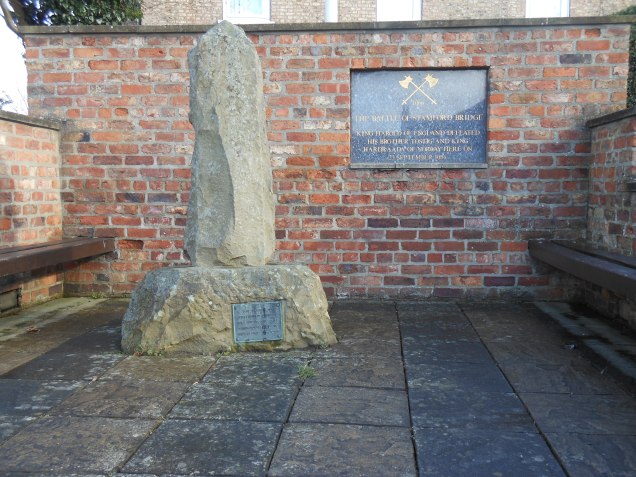
Memorial to the Battle of Stamford Bridge, York

Judith appears to have been a very pious individual, although some stories have come down to us of disagreements between the Earl and his countess, and the Church. One story from Symeon of Durham tells of Judith’s attempts to circumvent the rules of the community of St Cuthbert. Despite there being a specific injunction forbidding women to enter the precincts of the church in which lay the shrine of St Cuthbert, Judith was determined to get around this. She sent one of her own maidservants to attempt entry, but the poor girl fell ill as soon as she crossed the boundary and died shortly afterwards, clearly demonstrating the power of St Cuthbert’s will. We can assume that Judith gave up trying to enter the shrine after that! Judith sent gifts to the cathedral – including a crucifix, church ornaments and images of the Virgin Mary and St John the Evangelist, decorated in gold and silver – to make amends for her disastrous attempt to break the rules.

Despite this, the relationship between the couple and the Church at Durham was generally cordial and mutually appreciated. The earl and countess were notable for almsgiving in Northumbria, and for their generosity towards the community of St Cuthbert. In return Æthelwine, Bishop of Durham, was generous enough to give Judith a relic containing some of St Oswine’s hair. As a consequence, Tostig and Judith are both commemorated in the Durham Liber Vitae.

In 1065, rebellion in Northumbria, and the lack of support from his fellow nobles – including his brother Harold – saw Tostig and his family banished from England; he and Judith, their children and their entire household, crossed the English Channel on 1 November 1065. They made their way to Flanders, to seek refuge with Judith’s brother, Count Baldwin, where they were warmly welcomed just a few days before Christmas.
History...the Interesting Bits
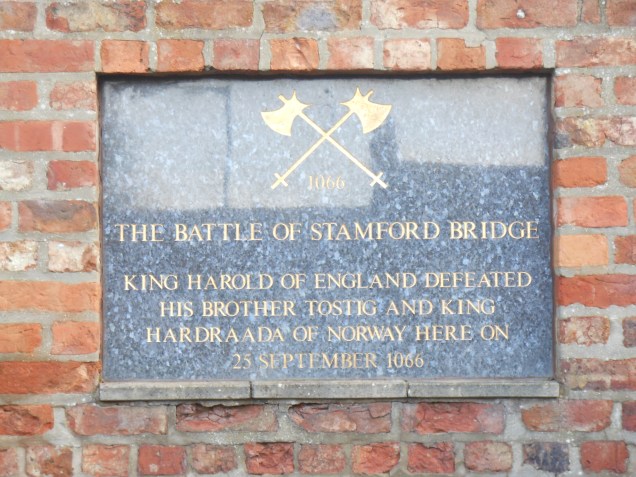
Memorial Plaque, Stamford Bridge, York

However, everything changed in January 1066, with the death of Edward the Confessor and the accession of Tostig’s brother, Harold, to the English throne. Not one to miss an opportunity, Tostig started raiding English shores, before invading from Scotland with his ally Harald Hardrada, King of Norway. They defeated the Northumbrians at the Battle of Fulford, near York, on 20 September, before facing Tostig’s brother, King Harold II, across the battlefield of Stamford Bridge 5 days later. King Harold proved victorious and Tostig and his ally, Harald Hardrada, were both killed in the fighting.

Judith’s whereabouts during Tostig’s invasion are not mentioned. It is possible that she stayed safe in Flanders with her family and two young sons, the oldest of whom was about fourteen by 1066. However, she may have travelled with her husband; there is a suggestion that at least one of her sons fought at Stamford Bridge and travelled to Norway with the survivors. Following Tostig’s defeat at Stamford Bridge, and Harold’s subsequent death at the Battle of Hastings, Judith’s two sons by Tostig eventually sought refuge with King Olaf ‘the Peaceable’ of Norway, Harald Hardrada’s son who had been allowed to return home following his father’s defeat and death at Stamford Bridge. Little is known of their movements after that, other than that the oldest, Skuli Tostisson Kongsfostre, must have married and had children as he was the ancestor of King Inge II of Norway.

History...the Interesting Bits
Wedding of Judith of Flanders and Welf IV, Duke of Bavaria

For a time, Judith remained in Flanders from where her older, half-brother, Count Baldwin V, arranged a second marriage for her in about 1070, to Welf IV, the newly created Duke of Bavaria. The couple were to have two sons and a daughter; Welf, who succeeded his father as Duke of Bavaria and died in 1119, Henry and Kunizza, who married Count Frederick of Diessen and died in 1120. Henry succeeded his brother as Duke of Bavaria and died in 1126; he had at least seven children by his wife, Wulfhilde of Saxony.

A patron of the arts, Judith is renowned for the commissioning of four gospel books, luxurious creations produced in England, probably at Winchester. When Judith left England, she took these gospels, with other manuscripts and relics in her private collection, with her to Flanders. After she remarried, they accompanied her to southern Germany.

On 12 March 1094, with the approval of her husband and sons, Judith drew up a list of bequests. She bequeathed the four gospels and other treasures, to the monastery at Weingarten, a foundation of her husband’s family, thus helping to disseminate Anglo-Saxon art throughout southern Europe. Among the bequests was also a relic of Christ’s blood, given to her by her father. She died a year later, on 5 March 1095, and was buried at the Abbey of Weingarten. Judith is remembered at Weingarten as a widowed queen of England, perhaps a testimony to how close her first husband got to the English throne.

*

This article, Judith of Flanders, Countess of Northumberland, first appeared on Mary Anne Yarde’s wonderful blog Myths, Legends, Book and Coffee Pots.

*

Images:

Courtesy of Wikipedia, except Stamford Bridge memorials ©2018 Sharon Bennett Connolly and Judith’s gospel courtesy of the British Library.

Sources:

The English and the Norman Conquest by Dr Ann Williams; Brewer’s British Royalty by David Williamson; Britain’s Royal Families, the Complete Genealogy by Alison Weir; The Wordsworth Dictionary of British History by JP Kenyon; The Norman Conquest by Marc Morris; Harold, the King Who Fell at Hastings by Peter Rex; The Anglo-Saxons in 100 Facts by Martin Wall; The Anglo-Saxon Age by Martin Wall; Kings, Queens, Bones and Bastards by David Hilliam; The Mammoth Book of British kings & Queens by Mike Ashley; The Oxford Companion to British History Edited by John Cannon; The Anglo-Saxon Chronicles translated and edited by Michael Swaton; The Anglo-Saxon Chronicle translated by James Ingram; Queen Emma and the Vikings by Harriett O’Brien; The Bayeux Tapestry by Carola Hicks; On the Spindle Side: the Kinswomen of Earl Godwin of Wessex by Ann Williams; oxforddnb.com.

*

My Books

Signed, dedicated copies of all my books are available through my online store.

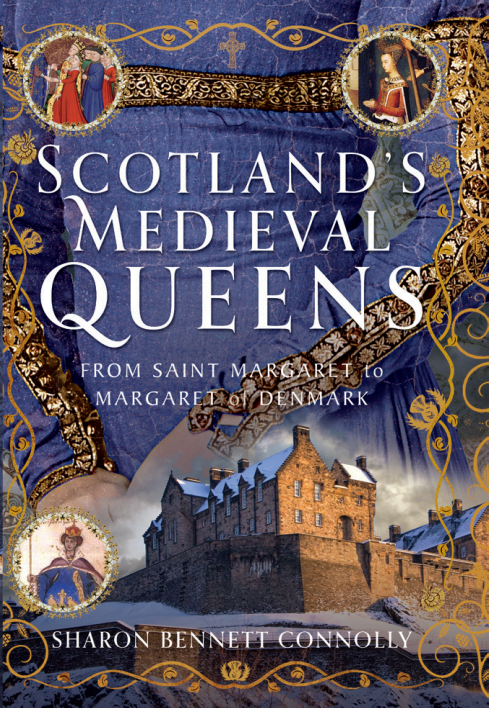
OUT NOW! Scotland’s Medieval Queens
Books by Sharon Bennett Connolly

Scotland’s history is dramatic, violent and bloody. Being England’s northern neighbour has never been easy. Scotland’s queens have had to deal with war, murder, imprisonment, political rivalries and open betrayal. They have loved and lost, raised kings and queens, ruled and died for Scotland. From St Margaret, who became one of the patron saints of Scotland, to Elizabeth de Burgh and the dramatic story of the Scottish Wars of Independence, to the love story and tragedy of Joan Beaufort, to Margaret of Denmark and the dawn of the Renaissance, Scotland’s Medieval Queens have seen it all. This is the story of Scotland through their eyes.

Scotland’s Medieval Queens gives a thorough grounding in the history of the women who ruled Scotland at the side of its kings, often in the shadows, but just as interesting in their lives beyond the spotlight. It’s not a subject that has been widely covered, and Sharon is a pioneer in bringing that information into accessible history.’ Elizabeth Chadwick (New York Times bestselling author)

Available now from Amazon and Pen and Sword Books

Also by Sharon Bennett Connolly:
Books by Sharon Bennett Connolly

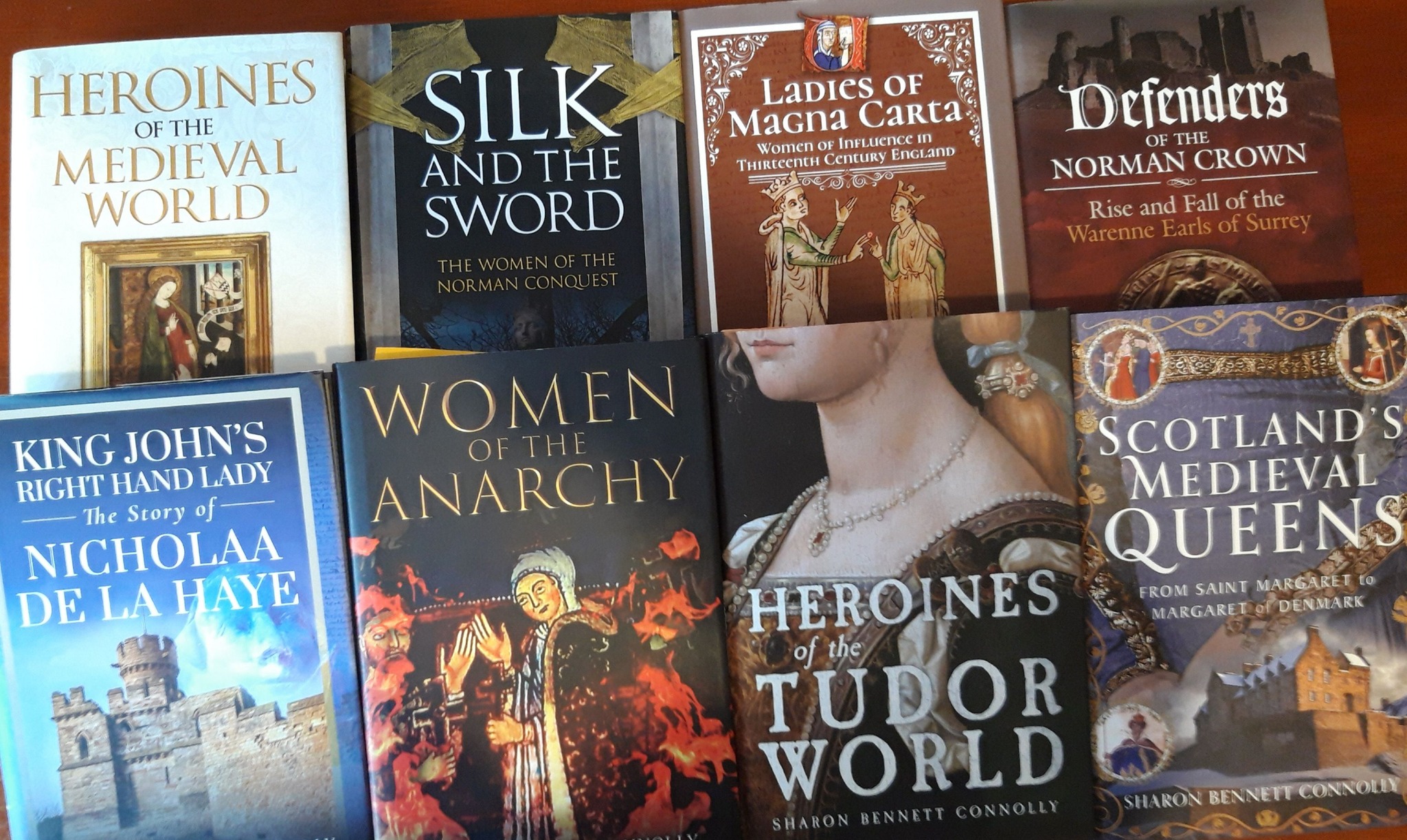
Heroines of the Tudor World tells the stories of the most remarkable women from European history in the time of the Tudor dynasty, 1485-1603. These are the women who ruled, the women who founded dynasties, the women who fought for religious freedom, their families and love. Heroines of the Tudor World is now available for pre-order from Amberley Publishing and Amazon UK. Women of the Anarchy demonstrates how Empress Matilda and Matilda of Boulogne, unable to wield a sword themselves, were prime movers in this time of conflict and lawlessness. It shows how their strengths, weaknesses, and personal ambitions swung the fortunes of war one way – and then the other. Available from Bookshop.orgAmberley Publishing and Amazon UKKing John’s Right-Hand Lady: The Story of Nicholaa de la Haye is the story of a truly remarkable lady, the hereditary constable of Lincoln Castle and the first woman in England to be appointed sheriff in her own right. Available from all good bookshops Pen & Sword Booksbookshop.org and Amazon

Historical Novel Society

Defenders of the Norman Crown: The Rise and Fall of the Warenne Earls of Surrey tells the fascinating story of the Warenne dynasty, from its origins in Normandy, through the Conquest, Magna Carta, the wars and marriages that led to its ultimate demise in the reign of Edward III. Available from Pen & Sword BooksAmazon in the UK and US, and Bookshop.orgLadies of Magna Carta: Women of Influence in Thirteenth Century England looks into the relationships of the various noble families of the 13th century, and how they were affected by the Barons’ Wars, Magna Carta and its aftermath; the bonds that were formed and those that were broken. It is now available in paperback and hardback from Pen & SwordAmazon, and Bookshop.orgHeroines of the Medieval World tells the stories of some of the most remarkable women from Medieval history, from Eleanor of Aquitaine to Julian of Norwich. Available now from Amberley Publishing and Amazon, and Bookshop.orgSilk and the Sword: The Women of the Norman Conquest traces the fortunes of the women who had a significant role to play in the momentous events of 1066. Available now from Amazon,  Amberley Publishing, and Bookshop.org.

Alternate Endings: An anthology of historical fiction short stories including Long Live the King… which is my take what might have happened had King John not died in October 1216. Available in paperback and kindle from Amazon.

Podcast:

A Slice of Medieval

Have a listen to the A Slice of Medieval podcast, which I co-host with Historical fiction novelist Derek Birks. Derek and I welcome guests, such as Bernard Cornwell, and discuss a wide range of topics in medieval history, from significant events to the personalities involved. A recent episode saw Derek and I looking at the years before the Norman Conquest in A Triumvirate of Earls.

Every episode is also now available on YouTube.

*

Don’t forget! Signed and dedicated copies of all my books are available through my online store.

For forthcoming online and in-person talks, please check out my Events Page.

You can be the first to read new articles by clicking the ‘Follow’ button, liking our Facebook page or joining me on TwitterThreads and Instagram.

©2019 Sharon Bennett Connolly FRHistS
Edgar – The Boy Who Wouldn’t Be King

edgar_the_aetheling
Edgar the Aetheling

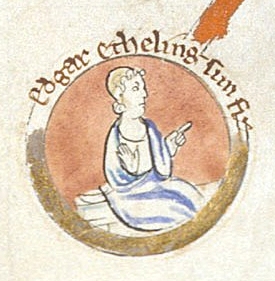
Edgar the Ætheling was the only son of Edward the Exile and his wife, Agatha. His father was the son of Edmund II Ironside, king of England in 1016; Edward’s grandfather was, therefore, Ӕthelred II (the Unready) and his uncle was Edward the Confessor, England’s king from 1042 until 1066. When his father was murdered in 1016 Edward and his younger brother, Edmund, were sent into exile of the continent by England’s new king, Cnut.

It is thought that Cnut intended that they would be killed, but the boys were protected by the king of Sweden and sent on to safety in Kiev, at the court of its prince, Jaroslav. Around 1043 Edward married Agatha, probably the daughter Liudolf, margrave of West Friesland and a relative of Emperor Heinrich III. Margaret, the oldest of three children, was born in either 1045 or 1046; her sister, Christina was born around 1050 and her brother Edgar, the Ӕtheling was born sometime between 1052 and 1056.

The family may have spent their whole lives in European exile, were it not for Edward the Confessor lacking an heir to the English throne; although Edward was married to Edith Godwinson, the couple remained childless. Sometime in 1054 Edward sent an embassy to Edward the Exile, to bring him back to England as ӕtheling, heir to the throne. The family could not travel immediately, possibly because Agatha was pregnant with Edgar, and only arrived in England in 1057, having journeyed by ship, provided by Emperor Heinrich III.

Just days after their return Edward the Exile was dead, whether by nefarious means or simply a twist of fate is uncertain. The suspicion has been raised that Edward’s rival for the throne, Harold Godwinson – the future Harold II – may have taken the opportunity to remove his rival; although it was Harold who brought Edward back to England, so surely, had he intended murder, he would have done it sooner?

Whatever the circumstances, the death of Edward the Exile was a blow for Edward the Confessor’s dynastic hopes. Little Edgar, now the ӕtheling was much too young to assume a political role. He and his sisters, along with their mother, were now in the protection of King Edward. They continued to live at court and by January 1066, when Edward the Confessor died, Margaret was approaching her twentieth birthday, while Edgar could have been as young as ten and was probably no older than fourteen. Due to his tender years, and lack of powerful allies, Edgar was passed over as a candidate for the throne in preference for the older and more experienced Harold Godwinson; who was crowned as Harold II.

edward_the_exile
Edward the Exile. Edgar’s father

Following Harold’s death at the Battle of Hastings in October 1066, Edgar was proclaimed king in London by some of his supporters, led by Archbishop Ealdred of York, ‘as was his proper due by birth’¹; he was also promised backing by the earls Edwin and Morcar, brothers-in-law of Harold II but their support did not materialise, and without it Edgar’s cause was hopeless.  He submitted to William of Normandy, at Berkamsted, in early December. William treated Edgar honourably, allowing him his life and freedom, and giving him land.

However, by 1068 Edgar the Ӕtheling had become involved in the opposition to Norman rule, which had been festering in northern England. When events turned against him he fled to Scotland taking his mother and sisters along with him. The family was warmly received at Dunfermline by Scotland’s king, Malcolm III Canmore. At the time, Malcolm was married to Ingebiorg and the father of two sons, Duncan and Donald. Whether Ingebiorg died or was put aside, seems uncertain; her sons were exiled from court, although Duncan would eventually reign as Duncan II he was killed at the Battle of Monthechin in 1094.

Although we do not know Ingebiorg’s fate, we do know that in 1069 Malcolm asked Edgar and his mother for Margaret’s hand in marriage. Margaret was reluctant to agree to the marriage, she was more inclined to a religious life and had hoped to become a nun. Nonetheless, with pressure from Malcolm and, possibly, her own sense of obligation to the king who was sheltering her family, she eventually accepted his proposal. They were married at Dunfermline sometime in 1069 or 1070 and, by all accounts, it seems to have been a happy and successful marriage.

330px-stmargareth_edinburgh_castle2
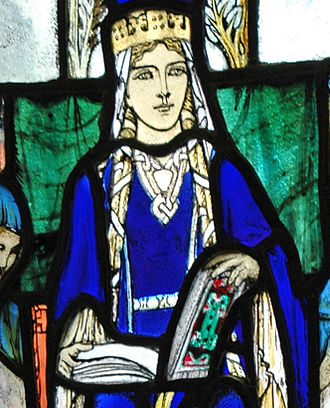
St Margaret, queen of Scotland

In 1069, Edgar was back in northern England, at the head of the Northumbrian rebels who entered York. After defeat at York, he fled again to Scotland, but returned to lead the Northumbrian army when a Danish fleet arrived in the Humber. The army captured the Norman castle at York and killed its garrison. During the winter, Edgar narrowly evaded capture when he raided into Lincolnshire with a ship from the Danish fleet. Although he was part of the rebellion, there does not appear to have been any specific plans to make Edgar king and in 1070 William brought the full force of his wrath down on the north, systematically and brutally crushing the rebellion.

Edgar fled again to Scotland, and played no part in the 1071-2 rebellion at Ely. By 1074 he was in exile in Flanders. He was shipwrecked in the same year, while on the way to take control of the castle of Montreuil, offered to him by the French as a base from which he could torment King William. Having returned to Scotland, and on the advice of his brother-in-law, Malcolm III, Edgar submitted to William I and was established at his court. According to William of Malmesbury he remained ‘at court for many years, silently sunk into contempt through his indolence, or more mildly speaking, his simplicity’².

According to the Domesday Book, Edgar held 2 estates in Hertfordshire in 1086; Barkway and Hormead. He became close friends with 2 of the Conqueror’s sons; Robert Curthose and William Rufus. In 1086, he was sent to Apulia, another land under Norman rule, with a force of 200 knights, although the nature of his mission is unknown, the mission itself is testament to the high regard the Normans held him in. Edgar then joined Robert Curthose, duke since his father’s death in 1087, in Normandy, but was expelled from there in 1091, following a treaty between Robert and his brother, William II of England.

robert_curthose_-_ms_royal_14_b_vi
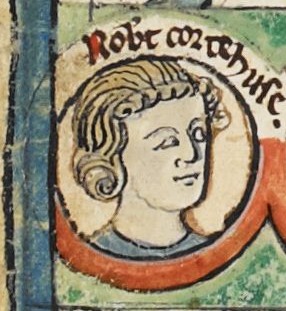
Robert Curthose, duke of Normandy

As a result, Edgar went to Scotland and encouraged Malcolm III to invade England. Peace was eventually restored and in 1093 Edgar was employed by William to escort King Malcolm to the English court. Both Malcolm and Margaret died within a few days of each other, in November 1093. In 1095 Edgar campaigned with William against the rebellious earl of Northumbria, Robert de Mowbray and by 1097 as guardian for his nephew, Edgar, in Scotland, he ‘went with an army, with the king’s support, into Scotland, and conquered the country in a severe battle’³ making his nephew and namesake king of Scotland.

According to Orderic Vitalis, in 1098 Edgar joined the First Crusade, arriving at Latakia in the Levant in June; having taken the area under his protection he then transferred it to Robert Curthose, also a Crusader. However, Orderic is the only source for Edgar’s participation and another possibility is that his journey to the Holy Land was later, in 1102 – or maybe he made 2 journeys?

Edgar returned to England in the early 1100s and fought his last action, for Robert Curthose, at the Battle of Tinchebrai in 1106. Robert was defeated by his younger brother, Henry I of England, and was imprisoned until his death in 1134. Edgar, however, was incarcerated for only a short while and was soon released;his Anglo-Saxon royal descent was no longer an issue of contention, since Henry had married Edgar’s niece, Matilda, soon after taking the crown in 1100.

matylda_zena
Matilda, Edgar’s niece and queen of England

Edgar seems to have been only a minor player in the politics and upheaval following the Norman Conquest. His political isolation meant that few took his claim to the English crown seriously. While his participation in military actions, and in relations with Scotland are mentioned in various documents, his death passed without notice – or remark. William of Malmesbury wrote of him in 1125, that ‘he now grows old in the country in privacy and quiet’². Nothing is mentioned of him thereafter; neither is it ever remarked that he had a wife of children.

If he had only been a few years older in that crucial year of 1066, his story could have been very different. instead, he simply slips from the pages of history, remembered only as England’s lost king.

*

Footnotes: ¹Anglo-Saxon Chronicle, 1066, Text D; ² William of Malmesbury, De gestis regum; ³Anglo-Saxon Chronicle, 1097, Text E.

*

Sources: Anglo-Saxon Chronicle; William of Malmesbury, De gestis regum; Oxforddnb.com; The History Today Companion to British History, Edited by juliet Gardner and Neil Wenborn; The Battle of Hastings, 1066 by m.K. Lawson; The Oxford Companion to British History edited by John Cannon; Britain’s Royal Families, the Complete Genealogy by Alison Weir; Edward the Confessor, King of England by Peter Rex; The Mammoth Book of British Kings & Queens by Mike Ashley; Brewer’s British Royalty by David Williamson; The Norman Conquest by Teresa Cole

*

Pictures courtesy of Wikipedia

*

My Books:

Signed, dedicated copies of all my books are available through my online bookshop.

OUT NOW: Scotland’s Medieval Queens

Books by Sharon Bennett Connolly

Scotland’s history is dramatic, violent and bloody. Being England’s northern neighbour has never been easy. Scotland’s queens have had to deal with war, murder, imprisonment, political rivalries and open betrayal. They have loved and lost, raised kings and queens, ruled and died for Scotland. From St Margaret, who became one of the patron saints of Scotland, to Elizabeth de Burgh and the dramatic story of the Scottish Wars of Independence, to the love story and tragedy of Joan Beaufort, to Margaret of Denmark and the dawn of the Renaissance, Scotland’s Medieval Queens have seen it all. This is the story of Scotland through their eyes.

Scotland’s Medieval Queens gives a thorough grounding in the history of the women who ruled Scotland at the side of its kings, often in the shadows, but just as interesting in their lives beyond the spotlight. It’s not a subject that has been widely covered, and Sharon is a pioneer in bringing that information into accessible history.’ Elizabeth Chadwick (New York Times bestselling author)

Available now from Amazon and Pen and Sword Books

Also by Sharon Bennett Connolly:

Books by Sharon Bennett Connolly

Heroines of the Tudor World tells the stories of the most remarkable women from European history in the time of the Tudor dynasty, 1485-1603. These are the women who ruled, the women who founded dynasties, the women who fought for religious freedom, their families and love. Heroines of the Tudor World is now available for pre-order from Amberley Publishing and Amazon UK. Women of the Anarchy demonstrates how Empress Matilda and Matilda of Boulogne, unable to wield a sword themselves, were prime movers in this time of conflict and lawlessness. It shows how their strengths, weaknesses, and personal ambitions swung the fortunes of war one way – and then the other. Available from Bookshop.orgAmberley Publishing and Amazon UKKing John’s Right-Hand Lady: The Story of Nicholaa de la Haye is the story of a truly remarkable lady, the hereditary constable of Lincoln Castle and the first woman in England to be appointed sheriff in her own right. Available from all good bookshops Pen & Sword Booksbookshop.org and Amazon

Books by Sharon Bennett Connolly

Defenders of the Norman Crown: The Rise and Fall of the Warenne Earls of Surrey tells the fascinating story of the Warenne dynasty, from its origins in Normandy, through the Conquest, Magna Carta, the wars and marriages that led to its ultimate demise in the reign of Edward III. Available from Pen & Sword BooksAmazon in the UK and US, and Bookshop.orgLadies of Magna Carta: Women of Influence in Thirteenth Century England looks into the relationships of the various noble families of the 13th century, and how they were affected by the Barons’ Wars, Magna Carta and its aftermath; the bonds that were formed and those that were broken. It is now available in paperback and hardback from Pen & SwordAmazon, and Bookshop.orgHeroines of the Medieval World tells the stories of some of the most remarkable women from Medieval history, from Eleanor of Aquitaine to Julian of Norwich. Available now from Amberley Publishing and Amazon, and Bookshop.orgSilk and the Sword: The Women of the Norman Conquest traces the fortunes of the women who had a significant role to play in the momentous events of 1066. Available now from Amazon,  Amberley Publishing, and Bookshop.org.

Alternate Endings: An anthology of historical fiction short stories including Long Live the King… which is my take what might have happened had King John not died in October 1216. Available in paperback and kindle from Amazon.

Podcast:

A Slice of Medieval

Have a listen to the A Slice of Medieval podcast, which I co-host with Historical fiction novelist Derek Birks. Derek and I welcome guests, such as Bernard Cornwell, and discuss a wide range of topics in medieval history, from significant events to the personalities involved. Definitely worth a listen!

Every episode is also now available on YouTube.

*

Don’t forget! Signed and dedicated copies of all my books are available through my online bookshop.

For forthcoming online and in-person talks, please check out my Events Page.

You can be the first to read new articles by clicking the ‘Follow’ button, liking our Facebook page or joining me on TwitterThreadsBluesky and Instagram.

©2016 Sharon Bennett Connolly FRHistS
Adela of Normandy – Daughter of the Conqueror

Adela
Adela of Normandy, Countess of Blois and Chartres

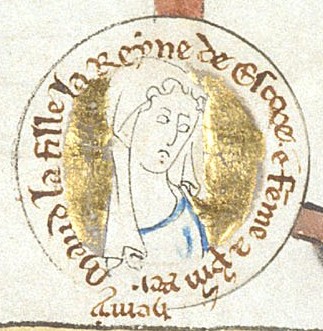
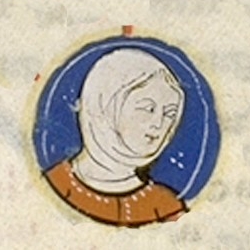
Adela of Normandy was the daughter of William the Conqueror, Duke of Normandy and King of England,  and his wife, Matilda of Flanders.

Although most sources give her date of birth around 1061/2, the Oxford Database of National Biography argues that her birth was after the Norman Conquest, as contemporary poetry suggests she was born the daughter of a king, rather than a duke.

Adela was one of nine or ten children born to William and Matilda, with at least four sisters and four brothers, although only three of her brothers survived to adulthood. Given her high level of literacy, and her patronage of poets in adulthood, it is likely that Adela was very well-educated as a child; either through tutors or possibly through residence in a convent, as happened with many daughters of the nobility at that time.

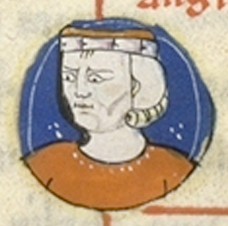
As a child, it seems, a marriage was arranged between Adela and Simon Crispin, count of Amiens; however, the groom chose to take monastic vows and an alternative marriage had to be found. As part of an alliance directed against the aggressive counts of Anjou, Adela was then  betrothed to Stephen of Blois, son of Count Theobald III, count of Blois and Champagne. Stephen was about 20 years older than his bride. The formal betrothal took place at Bourgueil and was later followed by a lavish wedding ceremony in Chartres Cathedral in about 1081.

StepanBlois_1089
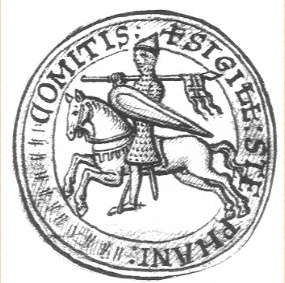
Stephen, Count of Blois and Chartres

Adela and Stephen would have up to eleven children in all, with at least two sons born before Stephen succeeded his father as Count of Blois and Champagne in 1090.

Of their five daughters, Matilda married Richard d’Avranches, 2nd Earl of Chester. Tragically, he couple drowned in the White Ship disaster which deprived Henry I of his son and heir, William. Another daughter, Eleanor, married Raoul, Count of Vermandois. He was the brother of Isabelle de Vermandois, Countess of Leicester and Surrey.

Adela’s eldest surviving son seems to have been disinherited at an early age. However, while he is described as an ‘idiot’ by some, William was married to Agnes, the daughter of Giles, Lord of Sulli, and was given the titles Count of Chartres and Lord of Sulli, but was not allowed to inherit the richer county of Blois; which went to his younger brother, Theobald.

Poetry from the time of her wedding describes Adela as valorous, learned and generous. Indeed, she seems to have been a great asset to her husband, who included her in charitable donations and even in his early judicial rulings. Adela developed a cordial relationship with Bishop Ivo of Chartres, which worked well to maintain the peace between the laity and the clergy in the county.

In 1095 Stephen of Blois joined the First Crusade, leaving Adela as head of the family and regent of his domains.  Letters that the count sent to his wife indicate a great level of affection and trust; Adela was given charge of the family’s finances. However, Stephen’s return from crusade appears of have been less than happy. Adela  believed that he had not fulfilled his crusader’s vow and her criticism may have been a contributing factor in his return to the Holy Land in 1101 – she certainly approved of it.

Theobald
Theobald IV, Count of Blois and Champagne

Stephen was killed in combat in the Holy Land, during the siege of Ramallah in May 1102. He was succeeded as Count of Blois by his 2nd surviving son, Theobald. Theobald was knighted in 1107, by which point his older brother, William, had already been removed from the succession to Blois. William inherited the lesser title of Count of Chartres.

Following Stephen’s death Adela continued to act as regent until Theobald attained his majority. Even after Theobald came of age, mother and son ruled jointly until Adela retired from public life in 1120.

Adela was particularly close to her younger brother, Henry, who would later become King Henry I of England. She even supported him against their oldest brother, Robert, when Henry claimed the English crown.

An able administrator and negotiator, Adela settled many disputes among monasteries, and even between monasteries and laymen, in her own domains and beyond. Anselm, archbishop of Canterbury during the reign of William II and Henry I, praised her skills as negotiator and peacemaker following her success at achieving a temporary truce between Anselm and her brother in 1105.

HenryBlois
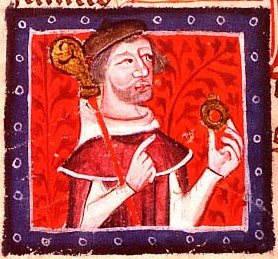
Henry of Blois, Bishop of Winchester

Anselm described her as an ardent supporter of papal reform, and enjoyed her hospitality during his exile from England. Adela hosted many other church dignitaries, including archbishop Thurstan of York and Pope Paschal II. Her family’s prestige and power was bolstered by her friendships with the leading ecclesiastic figures in both France and England.

An avid  patroness of the arts, Adela corresponded with such dignitaries as Hildebert, bishop of Le Mans and Abbot Baudri of Bourgeuil – later bishop of Dol – who both wrote poems dedicated to the countess. The book Ecclesiastical History Together with the Deeds of the Romans and the Franks, written by Hugh of Fleury, was dedicated to Adela.

One of Adela’s youngest sons, Henry of Winchester, was dedicated to the church at an early age, and was raised at the Priory of Cluny in France. He was nominated as Bishop of Winchester in 1129 and was a great support to his older brother, Stephen, when he claimed the throne of England on his uncle Henry’s death in 1135, at the expense of Henry’s daughter, Matilda

An active ruler Adela regularly toured the family’s domains, both as regent and mother of the reigning count. She also maintained links with the Anglo-Norman and Capetian kings. In 1101 Adela sent knights to help Philip I of France’s son, Louis, battling against rebels north of Paris.

Stepan_Blois
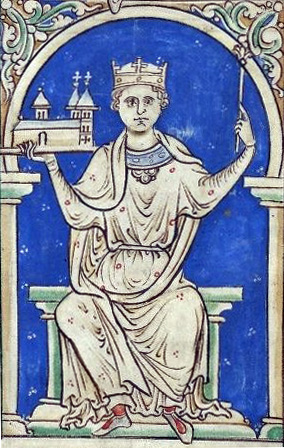
King Stephen

However, by 1107 her son Theobald had joined the revolt and relations with France were to deteriorate further in 1113 when the allied forces of Theobald, Henry I and Adela defeated a Capetian-Angevin army. After further conflict in 1118 Adela used her wealth and diplomatic skills to benefit her family.

In 1120 Adela stopped using the title of countess and retired to the Clunaic Priory of Marcigny;  the same year that her daughter Matilda died in the White Ship disaster off Barfleur in Normandy. She continued to be active in political affairs and lived to see her son, Stephen, claim the throne of England, though not the 20 years of conflict that ensued.

Aged almost 70, and having been a widow for half of her life, this most remarkable woman, Adela of Normandy, former Countess of Blois and Chartres, died in 1137, possibly on 8th March. Although later tradition has her buried with her mother at Holy Trinity in Caen, contemporary sources say she was buried at Marcigny.

*

Pictures courtesy of Wikipedia

*

Sources: England Under the Norman and Angevin Kings  by Robert Bartlett; Heroines of the Medieval World by Sharon Bennett Connolly; Silk and the Sword: The Women of the Norman Conquest by Sharon Bennett Connolly;  Brewer’s British Royalty by David Williamson; Britain’s Royal Families, the Complete Genealogy by Alison Weir; The Mammoth Book of British Kings and Queens by Mike Ashley; oxforddnb.com;  epistolae.ccnmtl.columbia.edu; womenshistory.about.com.

*

My Books

Signed, dedicated copies of all my books are available through my online bookshop.

Out now: Scotland’s Medieval Queens

Scotland’s history is dramatic, violent and bloody. Being England’s northern neighbour has never been easy. Scotland’s queens have had to deal with war, murder, imprisonment, political rivalries and open betrayal. They have loved and lost, raised kings and queens, ruled and died for Scotland. From St Margaret, who became one of the patron saints of Scotland, to Elizabeth de Burgh and the dramatic story of the Scottish Wars of Independence, to the love story and tragedy of Joan Beaufort, to Margaret of Denmark and the dawn of the Renaissance, Scotland’s Medieval Queens have seen it all. This is the story of Scotland through their eyes.

Available now from Amazon and Pen and Sword Books

Also by Sharon Bennett Connolly:

Heroines of the Tudor World tells the stories of the most remarkable women from European history in the time of the Tudor dynasty, 1485-1603. These are the women who ruled, the women who founded dynasties, the women who fought for religious freedom, their families and love. Heroines of the Tudor World is now available for pre-order from Amberley Publishing and Amazon UK. Women of the Anarchy demonstrates how Empress Matilda and Matilda of Boulogne, unable to wield a sword themselves, were prime movers in this time of conflict and lawlessness. It shows how their strengths, weaknesses, and personal ambitions swung the fortunes of war one way – and then the other. Available from Bookshop.orgAmberley Publishing and Amazon UKKing John’s Right-Hand Lady: The Story of Nicholaa de la Haye is the story of a truly remarkable lady, the hereditary constable of Lincoln Castle and the first woman in England to be appointed sheriff in her own right. Available from all good bookshops Pen & Sword Booksbookshop.org and Amazon

Defenders of the Norman Crown: The Rise and Fall of the Warenne Earls of Surrey tells the fascinating story of the Warenne dynasty, from its origins in Normandy, through the Conquest, Magna Carta, the wars and marriages that led to its ultimate demise in the reign of Edward III. Available from Pen & Sword BooksAmazon in the UK and US, and Bookshop.orgLadies of Magna Carta: Women of Influence in Thirteenth Century England looks into the relationships of the various noble families of the 13th century, and how they were affected by the Barons’ Wars, Magna Carta and its aftermath; the bonds that were formed and those that were broken. It is now available in paperback and hardback from Pen & SwordAmazon, and Bookshop.orgHeroines of the Medieval World tells the stories of some of the most remarkable women from Medieval history, from Eleanor of Aquitaine to Julian of Norwich. Available now from Amberley Publishing and Amazon, and Bookshop.orgSilk and the Sword: The Women of the Norman Conquest traces the fortunes of the women who had a significant role to play in the momentous events of 1066. Available now from Amazon,  Amberley Publishing, and Bookshop.org.

Alternate Endings: An anthology of historical fiction short stories including Long Live the King… which is my take what might have happened had King John not died in October 1216. Available in paperback and kindle from Amazon.

Podcast:

Have a listen to the A Slice of Medieval podcast, which I co-host with Historical fiction novelist Derek Birks. Derek and I welcome guests, such as Bernard Cornwell and Michael Jecks, and discuss a wide range of topics in medieval history, from significant events to the personalities involved. Every episode is also now available on YouTube.

*

Don’t forget! Signed and dedicated copies of all my books are available through my online bookshop.

For forthcoming online and in-person talks, please check out my Events Page.

You can be the first to read new articles by clicking the ‘Follow’ button, liking our Facebook page or joining me on Twitter and Instagram.

*

©2015 Sharon Bennett Connolly FRHistS.