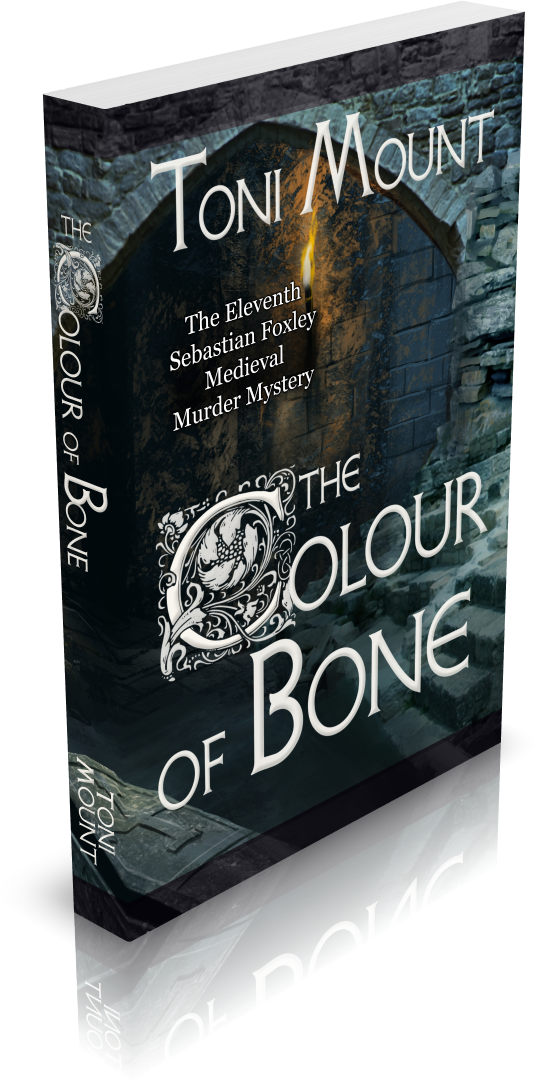
It is always a pleasure to welcome Toni Mount to History … the Interesting Bits. Toni is a brilliant historian and born storyteller and she is here today to give a glimpse of the history behind her latest Seb Foxley novel, The Colour of Darkness. If you haven’t met him yet, I really do recommend you pick up a Foxley book. They are simply delicious!
So, it’s over to Toni…
Inside the Book Trade of Late Medieval London
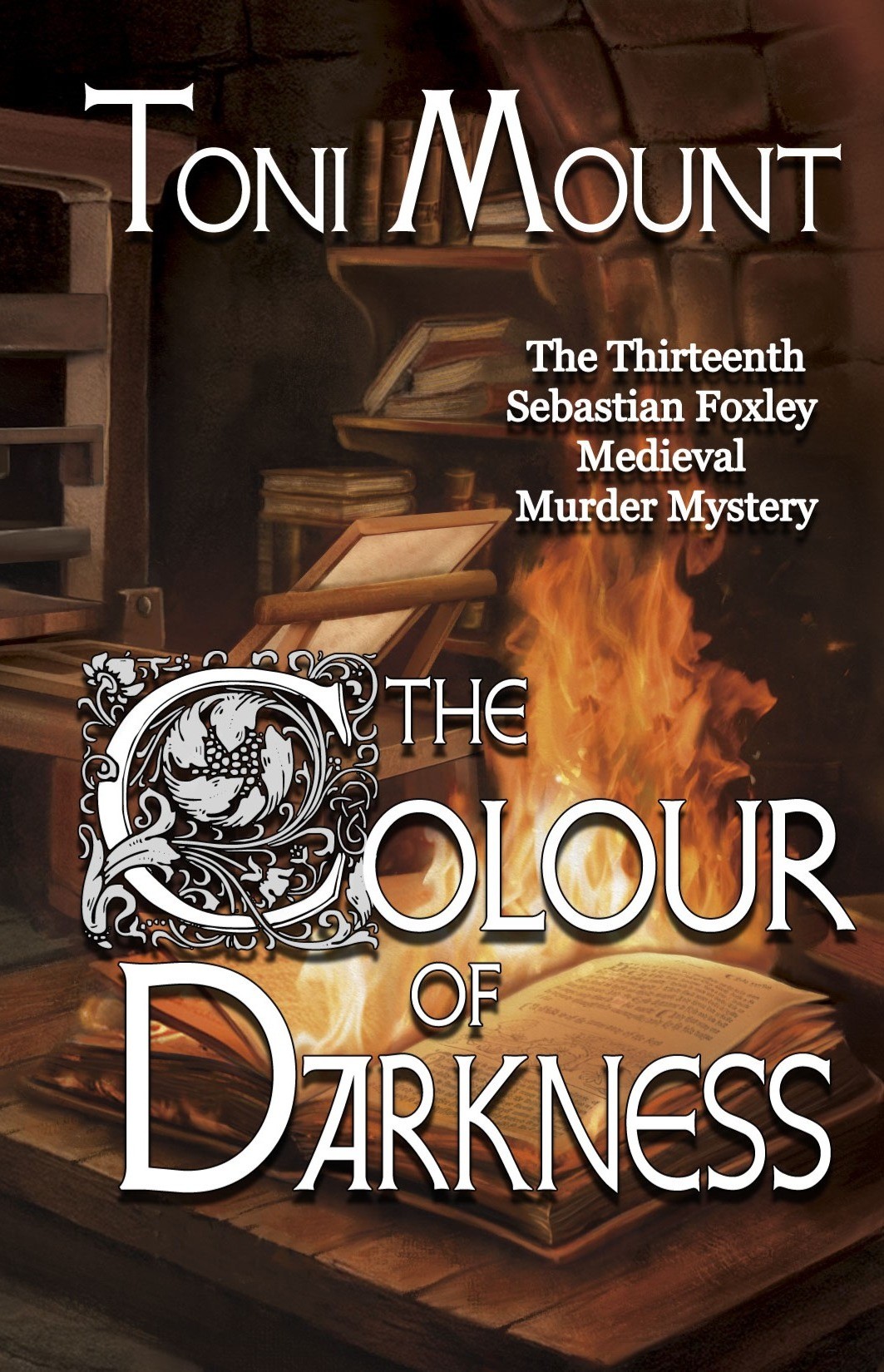
When we think about medieval London, we probably imagine grimy streets, plague and maybe a knight or two clanking through the city. But tucked within the chaos was a quiet revolution – one involving paper, ink and a growing thirst for knowledge. By the late 1400s, the book trade in London wasn’t just alive; it was thriving. And at the heart of it all stood St Paul’s Cathedral – not just a place of worship, but a book-fest for the city’s literate elite.
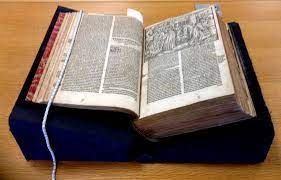
To put this in context, the printing press arrived in England when William Caxton famously set up the first one at Westminster in 1476 and the world of books was changing fast. Previously, books were hand-copied by scribes – as at the fictional Seb Foxley’s workshop in Paternoster Row, just north of St Paul’s, in my latest novel, The Colour of Darkness. Writing every page by hand meant they were expensive and slow to produce. But then came the printing press – a real game-changer.
Printing took a decade or two to catch on in England, mainly because it was a tricky procedure to master – see my next guest Blog on printing books – but once the techniques were established books could be produced faster and cheaper. More books available led to an increase in literacy, especially among the urban middle classes, clergy and educated elite. London, with its bustling population and growing trade networks, became a prime spot for this new business.
St Paul’s Cathedral: The Book Trade’s Beating Heart
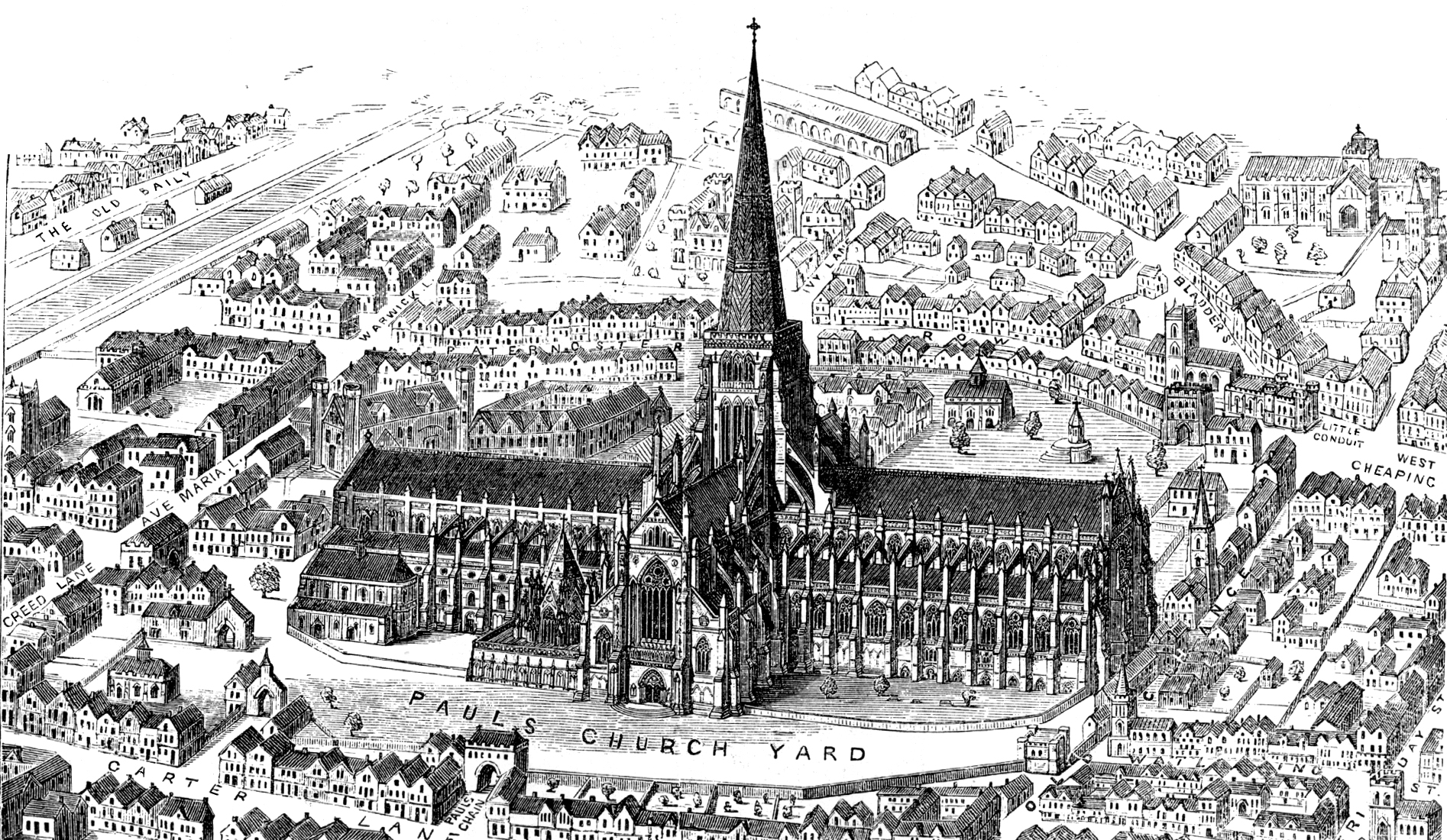
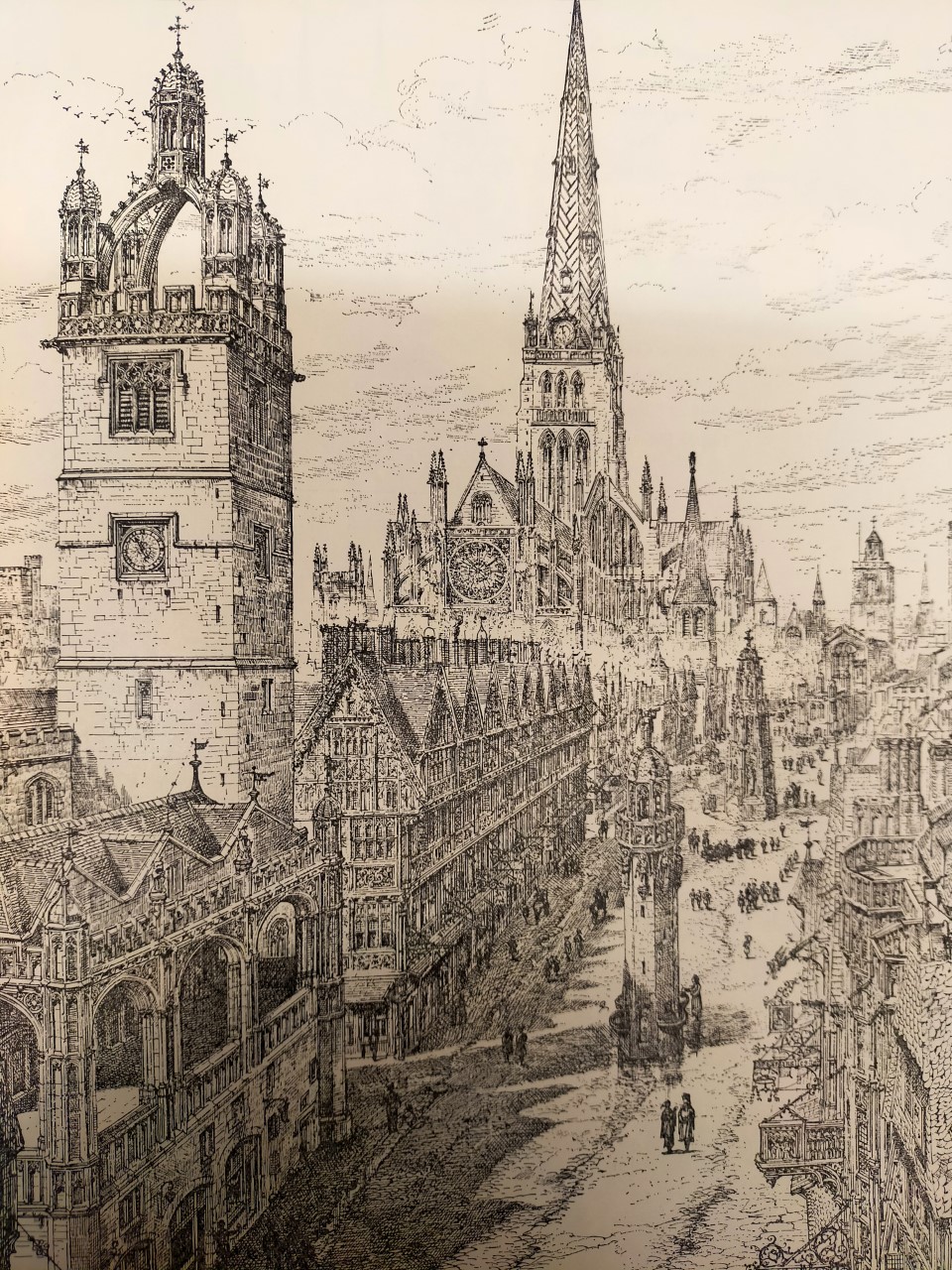
Forget the grand white dome you see today in the City of London because that was designed by Sir Christopher Wren after the Great Fire of 1666. Before that catastrophe, it was ‘Old St Paul’s’, a massive gothic structure that dominated the skyline with a spire over 400 feet tall, at least until it was struck by lightning in the reign of Elizabeth I. Its precinct and churchyard weren’t just for prayer and pigeons but, together with nearby Paternoster Row, were at the very centre of London’s book trade. In fact, Paternoster Row remained at the heart of the British publishing industry until it was destroyed by bombs during World War II.
But returning to the late fifteenth century, imagine a lively courtyard filled with wooden stalls, booksellers shouting out their latest wares, customers thumbing through new pamphlets and prayer books. The area around St Paul’s was known for its ‘stationers’ – a term that, back then, didn’t just mean a place to buy paper and pens. These were the printers, booksellers, and binders who brought the written word to the people.
Why did St Paul’s become such a hive of book-production? The cathedral’s proximity to learning helped. The Cathedral School and other educational institutions were nearby, including the Inns of Court to the west of the city where lawyers were trained and the sons of the aristocracy were schooled in the arts required for life at the royal court. The clergy needed books for sermons, study and teaching, so local demand was ensured.
Who were the Printers?
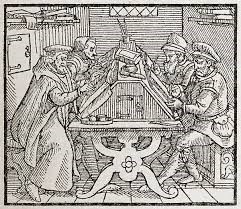
By the 1480s, London had a small but important group of professional printers. William Caxton deserves the spotlight since he was the first to introduce a press, having learned the business in Burgundy and the Low Countries. His press in Westminster produced some of the first books in English, making literature and religious texts more accessible to the public. After Caxton, his former assistant, Wynkyn de Worde, took over the operation and moved it closer to the action, by St Paul’s. De Worde knew the churchyard was where the customers would come. He printed everything from devotional tracts to almanacs and even the occasional romance or how-to guide. He’s sometimes credited with being one of the first to market printed books to a wider audience.
But printers, like the scribes before them, didn’t only create the pages. They often collated and stitched the pages before either binding them or passing them on to a specialist binder to stitch the pages into a cover. A book’s binding could range from simple stitched parchment to elaborately tooled leather with jewelled clasps. The wealthy might commission personalised bindings with their family crests. The printers often dealt with sales too or went into partnership with independent booksellers. These sellers might have a permanent stall near St Paul’s or be mobile, setting up shop at fairs or markets – wherever there were customers.
What was on the shelves?
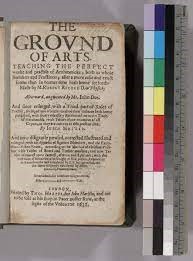
So what were Londoners reading? A lot of religious texts, unsurprisingly: sermons, Books of Hours, Psalters and the lives of popular saints. The Church was a dominant force in everyday life and owning religious books was a sign of piety and status. For this reason, the new fashion of portrait painting would frequently show the sitter with a religious book in their hands. But secular works were creeping in, too. Translations of classical texts, histories, medical manuals and even cookbooks began to appear. One popular genre was that of ‘books of courtesy’ – guides to correct behaviour, speech and etiquette for the aspiring gentleman or gentlewoman. There were also the early English romances and poetry. Caxton and de Worde printed tales of King Arthur, Chaucer’s Canterbury Tales and other stories that helped shape English literary culture down to our own times.
Not only Men’s work
While the big names in printing were all men, there is increasing evidence that women played a quiet but important role in the trade. Widows who took over their husbands’ businesses often became successful printers or booksellers in their own right. The trade was one area in medieval commerce where women participated openly, though their contributions often went under-recorded.
Censorship and Control
Of course, not everyone was thrilled about the explosion of printed material. The Church and the Crown kept a watchful eye on the presses. Unauthorised texts, especially those seen as heretical or politically subversive – such as the Ars Notoria in The Colour of Darkness – could get a printer, stationer or book seller into trouble. The Stationers’ Company, officially incorporated in 1557 but already in existence in the fifteenth century to oversee the production of hand-written books, would help regulate who could print what when printing eventually came under its umbrella.
By the early 1500s, the London book trade was setting the stage for what would become a publishing powerhouse in later centuries. It was local but also international, connected by trade routes that brought in books and ideas from France, the Low Countries and beyond. Some of the early printers, like Wynkyn de Worde, brought their foreign know-how to the new trade. The stalls around St Paul’s would continue to be a hub for centuries, long after the old cathedral itself was gone. In fact, it’s reckoned that one reason why the building burned so ferociously during the Great Fire of 1666 was that the printers and stationers stored their stocks of paper and books in St Faith’s Chapel in the cathedral’s undercroft – a disaster just waiting to happen.
The people who browsed there – the scholars, preachers, merchants, citizens and maybe a curious apprentice or two – were part of a quiet revolution, one that transformed how knowledge spread and who had access to it.
So next time you think about medieval London, picture not just mud and markets but a vibrant little world of booksellers shouting above the crowd, customers thumbing through the latest printed pamphlets and the great gothic walls of St Paul’s towering above it all. The presses may have been small but their impact was monumental.
About the book:
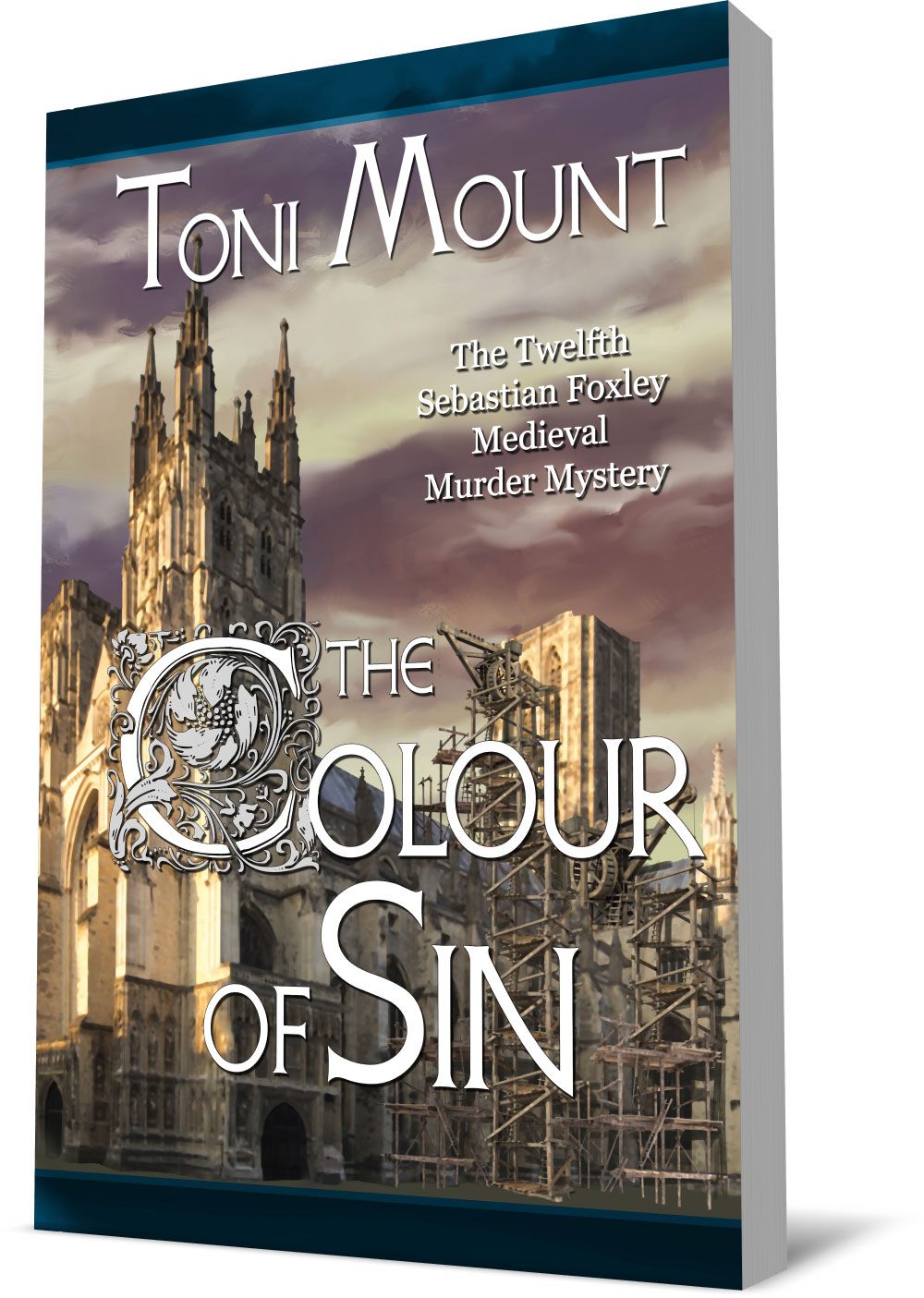
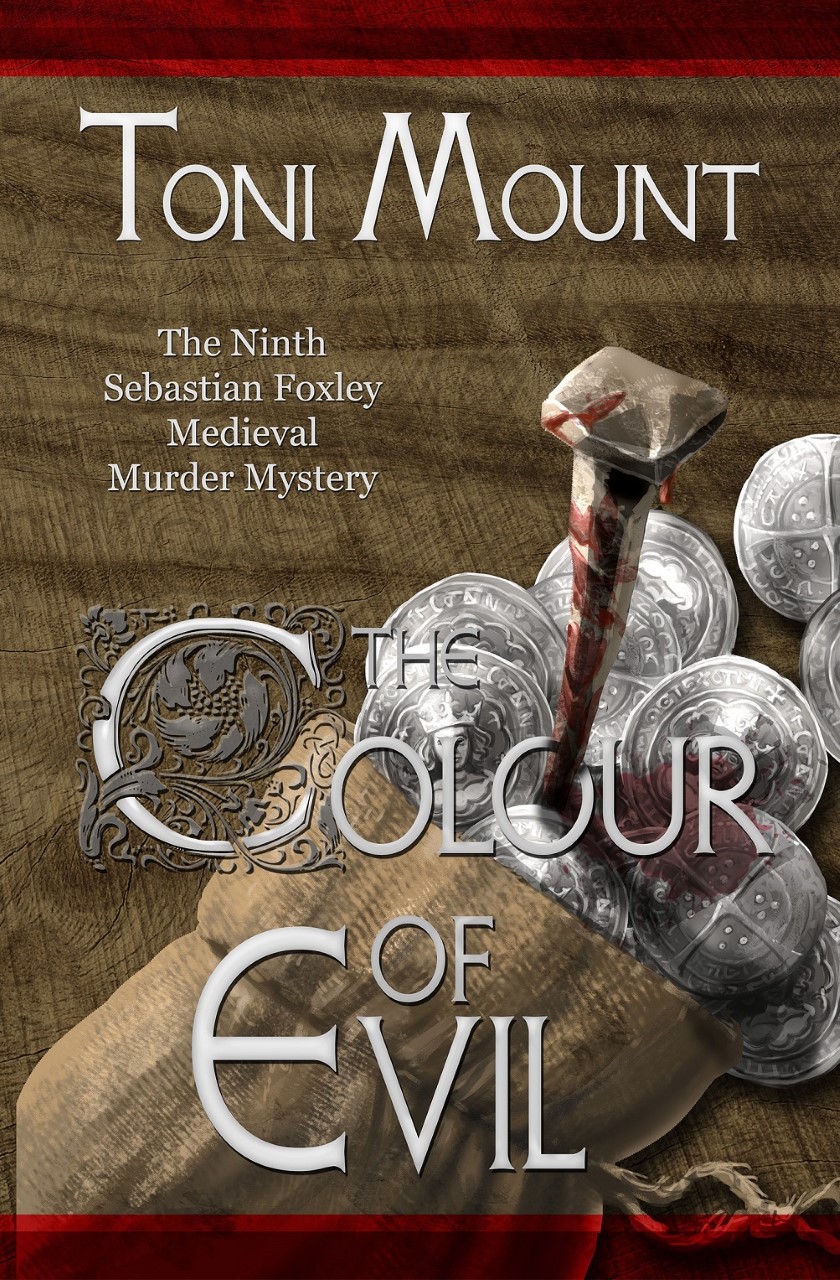
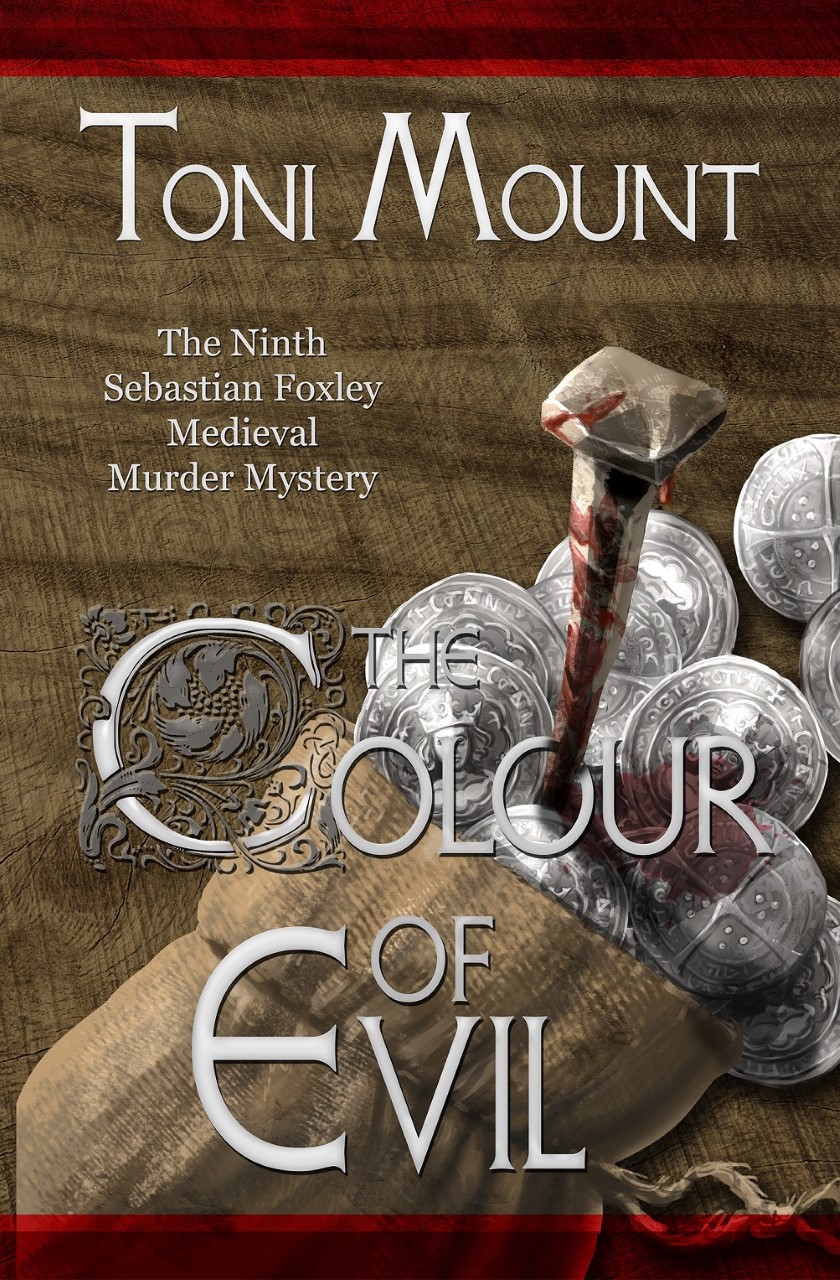
My new Sebastian Foxley novel, The Colour of Darkness, transports readers to midsummer 1480, in medieval London where our hero has to solve a number of serious crimes, involving Master Caxton’s printing business, ‘suspect’ books and witchcraft. London is ready for a joyous festivity but, for some, there is nothing to celebrate when Death stalks the city’s sweltering streets. As livelihoods are brought to ruin and trust withers in the heat, our hero and artist-cum-sleuth discovers trouble has come to his own doorstep. Plague rears its hideous head; fire, theft and disease imperil the citizens.
Meanwhile, a beautiful young woman enchants the men of London and the mob shrieks that witchcraft is to blame when waxen dolls, spiked with pins, are discovered. With such horrors in his possession and discovering that guilt lies too close at hand, can Seb unravel the mysteries and save those he loves before it’s too late?
Join Seb Foxley in this intriguing and danger-riddled new adventure, The Colour of Darkness, out now from MadeGlobal.
About the Author:

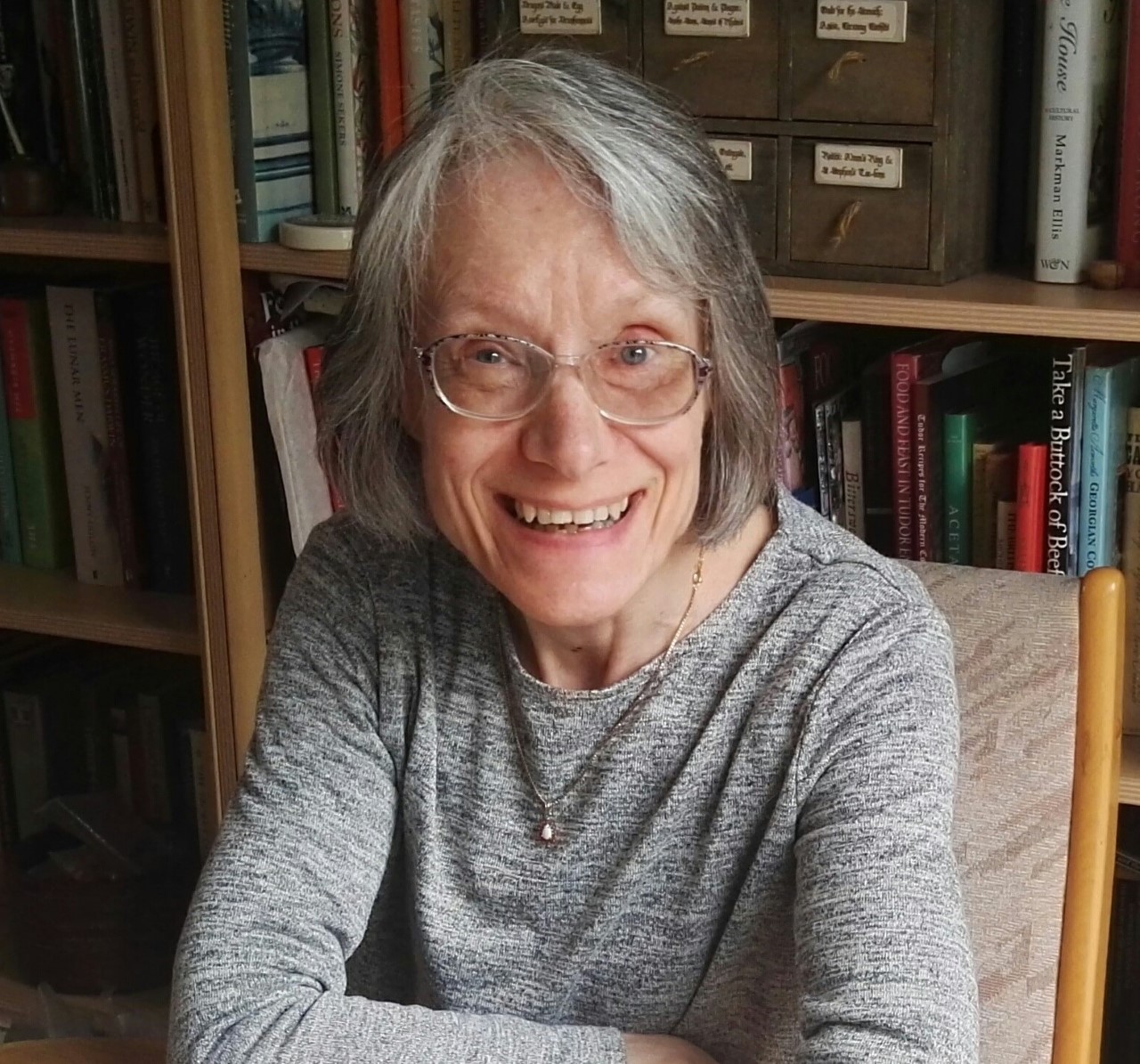
Toni studies, teaches and writes about medieval history. She is a successful author writing the popular Sebastian Foxley medieval murder series and several non-fiction volumes, including her collection of How to Survive in books. She has created several online courses for http://www.MedievalCourses.com, she teaches history to adults and is an experienced speaker giving talks to groups and societies. Toni enjoys attending history events as a costumed interpreter and is a member of the Research Committee of the Richard III Society.
Toni earned her Masters Degree by Research from the University of Kent in 2009 through study of a medieval medical manuscript held at the Wellcome Library in London. Her first-class honours degree, Diploma in Literature and Creative Writing and her Diploma in European Humanities are from the Open University. Toni also holds a Cert. Ed (in Post-Compulsory Education and Training) from the University of Greenwich.
Find Toni Mount’s books here
Find Toni on Social Media:
Amazon; Website; Seb Foxley website; Facebook: Medieval England Facebook; Seb Foxley Facebook; Twitter
*
My books
Signed, dedicated copies of all my books are available through my online store.
Out now: Scotland’s Medieval Queens
Scotland’s history is dramatic, violent and bloody. Being England’s northern neighbour has never been easy. Scotland’s queens have had to deal with war, murder, imprisonment, political rivalries and open betrayal. They have loved and lost, raised kings and queens, ruled and died for Scotland. From St Margaret, who became one of the patron saints of Scotland, to Elizabeth de Burgh and the dramatic story of the Scottish Wars of Independence, to the love story and tragedy of Joan Beaufort, to Margaret of Denmark and the dawn of the Renaissance, Scotland’s Medieval Queens have seen it all. This is the story of Scotland through their eyes.
‘Scotland’s Medieval Queens gives a thorough grounding in the history of the women who ruled Scotland at the side of its kings, often in the shadows, but just as interesting in their lives beyond the spotlight. It’s not a subject that has been widely covered, and Sharon is a pioneer in bringing that information into accessible history.’ Elizabeth Chadwick (New York Times bestselling author)
Available now from Amazon and Pen and Sword Books
Also by Sharon Bennett Connolly:

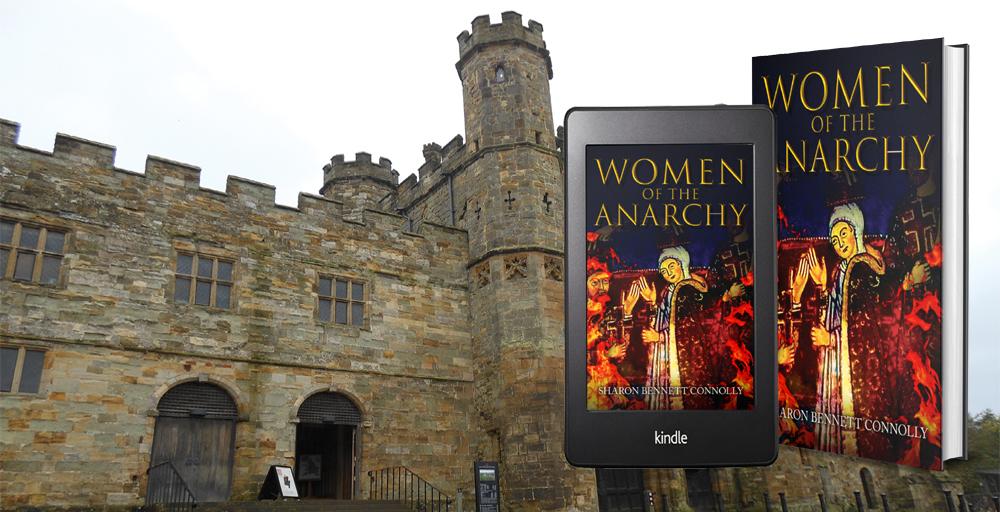
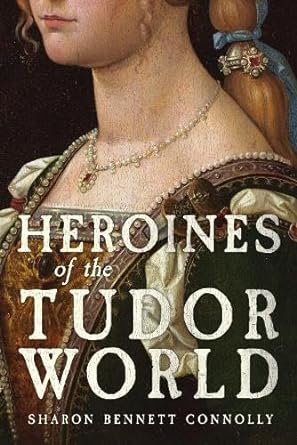
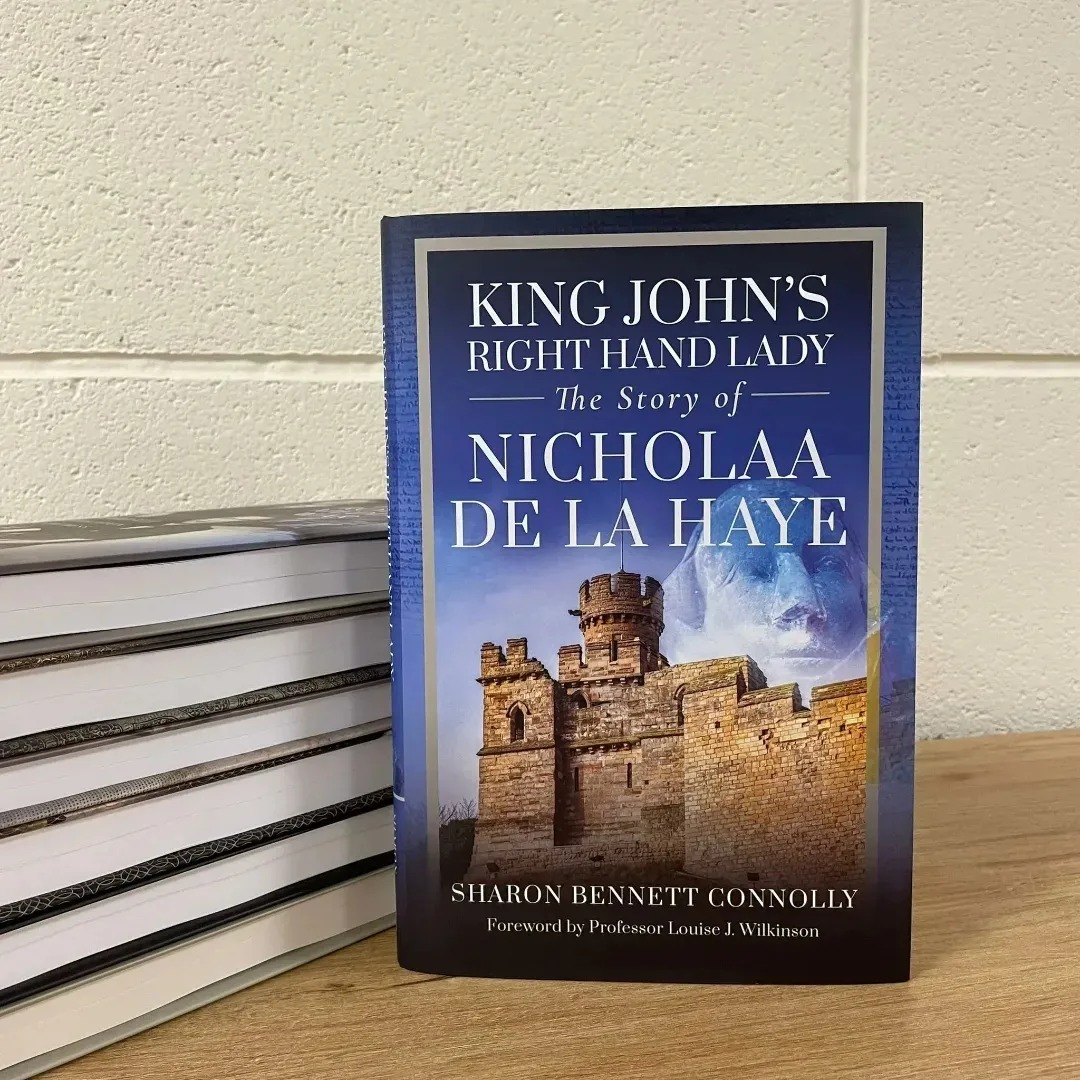
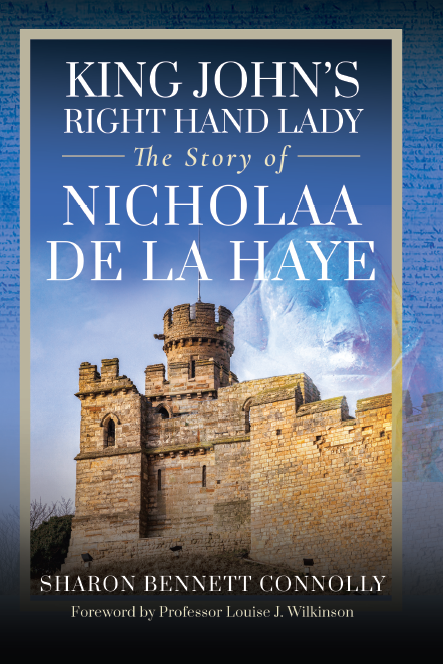
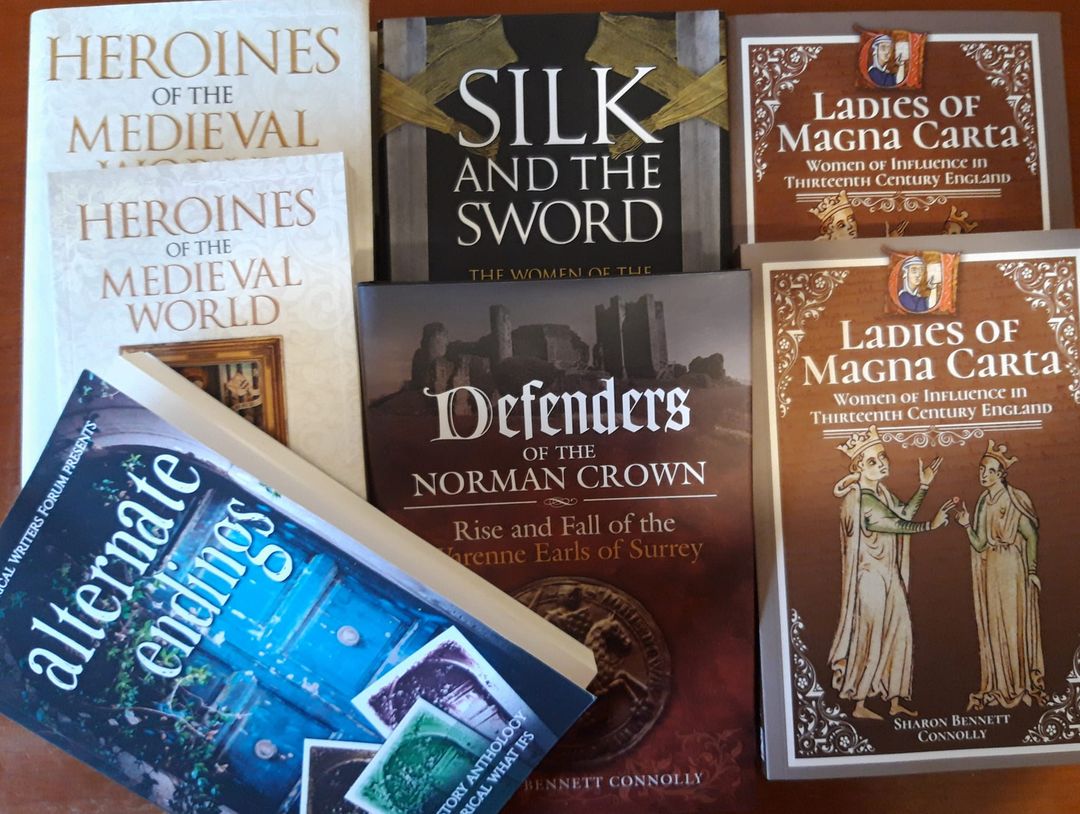
Heroines of the Tudor World tells the stories of the most remarkable women from European history in the time of the Tudor dynasty, 1485-1603. These are the women who ruled, the women who founded dynasties, the women who fought for religious freedom, their families and love. Heroines of the Tudor World is now available for pre-order from Amberley Publishing and Amazon UK. Women of the Anarchy demonstrates how Empress Matilda and Matilda of Boulogne, unable to wield a sword themselves, were prime movers in this time of conflict and lawlessness. It shows how their strengths, weaknesses, and personal ambitions swung the fortunes of war one way – and then the other. Available from Bookshop.org, Amberley Publishing and Amazon UK. King John’s Right-Hand Lady: The Story of Nicholaa de la Haye is the story of a truly remarkable lady, the hereditary constable of Lincoln Castle and the first woman in England to be appointed sheriff in her own right. Available from all good bookshops Pen & Sword Books, bookshop.org and Amazon.

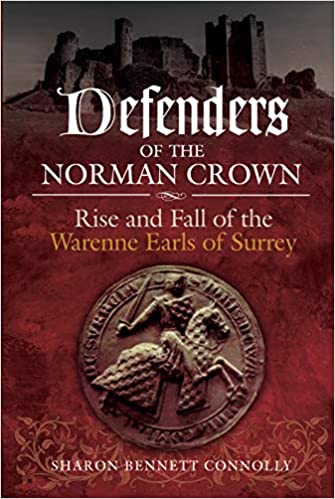
Defenders of the Norman Crown: The Rise and Fall of the Warenne Earls of Surrey tells the fascinating story of the Warenne dynasty, from its origins in Normandy, through the Conquest, Magna Carta, the wars and marriages that led to its ultimate demise in the reign of Edward III. Available from Pen & Sword Books, Amazon in the UK and US, and Bookshop.org. Ladies of Magna Carta: Women of Influence in Thirteenth Century England looks into the relationships of the various noble families of the 13th century, and how they were affected by the Barons’ Wars, Magna Carta and its aftermath; the bonds that were formed and those that were broken. It is now available in paperback and hardback from Pen & Sword, Amazon, and Bookshop.org. Heroines of the Medieval World tells the stories of some of the most remarkable women from Medieval history, from Eleanor of Aquitaine to Julian of Norwich. Available now from Amberley Publishing and Amazon, and Bookshop.org. Silk and the Sword: The Women of the Norman Conquest traces the fortunes of the women who had a significant role to play in the momentous events of 1066. Available now from Amazon, Amberley Publishing, and Bookshop.org.
Alternate Endings: An anthology of historical fiction short stories including Long Live the King… which is my take what might have happened had King John not died in October 1216. Available in paperback and kindle from Amazon.
Podcast:

Have a listen to the A Slice of Medieval podcast, which I co-host with Historical fiction novelist Derek Birks. Derek and I welcome guests, such as Bernard Cornwell and discuss a wide range of topics in medieval history, from significant events to the personalities involved.
Every episode is also now available on YouTube.
*
Don’t forget! Signed and dedicated copies of all my books are available through my online bookshop.
For forthcoming online and in-person talks, please check out my Events Page.
You can be the first to read new articles by clicking the ‘Follow’ button, liking our Facebook page or joining me on Twitter, Threads, Bluesky and Instagram.
*
©2025 Sharon Bennett Connolly, FRHistS and Toni Mount





























 History... the interesting bits!