Nicholaa de la Haye is one of those very rare women in English history. She is renowned for her abilities, rather than her family and connections. In a time when men fought and women stayed home, Nicholaa de la Haye held Lincoln Castle against all-comers. Her strength and tenacity saved England at one of its lowest points in history.
The eldest daughter and co-heiress of Richard de la Haye and his wife, Matilda de Vernon, Nicholaa was probably born in the early-to-mid 1150s. Her father was Baron of Brattleby. Richard’s father was a Norman, Robert de la Haye of La Haye du Puits in the Cotentin. His mother, Muriel, was English, a Lincolnshire heiress as the granddaughter of Colswein of Lincoln. In 1166 Richard he was recorded as owing 20 knights’ fees, which had been reduced to 16 by 1172. When he died in 1169, Nicholaa inherited her father’s land in Lincolnshire and his position as hereditary castellan of Lincoln Castle, a position she would hold for over 50 years.
Nicholaa was married twice, her first husband, William Fitz Erneis, died in 1178, leaving Nicholaa a young widow with one daughter, Matilda. Before 1185 she married Gerard de Camville (or Canville), brother of Richard de Camville, admiral of Richard I’s crusading fleet during the Third Crusade. Nicholaa and Gerard had at least 2 children together; Richard and Thomas. Richard was heir to both Nicholaa and Gerard. Nothing is known of Thomas beyond his name. Another daughter may have been Nicholaa d’Eyncourt, who sued Nicholaa’s granddaughter for some de la Haye lands in the 1230s; however, while it seems certain that Nicholaa d’Eyncourt was kin, unfortunately, her exact relation to Nicholaa de la Haye has not been established.
Nicholaa’s husbands each claimed the position of castellan of Lincoln Castle by right of his wife; but Nicholaa seems to have been far from the normal subservient wife. When her husband was not in the castle, she was left in charge rather than an alternative, male deputy.
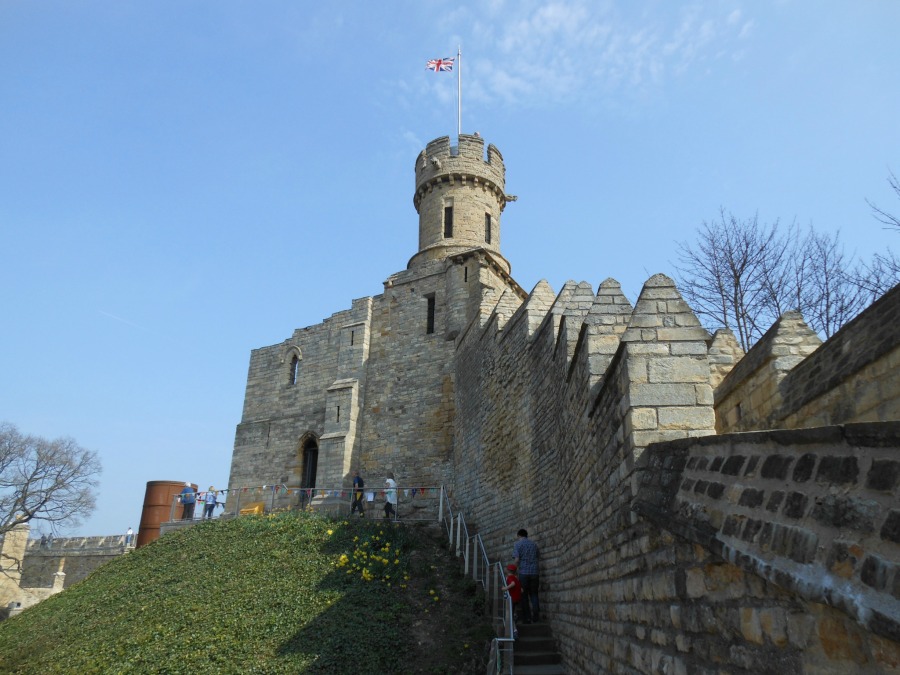
Lincoln castle walls leading to the Observatory Tower
Nicholaa first comes to the attention of the chroniclers in 1191, when Prince John led the opposition to his brother’s chancellor, William Longchamp. Accusing him of harbouring outlaws, Longchamp demanded that Gerard de Camville relinquish Lincoln Castle to one of his own supporters. Gerard refused, and swore fealty to John, joining him at Nottingham Castle. Leaving Nicholaa to hold Lincoln. He probably assumed that Longchamp would not wage war on a woman. However, Richard I’s Chancellor, William Longchamp, had no such qualms. He headed north and laid siege to Lincoln Castle, probably assuming, wrongly, that Nicholaa would submit easily.
The formidable Nicholaa refused to yield, holding out for 40 days before Longchamp raised the siege, following the fall of the castles at Tickhill and Nottingham to John. Amusingly, Richard of Devizes said of this defence of Lincoln Castle, that she did it ‘without thinking of anything womanly’.
In 1194, on the king’s return, Camville was stripped of his positions as Sheriff of Lincolnshire and Castellan of the castle; only having it returned to him on the accession of King John in 1199.
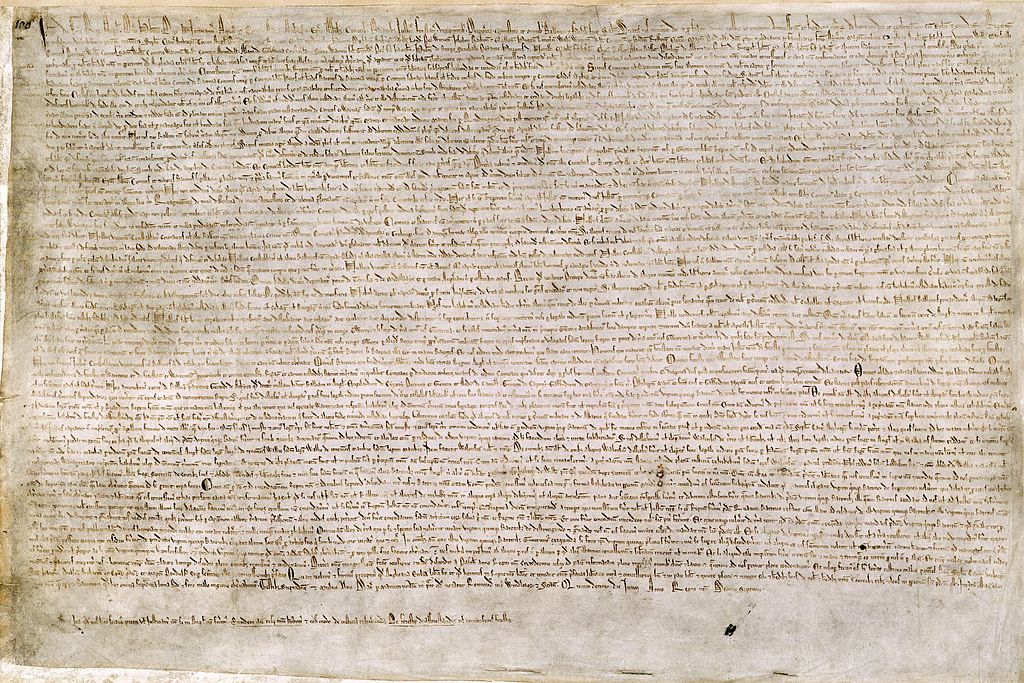
As we all know, King John’s reign wasn’t exactly smooth sailing. He lost his French lands and was held to account by the barons of England for numerous examples of maladministration, corruption and outright murder. In 1215 he had been forced to seal the Great Charter, or Magna Carta, in order to avoid war. Although it eventually came to be considered a fundamental statement of English liberties, as a peace treaty Magna Carta failed miserably. Within months John had written to Pope Innocent III and the charter had been declared null and void; the barons were up in arms.
Gerard de Camville died in December 1214 and, although now a widow, it seems the castle remained in Nicholaa’s hands. On one of King John’s visits to inspect the castle’s defences in 1216, either in February or September there was a rather dramatic display of fealty from Nicholaa :
Nicholaa de la Haye, Lincoln Castle
“And once it happened that after the war King John came to Lincoln and the said Lady Nicholaa went out of the eastern gate of the castle carrying the keys of the castle in her hand and met the king and offered the keys to him as her lord and said she was a woman of great age and was unable to bear such fatigue any longer and he besought her saying, “My beloved Nicholaa, I will that you keep the castle as hitherto until I shall order otherwise”.¹
Whether Nicholaa ever intended to give up Lincoln, or the event was staged so that John could demonstrate his continued trust in Nicholaa, is open to debate. I suspect it was the latter. John was in the midst of civil war and running short of allies. Nicholaa had already demonstrated her abilities at defending Lincoln, and her loyalty to John – he would have been hard put to replace her. However, the event gave John the opportunity to reinforce his trust in Nicholaa in front of his barons.
The rebels invited the king of France to take the throne of England; instead Philip II‘s son, Louis (the future Louis VIII), accepted the offer and was hailed as King of England in London in June 1216. In the same year Nicholaa prevented another siege by paying off a rebel army, led by Gilbert de Gant, who remained in occupation of the city of Lincoln but lifted the siege of the castle. After Nicholaa paid off the 1216 besiegers, John came north and he chased the rebels into the Isle of Axholme ‘with fire and sword’.
As Louis consolidated his position in the south, John then made an inspection of Lincoln castle in September. Moving south, just 2 weeks later, the king’s baggage train was lost as he crossed the Wash estuary and within a few more days John was desperately ill, probably from dysentery. He moved on to the castle at Newark, from where, just hours before his death, John appointed Nicholaa de la Haye as Sheriff of Lincolnshire in her own right:
The East Gate of Lincoln Castle
‘The King to the archbishops, bishops, earls, barons, knights, freeholders and others of the county of Lincoln etc.. Know that we have granted to our trusty and well-beloved, the lady Nicholaa de Haye and Philip Marc, the county of Lincoln with all its appurtenances, to be in their custody for so long as it may please us. We therefore command that you do heed and obey the said Nicholaa and Philip in all things as the bailiffs of the said county. And in testimony etc.. Witness myself, at Newark, the eighteenth day of October, in the eighteenth year of our reign.’
From King John’s Letters and Papers, translated by Rich Price
King John died at Newark on the night of 18/19th October 1216, with half his country occupied by a foreign invader and his throne now occupied by his 9-year-old son, Henry III. The elder statesman and notable soldier William Marshal, Earl of Pembroke was appointed Regent and set out to save the kingdom.
Meanwhile, Gilbert de Gant renewed the siege of Lincoln Castle, receiving reinforcements from Louis’ forces, under the Comte de Perche, in early 1217. Now in her 60s Nicholaa de la Haye took charge of the defences.
The Battle of Lincoln, 1217
When the small force proved insufficient to force a surrender, the French had to send for reinforcements and siege engines. For almost 7 months, Nicholaa was besieged, with the circle tightening from March to mid-May as siege machinery bombarded the south and east walls of the castle. On the 20th May William Marshal arrived, from the north-west, with a relieving force. Attacking from the north of Lincoln, his army fell upon the besieging forces and, after about 6 hours of combat, routed the enemy; the French commander, the Comte de Perche, was killed in the fighting, and the rebel leaders captured.
The city, which had supported the rebels and welcomed the French, was sacked and looted by the victorious army; the battle becoming known as the Lincoln Fair, as a result. The Battle of Lincoln turned the tide of the war. After a further defeat in the naval Battle of Sandwich in the summer, the French were forced to seek peace and returned home. Magna Carta was reissued and Henry III’s regents could set about healing the country.
In a magnificent demonstration of ingratitude, within 4 days of the relief of the Castle, Nicholaa’s position of Sheriff of Lincolnshire was given to the king’s uncle William Longspée, Earl of Salisbury, who took control of the city and promptly seized the castle.
The king’s council should have known that Nicholaa would not give up her castle so easily. She travelled to court to remind the king’s regents of her services, and request her rights be restored to her. And in October 1217, an order was issued in Henry III’s name to
Magna carta
To our beloved and loyal uncle, W. Earl of Salisbury, greetings. Recently, our beloved and loyal lady, Mistress Nicholaa de Haya, came to us in London, begging us to restore her rights, and particularly the custody of Lincoln Castle, which she ought to have and usually possesses. We, considering her faithful service to our lord King J., our father, and our subsequently commended expenses, kindly, as was fitting, heeded her, restoring her rights, namely, the aforementioned custody of Lincoln Castle and others, saving our beloved and loyal R. Earl of Chester, in his matter [rather his right] which he claims to have in the same Castle. Furthermore, we have entrusted the county of Lincoln, along with the city of Lincoln, to the same Nicholaa, to be kept for as long as we please. And therefore we command you that, all delay and occasion postponed, you restore to her the said castle of Lincoln, with its appurtenances, removing from there all those who are on our part. And that you cause her to have without delay full possession of the said county with the city of Lincoln, as is above mentioned. And in testimony of this matter, etc. Witness the count, at Westminster, the 32nd (sic) day of October, in the second year of our reign.2
The settlement was not ideal, however, and some wrangling seems to have continued until Salisbury’s death in 1226.
Nicholaa’s granddaughter and heiress, Idonea – the daughter of Nicholaa’s eldest son Richard – was married to Salisbury’s son, William II Longspée; the couple inherited the de la Haye and Camville lands on Nicholaa’s death. As a result, Salisbury felt it was his right to hold his daughter-in-law’s inheritance, even though Nicholaa was not yet dead. Understandably, Nicholaa felt differently.
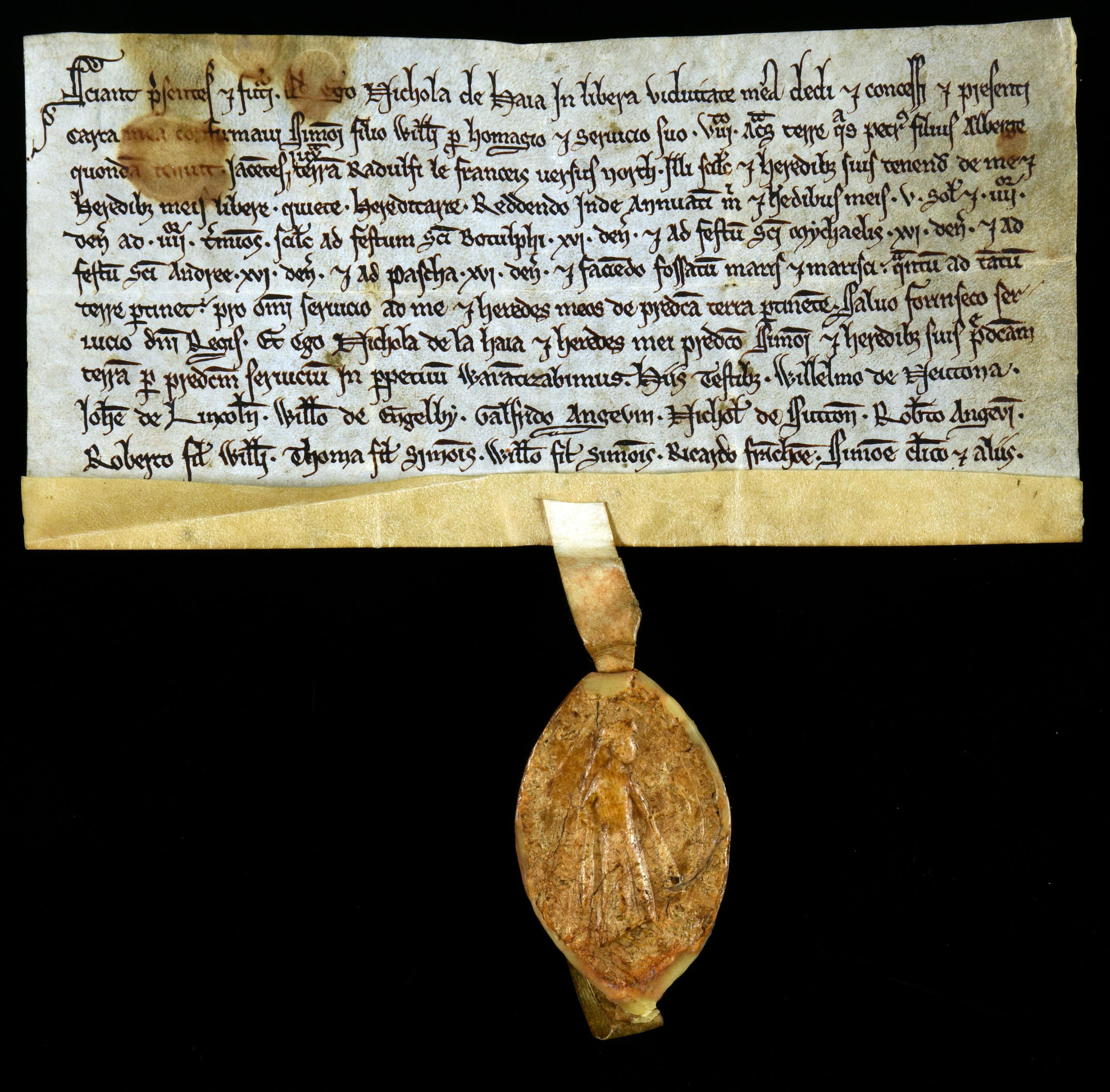
On the death of her second husband, Gerard de Camville, Nicholaa had declared herself femme sole, meaning she would be able to control her own lands. A staunchly independent woman, Nicholaa issued some 25 surviving charters in her name. She made grants to various religious houses, including Lincoln Cathedral, and even secured a royal grant for a weekly market for her village of Swaton.
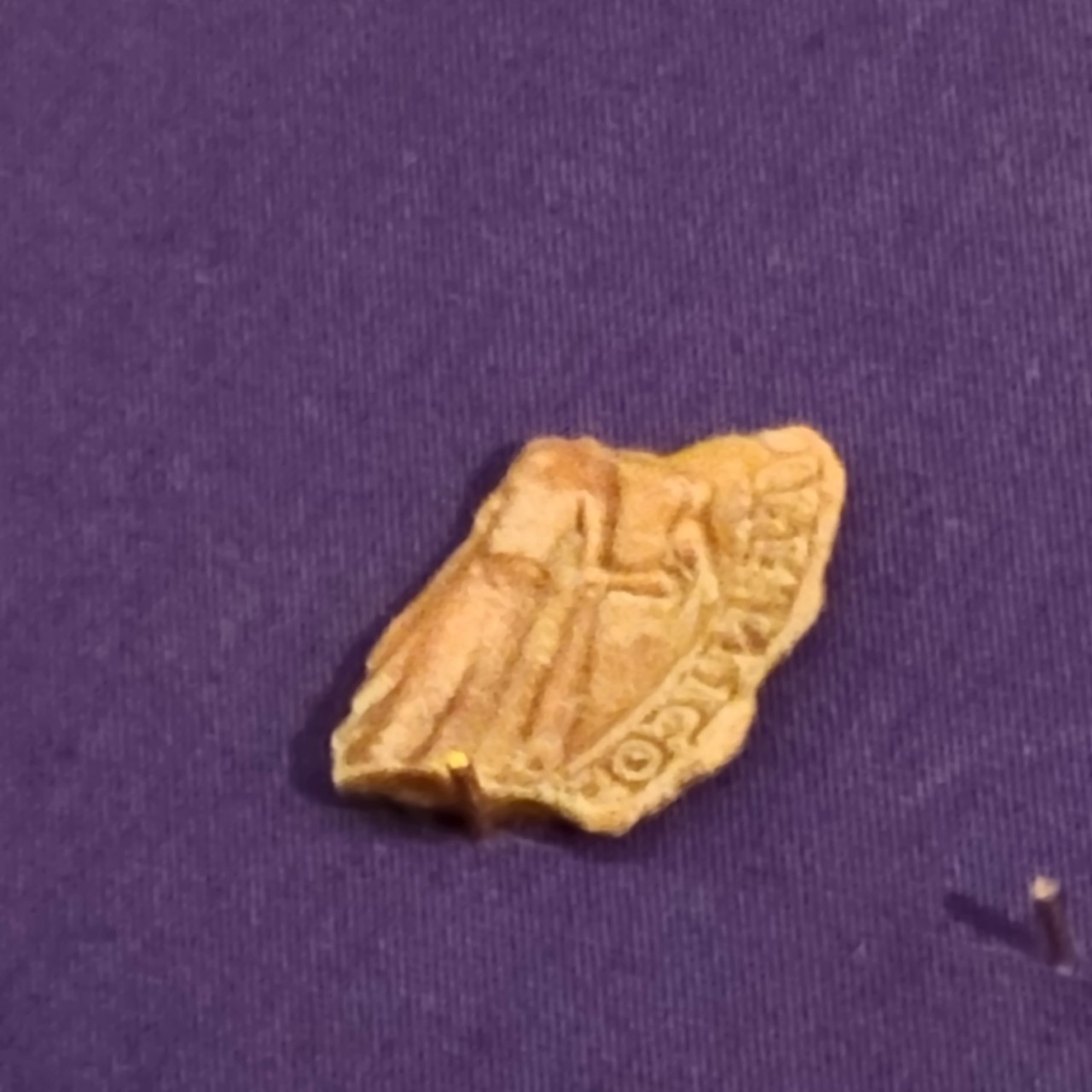
Land grant with Nicholaa de la Haye’s seal attached
A most able adversary for some of the greatest military minds of the time, and a loyal supporter of King John, Nicholaa de la Haye was unique among her peers. Although praised by the chroniclers, they seemed to find difficulty in describing a woman who acted in such a fashion; the Dunstable annals refer to her as a ‘noble woman’, saying she acted ‘manfully’. One cannot fail to feel admiration for a woman who managed to hold her own in a man’s world, who fought for her castle and her home in a time when women had so little say over their own lives – and at such an advanced age. Her bravery and tenacity saved Henry III’s throne.
Not surprisingly, both King John and Henry III referred to her as ‘our beloved and faithful Nicholaa de la Haye’.
Nicholaa de la Haye, the woman who saved England, lived well into her 70s. By late 1226 she had retired to her manor at Swaton, dying there on 20 November, 1230. She was buried in St Michael’s Church, Swaton in Lincolnshire, where her tomb can be seen to this day.
*
Footnotes: ¹Irene Gladwin: The Sheriff; The Man and His Office; 2 ‘1217, membranes 11, 10, 9, 8’, in Calendar of Patent Rolls, Henry III: Volume 1, 1216-1225, ed. H C Maxwell Lyte (London, 1901), British History Onlinehttps://www.british-history.ac.uk/cal-pat-rolls/hen3/vol1/pp117-132 [accessed 16 July 2025].
The Plantagenet Chronicles edited by Elizabeth Hallam; Brassey’s Battles by John Laffin; 1215 The Year of Magna Carta by Danny Danziger & John Gillingham; The Life and times of King John by Maurice Ashley; The Story of Britain by Roy Strong; The Plantagenets, the Kings Who Made England by Dan Jones; England Under the Norman and Angevin Kings by Robert Bartlett; lincolnshirelife.co.uk; catherinehanley.co.uk; magnacarta800th.com; lothene.org; lincolncastle.com; The Sheriff: The Man and His Office by Irene Gladwin; Elizabeth Chadwick; Nick Buckingham; swaton.org.uk; Women in Thirteenth Century Lincolnshire by Louise Wilkinson.
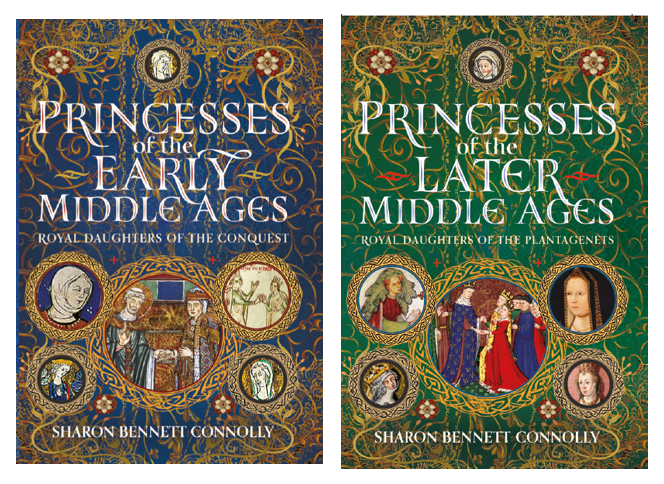
30 March: Princesses of the Early Middle Ages: Royal Daughters of the Conquest
‘My daughter wanted me to treat her more like a princess. So, I married her to a stranger to strengthen the alliance with Poland!’
The medieval princess has often been portrayed as a pawn in the political machinations of her father or brother, married off to distant lands for the sake of peace, or land, or both. Never to be seen or thought of again.
But was that really her fate?
From the daughters of Harold, the last Saxon king, to the sisters of Henry III, Princesses of the Early Middle Ages explores the lives of these young women, how they followed the stereotype, and how they sometimes managed to escape it. It will look at the world they lived in, and how their lives and marriages were affected by political necessity and the events of the time.
Princesses of the Early Middle Ages: Royal Daughters of the Conquest is now available for pre-order from Pen & Sword and Amazon.
30 August: Princesses of the Later Middle Ages: Royal Daughters of the Plantagenets
Continuing the story, Princesses of the Later Middle Ages: Royal Daughters of the Plantagenets looks at the lives of the princesses, from the treasured daughters of Henry III to the children of Edward IV, whose lives were turned upside down when they were declared illegitimate.
What we see is a very different story, where a foreign marriage does not mean eternal exile, but a purpose in life, where a princess is a diplomat, an ambassador for England in her new country. She is the bond between allies – most of the time.
Princesses of the Later Middle Ages is now available for pre-order.
Also by Sharon Bennett Connolly:
Scotland’s history is dramatic, violent and bloody and Scotland’s Medieval Queens have seen it all. This is the story of Scotland through their eyes. Available now fromAmazon and Pen and Sword Books. Heroines of the Tudor World tells the stories of the most remarkable women from European history in the time of the Tudor dynasty, 1485-1603. These are the women who ruled, the women who founded dynasties, the women who fought for religious freedom, their families and love. Heroines of the Tudor World is now available from Amberley Publishing and Amazon UK.Women of the Anarchy demonstrates how Empress Matilda and Matilda of Boulogne, unable to wield a sword themselves, were prime movers in this time of conflict and lawlessness. It shows how their strengths, weaknesses, and personal ambitions swung the fortunes of war one way – and then the other. Available from Bookshop.org, Amberley Publishing and Amazon UK. King John’s Right-Hand Lady: The Story of Nicholaa de la Haye is the story of a truly remarkable lady, the hereditary constable of Lincoln Castle and the first woman in England to be appointed sheriff in her own right. Available from all good bookshops Pen & Sword Books, bookshop.org and Amazon.
Alternate Endings: An anthology of historical fiction short stories including Long Live the King… which is my take what might have happened had King John not died in October 1216. Available in paperback and kindle from Amazon.
Podcast:
Have a listen to theA Slice of Medieval podcast, which I co-host with Historical fiction novelist Derek Birks. Derek and I welcome guests, such as Ian Mortimer, Bernard Cornwell, Elizabeth Chadwick and Scott Mariani, and discuss a wide range of topics in medieval history, from significant events to the personalities involved.
I love the school holidays. My son and I always find something historical to explore. Today, it was Lincoln Castle.
The Castle only reopened on the 1st April, 2015, after an extensive revamp. And it was teeming with visitors (apparently it was the quietest day since they reopened, so the last week must have been incredibly hectic for the staff).
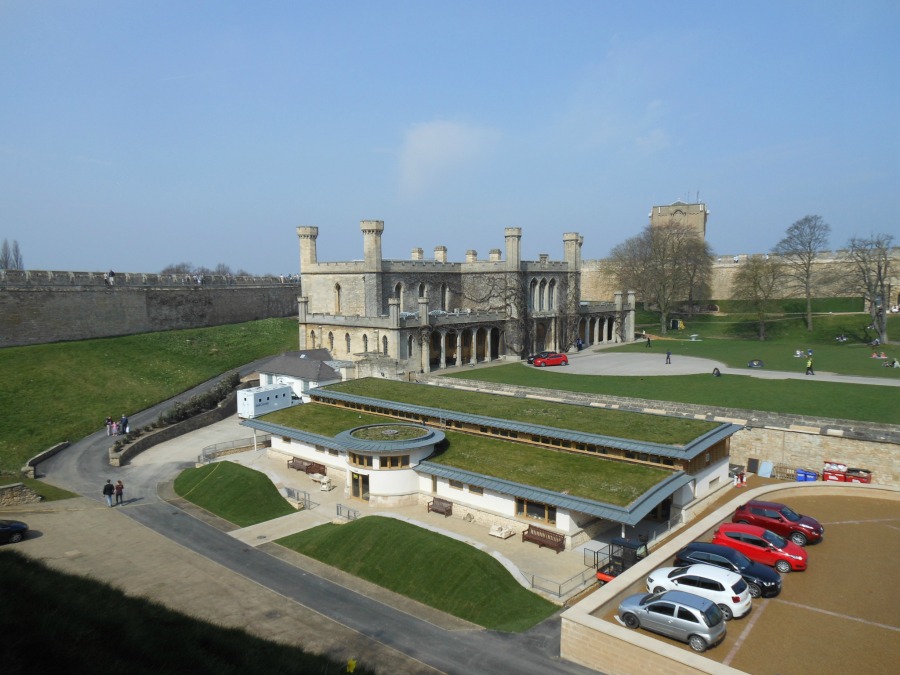
Lincoln Castle was started by William the Conqueror in 1068 and has been in constant use ever since. You can follow its history, just by looking at the buildings that occupy the Inner Bailey. In its time, it has been a military fortification, a Victorian prison and is now home to Lincoln’s Crown Court – and the Magna Carta!
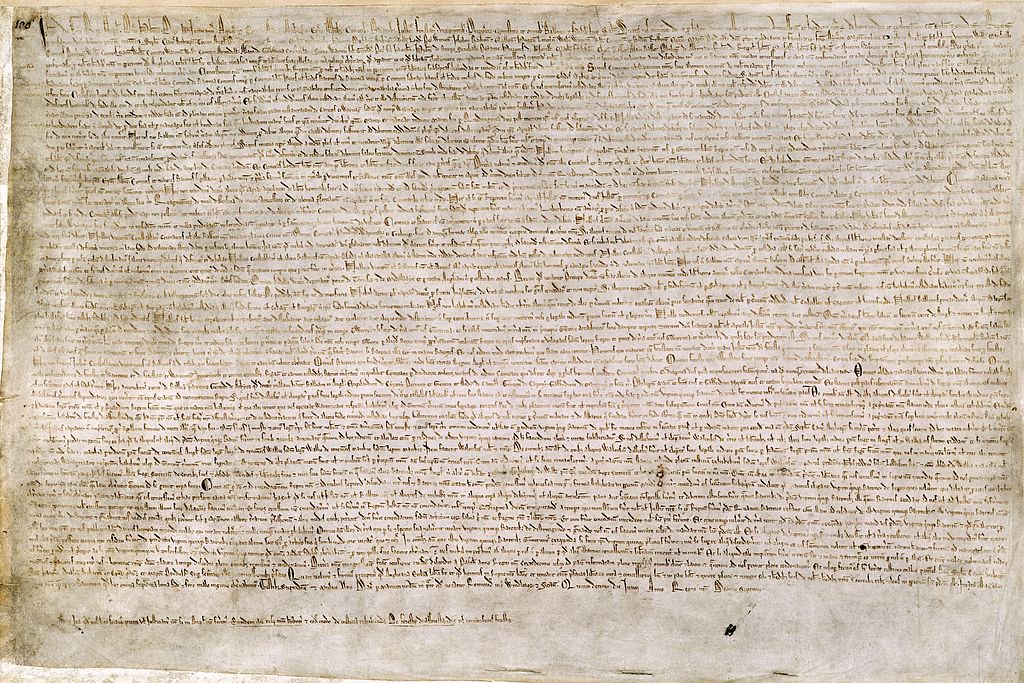
Magna Carta
Lincoln Cathedral’s Magna Carta is one of only four surviving originals. It is now on display in an impressive purpose-built, underground vault. The Magna Carta is accompanied by an original copy of the 1217 Charter of the Forest.
There is a 20-minute video, with a very believable King John and the great William Marshal, discussing the Magna Carta and explaining its inception and significance through the centuries.
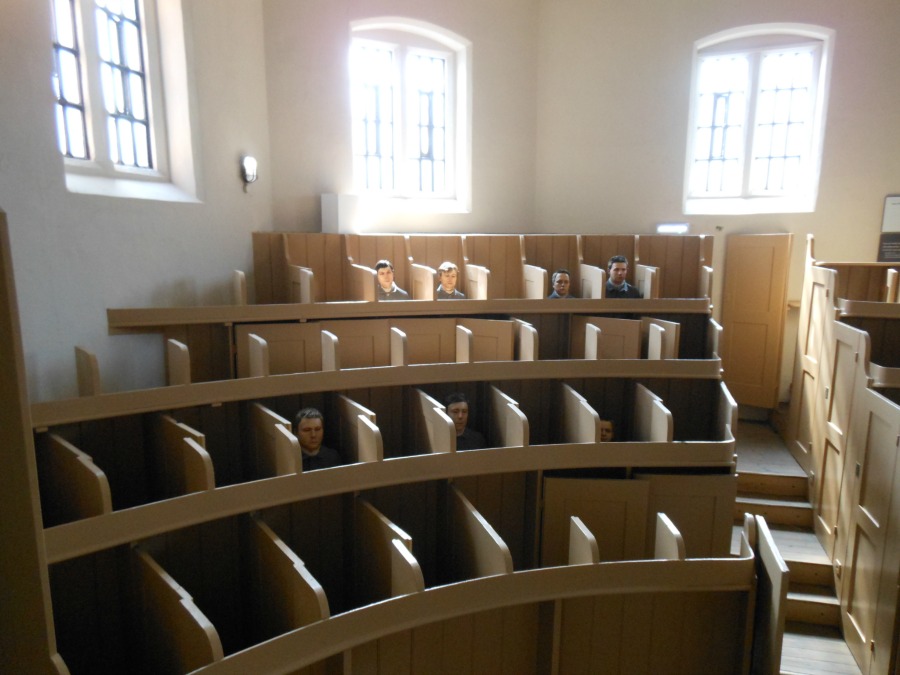
Prison Chapel
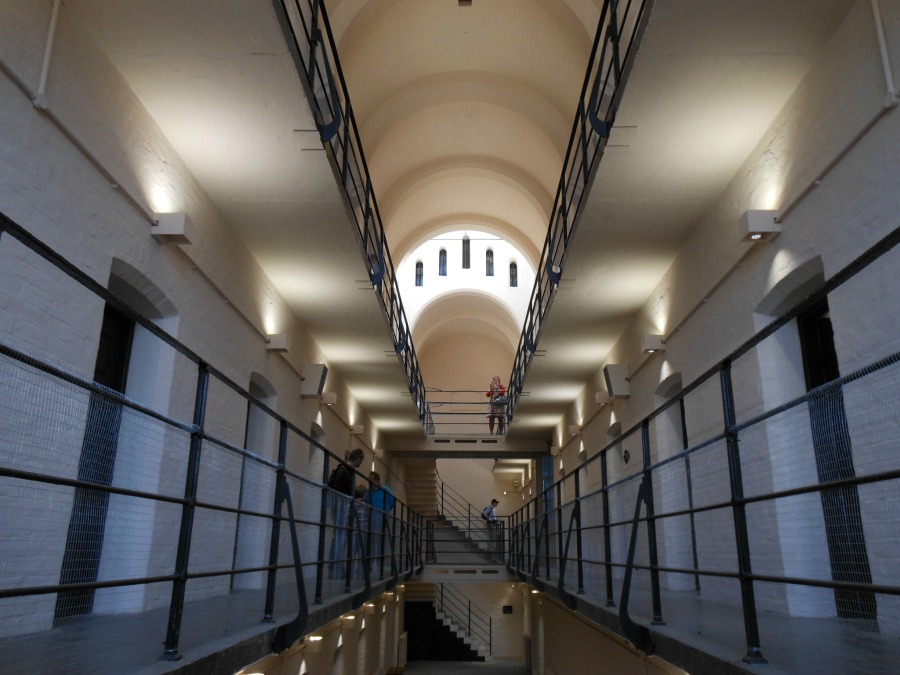
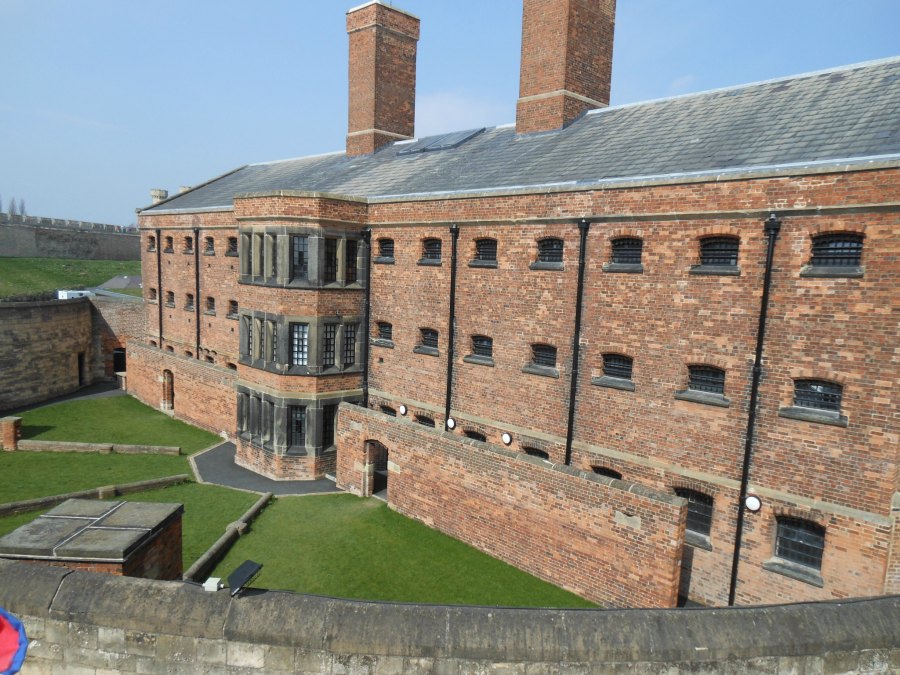
The Magna Carta Vault is a modern addition, adjoining the imposing Victorian prison. In its day, the prison was an innovation in the harshness punishment; the prisoners were held in solitary confinement for 24 hours a day.
There was no relief from the solitude, even when attending church services; the prison chapel was constructed in a way that each prisoner could see the priest, but could have no contact with his fellow prisoners. The chapel gives me the creeps everytime I visit it. I have a thing about dummies, but it’s also the thought of all those prisoners only able to see the one person, in the pulpit; cut off from society and each other.
Inside the male prison
The prison included some wonderful interactive displays, with the opportunity to read the diaries of the priest, the wardens and prisoners. Kids can dress-up as prisoners or wardens, explore the separate male and female prisons, and watch videos of the inmates, explaining their crimes – and pleading their innocence!
The Castle grounds give you the sense of the thousand years of history its walls have witnessed.
It was at Lincoln that King Stephen was captured by forces loyal to the Empress Matilda, during the civil war – the Anarchy – that followed the death of Henry I (when Matilda and Stephen both claimed the throne).
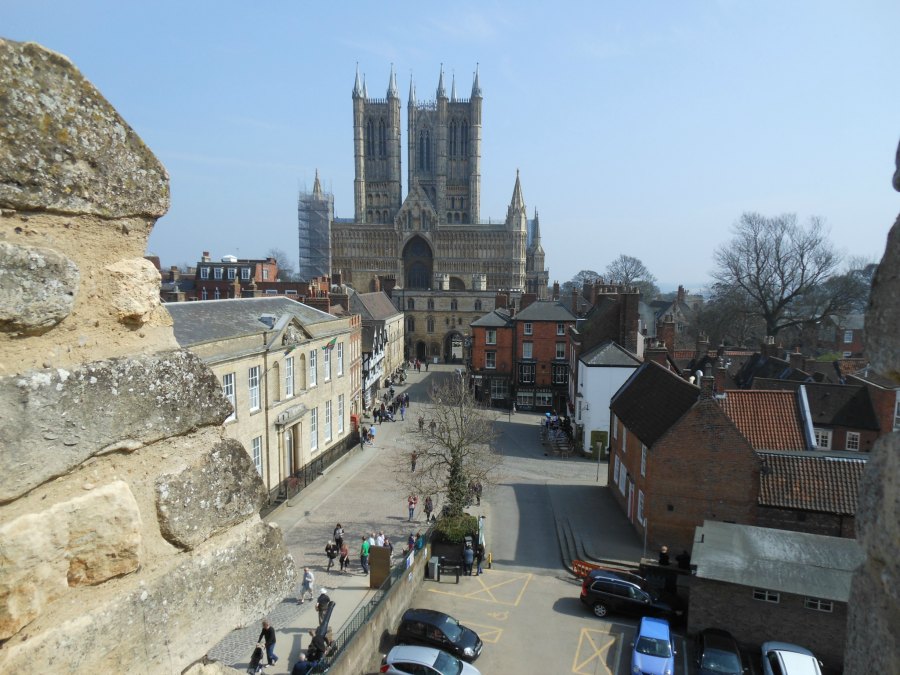
From the battlements: Lincoln Cathedral
Henry VIII and Catherine Howard had visited Lincoln Castle during their northern progress of 1541, shortly before Catherine’s infidelities were uncovered.
You can now walk the whole length of the walls – a third of a mile, though it can feel longer, with all the steps. You can climb the narrow spiral staircase to the top of the Observatory Tower – and take in the whole view of Lincoln, its Cathedral and the Fens.
The Lucy Tower contains within its walls a small cemetery, where executed prisoners, and those who died of disease, were buried.
The West Gate
The West Gate is a little piece of history in itself; opened to William Marshal’s troops during the Second Battle of Lincoln, by the castle’s castellan, Nicholaa de la Haye, whilst the castle was under siege from the army of Louis of France, who had been invited to take England by King John’s disaffected barons. The Dauphin was defeated shortly after, outside the Castle’s walls, and returned to France.
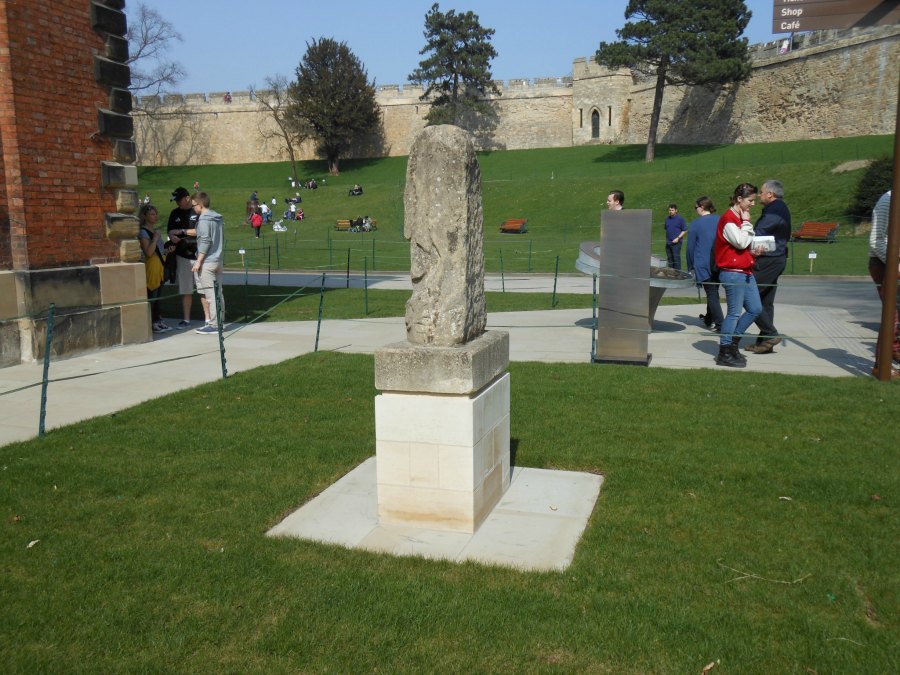
Remnant of the Eleanor Cross
Another memento from history, within the Inner Bailey, is the remnant of Lincoln’s Eleanor Cross. Eleanor of Castile was just 7 miles from Lincoln when she died in 1290 and Lincoln’s Eleanor Cross is the first marker of her funeral procession, which ended at Westminster Abbey. Eleanor’s viscera (her intestines) were buried in Lincoln Cathedral, while her embalmed body was transported to London, an elaborate cross being erected at each stopping place along the way.
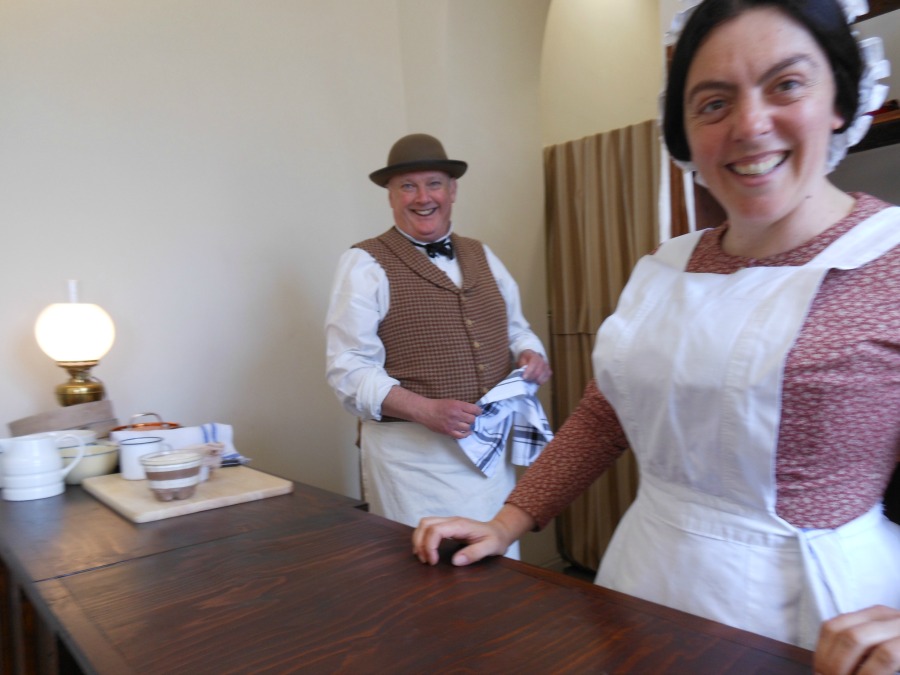
Inside the Victorian Kitchen
The Castle has not forgotten its younger visitors, with a little treasure trail and quiz, based on King John’s loss of the Crown Jewels in the Wash.
The prize was well worth winning – chocolate coins from the Victorian Kitchen. And ‘thank you’ to the Victorian lady, who insisted all children pay a 1 coin tax to their parents out of their winnings – very tasty!
Whether you choose to explore by yourself, take the guided tour or simply bask in the sun of the Bailey, Lincoln Castle is a wonderful day out – for the young and old alike – I can highly recommend it.
The exercise yard and facade of the Victorian prison
*
My book, Heroines of the Medieval World, is now available in hardback in the UK from both Amberley Publishing and Amazon UK and worldwide from Book Depository. It is also available on Kindle in both the UK and USA and will be available in Hardback from Amazon US from 1 May 2018.
Be the first to read new articles by clicking the ‘Follow’ button, liking our Facebook page or joining me on Twitter.
*
All pictures and article are copyright to Sharon Bennett Connolly, 2015, except the Magna Carta, which is courtesy of Wikipedia.
Matilda de Braose was probably born in the early 1150s in Saint-Valery-en-Caux, France, to Bernard IV, Seigneur de Saint-Valery and his wife, Matilda. Contemporary records describe her as tall and beautiful, wise and vigorous.
Matilda’s story was made famous by the de Braose’s spectacular falling-out with King John – and the manner of her death. Very little is known of Matilda’s early years; though she probably spent time at her family’s manor of Hinton Waldrist in Berkshire. Sometime around 1166 she married William de Braose, 4th Lord of Bramber, a Norman lord with land on the Welsh Marches. William was highly favoured by both Richard I and, later his brother King John.
Whilst William was away campaigning in Normandy, Matilda would be left to manage their estates in Wales. In 1198, Matilda defended Painscastle in Elfael against a massive Welsh attack by Gwenwynyn, Prince of Powys. She held out for 3 weeks until English reinforcements arrived, earning the castle its nickname of Matilda’s Castle.
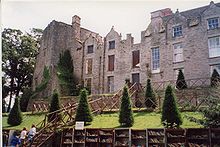
Hay Castle
Matilda’s exploits were legendary. One of her titles was the Lady of Hay and Welsh folklore has her building the Castle of Hay in one night, single-handed, carrying the stones in her skirts.
The couple had around 16 children together, who married into some of the most powerful families of the time. Their eldest son, William, married Maud de Clare, daughter of the Earl of Hertford. Another son, Giles, became Bishop of Hereford. Of their daughters Loretta, married Robert de Breteuil, 4th Earl of Leicester and another, Margaret, married Walter de Lacy, Lord of Meath in Ireland.
A third son, Reginald, married, as his second wife, Gwladus Ddu, daughter of Llewelyn the Great, Prince of Wales. Reginald’s son by his first wife, William, was married Eva Marshal, daughter of the great knight, William Marshal, Earl of Pembroke and regent for King Henry III. It was this William de Braose who was ignominiously hanged by Llewelyn the Great, after being found in the bedchamber of Llewelyn’s wife Joan, the Lady of Wales and natural daughter of King John. William had been at the Welsh court to arrange the marriage of his daughter, Isabel, to Llewelyn and Joan’s son, David. Interestingly, the marriage still went ahead, although it was to be childless.
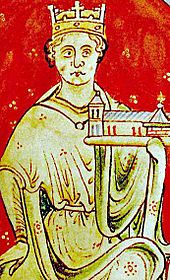
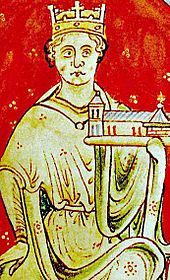
King John
William de Braose was greatly favoured by King John in the early part of his reign. He was given Limerick in Ireland for 5,000 marks and also received the castle at Glamorgan and the lordship of Gower. William de Braose was the knight who captured the rival to John’s throne, Arthur of Brittany, at the Siege of Mirebeau in 1202 and possibly witnessed Arthur’s murder at Rouen at Easter 1203.
It was following Arthur’s murder that things started to go wrong for the Lord and Lady of Bramber. John became increasingly suspicious of de Braose’s loyalty and turned against him. This could have been for several reasons, not least being de Braose’s knowledge of Arthur’s fate.
Elsewhere, de Braose had fallen behind in his payments to the Exchequer for the honour of Limerick, but he had also sided with his friend William Marshal in his disagreements with the king. In addition, de Braose’s son, Giles had been one of the bishops to approve an Interdict against John; Giles fled into exile in France to escape the king’s reprisals.
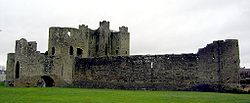
Trim Castle, Meath
Whatever the reason, in 1207 King John moved to make a public example of one of his most powerful barons, and punish him for his debts to the Exchequer. John demanded William and Matilda give up their sons as hostages.
Matilda refused and Roger of Wendover recorded her response to the soldiers sent to collect the boys, as;
“I will not deliver my sons to your lord, King John, for he foully murdered his nephew Arthur, whom he should have cared for honourably.”
Roger of Wendover
William is said to have admonished his wife for speaking so harshly of the king; but what mother wouldn’t react rashly when in fear for her children’s lives? William and Matilda realised she had gone too far, and tried to placate John with gifts. Matilda sent a herd of cows and a prized whit bull to John’s queen, Isabella of Angouleme.
But it was too late.
John took possession of de Braose’s castles and moved to arrest William. Forewarned, the couple fled to Ireland with 2 of their sons, where they took refuge with Walter de Lacy, their son-in-law and Lord of Meath. John followed after them, mounting an invasion of Ireland and bringing other recalcitrant barons to heal along the way. While William de Braose tried to come to terms with the king, Matilda and their eldest son, William, escaped by taking ship for Scotland.
However, Matilda and her son were captured in Galloway by Duncan of Carrick, and, having been returned to England in chains, they were imprisoned in Bristol Castle. King John made an agreement with both William and Matilda; freedom for her and a pardon for William in return for 40,000 marks.
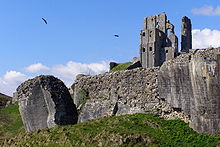
Corfe Castle
However, being either unwilling or unable to pay, Matilda and her son remained in prison – either at Windsor or Corfe Castle – and William was outlawed, eventually escaping into exile in France, disguised as a beggar, where he died in 1211.
Matilda’s fate was more gruesome; she and her son were left to starve to death in John’s dungeons (though whether this was at Corfe or Windsor is unclear). Tradition has it, that when their bodies were found, William’s cheeks bore his mother’s bite marks, where she had tried to stay alive following his death:
‘On the eleventh day the mother was found dead between her son’s legs, still upright but leaning back against her son’s chest as a dead woman. The son, who was also dead, sat upright, leaning against the wall as a dead man. So desperate was the mother that she had eaten her son’s cheeks. When William de Braose, who was in Paris, heard this news, he died soon afterwards, many asserting that it was through grief.’
Anonymous of Bethune
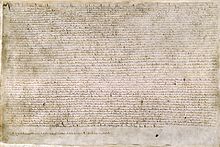
Magna Carta
In another version,
‘When the King returned to England he imprisoned Matilda de Braose and her son William in the castle of Corfe; they were given a sheaf of oats and a flitch of raw bacon ; this was all the meat they were allowed. On the eleventh day the mother was found dead between the knees of her son, sitting upright except that she leaned back against her son like a dead woman. The son was dead in like manner, except that he was leaning back against the wall; and his cheeks had been gnawed by his mother in her anguish.’ (Histoire des ducs de Normandie)
John’s treatment of the de Braose family did not lead to the submission of his barons, as John had intended, and the remainder of his reign was marred by civil war.
However when Magna Carta was written in 1215, Clause 39 may well have been included with Matilda and her family in mind:
“No man shall be taken, imprisoned, outlawed, banished or in any way destroyed, nor will we proceed against or prosecute him, except by the lawful judgement of his peers or by the law of the land.”
Magna Carta 1215
In his final days John may have felt some remorse at his relentless pursuit of the destruction of Matilda and her family, as shortly after the onset of his final, fatal illness, on 10 October 1216, the king gave permission to Matilda’s daughter, Margaret, to found a religious house in Herefordshire in memory of her father, mother and brother William. John died at Newark on the night of 18/19 October 1216.
Sources: sussexcastles.com; genie.com; steyningmuseum.org.uk; berkshirehistory.com; England Under the Norman and Angevin Kings 1075-1225 byRobert Bartlett; Oxford Companion to British History Edited by John Cannon; The Story of Britain by Roy Strong; The Plantagenets; the Kings who Made England by Dan Jones; The Life and Times of King John by Maurice Ashley; The Plantagenet Chronicles Edited by Elizabeth Hallam.
Pictures courtesy of Wikipedia
*
My Books:
Signed, dedicated copies of all my books are available through my online store.
Out now: Scotland’s Medieval Queens
Scotland’s history is dramatic, violent and bloody. Being England’s northern neighbour has never been easy. Scotland’s queens have had to deal with war, murder, imprisonment, political rivalries and open betrayal. They have loved and lost, raised kings and queens, ruled and died for Scotland. From St Margaret, who became one of the patron saints of Scotland, to Elizabeth de Burgh and the dramatic story of the Scottish Wars of Independence, to the love story and tragedy of Joan Beaufort, to Margaret of Denmark and the dawn of the Renaissance, Scotland’s Medieval Queens have seen it all. This is the story of Scotland through their eyes.
‘Scotland’s Medieval Queens gives a thorough grounding in the history of the women who ruled Scotland at the side of its kings, often in the shadows, but just as interesting in their lives beyond the spotlight. It’s not a subject that has been widely covered, and Sharon is a pioneer in bringing that information into accessible history.’ Elizabeth Chadwick (New York Times bestselling author)
Heroines of the Tudor World tells the stories of the most remarkable women from European history in the time of the Tudor dynasty, 1485-1603. These are the women who ruled, the women who founded dynasties, the women who fought for religious freedom, their families and love. Heroines of the Tudor World is now available from Amberley Publishing and Amazon UK.Women of the Anarchy demonstrates how Empress Matilda and Matilda of Boulogne, unable to wield a sword themselves, were prime movers in this time of conflict and lawlessness. It shows how their strengths, weaknesses, and personal ambitions swung the fortunes of war one way – and then the other. Available from Bookshop.org, Amberley Publishing and Amazon UK. King John’s Right-Hand Lady: The Story of Nicholaa de la Haye is the story of a truly remarkable lady, the hereditary constable of Lincoln Castle and the first woman in England to be appointed sheriff in her own right. Available from all good bookshops Pen & Sword Books, bookshop.org and Amazon.
Alternate Endings: An anthology of historical fiction short stories including Long Live the King… which is my take what might have happened had King John not died in October 1216. Available in paperback and kindle from Amazon.
Podcast
Have a listen to theA Slice of Medieval podcast, which I co-host with Historical fiction novelist Derek Birks. Derek and I welcome guests, such as Bernard Cornwell and Michael Jecks, and discuss a wide range of topics in medieval history, from significant events to the personalities involved.
Isabella of Gloucester is a shadow in the pages of history. I could find no pictures of her. Until recently, no one even seemed certain of her name; in the history books she has been called Isabel, Isabella, Hawise, Avice – probably due to different language interpretations, translations and misunderstandings. However, Rich Price, who has done extensive research on primary sources from King John‘s reign has clarified that The Close Rolls definitely name her as ‘comitissa Isabella’ and ‘Isabella filia Willielmi comitis’ (Isabella, daughter of Count William), so we’ll stick with Isabella.
Isabella was the youngest daughter, and co-heiress, of William, 2nd Earl of Gloucester and his wife, Hawise, daughter of Robert de Beaumont, 2nd Earl of Leicester; Isabella was therefore a great-granddaughter of Isabel de Vermandois (and a distant cousin of the Warennes). Through her father, Isabella was a descendant of Robert of Gloucester, the illegitimate half-brother of Empress Matilda who was his sister’s leading general during the civil war known as The Anarchy. We know very little of Isabella’s childhood, although, considering her social status, as the daughter of one of England’s wealthiest earls, it is likely that she was given the education expected of a high-ranking noblewoman and taught to run a large household, as well as the social graces of singing, dancing and needlework. Her parents’ marriage appears to have been a successful one. Isabella’s mother, Countess Hawise, was a regular witness to her husband’s charters and was mentioned in several of them, especially in the pro amina clauses of grants made to religious houses that sought spiritual benefits for those named.
Although her date of birth has been lost to history – most sources say between 1173 and 1176, though she may have been born in the 1160s – she was betrothed in 1176, possibly whilst still in her cradle, to Prince John. The youngest son of Henry II and Eleanor of Aquitaine, John was 9 years old at the time of the betrothal. Under the terms of the marriage agreement, Earl William recognised John as heir to the earldom of Gloucester, effectively disinheriting Isabella’s two elder sisters. The marriage was to be a way for Henry II to provide for his youngest son. After the Earl of Gloucester’s death in 1183, his entire estate was passed to Isabella, who had been made a ward of the king. However the wedding did not take place until 1189, when John was 21.
Baldwin, the Archbishop of Canterbury at the time, opposed the marriage as the couple were related within the prohibited degrees, both being a great-grandchild of Henry I, and ordered that they should not live together as husband and wife. John promised to seek a papal dispensation, in order to overcome Baldwin’s objections – although it appears this was never obtained. Nevertheless, John and Isabella were married on 29 August, 1189, at Marlborough Castle, Wiltshire. Although Isabella and John were married for ten years, their marriage was neither happy nor successful. They spent some time together in the first years of their marriage and issued joint charters during a visit to Normandy around 1190–91. However, they appear to have spent less and less time in each others’ company as the years went on. They never had any children and it is during this time in his life that John’s illegitimate children, including Richard of Chilham and Joan Lady of Wales, were probably born. In 1193, as part of his plotting with Philip Augustus, John promised to marry the French king’s half-sister, Alys, who had previously been betrothed to John’s own brother, Richard. Nothing eventually came of the marriage proposal, but it was an implicit rejection of Isabella as his wife.
John succeeded to the throne on the death of his older brother Richard I – the Lionheart – on 6 April 1199. He was crowned king on 27 May 1199; the fact that Isabella was not crowned alongside him, suggests that John was already looking for a way out of the marriage. Isabella would never be styled Queen of England.
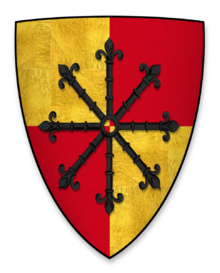
Coat of arms of Geoffrey de Mandeville, Earl of Essex and Gloucester
Within months of his succession, possibly as early as 30 August 1199 (the day after their 10th wedding anniversary), but certainly by 1200, John had obtained a divorce on the grounds of consanguinity; the bishops of Lisieux, Bayeux and Avranches, sitting in Normandy, provided the required judgement.
However, in order to keep his hold on the substantial Gloucester lands, John imposed a royal wardship on Isabella for the next 14 years. When John remarried, to Isabelle d’Angouleme, his new, young wife (she was no more than 12 on her wedding day and possibly a year or two younger) was lodged with Isabella of Gloucester at Winchester, the countess’s allowance was raised from £50 to £80 to cover the extra expenditure that comes with housing a queen. John’s wife and ex-wife were housed together until a few weeks before the birth of Isabelle’s first child by John, the future King Henry III, who was born in 1207.
The king eventually arranged a new marriage for Isabella, to a man who was over 16 years her junior. In 1214, although possibly past child-bearing age – certainly safe child-bearing age – she was married to Geoffrey de Mandeville, Earl of Essex, who had paid the considerable sum of 20,000 marks to become her second husband and Earl of Gloucester ‘jure uxoris‘ (by right of his wife), a huge sum which he could never hope to repay. Indeed, he soon defaulted on his payments. Just 2 years later, in 1216, de Mandeville died from wounds he had received in a tournament in London.
One of the Magna Carta sureties, de Mandeville was in a state of rebellion against the king when he died; as a result, all his lands and titles – including the earldom of Gloucester – were forfeit to the crown. Isabella’s feelings towards John may well be seen in the fact that, even after de Mandeville’s death, she continued to support the rebels. Isabella was now a widow and although virtually penniless appears to have reveled in her first taste of freedom, styling herself on one charter ‘Countess of Gloucester and Essex in my free widowhood’. It was not until 17th September 1217, almost a year after the death of King John, that Isabella’s lands were returned to her.
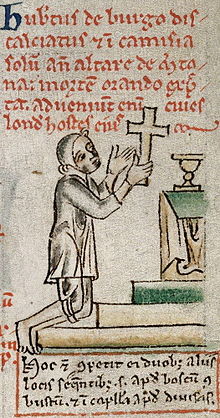
Hubert de burgh
At about the same time – or shortly after – Isabella was married for a third and final time, to Hubert de Burgh. Hubert De Burgh had become Chief Justiciar of England in 1215 and would rise to be Regent during the minority of Henry III. It was only several years after Isabella’s death that he would be created Earl of Kent.
On 13 October 1217 the sheriffs of nine counties were ordered to relinquish custody of Isabella’s lands to de Burgh. This final marriage was, sadly, very short-lived and Isabella was dead within only a few weeks of her wedding day and almost exactly a year after the death of her first husband, King John.
Isabella died on 14 October 1217, probably at Keynsham Abbey near Bristol, and was buried at the cathedral of Christ Church, Canterbury. Shortly before her death, Isabella made a grant to the monks of Canterbury, of £10 of land in her manor of Petersfield, Hampshire, which was witnessed by Hubert de Burgh and other members of his household.
In spite of her three marriages, Isabella never had children and was succeeded to the earldom of Gloucester by her nephew, Gilbert de Clare.
She was laid to rest in Canterbury Cathedral, Kent.
Further Reading: Robert Bartlett England Under the Norman and Angevin Kings 1075-1225; Dan Jones The Plantagenets; the Kings who Made England; The Plantagenet Chronicle Edited by Elizabeth Hallam; Maurice Ashley The Life and Times of King John; Roy Strong The Story of Britain; Oxford Companion to British History; Mike Ashley British Kings & Queens; David Williamson Brewer’s British Royalty; Rich Price King John’s Letters Facebook page; finerollshenry3.org.uk; Oxforddnb.com; magnacarta800th.com; Church, Stephen, King John: England, Magna Carta and the Making of a Tyrant; Danziger, Danny and John Gillingham, 1215: The Year of Magna Carta.
Pictures courtesy of Wikipedia.
*
My Books
Signed, dedicated copies of all my books are available through my online bookshop.
Out now: Scotland’s Medieval Queens
Scotland’s history is dramatic, violent and bloody. Being England’s northern neighbour has never been easy. Scotland’s queens have had to deal with war, murder, imprisonment, political rivalries and open betrayal. They have loved and lost, raised kings and queens, ruled and died for Scotland. From St Margaret, who became one of the patron saints of Scotland, to Elizabeth de Burgh and the dramatic story of the Scottish Wars of Independence, to the love story and tragedy of Joan Beaufort, to Margaret of Denmark and the dawn of the Renaissance, Scotland’s Medieval Queens have seen it all. This is the story of Scotland through their eyes.
‘Scotland’s Medieval Queens gives a thorough grounding in the history of the women who ruled Scotland at the side of its kings, often in the shadows, but just as interesting in their lives beyond the spotlight. It’s not a subject that has been widely covered, and Sharon is a pioneer in bringing that information into accessible history.’ Elizabeth Chadwick (New York Times bestselling author)
Heroines of the Tudor World tells the stories of the most remarkable women from European history in the time of the Tudor dynasty, 1485-1603. These are the women who ruled, the women who founded dynasties, the women who fought for religious freedom, their families and love. Heroines of the Tudor World is now available for pre-order from Amberley Publishing and Amazon UK.Women of the Anarchy demonstrates how Empress Matilda and Matilda of Boulogne, unable to wield a sword themselves, were prime movers in this time of conflict and lawlessness. It shows how their strengths, weaknesses, and personal ambitions swung the fortunes of war one way – and then the other. Available from Bookshop.org, Amberley Publishing and Amazon UK. King John’s Right-Hand Lady: The Story of Nicholaa de la Haye is the story of a truly remarkable lady, the hereditary constable of Lincoln Castle and the first woman in England to be appointed sheriff in her own right. Available from all good bookshops Pen & Sword Books, bookshop.org and Amazon.
Alternate Endings: An anthology of historical fiction short stories including Long Live the King… which is my take what might have happened had King John not died in October 1216. Available in paperback and kindle from Amazon.
Podcast:
Have a listen to theA Slice of Medieval podcast, which I co-host with Historical fiction novelist Derek Birks. Derek and I welcome guests, such as Bernard Cornwell and Elizabeth Chadwick, and discuss a wide range of topics in medieval history, from significant events to the personalities involved.







 History... the interesting bits!