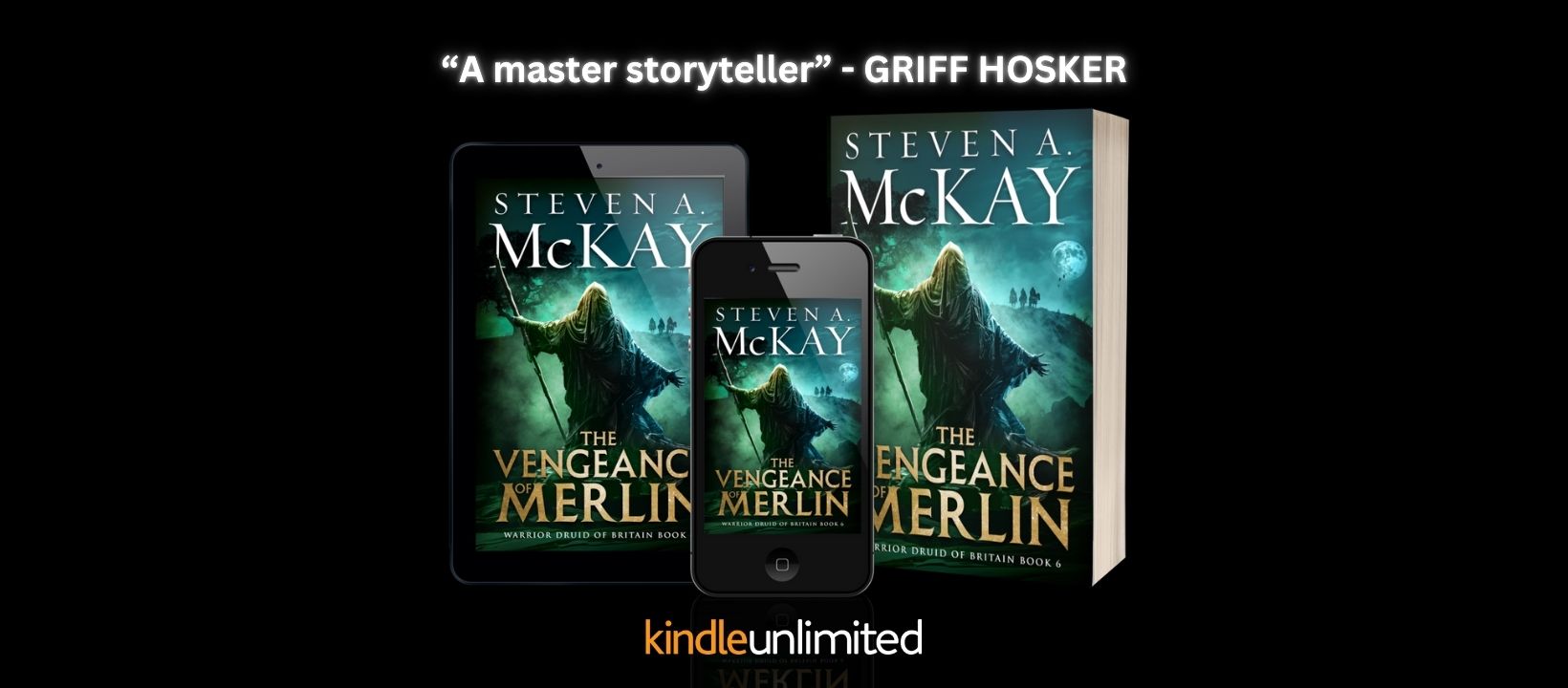
Book Corner: The Vengeance of Merlin by Steven A McKay

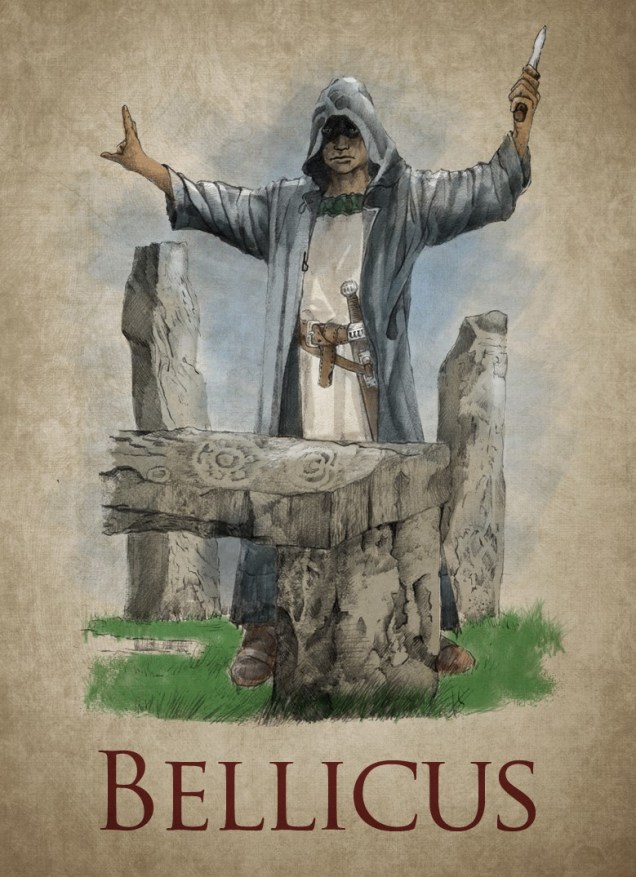
A heinous crime is perpetrated against the druids of Britain and a grief-stricken Bellicus suddenly finds his world changing in ways he never expected. Before he can begin to make sense of things the terrible news that the Picts have allied with the Saxons and now march on Dun Breatann together spurs the warrior-druid into action, and soon he and his companions are racing homewards. Horsa, fearsome leader of the sea-wolves, promises to use any tactic – including torture and dark magic – against Bellicus’s terrified Damnonii people who are being slaughtered and dragged from their burnt out villages to please the Saxons’ brutal gods.
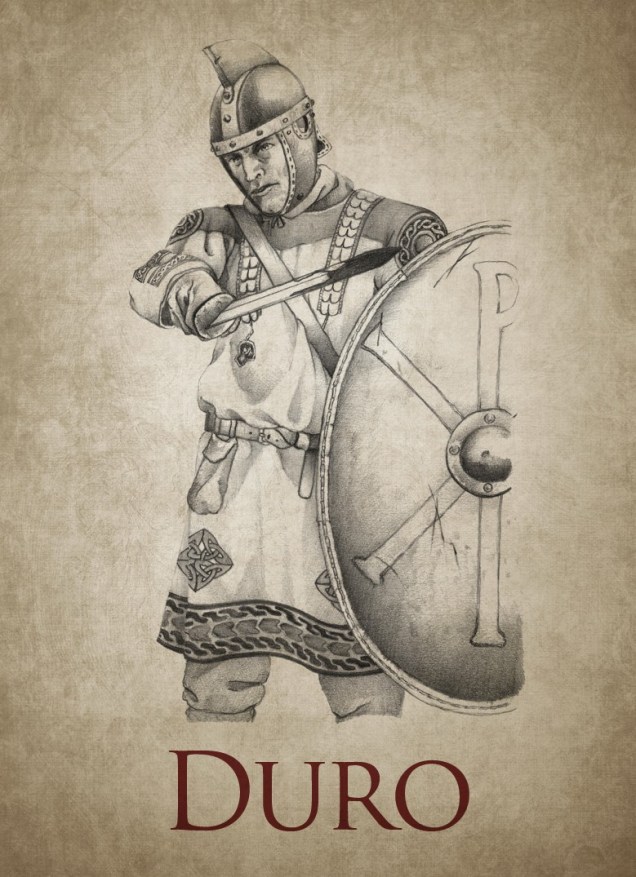
Bellicus, his friend Duro, and the great war-dog Cai will need all their bravery, experience, and cunning to stand against the insane cruelty of the raiders which even shocks their own allies in the Pictish army.
Many will fall as the fighting rages, but can bonds of loyalty, friendship, and family be enough to save Queen Narina and the people of Dun Breatann from the grim fate their enemies have planned for them?
This new Warrior Druid of Britain adventure is sure to delight lovers of fast-paced historical fiction, especially readers of Peter Gibbons, Griff Hosker, and Bernard Cornwell.

Saxons and Picts come together to conquer Northern Britain, but when the war is over they must face the vengeance of Merlin!

The best Bellicus adventure yet!

Another thrilling adventure!

Vengeance of Merlin by Steven A. McKay is the 6th book in his excellent Warrior Druid of Britain series. The books follow the adventures of Bellicus the druid and his friend Duro, a former Roman soldier. King Arthur, Merlin and Lancelot are all supporting actors. Together they face the Saxon onslaught, headed by the infamous brothers Hengist and Horsa.

While Bellicus is distracted by the Moot – a meeting of all the druids in Britain which comes with its own drama – Hengist joins forces with Dun Breatann’s enemy, Drest, to launch an attack on the stronghold. The uneasy alliance between Drest and Hengist is stretched thin by the unsavoury methods of the Saxon forces. The tension is further exacerbated by the fact Dun Breatann is virtually impregnable and resisting.

With murder, sacrifice and intrigue aplenty, The Vengeance of Merlin has all the ingredients for a fantastic story.

“What’s wrong with these people?” Duro demanded as silence followed them along the town’s main thoroughfare. “Have they never seen a druid before?”

“Be fair,” Bellicus laughed. “Nemias, Qunavo, Ria, Lugotorix – none of them look anything like I do.”

“You’ve got the eagle-topped staff,” Duro groused, throwing a fierce look at a man who scurried off as they went by. “Isn’t that enough?”

“Maybe, on my own,” Bellicus said, still laughing at his friend’s bemusement. “But with you at my side? No wonder the people here think trouble must be brewing. They probably think you’re the ghost of some legionary that was part of the garrison here.”

The centurion opened his mouth to make an angry retort, then he realised he was being made fun off and broke off, shaking his head and sharing in the druid’s amusement.

“Look,” Bellicus said, pointing at an old tombstone that was just lying on the ground, abandoned. “See what I mean?”

The stone had been carved to show a Roman optio, with the inscription beneath naming him as Caecilius Avitus of the Twentieth Legion Valeria Victrix.

Duro paused, reading, and then grunted. “Fifteen years service. Died when he was thirty-four. Mithras protect him.”

A stocky, middle-aged man with sunbrowned skin appeared on the road before them then, and he did not appear frightened by their presence, although he did peer warily at Cai.

“You a druid?” he asked, pointing at Bellicus’s staff, his eyes moving smoothly across Duro and the mastiff before returning to the shaven-headed giant atop the great black horse.

“I am. Bellicus of Dun Breatann. You must be the headman.”

The fellow nodded, his stance and demeanour telling of a history as a soldier, either in the local militia or perhaps even, like Duro, as a legionary.

“Your friends are at the old shrine of Minerva,” the headman informed them, gesturing along the road. “It’s not far along this way. Just keep following the road and you’ll see it to the south, across the bridge.” He paused and it seemed he wanted to ask them more about their business in Caer Legion, but respect for the druid’s office kept him silent and the riders moved on, saluting him and receiving the same gesture in return.

“He looked like he was expecting trouble,” Duro muttered when they were some distance away from the headman, who still stood watching them ride on.

Bellicus snorted with laughter. “Duro,” he said, “you have the exact same look about you. You always do. It’s just something old soldiers have.”

The characters make The Vengeance of Merlin. Princess Catia is maturing into a brave, adventurous leader, though with still that childish curiosity. Aife is divided by her loyalties between her father, her friends and what is right- and knowing that doing the right thing means going against her father. Even Bellicus has a big career decision to make; one that will affect his love life. Every character has their own challenges and issues, struggles they must overcome and decisions that need to be taken.

Steven A. McKay takes the reader back to the time when the Romans had left Britain and the Saxons were just arriving. The vivid landscape, the attitudes of the people and the meeting of history and legend, together with the mystery that surrounds the druids, all serve to transport the reader back to a time when the veil between magic and reality was not so thick and distinct as it is today.

Steven is setting us up for a great war against the Saxons. Hopefully, that means we will not only get to see more of Bellicus and Duro, but also more of Arthur!

The twists and turns in the story makes The Vengeance of Merlin a tense but addictive read. The gripping storyline keeps the reader enthralled to the very last page – even if it does take you until 1 in the morning to get there!

I loved it!

To Buy the book:

Vengeance of Merlin is available in paperback and ebook from Amazon

About the author:

Steven A McKay was born in Scotland in 1977 and always enjoyed studying history. He decided to write his Forest Lord novels after seeing a house called “Sherwood” when out at work one day. Since then he’s started a new series, the Warrior Druid of Britain Chronicles, and just completed a trilogy about Alfred the Great.

Steven used to be in a heavy metal band although he tend to just play guitar in his study these days. He did use those guitars to write the theme song for the podcast he co-hosts, Rock, Paper, Swords! with Matthew Harffy, though. Give it a listen, they’ve interviewed great guests like Diana Gabaldon, Simon Scarrow, Bernard Cornwell, Dan Jones and more.

My Books:

Signed, dedicated copies of all my books are available through my online store.

OUT NOW! Heroines of the Tudor World
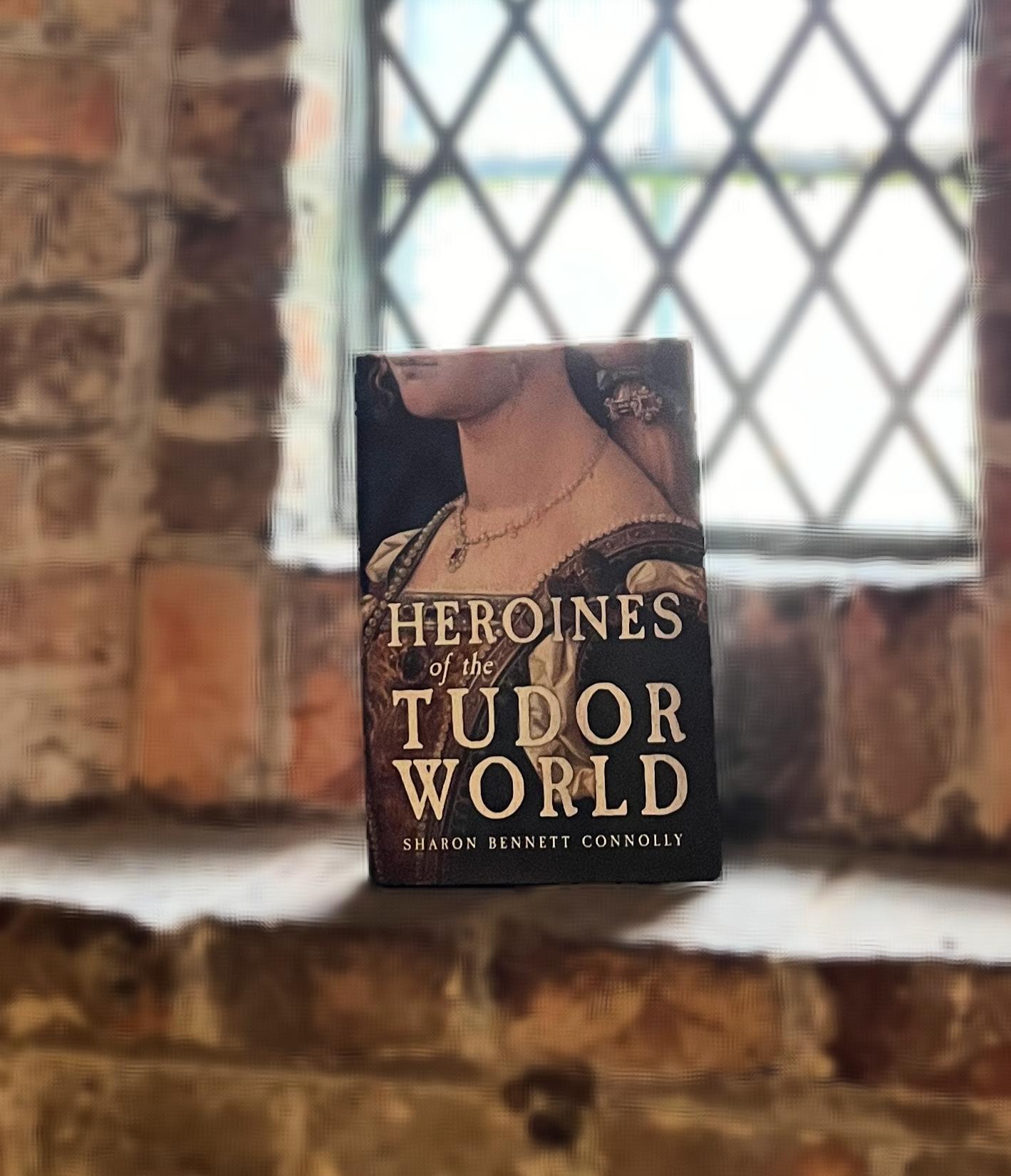
Heroines of the Tudor World tells the stories of the most remarkable women from European history in the time of the Tudor dynasty, 1485-1603. These are the women who ruled, the women who founded dynasties, the women who fought for religious freedom, their families and love. These are the women who made a difference, who influenced countries, kings and the Reformation. In the era dominated by the Renaissance and Reformation, Heroines of the Tudor World examines the threats and challenges faced by the women of the era, and how they overcame them. From writers to regents, from nuns to queens, Heroines of the Tudor World shines the spotlight on the women helped to shape Early Modern Europe.

Heroines of the Tudor World is now available for pre-order from Amberley Publishing and Amazon UK.

Coming 30 January 2025: Scotland’s Medieval Queens
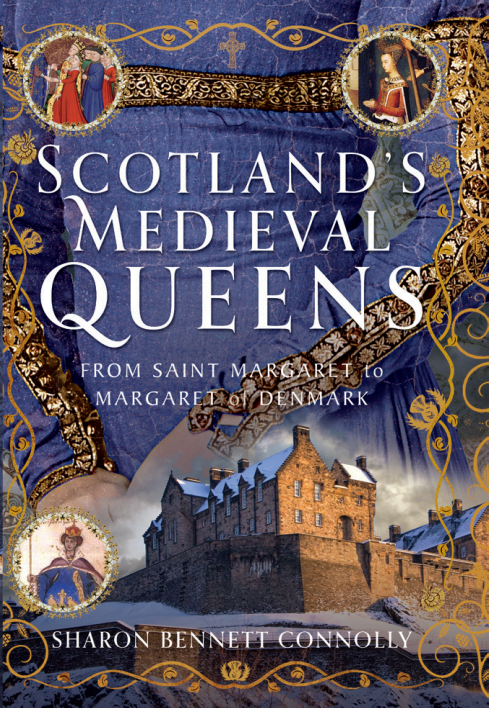
Scotland’s history is dramatic, violent and bloody. Being England’s northern neighbour has never been easy. Scotland’s queens have had to deal with war, murder, imprisonment, political rivalries and open betrayal. They have loved and lost, raised kings and queens, ruled and died for Scotland. From St Margaret, who became one of the patron saints of Scotland, to Elizabeth de Burgh and the dramatic story of the Scottish Wars of Independence, to the love story and tragedy of Joan Beaufort, to Margaret of Denmark and the dawn of the Renaissance, Scotland’s Medieval Queens have seen it all. This is the story of Scotland through their eyes.

Available for pre-order now.

Also by Sharon Bennett Connolly:
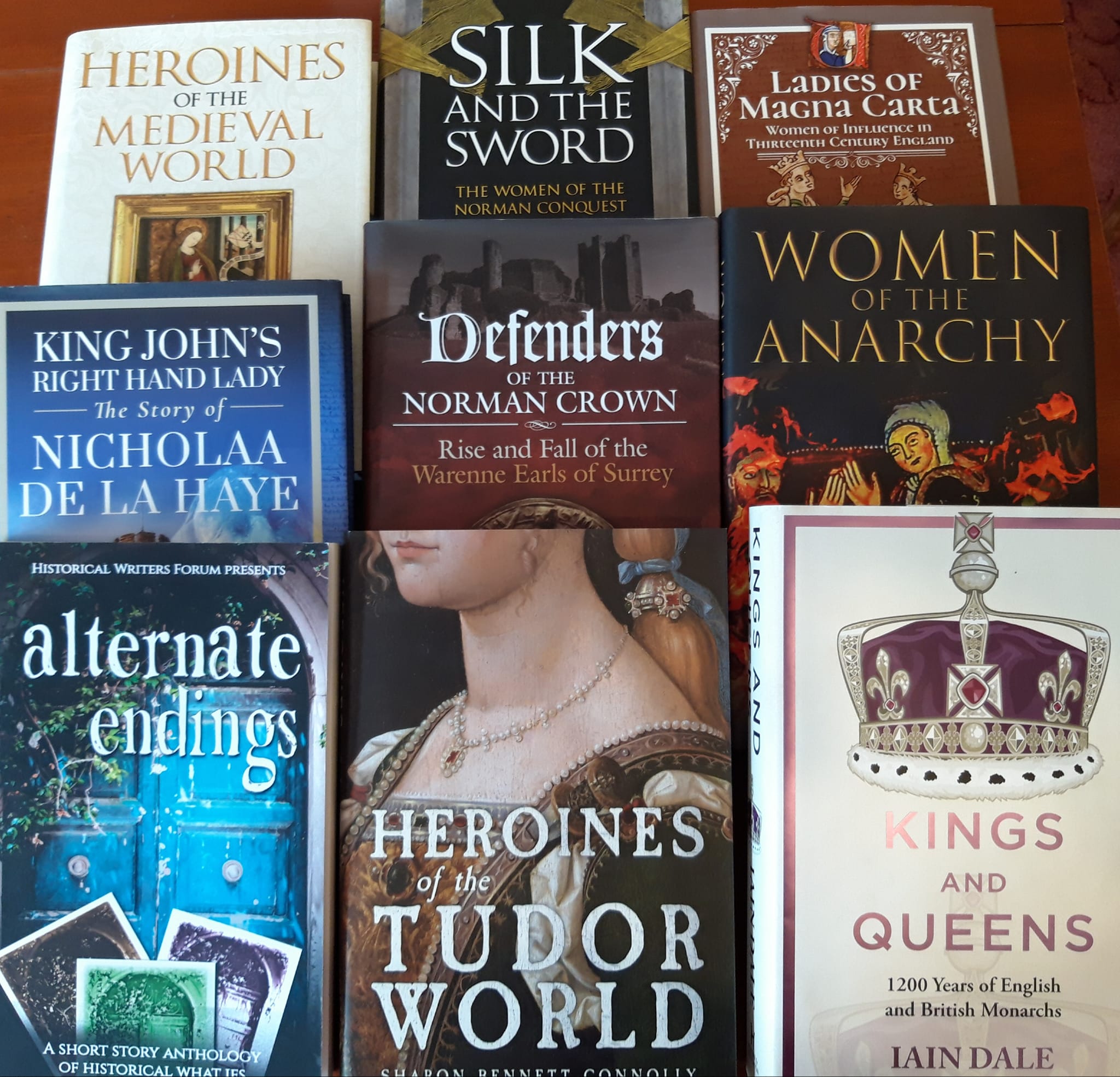
Women of the Anarchy demonstrates how Empress Matilda and Matilda of Boulogne, unable to wield a sword themselves, were prime movers in this time of conflict and lawlessness. It shows how their strengths, weaknesses, and personal ambitions swung the fortunes of war one way – and then the other. Available from Bookshop.orgAmberley Publishing and Amazon UKKing John’s Right-Hand Lady: The Story of Nicholaa de la Haye is the story of a truly remarkable lady, the hereditary constable of Lincoln Castle and the first woman in England to be appointed sheriff in her own right. Available from all good bookshops Pen & Sword Booksbookshop.org and AmazonDefenders of the Norman Crown: The Rise and Fall of the Warenne Earls of Surrey tells the fascinating story of the Warenne dynasty, from its origins in Normandy, through the Conquest, Magna Carta, the wars and marriages that led to its ultimate demise in the reign of Edward III. Available from Pen & Sword BooksAmazon in the UK and US, and Bookshop.org

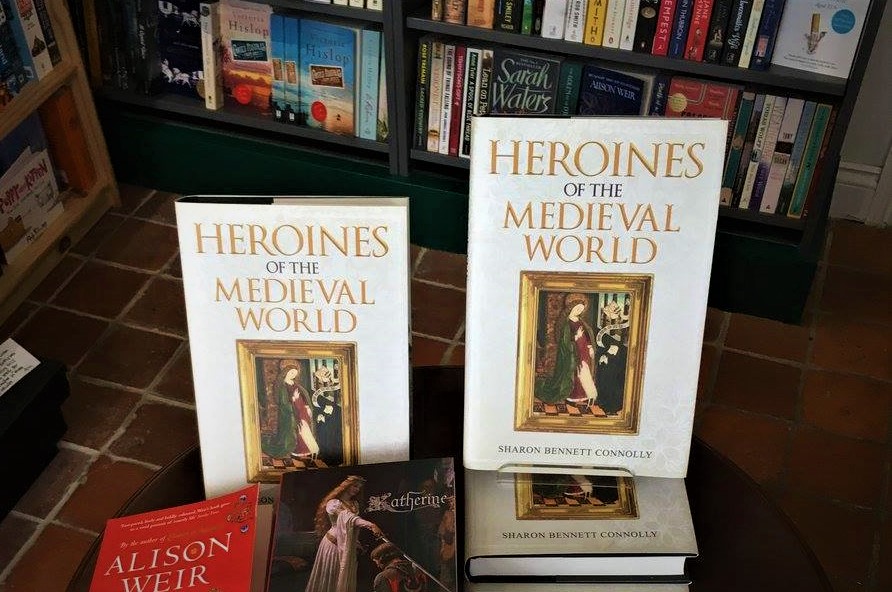
Ladies of Magna Carta: Women of Influence in Thirteenth Century England looks into the relationships of the various noble families of the 13th century, and how they were affected by the Barons’ Wars, Magna Carta and its aftermath; the bonds that were formed and those that were broken. It is now available in paperback and hardback from Pen & Sword,  Amazon, and Bookshop.orgHeroines of the Medieval World tells the stories of some of the most remarkable women from Medieval history, from Eleanor of Aquitaine to Julian of Norwich. Available now from Amberley Publishing and Amazon, and Bookshop.orgSilk and the Sword: The Women of the Norman Conquest traces the fortunes of the women who had a significant role to play in the momentous events of 1066. Available now from Amazon,  Amberley Publishing, and Bookshop.org.

Alternate Endings: An anthology of historical fiction short stories including Long Live the King… which is my take what might have happened had King John not died in October 1216. Available in paperback and kindle from Amazon.

Podcast:
Have a listen to the A Slice of Medieval podcast, which I co-host with Historical fiction novelist Derek Birks. Derek and I welcome guests, such as Bernard Cornwell, and discuss a wide range of topics in medieval history, from significant events to the personalities involved.

*

Don’t forget! Signed and dedicated copies of all my books are available through my online store.

For forthcoming online and in-person talks, please check out my Events Page.

You can be the first to read new articles by clicking the ‘Follow’ button, liking our Facebook page or joining me on TwitterThreads and Instagram.

*

©2024 Sharon Bennett Connolly FRHistS.

Book Corner: Arthur by Giles Kristian

Years have passed since the clash of shieldwalls echoed across the land. The Saxons are now the lords of Britain. And yet the bards still sing of Arthur – ‘In our darkest time, when we need him most, shall he come again.’

Yet old Beran has no love of bards’ songs. Nor of people, unless they are paying him to steal or kill. He is a mercenary, in the employ of the cutthroat Nabor ap Nabor, and he has been ordered to murder a boy fleeing a burning city. No ordinary boy either. No, this boy is the son of King Constantine and the grandson of High King Ambrosius. And he could be the hope of Britain…if he lives.

Betraying his companions and returning to a world he thought he had left forever, Beran gives his word that he will take the boy to the one place that still holds out against the Saxons: Camelot.

Crossing a hostile land, they will meet the runaway lovers, Tristan and Isolde. They will seek the help of Guivret, called the Little King, and the Saracen, Palamedes, who once rode beneath Arthur’s banner.

Hunted by Saxons, Nabor ap Nabor, and Queen Morgana, this unlikely band must fight for their lives and for each other. For if there’s to be any hope for Britain, Beran must deliver the boy to Camelot. But to do that, he must also face his own past…

Wow!

Every now and then, a book comes along that stands head and shoulders above the rest. It draws you in. You cannot wait to finish it.

And yet…

Finishing it leaves you bereft.

That is Giles Kristian’s Arthur.

It is the third book in a series that was only meant to be a duology. After Lancelot and Camelot came out, I asked Giles if there would be an Arthur and he said, probably not – that he had covered Arthur’s story in the other two. He wasn’t sure there was anything more to add. And how could he do it? He would have to go back a rewrite Lancelot, but with Arthur as the focus. I understood his dilemma but it was disappointing that there would be no book dedicated to Arthur.

But then, he must have found inspiration from somewhere, because we now have Arthur. Lancelot was fabulous. Camelot was gripping. Arthur is on a whole other level. The premise of the novel is inspired. Continuing the story into the next generation, with flashbacks to Arthur’s early life and career. The new story is cleverly woven into the old legends. Morgana is a villain trying to get her hands on the heir to the throne. The tragic love story of Tristan and Isolde is woven into the narrative, as are other parts of the Arthurian legend. And Beran, the old soldier, is the reluctant hero, who reluctantly finds himself in the role of Prince Erbin’s protector.

‘I’m hungry,’ the boy said.

‘I told you, I don’t have any food,’ Beran replied, looking for the stars to make sure they were still walking west. Two bats tumbled and flitted above, across a patch of dark sky.

‘But I’m hungry,’ the boy insisted.

‘What do you expect me to do about it?’ Beran growled.

The boy’s face clenched in thought. ‘You must be good at setting traps,’ he said. ‘You outlaws live here in the forest, don’t you?’

‘I can feed myself. Didn’t ask for another mouth to feed.’

‘I’m a prince.’

‘A mouth’s a mouth.’

Beran could almost feel the boy frowning in the dark from two feet away. ‘We could set a snare like my father’s hunters do. They catch hares and polecats and pine martens that way.’

‘Not any more they don’t,’ Beran said. ‘Look, boy, if we stop to set traps, we’re more likely to catch one of the bastards who’s after us. Or a Saxon. Or one of Queen Morgana’s spearmen. We’ve got to keep moving.’

‘So, we’re going to Camelot?’ the boy asked.

The name struck Beran like a blow to the chest. He stopped and the boy stopped with him. ‘Why in Ban’s name would we go to Camelot?’ he asked.

‘Because that’s where Mother was taking me,’ the boy said, looking up at him, and Beran realized he had not even considered where the fugitives from Caer Colun had been bound with their treasures and this heir to the kingdom. It made sense, of course, for where else was safe in Britain for the son of Constantine the Battle King? The man who had modelled himself on the Roman generals who once ruled in the Dark Isles, and who had waged war against the Saxons for the last sixty years.

‘Lady Iselle wrote to my mother many times since my fatehr died, begging her to go to Camelot where we would be safe.’

Another name, another blow. ‘So why didn’t you?’ Beran asked. Your mother must’ve known Caer Colun could not hold out for ever. Even if the great Constantine had still been alive.’

‘Mother said we would never abandon the people. Lady Iselle could not take all of them to live within Camelot’s walls.’

‘Well, your mother’s people are slaves now, or dead. Or living beneath the sky like us,’ Beran said.

‘How long will it take to get to Camelot?’ the boy asked.

‘We’re not going to Camelot.’

Giles Kristian’s Arthur is a beautifully crafted story from start to finish, with twists and turns that will keep the reader on the edge of their seat and reading late into the night. And so you should. With enemies old and new, Beran has to avoid his former gang, stay clear of marauding Saxons and protect his charge from Queen Morgana’s men, who are hunting them relentlessly,

I do not want to ruin the reading experience with spoilers, I promise, but I will say endings are often not as good as you want them to be. They fail to live up to the promise.

That is not the case with Arthur.

The ending is spectacular.

They are everything you would expect of the legendary Arthur.

You ride with him.

You fight with him.

You are screaming his name as you charge the enemy.

It is perfection.

If there is only one book you read this year, make sure it is Arthur by Giles Kristian.

To buy Arthur on Amazon, click here.

About the author:

Family history (he is half Norwegian) and a passion for the fiction of Bernard Cornwell inspired GILES KRISTIAN to write. Set in the Viking world, his bestselling ‘Raven’ and ‘The Rise of Sigurd’ trilogies have been acclaimed by his peers, reviewers and readers alike. In The Bleeding Land and Brothers’ Fury, he tells the story of a family torn apart by the English Civil War. He also co-wrote Wilbur Smith’s No.1 bestseller, Golden Lion. His contemporary survival thriller, Where Blood Runs Cold, won the Wilbur Smith Adventure Writing Prize. With his SundaTimes bestseller Lancelot, Giles plunged into the rich waters of the Arthurian legend. His epic reimagining of our greatest island ‘history’ continued in Camelot and draws to a breath-taking close with Arthur.
Giles Kristian lives in Leicestershire.
To find out more, visit http://www.glieskristian.com. You can follow him on X @GilesKristian and Facebook/Giles Kristian

*

My Books

Signed, dedicated copies of all my books are available through my online bookshop.

Coming on 15 June 2024: Heroines of the Tudor World

Heroines of the Tudor World tells the stories of the most remarkable women from European history in the time of the Tudor dynasty, 1485-1603. These are the women who ruled, the women who founded dynasties, the women who fought for religious freedom, their families and love. These are the women who made a difference, who influenced countries, kings and the Reformation. In the era dominated by the Renaissance and Reformation, Heroines of the Tudor World examines the threats and challenges faced by the women of the era, and how they overcame them. From writers to regents, from nuns to queens, Heroines of the Tudor World shines the spotlight on the women helped to shape Early Modern Europe.

Heroines of the Tudor World is now available for pre-order from Amberley Publishing and Amazon UK.

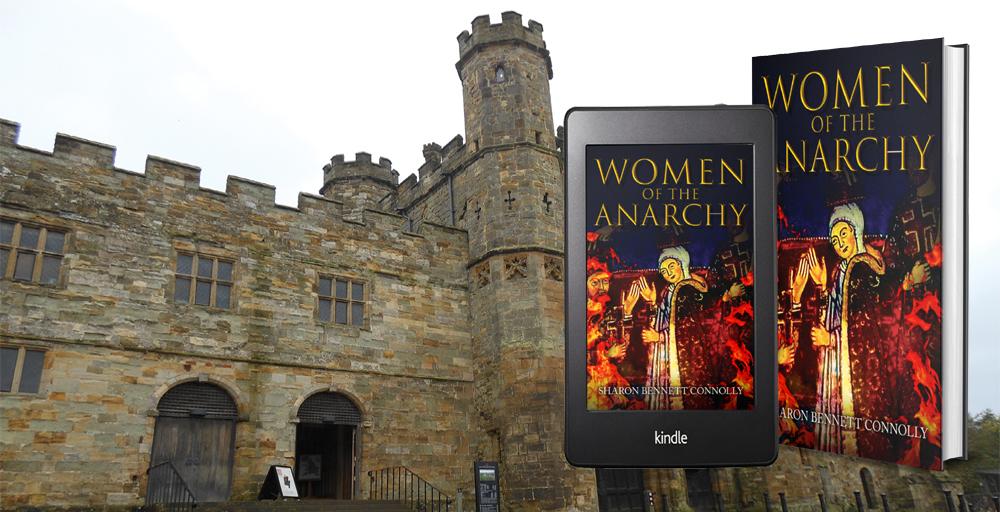
Out Now! Women of the Anarchy

Two cousins. On the one side is Empress Matilda, or Maud. The sole surviving legitimate child of Henry I, she is fighting for her birthright and that of her children. On the other side is her cousin, Queen Matilda, supporting her husband, King Stephen, and fighting to see her own son inherit the English crown. Women of the Anarchy demonstrates how these women, unable to wield a sword, were prime movers in this time of conflict and lawlessness. It show how their strengths, weaknesses, and personal ambitions swung the fortunes of war one way – and then the other.

Available from Bookshop.orgAmberley Publishing and Amazon UK.

Also by Sharon Bennett Connolly:

King John’s Right-Hand Lady: The Story of Nicholaa de la Haye is the story of a truly remarkable lady, the hereditary constable of Lincoln Castle and the first woman in England to be appointed sheriff in her own right. Available from all good bookshops or direct from Pen & Sword Booksbookshop.org and AmazonDefenders of the Norman Crown: The Rise and Fall of the Warenne Earls of Surrey tells the fascinating story of the Warenne dynasty, from its origins in Normandy, through the Conquest, Magna Carta, the wars and marriages that led to its ultimate demise in the reign of Edward III. Available from Pen & Sword BooksAmazon in the UK and US, and Bookshop.org

Ladies of Magna Carta: Women of Influence in Thirteenth Century England looks into the relationships of the various noble families of the 13th century, and how they were affected by the Barons’ Wars, Magna Carta and its aftermath; the bonds that were formed and those that were broken. It is now available in paperback and hardback from Pen & Sword,  Amazon, and Bookshop.orgHeroines of the Medieval World tells the stories of some of the most remarkable women from Medieval history, from Eleanor of Aquitaine to Julian of Norwich. Available now from Amberley Publishing and Amazon, and Bookshop.orgSilk and the Sword: The Women of the Norman Conquest traces the fortunes of the women who had a significant role to play in the momentous events of 1066. Available now from Amazon,  Amberley Publishing, and Bookshop.org.

Alternate Endings: An anthology of historical fiction short stories including Long Live the King… which is my take what might have happened had King John not died in October 1216. Available in paperback and kindle from Amazon.

Podcast:

Have a listen to the A Slice of Medieval podcast, which I co-host with Historical fiction novelist Derek Birks. Derek and I welcome guests, such as Bernard Cornwell and discuss a wide range of topics in medieval history, from significant events to the personalities involved.

*

Don’t forget! Signed and dedicated copies of all my books are available through my online bookshop.

For forthcoming online and in-person talks, please check out my Events Page.

You can be the first to read new articles by clicking the ‘Follow’ button, liking our Facebook page or joining me on Twitter and Instagram.

*

©2024 Sharon Bennett Connolly FRHistS.

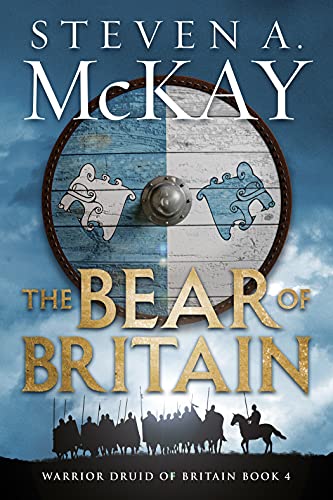
Book Corner: Bear of Britain by Steven A. McKay

AD 432. BRITAIN. The winter snows are melting at last, but spring will bring more than just rebirth this year. The Saxons are coming, and that means war.
Bellicus, Duro and Cai have travelled south to join the warlord, Arthur, and his growing army of Britons. New friendships have been made and exciting adventures await the warrior-druid and his companions, but the threat of Hengist and his invaders casts a dark cloud over all. For years, the Saxons have been content to remain mostly confined to the eastern parts of the country, but now they are marching west, and Hengist has amassed the biggest army seen on these shores since the Romans left over twenty years ago.
Arthur – dubbed the Bear of Britain by his advisor, Merlin – has never truly felt he’d earned such a grand title, but now he will have a chance to prove himself. The addition of a new, crack unit to his ranks will, he hopes, be enough to sweep the Saxon threat from Britain once and for all, and herald a generation of peace and prosperity for his people. But nothing in war is straightforward and even their own countrymen can turn violently against them at any moment, as Bellicus discovers to his cost…

The post-Roman landscape of Britain is brought vividly to life in this exciting fourth novel in the Warrior Druid of Britain Chronicles. Perfect for fans of Simon Scarrow, Bernard Cornwell and Conn Iggulden.

At last! Bellicus is back.

And what a thoroughly enjoyable novel it is.

I have developed a soft spot for this druid of the ancient Britons and his adventures. And this time he joins Arthur, the Bear of Britain to fight against Hengist and Horsa. The Bear of Britain truly indulges my love of all things Arthurian, with all the leading characters of the legend, Lancelot, Sir Kay and Merlin himself, joining the story. And what a story. Steven A. McKay has surpassed himself this time (and that is hard to do!). This was a fabulous adventure which I devoured in no time.

The Bear of Britain is a beautifully crafted adventure that sees Bellicus and his friend, the former Roman Centurion, Duro, join Arthur for an offensive against the Saxon brothers, Hengist and Horsa. Both Bellicus and Arthur are tasked with uniting the various British factions to form one coherent fighting force. And it is not that easy when each king thinks he himself should have the authority over Arthur, a man who is not tied to one land, but who has been raised since childhood to be the most formidable warlord and leader of men. Arthur must assert his own authority before he can lead his disparate forces against the Saxon invaders.

The Bear of Britain is a fabulous combination of battles, intrigue and political in-fighting and not everything will go Arthur’s way. However, he is blessed with the guidance of the Merlin and Bellicus, two druids who know how to influence the minds of kings and men. It is a fascinating study, not only of 6th century warfare, but also of what it takes to forge an army and lead it against such a formidable foe.

“I’ll actually be glad once the fighting starts,”the centurion said vehemently. “Since it’ll warm me up a little!”

A rider charged towards the camp from the east, heading towards Arthur’s tent and Bellicus led the way there himself. “That’ll be one of the scouts,”he said. “Bringing word of the Saxons’intended target perhaps.”

“Morning, big man,”a voice called, and they turned to see their young compatriot, and rowdy champion of the Votadini tribe, Eburus, warming himself by a fire. He’d travelled south with them after forming an unlikely friendship with both during the previous year’s battles against the Picts. “What’s happening? Are we moving out?”

“Soon, I’d guess,”Bellicus replied. “We’re just going to see Arthur now. Have our men ready to move, will you?”

Eburus grinned. Like Lancelot he was loud and brash and confident in his own abilities as a warrior. “They’re all ready to go, don’t worry, druid. Some of us have been up for hours you know.”

“Aye, not many can sleep once you start talking, Eburus. You’re a giant pain in the arse, lad.”Duro’s face was serious, but his eyes twinkled and, as he and Bellicus passed the guards and entered Arthur’s tent they chuckled at the foul insult Eburus called after them.

“Ah, you’re awake. Good.”Arthur nodded to them politely although he seemed pensive as he directed them to sit on a couple of stools by the table in the middle of the tent.

Lancelot was there, looking as fresh and clean-cut as he had before the previous night’s raid and Bellicus thought he could even smell lavender from the man, as though he’d washed in scented water recently. Also present were two local chieftains and, of course, the Merlin.

Nemias was his real name, but he was now more widely known as Merlin, the title given to the chief druid of all Britain.

Cai headed straight for the white-bearded old High Druid and allowed his muzzle to be stroked and a kiss to be planted on his head before padding back and flopping onto the floor at Bellicus’s feet.

“I was just saying,” Arthur told the newcomers, “That our scout reports the Saxons are moving south . He believes they’re heading for Waithe . Which means they won’t have as far to travel as I’d hoped. We should get moving now if you’re all ready?” He looked around at the gathered lords who all nodded agreement. “Let’s not waste any more time then. I’ll lead with Lancelot and my personal guard. King Caradoc, these are your lands, you ride with me, if you would ? Bellicus, you bring up the rear with your men, all right?”

Steven A. McKay has been teasing his readers with little glimpses of Arthur throughout the Warrior Druid of Britain series, but in this book the legendary hero gets more of a leading role – though the focus remains firmly on Bellicus’ story. It is wonderful the way the author skillfully weaves Arthur’s story into that of Bellicus, creating a new legend, all of its own. The character of Bellicus has developed wonderfully through the books, so that an avid reader can almost read his mind. He has a wonderful sense of right and wrong, and of destiny, that means the reader knows how Bellicus forms his decisions and ideas. HIs faithful companion, Duro, has his own demons to face in this episode of the story and it is refreshing to see him branch out on his own a little.

The Bear of Britain is a wonderful addition to Bellicus’ story and adds a new dimension to the druid’s life. The fact that he crosses paths with the legendary characters of Arthur and Lancelot adds a spice that the reader can really relish. One can only hope that their paths will continue to cross in later books.

And I do hope that the observant reader notices Steven A. McKay’s subtle nod to the great Bernard Cornwell and his The Last Kingdom series – it certainly made me smile and nod knowingly (but I will say no more and leave that for you to spot).

The Bear of Britain is a wonderful, enjoyable adventure and an excellent sequel to the preceding instalments of the Warrior Druid of Britain series (The Druid, Song of the Centurion and The northern Throne). The depth of research and thought that have gone into these books is astounding. Steven A. McKay has recreated post-Roman Britain in astonishing and vivid detail, no matter what part of Britain his characters find themselves in, both in the landscape and the people who occupied it.

The Bear of Britain is available in ebook and paperback from Amazon. I highly recommend you get yourself a copy – after reading the first 3 books, that is!

From Steven A. McKay:

I was born in Scotland in 1977 and always enjoyed studying history – well, the interesting bits, not so much what they taught us in school. I decided to write my Forest Lord series after seeing a house called “Sherwood” when I was out at work one day. I’d been thinking about maybe writing a novel but couldn’t come up with a subject or a hero so, to see that house, well…It felt like a message from the gods and my rebooted Robin Hood was born.

My current Warrior Druid of Britain series was similarly inspired, although this time it was the 80’s TV show “Knightmare”, and their version of Merlin that got my ideas flowing. Of course, the bearded old wizard had been done to death in fiction, so I decided to make my hero a giant young warrior-druid living in post-Roman Britain and he’s been a great character to write.

I was once in a heavy metal band although I tend to just play guitar in my study these days. I’m sure the neighbours absolutely love me.

Check out my website at stevenamckay.com and sign up for the email list – in return I’ll send you a FREE short story, as well as offering chances to win signed books, free audiobooks and other quite good things!

*

My Books

Signed, dedicated copies of all my books are available, please get in touch by completing the contact me form.

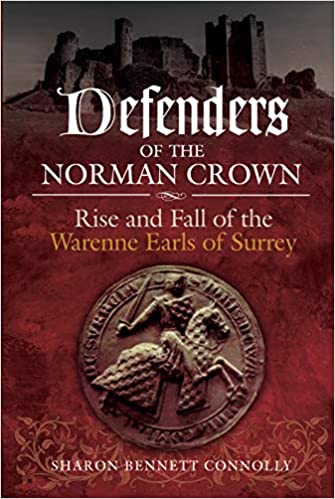
Defenders of the Norman Crown: The Rise and Fall of the Warenne Earls of Surrey tells the fascinating story of the Warenne dynasty, of the successes and failures of one of the most powerful families in England, from its origins in Normandy, through the Conquest, Magna Carta, the wars and marriages that led to its ultimate demise in the reign of Edward III. Defenders of the Norman Crown: Rise and Fall of the Warenne Earls of Surrey is now available from Pen & Sword BooksAmazon in the UK and US and Book Depository.

1 family. 8 earls. 300 years of English history!

Also by Sharon Bennett Connolly:

Ladies of Magna Carta: Women of Influence in Thirteenth Century England looks into the relationships of the various noble families of the 13th century, and how they were affected by the Barons’ Wars, Magna Carta and its aftermath; the bonds that were formed and those that were broken. It is now available in paperback and hardback from Pen & Sword,  Amazon and from Book Depository worldwide.

Silk and the Sword: The Women of the Norman Conquest traces the fortunes of the women who had a significant role to play in the momentous events of 1066.  Available now from Amazon,  Amberley Publishing, Book Depository.

Heroines of the Medieval World tells the stories of some of the most remarkable women from Medieval history, from Eleanor of Aquitaine to Julian of Norwich. Available now from Amberley Publishing and Amazon and Book Depository.

*

You can be the first to read new articles by clicking the ‘Follow’ button, liking our Facebook page or joining me on Twitter and Instagram.

*

©2021 Sharon Bennett Connolly

Book Corner: Land of Fire by Derek Birks

Late Spring, 455 AD.

After a brutal winter struggle against the High King Vortigern, outcast imperial officer Ambrosius Aurelianus has led his weary followers to south-west Britannia in search of his mother’s kinfolk. But Vortigern, thirsting for revenge is already forging a dangerous alliance against him.

Taking refuge in a ruined Roman fort near the decaying town of Vindocladia, Ambrosius finds an ally in Lurotriga, the widowed queen of the Durotriges. Though still sworn to his Saxon lady Inga, he is soon beguiled by the British noblewoman.

Between Inga and her new rival there can be no compromise and their enmity threatens to cause a rift between the Britons and Saxons of Ambrosius’ company.

If Vortigern attacks before the fort is repaired Ambrosius fears the outcome. He must find allies fast but, in a land of squabbling rival tribes the Roman encounters more enemies than friends. A treaty with neighbouring Dumnonia offers Ambrosius some hope, but commits him to defend the south coast against Scotti raiders. Ambrosius’ forces are stretched perilously thin putting the lives of Lurotriga and others at risk.

As Ambrosius prepares to pursue Vortigern for a final reckoning, his quest to discover his mother’s kin suddenly delivers a startling revelation, but will it help him to defeat the High King?

Heavily outnumbered in the thick forests and steep valleys of Vortigern’s homeland, Ambrosius must rely upon the fighting spirit of his small force of bucellarii and raw recruits. But sometimes courage alone is not enough.

Many of my readers will already know that Derek Birks is one of my favourite authors. Ever since reading his debut novel, Feud, set during the Wars of the Roses, I have devoured every one of his books. And Land of Fire was no exception. The 3rd book in Derek Birks’ The Last of the Romans series is a fabulous, action-filled adventure set in post-Roman Britain. The series follows the experiences of Ambrosius Aurelianus, his lover, Inga, and his small band of armed warriors, trying to make a new life for themselves inn this abandoned outpost of the Roman Empire.

As I have come to expect from this author, the action is relentless, with Ambrosius and his band fighting for their lives from the very first page. The plot is cleverly laid out, with a number of twists and turns that the reader cannot see coming. Ambrosius has to face the might of Vortigern, the High King who is eager for revenge. Life is even more complicated by Ambrosius’ attraction to two women…

The various plot threads make for an explosive combination that will leave the reader on the edge of their seats.

Below he surveyed once more the gravel hard where fishermen had drawn their small boats high up above the tideline. Close by, a rickety wooden jetty thrust a stubby finger out into the estuary channel and Ambrosius smiled to see children playing on the foreshore. But his grin of satisfaction froze half-formed, as a vessel emerged from the mist.

“What’s that?” asked Inga, clutching his arm.

After a tense moment he chuckled with relief, for it was just a single ship and not a Scoti vessel either. If anything, it looked Roman in origin.

“A trader,” ventured Inga.

“Could be,” he said, but something about the ship irked him and by the time Inga’s grip tightened upon his arm he had worked out why. The vessel was a navis lusoria, made for short, coastal journeys and river navigation; and its arrival here irked him far more than any Scoti incursion.

“That’s … your ship,” cried Inga. “Our ship!”

The previous year Ambrosius had brought them, against all odds, to the shore of Britannia in just such a navis lusoria. Their ship was a supply craft built to patrol the Rhinus River but it was very like the one he saw below. This one could, of course have been any vessel… except that it certainly looked like the ship stolen from him at the onset of winter by his embittered half-sister.

open-mouthed in shock, he stared as it lowered its sail and glided out of the mist into the harbour and there at its prow, like some carved image, stood Florina.

“No,” he moaned, as if conjuring up a long dead spirit – except she looked far from dead. “How can she be here?”

“Because Frigg has delivered her into our hands,” breathed Inga, the fire of revenge already beginning to sparkle in her eyes.

Land of Fire is superbly written and full of action. The characters are wonderful, colorful and unique individuals, including the magnificent war-dog, Ferox, who steals every scene he is in. Derek Birks is renowned for putting strong women into his stories. In his Rebels & Brothers and Craft of Kings series, it was Eleanor Elder who stole the show, using all her strength to fight for her family. In The Last of the Romans series, we have Inga and a number of other women who fight for themselves, their friends and loved ones. That is not to say that these women are therefore unrealistic, Derek Birks achieves the perfect balance in making the women into warriors, while also remembering the vulnerability of their sex and the male-dominated world in which they lived.

Ambrosius Aurelianus is a sympathetic hero, burdened with the weight of leadership, he also has a vulnerability about him, in his ability to command and fight. He is well aware of his own mortality and the mortality of those who fight alongside him. This makes him the perfect hero – you want him to succeed and, as with every Derek Birks book, are nervous that he might not. That is because Derek Birks has a unique outlook as an author. He is not afraid to kill off a key character, if it furthers the story. As a reader, that gives his book an edge – you are on the edge of your seat because you know that even the hero might not survive the battle. It makes the tension palpable – right to the very end of the book!

Well written, and with meticulous research, the book expertly depicts the lawlessness and factional warfare of the post-Roman period., where warlords are fighting to fill the vacuum left by the Roman withdrawal. Derek Birks’ knowledge of Roman Britain’s history serves to rebuild the long-lost world, and to draw the reader in, so that they can imagine the sights, sounds and -even – the smells of fifth century Britannia.

Land of Fire has depth and scope. The action is ferocious. The tension constant. It is, quite simply, impossible to put down. I read it in two days and enjoyed every moment of this fabulous novel. I cannot recommend it highly enough – it is a great way to lose a weekend!

To Buy the Book

Land of Fire is now available on Kindle from Amazon.

About the Author:

Derek was born in Hampshire in England but spent his teenage years in Auckland, New Zealand, where he still has strong family ties. On his return to England, he read history at Reading University and for many years he taught history in a secondary school. Whilst he enjoyed his teaching career and it paid the bills, he found a creative outlet in theatrical activities, stage-managing many plays and outdoor Shakespeare performances. Derek always wanted to write and began, aged 17, writing stories, songs and poetry – in fact virtually anything. Inevitably, work and family life took precedence for a long period of time but in 2010 Derek took early retirement to indulge his passion for history and concentrate on his writing. He is interested in a wide range of historical themes but his particular favourite is the late medieval period.

Derek writes action-packed fiction which is rooted in accurate history. He also produces podcasts on the Wars of the Roses for those interested in the real historical background to his books. Check them out on his website at: https://www.derekbirks.com/history-podcasts/

His historical fiction works include:
Rebels & Brothers – a 4-book series set during the fifteenth century, which follows a fictional family, the Elders, through their struggle to survive the Wars of the Roses up to 1471. The Craft of Kings – a sequel series which finds the Elder family ten years later in 1481. The latest book in this series is book 3, Echoes of Treason, which is set during the short and turbulent reign of Richard III. The final book in the series, Crown of Fear, will be published later in 2020. He has recently embarked upon a new Post-Roman series and the first book, The Last of the Romans, is out now. A sequel, Britannia: World’s End, was released in in 2020.

Apart from his writing, he enjoys travelling – sometimes, but not always, to carry out research for his books. He also spends his time walking, swimming and taking part in archaeological digs. He was a regular presence at the Harrogate History Festival, is an active member of the Historical Novel Society and you will also find him each summer signing books – and selling them – at the Chalke Valley History Festival outside Salisbury in Wiltshire.

Derek welcomes feedback from readers.
Feel free to get in touch with him via his website: http://www.derekbirks.com or follow him on twitter: https://twitter.com/Feud_writer
or facebook: https://www.facebook.com/derek.birks.14

*

My Books:

Coming 31 May 2021:

Defenders of the Norman Crown: The Rise and Fall of the Warenne Earls of Surrey tells the fascinating story of the Warenne dynasty, of the successes and failures of one of the most powerful families in England, from its origins in Normandy, through the Conquest, Magna Carta, the wars and marriages that led to its ultimate demise in the reign of Edward III.

1 family. 8 earls. 300 years of English history!

Defenders of the Norman Crown: Rise and Fall of the Warenne Earls of Surrey will be released in the UK on 31 May and in the US on 6 August. And it is now available for pre-order from Pen & Sword BooksAmazon in the UK and US and Book Depository.

Also by Sharon Bennett Connolly:

Ladies of Magna Carta: Women of Influence in Thirteenth Century England looks into the relationships of the various noble families of the 13th century, and how they were affected by the Barons’ Wars, Magna Carta and its aftermath; the bonds that were formed and those that were broken. It is now available from Pen & Sword,  Amazon and from Book Depository worldwide.

Heroines of the Medieval World tells the stories of some of the most remarkable women from Medieval history, from Eleanor of Aquitaine to Julian of Norwich. Available now from Amberley Publishing and Amazon and Book Depository.

Silk and the Sword: The Women of the Norman Conquest traces the fortunes of the women who had a significant role to play in the momentous events of 1066.  Available now from Amazon,  Amberley Publishing, Book Depository.

You can be the first to read new articles by clicking the ‘Follow’ button, liking our Facebook page or joining me on Twitter and Instagram.

©2021 Sharon Bennett Connolly 

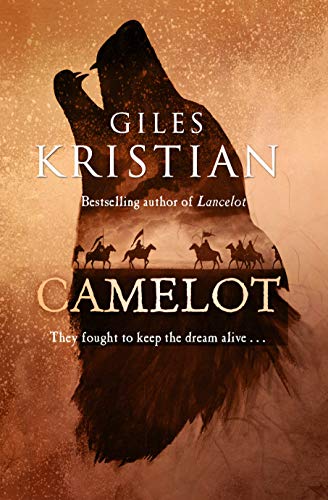
Book Corner: Camelot by Giles Kristian

Britain is a land riven by anarchy, slaughter, famine, filth and darkness. Its armies are destroyed, its heroes dead, or missing. Arthur and Lancelot fell in the last great battle and Merlin has not been seen these past ten years. Now, the Saxons are gathering again, their warbands stalk the land, their king seeks dominion. As for the lords and kings of Britain, they look only to their own survival and will not unite as they once did under Arthur and his legendary sword Excalibur.

But in an isolated monastery in the marshes of Avalon, a novice of the order is preparing to take his vows when the life he has known is suddenly turned upside down in a welter of blood. Two strangers – the wild-spirited, Saxon-killing Iselle and the ageing warrior Gawain – will pluck the young man from the wreckage of his simple existence. Together, they will seek the last druid and the cauldron of a god. And the young man must come to terms with his legacy and fate as the son of the most celebrated yet most infamous of Arthur’s warriors: Lancelot.

For this is the story of Galahad, Lancelot’s son – the reluctant warrior who dared to keep the dream of Camelot alive . . .

A couple of years ago, I read Lancelot by Giles Kristian, not really expecting to like it. After all, Lancelot was the villain of the King Arthur story and lover of Guinevere; he caused the downfall of Camelot. However, Kristian skillfully put a different spin on the story, presenting Lancelot as a flawed but talented knight, torn between the love for his lord, Arthur, and that for for his true love, Guinevere. Lancelot became a tragic hero and the cause of his own downfall. Lancelot was a story of complex loyalties, tested to the limit by war and circumstance beyond the control of the leading protagonists. In short, it was an incredible piece of storytelling that totally changed my view of Lancelot and the Arthurian legend.

This new book, Camelot, had a lot to live up to!

And, of course, it did not disappoint. In fact, I think Camelot surpasses Lancelot in so many ways. The story follows Galahad, Lancelot’s son in the attempts of the British tribes to form one last alliance that will see them fighting off the Saxon advance. The old heroes – Gawain, Arthur and, of course, Merlin – are there to help the new generation find their way. And the love interest is no defenceless little girl in need of saving – she’s a strong, independent character you will not fail to love, with a story all her own. There is humour, sadness, action and adventure. Giles Kristian cleverly weaves his own story into the existing legend, recreating a world lovers of all thing Arthurian cannot fail to appreciate.

‘You must leave this place and you must do it without delay,’ Gawain said, not looking up from his bowl. He fished out a scrap of meat and blew on it as it steamed between his finger and thumb. Then he thrust the scrap into his mouth and closed his eyes for a moment as if seeking to commit the taste and pleasure of the food to memory.

Father Brice and Father Judoc, standing across from Gawain on the other side of the hearth, looked at each other. ‘We cannot leave Ynys Wydryn,’ Father Brice said.

‘Why would we?’ Father Judoc asked. ‘We are safe here. Hidden.’

‘We found you,’ Gawain said, chewing, juices running into his beard.

‘The Saxons do not know we are here,’ Brice said. ‘The ones who attacked Galahad -‘

‘If they were Saxons,’ Judoc interrupted.

‘- They must have wandered in search of plunder, straying far from King Cerdic’s army,’ Brice went on, ‘which I believe is some miles east of Camelot and -‘

‘The Saxons are already here,’ Gawain cut him off, looking up now, holding Brice’s gaze. There were rumours and rumbles around the fire then.

‘We had to slip past them to get across the White Lake,’ Gediens said, thumbing at the east wall. He was the youngest of the four men, though he could not have been less than forty years old. ‘And not just a few scouts and foragers but war bands. Spearmen by the score. Saw their fires on Pennard Hill. Too many to count.’

Camelot by Giles Kristian is a wonderful crafted novel that leads the reader on a winding tale through Arthurian Britain. It takes you on a legendary quest, to the wondrous castles of Tintagel and Camelot, to the wilds of Anglesey and the Isle of Man and through various skirmishes, political intrigues, disappointments and love – with many twists and turns along the way. While you are desperate to read on through the next chapter, you simultaneously, never want the book to end.

I truly believe that the sign of a good book, is one that will take you through a range of emotions, from laughter to tears, and that will – when you get to the final page – leave you bereft that there is no more to read, and disappointed that you know will not read anything so good any time soon. Camelot fills all this criteria. It surprises you at every turn. It is probably the best book I will read this year – and its only April! This book is a keeper, and one I’ll be getting my dad for Father’s Day, that’s for sure!

Camelot is one of those rare books that will remain with you for days to come, musing over why Arthur acted the way he did, how Galahad managed to achieve what he did, how Gawain’s loyalty and perseverance saved the heroes on more than one occasion and how Merlin managed to weave his magic through the whole story, all the way to the final, climactic battle.

Camelot by Giles Kristian is due for release in the UK on 14 May 2020 and is available for pre-order from Amazon.

About the author:

Family history (he is half Norwegian) and a passion for the fiction of Bernard Cornwell inspired GILES KRISTIAN to write. Set in the Viking world, his bestselling ‘Raven’ and ‘The Rise of Sigurd’ trilogies have been acclaimed by his peers, reviewers and readers alike. In The Bleeding Land and Brothers’ Fury, he tells the story of a family torn apart by the English Civil War. He also co-wrote Wilbur Smith’s No.1 bestseller, Golden Lion. In his most recent novel, the SundaTimes bestseller Lancelot, Giles plunged into the rich waters of the Arthurian legend. For his next book, he continues his epic reimagining of our greatest island ‘history’.
Giles Kristian lives in Leicestershire.

*

My Books

Coming soon! 

Ladies of Magna Carta: Women of Influence in Thirteenth Century England will be released in the UK on 30 May 2020 and is now available for pre-order from Pen & SwordAmazon UK and from Book Depository worldwide. It will be released in the US on 2 September and is available for pre-order from Amazon US.

Also by Sharon Bennett Connolly:

Silk and the Sword: The Women of the Norman Conquest traces the fortunes of the women who had a significant role to play in the momentous events of 1066.  Available now from Amazon UK,  Amberley Publishing, Book Depository and Amazon US.
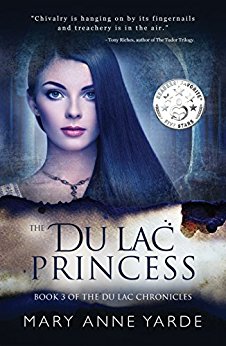
Heroines of the Medieval World tells the stories of some of the most remarkable women from Medieval history, from Eleanor of Aquitaine to Julian of Norwich. Available now from Amberley Publishing and Amazon UK, Amazon US and Book Depository.

*

You can be the first to read new articles by clicking the ‘Follow’ button, liking our Facebook page or joining me on Twitter and Instagram.

©2020 Sharon Bennett Connolly 

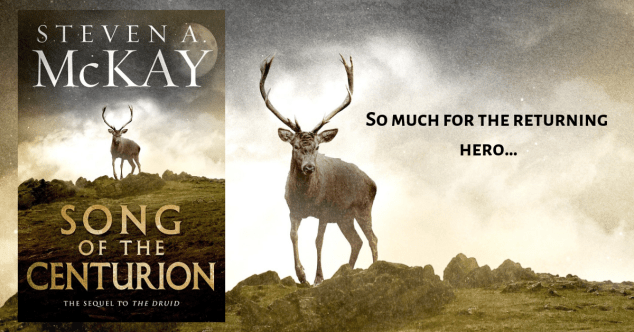
Book Corner: Song of the Centurion by Steven A. McKay

Autumn, AD 430. After the Princess Catia’s disappearance, and Bellicus’s adventures trailing her Saxon abductors south to the fabled Hanging Stones, the giant warrior-druid is finally returning home. 

Battle-scarred, and mourning the loss of a loved one, Bellicus has learned from bitter experience that the gods rarely make things easy. Even if he can evade Horsa’s vengeful pursuit and get back to the North safely, his troubles may be far from over. In a land beset by the rivalries of petty warlords, Dun Breatann has stood solid and secure for untold generations. Trouble brews though as King Coroticus has cracked under the pressure of his daughter’s abduction. When the king’s rage finally boils over during a winter feast, Bellicus finds himself with two choices: accept exile, or complete another seemingly impossible undertaking. So much for the returning hero…

Accompanied by his massive war-dog, Cai, and the former centurion, Duro – who has his own painful issues to contend with – Bellicus must somehow survive a journey east into enemy-held lands. Folklore, superstition, the healing power of song, and even a wondrous white stag will all play a part in the companions’ continuing adventures, but armies are gathering and, when spring returns, the people of Dun Breatann will surely find themselves under siege once again. Will their legendary warrior-druid be there to help defend them this time, or will the new ways sweep away the old, once and for all? Find out in Song of the Centurion, the action-packed sequel to 2018’s The Druid!

Tracing the story of Bellicus’ mission to rescue the Princess Catia, The Druid was one of my Top 5 books of 2019 and so I have been eagerly awaiting the sequel with some trepidation; could author Steven A. McKay improve on this great story and the character who drives it?

But … Wow! What a book!

Song of the Centurion not only builds on the story started in The Druid, but takes it in a wholly unexpected direction. Sequels can often suffer by being ‘much of the same’. Not this time. Bellicus returns to his king as the hero rescuer of the princess, but comes home to petty jealousy and court intrigues which see the druid’s life take several unexpected turns.

Song of the Centurion works not only as a sequel, but as a standalone novel. Steven A. McKays’ skillful summary of the first book, interwoven into the story of Bellicus retracing his steps north with the rescued princess, serves to remind the reader of preceding events or act as a backstory if you haven’t read The Druid.

Set in a time of great turmoil in Britain, where the Romans have left and the Saxons are pushing further west and north, Bellicus’ ultimate task is to end the bitter infighting between the clans in Alt Clota and to unite them to fight against the Saxon invaders. Not an easy task.

“Duro isn’t to blame for what happened here today,” Bellicus said, voice low but powerful enough thanks to his years of specialist training that it penetrated even the grief-ravaged minds of the angry townsmen. “We all are.”

“What does that mean?” the blacksmith demanded, eyes fixed on the sobbing man in the centurion uniform. “It’s not my fault the Saxons came here looking for revenge.”

“Aye,” one of his companions agreed. “We just wanted to be left alone.”

“And that’s the problem,” the druid nodded, looking down at the ground sadly. “We all just want to be left alone.” He waited until there were murmurs of surprise agreement from the angry blacksmith and his friends then his head came up and his eyes blazed. “Left alone? That is why your town was targeted by the sea-wolves. They knew you people were an easy target after their last visit here, when only your fat baker was willing to stand against them.”

“Why would we stop them?” the blacksmith demanded. “That lass was nothing to us -“

“That lass was a Briton, and you knew that!” Bellicus roared, the rage in his voice making more than one of the men facing him step back warily as a crowd of soot-blackened locals began to form around them.” “If more of you were as brave as Duro there, the Saxons might have been cut down like the animals they have shown themselves to be here today. If you -” he pointed directly at the blacksmith whose eyes narrowed “- had used that hammer to help a little girl, well …” He trailed off shaking his head, looking around at the scattered bodies sorrowfully. “None of this would have happened.”

The men were either mollified by the druid’s words, or perhaps embarrassed. Shamed by his accusations maybe. Whatever it was, most of them just stood there, looking dumbly at the druid. One stepped forward threateningly, clealy hoping his companions would follow his lead, but none did and, when Cai bared his teeth and barked at him, he stopped instantly in his tracks.

As has come to be expected with books written by Steven A. McKay, from the earliest novels in his Forest Lord series, the story is fast-paced and energetic, leaving the reader little time to stop for breath. The frantic battle scenes contrast remarkably well with the political and personal actions of the characters, recreating the life-or-death existence of Britons in the post-Roman era.

The author has a knack of drawing the reader in, so that they are totally invested in Bellicus’s story and desperate for the druid to succeed. As Bellicus inspires loyalty in Song of the Centurion, so too does he inspire it in his readers! He is a wonderful, noble character, made wise for his years by his druidic training. That his training extended to the martial arts – his proficiency with both sword and staff a testament to this – make for a story that melds both war and diplomacy into the character of the hero.

Song of the Centurion is a unique story, melding the mystical world of the druids with the legends and history of post-Roman Britain. The story drives the hero, the book and the reader to a riveting climax. And the promise of more to come…

Song of the Centurion is available in paperback and ebook from Amazon UK.

About the author:

Steven McKay was born in 1977 near Glasgow in Scotland. He live in Old Kilpatrick with his wife and two young children. After obtaining his Bachelor of Arts degree with the Open University he decided to follow his life-long ambition and write a historical novel.

He plays guitar and sings in a heavy metal band when they can find the time to meet up.

You can check out his website here. Steven also has an Amazon Author page and can be found on Twitter and Facebook.

All images are courtesy of Steven A. McKay.

My Books

Silk and the Sword: The Women of the Norman Conquest

From Emma of Normandy, wife of both King Cnut and Æthelred II to Saint Margaret, a descendant of Alfred the Great himself, Silk and the Sword: the Women of the Norman Conquest traces the fortunes of the women who had a significant role to play in the momentous events of 1066.  Available now from Amazon UK,  Amberley Publishing, Book Depository and Amazon US.

Heroines of the Medieval World

Telling the stories of some of the most remarkable women from Medieval history, from Eleanor of Aquitaine to Julian of Norwich, Heroines of the Medieval World,  is available now on kindle and in paperback in the UK from from both Amberley Publishing and Amazon, in the US from Amazon and worldwide from Book Depository.

*

You can be the first to read new articles by clicking the ‘Follow’ button, liking our Facebook page or joining me on Twitter and Instagram.

©2019 Sharon Bennett Connolly

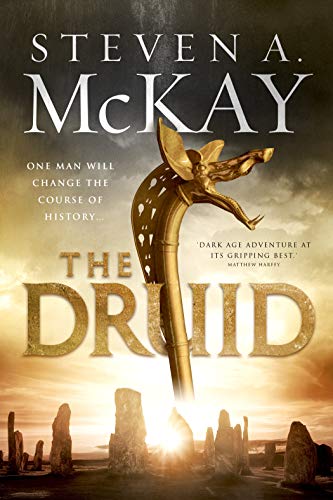
Book Corner: The Druid by Steven A. McKay

Northern Britain, AD430

A land in turmoil. A village ablaze. A king’s daughter abducted.

In the aftermath of a surprise attack Dun Buic lies in smoking ruins and many innocent villagers are dead. As the survivors try to make sense of the night’s events the giant warrior-druid, Bellicus, is tasked with hunting down the raiders and thwarting their dark purpose.

With years of training in the old ways, two war-dogs at his side, and unsurpassed skill with a longsword, Bellicus’s quest will take him on a perilous journey through lands still struggling to cope with the departure of the Roman legions.

Meanwhile, amongst her brutal captors the little princess Catia finds an unlikely ally, but even he may not be able to avert the terrible fate King Hengist has in store for her.

This, the first volume in a stunning new series from the bestselling author of Wolf’s Head, explores the rich folklore and culture of post-Roman Britain, where blood-sacrifice, superstition and warfare were as much a part of everyday life as love, laughter and song.

As Saxon invaders and the new Christian religion seek to mould the country for their own ends one man will change the course of Britain’s history forever. . .

. . . THE DRUID.

“Steven A. McKay’s archetypal villains and heroes step vividly onto the page from a mist-veiled past of legend to battle for the life of a princess and the fate of Britain.
Dark age adventure at its gripping best.” – MATTHEW HARFFY, author of The Bernicia Chronicles


I have to say that the first thing that attracted me to this book was the awesome cover – it is one of the best and most original that I have seen in a long time. It offers the promise of an amazing story and does not disappoint.

Steven A. McKay is an excellent storyteller, who brings the legends of the past to life, with a new and unique perspective. His Robin Hood series was one of the best I’ve read, moving the events into Barnsdale Forest, he gave a refreshing revamp to the age-old tales and made them his own. He has now gone further back in time, to the dawn of the Anglo-Saxon occupation of Britain, when the departure of the Roman legions was still within living memory and the Britons were trying to resist the incursions of the Angles Saxons and Jutes, who had established bridgeheads on the Saxon shore – the east and south coasts of Britain.

The author sets the scene wonderfully for the events that will take the reader on a breathtaking journey from Scotland to the most sacred site in England, following the druid Bellicus as he hunts the Saxon raiders who had kidnapped a young princess, Catia. A vision of the landscape is beautifully woven into the reader’s mind, with the challenges the moutainous terrain, and the security offered to the northern tribes by Hadrian’s wall all making their own impact on the story. The distances walked or ridden lend credence to  the length of the journey undertaken by the Saxons in their journey back to their master, and by Bellicus in his dogged pursuit of the little princess’s kidnappers.

Yet here they were, with a settlement ravaged by fire and Alt Clota’s princess abducted by Saxon raiders.

“Sometimes I wish the Romans had never left,” Coroticus growled, then nodded his thanks as Nectovelius’s wife placed a steaming bowl of broth on the table before him, closely followed by three more for the other men.

Bellicus understood his king’s feelings at that moment but he couldn’t share them. The Romans might have put a stop to the raids by the people that surrounded Alt Clota, but they’d also tried to destroy the native way of life, including their religion.

The druids had been almost wiped out in the lands south of the Antonine Wall although the “civilising” influence of the Roman overlords had not penetrated much further north. The harsh land there offered sanctuary to those druids who managed to evade their persecutors and Bellicus had learned at the feet of some of them.

No, the giant druid was glad the Romans had gone. Now that they’d finally returned to their own lands the old ways were making a resurgence in Britain and the gods were once again enjoying the reverence they deserved. News had even reached Bellicus of a warlord in the south who aimed to unite the native peoples against the invading Saxon hordes. His closest advisor was a druid steeped in the old traditions, highest of their brotherhood and known as the Merlin.

“What are we going to do?” Gavo’s blunt question broke Bellicus’s reverie.

“We must go after them,” Coroticus responded, his tone making it clear there would be no argument.

Bellicus was always one to speak his mind though, even if kings didn’t like what they heard.

“Aye, certainly we must follow them and rescue the princess,” he agreed. “But you, my lord king, must remain here in Alt Clota.”

He held up a hand, forestalling the expected outburst.

….

As anyone who has read Steven A. MacKay’s work before has come to expect, the large-as-life characters make this story. Bellicus is a truly tenacious and singular druid, he exudes the mystery and magic of his people, confident in his knowledge of the old ways, and in his fighting abilities, the man is not just a giant in height, but also in his power and personality. He instills fear, trust and dedication in those he comes into contact with, and his own dedication to duty is an inspiration to those he comes into contact with.

Bellicus is human, however, and proves susceptible to the odd misdirection, but manages to overcome such setbacks with admirable courage and tenacity. He is a hero it is easy to like, and to whom the reader can easily relate. The supporting characters in the tale demonstrate clearly the conflict which England is about to be torn by, the Britons fighting for survival against the invading German tribes. The lines are drawn, but not always clear.

There are some wonderfully surprising elements to the story, and some cameo appearances that will bring a smile to the reader’s face. The adventure is fun and edge-of-the-seat stuff, from the pursuit to the frequent clashes of arms, the reader barely gets a moment to take a breath before the next part of the action unfolds.

The Druid tells a story as stunning as the cover art suggests and, as the first of a new series, promises drama and excitement for many books to come.

About the author:

Steven A. McKay was born in Scotland in 1977. His first book, “Wolf’s Head”, came out in 2013 and was an Amazon UK top 20 bestseller. “Blood of the Wolf” is the fourth and final book in the Forest Lord series which has over 100,000 sales so far.

Steven’s next book, “The Druid” is the first in a brand new series set in post-Roman Britain and will be published on November 1st 2018.

He plays guitar and sings in a heavy metal band when they can find the time to meet up (which isn’t often these days to be honest).

Check out his website at https://stevenamckay.com/ and sign up for the email list – in return we’ll send you a FREE short story which is not available anywhere else, as well as offering chances to win signed books and other goodies!

The Druid goes on sale on 1st November 2018 and can be found on Steven A. McKay’s Amazon page.

*

Coming in November!

Tracing the fortunes of the women who had a significant role to play in the momentous events of 1066, Silk and the Sword: the Women of the Norman Conquest will be released in the UK on 15 November 2018 and is available for pre-order on Amazon UK,  Amberley Publishing and Book Depository. It is scheduled for release in the US on 1 March 2019 and is available for pre-order from Amazon US.


Also by Sharon Bennett Connolly:

Telling the stories of some of the most incredible women from Medieval history, Heroines of the Medieval World,  is now available in hardback in the UK from both Amberley Publishing and Amazon UK, in the US from Amazon US  and worldwide from Book Depository. It will be released in paperback in the UK from 15 March 2019 and is available for pre-order on Amazon.

You can be the first to read new articles by clicking the ‘Follow’ button, liking our Facebook page or joining me on Twitter.

*

©2018 Sharon Bennett Connolly


Guest Post: The Quest for The Holy Grail by Mary Anne Yarde.

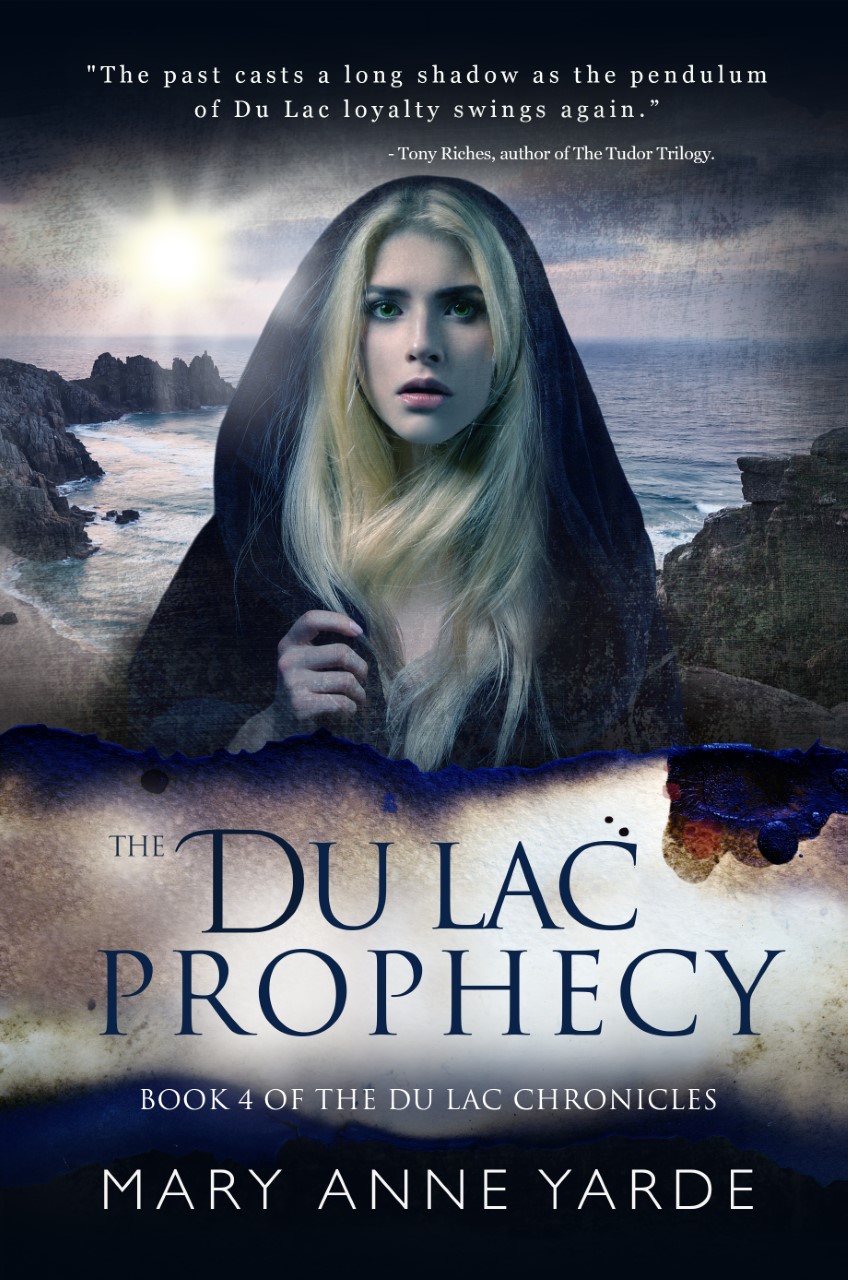
Today it is a pleasure to welcome back Arthurian novelist Mary Anne Yarde to the blog. Mary Anne’s latest book, The Du Lac Prophecy, book 4 of The Du Lac Chronicles, is released today. Mary Anne has joined us to share some of the research behind the book, with an article about that most elusive of historical relics, the Holy Grail.


The Quest for The Holy Grail

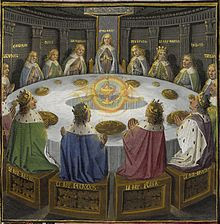
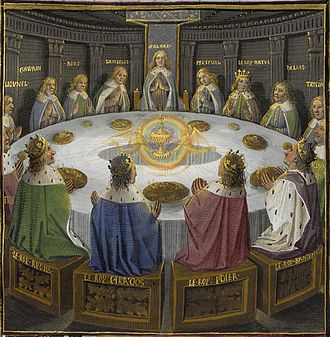
The Holy Grail, by Évrard d’Espinques c. 1475

By Mary Anne Yarde.

King Arthur’s Britain is a utopian world filled with chivalry, glory, and just a touch of glamour. Imagine Camelot as she rises out of the Fata Morgana — the mist. Picture the Knights as they mount their beautiful horses and ride through the portcullis as they embark on another noble quest. Is there anything more romantic?

The most famous quest of all was, of course, the quest for The Holy Grail. It is this quest that I am going to take a closer look at today. I am going to talk about where the idea came from, and how it became associated with King Arthur and his Knights.

To start with, we need to look at a passage from the Bible.

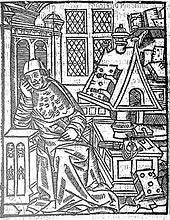
Chrétien de Troyes

While they were eating, Jesus took bread, and when he had given thanks, he broke it and gave it to his disciples, saying, “Take and eat; this is my body.”

Then he took a cup, and when he had given thanks, he gave it to them, saying, “Drink from it, all of you. This is my blood of the covenant, which is poured out for many for the forgiveness of sins.

Matthew 26:17-30 New International Version (NIV)

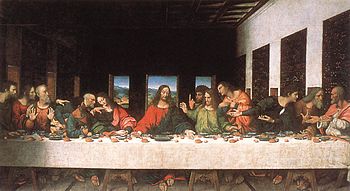
This was to be the last supper before Jesus’ arrest and horrific crucifixion. It is said that the cup that Jesus used on that fateful night was also used to catch his blood as he hung on the cross. So, because of this, The Holy Grail was / is a very precious Christian artefact.

Joseph of Arimathea and The Holy Grail.

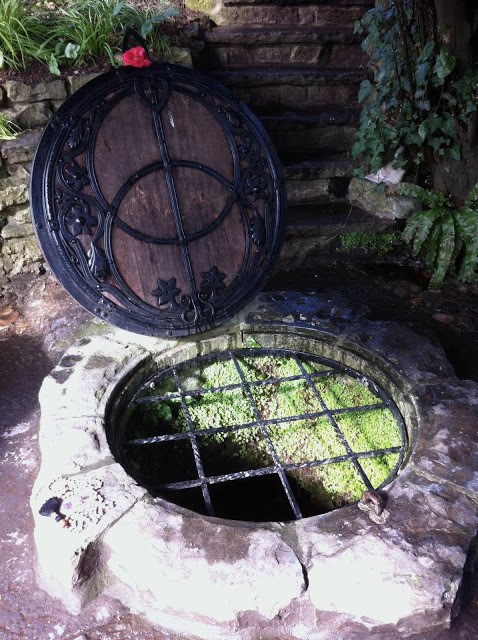
The Chalice Well Gardens, Glastonbury

But then a miracle happened, and Jesus rose from the dead. The tomb was again empty, but Joseph’s heart was full of wonder. Joseph spent the rest of his life wandering the world and passing on the teachings of Jesus.

It came to pass that Joseph and a group of friends sailed to a distant land called Albion. They followed the River Severn as they travelled inland and finally they found themselves in The Summer Lands. Joseph brought with him the sacred Chalice of Christ, for it was his to protect.

Joseph settled in a place known locally as The Island of Glass (Glastonbury), and it is said that it was here that Joseph hid the Holy Grail down a sacred well. The water of the well, so the story goes, instantly turned red and tasted of blood.

The Grail’s hiding place remained a secret for many years, and over time it became the stuff of legends. The stuff of folklore.

So how did Arthur and his Knights become associated with this story?

The Last Supper, ca. 1520, Andrea Solari, after Leonardo da Vinci

Well, to answer that question we need to look at one man — Chrétien de Troyes. At the end of the 12th Century, Chrétien de Troyes, a French poet, took up the story of the Grail. He wove the story of the Grail into the story of King Arthur and his Knights. It was an instant hit.

The importance of de Troyes influence on Arthurian Legend cannot be overlooked. It is de Troyes that introduced us to Lancelot and the love triangle. It is de Troyes that first introduced the idea of the Knights Quest for the Holy Grail. He also introduced us to the knight that would discover the Grail’s hiding place — Sir Percival.

If nothing else, de Troyes certainly sparked the imagination of the populace, for what could be more romantic than these chivalrous, heroic knights, searching for the sacred cup of their religion?

The Chalice Well

Robert de Boron (a late 12th Century French Poet) went into even more detail when he took up the story. But it was the Vulgate Cycle (Lancelot-Grail), which was written in the 13th Century by an unknown author that really cemented the Grail Quest with Arthur and his Knights.

The central character of the story is Lancelot. However, instead of Percival being the ultimate Grail hunting knight, it is Lancelot’s son, Galahad.

What did the Church think of this story? It is, after all, about a sacred relic.

The idea of a magic cup – cauldron – was a prevalent theme in Celtic myths, not so much the Bible. It was, in short, a pagan tale that was rewritten by a French poet with a socially acceptable Christian theme.

As with almost all things King Arthur, excavating the truth is near on impossible. Arthur resides in the shadowy world of folklore, and that is where the Grail can be found as well. However, the story of the Knights and the Holy Grail captured the imagination of the country and it has been associated with Arthurian Legends ever since.

*

Picture courtesy of Wikipedia, except the Chalice Well and Gardens, which are courtesy of Mary Anne Yarde.

*

The Du Lac Prophecy (Book 4 of The Du Lac Chronicles) by Mary Anne Yarde

Two Prophesies. Two Noble Households. One Throne.

Distrust and greed threaten to destroy the House of du Lac. Mordred Pendragon strengthens his hold on Brittany and the surrounding kingdoms while Alan, Mordred’s cousin, embarks on a desperate quest to find Arthur’s lost knights. Without the knights and the relics they hold in trust, they cannot defeat Arthur’s only son – but finding the knights is only half of the battle. Convincing them to fight on the side of the Du Lac’s, their sworn enemy, will not be easy.

If Alden, King of Cerniw, cannot bring unity there will be no need for Arthur’s knights. With Budic threatening to invade Alden’s Kingdom, Merton putting love before duty, and Garren disappearing to goodness knows where, what hope does Alden have? If Alden cannot get his House in order, Mordred will destroy them all.

About the Author

Mary Anne Yarde is the multi award-winning author of the International Bestselling series — The Du Lac Chronicles.

Yarde grew up in the southwest of England, surrounded and influenced by centuries of history and mythology. Glastonbury — the fabled Isle of Avalon — was a mere fifteen-minute drive from her home, and tales of King Arthur and his knights were a part of her childhood.

To buy the latest book in Mary Anne’s fabulous Du Lac Chronicles: Amazon US; Amazon UK; Amazon CA.

*

My books

Heroines of the Medieval World tells the stories of women, famous, infamous and unknown, who shaped the course of medieval history. It is available in hardback in the UK from both Amberley Publishing and Amazon UK. It is now available in Hardback from Amazon US  and worldwide from Book Depository.

From Emma of Normandy, wife of both King Cnut and Æthelred II to Saint Margaret, a descendant of Alfred the Great himself, Silk and the Sword: the Women of the Norman Conquest traces the fortunes of the women who had a significant role to play in the momentous events of 1066. Silk and the Sword: the Women of the Norman Conquest will be released in the UK on 15 November 2018 and is available for pre-order on Amazon UKAmberley Publishing and Book Depository.

You can be the first to read new articles by clicking the ‘Follow’ button, liking our Facebook page or joining me on Twitter.

*

©2018 Sharon Bennett Connolly and Mary Anne Yarde

Guest Post: Digging up Folklore – King Arthur by Mary Anne Yarde

Today it is a pleasure to welcome Mary Anne Yarde, author of The Du Lac Chronicles, to History…the Interesting Bits with an article about her fascination with King Arthur.

Digging up Folklore ~ King Arthur

I have been fascinated with the life and times of King Arthur and his Knights of the Round Table since I was a child — I guess growing up a stone’s throw from Glastonbury (The Ancient Isle of Avalon) may have had something to do with that.

My book series, The Du Lac Chronicles, tells the story of what happened after the death of Arthur, and continues the story of his Knights and their sons. But to write about the end of Arthur’s reign, I needed to know about the beginning. A not so easy task, it turned out.

The history of a historical Arthur is not written in stone but is, instead, engraved in folklore and that brings its own set of challenges.

Firstly, where did Arthur come from? Well, that is an easy question to answer…

King Arthur was English. No, he was Welsh. Arthur was Scottish. He was from Brittany. Oh, for goodness’ sake, he was a Roman General!

Which is right? Arthur is so famous that everyone wants to claim him and, over the years, there have been many names thrown out there as to who he really was. But we mustn’t forget that when we are dealing with Arthur, we are digging up folklore, and that is not the same as excavating relics. We can make Arthur fit wherever we want him to, and that is where the problem lies. It is very easy to make mistakes, and I have read many books that claim to have found the real Arthur, only they haven’t, it is just a theory, sometimes a very shaky one.

The same can be said for Arthur’s famous castle, Camelot. There have been many possible locations for one of the most famous castles in history. Tintagel, Cadbury Hill, Caerlaverock Castle, have all been put forward, and recently it has been suggested that a small Roman fort at Slack is where the real Camelot once stood. However, during all this excitement and discoveries we have overlooked a fundamental issue — there was no Camelot. It was an invention of a French poet in 1180! How can you look for something that was never there to begin with?

The Dark Ages, in which my books are set, are equally challenging to research because there is a lack of reliable primary resources. What was written down was written down for a purpose and that purpose was usually politically motivated, which in itself is fascinating, although not so helpful. Now, in these early texts when Arthur is mentioned, there is nothing about him being a king. Nennuis describes him as a warrior on par with Ironman, but no mention of a crown.

It isn’t until the 12th Century when Geoffrey of Monmouth writes his great work that the Arthur we know is born. The History of The Kings of Briton was meant to be a historically accurate account of British History and for many, many, years what Monmouth wrote was considered factually correct. Of course, we now know it was anything but. However, that does not mean that Monmouth’s work is of no particular value. Monmouth borrowed heavily from folklore and it is his story that drives the legend of Arthur and his Knights forward. I think Monmouth’s book is incredibly important as it tells us a great deal about, not only the era, but also about the people who were listening to his stories. And if we dig a little further, we can discover that it wasn’t only the populous who loved listening to Arthurian tales. Those pragmatic monks at Glastonbury Abbey did as well.

Let’s take a journey back to 12th Century England…

A terrible fire had spread through Glastonbury Abbey, and unfortunately for the monks, they did not have the coffers to pay for the repairs. If only they could encourage more pilgrims to come to the Abbey. What could they do? Pray to God and hope all would be well…?

Thanks to Monmouth’s book Arthur was the hot topic of the day and people would pay to go on a pilgrimage to Arthur’s final resting place so they could pay their respects to this once great King. All that was needed was a good story and a grave. The monks of Glastonbury announced to the world that they had discovered Arthur’s final resting place. That brought in the crowds — much like Tintagel does for English Heritage today! Glastonbury Abbey soon had the coffers to make the repairs and then some. There was as much truth in the story of Glastonbury Abbey and King Arthur’s grave as there was in The History of the Kings of Briton. But for hundreds of years, both the Abbey and Monmouth were believed.

My books are not just set in Britain, but France as well, so I needed to have a good understanding of what was happening in both of these countries in the 5th / 6th Century in order to keep the history real in the telling. Before we look at any of these countries we need to look at the powerhouse of the world at this time, and that was the Roman Empire. However, the golden age of the Roman Empire was almost over; she was politically unstable and was withdrawing her forces from far-flung provinces such as Briton, to defend her borders.

But this dawning new era brings some of the most fascinating historical figures that ever lived. These were the days of men such as Clovis. Clovis won a decisive victory against Rome, at the Battle of Soissons in AD 486. But, Clovis’ ambition didn’t stop there. Roman Gaul and parts of Western Germany fell to him as well. He forged a new empire through blood, war, and marriage. He made Paris the capital of his new kingdom, and he was the first King of a united Frank (France).

The Saxons and the Angles crossed the South Sea (The English Channel) to take advantage of vulnerable Britain who, since the Romans had left, had split back into various smaller kingdoms. There was much infighting and unrest, it was the perfect opportunity for the Saxon’s to come over and stake their claim.

Brittany, like Britain, wasn’t one united country, but many, and they were a race of warriors. While they were busy fighting each other, they missed the real threat to the kingdom, which eventually would be their undoing and they would find themselves at the mercy of Frank.

While all this is going on, the Church is creeping into the crevices, and spreading the word of God and, what could be considered of equal value, one language — Latin. It could be argued that it was the Church that united Britain in the end.

This was a time of great unrest and change, but one thing remained constant for the general populous and that was storytelling. Arthur may well have been a general but folklore made him a Christian King and gave him a castle full of noble knights. Arthur and his Knights (most of them anyway) cared about the people they represented. Arthur was a good king, the like of which has never been seen before or after. He was the perfect tool for spreading a type of patriotic propaganda. Arthur was someone you would want to fight by your side. But he also gave ordinary people a sense of belonging and hope. He is, after all, The Once and Future King.

I have tried to show what life was like in the 5th /6th Century in my books, but I have been heavily influenced by folklore, because when you are dealing with this period in history you cannot dismiss it. Brittany, for example, is terribly difficult to research historically during this era, but when it comes to folklore, she is rich and if that is all she is going to give us, then so be it. Folklore is its own special brand of history, and it is often overlooked by historians, which I think is a shame. You can tell a lot about a people by the stories they tell, and people are still fascinated by this larger-than-life King, which I think says it all. Arthur may well have been a general, or a knight, he may have been English, he may not, but it doesn’t matter because his story is timeless, it will never grow old.

Blurb:

The multi award-winning series, The Du Lac Chronicles, continues…

War is coming…

The ink has dried on Amandine’s death warrant. Her crime? She is a du Lac.

All that stands in the way of a grisly death on a pyre is the King of Brittany. However, King Philippe is a fickle friend, and if her death is profitable to him, then she has no doubt that he would light the pyre himself.

Alan, the only man Amandine trusts, has a secret and must make an impossible choice, which could have far-reaching consequences — not only for Amandine, but for the whole of Briton.

Links for Purchase:

Amazon US Amazon UK  Amazon CA

Bio: Mary Anne Yarde is the multi award-winning author of the International Best Selling Series — The Du Lac Chronicles. Set a generation after the fall of King Arthur, The Du Lac Chronicles takes you on a journey through Dark Age Briton and Brittany, where you will meet new friends and terrifying foes. Based on legends and historical fact, the Du Lac Chronicles is a series not to be missed.

Born in Bath, England, Mary Anne Yarde grew up in the southwest of England, surrounded and influenced by centuries of history and mythology. Glastonbury–the fabled Isle of Avalon–was a mere fifteen-minute drive from her home, and tales of King Arthur and his knights were part of her childhood.

Useful Links

Myths Legends Books & Coffee Pots

Mary’s Bookcase

A Small Gang of Authors

Goodreads

Facebook

Twitter

Amazon Author Page

I would like to say a huge ‘thank you’ to Mary Anne for such a fascinating post and wish her every success with her latest novel.

*

My book, Heroines of the Medieval World,  is now available in hardback in the UK from both Amberley Publishing and Amazon UK and worldwide from Book Depository. It is also available on Kindle in both the UK and USA and will be available in Hardback from Amazon US from 1 May 2018.

Sharons book cover

You can be the first to read new articles by clicking the ‘Follow’ button, liking our Facebook page or joining me on Twitter.

*

©2017 Sharon Bennett Connolly

Book Corner: Warriors and Kings by Martin Wall

For centuries, the Celtic peoples of Britain stood fast against invasion and oppression. Theirs is a fascinating and exciting story that includes the deeds of some of the most tenacious and heroic leaders in history – from Caratacus and Boudicca to William Wallace, Owain Glyndwr and the legendary King Arthur. What was it that gave first the Britons, and then the Welsh, this fanatical will to hold out against overwhelming odds through so many centuries?

Martin Wall explores the mythology and psychology of this unyielding and insular people; their devotion to charismatic leaders they believed to be sent from God, and their stubborn determination ‘ne’er to yield’ to oppression and injustice, whether Roman, Saxon, Norman, Viking, or later, the ravages of industrialisation. This fascinating book explores Celtic Britain from before the onslaught of the Roman Empire, through rebellion and open war, to the Act of Union passed under the Tudors and on to the Victorian era.

Warriors and Kings: The 1500-year Battle for Celtic Britain is a treasure trove of information on the history  of the Celts. Charting their progress, trials and tribulations from the time of the Romans, it provides a unique, in-depth biography of the race that once occupied Britain.

Boadicea Haranguing The Britons by John Opie.

Opening with the first Roman invasion of Britain, Martin Wall takes the reader on a journey through England through the eyes of the Celts, providing a detailed and interesting analysis of their way of life, their culture and beliefs and the key points in the history of the Celtic peoples and – by extension – Britain itself. Warriors and Kings: The 1500-year Battle for Celtic Britain gives us insight into the key characters of Celtic Britain, the heroes and the villains.

Using and analysing contemporary sources Warriors and Kings: The 1500-year Battle for Celtic Britain tells the fascinating story of Boudicca’s – ultimately doomed – rebellion. The book also discusses the existence – or not – of King Arthur, offering theories and ideas as to his identity; while leaving the reader to decide for themselves who he may have been.

The real problem which has bedevilled researchers into a ‘factual’ Arthur is that his rise to power coincided with the collapse of Roman Britain and the re-emergence or revival of Celtic culture – combined with a barbarian onslaught of unprecedented intensity from the Saxons. In times so troubled few contemporary records were kept up, but a little later, after the events but close enough to them to be reliably informed, Gildas wrote his De Excidio et conquestu Britanniae, his ‘complaining book’, about the ‘ruination of Britain’

Martin Wall has produced a book that is both enjoyable and informative, providing balanced argument and analysis of all the major events and figures of Celtic Britain. Making good use of contemporary and near-contemporary literature and archaeology, the story is re-told in a fascinating chronological narrative. Drawing on historians from earliest times, such as Tacitus and Gildas, all the way to the most recent studies, Martin Wall pulls everything together in order to tell the story.

Warriors and Kings: The 1500-year Battle for Celtic Britain charts the 1500-year-long struggle for supremacy over the island of Britain, showing how the Celts have been faced with one invasion after another. Using the battles, conflicts and invasions, we follow the fate of the Celts from the Romans, through the Dark Ages and in to the reign of King Alfred. The wonderful Aethelflaed, Lady of Mercia, and her struggle with the Vikings leads into the Norman Conquest and further erosion of Celtic traditions, with the invaders pushing inexorably westwards. There are some fascinating insights into Celtic culture and history; for example, did you know that small enclaves of Celts existed in Mercia during the 5th and 6th centuries?

By the late 570s it was clear that several powerful Anglo-Saxon kings were poised ready to move westwards. In the north, King Aethelric of Deira commenced hostilities with Rheged. A bold Anglian attack thrust right over the Pennines and at Argoed Llyfein, the forest of Leven in Cumbria, Aethelric, nicknamed the ‘Flame-bearer’ by the Celtic bards (perhaps his army had marched through the mountain passes in a night attack), was confronted on a bleak Saturday morning by the mighty Urien. The Angles were soundly beaten and Urien became a legendary Brythonic hero. This did not end the war, but intensified it until it became an epic conflict – truly worthy of poetry and legend, a contest between ‘Dark Age’ super-powers.

King Arthur and his Knights have a vision of the Holy Grail a by Evrard d’Espinques


Warriors and Kings: The 1500-year Battle for Celtic Britain demonstrates that, despite its name, ‘Dark Age’ Britain is anything but the unknown entity as previously thought. We have a wealth of information on people and events and Martin Wall has brought all the disparate sources – legends, chronicles and poems – together to recreate and enlighten a hitherto underexposed era of British history.

The author’s analysis is clear, concise and informative. He makes it clear where his own theories and those of other historians either agree or digress, while always being respectful. There are no footnotes, but references are included as part of the text, with a bibliography at the back of the book. The sources are assessed on an individual basis, with Martin Wall giving clear views on their veracity, bias and – sometimes – exaggeration.

For fans of Bernard Cornwell, Matthew Harffy and Annie Whitehead, this book gives the historical background to their fabulous novels, explaining the origins and times of Uhtred, Beobrand and Aethelflaed (even if Uhtred and Beobrand are fictional).

Warriors and Kings: The 1500-year Battle for Celtic Britain examines every aspect of Celitc history; their language, literature, religion and, even, warfare. It charts their story through the centuries and provides some explanation of how they disappeared into legend, their enclaves getting smaller and smaller as other tribes grew in power and influence over Britain. The book is a pleasure to read and a useful addition to any book shelf – be it a fan of King Arthur, a lover of Boudicca or a general history lover.

*

Pictures courtesy of Wikipedia

Warriors and Kings: The 1500-year Battle for Celtic Britain by Martin Wall is available from Amberley Publishing and Amazon.

*

My book, Heroines of the Medieval World,  is now available in hardback in the UK from both Amberley Publishing and Amazon UK and worldwide from Book Depository. It is also available on Kindle in both the UK and USA and will be available in Hardback from Amazon US from 1 May 2018.

You can be the first to read new articles by clicking the ‘Follow’ button, liking our Facebook page or joining me on Twitter.

*

©2017 Sharon Bennett Connolly