Guest Post: Finding Isabelle, a Mother and a Queen by Terri Lewis

When writing non-fiction biographies, you can tell the life of a person. You can say what happened to them, how they affected events and how they were perceived by others. But there are gaps. If you do not have the evidence, you cannot just make it up. If you are looking for reasons, you can offer different scenarios. It is hard to get to the heart of a person, though. You cannot put words in their mouths, or attribute feelings and emotions. Fiction can go where non fiction cannot tread. It can give you a vivid retelling of a fabulous story. It is not always historically accurate, there are some things we cannot know, but fiction can fill in the gaps. It can bring the past to life and give you a sense of the era that no other medium can.

And that is what Terri Lewis has achieved with remarkable skill in her novel if Isabelle d’Angoulême, Behold the Bird in Flight. And it is a pleasure to welcome Terri to History…the Interesting Bits to talk a little about her research behind her novel.

Finding Isabelle, a Mother and a Queen

by Terri Lewis

History...the Interesting Bits
A birthing stool

I was in high school when I first asked my history teacher, “Where are the women?” An unsatisfactory answer gave impetus to what became a need to find forgotten women. Eventually I became obsessed with Isabelle d’Angoulême, King John’s second wife, and decided to resurrect her by writing a novel.

There are a few documented facts about her life: Historians think she was about twelve years old when John abducted her from her French fiancé, took her to England, and crowned her queen. The chronicles, when they bothered to mention her, were not kind; Matthew Paris called her a “Jezebel” and “slut” who kept John in bed until noon, an assessment most likely reflecting John’s reputation, not the reality of his wife. Isabelle apparently didn’t receive the normal queen’s gold—a percentage of John’s income—or the rents from lands given to her at the time of their marriage; John kept the monies for himself. In “history,” I found only men – fighting, amassing money and enemies, riding off to conquer unknown lands, signing writs, allowing fairs, courting and dancing and always fighting. Isabelle’s life, like the lives of most medieval women, was mainly blank.

But. . . she bore John five children.

My research on medieval childbirth uncovered dire statistics: 20% to 33% of medieval women died from childbearing. The mortality rate per single birth was only slightly higher than in modern times, but multiple pregnancies compounded the risk. Birth control was forbidden by the all-powerful Church so basically a fertile woman had children until menopause or until she died. Because kings had to have sons, as did counts and dukes and other lords—a child to inherit land and carry on the family name. Daughters were less important. An only-child daughter could inherit a kingdom , but not for herself, for her husband. Girls who had brothers would serve as bargaining chips in marriages that formed diplomatic alliances or enlarged territory for their fathers.

In another statistic, infants were uncertain to live to inheritance. Nicholas Orme wrote, “It has been suggested that 25% of [medieval children] may have died in their first year, half as many (12.5%) between one and four, and a quarter as many (6%) between five and nine.” Danger was everywhere. A cut could become infected and penicillin was years in the future. Children fell into wells and down stone stairs, or into the fire that burned in the middle of the great hall, the main source of heat. Many died of illnesses for which bleeding or herbal concoctions were the only cure. Multiple pregnancies mitigated this danger. I note that Isabelle, in addition to the five children with John, had nine more children with her second husband. But two of her own daughters died in childbirth.

History...the Interesting Bits
Isabelle in her innocence

Isabelle wouldn’t have gone to a hospital. She’d have had a lying-in chamber removed from the main keep and furnished with a birthing stool, a midwife with practical experience but not a doctor because childbirth was a woman’s domain and doctors were men, and a room full of ladies-in-waiting who watched and prayed with her. If the birth was difficult, window shutters would be opened to release the new soul into life. If that failed, an arrow could be shot heavenward to waken God to the peril and ask for his help.

Since history decreed that Isabelle would live through childbirth, I decided to have her observe the suffering of her best friend. That scene became an important milestone in Isabelle’s growing up.

What kind of mother would Isabelle have been? I’d never read about a medieval mother. Women in 1200 who appeared in the chronicles were queens, royalty, or religious. Motherhood was important only for the child, preferable a boy, a gift to the father. The woman was just a bearing body.

I decided that Isabelle learned from her own mother, Alice de Courtney, the granddaughter of Louis le Gros of France. Alice would have been familiar with expectations for noble daughters. And she was married three times. I tried to imagine the experience of being handed to various husbands like a package—the decisions being made by fathers and kings. Perhaps she had grounded herself in her new household with a new husband by following the rules. The first “courtesy book” setting forth standards of behavior— Liber Urbani or the book of civilized man— appeared in England late in the 12th century. Written in Latin, the long poem contained general advice such as honor your parents, hold your tongue, don’t mount your horse in the great hall, and such gems as “when you pick up food with a spoon, do not shovel it on board with your thumb.”

History...the Interesting Bits
Midwife swaddling the child

I needed to imagine a relationship between Isabelle and her mother. When I was twelve, my mother was the center of everything; I’d come home from school and stand in the kitchen to tell stories about my friends or things the teacher said. But Isi’s mother wouldn’t be in the kitchen. She was a countess; she’d have cooks and laundresses and maids. I couldn’t imagine that she was anything to Isabelle but a rule-maker. And Isabelle’s position required rules. When she was of age, she would be married – handed off in essence – to another count. The marriage would presumably involve a castle and her husband would go off to war or crusade or to visit a king, and Isabelle would be required to manage the vast operation of the castle while he was gone. Even when he was home, she would oversee household tasks, her belt laden with keys to various chests of fabric or spices, to rooms holding barrels of wine and other supplies. So I made her mother strict, set Isabelle chafing against her, then allowed her to escape, grow up a bit, marry John, and have her children.

Two boys first. Then three girls. Today one can find numerous mothers writing how overpowering love when their baby was laid on their breast changed their lives. But as queen of an itinerant court, Isabelle lived on the road with John who visited barons, trying to bring them to heel. So breastfeeding was impractical. It also acted as a form of contraception and Isabelle’s job was to conceive as often as possible and give John heirs. This meant that her babies would be handed over at birth to a wet-nurse, a hired woman who’d breast feed them as if her own. So the first attachment of mother to child was cut off and understandably, wet nurses often developed close relationships with their charges, particularly as children were generally breastfed for longer than they are today – boys often up to the age of two.
History...the Interesting Bits
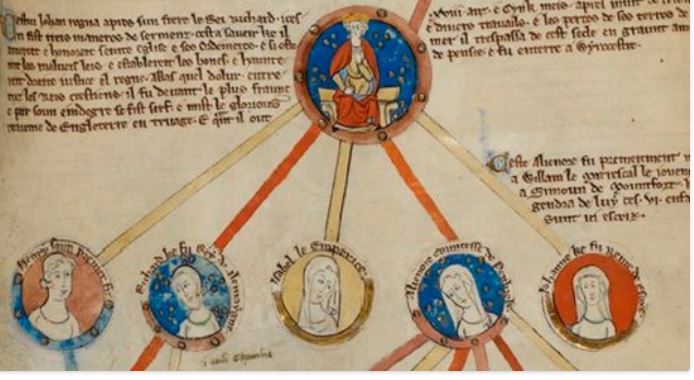
13th century depiction of John’s children (Isabelle not included)

At age seven, the boys would have sent to other noble castles for education. Perhaps the idea was that those other educators would have less attachment to the children and thus they would supply a strict upbringing without coddling. Isabelle’s girls would have remained with her as the kingdom fell deeper into chaos. The Barons were revolting, the Pope had excommunicated John, the French were threatening to invade and conquer. With a growing sense that the throne would be gone before her ten-year-old son Henry could assume it, Isabelle would have known the French would kill him along with the rest of her children, leaving no pretenders. How best to save them? I’ll leave that inside the novel and just say she managed as best she could. History has condemned her ultimate decision, but I understand how she came to it.

About the book:
History...the Interesting Bits

Romantic and stubborn, eleven-year-old Isi plans to marry for love and be mistress of her own castle. But life in 1198 is full of threat and a series of tragic events teaches her growing up is hard. When Isi falls for Hugh, a French nobleman, he consents to marry her, but only for her dowry. She longs for more. Hoping a jealous man will fall in love, she flirts with a king. The flirtation backfires: King John abducts and marries her. Now trapped in cold, warring England with a malicious husband, Isi must hide her yearning for Hugh and find her own power. If she fails, she won’t live to return to her beloved. Inspired by real historical figures—Isabelle d’Angoulême, Hugh de Lusignan, and King John of Magna Carta fame—Behold the Bird in Flight is set in a period that valued women only for their dowries and childbearing. Isabelle’s story has been mainly erased by men, but the medieval chronicles suggest a woman who developed her own power and wielded it. And as the woman behind the throne, who’s to say she didn’t influence history?

About the Author:

History...the Interesting Bits

Terri Lewis fell in love with medieval history in college. Not the dates or wars, but the mysterious daily lives of the people. Finally two sentences in a book bought at Windsor Castle led her to write her debut novel, Behold the Bird in Flight, A Novel of an Abducted Queen.

Published in Denver Quarterly, Blue Mesa Review, and Chicago Quarterly Review among others, and accepted to the Sewanee Writers’ Conference, she has worked with Laura van den Berg, Jill McCorkle, and Rebecca Makkai. Shortlisted for LitMag’s Virginia Woolf Award for Short Fiction, she won the 2025 Miami University Press Novella Prize. She reviews for The Washington Independent Review of Books.

Before she was an author, she had career as a ballet dancer in Denver and Germany, ran a dance company in Arkansas, earned a B.A. in history and education, and an M.A. in theater, not necessarily in that order. She lives with her husband and two lively dogs in Denver, Colorado.

Where to find Terri:

Website: Substack: Instagram: terri.lewis1: Facebook: terri lewis author

Buy the book at Amazon.com (in $), Amazon.co.uk (in £), and Amazon.Fr (in €)

*

My Books:

Signed, dedicated copies of all my books are available through my online bookshop.

Out now: Scotland’s Medieval Queens

Books by Sharon Bennett Connolly

Scotland’s history is dramatic, violent and bloody. Being England’s northern neighbour has never been easy. Scotland’s queens have had to deal with war, murder, imprisonment, political rivalries and open betrayal. They have loved and lost, raised kings and queens, ruled and died for Scotland. From St Margaret, who became one of the patron saints of Scotland, to Elizabeth de Burgh and the dramatic story of the Scottish Wars of Independence, to the love story and tragedy of Joan Beaufort, to Margaret of Denmark and the dawn of the Renaissance, Scotland’s Medieval Queens have seen it all. This is the story of Scotland through their eyes.

Scotland’s Medieval Queens gives a thorough grounding in the history of the women who ruled Scotland at the side of its kings, often in the shadows, but just as interesting in their lives beyond the spotlight. It’s not a subject that has been widely covered, and Sharon is a pioneer in bringing that information into accessible history.’ Elizabeth Chadwick (New York Times bestselling author)

Available now from Amazon and Pen and Sword Books

Also by Sharon Bennett Connolly:

Books by Sharon Bennett Connolly

Heroines of the Tudor World tells the stories of the most remarkable women from European history in the time of the Tudor dynasty, 1485-1603. These are the women who ruled, the women who founded dynasties, the women who fought for religious freedom, their families and love. Heroines of the Tudor World is now available for pre-order from Amberley Publishing and Amazon UK. Women of the Anarchy demonstrates how Empress Matilda and Matilda of Boulogne, unable to wield a sword themselves, were prime movers in this time of conflict and lawlessness. It shows how their strengths, weaknesses, and personal ambitions swung the fortunes of war one way – and then the other. Available from Bookshop.orgAmberley Publishing and Amazon UKKing John’s Right-Hand Lady: The Story of Nicholaa de la Haye is the story of a truly remarkable lady, the hereditary constable of Lincoln Castle and the first woman in England to be appointed sheriff in her own right. Available from all good bookshops Pen & Sword Booksbookshop.org and Amazon

Royal Historical Society

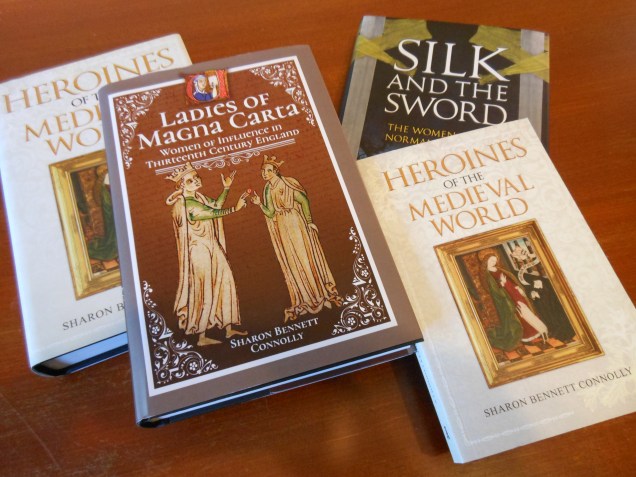
Defenders of the Norman Crown: The Rise and Fall of the Warenne Earls of Surrey tells the fascinating story of the Warenne dynasty, from its origins in Normandy, through the Conquest, Magna Carta, the wars and marriages that led to its ultimate demise in the reign of Edward III. Available from Pen & Sword BooksAmazon in the UK and US, and Bookshop.orgLadies of Magna Carta: Women of Influence in Thirteenth Century England looks into the relationships of the various noble families of the 13th century, and how they were affected by the Barons’ Wars, Magna Carta and its aftermath; the bonds that were formed and those that were broken. It is now available in paperback and hardback from Pen & SwordAmazon, and Bookshop.orgHeroines of the Medieval World tells the stories of some of the most remarkable women from Medieval history, from Eleanor of Aquitaine to Julian of Norwich. Available now from Amberley Publishing and Amazon, and Bookshop.orgSilk and the Sword: The Women of the Norman Conquest traces the fortunes of the women who had a significant role to play in the momentous events of 1066. Available now from Amazon,  Amberley Publishing, and Bookshop.org.

Alternate Endings: An anthology of historical fiction short stories including Long Live the King… which is my take what might have happened had King John not died in October 1216. Available in paperback and kindle from Amazon.

Podcast:

A Slice of Medieval

Have a listen to the A Slice of Medieval podcast, which I co-host with Historical fiction novelist Derek Birks. Derek and I welcome guests, such as Bernard Cornwell and Elizabeth Chadwick, and discuss a wide range of topics in medieval history, from significant events to the personalities involved.

Every episode is also now available on YouTube.

*

Don’t forget! Signed and dedicated copies of all my books are available through my online bookshop.

For forthcoming online and in-person talks, please check out my Events Page.

You can be the first to read new articles by clicking the ‘Follow’ button, liking our Facebook page or joining me on TwitterThreadsBluesky and Instagram.

*

©2025 Sharon Bennett Connolly FRHistS and Terri Lewis
Chatting to The Tudor Tracker

As part of The Tudor Tracker‘s Alternative August programme of talks, I had a nice long chat with Catherine Brooks about the history behind Magna Carta, King John and some of the remarkable women I wrote of in Ladies of Magna Carta.

We talk about the awesomeness of Nicholaa de la Haye, the tragedy of Matilda de Braose and how two Scottish princesses got into a clause of the Great Charter. And much more….

You can find the whole conversation on YouTube or by clicking the link below.

Huge thanks to Catherine for such an enjoyable and interesting chat.

*

My Books

Ladies of Magna Carta: Women of Influence in Thirteenth Century England  looks into the relationships of the various noble families of the 13th century, and how they were affected by the Barons’ Wars, Magna Carta and its aftermath; the bonds that were formed and those that were broken. It is now available from Pen & SwordAmazon and from Book Depository worldwide.

Also by Sharon Bennett Connolly:

Silk and the Sword: The Women of the Norman Conquest traces the fortunes of the women who had a significant role to play in the momentous events of 1066.  Available now from Amazon,  Amberley Publishing, Book Depository.

Heroines of the Medieval World tells the stories of some of the most remarkable women from Medieval history, from Eleanor of Aquitaine to Julian of Norwich. Available now from Amberley Publishing and Amazon and Book Depository.

*

You can be the first to read new articles by clicking the ‘Follow’ button, liking our Facebook page or joining me on Twitter and Instagram.

©2020 Sharon Bennett Connolly

The Two Wives of King John

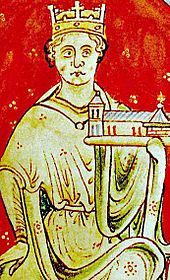
King John

One of the most intriguing relationships of the Magna Carta story is that between Isabella of Gloucester and Isabelle d’Angoulême, the two wives of King John.

Isabella of Gloucester is a unique individual in the story of Magna Carta. She is, in many ways, a shadow in the pages of history, and yet she held one of the greatest earldoms in England. There are no pictures of her, not even a description of her personality or appearance. At one time, no one even seemed certain of her name; she has been called Isabel, Isabella, Hawise, Avice – but Isabella is how she appears in the Close Rolls.1

Isabella was the youngest daughter and co-heiress of William, second Earl of Gloucester, who was himself the son of Robert of Gloucester, an illegitimate son of King Henry I and Empress Matilda’s half-brother and stalwart supporter during her war against King Stephen. Earl William’s wife was Hawise, the daughter of Robert de Beaumont, third Earl of Leicester. Isabella’s only brother Robert had died in 1166, making Isabella and her two sisters co-heiresses to the earldom of Gloucester. Although her date of birth has been lost to history, it seems likely she was born in the early 1160s.

We know very little of Isabella’s childhood, although, considering her social status, as the daughter of one of England’s wealthiest earls, it is likely that she was given the education expected of a high-ranking noblewoman and taught to run a large household, as well as the social graces of singing, dancing and needlework. Her parents’ marriage appears to have been a successful one. Isabella’s mother, Countess Hawise, was a regular witness to her husband’s charters and was mentioned in several of them, especially in the pro amina clauses of grants made to religious houses that sought spiritual benefits for those named.

Arms of Geoffrey de Mandeville, Isabella of Gloucester’s second husband

Isabella’s father, although a first cousin of Henry II, had a complicated relationship with the king, especially after Henry had taken Bristol Castle from the earl; the castle had been held by William’s father before him. Despite remaining loyal to Henry II during the rebellion of the king’s sons in 1173–74 and agreeing to the marriage of his youngest daughter to Prince John, Earl William’s loyalty remained suspect and he was arrested and imprisoned in 1183. The unfortunate earl died whilst still a captive, on 23 November 1183.

Isabella was betrothed, in 1176, to Prince John, the youngest son of Henry II and Eleanor of Aquitaine. John was 9 years old at the time of the betrothal, while Isabella was probably a few years older. Under the terms of the marriage agreement, Earl William recognised John as heir to the earldom of Gloucester, effectively disinheriting Isabella’s two elder sisters. The marriage was to be a way for Henry II to provide for his youngest son. After the Earl of Gloucester’s death in 1183, his entire estate was passed to Isabella, who had been made a ward of the king.

Isabella’s older sisters were both already married; Mabel was the wife of Amaury of Évreux and Amicia was married to the earl of Hertford. On their father’s death they had both been explicitly excluded from the estate to prevent the division of the comital inheritance and they received annuities of £100 each in compensation. Taking Isabella into wardship, Henry II therefore seized all the Gloucester lands and made the income from them available for John’s use, as Isabella’s future husband. The king, however, appears to have kept his options open and had not finalised John’s marriage to Isabella by the time of his death; in case a more suitable alliance came along.

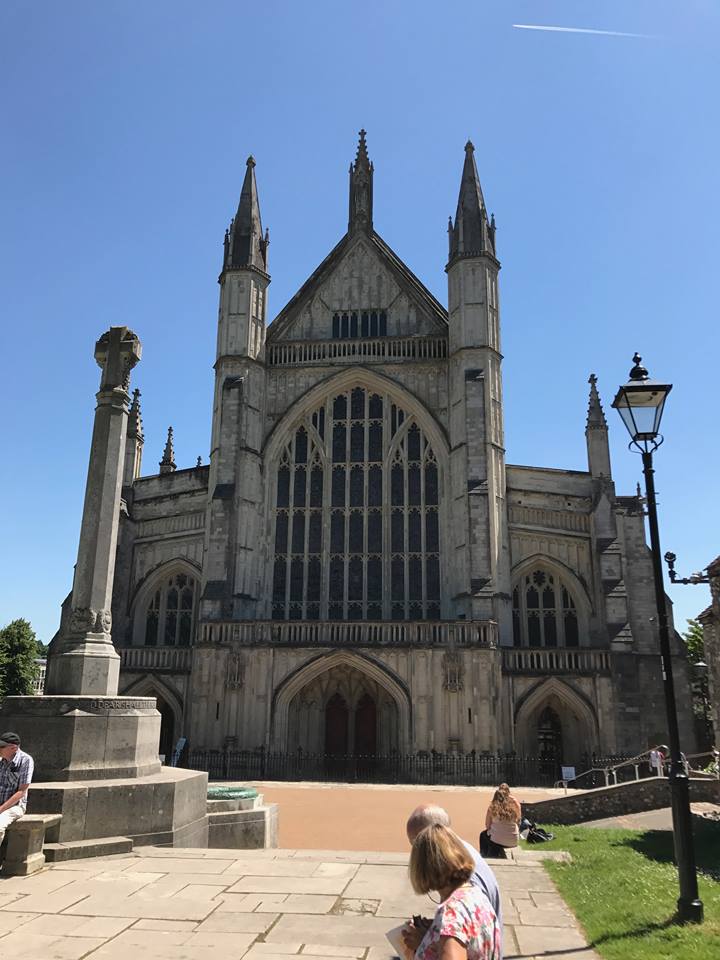
Winchester Cathedral, Isabella and Isabelle shared a household in Winchester

King Richard I, on the other hand, thought it expedient to get his brother safely married, on his own accession to the throne in 1189. The wedding took place at Marlborough Castle in Wiltshire on 29 August 1189; John was 21 and Isabella may have been approaching 30. Baldwin, the archbishop of Canterbury at the time, opposed the marriage as the couple were related within the third degree of consanguinity; they were second cousins, both being great-grandchildren of Henry I. John had to promise to seek a papal dispensation and, even then, the couple were ordered, by the archbishop, not to sleep together.

Although Isabella and John were married for ten years, their marriage was neither happy nor successful. They spent some time together in the first years of their marriage as they issued charters together during a visit to Normandy around 1190–91.2 However, they appear to have spent less and less time together as the years went on. They never had any children and it is during this time in his life that John’s illegitimate children, including Richard of Chilham and Joan Lady of Wales, were born; a further suggestion that the couple were not close. In 1193, as part of his plotting with Philip Augustus, John promised to marry the French king’s half-sister, Alice, who had previously been betrothed to John’s own brother, Richard. Nothing eventually came of the marriage proposal, but it was an implicit rejection of Isabella as his wife.

John succeeded to the throne on the death of his older brother, Richard the Lionheart, on 6 April 1199. He was crowned, alone, on 27 May 1199; the fact that Isabella was not crowned with him suggests that John was already looking for a way out of the marriage. Poor Isabella would never be styled ‘queen’ and it was possibly as early as August 1199, but certainly by early 1200, that John obtained a divorce on the grounds of consanguinity, the very objection for which he was supposed to have obtained a dispensation when he married Isabella in 1189. The bishops of Lisieux, Bayeux and Avranches, sitting in Normandy, provided the required judgement. One chronicler said of John that ‘seized by hope of a more elevated marriage, he acted on wicked counsel and rejected his wife.’3

Keen to keep his hold on the substantial Gloucester lands, John took Isabella into wardship, again, holding her in ‘honourable confinement’ for the next fourteen years. Little is known of her day-to-day life, although she does appear to have remained on civil terms with King John. John met the expenses of Isabella’s household and staff and sent her numerous gifts, including wine and cloth. Things may well have been a little awkward at times, especially after John found himself another wife.

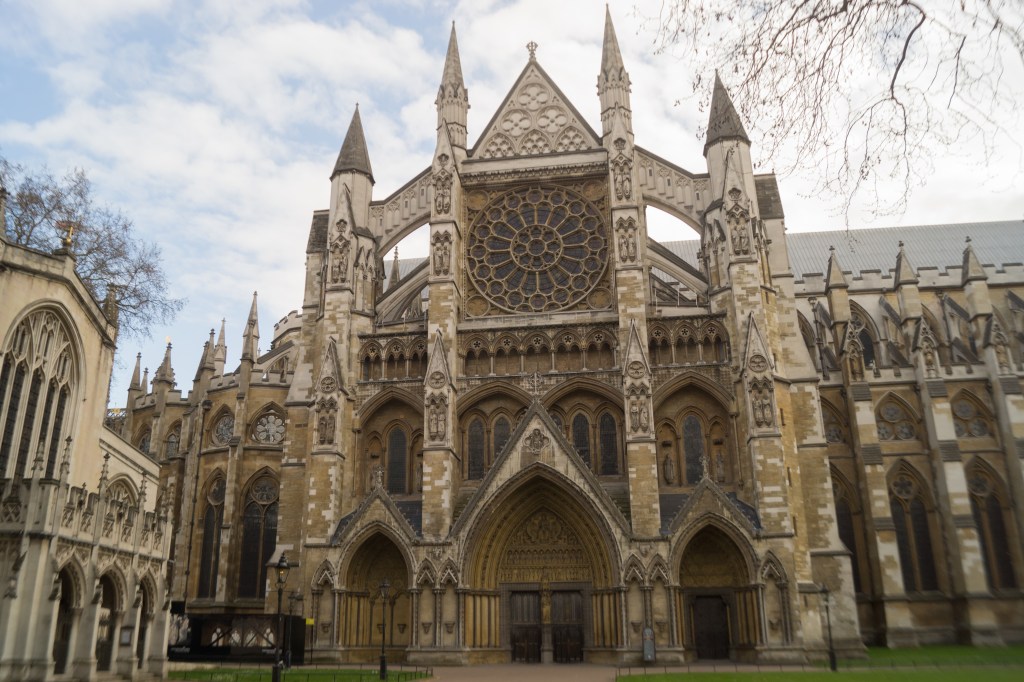
Westminster Abbey, where Isabelle d’Angoulême was crowned Queen of England

Having discarded Isabella, John began to look elsewhere for a new wife; he sent ambassadors to the Iberian peninsula to investigate the possibilities of a match with the daughter of the king of Portugal. However, any such plans were hastily abandoned when John set his sights on Isabelle d’Angoulême.

Isabelle was the only child of Audemar (or Aymer), Count of Angoulême and Alice de Courtenay. Alice was the daughter Peter de Courtenay, lord of Montargis and Chateaurenard, and a cousin of king Philip II Augustus of France. Through her Courtenay family connections, Isabelle was also related to the royal houses of Jerusalem, Hungary, Aragon and Castile. There was one tiny problem, however, Isabelle was already betrothed to Hugh IX de Lusignan. The marriage was intended to end the bitter rivalry of the two families but would also be a threat to Angevin power in the region, effectively splitting Aquitaine in two, with the Lusignans controlling the centre.

John therefore suggested to Count Audemar that he marry Isabelle himself. The count jumped at the chance of seeing his daughter become queen of England. Isabelle and John were married on 24 August 1200; Isabelle was no more than 12 and may have been as young as 10, John was 33 or 34.

Seal of Isabelle d’Angoulême

When John remarried in 1200 to Isabelle d’Angoulême, he housed his new wife with his ex-wife, which could have been rather awkward for both women. Queen Isabelle was still very young, probably no more than 12 years old on her marriage. Despite the chroniclers claiming Isabelle was a temptress and kept John in bed when he should have been ruling the kingdom, in the early years of their marriage, the king appears to have treated her more like a child than a wife; which she, of course, was. Her independence was severely limited by John keeping personal control of her finances.

When she was not at court with the king, Isabelle spent time at Marlborough or in the household of John’s first wife, Isabella of Gloucester, at Winchester. Isabella’s allowance was raised from £50 to £80 a year, to pay for the extra expenses incurred by housing the queen.4 The young queen remained in Isabella of Gloucester’s household until the birth of her first child, Henry, in 1207; in that year Isabella of Gloucester was moved to Sherborne before the queen gave birth. And now that she no longer had the care of the queen, Isabella’s allowance was reduced back down to £50 a year.

One may imagine this was quite awkward for Isabella of Gloucester, the discarded wife being forced to host her former husband’s young bride. On closer reflection, however, it may also have been a comfort to her. The teenage queen would probably have been lively company for the 40-something countess who had never been blessed with children. She may have felt protective and motherly to the girl, especially knowing John as well as she must have done.

Following the birth of her first son, Henry, Isabelle gave John four more children; another son, Richard, born in 1209 and daughters, Joan, born in 1210, Isabella, born in 1214 and Eleanor, who was born in either 1215 or 1216, and married the famed Simon de Montfort, Earl of Leicester, as her second husband. Following John’s death in 1216, Isabelle returned to France, to her county of Angoulême, where, in 1220, she married Hugh X de Lusignan, the son of her former betrothed.

The gatehouse to Canterbury Cathedral, where Isabella of Gloucester is buried

Isabella of Gloucester was finally allowed to remarry in 1214; a letters patent issued by John on 28 January 1214 informed all the knights and tenants of the honour of Gloucester that ‘we have given Isabella, countess of Gloucester, our kinswoman’ in marriage to Geoffrey de Mandeville, Earl of Essex.5 Mandeville had to pay the massive sum of 20,000 marks for the privilege of marrying the king’s first wife; an amount he could never hope to repay. He was one of the barons who rose in rebellion during the Magna Carta crisis of 1215.

*

Footnotes:

1 Rich Price, King John’s Letters Facebook group; 2 Louise Wilkinson, Isabel of Gloucester, wife of King John, magnacarta800th.com; 3 Ralph of Diceto, Images of History; 4 Lisa Hilton, Queen’s Consort: England’s Medieval Queens; 5 Louise Wilkinson, Isabel of Gloucester, wife of King John, magnacarta800th.com

Sources:

Rich Price, King John’s Letters Facebook group; Louise Wilkinson, Isabel of Gloucester, wife of King John, magnacarta800th.com; Robert Bartlett England Under the Norman and Angevin Kings 1075-1225; Dan Jones The Plantagenets; the Kings who Made EnglandThe Plantagenet Chronicle Edited by Elizabeth Hallam; Maurice Ashley The Life and Times of King John; Roy Strong The Story of BritainOxford Companion to British History; Mike Ashley British Kings & Queens; David Williamson Brewer’s British Royalty; Robert B. Patterson, Isabella, suo jure Countess of Gloucester (c. 1160-1217), Oxforddnb.com; Ralph of Diceto, Images of History; Lisa Hilton, Queen’s Consort: England’s Medieval Queens; Marc Morris, King John; Elizabeth Norton, She-Wolves: The Notorious Queens of England; Louise Wilkinson, Isabella of Angoulême, wife of King John, magnacarta800th.com

Images:

Courtesy of Wikipedia, except Winchester Cathedral is ©2020 courtesy of Anne Marie Bouchard, Westminster Abbey, ©2020 courtesy of Daniel Gleave and Canterbury Cathedral which is ©2020 Sharon Bennett Connolly.

*

My Books:

Signed, dedicated copies of all my books are available through my online bookshop.

Out Now! Women of the Anarchy

Two cousins. On the one side is Empress Matilda, or Maud. The sole surviving legitimate child of Henry I, she is fighting for her birthright and that of her children. On the other side is her cousin, Queen Matilda, supporting her husband, King Stephen, and fighting to see her own son inherit the English crown. Women of the Anarchy demonstrates how these women, unable to wield a sword, were prime movers in this time of conflict and lawlessness. It show how their strengths, weaknesses, and personal ambitions swung the fortunes of war one way – and then the other.

Available from Bookshop.orgAmberley Publishing and Amazon UK.

Coming on 15 June 2024: Heroines of the Tudor World

Heroines of the Tudor World tells the stories of the most remarkable women from European history in the time of the Tudor dynasty, 1485-1603. These are the women who ruled, the women who founded dynasties, the women who fought for religious freedom, their families and love. These are the women who made a difference, who influenced countries, kings and the Reformation. In the era dominated by the Renaissance and Reformation, Heroines of the Tudor World examines the threats and challenges faced by the women of the era, and how they overcame them. From writers to regents, from nuns to queens, Heroines of the Tudor World shines the spotlight on the women helped to shape Early Modern Europe.

Heroines of the Tudor World is now available for pre-order from Amberley Publishing and Amazon UK.

Also by Sharon Bennett Connolly:

King John’s Right-Hand Lady: The Story of Nicholaa de la Haye is the story of a truly remarkable lady, the hereditary constable of Lincoln Castle and the first woman in England to be appointed sheriff in her own right. It is is available from King John’s Right-Hand Lady: The Story of Nicholaa de la Haye is the story of a truly remarkable lady, the hereditary constable of Lincoln Castle and the first woman in England to be appointed sheriff in her own right. Available from all good bookshops or direct from Pen & Sword Booksbookshop.org and AmazonDefenders of the Norman Crown: The Rise and Fall of the Warenne Earls of Surrey tells the fascinating story of the Warenne dynasty, from its origins in Normandy, through the Conquest, Magna Carta, the wars and marriages that led to its ultimate demise in the reign of Edward III. Available from Pen & Sword BooksAmazon in the UK and US, and Bookshop.org

Ladies of Magna Carta: Women of Influence in Thirteenth Century England looks into the relationships of the various noble families of the 13th century, and how they were affected by the Barons’ Wars, Magna Carta and its aftermath; the bonds that were formed and those that were broken. It is now available in paperback and hardback from Pen & Sword,  Amazon, and Bookshop.orgHeroines of the Medieval World tells the stories of some of the most remarkable women from Medieval history, from Eleanor of Aquitaine to Julian of Norwich. Available now from Amberley Publishing and Amazon, and Bookshop.orgSilk and the Sword: The Women of the Norman Conquest traces the fortunes of the women who had a significant role to play in the momentous events of 1066. Available now from Amazon,  Amberley Publishing, and Bookshop.org.

Alternate Endings: An anthology of historical fiction short stories including Long Live the King… which is my take what might have happened had King John not died in October 1216. Available in paperback and kindle from Amazon.

Podcast:

Have a listen to the A Slice of Medieval podcast, which I co-host with Historical fiction novelist Derek Birks. Derek and I welcome guests, such as Bernard Cornwell and Elizabeth Chadwick, and discuss a wide range of topics in medieval history, from significant events to the personalities involved.

*

Don’t forget! Signed and dedicated copies of all my books are available through my online bookshop.

For forthcoming online and in-person talks, please check out my Events Page.

You can be the first to read new articles by clicking the ‘Follow’ button, liking our Facebook page or joining me on Twitter and Instagram.

*

©2020 Sharon Bennett Connolly FRHistS

Isabella, England’s Second Holy Roman Empress

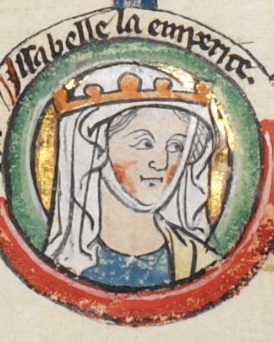
Isabella_of_England,_Holy_Roman_Empress
Isabella of England, Holy Roman Empress

Nearly everyone knows that Henry I’s daughter Matilda, Lady of the English, was Holy Roman Empress as the wife of Holy Roman Emperor Henry V. What is less well-known is that, almost 70 years after Matilda’s death, her great-granddaughter followed in her footsteps.

Isabella of England was born in 1214; she was the 4th of 5 children born to King John and his 2nd wife Isabella of Angouleme. She had 3 older siblings, Henry, Richard and Joan, and a baby sister Eleanor. Born at a time when her father’s strife with his barons was at its height, her early childhood was turbulent, to say the least. John died just 2 years later, in October 1216, leaving 9-year-old Henry as king of a country in the midst of civil war while fighting off an occupying French army.

Even before her father’s death, Isabella’s older sister Joan (born in 1210) had left England, to be raised by the family of her intended husband, Hugh de Lusignan. However, by 1220, amidst great scandal, Hugh had repudiated Joan and married her mother in her stead, whilst still holding Joan as hostage in order to gain Queen Isabella’s dower.

Whilst Joan was still in the hands of the Lusignans, her marriage to Alexander II of Scotland was negotiated, with an added clause that Isabella could be substituted for her older sister, should Joan not make it back to England in time. In the event Joan returned in time and Henry III looked elsewhere for a husband for Isabella.

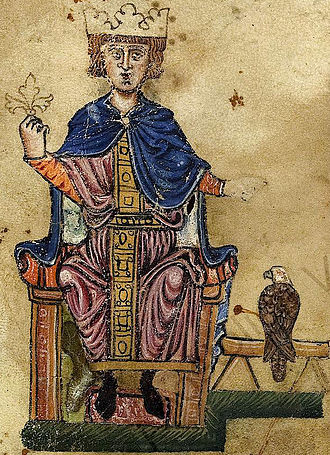
330px-Frederick_II_and_eagle
Frederick II, Holy Roman Emperor

Becoming part of his policy of continental diplomacy, Henry looked at several possible husbands, such as Henry VII, king of the Romans and Louis IX of France. After some prompting by Pope Gregory IX, Holy Roman Emperor Frederick II (father of Henry VII) sent an embassy to England to pursue his own suit for the English princess to become his 3rd wife.

Within 3 days of the Sicilian embassy’s arrival Henry was agreeable to the match, which complimented his keen interest in the Holy Roman Empire. He had Isabella brought from the Tower of London to Westminster to be interviewed by the ambassadors. They were so impressed with her that they hailed Isabella “Vivat imperatrix! Vivat!”

The marriage contract was signed on 22nd February 1235, with Henry giving Isabella a dowry of 30,000 marks. Although Isabella already had her own fine chapel silver, Henry gave her a magnificent trousseau, which included a service of gold and silver plate. The English people were irritated by Henry’s demand for a substantial marriage aid, but Henry saw the marriage as adding to his personal prestige, and a possible alliance against Louis IX of France.

On 11th May 1235 Isabella set sail from Sandwich, escorted by the bishop of Exeter, the archbishop of Cologne and the duke of Brabant; she arrived at Antwerp 4 days later. With a substantial escort, to guard against kidnap threats from Frederick II’s enemies, Isabella arrived in Cologne on 24th May. She made a processional entry into the city, to the cheers of a 10,00 strong crowd, endearing herself to the noble ladies by throwing her veil back.

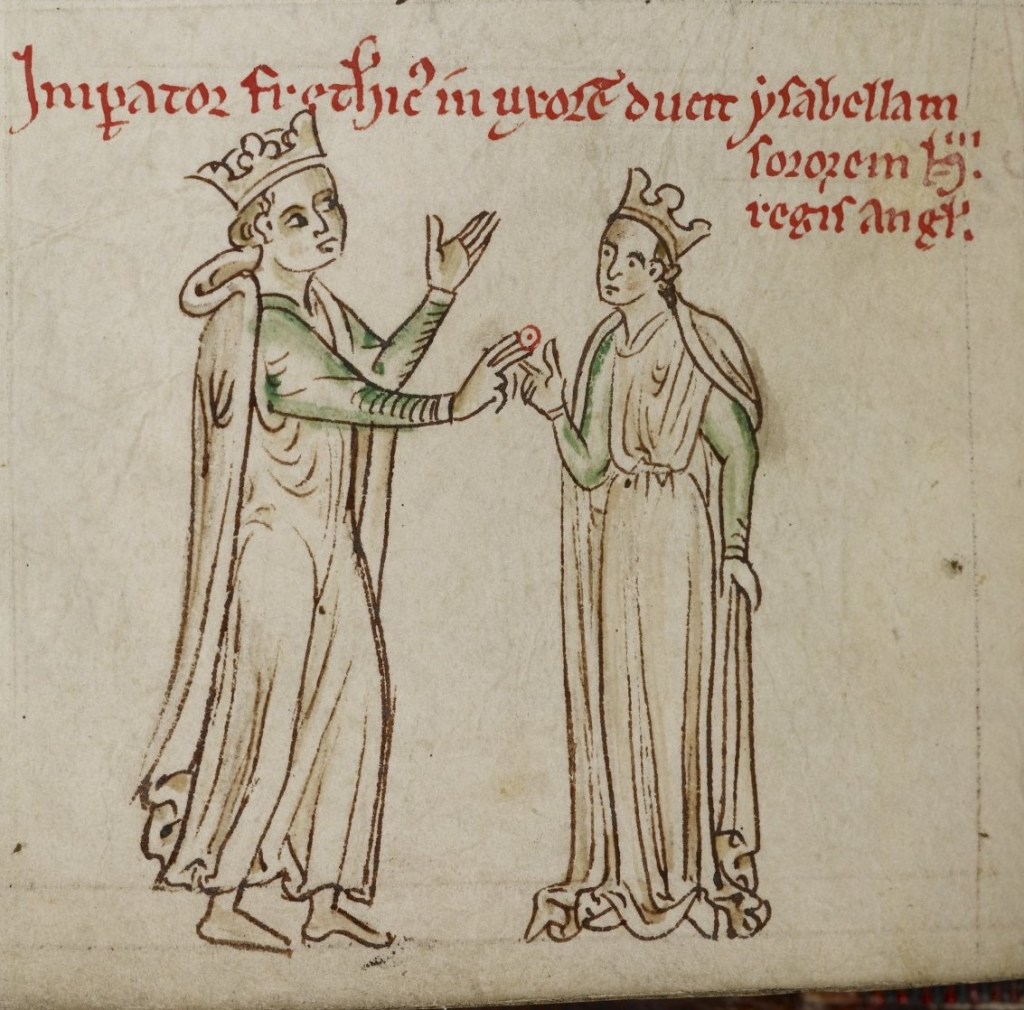
The marriage of Frederick II and Isabella of England

She was to spend 6 weeks in Cologne waiting for Frederick, who was dealing with a rebellion by his oldest son, Henry VII.

By July 1235, however, they were together in Worms where, on Sunday the 15th, they were married in the cathedral by the archbishop of Mainz. Isabella was crowned Holy Roman Empress at the same time. Four days of wedding festivities followed, with guests including – according to Matthew Paris – 4 kings, 11 dukes and 30 counts and marquesses.

Frederick, it seems, put great store by astrology; in 1228 Michael Scot had completed his encyclopedia of astrology while at Frederick’s court. And it was on the advice of the emperor’s court astrologers that the marriage was not consummated until the 2nd night.

Isabella was the emperor’s third wife; his first, Constance of Aragon, had died of malaria in 1222 and his second wife, Queen Isabella-Yolanda of Jerusalem had died in childbirth in 1228. Frederick was 20 years Isabella’s senior and expended all his energy on war, travelling and ceremonials in order to maintain his authority throughout his vast empire.

Frederick was delighted with his bride; she was beautiful and popular. He sent 3 leopards to Henry III in England as a sign of his appreciation. However, following the celebrations he also dismissed the majority of Isabella’s English attendants; she was allowed to retain only her nurse, Margaret Biset – who and been with her  since her early childhood – and a maid, called Kathrein.

300px-St._Peter's_Cathedral_Worms_south_side
St Peter’s Cathedrals, Worms, where Isabella was married and crowned Holy Roman Empress

Isabella travelled with Frederick’s slaves to his palace at Hagenau, where Frederick spent the winter with his new empress. Their first child was probably born around 1237/8, although there does seem to be some confusion over how many children there were, and when they were born. What is certain is 2 children survived childhood; Henry, King of Jerusalem, died unmarried in his teens in 1254 and Margaret married Albert I, Margrave of Meissen and Langrave of Thuringia and Misnes, in 1256.

Isabella travelled extensively through her husband’s lands, residing in Apulia, Lombardy, Noventa between 1238 and 1239. Frederick was always close by, despite his battles with  the papacy, and arrived in southern Italy shortly after his wife’s arrival in February 1240.

Isabella was expected to live in some magnificence, but Henry III was irritated that she was only rarely allowed to appear in public. There were rumours that Frederick kept his wives in a harem, although these were probably unfounded and arose from the seclusion that firstly Isabella-Yolanda and then Isabella lived in.

When Richard Earl of Cornwall visited the Emperor in 1241, he didn’t immediately see his sister, although this was probably down to court protocol, as the Empress was pregnant at the time. When they did meet the brother and sister were treated to a lavish court entertainment, being delighted by a magnificent display of jugglers and Muslim dancers.

330px-Cattedrale0558_1_copia
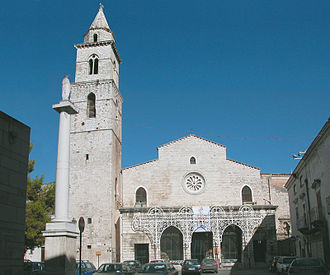
Andria cathedral, Isabella’s final resting-place

Following Richard’s visit, Frederick II returned to war. He was besieging Faenza in northern Italy when his wife died in childbirth on 1st December 1241; the baby died with her. Before his departure  on campaign, Isabella had urged Frederick to stay on good terms with her brother Henry III, who was leaning more and more towards the papacy.

She was buried at Andria, Sicily, alongside the emperor’s 2nd wife, Isabella-Yolanda. Isabella had been married for just over 6 years and was only  27 years of age.

Through her daughter Margaret, Isabella is the ancestor of Queen Victoria’s beloved husband, Prince Albert.

*

Pictures courtesy of Wikipedia

*

Sources: The Oxford Companion to British History Edited by John Cannon; The Plantagenets, the Kings who Made England by Dan Jones; History Today Companion to British History Edited by Juliet Gardiner and Neil Wenborn;  Brewer’s British Royalty by David Williamson; Britain’s Royal Families, the Complete Genealogy by Alison Weir; The Plantagenet Chronicles Edited by Elizabeth Hallam; The Mammoth Book of British Kings and Queens by Mike Ashley; The Plantagenets, the Kings that made Britain by Derek Wilson; England Under the Norman and Angevin Kings  by Robert Bartlett; http://www.britannica.com; oxforddnb.com.

*

Isabella’s story features in greater detail in my book, Ladies of Magna Carta: Women of Influence in Thirteenth Century England .

My Books

Christmas is coming!

Signed, dedicated copies of all my books are available through my online bookshop.

Coming 15 January 2024: Women of the Anarchy

On the one side is Empress Matilda, or Maud. The sole surviving legitimate child of Henry I, she is fighting for her birthright and that of her children. On the other side is her cousin, Queen Matilda, supporting her husband, King Stephen, and fighting to see her own son inherit the English crown. Both women are granddaughters of St Margaret, Queen of Scotland and descendants of Alfred the Great of Wessex. Women of the Anarchy demonstrates how these women, unable to wield a sword, were prime movers in this time of conflict and lawlessness. It show how their strengths, weaknesses, and personal ambitions swung the fortunes of war one way – and then the other.

Available for pre-order from Amberley Publishing and Amazon UK.

Coming on 15 June 2024: Heroines of the Tudor World

Heroines of the Tudor World tells the stories of the most remarkable women from European history in the time of the Tudor dynasty, 1485-1603. These are the women who ruled, the women who founded dynasties, the women who fought for religious freedom, their families and love. These are the women who made a difference, who influenced countries, kings and the Reformation. In the era dominated by the Renaissance and Reformation, Heroines of the Tudor World examines the threats and challenges faced by the women of the era, and how they overcame them. Some famous, some infamous, some less well known, including Anne Boleyn, Elizabeth Barton, Catherine de Medici, Bess of Hardwick and Elizabeth I. From writers to regents, from nuns to queens, Heroines of the Tudor World shines the spotlight on the women helped to shape Early Modern Europe.

Heroines of the Tudor World is now available for pre-order from Amberley Publishing and Amazon UK.

Also by Sharon Bennett Connolly:

Out nowKing John’s Right-Hand Lady: The Story of Nicholaa de la Haye is the story of a truly remarkable lady. Nicholaa de la Haye was the hereditary constable of Lincoln Castle and the first woman in England to be appointed sheriff in her own right. Her strength and tenacity saved England at one of the lowest points in its history. Nicholaa de la Haye is one woman in English history whose story needs to be told… King John’s Right-Hand Lady: The Story of Nicholaa de la Haye is now available from Pen & Sword Booksbookshop.org and Amazon.

Defenders of the Norman Crown: The Rise and Fall of the Warenne Earls of Surrey tells the fascinating story of the Warenne dynasty, of the successes and failures of one of the most powerful families in England, from its origins in Normandy, through the Conquest, Magna Carta, the wars and marriages that led to its ultimate demise in the reign of Edward III. Defenders of the Norman Crown: Rise and Fall of the Warenne Earls of Surrey is now available from Pen & Sword BooksAmazon in the UK and US, and Bookshop.org.

Ladies of Magna Carta: Women of Influence in Thirteenth Century England looks into the relationships of the various noble families of the 13th century, and how they were affected by the Barons’ Wars, Magna Carta and its aftermath; the bonds that were formed and those that were broken. It is now available in paperback and hardback from Pen & Sword,  Amazon, and Bookshop.org.

Heroines of the Medieval World tells the stories of some of the most remarkable women from Medieval history, from Eleanor of Aquitaine to Julian of Norwich. Available now from Amberley Publishing and Amazon, and Bookshop.org.

Silk and the Sword: The Women of the Norman Conquest traces the fortunes of the women who had a significant role to play in the momentous events of 1066. Available now from Amazon,  Amberley Publishing, and Bookshop.org.

Alternate Endings: An anthology of historical fiction short stories including Long Live the King… which is my take what might have happened had King John not died in October 1216. Available in paperback and kindle from Amazon.

Podcast:

Have a listen to the A Slice of Medieval podcast, which I co-host with Historical fiction novelist Derek Birks. Derek and I welcome guests, such as Bernard Cornwell, and discuss a wide range of topics in medieval history, from significant events to the personalities involved.

*

Don’t forget! Signed and dedicated copies of all my books are available through my online bookshop.

For forthcoming online and in-person talks, please check out my Events Page.

You can be the first to read new articles by clicking the ‘Follow’ button, liking our Facebook page or joining me on Twitter and Instagram.

*

©2016 Sharon Bennett Connolly FRHistS