Katherine Swynford, Duchess of Scandal

220px-Arms_of_Katherine_Swynford.svg
Arms of Katherine Swynford

Katherine Swynford is, arguably, the most famous – or infamous – of English ladies  to have risen so high as to become the first lady of the kingdom, without ever being queen.

Born Katherine de Roet in Hainault, now in modern-day Belgium, in around 1350, her father was Sir Paon de Roet of Guyenne. Unfortunately, as can be the way with Medieval women, I could find no mention of her mother’s identity.

Sir Paon was a Hainault knight who travelled to England with its new queen, Philippa of Hainault, as part of her retinue. As a consequence, Katherine was raised at the English court of Queen Philippa and her illustrious husband, King Edward III.

Katherine and her older sister, Philippa, were eventually given positions as ladies-in-waiting to members of the royal family. Philippa joined the household of Elizabeth de Burgh, wife of Lionel of Antwerp, where she met her future husband, the literary giant of the age, Geoffrey Chaucer.

By 1365 Katherine was serving in the household of Blanche, Duchess of Lancaster, and her husband John of Gaunt, third surviving son of Edward III and Philippa of Lancaster. Sometime before 1367 Katherine married a Lincolnshire knight, Sir Hugh Swynford of Coleby and Kettlethorpe, possibly at St Clement Danes Church on the Strand, London. They had at least 2 children, Blanche and Thomas (born May 1367 and September 1368, respectively); John of Gaunt was Blanche’s godfather. A third possible child was Margaret Swynford (born c. 1369), who was nominated as a nun at Barking. Sir Hugh was a tenant of John of Gaunt’s and accompanied him to Europe in 1366 and 1370.

200px-Johnofgaunt
John of Gaunt

In 1368 in order to avoid the plague, Blanche is said to have moved her family to Bolingbroke in the Lincolnshire countryside. By the end of summer, she was at Tutbury, where she died in childbirth in September, the same year. However, rather than leaving the household on Blanche’s death, Katherine was appointed governess to the 2 daughters of Gaunt and the late Duchess, Philippa and Elizabeth.

Katherine’s husband, Sir Hugh, died in 1371 and shortly afterwards rumours started arising of a relationship between John of Gaunt and the young widow. Whether the affair started before Sir Hugh’s death is uncertain and some sources suggest this was the case.

Although John married his second wife, Constance of Castile, on 21st September 1371. John and Constance’s marriage was a dynastic one; John was hoping to gain a kingdom for himself, through his wife. From January 1372 John assumed the title King of Castile and Leon, by right of his wife, although he was never able to consolidate his position. John’s younger brother, Edmund, would marry Constance’s sister, Isabella.

Constance gave birth to a daughter, Catherine, in 1373 and a son, John in 1374 – John died the following year. Catherine would marry Henry III of Castile, becoming Queen Consort of Castile and Leon and thus fulfilling her father’s ambition of his descendants sitting on the throne of Castile.

200px-Delaroche_-_Beaufort_and_Joan_of_Arc
Delaroche’s painting of Cardinal Henry Beaufort (son of Katherine Swynford) interrogating Joan of Arc

By 1372 Katherine’s status within Gaunt’s household had risen, indicating their developing relationship. While continuing in her post of governess to Philippa and Elizabeth, Katherine bore 4 children between 1373 and 1379, acknowledged by John of Gaunt as his own; John, Henry, Thomas and Joan. They were given the surname of Beaufort, possibly after their father’s lost French lordship in Anjou, but that is not certain.

I could find no record of Constance’s – or Katherine’s – reactions to Gaunt’s living arrangements. It’s hard to imagine that either was completely happy with the situation, but Gaunt does appear to have fulfilled his obligations to both women. In 1377, John granted Katherine the manors of Wheatley and Gringley in Nottinghamshire, with an annual income of £150. The gift was seen as a public acknowledgement of Katherine’s position – and a slight to Gaunt’s wife. Contemporary chroniclers denounced Katherine as ‘une deblesce et enchantresce‘ (a devil and enchantress).

There is some record that John of Gaunt formally renounced his relationship with Katherine and reconciled with his wife in June 1381, possibly as a way to recover some popularity during the Peasant’s Revolt. The revolt blamed 13-year-old King Richard II’s counsellors as the cause of the country’s problems. John of Gaunt was one of the main targets for the rebels’ anger and his Savoy Palace on the Strand was burned to the ground, despite Gaunt’s absence from the centre of proceedings; he was on his way to Scotland at the time.
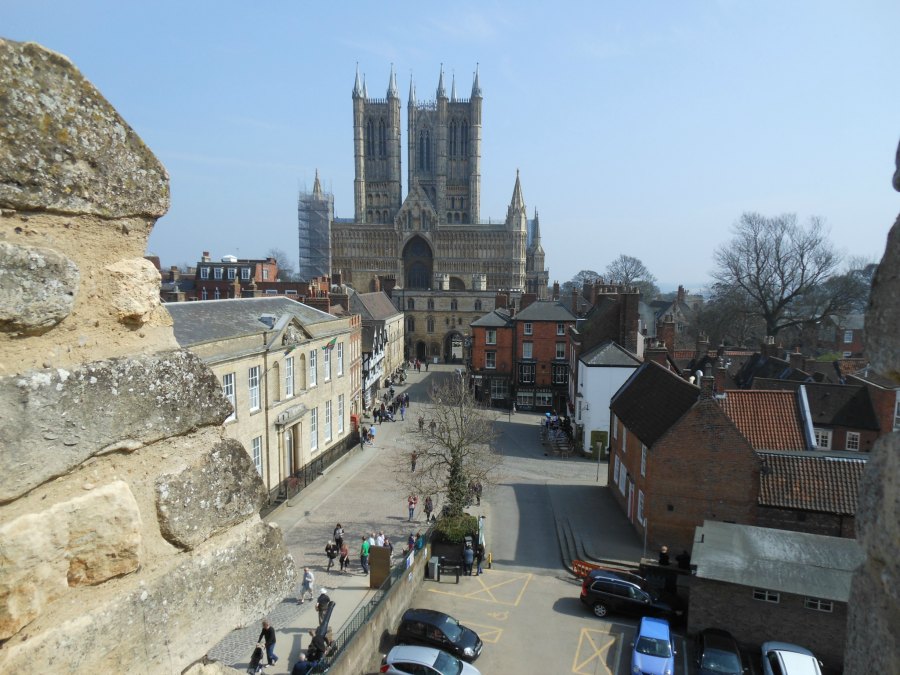
046
Lincoln Cathedral today, viewed from the walls of Lincoln Castle

Katherine left court and settled at her late husband’s manor at Kettlethorpe, before moving to a rented townhouse in Lincoln. John of Gaunt visited her regularly throughout the 1380s, and Katherine was frequently at court. John of Gaunt kept a stable of 12 horses for her use and her relationship with Gaunt and his family remained cordial. She is known to have lent him money for his Castilian expedition of 1386 and in 1387 received a New Years’ gift from the countess of Derby, the wife of John’s eldest son, Henry.

With 4 children by John of Gaunt but still only, officially, governess to his daughters, Katherine was made a Lady of the Garter in 1388. However, her situation changed again following Constance’s death at the end of 1394.

At Lincoln Cathedral, in January 1396 and a quarter of a century after the start of their relationship, John of Gaunt and Katherine Swynford were married. Styled Lady Katherine, Duchess of Lancaster, she was, briefly, the first Lady in England following the death of Queen Anne of Bohemia. Although the marriage undoubtedly caused surprise and upset among members of the royal court, it had a very practical outcome.

Once they were married John of Gaunt was able to petition the pope for the legitimisation his children by Katherine. This was achieved by papal bull on 1st September 1396, and confirmed by Richard II’s royal patent on 9th February 1397. The result was the children’s exalted position in court society and a marked improvement in their marriage and career prospects. A further Charter in the reign of Henry IV appears to have excluded the Beauforts from the succession, though there is some question as to the legitimacy of the exclusion as the relevant phrase appears to have been inserted after the Act was written.
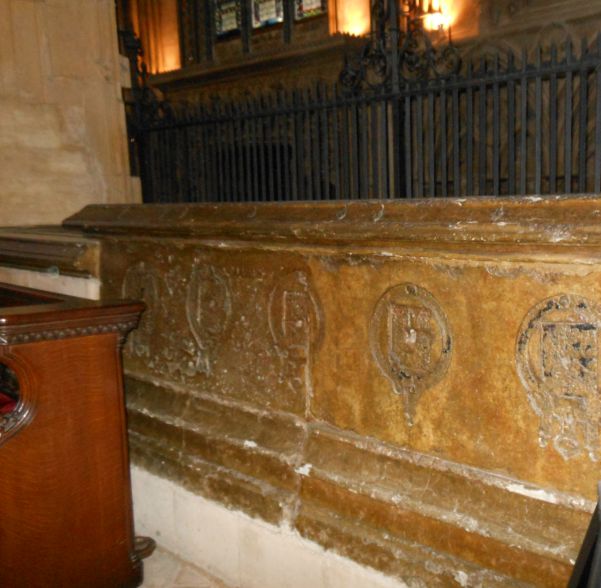
073
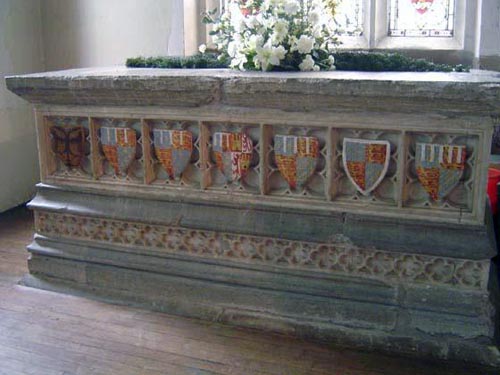
Tombs of Katherine Swynford, Duchess of Lancaster, and her daughter Joan Beaufort, Countess of Westmorland. Lincoln Cathedral

John and Katherine’s final happiness was of short duration, however, as John of Gaunt died on the 3rd of February 1399; he was buried beside his first wife, Blanche of Lancaster, in St Paul’s Cathedral, London. His son and heir, Henry Bolingbroke, had recently been exiled to the Continent for 10 years. Richard II extended that exile to a life term and confiscated the Lancastrian lands.

Following Gaunt’s death Katherine returned to her townhouse in Lincoln; close to the east end of the Cathedral. Her son, Henry Beaufort, had become Bishop of Lincoln shortly after being legitimised.

Katherine died at Lincoln on 10th May 1403. She was buried, close to the High Altar, in the cathedral in which she had married her prince just 7 years earlier. Her daughter Joan, Countess of Westmoreland, was laid to rest beside her, following her death in 1440, with a slightly smaller tomb. The tombs themselves are empty, with Katherine and Joan buried beneath the floor of the Cathedral.

Katherine appears to have had a good relationship with John of Gaunt’s children; she was very close to Philippa and Elizabeth. Henry IV, Katherine’s stepson, referred to her in her widowhood as ‘The King’s Mother’.

And together, through their children Katherine and John left a legacy that would change the  course of English and Scottish history.

220px-Swyntomb
Katherine Swynford’s tomb, 1809

Henry Beaufort would rise to the position of Bishop of Winchester and Cardinal. Thomas, an able soldier, would rise to become Duke of Exeter and serve on the council of his great-nephew, Henry VI.

Less impressively, their grandson Edmund (son of John, Earl of Somerset) was responsible for great losses of territory whilst Regent of France for young Henry VI.

Katherine and John’s daughter, Joan, was the mother of Cecily Neville, Duchess of York, who would be the mother of 2 kings of England; Edward IV and Richard III. Their son John, Earl of Somerset, was grandfather of Margaret Beaufort and great-grandfather of the first Tudor King, Henry VII. John’s daughter, Joan Beaufort, married James I of Scotland in another of history’s great love stories.

*

Photographs of Lincoln and Katherine Swynford’s tomb are © Sharon Bennett Connolly, 2015. All other pictures are courtesy of Wikipedia.

*

Sources: katherineswynfordsociety.org.uk; Brewer’s British Royalty by David Williamson; History Today Companion to British History Edited by Juliet Gardiner & Neil Wenborn; The mammoth Book of British kings & Queen by Mike Ashley; Britain’s Royal Families, the Complete Genealogy by Alison Weir; The Life and Times of Edward III by paul Johnson; The Perfect King, the Life of Edward III by Ian Mortimer; The Reign of Edward III by WM Ormrod; Chronicles of the Age of Chivalry Edited by Elizabeth Hallam; womenshistory.about.com/od/medrenqueens/a/Katherine-Swynford.

*

My Books

Signed, dedicated copies of all my books are available through my online bookshop.

Coming on 15 June 2024: Heroines of the Tudor World
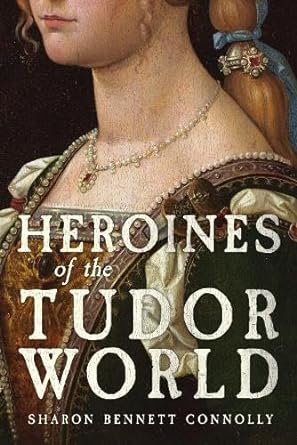
Heroines of the Tudor World tells the stories of the most remarkable women from European history in the time of the Tudor dynasty, 1485-1603. These are the women who ruled, the women who founded dynasties, the women who fought for religious freedom, their families and love. These are the women who made a difference, who influenced countries, kings and the Reformation. In the era dominated by the Renaissance and Reformation, Heroines of the Tudor World examines the threats and challenges faced by the women of the era, and how they overcame them. From writers to regents, from nuns to queens, Heroines of the Tudor World shines the spotlight on the women helped to shape Early Modern Europe.

Heroines of the Tudor World is now available for pre-order from Amberley Publishing and Amazon UK.

Out Now! Women of the Anarchy
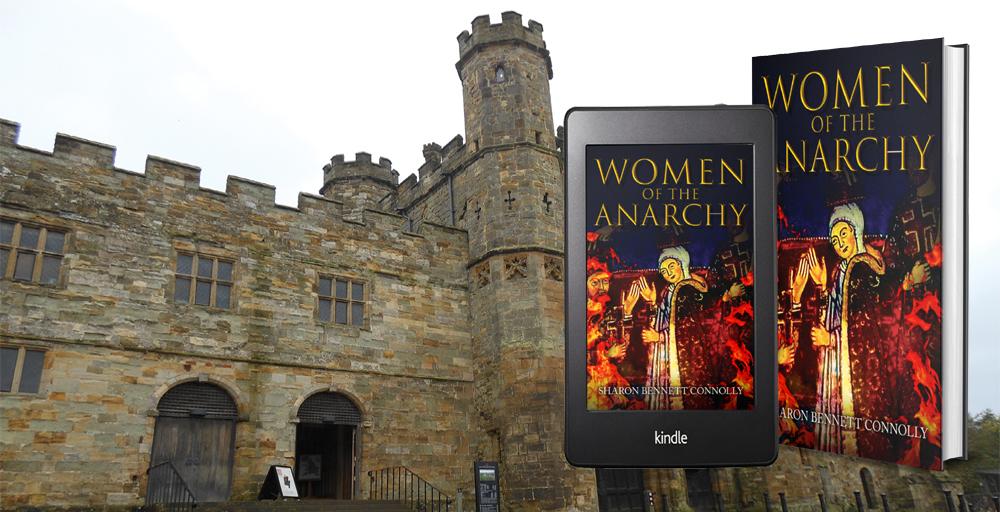
Two cousins. On the one side is Empress Matilda, or Maud. The sole surviving legitimate child of Henry I, she is fighting for her birthright and that of her children. On the other side is her cousin, Queen Matilda, supporting her husband, King Stephen, and fighting to see her own son inherit the English crown. Women of the Anarchy demonstrates how these women, unable to wield a sword, were prime movers in this time of conflict and lawlessness. It show how their strengths, weaknesses, and personal ambitions swung the fortunes of war one way – and then the other.

Available from Bookshop.orgAmberley Publishing and Amazon UK.

Also by Sharon Bennett Connolly:

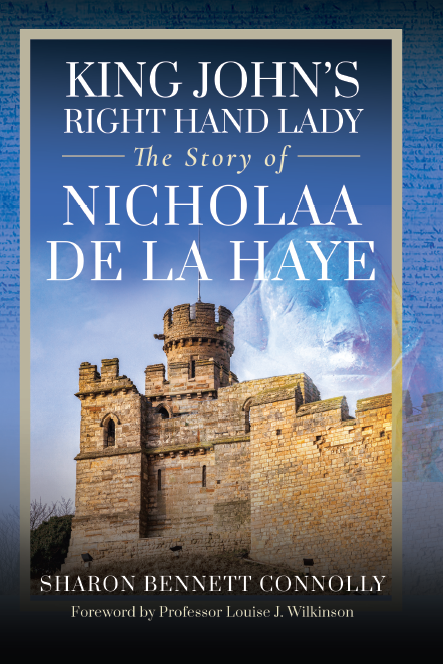
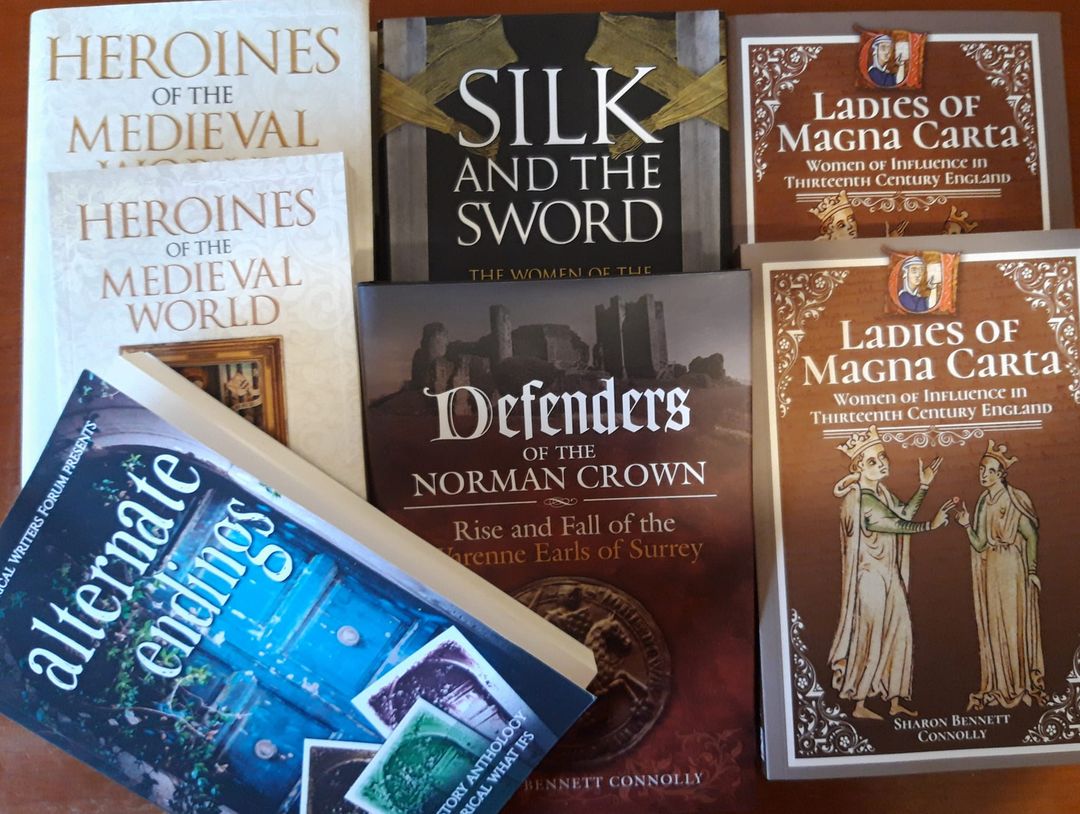
King John’s Right-Hand Lady: The Story of Nicholaa de la Haye is the story of a truly remarkable lady, the hereditary constable of Lincoln Castle and the first woman in England to be appointed sheriff in her own right. It is is available from King John’s Right-Hand Lady: The Story of Nicholaa de la Haye is the story of a truly remarkable lady, the hereditary constable of Lincoln Castle and the first woman in England to be appointed sheriff in her own right. Available from all good bookshops or direct from Pen & Sword Booksbookshop.org and AmazonDefenders of the Norman Crown: The Rise and Fall of the Warenne Earls of Surrey tells the fascinating story of the Warenne dynasty, from its origins in Normandy, through the Conquest, Magna Carta, the wars and marriages that led to its ultimate demise in the reign of Edward III. Available from Pen & Sword BooksAmazon in the UK and US, and Bookshop.org

Ladies of Magna Carta: Women of Influence in Thirteenth Century England looks into the relationships of the various noble families of the 13th century, and how they were affected by the Barons’ Wars, Magna Carta and its aftermath; the bonds that were formed and those that were broken. It is now available in paperback and hardback from Pen & Sword,  Amazon, and Bookshop.orgHeroines of the Medieval World tells the stories of some of the most remarkable women from Medieval history, from Eleanor of Aquitaine to Julian of Norwich. Available now from Amberley Publishing and Amazon, and Bookshop.orgSilk and the Sword: The Women of the Norman Conquest traces the fortunes of the women who had a significant role to play in the momentous events of 1066. Available now from Amazon,  Amberley Publishing, and Bookshop.org.

Alternate Endings: An anthology of historical fiction short stories including Long Live the King… which is my take what might have happened had King John not died in October 1216. Available in paperback and kindle from Amazon.

Podcast:

Have a listen to the A Slice of Medieval podcast, which I co-host with Historical fiction novelist Derek Birks. Derek and I welcome guests, such as Bernard Cornwell and Elizabeth Chadwick, and discuss a wide range of topics in medieval history, from significant events to the personalities involved.

*

Don’t forget! Signed and dedicated copies of all my books are available through my online bookshop.

For forthcoming online and in-person talks, please check out my Events Page.

You can be the first to read new articles by clicking the ‘Follow’ button, liking our Facebook page or joining me on Twitter and Instagram.

*

©2015 Sharon Bennett Connolly FRHistS

The Remarkably Resilient Jacqueline d’Hainault

220px-Jacoba_van_Beieren_door_Hollandse_school_ca_1600
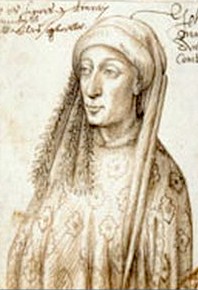
Jacqueline of Hainault

Jacqueline of Hainault, also known as Jacoba of Bavaria, is one of those Medieval ladies who seems to have slipped under the radar of history. Until last week I knew very little about her; and yet her life is one of the most colourful I have ever come across.

Born on or shortly before the 16th July 1401 at Le Quesnoy, Flanders, Jacqueline was the daughter of William VI, Count of Holland, and Marguerite of Burgundy; her grandfather was Philippe the Bold, Duke of Burgundy.

Although she had at least 9 illegitimate siblings, Jacqueline was her father’s sole heir. And in order to strengthen her position, William arranged a marriage for Jacqueline while she was still an infant. In 1406 she was betrothed to John of Valois, Duke of Touraine, the fourth son of King Charles VI of France, and only 3 years older than Jacqueline. With little chance of inheriting the French throne, and with a view to him eventually ruling Hainault, the responsibility for John’s education was handed over to  Count William; he would be raised alongside his future wife.

Jean_de_Touraine,_dauphin_of_France
John, Duke of Touraine

The young couple married in 1415 at The Hague. Only 4 months after the wedding John’s older brother Louis, Dauphin of France, died and John became Dauphin and heir to the French throne.

Within 2 years John himself was dead, on 4th April 1417, with rumours circulating that he was poisoned, although this is far from certain. His younger brother, Charles, became Dauphin and Jacqueline was a widow at only 16.

In the meantime, although Holland was not subject to Salic Law (where a woman could not inherit), Jacqueline’s father had been having a hard time getting his people and Sigismund, the Holy Roman Emperor, to accept Jacqueline as his heir. They finally refused outright in 1416.

When Count William died only 2 months after her husband, on 31st May 1417, Jacqueline was accepted as Countess of Hainault; however Holland and Zeeland recognised her uncle John of Bavaria, backed by Sigismund, as their count.

At this point Jacqueline’s mother and uncle stepped in. Margaret of Burgundy and her brother, John the Fearless, Duke of Burgundy, started looking around for a suitable husband for Jacqueline. Unfortunately they decided on her cousin John IV, Duke of Brabant. The Duke of Burgundy saw the marriage as an opportunity to expand his influence over Jacqueline’s lands, and applied for a Papal Dispensation. The Dispensation was given, but withdrawn just over 2 weeks later, following pressure from Sigismund.

John_IV,_Duke_of_Brabant
John IV Duke of Brabant

The couple married anyway, in March 1418. The marriage was a disaster, politically and personally. John managed to antagonise both his wife and her subjects. Initially Jacqueline’s husband helped in the fight against her avaricious uncle, John of Bavaria and in 1419 John the Fearless settled the dispute in his niece’s favour; only for John of Brabant to then mortgage Holland and Zeeland to John of Bavaria for a period of 12 years.

Jacqueline ran away; first to her mother in Hainault and then on to England, where she was welcomed by Henry V. The king granted her a pension, and made her godmother to his only son, the future Henry VI.

In  1421 Jacqueline repudiated her marriage to John of Brabant, with the support of Antipope Benedict XIII in Avignon. And in 1422, with a view to strengthening England’s position against France, she married the king’s younger brother Humphrey, Duke of Gloucester. The public were behind the marriage and even supported Humphrey’s attempts to recover Jacqueline’s lands.

As Duchess of Gloucester, Jacqueline was made a Lady of the Garter in 1423, and, at some point, accepted Eleanor Cobham into her household as a lady-in-waiting; Eleanor would later go on to become Humphrey’s 2nd wife. In 1424 Jacqueline gave birth to her only recorded child, who was stillborn.

In 1424 Humphrey and Jacqueline led an army to the Low Countries, to recover Jacqueline;s inheritance. Though Humphrey managed to recover much of Hainault, he came up against opposition from the new Duke of Burgundy, Philip III The Good, destroying the Anglo-Burgundian alliance.

120px-HumphreyGloucester
Humphrey, Duke of Gloucester

Many of Jacqueline’s subjects, however, considered Humphrey an invader and, refusing to recognising him as count, gave their support to Burgundy. So, in 1425, Humphrey returned to England; Jacqueline’s mother had objected to her returning with him, so she moved on to Mons.

The officials of Mons had promised to protect Jacqueline, but once Gloucester was gone, she was handed over to the Duke of Burgundy and imprisoned in Ghent. In the same year her uncle, John of Bavaria, died and her lands were handed over to Burgundy, as regent, by John of Brabant.

Jacqueline escaped her imprisonment, dressed as a man, and escaped escorted by 2 knights, to Gouda. From Gouda, she led the Dutch resistance to the Burgundian takeover. However, when Burgundy besieged Gouda, she was forced to surrender.

In the meantime, Pope Martin V had authorised an investigation into the state of Jacqueline’s marriages. In 1428 he declared her marriage to Humphrey of Gloucester null and void, as her marriage to John of Brabant was legally valid. John of Brabant had died in 1426, so a remarriage between Humphrey and Jacqueline would have been acceptable – had Humphrey’s attentions not already turned to Eleanor Cobham.

220px-Jacoba_van_Beieren_(1401-1436),_gravin_van_Holland_en_Zeeland
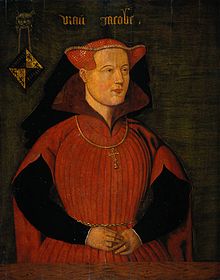
Jacqueline of Hainault

Jacqueline still had sympathisers in England, however and the ladies of London petitioned Humphrey, according to the chronicler Stow their letters  “containing matter of rebuke and sharpe reprehension of the Duke of Gloucester, because he would not deliver his wife Jacqueline out of her grievous imprisonment, being then held prisoner by the Duke of Burgundy, suffering her to remaine so unkindly, contrary to the law of God and the honourable estate of matrimony”.

Humphrey had managed to get a 9,000 marks grant from the king’s council, in 1427, to help Jacqueline recover her lands; however John, Duke of Bedford, put a stop to the expedition by opening up negotiations with the Duke of Burgundy.

So, in 1428, Jacqueline of Hainault is a prisoner of the Duke of Burgundy, with no prospect of help from England. With few options left to her, she came to an agreement with Philip the Good. In the Treaty of Delft, of 3rd July 1428, Jacqueline retained her title of countess, but administration for her 3 counties passed to Philip. Philip the Good was confirmed as her heir, should she die childless; and she was not to marry without the consent of Philip, her mother and the 3 counties.

220px-Frank_van_Borssele
Francis van Borselen

Philip, however, broke the treaty by mortgaging the revenues of Holland and Zeeland to members of the Borselen family from Zeeland.

In 1432 Jacqueline secretly married one of the Borselen family, Francis, Lord of Zuilen and St Maartensdijk.

Whether or not this was a plot to overthrow Burgundian rule in Holland, Philip the good certainly saw it that way. Francis was imprisoned in October 1432 and Jacqueline was forced to abdicate as countess in 1433, relinquishing her titles in return for an income from several estates. After years of civil war, Jacqueline’s financial position prior to the settlement had been desperate.

Jacqueline and Francis’ relationship appears to have been a love match and, in July 1434 they had a 2nd, public, marriage ceremony at Maartensdijk Castle. After such an adventurous life, and having fought so hard for her inheritance, Jacqueline settled down to married life. Her happiness was short-lived, however, as Jacqueline died at Teilingen on 8th October 1436, probably of tuberculosis. She was buried at the Hague.

*

Pictures courtesy of Wikipedia

*

Sources: Brewer’s British Royalty by David Williamson; History Today Companion to British History Edited by Juliet Gardiner and Neil Wenborn; Britain’s Royal Families, the Complete Genealogy by Alison Weir; medievalists.net; r3.org; susanhigginbotham.com; britannica.com; historyofroyalwomen.com.

*

My books

Signed, dedicated copies of all my books are available through my online bookshop.

Out now: Scotland’s Medieval Queens

Books by Sharon Bennett Connolly

Scotland’s history is dramatic, violent and bloody. Being England’s northern neighbour has never been easy. Scotland’s queens have had to deal with war, murder, imprisonment, political rivalries and open betrayal. They have loved and lost, raised kings and queens, ruled and died for Scotland. From St Margaret, who became one of the patron saints of Scotland, to Elizabeth de Burgh and the dramatic story of the Scottish Wars of Independence, to the love story and tragedy of Joan Beaufort, to Margaret of Denmark and the dawn of the Renaissance, Scotland’s Medieval Queens have seen it all. This is the story of Scotland through their eyes.

Scotland’s Medieval Queens gives a thorough grounding in the history of the women who ruled Scotland at the side of its kings, often in the shadows, but just as interesting in their lives beyond the spotlight. It’s not a subject that has been widely covered, and Sharon is a pioneer in bringing that information into accessible history.’ Elizabeth Chadwick (New York Times bestselling author)

Available now from Amazon and Pen and Sword Books

Also by Sharon Bennett Connolly:

Books by Sharon Bennett Connolly

Heroines of the Tudor World tells the stories of the most remarkable women from European history in the time of the Tudor dynasty, 1485-1603. These are the women who ruled, the women who founded dynasties, the women who fought for religious freedom, their families and love. Heroines of the Tudor World is now available from Amberley Publishing and Amazon UK. Women of the Anarchy demonstrates how Empress Matilda and Matilda of Boulogne, unable to wield a sword themselves, were prime movers in this time of conflict and lawlessness. It shows how their strengths, weaknesses, and personal ambitions swung the fortunes of war one way – and then the other. Available from Bookshop.orgAmberley Publishing and Amazon UKKing John’s Right-Hand Lady: The Story of Nicholaa de la Haye is the story of a truly remarkable lady, the hereditary constable of Lincoln Castle and the first woman in England to be appointed sheriff in her own right. Available from all good bookshops Pen & Sword Booksbookshop.org and Amazon

Books by Sharon Bennett Connolly

Defenders of the Norman Crown: The Rise and Fall of the Warenne Earls of Surrey tells the fascinating story of the Warenne dynasty, from its origins in Normandy, through the Conquest, Magna Carta, the wars and marriages that led to its ultimate demise in the reign of Edward III. Available from Pen & Sword BooksAmazon in the UK and US, and Bookshop.orgLadies of Magna Carta: Women of Influence in Thirteenth Century England looks into the relationships of the various noble families of the 13th century, and how they were affected by the Barons’ Wars, Magna Carta and its aftermath; the bonds that were formed and those that were broken. It is now available in paperback and hardback from Pen & SwordAmazon, and Bookshop.orgHeroines of the Medieval World tells the stories of some of the most remarkable women from Medieval history, from Eleanor of Aquitaine to Julian of Norwich. Available now from Amberley Publishing and Amazon, and Bookshop.orgSilk and the Sword: The Women of the Norman Conquest traces the fortunes of the women who had a significant role to play in the momentous events of 1066. Available now from Amazon,  Amberley Publishing, and Bookshop.org.

Alternate Endings: An anthology of historical fiction short stories including Long Live the King… which is my take what might have happened had King John not died in October 1216. Available in paperback and kindle from Amazon.

Podcast:

A Slice of Medieval

Have a listen to the A Slice of Medieval podcast, which I co-host with Historical fiction novelist Derek Birks. Derek and I welcome guests, such as Bernard Cornwell and Michael Jecks, and discuss a wide range of topics in medieval history, from significant events to the personalities involved. Every episode is also now available on YouTube.

*

Don’t forget! Signed and dedicated copies of all my books are available through my online bookshop.

For forthcoming online and in-person talks, please check out my Events Page.

You can be the first to read new articles by clicking the ‘Follow’ button, liking our Facebook page or joining me on TwitterThreadsBluesky and Instagram.

*

©2015 Sharon Bennett Connolly FRHistS

Witchy Woman – the Fall of Eleanor Cobham, Duchess of Gloucester

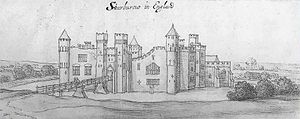
300px-Starborough_Castle
Sterborough Castle, possible birthplace of Eleanor

Born around 1400 and probably at the castle of Sterborough in Kent, Eleanor Cobham was the daughter of Sir Reginald Cobham of Sterborough and his wife Eleanor, daughter of Sir Thomas Culpeper of Rayal.

As is often the case with Medieval women, nothing is known of Eleanor’s early life. She appeared at court in her early 20s, when she was appointed lady-in-waiting to Jacqueline of Hainault,  Duchess of Gloucester.

Jacqueline had come to England to escape her 2nd husband, the abusive John IV Duke of Brabant. She obtained an annulment of the marriage from the Antipope, Benedict XIII, and married Humphrey, Duke of Gloucester, in 1423. He would spend a large amount of their marriage trying to recover Jacqueline’s lands from the Dukes of Brabant and Burgundy.

120px-HumphreyGloucester
Humphrey Duke of Gloucester

Humphrey was a younger brother of King Henry V and John, Duke of Bedford. He had fought at the Battle of Shrewsbury at the age of 12 years and 9 months and would go on to fight at Agincourt in 1415. On Henry V’s death, Humphrey acted as Protector for  his young nephew, Henry VI, whenever his older brother, the Duke of Bedford, was away fighting in France. However, he seems to have been little liked and was never trusted with full Regency powers.

In 1428 Pope Martin V refused to recognise the annulment of Jacqueline’s previous marriage to John of Brabant and declared the Gloucester marriage null and void. However, John of Brabant had died in 1426 and so Humphrey and Jacqueline were free to remarry – if they wanted to. In the mean time, Humphrey’s attention had turned to Eleanor of Cobham and he made no attempt to keep Jacqueline by his side.

This did not go down too well with the good ladies of London, who petitioned parliament between Christmas 1427 and Easter 1428.

According to the chronicler Stow their letters were delivered to Humphrey, the archbishops and the lords “containing matter of rebuke and sharpe reprehension of the Duke of Gloucester, because he would not deliver his wife Jacqueline out of her grievous imprisonment, being then held prisoner by the Duke of Burgundy, suffering her to remaine so unkindly, contrary to the law of God and the honourable estate of matrimony”.

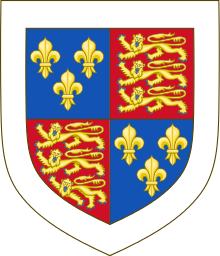
220px-Arms_of_Humphrey_of_Lancaster,_1st_Duke_of_Gloucester.svg
Coat of arms of Humphrey, Duke of Gloucester

Humphrey paid the petition little attention and married Eleanor sometime between 1428 and 1431. It has been suggested that Eleanor was the mother of Humphrey’s 2 illegitimate children – Arthur and Antigone – although this seems unlikely as Humphrey made no attempt to legitimise them following the marriage (as his grandfather John of Gaunt had done with his Beaufort children by Katherine Swynford).

Described by Aeneas Sylvius as “a woman distinguished in her form” and “beautiful and marvellously pleasant” by Jean de Waurin, Eleanor and Humphrey had a small but lively court at their residence of La Plesaunce at Greenwich. Humphrey had a lifelong love of learning, which Eleanor most likely shared, and the couple attracted scholars, musicians and poets to their court.

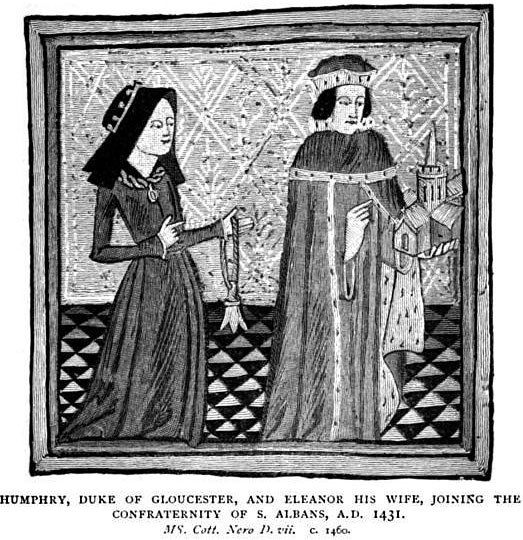
On 25th June 1431, as Duchess of Gloucester, Eleanor was admitted to the fraternity of the monastery of St Albans – to which her husband already belonged – and in 1432 she was made a Lady of the Garter.

Eleanor’s status rose even higher in 1435, with the death of John Duke of Bedford. Whilst Henry VI was still childless, John had been heir presumptive. He died having had no children and so the position passed to Humphrey, Duke of Gloucester.

With her heightened status, Eleanor received sumptuous Christmas gifts from the king; and her father was given custody of the French hostage Charles, Duke of Orleans – a prisoner since Agincourt.

But in 1441 came Eleanor’s dramatic downfall.

Master Thomas Southwell, a canon of St Stephen’s Chapel at Westminster, and Master Roger Bolyngbroke, a scholar, astronomer and cleric – and alleged necromancer, were arrested for casting the King’s horoscope and predicting his death.

humphrey__eleanor
Eleanor – alongside Humphrey – joining the confraternity of St Albans, 1431

Southwell and Bolyngbroke, along with Margery Jourdemayne, known as the Witch of Eye and renowned for selling potions and spells, were accused of making a wax image of the king, ‘the which image they dealt so with, that by their devilish incantations and sorcery they intended to bring out of life, little and little, the king’s person, as they little and little consumed that image’.

Bolyngbroke implicated Eleanor during questioning, saying she had asked him to cast her horoscope and predict her future; for the wife of the heir to the throne, this was a dangerous practise. Did she have her eye on the throne itself?

On hearing of the arrest of her associates Eleanor fled to Sanctuary at Westminster. Of 28 charges against her she admitted to 5. Eleanor denied the treason charges, but confessed to obtaining potions from Jourdemayne in order to help her conceive a child. Awaiting further proceedings, as Eleanor remained in Sanctuary, pleading sickness, she tried to escape by river. Thwarted, she was escorted to Leeds Castle on 11th August and held there for 2 months.

Having returned to Westminster Eleanor was examined by an ecclesiastical tribunal on 19th October and on the 23rd she faced Bolyngbroke, Southwell and Jourdemayne who accused her of being the “causer and doer of all these deeds”.

Eleanor was found guilty of sorcery and witchcraft; she was condemned to do public penance and perpetual imprisonment. Of her co-accused; Bolyngbroke was hanged, drawn and quartered, Southwell died in the Tower of London and Margery Jourdemayne was burned at the stake at Smithfield.

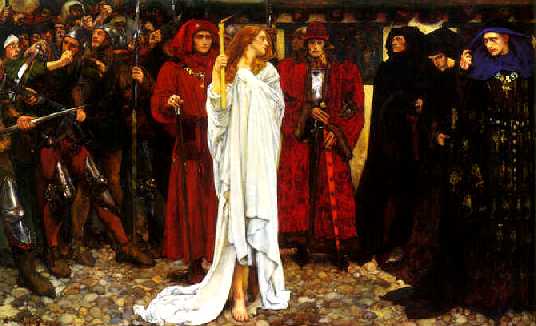
The_Penance_of_Eleanor_(Abbey)
The Penance of Eleanor by Edwin Austin Abbey

Eleanor’s own chaplain, Master John Hume, had also been arrested, although he was accused only of knowing of the others’ actions and was later pardoned.

On 3 occasions Eleanor was made to do public penance at various churches in London; on the 1st of such, 13th November 1441, bareheaded and dressed in black carrying a wax taper, she walked from Temple Bar to St Paul’s Cathedral, where she offered the wax taper at the high altar. Following 2 further penances, at Christ Church and St Michael’s in Cornhill, Eleanor was sent first to Chester Castle and then to Kenilworth. Her circumstances much reduced, Eleanor was allowed a household of only 12 persons.

Eleanor’s witchcraft conviction discredited her husband; Humphrey was marginalised and on 6th November 1441 his marriage was annulled. Humphrey’s enemies, Margaret of Anjou (Henry VI’s queen) and the Earl of Suffolk, convinced the king that his uncle was plotting against him. In February 1447, Humphrey was arrested and confined in Bury St Edmunds. He died a week later, on 23rd February; some claimed it was murder, but the most likely cause of death is stroke.

1000px-Beaumaris-01s
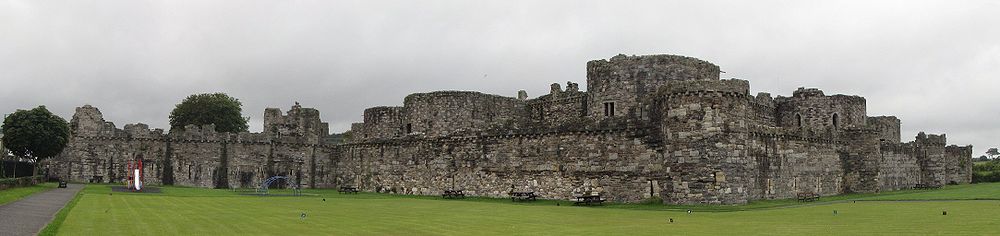
Beaumaris Castle, Anglesey

Eleanor was moved to Peel Castle on the Isle of Man, in 1446 and one final time in 1449 when she was transferred to Beaumaris Castle on Anglesey.

Eleanor Cobham, one time Duchess of Gloucester and wife to the heir to England’s throne, having risen so high – and fallen so low – died still a prisoner, at Beaumaris Castle on 7th July 1452; she was buried at Beaumaris, at the expense of Sir William Beauchamp, the castle’s constable.

*

Pictures courtesy of Wikipedia

*

Sources: Brewer’s British Royalty by David Williamson; History Today Companion to British History Edited by Juliet Gardiner and Neil Wenborn; The Mammoth Book of British Kings & Queens by Mike Ashley; Britain’s Royal Families, the Complete Genealogy by Alison Weir; The Oxford Companion to British History Edited by John Cannon; The Plantagenets, the Kings who made England by Dan Jones; The Plantagenets, the Kings that Made Britain by Derek Wilson; madameguillotine.co.uk; susanhigginbotham.com; The Medieval Mind.

*

My Books

Signed, dedicated copies of all my books are available through my online bookshop.

OUT NOW! Heroines of the Tudor World

Heroines of the Tudor World tells the stories of the most remarkable women from European history in the time of the Tudor dynasty, 1485-1603. These are the women who ruled, the women who founded dynasties, the women who fought for religious freedom, their families and love. These are the women who made a difference, who influenced countries, kings and the Reformation. In the era dominated by the Renaissance and Reformation, Heroines of the Tudor World examines the threats and challenges faced by the women of the era, and how they overcame them. From writers to regents, from nuns to queens, Heroines of the Tudor World shines the spotlight on the women helped to shape Early Modern Europe.

Heroines of the Tudor World is now available for pre-order from Amberley Publishing and Amazon UK.

Also by Sharon Bennett Connolly:

Women of the Anarchy demonstrates how Empress Matilda and Matilda of Boulogne, unable to wield a sword themselves, were prime movers in this time of conflict and lawlessness. It shows how their strengths, weaknesses, and personal ambitions swung the fortunes of war one way – and then the other. Available from Bookshop.orgAmberley Publishing and Amazon UKKing John’s Right-Hand Lady: The Story of Nicholaa de la Haye is the story of a truly remarkable lady, the hereditary constable of Lincoln Castle and the first woman in England to be appointed sheriff in her own right. Available from all good bookshops Pen & Sword Booksbookshop.org and AmazonDefenders of the Norman Crown: The Rise and Fall of the Warenne Earls of Surrey tells the fascinating story of the Warenne dynasty, from its origins in Normandy, through the Conquest, Magna Carta, the wars and marriages that led to its ultimate demise in the reign of Edward III. Available from Pen & Sword BooksAmazon in the UK and US, and Bookshop.org

Ladies of Magna Carta: Women of Influence in Thirteenth Century England looks into the relationships of the various noble families of the 13th century, and how they were affected by the Barons’ Wars, Magna Carta and its aftermath; the bonds that were formed and those that were broken. It is now available in paperback and hardback from Pen & Sword,  Amazon, and Bookshop.orgHeroines of the Medieval World tells the stories of some of the most remarkable women from Medieval history, from Eleanor of Aquitaine to Julian of Norwich. Available now from Amberley Publishing and Amazon, and Bookshop.orgSilk and the Sword: The Women of the Norman Conquest traces the fortunes of the women who had a significant role to play in the momentous events of 1066. Available now from Amazon,  Amberley Publishing, and Bookshop.org.

Alternate Endings: An anthology of historical fiction short stories including Long Live the King… which is my take what might have happened had King John not died in October 1216. Available in paperback and kindle from Amazon.

Podcast:

Have a listen to the A Slice of Medieval podcast, which I co-host with Historical fiction novelist Derek Birks. Derek and I welcome guests, such as Bernard Cornwell and discuss a wide range of topics in medieval history, from significant events to the personalities involved.

*

Don’t forget! Signed and dedicated copies of all my books are available through my online bookshop.

For forthcoming online and in-person talks, please check out my Events Page.

You can be the first to read new articles by clicking the ‘Follow’ button, liking our Facebook page or joining me on Twitter and Instagram.

©2015 Sharon Bennett Connolly FRHistS

Richard of Conisbrough, the Traitorous Earl

Richard_of_Conisburgh,_3rd_Earl_of_Cambridge
Richard of Conisbrough, Earl of Cambridge

Richard of Conisbrough seems to have been a very controversial figure throughout his life, from questions of his paternity, through his secret marriage, to his untimely death for his involvement in a particularly ill-thought-out plot.

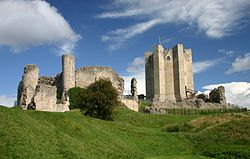
He and I were born within 3 miles (and, of course,  6 centuries) of each other. As a student, I even gave guided tours at the Castle in which he was born. And the man is a completely fascinating, and yet such a shadowy, figure. The grandfather of both Edward IV and Richard III, he seems to have been a mediocre diplomat and soldier, and his eventual treason barely registers in the history books.

Richard’s birth is obscured by time. Although sources seem undecided, the most likely date of his birth appears to be 1386 (although some place it as early as 1375). He was a grandson of Edward III through his father, Edmund of Langley, 1st Duke of York; and his mother, Isabella of Castile (sister of John of Gaunt’s wife, Constance), was described by chronicler Thomas of Walsingham as having ‘loose morals’. She and Edmund appear to have been an ill-matched pair from the beginning.

Isabella_of_Castile-Langley
Isabel of Castile

Edmund and Isabella married in 1372, two children soon followed; Edward of Norwich in c.1373 and Constance in c.1374. It seems the couple’s relationship cooled soon after, as no other children were forthcoming for over 10 years. As a result, the arrival of Richard of Conisbrough in 1386 appears to have raised some eyebrows and most people – even of the time – suspected that he was the son of Isabella’s lover, rather than the Duke of York.

Isabel’s relationship with John Holland, Duke of Exeter and half-brother of the king, Richard II, was probably an open secret. The fact that his father and brother, both, left him out of their wills has fuelled this theory. However, leaving a son out of your will was not entirely unusual – Edmund of Langley was, in fact, left out of his own father’s will (that of Edward III) – and, my research suggests that Richard of Conisbrough was already dead by the time his brother, Edward, made his will.

180px-Edmund_of_Langley_2C_Duke_of_York
Edmund of Langley, 1st Duke of York

Isabella died on 23rd December 1392. Her will made Richard II her heir, but specifically asked him to provide an annual pension of 500 marks for her youngest son. Richard’s allowance was paid regularly until 1399, but following the deposition of Richard II and accession of Henry IV, payments were made only sporadically and Richard of Conisbrough became the Royal Family’s ‘poor relation’.

Richard of Conisbrough’s father, Edmund of Langley, died in 1402 and the dukedom of York passed to Richard’s older brother, Edward.

Although his regular pension petered out under Henry IV, Richard’s career was largely unremarkable. In 1403/4 he was given command of a small force to defend Herefordshire against the last native prince of Wales, Owain Glyndwr. Richard was able to make several connections in the area; most notably with the Mortimer family. The Mortimers were cousins of Richard’s through the marriage of Lionel, Duke of Clarence’s daughter Philippa (Edward III’s granddaughter) to Edmund Mortimer, 3rd Earl of March.

Edmund_of_Langley_remonstrating_with_the_King_of_Portugal_-_Chronique_d'_Angleterre_(Volume_III)_(late_15th_C),_f.186r_-_BL_Royal_MS_14_E_IV
Edmund of Langley and the King of Portugal

Richard of Conisbrough secretly married Anne Mortimer (Philippa’s granddaughter) sometime in 1406. The couple had married without parental consent, or the papal dispensation required due to their being 2nd and 4th cousins. The dispensation was finally obtained in 1408.

Probably a love-match – Anne seems to have been as destitute as her husband. Born in December 1390 Anne’s family were close to Richard II; her father, Roger Mortimer, being seen as his possible heir until his death in 1398. Seen as rivals claimants by the new King, Henry IV, Anne’s fortunes changed in 1399 and  she was described as ‘destitute’ after her mother’s death in 1405.

The marriage of Anne and Richard produced 2 children; Isabella was born in 1409 and Richard, later Duke of York, was born in 1411. Not yet 21 years old, Anne herself died in September 1411, probably due to complications following the birth of her son. She was buried at Kings Langley, alongside Edmund of Langley and Isabella of Castile.

82634424_132521090790
Tomb of Edmund of Langley

Richard would marry as his 2nd wife, sometime between 1411 and 1415, Maud daughter of Thomas, 6th Baron Clifford and divorced wife of John Neville, 6th Baron Latimer. Following his death, Maud continued to live at Richard’s birthplace of Conisbrough Castle, dying there in 1446.

Richard was knighted by Henry IV in 1406, probably with a view to his escorting Henry’s daughter, Philippa, to Denmark, for her marriage to King Erik. Richard’s stay in Denmark was short and unremarkable; he was back in England 2 months after witnessing the wedding.

Little more is heard of Richard until he was created Earl of Cambridge in the reign of Henry V, in 1414. The earldom did not improve his prospects, as it came without the usual grants of land or revenue to support the title; Richard was thought the poorest of England’s Earls.

ConisbroughCastle
Conisbrough Castle

Fuelled by resentment Richard of Conisbrough, Earl of Cambridge, began plotting with Sir Thomas Grey and Henry 3rd Baron Scrope. Their scheme was to murder Henry V and his 3 brothers at Southampton, before their embarkation  for the invasion of France, and replace him with Richard’s brother-in-law, Edmund Mortimer, 5th Earl of March.

However, it seems unclear whether March himself was in on the plot as it was the Earl who revealed it to the king on the 31st July 1415.

Cambridge and his co-conspirators were quickly rounded up. Arrested as the ringleader and at just 30 years old, Cambridge’s honours and estates were declared forfeit. Despite pleas for mercy he was beheaded for treason at Southampton Green on 5th August 1415. He was buried in the Chapel of God’s House, Southampton.

220px-Richard_Plantagenet,_3rd_Duke_of_York
Richard Plantagenet, 3rd Duke of York

Although his honours were forfeit, Richard of Conisbrough was not attainted and his son remained his heir and was therefore able to inherit the dukedom of York, from his uncle Edward, following his death at Agincourt just 2 months later, in October 1415.

The 4-year-old Richard, Duke of York, was made a royal ward. He was raised by the Nevilles, a powerful northern family, and would marry Cecily Neville, youngest daughter of Ralph, 1st Earl of Westmorland, and his second wife, Joan Beaufort. The combination of his York and Mortimer inheritances not only made the Duke of York the wealthiest of English landowners, but also gave him a strong claim to the English throne. As a result, during the ineffectual reign of his cousin, Henry VI, Richard of York made a play for the crown.

His defeat and death at the Battle of Wakefield on 30 December 1460 meant he never became king, but his eldest son Edward took up the mantle and was proclaimed king on 4 March 1461, following this up with his overwhelming victory over the Lancastrians at the Battle of Towton on 29 March 1461.

With just a short interlude of 6 months in 1470/71, the Readeption of Henry VI, the Yorkist dynasty would rule for the next 24 years.

*

Photos: taken from Wikipedia, except that of the tomb of Edmund of Langley which is taken from findagrave.com

*

Sources: The History Today Companion to British History, edited by Juliet Gardiner & Neil Wenborn; Brewer’s British Royalty by David Williamson; Britain’s Royal Families, the Complete Genealogy by Alison Weir; The Wars of the Roses by John Gillingham; The Wordsworth Dictionary of British History by J.P. Kenyon; The Oxford Companion to British History, edited by John Cannon; The Reign of Edward III by WM Ormrod; The Wars of the Roses by Martin J Dougherty; englishmonarchs.co.uk; womenshistory.about.com; findagrave.com; conisbroughcastle.org.uk; hrionline.ac.uk.

*

My Books

Signed, dedicated copies of all my books are available through my online bookshop.

OUT NOW! Heroines of the Tudor World

Heroines of the Tudor World tells the stories of the most remarkable women from European history in the time of the Tudor dynasty, 1485-1603. These are the women who ruled, the women who founded dynasties, the women who fought for religious freedom, their families and love. These are the women who made a difference, who influenced countries, kings and the Reformation. In the era dominated by the Renaissance and Reformation, Heroines of the Tudor World examines the threats and challenges faced by the women of the era, and how they overcame them. From writers to regents, from nuns to queens, Heroines of the Tudor World shines the spotlight on the women helped to shape Early Modern Europe.

Heroines of the Tudor World is now available for pre-order from Amberley Publishing and Amazon UK.

Also by Sharon Bennett Connolly:

Women of the Anarchy demonstrates how Empress Matilda and Matilda of Boulogne, unable to wield a sword themselves, were prime movers in this time of conflict and lawlessness. It shows how their strengths, weaknesses, and personal ambitions swung the fortunes of war one way – and then the other. Available from Bookshop.orgAmberley Publishing and Amazon UKKing John’s Right-Hand Lady: The Story of Nicholaa de la Haye is the story of a truly remarkable lady, the hereditary constable of Lincoln Castle and the first woman in England to be appointed sheriff in her own right. Available from all good bookshops Pen & Sword Booksbookshop.org and AmazonDefenders of the Norman Crown: The Rise and Fall of the Warenne Earls of Surrey tells the fascinating story of the Warenne dynasty, from its origins in Normandy, through the Conquest, Magna Carta, the wars and marriages that led to its ultimate demise in the reign of Edward III. Available from Pen & Sword BooksAmazon in the UK and US, and Bookshop.org

Ladies of Magna Carta: Women of Influence in Thirteenth Century England looks into the relationships of the various noble families of the 13th century, and how they were affected by the Barons’ Wars, Magna Carta and its aftermath; the bonds that were formed and those that were broken. It is now available in paperback and hardback from Pen & Sword,  Amazon, and Bookshop.orgHeroines of the Medieval World tells the stories of some of the most remarkable women from Medieval history, from Eleanor of Aquitaine to Julian of Norwich. Available now from Amberley Publishing and Amazon, and Bookshop.orgSilk and the Sword: The Women of the Norman Conquest traces the fortunes of the women who had a significant role to play in the momentous events of 1066. Available now from Amazon,  Amberley Publishing, and Bookshop.org.

Alternate Endings: An anthology of historical fiction short stories including Long Live the King… which is my take what might have happened had King John not died in October 1216. Available in paperback and kindle from Amazon.

Podcast:

Have a listen to the A Slice of Medieval podcast, which I co-host with Historical fiction novelist Derek Birks. Derek and I welcome guests, such as Bernard Cornwell, and discuss a wide range of topics in medieval history, from significant events to the personalities involved.

*

Signed and dedicated copies of all my books are available through my online store.

For forthcoming online and in-person talks, please check out my Events Page.

You can be the first to read new articles by clicking the ‘Follow’ button, liking our Facebook page or joining me on Twitter and Instagram.

*

©2015 Sharon Bennett Connolly FRHistS
The Tragic Story of the 1st Duke of Rothesay

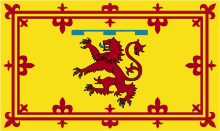
220px-Duke_of_Rothesay_Standard.svg
Standard of the Duke of Rothesay

David Stewart was born on 24th October, 1378, the son of John, Earl of Carrick and heir to the throne, and Annabella Drummond. His grandfather was King Robert II, who was himself the grandson of Robert I the Bruce, being the son of Robert’s unfortunate daughter, Marjorie Bruce, who died in childbirth, aged only 19.

His father succeeded to the throne in 1390, taking the name King Robert III (John being considered an unlucky name for kings). AS heir to the throne, David was created Earl of Carrick in the same year. Robert III, however, was an invalid – he had been kicked by a horse 2 years before his accession. Never having fully recovered from his injuries, he was also prone to depression. This severely limited his ability to govern and his younger brother, also called Robert, took over much of the administration of the realm.

As a highly ambitious younger brother, Robert Stewart, was a ruthless politician with designs on the throne for himself. Towards the end of his father’s reign – following his brother’s injury – he had been protector of the realm; and it seems he intended to keep the position for the duration of his brother’s reign.

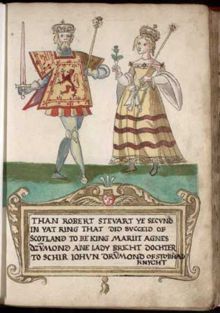
220px-Robert_III_and_Annabella_Drummond
Robert III and his queen, Annabella Drummond

From 1393 Robert III tried to impose his own authority and rule for himself, but caused more division between the Highlands of the north and the Lowlands of the south; bribery and corruption were rife.

In 1395 young David was married to Elizabeth Dunbar, daughter of the Earl of March. However, they were close blood relations and had married before the required papal dispensation had arrived. The couple were censured by the church and forced to live apart for two years – after which they would be allowed to remarry. They separated in 1397.

In April 1398 Robert III’s wife, Annabella, called a special council at which David, still only 19, was made Duke of Rothesay. It was the first ever creation of a duke in Scotland, and the title would, from that moment on, be borne by all heirs to the Scottish throne. He would also receive the title Earl of Atholl later in the same year.

Annabella also had David named “Lieutenant of the Realm”, as a means of ensuring that David would succeed his increasingly frail father. This appointment essentially gave him the rule of Scotland, in his father’s place; although he was to consult with the full council, with his Uncle Robert as his primary advisor.

In the same council Robert Stewart was made Duke of Albany.

A power struggle developed between Albany and David. As their rivalry grew more intense the country was effectively divided into 2 factions.

David, it seems, was of a ‘dissolute and licentious’ nature (Ashley) and almost as inept as his father. According to Nigel Tranter he was “high-spirited” and “not always noted for good judgement”.

220px-Robert_of_Albany
Robert Stewart, Duke of Albany

In 1400, instead of remarrying Elizabeth Dunbar, David married Marjorie Douglas, daughter of Archibald the 3rd Earl of Douglas and his wife Joan, at Bothwell Church. She and David would have no children.

The marriage itself caused the Earl of March – father of David’s 1st wife – to renounce his allegiance and swear fealty to Henry IV of England, thus prompting an English invasion. Henry managed to reach Edinburgh without much opposition. Once there he summoned the dukes of Rothesay and Albany to pay homage to him, but neither did.

David held Edinburgh Castle against Henry, whilst Albany had mustered an army 15 miles away at Calder Muir; but he failed to march to Rothesay’s aid. Henry IV was eventually forced to retire for lack of supplies, with the Scots powerless to take the advantage.

David was blamed for provoking the English invasion. Following his mother’s death in 1401, his popularity was further damaged when he failed to consult his council, as was required, before taking a number of steps which threatened the positions of his nobles, especially his uncle.

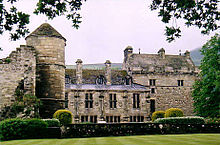
220px-Falkland_Palace
Falkland Palace

With Queen Annabella’s death went David’s chief supporter and last protector. Albany, in alliance with David’s brother-in-law, the 4th Earl of Douglas, took action and had David waylaid on the road to St Andrews, arrested and held captive in St Andrews Castle, before being moved to Falkland Palace, supposedly hooded and mounted backwards on a mule.

According to Tranter, David was flung into a cellar, with no food and water. There were stories of nursing mothers giving him their breast milk for sustenance, through a crack in the cellar’s masonry. He survived for at least 18 days, supposedly dying of starvation between 25th and 27th March 1402, aged 23.

Some historians now think David died of dysentery; but whether he died of starvation or disease the result was the same; from April 1402 Robert, Duke of Albany, was in control of Scotland.

A few weeks after his death a public inquiry, under the control of Albany, exonerated Albany and Douglas of any complicity in the death, ordering that no one should “murmur against” them. The inquiry concluded that David Stewart, Duke of Rothesay, had died “by divine providence and not otherwise”.

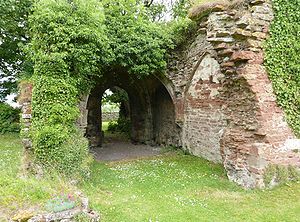
300px-Lindores_abbey_04
Lindores Abbey, burial-place of David, Duke of Rothesay

David was buried in Lindores Abbey, Fife. The king founded a chaplaincy at the parish church of Dundee to pray for David’s soul, and ordered daily masses to be said in the prince’s memory at Deer Abbey and Culross.

Following David’s death his widow, Marjorie, went on to marry Sir Walter Haliburton in 1403; she died sometime before 11th May 1421.

The king, Robert III, took some time to realise that his second son, James, may also be in danger. In 1406, the king arranged for him to be sent to France for his own safety. Aged just 12, James was smuggled out of Scotland by ship, but was captured by pirates off Flamborough Head, and handed over to the English to begin 18 years of imprisonment.

King Robert III died of grief shortly after.

Albany was, thereafter, the effective ruler of Scotland until his death in 1420.

*

Pictures courtesy of Wikipedia.

Sources: The Story of Scotland by Nigel Tranter; Brewer’s British Royalty by David Williamson; Kings & Queens of Britain by Joyce Marlow; Mammoth Book of British Kings & Queens and British Kings & Queens by Mike Ashley; Oxford Companion to British History Edited by John Cannon; History Today Companion to British History Edited by juliet Gardiner & Neil Wenborn; Britain’s Royal Families by Alison Weir; undiscoveredscotland.co.uk; englishmonarchs.co.uk

*

My Books

Signed, dedicated copies of all my books are available, please get in touch by completing the contact me form.

Coming 30 May 2023!

King John’s Right-Hand Lady: The Story of Nicholaa de la Haye is now available for pre-order from Pen & Sword Booksbookshop.org and Amazon UK. (I will hopefully have a US release date shortly)

In a time when men fought and women stayed home, Nicholaa de la Haye held Lincoln Castle against all-comers. Not once, but three times, earning herself the ironic praise that she acted ‘manfully’. Nicholaa gained prominence in the First Baron’s War, the civil war that followed the sealing of Magna Carta in 1215.

A truly remarkable lady, Nicholaa was the first woman to be appointed sheriff in her own right. Her strength and tenacity saved England at one of the lowest points in its history. Nicholaa de la Haye is one woman in English history whose story needs to be told…

 Also by Sharon Bennett Connolly:

Defenders of the Norman Crown: The Rise and Fall of the Warenne Earls of Surrey tells the fascinating story of the Warenne dynasty, of the successes and failures of one of the most powerful families in England, from its origins in Normandy, through the Conquest, Magna Carta, the wars and marriages that led to its ultimate demise in the reign of Edward III. Defenders of the Norman Crown: Rise and Fall of the Warenne Earls of Surrey is now available from Pen & Sword BooksAmazon in the UK and US, Bookshop.org and Book Depository.

Ladies of Magna Carta: Women of Influence in Thirteenth Century England looks into the relationships of the various noble families of the 13th century, and how they were affected by the Barons’ Wars, Magna Carta and its aftermath; the bonds that were formed and those that were broken. It is now available in paperback and hardback from Pen & Sword,  AmazonBookshop.org and from Book Depository worldwide.

Heroines of the Medieval World tells the stories of some of the most remarkable women from Medieval history, from Eleanor of Aquitaine to Julian of Norwich. Available now from Amberley Publishing and Amazon, Bookshop.org and from Book Depository worldwide.

Silk and the Sword: The Women of the Norman Conquest traces the fortunes of the women who had a significant role to play in the momentous events of 1066. Available now from Amazon,  Amberley Publishing, Bookshop.org and Book Depository.

Alternate Endings: An anthology of historical fiction short stories including Long Live the King… which is my take what might have happened had King John not died in October 1216. Available in paperback and kindle from Amazon.

*

For forthcoming online and in-person talks, please check out my Events Page.

*

You can be the first to read new articles by clicking the ‘Follow’ button, liking our Facebook page or joining me on Twitter and Instagram.

*

2015 Sharon Bennett Connolly FRHistS

James I and Joan Beaufort: A Royal Love Story

220px-King_James_I_of_Scotland
James I

The story of King James I of Scotland and his queen, Joan Beaufort, is one of those rarities in Medieval history; a true love story. He was a King in captivity and she a beautiful young lady of the court.

Following the murder of his brother, David, Duke of Rothesay, James was the only surviving son of Robert III of Scotland. He had been on his way to France, for his safety and to continue his education, when his ship was captured by pirates in April 1406. Aged only 11, he was handed over to the English king, Henry IV, and imprisoned in the Tower of London.

Shortly after his capture, James’s father died and he was proclaimed King of Scots, but the English would not release him.

James was closely guarded and regularly moved around, but he was also well-educated while in the custody of the English king and was an accomplished musician and poet. He was held at various castles, including the Tower, Nottingham Castle – where he was allowed to go hunting – and Windsor Castle.

Probably born in the early 1400s, Lady Joan Beaufort was the daughter of John Beaufort, 1st Earl of Somerset and legitimated son of John of Gaunt (himself the 3rd son of Edward III) by his mistress and, later, wife Kathryn Swynford. Joan’s mother was Margaret Holland, granddaughter of Joan of Kent (wife of Edward the Black Prince) from her marriage to Thomas Holland, 1st Earl of Kent.

Joan Beaufort was very well-connected; she was a niece of Henry IV, great-niece of Richard II and  great grand-daughter of Edward III. Her uncle, Henry Beaufort, was a cardinal and Chancellor of England.

150px-Beaufortforeman'sroll
Joan Beaufort, Queen of Scotland

Little seems to be known of her early life, but she was at court in the early 1420s, when James first set eyes on her. James wrote of his love for Joan in his famous poem, The Kingis Quair. According to Nigel Tranter, James was with the court at Windsor, when he saw Joan for the first time while walking her little lap-dog in the garden, below his window.

His narrow window afforded him only a limited view, but the Lady Joan walked the same route every morning and James wrote of her;

“Beauty, fair enough to make the world to dote, Are ye a worldy creature? Or heavenly thing in likeness of nature? Or are ye Cupid’s own priestess, come here, To loose me out of bonds”

One morning James managed to drop a plucked rose down to Lady Joan, which he saw her wearing the following evening at dinner. Nigel Tranter suggests Lady Joan grieved over James’s imprisonment and even pleaded for him to be released.

Their romance grew apace, but was interrupted when James had to accompany Henry V on his French campaign. Henry was hoping that James’s presence would make the Scots, fighting with the French, think twice about engaging with him. However, the strategy had little effect.

220px-Robert_of_Albany
Robert Stewart, Duke of Albany

James’s imprisonment lasted for 18 years. His uncle Robert Stewart, Duke of Albany and Guardian of Scotland in James’s absence, refused to ransom him, in the hope of gaining the throne for himself. He never quite garnered enough support, but managed to keep the Scottish nobles in check.

However, when he died in 1420 control passed to his son Murdoch (who had also been imprisoned by the English for 12 years, but was ransomed – instead of James – in 1414) and Scotland fell into a state of virtual anarchy.

Henry V had finally decided that it was time for James to return to Scotland when he died. It was left to Henry’s brother, John, Duke of Bedford, as Regent for the infant Henry VI, to agree the terms of James’s freedom. James was charged 60,000 marks in ransom – to cover the costs for his upkeep and education for 18 years, it was claimed. The agreement included a promise for the Scots to keep out of England’s wars with France, and for James to marry the Lady Joan Beaufort.

James and Joan were married at the Church of St Mary Overie, Southwark, on 2nd February 1424. James was released on the 28th March and the couple returned to Scotland shortly after. They were crowned at Scone by Henry de Warlaw, Bishop of St Andrews, on 21st May 1424.

James and Joan had 8 children together, 7 of whom survived childhood. Their 6 daughters helped to strengthen alliances across Europe. The oldest, Margaret, was born around Christmas 1424. At the age of 11 she was sent to France to marry the Dauphin, Louis – the future Louis XI – narrowly escaping her father’s fate when the English fleet tried to capture her en route. She died in 1445, leaving no children.

Isabella_of_Scotland
Isabella of Scotland

Isabella married Francis I, Duke of Brittany; she had 2 daughters and died in 1494. Eleanor married Sigismund, Archduke of Austria, and died in 1480. Joan was born mute and married James Douglas, Earl of Morton and had 4 children – her eldest son, Sir John Douglas, 2nd Earl of Morton, was probably killed at Flodden in 1513. Joan herself died in 1486.

Mary was created Countess of Buchan in 1444; she married Wolfert, Count of Grandpre, of the Netherlands, having 2 sons who died young before she died in 1465. A last daughter, Anabella, married, firstly, Louis of Savoy but following their divorce in 1458 she married George Gordon, 2nd Earl of Huntly. They had 2 children together before divorcing on the grounds of consanguinity in 1471.

James and Joan finally had twin sons in 1430. Born on 16th October, Alexander died the same year, but James would go on to succeed his father and married Mary of Gueldres in 1449.

On his return to Scotland, James immediately set about getting his revenge on the Duke of Albany’s family and adherents; executing some, including Murdoch, Albany’s son and heir. Two other claimants to James’s throne were sent to England, as hostages to the payment of his ransom.

James and Joan ruled Scotland for 13 years; James even allowed Joan to take some part in the business of government. His reforms, however, and desire for a firm but just government made enemies of some nobles, including his own chamberlain Sir Robert Stewart, grandson of Walter, Earl of Atholl, who had been James’s heir until the birth of his son.

Blackfriars_monastery_perth
Blackfriars Monastery, Perth

Due to his long imprisonment in the fortresses of England, James tended to avoid castles. On 21 February 1437 the King was staying at the Blackfriars in Perth when his chamberlain dismissed the guard and, having removed the locking bar to the King’s quarters, let the assassins into the priory.

James and Joan were alone with the queen’s ladies when they heard the men approaching. On seeing the locking bar missing, Joan’s lady, Kate Douglas, used her own arm to bar the door. The queen hid the king in an underground vault as Kate’s arm broke and the plotters gained entry. They dragged James from his hiding placed and stabbed him to death; Joan herself was wounded in the scuffle.

220px-James_II_of_Scotland_17th_century
James II

The plotters, led by Walter, Earl of Atholl, James’ own uncle, had expected to seize power, but were arrested and executed as the nobles rallied around the new king, 6-year-old James II.

James I was buried in Perth and Joan took an active role the government for her son, getting caught in a contest of power between Sir Alexander Livingstone and Sir William Crichton. Her second marriage to Sir James Stewart, the Black Knight of Lorne, led to her arrest by Livingstone, under the pretext that she may abduct the child-king.

Joan and her new husband were only released on the condition that she give up her custody of James II and leave the court.

They would go on to have 3 sons together before Joan died during a siege at Dunbar Castle on 15 July, 1445; although whether her death was caused by illness or the violence of the siege has not been determined. She was buried in the Carthusian priory in Perth alongside her first husband, King James I.

*

Sources: The Story of Scotland by Nigel Tranter; Brewer’s British royalty by David Williamson; Kings & Queens of Britain by Joyce Marlow; Mammoth Book of British Kings & Queens and British Kings & Queens by Mike Ashley; Oxford Companion to British History Edited by John Cannon; History Today Companion to British History Edited by juliet Gardiner & Neil Wenborn; Britain’s Royal Families by Alison Weir.

Pictures courtesy of Wikipedia.

*

My books

Signed, dedicated copies of all my books are available through my online bookshop.

Out now! Scotland’s Medieval Queens

Scotland’s history is dramatic, violent and bloody. Being England’s northern neighbour has never been easy. Scotland’s queens have had to deal with war, murder, imprisonment, political rivalries and open betrayal. They have loved and lost, raised kings and queens, ruled and died for Scotland. From St Margaret, who became one of the patron saints of Scotland, to Elizabeth de Burgh and the dramatic story of the Scottish Wars of Independence, to the love story and tragedy of Joan Beaufort, to Margaret of Denmark and the dawn of the Renaissance, Scotland’s Medieval Queens have seen it all. This is the story of Scotland through their eyes.

Available now from Amazon and Pen and Sword Books

Also by Sharon Bennett Connolly:

Heroines of the Tudor World tells the stories of the most remarkable women from European history in the time of the Tudor dynasty, 1485-1603. These are the women who ruled, the women who founded dynasties, the women who fought for religious freedom, their families and love. Heroines of the Tudor World is now available for pre-order from Amberley Publishing and Amazon UK. Women of the Anarchy demonstrates how Empress Matilda and Matilda of Boulogne, unable to wield a sword themselves, were prime movers in this time of conflict and lawlessness. It shows how their strengths, weaknesses, and personal ambitions swung the fortunes of war one way – and then the other. Available from Bookshop.orgAmberley Publishing and Amazon UKKing John’s Right-Hand Lady: The Story of Nicholaa de la Haye is the story of a truly remarkable lady, the hereditary constable of Lincoln Castle and the first woman in England to be appointed sheriff in her own right. Available from all good bookshops Pen & Sword Booksbookshop.org and Amazon

Defenders of the Norman Crown: The Rise and Fall of the Warenne Earls of Surrey tells the fascinating story of the Warenne dynasty, from its origins in Normandy, through the Conquest, Magna Carta, the wars and marriages that led to its ultimate demise in the reign of Edward III. Available from Pen & Sword BooksAmazon in the UK and US, and Bookshop.orgLadies of Magna Carta: Women of Influence in Thirteenth Century England looks into the relationships of the various noble families of the 13th century, and how they were affected by the Barons’ Wars, Magna Carta and its aftermath; the bonds that were formed and those that were broken. It is now available in paperback and hardback from Pen & SwordAmazon, and Bookshop.orgHeroines of the Medieval World tells the stories of some of the most remarkable women from Medieval history, from Eleanor of Aquitaine to Julian of Norwich. Available now from Amberley Publishing and Amazon, and Bookshop.orgSilk and the Sword: The Women of the Norman Conquest traces the fortunes of the women who had a significant role to play in the momentous events of 1066. Available now from Amazon,  Amberley Publishing, and Bookshop.org.

Alternate Endings: An anthology of historical fiction short stories including Long Live the King… which is my take what might have happened had King John not died in October 1216. Available in paperback and kindle from Amazon.

Podcast:

Have a listen to the A Slice of Medieval podcast, which I co-host with Historical fiction novelist Derek Birks. Derek and I welcome guests, such as Bernard Cornwell, and discuss a wide range of topics in medieval history, from significant events to the personalities involved. Every episode is also now available on YouTube.

*

Don’t forget! Signed and dedicated copies of all my books are available through my online bookshop.

For forthcoming online and in-person talks, please check out my Events Page.

You can be the first to read new articles by clicking the ‘Follow’ button, liking our Facebook page or joining me on TwitterThreadsBluesky and Instagram.

*

©2015 Sharon Bennett Connolly FRHistS