Matilda and Edith, Women of Different Fates

History...the Interesting Bits
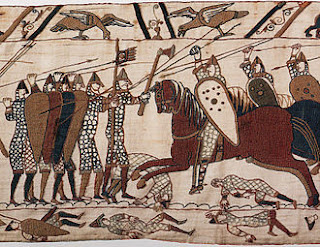
The Battle of Hastings, from the Bayeux Tapestry

Although the Battle of Hastings was fought by men, the women of the two opponents, Harold and William, had as much invested in the outcome as their husbands. The two women, however, have very different reputations. Whereas Matilda appears as the epitome of the medieval ideal woman, Edith has come down through history as ‘the other woman’. However, for both these women, their futures, and the futures of their children, were inextricably linked with the fates of the men fighting on Senlac Hill on that October morning in 1066.

Harold had met Edith Swan-neck at about the same time as he became earl of East Anglia, in 1044. Which makes it possible that Edith Swan-neck and the East Anglian magnate, Eadgifu the Fair, are one and the same. Eadgifu the Fair held over 270 hides of land and was one of the richest magnates in England. The majority of her estates lay in Cambridgeshire, but she also held land in Buckinghamshire, Hertfordshire, Essex and Suffolk; in the Domesday Book Eadgifu held the manor at Harkstead in Suffolk, which was attached to Harold’s manor of Brightlingsea in Essex and some of her Suffolk lands were tributary to Harold’s manor of East Bergholt. While it is by no means certain that Eadgifu is Edith Swan-neck several historians – including Ann Williams in the Oxford Dictionary of National Biography – make convincing arguments that they were. Even their names, Eadgifu and Eadgyth, are so similar that the difference could be merely a matter of spelling or mistranslation; indeed, the abbey of St Benet of Hulme, Norfolk, remembers an Eadgifu Swanneshals among its patrons.

By 1065 Harold had been living with the wonderfully-named Eadgyth Swanneshals (Edith the Swan-neck) for twenty years. History books label her as Harold’s concubine, but Edith was, obviously, no weak and powerless peasant, so it’s highly likely they went through a hand-fasting ceremony – or ‘Danish marriage’ – a marriage, but not one recognized by the church, thus allowing Harold to take a second ‘wife’ should he need to. Harold and Edith had at least 6 children together; including four sons, Godwin, Edmund, Magnus and Ulf and two daughters, Gytha, who married Vladimir Monomakh, Great Prince of Kiev, and Gunnhild, was to become a nun at Wilton Abbey in Wiltshire, but never took her vows.
History...the Interesting Bits
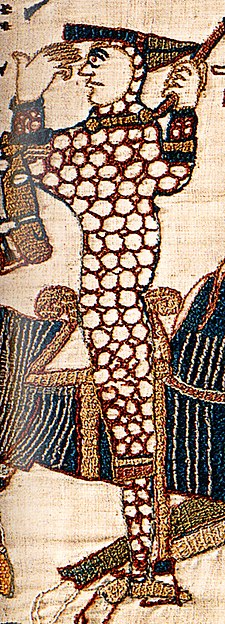
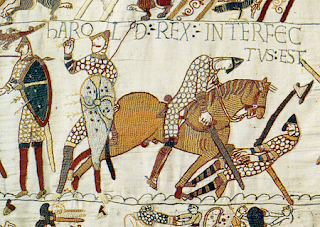
King Harold at the Battle of Hastings, from the Bayeux Tapestry

However, despite their twenty years and many children together, with the health of the king, Edward the Confessor, deteriorating, it became politically expedient for Harold to marry in order to strengthen his position as England’s premier earl and, possibly, next king. Ealdgyth was the daughter of Alfgar, earl of Mercia, and, according to William of Jumieges, very beautiful. She was the widow of Gruffudd ap Llywelyn, King of Gwynedd from 1039 and ruler of all Wales after 1055, with whom she had had at least one child, a daughter, Nest. Gruffudd had been murdered in 1063, following an expedition into Wales, some sources suggest it was by Harold himself, however Gruffudd’s own men are the chief suspects. Harold’s subsequent marriage to Ealdgyth not only secured the support of the earls of Northumbria and Mercia, but also weakened the political ties of the same earls with the new rulers of north Wales.

Rather than his loyal and loving ‘wife’, Edith, it was Ealdgyth, therefore, who was for a short time, queen of England. However, with Harold having to defend his realm, first against Harold Hardrada and his own brother, Tostig, at Stamford Bridge in September of 1066 and, subsequently, against William of Normandy at Hastings, it is unlikely Ealdgyth had time to enjoy her exalted status. At the time of the Battle of Hastings, 14th October 1066, Ealdgyth was in London, but her brothers took her north to Chester soon after. Although sources are confused it seems possible that Ealdgyth was heavily pregnant and gave birth to a son, Harold Haroldson, within months of the battle. Unfortunately, that is the last we hear of Ealdgyth; her fate remains unknown. Young Harold is said to have grown up in exile on the Continent and died in 1098.

Despite his marriage to Ealdgyth it seems Edith Swan-neck remained close to Harold and it was she who was waiting close by when the king faced William of Normandy at Senlac Hill near Hastings on 14th October 1066. She awaited the outcome alongside Harold’s mother, Gytha. Having lost a son, Tostig, just two weeks before, fighting against his brother and with the Norwegians at the Battle of Stamford Bridge, Gytha lost three more sons – Harold, Gyrth and Leofwine – and her grandson, Haakon, in the battle at Hastings.

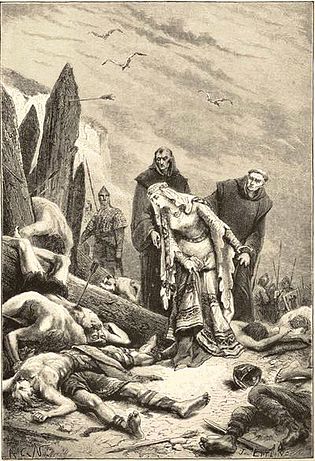
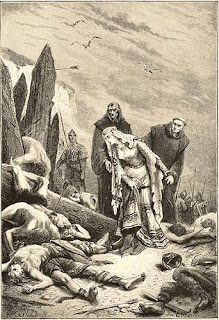
And it was Edith and the elderly Gytha, who wandered the blood-soaked field in the aftermath of the battle, in search of the fallen king. Sources say that Gytha was unable to identify her sons amidst the mangled and mutilated bodies. It fell to Edith to find Harold, by undoing the chain mail of the victims, in order to recognize certain identifying marks on the king’s body – probably tattoos. 
History...the Interesting Bits
Edith finding Harold’s body on the battlefield

The monks of Waltham Abbey had a tradition of Edith bringing Harold’s body to them for burial, soon after the battle. Although other sources suggest Harold was buried close to the battlefield, and without ceremony, it is hard not to hope that Edith was able to perform this last service for the king. However, any trace of Harold’s remains was swept away by Henry VIII’s Dissolution of the Monasteries, so the grave of England’s last Anglo-Saxon king is lost to history.

Harold’s mother, Gytha, eventually fled into exile on the Continent, taking Harold and Edith’s daughter, another Gytha, with her, possibly arranging her marriage to the prince of Smolensk and – later – Kiev. The sons of Edith and Harold fled to Ireland with all but one, living into the 1080s, though the dates of their eventual deaths remain uncertain. Gunnhild remained in her nunnery at Wilton until sometime before 1093, when she became the wife or concubine of Alan the Red, a Norman magnate. Whether or not she was kidnapped seems to be in question but when Alan died in 1093, instead of returning to the convent, Gunnhild became the mistress of Alan’s brother and heir, Alan Niger. Alan Rufus held vast lands in East Anglia – lands that had once belonged to Eadgifu the Fair and, if Eadgifu was Edith Swan-neck, it’s possible that Alan married Gunnhild to strengthen his claims to her mother’s lands.  

Of Edith Swan-neck, there is no trace after Harold is interred at Waltham Abbey, she simply disappears from the pages of history…

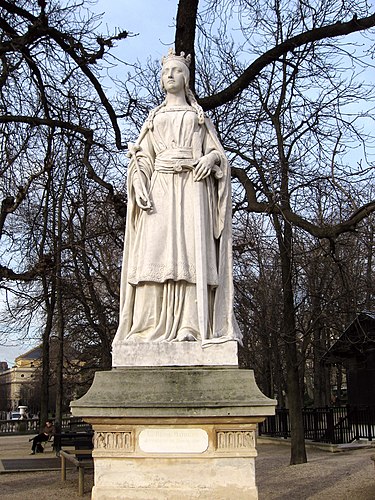
For Matilda, on the other hand, the Battle of Hastings marked the start of another stage of her life and career as the wife of William, duke of Normandy and, now, King of England. Matilda of Flanders was probably born around 1032, the daughter of Baldwin V, count of Flanders, and his wife, Adela, a daughter of King Robert the Pious of France. The young duke, William of Normandy, was probably pushing his luck when he proposed a marriage between himself and young Matilda. Although he was a duke and Baldwin a mere count, there was the question of his illegitimacy and Normandy was hardly the most stable of regions; William had spent all of his adult life fighting to keep hold of it. 
History...the Interesting Bits
Matilda of Flanders

A later story tells of how Matilda refused to marry William, stating that, being granddaughter of a king, she was too high born to marry a bastard. William was said to be so incensed with this response that he straightaway rode to Flanders, accosted young Matilda in the street, pulling her from her horse by her braids, before hitting her and cutting her with his spurs; whereupon Matilda changed her mind and agreed to marry William. While amusing, it is highly likely that the story is an invention, and highly unlikely that Matilda was asked her opinion on the marriage. Getting to the altar was not an easy task, however, as the pope refused to allow the marriage, without giving his reasons. It is possible that the refusal was on the grounds of consanguinity, although it seems the only familial link is that William’s aunt married Matilda’s grandfather as his second wife (Matilda’s father, however, was the son of the count’s first wife, so there was no blood relationship). It seems more likely that the refusal was politically motivated, due to Count Baldwin’s support of the Lotharingian’s rebellion against Pope Leo IX’s sponsor, the Holy Roman Emperor. 

William was not to be thwarted, however, and before 1053 he married, Matilda despite the papal interdict; they were eventually ordered to establish a monastery each in penance for the marrying without papal dispensation, but the marriage was allowed to stand. In penance Matilda established the Abbaye-aux-Dames, consecrated in 1066, while William founded the Abbay-aux-Hommes, both in Caen.

The marriage between Matilda and William proved to be a strong and trusting relationship; William is one of very few medieval kings believed to have been completely faithful to his wife, no rumours of extra-marital affairs have ever been uncovered. He trusted Matilda to act as regent in Normandy during his many absences on campaign or in England. Matilda supported her husband’s proposed invasion of England, promised a great ship for William’s personal used, it was called the Mora; the ship had a figurehead of a small boy, whose right hand pointed to England and left hand held a horn to his lips.
History...the Interesting Bits
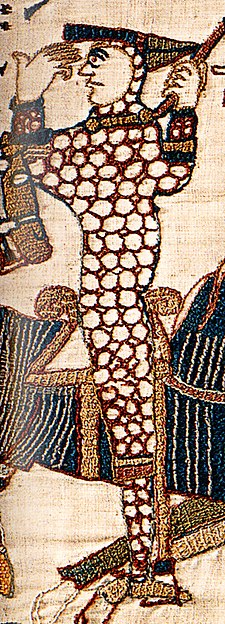
William the Conqueror from the Bayeux Tapestry

Matilda and William had a rather large family, with 4 boys and at least 4 daughters. Their eldest son, Robert Curthose, who inherited Normandy, was followed by Richard, who was killed during a hunting accident as a youth, William, known as Rufus who became King William II, and the future Henry I. Of the 4 or 5 daughters Adelida became a nun following a series of failed marriage plans, Cecilia was given to the convent of Ste Trinite as a child, Constance married Alain Fergant, duke of Brittany and Adela married Stephen of Blois; their son, another Stephen would succeed Henry I as King of England. There are suggestions of 2 further daughters, Matilda and Agatha, though evidence for their existence is highly limited.

Matilda was very close to her family, especially her eldest son, Robert, whose later antics were to cause  problems between his parents. William and Robert, father and son, were often at loggerheads, with Robert in open rebellion against his father as a young adult. Matilda was constantly trying to play the peacemaker and was so upset by one quarrel that she was ‘choked by tears and could not speak’. Even during a period of exile imposed on Robert, Matilda still supported her son as best she can; she would send him vast amounts of silver and gold through a Breton messenger, Samson. On discovering Samson’s complicity William threatened to blind the messenger and it was only through Matilda’s intervention that the Breton escaped.

Where poor Edith Swan-neck lost almost everything at Hastings, Matilda’s star was in the ascendant, but the Conquest was not without problems and it was not until 1068 that William felt secure enough to bring his wife over to England. Matilda was crowned Queen of England in Winchester Cathedral at Pentecost in that year, although further unrest soon saw her returned to the relative safety of Normandy, where she was acting as regent for her absent husband. Matilda was one of the most active of medieval queens, standing in as an able administrator during her husband’s absences; hearing land pleas and corresponding with such as the pope, who is known to have asked her to use her influence over her husband, on occasion. She was also the driving force in holding together her family, keeping relations as cordial as possible, even with the rebellious Robert. And it may well be her own strength of character, as the centre of the family, that meant none of her sons would marry until after her death.

Matilda’s piety is renowned. Although founding the Abbaye-aux-Dames in Caen was a penance for her irregular marriage to William, her constant and repeated donations to religious houses demonstrate her dedication to her faith. Among her many donations; she gave the monks of Marmoutier a new refectory and a cope and to the monks of St Evroult she gave £100 for a refectory, a mark of gold, a chasuble decorated with gold and pearls, and a cope for the chanter. The nuns of her abbey at Ste Trinite, Caen, received a substantial bequest from Matilda’s will; as well as her regalia, they were given a chalice, a chasuble, a mantle of brocade, 2 golden chains with a cross, a chain decorated with emblems for hanging a lamp in front of the altar, several large candelabras, the draperies for her horse and all the vases ‘which she had not yet handed out during her life’.
History...the Interesting Bits
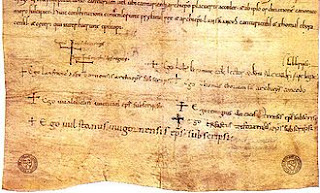
Matilda and William’s Xs on a charter

Matilda and William’s relationship is one of the most successful of the medieval period. Said to be a happy and loving marriage, their trust in each other was demonstrable and it was remarked up on when William fell seriously ill during a stay at Cherbourg between 1063 and 1066, Matilda prayed for his recovery at the altar; the monks remarking on her informal appearance as the sign of her distress her husband illness was causing her. Matilda fell ill in the late summer of 1083 and died on 2nd November of the same year. She was buried at Ste Trinite, Caen, where the original tombstone, with the inscription carved round the edge, still survives. Following her death William cut a sad and lonely figure; becoming increasingly isolated he followed his wife to the grave 4 years later in 1087.

Select bibliography:

Oxforddnb.com; The Norman Conquest: William the Conquerors’ Subjugation of England by Teresa Cole; William the Conqueror: The Bastard of Normandy by Peter Rex; Kings, Queens, Bones and Bastards by David Hilliam; Britains’ Royal Families: The Complete Genealogy by Alison Weir; The Oxford Companion to British History edited by John Cannon; epistolae.ccnmtl.columbia.edu.

My Books

Signed, dedicated copies of all my books are available through my online bookshop.

Out now: Scotland’s Medieval Queens

Books by Sharon Bennett Connolly

Scotland’s history is dramatic, violent and bloody. Being England’s northern neighbour has never been easy. Scotland’s queens have had to deal with war, murder, imprisonment, political rivalries and open betrayal. They have loved and lost, raised kings and queens, ruled and died for Scotland. From St Margaret, who became one of the patron saints of Scotland, to Elizabeth de Burgh and the dramatic story of the Scottish Wars of Independence, to the love story and tragedy of Joan Beaufort, to Margaret of Denmark and the dawn of the Renaissance, Scotland’s Medieval Queens have seen it all. This is the story of Scotland through their eyes.

Scotland’s Medieval Queens gives a thorough grounding in the history of the women who ruled Scotland at the side of its kings, often in the shadows, but just as interesting in their lives beyond the spotlight. It’s not a subject that has been widely covered, and Sharon is a pioneer in bringing that information into accessible history.’ Elizabeth Chadwick (New York Times bestselling author)

Available now from Amazon and Pen and Sword Books

Also by Sharon Bennett Connolly:

Books by Sharon Bennett Connolly

Heroines of the Tudor World tells the stories of the most remarkable women from European history in the time of the Tudor dynasty, 1485-1603. These are the women who ruled, the women who founded dynasties, the women who fought for religious freedom, their families and love. Heroines of the Tudor World is now available for pre-order from Amberley Publishing and Amazon UK. Women of the Anarchy demonstrates how Empress Matilda and Matilda of Boulogne, unable to wield a sword themselves, were prime movers in this time of conflict and lawlessness. It shows how their strengths, weaknesses, and personal ambitions swung the fortunes of war one way – and then the other. Available from Bookshop.orgAmberley Publishing and Amazon UKKing John’s Right-Hand Lady: The Story of Nicholaa de la Haye is the story of a truly remarkable lady, the hereditary constable of Lincoln Castle and the first woman in England to be appointed sheriff in her own right. Available from all good bookshops Pen & Sword Booksbookshop.org and Amazon

History...the Interesting Bits

Defenders of the Norman Crown: The Rise and Fall of the Warenne Earls of Surrey tells the fascinating story of the Warenne dynasty, from its origins in Normandy, through the Conquest, Magna Carta, the wars and marriages that led to its ultimate demise in the reign of Edward III. Available from Pen & Sword BooksAmazon in the UK and US, and Bookshop.orgLadies of Magna Carta: Women of Influence in Thirteenth Century England looks into the relationships of the various noble families of the 13th century, and how they were affected by the Barons’ Wars, Magna Carta and its aftermath; the bonds that were formed and those that were broken. It is now available in paperback and hardback from Pen & SwordAmazon, and Bookshop.orgHeroines of the Medieval World tells the stories of some of the most remarkable women from Medieval history, from Eleanor of Aquitaine to Julian of Norwich. Available now from Amberley Publishing and Amazon, and Bookshop.orgSilk and the Sword: The Women of the Norman Conquest traces the fortunes of the women who had a significant role to play in the momentous events of 1066. Available now from Amazon,  Amberley Publishing, and Bookshop.org.

Alternate Endings: An anthology of historical fiction short stories including Long Live the King… which is my take what might have happened had King John not died in October 1216. Available in paperback and kindle from Amazon.

Podcast:

History...the Interesting Bits

Have a listen to the A Slice of Medieval podcast, which I co-host with Historical fiction novelist Derek Birks. Derek and I welcome guests, such as Bernard Cornwell and Elizabeth Chadwick, and discuss a wide range of topics in medieval history, from significant events to the personalities involved.

Every episode is also now available on YouTube.

*

Don’t forget! Signed and dedicated copies of all my books are available through my online bookshop.

For forthcoming online and in-person talks, please check out my Events Page.

You can be the first to read new articles by clicking the ‘Follow’ button, liking our Facebook page or joining me on TwitterThreadsBluesky and Instagram.

©2023 Sharon Bennett Connolly FRHistS 

The History and Legend of Lady Godiva

Books by Sharon Bennett Connolly
Lady Godiva

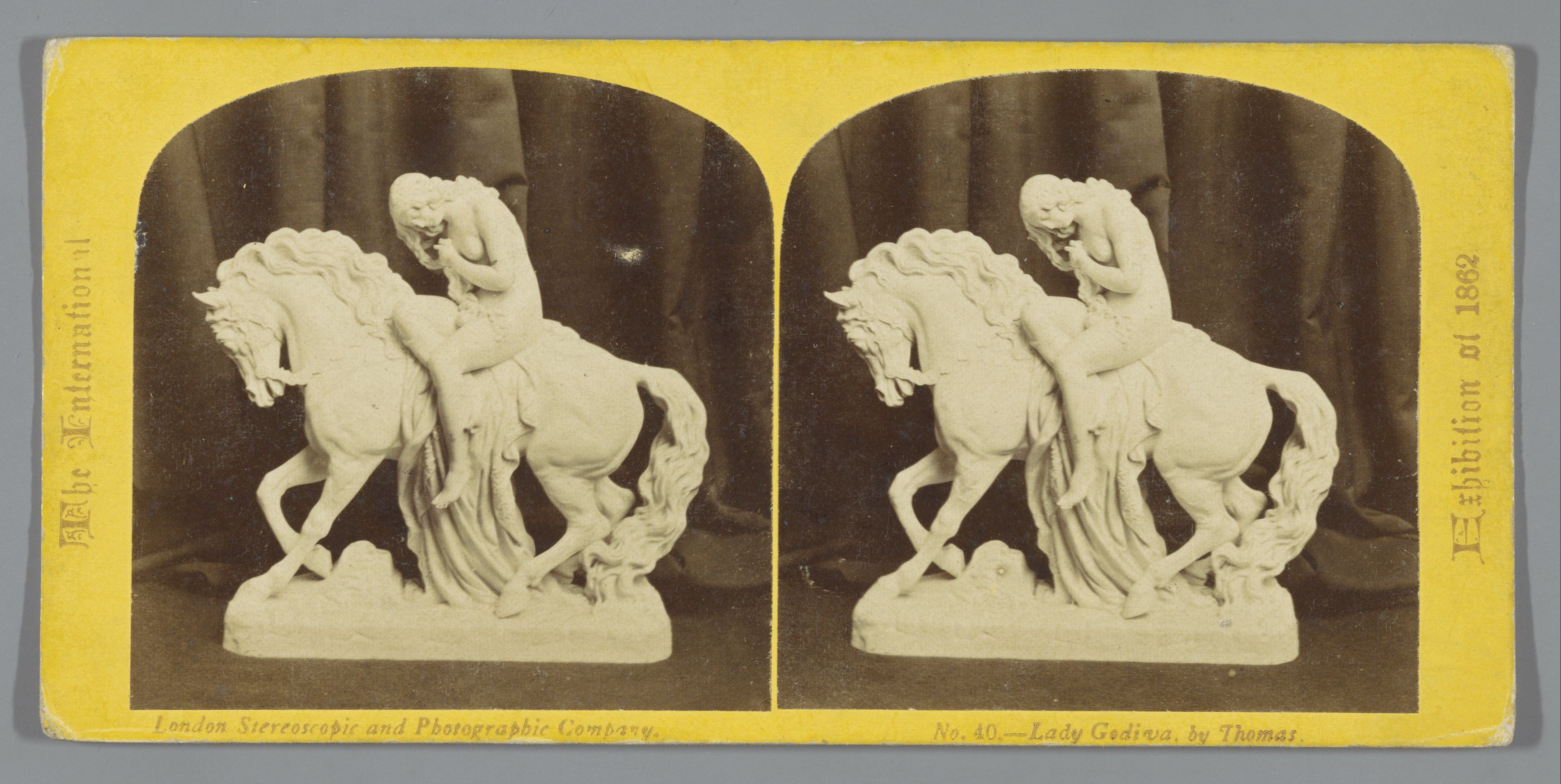
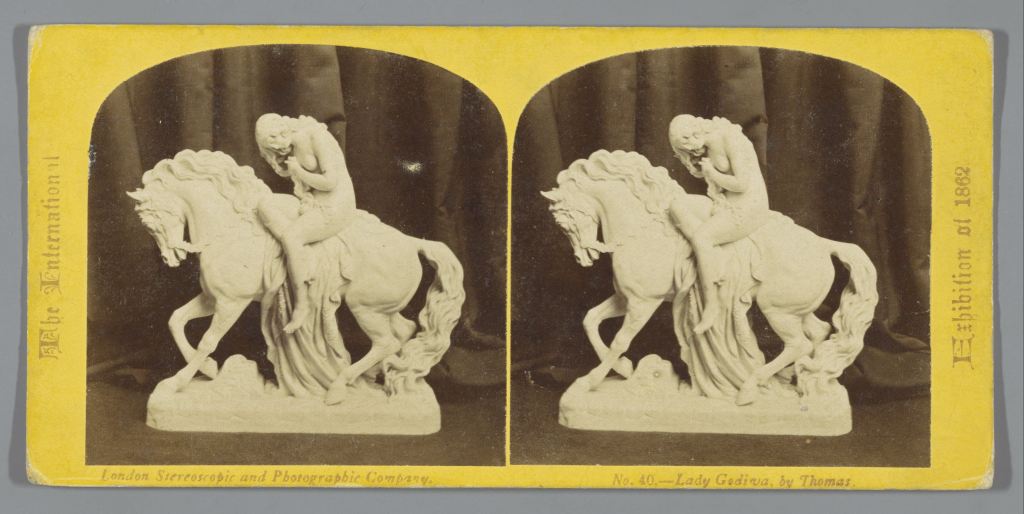
While researching Silk and the Sword: the Women of the Norman Conquest I came across some incredibly interesting characters. One of the most misunderstood women of the 11th century has to be Lady Godiva. Although she would have been known as Godgifu in her lifetime, we shall call her Godiva, the name we have all grown up with, and to distinguish her from several notable ladies of a similar name in this period. Known for her legendary naked ride through Coventry in order to ease the tax burdens of its citizens, finding the true story of Lady Godiva was a fascinating experience. She was the grandmother of three of the leading English characters of the Norman Conquest; Harold II’s queen, Ealdgyth and the earls of Mercia and Northumberland, Edwin and Morcar.

The origins of Lady Godiva herself, are shrouded in mystery and the distance of time. We know nothing of her parentage or relations. There is some suggestion that she was the sister of Thorold of Bucknall, who is said to have founded a Benedictine abbey on his manor at Spalding, Lincolnshire, which he then gave to the great abbey at Crowland. However, there does appear to be some confusion and the charter from Crowland which mentions Thorold could well be spurious. The situation is further confused by the fact the land later passed to Ivo Taillebois, who founded a church at Spalding as a satellite of the church of St Nicholas at Angers. Ivo’s wife, Lucy, was the daughter of Turold, Sheriff of Lincoln. It is difficult to say whether Turold of Lincoln and Thorold of Bucknall are one and the same person, but it is possible; Turold and Thorold are both a derivative of the Scandinavian name Thorvaldr. Later legends even name Lucy as a daughter of Earl Ælfgar and therefore a granddaughter of Godiva. However, there is no surviving evidence to support this theory and the identity of Thorold and his relationship to Godiva is just as uncertain.

Books by Sharon Bennett Connolly
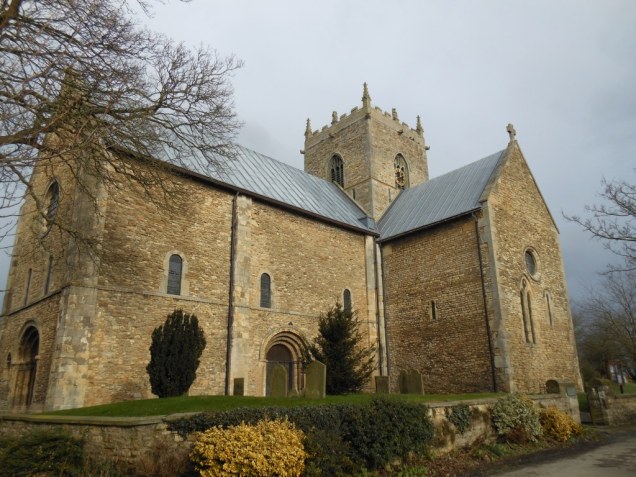
Church of St Mary, Stow (Stow Minster) Lincolnshire

Godiva was probably married before 1010 and so it is possible that she was born in the early 990s. She possessed considerable lands in the north-west of Mercia, suggesting that this is where she and her family were from. Mercia, in that time, covered almost all of the Midlands region, spreading from the Welsh borders across the centre of England. Her lands in Leicestershire, Warwickshire, Staffordshire and Shropshire, which amounted to sixty hides, may have constituted her own inheritance.1 Godiva’s high family status is also attested by the fact that she made a very good marriage, to Leofric, who would later become Earl of Mercia.

Leofric was the son of Leofwine, who had been appointed Ealdorman of the Hwicce, an ancient kingdom within the earldom of Mercia, by Æthelred II in 994. While the family lands were given to victorious Danes on the accession of Cnut, Leofwine was allowed to keep his rank and title and may have succeeded the traitorous Eadric Streona as Ealdorman of Mercia after his death in 1017. The family’s lands and influence appear to have been in the eastern part of Mercia, where they were known religious benefactors; Earl Leofwine was recorded as a benefactor at Peterborough Abbey. Leofric’s marriage to Godiva, therefore, may have been a way of extending his family’s influence into the western parts of Mercia. He was attesting charters as minister between 1019 and 1026, perhaps as sheriff under Hakon, Earl of Worcester.

His father, Leofwine, probably died in 1023 or shortly after, as that was the last year in which he attested a charter. There is no clear indication as to whether Leofwine was ever Earl of Mercia, although Leofric certainly held that title through the reigns of four kings; Cnut, Harold Harefoot, Harthacnut and Edward the Confessor. Leofric’s backing of Harold Harefoot, over Harthacnut, may have been a result of his son’s marriage. Ælfgar is thought to have married Ælfgifu, who was possibly a kinswoman of Harold Harefoot’s mother, Ælfgifu of Northampton, sometime in the late 1020s. Such a relationship would explain Leofric’s support for Harold Harefoot. Of course, so would the fact that Harthacnut was in no hurry to return from Denmark and Harold was on the spot and able to take charge.

Lady Godiva and Leofric were great benefactors to the church and acted in partnership, particularly in their endowment of Coventry Abbey which, according to John of Worcester, was made out of lands held by each of them. They also endowed the minster church of Stow St Mary, just to the north of Lincoln, and an Old English memorandum included both Leofric and Godiva in a request to Wulfwig, Bishop of Dorchester-on-Thames ‘to endow the monastery and assign lands to it.’2 Stow St Mary is a beautiful building at the centre of the small village of Stow. Founded in the seventh century, it boasts the faded graffiti carving of a Viking longboat on one of its inner walls. The endowment included provision for secular canons, under the supervision of the bishop and was made between and 1053 and 1055.

Books by Sharon Bennett Connolly
Information board explaining the links with Lady Godiva, Stow Minster, Lincolnshire

It is often difficult to work out the extent of Godiva’s involvement in her husband’s religious endowments. The Evesham Chronicle names both Leofric and Godiva (as Godgifu, of course) as the founders of both Coventry Abbey and Holy Trinity Church at Evesham. The couple also gave a crucifix, with the supporting figures of the Virgin and St John the Evangelist, to Holy Trinity Church. Moreover, Godiva had a reputation as a patroness of the Church throughout Mercia during her own lifetime. Orderic Vitalis said that Godiva gave ‘her whole store of gold and silver’ for the provision of ecclesiastical ornaments for the foundation at Coventry and John of Worcester also records Godiva’s devotion to the Virgin.3

There is one example that counters this argument, however, which involves a joint grant by Leofric and Godiva, of Wolverley and Blackwell, Worcestershire. The Second Worcester Cartulary, compiled by Hemming on the orders of Bishop Wulfstan, claims that Leofric returned Wolverley and Blackwell, and promised that the manors at Belbroughton, Bell Hall, Chaddesley Corbett and Fairford, seized by his father Leofwine, would revert to the Church on his death. Hemming, however, claims that Godiva held onto the lands for herself, rather than returning them; although she is said to have given the Church expensive vestments and ornaments, and a promise not only to pay the annual revenues from these estates to the Church, but to return the lands on her own death.4 That Edwin and Morcar seized the lands after their grandmother’s death, surely cannot be laid at Godiva’s door?

During her marriage, Godiva held several manors in her own right. Coventry, although little more than a village at this time, appears to have belonged to Godiva herself. She also had lands in various other parts of Mercia, including Newark, which she may have bought from her son, Ælfgar, as it was part of the comital lands (the earldom). Her lands at Appleby in Derbyshire were leased from Leofric, the Abbot of Peterborough, who was nephew and namesake of her husband, Earl Leofric.

Books by Sharon Bennett Connolly
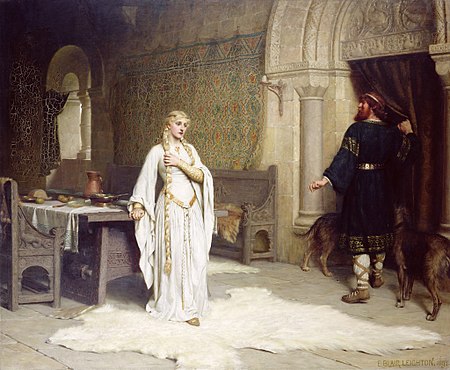
Godiva and Leofric by Edmund Blair Leighton

Leofric died in 1057, on either 31 August or 30 September, at his manor of King’s Bromley in Staffordshire. John of Worcester said of him; this ‘man of excellent memory died at a good old age, in his own manor called Bromley, and was buried with honour in Coventry, which monastery he had founded and well endowed.’5 The 1057 entry of the Anglo-Saxon Chronicle reported; ‘The same year died Earl Leofric, on the second before the calends of October; who was very wise before God, and also before the world; and who benefited all this nation’.6

Godiva was to live on as a widow for at least ten more years. She would be there to see her son’s inheritance of the earldom of Mercia. Although titles and land did often pass from father to son, it was not a foregone conclusion. Indeed, Ælfgar’s rebellion in 1055 – which led to a subsequent exile – may well have been in fear of losing his inheritance, given that Edward the Confessor had just given the earldom of Northumbria to Tostig, son of Godwin, on the death of Earl Siward in place of his son and natural heir, Waltheof. Waltheof was still a child, however, and this may well have been a practical decision, in that it would be dangerous to leave such a powerful earldom, and the border with Scotland, in the control of a child. Ælfgar was banished again in 1058, but for a very short while, apparently, with the Anglo-Saxon Chronicle reporting; ‘Earl Ælfgar was expelled but he soon came back again, with violence, through the help of Gruffydd.’7

We do not have the exact date of Godiva’s death. Most historians seem to believe that she survived the Norman Conquest and died around 1067. She is mentioned as a pre-Conquest landholder in the Domesday Book, but that doesn’t necessarily mean that she was alive in 1066. Hemming, who compiled the Worcester cartulary, says that some of her lands passed directly to her grandsons, Edwin and Morcar, offering evidence that Godiva also outlived her son, Ælfgar, who probably died in 1062. If Godiva did live into 1067, then she would have seen the dangers that the Norman Conquest brought to her family. Although her son was dead, most of her grandchildren were very much alive, and at the heart of events. By 1065 her 2 surviving grandsons were both earls (a 3rd grandson, Burgred, died in 1060 while returning from a pilgrimage to Rome).

Morcar became Earl of Northumbria in 1065, chosen by the Northumbrians to replace the unpopular Tostig. His tenure, however, was of short duration and he was replaced with Copsig, an adherent of Tostig, by William the Conqueror. Edwin had succeeded his father as Earl of Mercia in 1062 but neither brother flourished under the rule of William the Conqueror. Their sister, Ealdgyth married Harold Godwinson (King Harold II) sometime in late 1065, or early 1066, and was the uncrowned Queen of England until Harold’s death at Hastings in October 1066. Following the battle, Ealdgyth was taken to Chester by her brothers, where she may have given birth the king Harold’s son, Harold, before disappearing from the records.

Godiva is believed to have died in 1067 and was most likely buried alongside her husband at Coventry; although the Evesham Chronicle claims that she was laid to rest in Holy Trinity, Evesham. In the thirteenth century, her death was remembered on 10 September, but we have no way of confirming the actual date. After the Conquest, Godiva’s lands were held by various personalities.

Books by Sharon Bennett Connolly
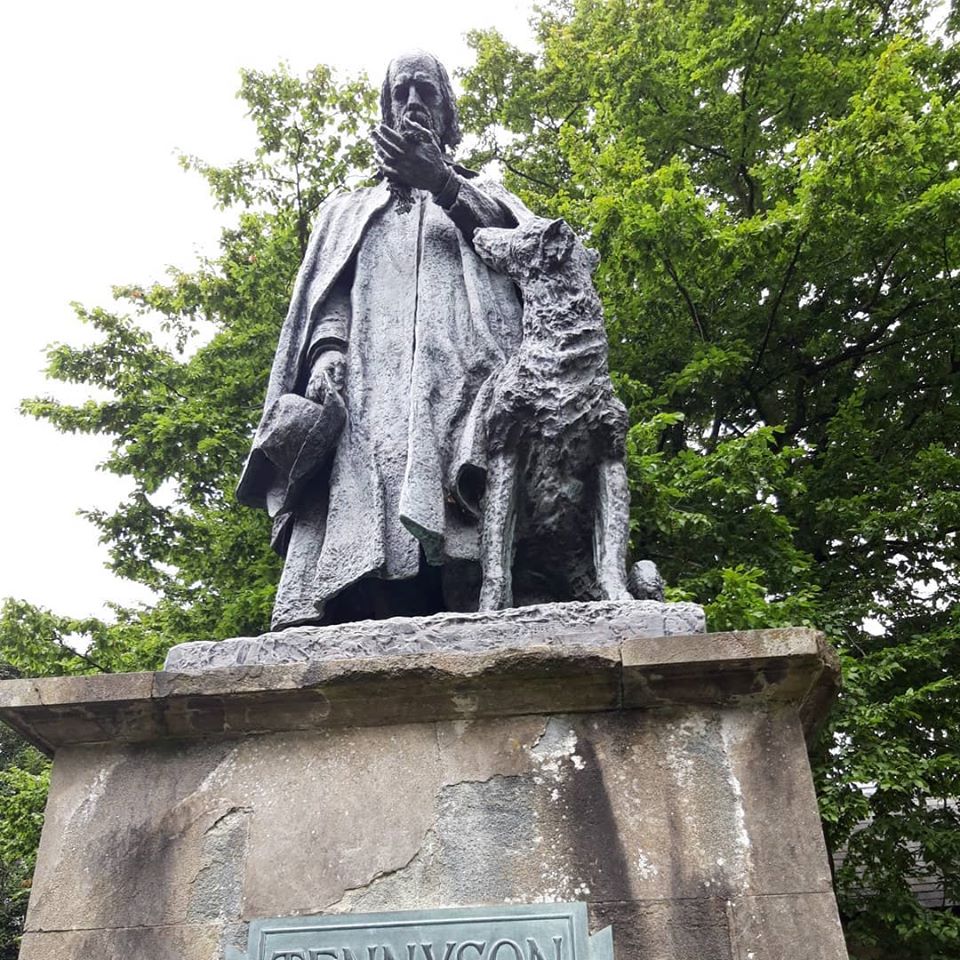
Statue of Alfred Lord Tennyson in the grounds of Lincoln Cathedral

We have no contemporary description of Godiva, of her personality or appearance. Her patronage of such religious institutions as Stow St Mary and Coventry Abbey is testimony to her piety and generosity. Stories of this generosity and piety were known to later chroniclers, such as William of Malmesbury and Henry of Huntingdon. Henry of Huntingdon said of Godiva that her name ‘meriting endless fame, was of distinguished worth, and founded the abbey at Coventry which she enriched with immense treasures of silver and gold. She also built the church at Stow, under the hill at Lincoln, and many others.’8 Although Henry of Huntingdon’s geography is a little skewed – Stow is a few miles north of Lincoln, rather than to the south, which ‘under the hill’ would suggest – it is obvious that Godiva’s fame was still alive in the twelfth century.

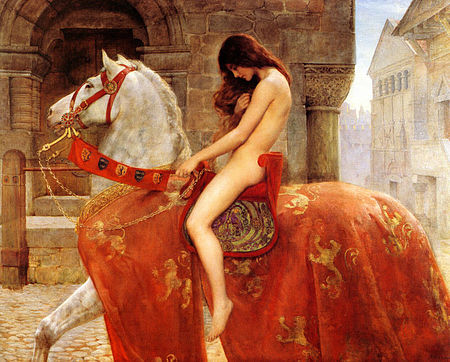
Lady Godiva is, perhaps, the most famous Anglo-Saxon woman in history. Everyone knows her legend – or a variation of it. And that legend has only grown and expanded down the years; like the game of Chinese whispers, the story has been added to and enhanced with every retelling. It was probably her reputation for generosity that gave rise to the legend for which she is famous today. The story of Godiva’s naked ride through Coventry appears to have been first recounted by Roger of Wendover, who died in 1236:

The Countess Godiva devoutly anxious to free the city of Coventry from a grievous and base thralldom often besought the Count, her husband, that he would for the love of the Holy Trinity and the sacred Mother of God liberate it from such servitude. But he rebuked her for vainly demanding a thing so injurious to himself and forbade her to move further therein. Yet she, out of womanly pertinacity, continued to press the matter in so much that she obtained this answer from him: ‘Ascend,’ he said, ‘thy horse naked and pass thus through the city from one end to the other in sight of the people and on thy return thou shalt obtain thy request.’ Upon which she returned: ‘And should I be willing to do this, wilt thou give me leave?’ ‘I will,’ he responded. Then the Countess Godiva, beloved of God, ascended her horse, naked, loosing her long hair which clothed her entire body except her snow white legs, and having performed the journey, seen by none, returned with joy to her husband who, regarding it as a miracle, thereupon granted Coventry a Charter, confirming it with his seal.

Flores Historiarum by Roger of Wendover, translated by Matthew of Westminster

This legend has grown and expanded over time, providing inspiration for ballads, poetry, paintings and sculptures throughout the centuries, the most famous being the poem, Lady Godiva, by Alfred Lord Tennyson, written in 1840, which included the lines:

Books by Sharon Bennett Connolly
Lady Godiva by John Collier

“The woman of a thousand summers back,
Godiva, wife to that grim Earl, who ruled
In Coventry: for when he laid a tax
Upon his town, and all the mothers brought
Their children, clamouring, ‘If we pay, we starve!’
She sought her lord, and found him, where he strode
About the hall, among his dogs, alone,
His beard a foot before him, and his hair
A yard behind. She told him of their tears,
And pray’d him, ‘If they pay this tax, they starve.’
Whereat he stared, replying, half-amazed,
‘You would not let your little finger ache
For such as – these?’ – ‘But I would die,’ said she.”

Godiva by Alfred Lord Tennyson.

The legend arose from a story that Earl Leofric had introduced a toll on Coventry that the people could not afford to pay. Godiva went to her husband, begging that he rescind the taxes. He proved reluctant to offer the slightest reduction and is said to have told Godiva that he would only rescind the taxes if she rode naked through Coventry. In the earliest accounts Godiva rode through the market place, accompanied by two of Leofric’s soldiers, with her long, golden hair let loose to protect her modesty. In the early versions, the religious element of the story is highlighted, with Leofric hailing the fact no one had seen her nakedness as a miracle.

Although the story has endured through the centuries, I am inclined to believe that it didn’t happen – at least not in the way portrayed. It seems more plausible that Godiva had undertaken a pilgrimage, stripped of her fine clothes and jewels – in a state of undress, rather then undressed – maybe just in her shift or a simple, penitentiary, garment. While the legend is almost certainly distorted beyond recognition from the true story, it has guaranteed the immortality of a remarkable lady.

*

This article, The Real Lady Godiva, first appeared on Paula Lofting’s wonderful blog The Road to Hastings and Other Stories in December 2018.

*

Pictures:

Lady Godiva statue image courtesy of the Rijksmuseum; Stow Minster and statue of Alfred Lord Tennyson ©2018Sharon Bennett Connolly; Leighton and Collier paintings courtesy of Wikipedia

Footnotes:

[1] Godgifu (d. 1067?) (article) by Ann Williams, oxforddnb.com; [2] ibid; [3] The Ecclesiastical History of England and Normandy by Ordericus Vitalis; [4] Godgifu (d. 1067?) (article) by Ann Williams, oxforddnb.com; [5] The Anglo-Saxon Chronicles edited and translated by Michael Swanton; [6] The Anglo-Saxon Chronicle translated by James Ingram; [7] The Anglo-Saxon Chronicles edited and translated by Michael Swanton; [8] The Chronicle of Henry of Huntingdon. Comprising the history of England, from the invasion of Julius Caesar to the accession of Henry II. Also, the Acts of Stephen, King of England and duke of Normandy Translated and edited by Thomas Forester. London, H.G. Bohn, 1807.

Sources:

The English and the Norman Conquest by Dr Ann Williams; Brewer’s British Royalty by David Williamson; Britain’s Royal Families, the Complete Genealogy by Alison Weir; The Wordsworth Dictionary of British History by JP Kenyon; The Norman Conquestby Marc Morris; Harold, the King Who Fell at Hastings by Peter Rex; The Anglo-Saxons in 100 Facts by Martin Wall; The Anglo-Saxon Age by Martin Wall; Kings, Queens, Bones and Bastards by David Hilliam; The Mammoth Book of British kings & Queens by Mike Ashley; The Oxford Companion to British History Edited by John Cannon; The Anglo-Saxon Chronicles translated and edited by Michael Swaton; The Anglo-Saxon Chronicle translated by James Ingram; Queen Emma and the Vikings by Harriett O’Brien; The Bayeux Tapestry by Carola Hicks; On the Spindle Side: the Kinswomen of Earl Godwin of Wessex by Ann Williams; oxforddnb.com.

*

Godiva’s story appears in greater detail in my book, Silk and the Sword: The Women of the Norman Conquest. From Emma of Normandy, wife of both King Cnut and Æthelred II to Saint Margaret, a descendant of Alfred the Great himself, Silk and the Sword: the Women of the Norman Conquest traces the fortunes of the women who had a significant role to play in the momentous events of 1066.

*

My Books

Signed, dedicated copies of all my books are available through my online store.

Out now: Scotland’s Medieval Queens

Books by Sharon Bennett Connolly

Scotland’s history is dramatic, violent and bloody. Being England’s northern neighbour has never been easy. Scotland’s queens have had to deal with war, murder, imprisonment, political rivalries and open betrayal. They have loved and lost, raised kings and queens, ruled and died for Scotland. From St Margaret, who became one of the patron saints of Scotland, to Elizabeth de Burgh and the dramatic story of the Scottish Wars of Independence, to the love story and tragedy of Joan Beaufort, to Margaret of Denmark and the dawn of the Renaissance, Scotland’s Medieval Queens have seen it all. This is the story of Scotland through their eyes.

Scotland’s Medieval Queens gives a thorough grounding in the history of the women who ruled Scotland at the side of its kings, often in the shadows, but just as interesting in their lives beyond the spotlight. It’s not a subject that has been widely covered, and Sharon is a pioneer in bringing that information into accessible history.’ Elizabeth Chadwick (New York Times bestselling author)

Available now from Amazon and Pen and Sword Books

Also by Sharon Bennett Connolly:

Books by Sharon Bennett Connolly

Heroines of the Tudor World tells the stories of the most remarkable women from European history in the time of the Tudor dynasty, 1485-1603. These are the women who ruled, the women who founded dynasties, the women who fought for religious freedom, their families and love. Heroines of the Tudor World is now available from Amberley Publishing and Amazon UK. Women of the Anarchy demonstrates how Empress Matilda and Matilda of Boulogne, unable to wield a sword themselves, were prime movers in this time of conflict and lawlessness. It shows how their strengths, weaknesses, and personal ambitions swung the fortunes of war one way – and then the other. Available from Bookshop.orgAmberley Publishing and Amazon UKKing John’s Right-Hand Lady: The Story of Nicholaa de la Haye is the story of a truly remarkable lady, the hereditary constable of Lincoln Castle and the first woman in England to be appointed sheriff in her own right. Available from all good bookshops Pen & Sword Booksbookshop.org and Amazon

Defenders of the Norman Crown: The Rise and Fall of the Warenne Earls of Surrey tells the fascinating story of the Warenne dynasty, from its origins in Normandy, through the Conquest, Magna Carta, the wars and marriages that led to its ultimate demise in the reign of Edward III. Available from Pen & Sword BooksAmazon in the UK and US, and Bookshop.orgLadies of Magna Carta: Women of Influence in Thirteenth Century England looks into the relationships of the various noble families of the 13th century, and how they were affected by the Barons’ Wars, Magna Carta and its aftermath; the bonds that were formed and those that were broken. It is now available in paperback and hardback from Pen & SwordAmazon, and Bookshop.orgHeroines of the Medieval World tells the stories of some of the most remarkable women from Medieval history, from Eleanor of Aquitaine to Julian of Norwich. Available now from Amberley Publishing and Amazon, and Bookshop.orgSilk and the Sword: The Women of the Norman Conquest traces the fortunes of the women who had a significant role to play in the momentous events of 1066. Available now from Amazon,  Amberley Publishing, and Bookshop.org.

Alternate Endings: An anthology of historical fiction short stories including Long Live the King… which is my take what might have happened had King John not died in October 1216. Available in paperback and kindle from Amazon.

Podcast:

A Slice of Medieval

Have a listen to the A Slice of Medieval podcast, which I co-host with Historical fiction novelist Derek Birks. Derek and I welcome guests, such as Bernard Cornwell and Michael Jecks, and discuss a wide range of topics in medieval history, from significant events to the personalities involved. 

Every episode is also now available on YouTube.

*

Don’t forget! Signed and dedicated copies of all my books are available through my online store.

For forthcoming online and in-person talks, please check out my Events Page.

You can be the first to read new articles by clicking the ‘Follow’ button, liking our Facebook page or joining me on TwitterThreadsBluesky and Instagram.

©2019 Sharon Bennett Connolly FRHistS

The Wives and Family of King Harold II

History ... the Interesting Bits
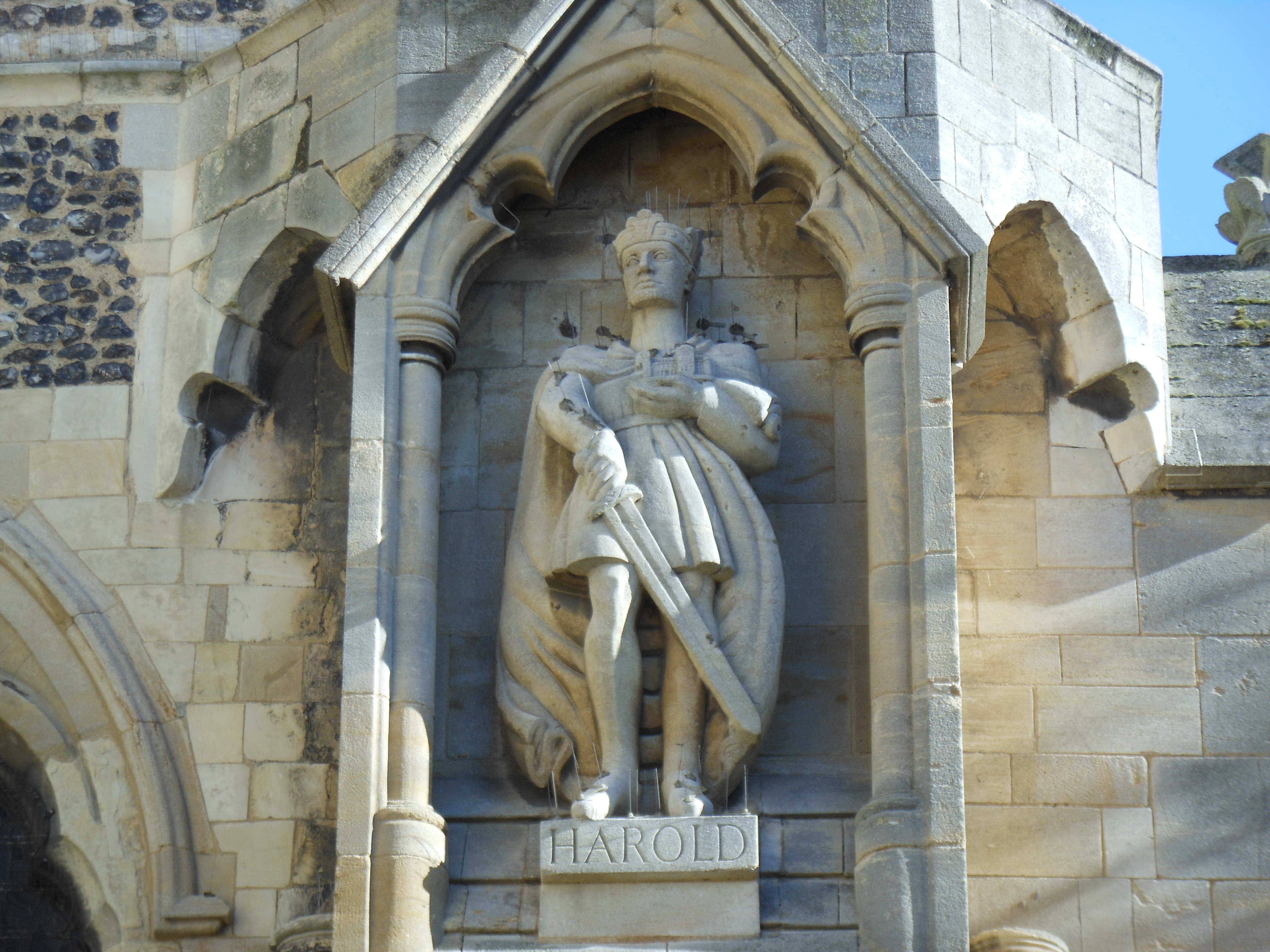
Statue of King Harold II at Waltham Abbey

The future king, Harold II Godwinson, was born into an Anglo-Danish family whose extensive influence and power meant they were frequently seen as the power behind the throne. This also meant that they were often seen as a threat to the man wearing the crown – especially Edward the Confessor – and suffered exile as a result.

Harold was born around 1022/3 to Godwin and his wife, Gytha Thorkelsdottir. Gytha was a member of the extended Danish royal family, as her brother, Ulf, was married to King Cnut the Great’s sister, Estrith. Gytha’s nephew, Sweyn Estrithson, would eventually rule Denmark as king. Harold received the earldom of East Anglia in 1044 and, as the oldest surviving son of Godwin, Earl of Wessex, he succeeded to his father’s earldom in 1053. Godwin died at Winchester in Easter week of 1053, after collapsing during a feast to entertain his son-in-law, King Edward the Confessor.

Harold’s sister, Edith, was the wife of King Edward; she had married him in January 1046. However, the fact they had no children meant there was no clear successor to the English crown; a situation that would be a major cause of the crisis of 1066. Of Harold’s brothers three were to become earls; Tostig, Gyrth and Leofwine. However, Tostig was driven out of his earldom of Northumberland by an uprising in 1065 and replaced with Morcar, the brother of Edwin, earl of Mercia. Gyrth and Leofwine both fought – and died – alongside Harold at Hastings. Harold’s older brother, Sweyn, once Earl of Hereford, had left on pilgrimage to Jerusalem in 1051, to atone for his many sins, which included the murder of his own cousin and the kidnapping and rape of an abbess, Eadgifu. He died – or was killed – on his journey home. Another, younger brother, Wulfnoth, was a hostage at the court of William, Duke of Normandy, along with his nephew – Sweyn’s son – Hakon.

History ... the Interesting Bits
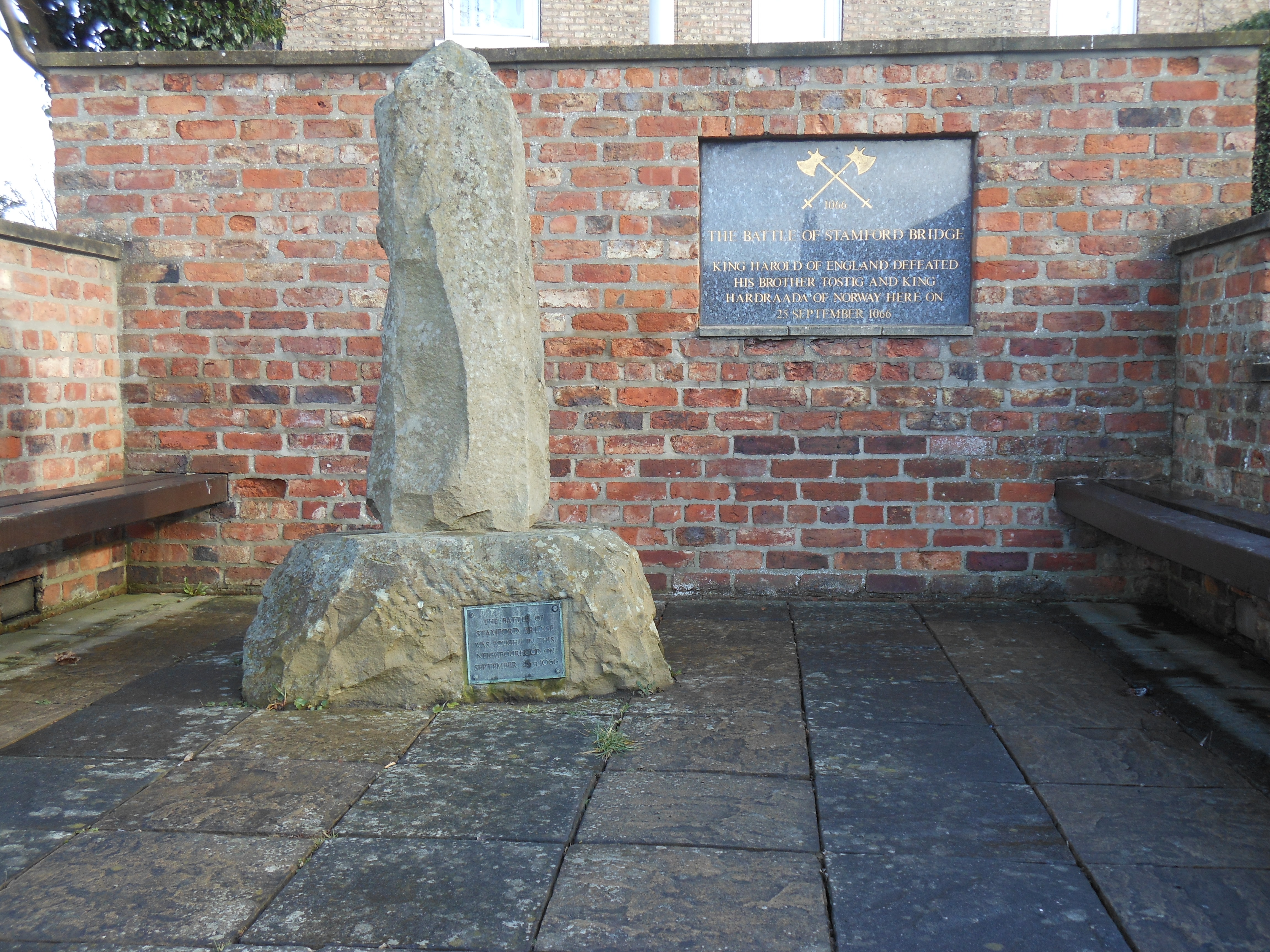
Memorial to the 1066 Battle of Stamford bridge just outside York

Harold, himself, was not only one of the king’s foremost earls but also one of his most respected advisors and generals. In short, the Godwinsons were the most powerful family in the kingdom, after the king himself – and often resented for the fact. At one point Harold, with his father and brothers, had been exiled from England after quarrelling with the king. During a visit to Normandy in 1064, Harold is even said to have sworn an oath to back William of Normandy’s claim to the English throne in the likely event that Edward the Confessor died without an heir; a claim that William used to the full in order to secure papal approval for his invasion of England.

However, when it came to the moment of truth, it was Harold the old king is said to have named on his deathbed as his successor. He was crowned on 6 January, just hours after the burial of Edward the Confessor in Westminster Abbey. There was no gentle introduction to kingship for King Harold II, however, and  almost immediately he had to prepare to defend England against the rival claimants of Norway and Normandy; and against his own brother, Tostig, who had joined forces with Harald Hardrada, King of Norway.

Harold’s love life was as tangled as his political life.

History ... the Interesting Bits
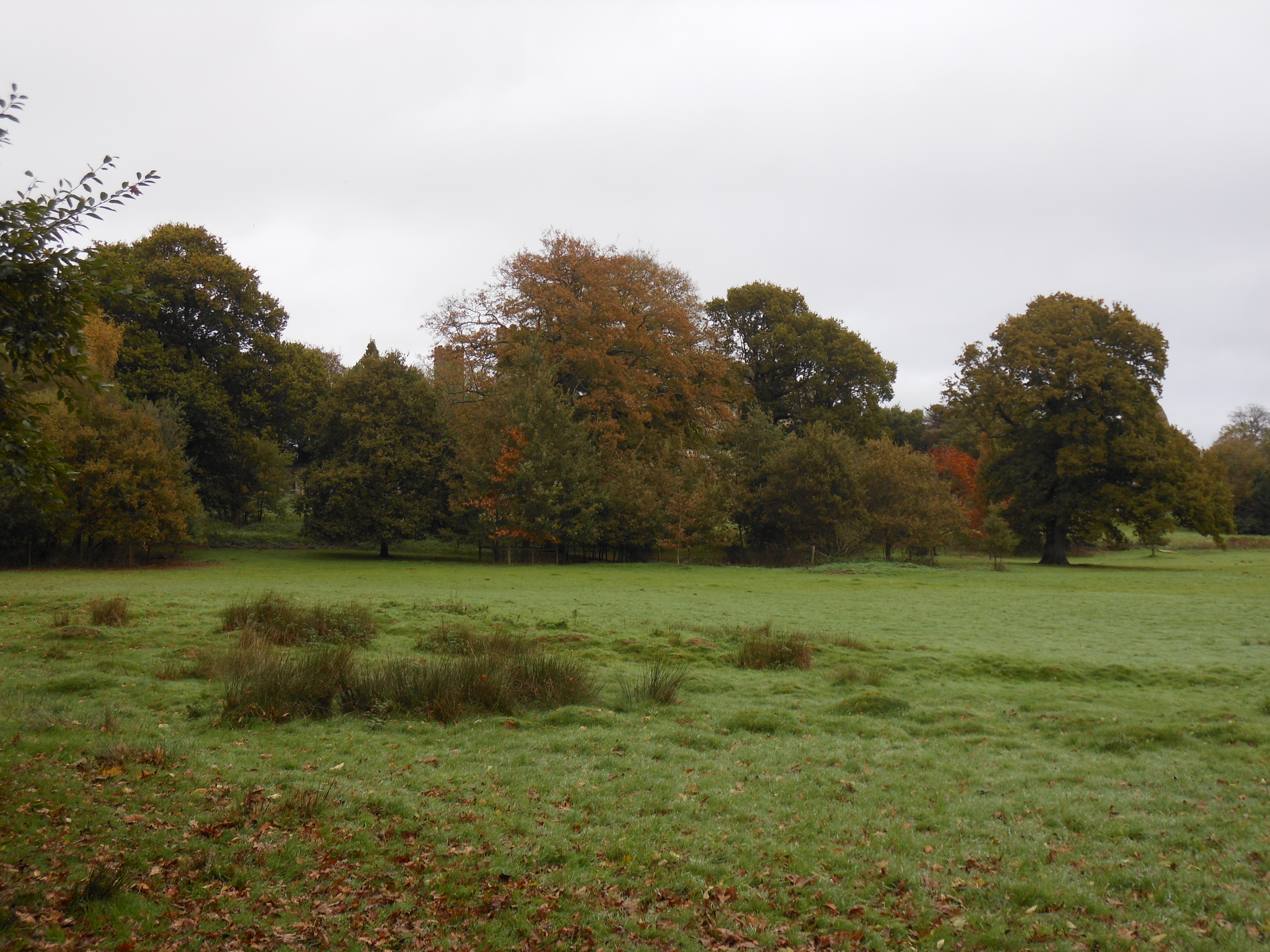
The battlefield of Hastings

Harold probably met Edith the Swan-neck (or Swanneshals) at about the same time as he became Earl of East Anglia, in 1044, which makes it possible that Edith the Swan-neck and the East Anglian magnate, Eadgifu the Fair, are one and the same. Eadgifu the Fair held over 270 hides of land and was one of the richest magnates in England. The majority of her estates lay in Cambridgeshire, but she also held land in Buckinghamshire, Hertfordshire, Essex and Suffolk; in the Domesday Book, Eadgifu held the manor at Harkstead in Suffolk, which was attached to Harold’s manor of Brightlingsea in Essex, and some of her Suffolk lands were tributary to Harold’s manor of East Bergholt.

While it is by no means certain that Eadgifu is Edith the Swan-neck, several historians – including Ann Williams in the Oxford Database of National Biography – make convincing arguments that they were. Even their names, Eadgifu and Eadgyth, are so similar that the difference could be merely a matter of spelling or mistranslation; indeed, the Abbey of St Benet of Hulme, Norfolk, remembers an Eadgifu Swanneshals among its patrons.

History ... the Interesting Bits
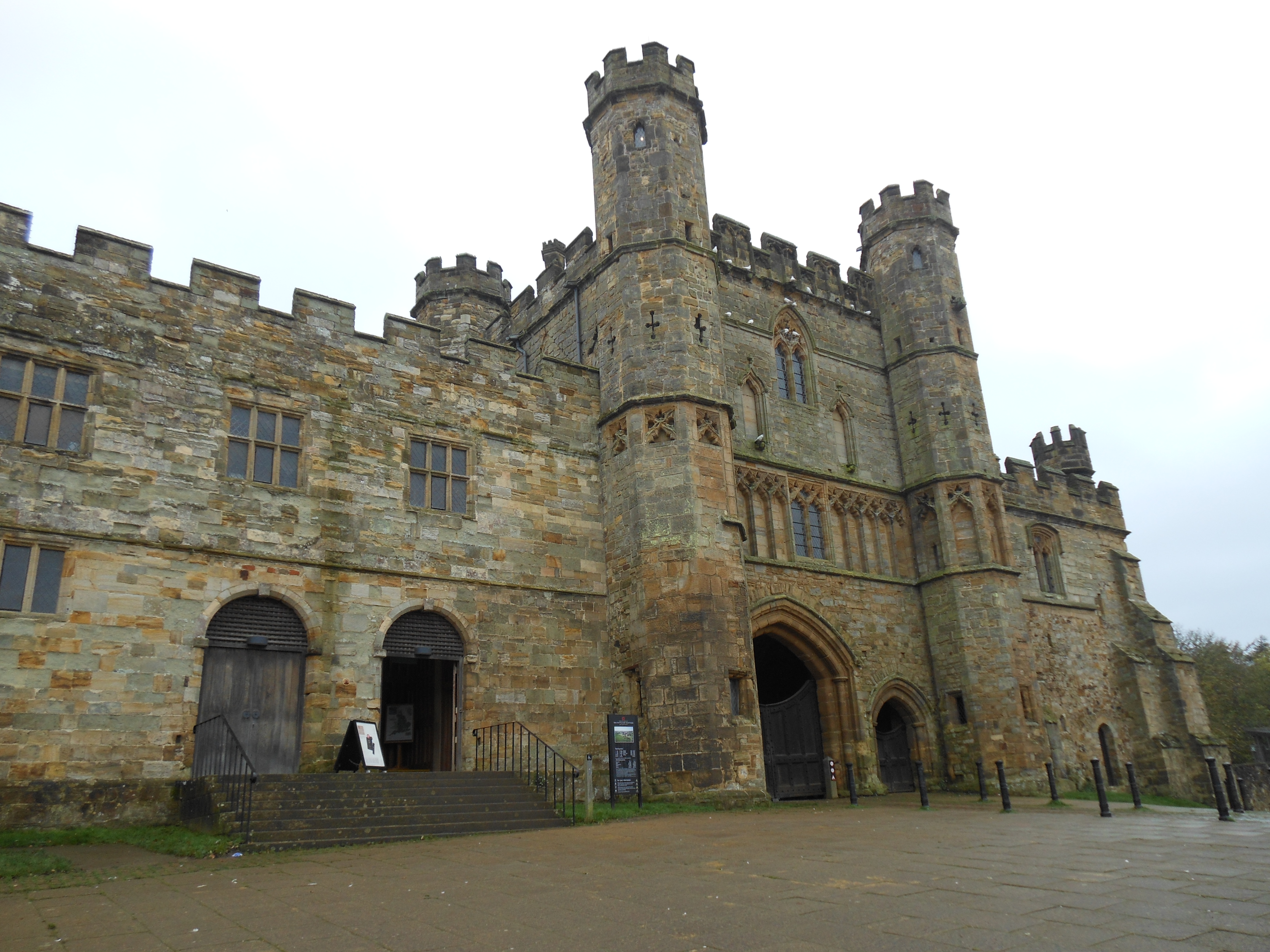
The gatehouse of Battle Abbey

What we do know is that by 1065 Harold had been living with the wonderfully-named Eadgyth Swanneshals (Edith the Swan-neck) for twenty years. History books label her as Harold’s concubine, but Edith was, obviously, no weak and powerless peasant, so it’s highly likely they went through a hand-fasting ceremony  – or ‘Danish marriage’ – a marriage, but not one recognised by the Church. It was not an uncommon practice – King Cnut had married his first wife, Ælfgifu of Northampton, in the same fashion. Edith being a hand-fast wife meant that Harold was still free to marry a second ‘wife’ in a Christian ceremony at a later date. Although we can’t say why Harold didn’t marry Edith in a manner recognised by the Church, it may be that they were both young and one or both of their families would not consent to their marriage.

Harold and Edith had about six children together – including three sons, Godwin, Edmund, Magnus and possibly a fourth, Ulf. They also had two daughters. Gytha married Vladimir Monomakh, Great Prince of Kiev, and is the ancestress of the current queen, Elizabeth II, through her descent from Philippa of Hainault. A second daughter, Gunnhild, spent sometime in Wilton Abbey in Wiltshire, although it is not certain that she was there with the intention of becoming a nun, or for safety and protection from the invading Normans. However, she is said to have eloped, before taking her vows, with a Breton knight, Alan the Red.

History ... the Interesting Bits
Lady Godiva, grandmother of Harold’s second wife, Ealdgyth

However, despite their twenty years and many children, and with the health of the king, Edward the Confessor, deteriorating, it became politically expedient for Harold to marry, to strengthen his position as England’s premier earl and, possibly, next king. Ealdgyth of Mercia was the daughter of Alfgar, Earl of Mercia, and granddaughter of the famous Lady Godiva and, according to William of Jumièges, very beautiful. Her brothers were Edwin, Earl of Mercia, and Morcar, who replaced Harold’s brother Tostig as Earl of Northumberland in the last months of 1065.

Ealdgyth was the widow of Gruffuddd ap Llywelyn, King of Gwynedd from 1039 and ruler of all Wales after 1055, with whom she had had at least one child, a daughter, Nest. Gruffuddd had been murdered in 1063, following an English expedition into Wales. Gruffudd’s own men are said to have betrayed their king, killed him and presented his head to Harold in submission. Harold’s subsequent marriage to Ealdgyth, which probably took place at the end of 1065 or beginning of 1066, not only secured the support of the earls of Northumbria and Mercia, but also weakened the political ties of the same earls with the new rulers of north Wales.

History ... the Interesting Bits
William the Conqueror, Harold’s nemesis

As Harold’s wife Ealdgyth was, therefore, for a short time, Queen of England. However, with Harold having to defend his realm, first against Harold Hardrada and his own brother, Tostig, at Stamford Bridge in September of 1066 and, subsequently, against William of Normandy at Hastings, it is unlikely Ealdgyth had time to enjoy her exalted status. At the time of the Battle of Hastings, on 14 October 1066, Ealdgyth was in London, but her brothers took her north to Chester soon after. Although sources are contradictory, it seems possible Ealdgyth was heavily pregnant and gave birth to a son, or twin sons, Harold and Ulf Haroldson, within months of the battle. The identity of Ulf’s mother seems to be sorely disputed, with some believing he was the twin brother of Harold and others that he was the youngest son of Edith Swan-neck; I suppose we will never know for certain.

Unfortunately, we hear nothing of Ealdgyth after the birth of Harold (and Ulf); her fate remains unknown. Young Harold is said to have grown up in exile on the Continent and died in 1098.

Despite his marriage to Ealdgyth of Mercia it seems Edith the Swan-neck remained close to Harold and it was she who was said to be waiting close by when the king faced William of Normandy at Senlac Hill near Hastings on 14 October 1066. She awaited the outcome alongside Harold’s mother, Gytha. Having lost a son, Tostig, just two weeks before, fighting against his brother and with the Norwegians at the Battle of Stamford Bridge, Gytha lost three more sons – Harold, Gyrth and Leofwine and, possibly, her grandson, Haakon, in the fierce battle at Hastings.

History ... the Interesting Bits
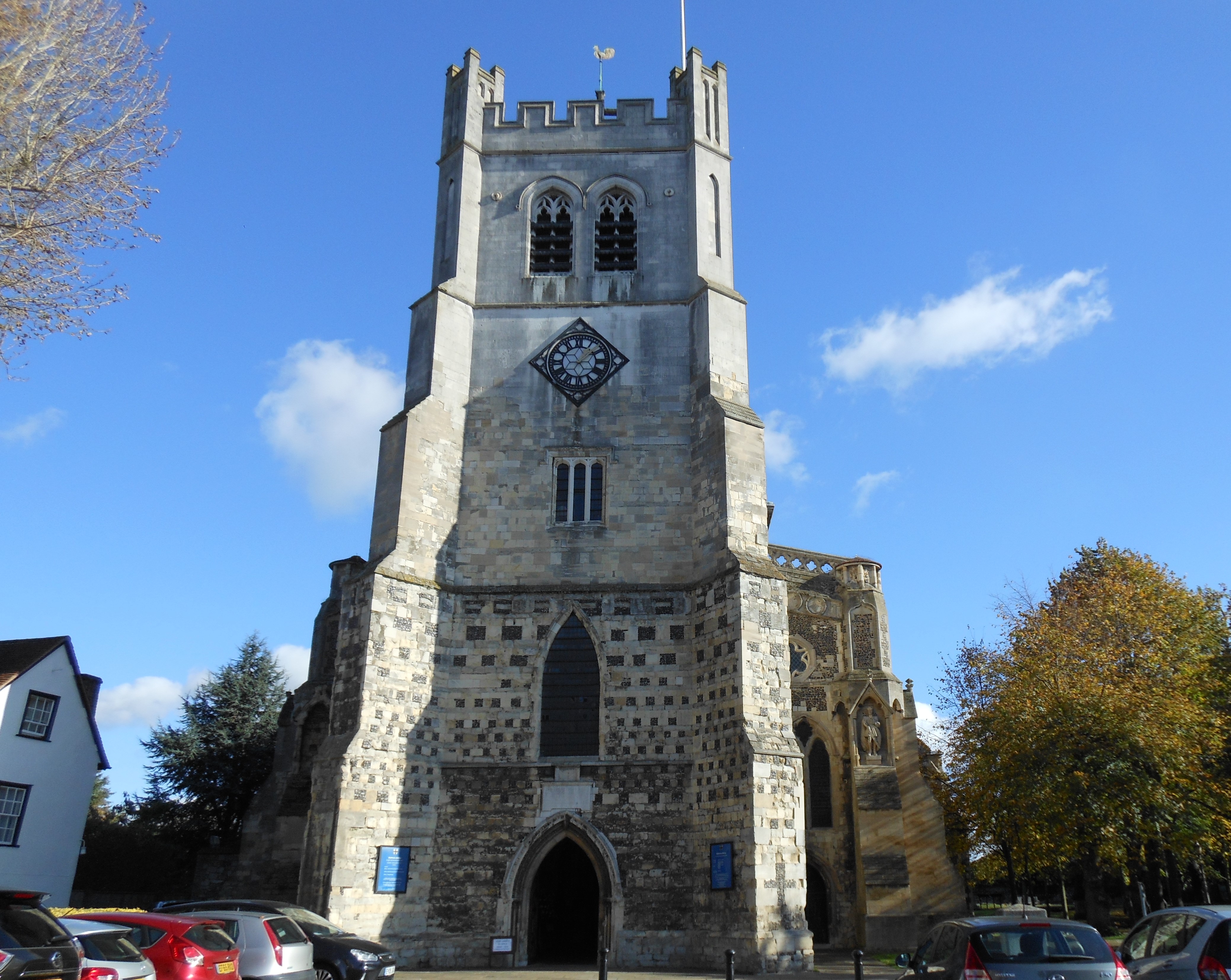
Waltham Abbey, where Edith is said to have brought Harold’s body after the Battle of Hastings

It is heart-wrenching, even now, to think of Edith and the elderly Gytha, wandering the blood-soaked field after the battle, in search of the fallen king. Sources say that Gytha was unable to identify her sons amid the mangled and mutilated bodies. It fell to Edith to find Harold, by undoing the chain mail of the victims, in order to recognise certain identifying marks on the king’s body – probably tattoos. There is a tradition, from the monks of Waltham Abbey, of Edith bringing Harold’s body to them for burial, soon after the battle. Although other sources suggest Harold was buried close to the battlefield, and without ceremony, it is hard not to hope that Edith was able to perform this last service for the king. However, any trace of Harold’s remains was swept away by Henry VIII’s dissolution of the monasteries, so the grave of England’s last Anglo-Saxon king is lost to history.

History ... the Interesting Bits
Edith searching the battlefield of Hastings for Harold’s body

After another year or so of leading resistance to Norman rule in the south-west, Harold’s mother, Gytha, eventually fled into exile on the Continent, taking Harold and Edith’s daughter, another Gytha, with her. Gytha and her nephew, Swein Estrithson, King of Denmark, arranged the marriage of the younger Gytha to the prince of Smolensk and – later – Kiev, Vladimir II Monomakh.

Edith and Harold’s sons fled to Ireland with all but one living into the 1080s, though the dates of their eventual deaths remain uncertain. Gunnhild remained in her nunnery at Wilton until sometime before 1093, when she became the wife or concubine of Alan the Red, a Norman magnate. Whether or not she was kidnapped seems to be in question but when Alan died in 1093, instead of returning to the convent, Gunnhild became the mistress of Alan’s brother and heir, Alan Niger. Alan Rufus held vast lands in East Anglia – lands that had once belonged to Eadgifu the Fair and, if Eadgifu was Edith the Swan-neck, it’s possible that Alan married Gunnhild to strengthen his claims to her mother’s lands.

History ... the Interesting Bits
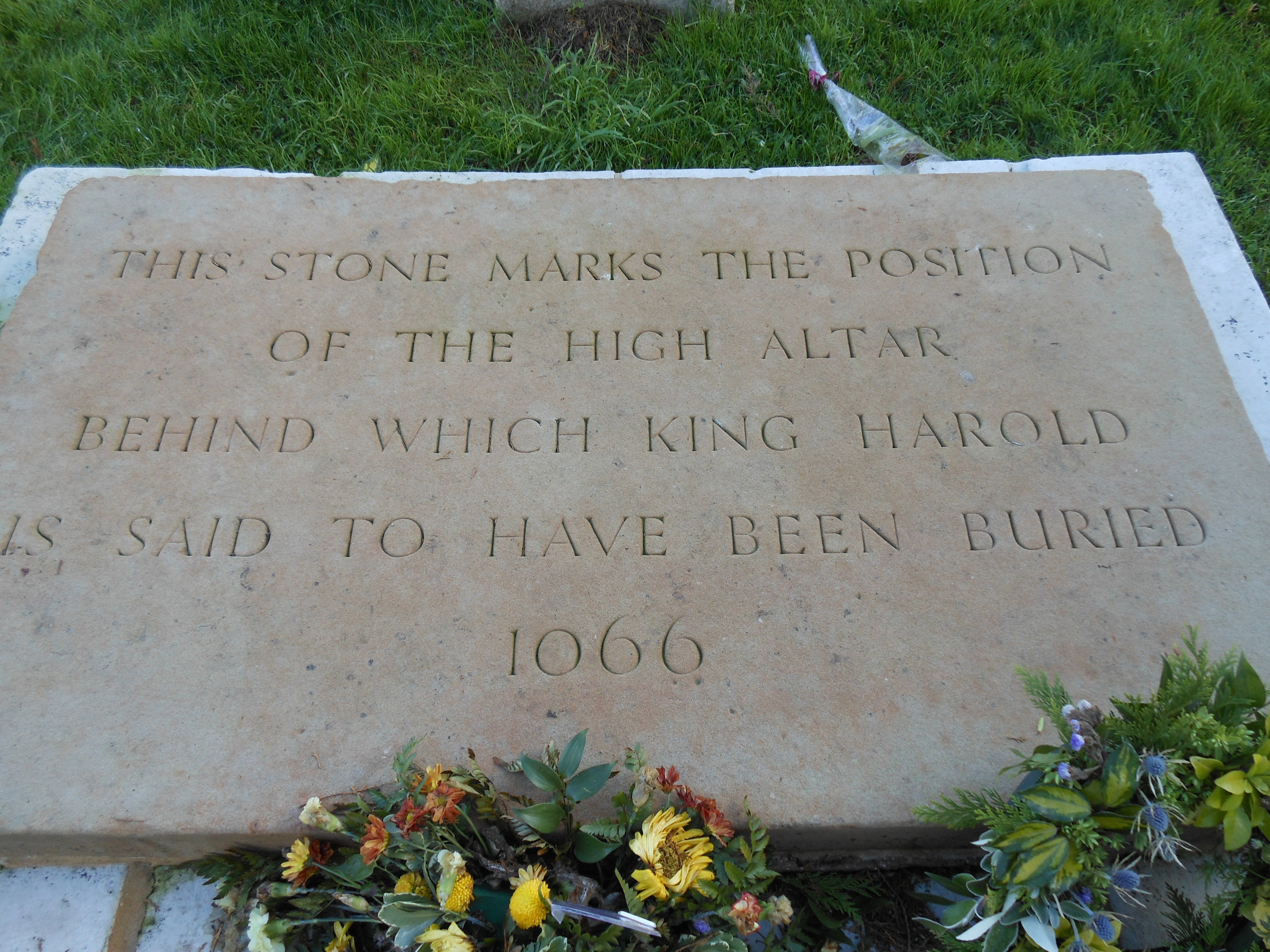
Stone marking the site of Harold’s grave at Waltham Abbey

After 1066 Edith’s lands had passed to Ralph de Gael, but he rebelled against King William and so they were eventually given to Alan the Red. Gunnhild and Alan are thought to have had a daughter, Matilda, who was married to Walter d’Eyncourt. Matilda and Walter’s oldest son, William d’Eyncourt, died as a child whilst fostered in the household of William II Rufus. He was buried in Lincoln Cathedral; his grave is now lost but his grave marker is preserved in the cathedral’s museum.

Of Edith the Swan-neck, there is no trace after Harold is interred at Waltham Abbey. Although she spent twenty years at the side of the man who would become king, and her daughter, Gytha, would be an ancestress of the English royal family of today, Edith simply disappears from the pages of history. Overall, history has treated Edith kindly; sympathising with a woman who remained loyal to her man to the end, despite the fact her official status was questionable.

*

Pictures ©2018 Sharon Bennett Connolly except Lady Godiva, which is courtesy of the Rijksmuseum and Edith at Hastings and William the Conqueror, which are courtesy of Wikipedia.

*

Sources: The English and the Norman Conquest by Dr Ann Williams; Brewer’s British Royalty by David Williamson; Britain’s Royal Families, the Complete Genealogy by Alison Weir; The Wordsworth Dictionary of British History by JP Kenyon; The Norman Conquest by Marc Morris; Harold, the King Who Fell at Hastings by Peter Rex; The Anglo-Saxons in 100 Facts by Martin Wall; The Anglo-Saxon Age by Martin Wall; Kings, Queens, Bones and Bastards by David Hilliam; The Mammoth Book of British kings & Queens by Mike Ashley; The Oxford Companion to British History Edited by John Cannon; The Anglo-Saxon Chronicles translated and edited by Michael Swaton; The Anglo-Saxon Chronicle translated by James Ingram; Queen Emma and the Vikings by Harriett O’Brien; The Bayeux Tapestry by Carola Hicks; oxforddnb.com.

*

My books

Signed, dedicated copies of all my books are available through my online store.

Out now: Scotland’s Medieval Queens

Books by Sharon Bennett Connolly

Scotland’s history is dramatic, violent and bloody. Being England’s northern neighbour has never been easy. Scotland’s queens have had to deal with war, murder, imprisonment, political rivalries and open betrayal. They have loved and lost, raised kings and queens, ruled and died for Scotland. From St Margaret, who became one of the patron saints of Scotland, to Elizabeth de Burgh and the dramatic story of the Scottish Wars of Independence, to the love story and tragedy of Joan Beaufort, to Margaret of Denmark and the dawn of the Renaissance, Scotland’s Medieval Queens have seen it all. This is the story of Scotland through their eyes.

Scotland’s Medieval Queens gives a thorough grounding in the history of the women who ruled Scotland at the side of its kings, often in the shadows, but just as interesting in their lives beyond the spotlight. It’s not a subject that has been widely covered, and Sharon is a pioneer in bringing that information into accessible history.’ Elizabeth Chadwick (New York Times bestselling author)

Available now from Amazon and Pen and Sword Books

Also by Sharon Bennett Connolly:

Books by Sharon Bennett Connolly

Heroines of the Tudor World tells the stories of the most remarkable women from European history in the time of the Tudor dynasty, 1485-1603. These are the women who ruled, the women who founded dynasties, the women who fought for religious freedom, their families and love. Heroines of the Tudor World is now available from Amberley Publishing and Amazon UK. Women of the Anarchy demonstrates how Empress Matilda and Matilda of Boulogne, unable to wield a sword themselves, were prime movers in this time of conflict and lawlessness. It shows how their strengths, weaknesses, and personal ambitions swung the fortunes of war one way – and then the other. Available from Bookshop.orgAmberley Publishing and Amazon UKKing John’s Right-Hand Lady: The Story of Nicholaa de la Haye is the story of a truly remarkable lady, the hereditary constable of Lincoln Castle and the first woman in England to be appointed sheriff in her own right. Available from all good bookshops Pen & Sword Booksbookshop.org and Amazon

Books by Sharon Bennett Connolly

Defenders of the Norman Crown: The Rise and Fall of the Warenne Earls of Surrey tells the fascinating story of the Warenne dynasty, from its origins in Normandy, through the Conquest, Magna Carta, the wars and marriages that led to its ultimate demise in the reign of Edward III. Available from Pen & Sword BooksAmazon in the UK and US, and Bookshop.orgLadies of Magna Carta: Women of Influence in Thirteenth Century England looks into the relationships of the various noble families of the 13th century, and how they were affected by the Barons’ Wars, Magna Carta and its aftermath; the bonds that were formed and those that were broken. It is now available in paperback and hardback from Pen & SwordAmazon, and Bookshop.orgHeroines of the Medieval World tells the stories of some of the most remarkable women from Medieval history, from Eleanor of Aquitaine to Julian of Norwich. Available now from Amberley Publishing and Amazon, and Bookshop.orgSilk and the Sword: The Women of the Norman Conquest traces the fortunes of the women who had a significant role to play in the momentous events of 1066. Available now from Amazon,  Amberley Publishing, and Bookshop.org.

Alternate Endings: An anthology of historical fiction short stories including Long Live the King… which is my take what might have happened had King John not died in October 1216. Available in paperback and kindle from Amazon.

Podcast:

A Slice of Medieval

Have a listen to the A Slice of Medieval podcast, which I co-host with Historical fiction novelist Derek Birks. Derek and I welcome guests, such as Bernard Cornwell, Scott Mariana and Michael Jecks, and discuss a wide range of topics in medieval history, from significant events to the personalities involved. 

Every episode is also now available on YouTube.

*

Don’t forget! Signed and dedicated copies of all my books are available through my online store.

For forthcoming online and in-person talks, please check out my Events Page.

You can be the first to read new articles by clicking the ‘Follow’ button, liking our Facebook page or joining me on TwitterThreadsBluesky and Instagram.

*

©2018 Sharon Bennett Connolly FRHistS