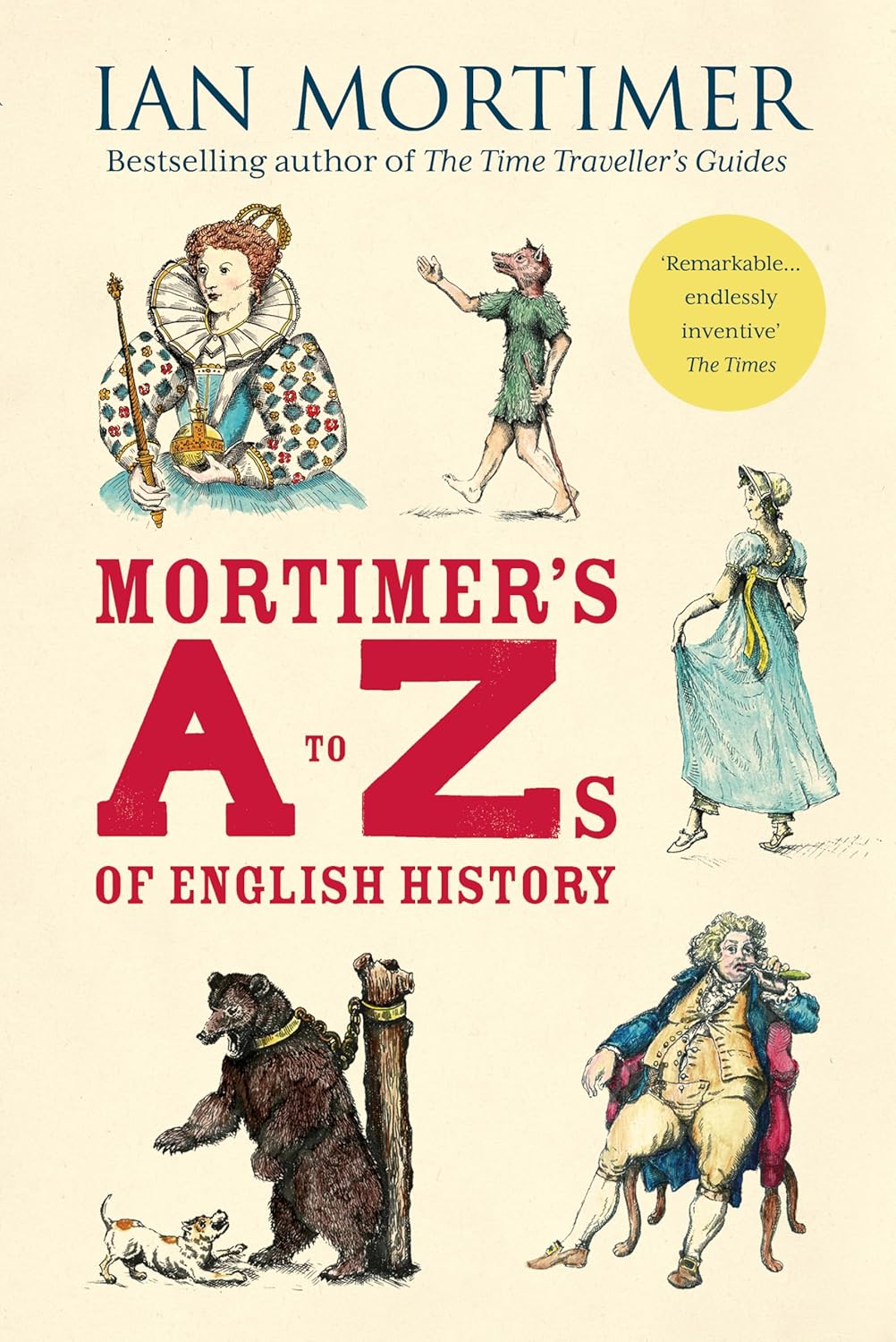
Book Corner: Mortimer’s A to Zs of English History by Ian Mortimer

From the bestselling author of the Time Traveller’s Guides

In these sparkling A to Zs, time-travelling historian Ian Mortimer visits four classic periods of English history: the fourteenth century, the Elizabethan age, the Restoration and the Regency.

As he ranges from the Great Plague to the Great Freeze, from Armada to Austen, and from tobacco to toenails, he shines a light into corners of history we never knew were so fascinating — or so revealing of the whole.

How did the button change life in the Middle Ages? If you found yourself at a smart Elizabethan party, should you kiss your hostess on the lips? Why were pistols safer than swords in a duel? And how come Regency Londoners quaffed so much port?

This is Mortimer at his accessible and witty best. As ever, his aim is not only to bring the past to life but also to illuminate our own times.
A couple of weeks ago, Derek Birks and I had the pleasure of chatting with Ian Mortimer on our podcast, A Slice of Medieval, and we talked about THIS book. You can listen to the episode when it goes live on New Years’ Eve. And if this review doesn’t persuade you to have a read, Ian’s interview certainly will. Ian Mortimer has a refreshing outlook on History – he not only wants to make it accessible to everyone, he wants to make it enjoyable. And he wants you to look at History from different angles, even sideways. Because then, you see things differently.

Mortimer’s A to Zs of English History is split into 5 sections and focuses on 4 main periods; 14th century, Elizabeth, Restoration and Regency, with a 5th section, the envoi, an A to Z of reflections on those themes history that cross periods. This is a stunning book and a thoroughly enjoyable read.

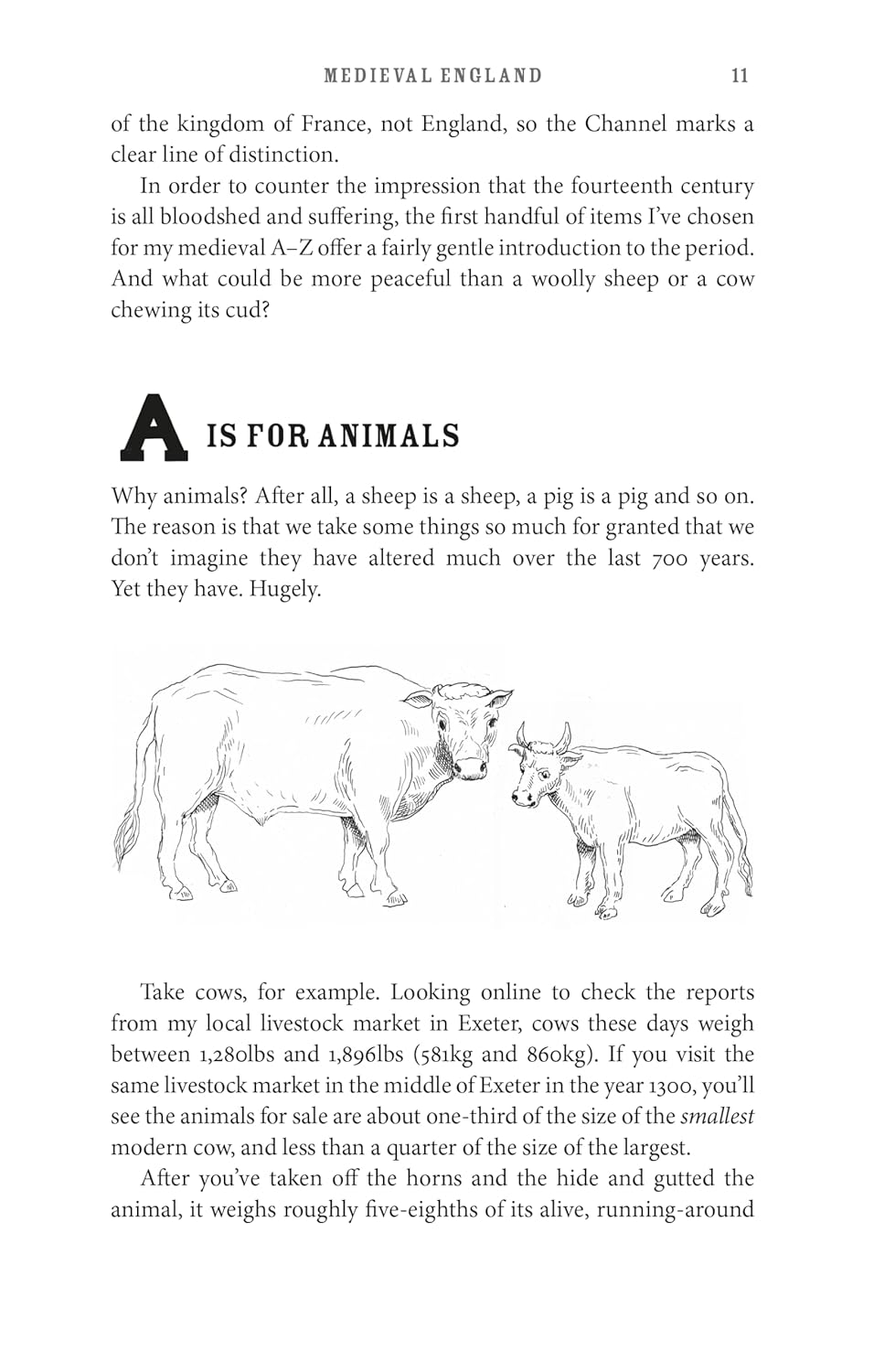
Many History fans look down on general History books, saying they already know the basics. But this isn’t basic. It is not as much about the facts as it is about changing the way you look at the facts. It is about making you think and making you look differently at the facts, at what we know and how we know it. It makes you wonder how inventions came about, how innovations developed. It makes you consider how diet, environment, opportunities – and the weather – affected society and drove change.

And the envoi of Mortimer’s A to Zs of English History highlights what doesn’t change, considering the values, good and bad, that transect eras and generations. Xenophobia, for instance, rears its ugly head in every generation. Speed, also, is a consideration throughout the eras; the speed of travel, of communication and of progress.
Q is for Queenship

What are medieval queens for? Obviously, they are the partners of kings and their primary duty is to produce the next generation of the royal family. In medieval times it is essential to have a line of succession: political stability depends on it. But it is worth asking what queens are for other than childbirth. After all, they are not like other aristocratic women. When Lord So-and-so goes off to court, he leaves Lady So-and-so behind to look after the household in his absence, with staff to carry out her instructions, just as in countless other private households in the country. But when the king travels, the court goes with him. His queen might remain in one of the palaces or castles or she might accompany him, but even if she remains, her role is limited. Officials are left in charge of the royal residences. Childcare is normally passed over to other women – wetnurses and guardians. When a fourteenth-century king goes abroad, he entrusts the guardianship of the realm to his heir or a near male relative, not his queen. (In this respect, the fourteenth-century is more sexist than earlier ones.) So it is fair to ask, what other purpose do queens serve?

There are several interesting ways to answer this question. For a start, no fourteenth-century English king marries an Englishwoman. Edward I marries Eleanor of Castile and then Margaret of France. Edward II marries Isabella of France. Edward III marries Philippa of Hainault. Richard II first marries Anne of Bohemia and later Isabella of France. Henry IV is married to an Englishwoman, Mary de Bohun, before becoming king but she dies five years before his accession. The same pattern applies to the previous century: King John annuls his marriage to Isabella of Gloucester almost immediately on becoming king and marries a French heiress, Isabella of Angoulême, very shortly afterwards. Queens are a diplomatic link with other kings and kingdoms. They bring with them foreign attendants and a large number of foreign relations – this is an age when third and fourth cousins are an important source of trust, information and support. Edward II’s queen, Isabella of France, is given the task of negotiating a peace treaty with her brother, Charles IV of France, on her husband’s behalf. Queens thus tie England into an international diplomatic network.
Mortimer’s A to Zs of English History will make you think, question – and want to know more. It is a fabulous resource of facts that you didn’t even know you didn’t know – and didn’t know you needed to know.

Who would have thought of buttons as causing a revolution in fashion? Did you know cows and sheep were smaller in medieval times? Ian Mortimer takes a look at the History we do not always consider: the everyday, the quirky, the mundane. He’s insightful; how much more would we have known about medieval women if they had been taught to write, allowed to tell their own stories?

If you have a History fan in your family, you should get them Mortimer’s A to Zs of English History for Christmas.

It is educational.

It is entertaining.

It is amusing.

It is revelatory.

It is a ‘must read’.

You will not look at History in the same way ever again. Get it. Read it. Devour it. And gift a copy to a friend. It is a fabulous resource for anyone with a love of History – and an amazing introduction for anyone you want to get hooked on History.

Buy Mortimer’s A to Zs of English History

About the author:
Ian Mortimer is the bestselling author of the Time Traveller’s Guides series, as well as Medieval Horizons: Why the Middle Ages Matter and four critically acclaimed biographies. He was elected a Fellow of the Royal Historical Society in 1998 and a Fellow of the Society of Antiquaries in 2015. His work on the social history of medicine won the Alexander Prize in 2004 and was published by the Royal Historical Society in 2009. He lives with his wife on the edge of Dartmoor.

*

My Books

Signed, dedicated copies of all my books are available through my online bookshop.

Out now: Scotland’s Medieval Queens

Books by Sharon Bennett Connolly

Scotland’s history is dramatic, violent and bloody. Being England’s northern neighbour has never been easy. Scotland’s queens have had to deal with war, murder, imprisonment, political rivalries and open betrayal. They have loved and lost, raised kings and queens, ruled and died for Scotland. From St Margaret, who became one of the patron saints of Scotland, to Elizabeth de Burgh and the dramatic story of the Scottish Wars of Independence, to the love story and tragedy of Joan Beaufort, to Margaret of Denmark and the dawn of the Renaissance, Scotland’s Medieval Queens have seen it all. This is the story of Scotland through their eyes.

Scotland’s Medieval Queens gives a thorough grounding in the history of the women who ruled Scotland at the side of its kings, often in the shadows, but just as interesting in their lives beyond the spotlight. It’s not a subject that has been widely covered, and Sharon is a pioneer in bringing that information into accessible history.’ Elizabeth Chadwick (New York Times bestselling author)

Available now from Amazon and Pen and Sword Books

Coming 30 March 2026: Princesses of the Early Middle Ages
Books by Sharon Bennett Connolly

Daughters of kings were often used to seal treaty alliances and forge peace with England’s enemies. Princesses of the Early Middle Ages: Royal Daughters of the Conquest explores the lives of these young women, how they followed the stereotype, and how they sometimes managed to escape it. It will look at the world they lived in, and how their lives and marriages were affected by political necessity and the events of the time. Princesses of the Early Middle Ages will also examine how these girls, who were often political pawns, were able to control their own lives and fates. Whilst they were expected to obey their parents in their marriage choices, several princesses were able to exert their own influence on these choices, with some outright refusing the husbands offered to them.

Their stories are touching, inspiring and, at times, heartbreaking.

Princesses of the Early Middle Ages: Royal Daughters of the Conquest is now available for pre-order.

Also by Sharon Bennett Connolly:

Books by Sharon Bennett Connolly

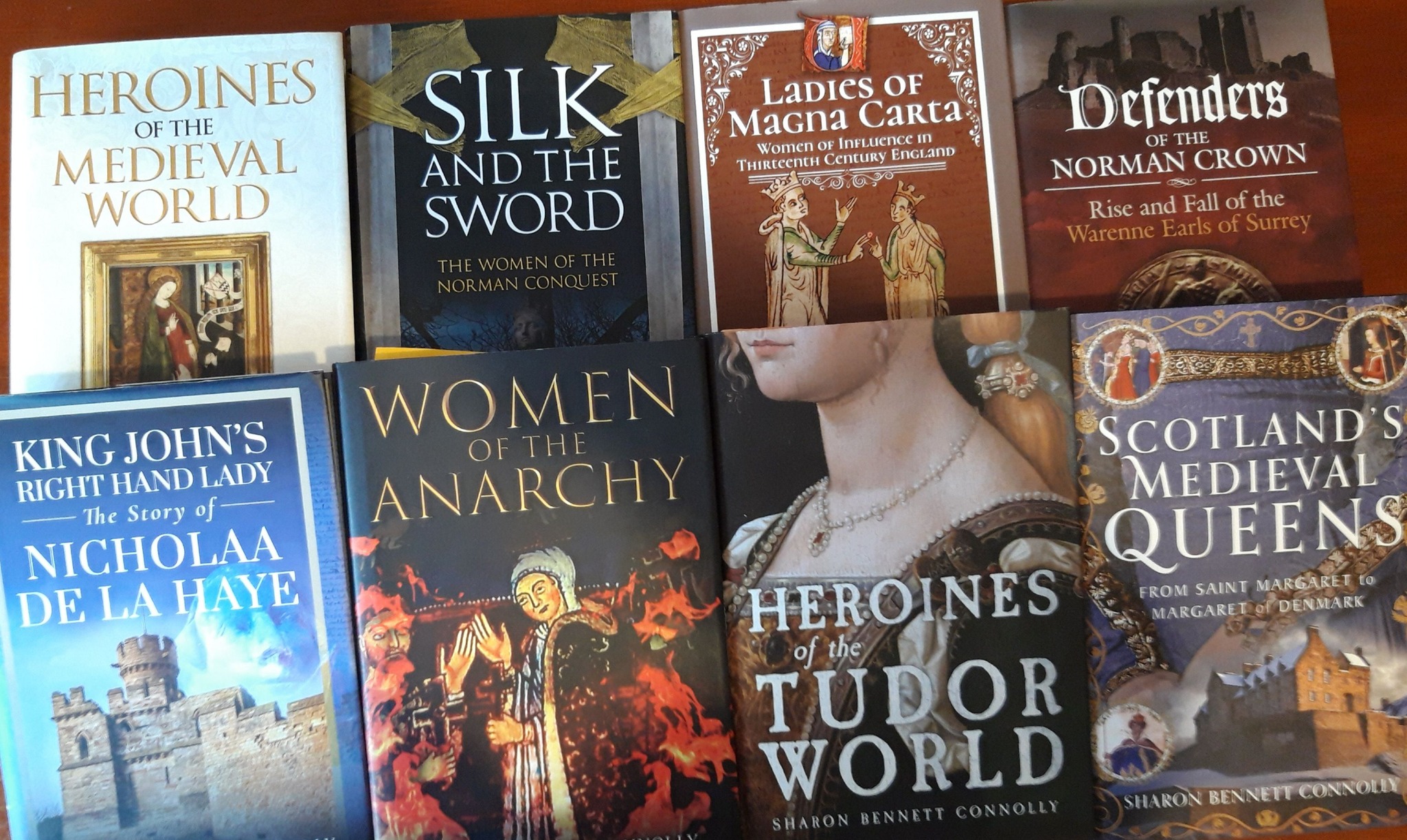
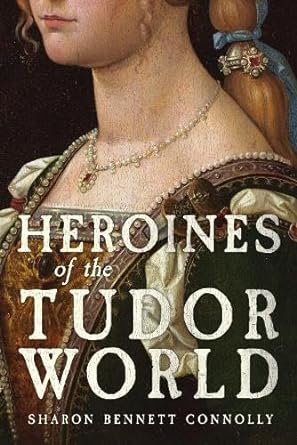
Heroines of the Tudor World tells the stories of the most remarkable women from European history in the time of the Tudor dynasty, 1485-1603. These are the women who ruled, the women who founded dynasties, the women who fought for religious freedom, their families and love. Heroines of the Tudor World is now available from Amberley Publishing and Amazon UK. Women of the Anarchy demonstrates how Empress Matilda and Matilda of Boulogne, unable to wield a sword themselves, were prime movers in this time of conflict and lawlessness. It shows how their strengths, weaknesses, and personal ambitions swung the fortunes of war one way – and then the other. Available from Bookshop.orgAmberley Publishing and Amazon UKKing John’s Right-Hand Lady: The Story of Nicholaa de la Haye is the story of a truly remarkable lady, the hereditary constable of Lincoln Castle and the first woman in England to be appointed sheriff in her own right. Available from all good bookshops Pen & Sword Booksbookshop.org and Amazon

Royal Historical Society

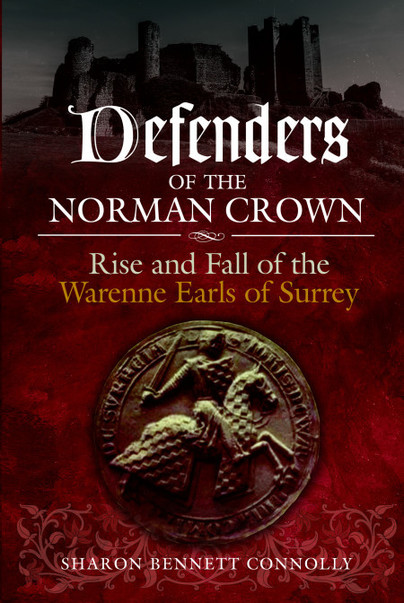
Defenders of the Norman Crown: The Rise and Fall of the Warenne Earls of Surrey tells the fascinating story of the Warenne dynasty, from its origins in Normandy, through the Conquest, Magna Carta, the wars and marriages that led to its ultimate demise in the reign of Edward III. Available from Pen & Sword BooksAmazon in the UK and US, and Bookshop.orgLadies of Magna Carta: Women of Influence in Thirteenth Century England looks into the relationships of the various noble families of the 13th century, and how they were affected by the Barons’ Wars, Magna Carta and its aftermath; the bonds that were formed and those that were broken. It is now available in paperback and hardback from Pen & SwordAmazon, and Bookshop.orgHeroines of the Medieval World tells the stories of some of the most remarkable women from Medieval history, from Eleanor of Aquitaine to Julian of Norwich. Available now from Amberley Publishing and Amazon, and Bookshop.orgSilk and the Sword: The Women of the Norman Conquest traces the fortunes of the women who had a significant role to play in the momentous events of 1066. Available now from Amazon,  Amberley Publishing, and Bookshop.org.

Alternate Endings: An anthology of historical fiction short stories including Long Live the King… which is my take what might have happened had King John not died in October 1216. Available in paperback and kindle from Amazon.

Podcast:
A Slice of Medieval

Have a listen to the A Slice of Medieval podcast, which I co-host with Historical fiction novelist Derek Birks. Derek and I welcome guests, such as Ian Mortimer, Bernard Cornwell, Elizabeth Chadwick and Scott Mariani, and discuss a wide range of topics in medieval history, from significant events to the personalities involved. 

There are now over 80 episodes to listen to!

Every episode is also now available on YouTube.

*

Don’t forget! Signed and dedicated copies of all my books are available through my online bookshop.

For forthcoming online and in-person talks, please check out my Events Page.

You can be the first to read new articles by clicking the ‘Follow’ button, liking our Facebook page or joining me on TwitterThreadsBluesky and Instagram.

*

©2025 Sharon Bennett Connolly FRHistS
Book Corner: The Druid’s Prey by Steven A. McKay

History...the Interesting Bits

A vicious attack. An enraged warrior-druid. A relentless hunt for vengeance!

Following a cowardly raid on Dun Breatann the Saxon attacker, Saksnot, rides back to rejoin his bretwalda, Hengist, in far-off Garrianum. Bellicus, outraged by the savage attack on his people and his closest friend, follows the perpetrator with just one thing on his mind: bloody justice!
As the towering druid hunts his prey across the summer fields and streams, Arthur, Bear of Britain, seeks to make a lasting peace with the new immigrants from across the sea. Hengist has no such plans however, instead working alongside his terrifying volva, Thorbjorg, to bring only blood, fire, and death to the embattled Britons.

As the brutal struggle for supremacy rages between the two warlords and their armies, Bellicus will find himself drawn into an adventure he could never have foreseen. An adventure that may seal the fate of Britain for generations to come.

Yes! Bellicus is back!

And better than ever! The Druid’s Prey by Steven A. McKay is the seventh book in Steven’s excellent Warrior Druid of Britain Chronicles. As regular readers will know, I have been reading this series since the first book, The Druid. The books follow the adventures of Bellicus the druid, his family and his Roman friend, Duro, as the defend their home, Dun Breatann, and the rest of Britain from the invading Saxons, led by Hengist and Horsa. Well, its just Hengist now, thanks to The Vengeance of Merlin. A sucker for anything Arthurian, Steven A. McKay also draws in the legendary Arthur, Lancelot and his loyal knights. And I love how Arthur is drawn into Bellicus’ story, but never fully takes over.

It’s a perfect combination and partnership.

In The Druid’s Prey, Bellicus is set on revenge, traveling the length of Britain to find the man who had tried to kill him and hurt his friend. Further south, Arthur is trying to take the war to Hengist, to strike a blow that will hurt the Saxon leader’s forces, and to find a friend of his own who has been captured by the enemy. Oh, and while Bellicus is away, his wife and daughter, Narina and Catia, work to strengthen Dun Breatann’s position and stave off the influence of the hated Hengist. Three missions that the reader can’t help but hope they collide…

The bear stopped moving, taking in the sight of the boar which was peering at it in return. And then the bear looked up at Bellicus and their eyes met. The druid swallowed, knowing for certain that he had come across this very animal before – it had attacked them some years prior, not far from where they were now, badly injuring King Coroticus and Gavo and killing one warrior and three dogs. It had eventually decided to give up the fight but only once it had a spear stuck in its back and a number of arrows from the Damnonii hunters’ bows. Bellicus examined its hairy pelt for evidence of those earlier wounds but it seemed to have healed well in the intervening years.

As if it recalled the battle the bear suddenly stood up on its hind legs and let out an enormous roar. Bellicus gazed at it in awe – the animal was not just enormous, it was majestic, and the thought of trying to kill it again was truly terrifying.

It seemed the boar had similar thoughts, for instead of charging at the bear, it turned and hurried off into the trees, the spear that Duro had planted in its side clattering noisily against tree trunks until, at last, it must have snapped off for there was a last, distant squeal and then only the low growling of the bear was left to fill the clearing.

“Mithras protect us, we’re in for it now,” Duro said, doing his best to draw his spatha while still gripping the trunk of his tree for dear life. “At least the boar couldn’t get up here.”

“Don’t do anything,”Bellicus ordered in a low voice. “Do you not recognise it?”

“Aye,” the centurion nodded. “It’s the same bear that almost killed us all before. You told us to let it go back then for some mad reason.”

“The Bear of Britain,” Bellicus said, so softly Duro could not hear him. “That’s what the Merlin had called Arthur.” Memories of the previous encounter with the bear were filling his mind and he remembered being in a shocked stupor as he’d stared at the bear bristling with missiles like a hedgehog. The animal had lost the will to fight that day and Bellicus had commanded those with him to let it go, a decision he’d never really understood himself. For some reason he’d seen the beast as connected to Arthur, or perhaps he just didn’t want any more people – or Cai, for the mastiff had been involved in the fighting too – getting injured or killed.

Whatever his motives had been, the bear stared up at him now, its round, dark eyes fixing on his own. There seemed an intelligence behind that gaze that Bellicus had not expected. Did it recognise him? Did it understand that he’d been the one that called off the attack on it and most likely saved its life after their previous encounter? Maybe. The druid knew that bears had an even more developed sense of smell than dogs, so it was possible the beast, which had dropped back to all fours now, recognised his scent if not his face.

The bear made a strange, ululating, guttural grunting sound and then simply wandered off into the trees, quickly disappearing from sight.

“Is… Is it over?” Duro gasped, sword still glinting in the last of the sunshine as he lowered himself down, hanging from a branch by one arm as he tried to see through the foliage and make sure the bear had really gone.

Hengist is on the road to revenge, taking any opportunity he can to punish his brother’s killers, whilst at the same time increasing his hold on Britain, extending his influence and grabbing more land. He sends an assassin north to Dun Breatann, captures one of Arthur’s leading men and seeks allies among the enemies of Bellicus and Queen Narina. The Druid’s Prey by Steven A. McKay has more than one story within its pages – and more than one hero!

It is a rollercoaster journey through post-Roman Britain as the lead characters fight to hold onto their lands, their friends and their family. Their are more than a few heart-in-the-mouth moments along the way. And, if you are reading at night, beware! “Just one more chapter…” will lead to 3 or 4 more!

As we are at book no. 7 in the Warrior Druid of Britain series, Steven A. McKay’s characters are well developed and very familiar to us. We know how Bellicus will react to his family and friends being attacked. We know that his daughter, Catia, now 12 years old, is not a little girl to whom things happen-she is a pre-teen, trained in warfare, experienced beyond her years but still needing the guidance of parents to keep her out of the worst trouble. And Arthur, everyone’s hero and Bellicus’ friend. Well, his adventures never fail to inspire and entertain. And each of these characters have to make choices and decisions that affect, not only themselves but also their people. Agonising decisions will lead to more danger, adventure and not a little swordplay.

I won’t tell you any more – I do not want to ruin it for anyone.

All I will say is, The Druid’s Prey by Steven A. McKay is the 7th book in a series and yet is as fresh and original as the first. If you have not yet read this excellent series, you are missing a treat – but I envy the fact you have 7 books to read, one after the other. What a treat you have instore.

To Buy the Book: The Druid’s Prey

About the author:

History...the Interesting Bits

Steven A. McKay was born in Scotland in 1977 and always enjoyed studying history. He decided to write his Forest Lord novels after seeing a house called “Sherwood” when he was out at work one day. Since then he’s started a new series, the Warrior Druid of Britain Chronicles, and just completed a trilogy about Alfred the Great.

In 2021 the Xbox game HOOD: Outlaws and Legends was released, featuring Steven’s writing.

He used to be in a heavy metal band although he tends to just play guitar in his study these days. He did use those guitars to write the theme song for the podcast he co-hosted, Rock, Paper, Swords! with Matthew Harffy, though. Give it a listen, they’ve interviewed great guests like Diana Gabaldon, Simon Scarrow, Bernard Cornwell, Dan Jones and more!

*

My books

Signed, dedicated copies of all my books are available through my online store.

Out now: Scotland’s Medieval Queens

Books by Sharon Bennett Connolly

Scotland’s history is dramatic, violent and bloody. Being England’s northern neighbour has never been easy. Scotland’s queens have had to deal with war, murder, imprisonment, political rivalries and open betrayal. They have loved and lost, raised kings and queens, ruled and died for Scotland. From St Margaret, who became one of the patron saints of Scotland, to Elizabeth de Burgh and the dramatic story of the Scottish Wars of Independence, to the love story and tragedy of Joan Beaufort, to Margaret of Denmark and the dawn of the Renaissance, Scotland’s Medieval Queens have seen it all. This is the story of Scotland through their eyes.

Scotland’s Medieval Queens gives a thorough grounding in the history of the women who ruled Scotland at the side of its kings, often in the shadows, but just as interesting in their lives beyond the spotlight. It’s not a subject that has been widely covered, and Sharon is a pioneer in bringing that information into accessible history.’ Elizabeth Chadwick (New York Times bestselling author)

Available now from Amazon and Pen and Sword Books

Also by Sharon Bennett Connolly:

Books by Sharon Bennett Connolly

Heroines of the Tudor World tells the stories of the most remarkable women from European history in the time of the Tudor dynasty, 1485-1603. These are the women who ruled, the women who founded dynasties, the women who fought for religious freedom, their families and love. Heroines of the Tudor World is now available from Amberley Publishing and Amazon UK. Women of the Anarchy demonstrates how Empress Matilda and Matilda of Boulogne, unable to wield a sword themselves, were prime movers in this time of conflict and lawlessness. It shows how their strengths, weaknesses, and personal ambitions swung the fortunes of war one way – and then the other. Available from Bookshop.orgAmberley Publishing and Amazon UKKing John’s Right-Hand Lady: The Story of Nicholaa de la Haye is the story of a truly remarkable lady, the hereditary constable of Lincoln Castle and the first woman in England to be appointed sheriff in her own right. Available from all good bookshops Pen & Sword Booksbookshop.org and Amazon

Royal Historical Society

Defenders of the Norman Crown: The Rise and Fall of the Warenne Earls of Surrey tells the fascinating story of the Warenne dynasty, from its origins in Normandy, through the Conquest, Magna Carta, the wars and marriages that led to its ultimate demise in the reign of Edward III. Available from Pen & Sword BooksAmazon in the UK and US, and Bookshop.orgLadies of Magna Carta: Women of Influence in Thirteenth Century England looks into the relationships of the various noble families of the 13th century, and how they were affected by the Barons’ Wars, Magna Carta and its aftermath; the bonds that were formed and those that were broken. It is now available in paperback and hardback from Pen & SwordAmazon, and Bookshop.orgHeroines of the Medieval World tells the stories of some of the most remarkable women from Medieval history, from Eleanor of Aquitaine to Julian of Norwich. Available now from Amberley Publishing and Amazon, and Bookshop.orgSilk and the Sword: The Women of the Norman Conquest traces the fortunes of the women who had a significant role to play in the momentous events of 1066. Available now from Amazon,  Amberley Publishing, and Bookshop.org.

Alternate Endings: An anthology of historical fiction short stories including Long Live the King… which is my take what might have happened had King John not died in October 1216. Available in paperback and kindle from Amazon.

Podcast:

A Slice of Medieval

Have a listen to the A Slice of Medieval podcast, which I co-host with Historical fiction novelist Derek Birks. Derek and I welcome guests, such as Bernard Cornwell and Michael Jecks, and discuss a wide range of topics in medieval history, from significant events to the personalities involved. 

Every episode is also now available on YouTube.

*

Don’t forget! Signed and dedicated copies of all my books are available through my online store.

For forthcoming online and in-person talks, please check out my Events Page.

You can be the first to read new articles by clicking the ‘Follow’ button, liking our Facebook page or joining me on TwitterThreadsBluesky and Instagram.

*

©2025 Sharon Bennett Connolly

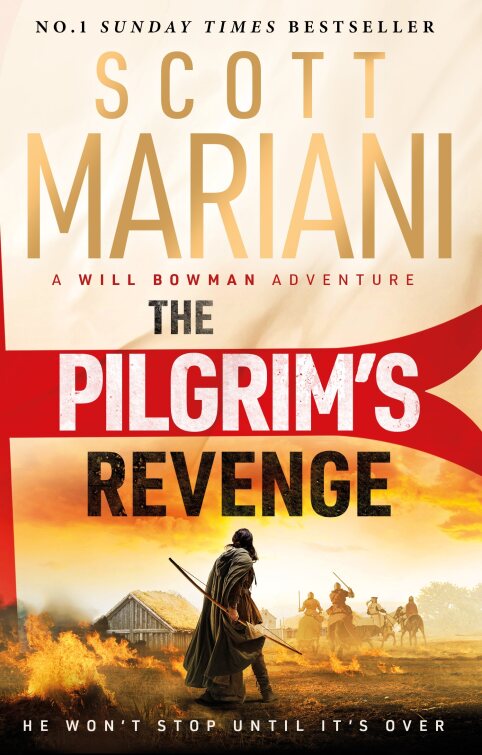
Book Corner: The Pilgrim’s Revenge by Scott Mariani

1190 – Humble layman Will Bowman lives in the countryside with his pregnant wife, when soldiers from Richard Lionheart’s army tear through his home. Will is beaten unconscious, and awakes to find his wife murdered, his farm burnt down, and his life forever changed.

In vengeance, Will infiltrates Richard’s army to find the marauding gang, and finds himself swept along in the march of the Crusades. With the help of new allies and fuelled by his loss, Will crosses Europe with the King’s army.

Can Will avenge his wife? Or will he be swept away by the unstoppable force of Richard’s Crusade?

I have been a Scott Mariani fan for a while now and was disappointed that Ben Hope has finally retired, though relieved for Ben that he survived 30 books of people trying to kill him. When one brilliant series ends, you begin to worry that what comes next will be a disappointment, or not as addictive, that you will not feel so invested in the new characters. Especially when the author moves genre. It is a big risk that author and reader take together.

So, when Scott Mariani moved from thriller with a historical twist to full-blown historical fiction, I was a tad concerned. Fans of historical fiction can be pedants. If there is a grey squirrel out of place, ie, in medieval England, someone will notice. If a character lives longer than he actually did (I am looking at Sweyn Forkbeard in Vikings Valhalla) someone will notice. There is a knack to historical fiction, to weaving the story within the known facts, to introducing fictional characters and creating their interactions with historical figures. The story has to have that essence of authenticity.

I needn’t have worried!

In fact, I probably should have trusted that Scott Mariani knew what he was doing. Though I may not have agreed with some of his theories in The Tudor Deception, the actual history was spot on. Having read the last Ben Hope book, The Templar Secret, after Christmas, I should have known a historical fiction book was around the corner. It is obvious the author loves his history. And, given the topic of that last Hope book, it should come as no surprise that Mariani’s first foray into historical fiction involved the crusades – the Third Crusade, to be precise.

Not that we get more than a glimpse of the Holy Land in this first book – all that is still to come.

By now Will had almost reached the nearest of the horsemen on his side of the yard. Up close, the rider was an intimidating figure looming far above him in the saddle with the blade of his drawn arming sword glinting in the sunlight. Before Will reached him the horseman saw his approach and wheeled his mount around to face him, dust flying from its hooves. With an angry shout the rider spurred the horse towards Will, swinging his sword down at him. Will ducked, and the double-edged blade hissed through the air above him.

It had been a blow meant to separate his head from his shoulders, and it had only narrowly missed its mark. The horse thundered past, shaking the ground. The rider reined it brutally around and charged at Will again.

Nothing like this had ever happened or even been heard of in Will’s experience. He had never been in a real fight, except a minor scuffle once when he was a lad, settled quickly with a couple of punches. This was deadly serious combat, and he was unprepared for it. But the terrible shocking sight of Beatrice in the soldiers’ clutches and the sound of her screams was enough to dispel his confusion and fear, filling him with rage and determination to do anything he could to drive these raiders away and make this stop. And the obvious realisation suddenly occurred to him, for the first time, that he was holding the very means of doing that in his hands. His bow was still unstrung, no more than a long wooden shaft with its hemp cord loosely attached to the bottom end. But practice had made him very adept at readying the weapon in moments; as the horseman bore down on him with the sword raised high, he bent the stave against his foot and looped the string into place.

The rider was almost on him. Will snatched an arrow from his quiver, nocked it to the string and simultaneously raised his bow and pulled it to full draw. He had never before pointed any weapon in anger at another human being, but there was little time to reflect on that fact, or even to take aim, as his enemy closed in. Will stood his ground until the last moment, released his arrow and saw it fly and hit the rider full in the chest.

The soldier flinched violently at the arrow strike. A normal opponent would have been a dead man, his heart split in two by the power of the longbow at such close range. But instead of piercing deep into his flesh the iron point glanced off his heavy chain mail and the broken pieces of the arrow shaft spun away through the air. Then Will had to leap out of the way of the charging horse, and he threw himself to the ground.

The Pilgrims’ Revenge starts in England and follows the journey of a crusader fleet to Outremer, with adventures that are often overlooked by historical fiction authors eager to get to the nitty gritty of the crusade. But what a story they miss out! Scott Mariani includes the little-known excursion of part of the fleet, into Portugal to help with the crusades there. Then, of course, we arrive in Sicily, where Richard the Lionheart frees his sister, Joanna, meets his bride Berengaria and antagonises his ‘ally’ Philip II of France. And then we get a wonderful, vivid depiction of the conquest of Cyprus.

All is seen through the eyes of our hero, Will Bowman, a men seeking revenge for the murder of his wife and unborn child. He only joins the crusade to chase the murderers but finds a purpose, a talent for soldiering, comradeship and a bent to command along the way. Scott Mariani seamlessly blends together the wider story of Richard the Lionheart’s crusading enterprise with Will’s personal story and experiences.

The Pilgrims’ Revenge is the first of what promises to be a fast-paced, exhilarating – and, hopefully, long – series. Punctuated by bloody battles, exquisite swordplay and a thrilling storyline, the action is relentless and Scott Mariani fans will not be disappointed. The research is exemplary, especially with regard to the conflict in Portugal, which is usually ignored. The historical figures are wonderfully written and the locations evocative, dusty, hot and exotic.

Will Bowman is a character I look forward to hearing much more about.

The Pilgrim’s Revenge will be available from 24 April 2025

Order The Pilgrim’s Revenge.

About the author:

Scott Mariani is the No.1 Sunday Times bestselling author of the multi-million-selling Ben Hope thrillers. From 2025 he is launching into a new historical adventure series featuring medieval English hero Will Bowman, who is forced from his home to join King Richard ‘the Lionheart’ on the Third Crusade and rises up to become a knight. Book 1,THE PILGRIM’S REVENGE, is available from April 2025 and is published by Hodder & Stoughton.

Scott lives and writes in west Wales, UK. You can find out more about his work by visiting his official website.

*

My books

Signed, dedicated copies of all my books are available through my online store.

Out now: Scotland’s Medieval Queens

Scotland’s history is dramatic, violent and bloody. Being England’s northern neighbour has never been easy. Scotland’s queens have had to deal with war, murder, imprisonment, political rivalries and open betrayal. They have loved and lost, raised kings and queens, ruled and died for Scotland. From St Margaret, who became one of the patron saints of Scotland, to Elizabeth de Burgh and the dramatic story of the Scottish Wars of Independence, to the love story and tragedy of Joan Beaufort, to Margaret of Denmark and the dawn of the Renaissance, Scotland’s Medieval Queens have seen it all. This is the story of Scotland through their eyes.

Scotland’s Medieval Queens gives a thorough grounding in the history of the women who ruled Scotland at the side of its kings, often in the shadows, but just as interesting in their lives beyond the spotlight. It’s not a subject that has been widely covered, and Sharon is a pioneer in bringing that information into accessible history.’ Elizabeth Chadwick (New York Times bestselling author)

Available now from Amazon and Pen and Sword Books

Also by Sharon Bennett Connolly:

Heroines of the Tudor World tells the stories of the most remarkable women from European history in the time of the Tudor dynasty, 1485-1603. These are the women who ruled, the women who founded dynasties, the women who fought for religious freedom, their families and love. Heroines of the Tudor World is now available for pre-order from Amberley Publishing and Amazon UK. Women of the Anarchy demonstrates how Empress Matilda and Matilda of Boulogne, unable to wield a sword themselves, were prime movers in this time of conflict and lawlessness. It shows how their strengths, weaknesses, and personal ambitions swung the fortunes of war one way – and then the other. Available from Bookshop.orgAmberley Publishing and Amazon UKKing John’s Right-Hand Lady: The Story of Nicholaa de la Haye is the story of a truly remarkable lady, the hereditary constable of Lincoln Castle and the first woman in England to be appointed sheriff in her own right. Available from all good bookshops Pen & Sword Booksbookshop.org and Amazon

Defenders of the Norman Crown: The Rise and Fall of the Warenne Earls of Surrey tells the fascinating story of the Warenne dynasty, from its origins in Normandy, through the Conquest, Magna Carta, the wars and marriages that led to its ultimate demise in the reign of Edward III. Available from Pen & Sword BooksAmazon in the UK and US, and Bookshop.orgLadies of Magna Carta: Women of Influence in Thirteenth Century England looks into the relationships of the various noble families of the 13th century, and how they were affected by the Barons’ Wars, Magna Carta and its aftermath; the bonds that were formed and those that were broken. It is now available in paperback and hardback from Pen & SwordAmazon, and Bookshop.orgHeroines of the Medieval World tells the stories of some of the most remarkable women from Medieval history, from Eleanor of Aquitaine to Julian of Norwich. Available now from Amberley Publishing and Amazon, and Bookshop.orgSilk and the Sword: The Women of the Norman Conquest traces the fortunes of the women who had a significant role to play in the momentous events of 1066. Available now from Amazon,  Amberley Publishing, and Bookshop.org.

Alternate Endings: An anthology of historical fiction short stories including Long Live the King… which is my take what might have happened had King John not died in October 1216. Available in paperback and kindle from Amazon.

Podcast:

Have a listen to the A Slice of Medieval podcast, which I co-host with Historical fiction novelist Derek Birks. Derek and I welcome guests, such as Bernard Cornwell and Michael Jecks, and discuss a wide range of topics in medieval history, from significant events to the personalities involved. Every episode is also now available on YouTube.

*

Don’t forget! Signed and dedicated copies of all my books are available through my online store.

For forthcoming online and in-person talks, please check out my Events Page.

You can be the first to read new articles by clicking the ‘Follow’ button, liking our Facebook page or joining me on TwitterThreadsBluesky and Instagram.

*

©2025 Sharon Bennett Connolly, FRHistS

Book Corner: Two Queenly Biographies from Joanna Arman

I am very fond of Joanna Arman as an author. She has a habit of bringing often-forgotten or ignored – or maligned – women to the fore and reassessing their role in history. Her biography of Æthelflæd, The Warrior Queen: The Life and Legend of Æthelflæd, Daughter of Alfred the Great, was an engaging and illuminating book, despite the challenges of writing about a woman who lived over a thousand years ago. Writing about any woman in history is challenging. Women are rarely mentioned in the chronicles. And when they are, contemporary sources are rarely balanced and often trying to advance a moral judgement of how women fell below the standard expected of them in their society. Which is why we need reappraisals of significant historic women, books which reassess their stories and apply the filter against the casual misogyny that women have suffered from throughout the centuries. Joanna Arman has set out to do that with books about two very different queens consort of England; Matilda of Scotland and Margaret of Anjou.

Matilda II: The Forgotten Queen

The wife of King Henry I and the mother of the Empress Maud is a woman and a Queen forgotten to history. She is frequently conflated with her daughter or her mother-in-law. She was born the daughter of the King of Scotland and an Anglo-Saxon princess. Her name was Edith, but her name was changed to Matilda at the time of her marriage. The Queen who united the line of William the Conqueror with the House of Wessex lived during an age marked by transition and turbulence. She married Henry in the first year of the 12th century and for the eighteen years of her rule aided him in reforming the administrative and legal system due to her knowledge of languages and legal tradition. Together she and her husband founded a series of churches and arranged a marriage for their daughter to the Holy Roman Emperor. Matilda was a woman of letters to corresponded with Kings, Popes, and prelates, and was respected by them all. Matilda’s greatest legacy was continuity: she united two dynasties and gave the Angevin Kings the legitimacy they needed so much. It was through her that the Empress Matilda and Henry II were able to claim the throne. She was the progenitor of the Plantagenet Kings, but the war and conflict which followed the death of her son William led to a negative stereotyping by Medieval Chroniclers. Although they saw her as pious, they said she was a runaway nun and her marriage to Henry was cursed. This book provides a much-needed re-evaluation of Edith/Matilda’s role and place in the history of the Queens of England.

Now, this is a book I have been waiting for!

And it is a book that has needed to be written for a long time. How useful it would have been when I was writing my own book, Women of the Anarchy. A complete biography of Matilda of Scotland – also referred to as Matilda II to distinguish her from her predecessor, Matilda of Flanders. As the wife of Henry I of England Matilda of Scotland is a woman often neglected and overlooked by historians. And yet, Queen Matilda was a truly remarkable queen and one who was well respected during her lifetime. Born as the eldest daughter of Malcolm III Canmore, King of Scots, and his saintly wife, Margaret of Wessex, and given the name Edith at birth, her name was changed to the more Norman name, Matilda, on her marriage to Henry I.

Joanna Arman expertly guides us through Queen Matilda’s life, from her childhood in a convent, supervised by her mother’s sister, Christina, through the various suitors who came calling to the controversy over her marriage to King Henry. Matilda II: The Forgotten Queen delves deep into the investigation into whether or not Matilda had ever been professed as a nun and presents the evidence and arguments for both sides. It is a fascinating study.

Queen Matilda’s role, as a queen, wife and mother, is examined in great detail, demonstrating her influence, both on her family and on England and Normandy. Matilda’s piety is shown as an anchoring force throughout her life, influencing the way she approaches problems and relationships. The queen is shown to be a deeply devout, kind and benevolent woman, with a strong sense of purpose and destiny.

Matilda II: The Forgotten Queen covers every aspect of the queen’s life, drawing on chronicles and charters to present what we know in a clear, engaging narrative that brings this often-overlooked queen to life. The book is accompanied by extensive notation and a through bibliography – I was flattered to discover my own book, Defenders of the Norman Crown: Rise and Fall of the Warenne Earls of Surrey, cited as a refence. It is an excellent biography, thoroughly researched and beautifully presented. I loved reading every word.

To buy Matilda II: The Forgotten Queen: Amazon

Margaret of Anjou: She-Wolf of France, Twice Queen of England

In 1445 a fifteen-year-old French girl left her homeland to marry the son of the great warrior Henry V. Sixteen years later, her husband had lost his throne and she had fled into exile. For a decade, she struggled to reclaim the throne of England before her final and shattering defeat at the Battle of Tewkesbury. It marked the final destruction of the House of Lancaster by Yorkist King Edward IV and his brothers. Margaret lost more than her family: she was also vilified. Shakespeare cast her as a sadistic killer who murdered the noble Richard, Duke of York. History cast her as a manipulative seductress whose destructive ambition was a major cause of the Wars of the Roses. Margaret of Anjou remains one of the most notorious consorts in medieval history, the queen we love to hate. But is her reputation deserved, or was she simply caught between the machinations and rivalries of powerful men? By examining Margaret’s life and actions in detail, this biography reveals a new side to the last foreign-born queen of medieval England. Margaret came from a family of strong women. Faced with hardship in the first years of her marriage, Margaret’s choices arose from a conviction that it was natural for a woman to take control in the absence of male leadership. A wealth of records have been left behind, allowing historians to investigate Margaret’s career as a beloved wife and, later, as the leader of a political faction struggling to secure the crown for her family. If the course of history had run differently, would she instead be considered a heroic warrior queen today – perhaps even England’s Joan of Arc?

At last! A balanced, objective biography of Margaret of Anjou that does not just regurgitate the ‘she-wolf’ trope (despite it being in the title).Peeling away the centuries of misogyny, Joanna Arman takes a new look at the historical record and presents a version of Margaret of Anjou, the long-suffering wife of the mentally-fragile king, Henry VI, that is much closer to the living, breathing woman she was. This does not mean that Margaret’s actions are excused away, that she is suddenly assessed as a saint. Rather, Joanna Arman presents Margaret of Anjou’s actions against the backdrop of the times; the challenges she was facing, and the actions she had to take in order to preserve her husband’s crown and her son’s inheritance.

Margaret is presented as a human being, prone to making mistakes just like the rest of us. She is also a woman, challenged with holding her own in a man’s world – and in a time of war. Joanna Arman presents the complete queen; a woman, a wife, a mother. And a leading protagonist in the Wars of the Roses. The book is a fascinating analysis of this influential queen, of her life, decisions and struggles that eventually led to her losing everything; her son, her husband and her crown.

Told with empathy, balance and passion, I defy anyone to not feel moved and invigorated by this fascinating study of a woman who had fought hard to hold on to everything, but lost it all. Faced with her husband’s mental illness and military ineptitude, Margaret tried to fill the void, to be king and queen. The male dominated society of 15th century England would not permit it. One wonders what Margaret might have achieved had she been allowed to take the reins of government. Her deadly rivalry with Richard, Duke of York, however, meant court factions would always manoeuvre against her, even after York’s death at Wakefield.

Joanna Arman has taken great care to ensure that Margaret of Anjou: She-Wolf of France, Twice Queen of England, is a biography of the queen. It is not a Lancastrian whitewash, nor a Yorkist hate-filled pamphlet. Margaret of Anjou is the centre of attention, the woman held out for appraisal, for assessment, for praise and criticism. That it is at once balanced, critical and empathetic is testament to Joanna Arman’s skill as the queen’s biographer.

To buy Margaret of Anjou: She-Wolf of France, Twice Queen of England: Amazon

*

My Books:

Signed, dedicated copies of all my books are available through my online bookshop.

Out Now! Women of the Anarchy

Two cousins. On the one side is Empress Matilda, or Maud. The sole surviving legitimate child of Henry I, she is fighting for her birthright and that of her children. On the other side is her cousin, Queen Matilda, supporting her husband, King Stephen, and fighting to see her own son inherit the English crown. Women of the Anarchy demonstrates how these women, unable to wield a sword, were prime movers in this time of conflict and lawlessness. It show how their strengths, weaknesses, and personal ambitions swung the fortunes of war one way – and then the other.

Available from Bookshop.orgAmberley Publishing and Amazon UK.

Coming on 15 June 2024: Heroines of the Tudor World

Heroines of the Tudor World tells the stories of the most remarkable women from European history in the time of the Tudor dynasty, 1485-1603. These are the women who ruled, the women who founded dynasties, the women who fought for religious freedom, their families and love. These are the women who made a difference, who influenced countries, kings and the Reformation. In the era dominated by the Renaissance and Reformation, Heroines of the Tudor World examines the threats and challenges faced by the women of the era, and how they overcame them. From writers to regents, from nuns to queens, Heroines of the Tudor World shines the spotlight on the women helped to shape Early Modern Europe.

Heroines of the Tudor World is now available for pre-order from Amberley Publishing and Amazon UK.

Also by Sharon Bennett Connolly:

King John’s Right-Hand Lady: The Story of Nicholaa de la Haye is the story of a truly remarkable lady, the hereditary constable of Lincoln Castle and the first woman in England to be appointed sheriff in her own right. Available from all good bookshops or direct from Pen & Sword Booksbookshop.org and AmazonDefenders of the Norman Crown: The Rise and Fall of the Warenne Earls of Surrey tells the fascinating story of the Warenne dynasty, from its origins in Normandy, through the Conquest, Magna Carta, the wars and marriages that led to its ultimate demise in the reign of Edward III. Available from Pen & Sword BooksAmazon in the UK and US, and Bookshop.org

Ladies of Magna Carta: Women of Influence in Thirteenth Century England looks into the relationships of the various noble families of the 13th century, and how they were affected by the Barons’ Wars, Magna Carta and its aftermath; the bonds that were formed and those that were broken. It is now available in paperback and hardback from Pen & Sword,  Amazon, and Bookshop.orgHeroines of the Medieval World tells the stories of some of the most remarkable women from Medieval history, from Eleanor of Aquitaine to Julian of Norwich. Available now from Amberley Publishing and Amazon, and Bookshop.orgSilk and the Sword: The Women of the Norman Conquest traces the fortunes of the women who had a significant role to play in the momentous events of 1066. Available now from Amazon,  Amberley Publishing, and Bookshop.org.

Alternate Endings: An anthology of historical fiction short stories including Long Live the King… which is my take what might have happened had King John not died in October 1216. Available in paperback and kindle from Amazon.

Podcast:

Have a listen to the A Slice of Medieval podcast, which I co-host with Historical fiction novelist Derek Birks. Derek and I welcome guests, such as Bernard Cornwell and Elizabeth Chadwick, and discuss a wide range of topics in medieval history, from significant events to the personalities involved.

*

Don’t forget! Signed and dedicated copies of all my books are available through my online bookshop.

For forthcoming online and in-person talks, please check out my Events Page.

You can be the first to read new articles by clicking the ‘Follow’ button, liking our Facebook page or joining me on Twitter and Instagram.

*

©2024 Sharon Bennett Connolly FRHistS

Book Corner: Crime and Punishment in Tudor England: From Alchemists to Zealots by April Taylor

Crime and Punishment in Tudor England: From Alchemists to Zealots tells the story of the enactment of law and its penalties from Henry VII to Elizabeth I.

The sixteenth century was remarkable in many ways. In England, it was the century of the Tudor Dynasty. It heralded the Reformation, William Shakespeare, the first appearance of bottled beer in London pubs, Sir Francis Drake, and the Renaissance. Oh, and the Spanish Armadas―all five of them! Yes, five armadas and all failures.

It was a watershed century for crime and punishment. Henry VII’s paranoia about the loyalty of the nobility led to military-trained vagrants causing mayhem and murder. Henry VIII’s Reformation meant executions of those refusing to take the Oath of Supremacy. State-controlled religion―summed up through the five reigns as Roman Catholic; Anglo-Catholic; Protestant; Roman Catholic, and Sort of Protestant but I don’t mind so long as you swear the Oath of Supremacy―became an increasingly complex, not to say confusing, issue for ordinary people.

Although primary sources are rare and sometimes incomplete, the life of criminals and the punishments meted out to them still fascinates.

Read about: John Daniell and how he tried to blackmail the Earl of Essex. The Stafford insurrection of 1486, the first serious opposition to the new king. The activities of con-man extraordinaire, Gregory Wisdom, and many more.

Crime and punishment didn’t start with the Tudors and this book summarises judicial practices built on tradition from the Roman occupation. It covers often gory details―what happens to the body when it is beheaded, burned, boiled, or hanged?

Arranged in alphabetical order of crimes, it recounts tales of blackmail, infanticide, kidnapping, heresy, and sumptuary laws. Told with occasional low-key humour, the book also includes Tavern Talk, snippets of quirky information.

Dip into it at your pleasure.

I have to admit, Crime and Punishment in Tudor England: From Alchemists to Zealots by April Taylor is one of the best non-fiction books I have had the pleasure of reading this year. I have always had a fascination for the law – I was even considering it as a career at one stage, until I realised I couldn’t stand the 9 to 5 lifestyle. Give me shift work and odd hours any day! So, I have been looking forward to this book ever since I heard April was writing it.

Opening with a fabulous history of the development of England’s legal system, Crime and Punishment in Tudor England explains not only the crimes committed, but also the various legal processes under different monarchs and at different social levels. Every crime imaginable is covered, from infanticide to treason. And so are the punishments and the reasons behind them; and how often such punishments were intended to fit the crime – or to shame the perpetrator. Every part of the criminal justice system is analysed, from religious offenders to witchcraft, from capital punishment to torture, prison condition and labour camps. Crime and Punishment in Tudor England also looks into the influences on crime, such as the impact of economic and social conditions, in a century of religious and political upheaval throughout Europe.

I do have to warn you: this book is not to be read while eating, unless you have a strong stomach. April Taylor includes descriptions of the various methods of execution, including beheading, hanging, burning and the particularly gruesome method of boiling alive!

Boiling to Death

Boiling to death was not often used in Tudor England to be fair, although it was the designated punishment for coiners on the continent. The method is self-explanatory. The offender would be put into a large container which might be filled with water, oil, molten lead, wax or sometimes wine, heated to boiling point.

The most famous victim was Richard Roose, cook to the Bishop of Rochester, John Fisher. It was established that Roose had decided to poison his master and guests by serving them pottage for dinner. Fisher was known to be abstemious and did not partake of the pottage, and nobody can blame him since it sounds less than appetising.

Pottage was a kind of thick porridge that peasants relied on for centuries as a staple food. For them, it would consist of grains and vegetables, boiled in a pot and often kept simmering for hours or days to make sure it was safe to eat. If rich households ate it, often meat or fish was added, but if you can imagine a kind of hearty soup full of heaven knows what that has been boiled to extinction, you have an idea of what pottage was like.

This case became something of a political ‘hot potato’(even though nobody had yet encountered one in 1531 in England). Sixteen of Fisher’s guests became ill, one of them, a man called Curwen, died. The rest of the poisoned pottage was given to the poor, at which point Alice Trypptt also died from eating it.

Bishop Fisher had been Margaret Beaufort’s confessor and it was he who had taught the young Henry VIII the tenets of theology. However, and here is the political bit, at the time Roose conducted his ‘jest’, thinking the powder he had put in the pottage was a laxative that would make his fellow servants ill, Bishop Fisher was a vocal opponent of Henry VIII’s marriage to Anne Boleyn. Moreover, there were rumours that the Boleyn family had engineered the poisoning. Obviously they all liked pottage.

The Spanish ambassador, Chapuys, and Thomas More, neither of whom were sympathetic to Anne, told Henry of the rumours accusing her, to which Henry is alleged to have answered that she was blamed for everything.

Henry decided he must act with speed to make sure any such rumour was quashed and that neither his beloved’s character nor her family were sullied (a bit of a non-starter since she was already known as the ‘goggleeyed whore’ by the majority of the population who adored Katherine of Aragon).

Back to Henry. He immediately told Parliament he wanted a bill passing that any servant found guilty of poisoning or attempting to poison their master or mistress should be attainted for high treason and executed.

Henry was quite clever in some ways. Because he made the crime one of high treason, it meant there was no need for prior judicial process or a jury to determine the guilt or otherwise of the defendant. This was not to be the first time Henry dispensed justice with the tenets of common law.

While some of the more sensational and high profile cases are discussed – such as Anne Boleyn and Catherine Howard – April also introduces cases far less familiar to the reader. Encompassing murder, fraud, blackmail and all manner of crimes, April Taylor presents a fascinating insight into Tudor crimes, ably supported by actual – and fascinating – case studies. Theses case studies not only demonstrate the nature of crimes and their punishment, but also the changing attitudes to crime, and the shifting emphasis on punishments, from the dawn of the Tudor period to the royal dynasty’s demise in 1603.

Crime and Punishment in Tudor England also highlights various miscarriages of justice, including where officials accused innocent victims with the aim of appropriating their goods and property. There are some truly harrowing tales, such as the youngest felon executed in the Tudor era – a girl of the tender age of 11 – and the general treatment of children who fell foul of the criminal justice system. It makes you happy to be living in the 21st century!

April Taylor has managed to cram so much information into Crime and Punishment in Tudor England: From Alchemists to Zealots it really is an impressive tome. It is thorough and well referenced and is written in a lively, entertaining writing style, with a fair amount of wit thrown in for good measure.

I cannot recommend it highly enough. Crime and Punishment in Tudor England: From Alchemists to Zealots is a pleasure to read!

To buy the book:

Crime and Punishment in Tudor England: From Alchemists to Zealots by April Taylor is now available from Amazon and Pen and Sword Books.

About the author:

April Taylor was born in the historic county of Lincolnshire in the UK. Having caught the history bug from a young age, April has always been fascinated by the physical manifestation of times past in particularly the Tudor period. This interest deepened when she discovered one of the most important events of Henry VIII’s reign, the Lincolnshire Rebellion that led to the Pilgrimage of Grace in 1536, started eight miles from where April was born. April has always ensured her research is as meticulous as possible. During her study of the Tudors for her fictional Luke Ballard books, April was intrigued by frequent references to Henry VIII’s charisma. Choosing a career in librarianship, April honed her research skills but always leant towards the history of the area in which she lived. This led to numerous talks to schools and local groups, especially in Worcester, yet another place of historic importance in the UK. April Taylor now lives near the rugged coast of north-east England in close proximity to one of the priories that fell victim to Henry VIII’s Reformation. She frequently walks her golden retriever in local forests using that time to work through complicated plotlines. She sings in the medieval church and occupies her down-time dressmaking and cross-stitching.

My Books

Signed, dedicated copies of all my books are available through my online bookshop.

Out nowKing John’s Right-Hand Lady: The Story of Nicholaa de la Haye

In a time when men fought and women stayed home, Nicholaa de la Haye held Lincoln Castle against all-comers, gaining prominence in the First Baron’s War, the civil war that followed the sealing of Magna Carta in 1215. A truly remarkable lady, Nicholaa was the first woman to be appointed sheriff in her own right. Her strength and tenacity saved England at one of the lowest points in its history. Nicholaa de la Haye is one woman in English history whose story needs to be told…

King John’s Right-Hand Lady: The Story of Nicholaa de la Haye is now available from Pen & Sword Booksbookshop.org and Amazon.

Coming 15 January 2024: Women of the Anarchy

On the one side is Empress Matilda, or Maud. The sole surviving legitimate child of Henry I, she is fighting for her birthright and that of her children. On the other side is her cousin, Queen Matilda, supporting her husband, King Stephen, and fighting to see her own son inherit the English crown. Both women are granddaughters of St Margaret, Queen of Scotland and descendants of Alfred the Great of Wessex. Women of the Anarchy demonstrates how these women, unable to wield a sword, were prime movers in this time of conflict and lawlessness. It show how their strengths, weaknesses, and personal ambitions swung the fortunes of war one way – and then the other.

Available for pre-order from Amberley Publishing and Amazon UK.

Also by Sharon Bennett Connolly:

Defenders of the Norman Crown: The Rise and Fall of the Warenne Earls of Surrey tells the fascinating story of the Warenne dynasty, of the successes and failures of one of the most powerful families in England, from its origins in Normandy, through the Conquest, Magna Carta, the wars and marriages that led to its ultimate demise in the reign of Edward III. Defenders of the Norman Crown: Rise and Fall of the Warenne Earls of Surrey is now available from Pen & Sword BooksAmazon in the UK and US, and  Bookshop.org.

Ladies of Magna Carta: Women of Influence in Thirteenth Century England looks into the relationships of the various noble families of the 13th century, and how they were affected by the Barons’ Wars, Magna Carta and its aftermath; the bonds that were formed and those that were broken. It is now available in paperback and hardback from Pen & Sword,  Amazon, and Bookshop.org.

Heroines of the Medieval World tells the stories of some of the most remarkable women from Medieval history, from Eleanor of Aquitaine to Julian of Norwich. Available now from Amberley Publishing and Amazon, and Bookshop.org.

Silk and the Sword: The Women of the Norman Conquest traces the fortunes of the women who had a significant role to play in the momentous events of 1066. Available now from Amazon,  Amberley Publishing, and Bookshop.org.

Alternate Endings: An anthology of historical fiction short stories including Long Live the King… which is my take what might have happened had King John not died in October 1216. Available in paperback and kindle from Amazon.

Podcast:

Have a listen to the A Slice of Medieval podcast, which I co-host with Historical fiction novelist Derek Birks. Derek and I welcome guests, such as Bernard Cornwell, and discuss a wide range of topics in medieval history, from significant events to the personalities involved.

*

Don’t forget! Signed and dedicated copies of all my books are available through my online bookshop.

For forthcoming online and in-person talks, please check out my Events Page.

You can be the first to read new articles by clicking the ‘Follow’ button, liking our Facebook page or joining me on Twitter and Instagram.

©2023 Sharon Bennett Connolly FRHistS
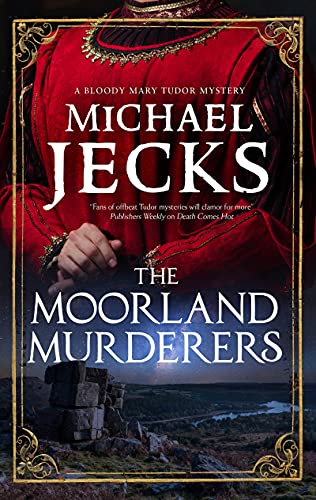
Book Corner: The Moorland Murderers by Michael Jecks

July, 1556. En route to France and escape from Queen Mary’s men, Jack Blackjack decides to spend the night at a Devon tavern, agrees to a game of dice – and ends up accused of murder. To make matters worse, the dead man turns out to have been the leader of the all-powerful miners who rule the surrounding moors – and they have no intention of waiting for the official court verdict to determine Jack’s guilt.

But who would frame Jack for murder . . . and why? Alone and friendless in a lawless land of cut-throats, outlaws and thieves, Jack realizes that the only way to clear his name – and save his skin – is to unmask the real killer. But knowing nothing of the local ways and customs, how is he to even begin? As Jack’s attempts to find answers stirs up a hornet’s nest of warring factions within the town, events soon start to spiral out of control . . .

What a thoroughly enjoyable adventure! Michael Jecks returns to his old literary haunts of Dartmoor – Lydford and Oakhampton – but without a Simon Puttock or Baldwin de Furnshill in sight. No, we are a few hundred years after the adventures of the bailiff and his friend, Baldwin, the former Knights’ Templar. The Moorland Murderers is set in the time of the Tudor queen, Mary I, shortly after the Wyatt Rebellion. Closely associated with the queen’s sister, Elizabeth, the book’s hero – if you can call him that – Jack Blackjack, has left London for his own safety. Heading for the Continent via Plymouth, he finds himself caught up in a little bother in Oakhampton and stands accused of murder.

Jack Blackjack is not your typical hero. He can’t stand the sight of blood, tends to get bashed on the head – A LOT – and has a rather high opinion of himself. As The Moorland Murderers is told in the first person, the reader gets a healthy – or unhealthy – dose of Jack Blackjack’s opinions about himself and others. Which make for a highly amusing, light-hearted approach to the serious business of murder.

There are few men who can be as uncooperative and suspicious as those who own taverns. I suppose they are used to seeing men trying to drink their houses dry before ‘remembering’ that they had left all their money at home. This fellow,, Mal, was no exception, and as I made my slow and painful way to his bar, I was concerned to see that he had picked up a stout cudgel and was allowing it to slap unpleasantly into his other hand while he gazed at me in a thoughtful manner. It was not an encouraging look. As to my gambling companion, there was no sign.

‘See? My purse has been cut from me!’ I declareed, holding up my laces. ‘The man who gambled with me, he must have chosen to get his money back! He set upon me and robbed me!’

There was some murmuring at that. The large man at the farther end of the room unhitched himself from his post at the wall and began to walk towards me. I did not like the look on his face. The man at the bar, I saw, was no longer there. He too had left. I moved around so that the wench who had wriggled so enticingly on my lap was between us. His expression was not reassuring to this traveller. It was the sort of look a cat might wear while stalking a rat.

The host was not taking my word. ‘Shew ‘un th’ ‘aid.’

I stared at him. His brows darkened. He had looked rather like an ape beforehand, but now he was an angry ape with the suspicion that the figure before him had stolen his favourite fruits. His stick rose menacingly.

‘He said to show him your head,’ the maid translated with a sigh. She rolled her eyes as though thinking me the purest form of fool she had encountered. It made me scowl – but briefly. The movement pulled the skin over the lump on my scalp, and that hurt.

I submitted myself to her inspection. She came forward and glanced at my head. She pulled a face when she parted my hair, making me wince and flinch in pain, and her hands came away with my gore on them. The sight of blood can make me feel queasy at the best of times, but the sight of my own has always had a marked effect. I could feel the colour drain from my face, and the world began to whirl about me once more.

‘Get him a stool!’ the wench burst out, and since her mouth was close to my ear, I started like a child caught stealing a biscuit, and fainted away.

Michael Jecks has long been one of my favourite authors – ever since I read his first book, The Last Templar, a murder mystery series set in the time of Edward II, many years ago. The Bloody Mary Mysteries are set later, in the Tudor era, but are just as engrossing. Jack Blackjack is not your typical hero. He is a paid assassin who cannot stand the sight of blood and has to outsource his work. He thinks very highly of himself – probably too highly – and has a knack for getting into trouble.

Jack Blackjack is a very likeable chap who is trying to negotiate the way through trying times in the reign of Mary I, when political plotting was at a dangerous high and the counter-Reformation was in full swing in England. In The Moorland Murderers, Jack is trying to get away from the intrigues of London – and becoming implicated in the latest rebellion. He finds himself on the edge of Dartmoor, where regional politics were just as dangerous as in London itself!

With the The Moorland Murderers, Michael Jecks is back in his old haunts. He knows the history and landscape of Dartmoor like the back of his hand. And it shows. Historical authenticity, of life on the Moors, of the clashes between the tin miners and those from the towns and of the suspicion of strangers is evident on every page. The story is fast paced and completely absorbing to read. It is such fun! I smiled and giggled through every page!

I haven’t enjoyed a book so much in ages!

I cannot recommend it highly enough.

About the author:

Michael Jecks is the author of more than thirty novels in the Knights Templar medieval mystery series, and four previous Bloody Mary Tudor mysteries. A former Chairman of the Crime Writers’ Association, he lives with his wife, children and dogs in northern Dartmoor. 

Michael is a regular speaker about the Knights Templar, the end of the Kingdom of Jerusalem, about writing and publishing, and about finding work. He is also keen to help those who are now going through the latest recession. He endured enough hardship, and lost all his savings, during the last recession, and understands what it means to risk losing everything.

An enthusiastic photographer and watercolourist, Michael can often be seen walking across Dartmoor where he lives, gaining inspiration into the lives of our ancestors for his stories. When relaxing he can usually be found clad in white in a pub near you before dancing mad stick Morris.

Of course, if you want to contact him or link on social media, you can find him at writerlywitterings.com, he’s on YouTube as writerlywitterer, on LinkedIn, he is at Facebook.com/Michael.Jecks.author, at Flickr.com/photos/Michael_Jecks, on Instagram, Pinterest and everywhere else too! He appreciates hearing from readers, so do please contact him.

*

My Books

Signed, dedicated copies of all my books are available, please get in touch by completing the contact me form.

Defenders of the Norman Crown: The Rise and Fall of the Warenne Earls of Surrey tells the fascinating story of the Warenne dynasty, of the successes and failures of one of the most powerful families in England, from its origins in Normandy, through the Conquest, Magna Carta, the wars and marriages that led to its ultimate demise in the reign of Edward III. Defenders of the Norman Crown: Rise and Fall of the Warenne Earls of Surrey is now available from Pen & Sword BooksAmazon in the UK and US, Bookshop.org and Book Depository.

1 family. 8 earls. 300 years of English history!

Also by Sharon Bennett Connolly:

Ladies of Magna Carta: Women of Influence in Thirteenth Century England looks into the relationships of the various noble families of the 13th century, and how they were affected by the Barons’ Wars, Magna Carta and its aftermath; the bonds that were formed and those that were broken. It is now available in paperback and hardback from Pen & Sword,  AmazonBookshop.org and from Book Depository worldwide.

Heroines of the Medieval World tells the stories of some of the most remarkable women from Medieval history, from Eleanor of Aquitaine to Julian of Norwich. Available now from Amberley Publishing and Amazon, Bookshop.org and Book Depository.

Silk and the Sword: The Women of the Norman Conquest traces the fortunes of the women who had a significant role to play in the momentous events of 1066.  Available now from Amazon,  Amberley Publishing, Bookshop.org and Book Depository.

*

You can be the first to read new articles by clicking the ‘Follow’ button, liking our Facebook page or joining me on Twitter and Instagram.

©2021 Sharon Bennett Connolly

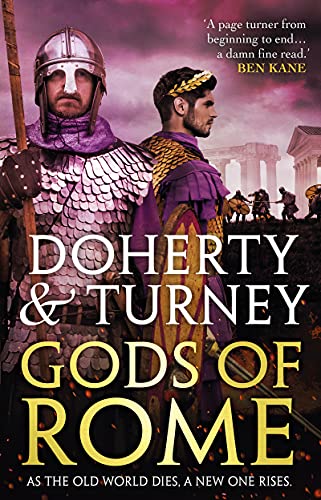
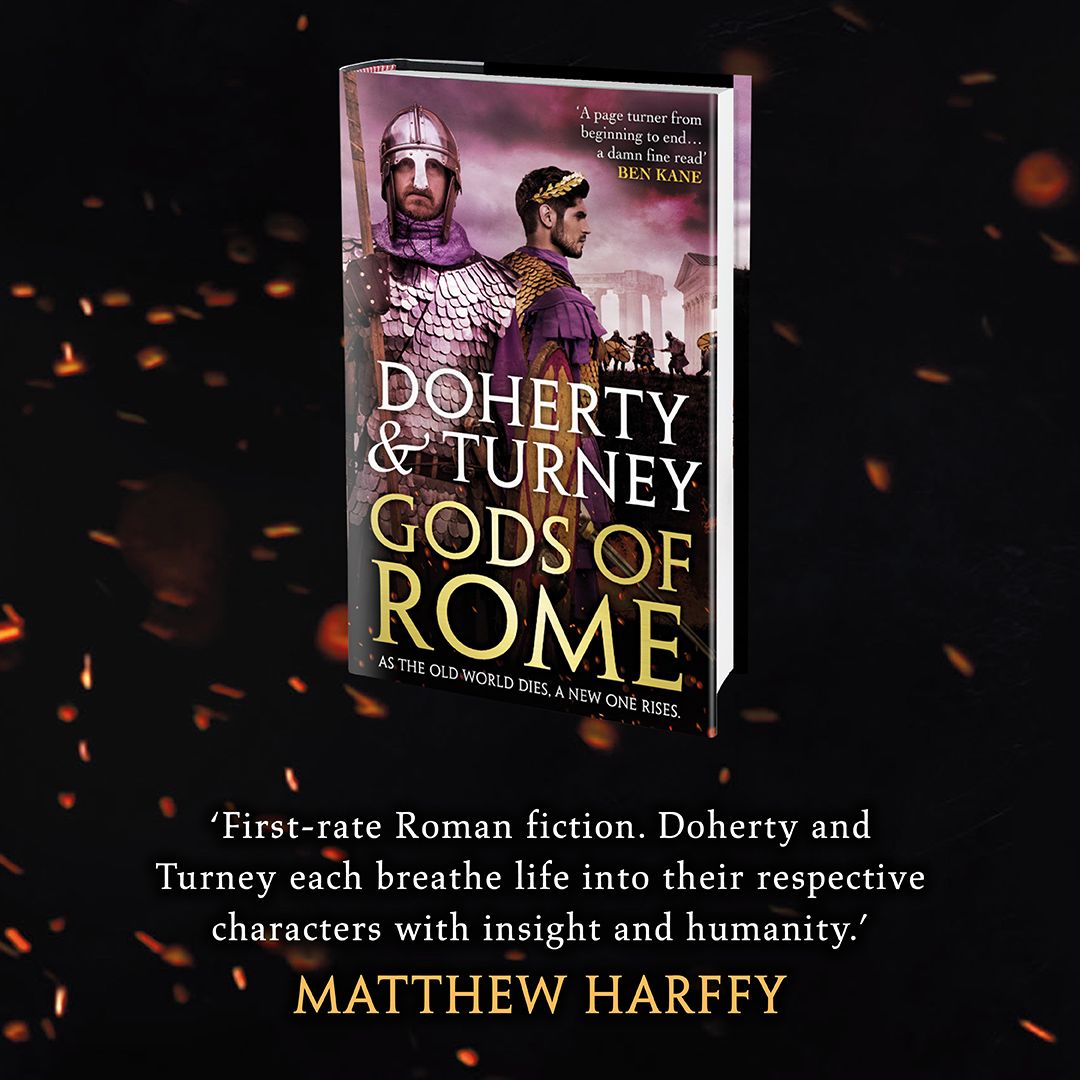
Book Corner: Gods of Rome by Simon Turney and Gordon Doherty

It is a pleasure today to join the blog tour for Gods of Rome, with a short review and enticing extract from the book. Gods of Rome is the final instalment in the magnificent Rise of Emperors series by Simon Turney and Gordon Doherty.

For one to rule, the other must die.

AD 312:  A year of horrific and brutal warfare.

Although outnumbered, Constantine’s legions seem unstoppable as they surge through Maxentius’ Italian heartlands. Constantine is determined to reach and seize the ancient capital of Rome from his rival, yet his army is exhausted, plagued by religious rivalries and on the verge of revolt. Maxentius meanwhile contends with a restive and dissenting Roman populace. Neither general can risk a prolonged war.

When the two forces clash amidst portents and omens in a battle that will shape history, there are factors at work beyond their control. Only one thing is certain: Constantine and Maxentius’ rivalry must end. With one on a bloodied sword and the other the sole ruler of an Empire…

The Rise of Emperors trilogy finally comes to its inevitable, devastating conclusion with Gods of Rome. The series has followed the careers of rival emperors Maxentius and Constantine, from their first meeting as children and blossoming friendship in Sons of Rome, to that friendship turning to rivalry in the second instalment, Masters of Rome. In Gods of Rome, the rivalry turns deadly when the ultimate prize is within each’s grasp – that of command of the empire itself.

This series has been a fabulous, unique reading experience. With each writer taking the voice of one of the emperors, the distinction between the two becomes profound. There is no hidden bias as you may find with one author writing both sides – but secretly preferring one. The rival emperors, Constantine and Maxentius, each have their own very distinct voice.

As you would expect with anything from Gordon Doherty and Simon Turney, the action is intense, the pace is, at times, rather furious, grabbing the reader’s attention and holding it to the very end.

The only problem with the whole trilogy is that one of the heroes had to lose – was destined to lose. And neither truly deserved to. Doherty and Turney draw wonderfully on the political machinations and family rivalries that drew these two former friends, Constantine and Maxentius, to final, devastating contest for Rome itself.

The meticulous research of the history, landscape, military strategy of the time and the war itself, help to recreate the world of the Roman Empire of the 4th century. Both authors draw on the conflicts, not only of politics and protagonists, but also through the rise of Christianity and how the rival emperors harnessed or exploited those divisions within their own camp and the camp of their rival.

Gods of Rome is a wonderful, engaging and fast-paced novel that is entertaining from start to finish. Another Doherty/Turney collaboration that is an absolute triumph.

Here’s what the reader has to look forward to:

Extract

1
CONSTANTINE

The Cottian Alpes, 27th January 312 ad

We moved through the mountains like winter wolves. The ferocious blizzard sped southwards with us, carried on the famous bora winds, singing a dire song. For days we marched through that driving snow, seeing nothing but great white-clad peaks either side of us; rugged,inhospitable highlands which in these frozen months soldiers were not meant to cross. All around me the gale screamed, boots crunched endlessly through the successively deeper drifts of white, men’s teeth chattered violently, mules brayed, exhausted. It felt at times as if we were wandering, snow-blind, to our deaths, but I knew what lay ahead… so close now.

I called upon my chosen men and a handful of their best soldiers – a group of thirty – and we roved ahead of the army like advance scouts. The blizzard raked through my bear cloak, the snow rattling like slingshot against my gemmed ridge helm and bronze scales as I scoured the valley route. Yet I refused to blink. When the speeding hail of white slowed and the murky grey ahead thinned a little, I saw them: a pair of stone and timber watchtowers, northern faces plastered in snow. Gateposts watching this passage between two realms. I dropped to my haunches behind the brow of a snowdrift and my chosen men hunkered down with me. I gazed over the drift’s brow, regarding the narrow gap between the towers and the valley route beyond, on through the winter-veined mountains. Thinking of the land that lay beyond these heights, my frozen lips moved soundlessly.

Italia…

Land of Roman forefathers. Home of the man I had once considered my friend… but that territory was rightfully mine. Mine! My surging anger scattered when I spotted movement atop one of the two towers: a freezing Maxentian scout blowing into his hands, oblivious to our presence. Then the blizzard fell treacherously slack, and the speeding veil of white cleared for a trice. I saw his ice-crusted eyebrows rise as he leaned forward, peering into the momentary clarity, right at us. His eyes bulged, mouth agog.

‘He is here!’ he screamed to be heard over the sudden return of the storm’s wrath. ‘Constantine is h—’

With a wet punch, an arrow whacked into the man’s chest and shuddered there. He spasmed then folded over the edge of the timber parapet and fell like a sack of gravel, crunching into a pillowy snowdrift at the turret’s foot. I glanced to my right, seeing my archer nock and draw again, shifting his bow to the heights of the other tower, his eyes narrowing within the shadow
of his helm brow. He loosed, but the dark-skinned sentry up there ducked behind the parapet, screaming and tolling a warning bell. At once, three more Maxentians spilled from the door at the base of that rightmost tower, rushing south towards a simple, snow-topped stable twenty paces away, in the lee of a rocky overhang. This was one of the few gateways through the mountains – albeit the least favoured and most treacherous – and it was guarded by just five men? Instantly, suspicion and elation clashed like swords in my mind. We had no time to rake over the facts. These watchmen could not be allowed to ride south and warn the legions of Italia. They had to die.

About the authors

Gordon Doherty

Simon Turney is the author of the Marius’ Mules and Praetorian series, as well as The Damned Emperor series for Orion and Tales of the Empire series for Canelo. He is based in Yorkshire.

Gordon Doherty is the author of the Legionary and Strategos series, and wrote the Assassin’s Creed tie-in novel Odyssey. He is based in Scotland.

Pre-order link

Amazon: https://amzn.to/3EtqBgF

Follow Simon

Twitter: @SJATurney

Instagram: @simonturney_aka_sjaturney

Website: http://simonturney.com/

Follow Gordon

Simon Turney

Twitter: @GordonDoherty

Instagram: @gordon.doherty

Website: https://www.gordondoherty.co.uk/

Follow Aries

Twitter: @AriesFiction

Facebook: Aries Fiction

Website: http://www.headofzeus.com

Blog Tour Hashtag

#GodsofRome

*

My Books

Signed, dedicated copies of all my books are available, please get in touch by completing the contact me form.

Defenders of the Norman Crown: The Rise and Fall of the Warenne Earls of Surrey tells the fascinating story of the Warenne dynasty, of the successes and failures of one of the most powerful families in England, from its origins in Normandy, through the Conquest, Magna Carta, the wars and marriages that led to its ultimate demise in the reign of Edward III. Defenders of the Norman Crown: Rise and Fall of the Warenne Earls of Surrey is now available from Pen & Sword BooksAmazon in the UK and US and Book Depository.

1 family. 8 earls. 300 years of English history!

Also by Sharon Bennett Connolly:

Ladies of Magna Carta: Women of Influence in Thirteenth Century England looks into the relationships of the various noble families of the 13th century, and how they were affected by the Barons’ Wars, Magna Carta and its aftermath; the bonds that were formed and those that were broken. It is now available in paperback and hardback from Pen & Sword,  Amazon and from Book Depository worldwide.

Heroines of the Medieval World tells the stories of some of the most remarkable women from Medieval history, from Eleanor of Aquitaine to Julian of Norwich. Available now from Amberley Publishing and Amazon and Book Depository.

Silk and the Sword: The Women of the Norman Conquest traces the fortunes of the women who had a significant role to play in the momentous events of 1066.  Available now from Amazon,  Amberley Publishing, Book Depository.

*

You can be the first to read new articles by clicking the ‘Follow’ button, liking our Facebook page or joining me on Twitter and Instagram.

©2021 Sharon Bennett Connolly

Book Corner: How to Survive in Ancient Rome by LJ Trafford

Imagine you were transported back in time to Ancient Rome and you had to start a new life there. How would you fit in? Where would you live? What would you eat? Where would you go to have your hair done? Who would you go to if you got ill, or if you were mugged in the street? All these questions, and many more, will be answered in this new how-to guide for time travellers. Part self-help guide, part survival guide, this lively and engaging book will help the reader deal with the many problems and new experiences that they will face, and also help them to thrive in this strange new environment.

What a fun and entertaining read!

How to Survive in Ancient Rome by LJ Trafford is a tour guide to the ancient city of Rome for the inexperienced and seasoned traveller alike. The book takes a snapshot of the city, its society and the state of the Roman Empire in the time of the Emperor Domitian – and more specifically in the year 95 CE. It tells you all you need to know about Roman history and society so that you may get the best from a visit to the eternal city in the First century AD.

LJ Trafford covers all aspects of Roman life, from the history and family, to entertainment, shopping and crime and punishment. The tone is light-hearted, entertaining and often outright hilarious. Some anecdotes stretch credibility, but the author has clearly done her homework and includes endnotes and a comprehensive bibliography. The stories may be unbelievable, but LJ Trafford has the evidence to back her up.

The beauty of How to Survive in Ancient Rome is the book’s simplicity, which makes it accessible to all ages. I read excerpts out to my husband and teenage son, and both enjoyed the stories I recited. In fact some of the stories are – apparently – particularly appealing to the mind of a teenage boy!

The young Caligula, for instance, was said to enjoy donning a robe and wig and hitting the town. Otho’s floggable youthful pursuits involved wandering about the city bundling drunks and women into blankets and tossing them into the river Tiber, Mark Anthony, so Cicero alleges, dressed as a woman and took up prostitution in his youth.

There are less alarming leisure activities available. Watching chariot racing, for instance. Or wrestling. Or the Games. Or placing high-stakes bets on all of them, a pastime that is all the more appealing when you have a living pater familias responsible for all the family finances: including debts.

Probably the best example of the struggling pater familias is the Emperor Augustus. Augustus made a big show of family. His series of morality laws included inducements to have three children or more, penalties for failing to marry and stiff punishments for adulterers.

He paraded his own family as an example to follow, sharing the strict education of his daughter, Julia, as the model. He chose all three of Julia’s husbands for her and arranged the marriages. The first was to her cousin, Marcellus. The second was to her father’s right-hand man, Agrippa, who was over twenty years her senior. Her third marriage was to her stepbrother, Tiberius.

Augustus similarly orchestrated his male relatives’ lives, appointing them to public positions from a young age and insisting that they serve the state in unending duty. This is how family was done properly, he declared to the world. This is the traditional pater familias role.

Naturally, it all went wrong. Daughter Julia, knee deep in woven underpants, embarked on a full-scale rebellion against her father. She did this by ‘having some fun’, saying ‘things which might be considered by some stick in the mud Romans as undignified to her sex.’, and by putting it about a bit.

Don’t get me wrong! This may be a light-hearted look at life in ancient Rome, but you will be laughing as you are learning. How to Survive in Ancient Rome is chock-full of facts and interesting anecdotes. It delves into the structure of society, government and family, giving insight into the daily life of the average – and sometimes not-so-average – Roman. However, it also looks into the murkier side of Roman life; crime and punishment, prostitution, gambling and slavery. LJ Trafford takes you to the market, the forums and the gladiatorial games in a fascinating illumination of life in ancient Rome.

And you will enjoy every minute and every word.

Whilst the book focuses on a year in the reign of the Emperor Domitian, it also draws from the entirety of Roman history, from its legendary origins through the babies Romulus and Remus and the wolf that suckled them, through the greats such as Julius Caesar, Emperor Augusts and Vespasian, to the less admirable characters such as Caligula and Nero – who apparently had at least 3 people impersonate him after his death (and they each attracted followers proclaiming the survival of the emperor). LJ Trafford uses How to Survive in Ancient Rome to illuminate the diversity and experiences of ancient Roman life.

How to Survive in Ancient Rome by LJ Trafford is a brilliant, entertaining book. Easily readable for the avid fans of ancient Rome and novice Romans alike, it is not to be missed. It is thoroughly researched and beautifully written, with a view to entertaining and informing the reader in equal measure. I cannot recommend it highly enough.

How to Survive in Ancient Rome by LJ Trafford is available from Pen & Sword Publishing and Amazon.

About the Author:

After gaining a BA Hons in Ancient History LJ Trafford toured the amphitheatres of western europe before a collision with a moped in Rome left her unable to cross the road. Which was a shame because there was some really cool stuff on the other side. Returning to the UK somewhat battered and certainly very bruised she spent several years working as a tour guide. A perfect introduction to writing, involving as it did, the need for entertainment and a hefty amount of invention (it’s how she got tips). She now works in London doing something whizzy with computers.

Palatine is the first in the Four Emperors series. Book Two is Galba’s Men, and is followed by Otho’s Regret and Vitellius’ Feast. See also two short stories featuring the same characters: The Wine Boy and The Wedding (in the Rubicon collection)

Follow me on Twitter, if you dare! @traffordlj

*

My books

Coming 31st May:

Defenders of the Norman Crown: The Rise and Fall of the Warenne Earls of Surrey tells the fascinating story of the Warenne dynasty, of the successes and failures of one of the most powerful families in England, from its origins in Normandy, through the Conquest, Magna Carta, the wars and marriages that led to its ultimate demise in the reign of Edward III.

Defenders of the Norman Crown: Rise and Fall of the Warenne Earls of Surrey will be released in the UK on 31 May and in the US on 6 August. And it is now available for pre-order from Pen & Sword BooksAmazon in the UK and US and Book Depository.

Also by Sharon Bennett Connolly:

Ladies of Magna Carta: Women of Influence in Thirteenth Century England looks into the relationships of the various noble families of the 13th century, and how they were affected by the Barons’ Wars, Magna Carta and its aftermath; the bonds that were formed and those that were broken. It is now available from Pen & Sword,  Amazon and from Book Depository worldwide.

Heroines of the Medieval World tells the stories of some of the most remarkable women from Medieval history, from Eleanor of Aquitaine to Julian of Norwich. Available now from Amberley Publishing and Amazon and Book Depository.

Silk and the Sword: The Women of the Norman Conquest traces the fortunes of the women who had a significant role to play in the momentous events of 1066.  Available now from Amazon,  Amberley Publishing, Book Depository.

*

You can be the first to read new articles by clicking the ‘Follow’ button, liking our Facebook page or joining me on Twitter and Instagram.

©2021 Sharon Bennett Connolly.

Book Corner: Masters of Rome by Gordon Doherty and Simon Turney

Their rivalry will change the world forever.

As competition for the imperial throne intensifies, Constantine and Maxentius realise their childhood friendship cannot last. Each man struggles to control their respective quadrant of empire, battered by currents of politics, religion and personal tragedy, threatened by barbarian forces and enemies within.

With their positions becoming at once stronger and more troubled, the strained threads of their friendship begin to unravel. Unfortunate words and misunderstandings finally sever their ties, leaving them as bitter opponents in the greatest game of all, with the throne of Rome the prize.

It is a matter that can only be settled by outright war…

Oh boy! What a story!

Last year I read a wonderful book by two of my favourite authors, Simon Turney and Gordon Doherty. Sons of Rome was a fabulous adventure looking at the early years of two future rival for the Roman imperial title, Maxentius and Constantine. Told from two viewpoints, each author had his own character: Turney was Maxentius and Doherty was Constantine. In Masters of Rome, they have continued the story and increased the pace, getting to the heart of the struggles and threats the two leading protagonists face.

Masters of Rome is a fascinating tale of the Roman Empire and the struggle between its various rulers and the factions they engendered. The politics are high drama, the manipulations of friends and advisers demonstrate the dangers of great power and politics; you cannot trust anyone! Friendships are stretched to the limits, though Maxentius and Constantine are reluctant to break that tenuous link, the inevitability of it, as both try to realise their ambitions, is a driving force in the book.

And then there are Maxentius and Constantine themselves. As a reader, you feel that you must pick a side. I thought I would be on Team Constantine, but then Maxentius did something notable and I wavered. The conflict in the pages causes a reciprocal conflict in the reader. The truth is, both emperors did things they should be proud of, and both made big mistakes. At the heart of this books is the truth about all men; they have their strengths and weaknesses. Each has noble traits, and each has his flaws. Ultimately, they are both likable characters, which is what makes their story so fascinating.

As a reader you are torn, between the two, just as Rome was.

The tension is relentless.

The drama is palpable.

Constantine

Land of the Seven Mountains, East of the Rhenus, 1st December 308 AD

The greatest affront happened at the imperial river city of Carnuntum. That day, in those marbled halls, the Lords of the Tetrarchy assumed they could strip me of my station. I had rebuffed their attempts and let them know in no uncertain terms that I was Constantine and I would remain Augustus of the west, heir to my father’s realm. A mere month had passed since that grand congress and my stubborn refusal. I must admit it had fired my pride to assert myself so and witness them gasping in ire. Yet what might those curs think were they to see me now: crouched in the musty ferns of a Germanian hillside nook like an outlaw, my bear pelt and black leather cuirass blending into the earthy hillside like my dirt-streaked face in the half-light of this sullen winter’s day?

A few shafts of watery sunlight penetrated the sea of freezing mist around me, illuminating the semi-frozen hillside: strewn with a frosty carpet of leaves, dotted with dark green spruce and skeletal brown larch. The valley floor below – the once clear path through these roughs – was carpeted with bracken. The cold gnawed on my skin and stung my nostrils, but not so much as to mask that ubiquitous musty stink of the Germanian woods. Hardy ravens cawed somewhere in the skies above the sea of mist, as if to remind me just how far I was from home, yet all down here was still and silent … eerily silent. Then the sudden, hollow drumming of an unseen woodpecker nearby sent an invisible lance of ice through my breast. With a puff of breath I cursed the winged menace, as if it were scouting for the enemy who had drawn me out here.

The Bructeri – one of the many tribes in the Frankish confederation – were on the move. Coming this way to cross the Rhenus and pour once more into Gaul… my realm. I only had myself to blame, for early last year I had put two of their many kings to death in Treverorum’s arena. Yes, it was in the name of vengeance that the tribes had mobilised. But now, of all times? Marching to war in the grip of winter? I seethed. And you wonder why we Romans call you barbarians!

I could not ignore the tribal threat, yet equally I could ill afford to be here. For back across the river and all over imperial lands, the hearsay and consequences of Carnuntum were already spreading like a plague. A chatter rose within my mind, each voice urgent and shrill, like hooks being dragged through my head, all demanding attention…

Masters of Rome is a tense, thrilling story charting the lives of two unique individuals, Maxentius and Constantine, both seeking to become the Roman Empire’s sole emperor. The triumph of this book – and indeed the series – is that each lead character has a unique voice, due to the fact each has his own writer. Simon Turney and Gordon Doherty work well together to give each emperor their own voice, viewpoint and story. It is a fascinating concept that could have gone very wrong, if not for the individual strength of the two authors. With Turney and Doherty, it works beautifully.

The research is impeccable and the depth of that research helps to recreate not only the buildings of Rome, but also the atmosphere of the Roman Empire, and the personalities of all those who touched the lives of Constantine and Maxentius, as well as the two protagonists themselves. Both Doherty’s and Turney’s unrivaled understanding of the Roman war machine helped to make Masters of Rome a riveting read.

If you have never read a novel about Rome, this series would be a good place to start. It draws you in, envelops you and involves you so deeply in the drama that you find yourself shouting at the book! Masters of Rome is a fabulous, absorbing read that you never want to end – but at the same time can’t read quick enough! The drama, the politics and the personalities all serve to make Masters of Rome a masterpiece of fiction.

It is, quite simply, a must-read.

*

Pre-order link for Masters of Rome: Amazon: https://amzn.to/2ZpfUJC

Follow Aries: Twitter: @AriesFiction; Facebook: Aries Fiction; Website: http://www.headofzeus.com

Blog Tour Hashtag: #MastersofRome

About the Authors

Simon Turney is from Yorkshire and, having spent much of his childhood visiting historic sites, he fell in love with the Roman heritage of the region. His fascination with the ancient world snowballed from there with great interest in Rome, Egypt, Greece and Byzantium. His works include the Marius’ Mules and Praetorian series, as well as the Tales of the Empire series for Canelo and The Damned Emperor series for Orion. http://www.simonturney.com @SJATurney.

Follow Simon

Twitter: @SJATurney; Instagram: @simonturney_aka_sjaturney; Website: http://simonturney.com/

Gordon Doherty is a Scottish author, addicted to reading and writing historical fiction. Inspired by visits to the misty Roman ruins of Britain and the sun-baked antiquities of Turkey and Greece, Gordon has written tales of the later Roman Empire, Byzantium, Classical Greece and the Bronze Age. His works include the Legionary, Strategos and Empires of Bronze series, and the Assassin’s Creed tie-in novel Odyssey. http://www.gordondoherty.co.uk @GordonDoherty.

Follow Gordon

Twitter: @GordonDoherty Instagram: @gordon.doherty Website: https://www.gordondoherty.co.uk/

*

My books

Coming 31st May:

Defenders of the Norman Crown: The Rise and Fall of the Warenne Earls of Surrey tells the fascinating story of the Warenne dynasty, of the successes and failures of one of the most powerful families in England, from its origins in Normandy, through the Conquest, Magna Carta, the wars and marriages that led to its ultimate demise in the reign of Edward III. 

Defenders of the Norman Crown: The Rise and Fall of the Warenne Earls of Surrey is now available for pre-order from Pen & Sword Books.

Also by Sharon Bennett Connolly:

Ladies of Magna Carta: Women of Influence in Thirteenth Century England looks into the relationships of the various noble families of the 13th century, and how they were affected by the Barons’ Wars, Magna Carta and its aftermath; the bonds that were formed and those that were broken. It is now available from Pen & Sword,  Amazon and from Book Depository worldwide.

Heroines of the Medieval World tells the stories of some of the most remarkable women from Medieval history, from Eleanor of Aquitaine to Julian of Norwich. Available now from Amberley Publishing and Amazon and Book Depository.

Silk and the Sword: The Women of the Norman Conquest traces the fortunes of the women who had a significant role to play in the momentous events of 1066.  Available now from Amazon,  Amberley Publishing, Book Depository.

*

You can be the first to read new articles by clicking the ‘Follow’ button, liking our Facebook page or joining me on Twitter and Instagram.

©2021 Sharon Bennett Connolly.

Book Corner: All Manner of Things by Wendy J. Dunn

Winter, 1539: María de Salinas is dying. Too ill to travel, she writes a letter to her daughter Katherine, the young duchess of Suffolk. A letter telling of her life: a life intertwined with her friend and cousin Catalina of Aragon, the youngest child of Isabel of Castile. It is a letter to help her daughter understand the choices she has made in her life, beginning from the time she keeps her vow to Catalina to share her life of exile in England.

Friendship.

Betrayal.

Hatred.

Forgiveness.

Love wins out in the end.

All Manner of Things by Wendy J. Dunn is the second book in the Falling Pomegranate Seeds series, although it works perfectly well as a standalone. In fact, if you didn’t know it was part of a series, nothing in the pages would tell you. You do not feel as if you are missing part of the story, or need to read the first book in the series, The Duty of Daughters, to grasp what is going on. Which makes it eminently readable for everyone.

And what a fabulous book it is!

All Manner of Things follows the story of Infanta Catalina (Katherine of Aragon) from her journey to the English court to marry Arthur Tudor, Prince of Wales, to the Field of the Cloth of Gold of 1520, when Henry VIII met Francis I in a spectacular display of pageantry and might. The event also marked the introduction of Anne Boleyn to English affairs; Anne was still in the service of Queen Claude of France but returned to England soon afterwards.

The story tells of the pitifully short marriage of Catalina and Arthur, the lonely years following Arthur’s death, when Catalina was a hostage, in all but name, of the English king, Henry VII, and the early years of her marriage to King Henry VIII. Historically, it documents how the relationship between Henry and Catalina changed over time, how a promising marriage and love was soured by Henry’s frequent infidelities, Catalina’s miscarriages and the many lost infants that turned a loving relationship sour.

All Manner of Things by Wendy J. Dunn is told through the eyes of Maria de Salinas, Catalina’s closest friend and companion, though no fan of Henry VIII, which puts an interesting slant on the story and shows Henry in two lights: how he is adored by his wife, and how his wife’s friend sees him. It is an interesting dichotomy that works wonderfully in the novel and demonstrates the author’s deep understanding of the Tudor court and the personalities involved.

The overriding theme of this book is friendship and love; the sisterly love and friendship between Catalina (Katherine of Aragon) and her childhood friend and almost-constant companion, Maria de Salinas.

When Maria returned to the bedchamber, Catalina was awake and at her writing desk. She lifted her head, put aside her quill and smiled at her. “You have been gone for a while.”

“I have been talking to our companions.”

“Mm…” Catalina picked up her quill again, her attention returned to the parchment in front of her.

“Catalina – could you please listen to e for a moment?”

Catalina twisted around. “What is it?”

“I think it would be wiser if we are not alone so much. The other women are your companions too. They are unhappy. I do not believe it is simply due to this long journey.”

Catalina pursed her mouth. “Do you know what troubles them?”

“They are jealous.” Maria sighed.

“Jealous?” A frown so alike her mother’s knotted between Catalina’s thinned eyebrows.

Maria sighed again. “Of me. They are jealous of me.”

Catalina looked taken aback. “But you and I have always been together.”

Maria shrugged. “I think it would be wise to remember the queen’s advice not to have obvious favourites. Once we are in England, your companions will form your inner court within your court.”

“But I think of you as my sister,” Catalina said. “Even mother kept those she trusted close to her, your mother for one.”

“Si, and like my mother for your mother, I vow to serve you to the day of our death. But the other girls begin to worry me. They are scared too about the sea voyage and, like us, they are leaving behind everything they love for England. Pray, for my sake, let us eat with them and spend more time getting to know them. I think if you befriend them, really befriend them, they won’t be so jealous and cause mischief. I do not like their black looks.”

Having researched Maria’s story myself, Maria’s life at court, marriage and constant support for her friend and queen, it is obvious that Wendy J. Dunn has done her homework. In All Manner of Things, Wendy J. Dunn captures wonderfully not only the friendship between Catalina (Katherine of Aragon’s name in her native Castilian) and Maria, but also the complications that arise from life at the Tudor court, and a friendship with a queen.

Wendy J. Dunn expertly recreates the Tudor court, the glamour of the royal family and the drama associated with all aspects of their lives – and of the lives of those who serve them. The reader is drawn into the relationships, the intrigues and the underlying falsehoods that accompany any court, expertly contrasting the ‘show’ with the friendships and relationships behind the scenes, of the queen with her ladies. The glamour of court life itself reveals the contradictions, and the changing relationships as the characters grow and are affected by the challenges they face and the secrets they have to keep.

Wendy J. Dunn wonderfully combines the history and fiction to create a gripping drama, where you will find it hard to know where fact ends and fiction begins. The storytelling is first class!

Falling Pomegranate Seeds: All Manner of Things by Wendy J. Dunn is available from Amazon.

About the Author:

Wendy J. Dunn is an Australian author, playwright and poet who has been obsessed by Anne Boleyn and Tudor History since she was ten-years-old. She is the author of two Tudor novels: Dear Heart, How Like You This?, the winner of the 2003 Glyph Fiction Award and 2004 runner up in the Eric Hoffer Award for Commercial Fiction, and The Light in the Labyrinth, her first young adult novel.

While she continues to have a very close and spooky relationship with Sir Thomas Wyatt, the elder, serendipity of life now leaves her no longer wondering if she has been channeling Anne Boleyn and Sir Tom for years in her writing, but considering the possibility of ancestral memory. Her family tree reveals the intriguing fact that her ancestors – possibly over three generations – had purchased land from both the Boleyn and Wyatt families to build up their own holdings. It seems very likely Wendy’s ancestors knew the Wyatts and Boleyns personally.

Wendy tutors at Swinburne University in their Master of Arts (Writing) program.

*

My books

Ladies of Magna Carta: Women of Influence in Thirteenth Century England looks into the relationships of the various noble families of the 13th century, and how they were affected by the Barons’ Wars, Magna Carta and its aftermath; the bonds that were formed and those that were broken. It is now available from Pen & Sword,  Amazon and from Book Depository worldwide.

Also by Sharon Bennett Connolly:

Heroines of the Medieval World tells the stories of some of the most remarkable women from Medieval history, from Eleanor of Aquitaine to Julian of Norwich. Available now from Amberley Publishing and Amazon and Book Depository.

Silk and the Sword: The Women of the Norman Conquest traces the fortunes of the women who had a significant role to play in the momentous events of 1066.  Available now from Amazon,  Amberley Publishing, Book Depository.

*

You can be the first to read new articles by clicking the ‘Follow’ button, liking our Facebook page or joining me on Twitter and Instagram.

©2021 Sharon Bennett Connolly.