Book Corner: Agricola: Invader by Simon Turney

The first volume in a thrilling new historical adventure series by Simon Turney, critically acclaimed author of Legion XXII and Sons of Rome.

58 AD, Rome. Agricola, teenage son of an impoverished yet distinguished noble family, has staked all his resources and reputation on a military career. His reward? A posting as tribune in the far-off northern province of Britannia.

Serving under renowned general Suetonius Paulinus, Agricola soon learns the brutality of life on the very edges of the empire, for the Celtic tribes of Britannia are far from vanquished.

To take control of the province, the Romans must defeat the ancient might of the druids – and the fury of the Iceni, warriors in their thousands led by a redoubtable queen named Boudicca…

I do like a good Simon Turney novel, and this is one of his best! I was a little dubious about Agricola: Invader, wondering if I would appreciate a book set in Roman Britain where the native Britons are the enemy. But the author drew me in with his first scenes, of sword practice and then an imaginary dinner party with some of the great and the good, including Vespasian, Paulinus and Agricola himself. It must have been a fun scene to write and you can tell that Simon Turney is enjoying himself. The scene serves another purpose, it sets up the greater story, whereby Agricola’s mother calls in old favours, using her dead husband’s connections to secure her 18-year-old son his first position in the Roman legions.

From those first scenes, Agricola leaves Rome to take up his appointment in Britannia. He faces jealousy and prejudice within the military hierarchy, while battling the druids and the native tribes, who are chafing under the Roman yoke. We do not meet Boudicca, although Agricola faces her revolt, which is a shame, to e honest. I was looking forward to Agricola and Boudicca staring each other down in a fictitious face-to-face. But no matter. This is Agricola’s story. We see Britannia’s history through his eyes, from the point of view of the great Roman war machine and the Pax Romana. Of the victors.

One cannot help but sympathise with our ancient ancestors but that does not diminish the story.

So, once they were settled onto a new ship, a trireme of the classis Britannica, he began to ask about their destination.

‘Tell me about Britannia,’ he began.

‘Firstly, stop calling it that.’

‘Why?’

‘Because Britannia is a Roman invention. If you want to understand my people you have to stop thinking like their conqueror. To my people it is just “the land” and we are “people of the land”. We have mostly come to think of ourselves in the tribal groups you acknowledge: the Silures, the Ordovices, the Demetae and so on. But here and there you will find small tribes that Rome considers Silurian while they themselves think otherwise. Indeed, you will find tribes who are part if the Silures and are content to recognise the fact, and yet still call themselves by their own ancient names.’

‘Now onder you could not mount an organised defence of your island when we came.’

Luci narrowed his eyes. ‘From what you tell me of your people’s history, you were no different.’

‘I’ll give you that. Perhaps Rome would not have taken Liguria and Gaul if we had managed to overcome our own hatreds and differences long enough to turn them on our enemy. Speaking as a product of their conquest, though, I’m not sure we would have survived without the order that Rome brings.’

A grunt was the only answer to that.

Agricola comes across – at first – as a typical teenager. He’s read the books and knows everything. He’s brash, confident, but is aware of a lack of knowledge of his destination. He even buys a slave, a Briton, to educate him on the people of the land he is to be stationed.

I like Agricola. I like his slave, Luci, even more. A pure invention of Simon Turney, Luci is a Silurian slave, purchased by Agricola in Rome. He has his own story to tell, which comes out in stages and is, at times, surprising. He gives Agricola an insight into the enemy’s minds and tactics, helping the young tribune out in potentially dangerous situations. The relationship between master and slave develops throughout the book. Luci is hardly the submissive, beaten slave. He knows his value, and his own abilities. As does Agricola. It is a fascinating relationship and a highlight of the book.

Simon Turney stays true to the history, depicting the strength and might of the Roman legions as the pacify Britannia. He expertly recreates the Roman campaign that swept across England and Wales.

Agricola: Invader is a riveting read and I am happy to hear that it is only the start of Agricola’s adventures. There’s more to follow! Simon Turney has a passion for the era that shines through on every page. His own enthusiasm for the subject will draw the reader in and leave them wanting more.

To buy Agricola: Invader

About the author:

Simon lives with his wife, children, rabbits and dog in rural North Yorkshire. Having spent much of his childhood visiting historic sites with his grandfather, a local photographer, Simon fell in love with the Roman heritage of the region, beginning with the world famous Hadrian’s Wall. His fascination with the ancient world snowballed from there with great interest in Egypt, Greece and Byzantium, though his focus has always been Rome. A born and bred Yorkshireman with a love of country, history and architecture, Simon spends most of his rare free time travelling the world visiting historic sites, writing, researching the ancient world and reading voraciously.

Simon’s early career meandered along an arcane and eclectic path of everything from the Ministry of Agriculture to computer network management before finally settling back into the ancient world. During those varied years, Simon returned to university study to complete an honours degree in classical history through the Open University. With what spare time he had available and a rekindled love of all things Roman, he set off on an epic journey to turn Caesar’s Gallic War diaries into a novel accessible to all. The first volume of Marius’ Mules was completed in 2003 and has garnered international success, bestseller status and rave reviews, spawning numerous sequels. Marius’ Mules is still one of Simon’s core series and although Roman fiction features highly he now has Byzantine, Fantasy and Medieval series, too, as well as several collaborations and short stories in other genres.

Now with in excess of 40 novels available and, Simon is a prolific writer, spanning genres and eras and releasing novels both independently and through renowned publishers including Canelo and Orion. Simon writes full time and is represented by MMB Creative literary agents.

Look out for Roman military novels featuring Caesar’s Gallic Wars in the form of the bestselling Marius’ Mules series, Roman thrillers in the Praetorian series, set during the troubled reign of Commodus, imperial intrigue in the Damned Emperors series and the Rise of Emperors series, epics of the Knights Templar, adventures around the 15th century Mediterranean world in the Ottoman Cycle, and a series of Historical Fantasy novels with a Roman flavour called the Tales of the Empire.

*

My Books:

Signed, dedicated copies of all my books are available through my online bookshop.

Out Now! Women of the Anarchy
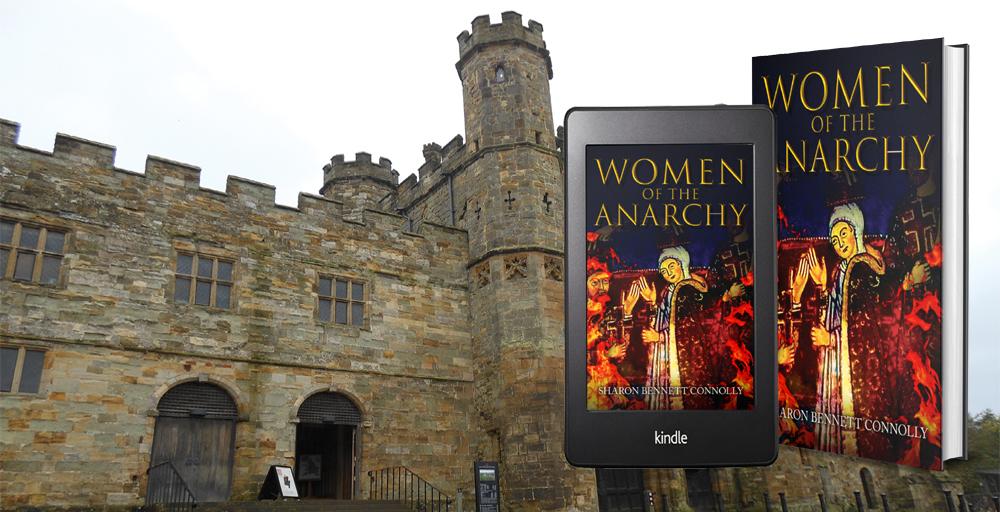
Two cousins. On the one side is Empress Matilda, or Maud. The sole surviving legitimate child of Henry I, she is fighting for her birthright and that of her children. On the other side is her cousin, Queen Matilda, supporting her husband, King Stephen, and fighting to see her own son inherit the English crown. Women of the Anarchy demonstrates how these women, unable to wield a sword, were prime movers in this time of conflict and lawlessness. It show how their strengths, weaknesses, and personal ambitions swung the fortunes of war one way – and then the other.

Available from Bookshop.orgAmberley Publishing and Amazon UK.

Coming on 15 June 2024: Heroines of the Tudor World
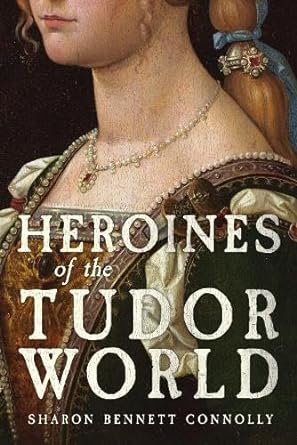
Heroines of the Tudor World tells the stories of the most remarkable women from European history in the time of the Tudor dynasty, 1485-1603. These are the women who ruled, the women who founded dynasties, the women who fought for religious freedom, their families and love. These are the women who made a difference, who influenced countries, kings and the Reformation. In the era dominated by the Renaissance and Reformation, Heroines of the Tudor World examines the threats and challenges faced by the women of the era, and how they overcame them. From writers to regents, from nuns to queens, Heroines of the Tudor World shines the spotlight on the women helped to shape Early Modern Europe.

Heroines of the Tudor World is now available for pre-order from Amberley Publishing and Amazon UK.

Also by Sharon Bennett Connolly:

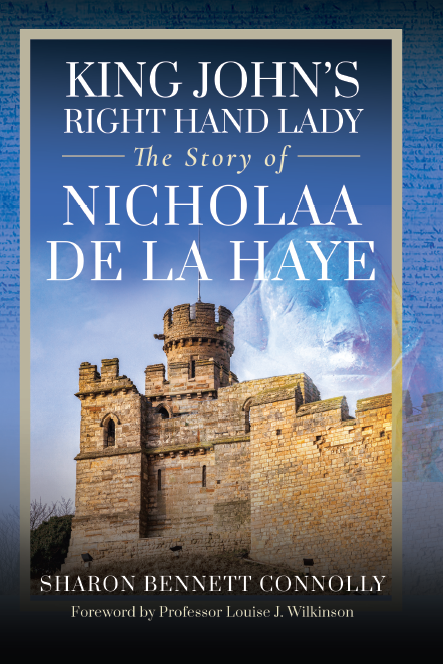
King John’s Right-Hand Lady: The Story of Nicholaa de la Haye is the story of a truly remarkable lady, the hereditary constable of Lincoln Castle and the first woman in England to be appointed sheriff in her own right. Available from all good bookshops or direct from Pen & Sword Booksbookshop.org and AmazonDefenders of the Norman Crown: The Rise and Fall of the Warenne Earls of Surrey tells the fascinating story of the Warenne dynasty, from its origins in Normandy, through the Conquest, Magna Carta, the wars and marriages that led to its ultimate demise in the reign of Edward III. Available from Pen & Sword BooksAmazon in the UK and US, and Bookshop.org

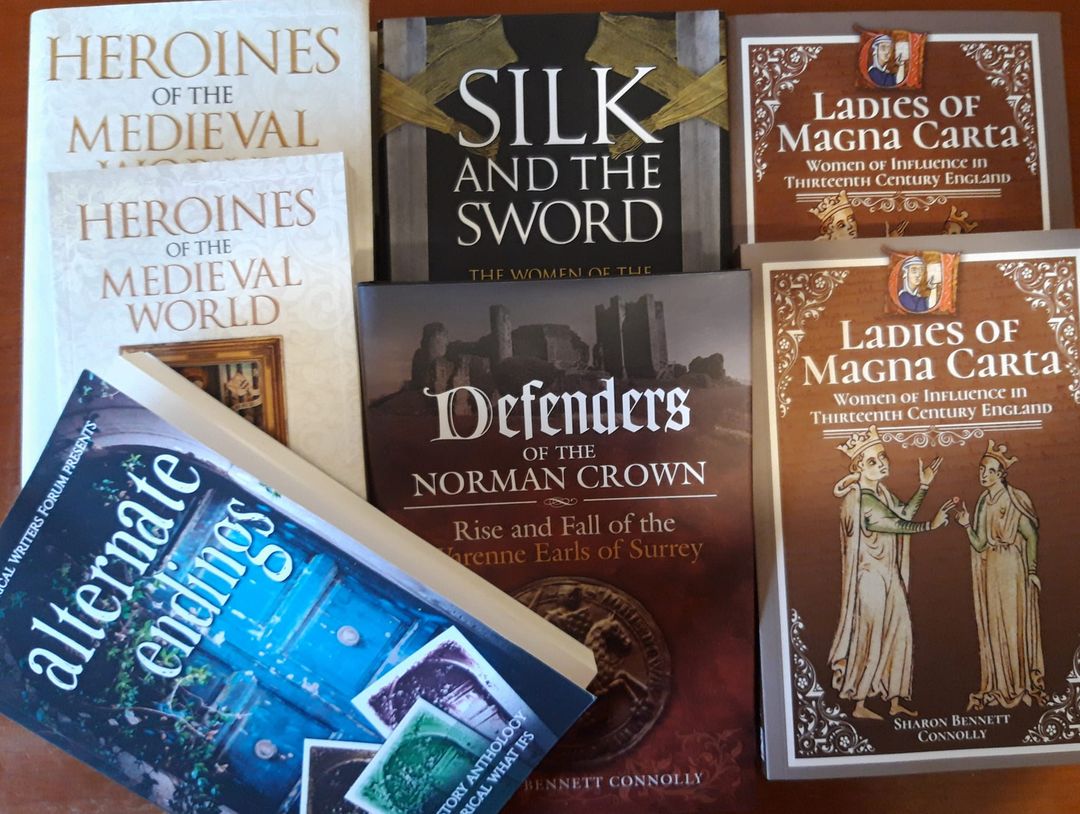
Ladies of Magna Carta: Women of Influence in Thirteenth Century England looks into the relationships of the various noble families of the 13th century, and how they were affected by the Barons’ Wars, Magna Carta and its aftermath; the bonds that were formed and those that were broken. It is now available in paperback and hardback from Pen & Sword,  Amazon, and Bookshop.orgHeroines of the Medieval World tells the stories of some of the most remarkable women from Medieval history, from Eleanor of Aquitaine to Julian of Norwich. Available now from Amberley Publishing and Amazon, and Bookshop.orgSilk and the Sword: The Women of the Norman Conquest traces the fortunes of the women who had a significant role to play in the momentous events of 1066. Available now from Amazon,  Amberley Publishing, and Bookshop.org.

Alternate Endings: An anthology of historical fiction short stories including Long Live the King… which is my take what might have happened had King John not died in October 1216. Available in paperback and kindle from Amazon.

Podcast:

Have a listen to the A Slice of Medieval podcast, which I co-host with Historical fiction novelist Derek Birks. Derek and I welcome guests, such as Bernard Cornwell and Elizabeth Chadwick, and discuss a wide range of topics in medieval history, from significant events to the personalities involved.

*

Don’t forget! Signed and dedicated copies of all my books are available through my online bookshop.

For forthcoming online and in-person talks, please check out my Events Page.

You can be the first to read new articles by clicking the ‘Follow’ button, liking our Facebook page or joining me on Twitter and Instagram.

*

©2024 Sharon Bennett Connolly FRHistS

Hildegard of Bingen

History ... the Interesting Bits
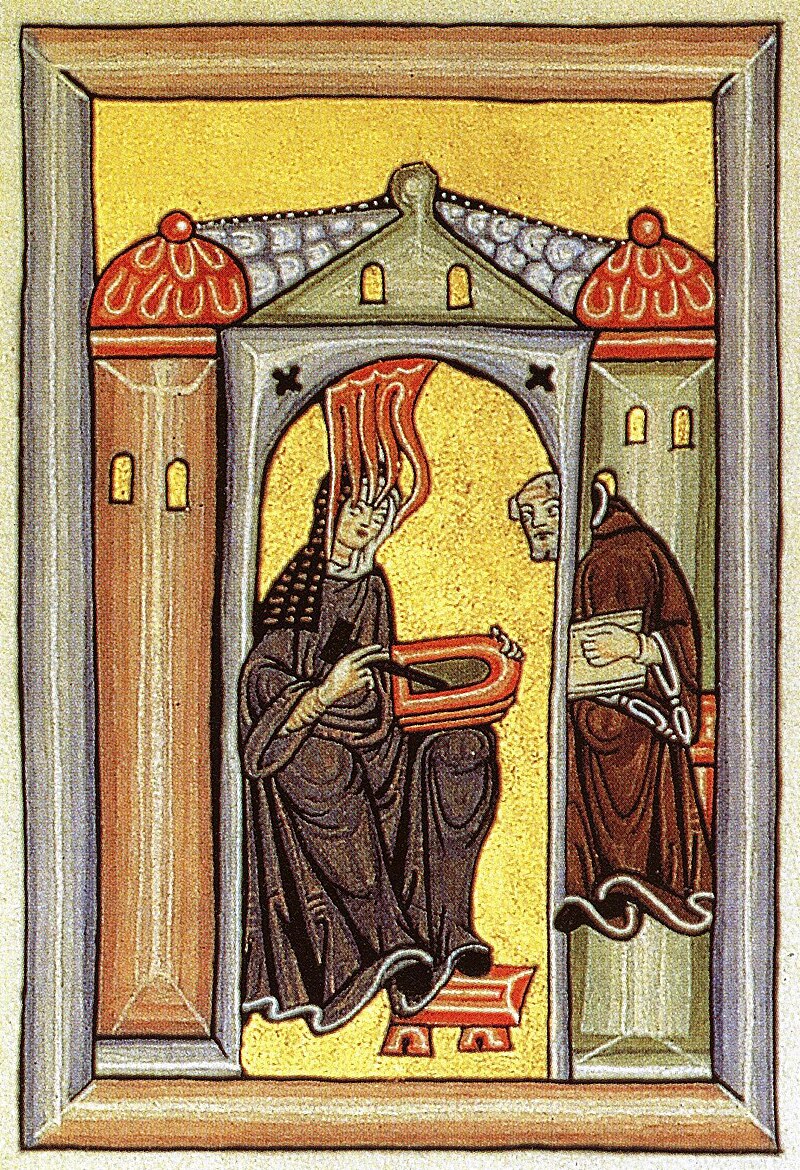
Illumination from Hildegard’s Scivias (1151) showing her receiving a vision and dictating to teacher Volmar

Hildegard of Bingen was rather brilliant. Born in around 1098 in Bremersheim in the Rhineland, into a noble family, Hildegard was the tenth child of Hildebert and Mechtild and was destined for life in a convent from an early age. She was around eight years old when she was placed with Jutta of Sponheim, a reclusive (possibly an anchorite), religious noblewoman who supervised the education of young girls from noble families. In 1112, at the age of fourteen, Hildegard, along with other girls in Jutta’s charge, took her vows at the monastery at Disibodenberg. Under Jutta, who became prioress at Disibodenberg, Hildegard was taught to read, and Latin, although she was not proficient in the latter, and in later life she relied on her secretaries to correct her Latin grammar.

Hildegard was a woman of many talents, she was a visionary, a musician, philosopher, theologian and an expert in medicine. She lived at the monastery of Disibodenberg for more than thirty years. It was in her early years there that she first experienced visions, which would make her famous even in her own lifetime. Initially, she only revealed her prophetic visions to her mentor, Jutta, and it was only when God commanded to her record them, that she revealed them to her friend and secretary, Volmar. With the permission of the Abbot of Disibodenberg, Kuno, and with the encouragement of Volmar and a fellow nun, Richardis of Stade, Hildegard started writing down her visions when she was in her forties. It was only after much encouragement from her Archbishop, Henry of Mainz, that her first work, Scivias, was published. The beautifully illustrated work was given approval from a commission set up by Pope Eugene III and was also supported by the saintly Bernard of Clairvaux.

Abbot Bernard of Clairvaux was one of a number of theologians with whom Hildegard maintained a correspondence. She regularly asked the venerable abbot for advice and guidance, and help in interpreting her visions. In one letter, she would tell him,

‘I have from earliest childhood seen great marvels which my tongue has no power to express but which the Spirit of God has taught me that I may believe … Indeed, I have no formal training at all, for I know how to read only on the most elementary level, certainly with no deep analysis. But please give me your opinion in this matter, because I am untaught and untrained in exterior material, but am only taught inwardly, in my spirit.’


Hildegard corresponded with the great personalities of her time, with emperors, popes and even queens. Sometime between 1154 and 1171, she responded to a letter from Eleanor of Aquitaine, asking for advice, with the words ‘Your mind is like a wall which is covered with clouds, and you look everywhere but have no rest. Flee this and attain stability with God and men, and God will help you in all your tribulations. May God give you his blessing and help in all your works’.

History ... the Interesting Bits
Hildegard of Bingen

In 1148 Hildegard had a vision in which God commanded her to take her nuns and establish her own nunnery. Although Abbot Kuno was reluctant to see Hildegard leave Disibodenberg – her reputation had brought the monastery pilgrims and prestige – she eventually prevailed and established a new convent at Rupertsberg. Hildegard’s convent admitted only noblewomen, she did not believe in mixing the classes within a convent, writing that different ‘classes of people should not be mixed, or they will fall out through deceit or arrogance, and the shame occasioned by their differences. The greatest danger of all is a breakdown in peaceful manners through mutual backbiting and hatred when the upper-class pounce on the lower or when the lower is promoted above the higher.’

It was at Rupertsberg that Hildegard wrote two medical works, Causes and Cures and Physica, after studying the illnesses of the sick who she cared for. Her writings suggested remedies for different ailments, using a wide variety of plants; for example, Hildegard explains how cloves could be used to remedy against gout, swollen intestines and hiccups. She also extolled the virtues of the rose as a cure for many ills, saying:

‘Rose is cold, and this coldness contains moderation which is useful. In the morning, or at daybreak, pluck a rose petal and place it on your eyes. It draws out the humour and makes them clear. One with small ulcers on his body should place rose petals over them. This pulls the mucus from them. One who is inclined to wrath should take rose and less sage and pulverise them. The sage lessens the wrath, and the rose makes him happy. Rose, and half as much sage, may be cooked with fresh, melted lard, in water, and an ointment made from this. The place where a person is troubled by a cramp or paralysis should be rubbed with it, and he will be better. Rose is also good to add to potions, unguents, and all medications. If even a little rose is added, they are so much better, because of the good virtues of the rose.’

Hildegard’s prolific writing career continued in her new surroundings. She produced religious poems, music and even a play, Ordo Virtutum. She also wrote two further books of her visions, Liber vitae meritorum (Book of Life’s Merits) and Liber divinonim operum (Book of Divine Works), and a life of the abbey’s patron saint, St Rupert. Ricardis of Stade and her friend and secretary, Volmar, had accompanied Hildegard from Disibodenberg to Rupertsberg and continued to help her as secretaries and assistants. A succession of secretaries came after Volmar and Richardis, including Hildegard’s nephew, Wesclein, her brother, Hugo of Tholey, and her last secretary, Guibert of Gembloux. Guibert and an earlier secretary, Godfrey of Disibodenbrg, both wrote biographies of Hildegard. The main purpose of the secretaries was to edit Hildegard’s works as her Latin grammar was far from proficient; however, they were under strict instructions not to change any of her words as they came from God, exhorting

‘Let no man be so audacious as to add anything to this writing lest he be blotted out from the book of life’.

History ... the Interesting Bits
Coin commemorating the 900th anniversary of the birth of Hildegard of Bingen

Hildegard was a prolific letter writer and, more than 800 years after her death, there are around 400 of her letters still extant today. Many wrote to her asking for advice and prophecies. Indeed, John of Salisbury said Pope Eugene III had consulted Hildegard for predictions about his reign, which had been accurate. In her letters, Hildegard acts as a mediator within the monastic world, soothing arguments within convents, between abbesses and their nuns, and abbots and their monks. She was respected by men and women alike, noble and poor. Hildegard gave advice and support and remonstrated against injustice and corruption. She travelled widely and undertook four preaching tours, between 1158 and 1170, a practice ordinarily forbidden to women, who were expected not to teach or speak in church.

Hildegard of Bingen died in her eighty-second year, at Rupertsberg, on 17 September 1179, and was canonised as Saint Hildegard on 10 May 2012 by Pope Benedict XVI, who declared her a doctor of the Church, in the same year. She was a woman of extraordinary talents, an exceptional writer, a poet and composer, a visionary, a mystic and a scientist. She was trusted and respected by the great men of her age and is considered to be the most influential woman in medieval Church history, a well-deserved accolade.

Sources:

The Letters of Hildegard of Bingen, translated by Joseph L. Baird and Radd K. Ehrman; Hildegardis Bingensis, Epistolarium, edited by Lieven Van Acker and Monika Klaes-Hachmoller; Medieval Europe 400–1500 by H.G. Koenigsberger; Medievalists.net, The Herbal Cures of Hildegard von Bingen – was she right?; Hildegard von Bingen’s Physica: The Complete English Translation of Her Classic Work on Health and Healing by Priscilla Throop; Six Trailblazing Medieval Women article by Susan Signe Morrison; The Letters of John of Salisbury, edited by W.J. Miller, S.J. Butler, H.E. Butler and revised by C.N.L. Brooke

*

My Books:

Signed, dedicated copies of all my books are available through my online bookshop.

Out now: Scotland’s Medieval Queens

Books by Sharon Bennett Connolly

Scotland’s history is dramatic, violent and bloody. Being England’s northern neighbour has never been easy. Scotland’s queens have had to deal with war, murder, imprisonment, political rivalries and open betrayal. They have loved and lost, raised kings and queens, ruled and died for Scotland. From St Margaret, who became one of the patron saints of Scotland, to Elizabeth de Burgh and the dramatic story of the Scottish Wars of Independence, to the love story and tragedy of Joan Beaufort, to Margaret of Denmark and the dawn of the Renaissance, Scotland’s Medieval Queens have seen it all. This is the story of Scotland through their eyes.

Scotland’s Medieval Queens gives a thorough grounding in the history of the women who ruled Scotland at the side of its kings, often in the shadows, but just as interesting in their lives beyond the spotlight. It’s not a subject that has been widely covered, and Sharon is a pioneer in bringing that information into accessible history.’ Elizabeth Chadwick (New York Times bestselling author)

Available now from Amazon and Pen and Sword Books

Also by Sharon Bennett Connolly:

Books by Sharon Bennett Connolly

Heroines of the Tudor World tells the stories of the most remarkable women from European history in the time of the Tudor dynasty, 1485-1603. These are the women who ruled, the women who founded dynasties, the women who fought for religious freedom, their families and love. Heroines of the Tudor World is now available for pre-order from Amberley Publishing and Amazon UK. Women of the Anarchy demonstrates how Empress Matilda and Matilda of Boulogne, unable to wield a sword themselves, were prime movers in this time of conflict and lawlessness. It shows how their strengths, weaknesses, and personal ambitions swung the fortunes of war one way – and then the other. Available from Bookshop.orgAmberley Publishing and Amazon UKKing John’s Right-Hand Lady: The Story of Nicholaa de la Haye is the story of a truly remarkable lady, the hereditary constable of Lincoln Castle and the first woman in England to be appointed sheriff in her own right. Available from all good bookshops Pen & Sword Booksbookshop.org and Amazon

Defenders of the Norman Crown: The Rise and Fall of the Warenne Earls of Surrey tells the fascinating story of the Warenne dynasty, from its origins in Normandy, through the Conquest, Magna Carta, the wars and marriages that led to its ultimate demise in the reign of Edward III. Available from Pen & Sword BooksAmazon in the UK and US, and Bookshop.orgLadies of Magna Carta: Women of Influence in Thirteenth Century England looks into the relationships of the various noble families of the 13th century, and how they were affected by the Barons’ Wars, Magna Carta and its aftermath; the bonds that were formed and those that were broken. It is now available in paperback and hardback from Pen & SwordAmazon, and Bookshop.orgHeroines of the Medieval World tells the stories of some of the most remarkable women from Medieval history, from Eleanor of Aquitaine to Julian of Norwich. Available now from Amberley Publishing and Amazon, and Bookshop.orgSilk and the Sword: The Women of the Norman Conquest traces the fortunes of the women who had a significant role to play in the momentous events of 1066. Available now from Amazon,  Amberley Publishing, and Bookshop.org.

Alternate Endings: An anthology of historical fiction short stories including Long Live the King… which is my take what might have happened had King John not died in October 1216. Available in paperback and kindle from Amazon.

Podcast:

Have a listen to the A Slice of Medieval podcast, which I co-host with Historical fiction novelist Derek Birks. Derek and I welcome guests, such as Bernard Cornwell and Elizabeth Chadwick, and discuss a wide range of topics in medieval history, from significant events to the personalities involved.

Every episode is also now available on YouTube.

*

Don’t forget! Signed and dedicated copies of all my books are available through my online bookshop.

For forthcoming online and in-person talks, please check out my Events Page.

You can be the first to read new articles by clicking the ‘Follow’ button, liking our Facebook page or joining me on TwitterThreadsBluesky and Instagram.

*

©2024 Sharon Bennett Connolly FRHistS.

Book Corner: A Day of Reckoning by Matthew Harffy

Hunlaf battles peril and intrigue on a dangerous voyage to Muslim Spain.

AD 796
. Sailing in search of an object of great power, Hunlaf and his comrades are far from home when they are caught up in a violent skirmish against pirates.

After the bloody onslaught, an encounter with ships from Islamic Spain soon sees them escorted under guard to the city of Qadis, one of the jewels of the Emirate of Al-Andalus and the true destination of their voyage.

Hunlaf believes the Emir’s lands hold the key to his search, but there are dangerous games at play. To achieve his goal, Hunlaf and his allies must walk a difficult path where friends and enemies alike are not always what they seem – and where a weapon deadlier than any yet seen could change the future of all the kingdoms in Europe.

What a read! A Day of Reckoning by Matthew Harffy is another riveting story following the adventures of Hunlaf and his quest for the mystical book, The Treasure of Life, stolen from the island monastery of Lindisfarne. And, as usual, Hunlaf’s quest lands the monk-turned-warrior and his friends – the crew of the Brymsteda – in deep water, on sea and land!

Matthew Harffy takes us on a voyage to medieval, Islamic Spain in pursuit of the lost book, and on a secret mission for Charlemagne – a mission so secret that no one is exactly sure of its purpose, beyond escorting the emissary, Giso. Hunlaf must use his wits as well as his sword-arm to extricate himself and his friends from Spain in one piece.

Nothing goes to plan. But then, if it did, it would not be a Matthew Harffy novel, would it? Spiced up with a will-they-won’t-they love story, the betrayal of friend and foe alike and a storyline that will keep you engrossed to the very end, A Day of Reckoning is another Matthew Harffy triumph.

We all stared at the small man. I wondered who he was. He wore a nondescript robe and none of the trappings that would mark him out as a man of noble birth. No gold glimmered on his fingers or at his neck. But he met our gaze with assurance, and the way he had hidden within the room, utterly still and undetected until he chose to reveal himself, was unnerving.

“We are to take him back to Northumbria?” I said. ” Giso is to carry your response to Æthelred King?”

Alhwin flashed his teeth at me in a wide grin. His smile made me almost as nervous as Giso’s stealthy apparition.

“Giso will carry my response, but not to Northumbria.”

“But we are to return northward.”

“Is that so?” he asked, taking on the tone of a tutor speaking to a slow pupil. “What was it that you were commanded to do, Hunlaf?”

I thought back to the orders we had received from Lord Mancas. My eyes narrowed at the memory, again wondering at the depth of knowledge Alhwin possessed. Could he be so cunning?

“We were commanded to bring the message to you and then to wait for your response, that we might carry it aboard Brymsteda.”

“Ah, yes, the fabled ship that Runolf constructed. I would like to see it before you leave.” His smile broadened. “But I digress. You have fulfilled the first part of your king’s orders. I have received his message and other letters from Northumbria. And Giso here will bear my response. But my response is not for Æthelred or indeed anyone from my homeland. You must carry it southward. To al-Andalus.”

In A Day of Reckoning we learn more about the character and lives of Hunlaf’s crewmates. Friendships develop and are stretched to the limit. Hunlaf himself, a natural leader, is learning of the highs and lows of command. His character and beliefs are challenged by the exotic people of Muslim Spain.

Harffy recreates the sights, sounds and tensions of 8th century Spain to the extent that you can imagine yourself in the heart of the city of Qadiz (Cadiz), sensing the mix of languages, cultures and customs, smelling the spices amidst the fumes of Greek fire and burning flesh (it is a Matthew Harffy book, after all). Impeccably researched for the history, culture and politics of the 8th century Iberian peninsula, Matthew Harffy immerses the reader in this strange, exotic world, full of hidden dangers.

Whether or not all our heroes survive is down to a mixture of skill and luck and – well, you’ll have to read it to find out!

Matthew Harffy has honed and perfected his skills as a storyteller over the years, to such an extent that a fabulous week of reading is anticipated and expected when a new book is released. And A Day of Reckoning does not disappoint.

To Buy the Book:

A Day of Reckoning by Matthew Harffy is now available on Amazon.

About the author:

Matthew Harffy lived in Northumberland as a child and the area had a great impact on him. The rugged terrain, ruined castles and rocky coastline made it easy to imagine the past. Decades later, a documentary about Northumbria’s Golden Age sowed the kernel of an idea for a series of historical fiction novels. The first of them is the action-packed tale of vengeance and coming of age, THE SERPENT SWORD.

Matthew has worked in the IT industry, where he spent all day writing and editing, just not the words that most interested him. Prior to that he worked in Spain as an English teacher and translator. Matthew lives in Wiltshire, England, with his wife and their two daughters.

For all the latest news and exclusive competitions, join Matthew online: http://www.matthewharffy.com, twitter.com/@MatthewHarffy, http://www.facebook.com/MatthewHarffyAuthor.

*

My Books

Signed, dedicated copies of all my books are available through my online bookshop.

Out nowKing John’s Right-Hand Lady: The Story of Nicholaa de la Haye

In a time when men fought and women stayed home, Nicholaa de la Haye held Lincoln Castle against all-comers, gaining prominence in the First Baron’s War, the civil war that followed the sealing of Magna Carta in 1215. A truly remarkable lady, Nicholaa was the first woman to be appointed sheriff in her own right. Her strength and tenacity saved England at one of the lowest points in its history. Nicholaa de la Haye is one woman in English history whose story needs to be told…

King John’s Right-Hand Lady: The Story of Nicholaa de la Haye is now available from Pen & Sword Booksbookshop.org and Amazon.

Coming 15 January 2024: Women of the Anarchy

On the one side is Empress Matilda, or Maud. The sole surviving legitimate child of Henry I, she is fighting for her birthright and that of her children. On the other side is her cousin, Queen Matilda, supporting her husband, King Stephen, and fighting to see her own son inherit the English crown. Both women are granddaughters of St Margaret, Queen of Scotland and descendants of Alfred the Great of Wessex. Women of the Anarchy demonstrates how these women, unable to wield a sword, were prime movers in this time of conflict and lawlessness. It show how their strengths, weaknesses, and personal ambitions swung the fortunes of war one way – and then the other.

Available for pre-order from Amberley Publishing and Amazon UK.

Also by Sharon Bennett Connolly:

Defenders of the Norman Crown: The Rise and Fall of the Warenne Earls of Surrey tells the fascinating story of the Warenne dynasty, of the successes and failures of one of the most powerful families in England, from its origins in Normandy, through the Conquest, Magna Carta, the wars and marriages that led to its ultimate demise in the reign of Edward III. Defenders of the Norman Crown: Rise and Fall of the Warenne Earls of Surrey is now available from Pen & Sword BooksAmazon in the UK and US, and  Bookshop.org.

Ladies of Magna Carta: Women of Influence in Thirteenth Century England looks into the relationships of the various noble families of the 13th century, and how they were affected by the Barons’ Wars, Magna Carta and its aftermath; the bonds that were formed and those that were broken. It is now available in paperback and hardback from Pen & Sword,  Amazon, and Bookshop.org.

Heroines of the Medieval World tells the stories of some of the most remarkable women from Medieval history, from Eleanor of Aquitaine to Julian of Norwich. Available now from Amberley Publishing and Amazon, and Bookshop.org.

Silk and the Sword: The Women of the Norman Conquest traces the fortunes of the women who had a significant role to play in the momentous events of 1066. Available now from Amazon,  Amberley Publishing, and Bookshop.org.

Alternate Endings: An anthology of historical fiction short stories including Long Live the King… which is my take what might have happened had King John not died in October 1216. Available in paperback and kindle from Amazon.

Podcast:

Have a listen to the A Slice of Medieval podcast, which I co-host with Historical fiction novelist Derek Birks. Derek and I welcome guests, such as Bernard Cornwell, and discuss a wide range of topics in medieval history, from significant events to the personalities involved.

*

Don’t forget! Signed and dedicated copies of all my books are available through my online bookshop.

For forthcoming online and in-person talks, please check out my Events Page.

You can be the first to read new articles by clicking the ‘Follow’ button, liking our Facebook page or joining me on Twitter and Instagram.

©2023 Sharon Bennett Connolly FRHistS

Book Corner: Crime and Punishment in Tudor England: From Alchemists to Zealots by April Taylor

Crime and Punishment in Tudor England: From Alchemists to Zealots tells the story of the enactment of law and its penalties from Henry VII to Elizabeth I.

The sixteenth century was remarkable in many ways. In England, it was the century of the Tudor Dynasty. It heralded the Reformation, William Shakespeare, the first appearance of bottled beer in London pubs, Sir Francis Drake, and the Renaissance. Oh, and the Spanish Armadas―all five of them! Yes, five armadas and all failures.

It was a watershed century for crime and punishment. Henry VII’s paranoia about the loyalty of the nobility led to military-trained vagrants causing mayhem and murder. Henry VIII’s Reformation meant executions of those refusing to take the Oath of Supremacy. State-controlled religion―summed up through the five reigns as Roman Catholic; Anglo-Catholic; Protestant; Roman Catholic, and Sort of Protestant but I don’t mind so long as you swear the Oath of Supremacy―became an increasingly complex, not to say confusing, issue for ordinary people.

Although primary sources are rare and sometimes incomplete, the life of criminals and the punishments meted out to them still fascinates.

Read about: John Daniell and how he tried to blackmail the Earl of Essex. The Stafford insurrection of 1486, the first serious opposition to the new king. The activities of con-man extraordinaire, Gregory Wisdom, and many more.

Crime and punishment didn’t start with the Tudors and this book summarises judicial practices built on tradition from the Roman occupation. It covers often gory details―what happens to the body when it is beheaded, burned, boiled, or hanged?

Arranged in alphabetical order of crimes, it recounts tales of blackmail, infanticide, kidnapping, heresy, and sumptuary laws. Told with occasional low-key humour, the book also includes Tavern Talk, snippets of quirky information.

Dip into it at your pleasure.

I have to admit, Crime and Punishment in Tudor England: From Alchemists to Zealots by April Taylor is one of the best non-fiction books I have had the pleasure of reading this year. I have always had a fascination for the law – I was even considering it as a career at one stage, until I realised I couldn’t stand the 9 to 5 lifestyle. Give me shift work and odd hours any day! So, I have been looking forward to this book ever since I heard April was writing it.

Opening with a fabulous history of the development of England’s legal system, Crime and Punishment in Tudor England explains not only the crimes committed, but also the various legal processes under different monarchs and at different social levels. Every crime imaginable is covered, from infanticide to treason. And so are the punishments and the reasons behind them; and how often such punishments were intended to fit the crime – or to shame the perpetrator. Every part of the criminal justice system is analysed, from religious offenders to witchcraft, from capital punishment to torture, prison condition and labour camps. Crime and Punishment in Tudor England also looks into the influences on crime, such as the impact of economic and social conditions, in a century of religious and political upheaval throughout Europe.

I do have to warn you: this book is not to be read while eating, unless you have a strong stomach. April Taylor includes descriptions of the various methods of execution, including beheading, hanging, burning and the particularly gruesome method of boiling alive!

Boiling to Death

Boiling to death was not often used in Tudor England to be fair, although it was the designated punishment for coiners on the continent. The method is self-explanatory. The offender would be put into a large container which might be filled with water, oil, molten lead, wax or sometimes wine, heated to boiling point.

The most famous victim was Richard Roose, cook to the Bishop of Rochester, John Fisher. It was established that Roose had decided to poison his master and guests by serving them pottage for dinner. Fisher was known to be abstemious and did not partake of the pottage, and nobody can blame him since it sounds less than appetising.

Pottage was a kind of thick porridge that peasants relied on for centuries as a staple food. For them, it would consist of grains and vegetables, boiled in a pot and often kept simmering for hours or days to make sure it was safe to eat. If rich households ate it, often meat or fish was added, but if you can imagine a kind of hearty soup full of heaven knows what that has been boiled to extinction, you have an idea of what pottage was like.

This case became something of a political ‘hot potato’(even though nobody had yet encountered one in 1531 in England). Sixteen of Fisher’s guests became ill, one of them, a man called Curwen, died. The rest of the poisoned pottage was given to the poor, at which point Alice Trypptt also died from eating it.

Bishop Fisher had been Margaret Beaufort’s confessor and it was he who had taught the young Henry VIII the tenets of theology. However, and here is the political bit, at the time Roose conducted his ‘jest’, thinking the powder he had put in the pottage was a laxative that would make his fellow servants ill, Bishop Fisher was a vocal opponent of Henry VIII’s marriage to Anne Boleyn. Moreover, there were rumours that the Boleyn family had engineered the poisoning. Obviously they all liked pottage.

The Spanish ambassador, Chapuys, and Thomas More, neither of whom were sympathetic to Anne, told Henry of the rumours accusing her, to which Henry is alleged to have answered that she was blamed for everything.

Henry decided he must act with speed to make sure any such rumour was quashed and that neither his beloved’s character nor her family were sullied (a bit of a non-starter since she was already known as the ‘goggleeyed whore’ by the majority of the population who adored Katherine of Aragon).

Back to Henry. He immediately told Parliament he wanted a bill passing that any servant found guilty of poisoning or attempting to poison their master or mistress should be attainted for high treason and executed.

Henry was quite clever in some ways. Because he made the crime one of high treason, it meant there was no need for prior judicial process or a jury to determine the guilt or otherwise of the defendant. This was not to be the first time Henry dispensed justice with the tenets of common law.

While some of the more sensational and high profile cases are discussed – such as Anne Boleyn and Catherine Howard – April also introduces cases far less familiar to the reader. Encompassing murder, fraud, blackmail and all manner of crimes, April Taylor presents a fascinating insight into Tudor crimes, ably supported by actual – and fascinating – case studies. Theses case studies not only demonstrate the nature of crimes and their punishment, but also the changing attitudes to crime, and the shifting emphasis on punishments, from the dawn of the Tudor period to the royal dynasty’s demise in 1603.

Crime and Punishment in Tudor England also highlights various miscarriages of justice, including where officials accused innocent victims with the aim of appropriating their goods and property. There are some truly harrowing tales, such as the youngest felon executed in the Tudor era – a girl of the tender age of 11 – and the general treatment of children who fell foul of the criminal justice system. It makes you happy to be living in the 21st century!

April Taylor has managed to cram so much information into Crime and Punishment in Tudor England: From Alchemists to Zealots it really is an impressive tome. It is thorough and well referenced and is written in a lively, entertaining writing style, with a fair amount of wit thrown in for good measure.

I cannot recommend it highly enough. Crime and Punishment in Tudor England: From Alchemists to Zealots is a pleasure to read!

To buy the book:

Crime and Punishment in Tudor England: From Alchemists to Zealots by April Taylor is now available from Amazon and Pen and Sword Books.

About the author:

April Taylor was born in the historic county of Lincolnshire in the UK. Having caught the history bug from a young age, April has always been fascinated by the physical manifestation of times past in particularly the Tudor period. This interest deepened when she discovered one of the most important events of Henry VIII’s reign, the Lincolnshire Rebellion that led to the Pilgrimage of Grace in 1536, started eight miles from where April was born. April has always ensured her research is as meticulous as possible. During her study of the Tudors for her fictional Luke Ballard books, April was intrigued by frequent references to Henry VIII’s charisma. Choosing a career in librarianship, April honed her research skills but always leant towards the history of the area in which she lived. This led to numerous talks to schools and local groups, especially in Worcester, yet another place of historic importance in the UK. April Taylor now lives near the rugged coast of north-east England in close proximity to one of the priories that fell victim to Henry VIII’s Reformation. She frequently walks her golden retriever in local forests using that time to work through complicated plotlines. She sings in the medieval church and occupies her down-time dressmaking and cross-stitching.

My Books

Signed, dedicated copies of all my books are available through my online bookshop.

Out nowKing John’s Right-Hand Lady: The Story of Nicholaa de la Haye

In a time when men fought and women stayed home, Nicholaa de la Haye held Lincoln Castle against all-comers, gaining prominence in the First Baron’s War, the civil war that followed the sealing of Magna Carta in 1215. A truly remarkable lady, Nicholaa was the first woman to be appointed sheriff in her own right. Her strength and tenacity saved England at one of the lowest points in its history. Nicholaa de la Haye is one woman in English history whose story needs to be told…

King John’s Right-Hand Lady: The Story of Nicholaa de la Haye is now available from Pen & Sword Booksbookshop.org and Amazon.

Coming 15 January 2024: Women of the Anarchy

On the one side is Empress Matilda, or Maud. The sole surviving legitimate child of Henry I, she is fighting for her birthright and that of her children. On the other side is her cousin, Queen Matilda, supporting her husband, King Stephen, and fighting to see her own son inherit the English crown. Both women are granddaughters of St Margaret, Queen of Scotland and descendants of Alfred the Great of Wessex. Women of the Anarchy demonstrates how these women, unable to wield a sword, were prime movers in this time of conflict and lawlessness. It show how their strengths, weaknesses, and personal ambitions swung the fortunes of war one way – and then the other.

Available for pre-order from Amberley Publishing and Amazon UK.

Also by Sharon Bennett Connolly:

Defenders of the Norman Crown: The Rise and Fall of the Warenne Earls of Surrey tells the fascinating story of the Warenne dynasty, of the successes and failures of one of the most powerful families in England, from its origins in Normandy, through the Conquest, Magna Carta, the wars and marriages that led to its ultimate demise in the reign of Edward III. Defenders of the Norman Crown: Rise and Fall of the Warenne Earls of Surrey is now available from Pen & Sword BooksAmazon in the UK and US, and  Bookshop.org.

Ladies of Magna Carta: Women of Influence in Thirteenth Century England looks into the relationships of the various noble families of the 13th century, and how they were affected by the Barons’ Wars, Magna Carta and its aftermath; the bonds that were formed and those that were broken. It is now available in paperback and hardback from Pen & Sword,  Amazon, and Bookshop.org.

Heroines of the Medieval World tells the stories of some of the most remarkable women from Medieval history, from Eleanor of Aquitaine to Julian of Norwich. Available now from Amberley Publishing and Amazon, and Bookshop.org.

Silk and the Sword: The Women of the Norman Conquest traces the fortunes of the women who had a significant role to play in the momentous events of 1066. Available now from Amazon,  Amberley Publishing, and Bookshop.org.

Alternate Endings: An anthology of historical fiction short stories including Long Live the King… which is my take what might have happened had King John not died in October 1216. Available in paperback and kindle from Amazon.

Podcast:

Have a listen to the A Slice of Medieval podcast, which I co-host with Historical fiction novelist Derek Birks. Derek and I welcome guests, such as Bernard Cornwell, and discuss a wide range of topics in medieval history, from significant events to the personalities involved.

*

Don’t forget! Signed and dedicated copies of all my books are available through my online bookshop.

For forthcoming online and in-person talks, please check out my Events Page.

You can be the first to read new articles by clicking the ‘Follow’ button, liking our Facebook page or joining me on Twitter and Instagram.

©2023 Sharon Bennett Connolly FRHistS

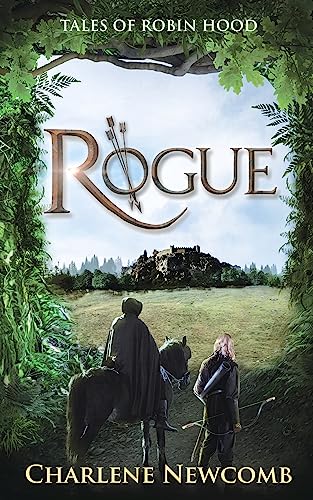
Book Corner: Rogue by Charlene Newcomb

A knight sworn to keep a family secret.
A king who seeks revenge.
A daring plan to save one life…or condemn many.


England 1216AD. Sir Robert Fitzwilliam faithfully serves the English crown, but when the outlaw Allan a Dale, a childhood friend, is captured and thrown in the sheriff’s dungeons beneath Nottingham Castle, trouble is certain to follow.

Allan’s days are numbered. Nothing would please King John more than to see an old nemesis hanged. Nothing except watching Robert’s estranged father, Robin, dangling dead from a rope beside him.

When his father joins forces with the Hood gang to rescue Allan, enlisting the aid of friends and even the girl he loves, Robert must decide where his loyalties lie.

TALES OF ROBIN HOOD

Before there was Robin Hood, there was Allan of the Hood. You know their story – in Sherwood Forest, they rob from the rich and give to the poor. Rogue is a retelling of the origins of the Robin Hood legend set during a time of rebellion and invasion near the end of King John’s reign. It’s a thrilling adventure of loyalty, love, sacrifice, spies, and intrigue.

Anyone who follows me on Twitter or Facebook will know that I have a soft spot for Sherwood Forest and for the legend of Robin Hood. I live just down the road from the Forest and grew up visiting regularly. This year, I have even given two talks there, about Nicholaa de la Haye, who was a friend – or associate – of Philip Marc – the dastardly sheriff of Nottingham of Robin Hood legend. So when I hear of a new Robin Hood novel, I have to have it.

I was not going to pass up the chance of reading Rogue by Charlene Newcomb.

And I was not disappointed. Rogue offers a new take on the Robin Hood legend, with the main protagonist being Robin’s son, Robert, rather than Robin himself. Although it is a standalone novel, many of the characters from Charlene Newcomb’s previous Battle Scars series put in an appearance – it’s a, sort of, spin-off. Set in 1216, in the midst of the First Barons’ War, Rogue follows the adventures and dilemmas of Robert Fitz William, son of Sir Robin of Louviers – Robin Hood – who finds himself as a knight in the household of the Sheriff of Nottingham, and working to support the rule of King John, while his friends are the king’s sworn enemies.

Allan struck the thick mail on Marc’s arm. “Get off that arse and fight fair,”he shouted.

Robert was almost on him. “Hood, stop!”

If Allan heard Robert, he ignored him.

A heartbeat later, Robert reined in hard, severing Allan’s path to the sheriff. Robert didn’t remember grabbing his mace, but the wooden shaft was in his hand, his arm outstretched, the weapon’s spiked head sweeping toward Allan.

Robert aimed for his shoulder.

The sheriff—and King John—wanted Allan alive. Thank God for that. Outlaw or not, Robert could never kill him.

Allan blocked the blow, but the chain locked with Robert’s sword and sent their weapons into the air. Twisting round, Allan stepped on a downed tree and took a flying leap. He slammed into Robert, knocking them both to the ground.

Robert groaned, winded and shaken. Allan sprang to his feet, unfazed by the fall. He circled, but his sword was out of reach. As Robert stood, Allan lunged at Marc again, grabbing his saddle bow. Marc cursed, striking Allan’s head with his gauntlet. He drew his horse’s reins down hard. The animal jinked backwards, dragging Allan with him. Holding tight to the pommel, Allan kept his footing, but a branch cracked beneath his boot. He pitched wildly like a man swinging on a rope.

Clenching his teeth, Robert bulled toward Allan. He seized Allan’s arm and flung him across the road.

Allan collided with the ground, face first. Leaves and dirt flew into the air. Lurching sideways, Allan rolled and caught himself with his hands. He tried to scramble away, but Robert loomed large behind him. Allan’s knees collapsed beneath him, and Robert grabbed him. He whipped Allan to his back.

Robert slammed his fist into Allan’s jaw. Once. “Sorry.”Twice. “You shoulda’run.”

Withdrawing his sword, Robert drove the tip toward Allan’s face.

Allan blinked. “Robin?”

I have to admit, I found Rogue rather refreshing. It is a new take on the Robin Hood legend with the son of Robin taking centre stage and faced with a dilemma – how to serve the wicked King John as a man in the house hold of the sheriff of Nottingham, whilst still aiding his friends in the rescue of Allan a Dale, who has been captured by the sheriffs men and now languished in the dungeons of Nottingham Castle. There is as much action, intrigue and danger as any reader would expect from a Robin Hood story, and not everything goes as planned.

Charlene Newcomb has slipped Robin Hood into the story at a time of national crisis. Magna Carta was issued in 1215 – and revoked. England is in the midst of civil war – the Barons’ War – and the south is occupied by an invading French force under Prince Louis – invited by the revels to take the crown. King John’s situation is dire and the castle at Nottingham is trying to hold firm for the king.

Of course, nothing is ever straight forward! Robert is a complex character with father issues and deep feelings of abandonment from a childhood where Robin was off fighting for King Richard, unaware that he had a son at all. These feelings cause conflict within Robert as he tries to assimilate the absent father that Robin was to him with the noble hero Robin is to people Robert trusts and admires. Though he is not a child – far from it – Robert has to confronted the conflicting images he has of his father, if he is to survive. The contrasting scenes of father and son trying to get to know each other, to understand the other’s motives and find away to work together gives a depth to the story beyond the traditional adventure.

Rogue by Charlene Newcomb is a fabulous read. It is entertaining from start to finish. Replete with action, it will have the reader on the edge of their seat. And Nicholaa de la Haye gets a mention! As Rogue is set in 1216, we know Nicholaa is just a few miles away, defending Lincoln Castle. I can only hope she appears in her full glory in the sequel. (Hint, hint, Char!).

If you are looking for a good, adventurous read with action on every page, Rogue by Charlene Newcomb is perfect!

To Buy the Book:

Rogue is now available on Amazon in the UK and US

About the Author:

Charlene Newcomb, aka Char, writes historical fiction and science fiction. Her award-winning Battle Scars trilogy is set in the 12th century during the reign of Richard the Lionheart. Her writing roots are in the Star Wars Expanded Universe (aka Legends) where she published 10 short stories in the Star Wars Adventure Journal. She published the scifi/space opera Echoes of the Storm in 2020, and returns to medieval times with her latest novel Rogue in 2023.

Librarian (retired).

U.S. Navy veteran.

Mom to 3, grandma to 3.

*

My Books

Signed, dedicated copies of all my books are available through my online store.

Out nowKing John’s Right-Hand Lady: The Story of Nicholaa de la Haye

In a time when men fought and women stayed home, Nicholaa de la Haye held Lincoln Castle against all-comers, gaining prominence in the First Baron’s War, the civil war that followed the sealing of Magna Carta in 1215. A truly remarkable lady, Nicholaa was the first woman to be appointed sheriff in her own right. Her strength and tenacity saved England at one of the lowest points in its history. Nicholaa de la Haye is one woman in English history whose story needs to be told…

King John’s Right-Hand Lady: The Story of Nicholaa de la Haye is now available from Pen & Sword Booksbookshop.org and Amazon.

Coming 15 January 2024: Women of the Anarchy

On the one side is Empress Matilda, or Maud. The sole surviving legitimate child of Henry I, she is fighting for her birthright and that of her children. On the other side is her cousin, Queen Matilda, supporting her husband, King Stephen, and fighting to see her own son inherit the English crown. Both women are granddaughters of St Margaret, Queen of Scotland and descendants of Alfred the Great of Wessex. Women of the Anarchy demonstrates how these women, unable to wield a sword, were prime movers in this time of conflict and lawlessness. It show how their strengths, weaknesses, and personal ambitions swung the fortunes of war one way – and then the other.

Available for pre-order from Amberley Publishing and Amazon UK.

Also by Sharon Bennett Connolly:

Defenders of the Norman Crown: The Rise and Fall of the Warenne Earls of Surrey tells the fascinating story of the Warenne dynasty, of the successes and failures of one of the most powerful families in England, from its origins in Normandy, through the Conquest, Magna Carta, the wars and marriages that led to its ultimate demise in the reign of Edward III. Defenders of the Norman Crown: Rise and Fall of the Warenne Earls of Surrey is now available from Pen & Sword BooksAmazon in the UK and US, and  Bookshop.org.

Ladies of Magna Carta: Women of Influence in Thirteenth Century England looks into the relationships of the various noble families of the 13th century, and how they were affected by the Barons’ Wars, Magna Carta and its aftermath; the bonds that were formed and those that were broken. It is now available in paperback and hardback from Pen & Sword,  Amazon, and Bookshop.org.

Heroines of the Medieval World tells the stories of some of the most remarkable women from Medieval history, from Eleanor of Aquitaine to Julian of Norwich. Available now from Amberley Publishing and Amazon, and Bookshop.org.

Silk and the Sword: The Women of the Norman Conquest traces the fortunes of the women who had a significant role to play in the momentous events of 1066. Available now from Amazon,  Amberley Publishing, and Bookshop.org.

Alternate Endings: An anthology of historical fiction short stories including Long Live the King… which is my take what might have happened had King John not died in October 1216. Available in paperback and kindle from Amazon.

Podcast:

Have a listen to the A Slice of Medieval podcast, which I co-host with Historical fiction novelist Derek Birks. Derek and I welcome guests, such as Bernard Cornwell, and discuss a wide range of topics in medieval history, from significant events to the personalities involved.

*

Don’t forget! Signed and dedicated copies of all my books are available through my online store.

For forthcoming online and in-person talks, please check out my Events Page.

You can be the first to read new articles by clicking the ‘Follow’ button, liking our Facebook page or joining me on Twitter and Instagram.

©2023 Sharon Bennett Connolly FRHistS
Book Corner: The Night of the Wolf by Cassandra Clark

The ruthless reign of Henry IV and the clerical tyranny of Archbishop Arundel keep Brother Chandler and his friends under constant threat in this gripping medieval mystery featuring friar-sleuth Rodric Chandler.

Chester, 1400. Riding for his life, with a copy of Chaucer’s heretical Canterbury Tales in his possession, friar-sleuth Brother Chandler is ambushed on the road and wakes up in a stranger’s house.

Is his ‘rescuer’, wool merchant John Willoughby, friend . . . or foe? Willoughby declares that he, like Chandler, has renounced the self-crowned King Henry IV and will help Chandler get his dangerous belongings to safety. He seems trustworthy, but Chandler knows that if he’s caught by the King’s merciless censors together with the Tales, he’ll be burned at the stake.

But then Willoughby’s young wife perishes in a terrible accident at their house – or so it seems . . . Willoughby asks Chandler to help investigate if it was indeed an accident or if someone had a hidden agenda.

All Chandler wants to do is find safe haven for Chaucer’s Tales and return to London, but he accepts the case. Little does he know that it will lead to secrets being uncovered which will put not only Chandler but also those around him in unimaginable peril.

Incredible adventure!

I have to admit, there is a gap in my knowledge in medieval history around the reigns of Henry IV and Henry V. I have never liked Henry IV, despite the fact I love researching his father, John of Gaunt. I don’t know why? I have read some a handful on the first two Lancastrian kings, but never delved deeper into their lives and reigns. So, The Night of the Wolf by Cassandra Clark is a refreshing and fascinating story set in a period that is unfamiliar to me, though I may now have to look more deeply into Henry IV and the attitudes towards his usurpation of the throne from his cousin Richard II.

The Night of the Wolf is an intriguing murder mystery – if it is murder, that is, rather than an unfortunate accident – set after the accession of Henry IV and the death in Pontefract Castle of Richard II. The lead character is a monk who has fallen foul of King Henry in the past and is trying to stay under the radar of the authorities and stay alive.

Cassandra Clark’s hero of The Night of the Wolf, Brother Chandler, is a fascinating character, a renegade friar who has left his lover and child to keep them safe, and travelled north with a book written by Geoffrey Chaucer. Having escaped the pyre once, Chandler must find somewhere safe to secrete Chaucer’s works, and to keep himself out of the reach of the new king’s men. His personal mission is hampered when the lady of the house in which he is staying falls from a roof garden – or was pushed.

Brother Chandler is drawn into a web of lies and deceit that he must unravel.

Chandler hesitated to ask him if he might see the body. When he entered one of the small chambers in the new wing a trestle had been erected with a sheet covering the body. He felt he had no right to enter without permission but there was only a priest there and a nun with a companion crossing the yard and following Chandler inside. They were soon kneeling and murmuring through a prayer for the dead.

The priest got up and after few words to Chandler went over to the trestle and lifted the sheet to one side. Her body was horribly bruised. Chandler indicated that the sheet should be replaced. It told him nothing. After another prayer, he left.

The housekeeper was watching from the kitchen window as he crossed the yard and the flurried movement as he approached suggested that she was not alone. In fact most of the house servants seemed to have congregated round the big, square, scrubbed table where the kitcheners ate their meals. As one they rose to their feet when he entered. Again he had to explain about the task Willoughby had given him.

The housekeeper, a wide-hipped, red-haired woman of about fifty, wrapped in a large white apron took charge of him. ‘Sit, brother. We are honoured to have the opportunity to help you in this sad and terrible business …’And so on in the same tone he had already heard before.

It seemed to be the case that nobody knew anything, no one had seen anything, and they were all shocked and would never forget the terrible sight of the poor young mistress lying in the yard in a pool of blood.

‘The devil curses us,’one of the maids said. ‘It is a judgement,’and she began to sob.

‘Be quiet, Maud, you have done nothing to warrant judgement,’the housekeeper reproved. ‘You’re always drawing attention to yourself. It’s my view, brother,’she turned to Chandler, ‘that the poor thing tripped and fell, maybe going too near the edge of the roof in order to watch people passing by in the street. Why else would she go so near the edge?’

‘I understand your master had not yet instructed his men to finish their work there? Were they not about to fix up a railing of some sort?’

‘I believe so.’

‘We were told not to venture out there until it was safe.’ the tearful maid interrupted. ‘But Mistress Willoughby liked her own way and said she needed somewhere more peaceful than the noise of a wool merchant’s house with carts clattering into the yard all day.’

‘And you are…?’

Poor Brother Chandler tries not to get involved in the murderous events in Chester, he has enough problems of his own. But he cannot refuse the pleas of a grieving husband and embarks on an investigation that uncovers the divided loyalties and various intrigues of the leading citizens of Chester. Chandler is a sympathetic character, so easy to like that the reader finds themselves egging him but at the same time urging caution.

It is fascinating to read a murder mystery set in a time that must have been very unsettled for the ordinary Englishmen. A political coup and change in monarch that leaves the realm divided between the rightful king – as there had been rumours of Richard II’s death, but no confirmation – and the man who seized the throne. Cassandra Clark clearly demonstrates the suspicion and fear that must have abounded in 1400. No one knowing who to trust nor where individual loyalties lay. Betrayal lurked around every corner.

The Night of the Wolf is a fabulous, fast- paced, murder mystery that will keep the reader on the edge of their seat, or sitting up, reading, late into the night, desperate to discover the murderer and learn that Brother Chandler is safe, or not. With such a clever, intriguing plot, I defy any reader not to be mesmerised by Brother Chandler’s story.

About the Author

Cassandra Clark is an award-winning scriptwriter for theatre, radio and television, and the author of nine previous novels in the Hildegard of Meaux medieval mystery series. Running wild near the ruins of the Abbey of Meaux in the East Riding as a child became her inspiration for the series while the discovery in a dusty archive of the Chronicle of Meaux written in 1395 is the secret source for her research.

To buy the book: Amazon

*

My Books

Signed, dedicated copies of all my books are available, please get in touch by completing the contact me form.

Out nowKing John’s Right-Hand Lady: The Story of Nicholaa de la Haye

In a time when men fought and women stayed home, Nicholaa de la Haye held Lincoln Castle against all-comers, gaining prominence in the First Baron’s War, the civil war that followed the sealing of Magna Carta in 1215. A truly remarkable lady, Nicholaa was the first woman to be appointed sheriff in her own right. Her strength and tenacity saved England at one of the lowest points in its history. Nicholaa de la Haye is one woman in English history whose story needs to be told…

King John’s Right-Hand Lady: The Story of Nicholaa de la Haye is now available from Pen & Sword Booksbookshop.org and Amazon.

Coming 15 January 2024: Women of the Anarchy

On the one side is Empress Matilda, or Maud. The sole surviving legitimate child of Henry I, she is fighting for her birthright and that of her children. On the other side is her cousin, Queen Matilda, supporting her husband, King Stephen, and fighting to see her own son inherit the English crown. Both women are granddaughters of St Margaret, Queen of Scotland and descendants of Alfred the Great of Wessex. Women of the Anarchy demonstrates how these women, unable to wield a sword, were prime movers in this time of conflict and lawlessness. It show how their strengths, weaknesses, and personal ambitions swung the fortunes of war one way – and then the other.

Available for pre-order from Amberley Publishing and Amazon UK.

Also by Sharon Bennett Connolly:

Defenders of the Norman Crown: The Rise and Fall of the Warenne Earls of Surrey tells the fascinating story of the Warenne dynasty, of the successes and failures of one of the most powerful families in England, from its origins in Normandy, through the Conquest, Magna Carta, the wars and marriages that led to its ultimate demise in the reign of Edward III. Defenders of the Norman Crown: Rise and Fall of the Warenne Earls of Surrey is now available from Pen & Sword BooksAmazon in the UK and US, and  Bookshop.org.

Ladies of Magna Carta: Women of Influence in Thirteenth Century England looks into the relationships of the various noble families of the 13th century, and how they were affected by the Barons’ Wars, Magna Carta and its aftermath; the bonds that were formed and those that were broken. It is now available in paperback and hardback from Pen & Sword,  Amazon, and Bookshop.org.

Heroines of the Medieval World tells the stories of some of the most remarkable women from Medieval history, from Eleanor of Aquitaine to Julian of Norwich. Available now from Amberley Publishing and Amazon, and Bookshop.org.

Silk and the Sword: The Women of the Norman Conquest traces the fortunes of the women who had a significant role to play in the momentous events of 1066. Available now from Amazon,  Amberley Publishing, and Bookshop.org.

Alternate Endings: An anthology of historical fiction short stories including Long Live the King… which is my take what might have happened had King John not died in October 1216. Available in paperback and kindle from Amazon.

Podcast:

Have a listen to the A Slice of Medieval podcast, which I co-host with Historical fiction novelist Derek Birks. Derek and I welcome guests, such as Bernard Cornwell, and discuss a wide range of topics in medieval history, from significant events to the personalities involved.

*

For forthcoming online and in-person talks, please check out my Events Page.

You can be the first to read new articles by clicking the ‘Follow’ button, liking our Facebook page or joining me on Twitter and Instagram.

©2023 Sharon Bennett Connolly FRHistS

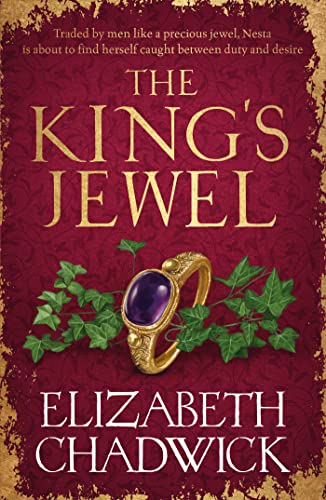
Book Corner: The King’s Jewel by Elizabeth Chadwick

Wales, 1093.

Meet Nesta, a woman trying to survive in a man’s world – a world where the men who would protect her are dead and banished.

The warm, comfortable family life of young Nesta, daughter of Prince Rhys of Deheubarth is destroyed when her father is killed and she is taken hostage. Her honour is further tarnished when she is taken as an unwilling concubine by King William’s ruthless younger brother Henry, who later ascends the throne under suspicious circumstances.

Gerald FitzWalter, an ambitious young knight is rewarded for his unwavering loyalty to his new King with Nesta’s hand in marriage. He is delighted, having always admired her from afar, but Nesta’s only comfort is her return to her beloved Wales where cannot help but be tempted by the handsome, charismatic and dangerous son of the Welsh prince, Owain. When he offers her the chance to join him in his plan to overthrow Norman rule she must choose between her duty and her desire . . .

The King’s Jewel by Elizabeth Chadwick recounts the story of Nesta ferch Rhys, the young Welsh princess who became the mistress of Henry I of England, bearing him at least one son. I first came across Nesta’s story when I was researching Heroines of the Medieval World. On the face of it, Nesta’s life appears exciting and adventurous but Elizabeth Chadwick tempers this with a clear understanding of how little control Nesta had over her own life.

Losing her father at an early age, the poor girl was a pawn in the hands of powerful men. She first appears in history as a concubine of King Henry I, though the exact dates of their relationship, the year it took place and how long it lasted, are unknown. What is known, is that Nesta had a son by Henry and that she married Gerald of Windsor as her first husband in the early 1100s. By 1109, she and Gerald had three children. By the end of her life, Nesta was the mother of no fewer than nine children by at least four different men. She had also endured an abduction by her cousin. As a Welsh heiress, in the face of Norman expansion, Nesta was never going to have a quiet life.

And Princess Nesta’s story has been brought to life by Elizabeth Chadwick’s The King’s Jewel, fleshing out the little we know to build a whole world and life around Nesta, telling a story that is both absorbing and historically accurate.

A short ride brought them to the settlement at Pembroke, where the women were thrust into a small room halfway up a stone lookout tower. A soldier tossed in their baggage, ransacked of all jewellery, fabric and trinkets. Straw pallets and coarse woollen blankets were thrown down for their slumber. The only light in the dismal chamber came from a slit of a window open to the air, and cresset lamps, burning smokily, sputtering tallow fat. The soldier returned, bringing bowls of barley broth and coarse bread, and then departed, closing and barring the door.

Nesta gazed at their bleak surroundings with a horrible, hollow sensation in her stomach. Two nights ago she had slept in a feather bed with fresh linen sheets and soft furs. She had enjoyed the clean, sweet light of beeswax candles and had washed her hands and face with rose water. She had belongings, wealth and status. Any man daring to fondle her haunch and laugh about it would have lost his hand for the insult.

‘What will happen to us?’ she asked her mother who was staring at the pallets in disgust.

‘If tehy had wanted to kill us, they would have done so by now,’ Gwladus said with a shrug. ‘I do not matter, unless I happen to be carrying another child, which I know I am not, but you are your father’s daughter, and that makes you valuable.’

Nesta folded her arms and shivered.

‘You had your first bleed at Christmas, and you are of an age to wed. Any of these Normans could take you to wife and lay claim to your father’s lands by their laws. You are not a hostage for your people, but a girl who brings with her the gift of stolen territory.’

Nesta went rigid. ‘I would never marry one of them – never!’

Gwladus shook her head. ‘What you want does not matter to them, but they cannot take what you already are inside. Hold your head high and remember your heritage. You are a pattern for others to emulate for courage and loyalty.’ She took three steps to Nesta and touched her cheek. ‘I am depending on you to carry this burden for your family’s pride.’

‘I won’t let you down.’ Nesta’s voice quivered for, despite her defiant words, she felt small, afraid and overwhelmed.

‘Oh, my beautiful girl.’ Gwladus hugged her hard and tears squeezed out from between her closed eyelids. ‘I know you will not. And you shall always have my love – always, whatever happens.’

Nesta drew in the familiar scent of her mother’s skin, seeking comfort. ‘I want it all to go away,’ she whispered.

‘I know you do. I know.’ Gwladus rocked her back and forth and kissed her cheek. ‘So do I. Dear Holy Virgin, so do I.’

As we have come to expect, The King’s Jewel is up to Elizabeth Chadwick’s usual superior standard of story-telling. Using what we do know of Nesta’s life, Elizabeth builds an engaging story of a young woman who makes the most of a life forced upon her, but whose instinct to rebel sees her make decisions that are not always in her own best interests. We are introduced to a girl who has lost almost everything, her father dead, brother in exile and mother condemned to a nunnery, and is at the mercy of her captors. From that frightened little girl, Elizabeth Chadwick creates a captivating story that will keep the reader enthralled to the very end.

The research is impeccable and I found myself nodding at the narrative more than once, knowing where Elizabeth found those little tidbits of information. And as I finished the book, I marvelled at how Elizabeth had managed to weave the few facts we do know seamlessly into the story, adding a strong element of authenticity to the elements of fiction.

The King’s Jewel is a thoroughly enjoyable novel, set in the heart of Wales against the backdrop of the Norman kings of England determined to stamp their authority on the wild country and its people. Nesta is, at once, the symbol of resistance and reluctant submission and her journey to find some kind of balance to her life is riveting.

The beauty of The King’s Jewel is that Elizabeth Chadwick brings Nesta to life, making her a real person in the eyes of the reader, eliciting sympathy for a young girl who has no control over her destiny, compassion for a woman making a marriage not of her choosing and understanding for the decisions made that led her down a dangerous path. Elizabeth understands the internal conflict that must have arisen for Nesta out of being married to a Norman, whilst wanting freedom for her Welsh homeland and people.

I cannot recommend it highly enough!

The King’s Jewel is available from Amazon.

About the Author:

New York Times bestselling author Elizabeth Chadwick lives in a cottage in the Vale of Belvoir in Nottinghamshire with her husband and their three dogs. Her first novel, The Wild Hunt, won a Betty Trask Award, To Defy a King won the Romantic Novelist Association’s Historical Novel Prize and The Scarlet Lion was nominated by Richard Lee – founder of the Historical Novel Society – as one of the top ten historical novels of the last decade. She often lectures at conferences and historical venues, has been consulted for television documentaries and is a member of the Royal Historical Society.

Keep in touch with Elizabeth via her website, her blogs or on social media.

http://www.elizabethchadwick.com
twitter: @chadwickauthor
facebook: ElizabethChadwick

*

My Books

Signed, dedicated copies of all my books are available, please get in touch by completing the contact me form.

Out nowKing John’s Right-Hand Lady: The Story of Nicholaa de la Haye

In a time when men fought and women stayed home, Nicholaa de la Haye held Lincoln Castle against all-comers, gaining prominence in the First Baron’s War, the civil war that followed the sealing of Magna Carta in 1215. A truly remarkable lady, Nicholaa was the first woman to be appointed sheriff in her own right. Her strength and tenacity saved England at one of the lowest points in its history. Nicholaa de la Haye is one woman in English history whose story needs to be told…

King John’s Right-Hand Lady: The Story of Nicholaa de la Haye is now available from Pen & Sword Booksbookshop.org and Amazon.

Coming 15 January 2024: Women of the Anarchy

On the one side is Empress Matilda, or Maud. The sole surviving legitimate child of Henry I, she is fighting for her birthright and that of her children. On the other side is her cousin, Queen Matilda, supporting her husband, King Stephen, and fighting to see her own son inherit the English crown. Both women are granddaughters of St Margaret, Queen of Scotland and descendants of Alfred the Great of Wessex. Women of the Anarchy demonstrates how these women, unable to wield a sword, were prime movers in this time of conflict and lawlessness. It show how their strengths, weaknesses, and personal ambitions swung the fortunes of war one way – and then the other.

Available for pre-order from Amberley Publishing and Amazon UK.

Also by Sharon Bennett Connolly:

Defenders of the Norman Crown: The Rise and Fall of the Warenne Earls of Surrey tells the fascinating story of the Warenne dynasty, of the successes and failures of one of the most powerful families in England, from its origins in Normandy, through the Conquest, Magna Carta, the wars and marriages that led to its ultimate demise in the reign of Edward III. Defenders of the Norman Crown: Rise and Fall of the Warenne Earls of Surrey is now available from Pen & Sword BooksAmazon in the UK and US, and  Bookshop.org.

Ladies of Magna Carta: Women of Influence in Thirteenth Century England looks into the relationships of the various noble families of the 13th century, and how they were affected by the Barons’ Wars, Magna Carta and its aftermath; the bonds that were formed and those that were broken. It is now available in paperback and hardback from Pen & Sword,  Amazon, and Bookshop.org.

Heroines of the Medieval World tells the stories of some of the most remarkable women from Medieval history, from Eleanor of Aquitaine to Julian of Norwich. Available now from Amberley Publishing and Amazon, and Bookshop.org.

Silk and the Sword: The Women of the Norman Conquest traces the fortunes of the women who had a significant role to play in the momentous events of 1066. Available now from Amazon,  Amberley Publishing, and Bookshop.org.

Alternate Endings: An anthology of historical fiction short stories including Long Live the King… which is my take what might have happened had King John not died in October 1216. Available in paperback and kindle from Amazon.

Podcast:

Have a listen to the A Slice of Medieval podcast, which I co-host with Historical fiction novelist Derek Birks. Derek and I welcome guests, such as Bernard Cornwell and discuss a wide range of topics in medieval history, from significant events to the personalities involved.

*

For forthcoming online and in-person talks, please check out my Events Page.

You can be the first to read new articles by clicking the ‘Follow’ button, liking our Facebook page or joining me on Twitter and Instagram.

©2023 Sharon Bennett Connolly FRHistS
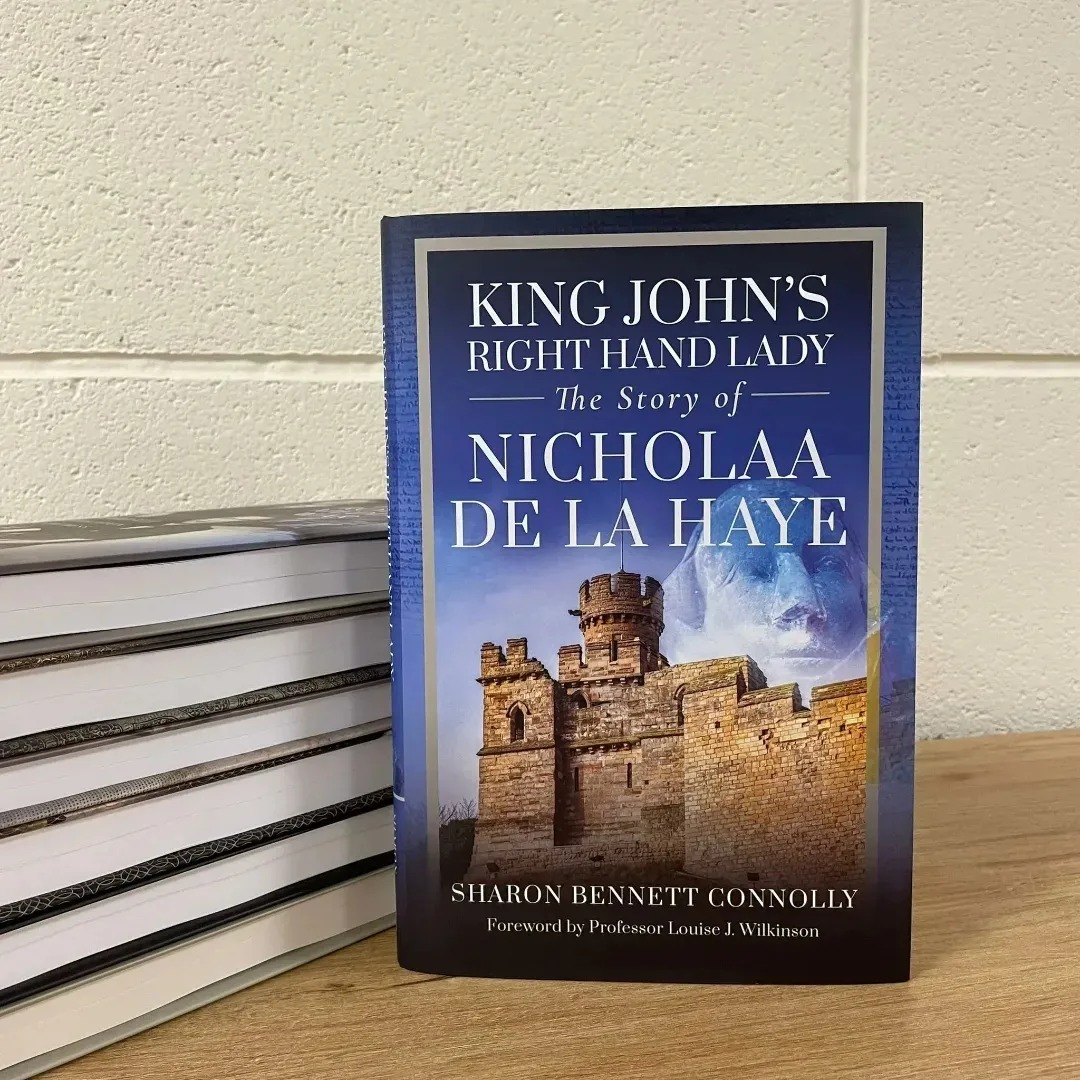
Book Corner: Legionary: The Emperor’s Shield by Gordon Doherty

Easier to split the sky, than part a soldier from his blade.

386 AD. The Eastern Roman Empire faces a trident of threats. The Gothic truce grows unstable. The standoff with Persia escalates. And the ambitions of the usurper on the Western throne grow dangerously unchecked.

Pavo, a broken veteran of the legions, cares for none of these things. His life is one of pastoral seclusion on his Thracian farm. A life of love, of peace. His wife and young son are his world. Still, every so often, things seen and done in his old life haunt him, like a cold and unwelcome breeze. But that is all they are, echoes of the past…

…until the past rises, like a shade, to rip his world and the Roman Empire apart.

The Emperor’s Shield is the 9th book in Gordon Doherty’s fabulous Legionary series.

And what an adventure!

The great Pavo has retired from the legions and settled into farming with his wife and young son, his body almost broken by dreadful wounds. However, when the Gothic tribes venture south, and threaten the peace and tranquillity that Pavo has built, he is put on his guard. And when rumours abound of trouble in the West, Pavo is called upon to join the personal guard of Eastern Emperor Theodosius and march once more with the legions, to vanquish the Western Emperor, Maximus – the man he had helped to attain the imperial purple.

And then there is the spy, the mysterious Peregrinus the Stranger. One man is set to bring the Eastern Empire down, by working from within to assure Maximus’ victory. Pavo has his suspicions, but Gordon Doherty will keep you guessing to the very end.

And the scene is set for a fabulous story.

Frugilo was up on his feet, trying his new boots out. He linked his hands behind his back, strolling over to the window to gaze outside. ‘The situation in the West is deteriorating,’ he said, again swatting Pavo’s question aside. ‘Reports indicate that the Dark Eagle is plotting.

Pavo frowned in bemusement, then laughed. ‘His name is Maximus. Magnus Maximus.’ His mind flashed with memories of those brutal days in Gaul when he had aided Maximus during the war to topple the wretched Emperor Gratian from the Western throne. ‘And plotting? About what?’

‘To make the West wholly his,’ Frugilo answered.

‘What?’ Pavo recoiled. ‘No. Valentinian governs Italy and Africa, and Maximus Gaul, Hispania and Britannia. They are co-emperors of the West. Theodosius established that power-sharing division and Maximus bent on one knee before him, pledging to respect it.’

‘You must have heard the rumours?’ said Frugilo.

Pavo folded his arms. ‘Enlighten me.’

‘Twice in the last year, Maximus has sent invitations for his young counterpart to leave the seat of Mediolanum and travel north too live instead at his court in Gaul. Requests, in effect, for Valentinian to relinquish his co-stewardship of the West and to extinguish the government in Italia. Maximus seeks to break his oath with Emperor Theodosius. Tensions run high.’

Pavo chewed over this for a time. Gratian had allegedly done the same, pressuring Valentinian to abdicate, It was probably those old tales being recycled, he concluded. ‘Gossip,’ he scoffed. ‘How many mouths and ears have those rumours passed across by now? I’d sooner trust an Abderan pirate.’

‘And,’ Frugilo continued as if Pavo had not spoken, ‘it appears Maximus has begun an initiative to swell his armies. New legions are being raised. Tribes are being invited across the River Rhenus to be trained ad armed in the Roman way. The Dark Eagle is preparing for something.’

Pavo is the perfect protagonist, a man tired of war but with a sense of duty that will not allow him to rest while his old comrades fight. Brave beyond measure and fearless for his own safety, Pavo also has a mind to tactics – unconventional ones to say the least. There is no surprise as to why the Eastern Emperor wants Pavo by his side. Pavo is aided by his friends from his old legion, and the mysterious Frugilo, a stranger who is at once familiar.

The characters Gordon Doherty brings into the story are vivid and complex. They draw the reader into the story, recreating a world long lost. The research that must have gone into this series is immense. But in The Emperor’s Shield, Doherty puts it to good use, taking the reader on a memorable journey, showing them the marching legions, the vast expanse of the Roman Empire and introducing them to the men who created and upheld it.

The Emperor’s Shield is a thoroughly engaging and entertaining story, with such an air of mystery and suspense that the reader will not want to put it down. You have to get to the end. You have to find out the truth.

Gordon Doherty is one of the best storytellers around, and with the The Emperor’s Shield he has proved this yet again.

About the author:

Gordon is a Scottish writer, addicted to reading and writing historical fiction. His novels have been Amazon smash-hits, and have gone on to be translated and published in Russia, Italy and Greece.

Gordon’s love of history was first kindled by visits to the misty Roman ruins of Britain and the sun-baked antiquities of Turkey and Greece. His expeditions since have taken him all over the world and back and forth through time (metaphorically, at least), allowing him to write tales of the later Roman Empire, Byzantium, Classical Greece and even the distant Bronze Age.

For exciting news, extracts and exclusive content from Gordon:

Visit http://www.gordondoherty.co.uk

Follow him on Twitter @GordonDoherty

Follow his author page on http://www.facebook.com/gordon.doherty

Subscribe to his YouTube channel: http://www.youtube.com/c/GordonDohertyAuthor

My Books:

Signed, dedicated copies of all my books are available, please get in touch by completing the contact me form.

Coming 30 May 2023!

King John’s Right-Hand Lady: The Story of Nicholaa de la Haye is now available for pre-order from Amazon UK. (I will hopefully have a US release date shortly)

In a time when men fought and women stayed home, Nicholaa de la Haye held Lincoln Castle against all-comers. Not once, but three times, earning herself the ironic praise that she acted ‘manfully’. Nicholaa gained prominence in the First Baron’s War, the civil war that followed the sealing of Magna Carta in 1215.

A truly remarkable lady, Nicholaa was the first woman to be appointed sheriff in her own right. Her strength and tenacity saved England at one of the lowest points in its history. Nicholaa de la Haye is one woman in English history whose story needs to be told…

Also by Sharon Bennett Connolly:

Defenders of the Norman Crown: The Rise and Fall of the Warenne Earls of Surrey tells the fascinating story of the Warenne dynasty, of the successes and failures of one of the most powerful families in England, from its origins in Normandy, through the Conquest, Magna Carta, the wars and marriages that led to its ultimate demise in the reign of Edward III. Defenders of the Norman Crown: Rise and Fall of the Warenne Earls of Surrey is now available from Pen & Sword BooksAmazon in the UK and US, Bookshop.org and Book Depository.

Ladies of Magna Carta: Women of Influence in Thirteenth Century England looks into the relationships of the various noble families of the 13th century, and how they were affected by the Barons’ Wars, Magna Carta and its aftermath; the bonds that were formed and those that were broken. It is now available in paperback and hardback from Pen & Sword,  AmazonBookshop.org and from Book Depository worldwide.

Heroines of the Medieval World tells the stories of some of the most remarkable women from Medieval history, from Eleanor of Aquitaine to Julian of Norwich. Available now from Amberley Publishing and Amazon, Bookshop.org and from Book Depository worldwide.

Silk and the Sword: The Women of the Norman Conquest traces the fortunes of the women who had a significant role to play in the momentous events of 1066. Available now from Amazon,  Amberley Publishing, Bookshop.org and Book Depository.

Alternate Endings: An anthology of historical fiction short stories including Long Live the King… which is my take what might have happened had King John not died in October 1216. Available in paperback and kindle from Amazon.

*

You can be the first to read new articles by clicking the ‘Follow’ button, liking our Facebook page or joining me on Twitter and Instagram.

©2023 Sharon Bennett Connolly FRHistS

Book Corner: The Gentlewoman Spy by Adele Jordan

What happens when the spymaster’s right-hand man turns out to be a woman…?

1584, London

Sir Francis Walsingham, spymaster to the Tudor Queen Elizabeth has trained Kit Scarlett since she was a girl. Aware that she is able to infiltrate places that his male agents cannot, he sees her as an invaluable member of his team.

When Walsingham discovers that a rebel alliance is planning to overthrow Queen Elizabeth and put Mary, Queen of Scots on the English throne, he summons Kit immediately.

Together with loyal Scottish agent Iomhar Blackwood, Kit is tasked with finding out the full details of the treasonous plot.

Both used to working alone, Kit and Iomhar struggle to get along, but they must come together if they are to have any chance of stopping the deadly conspiracy against the queen.

Can Kit secure her place in a man’s world? Will she save Queen Elizabeth?

Or will her daring ultimately be her downfall…?

THE GENTLEWOMAN SPY is the first book in the Kit Scarlett Tudor Mysteries Series. It is a thrilling historical espionage adventure set in Elizabethan London with a feisty female lead.

What a fabulously entertaining adventure!

The Gentlewoman Spy by Adele Jordan follows a young woman, Kit Scarlett, as she attempts to uncover the secrets of Queen Elizabeth I’s enemies. Kit has been raised – and trained – by Elizabeth’s spymaster, Sir Francis Walsingham, to become a talented young agent with the ability to decrypt most cyphers. Forced to work with a partner, Iomahar, the story follows both their investigation and the burgeoning friendship between the two agents.

The Gentlewoman Spy is a lively, clever story set against the background of Mary Queen of Scots imprisonment and the plots associated with her, both the free the captive queen and to assassinate Elizabeth. The plot has several twists and turns at the most unexpected moments. And the two leading characters are not without their secrets, which adds to the mystery.

Kit launched for the figure. Without hesitation she reached up and wrapped one arm around his neck, with the other hand holding the dagger, she placed the tip at the top of his throat. It was the perfect threat, and her intruder fell still, his chin tilted up for if he moved at all, the blade could pierce him.

“Do not move,” she ordered.

“Ye’ve already wounded me once this week, do ye really have to do it again?” Iomhar’s distinctive deep voice rang out.

Startled, she released him, watching as he stumbled away from her, into the streams of light from teh windows above.

“You broke in,” Kit accused, gesturing to her door.

“Not exactly.” With a hand on his throat, he rubbed the sore spot she had created. “There was nay answer when I knocked so I found a way to open the door.”

“That’s called breaking in,” she warned, still holding the dagger out in his direction.

“Please do not use that again,” he said tartly, pulling back the sleeve of his doublet to reveal a bandage on his forearm. “Once was enough.”

“I had to find a way to make you release me back in Edinburgh, it was the simplest way.” She placed the dagger back into her belt. “You shouldn’t go sneaking around other people’s lodgings if you don’t want to get hurt.”

“This is where ye live?” he asked, looking around.

“Yes, why?” She followed him as he began to examine the place.

“Hmm…”

Kit Scarlett is a refreshing change in historical fiction detective stories. A wonderful, unique character, young Kit prefers the freedoms afforded by boys’ clothing, rather than the bulky cumbersome, dresses women have to wear. She is clever, brave and highly entertaining. Her mysterious origins are a theme, I’m sure, that will run through the series. I can’t wait to discover who she really is. Iomhar, her partner and a Scot, has his own secrets – and his own reasons for working working with Walsingham against his fellow countrymen. It all adds to the drama.

Adele Jordan takes the reader on a journey of discovery, through the dark streets of Tudor London and into the fashionable townhouses of the nobility, weaving a story of mystery and intrigue that draws the reader in from the very start.

The action and plot twists will keep you gripped!

The Gentlewoman Spy by Adele Jordan is now available on kindle and in paperback from Amazon.

About the author:

Adele Jordan is a writer with a fascination for history. Her focus is fiction in the Tudor era, telling the stories of women and adventure. Whether it’s inspired by true events or created purely from imagination, she desires to write stories from this captivating era that haven’t been written before of those on the edges of society, the paupers, the spies, the workers and those who have not had a voice.

Adele studied English at the University of Exeter before moving into an eclectic career of publishing and marketing. Having worked with the National Trust’s photography department for two years, Adele travelled the country to visit the landscapes and historical places that have carved England and Wales’ heritage. When Covid struck, the job disappeared overnight, and Adele committed her time to ghost writing and authoring her own stories, returning to her childhood dream job. Since then, she has had over twenty successful books published as a ghost writer and hopes to turn that success into stories now written in her own name.

*

My Books:

Signed, dedicated copies of all my books are available, please get in touch by completing the contact me form.

Coming 30 May 2023!

King John’s Right-Hand Lady: The Story of Nicholaa de la Haye is now available for pre-order from Amazon UK and Pen and Sword Books. (I will hopefully have a US release date shortly)

In a time when men fought and women stayed home, Nicholaa de la Haye held Lincoln Castle against all-comers. Not once, but three times, earning herself the ironic praise that she acted ‘manfully’. Nicholaa gained prominence in the First Baron’s War, the civil war that followed the sealing of Magna Carta in 1215.

A truly remarkable lady, Nicholaa was the first woman to be appointed sheriff in her own right. Her strength and tenacity saved England at one of the lowest points in its history. Nicholaa de la Haye is one woman in English history whose story needs to be told…

Also by Sharon Bennett Connolly:

Defenders of the Norman Crown: The Rise and Fall of the Warenne Earls of Surrey tells the fascinating story of the Warenne dynasty, of the successes and failures of one of the most powerful families in England, from its origins in Normandy, through the Conquest, Magna Carta, the wars and marriages that led to its ultimate demise in the reign of Edward III. Defenders of the Norman Crown: Rise and Fall of the Warenne Earls of Surrey is now available from Pen & Sword BooksAmazon in the UK and US, Bookshop.org and Book Depository.

Ladies of Magna Carta: Women of Influence in Thirteenth Century England looks into the relationships of the various noble families of the 13th century, and how they were affected by the Barons’ Wars, Magna Carta and its aftermath; the bonds that were formed and those that were broken. It is now available in paperback and hardback from Pen & Sword,  AmazonBookshop.org and from Book Depository worldwide.

Heroines of the Medieval World tells the stories of some of the most remarkable women from Medieval history, from Eleanor of Aquitaine to Julian of Norwich. Available now from Amberley Publishing and Amazon, Bookshop.org and from Book Depository worldwide.

Silk and the Sword: The Women of the Norman Conquest traces the fortunes of the women who had a significant role to play in the momentous events of 1066. Available now from Amazon,  Amberley Publishing, Bookshop.org and Book Depository.

Alternate Endings: An anthology of historical fiction short stories including Long Live the King… which is my take what might have happened had King John not died in October 1216. Available in paperback and kindle from Amazon.

*

You can be the first to read new articles by clicking the ‘Follow’ button, liking our Facebook page or joining me on Twitter and Instagram.

©2023 Sharon Bennett Connolly FRHistS

Book Corner: Forest of Foes by Matthew Harffy

AD 652. Beobrand has been ordered to lead a group of pilgrims to the holy city of Rome. Chief among them is Wilfrid, a novice of the church with some surprisingly important connections. Taking only Cynan and some of his best men, Beobrand hopes to make the journey through Frankia quickly and return to Northumbria without delay, though the road is long and perilous.

But where Beobrand treads, menace is never far behind. The lands of the Merovingian kings are rife with intrigue. The queen of Frankia is unpopular and her ambitious schemes, though benevolent, have made her powerful enemies. Soon Wilfrid, and Beobrand, are caught up in sinister plots against the royal house.

After interrupting a brutal ambush in a forest, Beobrand and his trusted gesithas find their lives on the line. Dark forces will stop at nothing to seize control of the Frankish throne, and Beobrand is thrown into a deadly race for survival through foreign lands where he cannot be sure who is friend and who is foe.

The only certainty is that if he is to save his men, thwart the plots, and unmask his enemies, blood will flow.

He’s done it again!

Magnificent adventure!

Forest of Foes by Matthew Harffy is the author’s 12th book and the 9th instalment of his magnificent Bernicia Chronicles. Beobrand is once again journeying over the Narrow Sea into Frankia. This time he is on his way to Rome, escorting a novice monk on his pilgrimage. Unfortunately, as with all Beobrand’s adventures, things don’t quite go to plan…

Beobrand and his loyal gesiths first save the wife of Clovis II, Queen Balthild, from an ambush in the woods and is then drawn into the world of the Frankish court and the conspiracies and controversies that surround it.

“What is he saying?” Beobrand asked Halinard in a quiet voice. The woman’s eyes flicked to him as he spoke, her expression questioning, no doubt surprised by his use of the Anglisc tongue. Beobrand marvelled at her apparent lack of fear.

“He says he will kill her, if let him go we do not,” said Halinard, his words clumsy yet clear.

“I hardly need you to tell me that,” replied Beobrand.

“I tell you what he says,” said Halinard, shaking his head. “He says nothing interesting.”

Brocard spoke to the man in the same calming tone he had used before. The brigand shouted more loudly, his voice cracking with his anger and fear. Behind him the maidservant looked ready to swoon.

Beobrand stepped closer to Brocard, beckoning for Halinard to follow him.

“Ask him his name,” he said in a low voice. Halinard translated. Brocard looked askance at Beobrand, then, with a shrug, he spoke to the brigand.

“Omer,” replied the brigand, narrowing his eyes as though he expected a trick.

Beobrand nodded.

“Offer him a horse,” Beobrand said. Halinard whispered his words in Frankish.

Brocard hesitated. One of his men, the one with the great bleeding wound on his face, growled something. Brocard held up his hand for patience and offered Omer a steed.

Omer replied and Beobrand understood enough to know that he wanted two mounts, one for him and one for his hostage.

“No,” Beobrand said in Frankish. He held up a single finger. “One horse.”

Omer shook his head and began to shout. Beobrand could not make out all the words, but it was clear Omer was not happy with the answer. Beobrand watched the knife blade waver at the woman’s lovely throat. Omer must know that if he killed her, he would surely follow the woman to the afterlife in moments. And yet men under such pressure do not always act reasonably and Beobrand became increasingly worried that the brigand might yet cut her throat by accident.

“Tell him he can have two horses,” he said. Halinard translated for him. Omer again looked as though he suspected he was being lured into a trap. He spoke quickly, urgently, but Beobrand could barely make sense of any of it. He was pleased though, to see that some of the tension had left Omer’s shoulders. The knife had lowered slightly from the lady’s neck. Brocard spoke up in anger at Beobrand’s offer. But before Beobrand could respond, the lady being held hostage moved with the speed of a striking serpent and Omer’s speech came to a sudden, choked halt. For a couple of heart beats he stood there, unmoving and silent, mouth opening and closing without sound. Then his hand fell, the knife tumbling from lifeless fingers.

Matthew Harffy has written yet another cracking Beobrand adventure. Changing the location to France has opened up a world of opportunities, which includes integrating the remarkable story of Balthild, the slave girl who became queen of the Franks as the wife of Clovis II. It also see Beobrand facing new challenges, including that of language. Matthew Harffy could have made life so much easier for himself by having Beobrand pick up the language of the Franks easily, but it makes for a better story, and a more credible one, that he struggles like the rest of us. No one is perfect.

As has come to be expected from Matthew Harffy’s writing, the character development is paramount and it is interesting to see how Cynan continues to grow into the role of war leader and confidant. There is tragedy along the way and, as with any great story, a few surprises that will leave the reader reeling. But it all makes for a fabulous story.

Do not expect your emotions to escape unscathed.

Forest of Foes by Matthew Harffy is an adventure not to be missed!

About the author:

Matthew Harffy lived in Northumberland as a child and the area had a great impact on him. The rugged terrain, ruined castles and rocky coastline made it easy to imagine the past. Decades later, a documentary about Northumbria’s Golden Age sowed the kernel of an idea for a series of historical fiction novels. The first of them is the action-packed tale of vengeance and coming of age, THE SERPENT SWORD.

Matthew has worked in the IT industry, where he spent all day writing and editing, just not the words that most interested him. Prior to that he worked in Spain as an English teacher and translator. Matthew lives in Wiltshire, England, with his wife and their two daughters.

Pre-order link

Amazon: https://amzn.to/3U5eD43

Follow Matthew Harffy

Twitter: @MatthewHarffy

Instagram: @beobrand

Website: matthewharffy.com

Follow Aries

Twitter: @AriesFiction

Facebook: Aries Fiction

Website: http://www.headofzeus.com

*

My Books:

Signed, dedicated copies of all my books are available, please get in touch by completing the contact me form.

Defenders of the Norman Crown: The Rise and Fall of the Warenne Earls of Surrey tells the fascinating story of the Warenne dynasty, of the successes and failures of one of the most powerful families in England, from its origins in Normandy, through the Conquest, Magna Carta, the wars and marriages that led to its ultimate demise in the reign of Edward III. Defenders of the Norman Crown: Rise and Fall of the Warenne Earls of Surrey is now available from Pen & Sword BooksAmazon in the UK and US, Bookshop.org and Book Depository.

1 family. 8 earls. 300 years of English history!

Also by Sharon Bennett Connolly:

Ladies of Magna Carta: Women of Influence in Thirteenth Century England looks into the relationships of the various noble families of the 13th century, and how they were affected by the Barons’ Wars, Magna Carta and its aftermath; the bonds that were formed and those that were broken. It is now available in paperback and hardback from Pen & SwordAmazonBookshop.org and from Book Depository worldwide.

Heroines of the Medieval World tells the stories of some of the most remarkable women from Medieval history, from Eleanor of Aquitaine to Julian of Norwich. Available now from Amberley Publishing and Amazon, Bookshop.org and Book Depository.

Silk and the Sword: The Women of the Norman Conquest traces the fortunes of the women who had a significant role to play in the momentous events of 1066.  Available now from Amazon,  Amberley Publishing, Bookshop.org and Book Depository.

Alternate Endings: An anthology of historical fiction short stories including Long Live the King… which is my take what might have happened had King John not died in October 1216. Available in paperback and kindle from Amazon.

*

You can be the first to read new articles by clicking the ‘Follow’ button, liking our Facebook page or joining me on Twitter and Instagram.

©2020 Sharon Bennett Connolly FRHistS