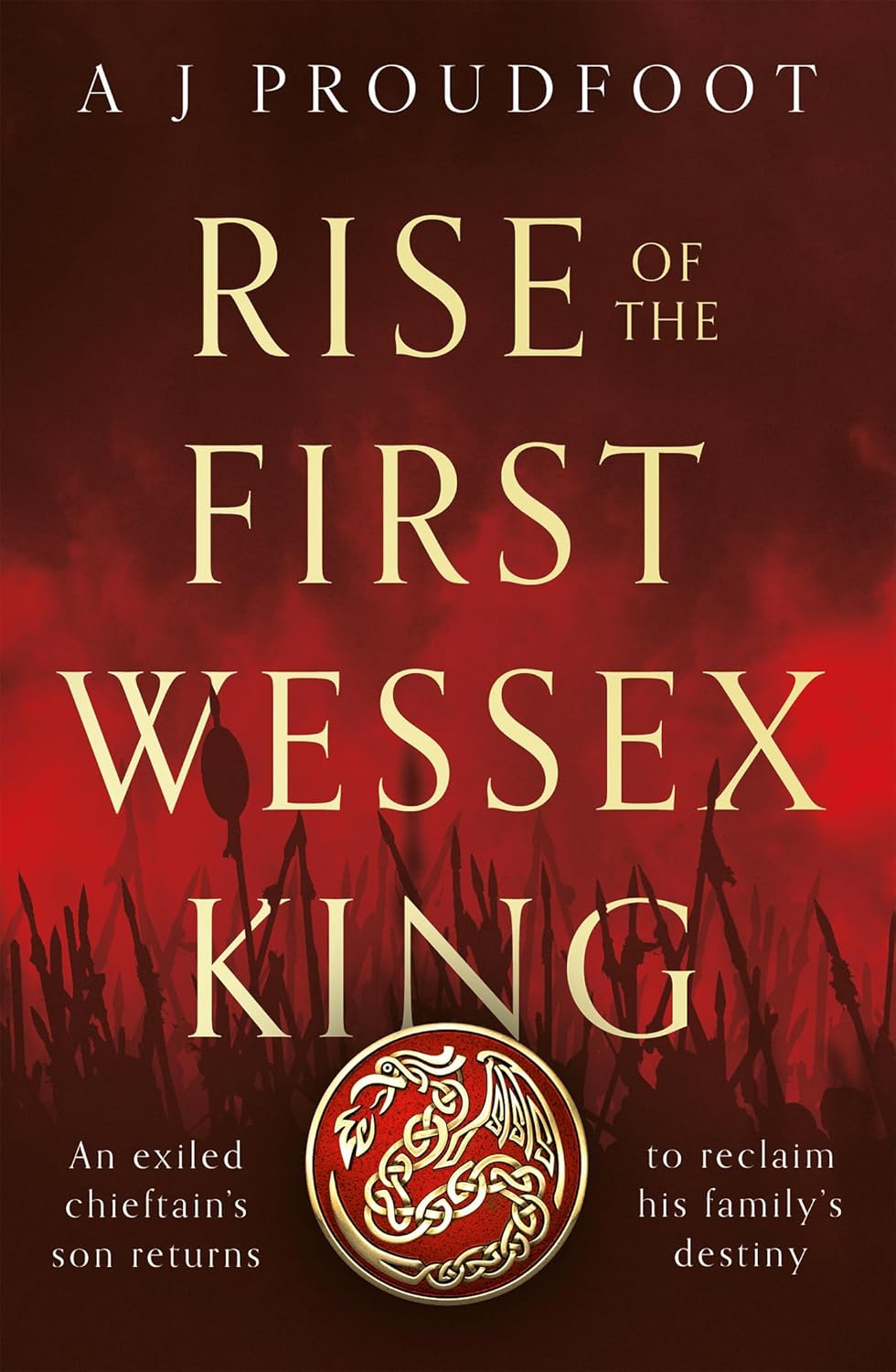
Book Corner: Rise of the First Wessex King by A.J. Proudfoot

A.J. Proudfoot

When the Saxons, invited to settle in Britannia by King Wyrtgeorn, brutally murder the father and brother of Ceredig, the second son of a fifth century Romano-British chieftain, he flees the land of his birth.

While the Saxons expand their control over Britannia, Ceredig grows up in Armorica, learning the ways of the Gewisse, and ultimately taking command of this elite force of warriors, who had remained loyal to his father, Elisedd.

Despite ruling as a chieftain in Armorica, Ceredig remains determined to return to his homeland, avenge his father and brother’s murder, and finally reclaim the lands his father had once ruled in southern Britannia.

After over forty years in exile, Ceredig, his son and a force of Gewisse warriors return to Britannia, joining a large army of Britons who are preparing to take on the Saxons in battle at Badonbyrg.

What happens next will go down in history…

As a debut novel, Rise of the First Wessex King by A.J. Proudfoot is a winner. And as a special treat, alongside my review, I have an interview with the author, who is currently working on book no. 2 in what promises to be a fascinating series. Cerdic, or Ceredig, is the founder of the kingdom of Wessex and a royal house that would reach its zenith under Ceredig’s descendants, King Alfred the Great, Æthelflæd, Lady of the Mercians, her brother Edward the Elder and Edward’s son Athelstan, first king of England.

And it all started with Ceredig.

In Rise of the First Wessex King, A.J. Proudfoot recreates Ceredig’s world, post-Roman Britain, breathing life into this 1,500-year-old story. And what a fascinating story it is. Though our knowledge is limited, Proudfoot fills in the gaps to create a lively and energetic retelling of the foundation of the royal house of Wessex. This is the story of the fight of the native Britons against the invading Saxons, of a war that must have felt never-ending, at times. It is a story of conflict and betrayal, but also of family and comradeship, and of a young man who had to patiently wait for the time to be right to achieve his dream of pushing back the Saxons and going home.

The characters, particularly our hero, are wonderfully vivid. And I love how Proudfoot weaves the legends of Arthur and Hengist and Horsa in to the story, bringing a little-known period of history back to life. Who doesn’t like to see a little bit of King Arthur thrown into the mix? The inclusion of Artorius and Ambrosius made me smile – and want to read more!

This is a debut novel, so Proudfoot sometimes fall into the trap of giving summaries, telling, rather than showing the action and debate, but this does not detract from the pace of the book. Overall, it is a fabulous read, imbued with a sense of adventure. It is a great start to what promises to be an impressive series.

Overall, it is a great story, told well!

If you’re looking for a new author to sink your teeth into, I don’t hesitate to recommend A.J. Proudfoot’s Rise of the First Wessex King.

To Buy the Book:

Books2Read; The Book GuildBookshop.org (UK)

Interview with A.J. Proudfoot
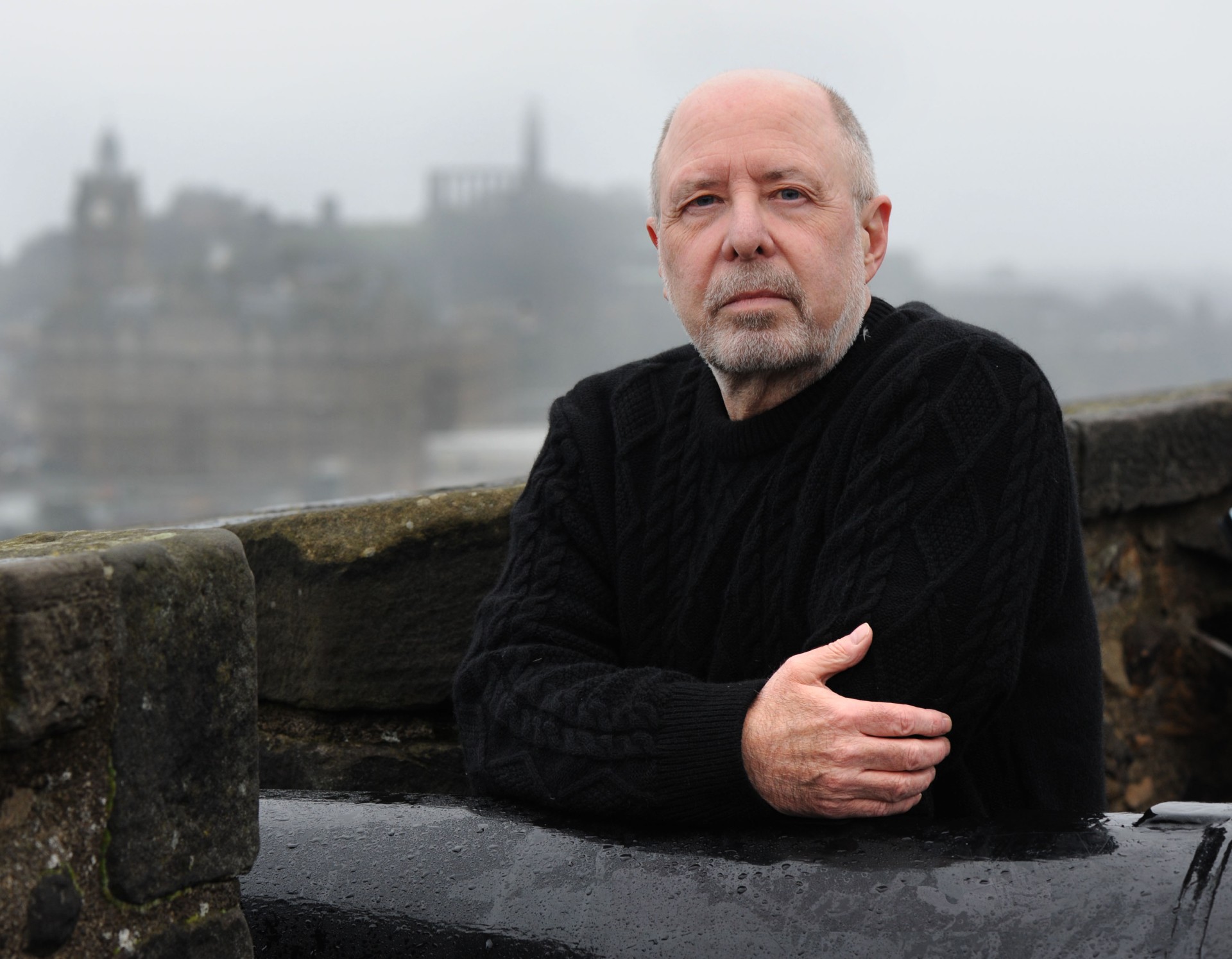
A.J. Proudfoot

Sharon: So, Alex, what got you into writing historical fiction?

Alex: This may come as a surprise, but I didn’t originally set out to become an author and write historical fiction novels. I was simply trying to trace the origins of my unusual Proudfoot surname, and was continuing the research into our Proudfoot family history that my parents and aunt had begun many years before.

After several years’ research, I was amazed to find that I had traced my family ancestry back 1500 years to a mysterious chieftain called Cerdic, at the end of the fifth century, who founded the Anglo-Saxon kingdom of Wessex. There are many interesting ancestors in the Proudfoot family tree, whose lives would make an excellent novel, but when I discovered more about Cerdic’s life, I realised that there was an Arthurian story that was worth writing.

Sharon: What made you want to tell Cerdic’s story?

Alex: I was intrigued why this important figure in early English history has been largely ignored by historical writers, so I undertook my own research into the life of Cerdic, finding crucial inconsistencies in what is written about Cerdic’s Saxon heritage, which I put down to a desire, by early Saxon chroniclers, to establish King Alfred’s Saxon ancestry.

Instead, I found evidence that Cerdic was more likely to be descended from a Romano-British family, who originally hailed from an ancient Welsh kingdom, and was more than likely called Ceredig, given his Brythonic heritage, and to the phonetic similarities. As a result, I felt compelled to use what I had learned to tell the story about my earliest known ancestor and his crucial role in history, based on recorded events in the early Anglo-Saxon era. To paraphrase John Wade, the rest is historical fiction!

Sharon: How do you go about researching a historical character from 1500 years ago?
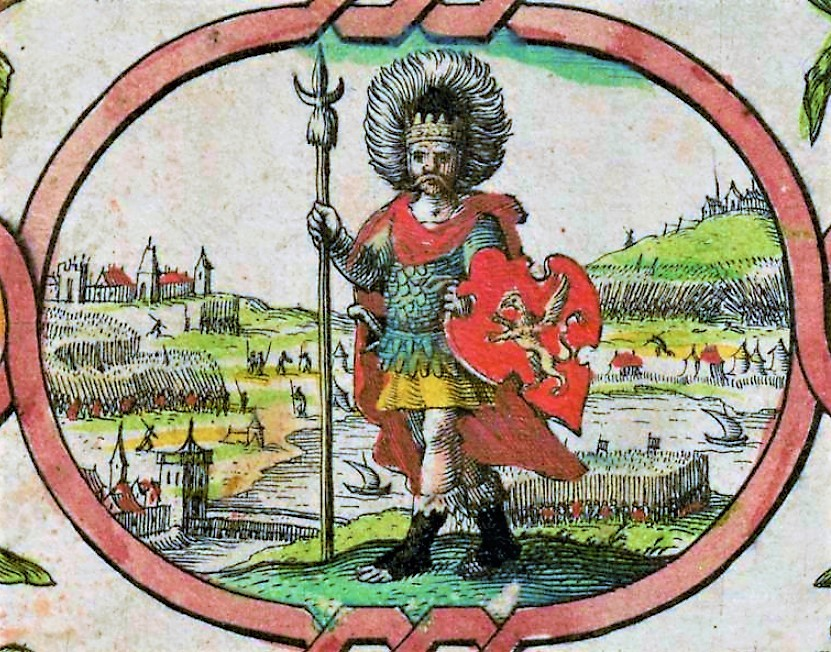
Imaginary depiction from John Speed’s 1611 “Saxon Heptarchy”

Alex: The great difficulty in researching a historical figure from so far back is the lack of contemporary records. My starting point was, naturally, the Anglo-Saxon Chronicle, but it only mentions six events relating to Cerdic’s life, and is written from a Saxon perspective. I read all I could about Cerdic in research papers by modern Anglo-Saxon historians, including JNL Myers and Richard Coates, which is where I found clues to Cerdic’s Romano-British connections. There was also a story about 5th century Bishop Germanus meeting a regional chieftain in southern Britain, called Elasius, whose name is remarkably similar to Elesa, the recorded name of Cerdic’s father in the Anglo-Saxon Chronicle.

Eventually, I had built a picture of the young son of a Romano-British chieftain, ruling and defending the southern coastline of Britain against Saxon invaders, who suddenly disappeared from Britain, returning nearly fifty years later to take control over a region in the Upper Thames Valley, before expanding his lands south before becoming king and ruling a kingdom of the Gewisse that would eventually become known as Wessex, named after the West Saxons.

My research raised more questions than answers, so I used what I had learned about events during that period to write a dramatic reconstruction of Cerdic’s life, and the formation of the Anglo-Saxon kingdom of Wessex. Based on fact, but mostly fiction.

Sharon: What are you working on now?

Alex:I am currently working on a sequel to Rise of the First Wessex King, which will follow the lives of Cunorix and his son, Ceawlin, as they try to build on Ceredig’s legacy in ruling the kingdom of the Gewisse, whilst facing threats from the Saxons in the east, and Britons in the west, as well as challenges they could not anticipate.

Sharon: What is the best – and worse – thing about being a writer?

Alex: Personally, the hardest part about writing my historical fiction novels is that the stories are based in the south of England and I live just outside Edinburgh, in Scotland. This meant that I have had to make several research trips down south, visiting locations featured in my novels. Whilst there is very little evidence to reveal what it would be like when the books are set, I have found this a useful exercise in understanding the topography, as well as encouraging the creative writing juices.

The best part of being a writer is that I love history and solving puzzles. This has been useful in writing about a period in history where facts are limited, so deciphering my characters’ motives behind their decisions has been crucial in building the story of their lives.

About the Author

A J (Alex) Proudfoot lives in Musselburgh, near Edinburgh. He started his career as an accountant, working in the brewing, publishing and financial sectors, before qualifying as a chartered marketer, working at the University of Edinburgh for over twenty years. After retiring early in 2018, he has spent his free time researching his Proudfoot family history, back 1500 years to his earliest known ancestor, which led to the publication of his debut historical fiction novel, Rise of the First Wessex King.

Social media links

Facebook – https://www.facebook.com/ajproudfootwriter

YouTube – https://www.youtube.com/@ajproudfoot

Book trailer – https://www.youtube.com/watch?v=4gpZMOMzwZs&t

*

My books

Signed, dedicated copies of all my books are available through my online store.

Out now: Scotland’s Medieval Queens

Books by Sharon Bennett Connolly

Scotland’s history is dramatic, violent and bloody. Being England’s northern neighbour has never been easy. Scotland’s queens have had to deal with war, murder, imprisonment, political rivalries and open betrayal. They have loved and lost, raised kings and queens, ruled and died for Scotland. From St Margaret, who became one of the patron saints of Scotland, to Elizabeth de Burgh and the dramatic story of the Scottish Wars of Independence, to the love story and tragedy of Joan Beaufort, to Margaret of Denmark and the dawn of the Renaissance, Scotland’s Medieval Queens have seen it all. This is the story of Scotland through their eyes.

Scotland’s Medieval Queens gives a thorough grounding in the history of the women who ruled Scotland at the side of its kings, often in the shadows, but just as interesting in their lives beyond the spotlight. It’s not a subject that has been widely covered, and Sharon is a pioneer in bringing that information into accessible history.’ Elizabeth Chadwick (New York Times bestselling author)

Available now from Amazon and Pen and Sword Books

Also by Sharon Bennett Connolly:

Books by Sharon Bennett Connolly

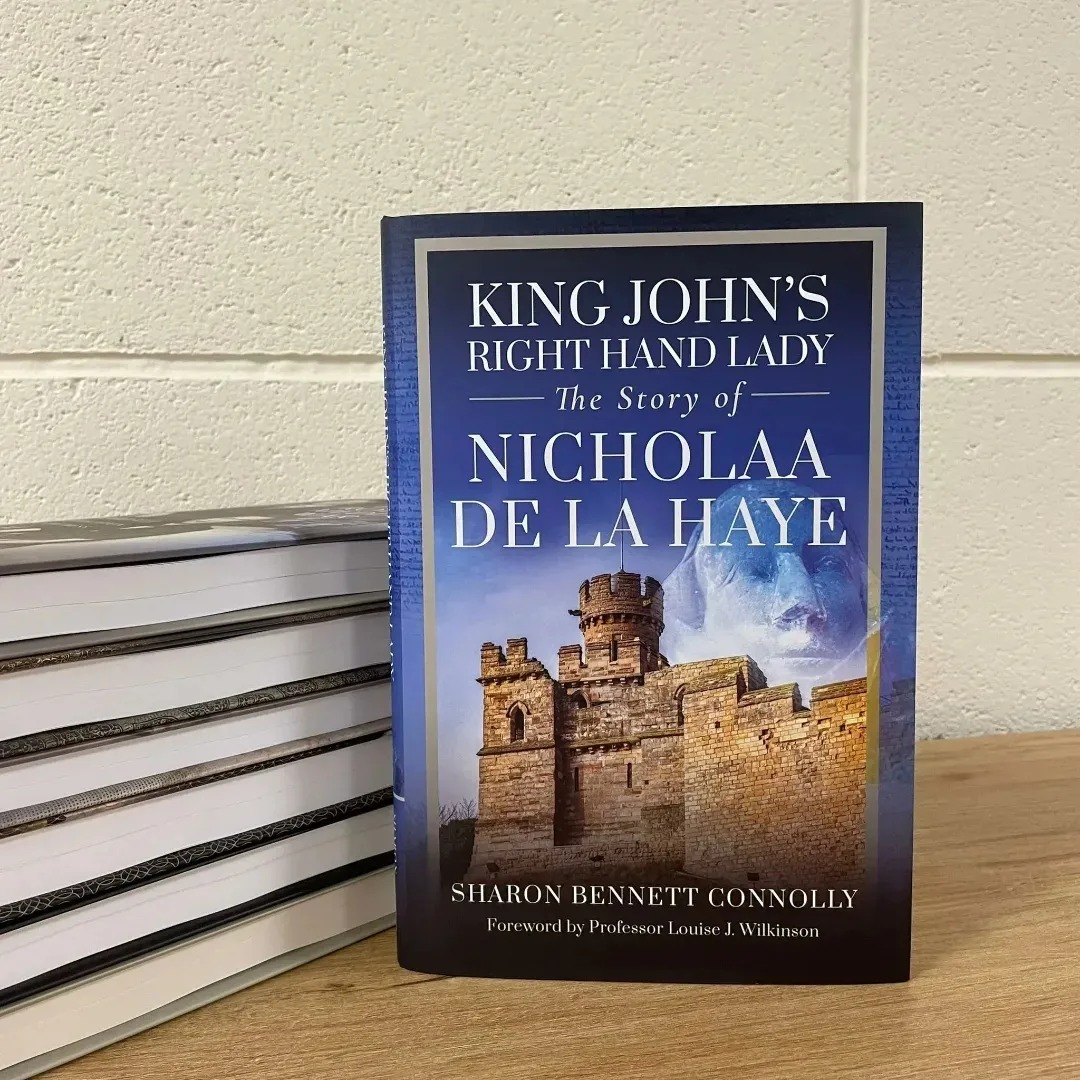
Heroines of the Tudor World tells the stories of the most remarkable women from European history in the time of the Tudor dynasty, 1485-1603. These are the women who ruled, the women who founded dynasties, the women who fought for religious freedom, their families and love. Heroines of the Tudor World is now available from Amberley Publishing and Amazon UK. Women of the Anarchy demonstrates how Empress Matilda and Matilda of Boulogne, unable to wield a sword themselves, were prime movers in this time of conflict and lawlessness. It shows how their strengths, weaknesses, and personal ambitions swung the fortunes of war one way – and then the other. Available from Bookshop.orgAmberley Publishing and Amazon UKKing John’s Right-Hand Lady: The Story of Nicholaa de la Haye is the story of a truly remarkable lady, the hereditary constable of Lincoln Castle and the first woman in England to be appointed sheriff in her own right. Available from all good bookshops Pen & Sword Booksbookshop.org and Amazon

Royal Historical Society

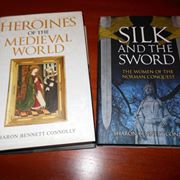
Defenders of the Norman Crown: The Rise and Fall of the Warenne Earls of Surrey tells the fascinating story of the Warenne dynasty, from its origins in Normandy, through the Conquest, Magna Carta, the wars and marriages that led to its ultimate demise in the reign of Edward III. Available from Pen & Sword BooksAmazon in the UK and US, and Bookshop.orgLadies of Magna Carta: Women of Influence in Thirteenth Century England looks into the relationships of the various noble families of the 13th century, and how they were affected by the Barons’ Wars, Magna Carta and its aftermath; the bonds that were formed and those that were broken. It is now available in paperback and hardback from Pen & SwordAmazon, and Bookshop.orgHeroines of the Medieval World tells the stories of some of the most remarkable women from Medieval history, from Eleanor of Aquitaine to Julian of Norwich. Available now from Amberley Publishing and Amazon, and Bookshop.orgSilk and the Sword: The Women of the Norman Conquest traces the fortunes of the women who had a significant role to play in the momentous events of 1066. Available now from Amazon,  Amberley Publishing, and Bookshop.org.

Alternate Endings: An anthology of historical fiction short stories including Long Live the King… which is my take what might have happened had King John not died in October 1216. Available in paperback and kindle from Amazon.

Podcast:

A Slice of Medieval

Have a listen to the A Slice of Medieval podcast, which I co-host with Historical fiction novelist Derek Birks. Derek and I welcome guests, such as Bernard Cornwell and Michael Jecks, and discuss a wide range of topics in medieval history, from significant events to the personalities involved. 

Every episode is also now available on YouTube.

*

Don’t forget! Signed and dedicated copies of all my books are available through my online store.

For forthcoming online and in-person talks, please check out my Events Page.

You can be the first to read new articles by clicking the ‘Follow’ button, liking our Facebook page or joining me on TwitterThreadsBluesky and Instagram.

*

©2025 Sharon Bennett Connolly, FRHistS
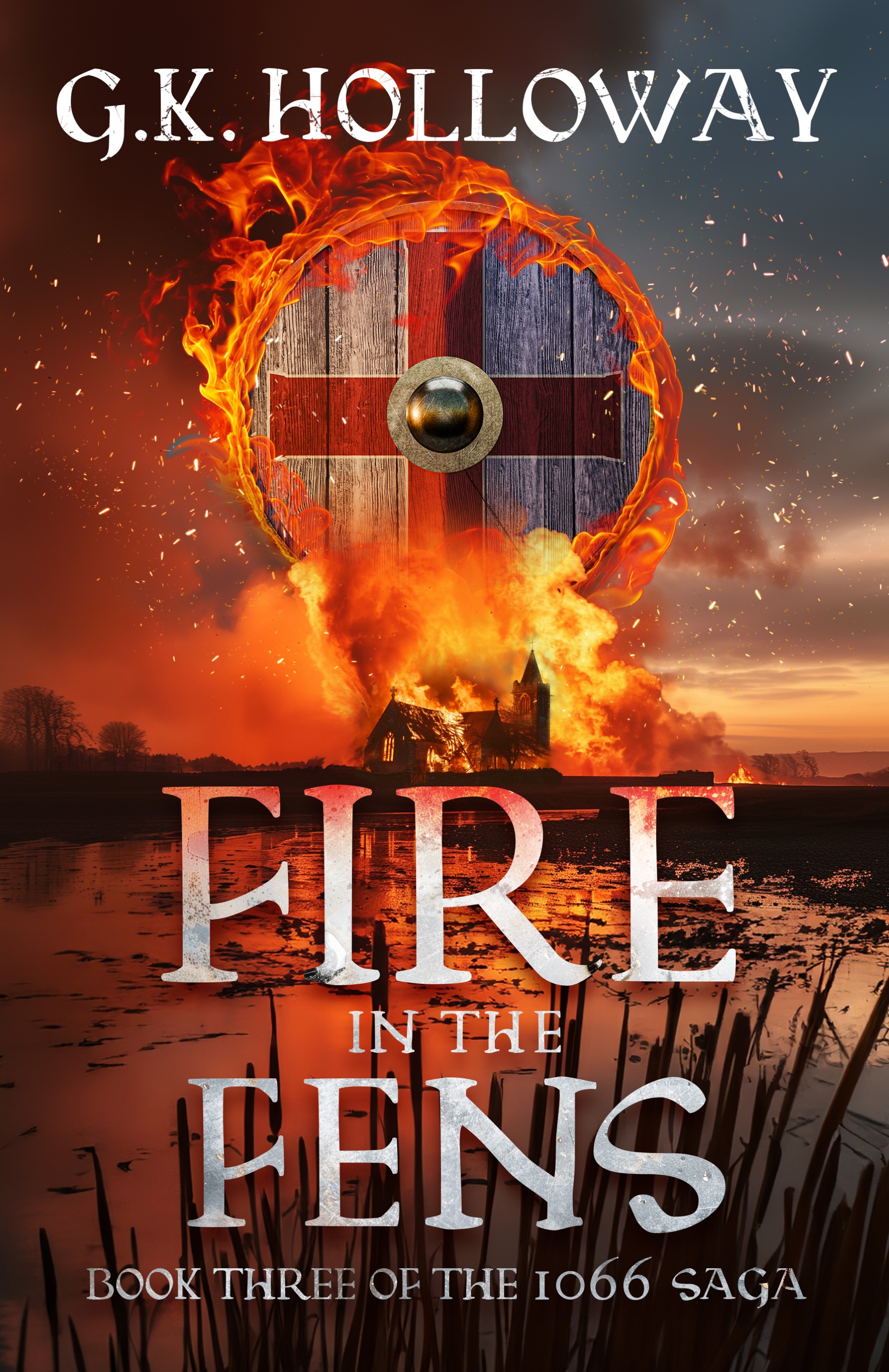
Guest Post: Researching the 11th Century by G.K. Holloway

It is a pleasure to welcome novelist G.K. Holloway to History…the Interesting Bits today, to talk about the research behind his wonderful series The 1066 Saga.

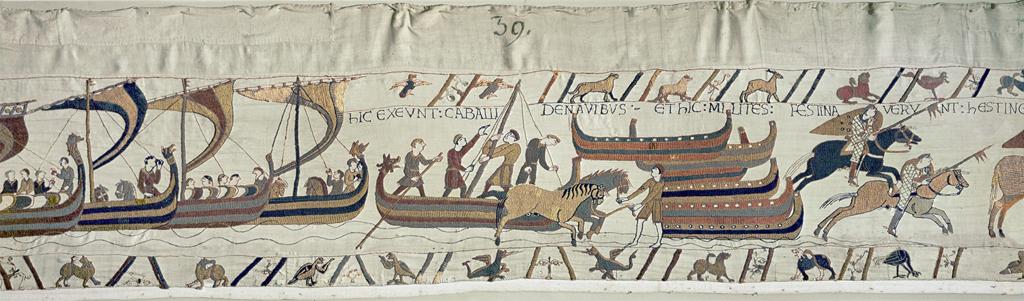
Norman invasion fleet, Bayeux Tapestry

Research for my books consists of mainly reading – books, magazines, academic papers, and blogs. It’s also good to get out a bit and visit and talking with experts, in my case locations of mainly locations of battles where I can talk with resident historians, reenactors and history fans, especially those with local knowledge.

Some of my reading consists of trawling around on the internet. It’s surprising what you can find, other than Wikipedia, as a source of material. And of course there are all sorts of groups on social media that specialise in my period in history. There are podcasts and blogs rich with information for recycling.

Books too, are an obvious place to look; the Doomsday Book is the first to spring to mind, the Anglo-Saxon Chronicle, and the Ecclesiastical History of Orderic Vitalis are useful too. But reader beware, it’s often the case with original material that objectivity wasn’t a strong point of the authors. Academic papers are nowadays can be easily accessed, although the cost of some of them is prohibitive. I’ve had read papers that have shone light into the dark recesses of history I hadn’t dreamed about. This means I’ll able to surprise readers with fascinating snippets that can give a glimpse of life a millennium ago.

Norman cavalry at the Battle of Hastings

Thank heavens for You Tube. There is a wealth of information to be found here, and a lot of it from top quality presenters and historians.

It’s not just what you see but what you don’t see that can be important. A prime example of this is the Bayeux Tapestry. It’s the closet you’ll get to newsreel footage of events covering the Norman Invasion. The full horror of war is not shied away from, burning houses, screaming women, decapitated soldiers and a horse running amok amongst dead bodies, all in glorious colour. But just as in modern times, news can be censored and people and events can be ’air brushed’ out of history, so too, it was the case way back then.

What remains of the well preserved embroidery, that’s correct, it is not a tapestry, is a sight to behold and worth a visit to Normandy to see. It’s surprising how colourful it is even after almost a thousand years. The imagery is clear and easy to follow but some scenes are missing. The story is told accurately enough and details like the appearance of Halley’s Comet are included. However, the Battle of Stamford Bridge is nowhere to be seen. Could it be that King William didn’t want it know that the army he fought at Senlac was exhausted from several hundred miles of marching and a huge battle against the biggest Norse army ever to have set foot in England. There is no depiction of the Battle of London Bridge, or the violence committed by his rampaging troops during his coronation. History has been, ‘cleaned up a bit,’ to the advantage of the victors. Nothing new there then.

Death of King Harold in the Bayeux Tapestry

It’s always a good idea to visit key locations. It’s one thing to look at maps and photographs but when you find yourself looking across the lagoons at Bosham, wandering around the castle at Falaise, starring up at Clifford’s Tower in York, or watching a reenactment at Battle Abbey, a much more realistic picture forms in your mind about what it must have been like to live all that time ago. To boost one’s knowledge it’s always a good idea to talk to reenactors; most of them have an encyclopaedic knowledge of the time period and especially their character’s part in it. Whether it be as a soldier, arrowsmith or seamstress.

Doing all the above is a great way of researching the history, but if like me, you write historical fiction rather than non-fiction, you would do well to read a good book. One I could recommend if, Story by Robert McKee. He deals with scriptwriting but it’s quite easy to apply his ideas to novels. You could also spend a lot of money and quite a bit of time on a creative writing course, but you might be better off getting a good editor.

So there you have it. Use as many sources as you can, and you’ll find many a nugget amongst the raw material.

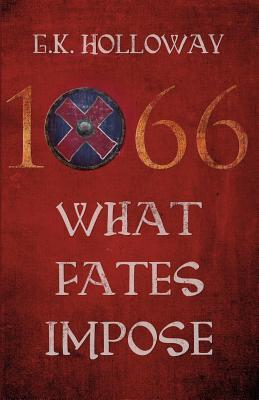
1066: What Fates Impose

England is in crisis. King Edward has no heir and promises never to produce one. There are no obvious successors available to replace him, but quite a few claimants are eager to take the crown. While power struggles break out between the various factions at court, enemies abroad plot to make England their own. There are raids across the borders with Wales and Scotland.

Harold Godwinson, Earl of Wessex, is seen by many as the one man who can bring stability to the kingdom. He has powerful friends and two women who love him, but he has enemies will stop at nothing to gain power. As 1066 begins, England heads for an uncertain future. It seems even the heavens are against Harold.

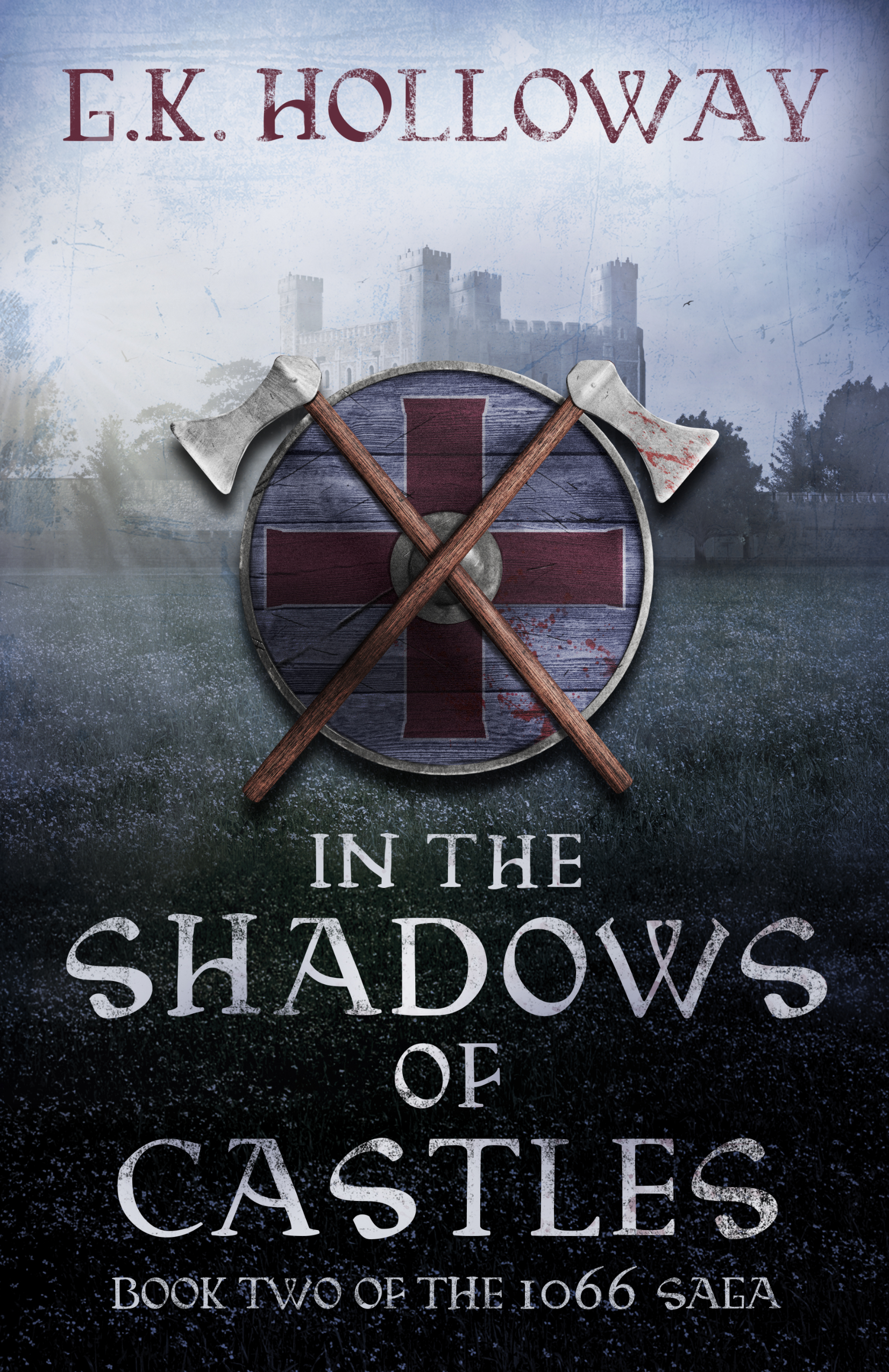
In the Shadows of Castles

It’s the 1060s, and William of Normandy is establishing a new and brutal regime in England, but there are those who would defy him. As Norman soldiers spread like a plague across the land, resistance builds, but will it be enough to topple William and restore the rightful king to his throne? The English have the courage to fight, but the Normans, already victorious at Hastings, now build castles seeking to secure their tenuous foothold in these lands.

And what of the people caught up in these catastrophic events? Dispossessed but not defeated, their lives ripped apart, the English struggle for freedom from tyranny; amongst them, caught up in the turmoil, are a soldier, a thane and two sisters. As events unfold, their destinies become intertwined, bringing drastic changes that alter their lives forever.

Firmly embedded in the history of the Conquest, ‘In the Shadows of Castles’ is ultimately a story of love, hope and survival in a time of war.

About the Author:

1066 What Fates Impose, won the Gold Medal in the 2014 Wishing Shelf Independent Book Awards – Adult Fiction.

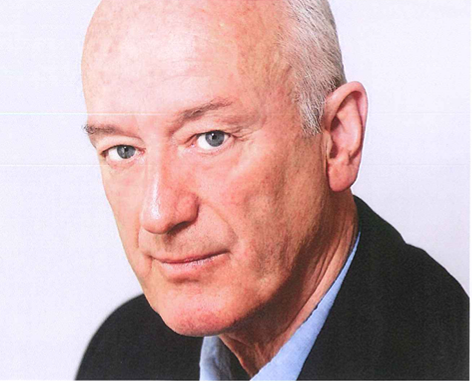
G K Holloway left university in 1980 with a degree in history and politics. After spending a year in Canada, he relocated to England’s West Country and began working in Secondary Education. Later he worked in Adult Education and then Further Education before finally working in Higher Education.

After reading a biography about Harold Godwinson, he became fascinated by the fall of Anglo Saxon England and spent several years researching events leading up to and beyond the Battle of Hastings. Eventually he decided he had enough material to make an engrossing novel. Using characters from the Bayeux Tapestry, the Norse Sagas, the Domesday Book and many other sources. He feels that he has brought the period and its characters to life in his own particular way. Following the major protagonists, as well as political, religious and personal themes, the downfall of Anglo-Saxon England is portrayed by a strong cast.

Nowadays he lives in Bristol with his wife and two children. When he’s not writing he works with his wife in their company.

1066 is his debut novel was originally published as an ebook. It has received very positive reviews and this has encouraged him to publish it in paperback. Currently he is working on a sequel. One day he hopes to write full time.

Visit G K Holloway’s website http://www.gkholloway.co.uk

GK Holloway’s books on Amazon

*

My Books:

Signed, dedicated copies of all my books are available through my online bookshop.

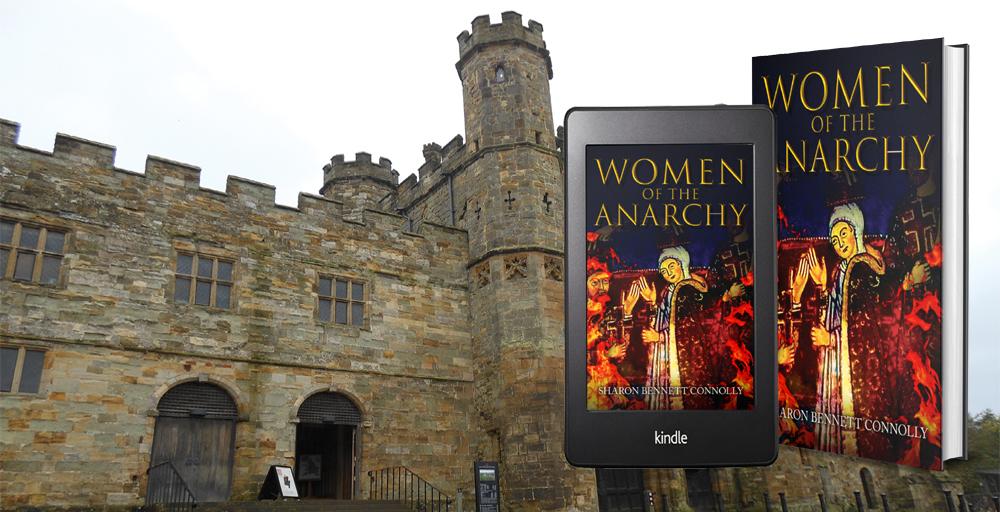
Out Now! Women of the Anarchy

Two cousins. On the one side is Empress Matilda, or Maud. The sole surviving legitimate child of Henry I, she is fighting for her birthright and that of her children. On the other side is her cousin, Queen Matilda, supporting her husband, King Stephen, and fighting to see her own son inherit the English crown. Women of the Anarchy demonstrates how these women, unable to wield a sword, were prime movers in this time of conflict and lawlessness. It show how their strengths, weaknesses, and personal ambitions swung the fortunes of war one way – and then the other.

Available from Bookshop.orgAmberley Publishing and Amazon UK.

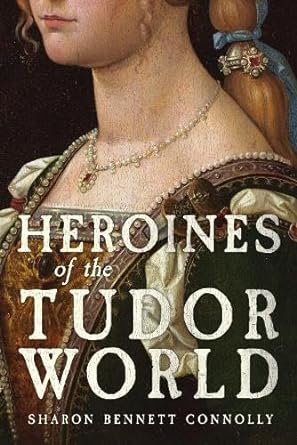
Coming on 15 June 2024: Heroines of the Tudor World

Heroines of the Tudor World tells the stories of the most remarkable women from European history in the time of the Tudor dynasty, 1485-1603. These are the women who ruled, the women who founded dynasties, the women who fought for religious freedom, their families and love. These are the women who made a difference, who influenced countries, kings and the Reformation. In the era dominated by the Renaissance and Reformation, Heroines of the Tudor World examines the threats and challenges faced by the women of the era, and how they overcame them. From writers to regents, from nuns to queens, Heroines of the Tudor World shines the spotlight on the women helped to shape Early Modern Europe.

Heroines of the Tudor World is now available for pre-order from Amberley Publishing and Amazon UK.

Also by Sharon Bennett Connolly:

King John’s Right-Hand Lady: The Story of Nicholaa de la Haye is the story of a truly remarkable lady, the hereditary constable of Lincoln Castle and the first woman in England to be appointed sheriff in her own right. Available from all good bookshops or direct from Pen & Sword Booksbookshop.org and AmazonDefenders of the Norman Crown: The Rise and Fall of the Warenne Earls of Surrey tells the fascinating story of the Warenne dynasty, from its origins in Normandy, through the Conquest, Magna Carta, the wars and marriages that led to its ultimate demise in the reign of Edward III. Available from Pen & Sword BooksAmazon in the UK and US, and Bookshop.org

Ladies of Magna Carta: Women of Influence in Thirteenth Century England looks into the relationships of the various noble families of the 13th century, and how they were affected by the Barons’ Wars, Magna Carta and its aftermath; the bonds that were formed and those that were broken. It is now available in paperback and hardback from Pen & Sword,  Amazon, and Bookshop.orgHeroines of the Medieval World tells the stories of some of the most remarkable women from Medieval history, from Eleanor of Aquitaine to Julian of Norwich. Available now from Amberley Publishing and Amazon, and Bookshop.orgSilk and the Sword: The Women of the Norman Conquest traces the fortunes of the women who had a significant role to play in the momentous events of 1066. Available now from Amazon,  Amberley Publishing, and Bookshop.org.

Alternate Endings: An anthology of historical fiction short stories including Long Live the King… which is my take what might have happened had King John not died in October 1216. Available in paperback and kindle from Amazon.

Podcast:

Have a listen to the A Slice of Medieval podcast, which I co-host with Historical fiction novelist Derek Birks. Derek and I welcome guests, such as Bernard Cornwell and Elizabeth Chadwick, and discuss a wide range of topics in medieval history, from significant events to the personalities involved.

*

Don’t forget! Signed and dedicated copies of all my books are available through my online bookshop.

For forthcoming online and in-person talks, please check out my Events Page.

You can be the first to read new articles by clicking the ‘Follow’ button, liking our Facebook page or joining me on Twitter and Instagram.

*

©2024 GK Holloway and Sharon Bennett Connolly FRHistS.

Book Corner: Interview with Annie Whitehead

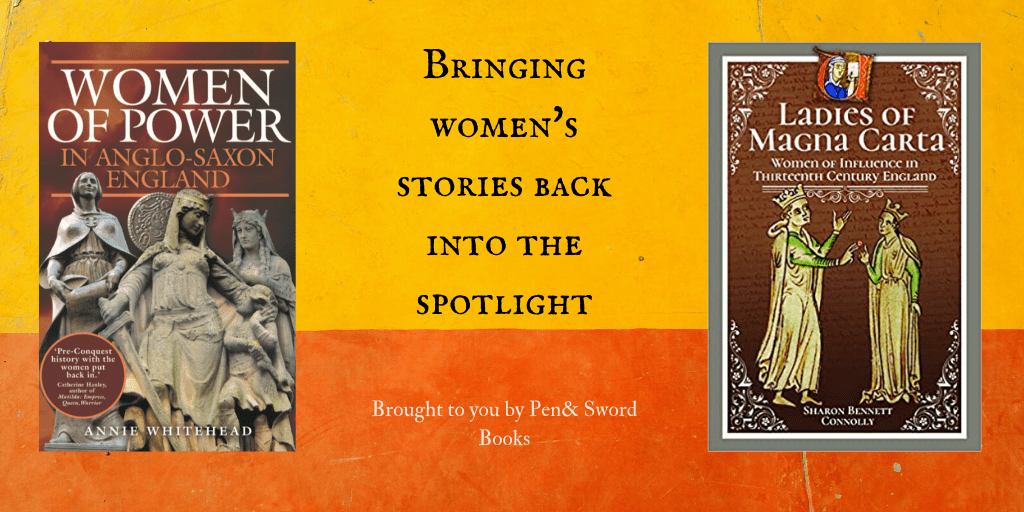
Today it is a pleasure to welcome Annie Whitehead to the blog. Annie’s latest book, Women of Power in Anglo-Saxon England, was also released yesterday.

Our books are twins!

Both books were commissioned, written and submitted at within days of each other. It has been a bit of a roller coaster experience, with the advent of the Corona virus. In order to get the books published on time, it was decided that they would be released in paperback first. But at the last minute, Pen & Sword changed their minds and went for the hardback release. As a result, the books look fabulous!

For me, it has been that bit more special, having Annie and her book taking the journey with us – having someone to talk to, who was going through the same experience – has made all the difference.

Annie and I have done an interview swap where we each answer the same questions, just to give you an idea of who we are and what we write.

You can find my interview over on Annie’s blog.

What motivated you to write the book?

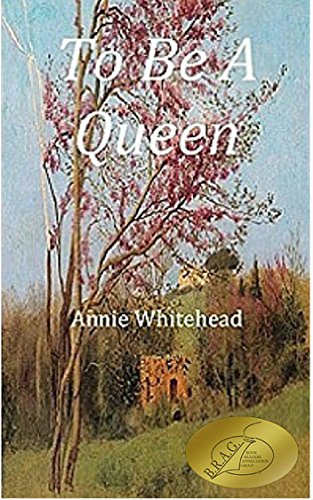
I’d already written about a few of these women both in fiction and nonfiction. My first novel, To Be A Queen, tells the life story of Æthelflæd, Lady of the Mercians and my second, Alvar the Kingmaker, features Queen Ælfthryth, said to be the first crowned consort of an English king, and Queen Ælfgifu, who was accused of getting into bed, quite literally, with her husband and her mother. My third novel, Cometh the Hour, also has some strong, influential women in it, from King Penda’s wife, who was left in charge of a kingdom, to various queens and abbesses who made important policy decisions and had direct influence on the men in charge; women like St Hild, for example, founder of Whitby Abbey. My first nonfiction book, Mercia: The Rise and Fall of a Kingdom, featured some equally powerful and notorious women, so I suppose this new book was inevitable.

The idea was to tell the stories of these women, with minimal reference to the men, and discover all I could about them. There are over 130 named women in the book, most of them royal wives, sisters and daughters, and some of them women who are familiar to us – Lady Godiva, for example – who weren’t royal but still left their mark on history.

What were the research challenges?

Tracking them down! The Anglo-Saxon Chronicle sometimes mentions them but, up to the arrival on the shores of Emma of Normandy in the 11th Century, there are fewer than 20 instances in that chronicle where the women are named. However, a lot can sometimes be deduced: Wulfrun is named as a hostage taken by the ‘Vikings’ and from this it’s clear that she was high status. Luckily we don’t have to rely on the Anglo-Saxon Chronicle, and through other sources we discover that she was the lady after whom Wolverhampton was named and that her son was known as Wulfrun’s son, rather than his father’s. So there’s a whole other story; was his father somehow disgraced? Of lesser status than Wulfrun? When doing this kind of research it’s as well to be prepared to drop down plenty of ‘rabbit holes’!

The other challenge is keeping pace with the archaeological discoveries, of which there were more than a few while I was writing the book. Often I had to add details to footnotes, because the editing process was too far advanced to allow me to alter the main text. All were truly exciting discoveries, including the siting of the original Anglo-Saxon abbeys at Coldingham, and at Lyminge in Kent, the possible identification of Queen Emma’s bones in Winchester and the fascinating tale of the blue-toothed nun, who, it’s believed, stained her teeth by licking her paintbrush whilst working on illuminated manuscripts. Here was yet more evidence that women worked as scribes.

Do you have a particular favourite amongst the women you’ve written about?

Too many to choose, really. Because I’ve written so much about her already, I suppose most people might expect me to say Æthelflæd, Lady of the Mercians, but there are some others whom I grew to like and/or admire. Among them would be Eanflæd, Queen of Northumbria, for sheer determination and overcoming personal loss. She travelled north from Kent, no small undertaking, to marry a man who murdered one of her kinsman. She demanded, and received, recompense for that. She outlived most of her children, which must have been heart-breaking (although mercifully she had died by the time her adult daughter was murdered) and most likely had to tolerate her husband’s infidelity and fathering of at least one illegitimate child. She sponsored the career of St Wilfrid and it’s clear that she ran her own, separate, and highly influential household.

Other women brought a wry smile to my face, such as Queen Æthelburh who arranged for her servants deliberately to trash the royal residence while she and the king were out one day, so that she could demonstrate to him the transience of earthly pleasures. She gets the briefest of mentions in the Anglo-Saxon Chronicle, but what a mention – she razed a town to the ground. We’re not told the circumstances, but I think it’s fair to assume she was a woman with a lot of personality and fortitude!

Another lady who intrigued me was Siflæd. We know about some noblewomen because their wills are extant. Siflæd is unusual because she left not one, but two wills. It seems as if one was made before she went off on her travels ‘across the sea’. I’d love to know where she went, and what sort of adventures she had. I think of her as the original ‘merry widow’, setting her affairs in order at home before going off gallivanting.

Can you tell us briefly about your other books?

As well as the novels and the nonfiction book I mentioned earlier, I contributed to 1066 Turned Upside Down, in which nine authors re-imagined the events of 1066. Lady Godiva featured in my story, as the elderly matriarch of a powerful Mercian family. She’s often thought of as a young woman – erroneously in my view – riding naked through Coventry but she lived to a ripe old age and was a witness to many extraordinary events.

What’s next?

I’ve just finished a collection of short stories about women in history, and am part of the Historical Fictioneers Co-operative who will be producing an anthology of stories centred on the theme of betrayal, for which I’m contributing a tale of scandal from the tenth century. I’ll also be writing the follow-up to Cometh the Hour, which will feature the sons and daughters of King Penda of Mercia and his nemesis, King Oswiu of Northumbria.

Finally, where can people find you on Social Media and where can they buy your books?

Book http://mybook.to/WomeninPower

Amazon http://viewauthor.at/Annie-Whitehead

Blog https://anniewhitehead2.blogspot.com/ 

Twitter https://twitter.com/AnnieWHistory

Website https://anniewhiteheadauthor.co.uk/

Facebook https://www.facebook.com/anniewhiteheadauthor/

I would like to say a huge ‘thank you’ to Annie for taking the time to give such wonderful answers and wish her every success with Women of Power in Anglo-Saxon England. Look for my review of this wonderful book, coming in the next few days.

*

My Books

Out Now!

Ladies of Magna Carta: Women of Influence in Thirteenth Century England will be released in the UK on 30 May 2020 and is now available for pre-order from Pen & SwordAmazon UK and from Book Depository worldwide. It will be released in the US on 2 September and is available for pre-order from Amazon US.

Also by Sharon Bennett Connolly:

Silk and the Sword: The Women of the Norman Conquest traces the fortunes of the women who had a significant role to play in the momentous events of 1066.  Available now from Amazon UK,  Amberley Publishing, Book Depository and Amazon US.

Heroines of the Medieval World tells the stories of some of the most remarkable women from Medieval history, from Eleanor of Aquitaine to Julian of Norwich. Available now from Amberley Publishing and Amazon UK, Amazon US and Book Depository.

*

You can be the first to read new articles by clicking the ‘Follow’ button, liking our Facebook page or joining me on Twitter and Instagram.

©2020 Sharon Bennett Connolly and Annie Whitehead

Book Corner: Yorkshire: A Story of Invasion, Uprising and Conflict

This is a story about Yorkshire and its people, from the earliest period up to recent times. Foremost it is a story about invasion. Archaeological finds have shown that Yorkshire was occupied at a time when early hunters from continental Europe were not supposed to have ventured so far north. Growing populations on the European mainland made Yorkshire s fertile land and receding woodland a prime landscape for these first European farmers, and over time they would be followed by waves of invaders intent on pillage and land grabbing. From the north and west came the Picts and the Scots, while the Romans, Angles and Vikings arrived via the River Humber. The Normans would be the last to invade and seek to dominate everything they saw. Each invasion would leave its stamp on Yorkshire s culture and life, while battles would later be fought on Yorkshire soil during both the Wars of the Roses and the English Civil Wars. More than just a romp through the ages, this book reveals the key places where battles were fought and Yorkshire history was made.

Yorkshire: A Story of Invasion, Uprising and Conflict by Paul C. Levitt is a fabulous, fun and entertaining overview of the history of Yorkshire, from the earliest times to the 20th century. As a Yorkshire lass myself, it was a pleasure to sit back and soak up this history of this unique county. The author obviously enjoys his work, and writes about Yorkshire’s history with an enthusiasm that makes the book impossible to put down.

The beauty of Yorkshire: A Story of Invasion, Uprising and Conflict is that it tells Yorkshire’s story within the context of England’s wider history. So we see the Norman invasion of 1066 through the very harsh and dramatic effects it had on Yorkshire, with the Harrying of the North. We also Yorkshire’s part in the Anarchy, the almost-20 year civil war between Stephen and Matilda, and in such events as the Wars of the Roses and the English Civil War of the seventeenth century.

Paul C. Levitt also brings to the fore events particular to Yorkshire, such as the dreadful massacre of the Jews in York, while also explaining the wider context of anti-semitism in England and the time. The author manages to portray Yorkshire’s unique personality and place in history, both of the county and its people and the relationship of the county with the country as a whole.

Throughout the first millennium, the tribes of Europe were taking part in unprecedented levels of migration. The collapse of the Roman Empire released unbridled waves of Huns, Goths and Vandals who moved across Europe displacing native tribes. On the edge of this disturbance was Scandinavia, from where people would come to British shores from the late eighth century until AD 1100 looking for richer land and more space to live. The question arises, when exactly does a ‘migration’ become and invasion? The Vikings were thought to have left their homelands in Scandinavia initially due to overcrowding and declining resources, but later on their mass migration was equally due to a weakness they perceived in the English. Although they shared similarities and kinship with the Anglo-Saxons, the Vikings viewed them as being weak and cowardly…

Yorkshire: A Story of Invasion, Uprising and Conflict by Paul C. Levitt is a thoroughly enjoyable read that I’m definitely going to pass on to my dad – as a true Yorkshireman, he will love it! This book will be useful for anyone with an interest in Yorkshire and it history.

Fun and informative, it clearly demonstrates the reason we Yorkshire folk are said to have ‘grit’. I can highly recommend it!

To Buy the Book:

Yorkshire: A Story of Invasion, Uprising and Conflict by Paul C. Levitt is available from Pen & Sword and also from Amazon in the UK and US.

About the author:

Born into a military family in the historic market town of Beverley, East Yorkshire, Paul Levitt has always been intrigued by the past. He developed a keen awareness of Yorkshire’s rich heritage as a schoolboy and developed a particular interest in the medieval period. Yorkshire’s unique landscape and especially the North York Moors made a strong impression on him and to this day remains a magical place. He has written professionally on a wide range of subjects for the past 25 years.

*

My Books

Silk and the Sword: The Women of the Norman Conquest

From Emma of Normandy, wife of both King Cnut and Æthelred II to Saint Margaret, a descendant of Alfred the Great himself, Silk and the Sword: the Women of the Norman Conquest traces the fortunes of the women who had a significant role to play in the momentous events of 1066.  Available now from Amazon UK,  Amberley Publishing, Book Depository and Amazon US.

Heroines of the Medieval World

Telling the stories of some of the most remarkable women from Medieval history, from Eleanor of Aquitaine to Julian of Norwich, Heroines of the Medieval World,  is available now on kindle and in paperback in the UK from from both Amberley Publishing and Amazon, in the US from Amazon and worldwide from Book Depository.

*

You can be the first to read new articles by clicking the ‘Follow’ button, liking our Facebook page or joining me on Twitter and Instagram.

©2019 Sharon Bennett Connolly 

Christmas Giveaway!

It’s just over 4 weeks to Christmas and so I thought the time is ideal to do a prize draw for a signed and dedicated copy of Silk and the Sword: the Women of the Norman Conquest.

An ideal Christmas present for yourself or a friend!

About Silk and the Sword: the Women of the Norman Conquest

The momentous events of 1066, the story of invasion, battle and conquest, are well known. But what of the women?

Harold II of England had been with Edith Swanneck for twenty years but in 1066, in order to strengthen his hold on the throne, he married Ealdgyth, sister of two earls. William of Normandy’s Duchess, Matilda of Flanders, had supposedly only agreed to marry the Duke after he’d pulled her pigtails and thrown her in the mud. Harald Hardrada had two wives – apparently at the same time. So, who were these women? What was their real story? And what happened to them after 1066?

These are not peripheral figures. Emma of Normandy was a Norman married to both a Saxon and a Dane ‒ and the mother of a king from each. Wife of both King Cnut and Aethelred II, the fact that, according to the Anglo-Saxon Chronicle, she had control of the treasury at the end of the reigns of both Cnut and Harthacnut suggests the extent of Emma’s influence over these two kings –and the country itself.

Then there is Saint Margaret, a descendant of Alfred the Great, and the less well known but still influential Gundrada de Warenne, the wife of one of William the Conqueror’s most loyal knights, and one of the few men who it is known beyond doubt was with the Duke at the Battle of Hastings.

These are lives full of drama, pathos and sometimes mystery: Edith and Gytha searching the battlefield of Hastings for the body of Harold, his lover and mother united in their grief for the fallen king. Who was Ælfgyva, the lady of the Bayeux Tapestry, portrayed with a naked man at her feet?

Silk and the Sword traces the fortunes of the women who had a significant role to play during the Norman Conquest – wives, lovers, sisters, mothers, leaders.

If you would like to win the signed copy of Silk and the Sword: the Women of the Norman Conquest to put under your Christmas tree, or someone else’s Christmas tree, simply leave a comment below or on the giveaway post on my Facebook page and I will include you in the prize draw.

And don’t worry if you already have a copy – I’ll be happy to send you a signed bookplate to give it as a Christmas present, while you keep your newly signed copy.

The draw will be made on Sunday 2nd December, so you should get the book in time for Christmas Day. Good luck!

***AND THE WINNER IS…..Chloe Amy***
Thank you so much to everyone who entered the Silk and the Sword giveaway – there were 149 entries in all and I am only sorry there can only be 1 winner. Google’s random number generator picked no. 102, which is Chloe Amy. Congratulations, Chloe, if you can drop me a pm with address, I will get your book out to you this week.
To everyone else who entered, thank you so much for taking the time and for leaving such wonderful comments. If you do buy the book, drop me a message, through the ‘contact me’ button, with your address and I will send you out a signed bookplate to pop in the front. Best wishes, Sharon

*

Out Now!

Tracing the fortunes of the women who had a significant role to play in the momentous events of 1066, Silk and the Sword: the Women of the Norman Conquest is available from Amazon UK,  Amberley Publishing and Book Depository. It is scheduled for release in the US on 1 March 2019 and is available for pre-order from Amazon US.


Also by Sharon Bennett Connolly:

Telling the stories of some of the most incredible women from Medieval history, Heroines of the Medieval World,  is now available in hardback in the UK from both Amberley Publishing and Amazon UK, in the US from Amazon US  and worldwide from Book Depository. It will be released in paperback in the UK from 15 March 2019 and is available for pre-order on Amazon.

*

You can be the first to read new articles by clicking the ‘Follow’ button, liking our Facebook page or joining me on Twitter.

*

©2018 Sharon Bennett Connolly

In Search of Ӕlfgifu of York, Ӕthelred II’s First Wife

Æthelread II the Unready

The first wife of Ӕthelred II, Ӕlfgifu of York is a shadowy figure in history, with very little known about her. She was probably born sometime in the 960s. Ӕthelred and Ӕlfgifu were married around 985, when he was in his late teens or early twenties; Ӕlfgifu may have been a little younger.

The monk Ailred of Rievaulx, writing in the 1150s, identified her as the daughter of, Thored. Ailred had served in the household of David I, King of Scotland, a great-great-grandson of Ӕthelred II and Ӕlfgifu through his mother, Queen Margaret and so Ailred was well place to learn the ancestry of King David with some accuracy. Thored was Earl of Northumbria between, about, 975 and 992 and regularly attested charters by King Ӕthelred II during the 980s.

Marriage to the daughter of the leading noble of Northumbria would have been a beneficial move for King Ӕthelred. It would have helped to expand and strengthen his influence over the north of England, an area notoriously independent of the royal administration of the south, and bring him powerful friends and allies.

Ӕthelred was the youngest son of King Edgar the Peaceable and his last wife, Ælfthryth. The grandson of Edward the Elder, and great-grandson of Alfred the Great, Edgar was king from 959 until his death in 975. His wife, Ælfthryth, was probably born around 945; she was the daughter of Ealdorman Ordgar of Devon, her mother an unknown woman who is said to have been descended from the royal family. She was first married around the age of eleven to Æthelwold, the son of Æthelstan Half-King, ealdorman of East Anglia. However, Æthelwold died in 962, probably in a hunting accident, although there were rumours of murder on the orders of his wife’s supposed lover, King Edgar. Edgar’s marital history was already chequered. Ælfthryth could be Edgar’s second or third wife; she was certainly the third relationship by which children were born.

Ælfgifu’s son Edmund II Ironside

Ælfthryth and Edgar were married in 964 and were soon the parents of two sons; Edmund and Æthelred. Despite having an older half-brother, Edward, it is Edmund who was treated as Edgar’s acknowledged heir; his name being above that of Edward’s in a charter of 966, witnessed by both boys, which founded the New Minster at Winchester. Poor Ælfthryth must have been distraught when, in 971 and still only a child of about seven, young Edmund died.

When King Edgar died suddenly in 975 it was Edward, at the age of  13, who was proclaimed king, despite Ælfthryth trying to claim the crown for her surviving son, Æthelred, who was aged between 7 and 10 years of age. Edward reigned for just 3 years before he met a violent and untimely death at Corfe Castle in Dorset.

It was on 18th March 978 that 16-year-old King Edward visited his step-mother and half-brother at Ælfthryth’s estate at Corfe. Whether Edward had been out hunting, or was in the area to specifically visit Ælfthryth and Æthelred seems to be uncertain. However, he did send a message that he would be calling on them and Ælfthryth’s retainers were awaiting the young king at the gate, when he arrived with a small retinue. Still sitting in the saddle, he was handed a drink; and stabbed. It must have been a horrific sight, as the king’s horse panicked and bolted, racing off with Edward’s foot stuck in the stirrup and the dying king being dragged along behind. The Anglo-Saxon Chronicle recorded:

No worse deed than this was ever done by the English nation since they first sought the land of Britain. Men murdered him, but God hath magnified him. He was in life an earthly king. He is now after death a heavenly saint. ¹

With Edward’s death his surviving brother, Æthelred, possibly as young as 10 years old, and certainly no older than 13, was now king of England, with his mother and a council of prominent nobleman to guide him. He would rule over a tumultuous period in English history, when Saxon England was under frequent attacks from the Danes. His tendency to inaction, indecision, his ineffectual handling of the Danish incursions and the fact he lost the throne to Sweyn Forkbeard, have earned him a reputation as one of England’s worst rulers.

Edward the Exile, grandson of Ælfgifu and father of St Margaret, Queen of Scotland

As his mother and adviser – and a force to be reckoned with – it may well have been Ælfthryth who chose Ӕlfgifu of York as a bride for Æthelred. It is also possible, even likely, that Ælfgifu was never crowned because her mother-in-law, the crowned and anointed queen, was still alive. Indeed,  Ælfgifu’s successor as Æthelred’s wife, Emma of Normandy, was given a coronation, but Ælfthryth was dead by then.

In the 15-or-so years of marriage to Ӕlfgifu of York, the couple had a large number of children, including at least 6 boys and 4 girls. It is even likely that Ӕlfgifu’s mother-in-law, Ælfthryth, raised a number of her children, including the royal couple’s first-born son and ætheling, Æthelstan. Ӕthelstan, was born c.986 but would die before his father, in June 1014, either killed in battle or from wounds received during the wars against Sweyn Forkbeard and his son Cnut. Ӕthelred and Ӕlfgifu’s other sons included Ecgberht, Edmund, Eadred, Eadwig and Edgar and all died young.

In April 1016 Edmund succeeded his father as King Edmund II Ironside but died in November of the same year, probably from wounds received in battle after a summer of constant fighting. His sons, Edward and Edmund, escaped Cnut by being sent into exile in eastern Europe. King Edmund’s sole-surviving brother Eadwig was murdered in 1017, on the orders of the victorious King Cnut.

Of Ӕthelred and Ӕlfgifu’s daughters, three were married to prominent Saxon noblemen. Edith was married to the traitorous Ealdorman, Eadric Streona, who kept changing sides during the wars against the Danes and eventually met his death on the orders of the triumphant King Cnut. Ӕlfgifu married Uhtred, Earl of Northumbria, an ally of Edmund Ironside who had to submit to Cnut when his earldom was under threat of being overrun by the Danes. He and forty of his supporters were murdered on Cnut’s orders in 1016. A third daughter, Wulfhild, married Ulfcytel, Ealdorman of East Anglia, who was killed in the fighting of 1016. A possible fourth daughter, whose name is unknown, became the abbess at Wherwell, a prominent convent at the time, and died in the 1050s.

Other than the children she bore, however, Ӕlfgifu of York has left very little imprint on history.  She gets barely a mention in the chronicles of the time. Sulcard of Westminster, writing in the second half of the eleventh century, says that she was “of very noble English stock”, but fails to give her name, while William of Malmesbury ignores her altogether. John of Worcester makes mention of Ӕlfgifu, giving her name and listing her sons but states, probably erroneously, that she was the daughter of Ӕthelberht. Ailred of Rievaulx provides us with the details of Ӕlfgifu’s parentage but, again, fails to name her. The poor woman doesn’t even make it into the Anglo-Saxon Chronicle.

St Margaret, Queen of Scotland

There is no evidence that Ӕlfgifu was a crowned and anointed as queen, unlike her successor, Emma of Normandy. We know nothing of her, not her personality or her actions during her time as Ӕthelred’s wife. We don’t even know the date of her death, though it must have been before April 1002, when Ӕthelred married Emma of Normandy.

Ӕlfgifu of York’s story has been greatly overshadowed by her larger-than-life successor, Emma of Normandy, the twice-crowned Queen of England as the wife of both Ӕthelred II (the Unready) and King Cnut (the Great). However, although she may have had little impact on history during her lifetime, it is the blood of Ӕlfgifu of York that still runs in the veins of the British royal family today, through the descendants of her son, Edmund II Ironside and his granddaughter, St Margaret, Queen of Scotland. Margaret’s daughter, Edith, was married to King Henry I of England. Her name was changed to Matilda on her marriage and it is through this Matilda and her daughter and namesake, Matilda, the Lady of the English, that all English kings and queens are descended.

*

Footnotes: ¹ Anglo-Saxon Chronicle edited by Michael Swanton.

*

Pictures courtesy of Wikipedia

Sources: Brewer’s British Royalty by David Williamson; Britain’s Royal Families, the Complete Genealogy by Alison Weir;The Wordsworth Dictionary of British History by JP Kenyon; The Anglo-Saxons in 100 Facts by Martin Wall; Kings, Queens, Bones and Bastards by David Hilliam; The Mammoth Book of British kings & Queens by Mike Ashley; The Oxford Companion to British History Edited by John Cannon; The Anglo-Saxon Chronicles translated and edited by Michael Swaton; The Anglo-Saxon Chronicle translated by James Ingram; Queen Emma and the Vikings by Harriett O’Brien; The Bayeux Tapestry by Carola Hicks; oxforddnb.com.

*

My books

Signed, dedicated copies of all my books are available through my online store.

Out nowKing John’s Right-Hand Lady: The Story of Nicholaa de la Haye

In a time when men fought and women stayed home, Nicholaa de la Haye held Lincoln Castle against all-comers, gaining prominence in the First Baron’s War, the civil war that followed the sealing of Magna Carta in 1215. A truly remarkable lady, Nicholaa was the first woman to be appointed sheriff in her own right. Her strength and tenacity saved England at one of the lowest points in its history. Nicholaa de la Haye is one woman in English history whose story needs to be told…

King John’s Right-Hand Lady: The Story of Nicholaa de la Haye is now available from Pen & Sword Booksbookshop.org and Amazon.

Coming 15 January 2024: Women of the Anarchy

On the one side is Empress Matilda, or Maud. The sole surviving legitimate child of Henry I, she is fighting for her birthright and that of her children. On the other side is her cousin, Queen Matilda, supporting her husband, King Stephen, and fighting to see her own son inherit the English crown. Both women are granddaughters of St Margaret, Queen of Scotland and descendants of Alfred the Great of Wessex. Women of the Anarchy demonstrates how these women, unable to wield a sword, were prime movers in this time of conflict and lawlessness. It show how their strengths, weaknesses, and personal ambitions swung the fortunes of war one way – and then the other.

Available for pre-order from Amberley Publishing and Amazon UK.

Also by Sharon Bennett Connolly:

Defenders of the Norman Crown: The Rise and Fall of the Warenne Earls of Surrey tells the fascinating story of the Warenne dynasty, of the successes and failures of one of the most powerful families in England, from its origins in Normandy, through the Conquest, Magna Carta, the wars and marriages that led to its ultimate demise in the reign of Edward III. Defenders of the Norman Crown: Rise and Fall of the Warenne Earls of Surrey is now available from Pen & Sword BooksAmazon in the UK and US, and  Bookshop.org.

Ladies of Magna Carta: Women of Influence in Thirteenth Century England looks into the relationships of the various noble families of the 13th century, and how they were affected by the Barons’ Wars, Magna Carta and its aftermath; the bonds that were formed and those that were broken. It is now available in paperback and hardback from Pen & Sword,  Amazon, and Bookshop.org.

Heroines of the Medieval World tells the stories of some of the most remarkable women from Medieval history, from Eleanor of Aquitaine to Julian of Norwich. Available now from Amberley Publishing and Amazon, and Bookshop.org.

Silk and the Sword: The Women of the Norman Conquest traces the fortunes of the women who had a significant role to play in the momentous events of 1066. Available now from Amazon,  Amberley Publishing, and Bookshop.org.

Alternate Endings: An anthology of historical fiction short stories including Long Live the King… which is my take what might have happened had King John not died in October 1216. Available in paperback and kindle from Amazon.

New Podcast:

Have a listen to the A Slice of Medieval podcast, which I co-host with Historical fiction novelist Derek Birks. Derek and I welcome guests, such as Bernard Cornwell, and discuss a wide range of topics in medieval history, from significant events to the personalities involved.

*

Signed and dedicated copies of all my books are available through my online store.

For forthcoming online and in-person talks, please check out my Events Page.

You can be the first to read new articles by clicking the ‘Follow’ button, liking our Facebook page or joining me on Twitter and Instagram.

*

©2018 Sharon Bennett Connolly FRHistS

Æthelflæd, Lady of the Mercians

Books by Sharon Bennett Connolly
Æthelflæd (from The Cartulary and Customs of Abingdon Abbey, c. 1220)

12th June 2018 marked the 1100th anniversary of one of England’s greatest ever women. The daughter of Alfred the Great, Æthelflæd, Lady of the Mercians, led the resistance against Danish invasion, alongside her brother, Edward the Elder. And yet, she is virtually unknown to the people of today.

Æthelflæd was born about 870, the eldest child of King Alfred and his wife, Ealhswith. Alfred’s biographer, Asser, says Ealhswith was a member of the Mercian royal house through her mother, Eadburh. Around 886 Æthelflæd was married to Æthelred, ealdorman of Mercia and a trusted lieutenant of her father. Æthelred ruled over the English half of the Mercian kingdom, which had been dissected by the Vikings, but submitted to King Alfred’s overlordship. The marriage was a political alliance, intended to strengthen Saxon resistance to the Danes, who were now occupying Northumbria, Yorkshire and East Anglia. The resulting close relationship of Mercia and Wessex was only further strengthened by the renewed Viking attacks of the 890s.

During the early years of their marriage the young couple appear to have settled in London, the city that had been entrusted to Æthelred’s care by Alfred. Æthelflæd seems to have taken after her father – she was a strong, brave woman and is often regarded more as a partner to Æthelred than a meek, obedient wife. The couple jointly presided over provincial courts. The ‘Mercian Register’, a fragment of a Mercian chronicle, included in some versions of the Anglo-Saxon Chronicle, records that Æthelflæd was exercising regal powers in the region even before her husband’s death. In his final years Æthelred increasingly suffered from illness, during which time Æthelflæd assumed greater authority. The couple had only one child, a daughter, Ælfwynn. Writing 2 centuries later William of Malmesbury claimed the lack of more children was due to Æthelflæd’s avoidance of marital relations, possibly due to a fear of dying in childbirth. Malmesbury quotes her as saying it was ‘unbecoming a daughter of a king to give way to a delight, which after a time produced such painful consequences’. Æthelred died in 911, though whether this was from wounds received in battle or from illness remains unclear. He was buried at Gloucester.

Books by Sharon Bennett Connolly
Charter S 221 dated 901 of Æthelred and Ætheflæd donating land and a golden chalice to Much Wenlock Church

Wessex had already adjusted to a change in ruler when Æthelflæd’s father had died in 899 and had been succeeded by her younger brother, Edward ‘the Elder’. When Æthelred died, Edward was happy to support his sister as sole ruler of Mercia, but he took personal control of the cities of London and Oxford, cities that could be used as bases from which Edward would be able to launch campaigns against the Danes of the Midlands. The siblings seem to have had a trusting relationship for many years; Edward had entrusted his son Æthelstan, often viewed as the first king of England, to Æthelflæd and her husband, to be educated at the Mercian court.

The first woman to rule an Anglo-Saxon kingdom  – albeit as a client of her brother’s more powerful kingdom of Wessex, Æthelflæd was accorded the title the Lady of the Mercians. She proved to be a vital ally to her brother and the siblings worked together to combat the threats of the Danes. In 909, according to the Anglo-Saxon Chronicle, Edward sent an army, made up of West Saxons and Mercians, into Danish territory in the north. It was probably this army that brought back to Mercia the relics of St Oswald, the 7th century Northumbrian saint. They had been taken from Bardney in Lincolnshire and Æthelflæd had them translated to the new minster at Gloucester, which was renamed St Oswald in his honour.

Æthelflæd continued the policy, started by her father, of building burhs and established a ring of fortified centres around western Mercia. The burhs not only provided protection against the Danes, but served as bases from which to launch attacks on Danish occupied regions. Each burh could provide a refuge for all villagers within a 20-mile radius; it would have a large garrison, depot and its own water supply. During Æthelred’s lifetime, burhs had been established at ‘Bremesburh’, Worcester (between 887 and 899) and Chester (907). Later, on Æthelflæd’s orders, in 913, fortresses were built at several further sites, including Bridgnorth, Tamworth and Stafford, in response to Viking raids into Edward’s territories.

Edward built two further burhs at Buckingham in 914, plugging a defensive gap between Tamworth and Hertford. At the same time, Æthelflæd built one at Warwick and another at Eddisbury; this latter, with a new burh at Runcorn in 915, helped to strengthen her northern defences. While the Danes appeared to be the greatest risk, Æthelflæd did not neglect her defences along the Welsh border, building a burh at Chirbury and one at the now-lost location of ‘Wearburh’. In the same year, Edward fortified Bedford and in 916 he built a burh at Maldon to fortify Essex against seaborne raiding. While this building programme was going on, it also seems highly likely that Æthelflæd rebuilt and strengthened the defences of Gloucester and Hereford.

Books by Sharon Bennett Connolly
Statue of Æthelflæd and her nephew, Athelstan, Tamworth

Æthelflæd was no silent partner in Edward’s reconquest of England. Most remarkably, she personally led successful military campaigns against the Welsh, the Norse and the Danes of York. The Anglo-Saxon Chronicle relates that on the feast of St Cyriac the Martyr, 16 June 916, the abbot Egbert and his retainers, were murdered for no known reason. The Mercian abbot had been travelling in the Welsh mountain kingdom of Brycheiniog when he was attacked. Æthelflæd seems to have taken the murder as a personal affront; the abbot was, after all, under her protection. Three days later she invaded Wales; her army ravaged Brycheiniog, burning the little kingdom. Although King Tewdr escaped, Æthelflæd took his wife, Queen Angharad, as a hostage, with 33 others, many of whom were relatives of the Welsh king. Eventually, the king submitted to Æthelflæd, promising to serve her faithfully and to pay compensation. The incident not only demonstrates Æthelflæd’s commitment to her people, but also shows her strength and determination, attributes she was to put to good use against the Danes.

In 917 Æthelflæd turned her attention to those Danes. Danish forces had taken the offensive, raiding English territories. By the end of the year Edward had subdued East Anglia, with all the Scandinavian armies of the region submitting to him. While her brother was raiding in  the East Midlands, Æthelflæd led her forces across the West Midlands. She marched on the Viking stronghold of Derby, personally leading the army on campaign. It would be the first of the Danes’ ‘Five Boroughs’, which made up the Danelaw, to fall. Although she managed to successfully storm the fort, her army suffered heavy casualties, including four of her most trusted and senior thegns (thegns were the army’s commanders and officers). The Anglo-Saxon Chronicle reported; ‘With God’s help Ethelfleda, lady of Mercia, captured the fortress known as Derby with all its assets. Four of her favoured ministers were slain inside the gates’.¹

The Saxon victory was a great shock to the Danes. Their Viking myths told of an invincible woman who would appear at Ragnarok, the Norse apocalypse, and make brave warriors cower before her. Æthelflæd was relentless  – in early 918 she and her army moved on to Leicester, while Edward headed for Stamford. Leicester was the centre of a heavily settled Danish colony, and Æthelflæd ravaged the countryside around the settlement. The Danes had no choice but to surrender in the face of her indefatigable forces. However, she was magnanimous in victory, displaying mercy and charity by distributing alms as she progressed into town.

Books by Sharon Bennett Connolly
Æthelflæd in the thirteenth century Genealogical Chronicle of the English Kings

The inexorable advance of Æthelflæd’s army combined with her compassion for the defeated was to prove to be a clever strategy, demonstrating to those regions still controlled by the Danes that she was prepared to offer compromise if they would only submit to her. The Danes of York, the Viking capital, in particular, began to look at submitting to Æthelflæd as a serious option to avoid continued conflict. Their new king was Ragnall, a Viking pirate from Dublin, who had taken the throne by force; but the Danes knew that Edward and Æthelflæd would never make peace with him. In the summer of 918 the noblemen and magnates of York sent emissaries to Æthelflæd, promising that they would surrender to her.

In May, King Edward had marched his army to Stamford, building a new fort south of the river and accepting the surrender of the local Danes, who submitted to him as their new ruler. It was while he was still at Stamford that Edward received word of his sister, The Anglo-Saxon Chronicle made a cold, clinical report:

918 While he was there his sister Æthelflæd died at Tamworth two weeks before midsummer. The king took possession of Tamworth and the whole province of Mercia which she had governed.²

Æthelflæd died suddenly at Tamworth on 12 June 918. She was buried beside her husband, in the east chapel of the cathedral she had founded, St Oswald’s Minister, Gloucester. Although she did not live long enough to see the successful conclusion to the work she and her brother had carried out, her achievements cannot be lightly brushed off. Between 910 and 920 all Danish territories south of Yorkshire had been conquered. Her nephew Athelstan consolidated the kingdom that had been created by the efforts of Edward and Æthelflæd. If Æthelflæd did not live to see the extent of her success, neither did she live to see her daughter, Ælfwynn, nearly thirty and still unmarried, briefly become the nominal ruler of Mercia; only to be ‘deprived of all authority’ six months later and taken to Wessex, from where nothing more is heard of her.

Books by Sharon Bennett Connolly
St Oswald’s Priory, Gloucester, where Æthelflæd and her husband are buried

The story of Æthelflæd mainly comes from the Mercian Register, embedded largely in the B, C and D texts of the Anglo-Saxon Chronicle. She appears only rarely in the primary text, text A, which focuses on Edward and Wessex. Text A tries to minimise Æthelflæd’s significance, but could not wholly obscure her achievements. She was, after all, the daughter of Alfred the Great, the wife of the ealdorman of Mercia and a prominent woman in her own right, in an era when this was an incredible rarity. It is thought that it was Æthelflæd, the Lady of the Mercians, who inspired the 10th century poem, ‘Judith’ who is ‘white and shining’, ‘noble and courageous’. In the poem, Æthelflæd is depicted as the ‘valorous virgin’ who struck off the head of the hostile foe with her gleaming sword and ‘ascribed the glory of all that to the Lord of Hosts’. Recognising her vital role in the creation of England, the 12th century Henry of Huntingdon declared Æthelflæd ‘to have been so powerful that in praise and exaltation of her wonderful gifts, some call her not only lady, but even king’. In a poem he described her as ‘worthy of a man’s name’ and ‘more illustrious than Caesar’, apparently high praise indeed – for a woman.

In the 21st century Æthelflæd’s story is becoming more widely known than it has ever been. She is one of the major influences of my book, Heroines of the Medieval World and appears, appropriately, in the chapter on Warrior Heroines. Joanna Arman’s non-fiction book The Warrior Queen: the Life and Legend of Æthelflæd, Daughter of Alfred the Great is well worth a perusalIn addition, with her appearance in Bernard Cornwell’s wonderful The Last Kingdom books and television series, and Annie Whitehead’s non-fiction book, Mercia: the rise and Fall of a Kingdom, as well as her novel, To Be A Queen, Æthelflæd’s story is finally being brought into the light. On the 1100th anniversary of her death, her incredible achievements were being celebrated in the heart of Mercia, in Gloucester and Tamworth. And not before time; Æthelflæd should be the inspiration for future generations of strong, influential women and stand out as an example of what can be achieved if you are determined enough.

*

Footnotes: ¹ The Anglo-Saxon Chronicles by Michael Swanton; ² ibid.

Pictures courtesy of Wikipedia

Further Reading: The Anglo-Saxon Chronicles by Michael Swanton; The Anglo-Saxon Chronicle by James Ingram; Chronicles of the Kings of England, From the Earliest Period to the Reign of King Stephen, c. 1090–1143 by William of Malmesbury; The Chronicle of Henry of Huntingdon by Thomas Forester; Alfred the Great by David Sturdy; Brewer’s British Royalty by David Williamson;  History Today Companion to British History Edited by Juliet Gardiner & Neil Wenborn; The mammoth Book of British kings & Queen by Mike Ashley; Britain’s Royal Families, the Complete Genealogy by Alison Weir; The Wordsworth Dictionary of British History by JP Kenyon; The Anglo-Saxons in 100 Facts by Martin Wall; Kings, Queens, Bones and Bastards by David Hilliam; The Oxford Companion to British History Edited by John Cannon; oxforddnb.com.

*

My Books

Signed, dedicated copies of all my books are available through my online bookshop.

Out now: Scotland’s Medieval Queens

Books by Sharon Bennett Connolly

Scotland’s history is dramatic, violent and bloody. Being England’s northern neighbour has never been easy. Scotland’s queens have had to deal with war, murder, imprisonment, political rivalries and open betrayal. They have loved and lost, raised kings and queens, ruled and died for Scotland. From St Margaret, who became one of the patron saints of Scotland, to Elizabeth de Burgh and the dramatic story of the Scottish Wars of Independence, to the love story and tragedy of Joan Beaufort, to Margaret of Denmark and the dawn of the Renaissance, Scotland’s Medieval Queens have seen it all. This is the story of Scotland through their eyes.

Scotland’s Medieval Queens gives a thorough grounding in the history of the women who ruled Scotland at the side of its kings, often in the shadows, but just as interesting in their lives beyond the spotlight. It’s not a subject that has been widely covered, and Sharon is a pioneer in bringing that information into accessible history.’ Elizabeth Chadwick (New York Times bestselling author)

Available now from Amazon and Pen and Sword Books

Also by Sharon Bennett Connolly:

Books by Sharon Bennett Connolly

Heroines of the Tudor World tells the stories of the most remarkable women from European history in the time of the Tudor dynasty, 1485-1603. These are the women who ruled, the women who founded dynasties, the women who fought for religious freedom, their families and love. Heroines of the Tudor World is now available from Amberley Publishing and Amazon UK. Women of the Anarchy demonstrates how Empress Matilda and Matilda of Boulogne, unable to wield a sword themselves, were prime movers in this time of conflict and lawlessness. It shows how their strengths, weaknesses, and personal ambitions swung the fortunes of war one way – and then the other. Available from Bookshop.orgAmberley Publishing and Amazon UKKing John’s Right-Hand Lady: The Story of Nicholaa de la Haye is the story of a truly remarkable lady, the hereditary constable of Lincoln Castle and the first woman in England to be appointed sheriff in her own right. Available from all good bookshops Pen & Sword Booksbookshop.org and Amazon

Books by Sharon Bennett Connolly

Defenders of the Norman Crown: The Rise and Fall of the Warenne Earls of Surrey tells the fascinating story of the Warenne dynasty, from its origins in Normandy, through the Conquest, Magna Carta, the wars and marriages that led to its ultimate demise in the reign of Edward III. Available from Pen & Sword BooksAmazon in the UK and US, and Bookshop.orgLadies of Magna Carta: Women of Influence in Thirteenth Century England looks into the relationships of the various noble families of the 13th century, and how they were affected by the Barons’ Wars, Magna Carta and its aftermath; the bonds that were formed and those that were broken. It is now available in paperback and hardback from Pen & SwordAmazon, and Bookshop.orgHeroines of the Medieval World tells the stories of some of the most remarkable women from Medieval history, from Eleanor of Aquitaine to Julian of Norwich. Available now from Amberley Publishing and Amazon, and Bookshop.orgSilk and the Sword: The Women of the Norman Conquest traces the fortunes of the women who had a significant role to play in the momentous events of 1066. Available now from Amazon,  Amberley Publishing, and Bookshop.org.

Alternate Endings: An anthology of historical fiction short stories including Long Live the King… which is my take what might have happened had King John not died in October 1216. Available in paperback and kindle from Amazon.

Podcast:

A Slice of Medieval

Have a listen to the A Slice of Medieval podcast, which I co-host with Historical fiction novelist Derek Birks. Derek and I welcome guests, such as Bernard Cornwell and discuss a wide range of topics in medieval history, from significant events to the personalities involved.

Every episode is also now available on YouTube.

*

Don’t forget! Signed and dedicated copies of all my books are available through my online bookshop.

For forthcoming online and in-person talks, please check out my Events Page.

You can be the first to read new articles by clicking the ‘Follow’ button, liking our Facebook page or joining me on TwitterThreadsBluesky and Instagram.

*

©2018 Sharon Bennett Connolly FRHistS
Book Corner: To Be A Queen by Annie Whitehead

Today over at The Review, you can read my thoughts on Anni Whitehead’s wonderful novel of Æthelflæd, Lady of Mercia, in To Be A Queen.

And there’s a signed copy as a giveaway!

Here’s a taster:

Written by Annie Whitehead, To Be A Queen, is the fascinating story of the most remarkable of Saxon women, Aethelflaed, Lady of the Mercians and daughter of Alfred the Great. The novel leads us through Aethelflaed’s personal journey, from a sheltered childhood in the heart of Wessex to marriage, motherhood, and a remarkable partnership with her brother Edward, who succeeded their father as King of Wessex. Aethelflaed and Edward spearhead the fight against the Danes and the struggle to unite England under one ruler.

A thoroughly enjoyable book, To Be A Queen, draws the reader in from the very first sentence,  recounting the story of Aethelflaed’s life while telling you the bigger story that is the making of England. Many readers may be familiar with Aethelflaed from the Bernard Cornwell The Last Kingdom series, but Annie Whitehead develops the Lady of Mercia to even greater depths, getting under the skin and into the heart of this amazing woman.

To read the full review of this fantastic novel – and to enter the prize draw and be in with a chance of winning one of two e-book copies in the giveaway, simply visit The Review and leave a comment.

Good luck!

*

My book, Heroines of the Medieval World,  is now available in hardback in the UK from both Amberley Publishing and Amazon UK and worldwide from Book Depository. It is also available on Kindle in both the UK and USA and will be available in Hardback from Amazon US from 1 May 2018.

You can be the first to read new articles by clicking the ‘Follow’ button, liking our Facebook page or joining me on Twitter.


*

©Sharon Bennett Connolly 2017

Edgar – The Boy Who Wouldn’t Be King

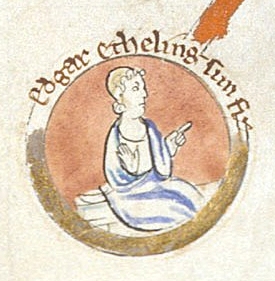
edgar_the_aetheling
Edgar the Aetheling

Edgar the Ætheling was the only son of Edward the Exile and his wife, Agatha. His father was the son of Edmund II Ironside, king of England in 1016; Edward’s grandfather was, therefore, Ӕthelred II (the Unready) and his uncle was Edward the Confessor, England’s king from 1042 until 1066. When his father was murdered in 1016 Edward and his younger brother, Edmund, were sent into exile of the continent by England’s new king, Cnut.

It is thought that Cnut intended that they would be killed, but the boys were protected by the king of Sweden and sent on to safety in Kiev, at the court of its prince, Jaroslav. Around 1043 Edward married Agatha, probably the daughter Liudolf, margrave of West Friesland and a relative of Emperor Heinrich III. Margaret, the oldest of three children, was born in either 1045 or 1046; her sister, Christina was born around 1050 and her brother Edgar, the Ӕtheling was born sometime between 1052 and 1056.

The family may have spent their whole lives in European exile, were it not for Edward the Confessor lacking an heir to the English throne; although Edward was married to Edith Godwinson, the couple remained childless. Sometime in 1054 Edward sent an embassy to Edward the Exile, to bring him back to England as ӕtheling, heir to the throne. The family could not travel immediately, possibly because Agatha was pregnant with Edgar, and only arrived in England in 1057, having journeyed by ship, provided by Emperor Heinrich III.

Just days after their return Edward the Exile was dead, whether by nefarious means or simply a twist of fate is uncertain. The suspicion has been raised that Edward’s rival for the throne, Harold Godwinson – the future Harold II – may have taken the opportunity to remove his rival; although it was Harold who brought Edward back to England, so surely, had he intended murder, he would have done it sooner?

Whatever the circumstances, the death of Edward the Exile was a blow for Edward the Confessor’s dynastic hopes. Little Edgar, now the ӕtheling was much too young to assume a political role. He and his sisters, along with their mother, were now in the protection of King Edward. They continued to live at court and by January 1066, when Edward the Confessor died, Margaret was approaching her twentieth birthday, while Edgar could have been as young as ten and was probably no older than fourteen. Due to his tender years, and lack of powerful allies, Edgar was passed over as a candidate for the throne in preference for the older and more experienced Harold Godwinson; who was crowned as Harold II.

edward_the_exile
Edward the Exile. Edgar’s father

Following Harold’s death at the Battle of Hastings in October 1066, Edgar was proclaimed king in London by some of his supporters, led by Archbishop Ealdred of York, ‘as was his proper due by birth’¹; he was also promised backing by the earls Edwin and Morcar, brothers-in-law of Harold II but their support did not materialise, and without it Edgar’s cause was hopeless.  He submitted to William of Normandy, at Berkamsted, in early December. William treated Edgar honourably, allowing him his life and freedom, and giving him land.

However, by 1068 Edgar the Ӕtheling had become involved in the opposition to Norman rule, which had been festering in northern England. When events turned against him he fled to Scotland taking his mother and sisters along with him. The family was warmly received at Dunfermline by Scotland’s king, Malcolm III Canmore. At the time, Malcolm was married to Ingebiorg and the father of two sons, Duncan and Donald. Whether Ingebiorg died or was put aside, seems uncertain; her sons were exiled from court, although Duncan would eventually reign as Duncan II he was killed at the Battle of Monthechin in 1094.

Although we do not know Ingebiorg’s fate, we do know that in 1069 Malcolm asked Edgar and his mother for Margaret’s hand in marriage. Margaret was reluctant to agree to the marriage, she was more inclined to a religious life and had hoped to become a nun. Nonetheless, with pressure from Malcolm and, possibly, her own sense of obligation to the king who was sheltering her family, she eventually accepted his proposal. They were married at Dunfermline sometime in 1069 or 1070 and, by all accounts, it seems to have been a happy and successful marriage.

330px-stmargareth_edinburgh_castle2
St Margaret, queen of Scotland

In 1069, Edgar was back in northern England, at the head of the Northumbrian rebels who entered York. After defeat at York, he fled again to Scotland, but returned to lead the Northumbrian army when a Danish fleet arrived in the Humber. The army captured the Norman castle at York and killed its garrison. During the winter, Edgar narrowly evaded capture when he raided into Lincolnshire with a ship from the Danish fleet. Although he was part of the rebellion, there does not appear to have been any specific plans to make Edgar king and in 1070 William brought the full force of his wrath down on the north, systematically and brutally crushing the rebellion.

Edgar fled again to Scotland, and played no part in the 1071-2 rebellion at Ely. By 1074 he was in exile in Flanders. He was shipwrecked in the same year, while on the way to take control of the castle of Montreuil, offered to him by the French as a base from which he could torment King William. Having returned to Scotland, and on the advice of his brother-in-law, Malcolm III, Edgar submitted to William I and was established at his court. According to William of Malmesbury he remained ‘at court for many years, silently sunk into contempt through his indolence, or more mildly speaking, his simplicity’².

According to the Domesday Book, Edgar held 2 estates in Hertfordshire in 1086; Barkway and Hormead. He became close friends with 2 of the Conqueror’s sons; Robert Curthose and William Rufus. In 1086, he was sent to Apulia, another land under Norman rule, with a force of 200 knights, although the nature of his mission is unknown, the mission itself is testament to the high regard the Normans held him in. Edgar then joined Robert Curthose, duke since his father’s death in 1087, in Normandy, but was expelled from there in 1091, following a treaty between Robert and his brother, William II of England.

robert_curthose_-_ms_royal_14_b_vi
Robert Curthose, duke of Normandy

As a result, Edgar went to Scotland and encouraged Malcolm III to invade England. Peace was eventually restored and in 1093 Edgar was employed by William to escort King Malcolm to the English court. Both Malcolm and Margaret died within a few days of each other, in November 1093. In 1095 Edgar campaigned with William against the rebellious earl of Northumbria, Robert de Mowbray and by 1097 as guardian for his nephew, Edgar, in Scotland, he ‘went with an army, with the king’s support, into Scotland, and conquered the country in a severe battle’³ making his nephew and namesake king of Scotland.

According to Orderic Vitalis, in 1098 Edgar joined the First Crusade, arriving at Latakia in the Levant in June; having taken the area under his protection he then transferred it to Robert Curthose, also a Crusader. However, Orderic is the only source for Edgar’s participation and another possibility is that his journey to the Holy Land was later, in 1102 – or maybe he made 2 journeys?

Edgar returned to England in the early 1100s and fought his last action, for Robert Curthose, at the Battle of Tinchebrai in 1106. Robert was defeated by his younger brother, Henry I of England, and was imprisoned until his death in 1134. Edgar, however, was incarcerated for only a short while and was soon released;his Anglo-Saxon royal descent was no longer an issue of contention, since Henry had married Edgar’s niece, Matilda, soon after taking the crown in 1100.

matylda_zena
Matilda, Edgar’s niece and queen of England

Edgar seems to have been only a minor player in the politics and upheaval following the Norman Conquest. His political isolation meant that few took his claim to the English crown seriously. While his participation in military actions, and in relations with Scotland are mentioned in various documents, his death passed without notice – or remark. William of Malmesbury wrote of him in 1125, that ‘he now grows old in the country in privacy and quiet’². Nothing is mentioned of him thereafter; neither is it ever remarked that he had a wife of children.

If he had only been a few years older in that crucial year of 1066, his story could have been very different. instead, he simply slips from the pages of history, remembered only as England’s lost king.

*

Footnotes: ¹Anglo-Saxon Chronicle, 1066, Text D; ² William of Malmesbury, De gestis regum; ³Anglo-Saxon Chronicle, 1097, Text E.

*

Sources: Anglo-Saxon Chronicle; William of Malmesbury, De gestis regum; Oxforddnb.com; The History Today Companion to British History, Edited by juliet Gardner and Neil Wenborn; The Battle of Hastings, 1066 by m.K. Lawson; The Oxford Companion to British History edited by John Cannon; Britain’s Royal Families, the Complete Genealogy by Alison Weir; Edward the Confessor, King of England by Peter Rex; The Mammoth Book of British Kings & Queens by Mike Ashley; Brewer’s British Royalty by David Williamson; The Norman Conquest by Teresa Cole

*

Pictures courtesy of Wikipedia

*

My Books:

Signed, dedicated copies of all my books are available through my online bookshop.

OUT NOW: Scotland’s Medieval Queens

Books by Sharon Bennett Connolly

Scotland’s history is dramatic, violent and bloody. Being England’s northern neighbour has never been easy. Scotland’s queens have had to deal with war, murder, imprisonment, political rivalries and open betrayal. They have loved and lost, raised kings and queens, ruled and died for Scotland. From St Margaret, who became one of the patron saints of Scotland, to Elizabeth de Burgh and the dramatic story of the Scottish Wars of Independence, to the love story and tragedy of Joan Beaufort, to Margaret of Denmark and the dawn of the Renaissance, Scotland’s Medieval Queens have seen it all. This is the story of Scotland through their eyes.

Scotland’s Medieval Queens gives a thorough grounding in the history of the women who ruled Scotland at the side of its kings, often in the shadows, but just as interesting in their lives beyond the spotlight. It’s not a subject that has been widely covered, and Sharon is a pioneer in bringing that information into accessible history.’ Elizabeth Chadwick (New York Times bestselling author)

Available now from Amazon and Pen and Sword Books

Also by Sharon Bennett Connolly:

Books by Sharon Bennett Connolly

Heroines of the Tudor World tells the stories of the most remarkable women from European history in the time of the Tudor dynasty, 1485-1603. These are the women who ruled, the women who founded dynasties, the women who fought for religious freedom, their families and love. Heroines of the Tudor World is now available for pre-order from Amberley Publishing and Amazon UK. Women of the Anarchy demonstrates how Empress Matilda and Matilda of Boulogne, unable to wield a sword themselves, were prime movers in this time of conflict and lawlessness. It shows how their strengths, weaknesses, and personal ambitions swung the fortunes of war one way – and then the other. Available from Bookshop.orgAmberley Publishing and Amazon UKKing John’s Right-Hand Lady: The Story of Nicholaa de la Haye is the story of a truly remarkable lady, the hereditary constable of Lincoln Castle and the first woman in England to be appointed sheriff in her own right. Available from all good bookshops Pen & Sword Booksbookshop.org and Amazon

Books by Sharon Bennett Connolly

Defenders of the Norman Crown: The Rise and Fall of the Warenne Earls of Surrey tells the fascinating story of the Warenne dynasty, from its origins in Normandy, through the Conquest, Magna Carta, the wars and marriages that led to its ultimate demise in the reign of Edward III. Available from Pen & Sword BooksAmazon in the UK and US, and Bookshop.orgLadies of Magna Carta: Women of Influence in Thirteenth Century England looks into the relationships of the various noble families of the 13th century, and how they were affected by the Barons’ Wars, Magna Carta and its aftermath; the bonds that were formed and those that were broken. It is now available in paperback and hardback from Pen & SwordAmazon, and Bookshop.orgHeroines of the Medieval World tells the stories of some of the most remarkable women from Medieval history, from Eleanor of Aquitaine to Julian of Norwich. Available now from Amberley Publishing and Amazon, and Bookshop.orgSilk and the Sword: The Women of the Norman Conquest traces the fortunes of the women who had a significant role to play in the momentous events of 1066. Available now from Amazon,  Amberley Publishing, and Bookshop.org.

Alternate Endings: An anthology of historical fiction short stories including Long Live the King… which is my take what might have happened had King John not died in October 1216. Available in paperback and kindle from Amazon.

Podcast:

A Slice of Medieval

Have a listen to the A Slice of Medieval podcast, which I co-host with Historical fiction novelist Derek Birks. Derek and I welcome guests, such as Bernard Cornwell, and discuss a wide range of topics in medieval history, from significant events to the personalities involved. Definitely worth a listen!

Every episode is also now available on YouTube.

*

Don’t forget! Signed and dedicated copies of all my books are available through my online bookshop.

For forthcoming online and in-person talks, please check out my Events Page.

You can be the first to read new articles by clicking the ‘Follow’ button, liking our Facebook page or joining me on TwitterThreadsBluesky and Instagram.

©2016 Sharon Bennett Connolly FRHistS

Book Corner: The Anglo-Saxons in 100 Facts

51+1qeawUSL._AC_US160_The Anglo-Saxon age was one of great change and unrest. Lasting from the departure of the Romans in approximately AD 400 until the Norman invasion in AD 1066, this era was defined by the continued spread of Christianity, the constant threat of Viking raids and the first stirrings of a nation that would become known as England.

With its strange customs and unfamiliar names, the Anglo-Saxon era became mysterious and misunderstood, ironically by the descendants of the Anglo-Saxons, the English people themselves. Archaeological discoveries have forced us to re-evaluate these ingenious and skilled people, and to acknowledge the debt we owe to them. Martin Wall seeks to ‘de-mystify’ the period, breaking it down into easy-to-read, bitesize chunks, and to show that the so-called ‘Dark Ages’ were by no means backward or inferior. It was a truly heroic age, whose exemplars, such as King Offa, Alfred the Great, Lady Aethelflaed or Athelstan, stand beside the giants of world history. In 100 excerpts from these turbulent, bloody and exciting centuries, a proud, complex, but ultimately doomed civilisation is revealed.

The Anglo-Saxons in 100 Facts by Martin Wall is one of those fascinating little books which are such fun to read. It’s 192 pages are packed full of stories from the Anglo-Saxon period which help to trace its history and define the era. Starting from the 5th century AD, the book traces the Anglo-Saxon story  all the way to the Norman Conquest… and beyond.

Æthelflæd_as_depicted_in_the_cartulary_of_Abingdon_Abbey
Aethelflaed, Lady of the Mercians

In short, bite-sized chapters, The Anglo-Saxons in 100 Facts, is full of those little bits of history you may have missed, or overlooked. Weaving the stories together to build a beautiful picture of the now-lost Anglo-Saxon world. Not only presenting the great personalities of the era, the book also investigates the influence of the church, literature, politics and the Vikings. It helps to explain the drive behind King Alfred and his desire to unite England as one nation.

The book is written in such an easy-going, conversational manner, you don’t even realise you’re reading – it is as if the author is right there, talking to you.

Welsh malcontents murdered a Mercian abbot, Egbert, who was travelling with his companions in Brycheiniog, a small mountain kingdom in South Wales. Egbert was under the protection of Aethelflaed who was justifiably furious. Within three days she concentrated her army on the Welsh border and invaded the little kingdom, burning and ravaging as she went. Tewdr, the King of Brycheiniog, had no choice but to retreat to his fortified Crannog, a fort on a man-made island in Lake Llasngorse. The indefatigable Mercian queen was not to be denied, however, and the place was stormed and burned and Tewdr’s relatives taken as hostages, including his wife.

330px-Offa_king_of_Mercia_757_796
Offa, King of Mercia

The Anglo-Saxons in 100 Facts is a very enjoyable read, full of facts and information, and a little bit of humour. All the main characters of the period are covered – from Offa to Harold II and beyond – and given their place in the larger history of the nation as a whole. Outside threats and influences – such as the church, the Normans and, of course, the dreaded Vikings – are discussed, analysed and assessed.

It’s amazing  how much information one writer can pack into less than 200 pages!

The author knows and loves his Anglo-Saxon history and it shines through on every page. Thoroughly and comprehensively researched, it is a fun read for anyone wanting to know ‘a little bit more’ about the time before the Normans, and the build-up to the Conquest from the Saxon point of view.

I just wanted to read the excerpts about Aethelflaed – for my research – and found myself devouring the entire book.

*

Pictures courtesy of Wikipedia

*

My book, Heroines of the Medieval World,  is now available in hardback in the UK from both Amberley Publishing and Amazon UK and worldwide from Book Depository. It is also available on Kindle in both the UK and USA and will be available in Hardback from Amazon US from 1 May 2018.
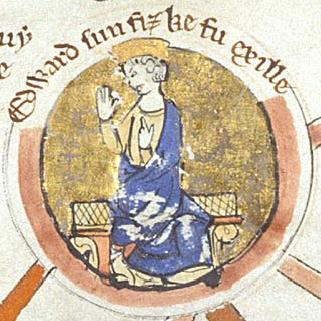
Be the first to read new articles by clicking the ‘Follow’ button, liking our Facebook page or joining me on Twitter.

*

©Sharon Bennett Connolly 2016