Guest Post: Feisty Females: Writing Lincolnshire’s Medieval Women by Rosanna McGlone

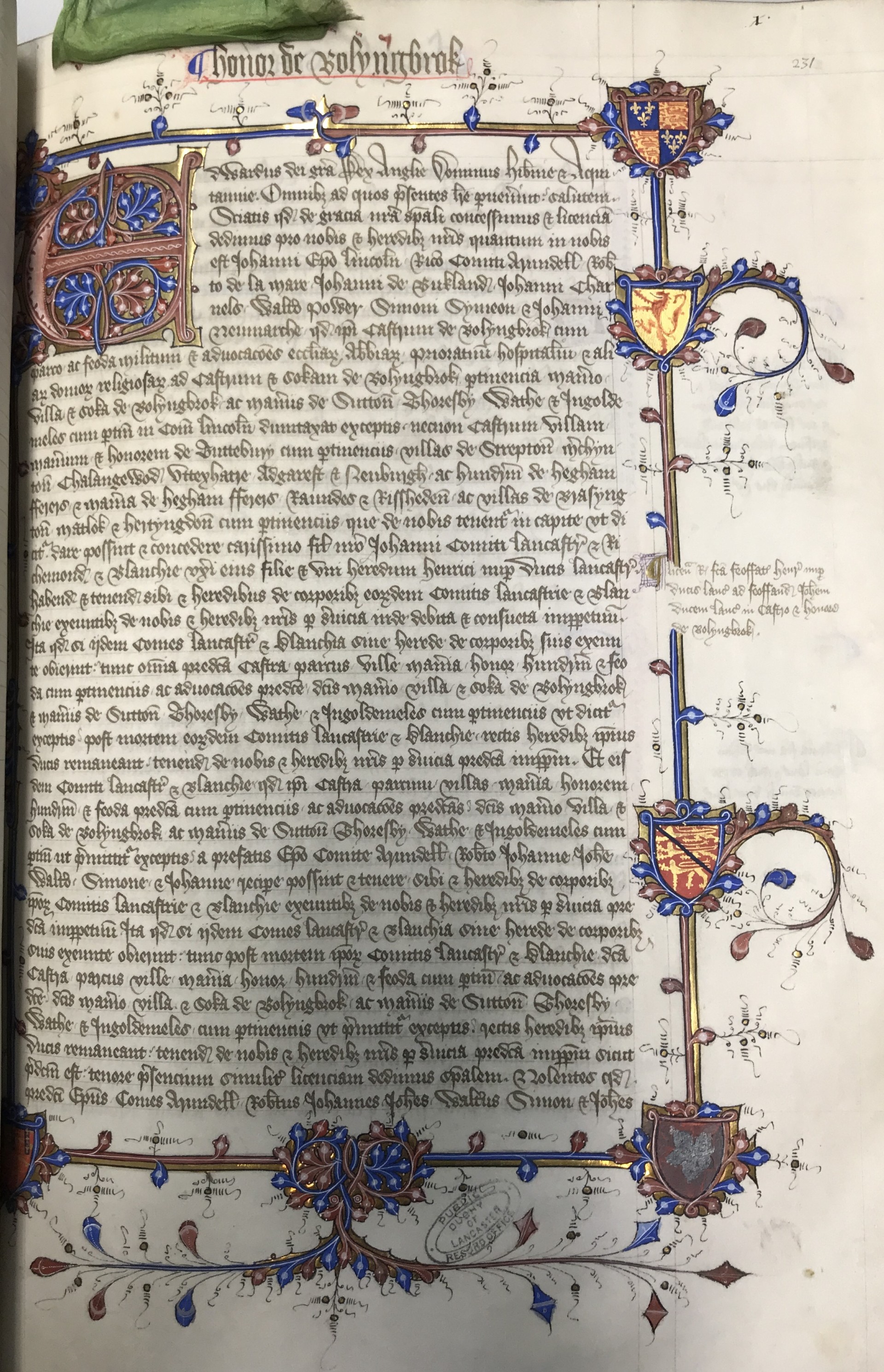
The great Cowcher Book
The Great Cowcher Book

It is a pleasure to welcome my good friend Rosanna McGlone to History … the Interesting Bits to chat about her new book, Feisty Females, a series of short stories inspired by The Great Cowcher Book. Although Feisty Females is Rosanna’s ‘baby’, I feel like its Godmother as we have chatted frequently, over coffee, about the women she included, included Nicholaa de la Haye, Alice de Lacey, Blanche of Lancaster and Gwenllian of Wales – women my readers, I know, are well acquainted with!

Rosanna would meet me, armed with questions about the history of these women and the world they lived in. Then she went away and came back having put her own mark on their stories. And what a fascinating collection of stories it is!

It is a joy to see this project come to fruition. So, over to Rosanna to tell you a little about the process of researching and writing Feisty Females: Old Bolingbroke through our Imaginations.

Feisty Females: Writing Lincolnshire’s Medieval Women by Rosanna McGlone

Henry IV effigy
Henry IV, Canterbury Cathedral

You’ve heard of the Domesday Book, right? But do you know the second most important medieval record book? If you don’t, let me reassure you. Until I received this commission, neither did I. According to staff at the National Archives it’s The Great Cowcher Book, a medieval land registry commissioned by Henry IV to provide a record of lands within the Duchy of Lancaster. Receiver General John Leventhorpe was assigned to visit the 18,000 hectares of rural estates in England and Wales including Cheshire and Lancashire in the West and The Honor of Bolingbroke in Lincolnshire in the East which make up the Duchy of Lancaster. In doing so, he gathered a total of 161 folios and 2,433 charters written in either Latin or medieval French.

What exactly do the two volumes of The Great Cowcher Book contain? As well as including transactions such as the bestowing of Old Bolingbroke Castle to John of Gaunt and his wife Blanche of Lancaster, the book also covers more minor land transactions between people of much lower status.

Additionally, the Great Cowcher Book provides a record of disputes which had been brought before the court seeking resolution.

I was commissioned, and funded, by a number of organisations including the Arts Council, Lincoln County Council, the community of Old Bolingbroke and others to write a creative response to this unique material. Thus, it is from this medieval register that my book of short stories, Feisty Females: Old Bolingbroke through our Imaginations was crafted.
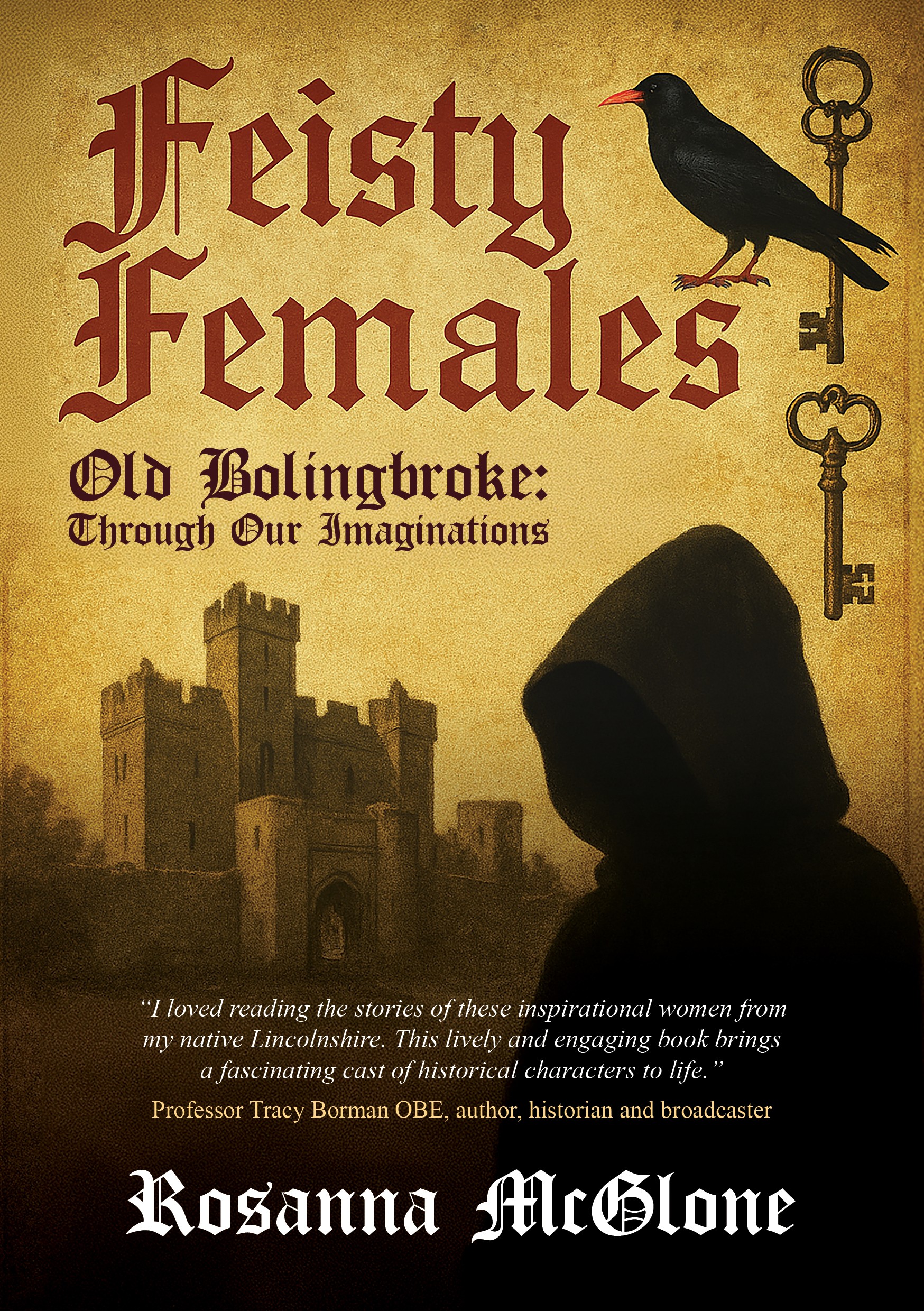
Feisty Females

The beautiful medieval manuscripts have recently been translated into English and I received the information on a rather less romanticised, Excel spreadsheet! The columns display the following headings, however not all of them have been populated for each of the more than 5,000 entries: regnal year, name of vendor, name of buyer, land to be purchased; witnesses to the contract; any special conditions, the original language of the manuscript.

As I poured over in excess of 1,200 entries pertaining to The Honor of Bolingbroke, my key focus, I was struck by the names: Walter son of Andrew; Adam, Hugh, Odo Galle of Saltfletby; Gilbert, Ranulf, Clement Prior of Spaldying, William de Rusmar, Henry de Lascy, Simon le Bret, God and his church.

Where were all of the women? As I note in the introduction to my book, His-tory is so often that, a record of the past through the male lens. For me, it was important to offer a different perspective. Out of the more than 5,000 entries within the Great Cowcher Book there are few female landowners. Yet, I was mindful that any females who did appear would have something remarkable about them to succeed in the male dominated medieval world.
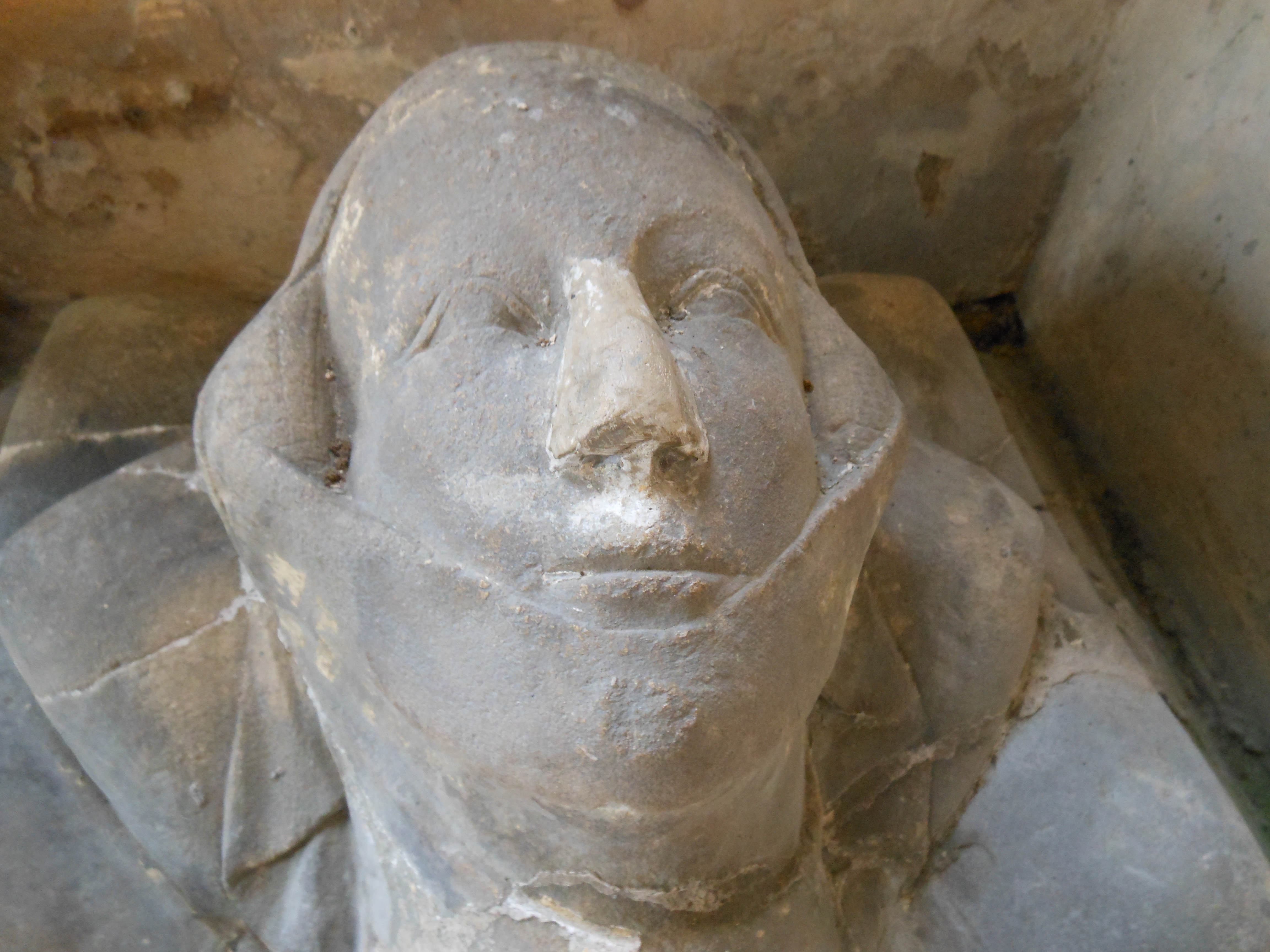
Nicholaa de la Haye effigy
Tomb effigy of Nicholaa de la Haye

Women such as Nicholaa de la Haye, the first female Sheriff of Lincoln and Castellan of Lincoln Castle who withstood not one, but three separate sieges on the castle and earned the respect of King John himself.

Another feisty female for whom I have particular affection is Alice de Lacy, a woman whose story is too incredible to be true, at least that’s what I thought when I read it. Kidnappings, rape, imprisonment by the king, threats of being burnt to death, really how could I possibly capture all of Alice’s turbulent life in a mere 3,000 words? The answer is, I couldn’t. Therefore, I focused upon the catalyst for her troubles, her inheritance. Two bizarre childhood accidents occurred to her brothers which, in my opinion, determined the course of Alice’s life. Firstly, her young brother Edmund fell down a well at Denbigh Castle and died. Then, barely six months later, her other brother, John fell off the battlements at Pontefract Castle. He too perished leaving Alice- still a child herself- as sole heir to her parents, Henry de Lacy, Earl of Lincoln, and Margaret Longespee, Countess of Salisbury.

Whilst all of the other stories are set in medieval times, for Alice’s story I use the framework of a police interview in which she is pushed to reveal the truth of those inciting incidents.

The women with the most charters in the Great Cowcher Book is Hawise de Quincy, first Countess of Lincoln, who has a remarkable 40 entries. Whilst the vast majority of these relate to land acquisitions, the one upon which my tale focuses concerns a dispute was between Hawise and Philip de Kyma. To quote the Great Cowcher, this disagreement was

‘…concerning a certain obstruction of a certain watercourse made by the said Philip in Torp to the nuisance of the port of the said Hawise in Weynfled. Because it was then clear the land of both sides of that watercourse towards the port of Weynfled is of the said Philip…’

And so on… In essence, Philip de Kyma was preventing Hawise de Quincy from accessing her port and, therefore, the valuable port fees. So, what was she to do? This is what my story explores. Does pragmatism work, or must Hawise resort to womanly wiles?

Gwenllian of Wales
Memorial to Gwenllian, Sempringham Priory

An incredibly wronged female in Feisty Females is Gwenllian, the last Princess of Wales who was incarcerated in a Lincolnshire Priory from which there was little chance of escape, unless she had inside help…

In all cases, bar one, the women come from the Great Cowcher book, however in Matilda’s case my desire to write on the specific topic of that story arose first, based on a certain building referenced in The Great Cowcher. Matilda’s Story begins thus:

It was the day after Candlemas that we held my brother’s funeral. There was just one problem: he wasn’t dead.

It has been a pleasure to learn more about these characters and to bring them to life for readers, giving them voices after 800 years, or more, of silence. The book is a celebration of the female power which was understood by Chaucer who, himself, makes an appearance in Blanche’s Story. In the epigraph to my book Chaucer describes women thus:

‘And what is better than wisedoom? Womman.

And what is better than a good woman? Nothyng.’1

*

Notes: 1. Geoffrey Chaucer, ‘The Tale of Melibee’ The Canterbury Tales.

Images: The Great Cowcher Book (DL 42/2, fol. 231r, the property of His Majesty The King in Right of His Duchy of Lancaster and is reproduced by permission of the Chancellor and Council of the Duchy of Lancaster.); Photos of Henry IV, Nicholaa de la Haye and Gwenllian of Wales are ©Sharon Bennett Connolly FRHistS.

To Buy the Book:

Just click on the link to buy: Feisty Females

About the Author:

Rosanna McGlone

Rosanna McGlone is a writer and journalist. Her book, The Process of Poetry -which explores the development of early drafts of poems by some of the country’s leading poets- was number 1 on Amazon and featured on Radio 4’s Front Row. The sequel, The Making of a Poem, focuses on the work of Australian foremost poets. She has written more than 100 features for the national press, including: The GuardianThe IndependentThe Sydney Morning Herald and The Australian. Rosanna has written memoirs, community plays and collected oral histories. Feisty Females, a creative response to The Great Cowcher Book, a medieval book, is out on June 8th 2025.

To find out more follow Rosanna at @rosannamcglone.bsky.social

*

My Books:

Signed, dedicated copies of all my books are available through my online bookshop.

Out Now! Scotland’s Medieval Queens

Books by Sharon Bennett Connolly

Scotland’s history is dramatic, violent and bloody. Being England’s northern neighbour has never been easy. Scotland’s queens have had to deal with war, murder, imprisonment, political rivalries and open betrayal. They have loved and lost, raised kings and queens, ruled and died for Scotland. From St Margaret, who became one of the patron saints of Scotland, to Elizabeth de Burgh and the dramatic story of the Scottish Wars of Independence, to the love story and tragedy of Joan Beaufort, to Margaret of Denmark and the dawn of the Renaissance, Scotland’s Medieval Queens have seen it all. This is the story of Scotland through their eyes.

Scotland’s Medieval Queens gives a thorough grounding in the history of the women who ruled Scotland at the side of its kings, often in the shadows, but just as interesting in their lives beyond the spotlight. It’s not a subject that has been widely covered, and Sharon is a pioneer in bringing that information into accessible history.’ Elizabeth Chadwick (New York Times bestselling author)

Available now from Amazon and Pen and Sword Books

Also by Sharon Bennett Connolly:
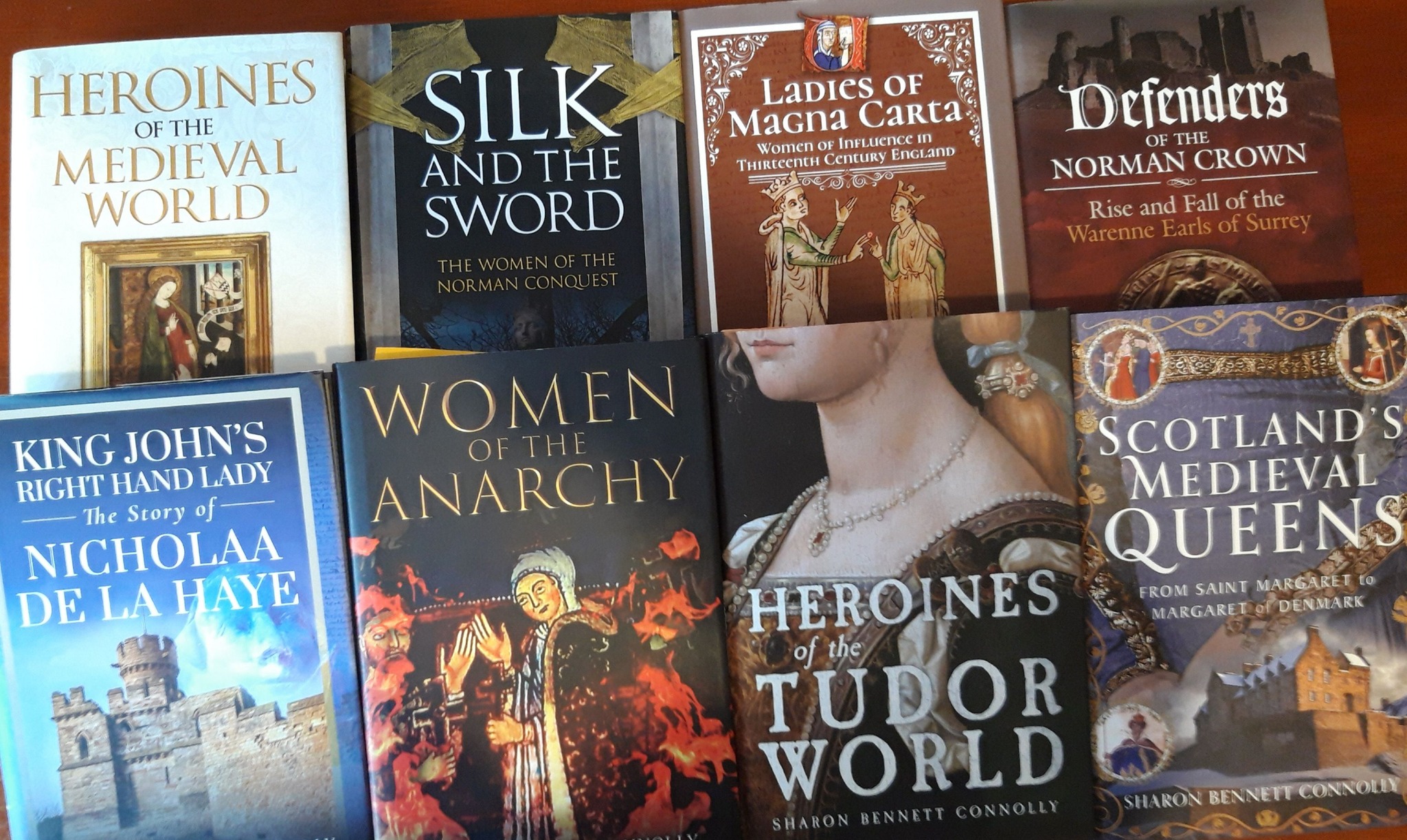
Books by Sharon Bennett Connolly

Heroines of the Tudor World tells the stories of the most remarkable women from European history in the time of the Tudor dynasty, 1485-1603. These are the women who ruled, the women who founded dynasties, the women who fought for religious freedom, their families and love. Heroines of the Tudor World is now available for pre-order from Amberley Publishing and Amazon UK. Women of the Anarchy demonstrates how Empress Matilda and Matilda of Boulogne, unable to wield a sword themselves, were prime movers in this time of conflict and lawlessness. It shows how their strengths, weaknesses, and personal ambitions swung the fortunes of war one way – and then the other. Available from Bookshop.orgAmberley Publishing and Amazon UKKing John’s Right-Hand Lady: The Story of Nicholaa de la Haye is the story of a truly remarkable lady, the hereditary constable of Lincoln Castle and the first woman in England to be appointed sheriff in her own right. Available from all good bookshops Pen & Sword Booksbookshop.org and Amazon

Royal Historical Society

Defenders of the Norman Crown: The Rise and Fall of the Warenne Earls of Surrey tells the fascinating story of the Warenne dynasty, from its origins in Normandy, through the Conquest, Magna Carta, the wars and marriages that led to its ultimate demise in the reign of Edward III. Available from Pen & Sword BooksAmazon in the UK and US, and Bookshop.orgLadies of Magna Carta: Women of Influence in Thirteenth Century England looks into the relationships of the various noble families of the 13th century, and how they were affected by the Barons’ Wars, Magna Carta and its aftermath; the bonds that were formed and those that were broken. It is now available in paperback and hardback from Pen & SwordAmazon, and Bookshop.orgHeroines of the Medieval World tells the stories of some of the most remarkable women from Medieval history, from Eleanor of Aquitaine to Julian of Norwich. Available now from Amberley Publishing and Amazon, and Bookshop.orgSilk and the Sword: The Women of the Norman Conquest traces the fortunes of the women who had a significant role to play in the momentous events of 1066. Available now from Amazon,  Amberley Publishing, and Bookshop.org.

Alternate Endings: An anthology of historical fiction short stories including Long Live the King… which is my take what might have happened had King John not died in October 1216. Available in paperback and kindle from Amazon.

Podcast:

A Slice of Medieval

Have a listen to the A Slice of Medieval podcast, which I co-host with Historical fiction novelist Derek Birks. Derek and I welcome guests, such as Bernard Cornwell and Michael Jecks, and discuss a wide range of topics in medieval history, from significant events to the personalities involved. 

Every episode is also now available on YouTube.

*

Don’t forget! Signed and dedicated copies of all my books are available through my online store.

For forthcoming online and in-person talks, please check out my Events Page.

You can be the first to read new articles by clicking the ‘Follow’ button, liking our Facebook page or joining me on TwitterThreadsBluesky and Instagram.

*

©2025 Sharon Bennett Connolly, FRHistS and Rosanna McGlone
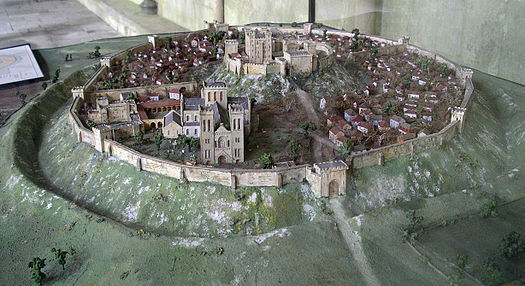
Ela: Heiress, Wife and Abbess

Model of Old Sarum

Ela of Salisbury was one of the most influential women of the thirteenth century. Ela was born at Amesbury in Wiltshire in 1187. She was the only surviving child – and sole heir – of William FitzPatrick, earl of Salisbury, and his wife, Eleanor de Vitré. Her father was a descendant of Walter, an ally of William the Conqueror, who had rewarded his support at Hastings with great estates which eventually passed to Ela. When her father died in 1196, Ela became Countess of Salisbury in her own right, and the most prized heiress in England.

There is a story that little Ela, only 9 years old at the time of her father’s death, was kidnapped by her uncle and hidden away in a castle in Normandy, so that he could gain control of the vast Salisbury inheritance. The tale goes, that an English knight, named William Talbot, toured the Norman castles in search of poor Ela, he would sing ballads beneath castle windows in the hope that the little Countess would hear him and join in with his singing. Whether a romantic legend or a true story, who can tell?

Whether she was rescued, or never kidnapped in the first place, we do not know. However, what we do know is that, on her father’s death, Ela’s wardship passed into the hands of the king himself, Richard I, the Lionheart. The king saw Ela as the opportunity to reward his loyal,  but illegitimate, brother, William Longspée (or Longsword), by offering him her hand in marriage. The Salisbury lands were a suitable reward for a king’s son, especially one born out of wedlock.

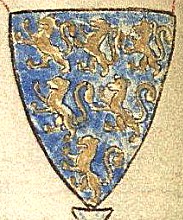
Arms of the Longspée earls of Salisbury

William Longspée was the son of Henry II by Ida de Tosney, wife of Roger Bigod, earl of Norfolk, from a relationship she had with the king before her marriage. For many years, it was thought that Longspée was the son of a common harlot, called Ikenai, and a full brother of another of Henry’s illegitimate sons, Geoffrey, Archbishop of York. There were also theories that his mother was, Rosamund Clifford, famed in ballads as ‘the Fair Rosamund’. However, it is now considered beyond doubt that his mother was, in fact, Ida de Tosney, with two pieces of evidence supporting this.  There is a charter in the cartulary of Bradenstoke Priory, made by William Longspée, in which he identifies his mother as the Countess Ida. There is also a prisoner roll from after the Battle of Bouvines, in which William Longspée is listed as the brother of Ralph Bigod (he was, in fact, Ralph’s half-brother).

Despite the misunderstandings over his mother, the identity of William Longspée’s father was never in doubt. He was Henry II’s son and served two of his half-brothers; Richard I and King John. At the time of his marriage to Ela, Longspée was in his early-to-mid-20’s, while his bride was not yet 10 years old; although she would not have been expected to consummate the marriage until she was 14 or 15.

William I Longspée had an impressive career during the reigns of his half-brothers, he served in Normandy with Richard between 1196 and 1198, and took part in John’s coronation in May, 1199. In 1213 he destroyed the French fleet off the Flemish coast. He commanded an army in northern France for John in 1214; and in July of the same year, he was captured at the Battle of Bouvines, after being clubbed on the head by the Bishop of Beauvais. Longspée was held for ransom and eventually exchanged, in March 1215, for John’s prisoner, Robert of Dreux, who had been captured at Nantes in 1214.

Longspée returned to England shortly afterwards and was one of the signatories of Magna Carta in 1215. He was still supporting John when Louis, the Dauphin, invaded England and took London; however, after Winchester fell to the French, in June 1216, Longspée defected to the Dauphin and remained in opposition to his brother for the rest of John’s life.¹

Following the death of King John in October 1216,  Longspée swore loyalty to his 9-year-old nephew, Henry III in March 1217. He was part of William Marshal’s army at the Battle of Lincoln Fair, when Lincoln Castle and its formidable castellan, Nicholaa de la Haye, were finally relieved from a 3-month siege by the French under the Comte de Perche.

William II Longspée, 4th Earl of Salisbury

Although we know little-to-nothing of their married life, it appears to have been happy. The couple had at least 8 children together, if not more; 4 boys and 4 girls. Of their younger boys, Richard became a canon at the newly built Salisbury Cathedral, while Nicholas eventually rose to be Bishop of Salisbury and Stephen became Senschal of Gascony and Justiciar of Ireland.

The oldest son, William II Longspée, 4th Earl of Salisbury, was married to Idonea, granddaughter and sole heiress of the formidable Nicholaa de la Haye, who held Lincoln Castle against the French. The Salisburys and Nicholaa de la Haye would spend several years in legal disputes over the inheritance of Nicholaa’s Lincolnshire holdings; Idonea could inherit the lands that had belonged to her grandfather, Gerard de Canville (Nicholaa’s husband), but not the lands Nicholaa held in her own right. Nicholaa, however, was forced to relinquish her position as sheriff of Lincolnshire to the earl of Salisbury, but retained her position as castellan of Lincoln Castle until she retired in 1226.

William II Longspée went on Crusade with Richard, Earl of Cornwall, in 1240-1241 and later led the English contingent in the Seventh Crusade, led by Louis IX of France. His company formed part of the doomed vanguard, which was overwhelmed at Mansourah in Egypt, on 8 February 1250, and William was killed. William’s body was buried in Acre, but his effigy lies atop an empty tomb in Salisbury Cathedral. His mother is said to have experienced a vision of her son’s last moments at the time of his death.

Of Ela and William’s 4 daughters, Petronilla died unmarried, possibly having become a nun. Isabella married  William de Vescy, Lord of Alnwick and had children before her death in 1244. Named after her mother, Ela married, firstly Thomas de Beaumont, Earl of Warwick and, secondly, Phillip Basset; sadly, she had no children by either husband. There were possibly two daughters with the same name, Ida. The first Ida was married to Ralph de Somery before marrying, in 1220, William de Beauchamp, Baron Bedford, by whom she had 6 children. The second Ida who was married to Walter FitzRobert. Both Idas are identified in various records as the daughters of William and Ela, though it is possible that one is a granddaughter, the dates we have available do not suggest that.

As a couple, William Longspée and Ela were great patrons of the church, laying the 4th and 5th, respectively, foundation stones for the new Salisbury Cathedral in 1220. In 1225 Longspée was shipwrecked off the coast of Brittany and a rumour spread that he was dead. While he spent months recovering at an island monastery in France Hubert de Burgh, 1st Earl of Kent and husband of Isabel of Gloucester, proposed a marriage between Ela and his nephew, Reimund. Ela, however, would not even consider it, insisting that she knew William was alive and that, even were he dead, she would never consider marrying below her status. It has been suggested that she used clause 8 of Magna Carta to support her rejection of the offer; “No widow is to be distrained to marry while she wishes to live without a husband…”

William_Salisbury
William Longspee, Earl of Salisbury

As it turned out, William Longspée was still alive and eventually returned to his wife. However, he never seems to have recovered fully from his injuries and died at the royal castle at Salisbury shortly after his return home, on 7 March 1226. He was buried in a splendid tomb in Salisbury Cathedral.

Ela did not marry again. On her husband’s death, she was forced to relinquish her custody of Salisbury castle (although she did eventually buy it back), but was allowed to take over her husband’s role as Sheriff of Wiltshire, which he had held three times, holding the office continuously from 1213 until his death in 1226. Ela acted as Sheriff until 1228. She was known as a great patron of religious houses; she and her husband had co-founded Salisbury Cathedral and Ela herself founded two Augustinian religious houses. She managed to lay the foundation stones of both, at Hinton and Lacock, 16 miles apart, on the same day. The abbey at Hinton, Somerset, was endowed for monks, in memory of her husband, after they had found the original house, founded by Longspée at Hathorp unsuitable.

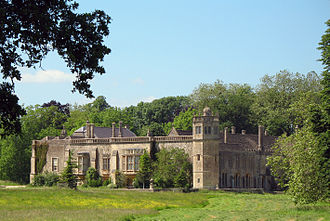
Lacock Priory was established in 1230 as a house for Augustinian canonesses at the village of Lacock in Wiltshire. Ela herself entered the priory in 1237 and became the first Abbess when it was upgraded to an Abbey in 1239. As Abbess, Ela was able to secure many rights and privileges for the abbey and its village. She obtained a copy of the 1225 issue of Magna Carta, which had been given to her husband for him to distribute around Wiltshire. She remained Abbess for 20 years, resigning in 1259. Ela remained at the abbey, however, and died there on 24 August, 1261.

Lacock Abbey, Wiltshire

Ela of Salisbury outlived both her eldest son and grandson. She was succeeded as Countess of Salisbury by her great-granddaughter, Margaret, who was the daughter of William III Longspée. Margaret was married to Henry de Lacey, 3rd Earl of Lincoln, and was the mother of Alice de Lacey, 4th Countess of Lincoln and the unfortunate, unloved wife of Thomas, Earl of Lancaster, who was killed in rebellion against Edward II, at the Battle of Boroughbridge in 1322.

The 3rd Countess of Salisbury was described in the Register of St Osmund as “a woman indeed worthy of praise because she was filled with the fear of the Lord.”² Ela was not buried alongside her husband in Salisbury Cathedral, but within the Abbey that she had founded and ruled – and had called her home for the last 24 years of her life. Her tombstone demonstrates the high esteem in which she was held and records the words; “Below lie buried the bones of the venerable Ela, who gave this sacred house as a home for the nuns. She also had lived her as holy abbess and Countess of Salisbury, full  of good works.”³

*

Ela’s story appears in greater detail in my book, Ladies of Magna Carta: Women of Influence in Thirteenth Century England.

Footnote: ¹With thanks to Rich Price for clarification of events; Rich is currently translating King John’s letters; ²Ela, suo jure Countess of Salisbury, Jennifer C Ward, Oxforddnb.com, October 2009; ³ Ela of Salisbury stanfordmagnacarta.worpress.com

*

Pictures courtesy of Wikipedia

*

Sources: The Plantagenet Chronicles edited by Elizabeth Hallam; Brassey’s Battles by John Laffin; 1215 The Year of Magna Carta by Danny Danziger & John Gillingham; The Life and Times of King John by Maurice Ashley; The Story of Britain by Roy Strong; The Plantagenets, the Kings Who Made England by Dan Jones; England Under the Norman and Angevin Kings  by Robert Bartlett; lincolnshirelife.co.uk; catherinehanley.co.uk; magnacarta800th.com; lothene.org; lincolncastle.com; The Sheriff: The Man and His Office by Irene Gladwin; Oxforddnb.com; stanfordmagnacarta.wordpress.com; A Year in the Life of Medieval England by Toni Mount; The Demon’s Brood by Desmond Seward; The Oxford Companion to British History, Edited by John Cannon; The Greatest Knight by Thomas Asbridge; Britain’s Royal Families by Alison Weir; chitterne.com

*

My Books:

Signed, dedicated copies of all my books are available through my online store.

Out now: Scotland’s Medieval Queens

Scotland’s history is dramatic, violent and bloody. Being England’s northern neighbour has never been easy. Scotland’s queens have had to deal with war, murder, imprisonment, political rivalries and open betrayal. They have loved and lost, raised kings and queens, ruled and died for Scotland. From St Margaret, who became one of the patron saints of Scotland, to Elizabeth de Burgh and the dramatic story of the Scottish Wars of Independence, to the love story and tragedy of Joan Beaufort, to Margaret of Denmark and the dawn of the Renaissance, Scotland’s Medieval Queens have seen it all. This is the story of Scotland through their eyes.

Available now from Amazon and Pen and Sword Books

Also by Sharon Bennett Connolly:

Heroines of the Tudor World tells the stories of the most remarkable women from European history in the time of the Tudor dynasty, 1485-1603. These are the women who ruled, the women who founded dynasties, the women who fought for religious freedom, their families and love. Heroines of the Tudor World is now available for pre-order from Amberley Publishing and Amazon UK. Women of the Anarchy demonstrates how Empress Matilda and Matilda of Boulogne, unable to wield a sword themselves, were prime movers in this time of conflict and lawlessness. It shows how their strengths, weaknesses, and personal ambitions swung the fortunes of war one way – and then the other. Available from Bookshop.orgAmberley Publishing and Amazon UKKing John’s Right-Hand Lady: The Story of Nicholaa de la Haye is the story of a truly remarkable lady, the hereditary constable of Lincoln Castle and the first woman in England to be appointed sheriff in her own right. Available from all good bookshops Pen & Sword Booksbookshop.org and Amazon

Defenders of the Norman Crown: The Rise and Fall of the Warenne Earls of Surrey tells the fascinating story of the Warenne dynasty, from its origins in Normandy, through the Conquest, Magna Carta, the wars and marriages that led to its ultimate demise in the reign of Edward III. Available from Pen & Sword BooksAmazon in the UK and US, and Bookshop.orgLadies of Magna Carta: Women of Influence in Thirteenth Century England looks into the relationships of the various noble families of the 13th century, and how they were affected by the Barons’ Wars, Magna Carta and its aftermath; the bonds that were formed and those that were broken. It is now available in paperback and hardback from Pen & SwordAmazon, and Bookshop.orgHeroines of the Medieval World tells the stories of some of the most remarkable women from Medieval history, from Eleanor of Aquitaine to Julian of Norwich. Available now from Amberley Publishing and Amazon, and Bookshop.orgSilk and the Sword: The Women of the Norman Conquest traces the fortunes of the women who had a significant role to play in the momentous events of 1066. Available now from Amazon,  Amberley Publishing, and Bookshop.org.

Alternate Endings: An anthology of historical fiction short stories including Long Live the King… which is my take what might have happened had King John not died in October 1216. Available in paperback and kindle from Amazon.

Podcast:

Have a listen to the A Slice of Medieval podcast, which I co-host with Historical fiction novelist Derek Birks. Derek and I welcome guests, such as Bernard Cornwell, Elizabeth Chadwick and Michael Jecks, and discuss a wide range of topics in medieval history, from significant events to the personalities involved. Every episode is also now available on YouTube.

*

Don’t forget! Signed and dedicated copies of all my books are available through my online store.

For forthcoming online and in-person talks, please check out my Events Page.

You can be the first to read new articles by clicking the ‘Follow’ button, liking our Facebook page or joining me on TwitterThreadsBluesky and Instagram.

*

©2017 Sharon Bennett Connolly FRHistS

The Kidnapped Countess

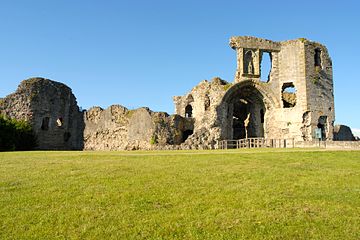
Denbigh_Castle_3
Denbigh Castle

The story of Alice de Lacey is like something straight from a novel, with rebellion, kidnappings and love all wrapped up in the life of this one Countess. Alice was born at Denbigh Castle on 25th December 1281. She was the daughter of Henry de Lacey, 5th Earl of Lincoln. Through her mother Margaret, she was a granddaughter of William (II) Longspee, Earl of Salisbury and his wife, Idonea de Camville. Through Margaret, Alice was also descended from 2 of the greatest women of the 13th century, Nicholaa de la Haye, castellan of Lincoln Castle, and Ela of Salisbury, Countess of Salisbury in her own right.

Alice was one of 3 children. With 2 brothers, Edmund and John, she was, of course, not  expected to inherit her father’s earldom. However, 2 family tragedies made Alice one of the richest heiresses in England. Young Edmund, it appears, drowned in a well at Denbigh Castle and John fell to his death from the parapet at Pontefract Castle, leaving Alice as her parents’ sole heir.

In 1294 Alice’s marriage was arranged by no-less than the king – Edward I – who saw her as a suitable bride for his nephew Thomas, Earl of Lancaster and son of the king’s brother Edmund Crouchback. Alice and Thomas were married on or before 28th October 1294; he was about 16 years old and Alice was not yet 13.

Edward I had shown his unscrupulous nature in the marriage settlement in that Thomas was given part of the Lacey inheritance on the marriage, with the rest to pass to Thomas on Henry de Lacey’s death. The settlement further stipulated that the de Lacey lands would pass to Lancaster in the event of Alice’s dying without issue; thus excluding all collateral heirs to the earldoms of Salisbury and Lincoln.

330px-Seal_Henry_de_Lacy
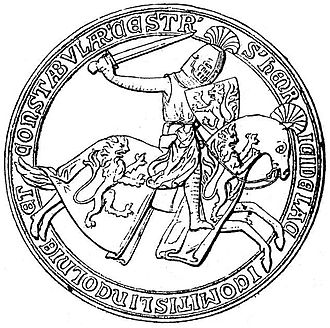
Seal of Henry de Lacey

Alice’s mother Margaret, Countess of Salisbury in her own right, died in 1309 and by June 1310 her father had remarried, to Joan Fitz Martin, probably in the hope of securing an heir for his earldom. In the event, it wasn’t to be and the Earl of Lincoln died in 1311, with his estates passing through his daughter, to Thomas Earl of Lancaster and Leicester.

With 5 earldoms to his name, Thomas now became one of the richest and most powerful men in the kingdom. Although he was initially a supporter of the new king, his cousin Edward II, he would soon turn against him and his favourites, making enemies along the way.

Poor Alice got caught in the middle of one of Thomas’s feuds.

According to the chronicler Walsingham:

The Countess of Lancaster … was seized at Canford, in Dorset, by a certain knight of the house and family of John, Earl Warenne, with many English retainers called together for the detestable deed, as it is said, with the royal assent. … With them was a certain man of a miserable stature, lame and hunchbacked, called Richard de St Martin, exhibiting and declaring constantly his evil intentions towards the lady, so miserably led away.

Alice was kidnapped in 1317 from her manor in Canford, Dorset, by John de Warenne‘s man, Sir Richard de St Martin, supposedly with the king’s knowledge. Several reasons for the abduction have been put forward; one is, of course, that Alice and St Martin were having an affair while another is that the affair was between Alice and John de Warenne, Earl of Surrey, himself. After all, John de Warenne did have a reputation with women.

Given the king’s involvement, a more likely explanation is that the kidnapping was organised by Earl Warenne in retaliation for Lancaster’s objections to the earl’s attempts to divorce his wife, Joan of Bar, in 1315/16. Joan was a cousin of Thomas of Lancaster and niece of King Edward II, but her marriage to John de Warenne was a disaster and John openly lived with his mistress, Maud Nerford. When he attempted to divorce Joan, Lancaster was one of his most vocal opponents; the divorce was eventually refused and Earl Warenne was even excommunicated for a time.

Arms_of_Edmund_Crouchback,_Earl_of_Leicester_and_Lancaster.svg
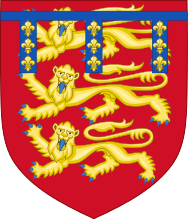
Arms of Thomas and his father as Earls of Lancaster and Leicester

Following her kidnapping, Alice was held at Reigate Castle, Surrey. Her abduction set off a private war between the 2 magnates, with Lancaster targeting Warenne’s Yorkshire estates and successfully besieging the Earl’s castle at Conisbrough in retaliation. Lancaster seems to have made little-to-no effort to actually rescue his wife and there is no record of how and when she was eventually released.

Alice and Thomas’s marriage does not appear to have been a happy one and there is some evidence that they were actually divorced in 1318, with Thomas retaining Alice’s earldoms after enforcing the marriage contract. The divorce was supposedly on account of her adultery with the Earl of Surrey’s squire, Sir Eubolo Lestrange (although this may be a confusion of facts from her abduction and her later marriage). It has also been claimed that Alice and her abductor, Richard de St Martin, were pre-contracted before her marriage to Thomas of Lancaster. However, although this is not impossible, it does seem unlikely, given Alice’s tender age on her wedding day.

Whether or not Alice and Thomas did divorce is still open to debate. If the divorce occurred, it did not protect her from the reprisals meted out after her husband’s failed rebellion and defeat at the Battle of Boroughbridge on 16th March 1322. While Thomas was executed Alice, along with her step-mother, Joan, was imprisoned in York Castle.

It must have been a truly terrifying time for the 2 women; with no protectors they were at the mercy of the king’s favourites, the Despensers, father and son. Threatened with execution by burning they were forced to turn over the majority of their estates. Having paid an enormous ransom of £20,000 Alice was finally released, securing some her titles, a small number of estates and the right to remarry.

021
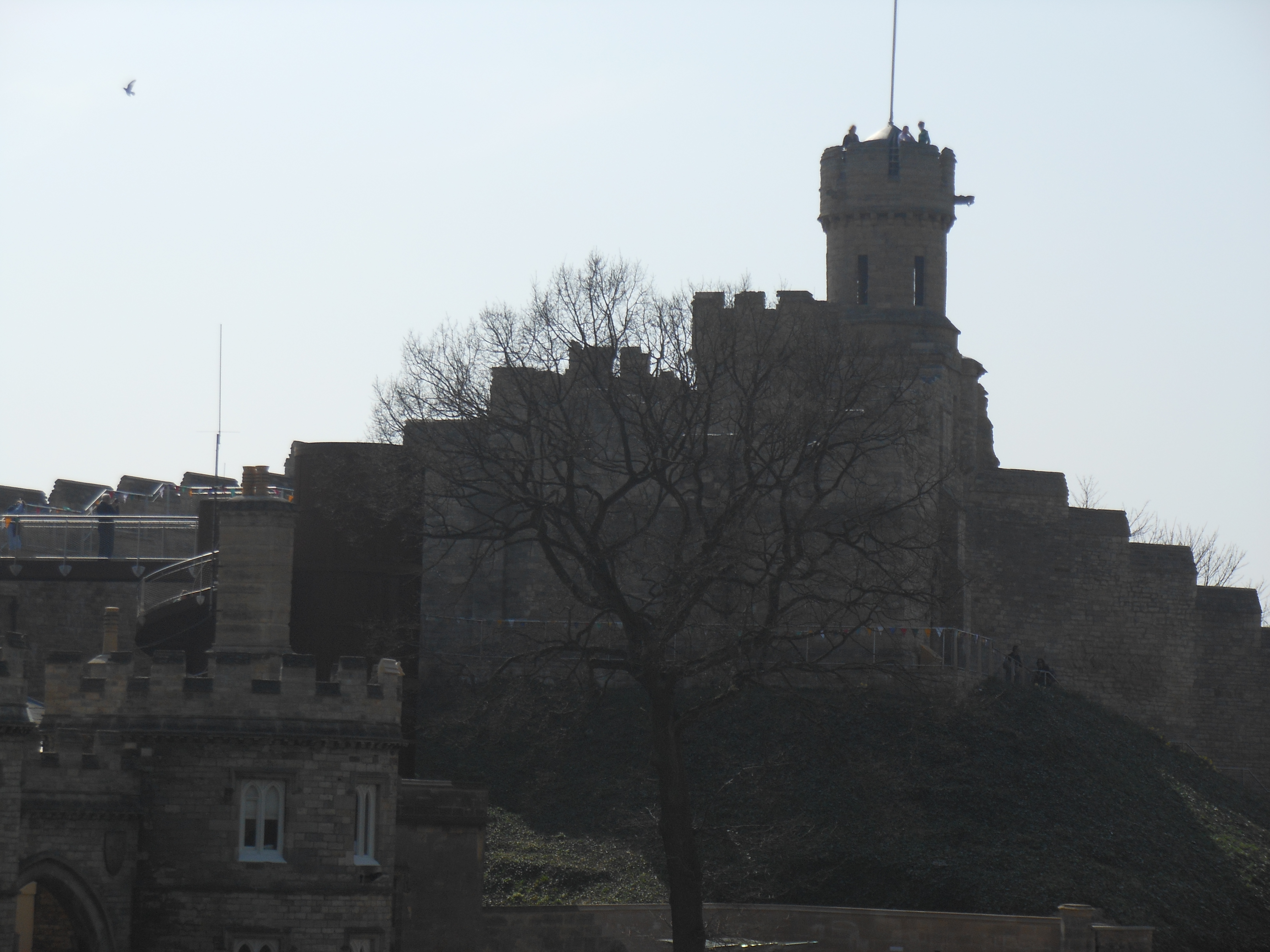
Lincoln Castle

Her step-mother, Joan, died in October 1322; we can only surmise as to whether or not her demise was as a consequence of her imprisonment.

Alice would eventually recover Lincoln Castle and the Earldom of Lincoln, but many of her estates were given to her erstwhile abductor, John de Warenne, and only returned to her by Edward III, many years later.

By November 1324 Alice had married again, this time to a minor baron from the Welsh Marches, Sir Ebule, or Eubolo, Lestrange of Shropshire. The  marriage demonstrated that Alice had managed to come out of the disaster of her first husband’s downfall with enough income and  property to make her an attractive proposition as a wife. Although, it does seem possible that this marriage was a love-match.

This marriage appears to have been a happier one, given that Lestrange moved over to Lincolnshire to look after his wife’s interests, and that it was with Sir Eubolo that Alice chose to be buried, when the time came. Alice and Sir Eubolo were married for over 10 years, although towards the latter part Lestrange was away campaigning in Scotland, where he died in September 1335. Alice was named as one of his executors and he was buried in Barlings Abbey, Lincolnshire.

Following his death, Alice took a vow of chastity and looked determined to settle into a life of quiet retirement. However, her adventures were not quite at an end. In 1335, or early 1336, Alice was kidnapped for a second time; she was abducted from her castle at Bolingbroke and raped, by Sir Hugh de Freyne. Freyne was a Herefordshire knight and royal keeper of the town and castle of Cardigan.

There appears some suggestion that Alice was in collusion with Sir Hugh, with the theory being that her abduction was a way for her to escape her vow of chastity. It seems more likely that Alice acquiesced to a situation over which she had little control. Edward III was furious and ordered the imprisonment of the couple, but they were reconciled with the king in 1336 and allowed to marry. The marriage did much to improve Freyne’s status and brought him a summons to Parliament in November 1336.

330px-Barlings_Abbey_ruins_-_geograph.org.uk_-_242596
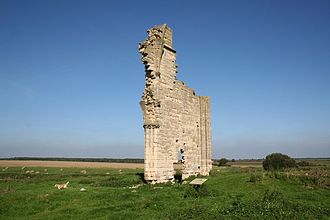
Barlings Abbey

However, such success was short-lived as he died at Perth in December 1336 or January 1337.

Shortly after her third husband’s death, the Bishop of Lincoln issued a demand that Alice keep her prior vow and chastity. As there were no further marriages – or abductions – we can probably assume that she did. Alice died on the 2nd October 1348 at the grand age of 66. She was buried with her second husband at the Premonstratensian House of Barlings, in Lincolnshire, founded by Ralph de la Haye, uncle of the famous Nicholaa de la Haye.

Having had no children from any of her 3 marriages, Alice’s lands and titles, as according to her marriage settlement 54 years earlier, passed to the house of Lancaster and her husband’s nephew, Henry of Grosmont, 1st Duke of Lancaster and father of Blanche of Lancaster, John of Gaunt’s 1st wife.

*

Pictures courtesy of Wikipedia, except Lincoln Castle © 2015 Sharon Bennett Connolly FRHistS.

*

Sources: The Oxford Companion to British History Edited by John Cannon; The Plantagenets, the Kings who Made England by Dan Jones; History Today Companion to British History Edited by Juliet Gardiner and Neil Wenborn;  Brewer’s British Royalty by David Williamson; Britain’s Royal Families, the Complete Genealogy by Alison Weir; Conisbrough Castle by Steven Brindle and Agnieszka Sadraei; The Mammoth Book of British Kings and Queens by Mike Ashley; The Plantagenets, the Kings that made Britain by Derek Wilson;  findagrave.com; oxforddnb.com; royaldescent.net.

*

My Books

Signed, dedicated copies of all my books are available through my online store.

OUT NOW! Heroines of the Tudor World

Heroines of the Tudor World tells the stories of the most remarkable women from European history in the time of the Tudor dynasty, 1485-1603. These are the women who ruled, the women who founded dynasties, the women who fought for religious freedom, their families and love. These are the women who made a difference, who influenced countries, kings and the Reformation. In the era dominated by the Renaissance and Reformation, Heroines of the Tudor World examines the threats and challenges faced by the women of the era, and how they overcame them. From writers to regents, from nuns to queens, Heroines of the Tudor World shines the spotlight on the women helped to shape Early Modern Europe.

Heroines of the Tudor World is now available for pre-order from Amberley Publishing and Amazon UK.

Coming 30 January 2025: Scotland’s Medieval Queens

Scotland’s history is dramatic, violent and bloody. Being England’s northern neighbour has never been easy. Scotland’s queens have had to deal with war, murder, imprisonment, political rivalries and open betrayal. They have loved and lost, raised kings and queens, ruled and died for Scotland. From St Margaret, who became one of the patron saints of Scotland, to Elizabeth de Burgh and the dramatic story of the Scottish Wars of Independence, to the love story and tragedy of Joan Beaufort, to Margaret of Denmark and the dawn of the Renaissance, Scotland’s Medieval Queens have seen it all. This is the story of Scotland through their eyes.

Available for pre-order now.

Also by Sharon Bennett Connolly:

Women of the Anarchy demonstrates how Empress Matilda and Matilda of Boulogne, unable to wield a sword themselves, were prime movers in this time of conflict and lawlessness. It shows how their strengths, weaknesses, and personal ambitions swung the fortunes of war one way – and then the other. Available from Bookshop.orgAmberley Publishing and Amazon UKKing John’s Right-Hand Lady: The Story of Nicholaa de la Haye is the story of a truly remarkable lady, the hereditary constable of Lincoln Castle and the first woman in England to be appointed sheriff in her own right. Available from all good bookshops Pen & Sword Booksbookshop.org and AmazonDefenders of the Norman Crown: The Rise and Fall of the Warenne Earls of Surrey tells the fascinating story of the Warenne dynasty, from its origins in Normandy, through the Conquest, Magna Carta, the wars and marriages that led to its ultimate demise in the reign of Edward III. Available from Pen & Sword BooksAmazon in the UK and US, and Bookshop.org

Ladies of Magna Carta: Women of Influence in Thirteenth Century England looks into the relationships of the various noble families of the 13th century, and how they were affected by the Barons’ Wars, Magna Carta and its aftermath; the bonds that were formed and those that were broken. It is now available in paperback and hardback from Pen & SwordAmazon, and Bookshop.orgHeroines of the Medieval World tells the stories of some of the most remarkable women from Medieval history, from Eleanor of Aquitaine to Julian of Norwich. Available now from Amberley Publishing and Amazon, and Bookshop.orgSilk and the Sword: The Women of the Norman Conquest traces the fortunes of the women who had a significant role to play in the momentous events of 1066. Available now from Amazon,  Amberley Publishing, and Bookshop.org.

Alternate Endings: An anthology of historical fiction short stories including Long Live the King… which is my take what might have happened had King John not died in October 1216. Available in paperback and kindle from Amazon.

Podcast:

Have a listen to the A Slice of Medieval podcast, which I co-host with Historical fiction novelist Derek Birks. Derek and I welcome guests, such as Bernard Cornwell, and discuss a wide range of topics in medieval history, from significant events to the personalities involved.

*

Don’t forget! Signed and dedicated copies of all my books are available through my online store.

For forthcoming online and in-person talks, please check out my Events Page.

You can be the first to read new articles by clicking the ‘Follow’ button, liking our Facebook page or joining me on Twitter and Instagram.

*

©2016 Sharon Bennett Connolly FRHistS