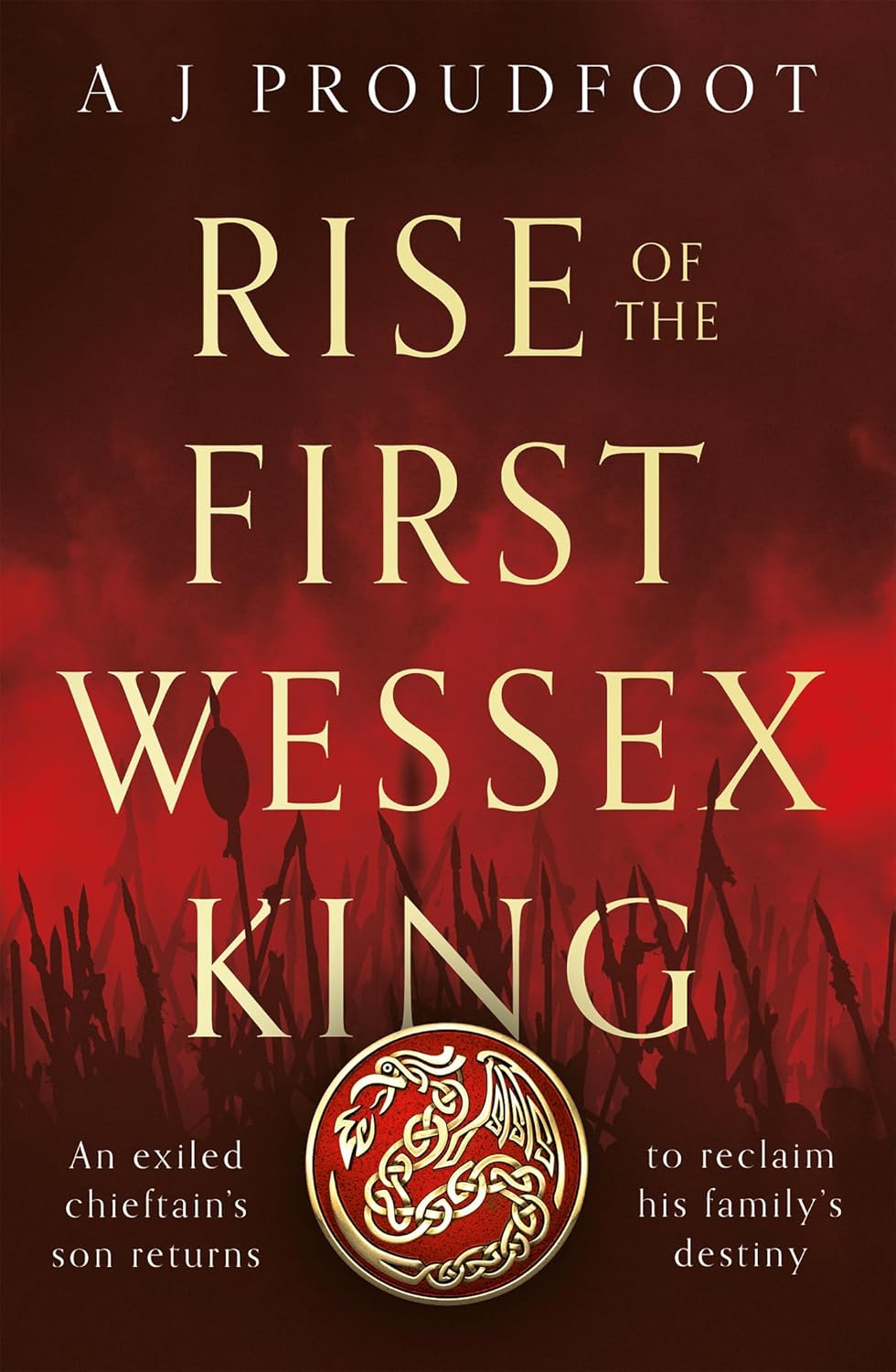
Book Corner: Rise of the First Wessex King by A.J. Proudfoot

A.J. Proudfoot

When the Saxons, invited to settle in Britannia by King Wyrtgeorn, brutally murder the father and brother of Ceredig, the second son of a fifth century Romano-British chieftain, he flees the land of his birth.

While the Saxons expand their control over Britannia, Ceredig grows up in Armorica, learning the ways of the Gewisse, and ultimately taking command of this elite force of warriors, who had remained loyal to his father, Elisedd.

Despite ruling as a chieftain in Armorica, Ceredig remains determined to return to his homeland, avenge his father and brother’s murder, and finally reclaim the lands his father had once ruled in southern Britannia.

After over forty years in exile, Ceredig, his son and a force of Gewisse warriors return to Britannia, joining a large army of Britons who are preparing to take on the Saxons in battle at Badonbyrg.

What happens next will go down in history…

As a debut novel, Rise of the First Wessex King by A.J. Proudfoot is a winner. And as a special treat, alongside my review, I have an interview with the author, who is currently working on book no. 2 in what promises to be a fascinating series. Cerdic, or Ceredig, is the founder of the kingdom of Wessex and a royal house that would reach its zenith under Ceredig’s descendants, King Alfred the Great, Æthelflæd, Lady of the Mercians, her brother Edward the Elder and Edward’s son Athelstan, first king of England.

And it all started with Ceredig.

In Rise of the First Wessex King, A.J. Proudfoot recreates Ceredig’s world, post-Roman Britain, breathing life into this 1,500-year-old story. And what a fascinating story it is. Though our knowledge is limited, Proudfoot fills in the gaps to create a lively and energetic retelling of the foundation of the royal house of Wessex. This is the story of the fight of the native Britons against the invading Saxons, of a war that must have felt never-ending, at times. It is a story of conflict and betrayal, but also of family and comradeship, and of a young man who had to patiently wait for the time to be right to achieve his dream of pushing back the Saxons and going home.

The characters, particularly our hero, are wonderfully vivid. And I love how Proudfoot weaves the legends of Arthur and Hengist and Horsa in to the story, bringing a little-known period of history back to life. Who doesn’t like to see a little bit of King Arthur thrown into the mix? The inclusion of Artorius and Ambrosius made me smile – and want to read more!

This is a debut novel, so Proudfoot sometimes fall into the trap of giving summaries, telling, rather than showing the action and debate, but this does not detract from the pace of the book. Overall, it is a fabulous read, imbued with a sense of adventure. It is a great start to what promises to be an impressive series.

Overall, it is a great story, told well!

If you’re looking for a new author to sink your teeth into, I don’t hesitate to recommend A.J. Proudfoot’s Rise of the First Wessex King.

To Buy the Book:

Books2Read; The Book GuildBookshop.org (UK)

Interview with A.J. Proudfoot
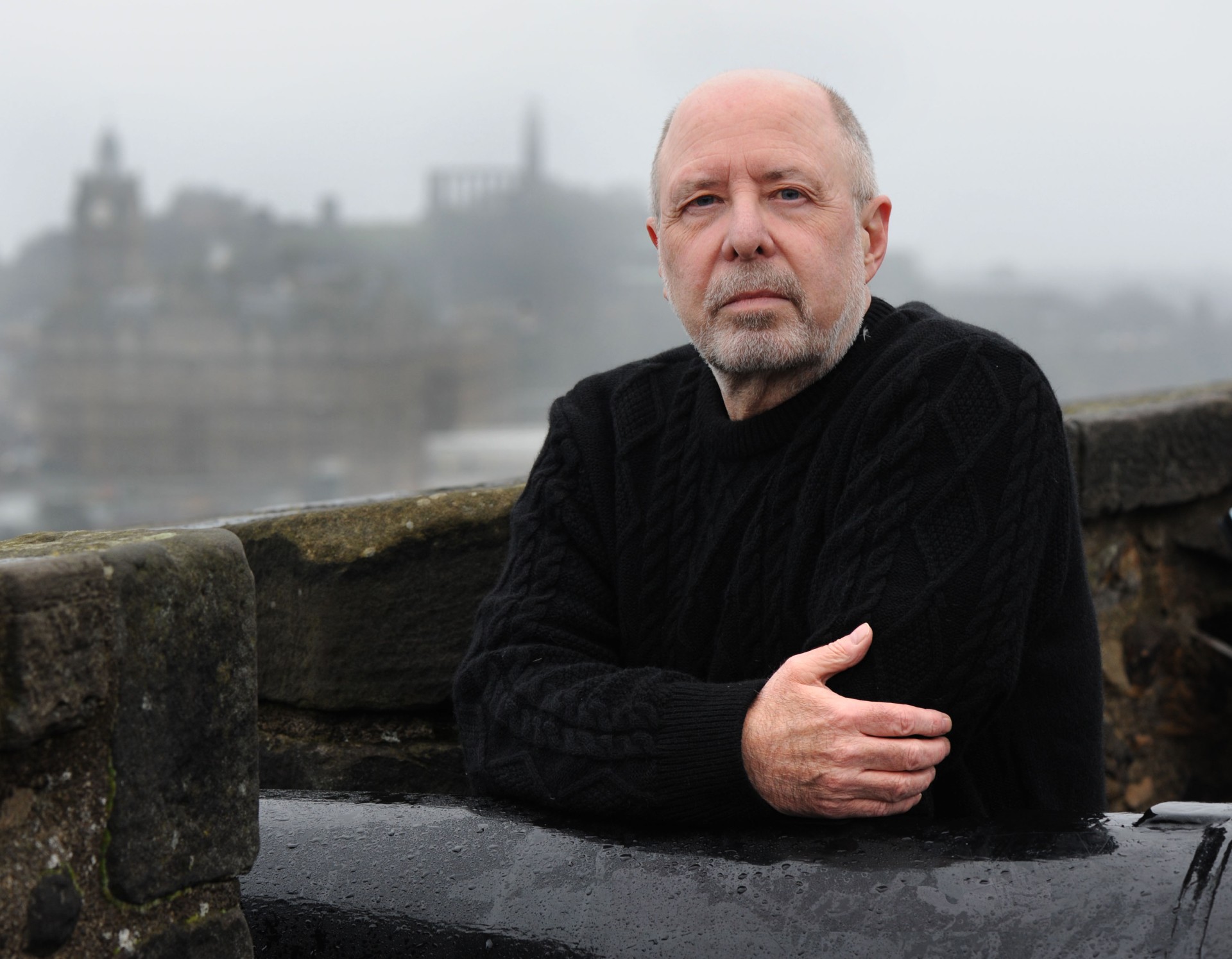
A.J. Proudfoot

Sharon: So, Alex, what got you into writing historical fiction?

Alex: This may come as a surprise, but I didn’t originally set out to become an author and write historical fiction novels. I was simply trying to trace the origins of my unusual Proudfoot surname, and was continuing the research into our Proudfoot family history that my parents and aunt had begun many years before.

After several years’ research, I was amazed to find that I had traced my family ancestry back 1500 years to a mysterious chieftain called Cerdic, at the end of the fifth century, who founded the Anglo-Saxon kingdom of Wessex. There are many interesting ancestors in the Proudfoot family tree, whose lives would make an excellent novel, but when I discovered more about Cerdic’s life, I realised that there was an Arthurian story that was worth writing.

Sharon: What made you want to tell Cerdic’s story?

Alex: I was intrigued why this important figure in early English history has been largely ignored by historical writers, so I undertook my own research into the life of Cerdic, finding crucial inconsistencies in what is written about Cerdic’s Saxon heritage, which I put down to a desire, by early Saxon chroniclers, to establish King Alfred’s Saxon ancestry.

Instead, I found evidence that Cerdic was more likely to be descended from a Romano-British family, who originally hailed from an ancient Welsh kingdom, and was more than likely called Ceredig, given his Brythonic heritage, and to the phonetic similarities. As a result, I felt compelled to use what I had learned to tell the story about my earliest known ancestor and his crucial role in history, based on recorded events in the early Anglo-Saxon era. To paraphrase John Wade, the rest is historical fiction!

Sharon: How do you go about researching a historical character from 1500 years ago?
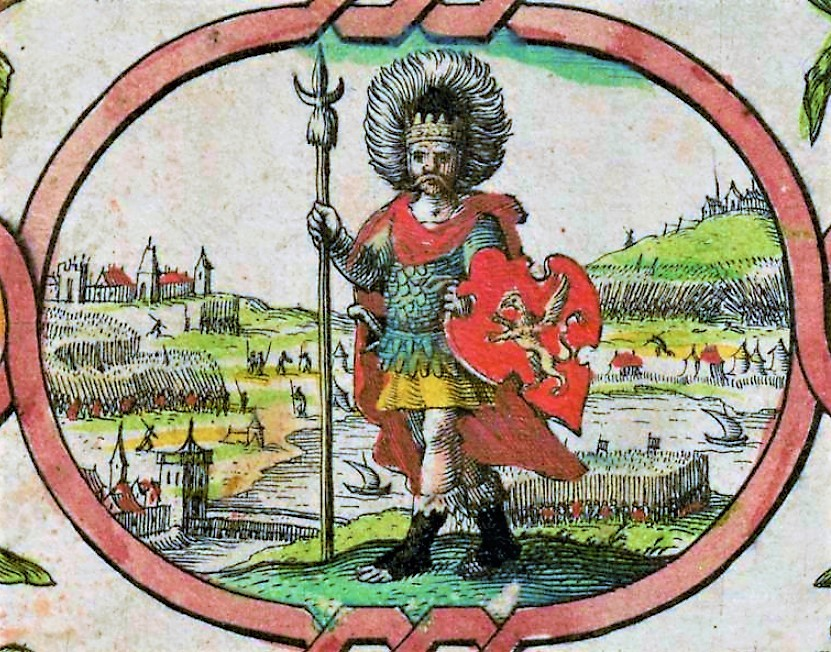
Imaginary depiction from John Speed’s 1611 “Saxon Heptarchy”

Alex: The great difficulty in researching a historical figure from so far back is the lack of contemporary records. My starting point was, naturally, the Anglo-Saxon Chronicle, but it only mentions six events relating to Cerdic’s life, and is written from a Saxon perspective. I read all I could about Cerdic in research papers by modern Anglo-Saxon historians, including JNL Myers and Richard Coates, which is where I found clues to Cerdic’s Romano-British connections. There was also a story about 5th century Bishop Germanus meeting a regional chieftain in southern Britain, called Elasius, whose name is remarkably similar to Elesa, the recorded name of Cerdic’s father in the Anglo-Saxon Chronicle.

Eventually, I had built a picture of the young son of a Romano-British chieftain, ruling and defending the southern coastline of Britain against Saxon invaders, who suddenly disappeared from Britain, returning nearly fifty years later to take control over a region in the Upper Thames Valley, before expanding his lands south before becoming king and ruling a kingdom of the Gewisse that would eventually become known as Wessex, named after the West Saxons.

My research raised more questions than answers, so I used what I had learned about events during that period to write a dramatic reconstruction of Cerdic’s life, and the formation of the Anglo-Saxon kingdom of Wessex. Based on fact, but mostly fiction.

Sharon: What are you working on now?

Alex:I am currently working on a sequel to Rise of the First Wessex King, which will follow the lives of Cunorix and his son, Ceawlin, as they try to build on Ceredig’s legacy in ruling the kingdom of the Gewisse, whilst facing threats from the Saxons in the east, and Britons in the west, as well as challenges they could not anticipate.

Sharon: What is the best – and worse – thing about being a writer?

Alex: Personally, the hardest part about writing my historical fiction novels is that the stories are based in the south of England and I live just outside Edinburgh, in Scotland. This meant that I have had to make several research trips down south, visiting locations featured in my novels. Whilst there is very little evidence to reveal what it would be like when the books are set, I have found this a useful exercise in understanding the topography, as well as encouraging the creative writing juices.

The best part of being a writer is that I love history and solving puzzles. This has been useful in writing about a period in history where facts are limited, so deciphering my characters’ motives behind their decisions has been crucial in building the story of their lives.

About the Author

A J (Alex) Proudfoot lives in Musselburgh, near Edinburgh. He started his career as an accountant, working in the brewing, publishing and financial sectors, before qualifying as a chartered marketer, working at the University of Edinburgh for over twenty years. After retiring early in 2018, he has spent his free time researching his Proudfoot family history, back 1500 years to his earliest known ancestor, which led to the publication of his debut historical fiction novel, Rise of the First Wessex King.

Social media links

Facebook – https://www.facebook.com/ajproudfootwriter

YouTube – https://www.youtube.com/@ajproudfoot

Book trailer – https://www.youtube.com/watch?v=4gpZMOMzwZs&t

*

My books

Signed, dedicated copies of all my books are available through my online store.

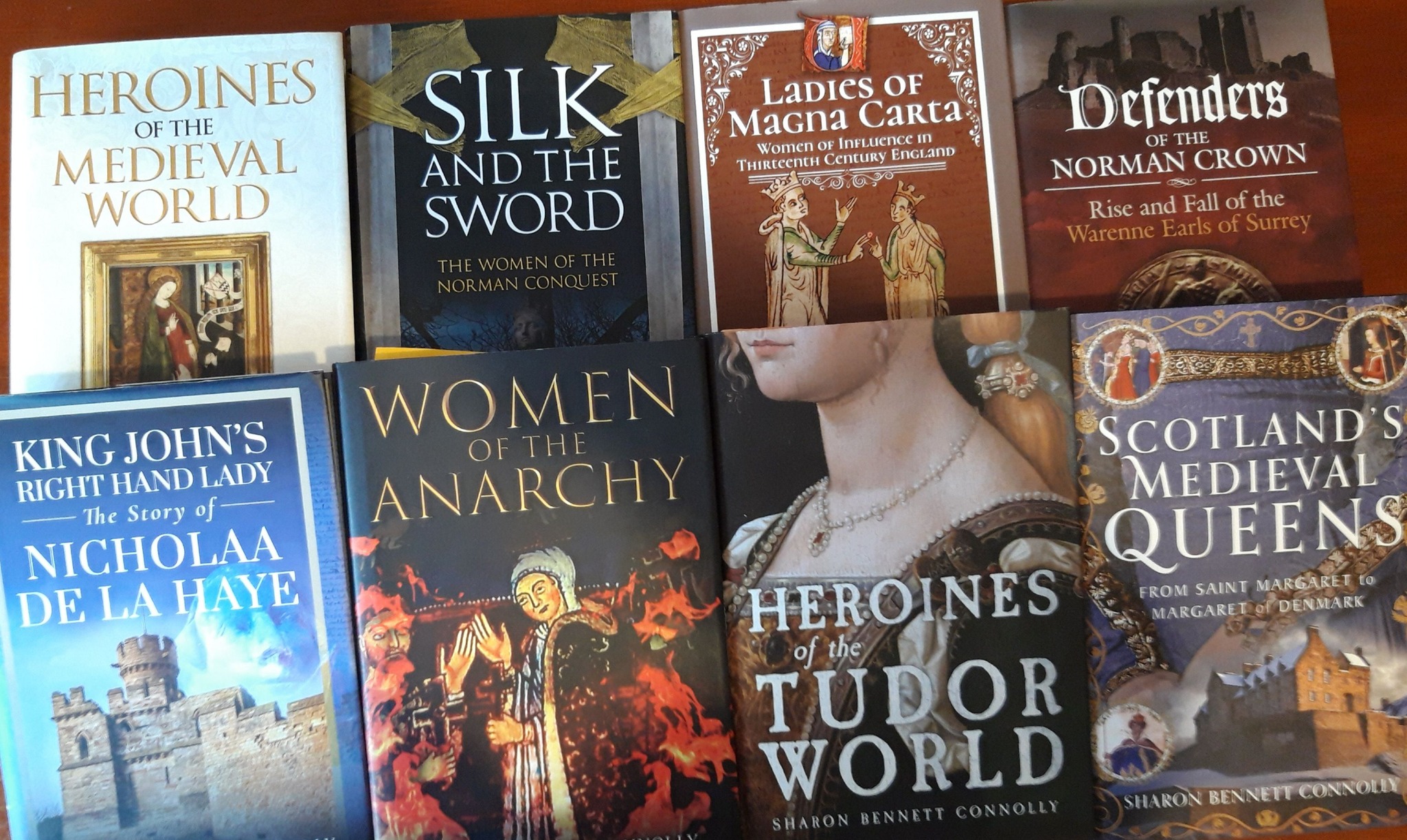
Out now: Scotland’s Medieval Queens

Books by Sharon Bennett Connolly

Scotland’s history is dramatic, violent and bloody. Being England’s northern neighbour has never been easy. Scotland’s queens have had to deal with war, murder, imprisonment, political rivalries and open betrayal. They have loved and lost, raised kings and queens, ruled and died for Scotland. From St Margaret, who became one of the patron saints of Scotland, to Elizabeth de Burgh and the dramatic story of the Scottish Wars of Independence, to the love story and tragedy of Joan Beaufort, to Margaret of Denmark and the dawn of the Renaissance, Scotland’s Medieval Queens have seen it all. This is the story of Scotland through their eyes.

Scotland’s Medieval Queens gives a thorough grounding in the history of the women who ruled Scotland at the side of its kings, often in the shadows, but just as interesting in their lives beyond the spotlight. It’s not a subject that has been widely covered, and Sharon is a pioneer in bringing that information into accessible history.’ Elizabeth Chadwick (New York Times bestselling author)

Available now from Amazon and Pen and Sword Books

Also by Sharon Bennett Connolly:

Books by Sharon Bennett Connolly

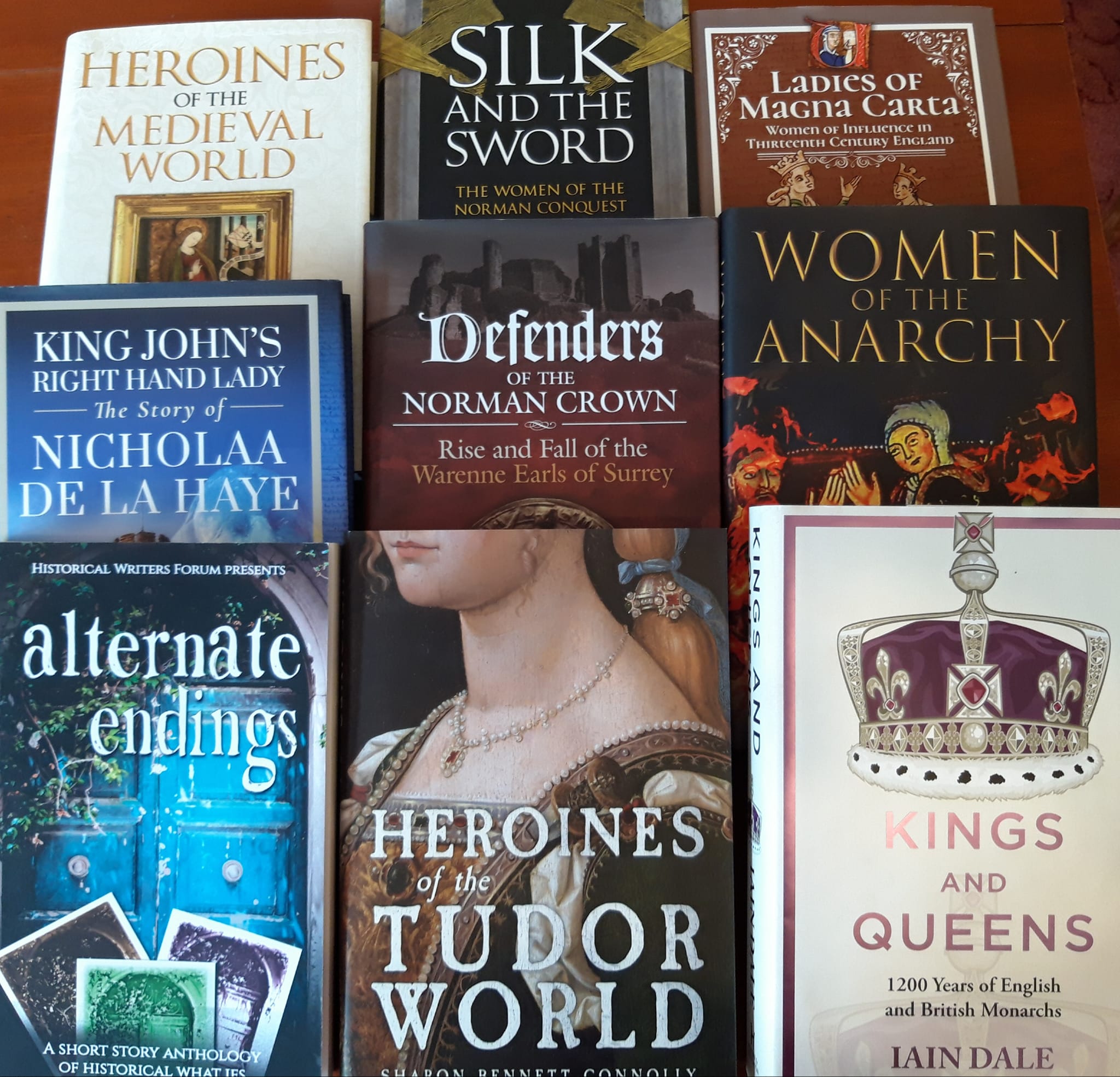
Heroines of the Tudor World tells the stories of the most remarkable women from European history in the time of the Tudor dynasty, 1485-1603. These are the women who ruled, the women who founded dynasties, the women who fought for religious freedom, their families and love. Heroines of the Tudor World is now available from Amberley Publishing and Amazon UK. Women of the Anarchy demonstrates how Empress Matilda and Matilda of Boulogne, unable to wield a sword themselves, were prime movers in this time of conflict and lawlessness. It shows how their strengths, weaknesses, and personal ambitions swung the fortunes of war one way – and then the other. Available from Bookshop.orgAmberley Publishing and Amazon UKKing John’s Right-Hand Lady: The Story of Nicholaa de la Haye is the story of a truly remarkable lady, the hereditary constable of Lincoln Castle and the first woman in England to be appointed sheriff in her own right. Available from all good bookshops Pen & Sword Booksbookshop.org and Amazon

Royal Historical Society

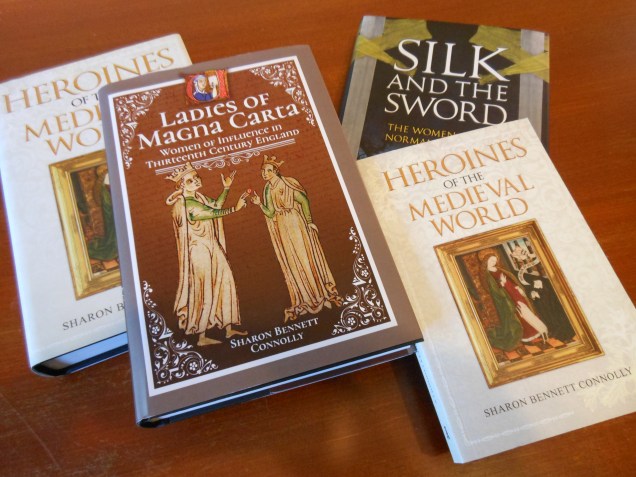
Defenders of the Norman Crown: The Rise and Fall of the Warenne Earls of Surrey tells the fascinating story of the Warenne dynasty, from its origins in Normandy, through the Conquest, Magna Carta, the wars and marriages that led to its ultimate demise in the reign of Edward III. Available from Pen & Sword BooksAmazon in the UK and US, and Bookshop.orgLadies of Magna Carta: Women of Influence in Thirteenth Century England looks into the relationships of the various noble families of the 13th century, and how they were affected by the Barons’ Wars, Magna Carta and its aftermath; the bonds that were formed and those that were broken. It is now available in paperback and hardback from Pen & SwordAmazon, and Bookshop.orgHeroines of the Medieval World tells the stories of some of the most remarkable women from Medieval history, from Eleanor of Aquitaine to Julian of Norwich. Available now from Amberley Publishing and Amazon, and Bookshop.orgSilk and the Sword: The Women of the Norman Conquest traces the fortunes of the women who had a significant role to play in the momentous events of 1066. Available now from Amazon,  Amberley Publishing, and Bookshop.org.

Alternate Endings: An anthology of historical fiction short stories including Long Live the King… which is my take what might have happened had King John not died in October 1216. Available in paperback and kindle from Amazon.

Podcast:

A Slice of Medieval

Have a listen to the A Slice of Medieval podcast, which I co-host with Historical fiction novelist Derek Birks. Derek and I welcome guests, such as Bernard Cornwell and Michael Jecks, and discuss a wide range of topics in medieval history, from significant events to the personalities involved. 

Every episode is also now available on YouTube.

*

Don’t forget! Signed and dedicated copies of all my books are available through my online store.

For forthcoming online and in-person talks, please check out my Events Page.

You can be the first to read new articles by clicking the ‘Follow’ button, liking our Facebook page or joining me on TwitterThreadsBluesky and Instagram.

*

©2025 Sharon Bennett Connolly, FRHistS
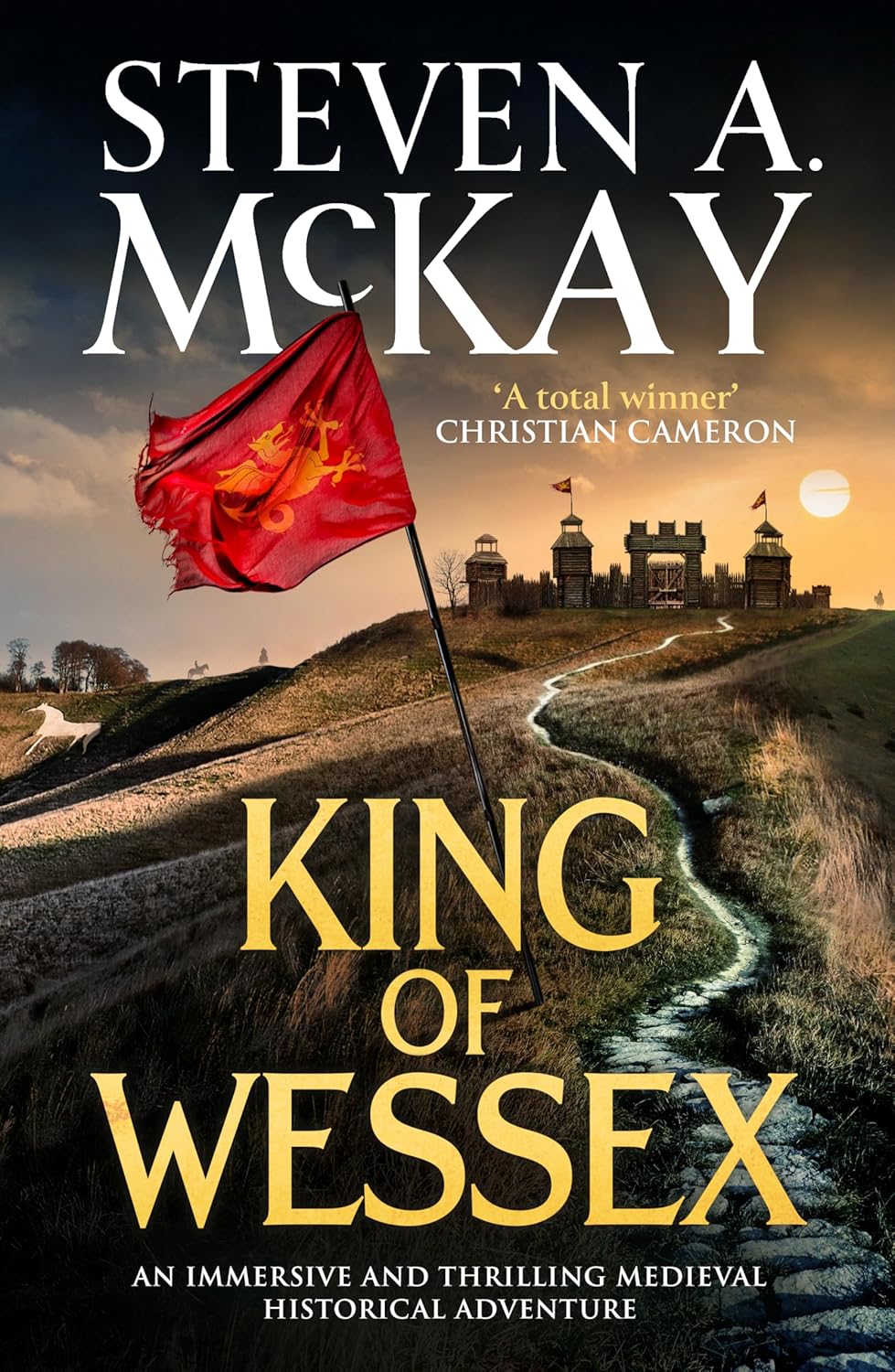
Book Corner: King of Wessex by Steven A. McKay

His reign must come to an end. But his legacy will live on forever.

After thwarting the scourge of the Viking hordes that had decimated Britain for decades, King Alfred assured a period of peace and prosperity for the kingdom of Wessex. The dream of uniting all Anglo-Saxons under one, noble banner seems closer than ever before.

But his enemies are not ones to be taken lightly. For even as Alfred works to ensure the fate of his descendants for centuries to come, a fearsome warlord, Haesten, gathers his warriors for a brutal assault upon the shores of Alfred’s territories.

As the battle lines are drawn, as the true power of this new and terrifying threat comes into its own, the ageing king knows in his heart that things will be different this time round. For as strong as his land, his birthright, his Wessex, has become, the consequences of defeat have never been more terrible.

For one who has gained everything… has everything to lose.

What an incredible adventure it has been!

In his Alfred the Great trilogy, Steven A. McKay has brought the late 9th century to life, retelling the story of Wessex’s stand against the constant incursions of the Norse and the Danes, known collectively as the Vikings. Many fans of Bernard Cornwell will recognise the great enemy of King of Wessex as having been a regular character in his The Last Kingdom series: Haesten. Haesten was the last great enemy that Alfred faced before his death, in a four-year war that ravaged Wessex.

But in King of Wessex, Alfred is no longer fighting alone. He has the help of his daughter, Æthelflæd, now Lady of Mercia, and her husband, Æthelred. His son, Edward, no longer a child, is leading armies of his own. This family affair allows Alfred to defend his kingdom from all sides at once, moving armies to face new threats, knowing his back is covered.

What sets this series apart, however, is the relationships of the characters and King of Wessex shows just how far these relationships have developed. Alfred’s friend and captain Wulfric is a constant by his side. His wife, Ealhswith, gives wise counsel and overlooks his flaws (I am not sure I could overlook the womanising!) And having watched his children mature, Alfred now has to trust them to be his captains and his allies. But Alfred, though getting older and still suffering from the same health issues that would often see him doubled over in pain, is still the man in command. And the man to be beaten.

There were men in Mercia’s Witan who offered, or perhaps demanded would be more accurate, to take control while Aethelred was unwell, but Aethelflaed was not having that.

‘You?’ The thane who asked the question gaped at her incredulously. ‘But you’re a woman!’

Aethelflaed’s lip curled, and she rolled her eyes at him. He was a tall man, very broad of shoulder with a thick, dark beard and hard eyes. She knew she had to deal with him in the right way, or the rest of the gathered Witan would never take her seriously. So much was riding on these next few moments. ‘I am indeed a woman, Morcar. Well spotted. Not much gets past you I see.’

Some of the other council members sniggered and Aethelflaed took note of them. She’d been taught that such information, the dynamics of the Witan such as who liked who and who would like to murder whom, was always useful to know. Similarly, Morcar’s reaction to her gentle but very public insult would also be worth noting.

‘No need to be glib, my lady,’ the big man replied dryly, rather surprising Aethelflaed for she’d half expected him to grow angry at her. That he didn’t was definitely a point in his favour and belied his fierce looks. ‘You know what I mean,’ he went on. ‘Women don’t usually rule in Mercia.’

‘It would only be temporary,’ Aerthelflaed replied, standing up and walking around the hall, eyeing the mostly middle-aged men who formed the Witan. ‘Until my husband is over his illness.’

‘And what if he does not get over it?’ a red-faced, bulbous-nosed man asked bluntly.

‘Then we’d need to look at the matter again, Edgar,’ Aethelflaed barked, annoyed at the question for she’d grown close to Aethelred in the relatively short time they’d been married. ‘But, for now,’ she stopped walking right behind Edgar who was forced to turn in his chair and crane his neck upwards to see her, ‘my husband is alive, and I shall take his place as head of the Witan.’

‘But you’re not even Mercian,’ Edgar argued.

‘I am Mercian now,’ Aethelflaed retorted, her patience growing thin with the dense thane who had actually got to his feet, forcing her to look up at him now. ‘I married your ealdorman, Aethelred, didn’t I? Or does marriage not count for anything these days?’

Edgar shook his head, clearly annoyed. He was only a little taller than her, with thinning white hair, and he ground his teeth as he glared at her, almost as if he wanted to take her over his knee and smack her backside like a naughty child. ‘You might have married Aethelred,’ he growled, ‘but you are your father’s daughter first and foremost. Your loyalty lies with Wessex, not Mercia.’

‘Surely it’s the same thing?’ Aethelflaed asked in a low voice, her steely eyes boring into his.

‘What? Because Alfred has declared himself king of all the Angles and Saxons?’ Edgar asked. His breath was sour and Aethelflaed realised he was drunk.

‘Yes,’ she replied, as if it was obvious. ‘My father is the only king Mercia has, since Aethelred is but an ealdorman. I would remind you, Edgar, that King Alfred, and his fyrd, are the only things standing in the way of the Danes overrunning Mercia completely.’

‘Are you calling us cowards now?’ the inebriated thane demanded, his flushed features contrasting deeply with his white hair. ‘You’re lucky you’re not a man, or I’d show you the men of Mercia are not afraid of anything.’

He was so angry at her that flecks of spittle struck her face as he ranted. And, as he went on, he actually reached out and grasped her sleeve, digging his fingers into her bicep.

Instinctively, Aethelflaed grabbed his hand, twisting his wrist and forcing him to spin around so he was facing the table again. Despite knowing she’d done enough, she could not keep her temper in check and thrust her knee into the back of his, making him stumble and, as he went down, she pushed his face, hard, into the trencher of meat and cheese that he’d been eating from.

I love Aethelflaed!

After three books, Steven A. McKay’s characters are so well developed that you know how they will react to certain situations. Alfred is thoughtful and looks for advice from his captains and churchmen. Edward is still learning, and looks to his father as an example. Aethelflaed is feisty whereas her mother is calm and dependable. Wulfric, the loyal captain, is good in a fight but has his own axe to grind and looks for ways to give Alfred the advantage.

Haesten and his wife, Ulfhild, are bloodthirsty, ruthless and, apparently, unstoppable.

It makes for a fascinating novel, with father, son, daughter and son-in-law each having a role to play in starting the fight back that would lead to a united England. Thanks to the legacy of The Last Kingdom, the story is familiar to many, but Steven A. McKay has made it all his own. King of Wessex, like The Heathen Horde before it and Sword of the Saxons before that, is a fabulously absorbing read. You can practically smell the blood and hear the noise of battle; the clash of swords, the screams of the dying and the shouted orders of Alfred and his captains.

My only regret is that the series is now over. I would have loved to see it continue to the reign of Athelstan and the Battle of Brunanburh – but then, I suppose, it wouldn’t be the story of King Alfred, would it?

As it is, Steven A. McKay has all the ingredients for a riveting good read and he uses them to his best advantage, to create a story that grabs the reader from the very first page. Itis exciting, thought-provoking and will bring a tear to your eye at the end. It is well worth the journey. King of Wessex is a novel that is not to be missed!

Buy the book!

About the author:

Steven A. McKay was born in Scotland in 1977. He is the author of two previous series of historical fiction, following Robin Hood and the warrior-druid Bellicus in post-Roman Britain. He plays the guitar, is the co-host of historical adventure podcast Rock, Paper, Swords! along with author Matthew Harffy, and lives just outside Glasgow with his wife and children.

*

My books

Signed, dedicated copies of all my books are available through my online store.

Out now: Scotland’s Medieval Queens

Scotland’s history is dramatic, violent and bloody. Being England’s northern neighbour has never been easy. Scotland’s queens have had to deal with war, murder, imprisonment, political rivalries and open betrayal. They have loved and lost, raised kings and queens, ruled and died for Scotland. From St Margaret, who became one of the patron saints of Scotland, to Elizabeth de Burgh and the dramatic story of the Scottish Wars of Independence, to the love story and tragedy of Joan Beaufort, to Margaret of Denmark and the dawn of the Renaissance, Scotland’s Medieval Queens have seen it all. This is the story of Scotland through their eyes.

Available now from Amazon and Pen and Sword Books

Also by Sharon Bennett Connolly:

Heroines of the Tudor World tells the stories of the most remarkable women from European history in the time of the Tudor dynasty, 1485-1603. These are the women who ruled, the women who founded dynasties, the women who fought for religious freedom, their families and love. Heroines of the Tudor World is now available for pre-order from Amberley Publishing and Amazon UK. Women of the Anarchy demonstrates how Empress Matilda and Matilda of Boulogne, unable to wield a sword themselves, were prime movers in this time of conflict and lawlessness. It shows how their strengths, weaknesses, and personal ambitions swung the fortunes of war one way – and then the other. Available from Bookshop.orgAmberley Publishing and Amazon UKKing John’s Right-Hand Lady: The Story of Nicholaa de la Haye is the story of a truly remarkable lady, the hereditary constable of Lincoln Castle and the first woman in England to be appointed sheriff in her own right. Available from all good bookshops Pen & Sword Booksbookshop.org and Amazon

Defenders of the Norman Crown: The Rise and Fall of the Warenne Earls of Surrey tells the fascinating story of the Warenne dynasty, from its origins in Normandy, through the Conquest, Magna Carta, the wars and marriages that led to its ultimate demise in the reign of Edward III. Available from Pen & Sword BooksAmazon in the UK and US, and Bookshop.orgLadies of Magna Carta: Women of Influence in Thirteenth Century England looks into the relationships of the various noble families of the 13th century, and how they were affected by the Barons’ Wars, Magna Carta and its aftermath; the bonds that were formed and those that were broken. It is now available in paperback and hardback from Pen & SwordAmazon, and Bookshop.orgHeroines of the Medieval World tells the stories of some of the most remarkable women from Medieval history, from Eleanor of Aquitaine to Julian of Norwich. Available now from Amberley Publishing and Amazon, and Bookshop.orgSilk and the Sword: The Women of the Norman Conquest traces the fortunes of the women who had a significant role to play in the momentous events of 1066. Available now from Amazon,  Amberley Publishing, and Bookshop.org.

Alternate Endings: An anthology of historical fiction short stories including Long Live the King… which is my take what might have happened had King John not died in October 1216. Available in paperback and kindle from Amazon.

Podcast:

Have a listen to the A Slice of Medieval podcast, which I co-host with Historical fiction novelist Derek Birks. Derek and I welcome guests, such as Bernard Cornwell and Michael Jecks, and discuss a wide range of topics in medieval history, from significant events to the personalities involved. Every episode is also now available on YouTube.

*

Don’t forget! Signed and dedicated copies of all my books are available through my online store.

For forthcoming online and in-person talks, please check out my Events Page.

You can be the first to read new articles by clicking the ‘Follow’ button, liking our Facebook page or joining me on TwitterThreadsBluesky and Instagram.

*

©2025 Sharon Bennett Connolly, FRHistS



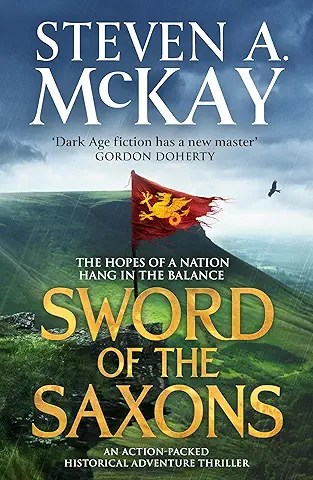
Book Corner: Sword of the Saxons by Steven A. McKay

A war to shape the future of a nation.

Betrayed by his kinsmen, his forces overrun by Danes, King Alfred of Wessex has retreated deep into the marshes of his homeland, lying in wait for his chance at redemption.

The scourge of the heathen horde that has ravaged the kingdom for decades is at its peak. Led by the fearsome Viking warlord Guthrum, the fate of the men, women, and children at their mercy appears all but sealed. But underestimate the great king at your peril…

Gathering allies and bannermen to his cause, and building a strategy that will hopefully ensure victory, Alfred sets out to undermine the strength of the complacent invaders, and establish Wessex as the greatest territory in the British Isles.

A final showdown awaits. Not only with Guthrum and his savage warriors, but with destiny. As the battle lines are drawn, the destiny of not just Wessex, but of every Anglo-Saxon in Britain, rests firmly on Alfred’s shoulders.

An utterly ferocious and gripping adventure, covering the fascinating middle years of Alfred the Great’s reign, one of Britain’s most influential monarchs.

War is coming!

At last! the second book in Steven A McKay’s new Alfred the Great series has arrived. To be fair to Steven, we haven’t had long to wait, even though it felt like an age. The problem was, we left King Alfred at the end of The Heathen Horde, rather down on his luck and looking like things could only get even worse. So it has been agony, waiting for Sword of the Saxons, to see how Steven would get Alfred out of it. We all know the history, Alfred is defeated and seeks shelter in the marshes of Athelney, burns some cakes in order to learn patience and then comes back with a vengeance. So we did know that Alfred’s defeat was not the end of the matter. However, when you get caught up in the story, you need more!

And leaving Alfred, defeated and a fugitive, was a difficult pill to swallow.

King Alfred is the hero who fought to defeat the Danish and Norse invaders – collectively known as the Vikings by many – and unite the disparate kingdoms of England under one king. The kingdom of England would not come to pass in his lifetime, but he started the fight that would be continued by his son and daughter – Edward the Elder and Æthelflæd, Lady of the Mercians – and completed by his grandson, Athelstan, the first King of England.

Sword of the Saxons picks up where The Heathen Horde left off and takes us on Alfred’s journey to not only survive in the marshes, but rebuild his army, renew alliances and begin the fight back. In Sword of the Saxons, King Alfred becomes the leader that England needed, and demonstrates the abilities, both martial and political, that justify his epithet of ‘the Great’.

‘I can almost – almost! – understand Ealdorman Wealdmar giving in to the Danes without a fight,’ Wulfric said to Alfred as they rode towards the little coastal village of Bryn on the outskirts of the Somerset marshes. ‘But his son, Diuma? Refusing to let us into the town when he knew the Danes were hunting us? Gods, I was starting to like the an, and I believed he was a fiercely loyal thane to you, my lord.’

Alfred cleared his throat and spat into the bushes on the side of the road, disgust twisting his features at the memory of the night Wulfric was referring to. ‘So did I,’ he growled. ‘But it seems Diuma was only ever loyal to himself.’ He shook his head and made a cutting motion with his hand. ‘I might possibly be able to forgive some of the men who’ve betrayed me, like Ealdorman Wulfhere. Perhaps they felt like they had no choice. But Diuma? I treated him like a friend. And Brycgstow? That was far enough away from any of Guthrum’s forces to be a target for them! No, Diuma has no excuse for what he’s done. I hope the sea-wolves bleed him and his father dry, and then, eventually, I’ll come face to face with them and hear their excuses before…’ He trailed off, jaw clenched, knuckles white as he gripped his horse’s reins.

There were only two other men with them that morning, for they were merely riding to collect a few supplies but, more importantly, to make sure the good people of Bryn knew that Alfred was still very much alive and hadn’t abandoned his kingdom despite Guthrum’s invasion. The king believed it did the people good to see him in person, rather than his hearth-warriors simply carrying word of his survival to the towns and villages located around Athelney’s marshes. He was a man, after all, not a myth.

‘When are we going to send out word to gather the fyrd, lord?’ The question came from one of the other riders who’d accompanied them, a small but sturdily built warrior called Dunstan. He’d been thane of a village in the north of Wessex which had been utterly destroyed six years earlier, by a party of Northmen led by Jarl Ubba. After that, Dunstan pledged himself to Alfred and now served as one of his fiercest hearth-warriors.

The fourth man in the small group was the sentry from the previous night, Aedan, and he too looked with interest at Alfred, wondering what his reply would be to Dunstan’s question.

The king shook his head slowly. ‘In truth, I don’t know,’ he admitted. ‘I’d like to make sure we have the support of as many people as possible in these nearby settlements. We need to know we can call upon a decent sized fyrd from the lands around Athelney before we look at enlisting people in towns further away.’ He noticed Dunstan and Aedan sharing uncertain glances. ‘I know you two are desperate to take the fight to Guthrum, but we can’t afford to act rashly. First, we build our foundation here in Sumosaete, and then we move on from there.’

With The Heathen Horde, it took me a few chapters to get into the story, to stop comparing Steven A. McKay’s version of King Alfred with the Alfred of Bernard Cornwell – and it took me a while to stop expected Uhtred of Bebbanburg to turn up and save the day, but in Sword of the Saxons Steven has made King Alfred his own. He portrays the great battles his way, has created a hero in Alfred that the reader can get behind wholeheartedly. He is much more likeable than Bernard Cornwell’s King Alfred! Less judgmental…

Alongside Alfred the Great and his family, Steven A. McKay has created a wealth of characters with varying degrees of loyalty to the king. All must be moulded together to fight Guthrum and his men. I have to admit, I love the portrayal of Æthelflæd, Alfred’s oldest daughter and soon to be the Lady of the Mercians. She is a young woman who knows her duty – but also knows her worth and her abilities. She is very much the Æthelflæd I imagine.

Sword of the Saxons is the beginning of the fight back against the invaders. It shows King Alfred coming into his own, becoming the great leader who we know today. He has setbacks, he has doubts, and he has to overcome illness. But this is the Alfred who will lead the reconquest of England that will be completed by his grandson. Steven A. Mckay achieves a wonderful balance, between telling the personal stories of his characters and presenting the great history that they are living through.

It is a gripping read. The fast-paced story leaves the reader breathless – and reading into the early hours! I have no hesitation in recommending Sword of the Saxons to anyone and everyone. Read it! you will not be disappointed.

Buy Sword of the Saxons

About the author:

Steven A. McKay was born in Scotland in 1977 and always enjoyed studying history. He decided to write his Forest Lord novels after seeing a house called “Sherwood” when he was out at work one day. Since then he’s started a new series, the Warrior Druid of Britain Chronicles. In 2021 the Xbox game HOOD: Outlaws and Legends was released, featuring his writing, which Steven says was just a fantastic experience. Steven used to be in a heavy metal band although he tends to just play guitar in his study these days. He did use those guitars to write the theme song for the podcast he co-host, Rock, Paper, Swords! with Matthew Harffy, though.

*

My Books

Signed, dedicated copies of all my books are available through my online bookshop.

OUT NOW! Heroines of the Tudor World

Heroines of the Tudor World tells the stories of the most remarkable women from European history in the time of the Tudor dynasty, 1485-1603. These are the women who ruled, the women who founded dynasties, the women who fought for religious freedom, their families and love. These are the women who made a difference, who influenced countries, kings and the Reformation. In the era dominated by the Renaissance and Reformation, Heroines of the Tudor World examines the threats and challenges faced by the women of the era, and how they overcame them. From writers to regents, from nuns to queens, Heroines of the Tudor World shines the spotlight on the women helped to shape Early Modern Europe.

Heroines of the Tudor World is now available for pre-order from Amberley Publishing and Amazon UK.

Also by Sharon Bennett Connolly:

Women of the Anarchy demonstrates how Empress Matilda and Matilda of Boulogne, unable to wield a sword themselves, were prime movers in this time of conflict and lawlessness. It shows how their strengths, weaknesses, and personal ambitions swung the fortunes of war one way – and then the other. Available from Bookshop.orgAmberley Publishing and Amazon UKKing John’s Right-Hand Lady: The Story of Nicholaa de la Haye is the story of a truly remarkable lady, the hereditary constable of Lincoln Castle and the first woman in England to be appointed sheriff in her own right. Available from all good bookshops Pen & Sword Booksbookshop.org and AmazonDefenders of the Norman Crown: The Rise and Fall of the Warenne Earls of Surrey tells the fascinating story of the Warenne dynasty, from its origins in Normandy, through the Conquest, Magna Carta, the wars and marriages that led to its ultimate demise in the reign of Edward III. Available from Pen & Sword BooksAmazon in the UK and US, and Bookshop.org

Ladies of Magna Carta: Women of Influence in Thirteenth Century England looks into the relationships of the various noble families of the 13th century, and how they were affected by the Barons’ Wars, Magna Carta and its aftermath; the bonds that were formed and those that were broken. It is now available in paperback and hardback from Pen & Sword,  Amazon, and Bookshop.orgHeroines of the Medieval World tells the stories of some of the most remarkable women from Medieval history, from Eleanor of Aquitaine to Julian of Norwich. Available now from Amberley Publishing and Amazon, and Bookshop.orgSilk and the Sword: The Women of the Norman Conquest traces the fortunes of the women who had a significant role to play in the momentous events of 1066. Available now from Amazon,  Amberley Publishing, and Bookshop.org.

Alternate Endings: An anthology of historical fiction short stories including Long Live the King… which is my take what might have happened had King John not died in October 1216. Available in paperback and kindle from Amazon.

Podcast:

Have a listen to the A Slice of Medieval podcast, which I co-host with Historical fiction novelist Derek Birks. Derek and I welcome guests, such as Bernard Cornwell and discuss a wide range of topics in medieval history, from significant events to the personalities involved. There’s even an episode on Robin Hood from Steven A. McKay. There are now over 40 episodes to listen to!

*

Don’t forget! Signed and dedicated copies of all my books are available through my online bookshop.

For forthcoming online and in-person talks, please check out my Events Page.

You can be the first to read new articles by clicking the ‘Follow’ button, liking our Facebook page or joining me on Twitter and Instagram.

©2024 Sharon Bennett Connolly FRHistS
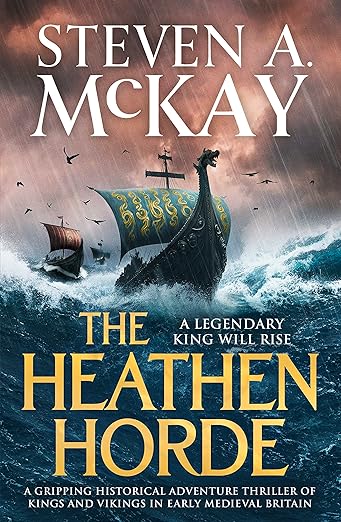
Book Corner: The Heathen Horde by Steven A. McKay

Heavy is the head that wears the crown.

Northumbria, AD 864. Viking warlord Ragnar Lothbrok is captured and killed in brutal fashion, an event that will shape the future of the nation for decades to come.

Mercia, AD 868Alfred, son of Wessex and heir to the throne, draws his first blood on the battlefield. It will not be his last.

A devastating scourge from the north is coming to Britain, one that will bring armies and entire kingdoms to their knees. Travelling along the whale road in their feared longships, the Great Heathen Army move fast, striking with a savagery unmatched, in a seemingly unstoppable tide of blood and iron.

One inexperienced warrior will prove the difference, a young man who will lead from the front and, in time, aspire to become the saviour of the Saxons… Alfred the Great.

A totally enrapturing historical adventure following the life of one of Britain’s most important ever kings.

Wow! Riveting start to what promises to be an excellent series. The Heathen Horde is a fabulous, gritty and entertaining story of how Alfred the Great became ‘Great.’

However…

I have to admit to a little trepidation when I started reading The Heathen Horde. Bernard Cornwell did such a fantastic job of recreating the period in his Last Kingdom series that I was not sure I was ready for another writer’s perspective. I was worried I would not warm to Steven A McKay’s version of the story.

How wrong I was!

And I am so happy that I gave it a go.

‘Look out, Alfred!’

The rider heard his brother’s warning just in time to raise his shield and the linden boards took the brunt of the axe which had been heading for his head, splinters flying as the wood shuddered, pain lancing through his arm. Baring his teeth in rage, Alfred swung his sword down, catching his attacker’s hand just as the axe had been about to strike again. There was a scream of pain as fingers were shorn through to the bone and then Alfred’s horse was past and cantering away from the battle.

‘Back,’ he grunted, tugging on the reins and bringing the horse around quickly. His heart was thudding in his chest and he felt light-headed but it was almost a joyful sensation. He was afraid, aye, but he was also excited, and eager to get back to the fight. He could see the axeman who’d tried to kill him, grimacing and eyeing his mangled hand as if he feared he might never hold a weapon properly again.

Alfred was charging back into the fight before he knew it, battle fever overtaking him at the realisation that he’d almost had his skull caved in. He headed straight for the axeman. The man had transferred his weapon to his left hand but could only wield it awkwardly and his wide eyes told of his fear at being forced to fight in such a manner. Alfred’s horse came alongside the Dane’s and, screaming an incoherent battle-cry, the young warrior smashed the edge of his blade into the enemy’s neck. The sheer force of the blow was enough to throw the man off his horse’s back despite the Dane’s long, mail neck guard. He lay on the ground, unmoving, as his mount bolted and the pounding hooves of the other combatants’ animals swirled around him.

Alfred grinned savagely, knowing that, if the Dane had somehow survived the attack and the fall, he wouldn’t last long before the weight of a horse crushed the life from him.

God be praised, one less sea-wolf to ravage Anglo-Saxon lands!

Admittedly, for the first 20 pages or so, I regularly found myself comparing Steven’s version of King Alfred to Bernard’s version. But I soon left The Last Kingdom behind and found myself enjoying The Heathen Horde for the fascinating story it is in its own right. Soon, I didn’t even notice Uhtred’s absence.

I love this version of King Alfred. His piety is evident, but not as all-consuming as Bernard Cornwell’s Alfred. His military and political prowess both play a greater role in the story. I even liked Alfred’s wife, Ælswith. The Heathen Horde starts when Alfred is merely a younger brother, not expecting to ever take the throne himself, serving his brother loyally and learning the art of war and politics. We see him grown into the role of military leader and develop his concept of a united kingdom – of England.

The story is rich in detail and brings the characters to life. I can’t wait for the next book in the series!

It ends tooooo soon! I need to know what happens next – now! 

The Heathen Horde is one of those books that you can’t wait to need to finish but want it never to end. It is unputdownable! I highly recommend you give it a go.

About the Author:

Steven A. McKay was born in Scotland in 1977. He is the author of two previous series of historical fiction, following Robin Hood and the warrior-druid Bellicus in post-Roman Britain. He plays the guitar, is the co-host of historical adventure podcast Rock, Paper, Swords! along with author Matthew Harffy, and lives just outside Glasgow with his wife and children.

To Buy the book: The Heathen Horde by Steven A. McKay is now available form Amazon.

*

My Books

Signed, dedicated copies of all my books are available through my online bookshop.

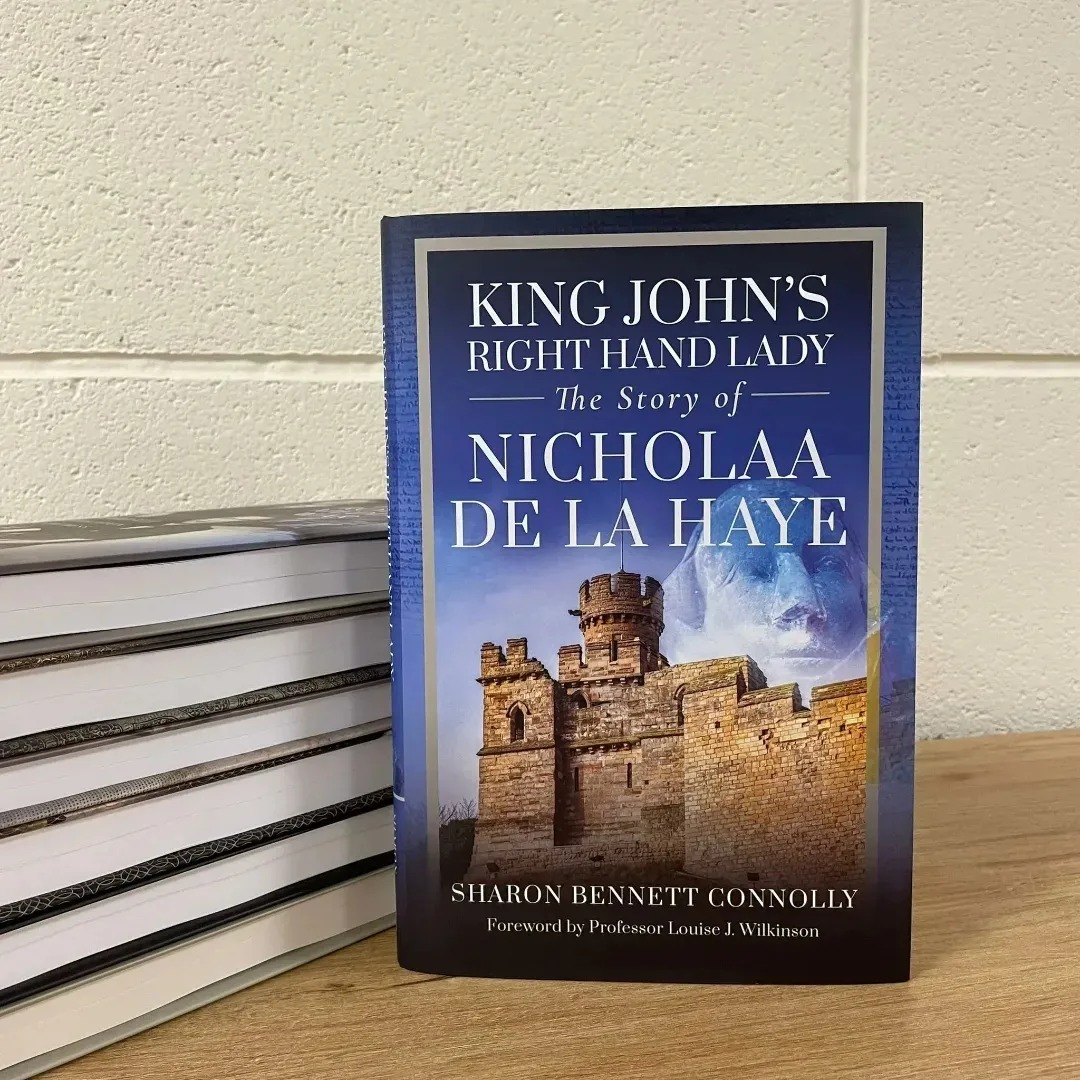
Out nowKing John’s Right-Hand Lady: The Story of Nicholaa de la Haye

In a time when men fought and women stayed home, Nicholaa de la Haye held Lincoln Castle against all-comers, gaining prominence in the First Baron’s War, the civil war that followed the sealing of Magna Carta in 1215. A truly remarkable lady, Nicholaa was the first woman to be appointed sheriff in her own right. Her strength and tenacity saved England at one of the lowest points in its history. Nicholaa de la Haye is one woman in English history whose story needs to be told…

King John’s Right-Hand Lady: The Story of Nicholaa de la Haye is now available from Pen & Sword Booksbookshop.org and Amazon.

Coming 15 January 2024: Women of the Anarchy

On the one side is Empress Matilda, or Maud. The sole surviving legitimate child of Henry I, she is fighting for her birthright and that of her children. On the other side is her cousin, Queen Matilda, supporting her husband, King Stephen, and fighting to see her own son inherit the English crown. Both women are granddaughters of St Margaret, Queen of Scotland and descendants of Alfred the Great of Wessex. Women of the Anarchy demonstrates how these women, unable to wield a sword, were prime movers in this time of conflict and lawlessness. It show how their strengths, weaknesses, and personal ambitions swung the fortunes of war one way – and then the other.

Available for pre-order from Amberley Publishing and Amazon UK.

Also by Sharon Bennett Connolly:

Defenders of the Norman Crown: The Rise and Fall of the Warenne Earls of Surrey tells the fascinating story of the Warenne dynasty, of the successes and failures of one of the most powerful families in England, from its origins in Normandy, through the Conquest, Magna Carta, the wars and marriages that led to its ultimate demise in the reign of Edward III. Defenders of the Norman Crown: Rise and Fall of the Warenne Earls of Surrey is now available from Pen & Sword BooksAmazon in the UK and US, and Bookshop.org.

Ladies of Magna Carta: Women of Influence in Thirteenth Century England looks into the relationships of the various noble families of the 13th century, and how they were affected by the Barons’ Wars, Magna Carta and its aftermath; the bonds that were formed and those that were broken. It is now available in paperback and hardback from Pen & Sword,  Amazon, and Bookshop.org.

Heroines of the Medieval World tells the stories of some of the most remarkable women from Medieval history, from Eleanor of Aquitaine to Julian of Norwich. Available now from Amberley Publishing and Amazon, and Bookshop.org.

Silk and the Sword: The Women of the Norman Conquest traces the fortunes of the women who had a significant role to play in the momentous events of 1066. Available now from Amazon,  Amberley Publishing, and Bookshop.org.

Alternate Endings: An anthology of historical fiction short stories including Long Live the King… which is my take what might have happened had King John not died in October 1216. Available in paperback and kindle from Amazon.

Podcast:

Have a listen to the A Slice of Medieval podcast, which I co-host with Historical fiction novelist Derek Birks. Derek and I welcome guests, such as Bernard Cornwell, and discuss a wide range of topics in medieval history, from significant events to the personalities involved.

*

Don’t forget! Signed and dedicated copies of all my books are available through my online bookshop.

For forthcoming online and in-person talks, please check out my Events Page.

You can be the first to read new articles by clicking the ‘Follow’ button, liking our Facebook page or joining me on Twitter and Instagram.

©2023 Sharon Bennett Connolly FRHistS 

Guest Post: All the Ælfgifus by Annie Whitehead

Today it is a pleasure to welcome Annie Whitehead to History … the Interesting Bits as a stop on her Women of Power in Anglo-Saxon England Blog Tour.

Women of Power in Anglo-Saxon England examines the lives of individual women in a way that has often been done for the Anglo-Saxon men but not for their wives, sisters, mothers and daughters. It tells their stories: those who ruled and schemed, the peace-weavers and the warrior women, the saints and the sinners. It explores, and restores, their reputations.

Over to you Annie….

All the Ælfgifus

I was recently interviewed on BBC Radio Northampton where we chatted about a lady known as Ælfgifu of Northampton. During the pre-recording chat, it became clear that there was some confusion over the name. I told the presenter that I wasn’t the least surprised, as there are no fewer than eight ladies with that name featured in my new book. I thought I’d take this opportunity to introduce them. (The name, incidentally, translates as Elf-gift, which I think is rather beautiful.)

Ælfgifu, daughter of Edward the Elder

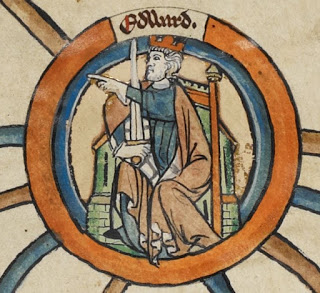
Edward the Elder

We don’t know a great deal about her but I do feel rather sorry for her. She and her sister, Eadgyth, were, apparently, both sent to Germany so that the future emperor, Otto, could choose one of them as his bride. He married Eadgyth – it was, apparently, ‘love at first sight’ – and Ælfgifu married another prince. What Ælfgifu felt about being rejected by Otto, we can only surmise. Of course, Otto might not have been every young girl’s dream, in which case Ælfgifu might have considered that she’d had a lucky escape. It must have rankled though, being declared less attractive than her sister.

Ælfgifu of Shaftesbury

King Edmund was the son of Edward the Elder and a half-brother of the Ælfgifu mentioned above. He became king at around the age of eighteen and his first wife, Ælfgifu, bore him two sons, both future kings. Her identity is debateable and her background unknown. She wasn’t married for long. Her son Eadwig (I’ll come back to him) was probably born around 940, and his younger brother Edgar around 943. King Edmund himself died in 946 – the victim of a brawl, or perhaps a political assassination – having married again, so his first marriage must have ended not long after Edgar’s birth. Ælfgifu is known as Ælfgifu of Shaftesbury, and it would be easy to assume that she retired to Shaftesbury Abbey in the manner of a number of previous queens, but the short-lived nature of her marriage and the young age of her children suggest another scenario. It is plausible that she died in childbirth, either in labour with Edgar or with a subsequent pregnancy in which both mother and child died. If she did indeed die in childbirth then she cannot have been a nun at Shaftesbury, but merely a benefactor.

Ælfgifu the Harlot

Mortimer portrait of Dunstan scolding 
Ælfgifu the Harlot

In 955 Edmund’s brother, who’d succeeded him, died and was in turn succeeded by Edmund’s son, Eadwig (see, I told you I’d come back to him). Life at court got rather interesting when Eadwig, still only a teenager, married a young woman named Ælfgifu. Many of you will know the story of how he was found in bed on his coronation day with his wife, and her mother. Depending on which version one reads, the mother was banished and/or hamstrung in punishment, or she threatened the abbot who found them, and who was himself subsequently banished, that she would have his eyes put out if he ever returned. The young couple’s marriage was annulled two years later, on the grounds that they were too closely related. However, Ælfgifu is presumed to be the same woman who left a will, in which she’s identified as being descended from the brother of Alfred the Great. This being so, she was descended from the branch of the royal family that had risen up in rebellion. Ælfgifu’s marrying the king might have been seen as an attempt to strengthen those claims. It’s not a theory which I whole-heartedly embrace but it does seem that there was a lot of political manoeuvring at court and I suspect Ælfgifu was an innocent caught up in the turmoil. She was certainly welcomed back to court by Eadwig’s brother when he became king.

Ælfgifu of York – Possibly

Aethelred the Unready

That brother of Eadwig’s had a son, known to history as Æthelred the Unready. His first wife’s identity is a bit of a mystery. The chronicler John of Worcester said that she was called Ælfgifu, and that she was the daughter of an ealdorman called Æthelberht. But there is no evidence of this woman’s father; no ealdorman named Æthelberht is recorded elsewhere. Roger of Wendover said that she was a ‘woman of low birth’, while Ailred of Rievaulx, writing in the mid-twelfth century, said that she was the daughter of a man named Thored, but he didn’t name her. It is possible that Æthelred was married first to a woman named Ælfgifu and then to the daughter of Thored, but it is generally accepted that this was one woman and, combining the two versions, that she was Ælfgifu, daughter of Thored.

We don’t hear much from her as she didn’t witness any charters and is otherwise unnamed in the sources. What she did do, though, is have at least nine children, (one of whom was also called Ælfgifu, whose husband was murdered by her sister’s husband, which must have made for awkward family Christmases)! She must have lived until the eleventh century, for her youngest son, Edgar, did not appear on charter witness lists until 1001. We do not know exactly how old the royal children would typically have been when they first appeared on the witness lists, but we do know that they were sometimes still babes in arms. It is not known what happened to Ælfgifu and it is possible that she died at around the same time, for King Æthelred got married again in 1002…

…To a woman named Emma, but who was given the English name of Ælfgifu. As if this wasn’t confusing enough! And after Æthelred the Unready died, Emma married again. Her husband was King Cnut, who already had a wife/concubine:

Ælfgifu of Northampton

Emma – Ælfgifu of Northampton’s rival

This Ælfgifu came from a powerful Mercian family. Her father was ealdorman of Northumbria, her uncle founded Burton Abbey and her grandmother founded Wolverhampton. Ælfgifu’s father was murdered and her brothers were blinded and generally Æthelred the Unready mistrusted the family, as well he might. For at some point, possibly around 1013, Ælfgifu married Cnut, the son of the invader, Swein Forkbeard. She had two sons by Cnut, and they were given Danish names – Swein and Harold – as if recognised as potential heirs, but when Cnut became king, he married Emma and also had a son with her, who was named Harthacnut.

Emma, with her credentials as an English queen, was no doubt important to Cnut, but so too was Ælfgifu of Northampton, and Cnut had a task for her to perform. Cnut had an empire to rule, and Harthacnut was sent to Denmark while in 1030, Ælfgifu and her son Swein were sent to Norway, there to rule for Cnut. The regency in Norway may have been hugely symbolic, and it is telling that the period was remembered in Scandinavian history as ‘Ælfgifu’s time’, but for various reasons it wasn’t hugely successful. Swein died in 1035, but so too did Cnut.

Now a (rather unseemly at times) battle began as Emma and Ælfgifu fought for their sons to succeed. You can read all about these fraught years in my new book but the upshot was that Ælfgifu was successful in the short term and Harold ‘Harefoot’ became king. Sadly though he died in 1040. We don’t know what happened to Ælfgifu after this, but there is a French twelfth-century story which speaks of a woman named Alveva and it’s possible that she lived out her years as an exile in southern France.

By 1066, another Harold was on the throne. He had a wife/concubine who’s known to history as Edith Swanneck, and one of her children was a daughter named Ælfgifu.

Ælfgifu the Unlucky

But the last Ælfgifu I want to talk about is one I’ve nicknamed ‘unlucky’. You’ll recall that Ælfgifu of Northampton’s brothers were blinded. They weren’t the only ones and in 993 a man named Ælfgar suffered the same fate. His wife was another woman named Ælfgifu. When Ælfgifu of Northampton’s father was killed and her brothers blinded, another man was named as being deprived of all his property. With a little bit of detective work I was able to say with some degree of certainty that this man was the second husband of our last Ælfgifu, which means that her first husband was blinded and the second was deprived of all his property. Given that it’s clear the name Ælfgifu seems to have been given only to noblewomen, I think this one must have expected a slightly more comfortable and uneventful life!

Follow the Blog Tour!

Annie’s book, Women of Power in Anglo-Saxon England, was published by Pen & Sword Books in June 2020. It can be purchased from Pen & Sword and online.

About the Author:

Annie is an author and historian and an elected member of the Royal Historical Society and has won awards and prizes for her fiction and nonfiction.

Published works include Mercia: The Rise and Fall of a Kingdom (Amberley Books) and novels and stories set in Anglo-Saxon England, including To Be A Queen, the story of Æthelflæd, Lady of the Mercians, longlisted for HNS Book of the Year 2016. She was the inaugural winner of the Dorothy Dunnett/HWA Short Story Competition in 2017. You can connect with Annie through her Website, on Facebook, Twitter and on her Blog and Amazon Author Page.

All images are in the public domain.

*

My Books

Ladies of Magna Carta: Women of Influence in Thirteenth Century England  looks into the relationships of the various noble families of the 13th century, and how they were affected by the Barons’ Wars, Magna Carta and its aftermath; the bonds that were formed and those that were broken. It is now available from Pen & SwordAmazon and from Book Depository worldwide.

Also by Sharon Bennett Connolly:

Silk and the Sword: The Women of the Norman Conquest traces the fortunes of the women who had a significant role to play in the momentous events of 1066.  Available now from Amazon,  Amberley Publishing, Book Depository.

Heroines of the Medieval World tells the stories of some of the most remarkable women from Medieval history, from Eleanor of Aquitaine to Julian of Norwich. Available now from Amberley Publishing and Amazon and Book Depository.

*

You can be the first to read new articles by clicking the ‘Follow’ button, liking our Facebook page or joining me on Twitter and Instagram.

©2020 Sharon Bennett Connolly

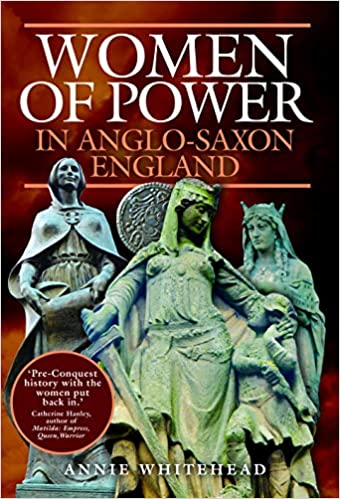
Book Corner: Women of Power in Anglo-Saxon England by Annie Whitehead

Many Anglo-Saxon kings are familiar. Æthelred the Unready is one, yet less is written of his wife, who was consort of two kings and championed one of her sons over the others, or his mother who was an anointed queen and powerful regent, but was also accused of witchcraft and regicide. A royal abbess educated five bishops and was instrumental in deciding the date of Easter; another took on the might of Canterbury and Rome and was accused by the monks of fratricide.

Anglo-Saxon women were prized for their bloodlines – one had such rich blood that it sparked a war – and one was appointed regent of a foreign country. Royal mothers wielded power; Eadgifu, wife of Edward the Elder, maintained a position of authority during the reigns of both her sons.

Æthelflaed, Lady of the Mercians, was a queen in all but name, while few have heard of Queen Seaxburh, who ruled Wessex, or Queen Cynethryth, who issued her own coinage. She, too, was accused of murder, but was also, like many of the royal women, literate and highly-educated.

From seventh-century Northumbria to eleventh-century Wessex and making extensive use of primary sources, Women of Power in Anglo-Saxon England examines the lives of individual women in a way that has often been done for the Anglo-Saxon men but not for their wives, sisters, mothers and daughters. It tells their stories: those who ruled and schemed, the peace-weavers and the warrior women, the saints and the sinners. It explores, and restores, their reputations.

I was very lucky to receive an advance copy of Annie Whitehead’s wonderful new book, Women of Power in Anglo-Saxon England. Beautifully written and thoroughly researched, this book brings to life the women on England from before the Norman Conquest.

Women of Power in Anglo-Saxon England is a wonderful study of the influential royal and noble women of pre-Conquest England, whether they were queens, princesses, abbesses or countesses. Annie Whitehead tells their stories in wonderful, vivid detail, beautifully weaving the historical implications off their lives with their larger-than-life stories.

Though they have been dead a thousand years and more, and while written evidence on these women may be scarce, the author has managed to squeeze every bit of information from the available chronicles, charters and saints’ lives. She has given the reader every possible snippet of information on their lives, presenting and analysing the sources in an accessible, engaging and thoroughly enjoyable reading experience.

The stories of these women is told with a passion and eloquence which makes every chapter a pleasure to read. The more familiar stories of Æthelflæd, Lady Godiva and St Hilda of Whitby are given excellent new interpretations, while the reader may be meeting the less familiar women, such as Æthelfrith of Bernicia, Eadburh and Alfred the Great’s sister, Æthelswith, for the first time.

Ælfgifu appears not to have been married for long. Her son Eadwig was probably born around 940, and his younger brother Edgar around 943. King Edmund himself died in 946 – the victim of a brawl, or perhaps a political assassination – having married again, so his first marriage must have ended not long after Edgar’s birth. The younger of the royal orphans, Edgar, was fostered by a noblewoman, the wife of the ealdorman of East Anglia, whom we shall meet in Part VI.

Ælfgifu is known as Ælfgifu of Shaftesbury, and William of Malmesbury in particular had a lot to say about her. He said that it was she who built the nunnery there and that her bodily remains were placed there. She was ‘so pious and loving that she would even secretly release criminals who had been openly condemned by the gloomy verdict of a jury.’ She would also give away her expensive clothes to the needy and she was a beautiful woman who was remembered for the miracles associated with her; the blind, the deaf and the lame were cured after visiting Shaftesbury.

It would be easy to assume that she retired to Shaftesbury in the manner of a number of previous queens, but the short-lived nature of her marriage and the young age of her children suggest another scenario. It is plausible that she died in childbirth, either in labour with Edgar or with a subsequent pregnancy in which both mother and child died. If she did indeed die in childbirth then she cannot have been a nun at Shaftesbury, but merely its benefactress.

Æthelflæd with her nephew Æthelstan

of these women were not easy to find, and the detective work involved in researching Women of Power in Anglo-Saxon England is both entertaining and fascinating. In recreating and retelling the lives of these remarkable women, Annie Whitehead has given us a window into a distant past. We have the chance to observe the lives, loves, hopes and dreams of these remarkable women; women who helped shape their present and futures, and thus the world in which we now live.

The author also helps to dispel some of the myths that have arisen about these women, whether by historical fiction writers or the over-active imaginations of the chroniclers of the past. The true stories of Æthelflæd and Godiva, and others, are revealed, the myths surrounding them examined and explained. This is a wonderful book, filled with stories of love, intrigue and murder, of the power struggles and betrayals of Anglo-Saxon England, of strong and influential women who made an impression, not only on their own times, but on the generations who came after.

Women of Power in Anglo-Saxon England brings to life the women of the Anglo-Saxon period with vivid clarity. It is a remarkable study of the lives of women of the period – known and unknown – and their impact on history. Saints, princesses and queens; wives, daughters and mothers, Annie Whitehead demonstrates the strengths, weaknesses and challenges these incredible women faced in order to exert their influence on their corner of the world. The author’s meticulous research, beautiful writing and natural storytelling ability make this book a pleasure to read from beginning to end.

To Buy the Book:

Bookhttp://mybook.to/WomeninPower Amazonhttp://viewauthor.at/Annie-Whitehead

About the author:

Annie Whitehead graduated in history having specialised in the ‘Dark Ages’ and is a member of the Royal Historical Society. She’s written three books about early medieval Mercia, the ancient Anglo-Saxon kingdom of the Midlands. The first, To Be a Queen, tells the story of Alfred the Great’s daughter, and was long-listed for the Historical Novelist Society’s Indie Book of the Year 2016, and was an IAN (Independent Author Network) Finalist in 2017, while the second, Alvar the Kingmaker, is the story of Aelfhere, Earl of Mercia in the 10th century. The third, Cometh the Hour, is the first of two volumes set in seventh-century Mercia. She was a contributor to the anthology 1066 Turned Upside Down, a collection of alternative short stories. She writes magazine articles and has had pieces printed in diverse publications, including Cumbria Magazine and This England. She has twice been a prize winner in the Mail on Sunday Novel Writing Competition, and won First Prize in the 2012 New Writer Magazine’s Prose and Poetry Competition. She was a finalist in the 2015 Tom Howard Prize for nonfiction, and is also a contributor and editor for the English Historical Fiction Authors blog, as well as blogging for her own site – Casting Light upon the Shadow. In 2017 she won the inaugural HWA/Dorothy Dunnett Society Short Story Prize. Her first full-length nonfiction book, Mercia: The Rise and Fall of a Kingdom, is published by Amberley. Her latest nonfiction, Women of Power in Anglo-Saxon England, is published by Pen & Sword Books.

Social Media links: Blog; Twitter; Website; Facebook

*

My Books

Out Now!

Ladies of Magna Carta: Women of Influence in Thirteenth Century England  looks into the relationships of the various noble families of the 13th century, and how they were affected by the Barons’ Wars, Magna Carta and its aftermath; the bonds that were formed and those that were broken. It is now available from Pen & SwordAmazon and from Book Depository worldwide.

Also by Sharon Bennett Connolly:

Silk and the Sword: The Women of the Norman Conquest traces the fortunes of the women who had a significant role to play in the momentous events of 1066.  Available now from Amazon,  Amberley Publishing, Book Depository.

Heroines of the Medieval World tells the stories of some of the most remarkable women from Medieval history, from Eleanor of Aquitaine to Julian of Norwich. Available now from Amberley Publishing and Amazon and Book Depository.

*

You can be the first to read new articles by clicking the ‘Follow’ button, liking our Facebook page or joining me on Twitter and Instagram.

©2020 Sharon Bennett Connolly

Medieval She-Wolves: Part One

Throughout history – and particularly in medieval times – strong, determined women have been labelled ‘she-wolves’. It is a term that has been used as a criticism or insult. It has often been applied to suggest a woman of serious character flaws who would invariably put her own interests ahead of others, who fought for what they wanted, be it a crown, their children or independence. Men who performed similar actions and had similar aims tended to be called strong and determined rulers. However, the term can also be used to show women in a positive light, women who didn’t give up, fought for themselves and their families. So I have chosen 6 women who could have been termed ‘she-wolves’ to show women from both viewpoints, and to demonstrate the strength of the characters and the challenges they faced. And while their actions were not always exemplary, their stories were always remarkable.

Here are the first 3:

Æthelflæd, Lady of Mercia

Æthelflæd, Lady of Mercia

The daughter of King Alfred the Great, Æthelflæd was married to Æthelred, ealdorman of Mercia. Æthelflæd was a strong, brave woman and is often regarded more as a partner to Æthelred than a meek, obedient wife. Although she exercised regal rights in Mercia even before her husband’s death, after Æthelred died in 911, it was left to Æthelflæd to lead the Mercians in the fight against the Danes. Alongside her brother, King Edward of Wessex. It is universally acknowledged that Æthelflæd helped to push back the Viking incursions. Losing four of her greatest captains in the battle to capture Derby in 917, the Anglo-Saxon Chronicle reported:

‘With God’s help Ethelfleda, lady of Mercia, captured the fortress known as Derby with all its assets. Four of her favoured ministers were slain inside the gates.’

Anglo-Saxon Chronicles edited by Michael Swanton

In 918, Æthelflæd captured Leicester, ravaging the countryside around the town until the Danes surrendered. The combination of her indefatigable forces and compassion in victory saw the Danes soon suing for peace; in the summer of 918, the noblemen and magnates of York sent emissaries to Æthelflæd, promising that they would surrender to her. She personally led campaigns against the Welsh, the Norse and the Danes – though whether she actually wielded a sword in battle is unknown.

While often magnanimous in victory, Æthelflæd could be ruthless when it was her friends who were attacked; even she was not immune from the desire for revenge. In June 916, on the feast of St Cyriac, Æthelflæd’s good friend, Abbot Egbert, was murdered for no known reason. The Mercian abbot and his retainers were ambushed and killed while travelling in the Welsh mountain kingdom of Brycheiniog. The abbot had been under Æthelflæd’s protection and within three days she was leading an army into the Wales to exact revenge.

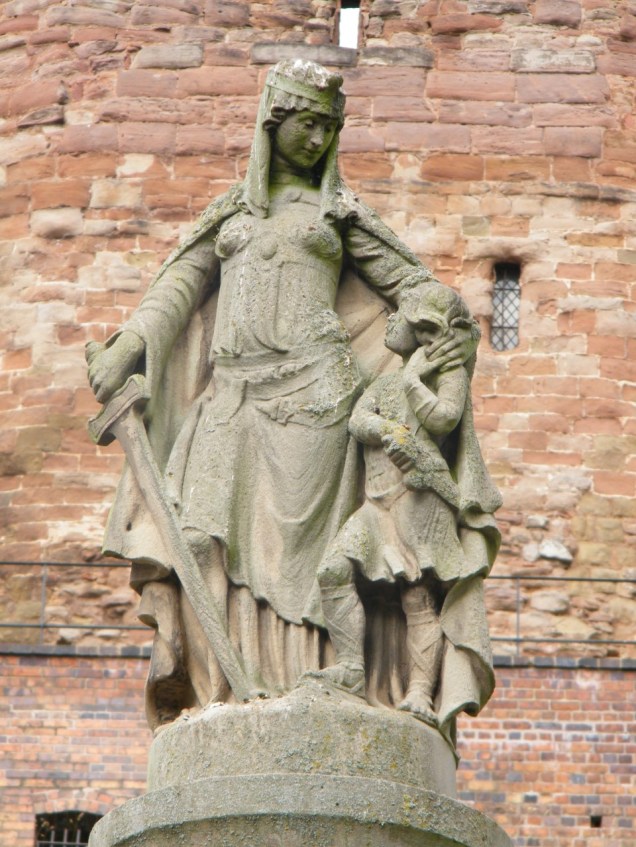
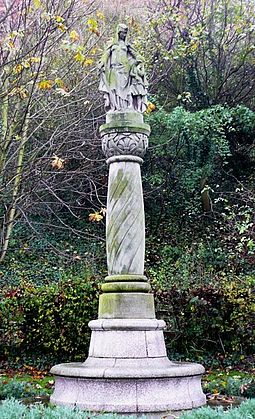
Statue of Aethelflaed and Athelstan

Æthelflæd’s army ravaged Brycheiniog, burning the little kingdom and taking many hostages. Although King Tewdr escaped Æthelflæd, his wife did not; Queen Angharad and thirty-three others, many of them relatives of the Welsh king, were taken back to Mercia as hostages. Æthelflæd’s strength and determination was complemented by her quick actions and an impressive ruthless streak. When the Welsh king eventually submitted to Æthelflæd, he promised to serve her faithfully, and to pay compensation for the murder of the abbot and his people.

Æthelflæd died suddenly in June 918. She did not live to see the successful conclusion to the work she and her brother had worked tirelessly to achieve; between 910 and 920 all Danish territories south of Yorkshire had been conquered.

Eleanor of Aquitaine, Queen of France, Queen of England (died 1204)

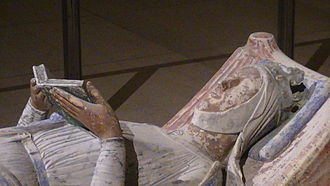
Tomb effigy of Eleanor of Aquitaine, Fontevraud Abbey, France

Eleanor of Aquitaine is iconic. Probably the most famous woman of the middle ages, she is the only woman to have ever worn the crowns of both England and France. She has even been promoted as the first feminist.

Eleanor’s long life saw her weather the dangers of crusade, scandal, siege, imprisonment and betrayal to emerge as the great matriarch of Europe.

When her first husband, Louis VII, led the Second Crusade, Eleanor went with him, only to find herself mired in scandal.  Eleanor’s uncle Raymond of Toulouse, Prince of Antioch, welcomed Eleanor warmly and lavished such attention on her that rumours soon arose of an affair. Despite a lack of concrete evidence, but accused of adultery and incest, Eleanor spent most of the crusade under close guard on her husband’s orders.

Louis and Eleanor’s marriage had been dealt a fatal blow; they left the Holy Land in 1149 and their divorce was finally proclaimed 21 March 1152. By May 1152 Eleanor was married again, to the man who would become her first husband’s greatest rival. Henry of Anjou would become King of England in 1154 and eventually built an empire that extended 1,000 miles, from the Scottish border in the north to the Pyrenees in the south and incorporating most of western France.

Later rumours again mired Eleanor in scandal, accusing her of murdering Henry’s lover Rosamund Clifford. In one extravagant version, Rosamund was hidden in her secret bower within a maze but, with the help of a silken thread, a jealous Eleanor still found her and stabbed her while she bathed. In another the discarded queen forced Rosamund to drink from a poison cup. Of course, a closely guarded prisoner in Old Sarum or at Winchester as Eleanor was at the time of Rosamund’s death, it was impossible for her to do any such thing. But who are we to let facts get in the way of a good story?

Eleanor did, however, commit one of the most heinous crimes a woman could in the medieval world. As a she-wolf, protecting her cubs, she rebelled against her husband. In 1173 her eldest son by Henry, also called Henry, rebelled against his father and fled to the French court for support. His father-in-law, King Louis VII welcomed the disgruntled Angevin prince and Eleanor of Aquitaine, having sided with her sons against her husband, sent two of her other sons, fifteen-year-old Richard and fourteen-year-old Geoffrey, to join their older brother at the French court, while she rallied her barons in Poitou to their cause. In 1174, when the rebellion failed, Henry accepted the submission of his sons.

Eleanor, who was captured as she rode towards safety in France, wearing men’s clothing – an act itself highly frowned upon – was not so fortunate. While it was not encouraged for sons to rebel against their father, it could be seen as boys flexing their muscles. For a wife to rebel against her husband was practically unheard of, and went against the natural order of society, and therefore deserved harsher punishment – where would the world be if women refused to behave?

Unforgiven and defeated, Eleanor was sent to perpetual imprisonment in various castles throughout southern England. She was only released after Henry II’s death in 1189, when her favourite son, Richard I, the Lionheart, ascended England’s throne. If she had done everything of which she was accused – murder, incest, adultery and rebellion – Eleanor would be the ultimate she-wolf. As it was, her rebellion, an act unprecedented for a queen, meant she paid the price with her freedom for the next fifteen years.

Isabeau of Bavaria, Queen of France

Isabeau of Bavaria

If all the stories of Isabeau of Bavaria were to be believed, she would be the most ruthless and wicked queen to have ever lived. For centuries Isabeau has been accused of almost every crime imaginable, from adultery and incest to treason and avarice. Variously described as being beautiful and hypnotic or so obese that she was crippled, the chroniclers have not been kind to Isabeau. According to them, her moral corruption led to the neglect of her children and betrayal of her husband and country.

However, they ignored the challenges faced by a queen whose husband was sinking deeper and deeper into the realms of insanity, going so far as killing four of his own knights during one mental breakdown and thinking he was made of glass in another. Married to King Charles VI of France, also known as Charles ‘the Mad’, Isabeau was left to raise her children and navigate the dangers and intrigues of court politics with little assistance from her mentally disturbed husband. Her political alliance with Louis of Orléans, her husband’s brother, led to her imprisonment amid slanderous rumours of adultery and incest – from the opposing political party.

To add to this, France was – not that they knew it at the time – halfway through the conflict with England that would become known as the Hundred Years’ War. The war was going badly for France – Henry V defeated them decisively at Agincourt – and Isabeau was forced to put her signature to the Treaty of Troyes in 1420. In that instant she disinherited her own son, the Dauphin, making Henry V heir to King Charles and handing France over to England. Much of Isabeau’s life and career has been re-examined in the twentieth century and she has been exonerated of many of the accusations against her, but, despite the fact Isabeau was backed into a corner, she still signed away her son’s inheritance in favour of a foreign power…

Although not all their actions were womanly, and some of what they did could be seen as dishonourable and ruthless, what is certain is that these women – and many others from their time – left their mark on history. With each of them, applying the term ‘she-wolf’ highlights their strengths, their determination, and the challenges they faced and overcame. They fought for what they wanted, often against impossible odds, and achieved much. At a time when the perceived main purpose of a wife was to produce and raise children, these women made a remarkable imprint on history that has ensured their stories are still being told today.

Look out for Part Two of Medieval She-Wolves, next week.

Selected Sources:

The Oxford Companion to British History Edited by John Cannon; The Plantagenets, the Kings who Made England by Dan Jones; History Today Companion to British History Edited by Juliet Gardiner and Neil Wenborn;  Brewer’s British Royalty by David Williamson; Britain’s Royal Families, the Complete Genealogy by Alison Weir; The Plantagenet Chronicles Edited by Elizabeth Hallam; The Mammoth Book of British Kings and Queens by Mike Ashley; The Plantagenets, the Kings that made Britain by Derek Wilson; England Under the Norman and Angevin Kings  by Robert Bartlett; http://www.britannica.com; oxforddnb.com; finerollshenry3.org.uk; The Anglo-Saxon Chronicles by Michael Swanton; The Anglo-Saxon Chronicle by James Ingram; Chronicles of the Kings of England, From the Earliest Period to the Reign of King Stephen, c. 1090–1143 by William of Malmesbury; The Chronicle of Henry of Huntingdon by Thomas Forester; Alfred the Great by David Sturdy; Britain’s Royal Families, the Complete Genealogy by Alison Weir; The Wordsworth Dictionary of British History by JP Kenyon; The Anglo-Saxons in 100 Facts by Martin Wall; Kings, Queens, Bones and Bastards by David Hilliam; Mercia; the Rise and Fall of a Kingdom by Annie Whitehead.

Images courtesy of Wikipedia

A version of this article first appeared in the 2019 edition of All About History magazine.

My Books:

Signed, dedicated copies of all my books are available through my online bookshop.

Out Now! Women of the Anarchy

Two cousins. On the one side is Empress Matilda, or Maud. The sole surviving legitimate child of Henry I, she is fighting for her birthright and that of her children. On the other side is her cousin, Queen Matilda, supporting her husband, King Stephen, and fighting to see her own son inherit the English crown. Women of the Anarchy demonstrates how these women, unable to wield a sword, were prime movers in this time of conflict and lawlessness. It show how their strengths, weaknesses, and personal ambitions swung the fortunes of war one way – and then the other.

Available from Bookshop.orgAmberley Publishing and Amazon UK.

Coming on 15 June 2024: Heroines of the Tudor World

Heroines of the Tudor World tells the stories of the most remarkable women from European history in the time of the Tudor dynasty, 1485-1603. These are the women who ruled, the women who founded dynasties, the women who fought for religious freedom, their families and love. These are the women who made a difference, who influenced countries, kings and the Reformation. In the era dominated by the Renaissance and Reformation, Heroines of the Tudor World examines the threats and challenges faced by the women of the era, and how they overcame them. From writers to regents, from nuns to queens, Heroines of the Tudor World shines the spotlight on the women helped to shape Early Modern Europe.

Heroines of the Tudor World is now available for pre-order from Amberley Publishing and Amazon UK.

Also by Sharon Bennett Connolly:

King John’s Right-Hand Lady: The Story of Nicholaa de la Haye is the story of a truly remarkable lady, the hereditary constable of Lincoln Castle and the first woman in England to be appointed sheriff in her own right. It is is available from King John’s Right-Hand Lady: The Story of Nicholaa de la Haye is the story of a truly remarkable lady, the hereditary constable of Lincoln Castle and the first woman in England to be appointed sheriff in her own right. Available from all good bookshops or direct from Pen & Sword Booksbookshop.org and AmazonDefenders of the Norman Crown: The Rise and Fall of the Warenne Earls of Surrey tells the fascinating story of the Warenne dynasty, from its origins in Normandy, through the Conquest, Magna Carta, the wars and marriages that led to its ultimate demise in the reign of Edward III. Available from Pen & Sword BooksAmazon in the UK and US, and Bookshop.org

Ladies of Magna Carta: Women of Influence in Thirteenth Century England looks into the relationships of the various noble families of the 13th century, and how they were affected by the Barons’ Wars, Magna Carta and its aftermath; the bonds that were formed and those that were broken. It is now available in paperback and hardback from Pen & Sword,  Amazon, and Bookshop.orgHeroines of the Medieval World tells the stories of some of the most remarkable women from Medieval history, from Eleanor of Aquitaine to Julian of Norwich. Available now from Amberley Publishing and Amazon, and Bookshop.orgSilk and the Sword: The Women of the Norman Conquest traces the fortunes of the women who had a significant role to play in the momentous events of 1066. Available now from Amazon,  Amberley Publishing, and Bookshop.org.

Alternate Endings: An anthology of historical fiction short stories including Long Live the King… which is my take what might have happened had King John not died in October 1216. Available in paperback and kindle from Amazon.

Podcast:

Have a listen to the A Slice of Medieval podcast, which I co-host with Historical fiction novelist Derek Birks. Derek and I welcome guests, such as Bernard Cornwell and Elizabeth Chadwick, and discuss a wide range of topics in medieval history, from significant events to the personalities involved.

*

Don’t forget! Signed and dedicated copies of all my books are available through my online bookshop.

For forthcoming online and in-person talks, please check out my Events Page.

You can be the first to read new articles by clicking the ‘Follow’ button, liking our Facebook page or joining me on Twitter and Instagram.

*

©2019 Sharon Bennett Connolly FRHistS

Book Corner: Sword of Kings by Bernard Cornwell

Uhtred of Bebbanburg is a man of his word.

An oath bound him to King Alfred. An oath bound him to Æthelflaed. And now an oath will wrench him away from the ancestral home he fought so hard to regain. For Uhtred has sworn that on King Edward’s death, he will kill two men. And now Edward is dying.

A violent attack drives Uhtred south with a small band of warriors, and headlong into the battle for kingship. Plunged into a world of shifting alliances and uncertain loyalties, he will need all his strength and guile to overcome the fiercest warrior of them all.
 
As two opposing Kings gather their armies, fate drags Uhtred to London, and a struggle for control that must leave one King victorious, and one dead. But fate – as Uhtred has learned to his cost – is inexorable. Wyrd bið ful ãræd. And Uhtred’s destiny is to stand at the heart of the shield wall once again…

I have said a few times that I am a big Bernard Cornwell fan. I have been reading his books since I was 14 and the Sharpe series was the inspiration for my dissertation at university. He is the most thoughtful author out there; he publishes a book every year in October, just in time for my birthday (for which the hubby and I are equally grateful!). This year was no exception.

This is the 12th outing for Uhtred of Bebbanburgh and Bernard Cornwell has done it again! Sword of Kings is a thoroughly enjoyable adventure set in 10th century England. Full of action, intrigue, friendship and a little bit of love, the master storyteller has given us yet another book that is impossible to put down.

Uhtred’s penchant for swearing oaths, and for standing by his oaths, once again gets him into trouble. This time he has sworn to help put Athelstan on the throne; the grandson of King Alfred and nephew of Uhtred’s former love, Æthelflaed, he is the eldest son of King Edward the Elder. But there is a question over his legitimacy and other, powerful nobles would see Athelstan’s half-brother, Ælfweard. Luckily for Athelstan, Uhtred has also sworn to kill Ælfweard and his uncle, Æthelhelm. However, fulfilling an oath is not as easy as making it!

So Æthelhelm the Younger had sent his youngest brother to kill me. He had equipped a fleet, and offered gold to the crew, and placed a rancid priest on the ships to inspire Æthelwulf with righteous anger. Æthelhelm knew it would be next to impossible to kill me while I stayed inside the fortress and knew too that he could not send sufficient en to ambush me on my lands without those men being discovered and slaughtered by Northumbria’s warriors, so he had been clever. Her had sent men to ambush me at sea.

Æthelwulf was the fleet’s leader, but Æthelhelm knew that his brother, though imbued with the family’s hatred of me, was not the most ruthless of men, and so he had sent Father Ceolnoth to fill Æthelwulf with holy stupidity, and he also sent the man they called Edgar. Except that was not his real name. Æthelhelm had wanted no one to know of the fleet’s true allegiance, or to connect my death to his orders. He had hoped the blame would be placed on piracy, or on some passing Norse ship, and so he had commanded the leaders to use any name except their own. Æthelwulf had become Wistan, and I learned that Edgar was really Waormund.

I knew Waormund. He was a huge West Saxon, a brutal man, with a slab face scarred from his right eyebrow to his lower left jaw. I remembered his eyes, dead as stone. In battle Waormund was a man you would want standing beside you because he was capable of terrible violence, but he was also a man who revelled in that savagery. A strong man, even taller than me, and implacable. He was a warrior, and, though you might want his help in a battle, no one but a fool would want Waormund as an enemy. ‘Why,’ I asked Æthelwulf the next morning, ‘was Waormund in your smallest ship?’

‘I ordered him into that ship, lord, because I wanted him gone! He is not a Christian.’

‘He’s a pagan?’

‘He’s a beast. It was Waormund who tortured the captives. I tried to stop him.’

But Father Ceolnoth encouraged him?’

‘Yes.’ Æthelwulf nodded miserably. We were walking on Bebbanburg’s ramparts. The sun glittered from an empty sea and a small wind brought the smell of seaweed and salt. ‘I tried to stop Waormund,’ Æthelwulf went on, ‘and he cursed me and he cursed God.’

‘He cursed your god?’ I asked, amused.

As we have come to expect from Bernard Cornwell, the action is non-stop. the writing is up to his usual high standard, keeping the reader enthralled from the first page to the last. Uhtred gets himself into some of the worst scrapes yet, leaving the reader petrified that his luck will finally run out…

Uhtred has always been a sympathetic character to me, ruthless in battle but with a softer side for his lovers and (most of) his children. What shines through in this book, probably more so than in the rest of the series, is his friendship with Finan. These two men have been through Hell together – slavery and countless battles – and their relationship has always remained strong. In Sword of Kings it is this friendship that drives the book; their mutual trust and reliance on each other, in battle and out, is what makes this book so engaging.

Bernard Cornwell is a natural storyteller, one of the best at the craft. Sword of Kings is yet more testament to that fact. You never quite know how it is going to work out for Uhtred – he is not immune to loss and suffering – which is what always makes these books so gripping – you know he is not going to come out of his adventures totally unscathed. The suspense, the drama, the intrigue and action all come together to make yet another perfect chapter in Uhtred’s story.

Uhtred may be fictional, but other characters are real, and as always, there is an author’s note at the end to explain the history behind the story.

*

About the Author

Bernard Cornwell was born in London and worked in television until he met his American wife and moved to the US. Denied a work permit, he wrote a novel and has been writing ever since.

A master storyteller with a passion for history, his current bestselling series, THE LAST KINGDOM, is centred around the creation of England. It is also a major TV series on Netflix, with Bernard playing a cameo role in season three. The fourth season is currently being filmed.

He is also the author of THE GRAIL QUEST series, set in the Hundred Years’ War, THE WARLORD chronicles, set in Arthurian Britain, a number of standalone novels, one non-fiction work on Waterloo and the series with which he began, the SHARPE series.

For exciting news, tour and publication details, and exclusive content from Bernard visit http://www.bernardcornwell.net and like his author page on Facebook/Bernard.Cornwel

*

My Books

Silk and the Sword: The Women of the Norman Conquest

From Emma of Normandy, wife of both King Cnut and Æthelred II to Saint Margaret, a descendant of Alfred the Great himself, Silk and the Sword: the Women of the Norman Conquest traces the fortunes of the women who had a significant role to play in the momentous events of 1066.  Available now from Amazon UK,  Amberley Publishing, Book Depository and Amazon US.

Heroines of the Medieval World

Telling the stories of some of the most remarkable women from Medieval history, from Eleanor of Aquitaine to Julian of Norwich, Heroines of the Medieval World,  is available now on kindle and in paperback in the UK from from both Amberley Publishing and Amazon, in the US from Amazon and worldwide from Book Depository.

*

You can be the first to read new articles by clicking the ‘Follow’ button, liking our Facebook page or joining me on Twitter and Instagram.

©2019 Sharon Bennett Connolly

In Search of Ӕlfgifu of York, Ӕthelred II’s First Wife

Æthelread II the Unready

The first wife of Ӕthelred II, Ӕlfgifu of York is a shadowy figure in history, with very little known about her. She was probably born sometime in the 960s. Ӕthelred and Ӕlfgifu were married around 985, when he was in his late teens or early twenties; Ӕlfgifu may have been a little younger.

The monk Ailred of Rievaulx, writing in the 1150s, identified her as the daughter of, Thored. Ailred had served in the household of David I, King of Scotland, a great-great-grandson of Ӕthelred II and Ӕlfgifu through his mother, Queen Margaret and so Ailred was well place to learn the ancestry of King David with some accuracy. Thored was Earl of Northumbria between, about, 975 and 992 and regularly attested charters by King Ӕthelred II during the 980s.

Marriage to the daughter of the leading noble of Northumbria would have been a beneficial move for King Ӕthelred. It would have helped to expand and strengthen his influence over the north of England, an area notoriously independent of the royal administration of the south, and bring him powerful friends and allies.

Ӕthelred was the youngest son of King Edgar the Peaceable and his last wife, Ælfthryth. The grandson of Edward the Elder, and great-grandson of Alfred the Great, Edgar was king from 959 until his death in 975. His wife, Ælfthryth, was probably born around 945; she was the daughter of Ealdorman Ordgar of Devon, her mother an unknown woman who is said to have been descended from the royal family. She was first married around the age of eleven to Æthelwold, the son of Æthelstan Half-King, ealdorman of East Anglia. However, Æthelwold died in 962, probably in a hunting accident, although there were rumours of murder on the orders of his wife’s supposed lover, King Edgar. Edgar’s marital history was already chequered. Ælfthryth could be Edgar’s second or third wife; she was certainly the third relationship by which children were born.

Ælfgifu’s son Edmund II Ironside

Ælfthryth and Edgar were married in 964 and were soon the parents of two sons; Edmund and Æthelred. Despite having an older half-brother, Edward, it is Edmund who was treated as Edgar’s acknowledged heir; his name being above that of Edward’s in a charter of 966, witnessed by both boys, which founded the New Minster at Winchester. Poor Ælfthryth must have been distraught when, in 971 and still only a child of about seven, young Edmund died.

When King Edgar died suddenly in 975 it was Edward, at the age of  13, who was proclaimed king, despite Ælfthryth trying to claim the crown for her surviving son, Æthelred, who was aged between 7 and 10 years of age. Edward reigned for just 3 years before he met a violent and untimely death at Corfe Castle in Dorset.

It was on 18th March 978 that 16-year-old King Edward visited his step-mother and half-brother at Ælfthryth’s estate at Corfe. Whether Edward had been out hunting, or was in the area to specifically visit Ælfthryth and Æthelred seems to be uncertain. However, he did send a message that he would be calling on them and Ælfthryth’s retainers were awaiting the young king at the gate, when he arrived with a small retinue. Still sitting in the saddle, he was handed a drink; and stabbed. It must have been a horrific sight, as the king’s horse panicked and bolted, racing off with Edward’s foot stuck in the stirrup and the dying king being dragged along behind. The Anglo-Saxon Chronicle recorded:

No worse deed than this was ever done by the English nation since they first sought the land of Britain. Men murdered him, but God hath magnified him. He was in life an earthly king. He is now after death a heavenly saint. ¹

With Edward’s death his surviving brother, Æthelred, possibly as young as 10 years old, and certainly no older than 13, was now king of England, with his mother and a council of prominent nobleman to guide him. He would rule over a tumultuous period in English history, when Saxon England was under frequent attacks from the Danes. His tendency to inaction, indecision, his ineffectual handling of the Danish incursions and the fact he lost the throne to Sweyn Forkbeard, have earned him a reputation as one of England’s worst rulers.

Edward the Exile, grandson of Ælfgifu and father of St Margaret, Queen of Scotland

As his mother and adviser – and a force to be reckoned with – it may well have been Ælfthryth who chose Ӕlfgifu of York as a bride for Æthelred. It is also possible, even likely, that Ælfgifu was never crowned because her mother-in-law, the crowned and anointed queen, was still alive. Indeed,  Ælfgifu’s successor as Æthelred’s wife, Emma of Normandy, was given a coronation, but Ælfthryth was dead by then.

In the 15-or-so years of marriage to Ӕlfgifu of York, the couple had a large number of children, including at least 6 boys and 4 girls. It is even likely that Ӕlfgifu’s mother-in-law, Ælfthryth, raised a number of her children, including the royal couple’s first-born son and ætheling, Æthelstan. Ӕthelstan, was born c.986 but would die before his father, in June 1014, either killed in battle or from wounds received during the wars against Sweyn Forkbeard and his son Cnut. Ӕthelred and Ӕlfgifu’s other sons included Ecgberht, Edmund, Eadred, Eadwig and Edgar and all died young.

In April 1016 Edmund succeeded his father as King Edmund II Ironside but died in November of the same year, probably from wounds received in battle after a summer of constant fighting. His sons, Edward and Edmund, escaped Cnut by being sent into exile in eastern Europe. King Edmund’s sole-surviving brother Eadwig was murdered in 1017, on the orders of the victorious King Cnut.

Of Ӕthelred and Ӕlfgifu’s daughters, three were married to prominent Saxon noblemen. Edith was married to the traitorous Ealdorman, Eadric Streona, who kept changing sides during the wars against the Danes and eventually met his death on the orders of the triumphant King Cnut. Ӕlfgifu married Uhtred, Earl of Northumbria, an ally of Edmund Ironside who had to submit to Cnut when his earldom was under threat of being overrun by the Danes. He and forty of his supporters were murdered on Cnut’s orders in 1016. A third daughter, Wulfhild, married Ulfcytel, Ealdorman of East Anglia, who was killed in the fighting of 1016. A possible fourth daughter, whose name is unknown, became the abbess at Wherwell, a prominent convent at the time, and died in the 1050s.

Other than the children she bore, however, Ӕlfgifu of York has left very little imprint on history.  She gets barely a mention in the chronicles of the time. Sulcard of Westminster, writing in the second half of the eleventh century, says that she was “of very noble English stock”, but fails to give her name, while William of Malmesbury ignores her altogether. John of Worcester makes mention of Ӕlfgifu, giving her name and listing her sons but states, probably erroneously, that she was the daughter of Ӕthelberht. Ailred of Rievaulx provides us with the details of Ӕlfgifu’s parentage but, again, fails to name her. The poor woman doesn’t even make it into the Anglo-Saxon Chronicle.

St Margaret, Queen of Scotland

There is no evidence that Ӕlfgifu was a crowned and anointed as queen, unlike her successor, Emma of Normandy. We know nothing of her, not her personality or her actions during her time as Ӕthelred’s wife. We don’t even know the date of her death, though it must have been before April 1002, when Ӕthelred married Emma of Normandy.

Ӕlfgifu of York’s story has been greatly overshadowed by her larger-than-life successor, Emma of Normandy, the twice-crowned Queen of England as the wife of both Ӕthelred II (the Unready) and King Cnut (the Great). However, although she may have had little impact on history during her lifetime, it is the blood of Ӕlfgifu of York that still runs in the veins of the British royal family today, through the descendants of her son, Edmund II Ironside and his granddaughter, St Margaret, Queen of Scotland. Margaret’s daughter, Edith, was married to King Henry I of England. Her name was changed to Matilda on her marriage and it is through this Matilda and her daughter and namesake, Matilda, the Lady of the English, that all English kings and queens are descended.

*

Footnotes: ¹ Anglo-Saxon Chronicle edited by Michael Swanton.

*

Pictures courtesy of Wikipedia

Sources: Brewer’s British Royalty by David Williamson; Britain’s Royal Families, the Complete Genealogy by Alison Weir;The Wordsworth Dictionary of British History by JP Kenyon; The Anglo-Saxons in 100 Facts by Martin Wall; Kings, Queens, Bones and Bastards by David Hilliam; The Mammoth Book of British kings & Queens by Mike Ashley; The Oxford Companion to British History Edited by John Cannon; The Anglo-Saxon Chronicles translated and edited by Michael Swaton; The Anglo-Saxon Chronicle translated by James Ingram; Queen Emma and the Vikings by Harriett O’Brien; The Bayeux Tapestry by Carola Hicks; oxforddnb.com.

*

My books

Signed, dedicated copies of all my books are available through my online store.

Out nowKing John’s Right-Hand Lady: The Story of Nicholaa de la Haye

In a time when men fought and women stayed home, Nicholaa de la Haye held Lincoln Castle against all-comers, gaining prominence in the First Baron’s War, the civil war that followed the sealing of Magna Carta in 1215. A truly remarkable lady, Nicholaa was the first woman to be appointed sheriff in her own right. Her strength and tenacity saved England at one of the lowest points in its history. Nicholaa de la Haye is one woman in English history whose story needs to be told…

King John’s Right-Hand Lady: The Story of Nicholaa de la Haye is now available from Pen & Sword Booksbookshop.org and Amazon.

Coming 15 January 2024: Women of the Anarchy

On the one side is Empress Matilda, or Maud. The sole surviving legitimate child of Henry I, she is fighting for her birthright and that of her children. On the other side is her cousin, Queen Matilda, supporting her husband, King Stephen, and fighting to see her own son inherit the English crown. Both women are granddaughters of St Margaret, Queen of Scotland and descendants of Alfred the Great of Wessex. Women of the Anarchy demonstrates how these women, unable to wield a sword, were prime movers in this time of conflict and lawlessness. It show how their strengths, weaknesses, and personal ambitions swung the fortunes of war one way – and then the other.

Available for pre-order from Amberley Publishing and Amazon UK.

Also by Sharon Bennett Connolly:

Defenders of the Norman Crown: The Rise and Fall of the Warenne Earls of Surrey tells the fascinating story of the Warenne dynasty, of the successes and failures of one of the most powerful families in England, from its origins in Normandy, through the Conquest, Magna Carta, the wars and marriages that led to its ultimate demise in the reign of Edward III. Defenders of the Norman Crown: Rise and Fall of the Warenne Earls of Surrey is now available from Pen & Sword BooksAmazon in the UK and US, and  Bookshop.org.

Ladies of Magna Carta: Women of Influence in Thirteenth Century England looks into the relationships of the various noble families of the 13th century, and how they were affected by the Barons’ Wars, Magna Carta and its aftermath; the bonds that were formed and those that were broken. It is now available in paperback and hardback from Pen & Sword,  Amazon, and Bookshop.org.

Heroines of the Medieval World tells the stories of some of the most remarkable women from Medieval history, from Eleanor of Aquitaine to Julian of Norwich. Available now from Amberley Publishing and Amazon, and Bookshop.org.

Silk and the Sword: The Women of the Norman Conquest traces the fortunes of the women who had a significant role to play in the momentous events of 1066. Available now from Amazon,  Amberley Publishing, and Bookshop.org.

Alternate Endings: An anthology of historical fiction short stories including Long Live the King… which is my take what might have happened had King John not died in October 1216. Available in paperback and kindle from Amazon.

New Podcast:

Have a listen to the A Slice of Medieval podcast, which I co-host with Historical fiction novelist Derek Birks. Derek and I welcome guests, such as Bernard Cornwell, and discuss a wide range of topics in medieval history, from significant events to the personalities involved.

*

Signed and dedicated copies of all my books are available through my online store.

For forthcoming online and in-person talks, please check out my Events Page.

You can be the first to read new articles by clicking the ‘Follow’ button, liking our Facebook page or joining me on Twitter and Instagram.

*

©2018 Sharon Bennett Connolly FRHistS

Æthelflæd, Lady of the Mercians

Books by Sharon Bennett Connolly
Æthelflæd (from The Cartulary and Customs of Abingdon Abbey, c. 1220)

12th June 2018 marked the 1100th anniversary of one of England’s greatest ever women. The daughter of Alfred the Great, Æthelflæd, Lady of the Mercians, led the resistance against Danish invasion, alongside her brother, Edward the Elder. And yet, she is virtually unknown to the people of today.

Æthelflæd was born about 870, the eldest child of King Alfred and his wife, Ealhswith. Alfred’s biographer, Asser, says Ealhswith was a member of the Mercian royal house through her mother, Eadburh. Around 886 Æthelflæd was married to Æthelred, ealdorman of Mercia and a trusted lieutenant of her father. Æthelred ruled over the English half of the Mercian kingdom, which had been dissected by the Vikings, but submitted to King Alfred’s overlordship. The marriage was a political alliance, intended to strengthen Saxon resistance to the Danes, who were now occupying Northumbria, Yorkshire and East Anglia. The resulting close relationship of Mercia and Wessex was only further strengthened by the renewed Viking attacks of the 890s.

During the early years of their marriage the young couple appear to have settled in London, the city that had been entrusted to Æthelred’s care by Alfred. Æthelflæd seems to have taken after her father – she was a strong, brave woman and is often regarded more as a partner to Æthelred than a meek, obedient wife. The couple jointly presided over provincial courts. The ‘Mercian Register’, a fragment of a Mercian chronicle, included in some versions of the Anglo-Saxon Chronicle, records that Æthelflæd was exercising regal powers in the region even before her husband’s death. In his final years Æthelred increasingly suffered from illness, during which time Æthelflæd assumed greater authority. The couple had only one child, a daughter, Ælfwynn. Writing 2 centuries later William of Malmesbury claimed the lack of more children was due to Æthelflæd’s avoidance of marital relations, possibly due to a fear of dying in childbirth. Malmesbury quotes her as saying it was ‘unbecoming a daughter of a king to give way to a delight, which after a time produced such painful consequences’. Æthelred died in 911, though whether this was from wounds received in battle or from illness remains unclear. He was buried at Gloucester.

Books by Sharon Bennett Connolly
Charter S 221 dated 901 of Æthelred and Ætheflæd donating land and a golden chalice to Much Wenlock Church
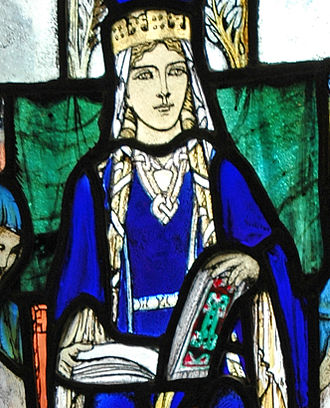
Wessex had already adjusted to a change in ruler when Æthelflæd’s father had died in 899 and had been succeeded by her younger brother, Edward ‘the Elder’. When Æthelred died, Edward was happy to support his sister as sole ruler of Mercia, but he took personal control of the cities of London and Oxford, cities that could be used as bases from which Edward would be able to launch campaigns against the Danes of the Midlands. The siblings seem to have had a trusting relationship for many years; Edward had entrusted his son Æthelstan, often viewed as the first king of England, to Æthelflæd and her husband, to be educated at the Mercian court.

The first woman to rule an Anglo-Saxon kingdom  – albeit as a client of her brother’s more powerful kingdom of Wessex, Æthelflæd was accorded the title the Lady of the Mercians. She proved to be a vital ally to her brother and the siblings worked together to combat the threats of the Danes. In 909, according to the Anglo-Saxon Chronicle, Edward sent an army, made up of West Saxons and Mercians, into Danish territory in the north. It was probably this army that brought back to Mercia the relics of St Oswald, the 7th century Northumbrian saint. They had been taken from Bardney in Lincolnshire and Æthelflæd had them translated to the new minster at Gloucester, which was renamed St Oswald in his honour.

Æthelflæd continued the policy, started by her father, of building burhs and established a ring of fortified centres around western Mercia. The burhs not only provided protection against the Danes, but served as bases from which to launch attacks on Danish occupied regions. Each burh could provide a refuge for all villagers within a 20-mile radius; it would have a large garrison, depot and its own water supply. During Æthelred’s lifetime, burhs had been established at ‘Bremesburh’, Worcester (between 887 and 899) and Chester (907). Later, on Æthelflæd’s orders, in 913, fortresses were built at several further sites, including Bridgnorth, Tamworth and Stafford, in response to Viking raids into Edward’s territories.

Edward built two further burhs at Buckingham in 914, plugging a defensive gap between Tamworth and Hertford. At the same time, Æthelflæd built one at Warwick and another at Eddisbury; this latter, with a new burh at Runcorn in 915, helped to strengthen her northern defences. While the Danes appeared to be the greatest risk, Æthelflæd did not neglect her defences along the Welsh border, building a burh at Chirbury and one at the now-lost location of ‘Wearburh’. In the same year, Edward fortified Bedford and in 916 he built a burh at Maldon to fortify Essex against seaborne raiding. While this building programme was going on, it also seems highly likely that Æthelflæd rebuilt and strengthened the defences of Gloucester and Hereford.

Books by Sharon Bennett Connolly
Statue of Æthelflæd and her nephew, Athelstan, Tamworth

Æthelflæd was no silent partner in Edward’s reconquest of England. Most remarkably, she personally led successful military campaigns against the Welsh, the Norse and the Danes of York. The Anglo-Saxon Chronicle relates that on the feast of St Cyriac the Martyr, 16 June 916, the abbot Egbert and his retainers, were murdered for no known reason. The Mercian abbot had been travelling in the Welsh mountain kingdom of Brycheiniog when he was attacked. Æthelflæd seems to have taken the murder as a personal affront; the abbot was, after all, under her protection. Three days later she invaded Wales; her army ravaged Brycheiniog, burning the little kingdom. Although King Tewdr escaped, Æthelflæd took his wife, Queen Angharad, as a hostage, with 33 others, many of whom were relatives of the Welsh king. Eventually, the king submitted to Æthelflæd, promising to serve her faithfully and to pay compensation. The incident not only demonstrates Æthelflæd’s commitment to her people, but also shows her strength and determination, attributes she was to put to good use against the Danes.

In 917 Æthelflæd turned her attention to those Danes. Danish forces had taken the offensive, raiding English territories. By the end of the year Edward had subdued East Anglia, with all the Scandinavian armies of the region submitting to him. While her brother was raiding in  the East Midlands, Æthelflæd led her forces across the West Midlands. She marched on the Viking stronghold of Derby, personally leading the army on campaign. It would be the first of the Danes’ ‘Five Boroughs’, which made up the Danelaw, to fall. Although she managed to successfully storm the fort, her army suffered heavy casualties, including four of her most trusted and senior thegns (thegns were the army’s commanders and officers). The Anglo-Saxon Chronicle reported; ‘With God’s help Ethelfleda, lady of Mercia, captured the fortress known as Derby with all its assets. Four of her favoured ministers were slain inside the gates’.¹

The Saxon victory was a great shock to the Danes. Their Viking myths told of an invincible woman who would appear at Ragnarok, the Norse apocalypse, and make brave warriors cower before her. Æthelflæd was relentless  – in early 918 she and her army moved on to Leicester, while Edward headed for Stamford. Leicester was the centre of a heavily settled Danish colony, and Æthelflæd ravaged the countryside around the settlement. The Danes had no choice but to surrender in the face of her indefatigable forces. However, she was magnanimous in victory, displaying mercy and charity by distributing alms as she progressed into town.

Books by Sharon Bennett Connolly
Æthelflæd in the thirteenth century Genealogical Chronicle of the English Kings

The inexorable advance of Æthelflæd’s army combined with her compassion for the defeated was to prove to be a clever strategy, demonstrating to those regions still controlled by the Danes that she was prepared to offer compromise if they would only submit to her. The Danes of York, the Viking capital, in particular, began to look at submitting to Æthelflæd as a serious option to avoid continued conflict. Their new king was Ragnall, a Viking pirate from Dublin, who had taken the throne by force; but the Danes knew that Edward and Æthelflæd would never make peace with him. In the summer of 918 the noblemen and magnates of York sent emissaries to Æthelflæd, promising that they would surrender to her.

In May, King Edward had marched his army to Stamford, building a new fort south of the river and accepting the surrender of the local Danes, who submitted to him as their new ruler. It was while he was still at Stamford that Edward received word of his sister, The Anglo-Saxon Chronicle made a cold, clinical report:

918 While he was there his sister Æthelflæd died at Tamworth two weeks before midsummer. The king took possession of Tamworth and the whole province of Mercia which she had governed.²

Æthelflæd died suddenly at Tamworth on 12 June 918. She was buried beside her husband, in the east chapel of the cathedral she had founded, St Oswald’s Minister, Gloucester. Although she did not live long enough to see the successful conclusion to the work she and her brother had carried out, her achievements cannot be lightly brushed off. Between 910 and 920 all Danish territories south of Yorkshire had been conquered. Her nephew Athelstan consolidated the kingdom that had been created by the efforts of Edward and Æthelflæd. If Æthelflæd did not live to see the extent of her success, neither did she live to see her daughter, Ælfwynn, nearly thirty and still unmarried, briefly become the nominal ruler of Mercia; only to be ‘deprived of all authority’ six months later and taken to Wessex, from where nothing more is heard of her.

Books by Sharon Bennett Connolly
St Oswald’s Priory, Gloucester, where Æthelflæd and her husband are buried

The story of Æthelflæd mainly comes from the Mercian Register, embedded largely in the B, C and D texts of the Anglo-Saxon Chronicle. She appears only rarely in the primary text, text A, which focuses on Edward and Wessex. Text A tries to minimise Æthelflæd’s significance, but could not wholly obscure her achievements. She was, after all, the daughter of Alfred the Great, the wife of the ealdorman of Mercia and a prominent woman in her own right, in an era when this was an incredible rarity. It is thought that it was Æthelflæd, the Lady of the Mercians, who inspired the 10th century poem, ‘Judith’ who is ‘white and shining’, ‘noble and courageous’. In the poem, Æthelflæd is depicted as the ‘valorous virgin’ who struck off the head of the hostile foe with her gleaming sword and ‘ascribed the glory of all that to the Lord of Hosts’. Recognising her vital role in the creation of England, the 12th century Henry of Huntingdon declared Æthelflæd ‘to have been so powerful that in praise and exaltation of her wonderful gifts, some call her not only lady, but even king’. In a poem he described her as ‘worthy of a man’s name’ and ‘more illustrious than Caesar’, apparently high praise indeed – for a woman.

In the 21st century Æthelflæd’s story is becoming more widely known than it has ever been. She is one of the major influences of my book, Heroines of the Medieval World and appears, appropriately, in the chapter on Warrior Heroines. Joanna Arman’s non-fiction book The Warrior Queen: the Life and Legend of Æthelflæd, Daughter of Alfred the Great is well worth a perusalIn addition, with her appearance in Bernard Cornwell’s wonderful The Last Kingdom books and television series, and Annie Whitehead’s non-fiction book, Mercia: the rise and Fall of a Kingdom, as well as her novel, To Be A Queen, Æthelflæd’s story is finally being brought into the light. On the 1100th anniversary of her death, her incredible achievements were being celebrated in the heart of Mercia, in Gloucester and Tamworth. And not before time; Æthelflæd should be the inspiration for future generations of strong, influential women and stand out as an example of what can be achieved if you are determined enough.

*

Footnotes: ¹ The Anglo-Saxon Chronicles by Michael Swanton; ² ibid.

Pictures courtesy of Wikipedia

Further Reading: The Anglo-Saxon Chronicles by Michael Swanton; The Anglo-Saxon Chronicle by James Ingram; Chronicles of the Kings of England, From the Earliest Period to the Reign of King Stephen, c. 1090–1143 by William of Malmesbury; The Chronicle of Henry of Huntingdon by Thomas Forester; Alfred the Great by David Sturdy; Brewer’s British Royalty by David Williamson;  History Today Companion to British History Edited by Juliet Gardiner & Neil Wenborn; The mammoth Book of British kings & Queen by Mike Ashley; Britain’s Royal Families, the Complete Genealogy by Alison Weir; The Wordsworth Dictionary of British History by JP Kenyon; The Anglo-Saxons in 100 Facts by Martin Wall; Kings, Queens, Bones and Bastards by David Hilliam; The Oxford Companion to British History Edited by John Cannon; oxforddnb.com.

*

My Books

Signed, dedicated copies of all my books are available through my online bookshop.

Out now: Scotland’s Medieval Queens

Books by Sharon Bennett Connolly

Scotland’s history is dramatic, violent and bloody. Being England’s northern neighbour has never been easy. Scotland’s queens have had to deal with war, murder, imprisonment, political rivalries and open betrayal. They have loved and lost, raised kings and queens, ruled and died for Scotland. From St Margaret, who became one of the patron saints of Scotland, to Elizabeth de Burgh and the dramatic story of the Scottish Wars of Independence, to the love story and tragedy of Joan Beaufort, to Margaret of Denmark and the dawn of the Renaissance, Scotland’s Medieval Queens have seen it all. This is the story of Scotland through their eyes.

Scotland’s Medieval Queens gives a thorough grounding in the history of the women who ruled Scotland at the side of its kings, often in the shadows, but just as interesting in their lives beyond the spotlight. It’s not a subject that has been widely covered, and Sharon is a pioneer in bringing that information into accessible history.’ Elizabeth Chadwick (New York Times bestselling author)

Available now from Amazon and Pen and Sword Books

Also by Sharon Bennett Connolly:

Books by Sharon Bennett Connolly

Heroines of the Tudor World tells the stories of the most remarkable women from European history in the time of the Tudor dynasty, 1485-1603. These are the women who ruled, the women who founded dynasties, the women who fought for religious freedom, their families and love. Heroines of the Tudor World is now available from Amberley Publishing and Amazon UK. Women of the Anarchy demonstrates how Empress Matilda and Matilda of Boulogne, unable to wield a sword themselves, were prime movers in this time of conflict and lawlessness. It shows how their strengths, weaknesses, and personal ambitions swung the fortunes of war one way – and then the other. Available from Bookshop.orgAmberley Publishing and Amazon UKKing John’s Right-Hand Lady: The Story of Nicholaa de la Haye is the story of a truly remarkable lady, the hereditary constable of Lincoln Castle and the first woman in England to be appointed sheriff in her own right. Available from all good bookshops Pen & Sword Booksbookshop.org and Amazon

Books by Sharon Bennett Connolly

Defenders of the Norman Crown: The Rise and Fall of the Warenne Earls of Surrey tells the fascinating story of the Warenne dynasty, from its origins in Normandy, through the Conquest, Magna Carta, the wars and marriages that led to its ultimate demise in the reign of Edward III. Available from Pen & Sword BooksAmazon in the UK and US, and Bookshop.orgLadies of Magna Carta: Women of Influence in Thirteenth Century England looks into the relationships of the various noble families of the 13th century, and how they were affected by the Barons’ Wars, Magna Carta and its aftermath; the bonds that were formed and those that were broken. It is now available in paperback and hardback from Pen & SwordAmazon, and Bookshop.orgHeroines of the Medieval World tells the stories of some of the most remarkable women from Medieval history, from Eleanor of Aquitaine to Julian of Norwich. Available now from Amberley Publishing and Amazon, and Bookshop.orgSilk and the Sword: The Women of the Norman Conquest traces the fortunes of the women who had a significant role to play in the momentous events of 1066. Available now from Amazon,  Amberley Publishing, and Bookshop.org.

Alternate Endings: An anthology of historical fiction short stories including Long Live the King… which is my take what might have happened had King John not died in October 1216. Available in paperback and kindle from Amazon.

Podcast:

A Slice of Medieval

Have a listen to the A Slice of Medieval podcast, which I co-host with Historical fiction novelist Derek Birks. Derek and I welcome guests, such as Bernard Cornwell and discuss a wide range of topics in medieval history, from significant events to the personalities involved.

Every episode is also now available on YouTube.

*

Don’t forget! Signed and dedicated copies of all my books are available through my online bookshop.

For forthcoming online and in-person talks, please check out my Events Page.

You can be the first to read new articles by clicking the ‘Follow’ button, liking our Facebook page or joining me on TwitterThreadsBluesky and Instagram.

*

©2018 Sharon Bennett Connolly FRHistS