In the heart of Sherwood Forest lies the picturesque, yet unassuming, village of King’s Clipstone. Between the twelfth and fifteenth centuries one of the very largest royal palaces ever to have graced the Mediaeval landscape stood there.
The palace was visited by eight kings who held parliament, Christmas feasts and tournaments; were visited by the king of Scotland, a papal envoy and traitorous barons; built a fortification, great hall and a stable for two hundred horses; went hunting, drank wine and conceived a prince; listened to storytellers, poets and singers.
This is the history of one of the great lost buildings of Britain and of the individuals that built, worked and lived there. Above all this is story of the people whose lives have been shaped for centuries by an extraordinary structure standing in a remarkable landscape.
A Palace For Our Kings: The history and archaeology of a Mediaeval royal palace in the heart of Sherwood Forest by archaeologist James Wright is a wonderful study of a little known piece of English history. It tells the story of a palace located in the heart of Sherwood Forest. James Wright is an archaeologist who has been involved with King’s Clipstone for many years and his love and enthusiasm for the project shine through on every page of this marvellous book.
The King’s Houses at Clipstone in Nottinghamshire has an incredibly unique and fascinating story to tell. The book traces the history of the village of King’s Clipstone – and it’s palace – from Roman times to the 21st century. It tells not only the archaeological story, but also the life and history of the palace and its people.
James Wright has used the medieval chronicles to explain and support his archaeological discoveries and theories. They also serve to illustrate the varying uses of the palace throughout the years, and demonstrate how national and international events influenced the history of the King’s Houses. The chronicles are drawn on to explain building practices and alterations;
The king’s chamber was whitewashed, quite a job as the space was big enough to warrant two chimneys with a window between them. This window was subsequently blocked up and the remaining windows in Henry’s chamber were installed with protective iron bars, a legacy of the attempt on his life at Woodstock thirteen years previously.
The palace’s story is amply illustrated with the help of photographic evidence, floor plans and maps throughout this highly detailed and fascinating study. The author has also drawn from the memoirs and accounts of antiquarians throughout the generations in order to tell the comprehensive story of the King’s Houses st Clipstone The book contains so much detail that it is impossible not to find something of interest. I have lived half an hour from Sherwood Forest for most of my life, but this book has given me a whole new perspective on the Forest and the people who lived within and around it; giving the Forest and its palace a whole new significance – to me and to history in particular.
The King’s Houses, Clipstone
James Wright has managed to write an archaeological study which is riveting to the historian or general reader alike. He explains everything clearly, with the minimum of technical language. The archaeological discoveries are discussed in the context of architectural, royal and social history, explaining how the palace developed over the years, as royal requirements and – even – the appearance of royal dignity changed through the centuries.
Pottery was often preferred for serving up victuals as, unlike silver or pewter, it did not taint the taste of food; although in the later Mediaeval period communal serving platters were used less as private dining became preferable. In this was food and dining became yet another method of social exclusion through the refinement of the palate.
A Palace For Our Kings: The history and archaeology of a Mediaeval royal palace in the heart of Sherwood Forest also places Clipstone and the King’s Houses in a regional context; discussing its purpose as a hunting lodge, as a stopover point between London and the North, and as a royal residence. The influences of the larger region – such as York, Nottingham and Lincoln – are considered, not only on the people but also the architecture of the palace.
The author draws on more famous locations, such as Clarendon and Woodstock, to explain and compare the development of king’s Clipstone and the demonstrate how improvements to other royal residences influenced the development of the King’s Houses through the centuries.
The Major Oak, Sherwood Forest
Moreover, the book provides a fascinating insight into how the palace affected the lives of the common people in the area. From the scales of justice to the enclosure of local pastureland; the palace was intrinsically intertwined with the lives of the local populace. The book highlights how the actions of the kings who used the palace played a part not only in the livelihoods of the local community but also in their standard of living and, indeed, life itself.
From the stories of kings, through witchcraft, war and religion to the individual lives of the families who lived and worked there, this book tells the remarkable history of the palace and its people; and of its rediscovery and significance to the history of England. This book is a marvel to read; it is a fabulous story of how 1,500 years of history have affected one small area of England – and how that little village played its part in English history.
I cannot recommend it highly enough, it is written in a wonderful, conversational manner which makes it accessible to all, and tells a truly fascinating story which made it a pleasure, and a privilege, to read.
A Palace For Our Kings: The history and archaeology of a Mediaeval royal palace in the heart of Sherwood Forest by James Wright is out now as a limited edition paperback and e-book via Triskele Publishing. More information on the book and the King’s Houses at Clipstone can be found on social media: Facebook and Twitter.
My book, Heroines of the Medieval World, is now available in hardback in the UK from both Amberley Publishing and Amazon UK and worldwide from Book Depository. It is also available on Kindle in both the UK and USA and will be available in Hardback from Amazon US from 1 May 2018.
Be the first to read new articles by clicking the ‘Follow’ button, liking our Facebook page or joining me on Twitter.
We have a special treat at History the Interesting Bits today and it is a privilege to welcome archaeologist James Wright to the blog.
I have been watching the progress in recent years, of the excavators of the royal palace at King’s Christine Clipstone, through Jane’s Wright’s Facebook page, History & Archaeology of Kings Clipstone. James is also the author of A Palace For Our Kings, a fabulous book which traces the history and archaeology of the Kings Houses of Clipstone in Nottinghamshire; a royal palace, since the time of Henry II, in the heart of Sherwood Forest. James talks to me about the book, the palace, his career and archaeology.
How did you get interested in archaeology?
I was very young. Maybe five or six. I saw a film set during the Second World War and couldn’t believe that something so exciting was based on reality. I talked to both of my grandfathers about their experiences. I was instantly hooked on history and used to visit my local library and took out all of their history books – and not just the ones written for kids either! Later my parents started taking me to visit castles and monasteries and great houses. At high school and college I had a really good history teacher called Nick Shorthouse who really guided my interest. Archaeology became my inevitable career choice as I translated from hobby to study to profession.
A Palace For Our Kings by James Wright
Do you get to spend a lot of time doing practical archaeology, or is most of it study-based?
I am a buildings archaeologist and historic stone specialist at the Museum of London Archaeology. A good portion of my time is spent in the field recording historic buildings. I still occasionally get involved in excavations, the last one being a small trench at the Tower of London which I dug last year. In truth I consider all research to be practical archaeology. I studied under Philip Dixon at the University of Nottingham. He taught us to “always use all of the tools in the toolkit.” I see documentary research, historiography and contextual history to be every bit as important in the study of archaeology as fieldwalking, geophysics, topographical survey and excavation. It’s all evidence!
What do you love best about being an archaeologist?
The exciting opportunity to unravel the hidden stories of real people – often for the first time in history.
What don’t you like about being an archaeologist?
Jealous and greedy backstabbers.
What is your greatest archaeological find?
When I was a field archaeologist I was lucky enough to excavate an intact Early Neolithic cup in the Trent Valley that was perhaps 6,000 years old. The most significant discovery that I have made in a building was a dense distribution of ritual protection marks carved by carpenters at the great house at Knole, Kent, in reaction to the ongoing political propaganda in the aftermath of the Gunpowder Plot. You can read all about it in Maev Kennedy’s article published in The Guardian.
What is the nature of your research at Clipstone?
I’ve been researching the Mediaeval royal palace at Kings Clipstone– known at the King’s Houses – in the heart of Sherwood Forest since 2004. The site was used by eight Plantagenet monarchs from Henry II to Richard II. They built one of the very largest residences in Mediaeval England that stretched across approximately 7.5 acres and had an enormous deer park lying to the west. Much of the research work has been conducted ad hoc and, in many cases, has been carried out in conjunction with other organisations or researchers. In many respects I’m following up the work of antiquarians, historians, archaeologists and the local community who have been looking at the site since the late seventeenth century!
How did you become involved in the project?
I first visited Clipstone during the opening stages of a project looking at castles in the county of Nottinghamshire. The King’s Houses was never a fortified residence so I was not able to bring the site into the scope of that project. However the passion and enthusiasm of the landowners – Martin and Mickie Bradley – was infectious. The last surviving building (once just one of a very great number) that stands in splendid isolation on its hilltop in Sherwood Forest is known as King John’s Palace. It is a very dramatic structure but, by 2004, it was in a very critical state of disrepair. It had been standing for almost 850 years by that point. I became deeply involved with a campaign to conserve the building. English Heritage (now Historic England) stumped up £100,000 to save this nationally significant grade II listed building and scheduled ancient monument in 2009. Paul Mendham Stonemasons undertook the work. It was a great relief, however my determination to better understand the archaeology and history of the site was only just beginning….
Many of England’s kings have stayed at Clipstone, from Henry II onwards, was it always for hunting in Sherwood Forest?
Hunting played a very important part in the decisions of eight Plantagenet monarchs to visit Clipstone. If we look at the reign of Edward II who visited the site on broadly seven occasions, five of those stays directly related to the hunting seasons of particular species of deer. Excavation has yielded the bones of roe, fallow and red deer which were all consumed at the palace. The deer park, surrounded by its timber pale fence, was around seven miles in circumference and enclosed approximately 1500 acres. Hunting was an important status activity for the kings and acted as a mechanism for social bonding and training in martial skills as well as food provision.
However the palace at Clipstone also acted as a backdrop for important state occasions. It was a location for the governance of the kingdom, a place where jousts were held, somewhere to host weddings, an estate that provided food for the royal household. Inside the buildings the visitors would be accommodated in chambers and would feast in the great hall whilst being entertained by musicians, storytellers and poets. Edward II and Isabella of France conceived their son John of Eltham at the palace. These were architecturally very diverse places and were conceptually and physically used in many ways.
The Kings Houses, Clipstone
Clipstone is a long way from London, surely its historical significance is limited?
The palace is approximately 150 miles from London. However, when the site was first built in the mid-twelfth century, London was not the dominant centre of government that it became in the later Mediaeval period. Kings moved constantly around the country dispensing justice, visiting allies, conducting war, hunts and tournaments or engaging in ritual and religion. Many of their residences were located in the royal forests to take advantage of the remote game reserves which were used in a manner akin to the modern high status hotel with attached golf course – the palace and deer park were as much for business as pleasure. We can see this through Richard I’s meeting at Clipstone with the king of Scotland in 1194 or Edward I’s decision to hold parliament there in 1290.
What was your most exciting discovery at Clipstone?
The discovery of a very large part of the palace gatehouse and adjacent boundary wall that still survives up to first floor height within the later buildings of three post-Mediaeval cottages in the village. The archaeological impact of that find was spectacular enough, but pinning down the gatehouse also enabled me to understand how the rest of the palace was laid out as it proved to be pivotal in interpreting a fourteenth century documentary description of the palace buildings. Once I knew where the gatehouse was, I was able to work out its relationship to various chamber blocks, the stables, the three kitchens, the royal apartments, the great chamber and great hall. This was all done with the help of my friend and colleague Richard Reeves who translated the documents, held at the National Archives, from the Mediaeval Latin and Middle English.
Your book highlights how the King’s Houses played their part in English medieval history, did it surprise you to find out how popular it was with medieval monarchs?
I wanted to look at the deeper questions that others had not previously asked. It was known that Henry II spent a lot of money developing the palace in 1176-80. I wanted to know why he chose Clipstone and discovered that it was originally conceived by Henry as a physical statement of the power of his absolute monarchy in the aftermath of a civil war. Then I started interrogating further data and realised that Henry III ordered bars to be added to the windows in the royal apartments as added security after an assassination attempt; that Edward I ordered the construction of a massive stable for two hundred horses during a period where he was moving tens of thousands of troops into the Welsh wars; that Edward III held a morale-boosting tournament there after a setback in the wars in Scotland; or that Richard II visited in 1387 to relax after a particularly tough period of infighting with his own royal council. The more I read and researched, the more I realised that this was one of the most important and significant royal residences between the mid-twelfth and mid-fifteenth centuries. The stories that I have uncovered have demonstrated that almost the entire history of England can be told through the focused lens of this one site as a result of the importance placed on it by the kings.
Most archaeological projects don’t seem to get their own books. What made you decide to write the book?
All archaeological fieldwork must be written up and disseminated. It’s an absolute basic requirement. There is simply no point in doing archaeology if you do not tell people what you have done. Whether that be a complete grey literature site report or a published book, it is fundamentally important to release the information. I chose to write this book because after working at Clipstone for over twelve years I have decided to put into print everything that I have learned about this enormously important site. Essentially the book is my swan song and will leave a solid legacy of my work in the public domain.
Thank you James, I think its fabulous that your research has been made available to the wider public with this book.
Did you enjoy the writing process?
Very much so – the proof of that is that I spent eleven hours working on the book on Christmas Day 2015! What I found most compelling was that stories kept finding themselves. There is a constant theme running through the book which looks at how the ordinary people of Kings Clipstone reacted to, dealt with and coped with the presence of the royal palace, the forest laws and a continuing tension between their common rights and the will of the monarchs. It wasn’t always a harmonious relationship and there were definite flashpoints. The book is dedicated to a fourteenth century common rights activist called Robert de Clipstone who fought for his community against both Edward II and Edward III and eventually won his case!
Is there more to find out about the King’s Houses?
Of course! My book simply records everything that I have personally learned over the last twelve years, set alongside the work of previous researchers, and against the wider context of historical events. I hope that the ongoing excavations by Mercian Archaeological Services at the palace site will eventually yield fully developed archaeological reports in the very near future. In the meantime the focus of research is starting to shift towards a site three miles across the deer park as Forest Town Nature Conservation Group and MB Archaeology look at aspects of a fortification and agricultural community known as Clipstone Peel which was established in the early fourteenth century by Edward II. My part in the story of Clipstone is over, but there are new people asking new questions and I wish them very well!
What is your next project?
Currently I am in the process of writing up another major phase of building survey for the National Trust at Knole. I’m also working on the finishing touches of a report for the Museum of London about the very mysterious London Stone which was made famous by Shakespeare when he depicted the rebel Jack Cade touching his sword on it and claiming the city in 1450.
A Palace For Our Kings is out now as a limited edition paperback and e-book via Triskele Publishing. More information on the book and Kings Clipstone project can be found on social media: Facebook and Twitter.
A huge ‘thank you’ to James Wright for taking the time to answer my many questions, it has been an absolute pleasure.
Look out for my review of James’ bookA Palace For Our Kings tomorrow!
My book, Heroines of the Medieval World, is now available in hardback in the UK from both Amberley Publishing and Amazon UK and worldwide from Book Depository. It is also available on Kindle in both the UK and USA and will be available in Hardback from Amazon US from 1 May 2018.
Be the first to read new articles by clicking the ‘Follow’ button, liking our Facebook page or joining me on Twitter.
Coat of arms of Katherine’s father, Sir Richard Wydeville, Earl Rivers, KG
Katherine Wydville (or Woodville) was born into relative obscurity. Her father was Sir Richard Wydville, a Lancastrian Knight who had made a shocking and advantageous marriage with Jacquetta of Luxembourg, widow of the king’s uncle John, Duke of Bedford. Born around 1458, Katherine was probably the youngest of the couple’s 14 or 15 children. Her eldest sister, Elizabeth, was already married to Sir John Grey and had 2 sons by him.
Little to nothing is known Katherine’s childhood. She did have at least one playmate; her sister, Mary, was just 2 years older than her and it is likely they were raised and educated together.
Katherine may have spent her whole life in obscurity were not for her sister Elizabeth and the fortunes of the Wars of the Roses. In 1461 Elizabeth’s husband was killed in the 2nd Battle of St Albans, fighting for the House of Lancaster. And in 1464 she made the match of the century – and a number of enemies – by her clandestine marriage to England’s handsome, young, Yorkist king, Edward IV.
Suddenly, little 6-year-old Katherine was the sister of the queen – and her marriage prospects had improved considerably. As the daughter of a baron she would have been looking to marry a local knight; as the sister of the queen, her family could now set their sights much higher.
There is considerable debate as to why Edward IV raised the Wydvilles so high. Some historians argue that the king was acting as a good husband and brother-in-law in advancing his wife’s family to the highest positions, arguing that convention required him to make provision for his wife’s siblings. An alternative theory is that Edward was creating a new nobility, binding the great aristocratic houses to his dynasty by marrying them into his extended family, thus creating an alternative power base to rival that of the Nevilles. According to David Baldwin, “Edward could not allow the lowly position of his wife’s relatives to diminish his own status, and, as a usurper, would have seized every opportunity to forge links with the great noble families.”¹
Henry Stafford, 2nd Duke of Buckingham
Whatever the reason, the end result was a series of marriages of the Wydville siblings into the great noble houses of the realm. Of Elizabeth’s sisters Margaret became Countess of Arundel, Anne became Countess of Kent, Jacquetta married Lord Strange of Knokyn and Mary married the Earl of Huntingdon. The most shocking marriage arrangement was that of Elizabeth’s brother, 19-year-old John, to the Dowager Duchess of Norfolk, 65-year-old Katherine Neville.
Young Katherine Wydville’s marriage was to be one of the most exalted; even before Queen Elizabeth’s coronation in 1465, 6-year-old Katherine was married to Henry Stafford, the 11-year-old Duke of Buckingham. David Baldwin describes the scene at Elizabeth’s coronation:
The peers included young Henry Stafford, Duke of Buckingham ‘born a pon a squyer [squire] shouldr’, and among the ladies was his new wife, Catherine Woodville, likewise carried…¹
The event must have been awe-inspiring for the children; the sumptuous costumes, the roar of the crowds. The Queen was attended by 13 duchesses and countesses dressed in red velvet, 14 baronesses in scarlet and miniver, and the ladies of 12 knights bannerets wearing scarlet.¹ One can only imagine the effect such an auspicious day could have on 2 young children who were right in the middle of the celebrations.
Katherine’s new husband, Henry Stafford, had been Duke of Buckingham since the age of 4; his father, Humphrey Stafford, had been wounded at the 1st Battle of St Albans and died of natural causes in 1458 and his grandfather, Sir Humphrey Stafford, 1st Duke of Buckingham, was killed at the Battle of Northampton in 1460; both were loyal supporters Henry VI and the House of Lancaster. This left 5-year-old Henry as Duke and in the care of his grandmother Anne Neville (sister of Cecily, the new king’s mother).
Coat of arms of Sir Edward Stafford, 3rd Duke of Buckingham
Following Edward IV’s marriage to Elizabeth Wydville in 1464, Henry and his younger brother were given into the custody of the new queen, who was granted 500 marks out of the young duke’s Welsh lands – soon increased by a further £100 – for the maintenance of the 2 boys. John Giles, who later be employed as tutor to Edward IV’s sons, taught grammar to ‘the queen’s beloved brothers’ during 1465-7.²
The Stafford boys remained in the queen’s custody, along with the duke’s little wife, Katherine, until the Readeption of Henry VI in 1470-71 when the duke was again returned to the custody of his grandmother and her new husband, Walter Blount, Lord Mountjoy. His younger brother, Humphrey, had disappeared from the records by this point, probably having succumbed to a childhood illness.
By June 1473, still only 17, Buckingham was granted his livery as a duke and his grandfather’s estates. Although Edward IV had returned to the throne, he appears to have had no great love for Duke Henry and he was rarely at court; staying mainly on his estates with his wife and family.
Edward Stafford, 3rd Duke of Buckingham
According to Domenico Mancini, writing in 1483, Buckingham resented his marriage due to his wife’s ‘humble origin’ and his wife certainly brought no marriage portion with her and has often been described as a ‘parvenu’ by historians.² However, the couple did have 5 children together, 4 of whom survived childhood.
Edward Stafford, the future 3rd Duke of Buckingham, was born in 1478. He would go on to marry Eleanor (d. 1530), the daughter of Henry Percy, 4th Earl of Northumberland, before his execution in 1521, during the reign of Henry VIII.
A 2nd son, Henry, Earl of Wiltshire, was born around 1479 and died in 1523. He married twice, firstly to Muriel or Margaret, daughter of Edward Grey, Viscount de Lisle and secondly to Cecilia, daughter of William Bonville, Baron Harrington.
A 3rd son, Humphrey, died young, but was followed by 2 daughters. Anne married Sir Walter Herbert who died in 1507. She then married George Hastings, Earl of Huntingdon. Katherine and Henry’s youngest daughter, Elizabeth, married Robert Radcliffe, Earl of Sussex, by whom she had 3 sons.
Anne Stafford, Countess of Huntingdon
With Edward IV’s death in 1483, Buckingham played a leading role in the turmoil which saw Edward’s 2 sons by Elizabeth Wydville declared illegitimate, and saw the late king’s brother, Richard of Gloucester claim the throne as Richard III. For a time, Buckingham was Richard’s staunchest ally and played a major role in Richard’s coronation – an event his wife Katherine, as one of the now-despised Wydvilles, did not attend.
However, by October 1483, and for still-unknown reasons, Buckingham mounted a coup against Richard, entering an alliance with Henry Tudor – in exile in Brittany – he attempted to raise Lancastrian support in the Welsh Marches. Katherine accompanied her husband from Brecon to Weobley, leaving her daughters at Brecon. Thwarted by the weather, the coup failed and Buckingham attempted to flee.
The Duke was arrested and executed at Salisbury on 2nd November 1483. The duchess and her youngest son, Henry, were captured and taken to London. Her eldest son, Edward, was also in the king’s custody. In December 1483, Katherine was allowed to have her servants and daughters brought to London from Wales. However, having been deprived of her dower and jointure, her financial position was precarious, until Richard III granted her an annuity of 200 marks.
Arms of Jasper Tudor, Duke of Bedford
Katherine’s situation was changed again following Henry VII’s defeat of Richard III at Bosworth. Katherine was married to Jasper Tudor, the new king’s uncle and newly created Duke of Bedford, before 7th November 1485. The new regime reversed Buckingham’s attainder, awarding Katherine not only her dower rights, but also a jointure of 1000 marks, as specified in Buckingham’s will.
This took her total revenue from the Buckingham estates to £2500 and therefore bolstered her new husband’s position as the representative of the king in Wales. Jasper had practically raised the new king single-handedly, sharing his exile in Brittany following the defeat of the Lancastrian cause at Tewkesbury in 1471. Katherine, a dukedom and becoming the king’s right-hand man in Wales; this was his reward.
As with most medieval marriages, we cannot know if there was any affection in Katherine’s relationships with either of her 1st 2 husbands; both marriages were made for political reasons. During her 2nd marriage, Katherine resided mainly at Thornbury in Gloucestershire, she and Jasper Tudor had no children together and her estates were kept under a separate administration to Tudor’s own lands.
Jasper Tudor died at Christmas, around the 21st December, 1491. Poor Katherine only gets a passing mention in his will; “I will that my Lady my wife and all other persons have such dues as shall be thought to them appertaining by right law and conscience.”³
Thornbury Castle today
I can’t help hoping that Katherine found some affection and comfort in her 3rd and final marriage. By 24th February 1496 Katherine had married Richard Wingfield, a man 12 years her junior. They married without royal licence, the fine for which remained unpaid at Katherine’s death. Wingfield was probably in the duchess’s service before the marriage, as his 2 brothers, John and Edmund appear to have been. When he married Katherine he was a younger son in a rather large family, with few prospects as a consequence. However, he would go on to have a distinguished diplomatic career under Henry VIII, dying at Toledo in 1525.
Katherine herself died on 18th May 1497. The unpaid fine, imposed following her marriage to Wingfield, became a charge on her eldest son, Edward, the 3rd Duke of Buckingham. Her 3rd husband, however, did not forget her; despite remarrying, his will, drawn up in 1525, requested masses be said for the repose of Katherine’s soul.
*
Footnotes: ¹David Baldwin in Elizabeth Woodville; ²C.S.L. Davies in Oxforddnb.com; ³The Woodvilles by Susan Higginbotham.
*
Pictures taken from Wikipedia.
*
Sources: The Woodvilles by Susan Higginbotham; Elizabeth Woodville by David Baldwin; Brewer’s British Royalty by David Williamson; History Today Companion to British History Edited by Juliet Gardiner and Neil Wenborn; Britain’s Royal Families, the Complete Genealogy by Alison Weir; Edward IV and Elizabeth Woodville, A True Romance by Amy Licence; The Wars of the Roses by John Gillingham; The Oxford Companion to British History Edited by John Cannon; The Mammoth Book of British kings & Queens by Mike Ashley; Oxforddnb.com.
*
My Books
Signed, dedicated copies of all my books are available through my online store.
Out now: Scotland’s Medieval Queens
Scotland’s history is dramatic, violent and bloody. Being England’s northern neighbour has never been easy. Scotland’s queens have had to deal with war, murder, imprisonment, political rivalries and open betrayal. They have loved and lost, raised kings and queens, ruled and died for Scotland. From St Margaret, who became one of the patron saints of Scotland, to Elizabeth de Burgh and the dramatic story of the Scottish Wars of Independence, to the love story and tragedy of Joan Beaufort, to Margaret of Denmark and the dawn of the Renaissance, Scotland’s Medieval Queens have seen it all. This is the story of Scotland through their eyes.
‘Scotland’s Medieval Queens gives a thorough grounding in the history of the women who ruled Scotland at the side of its kings, often in the shadows, but just as interesting in their lives beyond the spotlight. It’s not a subject that has been widely covered, and Sharon is a pioneer in bringing that information into accessible history.’ Elizabeth Chadwick (New York Times bestselling author)
Heroines of the Tudor World tells the stories of the most remarkable women from European history in the time of the Tudor dynasty, 1485-1603. These are the women who ruled, the women who founded dynasties, the women who fought for religious freedom, their families and love. Heroines of the Tudor World is now available from Amberley Publishing and Amazon UK.Women of the Anarchy demonstrates how Empress Matilda and Matilda of Boulogne, unable to wield a sword themselves, were prime movers in this time of conflict and lawlessness. It shows how their strengths, weaknesses, and personal ambitions swung the fortunes of war one way – and then the other. Available from Bookshop.org, Amberley Publishing and Amazon UK. King John’s Right-Hand Lady: The Story of Nicholaa de la Haye is the story of a truly remarkable lady, the hereditary constable of Lincoln Castle and the first woman in England to be appointed sheriff in her own right. Available from all good bookshops Pen & Sword Books, bookshop.org and Amazon.
Alternate Endings: An anthology of historical fiction short stories including Long Live the King… which is my take what might have happened had King John not died in October 1216. Available in paperback and kindle from Amazon.
Podcast:
Have a listen theA Slice of Medieval podcast, which I co-host with Historical fiction novelist Derek Birks. Derek and I welcome guests, such as Bernard Cornwell and discuss a wide range of topics in medieval history, from significant events to the personalities involved. In episode #43, Derek and I chat with Carol about Berengaria of Navarre and The Lost Queen.
Having recently written about William Montagu, 2nd Earl of Salisbury and husband of Joan of Kent, I thought it only fair to write an article on William’s love rival, Thomas Holland.
The second son of Robert Holland, Lord Holland of Upholland, Lancashire, Thomas was born around 1315 and grew up to be quite a renowned soldier. His mother was Maud, daughter and co-heiress of Alan Zouche, Lord Zouche of Ashby. Thomas grew up with 3 brothers and 3 sisters. His older brother, Robert, succeeded to the Holland estates and resided at Thorpe Waterville in Northamptonshire. Thomas’s 2 younger brothers, Alan and Otto, followed their brother into military service, and are often noted as having accompanied him on campaign.
The number of sisters seems to be confused; some sources put it at 5, while others mention only 3. Of the 3 known sisters the eldest, Isabella, became the mistress of John de Warenne, 7th Earl of Surrey who had married to Edward II’s cousin, Joan of Bar. Another sister, Margaret, died in 1349 and had been married to John de la Warr, while the last, Matilda or Maud, had been the wife of John (II) Mowbray, Lord Mowbray.
Thomas Holland’s father had been a chief supporter of Thomas, Earl of Lancaster, who had attempted to curb the malevolent influence of Hugh le Despenser the Younger on King Edward II and, by extension, the country. Holland, however, turned his coat at the last-minute and joined the king’s faction just months before Lancaster was defeated at the Battle of Boroughbridge in 1322.
Coat of arms of Sir Thomas Holland, Knight of the Garter
Lancaster was executed but Robert Holland did not get the reward he was probably expecting; he was imprisoned, with his lands confiscated. It was only in 1327, after Edward II’s deposition and the accession of Edward III, that Holland’s lands were restored. However, in October 1328 Robert Holland was murdered in Borehamwood, Hertfordshire, probably by supporters of the new Earl of Lancaster, Thomas’s brother Henry.
A landless young knight, and the son of a disgraced lord, Thomas Holland had very little going for him when he started his soldiering career, probably in Scotland in the early 1330s. However, as the 1330s progressed he was making a reputation as an able soldier. In 1337 he was fighting in Bordeaux with Robert d’Artois, but by 1338 he was a knight of the royal household; serving in Flanders the following year and at Sluys in 1340.
In 1339 Thomas managed to pull off the marriage coup of the century – but no one was to know about it for 10 years. At the age of 24 Thomas married Joan Plantagenet, daughter of Edmund, earl of Kent, granddaughter of Edward I and cousin of King Edward III, who is reported as being as young as 11 years of age at the time. Despite her family links, at the time of the marriage Joan was no great heiress; her brother was earl of Kent and it was only his death in 1352 and the earlier death-without-heirs of her maternal uncle, Thomas Lord Wake, in 1349, that made her a wealthy woman in her own right.
Joan of Kent
Modern sensibilities will make us cringe at Joan’s tender age, but, although it was young even for the period an 11-year-old bride was not unheard of. We know, from Joan’s later testimony, that the marriage was consummated almost immediately; however, the couple did not settle down to marital bliss and Holland was soon on his travels.
In 1341, while Holland was away crusading in Prussia, Joan’s mother, Margaret Wake, arranged an advantageous marriage for her daughter to William Montagu, 2nd earl of Salisbury. Whether Margaret knew about the extent of Joan’s relationship with Holland is uncertain – maybe she believed Joan was infatuated with the landless knight and hoped that marrying her to Montagu would cure the pre-teen of this puppy love?
By February 1341 Joan and Montagu were married.
Thomas Holland, however, didn’t appear to be in a rush to return to claim his wife, though this was probably due to the fact he was in no financial position to fight a costly court case. He spent the next few years campaigning in Europe. In 1342-3 he fought in Brittany with the king and was probably in Granada with the earl of Derby by 1343. In 1345 he was back in Brittany and was at the Siege of Caen in 1346; a battle in which Joan’s other husband, Montagu, may also have taken part – awkward!
Holland played a prominent part in the Siege of Caen, capturing the Count of Eu, constable of France, who surrendered himself to Holland based on the knight’s chivalrous reputation. The count was then sold to Edward III for 80,000 florins, possibly making Holland very wealthy indeed (if he ever received the full balance owed). Thomas Holland’s eminence rose further during the 1346 Crecy campaign, seeing action at Amiens and Rouen; he was wounded at a castle on the Seine and commanded the rearguard on the march from Caen.
Otto Holland – Thomas’s brother and lieutenant
Recognition of his exploits came from the King in 1348, when Holland was made one of the Founder Knights of the Order of the Garter. His brother and lieutenant, Otto, was also awarded with the same honour – as was William Montagu, earl of Salisbury and the ‘other’ husband of the fair Joan. Montagu was also, at this time, employing Thomas Holland as his steward – I wonder if Joan had had a hand in the appointment?
Holland now found himself in a position to petition the papal court to confirm the validity of his marriage and have Joan returned to him. The inaugural Garter tournament on St George’s Day, 1349 must have caused great interest, seeing Joan’s current husband, the Earl of Salisbury, fighting on the king’s team, while Sir Thomas Holland was on the side of Prince Edward, the Black Prince (Joan’s future husband, just to make things more confusing). It is not hard to imagine the highly charged atmosphere, with Joan’s two husbands facing each other across the tournament field, with the object of their affection watching from the stands.
If you’re wondering who Joan cheered for, my guess is Thomas Holland as, when called to testify to her marriage with Holland, Joan confirmed that, not only had she married Holland but the marriage had also been consummated. After lengthy court proceedings, in which Holland had travelled to the papal court at Avignon on more than one occasion, and with Joan being under house arrest and denied access to lawyers by the Montagu family, in November 1349 the papal court finally publicised the verdict; Joan’s marriage to Montagu was declared null and void and she was ordered to return to Holland.
Despite the testimony of both Joan and Thomas Holland, there will always be a question mark over their claims to have married in 1339. The more cynical of observers may think that their relationship started much later, when Joan was already married to William Montagu, and that they employed the concept of an earlier marriage in order to free Joan from her unwanted husband and allow her to marry her lover. However, it must be remembered that Joan swore in front of a church court that she had married Thomas when she was 11, and lying to the church would bring the hefty penalty of eternal damnation. I doubt we will ever truly know the truth, but I personally lean towards the argument for the earlier marriage rather than a subsequent adulterous affair.
Holland’s fortunes were certainly on the rise, his wife restored to him, and with her brother’s death in 1352, Joan inherited estates in 16 counties, making Holland (by right of his wife) a lord of vast estates. His military career blossomed, he was given independent commands and in August 1352 was made Captain of Calais Castle; from 1354 he was summoned to parliament as Lord Holland.
Joan and Sir Thomas Holland had 5 children together; 3 sons and 2 daughters. Their first son, Thomas, Earl of Kent, was born in 1350 and married Alice, the daughter of Richard FitzAlan, 10th Earl of Arundel; he died in 1397. Edmund was born in 1352 and died young. Their third son, John, was created Duke of Exeter in 1397 by his younger half-brother, King Richard II. He married Elizabeth of Lancaster, daughter of John of Gaunt and Blanche of Lancaster, but was executed in 1400 for his involvement in a plot to assassinate Henry IV and return his brother to the throne.
Arms of Thomas Holland, 2nd Earl of Kent
Of their daughters, Joan married John V, Duke of Brittany (who would marry Joanna of Navarre as his second wife, the future queen-consort of Henry IV), but died in 1384. Their youngest child, Matilda, was born in 1359 and married twice; Sir Hugh de Courtenay, who died in 1377, and then Waleran of Luxembourg, Count of St Pol and Ligny. Matilda died in 1391.
Thomas Holland’s military prestige continued to rise throughout the 1350s, with his appointment as the King’s lieutenant in Brittany in 1353-4, receiving funding from the local revenues. Thomas also had custody of the young heir to the duchy, John V, who was later married to the Holland’s daughter, Joan.
In June 1356 Holland was appointed Keeper of the Channel Islands and tasked with the recovery of the Islands’ Castle Cornet, then in French hands; Holland’s brother, Otto, soon recaptured it for the English. In the subsequent years, Holland was placed in charge of various castles in Normandy; until October 1359 when he was appointed joint lieutenant of Normandy with Philip of Navarre.
The apotheosis of Holland’s military career came in September 1360 when he was appointed the king’s captain and lieutenant in France and Normandy. It was at this time, also, that he was finally given the title earl of Kent – to bolster his authority and prestige among friends and enemies alike, in order to aid in his task of carrying out the provisions of the Treaty of Bretigny of October 1360.
Gatehouse of the Greyfriars at Stamford, Lincolnshire
However, before this duty could be fulfilled, and at the height of his fame and prestige, Thomas Holland, earl of Kent, contracted an illness and died at Rouen on the 26th or 28th December 13601, depending on the source. He was buried in the church of the Friars Minor at Rouen, but was later moved to the Church of the Greyfriars at Stamford in Lincolnshire.
His widow, Joan, would marry Prince Edward, the Black Prince and heir of Edward III, in the following year and their son, Richard, would be crowned in 1377 as King Richard II. Holland’s children by Joan would be half-siblings to the King of England.
When Joan herself died in 1385 she chose to be buried beside her first husband in Lincolnshire, rather than with her prince in Canterbury Cathedral.
*
Footnote: 1 Stansfield, Oxforddnb.com
Pictures taken from Wikipedia.
*
Sources: The Perfect King, the Life of Edward III by Ian Mortimer; The Life and Time of Edward III by Paul Johnson; The Reign of Edward III by WM Ormrod; The Mammoth Book of British kings & Queens by Mike Ashley; Britain’s’ Royal Families, the Complete Genealogy by Alison Weir; Brewer’s British Royalty by David Williamson; The Plantagenets, the Kings Who Made Britain by Dan Jones; englishmonarchs.co.uk; The Oxford Companion to British History edited by John Cannon; Chronicles of the Age of Chivalry Edited by Elizabeth Hallam; oxforddnb.com; britannia.com; themcs.org; Oxforddnb.com.
*
My books:
Signed, dedicated copies of all my books are available through my online bookshop.
Coming 30 January 2025: Scotland’s Medieval Queens
Scotland’s history is dramatic, violent and bloody. Being England’s northern neighbour has never been easy. Scotland’s queens have had to deal with war, murder, imprisonment, political rivalries and open betrayal. They have loved and lost, raised kings and queens, ruled and died for Scotland. From St Margaret, who became one of the patron saints of Scotland, to Elizabeth de Burgh and the dramatic story of the Scottish Wars of Independence, to the love story and tragedy of Joan Beaufort, to Margaret of Denmark and the dawn of the Renaissance, Scotland’s Medieval Queens have seen it all. This is the story of Scotland through their eyes.
Heroines of the Tudor World tells the stories of the most remarkable women from European history in the time of the Tudor dynasty, 1485-1603. These are the women who ruled, the women who founded dynasties, the women who fought for religious freedom, their families and love. Heroines of the Tudor World is now available for pre-order from Amberley Publishing and Amazon UK.Women of the Anarchy demonstrates how Empress Matilda and Matilda of Boulogne, unable to wield a sword themselves, were prime movers in this time of conflict and lawlessness. It shows how their strengths, weaknesses, and personal ambitions swung the fortunes of war one way – and then the other. Available from Bookshop.org, Amberley Publishing and Amazon UK. King John’s Right-Hand Lady: The Story of Nicholaa de la Haye is the story of a truly remarkable lady, the hereditary constable of Lincoln Castle and the first woman in England to be appointed sheriff in her own right. Available from all good bookshops Pen & Sword Books, bookshop.org and Amazon.
Alternate Endings: An anthology of historical fiction short stories including Long Live the King… which is my take what might have happened had King John not died in October 1216. Available in paperback and kindle from Amazon.
Podcast:
Have a listen to theA Slice of Medieval podcast, which I co-host with Historical fiction novelist Derek Birks. Derek and I welcome guests, such as Bernard Cornwell and Ian Mortimer, and discuss a wide range of topics in medieval history, from significant events to the personalities involved.
*
Don’t forget!Signed and dedicated copies of all my books are available through my online bookshop.
For forthcoming online and in-person talks, please check out my Events Page.
The medieval era is often associated with dynastic struggles, gruesome wars and the formidable influence of the Church. But what about the everyday experience of the royal subjects and common people? Here, alongside the coronations, diplomatic dealings and key battles, can be found the fabric of medieval life as it was really lived, in its folk songs, recipes and local gossip. With a diverse range of entries – one for each day of the year – historian Toni Mount provides an almanac for lovers of all things medieval.
Toni Mount’s latest book, A Year in the Life of Medieval England, is a veritable treasury of miscellaneous snippets of medieval history. A true gem in every sense, it is one of those books that you pick up and flick through ‘just for 5 minutes’ – only to find that when you close the book again you’ve lost the last 2 hours!
Chock full of fascinating information, told in diary format, the book takes us through the year from 1st January to 31st December. Some days have just one entry – the shortest being in June;
25th – Midday Eclipse
A midday eclipse was recorded on 25th June 1191.
While other entries run to several pages, there is at least one entry for each day, and often 2 or 3. The book gives us insights into medieval court life and the great players on the national stage; offering us glimpses into their Christmas traditions, family life and political machinations. We are treated to abdications, usurpations, coronations, births and weddings; all told in a wonderfully friendly, entertaining style.
The Peasants’ Revolt
However, where this book shines is in the entries about ordinary people; drawing from wills, letters and chronicles Toni Mount builds up a picture of daily life, of the trials and labours of the man – or woman – next door. We see how the influences of Church and King dictated their lives; how the extremes of weather could lead to feast or famine and how neighbours looked out for each other.
May
10th – A Village dispute
On this day, at Woodbridge in Suffolk, a dispute arose between William the Piper, aged twenty-four years and more, and John Scanlon of the same [place], and they struck each other with their fists … John Bray, chaplain, and others took John Scanlon by the neck … He resisted and William struck John Scanlon while he was being held … forthwith, John Scanlon took a knife out of the sheath of John Bray without [him] knowing it and struck William feloniously with a wound in the chest nine inches deep and one inch in latitude from which wound William died, languishing for nine days following the dispute … Alice, wife of William was with him in his home when he died.
This book is a treasure trove for any fan of medieval England. Each day holds a wonderful snippet of information; either a story or an event, or an explanation of a tradition or saint’s day. The author has managed to cover a wide range of medieval life and events. With stories taken from the towns and fields of rural England, the law courts of London or the royal court itself, it would be impossible to read this book without learning something new – and fascinating.
Medieval York
Toni Mount has succeeded in building a picture of medieval life through all levels of society. On the same page we can read about a mercer’s will, and woman accused of witchcraft – and the death of the Black Prince. The entries are, at times, touching – such as a letter from Joan of Arc to her English captors – and at other times amusing, such as a poem about table manners for children. And amongst it all we can find recipes for herb fritters and remedies for gout!
Supported by colourful images of medieval life and court pageantry, this book is a wonderful read; from the medieval scholar to the armchair historian, it has something for everyone. Whether you read it chronologically, or head straight for your birthday (yes I did);
On this day in 1141, a strange phenomenon was recorded in London: the tide in the Thames went out and failed to flow in again for an entire twenty-four hours.
A Year in the Life of Medieval England is a wonderful, fascinating read. From the story of Aethelflaed to the Battle of Bosworth; the challenge for any reader will be putting it down!
*
Pictures taken from Wikipedia.
*
My book, Heroines of the Medieval World, is now available in hardback in the UK from both Amberley Publishing and Amazon UK and worldwide from Book Depository. It is also available on Kindle in both the UK and USA and will be available in Hardback from Amazon US from 1 May 2018.
Be the first to read new articles by clicking the ‘Follow’ button, liking our Facebook page or joining me on Twitter.
Few English monarchs had to fight harder for the right to rule than King Edward IV – Shakespeare’s glorious son of York. Cast in the true Plantagenet mould, over six feet tall, he was a naturally charismatic leader. Edward had the knack of seizing the initiative and winning battles and is free from the unflattering characterisations that plagued his brother, Richard III, having been portrayed as a good-looking and formidable military tactician. Described sometimes as reckless and profligate, all sources remark on his personal bravery. In the eleven years between 1460 and 1471 he fought five major battles in the Wars of the Roses. Three of them – Towton, Barnet and Tewkesbury – rank among the most decisive of the medieval period.
This is a history of Edward IV’s struggle to gain and retain the kingship of England during a period of sustained dynastic turmoil during the Wars of the Roses.
Jeffrey James’ biography of Edward IV is a wonderful introduction to the Wars of the Roses from the Yorkist point of view. Told in a chronological narrative, it covers the events from the very outset of the Wars, telling the story from Edward’s birth, through the struggles of Richard, Duke of York, and the outbreak of war. It concentrates on Edward’s fight to win – and keep – the throne, covering the various battles, and Edward’s military tactics, in great detail.
The Battle of Towton
With the author’s background in military history, it is no surprise that where this book shines is in the assessment of the military engagements, troop movements and battle plans. It places Edward’s story in the wider context of the Wars of the Roses, while highlighting the individuality and personality of Edward, which made him such a successful warrior and king.
Scattered among the narrative are insights into Edward’s personality:
Normally relaxed and easy-going – a man who disliked unpleasantness for its own sake – Edward nonetheless had a fiery temper, usually vented against those of noble rank who angered or disappointed him. Though more often stressing the king’s good nature contemporaries sometimes touch on this aspect of Edward’s character.
More marked was the king’s man-management skills.
Jeffrey James uses contemporary sources in abundance to back up his arguments and theories. Extensive footnotes and a comprehensive bibliography provide limitless opportunities for further reading. Maps and family trees at the beginning of the book help to provide a basic understanding of the scale of the Wars, and of the personalities involved. The narrative is also supplemented by 40 photographs, portraits and illustrations, providing a further visual aid to the people, locations and battlefields involved in the conflict.
Edward IV, Glorious Son of York is an engaging, accessible narrative which provides thorough analysis of the king’s actions – and the actions of the chief players in the Wars of the Roses. Edward’s relationships with his family, allies and, even, his enemies – foreign and domestic – are discussed and assessed, providing interesting insights into the great personalities of the 15th century.
It provides some fascinating little tidbits of history:
There may have been mercenary pikemen, as well as halberdiers, professional soldiers – forerunners of the famed continental landsknechts – whose habit of slashing their clothing seeded the fashions of Tudor times.
Marriage of Edward IV and Elizabeth Woodville
Unfortunately it does get a little fanciful in places, claiming that “Leaden images, depicting a man and a woman, found discarded in an orchard nearby, suggest enchantment” when talking about the wedding of Elizabeth Woodville and Edward IV. He also suggests Richard of Gloucester (the future Richard III) hero-worshipped his brother, without any contemporary evidence to back this up.
However, such dubious claims are few and far between and, on the whole, the author’s research is impeccable and supported by contemporary sources and evidence from archaeology. Jeffrey James also acknowledges the work and theories of fellow historians, such as Amy Licence and Charles Ross, analysing their assessments in relation to his own.
In keeping with the author’s background in military history, his Jeffrey James’ analysis of military events and tactics is insightful:
If Warwick was stirring up trouble in the North he was – to use a modern phrase – ‘operating well under the radar’, using proxies in a manner designed to circumvent the activation of any immediate royal redress. Today we might use the term ‘hybrid warfare’ when describing acts like theses: acts designed to surprise, confuse and wear down an opponent.
King Edward IV
Although the book concentrates on Edward’s fight to win and retain the throne, it also looks into Edward’s family life and the implications of his marriage to Elizabeth Woodville; on England, his allies and international politics. It provides and in-depth analysis of where Edward’s relationship with the Earl of Warwick broke down, and of Edward’s various successes and failures. He doesn’t shirk from discussing where Edward made mistakes, nor looking at where he could have done better, or been more – or less – ruthless.
Edward IV, Glorious Son of York is a well-written, entertaining biography of one of England’s most fascinating kings and his fight to win – and keep – the throne.
*
Pictures taken from Wikipedia.
*
My book, Heroines of the Medieval World, is now available in hardback in the UK from both Amberley Publishing and Amazon UK and worldwide from Book Depository. It is also available on Kindle in both the UK and USA and will be available in Hardback from Amazon US from 1 May 2018.
Be the first to read new articles by clicking the ‘Follow’ button, liking our Facebook page or joining me on Twitter.
Born on the 28th June, 1328, at Donyatt in Somerset, William Montagu – or Montacute – was the son of William Montagu, 1st Earl of Salisbury and Katherine Grandison (died 1349), 3rd daughter of William Lord Grandison. Young William was the eldest of the couple’s 2 sons and 4 daughters.
William Montagu was a friend and contemporary of Edward, the Black Prince, son and heir of Edward III, who was raised alongside William in the Salisbury household. Also among the young aristocrats in the care of the Earl of Salisbury was Joan of Kent, daughter and heir of Edmund, Earl of Kent.
Before 10th February, 1341, young Montagu and Joan were married; a union arranged by the couple’s parents and the King, Edward III, seeing as they were both only 12 years old at the time. It is unlikely that Montagu and Joan lived together as husband and wife from the moment of their marriage, they were still very young and may well have delayed consummating the marriage for at least another year or two. It is more than likely that they carried on with their education, much the same as before, with Lady Joan learning how to manage a noble household and Montagu continuing his knightly training.
On 30th January 1344, still only 15, Montagu became the 2nd Earl of Salisbury when his father died after receiving heavy bruising in the Windsor jousts. The new earl was knighted at La Hogue, during the 1346 expedition to France, though whether this was by the King or the Prince of Wales seems to be in question. During the hostilities Montagu assisted in the Siege of Caen and may have been at the Battle of Crécy.
Joan of Kent
Following the successes of the French campaign, Montagu became one of the Founders of the Order of the Garter when it was created by Edward III in April 1348. However, in the following month poor Montagu became embroiled in the biggest bigamy scandal to hit medieval England, when Thomas Holland, Montagu’s steward, recently returned from crusading in Eastern Europe, petitioned the pope for the nullification of the marriage between Montagu and Joan, on the grounds of his prior marriage to Joan.
William contested the annulment; after all, Joan was only 12 when he married her and Holland was claiming that his marriage to Joan had been consummated about 2 years earlier, making Joan 9 or 10 at the time. However, when it came time for Joan to testify, she supported Holland’s claims; the annulment was granted on 17th November 1349 and Joan returned to her first husband.
Montagu wasted little time in finding himself another wife and married Elizabeth de Mohun shortly after the annulment had been granted. Elizabeth was the daughter of John, Lord Mohun of Dunster and, given that she was born around 1343, was only 6 or 7 at the time of the marriage. They would have one child, a son, William, who was born in 1361.
No longer a minor, in 1349 William Montagu had made proof of his age and was given the livery of his lands, as Earl of Salisbury. His mother passed away in the same year and he succeeded to her dower lands.
Battle of Poitiers
The 1350s saw Montagu pursuing a highly successful military career. In 1350 he had served at Winchelsea, which saw the defeat of the Castilian fleet. In 1356 he distinguished himself serving as commander of the rearguard, alongside the Earl of Suffolk, in the Black Prince’s march through southern France; however, it was Montagu alone who commanded the rearguard during the English victory at the battle of Poitiers. Some sources credit Montagu with having chosen the English defensive position, along the gap of a hedge, which proved invaluable to the Black Prince’s forces. He defeated the first major French attack, led by the marshals, Clermont and d’Audenham; Clermont was killed and the other leaders captured.
William Montagu saw more fighting with the king, Edward III, in his expedition of 1359, before taking part in the negotiations for the Treaty of Brétigny in 1360.
Coat of Arms of Sir William Montagu, 2nd Earl of Salisbury
During the relative peace of the 1360s Montagu served as a justice of the peace, at various times, in Hampshire, Somerset and Devon; and he served on a number of commissions in Somerset and Devon. He was also embroiled in a legal dispute with the Mortimer earls of March over Denbigh, which had originally been a Mortimer possession, but was given to Montagu’s father for his part in the overthrow of Roger Mortimer in 1330. Montagu had done homage for it in 1353, but by 1355, due to his gaining royal favour, it was back in the hands of the Mortimer heir, Roger.
The dispute rumbled on during the minority of the next Mortimer heir, Edmund, earl of March. Resolution was delayed even after Mortimer came of age, due to technicalities and Mortimer’s subsequent departure for duties in Ireland; where he died, and the Mortimer lands fell subject to yet another minority. By 1396 the earl of Salisbury was prepared to give the Mortimer’s a quitclaim, but this remained undelivered at William’s death and was left to his heir to resolve.
By the late 1360s war had resumed and William Montagu was sent to Calais with the earl of Warwick, in a futile raid commanded by John of Gaunt, Duke of Lancaster. He was part of the king’s 1372 expedition to the relief of Thouars, which was forced to return to England due to unfavourable winds. In 1373 after commanding the English fleet which destroyed 7 Spanish ships in the harbour of St Malo, he relieved Brest; which had promised to yield if not relieved within 40 days. Negotiations ensued, thus avoiding a battle but enabling Montagu to resupply Brest and prevent its capture.
Still fighting the French, in 1377 Montagu served alongside the Earl of Arundel in a raid around la Rochelle, but was beaten off by local forces. By 1379, following the accession of Richard II, he was serving as Captain of Calais when he captured and burned the French fortified monastery of Beaulieu.
Montagu must have wondered at the strange twist of fate that had him serving a king, Richard II, who just happened to be the son of his first wife, Joan of Kent, and his childhood companion, Edward, the Black Prince.
On a personal front, 1378 had seen the marriage of Montagu’s son and heir, another William, to Elizabeth Fitzalan, daughter of the earl’s companion in arms Richard, Earl of Arundel. Their happiness was short-lived, however, when William died after only 4 years of marriage. In a tragedy that must have rocked Montagu to the core, on 6th August 1382 at Windsor, young William was killed in a tilting match by his own father, the earl. It must have been a horrendous scene to behold.
In the same year, 1382, Montagu had become involved in a legal dispute with his younger brother, John, concerning a statute merchant whose conditions were violated by John. The proceedings would rumble on and on; although a court of chivalry was established, with John Montagu being steward of the king’s household, no one was in a hurry to pronounce judgement on him. The case was not settled until after John’s death in 1390 and John’s son surrendered the disputed statute merchant in 1391.
The family disputes appear to have prevented Montagu from playing a major role in the reign of Richard II, as you might expect from the earl of Salisbury. He is thought to have stayed with the king throughout the Peasants Revolt of June 1381, and advised Richard II to show mercy to the rebels. Loyalty to the crown was a family tradition, but he seems to have been well-regarded by the Lords Apellant who opposed Richard’s favourites from the late 1380s onwards. And when Richard II resumed power on a more moderate basis, Montagu cooperated with him. He served in various commissions during the 1390s, but appears only on the periphery of national politics.
Bisham Abbey Berkshire
Unfortunately the court case had served to alienate William Montagu from his brother and nephew – both called John – who were also his heirs. As a result, Montagu started selling off substantial parts of his property, in order to keep them out of his brother’s hands. In 1393 he sold the Isle of Man to William Scrope and in his will, he left half of his goods to his wife and the rest to servants and the church, leaving nothing of his disposable property to his nephew, the new earl. John Montagu was left to inherit the title and landed estates not mentioned in the will.
Montagu had lived through the worst years of plague and the resultant Peasants’ Revolt; he had survived war with France on numerous occasions and suffered the personal tragedy of accidentally killing his only child. The last survivor of Edward III’s great captains of the Hundred Years War, William Montagu died on 3rd June 1397, just shy of his 69th birthday. He was buried at Montacute Priory at Bisham in Berkshire; unfortunately nothing remains of his tomb. His wife, Elizabeth, survived him by 18 years, later becoming a nun; she was received into the sisterhood of the convent of St Albans on 10th October. Having made her will in 1414, leaving her sister, Philippa, Duchess of York, and her nephew Richard, Lord Strange of Knockyn, as her heirs, she died on 14th January 1415.
*
Pictures taken from Wikipedia.
*
Sources: The Perfect King, the Life of Edward III by Ian Mortimer; The Life and Time of Edward III by Paul Johnson; The Reign of Edward III by WM Ormrod; The Mammoth Book of British kings & Queens by Mike Ashley; Britain’s’ Royal Families, the Complete Genealogy by Alison Weir; Brewer’s British Royalty by David Williamson; The Plantagenets, the Kings Who Made Britain by Dan Jones; englishmonarchs.co.uk; The Oxford Companion to British History edited by John Cannon; Chronicles of the Age of Chivalry Edited by Elizabeth Hallam; oxforddnb.com; britannia.com; themcs.org.
*
My Books
Signed, dedicated copies of all my books are available through my online bookshop.
Coming on 15 June 2024: Heroines of the Tudor World
Heroines of the Tudor World tells the stories of the most remarkable women from European history in the time of the Tudor dynasty, 1485-1603. These are the women who ruled, the women who founded dynasties, the women who fought for religious freedom, their families and love. These are the women who made a difference, who influenced countries, kings and the Reformation. In the era dominated by the Renaissance and Reformation, Heroines of the Tudor World examines the threats and challenges faced by the women of the era, and how they overcame them. From writers to regents, from nuns to queens, Heroines of the Tudor World shines the spotlight on the women helped to shape Early Modern Europe.
Two cousins. On the one side is Empress Matilda, or Maud. The sole surviving legitimate child of Henry I, she is fighting for her birthright and that of her children. On the other side is her cousin, Queen Matilda, supporting her husband, King Stephen, and fighting to see her own son inherit the English crown. Women of the Anarchy demonstrates how these women, unable to wield a sword, were prime movers in this time of conflict and lawlessness. It show how their strengths, weaknesses, and personal ambitions swung the fortunes of war one way – and then the other.
King John’s Right-Hand Lady: The Story of Nicholaa de la Haye is the story of a truly remarkable lady, the hereditary constable of Lincoln Castle and the first woman in England to be appointed sheriff in her own right. It is is available from King John’s Right-Hand Lady: The Story of Nicholaa de la Haye is the story of a truly remarkable lady, the hereditary constable of Lincoln Castle and the first woman in England to be appointed sheriff in her own right. Available from all good bookshops or direct from Pen & Sword Books, bookshop.org and Amazon. Defenders of the Norman Crown: The Rise and Fall of the Warenne Earls of Surrey tells the fascinating story of the Warenne dynasty, from its origins in Normandy, through the Conquest, Magna Carta, the wars and marriages that led to its ultimate demise in the reign of Edward III. Available from Pen & Sword Books, Amazon in the UK and US, and Bookshop.org.
Alternate Endings: An anthology of historical fiction short stories including Long Live the King… which is my take what might have happened had King John not died in October 1216. Available in paperback and kindle from Amazon.
Podcast:
Have a listen to theA Slice of Medieval podcast, which I co-host with Historical fiction novelist Derek Birks. Derek and I welcome guests, such as Bernard Cornwell and discuss a wide range of topics in medieval history, from significant events to the personalities involved.
*
Don’t forget!Signed and dedicated copies of all my books are available through my online bookshop.
For forthcoming online and in-person talks, please check out my Events Page.
You can be the first to read new articles by clicking the ‘Follow’ button, liking our Facebook page or joining me on Twitterand Instagram.
Today I welcome an extra special guest to my blog. My son, Lewis, who is in Year 6 of primary school and is studying Kings & Queens for his topic this term. Constantly being dragged to castles by his mother and a good smattering of the Horrible Histories tv show, thankfully, have instilled in him a love of all things historical.
His homework this term was to do something Kings & Queens related – but he could choose what. Lewis’s favourite monarch is Charles II, and so he chose to write Charles’s diary and asked if I would share it on here too – what mother could refuse?
So, over to Lewis….
Diary of Charles II
Battle of Marston Moor, 2nd July 1644
Charles, aged 12
Hello! I have heard that my cousin, Prince Rupert, was attacked by those bad Roundheads and his dog, Boye, you know that poodle which pee’d if you said the name ‘Pym’ and would do a dance for dad, got shot by a Roundhead musketeer. What’s more is that he was attacked at dinner! Not a good battle, we lost.
Execution of Daddy reported to me, 1st February 1649
We lost the Civil War and dad’s dead. that means I am king, but for some reason they chose a puritan, a strict protestant, (sad face) to rule and his name is Oliver Cromwell. (He has a big wart!).
A Terrible Christmas and Things get Worse, 25th December 1651
Still not King and my people are having a terrible Christmas. Pretty much because there is no Christmas because Oliver Cromwell banned it because it was “sinful”. He has also banned music, theatre, art (although he did have his face painted by Mr Larry on his order), pubs, parks, sports, etc.
Restoration!!! (smiley face), 29th May 1660
Cromwell has been dead for 2 years and his son, Richard, was about as much use as a raspberry pickaxe (yum yum yum). So a chap called General Monck came (I wonder if he was – a monk?) to my door to ask me to be king of England, which can only mean one thing … PARTY!!!
So I accepted his offer and I was known as Charles the II. This is when the fun comes in…
Dad’s Anniversary and Cromwell’s Execution (he was dead already and we dug him up), 30th January 1661
It’s dad’s anniversary of when he got executed and to celebrate (?) we dug Cromwell up and killed him again. He was hung and off went his head. What!?!?! He was a bad man. He wanted to ban everything!
Coronation and things finally Rise to Greatness, 23rd April 1661
Charles II in Coronation robes
Ever since the Restoration there are lots of bans lifted, and new furniture. I also received the world’s first coronation mug by a man called Sudders who I made my loyal adviser. And people shouted “Charlie! Charlie” etc. I was followed by Lords from the Tower of London to Westminster Abbey where I was crowned. Then I had the biggest party yet!
Wedding/getting married to Catherine of Braganza at Portsmouth , 21st May 1662
I’m marrying Catherine at noon and I need to prepare my wedding cake. I am planning it to be a 3 layered chocolate cake with chocolate icing and, of course, a party.
Tea! 13th June 1665
Catherine brought tea with her from Braganza in Portugal, near Spain. At first I thought she was crazy because it was dead leaves. Then I drank it (yuck), tried having milk in it and it was better.
Plague!!! 3rd June 1665
No! This is not when it happened! It is when I heard the reports of it. Moving to Oxford with the Royal Court now. Eek! Rats! Run to Oxford everyone! (sad face).
Later … 13th June 1665
Phew! Still alive. Glad the horses weren’t infected. I have escaped the plague and this plague is known as the Great Plague. Or was it the Black Death? No, definitely Great Plague.
Hot, hot, hot! 2nd September 1666
Great Fire of London
Pudding Lane is baking us at the minute because it is the Great Fire of London, thanks to Thomas Farriner who dropped the embers to start the fire. I did try to put out the fire for 3 days and it was hot! We were able to put out the fire in 3 days. Although there is no more London because the city is burned to the ground.
On the good side no more plague because the rats ran away, only 6 people died in the fire and I am able to rebuild the modern city. However the city won’t be rebuilt until 1667.
Happy Birthday to Me! I am 41, 29th May 1671
I am having a fun birthday! Everyone is having fun! Even the servants are having fun! I invited them too! Sudders didn’t have a good time. He didn’t want to be invited. But I invited him too! In the end he was happy. Best birthday ever!
Playing Judge, 30th May 1671
I was sentencing Colonel Thomas Blood this morning and he was funny even though he’d committed treason by stealing the Crown Jewels. I let him off, gave him his own estate in Ireland, a nice big one and a manor house. He was also invited to the palace for tea.
Tea Party! 31st May 1671
Charles II in Garter robes
I had a fun time at the party and so did Blood. He also had a story about the time he tried to kill me – and other funny stories.
This is the end of my diary. Have a wonderful day.
Tricked You! Visiting Samuel Pepys, 30th June 1672
I went to see the Royal Society member Samuel Pepys, at the Society. he told me at the Society that he published a book known as The History of Fishes. I know! Isaac Newton had asked “Who needs to know about fish?”
Pepys had also buried some wine and cheese during the Great Fire of London. Unfortunately he couldn’t remember where he’d buried it.
This time it is the end of the Diary. Thank you for listening (smiley face).
*
A great big ‘thank you’ to Lewisfor allowing me to publish his wonderful diary.
*
Pictures courtesy of Wikipedia
Sources: Tony Robinson’s Kings & Queens by Tony Robinson; Horrible Histories Slimy Stuarts by Terry Deary; Horrible Histories Cruel Kings and Mean Queens by Terry Deary; Horrible Histories Top 50 Kings & Queens by Terry Deary
*
My book, Heroines of the Medieval World, is now available in hardback in the UK from both Amberley Publishing and Amazon UK and worldwide from Book Depository. It is also available on Kindle in both the UK and USA and will be available in Hardback from Amazon US from 1 May 2018.
Be the first to read new articles by clicking the ‘Follow’ button, liking our Facebook page or joining me on Twitter.
Today I would like to extend a warm and hearty welcome to Laura Libricz, with my first ever guest blog post. Thank you to Laura for taking the time to write this wonderful article on witchcraft in Germany. Over to Laura:
Bamberg, Germany: The Early Modern Witch Burning Stronghold
Kirche und Teufel
Throughout the dark ages, Christianity had difficulties setting down roots among the Germanic tribes. Stories are told of saints who came to the German people and destroyed sacred trees and mystical places in order to show the people that their gods had no power. Even after Christianity took hold and the Catholic Church was established in the Germanic territories of the Holy Roman Empire, evidence shows that the Germanic people held onto their beliefs in goddesses, magic, herbal remedies, and pagan practices.
Persecution of heathens and witches was regular but not widespread in Germany in the medieval period. But as the Catholic Church grew swollen and corrupt, pagans were seen as a threat. Pope Innocent IV declared in his papal bull Ad extirpanda, dated 1252, that the use of magic, herb collecting, and questionable gatherings in so-called mystical or heathen sites was forbidden and to be enforced by torture. The famed Hammer of the Witches, the Malleus Maleficarum, the handbook by Heinrich Kramer on what witchcraft was and how to deal with it, was first published in 1486 and remained popular for two hundred years.
In the early 16th century, a new opposition to Rome appeared in the Empire among the Germanic territories: the Protestant movements. The most famous of these movements was the Reformation led by the teachings of Martin Luther. The Catholic Church was quickly losing the Germanic regions to this new teaching. By the middle of the 16th century, many major German cities had officially converted to Protestantism. As the 16th century came to a close, severe weather, failing crops, rising prices, disease, and an overall doomsday atmosphere fueled the Catholic Church’s renewed efforts to win back the territories.
Someone or something was responsible for the woes of the world and whoever or whatever was going to pay. People had deep fears regarding Satan and witches and these fears could be used in order to re-seize power. Doctrine and rumors spread quickly because of widespread use of the printing press. Illustrations were popular and even illiterate people could be influenced. Scapegoats were found at first among those people who could least defend themselves: women, children, the poor, the uneducated. Even Martin Luther and the Protestants condemned witches and supported their torture and execution.
Folterprotokol
In the center of this mania was Franconia, Germany and the witch burning stronghold of Europe, the bishopric Bamberg. During the time of the Thirty Years War (1618 – 1648), more witch trials and executions took place in this area than in any other area in Europe. Thanks to the efforts of historians (see: Sources, at the end of this article), much of the available information has been catalogued and can be reviewed in their publications.
A few thousand documents survived that dark period from 1616 to 1631 even though they had come close to being lost. At some point between 1830 and 1840, the Old Court in Bamberg had a clear out and sold lots of old papers to a housewares shop. The shop had a stand on the market and wrapped their wares in these old papers. Luckily, a historian named Johann Adam Messerschmitt noticed his order of nails was wrapped in official witch trial documents. He bought all the papers and secured them in the Bamberg archive.
What is left today are the documented fates of 884 accused men, women and children. Among the papers, historians have found protocols of the inquisitions. The questions used by the inquisitors were often so comical that the accused would laugh. The demand for reports of the instances of dancing and dining with the devil, what was eaten and drunk at these parties, and who was among the other participants was at first not taken seriously. The documented torture protocols, invoices for jail stays, and invoices to the families of the executed for the wood used in the witch fire are disturbing at the very least.
The first accused were those most easily arrested but soon branched out to include other victims as well. This included well-to-do citizens whose complete possessions and properties were confiscated by the church. Other high-profile citizens opposed the trials as did the whole of the Bamberg city council. One by one these families were arrested, tortured and executed, city chancellors and their families eliminated. This included the five-time mayor Johannes Junius, whose case is one of the most well-documented. The secret letter he wrote to his daughter explaining his innocence exists today.
Mahnmal, Bamberg
The witch persecution ended dramatically in 1632. Swedish troops invaded and occupied Bamberg, ended the persecution, and the last of the detained were let go. A few trials took place after this period but the executions were stopped. In August 2015, almost 400 years later, after a massive initiative by the citizens’ group Bürgerverein-Mitte, the Mahnmal, a memorial to warn of past wrongs, was erected to remember the innocent men, women, and children who were accused, tortured and executed.
We remember because ‘their suffering compels us to stand against all types of marginalization, abuses of power, degradation and every sort of fanaticism.’
Laura Libricz was born and raised in Bethlehem PA and moved to Upstate New York when she was 22. After working a few years building Steinberger guitars, she received a scholarship to go to college. She tried to ‘do the right thing’ and study something useful, but spent all her time reading German literature.
She earned a BA in German at The College of New Paltz, NY in 1991 and moved to Germany, where she resides today. When she isn’t writing she can be found sifting through city archives, picking through castle ruins or aiding the steady flood of Höfner musical instruments into the world market.
Her first novel, The Master and the Maid, is the first book of the Heaven’s Pond Trilogy. The Soldier’s Return and Ash and Rubble are the second and third books in the series.
The Master and the Maid; Book One of the Heaven’s PondTrilogy
She’s lost her work, her home and her freedom. Now, harboring a mysterious newborn, she could lose her life.
In 17th Century Germany on the brink of the Thirty Years War, 24-year-old Katarina is traded to the patrician Sebald Tucher by her fiancé Willi Prutt in order to pay his debts. En route to her forced relocation to the Tucher country estate, Katarina is met by a crazed archer, Hans-Wolfgang, carrying a baby under his cloak. He tells her an incredible story of how his beloved was executed by a Jesuit priest for witchcraft right after the birth and makes Katarina—at sword point—swear on her life to protect the child. But protecting the child puts Katarina at risk. She could fall in disfavor with her master. She could be hunted by the zealots who killed his beloved. She could be executed for witchcraft herself. Can Katarina’s love for the baby and Sebald Tucher’s desire for her keep the wrath of the zealots at bay?
Set in Franconia, The Master and the Maid is an accurate, authentic account of a young woman’s life in Germany in the 1600’s, her struggle for freedom and her fight for those she loves.
*
My book, Heroines of the Medieval World, is now available in hardback in the UK from both Amberley Publishing and Amazon UK and worldwide from Book Depository. It is also available on Kindle in both the UK and USA and will be available in Hardback from Amazon US from 1 May 2018.
Be the first to read new articles by clicking the ‘Follow’ button, liking our Facebook page or joining me on Twitter.
King of Jherusalem and Defender of the Holy Sepulcher, Baldwin walks the sword’s edge between the quarreling barons of his Court and the jihad of Islam. Between the two, however, a sinister presence lurks—a cabal of heretics who will stop at nothing to see its dark designs come to fruition. Baldwin is young, courageous, and a leper. In the midst of mounting political tensions and war, a beautiful woman befriends the lonely sick king—a woman who claims she is an immortal saint.
The Leper King is the 1st in Scott R. Rezer’s The Magdalen Cycle series of novels. Last year I read The Pawns of Sion, the sequel to The Leper King, for The Review, and thoroughly enjoyed it. So, when I was given the opportunity to read the story from the beginning, I jumped at the chance – and was far from disappointed. Luckily both books work well as standalone stories; they have the common theme running through the series, but you certainly do not have to read them in order. They are fantastic stories set around the Crusader Kingdom of the 12th century, combining fabulous adventure, war and intrigue with a wonderful touch of the mystic and magic.
Coronation of Baldwin IV
The Leper King has everything; love, betrayal, the Knights Templar, heroes and heroines, Mary Magdalen ….. and the mysterious, dangerous Order of Sion which has its own personal agenda and is determined to bend the Kingdom of Jerusalem to its own will.
The fight for good versus evil is cleverly woven into the historical story of the survival of the western Crusader kingdoms against the Muslim onslaught. The individual stories of love and ambition within the royal family are set against the needs of the kingdom and the machinations of the great nobles. Murder and revenge, love and betrayal, magic and history; all go into making this novel a unique and enthralling story.
William sensed her before he saw her: a prickling of the sense like a cool draft through a chink in the chancellery door….The chapel lay dimly lit. She stood in the midst of it, all in white and gold, bathed in the soft glow of the candlelight.
“When you pray, do not use vain repetitions as the heathen do: for they think they will be heard for their many words,” she said, throwing the words of the Christ in his face with a sly, wicked smile.
She was often that way with him: taunting and playful, annoyingly forthright. “You told him you were the Magdalen.” he said, ignoring her acerbic remark.
She laughed suddenly, musically. “You make it sound as though I were lying.”
He narrowed his gaze. He was in no mood for her playfulness. “Did you tell him all of it?”
Death of King Amaury and Coronation of Baldwin
Her levity dissipated like a vapor. In her anger, she was a fearful presence, terrible to behold. Candlelight and shadows were unkind to her unnatural beauty. “He is a boy, even if he is a king,” she said, taking a menacing step towards him. “I will tell him when he can best handle it – when he decides that what I’ve already told him is true.”
The hero of the novel is Baldwin IV, King of Jerusalem; he was only 13 on his accession to the throne and already suffering from the effects of leprosy. Baldwin struggles to keep his lords united while fighting against the mystical forces of evil. His strength of character and determination hold his kingdom together while he is faced with 2 implacable foes; the secret cabal that is the Order of Sion from within and the man who was, arguably, the Muslim’s greatest ever warrior – Salah ad-Din – from without.
Scott R Rezer’s characters are well researched and brought to life in wonderfully vivid; they are exciting, glamorous and mysterious. He demonstrates an understanding of the needs, desires and mentality of the major players in 12th century Outremer. The story of magic, Mary Magdalen and the fight between good and evil slip easily into the great landscape of the Holy Land and serves to highlight that the actions of the individual protagonists come together to make the greater story of the Crusader Kingdoms, and the fight for survival.
the descriptions of Biblical locations, of battles fought and sumptuous, exotic palaces, bring the 12th century Holy Land to life.
The discovery of Baldwin’s leprosy
There are some very nice little touches in the book, which help to give it an individuality, such as the use of native names for locations, depending on who is talking. To the Muslims, Jerusalem is known as Urshalim, while to the Crusaders, it is known as Jherusalem. In much the same way as the language, the author looks at the struggle in the Holy Land from both sides, Muslim and Christian, even demonstrating how both rulers, Baldwin and Saladin, are faced with advisers bent on revenge or peace, depending on their personal experiences with their foes.
The many strands of the story are brought together for a thrilling climax of action and magic, that leaves you elated and bereft at the same time. It is a wonderful blend of history and fiction, drawing you into Baldwin’s world and the tensions with which the Holy Land was beset. The dual story of the eternal battle of good versus evil cleverly mirrors the history of the Crusades themselves and the battle of Christian against Muslim.
The novel keeps you entertained and on the edge of your seat throughout. It is unique, thought-provoking, fascinating and intriguing; evoking a multitude of emotions. In short, it is a great read and I look forward to reading and reviewing Book 3.
*
My book, Heroines of the Medieval World, is now available in hardback in the UK from both Amberley Publishing and Amazon UK and worldwide from Book Depository. It is also available on Kindle in both the UK and USA and will be available in Hardback from Amazon US from 1 May 2018.
Be the first to read new articles by clicking the ‘Follow’ button, liking our Facebook page or joining me on Twitter.
In the heart of Sherwood Forest lies the picturesque, yet unassuming, village of King’s Clipstone. Between the twelfth and fifteenth centuries one of the very largest royal palaces ever to have graced the Mediaeval landscape stood there.


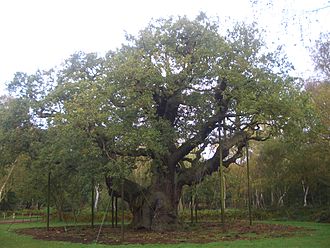


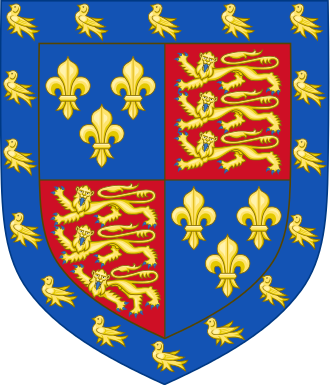




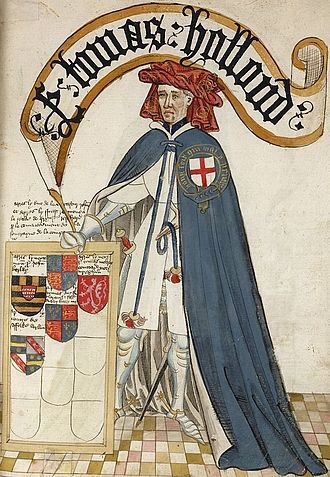
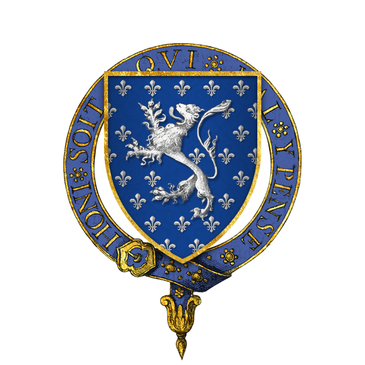


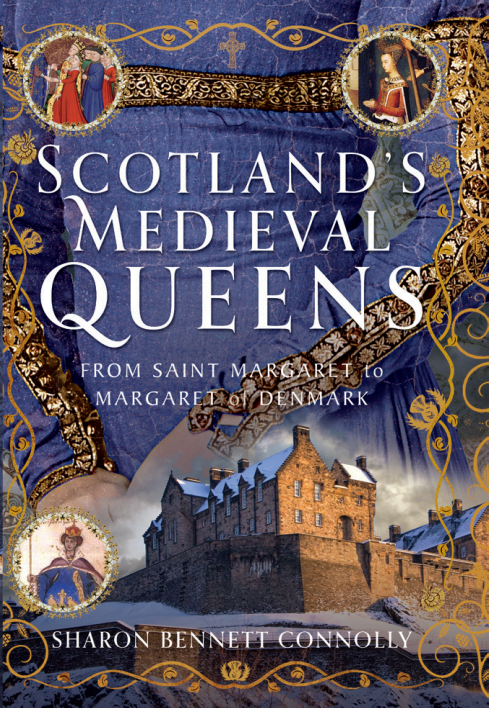
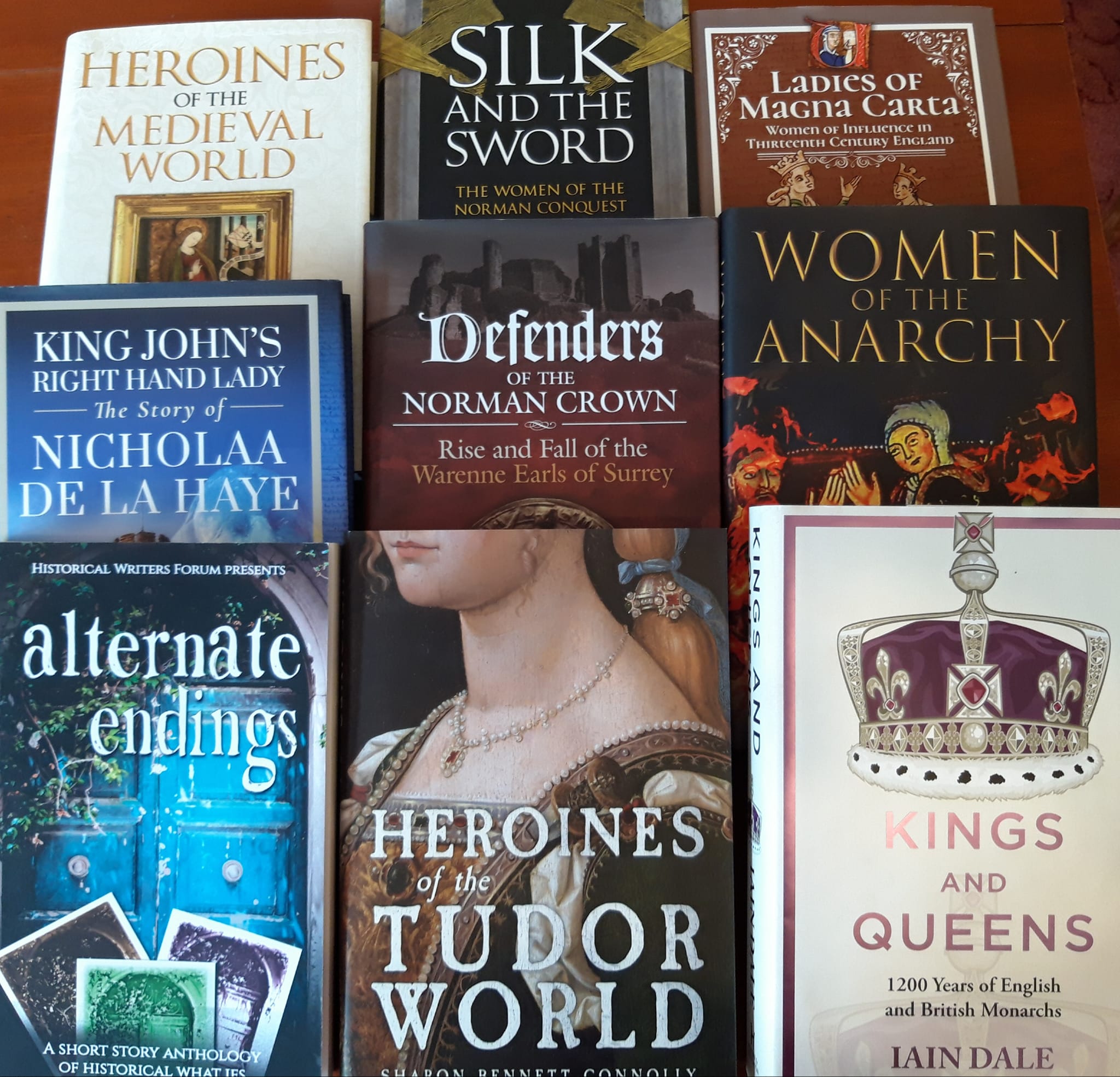


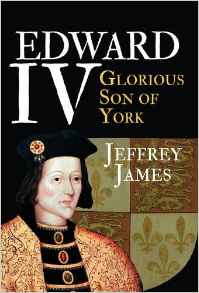
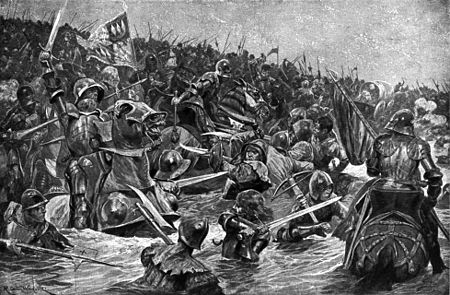

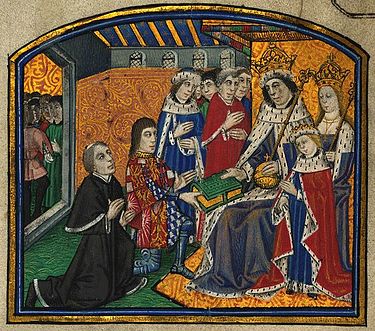
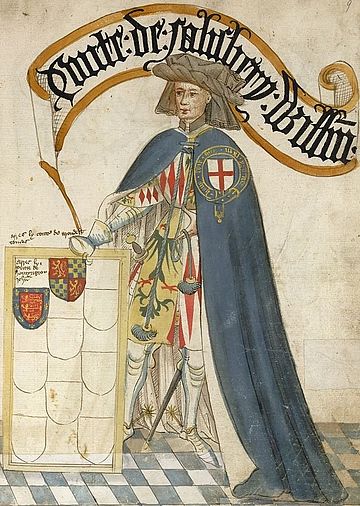
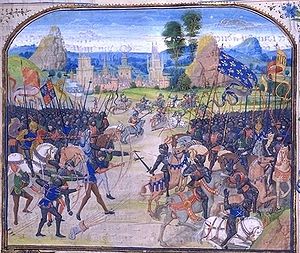
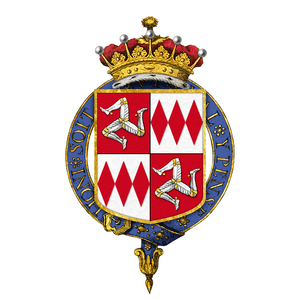
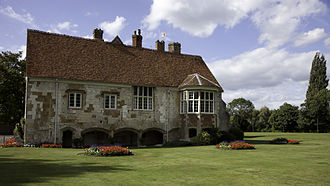


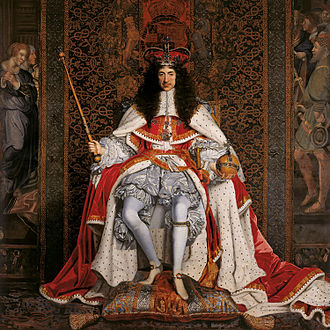
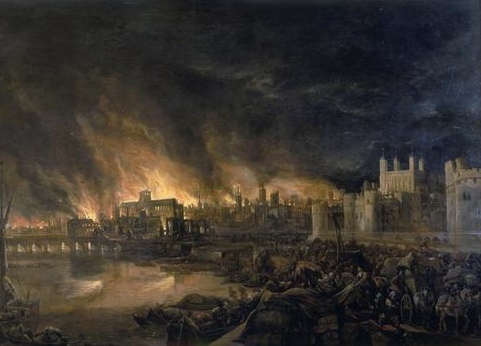
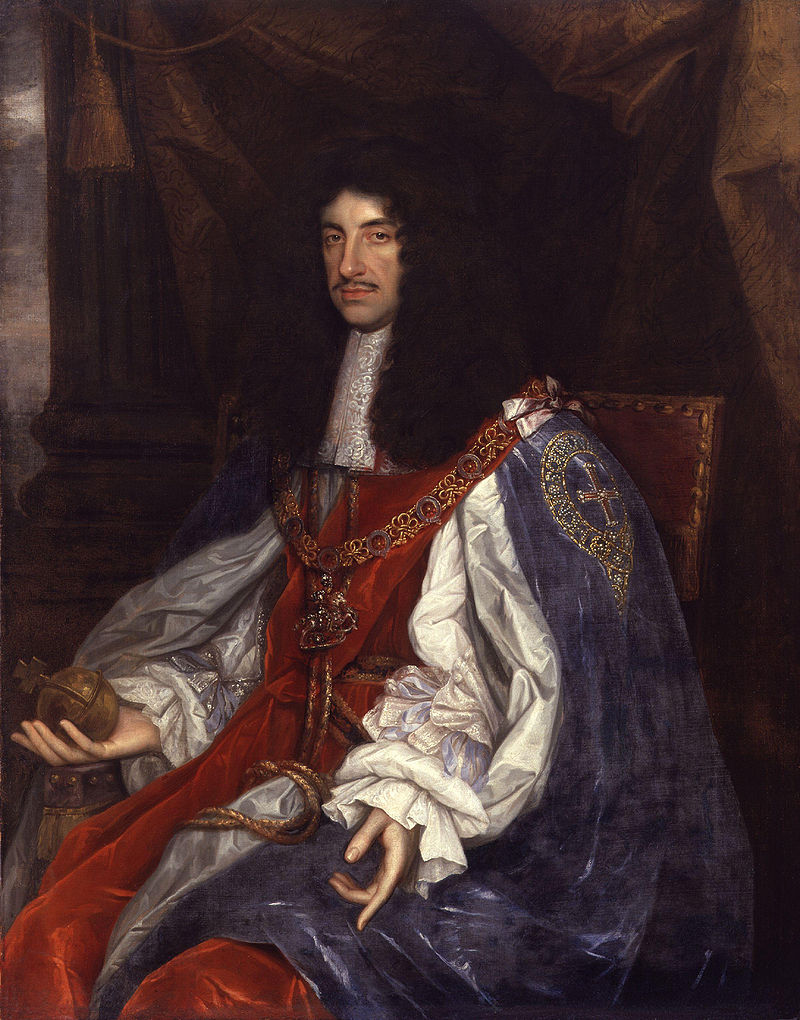
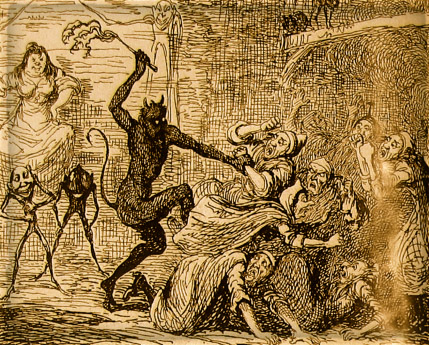
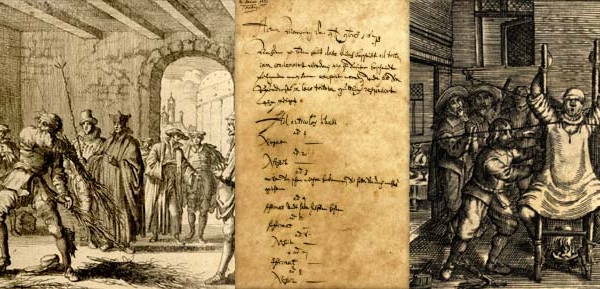
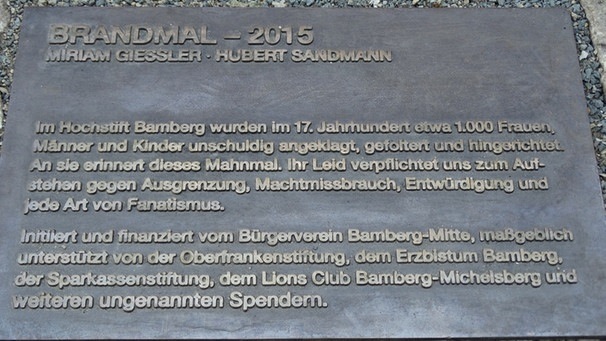
 History... the interesting bits!