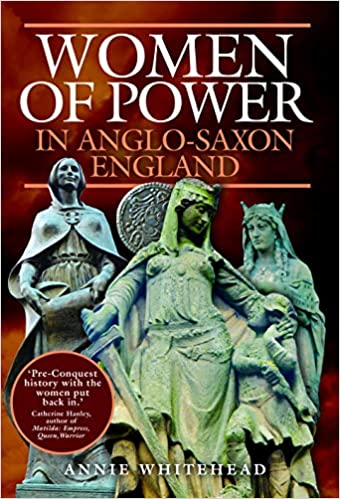
Book Corner: Women of Power in Anglo-Saxon England by Annie Whitehead

Many Anglo-Saxon kings are familiar. Æthelred the Unready is one, yet less is written of his wife, who was consort of two kings and championed one of her sons over the others, or his mother who was an anointed queen and powerful regent, but was also accused of witchcraft and regicide. A royal abbess educated five bishops and was instrumental in deciding the date of Easter; another took on the might of Canterbury and Rome and was accused by the monks of fratricide.

Anglo-Saxon women were prized for their bloodlines – one had such rich blood that it sparked a war – and one was appointed regent of a foreign country. Royal mothers wielded power; Eadgifu, wife of Edward the Elder, maintained a position of authority during the reigns of both her sons.

Æthelflaed, Lady of the Mercians, was a queen in all but name, while few have heard of Queen Seaxburh, who ruled Wessex, or Queen Cynethryth, who issued her own coinage. She, too, was accused of murder, but was also, like many of the royal women, literate and highly-educated.

From seventh-century Northumbria to eleventh-century Wessex and making extensive use of primary sources, Women of Power in Anglo-Saxon England examines the lives of individual women in a way that has often been done for the Anglo-Saxon men but not for their wives, sisters, mothers and daughters. It tells their stories: those who ruled and schemed, the peace-weavers and the warrior women, the saints and the sinners. It explores, and restores, their reputations.

I was very lucky to receive an advance copy of Annie Whitehead’s wonderful new book, Women of Power in Anglo-Saxon England. Beautifully written and thoroughly researched, this book brings to life the women on England from before the Norman Conquest.

Women of Power in Anglo-Saxon England is a wonderful study of the influential royal and noble women of pre-Conquest England, whether they were queens, princesses, abbesses or countesses. Annie Whitehead tells their stories in wonderful, vivid detail, beautifully weaving the historical implications off their lives with their larger-than-life stories.

Though they have been dead a thousand years and more, and while written evidence on these women may be scarce, the author has managed to squeeze every bit of information from the available chronicles, charters and saints’ lives. She has given the reader every possible snippet of information on their lives, presenting and analysing the sources in an accessible, engaging and thoroughly enjoyable reading experience.

The stories of these women is told with a passion and eloquence which makes every chapter a pleasure to read. The more familiar stories of Æthelflæd, Lady Godiva and St Hilda of Whitby are given excellent new interpretations, while the reader may be meeting the less familiar women, such as Æthelfrith of Bernicia, Eadburh and Alfred the Great’s sister, Æthelswith, for the first time.

Ælfgifu appears not to have been married for long. Her son Eadwig was probably born around 940, and his younger brother Edgar around 943. King Edmund himself died in 946 – the victim of a brawl, or perhaps a political assassination – having married again, so his first marriage must have ended not long after Edgar’s birth. The younger of the royal orphans, Edgar, was fostered by a noblewoman, the wife of the ealdorman of East Anglia, whom we shall meet in Part VI.

Ælfgifu is known as Ælfgifu of Shaftesbury, and William of Malmesbury in particular had a lot to say about her. He said that it was she who built the nunnery there and that her bodily remains were placed there. She was ‘so pious and loving that she would even secretly release criminals who had been openly condemned by the gloomy verdict of a jury.’ She would also give away her expensive clothes to the needy and she was a beautiful woman who was remembered for the miracles associated with her; the blind, the deaf and the lame were cured after visiting Shaftesbury.

It would be easy to assume that she retired to Shaftesbury in the manner of a number of previous queens, but the short-lived nature of her marriage and the young age of her children suggest another scenario. It is plausible that she died in childbirth, either in labour with Edgar or with a subsequent pregnancy in which both mother and child died. If she did indeed die in childbirth then she cannot have been a nun at Shaftesbury, but merely its benefactress.
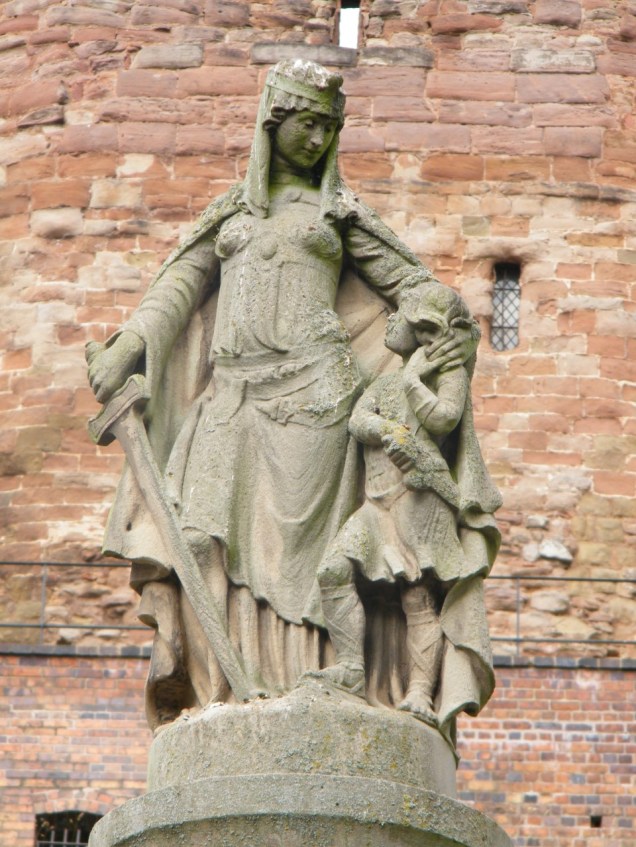
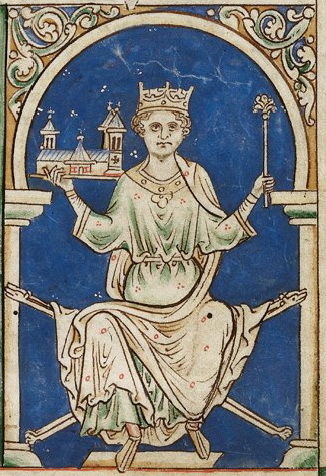
Æthelflæd with her nephew Æthelstan

of these women were not easy to find, and the detective work involved in researching Women of Power in Anglo-Saxon England is both entertaining and fascinating. In recreating and retelling the lives of these remarkable women, Annie Whitehead has given us a window into a distant past. We have the chance to observe the lives, loves, hopes and dreams of these remarkable women; women who helped shape their present and futures, and thus the world in which we now live.

The author also helps to dispel some of the myths that have arisen about these women, whether by historical fiction writers or the over-active imaginations of the chroniclers of the past. The true stories of Æthelflæd and Godiva, and others, are revealed, the myths surrounding them examined and explained. This is a wonderful book, filled with stories of love, intrigue and murder, of the power struggles and betrayals of Anglo-Saxon England, of strong and influential women who made an impression, not only on their own times, but on the generations who came after.

Women of Power in Anglo-Saxon England brings to life the women of the Anglo-Saxon period with vivid clarity. It is a remarkable study of the lives of women of the period – known and unknown – and their impact on history. Saints, princesses and queens; wives, daughters and mothers, Annie Whitehead demonstrates the strengths, weaknesses and challenges these incredible women faced in order to exert their influence on their corner of the world. The author’s meticulous research, beautiful writing and natural storytelling ability make this book a pleasure to read from beginning to end.

To Buy the Book:

Bookhttp://mybook.to/WomeninPower Amazonhttp://viewauthor.at/Annie-Whitehead

About the author:

Annie Whitehead graduated in history having specialised in the ‘Dark Ages’ and is a member of the Royal Historical Society. She’s written three books about early medieval Mercia, the ancient Anglo-Saxon kingdom of the Midlands. The first, To Be a Queen, tells the story of Alfred the Great’s daughter, and was long-listed for the Historical Novelist Society’s Indie Book of the Year 2016, and was an IAN (Independent Author Network) Finalist in 2017, while the second, Alvar the Kingmaker, is the story of Aelfhere, Earl of Mercia in the 10th century. The third, Cometh the Hour, is the first of two volumes set in seventh-century Mercia. She was a contributor to the anthology 1066 Turned Upside Down, a collection of alternative short stories. She writes magazine articles and has had pieces printed in diverse publications, including Cumbria Magazine and This England. She has twice been a prize winner in the Mail on Sunday Novel Writing Competition, and won First Prize in the 2012 New Writer Magazine’s Prose and Poetry Competition. She was a finalist in the 2015 Tom Howard Prize for nonfiction, and is also a contributor and editor for the English Historical Fiction Authors blog, as well as blogging for her own site – Casting Light upon the Shadow. In 2017 she won the inaugural HWA/Dorothy Dunnett Society Short Story Prize. Her first full-length nonfiction book, Mercia: The Rise and Fall of a Kingdom, is published by Amberley. Her latest nonfiction, Women of Power in Anglo-Saxon England, is published by Pen & Sword Books.

Social Media links: Blog; Twitter; Website; Facebook

*

My Books

Out Now!

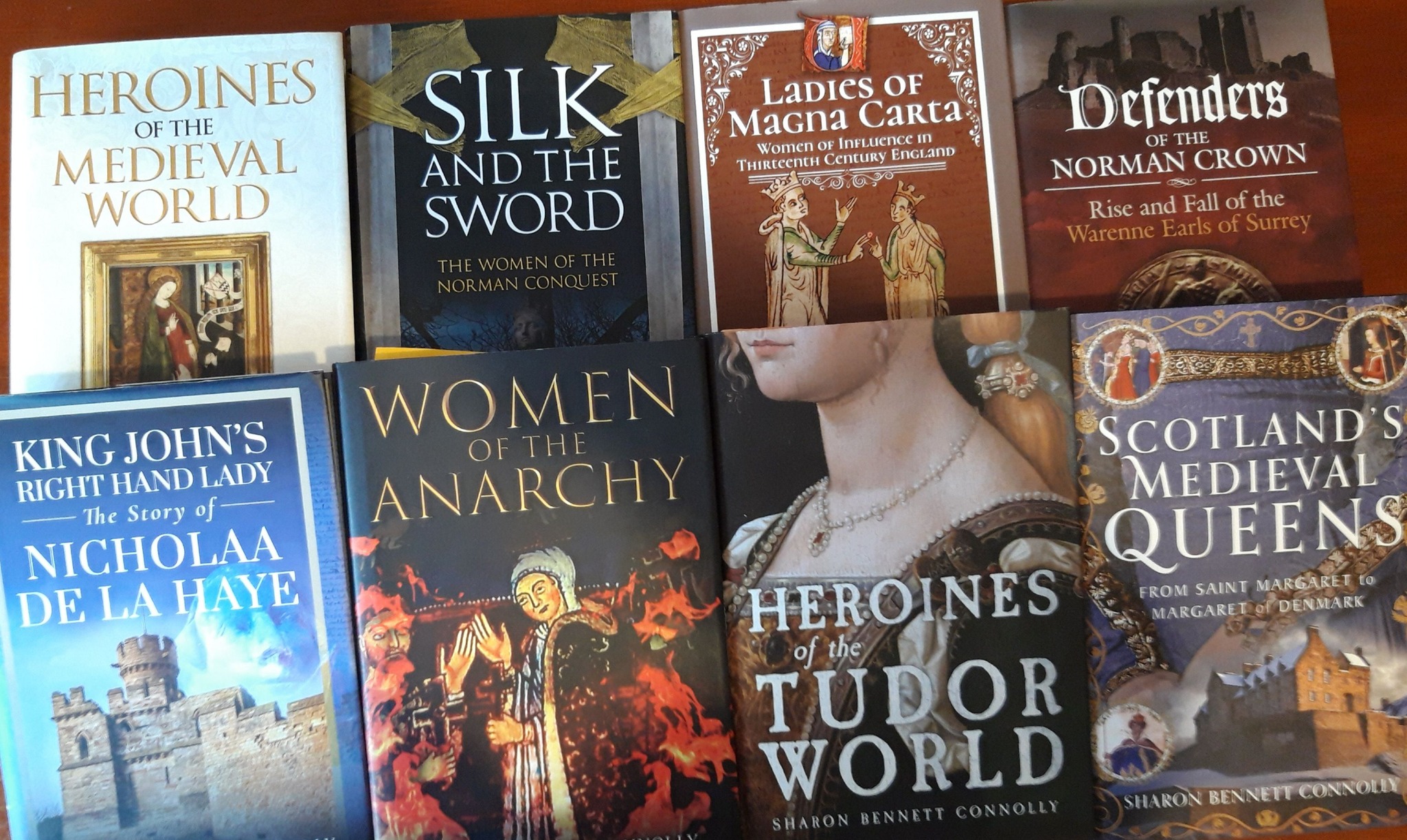
Ladies of Magna Carta: Women of Influence in Thirteenth Century England  looks into the relationships of the various noble families of the 13th century, and how they were affected by the Barons’ Wars, Magna Carta and its aftermath; the bonds that were formed and those that were broken. It is now available from Pen & SwordAmazon and from Book Depository worldwide.
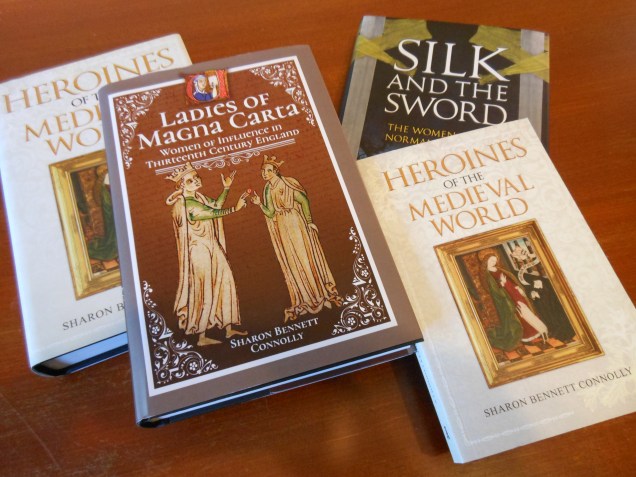
Also by Sharon Bennett Connolly:

Silk and the Sword: The Women of the Norman Conquest traces the fortunes of the women who had a significant role to play in the momentous events of 1066.  Available now from Amazon,  Amberley Publishing, Book Depository.

Heroines of the Medieval World tells the stories of some of the most remarkable women from Medieval history, from Eleanor of Aquitaine to Julian of Norwich. Available now from Amberley Publishing and Amazon and Book Depository.

*

You can be the first to read new articles by clicking the ‘Follow’ button, liking our Facebook page or joining me on Twitter and Instagram.

©2020 Sharon Bennett Connolly
1215: The Year of Magna Carta

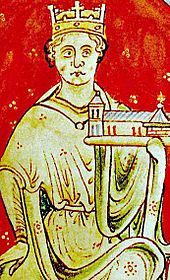
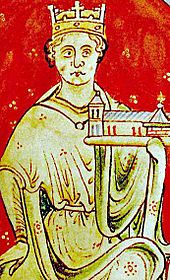
King John. 1215: The Year of Magna Carta by Sharon Bennett Connolly
King John

The year of 1214 ended badly for King John. Attempts to appease his continental enemies had not had the desired results and he was at war in France. As a consequence, John sought a reconciliation with the Lusignans, agreeing to grant them Saintes and Oléron and to marry his daughter Joan to Hugh X de Lusignan, the son of Hugh IX de Lusignan, who had been betrothed to John’s wife, Isabelle d’Angoulême, in return for their support. A similar peace offering, of the earldom of Richmond, to Pierre, Duke of Brittany, was less well received and the duke remained aloof.

John’s campaign was successful at first, with him entering Angers unopposed before he laid siege to Roche-au-Moine. However, he was forced to retreat on 2 July, with the approach of the army of Prince Louis of France and the refusal of the Poitevins to fight by his side.

Although he was able to keep his own army intact, John’s fate was sealed on 27 July when his half-brother William Longespée, Earl of Salisbury, and John’s German and Flemish allies faced King Philip II of France at the battle of Bouvines. They were decisively defeated. Otto IV managed to escape, but William Longespée was captured and taken to Paris, along with the counts of Flanders and Boulogne. With the threat in the north neutralised, Philip was now able to join his army to that of his son, Prince Louis, and challenge John in the south. John had no choice but to seek peace and a 5-year truce was agreed on 13 October, with Ralph of Coggeshall reporting rumours that it had cost John 60,000 marks.1

At home, John’s policy of reform of the sheriffs and forest officials in 1212–1213 had resulted in a significant reduction in royal revenue, and the military campaign had drained John’s treasury further. He was no longer a wealthy king. In October 1214 John returned to England; the defeat by the French at the Battle of Bouvines had ended the king’s hopes of regaining the lost Angevin empire. Baronial opposition to John now gathered pace. The refusal to pay scutage of 3 marks on the knights’ fee demonstrating a coordinated effort by the magnates, rather than the individual disobedience that had been seen earlier in the reign.

Magna Carta by Sharon Bennett Connolly
Lincoln Cathedral’s copy of Magna Carta

The barons’ objections to John were almost beyond number. He had failed to face the French and had lost not only his family’s Continental possessions, but also those of his barons. Few had forgotten his treachery against his brother in trying to take the throne whilst Richard was on crusade. Added to these catastrophes was the character and personality of John himself. By nature, John was paranoid, secretive and distrustful. His cruelty was widely known. He stood accused of killing his nephew, Arthur, a rival claimant to the English throne; he had hanged twenty-eight Welsh hostages (sons of rebel chieftains); and he had hounded William de Braose and his family all the way to Ireland and back. De Braose’s wife and son died in one of John’s prisons, probably from starvation.

The History of William Marshal, a biography of the great knight and statesman, claimed that John treated his prisoners harshly and with such indignity that it was a disgrace to all involved.2 His barons even complained that he forced himself on their wives and daughters. With such military losses, accusations of murder and seemingly acute character flaws stacked against him, it is no wonder England’s king faced opposition by many of the most powerful in his realm.

In January 1215 John arranged to meet with his challengers in London to hear their demands, and it was agreed that they would reconvene at Northampton on 26 April to hear the king’s response. The disaffected barons demanded reform and the confirmation of the coronation charter of King Henry I, in which the king promised;

1215: The Year of Magna Carta by Sharon Bennett Connolly
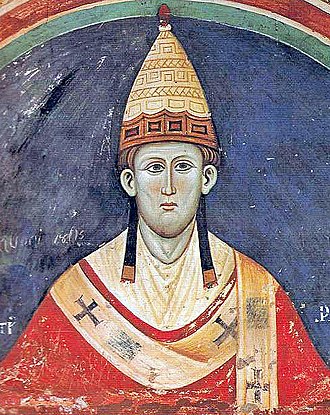
Pope Innocent III

‘Know that by the mercy of God and by the common counsel of the barons of England I have been crowned king of this realm. And because the kingdom has been oppressed by unjust exactions, being moved by reverence towards God and by the love I bear you all, I make free the Church of God … I abolish all the evil customs by which the kingdom of England has been unjustly oppressed.’ 3

Although many of the clauses of this charter, also referred to as the Charter of Liberties, were now outdated, several still resonated with the barons, including that a baron’s widow could not be married without her consent, that an heiress could not be married without the consent of her relatives and that, on the death of a baron, his heir would only pay a relief that was ‘just and lawful.’4

Whilst John was ruminating on these demands, both sides were preparing for war. John borrowed from the Templars to pay his mercenaries and on 4 March he took the cross. This latter move was seen as highly cynical and no one seems to have believed that John would actually go on crusade. His purpose for doing so was political: a crusader’s lands and properties were protected by the church and this action firmly identified the king’s opponents as the ‘bad guys’.

John failed to appear at Northampton in April. He did, however, send messages to the rebels. According to the Barnwell annalist the king ‘tried to win them back through many emissaries, and there was much discussion amongst them, the archbishop, bishops and other barons acting as intermediaries, the king himself staying at Oxford.’5 On 5 May the rebels formally renounced their fealty. John retained the support of some magnates, such as William Marshal and William de Warenne, but the majority were now standing against him. As was London, which opened its gates to the rebels on 17 May, despite John’s granting the city the right to elect its mayor only eight days before. In the Welsh Marches the Braose family had allied with Llywelyn ap Iorwerth and had taken Shrewsbury.

The rebels were ready to fight. After occupying London, they made one final attempt to prevent war, presenting the king with a list of their demands. John had no choice but to make concessions and on 10 June agreed to further discussions of the rebels’ terms. Following these negotiations, a long, detailed document was produced, dealing with the particular grievances of the time and with injustices in general. It touched on the whole system of royal government. And it was granted to ‘all free men of the realm and their heirs forever.’6

1215: The Year of Magna Carta by Sharon Bennett Connolly
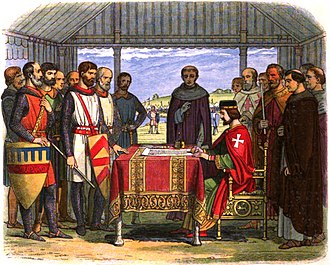
19th century recreation of the moment Magna Carta is sealed

Of its sixty-three clauses some terms were asking for immediate remedies, such as the removal of corrupt administrators and the sending home of foreign mercenaries. A clause stating that fighting outside of the kingdom could not be imposed by the king was a reaction to John’s recent attempts to force his English barons to help him recover his Continental domains. Others had long-term aims. The document sought to guarantee the privileges of the church and the City of London. Restrictions were placed on the powers of regional officials, such as sheriffs, to prevent abuses. The royal court was fixed at Westminster, for justice to be obtainable by all, and royal judges were to visit each county regularly. Taxes could no longer be levied without the consent of the church and the barons.

Clauses included the fixing of inheritance charges and the protection from exploitation for under-age heirs; the king was to take only what was reasonable from an estate (although ‘reasonable’ remained undefined). From henceforth a widow was to be free to choose whether or not to remarry and her marriage portion (dowry) would be made available to her immediately on her husband’s death. Another clause sought to prevent the seizure of land from Jews and the king’s debtors. Magna Carta even went so far as to regulate weights and measures. It also reduced the size of the king’s forests and limited the powers of forest justices.

Although most of the sixty-three clauses of Magna Carta are now defunct, three still remain as major tenets of British law, including ‘to no one will we sell, to no one will we deny or delay right or justice.’ That no person would be imprisoned, outlawed or deprived of his lands except by judgement of his peers and the law of the land has remained the cornerstone of the English legal system ever since.

1215: The Year of Magna Carta by Sharon Bennett Connolly
Runnymede

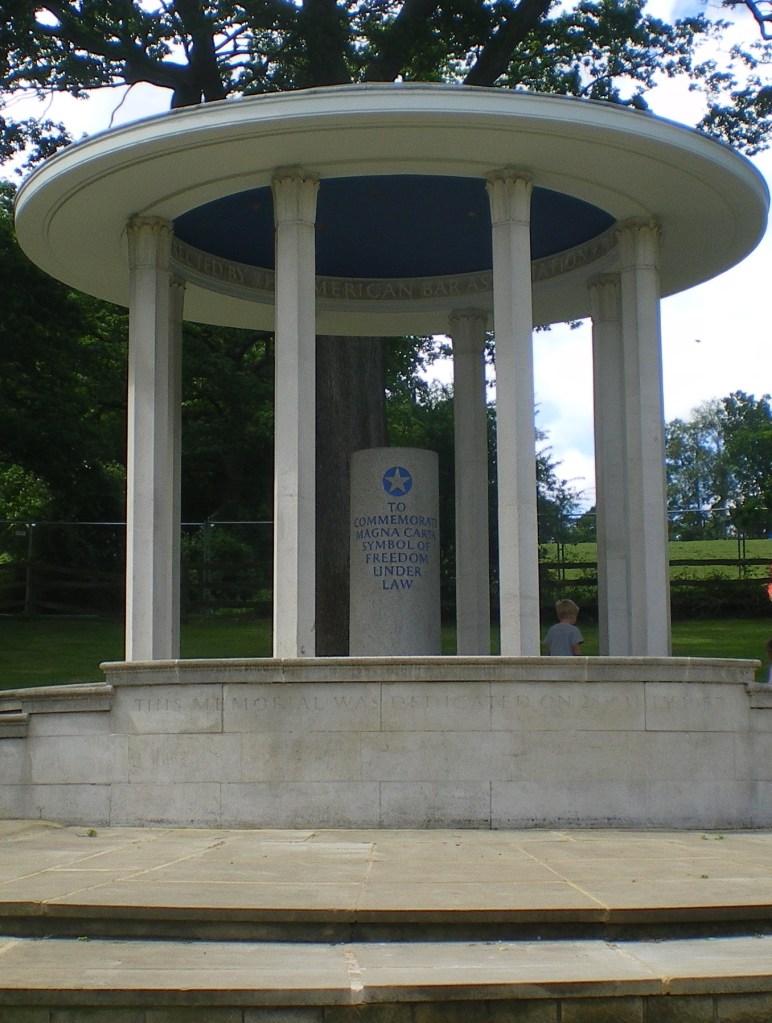
Magna Carta was sealed at Runnymede, Berkshire, on 15 June 1215. John ordered that the charter be circulated around the towns and villages, throughout the realm; only 4 original copies survive today, 2 at the British Library and 1 each at Lincoln and Salisbury. As a peace agreement between the king and his rebellious barons, however, it failed miserably. By July, John was appealing to the pope for help. Pope Innocent III’s response arrived in England in September. The treaty was declared null and void; according to Innocent, Magna Carta was:

‘not only shameful and base but also illegal and unjust. We refuse to overlook such shameless presumption which dishonours the Apostolic See, injures the king’s right, shames the English nation, and endangers the crusade. Since the whole crusade would be undermined if concessions of this sort were extorted from a great prince who had taken the cross, we, on behalf of Almighty God, Father, Son and Holy Ghost, and by the authority of Saints Peter and Paul His apostles, utterly reject and condemn this settlement. Under threat of excommunication we order that the king should not dare to observe and the barons and their associates should not insist on it being observed. The charter with all its undertakings and guarantees we declare to be null and void of all validity for ever.’7


The letter was accompanied by more papal letters, excommunicating rebels, including nine barons and the Londoners. However, by the time the letters arrived in England, the dispute had already erupted into the Barons’ War. John laid siege to Rochester Castle with his mercenaries and the castle surrendered on 30 November, after a seven-week siege. Deciding they could no longer deal with John’s perfidy, the rebel barons had invited the King of France, Philip II Augustus, to claim the throne.

Philip’s son and heir, the future Louis VIII, accepted the offer. He sent an advanced guard, which arrived in December of 1215. Louis himself would arrive in the spring of 1216. He landed on the south coast and marched for London, where he was proclaimed King of England on 2 June 1216, just 13 days before the 1st anniversary of Magna Carta…

*

For a study into the influence of women on the clauses and creation of Magna Carta, and its impact on the lives of women, my book, Ladies of Magna Carta: Women of Influence in Thirteenth Century England  is out now!

Footnotes:

1 John Gillingham, John (1167–1216), Oxforddnb.com; 2 L’Histoire de Guillaume le Maréchale quoted in John Gillingham, John (1167–1216), Oxforddnb.com; 3 Coronation Charter of Henry I in bl.uk; 4 Select Charters quoted in Marc Morris, King John: Treachery, Tyranny and the Road to Magna Carta; 5 The Barnwell annalist quoted in Elizabeth Hallam (editor), The Plantagenet Chronicles; 6 Danny Danziger and John Gillingham, 1215: The Year of Magna Carta; 7 Letter from Pope Innocent III, quoted in Danny Danziger and John Gillingham, 1215: The Year of Magna Carta

Images:

Courtesy of Wikipedia. Except: Magna Carta ©2015 Sharon Bennett Connolly and Runnymede ©2020 Jayne Smith

Further reading:

Robert Bartlett England Under the Norman and Angevin Kings 1075-1225; Dan Jones The Plantagenets; the Kings who Made EnglandThe Plantagenet Chronicle Edited by Elizabeth Hallam; Maurice Ashley The Life and Times of King John; Roy Strong The Story of BritainOxford Companion to British History; Mike Ashley British Kings & Queens; David Williamson Brewer’s British Royalty; Danny Danziger and John Gillingham, 1215: The Year of Magna Carta; John Gillingham, John (1167–1216), Oxforddnb.com; Marc Morris, King John: Treachery, Tyranny and the Road to Magna Carta

*

My books

Signed, dedicated copies of all my books are available through my online bookshop.

Coming 30 January 2025: Scotland’s Medieval Queens

Books by Sharon Bennett Connolly

Scotland’s history is dramatic, violent and bloody. Being England’s northern neighbour has never been easy. Scotland’s queens have had to deal with war, murder, imprisonment, political rivalries and open betrayal. They have loved and lost, raised kings and queens, ruled and died for Scotland. From St Margaret, who became one of the patron saints of Scotland, to Elizabeth de Burgh and the dramatic story of the Scottish Wars of Independence, to the love story and tragedy of Joan Beaufort, to Margaret of Denmark and the dawn of the Renaissance, Scotland’s Medieval Queens have seen it all. This is the story of Scotland through their eyes.

Scotland’s Medieval Queens gives a thorough grounding in the history of the women who ruled Scotland at the side of its kings, often in the shadows, but just as interesting in their lives beyond the spotlight. It’s not a subject that has been widely covered, and Sharon is a pioneer in bringing that information into accessible history.’ Elizabeth Chadwick (New York Times bestselling author)

Available now from Amazon and Pen and Sword Books

Also by Sharon Bennett Connolly:

Books by Sharon Bennett Connolly

Heroines of the Tudor World tells the stories of the most remarkable women from European history in the time of the Tudor dynasty, 1485-1603. These are the women who ruled, the women who founded dynasties, the women who fought for religious freedom, their families and love. Heroines of the Tudor World is now available for pre-order from Amberley Publishing and Amazon UK. Women of the Anarchy demonstrates how Empress Matilda and Matilda of Boulogne, unable to wield a sword themselves, were prime movers in this time of conflict and lawlessness. It shows how their strengths, weaknesses, and personal ambitions swung the fortunes of war one way – and then the other. Available from Bookshop.orgAmberley Publishing and Amazon UKKing John’s Right-Hand Lady: The Story of Nicholaa de la Haye is the story of a truly remarkable lady, the hereditary constable of Lincoln Castle and the first woman in England to be appointed sheriff in her own right. Available from all good bookshops Pen & Sword Booksbookshop.org and Amazon

Defenders of the Norman Crown: The Rise and Fall of the Warenne Earls of Surrey tells the fascinating story of the Warenne dynasty, from its origins in Normandy, through the Conquest, Magna Carta, the wars and marriages that led to its ultimate demise in the reign of Edward III. Available from Pen & Sword BooksAmazon in the UK and US, and Bookshop.orgLadies of Magna Carta: Women of Influence in Thirteenth Century England looks into the relationships of the various noble families of the 13th century, and how they were affected by the Barons’ Wars, Magna Carta and its aftermath; the bonds that were formed and those that were broken. It is now available in paperback and hardback from Pen & SwordAmazon, and Bookshop.orgHeroines of the Medieval World tells the stories of some of the most remarkable women from Medieval history, from Eleanor of Aquitaine to Julian of Norwich. Available now from Amberley Publishing and Amazon, and Bookshop.orgSilk and the Sword: The Women of the Norman Conquest traces the fortunes of the women who had a significant role to play in the momentous events of 1066. Available now from Amazon,  Amberley Publishing, and Bookshop.org.

Alternate Endings: An anthology of historical fiction short stories including Long Live the King… which is my take what might have happened had King John not died in October 1216. Available in paperback and kindle from Amazon.

Podcast:

Have a listen to the A Slice of Medieval podcast, which I co-host with Historical fiction novelist Derek Birks. Derek and I welcome guests, such as Bernard Cornwell and Michael Jecks, and discuss a wide range of topics in medieval history, from significant events to the personalities involved. 

Every episode is also now available on YouTube.

*

Don’t forget! Signed and dedicated copies of all my books are available through my online store.

For forthcoming online and in-person talks, please check out my Events Page.

You can be the first to read new articles by clicking the ‘Follow’ button, liking our Facebook page or joining me on TwitterThreadsBluesky and Instagram.

**

©2020 Sharon Bennett Connolly FRHistS

Guest Post: Prince John’s Gambit: The Throne at any Cost

Prince John’s Gambit: The Throne at any Cost

John, Count of Mortain, Lord of Ireland, and youngest son of Henry II and Eleanor of Aquitaine knew that the stars were finally aligning in his favor, and the impossible dreams of his youth were now within his grasp. Bold action was required, and he was confident in his ability to seize this auspicious opportunity.

It was early January 1193 when John received a letter from King Philip II of France informing him that his brother, King Richard the Lionheart, was being held captive by the Duke of Austria and his liege lord, Holy Roman Emperor Henry VI.

John immediately traveled to the nearest port and secretly crossed the Channel into Normandy. He might have already been imagining his future as King of England, Duke of Normandy and Aquitaine, and ruler over the Angevin lands lying between those valuable duchies. No one would ever call him “Lackland” again.

It’s likely that John’s ambitions were buoyed by his knowledge of family history. His great-grandfather, Henry I, was the youngest son of William the Conqueror. Upon William’s death, his lands were divided between his two oldest surviving sons: William Rufus, who became King of England and Robert Curthose, who became Duke of Normandy. Henry Beauclerc, as Henry I was known before his ascension, was the original “Lackland” as the only inheritance he received was money.

Yet, only 13 years after William the Conqueror’s death, this youngest son had seized the throne of England after the sudden death of William Rufus in 1100. Six years later, Henry defeated

Robert Curthose at the Battle of Tinchebray and became Duke of Normandy. Robert Curthose would spend the rest of his life in captivity.

Did visions of Richard, his formidable older brother, imprisoned for the rest of his natural life inspire John as he rode across Normandy that cold January?

John’s story during Richard’s captivity stretches from January 1193 to the brothers’ reconciliation in May 1194. It’s a tale of persistence, audacious risk-taking, and a single-minded resolve to achieve power at any cost.

If John had succeeded, perhaps we would admire him just as Henry I is admired for his unexpected rise to power. But John’s failures and reckless schemes during these 17 months would not only determine the course of Richard’s remaining years as king, they would also play an important role in establishing John’s reputation as a deceitful, untrustworthy, and avaricious man.

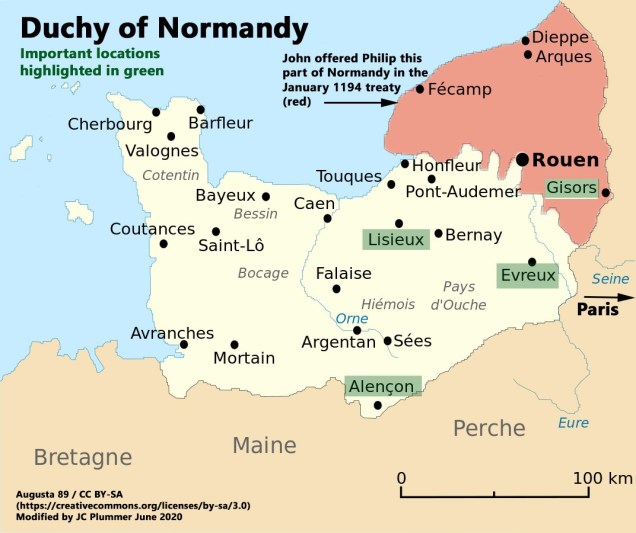
When John met with the Norman barons at Alençon in January 1193, he announced that Richard would not return, and that he was likely dead. John proclaimed that he was ready to assume control of Normandy and help the barons defend against potential attacks from King Philip. These loyal liegemen of Richard flatly refused to accept John as their new lord. As long as Richard lived, they would honor their oaths of fealty to him. Undeterred, John left them and went to Paris.

King Philip had spent his reign cleverly pitting one Plantagenet against another, and he was delighted to receive John at his court. In return for Philip’s support, John vowed to annul his marriage and marry Philip’s sister. He then paid homage to Philip for Normandy and the Angevin lands, and he promised to give Philip the strategic fortress of Gisors and the Norman Vexin.

This was a stunning betrayal of his brother, and as news of John’s actions in Paris made its way back to England, many of those who might have otherwise supported John as heir were outraged.

In February, John returned to England where he captured and garrisoned the castles of Windsor and Wallingford. He then entered London and declared that Richard would never return; he even insisted that Richard was dead. John demanded the Great Council recognize him as king.

His mother, the indomitable Eleanor of Aquitaine, and the Great Council were now ruling England. They had not yet received word of Richard’s location or condition, and it was a precarious time. Since Richard had no legitimate children, only John and a nephew, Arthur of Brittany, were potential successors. Arthur’s father, Geoffrey, had been born before John, but Arthur’s youth and Breton upbringing worked against him. Eleanor preferred that John ascend to the throne should Richard die.

By early March, John’s castles at Windsor and Tickhill were under siege. It was an awkward moment for the men leading these sieges. If they pursued victory too vigorously, they might make an enemy of the future king.

On April 20, Eleanor and the Great Council began receiving dispatches from Richard, who outlined the terms of his release and offered recommendations for raising the staggering king’s ransom required for his freedom. The government could not simultaneously conduct sieges against John’s castles and raise the ransom.

Even though Windsor and Tickhill were on the verge of surrender, a six-month truce was negotiated. Eleanor took control of Windsor and Wallingford, while John kept Tickhill and Nottingham. Along with other stipulations, John was expected to help raise the ransom, and he was required to stay in England.

After this setback, John spent May and June in Dorset, pouting and plotting his next move. Historians differ on how much effort he put into raising the ransom.

In early July, news reached both England and France that the terms of Richard’s release had been renegotiated and finalized. Although Richard knew that his release was still months away, Philip believed the Lionheart could be freed at any time.

In response, a frantic King Philip sent his famous message to John: “Look to yourself, the Devil is loosed!”

Despite his pledge to remain in England, a terrified John fled across the Channel to Paris. Because he had broken the truce, John’s estates were confiscated.

John was at Philip’s side when emissaries from the Lionheart arrived, proposing a treaty with the French king. The Treaty of Mantes was signed on July 9, 1193, and it was a generous settlement intended to stop Philip from further incursions into Normandy and to avoid a possible French invasion of England.

Richard’s secondary goal was to separate Philip and John. If John renewed his oath of loyalty to his brother, his titles and lands on both sides of the Channel would be restored, and a series of castles in Normandy would be awarded to him. John promptly pledged his allegiance to Richard and set off to claim his castles. However, he was so distrusted that the castellans refused to relinquish control to John. A furious John returned to Paris, and Richard’s scheme to remove John from Philip’s influence failed.

The emperor’s December announcement that Richard would be released in January resulted in another panicked response from Philip and John. They sent a letter to Henry offering either monthly payments to keep Richard imprisoned until autumn or a lump sum matching the ransom raised by Eleanor, as long as Henry transferred custody of his prisoner to Philip.

By January 1194, John was desperate, but he was not ready to admit defeat. He made one last treaty with Philip, and its extraordinary terms must have astounded the French king. John surrendered the whole of Normandy east of the Seine except for the city of Rouen. He gave key castles in Maine, Anjou, Touraine, and Aquitaine to Philip. And perhaps the most shocking concession was his agreement to hold the remaining continental lands as a baron of the French court. This would end the long-standing tradition of the Duke of Normandy meeting the King of France as an equal.

The January treaty was so astonishing that it only raised Philip’s suspicions. Although Philip signed the treaty, the shrewd French king probably doubted that John would abide by it.

Philip and John’s offer tempted Henry VI, and he showed their letter to Richard. Although he could not renege on his promises, Henry delayed Richard’s release until February 4, 1194.

Eleanor and Richard immediately left the German court, and they landed in England on March 13. Richard soon subdued John’s remaining supporters, and John’s titles and lands were again confiscated.

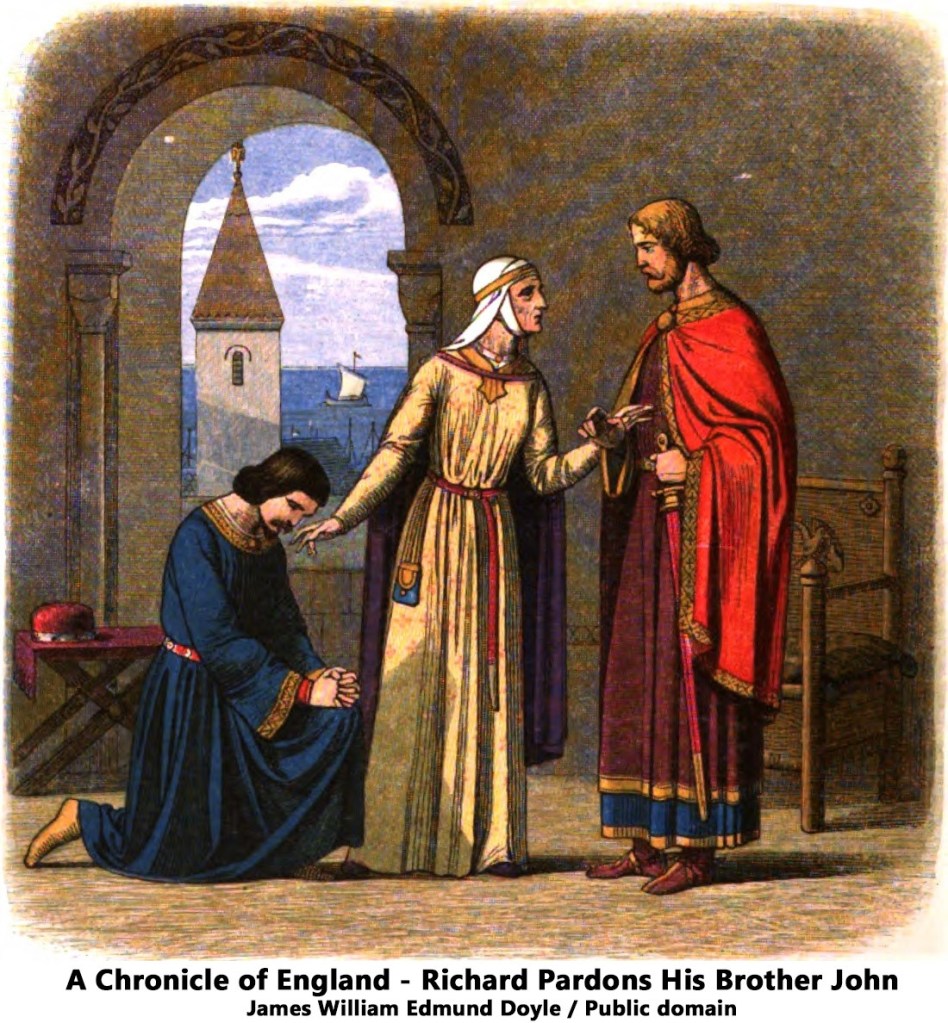
On May 13, Richard and Eleanor disembarked in Normandy. By May 19, they were in Lisieux at the home of John of Alençon. It is here that a shaken and contrite John arrived, falling at his brother’s feet, shedding the required tears, and begging for mercy. Richard forgave him, but his words were casual and full of contempt. He called the 27-year-old John a “child” who had been led astray by evil advisors.

Eleanor and Richard had already determined that it was more important to separate John from Philip and bring him back into the family fold than to impose the punishment he deserved for his treason.

The following day, John returned to Evreux, a strategic castle he had been holding for Philip since January. He then demonstrated why he could not be trusted. He invited the town’s French officials to meet with him, perhaps for dinner, and he announced to them that he now held the town for Richard before ordering their slaughter.

Twelve months later, in May 1195, Richard restored the counties of Mortain and Gloucester to John, although not the castles. In September 1197, Richard formally named John as his heir. John did not return to England until after Richard’s death in 1199.

The story of John’s 17 month quest for power during Richard’s captivity shows a man willing to promise anything and risk everything, regardless of whether he could deliver. Yet, he never suffered the consequences he deserved for his actions, mostly because he was the favored choice to succeed Richard, as long as the Lionheart remained childless.

Consider these examples:

· During his initial bid to take the crown, when his castles were on the verge of surrender, he was offered a generous truce.

· He lost his titles and lands when he fled to Paris in July 1193, but the Treaty of Mantes restored them to him.

· He ceded valuable strategic castles to Philip, and Richard would spend the remainder of his life fighting to recover them. John’s penalty was to lose his lands and titles for a time, but they were eventually returned to him.

This raises the question of whether John learned any lessons from his disastrous attempt to take the throne from Richard, and how that lack of meaningful consequences for his reckless and risky gambles might have impacted his reign, particularly when dealing with a cunning foe like King Philip and aggrieved barons looking for a measure of justice.

About the authors:

J. C. Plummer graduated Summa Cum Laude from Washburn University with a Bachelor of Arts degree in History and Anthropology. She later earned a Master of Science degree in Computer Information Science from Dartmouth College.

As an author and historian, J.C.’s goal is to provide thoughtful and entertaining storytelling that honors the past, is mindful of the present, and is optimistic for the future.

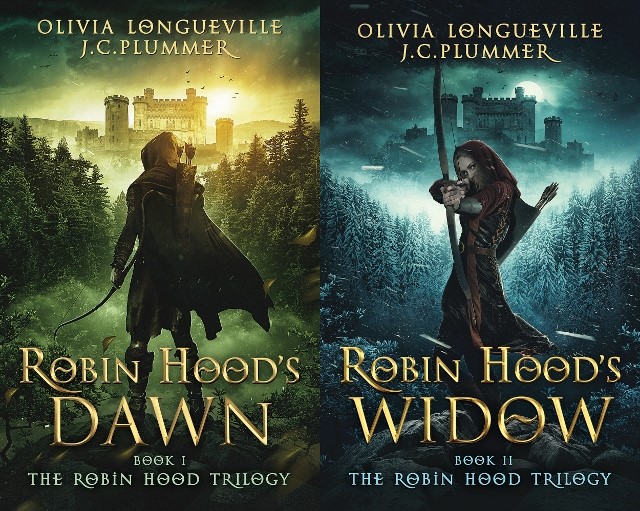
She has joined with author Olivia Longueville to co-author The Robin Hood Trilogy.

About Olivia Longueville: Olivia has always loved literature and fiction, and she is passionate about historical research, genealogy, and the arts. She has several degrees in finance & general management from London Business School (LBS) and other universities. At present, she helps her father run the family business.

Olivia’s first book was Between Two Kings, a novel set in Tudor England, which will be re-published by Penmore Press later this year.

J.C.’s social media profiles:

Website: http://www.angevinworld.com/

Twitter: @JC_Plummer Facebook: http://www.facebook.com/jennie.newbrand/

Olivia’s social media profiles:

Website: http://www.olivialongueville.com/

Twitter: @O_Longueville

Facebook: http://www.facebook.com/OliviaLongueville/

The Robin Hood Trilogy:

Set in late 12th century England, France, and Outremer, this re-imagining of the Robin Hood story closely follows history while incorporating popular aspects of the Robin Hood legends.

From the mists of an ancient woodland, to lavish royal courts teeming with intrigue, to the exotic shores of the Holy Land—Robin Hood leads the fight in a battle between good and evil, justice and tyranny, the future and the past.

Historical figures such as King Philip II of France, Richard the Lionheart, Prince John, and Eleanor of Aquitaine are featured in the trilogy.

Book 1: Robin Hood’s Dawn Amazon buy links. https://bit.ly/1-RHDawn https://bit.ly/RHDawn-UK

Book 2: Robin Hood’s Widow NOW AVAILABLE! Amazon buy links. https://bit.ly/RHWidow https://bit.ly/RHWidow-UK

Book 3: Robin Hood’s Return Coming soon!

*

My Books

Out Now!

Ladies of Magna Carta: Women of Influence in Thirteenth Century England  looks into the relationships of the various noble families of the 13th century, and how they were affected by the Barons’ Wars, Magna Carta and its aftermath; the bonds that were formed and those that were broken. It is now available from Pen & SwordAmazon and from Book Depository worldwide.

Also by Sharon Bennett Connolly:

Silk and the Sword: The Women of the Norman Conquest traces the fortunes of the women who had a significant role to play in the momentous events of 1066.  Available now from Amazon,  Amberley Publishing, Book Depository.

Heroines of the Medieval World tells the stories of some of the most remarkable women from Medieval history, from Eleanor of Aquitaine to Julian of Norwich. Available now from Amberley Publishing and Amazon and Book Depository.

*

You can be the first to read new articles by clicking the ‘Follow’ button, liking our Facebook page or joining me on Twitter and Instagram.

©2020 Sharon Bennett Connolly, Olivia Longueville and J.C. Plummer

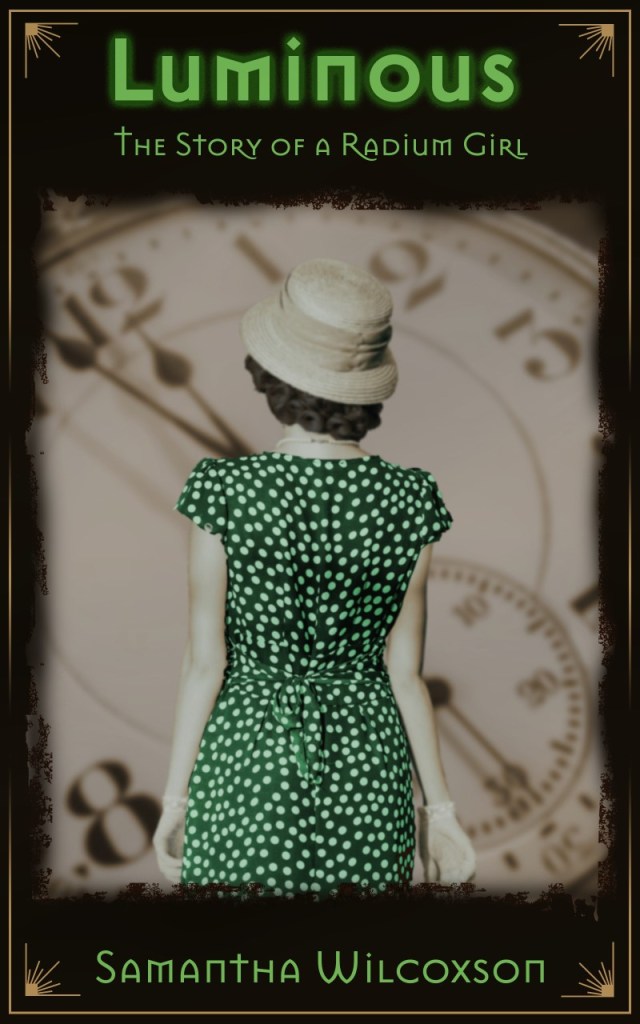
Guest Post: Luminous by Samantha Wilcoxson

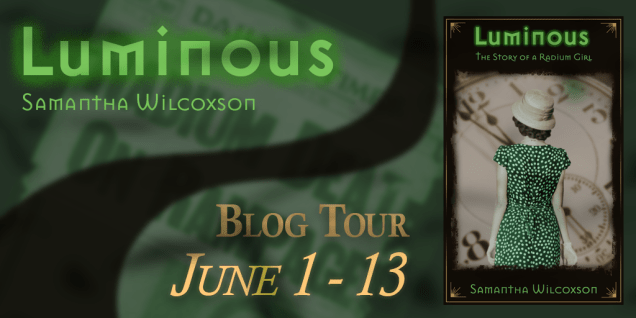
It is a pleasure to welcome Samantha Wilcoxson to the blog as part of her Luminous Blog Tour.

Worker Exploitation at Radium Dial

By Samantha Wilcoxson

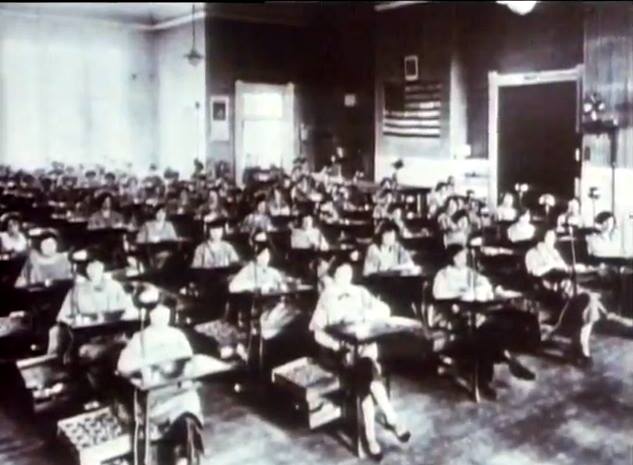
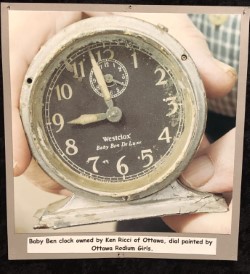
Radium Dial opened in Ottawa, Illinois in 1918 in response to the demand during World War I for luminous watches and instrument dials. The location was an old, brick school building with large rooms and big windows perfect for the fine painting required. The popularity of new glow-in-the-dark wristwatches kept the company in business after the war ended and provided many working class women with higher paying jobs than they could obtain elsewhere.

Catherine Donohue was one of the women who worked at Radium Dial, beginning in 1922. She and several of her coworkers suffered the effects of radium poisoning and fought for years to have their conditions recognized and covered by workers’ compensation legislation. Radium Dial continued operating and denying that they owed anything to the women they had slowly poisoned over their years of employment.

In 1936, Radium Dial closed their operations in the old high school and moved into a new building just a few blocks away. This new company was called Luminous Processes. It utilized much of Radium Dial’s assets and hired the same employees. The move had been a strategy to protect corporate assets from the lawsuits of former employees. When Catherine’s case was heard before the Illinois Industrial Commission, only $10,000 was available to be paid out to the several families suffering from radium poisoning.

Until 1978, Radium Dial continued operating under the name of Luminous Processes, their millions of dollars in profits protected from those employed before 1937, but that isn’t the worst of it. Radium Dial sold the old school to a meat packaging company, which experienced an exceptionally high rate of cancer in its employees and customers. When the building was demolished in 1968, the rubble was used as fill all around Ottawa, poisoning residents for decades.

At the new Luminous Processes building, employees continued to use radium without proper caution, also adding to the town’s high rates of cancer and other diseases. Sick workers were offered $100 each in severance pay to keep them from seeking legal action that they could ill-afford anyway. Luminous Processes wasn’t shut down until 1978. The company paid only $62,000 toward the millions of dollars of cleanup that is ongoing to this day by the Environmental Protection Agency.

Worker exploitation by Radium Dial is the subject of my newest novel, Luminous, which tells the story of Catherine Donohue, one of hundreds of young women who worked as dial painters in the 1920’s and 1930’s. Her struggle to have her illness recognized as radium poisoning and to have Radium Dial held responsible will stir up the emotions of any reader. The battle she fought helped to change workers’ compensation laws so that others would not suffer her fate. Although Catherine never dreamed of being a heroine, she changed the course of history.

About the Author:

Samantha Wilcoxson is a history enthusiast and avid traveler. Her published works include the Plantagenet Embers series with novels and novellas that explore the Wars of the Roses and early Tudor era. Luminous is her first foray into 20th century American history, but she suspects that it will not be her last. Samantha enjoys exploring the personal side of historic events and creating emotive, inspiring stories.

Important Links:

Universal Amazon Link for Luminous: mybook.to/luminous

Samantha’s Blog: https://samanthawilcoxson.blogspot.com/

Samantha on Social Media:

Facebook: https://www.facebook.com/PlantagenetEmbers/

Twitter: https://twitter.com/carpe_librum

Instagram: https://www.instagram.com/samantha_wilcoxson

Goodreads: https://www.goodreads.com/samanthajw

I would like ot say a huge ‘thank you’ to Samantha for a fabulous article, and wish her every success with Luminous: The Story of a Radium Girl.

*

My Books

Out Now!

Ladies of Magna Carta: Women of Influence in Thirteenth Century England will be released in the UK on 30 May 2020 and is now available for pre-order from Pen & SwordAmazon UK and from Book Depository worldwide. It will be released in the US on 2 September and is available for pre-order from Amazon US.

Also by Sharon Bennett Connolly:

Silk and the Sword: The Women of the Norman Conquest traces the fortunes of the women who had a significant role to play in the momentous events of 1066.  Available now from Amazon UK,  Amberley Publishing, Book Depository and Amazon US.

Heroines of the Medieval World tells the stories of some of the most remarkable women from Medieval history, from Eleanor of Aquitaine to Julian of Norwich. Available now from Amberley Publishing and Amazon UK, Amazon US and Book Depository.

*

You can be the first to read new articles by clicking the ‘Follow’ button, liking our Facebook page or joining me on Twitter and Instagram.

©2020 Sharon Bennett Connolly and Samantha Wilcoxson

Book Corner: Interview with Annie Whitehead

Today it is a pleasure to welcome Annie Whitehead to the blog. Annie’s latest book, Women of Power in Anglo-Saxon England, was also released yesterday.

Our books are twins!

Both books were commissioned, written and submitted at within days of each other. It has been a bit of a roller coaster experience, with the advent of the Corona virus. In order to get the books published on time, it was decided that they would be released in paperback first. But at the last minute, Pen & Sword changed their minds and went for the hardback release. As a result, the books look fabulous!

For me, it has been that bit more special, having Annie and her book taking the journey with us – having someone to talk to, who was going through the same experience – has made all the difference.

Annie and I have done an interview swap where we each answer the same questions, just to give you an idea of who we are and what we write.

You can find my interview over on Annie’s blog.

What motivated you to write the book?

I’d already written about a few of these women both in fiction and nonfiction. My first novel, To Be A Queen, tells the life story of Æthelflæd, Lady of the Mercians and my second, Alvar the Kingmaker, features Queen Ælfthryth, said to be the first crowned consort of an English king, and Queen Ælfgifu, who was accused of getting into bed, quite literally, with her husband and her mother. My third novel, Cometh the Hour, also has some strong, influential women in it, from King Penda’s wife, who was left in charge of a kingdom, to various queens and abbesses who made important policy decisions and had direct influence on the men in charge; women like St Hild, for example, founder of Whitby Abbey. My first nonfiction book, Mercia: The Rise and Fall of a Kingdom, featured some equally powerful and notorious women, so I suppose this new book was inevitable.

The idea was to tell the stories of these women, with minimal reference to the men, and discover all I could about them. There are over 130 named women in the book, most of them royal wives, sisters and daughters, and some of them women who are familiar to us – Lady Godiva, for example – who weren’t royal but still left their mark on history.

What were the research challenges?

Tracking them down! The Anglo-Saxon Chronicle sometimes mentions them but, up to the arrival on the shores of Emma of Normandy in the 11th Century, there are fewer than 20 instances in that chronicle where the women are named. However, a lot can sometimes be deduced: Wulfrun is named as a hostage taken by the ‘Vikings’ and from this it’s clear that she was high status. Luckily we don’t have to rely on the Anglo-Saxon Chronicle, and through other sources we discover that she was the lady after whom Wolverhampton was named and that her son was known as Wulfrun’s son, rather than his father’s. So there’s a whole other story; was his father somehow disgraced? Of lesser status than Wulfrun? When doing this kind of research it’s as well to be prepared to drop down plenty of ‘rabbit holes’!

The other challenge is keeping pace with the archaeological discoveries, of which there were more than a few while I was writing the book. Often I had to add details to footnotes, because the editing process was too far advanced to allow me to alter the main text. All were truly exciting discoveries, including the siting of the original Anglo-Saxon abbeys at Coldingham, and at Lyminge in Kent, the possible identification of Queen Emma’s bones in Winchester and the fascinating tale of the blue-toothed nun, who, it’s believed, stained her teeth by licking her paintbrush whilst working on illuminated manuscripts. Here was yet more evidence that women worked as scribes.

Do you have a particular favourite amongst the women you’ve written about?

Too many to choose, really. Because I’ve written so much about her already, I suppose most people might expect me to say Æthelflæd, Lady of the Mercians, but there are some others whom I grew to like and/or admire. Among them would be Eanflæd, Queen of Northumbria, for sheer determination and overcoming personal loss. She travelled north from Kent, no small undertaking, to marry a man who murdered one of her kinsman. She demanded, and received, recompense for that. She outlived most of her children, which must have been heart-breaking (although mercifully she had died by the time her adult daughter was murdered) and most likely had to tolerate her husband’s infidelity and fathering of at least one illegitimate child. She sponsored the career of St Wilfrid and it’s clear that she ran her own, separate, and highly influential household.

Other women brought a wry smile to my face, such as Queen Æthelburh who arranged for her servants deliberately to trash the royal residence while she and the king were out one day, so that she could demonstrate to him the transience of earthly pleasures. She gets the briefest of mentions in the Anglo-Saxon Chronicle, but what a mention – she razed a town to the ground. We’re not told the circumstances, but I think it’s fair to assume she was a woman with a lot of personality and fortitude!

Another lady who intrigued me was Siflæd. We know about some noblewomen because their wills are extant. Siflæd is unusual because she left not one, but two wills. It seems as if one was made before she went off on her travels ‘across the sea’. I’d love to know where she went, and what sort of adventures she had. I think of her as the original ‘merry widow’, setting her affairs in order at home before going off gallivanting.

Can you tell us briefly about your other books?

As well as the novels and the nonfiction book I mentioned earlier, I contributed to 1066 Turned Upside Down, in which nine authors re-imagined the events of 1066. Lady Godiva featured in my story, as the elderly matriarch of a powerful Mercian family. She’s often thought of as a young woman – erroneously in my view – riding naked through Coventry but she lived to a ripe old age and was a witness to many extraordinary events.

What’s next?

I’ve just finished a collection of short stories about women in history, and am part of the Historical Fictioneers Co-operative who will be producing an anthology of stories centred on the theme of betrayal, for which I’m contributing a tale of scandal from the tenth century. I’ll also be writing the follow-up to Cometh the Hour, which will feature the sons and daughters of King Penda of Mercia and his nemesis, King Oswiu of Northumbria.

Finally, where can people find you on Social Media and where can they buy your books?

Book http://mybook.to/WomeninPower

Amazon http://viewauthor.at/Annie-Whitehead

Blog https://anniewhitehead2.blogspot.com/ 

Twitter https://twitter.com/AnnieWHistory

Website https://anniewhiteheadauthor.co.uk/

Facebook https://www.facebook.com/anniewhiteheadauthor/

I would like to say a huge ‘thank you’ to Annie for taking the time to give such wonderful answers and wish her every success with Women of Power in Anglo-Saxon England. Look for my review of this wonderful book, coming in the next few days.

*

My Books

Out Now!

Ladies of Magna Carta: Women of Influence in Thirteenth Century England will be released in the UK on 30 May 2020 and is now available for pre-order from Pen & SwordAmazon UK and from Book Depository worldwide. It will be released in the US on 2 September and is available for pre-order from Amazon US.

Also by Sharon Bennett Connolly:

Silk and the Sword: The Women of the Norman Conquest traces the fortunes of the women who had a significant role to play in the momentous events of 1066.  Available now from Amazon UK,  Amberley Publishing, Book Depository and Amazon US.

Heroines of the Medieval World tells the stories of some of the most remarkable women from Medieval history, from Eleanor of Aquitaine to Julian of Norwich. Available now from Amberley Publishing and Amazon UK, Amazon US and Book Depository.

*

You can be the first to read new articles by clicking the ‘Follow’ button, liking our Facebook page or joining me on Twitter and Instagram.

©2020 Sharon Bennett Connolly and Annie Whitehead
Ladies of Magna Carta: Women of Influence in Thirteenth Century Europe

Ladies of Magna Carta: Women of Influence in Thirteenth Century Europe hits the bookshops today. Inspired by the lives of Matilda de Braose and Nichoaa de la Haye, My third book looks at the events surrounding the issuing of Magna Carta with a view to how it affected the women.

Magna Carta clause 39: No man shall be taken, imprisoned, outlawed, banished or in any way destroyed, nor will we proceed against or prosecute him, except by the lawful judgement of his peers or by the law of the land.

This clause in Magna Carta was in response to the appalling imprisonment and starvation of Matilda de Braose, the wife of one of King John’s barons. Matilda was not the only woman who influenced, or was influenced by, the 1215 Charter of Liberties, now known as Magna Carta. Women from many of the great families of England were affected by the far-reaching legacy of Magna Carta, from their experiences in the civil war and as hostages, to calling on its use to protect their property and rights as widows.

Ladies of Magna Carta looks into the relationships – through marriage and blood – of the various noble families and how they were affected by the Barons’ Wars, Magna Carta and its aftermath; the bonds that were formed and those that were broken. Including the royal families of England and Scotland, the Marshals, the Warennes, the Braoses and more, Ladies of Magna Carta_focuses on the roles played by the women of the great families whose influences and experiences have reached far beyond the thirteenth century.

Ladies of Magna Carta: Women of Influence in Thirteenth Century England was such an amazing story to write. There were so many women who influenced the clauses of Magna Carta and the civil war which surrounded its creation. And there were even more women who were able to use Magna Carta to protect their own rights. And there were some for whom Magna Carta did nothing too assuage their suffering…..

It was an honour and a privilege to tell their stories.

Here’s what the reviewers are saying:

“Sharon Bennett Connolly throws much needed light on the lives of the high-born women of thirteenth-century England…Connolly’s version of the first Plantagenets is superbly concise. No distractions or detours, hitting all the right nails on the head…Connolly’s book is an informative and delightful read about women aspiring to control their destiny against this backdrop, but their success or failure had less to do with Magna Carta than with the timeless principles of resourcefulness, determination and knowing how to skilfully handle the big guy. It’s these qualities that make their stories inspiring.”

Darren Baker, author of The Two Eleanors

“A well-researched and comprehensive study of the women who lived through, and were affected by, the Barons’ Revolt and the sealing of the Magna Carta. Ms Bennett Connolly has skilfully brought to the fore the lives of the women who have hitherto been hidden in the background. A must-read for anyone interested in this pivotal moment in English and Scottish history.”

Annie Whitehead, author of Women of Power in Anglo-Saxon England

The history of women isn’t written about enough. I requested this one because it sounded like it would be a very interesting read about contemporary women. It focuses, of course, more on women who were royal or connected with the nobility, but it was still fascinating. Each chapter goes over different families or women. It was very easy to read and get into. When this gets published, I’m going to see if I can snag a copy because I’d want to own and reread this one!

Caidyn, goodreads reviewer

“Fascinating book! It was interesting to read about women living at the time of the issuing of the Magna Carta and to learn about what chapters were addressed to them and in what respects…Much on the book is about the families of women, that is to say the male part. I found nevertheless interesting to read about differences in those various families in their relationship with their daughters and wives. A few of these medieval women did have a louder voice than was usually expected: 2 became Sheriffs, for instance.”

Christine, goodreads reviewer

Absolutely loved this book. It brought out the roles of women in the formation and assertion of the Magna Carta, something we don’t hear very much about in general. There were some formidable women mentioned and I learned so much about their struggles and stories – some of them very tragic – and whether or not John was able to implement the Magna Carta to help them. In some cases, it was argued, women helped form the structure of some of the Magna Carta. A great read!

Jo Romero, NetGalley reviewer

Absolutely amazing book! Could not stop reading it. Very informative and interesting. The author has an amazing ability to ferret out information on people we have always thought of as “lost”. This is the third book I have read from this author and again I am blown away with her ability to make a very confusing time in English history interesting and, even more importantly, tell it from the perspective of a set of people often forgot about…women.

Janette Recore, NetGalley reviewer

Reviews:

You can find a wonderful full review of Ladies of Magna Carta: Women of Influence in Thirteenth Century Europe over on the Love British History blog.

Here’s the full review from historian Darren Baker.

Guest blog posts:

I visited Annie Whitehead to talk about writing Ladies of Magna Carta and some of my past and future projects.

You can find me over on Tony Riches’ blog, The Writing Desk, talking about Matilda de Braose, her family and their influence on the Magna Carta story.

And you can find me over at Just History Posts, talking about Ladies of Magna Carta and writing in general.

Over on The Coffee Pot Book Club, you can find an extract on Margaret of Scotland, from the chapter on Scottish Princesses.

Out Now!

Ladies of Magna Carta: Women of Influence in Thirteenth Century England will be released in the UK on 30 May 2020 and is now available for pre-order from Pen & SwordAmazon UK and from Book Depository worldwide. It will be released in the US on 2 September and is available for pre-order from Amazon US.

Also by Sharon Bennett Connolly:

Silk and the Sword: The Women of the Norman Conquest traces the fortunes of the women who had a significant role to play in the momentous events of 1066.  Available now from Amazon UK,  Amberley Publishing, Book Depository and Amazon US.

Heroines of the Medieval World tells the stories of some of the most remarkable women from Medieval history, from Eleanor of Aquitaine to Julian of Norwich. Available now from Amberley Publishing and Amazon UK, Amazon US and Book Depository.

*

You can be the first to read new articles by clicking the ‘Follow’ button, liking our Facebook page or joining me on Twitter and Instagram.

©2020 Sharon Bennett Connolly 
David Hey Memorial Lecture

It was an honour and a privilege to be asked to present the David Hey Memorial Lecture for the Doncaster Local Heritage Festival 2020. Due to the current Coronavirus outbreak, the lecture was moved online and broadcast via You Tube.

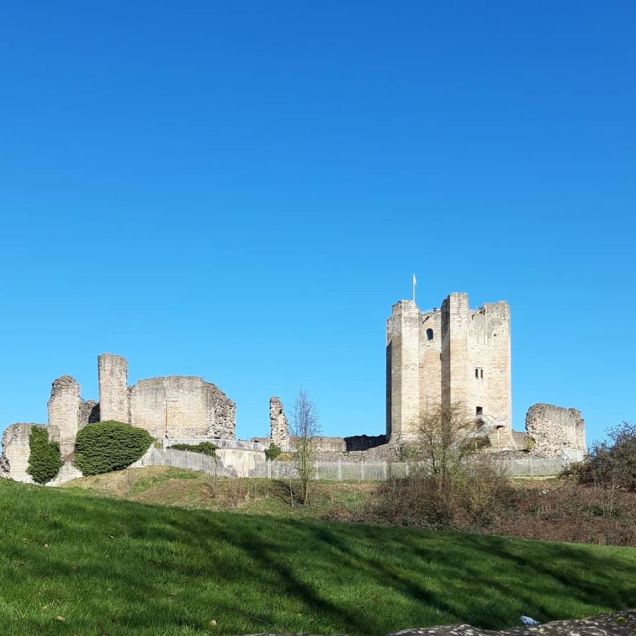
Conisbrough Castle

To keep it relevant with Doncaster and South Yorkshire, I decided to talk about one of my favourite subjects, and my current research project; the Warennes, the earls of Surrey who held Conisbrough from the Norman Conquest until the death of the last earl in 1347.

A family at the centre of English history for almost 300 years. It is a story of strong family loyalties, national and international rivalries, rebellion and civil wars, lost loves and royal connections. It’s also the story of Conisbrough’s iconic castle!

This talk is dedicated to David Hey. In the 1970s he was one of few professional historians to respond in a positive way to the growing interest in family and local history. David was a highly regarded and pioneering figure in this field.He held posts of importance such as being Professor of Local and Family History at the University of Sheffield and President of the British Association of Local History. But he was first and foremost a Yorkshireman at heart and never forgot his roots. He was the Patron of the Doncaster and District Heritage Association and gave a talk at the 2013 Heritage Festival.

So, here it is:

I hope you enjoyed it!

I would like to express my immense gratitude to the Doncaster Local Heritage Festival for inviting me to present such a prestigious lecture. I truly hope I did justice to the memory of David Hey.

*

My Books

Coming soon! 

Ladies of Magna Carta: Women of Influence in Thirteenth Century England will be released in the UK on 30 May 2020 and is now available for pre-order from Pen & SwordAmazon UK and from Book Depository worldwide. It will be released in the US on 2 September and is available for pre-order from Amazon US.

Also by Sharon Bennett Connolly:

Silk and the Sword: The Women of the Norman Conquest traces the fortunes of the women who had a significant role to play in the momentous events of 1066.  Available now from Amazon UK,  Amberley Publishing, Book Depository and Amazon US.

Heroines of the Medieval World tells the stories of some of the most remarkable women from Medieval history, from Eleanor of Aquitaine to Julian of Norwich. Available now from Amberley Publishing and Amazon UK, Amazon US and Book Depository.

*

You can be the first to read new articles by clicking the ‘Follow’ button, liking our Facebook page or joining me on Twitter and Instagram.

©2020 Sharon Bennett Connolly 
Richard of Chilham, King John’s Illegitimate Son

I recently shared an article about Joan, Lady of Wales, illegitimate daughter of King John. Now, John had several illegitimate children, and while Joan is probably the most famous, and certainly had the highest profile, as a Welsh princess, she was not the only one who made it into the history books. Whilst researching the Warenne earls of Surrey recently, I had the chance to look deeper into the story of another of John’s illegitimate brood, Richard of Chilham.

King John

From the late 1180s or early 1190s onwards, Earl Hamelin de Warenne’s relationship with King John was complicated by the fact that John had a brief affair with one of Hamelin’s daughters. It has been impossible to determine which of the daughters was the mother, it seems likely it was either Isabel or Ela, as Matilda was already married at the time of Richard’s birth. The result of the affair was an illegitimate son, named Richard, after John’s older brother. He was known in various guises as Richard of Chilham, Richard of Dover, Richard fitzRoy or even Richard fitz John. He was also known as Richard de Warenne, referring to his maternal line, which is the name that is inscribed on his seal; this seal bears his arms, a derivative of the royal arms, albeit with 2 lions rather than 3, emphasising his Plantagenet descent.

Richard was probably born in the 1190s and was the only one of John’s illegitimate children to gain honorific title, following his marriage to Rose of Dover in 1214, by which he became lord of the castle and honour of Chilham, in Kent. Richard’s lordship held in the region of fifteen knights’ fees, in Kent and Essex. Richard served his father and, subsequently, his royal half-brother, Henry III, as a royalist captain and administrator during the First Barons’ War of 1215-17.

From 1216, just days before his death, John appointed Richard as constable of Wallingford Castle and custodian of the honour of Wallingford; it was a strategically important castle and the honour held some 120 knights’ fees. In May 1218, he was granted the honour at royal pleasure and held it until 1227. Between 1217 and 1221 he was also sheriff of Berkshire, though it appears he had little involvement in the day-to-day duties of the position; Henry Saccario did the accounting for him at the exchequer, with Richard always finding reason to be elsewhere.

Richard distinguished himself at the Battle of Sandwich on 24 August 1217, the sea battle in which the English naval forces intercepted the French bringing equipment and supplies to Prince Louis, the Dauphin of France, who had invaded England in 1216 in an attempt to seize the throne. The dauphin’s French forces and baronial allies had been defeated at the Battle of Lincoln in May but were still causing trouble in other parts of England.

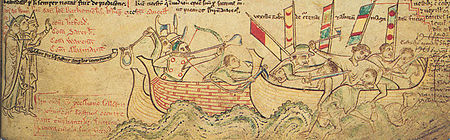
The Battle of Sandwich, showing the capture and killing of Eustace the Monk

Richard commanded one of the ships in the battle, which he brought alongside the French flagship, the most formidable of the enemy’s vessels, commanded by Eustace the Monk. Richard and his men boarded the ship. Roger of Wendover suggests that it was Richard himself who beheaded Eustace the Monk after his capture; and though other sources disagree with this, none deny that Richard’s actions in the battle were significant. The Battle of Sandwich was an important action in that it forced Prince Louis to come to terms with the regency government of King Henry III. As a consequence, Louis agreed to a settlement of £10,000 as an inducement to go home.

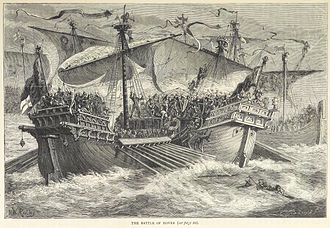
1873 illustration of the Battle of Sandwich

In 1218 Richard left to join the fifth crusade in Egypt. He returned home in 1220 or, more likely, 1221. He is known to have reached the crusader camp at Damietta as he borrowed money whilst there, 20 marks from an Italian cardinal, and was pressured for its repayment in 1128. Henry III eventually repaid the loan on Richard’s behalf. Richard was perhaps as much as seventeen years older than his half-brother, King Henry III, and doesn’t appear to have had a close relationship with him and he never appeared on the king’s witness lists. He did receive some gifts from the king, though nothing extravagant or extraordinary, such as venison or estates. Despite the trust his father had held in him, he played a limited role in England’s affairs after his return from crusade.

He fought against the Welsh in 1223 and in the same year accompanied Alexander II, King of Scots, his second cousin once removed through his Warenne family, on pilgrimage to Canterbury. Though it has to be said that the records are unclear, and the Richard involved in either, or both, of these events could have been Richard of Cornwall, the full brother of Henry III and half-brother of Richard of Chilham. It was certainly Richard of Chilham who was one of the tax collectors for Kent in 1225, when the fifteenth was granted for Henry III’s campaign to Poitou.

Most of the evidence of Richard of Chilham comes from the debts and lawsuits held against him. Indeed, one of the advantages of his joining the fifth crusade was that it resulted in the deferment of a court case he was defending. His debts to the crown started with the scutage of 1217, a tax of 2 marks per fee on the fourteen knights’ fees of his Chilham barony. The debts piled up through the 1220s, with Richard failing to appear when summoned. He was threatened with having his land taken into the king’s custody. The debts he owed to one  William Scissor (or the tailor) were to be recovered by distraint of land and chattels, with his land to be returned when he paid his debts.

Henry III

The king stepped in at this point, though for the sake of his sister-in-law, Rose, rather than his brother. Henry III ordered the sheriff of Kent to prevent Richard from wasting, selling or damaging the manor of Northwood, which was assigned to Rose for her maintenance. Richard and Rose were also locked in a long-running dispute with Robert fitz Walter and Richard de Montfichet over Rose’s rights to the manor of Lesnes, which arose out of Rose’s rights to the inheritance of Richard de Lucy, Henry II’s justiciar. The eyre in Kent in 1227 decided that the dispute should be settled by a duel, with each side nominating champions. In all honesty, it was little more than a brawl, which Richard and Rose won. After the duel, Robert fitz Walter recognised Rose’s right to Lesnes and quitclaimed to Richard, Rose and their heirs, for which Richard and Rose paid him 40 marks, which they had to borrow for the purpose.

Their debts thus increased further, in 1229, sheriffs were ordered to take possession of all the manors of Richard and Rose, save Lesnes, which Rose was to keep for her maintenance. Richard joined Henry III’s forces sailing for Brittany, which put two pending court cases against him into abeyance and he was granted respite from his debts. Later in the 1230s, sheriffs were ordered to prevent the sale of lands and woods by Richard, lands which were a part of Rose’s inheritance. By 1242 Richard was back in the king’s favour and was advanced 20 marks to buy equipment and supplies for an expedition to Lundy, although it is possible that this was Richard’s son, also Richard, who would join the king’s expedition to Gascony that same year, receiving an annual fee of 50 marks.

Richard of Chilham and William Bardrolf led the seaborne operations against the notorious outlaw and pirate, William de Marisco. In 1238 the would-be assassin of Henry III, whose attack was foiled by the king spending the night with the queen instead of his own bed, claimed that Marisco was behind the plot. Marisco had based himself on the island of Lundy in the Bristol Channel, from where he attacked shipping, taking ransoms and plunder. Richard successfully captured Marisco and his accomplices, after scaling the island’s cliff to reach them, most of the gang were later executed in London.

In 1243 Richard was granted a pardon for £100 for a debt to the moneylender Benedict Crispin. This seems to have come about, not by Richard’s actions, but by the affection the king held for Richard’s son, King Henry’s nephew, Richard, who is referred to in the fine roll, alongside the paynment of his fee for the Easter term, as ‘our beloved and faithful Richard of Dover.’

Lesnes Abbey, Kent

Richard of Chilham died in 1246, leaving his wife, Rose of Dover, still burdened by her husband’s debts, his son Richard and a daughter, Isabel, who eventually inherited the honour of Chilham. One argument for the identity of Richard’s mother is in the naming of his daughter. It has been suggested that Richard named his daughter after his mother, Isabel, but this is hardly incontrovertible proof; he could have just as easily named her after his grandmother, Countess Isabel. And the younger Isabel had no children from either of her two marriages, which may suggest she was not the mother. The other main candidate is Ela, whose marriages were that bit less prestigious than her sisters’, being to men we known little-to-nothing of besides their names, which may hint at a scandalous past. On the other hand, her second husband was a knight form a gentry family not far from Conisbrough, Sir William FitzWilliam of Sprotborough – which could suggest that she married for love rather than advancement.

Unfortunately, a strange entry in the Annales Cestriensis only adds to the confusion. In 1200, it records that ‘W. de Waren meunch fil Regis‘ was killed, suggesting that Richard’s mother was killed in 1200. Earl Hamelin and Countess Isabel did not have a daughter with the initial ‘W’, however, and neither did any of their children died in 1200. In the Chronicle of Robert of Gloucester, Richard’s mother is merely identified as ‘the erles daughter of Wareine’. With such little information to go on, we can only speculate.

*

Images courtesy of Wikipedia

Further reading: Cassidy, Richard, Rose of Dover (d.1261), Richard of Chilham and an Inheritance in Kent; Turner, Ralph V., Two Illegitimate Sons of King John: A Comparison of Their Careers; Farrer, William and Charles Travis Clay, editors, Early Yorkshire Charters, Volume 8: The Honour of Warenne; Lloyd, Simon, Chilham, Sir Richard of (d. 1246) (article); Morris, Marc King John: Treachery, Tyranny and the Road to Magna Carta; Church, Stephen, King John: England, Magna Carta and the Making of a Tyrant; Danziger, Danny and John Gillingham, 1215: The Year of Magna Carta; Crouch, David, William Marshal; fmg.ac

My Books

Signed, dedicated copies of all my books are available through my online bookshop.

Coming on 15 June 2024: Heroines of the Tudor World

Heroines of the Tudor World tells the stories of the most remarkable women from European history in the time of the Tudor dynasty, 1485-1603. These are the women who ruled, the women who founded dynasties, the women who fought for religious freedom, their families and love. These are the women who made a difference, who influenced countries, kings and the Reformation. In the era dominated by the Renaissance and Reformation, Heroines of the Tudor World examines the threats and challenges faced by the women of the era, and how they overcame them. From writers to regents, from nuns to queens, Heroines of the Tudor World shines the spotlight on the women helped to shape Early Modern Europe.

Heroines of the Tudor World is now available for pre-order from Amberley Publishing and Amazon UK.

Out Now! Women of the Anarchy

Two cousins. On the one side is Empress Matilda, or Maud. The sole surviving legitimate child of Henry I, she is fighting for her birthright and that of her children. On the other side is her cousin, Queen Matilda, supporting her husband, King Stephen, and fighting to see her own son inherit the English crown. Women of the Anarchy demonstrates how these women, unable to wield a sword, were prime movers in this time of conflict and lawlessness. It show how their strengths, weaknesses, and personal ambitions swung the fortunes of war one way – and then the other.

Available from Bookshop.orgAmberley Publishing and Amazon UK.

Also by Sharon Bennett Connolly:

King John’s Right-Hand Lady: The Story of Nicholaa de la Haye is the story of a truly remarkable lady, the hereditary constable of Lincoln Castle and the first woman in England to be appointed sheriff in her own right. It is is available from King John’s Right-Hand Lady: The Story of Nicholaa de la Haye is the story of a truly remarkable lady, the hereditary constable of Lincoln Castle and the first woman in England to be appointed sheriff in her own right. Available from all good bookshops or direct from Pen & Sword Booksbookshop.org and AmazonDefenders of the Norman Crown: The Rise and Fall of the Warenne Earls of Surrey tells the fascinating story of the Warenne dynasty, from its origins in Normandy, through the Conquest, Magna Carta, the wars and marriages that led to its ultimate demise in the reign of Edward III. Available from Pen & Sword BooksAmazon in the UK and US, and Bookshop.org

Ladies of Magna Carta: Women of Influence in Thirteenth Century England looks into the relationships of the various noble families of the 13th century, and how they were affected by the Barons’ Wars, Magna Carta and its aftermath; the bonds that were formed and those that were broken. It is now available in paperback and hardback from Pen & Sword,  Amazon, and Bookshop.orgHeroines of the Medieval World tells the stories of some of the most remarkable women from Medieval history, from Eleanor of Aquitaine to Julian of Norwich. Available now from Amberley Publishing and Amazon, and Bookshop.orgSilk and the Sword: The Women of the Norman Conquest traces the fortunes of the women who had a significant role to play in the momentous events of 1066. Available now from Amazon,  Amberley Publishing, and Bookshop.org.

Alternate Endings: An anthology of historical fiction short stories including Long Live the King… which is my take what might have happened had King John not died in October 1216. Available in paperback and kindle from Amazon.

Podcast:

Have a listen to the A Slice of Medieval podcast, which I co-host with Historical fiction novelist Derek Birks. Derek and I welcome guests, such as Bernard Cornwell and discuss a wide range of topics in medieval history, from significant events to the personalities involved.

*

Don’t forget! Signed and dedicated copies of all my books are available through my online bookshop.

For forthcoming online and in-person talks, please check out my Events Page.

You can be the first to read new articles by clicking the ‘Follow’ button, liking our Facebook page or joining me on Twitter and Instagram.

*

©2020 Sharon Bennett Connolly FRHistS

Guest Post: The Brandon Trilogy by Tony Riches

It is a pleasure to welcome author Tony Riches to History … the Interesting Bits today. Tony has written a fabulous trilogy based on the story of Charles Brandon and two of his wives, Mary Tudor, Queen of France, and Katherine Willoughby.

Mary – Tudor Princess

From the author of the best-selling Tudor Trilogy, the true stories of the Tudor dynasty continue with Mary Tudor, daughter of King Henry VII and sister of King Henry VIII.

Born into great privilege, Mary has beauty and intelligence beyond her years and is the most marriageable princess in Europe. Henry plans to use her marriage to build a powerful alliance against his enemies. Will she dare risk his anger by marrying for love?

Meticulously researched and based on actual events, this ‘sequel’ follows Mary’s story from book three of the Tudor Trilogy and is set during the reign of King Henry VIII.

Brandon – Tudor Knight

Handsome, charismatic and a champion jouster, Sir Charles Brandon has a secret. He has fallen in love with Henry VIII’s sister, Mary Tudor, the beautiful widowed Queen of France, and risks everything to marry her without King Henry’s consent.

Brandon becomes Duke of Suffolk, but his loyalty is tested fighting Henry’s wars in France. Mary’s public support for Queen Catherine of Aragon brings Brandon into dangerous conflict with the ambitious Boleyn family and the king’s new right-hand man, Thomas Cromwell.

Torn between duty to his family and loyalty to the king, Brandon faces an impossible decision: can he accept Anne Boleyn as his new queen?

Katherine – Tudor Duchess

Attractive, wealthy and influential, Katherine Willoughby is one of the most unusual ladies of the Tudor court. A favourite of King Henry VIII, Katherine knows all his six wives, his daughters Mary and Elizabeth, and his son Edward.

She marries Tudor knight, Sir Charles Brandon, and becomes Duchess of Suffolk at the age of fourteen. Her Spanish mother, Maria de Salinas, is Queen Catherine of Aragon’s lady in waiting, so it is a challenging time for them all when King Henry marries Anne Boleyn.

Following Anne’s dramatic downfall, the tragic death of Jane Seymour, and the short reign of Catherine Howard, Katherine’s young sons are tutored with the future king, Prince Edward, and become his friends.

Katherine and Charles Brandon are chosen to welcome Anna of Cleves as she arrives in England. When the royal marriage is annulled, Katherine’s friend, Catherine Parr becomes the king’s sixth wife, and they work to promote religious reform. When King Edward dies, his Catholic sister Mary is crowned queen, and Katherine’s Protestant faith puts her family in great danger – from which there seems no escape.

About the Author

Tony Riches was born in Pembrokeshire, West Wales, UK, and spent part of his childhood in Kenya. He gained a BA degree in Psychology and an MBA from Cardiff University. After writing several successful non-fiction books, Tony decided his real interest is in the history of the fifteenth and sixteenth centuries, and now his focus is on writing historical fiction about the lives of key figures of medieval history. His Tudor Trilogy has become an international best-seller and he is in regular demand as a guest speaker about the lives of the early Tudors. Find out more at his website https://www.tonyriches.com/ and find him on Facebook and Twitter @tonyriches.

Links: Amazon UK; Amazon US.

Social media: Author Website; Writing Blog; Facebook; Twitter

*

My Books

Coming soon! 

Ladies of Magna Carta: Women of Influence in Thirteenth Century England will be released in the UK on 30 May 2020 and is now available for pre-order from Pen & SwordAmazon UK and from Book Depository worldwide. It will be released in the US on 2 September and is available for pre-order from Amazon US.

Also by Sharon Bennett Connolly:

Silk and the Sword: The Women of the Norman Conquest traces the fortunes of the women who had a significant role to play in the momentous events of 1066.  Available now from Amazon UK,  Amberley Publishing, Book Depository and Amazon US.

Heroines of the Medieval World tells the stories of some of the most remarkable women from Medieval history, from Eleanor of Aquitaine to Julian of Norwich. Available now from Amberley Publishing and Amazon UK, Amazon US and Book Depository.

*

You can be the first to read new articles by clicking the ‘Follow’ button, liking our Facebook page or joining me on Twitter and Instagram.

©2020 Sharon Bennett Connolly and Tony Riches

Guest Post: Introducing Michael Saxon

Today it is a pleasure to welcome Kevin Heads to the blog, to introduce us to Michael Saxon, his new hero for children aged 10 and above.

Kevin Heads is a writer and poet who has a love of Historical Fiction. He classes himself more as a storyteller than a writer, and likes his stories to reflect that approach.

Born in Newcastle-Upon-Tyne in 1962, he grew up in Cramlington Northumberland, and after leaving school with no idea what he wanted to do, ended up as an apprentice box maker in a carton-manufacturing firm.

Kevin met his wife Sue at High School and after they married they had two children Sam and Stephanie. This is where Kevins’ love of storytelling began. Tired of reading the same books to his children, he started inventing characters and stories to entertain his children at bedtime. His children loved them and still remember them fondly. He never wrote these stories down as they were only for his children and he never took them seriously.

After moving around the country several times throughout his career Kevin ended up in Selby North Yorkshire. Surrounded by history he often spends time in Selby Abbey, York and walking the local battlefields, Towton being a particular favourite. However it was on a trip back from Devon that Kevin had the idea of a series of historical fiction books aimed at the younger generation.

Michael Saxon was born and by the time Kevin had driven home the first few chapters were already formulated in his mind.

Kevin is an avid reader and Bernard Cornwell is one of his favourite authors. He has read all the books apart from the Sharpe series citing Shaun Beans’ portrayal in the T.V adaptation as the reason. He loved the series and watched them all with his son and that is a memory he doesn’t want to change by reading the books.

It is Sharpe that made him decide that Waterloo would be the first setting for his Michael Saxon series specifically The Chateau d’Hougoumont.

Where it goes from there we will have to wait and see, although it is possible that a great naval battle may be next in line.

Kevin has also written an adult book set in Norway around 870AD and this is currently being edited. He plans to make Helga a series also.

He has several other ideas moving forward, he would like to visit 1066 and also has plans for a story based around the battle of Towton.
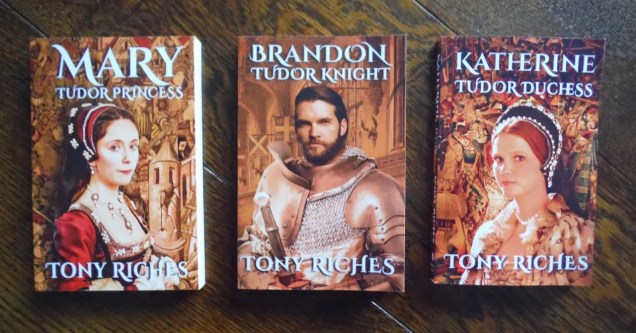
Although history plays a big part in these stories, it is the characters that Kevin wants people to engage with. Without them there is no story.

Michael Saxon Waterloo

After Michael’s grandfather goes missing presumed dead, his family moves from the city into the country home that was left to his mother in his grandfathers’ will. Michael struggles to fit in and hates the country life. He is failing at school and has no friends; spending most of his time playing video games in his bedroom. Then, after his Great Aunt visits from Whitby, things dramatically change.

She tells him of the library in the attic that is full of historical books, and gives him the key to look for himself. This is no ordinary attic and when Michael takes a book about Waterloo from the dust-covered shelves and attempts to leave, he is immediately transported through time and history to the Chateau d’Hougoumont.

Now dressed, as a soldier in the Coldstream Guards, Michael has to find a way to navigate the battlefield and find his way home. With no experience of real warfare he must depend on others to help him fight and survive in one of the biggest battles in British History.

This is the debut book by author Kevin Heads and the first in a series.

Aimed at 10 years plus it is a gentle introduction into the world of Historical fiction

It is available to purchase on Amazon now in both Paperback and Kindle format.

You can also find Kevin and his books on his website. http://www.kevinheads.co.uk, where he blogs about his stories and his poetry.

The characters, fact or fiction:

The best part of writing a book is learning new things, and intertwining the story around actual facts and characters.

In Michael Saxon there is a fair amount of creative invention, yet the facts surrounding the battle at Hougoumont remain accurate as far as I can ascertain from historical sources.

Most of the main characters are fictional as we enter the gates of the Chateau. Angus, Jimmy, Alec and Helena all created and liberties were taken with Helena as there is no evidence that Major Hunter, the surgeon in Hougoumont, actually had a daughter at all, and even if he did then she was definitely not at the battle.

Cartwright is my invention and was the most fun to write, a wicked man who was only interested in self-preservation. Although fictional I imagine there was a few like him in the army at that time.

Other characters were real.

Sergeant Graham for one was instrumental in the closing of the north gate during the battle.

Lt – Colonel Charles Dashwood was also a real person also and in charge of the third guards that defended the orchard.

Lieutenant Colonel James MacDonnell was in charge of the whole garrison, although his speech in this story is purely fictional.

Major Hunter also real and indeed a surgeon in Hougoumont.

Corporal Brewster was also a fact, although he may well have been a Private at the time. His intervention during the battle was said to have helped save the day and he was decorated for his actions and bravery.

The one that interests me the most was the French drummer boy that was rumoured to be the only survivor of the French troops that managed to get through the north gate before it was closed.

Although I could find no official proof that this actually happened, the fact it is rumoured was enough for me to include it in my book.

I named him Philip as the name transcends both the French and English language.

I hope this gives you some incite into the history and characters written about in my book and urges you to read more about the people and places from our historical past. History is such a great subject and our past should never be forgotten.

*

My Books

Coming soon! 

Ladies of Magna Carta: Women of Influence in Thirteenth Century England will be released in the UK on 30 May 2020 and is now available for pre-order from Pen & SwordAmazon UK and from Book Depository worldwide. It will be released in the US on 2 September and is available for pre-order from Amazon US.

Also by Sharon Bennett Connolly:

Silk and the Sword: The Women of the Norman Conquest traces the fortunes of the women who had a significant role to play in the momentous events of 1066.  Available now from Amazon UK,  Amberley Publishing, Book Depository and Amazon US.

Heroines of the Medieval World tells the stories of some of the most remarkable women from Medieval history, from Eleanor of Aquitaine to Julian of Norwich. Available now from Amberley Publishing and Amazon UK, Amazon US and Book Depository.

*

You can be the first to read new articles by clicking the ‘Follow’ button, liking our Facebook page or joining me on Twitter and Instagram.

©2020 Sharon Bennett Connolly