Guest Post: The Ambassadress by Ronan Beckman

The Historical Writers Forum have released a new Anthology of short stories. You may remember that last year’s Anthology, Alternate Endings, included a short story about the final days of King John, by me! This year’s Anthology, Masterworks: Historical Fiction Inspired by Works of Art, will make you look at some famous artworks a little differently…

Today, I am joined by one of the contributors, Ronan Beckman, whose story is inspired by Emma Hamilton. Over to Ronan…

Do you remember what got you hooked onto a specific time period or aspect of history? I had just finished reading Amanda Foreman’s excellent biography Georgiana, The Duchess of Devonshire , which resulted in my addiction to everything about the Georgian-era but especially to women’s history in that time. Often relegated to the sidelines of history, Georgian times allowed women to begin to step into the spotlight – albeit in very slow, tiny steps. I began to voraciously read biographies of prominent ladies of that time. And one story that truly stood out for me was the life of a blacksmith’s daughter from Cheshire born as Amy Lyon. But the world knows her better as Emma, Lady Hamilton; lover of Admiral Nelson. Flora Fraser’s Beloved Emma laid out the incredible story of the amazing transformation of this pretty young woman into one of the most talked about celebrities of her age.

Portrait of Emma Hamilton by George Romney

Several years later, The National Maritime Museum in London put together a fabulous exhibition entitled Seduction & Celebrity that explored Emma Hamilton’s rise and fall, from beginning to end. One of the most noticeable aspects of the show was that there was ample material to display, primarily from one particular artist. George Romney was one of the most prominent society portrait painters of the late Georgian period. Although his talent was comparable to his well-respected contemporaries, such as Joshua Reynolds, Thomas Gainsborough and John Hoppner; he refused to participate in the antics associated with the Royal Academy of Arts and their annual exhibitions. Artists would become fiercely competitive as they all vied for the most prominent places within the show, hoping that their works would stand out from the rest. Romney wanted no part of this circus, and relied on his talent and reputation to gain custom amongst his wealthy clients. This worked out well for him, and he had no shortage of sitters. However, the tedium of producing staid portraiture of the elite classes began to prove tiresome.

How fortunate for Romney then that a customer, Sir Charles Greville, brought in a secret mistress that he had ensconced away in a humble, rural cottage in nearby Edgeware. The 16 year-old Amy Lyon had already experienced several tragedies in her young life; having found herself pregnant by another aristocratic man, Sir Henry Fetherstonhaugh, who promptly abandoned her. Greville came to the rescue, but on the proviso that she gave her baby away, living a life of thrift and economy whilst being at his beck and call. She had no room to negotiate and was grateful for this second chance. Greville sought to have her beauty be captured and admired on canvas, for him to be able to display to his friends. In effect, he wanted to boast “This heavenly goddess is mine, and you cannot even see her in the flesh. Don’t you envy me?”
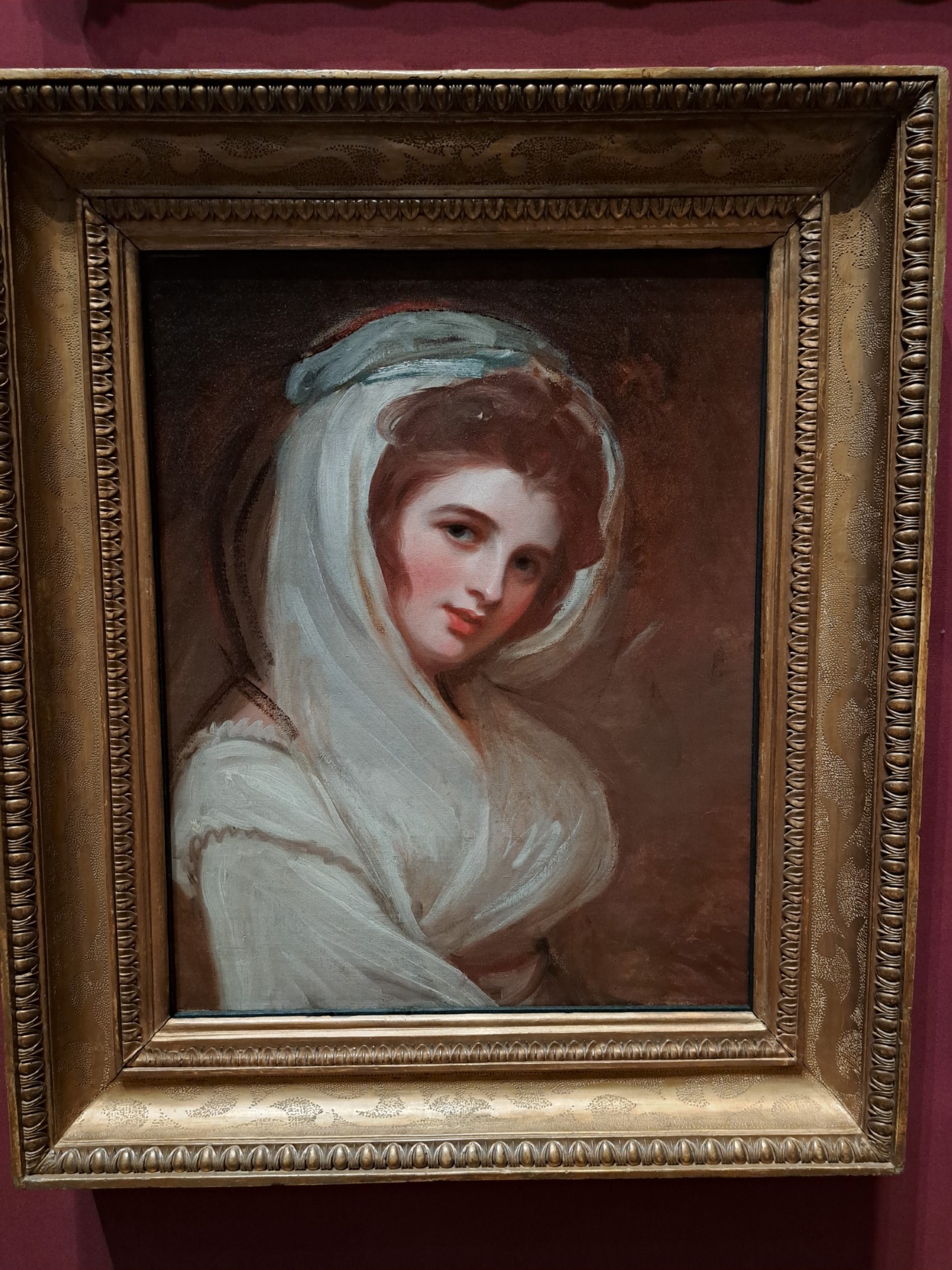
Emma Hart by Romney

Romney was immediately enchanted by the charisma and stunning beauty of the newly renamed Emma Hart. Her presence reinvigorated his artwork. They embarked on a creative partnership that resulted in Romney’s finest and most creative output. In return, Emma was portrayed in various guises for posterity. She had to reinvent herself for each sitting, becoming a mythological creature or some historic character from long ago. Emma sat for dozens of paintings by Romney. She was his muse, allowing him to explore his craft beyond the confines of standard portraiture. Greville was happy to loan her modelling services to Romney, for it was increasing the value of his ‘ward’ that he had saved from a certain life of penury. Engravings had been made of some of Romney’s paintings, affording a glimpse of her allure to a wider audience. As her image was circulated, there was an increasing curiosity aroused throughout the capital city. Who was this charming being?

The drip-feed of artistic content provided opportunities for both Romney and Emma. Romney’s reputation and name was further advanced as well as inspiring his art to reach new levels of creativity. Emma became what may well be the very first Supermodel – a celebrity whose fame and notoriety was constantly on an upward trajectory. It seems apparent that Romney became infatuated with Emma. And perhaps Emma appreciated the advice and friendship of a man outside of the realm of the Ton, but who knew of the inner workings and mindset of the Upper Class who made up his clientele.

But this fame and notoriety was not appealing to Sir Charles Greville, who was seeking a wealthy heiress to supplement his dwindling finances. Being saddled with an infamous beauty as a mistress would not make him very appealing as a suitor to the respectable ladies that he wanted to pursue. Therefore, he duped Emma into travelling to Naples, to visit his uncle who was the serving British ambassador there. He had offered her to his uncle as a mistress, without her consent or knowledge. This separation severed the symbiotic artistic relationship between Emma and Romney for several years. Romney, who was prone to depression, was affected by her absence deeply. Although furious with Greville for abandoning her, Emma did make the best of her situation – enjoying her time in the royal court of Naples and eventually becoming quite fond of her ambassador.

In the summer of 1791, Emma returned to England to marry Sir William Hamilton and return to Naples as a respectable wife of the ambassador. During these brief few weeks, Emma reunited with her favourite artist, kick-starting a frenetic pace of artistic output as the painter and his muse were working together again. This brief slice in time intrigued me and I wanted to explore it further. I am fortunate enough to have seen many examples of Romney’s work with Emma as the model. You can feel the creative frisson embedded in these artworks. Romney’s paintings of Emma are seared with an energy that simply does not exist in his other portraits. There was something electric between these two individuals. Was it romantic? There is a feeling of magnetic attraction when one looks through Romney’s gaze in his portraits of Emma. I must say that even though Emma modelled for other great artists (Joshua Reynolds, Thomas Lawrence, Élisabeth Louise Vigée Le Brun, among many others), that spark of something special and extraordinary is just not there.

Romney self-portrait

The last painting that Romney painted of Emma was actually painted on her wedding day. Entitled The Ambassadress, the viewer is a witness to the complete transformation of Emma Hart into Lady Hamilton. As Vesuvius erupts in the dark background, one can imagine the well of emotions bursting forth from Romney’s paintbrush – being well aware that this was the last time that he would lay eyes upon the divine Emma he so cherished. Emma looks back at him, slightly pensive but very refined as she knows she is about to embark on a life of newfound respectability. There is so much wistful emotion silently conveyed in this moving portrait. What were those last moments like in Romney’s studio, as they parted ways for the final time?

The Ambassadress was the inspiration for my short story of the same name. It is one of eleven short stories in the Historical Writer Forum’s anthology entitled Masterworks. Eleven authors have written stories that have been influenced by a particular work of art. The result is a series of stories that takes the reader through time and place, from ancient Sumerian kingdoms to present day London. Available now through Amazon.

About the author:

Ronan Beckman is an American educator who has lived in the UK for over 30 years. His interest in history and genealogy helped to spark an interest in further developing the stories of some of the family he researched – resulting in his debut novel ‘An Actress of Repute’. Subsequently, he has become a bit obsessed with all things Georgian and Regency related. Further adventures are in the works for the character of Elizabeth Searle and her fellow actor friends. His latest project has been editing a transcript of a rare, out-of-print book by a Lancashire coal miner who became secretary of the TUC and a Member of Parliament. The new annotated version of Samuel Woods’ ‘Visions of the Mine’ contains biographical notes and historical images. Visit his blog at http://www.ronanbeckman.com.

*

My Books

Christmas is coming!

Signed, dedicated copies of all my books are available through my online bookshop.

Coming 15 January 2024: Women of the Anarchy

On the one side is Empress Matilda, or Maud. The sole surviving legitimate child of Henry I, she is fighting for her birthright and that of her children. On the other side is her cousin, Queen Matilda, supporting her husband, King Stephen, and fighting to see her own son inherit the English crown. Both women are granddaughters of St Margaret, Queen of Scotland and descendants of Alfred the Great of Wessex. Women of the Anarchy demonstrates how these women, unable to wield a sword, were prime movers in this time of conflict and lawlessness. It show how their strengths, weaknesses, and personal ambitions swung the fortunes of war one way – and then the other.

Available for pre-order from Amberley Publishing and Amazon UK.

Also by Sharon Bennett Connolly:

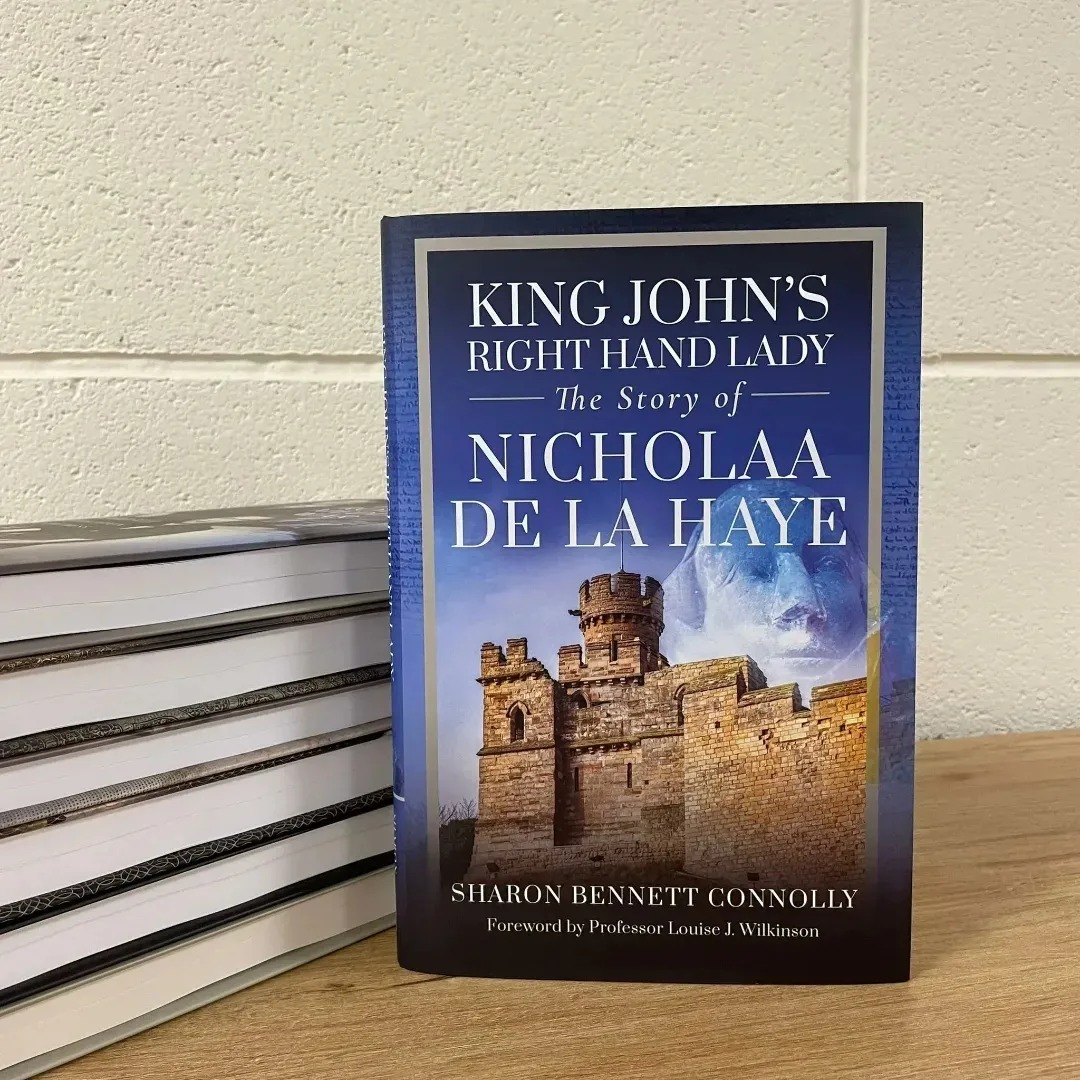
Out nowKing John’s Right-Hand Lady: The Story of Nicholaa de la Haye is the story of a truly remarkable lady. Nicholaa de la Haye was the hereditary constable of Lincoln Castle and the first woman in England to be appointed sheriff in her own right. Her strength and tenacity saved England at one of the lowest points in its history. Nicholaa de la Haye is one woman in English history whose story needs to be told…

King John’s Right-Hand Lady: The Story of Nicholaa de la Haye is now available from Pen & Sword Booksbookshop.org and Amazon.

Defenders of the Norman Crown: The Rise and Fall of the Warenne Earls of Surrey tells the fascinating story of the Warenne dynasty, of the successes and failures of one of the most powerful families in England, from its origins in Normandy, through the Conquest, Magna Carta, the wars and marriages that led to its ultimate demise in the reign of Edward III. Defenders of the Norman Crown: Rise and Fall of the Warenne Earls of Surrey is now available from Pen & Sword BooksAmazon in the UK and US, and Bookshop.org.

Ladies of Magna Carta: Women of Influence in Thirteenth Century England looks into the relationships of the various noble families of the 13th century, and how they were affected by the Barons’ Wars, Magna Carta and its aftermath; the bonds that were formed and those that were broken. It is now available in paperback and hardback from Pen & Sword,  Amazon, and Bookshop.org.

Heroines of the Medieval World tells the stories of some of the most remarkable women from Medieval history, from Eleanor of Aquitaine to Julian of Norwich. Available now from Amberley Publishing and Amazon, and Bookshop.org.

Silk and the Sword: The Women of the Norman Conquest traces the fortunes of the women who had a significant role to play in the momentous events of 1066. Available now from Amazon,  Amberley Publishing, and Bookshop.org.

Alternate Endings: An anthology of historical fiction short stories including Long Live the King… which is my take what might have happened had King John not died in October 1216. Available in paperback and kindle from Amazon.

Podcast:

Have a listen to the A Slice of Medieval podcast, which I co-host with Historical fiction novelist Derek Birks. Derek and I welcome guests, such as Bernard Cornwell, and discuss a wide range of topics in medieval history, from significant events to the personalities involved.

*

Don’t forget! Signed and dedicated copies of all my books are available through my online bookshop.

For forthcoming online and in-person talks, please check out my Events Page.

You can be the first to read new articles by clicking the ‘Follow’ button, liking our Facebook page or joining me on Twitter and Instagram.

*

©2023 Ronan Beckman and Sharon Bennett Connolly FRHistS
Guest Post: Fabric as Power by Judith Arnopp

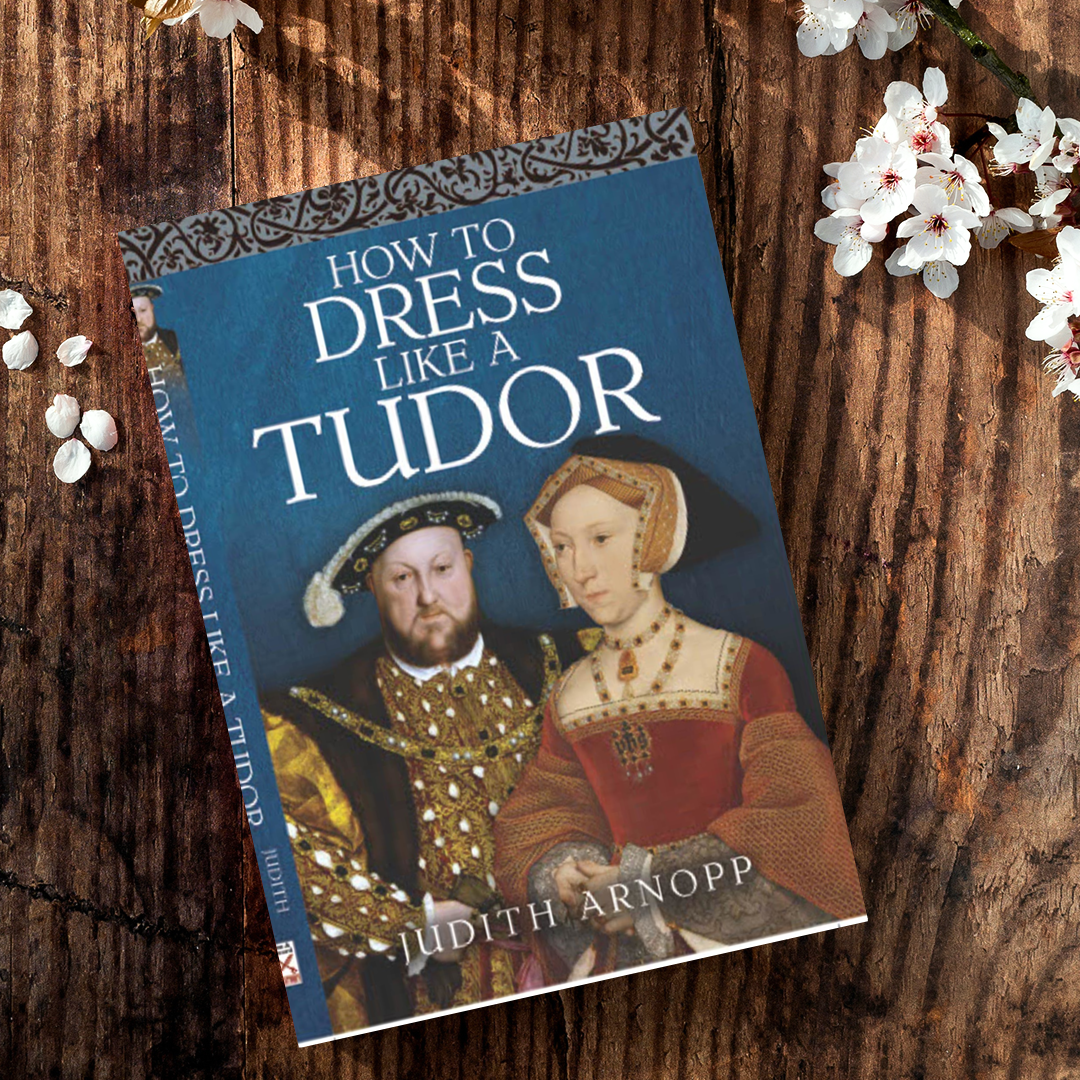
It is an absolute pleasure to welcome novelist and historian Judith Arnopp to History…the Interesting Bits today. Judith’s new book, How to Dress Like a Tudor, is one I have been excited to get my hands on ever since I heard she was writing it. The Tudors had a special talent for sumptuous gowns and bright, vibrant colours. They knew how to steal the show!

So, here’s Judith to give you a little taster of her research.

The Evolving Tudor Image: fabric as power

We have all become so familiar with royal Tudor images that we no longer really see them. One glance tells us who they are. We think we know them. They exude power, majesty and the iron fist of mastery.

Earlier portraits of the Plantagenet kings, and even the early portraits of Henry VII are very different to that of his son and grandchildren. But it was Henry VII, the first ‘Tudor’ king who began to develop the ‘Tudor’ brand.

The Tudors were the new kids on the block; nobody could foresee what sort of King Henry would make and his popularity depended very much on that of his wife, Elizabeth of York. Yorkist propaganda demeaned his claim to the throne, declaring that his mother’s line was illegitimate; that Lancaster had stolen the crown in 1399.

Henry, realising he needed to reinforce his hold on the country, embellished his family history to create an impressive Tudor dynasty. He stressed the royal connection of his mother, Margaret Beaufort, and her descent from John of Gaunt and, to strengthen his claim further, he legally removed the stigma of bastardy from the family. He reiterated the royal descent of his grandmother, Katherine of Valois and, more surprisingly, claimed descent from the ancient Welsh King Cadwaladr, and King Arthur. To further cement his link to Arthur he named his first-born son in his honour and embellished the round table at Winchester with the Tudor rose.

With the blood of both York and Lancaster flowing in the veins of his two sons and several daughters, the Tudor line looked set to continue but Arthur’s sudden death in 1502 taught Henry that a king can never have too many sons. He lost no time in teaching his remaining son, later to become Henry VIII, the finer points of kingship. He stressed the importance of his role, the unreliability of the fickle populace, and the crucial need for strong male heirs to perpetuate the dynasty. The importance of heirs was a lesson young Henry never forgot, and one he fought hard to achieve for the rest of his life.

The blooming of the Renaissance and the introduction of men like Holbein to the royal court helped to reinforce this new Tudor image and during Henry VIII’s reign new style of royal portraiture began.

I think of them as ‘power portraits’ that were loud declarations of Tudor permanence and dominance.

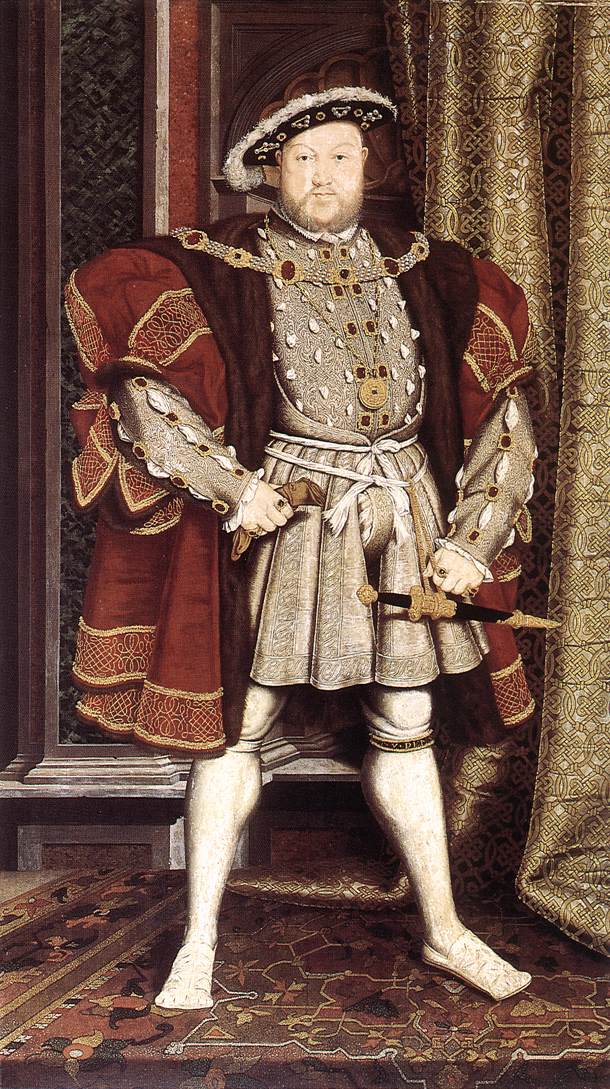
The one with which we are most familiar was painted by Holbein the younger after 1537, at a time when Henry was at the height of his power. He had freed himself from Anne Boleyn, and the Pope, and Jane Seymour had finally provided the son and heir he’d been craving.

Everything in this portrait is designed to impress and I certainly succeeds; we cannot take our eyes from the breadth of shoulder, the sumptuous quality of his clothes, his immovable stance, the potent codpiece, and the unflinching expression in his eye. The portrait exudes wealth, power and uncompromising control. It is an unspoken challenge.

Edward VI, and Mary I also used art to illustrate their power but it was Elizabeth, arguably the greatest Tudor of them all, who exploited royal portraiture to the full. The queen was very aware of the power of image and iconography. Encouraged by her adviser, John Dee, her portraits became more and more extreme. In every image she is majestic and fabulously dressed, her tiny frame all but

obliterated by satin, velvet, lace and jewels. In looks, Elizabeth resembled her great grandmother, Margaret Beaufort and her grandfather, Henry VII but by nature she was very much like her father.

Elizabeth’s portraits are perfect examples of Renaissance iconography. Every item represents a characteristic, not of the woman within but of the nature of her reign. It is all there; virginity, wisdom, power, world domination, military genius, and the all-seeing eye of queenship.

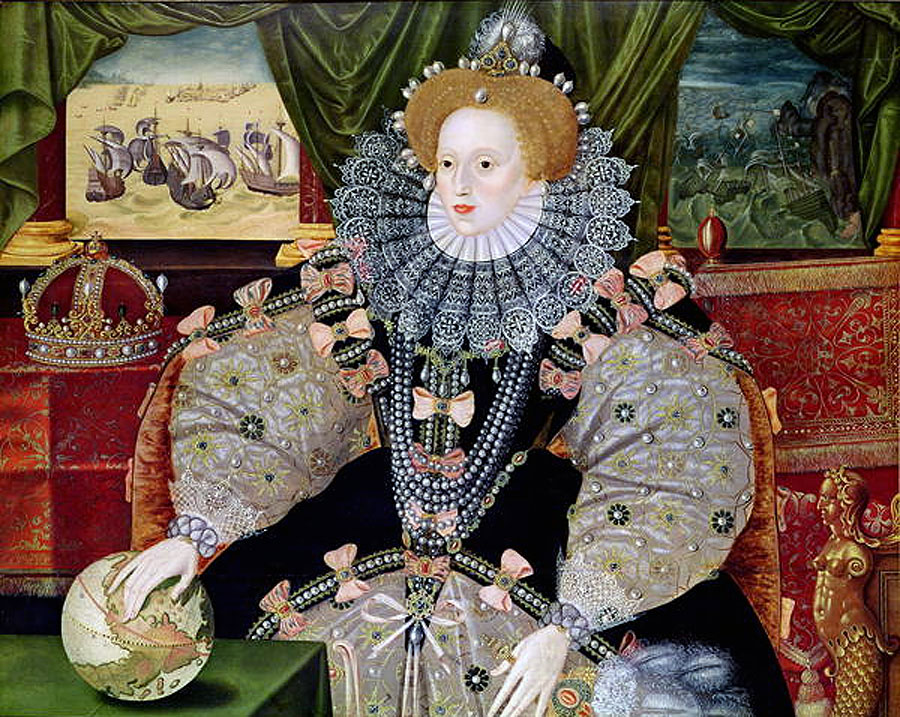
In The Armada Portrait c.1588 Elizabeth’s femininity is eclipsed by her magnificent clothing. She has so much padding, she appears every bit as broad and powerful as her father.

If Elizabeth’s grandfather and father had coveted England and parts of France, Elizabeth cast her ambitious eye farther – to the New World. Her hand rests on a globe and just in case the viewer should forget who wears it, the crown of England is just above. If you look closely her famously long white fingers are covering the Americas and, behind her are commemorations of the Spanish fleet being driven onto a rocky shore by a storm that became known as the ‘Protestant wind,’ inferring God’s approval in England’s victory over Spain. Elizabeth is proclaiming herself as the saviour of her people; the mother of her expanding empire; a victorious, virgin queen, blessed by God.

These are the things she wanted the world to see and believe. Her private, inner feelings were none of our concern and so they turned their faces into masks – a blank page, devoid of personality yet replete with majesty.

The portraits of the Tudors reveal so much about that far off world. Holbein in particular is invaluable to anyone studying the period. It is solely due to Holbein’s sketches taken at the court that we know exactly what was going on behind the gabled hoods of Catherine of Aragon and Jane Seymour. A particular favourite sketch of mine is of a woman on a settle which shows her sons dressed in replica garments of adult men. His sketches provide a behind the scenes glimpse of life at court, something the formality of the finished portraits don’t convey.

One of the best parts of writing How to dress like a Tudor for Pen and Sword books was the chance to closely examine the court portraits, and the informal sketches of the royal painters and trace the evolving fashions, styles, fabrics of the era. The Tudors were the new icons, monarchs to be worshipped, feared and respected and their portraits a shield, concealing every vestige of human frailty from common view.

How to Dress like a Tudor doesn’t just examine the clothing of royalty but of courtiers, commoners, children, monks and fools.

About the Author:

Judith Arnopp writes historical fiction set during the late medieval and Tudor period. Her usual focus is on the women who lived close to the monarch, women like Margaret Beaufort, Elizabeth of York and Mary Tudor but more recently has been writing from the perspective of Henry VIII himself. Her books are on Kindle, Audible and Paperback. You can find her fiction books here: http://author.to/juditharnoppbooks

She also writes non-fiction, her work featuring in many anthologies and online magazines. Her latest non-fiction, How to Dress like a Tudor published by Pen & Sword Books is available now. http://mybook.to/howtodress

Judith is a founder member of a reenactment group The Fyne Company of Cambria, and began making Tudor costumes for herself, her husband, John, and other members of the group. It was this that inspired How to Dress like a Tudor and she hopes to write more non-fiction Tudor history in the future. You can find Judith on Facebook, Twitter, Linked-in, Goodreads, Bluesky, Instagram, webpage

Illustrations

Eliz I The Armada Portrait Wikimedia commons [[File:Elizabeth I (Armada Portrait).jpg|Elizabeth I (Armada Portrait)]]

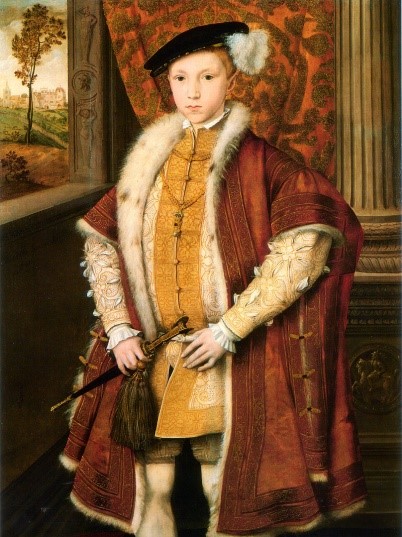
Henry VIII After Hans Holbein the Younger, Public domain, via Wikimedia Commons

Edward VI Attributed to William Scrots (active 1537-1553) [1], Public domain, via Wikimedia Commons

*

My Books

Christmas is coming!

Signed, dedicated copies of all my books are available through my online bookshop.

Coming 15 January 2024: Women of the Anarchy

On the one side is Empress Matilda, or Maud. The sole surviving legitimate child of Henry I, she is fighting for her birthright and that of her children. On the other side is her cousin, Queen Matilda, supporting her husband, King Stephen, and fighting to see her own son inherit the English crown. Both women are granddaughters of St Margaret, Queen of Scotland and descendants of Alfred the Great of Wessex. Women of the Anarchy demonstrates how these women, unable to wield a sword, were prime movers in this time of conflict and lawlessness. It show how their strengths, weaknesses, and personal ambitions swung the fortunes of war one way – and then the other.

Available for pre-order from Amberley Publishing and Amazon UK.

Also by Sharon Bennett Connolly:

Out nowKing John’s Right-Hand Lady: The Story of Nicholaa de la Haye is the story of a truly remarkable lady. Nicholaa de la Haye was the hereditary constable of Lincoln Castle and the first woman in England to be appointed sheriff in her own right. Her strength and tenacity saved England at one of the lowest points in its history. Nicholaa de la Haye is one woman in English history whose story needs to be told…

King John’s Right-Hand Lady: The Story of Nicholaa de la Haye is now available from Pen & Sword Booksbookshop.org and Amazon.

Defenders of the Norman Crown: The Rise and Fall of the Warenne Earls of Surrey tells the fascinating story of the Warenne dynasty, of the successes and failures of one of the most powerful families in England, from its origins in Normandy, through the Conquest, Magna Carta, the wars and marriages that led to its ultimate demise in the reign of Edward III. Defenders of the Norman Crown: Rise and Fall of the Warenne Earls of Surrey is now available from Pen & Sword BooksAmazon in the UK and US, and Bookshop.org.

Ladies of Magna Carta: Women of Influence in Thirteenth Century England looks into the relationships of the various noble families of the 13th century, and how they were affected by the Barons’ Wars, Magna Carta and its aftermath; the bonds that were formed and those that were broken. It is now available in paperback and hardback from Pen & Sword,  Amazon, and Bookshop.org.

Heroines of the Medieval World tells the stories of some of the most remarkable women from Medieval history, from Eleanor of Aquitaine to Julian of Norwich. Available now from Amberley Publishing and Amazon, and Bookshop.org.

Silk and the Sword: The Women of the Norman Conquest traces the fortunes of the women who had a significant role to play in the momentous events of 1066. Available now from Amazon,  Amberley Publishing, and Bookshop.org.

Alternate Endings: An anthology of historical fiction short stories including Long Live the King… which is my take what might have happened had King John not died in October 1216. Available in paperback and kindle from Amazon.

Podcast:

Have a listen to the A Slice of Medieval podcast, which I co-host with Historical fiction novelist Derek Birks. Derek and I welcome guests, such as Bernard Cornwell, and discuss a wide range of topics in medieval history, from significant events to the personalities involved.

*

Don’t forget! Signed and dedicated copies of all my books are available through my online bookshop.

For forthcoming online and in-person talks, please check out my Events Page.

You can be the first to read new articles by clicking the ‘Follow’ button, liking our Facebook page or joining me on Twitter and Instagram.

*

©2023 Judith Arnopp and Sharon Bennett Connolly FRHistS
Guest Post: creating Books in the Sixteenth Century by Toni Mount

As always, it is a pleasure to welcome my dear friend Toni Mount to History… the Interesting Bits. Toni has just written an informative and highly entertaining book, How to Survive in Tudor England, and she is here today to tell us about what went in to publishing a book in Tudor times.

Over to Toni…

Creating Books in the Sixteenth Century

A Printing Press in the sixteenth century

I’ve been really busy this year, working on three books, all at the same time, each one at a different stage of production. I’m just completing the final proofs: text and images, and compiling the index for a popular history book – a fun guide to living in the Dark Ages – my next Sebastian Foxley medieval murder mystery is with the publisher and a third book is being researched. With so much scribing and checking going on, I thought this would be an opportunity to think about how my experiences of writing, printing and publishing might compare to those of a sixteenth-century author. What sort of books would they write? How would they write them? What were the new requirements of the printing press as opposed to books written by hand?

What sort of books would they write?

Some of the answers may surprise you. Religious subjects were to the fore around the time of the Reformation and would continue to be but self-help instruction books were extremely popular. Tales with a moral were reckoned most educational. History books tended to retell Classical events, such as the Siege of Troy, the founding of Rome and the Punic Wars fought between Romans and Carthaginians, as well as stories of the Roman emperors. The heroic exploits of Alexander the Great were retold as were those of King Arthur and his Knights of the Round Table in various guises. Science books were appearing too. With the advent of the printing press, scholarly treatises were no longer limited to a few hand-written copies but could be widely disseminated as printed editions. Since they were usually written in Latin as the universal language of academia and the Roman Catholic Church, they could be read – if not always understood – across Europe and the Americas. Novels, as such, were not yet recognised but obviously romantic stories of heroes and heroines, along with collections such as Chaucer’s Canterbury Tales and Boccaccio’s Decameron remained popular as ever. Poetry was also published.  

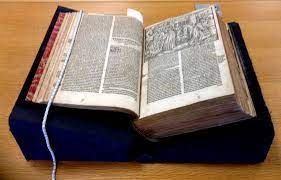
One of the most popular religious books of the second half of the sixteenth century was Foxe’s Book of Martyrs. Originally published in London by John Day in 1563 under the title Actes and Monuments, it was written by John Foxe, a Protestant, giving an account of those who had suffered martyrdom at the hands of the Roman Catholic Church, particularly in England and Scotland, giving maximum coverage to those burnt at the stake during Mary Tudor’s reign. Now that Elizabeth was on the throne, the book became so popular it went through four editions and numerous reprints, including an abridged version known as the Book of Martyrs, before Foxe died in 1587. Long after his death, the book continued to influence anti-Catholic sentiments and was virtually compulsory reading for those of the Protestant faith in England.

A first edition of Foxe’s Book of Martyrs, 1563

Thomas Tusser [1524-80] was a farmer who fancied himself a poet. He wrote an instruction book for his fellow farmers – husbandmen – and their wives, all in rhyme. First published in 1557, A Hundreth Good Pointes of Husbandrie was enlarged and republished in 1573 as Five Hundred Points of Good Husbandry, being reprinted numerous times. It’s a fascinating book about country life and customs in the Tudor era and the source of information for some of my articles for this magazine. My favourite Tusser couplet is:

A respite to husbands the weather may send,

But housewife’s affairs have never an end.  

How true.

Moral tales were regarded as educational and could also be fun to read. Aesop’s Fables were a perennial favourite, as were the adventures of Reynard the Fox, author unknown, but they date back to the eleventh century in France. The year 1481 saw the first printed edition of The History of Reynard the Fox to come from the Westminster press, just five years after William Caxton had set up the first ever printing business in England. Subsequent reprints appeared in 1489 and, after Caxton’s death, more were produced by Richard Pynson in 1494, 1500, 1506 and 1525. In fact, there were twenty-three editions of Reynard published in England in the sixteenth and seventeenth centuries, so Caxton had found a runaway bestseller.

Reynard, the anti-hero, relies on brains rather than brawn to get the better of his enemies, often having others do his dirty work. For example, in taking Tybert the Cat to the farmer’s barn where he can feast on mice, Reynard is well aware of the trap set by the farmer to catch him, after he stole some hens recently. Of course, it’s Tybert who gets trapped. But the Fox’s cleverness extends to the subtleness of a lawyer and the honeyed tongue of a courtier, saying all the right things, not only arguing his way out of trouble but to promoting his own cause at the king’s court – lessons to be learned for the would-be courtier perhaps.

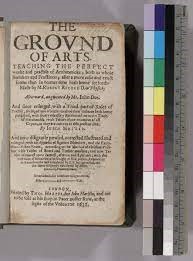
One of the first scientific books was written by Robert Recorde, a Welsh mathematician living in England. Recorde was the first ‘popular science’ writer and, although he knew Greek and Latin, he taught and wrote in English so anyone who was literate could understand his work. In 1542, his text book on arithmetic, The Grounde of Artes, first introduced the plus, minus and equals signs [+, -, =] that make the writing of equations so much quicker. He read Nicolaus Copernicus’ ground-breaking book De Revolutionibus, published in 1543, that put the Sun, not the Earth, at the centre of the universe for the first time. Recorde gave the theories a lot of thought, noting his favourable conclusions in The Castle of Knowledge, published in 1551, agreeing that the new ‘heliocentric’ universe fitted the calculations more nearly and made more sense. In 1551, he published The Pathway to Knowledge, the first geometry book in English.

Robert Recorde’s The Ground of Arts [1542]

Towards the end of the Tudor period, William Gilbert, a physician in London for many years who served as Queen Elizabeth’s doctor, spent much of his time studying rocks as England’s first geologist. He was particularly fascinated by ‘lodestones’ that occur naturally as permanent magnets. Gilbert published his discoveries in his book De Magnete [About Magnets] in 1600. The book, written in Latin, soon became the standard text on magnetic phenomena throughout Europe. In it, Gilbert discussed and disproved the folktales about lodestones – that their effect was reduced if diamonds or garlic were nearby and that they could cure headaches. He replaced such odd ideas with proper physical laws of magnetism: that the north and south poles of a magnet attract each other but like poles repel.

Poetry, often of epic lengths, was far more popular in Tudor times than with today’s audience. Whereas Thomas Tusser wrote his practical instruction book in rhyming couplets, Edmund Spenser’s epic in six books, The Faerie Queene, was very different, composed in ‘Spenserian stanzas’, a form the poet invented specially. The Faerie Queene is a romance, taking elements from Arthurian legend, including a female knight, The Roman de la Rose and other medieval sources. Yet Spenser explains that his epic poem is full of ‘allegorical devices’ and intended ‘to fashion a gentleman or noble person in virtuous and gentle discipline’, so this too is an instruction book of sorts. The author presented the first three books to Queen Elizabeth in 1589 and was rewarded by her majesty with the very decent pension of £50 a year for life, so it was well worth the effort. Whether the queen ever read it – or perhaps Spenser read excerpts aloud to the court – we don’t know but it’s quite widely read today, often being a ‘set book’ in schools.

How would they write them?

Throughout the Tudor period, as well as for centuries before and since, the original work would have to be written out in long hand with pen and ink, occasionally on parchment but increasingly on paper. It is actually easier to make corrections on parchment because the ink can be scraped off the surface layer but it’s far more difficult with paper because the ink soaks right in. All corrections, re-writes and edits had to be copied out again which makes me ever grateful for my computer. Love poems were often exquisitely written in the final version and given as gifts to the beloved. Surprisingly, the idea of the typewriter was thought up in the mid-seventeenth century when an anonymous Englishman applied for a patent for just such a machine, supplying a full description, drawings and diagrams of his invention. Nothing ever came of it at the time, as far as we know, but more recently, the device was constructed from the diagrams and it worked! What a boon that would have been to authors and poets.

Tudor scribes copying from exemplars

With medieval manuscripts, all the text, any artwork, images or decoration would be done by hand on the page but, of course, the process had to be repeated for every subsequent copy. This meant each book was unique and expensive to produce so the spreading of ideas and knowledge was slow. The printing press, first invented in c.1440 by the German goldsmith, Johannes Gutenburg, and brought to England in 1476 by William Caxton [see above], made the mass production of books a possibility. Gutenburg also came up with the idea of making hundreds or even thousands of individual letters out of little squares of lead alloy – all reversed mirror images – and punctuation.

What were the new requirements of the printing press as opposed to books written by hand?

Just as today, the publisher/printer would require a perfect copy of the final manuscript of the book to work from. I simply attach my – hopefully – faultless final document to an email to the publisher and click ‘send’. The Tudor author would have taken his completed hand-written manuscript to the publisher, having kept at least one other perfect copy for himself, if he was wise. This was a good idea because a few manuscripts that were used as printers’ copies have survived to the present and they are scribbled with annotations and notes for the setting of the type and other parts of the process. The author’s pristine manuscript is gone forever if he didn’t have a second copy.

If illustrations are to be included in my books, I simple email a set of high resolution images, including photographs or downloaded pictures and diagrams. One thing I have to consider that a Tudor author wouldn’t need to bother about is the minefield of copyright on downloads. Early printed books – sometimes referred to as incunabulae – most often used woodcuts as a means of illustrating the text and the printer would have no qualms about using the same woodcut in a completely different work, if it served the purpose.

Movable type

A Tudor printing press was a hefty machine, often taller than a man. Gutenburg had copied the idea from the grape presses used in wine-making. The tiny individual metal letters or ‘type’ were set up by a compositor, in reverse order, right to left, into the required lines of text. Several lines were arranged at once in a wooden frame known as a galley. Once the galleys were composed, they would be laid face up in a large frame [a forme] and this was placed onto a flat stone [the bed or coffin]. The text was then inked using two ball-shaped pads with handles. The balls were made of dog skin leather – because it has no pores – and stuffed with sheep’s wool. The ink was applied to the text evenly. A damp sheet of paper was held in one frame [the tympan] by small pins: damp so the type ‘bit’ into the paper better. The sheet was then sandwiched between the tympan and another paper- or parchment-covered frame [the frisket] to fix it so it could not move, curl up or wrinkle.

The two frames with their paper sandwiched were then lowered so the paper lay on the surface of the inked type. The whole bed was rolled under the platen using a handle to wind it into place. Then came the part of the process that required the most muscle power: screwing down the platen, using a bar called the ‘devil’s tail’, so the inked type and woodcuts pressed against the paper, making a perfect impression. The bar was supposed to spring back, lifting the platen, the bed rolled out, the frames lifted and the printed paper released, all text and images now appearing the right way round.

That would complete the process for a poster but, to make a book, this sheet of pages had to be turned over and printed again, this time with the text for the alternate pages. The sheets would then be cut up and assembled in the correct order. I have printed little eight-page booklets and the logistics of getting the double-sided pages printed correctly required a bit of thinking. For an A5 booklet, pages 8 and 1 have to be printed side by side, in that order, on an A4 sheet which is then turned over and pages 2 and 7 printed on the other side. Pages 6 and 3 are then printed with 4 and 5 on the reverse. I’m sure there must be computer algorithm for this these days but imagine trying to work that out with eight or sixteen pages on a sheet to produce the 1,500 pages of Foxe’s Book of Martyrs.

Foxe’s book had the additional complication of being illustrated with over sixty woodcut impressions and was, at the time, the most ambitious publishing project undertaken in England. Earlier, I mentioned that previous woodcuts were often reused but Foxe’s subject matter was entirely new so every woodcut was made especially. Like the type, woodcuts also had to be made as reverse images, carved from a single block of fine-grained wood. The image also had to be ‘negative’ in that the parts cut away would appear white on the page, the ink only adhering to the raised wood remaining to give the dark lines of the picture. When Foxe’s book was finished, compiled and bound, ready for sale, it was said to weigh as much as a small infant. Well, I always think of my books as my ‘babies’ and, even with modern technology, they take at least as long to produce, from conception until I hold the final product in my hands.

If you wish to read about many interesting characters, places, clothing, food and pastimes of the sixteenth century, my new book How to Survive in Tudor England is published on 30th October 2023. 

About the book:

Imagine you were transported back in time to Tudor England and had to start a new life there, without smart phones, internet or social media. When transport means walking or, if you’re lucky, horse-back, how will you know where you are or where to go? Where will you live and where will you work? What will you eat and what shall you wear? And who can you turn to if you fall ill or are mugged in the street, or God-forbid if you upset the king? In a period when execution by be-heading was the fate of thousands how can you keep your head in Tudor England?

All these questions and many more are answered in this new guide book for time-travellers: How to Survive in Tudor England. A handy self-help guide with tips and suggestions to make your visit to the 16th century much more fun, this lively and engaging book will help the reader deal with the new experiences they may encounter and the problems that might occur.

Enjoy interviews with the celebrities of the day, and learn some new words to set the mood for your time-travelling adventure. Have an exciting visit but be sure to keep this book to hand.

About the author:

Toni Mount researches, teaches and writes about history. She is the author of several popular historical non-fiction books and writes regularly for various history magazines. As well as her weekly classes, Toni has created online courses for http://www.MedievalCourses.com and is the author of the popular Sebastian Foxley series of medieval murder mysteries. She’s a member of the Richard III Society’s Research Committee, a costumed interpreter and speaks often to groups and societies on a range of historical subjects. Toni has a Masters Degree in Medieval Medicine, Diplomas in Literature, Creative Writing, European Humanities and a PGCE. She lives in Kent, England with her husband.

*

My Books

Signed, dedicated copies of all my books are available through my online bookshop.

Out nowKing John’s Right-Hand Lady: The Story of Nicholaa de la Haye

In a time when men fought and women stayed home, Nicholaa de la Haye held Lincoln Castle against all-comers, gaining prominence in the First Baron’s War, the civil war that followed the sealing of Magna Carta in 1215. A truly remarkable lady, Nicholaa was the first woman to be appointed sheriff in her own right. Her strength and tenacity saved England at one of the lowest points in its history. Nicholaa de la Haye is one woman in English history whose story needs to be told…

King John’s Right-Hand Lady: The Story of Nicholaa de la Haye is now available from Pen & Sword Booksbookshop.org and Amazon.

Coming 15 January 2024: Women of the Anarchy

On the one side is Empress Matilda, or Maud. The sole surviving legitimate child of Henry I, she is fighting for her birthright and that of her children. On the other side is her cousin, Queen Matilda, supporting her husband, King Stephen, and fighting to see her own son inherit the English crown. Both women are granddaughters of St Margaret, Queen of Scotland and descendants of Alfred the Great of Wessex. Women of the Anarchy demonstrates how these women, unable to wield a sword, were prime movers in this time of conflict and lawlessness. It show how their strengths, weaknesses, and personal ambitions swung the fortunes of war one way – and then the other.

Available for pre-order from Amberley Publishing and Amazon UK.

Also by Sharon Bennett Connolly:

Defenders of the Norman Crown: The Rise and Fall of the Warenne Earls of Surrey tells the fascinating story of the Warenne dynasty, of the successes and failures of one of the most powerful families in England, from its origins in Normandy, through the Conquest, Magna Carta, the wars and marriages that led to its ultimate demise in the reign of Edward III. Defenders of the Norman Crown: Rise and Fall of the Warenne Earls of Surrey is now available from Pen & Sword BooksAmazon in the UK and US, and Bookshop.org.

Ladies of Magna Carta: Women of Influence in Thirteenth Century England looks into the relationships of the various noble families of the 13th century, and how they were affected by the Barons’ Wars, Magna Carta and its aftermath; the bonds that were formed and those that were broken. It is now available in paperback and hardback from Pen & Sword,  Amazon, and Bookshop.org.

Heroines of the Medieval World tells the stories of some of the most remarkable women from Medieval history, from Eleanor of Aquitaine to Julian of Norwich. Available now from Amberley Publishing and Amazon, and Bookshop.org.

Silk and the Sword: The Women of the Norman Conquest traces the fortunes of the women who had a significant role to play in the momentous events of 1066. Available now from Amazon,  Amberley Publishing, and Bookshop.org.

Alternate Endings: An anthology of historical fiction short stories including Long Live the King… which is my take what might have happened had King John not died in October 1216. Available in paperback and kindle from Amazon.

Podcast:

Have a listen to the A Slice of Medieval podcast, which I co-host with Historical fiction novelist Derek Birks. Derek and I welcome guests, such as Bernard Cornwell, and discuss a wide range of topics in medieval history, from significant events to the personalities involved.

*

Don’t forget! Signed and dedicated copies of all my books are available through my online bookshop.

For forthcoming online and in-person talks, please check out my Events Page.

You can be the first to read new articles by clicking the ‘Follow’ button, liking our Facebook page or joining me on Twitter and Instagram.

©2023 Toni Mount and Sharon Bennett Connolly FRHistS 
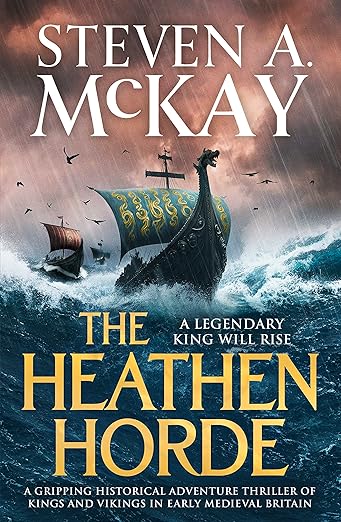
Book Corner: The Heathen Horde by Steven A. McKay

Heavy is the head that wears the crown.

Northumbria, AD 864. Viking warlord Ragnar Lothbrok is captured and killed in brutal fashion, an event that will shape the future of the nation for decades to come.

Mercia, AD 868Alfred, son of Wessex and heir to the throne, draws his first blood on the battlefield. It will not be his last.

A devastating scourge from the north is coming to Britain, one that will bring armies and entire kingdoms to their knees. Travelling along the whale road in their feared longships, the Great Heathen Army move fast, striking with a savagery unmatched, in a seemingly unstoppable tide of blood and iron.

One inexperienced warrior will prove the difference, a young man who will lead from the front and, in time, aspire to become the saviour of the Saxons… Alfred the Great.

A totally enrapturing historical adventure following the life of one of Britain’s most important ever kings.

Wow! Riveting start to what promises to be an excellent series. The Heathen Horde is a fabulous, gritty and entertaining story of how Alfred the Great became ‘Great.’

However…

I have to admit to a little trepidation when I started reading The Heathen Horde. Bernard Cornwell did such a fantastic job of recreating the period in his Last Kingdom series that I was not sure I was ready for another writer’s perspective. I was worried I would not warm to Steven A McKay’s version of the story.

How wrong I was!

And I am so happy that I gave it a go.

‘Look out, Alfred!’

The rider heard his brother’s warning just in time to raise his shield and the linden boards took the brunt of the axe which had been heading for his head, splinters flying as the wood shuddered, pain lancing through his arm. Baring his teeth in rage, Alfred swung his sword down, catching his attacker’s hand just as the axe had been about to strike again. There was a scream of pain as fingers were shorn through to the bone and then Alfred’s horse was past and cantering away from the battle.

‘Back,’ he grunted, tugging on the reins and bringing the horse around quickly. His heart was thudding in his chest and he felt light-headed but it was almost a joyful sensation. He was afraid, aye, but he was also excited, and eager to get back to the fight. He could see the axeman who’d tried to kill him, grimacing and eyeing his mangled hand as if he feared he might never hold a weapon properly again.

Alfred was charging back into the fight before he knew it, battle fever overtaking him at the realisation that he’d almost had his skull caved in. He headed straight for the axeman. The man had transferred his weapon to his left hand but could only wield it awkwardly and his wide eyes told of his fear at being forced to fight in such a manner. Alfred’s horse came alongside the Dane’s and, screaming an incoherent battle-cry, the young warrior smashed the edge of his blade into the enemy’s neck. The sheer force of the blow was enough to throw the man off his horse’s back despite the Dane’s long, mail neck guard. He lay on the ground, unmoving, as his mount bolted and the pounding hooves of the other combatants’ animals swirled around him.

Alfred grinned savagely, knowing that, if the Dane had somehow survived the attack and the fall, he wouldn’t last long before the weight of a horse crushed the life from him.

God be praised, one less sea-wolf to ravage Anglo-Saxon lands!

Admittedly, for the first 20 pages or so, I regularly found myself comparing Steven’s version of King Alfred to Bernard’s version. But I soon left The Last Kingdom behind and found myself enjoying The Heathen Horde for the fascinating story it is in its own right. Soon, I didn’t even notice Uhtred’s absence.

I love this version of King Alfred. His piety is evident, but not as all-consuming as Bernard Cornwell’s Alfred. His military and political prowess both play a greater role in the story. I even liked Alfred’s wife, Ælswith. The Heathen Horde starts when Alfred is merely a younger brother, not expecting to ever take the throne himself, serving his brother loyally and learning the art of war and politics. We see him grown into the role of military leader and develop his concept of a united kingdom – of England.

The story is rich in detail and brings the characters to life. I can’t wait for the next book in the series!

It ends tooooo soon! I need to know what happens next – now! 

The Heathen Horde is one of those books that you can’t wait to need to finish but want it never to end. It is unputdownable! I highly recommend you give it a go.

About the Author:

Steven A. McKay was born in Scotland in 1977. He is the author of two previous series of historical fiction, following Robin Hood and the warrior-druid Bellicus in post-Roman Britain. He plays the guitar, is the co-host of historical adventure podcast Rock, Paper, Swords! along with author Matthew Harffy, and lives just outside Glasgow with his wife and children.

To Buy the book: The Heathen Horde by Steven A. McKay is now available form Amazon.

*

My Books

Signed, dedicated copies of all my books are available through my online bookshop.

Out nowKing John’s Right-Hand Lady: The Story of Nicholaa de la Haye

In a time when men fought and women stayed home, Nicholaa de la Haye held Lincoln Castle against all-comers, gaining prominence in the First Baron’s War, the civil war that followed the sealing of Magna Carta in 1215. A truly remarkable lady, Nicholaa was the first woman to be appointed sheriff in her own right. Her strength and tenacity saved England at one of the lowest points in its history. Nicholaa de la Haye is one woman in English history whose story needs to be told…

King John’s Right-Hand Lady: The Story of Nicholaa de la Haye is now available from Pen & Sword Booksbookshop.org and Amazon.

Coming 15 January 2024: Women of the Anarchy

On the one side is Empress Matilda, or Maud. The sole surviving legitimate child of Henry I, she is fighting for her birthright and that of her children. On the other side is her cousin, Queen Matilda, supporting her husband, King Stephen, and fighting to see her own son inherit the English crown. Both women are granddaughters of St Margaret, Queen of Scotland and descendants of Alfred the Great of Wessex. Women of the Anarchy demonstrates how these women, unable to wield a sword, were prime movers in this time of conflict and lawlessness. It show how their strengths, weaknesses, and personal ambitions swung the fortunes of war one way – and then the other.

Available for pre-order from Amberley Publishing and Amazon UK.

Also by Sharon Bennett Connolly:

Defenders of the Norman Crown: The Rise and Fall of the Warenne Earls of Surrey tells the fascinating story of the Warenne dynasty, of the successes and failures of one of the most powerful families in England, from its origins in Normandy, through the Conquest, Magna Carta, the wars and marriages that led to its ultimate demise in the reign of Edward III. Defenders of the Norman Crown: Rise and Fall of the Warenne Earls of Surrey is now available from Pen & Sword BooksAmazon in the UK and US, and Bookshop.org.

Ladies of Magna Carta: Women of Influence in Thirteenth Century England looks into the relationships of the various noble families of the 13th century, and how they were affected by the Barons’ Wars, Magna Carta and its aftermath; the bonds that were formed and those that were broken. It is now available in paperback and hardback from Pen & Sword,  Amazon, and Bookshop.org.

Heroines of the Medieval World tells the stories of some of the most remarkable women from Medieval history, from Eleanor of Aquitaine to Julian of Norwich. Available now from Amberley Publishing and Amazon, and Bookshop.org.

Silk and the Sword: The Women of the Norman Conquest traces the fortunes of the women who had a significant role to play in the momentous events of 1066. Available now from Amazon,  Amberley Publishing, and Bookshop.org.

Alternate Endings: An anthology of historical fiction short stories including Long Live the King… which is my take what might have happened had King John not died in October 1216. Available in paperback and kindle from Amazon.

Podcast:

Have a listen to the A Slice of Medieval podcast, which I co-host with Historical fiction novelist Derek Birks. Derek and I welcome guests, such as Bernard Cornwell, and discuss a wide range of topics in medieval history, from significant events to the personalities involved.

*

Don’t forget! Signed and dedicated copies of all my books are available through my online bookshop.

For forthcoming online and in-person talks, please check out my Events Page.

You can be the first to read new articles by clicking the ‘Follow’ button, liking our Facebook page or joining me on Twitter and Instagram.

©2023 Sharon Bennett Connolly FRHistS 
Matilda and Edith, Women of Different Fates

History...the Interesting Bits
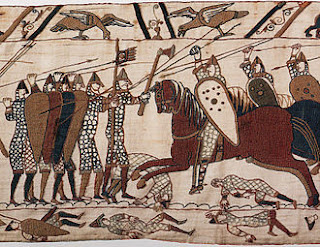
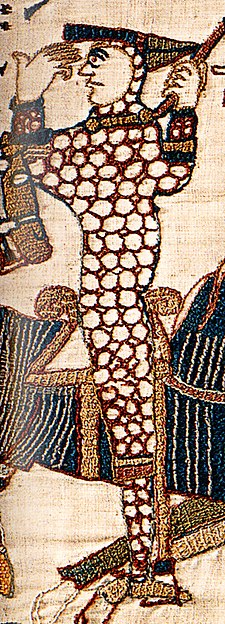
The Battle of Hastings, from the Bayeux Tapestry

Although the Battle of Hastings was fought by men, the women of the two opponents, Harold and William, had as much invested in the outcome as their husbands. The two women, however, have very different reputations. Whereas Matilda appears as the epitome of the medieval ideal woman, Edith has come down through history as ‘the other woman’. However, for both these women, their futures, and the futures of their children, were inextricably linked with the fates of the men fighting on Senlac Hill on that October morning in 1066.

Harold had met Edith Swan-neck at about the same time as he became earl of East Anglia, in 1044. Which makes it possible that Edith Swan-neck and the East Anglian magnate, Eadgifu the Fair, are one and the same. Eadgifu the Fair held over 270 hides of land and was one of the richest magnates in England. The majority of her estates lay in Cambridgeshire, but she also held land in Buckinghamshire, Hertfordshire, Essex and Suffolk; in the Domesday Book Eadgifu held the manor at Harkstead in Suffolk, which was attached to Harold’s manor of Brightlingsea in Essex and some of her Suffolk lands were tributary to Harold’s manor of East Bergholt. While it is by no means certain that Eadgifu is Edith Swan-neck several historians – including Ann Williams in the Oxford Dictionary of National Biography – make convincing arguments that they were. Even their names, Eadgifu and Eadgyth, are so similar that the difference could be merely a matter of spelling or mistranslation; indeed, the abbey of St Benet of Hulme, Norfolk, remembers an Eadgifu Swanneshals among its patrons.

By 1065 Harold had been living with the wonderfully-named Eadgyth Swanneshals (Edith the Swan-neck) for twenty years. History books label her as Harold’s concubine, but Edith was, obviously, no weak and powerless peasant, so it’s highly likely they went through a hand-fasting ceremony – or ‘Danish marriage’ – a marriage, but not one recognized by the church, thus allowing Harold to take a second ‘wife’ should he need to. Harold and Edith had at least 6 children together; including four sons, Godwin, Edmund, Magnus and Ulf and two daughters, Gytha, who married Vladimir Monomakh, Great Prince of Kiev, and Gunnhild, was to become a nun at Wilton Abbey in Wiltshire, but never took her vows.

History...the Interesting Bits
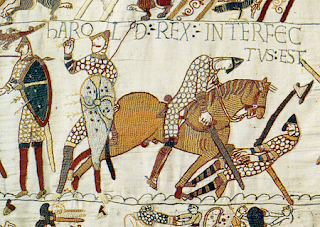
King Harold at the Battle of Hastings, from the Bayeux Tapestry

However, despite their twenty years and many children together, with the health of the king, Edward the Confessor, deteriorating, it became politically expedient for Harold to marry in order to strengthen his position as England’s premier earl and, possibly, next king. Ealdgyth was the daughter of Alfgar, earl of Mercia, and, according to William of Jumieges, very beautiful. She was the widow of Gruffudd ap Llywelyn, King of Gwynedd from 1039 and ruler of all Wales after 1055, with whom she had had at least one child, a daughter, Nest. Gruffudd had been murdered in 1063, following an expedition into Wales, some sources suggest it was by Harold himself, however Gruffudd’s own men are the chief suspects. Harold’s subsequent marriage to Ealdgyth not only secured the support of the earls of Northumbria and Mercia, but also weakened the political ties of the same earls with the new rulers of north Wales.

Rather than his loyal and loving ‘wife’, Edith, it was Ealdgyth, therefore, who was for a short time, queen of England. However, with Harold having to defend his realm, first against Harold Hardrada and his own brother, Tostig, at Stamford Bridge in September of 1066 and, subsequently, against William of Normandy at Hastings, it is unlikely Ealdgyth had time to enjoy her exalted status. At the time of the Battle of Hastings, 14th October 1066, Ealdgyth was in London, but her brothers took her north to Chester soon after. Although sources are confused it seems possible that Ealdgyth was heavily pregnant and gave birth to a son, Harold Haroldson, within months of the battle. Unfortunately, that is the last we hear of Ealdgyth; her fate remains unknown. Young Harold is said to have grown up in exile on the Continent and died in 1098.

Despite his marriage to Ealdgyth it seems Edith Swan-neck remained close to Harold and it was she who was waiting close by when the king faced William of Normandy at Senlac Hill near Hastings on 14th October 1066. She awaited the outcome alongside Harold’s mother, Gytha. Having lost a son, Tostig, just two weeks before, fighting against his brother and with the Norwegians at the Battle of Stamford Bridge, Gytha lost three more sons – Harold, Gyrth and Leofwine – and her grandson, Haakon, in the battle at Hastings.

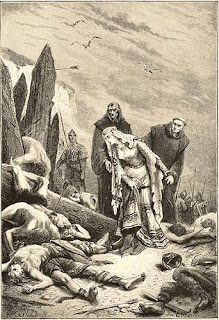
And it was Edith and the elderly Gytha, who wandered the blood-soaked field in the aftermath of the battle, in search of the fallen king. Sources say that Gytha was unable to identify her sons amidst the mangled and mutilated bodies. It fell to Edith to find Harold, by undoing the chain mail of the victims, in order to recognize certain identifying marks on the king’s body – probably tattoos. 

History...the Interesting Bits
Edith finding Harold’s body on the battlefield

The monks of Waltham Abbey had a tradition of Edith bringing Harold’s body to them for burial, soon after the battle. Although other sources suggest Harold was buried close to the battlefield, and without ceremony, it is hard not to hope that Edith was able to perform this last service for the king. However, any trace of Harold’s remains was swept away by Henry VIII’s Dissolution of the Monasteries, so the grave of England’s last Anglo-Saxon king is lost to history.

Harold’s mother, Gytha, eventually fled into exile on the Continent, taking Harold and Edith’s daughter, another Gytha, with her, possibly arranging her marriage to the prince of Smolensk and – later – Kiev. The sons of Edith and Harold fled to Ireland with all but one, living into the 1080s, though the dates of their eventual deaths remain uncertain. Gunnhild remained in her nunnery at Wilton until sometime before 1093, when she became the wife or concubine of Alan the Red, a Norman magnate. Whether or not she was kidnapped seems to be in question but when Alan died in 1093, instead of returning to the convent, Gunnhild became the mistress of Alan’s brother and heir, Alan Niger. Alan Rufus held vast lands in East Anglia – lands that had once belonged to Eadgifu the Fair and, if Eadgifu was Edith Swan-neck, it’s possible that Alan married Gunnhild to strengthen his claims to her mother’s lands.  

Of Edith Swan-neck, there is no trace after Harold is interred at Waltham Abbey, she simply disappears from the pages of history…

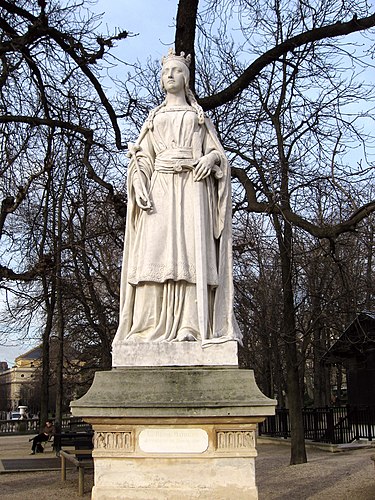
For Matilda, on the other hand, the Battle of Hastings marked the start of another stage of her life and career as the wife of William, duke of Normandy and, now, King of England. Matilda of Flanders was probably born around 1032, the daughter of Baldwin V, count of Flanders, and his wife, Adela, a daughter of King Robert the Pious of France. The young duke, William of Normandy, was probably pushing his luck when he proposed a marriage between himself and young Matilda. Although he was a duke and Baldwin a mere count, there was the question of his illegitimacy and Normandy was hardly the most stable of regions; William had spent all of his adult life fighting to keep hold of it. 

History...the Interesting Bits
Matilda of Flanders

A later story tells of how Matilda refused to marry William, stating that, being granddaughter of a king, she was too high born to marry a bastard. William was said to be so incensed with this response that he straightaway rode to Flanders, accosted young Matilda in the street, pulling her from her horse by her braids, before hitting her and cutting her with his spurs; whereupon Matilda changed her mind and agreed to marry William. While amusing, it is highly likely that the story is an invention, and highly unlikely that Matilda was asked her opinion on the marriage. Getting to the altar was not an easy task, however, as the pope refused to allow the marriage, without giving his reasons. It is possible that the refusal was on the grounds of consanguinity, although it seems the only familial link is that William’s aunt married Matilda’s grandfather as his second wife (Matilda’s father, however, was the son of the count’s first wife, so there was no blood relationship). It seems more likely that the refusal was politically motivated, due to Count Baldwin’s support of the Lotharingian’s rebellion against Pope Leo IX’s sponsor, the Holy Roman Emperor. 

William was not to be thwarted, however, and before 1053 he married, Matilda despite the papal interdict; they were eventually ordered to establish a monastery each in penance for the marrying without papal dispensation, but the marriage was allowed to stand. In penance Matilda established the Abbaye-aux-Dames, consecrated in 1066, while William founded the Abbay-aux-Hommes, both in Caen.

The marriage between Matilda and William proved to be a strong and trusting relationship; William is one of very few medieval kings believed to have been completely faithful to his wife, no rumours of extra-marital affairs have ever been uncovered. He trusted Matilda to act as regent in Normandy during his many absences on campaign or in England. Matilda supported her husband’s proposed invasion of England, promised a great ship for William’s personal used, it was called the Mora; the ship had a figurehead of a small boy, whose right hand pointed to England and left hand held a horn to his lips.

History...the Interesting Bits
William the Conqueror from the Bayeux Tapestry

Matilda and William had a rather large family, with 4 boys and at least 4 daughters. Their eldest son, Robert Curthose, who inherited Normandy, was followed by Richard, who was killed during a hunting accident as a youth, William, known as Rufus who became King William II, and the future Henry I. Of the 4 or 5 daughters Adelida became a nun following a series of failed marriage plans, Cecilia was given to the convent of Ste Trinite as a child, Constance married Alain Fergant, duke of Brittany and Adela married Stephen of Blois; their son, another Stephen would succeed Henry I as King of England. There are suggestions of 2 further daughters, Matilda and Agatha, though evidence for their existence is highly limited.

Matilda was very close to her family, especially her eldest son, Robert, whose later antics were to cause  problems between his parents. William and Robert, father and son, were often at loggerheads, with Robert in open rebellion against his father as a young adult. Matilda was constantly trying to play the peacemaker and was so upset by one quarrel that she was ‘choked by tears and could not speak’. Even during a period of exile imposed on Robert, Matilda still supported her son as best she can; she would send him vast amounts of silver and gold through a Breton messenger, Samson. On discovering Samson’s complicity William threatened to blind the messenger and it was only through Matilda’s intervention that the Breton escaped.

Where poor Edith Swan-neck lost almost everything at Hastings, Matilda’s star was in the ascendant, but the Conquest was not without problems and it was not until 1068 that William felt secure enough to bring his wife over to England. Matilda was crowned Queen of England in Winchester Cathedral at Pentecost in that year, although further unrest soon saw her returned to the relative safety of Normandy, where she was acting as regent for her absent husband. Matilda was one of the most active of medieval queens, standing in as an able administrator during her husband’s absences; hearing land pleas and corresponding with such as the pope, who is known to have asked her to use her influence over her husband, on occasion. She was also the driving force in holding together her family, keeping relations as cordial as possible, even with the rebellious Robert. And it may well be her own strength of character, as the centre of the family, that meant none of her sons would marry until after her death.

Matilda’s piety is renowned. Although founding the Abbaye-aux-Dames in Caen was a penance for her irregular marriage to William, her constant and repeated donations to religious houses demonstrate her dedication to her faith. Among her many donations; she gave the monks of Marmoutier a new refectory and a cope and to the monks of St Evroult she gave £100 for a refectory, a mark of gold, a chasuble decorated with gold and pearls, and a cope for the chanter. The nuns of her abbey at Ste Trinite, Caen, received a substantial bequest from Matilda’s will; as well as her regalia, they were given a chalice, a chasuble, a mantle of brocade, 2 golden chains with a cross, a chain decorated with emblems for hanging a lamp in front of the altar, several large candelabras, the draperies for her horse and all the vases ‘which she had not yet handed out during her life’.

History...the Interesting Bits
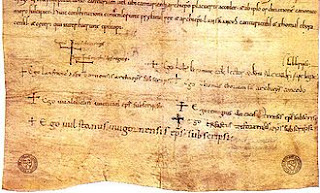
Matilda and William’s Xs on a charter

Matilda and William’s relationship is one of the most successful of the medieval period. Said to be a happy and loving marriage, their trust in each other was demonstrable and it was remarked up on when William fell seriously ill during a stay at Cherbourg between 1063 and 1066, Matilda prayed for his recovery at the altar; the monks remarking on her informal appearance as the sign of her distress her husband illness was causing her. Matilda fell ill in the late summer of 1083 and died on 2nd November of the same year. She was buried at Ste Trinite, Caen, where the original tombstone, with the inscription carved round the edge, still survives. Following her death William cut a sad and lonely figure; becoming increasingly isolated he followed his wife to the grave 4 years later in 1087.

Select bibliography:

Oxforddnb.com; The Norman Conquest: William the Conquerors’ Subjugation of England by Teresa Cole; William the Conqueror: The Bastard of Normandy by Peter Rex; Kings, Queens, Bones and Bastards by David Hilliam; Britains’ Royal Families: The Complete Genealogy by Alison Weir; The Oxford Companion to British History edited by John Cannon; epistolae.ccnmtl.columbia.edu.

My Books

Signed, dedicated copies of all my books are available through my online bookshop.

Out now: Scotland’s Medieval Queens

Books by Sharon Bennett Connolly

Scotland’s history is dramatic, violent and bloody. Being England’s northern neighbour has never been easy. Scotland’s queens have had to deal with war, murder, imprisonment, political rivalries and open betrayal. They have loved and lost, raised kings and queens, ruled and died for Scotland. From St Margaret, who became one of the patron saints of Scotland, to Elizabeth de Burgh and the dramatic story of the Scottish Wars of Independence, to the love story and tragedy of Joan Beaufort, to Margaret of Denmark and the dawn of the Renaissance, Scotland’s Medieval Queens have seen it all. This is the story of Scotland through their eyes.

Scotland’s Medieval Queens gives a thorough grounding in the history of the women who ruled Scotland at the side of its kings, often in the shadows, but just as interesting in their lives beyond the spotlight. It’s not a subject that has been widely covered, and Sharon is a pioneer in bringing that information into accessible history.’ Elizabeth Chadwick (New York Times bestselling author)

Available now from Amazon and Pen and Sword Books

Also by Sharon Bennett Connolly:

Books by Sharon Bennett Connolly

Heroines of the Tudor World tells the stories of the most remarkable women from European history in the time of the Tudor dynasty, 1485-1603. These are the women who ruled, the women who founded dynasties, the women who fought for religious freedom, their families and love. Heroines of the Tudor World is now available for pre-order from Amberley Publishing and Amazon UK. Women of the Anarchy demonstrates how Empress Matilda and Matilda of Boulogne, unable to wield a sword themselves, were prime movers in this time of conflict and lawlessness. It shows how their strengths, weaknesses, and personal ambitions swung the fortunes of war one way – and then the other. Available from Bookshop.orgAmberley Publishing and Amazon UKKing John’s Right-Hand Lady: The Story of Nicholaa de la Haye is the story of a truly remarkable lady, the hereditary constable of Lincoln Castle and the first woman in England to be appointed sheriff in her own right. Available from all good bookshops Pen & Sword Booksbookshop.org and Amazon

History...the Interesting Bits

Defenders of the Norman Crown: The Rise and Fall of the Warenne Earls of Surrey tells the fascinating story of the Warenne dynasty, from its origins in Normandy, through the Conquest, Magna Carta, the wars and marriages that led to its ultimate demise in the reign of Edward III. Available from Pen & Sword BooksAmazon in the UK and US, and Bookshop.orgLadies of Magna Carta: Women of Influence in Thirteenth Century England looks into the relationships of the various noble families of the 13th century, and how they were affected by the Barons’ Wars, Magna Carta and its aftermath; the bonds that were formed and those that were broken. It is now available in paperback and hardback from Pen & SwordAmazon, and Bookshop.orgHeroines of the Medieval World tells the stories of some of the most remarkable women from Medieval history, from Eleanor of Aquitaine to Julian of Norwich. Available now from Amberley Publishing and Amazon, and Bookshop.orgSilk and the Sword: The Women of the Norman Conquest traces the fortunes of the women who had a significant role to play in the momentous events of 1066. Available now from Amazon,  Amberley Publishing, and Bookshop.org.

Alternate Endings: An anthology of historical fiction short stories including Long Live the King… which is my take what might have happened had King John not died in October 1216. Available in paperback and kindle from Amazon.

Podcast:

History...the Interesting Bits

Have a listen to the A Slice of Medieval podcast, which I co-host with Historical fiction novelist Derek Birks. Derek and I welcome guests, such as Bernard Cornwell and Elizabeth Chadwick, and discuss a wide range of topics in medieval history, from significant events to the personalities involved.

Every episode is also now available on YouTube.

*

Don’t forget! Signed and dedicated copies of all my books are available through my online bookshop.

For forthcoming online and in-person talks, please check out my Events Page.

You can be the first to read new articles by clicking the ‘Follow’ button, liking our Facebook page or joining me on TwitterThreadsBluesky and Instagram.

©2023 Sharon Bennett Connolly FRHistS 

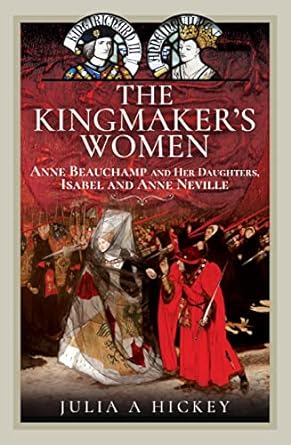
Guest Post: The Kingmaker’s Women by Julia A. Hickey

Today it is an absolute pleasure to welcome fellow historian Julia A. Hickey to History… the Interesting Bits. I have been following Julia’s work for many years and regularly turn to her blog, The History Jar, for information and inspiration for my own work. And, apparently, Julia does the same with History… the Interesting Bits, so we’re forming a bit of a mutual appreciation society. Julia’s latest book focuses on the Wars of the Roses and, in particular, the wife and daughters of Richard Neville, Earl of Warwick, known to history as ‘The Kingmaker.’ And here she is to give us a little taster of her book, The Kingmaker’s Women, Anne Beauchamp and Her Daughters, Isabel and Anne Neville by Julia A Hickey.

So, it’s over to Julia…

The Kingmaker’s Women, Anne Beauchamp and Her Daughters, Isabel and Anne Neville.

Julia A. Hickey

Anne Neville, Middleham Church

Isabel and Anne Neville led brief but turbulent lives. Their father, Richard Neville, 16th Earl of Warwick by right of his wife, Anne Beauchamp, was at the heart of the conflicts of the mid-fifteenth century, earning himself the name ‘Warwick the Kingmaker’. Countess Anne and her children were chronicled, on occasion, alongside the earl in his long-played political game spanning more than twenty years, concluding only with his death on a foggy Easter morning at Barnet in 1471. It is impossible to write about their lives without setting them in the context of the War of the Roses and the earl’s influence upon it.

Anne Beauchamp, descended from King Edward III, the Despensers and the Mortimers as well as the earls of Warwick, was married to Richard Neville in 1434 at Abergavenny when she was 8 years-old and her husband was only 6. The union was subsidiary to the wedding of their siblings Henry Beauchamp, the 13th Earl of Warwick’s heir, and Cecily Neville which was celebrated at the same time. There was no reason to expect that the marriage would transform Richard, who was heir to his father Richard Neville and his mother, Alice Montacute, the heiress of the Earl of Salisbury, into one of the most powerful nobles of the fifteenth century.

It was Anne’s unexpected inheritance of the earldom of Warwick and all its estates upon the death of her brother in 1446 followed by her young niece, named after her, in 1449 that transformed the couple’s fortunes. Anne, who had three elder half-sisters from the 13th earl’s first marriage to Elizabeth de Berkeley, was the only full-blooded relation of the 15th countess. The law, viewing the deceased countess’s collateral heirs, saw only that Anne was more closely related to her niece than the other women. Inheritance was not awarded based on direct descent from Richard Beauchamp, 13th Earl of Warwick who had been outlived by both his son and his granddaughter. The decision triggered a legal dispute and a feud with the families of Anne Beauchamp’s half-sisters which resonated throughout the conflict between York and Lancaster. As daughters of the 13th earl, Margaret, Eleanor and Elizabeth expected to be coheiresses to the earldom alongside their younger half-sibling. Margaret’s husband, John Talbot, contended that as the husband of the 13th earl’s eldest daughter, it was he rather than Richard Neville who should become the 16th Earl of Warwick by right marriage (jure uxoris).

Middleham Castle

The new countess travelled with her husband, oversaw the management of their estates in his absence, was party to his schemes and subject to the State’s wrath after his death. One of the consequences of the lived experience of the countess and her daughters was that they did not leave the kind of documentary trail that would help to shine a light upon their lives in present times. It was only when medieval women became widows in receipt of dower and jointure rights that they gained legal independence and a voice in the official record. Isabel, born in 1451, and Anne, born in 1456, grew up, lived and died largely unheralded in a masculine world, or so it appears at first glance. Dig deeper and the echo of women with voices demanding to be heard, including Countess Anne, can be found in court records, financial accounts, charters and wills; books commissioned by wealthy well-educated women like the Nevilles and Beauchamps; as well as the establishment of chantries and the building of parish churches throughout the realm.

Isabel Neville, who died when she was 25, was married, in secret at Calais, to King Edward IV’s brother George, Duke of Clarence in 1469. Her father was eager to link the Neville name with that of Plantagenet. Clarence was desirous of the match because Isabel was the elder daughter of one of England’s most powerful men and an heiress to vast estates. There was also a distinct possibility that Warwick would topple Edward from the throne as the relationship between the men deteriorated and place Clarence upon it in his brother’s stead. Circumstantial evidence demonstrates that Isabel was beloved by George who was only a year older than his bride. Unlike the king, Clarence had no known mistresses or illegitimate children. No one can know how Isabel felt about her husband; her experience as a fugitive in 1470, forced to give birth onboard ship to a still born child outside Calais; or the turning of her husband’s coat that September when he re-joined his brother’s cause. It had become clear that Warwick was less interested in making him king than Clarence might have previously supposed. Nor is it possible to know what the relationship between the two sisters was like when Anne Neville was placed in George’s custody in 1471 or even if Isabel supported George’s attempt to prevent the division of her parents’ estates. It is certainly true that Clarence was grief-stricken by his wife’s death and he was permitted, as he desired, to be interred next to Isabel at Tewkesbury following his own execution for treason in 1478.

Warwick Castle

The idea of heiress as powerless trophy is a trope embedded into our common view of Anne Neville, thanks to Shakespeare’s portrayal of her in Richard III as a pawn furthering her father’s ambitions. She has also served since Tudor times as a sickly cypher to illustrate Richard’s manifest evil. The story, told by Shakespeare, is based on Sir Thomas More’s History of King Richard III. In reality, Anne’s life was an example of the changeability of fortune depicted by the popular medieval philosophy of Fortuna’s wheel. History does not know if she was a woman of courage or shrewd intelligence in the way the Lady Margaret Beaufort is recognised, but John Rous who knew Anne described her as ‘amiable and beauteous and in conditions full commendable and right virtuous’. Whatever her health might have been, she was made of the same stern stuff as Henry Tudor’s mother to whom she was distantly related. Anne endured a sea battle when her father was forced to flee England in 1470; was married to Edward of Lancaster, the son of her father’s bitterest enemy; made a forced march with the Lancastrian army from the south of England to Tewkesbury in 1471; was widowed after five months of marriage; and escaped the clutches of her land-hungry brother-in-law. She preferred to risk the criminals of St Martin’s sanctuary near Westminster so that she could make a second marriage to Richard, Duke of Gloucester who would fight for her inheritance and see her returned to her own rightful position in society.

Anne’s marriage to Richard was unusual for a couple of their rank in that no dowry could be agreed for her because, by then, the estates associated with the Nevilles and the Earldom of Warwick lay within the king’s gift. The legal rights of Anne’s mother, the suo jure Countess of Warwick, were stolen from her by King Edward IV and Parliament through the simple expedient of having Anne Beauchamp declared legally dead. The countess’s letters written from sanctuary at Beaulieu following her husband’s death demanding her legal rights remain as testimony to both her own education and the potential power of aristocratic women to intervene in political decision making. The effectiveness of her correspondence to the highborn men and women who surrounded the king is best illustrated by Edward IV’s orders that she should be prevented from the continuation of her writing.

Memorial brass to Isabel Neville and George, Duke of Clarence, Tewkesbury Abbey

Had King Edward IV not died in 1483 while his eldest son was still a child, Anne Neville might have spent the remainder of her days overseeing her household and servants at Middleham as the Duchess of Gloucester. Hers would have been a story of estate management, a piety shared with her spouse, and the trials of childbirth.

Fortuna’s wheel carried Anne to the apex of society when her husband was declared King Richard III on 25 June 1483. As queen she chose to surround herself with Neville kinswomen familiar since childhood, including her own illegitimate half-sister, Margaret Huddleston who was married to the Lord of Millom. Fate continued its abrupt revolution. The loss of her only son, Edward of Middleham, followed hard on the heels of a double coronation and triumphant progress to York. It was not long before Anne became so unwell that her doctors prohibited the king from sharing her bed. As winter turned into spring in March 1485, Anne died and was buried in Westminster Abbey, leaving behind only rumour, speculation and rebellion. Five months later Richard was dead at Bosworth, buried with scant regard for ceremony, leaving Anne to be characterised as a victim rather than a woman born with a powerful name and the potential of political agency.

Even more extraordinary, the circumstances surrounding the end of Isabel and Anne Neville’s lives were both followed by accusations of murder and witchcraft. Clarence, to modern eyes at least, maddened with grief following the untimely death of Isabel in December 1476, accused one of his wife’s own household of murder. Ankarette Twynyho, possibly a trusted midwife, was shoehorned by the duke into an evolving stereotype of a witch. Clarence had no hesitation either in kidnapping the woman or having her judicially murdered. Later, the Tudor propaganda machine, whatever the truth of the matter, vilified Richard III as the murderer of his nephews, a poisoner and a man of such diabolical intensity that he terrified Anne into an early grave.

Countess Anne lived on after her daughters. Consigned to the footnotes or forgotten by history, the suo jure Countess of Warwick, declared legally dead in 1474, refused to be stripped of her voice or her rights. She may have commissioned The Pageants of Richard Beauchamp, Earl of Warwick and the Rous Roll that depict the lives of the Earls of Warwick, the countess, and Isabel and Anne. There was no such thing as a bad Earl of Warwick in her opinion. She knew that her power and that of her daughters lay in the land that they represented, in their kinship networks and the men they slept with.

A pragmatist and survivor, Countess Anne negotiated her return to legal life with the accession of the Tudors on the condition that she broke the entail that lay upon her estates and gifted then to Henry VII. When she died in 1492, she was buried next to her husband in Bisham Abbey. She left Isabel’s surviving children, Margaret and Edward, nothing, apart from a Plantagenet legacy that would see Edward, the 17th Earl of Warwick, executed for treason in 1499 and, Margaret Pole, suo jure Countess of Salisbury, butchered by an inept headsman in 1541.

Medieval chroniclers and the focus of history’s lens marginalises women like Countess Anne and her daughters by imposing a distinction between the masculine public and the feminine domestic spheres. The messy reality is that the countess and her daughters, and women like them, lived complex and sometimes contentious lives, risking everything to protect their family’s interests.

To Buy the Book

The Kingmaker’s Women, Anne Beauchamp and Her Daughters, Isabel and Anne Neville by Julia A Hickey, published by Pen and Sword is currently priced at £20.00. It is available direct from Pen and Sword as well as from Amazon and Waterstones. It is the third of Julia’s books to be published by Pen and Sword. The Son that Elizabeth I Never Had: The Adventurous Life of Robert Dudley explores the life of the Earl of Leicester’s illegitimate son while Medieval Royal Mistresses: Mischievous Women who Slept with Kings and Princes takes an overview of the women who shared the beds of some of England and Scotland’s rulers.

About the author

Julia Hickey describes herself as a general historian but is often drawn back to the Wars of the Roses and the Tudor period. Her interest in history began at an early age when she lived near Plymouth and her father recounted the story of Sir Francis Drake playing bowls before setting sail to vanquish the Armada. She has a particular passion for the reivers who operated in the borders between England and Scotland before James I ascended the throne in 1603 not only because riding names such as Armstrong and Musgrave resonate in her husband’s family tree but because a glimpse may be caught of ordinary men and women in ballads of the period. Little known or untold stories, the contribution made by women and the lives of people who populate the footnotes of History fascinate her. She is at her happiest exploring and photographing castles, ruins, cathedrals and stately homes – preferably followed by a visit to a café.

Her first degree was in English and History from the University of Kent which she followed up with an M.A. by research and teaching qualification. Since then, she has taught in a range of settings from secondary schools to venues used by the Workers Educational Association (WEA). These days she is a freelance speaker, writer and blogger at thehistoryjar.com. She can also be found at https://www.instagram.com/thehistoryjar/ and https://www.facebook.com/TheHistoryJar.

When she’s not writing, she can be found in her garden, enjoying the Peak District in all its seasons or crafting. Almost inevitably her interests take a historical turn. This year she has taken part in the Unstitched Coif, a co-created artwork and research project undertaken by a PHD student at Sheffield in association with the V & A Museum, using blackwork embroidery to stitch a previously unworked seventeenth century design.

*

My Books

Signed, dedicated copies of all my books are available through my online bookshop.

Out nowKing John’s Right-Hand Lady: The Story of Nicholaa de la Haye

In a time when men fought and women stayed home, Nicholaa de la Haye held Lincoln Castle against all-comers, gaining prominence in the First Baron’s War, the civil war that followed the sealing of Magna Carta in 1215. A truly remarkable lady, Nicholaa was the first woman to be appointed sheriff in her own right. Her strength and tenacity saved England at one of the lowest points in its history. Nicholaa de la Haye is one woman in English history whose story needs to be told…

King John’s Right-Hand Lady: The Story of Nicholaa de la Haye is now available from Pen & Sword Booksbookshop.org and Amazon.

Coming 15 January 2024: Women of the Anarchy

On the one side is Empress Matilda, or Maud. The sole surviving legitimate child of Henry I, she is fighting for her birthright and that of her children. On the other side is her cousin, Queen Matilda, supporting her husband, King Stephen, and fighting to see her own son inherit the English crown. Both women are granddaughters of St Margaret, Queen of Scotland and descendants of Alfred the Great of Wessex. Women of the Anarchy demonstrates how these women, unable to wield a sword, were prime movers in this time of conflict and lawlessness. It show how their strengths, weaknesses, and personal ambitions swung the fortunes of war one way – and then the other.

Available for pre-order from Amberley Publishing and Amazon UK.

Also by Sharon Bennett Connolly:

Defenders of the Norman Crown: The Rise and Fall of the Warenne Earls of Surrey tells the fascinating story of the Warenne dynasty, of the successes and failures of one of the most powerful families in England, from its origins in Normandy, through the Conquest, Magna Carta, the wars and marriages that led to its ultimate demise in the reign of Edward III. Defenders of the Norman Crown: Rise and Fall of the Warenne Earls of Surrey is now available from Pen & Sword BooksAmazon in the UK and US, and  Bookshop.org.

Ladies of Magna Carta: Women of Influence in Thirteenth Century England looks into the relationships of the various noble families of the 13th century, and how they were affected by the Barons’ Wars, Magna Carta and its aftermath; the bonds that were formed and those that were broken. It is now available in paperback and hardback from Pen & Sword,  Amazon, and Bookshop.org.

Heroines of the Medieval World tells the stories of some of the most remarkable women from Medieval history, from Eleanor of Aquitaine to Julian of Norwich. Available now from Amberley Publishing and Amazon, and Bookshop.org.

Silk and the Sword: The Women of the Norman Conquest traces the fortunes of the women who had a significant role to play in the momentous events of 1066. Available now from Amazon,  Amberley Publishing, and Bookshop.org.

Alternate Endings: An anthology of historical fiction short stories including Long Live the King… which is my take what might have happened had King John not died in October 1216. Available in paperback and kindle from Amazon.

Podcast:

Have a listen to the A Slice of Medieval podcast, which I co-host with Historical fiction novelist Derek Birks. Derek and I welcome guests, such as Bernard Cornwell, and discuss a wide range of topics in medieval history, from significant events to the personalities involved.

*

Don’t forget! Signed and dedicated copies of all my books are available through my online bookshop.

For forthcoming online and in-person talks, please check out my Events Page.

You can be the first to read new articles by clicking the ‘Follow’ button, liking our Facebook page or joining me on Twitter and Instagram.

©2023 Sharon Bennett Connolly FRHistS and Julia A. Hickey
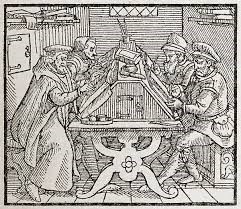
Book Corner: A Day of Reckoning by Matthew Harffy

Hunlaf battles peril and intrigue on a dangerous voyage to Muslim Spain.

AD 796
. Sailing in search of an object of great power, Hunlaf and his comrades are far from home when they are caught up in a violent skirmish against pirates.

After the bloody onslaught, an encounter with ships from Islamic Spain soon sees them escorted under guard to the city of Qadis, one of the jewels of the Emirate of Al-Andalus and the true destination of their voyage.

Hunlaf believes the Emir’s lands hold the key to his search, but there are dangerous games at play. To achieve his goal, Hunlaf and his allies must walk a difficult path where friends and enemies alike are not always what they seem – and where a weapon deadlier than any yet seen could change the future of all the kingdoms in Europe.

What a read! A Day of Reckoning by Matthew Harffy is another riveting story following the adventures of Hunlaf and his quest for the mystical book, The Treasure of Life, stolen from the island monastery of Lindisfarne. And, as usual, Hunlaf’s quest lands the monk-turned-warrior and his friends – the crew of the Brymsteda – in deep water, on sea and land!

Matthew Harffy takes us on a voyage to medieval, Islamic Spain in pursuit of the lost book, and on a secret mission for Charlemagne – a mission so secret that no one is exactly sure of its purpose, beyond escorting the emissary, Giso. Hunlaf must use his wits as well as his sword-arm to extricate himself and his friends from Spain in one piece.

Nothing goes to plan. But then, if it did, it would not be a Matthew Harffy novel, would it? Spiced up with a will-they-won’t-they love story, the betrayal of friend and foe alike and a storyline that will keep you engrossed to the very end, A Day of Reckoning is another Matthew Harffy triumph.

We all stared at the small man. I wondered who he was. He wore a nondescript robe and none of the trappings that would mark him out as a man of noble birth. No gold glimmered on his fingers or at his neck. But he met our gaze with assurance, and the way he had hidden within the room, utterly still and undetected until he chose to reveal himself, was unnerving.

“We are to take him back to Northumbria?” I said. ” Giso is to carry your response to Æthelred King?”

Alhwin flashed his teeth at me in a wide grin. His smile made me almost as nervous as Giso’s stealthy apparition.

“Giso will carry my response, but not to Northumbria.”

“But we are to return northward.”

“Is that so?” he asked, taking on the tone of a tutor speaking to a slow pupil. “What was it that you were commanded to do, Hunlaf?”

I thought back to the orders we had received from Lord Mancas. My eyes narrowed at the memory, again wondering at the depth of knowledge Alhwin possessed. Could he be so cunning?

“We were commanded to bring the message to you and then to wait for your response, that we might carry it aboard Brymsteda.”

“Ah, yes, the fabled ship that Runolf constructed. I would like to see it before you leave.” His smile broadened. “But I digress. You have fulfilled the first part of your king’s orders. I have received his message and other letters from Northumbria. And Giso here will bear my response. But my response is not for Æthelred or indeed anyone from my homeland. You must carry it southward. To al-Andalus.”

In A Day of Reckoning we learn more about the character and lives of Hunlaf’s crewmates. Friendships develop and are stretched to the limit. Hunlaf himself, a natural leader, is learning of the highs and lows of command. His character and beliefs are challenged by the exotic people of Muslim Spain.

Harffy recreates the sights, sounds and tensions of 8th century Spain to the extent that you can imagine yourself in the heart of the city of Qadiz (Cadiz), sensing the mix of languages, cultures and customs, smelling the spices amidst the fumes of Greek fire and burning flesh (it is a Matthew Harffy book, after all). Impeccably researched for the history, culture and politics of the 8th century Iberian peninsula, Matthew Harffy immerses the reader in this strange, exotic world, full of hidden dangers.

Whether or not all our heroes survive is down to a mixture of skill and luck and – well, you’ll have to read it to find out!

Matthew Harffy has honed and perfected his skills as a storyteller over the years, to such an extent that a fabulous week of reading is anticipated and expected when a new book is released. And A Day of Reckoning does not disappoint.

To Buy the Book:

A Day of Reckoning by Matthew Harffy is now available on Amazon.

About the author:

Matthew Harffy lived in Northumberland as a child and the area had a great impact on him. The rugged terrain, ruined castles and rocky coastline made it easy to imagine the past. Decades later, a documentary about Northumbria’s Golden Age sowed the kernel of an idea for a series of historical fiction novels. The first of them is the action-packed tale of vengeance and coming of age, THE SERPENT SWORD.

Matthew has worked in the IT industry, where he spent all day writing and editing, just not the words that most interested him. Prior to that he worked in Spain as an English teacher and translator. Matthew lives in Wiltshire, England, with his wife and their two daughters.

For all the latest news and exclusive competitions, join Matthew online: http://www.matthewharffy.com, twitter.com/@MatthewHarffy, http://www.facebook.com/MatthewHarffyAuthor.

*

My Books

Signed, dedicated copies of all my books are available through my online bookshop.

Out nowKing John’s Right-Hand Lady: The Story of Nicholaa de la Haye

In a time when men fought and women stayed home, Nicholaa de la Haye held Lincoln Castle against all-comers, gaining prominence in the First Baron’s War, the civil war that followed the sealing of Magna Carta in 1215. A truly remarkable lady, Nicholaa was the first woman to be appointed sheriff in her own right. Her strength and tenacity saved England at one of the lowest points in its history. Nicholaa de la Haye is one woman in English history whose story needs to be told…

King John’s Right-Hand Lady: The Story of Nicholaa de la Haye is now available from Pen & Sword Booksbookshop.org and Amazon.

Coming 15 January 2024: Women of the Anarchy

On the one side is Empress Matilda, or Maud. The sole surviving legitimate child of Henry I, she is fighting for her birthright and that of her children. On the other side is her cousin, Queen Matilda, supporting her husband, King Stephen, and fighting to see her own son inherit the English crown. Both women are granddaughters of St Margaret, Queen of Scotland and descendants of Alfred the Great of Wessex. Women of the Anarchy demonstrates how these women, unable to wield a sword, were prime movers in this time of conflict and lawlessness. It show how their strengths, weaknesses, and personal ambitions swung the fortunes of war one way – and then the other.

Available for pre-order from Amberley Publishing and Amazon UK.

Also by Sharon Bennett Connolly:

Defenders of the Norman Crown: The Rise and Fall of the Warenne Earls of Surrey tells the fascinating story of the Warenne dynasty, of the successes and failures of one of the most powerful families in England, from its origins in Normandy, through the Conquest, Magna Carta, the wars and marriages that led to its ultimate demise in the reign of Edward III. Defenders of the Norman Crown: Rise and Fall of the Warenne Earls of Surrey is now available from Pen & Sword BooksAmazon in the UK and US, and  Bookshop.org.

Ladies of Magna Carta: Women of Influence in Thirteenth Century England looks into the relationships of the various noble families of the 13th century, and how they were affected by the Barons’ Wars, Magna Carta and its aftermath; the bonds that were formed and those that were broken. It is now available in paperback and hardback from Pen & Sword,  Amazon, and Bookshop.org.

Heroines of the Medieval World tells the stories of some of the most remarkable women from Medieval history, from Eleanor of Aquitaine to Julian of Norwich. Available now from Amberley Publishing and Amazon, and Bookshop.org.

Silk and the Sword: The Women of the Norman Conquest traces the fortunes of the women who had a significant role to play in the momentous events of 1066. Available now from Amazon,  Amberley Publishing, and Bookshop.org.

Alternate Endings: An anthology of historical fiction short stories including Long Live the King… which is my take what might have happened had King John not died in October 1216. Available in paperback and kindle from Amazon.

Podcast:

Have a listen to the A Slice of Medieval podcast, which I co-host with Historical fiction novelist Derek Birks. Derek and I welcome guests, such as Bernard Cornwell, and discuss a wide range of topics in medieval history, from significant events to the personalities involved.

*

Don’t forget! Signed and dedicated copies of all my books are available through my online bookshop.

For forthcoming online and in-person talks, please check out my Events Page.

You can be the first to read new articles by clicking the ‘Follow’ button, liking our Facebook page or joining me on Twitter and Instagram.

©2023 Sharon Bennett Connolly FRHistS

Book Corner: Crime and Punishment in Tudor England: From Alchemists to Zealots by April Taylor

Crime and Punishment in Tudor England: From Alchemists to Zealots tells the story of the enactment of law and its penalties from Henry VII to Elizabeth I.

The sixteenth century was remarkable in many ways. In England, it was the century of the Tudor Dynasty. It heralded the Reformation, William Shakespeare, the first appearance of bottled beer in London pubs, Sir Francis Drake, and the Renaissance. Oh, and the Spanish Armadas―all five of them! Yes, five armadas and all failures.

It was a watershed century for crime and punishment. Henry VII’s paranoia about the loyalty of the nobility led to military-trained vagrants causing mayhem and murder. Henry VIII’s Reformation meant executions of those refusing to take the Oath of Supremacy. State-controlled religion―summed up through the five reigns as Roman Catholic; Anglo-Catholic; Protestant; Roman Catholic, and Sort of Protestant but I don’t mind so long as you swear the Oath of Supremacy―became an increasingly complex, not to say confusing, issue for ordinary people.

Although primary sources are rare and sometimes incomplete, the life of criminals and the punishments meted out to them still fascinates.

Read about: John Daniell and how he tried to blackmail the Earl of Essex. The Stafford insurrection of 1486, the first serious opposition to the new king. The activities of con-man extraordinaire, Gregory Wisdom, and many more.

Crime and punishment didn’t start with the Tudors and this book summarises judicial practices built on tradition from the Roman occupation. It covers often gory details―what happens to the body when it is beheaded, burned, boiled, or hanged?

Arranged in alphabetical order of crimes, it recounts tales of blackmail, infanticide, kidnapping, heresy, and sumptuary laws. Told with occasional low-key humour, the book also includes Tavern Talk, snippets of quirky information.

Dip into it at your pleasure.

I have to admit, Crime and Punishment in Tudor England: From Alchemists to Zealots by April Taylor is one of the best non-fiction books I have had the pleasure of reading this year. I have always had a fascination for the law – I was even considering it as a career at one stage, until I realised I couldn’t stand the 9 to 5 lifestyle. Give me shift work and odd hours any day! So, I have been looking forward to this book ever since I heard April was writing it.

Opening with a fabulous history of the development of England’s legal system, Crime and Punishment in Tudor England explains not only the crimes committed, but also the various legal processes under different monarchs and at different social levels. Every crime imaginable is covered, from infanticide to treason. And so are the punishments and the reasons behind them; and how often such punishments were intended to fit the crime – or to shame the perpetrator. Every part of the criminal justice system is analysed, from religious offenders to witchcraft, from capital punishment to torture, prison condition and labour camps. Crime and Punishment in Tudor England also looks into the influences on crime, such as the impact of economic and social conditions, in a century of religious and political upheaval throughout Europe.

I do have to warn you: this book is not to be read while eating, unless you have a strong stomach. April Taylor includes descriptions of the various methods of execution, including beheading, hanging, burning and the particularly gruesome method of boiling alive!

Boiling to Death

Boiling to death was not often used in Tudor England to be fair, although it was the designated punishment for coiners on the continent. The method is self-explanatory. The offender would be put into a large container which might be filled with water, oil, molten lead, wax or sometimes wine, heated to boiling point.

The most famous victim was Richard Roose, cook to the Bishop of Rochester, John Fisher. It was established that Roose had decided to poison his master and guests by serving them pottage for dinner. Fisher was known to be abstemious and did not partake of the pottage, and nobody can blame him since it sounds less than appetising.

Pottage was a kind of thick porridge that peasants relied on for centuries as a staple food. For them, it would consist of grains and vegetables, boiled in a pot and often kept simmering for hours or days to make sure it was safe to eat. If rich households ate it, often meat or fish was added, but if you can imagine a kind of hearty soup full of heaven knows what that has been boiled to extinction, you have an idea of what pottage was like.

This case became something of a political ‘hot potato’(even though nobody had yet encountered one in 1531 in England). Sixteen of Fisher’s guests became ill, one of them, a man called Curwen, died. The rest of the poisoned pottage was given to the poor, at which point Alice Trypptt also died from eating it.

Bishop Fisher had been Margaret Beaufort’s confessor and it was he who had taught the young Henry VIII the tenets of theology. However, and here is the political bit, at the time Roose conducted his ‘jest’, thinking the powder he had put in the pottage was a laxative that would make his fellow servants ill, Bishop Fisher was a vocal opponent of Henry VIII’s marriage to Anne Boleyn. Moreover, there were rumours that the Boleyn family had engineered the poisoning. Obviously they all liked pottage.

The Spanish ambassador, Chapuys, and Thomas More, neither of whom were sympathetic to Anne, told Henry of the rumours accusing her, to which Henry is alleged to have answered that she was blamed for everything.

Henry decided he must act with speed to make sure any such rumour was quashed and that neither his beloved’s character nor her family were sullied (a bit of a non-starter since she was already known as the ‘goggleeyed whore’ by the majority of the population who adored Katherine of Aragon).

Back to Henry. He immediately told Parliament he wanted a bill passing that any servant found guilty of poisoning or attempting to poison their master or mistress should be attainted for high treason and executed.

Henry was quite clever in some ways. Because he made the crime one of high treason, it meant there was no need for prior judicial process or a jury to determine the guilt or otherwise of the defendant. This was not to be the first time Henry dispensed justice with the tenets of common law.

While some of the more sensational and high profile cases are discussed – such as Anne Boleyn and Catherine Howard – April also introduces cases far less familiar to the reader. Encompassing murder, fraud, blackmail and all manner of crimes, April Taylor presents a fascinating insight into Tudor crimes, ably supported by actual – and fascinating – case studies. Theses case studies not only demonstrate the nature of crimes and their punishment, but also the changing attitudes to crime, and the shifting emphasis on punishments, from the dawn of the Tudor period to the royal dynasty’s demise in 1603.

Crime and Punishment in Tudor England also highlights various miscarriages of justice, including where officials accused innocent victims with the aim of appropriating their goods and property. There are some truly harrowing tales, such as the youngest felon executed in the Tudor era – a girl of the tender age of 11 – and the general treatment of children who fell foul of the criminal justice system. It makes you happy to be living in the 21st century!

April Taylor has managed to cram so much information into Crime and Punishment in Tudor England: From Alchemists to Zealots it really is an impressive tome. It is thorough and well referenced and is written in a lively, entertaining writing style, with a fair amount of wit thrown in for good measure.

I cannot recommend it highly enough. Crime and Punishment in Tudor England: From Alchemists to Zealots is a pleasure to read!

To buy the book:

Crime and Punishment in Tudor England: From Alchemists to Zealots by April Taylor is now available from Amazon and Pen and Sword Books.

About the author:

April Taylor was born in the historic county of Lincolnshire in the UK. Having caught the history bug from a young age, April has always been fascinated by the physical manifestation of times past in particularly the Tudor period. This interest deepened when she discovered one of the most important events of Henry VIII’s reign, the Lincolnshire Rebellion that led to the Pilgrimage of Grace in 1536, started eight miles from where April was born. April has always ensured her research is as meticulous as possible. During her study of the Tudors for her fictional Luke Ballard books, April was intrigued by frequent references to Henry VIII’s charisma. Choosing a career in librarianship, April honed her research skills but always leant towards the history of the area in which she lived. This led to numerous talks to schools and local groups, especially in Worcester, yet another place of historic importance in the UK. April Taylor now lives near the rugged coast of north-east England in close proximity to one of the priories that fell victim to Henry VIII’s Reformation. She frequently walks her golden retriever in local forests using that time to work through complicated plotlines. She sings in the medieval church and occupies her down-time dressmaking and cross-stitching.

My Books

Signed, dedicated copies of all my books are available through my online bookshop.

Out nowKing John’s Right-Hand Lady: The Story of Nicholaa de la Haye

In a time when men fought and women stayed home, Nicholaa de la Haye held Lincoln Castle against all-comers, gaining prominence in the First Baron’s War, the civil war that followed the sealing of Magna Carta in 1215. A truly remarkable lady, Nicholaa was the first woman to be appointed sheriff in her own right. Her strength and tenacity saved England at one of the lowest points in its history. Nicholaa de la Haye is one woman in English history whose story needs to be told…

King John’s Right-Hand Lady: The Story of Nicholaa de la Haye is now available from Pen & Sword Booksbookshop.org and Amazon.

Coming 15 January 2024: Women of the Anarchy

On the one side is Empress Matilda, or Maud. The sole surviving legitimate child of Henry I, she is fighting for her birthright and that of her children. On the other side is her cousin, Queen Matilda, supporting her husband, King Stephen, and fighting to see her own son inherit the English crown. Both women are granddaughters of St Margaret, Queen of Scotland and descendants of Alfred the Great of Wessex. Women of the Anarchy demonstrates how these women, unable to wield a sword, were prime movers in this time of conflict and lawlessness. It show how their strengths, weaknesses, and personal ambitions swung the fortunes of war one way – and then the other.

Available for pre-order from Amberley Publishing and Amazon UK.

Also by Sharon Bennett Connolly:

Defenders of the Norman Crown: The Rise and Fall of the Warenne Earls of Surrey tells the fascinating story of the Warenne dynasty, of the successes and failures of one of the most powerful families in England, from its origins in Normandy, through the Conquest, Magna Carta, the wars and marriages that led to its ultimate demise in the reign of Edward III. Defenders of the Norman Crown: Rise and Fall of the Warenne Earls of Surrey is now available from Pen & Sword BooksAmazon in the UK and US, and  Bookshop.org.

Ladies of Magna Carta: Women of Influence in Thirteenth Century England looks into the relationships of the various noble families of the 13th century, and how they were affected by the Barons’ Wars, Magna Carta and its aftermath; the bonds that were formed and those that were broken. It is now available in paperback and hardback from Pen & Sword,  Amazon, and Bookshop.org.

Heroines of the Medieval World tells the stories of some of the most remarkable women from Medieval history, from Eleanor of Aquitaine to Julian of Norwich. Available now from Amberley Publishing and Amazon, and Bookshop.org.

Silk and the Sword: The Women of the Norman Conquest traces the fortunes of the women who had a significant role to play in the momentous events of 1066. Available now from Amazon,  Amberley Publishing, and Bookshop.org.

Alternate Endings: An anthology of historical fiction short stories including Long Live the King… which is my take what might have happened had King John not died in October 1216. Available in paperback and kindle from Amazon.

Podcast:

Have a listen to the A Slice of Medieval podcast, which I co-host with Historical fiction novelist Derek Birks. Derek and I welcome guests, such as Bernard Cornwell, and discuss a wide range of topics in medieval history, from significant events to the personalities involved.

*

Don’t forget! Signed and dedicated copies of all my books are available through my online bookshop.

For forthcoming online and in-person talks, please check out my Events Page.

You can be the first to read new articles by clicking the ‘Follow’ button, liking our Facebook page or joining me on Twitter and Instagram.

©2023 Sharon Bennett Connolly FRHistS

Book Corner: The Tudors by Numbers by Carol Ann Lloyd

The Tudors by Numbers is a fresh look at a well-known dynasty ― through its numbers. Take a new look at old friends by learning the complicated path to 1 possible king symbolized by 1 rose, viewing the extraordinary 42 percent of the dynasty under the rule of 2 women, and considering the impact of 4 English language translations of the Bible printed in England. The Tudors by Numbers takes you behind the scenes through a different path and reveals new ways of seeing the Tudors.

The Tudors by Numbers: The Stories and Statistics Behind England’s Most Infamous Royal Dynasty by Carol Ann Lloyd is a new way of looking at the Tudors, giving a refreshing insight into the family and the 16th century.

When you think about ‘numbers’ as they relate to the Tudor dynasty, I am sure the first thig that comes to mind is ‘Henry VIII had six wives’ and I have to admit, that’s exactly where I went as soon as I saw the title of the book. I expected Carol Ann to dwell on Henry and his wives and, perhaps, add a few more numbers in the mix to flesh out the book. I actually thought there was not much breadth to looking at numbers with regard to the Tudors.

How wrong I was!

Carol Ann Lloyd presents the Tudors in a whole new light, looking at where numbers played a prominent role in England’s most famous dynasty.

It is illuminating!

The Tudors by Numbers: The Stories and Statistics Behind England’s Most Infamous Royal Dynasty by Carol Ann Lloyd is a fun, engaging volume that will make you look at the Tudors in a different light. Written in short, easy to absorb chapters, the author guides the reader through the the Tudor era, highlighting where numbers had a significant influence on the dynasty, not just in the number of wives of Henry VII or the number of ruling queens, and not just in the years.

Did Henry VII really end the Wars of the Roses by marrying Elizabeth of York, daughter of Edward IV, and creating the Tudor dynasty?

Let’s find out. Let’s roll the numbers!

The Story of a Rose by the Numbers

The numbers tell us that the path to one single rose and the establishment of the Tudor dynasty was a long and treacherous road made up of many complications. The numbers tell us the real story of the beginning of the Tudor Dynasty. The most important number in Henry   VII’s narrative is one. He based his claim and the establishment of his dynasty on there being:

•one heir to the Lancastrian claim to the throne: Henry himself

•one heir to the Yorkist claim to the throne: Elizabeth of York

•one marriage that united those two claimants

•one option for king, based on the above.

So, the question of who should be rightful king of England, which had rocked the country since 1399 when Richard II had been deposed, all came down to one man in 1485: Henry Tudor. Henry needed to tell his story. He decided to do so with red and white roses.

The white rose had a long history with Edward IV. It’s found on his manuscripts and features prominently in his genealogical roll, which was probably created to celebrate his coronation as King of England. After all, he had not inherited the throne from a royal father; instead, he had seized it from an anointed king in battle. To demonstrate the superiority of his family claim to the throne, his supporters created an elaborate genealogical roll filled with symbols to validate his divine right to the throne: three suns representing the holy trinity and white roses. Perpetuating the story that Elizabeth’s two brothers had died during the reign of Richard III, Henry recognised Elizabeth as the heir to the Yorkist claim. He seized on the white rose and passed the symbol on to Edward’s eldest daughter.

The red rose proved a trickier A few previous Lancastrians had used a gold rose, but not consistently. Henry Tudor’s Lancastrian predecessor, Henry VI, had used the antelope. Henry Tudor himself had initially used the symbol of the red dragon of Wales, associating himself with the mythical British King Cadwalladr. We don’t see any evidence of Henry using the red rose before Bosworth. But once he was king, he realised the power of symbolism and settled upon something that would allow him to put his stamp on the country forever. It was a masterstroke. The combination of the red and white rose was powerful in its simplicity and effective in its message. The king then went about carving that rose into buildings, emblazoning it on royal documents, and including it in portraits.

The Tudors by Numbers: The Stories and Statistics Behind England’s Most Infamous Royal Dynasty by Carol Ann Lloyd is a must-read for any Tudor enthusiast. All the great characters of the time are put in the spotlight, from the kings and queens to those who served them, from the likes of William Cecil, Queen Elizabeth’s right-hand man, to Thomas Cranmer, Thomas Wolsey and Thomas Cromwell, men whose careers helped to usher in the Reformation and the foundation of the Church of England. As a consequence of which, Edward VI – that much desired male heir – was the first king of England to be crowned as the supreme head of the Church of England.

Every aspect of the Tudor dynasty is examined – and the numbers rolled. If you love the story of Mary Queen of Scots, Anne Boleyn and Catherine of Aragon, you will find them here – presented in a new light.

Carol Ann Lloyd delves deep into the history of the time and uses her incredible knowledge of the dynasty in order to give the reader a fascinating insight into the Tudors. A study of the numbers highlights the great events of the period, from the dawn of the dynasty, through the pretenders who threatened Henry VII’s rule, Henry VIII’s obsession with having a male heir, to the great Elizabeth I and the twilight of the era.

The Tudors by Numbers: The Stories and Statistics Behind England’s Most Infamous Royal Dynasty by Carol Ann Lloyd is an enjoyable read and a valuable edition to the library of any Tudor enthusiast. I cannot recommend it highly enough!

To buy the book:

The Tudors by Numbers: The Stories and Statistics Behind England’s Most Infamous Royal Dynasty by Carol Ann Lloyd is now available on Amazon.

About the author:

Carol Ann Lloyd turned an obsession with the Tudors into a speaking and writing career. She shares her love of history with Smithsonian Associates, Royal Oak Foundation, Agecroft Hall, Folger Shakespeare Library and other organizations. She holds degrees in Literature and Education and hosts a popular podcast, British History: Royals, Rebels, and Romantics. She also offers workshops about using Shakespeare strategies to improve communication skills and is a member of National Speakers Association.

My Books

Signed, dedicated copies of all my books are available through my online bookshop.

Out nowKing John’s Right-Hand Lady: The Story of Nicholaa de la Haye

In a time when men fought and women stayed home, Nicholaa de la Haye held Lincoln Castle against all-comers, gaining prominence in the First Baron’s War, the civil war that followed the sealing of Magna Carta in 1215. A truly remarkable lady, Nicholaa was the first woman to be appointed sheriff in her own right. Her strength and tenacity saved England at one of the lowest points in its history. Nicholaa de la Haye is one woman in English history whose story needs to be told…

King John’s Right-Hand Lady: The Story of Nicholaa de la Haye is now available from Pen & Sword Booksbookshop.org and Amazon.

Coming 15 January 2024: Women of the Anarchy

On the one side is Empress Matilda, or Maud. The sole surviving legitimate child of Henry I, she is fighting for her birthright and that of her children. On the other side is her cousin, Queen Matilda, supporting her husband, King Stephen, and fighting to see her own son inherit the English crown. Both women are granddaughters of St Margaret, Queen of Scotland and descendants of Alfred the Great of Wessex. Women of the Anarchy demonstrates how these women, unable to wield a sword, were prime movers in this time of conflict and lawlessness. It show how their strengths, weaknesses, and personal ambitions swung the fortunes of war one way – and then the other.

Available for pre-order from Amberley Publishing and Amazon UK.

Also by Sharon Bennett Connolly:

Defenders of the Norman Crown: The Rise and Fall of the Warenne Earls of Surrey tells the fascinating story of the Warenne dynasty, of the successes and failures of one of the most powerful families in England, from its origins in Normandy, through the Conquest, Magna Carta, the wars and marriages that led to its ultimate demise in the reign of Edward III. Defenders of the Norman Crown: Rise and Fall of the Warenne Earls of Surrey is now available from Pen & Sword BooksAmazon in the UK and US, and  Bookshop.org.

Ladies of Magna Carta: Women of Influence in Thirteenth Century England looks into the relationships of the various noble families of the 13th century, and how they were affected by the Barons’ Wars, Magna Carta and its aftermath; the bonds that were formed and those that were broken. It is now available in paperback and hardback from Pen & Sword,  Amazon, and Bookshop.org.

Heroines of the Medieval World tells the stories of some of the most remarkable women from Medieval history, from Eleanor of Aquitaine to Julian of Norwich. Available now from Amberley Publishing and Amazon, and Bookshop.org.

Silk and the Sword: The Women of the Norman Conquest traces the fortunes of the women who had a significant role to play in the momentous events of 1066. Available now from Amazon,  Amberley Publishing, and Bookshop.org.

Alternate Endings: An anthology of historical fiction short stories including Long Live the King… which is my take what might have happened had King John not died in October 1216. Available in paperback and kindle from Amazon.

Podcast:

Have a listen to the A Slice of Medieval podcast, which I co-host with Historical fiction novelist Derek Birks. Derek and I welcome guests, such as Bernard Cornwell, and discuss a wide range of topics in medieval history, from significant events to the personalities involved.

*

Don’t forget! Signed and dedicated copies of all my books are available through my online bookshop.

For forthcoming online and in-person talks, please check out my Events Page.

You can be the first to read new articles by clicking the ‘Follow’ button, liking our Facebook page or joining me on Twitter and Instagram.

©2023 Sharon Bennett Connolly FRHistS

Just a little News

First and foremost, I would like to extend a huge THANK YOU to all my readers for sticking with me through the years. I really appreciate your support and messages of encouragement. And I hope you will continue to read and enjoy my articles and books.

I have a few things happening at the moment, so thought I would just do a short post sharing my news, just so you don’t miss it!

LAST EVENT OF THE YEAR!

11 October 2023

Rounding off a fabulous year, my last event is part of the amazing Lincoln Book Festival and -appropriately enough – is about Nicholaa de la Haye!

Forgotten Heroine will be held in the gorgeous lecture theatre at the Lincoln Museum (formerly known as The Collection), on 11 October, 2023, at 6.16pm.

Tickets are just £7!

Tickets are on sale now from the Lincoln Book Festival website, just click HERE!

Book News

Kings and Queens: 1200 Years of English and British Monarchs

14 September sees the release of a new book I have collaborated on, Iain Dale’s Kings and Queens: 1200 Years of English and British Monarchs draws together some of the best historians around today (and me).

An essay on every individual who sat on the British and English throne, compiled and edited by Iain Dale.

‘We all know about Queen Victoria, Edward VIII and Queen Elizabeth II, but how much do we really know about other monarchs? Yes, we know William the Conqueror beat King Harold at the Battle of Hastings. We know George III was mad, but what else do we know about his 60 year long reign? We know Henry VIII famously had six wives, but do we know much more about him, other than he was very fat?’

From Alfred the Great to Charles III, each essay examines the monarch, their role and what they tell us about British history. Why has the British monarchy, unlike so many others, endured? Kings and Queens will attempt to answer this question, and many others, providing valuable insight into British history and how Britain is ruled today.

Buy Kings and Queens!

Women of the Anarchy

In 1135 Stephen of Blois usurped the throne, stealing it from his cousin, Empress Matilda (Maud), and sparking a 19-year civil war that would become known as The Anarchy, one of the bloodiest periods in English history. On the one side is Empress Matilda, or Maud. The sole surviving legitimate child of Henry I, she is fighting for her birthright and that of her children. On the other side is her cousin, Queen Matilda, supporting her husband, King Stephen, and fighting to see her own son inherit the English crown.

Both women are granddaughters of St Margaret, Queen of Scotland and descendants of Alfred the Great of Wessex. Empress Matilda was the first woman to claim the throne of England in her own right, but did not gain the support of the barons. When Queen Matilda’s husband King Stephen was captured by the Empress’s forces, it was down to her to keep the fight going, and to negotiate for her husband’s release. ‘Women of the Anarchy’ demonstrates how these women, unable to wield a sword, were prime movers in this time of conflict and lawlessness. It show how their strengths, weaknesses, and personal ambitions swung the fortunes of war one way – and then the other.

Coming 15 January 2024

Available for pre-order from Amberley Publishing and Amazon UK.

My new online shop is now open!

Signed books available with just a few clicks!

Well, I have finally taken the plunge and set up an online store for all my books – they will be signed, of course. Purchases will be despatched within 24 hours (48 hours on a weekend) of placing your order – guaranteed. If you already have the book, you can also order signed bookplates.

Please do visit and let me know what you think.

Books by Sharon Bennett Connolly

Podcast:

If you haven’t yet, have a listen to the A Slice of Medieval podcast, which I co-host with Historical fiction novelist Derek Birks. Derek and I welcome guests, such as Bernard Cornwell, and discuss a wide range of topics in medieval history, from significant events to the personalities involved. We now have 23 episodes in our library, with many more to come, including discussions on Christine de Pisan and Æthelflæd, Lady of the Mercians (with guest Annie Witehead).

My Books

Signed, dedicated copies of all my books are available through my online store.

Out nowKing John’s Right-Hand Lady: The Story of Nicholaa de la Haye

In a time when men fought and women stayed home, Nicholaa de la Haye held Lincoln Castle against all-comers, gaining prominence in the First Baron’s War, the civil war that followed the sealing of Magna Carta in 1215. A truly remarkable lady, Nicholaa was the first woman to be appointed sheriff in her own right. Her strength and tenacity saved England at one of the lowest points in its history. Nicholaa de la Haye is one woman in English history whose story needs to be told…

King John’s Right-Hand Lady: The Story of Nicholaa de la Haye is now available from Pen & Sword Booksbookshop.org and Amazon.

Defenders of the Norman Crown: The Rise and Fall of the Warenne Earls of Surrey tells the fascinating story of the Warenne dynasty, of the successes and failures of one of the most powerful families in England, from its origins in Normandy, through the Conquest, Magna Carta, the wars and marriages that led to its ultimate demise in the reign of Edward III. Defenders of the Norman Crown: Rise and Fall of the Warenne Earls of Surrey is now available from Pen & Sword BooksAmazon in the UK and US, and  Bookshop.org.

Ladies of Magna Carta: Women of Influence in Thirteenth Century England looks into the relationships of the various noble families of the 13th century, and how they were affected by the Barons’ Wars, Magna Carta and its aftermath; the bonds that were formed and those that were broken. It is now available in paperback and hardback from Pen & Sword,  Amazon, and Bookshop.org.

Heroines of the Medieval World tells the stories of some of the most remarkable women from Medieval history, from Eleanor of Aquitaine to Julian of Norwich. Available now from Amberley Publishing and Amazon, and Bookshop.org.

Silk and the Sword: The Women of the Norman Conquest traces the fortunes of the women who had a significant role to play in the momentous events of 1066. Available now from Amazon,  Amberley Publishing, and Bookshop.org.

Alternate Endings: An anthology of historical fiction short stories including Long Live the King… which is my take what might have happened had King John not died in October 1216. Available in paperback and kindle from Amazon.

*

Don’t forget! Signed and dedicated copies of all my books are available through my online store.

For forthcoming online and in-person talks, please check out my Events Page.

You can be the first to read new articles by clicking the ‘Follow’ button, liking our Facebook page or joining me on Twitter and Instagram.

©2023 Sharon Bennett Connolly FRHistS