The Short Life and Sad Death of Edward the Martyr

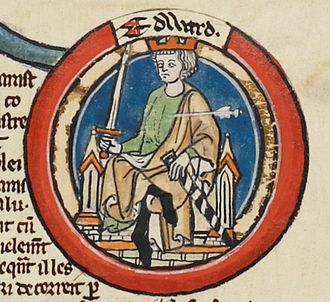
330px-Edward_the_Martyr_-_MS_Royal_14_B_VI
Edward the Martyr

Poor Edward the Martyr is one of the great ‘what ifs’ of Medieval history. It’s not that he was anything special in the kingly department, it’s simply that he didn’t get the chance to be – or to not be – any kind of king.

Born around 962 he was the eldest son of Edgar the Peaceable, king of England. His mother was Æthelfled “the Fair”, daughter of Ealdorman Ordmaer. There seems to be some confusion as to Æthelfled’s actual status (not surprising given the distance of over 1,000 years, I suppose). Some sources say she and Edgar were married, but later divorced. However, others suggest that young Edward’s legitimacy was in doubt and that his parents never married. This last is compounded by suggestions of ‘youthful indiscretion’ on Edgar’s part.

Nothing is heard of Edward’s mother after his birth, possibly suggesting that she died shortly after. Edgar, however, married again – or at least formed another relationship. His 2nd wife was Wulfthryth, with whom he had a daughter, Edith (Eadgyth). Wulfryth became the abbess of  Wilton and young Edith followed her mother into the convent.

And then Edgar formed a 3rd and final relationship that would have far-reaching consequences for his first-born son, Edward. Edgar married the daughter of Ordgar, a powerful Devon thegn who died in 971. Unlike Edgar’s previous ‘wives’, Ælfryth was crowned and anointed as queen, following her marriage with Edgar, which was officially blessed by the church. Ælfryth gave Edgar 2 sons; Edmund, who died in 971  and Æthelred, born in 968.
EdwardMartyr
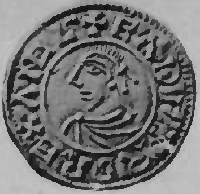
Coin of Edward the Martyr

Both Edward and Edmund appear in a charter of 966, as witnesses to the foundation of the New Minster at Winchester. Curiously, Edward’s name appears below that of his half-brother, suggesting Edmund was regarded as his father’s heir, rather than his older sibling.

Little is known of Edward’s childhood; according to Byrthferth of Ramsey he was fostered for some years by Sideman, bishop of Crediton and protégé of Ælfhere, ealdorman of western Mercia and the most powerful ealdorman in England at the time.

When his father died in 975, Edward, at 13 years of age but with doubtful legitimacy, was one of 2 rival candidates for the crown. Edward was up against his baby brother, Æthelred; undoubtedly legitimate but only 6 or 7 years old. With both too young to make an independent bid for power, each boy was backed by court factions.

Æthelred’s mother, Ælfryth, garnered support for her son from Æthelwold, bishop of Winchester, Byrhtnoth, ealdorman of Essex, and Æthelwine, ealdorman of east Anglia and brother of  Ælfrythf’s 1st husband. However, Edward had the backing of ealdorman  Ælfhere and, possibly, Oswald, archbishop of York. However, the crucial support came from Dunstan, the highly influential and saintly archbishop of Canterbury, who crowned Edward personally.
330px-Corfe_Castle2
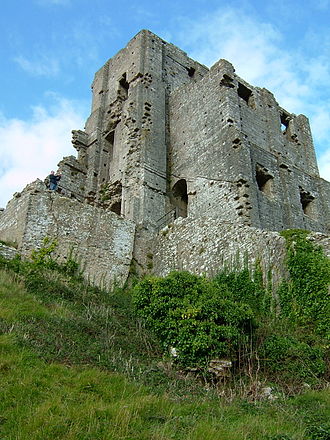
Corfe Castle

We know very little of Edward the Martyr, and what we have is contradictory to the extreme. According to Byrthferth, Edward himself was known for having a hot temper; a temper which instilled fear within the people of his own household. However, Osbern maintained that men had a good opinion of Edward.

With Edward too young to rule alone,  Ealdorman Ælfhere held the reins of government. Only 3 charters have survived, 2 of which were issued in Crediton, Edward’s childhood home. The regime’s influence seem to be very limited the further north you look, especially in the Danelaw. In the Five Boroughs region (including Stamford and Lincoln), coinage was below the standard of that of his father, Edgar. The short reign was overshadowed by a backlash to Edgar’s previous ecclesiastical policies, seeing a violent reaction against the expansion of the reformed monasteries; however, Edward retained the support of Dunstan, who did much to influence church policy and direction.

Dunstan’s influence saw  him call a meeting of councillors in Calne in 978. Held in an upper room, the meeting turned into disaster when the floor gave way. Many councillors were killed or injured; however, Dunstan, possibly in his early 70s by then, miraculously survived when the rafter on which he was standing was the only one that didn’t give way.

330px-A_Chronicle_of_England_-_Page_072_-_Edward_Murdered_at_Corfe
Aelfryth presenting Edward with a drink

Edward seems to have been benevolent towards his stepmother, bearing her no ill will following her attempts to claim the throne for her own son. He allowed Ælfryth to claim her part of his father’s dower and thus confirmed her jurisdiction over the whole of Dorset. She and Æthelred settled at Corfe, a castle and large estate in the Purbeck Hills.

Ælfryth, however, may have been less forgiving and unwilling to settle for her son being Edward’s heir. When the opportunity presented itself, she is said to have jumped at it, with few qualms.

In March 978 Edward had decided to visit his half-brother at Corfe; arriving on the evening of 18th March, with only a small band of men accompanying him. According to  the chronicles, he was met at the gates of Corfe Castle by Ælfryth’s retainers; he had probably sent ahead to warn of his arrival and would have expected a welcome, someone to take his horse and lead him into the castle. Sources vary, some suggesting that he was presented with a cup; so he could quench his thirst after a long ride.

What is certain, is that Edward was pulled from his horse and stabbed – murdered. Following the stabbing, Edward’s horse bolted; with the dying king’s foot caught in the styrrup, he was dragged along the ground for some considerable distance.

He was 16.
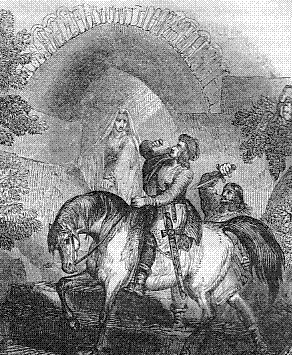
Death_of_edward_martyr
The murder of Edward

He was buried quickly and without ceremony somewhere close by – possibly Wareham. With Æthelred considered too young to be guilty, the finger of accusation pointed straight at his mother, Ælfryth.

An anointed king was seen as God’s representative on earth, with regicide being viewed as a heinous crime. In spite of this, Edward’s killers escaped punishment. Ælfryth was the prime suspect. As late as 40 years after the killing, Archbishop Wulfstan of York laid the blame firmly at her door, in the D text of the Anglo-Saxon Chronicle, which opined:

No worse deed than this was ever done by the English nation since they first sought the land of Britain. Men murdered him, but God hath magnified him. He was in life an earthly king. He is now after death a heavenly saint.¹

However, given the political reality of her position as mother of the king, it was expedient for her to remain beyond suspicion. Although Ælfryth appears guilty, and many fingers pointed at her, it is just as likely that one of her household, as supporters of Æthelred, formed the conspiracy to advance their own aims; having a king on the throne who owes you his crown can be useful to your career.

We will never know.

Although the crown was not conferred on Æthelred straight away, whatever the dowager queen’s actions, at between 9 and 11 years old, at most, her son was now the only candidate for the succession. However, it was only after an interregnum and a period of negotiations that the crown was settled on Æthelred.

Almost a year after Edward’s death, the young king was exhumed by Ealdorman Ælfhere. Edward’s erstwhile supporter stayed a couple of days at Wareham before escorting the body to the nunnery at Shaftesbury. It was only after Edward was safely re-buried with the honour to which he was entitled as king, that Æthelred was crowned by Archbishop Dunstan; on 4th May 979.

Edward was soon venerated as a saint and martyr with Æthelred himself championing his brother’s cult, translating Edward’s bones to a new shrine at Shaftesbury Abbey in 1001. A grant of that year, in favour of Shaftesbury, stated that the gift was being made to God and to

“his saint, my brother Edward, whom drenched with his own blood, the Lord has seen fit to magnify in our time through many miracles.”²
Shaftesbury_Abbey
Shaftesbury Abbey

During the Dissolution of the Monasteries in the 16th century, Shaftesbury Abbey was destroyed and Edward’s shrine lost. However, in 1931 his grave was discovered and his bones were removed to a bank vault in Croydon, as neither the Churches of England or Rome would take the relics for reburial. Tests on the remains, in 1970, seemed to confirm they were Edward’s, the injuries on the bones being consistent with the wounds Edward is known to have received. The young king’s remains were finally removed from the bank, in September 1984, to be interred in a shrine in the Russian Orthodox Cemetery at Brookwood, Surrey.

And despite the fact Shaftesbury would like to have Edward back, so far as I can discover he remains the only Saxon king to be resting in a Russian Orthodox cemetery.

*

Footnotes: ¹ Anglo-Saxon Chronicle quoted by Martin Wall in The Anglo-Saxons in 100 Facts; ² AS chart., S899 quoted by Cyril Hart in Oxforddnb.com.

*

Pictures courtesy of Wikipedia

Sources: Brewer’s British Royalty by David Williamson; Britain’s Royal Families, the Complete Genealogy by Alison Weir;The Wordsworth Dictionary of British History by JP Kenyon; The Anglo-Saxons in 100 Facts by Martin Wall; Kings, Queens, Bones and Bastards by David Hilliam; The Mammoth Book of British kings & Queens by Mike Ashley; The Oxford Companion to British History Edited by John Cannon; oxforddnb.com.

*

My Books

Signed, dedicated copies of all my books are available through my online bookshop.

Out Now! Women of the Anarchy
Two cousins. On the one side is Empress Matilda, or Maud. The sole surviving legitimate child of Henry I, she is fighting for her birthright and that of her children. On the other side is her cousin, Queen Matilda, supporting her husband, King Stephen, and fighting to see her own son inherit the English crown. Women of the Anarchy demonstrates how these women, unable to wield a sword, were prime movers in this time of conflict and lawlessness. It show how their strengths, weaknesses, and personal ambitions swung the fortunes of war one way – and then the other.

Available from Bookshop.orgAmberley Publishing and Amazon UK.

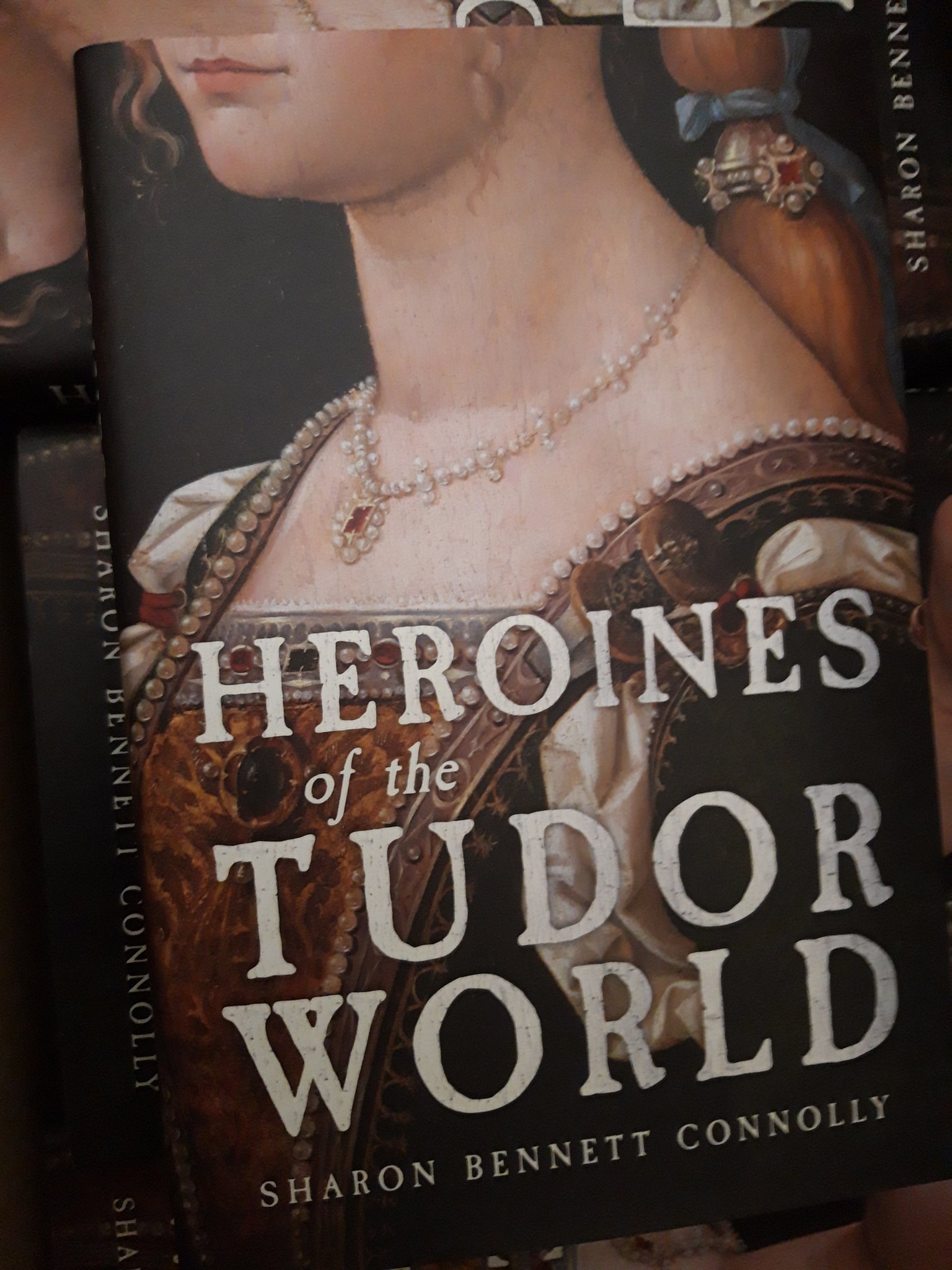
Coming on 15 June 2024: Heroines of the Tudor World
Heroines of the Tudor World tells the stories of the most remarkable women from European history in the time of the Tudor dynasty, 1485-1603. These are the women who ruled, the women who founded dynasties, the women who fought for religious freedom, their families and love. These are the women who made a difference, who influenced countries, kings and the Reformation. In the era dominated by the Renaissance and Reformation, Heroines of the Tudor World examines the threats and challenges faced by the women of the era, and how they overcame them. From writers to regents, from nuns to queens, Heroines of the Tudor World shines the spotlight on the women helped to shape Early Modern Europe.

Heroines of the Tudor World is now available for pre-order from Amberley Publishing and Amazon UK.

Also by Sharon Bennett Connolly:

King John’s Right-Hand Lady: The Story of Nicholaa de la Haye is the story of a truly remarkable lady, the hereditary constable of Lincoln Castle and the first woman in England to be appointed sheriff in her own right. It is is available from King John’s Right-Hand Lady: The Story of Nicholaa de la Haye is the story of a truly remarkable lady, the hereditary constable of Lincoln Castle and the first woman in England to be appointed sheriff in her own right. Available from all good bookshops or direct from Pen & Sword Booksbookshop.org and AmazonDefenders of the Norman Crown: The Rise and Fall of the Warenne Earls of Surrey tells the fascinating story of the Warenne dynasty, from its origins in Normandy, through the Conquest, Magna Carta, the wars and marriages that led to its ultimate demise in the reign of Edward III. Available from Pen & Sword BooksAmazon in the UK and US, and Bookshop.org

Ladies of Magna Carta: Women of Influence in Thirteenth Century England looks into the relationships of the various noble families of the 13th century, and how they were affected by the Barons’ Wars, Magna Carta and its aftermath; the bonds that were formed and those that were broken. It is now available in paperback and hardback from Pen & Sword,  Amazon, and Bookshop.orgHeroines of the Medieval World tells the stories of some of the most remarkable women from Medieval history, from Eleanor of Aquitaine to Julian of Norwich. Available now from Amberley Publishing and Amazon, and Bookshop.orgSilk and the Sword: The Women of the Norman Conquest traces the fortunes of the women who had a significant role to play in the momentous events of 1066. Available now from Amazon,  Amberley Publishing, and Bookshop.org.

Alternate Endings: An anthology of historical fiction short stories including Long Live the King… which is my take what might have happened had King John not died in October 1216. Available in paperback and kindle from Amazon.

Podcast:

Have a listen to the A Slice of Medieval podcast, which I co-host with Historical fiction novelist Derek Birks. Derek and I welcome guests, such as Bernard Cornwell and Elizabeth Chadwick, and discuss a wide range of topics in medieval history, from significant events to the personalities involved.

*

Don’t forget! Signed and dedicated copies of all my books are available through my online bookshop.

For forthcoming online and in-person talks, please check out my Events Page.

You can be the first to read new articles by clicking the ‘Follow’ button, liking our Facebook page or joining me on Twitter and Instagram.

*

©2016 Sharon Bennett Connolly FRHistS.
Book Corner: An interview with Susan Higginbotham

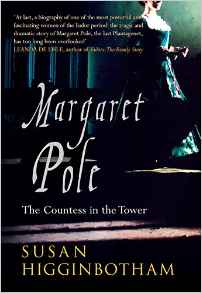
indexToday, History…the Interesting Bits is delighted to be the final stop on Susan Higginbotham‘s amazing Blog Tour. Susan’s latest book, Margaret Pole; The Countess in the Tower was released earlier this month. It tells the fascinating story of Margaret, countess of Salisbury, niece of Edward IV and Richard III and cousin of Henry VIII.

The book has just arrived on my doormat, so look out for a review shortly. For now, Susan was kind enough to sit through an interview and answer my grueling (not really, I hope) questions…..

Hi Susan, thank you for joining us today – and welcome to History…the Interesting Bits.

Congratulations on the release of your new book, Margaret Pole: The Countess in the Tower. I can’t wait to read and review it. In the meantime…

I believe you are a qualified lawyer, what made you become a writer?

I actually became a lawyer late in life–I was in my thirties when I went to law school–but I’ve been writing since I was a child. I piled up a modest stack of rejected contemporary-set novels until around 2005, when I became intrigued with the history of Edward II’s reign and began to read up on the subject. This led me to his niece, Eleanor de Clare, and I decided her life would be a wonderful subject for a historical novel. I ended up self-publishing it as The Traitor’s Wife. Sourcebooks here in the United States picked it up, and I’ve been writing historical fiction for that publisher ever since.

After writing historical fiction for a few years, and researching the Wars of the Roses, I became frustrated that there was no nonfiction book focusing on the Woodville family, except for a self-published book by an author who hated the whole lot of them, so I decided to write one myself. That led me into writing nonfiction for publishers in the U.K.

What made you write about Margaret Pole? What is it about her that fascinates you?

330px-Unknown_woman,_formerly_known_as_Margaret_Pole,_Countess_of_Salisbury_from_NPG_retouched
Margaret Pole, Countess of Salisbury

It was actually my publisher that suggested her as a subject, but as I researched her story I found a number of things that intrigued me about her, one of which is the way her story straddles the transition between what we think of as “medieval” and what we think of as “Renaissance.” And her life intersects with that of larger-than-life figures such as Henry VIII, his first and second queens, and Thomas More.

She survived some of the greatest events to shape English history, but eventually lost her life, how do you see her, as a victim or a heroine?

I would say a heroine, because she had strong beliefs which she maintained in the face of pressure, and she conducted herself with courage and dignity throughout adversity. I don’t think she would like to be remembered as a victim.

Margaret Pole’s story happens across two eras – the Wars of the Roses and the Tudors – which is your favourite period of history?

I love them both!

You write both history and historical fiction – which is the easiest and which the most fun?

51lmZWdly4L._SX331_BO1,204,203,200_
Hanging Mary by Susan Higginbotham

Historical fiction, definitely. I research them both similarly, but the sheer mechanics in writing history–the references, the citations–is daunting. And whereas with history, we often have to say simply “we don’t know” (which readers hate to hear!), with historical fiction we can supply an answer.

Do you feel that, as a historian, you have a duty to get the history right – even in your fiction?

Yes, definitely.  Like it or not, many people get their history exclusively from historical fiction, and bad history has enormous staying power.

What do you enjoy most about writing as a career?

I love it when I’ve touched a reader’s emotions, or given a reader information that has intrigued or excited him or her.

What is the worst thing about writing for a career?

It’s not particularly lucrative except for a few people. Most writers have to either keep a full-time job (as I do) or rely on another source of income to pay the bills.

How do you organise your writing day?

Not very well. I work full-time during the day, so most of my writing is done at night, but it’s hard to keep myself from goofing off after a hard day’s work! Fortunately, I work at home and have flexible hours, so if I’m feeling inspired, I can drop what I’m doing on my work computer and move to my writing computer.

How many projects do you have going at once, or do you concentrate on one at a time?

I’m working on two at the moment–one fiction, one nonfiction.

How long do you spend researching your subject before you start writing? How long does it take to do a project from start to finish?

I tend to do the ground research for a couple of months, then supplement my research as I go along, since questions always arise during the writing process. It usually takes me about a year to do a project.

Who are your favourite personalities from history?

Abraham_Lincoln_O-77_matte_collodion_print
Abraham Lincoln

My historical hero is Abraham Lincoln, and my literary hero is Charles Dickens. Pretty much anyone I’ve written about in the medieval and Tudor eras are among my favorites.

What era that you haven’t yet written about, would you like to get your teeth into?

Maybe revolutionary-era France and revolutionary-era America. The latter especially has interested me more as of late, and I’m getting ready to move to a part of the country that will give me a lot more opportunities to improve my knowledge of the era.

A lot of your work has been about women in history? What attracted you to writing their stories?

I’ve never really made a conscious decision to focus on women instead of men, but I’m attracted to people whose stories are less well-known, and I can’t write battle scenes for squat, so I’ve gravitated more toward women’s stories over the years.

Do you ever get writer’s block? If so, how do you get around it?

I don’t get writer’s block so much as I get just plain lazy or distracted by other things. Having a deadline hanging over my head helps me to get around it.

Do you find social media – such as Facebook – a benefit or a hindrance?

Both, really. I love connecting with people on social media, especially since it’s a chance to discuss topics I don’t get to discuss very often with people face-to-face. But it can be a tremendous distraction from the writing process.

How do you pick your subjects? What is be your next project?

Anne_stanhope
Anne Seymour, Duchess of Somerset

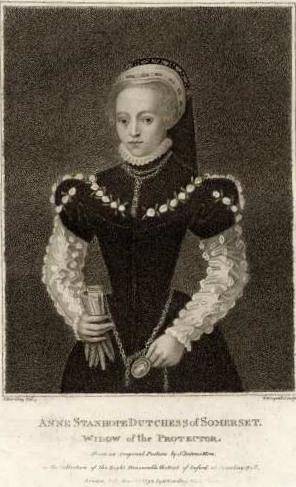
I look for someone who intrigues me and who hasn’t been done to death–I’ve always been fascinated by Anne Boleyn, for instance, but I really can’t imagine that I would have anything to say about her that hasn’t been said already. My next fictional project will be about Mary Lincoln, wife to the President of the United States, and her half-sister Emilie Helm, married to a Confederate general. My next book for Amberley will be about Anne Seymour, Duchess of Somerset, a much-maligned lady who lived through the reigns of all of the Tudor monarchs.

Thank you so much for agreeing to an interview, and for taking the time to answer my questions – I hope they weren’t too onerous.

Margaret Pole; The Countess in the Tower is available from Amazon in the UK and US.
*

My book, Heroines of the Medieval World,  is now available in hardback in the UK from both Amberley Publishing and Amazon UK and worldwide from Book Depository. It is also available on Kindle in both the UK and USA and will be available in Hardback from Amazon US from 1 May 2018.
Be the first to read new articles by clicking the ‘Follow’ button, liking our Facebook page or joining me on Twitter.

*

©Sharon Bennett Connolly 2016

Book Corner: Days of Sun and Glory by Anna Belfrage

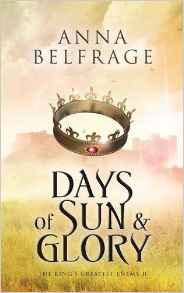
indexAdam de Guirande has barely survived the aftermath of Roger Mortimer’s rebellion in 1321. When Mortimer manages to escape the Tower and flee to France, anyone who has ever served Mortimer becomes a potential traitor – at least in the eyes of King Edward II and his royal chancellor, Hugh Despenser. Adam must conduct a careful balancing act to keep himself and his family alive. Fortunately, he has two formidable allies: Queen Isabella and his wife, Kit. England late in 1323 is a place afflicted by fear…. Tired of being relegated to the background by the king’s grasping favourite, Isabella has decided it is time to act – to safeguard her own position, but also that of her son, Edward of Windsor. As Adam de Guirande has pledged himself to Prince Edward he is automatically drawn into the queen’s plans … Once again, England is plunged into war – and this time it will not end until either Despenser or Mortimer is dead….

Days of Sun and Glory by Anna Belfrage is the 2nd book Anna’s latest series, The King’s Greatest Enemy. In the Shadow of the Storm saw Adam de Guirande, a trusted officer of Roger Mortimer, marry Kit de Monmouth and navigate the political climate of rising opposition to Edward II’s increasing infatuation with Hugh Despenser, while at the same time being 2 strangers negotiating the early tribulations and insecurities of married life. In Days of Sun and Glory the crisis in England is worsening; Mortimer is free and on the continent, leaving his supporters to face the suspicions and antagonisms of the king and Despenser.

Philip_iv_and_family
Isabella with her father, Philip IV, and brothers.

Days of Sun and Glory is a stunning read; full of action, love and suspense, it has the reader on the edge of their seat from the 1st page – and leaves you there right to the last.  This story will have you laughing, crying and biting your finger nails with anticipation throughout. It is a fascinating read that pulls you into the lives of, not only, the central characters, Kit and Adam, but also of the historical characters; Mortimer, Isabella, King Edward and his heir, the future Edward III.

Although we see new enemies the chief antagonist remains the same: Despenser. Anna Belfrage paints a picture of Despenser that makes you cringe every time he appears on the page. He is charmingly polite and clever; while being, at the same time despicable and slimy. He will stoop to anything to keep his position and influence with the king; using any weapon available – including children . This is one man everyone loves to hate – except the king and his wife.

As luck would have it, they ran into Lord  Despenser on their way back to their allotted chamber. Kit didn’t see him at first, she simply felt the muscles in Adam’s arm tense.

“If it isn’t my favourite traitor,” Despenser said with a smirk, stepping out to block their path. Adam bowed, as did Kit – protocol required that they do so, even if Kit would have preferred to spit Despenser in the face. This was the man who had threatened her and abused her, who had tortured her Adam, leaving him permanently crippled.

“No traitor, my lord,” Adam replied in a calm voice. “Despite your repeated attempts to smear me as such, I remain a loyal servant of my master, Edward of Windsor.”

Despenser’s mouth curled into a sneer….

And fighting against his schemes are Adam and Kit. The central characters have a love story to rival the greats. However, Anna Belfrage has cleverly placed them in their time and history. In stark contrast to the rebellious Queen Isabella, Kit is the obedient, dutiful 14th century wife – most of the time; while Adam is torn between duty to lord and obligation to family, constantly forced to balance his priorities and overcome his personal feelings. Their relationship makes the book – their love has overcome petty jealousies, personal tragedy, family feuds and the threats of the dastardly Despenser.

And behind it all lies Adam’s fears of what would happen if he or his family were to fall into Despenser’s clutches.

“It won’t happen,” she said.

“No,”  he [Adam] agreed in a shaky voice. “I’ll leap off a cliff rather than end up in his hands.”

Kit got down on her knees before him and prised his fingers off his face, cupping it and lifting it so that she could see his eyes. “It won’t,” she repeated. “I won’t let it happen.”

That made him smile. “My protective wife.” Adam stroked her cheek.

Kit had risked her life to save him from Despenser once, and she’d do it again if she had to…

Isabela_Karel_Eda
Edward III, as Duke of Aquitaine, paying homage to Charles IV, supported by his mother Queen Isabella

While Kit and Adam are becoming old-hands at the political balancing-act, thrown into the midst of it all is Adam’s new lord, Edward; son and heir of Edward II the 13-year-old prince is torn between his parents. While Adam and Kit see a desperate child forced to choose between love of his mother and duty to his father, each parent  sees that controlling the son as a means to controlling the future. Young Edward becomes a star of the book; likeable, mischievous and old beyond his years, Anna Belfrage hints at the hero-king to come, while ably depicting the fear and confusion of the child he is. Edward steals practically every scene he is written into.

Anna Belfrage has done her research well. From the historical characters to the marvellous castles and palaces in France and England, Anna brings the 14th century to life in vivid, entertaining and exciting language. The best and worst of human strengths and frailties are characterised within the magnificent castles of Vincennes and Windsor, in the sprawling cities of London and Paris; taking the reader on a wild ride through the French and English countrysides, with spies, poisoners and the possibility of ambush just around the corner.

While the reader may know the history, Anna Belfrage tells the story in a manner that will always leave you wondering what happens next. She gets under the skin of her characters, both historical and fictional. Her sympathetic portrayal of the characters and events takes the reader through a whole range of emotions; fear, anger, humour, awe … and love. Tears and laughter are never far from each other as the lives of Kit and Adam are revealed before us.

Engaging and entertaining, Anna Belfrage has created a masterpiece in Days of Sun and Glory, a book which is impossible to put down, but which you do not – ever – want to end.

*

Anna Belfrage is the author of the extremely popular time-travelling series, The Graham Saga. To find out more about this incredible author and her books, please visit her website.

*

Pictures courtesy of Wikipedia

*

My book, Heroines of the Medieval World,  is now available in hardback in the UK from both Amberley Publishing and Amazon UK and worldwide from Book Depository. It is also available on Kindle in both the UK and USA and will be available in Hardback from Amazon US from 1 May 2018.

Be the first to read new articles by clicking the ‘Follow’ button, liking our Facebook page or joining me on Twitter.

*

©Sharon Bennett Connolly 2016

Gundrada, Daughter of Debate

resizer.php
Gundrada de Warenne, Church of St John the Baptist, Southover

In 1066 William de Warenne joined his namesake the Duke of Normandy on his expedition to conquer England.  De Warenne is one of the few named knights involved in the Battle of Hastings, and one of William of Normandy’s most trusted captains.

Sometime in the years either side of the Conquest, William had married Gundrada.

Gundrada’s parentage has long been a subject of debate among historians. For many years she was believed to be the daughter of William the Conqueror and his wife, Matilda of Flanders. It seems the misunderstanding arose with the monks at Lewes Priory, when a copy of an earlier charter claimed she was the daughter of Matilda of Flanders. Lewes was founded as a Cluniac monastery by William and Gundrada and it may be that the monks got carried away with the idea of their foundress having royal blood, or that there was an error when copying the charter from the original.

For whatever reason, the claims by Lewes Priory have caused controversy throughout the ensuing centuries. In the sixteenth century Leland believed that she was the Conqueror’s daughter, while Orderic Vitalis had stated that she was ‘Sister of Gherbode, a Fleming, to whom King William the First had given the City and Earldom of Chester’¹ By the 1800s it was thought that Gundrada was not a daughter of the King, but of the queen, Matilda, by an earlier, forgotten marriage to a Flemish nobleman called Gerbod.

Other suggestions have included that she was an adopted daughter, raised alongside William and Matilda’s own children who were of a similar age. Alternatively, due to her Flemish origins, it has been argued that the confusion arose as she had joined Matilda’s household at an early age; an assertion supported by Matilda’s gift to Gundrada of the manor of Carlton in Cambridge – a manor Gundrada later gave to Lewes Priory.

69111381_136159050499
William de Warenne, 1st earl of Warenne and Surrey, Church of St John the Baptist, Southover

In 1888 in the English Historical Review, E.A. Freeman used the priory’s original charter to conclude that there was no familial relationship between Gundrada and William the Conqueror. In it, while the king and William de Warenne, both, mention Gundrada, neither refer to her as being related to the king or queen. Freeman stated ‘there is nothing to show that Gundrada was the daughter either of King William or of Queen Matilda; there is a great deal to show that she was not.’²

It now seems more likely that Gundrada was a Flemish noblewoman, the sister of Gerbod who would be, for a brief time, Earl of Chester. Her father may also have been called Gerbod, and was the hereditary advocate of the monastery of St Bertin; a title which later will pass down through the de Warenne family. Another brother, Frederic, had land in Sussex and Kent, even before the Conquest. The brothers, it seems, were deeply involved in the politics of Flanders and Normandy; indeed, it is thought that Gerbod resigned his responsibilities in Chester in order to return to the continent to oversee the family’s land and duties there. Frederic, along with the count of Flanders, was witness to Count Guy of Ponthieu’s  charter to the abbey of St Riquier in 1067.

William de Warenne was well rewarded for his part in the Norman Conquest, receiving lands in 13 counties, including the Honour of Consibrough in South Yorkshire, previously owned by the last Saxon king, Harold II Godwinson. De Warenne’s brothers-in-law had also joined the expedition, and Frederic was rewarded with the lands of a man named Toki; in Norfolk, Suffolk and Cambridgeshire, worth over £100.

However, Frederic was unable to enjoy his good fortune for long, as he was killed in the rebellion of Hereward the Wake in 1070. His lands at Castle Acre and elsewhere, still known as ‘Frederic’s Fief’ in 1086, were inherited by his sister, who retained control of them throughout her lifetime. One manor was given to the abbey of St Riquier, possibly by Gundrada in memory of her brother.

800px-LewesPriory1
Lewes Priory, Sussex

Gundrada’s other brother, Gerbod resigned his position in Chester in 1070 and returned to Flanders which was in the midst of civil war, following the death of its count. Gerbod’s return was essential to guarantee the safety of the family’s lands and interests. The former earl’s fate is uncertain; one report has him killed while another sees him imprisoned, and a third claims Gerbod accidentally killed his lord, Count Arnulf, at the Battle of Kassel in 1071. According to this last account, Gerbod travelled to Rome to perform penance. He intended to have the hand that struck the fatal blow amputated but was persuaded against it and eventually became a monk at Cluny.

It seems that neither brother raised a family, as Gerbod’s lands in Flanders were also inherited by Gundrada; the family interest in the abbey of St Bertin would eventually be passed on to Gundrada and William’s 2nd son, Reynold.

As with so many nobles of the 11th century, Gundrada and William were known for their piety. In 1077 the couple made a pilgrimage to Rome; en route, they visited the magnificent abbey of Cluny in Burgundy. They must have been impressed with the abbey, as it inspired them to found their own Cluniac priory at Lewes in Sussex. In 1078 the abbot of Cluny sent over the first monks as William and Gundrada were supervising the new monastery’s construction; it would be the first Cluniac house in England. All the churches on the de Warenne’s vast estates were given to the priory, including endowments from her brother Frederic’s lands in Norfolk.

Castle_Acre_Castle
Castle Acre, Norfolk

Gundrada and William had 3 children together. Their eldest son, William, would succeed his father as Earl of Surrey and de Warenne. He married Isabel de Vermandois, widow of Robert de Beaumont, earl of Leicester; with whom he had, apparently, been having an affair even before the earl’s death. Young William had a chequered career, he supported the claims of Robert Curthose, duke of Normandy, to the English throne against the duke’s younger brother, Henry I. However, duke Robert lost and was captured and imprisoned by Henry. Henry eventually forgave William, who fought for the king at the Battle of Bremule and was with Henry he died in 1135.

69110904_130412014050
Gundrada’s tombstone, St John’s Church, Southover

A second son, Reynold de Warenne, led the assault on Rouen in 1090, for William II Rufus, in the conflict between the English king and his older brother, Duke Robert. However, by 1105 Reynold was now fighting for the duke against the youngest of the Conqueror’s sons, Henry I, defending the castle of Saint-Pierre-sur-Dives for the duke. He was captured by Henry the following year, but had been freed by September 1106. It is possible he died shortly after, but was certainly dead by 1118 when his brother issued a charter, in which he gave 6 churches to Lewes Priory, for the soul of deceased family members, including Reynold.

Gundrada and William also had a daughter, Edith, who married Gerard de Gournay, son of the lord of Gournay-en-Bray. Gerard also supported William II Rufus against Duke Robert and took part in the Crusade of 1096. Edith later accompanied him on pilgrimage back to Jerusalem, sometime after 1104, where he died. Gerard was succeeded by their son, Hugh de Gournay, whose daughter Gundreda would be the mother of Roger de Mowbray. Edith then married Drew de Monchy, with whom she had a son, Drew the Younger.

William de Warenne was created earl of Surrey shortly before his death in 1088; after he had helped William II to suppress a revolt led by Bishop Odo of Bayeux. De Warenne was wounded in the leg during the fighting and was taken to Lewes Priory where he died a short time later.

69111381_130412146348
Tombs of Gundrada and William de Warenne

Gundrada had died in childbirth at Castle Acre in Norfolk on 27th May 1085, therefore never receiving the title of countess. She was buried in the chapter house of Lewes Priory; her husband would be buried beside her 3 years later. Around 1145 new monastic buildings were consecrated at Lewes Priory, Gundrada’s bones were placed in a leaden chest and interred under a tombstone of black Tournai marble, ‘richly carved in the Romanesque style, with foliage and lions’ heads’³. The sculptor was trained at Cluny and would later work for Henry I’s nephew, Henry of Blois, bishop of Winchester and brother of King Stephen.

The tombstone read:

Gundrada, offspring of dukes, glory of the age, noble shoot,
brought to the churches of the English the balm of her character.
As a Martha …
she was to the wretched; a Mary she was in her piety.
That part of Martha [in her] died; the greater part of Mary survives.
O, pious Pancras, witness of truth and justice,
she makes you her heir; may you in your clemency accept the mother.
The sixth day of the kalends of June, showing itself,
broke the alabaster containing her flesh …4

Following the dissolution of Lewes Priory in the 16th century, the tombstone was first moved to Isfield Church; it was moved again in 1775 to the parish church of St John at Southover in Lewes. The remains of Gundrada and William were discovered in 2 leaden chests in 1845 and finally laid to rest at the Southover church in 1847.

The dynasty founded by William and Gundrada would continue until the death of John, the 7th and final de Warenne Earl of Surrey, in 1347.

*

The story of William and Gundrada de Warenne appears in my books, Silk and the Sword: the Women of the Norman Conquest and in even greater detail in Defenders of the Norman Crown: Rise and Fall of the Warenne Earls of Surrey.

*

Footnotes: ¹Early Yorkshire Charters Volume 8 Edited by William Farrer and Charles Travis Clay; ²ibid; ³C.P.Lewis, Oxforddnb.com; 4 Elisabeth M.C. Van Houts and Rosalind C. Love (eds and trans), The Warenne (Hyde) Chronicle

Images: Gundrada and William de Warenne church windows ©lewespriory.org.uk; Castle Acre and Lewes Priory courtesy of Wikipedia; Gundrada’s tombstone and the tombs of Gundrada and William courtesy of findagrave.com.

Sources: Early Yorkshire Charters Volume 8: The Honour of Warenne, Edited by William Farrer and Charles Travis Clay; England Under the Norman and Angevin Kings by Robert Batlett; Brewer’s British Royalty by David Williamson; Britain’s Royal Families, the Complete Genealogy by Alison Weir; british-history.ac.uk; kristiedean.com; English Heritage Guidebook for Conisbrough Castle by Steven Brindle and Agnieszka Sadrei; oxforddnb.com.

*

My Books

Signed, dedicated copies of all my books are available through my online bookshop.

Coming on 15 June224: Heroines of the Tudor World

Heroines of the Tudor World tells the stories of the most remarkable women from European history in the time of the Tudor dynasty, 1485-1603. These are the women who ruled, the women who founded dynasties, the women who fought for religious freedom, their families and love. These are the women who made a difference, who influenced countries, kings and the Reformation. In the era dominated by the Renaissance and Reformation, Heroines of the Tudor World examines the threats and challenges faced by the women of the era, and how they overcame them. From writers to regents, from nuns to queens, Heroines of the Tudor World shines the spotlight on the women helped to shape Early Modern Europe.

Heroines of the Tudor World is now available for pre-order from Amberley Publishing and Amazon UK.

Out Now! Women of the Anarchy

Two cousins. On the one side is Empress Matilda, or Maud. The sole surviving legitimate child of Henry I, she is fighting for her birthright and that of her children. On the other side is her cousin, Queen Matilda, supporting her husband, King Stephen, and fighting to see her own son inherit the English crown. Women of the Anarchy demonstrates how these women, unable to wield a sword, were prime movers in this time of conflict and lawlessness. It show how their strengths, weaknesses, and personal ambitions swung the fortunes of war one way – and then the other.

Available from Bookshop.orgAmberley Publishing and Amazon UK.

Also by Sharon Bennett Connolly:

King John’s Right-Hand Lady: The Story of Nicholaa de la Haye is the story of a truly remarkable lady, the hereditary constable of Lincoln Castle and the first woman in England to be appointed sheriff in her own right. It is is available from King John’s Right-Hand Lady: The Story of Nicholaa de la Haye is the story of a truly remarkable lady, the hereditary constable of Lincoln Castle and the first woman in England to be appointed sheriff in her own right. Available from all good bookshops, from Pen & Sword Booksbookshop.org and AmazonDefenders of the Norman Crown: The Rise and Fall of the Warenne Earls of Surrey tells the fascinating story of the Warenne dynasty, from its origins in Normandy, through the Conquest, Magna Carta, the wars and marriages that led to its ultimate demise in the reign of Edward III. Available from Pen & Sword BooksAmazon in the UK and US, and Bookshop.org

Ladies of Magna Carta: Women of Influence in Thirteenth Century England looks into the relationships of the various noble families of the 13th century, and how they were affected by the Barons’ Wars, Magna Carta and its aftermath; the bonds that were formed and those that were broken. It is now available in paperback and hardback from Pen & Sword,  Amazon, and Bookshop.orgHeroines of the Medieval World tells the stories of some of the most remarkable women from Medieval history, from Eleanor of Aquitaine to Julian of Norwich. Available now from Amberley Publishing and Amazon, and Bookshop.orgSilk and the Sword: The Women of the Norman Conquest traces the fortunes of the women who had a significant role to play in the momentous events of 1066. Available now from Amazon,  Amberley Publishing, and Bookshop.org.

Alternate Endings: An anthology of historical fiction short stories including Long Live the King… which is my take what might have happened had King John not died in October 1216. Available in paperback and kindle from Amazon.

Podcast:

Have a listen to the A Slice of Medieval podcast, which I co-host with Historical fiction novelist Derek Birks. Derek and I welcome guests, such as Bernard Cornwell and discuss a wide range of topics in medieval history, from significant events to the personalities involved. Our first ever episode was a discussion on The Anarchy

*

Don’t forget! Signed and dedicated copies of all my books are available through my online bookshop.

For forthcoming online and in-person talks, please check out my Events Page.

You can be the first to read new articles by clicking the ‘Follow’ button, liking our Facebook page or joining me on Twitter and Instagram.

*

©2016 Sharon Bennett Connolly FRHistS

Book Corner: Interview with Archaeologist and Author James Wright

We have a special treat at History the Interesting Bits today and it is a privilege to welcome archaeologist James Wright to the blog.

I have been watching the progress in recent years, of the excavators of the royal palace at King’s Christine Clipstone, through Jane’s Wright’s Facebook page, History & Archaeology of Kings Clipstone. James is also the author of A Palace For Our Kings, a fabulous book which traces the history and archaeology of the Kings Houses of Clipstone in Nottinghamshire; a royal palace, since the time of Henry II, in the heart of Sherwood Forest. James talks to me about the book, the palace, his career and archaeology.

How did you get interested in archaeology?

I was very young. Maybe five or six. I saw a film set during the Second World War and couldn’t believe that something so exciting was based on reality. I talked to both of my grandfathers about their experiences. I was instantly hooked on history and used to visit my local library and took out all of their history books – and not just the ones written for kids either! Later my parents started taking me to visit castles and monasteries and great houses. At high school and college I had a really good history teacher called Nick Shorthouse who really guided my interest. Archaeology became my inevitable career choice as I translated from hobby to study to profession.

book_front_cover_hi_res
A Palace For Our Kings by James Wright

Do you get to spend a lot of time doing practical archaeology, or is most of it study-based?

I am a buildings archaeologist and historic stone specialist at the Museum of London Archaeology. A good portion of my time is spent in the field recording historic buildings. I still occasionally get involved in excavations, the last one being a small trench at the Tower of London which I dug last year. In truth I consider all research to be practical archaeology. I studied under Philip Dixon at the University of Nottingham. He taught us to “always use all of the tools in the toolkit.” I see documentary research, historiography and contextual history to be every bit as important in the study of archaeology as fieldwalking, geophysics, topographical survey and excavation. It’s all evidence!

What do you love best about being an archaeologist?

The exciting opportunity to unravel the hidden stories of real people – often for the first time in history.

What don’t you like about being an archaeologist?

Jealous and greedy backstabbers.

What is your greatest archaeological find?

When I was a field archaeologist I was lucky enough to excavate an intact Early Neolithic cup in the Trent Valley that was perhaps 6,000 years old. The most significant discovery that I have made in a building was a dense distribution of ritual protection marks carved by carpenters at the great house at Knole, Kent, in reaction to the ongoing political propaganda in the aftermath of the Gunpowder Plot. You can read all about it in Maev Kennedy’s article published in The Guardian.

What is the nature of your research at Clipstone?

I’ve been researching the Mediaeval royal palace at Kings Clipstone– known at the King’s Houses – in the heart of Sherwood Forest since 2004. The site was used by eight Plantagenet monarchs from Henry II to Richard II. They built one of the very largest residences in Mediaeval England that stretched across approximately 7.5 acres and had an enormous deer park lying to the west. Much of the research work has been conducted ad hoc and, in many cases, has been carried out in conjunction with other organisations or researchers. In many respects I’m following up the work of antiquarians, historians, archaeologists and the local community who have been looking at the site since the late seventeenth century!

How did you become involved in the project?

I first visited Clipstone during the opening stages of a project looking at castles in the county of Nottinghamshire. The King’s Houses was never a fortified residence so I was not able to bring the site into the scope of that project. However the passion and enthusiasm of the landowners – Martin and Mickie Bradley – was infectious. The last surviving building (once just one of a very great number) that stands in splendid isolation on its hilltop in Sherwood Forest is known as King John’s Palace. It is a very dramatic structure but, by 2004, it was in a very critical state of disrepair. It had been standing for almost 850 years by that point. I became deeply involved with a campaign to conserve the building. English Heritage (now Historic England) stumped up £100,000 to save this nationally significant grade II listed building and scheduled ancient monument in 2009. Paul Mendham Stonemasons undertook the work. It was a great relief, however my determination to better understand the archaeology and history of the site was only just beginning….

Many of England’s kings have stayed at Clipstone, from Henry II onwards, was it always for hunting in Sherwood Forest?

Hunting played a very important part in the decisions of eight Plantagenet monarchs to visit Clipstone. If we look at the reign of Edward II who visited the site on broadly seven occasions, five of those stays directly related to the hunting seasons of particular species of deer. Excavation has yielded the bones of roe, fallow and red deer which were all consumed at the palace. The deer park, surrounded by its timber pale fence, was around seven miles in circumference and enclosed approximately 1500 acres. Hunting was an important status activity for the kings and acted as a mechanism for social bonding and training in martial skills as well as food provision.

However the palace at Clipstone also acted as a backdrop for important state occasions. It was a location for the governance of the kingdom, a place where jousts were held, somewhere to host weddings, an estate that provided food for the royal household. Inside the buildings the visitors would be accommodated in chambers and would feast in the great hall whilst being entertained by musicians, storytellers and poets. Edward II and Isabella of France conceived their son John of Eltham at the palace. These were architecturally very diverse places and were conceptually and physically used in many ways.

Pos:167,Tm:584_AT,Cst:0,Gm:B,Fv:0,Stb:69
The Kings Houses, Clipstone

Clipstone is a long way from London, surely its historical significance is limited?

The palace is approximately 150 miles from London. However, when the site was first built in the mid-twelfth century, London was not the dominant centre of government that it became in the later Mediaeval period. Kings moved constantly around the country dispensing justice, visiting allies, conducting war, hunts and tournaments or engaging in ritual and religion. Many of their residences were located in the royal forests to take advantage of the remote game reserves which were used in a manner akin to the modern high status hotel with attached golf course – the palace and deer park were as much for business as pleasure. We can see this through Richard I’s meeting at Clipstone with the king of Scotland in 1194 or Edward I’s decision to hold parliament there in 1290.

What was your most exciting discovery at Clipstone?

The discovery of a very large part of the palace gatehouse and adjacent boundary wall that still survives up to first floor height within the later buildings of three post-Mediaeval cottages in the village. The archaeological impact of that find was spectacular enough, but pinning down the gatehouse also enabled me to understand how the rest of the palace was laid out as it proved to be pivotal in interpreting a fourteenth century documentary description of the palace buildings. Once I knew where the gatehouse was, I was able to work out its relationship to various chamber blocks, the stables, the three kitchens, the royal apartments, the great chamber and great hall. This was all done with the help of my friend and colleague Richard Reeves who translated the documents, held at the National Archives, from the Mediaeval Latin and Middle English.

Your book highlights how the King’s Houses played their part in English medieval history, did it surprise you to find out how popular it was with medieval monarchs?

I wanted to look at the deeper questions that others had not previously asked. It was known that Henry II spent a lot of money developing the palace in 1176-80. I wanted to know why he chose Clipstone and discovered that it was originally conceived by Henry as a physical statement of the power of his absolute monarchy in the aftermath of a civil war. Then I started interrogating further data and realised that Henry III ordered bars to be added to the windows in the royal apartments as added security after an assassination attempt; that Edward I ordered the construction of a massive stable for two hundred horses during a period where he was moving tens of thousands of troops into the Welsh wars; that Edward III held a morale-boosting tournament there after a setback in the wars in Scotland; or that Richard II visited in 1387 to relax after a particularly tough period of infighting with his own royal council. The more I read and researched, the more I realised that this was one of the most important and significant royal residences between the mid-twelfth and mid-fifteenth centuries. The stories that I have uncovered have demonstrated that almost the entire history of England can be told through the focused lens of this one site as a result of the importance placed on it by the kings.

Most archaeological projects don’t seem to get their own books. What made you decide to write the book?

All archaeological fieldwork must be written up and disseminated. It’s an absolute basic requirement. There is simply no point in doing archaeology if you do not tell people what you have done. Whether that be a complete grey literature site report or a published book, it is fundamentally important to release the information. I chose to write this book because after working at Clipstone for over twelve years I have decided to put into print everything that I have learned about this enormously important site. Essentially the book is my swan song and will leave a solid legacy of my work in the public domain.

Thank you James, I think its fabulous that your research has been made available to the wider public with this book.

Did you enjoy the writing process?

Very much so – the proof of that is that I spent eleven hours working on the book on Christmas Day 2015! What I found most compelling was that stories kept finding themselves. There is a constant theme running through the book which looks at how the ordinary people of Kings Clipstone reacted to, dealt with and coped with the presence of the royal palace, the forest laws and a continuing tension between their common rights and the will of the monarchs. It wasn’t always a harmonious relationship and there were definite flashpoints. The book is dedicated to a fourteenth century common rights activist called Robert de Clipstone who fought for his community against both Edward II and Edward III and eventually won his case!

Is there more to find out about the King’s Houses?

Of course! My book simply records everything that I have personally learned over the last twelve years, set alongside the work of previous researchers, and against the wider context of historical events. I hope that the ongoing excavations by Mercian Archaeological Services at the palace site will eventually yield fully developed archaeological reports in the very near future. In the meantime the focus of research is starting to shift towards a site three miles across the deer park as Forest Town Nature Conservation Group and MB Archaeology look at aspects of a fortification and agricultural community known as Clipstone Peel which was established in the early fourteenth century by Edward II. My part in the story of Clipstone is over, but there are new people asking new questions and I wish them very well!

What is your next project?

Currently I am in the process of writing up another major phase of building survey for the National Trust at Knole. I’m also working on the finishing touches of a report for the Museum of London about the very mysterious London Stone which was made famous by Shakespeare when he depicted the rebel Jack Cade touching his sword on it and claiming the city in 1450.

A Palace For Our Kings is out now as a limited edition paperback and e-book via Triskele Publishing. More information on the book and Kings Clipstone project can be found on social media: Facebook  and Twitter.

A huge ‘thank you’ to James Wright for taking the time to answer my many questions, it has been an absolute pleasure.

Look out for my review of James’ book A Palace For Our Kings tomorrow!


©2016 Sharon Bennett Connolly.

*

Pictures courtesy of James Wright

*

My book, Heroines of the Medieval World,  is now available in hardback in the UK from both Amberley Publishing and Amazon UK and worldwide from Book Depository. It is also available on Kindle in both the UK and USA and will be available in Hardback from Amazon US from 1 May 2018.

Be the first to read new articles by clicking the ‘Follow’ button, liking our Facebook page or joining me on Twitter.


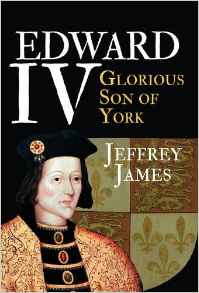
Book Corner: Edward IV Glorious Son of York by Jeffrey James

indexFew English monarchs had to fight harder for the right to rule than King Edward IV – Shakespeare’s glorious son of York. Cast in the true Plantagenet mould, over six feet tall, he was a naturally charismatic leader. Edward had the knack of seizing the initiative and winning battles and is free from the unflattering characterisations that plagued his brother, Richard III, having been portrayed as a good-looking and formidable military tactician. Described sometimes as reckless and profligate, all sources remark on his personal bravery. In the eleven years between 1460 and 1471 he fought five major battles in the Wars of the Roses. Three of them – Towton, Barnet and Tewkesbury – rank among the most decisive of the medieval period.

This is a history of Edward IV’s struggle to gain and retain the kingship of England during a period of sustained dynastic turmoil during the Wars of the Roses.

Jeffrey James’ biography of Edward IV is a wonderful introduction to the Wars of the Roses from the Yorkist point of view.  Told in a chronological narrative, it covers the events from the very outset of the Wars, telling the story from Edward’s birth, through the struggles of Richard, Duke of York, and the outbreak of war. It concentrates on Edward’s fight to win – and keep – the throne, covering the various battles, and Edward’s military tactics, in great detail.

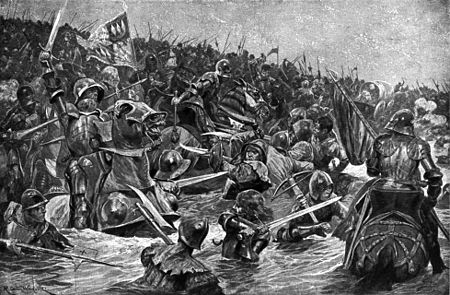
450px-Richard_Caton_Woodville's_The_Battle_of_Towton
The Battle of Towton

With the author’s background in military history, it is no surprise that where this book shines is in the assessment of the military engagements, troop movements and battle plans. It places Edward’s story in the wider context of the Wars of the Roses, while highlighting the individuality and personality of Edward, which made him such a successful warrior and king.

Scattered among the narrative are insights into Edward’s personality:

Normally relaxed and easy-going – a man who disliked unpleasantness for its own sake – Edward nonetheless had a fiery temper, usually vented against those of noble rank who angered or disappointed him. Though more often stressing the king’s good nature contemporaries sometimes touch on this aspect of Edward’s character.

More marked was the king’s man-management skills.

Jeffrey James uses contemporary sources in abundance to back up his arguments and theories. Extensive footnotes and a comprehensive bibliography provide limitless opportunities for further reading. Maps and family trees at the beginning of the book help to provide a basic understanding of the scale of the Wars, and of the personalities involved. The narrative is also supplemented by 40 photographs, portraits and illustrations, providing a further visual aid to the people, locations and battlefields involved in the conflict.

Edward IV, Glorious Son of York is an engaging, accessible narrative which provides thorough analysis of the king’s actions – and the actions of the chief players in the Wars of the Roses. Edward’s relationships with his family, allies and, even, his enemies – foreign and domestic – are discussed and assessed, providing interesting insights into the great personalities of the 15th century.

It provides some fascinating little tidbits of history:

There may have been mercenary pikemen, as well as halberdiers, professional soldiers – forerunners of the famed continental landsknechts – whose habit of slashing their clothing seeded the fashions of Tudor times.

Marriage_Edward_IV_Elizabeth_Woodville_Wavrin_Anciennes_Chroniques_d'Angleterre_Francais_85_f109.jpeg
Marriage of Edward IV and Elizabeth Woodville

Unfortunately it does get a little fanciful in places, claiming that “Leaden images, depicting a man and a woman, found discarded in an orchard nearby, suggest enchantment” when talking about the wedding of Elizabeth Woodville and Edward IV. He also suggests Richard of Gloucester (the future Richard III) hero-worshipped his brother, without any contemporary evidence to back this up.

However, such dubious claims are few and far between and, on the whole, the author’s research is impeccable and supported by contemporary sources and evidence from archaeology. Jeffrey James also acknowledges the work and theories of fellow historians, such as Amy Licence and Charles Ross, analysing their assessments in relation to his own.

In keeping with the author’s background in military history, his Jeffrey James’ analysis of military events and tactics is insightful:

If Warwick was stirring up trouble in the North he was – to use a modern phrase – ‘operating well under the radar’, using proxies in a manner designed to circumvent the activation of any immediate royal redress. Today we might use the term ‘hybrid warfare’ when describing acts like theses: acts designed to surprise, confuse and wear down an opponent.

Rivers_&_Caxton_Presenting_book_to_Edward_IV
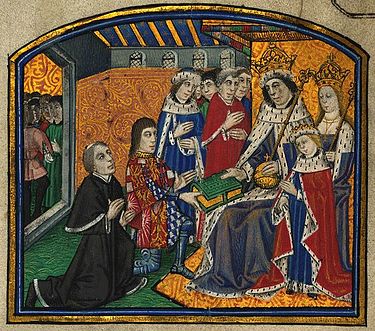
King Edward IV

Although the book concentrates on Edward’s fight to win and retain the throne, it also looks into Edward’s family life and the implications of his marriage to Elizabeth Woodville; on England, his allies and international politics. It provides and in-depth analysis of where Edward’s relationship with the Earl of Warwick broke down, and of Edward’s various successes and failures. He doesn’t shirk from discussing where Edward made mistakes, nor looking at where he could have done better, or been more – or less – ruthless.

Edward IV, Glorious Son of York is a well-written, entertaining biography of one of England’s most fascinating kings and his fight to win – and keep – the throne.

*

Pictures taken from Wikipedia.

*

My book, Heroines of the Medieval World,  is now available in hardback in the UK from both Amberley Publishing and Amazon UK and worldwide from Book Depository. It is also available on Kindle in both the UK and USA and will be available in Hardback from Amazon US from 1 May 2018.

Be the first to read new articles by clicking the ‘Follow’ button, liking our Facebook page or joining me on Twitter.


William Montagu, the Man Who Married – and Lost – the Fair Maid of Kent

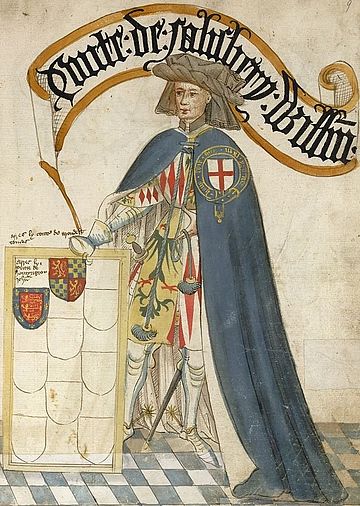
salisbury_1430
William Montagu, 2nd Earl of Salisbury

Born on the 28th June, 1328, at Donyatt in Somerset, William Montagu – or Montacute – was the son of William Montagu, 1st Earl of Salisbury and Katherine Grandison (died 1349), 3rd daughter of William Lord Grandison. Young William was the eldest of the couple’s 2 sons and 4 daughters.

William Montagu was a friend and contemporary of Edward, the Black Prince, son and heir of Edward III, who was raised alongside William in the Salisbury household. Also among the young aristocrats in the care of the Earl of Salisbury was Joan of Kent, daughter and heir of Edmund, Earl of Kent.

Before 10th February, 1341, young Montagu and Joan were married; a union arranged by the couple’s parents and the King, Edward III, seeing as they were both only 12 years old at the time. It is unlikely that Montagu and Joan lived together as husband and wife from the moment of their marriage, they were still very young and may well have delayed consummating the marriage for at least another year or two. It is more than likely that they carried on with their education, much the same as before, with Lady Joan learning how to manage a  noble household and Montagu continuing his knightly training.

On 30th January 1344, still only 15, Montagu became the 2nd Earl of Salisbury when his father died after receiving heavy bruising in the Windsor jousts. The new earl was knighted at La Hogue, during the 1346 expedition to France, though whether this was by the King or the Prince of Wales seems to be in question. During the hostilities Montagu assisted in the Siege of Caen and may have been at the Battle of Crécy.

Joan_of_Kent
Joan of Kent

Following the successes of the French campaign, Montagu became one of the Founders of the Order of the Garter when it was created by Edward III in April 1348. However, in the following month poor Montagu became embroiled in the biggest bigamy scandal to hit medieval England, when Thomas Holland, Montagu’s steward, recently returned from crusading in Eastern Europe, petitioned the pope for the nullification of the marriage between Montagu and Joan, on the grounds of his prior marriage to Joan.

William contested the annulment; after all, Joan was only 12 when he married her and Holland was claiming that his marriage to Joan had been consummated about 2 years earlier, making Joan 9 or 10 at the time. However, when it came time for Joan to testify, she supported Holland’s claims; the annulment was granted on 17th November 1349 and Joan returned to her first husband.

Montagu wasted little time in finding himself another wife and married Elizabeth de Mohun shortly after the annulment had been granted. Elizabeth was the daughter of John, Lord Mohun of Dunster and, given that she was born around 1343, was only 6 or 7 at the time of the marriage. They would have one child, a son, William, who was born in 1361.

No longer a minor, in 1349 William Montagu had made proof of his age and was given the livery of his lands, as Earl of Salisbury. His mother passed away in the same year and he succeeded to her dower lands.

300px-Battle-poitiers(1356)
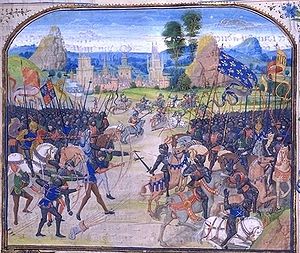
Battle of Poitiers

The 1350s saw Montagu pursuing a highly successful military career. In 1350 he had served at Winchelsea, which saw the defeat of the Castilian fleet. In 1356 he distinguished himself serving as commander of the rearguard, alongside the Earl of Suffolk, in the Black Prince’s march through southern France; however, it was Montagu alone who commanded the rearguard during the English victory at the battle of Poitiers. Some sources credit Montagu with having chosen the English defensive position, along the gap of a hedge, which proved invaluable to the Black Prince’s forces. He defeated the first major French attack, led by the marshals, Clermont and d’Audenham; Clermont was killed and the other leaders captured.

William Montagu saw more fighting with the king, Edward III, in his expedition of 1359, before taking part in the negotiations for the Treaty of Brétigny in 1360.

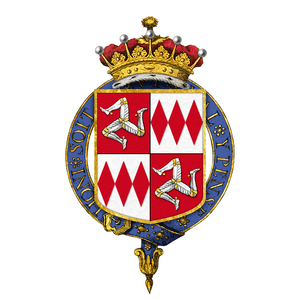
Coat of Arms of Sir William Montagu, 2nd Earl of Salisbury

During the relative peace of the 1360s Montagu served as a justice of the peace, at various times, in Hampshire, Somerset and Devon; and he served on a number of commissions in Somerset and Devon. He was also embroiled in a legal dispute with the Mortimer earls of March over Denbigh, which had originally been a Mortimer possession, but was given to Montagu’s father for his part in the overthrow of Roger Mortimer in 1330. Montagu had done homage for it in 1353, but by 1355, due to his gaining royal favour, it was back in the hands of the Mortimer heir, Roger.

The dispute rumbled on during the minority of the next Mortimer heir, Edmund, earl of March. Resolution was delayed even after Mortimer came of age, due to technicalities and Mortimer’s subsequent departure for duties in Ireland; where he died, and the Mortimer lands fell subject to yet another minority. By 1396 the earl of Salisbury was prepared to give the Mortimer’s a quitclaim, but this remained undelivered at William’s death and was left to his heir to resolve.

By the late 1360s war had resumed and William Montagu was sent to Calais with the earl of Warwick, in a futile raid commanded by John of Gaunt, Duke of Lancaster. He was part of the king’s 1372 expedition to the relief of Thouars, which was forced to return to England due to unfavourable winds. In 1373 after commanding the English fleet which destroyed 7 Spanish ships in the harbour of St Malo, he relieved Brest; which had promised to yield if not relieved within 40 days. Negotiations ensued, thus avoiding a battle but enabling Montagu to resupply Brest and prevent its capture.

Still fighting the French, in 1377 Montagu served alongside the Earl of Arundel in a raid around la Rochelle, but was beaten off by local forces. By 1379, following the accession of Richard II, he was serving as Captain of Calais when he captured and burned the French fortified monastery of Beaulieu.

Montagu must have wondered at the strange twist of fate that had him serving a king, Richard II, who just happened to be the son of his first wife, Joan of Kent, and his childhood companion, Edward, the Black Prince.

On a personal front, 1378 had seen the marriage of Montagu’s son and heir, another William, to Elizabeth Fitzalan, daughter of the earl’s companion in arms Richard, Earl of Arundel. Their happiness was short-lived, however, when William died after only 4 years of marriage. In a tragedy that must have rocked Montagu to the core, on 6th August 1382 at Windsor, young William was killed in a tilting match by his own father, the earl. It must have been a horrendous scene to behold.

In the same year, 1382, Montagu had become involved in a legal dispute with his younger brother, John, concerning a statute merchant whose conditions were violated by John. The proceedings would rumble on and on; although a court of chivalry was established, with John Montagu being steward of the king’s household, no one was in a hurry to pronounce judgement on him. The case was not settled until after John’s death in 1390 and John’s son surrendered the disputed statute merchant in 1391.

The family disputes appear to have prevented Montagu from playing a major role in the reign of Richard II, as you might expect from the earl of Salisbury. He is thought to have stayed with the king throughout the Peasants Revolt of June 1381, and advised Richard II to show mercy to the rebels. Loyalty to the crown was a family tradition, but he seems to have been well-regarded by the Lords Apellant who opposed Richard’s favourites from the late 1380s onwards. And when Richard II resumed power on a more moderate basis, Montagu cooperated with him. He served in various commissions during the 1390s, but appears only on the periphery of national politics.

330px-Bisham-29Ag9-wyrd1
Bisham Abbey Berkshire

Unfortunately the court case had served to alienate William Montagu from his brother and nephew – both called John – who were also his heirs. As a result, Montagu started selling off substantial parts of his property, in order to keep them out of his brother’s hands. In 1393 he sold the Isle of Man to William Scrope and in his will, he left half of his goods to his wife and the rest to servants and the church, leaving nothing of his disposable property to his nephew, the new earl. John Montagu was left to inherit the title and landed estates not mentioned in the will.

Montagu had lived through the worst years of plague and the resultant Peasants’ Revolt; he had survived war with France on numerous occasions and suffered the personal tragedy of accidentally killing his only child. The last survivor of Edward III’s great captains of the Hundred Years War, William Montagu died on 3rd June 1397, just shy of his 69th birthday. He was buried at Montacute Priory at Bisham in Berkshire; unfortunately nothing remains of his tomb. His wife, Elizabeth, survived him by 18 years, later becoming a nun; she was received into the sisterhood of the convent of St Albans on 10th October. Having made her will in 1414, leaving her sister, Philippa, Duchess of York, and her nephew Richard, Lord Strange of Knockyn, as her heirs, she died on 14th January 1415.

*

Pictures taken from Wikipedia.

*

Sources: The Perfect King, the Life of Edward III by Ian Mortimer; The Life and Time of Edward III by Paul Johnson; The Reign of Edward III  by WM Ormrod; The Mammoth Book of British kings & Queens by Mike Ashley; Britain’s’ Royal Families, the Complete Genealogy by Alison Weir; Brewer’s British Royalty by David Williamson; The Plantagenets, the Kings Who Made Britain by Dan Jones; englishmonarchs.co.uk; The Oxford Companion to British History edited by John Cannon; Chronicles of the Age of Chivalry Edited by Elizabeth Hallam; oxforddnb.com; britannia.com; themcs.org.

*

My Books

Signed, dedicated copies of all my books are available through my online bookshop.

Coming on 15 June 2024: Heroines of the Tudor World

Heroines of the Tudor World tells the stories of the most remarkable women from European history in the time of the Tudor dynasty, 1485-1603. These are the women who ruled, the women who founded dynasties, the women who fought for religious freedom, their families and love. These are the women who made a difference, who influenced countries, kings and the Reformation. In the era dominated by the Renaissance and Reformation, Heroines of the Tudor World examines the threats and challenges faced by the women of the era, and how they overcame them. From writers to regents, from nuns to queens, Heroines of the Tudor World shines the spotlight on the women helped to shape Early Modern Europe.

Heroines of the Tudor World is now available for pre-order from Amberley Publishing and Amazon UK.

Out Now! Women of the Anarchy

Two cousins. On the one side is Empress Matilda, or Maud. The sole surviving legitimate child of Henry I, she is fighting for her birthright and that of her children. On the other side is her cousin, Queen Matilda, supporting her husband, King Stephen, and fighting to see her own son inherit the English crown. Women of the Anarchy demonstrates how these women, unable to wield a sword, were prime movers in this time of conflict and lawlessness. It show how their strengths, weaknesses, and personal ambitions swung the fortunes of war one way – and then the other.

Available from Bookshop.orgAmberley Publishing and Amazon UK.

Also by Sharon Bennett Connolly:

King John’s Right-Hand Lady: The Story of Nicholaa de la Haye is the story of a truly remarkable lady, the hereditary constable of Lincoln Castle and the first woman in England to be appointed sheriff in her own right. It is is available from King John’s Right-Hand Lady: The Story of Nicholaa de la Haye is the story of a truly remarkable lady, the hereditary constable of Lincoln Castle and the first woman in England to be appointed sheriff in her own right. Available from all good bookshops or direct from Pen & Sword Booksbookshop.org and AmazonDefenders of the Norman Crown: The Rise and Fall of the Warenne Earls of Surrey tells the fascinating story of the Warenne dynasty, from its origins in Normandy, through the Conquest, Magna Carta, the wars and marriages that led to its ultimate demise in the reign of Edward III. Available from Pen & Sword BooksAmazon in the UK and US, and Bookshop.org

Ladies of Magna Carta: Women of Influence in Thirteenth Century England looks into the relationships of the various noble families of the 13th century, and how they were affected by the Barons’ Wars, Magna Carta and its aftermath; the bonds that were formed and those that were broken. It is now available in paperback and hardback from Pen & Sword,  Amazon, and Bookshop.orgHeroines of the Medieval World tells the stories of some of the most remarkable women from Medieval history, from Eleanor of Aquitaine to Julian of Norwich. Available now from Amberley Publishing and Amazon, and Bookshop.orgSilk and the Sword: The Women of the Norman Conquest traces the fortunes of the women who had a significant role to play in the momentous events of 1066. Available now from Amazon,  Amberley Publishing, and Bookshop.org.

Alternate Endings: An anthology of historical fiction short stories including Long Live the King… which is my take what might have happened had King John not died in October 1216. Available in paperback and kindle from Amazon.

Podcast:

Have a listen to the A Slice of Medieval podcast, which I co-host with Historical fiction novelist Derek Birks. Derek and I welcome guests, such as Bernard Cornwell and discuss a wide range of topics in medieval history, from significant events to the personalities involved.

*

Don’t forget! Signed and dedicated copies of all my books are available through my online bookshop.

For forthcoming online and in-person talks, please check out my Events Page.

You can be the first to read new articles by clicking the ‘Follow’ button, liking our Facebook page or joining me on Twitter and Instagram.

*

©2016 Sharon Bennett Connolly FRHistS

Bamberg, Germany: The Early Modern Witch Burning Stronghold

Today I would like to extend a warm and hearty welcome to Laura Libricz, with my first ever guest blog post. Thank you to Laura for taking the time to write this wonderful article on witchcraft in Germany. Over to Laura:

Bamberg, Germany: The Early Modern Witch Burning Stronghold

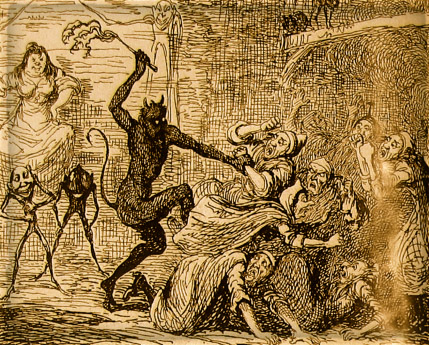
Kirche-und-Teufel
Kirche und Teufel

Throughout the dark ages, Christianity had difficulties setting down roots among the Germanic tribes. Stories are told of saints who came to the German people and destroyed sacred trees and mystical places in order to show the people that their gods had no power. Even after Christianity took hold and the Catholic Church was established in the Germanic territories of the Holy Roman Empire, evidence shows that the Germanic people held onto their beliefs in goddesses, magic, herbal remedies, and pagan practices.

Persecution of heathens and witches was regular but not widespread in Germany in the medieval period. But as the Catholic Church grew swollen and corrupt, pagans were seen as a threat. Pope Innocent IV declared in his papal bull Ad extirpanda, dated 1252, that the use of magic, herb collecting, and questionable gatherings in so-called mystical or heathen sites was forbidden and to be enforced by torture. The famed Hammer of the Witches, the Malleus Maleficarum, the handbook by Heinrich Kramer on what witchcraft was and how to deal with it, was first published in 1486 and remained popular for two hundred years.

In the early 16th century, a new opposition to Rome appeared in the Empire among the Germanic territories: the Protestant movements. The most famous of these movements was the Reformation led by the teachings of Martin Luther. The Catholic Church was quickly losing the Germanic regions to this new teaching. By the middle of the 16th century, many major German cities had officially converted to Protestantism. As the 16th century came to a close, severe weather, failing crops, rising prices, disease, and an overall doomsday atmosphere fueled the Catholic Church’s  renewed efforts to win back the territories.

Someone or something was responsible for the woes of the world and whoever or whatever was going to pay. People had deep fears regarding Satan and witches and these fears could be used in order to re-seize power. Doctrine and rumors spread quickly because of widespread use of the printing press. Illustrations were popular and even illiterate people could be influenced. Scapegoats were found at first among those people who could least defend themselves: women, children, the poor, the uneducated. Even Martin Luther and the Protestants condemned witches and supported their torture and execution.

folterprotokollll
Folterprotokol

In the center of this mania was Franconia, Germany and the witch burning stronghold of Europe, the bishopric Bamberg. During the time of the Thirty Years War (1618 – 1648), more witch trials and executions took place in this area than in any other area in Europe. Thanks to the efforts of historians (see: Sources, at the end of this article), much of the available information has been catalogued and can be reviewed in their publications.

A few thousand documents survived that dark period from 1616 to 1631 even though they had come close to being lost. At some point between 1830 and 1840, the Old Court in Bamberg had a clear out and sold lots of old papers to a housewares shop. The shop had a stand on the market and wrapped their wares in these old papers. Luckily, a historian named Johann Adam Messerschmitt noticed his order of nails was wrapped in official witch trial documents. He bought all the papers and secured them in the Bamberg archive.

What is left today are the documented fates of 884 accused men, women and children. Among the papers, historians have found protocols of the inquisitions. The questions used by the inquisitors were often so comical that the accused would laugh. The demand for reports of the instances of dancing and dining with the devil, what was eaten and drunk at these parties, and who was among the other participants was at first not taken seriously. The documented torture protocols, invoices for jail stays, and invoices to the families of the executed for the wood used in the witch fire are disturbing at the very least.

The first accused were those most easily arrested but soon branched out to include other victims as well. This included well-to-do citizens whose complete possessions and properties were confiscated by the church. Other high-profile citizens opposed the trials as did the whole of the Bamberg city council. One by one these families were arrested, tortured and executed, city chancellors and their families eliminated. This included the five-time mayor Johannes Junius, whose case is one of the most well-documented. The secret letter he wrote to his daughter explaining his innocence exists today.

mahnmal-bamberg-112~_v-img__16__9__l_-1dc0e8f74459dd04c91a0d45af4972b9069f1135
Mahnmal, Bamberg

The witch persecution ended dramatically in 1632. Swedish troops invaded and occupied Bamberg, ended the persecution, and the last of the detained were let go. A few trials took place after this period but the executions were stopped. In August 2015, almost 400 years later, after a massive initiative by the citizens’ group Bürgerverein-Mitte, the Mahnmal, a memorial to warn of past wrongs, was erected to remember the innocent men, women, and children who were accused, tortured and executed.

We remember because ‘their suffering compels us to stand against all types of marginalization, abuses of power, degradation and every sort of fanaticism.’

*

Further reading: Ralf Kloos: Witchburner Online Museum: https://www.hexenbrenner-museum.com/index.php/en/; Birke Grieshammer: Hexen-Franken http://www.hexen-franken.de; The Memorial:  http://www.br.de/nachrichten/oberfranken/inhalt/hexenmahnmal-bamberg-installiert-100.html

Picture credits:  Kirche und Teufel and Folterprotokol courtesy of Ralf Kloos: https://www.hexenbrenner-museum.com/index.php/en/; Mahnmal Bamberg courtesy of http://www.br.de/nachrichten/oberfranken/inhalt/hexenmahnmal-bamberg-installiert-100.html

Master and the Maid small

Laura Libricz was born and raised in Bethlehem PA and moved to Upstate New York when she was 22. After working a few years building Steinberger guitars, she received a scholarship to go to college. She tried to ‘do the right thing’ and study something useful, but spent all her time reading German literature.

She earned a BA in German at The College of New Paltz, NY in 1991 and moved to Germany, where she resides today. When she isn’t writing she can be found sifting through city archives, picking through castle ruins or aiding the steady flood of Höfner musical instruments into the world market.

Her first novel, The Master and the Maid, is the first book of the Heaven’s Pond Trilogy. The Soldier’s Return and Ash and Rubble are the second and third books in the series.

The Master and the Maid; Book One of the Heaven’s Pond Trilogy

She’s lost her work, her home and her freedom. Now, harboring a mysterious newborn, she could lose her life.

In 17th Century Germany on the brink of the Thirty Years War, 24-year-old Katarina is traded to the patrician Sebald Tucher by her fiancé Willi Prutt in order to pay his debts. En route to her forced relocation to the Tucher country estate, Katarina is met by a crazed archer, Hans-Wolfgang, carrying a baby under his cloak. He tells her an incredible story of how his beloved was executed by a Jesuit priest for witchcraft right after the birth and makes Katarina—at sword point—swear on her life to protect the child. But protecting the child puts Katarina at risk. She could fall in disfavor with her master. She could be hunted by the zealots who killed his beloved. She could be executed for witchcraft herself. Can Katarina’s love for the baby and Sebald Tucher’s desire for her keep the wrath of the zealots at bay?

Set in Franconia, The Master and the Maid is an accurate, authentic account of a young woman’s life in Germany in the 1600’s, her struggle for freedom and her fight for those she loves.

*

My book, Heroines of the Medieval World,  is now available in hardback in the UK from both Amberley Publishing and Amazon UK and worldwide from Book Depository. It is also available on Kindle in both the UK and USA and will be available in Hardback from Amazon US from 1 May 2018.

Be the first to read new articles by clicking the ‘Follow’ button, liking our Facebook page or joining me on Twitter.

Book Corner: Interview with Tony Riches

Tony RichesThis week I’m talking to best-selling historical fiction author Tony Riches who lives in Pembrokeshire, one of the most unspoilt areas of the UK. Hi Tony, thanks for agreeing to be a guest interviewee on my blog, History…the Interesting Bits.

Hi Sharon I’d like to start by congratulating you on a great blog – it’s good to see a balance of well researched history and historical fiction.

Thank you Tony, that’s lovely to hear. So, what made you become a writer?

I wrote articles for magazines and journals before tackling my first book just over four years ago. (I self-published a short ebook about how everyone can use the principles of Agile Project Management and was a surprising success.) I went on to write several non-fiction books on subjects as diverse as the story of Scott’s Antarctic ship, the Terra Nova, to Atlantis, about the last flight of the NASA Space shuttle. Now my focus is very much on historical fiction – and I have become something of an expert on the rise of the Tudor dynasty

Who are your major writing influences?

I read widely, so it is hard to single out influences, although some of my favourites are C.J. Sansom (I’ve just finished reading his impressive book Lamentation, about Queen Katherine Parr), as well as Anne O’Brien and Conn Iggulden.

Most novels tend to look at the Wars of the Roses from the Yorkist side, what made you choose to tell the story from the Tudor point of view?

I was born within sight of Pembroke Castle, so feel a special connection with Henry Tudor, who was born there. Everyone knows about King Henry VIII and his daughter, Queen Elizabeth Ist – but I was surprised to discover there were no books about Owen Tudor, the Welsh servant who married a queen and founded the Tudor dynasty. I discovered several accounts of the life of Henry Tudor (who later became King Henry VII) but there were no novels that brought his own story to life.

The idea for the Tudor Trilogy occurred to me when I realised Henry Tudor could be born in book one, ‘come of age’ with the help of Owen’s son, Jasper Tudor, in book two, and rule England in book three, so there would be plenty of scope to explore his life and times.

If someone said they wanted to make a film of your books, who would you pick to play Owen, Edmund and Jasper?

I’m currently in the process of having audiobooks produced of OWEN and JASPER and find it fascinating to hear their voices from over five centuries ago, so can imagine what it must be like to see them made as a film. I’ve always thought Welsh Actor Michael Sheen would be great for Owen – and perhaps Ioan Gruffudd (famous for playing Horatio Hornblower) as Jasper Tudor. Edmund is a bit of a shady character (I’ve never forgiven him for what he did to Margaret Beaufort) although I recently visited Carmarthen Castle where he died and his impressive tomb in St David’s Cathedral. How about another great young Welsh actor, Iwan Rheon, (who you might know as Ramsay Bolton in Game of Thrones.)

How long do you spend researching a novel before you start writing?

I’ve developed a great ‘system’ over the years of spending a year researching, followed by about nine months writing the book while it’s all still fresh in my mind. I have a wonderful collection of books on Wars of The Roses and the fifteenth century, and I particularly enjoy visiting the actual locations I’m writing about. (I’m off to Josselin in Brittany soon, to see the châteaux where Jasper and Henry spent their long exile – and will be positing about it on my writing blog.)

What comes first, your storyline or your research?

I have to decide where to start the storyline, then I start the research notes. For example, in OWEN I decided to begin with his first meeting with Queen Catherine of Valois, as little is really known about his life before then and I could easily work it in later.

indexYou’ve also written a novel about Warwick, the Kingmaker, so which are you, Yorkist, Lancastrian – or on the fence?

Richard Neville, ‘Warwick the Kingmaker’ was a fascinating character to write about, as I explored his motivation for changing sides. Personally, like Jasper Tudor – and his nephew Henry, I would like nothing more than to reconcile the houses of Lancaster and York. I have great sympathy for Edward of York, and have even tried to give his younger brother Richard the benefit of the doubt.

Owen is told in the first person. It works really well – makes the story more personal for the reader. What made you write it in that way?

I’d already written the first two chapters when I read Wolf Hall, by Hilary Mantel, and was struck by the power of her use of the present-tense. It was a huge risk to re-write it in the first person present-tense but I enjoyed the challenge.

How do you organise your writing day?

I’ve learnt to ‘deal with’ social media early in the morning to prevent it distracting me from writing. My ‘system’ is to aim for twenty-five chapters of about four thousand words, to arrive at a completed first draft for editing of about a hundred thousand. I keep track of my daily word count on a simple Excel spreadsheet, which allows me to see how well I’m doing at a glance.

What do you enjoy most about writing?

There is nothing better than having feedback from a reader who says they’ve really enjoyed one of my books. I’d like to think in some small way I’ve also helped readers understand the rise of the Tudors a little better, and it’s my ambition to present a more balanced view of the often overlooked King Henry VII.

What is the worst thing about writing?

I should know better by now but I must admit that a harsh comment in a review can trouble me for days. One reviewer recently pointed out that I’d failed to explain the reason for the Wars of The Roses!

How long does it take to do a project from start to finish? Do you write one book at a time, or have several on the go at once?

I’m happy to produce one new book a year. I enjoy sailing and kayaking, so I usually begin writing at the end of the season in October and aim to send a first draft to my editor by Easter the following year. The process is so intense I don’t think I could manage to juggle two books at once.

Who are your favourite personalities from history? Is there anyone you would particularly like to write about, but haven’t yet?

It would have to be Jasper Tudor, who put his loyalty to Henry Tudor and Margaret Beaufort before everything else. As for those I haven’t written about yet, there are some fascinating members of the court of Henry VIII I’ve already ‘penciled in’ for potential future novels.

You’ve written about the Wars of the Roses and the Romans, what other historical periods would you like to write about?

I’d like to slowly make my way towards the Elizabethan period, as I was looking at an original portrait of Queen Elizabeth 1st recently and saw the knowing look in her eye. There are plenty of books about Elizabeth but still plenty of scope to explore her life and times.

Do you ever get writer’s block? If so, how do you get around it?

No, I suffer from the opposite, which is waking up with my characters voices telling me so much I can hardly write it all down quickly enough. I keep my laptop by the side of the bed now, and have been known to write a whole chapter before breakfast.

Owen and JasperDo you find social media – such as Facebook and Twitter – a benefit or a hindrance?

Twitter is a great way to build an international readership and has enabled me to have best sellers in the US and Australia – something which earlier writers would only have been able to dream of.  As a consequence, I’ve invested less time in Facebook, although there are some great groups there which I follow and contribute to when I can.

We have had Owen and Jasper, so what will be the last book of the Tudor trilogy?

I’m busy with the research for HENRY – Book Three of the Tudor Trilogy now.  I’ve just read Alison Weir’s excellent new book about Katherine of Aragon and was disappointed to see Henry portrayed as more than a little sinister and insensitive, so it looks like it’s up to me to present an alternative point of view.

What is your next project, once The Tudors is complete?

I’m looking forward to entering the court of Henry Tudor’s tyrannical son – through the eyes of someone who knows him particularly well….

 For more information about Tony’s books please visit his popular blog, The Writing Desk and his WordPress website and find him on Facebook and Twitter @tonyriches.

*

Thank you very much, Tony Riches, for that marvellous insight into the life of a writer. Thoroughly entertaining.

*

My book, Heroines of the Medieval World,  is now available in hardback in the UK from both Amberley Publishing and Amazon UK and worldwide from Book Depository. It is also available on Kindle in both the UK and USA and will be available in Hardback from Amazon US from 1 May 2018.

Be the first to read new articles by clicking the ‘Follow’ button, liking our Facebook page or joining me on Twitter.

Book Corner: The Last Legionnaire by Paul Fraser Collard

indexJack Lark has come a long way since his days as a gin palace pot boy. But can he surrender the thrill of freedom to return home?

London, 1859. After years fighting for Queen and country, Jack walks back into his mother’s East End gin palace a changed man. Haunted by the horrors of battle, and the constant fight for survival, he longs for a life to call his own. But the city – and its people – has altered almost beyond recognition, and Jack cannot see a place for himself there.

A desperate moment leaves him indebted to the Devil – intelligence officer Major John Ballard, who once again leads Jack to the battlefield with a task he can’t refuse. He tried to deny being a soldier once. He won’t make the same mistake again.

Europe is about to go to war. Jack Lark will march with them.

Jack Lark is back!

I have spent a wonderful week on the battlefields of Victorian Europe, reading Jack Lark’s latest adventure. The Last Legionnaire is the 5th book in Paul Fraser Collard‘s fabulous series of novels based on the chameleon soldier, Jack Lark – and what a fabulous, eye-catching book cover! Lark is a serial imposter, one day taking on the guise of a rank-and-file soldier, the next sitting comfortably, in a captain’s uniform, the officers mess. This makes for some interesting and uncomfortable situations; it means you can always find Jack where the action is, but also means he’s vulnerable to the demands of intelligence officer, Major Ballard, who knows his secret.

255px-Légion_Étrangère_1852
A French Legionnaire, 1852

The story begins by bringing Jack home the rookeries of Whitechapel, in London, where the poorest a most desperate of Victorian society reside. However, he soon realises it’s no longer home; Jack Lark is one of those men who is most comfortable in the army, among soldiers. It’s what he’s good at. And it doesn’t take long to find his way back to war – with the French army – in search of a man who ran away from home and joined the French Foreign Legion.

There is action in abundance. It is frenetic and vivid. Paul Collard’s battlefield scenes are a masterpiece of descriptive writing. You can almost hear the cacophony of the cannons, see the regiments advancing in column, hear the screams of the wounded and frightened horses.  The author manages to impart not only the action, but also the misery, the fear, the danger – and the lust for battle, the addiction to fighting and the power a man can find in sword, bayonet and rifle. Descriptions of the battlefield hospital, the surgeons at work – as well as the battlefield itself – demonstrate the grim reality of war.

The story is at times touching and often brutal. Jack Lark is a unique character. He serves as an example of how men can find a pleasure, or sense of accomplishment, in battle … and in another battle survived. The Last Legionnaire always has a view to the human element. Jack is aware of is soldiering abilities, even scared of what he is; he knows what he is capable of and tries hard to keep himself under control. But he also has a chivalric nature; he wouldn’t be able to resist helping a damsel in distress, rescuing a child or stopping a regiment, on the verge of panic, from running.

“I’ve seen men like you before.” Palmer broke the silence. “They survive a battle or two, so they start to believe that they’re good at fighting, that they have a talent for it.” He watched Jack pull out the small pot of grease that he used to seal each freshly loaded chamber on his revolver. “Truth is they were just lucky. One day that luck runs out, and they’re just as dead as the poor bastard who died in the first five minutes of his first battle.”

Jack stopped what he was doing and met Palmer’s flat stare. “And you’re different, I suppose?”

Palmer shrugged. “I do what has to be done, nothing more, nothing less. I know that one day  my luck will run out. I don’t see the point in trying to make that day come along any quicker than it needs to.”

Jack’s anger had disappeared. He could not argue against the truth. He returned his attention to his revolver. Only when he had finished loading it did he look at Palmer again. “What about that lucky man? What if his luck holds? What if he goes on surviving?

“Then I pity the poor bastard.”

Paul Collard’s characters are incredibly diverse and full of life. Jack invokes the reader’s sympathy for a man who tries to do the right thing, but sometimes manages to go the wrong way about it. He marches to war with a small entourage, a mismatch of individuals who all want something from him.

450px-Yvon_Bataille_de_Solferino_Compiegne
Battle of Solferino, 1859

His sense of chivalry means he has taken under his wing a face from his past; Mary, and her young son Billy, no longer have a home and Jack does his best to protect and support them, despite frequent criticism of his inadequacies. Major Ballard is an intelligence officer; comfortable in using others’ weaknesses in order to achieve his ends. And then there’s Palmer, Ballard’s man, but he has a soft spot for Jack; he sees much of himself in the younger man. The partnership of Jack and Palmer is a strong part of the story. The 2 men grow to like and trust each other; they play to their individual strengths and their banter is enjoyable and entertaining.

Ever since reading Beau Geste as a child, I’ve had a soft spot for French Foreign Legion stories and this one is fabulous. Paul Collard has done his homework and it shines through, his knowledge of the Legion, their history and ethos, is second-to-none.

The author has an incredible sense of adventure, which he manages to get across on every page of his writing; you can tell he grew up reading Cornwell, MacDonald-Fraser and Forrester. Jack Lark is his own unique hero and he is a worthy successor to the great literary soldiers who came before him. I couldn’t help imagining him sat round a table with Sharpe, Flashman and Hornblower; he would certainly be able to hold his own when it came to telling the stories of their adventures!

*

Paul Fraser Collard‘s Jack Lark series of books are available now from Amazon

*

My book, Heroines of the Medieval World,  is now available in hardback in the UK from both Amberley Publishing and Amazon UK and worldwide from Book Depository. It is also available on Kindle in both the UK and USA and will be available in Hardback from Amazon US from 1 May 2018.

Be the first to read new articles by clicking the ‘Follow’ button, liking our Facebook page or joining me on Twitter.